The Hidden Lives of Fish
How Video Multitracking Reveals Underwater Secrets
The Unseen World Beneath the Surface
Imagine trying to follow 100 fish simultaneously in a swirling school—each with unique behaviors, collisions, and split-second decisions.
Just decades ago, scientists relied on handwritten notes and stopwatches to document fish behavior. Today, video multitracking systems transform this chaos into precise data, revealing how fish think, socialize, and survive. This technology isn't just about counting fish; it decodes their collective intelligence, tracks stress responses to environmental changes, and even predicts vulnerability to fishing. With over 40% of global fish stocks now overexploited , these insights are revolutionizing aquaculture and conservation.
Eyes in the Water
From 2D to 3D
Early systems tracked fish as simple dots in two dimensions. Modern setups use synchronized cameras to map depth, revealing complex 3D behaviors 1 .
Beating the "Blob Problem"
New algorithms solve occlusion issues with fish head detection and identity banking techniques 5 .
Machine Learning
Algorithms like FuzzyART cluster movement data to identify behaviors without predefined rules 1 .
Tracking Technologies Compared
| Method | Best For | Limitations | Accuracy |
|---|---|---|---|
| 2D Video Tracking | Surface-level movement | Misses depth behavior | ±5% in ideal light 6 |
| 3D Reconstruction | Complex maneuvers | Requires calibration | 99% with dual cameras 1 |
| Acoustic Tags | Wild fish in murky water | Invasive; costly per fish | 1–3m resolution |
| AI Multi-Tracking | High-density groups | Struggles with identical fish | 95–99% 5 |
How Zebrafish Reveal Shock Responses
Experimental Setup
- Tank Environment: 20 cm³ tank with electrodes and two overhead cameras
- Fish Preparation: 10 wild zebrafish acclimated for 10 minutes
- Stimulus Protocol: 30s baseline, then electric pulses (15V, 500ms cycles) 1
Tracking Workflow
- 3D Path Reconstruction with MATLAB
- Behavior Clustering with FuzzyART
- Web Visualization with ShinyR-3D-zebrafish
Key Findings
- Shock-Specific Behaviors 78% of fish
- Vertical Movement Increase +200%
- Machine Detection Advantage Subtle freezing found
Zebrafish Shock Response
| Behavior | Pre-Shock Frequency | Post-Shock Frequency | Change |
|---|---|---|---|
| Burst Swimming | 2.1 ± 0.3 events/min | 8.7 ± 1.2 events/min | +314% |
| Freezing (Immobility) | 0.4 ± 0.1 events/min | 3.2 ± 0.6 events/min | +700% |
| Vertical Movement | 15% of path | 45% of path | +200% |
| Data shows mean ± SEM. Source: 1 | |||
The Scientist's Toolkit
Research Reagent Solutions
| Tool | Function | Use Case Example |
|---|---|---|
| Background Subtraction | Isolates moving fish from static scenes | Tracking in murky water 5 |
| Kalman Filters | Predicts next position during occlusion | Maintaining ID in shoals |
| AFMM | Extracts centerlines of fish bodies | Head detection for direction 5 |
| Fish Fingerprints | Unique ID based on spot patterns | Long-term individual tracking |
Conservation and Aquaculture Impacts
Saving Wild Fish with Artificial Reefs
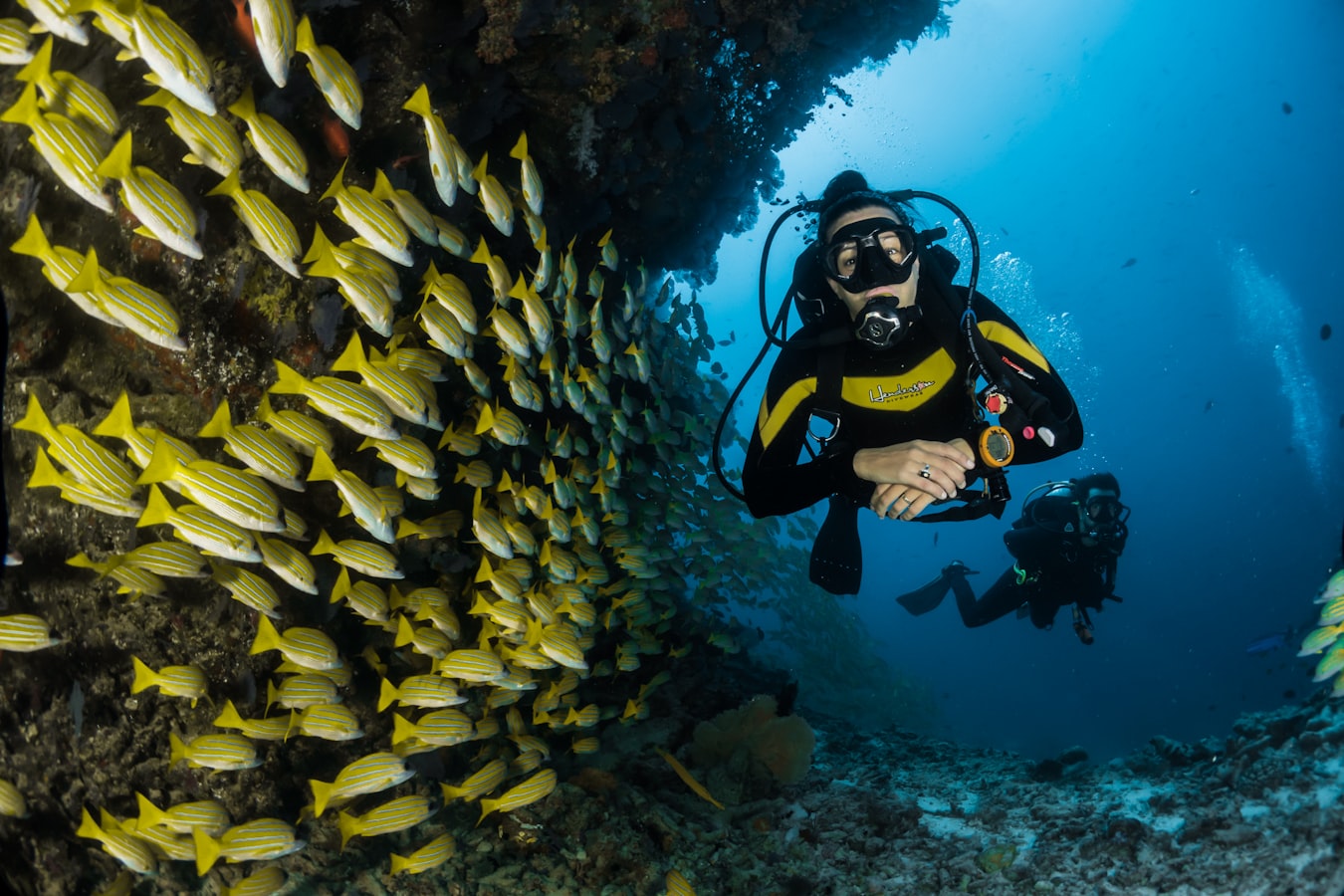
In Taiwan, video tracking revealed seabream spend 73% more time near artificial reef structures than in open water, proving reefs reduce vulnerability to fishing 8 .

Welfare Monitoring in Farms
Salmon farms now use multitracking to detect early signs of disease with 92% accuracy based on reduced swimming speed, while social isolation serves as an early stress indicator .
"The goal isn't just counting fish—it's decoding their language."
The Future: AI, Ethics, and Global Fisheries
Emerging tools like multimodal sensor fusion (combining video, acoustics, and biosensors) will track fish across oceans and tanks. Meanwhile, large language models (LLMs) may soon predict behavior changes from climate variables .
Current Challenges
- Only 12 public datasets exist for fish tracking
- Tropical regions lack affordable tools
- Ethical considerations in wild tracking
Future Technologies
- Multimodal sensor fusion
- Behavior prediction LLMs
- Global tracking networks
Conclusion: A New Lens on Aquatic Life
Video multitracking transforms fish from abstract populations into individuals with strategies, quirks, and roles in their communities.
From zebrafish neurons to wild seabream, this technology rewrites our understanding of life underwater—and arms us to protect it.