Modernizing Evidence Synthesis: A Step-by-Step Guide to Updating Systematic Reviews in Environmental Health
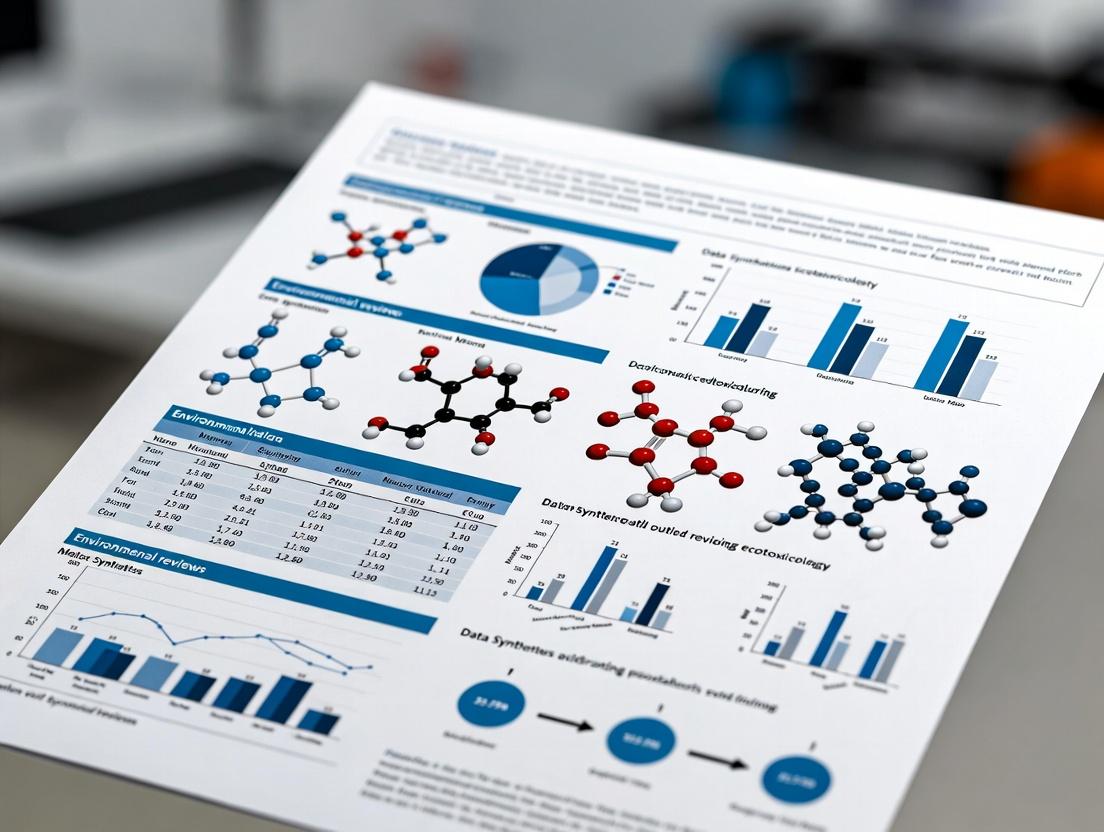
This article provides a comprehensive guide for researchers and professionals on updating systematic reviews in environmental health, a field where evidence evolves rapidly under policy and public health pressures.
Modernizing Evidence Synthesis: A Step-by-Step Guide to Updating Systematic Reviews in Environmental Health
Abstract
This article provides a comprehensive guide for researchers and professionals on updating systematic reviews in environmental health, a field where evidence evolves rapidly under policy and public health pressures. We begin by establishing the critical need for timely updates and outlining a structured decision framework for determining when an update is warranted. We then detail current methodological best practices, including efficient literature surveillance, integration of novel statistical tools, and adaptations for the unique challenges of observational environmental data. The guide further addresses common practical challenges and optimization strategies, from managing resource constraints to updating review protocols and forming collaborative teams. Finally, it examines validation techniques, compares different updating models (such as living reviews versus periodic updates), and reviews the latest quality appraisal tools. The goal is to equip readers with the knowledge to maintain the validity, relevance, and impact of evidence syntheses that inform critical environmental health decisions.
The Imperative for Updates: Recognizing When and Why Environmental Health Reviews Become Outdated
Defining Review Updates and Amendments in an Environmental Context
Core Definitions: Updates vs. Amendments
In environmental health systematic reviews, a clear distinction exists between an update and an amendment, which dictates the methodological pathway and reporting requirements [1].
An Update is a republication of a review that incorporates new evidence published since the last search. Its defining characteristic is that it follows the original, unchanged protocol. The goal is to expand the evidence base over time without altering the review's fundamental question, inclusion criteria, or synthesis methods [1].
An Amendment involves a change to the original review methods or a correction to the original report. This includes modifications to the research question, eligibility criteria, search strategy, risk of bias assessment tools, or synthesis approach. Amendments are undertaken to improve methodological rigor, correct errors, or address evolving guidelines and are treated as a new review project requiring a new protocol [1].
Table: Key Distinctions Between Review Updates and Amendments
| Aspect | Update | Amendment |
|---|---|---|
| Primary Goal | Incorporate new evidence over time. | Improve, correct, or change the review methods. |
| Protocol | Original protocol is followed exactly. | A new or modified protocol is required. |
| Search Strategy | Re-run with a new date range; no changes. | May be modified (e.g., new terms, databases). |
| Eligibility Criteria | Remain identical to the original review. | May be revised. |
| Methodological Basis | Ensures consistency and comparability over time. | Driven by advances in methods or error correction. |
| Reporting | Highlights new evidence and any change in conclusions. | Must fully document and justify all methodological changes. |
Technical Support Center: Troubleshooting FAQs
Q1: How do I decide whether my review needs an update or an amendment? A1: Follow a decision framework. Start by determining if you are only adding new studies (Update) or if you need to change the methods (Amendment). Key triggers for an amendment include: identification of an error in the original work, availability of a superior critical appraisal tool, a shift in the review question, or the need to include studies in languages previously excluded [1]. A 2024 synthesis of environmental health frameworks confirms that different approaches often vary in their suggested degree of methodological rigor, justifying amendments to adopt best practices [2].
Q2: What is a reasonable timeframe for considering an update to an environmental systematic review? A2: There is no universal rule; it depends on the topic's publication rate. While some medical guidelines suggest checking for updates every 2 years, a common benchmark in environmental sciences is to re-assess every 5 years [1]. You should conduct a scoping search to estimate the volume of new literature. For example, one review found a 23% increase in its evidence base in just two years, signaling a rapid pace of new research [1].
Q3: My updated search found many new records. How can I screen them efficiently without starting from scratch? A3: Use your original review's excluded studies. Modern screening software (e.g., Rayyan, Covidence) allows you to upload your original library of screened references. You can then deduplicate your new search results against this library, allowing your team to screen only the truly new records [3]. This is a standard efficiency gain of the update process.
Q4: Are there specific reporting guidelines I must follow for an update or amendment? A4: Yes, transparency is critical. For any systematic review, including updates, adherence to PRISMA 2020 or the ROSES reporting standard is required by leading journals like Environment International [4]. Crucially, you must explicitly report what is new. Detail the date of the previous search, the date of the new search, and the number of new studies included. If it's an amendment, you must justify all changes from the original protocol [1] [4].
Q5: Our team wants to use new AI tools to help with screening or data extraction. Does this mean we are doing an amendment? A5: Yes, this would constitute an amendment. Any change to the methods specified in the original protocol requires an amendment. The field is rapidly evolving, with Cochrane and other groups now establishing frameworks for the responsible use of AI in evidence synthesis (RAISE) [5]. If you integrate AI tools, your new protocol must describe the tool, its role, and the human verification processes in detail to ensure reproducibility and transparency [5] [6].
Q6: How should we handle changes in review authorship for an update or amendment? A6: Collaboration between original and new authors is ideal. Original authors provide continuity and understanding of past decisions, while new authors bring fresh perspective and may better identify methodological limitations [1]. Current guidelines from the Collaboration for Environmental Evidence (CEE) state that the original authors should first be offered the opportunity to lead the update. If a new team proceeds, they should seek agreement from the original authors and clearly acknowledge the original work [1].
Detailed Experimental Protocols
Protocol 1: Conducting a Systematic Review Update
This protocol follows the standard for updating a review without methodological changes [1] [3].
- Define Purpose & Check Currency: Confirm the objective is to include new evidence only. Perform a limited scoping search on key databases to gauge the volume of recent publications.
- Form Team & Notify Stakeholders: Assemble the review team (preferably including original authors). Notify relevant bodies (e.g., CEE, journal) of the intent to update.
- Re-run Searches: Execute the original search strategy exactly as reported. Restrict the date range from the end of the last search to the present. Include a small overlap (e.g., 1-2 months) to account for indexing delays.
- Screen for New Studies: Deduplicate new search results against the original library of all screened records (both included and excluded). Apply the original inclusion/exclusion criteria to the remaining new records.
- Data Extraction & Critical Appraisal: Extract data from new included studies using the original data extraction form. Assess risk of bias using the original tool.
- Synthesis: Integrate data from new studies into the original synthesis. Re-run meta-analyses or revise narrative syntheses accordingly.
- Re-assess Confidence in Evidence: Re-grade the overall certainty of evidence (e.g., using GRADE) considering the expanded body of evidence.
- Report: Follow PRISMA 2020, using a flow diagram that clearly shows the update process. Highlight new studies, any changes to effect estimates, and changes (or lack thereof) to the review's conclusions.
Protocol 2: Implementing the SODIP Method for a New or Amended Review
This protocol is for a new review or an amendment that employs a modern, integrated framework for socio-environmental research, as described in MethodsX (2024) [7].
- Systematic Review & Meta-Analysis: Define the study using guiding questions (e.g., PICO/PSALSAR frameworks). Conduct a full systematic review and meta-analysis if appropriate.
- Open-Source Tools: Select and use open-source software for all stages (e.g., R for analysis, QGIS for spatial data, open databases).
- Data Visualization & Design Information: Create advanced visualizations (interactive maps, evidence atlases) to represent synthesized data and framework components.
- Identify Gaps & Trends: Use automation and lexicometric analysis (e.g., text mining) on the included literature to systematically identify research gaps, challenges, and emerging trends.
- Propose Frameworks: Based on steps 1-4, propose a robust conceptual and theoretical framework to address the identified socio-environmental issue and guide future research.
Protocol 3: Integrating Equity Considerations (Amended Review)
Based on a 2025 systematic review, this protocol amends a standard process to integrate equity assessment, crucial for environmental health [3].
- Equity-Focused Question: Formulate the review question using an equity lens (e.g., "What is the effect of intervention X on health outcome Y, and how does it vary across PROGRESS-Plus groups?").
- Search Strategy: Include terms related to equity, disparity, vulnerability, and specific PROGRESS-Plus factors (Place, Race, Occupation, etc.).
- Screening & Data Extraction: Pre-specify that studies must report outcomes by at least one equity dimension to be included in the equity synthesis. Extract data stratified by subgroup.
- Equity-Focused Synthesis: Analyze data to identify differential effects across population subgroups. Use narrative synthesis or subgroup meta-analysis.
- Certainty of Evidence by Subgroup: Grade the certainty of evidence separately for different population subgroups where data allow.
- Report: Use equity-extending reporting guidelines. Present findings clearly showing the distribution of benefits and harms across society.
The Scientist's Toolkit: Research Reagent Solutions
Table: Essential Tools and Resources for Review Updates/Amendments
| Item / Resource | Function & Application | Source / Example |
|---|---|---|
| PRISMA 2020 Statement | The essential reporting guideline for systematic reviews and meta-analyses. Provides a 27-item checklist to ensure transparent and complete reporting [4]. | Page et al., 2021 |
| ROSES Reporting Standard | A reporting standard designed specifically for systematic reviews and systematic maps in environmental management and conservation. | [Haddaway et al., 2018] |
| Cochrane Handbook | The definitive methodological guide for systematic reviews of interventions. Continuously updated; recent updates include new random-effects methods and guidance on AI use [5]. | Higgins et al., 2019+ |
| OHAT Handbook | A standard operating procedure for evidence evaluations in environmental health and toxicology, using a systematic review framework. A "living document" that is regularly updated [8]. | NIEHS/NTP Handbook |
| Rayyan / Covidence | Web-based tools for collaborative management of the screening and selection process. Critical for efficiently deduplicating new search results against an original review library during an update [3]. | Rayyan.qcri.org, Covidence.org |
| RevMan (Cochrane Review Manager) | Software for preparing and maintaining Cochrane reviews. Supports meta-analysis and is continuously updated with new statistical methods (e.g., new random-effects methods added in 2024) [5]. | Cochrane's RevMan |
| GRADE (Grading of Recommendations, Assessment, Development and Evaluations) | A framework for rating the certainty of evidence in systematic reviews and developing recommendations. Essential for the final step of assessing confidence in the body of evidence [4]. | GRADE Working Group |
| AI for Evidence Synthesis Tools | Emerging tools (e.g., for screening prioritization, data extraction). Their use requires careful protocol specification and human oversight, as per the new RAISE (Responsible AI for Systematic Reviews) initiative [5]. | Active area of development; see Cochrane AI Methods Group [5]. |
| SODIP Framework | A five-step method combining systematic review, open-source tools, visualization, gap analysis, and framework proposal. Provides a robust structure for complex socio-environmental reviews and amendments [7]. | MethodsX, 2024 |
| PROGRESS-Plus Framework | A tool to ensure equity is considered by identifying population characteristics where health disadvantages may exist: Place, Race, Occupation, Gender, Religion, Education, Socioeconomic status, Social capital. "Plus" includes age, disability, etc. Used to structure equity analysis [3]. | O'Neill et al., 2014 |
Technical Support Center: Systematic Review Updates in Environmental Health
This technical support center provides troubleshooting guides and FAQs for researchers managing the evidence lifecycle in environmental health systematic reviews (SRs). Given the rapid evolution of climate and environmental science, maintaining an up-to-date evidence base is critical for valid public health decisions [9].
Frequently Asked Questions (FAQs)
Q1: How do I know when my systematic review is out of date and needs updating? A1: An SR should be evaluated periodically. An update is necessary if new studies have been published on the topic and the subject remains relevant to clinicians and decision-makers [10]. For high-priority topics with frequent new evidence, consider transitioning to a Living Systematic Review (LSR) model, which is updated monthly or as new evidence emerges [10].
Q2: What are the most common methodological weaknesses in environmental health SRs that affect their validity? A2: Common deficiencies include the lack of a pre-published protocol, unclear review objectives, and inconsistent evaluation of the included evidence's internal validity [11]. A 2021 analysis found that 77% of sampled environmental health SRs did not state their objectives or develop a protocol, and 62% did not consistently assess evidence validity [11]. Adherence to empirical SR methods significantly improves utility and transparency [11].
Q3: My research involves climate change and health. Are there specialized tools for assessing this evidence? A3: Yes. The CHANGE (Climate Health ANalysis Grading Evaluation) tool is a standardized, two-step tool developed specifically for weight-of-evidence reviews on climate change and health [12]. Step 1 classifies the study (e.g., by exposure, health outcome, geographic scale), and Step 2 assesses scientific rigor and bias across five domains: transparency, selection bias, covariate selection, detection bias, and selective reporting bias [12].
Q4: How can AI be responsibly used to accelerate the updating process? A4: AI can assist in literature screening, data extraction, and bias assessment, but requires human oversight. Cochrane and other leading organizations have formed an AI Methods Group to define frameworks for transparency and acceptable accuracy standards [5]. Use AI as a tool for efficiency, not as a replacement for researcher judgment. Always verify AI-generated summaries against original sources [13] [14].
Troubleshooting Guides
Problem 1: Managing an Overwhelming Volume of New Evidence
- Symptoms: The team cannot screen new studies in a timely manner; the review update is stalled in the identification phase.
- Solution: Implement a semi-automated workflow.
- Leverage AI-Powered Screening: Use tools like Rayyan or Covidence, which can be trained to prioritize potentially relevant records based on your inclusion/exclusion decisions [15].
- Adopt a "Living" Approach: For a continuously active review, formalize a LSR protocol with frequent, smaller search and screening cycles instead of one large update [10].
- Refine the Scope: Re-evaluate your PICO/PICo question. If the volume is unmanageable, consider narrowing the population, intervention, or outcome focus in consultation with stakeholders [15].
Problem 2: Assessing Heterogeneous Study Designs in a Single Review
- Symptoms: Included studies range from randomized trials to complex climate modeling studies; standard risk-of-bias tools feel inadequate.
- Solution: Use a tiered or complementary assessment strategy.
- Classify First, Assess Second: Use the CHANGE tool's Step 1 to categorize studies by design, exposure, and outcome before applying quality criteria [12].
- Match the Tool to the Design: Use design-specific tools (e.g., Cochrane ROB for RCTs, Newcastle-Ottawa for observational studies) [15]. For modeling studies, apply criteria from tools like the CHANGE tool, which includes domains for covariate selection and transparency specific to this research [12].
- Present Clear Explanations: In your review, transparently document why each tool was chosen and how judgments were made for complex studies.
Problem 3: Integrating AI Tools While Maintaining Methodological Rigor
- Symptoms: Concern about the reproducibility of AI-assisted searches or the accuracy of AI-extracted data.
- Solution: Establish a protocol for transparent and accountable AI use.
- Document Everything: Record the name, version, and specific prompts used for any AI tool (e.g., "Used Elicit on [date] with the prompt: 'List the primary outcomes from these 10 PDFs'") [14].
- Validate Outputs: Mandate that a human reviewer checks a sample (e.g., 20% or more) of AI-screened records or all AI-extracted data points for accuracy [5] [14].
- Use AI for Discovery, Not Justification: Use tools like ResearchRabbit or Litmaps to discover connected literature, but base your final inclusion decisions on a reproducible, keyword-based search of major databases as documented in your protocol [13] [14].
Quantitative Data on Evidence Currency and Review Quality
The tables below summarize data on the state of environmental health reviews and the pace of methodological change.
Table 1: Deficiencies in Environmental Health Systematic Reviews (Sample: 13 SRs, 2003-2019) [11]
| Methodological Shortcoming | Percentage of SRs Affected | Impact on Review |
|---|---|---|
| Did not state review objectives or develop a protocol | 77% (10/13) | Compromises transparency, reproducibility, and reduces protection against bias. |
| Did not consistently evaluate internal validity of evidence | 62% (8/13) | Undermines confidence in conclusions about exposure-outcome relationships. |
| No pre-defined "evidence bar" for conclusions | 46% (6/13) | Makes the basis for final judgments opaque and subjective. |
| No author conflict of interest statement | 46% (6/13) | Fails to address potential funding or affiliation biases. |
Table 2: Recent Methodological Developments for Timely Evidence Synthesis (2024-2025)
| Development Area | Key Initiative or Tool | Purpose & Function |
|---|---|---|
| Review Formats | Living Systematic Reviews (LSRs) [10] | A continuous updating model where new evidence is incorporated as it appears, maintaining review currency. |
| Statistical Methods | New random-effects methods in RevMan [5] | Updated methods for estimating between-study heterogeneity and calculating prediction intervals for meta-analysis. |
| Quality Assessment | The CHANGE Tool [12] | A standardized tool for quality and bias assessment in climate change & health exposure-response and adaptation studies. |
| AI Integration | Cochrane-Campbell-JBI AI Methods Group [5] | Cross-organizational group establishing frameworks for responsible AI use in evidence synthesis (e.g., accuracy standards, transparency). |
| Equity Integration | Mandatory equity sections in new Cochrane reviews [5] | Requires explicit consideration of health equity in review questions, analysis, and interpretation. |
Experimental Protocols for Key Tasks
Protocol 1: Database Search for Systematic Review Updates
Objective: To identify all new and relevant records added to bibliographic databases since a specified date, ensuring comprehensiveness. Materials: Access to databases (e.g., PubMed, Ovid platforms), reference management software (e.g., EndNote, Zotero), saved search results from the previous review version. Procedure:
- Determine Filter Method: Decide to filter by Entry Date (recommended) or Publication Date [10].
- Construct Search Strings: Use the original review's search strategy. Append an entry date filter using database-specific syntax:
- PubMed:
AND ("2024/01/01"[EDAT] : "3000"[EDAT]) - Ovid MEDLINE:
limit LastLineOfSearch to dt="20240101-20241231" - Embase (Ovid):
limit LastLineOfSearch to dc=20240101-20241231[10]
- PubMed:
- Execute and Export: Run searches in all pre-specified databases. Export all results to your reference manager.
- Deduplication: Deduplicate the new search results against the library of records from the previous version of the review, not just internally [10].
- Screening: Proceed with title/abstract and full-text screening on the unique set of new records.
Protocol 2: Applying the CHANGE Tool for Quality Assessment
Objective: To consistently evaluate the scientific rigor and risk of bias in climate change and health studies for a weight-of-evidence review [12]. Materials: CHANGE Tool worksheet, studies for inclusion, a minimum of two independent reviewers. Procedure:
- Pilot and Calibrate: Both reviewers independently apply the CHANGE Tool to the same 2-3 studies. Discuss discrepancies to ensure shared understanding of criteria.
- Step 1 - Classification: For each study, reviewers collaboratively complete Step 1 to classify the study's focus (exposure-response or adaptation), climate variables, health outcomes, geographic scale, and conceptual approach [12].
- Step 2 - Independent Assessment: Reviewers independently complete Step 2, scoring each question (1=highest to 4=poor rigor) across five subsections: Transparency, Selection Bias, Covariate Variable Selection, Detection Bias, and Selective Reporting Bias [12].
- Consensus Meeting: Reviewers meet to compare scores. All disagreements are discussed until consensus is reached, involving a third arbiter if necessary.
- Synthesis: Calculate a mean score for each subsection and an overall mean score per study. Use these scores to inform the strength of evidence conclusions and sensitivity analyses [12].
Visualization of Workflows
Workflow for Updating a Systematic Review
Title: Systematic Review Update Decision and Execution Workflow
Modern AI-Assisted Literature Review Workflow
Title: Stages of a Modern AI-Assisted Review Process
The Scientist's Toolkit: Research Reagent Solutions
Table 3: Essential Tools for Updating Environmental Health Systematic Reviews
| Tool Category | Specific Tool / Resource | Primary Function in Update Process |
|---|---|---|
| Project Management & Protocol | PROSPERO Registry, Open Science Framework | Register the update protocol to ensure transparency and reduce duplication of effort. |
| Search & Discovery | PubMed, Embase, Global Health [15], ResearchRabbit [14], Litmaps [13] | Execute reproducible database searches and use AI to discover connected literature and citation networks. |
| Screening & Deduplication | Covidence, Rayyan, EndNote [15] | Manage search results, remove duplicates, and facilitate collaborative title/abstract and full-text screening. |
| Quality Assessment | CHANGE Tool [12], Cochrane Risk of Bias (ROB-2), Newcastle-Ottawa Scale (NOS) | Assess the methodological rigor and risk of bias in included studies using domain-specific criteria. |
| Data Analysis & Synthesis | RevMan [5], R (with metafor package), GRADEpro GDT | Perform meta-analysis, create forest plots, and assess the certainty (GRADE) of the synthesized evidence. |
| AI-Assisted Analysis | Elicit, Scholarcy [14], Scispace | Accelerate data extraction, summarization of key findings, and exploration of patterns across large sets of papers. |
| Writing & Reporting | PRISMA 2020 Checklist, Paperpal, Writefull [14] | Ensure reporting completeness and receive feedback on academic writing style and grammar. |
Technical Support Center: Troubleshooting Systematic Review Updates
This technical support center provides troubleshooting guides and FAQs for researchers navigating the process of updating systematic reviews (SRs) and systematic maps in environmental health. The guidance is framed within the Core Decision Framework, which structures the update decision around three pillars: assessing the relevance of the existing review, the volume and nature of new evidence, and the potential impact of an update on conclusions and decisions [1].
Frequently Asked Questions (FAQs)
Q1: Our systematic review is five years old. Are we obligated to update it? A: There is no fixed rule, but an assessment is recommended. The Collaboration for Environmental Evidence (CEE) suggests considering updates every 5 years [1]. The decision should not be based on time alone but on a structured assessment using the Core Decision Framework to evaluate relevance, new evidence, and potential impact.
Q2: What is the fundamental difference between an update and an amendment? A: An update involves re-running the original search to identify new studies published since the last search, expanding the evidence base through time. An amendment involves any other change to the original protocol or report, such as modifying inclusion criteria, search strategy, analytical methods, or correcting an error [1] [16]. Most revisions will be amendments because methods or terminology often evolve.
Q3: How do I quickly estimate if a significant amount of new literature has been published on my topic? A: Conduct a scoping search in a key database using your core search terms, filtered for the years since your last search. Examine the publication trend graph (if available) from your original review to predict the likely growth rate of the evidence base [1]. However, remember that the strength of new evidence is more critical than its volume alone.
Q4: Who should be on the team to update a review? A: The CEE policy is to first offer the update opportunity to the original authors [1]. An ideal team often includes a mix of original and new members. Original authors provide continuity and understanding of past decisions, while new members bring fresh perspective, can critically assess prior methods, and help identify potential errors [1].
Q5: How can we ensure our updated review is of high quality? A: Adhere to best practice guidelines, use a pre-defined framework (like GRADE or Navigation Guide), and publish a protocol for any amendment. Journal editors are increasingly prioritizing interventions like mandatory protocol registration and the use of reporting checklists (e.g., PRISMA) to improve quality [17].
Q6: Where can I find existing systematic reviews on environmental health interventions to inform my work? A: The World Health Organization (WHO) maintains a Repository of systematic reviews on interventions in environment, climate change and health [18]. This repository covers major areas like air quality, water, chemicals, and climate change, and can help you identify existing evidence and gaps.
Core Decision Framework: Assessment Workflow
The following workflow diagrams the structured decision-making process for determining if and how to revise a systematic review.
Diagram: Decision Workflow for Updating a Systematic Review
Framework Assessment Table
The following table details the key criteria, assessment questions, and tools for each pillar of the framework.
| Framework Pillar | Key Assessment Questions | Data Sources & Tools | Decision Threshold Indicators |
|---|---|---|---|
| 1. Relevance [1] | Is the review topic still a current priority for research, policy, or practice? Are the original PICO/S elements still valid? Is the review frequently cited or referenced in recent literature? | Stakeholder consultation; Analysis of citation metrics; Review of recent policy documents. | High stakeholder demand; Frequent citation in recent (<2 yrs) literature; Emergence of new interventions/exposures not covered. |
| 2. New Evidence [1] | What is the estimated volume of new primary studies published since the last search? Does the new evidence address gaps or have the potential to change the certainty of the existing body of evidence? | Scoping search in key databases; Analysis of publication trends from the original review; Pilot screening of new abstracts. | Scoping search retrieves >50 potentially relevant records [1]; New studies use stronger designs or report on critical outcomes previously missing. |
| 3. Potential Impact [1] [19] | Would incorporating the new evidence likely alter the direction, magnitude, or statistical significance of the main conclusions? Would an update change a clinical, public health, or policy recommendation? | Sample meta-analysis to estimate the influence of hypothetical new data; Review of the strength and direction of existing recommendations. | A priori meta-analysis suggests new data could alter effect size beyond clinical/policy significance; Guideline panels identify a need for revised recommendations. |
Experimental Protocols for Key Methodologies
Protocol 1: Scoping Search for New Evidence Volume
Objective: To efficiently estimate the quantity of new, potentially relevant literature published since the last systematic review search date. Materials: Bibliographic database access (e.g., PubMed, Web of Science), original review search strategy. Procedure:
- Strategy Adaptation: Take the most sensitive search block from the original review. Add a publication date filter (e.g., from the day after the last search date to present).
- Database Execution: Run the adapted search in 1-2 core databases relevant to the field (e.g., PubMed for health, Web of Science for interdisciplinary).
- Record Management: Export all retrieved records to a citation manager. Use automated tools to remove duplicates.
- Rapid Screening: One reviewer performs a title/abstract screen against the original review's inclusion/exclusion criteria. The goal is not final inclusion but to estimate the volume of potentially relevant studies.
- Volume Estimation: Calculate the count and percentage of records that pass the rapid screen. A yield of >50-100 potentially relevant studies often signals a worthwhile update [1].
Protocol 2: Framework for Assessing Systematic Review Quality
Objective: To appraise the methodological rigor of an existing systematic review using a structured tool, informing the need for an amendment. Materials: Literature Review Appraisal Toolkit (LRAT) [20], AMSTAR-2, or similar tool; the systematic review to be assessed. Procedure:
- Tool Selection: Select an appraisal tool validated for environmental health or general SRs (e.g., LRAT was used to compare systematic and non-systematic reviews [20]).
- Independent Assessment: Two reviewers independently assess the review against each domain of the tool (e.g., protocol registration, search comprehensiveness, risk of bias assessment, appropriateness of synthesis).
- Judgment & Consensus: Reviewers rate each domain (e.g., satisfactory/unsatisfactory/unclear). They meet to reconcile differences and reach a consensus judgment.
- Gap Identification: The consensus appraisal identifies specific methodological weaknesses (e.g., "risk of bias was not assessed," "search was limited to one database"). The presence of major weaknesses is a strong indicator that an amendment (with improved methods) is needed, not just a simple update [1] [20].
The Scientist's Toolkit: Research Reagent Solutions
This table details essential methodological "reagents" – frameworks, tools, and resources – required for conducting and updating high-quality systematic reviews in environmental health.
| Item Name | Function & Application | Key Features / Notes |
|---|---|---|
| GRADE (Grading of Recommendations Assessment, Development and Evaluation) Framework [21] [22] [19] | A system to rate the certainty of evidence and strength of recommendations. Its Evidence-to-Decision (EtD) framework provides a structured template for moving from evidence to a recommendation. | Includes explicit criteria: balance of benefits/harms, certainty of evidence, values, resources, equity, acceptability, feasibility [21]. The most comprehensive EtD framework available [22]. |
| Navigation Guide Methodology [20] | A systematic review framework specifically adapted for environmental health, used for hazard identification and risk assessment. | Integrates human, animal, and mechanistic evidence. Endorsed by the WHO and U.S. National Academy of Sciences [20]. |
| CEE (Collaboration for Environmental Evidence) Guidelines [1] | The standard methodological guidelines for conducting systematic reviews and systematic maps in environmental management and conservation. | Defines procedures for updates (new search) and amendments (methodological change) [1]. Endorsed by the journal Environmental Evidence. |
| Literature Review Appraisal Toolkit (LRAT) [20] | A tool to appraise the utility, validity, and transparency of any literature review, whether systematic or narrative. | Derived from AMSTAR and PRISMA. Useful for comparing review quality and identifying flaws that necessitate an amendment [20]. |
| WHO Repository of Systematic Reviews (Environment & Health) [18] | A curated database of systematic reviews on interventions related to environment, climate change, and health. | Covers air quality, WASH, chemicals, radiation, etc. [18] A critical resource for finding existing syntheses and identifying evidence gaps before initiating a new or updated review. |
| Decision Sampling Framework [23] | A qualitative research method to investigate how decision-makers (e.g., policymakers) actually use evidence, expertise, and values. | Anchors inquiry on a specific "index decision." Helps identify evidence gaps from the user's perspective, ensuring future reviews are fit-for-purpose [23]. |
In environmental health research, systematic reviews are foundational for evidence-based decision-making but rapidly become outdated due to constant scientific advancement. Identifying precise signals that trigger a necessary update is critical for maintaining the validity of these reviews without expending unnecessary resources. This technical support center outlines established and emerging methodologies—ranging from traditional publication surveillance to structured expert elicitation and artificial intelligence (AI)-driven automation—to help researchers determine when a systematic review requires updating.
Two historically significant, validated methods are the RAND Abbreviated Method and the Ottawa Method. A comparative study found that while both methods effectively identify signals, they differ in approach and resource requirements [24]. The RAND method combines targeted literature searches in key journals with formal expert judgment, making it a pragmatic choice for assessing numerous reviews [24] [25]. In contrast, the Ottawa Method relies more on quantitative signals from new meta-analyses or pivotal trials and uses statistical survival analysis to estimate when a review becomes obsolete [24].
The core challenge lies in efficiently separating substantive new evidence from irrelevant publications. Emerging solutions leverage AI and Natural Language Processing (NLP) to automate the screening and data extraction stages of a review update, showing particular promise for expansive fields like environmental drivers of disease [26]. Simultaneously, formal expert elicitation provides a crucial mechanism to identify signals in areas of high uncertainty, emerging risks, or where data is sparse, such as in food safety and source attribution of illnesses [27] [28].
The following guide addresses common technical and methodological challenges in implementing these signal detection strategies.
Troubleshooting Guides and FAQs
FAQ 1: How do I choose between the RAND and Ottawa methods for my environmental health review?
Your choice depends on the review's structure, available resources, and the nature of the evidence.
- Use the RAND Method if: Your original review contains multiple narrative conclusions, expert networks are accessible, and you need a qualitative assessment of changes across broad evidence domains. This method is less statistically intensive and is designed for feasibility [24] [25].
- Use the Ottawa Method if: Your review is based on quantitative meta-analyses, you seek an objective statistical signal (e.g., a significant change in pooled effect size), and you can perform updated pooled analyses. This method is ideal when the primary outcome can be re-analyzed with new trial data [24].
A hybrid approach is often effective: use the Ottawa criteria for quantitative conclusions and RAND-style expert assessment for narrative conclusions [24].
Common pitfalls include expert bias, poorly framed questions, and inadequate synthesis of divergent opinions.
- Solution - Panel Composition: Recruit a diverse panel of 6-12 experts covering complementary domains (e.g., epidemiology, toxicology, clinical practice) to mitigate individual bias [27] [28].
- Solution - Structured Elicitation: Use formal techniques like Delphi surveys, paired interviews, or calibrated weighting. Provide clear background materials and train experts on uncertainty assessment to align judgments [27] [28].
- Solution - Triangulation: Do not rely on expert judgment alone. Treat it as one signal to be combined with results from literature surveillance. Methodological triangulation improves the validity of the final update recommendation [27].
FAQ 3: My targeted search in major journals (per the RAND method) returned no relevant studies. Does this mean my review is still valid?
Not necessarily. The absence of high-impact publications is a positive signal, but it is not definitive.
- Next Steps:
- Expand Search Parameters: Check if relevant research has moved to more specialized or regional journals. Briefly run the original full search strategy for the most recent 1-2 years.
- Consult Experts: Pose this specific question to your expert panel. They may be aware of upcoming, unpublished, or gray literature findings that would necessitate an update [25].
- Check for "Other" Signals: As per the Ottawa Method, a large influx of new studies in specialty journals, even without a single pivotal trial, can itself be a signal for updating [24].
FAQ 4: Can I fully automate the process of detecting update signals for my scoping review on an environmental exposure?
Full automation is not yet a turnkey solution, but AI can dramatically accelerate the most labor-intensive steps, making frequent surveillance feasible.
- Current Capabilities: AI models, particularly large language models (LLMs), can be prompted or fine-tuned to screen titles/abstracts and extract specific data (e.g., exposure levels, outcomes, risk factors) from full texts [26]. This automates the "search" and "data extraction" stages of the update pipeline.
- Critical Limitations: AI performance depends heavily on the training data and precise prompting. It cannot replace human judgment for assessing risk of bias, synthesizing evidence, or making the final "go/no-go" update decision. The best practice is a human-in-the-loop model where AI handles high-volume processing and flags potential signals for researcher evaluation [26].
FAQ 5: How do I validate that my chosen signal detection method is working correctly?
Validate by assessing the predictive validity of your update recommendations.
- Protocol: When you signal that an update is needed, document the specific new evidence or expert rationale. Once the full update is completed, compare the new conclusions to the old ones.
- Metrics: Classify concordance as:
- Good: Signal correctly predicted a substantive change or stability.
- Fair: Signal was partially correct (e.g., predicted change, but update showed only minor refinements).
- Poor: Signal was incorrect (e.g., missed a major change or predicted change where none occurred) [25] [29]. A high proportion of Good/Fair concordance and a high Kappa statistic for update priority (e.g., κ=0.74 as found in one study) support the validity of your method [25] [29].
Table 1: Comparison of Primary Signal Detection Methods
| Method | Core Approach | Key Signals Sought | Best For | Resource Intensity |
|---|---|---|---|---|
| RAND Abbreviated [24] [25] | Targeted search + Expert elicitation | New evidence in major journals; Expert opinion on conclusion validity | Reviews with broad narrative conclusions; Rapid assessment of many topics | Moderate (requires expert recruitment) |
| Ottawa Method [24] | Statistical survival analysis + Quantitative thresholds | Significant change in pooled effect size; Emergence of pivotal trials | Meta-analyses with quantitative primary outcomes | High (requires statistical re-analysis) |
| AI-Automated Screening [26] | NLP/LLM for document classification & data extraction | High-volume identification of relevant new studies & key data | Large scoping reviews; Frequent, ongoing surveillance | High initial setup, low marginal cost |
| Formal Expert Elicitation [27] [28] | Structured interviews, Delphi surveys | Consensus on emerging risks, data gaps, and evidence shifts | Areas of high uncertainty or emerging threats (e.g., novel contaminants) | High (requires careful design and facilitation) |
Table 2: Criteria for Assessing Signals from New Evidence [24] [25]
| Assessment Category | Signal Criteria | Implication for Update |
|---|---|---|
| Change in Evidence | New high-quality evidence (e.g., large RCT, major observational study) contradicts the direction, magnitude, or precision of the original conclusion. | High-Priority Update |
| New evidence substantially narrows confidence intervals or changes the clinical/regulatory significance of a finding without contradicting it. | Medium-Priority Update | |
| Emergence of New Evidence | Publication of a new meta-analysis or pivotal trial (sample size >> previous largest). | High-Priority Update |
| Significant accumulation of new studies on a previously data-sparse question. | Medium-Priority Update | |
| Change in Context | New safety concerns (e.g., drug withdrawal, black box warning) or new intervention becomes available. | High-Priority Update |
| Shift in public health priorities, population demographics, or exposure patterns. | Variable Priority |
Detailed Experimental Protocols
Protocol for Implementing the RAND Abbreviated Method
This protocol is adapted from the validated process used by the AHRQ Evidence-based Practice Center program [25] [29].
- Assemble Team: Designate a project lead and at least one reviewer with systematic review experience.
- Prepare Search:
- Use the original review's search strategy.
- Restrict the search to a defined period (e.g., from 6 months prior to the original search end date to present).
- Limit database sources to 5-7 top-tier journals: 3-5 general high-impact (e.g., Lancet, JAMA, BMJ) and 2-3 top specialty journals in the field (identified from the original review's references) [25].
- Conduct Screening & Extraction: A single reviewer screens titles/abstracts, retrieves full texts, and extracts key data (study design, sample size, outcomes) from eligible new studies into an evidence table [25].
- Elicit Expert Judgment:
- Create a matrix listing each key conclusion from the original review.
- Recruit 5-8 experts (original authors, technical panel members, independent specialists).
- Send the matrix, asking experts to rate each conclusion as "Still Valid," "Possibly Outdated," or "Probably/Definitely Outdated," and to cite supporting new evidence [25].
- Synthesize Signals & Prioritize:
- For each conclusion, compare new literature findings with expert feedback.
- Apply criteria from Table 2 to categorize the conclusion.
- Make a global judgment on the entire review's update priority (High, Medium, Low) based on the volume and importance of outdated conclusions [25].
Protocol for an AI-Augmented Screening Pipeline
This protocol is based on the MOOD project's work automating updates for scoping reviews on environmental drivers of disease [26].
- Task Formulation: Define the NLP task. For update signals, the most relevant tasks are:
- Document Classification: Binary screening (Include/Exclude) of new publications.
- Named Entity Recognition (NER): Extracting specific entities (e.g., chemical names, exposure levels, health outcomes) from included full texts.
- Model Selection & Training:
- Option A (Fine-tuning): Use a domain-specific pretrained model (e.g., BioBERT, SciBERT). Fine-tune it on a labeled dataset from your original review (e.g., 200-500 labeled abstracts) [26].
- Option B (LLM Prompting): Use a large language model (e.g., GPT-4, Claude) via API. Develop a detailed prompt with examples (few-shot learning) specifying your inclusion/exclusion criteria [26].
- Implementation Pipeline:
- Step 1: Run monthly/quarterly PubMed/Scopus searches using the original search string.
- Step 2: Use the trained AI model to score and rank the retrieved citations by predicted relevance.
- Step 3: A human reviewer validates the top-ranked records (e.g., top 30%) and all model-extracted data entities.
- Step 4: The validated set of new, relevant studies and extracted data forms the primary signal for the update assessment.
Adapted from frameworks used in emerging food risk identification [27] [28].
- Preparation (4-6 weeks before):
- Define Elicitation Question: Frame it precisely (e.g., "Is the evidence on the association between contaminant X and outcome Y, summarized in Review Z, still sufficient and valid?").
- Select Experts: Identify 8-12 experts with complementary backgrounds. Aim for a balance of academia, government, and industry perspectives.
- Prepare Dossier: Compile a concise briefing book with the original review's executive summary, the update question, and a summary of any known new evidence.
- Workshop Execution (1-2 days):
- Introduction & Calibration: Train experts on assessing uncertainty and avoiding cognitive biases.
- Individual Assessment: Use anonymous voting pads or pre-workshop surveys to gather initial, independent judgments.
- Structured Discussion: Facilitate a discussion focusing on areas of disagreement. Use techniques like "devil's advocate" to explore reasoning.
- Iterative Feedback & Consensus: Present aggregated anonymous results, re-discuss, and seek a consensus estimate or clearly document the range of informed opinions.
- Synthesis & Reporting:
- Document the final judgments, the degree of consensus, and the key evidence cited by experts.
- Translate the consensus into a clear update signal (e.g., "High confidence that new mechanistic data necessitates a re-evaluation of the toxicological conclusion").
Visualizations of Signaling Workflows
Workflow for a Hybrid RAND & AI Signal Detection Process
Diagram 1: Hybrid RAND and AI workflow for update signal detection
Diagram 2: Expert elicitation process for identifying emerging risk signals
Table 3: Key Research Reagent Solutions for Signal Detection
| Tool / Resource | Type | Primary Function in Update Signal Detection | Key Considerations |
|---|---|---|---|
| Elicit.org | AI Research Assistant | Uses LLMs to automate initial literature search and summarization based on a user query. Useful for rapid, broad scanning of new evidence. | Outputs require verification; best as a first-pass tool to identify potentially relevant new papers [26]. |
| ASReview | AI-powered Screening Tool | An open-source machine learning tool that actively learns from researcher decisions to prioritize relevant records during systematic review screening. Dramatically reduces screening workload for update searches [26]. | Requires initial human screening (~100-200 records) to train the model before it can effectively prioritize. |
| Rayyan | Collaborative Screening Platform | A web tool for managing and performing blinded duplicate screening of search results. Facilitates the human validation step in AI-assisted workflows. | Excellent for team collaboration and resolving conflicts in screening decisions. |
| PubMed API / Entrez Direct | Programming Interface | Allows automated, scheduled running of search strategies from the original review to periodically harvest new citations for AI processing or manual review. | Enables the creation of a semi-automated surveillance pipeline. Requires programming knowledge (Python, R). |
| GRADE-CERQual | Evidence Assessment Framework | Provides a structured method for assessing the certainty of evidence from qualitative research. Crucial for evaluating new non-quantitative studies in environmental health updates. | Complements risk-of-bias tools. Essential for reviews where quantitative synthesis is not possible [30] [31]. |
| ExpertLens / DelphiManager | Expert Elicitation Platforms | Online platforms designed to conduct modified-Delphi studies, allowing for iterative anonymous voting and feedback with expert panels geographically dispersed. | Formalizes and streamlines the expert judgment component of the RAND method [27] [28]. |
| MOOD Project AI Pipeline | Reference Methodology | A published framework for fine-tuning BERT-style models and using LLMs (like GPT) to extract environmental risk factors from text. Serves as a replicable blueprint for custom automation [26]. | Described in [26]; provides a comparative analysis of AI methods suitable for adaptation to specific review topics. |
The Update Process in Practice: Methodological Steps and Environmental Health Adaptations
Technical Support Center: Troubleshooting Literature Surveillance
This technical support center provides targeted guidance for researchers conducting strategic literature surveillance to update systematic reviews in environmental health. The methodologies are framed within the rigorous standards of frameworks like the Navigation Guide, which systematically translates environmental health science into evidence for action [32].
The table below summarizes the tested performance of different search approaches for identifying new, update-signaling studies in a cohort of systematic reviews [33].
| Search Method | Description | Median Recall (%) | Key Use Case & Consideration |
|---|---|---|---|
| Subject Search (Clinical Queries) | A precision-focused search built by a librarian using clinical query filters. | 67% | Core strategy for broad surveillance. Balances recall with manageable screening burden. |
| Related Articles Search | Uses PubMed's "Related Articles" feature on key, large studies from the original review. | 50% | Highly effective for finding thematically similar new evidence; complements subject searches. |
| Citing References Search | Identifies new studies that cite any of the papers included in the original systematic review. | 33% | Useful for tracking influential work; lower recall as a standalone method. |
| Combination: Subject + Related Articles | Concurrent use of a subject search and a related articles search. | 100% (in 68 of 77 reviews) | Recommended primary surveillance protocol. Achieves near-complete recall with a median screening burden of 71 records per review [33]. |
Recommendation: For efficient and effective surveillance, employ a combination of a subject search and a related articles search. This protocol detected all new, signaling evidence in the majority of tested reviews while maintaining a feasible screening workload [33].
Troubleshooting Guides
Guide 1: Resolving Low Recall in Surveillance Searches
Problem: Your surveillance search is failing to capture known relevant new studies, indicating low recall.
Check Your Core Subject Strategy:
- Action: Re-evaluate your search terms for emerging terminology. Environmental health fields evolve; new chemical names, exposure metrics, or outcome terms may have emerged since the original review [34]. Use the thesaurus (e.g., MeSH, Emtree) of your primary database to identify newly indexed terms [35].
- Avoid: Relying solely on the original review's search syntax without adaptation.
Leverage the "Related Articles" Function:
- Action: If not already doing so, integrate this method. Select 2-3 of the largest or most pivotal studies from your original review and use their PubMed IDs to generate a "Related Articles" list [33].
- Technical Note: This algorithm-based tool finds articles with similar lexical content and can uncover relevant studies your keyword search may miss.
Verify Database Coverage:
Guide 2: Managing Unmanageably High Search Yield (Low Precision)
Problem: Your surveillance search returns far too many records, making screening impractical.
Apply Methodological Filters:
- Action: Use validated search filters ("hedges") to restrict results to key study types. For human studies, apply a validated observational study filter. For toxicological data, consider animal study filters. Resources like the ISSG Search Filter Resource provide these [37].
- Example: In PubMed, you can combine your search with filters like "epidemiologic studies" or use the Clinical Queries feature for etiology [33].
Refine with Key PECO Elements:
- Action: Focus on the most critical elements of your PECO (Population, Exposure, Comparator, Outcome) question [34]. Prioritize the most specific and important element (e.g., a specific chemical exposure) to narrow the search effectively. Avoid adding broad outcome terms if they generate excessive noise [35].
Limit by Date and Document Type:
- Action: Set a clear start date from the end of your last search. For ongoing surveillance, screen in regular intervals (e.g., monthly or quarterly). Limit to primary research articles and systematic reviews, excluding editorials, letters, or news items [38].
Guide 3: Adapting Searches Across Multiple Databases
Problem: Translating a complex search strategy accurately from one database interface (e.g., Ovid) to another (e.g., PubMed, Web of Science) is error-prone and time-consuming.
Use a Log Document and Translation Tools:
- Action: First, develop and perfect your strategy in your primary database within a text document (not the database search box). This log ensures reproducibility and serves as your master copy [35].
- Action: Use semi-automated translation tools. Polyglot Search (part of the SR-Accelerator) or syntax guide charts from Cochrane can help translate field codes, truncation symbols, and proximity operators between platforms like Ovid, EBSCO, and PubMed [37].
Understand Database-Specific Thesauri:
Diagram 1: Workflow for a Combined Surveillance Search Protocol
Frequently Asked Questions (FAQs)
Q1: How often should I run surveillance searches to update an environmental health systematic review? A: There is no universal rule, as it depends on the pace of research in your specific field. The Collaboration for Environmental Evidence (CEE) suggests a general guideline of checking every 5 years [39]. Proactive surveillance should involve periodic scans (e.g., annually) or setting up automated alerts. Monitor publication trends in your review's topic; a rapidly growing evidence base warrants more frequent checks [39].
Q2: What is the difference between an update and an amendment to a systematic review? A: An Update involves searching for new studies published after the original review's search date and incorporating them using the same methods as the original protocol. An Amendment involves any change to the methods of the original review, such as new inclusion criteria, risk of bias tools, or synthesis methods, which requires a new, peer-reviewed protocol [39]. Most substantial revisions in environmental health, where methods evolve rapidly, will be amendments.
Q3: I've found new studies. How do I decide if they are significant enough to warrant a full review update? A: Consider if the new evidence is "signaling." This includes a change in the statistical significance or direction of a primary outcome, the emergence of new critical harms, or a substantial increase in the precision of an effect estimate (e.g., narrowing confidence intervals) [33]. Use methods like a meta-analysis to assess if the new data changes the overall conclusion.
Q4: My original review was in MEDLINE. Why must I search Embase for surveillance? A: Embase provides significantly broader coverage, particularly of European and pharmacological literature, and its thesaurus (Emtree) is more detailed than MeSH [35]. Relying only on MEDLINE for surveillance risks missing a substantial portion of new, relevant evidence in environmental health and toxicology.
Q5: How can I efficiently screen surveillance search results when time is limited? A: The combination search protocol (Subject + Related Articles) is designed for this. Furthermore, during screening, prioritize new studies that are large, from prominent research groups, published in high-impact journals, or that are directly cited in the original review (citing reference search) [33]. Using dedicated systematic review software (e.g., Covidence, Rayyan) for blinded duplicate screening also increases efficiency [40].
Diagram 2: Foundational Steps for Building a Systematic Search Strategy
The Scientist's Toolkit: Research Reagent Solutions
| Tool / Resource | Primary Function | Application in Surveillance |
|---|---|---|
| Polyglot Search (SR-Accelerator) | Translates search syntax between major database interfaces (Ovid, PubMed, EBSCO, etc.). | Saves time and reduces errors when adapting a surveillance strategy from your primary database to multiple other sources [37]. |
| Cochrane Database Syntax Guide | Chart comparing field codes, truncation, and proximity operators across platforms. | A quick reference for manual syntax translation and verification [37]. |
| MEDLINE Transpose | A tool specifically for translating searches between Ovid MEDLINE and PubMed. | Streamlines the common task of moving a strategy between these two key interfaces [37]. |
| ISSG Search Filter Resource | A repository of validated search filters to find specific study designs (e.g., observational studies). | Allows you to quickly add a precision-filter to your surveillance search to manage yield [37]. |
| Embase (via Ovid or Elsevier) | A biomedical database with extensive coverage of pharmacological and environmental literature. | Essential for environmental health surveillance due to its broad scope and detailed Emtree thesaurus [35]. |
| Reference Management Software (e.g., EndNote, Zotero, Mendeley) | Manages citations, PDFs, and facilitates deduplication. | Critical for organizing and screening the results from multiple surveillance searches. Integrates with screening tools [40]. |
| Systematic Review Management Platforms (e.g., Covidence, Rayyan) | Web-based tools for blinded screening, conflict resolution, and data extraction. | Dramatically increases the efficiency and reliability of the screening process for surveillance results [40]. |
Re-evaluating and Refining the PECO Framework for the Update
In environmental health, the scientific evidence linking exposures to health outcomes evolves rapidly [20]. Systematic reviews are foundational for evidence-based decision-making, but their static nature poses a risk of obsolescence. A re-evaluation of the Population, Exposure, Comparator, Outcome (PECO) framework is therefore critical for designing efficient and methodologically sound review updates [41]. This technical support center provides targeted guidance for researchers navigating the challenges of updating systematic reviews, ensuring their work remains transparent, valid, and actionable for protecting public health [20].
Troubleshooting Guide: Common Methodological Issues & Solutions
This section addresses frequent problems encountered when updating systematic reviews in environmental health, offering step-by-step diagnostic and resolution guidance.
FAQ 1: My original systematic review question seems outdated given new research. How do I know if I should update the PECO or conduct a new review?
- Problem: New evidence may shift the fundamental research context, making the original PECO question misaligned with current decision-making needs [41].
- Diagnosis & Solution:
- Assess the Decision-Making Context: Determine if the review's purpose has changed (e.g., from establishing an association to defining a risk threshold) [41].
- Audit New Evidence Scopes: If new evidence explores significantly different populations, exposure metrics, or outcome measures, the PECO may need refinement.
- Follow the Protocol: A pre-defined plan in your original protocol for triggering a new review versus an update should guide this decision. If absent, evaluate if changes to any PECO element would alter the review's fundamental scope and conclusions.
- Outcome: A justified decision to either update the existing review with a modified PECO or to register and conduct a new, distinct systematic review.
FAQ 2: How do I define a comparator (C) when updating a review on an environmental exposure, not a clinical intervention?
- Problem: The "C" in PECO is often poorly defined in exposure research, unlike the clear comparator in an intervention PICO [41].
- Diagnosis & Solution:
- Outcome: A precisely defined comparator that aligns with the review's objective and enables meaningful evidence synthesis.
FAQ 3: I am finding studies that use vastly different methods to assess the same exposure. How do I handle this in the update?
- Problem: Inconsistent exposure assessment methods (e.g., air monitoring models, biomonitoring, questionnaires) create heterogeneity and challenge evidence integration.
- Diagnosis & Solution:
- Pre-Define Eligibility: In your updated protocol, specify which exposure assessment methods are considered valid and sufficiently direct. Justify exclusions transparently.
- Stratify Analysis: Plan to analyze and present results separately by exposure assessment method (e.g., studies using personal monitors vs. environmental models).
- Evaluate Risk of Bias: Use tools like the Navigation Guide or OHAT risk-of-bias tool to rate the exposure assessment domain of each study. Sensitivity analyses can exclude studies with high risk of bias in exposure measurement [42].
- Outcome: A transparent strategy for managing exposure measurement heterogeneity, reducing potential for bias in the updated synthesis.
FAQ 4: My update includes new evidence streams (e.g., in vitro or animal studies). How do I integrate them with existing human evidence?
- Problem: Updating a review may require integrating diverse evidence streams (human, animal, in vitro), which traditional synthesis methods don't easily accommodate [42].
- Diagnosis & Solution:
- Adopt an Integrated Framework: Utilize a framework like SYRINA (Systematic Review and Integrated Assessment), designed for this purpose [42].
- Evaluate Streams Separately, Then Together: First, evaluate the strength of evidence within each stream (human, animal, mechanistic). Then, use structured methods to integrate across streams, assessing consistency, biological plausibility, and coherence [42].
- Document the Process: Explicitly document how evidence from different streams contributed to the overall conclusion (e.g., "mechanistic data provided biological plausibility for the association observed in epidemiological studies").
- Outcome: A robust, transparent integrated assessment that leverages all relevant evidence to answer the PECO question.
Key Experimental Protocols for Update Methodology
Protocol 1: Implementing the PECO Scenario Framework for Update Scoping This protocol guides the re-evaluation of the research question prior to an update [41].
- Re-assess Context: Document changes in the decision-making landscape since the original review (e.g., new regulations, emerging health concerns).
- Categorize the Question: Map your review objective to one of the five PECO scenarios (e.g., from Scenario 1 "is there an association?" to Scenario 4 "does exposure above a specific cutoff increase risk?") [41].
- Refine PECO Elements: Based on the chosen scenario, explicitly redefine each element. For example, moving to Scenario 2 requires defining the comparator as a cut-off (e.g., tertiles) based on the distribution of exposure in the accumulated evidence [41].
- Document Rationale: Record all decisions and justifications in the updated review protocol.
Protocol 2: Conducting a Systematic Search for an Update A targeted search strategy is crucial for an efficient update.
- Database Search: Re-run the original search strategy in all previously used databases (e.g., PubMed, Web of Science, Scopus) from the date of the last search [43].
- Citation Tracking: Employ forward citation tracking (e.g., using Scopus or Google Scholar) on key studies and the original review itself.
- Specialized Resource Search: Search trial registries, systematic review registries (PROSPERO), and environmental health agency websites (e.g., EPA, EFSA) for unpublished or grey literature.
- Peer Review: Consult with a research librarian to validate the updated search strategy.
Protocol 3: Applying the SYRINA Framework for Evidence Integration [42] This protocol is for updates that integrate multiple evidence streams.
- Formulate the Problem: Define the PECO clearly.
- Develop the Review Protocol: Pre-specify methods for each step.
- Identify Relevant Evidence: Conduct comprehensive searches for all evidence streams (human, animal, in vitro).
- Evaluate Evidence from Individual Studies: Use risk-of-bias tools specific to each study design (e.g., OHAT for animal studies, modified Newcastle-Ottawa Scale for epidemiology).
- Summarize Each Evidence Stream: Synthesize findings and rate the strength of evidence within each stream independently.
- Integrate Evidence Across All Streams: Assess for consistency, biological gradient, and plausibility across streams. Use a pre-defined scheme (e.g., moderate/high strength of evidence across streams upgrades the overall confidence rating).
- Draw Conclusions and Evaluate Uncertainties: State conclusions based on integrated evidence and explicitly outline remaining uncertainties.
Visualizing Systematic Review Update Workflows
The following diagram illustrates the core decision-making process for planning a systematic review update in environmental health.
Decision Workflow for a Systematic Review Update
The following diagram details the structured process for integrating diverse types of evidence, a common requirement in updated environmental health reviews.
SYRINA Framework for Multi-Stream Evidence Integration [42]
Table: Key Reagent Solutions for Systematic Review Updates in Environmental Health
| Tool / Resource Name | Primary Function | Application in Update Process | Key Reference / Source |
|---|---|---|---|
| PECO Scenario Framework | Provides 5 paradigmatic structures for formulating exposure research questions. | Guides the re-scoping and refinement of the research question prior to update; essential for defining the Comparator (C). | [41] |
| SYRINA Framework | A 7-step protocol for systematic review and integrated assessment of multi-stream evidence (e.g., EDCs). | Provides methodology for integrating new human, animal, and mechanistic evidence in an update. | [42] |
| Literature Review Appraisal Toolkit (LRAT) | A tool for appraising the utility, validity, and transparency of literature reviews. | Benchmark for ensuring the updated review meets high methodological standards; can be used for self-audit. | [20] |
| Navigation Guide / OHAT Methods | Systematic review methodology tailored for environmental health, including risk-of-bias tools. | Provides standardized, accepted methods for study evaluation, rating evidence strength, and reporting the update. | [20] [42] |
| DistillerSR / DEXTR | Software for managing the systematic review process, from screening to data extraction. | Manages the influx of new citations and data during the update, ensuring a replicable and auditable workflow. | [43] |
| Systematic Evidence Maps (SEMs) | A visual tool for cataloging and exploring the available evidence on a broad topic. | Useful in the scoping phase of an update to identify new exposure-outcome linkages or evidence clusters. | [43] |
Updating systematic reviews in environmental health is a necessary but methodologically complex endeavor. Success depends on a deliberate re-evaluation of the foundational PECO question using structured frameworks [41], the rigorous application of integrated assessment protocols for new evidence [42], and the utilization of specialized tools to ensure efficiency and transparency. By treating the update as a distinct research project with its own potential for methodological refinement, researchers can produce living evidence syntheses that reliably inform public health protection.
Troubleshooting Guide: Common Technical Challenges
This guide provides targeted solutions for methodological and technical issues encountered during the update of systematic reviews, particularly within environmental health research.
Q1: Our automated data extraction tool is consistently missing specific data fields, like intervention duration or baseline characteristics, labeling them as "Not reported." How can we fix this?
- Diagnosis & Solution: This is a known issue with Large Language Model (LLM)-based extraction, often stemming from inadequate prompt specificity or poor source PDF quality [44]. Follow this protocol:
- Refine Prompts: Structure your prompts to explicitly define each data field. For example, instead of "extract baseline data," use: "Extract the mean age, percentage of female participants, and baseline values for [specific outcome] for both the intervention and control groups. If not explicitly stated, mark as 'Unclear' rather than 'Not reported.'"
- Implement Human Verification: Adopt an LLM-assisted method. Use the LLM output as a first draft, then have a human reviewer verify and correct extractions. A study found this improved data extraction accuracy from 95.1% (LLM-only) to 97.9% (LLM-assisted) [44].
- Pre-process PDFs: Ensure source documents have high optical character recognition (OCR) quality. LLM accuracy is significantly higher for PDFs with ≥70% text recognizability [44].
Q2: When assessing the risk of bias (ROB), our team has low inter-rater agreement, especially for domains like "sequence generation" or "selective outcome reporting." How can we standardize assessments?
- Diagnosis & Solution: Disagreement often arises from subjective interpretation of ROB tool criteria [44].
- Use a Standardized, Detailed Tool: Employ a tool that breaks down judgments into explicit questions. For example, for selection bias, a structured tool asks: "Was the method of random sequence generation described? (Yes/No/Unclear)" followed by "If yes, was it an acceptable method (e.g., computer-generated)?" [45].
- Conduct Calibration Exercises: Before the full screening, all reviewers should independently assess the same 10-15 studies, compare results, and resolve discrepancies through discussion to align interpretations.
- Leverage LLMs for Initial Drafts: LLMs like Claude-3.5-sonnet have shown high accuracy (96.9%) in ROB assessments [44]. Use them to generate a first-pass assessment for each study, which reviewers then validate and finalize. This provides a consistent starting point and reduces workload.
Q3: For our environmental health review update, exposure assessment methods in new studies are highly heterogeneous (e.g., direct monitoring vs. modeled estimates). How do we integrate these qualitatively and quantitatively?
- Diagnosis & Solution: Heterogeneity in exposure assessment is central to environmental epidemiology [46]. A dual-strategy approach is required.
- Categorize by Methodological Tier: Classify each study's exposure assessment into a hierarchy of accuracy during data extraction:
- Perform Subgroup/Sensitivity Analysis: In your meta-analysis, group studies by their exposure assessment tier. Analyze whether the effect size or heterogeneity differs significantly between subgroups. This directly tests the influence of exposure assessment quality on the review's conclusions.
- Document as a Key Source of Uncertainty: Clearly present the distribution of exposure assessment methods in your results and discuss its implications for the strength of evidence in your conclusion.
Q4: The statistical heterogeneity (I²) in our updated meta-analysis has increased drastically after adding new studies. What are the next steps?
- Diagnosis & Solution: High heterogeneity suggests underlying differences in study populations, exposures, or methods [48].
- Investigate Sources: Do not proceed with a simple pooled estimate. Use meta-regression or subgroup analysis (see Q3) to explore if heterogeneity is explained by:
- Study Design: RCTs vs. cohort studies.
- Exposure Assessment Method: As categorized above.
- Population Characteristics: Age, geographic region, baseline risk.
- Intervention/Exposure Level: Dosage or concentration.
- Consider Changing the Analytical Model: Switch from a fixed-effect to a random-effects model, which assumes effects vary across studies and is more conservative when heterogeneity is present.
- Report Transparently: Present both the overall and subgroup analyses. Acknowledge the high heterogeneity and that the pooled estimate should be interpreted as an average effect across varying conditions, not a single, precise effect.
- Investigate Sources: Do not proceed with a simple pooled estimate. Use meta-regression or subgroup analysis (see Q3) to explore if heterogeneity is explained by:
Q5: We are unsure when to trigger a full update of our systematic review. What criteria should we use to decide?
- Diagnosis & Solution: An established strategy is needed to avoid wasteful or untimely updates [48].
- Implement a Sentinel Study Monitoring System:
- Set up automated monthly searches for primary studies in key databases.
- Pre-define "triggering" thresholds. For example, initiate a full update when: a) A new, large (e.g., n > 500), high-quality RCT is published; b) Three or more new studies with conflicting results emerge; or c) A predefined time horizon (e.g., 2-3 years) has passed [48].
- Use Statistical "Outdating" Prediction: Methods like cumulative meta-analysis can help predict when existing conclusions may become outdated [48].
- Assess Clinical/Public Health Relevance: Consider if new evidence is likely to change clinical or policy guidelines, even if statistical significance thresholds are not yet met.
- Implement a Sentinel Study Monitoring System:
Protocols and Methodologies for Key Tasks
Protocol 1: LLM-Assisted Data Extraction and Validation
This protocol leverages AI for efficiency while maintaining human oversight for accuracy [44].
- Preparation: Convert all included study PDFs to text with a verified high-quality OCR engine.
- Structured Prompt Development: Create a detailed, field-by-field extraction prompt. Include clear definitions, units, and instructions for handling unreported data.
- Batch Processing: Run the prompt against all study texts using a suitable LLM (e.g., Claude-3.5-sonnet or Moonshot-v1-128k) [44].
- Human Review & Refinement:
- A reviewer checks the LLM output against the original PDF.
- Corrections are made directly. Common error patterns (e.g., missing baseline data) are noted.
- A second reviewer spot-checks a random sample (e.g., 20%) of the corrected extractions.
- Output: A finalized, human-verified dataset ready for analysis.
Protocol 2: Structured Risk-of-Bias Assessment for Environmental Studies
Adapts standard ROB tools to environmental health contexts [45].
- Tool Selection: Use the Cochrane ROB tool or ROBINS-I, with added domains for exposure-specific bias.
- Domain Assessment: Reviewers judge each domain (e.g., selection bias, confounding, exposure measurement) as "Low," "High," or "Some concerns/Unclear."
- Critical Addition - Exposure Misclassification Bias: Assess whether exposure was measured with sufficient validity and precision to correctly classify participants [46]. Direct measurement methods typically yield lower risk than reconstruction methods.
- Support for Judgments: Reviewers must provide direct quotes or descriptions from the study to justify each judgment.
- Consensus: Discrepancies between reviewers are resolved through discussion or arbitration by a third senior researcher.
Protocol 3: Categorizing and Integrating Heterogeneous Exposure Data
Framework for handling diverse exposure metrics [47] [46].
- Extraction: Extract all exposure-related data: metric (e.g., personal air monitor µg/m³, modeled groundwater concentration), timing, duration, and spatial resolution.
- Categorization: Classify each study's primary exposure assessment method into the EPA ExpoBox tiers: Direct Measurement, Indirect Estimation, or Exposure Reconstruction [47].
- Harmonization (if possible): For quantitative synthesis, attempt to convert all exposure metrics to a common unit (e.g., cumulative dose). Document all conversion factors and assumptions. If harmonization is not feasible, this is a barrier to meta-analysis.
- Stratified Analysis: Plan to conduct meta-analysis or narrative synthesis separately for studies within each exposure assessment tier.
Flowchart: Integrating Heterogeneous Exposure Data in a Review Update
| Task | Method | Mean Accuracy (95% CI) | Average Time per RCT | Key Advantages & Limitations |
|---|---|---|---|---|
| Data Extraction | Conventional | 95.3% (Expected) | 86.9 minutes | High human oversight; Extremely time-intensive. |
| LLM-Only (Moonshot) | 95.1% (94.7–95.5%) | 96 seconds | Very fast; Prone to missing data fields. | |
| LLM-Assisted | 97.9% (97.7–98.2%) | 14.7 minutes | Optimal: Higher accuracy than conventional, ~6x faster. | |
| Risk-of-Bias Assessment | Conventional | 90.0% (Expected) | 10.4 minutes | Human judgment; Prone to inconsistency. |
| LLM-Only (Claude) | 96.9% (95.7–97.9%) | 41 seconds | Fast and consistent; Struggles with complex judgment. | |
| LLM-Assisted | 97.3% (96.1–98.2%) | 5.9 minutes | Optimal: High accuracy & consistency, ~2x faster. |
| Strategy | Description | When to Use | Advantages | Limitations |
|---|---|---|---|---|
| Fixed Schedule | Update at pre-defined intervals (e.g., every 2 years). | Fields with steady, predictable publication rates. | Simple, predictable resource planning. | May update unnecessarily or become outdated between cycles. |
| Clinical/Policy Trigger | Update when new guidelines are being developed or a major policy question arises. | Reviews directly tied to decision-making processes. | Ensures relevance and timely input for decisions. | Reactive; may miss gradual evidence accumulation. |
| Semiautomated Surveillance | Use living systematic review methods with continuous search and screening. | High-priority, rapidly evolving topics with dedicated resources. | Maximizes currency and responsiveness. | Resource-intensive; requires sustained funding and team. |
| Statistical "Outdating" | Use cumulative meta-analysis to predict when results are likely to change. | For reviews where quantitative synthesis is the primary output. | Data-driven; efficient use of resources. | Relies on strong assumptions; less applicable to narrative reviews. |
| Assessment Tier | Primary Methods | Typical Data Output | Key Advantages | Major Limitations for Review Integration |
|---|---|---|---|---|
| Direct Measurement | Personal air/water monitoring, Biomonitoring (blood, urine), Wearable sensors. | Agent concentration in personal space or body. | Highest validity for individual exposure; integrates all routes. | Costly; often short-term; may not reflect etiologically relevant period. |
| Indirect Estimation | Ambient environmental monitoring + Time-activity diaries, Microenvironmental modeling. | Estimated personal exposure (concentration × time). | Can estimate longer-term or historical exposure; more feasible for large cohorts. | Relies on model assumptions; misclassification possible. |
| Exposure Reconstruction | Proximity-based (distance to source), Job-Exposure Matrices (JEMs), Historical source modeling. | Qualitative categories (high/med/low) or crude quantitative estimates. | Enables study of long-latency outcomes; only option for historical cohorts. | Highest potential for non-differential misclassification, biasing effect estimates toward null. |
The Researcher's Toolkit: Essential Materials and Reagents
| Item/Tool | Function in Review Update | Key Considerations |
|---|---|---|
| Large Language Model (LLM) Platform (e.g., Claude-3.5-sonnet, GPT-4, Moonshot-v1-128k) [44] | Automates initial data extraction and risk-of-bias assessment from study text, drastically reducing manual workload. | Requires careful prompt engineering and human verification. Accuracy varies by model and task [44]. |
| Reference Management & Screening Software (e.g., Covidence, Rayyan, DistillerSR) | Manages the influx of new citations, facilitates dual-blinded screening, and tracks inclusion/exclusion decisions. | Essential for maintaining an audit trail and ensuring reproducibility in the update process. |
| Systematic Review Repository (e.g., PROSPERO, Open Science Framework) | Publicly registers the updated review protocol, detailing new methods, search strategy, and analysis plans to prevent bias. | Registration is a cornerstone of rigorous review methodology and is often a journal requirement. |
| EPA ExpoBox Toolkit [47] | Provides a structured framework and resources for evaluating and categorizing exposure assessment methods in environmental studies. | Critical for standardizing the handling of exposure heterogeneity, a core challenge in environmental health reviews. |
| Biomarker Database (e.g., HMDB, CDC's NHANES Biomonitoring Data) | Provides context for evaluating the validity and population norms of biomarkers used in new studies for internal dose assessment [46]. | Helps assess the clinical/environmental relevance of reported biomarker levels in included studies. |
| Advanced PDF Parser & OCR Tool | Converts scanned PDFs of older studies into high-quality, machine-readable text, which is crucial for LLM processing accuracy [44]. | LLM performance is highly dependent on input text quality; poor OCR leads to significant error rates. |
Meta-Analysis Software (e.g., R metafor/meta packages, Stata metan) |
Performs updated statistical synthesis, including complex random-effects models, meta-regression, and subgroup analysis to explore new heterogeneity. | Necessary for quantitatively integrating results from new studies with the old evidence base. |
Flowchart: LLM-Assisted Data Extraction and Validation Protocol
Technical Support Center: Troubleshooting Evidence Synthesis
This technical support center provides solutions for researchers conducting systematic reviews and meta-analyses in environmental health. The guidance is framed within methods for updating systematic reviews in this field, where questions often involve complex exposures and diverse evidence types [2].
Frequently Asked Questions (FAQs) & Troubleshooting Guides
The following table addresses common methodological problems, their impact on review validity, and evidence-based solutions.
| Problem & Symptoms | Root Cause | Recommended Solution | Supporting Tools & Protocols |
|---|---|---|---|
| Lack of Relevance & Stakeholder EngagementReview conclusions are not useful for policy or practice decisions [49]. | Review question was developed without input from end-users (e.g., policymakers, community members) [49]. | Engage stakeholders early. Identify and consult stakeholders during question formulation and protocol design to ensure the review addresses real-world needs [49]. | Use stakeholder mapping frameworks. Follow guidance from the Campbell and Cochrane Equity Methods Group to integrate equity considerations [5]. |
| Mission Creep & Protocol ViolationsShifting inclusion criteria or outcomes after seeing the data, leading to biased results [49]. | Absence of a publicly available, peer-reviewed a priori protocol [49]. | Develop and register a detailed protocol. Specify all methods for search, screening, extraction, and synthesis beforehand [49]. | Register protocols in PROSPERO. Use the PRISMA-P checklist [50]. Adhere to CEE Guidance for environmental health [49]. |
| Non-Transparent/Non-Replicable MethodsInsufficient methodological detail prevents replication of the review [49]. | Incomplete reporting of search strategies, screening processes, or analytical choices. | Use standardized reporting guidelines. Document all steps exhaustively to allow full replication [49]. | Follow the PRISMA 2020 statement or ROSES for environmental reviews [49]. Publish full search strategies. |
| Selection Bias & Non-Comprehensive SearchesThe included studies are not representative of all existing evidence [49]. | Reliance on too few databases, exclusion of grey literature, or poorly designed search strategies [49]. | Design a comprehensive, librarian-informed search. Use multiple databases, trial search strategies, and include grey literature sources [49]. | Consult an information specialist. Search organizational websites and registries [2]. Use benchmarks to test search sensitivity [49]. |
| Failure to Address Publication BiasThe synthesized effect may be overestimated due to missing negative or null studies [49]. | Exclusion of unpublished studies, conference abstracts, or non-English literature. | Actively search for grey literature and statistically test for publication bias [49]. | Search proceedings, preprints, and theses [51]. Use funnel plots, Egger's test, or the ROB-ME (Risk Of Bias due to Missing Evidence) tool [5]. |
| Inadequate Critical AppraisalTreating all included studies as equally valid without assessing risk of bias [49]. | Lack of application of a structured risk-of-bias (RoB) tool tailored to the study designs included. | Use a rigorous, trial-tested RoB tool for all studies [49]. | Use updated RoB tools (e.g., revised JBI tools for cohort studies, Cochrane RoB 2) [52]. Perform dual-independent assessment. |
| Inappropriate Synthesis (e.g., Vote-Counting)Using narrative tallies of "significant" vs. "non-significant" results, ignoring effect size and study precision [49]. | Defaulting to simple narrative synthesis when quantitative methods are feasible and appropriate. | Prefer meta-analysis over vote-counting. Use formal narrative synthesis methods if data are not combinable [49]. | Follow Cochrane Handbook synthesis chapters. For complex data, consider network meta-analysis or qualitative evidence synthesis methods [5] [52]. |
| Uncertainty in Conclusions & Poor Certainty AssessmentInability to confidently state the strength of evidence for an outcome [50]. | Lack of formal grading of the certainty (or quality) of the entire body of evidence for each key outcome. | Apply a structured certainty-grading framework. Systematically evaluate and report certainty for each outcome [50]. | Use the GRADE (Grading of Recommendations Assessment, Development, and Evaluation) approach [50] [53]. Utilize GRADEpro GDT software to create Summary of Findings tables [50]. |
Detailed Experimental Protocols
Protocol 1: Conducting an Updated Random-Effects Meta-Analysis with New Heterogeneity Estimators
This protocol implements recent Cochrane advancements for updating a meta-analysis in RevMan [5].
1. Objective: To synthesize updated evidence on a specified environmental exposure-health outcome association, accounting for between-study heterogeneity.
2. Pre-Analytical Phase:
- Data Extraction: From your updated search, extract effect estimates (e.g., odds ratios, hazard ratios) and their measures of precision (standard errors or confidence intervals) for the common outcome from all included studies.
- Data Input: Enter data into RevMan software under the designated outcome.
3. Analytical Phase - Model Execution:
- In RevMan, select the "Generic Inverse Variance" outcome type.
- For the statistical method, choose "Random-effects". The latest version of RevMan now includes:
- Run the analysis. The software will output the summary effect estimate (with 95% CI), the τ² and I² statistics for heterogeneity, and the prediction interval.
4. Post-Analytical Phase:
- Interpretation: The summary effect provides the best estimate of the average effect. The prediction interval is crucial for decision-making, as it visually communicates the uncertainty in applying the finding to a new setting [5].
- Reporting: Report the summary effect, its confidence interval, the heterogeneity statistics (τ², I²), and the prediction interval. State the specific random-effects model used.
Protocol 2: Applying the GRADE Framework for Certainty Assessment
This protocol details the process for grading the certainty of evidence in an updated environmental health systematic review [50] [53].
1. Objective: To assess and report the certainty (confidence) in the body of evidence for each critical health outcome from the updated synthesis.
2. Starting Point & Initial Rating:
- Begin by rating the certainty for each outcome based on study design. Evidence from randomized trials starts as High certainty; evidence from observational studies starts as Low certainty [53].
3. Assessment of Downgrading/Upgrading Domains: Evaluate the body of evidence for each of the five GRADE domains. Downgrade the certainty rating (by one or two levels) for each serious limitation:
- Risk of Bias: Serious limitations in the design or conduct of the contributing studies (based on your critical appraisal) [50] [53].
- Inconsistency: Unexplained variability in results across studies (high I², conflicting directions of effect) [53].
- Indirectness: Evidence does not directly compare the populations, interventions, or outcomes of interest (PICO mismatch) [53].
- Imprecision: Sparse data or wide confidence intervals that include both appreciable benefit and harm [53].
- Publication Bias: Likely bias due to missing evidence, suggested by funnel plot asymmetry or other analyses [50] [53].
- Upgrade the certainty for observational studies if a large magnitude of effect, a dose-response gradient, or an effect of all plausible confounding is present.
4. Final Rating and Presentation:
- Arrive at a final certainty rating for each outcome: High, Moderate, Low, or Very Low [53].
- Use the GRADEpro GDT software to create a Summary of Findings (SoF) table [50]. The SoF table presents the key findings, the certainty rating for each, and a justification for the ratings.
Protocol 3: Addressing Insufficient Evidence in an Update
This protocol provides strategies when an updated search yields insufficient evidence for a conclusive synthesis [54].
1. Objective: To explore and integrate supplementary evidence or methodologies to inform conclusions when direct evidence from primary studies is lacking or of very low certainty.
2. Strategy Selection & Implementation: Table: Strategies for Addressing Insufficient Evidence in a Review Update
| Strategy | Description | Application in Environmental Health Update |
|---|---|---|
| Reconsider Eligible Study Designs | Expand inclusion criteria to incorporate study designs initially excluded (e.g., include single-arm or modeling studies if comparative studies are absent) [54]. | When updating a review on a novel environmental contaminant, include toxicokinetic modeling studies to supplement sparse human data. |
| Summarize Indirect Evidence | Summarize evidence from studies excluded due to differences in PICO (e.g., similar exposures in different populations) as contextual information [54]. | For a review on forest fire smoke, summarize health effects evidence from studies on other particulate matter sources (e.g., traffic) in the discussion. |
| Incorporate Health System Data | Augment the published evidence with local, unpublished, or registry data to increase sample size and granularity [54]. | Integrate anonymized data from a regional environmental health registry to enhance a meta-analysis on a localized exposure. |
| Conduct a Qualitative Evidence Synthesis | Systematically review qualitative studies to understand stakeholder perspectives, implementation factors, or reasons for heterogeneity [52] [54]. | Conduct a qualitative synthesis on community perceptions and barriers to compliance with a new air quality advisory. |
3. Reporting: Clearly distinguish between evidence from the primary updated search and evidence incorporated using these strategies. Transparently report the rationale for using each strategy and its potential limitations.
Visualization: Evidence Synthesis Workflow for Review Updates
Evidence Synthesis Workflow for Systematic Review Updates
The Scientist's Toolkit: Key Research Reagent Solutions
Table: Essential Tools and Resources for Advanced Evidence Synthesis
| Tool/Resource Name | Primary Function | Application Notes & Reference |
|---|---|---|
| Cochrane Handbook (Updated Chapters) | Provides the definitive methodological guidance for systematic reviews of interventions, including new chapters on complex topics [5]. | Essential for protocol design. Chapter 10 covers new random-effects methods; Chapter 13 covers ROB-ME [5]. |
| GRADE (Grading of Recommendations Assessment, Development, and Evaluation) Framework | The standard system for grading the certainty of evidence and strength of recommendations [50] [53]. | Use for all outcomes in a review. Implement via GRADEpro GDT software to create SoF tables [50]. |
| PRISMA 2020 Statement & PRISMA-P | Reporting checklists to ensure transparent and complete reporting of systematic reviews and their protocols [50]. | PRISMA-P (27 items) for protocols; PRISMA 2020 (27 items) for the full review. Use as a reporting guide from the start. |
| RevMan (Review Manager) Software | Cochrane's software for preparing and maintaining systematic reviews, featuring latest statistical methods [5]. | Hosts the review, performs meta-analysis, creates forest plots. Now includes new random-effects estimators and prediction intervals [5]. |
| ROB-ME (Risk Of Bias due to Missing Evidence) Tool | A tool to assess risk of bias that arises from the absence of evidence (e.g., publication bias) [5]. | Apply after synthesis to systematically evaluate concerns that whole studies or results are missing [5]. |
| JBI Manual for Evidence Synthesis | Comprehensive methodology manual for various review types (e.g., qualitative, mixed methods, scoping) beyond RCTs [52]. | Critical for reviews incorporating qualitative evidence, textual evidence, or conducting mixed-methods synthesis [52]. |
| Collaboration for Environmental Evidence (CEE) Guidelines | Methodology guidelines tailored specifically for systematic reviews in environmental management and conservation [49]. | The field-specific standard for environmental health and ecology reviews. Provides review and reporting standards. |
| Rayyan, Covidence, EPPI-Reviewer | Web-based tools for managing the screening and selection phase of reviews (deduplication, blinded screening, conflict resolution). | Significantly improves efficiency and reliability during title/abstract and full-text screening compared to manual methods. |
Navigating Practical Challenges and Implementing Optimization Strategies
Technical Support Center for Systematic Review Updates
Welcome to the technical support center for researchers updating systematic reviews in environmental health. This resource addresses common methodological challenges encountered in resource-limited settings, providing practical, evidence-based troubleshooting guidance.
Understanding Your Research Context: The Nature of Resource Limitations
Before applying troubleshooting steps, accurately define your "resource-limited" context. This term extends beyond financial constraints to a complex network of inter-related limitations [55]. Effective knowledge transfer and feasible methodology selection depend on this precision [55].
Key Dimensions of Resource-Limited Settings:
- Financial Pressure & Infrastructure: Limited funding for databases, software, or personnel; unstable electricity or internet [55].
- Human Resources & Knowledge: Scarcity of trained researchers, librarians, or statisticians; paucity of localized knowledge or data [55].
- Research Challenges & Social Resources: Ethical review delays, logistical hurdles, and limited community engagement frameworks [55].
- Geographical & Belief Systems: Remote locations affecting access; local practices influencing research acceptance [55].
A clear assessment of which specific constraints apply to your team is the first critical step in selecting an appropriate and feasible update strategy.
Troubleshooting Guides: Resolving Key Methodological Issues
The following guides address the most frequent and critical problems encountered during the update process.
Troubleshooting Guide 1: Comprehensive Search with Limited Database Access
Issue Statement: Inability to execute a comprehensive search strategy due to lack of institutional subscriptions to major academic databases (e.g., Embase, Web of Science) [55].
Symptoms:
- Search results yield fewer studies than expected based on the original review.
- High risk of missing key studies, compromising review validity.
- Inability to follow PRISMA or other reporting guidelines for search transparency.
Environment Details: Common in institutions without a large research budget, including some in high-income countries [55].
Possible Causes:
- Primary Cause: Financial constraints limiting database subscriptions [55].
- Secondary Cause: Lack of librarian or information specialist support to identify alternative sources [55].
Step-by-Step Resolution Process:
- Audit Available Resources: List all freely accessible databases (PubMed, Google Scholar, Cochrane Central, DOAJ, discipline-specific repositories).
- Leverage Advanced PubMed: Utilize PubMed's Clinical Queries filters, MeSH terms, and the "similar articles" feature for known key studies.
- Implement Citation Searching: Use Google Scholar to perform backward citation chasing (checking references of key papers) and forward citation chasing (identifying papers that cited the key paper).
- Search Preprint Servers: Consult servers like medRxiv, bioRxiv, or ResearchSquare for emerging evidence, clearly documenting their status in your review.
- Contact Authors and Experts: Directly email corresponding authors of included studies to inquire about additional or ongoing research. Engage with professional networks.
- Document the Process Transparently: In your manuscript's methods section, explicitly state the databases searched, the reasons for any omissions, and the compensatory strategies employed (e.g., "Due to resource constraints, the search was limited to PubMed and Cochrane Central. This was supplemented by forward and backward citation chasing of all included studies.").
Escalation Path: If critical studies remain elusive, formally collaborate with a partner institution that has database access. Frame this as a methodological section contribution in the authorship.
Validation Step: Compare the final list of included studies from your resource-adapted search against the list from the original review. A significant, unjustified discrepancy may indicate a flawed search.
Additional Notes: The RADAR-ES framework (Recognize, Assess, Develop, Acquire, Report) is a useful methodological structure for planning this adaptive search process [56].
Troubleshooting Guide 2: Managing the Screening & Data Extraction Workload
Issue Statement: The volume of records identified is unmanageable for a small team, leading to screening fatigue, errors, and prolonged timelines.
Symptoms:
- Low inter-rater reliability during title/abstract screening.
- Significant delays in progressing from screening to data extraction.
- Team members reporting fatigue and inconsistency.
Environment Details: Common in settings with limited human resources (e.g., single-reviewer situations) or where researchers have high clinical or teaching loads [55].
Possible Causes:
- An overly broad search strategy.
- Lack of dedicated research time for team members.
- Absence of collaborative screening software.
Step-by-Step Resolution Process:
- Refine the Search (Pre-Screening): Re-evaluate your search string. Can specificity be increased without omitting key studies? Pilot the search and check the first 100 results for relevance.
- Prioritize Automation Tools: Use free or low-cost AI-assisted screening tools (e.g., ASReview, Rayyan) to prioritize records most likely to be relevant.
- Implement a Phased, Team-Based Approach:
- Phase 1: A single reviewer screens all titles/abstracts, categorizing records as "definitely exclude," "definitely include," or "unsure."
- Phase 2: A second reviewer independently screens only the "unsure" category and a random 10-20% sample of the "definitely exclude" pile for quality control.
- Pilot the Data Extraction Form: Before full extraction, 2-3 team members should independently extract data from 2-3 included studies using the draft form. Refine the form to be unambiguous, reducing future disagreement.
- Single Extraction with Verification: One reviewer performs full data extraction. A second reviewer verifies the extracted data against the original study for accuracy and completeness, focusing on critical outcomes and risk-of-bias items.
Escalation Path: If the workload remains unsustainable, consider narrowing the scope of the review update (e.g., updating only for a specific population, exposure, or outcome) as a formally documented protocol amendment.
Validation Step: Calculate and report inter-rater agreement (e.g., Cohen's Kappa) for the sample of records screened in Phase 2. A kappa >0.6 indicates acceptable agreement.
Additional Notes: Clear, empathetic communication and workload distribution are essential troubleshooting skills for the project lead [57].
Troubleshooting Guide 3: Conducting a Risk-of-Bias Assessment with Limited Guidance
Issue Statement: Difficulty in consistently applying risk-of-bias (RoB) tools (e.g., RoB 2, ROBINS-I) due to complex judgment criteria and lack of training.
Symptoms:
- High disagreement among reviewers during RoB assessment.
- Uncertainty in interpreting signaling questions.
- Assessments that do not align with the narrative description of the study's limitations.
Environment Details: Affects teams without prior experience with a specific RoB tool or without access to formal training modules [55].
Possible Causes:
- Subjective interpretation of tool criteria.
- Insufficient grounding in epidemiological study design concepts.
Step-by-Step Resolution Process:
- Concentrate Expertise: Designate one team member as the "RoB lead" to deeply familiarize themselves with the tool's guidance document and published examples.
- Develop a Context-Specific Guide: The RoB lead creates an internal guide sheet with decision rules and examples relevant to your review's topic (e.g., "For our topic, 'blinding of participants and personnel' will be judged as 'High risk' for all behavioral interventions unless the study specifically states...").
- Conduct a Calibration Exercise: All reviewers independently assess the RoB for the same 3-5 studies. Hold a consensus meeting to discuss disagreements, guided by the RoB lead and the internal guide. Revise the guide based on these discussions.
- Use a Modified Approach: For non-critical secondary outcomes, consider applying a simplified tool (e.g., a modified version of the Cochrane RoB tool) to conserve time and cognitive resources, while using the full standard tool for primary outcomes. Document this rationale.
- Report with Transparency: In the review, present the RoB assessments and include a supplementary file with your internal guide and notes on key consensus decisions.
Escalation Path: If consensus cannot be reached on critical studies, contact the study authors for clarification, or present the differing viewpoints transparently in the review's discussion as a limitation.
Validation Step: After the calibration exercise, reviewers assess a new, common study. Measure inter-rater agreement again to confirm improvement.
Additional Notes: This process mirrors the "diagnostic steps" recommended in effective troubleshooting: identify the root cause (lack of shared understanding) before applying the fix (training and guidance) [58].
Frequently Asked Questions (FAQs)
Q1: We cannot afford formal systematic review software (e.g., Covidence, DistillerSR). What is the minimum viable tech stack?
A: A feasible stack includes: 1) Reference Management: Zotero (free) or Mendeley (free) for de-duplication and basic library management. 2) Screening/Extraction: Rayyan (free tier for public reviews) or a piloted, shared Excel/Google Sheets template with predefined columns and drop-down menus for consistency. 3) Analysis: R with metafor/meta packages or Jamovi (free GUI for R) for meta-analysis; GRADPro GDT (free) for evidence grading.
Q2: How do we handle a lack of statistical support for the meta-analysis? A: First, determine if a meta-analysis is essential. A well-structured systematic review without meta-analysis (narrative synthesis following guidelines like SWiM) is a valid output. If meta-analysis is needed: 1) Use intuitive, free software like Jamovi or Meta-Essentials. 2) Prioritize one primary outcome to keep the analysis focused. 3) Thoroughly document all steps and seek peer-review from a friendly statistician, offering co-authorship for substantial contribution.
Q3: Our ethical review board is slow, and our update timeline is short. What can we do? A: Proactively engage with your board. Systematic reviews of publicly available data often qualify for expedited or exempt review. Prepare a precise protocol stating that no primary data collection from human subjects is involved. Submit this protocol to the board with a request for a formal determination or exemption letter early in the process [56].
Q4: How can we ensure our updated review is relevant for our local context when most evidence is from high-income countries? A: Integrate an Environmental Scan (ES) as a preliminary step. Use the RADAR-ES framework [56] to actively scan for local grey literature, policy documents, theses, and expert opinions. This contextual data can be powerfully integrated into the introduction and discussion sections, framing the interpretation of the international evidence and highlighting critical local research gaps.
Visual Workflows and Methodological Diagrams
The following diagrams illustrate key troubleshooting processes and methodological frameworks.
Workflow for Troubleshooting Review Update Challenges
RADAR-ES Framework for Adaptive Research Planning [56]
The Scientist's Toolkit: Essential Research Reagent Solutions
The following table details key resources for executing systematic review updates under constraints.
| Item / Resource | Function / Purpose | Key Considerations for Resource-Limited Settings |
|---|---|---|
| Rayyan (rayyan.ai) | Free web-tool for collaborative title/abstract and full-text screening. Manages deduplication and conflict resolution. | Free tier is sufficient for most projects. Optimal for distributed teams with internet access. Saves significant time over manual screening. |
| Covidence (covidence.org) | Paid, feature-complete platform for all review stages (screening, extraction, RoB, grading). | Institutional subscriptions offer best value. Consider cost-sharing across departments. The gold standard for efficiency. |
| R + metafor/meta packages | Free, powerful statistical environment for all meta-analyses and publication bias tests. | Steep learning curve. Jamovi provides a free, intuitive graphical interface for R-based meta-analysis as an alternative. |
| GRADEpro GDT (gradepro.org) | Free web tool to create transparent ‘Summary of Findings’ tables and apply GRADE evidence grading. | Essential for meeting journal and guideline standards. Cloud-based, so requires internet connection for use. |
| PRISMA 2020 & SWiM Guidelines | Reporting standards for systematic reviews with and without meta-analysis. | Using these checklists during protocol development ensures methodological rigor and eases manuscript writing. Freely available. |
| Protocol Registration (PROSPERO/OSF) | Publicly registering your update protocol a priori prevents duplication and reduces bias. | PROSPERO is free but may have backlog. Open Science Framework (OSF) is a free, immediate alternative for protocol hosting. |
Table 1: Conceptual Themes Defining "Low-Resource Settings" in Research [55]
| Theme Category | Specific Challenges Identified | Impact on Systematic Review Updates |
|---|---|---|
| Financial & Infrastructure | Funding constraints, underdeveloped physical infrastructure. | Limits database access, software, and dedicated research time. |
| Human Resources & Knowledge | Shortage of skilled personnel, paucity of local evidence. | Increases burden on core team; may limit contextual interpretation. |
| Research Challenges | Ethical/logistical hurdles, lack of research culture. | Can delay protocol approval and implementation. |
| Social & Environmental | Restricted community networks, geographical isolation. | Hinders stakeholder engagement and identification of grey literature. |
Table 2: Core Phases of the RADAR-ES Methodological Framework [56]
| Phase | Core Action | Application to Review Updates |
|---|---|---|
| Recognize | Identify the specific issue or knowledge gap. | Define the precise methodological bottleneck (e.g., "cannot access Embase"). |
| Assess | Evaluate internal/external factors and resources. | Audit team skills, available databases, time, and tools. |
| Develop | Create a structured protocol for the adaptive process. | Design and pilot the modified search or screening strategy. |
| Acquire | Systematically gather and analyze data. | Execute the adapted protocol and compile results. |
| Report | Disseminate findings and the adapted process transparently. | Detail limitations and compensatory strategies in the manuscript. |
Technical Support Center: Troubleshooting Protocol Amendments in Systematic Reviews
This technical support center provides targeted guidance for researchers and systematic review authors in environmental health who are navigating the challenges of amending review protocols mid-stream. The guidance is framed within the critical need for rigorous, transparent, and updatable evidence synthesis to inform public health decision-making [20].
Troubleshooting Guide: Managing Amendments in Systematic Reviews
Amending a systematic review protocol after work has begun is a significant but sometimes necessary undertaking to maintain scientific validity and relevance [59]. The following guide outlines a structured workflow to manage this process effectively, prevent errors, and ensure compliance with best practices.
Diagram 1: Five-phase workflow for managing systematic review protocol amendments [60].
Phase 1: Anticipation & Signal Detection
- Objective: Proactively identify legitimate reasons for an amendment.
- Action: Monitor for consistent patterns in screening disagreements, the publication of seminal new studies, or feedback from subject experts that challenges your original approach [60]. In environmental health, a new high-quality cohort study on an exposure-outcome relationship may be a key signal [20].
- Troubleshooting Tip: Not every new paper warrants an amendment. Assess whether the new evidence fundamentally changes the scope or answerability of your original PICO question.
Phase 2: Planning & Impact Assessment
- Objective: Comprehensively evaluate the implications of the proposed change.
- Action: Before drafting changes, assess the impact on [60]:
- Regulatory/Journal Compliance: Will the amendment require re-submission to PROSPERO or the journal?
- Operational Workflow: How will it affect completed work (e.g., will already-screened studies need re-evaluation)?
- Technical Tools: Do your systematic review software (Covidence, Rayyan) settings or data extraction forms need updates?
- Troubleshooting Tip: Use Table 1 to evaluate the potential cost of the amendment in terms of time and resources.
Phase 3: Updating Materials & Systems
- Objective: Implement changes consistently across all documents and platforms.
- Action: Update the protocol document first. Then, revise all downstream materials: search syntax for all databases, screening criteria in your software, data extraction codebooks, and analysis plans [60].
- Troubleshooting Tip: Maintain a version-controlled changelog. Clearly mark what was changed, why, and on what date.
Phase 4: Rollout & Communication
- Objective: Ensure all team members implement the amended protocol correctly.
- Action: Conduct a brief team meeting to explain the rationale and changes. Provide a summary document of key amendments. Establish a clear "go-live" date for the new protocol version [60].
- Troubleshooting Tip: If the amendment affects inclusion criteria, decide how to handle references screened before the change. Typically, you must re-screen the entire corpus against the new criteria.
Phase 5: Documentation & Monitoring
- Objective: Create an audit trail for transparency and reproducibility.
- Action: Document the amendment in the final review's methods section. Update the PRISMA flow diagram to reflect any changes in the number of included/excluded studies due to the amendment. Publicly post the amended protocol on an open registry [60] [61].
- Troubleshooting Tip: This documentation is critical for peer review, as it demonstrates a rigorous and reflexive approach to the synthesis process.
Frequently Asked Questions (FAQs)
Section 1: Amendment Planning & Justification
Q1: When is it scientifically justified to amend a systematic review protocol mid-stream? A: Amendments are justified when required to maintain the review's validity, relevance, or integrity. Common justifications include [59] [61]:
- New Evidence: Emergence of a pivotal new study or exposure assessment method that your original search could not have captured.
- Methodological Refinement: Need to refine PICO elements (e.g., a broader population) after a preliminary search reveals a more relevant evidence base.
- Correcting an Oversight: Addressing an error or critical gap in the original protocol (e.g., an omitted key database).
- Stakeholder Input: Incorporating essential feedback from peer review or a stakeholder panel that strengthens the review.
Q2: What are the key operational and financial risks of making an amendment? A: Amendments consume significant resources. A study of clinical trials found 76% require amendments, with each change costing between $141,000 and $535,000 and delaying timelines by an average of 260 days [62]. For systematic reviews, the costs are primarily in researcher time: wasted effort on now-obsolete work, extended project timelines, and potential need for additional software licenses. Operational risks include loss of team momentum, introduction of error during transition, and inconsistencies if the rollout is poorly managed [60] [62].
Table 1: Impact Profile of Common Systematic Review Amendments
| Amendment Type | Primary Operational Impact | Typical Time Cost | Key Risk |
|---|---|---|---|
| Broadening Inclusion Criteria | Re-screening of previously excluded studies; expanded search. | High (weeks to months) | Scope creep, delayed completion. |
| Adding a New Database | Merging and de-duplication of new results; additional screening. | Moderate (weeks) | Increased workload for screening. |
| Refining Outcome Definition | Re-extraction of data from included studies. | Moderate (weeks) | Inconsistency between old/new data extraction. |
| Changing Risk of Bias Tool | Re-assessment of all included studies. | High (weeks to months) | Altered study weighting/interpretation. |
Section 2: Systematic Review Update Process
Q3: What is the difference between amending a protocol and updating a completed review? A: A protocol amendment occurs during the active conduct of a review, changing its planned methodology [61]. An update is a new, separate project conducted after a review is published to incorporate new evidence and determine if conclusions have changed [15]. The decision to amend mid-stream is often driven by an internal flaw or oversight, while the decision to update is driven by the external accumulation of new primary studies.
Q4: What is a structured process for deciding whether to update a systematic review? A: Follow a decision pathway to determine if an update is necessary and feasible. Key triggers include the volume of new primary literature, changes in clinical or public health guidelines, and stakeholder requests [61].
Diagram 2: Decision pathway for determining the necessity of a systematic review update [61].
Section 3: Technical Implementation & Troubleshooting
Q5: We need to change our primary outcome. How do we handle data already extracted? A: This is a high-impact amendment. First, explicitly justify the change in your protocol and final report. You must [63]:
- Re-extract all data from included studies for the new outcome.
- Maintain a clear audit trail linking the original and amended extraction sheets.
- Report transparently: In your results, state which studies contributed data under the old versus new outcome definition, and consider a sensitivity analysis if feasible.
- Control for bias: Ensure the decision to change the outcome was not influenced by knowledge of the extracted results.
Q6: Our amended search strategy yields too many irrelevant results. How can we refine it? A: This is a common issue when broadening criteria. Troubleshoot using the following steps, changing only one variable at a time [63]:
- Check Syntax: Verify Boolean operators (AND/OR) and field codes (e.g., [tiab] for title/abstract) in the new strategy.
- Analyze Noise: Review a sample of irrelevant records to identify frequent, off-topic keywords to exclude using NOT (use cautiously).
- Consult a Librarian: A research librarian can help refine MeSH terms or Emtree headings and suggest database-specific filters.
- Pilot and Validate: Test the refined strategy and check it retrieves a set of known "gold standard" relevant papers.
Table 2: Troubleshooting Common Search Strategy Problems Post-Amendment
| Problem | Potential Cause | Corrective Action |
|---|---|---|
| Low Recall (Missing key papers) | Amended terms are too narrow; missed synonyms. | Use wildcards (*), explode MeSH terms, consult thesaurus, add back broad keywords. |
| Low Precision (Too much noise) | Amended terms are too broad; lack of conceptual focusing. | Add required secondary concepts with AND, use proximity searching (NEAR), limit to major subject headings. |
| Inconsistent yield across databases | Strategy not properly translated for each database's syntax. | Adapt strategy for each platform (e.g., MeSH for PubMed, Emtree for Embase), document all variations. |
Q7: How do we ensure consistency when our team has to re-screen studies under an amended protocol? A: Consistency is paramount. Implement a re-calibration exercise:
- Joint Review: Have all screeners independently review the same small batch (20-30) of studies under the new criteria.
- Calculate Agreement: Measure inter-rater reliability (e.g., Cohen's Kappa).
- Resolve Discrepancies: Meet as a team to discuss and reach consensus on disputed items, clarifying the application of the new criteria.
- Update Guidance: Document consensus decisions in a shared screening guide.
- Proceed Independently: Only begin independent, full re-screening once agreement is acceptable (Kappa > 0.6).
Table 3: Key Research Reagent Solutions for Protocol Amendments
| Tool/Resource Name | Category | Primary Function in Amendment Management | Key Consideration |
|---|---|---|---|
| PROSPERO Registry | Protocol Registry | Publicly documents original and amended protocol elements, ensuring transparency [61]. | Some fields are locked after registration; amendments must be noted in the "amendment" field. |
| Covidence / Rayyan | Review Management Software | Manages screening, data extraction; allows re-calibration and re-screening with updated forms [15]. | Check if your license allows creating a duplicate project for testing amended workflows. |
| PRISMA 2020 Statement & Flow Diagram | Reporting Guideline | Provides a framework for reporting amendments transparently in the final manuscript [20]. | The PRISMA flow diagram must be updated to reflect the amended process and study counts. |
| EndNote / Zotero / Mendeley | Reference Manager | Manages merged citation libraries from amended searches, handles de-duplication [15]. | Maintain separate libraries for pre- and post-amendment searches before merging for a clear record. |
| PICO/PCC Frameworks | Question Formulation | Foundational structure for defining and amending the review's scope (Population, Intervention/Exposure, Comparator, Outcome) [15]. | Any amendment should be mapped to a change in one or more PICO elements to assess impact. |
| Navigation Guide Methodology | Review Framework | An empirically based framework for systematic reviews in environmental health, providing a structured approach that can guide amendments [20] [2]. | Its rigor helps distinguish necessary amendments from avoidable deviations. |
Leveraging Technology and AI for Screening, Data Extraction, and Living Review Workflows
Technical Support Center
This support center provides targeted guidance for researchers implementing AI tools to update systematic reviews in environmental health. The content addresses common technical challenges and integrates solutions within a workflow for maintaining living evidence syntheses, crucial for fast-moving fields like antimicrobial resistance and climate health impacts [64] [65].
Troubleshooting Guides
Common API Failures in AI Screening Tools APIs (Application Programming Interfaces) enable tools like Rayyan, ASReview, or custom LLM applications to communicate. Failures can disrupt screening and data extraction workflows [66].
Table 1: Common API Errors, Causes, and Solutions
| Error Code / Type | Likely Cause | Immediate Diagnostic Step | Corrective Action |
|---|---|---|---|
| 401 Unauthorized | Expired, invalid, or missing authentication token [66] [67]. | Verify token expiration in tool settings. Check for updated API keys. | Regenerate API key. Ensure key is included in request header. |
| 429 Too Many Requests | Exceeding rate limits of the AI service (e.g., ChatGPT API, PubMed) [67]. | Review request volume in monitoring dashboard. | Implement exponential backoff in code. Schedule batch jobs during off-peak hours. |
| 404 Not Found | Incorrect or outdated endpoint URL [66]. | Compare the called URL against the tool's current documentation. | Update the base URL or specific endpoint path in your script or software configuration. |
| 500 Internal Server | Problem with the AI tool's backend server [66]. | Check the service status page of the vendor (e.g., OpenAI Status). | Wait for vendor resolution. Have a fallback workflow (e.g., pause screening, switch to manual). |
| Slow Performance/Timeouts | Large payloads (e.g., full-text PDFs) or network latency [67]. | Test with a smaller sample request. Check network connectivity. | Optimize payloads (send abstracts first). Increase timeout settings in code. Use local models where possible. |
General Troubleshooting Protocol:
- Isolate: Confirm the error is reproducible with a minimal request [66].
- Check Logs: Examine error logs in your tool (e.g., DistillerSR, Rayyan) or API gateway for specifics [67].
- Validate Inputs: Ensure search queries, article IDs, or data payloads are correctly formatted [66].
- Test Connectivity: Use a client like Postman to test the API independently of your review software [66].
- Implement Retry Logic: For transient errors (429, 500), code automated retries with delays [67].
AI Model Performance Issues in Screening Poor prioritization of relevant studies during screening leads to high risk of missing evidence.
Table 2: Troubleshooting AI Screening Performance
| Symptom | Potential Root Cause | Diagnosis & Solution |
|---|---|---|
| Low Recall (Misses relevant papers) | Model trained on insufficient or poor-quality initial decisions [68]. | Diagnose: Check "Work Saved over Sampling" (WSS) metrics. Solve: Perform dual independent screening on a larger initial batch (min. 100-200 records) to generate reliable training data. |
| Low Precision (Too many irrelevant suggestions) | Search strategy is too broad, or model is not specific to environmental health domain [69]. | Diagnose: Review the top 30 irrelevant suggestions for common themes. Solve: Refine the search string. Use a domain-adapted model (e.g., fine-tuned BioBERT) if available [26]. |
| Unstable Predictions | Model updates too frequently with live learning from a single reviewer's decisions [68]. | Diagnose: Note if relevance scores fluctuate drastically for the same article. Solve: Set tool to "batch retrain" mode rather than "continuous learning," or require consensus before adding new training data. |
Data Extraction Inaccuracy LLMs may hallucinate or mis-extract numerical data (e.g., exposure levels, confidence intervals) [70].
Protocol for Validating AI-Assisted Data Extraction:
- Pilot with Dual Extraction: For a pilot batch (e.g., 10-15 studies), have two human reviewers extract data independently, then compare to the AI tool's output (e.g., from Dextr or ChatGPT) [71] [70].
- Calculate Agreement: Use inter-rater reliability metrics (Cohen's kappa, ICC) to quantify human-AI agreement.
- Analyze Discrepancies: Categorize errors: hallucination (fabricated data), misplacement (correct data assigned wrong field), or omission [26].
- Refine Prompts or Model: Use error analysis to improve few-shot examples in prompts or retrain a local model [26]. For tools like Dextr, ensure the controlled vocabulary matches your review needs [71].
- Implement QC Rules: Configure the tool to flag extracted values outside plausible ranges (e.g., a pH > 14) for mandatory human review.
Frequently Asked Questions (FAQs)
Q1: Can AI fully automate my systematic review update? A: No. Current consensus is that AI assists but does not replace human judgment. It is best used for prioritization (screening) and draft extraction, with human oversight required for final inclusion decisions, risk-of-bias assessment, and synthesis [68] [70]. A 2025 review concluded that evidence does not support GenAI use in evidence synthesis without human involvement [68].
Q2: What is the most accurate AI tool for environmental health data extraction? A: There is no single "best" tool; choice depends on the task. For screening, tools like Rayyan AI or ASReview offer robust, validated prioritization [68]. For extracting specific entities from environmental health literature (e.g., species, exposure levels), Dextr is a specialized tool developed by NIEHS that uses a hybrid of ML and LLMs [71]. For complex concept extraction, fine-tuning a model like BioBERT on your own annotated dataset may yield the best results but requires technical expertise [26].
Q3: How do I implement a "living" systematic review workflow with AI? A: A living review requires continuous updating [64]. AI can automate core tasks in a cycle:
- Automated Search Alerts: Set up saved searches in multiple databases to run monthly.
- AI-Assisted Screening: Use tools like DistillerSR or RobotAnalyst to prioritize new citations for human review [68] [72].
- Streamlined Data Extraction: Apply LLM-assisted tools to extract data from new studies into your existing data structure.
- Automated Synthesis Updates: Use scripts (e.g., in R/Python) to re-run meta-analyses when new data is added. Platforms like the LIvE framework aim to integrate these steps [72].
Q4: My AI tool for screening is excluding papers in non-English languages. How do I fix this? A: This is a common bias. First, check if the tool's NLP model is multilingual (e.g., XLM-RoBERTa) [26]. If not, you can: 1) Use machine translation APIs to translate abstracts before screening (consider accuracy limitations), or 2) Switch to a tool that supports multilingual screening. Always report this limitation in your review's methods section.
Q5: Are there ethical or copyright concerns with uploading articles to AI tools? A: Yes. Before using cloud-based AI tools:
- Check Terms of Service: Understand how the vendor stores, uses, or trains models on your uploaded data.
- Use Licensed Tools: Prefer tools with institutional licenses (e.g., Covidence, DistillerSR) that have defined data agreements.
- Consider Local Installs: For highly sensitive data, explore open-source tools you can run locally, such as ASReview Lab [68] [70].
Experimental Protocols & Workflows
Protocol 1: Semi-Automated Screening with Active Learning This protocol is adapted from studies evaluating tools like ASReview and RobotAnalyst [68]. Objective: To reduce the manual screening burden while maintaining high sensitivity (recall > 95%). Materials: A bibliographic dataset (e.g., from PubMed, Scopus), AI screening software (e.g., ASReview, Rayyan AI). Steps:
- Seed Set Creation: Two reviewers independently screen a random sample of at least 100 records from the total dataset. Conflicts are resolved by consensus. This forms the "seed" of relevant and irrelevant studies.
- Model Training & Prediction: The seed set is used to train the active learning model within the software. The model then ranks the remaining unscreened records from most likely to least likely to be relevant.
- Prioritized Screening: A single reviewer screens articles in the order suggested by the model.
- Stopping Rule: Screening continues until a pre-defined criterion is met. A common, conservative rule is to screen until 50 consecutive records are irrelevant [68]. All records ranked below this point are excluded.
- Validation: A second reviewer independently screens a random sample of the AI-excluded records (e.g., 10%) to estimate the proportion of relevant studies missed (false negatives).
Protocol 2: Fine-Tuning a Language Model for Environmental Factor Extraction This protocol is based on the methodology from Frontiers in Artificial Intelligence (2025) [26]. Objective: To create a custom named-entity recognition (NER) model to extract environmental risk factors (e.g., "precipitation," "land use," "temperature") from scientific literature. Materials: A corpus of full-text articles (PDFs), annotation software (e.g., Prodigy, Label Studio), a pre-trained language model (e.g., BioBERT from Hugging Face), GPU-enabled computing environment. Steps:
- Annotation: Domain experts annotate sentences in 50-100 articles, marking spans of text that describe environmental drivers. Use a consistent taxonomy (e.g., "Abiotic Factor," "Land Cover").
- Data Preparation: Split annotated data into training (70%), validation (15%), and test (15%) sets. Convert annotations into token-level labels (e.g., B-FACTOR, I-FACTOR, O).
- Model Fine-Tuning: Use a framework like Hugging Face Transformers to fine-tune the pre-trained BioBERT model on the training set. The model learns to predict the labels for each token in a sentence.
- Evaluation: Apply the fine-tuned model to the held-out test set. Calculate standard NER metrics: Precision, Recall, and F1-score.
- Deployment: Use the model to process new articles. Output can be formatted as JSON, linking extracted factors to their source sentence and article ID for human verification.
Visualizing Workflows and Architectures
Diagram 1: Living Systematic Review AI-Human Workflow (760px max-width)
Diagram 2: LIvE Platform System Architecture [72] (760px max-width)
The Scientist's Toolkit: Key Research Reagent Solutions
Table 3: Essential Software & Services for AI-Enhanced Reviews
| Tool Category | Example Tools | Primary Function in Workflow | Key Considerations for Environmental Health |
|---|---|---|---|
| Screening & Deduplication | Rayyan, ASReview, Covidence, Abstrackr [68] | Prioritizes references for manual review, removes duplicates. | Assess ability to handle large, multi-disciplinary searches common in environmental topics. |
| Data Extraction | Dextr (NIEHS), ExaCT, RobotReviewer, LLM APIs (GPT-4, Claude) [68] [71] | Extracts PECO/PICO elements, outcomes, key results from text and tables. | Dextr is tailored for toxicology/environmental health [71]. LLMs need careful prompting for chemical names, exposure metrics. |
| Living Review Platforms | DistillerSR, LIVe framework [64] [72] | Manages the end-to-end, continuously updated review process. | Supports the rigorous, ongoing needs of reviews on climate change or emerging pollutants. |
| API Testing & Monitoring | Postman, Treblle [66] [67] | Debugs and monitors integrations with external AI service APIs. | Essential for maintaining custom automated pipelines that pull data from environmental databases. |
| Programming & Analysis | R (metafor, robvis), Python (spaCy, Hugging Face), Jupyter Notebooks | Custom scripting for data processing, model fine-tuning, and meta-analysis. | Enables integration of geospatial or temporal environmental data into the synthesis. |
In environmental health, systematic reviews are the paramount tool for synthesizing evidence on exposures and health outcomes [2]. However, maintaining their continuity (ongoing viability) and relevance (utility for decision-making) is a complex technical challenge. Like any sophisticated system, the review process is prone to breakdowns—not in software, but in collaboration and stakeholder integration. This technical support center treats these collaborative failures as system errors to be diagnosed and resolved. Effective stakeholder engagement is not merely an additive component; it is the essential protocol that ensures the research "machine" functions, adapts, and produces outputs that meet real-world specifications [73]. Framed within the critical need to update systematic review methodologies [2], this guide provides troubleshooting for the human and procedural factors that determine a review's success and impact.
Troubleshooting Guide: Common Engagement Failures and Solutions
This section diagnoses common points of failure in stakeholder-engaged research and provides step-by-step protocols for resolution, modeled on technical support frameworks [74].
Issue 1: Failure to Boot – Team Readiness and Onboarding Errors
- Problem Statement: The research team fails to launch collaboratively. Stakeholders are confused about their roles, researchers are unsure how to integrate non-academic input, and initial meetings are unproductive. This mirrors a system boot failure.
- Diagnosis & Resolution Protocol:
- Run a Readiness Diagnostic: Assess both institutional and team readiness before launch [75]. Use the checklist in Table 1 to identify gaps.
- Execute a Structured Onboarding Sequence: Provide stakeholders with an orientation to the research process and a study-specific guide. Simultaneously, orient researchers to stakeholder priorities and communication styles [75].
- Load Relationship-Building Drivers: Facilitate formal introductions and team-building activities to establish trust and shared purpose before tackling complex tasks [75].
Table 1: System Readiness Diagnostic Checklist
| Component | Diagnostic Check | Pass Condition |
|---|---|---|
| Institutional OS | Leadership support for engagement is confirmed [75]. | Policies exist for stakeholder compensation & data access. |
| Team Hardware | Roles for all members (researchers, patients, community partners, etc.) are clearly defined [75]. | A taxonomy of needed stakeholder perspectives is agreed upon [73]. |
| Communication Network | Primary channels (email, calls, shared platforms) are established [75]. | Backup channels and meeting accessibility needs are planned. |
| Security & Permissions | Protocols for data confidentiality and intellectual contribution are documented. | All team members understand and agree to protocols. |
Issue 2: Connection Timeout – Erosion of Communication and Trust
- Problem Statement: Engagement becomes perfunctory, feedback loops break down, and stakeholders disengage. The connection between the research team and stakeholder partners is lost.
- Diagnosis & Resolution Protocol:
- Isolate the Faulty Node: Identify if the issue is universal or with specific individuals/groups. Use anonymous pulse surveys or confidential conversations with a liaison.
- Clear Communication Cache: Revisit and reaffirm team ground rules. Practice "active listening" and "communication style flexing" to ensure all voices are heard and understood [75].
- Re-establish Protocol Handshake: Re-convene a meeting with the sole purpose of realigning on goals. Use a facilitator to openly discuss frustrations and collaboratively adjust the engagement plan, demonstrating flexibility [75].
Issue 3: Output Mismatch – Research Lacks Relevance or Applicability
- Problem Statement: The final review or its conclusions are deemed irrelevant by policymakers, patients, or community members. The research question or outcomes did not address actual needs.
- Diagnosis & Resolution Protocol:
- Recalibrate to User Requirements: Integrate stakeholders in the Problem Definition Phase. Use priority-setting exercises (e.g., the cystic fibrosis community's online surveys) to define the research question [73].
- Install an Equity and Relevance Filter: Proactively apply an equity assessment framework. For environmental health reviews, this means explicitly planning to assess how evidence applies across different population groups, as highlighted in recent systematic review guidance [76].
- Test Beta Versions Iteratively: Share interim findings (e.g., logic models, preliminary results) with stakeholder partners for feedback. Their role in "refining" and "redirecting" study elements is critical for relevance [77].
Detailed Experimental Protocols for Stakeholder Engagement
Protocol A: The OCOH (Our Community, Our Health) Town Hall Model for Dissemination and Priority-Setting This protocol, adapted from the University of Florida CTSA, is designed for bidirectional knowledge exchange and agenda-setting [73].
- Objective: To gather community-defined health priorities and disseminate research findings in an accessible, interactive forum.
- Materials: Virtual meeting platform (e.g., Zoom, Teams), community advisory board (CAB), moderator, panel of researchers and community experts, social media accounts for promotion.
- Procedure:
- Pre-Meeting: CAB identifies a pressing community health topic (e.g., opioid addiction) [73]. Recruit a panel representing research, clinical, and lived experience perspectives.
- Execution: Host a one-hour, live-streamed session. Panelists present brief, plain-language summaries. The majority of time is dedicated to moderated Q&A using real-time submitted questions.
- Post-Meeting: Analyze questions and feedback. Use this data to inform new research initiatives (e.g., projects on naloxone distribution or drug deactivation pouches) [73]. Track metrics like viewer count and social media reach.
- Analysis: Thematic analysis of submitted questions to identify actionable research gaps and community concerns.
Protocol B: Integrated Equity Assessment in Environmental Health Systematic Reviews This protocol provides a method for integrating health equity considerations, a core stakeholder concern, into the review process [76].
- Objective: To ensure the systematic review identifies and characterizes inequalities in exposure, vulnerability, or outcomes related to an environmental agent.
- Materials: PICOTS (Population, Intervention, Comparator, Outcome, Time, Setting) framework modified with equity factors (e.g., race, ethnicity, socioeconomic status, gender), GIS mapping software, qualitative data synthesis tools.
- Procedure:
- Protocol Development: A priori, define equity-relevant subgroups and plan analyses to examine differential effects. Search for studies that report data by subgroup or are conducted in vulnerable populations [76].
- Data Extraction & Synthesis: Extract data on context and social determinants of health. Use quantitative methods (e.g., subgroup meta-analysis) and qualitative methods (e.g., thematic synthesis of community perspectives) to integrate evidence on inequalities [76].
- Certainty Assessment: Use GRADE or similar frameworks to assess the certainty of evidence for each subgroup separately.
- Analysis: Produce a structured summary of findings across population subgroups, highlighting evidence gaps where inequalities cannot be assessed due to lack of data.
Core System Diagrams
Diagram 1: Stakeholder Influence on the Research Lifecycle. Illustrates how different stakeholders exert types of influence (e.g., co-producing, redirecting, refining) across various phases of a study [77].
Diagram 2: PCORI Engagement Cycle. A continuous workflow for embedding stakeholder partnership, highlighting best practices from planning through assessing impact [75] [77].
Frequently Asked Questions (FAQs)
Q: We included a stakeholder on our team, but their contribution has been minimal. What went wrong? A: This is often an "onboarding error." Verify you provided foundational research training and a clear study guide [75]. More critically, assess the type of engagement. Were they asked to "confirm" pre-set ideas, or were they empowered to "co-produce" or "redirect"? Meaningful contribution requires sharing power, not just inviting attendance [77].
Q: How do we choose which stakeholders to engage for an environmental health systematic review? A: Use a stakeholder taxonomy to map your ecosystem. Key types include: affected Patients/Public, implementing Clinicians, regulatory Policy Makers, funding Payers, and technical Product Makers [73]. For a review on an industrial exposure, for example, you might engage community advocates, occupational physicians, regulatory agency scientists, and industry specialists.
Q: Our systematic review protocol is fixed. How can we incorporate stakeholder input without invalidating our methods? A: Engagement is most impactful before the protocol is finalized. Stakeholders can redefine the PICO (e.g., prioritize patient-centered outcomes over surrogate markers) and shape the equity assessment plan [76]. If the protocol is locked, use subsequent "living review" updates as an opportunity to integrate their feedback on the relevance of new evidence [5].
Q: How do we measure the success of stakeholder engagement? A: Move beyond counting meetings. Measure influence and impact. Document specific examples of how input changed the study (e.g., "stakeholder redirect led to inclusion of quality-of-life outcome") and assess the impact of those changes on the study's feasibility, relevance, and potential for implementation [77].
Quantitative Data: The Measurable Impact of Engagement
A qualitative study of 58 PCORI-funded research projects cataloged the concrete influence of stakeholders, demonstrating its measurable impact [77].
Table 2: Catalog of Stakeholder Influence and Impacts in Research Studies [77]
| Type of Stakeholder Influence | Description | Number of Documented Examples (n=387) | Common Resulting Impacts on Study |
|---|---|---|---|
| Co-producing | Jointly creating materials, strategies, or analysis. | 112 | Enhanced relevance; improved recruitment materials/strategies. |
| Redirecting | Changing the study's focus, design, or outcomes. | 89 | Increased alignment with patient/community priorities; improved feasibility. |
| Refining | Improving or tweaking existing study elements. | 141 | Improved clarity of interventions; more feasible protocols; stronger validity. |
| Confirming | Validating that plans were acceptable and appropriate. | 45 | Increased team confidence in direction; maintained feasibility. |
| Limited | Little to no substantive influence reported. | * | Minimal impact on study design or conduct. |
The Scientist's Toolkit: Research Reagent Solutions
This table details essential methodological "reagents" for conducting stakeholder-engaged systematic reviews.
Table 3: Key Reagents for Stakeholder-Engaged Environmental Health Systematic Reviews
| Reagent | Function | Application in Review Process | Source/Example |
|---|---|---|---|
| Stakeholder Taxonomy [73] | Classifies potential partners to ensure comprehensive representation. | Scoping & Team Formation. | Identify patients, providers, payers, policy makers, product makers. |
| Engagement Readiness Assessment [75] | Diagnostic tool to evaluate institutional and team preparedness. | Pre-Protocol Planning. | Check for support, compensation plans, and team skill gaps before starting. |
| Equity Integration Framework [76] | Protocol for ensuring analysis addresses health disparities. | Protocol Development & Data Synthesis. | Plan subgroup analyses and incorporate qualitative data on vulnerable populations. |
| Influence & Impact Catalog [77] | Framework for documenting and categorizing stakeholder input. | Ongoing Evaluation & Reporting. | Track how partner input changes the review and the effects of those changes. |
| Living Review Methodology [5] | A systematic review that is continually updated. | Post-Publication Continuity. | Use stakeholder feedback to prioritize new evidence for incorporation. |
| Structured Communication Protocols [75] | Guidelines for active listening and style flexing. | All Phases. | Ensure effective interaction across different professional and personal backgrounds. |
Ensuring Quality and Impact: Validating Updates and Comparing Methodological Approaches
Technical Support Center for Environmental Health Evidence Synthesis
This technical support center is designed for researchers, scientists, and policy advisors in environmental health who are conducting or updating systematic reviews. The guidance is framed within a broader thesis on evolving methodologies for maintaining the currency and reliability of evidence syntheses, which are critical for informing public health decisions on issues like pollution, chemical safety, and climate change [20] [78].
Frequently Asked Questions (FAQs) and Troubleshooting
1. Q: When should I choose a Living Systematic Review (LSR) over a traditional periodic update for my environmental health topic? A: The choice depends on the pace of evidence generation and the decision-making urgency. Consider a Living Systematic Review when:
- The field is evolving rapidly (e.g., emerging contaminants, novel remediation technologies).
- New evidence is likely to meaningfully change policy or clinical guidelines [79].
- The research question is a high priority for ongoing public health decisions, justifying sustained resource allocation [79]. For more stable fields or where evidence accumulates slowly, a periodic update (e.g., every 2-5 years) is more efficient [1].
2. Q: My team updated a review but found no new eligible studies. Was this a waste of resources? A: No. An update that finds no new studies is still valuable. It confirms that the existing review's conclusions are current and identifies a point in time after which new evidence may appear. This transparency is a core strength of systematic methodology [1].
3. Q: We need to change our original search strategy or inclusion criteria due to new terminology. Does this require a new protocol? A: Yes. Any deviation from the original, peer-reviewed methods—such as altering the search strategy, inclusion criteria, or synthesis method—constitutes an amendment, not a simple update. This requires a new, publicly registered protocol with clear justification for the changes to maintain transparency [1].
4. Q: How can we manage the continuous workload of a Living Systematic Review? A: Leverage automation tools and plan for sustained collaboration. Technologies like artificial intelligence (AI) and natural language processing (NLP) can assist in continuous literature surveillance, screening, and data extraction [80]. Furthermore, building a larger, diverse team with rotating responsibilities can distribute the ongoing effort [81].
5. Q: A previous systematic review on my topic was published by different authors. Can I undertake an update? A: Current best practice, as suggested by the Collaboration for Environmental Evidence (CEE), is to first offer the update opportunity to the original author team to capitalize on their expertise. However, updates or amendments can certainly be conducted by new teams or mixed teams, which can bring fresh perspective and critical assessment of the original methods [1].
Methodological Protocols for Key Tasks
Protocol 1: Decision Framework for Initiating a Review Update This protocol helps determine if and what type of update is warranted [1] [79].
- Assess Currency: Calculate the time since the last search. Guidance suggests considering updates every 2-5 years [1].
- Scope New Evidence: Perform a preliminary scoping search to estimate the volume of new, potentially relevant literature published since the last review.
- Evaluate Impact: Determine if the new evidence is likely to change the conclusions, certainty, or precision of the existing review's findings [79].
- Check for Methodological Advances: Decide if newer, more robust synthesis or bias-assessment tools should be applied, which would necessitate an amendment [1].
- Stakeholder Consultation: Engage with potential users (e.g., policymakers) to confirm the ongoing priority and relevance of the topic [79].
Protocol 2: Conducting a Standard Periodic Update Follow this workflow to execute a standard update, which involves searching for new evidence using identical methods [1].
- Notification: Inform relevant bodies (e.g., CEE) of intent to update.
- Search Re-run: Execute the original search strategy, filtering for records published after the date of the last search. Include a small overlap (e.g., 1-6 months) to account for indexing delays.
- Deduplication: Merge new search results with the database of previously screened records to automatically exclude already-assessed studies.
- Screening & Inclusion: Apply the original inclusion/exclusion criteria to new titles/abstracts and full texts.
- Data Integration: Extract data from new studies, integrate with the existing dataset, and re-run syntheses (e.g., meta-analysis).
- Revised Reporting: Publish an updated report, highlighting new evidence, any changes to conclusions, and the date of the update.
Protocol 3: Implementing a Living Systematic Review Workflow This outlines the continuous cycle of an LSR [82] [79].
- Foundation: Publish a full, high-quality systematic review as the baseline version.
- Establish Infrastructure: Set up automated monthly or quarterly database searches and alert systems. Use collaborative, cloud-based platforms for data management.
- Continuous Screening: A dedicated team member reviews new search results at predetermined intervals against inclusion criteria.
- Rapid Integration: For any new included study, expedite data extraction, risk-of-bias assessment, and integration into the synthesis.
- Dynamic Publication: Update the published review on a platform that supports versioning. Each update should be clearly version- and date-stamped, with a changelog documenting new studies and amended conclusions.
- Exit Strategy: Pre-define criteria for transitioning the LSR to a static state (e.g., when evidence stabilizes, or resources end) [79].
Visual Comparison of Workflows
The diagrams below illustrate the structural and logical differences between the two updating models.
Diagram: Structural comparison of periodic and living review workflows.
Diagram: Decision pathway for selecting an update model.
Table 1: Performance Comparison of Review Types in Environmental Health [20]
| Methodological Domain (LRAT Tool) | Systematic Reviews (n=13)% Rated "Satisfactory" | Non-Systematic Reviews (n=16)% Rated "Satisfactory" | Statistical Significance |
|---|---|---|---|
| Stated review objectives & protocol | 23% | 6% | p < 0.05 |
| Comprehensive search strategy | 77% | 19% | p < 0.05 |
| Pre-defined evidence bar for conclusions | 54% | 13% | p < 0.05 |
| Consistent critical appraisal of evidence | 38% | 0% | p < 0.05 |
| Overall Utility, Validity & Transparency | Higher | Lower | Significant in 8/12 domains |
Table 2: Characteristics and Challenges of Updating Models
| Aspect | Periodic Updates | Living Systematic Reviews | Evidence & Source |
|---|---|---|---|
| Update Trigger | Time-based (e.g., 2-5 years) or event-driven [1]. | Continuous, based on real-time evidence surveillance [79]. | CEE Guidance [1]; AJPH Editorial [79]. |
| Resource Demand | Bursted, intensive effort at update points. | Lower per-cycle effort, but requires sustained, dedicated resources [79]. | Requires infrastructure and stakeholder support [79]. |
| Methodological Flexibility | None for an "update"; changes require an "amendment" [1]. | Methods are fixed at baseline; only evidence is fluid. | CEE defines update vs. amendment [1]. |
| Current Implementation | Common but inconsistent; many reviews are not updated [81]. | Emerging; >50% of initiated LSRs had not completed an update as of 2021 [82]. | Bibliometric analysis of LSRs [82]. |
| Key Challenge | Becoming outdated between updates; research waste from redundant reviews. | Sustaining resources and team engagement; avoiding "update fatigue" [82]. |
The Scientist's Toolkit: Essential Research Reagents & Solutions
Table 3: Key Resources for Conducting and Updating Environmental Health Systematic Reviews
| Item / Solution | Function / Purpose | Relevance to Update Models |
|---|---|---|
| Pre-Registered Protocol (e.g., on PROSPERO, Open Science Framework) | Defines the review's objectives and methods upfront, preventing bias and serving as a contract for updates [81] [17]. | Critical for both. Essential for distinguishing between an update (follows protocol) and an amendment (changes protocol) [1]. |
| Automated Screening Tools (e.g., with AI/NLP capabilities) | Accelerates title/abstract screening by prioritizing relevant records or removing obvious exclusions [80]. | Highly beneficial for LSRs to manage continuous flow; useful for periodic updates to increase efficiency. |
| Collaborative Review Platforms (e.g., Rayyan, Covidence, DistillerSR) | Cloud-based software for managing deduplication, screening, data extraction, and team consensus. | Essential for LSRs to enable continuous work. Recommended for all reviews to ensure transparency and team consistency [82]. |
| Living Review Publication Platforms (e.g., Cochrane LSR platform) | Platforms that support versioning, dynamic publication, and clear change logs. | Mandatory for LSRs. Allows users to see the latest version and track changes over time [79]. |
| Standardized Quality/Reporting Checklists (e.g., AMSTAR, PRISMA, CEE checklists) | Tools to appraise methodological rigor and reporting completeness [20] [2]. | Used in both models to ensure the original review and its updates meet high standards. Peer reviewers should use them [17]. |
| Decision Framework Tools (e.g., Table 1 in [79]) | Structured guides to help teams decide when and how to update. | Used at the start to select the appropriate model (Periodic vs. Living) based on evidence flux, priority, and resources. |
Tools for Quality Assurance and Reporting Completeness in Updated Reviews
Technical Support Center: Systematic Review Updates in Environmental Health
Welcome to the Technical Support Center for the Methods for Updating Systematic Reviews in Environmental Health Research thesis project. This center provides troubleshooting guidance and best practices for researchers, scientists, and drug development professionals conducting updated systematic reviews. The content is framed within the critical need for robust, transparent, and timely evidence synthesis to inform environmental health decisions [20].
Selecting the right QA and critical appraisal tool is foundational to a review's validity. The choice depends on the study designs included and the specific requirements of the environmental health question.
Quantitative Study Appraisal Tools
The table below summarizes the prevalence and key characteristics of common critical appraisal tools used in systematic reviews, based on a 2025 methodological review in human genetics [83].
Table 1: Critical Appraisal Tools for Quantitative Primary Studies
| Tool Name | Primary Study Type | Key Characteristics & Format | Reported Usage in Genetics SRs (n=156 citations) [83] | Considerations for Environmental Health |
|---|---|---|---|---|
| Newcastle-Ottawa Scale (NOS) | Observational (e.g., cohort, case-control) | Scale/checklist hybrid; assesses selection, comparability, outcome. | 36.5% | Widely used but can oversimplify quality to a score. Detailed reporting of judgements is essential [83]. |
| Cochrane Risk of Bias (RoB) Tool | Randomized Controlled Trials | Domain-based judgement (Low/High/Some concerns). Focuses on internal validity. | 8.3% | The gold standard for RCTs. Updated versions (RoB 2.0) are recommended [5]. |
| QUADAS-2 | Diagnostic Test Accuracy Studies | Domain-based judgement for bias and applicability. | 11.5% | Critical for reviews of biomarker or exposure assessment methods. |
| Office of Health Assessment and Translation (OHAT) RoB Tool | Human & Animal Studies | Domain-based. Developed specifically for environmental health evidence integration. | Not specified in data | Highly recommended for environmental health. Designed to evaluate epidemiology and toxicology studies [84]. |
| Navigation Guide RoB Tool | Human & Animal Studies | Adapted from GRADE and Cochrane. Integrates assessment for human and non-human evidence. | Not specified in data | Developed for environmental health; facilitates cross-disciplinary evidence synthesis [20]. |
| Custom/Author-Developed Tools | Varies | Often checklists tailored to a specific review. | 28.8% (45 citations) | Transparency is a major challenge. Only 37.8% presented results in detail vs. 65.8% for generic tools [83]. |
Qualitative Study Appraisal Tools
For reviews integrating qualitative evidence, specific tools are required. A 2025 scoping review of maternity care research identified the following prevalent tools [85]:
- Critical Appraisal Skills Programme (CASP) Qualitative Checklist: The most frequently used tool.
- JBI Qualitative Assessment and Review Instrument (JBI-QARI): Also commonly used.
Both CASP and JBI-QARI meet most of the Cochrane Qualitative and Implementation Methods Group’s recommended criteria for a QA tool [85]. A key finding is that applying a numerical scoring system to qualitative appraisal is discouraged, as it can misrepresent the nuanced assessment [85].
Troubleshooting Guide: FAQs for Updated Review Processes
Category 1: Protocol & Planning for an Update
Q1: How do I determine if my systematic review needs an update?
- Symptom: Uncertainty about the timeliness and relevance of existing review conclusions.
- Solution: Implement a living or prospective update protocol. Cochrane and other organizations are advancing methods for living systematic reviews to ensure evidence remains current [5]. Establish predefined triggers for updates (e.g., new major studies published, change in exposure regulations, elapsed time since last search).
Q2: Our team has limited experience with environmental health-specific risk of bias tools. Which should we use?
- Symptom: Overwhelm from choosing among generic (NOS, Cochrane) and domain-specific (OHAT, Navigation Guide) tools.
- Solution: Use a purpose-built tool for environmental health. The OHAT and Navigation Guide RoB tools are empirically developed for this field. They address key biases in environmental epidemiology (e.g., exposure assessment accuracy, confounding control) that generic tools may miss [20] [84]. Using them enhances defensibility and acceptance by agencies like the U.S. EPA [84].
Category 2: Search & Screening for New Evidence
- Q3: Our updated search yields an unmanageably high volume of irrelevant records.
- Symptom: Low precision in search strategy, leading to screening fatigue and resource waste.
- Solution: Integrate AI-powered screening prioritization tools. Tools like SWIFT-Active Screener or Abstrackr use machine learning to rank citations by likely relevance based on your initial screening decisions, dramatically improving efficiency [84]. Furthermore, collaborate with the new cross-organizational AI Methods Group co-founded by Cochrane to stay informed on best practices and acceptable accuracy standards for AI in evidence synthesis [5].
Category 3: Critical Appraisal & Data Extraction
Q4: Critical appraisal results are inconsistent between reviewers, causing delays.
- Symptom: Low inter-rater reliability during quality assessment.
- Solution: Pilot the tool and achieve consensus before full assessment. Detailed Protocol: 1) Select a sample of 10-15 studies. 2) All reviewers independently assess them using the tool. 3) Meet to discuss each item, clarify guidance, and agree on an operational "codebook." 4) Revise the review protocol with this clarified guidance. 5) Re-pilot if necessary. Using domain-based tools (like OHAT) over scale-based tools (like NOS) facilitates more transparent and consistent judgement [83].
Q5: How should we present critical appraisal results in our report?
- Symptom: Journals request QA results, but a summary score seems inadequate.
- Solution: Move beyond summary scores and provide transparent, detailed reporting. As evidenced in Table 1, detailed presentation of QA results is lacking but crucial [83]. Best Practice: 1) Provide a table summarizing judgements for each domain across all studies. 2) In the synthesis, describe how QA/ROB judgements influenced your analysis (e.g., "We excluded studies judged as high risk of bias in exposure assessment from the primary meta-analysis"). 3) Use traffic light plots or weight-of-evidence diagrams to visualize patterns of bias.
Category 4: Synthesis, Reporting & Completeness
Q6: Our updated meta-analysis shows different results, but we are unsure how to integrate and explain the change.
- Symptom: Discrepancy between old and new conclusions, creating uncertainty in interpretation.
- Solution: Follow a structured framework for reporting updates. Protocol: 1) Clearly juxtapose the old and new evidence base (number of studies, participants). 2) Use Cochrane's new random-effects methods in RevMan, which include prediction intervals, to better communicate uncertainty and heterogeneity in the updated analysis [5]. 3) In the discussion, systematically explore reasons for changed conclusions: new studies, longer follow-up, improved study quality, or use of more advanced statistical methods.
Q7: How can we ensure our updated review meets the highest standards for reporting completeness?
- Symptom: Concern about missing essential reporting items for updated reviews.
- Solution: Adhere to PRISMA and use extension statements. 1) Use the PRISMA 2020 checklist as a baseline. 2) Consult the PRISMA for Updating Systematic Reviews (in development) guidance for update-specific items. 3) Ensure you report on the cumulative evidence, not just the new findings. 4) Document all changes from the original protocol clearly. Cochrane's Methods Support Unit offers web clinics and tutorials on these topics [5].
Detailed Methodological Protocols
Protocol 1: Implementing the OHAT Risk of Bias Tool for Environmental Epidemiology Studies
This protocol is adapted from work supporting the U.S. EPA and ATSDR [84].
- Preparation: Acquire the OHAT Handbook. Train the team on its 11 core domains (e.g., sequence generation, blinding, attrition, selective reporting, exposure assessment, confounding).
- Customization: For your specific review question, pre-define what constitutes "low," "probably low," "probably high," and "high" risk of bias for critical domains like exposure assessment. This is often the most pivotal domain in environmental reviews.
- Pilot Phase: As described in FAQ Q4, conduct a pilot on a study sample. Focus discussion on interpreting the exposure assessment criteria.
- Independent Assessment: Two reviewers assess each study independently using a standardized data extraction form in a tool like DistillerSR or a managed spreadsheet.
- Consensus & Arbitration: Reviewers reconcile differences. Unresolved conflicts go to a third arbitrator.
- Integration: Use the overall pattern of bias judgements to inform the confidence rating in the body of evidence (e.g., using GRADE).
Protocol 2: Streamlining the Update Screening Process with AI Tools
This protocol utilizes AI-assisted screening tools like SWIFT-Active Screener [84].
- Seed Set Creation: After developing your search strategy, import all retrieved references into the AI tool. A minimum of two reviewers independently screen a common seed set of 200-300 titles/abstracts, marking them as "Include" or "Exclude."
- Model Training: The AI tool uses this seed set to learn the patterns of relevance and ranks the remaining, unscreened citations from most to least likely to be relevant.
- Prioritized Screening: Reviewers screen the highest-ranked citations first. The system continuously recalculates rankings as new screening decisions are made.
- Stopping Point: Establish a pre-defined stopping rule (e.g., screen until 100 consecutive records are excluded). The remaining low-ranking records can be excluded with high confidence, significantly reducing the manual screening workload.
The Researcher's Toolkit: Essential Software & Frameworks
Table 2: Key Research Reagent Solutions for Updated Systematic Reviews
| Tool Name | Category | Primary Function in Updated Reviews | Key Benefit for Environmental Health |
|---|---|---|---|
| DistillerSR [84] | Review Management Software | Manages the entire review workflow: deduplication, screening, data extraction, QA. | Provides audit trails essential for defensible reviews required by regulatory bodies (e.g., EPA). |
| HAWC (Health Assessment Workspace Collaborative) [84] | Evidence Integration Platform | A free, open-source platform for data extraction, visualization, and dose-response analysis. | Specifically designed for chemical health assessments; allows creation of interactive evidence tables and visualizations. |
| SWIFT-Active Screener [84] | AI-Powered Screening | Prioritizes citations for manual screening using active learning, as per Protocol 2. | Dramatically improves efficiency when updating broad environmental health topics with large literatures (e.g., PFAS). |
| RevMan (Cochrane Review Manager) [5] | Data Synthesis & Analysis | Conducts meta-analysis, creates forest plots, and implements new random-effects methods with prediction intervals. | The updated methods (2025) provide more robust handling of heterogeneity common in environmental studies [5]. |
| Tableau [84] | Data Visualization | Creates advanced, interactive visualizations of evidence maps, risk of bias, and study characteristics. | Helps communicate complex evidence relationships to diverse stakeholders, from scientists to policymakers. |
| Navigation Guide Method [20] | Methodological Framework | A step-by-step protocol for conducting systematic reviews and integrating evidence in environmental health. | Provides a standardized, peer-reviewed roadmap, ensuring all key QA and synthesis steps are addressed. |
| ROBIS Tool | Review Quality Assessment | Assesses the risk of bias in a completed systematic review itself. | Critical for the "update" step to evaluate the reliability of the original review being updated. |
Systematic Review Update Workflow & QA Integration
The following diagrams, created with Graphviz DOT language, visualize key processes and tool integration points for updating systematic reviews. All diagrams adhere to the specified color palette and contrast requirements, with explicit fontcolor settings for all text nodes to ensure high contrast against background fill colors [86] [87] [88].
Diagram 1: Systematic Review Update Decision & Workflow
Diagram 2: Critical Appraisal Integration in Evidence Synthesis
Diagram 3: QA & Reporting Completeness Automation Pipeline
Welcome to the Systematic Review Update Support Center
This technical support center is designed for researchers, scientists, and drug development professionals working on updating systematic reviews (SRs) in environmental health. Updates are critical for maintaining the relevance and accuracy of evidence that informs high-stakes policy and clinical decisions [89]. The following troubleshooting guides and FAQs address common methodological, analytical, and translational challenges encountered during this process, framed within the broader thesis that rigorous update methods are essential for credible science and effective policy.
Troubleshooting Guide: Common Issues in Updating Environmental Health Systematic Reviews
Issue 1: Defining the Scope and Trigger for an Update
- Problem: Uncertainty about when an update is necessary or how to define its boundaries. An update that is too broad wastes resources; one that is too narrow may miss critical new evidence.
- Solution Protocol: Implement a structured scoping process.
- Re-assess the Original PICO: Re-evaluate the Population, Intervention/Exposure, Comparator, and Outcome elements with stakeholders to ensure continued policy relevance [90].
- Conclude New Evidence Scan: Perform a rapid, focused search of key databases from the date of the last search. Use predefined thresholds (e.g., >10% new randomized trials, new high-impact observational studies, or changes in regulatory guidelines) as triggers for a full update [2].
- Develop a Conceptual Model: Co-create a diagram with policy partners to visualize the evidence-to-decision pathway, ensuring shared understanding of the update's goals [90].
Issue 2: Managing Heterogeneous and Complex Evidence
- Problem: New evidence may include different study designs (e.g., in vitro, animal, human epidemiological) or present conflicting results, making synthesis difficult.
- Solution Protocol: Adopt a framework for integrating multi-stream evidence.
- Pre-specify Synthesis Methods: In the updated protocol, detail how different evidence types will be handled (e.g., separate syntheses, integrated narrative, or using a framework like Grading of Recommendations Assessment, Development and Evaluation (GRADE) for overall certainty) [2].
- Conduct a Gap Analysis: Systematically compare the new evidence body with the old to identify not just what has changed, but where critical evidentiary gaps persist. This analysis is a key output for policymakers [91].
- Use Structured Tabulation: Create evidence tables that juxtapose old and new studies for direct comparison, highlighting changes in design, population, exposure assessment, and results.
Issue 3: Translating Updated Findings into Policy Influence
- Problem: The updated review is completed but fails to inform policy or practice, rendering the effort ineffective.
- Solution Protocol: Embed knowledge translation from the start (co-production).
- Engage Policy-Makers Early: Involve end-users in defining the update question and scope to ensure salience [89] [90].
- Map Findings to Policy Levers: Explicitly articulate how updated conclusions should influence specific decisions (e.g., chemical regulation, clinical guideline modification, public health advisory).
- Create Tailored Outputs: Beyond the full scientific report, generate policy briefs, executive summaries, and press releases that clearly state what changed and its implications [18].
Frequently Asked Questions (FAQs)
Q1: What is the most reliable method to assess whether my systematic review needs updating? A: A monitored, algorithmic approach is best. After publication, schedule periodic (e.g., annual) "surveillance" searches using the original search strategy. Tools like the CADTH "SR Projection Tool" can help estimate when new evidence is likely to change a conclusion. A significant change in the volume or direction of new evidence, or shifts in the policy context, are strong triggers for a full update [2].
Q2: How should I handle new studies that use different risk assessment methods or exposure metrics than the original review? A: Do not exclude them solely due to methodological differences. First, document the heterogeneity as a finding. Second, perform subgroup or sensitivity analyses based on the methodological approach. Third, clearly rate the certainty of evidence (e.g., using GRADE) for each stream of evidence. This transparent handling of heterogeneity is more informative for risk assessors than a narrow, homogeneous review [11] [92].
Q3: Our updated meta-analysis shows a changed effect size, but it is not statistically significant. Has the conclusion truly changed? A: A change in the point estimate (effect size) is meaningful, even if confidence intervals overlap. Relying solely on statistical significance is misleading. Focus on the clinical or environmental significance of the change. Use decision frameworks: would the new effect estimate lead a reasonable policymaker to make a different choice? Always accompany the new estimate with an updated assessment of the overall certainty of evidence [89].
Q4: How can we incorporate environmental impact (EI) or equity considerations into an existing health-focused review update? A: This is an expanding frontier [91] [76].
- For EI: Propose modifying the update's scope to include EI as a new outcome. Search for life-cycle assessment (LCA) studies and data on greenhouse gas emissions, resource use, or pollution linked to the intervention/exposure [91]. Synthesize this data narratively or via a parallel summary.
- For Equity: Apply an equity lens during data extraction. Re-analyze included studies (old and new) to extract data on subgroups defined by PROGRESS-Plus criteria (Place, Race, Occupation, etc.) [76]. Explicitly report if impacts differ across groups or if evidence is lacking for vulnerable populations.
Q5: What are the most common pitfalls in updated reviews that reduce their credibility for policymakers? A: Based on appraisals, key pitfalls include [11]:
- Not having or following a pre-registered update protocol, leading to potential bias.
- Failing to re-assess risk of bias/quality of all included studies (old and new) using the same contemporary tool.
- Inconsistent application of synthesis methods between the original and update.
- Poor reporting of what changed, burying the key message. A clear "Summary of Changes" table is essential.
Data Synthesis: Quantitative Impact of Review Quality and Updates
Table 1: Methodological Rigor and Outputs: Systematic vs. Non-Systematic Reviews in Environmental Health [11]
| LRAT Appraisal Domain | Systematic Reviews (% Satisfactory) | Non-Systematic Reviews (% Satisfactory) | Significance of Difference |
|---|---|---|---|
| Stated Objectives & Protocol | 23% | 6% | p < 0.05 |
| Explicit Search Strategy | 100% | 19% | p < 0.01 |
| Standardized Data Extraction | 85% | 0% | p < 0.01 |
| Critical Appraisal / RoB Assessment | 38% | 0% | p < 0.05 |
| Pre-defined Evidence Bar for Conclusions | 54% | 13% | p < 0.05 |
| Statement of Funding & Interests | 46% | 0% | p < 0.05 |
Table 2: Impact of Health Technology Assessments (HTAs) Incorporating Environmental Impact (EI) [91]
| Proposed Method for EI Integration | Key Characteristics | Reported Challenges |
|---|---|---|
| Enriched Cost-Utility Analysis | Monetizes EI (e.g., carbon cost) and incorporates into existing economic models. | Lack of standardized monetary values for EI; data gaps. |
| Multi-Criteria Decision Analysis (MCDA) | Presents EI as one explicit criterion alongside clinical efficacy, cost, etc. | Requires stakeholder weighting of criteria; can be complex. |
| Parallel Evaluation | Produces a separate, standalone EI assessment report alongside the traditional HTA. | Risk of EI report being marginalized in final decision. |
| Integrated Evaluation | Incorporates EI data directly into each domain (e.g., safety, efficacy) of the HTA core model. | Demands high level of interdisciplinary expertise and data. |
Experimental & Methodological Protocols
Protocol 1: Co-Production of an Update Protocol with Policy Partners [90]
- Objective: To ensure the updated SR question and outputs are aligned with decision-making needs.
- Materials: Draft of original SR, relevant policy documents, stakeholder list.
- Procedure:
- Convene a scoping workshop with researchers, policy analysts, and (if appropriate) patient/public representatives.
- Present the original review's findings and current policy context.
- Use a structured format (e.g., modified PICO discussion) to refine the update question.
- Co-develop a conceptual model (a logic diagram) mapping the evidence pathway to decisions.
- Agree on timelines, deliverables (full report, policy brief), and communication plans.
- Outputs: Finalized update protocol with explicit sign-off from partner organizations.
Protocol 2: Quantitative Equity Re-Analysis in an Update [76]
- Objective: To explicitly assess differential effects of an exposure/intervention across population subgroups.
- Materials: Full texts of all studies (original + new), data extraction sheet modified for PROGRESS-Plus factors.
- Procedure:
- Data Extraction: For each study, extract all reported outcomes stratified by any PROGRESS-Plus factor (e.g., socioeconomic status, ethnicity, location).
- Analysis:
- If sufficient stratified data exist, perform subgroup meta-analyses.
- If not, synthesize narratively, reporting where data are lacking.
- Use Geographic Information System (GIS) mapping if studies provide spatial data.
- Certainty Assessment: Apply GRADE to rate certainty of evidence for each subgroup.
- Outputs: Equity-specific findings integrated into the updated review, highlighting vulnerable groups and research gaps.
Visualizing Workflows and Pathways
Diagram Title: Systematic Review Update Decision and Impact Workflow
Diagram Title: Pathways from Review Update to Policy and Practice Influence
The Scientist's Toolkit: Key Research Reagent Solutions
Table 3: Essential Resources for Updating Environmental Health Systematic Reviews
| Tool/Resource Name | Type | Primary Function in Update Process | Key Features / Notes |
|---|---|---|---|
| WHO Repository of SRs on ECH [18] | Evidence Database | Identifying Prior Synthesis & Gaps: Serves as a starting point to find the most recent relevant SRs, preventing redundant work and informing update scope. | Centralized repository for interventions in environment, climate change, and health. Launched in 2024, it reflects current evidence priorities. |
| PRISMA 2020 & PRISMA-S | Reporting Guideline | Ensuring Transparency: Provides essential checklists for reporting the update methodology and search strategy, critical for credibility [92]. | The PRISMA 2020 Statement is the core. PRISMA-S (Search) extension is vital for detailing complex environmental health searches. |
| Literature Review Appraisal Toolkit (LRAT) [11] | Quality Appraisal Tool | Benchmarking Methodological Rigor: Allows researchers to self-assess or appraise other reviews against standardized domains, identifying weaknesses to avoid. | Used in comparative studies to show superior validity of systematic vs. narrative reviews. Covers protocol, search, synthesis, bias assessment. |
| GRADE (Grading of Recommendations Assessment, Development, and Evaluation) | Certainty Assessment Framework | Rating & Communicating Evidence Certainty: Enables structured assessment of how new evidence changes confidence in effect estimates (e.g., from 'low' to 'moderate' certainty). | Essential for translating complex evidence into a clear, graded summary for policymakers. Particularly important for observational environmental data. |
| Equity Toolkits & PROGRESS-Plus [76] | Analytical Framework | Integrating an Equity Lens: Provides a structured approach to extract, analyze, and report data on health inequalities across population subgroups during the update. | Moves the update beyond "does it work?" to "for whom does it work, and are effects equitably distributed?" |
| Co-Production Protocols [90] | Engagement Framework | Ensuring Policy Relevance: Provides models for collaborating with decision-makers throughout the update process, from question formulation to dissemination. | Key to overcoming the challenge of producing academically sound but unused reviews. Emphasizes shared understanding and tailored outputs. |
Technical Support Center: Troubleshooting Guide for Systematic Review Updates
This technical support center is designed for researchers, scientists, and professionals engaged in updating systematic reviews within environmental health research. Framed within a broader thesis on methodological evolution, this guide addresses common practical challenges through lessons distilled from recent case studies and evidence syntheses [2].
Frequently Asked Questions (FAQs)
FAQ 1: How do I identify and address critical evidence gaps when updating a large-scale evidence map?
- Issue: Researchers updating broad evidence inventories struggle to prioritize where new evidence is most needed.
- Solution & Case Study: A 2025 update of a systematic literature inventory on environmental health services in LMIC healthcare facilities, encompassing over 4,000 studies, provides a model [93]. The analysis revealed a disproportionate focus on baseline assessments (58% of studies) and hygiene, with significant gaps in intervention evaluations (13%) and specific services like water (9%) and sanitation (6%) [93]. When updating, categorize existing evidence by study type and topic domain to visualize these imbalances. This quantitative gap analysis directly informs a targeted search strategy for the update, prioritizing under-studied domains and higher-level evidence (e.g., intervention studies) over additional baseline assessments [93].
FAQ 2: How can causal analysis frameworks be applied to complex, multi-stressor environmental impairments?
- Issue: Assigning specific cause to biological impairment in ecosystems affected by multiple stressors (e.g., agriculture, industry) is analytically challenging.
- Solution & Case Study: The U.S. EPA’s Causal Analysis/Diagnosis Decision Information System (CADDIS) provides a structured, weight-of-evidence framework [94]. Case studies like the Little Floyd River, Iowa, demonstrate its application where row-crop agriculture, hog production, and a wastewater facility were all present [94]. The methodology involves listing candidate causes, analyzing evidence from field data, laboratory tests, and modeled exposures, and iteratively evaluating causal criteria (e.g., co-occurrence, stressor-response relationship). The conclusion for Little Floyd River identified substrate alteration as the primary cause, with nutrient enrichment and episodic ammonia as secondary factors [94]. This structured approach prevents incorrect attribution in complex scenarios.
FAQ 3: What is a robust methodological workflow for assessing the policy impact of environmental interventions like Low Emission Zones (LEZs)?
- Issue: Evaluating the real-world pollution and health benefits of policy interventions requires linking disparate data types (air quality, health metrics, policy timelines).
- Solution & Case Study: A systematic review of London’s LEZ/ULEZ employed a dual-model approach using the open-source
openairsoftware in R [95]. First, robust statistical models (e.g., robust regression) analyzed long-term trends in pollutant concentrations (NO₂, PM₂.₅) against the policy implementation timeline. Second, health impact models were applied using concentration-response functions derived from literature to quantify associated health benefits [95]. This two-step protocol—quantifying the pollution change, then translating it to health outcomes—provides a transparent and reproducible method for assessing policy viability in other cities [95].
FAQ 4: How do I effectively integrate equity and vulnerability assessments into a Health Impact Assessment (HIA)?
- Issue: HIAs often fail to systematically analyze how health risks and benefits are distributed across different population subgroups, potentially exacerbating inequalities.
- Solution & Case Study: A 2025 systematic review on methods for assessing environmental health inequalities in HIAs synthesizes best practices [3]. It recommends an integrated mixed-methods approach. Quantitatively, use Geographic Information System (GIS) mapping to overlay environmental exposure data with socioeconomic variables (using the PROGRESS-Plus framework: Place, Race, Occupation, etc.) to identify spatial disparities [3]. Qualitatively, incorporate participatory tools like focus groups and interviews with vulnerable communities to understand lived experiences and contextual factors [3]. This combination moves beyond a single "social determinant" to a multidimensional equity assessment.
FAQ 5: How can citizen science data be translated into actionable policy or community solutions?
- Issue: Community-led sensor data collection often fails to influence decision-makers due to perceived methodological limitations or communication gaps.
- Solution & Case Study: Lessons from a decade of citizen science Environmental Health Assessments (EHAs) highlight that the process is as important as the data [96]. A key lesson is to establish a clear communications plan and manage expectations early among all partners (community, academics, agencies) [96]. For example, in the Newark, New Jersey project, community partners wanted to address local health issues, while scientific partners clarified the sensors were for air quality characterization only [96]. Successful translation requires: 1) Co-designing project goals and data interpretation frameworks from the start; 2) Transparent documentation of sensor limitations; and 3) Focusing on building collaborative partnerships that can advocate for change, rather than assuming data alone will be persuasive [96].
Case Study Data Synthesis: Quantitative Findings
Table 1: Evidence Distribution from a Systematic Inventory of Environmental Health Services in LMICs (2025 Update) [93]
| Category | Subcategory | Percentage of Studies | Interpretation & Lesson |
|---|---|---|---|
| By Study Type | Baseline Assessments | 58% | Highlights a surplus of descriptive studies. Updates should target more interventional research. |
| Formative/Qualitative Research | 36% | Good foundation for understanding context; can inform intervention design. | |
| Intervention/Implementation Evaluations | 13% | Critical evidence gap. Systematic review updates must prioritize locating these study types. | |
| By Service Domain | Hygiene at Points of Care | 62% | Research focus is heavily skewed. Signals a major gap in other fundamental services. |
| Water Services | 9% | Under-studied relative to its fundamental importance. High priority for new evidence synthesis. | |
| Sanitation Services | 6% | Under-studied relative to its fundamental importance. High priority for new evidence synthesis. | |
| By Context | Studies linked to COVID-19 pandemic | 27% | Shows how global events can shape the evidence base; updates must account for temporal shifts in research focus. |
Table 2: Impact Assessment of London's Low Emission Zone (LEZ) Policies [95]
| Policy | Key Pollutants | Reported Reduction | Primary Methodological Tool | Lesson for Review Updates |
|---|---|---|---|---|
| LEZ (2008) | Nitrogen Dioxide (NO₂) | Statistically significant reduction [95] | openair software in R (Trend analysis & modeling) [95] |
Robust, open-source tools allow for reproducible re-analysis of time-series data during review updates. |
| ULEZ (2019) | Fine Particulate Matter (PM₂.₅) & NO₂ | Statistically significant reduction [95] | openair software in R; Health impact modeling [95] |
Combining pollutant analysis with health modeling provides a more compelling synthesis for policy decisions. |
Detailed Experimental Protocols from Key Studies
Protocol 1: Systematic Literature Inventory Update (2025) [93]
- Search Strategy Update: Re-execute the original, documented database search strategy (e.g., PubMed, Scopus) with an updated date range (e.g., 2023-2025).
- Screening & Tagging: Import new results into reference management software. Apply the predefined, piloted screening criteria (title/abstract) from the original protocol. Tag included studies using the consistent taxonomy: service domain (water, sanitation, hygiene, waste, cleaning), study type (assessment, formative, intervention), and population context.
- Integration & Gap Analysis: Merge new studies with the existing inventory database. Generate descriptive statistics (as in Table 1) for the updated corpus. Compare distributions to the previous inventory to confirm or refine identified evidence gaps.
- Synthesis: For updated priority questions (e.g., "effectiveness of water service interventions"), proceed with full-text extraction, risk-of-bias assessment, and evidence synthesis as per standard systematic review methods.
Protocol 2: Citizen Science Air Quality Assessment (Newark Project) [96]
- Partnership & Goal Co-Definition: Formalize partnership with clear roles (community lead, scientific lead). Hold facilitated meetings to align on a common primary goal (e.g., "characterize spatial variation of PM₂.₅") while documenting each partner's secondary objectives.
- Sensor Deployment & Calibration: Select low-cost portable sensors (e.g., PurpleAir). Collocate a subset with reference-grade monitors for a calibration period. Develop a Standard Operating Procedure (SOP) for sensor siting, operation, and maintenance.
- Community-Led Data Collection: Train community members on SOPs. Deploy sensors at pre-identified locations of concern (e.g., near roadways, public housing). Collect data over a defined seasonal period.
- Collaborative Data Analysis & Interpretation: Scientists perform quality assurance/control and preliminary analysis. Results are presented to the full partnership for joint interpretation, ensuring data is understood within local context.
- Communication Planning: Co-develop communication materials (reports, visualizations) that accurately reflect findings, limitations, and potential policy or community action implications.
Protocol 3: Causal Analysis for Biological Impairment (EPA CADDIS Framework) [94]
- Problem Formulation: Define the specific biological impairment (e.g., altered benthic invertebrate assemblage). Delineate the study boundary (impaired stream reach).
- List Candidate Causes: Brainstorm all possible stressors (e.g., dissolved oxygen depletion, sediment toxicity, nutrient enrichment, temperature) based on land use, field observations, and prior data.
- Evaluate Evidence: Analyze data from multiple lines of evidence:
- Field Evidence: Spatial/temporal co-occurrence of stressor and effect.
- Laboratory Evidence: Toxicity tests (e.g., sediment from site on test organisms).
- Stressor-Response Evidence: Correlation between stressor gradient and biological response metric.
- Weigh Evidence & Diagnose Cause: For each candidate cause, evaluate its strength against established causal criteria. Eliminate unlikely causes. Identify the most probable cause(s) and characterize the strength of the conclusion (e.g., primary vs. secondary causes).
Workflow and Conceptual Diagrams
Diagram Title: Systematic Review Update and Gap Analysis Workflow
Diagram Title: Weight-of-Evidence Causal Assessment Process [94]
The Scientist's Toolkit: Research Reagent Solutions
Table 3: Essential Tools and Resources for Environmental Health Review and Assessment
| Tool/Resource | Function/Purpose | Example Use Case | Source/Reference |
|---|---|---|---|
openair R Package |
Open-source software for detailed analysis, visualization, and trend modeling of air pollution data. | Analyzing long-term pollutant concentration trends before/after policy implementation (e.g., LEZ evaluation). | [95] |
| Low-Cost Portable Air Sensors | Enable community-led and high-density spatial monitoring of air pollutants (PM₂.₅, NO₂). | Characterizing local-scale air quality variations in environmental justice communities for preliminary assessment. | [96] |
| GIS (Geographic Information Systems) Software | Enables spatial analysis and mapping to overlay environmental exposures with socioeconomic and demographic data. | Identifying vulnerable populations and assessing spatial inequalities in Health Impact Assessments (HIAs). | [3] |
| EPA CADDIS Framework | Provides a structured, step-by-step methodology and online resources for conducting causal assessments of biological impairments. | Diagnosing the primary stressors causing degradation in a river system with multiple potential contaminants. | [94] |
| Systematic Review Registration (PROSPERO) | Publicly registers review protocol to enhance transparency, reduce duplication, and combat bias. | Pre-registering the protocol for an update of a review on the health impacts of a specific environmental contaminant. | [3] |
| Stakeholder Engagement Plan Template | A structured document to define communication channels, meeting schedules, and conflict resolution processes for collaborative projects. | Co-managing a citizen science project with partners from academia, community organizations, and government agencies. | [96] |
Conclusion
Updating systematic reviews is not a peripheral task but a core responsibility in the dynamic field of environmental health, essential for maintaining the scientific integrity of evidence that guides policy and clinical practice. A successful update requires a judicious balance: initiating the process based on clear signals of new evidence or methodological advances, while applying rigorous yet pragmatic methods adapted to observational data and exposure science. The emergence of AI-assisted tools and living review models offers promising avenues for increasing efficiency and timeliness. Future progress depends on establishing standardized, field-specific guidelines for updates, fostering collaborative author teams to ensure continuity, and systematically evaluating how updated syntheses translate into improved health outcomes. By embracing these practices, the research community can ensure that systematic reviews remain trustworthy, current, and powerful tools for addressing the world's most pressing environmental health challenges.
References
- 1. Updating and amending systematic reviews and systematic ... [https://environmentalevidencejournal.biomedcentral.com/articles/10.1186/s13750-016-0073-8]
- 2. Systematic review methods in environmental health [https://www.ncasi.org/resource/systematic-review-methods-in-environmental-health-a-critical-interpretive-synthesis-to-inform-the-evolution-of-systematic-review-guidance/]
- 3. Exploring methods to assess environmental health ... [https://www.frontiersin.org/journals/public-health/articles/10.3389/fpubh.2025.1546394/full]
- 4. Policies and Guidelines - Environment International [https://www.sciencedirect.com/journal/environment-international/about/policies-and-guidelines/guidance-notes-for-authors-of-systematic-reviews-systematic-evidence-maps-and-related-manuscript-types]
- 5. Cochrane Methods Report 2025 [https://www.cochrane.org/about-us/news/cochrane-methods-report-2025]
- 6. Reporting guidelines under development for systematic ... [https://www.equator-network.org/library/reporting-guidelines-under-development/reporting-guidelines-under-development-for-systematic-reviews/]
- 7. Combining methods to conduct a systematic review and ... [https://www.sciencedirect.com/science/article/pii/S2215016123004806]
- 8. Handbook for Conducting Systematic Reviews for Health ... [https://ntp.niehs.nih.gov/research/assessments/noncancer/handbook]
- 9. An Evidence-Based Public Health Approach to Climate ... [https://pmc.ncbi.nlm.nih.gov/articles/PMC4216160/]
- 10. Updating a Systematic Review [https://mdanderson.libguides.com/c.php?g=384755&p=7546887]
- 11. Reviews in environmental health: How systematic are they? [https://www.sciencedirect.com/science/article/pii/S0160412021000982]
- 12. The CHANGE (Climate Health ANalysis Grading Evaluation ... [https://ehjournal.biomedcentral.com/articles/10.1186/s12940-023-01040-4]
- 13. Using AI for Literature Review in 2025 [https://effortlessacademic.com/using-ai-for-literature-review-in-2025/]
- 14. Best AI Tools for Literature Review in 2025 – Stage by Stage [https://www.researchrabbit.ai/articles/best-ai-tools-for-literature-review]
- 15. A comprehensive guide to conduct a systematic review and ... [https://pmc.ncbi.nlm.nih.gov/articles/PMC12366998/]
- 16. Updating and amending systematic reviews and ... [https://www.sei.org/publications/updating-systematic-reviews/]
- 17. Improving the Quality of Toxicology and Environmental ... [https://pmc.ncbi.nlm.nih.gov/articles/PMC9472299/]
- 18. WHO launches a Repository of systematic reviews on ... [https://www.who.int/news/item/29-02-2024-who-launches-a-repository-of-systematic-reviews-on-interventions-in-environment--climate-change-and-health]
- 19. Evidence to Decision framework provides a structured “ ... [https://pmc.ncbi.nlm.nih.gov/articles/PMC7275375/]
- 20. Reviews in Environmental Health: How Systematic Are They? [https://pmc.ncbi.nlm.nih.gov/articles/PMC8118386/]
- 21. Evidence-to-decision frameworks: a review and analysis to ... [https://pmc.ncbi.nlm.nih.gov/articles/PMC8653547/]
- 22. Evidence to decision frameworks enabled structured and ... [https://www.sciencedirect.com/science/article/pii/S0895435622001500]
- 23. The decision sampling framework: a methodological approach ... [https://implementationscience.biomedcentral.com/articles/10.1186/s13012-021-01084-5]
- 24. Identifying Signals for Updating Systematic Reviews - NCBI [https://www.ncbi.nlm.nih.gov/books/NBK56767/]
- 25. Assessment of a method to detect signals for updating ... [https://systematicreviewsjournal.biomedcentral.com/articles/10.1186/2046-4053-3-13]
- 26. Frontiers | Automating updates for scoping reviews on the... [https://www.frontiersin.org/journals/artificial-intelligence/articles/10.3389/frai.2025.1526820/full]
- 27. A systematic review into expert knowledge elicitation ... [https://www.sciencedirect.com/science/article/pii/S095671352200041X]
- 28. Systematic review of expert elicitation methods as a tool for ... [https://pubmed.ncbi.nlm.nih.gov/25826450/]
- 29. Assessment of a Method to Detect Signals for Updating ... [https://www.rand.org/pubs/external_publications/EP50475.html]
- 30. Evaluation of the evidence on acetaminophen use and... [https://ehjournal.biomedcentral.com/articles/10.1186/s12940-025-01208-0]
- 31. in Systematic : a critical... review methods environmental health [https://eprints.lancs.ac.uk/id/eprint/227118/]
- 32. The Navigation Guide Systematic Methodology: A Rigorous... Review [https://pmc.ncbi.nlm.nih.gov/articles/PMC4181919/]
- 33. Surveillance search techniques identified the need to ... [https://www.sciencedirect.com/science/article/abs/pii/S0895435607003654]
- 34. Advancing systematic - review methodology in exposure science for... [https://www.nature.com/articles/s41370-020-0236-0?error=cookies_not_supported]
- 35. an efficient and complete method to develop literature ... [https://pmc.ncbi.nlm.nih.gov/articles/PMC6148622/]
- 36. Literature Search Strategies in Science: A Step-by- ... [https://www.sfedit.net/literature-search-strategies-in-science-a-step-by-step-approach/]
- 37. Write a Search Strategy - Evidence Synthesis, Systematic ... [https://researchguides.library.wisc.edu/literature_review/search_strategy]
- 38. Develop a search strategy - Literature Search Basics [https://mdanderson.libguides.com/c.php?g=1074681&p=7827012]
- 39. and amending Updating and systematic maps in... reviews systematic [https://link.springer.com/article/10.1186/s13750-016-0073-8]
- 40. How to write a search strategy for your systematic review [https://www.covidence.org/blog/how-to-write-a-search-strategy-for-your-systematic-review/]
- 41. Identifying the PECO: A framework for formulating good ... [https://pmc.ncbi.nlm.nih.gov/articles/PMC6908441/]
- 42. A proposed framework for the systematic review and ... [https://ehjournal.biomedcentral.com/articles/10.1186/s12940-016-0156-6]
- 43. Protocol for a systematic evidence map of environmental ... [https://www.sciencedirect.com/science/article/pii/S0160412025005902]
- 44. Language models for data extraction and risk of bias ... [https://www.nature.com/articles/s41746-025-01457-w]
- 45. Data extraction and risk of bias tool for effectiveness studies [https://www.ncbi.nlm.nih.gov/books/NBK262821/]
- 46. Exposure Assessment in Environmental Epidemiology - NCBI [https://www.ncbi.nlm.nih.gov/books/NBK233635/]
- 47. Exposure Assessment Tools by Approaches [https://www.epa.gov/expobox/exposure-assessment-tools-approaches]
- 48. When and how to update systematic reviews - PMC [https://pmc.ncbi.nlm.nih.gov/articles/PMC8941847/]
- 49. 8 common problems with literature reviews and how to fix ... [https://blogs.lse.ac.uk/impactofsocialsciences/2020/10/19/8-common-problems-with-literature-reviews-and-how-to-fix-them/]
- 50. Assess Certainty - Systematic Reviews and Meta-Analyses [https://guides.lib.vt.edu/SRMA/assesscertainty]
- 51. Steps in a Review - Evidence Synthesis & Systematic Reviews [https://libguides.northwestern.edu/evidencesynthesis/steps]
- 52. Methodological advances in evidence synthesis [https://jbi.global/news/article/methodological-advances-evidence-synthesis]
- 53. Introduction to the GRADE tool for rating certainty in ... [https://www.sciencedirect.com/science/article/pii/S2213398423002713]
- 54. Table 1, Strategies for addressing insufficient evidence in ... [https://www.ncbi.nlm.nih.gov/books/NBK569733/table/ch4.tab1/?report=objectonly]
- 55. Unravelling 'low-resource settings': a systematic scoping ... [https://pmc.ncbi.nlm.nih.gov/articles/PMC8183220/]
- 56. RADAR-ES: A Methodological Framework for Conducting ... [https://pmc.ncbi.nlm.nih.gov/articles/PMC12358717/]
- 57. Customer Service Troubleshooting: Key Skills and Steps. [https://hiverhq.com/blog/customer-service-troubleshooting]
- 58. How to Create Troubleshooting Guides with Free Template [https://knowmax.ai/blog/troubleshooting-guides-for-customer-service/]
- 59. Modernizing the Systematic Review Process to Inform ... [https://pubmed.ncbi.nlm.nih.gov/24236626/]
- 60. The Anatomy of a Good Protocol Amendment Workflow [https://www.trialflare.com/blog/the-anatomy-of-a-good-protocol-amendment-workflow]
- 61. Library Guides: Systematic Reviews: FAQs [https://uws-uk.libguides.com/c.php?g=729443&p=5315987]
- 62. The Amendment Trap: Why 76% of Clinical Trials Face Six- ... [https://www.precisionformedicine.com/blog/the-amendment-trap-why-76-of-clinical-trials-face-six-figure-protocol-changes]
- 63. Troubleshooting Protocols - Biological Sciences: Summer ... [https://guides.library.cmu.edu/biologicalsciencesSRI/troubleshooting]
- 64. Living Review Flow Chart for Systematic Reviews [https://www.distillersr.com/resources/systematic-literature-reviews/living-review-flow-chart-for-systematic-reviews]
- 65. Leveraging artificial intelligence for One Health ... [https://pmc.ncbi.nlm.nih.gov/articles/PMC12532937/]
- 66. Troubleshooting Guide for API Failure: Common Causes & ... [https://www.apisec.ai/blog/troubleshooting-guide-for-api-failure-common-causes-solutions]
- 67. How to Identify and Resolve API Errors Using AI [https://treblle.com/blog/identify-resolve-api-errors-with-ai]
- 68. AI tools in evidence synthesis - Searching for Systematic ... [https://libguides.kcl.ac.uk/systematicreview/ai]
- 69. Artificial intelligence technology in environmental research ... [https://www.sciencedirect.com/science/article/pii/S0160412025005392]
- 70. AI Use in Systematic Reviews - LibGuides at PCOM Library [https://libguides.pcom.edu/systematic_review/ai]
- 71. Dextr: Automated Data Extraction Tool [https://www.niehs.nih.gov/research/atniehs/labs/iha/projects/dextr]
- 72. Living Interactive Systematic Reviews [https://adjrcc.living-evidence.com/]
- 73. Engagement science: The core of dissemination ... [https://pmc.ncbi.nlm.nih.gov/articles/PMC7348030/]
- 74. The Art of Troubleshooting for Customer Support ... [https://www.helpscout.com/helpu/art-of-troubleshooting-support/]
- 75. Best Practices in Engaging Stakeholders | Patient-Centered ... [https://research-teams.pcori.org/stakeholders]
- 76. a systematic review within the JA PreventNCD project [https://pubmed.ncbi.nlm.nih.gov/40177074/]
- 77. Understanding the Influence and Impact of Stakeholder ... [https://pmc.ncbi.nlm.nih.gov/articles/PMC8993962/]
- 78. The Biggest Environmental Problems of 2025 | Eden Green [https://www.edengreen.com/blog-collection/environmental-problems]
- 79. Living Systematic Reviews and Other Approaches for ... [https://pmc.ncbi.nlm.nih.gov/articles/PMC7542271/]
- 80. 2.0: Real-Time Evidence Updates Using Living ... Reviews 2025 [https://editverse.com/living-reviews-2-0-real-time-evidence-updates-using-2025-automation-technology/]
- 81. Yet another problem with systematic reviews: a living ... [https://www.sciencedirect.com/science/article/pii/S0895435624003640]
- 82. Past, present and future of living systematic review [https://pmc.ncbi.nlm.nih.gov/articles/PMC9558789/]
- 83. Tools used to appraise the quality of studies included in ... [https://pmc.ncbi.nlm.nih.gov/articles/PMC12583517/]
- 84. Health & Environment Systematic Review Capabilities [https://www.abtglobal.com/insights/spotlight-on/health-environment-systematic-review-capabilities]
- 85. Quality appraisal tools used in qualitative evidence ... [https://www.sciencedirect.com/science/article/pii/S0266613825001974]
- 86. Understanding Success Criterion 1.4.11: Non-text Contrast [https://www.w3.org/WAI/WCAG21/Understanding/non-text-contrast.html]
- 87. Google New Color Palette [https://www.color-hex.com/color-palette/51381]
- 88. Google Logo 4 Colors #4285f4, #ea4335, #fbbc05, #34a853 [https://colorswall.com/palette/170959]
- 89. Increasing the Incidence and Influence of Systematic ... [https://pmc.ncbi.nlm.nih.gov/articles/PMC4695935/]
- 90. Engaging environmental policy-makers with systematic reviews [https://environmentalevidencejournal.biomedcentral.com/articles/10.1186/s13750-018-0144-0]
- 91. Health Technology Assessment and Environmental Impact [https://pmc.ncbi.nlm.nih.gov/articles/PMC12535925/]
- 92. Systematic review of environmental and human health risk ... [https://link.springer.com/article/10.1007/s43621-025-01544-8]
- 93. Mapping the evidence on environmental health services in ... [https://www.medrxiv.org/content/10.1101/2025.11.26.25341056v1]
- 94. Case Studies | US EPA [https://www.epa.gov/caddis/case-studies]
- 95. A systematic review of the pollution and health impacts ... [https://www.sciencedirect.com/science/article/pii/S2213624X24001950]
- 96. Advice and Frequently Asked Questions (FAQs) for Citizen ... [https://pmc.ncbi.nlm.nih.gov/articles/PMC5981999/]