Modern Strategies for Chemical Mixture Risk Assessment: From Foundational Concepts to Advanced Applications
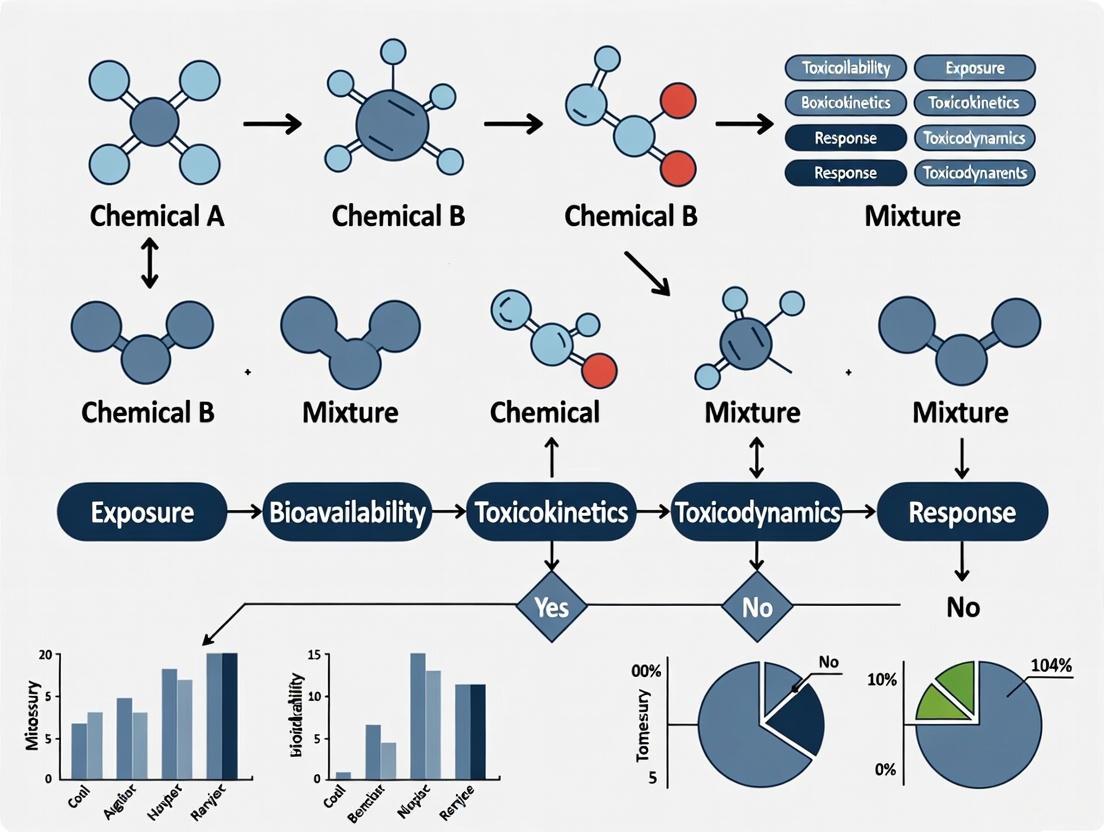
This comprehensive review addresses the critical challenge of assessing health risks from chemical mixtures, moving beyond traditional single-chemical evaluation paradigms.
Modern Strategies for Chemical Mixture Risk Assessment: From Foundational Concepts to Advanced Applications
Abstract
This comprehensive review addresses the critical challenge of assessing health risks from chemical mixtures, moving beyond traditional single-chemical evaluation paradigms. We explore foundational toxicological concepts, advanced methodological frameworks including computational tools like the MRA Toolbox, and current regulatory guidelines. Targeting researchers, scientists, and drug development professionals, the article synthesizes evidence on mixture toxicity mechanisms, assessment methodologies, and emerging solutions for complex risk scenarios. Special emphasis is placed on troubleshooting common assessment challenges and validating approaches through comparative analysis of whole-mixture versus component-based strategies.
Understanding Chemical Mixture Toxicology: Core Concepts and Mechanisms
Troubleshooting Common Experimental & Analytical Challenges
Q1: Our mixture experiment yielded unexpected synergistic toxicity. How should we adjust our risk assessment approach?
Unexpected synergism, where the combined effect is greater than the sum of individual effects, requires moving beyond simple additive models.
- Confirm the Interaction: First, verify the synergistic effect is reproducible. Rule out experimental artifacts or issues with chemical stability in your mixture.
- Refine the Hazard Assessment: Abandon the default assumption of dose addition for these components [1]. Investigate the Toxicokinetic (TK) and Toxicodynamic (TD) interactions. The Aggregate Exposure Pathway (AEP) – Adverse Outcome Pathway (AOP) framework can help map where interactions occur (e.g., competition for metabolism, or shared target receptors) [1].
- Adjust Risk Characterisation: A simple component-based approach using dose addition may no longer be sufficient. You may need to apply response-surface modeling (e.g., Bayesian Kernel Machine Regression - BKMR) to characterize the interaction, or treat the specific synergistic combination as a distinct "whole mixture" for risk assessment purposes [1] [2].
Q2: We are studying a complex, poorly-defined environmental mixture. How can we prioritize components for analysis?
Prioritizing components for a poorly defined mixture is a common challenge in moving towards exposome-level research.
- Apply a Tiered Approach: Start with a low-tier, conservative screening. Use exposure-driven prioritization (prioritize chemicals with highest exposure levels) or a risk-based approach (consider both exposure and inherent toxicity) [1].
- Leverage Hazard-Driven Grouping: Group chemicals into "Assessment Groups" based on common mechanisms of toxicity, such as shared Mode of Action (MoA) or Adverse Outcome Pathway (AOP), even if their chemical structures differ [1] [3].
- Use Advanced Analytics: For data-rich scenarios, employ statistical methods like Weighted Quantile Sum (WQS) regression to identify chemicals that contribute most significantly to the observed mixture effect [2].
Q3: Our statistical models for mixture effects suffer from high multicollinearity among components. What are our options?
High correlation between exposure variables is a central challenge in mixture epidemiology.
- Choose Robust Mixture Methods: Several methods are designed to handle correlated components.
- Bayesian Kernel Machine Regression (BKMR): Excellently handles multicollinearity and can model complex non-linear and interaction effects [2].
- Weighted Quantile Sum (WQS) Regression: Creates a single index from the weighted sum of correlated components, reducing dimensionality [2].
- Quantile g-computation: An extension that allows both positive and negative weights, relaxing some WQS assumptions [2].
- Method Triangulation: Do not rely on a single method. Apply multiple complementary statistical approaches (e.g., BKMR, WQS, and main-effects regression) and look for consistent signals across models to strengthen causal inference [2].
Q4: How can we determine if two different samples of a complex botanical mixture are "sufficiently similar" for our research?
The "sufficient similarity" assessment ensures findings from one mixture variant can be extrapolated to others.
- Develop a Multi-Pronged Strategy: Relying on a single method is insufficient. A robust assessment combines:
- Non-Targeted Chemical Analysis: Use techniques like LC-HRMS to obtain comprehensive chemical profiles and compare the presence and abundance of constituents across samples [3].
- Targeted Analysis: Quantify key marker compounds known or suspected to be toxicologically relevant.
- In Vitro Bioassays: Test the mixtures in a battery of mechanistic cell-based assays (e.g., for receptor activation, cytotoxicity). Similar biological activity is a strong indicator of functional similarity, even with some chemical variability [3].
- Apply Statistical Comparison: Use multivariate statistics to quantitatively compare the chemical and bioassay profiles from different mixture samples and assess the degree of similarity [3].
Experimental Protocols for Mixture Risk Assessment
Protocol: Component-Based Risk Assessment (CBRA) for a Defined Mixture
This protocol outlines a tiered approach for assessing the risk of a chemically defined mixture, as recommended by EFSA [1].
1. Problem Formulation
- Define the Scope: Identify all chemicals in the mixture and the human population or ecological receptor of concern.
- Form Assessment Groups: Group chemicals based on shared toxicological properties, typically a common Mode of Action (MoA) [1].
2. Exposure Assessment
- Tier 0 (Screening): Use conservative point estimates (e.g., maximum exposure levels) from available data or models.
- Tier 1 (Deterministic): Refine estimates using more realistic average concentrations and exposure factors.
- Tier 2 (Probabilistic): Model the full distribution of exposure across the population using tools like SHEDS or APEX, accounting for variability in intake and exposure duration [1] [4].
3. Hazard Assessment
- Tier 0 (Default): Assume dose additivity for chemicals within an Assessment Group. Use Reference Doses (RfDs) or similar points of departure (PODs) from single-chemical studies.
- Tier 1 (Refined Additivity): Incorporate potency differences between components using the Relative Potency Factor (RPF) approach, designating one chemical as an index compound.
- Tier 2 (Interaction Testing): If data suggest interactions, conduct targeted mixture toxicity studies to derive chemical-specific interaction factors [1].
4. Risk Characterisation
- Calculate the Hazard Index (HI): For each Assessment Group, sum the Hazard Quotients (HQ = Exposure / POD) of all components.
HI = Σ HQi. An HI > 1 indicates potential risk requiring refinement or management [1] [4]. - Probabilistic Risk: In higher tiers, characterize the probability of exceeding a risk threshold across the exposed population.
Component-Based Risk Assessment Workflow
Protocol: Statistical Analysis of Mixture Health Effects in Epidemiological Studies
This protocol is based on prevalent methods identified in the scoping review of Persistent Organic Pollutant (POP) mixtures [2].
1. Data Preparation
- Handle Censored Data: For biomonitoring data with values below the limit of detection (LOD), use robust imputation methods (e.g., multiple imputation, maximum likelihood).
- Transform and Standardize: Log-transform exposure concentrations to reduce skewness. Standardize exposures (e.g., to z-scores) for comparability in some models.
2. Method Selection based on Research Question
- For Overall Mixture Effect:
- Primary: Use Bayesian Kernel Machine Regression (BKMR) for its flexibility in handling correlations, non-linearity, and interactions [2].
- Secondary/Complementary: Apply Weighted Quantile Sum (WQS) regression or Quantile g-computation to estimate a joint effect and identify key contributors.
- For Interaction Effects: BKMR is the preferred method as it can model component-wise exposure-response functions and pairwise interactions.
- For Exposure Pattern Identification: Use Latent Class Analysis or Principal Component Analysis (PCA) to identify subpopulations with distinct exposure profiles.
3. Model Implementation & Validation
- Follow Published Code: For methods like BKMR and WQS, use well-documented R packages (e.g.,
bkmr,gWQS). - Incorporate Covariates: Adjust for key confounders (e.g., age, sex, socioeconomic status) as defined in your causal diagram.
- Conduct Sensitivity Analyses: Assess the robustness of results by varying the number of iterations, prior distributions (in Bayesian methods), and the set of adjusted covariates.
4. Interpretation and Reporting
- Visualize Results: Use BKMR plots to display the overall exposure-response relationship and component-wise plots.
- Report Key Estimates: For WQS/Quantile g-computation, report the overall mixture index and the weights of top contributors.
- Acknowledge Limitations: Clearly state the assumptions of your chosen method and the potential for residual confounding.
The Scientist's Toolkit: Essential Reagents & Models
Table 1: Key Reagents and Models for Combined Exposure Research
| Tool Name | Type | Primary Function | Application Context |
|---|---|---|---|
| BKMR [2] | Statistical Model | Estimates overall mixture effect and interactions in correlated exposures. | Human epidemiology; hazard identification. |
| WQS Regression [2] | Statistical Model | Creates a weighted index to estimate overall effect and identify important mixture components. | Prioritizing chemicals in complex exposure studies. |
| SHEDS [5] [4] | Exposure Model | Probabilistic model for estimating aggregate (single chemical) exposure via multiple routes. | Modeling exposure to a pesticide in food, water, and residential settings. |
| APEX [4] | Exposure Model | Models cumulative (multiple chemicals) exposure for populations via multiple pathways. | Community-based risk assessment of air pollutants. |
| AEP-AOP Framework [1] | Conceptual Model | Integrates exposure, toxicokinetics, and toxicodynamics to map chemical fate and effects. | Mechanistic understanding of mixture component interactions. |
| Read-Across [3] | Analytical Approach | Determines if a new or variable mixture is "sufficiently similar" to a well-studied one. | Safety assessment of botanical extracts or complex reaction products. |
Table 2: Common Statistical Methods for Mixture Analysis (as of 2023 Review) [2]
| Method Category | Example Methods | Key Strengths | Primary Research Question |
|---|---|---|---|
| Response-Surface Modeling | Bayesian Kernel Machine Regression (BKMR) | Handles correlation, non-linearity, interactions. | Overall effect & interactions. |
| Index Modeling | Weighted Quantile Sum (WQS), Quantile g-computation | Provides an overall effect estimate and component weights. | Overall effect & variable importance. |
| Dimension Reduction | Principal Component Analysis (PCA), Factor Analysis | Reduces many exposure variables to fewer factors. | Exposure pattern identification. |
| Latent Variable Models | Latent Class Analysis | Identifies subpopulations with similar exposure profiles. | Exposure pattern identification. |
Mixture Analysis Research Questions
FAQs on Core Concepts
What is the key difference between synergism and potentiation?
Synergism occurs when two or more chemicals, each of which produces a toxic effect on their own, are combined and result in a health effect that is greater than the sum of their individual effects [6]. In contrast, potentiation occurs when a substance that does not normally have a toxic effect is added to another chemical, making the second chemical much more toxic [6]. For example, in synergism, 2 + 2 > 4, while in potentiation, 0 + 2 > 2 [6].
How do additive effects differ from synergistic ones?
Additive effects describe a combined effect that is equal to the sum of the effect of each agent given alone (e.g., 2 + 2 = 4) [6]. This is the most common type of interaction when two chemicals are given together and represents "no interaction" between the compounds [6] [7]. Synergistic effects are substantially greater than this sum (e.g., 2 + 2 >> 4) [6].
Why is antagonism important in toxicology?
Antagonism describes the situation where the combined effect of two or more compounds is less toxic than the individual effects (e.g., 4 + 6 < 10) [6]. This concept is crucial because antagonistic effects form the basis of many antidotes for poisonings and medical treatments [6]. For instance, ethyl alcohol can antagonize the toxic effects of methyl alcohol by displacing it from metabolic enzymes [6].
What are the real-world implications of these interactions in risk assessment?
Chemical risk assessment has traditionally evaluated substances individually, but real-world exposure involves mixtures [8]. Even when individual chemicals are present at concentrations below safety thresholds, their combined effects can pose significant health risks [8]. This has led scientific communities to advocate for regulatory changes, such as including a Mixture Assessment Factor in the revised EU REACH framework to account for cumulative impacts [8].
Troubleshooting Experimental Issues
Problem: Inconsistent Synergy Results Across Studies
Issue: Different reference models for defining additive interactions yield conflicting conclusions about whether combinations are synergistic.
Solution:
- Predefine your reference model before experimentation and maintain consistency in analysis [7].
- Understand model assumptions: Loewe Additivity assumes similar mechanisms, while Bliss Independence assumes independent mechanisms [7].
- Select the model that best aligns with the pharmacological mechanisms of your compounds.
Problem: Non-Traditional Dose-Response Curves
Issue: Compounds with hormetic (biphasic) or other non-traditional dose-response curves cannot be accurately assessed with standard synergy models [9].
Solution:
- Consider the Dose-Equivalence/Zero Interaction (DE/ZI) method, which can assess interactions for compounds with non-traditional curves using a nearest-neighbor approach [9].
- This method eliminates the need to determine the best-fit equation for a given data set and values experimentally-derived results over formulated fits [9].
Problem: Determining Optimal Dose Ratios
Issue: Identifying the specific dose combinations that produce synergistic effects while minimizing toxicity.
Solution:
- Implement isobolographic analysis to systematically map combination effects across different dose ratios [10].
- This graphical approach identifies dose pairs that produce a specified effect level (often ED₅₀) and determines whether they plot below (synergism), on (additive), or above (antagonism) the predicted additive line [10].
Quantitative Assessment Methods
Table 1: Reference Models for Assessing Chemical Interactions
| Model Name | Definition | Key Assumptions | Best Applications |
|---|---|---|---|
| Loewe Additivity | Dose-based approach where drugs behave as dilutions of each other [7] | Similar mechanism of action; constant potency ratio [10] | Compounds with similar pharmacological targets |
| Bliss Independence | Effect-based probabilistic model where drugs act independently [7] | Independent mechanisms of action; effects expressed as probabilities [9] | Compounds with distinct molecular targets |
| Highest Single Agent | Combined effect exceeds the maximal effect of either drug alone [9] | None | Preliminary screening of combinations |
Table 2: Experimental Design Considerations for Combination Studies
| Parameter | Additivity Testing | Synergy Screening | Mechanistic Studies |
|---|---|---|---|
| Dose Range | 3-5 concentrations of each compound near EC₅₀ | Broad concentration matrix (e.g., 8×8) | Targeted around synergistic ratios |
| Replicates | Minimum n=3 | Minimum n=3 | Minimum n=5 for statistical power |
| Controls | Single agents, vehicle, positive control | Single agents, vehicle | Pathway-specific inhibitors |
| Analysis Method | Isobolographic analysis | Combination Index | DE/ZI for non-traditional curves |
Experimental Protocols
Protocol 1: Isobolographic Analysis for Additivity Testing
Purpose: To determine whether a two-drug combination interacts synergistically, additively, or antagonistically at a specified effect level.
Materials:
- Test compounds in pure form
- Vehicle solution appropriate for compounds
- Cell culture or experimental model system
- Equipment for effect measurement (plate reader, etc.)
Procedure:
- Generate individual dose-response curves for each compound to determine EC₅₀ values.
- Select a fixed ratio combination based on the EC₅₀ values (e.g., 1:1, 1:2 ratios).
- Treat experimental system with combination doses maintaining the fixed ratio.
- Measure effects and calculate the total dose required to achieve the specified effect level (typically EC₅₀).
- Plot the isobologram with Drug A dose on x-axis and Drug B dose on y-axis.
- Draw the line of additivity connecting the individual EC₅₀ values.
- Statistically compare observed combination doses to expected additive doses.
Interpretation: Data points significantly below the additivity line indicate synergism; points above indicate antagonism [10].
Protocol 2: Bliss Independence Assessment
Purpose: To evaluate drug interactions under the assumption of independent mechanisms of action.
Procedure:
- Determine dose-response relationships for each drug alone.
- Express effects as fractional responses between 0 and 1.
- Apply Bliss Independence formula: EAB = EA + EB - (EA × EB), where EAB is the expected additive effect, and EA and EB are the effects of drugs A and B alone.
- Measure the actual combination effect experimentally.
- Calculate Bliss Excess = Eobserved - Eexpected.
Interpretation: Positive Bliss Excess values indicate synergy; negative values indicate antagonism [7].
The Scientist's Toolkit
Table 3: Essential Research Reagents and Resources
| Resource | Function/Application | Example Uses |
|---|---|---|
| NTP CEBS Database [11] | Comprehensive toxicology database with curated chemical effects data | Accessing standardized toxicity data for mixture risk assessment |
| Integrated Chemical Environment (ICE) [11] | Data and tools for predicting chemical exposure effects | Screening potential mixture interactions before experimental work |
| Zebrafish Toxicology Models [11] | Alternative toxicological screening model | Higher-throughput assessment of mixture toxicity in whole organisms |
| High-Throughput Screening Robotics [11] | Automated systems for rapid toxicity testing | Efficiently testing multiple concentration combinations in chemical mixtures |
Diagnostic Workflows
Diagram 1: Chemical Interaction Assessment Workflow
Diagram 2: Synergism Mechanisms and Research Implications
Frameworks at a Glance
The "Multi-Headed Dragon" and "Synergy of Evil" are conceptual models that describe how different chemicals in a mixture can interact to cause adverse effects. Understanding these frameworks is crucial for accurate chemical risk assessment.
| Feature | 'Multi-Headed Dragon' Concept | 'Synergy of Evil' Concept |
|---|---|---|
| Core Principle | Additive effects from substances sharing a common molecular mechanism or target [12] [13] | One substance ("enhancer") amplifies the toxicity of another ("driver") [12] |
| Primary Interaction | Similar mechanism of action or converging key events [12] | Toxicokinetic or toxicodynamic enhancement [12] |
| Nature of Effect | Primarily additive [13] | More than additive (synergistic) [13] |
| Risk Management Implication | Adequate management of individual substances can prevent effects [12] | Adequate management of individual substances can prevent effects [12] |
Experimental Protocols & Methodologies
FAQ: How do I test for the "Multi-Headed Dragon" effect?
To test for this additive effect, you must determine if combined substances act on the same molecular target or pathway. The following workflow outlines the key experimental steps, which rely on the Loewe Additivity model and Isobologram Analysis [13].
Detailed Procedure:
- Individual Substance Characterization: For each substance, measure the concentration-response relationship using 6-10 concentrations. Perform at least three independent experiments to fit a log-logistic curve and determine a robust toxicity indicator, such as the EC20 (the concentration that produces 80% viability) [13].
- Fixed-Proportion Mixture Preparation: Create the test mixture by combining each substance at a concentration proportional to its individual EC20. For example, a mixture might contain each substance at 0.1 x its EC20, 0.5 x its EC20, etc. [13].
- Mixture Effect Measurement: In a new, independent experiment, measure the viability (or other relevant endpoint) of cells exposed to the prepared mixture proportions.
- Data Analysis with Loewe Additivity:
- Use the Budget Approach, an extension of the Loewe additivity model for multiple substances, as your reference model for additivity [13].
- Calculate the Interaction Index.
- Compare the observed mixture effect to the predicted additive effect. An observed effect greater than predicted indicates synergism, while a lesser effect indicates antagonism [13].
FAQ: How do I test for the "Synergy of Evil" effect?
This tests for synergistic interactions where one chemical enhances the effect of another. The protocol focuses on identifying and characterizing the "enhancer" and "driver" relationship.
Detailed Procedure:
- Hypothesis and Compound Selection: Based on known metabolism or mode of action, identify a potential "driver" chemical (primary toxicant) and an "enhancer" (e.g., a compound that may inhibit the driver's detoxification enzymes).
- Toxicokinetic Investigation:
- Use Physiologically Based Pharmacokinetic (PBPK) modeling to predict how the enhancer alters the target tissue dose of the driver [14].
- Experimentally, in vitro systems with human hepatocytes or relevant cell lines can be used to measure the inhibition of key cytochrome P450 enzymes by the enhancer, which would lead to increased bioavailability of the driver.
- Toxicodynamic Investigation:
- Test the driver substance alone across a range of doses to establish its baseline dose-response curve.
- Test the enhancer substance alone at a low, presumably non-toxic dose to confirm it has no significant effect.
- Co-expose the biological system to the non-toxic dose of the enhancer and various doses of the driver. A significant leftward shift in the driver's dose-response curve indicates a toxicodynamic synergistic interaction.
- Data Analysis: The Bliss Independence model is often suitable for analyzing this type of interaction, where substances are assumed to act independently. A combined effect greater than that predicted by the multiplicative product of their individual effects confirms synergism [13].
The Scientist's Toolkit
| Research Reagent / Material | Function in Mixture Toxicity Studies |
|---|---|
| In Vitro Toxicity Assays | Measures cell viability (e.g., ATP levels, membrane integrity) as a response to individual substances and mixtures. The foundation for determining EC values [13]. |
| Fixed-Proportion Mixtures | Test mixtures created by combining individual substances at fractions of their pre-determined EC20 values. This design is central to the Budget Approach and Loewe additivity testing [13]. |
| Log-Logistic Model | A parametric sigmoidal model class used to fit concentration-response data from individual substances, allowing for the robust calculation of EC20 and other alerts [13]. |
| Loewe Additivity Model | A reference model for additivity. It calculates an "Interaction Index" to determine if a mixture's effect is additive, synergistic, or antagonistic [13]. |
| Physiologically Based Pharmacokinetic (PBPK) Models | Computational tools that predict how chemicals are absorbed, distributed, metabolized, and excreted. Crucial for predicting target tissue doses and identifying toxicokinetic interactions in "Synergy of Evil" [14]. |
| Benchmark Dose (BMD) Modeling | A more robust statistical method than NOAEL for determining a Point of Departure (PoD) for risk assessment, using the entire dose-response curve [12]. |
Troubleshooting Common Experimental Issues
FAQ: How can I account for high day-to-day variability in my mixture experiments?
Day-to-day variability is a major challenge when mixture experiments (step 2) are conducted separately from individual substance characterization (step 1) [13].
- Problem: Cytotoxicity measurements for the same reference substance can vary between experiments conducted on different days, leading to inaccurate assessment of mixture interactions [13].
- Solution: Incorporate a single concentration of each reference substance in the same experimental batch as the mixture tests. This provides an internal control that allows for statistical adjustment of the day-to-day variability, aligning the results from the mixture experiment with the historical dose-response curves [13].
FAQ: My data is inconclusive. Which additivity model should I use?
Choosing the right model is critical for correct interpretation.
- For "Multi-Headed Dragon" (Similar Mode of Action): The Loewe Additivity model is typically the most appropriate. It is the foundation for the "Budget Approach" used for multi-substance mixtures and is based on the idea of dose addition [13].
- For "Synergy of Evil" (Potential Independent Action): The Bliss Independence model can be a good starting point, as it assumes the substances act via different mechanisms [13].
- General Guidance: A review by Cedergreen (2014) notes that synergistic interactions are rare, and additive models most often explain mixture effects. If you are observing significant synergism, ensure your experimental design and model assumptions are correct [13].
FAQ: What is the "Revolting Dwarfs" hypothesis?
This is a third, more hypothetical concept. It proposes that a large number of substances, each at a very low dose below its individual safety threshold, could somehow combine to cause significant adverse effects [12] [13].
- Current Scientific Consensus: The article by Bloch et al. (2023) concludes that there is currently no experimental evidence or plausible mechanism supporting this hypothesis [12].
- Implication for Your Research: While it is important to be aware of this debate, current risk assessment practices and your experimental frameworks should focus on the well-established "Multi-Headed Dragon" and "Synergy of Evil" concepts.
Dose-Response Relationships and Threshold Considerations in Mixture Toxicology
Troubleshooting Guide: Common Experimental Challenges
Issue 1: My dose-response curve for a chemical mixture does not show a clear sigmoidal shape. What could be wrong?
- Potential Cause 1: Inadequate Dose Spacing
- Diagnosis: If the doses tested are too close together, you may not capture the full range of the response, from the threshold to the maximum effect plateau [15].
- Solution: Redesign the experiment to include a wider range of doses, ensuring you cover suspected threshold levels and the upper response plateau. A pilot study can help determine an appropriate dosing range.
- Potential Cause 2: Interactions Between Mixture Components
- Diagnosis: The mixture may contain compounds that interact, leading to additive, synergistic (more-than-additive), or antagonistic (less-than-additive) effects that distort the expected curve shape [12].
- Solution: Conduct dose-response testing on individual components to establish their baseline activity. This allows you to compare the observed mixture effect with the effect predicted by models like concentration addition (for similarly acting chemicals) [12].
- Potential Cause 3: The Mixture Contains Compounds with Differing Mechanisms of Action
- Diagnosis: The "revolting dwarfs" hypothesis suggests that chemicals acting via disparate mechanisms at low doses might not produce a classic sigmoidal curve, though evidence for this is currently limited [12].
- Solution: Investigate the molecular mechanisms of key components. Group chemicals based on their mode of action (e.g., all compounds activating a specific receptor) and analyze those subgroups separately [12].
- Potential Cause 1: Insensitive or Poorly Chosen Endpoint
- Diagnosis: The biological endpoint you are measuring (e.g., a general health observation) may not be the most sensitive effect caused by the mixture [16].
- Solution: Incorporate more sensitive, mechanistic endpoints. For instance, instead of just observing liver weight changes, measure specific serum biomarkers like ALT or AST, or conduct histological examinations to detect more subtle damage [17] [16].
- Potential Cause 2: High Variability in Response Data
- Diagnosis: Significant scatter in the data at low doses can make it statistically difficult to distinguish a true effect from background noise [15].
- Solution: Increase your sample size to improve statistical power. Consider using the Benchmark Dose (BMD) approach, which uses all the dose-response data to model a point of departure (the BMDL), which is often more robust and reliable than NOAEL/LOAEL [17] [15] [12].
- Potential Cause 3: The Mixture Contains a Carcinogen
- Diagnosis: For carcinogens with a genotoxic mode of action, it is traditionally assumed that there is no threshold, meaning any dose carries some theoretical risk [17] [16].
- Solution: Identify if your mixture contains known genotoxic carcinogens. The dose-response assessment will then focus on determining the potency (cancer slope factor) rather than a threshold, often resulting in a linear low-dose extrapolation [16].
Issue 3: My in vitro mixture toxicity data does not align with in vivo observations.
- Potential Cause: Differences in Toxicokinetics
- Diagnosis: In vitro systems often lack the absorption, distribution, metabolism, and excretion (ADME) processes of a whole organism. A substance that is metabolically activated in the liver (a toxicokinetic "synergy of evil") will not show this effect in a simple cell culture [12].
- Solution: Use more advanced in vitro models that incorporate metabolic competence, such as systems with S9 liver fractions or co-cultures with hepatocytes. Follow up with toxicokinetic (PBPK) modeling to simulate in vivo conditions [12].
Frequently Asked Questions (FAQs)
Q: What is the fundamental difference between dose-response assessment for carcinogens and non-carcinogens?
A: The key difference lies in the assumption of a threshold. For most non-carcinogenic effects, a dose (the No Observed Adverse Effect Level, or NOAEL) below which no adverse effect occurs is assumed [17] [16]. For genotoxic carcinogens, it is often assumed that there is no safe threshold and even very low doses pose some level of risk, leading to a linear dose-response model at low doses [17] [16]. The assessment for non-carcinogens focuses on finding a safe dose (e.g., Reference Dose), while for carcinogens, it focuses on estimating the probability of cancer risk (potency) [16].
Q: What are NOAEL, LOAEL, and BMD, and how do they relate?
A:
- NOAEL (No Observed Adverse Effect Level): The highest tested dose where no statistically or biologically significant adverse effects are observed [17] [15] [16].
- LOAEL (Lowest Observed Adverse Effect Level): The lowest tested dose where a statistically or biologically significant adverse effect is observed [17] [15] [16].
- BMD (Benchmark Dose): A model-derived dose that produces a predetermined change in response rate (e.g., a 10% increase in effect). The lower confidence limit (BMDL) is often used as the Point of Departure [17] [15] [12].
The BMD approach is generally preferred over NOAEL/LOAEL because it is less dependent on dose spacing, uses all experimental data, and accounts for statistical variability [15] [12].
Q: How do I account for species differences when extrapolating animal dose-response data to humans?
A: This is typically done by applying Uncertainty Factors (UFs) or Assessment Factors to the Point of Departure (e.g., NOAEL or BMDL) [17] [16]. A common default is to use a 10-fold factor for interspecies differences and another 10-fold factor for intraspecies (human) variability, resulting in a total UF of 100 [16]. These factors can be adjusted with substance-specific data. More sophisticated methods, like Physiologically Based Pharmacokinetic (PBPK) modeling, provide a more scientific basis for this extrapolation by simulating the chemical's behavior in different species [15].
Q: What are the main concepts for how chemicals in a mixture interact?
A: Two primary established concepts are [12]:
- The "Multi-Headed Dragon" (Additivity): Several chemicals in the mixture act by the same molecular mechanism, targeting the same biological site. Their effects add up, even if each individual chemical is present at a low, seemingly harmless dose [12].
- The "Synergy of Evil" (Interaction): One chemical ("enhancer") increases the toxicity of another ("driver"). This can happen by the enhancer inhibiting the driver's detoxification enzymes (toxicokinetic synergy) or by amplifying its toxic effect at the target site (toxicodynamic synergy) [12].
Q: Why is risk assessment for chemical mixtures so challenging, and what new approaches are being discussed?
A: Risk assessment has traditionally been performed for single chemicals, but humans and ecosystems are exposed to complex mixtures [8]. The main challenge is that even when individual chemicals are below their safe thresholds, their combined effect can be significant [8] [12]. To address this, regulatory scientists are debating the introduction of a Mixture Assessment Factor (MAF). A MAF is a generic factor that would lower the acceptable exposure limit for all substances to account for potential mixture effects, though this approach is subject to ongoing scientific debate [8] [12].
The table below summarizes critical parameters derived from dose-response assessments [17] [15] [16].
| Parameter | Acronym | Definition | Application in Risk Assessment |
|---|---|---|---|
| No Observed Adverse Effect Level | NOAEL | Highest dose where no adverse effects are observed. | Used to derive safe exposure levels (e.g., RfD) by applying Uncertainty Factors. |
| Lowest Observed Adverse Effect Level | LOAEL | Lowest dose where an adverse effect is observed. | Used when a NOAEL cannot be determined; requires an additional UF. |
| Benchmark Dose | BMD | A model-derived dose for a predetermined benchmark response (BMR). | A more robust Point of Departure than NOAEL/LOAEL; uses the entire dose-response curve. |
| Reference Dose | RfD | An estimate of a daily oral exposure safe for a human population. | Calculated as RfD = NOAEL or BMDL / (Uncertainty Factors). Used for non-cancer risk. |
| Cancer Slope Factor | CSF | An upper-bound estimate of risk per unit intake of a carcinogen over a lifetime. | Used to estimate cancer probability at different exposure levels for carcinogens. |
Experimental Protocol: Establishing a Dose-Response Curve for a Chemical Mixture
Objective: To determine the dose-response relationship and identify key toxicological parameters (NOAEL, LOAEL, ED₅₀) for a defined chemical mixture in an in vivo model.
Materials:
- Test Substances: Purified compounds constituting the mixture.
- Vehicle: A suitable solvent (e.g., corn oil, saline, dimethyl sulfoxide diluted appropriately).
- Animals: Laboratory rodents (e.g., rats), with group size determined by power analysis (typically n=10-12 per group) to ensure statistical significance [15].
- Equipment: Dosing apparatus (gavage needles, inhalation chambers, etc.), clinical pathology analyzers, tissue processing equipment for histopathology.
Procedure:
- Mixture Formulation: Prepare the chemical mixture at a fixed ratio based on anticipated human exposure or environmental relevance. Maintain this ratio across all dose groups.
- Dose Selection: Based on pilot studies or literature, select at least five dose levels plus a vehicle control group. The doses should span from a level expected to produce no effect to one that produces a clear adverse effect [15].
- Animal Dosing: Randomly assign animals to each dose group and the control. Administer the mixture daily via the relevant route (e.g., oral gavage) for a defined period (e.g., 28 days for a subacute study).
- In-life Observations: Record daily clinical observations (mortality, morbidity, signs of toxicity) and weekly body weights and food consumption.
- Terminal Procedures: At study termination, collect blood for clinical chemistry (e.g., liver enzymes, kidney biomarkers) and perform a gross necropsy. Weigh key organs (liver, kidneys, brain, etc.) and preserve tissues in formalin for histopathological examination [16].
- Data Analysis:
- Quantal Data: For "all-or-none" effects (e.g., presence of a tumor), use probit or logit analysis to calculate effective doses (ED₅₀).
- Graded Data: For continuous data (e.g., enzyme activity, organ weight), use regression analysis to model the dose-response curve. Statistically compare each dosed group to the control group (e.g., using ANOVA followed by Dunnett's test) to identify the NOAEL and LOAEL [15] [16].
- BMD Modeling: Input the continuous or quantal data into BMD software (e.g., US EPA's BMDS) to derive a BMDL for a predefined BMR (e.g., 10% extra risk) [12].
Conceptual Workflow for Mixture Risk Assessment
The following diagram illustrates the logical workflow for assessing the risk of chemical mixtures, integrating dose-response and threshold considerations.
The Scientist's Toolkit: Key Research Reagents & Materials
| Item | Function in Mixture Toxicology |
|---|---|
| Defined Chemical Mixtures | Custom-blended solutions of contaminants (e.g., PFAS, pesticides) used as the test agent to simulate real-world exposure in experimental models [8]. |
| Metabolic Activation Systems (e.g., S9 Fraction) | Liver subcellular fractions used in in vitro assays to provide metabolic competence, crucial for detecting toxins that require metabolic activation (pro-toxins) [12]. |
| Biomarker Assay Kits | Commercial kits for measuring specific biomarkers of effect (e.g., oxidative stress, inflammation) or exposure (e.g., chemical adducts) in biological samples [16]. |
| Benchmark Dose (BMD) Software | Statistical software (e.g., US EPA's BMDS) used to model dose-response data and derive a more robust Point of Departure (BMDL) than NOAEL/LOAEL [15] [18]. |
| Positive Control Substances | Known toxicants (e.g., carbon tetrachloride for hepatotoxicity) used to validate the sensitivity and responsiveness of the experimental system [16]. |
Frequently Asked Questions
Q1: What are critical windows of exposure in developmental toxicity, and why are they important for risk assessment? Critical windows of exposure are specific developmental stages during which an organism is particularly vulnerable to the adverse effects of environmental insults. These windows correspond to key developmental processes, such as organ formation or functional maturation. Identifying these periods is crucial for risk assessment because exposure to the same agent at different developmental stages can produce dramatically different outcomes. For example, research shows that broad windows of sensitivity can be identified for many biological systems, and this information helps identify especially susceptible subgroups for specific public health interventions [19]. The same chemical exposure may cause malformations during organogenesis but have no effect or different effects during fetal growth periods.
Q2: How does the concept of cumulative risk apply to chemical mixtures, and what are the current regulatory gaps? Cumulative risk assessment for chemical mixtures addresses the combined risk from exposure to multiple chemicals, which reflects real-world exposure scenarios more accurately than single-chemical assessments. Current chemical management practices under regulations like REACH often do not adequately account for mixture effects, leading to systematic underestimation of actual risks. Scientific research indicates that even when individual chemicals are present at concentrations below safety thresholds, their combined effects can result in significant health and environmental risks [8]. European scientists are now advocating for the inclusion of a Mixture Assessment Factor (MAF) in the revised REACH framework to properly address these cumulative impacts.
Q3: What statistical approaches can help identify critical exposure windows in epidemiological studies? Advanced statistical models like the Bayesian hierarchical distributed exposure time-to-event model can help identify critical exposure windows by estimating the joint effects of exposures during different vulnerable periods. This approach treats preterm birth as a time-to-event outcome rather than a binary outcome, which addresses the challenge of different exposure lengths among ongoing pregnancies [20]. The model allows exposure effects to vary across both exposure weeks and outcome weeks, enabling researchers to determine whether exposures have different impacts at different gestational ages and whether there are particularly sensitive exposure periods.
Q4: What are the limitations of using cumulative exposure as a dose metric in developmental studies? Cumulative exposure (which combines intensity and duration) is not always an adequate parameter when more recent exposure or exposure intensity plays a greater role in disease outcome. If a dose-response relationship is not apparent with cumulative exposure, it might indicate that the exposure metric is inadequate rather than the absence of an effect [21]. This suggests a need for more sophisticated exposure metrics that account for the timing and intensity of exposure relative to critical developmental windows, rather than simply summing total exposure over time.
Q5: How can in vitro methods contribute to identifying critical windows and mixture effects? In vitro assessments can help identify potential mechanisms of disruption to specific cell-signaling and genetic regulatory pathways, which often operate within precise developmental windows. However, these methods have intrinsic limitations: they may not detect toxicants that initiate effects outside the embryo (in maternal or placental compartments), miss effects mediated by physiological changes only present in intact embryos, and lack the dynamic concentration changes and metabolic transformations that occur in vivo [22]. Despite these limitations, they remain valuable for screening and mechanistic studies, particularly when ethical or practical constraints limit in vivo testing.
Troubleshooting Common Experimental Challenges
Problem: Inconsistent findings when examining associations between air pollution exposure during pregnancy and preterm birth risk. Potential Cause: Limitations from standard analytic approaches that treat preterm birth as a binary outcome without considering time-varying exposures over the course of pregnancy. Solution: Implement a discrete-time survival model that treats gestational age as time-to-event data and estimates joint effects of weekly exposures during different vulnerable periods. This approach effectively accommodates differences in exposure length among pregnancies of different gestational ages [20]. Protocol Application:
- Define the risk set starting at the earliest gestational week of interest (e.g., 27th week)
- Model the discrete event hazard rate using appropriate regression (e.g., probit regression)
- Assign dynamic Gaussian process priors to borrow information across exposure weeks and outcome weeks
- Estimate weekly pollutant effects that can be visualized in a matrix format
Problem: Lack of clear dose-response relationship despite overall increased relative risk. Potential Cause: The exposure metric (e.g., cumulative exposure) may not adequately capture the relevant aspect of exposure, especially when more recent exposure or exposure intensity plays a greater role in disease outcome. Solution: Explore alternative exposure metrics and consider that the absence of a dose-response pattern with cumulative exposure might indicate the need for more refined exposure assessment rather than the absence of a true effect [21]. Protocol Application:
- Collect detailed temporal exposure data rather than relying solely on cumulative measures
- Analyze exposure intensity separately from duration
- Consider time-varying exposure models that account for critical periods
- Evaluate whether different exposure metrics yield more consistent dose-response patterns
Problem: Difficulty extrapolating in vitro developmental toxicity results to in vivo outcomes. Potential Cause: Fundamental limitations of in vitro systems, including absence of maternal/placental compartments, lack of physiological changes in intact embryos, and inability to observe functional impairments that manifest postnatally. Solution: Use in vitro methods for appropriate applications such as secondary testing of chemicals with known developmental toxicity potential or mechanistic studies, while recognizing their limitations for primary testing [22]. Protocol Application:
- For secondary testing: Use isolated mammalian embryos and embryonic cells to replicate known in vivo effects
- For mechanistic studies: Employ manipulations possible in vitro (tissue ablation/transplantation, labeling, gene manipulation)
- Clearly define the specific developmental toxicity outcome being assessed
- Validate in vitro findings with targeted in vivo studies when possible
Problem: Inadequate assessment of mixture effects in chemical risk assessment. Potential Cause: Current regulatory frameworks typically assess chemicals individually, assuming people and ecosystems are exposed to them separately rather than in combination. Solution: Advocate for and implement mixture assessment factors in risk assessment frameworks that account for cumulative impacts of hazardous chemicals [8]. Protocol Application:
- Identify co-occurring chemicals in specific exposure scenarios
- Utilize toxicity equivalency factors (TEFs) for chemicals with similar modes of action
- Implement mixture assessment factors to adjust single-chemical risk assessments
- Conduct combined toxicity testing for frequently co-occurring chemical combinations
Table 1: Critical Windows of Exposure for Different Biological Systems
| Biological System | Critical Exposure Windows | Key Outcomes | Data Sources |
|---|---|---|---|
| Respiratory & Immune | Preconceptional, prenatal, postnatal | Asthma, immune dysfunction | [19] |
| Reproductive System | Prenatal, peripubertal | Impaired fertility, structural abnormalities | [19] |
| Nervous System | Prenatal (specific gestational weeks) | Neurobehavioral deficits, cognitive impairment | [19] |
| Cardiovascular & Endocrine | Prenatal, early postnatal | Coronary heart disease, diabetes, hypertension | [19] |
| Cancer Development | Prenatal, childhood | Various childhood cancers | [19] |
Table 2: Statistical Approaches for Identifying Critical Windows
| Method | Application | Key Features | Limitations |
|---|---|---|---|
| Distributed exposure time-to-event model | Preterm birth and air pollution | Estimates joint effects of weekly exposures; allows effects to vary across exposure and outcome weeks | Complex implementation; requires large sample sizes [20] |
| Bayesian hierarchical model | Time-varying environmental exposures | Borrows information across exposure weeks; handles temporal correlation | Computationally intensive [20] |
| Discrete-time survival analysis | Gestational age outcomes | Accommodates different exposure lengths; distinguishes early vs. late outcomes | Requires precise gestational age data [20] |
| Dose-response assessment | Chemical mixture effects | Can incorporate toxicity equivalency factors (TEFs) | May oversimplify complex mixture interactions [22] |
Table 3: Research Reagent Solutions for Developmental Timing Studies
| Reagent/Method | Function | Application Context | Considerations |
|---|---|---|---|
| Structure-Activity Relationships (SAR) | Predicts absorption, distribution, and reactivity | Early screening of chemical potential for developmental toxicity | Must be evaluated for each endpoint of developmental toxicity [22] |
| Mammalian embryo cultures | Ex vivo assessment of developmental effects | Secondary testing of analogs with known developmental toxicity | Lacks maternal and placental compartments [22] |
| Embryonic cell cultures | Cellular and molecular mechanism identification | Analysis of disrupted developmental pathways | Misses tissue-level interactions and physiological changes [22] |
| Toxicity Equivalency Factors (TEFs) | Relates relative toxicity to reference compound | Risk assessment for chemical classes (e.g., dioxins) | Complex when different endpoints have different SARs [22] |
| Biomarkers of exposure | Measures internal dose and early biological effects | Linking specific exposures to developmental outcomes | Requires validation for developmental timing [19] |
Experimental Workflows and Pathways
Developmental Toxicity Assessment Pathway
Developmental Toxicity Assessment Workflow
Chemical Mixture Risk Assessment Logic
Chemical Mixture Risk Assessment Logic
Critical Window Analysis Methodology
Critical Window Analysis Methodology
Assessment Frameworks and Computational Tools for Mixture Risk Evaluation
Frequently Asked Questions
FAQ 1: What is the fundamental difference between a whole-mixture and a component-based approach?
The whole-mixture approach evaluates a complex mixture as a single entity, using toxicity data from the entire mixture. This is particularly applicable to mixtures of Unknown or Variable composition, Complex reaction products, or Biological materials (UVCBs). In contrast, the component-based approach estimates mixture effects using data from a subset of individual mixture components, which are then input into predictive mathematical models [23] [24].
FAQ 2: When should I choose a whole-mixture approach for my risk assessment?
Risk assessors generally prefer whole-mixture approaches because they inherently account for all constituents and their potential interactions without requiring assumptions about joint action. This approach is most appropriate when you have adequate toxicity data for your precise mixture of interest or can identify a sufficiently similar mixture with robust toxicity data that can be used as a surrogate [23] [25].
FAQ 3: What does "sufficient similarity" mean and how is it determined?
"Sufficient similarity" indicates that a mixture with adequate toxicity data can be used to evaluate the risk associated with a related data-poor mixture. The determination involves comparing mixtures using both chemical characterization (e.g., through non-targeted analysis) and biological activity profiling (using in vitro bioassays). Statistical and computational approaches then integrate these datastreams to assess relatedness [23] [25].
FAQ 4: Which component-based model should I select for mixtures with different mechanisms of action?
For chemicals that disrupt a common biological pathway but through different mechanisms, dose addition has been demonstrated as a reasonable default assumption. Case studies have shown dose-additive effects for chemicals causing liver steatosis, craniofacial malformations, and male reproductive tract disruption, despite differing molecular initiating events [26]. The Independent Action (IA) model is typically considered for mixtures with components having distinctly different mechanisms and molecular targets [24] [27].
FAQ 5: How can I address chemical interactions in component-based assessments?
The US EPA recommends a weight-of-evidence (WoE) approach that incorporates binary interaction data to modify the Hazard Index. This method considers both synergistic and antagonistic interactions by evaluating the strength of evidence for chemical interactions and their individual concentrations in the mixture [24].
Troubleshooting Common Experimental Challenges
Problem: Inadequate toxicity data for my specific complex mixture.
Solution: Implement a sufficient similarity analysis. First, characterize your mixture using non-targeted chemical analysis to create a molecular feature fingerprint. Then, profile biological activity using a battery of in vitro bioassays relevant to your toxicity endpoints. Finally, compare these profiles to well-characterized reference mixtures using multivariate statistical methods or machine learning to identify potential surrogates [23] [25].
Problem: Uncertainties about which chemicals to group together in a component-based assessment.
Solution: Utilize Adverse Outcome Pathway (AOP) networks to identify logically structured grouping hypotheses. The AOP framework helps map how chemicals with disparate mechanisms of action might converge on common adverse outcomes through different pathways. The EuroMix project has successfully demonstrated this approach for liver steatosis and developmental toxicity [26].
Problem: Evaluating mixture risks for environmental samples with numerous contaminants.
Solution: Apply improved component-based methods that consider all detected chemicals, not just those with established quality standards. Methods include summation of toxic units, mixture toxic pressure assessments based on species sensitivity distributions (msPAF), and comparative use of concentration addition and independent action models. Always combine these with effect-based methods to identify under-investigated emerging pollutants [27].
Problem: Regulatory requirements for common mechanism groups in pesticide risk assessment.
Solution: Follow the weight-of-evidence framework that evaluates structural similarity, physicochemical properties, in vitro bioactivity, and in vivo data. The 2016 EPA Pesticide Cumulative Risk Assessment Framework provides a less resource-intensive screening-level alternative to the full 2002 guidance for establishing common mechanism groups [26].
Problem: Technical challenges in non-targeted analysis for mixture fingerprinting.
Solution: Analyze all test mixtures in parallel under identical laboratory conditions to minimize technical variation. When comparing across studies, leverage emerging universal data standards and reporting guidelines. Remember that full chemical identification isn't always necessary for sufficient similarity assessments; molecular feature signatures (retention time, spectral patterns, relative abundance) often provide sufficient comparative data [23].
Methodological Comparison Table
Table 1: Key Characteristics of Whole-Mixture and Component-Based Approaches
| Aspect | Whole-Mixture Approach | Component-Based Approach |
|---|---|---|
| Data Requirements | Toxicity data on the whole mixture or sufficiently similar surrogate | Data on individual components and their potential interactions |
| Regulatory Precedence | Used for diesel exhaust, tobacco smoke, water disinfection byproducts | Common for pesticides with shared mechanisms (organophosphates, pyrethroids) |
| Strengths | Accounts for all components and interactions without additional assumptions; reflects real-world exposure | Can leverage extensive existing data on single chemicals; flexible for various mixture scenarios |
| Limitations | Data for specific mixtures often unavailable; methods for determining sufficient similarity still evolving | May miss uncharacterized components; requires assumptions about joint action (additivity, synergism, antagonism) |
| Ideal Application Context | Complex mixtures with consistent composition (UVCBs); when suitable surrogate mixtures exist | Defined mixtures with known composition; when chemical-specific data are available |
Table 2: Component-Based Models for Mixture Toxicity Assessment
| Model | Principle | Best Application | Limitations |
|---|---|---|---|
| Concentration Addition (Dose Addition) | Assumes chemicals act by similar mechanisms or have the same molecular target | Chemicals sharing a common mechanism of action; components affecting the same adverse outcome through similar pathways | May result in significant errors if applied to chemicals with interacting effects |
| Independent Action (Response Addition) | Assumes chemicals act through different mechanisms and at different sites | Mixtures of toxicologically dissimilar chemicals with independent modes of action | Requires complete dose-response data for all components; may underestimate risk for complex mixtures |
| Weight-of-Evidence Approach | Incorporates binary interaction data to modify Hazard Index | When evidence exists for synergistic or antagonistic interactions between mixture components | Requires extensive data on chemical interactions; can be resource-intensive |
| Integrated Addition and Interaction Models | Combines elements of both CA and IA while accounting for interactions | Complex mixtures where some components may interact | Limited validation for higher-order mixtures; increased computational complexity |
The Scientist's Toolkit: Essential Research Reagents and Platforms
Table 3: Key Resources for Mixtures Risk Assessment Research
| Resource Category | Specific Tools/Platforms | Primary Application |
|---|---|---|
| Analytical Chemistry | High-Resolution Mass Spectrometry; Non-Targeted Analysis (NTA) | Comprehensive characterization of complex mixtures; chemical fingerprinting for sufficient similarity assessment |
| Bioactivity Screening | Tox21/ToxCast assay battery; PANORAMIX project methods; Botanical Safety Consortium protocols | High-throughput screening of mixture effects across multiple biological pathways |
| Computational Modeling | Weighted Quantile Sum (WQS) regression; Bayesian Kernel Machine Regression (BKMR); Machine Learning clustering | Identifying mixture patterns in exposure data; evaluating interactions in epidemiological studies |
| Data Integration | Adverse Outcome Pathway (AOP) networks; TAME (InTelligence and machine LEarning) toolkit | Organizing mechanistic data to form assessment groups; integrating across chemical and biological datastreams |
| Toxicological Reference | Species Sensitivity Distributions (SSD); Environmental Quality Standards (EQS) | Deriving threshold values for ecological risk assessment of mixtures |
Experimental Workflows
Diagram 1: Decision workflow for selecting between whole-mixture and component-based approaches
Diagram 2: Methodology for determining sufficient similarity between complex mixtures
Frequently Asked Questions (FAQs)
Q1: What is the fundamental difference between Concentration Addition (CA) and Independent Action (IA)?
A1: The core difference lies in their assumed mechanisms of action [28]:
- Concentration Addition (CA) assumes chemicals in a mixture have a similar mechanism of action and act on the same target site. In this model, one chemical can be considered a dilution of the other, and they can replace each other at a constant ratio to produce the same effect [29] [28].
- Independent Action (IA) assumes chemicals have dissimilar mechanisms of action and act on different target sites. Their effects are considered statistically independent, and the combined effect is calculated based on the probability of each chemical acting on its own target [29] [28].
Q2: When should I use CA over IA, especially if the mechanisms of action are unknown?
A2: From a practical risk assessment perspective, CA is often recommended as a default model. Head-to-head comparisons have shown that even when chemicals have different mechanisms of action, the difference in effect prediction between CA and IA typically does not exceed a factor of five. This makes CA a sufficiently conservative and protective model for many regulatory purposes [29].
Q3: My mixture contains a chemical with high potency but a low maximal effect (low efficacy). Why do my CA and IA predictions fail?
A3: This is a known limitation of both classical models. CA and IA can only predict mixture effects up to the maximal effect level of the least efficacious component. In such cases, the Generalized Concentration Addition (GCA) model, a modification of CA, should be used. The GCA model has proven effective for predicting full dose-response curves for mixtures containing constituents with low efficacy [29].
Q4: Can these models handle mixtures where some chemicals stimulate an effect while others inhibit it?
A4: No, this presents a significant challenge. The CA, IA, and GCA models are generally not applicable when mixture components exert opposing effects (e.g., some increase hormone production while others decrease it). In such situations, no valid predictions can be performed with these standard models, and biology-based approaches may be required [29].
Q5: The combined effect of my mixture changes over time and differs between endpoints (e.g., growth vs. reproduction). Why does this happen?
A5: Descriptive models like CA and IA cannot explain temporal changes or differences between endpoints because they lack a biological basis. These observations are often due to physiological interactions within the organism. For example, a chemical affecting growth will subsequently alter body size, which can impact feeding rates, toxicokinetics, and energy allocation to reproduction. To understand and predict these dynamics, biology-based approaches like Dynamic Energy Budget (DEB) theory are necessary [30].
Troubleshooting Guides
Problem: Inconsistent or unpredictable mixture effects are observed.
| Potential Cause | Diagnostic Steps | Recommended Solution |
|---|---|---|
| Chemical Interactions | Review literature for known chemical interactions (e.g., bioavailability modification, shared biotransformation pathways). | Incorporate toxicokinetic data to account for interactions affecting uptake and metabolism [30]. |
| Opposing Effects of Components | Analyze single-chemical dose-response curves to determine if effects are in opposite directions. | Standard models (CA/IA) are invalid. Consider mechanistic or biology-based modeling approaches [29]. |
| Low-Efficacy Components | Check if any single chemical fails to reach 100% effect, even at high concentrations. | Apply the Generalized Concentration Addition (GCA) model instead of classic CA or IA [29]. |
| Temporal Effect Dynamics | Analyze effects at multiple time points for the same endpoint. | Move beyond descriptive models. Adopt a biology-based framework like DEBtox to model energy allocation over time [30]. |
Problem: Determining which model (CA vs. IA) to apply.
Follow this decision logic to select the appropriate model:
Experimental Protocol: Validating Models with H295R Steroidogenesis Assay
This protocol outlines a methodology for testing CA, IA, and GCA models using an in vitro system that measures effects on steroid hormone synthesis [29].
Cell Culture and Seeding
- Cell Line: NCI-H295R human adrenocortical carcinoma cells.
- Culture Conditions: Maintain cells in DMEM/F12 medium (without phenol red) supplemented with 2.5% Nu-Serum and 1% ITS+ (insulin, transferrin, selenous acid) in a humidified incubator at 37°C with 5% CO₂ [29].
- Seeding: Seed cells into 24-well plates at a density of 3×10⁵ cells per well and allow them to attach for 24 hours [29].
Mixture Design and Dosing
Two common mixture designs are used:
- Fixed-Ratio Design: The ratio of individual chemicals in the mixture is kept constant, while the total concentration of the mixture is varied [29].
- Potency-Adjusted Mixture: The ratios are adjusted so that each component contributes an equal effect based on prior knowledge (e.g., NOAELs from mammalian studies) [29].
- Exposure: Apply single chemicals and the designed mixtures to the cells across a concentration range (e.g., 0.04 to 30 µM). Include a solvent control. Incubate for 48 hours [29].
Endpoint Measurement
- Hormone Analysis: Collect supernatant after 48h. Analyze steroid hormones (e.g., progesterone, testosterone, estradiol) using sensitive methods like LC-MS/MS [29].
- Viability Assay: Perform a concurrent cytotoxicity assay (e.g., MTT assay) to ensure that observed effects are not due to general cytotoxicity [29].
Data Analysis and Model Prediction
- Single-Chemical Curves: Fit dose-response models to the data for each individual chemical.
- Model Prediction: Use the single-chemical parameters to calculate the predicted mixture effect using the CA, IA, and GCA models.
- Validation: Compare the model predictions to the experimentally observed mixture effect to assess the accuracy of each model.
The following workflow visualizes the key steps of the experimental protocol and analysis:
The Scientist's Toolkit: Essential Reagents & Materials
| Item | Function/Application | Example from Literature |
|---|---|---|
| H295R Cell Line | An in vitro model system for investigating the effects of chemicals and mixtures on steroid hormone synthesis [29]. | Used to test mixtures of pesticides and environmental chemicals on progesterone, testosterone, and estradiol production [29]. |
| Luminescent Bacteria (e.g., A. fischeri) | A prokaryotic bioassay for rapid, cost-effective acute toxicity testing of single chemicals and mixtures [31]. | Applied in the Microtox system to assess the toxicity of wastewater, river water, and other environmental samples [31]. |
| Mixtox R Package | An open-access software tool that provides a common framework for curve fitting, mixture experimental design, and mixture toxicity prediction using CA, IA, and other models [28]. | Enables researchers to perform computational predictions of mixture toxicity without requiring extensive programming expertise [28]. |
| Fixed-Ratio Mixture | A mixture design where the relative proportions of components are kept constant. Used to test the predictability of mixture effect models [29]. | A "real-world" mixture of 12 environmental chemicals was tested in H295R cells, with ratios based on typical human exposure levels [29]. |
This technical support center is designed to assist researchers, scientists, and drug development professionals in leveraging advanced computational tools for chemical mixture risk assessment. The content focuses on two primary toolboxes: the Mixture Risk Assessment (MRA) Toolbox and the OECD QSAR Toolbox, framing their use within the broader context of chemical mixture effects research. These platforms support the paradigm shift from single-substance to mixture-based risk assessment and from animal testing to alternative testing strategies, as mandated by modern chemical regulations like REACH.
Core Toolbox Features and Specifications
The MRA Toolbox is a novel, web-based platform (https://www.mratoolbox.org) that supports mixture risk assessment by integrating different prediction models and public databases. Its integrated framework allows assessors to screen and compare the toxicity of mixture products using different computational techniques and find strategic solutions to reduce mixture toxicity during product development [32].
Key Specifications:
- System Architecture: Built on Community Enterprise Operating System (CentOS) v. 8.3, with Java Server Pages for graphical user interfaces, and MariaDB v. 10.3.27 for database management [32].
- Core Predictive Models: Implements four additive toxicity models [32]:
- Conventional Models (Lower-tier): Concentration Addition (CA) and Independent Action (IA)
- Advanced Models (Higher-tier): Generalized Concentration Addition (GCA) and QSAR-Based Two-Stage Prediction (QSAR-TSP)
- Data Handling: Features dual data saving modes to ensure user data confidentiality and security, and interfaces with PubChem DB for chemical properties search [32].
The OECD QSAR Toolbox is a software application designed to fill gaps in (eco)toxicity data needed for assessing the hazards of chemicals. It provides a systematic workflow for grouping chemicals into categories and using existing experimental data to predict the properties of untested chemicals [33].
Key Features (Version 4.8):
- Key Functionalities: Profiling, data collection, category definition, and data gap filling [33].
- Training Resources: Extensive video tutorials (over 40 available) covering areas such as installing the Toolbox, defining target endpoints, profiling chemicals, collecting data, and using metabolism in predictions [33].
- Regulatory Framework: Supports the (Q)SAR Assessment Framework (QAF), including the (Q)SAR model reporting format (QMRF) and (Q)SAR prediction reporting format (QPRF) [33].
Technical Reference Tables
Table 1: Comparison of Predictive Models in the MRA Toolbox
| Model Name | Type | Underlying Principle | Typical Application | Key Assumptions |
|---|---|---|---|---|
| Concentration Addition (CA) [32] | Conventional (Lower-tier) | Sum of effect concentrations | Substances with similar Modes of Action (MoAs) | Conservative default for mixture risk assessments; simpler to use |
| Independent Action (IA) [32] | Conventional (Lower-tier) | Sum of biological responses | Substances with dissimilar Modes of Action (MoAs) | Requires MoA data for all components |
| Generalized Concentration Addition (GCA) [32] | Advanced (Higher-tier) | Extension of CA | Chemical substances with low toxicity effects | Addresses limitations of CA for low-effect components |
| QSAR-Based Two-Stage Prediction (QSAR-TSP) [32] | Advanced (Higher-tier) | Integrates CA and IA via QSAR | Mixture components with different MoAs | Uses machine learning to cluster chemicals by structural similarity and estimate MoAs |
Table 2: Essential Research Reagent Solutions for Computational Mixture Assessment
| Reagent / Resource | Function in Experimentation | Source/Availability |
|---|---|---|
| PubChem Database [32] | Provides essential chemical property data (name, CAS, structure, MW) for input into predictive models. | https://pubchem.ncbi.nlm.nih.gov |
| Dose-Response Curve (DRC) Equations [32] | Mathematical functions (17 available in MRA Toolbox) used to fit experimental data and define toxicity parameters for single substances. | Implemented in the 'mixtox' R package within the MRA Toolbox. |
| Chemical Mixture Calculator [32] | A probabilistic tool for assessing risks of combined dietary and non-dietary exposures; used for comparative analysis. | http://www.chemicalmixturecalculator.dk |
| Monte Carlo Risk Assessment (MCRA) [32] | A probabilistic model for cumulative exposure assessments and risk characterization of mixtures. | https://mcra.rivm.nl |
Frequently Asked Questions (FAQs) and Troubleshooting
Q1: When should I use the advanced models (GCA or QSAR-TSP) over the conventional models (CA or IA) in the MRA Toolbox?
A: The advanced models are particularly useful in specific scenarios [32]:
- GCA Model: Apply when dealing with chemical substances that have low toxic effects, where the conventional CA model may be less accurate.
- QSAR-TSP Model: Use when your mixture contains components with different or unknown Modes of Action (MoAs), as this model uses a chemical clustering method based on machine learning and structural similarities to estimate MoAs.
Q2: My mixture components have unknown MoAs. Which model is most appropriate, and why?
A: The QSAR-TSP model is specifically designed for this challenge. It was developed to predict the toxicity of mixture components with different MoAs by applying a chemical clustering method based on machine learning techniques and structural similarities among the substances to estimate their MoAs [32]. It then integrates both CA and IA concepts for the final prediction, making it superior to CA or IA alone when MoA data is lacking.
Q3: The MRA Toolbox cannot calculate the full dose-response curve for my mixture. What could be the cause?
A: This issue can arise when there is a toxic effect of mixture components at certain higher concentrations. The toolbox has a built-in function to handle this: Automatic determination of predictable DRC ranges. This function enables the toolbox to estimate the mixture toxicity within the available effect range of low-toxic components by automatically selecting a concentration section where a calculation is possible [32].
Q4: Where can I find comprehensive training materials for the OECD QSAR Toolbox?
A: The official QSAR Toolbox website hosts extensive resources [33]:
- Manuals: Including Installation, Getting Started, and Multi-User Server manuals for version 4.8.
- Video Tutorials: Over 40 tutorials covering input, profiling, data gap filling, reporting, metabolism, and automated workflows.
- Webinars: ECHA and other webinars on regulatory applications and new developments.
Q5: How does the MRA Toolbox ensure the confidentiality of my proprietary chemical data?
A: The MRA Toolbox is designed with dual data saving modes to ensure user data confidentiality and security [32]. This allows you to work on proprietary mixture formulations with greater confidence, a crucial feature for product development.
Experimental Protocols and Workflows
Protocol: Predicting Mixture Toxicity Using the MRA Toolbox
This protocol outlines the methodology for using the MRA Toolbox to calculate the toxicity of a chemical mixture, based on the case studies presented in its development paper [32].
1. Input Preparation:
- Gather the chemical identities (names or CAS numbers) and their respective concentrations in the mixture.
- For each component, obtain or derive toxicity data. This can be:
- An experimental half-maximal effective concentration (EC50) value.
- A full dose-response curve (DRC).
- For components without data, use the integrated PubChem DB interface to search for properties [32].
2. Toolbox Configuration:
- Log in to the web platform at https://www.mratoolbox.org [32].
- Input the prepared chemical and toxicity data.
- Select the predictive models to run. For a comprehensive analysis, select all four models (CA, IA, GCA, QSAR-TSP) to compare their outputs [32].
3. Execution and Analysis:
- Run the prediction. The toolbox will automatically compare the estimated mixture toxicity using all selected models [32].
- Review the results. The toolbox provides new functional values for easily screening and comparing the toxicity of mixture products using different computational techniques [32].
- Use the comparison to inform strategic solutions to reduce the mixture toxicity in the product development process [32].
Workflow: Data Gap Filling with the OECD QSAR Toolbox
This workflow summarizes the standard procedure for using the OECD QSAR Toolbox to fill data gaps for a target chemical, as indicated in its video tutorials and supporting documentation [33].
Title: QSAR Toolbox Data Gap Filling Workflow
Advanced Technical Diagrams
Title: MRA Toolbox System Architecture
Title: Mixture Toxicity Prediction Logic
Frequently Asked Questions (FAQs)
FAQ 1: What are the key advantages of using these integrated methodologies for chemical mixture risk assessment? Using OMICs, organs-on-a-chip, and 3D cell cultures together provides a more holistic view of chemical-biological interactions than traditional single-chemical, single-endpoint approaches. This integration allows researchers to capture complex mixture effects, identify novel biomarkers of toxicity through molecular characterization, and better extrapolate in vitro results to human health outcomes by using more physiologically relevant test systems [34] [35].
FAQ 2: How can I ensure my organ-on-a-chip model is properly characterized for chemical safety testing? Proper characterization should include OMICs profiling to establish baseline molecular signatures and demonstrate relevance to the human tissue you're modeling. Transcriptomic data can verify that key metabolic pathways, receptors, and barrier functions are present. This molecular characterization is essential for defining your test system's applicability domain and ensuring it contains the biological machinery necessary to respond to the chemical mixtures being tested [34].
FAQ 3: What is the role of OMICs data in supporting Adverse Outcome Pathways for chemical mixtures? OMICs data (transcriptomics, proteomics, metabolomics) can directly inform Key Events in Adverse Outcome Pathways by revealing altered molecular pathways and helping identify Molecular Initiating Events. For chemical mixtures, OMICs can uncover unique signatures that wouldn't be predicted from individual components and support the development of quantitative AOPs by providing dose-response data at the molecular level [34] [36].
FAQ 4: How do I select the most appropriate in vitro system for studying specific toxicological endpoints? Selection should be guided by a data-driven approach that matches the molecular profile of your test system to the Key Events you need to study. Simpler systems (2D monocultures) may be sufficient for Molecular Initiating Events, while more complex models (3D cultures, co-cultures, organs-on-chips) are needed for apical events closer to the Adverse Outcome. OMICs characterization of your test system's basal gene expression can provide objective criteria for this selection [34].
FAQ 5: What are the major standardization challenges with these integrated approaches? Key challenges include: (1) establishing standardized protocols for OMICs data generation and analysis; (2) ensuring reproducibility across complex culture systems; (3) developing frameworks for data integration across different biological levels; and (4) creating regulatory acceptance pathways for these New Approach Methodologies. The OECD OMICS reporting framework represents progress toward addressing the first challenge [36].
Troubleshooting Guides
Issue 1: Poor Barrier Function in Organ-on-a-Chip Models
Problem: The epithelial or endothelial barrier in your organ-on-a-chip model shows inconsistent or weak integrity, compromising its usefulness for toxicity studies.
Solution:
- Verify shear stress parameters: Ensure flow rates generate physiologically relevant shear stress (typically 0.5-4 dyne/cm² for endothelial barriers)
- Monitor TEER regularly: Use transepithelial/transendothelial electrical resistance measurements as a quantitative quality control metric before experiments
- Confirm cell differentiation: Use immunohistochemistry for tight junction proteins (ZO-1, occludin, claudins) to verify proper barrier formation
- Adjust extracellular matrix: Optimize basement membrane composition and stiffness to support barrier function
Prevention Protocol:
- Establish quality control criteria including minimum TEER values
- Implement standardized conditioning protocols (gradual flow increase over 48-72 hours)
- Use OMICs profiling to verify expression of relevant junctional and polarization genes
- Include positive and negative controls in each experiment
Issue 2: High Variability in OMICs Data from 3D Culture Models
Problem: Transcriptomic or proteomic data shows excessive technical or biological variability, making it difficult to distinguish true biological signals from noise.
Solution:
- Standardize harvesting protocols: Implement consistent timing, digestion enzymes, and processing methods
- Increase replication: Given the inherent heterogeneity of 3D systems, use n≥5 biological replicates per condition
- Implement sample quality controls: Check RNA integrity numbers (RIN >8.0 for RNA-seq) and protein quality before analysis
- Use spike-in controls: For transcriptomics, consider using external RNA controls to normalize technical variability
Experimental Workflow for Reproducible OMICs:
Issue 3: Inconsistent Response to Chemical Mixtures Across Platforms
Problem: The same chemical mixture produces different toxicity profiles in 2D, 3D, and organ-on-a-chip models, creating uncertainty about which result is most biologically relevant.
Solution:
- Characterize metabolic capacity: Use targeted metabolomics or cytochrome P450 activity assays to quantify differences in bioactivation potential between platforms
- Verify transporter expression: Check expression of influx/efflux transporters (e.g., MDR1, BCRP) via qPCR or proteomics
- Map system complexity: Acknowledge that different systems may capture different aspects of mixture toxicity - use AOP networks to frame expected responses
- Implement benchmark controls: Include chemicals with known in vivo effects to calibrate responses across platforms
Diagnostic Table for Cross-Platform Inconsistencies:
| Discrepancy Type | Possible Causes | Diagnostic Tests |
|---|---|---|
| Potency shifts | Differences in metabolic capacity, protein binding, or cellular uptake | P450 activity assays, transporter expression profiling, pharmacokinetic modeling |
| Efficacy differences | Variation in target expression, cellular context, or compensatory pathways | Targeted proteomics, RNA-seq for pathway analysis, immunohistochemistry |
| Mixture interaction patterns | Platform-specific interactions in absorption, distribution, or signaling crosstalk | High-content imaging, phosphoproteomics, time-resolved response monitoring |
| Cell-type specific effects | Different representation of target cell populations across platforms | Single-cell RNA-seq, flow cytometry, cell-type specific reporters |
Issue 4: Difficulty Extrapolating In Vitro Mixture Results to In Vivo Relevance
Problem: Results from advanced in vitro models don't correlate well with known in vivo mixture toxicity data, limiting regulatory acceptance.
Solution:
- Implement PBK modeling: Use physiologically based kinetic models to translate in vitro concentrations to in vivo relevant doses [36]
- Focus on AOP alignment: Design experiments to test specific Key Events in established Adverse Outcome Pathways
- Use quantitative in vitro to in vivo extrapolation (QIVIVE): Apply scaling factors and computational modeling to predict in vivo responses [34]
- Incorporate population variability: Include models from multiple donors or use genetic diversity in cell sources
Advanced Integration Protocol:
- Establish baseline: Characterize your system's molecular profile using OMICs
- Map to AOPs: Identify which Key Events your system can recapitulate
- Dose-response modeling: Generate benchmark doses for mixture effects
- PBK integration: Use tools like
httkorTK-platefor in vitro to in vivo extrapolation [36] - Validation: Compare predictions to existing in vivo data when available
Research Reagent Solutions
Table: Essential Research Tools for Integrated Methodologies
| Reagent/Category | Specific Examples | Function/Application | Key Considerations |
|---|---|---|---|
| Extracellular Matrices | Matrigel, collagen I, fibrin, synthetic hydrogels | Provide 3D scaffolding that influences cell differentiation, signaling, and barrier function | Batch variability; tissue-specific composition; mechanical properties |
| OMICs Profiling Kits | SMART-seq for single-cell RNA, TMTpro for proteomics, Seahorse kits for metabolomics | Comprehensive molecular characterization; mechanism of action identification | Compatibility with 3D culture formats; sensitivity requirements; cost per sample |
| Organ-on-a-Chip Platforms | Emulate, Mimetas, AIM Biotech, Nortis | Physiological fluid flow; mechanical cues; multi-tissue interactions | Throughput; imaging compatibility; availability of disease-specific models |
| Bioanalytical Tools | LC-HRMS, scRNA-seq, high-content imaging, TEER measurement systems | Mixture characterization; pathway analysis; functional assessment | Integration capabilities; sensitivity for low-abundance compounds; spatial resolution |
| Computational Resources | OECD QSAR Toolbox, httk, AOP-Wiki, TGx databases | Data integration; pathway mapping; risk assessment support | Regulatory acceptance; usability; interoperability between platforms |
Experimental Protocols
Protocol 1: Standardized OMICs Characterization of 3D Culture Systems
Purpose: Generate reproducible transcriptomic and proteomic profiles for quality control and test system characterization.
Materials:
- TRIzol or RLT buffer for RNA isolation
- RNeasy Mini Kit or equivalent
- Mass spectrometry-grade trypsin for proteomics
- BCA protein assay kit
- Single-cell dissociation kit (if scRNA-seq planned)
Methodology:
- Culture Stabilization: Maintain 3D cultures for minimum 5 days before characterization to ensure steady-state conditions
- Sample Collection: Harvest at consistent time points (recommended: 70-80% confluence in surrounding media)
- RNA Isolation: Use mechanical disruption (sonication) combined with column-based purification
- Quality Control: Assess RNA integrity (RIN >8.0) and protein quality (minimal degradation)
- Library Preparation: Use stranded mRNA-seq for transcriptomics; TMT labeling for proteomics
- Data Analysis: Apply the OECD OMICS reporting framework for standardized analysis [36]
Critical Steps:
- Include extraction controls to assess technical variability
- Process all samples simultaneously when possible to minimize batch effects
- Preserve aliquots for potential additional OMICS analyses
Protocol 2: Tiered Mixture Testing in Organ-on-a-Chip Platforms
Purpose: Systematically evaluate complex chemical mixture toxicity using physiologically relevant human in vitro models.
Materials:
- Organ-on-a-chip device with relevant tissue type(s)
- Chemical mixtures of interest (e.g., PFAS, PAHs, metals)
- TEER measurement system
- Multiplex cytokine/chemokine assay kits
- Fixation buffer for immunohistochemistry
Workflow for Tiered Mixture Assessment:
Methodology:
- System Qualification: Verify barrier function, metabolic activity, and tissue-specific markers before exposure
- Dose Range Finding: Test individual mixture components at environmentally relevant ratios [37] [38]
- Mixture Exposure: Expose to complete mixtures using flow conditions mimicking in vivo exposure routes
- Endpoint Assessment:
- Tier 1: Basic cytotoxicity, barrier integrity, cellular ATP
- Tier 2: Functional assays (cytokine secretion, metabolic activity, transporter function)
- Tier 3: OMICs profiling for mechanism identification and AOP development [34]
- Data Analysis: Apply benchmark dose modeling and mixture assessment factors
Application Notes:
- For environmental mixtures, use concentrations detected in human biomonitoring studies
- Include single chemicals and sub-mixtures to identify interactions
- Use high-throughput OMICS where possible to capture unexpected effects
Protocol 3: Integration of OMICs Data with AOP Framework for Mixture Risk Assessment
Purpose: Systematically map molecular data from in vitro systems to Adverse Outcome Pathways to support mechanism-based risk assessment of chemical mixtures.
Materials:
- Processed OMICs data (differential expression, pathway analysis)
- AOP-Wiki knowledge base (https://aopwiki.org/)
- Bioinformatics tools (ClusterProfiler, Ingenuity Pathway Analysis)
- Computational resources for data integration
Methodology:
- Molecular Initiating Event Identification:
- Map significantly altered genes/proteins to known MIEs in AOP-Wiki
- Use overrepresentation analysis to identify enriched MIE-associated pathways
- Key Event Confirmation:
- Verify that molecular changes align with intermediate Key Events in relevant AOPs
- Assess temporal concordance (early vs. late responses)
- Network Analysis:
- Construct interaction networks from OMICs data
- Identify central nodes that connect multiple mixture components
- Quantitative AOP Development:
- Apply benchmark dose modeling to OMICs data
- Establish point of departure values based on molecular effects [36]
Validation Steps:
- Compare identified pathways across multiple mixture ratios
- Confirm consistency with apical endpoints when available
- Use orthogonal assays to verify critical Key Events
Table: Quantitative Endpoints for Mixture Assessment Using Integrated Methodologies
| Endpoint Category | Specific Measures | Technology Platform | Typical Range in Controlled Systems | Regulatory Application |
|---|---|---|---|---|
| Transcriptomic Changes | Benchmark dose (BMD) based on pathway alteration | RNA-sequencing, microarrays | BMD values 10-1000 μM for most chemicals; can detect 1.5-fold changes with n=5 | Screening-level assessment; mechanism identification [34] |
| Barrier Integrity | Transepithelial electrical resistance (TEER) | Voltohmmeter, impedance spectroscopy | 500-3000 Ω×cm² depending on barrier type; >20% decrease indicates compromise | Dosimetry adjustment; tissue-specific risk [39] |
| Cellular Stress | Glutathione depletion, ROS production, caspase activation | Fluorescent plates, high-content imaging | 1.2-2.5-fold increase over baseline for stress markers | Point of departure derivation; AOP mapping [34] |
| Cytokine Secretion | Multiplex analysis of 10-40 inflammatory mediators | Luminex, ELISA, mesoscale discovery | 2-1000 pg/mL depending on analyte and stimulus | Potentially exposed susceptible subpopulations identification [37] |
| Functional Metabolomics | Pathway enrichment scores, metabolite flux | LC-MS, NMR, Seahorse analyzers | 30-80% change in key pathway metabolites | Bioactivity assessment; cross-species extrapolation [36] |
Troubleshooting Common Issues in Chemical Mixture Risk Assessment
FAQ: Why is my chemical mixture risk assessment underestimating observed toxicity?
This common issue often arises from overlooking additive or synergistic effects of chemicals individually present below their effect thresholds [8]. Traditional risk assessment, which evaluates substances one-by-one, systematically underestimates real-world risks because humans and ecosystems are exposed to complex combinations [8]. A 2025 study of European freshwaters identified 580 different substances as risk drivers in mixtures, with high variation between locations and over time [40].
Solution: Incorporate a Mixture Assessment Factor (MAF) into your safety calculations. For chemicals near safe exposure limits, applying a MAF of 5-10 can account for uncharacterized mixture effects [41]. For higher-tier assessments, implement whole-mixture testing or the component-based approaches detailed in EPA's 1986 Guidelines and 2000 Supplementary Guidance [42].
FAQ: How should I account for population variability in chemical risk assessment?
Environmental regulatory frameworks emphasize protecting Potentially Exposed or Susceptible Subpopulations (PESS). These are groups who, due to greater susceptibility or exposure, may be at higher risk than the general population [43]. The U.S. EPA defines these groups specifically as "infants, children, pregnant women, workers, or the elderly" [43].
Solution:
- Exposure Assessment: Identify subpopulations with different exposure scenarios (e.g., occupational vs. consumer)
- Hazard Characterization: Consider life-stage susceptibility and pre-existing health conditions
- Risk Characterization: Use appropriate safety factors for susceptible groups and ensure your assessment explicitly evaluates these populations
FAQ: What is the current regulatory status of mixture risk assessment in the EU and US?
Regulatory frameworks are rapidly evolving to address mixture toxicity:
| Region | Regulatory Framework | 2025 Status | Key Mixture Provision |
|---|---|---|---|
| European Union | REACH Revision | Impact assessment under review; proposal expected late 2025 [41] | Proposed Mixture Assessment Factor (MAF) [8] |
| United States | TSCA Risk Evaluation | Proposed rule under review (comment period until November 7, 2025) [44] | Chemical mixtures guidelines (1986/2000) in effect [42] |
Experimental Protocols for Regulatory Compliance
Protocol 1: Component-Based Mixture Risk Assessment
This methodology follows the EPA's Guidelines for Chemical Mixtures and aligns with emerging EU approaches [42].
Workflow Diagram: Chemical Mixture Risk Assessment
Materials and Reagents:
| Item | Function | Example Products |
|---|---|---|
| Chemical Standards | Quantitative analysis calibration | Certified reference materials |
| In Vitro Toxicity Assays | High-throughput hazard screening | Ames MPF, ToxTracker |
| Analytical Grade Solvents | Sample preparation and extraction | LC-MS grade methanol, acetonitrile |
| Solid Phase Extraction Cartridges | Environmental sample concentration | C18, HLB, ion-exchange resins |
Protocol 2: Accounting for Occupational Exposure Controls
Recent proposed changes to TSCA risk evaluation procedures emphasize considering real-world implementation of exposure controls [45] [43].
Workflow Diagram: Occupational Exposure Assessment
Key Considerations:
- Engineering Controls: Document ventilation system specifications, maintenance records, and performance verification data
- Administrative Controls: Record work practice procedures, training completion records, and job rotation schedules
- PPE Usage: Collect observational data on compliance rates and fit-testing results rather than assuming perfect use
Regulatory Update: 2025 Framework Changes
U.S. EPA TSCA Risk Evaluation Procedures
The EPA's September 2025 proposed rule includes significant changes to chemical risk evaluation procedures [44] [46]:
| Proposed Change | 2024 Approach | 2025 Proposed Approach |
|---|---|---|
| Risk Determination | Single determination for whole chemical | Separate determination for each condition of use [43] |
| Occupational Controls | Assumed non-use of PPE | Considers reasonably available information on control implementation [45] |
| Scope of Evaluation | Must evaluate all conditions of use | Discretion to exclude certain conditions of use [45] |
EU REACH Revision 2025
The upcoming REACH revision aims to make chemical regulation "simpler, faster, bolder" while addressing mixture toxicity through several key mechanisms [41]:
Research Reagents for EU Regulatory Compliance:
| Reagent/Tool | Function in REACH Compliance |
|---|---|
| Digital Chemical Passport | Supply chain transparency and hazard communication |
| Alternative Assessment Frameworks | Identification of safer substitutes for substances of concern |
| Biomonitoring Tools | Human exposure validation (e.g., HBM4EU protocols) |
| QSAR Models | Screening-level hazard assessment for data-poor substances |
The Scientist's Toolkit: Essential Research Materials
Core Materials for Chemical Mixture Assessment:
| Item | Function | Application Notes |
|---|---|---|
| Defined Chemical Mixtures | Positive controls for mixture effects studies | Include known interaction profiles (additive, synergistic) |
| Metabolomic Assay Kits | Systems-level toxicity assessment | Detect unexpected biological pathway perturbations |
| Passive Sampling Devices | Environmental concentration measurement | Provide time-weighted average concentrations |
| CRISPR-Modified Cell Lines | Mechanism-specific toxicity screening | Engineered with stress pathway reporters |
Addressing Assessment Challenges and Optimizing Risk Evaluation Strategies
Frequently Asked Questions
FAQ 1: What are the main strategic approaches for handling incomplete mixture data? Researchers can primarily use two statistical frameworks. Pattern-mixture models stratify the data by the pattern of missing values and formulate distinct models within each stratum. These models are particularly useful when data is not missing at random. Conversely, selection models attempt to model the missingness mechanism itself. Pattern-mixture models can be under-identified, requiring additional assumptions, or just-identified/over-identified, allowing for maximum likelihood or Bayesian estimation methods like the EM algorithm [47] [48].
FAQ 2: Why is the heterogeneity of risk drivers a major challenge, and what does it imply for monitoring? A key challenge is that chemical risks are often driven by a large and heterogeneous set of substances, not just a few well-known ones. A European study on aquatic environments concluded that at least 580 different substances drive chemical mixture risks, with high variation between locations and over time [40]. This heterogeneity means that monitoring programs focusing on a limited set of "usual suspect" chemicals will likely miss important risk drivers, creating significant data gaps.
FAQ 3: For complex mixtures like PFAS, what is the consensus on risk assessment methodology? Expert workshops, such as one organized by the Dutch National Institute for Public Health and the Environment (RIVM), have found broad agreement on the assessment of Per- and polyfluoroalkyl substances (PFAS). There is support for evidence pointing towards no interaction and dose-additivity of PFAS mixtures. This consensus underpins the need for a flexible, component-based mixture risk assessment (MRA) approach to accommodate varying mixtures and the integration of new PFAS substances [38].
FAQ 4: How can I make the data visualizations in my research accessible? Accessible data visualizations ensure your findings are available to all colleagues, including those with color vision deficiencies or low vision. Key practices include:
- Color Contrast: Ensure a minimum contrast ratio of 3:1 for graphical elements and 4.5:1 for text against their backgrounds [49] [50] [51].
- Not Relying on Color Alone: Use additional visual indicators like patterns, shapes, or direct data labels to convey information. Do not use color as the only means to distinguish elements [49] [51].
- Provide Alternatives: Include descriptive alternative text (alt text) for images and consider providing a supplemental data table [49].
Troubleshooting Guides
Problem: My mixture composition dataset has numerous missing values for specific chemicals across different sampling sites, making risk assessment unreliable.
Solution: Employ a Pattern-Mixture Model strategy with identifying restrictions.
Experimental Protocol:
- Stratify by Missingness Pattern: Separate your dataset into groups based on which chemical measurements are present and which are missing [47].
- Formulate Sub-Models: Develop a distinct statistical model for the complete data within each stratum [47] [48].
- Apply Identifying Restrictions: To handle the under-identified models created by stratification, impose assumptions about the missing data mechanism. A common method is the Missing At Random (MAR) assumption, which allows information from the observed data to inform the missing values [48].
- Use Multiple Imputation: Generate multiple complete datasets by filling in the missing values based on the model and assumptions. This accounts for the uncertainty in the imputation process [48].
- Analyze and Pool Results: Perform your risk assessment on each of the completed datasets and then pool the results to get final estimates that incorporate the uncertainty from the missing data [48].
Table: Summary of Key Approaches for Incomplete Mixture Data
| Approach | Core Principle | Best Used When | Key Tools/Methods |
|---|---|---|---|
| Pattern-Mixture Models [47] [48] | Stratifies data by the pattern of missing values and formulates models within each stratum. | Data is not missing at random; you want to see how missingness patterns affect outcomes. | EM/SEM algorithm, Bayesian simulation, multiple imputation. |
| Identifying Restrictions [48] | Makes assumptions to "identify" the model and estimate parameters that are not testable from the data. | Working with pattern-mixture models that are otherwise under-identified. | Missing At Random (MAR) assumption. |
| Component-Based MRA [38] | Assesses risk based on the components of a mixture, assuming dose-additivity. | Dealing with complex mixtures like PFAS where components have similar actions. | Hazard Index, Relative Potency Factors. |
Problem: My chemical monitoring data is fragmented, coming from different campaigns that measured non-identical sets of substances.
Solution: Implement a data re-use and aggregation strategy to maximize the use of existing fragmented data.
Experimental Protocol:
- Data Harmonization: Aggregate monitoring data from different sources and time periods. A study on European aquatic risks aggregated data quarterly and clustered sites based on the substances measured in each quarter [40].
- Define Risk Drivers Robustly: Identify key chemicals using a consistent metric. The aforementioned study defined risk drivers as the most significant chemicals whose cumulative Toxic Units (TU) contributed to ≥75% of the total risk at a site [40].
- Acknowledge and Report Gaps: Clearly document which substances were not measured in certain campaigns. This transparency is crucial for interpreting the findings and designing future monitoring studies [40].
The following workflow diagram illustrates the strategic process for handling incomplete mixture data, from initial problem identification to final risk assessment.
The Scientist's Toolkit: Research Reagent Solutions
Table: Essential Materials and Methods for Mixture Risk Assessment Research
| Item / Method | Function / Explanation |
|---|---|
| Pattern-Mixture Model | A statistical framework that analyzes incomplete data by creating separate models for different missing-data patterns, crucial for non-random missing values [47]. |
| Multiple Imputation | A technique that replaces missing values with multiple sets of plausible values to create complete datasets, allowing for proper uncertainty estimation in the final analysis [48]. |
| Toxic Unit (TU) | A normalized measure of a chemical's concentration relative to its toxicity, used to compare and combine the effects of different substances in a mixture [40]. |
| Hazard Index (HI) / Relative Potency Factor (RPF) | Component-based methods for mixture risk assessment. The HI sums the hazard quotients of individual chemicals, while RPF approaches scale potencies relative to an index compound [38]. |
| Color Contrast Checker | A tool (e.g., WebAIM) used to verify that color choices in data visualizations meet accessibility standards (3:1 for graphics, 4.5:1 for text), ensuring information is accessible to all [49] [51]. |
The diagram below outlines a high-level strategic workflow for planning a mixture risk assessment study, emphasizing steps to mitigate data gaps.
Frequently Asked Questions (FAQs)
FAQ 1: What are the primary neurobehavioral effects associated with low-dose exposure to chemical mixtures? Research indicates that low-dose exposure to chemical mixtures, particularly during critical developmental windows, is associated with significant neurobehavioral effects. These include cognitive impairments (deficits in learning, memory, and executive function), emotional dysregulation (increased anxiety, depression), and altered social behaviors [52] [53]. Motor hyperactivity and behavioral dysregulation are also commonly observed, especially with early-life exposure [52] [54]. The combined effects of mixtures can lead to unpredictable outcomes, often deviating from simple additive models and sometimes resulting in synergistic toxicity [52].
FAQ 2: Why is the risk assessment of chemical mixtures particularly challenging? The primary challenge stems from the fact that traditional risk assessment methodologies evaluate chemicals individually, whereas real-world human exposure is to complex mixtures [52] [8]. Even when individual chemicals are present at concentrations below their safety thresholds, their combined effects can result in significant health risks due to additive or synergistic interactions [8] [55]. Furthermore, effects can be influenced by the specific chemicals involved, their ratios, exposure timing, and the biological endpoints being assessed [52].
FAQ 3: What are the key mechanisms behind the neurotoxicity of low-dose exposures? The key neurotoxic mechanisms identified in recent studies include:
- Oxidative Stress: Induction of reactive oxygen species (ROS), leading to neuronal damage [54] [55].
- Neuroinflammation: Activation of microglia and immune pathways, causing chronic inflammation in the brain [52].
- Mitochondrial Dysfunction: Disruption of energy production in brain cells, which are highly energy-dependent [55].
- Epigenetic Modifications: Alterations in DNA methylation and histone modifications that can change gene expression patterns critical for neurodevelopment, with potential transgenerational effects [53].
- Disruption of Neurotransmitter Systems: For instance, inhibition of acetylcholinesterase (AChE) activity, which is crucial for cholinergic signaling and memory [54] [55].
FAQ 4: Are there specific populations that are more vulnerable? Yes, prenatal, infant, and early childhood stages represent the most vulnerable periods for low-dose exposure [52] [53]. The developing brain has an immature blood-brain barrier and undergoes rapid, complex processes that can be easily disrupted by xenobiotics, leading to long-lasting or permanent neurological damage [54] [53].
Troubleshooting Common Experimental Challenges
Challenge 1: Inconsistent or weak neurobehavioral phenotypes in animal models.
- Potential Cause: The dose may be too low, the exposure window may not align with a critical developmental period, or the chemical mixture ratio may not reflect environmentally relevant scenarios.
- Solution:
- Benchmark Dose (BMD) Analysis: Utilize a BMD approach to establish a dose-response relationship. This method identifies the dose that produces a predetermined, low change in response rate, which is more sensitive for detecting effects at low exposure levels [54].
- Validate Exposure Timing: Ensure exposure protocols target well-established critical windows of brain development, such as the prenatal or early postnatal period in rodents [53].
- Multi-Endpoint Assessment: Do not rely on a single behavioral test. Combine complementary assays (e.g., Morris Water Maze for spatial memory, Elevated Plus Maze for anxiety-like behavior, and Open Field for locomotor activity) to build a comprehensive neurobehavioral profile [54] [55].
Challenge 2: Differentiating between adaptive responses and adverse effects.
- Potential Cause: At very low doses, hormesis—a stimulatory or adaptive response to a low-intensity stressor—can occur, masking adverse effects [55].
- Solution:
- Include Multiple Dose Groups: Design studies with a range of doses, from below-regulatory limits to higher levels, to fully characterize the dose-response curve [55].
- Long-Term Observation: Monitor subjects beyond the initial exposure period. An initial adaptive response (e.g., a transient boost in antioxidant defenses) can break down over time, leading to the manifestation of adverse effects [55].
- Measure Robust Biomarkers: Combine behavioral data with biochemical and histological analyses. A true adverse effect is typically accompanied by biomarkers of oxidative stress (e.g., elevated lipid peroxidation), neuroinflammation (e.g., cytokine levels), and neuronal damage [54] [55].
Challenge 3: Accounting for complex mixture interactions in data interpretation.
- Potential Cause: The components of a chemical mixture can interact toxicokinetically (affecting absorption, distribution, metabolism, excretion) or toxicodynamically (interacting at the target site), leading to non-additive effects [52].
- Solution:
- Statistical Modeling for Mixtures: Employ advanced statistical methods that can account for shared and unshared uncertainties in exposure data, such as regression-calibration, Bayesian Markov Chain Monte Carlo (MCMC), or Monte Carlo maximum-likelihood (MCML) methods [56].
- Investigate Mechanistic Pathways: Move beyond simple observation of endpoints. Use omics technologies (transcriptomics, epigenomics) to identify the specific molecular pathways (e.g., oxidative stress, estrogen receptor signaling) being disrupted by the mixture [52] [53].
Table 1: Neurobehavioral and Biochemical Findings from Low-Dose Exposure Studies
| Study Model | Exposure Type | Key Measured Effects | Reference |
|---|---|---|---|
| Male Wistar Rats | Lead (Pb) acetate, six low doses (0.05-15 mg/kg/b.w.) for 28 days | - Hyperactive behavior (EPM test)- Memory deficits (NORT)- Inhibition of brain AChE activity- Induction of oxidative stress (elevated CAT, ↑ AOPP) | [54] |
| Male Rats | Pesticide Mixture (chlorpyrifos, etc.) at 1x and 5x MRL* for 90 days | - Impaired spatial learning (Morris Water Maze)- Increased anxiety (Elevated Plus Maze)- Altered antioxidant enzymes (↑ SOD, ↓ GPx)- Neuronal degeneration (histology) | [55] |
| Literature Review | Chemical Mixtures (pesticides, heavy metals, EDCs) | - Motor & cognitive disorders- Increased anxiety prevalence- Oxidative stress & neuroinflammation- Synergistic effects at low doses | [52] |
| Literature Review | Xenoestrogens (BPA, phthalates, PCBs) | - Cognitive impairments & emotional dysregulation- Altered social behaviors- Sex-specific vulnerabilities- Epigenetic modifications | [53] |
*MRL: Maximum Residue Limit
Detailed Experimental Protocols
Protocol 1: Assessing Neurobehavioral Effects in Rodent Models
This integrated protocol is adapted from methodologies used in recent low-dose mixture studies [54] [55].
Animal Grouping and Exposure:
- Use adult or developing rodents (e.g., Wistar rats), with a minimum of 6-8 animals per group.
- Establish a control group (vehicle only) and multiple treatment groups exposed to a range of doses (e.g., from below to above the ADI or MRL) [55].
- Administer the chemical mixture via a relevant route (e.g., oral gavage, drinking water) for a subacute (28 days) or chronic (90 days) duration [54] [55].
Neurobehavioral Test Battery (perform in sequence):
- Open Field Test: Assesses general locomotor activity and anxiety-like behavior.
- Elevated Plus Maze (EPM): Specifically evaluates anxiety-like behavior and hyperactivity. Measure time spent in open vs. closed arms and total distance traveled [54].
- Morris Water Maze (MWM): Evaluates spatial learning and memory over several days of training. Record escape latency and time spent in the target quadrant during a probe test [55].
- Novel Object Recognition Test (NORT): Assesses recognition memory by measuring the discrimination index between a familiar and a novel object [54].
Biochemical and Histological Analysis:
- Tissue Collection: Euthanize animals and dissect brain regions of interest (e.g., hippocampus, cortex).
- Acetylcholinesterase (AChE) Activity: Measure spectrophotometrically in brain homogenate. Inhibition is a key marker of neurotoxicity for many pesticides [54].
- Oxidative Stress Markers:
- Antioxidant Enzymes: Assess activity of Superoxide Dismutase (SOD), Catalase (CAT), and Glutathione Peroxidase (GPx) using commercial kits [55].
- Lipid Peroxidation: Measure Thiobarbituric Acid Reactive Substances (TBARS) like malondialdehyde (MDA).
- Protein Oxidation: Quantify Advanced Oxidation Protein Products (AOPP) [54].
- Histopathology: Process brain tissue for H&E staining to observe neuronal degeneration, necrosis, and other structural changes [55].
Signaling Pathways in Neurotoxicity
The following diagram illustrates the core mechanistic pathways by which low-dose chemical mixtures induce neurotoxicity, integrating findings from recent research [52] [54] [53].
Diagram Title: Core Pathways of Low-Dose Mixture Neurotoxicity
The Scientist's Toolkit: Essential Research Reagents & Materials
Table 2: Key Reagents and Materials for Low-Dose Neurotoxicity Research
| Item/Category | Specific Examples | Primary Function in Research |
|---|---|---|
| Chemical Agents | Lead (II) acetate, Chlorpyrifos, Deltamethrin, Bisphenol A (BPA), Phthalates | Used to create environmentally relevant exposure models for neurotoxicity studies [54] [55]. |
| Commercial Assay Kits | SOD, CAT, GPx Activity Kits; AChE Activity Kit; TBARS/MDA Assay Kit; AOPP Assay Kits | Enable standardized and reproducible quantification of key biochemical endpoints related to oxidative stress and neurotoxicity [54] [55]. |
| Antibodies for IHC/WB | Anti-GFAP (for astrocytes), Anti-Iba1 (for microglia), Anti-NeuN (for neurons), Anti-BDNF | Allow for histological assessment of neuroinflammation, neuronal health, and synaptic function via immunohistochemistry (IHC) or Western Blot (WB) [55]. |
| Behavioral Apparatus | Morris Water Maze, Elevated Plus Maze, Open Field, Novel Object Recognition Arena | Essential equipment for conducting standardized, high-quality neurobehavioral phenotyping [54] [55]. |
| Molecular Biology Kits | DNA/RNA Methylation Analysis Kits, Chromatin Immunoprecipitation (ChIP) Kits | Used to investigate epigenetic modifications (DNA methylation, histone changes) induced by low-dose exposures [53]. |
In toxicology and risk assessment, a pressing challenge is moving from the evaluation of single chemicals to the assessment of chemical mixtures, which more accurately represents real-world human exposure [57]. The central goal of mixture risk assessment is to determine whether combined chemicals result in additive, synergistic (supra-additive), antagonistic (sub-additive), or potentiating effects [57]. To ensure that studies investigating these interactions produce reliable and reproducible results, a consensus set of five evaluative criteria has been established. These criteria reflect decades of research in pharmacology and toxicology and are designed to address common pitfalls in published interaction studies [58]. This guide provides a detailed troubleshooting framework to help researchers design, conduct, and interpret valid toxicological interaction studies.
The Five Criteria for Valid Interaction Studies: A Troubleshooting Guide
This section outlines the five essential criteria, presented in a Frequently Asked Questions (FAQ) format to address specific experimental challenges.
FAQ 1: How do I establish a valid additivity model for my null hypothesis?
The Issue: A study cannot claim synergism or antagonism without first defining what constitutes additivity. An inappropriate or poorly defined null model is a common source of error.
The Solution: You must select and justify a biologically plausible additivity model as your null hypothesis against which deviations (interactions) are tested [58] [59]. The two primary frameworks are:
- Concentration Addition (CA) or Dose Addition: Used when chemicals in the mixture share a similar Mode of Action (MoA). The core assumption is that one chemical can be replaced by an equivalently effective dose of another [57] [59].
- Independent Action (IA) or Response Addition: Used when chemicals act through dissimilar and independent MoAs. The joint effect is predicted based on the probability of each chemical individually causing the effect [57] [59].
Troubleshooting Tip: If MoA data are unavailable, regulatory bodies often recommend dose addition as a pragmatic and precautionary default assumption [57].
FAQ 2: Why is using a full factorial design so important?
The Issue: Without testing all individual components and their combinations, it is impossible to characterize the interaction profile accurately. Omitting data makes the statistical modeling of interactions unreliable.
The Solution: Your experimental design must include data for the full mixture and for each individual component tested in isolation [58]. This design is non-negotiable for enabling the statistical comparison of the observed mixture effect against the effect predicted by your additivity model (e.g., CA or IA).
Troubleshooting Tip: For complex mixtures with many components, a statistically powered subset of combinations may be necessary. Consult with a biostatistician to design a study that remains interpretable while managing practical constraints.
FAQ 3: What are the key considerations for ensuring my data is of sufficient quality and precision?
The Issue: Imprecise estimates of dose-response for individual chemicals and the mixture will lead to unreliable conclusions about interactions. High variability can mask true interactions or create false ones.
The Solution: The dose-response relationship for each component and the mixture must be characterized with adequate precision and a sufficient number of data points [58]. This typically requires:
- Multiple dose groups (not just a single high and low dose).
- Appropriate replication within dose groups.
- Use of a validated and precise bioassay for the endpoint being measured.
Troubleshooting Tip: Conduct a power analysis prior to the study to determine the sample size needed to detect a statistically significant deviation from additivity of the expected magnitude.
FAQ 4: How do I properly test for and characterize a statistically significant deviation?
The Issue: Visual claims of synergy or antagonism based on non-overlapping error bars are insufficient. A formal statistical test for interaction must be applied.
The Solution: You must employ a statistically valid and sufficiently powerful test to determine if the observed mixture effect significantly deviates from the effect predicted by your additivity model [58] [59]. Common methods include using product terms in regression models or specialized software for interaction analysis (e.g., using isobolograms or response surface methodology).
Troubleshooting Tip: Avoid the misuse of Analysis of Variance (ANOVA) alone to detect synergy, as it is not specifically designed for this purpose and can be misleading [58]. Choose a statistical method developed specifically for interaction analysis.
FAQ 5: Why must my study use toxicologically relevant doses and endpoints?
The Issue: Interactions observed at high, overtly toxic doses may not be relevant to real-world, low-dose exposures. This limits the translational value of the findings for risk assessment.
The Solution: The experimental doses and the biological endpoints measured should be toxicologically and environmentally relevant [58] [57]. Ideally, doses should be at or below the NOAEL (No-Observed-Adverse-Effect-Level) or sub-threshold to better understand interactions at exposure levels that are likely to occur in human or environmental scenarios.
Troubleshooting Tip: When designing a study, consider using concentrations measured in human biomonitoring studies or environmental sampling data to guide your dose selection.
Table 1: Summary of the Five Criteria and Common Experimental Pitfalls
| Criterion | Core Requirement | Common Pitfall to Avoid |
|---|---|---|
| 1. Valid Additivity Model | Define a biologically-plausible null hypothesis (CA or IA). | Claiming synergy without a defined additivity model for comparison. |
| 2. Full Factorial Design | Test the full mixture and all individual components. | Reporting only the mixture effect without data on its parts. |
| 3. Data Quality & Precision | Characterize dose-response with sufficient precision and data points. | Using too few dose groups or replicates, leading to high variability. |
| 4. Statistical Significance | Apply a valid statistical test for deviation from additivity. | Making claims based on visual inspection of data without statistical testing. |
| 5. Toxicological Relevance | Use doses/concentrations and endpoints that are relevant to real-world exposure. | Using only high, maximally-tolerated doses that induce overt toxicity. |
Data Presentation and Analysis in Interaction Studies
Proper data analysis and presentation are critical for the acceptance of your findings. The following table outlines key quantitative measures and statistical models used in robust interaction studies.
Table 2: Key Data and Methodologies for Interaction Analysis
| Data Type / Methodology | Description | Function in Interaction Analysis |
|---|---|---|
| Dose-Response Curves | Graphical representation of the effect of a chemical across a range of doses. | To establish the potency and efficacy of individual chemicals and the mixture. |
| Isobolograms | A graph showing combinations of two drugs that yield a specified effect. | To visually assess deviations from additivity (points below the line indicate synergy, above indicate antagonism). |
| Response Surface Methodology | A statistical and mathematical modeling technique. | To model and visualize the outcome as a function of multiple input variables (doses of multiple chemicals). |
| Hazard Index (HI) | The sum of the Hazard Quotients (HQ = Exposure/Dose) for multiple chemicals. | A component-based approach for cumulative risk assessment assuming dose addition [57]. |
| Boosted Regression Trees | A statistical learning method using machine learning. | To uncover complex, higher-order interactions and non-linear effects in multi-component mixtures [59]. |
Experimental Protocol: A Workflow for a Valid Interaction Study
The following diagram illustrates the key stages of designing and conducting a robust toxicological interaction study, integrating the five core criteria.
Diagram 1: Experimental workflow for interaction studies.
Detailed Methodology for Key Stages
1. Define Study Objective & Conduct Literature Review (Criterion 1):
- Clearly state the chemicals under investigation and the health endpoint of interest.
- Systematically review existing toxicological data to determine the Mode of Action (MoA) for each chemical. This is the foundational step for selecting the appropriate additivity model (CA or IA) as your null hypothesis [57].
2. Experimental Design & Dose Selection (Criteria 2, 3 & 5):
- Implement a full factorial design [58]. For a mixture of n chemicals, this requires 2^n experimental groups (e.g., for 3 chemicals, you need 8 groups: control, A, B, C, AB, AC, BC, ABC).
- Select doses that are toxicologically relevant. Where possible, use human biomonitoring data to inform concentration ranges and aim for sub-threshold or environmental exposure levels to ensure relevance [57].
- Perform a statistical power analysis to determine the number of replicates per group needed to detect a biologically significant deviation from additivity, ensuring data quality and precision [58].
3. Conduct Study & Data Analysis (Criteria 3 & 4):
- Conduct the study according to Good Laboratory Practice (GLP) standards where applicable to ensure data integrity and reproducibility [60].
- Analyze data by first calculating the predicted additive effect using your pre-selected model (CA or IA).
- Compare the predicted effect to the observed effect from the full mixture using a formal statistical test (e.g., using a regression model with an interaction term or a specialized test like an isobolographic analysis) [58] [59].
The Scientist's Toolkit: Essential Reagents and Materials
The following table lists key reagents and resources commonly used in the field of mixture toxicology and interaction studies.
Table 3: Research Reagent Solutions for Mixture Toxicology
| Item / Resource | Function / Application | Key Considerations |
|---|---|---|
| Semi-Purified Diets | Used in animal feeding studies to control for batch-to-batch variation in nutrient and contaminant levels [60]. | Essential for studies where the test article is administered via diet to avoid confounding nutritional effects. |
| Inert Fillers (e.g., Methylcellulose) | Used as a vehicle control in diet studies when the test substance has no caloric value [60]. | Critical for creating isocaloric control diets when the test substance constitutes >5% of the diet. |
| Defined Chemical Standards | High-purity individual chemicals for creating precise mixtures. | Purity and stability are paramount for accurate dosing and reproducible results. |
| In Vitro Model Systems | (e.g., 2D/3D cell cultures, organs-on-a-chip) Used for mechanistic studies and high-throughput screening [57]. | Allow for the study of specific toxicity pathways with greater control but may lack full organism complexity. |
| Systematic Review Frameworks | (e.g., OHAT, ATSDR's framework) A methodology for transparently identifying, evaluating, and synthesizing scientific evidence [61]. | Increases the objectivity and reliability of the underlying toxicological data used for risk assessment. |
| Toxicological Databases | (e.g., EPA's IRIS, ATSDR's Toxicological Profiles) Compilations of peer-reviewed toxicity data and reference values [18] [61]. | Provide essential data on NOAELs, LOAELs, and cancer classifications for individual chemicals to inform study design. |
Frequently Asked Questions (FAQs)
Q1: Why is integrating exposure data from different silos (food, environmental, occupational) critical for modern risk assessment?
Traditional risk assessment often evaluates chemicals one at a time, which does not reflect real-world conditions where individuals are exposed to complex mixtures from multiple sources [8]. Integrating these data silos is essential to understand cumulative exposure and combined effects, thereby preventing the systematic underestimation of health risks [8]. This holistic approach is central to initiatives like the proposed inclusion of a Mixture Assessment Factor (MAF) in the EU's REACH regulation [8].
Q2: What are the primary institutional barriers to data integration, and how can they be overcome?
A major barrier is the existence of management "silos"—separate institutions for environment, public health, and occupational safety that operate in isolation, lacking coordination and common goals [62]. Overcoming these requires local collaborations that redefine problems and change systems. Successful case studies highlight the importance of bringing together diverse stakeholders (community, government, academic) and reframing issues to develop new, sustainable solutions [62].
Q3: What technical challenges might researchers encounter when merging datasets from different sources?
Researchers often face issues with data harmonization, where variables have different units, detection limits, or formats across studies. Inconsistent spatial and temporal scales between occupational records and environmental monitoring data can also pose significant problems. Furthermore, a lack of standardized protocols for assessing combined mixture effects can hinder the integration process [8]. The troubleshooting guide below addresses these and other specific technical issues.
Q4: Which key biological pathways are relevant for assessing the effects of chemical mixtures?
Chemical mixtures from combined exposures can lead to interactive effects through shared adverse outcome pathways (AOPs). Key pathways often involve:
- Reactive Oxidative Species (ROS) Generation: Leading to oxidative stress.
- Endocrine Receptor Signaling: Such as estrogen or androgen receptor pathways.
- Cellular Membrane Disruption: Affecting cell integrity and function.
- Metabolic Enzyme Inhibition/Activation: Altering the metabolism of other chemicals.
The diagram below illustrates a generalized signaling pathway for mixture-induced toxicity.
Troubleshooting Guides
Problem 1: Inconsistent Data Formats and Structures
Symptoms: Inability to merge datasets programmatically, frequent data type errors during analysis, missing or mismatched metadata.
Solution: Follow a structured data harmonization protocol.
- Audit and Classify Variables: Create a data dictionary for each source dataset. Classify all variables (e.g., exposure markers, covariates) and their original formats.
- Define a Common Schema: Establish a target schema with standardized variable names, units (e.g., convert all to µg/L), and data types.
- Implement ETL (Extract, Transform, Load) Scripts: Use a scripting language (e.g., R or Python) to extract data, transform it to the common schema, and load it into a unified database. The workflow is detailed in the diagram below.
Problem 2: Handling Non-Detects and Values Below the Limit of Reporting
Symptoms: Statistical bias in summary exposure metrics, inability to calculate cumulative doses accurately.
Solution: Apply a systematic multiple imputation approach for censored data.
Experimental Protocol:
- Identify Non-Detects: Flag all values reported as "< Limit of Detection (LOD)" or "< Limit of Quantification (LOQ)."
- Select Imputation Method: The choice depends on the data distribution and the proportion of non-detects.
- Substitution: Replace with LOD/√2 for data with <20% non-detects and near-normal distribution.
- Maximum Likelihood Estimation (MLE): For higher proportions of non-detects, use MLE to fit a distribution (e.g., lognormal) and estimate the values.
- Multiple Imputation: For the most robust handling, create multiple complete datasets with different imputed values, analyze each, and pool the results.
- Document and Validate: Clearly document the method used. Perform a sensitivity analysis to ensure results are not overly dependent on the imputation choice.
Problem 3: Assessing Cumulative Risk from Chemically Diverse Mixtures
Symptoms: Difficulty comparing potency of chemicals with different modes of action, no clear method to sum risks from disparate exposure sources.
Solution: Implement a Hazard Index or use the Mixture Assessment Factor (MAF) framework.
Experimental Protocol:
- Group by Mode of Action: If possible, group chemicals based on shared Adverse Outcome Pathways (AOPs).
- Calculate Hazard Quotient (HQ): For each chemical i, calculate HQ = (Exposure Level i) / (Safe Reference Level i).
- Calculate Hazard Index (HI): Sum the HQs for all chemicals in a mixture: HI = Σ HQi. An HI > 1 indicates potential concern.
- Apply a Mixture Assessment Factor: As proposed in the revision of REACH, apply a default assessment factor (e.g., 3-10) to the risk of individual chemicals to account for mixture effects, even from unknown combinations [8].
The table below summarizes key quantitative metrics for these methods.
Table 1: Key Metrics for Cumulative Risk Assessment of Chemical Mixtures
| Metric | Formula | Data Inputs Required | Interpretation |
|---|---|---|---|
| Hazard Quotient (HQ) | ( \text{HQ} = \frac{\text{Exposure}}{\text{Reference Dose}} ) | Chemical-specific exposure estimate (e.g., µg/kg-day); Toxicological reference value (e.g., RfD, TDI). | HQ < 1: Risk is acceptable. HQ > 1: Potential risk. |
| Hazard Index (HI) | ( \text{HI} = \sum{i=1}^{n} \text{HQ}i ) | HQs for all chemicals in the mixture of concern. | HI < 1: Cumulative risk is acceptable. HI > 1: Potential cumulative risk. |
| Mixture Assessment Factor (MAF) | ( \text{Adjusted Risk Level} = \text{Risk Level} \times \text{MAF} ) | Risk level of a single chemical; A predefined factor (e.g., 3, 5, 10) [8]. | Ensures a higher level of protection by accounting for mixture effects. |
The Scientist's Toolkit: Essential Reagents & Materials
Table 2: Key Research Reagent Solutions for Exposure Assessment
| Item / Reagent | Function in Experiment |
|---|---|
| Stable Isotope-Labeled Internal Standards | Corrects for matrix effects and loss during sample preparation in mass spectrometry, enabling highly accurate quantification of exposure biomarkers. |
| Solid Phase Extraction (SPE) Cartridges | Purifies and pre-concentrates target analytes from complex biological matrices (e.g., urine, serum) before instrumental analysis, improving sensitivity. |
| Enzymatic Assay Kits (e.g., for CYP450 activity) | Measures the functional impact of chemical exposures on key metabolic pathways, providing data on biological effect rather than just internal concentration. |
| Multiplex Bead-Based Immunoassay Kits | Quantifies a panel of inflammatory cytokines or other protein biomarkers from a small sample volume, linking exposure data to early adverse outcomes. |
| High-Resolution Mass Spectrometry (HRMS) | Enables non-targeted screening and identification of unknown chemicals and metabolites in a sample, crucial for characterizing the "exposome." |
| DNA Methylation & RNA Sequencing Kits | Provides tools to investigate epigenetic and transcriptomic changes induced by chemical mixture exposures, uncovering mechanisms of toxicity. |
FAQs on Core Concepts and Applications
FAQ 1: What is a Mixture Assessment Factor (MAF) and what problem does it aim to solve? A Mixture Assessment Factor (MAF) is a pragmatic regulatory tool proposed to address the "cocktail effect" of chemicals. Its primary goal is to account for potential mixture risks during the safety assessment of individual chemicals, as current, substance-by-substance risk assessment paradigms often assume exposure to single chemicals. This does not reflect real-world conditions, where humans and ecosystems are exposed to complex mixtures of dozens or even hundreds of chemicals. Scientific studies have consistently shown that mixtures can cause significant toxicity even when each component is present at a concentration below its individual "safe" threshold (a phenomenon termed "something from nothing") [63]. The MAF is designed to bridge this protection gap, operationalizing the EU's zero pollution ambition for chemical mixtures [63].
FAQ 2: What is the fundamental difference between a generic and a targeted MAF? The debate centers on two fundamental classes of MAF:
- Generic MAF (MAFfactor): This approach applies a uniform factor (e.g., 2, 5, or 10) to all substances, irrespective of their specific properties or circumstances. It reduces the acceptable exposure level (e.g., the Derived No Effect Level - DNEL) or the Risk Quotient (RQ) for every chemical by this fixed factor [63] [64]. Its key characteristic is its non-specificity.
- Targeted MAF (MAFceiling/MAFexact): This approach aims to be more substance-specific. One prominent algorithm, the
MAFexact, calculates the maximum fraction of a chemical's risk quotient that is acceptable in a mixture, ensuring the sum of the risk quotients of all co-occurring chemicals does not exceed 1 [63]. This method prioritizes the management of substances that contribute most significantly to the overall mixture risk, rather than applying a blanket reduction to all.
FAQ 3: What are the main scientific arguments for and against a generic MAF? The scientific community presents divergent views, reflecting the complexity of mixture risk assessment.
- Arguments for a Generic MAF: Proponents argue it is a pragmatic and precautionary tool necessary to address data gaps and the overwhelming complexity of real-world exposure scenarios. Given that monitoring data often shows mixture risks are driven by a limited number of substances, a generic MAF could sufficiently reduce the overall risk [65]. It is also seen as a mechanism to shift the burden of proof to industry to demonstrate safety under realistic exposure conditions [66].
- Arguments against a Generic MAF: Critics contend that a one-size-fits-all factor lacks scientific specificity and may be overly conservative. They argue that adequate risk management of individual substances, based on established toxicological thresholds, can reliably prevent adverse effects from mixtures, especially for mechanisms following additive concepts (the "multi-headed dragon") or effect enhancers ("synergy of evil") [64]. A generic MAF may disproportionately impact low-risk substances without yielding appreciable risk reduction and raise significant economic concerns without proven necessity [63] [64] [65].
Troubleshooting Guide: Navigating Technical and Regulatory Challenges
Challenge 1: Selecting an appropriate MAF value for a regulatory assessment.
- Problem: There is no consensus on a single, universally applicable MAF value. The choice of factor has significant implications for both protection levels and regulatory compliance.
- Solution: Base the selection on empirical monitoring data and the desired level of protection. Case studies using European monitoring data suggest that real-world mixture risks are often dominated by 5 to 10 chemicals. Based on this, some analyses propose that a MAF of 10 might be sufficiently protective [65]. However, the
MAFexactalgorithm is argued to be more refined, as it ensures a consistent protection level akin to current single-substance assessments under regulations like REACH [63].- Recommended Protocol: When evaluating a suitable MAF, analyze monitoring or biomonitoring data for your specific compartment of interest (e.g., freshwater, human blood). Calculate the number of substances that drive the majority (e.g., >95%) of the cumulative risk. The MAF should be at least as large as this number of key drivers.
Challenge 2: Integrating the MAF into existing regulatory frameworks like REACH.
- Problem: Existing chemical regulations are inherently substance-oriented, creating a systemic barrier to the assessment and management of mixture risks.
- Solution: Advocate for a multi-faceted revision of regulations. The revision of the EU's REACH regulation, expected in 2025, is a key opportunity. Solutions include [66]:
- Implement a MAF in the chemical safety assessment process.
- Shift the burden of proof to industry to demonstrate that substances are safe, including in mixtures.
- Assess and regulate entire groups of chemicals simultaneously (grouping) to prevent regrettable substitution.
- Strengthen data requirements ("no data, no market") and implement sanctions for non-compliance.
Challenge 3: Accounting for unknown mixture components and data gaps.
- Problem: A complete chemical inventory of any real-world exposure is impossible to obtain, leading to uncertainty.
- Solution: The MAF is explicitly designed for this scenario. It acts as a precautionary buffer to account for the contribution of unmeasured or unknown chemicals to the overall mixture risk [63]. A generic MAF is particularly suited to this purpose, as it does not require knowledge of the full mixture composition. For a more targeted assessment, the
MAFexactapproach can be applied to the known risk drivers, with an additional uncertainty factor considered for the unknown fraction.
The following table summarizes key quantitative insights from research into determining a suitable MAF.
Table 1: Summary of Research Informing MAF Sizing
| Basis for MAF Estimation | Key Finding | Proposed/Suggested MAF |
|---|---|---|
| Analysis of Dutch monitoring data [65] | Typically only 5 to 10 chemicals dominate the overall mixture risk. | ~10 |
| Case studies of environmental monitoring data [63] | The MAFexact algorithm ensures a protection level consistent with current REACH safety goals. |
Algorithm-based (substance-specific) |
| "Mixture Assessment or Allocation Factor" report [63] | A generic MAFfactor can disproportionately impact low-risk substances without significant risk reduction. |
Favors MAFexact over a generic factor |
Visualizing the Core Concepts of Mixture Toxicity
The debate on MAF is grounded in toxicological concepts of how chemicals interact. The following diagram illustrates the two primary established concepts.
Diagram 1: Mixture Toxicity Concepts. The "Multi-Headed Dragon" involves additive effects from chemicals sharing a mechanism. "Synergy of Evil" involves one chemical enhancing another's effect.
The Researcher's Toolkit: Key Reagents and Models
Table 2: Essential Reagents and Models for Mixture Toxicity Research
| Item/Solution | Function in Experimentation |
|---|---|
| In Vitro Bioassays | High-throughput screening tools to measure combined biological activity (e.g., endocrine disruption, cytotoxicity) of complex mixtures without prior knowledge of composition. |
| Benchmark Dose (BMD) Modeling Software | Used to derive a robust Point of Departure (PoD) from dose-response data, which is more objective than the traditional NOAEL/LOAEL approach [64]. |
| Relative Potency Factors (RPFs) | Used to normalize the potency of mixture components to that of an index compound, enabling the application of Concentration Addition for risk assessment [65]. |
| Human Biomonitoring (HBM) Data | Provides real-world data on internal exposure to multiple chemicals in a population, essential for reconstructing realistic mixtures for testing and for validating risk assessment models [65]. |
Workflow for a Component-Based Mixture Risk Assessment
The diagram below outlines a generalized protocol for assessing the risk of a chemical mixture based on the concept of Concentration Addition, which underpins the MAF discourse.
Diagram 2: Mixture Risk Assessment Workflow. The MAF is applied as a risk management tool when the cumulative risk exceeds acceptable levels.
Evaluating Assessment Accuracy and Comparative Framework Performance
Frequently Asked Questions (FAQs)
FAQ 1: My model's predictions for mixture toxicity consistently show less-than-additive effects, but experimental results indicate additivity or synergy. What could be causing this discrepancy? This often occurs due to unrecognized shared mechanisms of action among mixture components. Your model may not be accounting for the "multi-headed dragon" concept, where different substances converge on the same molecular target or key event within a common cell type, leading to additive effects [64]. To troubleshoot:
- Review the Mechanism of Action (MoA): Verify that the model's training data includes adequate information on the molecular initiating events for all compounds. Substances acting on the same molecular mechanism in a common target cell can act additively [64].
- Check for Enhancer Substances: Investigate if any component in the mixture acts as an "enhancer" by inhibiting detoxification enzymes or excretion transporters, thereby increasing the target site concentration of a "driver" substance. This is known as a toxicokinetic "synergy of evil" interaction [64].
- Validate Input Data: Ensure that the ratios of human exposure to the threshold values (e.g., NOAEL/LOAEL) for individual substances are accurately represented in the model's input features [64].
FAQ 2: During external validation, my model performs well on single compounds but fails to generalize to novel mixtures. How can I improve its predictive power? This is a common challenge when models are trained on limited or specific datasets. Consider the following:
- Incorporate Multimodal Data: Enhance your model by integrating diverse data types. A robust framework should combine chemical property data (numerical descriptors) with molecular structure images. Using a multimodal deep learning model that employs a Vision Transformer (ViT) for image data and a Multilayer Perceptron (MLP) for numerical data has been shown to improve predictive accuracy significantly [67].
- Implement Multi-Label Training: Train your model for multi-label toxicity prediction across diverse toxicological endpoints (e.g., genotoxicity, acute oral toxicity) instead of a single endpoint. This helps the model learn broader patterns and improves generalizability [67].
- Expand Training Data: Curate a comprehensive dataset from diverse sources. The dataset should be preprocessed and normalized to optimize it for deep learning applications, covering a wide chemical space to prevent overfitting to specific domains [67].
FAQ 3: The quantitative predictions from my model do not align with the observed experimental dose-response data. What steps should I take? Misalignment in quantitative predictions often stems from issues with the point of departure (PoD) data or model calibration.
- Re-examine the Points of Departure (PoDs): Confirm that the No Observed Adverse Effect Level (NOAEL) and Lowest Observed Adverse Effect Level (LOAEL) values used to train the model are derived from appropriate and high-quality experimental studies. Benchmark Dose (BMD) modeling is increasingly used to provide a more robust PoD than NOAEL/LOAEL [64].
- Re-calibrate Assessment Factors (AFs): Health-Based Guidance Values (HBGVs) like ADI or DNEL are derived by applying assessment factors to PoDs. Ensure that the model correctly accounts for inter-species and intra-species variability factors, which are part of the Overall Assessment Factor (OAF) [64].
- Verify Data Quality and Coverage: As highlighted in computational toxicology reviews, uneven data quality and insufficient coverage, especially for novel compounds, can lead to suboptimal predictive accuracy. Ensure your training data is representative and of high quality [68].
Troubleshooting Guides
Problem: Inability to Predict Synergistic Effects
- Symptoms: The model accurately predicts additive effects but fails to identify mixtures where the combined toxicity is greater than the sum of individual effects.
- Investigation & Resolution:
- Investigate Mechanisms: Systematically review the literature for known toxicodynamic interactions where one substance's mechanism indirectly aggravates another's (toxicodynamic "synergy of evil") [64].
- Incorporate Interaction Data: If available, incorporate high-throughput screening data that specifically tests for synergistic interactions into the model's training set.
- Model Adjustment: Consider implementing more complex algorithms, such as graph-based methods or advanced neural networks, which are better at capturing non-linear, interactive relationships between mixture components [68].
Problem: High Discrepancy Between In Silico and In Vivo Results
- Symptoms: Model predictions show a consistent and significant deviation from the results of animal or human studies.
- Investigation & Resolution:
- Validate the Toxicological Thresholds: Cross-check the human exposure data and the safe thresholds (like DNELs) for all individual substances in the mixture. The model might be unreliable if current human exposure is a significant fraction of the threshold [64].
- Check for Data Silos: Ensure that the model integrates data from all relevant domains (food, environmental, occupational) to get a complete picture of potential exposure and effect [64].
- Review Model Architecture: Evaluate if a more advanced model architecture is needed. Transitioning from single-endpoint models to multi-modal, multi-endpoint joint modeling can significantly enhance accuracy and alignment with biological complexity [67] [68].
Experimental Protocols for Key Cited Experiments
Protocol 1: Establishing Additive Toxicity using the "Multi-Headed Dragon" Concept This protocol is designed to experimentally validate whether two or more substances act additively by affecting the same molecular target.
- 1. Objective: To determine if substances A, B, and C exhibit additive toxicity by acting on a common molecular mechanism within a specific target cell.
- 2. Materials:
- In vitro model of the target cell line.
- Pure compounds A, B, and C.
- Assay kits for measuring the specific molecular key event (e.g., receptor binding, enzyme inhibition).
- Cell viability/cytotoxicity assay kits.
- 3. Methodology:
- Single Compound Dose-Response: Expose the target cells to a range of concentrations of each compound (A, B, C) individually. Measure the response for the molecular key event and cell viability. Calculate EC50/IC50 values.
- Mixture Experimental Design: Prepare mixtures of A, B, and C based on their individual EC50 values (e.g., equipotent ratios or ratios reflecting human exposure levels).
- Response Addition & Data Analysis: Treat cells with the mixtures and measure the combined effect. Compare the observed effect with the effect predicted by the model of concentration addition. Statistical similarity suggests additivity [64].
Protocol 2: Validating a Multimodal Deep Learning Model for Toxicity Prediction This protocol outlines the steps to train and validate a predictive model similar to the one described in the search results [67].
- 1. Objective: To develop and validate a multi-modal deep learning model that integrates chemical property data and molecular structure images for accurate multi-label toxicity prediction.
- 2. Materials:
- Curated dataset of chemicals with associated toxicity labels (multiple endpoints).
- Numerical data on chemical properties (e.g., molecular weight, log P).
- 2D molecular structure images for each chemical.
- Computational resources with deep learning frameworks (e.g., Python, TensorFlow/PyTorch).
- 3. Methodology:
- Data Preprocessing: Normalize and clean the numerical chemical property data. Standardize the molecular structure images to a fixed resolution (e.g., 224x224 pixels).
- Model Architecture:
- Image Branch: Utilize a pre-trained Vision Transformer (ViT) to process molecular images and extract a 128-dimensional feature vector.
- Numerical Branch: Use a Multilayer Perceptron (MLP) to process the tabular chemical property data into a 128-dimensional feature vector.
- Fusion & Output: Concatenate the two feature vectors. Pass the fused vector through a final classification layer for multi-label prediction [67].
- Model Training & Validation: Train the model using a hold-out or cross-validation strategy. Validate by comparing predicted toxicity outcomes against an external test set of observed experimental data.
The table below consolidates key quantitative metrics and concepts from the search results to aid in model validation and benchmarking.
| Metric / Concept | Reported Value / Definition | Context and Application |
|---|---|---|
| ViT Model Accuracy [67] | 0.872 | The overall accuracy achieved by the Vision Transformer model in the multimodal deep learning framework for toxicity prediction. |
| ViT Model F1-Score [67] | 0.86 | The harmonic mean of precision and recall, indicating the balanced performance of the model. |
| Pearson Correlation (PCC) [67] | 0.9192 | A measure of the linear correlation between predicted and observed values, showing strong model performance. |
| Contrast Ratio (WCAG Enhanced) [50] | 7:1 (standard text)4.5:1 (large text) | The minimum contrast ratio for text and images of text against the background for enhanced accessibility (Level AAA). |
| Overall Assessment Factor (OAF) [64] | Often 100 (default) | A composite factor applied to a Point of Departure (NOAEL/BMDL) to derive a Health-Based Guidance Value (HBGV), accounting for uncertainties. |
The Scientist's Toolkit: Essential Research Reagent Solutions
This table details key materials and computational tools used in advanced mixture toxicity research and model validation.
| Item / Solution | Function / Application |
|---|---|
| Vision Transformer (ViT) [67] | A deep learning model architecture used to extract complex features from 2D molecular structure images for toxicity prediction. |
| Multilayer Perceptron (MLP) [67] | A type of artificial neural network used to process numerical and categorical chemical property data (e.g., molecular descriptors). |
| Quantitative Structure-Activity Relationship (QSAR) [68] | A computational modeling method that correlates chemical structure with biological activity or toxicity, foundational for many predictive models. |
| Health-Based Guidance Value (HBGV) [64] | A threshold (e.g., ADI, DNEL) representing a level of human exposure presumed to be without appreciable risk; used as a benchmark for risk assessment. |
| Point of Departure (PoD) [64] | A key toxicological datum (e.g., NOAEL, BMDL) derived from dose-response data, serving as the starting point for deriving HBGVs. |
Model Validation and Mixture Toxicity Concepts Workflow
Mixture Toxicity Interaction Concepts
Troubleshooting Guides and FAQs
Frequently Asked Questions
Q1: My mixture contains chemicals with very low toxic effects. The traditional Concentration Addition (CA) model fails to provide an accurate prediction. What should I do? The Generalized Concentration Addition (GCA) model within the MRA Toolbox is specifically designed to handle this issue [32]. Unlike conventional models, the GCA model can predict additive toxicity for chemical substances with low toxic effects, providing a more accurate assessment for such mixtures. Ensure you select the GCA model when configuring your analysis in the toolbox.
Q2: For my mixture components, the Mode of Action (MoA) information is incomplete or unknown. Which prediction model should I select? The QSAR-based Two-Stage Prediction (QSAR-TSP) model is the most appropriate choice [32]. This advanced model uses a chemical clustering method based on machine learning and structural similarities to estimate the MoAs of components, eliminating the dependency on pre-defined MoA data. It then integrates both CA and IA concepts to predict mixture toxicity.
Q3: I only have access to basic toxicity values (like EC50/LC50) from Safety Data Sheets (SDS). Can I still use the MRA Toolbox? Yes. The MRA Toolbox is designed to function with representative toxicity values such as EC50 and LC50 [32]. You can input these values directly, and the toolbox will employ its built-in models, including the conventional CA model which uses these single-substance EC50 values to calculate mixture toxicity.
Q4: Why is considering chemical mixtures so critical for modern regulatory risk assessment? Traditional risk assessment often evaluates chemicals individually, which does not reflect real-world exposure to multiple substances [8]. Scientific evidence shows that combined exposure to chemicals, even each at low doses, can lead to significant "cocktail effects," resulting in a systematic underestimation of risks [32] [8]. This is driving a regulatory paradigm shift towards "product/mixture-based" assessment [32] [69].
Q5: How does the MRA Toolbox align with the move away from animal testing? The toolbox is founded on the principles of New Approach Methodologies (NAMs) and computational toxicology [32] [69]. It uses in silico models (like QSAR and machine learning) to predict toxicity, reducing reliance on expensive and time-consuming animal tests. This aligns with global regulatory goals, such as those under REACH, to promote alternative testing strategies [32] [8].
Troubleshooting Common Experimental Issues
Issue: Inconsistent or unpredictable mixture toxicity results when using different models.
- Diagnosis: This is expected, as models are based on different fundamental assumptions (e.g., similar vs. dissimilar MoAs).
- Solution: The MRA Toolbox automatically runs your mixture through four different models [32]. Do not rely on a single model. Compare the results from all models (CA, IA, GCA, QSAR-TSP) to understand the range of possible toxicities and identify a conservative estimate for decision-making.
Issue: The toolbox cannot calculate a full dose-response curve for my mixture.
- Diagnosis: This can occur when one or more components have very low toxic effects, limiting the predictable concentration range.
- Solution: The MRA Toolbox has a built-in function to automatically determine the predictable dose-response curve ranges [32]. It will select a concentration section where a valid calculation can be performed. Using the GCA model can also mitigate this issue.
Issue: Difficulty in sourcing high-quality, structured toxicity data for all mixture components.
- Diagnosis: Data gaps are a common challenge in mixture risk assessment [40].
- Solution: Utilize the integrated PubChem database interface within the MRA Toolbox to search for chemical properties by name, CAS number, or molecular structure [32]. For broader context, refer to monitoring data from sources like the NORMAN network [40].
Quantitative Performance Data
Table 1: Benchmarking MRA Toolbox Models Against Traditional Methods
| Feature / Aspect | Traditional CA/IA Models | MRA Toolbox Advanced Models (GCA & QSAR-TSP) |
|---|---|---|
| Primary Use Case | Prediction for mixtures with well-defined, similar (CA) or dissimilar (IA) MoAs [32]. | Handling mixtures with unknown MoAs, low-toxicity components, or complex interactions [32]. |
| Data Requirements | Requires pre-defined MoA for all components for correct model selection [32]. | Does not require pre-defined MoA; uses QSAR to estimate it automatically [32]. |
| Handling Low-Toxicity Chemicals | Limited accuracy for components with low toxic effects [32]. | GCA model specifically designed for accurate prediction with low-toxicity components [32]. |
| Regulatory Conservatism | CA is often the default as it provides more conservative estimates [32]. | Provides multiple estimates, allowing users to choose based on a weight-of-evidence approach. |
| Experimental Validation | A review found ~20% of binary mixtures with different MoAs were correctly predicted by CA [32]. | Developed to address cases where conventional CA and IA models improperly predict toxicity [32]. |
Table 2: Essential Research Reagent Solutions for Computational Mixture Risk Assessment
| Reagent / Tool | Function in Research | Relevance to MRA Context |
|---|---|---|
| MRA Toolbox v.1.0 | A web-based platform that integrates multiple models to predict the toxicity of chemical mixtures [32]. | The core tool for benchmarking, providing both conventional (CA, IA) and advanced (GCA, QSAR-TSP) models [32]. |
| mixtox R Package | An R library containing functions for calculating mixture toxicity using various additive models [32]. | Forms the computational backbone for the CA, IA, and GCA models within the MRA Toolbox [32]. |
| PubChem Database | A public repository of chemical molecules and their biological activities [32]. | Integrated into the MRA Toolbox for searching chemical properties and structures to fill data gaps [32]. |
| NORMAN Network Data | Extensive chemical monitoring data from European freshwaters [40]. | Provides real-world data on the heterogeneity of mixture risk drivers for contextualizing results [40]. |
| Ferumoxytol | An iron oxide nanoparticle used as a contrast agent in medical imaging [70]. | An example of a complex substance whose safety and interactions may be studied using these assessment paradigms. |
Experimental Protocols and Workflows
Protocol 1: Benchmarking MRA Toolbox Against Traditional Single-Substance Assessment
Objective: To compare the predicted toxicity of a chemical mixture using the MRA Toolbox's integrated models against legacy, single-substance risk assessment conclusions.
Methodology:
- Mixture Definition: Define a mixture of interest (e.g., a formulation containing 3-5 chemicals).
- Data Collection:
- Gather experimental dose-response data (EC50, LC50, etc.) for each individual chemical from databases or literature.
- If available, collate existing in vivo or in vitro toxicity data for the mixture itself for validation.
- Toolbox Setup:
- Access the MRA Toolbox at https://www.mratoolbox.org [32].
- Input the chemical identifiers (CAS numbers) and their corresponding concentration ratios in the mixture.
- Input the collected dose-response data for each component.
- Execution:
- Run the analysis, which will automatically execute the four predictive models: Concentration Addition (CA), Independent Action (IA), Generalized CA (GCA), and QSAR-TSP [32].
- Analysis:
- Record the predicted mixture toxicity (e.g., EC50) from each model.
- Compare these results with the toxicity thresholds of the individual components. The hypothesis is that the toolbox will predict a significant mixture effect even when individual concentrations are below their No Observed Effect Concentration (NOEC) [32].
Protocol 2: Evaluating the Impact of a Mixture Assessment Factor (MAF)
Objective: To simulate the application of a Mixture Assessment Factor (MAF) – a proposed regulatory tool – on the risk characterization of a single substance, using the MRA Toolbox to justify its necessity.
Methodology:
- Context Establishment: Select a single substance known to be part of common environmental mixtures (e.g., a plasticizer or pesticide).
- Traditional Assessment: Calculate its traditional Risk Quotient (RQ = PEC/PNEC).
- Mixture Risk Simulation:
- Use the MRA Toolbox to model a hypothetical mixture where the target substance is combined with other frequently co-occurring chemicals at their typical environmental concentrations.
- Use the QSAR-TSP model to account for potential unknown or diverse MoAs.
- MAF Application:
- Propose a MAF (e.g., a factor of 10) and apply it to the PNEC of the single substance in the traditional assessment:
PNEC_MAF = PNEC / MAF. - Compare the new, stricter RQ (using
PNEC_MAF) with the mixture toxicity prediction from the toolbox. The analysis demonstrates whether the MAF-driven result better approximates the predicted mixture risk, supporting its regulatory inclusion [8].
- Propose a MAF (e.g., a factor of 10) and apply it to the PNEC of the single substance in the traditional assessment:
Logical Workflow and Pathway Visualizations
Model Selection Logic for Mixture Risk Assessment
The Regulatory and Scientific Paradigm Shift
Technical Support Center: Troubleshooting Guides and FAQs
Foundational Concepts in Chemical Mixture Risk Assessment
FAQ 1: Why does our risk assessment of individual chemicals not accurately predict real-world mixture toxicity?
Answer: Traditional risk assessment assumes mixture toxicity can be predicted by summing individual chemical effects—either through concentration addition for similar mechanisms or response addition for different mechanisms [71]. However, this approach frequently fails because:
- Synergistic Interactions: Chemical combinations can produce effects greater than the sum of individual parts [72] [71]. For example, the presence of Varroa mites and the neonicotinoid imidacloprid synergistically increases honey bee mortality and disrupts the larval gut microbiome [72].
- Enhanced Bioavailability: Microplastics in the environment can increase the bioavailability, persistence, and toxicity of pesticides like chlorpyrifos and neonicotinoids to aquatic organisms and soil microbiota [72].
- Regulatory Testing Gaps: Regulatory assessments typically test only purified active ingredients, not the full commercial formulations as sold and used. These formulations can be at least 1000 times more toxic than the declared active ingredient alone [73].
Troubleshooting Guide: If your single-chemical data does not align with observed environmental or biological effects, investigate potential synergistic interactions with co-occurring stressors, including other chemicals, parasites, or environmental conditions like temperature [72] [71].
FAQ 2: What are the critical gaps in current regulatory testing for pesticide and heavy metal mixtures?
Answer: Current regulatory frameworks have several key deficiencies [72] [73] [71]:
- Formulation vs. Active Ingredient: Long-term mammalian tests are performed only on the declared active ingredient, not the complete commercial product, which contains adjuvants and potential contaminants that dramatically increase toxicity [73].
- Missing Real-World Exposures: Laboratory tests fail to capture chronic, low-level exposure to complex environmental mixtures, including interactions between pesticides, heavy metals, microplastics, and other pollutants [72] [71].
- Lack of Transparency: Raw toxicological data and complete formulation compositions are often kept secret, preventing independent scientific verification [73].
Troubleshooting Guide: For a more realistic risk assessment, advocate for testing the complete commercial formulation and utilizing New Approach Methodologies (NAMs) that can better simulate real-world mixture exposures [73] [36].
Experimental Design & Protocol Support
FAQ 3: How can we design experiments to better capture synergistic effects in chemical mixtures?
Answer: To effectively study synergisms, move beyond single-chemical dose-response studies. Key methodological considerations include:
- Include Environmental Relevant Mixtures: Test chemicals in combinations and at concentrations that reflect real-world contamination, including non-chemical stressors [72].
- Use Sensitive Endpoints: Monitor sublethal effects like gut microbiome disruption, metabolic pathway alterations, gene expression changes, and behavioral shifts, which often occur at lower doses than mortality [72] [74].
- Employ Chronic Exposure Designs: Long-term exposure at low, environmentally relevant levels is crucial for detecting cumulative and interactive effects that short-term acute tests miss [73].
The diagram below illustrates a robust experimental workflow for investigating chemical mixture effects.
Experimental Protocol 1: Bioassay-Directed Toxicity Screening Using Daphnia magna
This protocol provides a pragmatic method for assessing the combined toxicity of complex environmental samples [75].
- 1. Sample Preparation: Prepare sample extracts as you would for instrumental analysis (e.g., GC-MS, AAS). The final extract in organic solvent can be used for bioassay [75].
- 2. Organism Culturing: Maintain a clonal culture of D. magna in ASTM hard synthetic water at 20±2°C with a 12:12 light-dark cycle. Feed the daphnids a suspension of yeast daily [75].
- 3. Acute Toxicity Test:
- Collect neonates (<24 hours old) from the bulk culture.
- For each sample, prepare a dilution series. A control with the solvent used for extraction must be included.
- Place 10 neonates in a test beaker with 50 mL of the test solution. Use a control group with solvent only.
- Conduct tests in triplicate.
- Keep the beakers under the same conditions as the culture for 24 hours.
- 4. Endpoint Measurement: After 24 hours, record the number of immobile (dead) daphnids in each beaker. Calculate the percentage mortality for each sample dilution [75].
- 5. Data Integration: Correlate the mortality data with the chemical analysis of the same sample extract. A high mortality rate in a sample with low individual chemical concentrations indicates potential synergistic mixture effects [75].
Experimental Protocol 2: Assessing Mixture Effects on Metabolic Pathways in Plants
This methodology uses metabolomics to unravel the biochemical consequences of pesticide exposure in plants [74].
- 1. Treatment Design: Apply the pesticide (or mixture) to plant groups. Include a control group treated with water. Use environmentally relevant concentrations.
- 2. Sample Collection: Harvest plant tissues (e.g., leaves, roots) at specified intervals post-application. Immediately flash-freeze in liquid nitrogen to preserve metabolic profiles.
- 3. Metabolite Extraction: Grind the frozen tissue to a fine powder. Extract metabolites using a suitable solvent system like methanol-chloroform-water.
- 4. Metabolite Analysis:
- Liquid Chromatography-Mass Spectrometry (LC-MS): Separate and analyze the extracts. Use reverse-phase chromatography for non-polar metabolites and HILIC for polar metabolites.
- Data Processing: Use software to align peaks, identify features, and perform statistical analysis (PCA, OPLS-DA) to distinguish metabolite profiles between treated and control groups.
- 5. Pathway Analysis: Map the significantly altered metabolites onto biochemical pathways (e.g., KEGG, MetaCyc) using dedicated software to identify disrupted metabolic processes [74].
Analytical Techniques & Data Interpretation
FAQ 4: What are the key analytical challenges in detecting pesticide and heavy metal mixtures, and how can we address them?
Answer: Major challenges include matrix complexity, low concentration detection, and the presence of unknown transformation products [74] [76].
- Challenge 1: Matrix Interference from complex samples like food or soil.
- Challenge 2: Detecting unknown metabolites and transformation products.
- Solution: Employ high-resolution mass spectrometry (HRMS) and non-targeted screening approaches, often coupled with metabolomics platforms, to identify novel compounds [74].
- Challenge 3: On-site and rapid monitoring of contaminants.
- Solution: Develop and utilize biosensors and immunoassays. These tools offer high sensitivity, rapid response, and portability for field deployment [76].
The table below summarizes advanced detection technologies for pesticide and heavy metal analysis.
Table 1: Comparison of Detection Technologies for Pesticides and Heavy Metals
| Technology | Principle | Key Advantages | Key Limitations | Suitability for Mixtures |
|---|---|---|---|---|
| Chromatography-MS (GC-MS, LC-MS) | Separates and identifies compounds by their mass/charge ratio [74] [76]. | High accuracy, sensitivity, and ability to identify unknown compounds [76]. | High cost, requires trained personnel, time-consuming sample preparation [76]. | Excellent for targeted analysis of multiple known residues. |
| Spectroscopy (NIR, Raman) | Measures interaction of light with matter to obtain a molecular fingerprint [76]. | Non-destructive, rapid, potential for portability [76]. | Limited sensitivity for trace levels, can be affected by interfering substances [76]. | Good for initial screening of simple mixtures. |
| Biosensors | Uses a biological element coupled to a transducer to detect a specific analyte [76]. | High sensitivity, rapid, cost-effective, suitable for on-site use [76]. | Limited multiplexing, biological element can have limited stability [76]. | Good for detecting specific classes of contaminants. |
| Immunoassays (e.g., ELISA) | Uses antibody-antigen binding for detection [76]. | High throughput, cost-effective for screening specific compounds [76]. | Can have cross-reactivity, development of new assays is complex [76]. | Good for high-volume screening of specific target analytes. |
FAQ 5: How can New Approach Methodologies (NAMs) improve risk assessment for chemical mixtures?
Answer: NAMs are a suite of innovative tools that can modernize risk assessment by reducing reliance on animal testing and providing more human-relevant mechanistic data [36]. Key NAMs include:
- In vitro models: 3D cell cultures, organoids, and microphysiological systems (MPS or "organs-on-a-chip") that better mimic human tissue complexity [36].
- In silico models: Computational approaches like Quantitative Structure-Activity Relationship (QSAR), read-across, and Physiologically Based Pharmacokinetic (PBPK) modeling to predict toxicity and chemical fate [36].
- OMICS technologies: Genomics, transcriptomics, proteomics, and metabolomics to identify biochemical pathways disrupted by chemical exposures [74] [36].
- Adverse Outcome Pathways (AOPs): A framework that organizes knowledge about a sequence of events from a molecular initiating event to an adverse outcome at the organism or population level, ideal for understanding mixture effects [36].
The diagram below shows how different NAMs integrate into a modern risk assessment framework.
Troubleshooting Guide: When traditional data is insufficient, use a combination of NAMs within an Integrated Approach to Testing and Assessment (IATA) to build a weight-of-evidence for mixture toxicity [36].
The Scientist's Toolkit: Research Reagent Solutions
Table 2: Essential Research Reagents and Materials for Mixture Toxicity Studies
| Reagent / Material | Function & Application in Mixture Research |
|---|---|
| Daphnia magna | A freshwater crustacean used as a standard model organism in ecotoxicology for acute and chronic bioassays of water-soluble contaminants [75]. |
| ASTM Hard Synthetic Water | A standardized culture and test medium for maintaining D. magna and other aquatic organisms, ensuring reproducibility in toxicity tests [75]. |
| QuEChERS Extraction Kits | A sample preparation methodology (Quick, Easy, Cheap, Effective, Rugged, Safe) for multi-pesticide residue analysis in complex matrices like food and soil [74]. |
| Enzyme-Linked Immunosorbent Assay (ELISA) Kits | Immunoassays used for high-throughput, sensitive, and specific detection of target pesticides or biomarkers of effect [76]. |
| Zebrafish (Danio rerio) | A vertebrate model organism used for developmental toxicity, neurotoxicity, and behavioral studies, suitable for high-throughput screening of chemical mixtures [72] [71]. |
| Adverse Outcome Pathway (AOP) Wiki | An online knowledgebase that provides a structured framework for organizing mechanistic data on the toxicity of chemicals and mixtures [36]. |
| 3D Cell Culture Systems | In vitro models that provide a more physiologically relevant environment for human health risk assessment compared to traditional 2D cultures [36]. |
Frequently Asked Questions
FAQ 1: Under what experimental conditions do Concentration Addition (CA) and Independent Action (IA) models produce similar predictions? At low effect levels (typically below 10-30% of maximum effect), the predictions of CA and IA models converge and become practically indistinguishable [77]. This occurs because concentration-response curves are often linear in this range, causing the mathematical differences between models to diminish. This joint CA/IA model is particularly applicable for interpreting effects of complex environmental mixtures where components are present at low concentrations [77]. In one study evaluating over 200 mixtures of up to 17 components, predictions of the full IA model were indistinguishable from the full CA model up to 10% effect levels [77].
FAQ 2: What percentage of chemical mixtures can be accurately predicted by CA versus IA models? A comprehensive review of 158 data sets representing 98 different mixtures found limited accuracy for both models [78]. Specifically:
- Approximately 20% of mixtures were adequately predicted only by IA
- About 10% were adequately predicted only by CA
- Both models could predict outcomes for another 20% of experiments
- Half of the experiments could not be correctly described with either model
When quantifying maximal differences between modeled synergy/antagonism and reference model predictions at 50% effect concentrations, neither model proved significantly more accurate than the other [78].
FAQ 3: How does chemical efficacy (maximal effect capability) impact model selection? Both CA and IA models have a significant limitation: they can only predict mixture effects up to the maximal effect level of the least efficacious component [79]. When mixture components have high potency but low maximal effects (low efficacy), the Generalized Concentration Addition (GCA) model may be superior as it can predict full dose-response curves [79]. This is particularly relevant for endocrine-disrupting chemicals and receptor-mediated effects where partial agonism is common.
FAQ 4: Can these models predict mixture effects when components have opposing effects on a biological endpoint? No, neither CA, IA, nor GCA models can adequately predict mixture effects when components exert opposing effects (e.g., some chemicals stimulate while others inhibit the same endpoint) [79]. This limitation was demonstrated in studies of steroid hormone synthesis where some chemicals increased progesterone, testosterone, and estradiol production while others decreased them [79]. In such scenarios, more complex models or experimental testing is required.
Troubleshooting Experimental Challenges
Challenge 1: Unpredictable Mixture Effects at Higher Concentrations
Problem: My experimental mixture data doesn't match either CA or IA predictions, particularly at higher effect levels (>30%).
Solution:
- Check for interactions: At higher concentrations and with fewer mixture components, synergistic or antagonistic interactions become more likely [77] [26].
- Linearize your approach: Focus experimental designs on low-effect levels where models converge [77].
- Experimental verification: Always include experimental mixture validation rather than relying solely on predictions, especially for novel chemical combinations.
Protocol: Testing Model Predictions Against Experimental Data
- Establish individual dose-response curves: Test each mixture component individually to determine accurate EC values and curve shapes [79].
- Design mixture ratios: Prepare mixtures using either fixed concentration ratios (environmentally relevant or potency-adjusted) [79].
- Measure mixture response: Test the mixture across a concentration range encompassing low to high effect levels.
- Calculate predicted effects: Generate both CA and IA predictions using established equations [77].
- Statistical comparison: Use appropriate statistical models to compare predicted versus observed effects.
Challenge 2: Handling Chemicals with Different Mechanisms of Action
Problem: My mixture contains chemicals with diverse molecular targets and mechanisms of action—which model should I use?
Solution:
- Default to dose addition: Recent evidence supports dose addition as a reasonable default even for chemicals with different mechanisms of action that converge on common adverse outcomes [26].
- Apply the GCA model: When dealing with partial agonists/antagonists or chemicals with differing efficacies, use the Generalized Concentration Addition model [79].
- Use AOP networks: Develop Adverse Outcome Pathway networks to identify converging pathways that justify dose-additive approaches [26].
Protocol: AOP-Informed Mixture Testing
- Map molecular initiating events: Identify initial molecular targets for each mixture component.
- Trace key events: Document downstream biological events leading to adverse outcomes.
- Identify convergence points: Note where disparate pathways converge on common key events.
- Group chemicals: Include in assessment groups all chemicals that disrupt pathways converging on your endpoint of interest [26].
- Apply dose addition: Use CA for risk assessment of the grouped chemicals.
Quantitative Model Performance Data
Table 1: Model Performance Across 158 Mixture Datasets [78]
| Model Performance Category | Percentage of Mixtures | Key Characteristics |
|---|---|---|
| Adequately predicted only by IA | 20% | Different molecular target sites |
| Adequately predicted only by CA | 10% | Similar mode of action |
| Predicted by both models | 20% | Typically low-effect levels |
| Not predicted by either model | 50% | Often shows interactions or complex dynamics |
Table 2: Low-Effect Level Model Convergence [77]
| Effect Level | CA-IA Prediction Similarity | Recommended Application |
|---|---|---|
| <10% | Predictions indistinguishable | Environmental mixture risk assessment |
| 10-30% | High similarity | Screening-level assessments |
| >30% | Increasing divergence | Chemical-specific testing required |
Experimental Workflows and Pathways
Mixture Risk Assessment Decision Framework
Experimental Protocol for Model Validation
The Scientist's Toolkit: Essential Research Reagents and Materials
Table 3: Key Research Reagents for Mixture Toxicity Studies
| Reagent/Material | Function/Purpose | Example Applications |
|---|---|---|
| H295R human adrenocortical cells | In vitro steroidogenesis model; measures effects on hormone production | Endocrine disruptor screening [79] |
| Vibrio fischeri bioluminescence assay | Bacterial toxicity screening; rapid assessment of mixture effects | Environmental sample screening [78] |
| Activated sludge microorganisms | Environmental microbial community assessment | Wastewater toxicity evaluation [78] |
| Daphnia magna | Aquatic invertebrate toxicity testing | Ecological risk assessment [78] |
| Pseudokirchneriella subcapitata | Freshwater algal growth inhibition assays | Aquatic toxicology studies [78] |
| Lemna minor (duckweed) | Aquatic plant toxicity testing | Herbicide mixture effects [78] |
| HepaRG liver cells | Human hepatocyte model for steatosis and metabolic effects | Liver toxicity studies [26] |
| Zebrafish embryo model | Vertebrate developmental toxicity screening | Craniofacial development studies [26] |
Troubleshooting Guides and FAQs
Frequently Asked Questions
Q1: What are the most significant challenges when integrating in silico and in vitro data for immunotoxicity prediction, and how can they be mitigated?
A1: The primary challenges include extrapolation difficulties from animal models to humans, data standardization across different methodologies, and model validation. These can be mitigated through:
- Implementing IVD (in vitro disposition) modeling to account for chemical sorption to plastic and cells, improving concordance with in vivo data [80].
- Applying standardized tiered testing approaches with initial screening assays (Tier I) and detailed follow-up evaluations (Tier II) for consistent immune function assessment [81].
- Utilizing high-throughput screening with standardized bioactivity calls to enhance data comparability across platforms [80].
Q2: How can researchers validate in silico predictions for chemical mixture immunotoxicity when traditional testing approaches are impractical?
A2: Validation requires integrated workflow approaches:
- Combine high-throughput in vitro bioactivity assays (e.g., miniaturized OECD test guideline 249 in RTgill-W1 cells) with Cell Painting assays to detect phenotypic changes at lower concentrations than cell viability assays [80].
- Implement cumulative risk assessment frameworks that integrate exposure and hazard data from different chemicals, providing a conceptual structure for mixture evaluation [81].
- Apply dose-response modeling with extrapolation techniques that leverage data from both animal studies and human-relevant new approach methods [81].
Q3: What key immunological endpoints should be prioritized when assessing chemical mixtures for cumulative immunotoxicity risk?
A3: Priority endpoints should capture the multifaceted nature of immune dysregulation:
- Functional assays: Vaccine response measurements, NK cell activity, and T cell activation assays [81].
- Cellular markers: Cytokine release profiles and histopathological alterations in lymphoid tissues [81].
- Sensitization potential: Keratinocyte assays for skin sensitization and allergic response triggering [81].
- Phenotypic changes: Cell Painting assays that detect subtle morphological alterations preceding cell death [80].
Troubleshooting Common Experimental Issues
Problem: Discrepancies between in vitro bioactivity and in vivo immunotoxicity results
Table 1: Troubleshooting In Vitro-In Vivo Discordance
| Issue | Potential Causes | Solutions |
|---|---|---|
| Poor concordance | Chemical sorption to plasticware | Apply IVD modeling to predict freely dissolved concentrations [80] |
| False negatives | Insensitive detection methods | Implement Cell Painting assay for earlier detection of bioactive concentrations [80] |
| Dose-response inconsistencies | Non-monotonic response curves | Use multiple endpoint measurements and phenotype altering concentrations (PACs) [80] |
| Extrapolation challenges | Species-specific differences | Incorporate human-relevant models (3D cultures, coculture systems) [81] |
Problem: Inconsistent results in immunotoxicity screening assays across testing facilities
Solutions:
- Adopt standardized tiered testing approaches that have been validated across multiple laboratories [81].
- Implement reference chemical sets with established immunotoxicity profiles for assay calibration.
- Utilize validated in vitro models such as dendritic cell & T cell activation assays and keratinocyte assays with standardized protocols [81].
- Apply rigorous bioactivity calling criteria consistent across testing platforms [80].
Experimental Protocols & Methodologies
Integrated Immunotoxicity Assessment Workflow
Integrated Immunotoxicity Assessment Workflow
Detailed Protocol: High-Throughput Immunotoxicity Screening
Objective: Simultaneous evaluation of multiple immunotoxicity endpoints using integrated in vitro and in silico approaches.
Materials and Reagents:
Table 2: Essential Research Reagent Solutions
| Reagent/Assay | Function | Key Features |
|---|---|---|
| RTgill-W1 Cells | Fish gill epithelial cell line for aquatic toxicology | Model for environmental hazard assessment [80] |
| Cell Painting Assay | Multiparametric morphological profiling | Detects bioactive concentrations below cell viability thresholds [80] |
| OECD TG 249 Assay | Standardized acute toxicity assessment | Miniaturized for high-throughput screening [80] |
| T Cell Activation Assay | Immunosuppression evaluation | Measures functional immune response disruption [81] |
| Keratinocyte Assay | Skin sensitization potential | Identifies chemical-induced allergic responses [81] |
| IVD Model | In vitro disposition prediction | Accounts for chemical sorption to improve in vivo correlation [80] |
Methodology:
Sample Preparation
- Prepare chemical stocks in appropriate vehicles (DMSO, ethanol, or water)
- Conduct serial dilutions covering 4-6 orders of magnitude concentration range
- Include positive controls (known immunotoxicants) and negative controls
Cell-Based Screening (Adapted from [80])
- Culture RTgill-W1 cells in 384-well plates (5,000 cells/well)
- Expose to test chemicals for 24-48 hours
- Perform parallel assessments:
- Cell viability via plate reader and imaging-based methods
- Cell Painting assay with six fluorescent channels
- Specific immunotoxicity endpoints (cytokine secretion, surface markers)
Data Acquisition and Analysis
- Calculate potencies and bioactivity calls from viability assays
- Determine Phenotype Altering Concentrations (PACs) from Cell Painting data
- Apply IVD modeling to adjust for chemical sorption effects
- Compare adjusted PACs with historical in vivo toxicity data
Validation and Extrapolation
- Select compounds with in vitro-in vivo concordance for mechanistic studies
- Conduct tiered immunotoxicity evaluation using specialized assays
- Integrate data streams using computational models for risk assessment
Data Presentation and Analysis
Table 3: Performance Metrics of Integrated Approaches for Immunotoxicity Assessment
| Method | Concordance with In Vivo | Throughput | Key Endpoints | Applications in Mixtures |
|---|---|---|---|---|
| Cell Painting + IVD Model | 59% within one order of magnitude [80] | High (225+ chemicals) | Phenotype altering concentrations (PACs) | Protective for 73% of chemicals [80] |
| Traditional Tiered Testing | Established but species-dependent [81] | Medium | Antibody production, NK cell activity, host resistance | Framework exists for cumulative assessment [81] |
| High-Throughput RTgill-W1 | Improved with disposition modeling [80] | High | Cell viability, morphological profiling | Efficient screening of large chemical sets [80] |
| Immunotoxicity Biomarkers | Variable validation status [81] | Low to Medium | Cytokine release, vaccine response, histopathology | Critical for hazard characterization [81] |
Advanced Technical Considerations
Signaling Pathways in Immunotoxicity Assessment
Immunotoxicity Signaling Pathways
Quality Control Measures
Assay Validation
- Establish positive controls for each immunotoxicity endpoint
- Determine precision and accuracy metrics for all measurements
- Implement standardized bioactivity calling criteria across platforms
Data Integration Framework
Mixture Assessment Strategy
- Prioritize chemicals based on exposure prevalence and hazard potency
- Group chemicals by immunotoxicity mechanisms for cumulative assessment
- Validate predictions using targeted in vivo studies on priority mixtures
Conclusion
Chemical mixture risk assessment represents a critical evolution beyond single-substance evaluation, requiring integrated approaches that combine mechanistic understanding with practical assessment tools. The field is advancing from traditional additive models to sophisticated computational frameworks that incorporate novel technologies and real-world exposure scenarios. Future directions must address persistent challenges in low-dose mixture effects, standardized interaction assessment, and regulatory integration. For biomedical and clinical research, this translates to developing more predictive models that account for complex biological interactions and exposure timing, ultimately enabling more protective public health strategies and safer drug development processes. The ongoing synthesis of separate evidence streams through advanced computational and experimental approaches promises to transform our capacity to accurately assess and manage chemical mixture risks.
References
- 1. Risk Assessment of Combined Exposure to Multiple ... [https://pmc.ncbi.nlm.nih.gov/articles/PMC9861867/]
- 2. Applications of mixture methods in epidemiological studies ... [https://www.nature.com/articles/s41370-024-00717-3]
- 3. Combined Exposures and Mixtures [https://www.niehs.nih.gov/research/atniehs/dtt/strategic-plan/exposure/combined]
- 4. Exposure Assessment Tools by Tiers and Types [https://19january2021snapshot.epa.gov/expobox/exposure-assessment-tools-tiers-and-types-aggregate-and-cumulative_.html]
- 5. Exposure Modelling Approaches to Support Environmental ... [https://assessments.epa.gov/risk/document/&deid%3D363308]
- 6. CCOHS: Synergism and related terms [https://www.ccohs.ca/oshanswers/chemicals/synergism.html]
- 7. An Introduction to Terminology and Methodology of Chemical ... [https://pmc.ncbi.nlm.nih.gov/articles/PMC5397413/]
- 8. Scientists call to address chemical mixtures in REACH ... [https://foodpackagingforum.org/news/scientists-call-to-address-chemical-mixtures-in-reach-revision]
- 9. Solving the Problem of Assessing Synergy and ... [https://www.frontiersin.org/journals/pharmacology/articles/10.3389/fphar.2021.686201/full]
- 10. Quantitative Methods for Assessing Drug Synergism - PMC [https://pmc.ncbi.nlm.nih.gov/articles/PMC3379564/]
- 11. Toxicology | National Institute of Environmental Health Sciences [https://www.niehs.nih.gov/health/topics/science/toxicology]
- 12. Basic concepts of mixture toxicity and relevance for risk ... [https://link.springer.com/article/10.1007/s00204-023-03565-6]
- 13. Adjustment for day-to-day variability in the estimation of ... [https://pmc.ncbi.nlm.nih.gov/articles/PMC12477094/]
- 14. Mechanistic Approaches for Mixture Risk Assessments ... [https://pubmed.ncbi.nlm.nih.gov/21782689/]
- 15. Dose-response relationships | Toxicology Class Notes [https://fiveable.me/toxicology/unit-1/dose-response-relationships/study-guide/OxbZJM6YGbP3YIC6]
- 16. dose [https://extoxnet.orst.edu/faqs/risk/dose.htm]
- 17. Dose-Response Relationship - an overview [https://www.sciencedirect.com/topics/pharmacology-toxicology-and-pharmaceutical-science/dose-response-relationship]
- 18. Recent Additions on Risk Assessment [https://www.epa.gov/risk/recent-additions-risk-assessment]
- 19. Identifying critical windows of exposure for children's health [https://pmc.ncbi.nlm.nih.gov/articles/PMC1637810/]
- 20. Assessment of critical exposure and outcome windows in ... [https://pmc.ncbi.nlm.nih.gov/articles/PMC5963471/]
- 21. Assessing dose-response relationships by cumulative ... [https://pubmed.ncbi.nlm.nih.gov/17315178/]
- 22. Current Practices for Assessing Risk for Developmental ... [https://www.ncbi.nlm.nih.gov/books/NBK225665/]
- 23. Wrangling Whole Mixtures Risk Assessment [https://pmc.ncbi.nlm.nih.gov/articles/PMC10545370/]
- 24. Identification of component-based approach for prediction ... [https://www.sciencedirect.com/science/article/abs/pii/S0278691520303483]
- 25. Wrangling whole mixtures risk assessment [https://www.sciencedirect.com/science/article/abs/pii/S2468202023000323]
- 26. Deciding What to Add in a Cumulative Risk Assessment [https://pmc.ncbi.nlm.nih.gov/articles/PMC9262140/]
- 27. Improved component-based methods for mixture risk ... [https://enveurope.springeropen.com/articles/10.1186/s12302-019-0246-5]
- 28. Computational approaches in assessments of mixture toxicity [https://www.sciencedirect.com/science/article/abs/pii/S2468202022000043]
- 29. Concentration Addition, Independent Action and Generalized ... [https://pmc.ncbi.nlm.nih.gov/articles/PMC3750043/]
- 30. A biology-based approach for mixture toxicity of ... - PMC [https://pmc.ncbi.nlm.nih.gov/articles/PMC2811243/]
- 31. Mathematical Modeling Approaches for Assessing the Joint ... [https://www.frontiersin.org/journals/microbiology/articles/10.3389/fmicb.2020.01651/full]
- 32. MRA Toolbox v. 1.0: a web-based toolbox for predicting ... [https://www.nature.com/articles/s41598-022-13028-0]
- 33. QSAR Toolbox [https://qsartoolbox.org/support/]
- 34. Advancing chemical safety assessment through an omics- ... [https://pmc.ncbi.nlm.nih.gov/articles/PMC10673692/]
- 35. 1. Risk Assessment of Chemical Mixtures [http://www.academicstar.us/issueshow.asp?daid=4467]
- 36. Advancing human health risk assessment: the role of new ... [https://www.frontiersin.org/journals/toxicology/articles/10.3389/ftox.2025.1632941/full]
- 37. Development of Innovative Approaches to Assess the ... [https://www.epa.gov/research-grants/development-innovative-approaches-assess-toxicity-chemical-mixtures-research-grants]
- 38. Mixture risk assessment approaches to evaluate oral ... [https://pubmed.ncbi.nlm.nih.gov/40639677/]
- 39. Advances in organ-on-a-chip technology to examine the ... [https://www.sciencedirect.com/science/article/pii/S0013935125015403]
- 40. Chemical mixture risk drivers and their heterogeneity in ... [https://www.sciencedirect.com/science/article/pii/S0160412025006324]
- 41. REACH Revision 2025: A Critical Moment for European ... [https://www.setac.org/resource/reach-revision-2025-a-critical-moment-for-european-chemical-safety.html]
- 42. Guidelines for the Health Risk Assessment of Chemical ... [https://www.epa.gov/risk/guidelines-health-risk-assessment-chemical-mixtures]
- 43. EPA Proposes Changes to TSCA Risk Evaluation ... [https://www.bdlaw.com/publications/epa-proposes-changes-to-tsca-risk-evaluation-framework-rule-again/]
- 44. Procedures for Chemical Risk Evaluation Under the Toxic ... [https://www.federalregister.gov/documents/2025/09/23/2025-18431/procedures-for-chemical-risk-evaluation-under-the-toxic-substances-control-act-tsca]
- 45. EPA's Proposed Course Corrections to TSCA's Risk ... [https://www.wiley.law/alert-EPAs-Proposed-Course-Corrections-to-TSCA-Risk-Evaluation-Procedures]
- 46. EPA Releases Proposal to Increase Efficiency, Better ... [https://www.epa.gov/newsreleases/epa-releases-proposal-increase-efficiency-better-protect-health-and-environment]
- 47. Pattern- mixture models for multivariate incomplete with covariates data [https://pubmed.ncbi.nlm.nih.gov/8934587/]
- 48. to Fit Pattern- Strategies Models | SpringerLink Mixture [https://link.springer.com/chapter/10.1007/978-1-4757-3625-0_27]
- 49. Data Visualizations, Charts, and Graphs - Digital Accessibility [https://accessibility.huit.harvard.edu/data-viz-charts-graphs]
- 50. Text has enhanced contrast | ACT Rule | WAI [https://www.w3.org/WAI/standards-guidelines/act/rules/09o5cg/]
- 51. Data visualisation: colours - Government Analysis Function [https://analysisfunction.civilservice.gov.uk/policy-store/data-visualisation-colours-in-charts/]
- 52. Neurobehavioral effects of low dose exposure to chemical ... [https://pubmed.ncbi.nlm.nih.gov/40116907/]
- 53. An overview of neurobehavioral and developmental toxicity ... [https://link.springer.com/article/10.1007/s44339-025-00025-x]
- 54. Comprehensive insight into the neurotoxic mechanisms of ... [https://www.sciencedirect.com/science/article/abs/pii/S0009279722001375]
- 55. Neurological effects of long-term exposure to low doses ... [https://www.sciencedirect.com/science/article/abs/pii/S004565352032659X]
- 56. Association of Chromosome Translocation Rate with Low ... [https://pmc.ncbi.nlm.nih.gov/articles/PMC4829936/]
- 57. Critical assessment and integration of separate lines of evidence for... [https://link.springer.com/article/10.1007/s00204-019-02547-x]
- 58. (PDF) Evaluating Chemical Interaction for... - Academia.edu Studies [https://www.academia.edu/75561223/Evaluating_Chemical_Interaction_Studies_for_Mixture_Risk_Assessment]
- 59. The identification of complex interactions in epidemiology and... [https://ehjournal.biomedcentral.com/articles/10.1186/1476-069X-13-57]
- 60. Redbook 2000: IV.B.1. General Guidelines for Toxicity ... [https://www.fda.gov/regulatory-information/search-fda-guidance-documents/redbook-2000-ivb1-general-guidelines-designing-and-conducting-toxicity-studies]
- 61. Guidelines for Peer Review of Toxicological Profiles [https://www.atsdr.cdc.gov/peer-review-agenda/php/guidelines-toxicological-profiles/index.html]
- 62. Bridging Silos: A research agenda for local environmental ... [https://pmc.ncbi.nlm.nih.gov/articles/PMC7606432/]
- 63. The mixture assessment or allocation factor: conceptual ... [https://enveurope.springeropen.com/articles/10.1186/s12302-023-00757-w]
- 64. Basic concepts of mixture toxicity and relevance for risk ... [https://pmc.ncbi.nlm.nih.gov/articles/PMC10504116/]
- 65. Exploring the mixture assessment or allocation factor (MAF) [https://www.sciencedirect.com/science/article/abs/pii/S2468202024000020]
- 66. Health-focused REACH reform [https://www.env-health.org/health-focused-reform-of-reach-2025/]
- 67. Multimodal deep learning for chemical toxicity prediction ... [https://www.nature.com/articles/s41598-025-95720-5]
- 68. Computational toxicology in drug discovery: applications of ... [https://pmc.ncbi.nlm.nih.gov/articles/PMC12499773/]
- 69. New approach methodologies in human regulatory ... [https://www.sciencedirect.com/science/article/pii/S0160412023003550]
- 70. Ferumoxytol Enhanced Ultrashort TE MRA and Quantitative ... [https://pmc.ncbi.nlm.nih.gov/articles/PMC8217117/]
- 71. Risk assessment of environmental mixture effects [https://pubs.rsc.org/en/content/articlehtml/2016/ra/c6ra05406d]
- 72. Scientific Studies Identify EPA Deficiency in Evaluating ... [https://beyondpesticides.org/dailynewsblog/2025/09/scientific-studies-identify-epa-deficiency-in-evaluating-safety-of-toxic-chemical-interactions-calls-for-action/]
- 73. Scientists' warning: we must change paradigm for a revolution ... [https://enveurope.springeropen.com/articles/10.1186/s12302-025-01217-3]
- 74. Pesticide residue detection techniques for increasing ... [https://www.frontiersin.org/journals/plant-science/articles/10.3389/fpls.2025.1694779/full]
- 75. A novel bioassay method using Daphnia magna Straus [https://www.sciencedirect.com/science/article/abs/pii/S0278691509004876]
- 76. Advances in Detection Technologies for Pesticide ... [https://pmc.ncbi.nlm.nih.gov/articles/PMC11941943/]
- 77. Exploring the Concepts of Concentration Addition and ... [https://academic.oup.com/etc/article/39/12/2552/7735467]
- 78. A review of independent action compared to concentration ... [https://pubmed.ncbi.nlm.nih.gov/18271647/]
- 79. Concentration Addition, Independent Action and Generalized ... [https://journals.plos.org/plosone/article?id=10.1371/journal.pone.0070490]
- 80. A combination of high-throughput in vitro and in silico new ... [https://pubmed.ncbi.nlm.nih.gov/39937625/]
- 81. Integrated approaches for immunotoxicity risk assessment [https://link.springer.com/article/10.1007/s44339-024-00010-w]