From Molecules to Ecosystems: A Comprehensive Guide to Ecological Risk Assessment Across Levels of Biological Organization
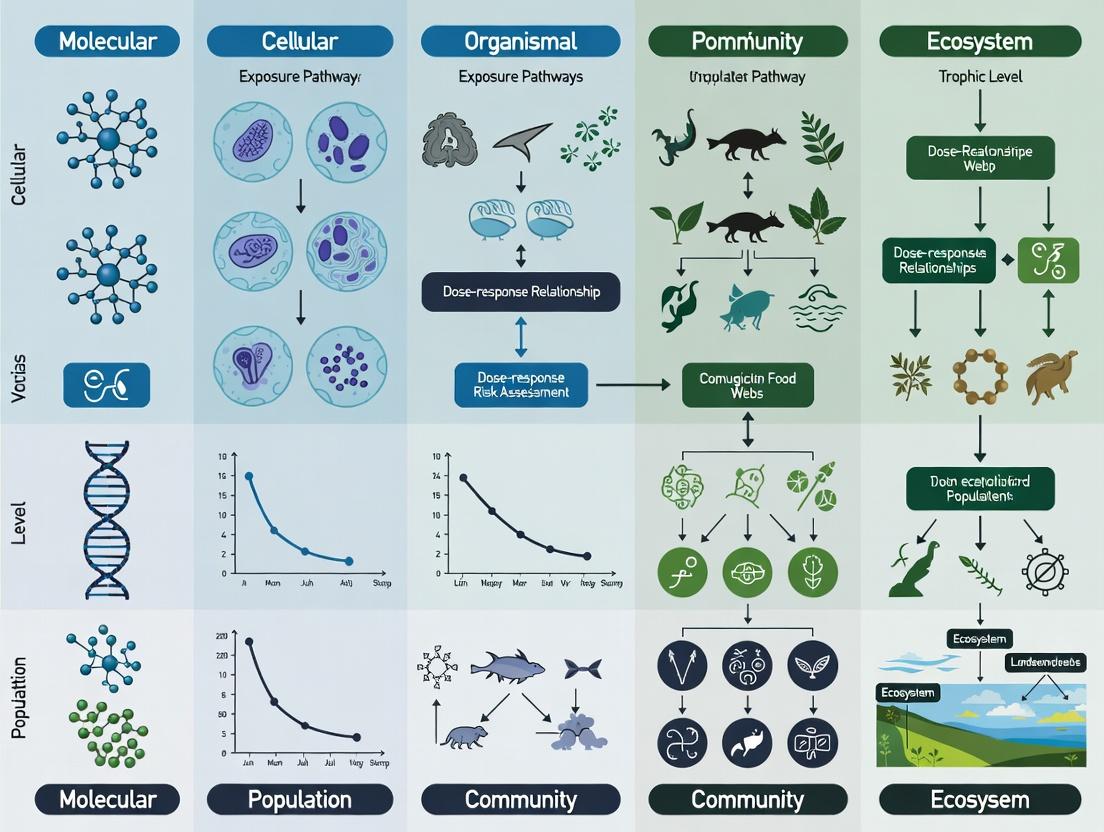
This article provides a critical synthesis for researchers, scientists, and drug development professionals on the methodologies, challenges, and integration of ecological risk assessment (ERA) across hierarchical biological scales.
From Molecules to Ecosystems: A Comprehensive Guide to Ecological Risk Assessment Across Levels of Biological Organization
Abstract
This article provides a critical synthesis for researchers, scientists, and drug development professionals on the methodologies, challenges, and integration of ecological risk assessment (ERA) across hierarchical biological scales. It explores the foundational principles differentiating sub-organismal, individual, population, community, and ecosystem-level assessments, highlighting the persistent gap between molecular measurement endpoints and regulatory protection goals [citation:1][citation:5]. The review details advanced methodological frameworks, including Adverse Outcome Pathways (AOPs), population modeling, and probabilistic scenario-based approaches, that aim to bridge these levels [citation:3][citation:4][citation:9]. It further examines key troubleshooting issues such as accounting for genetic diversity, multi-stressor interactions, and ecological complexity within problem formulation [citation:7][citation:8]. Finally, the article presents a comparative validation of assessment approaches, evaluating their predictive power, uncertainty, and utility for decision-making in biomedical and environmental contexts. The goal is to equip professionals with the knowledge to design more ecologically relevant and predictive risk assessments.
Foundations of Multi-Scale Assessment: Defining Endpoints and Navigating the Biological Hierarchy
Ecological Risk Assessment (ERA) is the formal process of evaluating the likelihood and significance of adverse environmental impacts resulting from exposure to stressors such as chemicals, disease, or invasive species [1]. The overarching goal is to protect valued ecological entities, ultimately expressed as the sustained delivery of ecosystem services such as clean water, soil productivity, pollination, and sustainable fisheries [2] [1]. However, a persistent and core challenge limits the efficacy of ERA: the disconnect between what is commonly measured and what society aims to protect [2] [3].
Modern toxicology has made significant advances in high-throughput in vitro systems and molecular biomarkers that can rapidly identify Molecular Initiation Events (MIEs)—the initial interactions between a stressor and a biological target [2] [3]. While these tools allow for efficient screening of many chemicals with reduced vertebrate testing, their results are confined to low levels of biological organization [4]. Regulatory protection goals, in contrast, concern higher-order ecological structures—populations, communities, and entire ecosystems—and their associated functions and services [1] [4]. The scientific and predictive linkage between an early molecular perturbation and a consequential shift in an ecosystem service remains complex and poorly quantified [2].
This creates a critical gap in risk assessment. Decisions are often based on data from standardized single-species laboratory tests (e.g., LC50 for Daphnia magna), which are then extrapolated, with substantial uncertainty, to predict effects on diverse field communities and ecosystem endpoints [4]. This mismatch between measurement endpoints and assessment endpoints can lead to both under-protection of the environment and inefficient allocation of management resources [4]. This guide provides a comparative analysis of ERA methodologies across biological scales, framed within the thesis that integrative, multi-scale modeling is essential for bridging this gap and achieving predictive next-generation ecological risk assessment [3] [5].
Comparative Analysis of ERA Across Biological Organization Levels
The choice of biological organization level for an ERA involves significant trade-offs. Each level offers distinct advantages and limitations in terms of methodological ease, ecological relevance, and extrapolative power [4]. The following table synthesizes these key characteristics, providing a framework for selecting appropriate assessment strategies based on specific risk assessment goals.
Table 1: Comparison of Ecological Risk Assessment Methodologies Across Levels of Biological Organization
| Level of Organization | Key Measurement Endpoints | Strengths | Weaknesses | Primary Use Case |
|---|---|---|---|---|
| Molecular/Cellular | Gene expression, protein binding, enzyme inhibition, in vitro cytotoxicity [2] [3]. | High-throughput, cost-effective, mechanistic insight, reduces animal testing, excellent for screening many chemicals [4] [3]. | Greatest distance from ecological protection goals; difficult to extrapolate to organismal and higher-level effects; misses systemic feedback [4] [3]. | Early hazard identification & screening; MIE characterization for Adverse Outcome Pathways (AOPs). |
| Individual Organism | Survival (LC50/EC50), growth, reproduction, development, behavior [4] [6]. | Standardized, reproducible, direct measure of toxicity, cornerstone of regulatory testing (Tier I) [4] [6]. | Limited ecological realism; ignores population dynamics (e.g., recovery, compensation) and species interactions [4]. | Core regulatory testing; derivation of protective thresholds (e.g., PNEC) for single species. |
| Population | Population growth rate, age/stage structure, extinction risk, spatial distribution models [4] [3]. | More ecologically relevant than individual-level data; can incorporate life-history traits and density dependence; closer to some protection goals (e.g., threatened species) [4] [3]. | More resource-intensive; requires complex modeling; species-specific, making multi-species assessments challenging [4]. | Assessing risks to specific valued populations (e.g., endangered species); refining risk for chemicals failing Tier I screens. |
| Community & Ecosystem | Species richness, abundance, diversity indices, functional group metrics, ecosystem process rates (e.g., decomposition, primary production) [4]. | High ecological relevance; captures species interactions (competition, predation) and emergent properties; can directly link to some ecosystem services [4]. | Highly complex, variable, and costly to study (e.g., mesocosms, field studies); results are context-dependent and difficult to generalize [4]. | Higher-tier (Tier III/IV) assessment for chemicals of high concern; site-specific risk evaluation; validation of lower-tier predictions [4]. |
| Landscape/Ecosystem Service | Habitat connectivity, service delivery metrics (e.g., crop yield, water filtration), integrated socio-ecological models [2] [1]. | Directly addresses societal protection goals (ecosystem services); integrates multiple stressors and ecological compartments [2] [1]. | Maximum complexity; requires extensive transdisciplinary data; models are highly uncertain and difficult to validate [2]. | Strategic environmental management; cost-benefit analysis of regulatory actions; watershed or regional planning [1]. |
The trends are clear: as one moves up the biological hierarchy, methodological ease and throughput decrease, while ecological relevance, system complexity, and context-dependence increase [4]. Conversely, lower-level assays are efficient for screening but suffer from a large extrapolation distance to meaningful ecological outcomes [4]. No single level is sufficient for a comprehensive ERA. Therefore, the modern paradigm emphasizes a weight-of-evidence approach that integrates data from multiple levels, connected through conceptual frameworks (like AOPs) and quantitative models [2] [3].
Detailed Experimental Protocols for Key ERA Methodologies
Protocol for High-ThroughputIn VitroScreening (Molecular/Sub-Organismal Level)
This protocol is designed to identify Molecular Initiation Events and early cellular responses for rapid chemical prioritization.
- Test System Preparation: Select appropriate in vitro systems (e.g., fish gill cell line, zebrafish embryo, yeast-based estrogen screen). Culture cells or embryos according to standardized guidelines (e.g., OECD TG 249 for fish embryo toxicity). Ensure consistency in passage number, growth medium, and incubation conditions [3].
- Chemical Exposure: Prepare a logarithmic dilution series of the test chemical in an appropriate solvent, with solvent controls. For water-soluble chemicals, use culture medium as the diluent. For hydrophobic chemicals, use a carrier solvent (e.g., DMSO) at a concentration not exceeding 0.1% v/v. Expose test systems in multi-well plates for a defined period (e.g., 24, 48, 96 hours) [3].
- Endpoint Measurement: Quantify relevant sublethal endpoints.
- Cytotoxicity: Measure using standard assays (e.g., Alamar Blue, MTT, neutral red uptake) to determine a benchmark concentration for cell viability.
- Specific Mechanistic Endpoints: Use reporter gene assays for receptor activation (e.g., estrogen receptor), measure enzyme activity (e.g., acetylcholinesterase inhibition), or quantify oxidative stress markers (e.g., glutathione levels) [3].
- Transcriptomics/Proteomics: For mode-of-action discovery, use high-throughput RNA sequencing or protein arrays on exposed versus control samples [7].
- Data Analysis: Calculate effect concentrations (e.g., EC50 for cytotoxicity or receptor activation). For omics data, perform pathway enrichment analysis to identify perturbed biological processes. Data is used to rank chemical potency and inform the development of Adverse Outcome Pathways [3].
Protocol for Population-Level ERA Using Individual-Based Models (IBMs)
This protocol uses modeling to extrapolate individual-level toxicity data to population-level consequences.
- Model Parameterization:
- Toxicokinetic-Toxicodynamic (TKTD) Model: Fit a model (e.g., General Unified Threshold model of Survival - GUTS) to standard organismal toxicity data (e.g., survival over time at different concentrations) to characterize internal dose and damage dynamics [3].
- Individual Life History: Collate data on the species' life cycle: growth rates, age/size at maturation, fecundity schedules, and background mortality. These data can come from the literature or control treatments of chronic tests [4] [3].
- Environmental Context: Define key environmental variables for the assessment scenario (e.g., temperature, resource availability, habitat structure) [3].
- Model Integration: Construct an IBM where simulated individuals each follow the defined life-history rules and are subject to stressor-induced mortality and/or impaired reproduction as predicted by the TKTD model. Incorporate stochasticity in individual processes and, if relevant, spatial explicitity (e.g., landscape grids) [3].
- Simulation & Analysis: Run the model for multiple generations under a range of exposure scenarios (constant, pulsed, spatially variable). Record population-level endpoints: intrinsic growth rate (r), time to recovery after a pulse, quasi-extinction risk, and changes in spatial distribution.
- Risk Characterization: Compare population metrics under exposure scenarios to those in a reference (unexposed) simulation. Determine the exposure concentration or pattern that leads to an unacceptable population-level effect, as defined by protection goals (e.g., population decline >20%) [4] [3].
Protocol for Community-Level Assessment Using Aquatic Mesocosms
This protocol provides high-tier, ecologically realistic data on chemical effects on complex multi-species systems.
- Mesocosm Design and Establishment: Use outdoor pond systems (e.g., 1000-10,000 L) or large indoor flow-through tanks. Standardize sediment, water source, and nutrient levels. Introduce a diverse, representative community: phytoplankton, periphyton, zooplankton (cladocerans, copepods), macroinvertebrates (insects, snails), and often plants and fish. Allow the system to stabilize and develop trophic interactions for 2-3 months prior to dosing [4].
- Experimental Design and Dosing: Employ a randomized block design. Establish a gradient of treatments: controls (no chemical), solvent controls, and multiple concentrations of the test chemical (typically 3-5), often replicating each treatment 3-4 times. Apply the chemical to simulate a realistic exposure scenario (e.g., a single pesticide spray event, chronic low-level input) [4].
- Monitoring and Sampling: Conduct intensive monitoring before and after dosing (e.g., weekly for 8-12 weeks).
- Abiotic: Measure temperature, pH, dissolved oxygen, nutrient levels, and chemical concentration (to characterize fate and exposure).
- Biotic: Sample phytoplankton (chlorophyll a, cell counts), zooplankton (abundance, species ID), macroinvertebrates (emergence traps, benthic samples). Measure functional endpoints like leaf litter decomposition rates or primary productivity [4].
- Statistical and Ecological Effect Analysis: Analyze data using multivariate statistics (e.g., Principal Response Curves) to visualize community trajectory differences between treatments and controls over time. Calculate No Observed Effect Concentrations (NOECs) and/or Effect Concentrations (ECx) for key structural (species richness) and functional endpoints. The goal is to identify a community-level threshold where significant and potentially irreversible shifts occur [4].
Visualizing Pathways and Workflows
Diagram 1: The Core Ecological Risk Assessment Process
Diagram 2: A Framework for Predictive Cross-Scale Modeling in ERA
The Scientist's Toolkit: Key Research Reagent Solutions
Table 2: Essential Reagents and Materials for Multi-Scale Ecological Risk Assessment Research
| Category | Item/Solution | Function in ERA Research |
|---|---|---|
| Molecular/In Vitro Tools | Stable Reporter Gene Cell Lines (e.g., ER-CALUX, AR-EcoScreen) | High-throughput screening for specific receptor-mediated toxicity pathways (endocrine disruption). |
| Fluorescent Viability/Cytotoxicity Assay Kits (e.g., Alamar Blue, CFDA-AM) | Rapid, plate-based quantification of general cellular health and membrane integrity in in vitro systems. | |
| qPCR/PCR Assays & Microarrays/RNA-Seq Kits | Profiling gene expression changes to identify molecular biomarkers of exposure and effect and elucidate modes of action [7]. | |
| Organismal Testing | Standardized Test Organisms (e.g., Daphnia magna, Ceriodaphnia dubia, Fathead minnow embryos, Chironomus riparius) | Providing consistent, reproducible biological material for regulatory toxicity testing across trophic levels (algae, invertebrate, fish). |
| Reconstituted Water & Certified Reference Sediments | Providing consistent, contaminant-free aqueous and substrate media for aquatic and sediment toxicity tests, ensuring reproducibility. | |
| Precise Chemical Dosing Solutions (e.g., from neat compound) | Accurate preparation of exposure concentrations for laboratory bioassays, critical for dose-response modeling. | |
| Population & Community Studies | Environmental DNA (eDNA) Sampling & Extraction Kits | Non-invasive biodiversity monitoring for mesocosm and field studies; tracks species presence/absence and community composition [7]. |
| Standardized Artificial Substrates (e.g., Hester-Dendy samplers, leaf packs) | Uniform sampling of colonizing macroinvertebrate communities in field and mesocosm studies for consistent metric calculation. | |
| Fluorescent Tracking Dyes or Stable Isotope Enrichment | Tracing nutrient or contaminant flow through food webs in experimental ecosystems to understand trophic transfer. | |
| Data Integration & Modeling | Bioinformatics Pipelines & Databases (e.g., ECOTOX, BOLD, GBIF, ELIXIR resources) [6] [7] | Curating, standardizing, and analyzing molecular sequence data, species occurrence data, and ecotoxicity literature data for model parameterization and validation. |
| Mechanistic Modeling Software/Platforms (e.g., R packages for TKTD/GUTS, NetLogo for IBMs, AQUATOX) | Providing the computational environment to develop and run integrative models that link processes across biological scales [3]. |
Defining Assessment Endpoints vs. Measurement Endpoints Across Scales
Fundamental Concepts and Distinctions
In ecological risk assessment (ERA), the clear distinction between assessment endpoints and measurement endpoints is foundational to scientifically defensible and socially relevant environmental protection. An assessment endpoint is an explicit expression of the actual environmental value to be protected, defined by societal goals and management objectives [4]. Examples include "the sustainability of a commercial fish population" or "the biodiversity of a wetland community." In contrast, a measurement endpoint is a measurable response to a stressor that is quantitatively linked to the assessment endpoint [4]. Common measurement endpoints include the 96-hour LC50 (median lethal concentration) for a standard test species or a biochemical biomarker of exposure.
The relationship between these endpoints is hierarchical. Assessment endpoints, often defined at higher levels of biological organization like populations or communities, are the ultimate targets of protection. Measurement endpoints, which are practical to quantify in experiments (often at the individual or suborganismal level), serve as quantitative proxies for predicting effects on those assessment endpoints [8]. A central challenge in ERA is the frequent mismatch between what is easily measured in controlled laboratory tests and the complex, valued ecological entities we aim to protect [4]. This guide compares how endpoint selection and utility shift across scales of biological organization, from molecules to landscapes.
Endpoint Selection Across Levels of Biological Organization
The choice and feasibility of endpoints are intrinsically linked to the level of biological organization at which an assessment is focused. Each level offers distinct advantages and trade-offs between ecological relevance, methodological practicality, and certainty in cause-effect relationships [4] [9].
Comparison of Endpoint Characteristics by Organizational Level
Table 1: Comparative analysis of endpoint utility across levels of biological organization.
| Level of Biological Organization | Typical Assessment Endpoint Examples | Common Measurement Endpoint Examples | Key Advantages | Key Limitations |
|---|---|---|---|---|
| Suborganismal (Biomarker) | Population viability, Ecosystem health | Gene expression, Enzyme inhibition, Protein biomarkers | High-throughput screening; Clear mechanistic link to stressor; Low cost per assay [4] [9]. | Large extrapolation distance to protected entities; Ecological relevance uncertain [4]. |
| Individual (Organismal) | Survival of key species, Individual health | LC50/EC50, Growth rate, Reproduction (e.g., Daphnia 21-day test) [4] | Standardized, reproducible tests; Strong cause-effect certainty; Extensive historical database [4]. | Misses population-level dynamics (e.g., compensation); Ignores species interactions [4]. |
| Population | Abundance, Production, Persistence of a species | Population growth rate, Age/size structure, Extinction risk models [10] | Directly relevant to conservation goals; Can integrate individual-level effects over time [11] [10]. | Data-intensive; Requires complex modeling; Less amenable to high-throughput testing [4]. |
| Community & Ecosystem | Biodiversity, Trophic structure, Ecosystem function (e.g., decomposition) | Species richness, Biomass spectra, Nutrient cycling rates [12] | Captures emergent properties and species interactions; High ecological relevance [4] [12]. | Highly complex and variable; Low repeatability; High cost and resource needs [4]. |
| Landscape/Region | Habitat connectivity, Meta-population persistence, Regional water quality | Land cover change, Patch size distribution, Material export [8] | Addresses large-scale management issues; Incorporates spatial dynamics [8]. | Extremely complex modeling; Validation is difficult; Often lacks established protocols [8]. |
Trends and Trade-offs
A synthesis of the research reveals two primary opposing trends across the biological hierarchy [4] [9]:
- Negatively Correlated with Level: Ease of establishing cause-effect relationships, ease of high-throughput screening, and methodological certainty generally decrease at higher organizational levels.
- Positively Correlated with Level: Ecological relevance, inclusion of system feedbacks and context dependencies, and the ability to capture recovery processes generally increase at higher organizational levels.
Some factors, such as ethical considerations regarding vertebrate testing and the ability to screen many species, show no consistent trend across levels [4]. Furthermore, key metrics like the repeatability of assays and comprehensive cost analyses (e.g., cost per species assessed) lack sufficient comparative data to draw definitive conclusions [4].
Tiered Assessment Frameworks and Endpoint Evolution
ERA is typically conducted in a tiered framework, where the sophistication of endpoints, exposure scenarios, and effects analysis escalates with each tier [4]. This structure efficiently allocates resources by using simple, conservative endpoints for initial screening. Table 2: Evolution of endpoints within a tiered ecological risk assessment framework.
| Tier | Assessment Philosophy | Typical Assessment Endpoint | Dominant Measurement Endpoints | Risk Metric |
|---|---|---|---|---|
| I (Screening) | Conservative "screen out" of negligible risks. | Generic protection of aquatic life, wildlife. | Standard single-species toxicity values (LC50, NOAEC) [4]. | Deterministic Hazard Quotient (HQ) [4]. |
| II (Refined) | Incorporates variability and uncertainty. | Protection of specific, valued populations. | Probabilistic species sensitivity distributions (SSDs); refined exposure models. | Probability of exceeding effects threshold [4]. |
| III (Advanced) | Site-specific, biologically and spatially explicit. | Sustainability of local community structure/function. | Multi-species micro/mesocosm responses; population model outputs [4]. | Risk estimates for complex endpoints [4]. |
| IV (Field Verification) | Direct measurement under real-world conditions. | Status of ecosystem at a particular site. | Field monitoring data (e.g., invertebrate community indices) [4]. | Multiple lines of evidence [4]. |
As the assessment tier escalates, measurement endpoints evolve from simple, standardized laboratory responses to complex, system-level attributes that more closely approximate the desired assessment endpoint [4].
Experimental and Modeling Protocols for Endpoint Bridging
Mesocosm Experiments for Community-Level Endpoints
Protocol Overview: Multi-species mesocosm studies (Tier III) are a critical methodology for generating measurement endpoints closer to community and ecosystem assessment endpoints [4].
- Objective: To evaluate the effects of a stressor (e.g., pesticide concentration) on a semi-natural, contained ecosystem, measuring structural (species abundance) and functional (process rates) endpoints.
- Design: A typical aquatic mesocosm consists of outdoor ponds or large tanks (1,000-10,000 L) seeded with a natural assemblage of plankton, invertebrates, macrophytes, and sometimes fish. Treatments (e.g., different chemical concentrations) are replicated and randomly assigned.
- Key Measurement Endpoints: Phytoplankton and zooplankton species richness and abundance (structural); leaf litter decomposition rate (functional); chlorophyll-a concentration; and dissolved oxygen diurnal flux.
- Duration: Typically lasts for months to over a year to capture seasonal dynamics and recovery potential [4].
- Analysis: Data are analyzed using multivariate statistics (e.g., Principal Response Curves) to visualize community-level treatment effects over time and determine no-observed-effect concentrations (NOECs) for the system.
Population Modeling from Individual-Level Data
Protocol Overview: Mechanistic population models bridge individual-level measurement endpoints (e.g., survival, reproduction) to population-level assessment endpoints (e.g., abundance, extinction risk) [10].
- Objective: To translate toxicant effects on individuals into projections for population trajectory.
- Model Types: Common models include Individual-Based Models (IBMs), which simulate the fate of each organism, and Matrix Projection Models, which use stage- or age-classified vital rates [10].
- Data Requirements: Models require control and treatment data on age/size-specific survival, fecundity, and growth. These are derived from life-cycle toxicity tests. Models also require information on density-dependence and life-history traits.
- Process: The model is first parameterized and validated with control (no stressor) data. Toxicant effects are then incorporated by altering the relevant vital rates (e.g., reducing juvenile survival by 30% based on EC50 data) in the treatment simulations.
- Output: The primary model outputs are population growth rate (λ), probability of quasi-extinction, and time to recovery. A reduction in λ below 1.0 indicates a declining population, directly addressing a population-level assessment endpoint [10].
AOP to Population Assessment Framework: Illustrates how suborganismal and individual measurement endpoints (Key Events, Adverse Outcomes) feed into models to predict effects on population-level assessment endpoints. [10]
Integrated Frameworks and Future Perspectives
No single level of biological organization provides a perfect suite of endpoints. The future of ERA lies in integrated, weight-of-evidence approaches that combine data from multiple levels [9] [12]. The Adverse Outcome Pathway (AOP) framework is a pivotal organizing tool that facilitates this integration [10]. An AOP is a conceptual model that maps a direct, causal pathway from a Molecular Initiating Event (a measurement endpoint) through intermediate Key Events to an Adverse Outcome relevant to risk assessment (an assessment endpoint, often at the individual or population level) [10]. This framework explicitly links mechanistic data from high-throughput in vitro assays to outcomes of regulatory concern, guiding targeted testing and reducing uncertainty in extrapolation.
The most robust ERAs will employ a dual "top-down" and "bottom-up" strategy [9]. A top-down approach starts with monitoring data from field systems (high-level assessment endpoints) to identify potential impairments, which then guides targeted, lower-level investigation to diagnose causes. The bottom-up approach uses traditional toxicity testing and AOPs to predict potential higher-order effects. System-scale modeling, incorporating food web interactions and ecosystem processes, is essential for synthesizing these lines of evidence [12].
The Scientist's Toolkit: Essential Reagent Solutions
Table 3: Key research reagents and materials for endpoint measurement across scales.
| Tool Category | Specific Item / Solution | Primary Function in Endpoint Measurement |
|---|---|---|
| Model Organisms | Daphnia magna (Cladoceran), Danio rerio (Zebrafish), Lemna spp. (Duckweed) | Standardized test species for deriving individual-level measurement endpoints (mortality, growth, reproduction) in regulatory assays [4]. |
| Biomarker Assays | Acetylcholinesterase (AChE) Activity Kit, Vitellogenin ELISA Kit, CYP450 Reporter Gene Assay | Quantifies suborganismal key events in an AOP (e.g., enzyme inhibition, endocrine disruption), serving as early-warning measurement endpoints [10]. |
| Mesocosm Components | Sediment & Water from Reference Site, Standardized Invertebrate Inoculum, Macrophyte Transplants | Creates replicated semi-natural systems for measuring community and ecosystem-level endpoints (e.g., biodiversity, functional rates) [4]. |
| Environmental DNA (eDNA) | eDNA Extraction Kits, Universal Primer Sets for Metabarconding | Enables non-invasive, high-throughput measurement of community composition and biodiversity (a community-level measurement endpoint). |
| Population Modeling Software | RAMAS Ecology, META-X, NetLogo with IBMs | Platform for integrating individual-level toxicity data with life-history information to project population-level assessment endpoints like extinction risk [10]. |
Endpoint Selection Framework: Outlines the logical flow from broad societal goals to the selection of specific measurement endpoints at different biological scales. [4] [8]
This guide provides a comparative analysis of methodological approaches for ecological risk assessment (ERA) across the biological hierarchy, from molecular biomarkers to landscape-scale processes. It is structured within the broader thesis that a multi-level assessment is critical for comprehensive environmental protection, integrating acute toxicity data with chronic, systemic ecological impacts [1].
Comparative Analysis of Assessment Approaches Across Biological Levels
Ecological risk assessment (ERA) is a formal process for evaluating the likelihood of adverse environmental impacts from exposure to stressors like chemicals or land-use change [1]. The choice of assessment method is dictated by the level of biological organization of concern, each offering distinct advantages and limitations in sensitivity, spatial relevance, and managerial utility.
Table 1: Comparison of ERA Methodologies Across Biological Organization Levels
| Organization Level | Primary Assessment Method/Indicator | Typical Endpoints Measured | Spatial Scale | Temporal Sensitivity | Key Advantages | Major Limitations |
|---|---|---|---|---|---|---|
| Sub-Organismal | Biochemical Biomarkers (e.g., enzyme inhibition, DNA damage) | Molecular/cellular function | Point source to local | Immediate to short-term | High sensitivity, early warning, mechanistic insight | Difficult to extrapolate to higher-level effects |
| Organismal | Standardized Toxicity Tests (e.g., LC50, EC50) | Survival, growth, reproduction | Local | Short to medium-term | Standardized, reproducible, strong regulatory foundation [13] | May not reflect complex field conditions or interspecies interactions |
| Population | Species Sensitivity Distributions (SSD) [14] | Population viability, HC5 (Hazard Concentration for 5% of species) | Local to regional | Medium to long-term | Community-relevant, probabilistic risk estimation [14] | Requires extensive toxicity data for multiple species |
| Community & Ecosystem | Biotic Indices (e.g., Nematode Community Indices [15]) | Diversity, structure, functional metrics (e.g., maturity index) | Local to landscape | Medium to long-term | Integrates cumulative stress, reflects ecosystem function | Complex to interpret, requires taxonomic expertise |
| Landscape & Regional | Ecosystem Service Supply-Demand Analysis [16] [17] | Service flow (e.g., water yield, carbon sequestration), risk bundles | Regional to continental | Long-term | Directly links ecology to human well-being, informs land-use policy [16] | Data-intensive, complex modeling required |
Experimental Protocols for Key Assessment Tiers
Protocol for Organismal-Level Assessment: Deriving Aquatic Life Benchmarks
This protocol outlines the standard process for generating the toxicity data used to establish regulatory benchmarks, such as the EPA's Aquatic Life Benchmarks [13].
- Test Organism Selection: Select representative species of freshwater vertebrates (e.g., fish), invertebrates (e.g., Daphnia), and plants (algae) as mandated by guidelines (40 CFR 158) [13].
- Exposure Regime: Conduct acute (short-term, e.g., 48-96 hour) and chronic (long-term, e.g., full life-cycle) laboratory tests under controlled conditions.
- Endpoint Measurement: For acute tests, determine the concentration lethal to 50% of organisms (LC50). For chronic tests, determine the no-observed-adverse-effect concentration (NOAEC) or EC50 for endpoints like growth or reproduction [13].
- Data Evaluation: Assess the quality and utility of studies using the EPA's Evaluation Guidelines for Ecological Toxicity Data.
- Benchmark Derivation: The most sensitive, scientifically acceptable endpoint for each taxonomic group is established as the benchmark (e.g., Acute = LC50/EC50, Chronic = NOAEC) [13].
Protocol for Community-Level Assessment: Nematode-Based Indices for Soil Health
This protocol details a method for assessing soil contamination effects using nematode communities as bioindicators, as employed in studies of coal mining areas [15].
- Field Sampling: Collect soil cores from target sites (e.g., near pollution sources) and reference sites. Sampling should account for spatial heterogeneity and seasonal variation [15].
- Nematode Extraction: Extract nematodes from soil samples using a combination of sieving and centrifugal-flotation techniques.
- Taxonomic Identification: Identify nematodes to genus or family level under a microscope and assign them to trophic groups (bacterial feeders, fungal feeders, omnivores, predators) and colonizer-persister (c-p) values.
- Index Calculation:
- Maturity Index (MI): Weighted mean of c-p values, indicating ecosystem disturbance (lower MI = greater disturbance).
- Nematode Channel Ratio (NCR): Ratio of bacterial-feeding to fungal-feeding nematodes, indicating the dominant decomposition pathway.
- Structure Index (SI): Reflects the complexity of the soil food web [15].
- Dose-Response & Modeling: Analyze relationships between Potentially Toxic Element (PTE) concentrations and nematode indices using models like Bayesian Kernel Machine Regression (BKMR). Use indices to predict ecological risk via machine learning models (e.g., Random Forest) [15].
Protocol for Landscape-Level Assessment: Ecosystem Service Supply-Demand Risk Bundling
This protocol is used to identify regional ecological risks based on mismatches between ecosystem service supply and human demand [16].
- Service Quantification: Use models like the InVEST (Integrated Valuation of Ecosystem Services and Trade-offs) model to map and quantify the supply of key services (e.g., Water Yield, Carbon Sequestration, Soil Retention) over time [16] [17].
- Demand Quantification: Map demand for the same services based on socio-economic data (e.g., population density, agricultural land, carbon emissions).
- Supply-Demand Ratio Calculation: For each service and grid cell, calculate a supply-demand ratio (SDR) or difference to identify surplus and deficit areas [16].
- Trend Analysis: Calculate supply and demand trend indices (STI, DTI) over a multi-year period to understand dynamics.
- Risk Classification & Bundling: Classify areas into risk levels based on SDR and trends. Use unsupervised clustering algorithms, like Self-Organizing Feature Maps (SOFM), to identify recurring combinations (bundles) of service risks across the landscape (e.g., "Water-Soil-Carbon High-Risk Bundle") [16].
Diagram 1: Landscape-Level ERA Workflow [16] [17]
The Scientist's Toolkit: Essential Reagents & Materials for Multi-Scale ERA
Table 2: Research Reagent Solutions and Essential Materials
| Item/Category | Function in ERA | Example Use Case / Relevant Level |
|---|---|---|
| Standardized Test Organisms (Daphnia magna, fathead minnow, algae cultures) | Provide reproducible biological units for toxicity testing. | Determining acute LC50/EC50 values for pesticide registration [13]. (Organismal) |
| Chemical Standards & Analytical Reagents (HPLC-grade solvents, certified reference materials for PTEs/OPEs) | Enable precise quantification of stressor concentrations in environmental matrices (water, soil, tissue). | Measuring Potentially Toxic Element (PTE) concentrations in soil [18] [15]. (All levels) |
| DNA/RNA Extraction Kits & PCR Reagents | Isolate and amplify genetic material for biomarker analysis (e.g., gene expression, metagenomics). | Assessing sub-organismal stress responses or microbial community changes. (Sub-organismal, Community) |
| Taxonomic Identification Guides & Databases | Allow accurate classification of biota (e.g., nematodes, benthic macroinvertebrates). | Calculating Nematode Community Indices (MI, SI) for soil health assessment [15]. (Community) |
| Geographic Information System (GIS) Software | Enables spatial data management, analysis, and visualization of landscape-scale patterns. | Mapping ecosystem service supply, demand, and risk bundles [16] [17]. (Landscape) |
| Remote Sensing Data & Indices (Landsat, Sentinel imagery, NDVI) | Provide synoptic, repeated measurements of land cover and vegetation health. | Input for LULC classification and ecosystem service modeling with InVEST [18] [16]. (Landscape) |
| Statistical & Modeling Software (R, Python with scikit-learn, BKMR packages) | Perform dose-response analysis, fit SSDs, run machine learning algorithms (RF, Ridge regression). | Developing multimodal SSDs for community risk [14] or predicting risk indices from biotic data [15]. (Population, Community) |
Integration of Hierarchical Data for Comprehensive Risk Characterization
The final phase of ERA integrates data from multiple levels to characterize risk [1]. For instance, a risk assessment for a pesticide might integrate organismal-level benchmark exceedances [13] with landscape-level models predicting exposure to non-target habitats. A study on mining contamination successfully combined sub-organismal (PTE concentration), community (nematode indices), and landscape (remote sensing) data to create a holistic risk picture [18] [15].
Diagram 2: Integration of Hierarchical Data in ERA
Ecological Risk Assessment (ERA) is the formal process for evaluating the safety of manufactured chemicals, pesticides, and other anthropogenic stressors to the environment [4]. A central, enduring challenge in ERA is the fundamental trade-off between methodological attributes that varies across levels of biological organization. Assessments conducted at lower biological levels (e.g., suborganismal, individual) typically offer high sensitivity, methodological control, and capacity for high-throughput screening. However, they suffer from a large inferential gap between the measured endpoint and the ecological values society aims to protect, leading to high predictive uncertainty when extrapolating to real-world systems [4]. Conversely, assessments at higher biological levels (e.g., community, ecosystem) provide greater ecological relevance by capturing emergent properties, feedback loops, and recovery processes, but are often less sensitive, more variable, and resource-intensive [4].
This guide objectively compares contemporary ERA approaches through the lens of this trade-off. It is framed within the broader thesis that no single level of biological organization is ideal; rather, a robust assessment strategy employs a tiered framework that integrates information from multiple levels, using mechanistic models to extrapolate across scales, thereby balancing sensitivity, relevance, and managed uncertainty [4] [19].
Comparative Performance of ERA Approaches Across Biological Levels
The performance of ERA is intrinsically linked to the level of biological organization at which it is conducted. The following table synthesizes the comparative advantages and limitations of key approaches, drawing from empirical reviews and case studies [4] [20] [19].
Table 1: Performance Comparison of Ecological Risk Assessment Approaches Across Levels of Biological Organization
| Assessment Level & Example Method | Relative Sensitivity | Ecological Relevance & Context | Key Sources of Predictive Uncertainty | Primary Use Case & Throughput |
|---|---|---|---|---|
| Suborganismal/ Biomarker (e.g., genomic, proteomic assays) | Very High. Detects molecular initiating events long before overt toxicity. | Very Low. Far removed from protection goals; lacks biological integration and recovery mechanisms. | High extrapolation uncertainty to higher-level effects; unknown relationship to population fitness. | Screening/ prioritization of chemicals; Very High throughput. |
| Individual Organism (e.g., standard lab toxicity tests, LC50/NOEC) | High. Measures overt toxicity on standard test organisms under controlled conditions. | Low. Based on single species; ignores species interactions, demographic structure, and environmental mediation. | Interspecies extrapolation; laboratory-to-field extrapolation; ignores population recovery. | Regulatory cornerstone for deriving toxicity thresholds; High throughput. |
| Population (e.g., demographic or matrix models, in-situ population studies) | Moderate. Integrates individual-level effects on survival, growth, reproduction into population metrics (e.g., growth rate λ). | Moderate. Captures demographic processes critical to species persistence but often lacks multi-species interactions. | Parameter uncertainty for vital rates; density-dependent feedbacks; spatial structure often omitted. | Refined risk assessment for listed or keystone species; Medium throughput with models. |
| Community & Ecosystem (e.g., mesocosm studies, field monitoring, trait-based models) | Variable/Low. May miss subtle effects but can detect emergent, indirect effects. | High. Captures species interactions, functional diversity, and ecosystem processes directly relevant to protection goals. | High natural variability; structural uncertainty of model choice; costly, limiting replication. | Higher-tier, site-specific validation; Low throughput. |
| Landscape/Scenario (e.g., agent-based models, integrated exposure scenarios) [21] [20] | Context-Dependent. Sensitivity is a function of model complexity and parameterization. | Very High. Explicitly incorporates spatial dynamics, habitat heterogeneity, and meta-population processes. | Complex uncertainty propagation (initial conditions, drivers, process error) [22]; computational intensity. | Prospective risk forecasting and management strategy evaluation; Low throughput. |
Experimental Protocols for Multi-Level Method Comparison and Validation
Validating and comparing ERA methods across biological levels requires robust experimental design. The following protocols are synthesized from established guidelines for method comparison and ecological modeling [23] [24].
Protocol for Comparative Analysis of Toxicity Test vs. Population Model Endpoints
Objective: To quantify the systematic error (bias) and predictive uncertainty introduced when using standard individual-level toxicity endpoints (e.g., NOAEC) to infer population-level risk, compared to estimates from a validated population model [19] [24].
Design:
- Test System: Select a well-studied model species (e.g., Daphnia magna) with existing high-quality individual toxicity data and a published demographic model.
- Sample (Scenario) Selection: A minimum of 40 different exposure scenarios should be modeled [24]. These should cover a wide range of realistic exposure profiles, including constant exposure, pulsed events, and chronic low-level exposure, with concentrations spanning from no-effect to severe effect levels.
- Methods Comparison:
- Test Method (Individual-level): For each scenario, calculate the standard Risk Quotient (RQ = PEC/NOAEC) or apply a species sensitivity distribution (SSD).
- Comparative Method (Population-level): For the same scenario, run the demographic model to simulate population trajectory over a defined period (e.g., 2-5 years). The primary endpoint is the simulated intrinsic population growth rate (λ) or probability of decline below a quasi-extinction threshold.
- Both methods should be run in "duplicate" using stochastic model runs or bootstrapped parameter estimates to account for variability [24].
- Data Analysis:
- Graphical Analysis: Create a comparison plot with the individual-level risk metric (RQ) on the x-axis and the population-level risk metric (e.g., change in λ) on the y-axis [24].
- Statistical Analysis: Perform regression analysis (if the range of RQ is wide) to derive a slope and intercept, quantifying the proportional and constant bias. Calculate the systematic error at critical management decision points (e.g., RQ = 1) [24].
- Uncertainty Partitioning: Use variance decomposition techniques to partition the total uncertainty in the population forecast into components attributable to toxicity parameter uncertainty, demographic parameter uncertainty, and model structure error [22].
Protocol for Validating a Prospective Scenario-Based ERA Method
Objective: To evaluate the performance of a prospective, scenario-based assessment tool (e.g., the ERA-EES for mining areas) [20] against traditional, measurement-intensive retrospective indices.
- Study Sites: Select a diverse set of >40 field sites (e.g., 67 metal mining areas in China [20]) representing a gradient of predicted risk.
- Method Application:
- Prospective Test Method: Apply the scenario-based method (e.g., ERA-EES using Analytic Hierarchy Process and Fuzzy Comprehensive Evaluation) [20]. Inputs are exclusively pre-existing geospatial and operational data (e.g., mine type, ecosystem sensitivity, climate). Output is a categorical risk level (Low/Medium/High).
- Retrospective Comparative Method: Conduct traditional field sampling and chemical analysis at each site. Calculate a quantitative risk index (e.g., Potential Ecological Risk Index - PERI) [20] [25] and classify sites into the same risk categories.
- Performance Evaluation:
- Construct a confusion matrix comparing the classifications from both methods.
- Calculate accuracy (proportion of correctly classified sites) and the kappa coefficient (measure of agreement beyond chance).
- Assess conservatism by examining the rate at which the prospective method classifies risk equal to or higher than the retrospective method [20].
Visualizing Methodological Relationships and Decision Frameworks
The Tiered ERA Decision Framework and Uncertainty Cascade
Diagram Title: Tiered ERA framework showing uncertainty flow [4] [19].
Trade-offs Across Levels of Biological Organization
Diagram Title: Trade-offs between sensitivity, ecological relevance, and uncertainty across biological levels [4].
The Scientist's Toolkit: Key Research Reagent Solutions
Selecting appropriate tools and models is critical for designing robust multi-level ERA studies. This toolkit details essential resources for addressing the core trade-offs [21] [20] [22].
Table 2: Essential Research Toolkit for Multi-Level Ecological Risk Assessment
| Tool/Reagent Category | Specific Example or Model Type | Primary Function in Addressing Trade-offs | Key Reference/Application |
|---|---|---|---|
| Mechanistic Effect Models | Pop-GUIDE-aligned Population Models [19], Agent-Based Models (ABMs) [21] | Bridge individual effects to population/community outcomes. Reduce extrapolation uncertainty by incorporating life history, density-dependence, and spatial structure. | Used to refine risk beyond screening quotients; e.g., predicting fish population resilience to pesticide exposure [19]. |
| Uncertainty Quantification Software | R ecoforecast packages, Bayesian calibration tools (e.g., Stan, JAGS) |
Propagate and partition uncertainty from multiple sources (initial conditions, parameters, process error). Informs where new data most reduces predictive uncertainty [22]. | Essential for probabilistic risk characterization and Value of Information (VoI) analysis [21] [22]. |
| Multi-Criteria Decision Analysis (MCDA) Frameworks | Analytic Hierarchy Process (AHP), Fuzzy Comprehensive Evaluation (FCE) [20] | Integrate diverse, often qualitative, data from exposure and ecological scenarios into a structured risk ranking. Manages linguistic and epistemic uncertainty in complex systems. | Applied in prospective ERA for mining sites (ERA-EES) to classify risk prior to costly sampling [20]. |
| Standardized Toxicity Test Organisms & Protocols | EPA Ecological Effects Test Guidelines (e.g., OCSPP 850 series), ISO/DIN standards. | Provide controlled, reproducible sensitivity data at individual/organism level. The foundational "reagent" for all higher-tier extrapolations. | Used globally to generate regulatory endpoints (LC50, NOAEC). |
| Mesocosm/Field Study Components | Outdoor stream channels, experimental ponds, standardized field sampling kits. | Deliver high ecological relevance by testing effects under realistic environmental conditions with complex communities. | Higher-tier validation for pesticides in Europe (e.g., EU ERA under EFSA) [4]. |
| Geospatial & Scenario Data | Land use/cover maps, soil/climate grids, chemical fate model outputs. | Feed exposure and landscape context into spatial models (ABMs, meta-population models). Critical for driver uncertainty assessment [22]. | Inputs for landscape-level risk forecasts and invasive species spread models [21] [22]. |
Historical and Regulatory Context for Tiered Risk Assessment Paradigms
Tiered risk assessment represents a structured, hierarchical approach to evaluating potential hazards, where simpler, cost-effective screening methods are employed first, progressing to more complex and resource-intensive analyses only as needed. This paradigm is foundational across regulatory science, designed to efficiently allocate resources by quickly identifying low-risk scenarios while focusing detailed scrutiny on substances or situations of greater concern [4]. The historical development of these frameworks is deeply intertwined with growing regulatory needs to manage chemical exposures in the environment, food supply, and pharmaceutical products in a scientifically defensible yet pragmatic manner.
The theoretical underpinning of a tiered approach lies in its sequential decision-making logic. An initial assessment (Tier I) uses conservative assumptions and readily available data to screen for clear cases of "no risk." If potential risk is indicated, the assessment proceeds to higher tiers (II, III, IV), which incorporate more refined data, probabilistic methods, and site- or population-specific considerations to reduce uncertainty and generate a more precise risk estimate [4]. This approach is evident in frameworks ranging from ecological risk assessment (ERA) for pesticides [4] to next-generation risk assessment (NGRA) for combined chemical exposures [26] and pharmacovigilance system evaluations [27].
Within the context of a broader thesis comparing ecological risk assessment across levels of biological organization, tiered paradigms offer a critical lens. The choice of biological level—from suborganismal biomarkers to individual organisms, populations, communities, and entire ecosystems—profoundly influences the feasibility, uncertainty, and ecological relevance of the assessment [4]. Lower-tier assessments often rely on data from standardized tests on individual organisms, which are high-throughput and reproducible but may poorly predict effects at the population or ecosystem level, which are typically the ultimate assessment endpoints. Higher-tier assessments may incorporate population modeling or field studies (mesocosms) that better capture ecological complexity and recovery processes but are more costly and variable [4]. Thus, the tiered framework serves as the operational bridge connecting measurable endpoints at one level of biological organization to protective goals defined at another.
Regulatory Evolution and Current Frameworks
The formalization of tiered risk assessment is a product of evolving regulatory mandates aimed at protecting human health and the environment. A cornerstone in the United States is the Toxic Substances Control Act (TSCA), as administered by the Environmental Protection Agency (EPA). The EPA is developing a tiered data reporting rule to inform the three-stage TSCA process of prioritization, risk evaluation, and risk management [28]. This regulatory tiering begins with using the Chemical Data Reporting (CDR) database for basic screening to identify candidate chemicals. As substances move to high-priority evaluation, the rule triggers requirements for more detailed reporting on health and safety studies, exposure monitoring, and supply chain information under TSCA authorities [28]. This exemplifies a regulatory-driven tiered approach where data requirements escalate in parallel with the level of regulatory scrutiny.
Globally, similar tiered logic structures diverse regulatory domains. In the European Union, the AI Act establishes a four-tier risk framework categorizing applications as having unacceptable, high, limited, or minimal risk, with regulatory obligations escalating accordingly [29]. In food safety, quantitative tiered methods are employed to prioritize hazards, such as using exposure-based screening followed by Margin of Exposure (MOE)-based probabilistic risk ranking for mycotoxins in infant food [30].
The table below summarizes key tiered frameworks across regulatory domains, highlighting their shared hierarchical logic and domain-specific applications.
Table: Comparison of Tiered Frameworks Across Regulatory Domains
| Regulatory Domain | Framework Name/Example | Core Tiers & Logic | Primary Regulatory Goal |
|---|---|---|---|
| Industrial Chemicals (U.S.) | TSCA Existing Chemicals Process [28] | 1. Identification/Prioritization → 2. Risk Evaluation → 3. Risk Management. Data requirements tier to each stage. | Identify and mitigate risks from chemicals in commerce. |
| Artificial Intelligence (EU) | EU AI Act [29] | Unacceptable → High → Limited → Minimal Risk. Compliance demands increase with risk level. | Ensure safe and ethical deployment of AI systems. |
| Food Safety | Hazard-Prioritization & Risk-Ranking [30] | 1. Exposure-based screening → 2. Probabilistic MOE-based risk ranking. Filters out low-risk agents for focused assessment. | Prioritize resources for managing chemical contaminants in food. |
| Pharmacovigilance | Assessment Tools (IPAT, WHO GBT) [27] | Use of core vs. supplementary indicators; maturity levels (1-4). Tools assess system functionality with increasing granularity. | Evaluate and strengthen national drug safety monitoring systems. |
In pharmacovigilance, the tiered concept is embedded within assessment tools rather than a prescribed regulatory process. The Indicator-Based Pharmacovigilance Assessment Tool (IPAT), the WHO Pharmacovigilance Indicators, and the WHO Global Benchmarking Tool (GBT) Vigilance Module all employ structured indicators to evaluate the maturity and functionality of national systems [27]. These tools implicitly tier assessments by distinguishing between core and complementary indicators or by assigning maturity levels, guiding authorities from basic functionality toward advanced practice [27].
Comparative Analysis of Tiered Ecological Risk Assessment Across Biological Levels
Ecological Risk Assessment (ERA) provides a clear case study for examining the trade-offs inherent in a tiered approach across different levels of biological organization. The fundamental challenge in ERA is the frequent mismatch between measurement endpoints (what is easily measured, e.g., individual survival in a lab test) and assessment endpoints (what society values and aims to protect, e.g., population viability or ecosystem function) [4]. Tiers in ERA navigate this gap by starting with simple, standardized tests and progressing toward more ecologically complex and relevant studies.
The relationship between the level of biological organization and key assessment characteristics is not linear but presents distinct advantages and disadvantages at each level. Suborganismal and individual-level endpoints are advantageous for high-throughput screening and establishing clear cause-effect relationships but suffer from high uncertainty when extrapolating to protect populations or ecosystems. In contrast, community- and ecosystem-level studies (e.g., mesocosms) are more ecologically relevant and can capture recovery dynamics and indirect effects but are highly complex, costly, and variable [4].
Table: Advantages and Disadvantages of ERA at Different Levels of Biological Organization [4]
| Level of Biological Organization | Key Advantages | Key Disadvantages |
|---|---|---|
| Suborganismal (e.g., biomarkers) | High-throughput screening; strong mechanistic insight; low cost per study. | Largest gap to assessment endpoints; high extrapolation uncertainty; ecological relevance unclear. |
| Individual | Standardized, reproducible tests; clear dose-response; regulatory acceptance. | Misses population-level processes (e.g., compensation, recruitment); may over- or under-estimate population risk. |
| Population | Direct link to assessment endpoints for many species; can model demographic recovery. | Data-intensive; models require simplification; interspecies variability. |
| Community & Ecosystem | Captures indirect effects & species interactions; measures functional endpoints; evaluates recovery. | Very high cost and complexity; high natural variability; difficult to establish causality. |
The tiered framework formally addresses these trade-offs. Tier I typically uses conservative, quotient-based methods comparing individual-level toxicity values (e.g., LC50) to exposure estimates [4]. If a risk is indicated, higher tiers (II-IV) may employ probabilistic risk models, population models, or ultimately field studies to refine the assessment using data from more complex biological levels [4]. Adverse Outcome Pathways (AOPs) provide a conceptual framework to link mechanistic data at lower levels of organization (molecular, cellular) to outcomes at the individual and population level, thereby informing and strengthening quantitative models used in higher-tier assessments [10].
Experimental Protocols & Data in Next-Generation Risk Assessment
Next-Generation Risk Assessment (NGRA) exemplifies the modern evolution of tiered paradigms, integrating New Approach Methodologies (NAMs)—including in vitro assays and computational toxicokinetic (TK) modeling—to assess safety, particularly for combined chemical exposures. A 2025 case study on pyrethroid insecticides provides a detailed experimental protocol for a tiered NGRA framework [26].
Table: Tiered NGRA Framework Protocol for Pyrethroid Assessment [26]
| Tier | Objective | Key Methodology & Data Sources | Outcome/Decision Point |
|---|---|---|---|
| Tier 1 | Hazard identification & bioactivity profiling. | Gather bioactivity data (AC50 values) from ToxCast in vitro assays. Categorize by gene pathway and tissue type. | Establish bioactivity indicators; generate hypotheses on mode of action. |
| Tier 2 | Explore combined risk assessment. | Calculate relative potencies from AC50s; compare with relative potencies from traditional points of departure (NOAELs, ADIs). | Test hypothesis of similar mode of action; identify inconsistencies between in vitro and traditional data. |
| Tier 3 | Risk screening using internal dose. | Apply TK modeling to convert external exposures to internal concentrations. Calculate Margin of Exposure (MoE) based on internal dose. | Screen risks based on target tissue concentrations; identify critical pathways. |
| Tier 4 | Refine bioactivity assessment. | Use TK models to estimate interstitial concentrations in vitro; compare bioactivity concentrations between in vitro and in vivo systems. | Improve quantitative in vitro to in vivo extrapolation (QIVIVE); refine bioactivity-based effect assessment. |
| Tier 5 | Integrated risk characterization. | Calculate final bioactivity MoEs for combined dietary exposure; compare to safety thresholds and in vivo MoEs. | Conclude on risk level for combined exposure; identify any data gaps for non-dietary pathways. |
This NGRA protocol demonstrates a tiered shift from relying solely on apical endpoints from animal studies toward using mechanistic bioactivity data and TK modeling to estimate internal target-site concentrations. This allows for a more nuanced assessment of combined exposures from chemicals with similar molecular targets. The study concluded that while dietary exposure to the pyrethroid mixture was below levels of concern for adults, the combined Margin of Exposure was insufficient to cover additional non-dietary exposures, a nuance potentially missed by conventional, single-chemical risk assessment [26].
The experimental workflow integrates diverse data streams: high-throughput in vitro bioactivity, existing regulatory toxicology data (NOAELs, ADIs), human biomonitoring or food monitoring exposure data, and physiological TK models. The tiered approach ensures that resource-intensive TK modeling and refinement steps are reserved for substances that pass initial screening tiers.
Tiered NGRA Workflow Integrating NAMs and TK Modeling
The Scientist's Toolkit: Essential Research Reagent Solutions
Implementing tiered risk assessment, particularly next-generation frameworks, relies on a suite of specialized research reagents, tools, and data sources.
Table: Essential Research Toolkit for Tiered Risk Assessment Studies
| Tool/Reagent Category | Specific Examples | Function in Tiered Assessment | Typical Application Tier |
|---|---|---|---|
| High-Throughput In Vitro Assay Platforms | ToxCast/Tox21 assay batteries; reporter gene assays; high-content screening. | Provides mechanistic bioactivity data (AC50, efficacy) for hazard identification & potency ranking. | Tier 1 (Screening), Tier 2 (Potency Comparison). |
| Reference Toxicological Data | Regulatory study NOAELs/LOAELs; published in vivo toxicity databases; EFSA/ECHA assessment reports. | Serves as anchor points for validating NAMs and calculating traditional risk metrics (ADI, MoE). | Tier 2 (Comparison), Tier 5 (Benchmarking). |
| Physiological Toxicokinetic (TK) Models | Generic PBPK models (e.g., in GastroPlus, Simcyp); chemical-specific PBPK models; high-throughput TK (HTTK) models. | Translates external exposure to internal target-site concentration for in vitro-in vivo extrapolation and risk refinement. | Tier 3 (Internal Dose), Tier 4 (Refinement). |
| Bioanalytical Standards & Kits | Certified reference materials for target chemicals; ELISA kits for biomarkers; qPCR kits for gene expression. | Enables precise quantification of chemicals in exposure media or biomarkers in biological samples. | All Tiers (Exposure & Effect Measurement). |
| Computational Data Integration & Modeling Software | R/Bioconductor packages (e.g., httk); Bayesian modeling tools (e.g., Stan); probabilistic risk software. |
Performs statistical dose-response modeling, uncertainty analysis, and integrated risk calculation. | Tier 2-5 (Data Analysis & Risk Characterization). |
Synthesis and Future Directions in Tiered Assessment
The historical trajectory of tiered risk assessment demonstrates a consistent drive toward greater efficiency, mechanistic understanding, and ecological relevance. Future directions are shaped by several converging trends. First, the integration of NAMs and AOPs into regulatory-tiered frameworks will continue to accelerate, moving beyond case studies like the pyrethroid NGRA toward broader acceptance [26]. This requires standardized protocols for qualifying NAMs for specific regulatory purposes and developing associated uncertainty frameworks.
Second, data integration and computational power are enabling more sophisticated higher-tier assessments. The use of population models informed by AOPs, as proposed for ecological risk assessment [10], and the probabilistic risk ranking used in food safety [30] exemplify this trend. In pharmacovigilance, the emphasis on Real-World Data (RWD) and advanced analytics from sources like clinical registries promises to create more dynamic, evidence-based post-market surveillance tiers [31].
Finally, the scope of tiered assessment is expanding into new domains like Artificial Intelligence and Environmental, Social, and Governance (ESG) criteria. The EU AI Act's risk tiers mandate conformity assessments for high-risk applications [29], while ESG frameworks require companies to tier their reporting and due diligence based on materiality and risk exposure [32]. This expansion underscores the versatility of the tiered paradigm as a logic model for managing complexity and uncertainty across diverse fields.
The enduring relevance of the tiered paradigm lies in its fundamental alignment with the scientific method: it is a hypothesis-driven, iterative process that allocates investigational effort proportionally to the level of indicated concern. Whether bridging the gap from molecular perturbations to population-level ecological effects or from in vitro bioactivity to public health guidance for chemical mixtures, the tiered structure provides a robust scaffold for transparent, defensible, and progressively refined decision-making.
Bridging AOPs and Population Models to Inform Tiered ERA
Bridging the Scales: Methodological Frameworks for Cross-Level Prediction and Integration
The Adverse Outcome Pathway (AOP) framework is a conceptual model that organizes scientific knowledge into a sequential chain of causally linked events, starting from a Molecular Initiating Event (MIE) at the molecular level and leading to an Adverse Outcome (AO) relevant to regulatory decision-making, which can occur at the individual, population, or community level [33] [34]. In the context of ecological risk assessment (ERA), this framework provides a powerful tool for bridging data gaps across different levels of biological organization—from subcellular biomarkers to population consequences [4] [10].
Traditional ERA often struggles with a fundamental mismatch: measurement endpoints (e.g., cell death or enzyme inhibition from laboratory tests) are frequently distant from the assessment endpoints society aims to protect (e.g., population viability or ecosystem function) [4]. The AOP framework addresses this by creating a structured, mechanistic bridge. It logically connects measurable key events (KEs) at lower biological levels (e.g., binding to a receptor, cellular inflammation) to predictions about outcomes at higher levels (e.g., impaired reproduction, population decline) [33] [10]. This facilitates the use of data from efficient, high-throughput in vitro assays (New Approach Methodologies, or NAMs) to inform on risks to whole organisms and populations, thereby supporting regulatory decisions while aiming to reduce reliance on traditional animal testing [34] [35].
This guide compares the AOP framework with other established ERA approaches, evaluating their respective performances, data requirements, and utility for extrapolating effects across biological scales.
Comparative Analysis of ERA Approaches Across Biological Scales
Ecological risk assessment can be conducted at various levels of biological organization, each with distinct advantages, limitations, and appropriate applications. The table below provides a structured comparison.
Table 1: Comparison of Ecological Risk Assessment Approaches Across Levels of Biological Organization [34] [4]
| Level of Biological Organization | Primary Measurement Endpoints | Key Advantages | Key Limitations | Best Suited For |
|---|---|---|---|---|
| Sub-Organismal (Biomarker/Cellular) | Molecular initiating events, key events (e.g., receptor binding, gene expression, protein damage) [33] [36]. | High mechanistic clarity; strong cause-effect relationships; amenable to high-throughput screening; reduces animal use [4] [35]. | Largest extrapolation distance to population/ecosystem effects; may miss compensatory biological feedback [4]. | Screening & prioritization of chemicals; mode-of-action identification; building blocks for AOPs. |
| Individual Organism | Survival, growth, reproduction (e.g., LC50, NOEC) in standardized test species [4]. | Regulatory familiarity and acceptance; directly measures integrated organism health; relatively reproducible [4]. | Limited ecological realism; high cost and time per test; uses vertebrate animals; ignores species interactions [4]. | Tiered hazard assessment; derivation of protective thresholds (e.g., PNEC) for single species. |
| Population | Population growth rate, extinction risk, age/size structure [37] [10]. | Directly relevant to protection goals (population sustainability); integrates individual-level effects over time [10]. | Complex, data-intensive models required; difficult to validate empirically for many species [10]. | Risk refinement for chemicals with known individual-level effects; assessment of endangered species. |
| Community/Ecosystem | Species diversity, functional endpoints (e.g., primary production, decomposition), mesocosm studies [4]. | High ecological realism; captures indirect effects and species interactions [4]. | Extremely high cost and complexity; highly variable results; difficult to establish causality for specific stressors [4]. | Higher-tier, site-specific risk assessment for chemicals with wide-scale use. |
| AOP Framework (Cross-Level) | Modular sequence of KEs from MIE to AO [33] [34]. | Provides mechanistic bridge across biological scales; supports use of NAMs; chemical-agnostic; identifies knowledge gaps [33] [34]. | Is not a risk assessment itself (does not address exposure); requires substantial mechanistic knowledge to develop [34]. | Integrating data across testing methods; hypothesis-driven testing; supporting extrapolation (e.g., cross-species, to populations) [34] [10]. |
The AOP framework does not replace assessments at any single level but serves as a translational and integrative scaffold. It enhances the utility of data from lower levels (sub-organismal, individual) by explicitly defining their causal relationship to outcomes at higher levels (population), which are of greater regulatory and ecological relevance [10].
Performance Evaluation: AOPs vs. Traditional ERA
When evaluated against the core objectives of modern ecological risk assessment, the AOP framework demonstrates distinct strengths and complementarities with traditional methods.
Table 2: Performance Comparison of AOP Framework vs. Traditional Single-Level ERA Methods [34] [4] [10]
| Evaluation Criterion | Traditional ERA (Organism/Population Level) | AOP Framework | Supporting Evidence & Notes |
|---|---|---|---|
| Mechanistic Understanding | Low to Moderate. Often relies on correlative, descriptive toxicity endpoints (e.g., mortality) [4]. | High. Explicitly maps the chain of mechanistic events from molecular perturbation to adverse outcome [33] [34]. | AOPs organize knowledge on how toxicity occurs, moving beyond whether it occurs. |
| Extrapolation Across Biological Levels | Weak. Requires separate models (e.g., individual to population models) with significant uncertainty [10]. | Strong (Core Function). The framework's structure is designed for cross-level extrapolation by linking KEs [34] [10]. | AOPs provide the qualitative causal roadmap required for quantitative extrapolation models. |
| Use of NAMs / Animal Replacement | Limited. Heavily reliant on standard whole-organism toxicity tests [4]. | High (Core Function). Designed to incorporate data from in vitro and in chemico assays aligned with KEs [33] [35]. | Projects like Methods2AOP explicitly map high-throughput assays to AOP KEs [33]. |
| Regulatory Acceptance | High. Well-established through decades of use and guidelines (e.g., OECD test guidelines) [4]. | Growing. Actively supported by OECD and US EPA; used for chemical prioritization and hypothesis-testing [33] [34]. | Formal OECD endorsement of AOPs is increasing; used to support Integrated Approaches to Testing and Assessment (IATA) [36]. |
| Handling of Chemical Mixtures | Difficult. Typically uses additive models (e.g., concentration addition) based on similar toxicological endpoints [4]. | Promising. AOP networks can identify shared KEs; chemicals converging on the same KE may be predicted to have additive effects [34]. | This provides a mechanistic basis for grouping mixture components, moving beyond simple endpoint similarity. |
| Cross-Species Extrapolation | Uncertain. Often uses arbitrary assessment factors or limited phylogenetic comparisons [4]. | Mechanistically Informed. Tools like SeqAPASS can assess conservation of MIEs and KEs (e.g., protein targets) across species [34]. | If the MIE (e.g., binding to a conserved estrogen receptor) is conserved, the AOP may be extrapolated with greater confidence [34]. |
| Speed & Cost for Screening | Slow & Expensive. Whole-organism tests are resource-intensive [4]. | Fast & Cost-Effective (Potential). Enables screening based on high-throughput KE assays, prioritizing chemicals for higher-tier testing [34]. | This addresses the critical problem of assessing thousands of "data-poor" chemicals in the environment [38]. |
| Quantitative Prediction | Direct. Provides measured toxicity values (e.g., LC50) for the test organism [4]. | Independent. An AOP itself is a qualitative knowledge framework; however, it facilitates the development of quantitative AOP (qAOP) models [34]. | The strength of an AOP lies in defining what to quantify. Quantitative understanding is a key evidence type for Key Event Relationships (KERs) [34]. |
Case Study & Experimental Data: The Oxidative DNA Damage AOP Network
AOP #296, "Oxidative DNA Damage Leading to Mutations and Chromosomal Aberrations," provides a well-characterized example of linking a molecular stressor to adverse genetic outcomes [36]. This case study illustrates the experimental data that underpins a robust AOP.
Table 3: Experimental Data and Measurement Methods for Key Events in AOP #296 (Oxidative DNA Damage) [36]
| Event Type | Event Title | Description | Key Measurement Methods (Experimental Protocols) |
|---|---|---|---|
| Molecular Initiating Event (MIE) | Increases in Oxidative DNA Damage | Initial lesions caused by reactive oxygen/nitrogen species, including oxidized bases (e.g., 8-oxo-dG) and direct strand breaks [36]. | 1. Modified Comet Assay: Cells are embedded in agarose on a slide, lysed, and treated with a lesion-specific enzyme (e.g., Fpg or hOGG1 for 8-oxo-dG). The enzyme creates breaks at damage sites, which are visualized via electrophoresis and fluorescence staining. DNA migration ("tail moment") is quantified as damage level [36]. 2. LC-MS/MS: DNA is isolated, enzymatically hydrolyzed to nucleosides, and analyzed via liquid chromatography coupled with tandem mass spectrometry. This provides absolute quantification of specific oxidative lesions like 8-oxo-dG [36]. |
| Key Event (KE1) | Inadequate DNA Repair | Failure of cellular repair mechanisms (e.g., Base Excision Repair) to correctly, completely, or timely repair oxidative lesions [36]. | 1. Indirect Measurement: Time-course analysis of oxidative lesions (using comet assay or LC-MS/MS) post-exposure. Persistence of lesions indicates inadequate repair [36]. 2. Direct Reporter Assays: Transfection of cells with a fluorescent reporter plasmid containing a specific oxidative lesion (e.g., 8-oxo-dG). Measurement of fluorescence after a set period assesses the cell's ability to repair the lesion and restore gene function [36]. |
| Key Event (KE2) | Increases in DNA Strand Breaks | Accumulation of single-strand breaks (SSBs) and double-strand breaks (DSBs), which can be direct lesions or intermediates of faulty repair [36]. | 1. Alkaline/Neutral Comet Assay: Standard comet assay (without lesion-specific enzymes) detects SSBs (alkaline) and DSBs (neutral) [36]. 2. γ-H2AX Immunofluorescence: DSBs trigger phosphorylation of histone H2AX (γ-H2AX). Cells are fixed, stained with fluorescent anti-γ-H2AX antibody, and foci are counted per cell via microscopy or flow cytometry [36]. |
| Adverse Outcome (AO1) | Increases in Mutations | Permanent changes in DNA sequence (e.g., base substitutions, frameshifts) [36]. | 1. In Vitro Gene Mutation Assays: Use of cell lines with reporter genes (e.g., HPRT, TK, PIG-A). Exposure to a stressor can inactivate the gene, and mutants are selected using a toxic agent (e.g., 6-thioguanine for HPRT). Mutation frequency is calculated from surviving clones [36]. |
| Adverse Outcome (AO2) | Increases in Chromosomal Aberrations | Microscopically visible damage to chromosomes (e.g., gaps, breaks, exchanges) [36]. | 1. In Vitro Micronucleus Assay: Cells are exposed, then treated with cytochalasin-B to block cytokinesis. Binucleated cells are scored for the presence of micronuclei (small, extranuclear bodies containing chromosome fragments or whole chromosomes), indicating chromosomal damage or loss [36]. |
Experimental Protocol for a Key AOP-Based Investigation
Objective: To test the key event relationship between the MIE (Oxidative DNA Damage) and KE2 (DNA Strand Breaks) using an in vitro human cell model.
- Cell Culture & Exposure: Human hepatocellular carcinoma (HepG2) cells are maintained and seeded into multi-well plates. At ~70% confluence, cells are exposed to a range of concentrations of a test chemical (e.g., potassium bromate, a known oxidant) and a negative control (vehicle only) for 2-24 hours [36].
- MIE Measurement (Oxidative DNA Damage):
- A subset of cells is harvested.
- DNA is extracted and analyzed for 8-oxo-dG using a validated LC-MS/MS protocol. Data is expressed as lesions per 10⁶ normal deoxyguanosine bases [36].
- KE2 Measurement (DNA Strand Breaks):
- A parallel set of harvested cells is analyzed using the alkaline comet assay.
- Cells are embedded in agarose, lysed, subjected to alkaline electrophoresis, neutralized, and stained with a DNA-binding fluorescent dye.
- 50-100 randomly selected cells per treatment are scored using image analysis software to determine the % tail DNA [36].
- Data Integration & KER Assessment: A dose-response relationship is established for both endpoints. Statistical correlation and temporal sequence analysis (damage precedes strand breaks) provide empirical support for the KER linking the MIE to KE2, a critical step in building the weight of evidence for the AOP [34] [36].
Visualizing the AOP Concept and a Specific Pathway
Diagram 1: Generalized AOP Structure Linking Biological Organization Levels. KER = Key Event Relationship.
Diagram 2: AOP #296 Network: Oxidative DNA Damage to Mutations & Aberrations.
The Scientist's Toolkit for AOP Development and Application
Table 4: Essential Research Reagent Solutions and Resources for AOP Work [33] [34] [36]
| Tool/Resource Category | Specific Item or Platform | Function in AOP Research |
|---|---|---|
| Bioinformatic & Database Resources | AOP-Wiki (aopwiki.org) | The primary, crowd-sourced international repository for developing and sharing AOP descriptions. It provides a standardized wiki format [33] [38]. |
| AOP Knowledge Base (AOP-KB) | An umbrella portal hosting the AOP-Wiki and other FAIR (Findable, Accessible, Interoperable, Reusable) AOP resources and tools [38]. | |
| EPA AOP Database (AOP-DB) | A database that integrates AOP information with associated genes, chemicals (stressors), diseases, and pathways. It enables complex queries to find AOPs relevant to specific targets or chemicals [38]. | |
| SeqAPASS Tool | A computational tool used to evaluate the conservation of protein targets (MIEs) across species. This supports cross-species extrapolation of AOPs [34]. | |
| Assay Reagents & Kits | Lesion-Specific Enzymes (e.g., Fpg, hOGG1) | Used in the modified comet assay to specifically detect oxidized DNA bases like 8-oxo-dG, quantifying the MIE in AOPs like #296 [36]. |
| Anti-γ-H2AX Antibodies | Essential reagents for immunofluorescence or flow cytometry assays to detect and quantify DNA double-strand breaks (KE2 in genotoxicity AOPs) [36]. | |
| Selective Media for Mutation Assays (e.g., 6-TG for HPRT) | Used in in vitro gene mutation tests to select for mutant cells that have lost reporter gene function, measuring the adverse outcome of mutation [36]. | |
| Model Systems | Reporter Cell Lines | Engineered cell lines (e.g., with fluorescent reporter plasmids containing specific DNA lesions) provide direct, functional readouts of key events like DNA repair capability [36]. |
| Organ-on-a-Chip/Microphysiological Systems | Advanced in vitro models that better replicate tissue-level structure and function. They are used to study intermediate KEs at the tissue level and improve human relevance [35]. | |
| Computational & AI Tools | FAIR AOP Enabling Resources | A suite of tools and standards (e.g., defined ontologies, RDF formats) being developed to make AOP data machine-readable and interoperable, enhancing their utility for computational prediction [39] [40]. |
| AI/ML and Natural Language Processing (NLP) | Emerging tools to accelerate AOP development by mining the vast biomedical literature to automatically suggest potential KEs and KERs, as explored in recent initiatives [35] [40]. |
Future Outlook: qAOPs, FAIR Data, and AI Integration
The future of the AOP framework in risk assessment lies in quantification, integration, and automation.
- Quantitative AOPs (qAOPs): The next critical step is transitioning from qualitative descriptions to quantitative, predictive models. This involves establishing quantitative key event relationships that define the dose-response and temporal dynamics between KEs [36] [10]. For example, determining how much oxidative DNA damage (MIE), over what duration, leads to a specific increase in mutation frequency (AO). These qAOP models will be essential for direct application in quantitative risk assessment [36].
- The FAIR Roadmap: International efforts are focused on making AOP data FAIR (Findable, Accessible, Interoperable, and Reusable). The "FAIR AOP Roadmap for 2025" outlines strategies to standardize data annotation, develop shared ontologies, and create machine-actionable AOP formats [39] [40]. This will allow for seamless integration of AOPs with other biological data streams (e.g., ToxCast, genomics), vastly increasing their power for computational risk assessment.
- AI-Powered Development: Manual AOP development is slow and expert-dependent. Initiatives like the JRC's call to boost the AOP framework with Artificial Intelligence (AI) aim to use machine learning and natural language processing to mine literature, propose novel pathway connections, and assemble AOP networks more efficiently [35] [40]. This will be crucial for scaling up AOP coverage of toxicological space.
This comparison guide evaluates three mechanistic modeling approaches used to translate chemical effects on individuals into predictions for populations within ecological risk assessment (ERA). As regulatory frameworks increasingly aim to protect population-level endpoints, these models provide essential pathways to bridge data from standardized laboratory tests to ecologically relevant scenarios [41]. The analysis is structured within a broader thesis on comparing risk assessment across levels of biological organization, from molecular initiating events to population dynamics.
Core Model Comparison: Attributes and Applications
The table below summarizes the fundamental attributes, strengths, and primary applications of Matrix Models, Individual-Based Models (IBMs), and Dynamic Energy Budget (DEB) approaches.
Table 1: Comparison of Core Model Attributes for Ecological Risk Assessment
| Attribute | Matrix (Stage-Structured) Models | Individual-Based Models (IBMs) | Energy Budget (DEB) Approaches |
|---|---|---|---|
| Core Principle | Project population dynamics using stage-specific vital rates (survival, growth, fecundity) in a transition matrix [42]. | Simulate a population as a collection of unique individuals with traits and rules for behavior, growth, and reproduction; population dynamics emerge from these interactions [43]. | Model an organism's life cycle based on the acquisition and allocation of energy (resources) to maintenance, growth, and reproduction [44] [45]. |
| Level of Organization | Population (aggregated stages). | Individual -> Population. | Individual (physiology) -> Population (when linked to IBMs or matrix models). |
| Key Strengths | Computationally efficient; mathematically tractable; well-established for population viability analysis; suitable for long-term projections [42]. | Can incorporate individual variability, adaptive behavior, detailed spatial explicitness, and complex local interactions [46] [43]. | Provides a mechanistic, physiology-based link between stressor effects (e.g., toxicants) and life-history outcomes (growth, reproduction, survival) [44] [45]. |
| Primary Limitations | Lacks individual variation and spatial detail; assumes homogeneous mixing; cannot easily model density-dependent feedbacks or behavior [42]. | Can be computationally intensive; parameterization can be data-heavy; models can become complex and less transparent [42] [43]. | Parameter estimation requires specific life-history data; can be complex; direct spatial application requires coupling with another model framework [45] [47]. |
| Typical ERA Application | Screening-level assessments, long-term population trend analysis for species with simple life histories and homogeneous exposure [42] [41]. | Assessing impacts of spatially heterogeneous stressors (e.g., contaminated patches, infrastructure like power lines), complex life histories, and territorial species [42] [46]. | Extrapolating toxicant effects from standard lab tests to variable field exposures (e.g., time-varying concentrations); defining chemical-specific effect thresholds [44] [45]. |
| Regulatory Acceptance | Used in conservation (e.g., IUCN), with growing interest for ERA; seen as a standardized, simpler option [42] [41]. | Gaining traction for specific, complex risk questions; acceptance can be hindered by perceptions of complexity and lack of standardization [41] [43]. | Recognized by EFSA for higher-tier ERA of pesticides; active research into guidance for implementation [45]. |
Performance Analysis: Experimental Data and Protocols
Direct comparisons of these modeling approaches reveal how their structure influences risk predictions under different scenarios.
Matrix Models vs. IBMs for Spatial Heterogeneity
A foundational study directly compared a spatially explicit IBM for the soil collembolan Folsomia candida with an aggregated matrix metapopulation model implemented in RAMAS [42]. The key experimental finding was that model performance diverged significantly based on the spatial pattern of the stressor (copper sulfate).
Table 2: Key Experimental Comparison: IBM vs. Matrix Model for Soil Invertebrates [42]
| Experimental Factor | Individual-Based Model (IBM) Prediction | Matrix (RAMAS) Model Prediction | Interpretation for ERA |
|---|---|---|---|
| Homogeneous Contamination | Predicts population decline scaling with concentration. | Predicts similar population decline trends. | For uniform exposure, simpler matrix models provide a reliable, conservative estimate of risk. |
| Heterogeneous Contamination (Patchy) | Predicts strong population-level effects due to individual avoidance behavior and localized high exposure in patches. | Underestimates population-level effects; less sensitive to spatial configuration of contamination. | Matrix models may fail to detect risks from patchy contamination where behavior (avoidance) and local high concentrations drive impacts. |
| Key Differentiating Factor | Incorporates individual avoidance behavior and fine-scale spatial exposure. | Averages exposure and effects over large grid cells, excluding behavior. | Conclusion: The necessity of an IBM depends on whether small-scale exposure heterogeneity and behavioral responses are critical to the risk scenario. |
Experimental Protocol [42]:
- Organism: The collembolan Folsomia candida, a standard soil ecotoxicology test species.
- Stressor: Copper sulfate applied to soil in defined spatial patterns (homogeneous vs. heterogeneous patches).
- IBM Parameterization: The model included individual growth, reproduction, mortality, and avoidance behavior (movement away from highly contaminated soil patches). It was spatially explicit, with individuals interacting on a fine grid.
- Matrix Model Aggregation: The IBM was aggregated into a stage-structured metapopulation model in RAMAS Metapop 5.0. Spatial resolution was coarsened, and individual behaviors like avoidance were removed; effects were averaged within larger grid cells.
- Endpoint: Comparative population abundance over time under different contamination patterns and food levels.
DEB Model Complexity for Toxicant Extrapolation
A 2024 study directly compared two DEB-based toxicokinetic-toxicodynamic (TKTD) models of different complexity—the simplified DEBtox2019 and the more complex standard DEB-TKTD model—for predicting effects on Daphnia magna and Americamysis bahia [45].
Table 3: Key Experimental Comparison: Simple vs. Complex DEB-TKTD Models [45]
| Comparison Metric | Simplified Model (DEBtox2019) | Complex Model (stdDEB-TKTD) | Interpretation for ERA |
|---|---|---|---|
| Model Structure | Derived from DEBkiss; no reserve compartment; life-stage transitions based on size thresholds [45]. | Standard DEB animal model; includes reserve dynamics and maturity as a state variable [45]. | Structural complexity differs in physiological mechanistic detail. |
| Parameterization | Uses compound parameters (e.g., maximum body length) directly linked to observations. Can be parameterized from standard toxicity test data alone [45]. | Uses primary parameters linked to fundamental metabolic processes. Requires additional data from the Add-my-Pet library or other sources for full parameterization [45] [47]. | Simplified model offers easier entry using existing lab data. Complex model offers greater physiological generality and flexibility for novel scenarios. |
| Performance (Calibration & Prediction) | Achieved very similar goodness-of-fit to calibration data and precision in forward predictions for time-variable exposure profiles [45]. | Achieved very similar goodness-of-fit to calibration data and precision in forward predictions for time-variable exposure profiles [45]. | Core Finding: With careful harmonization of modeling choices, both models can perform equally well for standard ERA extrapolation tasks. Model choice may hinge on ease of use vs. flexibility, not inherent predictive superiority. |
Experimental Protocol [45]:
- Organisms: Daphnia magna (water flea) and Americamysis bahia (mysid shrimp), standard aquatic test species.
- Data: Chronic toxicity test data measuring survival, growth, and reproduction under constant exposure to specific chemicals.
- Model Calibration: Both models were fitted to the same datasets to estimate toxicological parameters and identify the physiological mode of action (pMoA) of the chemical.
- Forward Prediction: Fully calibrated models were used to predict effects under regulatory-relevant, time-variable exposure profiles (FOCUS profiles).
- Endpoint Comparison: Comparison of goodness-of-fit metrics (e.g., log-likelihood) and prediction uncertainty intervals for population-relevant endpoints like cumulative reproduction.
Table 4: Essential Research Reagents and Tools for Population Modeling in ERA
| Tool/Resource | Function in Modeling | Example/Reference |
|---|---|---|
| Standard Test Species | Provide essential life-history and toxicological response data for model parameterization and validation. | Folsomia candida (soil collembolan) [42], Daphnia magna (water flea) [45]. |
| "Add-my-Pet" (AmP) Database | A curated collection of DEB primary parameters for thousands of species, enabling parameterization of standard DEB models [45] [47]. | Critical for parameterizing the stdDEB-TKTD model when toxicity test data alone are insufficient [45]. |
| ODD Protocol | A standardized format (Overview, Design concepts, Details) for describing IBMs and ABMs. Ensures model transparency, reproducibility, and comparability [42] [43]. | Used to describe both the IBM and aggregated matrix model in the Folsomia candida comparison study [42]. |
| Bio-logging Data (GPS/Accelerometer) | High-resolution behavioral data (movement, activity budgets) used to parameterize and drive energetics and behavior in DEB-IBMs [48]. | Used to scale the functional response for food acquisition in a muskox DEB-IBM based on individual feeding time [48]. |
| RAMAS Metapop | Commercial software for building and analyzing stage-structured, spatially explicit matrix (metapopulation) models [42]. | Used as the platform for the aggregated matrix model in the collembolan case study [42]. |
| Adverse Outcome Pathway (AOP) Framework | Organizes knowledge on the chain of events from a molecular initiating event to an adverse organismal outcome. Provides a "bottom-up" link to DEB "top-down" models [44]. | A NIMBioS working group developed a framework to link AOP key events to DEB model variables to predict population responses [44]. |
Integrative Pathways and Conceptual Workflows
Integrating AOP, DEB, and Population Models [44]
The workflow illustrates a framework for linking chemical effects across biological scales. Quantitative AOPs (qAOPs) define how a molecular stressor translates into an organismal adverse outcome (e.g., reduced reproduction). This outcome is interpreted as an effect on core energy processes in a DEB model (assimilation or allocation). The DEB model then quantifies the impact on life-history traits, which serve as input for either IBMs (as individual rules and states) or Matrix Models (as aggregated vital rates) to project population-level consequences [44].
DEB-IBM Workflow Parameterized with Bio-Logging Data [48]
This workflow demonstrates the integration of novel empirical data with theoretical models. High-resolution behavioral data from bio-logging tags are analyzed (e.g., with Hidden Markov Models) to derive individual time-activity budgets. Key behaviors, like feeding time, are used to scale the energy assimilation function within the DEB core. The DEB-powered IBM then simulates how variation in these behaviorally-driven energy budgets, influenced by the environment, affects individual fitness and ultimately population viability [48].
Comparing Simple vs. Complex DEB-TKTD Model Pathways [45]
This diagram contrasts the parameterization and prediction pathways for DEB models of different complexity, as investigated in the 2024 study [45]. The simplified DEBtox model is directly parameterized from standard experimental data. The more complex standard DEB model integrates this same data with prior knowledge from the Add-my-Pet database. Despite these different pathways, both models converge on forward predictions for regulatory scenarios, allowing for a direct comparison of their performance, which was found to be similar with harmonized modeling choices.
Ecological risk assessment (ERA) has traditionally progressed through tiers of biological organization, from molecular initiating events to individual organism effects. However, a critical gap exists in reliably projecting these effects to population and community levels, where management decisions are ultimately made [19]. A predominant uncertainty in this scaling exercise is the role of ecological interactions, particularly interspecific competition for limited resources, which can dramatically alter population trajectories predicted from individual-level toxicity data alone [49] [50].
Conventional population models, such as the classic Leslie matrix, project growth for a single species but are fundamentally limited. They assume unlimited resources, leading to exponential growth dynamics, and completely omit interactions with other species [50]. In reality, population status is regulated by density-dependent factors and competition. This omission can lead to significant errors in risk conclusions; for example, a species with a high intrinsic growth rate may still be driven to local extinction by a competitively superior species if a stressor asymmetrically affects their vital rates [49].
The novel Projection of Interspecific Competition (PIC) matrices framework addresses this gap [49] [51]. Developed by Miller et al. (2024), PIC matrices provide a modeling construct to simultaneously analyze the population dynamics of two or more species competing for shared resources while exposed to stressors [50]. This approach aligns with the urgent need highlighted in ERA literature to move beyond simple risk quotients and adopt mechanistic models that integrate species life history, density-dependence, and ecological interactions for more robust and relevant risk characterization [19].
This guide objectively compares the PIC matrix framework with traditional single-species models and other contemporary multi-species approaches. It provides the experimental data and protocols underpinning these comparisons, equipping researchers and risk assessors with the information needed to select and apply ecologically realistic models in population and community-level risk assessment.
Comparative Analysis of Modeling Frameworks
The following table summarizes the core characteristics, advantages, and limitations of the PIC matrix framework against traditional and alternative modeling approaches used in ecological risk assessment.
Table: Comparison of Modeling Frameworks for Incorporating Interspecific Competition
| Feature | Traditional Leslie Matrix Model | PIC Matrices (Miller et al., 2024) | Coupled Integral Projection Model (IPM) | Lotka-Volterra Competition Models |
|---|---|---|---|---|
| Core Description | Age- or stage-structured single-species model projecting exponential growth [50]. | Extended Leslie framework modeling 2+ species with resource-based competition [49] [51]. | Size-structured model for 2+ species where competition affects growth/survival [52]. | Phenomenological models of competition using coupled differential equations [53]. |
| Ecological Interactions | None. Purely intraspecific dynamics, no interspecific competition. | Explicit. Directly incorporates interspecific competition for limited shared resources [50]. | Explicit. Intra- and inter-specific competition affect vital rate functions [52]. | Explicit. Models competitive inhibition via competition coefficients (α) [53]. |
| Density Dependence | Not included in base model (exponential growth). | Explicitly included via resource limitation shaping vital rates for all species [49]. | Explicitly included via competition kernels within vital rate functions. | Implicitly included via carrying capacity (K) and competition terms. |
| Population Structure | Age or stage classes (discrete). | Age or stage classes (discrete) for multiple species. | Continuous size/stage variable for multiple species. | Unstructured (total population size only). |
| Key Outputs | Population growth rate (λ), stable age distribution. | Joint population trajectories, competitive outcomes (coexistence, exclusion), impacted growth rates. | Size distributions, population trajectories, competition-driven plasticity. | Equilibrium population sizes, stability conditions. |
| Primary Advantage | Simple, well-understood, links individual vital rates to population growth. | Ecologically realistic extension of familiar framework. Integrates competition, stressor effects, and life history. | High biological realism for size-mediated competition. | Mathematical simplicity and analytical tractability. |
| Primary Limitation for ERA | Ecologically unrealistic; ignores key community-level forces altering risk [50]. | Requires competition intensity data (e.g., resource overlap coefficients). | Computationally intensive; requires detailed size-dependent vital rate data. | Low biological realism; lacks population structure and life-history detail. |
| ERA Application Shown | Baseline for demonstrating errors when ignoring competition [49]. | Simulating chemical stressor effects on competing fish populations [51]. | Modeling invasion dynamics of silver carp vs. gizzard shad [52]. | Theoretical exploration of competition's role in community trait response [54]. |
Experimental Protocols and Key Findings
Protocol for PIC Matrix Simulation (Miller et al., 2024)
The foundational study for PIC matrices established a protocol to demonstrate their application in a risk assessment context [49] [50].
1. Model Formulation:
- Base Model: Start with discrete, age-structured Leslie matrices for two hypothetical fish species (Species A and B). The matrices contain age-specific survival (Pᵢ) and fecundity (Fᵢ) parameters [50].
- Incorporating Competition: Interspecific competition is modeled by making the survival and fertility rates of each species a function of the total "consumer pressure" from both populations on a shared resource. This is implemented using a logistic-type function that reduces vital rates as the summed, weighted population size increases [50].
- PIC Matrix Construction: The model is structured as a large block matrix. The diagonal blocks contain the modified Leslie matrices for each species, which are now density-dependent. The off-diagonal blocks contain functions that quantify the competitive effect of one species on the vital rates of the other, thereby coupling the population dynamics [50].
2. Scenario Design:
- Baseline: Simulate growth of both species in competition without any added stressor.
- Stressor Application: Introduce a chemical stressor that reduces the fecundity of one or both species by a defined percentage (e.g., 25%, 50%). This is done by modifying the relevant Fᵢ terms in the PIC matrix.
- Controls: Run parallel single-species Leslie matrix projections (ignoring competition) for the same stressor scenarios to highlight the difference in predictions.
3. Simulation & Output:
- The coupled system of equations is projected over multiple generations (e.g., 100 time steps).
- Key outputs recorded include: population trajectories for each species, final population sizes, and the intrinsic rate of increase (r) for each species under the different scenarios [49].
Key Findings from the Protocol:
- Simulations confirmed that traditional Leslie matrix models can produce erroneous conclusions. A species with a higher intrinsic growth rate (r) in isolation could be outcompeted and driven to extinction when competition and a stressor were factored in using the PIC framework [49].
- The interaction between stressor effects and competition was non-linear. A moderate fecundity reduction in a competitively inferior species could lead to its exclusion, an outcome not predictable from single-species models [51].
- The framework successfully integrated individual-level effects (reduced fecundity) into community-level outcomes (competitive exclusion), fulfilling a core need in hierarchical ERA [50].
Protocol for Coupled IPM Application (USGS, 2023)
An alternative method for modeling interspecific competition uses Coupled Integral Projection Models, demonstrated in a study on invasive silver carp and native gizzard shad [52].
1. Model Formulation:
- IPM Core: For each species, a vital rate function is developed where growth, survival, and fecundity are modeled as functions of individual body size (a continuous trait). These functions are built from statistical fits to field or laboratory data.
- Incorporating Competition: Competition is modeled via competition kernels. These kernels describe how the density and size distribution of both the focal species and its competitor influence the vital rates (e.g., growth rate) of an individual of a given size. The effect is typically additive in the log-scale of the vital rate functions [52].
- Coupling: The IPM for each species is linked through these competition kernels, creating a system of coupled integro-difference equations.
2. Scenario Design & Analysis:
- Model parameters (especially competition coefficients) are varied to explore different ecological outcomes.
- Numerical simulations project the size distribution and total population of each species over time.
- Analysis focuses on detecting asymptotic behaviors: competitive exclusion of one species, stable coexistence, or rare cases of dual extinction [52].
Key Comparative Insight:
- While PIC matrices use discrete age classes and focus on resource consumption, coupled IPMs use continuous traits like size and model competition's effect on trait-demography relationships. The USGS study showed that this approach could replicate classic competitive outcomes, providing a high-resolution tool for competition mediated by physical traits [52]. For ERA, PIC may be preferable when age-class toxicokinetics/toxicodynamics are known, while coupled IPMs are powerful when competition is strongly size- or trait-based.
Visualizing the Frameworks
Workflow for Stressor Risk Assessment with PIC Matrices
This diagram illustrates the conceptual and methodological workflow for applying PIC matrices in an ecological risk assessment context, from individual-level data to community-level projections.
Mathematical Structure of a Two-Species PIC Matrix
This diagram outlines the core mathematical architecture of a PIC matrix for two competing species, showing how single-species matrices are extended and coupled.
Implementing competition-aware models like PIC matrices requires specific data inputs and analytical tools. The following table details key components of the research toolkit.
Table: Research Toolkit for Implementing PIC Matrices and Related Models
| Tool/Resource Category | Specific Item or Parameter | Function in Modeling | Source/Example |
|---|---|---|---|
| Biological Data Inputs | Age-/Stage-Specific Survival & Fecundity | Populates the core vital rate matrices (Leslie matrices) for each species. | Standardized life-table experiments [50]. |
| Competition Coefficients (α) / Resource Overlap | Quantifies the per-capita competitive effect of one species on another. Derived from diet analysis, resource use surveys, or controlled competition experiments [53]. | Field studies (e.g., bird feeding ecology [53]). | |
| Carrying Capacity (K) or Resource Supply Rate | Defines the density-dependent scaling for vital rates in the model. | Field population estimates, resource productivity measurements. | |
| Modeling & Computational Tools | Matrix Population Modeling Software (e.g., popbio in R) |
Provides functions for constructing, analyzing, and projecting Leslie and related matrix models. | Open-source statistical environments [50]. |
| Numerical Solver for Coupled Equations | Required to simulate the linked PIC matrix system over time. | Built-in solvers in MATLAB, Python (SciPy), or R (deSolve). |
|
| SeqAPASS Tool | Informs cross-species susceptibility by comparing molecular target conservation, helping to parameterize stressor effects for multiple species in the PIC framework [49] [50]. | US EPA tool for bioinformatic analysis [50]. | |
| Conceptual Frameworks | Adverse Outcome Pathway (AOP) Framework | Organizes knowledge from molecular initiating event to individual-level effect; provides the toxicological endpoints (e.g., reduced fecundity) to incorporate into PIC matrices [49] [51]. | Community-developed AOPs (AOP-Wiki). |
| Pop-GUIDE | Provides standardized guidance for developing, evaluating, and applying population models in ERA, ensuring PIC model implementations are fit-for-purpose and well-documented [19]. | Published population modeling guidance [19]. |
Ecological Risk Assessment (ERA) is the formal process used to evaluate the safety of manufactured chemicals and other stressors to the environment, serving as a critical bridge between scientific understanding and environmental policy [4]. A persistent, core challenge in this field is the inherent mismatch between what is typically measured in controlled laboratory studies and the complex ecological systems that are the ultimate focus of protection [4] [3]. This mismatch is fundamentally framed by the level of biological organization, ranging from suborganismal biomarkers to entire landscapes [4] [55].
This guide provides a comparative analysis of two dominant methodological paradigms for advancing ERA: scenario-based assessments and probabilistic assessments. The central thesis is that no single level of biological organization or assessment method is universally ideal [55]. Instead, the choice depends on the assessment goal, with strengths and weaknesses distributed across the organizational hierarchy. Scenario-based approaches excel at incorporating ecological realism and complexity for defined cases, while probabilistic methods quantify variability and uncertainty to support broader decision-making [56] [57]. The next generation of ERA depends on integrating insights from both, moving simultaneously from the bottom of biological organization up (e.g., from molecular initiating events) and from the top down (e.g., from ecosystem services), enhanced by robust mathematical modeling [4] [3].
Foundational Comparison: Scenario-Based vs. Probabilistic Assessment Paradigms
The following table outlines the core philosophical, methodological, and applicative distinctions between scenario-based and probabilistic ecological risk assessment approaches. These approaches are not mutually exclusive but are often used in tandem within a tiered assessment framework [4].
Table 1: Core Comparison of Scenario-Based and Probabilistic Assessment Approaches
| Feature | Scenario-Based Assessment | Probabilistic Assessment |
|---|---|---|
| Primary Objective | To evaluate risk under a specific, plausible set of future conditions or a defined “storyline.” | To quantify the probability and magnitude of adverse effects, accounting for variability and uncertainty. |
| Nature of Output | Deterministic or semi-quantitative prediction for a defined scenario (e.g., a specific landscape, a worst-case event). | A probability distribution of outcomes (e.g., likelihood of exceeding a regulatory threshold). |
| Treatment of Uncertainty | Explored through analyzing multiple, alternative discrete scenarios (e.g., best-case, worst-case, most likely). | Explicitly characterized using statistical distributions for input parameters; analyzed via sensitivity/uncertainty analysis [56]. |
| Ecological Realism | High potential. Can incorporate specific site features, species interactions, and exposure pathways to create a realistic context [58] [57]. | Can be high, but realism is often abstracted into parameter distributions. Focus is on representing population variability. |
| Typical Tier Application | Often used in higher-tier, refined assessments (Tiers III-IV) for site-specific or complex cases [4]. | Commonly applied in refined Tiers II-III to move beyond conservative screening-level quotients [4]. |
| Key Strength | Provides concrete, context-rich insights for specific management questions; excellent for communication and planning. | Generates a rigorous, quantitative risk estimate that supports statistical decision-making (e.g., defining an “acceptable” risk level). |
| Key Limitation | Results are limited to the considered scenarios; may miss critical combinations of events. | Computationally intensive; requires substantial data to define robust parameter distributions. |
Comparative Analysis Across Levels of Biological Organization
The utility and performance of assessment methods vary significantly across the ladder of biological organization. Lower levels (e.g., molecular, individual) offer ease of measurement and high-throughput capacity but are distant from ecological protection goals. Higher levels (e.g., population, community) are ecologically relevant but complex, costly, and variable [4] [55].
Table 2: Performance of Assessment Methods Across Biological Organization Levels
| Level of Biological Organization | Ease of Cause-Effect Linkage | Throughput & Cost | Ecological Realism & Context | Uncertainty in Extrapolation to Protection Goals | Key Assessment Methodologies |
|---|---|---|---|---|---|
| Suborganismal (Biomarkers, AOPs) | Very High. Direct mechanistic insight [10]. | Very High. Amenable to in vitro and high-throughput testing [3]. | Very Low. Isolated from ecological feedbacks. | Very High. Large inferential gap to population/ecosystem outcomes. | Adverse Outcome Pathways (AOPs), high-content screening [3] [10]. |
| Individual (Whole Organism) | High. Standard toxicity endpoints (survival, growth, reproduction). | High. Standardized, reproducible bioassays. | Low. Laboratory conditions ignore species interactions and environmental mediation. | High. Relies on assessment factors to extrapolate to communities. | Standard acute/chronic toxicity tests, QSAR models. |
| Population | Moderate. Links individual effects to demographic rates. | Moderate. Requires longer-term or modeling studies. | Moderate. Can incorporate density-dependence and life history. | Moderate. Extrapolation to community structure remains challenging. | Matrix population models, Individual-Based Models (IBMs) [4] [10]. |
| Community & Ecosystem | Low. Multiple interacting stressors and species. | Low. Mesocosm/field studies are complex and expensive [59]. | Very High. Captures indirect effects, recovery, and ecosystem functions [4]. | Low. Direct measurement of assessment endpoints. | Mesocosm studies, landscape-scale models, ecosystem models (e.g., AQUATOX) [4] [57]. |
Detailed Experimental Protocols and Modeling Workflows
Protocol for Higher-Tier Mesocosm Studies (Community/Ecosystem Level)
Mesocosm studies bridge controlled experiments and natural ecosystems, providing a cornerstone for high-realism, scenario-based assessment [4] [59].
1. Experimental Design:
- System Setup: Establish outdoor pond or stream mesocosms (e.g., 10-50 m³) with reconstructed natural substrates, macrophytes, and standardized water. A colonization period (6-8 weeks) allows development of a naturalistic invertebrate, phytoplankton, and periphyton community [59].
- Treatment Structure: Implement a randomized block design. Treatments typically include a control and a gradient of the chemical stressor concentration (e.g., 4-5 levels). Each treatment should have multiple replicates (n=3-4) to account for system variability.
- Application: Apply the chemical in a manner mimicking real-world exposure (e.g., single pulse, repeated pulses) based on the use scenario.
2. Monitoring Endpoints:
- Community Structure: Weekly samples for zooplankton, phytoplankton, and macroinvertebrate identification and enumeration. Metrics include species richness, abundance, and community indices (e.g., SPEAR).
- Ecosystem Function: Measure primary production (chlorophyll a, oxygen evolution), leaf litter decomposition rates, and nutrient cycling (NO₃, PO₄).
- Fate & Exposure: Regular water sampling for analytical chemistry to determine exposure profiles and dissipation kinetics.
3. Data Analysis:
- Calculate treatment-specific NOEC/LOEC for key structural and functional endpoints.
- Use multivariate statistics (e.g., PERMANOVA, RDA) to analyze community-level responses.
- Model recovery dynamics of affected populations and functions post-application.
Workflow for Probabilistic Population Risk Modeling
This workflow uses Individual-Based Models (IBMs) to translate individual-level effects into probabilistic population-level risk estimates, integrating AOP data [56] [10].
1. Model Conceptualization & Development:
- Define Assessment Scenario: Specify the landscape, the exposed population (e.g., wood mouse Apodemus sylvaticus), and the exposure regime (spatially and temporally variable) [57].
- Agent Rules: Program individuals (agents) with life-history traits (e.g., survival, reproduction, maturation rates, home range, dispersal) based on ecological literature.
- Integrate Toxicokinetic-Toxicodynamic (TKTD) Module: Link individual internal exposure (TK) to sublethal effects on reproduction or survival (TD) using parameters derived from AOP-informed laboratory studies [10].
2. Parameterization & Uncertainty Analysis:
- For each uncertain parameter (e.g., chemical uptake rate, baseline mortality, reproductive output), define a probability distribution (e.g., log-normal, uniform) based on experimental data or expert elicitation [56].
- Perform global sensitivity analysis (e.g., Sobol method) to identify parameters contributing most to output variance.
3. Monte Carlo Simulation & Risk Calculation:
- Run the IBM thousands of times in a Monte Carlo framework, sampling a unique combination of parameter values from the defined distributions for each simulation run (realization) [56].
- For each realization, record population-level endpoints (e.g., final abundance, probability of quasi-extinction, time to recovery).
- Output: Generate a cumulative distribution function (CDF) showing the probability of the population falling below a critical threshold (e.g., a 20% decline) over the simulated timeframe.
Probabilistic Population Risk Assessment Workflow
Integrating Pathways: From Molecular Initiation to Ecosystem Service
The Adverse Outcome Pathway (AOP) framework provides a modular structure for organizing mechanistic knowledge from the molecular to the individual level, offering a strategy to link high-throughput data to higher-order effects [3] [10].
From AOPs to Population and Ecosystem Impacts
The Scientist's Toolkit: Key Research Reagent Solutions
Table 3: Essential Research Tools for Integrated Exposure and Effects Assessment
| Tool/Reagent Category | Specific Example/Product | Primary Function in ERA Research |
|---|---|---|
| High-Throughput In Vitro Assays | ERα CALUX assay, Fish embryo toxicity (FET) test. | Screens for specific molecular initiating events (e.g., estrogenicity) or provides rapid whole-organism toxicity estimates, reducing vertebrate use [3]. |
| Environmental Sampling & Passive Samplers | SPMD (Semi-Permeable Membrane Devices), POCIS (Polar Organic Chemical Integrative Samplers). | Measures time-weighted average concentrations of bioavailable contaminants (including mixtures) in water, improving exposure characterization realism [58]. |
| Mechanistic Effect Models | DEBtox (Dynamic Energy Budget), GUTS (General Unified Threshold model of Survival). | Provides a toxicokinetic-toxicodynamic (TKTD) framework to extrapolate individual effects across time, concentration, and species, based on physiological first principles. |
| Spatially-Explicit Modeling Platforms | ALMaSS (Animal, Landscape and Man Simulation System), LRDD (Landscape Reclamation Design and Display). | Simulates population and community dynamics in realistic, heterogeneous landscapes, enabling true landscape-based ERA [57]. |
| Mesocosm Test Systems | Standardized outdoor pond systems (e.g., EU guidance). | Provides a community- and ecosystem-level testing platform to evaluate direct and indirect effects, interaction with environmental variables, and recovery under semi-natural conditions [4] [59]. |
| Molecular Biomarker Kits | qPCR assays for vitellogenin, CYP1A, or oxidative stress genes; metabolomics/proteomics panels. | Quantifies suborganismal responses to confirm mechanism of action (MoA) and diagnose exposure/effect in field populations, supporting AOP development [10]. |
Functional Vulnerability Frameworks and Trait-Based Approaches for Ecosystem-Level Risk
Ecological Risk Assessment (ERA) aims to evaluate the impact of human activities on the environment, but a persistent challenge has been effectively scaling from individual species to the complex dynamics of whole ecosystems [4] [60]. Traditional ERA, often focused on chemical contaminants, typically relies on standardized toxicity tests of a few indicator species. This creates a significant mismatch between what is measured (e.g., survival of daphnia) and the ultimate goal of protecting ecosystem functions, biodiversity, and the services they provide to humans [4] [61]. The core thesis of modern comparative research is that the level of biological organization at which an assessment is conducted involves critical trade-offs between precision, ecological relevance, and practical feasibility [4].
To address ecosystem complexity, two advanced paradigms have emerged: Functional Vulnerability Frameworks and Trait-Based Approaches. Functional vulnerability frameworks provide integrative, simulation-based tools to quantify an ecosystem's risk of losing functional attributes [62]. Trait-based approaches shift the focus from species identity to their functional characteristics (traits), linking community composition to both ecosystem functioning and responses to stress [63] [64]. This comparison guide objectively examines the performance, experimental foundations, and applications of these two paradigms within the broader context of multi-level ecological risk assessment.
Comparison of Assessment Approaches Across Biological Organization Levels
The table below summarizes the core characteristics, advantages, and limitations of major assessment approaches, highlighting their applicability across different levels of biological organization.
Table 1: Comparison of Ecological Risk Assessment Approaches Across Biological Organization Levels [62] [65] [4]
| Assessment Paradigm | Primary Level of Focus | Core Methodology | Key Advantages | Major Limitations/Uncertainties |
|---|---|---|---|---|
| Traditional Deterministic (Quotient) ERA [65] [4] | Individual → Population | Calculation of Risk Quotients (RQ = Exposure / Toxicity). Uses point estimates (e.g., LC50, NOAEC). | Simple, standardized, high-throughput screening. Low cost per study. Provides clear regulatory thresholds. | High uncertainty from lab-to-field extrapolation. Ignores species interactions and ecological feedbacks. Poor at predicting community/ecosystem effects. |
| Trait-Based Vulnerability Assessment [63] [66] [64] | Population → Community | Identification of species' functional traits (morphological, physiological, behavioral). Relates trait diversity/clusters to sensitivity or effect potential. | Mechanistic insight into stressor responses. Generalizable across regions and taxa. Links biodiversity to ecosystem function and resilience. | Relies on often incomplete trait databases and expert knowledge [64]. Trait-environment relationships can be inconsistent and context-dependent [66]. Weak on quantitative risk prediction. |
| Functional Vulnerability Framework [62] | Community → Ecosystem | In silico simulation of disturbances on observed and virtual communities in functional trait space. Quantifies position between "most" and "least" vulnerable reference states. | Integrates redundancy, abundance, and functional distinctiveness. Accounts for uncertainty and multiple threats. Provides a scalable, quantitative index comparable across systems. | Computationally intensive. Requires robust trait and abundance data. Defining functional entities and disturbance scenarios has inherent assumptions. |
| Ecosystem Modeling & Qualitative Analysis [61] | Ecosystem → Landscape | Construction of signed diagraphs or qualitative models (e.g., loop analysis) to map component interactions and feedback loops. | Explicitly captures ecological complexity, indirect effects, and cumulative risks. Useful for problem formulation and identifying key leverage points. | Outputs are often qualitative or relative (increase/decrease). Model complexity can grow intractable. Validation with empirical data is challenging. |
Experimental Protocols and Key Methodologies
This protocol outlines the core computational experiment for quantifying a community's functional vulnerability.
- Objective: To quantify the functional vulnerability index (FVI) of an observed biological community by comparing its simulated response to disturbances against a spectrum of constructed virtual communities.
- Input Data Requirements:
- Species Abundance Data: A matrix of species counts or biomass per sampling unit.
- Functional Trait Data: A matrix of morphological, physiological, or life-history traits for all species.
- Procedure:
- Trait Space Construction: For the observed community, ordinate species in a multi-dimensional trait space (e.g., using Principal Coordinates Analysis). Define a grid over this space, where each cell represents a "functional entity."
- Generate Virtual Communities: Create 15 virtual communities by systematically altering three key properties of the observed community: (i) the distribution of functional redundancy across the trait space, (ii) the evenness of species abundance distributions, and (iii) the correlation between species abundance and functional distinctiveness. This creates a gradient from "least vulnerable" to "most vulnerable" theoretical communities.
- In Silico Disturbance Simulation: Apply a series of simulated disturbances to both the observed and all virtual communities. Each disturbance randomly reduces the abundance of a selected species. After each disturbance step, recalculate the remaining total abundance.
- Construct Rarefaction Curves: For each community, plot the number of functional entities (grid cells) still occupied by at least one species against the proportion of total abundance lost.
- Calculate Vulnerability Index: Compute the Functional Vulnerability Index (FVI) for the observed community. It is defined as the area between its rarefaction curve and the curve of the "least vulnerable" virtual community, expressed as a percentage of the total area between the "least" and "most" vulnerable community curves. An FVI of 90% indicates a community is functionally very vulnerable, behaving similarly to the worst-case theoretical scenario [62].
- Validation: The framework's robustness is tested by measuring the variation in FVI across multiple simulation iterations (e.g., relative standard deviation <1%) and ensuring inter-annual variability exceeds intra-annual variability in time-series data [62].
This protocol details a common approach for scoring species-specific vulnerability to a broad stressor like climate change.
- Objective: To assess and rank the relative climate change vulnerability of a set of species based on intrinsic biological traits.
- Input Data Requirements: Species-specific trait data, often compiled from literature, databases (e.g., IUCN), and expert elicitation.
- Procedure:
- Trait Selection & Scoring: Select traits corresponding to three vulnerability components:
- Sensitivity: Traits influencing susceptibility to harm (e.g., habitat specificity, thermal tolerance).
- Adaptive Capacity: Traits influencing potential to adjust (e.g., dispersal ability, genetic diversity).
- Exposure: Projected magnitude of climatic change in the species' range.
- Categorical Scoring: For each trait, score each species into categorical bins (e.g., "low," "medium," "high").
- Composite Index Calculation: Combine scores across traits within each component (e.g., if multiple traits indicate "high" sensitivity, the species receives a "high" overall sensitivity score). Then, integrate scores across the three components using a predefined rule set (e.g., a species with high sensitivity, low adaptive capacity, and high exposure is classified as "highly vulnerable").
- Spatial Mapping: Geospatial representation of vulnerability, often highlighting hotspots where many vulnerable species ranges overlap.
- Trait Selection & Scoring: Select traits corresponding to three vulnerability components:
- Example Output: A global study of 1,498 reptiles found 80.5% were highly sensitive, primarily due to habitat specialization, and 22% were classified as highly vulnerable to climate change [63].
Visualizing Assessment Frameworks and Pathways
Diagram 1: Workflow of a Functional Vulnerability Framework
Diagram 2: Relationship Between Assessment Levels & Approaches
The Scientist's Toolkit: Essential Research Reagents & Materials
Table 2: Key Research Reagent Solutions for Advanced Ecosystem-Level Risk Assessment
| Tool/Reagent Category | Specific Example or Function | Primary Use Case & Rationale |
|---|---|---|
| Trait Databases & Ontologies | IUCN Species Information, Pan-European Species directories Infrastructure (PESI), Biological Traits Information Catalogue (BIOTIC) [64]. | Provide standardized species trait data (life history, morphology, ecology). Critical for trait-based and functional assessments but often contain gaps filled by expert knowledge [64]. |
| Environmental Exposure Data | Remote sensing layers (land use, temperature), downscaled climate projections, hydrological models, chemical monitoring data. | Quantify exposure component of vulnerability. Used in trait-based exposure scoring [63] and as input for spatially explicit functional assessments. |
| Statistical & Modeling Software | R packages (FD, vegan, betapart), Bayesian network software (Netica, GeNIe), qualitative modeling tools. |
Conduct multivariate trait analysis, calculate functional diversity indices, run in silico simulations [62], and build qualitative ecosystem models [61]. |
| Reference Community Data | Data from long-term ecological monitoring sites, historical baselines, or minimally disturbed reference sites [62]. | Serve as benchmarks for "reference conditions" in functional vulnerability frameworks. Essential for contextualizing the observed state but often difficult to obtain [62]. |
| Expert Elicitation Protocols | Structured workshops, Delphi method, defined scoring rubrics for trait assignment [61] [64]. | Systematically gather qualitative knowledge to fill data gaps (e.g., for unknown traits) and to construct conceptual ecosystem models, reducing individual bias. |
Navigating Complexity: Key Challenges and Optimization Strategies in Multi-Level ERA
Accounting for Intraspecific Genetic Diversity and Its Critical Impact on Population-Level Predictions
Comparative Analysis of Ecological Risk Assessment Approaches
The following table compares the foundational methodologies in ecological risk assessment (ERA), highlighting how the incorporation of intraspecific genetic diversity fundamentally shifts predictive accuracy and biological realism.
Table 1: Comparison of Ecological Risk Assessment Methodologies
| Assessment Approach | Core Principle | Treatment of Intraspecific Variation | Key Predictive Output | Primary Limitations | Regulatory Application |
|---|---|---|---|---|---|
| Traditional Single-Genotype Toxicity Testing | Uses a single laboratory strain or genotype as a surrogate for an entire species [67]. | Explicitly ignored. Assumes response of one genotype is representative [67]. | Point estimates (e.g., LC50, EC50) for survival, growth, reproduction [41]. | Fails to capture population-level response diversity; predictions often inaccurate for natural populations [67]. | Common in Tier 1 screening assessments for efficiency [41]. |
| Population Modeling (Organism-to-Population) | Translates individual-level toxicity endpoints to population-level consequences (e.g., growth rate, extinction risk) [41]. | Often uses mean trait values, implicitly averaging out genetic variation [68]. | Population growth rate (PGR), probability of quasi-extinction [41]. | Without explicit genetic structure, models may underestimate uncertainty and compensatory dynamics [68]. | Advocated for refined, higher-tier assessments, especially for endangered species [41]. |
| Genetic-Explicit Population Assessment | Integrates measured genetic variation in key demographic traits directly into population models [67]. | Central component. Uses data from multiple genotypes to parameterize trait distributions [67]. | Distribution of possible population outcomes with quantified uncertainty; identifies resilient/susceptible genetic units [67]. | Requires significant empirical effort to characterize genetic variation for focal populations [67]. | Emerging method; provides robust evidence for complex risk scenarios [67]. |
| Uncertainty-Forward Coexistence Modeling | Propagates parameter uncertainty from all sources (including unmeasured individual variation) to predict coexistence [68]. | Treats intraspecific variation as a source of demographic uncertainty [68]. | Probability distribution for coexistence vs. competitive exclusion outcomes [68]. | Can blur mechanisms; requires sophisticated statistical (Bayesian) frameworks [68]. | Primarily used in theoretical and conservation ecology to forecast community dynamics [68]. |
Experimental Protocol: Quantifying Intraspecific Variation in Toxicological Responses
The following detailed methodology is based on a seminal 2024 study investigating the impact of microcystin toxins on Daphnia magna clones, providing a template for generating data critical to genetic-explicit assessments [67].
Experimental Design and Organism
- Model Organism: 20 genetically distinct clones of Daphnia magna were sourced from a single Belgian lake to represent the natural intraspecific genetic variation within a local population [67].
- Toxicant Exposure: A chronic dietary exposure over 14 days to microcystins, cyanobacterial toxins common during harmful algal blooms. Three dietary treatments were used:
- Control: Non-toxic green alga Chlorella vulgaris.
- Moderate Toxicity: A 2:1 mixture of C. vulgaris to toxic Microcystis aeruginosa (≈3.3 µg L⁻¹ microcystin).
- Severe Toxicity: A 1:1 mixture of C. vulgaris to M. aeruginosa (≈5.1 µg L⁻¹ microcystin) [67].
- Replication: 30 individuals per clone were allocated across the three dietary treatments in a common garden design, ensuring all environmental conditions were identical to isolate genetic effects [67].
Phenotypic & Demographic Data Collection
Life-history traits were meticulously tracked for each individual:
- Survival: Monitored daily over the 14-day exposure period.
- Growth: Measured as change in body size.
- Reproduction: Total neonate (offspring) production and the time to first brood were recorded [67].
Genomic Analysis
- Whole-genome sequencing was performed on all 20 clones.
- Analysis focused on: (i) overall genomic divergence between clones, and (ii) variation at specific candidate loci previously implicated in toxicological response from gene expression studies [67].
Simulation for Risk Assessment Accuracy
- Using the empirical survival data, simulations were run to test the accuracy of standard risk assessment practice.
- The simulation projected population survival based on toxicity estimates derived from a single randomly chosen genotype and compared it to the projection based on the true mean of all 20 genotypes [67].
Quantitative Findings on Genetic Variation and Predictive Error
The experimental data demonstrate the magnitude of intraspecific variation and its direct consequence for prediction error.
Table 2: Experimental Results from Daphnia magna Clone Exposure Study [67]
| Phenotypic Trait | Control Diet | Moderate Toxicity Diet | Severe Toxicity Diet | Change in Genetic Variation (CV) with Toxicity |
|---|---|---|---|---|
| Mean Survival (%) | 94.0 | 86.5 | 53.0 | Increased significantly from moderate to severe toxicity. |
| Intraspecific Variation in Survival | Low | Intermediate | High | |
| Mean Growth Rate | Highest | Reduced | Lowest | Increased from control to moderate, then decreased to severe. |
| Intraspecific Variation in Growth | Low | High | Intermediate | |
| Mean Neonate Production | Highest | Reduced | Lowest | Consistently decreased with increasing toxicity. |
| Intraspecific Variation in Reproduction | High | Intermediate | Low | |
| Key Interaction Effect | A significant clone-by-toxicity interaction was found for survival and growth, indicating genotypes respond uniquely to stress [67]. | |||
| Simulation Result | Using toxicity data from a single genotype failed to produce an accurate population survival prediction within the 95% confidence interval over 50% of the time [67]. | |||
| Genomic Correlation | No significant correlation was found between phenotypic responses and overall genomic divergence or variation at candidate loci, indicating a complex genomic architecture [67]. |
Visualizing Frameworks and Workflows
Experimental Workflow for Genetic-Explicit Risk Assessment
Biological Organization Levels and Risk Assessment Context
The Scientist's Toolkit: Research Reagent Solutions
Table 3: Essential Materials for Intraspecific Variation Toxicology Studies
| Item | Function in Research | Example from Daphnia Study [67] |
|---|---|---|
| Clonal Lines or Inbred Strains | Provides replicable, genetically identical units for experimentation, allowing the separation of genetic and environmental effects on phenotype. | 20 distinct Daphnia magna clones isolated from a single natural population. |
| Common Garden Culture System | Maintains all experimental subjects under identical environmental conditions (food, temperature, light), ensuring phenotypic differences are attributable to genetic variation. | Standardized laboratory culturing of all clones prior to and during exposure trials. |
| Gradient of Purified Toxicant or Toxic Diet | Allows for dose-response assessment and determination of how genetic variation in tolerance manifests across stressor intensities. | Defined diets: control (Chlorella), and 2:1 & 1:1 mixtures of Chlorella to toxic Microcystis. |
| High-Throughput Phenotyping Setup | Enables efficient, precise tracking of life-history traits (survival, growth, reproduction) for large numbers of individuals across genotypes. | Daily survival checks, microscopic body size measurement, and neonate counting. |
| Whole Genome Sequencing Service/Analysis | Facilitates genomic characterization of experimental lines to quantify overall genetic divergence and analyze specific loci of interest. | Whole-genome sequencing of all 20 clones to correlate genetic and phenotypic data. |
| Statistical & Simulation Software (R, Python, Bayesian platforms) | Used for analyzing clone-by-environment interactions, quantifying variance components, and running population projection simulations. | Used to perform GLM/LME models and simulate population forecasts from single- vs. multi-genotype data [67]. |
Ecological and human health risk assessments have historically evaluated chemical and non-chemical stressors in isolation, despite the reality that organisms and populations are exposed to complex mixtures of both in their environments [69] [70]. Chemical stressors include synthetic compounds such as pesticides, phthalates, polychlorinated biphenyls (PCBs), and perfluoroalkyl substances (PFAS) [69]. Non-chemical stressors encompass psychosocial factors (e.g., poverty, discrimination, stressful life events), physical factors (e.g., noise, heat), and aspects of the built and social environment (e.g., neighborhood quality, access to greenspace) [71] [72].
The critical challenge, framed within a broader thesis on comparing ecological risk assessment (ERA) across levels of biological organization, is that these diverse stressors often co-occur, particularly in vulnerable populations, and can interact to produce combined effects that are not predictable from single-stressor studies [69] [73]. For instance, socioeconomic disadvantage can increase both exposure to environmental chemicals and the prevalence of psychosocial stress, creating a "double jeopardy" scenario [69]. The integration of these stressor types is therefore essential for accurate cumulative risk assessment (CRA), which aims to analyze the combined risks from multiple agents or stressors [74] [70].
This guide compares methodologies and experimental approaches for assessing combined chemical and non-chemical stressor effects across different levels of biological organization, from molecular and individual levels to populations, communities, and ecosystems.
Comparison of Assessment Approaches Across Biological Organization Levels
Ecological risk assessment (ERA) faces a fundamental tension: the endpoints that are easiest to measure in controlled settings (e.g., suborganismal biomarkers, individual mortality) are often distant from the assessment endpoints of true ecological concern, such as population sustainability, community structure, and ecosystem function [4] [55]. The table below summarizes the key characteristics, advantages, and limitations of conducting assessments at different levels of biological organization.
Table 1: Comparison of Ecological Risk Assessment (ERA) Approaches Across Levels of Biological Organization
| Level of Biological Organization | Typical Measurement Endpoints | Pros for Stressor Integration | Cons for Stressor Integration | Key References |
|---|---|---|---|---|
| Suborganismal (e.g., molecular, cellular) | Gene expression, hormone levels, oxidative stress markers, receptor binding [4]. | - High-throughput screening possible for many chemicals [4] [3]. - Can identify shared biological pathways (e.g., HPA axis, inflammation) for chemical and non-chemical stressors [69] [70]. - Reduced animal use. | - Large inferential gap to population/ecosystem health [4]. - Difficult to extrapolate to whole-organism or ecological outcomes. - May miss critical feedback loops and recovery processes. | [4] [55] [3] |
| Individual Organism | Survival, growth, reproduction, behavior, clinical health metrics [4]. | - Cause-effect relationships are relatively clear [4]. - Standardized toxicity tests exist (e.g., LC50, NOAEC). - Can incorporate physiological markers of stress (e.g., cortisol). | - Insensitive to ecological interactions (competition, predation) [4]. - Does not capture population recovery or resilience. - Testing numerous species and stressor combinations is resource-intensive. | [4] [1] [55] |
| Population | Population size, growth rate, age structure, extinction risk [4]. | - Closer to protection goals for many species [4]. - Can model recovery after stressor removal. - Can integrate individual-level effects via models. | - Data-intensive; requires life-history knowledge [4]. - Field studies are complex and costly. - Difficult to attribute changes specifically to stressor interactions. | [4] [55] [3] |
| Community & Ecosystem | Species diversity, trophic structure, ecosystem functions (e.g., decomposition, primary production) [4] [1]. | - Directly relevant to ecological protection goals and services [4] [3]. - Captures emergent properties and indirect effects. - Can assess real-world, multi-stressor contexts (e.g., mesocosm studies). | - Highly complex, making cause-effect attribution very difficult [4]. - Greatest uncertainty and variability [55]. - Least amenable to high-throughput testing. | [4] [1] [55] |
Analysis of Experimental Data on Combined Stressor Effects
Recent empirical work has begun to quantify the co-occurrence and interactive effects of chemical and non-chemical stressors. The following table synthesizes key experimental and epidemiological findings, highlighting the methods used and the nature of the observed interactions.
Table 2: Experimental and Epidemiological Data on Chemical & Non-Chemical Stressor Interactions
| Study Focus / Model System | Chemical Stressor(s) | Non-Chemical Stressor(s) | Key Experimental Findings | Implications for Assessment | Source |
|---|---|---|---|---|---|
| Postpartum Maternal Health (Human Cohort) | 110 chemicals across 8 classes (e.g., phthalates, OPEs, PAHs) measured via silicone wristbands [73]. | Self-reported economic strain, racial stress, relationship conflict, general perceived stress [73]. | - Chemical exposures (e.g., DEP, TPHP) were higher in Black participants vs. White participants [73]. - Cluster analysis identified a vulnerable subgroup with high combined burden of chemical exposure + racism/economic stress. | Demonstrates methodological framework for simultaneous exposure assessment. Supports environmental justice concerns regarding co-exposure. | [73] |
| Child Neurodevelopment & Obesity (Epidemiological Review) | Endocrine-disrupting chemicals (EDCs), pesticides, air pollutants, phthalates [69] [71]. | Socioeconomic status (SES), psychosocial stress, adverse childhood experiences (ACEs), neighborhood quality [69] [71] [72]. | - Non-chemical stressors often exacerbate negative health impacts of chemical exposures [69]. - Lower SES is linked to both higher EDC exposure and obesity risk, suggesting additive or synergistic pathways [71]. | Highlights need for integrated models in epidemiology. Suggests shared biological pathways (e.g., HPA axis, metabolic disruption). | [69] [71] |
| Air Pollution & Health (Epidemiological Model) | Particulate matter, nitrogen oxides, ozone [69]. | Individual-level stress, neighborhood disadvantage, lifetime trauma [69] [70]. | - Maternal stress modified effect of PM on child wheeze [69]. - Combination of air pollution + maternal trauma linked to greater mitochondrial dysfunction in cord blood [69]. - Most studies show increased vulnerability in low-SES neighborhoods [69] [70]. | Provides a well-studied model for chemical/non-chemical interaction research. Inconsistent results indicate need for standardized stressor metrics [70]. | [69] [70] |
| Theoretical & Modeling Framework (ERA) | General chemicals/pesticides [4] [3]. | General non-chemical stressors (context-dependencies) [4]. | - Low-level organization tests (molecular, individual) are poor at predicting community/ecosystem outcomes due to missed feedbacks [4] [55]. - Mechanistic effect models (e.g., individual-based models) are crucial for extrapolating across levels [3]. | Argues for a dual "top-down" (ecosystem) and "bottom-up" (molecular) assessment strategy, linked by mathematical models. | [4] [55] [3] |
Detailed Experimental Protocols for Key Integrated Assessments
Protocol: Co-Exposure Assessment in Human Populations Using Silicone Wristbands and Psychosocial Surveys
This protocol, based on a 2024 study of postpartum women, details a method for simultaneous, personal assessment of chemical and non-chemical stressors [73].
- Participant Recruitment & Cohort Definition: Define a susceptible population (e.g., postpartum women, children) and recruit participants, collecting informed consent and baseline demographics.
- Chemical Exposure Sampling:
- Tool: Provide participants with pre-cleaned silicone wristbands to wear for a defined period (e.g., 7 days). Silicone acts as a passive sampler, absorbing a wide range of semi-volatile and volatile organic compounds [73].
- Storage & Preparation: Store wristbands in sealed glass containers. Prior to deployment, clean via solvent washes (e.g., ethyl acetate, methanol) and bake to remove contaminants.
- Non-Chemical Stressor Assessment:
- Tool: Administer a battery of validated self-report questionnaires. The core set should include [73]:
- Perceived Stress Scale (PSS): Measures general stress feelings.
- Experiences of Racism (RACD): Quantifies race-related stress.
- Economic Strain Questionnaire (ESQ).
- Brief Symptom Inventory (BSI): Screens for psychological distress.
- Relationship Conflict Scales.
- Tool: Administer a battery of validated self-report questionnaires. The core set should include [73]:
- Biological Sample Collection (Optional): Collect hair samples for cortisol analysis as an integrated biochemical marker of chronic stress [73].
- Laboratory Chemical Analysis:
- Extraction: Process wristbands via solvent extraction (e.g., ethyl acetate).
- Quantification: Analyze extracts using gas chromatography with tandem mass spectrometry (GC-MS/MS) or high-resolution MS (GC-HRMS) to quantify a broad panel of chemicals (e.g., phthalates, organophosphate esters, PAHs) [73].
- Data Integration & Statistical Analysis:
- Data Cleaning: Standardize chemical concentrations (e.g., log-transform) and questionnaire scores.
- Exposure Burden Scoring: Create composite scores for chemical exposure (e.g., sum of ranked concentrations) and social stress (e.g., sum of z-scores from questionnaires).
- Multivariate Analysis: Use principal component analysis (PCA) or cluster analysis to identify patterns of co-exposure (e.g., subgroups with high chemical and high social stress burden) [73].
- Association Testing: Use regression models to examine associations between chemical exposures, social stress scores, demographic factors, and health outcomes.
Protocol: Mesocosm Study for Community-Level Multi-Stressor Assessment
Mesocosm studies bridge the gap between controlled lab tests and complex natural ecosystems, allowing for the testing of multiple stressor interactions at the community level [4] [55].
- Experimental Design & System Setup:
- Establish replicated, enclosed outdoor systems (e.g., pond, stream, or soil mesocosms) that contain a native or standardized community of organisms (plants, invertebrates, microbes).
- Employ a factorial design (e.g., 2x2) with treatments: chemical stressor present/absent and non-chemical stressor (e.g., simulated physical disturbance, altered temperature, predator cues) present/absent.
- Stressor Application:
- Chemical: Apply the chemical stressor (e.g., pesticide) at an environmentally relevant concentration, using a continuous dosing system or pulsed additions to mimic real exposure scenarios.
- Non-Chemical: Manipulate the non-chemical stressor according to the hypothesis (e.g., physically disturbing sediment weekly, using heaters to raise water temperature, adding caged predators).
- Endpoint Monitoring:
- Structural: Regularly sample to measure endpoints such as species abundance, richness, biomass, and community composition (e.g., via DNA metabarcoding).
- Functional: Measure ecosystem process rates, including primary production (chlorophyll-a, oxygen evolution), decomposition (leaf litter mass loss), and nutrient cycling.
- Individual-Level (Subsampling): Periodically collect individuals of key species for suborganismal (biomarker) or individual (growth, reproduction) analysis.
- Data Analysis:
- Analyze data using multivariate statistics (e.g., PERMANOVA) to test for effects of each stressor and their interaction on community structure.
- Use univariate models (ANOVA) to test effects on specific functional endpoints or population sizes of key species.
- Recovery Phase: After ceasing stressors, continue monitoring to assess community resilience and recovery trajectories, a key advantage of community-level testing [4].
Visualization of Integrated Pathways and Workflows
Diagram: Shared Biological Pathways for Chemical and Non-Chemical Stressors
This diagram illustrates the convergence of chemical and non-chemical stressor effects on common physiological systems, which forms the mechanistic basis for their interactive effects on health outcomes [69] [70].
Diagram: Integrated Assessment Workflow from Exposure to Risk
This workflow outlines the key phases in a cumulative risk assessment that integrates chemical and non-chemical stressors, aligning with both EPA frameworks and recent research methodologies [1] [73] [70].
The Scientist's Toolkit: Essential Reagents & Methods for Integrated Studies
Table 3: Key Research Reagent Solutions for Integrated Stressor Studies
| Tool / Reagent | Category | Primary Function in Integrated Assessment | Example Use / Note |
|---|---|---|---|
| Silicone Wristbands (Passive Samplers) | Exposure Monitoring | Personal, longitudinal sampling of a wide range of semi-volatile and volatile environmental chemicals [73]. | Worn by participants to capture integrated exposure to pesticides, flame retardants, PAHs, etc. Enables correlation with psychosocial data [73]. |
| Validated Psychosocial Questionnaires | Non-Chemical Assessment | Quantify subjective and objective experiences of non-chemical stress (e.g., perceived stress, discrimination, economic strain) [69] [73]. | Batteries include Perceived Stress Scale (PSS), Experiences of Racism scale, Economic Strain Questionnaire (ESQ). Critical for standardizing this exposure domain [73] [70]. |
| Biomarker Assay Kits (e.g., cortisol, cytokines, oxidative stress markers) | Biochemical Analysis | Measure biological effect or response in tissues/fluids, indicating activation of shared pathways (HPA axis, inflammation, oxidative stress) [69]. | Hair cortisol for chronic stress; inflammatory cytokines (IL-6, TNF-α) in serum; 8-OHdG in urine for oxidative stress. Links exposures to early biological effects. |
| Geographic Information System (GIS) Data | Contextual Exposure | Provide objective, spatial metrics of non-chemical stressors (neighborhood disadvantage, greenspace, crime, proximity to pollution sources) [69] [72]. | Used to construct area-level indices of socioeconomic status or environmental quality for ecological epidemiology studies [69] [70]. |
| Mechanistic Effect Models (e.g., Individual-Based Models (IBMs), AQUATOX) | Data Integration & Extrapolation | Mathematical models that integrate effects across biological levels, simulate population/community dynamics, and explore stressor interactions under different scenarios [4] [3]. | Extrapolates molecular/individual effects to population-level risks (e.g., extinction probability). Essential for bridging data gaps between testing levels [55] [3]. |
| Standard Toxicity Test Organisms & Protocols | Chemical Effects Baseline | Provide foundational dose-response data for chemical stressors under controlled conditions (e.g., Daphnia sp. reproduction, fish early-life stage tests) [4] [1]. | Necessary but insufficient for integrated assessment. Results serve as inputs for higher-level models or are compared to effects in multi-stressor mesocosm tests [4] [55]. |
Advancing ecological risk assessment (ERA) necessitates moving beyond simplified, single-stress models to frameworks that capture the spatial heterogeneity, multi-scale dynamics, and complex interactions inherent in real-world ecosystems. This comparison guide evaluates contemporary methodological approaches for incorporating landscape complexity into ERA. Framed within broader thesis research comparing assessments across biological organization levels, this analysis focuses on the landscape and regional scale, where the interplay of pattern and process dictates ecological outcomes. The following sections objectively compare the performance, data requirements, and outputs of leading methodologies, drawing on experimental data from recent applications to inform their selection for research and applied environmental management.
Comparative Performance of Methodological Approaches
The table below summarizes the core characteristics, performance, and optimal use cases for three prominent methodologies that integrate landscape dynamics into ecological risk assessment.
Table 1: Comparison of Methodological Approaches for Incorporating Landscape Complexity
| Methodology | Core Approach & Complexity Integration | Key Performance Metrics & Experimental Findings | Advantages | Limitations & Implementation Gaps | Best-Suited Application Context |
|---|---|---|---|---|---|
| Landscape Pattern Index (LPI) & Risk Assessment Model [75] [76] | Uses landscape pattern indices (e.g., fragmentation, connectivity) as proxies for ecosystem vulnerability and disturbance. Integrates spatial heterogeneity via land use/cover change analysis. | LER Index (LERI) Trend: Overall LER decreased in Harbin (2000-2020) but with high spatial heterogeneity (High-West, Low-East) [75].Scale Sensitivity: Correlation between LER and ecological resilience intensifies at finer spatial scales [76].Spatial Autocorrelation: Moran’s I consistently high (>0.79), indicating strong spatial clustering of risk [75]. | Quantifies spatial explicitness of risk. Relatively simple to compute with GIS. Effective for identifying high-risk spatial clusters and temporal trends. | Risk is inferred from pattern, not direct process measurement. May overlook functional connectivity and species-specific responses. | Regional planning, long-term monitoring of landscape change impacts, identifying zones for priority intervention. |
| Integrated Ecosystem Services (ES) & Landscape Ecological Risk (LER) Assessment [77] | Couples LER assessment with simultaneous quantification of ecosystem services (e.g., habitat quality, water yield). Uses models like InVEST and GTWR to analyze spatiotemporal relationships. | ES-LER Correlation: Strong negative correlation between LER and habitat quality/soil conservation; weak, heterogeneous link with water yield [77].Management Zoning: Successfully delineated four distinct ecological zones (e.g., Conservation, Reshaping) for targeted management [77]. | Links risk to tangible ecosystem functions and benefits. Supports trade-off analysis for land-use planning. Geographically weighted regression (GTWR) captures non-stationary spatial relationships. | Data-intensive (requires biophysical data for ES models). Model complexity can be high. | Spatial zoning for conservation and sustainable development, evaluating trade-offs between development and ecosystem service provision. |
| Mitigation Hierarchy (MH) Implementation Analysis [78] | Evaluates the procedural and substantive application of the Avoid-Minimize-Restore-Compensate sequence in Environmental Impact Assessment (EIA) to address residual ecological risk. | Implementation Score: Analysis of 20 EIAs in Flanders showed an average performance score of 0.46 on a 0-1 scale [78].Key Gaps: Avoidance is frequently neglected; remediation often lacks ecological equivalence; semantic ambiguity blurs mitigation steps [78]. | Provides a structured, policy-relevant framework to limit net biodiversity loss. Shifts focus from mere assessment to implementation of mitigation. | Often poorly implemented with a bias toward late-stage compensation over avoidance. Effectiveness depends on strong governance and enforcement. | Assessing and improving the ecological outcomes of project-level EIAs, development project planning, and biodiversity offset policies. |
Detailed Experimental Protocols
This section details the standardized experimental workflows derived from the cited studies to ensure methodological reproducibility.
Protocol A: Multi-Scale Landscape Ecological Risk and Resilience Assessment
This protocol, synthesizing approaches from [75] [76], assesses spatiotemporal risk dynamics and its coupling with ecological resilience.
1. Data Acquisition & Preparation:
- Obtain multi-temporal land use/cover (LULC) data (e.g., 2000, 2010, 2020) for the study region.
- Collect ancillary spatial data: Digital Elevation Model (DEM), precipitation, soil type, road networks, and socio-economic drivers.
- Process all data to a consistent spatial resolution and coordinate system. Divide the study area into a grid (e.g., 1km x 1km or 3km x 3km) for analysis.
2. Landscape Pattern and Risk Calculation:
- Calculate landscape pattern indices for each grid cell at each time point, including fragmentation, dominance, and isolation indices.
- Compute the Landscape Ecological Risk Index (LERI). A common formula integrates a landscape disturbance index and a vulnerability index assigned to each LULC type [75].
- Perform spatial autocorrelation analysis (Global/Local Moran’s I) to identify significant risk clusters (High-High, Low-Low).
3. Ecological Resilience Quantification:
- Construct an evaluation system for ecological resilience based on the "resistance-adaptation-recovery" framework [76].
- Use relevant indicators (e.g., vegetation biomass, landscape connectivity, habitat quality) to calculate resilience scores for each grid cell.
4. Multi-Scale Interaction Analysis:
- Aggregate grid-level results to county and city administrative scales.
- Use Pearson correlation and bivariate spatial autocorrelation to analyze the trade-off/synergy relationship between LERI and resilience at each scale.
- Apply a coupling coordination degree model to classify areas into coordination/dysregulation zones [76].
Protocol B: Integrated LER-Ecosystem Service Assessment for Ecological Zoning
This protocol, based on [77], integrates risk assessment with ecosystem service valuation to inform spatial management.
1. Baseline Assessments:
- LER Assessment: Follow steps in Protocol A to calculate a multi-temporal LER index.
- Ecosystem Service (ES) Modeling: Utilize the InVEST model suite to quantify key services:
- Habitat Quality: Requires LULC maps, threat sources, and habitat sensitivity tables.
- Water Yield: Requires data on precipitation, evapotranspiration, soil depth, and plant available water content.
- Soil Conservation: Requires data on rainfall erosivity, soil erodibility, topography, and cover management.
2. Spatiotemporal Relationship Analysis:
- Normalize LER and ES values.
- Apply Geographically and Temporally Weighted Regression (GTWR) to explore the non-stationary, spatiotemporally varying relationships between LER and each ES metric [77].
3. Ecological Zoning:
- Conduct a quadrant analysis using LER and composite ES scores (e.g., via a Modified Ecosystem Service Life Index - MESLI).
- Classify the landscape into zones such as: Ecological Conservation Zone (High ES, Low LER), Ecological Reshaping Zone (Low ES, High LER), Sustainable Enhancement Zone, and Critical Control Zone [77].
- Develop tailored management strategies for each zone.
Conceptual and Methodological Visualizations
Diagram: Coupled LER-Ecological Resilience Conceptual Framework
Title: Framework for coupled landscape risk and resilience assessment
Diagram: Experimental Workflow for Integrated LER-ES Assessment
Title: Workflow for integrated LER and ecosystem service assessment
Table 2: Key Research Reagent Solutions for Landscape Ecological Risk Assessment
| Tool/Resource Category | Specific Item or Software | Primary Function in Research | Key Consideration for Use |
|---|---|---|---|
| Geospatial Analysis & Modeling | Geographic Information System (GIS) Software (e.g., ArcGIS, QGIS) | Core platform for spatial data management, LULC classification, map algebra, and visualization of risk patterns. | Essential for calculating landscape metrics and performing spatial statistics. |
| Landscape Pattern Analysis | FRAGSTATS, R package 'landscapemetrics' | Calculates a comprehensive suite of landscape pattern indices (patch, class, landscape level) from LULC raster data. | Index selection must be hypothesis-driven to avoid redundancy and ensure ecological relevance. |
| Ecosystem Service Modeling | InVEST (Integrated Valuation of Ecosystem Services and Tradeoffs) Model Suite | Spatially explicit models to quantify and map ecosystem service provision (habitat quality, water yield, carbon storage, etc.) [77]. | Requires careful parameterization with local biophysical data for accurate outputs. |
| Statistical Analysis & Spatial Regression | R, Python (with libraries: 'spgwr', 'spdep'), GeoDa | Performs advanced statistical analysis, including Geographically Weighted Regression (GWR/GTWR) to detect non-stationary relationships [77], and spatial autocorrelation (Moran’s I). | Critical for moving beyond assumption of spatial homogeneity in statistical relationships. |
| Land Use Change Simulation | PLUS (Patch-generating Land Use Simulation) Model, FLUS, CA-Markov | Projects future LULC scenarios under different socio-economic or policy pathways, enabling forward-looking risk assessment [75]. | Model calibration and validation with historical data are crucial for credible scenario projections. |
| Primary Data Sources | Remote Sensing Imagery (Landsat, Sentinel), National Land Cover Datasets, Climate Reanalysis Data (WorldClim, CHIRPS) | Provides the foundational, multi-temporal LULC and environmental driver data required for all subsequent analysis. | Resolution, temporal frequency, and classification accuracy directly determine assessment quality. |
| Policy Analysis Framework | Mitigation Hierarchy (Avoid-Minimize-Restore-Compensate) Evaluation Criteria [78] | Provides a structured, normative framework to assess the quality and sequencing of mitigation measures in EIAs, addressing residual risk. | Requires qualitative document analysis and scoring against standardized exemplary practices. |
Addressing Uncertainty, Variability, and the Need for Iterative Assessment
This comparison guide evaluates frameworks for ecological risk assessment (ERA) across levels of biological organization, with a focus on managing inherent uncertainty and variability. The content is framed within the broader thesis that iterative, feedback-driven assessment processes are critical for robust environmental decision-making in research and applied contexts like drug development [1] [79].
Comparison of Assessment Frameworks: Iterative vs. Linear Approaches
Empirical research across fields demonstrates that iterative methodologies significantly outperform traditional linear approaches in managing complex, uncertain systems. The table below quantifies this performance gap in change management, a domain with parallels to ecological assessment where variables are dynamic and interconnected [79].
Table 1: Comparative Success Rates of Iterative (Agile) vs. Linear (Waterfall) Methodologies
| Metric | Iterative/Agile Approach | Linear/Waterfall Approach | Data Source |
|---|---|---|---|
| Project Success Rate | 42% - 64% | 13% - 49% | Standish Group (2013-2020); Ambysoft (2013) [79] |
| Project Failure Rate | 11% | 59% | Standish Group Analysis [79] |
| Relative Success Likelihood | 3.2x higher | (Baseline) | Standish Group Analysis [79] |
| Time to Delivery | 28% faster on average | (Baseline) | Meta-analysis of 25 studies [79] |
| Impact of Feedback Loops | 6.5x more likely to experience effective change | (Baseline) | McKinsey & Company (2020) [79] |
The superior performance of iterative models is attributed to their structured flexibility. Unlike linear models that follow a rigid, front-loaded plan (e.g., Waterfall), iterative processes are built on repeated cycles of planning, action, evaluation, and refinement [80]. This allows for continuous integration of new data and feedback, enabling teams to adapt to unexpected outcomes and reduce project-level risk through early problem identification [80] [79]. In ecological terms, this mirrors an adaptive management approach, where assessments are updated as new information on species responses or ecosystem exposure becomes available [1].
Foundational Protocols for Ecological Risk Assessment
The U.S. Environmental Protection Agency (EPA) provides a standardized but flexible framework for ERA, which can be executed in either a single cycle or iteratively. The process formally begins with planning and problem formulation, where assessors, managers, and stakeholders define the scope, stressors, and ecological endpoints of concern [1].
Table 2: Core Phases of the EPA Ecological Risk Assessment Process [1]
| Phase | Key Activities | Primary Outputs |
|---|---|---|
| Planning | Dialogue between risk managers and assessors; identification of goals, resources, and assessment scope. | Agreed-upon assessment plan and team roles. |
| Problem Formulation | Analysis of stressors, ecosystem characteristics, and ecological effects. Selection of assessment endpoints. | Conceptual model and analysis plan. |
| Analysis | Exposure Assessment: Characterizes contact between stressor and ecological receptors.Effects Assessment: Evaluates stressor-response relationships. | Exposure profile and ecological response profile. |
| Risk Characterization | Risk Estimation: Integrates exposure and effects analyses.Risk Description: Discusses uncertainties, assumptions, and ecological significance. | Risk estimate and comprehensive interpretation of findings. |
Detailed Protocol: The Iterative Assessment Cycle
For complex or novel stressors, a single pass through the EPA phases may be insufficient. An iterative cycle refines the assessment over multiple loops, reducing uncertainty with each round. The following protocol is adapted from general iterative processes and the EPA framework [80] [1].
Protocol Title: Iterative Refinement Cycle for Ecological Risk Assessment
Objective: To progressively reduce uncertainty in risk estimates through planned cycles of data collection, model testing, and analysis refinement.
Materials: Problem formulation documents, initial conceptual model, data collection tools (e.g., field sensors, lab equipment), statistical and simulation software, stakeholder communication platform.
Procedure:
- Initiate First Assessment Cycle: Execute the standard EPA phases (Planning, Problem Formulation, Analysis, Risk Characterization) based on the best available information [1].
- Identify Uncertainty & Data Gaps: During Risk Characterization, explicitly catalog major uncertainties (e.g., parameter variability, model uncertainty, and knowledge gaps) [1].
- Plan Next Iteration: Prioritize the most critical uncertainties affecting the risk management decision. Design targeted data collection (e.g., focused field studies, higher-resolution modeling) or analysis methods to address them.
- Execute Refined Analysis: Integrate new data and updated models into a revised Analysis and Risk Characterization.
- Evaluate Convergence: Compare risk estimates and their confidence intervals between cycles. Determine if uncertainty has been reduced to a level acceptable for decision-making.
- Iterate or Conclude: If uncertainty remains too high for a confident decision, return to Step 3. Otherwise, proceed with risk management.
Visual Workflow:
Diagram 1: Iterative ecological risk assessment cycle (87 chars)
The Scientist's Toolkit: Essential Research Reagent Solutions
Modern ecological and translational research requires tools to quantify biological effects across scales—from molecular biomarkers to population-level impacts. The following table details key solutions for generating data to feed iterative assessment models [81].
Table 3: Research Reagent Solutions for Multi-Scale Biological Assessment
| Tool Category | Specific Solution | Function in Assessment |
|---|---|---|
| Molecular & Cellular Biomarkers | Toxicity Pathway Reporter Assays (e.g., CYP450, oxidative stress) | Measures early cellular responses to stressors; used for high-throughput screening and mechanistic understanding. |
| Environmental DNA (eDNA) & Genomics | eDNA Sampling Kits and Metagenomic Sequencing Panels [81] | Detects species presence/absence and community composition from environmental samples (water, soil) without direct observation, enabling broad biodiversity assessment [81]. |
| Organism & Population Level | Standardized Aquatic Microcosms / Mesocosms | Provides controlled, replicated ecosystem units to study population and community-level effects of stressors under semi-natural conditions. |
| Field & Landscape Surveillance | Remote Sensing Platforms & Satellite Imagery Analysis [81] | Enables large-scale, continuous monitoring of habitat quality, land-use change, and ecosystem properties (e.g., vegetation health, water temperature) [81]. |
| Data Integration & Modeling | Bayesian Belief Network (BBN) Software | Integrates data from different biological levels and sources of evidence while explicitly quantifying and propagating uncertainty through the risk model. |
Visualizing Integration: From Molecular Initiating Event to Ecosystem Risk
A core challenge in ecological risk assessment is extrapolating effects across levels of biological organization. The following diagram maps the logical and inferential relationships between key assessment components, from a molecular stressor interaction to a population- or ecosystem-level risk characterization, highlighting points where iterative refinement is most critical.
Diagram 2: Cross-level integration in ecological risk assessment (84 chars)
The iterative feedback loop (red arrow) from Risk Characterization back to the Conceptual Model is essential. Findings at the population level may reveal unexpected effects, forcing a reassessment of the hypothesized causal pathway (e.g., identifying a new molecular initiating event) or the analysis plan itself [1] [79]. This cycle continues until predictions are sufficiently constrained and uncertainties are managed for the required decision context.
The contemporary landscape of drug discovery and ecological risk assessment is being reshaped by a paradigm shift from purely empirical screening toward integrated, predictive systems. In pharmaceutical research, high-throughput screening (HTS) has long been the workhorse for hit identification, enabling the testing of hundreds of thousands of compounds against biological targets daily [82]. However, challenges such as high costs, high false-positive rates, and the biological simplification of in vitro assays have driven innovation [83]. Emerging computational tools, particularly artificial intelligence (AI) and machine learning (ML), are now demonstrating the potential to replace or augment HTS as a primary screening tool, accessing vaster chemical spaces with greater efficiency [84].
Concurrently, in ecological risk assessment (ERA), a parallel evolution is occurring. Traditional ERA relies on endpoint toxicity data from a few standard test species, creating a significant gap between measured effects and the protection of populations, communities, and ecosystem services [3] [85]. Predictive systems models (PSMs) are emerging as crucial tools to bridge this gap. These models integrate data across biological organization levels—from molecular initiation events to population dynamics—to forecast ecological outcomes with greater relevance to management goals [86].
This guide compares these next-generation tools—spanning advanced HTS, integrated computational screening, and mechanistic ecological models—within a unifying thesis: enhancing predictive power across scales of biological organization is essential for both developing safer therapeutics and protecting ecological integrity.
Comparison of Modern Screening and Predictive Methodologies
The following tables provide a performance and application comparison of current HTS platforms, integrated computational approaches, and predictive ecological models.
Table 1: Performance Comparison of Primary Hit Identification Methods
| Method | Typical Library Size | Reported Hit Rate | Key Advantages | Primary Limitations |
|---|---|---|---|---|
| Traditional HTS [82] [83] | 100,000 – 2+ million compounds | 0.001% – 0.15% [84] | Tests real compounds; measures biological activity directly; well-established. | High capital/operational cost; limited chemical space; false positives/negatives [83]. |
| AI/ML Primary Screening [84] | Billions (virtual/synthesis-on-demand) | 6.7% – 7.6% (in prospective studies) | Vast chemical space; lower cost per screened compound; no compound synthesis until post-screening. | Requires substantial computational resources; model generalizability and interpretability challenges. |
| DNA-Encoded Library (DEL) Screening [83] | Billions – Trillions | Varies widely | Exceptionally large library size in a single-tube format; lower material cost than HTS. | Limited to binding assays; complex hit deconvolution; DNA-compatible chemistry restrictions. |
| Integrated QSAR-HTS Workflow [87] | N/A (augments HTS) | N/A (93-95% classification accuracy for process conditions) | Reduces experimental design space; accelerates development; leverages historical data. | Dependent on quality/training data; application-specific. |
Table 2: Comparison of Model Types for Ecological Risk Extrapolation
| Model Type | Biological Scale | Primary Input Data | Output & Relevance to ERA | Example/Application |
|---|---|---|---|---|
| High-Throughput (HTP) in vitro Assays [88] | Molecular/Cellular | Chemical concentration, in vitro response (e.g., yeast, nematode) | Benchmark doses (BMDs) for prioritization; identifies potential toxicants. | Screening 124 environmental chemicals for reproductive toxicity using S. cerevisiae and C. elegans [88]. |
| Mechanistic Effects Models (e.g., IBMs) [3] [85] | Individual to Population | Individual toxicity, life history, behavior, environmental conditions | Population trajectories, recovery rates, extinction risk. | inSTREAM individual-based model for fish population responses to stressors [85]. |
| Ecosystem Models (e.g., AQUATOX) [85] | Community to Ecosystem | Fate/effect data for multiple species, abiotic processes, nutrient cycling | Ecosystem structure, function, and service delivery (e.g., water quality, fish yield). | Predicting impacts of chemical exposure on aquatic food webs and services [85]. |
| Adverse Outcome Pathway (AOP) Frameworks [3] | Molecular to Organism | In vitro and in silico data on key events along a toxicity pathway | Qualitative/quantitative linkages between molecular initiation and adverse organism-level effects. | Foundation for constructing quantitative, predictive models across biological levels [3]. |
Detailed Experimental Protocols
This section outlines key experimental and computational methodologies from the cited comparisons.
High-Throughput Heme Crystallization (Hemozoin Inhibition) Assay
This biochemical HTS protocol is used to identify antimalarial compounds [89].
- Assay Principle: Free heme crystallizes into hemozoin in the presence of detergent. Inhibitors prevent crystallization, leaving free heme to form a pyridine-heme complex with strong absorbance at 405 nm.
- Reagent Preparation: Prepare a hemin solution in DMSO and a crystallization-promoting detergent solution (e.g., Tween 20, NP-40) in a suitable buffer (e.g., sodium acetate, pH 4.8-5.0).
- Plate Preparation: Dispense test compounds (in DMSO) into 384-well microplates using acoustic or pin-tool dispensing. Include DMSO-only wells as negative controls and known inhibitor wells as positive controls.
- Reaction Initiation: Sequentially add hemin solution and detergent solution to all wells using a liquid handler. Final assay volume is optimized for miniaturization (e.g., 50-100 µL).
- Incubation & Detection: Seal plates and incubate (e.g., 37°C for 18-24 hours). Add a pyridine solution to all wells and immediately measure absorbance at 405 nm.
- Hit Identification: Calculate the mean and standard deviation (SD) of the negative control. Compounds with absorbance values >3 SD above the control mean are considered primary "actives" [89]. Confirm dose-response and determine IC50 values for actives.
AI-Driven Virtual Screening and Validation Workflow
This protocol describes a computational primary screen followed by physical validation [84].
- Target Preparation: Obtain a 3D structure of the target protein (X-ray, cryo-EM, or high-quality homology model).
- Virtual Library Docking: Screen a multi-billion compound virtual/synthesis-on-demand library using a convolutional neural network (e.g., AtomNet). The system scores protein-ligand co-complexes to predict binding probability.
- Compound Selection & Clustering: Select top-ranked compounds and cluster them by scaffold to ensure chemical diversity. Algorithmically pick the highest-scoring exemplars from each cluster without manual cherry-picking.
- Compound Synthesis & QC: Send selected structures for synthesis (e.g., via an on-demand provider). Perform quality control (LC-MS, NMR) to confirm identity and >90% purity [84].
- Experimental Single-Dose Screening: Test purchased compounds in a primary biological assay (e.g., binding or functional assay) at a single concentration (e.g., 10 µM). A "hit" shows activity above a predefined threshold.
- Dose-Response & Analog Expansion: Confirm hits in a dose-response curve to determine potency (IC50/EC50). For promising scaffolds, purchase or synthesize structural analogs to establish initial structure-activity relationships.
Framework for Linking HTP Assays to Ecological Risk Using Benchmark Dose Modeling
This protocol integrates simple HTP assays with quantitative analysis for chemical prioritization [88].
- HTP Assay Execution: Expose model organisms (e.g., S. cerevisiae, C. elegans) to a range of concentrations of environmental chemicals in a multi-well format. Measure a reproductive or germline toxicity endpoint (e.g., growth, brood size, meiotic defects).
- Benchmark Dose (BMD) Modeling: Use standardized BMD software (e.g., EPA BMDS) to fit dose-response models to the data from each chemical and assay. Calculate the BMD, which is the dose that produces a predetermined benchmark response (BMR), such as a 10% effect.
- Data Integration & Correlation: Compare potencies (BMDs) across different HTP assay platforms. Assess correlation with available in vivo mammalian toxicity data (e.g., from ToxRefDB) using statistical measures (Pearson/Spearman correlation).
- Identification & Prioritization: Rank chemicals by potency within and across assays. Chemicals identified as toxicants across multiple HTP models and correlated with in vivo data are prioritized for more comprehensive ecological risk assessment [88].
Visualizing Workflows and Pathways
AI-Powered Drug Discovery Integrated Workflow
Predictive Modeling Across Biological Scales for ERA
The Scientist's Toolkit: Essential Research Reagent Solutions
Table 3: Key Reagents and Materials for Featured Methodologies
| Item | Function/Description | Application Context |
|---|---|---|
| Hematin (Hemin) | Substrate for crystallization; source of free heme. | HTS for hemozoin inhibition antimalarials [89]. |
| Detergent Surrogates (Tween 20, NP-40) | Promote heme crystallization in vitro, mimicking parasite lipid environment. | HTS for hemozoin inhibition antimalarials [89]. |
| Synthesis-on-Demand Chemical Libraries | Virtual catalog of billions of makeable compounds, synthesized upon request. | AI/ML virtual screening campaigns [84]. |
| ATOMNET or Similar CNN Platform | Convolutional neural network for structure-based prediction of protein-ligand binding. | AI-driven primary hit identification [84]. |
| Multi-Well Filter Plates (e.g., 1.2 µm PES) | Enable high-throughput slurry plate experiments for resin screening. | Integrated QSAR-HTS for bioprocess development [87]. |
| Model Organisms (S. cerevisiae, C. elegans) | Eukaryotic models with genetic tractability for reproductive and germline toxicity. | HTP ecological toxicity screening [88]. |
| Mechanistic Effects Model Software (e.g., inSTREAM, AQUATOX) | Individual-based or ecosystem simulation platforms. | Predicting population or ecosystem-level risk from chemical exposure [85]. |
| Benchmark Dose (BMD) Modeling Software | Statistical tool for deriving a point of departure from dose-response data. | Quantifying and comparing potency in HTP assays [88]. |
Comparative Analysis and Validation: Evaluating Predictive Power and Decision Support
Comparative Strengths and Weaknesses of ERA at Different Organizational Levels
Ecological Risk Assessment (ERA) is a formal, systematic process for evaluating the likelihood and magnitude of adverse ecological effects resulting from exposure to one or more environmental stressors [90] [1]. In the context of research comparing effects across biological organization levels—from molecular and cellular to population, community, and ecosystem scales—ERA provides a vital framework. It moves beyond single-species toxicity to consider the complex interactions within ecosystems [90]. This guide objectively compares the performance of ERA methodologies applied at different biological scales, highlighting their respective strengths, weaknesses, and appropriate applications for researchers and drug development professionals.
Core Principles and the ERA Framework
The ERA process, as standardized by agencies like the U.S. Environmental Protection Agency (EPA), is structured to ensure scientific rigor, transparency, and relevance to decision-making [1]. It systematically separates scientific analysis from risk management, promoting objective evaluation [91].
The core process consists of three primary phases [1]:
- Phase 1: Problem Formulation – This planning stage establishes the scope, identifies assessment endpoints (the ecological values to be protected), and develops a conceptual model linking stressors to potential effects.
- Phase 2: Analysis – This phase has two components: an exposure assessment (estimating the extent of contact between stressors and ecological receptors) and an effects assessment (evaluating the relationship between exposure level and ecological response).
- Phase 3: Risk Characterization – This final phase integrates exposure and effects analyses to estimate risk. It includes a risk description that discusses uncertainties and the ecological significance of the findings [90] [1].
A key philosophical strength of ERA is its foundation in scientific realism. This positivist approach operates on the premise that a real world exists with structural and functional properties that can be objectively studied through experimentation and observation [92]. This is essential for building causal understanding across biological scales.
Performance Comparison Across Organizational Levels
The applicability, data requirements, and inferential power of ERA vary significantly depending on the level of biological organization chosen as the assessment endpoint. The table below summarizes the comparative strengths and weaknesses.
Table 1: Comparative Analysis of ERA at Different Biological Organization Levels
| Organization Level | Core Strengths | Key Weaknesses & Limitations | Primary Applications & Endpoints |
|---|---|---|---|
| Molecular/Cellular | – High mechanistic clarity [92]. - Rapid, cost-effective assays (e.g., biomarker response, qPCR) [91]. - High sensitivity to low-level stressors. - Strong causal inference for specific pathways. | – Poor extrapolation to whole-organism or ecological health [92] [90]. - Ecological relevance is often uncertain. - Can be sensitive to confounding laboratory conditions. | – Early screening of chemical toxicity. - Mode-of-action studies. - Biomarkers for exposure (e.g., CYP450 induction, DNA adducts) [91]. |
| Individual/Organism | – Direct measurement of traditional toxicological endpoints (survival, growth, reproduction). - Standardized, reproducible protocols (e.g., OECD guidelines). - Foundation for regulatory criteria (e.g., LC50). | – Ignores population-level processes (compensation, recovery). - Laboratory conditions lack ecological complexity (e.g., species interactions, environmental gradients) [92]. - Resource-intensive for chronic tests. | – Derivation of chemical safety thresholds (PNEC). - Species Sensitivity Distributions (SSDs) for community-level protection [90]. - Whole-organism bioassays. |
| Population | – Assesses sustainability and recovery potential of specific species. - Can integrate individual-level data with demographic models. - More ecologically relevant than individual-level endpoints. | – Data-intensive (requires life-history parameters). - Difficult to monitor in the field for many species. - Still ignores critical community interactions (predation, competition). | – Conservation biology (risk to endangered species). - Fisheries and wildlife management. - Modeling population growth rate (r) as an endpoint. |
| Community & Ecosystem | – Highest ecological relevance [90]. - Measures integrated system responses (biodiversity, nutrient cycling, productivity). - Can detect emergent properties and indirect effects. | – Extreme complexity makes causal attribution difficult [92]. - High spatial/temporal variability. - Lack of standardized measurement endpoints. - Costly and time-consuming to monitor. | – Retrospective ERA of contaminated sites [91]. - Watershed and landscape management [1]. - Endpoints: species richness, trophic structure, ecosystem function metrics. |
Key Experimental Protocols and Methodologies
Standard Laboratory Toxicity Testing (Organism Level)
This foundational protocol tests the effects of a stressor on survival, growth, and reproduction of standard test organisms (e.g., Daphnia magna, fathead minnow).
- Methodology: Organisms are randomly assigned to treatment groups (including a control) and exposed to a concentration gradient of the stressor in a controlled environment [93]. Exposure follows standardized guidelines (e.g., OECD, EPA). Endpoints like mortality (LC50/EC50) or reproductive output are measured over a defined period (24-96 hours for acute, days/weeks for chronic).
- Data Analysis: Dose-response curves are modeled using statistical software (e.g., R with
drcpackage). Key outputs are effect concentrations (ECx) and no-observed-effect concentrations (NOEC) [94].
Species Sensitivity Distribution (SSD) Modeling (Community Level)
SSDs are used to derive a protective concentration for a community by modeling the variation in sensitivity among multiple species [90].
- Methodology: A set of chronic NOEC or EC10 values is collected from laboratory tests for a chemical, covering at least 8-10 species from different taxonomic groups. The single-species data are fitted to a statistical distribution (e.g., log-normal, log-logistic).
- Data Analysis: The fitted distribution is used to estimate the concentration predicted to protect a specified fraction of species (e.g., the HC5, the hazard concentration for 5% of species). The HC5 is often used as a Predicted No-Effect Concentration (PNEC) for the ecosystem [90].
The Triad Approach (Retrospective Ecosystem-Level Assessment)
The Triad approach integrates three lines of evidence (LOE) for a weight-of-evidence determination at contaminated sites [90].
- Methodology:
- Chemical LOE: Measures contaminant concentrations in soil/sediment and compares them to guideline values.
- Toxicological LOE: Uses laboratory bioassays (e.g., sediment toxicity tests) and in-situ biomarker measurements (e.g., fish bioaccumulation markers) [91].
- Ecological LOE: Surveys the in-situ biological community (e.g., benthic invertebrate diversity, fish population surveys).
- Data Analysis: Data from each LOE are normalized and scored (e.g., from 0 to 1). Results are plotted on a Triad diagram. Consistent results across all three LOE provide high confidence in the risk assessment [90].
Visualizing Methodologies and Conceptual Frameworks
The Iterative Ecological Risk Assessment Process
ERA Workflow Diagram: Shows the iterative three-phase EPA process from planning to risk management [1].
Integrating Evidence Across Biological Scales
ERA Integration Diagram: Illustrates how data from different biological scales inform a unified risk characterization.
The Scientist's Toolkit: Essential Reagents and Materials
Table 2: Key Research Reagent Solutions for ERA Experiments
| Category / Item | Primary Function in ERA | Example Applications & Notes |
|---|---|---|
| Standard Test Organisms | Serve as biological receptors for effects assessment. Provide reproducible, standardized response data. | Daphnia magna (water flea), Pimephales promelas (fathead minnow), Eisenia fetida (earthworm). Cultured in labs to ensure genetic consistency and health [90]. |
| Reference Toxicants | Used for quality assurance/control of test organisms and procedures. | Potassium dichromate (for Daphnia), Sodium chloride, Copper sulfate. Verify test organism sensitivity is within historical lab ranges. |
| Biomarker Assay Kits | Measure sub-organism biochemical or molecular responses indicating exposure or early effect. | ELISA kits for vitellogenin (endocrine disruption), CYP450 activity assays, Lipid peroxidation (MDA) kits, DNA damage kits (Comet assay) [91]. |
| Chemical Analysis Standards | Enable precise quantification of environmental stressors (contaminants) in exposure media. | Certified reference materials (CRMs) for pesticides, PAHs, PCBs, heavy metals. Used for calibrating instruments like GC-MS, HPLC, ICP-MS [91]. |
| Growth Media & Reconstituted Waters | Provide a controlled, consistent exposure environment for laboratory tests. | ASTM or OECD standard reconstituted hard/soft water for aquatic tests. Artificial soils for terrestrial invertebrate tests. |
| Vital Stains & Fixatives | Used in ecological field surveys and some bioassays to process and identify organisms. | Rose Bengal stain (for benthic invertebrates), Formalin buffer (specimen preservation), Lugol's iodine (phytoplankton preservation). |
Ecological Risk Assessment (ERA) is the formal process for evaluating the likelihood and magnitude of adverse effects on the environment resulting from exposure to stressors such as chemicals, land-use change, or invasive species [1]. A central challenge in ERA is the need to extrapolate knowledge across multiple levels of biological organization—from molecular and individual responses to population, community, and ecosystem-level effects [4] [55]. This guide compares methodological approaches, using the freshwater crustacean Daphnia as a foundational model system, and explores how insights at this level can be validated and scaled to inform landscape-scale wildlife assessments.
The process is typically structured in a tiered framework, progressing from simple, conservative screens to complex, environmentally realistic studies [4]. The selection of assessment endpoints (what is to be protected) and measurement endpoints (what is quantitatively measured) is critical and often mismatched, as laboratory-derived individual-level toxicity data are commonly used to infer risks to higher-order ecological entities like populations and ecosystem services [4] [1].
The following table summarizes the core strengths and limitations of conducting ERA at different levels of biological organization, illustrating the inherent trade-offs between mechanistic clarity, practical feasibility, and ecological relevance.
Table: Comparison of ERA Approaches Across Levels of Biological Organization [4] [55]
| Level of Organization | Key Advantages (Pros) | Key Limitations (Cons) | Primary Use in ERA |
|---|---|---|---|
| Suborganismal (e.g., Biomarkers) | High mechanistic clarity; Strong cause-effect relationships; Amenable to high-throughput screening; Reduces vertebrate animal testing. | Large extrapolation distance to protected ecological endpoints; High uncertainty in predicting higher-level outcomes. | Identifying modes of action; Early screening and prioritization of chemicals. |
| Individual (e.g., Whole Organism) | Standardized, reproducible tests (e.g., OECD Daphnia assays); Clearly defined dose-response relationships; Extensive historical database. | Misses population-relevant processes (e.g., recovery, competition); Poor capture of ecological feedbacks and context dependencies. | Core of regulatory toxicity testing; Derivation of LC50, NOEC, and other toxicity thresholds. |
| Population | Directly relevant to species protection and persistence; Can integrate individual-level effects, demography, and life history. | More complex and resource-intensive than individual-level tests; Requires modeling or large-scale experiments. | Assessing recovery potential; Endangered species assessments; Modeling population viability. |
| Community & Ecosystem | High ecological realism; Captures indirect effects, species interactions, and ecosystem functions/ services. | Highly complex, variable, and costly; Weak cause-effect attribution; Difficult to standardize and replicate. | Higher-tier, site-specific risk assessment; Mesocosm and field studies. |
Foundational Model: Daphnia as a Cross-Scale Indicator
The cladoceran genus Daphnia is a keystone model organism in ecotoxicology and ecology [95] [96]. Its utility spans organizational levels: it has a fully sequenced genome for molecular studies, short generation time and clonal reproduction for individual and population-level experiments, and plays a critical role in freshwater food webs as a primary grazer and prey item [95] [67]. Standardized tests like the OECD 202 (acute immobilization) and 211 (reproduction) guidelines are established on Daphnia magna, generating core individual-level toxicity data for regulatory purposes [96].
A critical advancement is the development of field cage methodologies that bridge the gap between controlled laboratory conditions and fully open field environments [95]. These cages, typically made of fine mesh, allow natural fluctuations in temperature and water chemistry while permitting the tracking of individual life-history traits—such as survival, growth, and reproduction—that are impossible to monitor in free-swimming populations [95]. Validation studies confirm that these cages do not inhibit food flow and can reliably detect clonal differences in performance, providing a validated tool for assessing individual responses in a seminatural context [95].
Validation Case Study: Intraspecific Genetic Variation in Toxicity Responses
A significant limitation of traditional ERA is its frequent reliance on a single, lab-adapted genotype of a surrogate species, which fails to capture the intraspecific genetic diversity present in natural populations [67]. A 2024 case study with Daphnia magna explicitly tested the importance of this variation by exposing 20 genetically distinct clones from a natural population to sublethal levels of microcystins (cyanobacterial toxins) [67].
Experimental Protocol
- Organisms: 20 Daphnia magna clones, hatched from resting eggs sourced from a Belgian lake and reared under common garden conditions for two generations to minimize maternal effects [67].
- Experimental Design: A chronic 14-day life-history assay. For each clone, 30 individuals were randomly assigned to one of three dietary treatments:
- Control: Non-toxic green alga Chlorella vulgaris.
- Moderate Toxicity: A 2:1 mixture of C. vulgaris to toxic Microcystis aeruginosa.
- Severe Toxicity: A 1:1 mixture of C. vulgaris to M. aeruginosa.
- Endpoints Measured: Daily survival, somatic growth rate, total reproductive output (neonates), and time to first reproduction [67].
- Genomic Analysis: Whole-genome sequencing of all 20 clones was performed to correlate phenotypic responses with overall genomic divergence and variation at candidate genes previously associated with toxin response [67].
Key Quantitative Findings
The study generated robust data on the magnitude of intraspecific variation and its implications for risk assessment.
Table: Summary of Phenotypic Responses of 20 D. magna Clones to Microcystin Exposure [67]
| Phenotypic Endpoint | Control Diet (Mean ± Variation) | Moderate Toxin Diet (2:1) | Severe Toxin Diet (1:1) | Key Statistical Finding |
|---|---|---|---|---|
| Survival after 14 days | 94% (Low variation) | 86.5% | 53% | Significant Genotype × Toxin interaction. Variation increased under severe stress. |
| Somatic Growth Rate | High (Variation present) | Reduced | Severely Reduced | Variation increased from Control to Moderate, but decreased from Moderate to Severe. |
| Reproductive Output (Neonates) | High (High variation) | Reduced | Very Low | Variation consistently decreased with increasing toxin exposure. |
| Simulation Outcome | -- | -- | -- | Using a single clone for toxicity estimation failed to produce an accurate population-level prediction within the 95% CI >50% of the time. |
Core Conclusion: The study demonstrated a significant Genotype × Environment interaction, where the performance ranking of clones changed across toxin levels [67]. This interaction means that predicting population-level outcomes based on a single genotype is highly unreliable. Population simulations proved that estimates based on a single clone failed to capture the true population response more than half the time [67]. Notably, phenotypic variation was not consistently correlated with variation in previously identified candidate genes, indicating a complex genomic architecture for toxicity tolerance [67].
Bridging Scales: From Individual Physiology to Population and Landscape Models
To translate individual-level effects into predictions for higher organizational levels, mechanistic modeling frameworks are essential [3] [10].
The Adverse Outcome Pathway (AOP) Framework
The AOP framework provides a structured model for linking a Molecular Initiating Event (e.g., binding of a toxin to an enzyme) through a series of measurable Key Events at cellular, tissue, and organ levels, to an Adverse Outcome at the individual level relevant to survival, growth, or reproduction [10]. This mechanistic chain is crucial for extrapolating molecular screening data to organismal effects.
AOP to Population-Level Effects [10]
Population Modeling as the Integrating Tool
Individual adverse outcomes, whether derived from AOPs or standard toxicity tests, feed into population models to assess risks to population viability [3] [10]. These models integrate individual-level effects on survival, reproduction, and growth with demographic processes, life history, and density dependence.
- Individual-Based Models (IBMs): Simulate a population as discrete individuals with unique attributes (e.g., age, size, genotype). They are powerful for incorporating individual variability, spatial dynamics, and complex behavior, making them suitable for assessing landscape-scale exposure and effects in wildlife [3] [97].
- Matrix Models & Dynamic Energy Budget (DEB) Models: More abstracted, often using differential equations. Matrix models project population growth based on stage-specific vital rates. DEB models explicitly model an organism's energy acquisition and allocation to maintenance, growth, and reproduction, providing a physiological basis for predicting toxicant effects across species and contexts [97].
Experimental Validation at Higher Tiers
Population models require validation against empirical data. This is achieved through:
- Mesocosm Studies: Outdoor, semi-natural experimental systems (e.g., large ponds or stream channels) that contain multiple species and allow community and ecosystem-level processes to occur. They are used as higher-tier tests to validate predictions derived from lower-level data and models [4].
- Field Monitoring & Natural Experiments: Observational studies on real ecosystems, such as monitoring wildlife populations before and after a chemical registration or using sediment cores to reconstruct historical population genetic changes in response to eutrophication [98].
The Scientist's Toolkit: Essential Reagents & Methods
Table: Key Research Reagents and Materials for Cross-Scale ERA Research
| Tool/Reagent | Function in Research | Example Use Case |
|---|---|---|
| Daphnia magna/pulex Clones | Genetically defined model organisms for replicated experiments across biological levels. | Testing intraspecific variation in toxicity; linking genotype to phenotype [67]. |
| Field Cages (e.g., Finum mesh baskets) | Enable individual-level life-history measurement in seminatural field conditions. | Validating lab-derived toxicity data in realistic environmental contexts [95]. |
| Standardized Algal Diets (Chlorella, Microcystis) | Provide controlled nutrition and toxic exposure in chronic life-cycle tests. | Chronic toxicity assays for reproduction and growth [95] [67]. |
| Adverse Outcome Pathway (AOP) Framework | Conceptual and computational model linking molecular initiation to organismal adversity. | Organizing mechanistic toxicology data to inform predictive models [10]. |
| Individual-Based Model (IBM) Platforms | Software for simulating population dynamics based on individual attributes and rules. | Predicting landscape-scale wildlife exposure and population risks from pesticides [3]. |
| Mesocosm Systems | Outdoor replicated experimental ecosystems for community- and ecosystem-level testing. | Higher-tier validation of chemical risks to complex aquatic communities [4]. |
| Sediment Core Resting Eggs | "Resurrected" historical genotypes from dated sediment layers. | Studying microevolution and genetic adaptation to past environmental change (e.g., eutrophication) [98]. |
The future of robust Ecological Risk Assessment lies in a dual-pathway approach that simultaneously advances from the bottom-up and the top-down [4] [55].
- Bottom-Up Pathway: Leverages high-throughput in vitro and standardized in vivo tests (using models like Daphnia) to efficiently screen chemicals and elucidate mechanisms via AOPs. This path must increasingly account for intraspecific genetic diversity to make reliable population-level projections [67].
- Top-Down Pathway: Employs landscape ecology, field monitoring, and advanced population modeling (e.g., IBMs) to define real-world protection goals and identify critical vulnerabilities at the population and community levels.
Validation is the critical link between these pathways. Case studies using Daphnia—from field cage validations of individual responses to population-genetic assessments of toxin tolerance—provide the empirical data needed to parameterize, calibrate, and validate the models that ultimately bridge the gap from molecular initiation to landscape-scale wildlife assessment. The integration of well-validated models with empirical data from multiple organizational levels offers the most promising path forward for predictive and protective ecological risk assessment [3] [55].
The comparative assessment of ecological risk across levels of biological organization—from molecular and cellular to population and ecosystem scales—demands robust tools for quantification and communication. Effective risk frameworks must translate complex, uncertain data into actionable insights for researchers and drug development professionals. This guide objectively compares two advanced methodological products: Prevalence-Value-Accuracy (PVA) plots for diagnostic test comparison [99] and probabilistic outcome visualizations like Network Hypothetical Outcome Plots (NetHOPs) for uncertainty representation [100]. These methods are evaluated within a structured quantitative risk framework [101], contextualized by biological risk assessment principles [102] and the critical need for clear communication in pharmaceutical sciences [103].
Comparative Analysis of Methodological Products
This section provides a direct, data-driven comparison of PVA plots and probabilistic graph visualizations, summarizing their core functions, outputs, and performance.
Table 1: Core Comparison of PVA Plots and Probabilistic Outcome Visualizations
| Feature | Prevalence-Value-Accuracy (PVA) Plots [99] | Probabilistic Graphs & NetHOPs [100] |
|---|---|---|
| Primary Function | Compare diagnostic tests incorporating prevalence & misclassification costs. | Visualize uncertainty in network structures and properties. |
| Key Output | Contour plot of minimum misclassification cost; Optimal decision threshold. | Animated sequence of network realizations; Aggregate network statistics. |
| Quantitative Index | Misclassification Cost Index (MCI). | Estimated network statistics (e.g., path length, clustering) vs. ground truth. |
| Key Variables | Prevalence (x-axis), Unit Cost Ratio (y-axis), Misclassification Cost (z-axis). | Edge probability, Node membership, Network structure metrics. |
| Performance Metric | Can reverse test rankings vs. ROC-AUC based on clinical context. | User estimates within ~11% of ground truth; High accuracy for density & connectivity. |
| Optimal Use Case | Selecting and tuning diagnostic tests in defined clinical populations. | Reasoning about network properties and cluster membership under uncertainty. |
Detailed Methodologies and Experimental Protocols
Protocol for Prevalence-Value-Accuracy (PVA) Plot Analysis
The following workflow details the construction and application of PVA plots as derived from the foundational comparative study [99].
PVA Plot Experimental Protocol [99]:
- Data Input: Obtain the sensitivity and specificity (or full ROC curve data) for the diagnostic tests being compared.
- Context Parameterization:
- Define the prevalence range relevant to the target clinical population (plotted on the x-axis).
- Define the Unit Cost Ratio (UCR), which is the relative cost of a false-positive (FP) result compared to a false-negative (FN) result (UCR = CostFP / CostFN), plotted on the y-axis.
- Cost Calculation: For each test, across the full range of possible decision thresholds, calculate the total expected misclassification cost for each (Prevalence, UCR) coordinate pair. The formula for cost per tested individual is:
Cost = (FP_rate * Prevalence * Cost_FP) + (FN_rate * (1-Prevalence) * Cost_FN). - Plot Generation: Create a contour plot (PVA plot) where the z-axis represents the minimum achievable misclassification cost for each (Prevalence, UCR) combination.
- Index Calculation: Calculate a Misclassification Cost Index (MCI) by integrating the minimum cost surface over a clinically relevant region of the PVA plot. Use this index to rank test performance quantitatively.
- Threshold Identification: Use a PVA-threshold plot variant to read the optimal diagnostic decision threshold directly for any given prevalence and UCR value.
Protocol for Network Hypothetical Outcome Plots (NetHOPs)
This protocol outlines the procedure for creating and evaluating NetHOPs, an advanced method for visualizing uncertainty in probabilistic networks [100].
NetHOPs Experimental Protocol [100]:
- Network Definition: Start with a network structure where edges have associated probabilities (e.g., a probabilistic graphical model or a network inferred with uncertainty).
- Realization Sampling: Generate a large sequence (N>100) of possible network realizations by performing Bernoulli trials for each edge based on its probability.
- Stable Visualization:
- Layout Stabilization: Use an aggregation and anchoring algorithm to maintain consistent node positions across different realizations, reducing cognitive load.
- Community Matching: Apply a community detection algorithm to each realization and then match clusters across realizations to visualize uncertainty in cluster membership (e.g., via consistent color coding).
- Interactive Animation: Present the sequence of realizations as an animation (Hypothetical Outcome Plot). Provide user controls for animation speed and the degree of layout anchoring.
- Evaluation: In a study setting, ask participants to complete estimation tasks (e.g., "What is the most likely number of connected components?") after viewing the NetHOPs.
- Accuracy Measurement: Calculate the absolute percentage error between the participant's estimate and the ground truth network statistic, averaged across tasks and participants.
Quantitative Performance Data
The quantitative performance of each method is summarized from experimental results in the sourced literature.
Table 2: Quantitative Performance Outcomes from Key Studies
| Method | Study / Context | Key Performance Metric | Result | Comparative Insight |
|---|---|---|---|---|
| PVA Plots [99] | Diagnostic test comparison. | Leads to different test ranking than ROC Area Under Curve (AUC). | The Misclassification Cost Index (MCI) from PVA can reverse the performance ranking of tests compared to ROC AUC when prevalence and cost ratios are considered. | Incorporates real-world clinical utility, unlike isolated accuracy metrics. |
| NetHOPs [100] | Visualizing uncertain probabilistic graphs (51 network experts). | Average user error vs. ground truth. | User estimates of network statistics were within 11% of ground truth on average. | Effective for conveying complex, multi-dimensional uncertainty. |
| NetHOPs [100] | Task-specific accuracy (Density & Connectivity). | User accuracy on specific tasks. | >90% accuracy for estimating network density and number of connected components. | Particularly strong for global network property estimation. |
| NetHOPs [100] | Effect of user control. | Accuracy with vs. without controls. | Accuracy improved when users could control animation speed and layout anchoring. | Interactivity is a critical component of effective uncertainty visualization. |
The Scientist's Toolkit: Essential Research Reagents & Solutions
Table 3: Key Reagent Solutions for Risk Quantification and Communication
| Item / Solution | Primary Function | Application Context |
|---|---|---|
| PVA Plot Software (e.g., custom R/Python scripts) | Generates contour plots of misclassification cost incorporating prevalence and cost-ratios. | Comparative diagnostic test evaluation; Clinical decision support optimization [99]. |
| NetHOPs Visualization Library | Animates sequences of network realizations from probabilistic edge data. | Communicating uncertainty in biological networks (e.g., protein-protein interaction, ecological webs) [100]. |
| Quantitative Risk Framework (e.g., FAIR, Monte Carlo) | Provides structured models to compute probabilities and financial impacts of risks. | Prioritizing biological risks; Informing resource allocation for risk mitigation [101] [104]. |
| Biological Risk Assessment Matrix | Qualitatively scores likelihood and consequence to prioritize laboratory hazards. | Initial risk screening in lab safety; Complying with biosafety guidelines (e.g., CDC, NIH) [102] [105]. |
| Risk Group Reference Database | Classifies infectious agents into four risk groups based on pathogenicity and available treatments. | Determining baseline containment requirements (BSL-1 to BSL-4) for research organisms [105]. |
| Structured Product Labeling (SmPC, PIL) | Regulated documents conveying standardized risk-benefit information. | Primary vehicle for pharmaceutical risk communication to healthcare professionals and patients [103]. |
Evaluating Model Performance and the Role of Functional Typologies for Benchmarking
In the interconnected challenges of environmental protection and drug development, the rigorous evaluation of model performance is paramount. For researchers and scientists, models—whether computational algorithms predicting chemical toxicity or conceptual frameworks assessing ecosystem risk—are fundamental tools. Their utility, however, is entirely dependent on rigorous, standardized evaluation against meaningful benchmarks [106] [107]. This process is complicated by the multidimensional nature of biological systems, which operate across a nested hierarchy of organization, from molecular pathways to entire ecosystems [108] [109].
This guide posits that robust benchmarking must be anchored in functional typologies. A typology based on shared functions or responses, rather than solely on structural composition, allows for valid comparisons across different systems and scales [110]. For instance, a liver cell's response to a toxin (cellular level) and a fish population's decline in a contaminated lake (population level) are governed by different emergent properties, yet both can be classified within a typology of "stress response to xenobiotics." Framing model evaluation within such a typology, and explicitly across levels of biological organization, enables more generalizable, predictive, and decision-relevant science [108] [110].
Theoretical Foundations: Biological Organization and Functional Typologies
Levels of Biological Organization
Biological systems are organized hierarchically, where each level is composed of subsystems from the level below and itself serves as a component for the level above [109]. This hierarchy extends from molecules and cells to organisms, populations, communities, and ecosystems. A critical distinction exists between intrinsic structures (organismal level and below) and emergent structures (populations and above) [108]. Intrinsic structures, such as a protein's binding site or an organ's anatomy, are under direct evolutionary selection. In contrast, emergent structures like population age distribution or food web topology arise from interactions among individuals and are not directly selected for [108].
This distinction is crucial for benchmarking. Models predicting effects on intrinsic structures (e.g., a drug's binding affinity) can often be evaluated with high precision in controlled settings. Models predicting outcomes for emergent structures (e.g., a pesticide's impact on aquatic community stability) must account for complex, context-dependent interactions and require different validation frameworks [111].
The Principles of Function-Based Typologies
A functional typology groups systems based on shared processes, functions, or responses to drivers, rather than on taxonomic or structural similarity alone [110]. The IUCN Global Ecosystem Typology, for example, classifies ecosystems based on convergent functional properties shaped by common ecological drivers (e.g., resource availability, disturbance regimes) [110].
This approach is directly transferable to benchmarking in ecological risk assessment and toxicology. It allows for:
- Generalization: Predictions and benchmarks developed for one system (e.g., a temperate forest soil microbial community) can be carefully extrapolated to another functionally similar system (e.g., a grassland soil community) [110].
- Structured Prediction: It provides a scaffold for understanding how a stressor's effect might propagate across biological levels within a functional group.
- Standardized Assessment: It enables the development of standardized benchmarks and performance metrics for models operating within defined functional classes [13] [112].
The following diagram illustrates the conceptual relationship between hierarchical biological organization and the application of functional typologies for model benchmarking.
Comparison Framework: Ecological Risk vs. Computational Model Evaluation
Evaluating an ecological risk assessment model shares core philosophical ground with evaluating a machine learning model: both are exercises in quantifying predictive performance and uncertainty. The table below synthesizes and compares their foundational frameworks.
Table 1: Comparative Framework for Ecological Risk and Computational Model Evaluation
| Evaluation Phase | Ecological Risk Assessment (ERA) Framework [111] | Computational/ML Model Evaluation [106] [107] | Unifying Principle for Benchmarking |
|---|---|---|---|
| 1. Problem Formulation & Training | Define assessment endpoints (what to protect), conceptual model, and analysis plan. | Define objectives, prepare training data, and select model architecture. | Goal Alignment: Explicitly defining the question and the entity of interest (endpoint/target variable) is critical before any analysis. |
| 2. Analysis & Validation | Exposure Analysis: Measure/estimate contact between stressor and receptor.Effects Analysis: Develop stressor-response relationships from lab/field data. | Model Training: Learn patterns from training dataset.Model Validation: Tune hyperparameters and evaluate performance on a validation set (e.g., via cross-validation). | Data Segmentation: Separating data used to build the model (lab studies/training set) from data used to evaluate it (field monitoring/validation set) prevents overfitting and tests generalizability. |
| 3. Risk Characterization & Testing | Risk Estimation: Integrate exposure and effects analyses to describe risk.Uncertainty Description: Qualitatively and quantitatively express confidence. | Model Testing: Evaluate final model performance on a held-out test set.Performance Reporting: Calculate metrics (Accuracy, MSE, Recall, etc.) and analyze errors. | Quantitative Benchmarking: Risk is quantified (e.g., probability of adverse effect) and compared to a regulatory benchmark or standard. Model performance is quantified against metrics and compared to a baseline or alternative model. |
| Core "Benchmark" | Environmental Quality Benchmarks: e.g., EPA Aquatic Life Benchmark [13] or ecological screening values [112]. Thresholds below which adverse effects are not expected. | Performance Metric Thresholds: e.g., minimum required accuracy, precision, or AUC. Business-defined thresholds for model deployment. | Decision Thresholds: Both provide a quantitative line for decision-making (regulate/do not regulate; deploy/do not deploy). |
Experimental Data and Benchmark Comparison
The U.S. Environmental Protection Agency (EPA) establishes Aquatic Life Benchmarks as a prime example of operationalized benchmarks derived from standardized experimental protocols [13]. These benchmarks are estimates of concentrations below which a pesticide is not expected to harm aquatic life, based on toxicity values from the most sensitive tested species within a taxon. They serve as critical performance standards for evaluating monitoring data and predictive fate models [13].
The following table excerpts a subset of these benchmarks, highlighting the variation across biological organization levels (different taxonomic groups) and compound types.
Table 2: Comparative Aquatic Life Benchmarks for Selected Pesticides (μg/L) [13]
| Pesticide (Example) | Freshwater Vertebrates (Fish) | Freshwater Invertebrates | Nonvascular Plants (Algae) | Primary Benchmark Use Case |
|---|---|---|---|---|
| Abamectin(Insecticide/Miticide) | Acute: 1.6Chronic: 0.52 | Acute: 0.17Chronic: 0.01 | IC50: > 100,000 | Model Validation: Testing if an exposure model predicts concentrations exceeding the highly sensitive invertebrate chronic benchmark (0.01 μg/L). |
| Acetochlor(Herbicide) | Acute: 190Chronic: 130 | Acute: 4100Chronic: 22.1 | IC50: 1.43 | Functional Typology: Highlights differential sensitivity: plants (algae) are the most sensitive functional group, a key insight for hazard classification. |
| 3-iodo-2-propynl butyl carbamate (IPBC)(Biocide) | Acute: 33.5Chronic: 3.0 | Acute: < 3Chronic: 11.7 | IC50: 72.3 | Cross-Taxon Comparison: Invertebrates are most sensitive to acute exposure, while vertebrates are most sensitive to chronic exposure. Guides targeted testing. |
Detailed Methodologies for Key Experiments
Derivation of Ecological Benchmarks (e.g., EPA Aquatic Life Benchmarks)
The process for establishing the benchmarks in Table 2 follows a rigorous, standardized protocol [13] [111].
- Data Collection & Selection: Toxicity data are gathered from studies conducted according to EPA Harmonized Test Guidelines (e.g., OCSPP 850.1000 series for aquatic toxicology). For each pesticide, the most sensitive, scientifically acceptable endpoint from the most sensitive species within a taxon (e.g., freshwater invertebrates) is identified [13].
- Endpoint Application: For acute benchmarks, the selected value is typically the LC50/EC50 (concentration lethal or effective to 50% of test organisms) from a 48-96 hour test. For chronic benchmarks, it is typically the NOAEC (No Observed Adverse Effect Concentration) or an equivalent statistical endpoint from a longer-term life-cycle or partial-life-cycle study [13].
- Assessment Factor Application: In many frameworks (like the EU system), a safety or assessment factor (e.g., 10, 100, 1000) is applied to the laboratory-derived endpoint to account for interspecies and laboratory-to-field uncertainties, producing a Predicted No Effect Concentration (PNEC). The EPA benchmarks are derived directly from assessed values in risk assessments but embody a similar protective principle [13] [112].
- Peer Review & Publication: Benchmarks are published in agency documents and databases, such as the EPA's Aquatic Life Benchmark table [13] or the Oak Ridge National Laboratory's Ecological Benchmark Tool [112].
Holdout and Cross-Validation for Predictive Model Evaluation
To evaluate a model built to predict pesticide concentrations or ecological effects, standard computational validation methods are employed [106].
- Data Splitting (Holdout Validation): The available dataset (e.g., field-measured concentration data paired with land-use variables) is randomly split into a training set (~70-80%) and a test set (~20-30%). The model is trained exclusively on the training set.
- Model Training: The model algorithm learns the relationship between input variables and the target output on the training set.
- Performance Testing: The final model is applied to the unseen test set. Predictive performance is calculated by comparing model predictions to the actual measured values in the test set using relevant metrics (e.g., Mean Absolute Error, R-squared) [106] [107].
- Cross-Validation (Robust Variant): In k-fold cross-validation, the dataset is partitioned into k equal-sized subsets (folds). The model is trained k times, each time using k-1 folds for training and the remaining fold as the validation set. The performance results from the k iterations are averaged to produce a more robust estimate of model performance [106].
The following diagram integrates these methodological pathways, showing how experimental data flows into both benchmark derivation and predictive model evaluation.
Table 3: Key Research Reagent Solutions for Ecotoxicology and Model Benchmarking
| Tool / Resource | Function & Description | Relevance to Performance Evaluation |
|---|---|---|
| Standardized Test Organisms(e.g., Ceriodaphnia dubia, Pimephales promelas, Selenastrum capricornutum) | Live biological reagents with known genetic and demographic history, cultured under standardized conditions. Provide consistent, reproducible responses in toxicity tests [13]. | Serve as the primary biosensors for generating the foundational toxicity data used to derive ecological benchmarks and train/validate effects models. |
| EPA Harmonized Test Guidelines(e.g., OCSPP 850.1000 series) | Detailed, step-by-step protocols for conducting laboratory ecological toxicity tests. Ensure methodological consistency and data quality [13]. | Provide the experimental protocol standard. Data generated following these guidelines are considered reliable for benchmark derivation and model input, ensuring comparability. |
| Aquatic Life Benchmarks Database(EPA) [13] | A curated table of pesticide-specific toxicity thresholds for freshwater organisms. Updated annually. | The key benchmarking resource. Provides the standard against which monitoring data and model predictions of concentration are compared to interpret potential risk. |
| Ecological Benchmark Tool(ORNL RAIS) [112] | A searchable compilation of ecological screening benchmarks for water, soil, sediment, and biota from multiple agencies. | A comprehensive benchmarking aggregator. Facilitates the selection of appropriate protective values for screening-level risk assessments and model evaluation. |
| Confusion Matrix & Associated Metrics [107] | A table and derived metrics (Accuracy, Precision, Recall, F1-Score) used to evaluate the performance of classification models. | The core quantitative toolkit for classification model evaluation. Allows researchers to diagnose specific types of prediction errors (false positives/negatives). |
| Regression Error Metrics [106] [107] | Metrics such as Mean Absolute Error (MAE), Mean Squared Error (MSE), and R-squared. | The core quantitative toolkit for regression model evaluation. Quantifies the magnitude and nature of differences between model-predicted continuous values and observed values. |
Effective benchmarking is the linchpin connecting model development to informed decision-making in both environmental science and drug development. This guide has demonstrated that adopting a functional typology perspective—classifying systems by shared responses rather than mere composition—creates a more robust foundation for comparing model performance across different biological organization levels [108] [110].
The integration of ecological risk assessment principles (problem formulation, analysis plan, risk characterization) with rigorous computational validation techniques (holdout validation, cross-validation, defined error metrics) establishes a unified framework for evaluating any predictive model in the life sciences [111] [106]. The experimental benchmarks, such as the EPA's Aquatic Life Benchmarks, provide the essential, reality-grounded standards against which both environmental monitoring data and sophisticated predictive algorithms must be judged [13].
For researchers, the imperative is clear: develop and validate models with explicit reference to the biological organization level of the endpoint, employ functional classifications to enable sound extrapolation, and rigorously test predictions against standardized, high-quality experimental benchmarks. This integrated approach is critical for advancing predictive ecology, improving environmental risk assessment, and ensuring the reliability of models in guiding the development of safer chemicals and pharmaceuticals.
Criteria for Selecting the Appropriate Assessment Level for Specific Protection Goals
Selecting the correct assessment level is a foundational decision in ecological risk assessment (ERA), directly determining the resources required, the precision of the outcome, and the ultimate protectiveness of the decision. This guide compares the predominant tiered assessment approach with assessments targeted at specific biological organization levels, providing a framework for researchers and risk assessors to align their methodology with defined protection goals [1] [113].
Comparison of Assessment Tiers and Biological Levels
The following table compares the standard tiered assessment approach with methodologies aligned across scales of biological organization, from molecular to ecosystem levels.
Table 1: Comparison of Assessment Tiers and Corresponding Biological Organization Levels
| Assessment Tier / Biological Level | Primary Scope & Protection Goal | Typical Methods & Endpoints | Data Requirements & Complexity | Common Application Context |
|---|---|---|---|---|
| Tier 1: Screening Assessment (Individual/Sub-organism) | Goal: Identify chemicals of potential concern for individual organisms [113].Scope: High-level screening using conservative assumptions. | Comparison of exposure estimates (EECs) to toxicity benchmarks (LC50, NOAEC) [114]. Use of standardized lab toxicity data for surrogate species [114]. | Low; relies on existing generic toxicity data and conservative exposure models. | Preliminary site assessments [113], pesticide registration screening [114]. |
| Tier 2: Refined Quantitative Assessment (Individual/Population) | Goal: Quantify risk to populations of specific species of concern [1].Scope: Site- or stressor-specific exposure and effects analysis. | Probabilistic exposure modeling (e.g., dietary, surface water). Population-level modeling (e.g., matrix models). Use of species-specific toxicity data. | Medium to High; requires site-specific exposure data and/or refined effects data. | Remedial investigation at contaminated sites [113], refined pesticide risk assessment. |
| Tier 3: Complex Site-Specific Assessment (Community/Ecosystem) | Goal: Evaluate risk to community structure or ecosystem function [1].Scope: Comprehensive analysis of multiple stressors and receptors. | Field surveys (biotic indices, diversity metrics). Mesocosm or field toxicity studies. Ecosystem process measurements (e.g., decomposition, primary productivity). | Very High; requires extensive field data collection and complex analysis. | Complex Superfund sites [115], watershed management, cumulative risk assessment [115]. |
| Molecular/Cellular Level Assessments | Goal: Understand mechanism of action; diagnose causation; develop early warning biomarkers. | In vitro assays, omics analyses (genomics, proteomics), histological examination. | Specialized lab techniques; mechanistic data often not directly used for regulatory risk characterization. | Mode-of-action research, diagnostic tools in causative analysis (e.g., Stressor Identification) [116]. |
| Landscape/Regional Level Assessments | Goal: Assess cumulative risks from multiple sources across a geographic area [115].Scope: Integrates ecological and human stressors over broad spatial scales. | GIS-based spatial analysis, meta-population models, comparative risk assessment (CRA) ranking methodologies [117]. | High; requires extensive spatial, demographic, and environmental data sets. | Regional environmental planning, comparative risk projects to set policy priorities [117]. |
Experimental Protocols for Key Assessment Levels
The choice of assessment level dictates specific experimental and methodological protocols. Below are detailed methodologies for generating key data at three critical biological scales.
Standard Laboratory Toxicity Test (Individual Level)
This protocol generates the primary toxicity endpoints (e.g., LC50, NOEC) used in Tier 1 screening and Tier 2 refined assessments [114].
- Objective: To determine the concentration of a stressor that causes lethal or sublethal effects to individual test organisms under controlled conditions.
- Test Organisms: Standard surrogate species (e.g., fathead minnow (Pimephales promelas) for freshwater fish; mallard duck (Anas platyrhynchos) for birds) [114].
- Experimental Design:
- A minimum of 20 organisms per treatment concentration and control.
- Five geometrically spaced concentrations plus a negative control.
- Static-renewal or flow-through system for aquatic tests; measured dietary exposure for avian tests.
- Endpoint Measurements:
- Acute (24-96 hr): Mortality is the primary endpoint.
- Chronic (e.g., 7-30 days): Survival, growth (weight/length), and reproduction (fecundity, egg hatchability).
- Data Analysis: LC50 calculated using probit or logistic regression. NOEC/LOEC determined via statistical comparison to controls (e.g., Dunnett's test).
Experimental Pond Mesocosm Study (Community Level)
This protocol supports a Tier 3 assessment by evaluating impacts on a simulated aquatic community [1].
- Objective: To assess the effects of a stressor on population dynamics, community structure, and indirect interactions in a semi-natural environment.
- System Setup:
- Use 12-15 outdoor pond mesocosms (≥5,000 L each).
- Establish a naturalized community: add sediment, macrophytes, plankton, invertebrates (e.g., daphnids, amphipods), and larval amphibians/fish.
- Allow a 60-day colonization and stabilization period prior to dosing.
- Treatment Design:
- Three treatment concentrations (based on laboratory toxicity), a vehicle control, and an untreated reference.
- Randomized block design with 3-4 replicates per treatment.
- Response Variables & Sampling:
- Weekly: Phytoplankton and zooplankton abundance (microscopy).
- Bi-weekly: Macroinvertebrate community sampling (nets, traps).
- Endpoint (Day 56): Comprehensive sampling of all taxa; measure survival, biomass, and community metrics (species richness, diversity indices).
- Analysis: Multivariate statistics (e.g., PERMANOVA) to detect treatment-related changes in community structure.
Field-Based Ecological Survey (Ecosystem Level)
This observational protocol is critical for problem formulation and for assessing actual impacts at a site [115].
- Objective: To measure the current ecological condition and collect data on exposure and effects for resident species.
- Pre-Survey Planning:
- Field Sampling Design:
- Use a stratified random sampling design across habitat types within the site.
- Collect concurrent media samples (water, sediment, soil, biota) for chemical analysis to quantify exposure.
- Biological Measurements:
- Population Metrics: Abundance, density, age/size structure of key receptor species.
- Community Metrics: Species composition, richness, and diversity for plant or invertebrate communities.
- Bioindicator Measurements: Fish histopathology, invertebrate deformities, biomarker responses (e.g., vitellogenin induction).
- Data Interpretation: Compare metrics between exposure and reference areas using appropriate statistical tests. Integrate chemical exposure data to establish exposure-response relationships.
Visualizing Assessment Pathways and Workflows
Tiered Assessment Workflow Aligned with Biological Scale
The Scientist's Toolkit: Essential Research Reagent Solutions
Table 2: Key Reagents and Materials for Ecological Risk Assessment Research
| Item | Function & Application |
|---|---|
| Standardized Test Organisms (e.g., Ceriodaphnia dubia, Pimephales promelas) [114] | Surrogate species for laboratory toxicity testing. Their standardized genetics, age, and health ensure reproducible dose-response data for Tier 1 assessments and toxicity benchmark generation. |
| Formulated Reference Toxicants (e.g., KCl, Sodium Lauryl Sulfate) | Positive control substances used to validate the health and sensitivity of test organism cultures and the performance of bioassay protocols. |
| Environmental Matrices (Standardized Sediment, Soil, or Surface Water) | Control or dilution substrates for tests with soil/sediment-dwelling organisms (e.g., amphipods, earthworms) or for spiking experiments to determine chemical fate and bioavailability. |
| Chemical Analysis Standards & Certified Reference Materials (CRMs) | Essential for calibrating analytical instruments and verifying the accuracy of chemical concentration measurements in exposure media (water, soil, tissue), a cornerstone of exposure assessment [115]. |
| DNA/RNA Extraction Kits & Primers for Ecotoxicogenomics | Enable molecular-level assessment (gene expression, metabarcoding) to investigate mechanisms of toxicity or to characterize microbial/community diversity as a refined endpoint. |
| Passive Sampling Devices (e.g., SPMDs, POCIS) | Integrative tools that measure the biologically available fraction of contaminants in water over time, providing a more relevant exposure metric for comparison to toxicity data. |
| Stable Isotope Tracers (e.g., ¹⁵N, ¹³C) | Used in field or mesocosm studies to trace nutrient pathways, quantify trophic position of receptors, and measure ecosystem functional endpoints like productivity and decomposition rates. |
| Geographic Information System (GIS) Software & Data Layers | Critical for landscape-level and cumulative risk assessments [115], used to map stressors, model exposure pathways, and analyze spatial relationships between sources and ecological receptors. |
Conclusion
Effective ecological risk assessment requires a synthetic, multi-scale approach that consciously navigates the inherent trade-offs between mechanistic understanding at low levels of biological organization and ecological relevance at high levels. No single level is sufficient; robust protection goals demand integration. Key takeaways include the necessity of frameworks like AOPs to structure causal knowledge, the power of population and community models to incorporate ecological realism, and the critical importance of accounting for genetic diversity and multiple stressors. For biomedical and clinical research, particularly in ecotoxicology and drug development where environmental fate is a concern, the future lies in adopting iterative, hypothesis-driven problem formulation [citation:8], leveraging new computational and 'omics tools to reduce animal testing while increasing predictive accuracy [citation:1], and validating models against functional ecosystem outcomes [citation:6][citation:10]. The ultimate direction is toward holistic, systems-based assessments that can forecast risk from molecular initiation to ecosystem service delivery, enabling more sustainable and protective environmental management decisions.
References
- 1. Ecological Risk Assessment | US EPA [https://www.epa.gov/risk/ecological-risk-assessment]
- 2. Next-generation ecological risk assessment: Predicting risk from... [https://pubmed.ncbi.nlm.nih.gov/26985654/]
- 3. Next-generation ecological risk assessment: Predicting ... [https://www.sciencedirect.com/science/article/abs/pii/S0160412016300824]
- 4. The pros and cons of ecological risk assessment based on ... [https://pmc.ncbi.nlm.nih.gov/articles/PMC5141515/]
- 5. Next-generation ecological risk assessment: Predicting risk from... [https://experts.umn.edu/en/publications/next-generation-ecological-risk-assessment-predicting-risk-from-m]
- 6. Evaluation Guidelines for Ecological Toxicity Data in the ... [https://www.epa.gov/pesticide-science-and-assessing-pesticide-risks/evaluation-guidelines-ecological-toxicity-data-open]
- 7. Recommendations for connecting molecular ... | F1000Research [https://f1000research.com/articles/10-1238]
- 8. Endpoints for regional ecological risk assessments [https://link.springer.com/article/10.1007/BF02394015]
- 9. The Pros and Cons of Ecological Risk Assessment Based ... [https://pure.lib.usf.edu/en/publications/the-pros-and-cons-of-ecological-risk-assessment-based-on-data-fro-2/]
- 10. Adverse outcome pathways and ecological risk assessment [https://academic.oup.com/etc/article/30/1/64/7762515]
- 11. Individuals versus Organisms versus Populations in the ... [https://bioone.org/journalArticle/Download?urlId=10.1897%2F1551-3793%282005%291%5B397%3AIVOVPI%5D2.0.CO%3B2]
- 12. Ecological risk assessment on the system scale: A review ... [https://www.sciencedirect.com/science/article/abs/pii/S0304380012005170]
- 13. Aquatic Life Benchmarks and Ecological Risk Assessments ... [https://www.epa.gov/pesticide-science-and-assessing-pesticide-risks/aquatic-life-benchmarks-and-ecological-risk]
- 14. Community-level risk assessments on organophosphate ... [https://www.sciencedirect.com/science/article/abs/pii/S0048969724043109]
- 15. A novel ecological risk assessment method of potentially ... [https://www.sciencedirect.com/science/article/pii/S0016706125002411]
- 16. A study on ecological risk identification based ... [https://www.nature.com/articles/s41598-025-13026-y]
- 17. Ecological risk assessment and response prediction ... [https://www.nature.com/articles/s41598-025-86355-7]
- 18. Ecological and carcinogenic risk assessment of potentially ... [https://www.sciencedirect.com/science/article/pii/S0048969725019679]
- 19. Moving beyond Risk Quotients: Advancing Ecological Risk ... [https://www.mdpi.com/2673-4133/3/2/12]
- 20. A prospective ecological risk assessment method based on ... [https://www.sciencedirect.com/science/article/abs/pii/S0048969723049963]
- 21. Which predictive uncertainty to resolve? Value of ... [https://www.sciencedirect.com/science/article/pii/S1364815222002523]
- 22. Quantifying uncertainty in forecasts of when and where ... [https://link.springer.com/article/10.1007/s10530-025-03573-w]
- 23. A Guide to Analyzing Experimental Data [https://towardsdatascience.com/a-guide-to-analyzing-experimental-data-7b05eea7e70c/]
- 24. The Comparison of Methods Experiment [https://www.westgard.com/lessons/basic-method-validation/lesson23.html]
- 25. A comparative study of the risk assessment and heavy metal ... [https://geochemicaltransactions.biomedcentral.com/articles/10.1186/s12932-024-00086-8]
- 26. A tiered next-generation risk assessment framework ... [https://pmc.ncbi.nlm.nih.gov/articles/PMC12198285/]
- 27. A comparative analysis of three pharmacovigilance system ... [https://pmc.ncbi.nlm.nih.gov/articles/PMC12237061/]
- 28. Tiered Data Reporting to Inform Prioritization, Risk ... [https://www.epa.gov/chemical-data-reporting/tiered-data-reporting-inform-prioritization-risk-evaluation-and-risk]
- 29. EU AI Act: The Four-Tier Risk Framework - Spektr [https://www.spektr.com/blog/eu-ai-act-the-four-tier-risk-framework]
- 30. A tiered approach of hazard-prioritization and risk-ranking ... [https://www.sciencedirect.com/science/article/abs/pii/S0963996924000164]
- 31. Insights from the 2025 ISPE Conference [https://www.ppd.com/blog/future-trends-pharmacoepidemiology-2025-ispe-conference/]
- 32. The 2025 ESG Assessment - Test Your ... [https://www.complianceandrisks.com/blog/the-complete-2025-esg-sustainability-readiness-assessment-guide-test-your-compliance-preparedness/]
- 33. Adverse Outcome Pathways - National Toxicology Program [https://ntp.niehs.nih.gov/whatwestudy/niceatm/comptox/ct-aop/aop]
- 34. Adverse Outcome Pathway (AOP) Research Brief [https://www.epa.gov/chemical-research/adverse-outcome-pathway-aop-research-brief]
- 35. Boosting the AOP Framework with AI, First-ever NAM to be ... [https://www.proanima.fr/en/blog/boosting-the-aop-framework-with-ai/]
- 36. AOP report: Development of an adverse outcome pathway ... [https://pmc.ncbi.nlm.nih.gov/articles/PMC9322445/]
- 37. Event: 360: Decrease, Population growth rate [https://aopwiki.org/events/360]
- 38. Adverse Outcome Pathway Database (AOP-DB) [https://www.epa.gov/healthresearch/adverse-outcome-pathway-database-aop-db]
- 39. The FAIR AOP Roadmap for 2025: Advancing Findability ... [https://assessments.epa.gov/risk/document/&deid%3D366972]
- 40. The FAIR AOP roadmap for 2025: Advancing findability, ... [https://pubmed.ncbi.nlm.nih.gov/40950714/]
- 41. A Framework for Linking Population Model Development with ... [https://pmc.ncbi.nlm.nih.gov/articles/PMC6052766/]
- 42. Two pairs of eyes are better than one [https://www.sciencedirect.com/science/article/abs/pii/S0304380013003839]
- 43. Individual-based models in ecology after four decades - PMC [https://pmc.ncbi.nlm.nih.gov/articles/PMC4047944/]
- 44. Incorporating sub-organismal processes into dynamic ... [https://pmc.ncbi.nlm.nih.gov/articles/PMC6643959/]
- 45. Environmental Risk Assessment with Energy Budget Models ... [https://academic.oup.com/etc/article/43/2/440/7728729]
- 46. Using individual-based demographic modelling to estimate ... [https://www.sciencedirect.com/science/article/pii/S0304380024001406]
- 47. From formulae, via models to theories: Dynamic Energy ... [https://www.sciencedirect.com/science/article/pii/S0304380024002576]
- 48. Energetics as common currency for integrating high ... [https://www.sciencedirect.com/science/article/abs/pii/S0304380020303203]
- 49. (PIC) Projection ... of Interspecific Competition Matrices [https://pubmed.ncbi.nlm.nih.gov/38651999/]
- 50. Projection of Interspecific Competition (PIC) Matrices [https://pmc.ncbi.nlm.nih.gov/articles/PMC11296611/]
- 51. Projection of Interspecific Competition (PIC) Matrices: A ... [https://academic.oup.com/etc/article-abstract/43/6/1406/7829466]
- 52. Using a coupled integral projection model to investigate interspecific ... [https://pubs.usgs.gov/publication/70250603]
- 53. sciencedirect.com/topics/earth-and-planetary-sciences/ interspecific ... [https://www.sciencedirect.com/topics/earth-and-planetary-sciences/interspecific-competition]
- 54. Trait response in communities to environmental change: effect of... [https://link.springer.com/article/10.1007/s12080-010-0100-2]
- 55. "The Pros and Cons of Ecological Risk Assessment Based on ... [https://digitalcommons.usf.edu/bin_facpub/369/]
- 56. Probabilistic Performance-Assessment Model [https://www.sandia.gov/caps/home/probabilistic-performance-assessment-model/]
- 57. A conceptual framework for landscape-based ... [https://www.sciencedirect.com/science/article/pii/S0160412024005853]
- 58. Challenges for Exposure Prediction in Ecological Risk ... [https://pubmed.ncbi.nlm.nih.gov/23610044/]
- 59. Experimental ecology and the balance between realism ... [https://www.nature.com/articles/s41467-025-60470-5]
- 60. Mapping the knowledge of ecosystem service-based ... [https://www.frontiersin.org/journals/environmental-science/articles/10.3389/fenvs.2023.1326425/full]
- 61. Resolving ecosystem complexity in ecological risk ... [https://www.sciencedirect.com/science/article/abs/pii/S0301479722010611]
- 62. A functional vulnerability framework for biodiversity ... [https://www.nature.com/articles/s41467-022-32331-y]
- 63. Using trait-based approaches to assess climate change ... [https://www.sciencedirect.com/science/article/abs/pii/S0006320716302269]
- 64. Biological traits approaches in benthic marine ecology [https://pmc.ncbi.nlm.nih.gov/articles/PMC9163796/]
- 65. Technical Overview of Ecological Risk Assessment [https://www.epa.gov/pesticide-science-and-assessing-pesticide-risks/technical-overview-ecological-risk-assessment-risk]
- 66. Limitations of Trait-Based Approaches for Stressor Assessment [https://pmc.ncbi.nlm.nih.gov/articles/PMC10839858/]
- 67. Intraspecific diversity is critical to population-level risk ... [https://www.nature.com/articles/s41598-024-76734-x]
- 68. Accounting for demographic uncertainty increases predictions ... [https://pmc.ncbi.nlm.nih.gov/articles/PMC9328198/]
- 69. Joint Impact of Synthetic Chemical and Non-Chemical Stressors on Children’s Health - PMC [https://pmc.ncbi.nlm.nih.gov/articles/PMC6923601/]
- 70. Non-Chemical Stressors and Cumulative Risk Assessment: An Overview of Current Initiatives and Potential Air Pollutant Interactions - PMC [https://pmc.ncbi.nlm.nih.gov/articles/PMC3138011/]
- 71. Chemical and non-chemical stressors affecting childhood obesity: a systematic scoping review | Journal of Exposure Science & Environmental Epidemiology [https://www.nature.com/articles/jes201718]
- 72. State-of-the-Science Review of Non-Chemical Stressors Found in a Child’s Social Environment - PMC [https://pmc.ncbi.nlm.nih.gov/articles/PMC6888402/]
- 73. Chemical and non-chemical stressors in a postpartum cohort through wristband and self report data: Links between increased chemical burden, economic, and racial stress - ScienceDirect [https://www.sciencedirect.com/science/article/pii/S0160412024005622]
- 74. Differences in Assessing Chemical vs. Nonchemical Stressors | Science Inventory | US EPA [https://cfpub.epa.gov/si/si_public_record_report.cfm?Lab=NCEA&dirEntryId=263926]
- 75. Assessment of Landscape Ecological Risks Driven by ... [https://www.mdpi.com/2073-445X/14/5/947]
- 76. Interrelationships and zoning-based management of ... [https://www.frontiersin.org/journals/environmental-science/articles/10.3389/fenvs.2025.1654175/full]
- 77. Integrating landscape ecological risk and ecosystem ... [https://www.sciencedirect.com/science/article/pii/S1470160X25011112]
- 78. Strengthening mitigation hierarchy implementation in ... [https://www.sciencedirect.com/science/article/abs/pii/S0195925525003312]
- 79. Why Iterative, Agile Change Management Succeeds ... [https://thechangecompass.com/why-iterative-agile-change-management-succeeds-where-linear-approaches-fail-research-findings/]
- 80. Understanding the Iterative Process (with Examples) [2025] [https://asana.com/resources/iterative-process]
- 81. Biodiversity Assessment [https://www.icebergdatalab.com/news/environmental_news/biodiversity-assessment]
- 82. High-Throughput Screening Platforms in the Discovery of ... [https://pmc.ncbi.nlm.nih.gov/articles/PMC7926814/]
- 83. High Throughput Screening - Pioneer in Fast Drug Discovery [https://www.vipergen.com/high-throughput-screening/]
- 84. AI is a viable alternative to high throughput screening [https://www.nature.com/articles/s41598-024-54655-z]
- 85. A framework for predicting impacts on ecosystem services ... [https://pmc.ncbi.nlm.nih.gov/articles/PMC6147012/]
- 86. Developing predictive systems models to address ... [https://pubmed.ncbi.nlm.nih.gov/23613313/]
- 87. Integration of QSAR Models with High Throughput ... [https://www.sciencedirect.com/science/article/abs/pii/S0021967325001669]
- 88. Analyzing high-throughput assay data to advance the rapid ... [https://www.sciencedirect.com/science/article/pii/S0890623824001928]
- 89. High-Throughput Screening and Prediction Model Building ... [https://pmc.ncbi.nlm.nih.gov/articles/PMC5278743/]
- 90. Ecological Risk Assessment - an overview [https://www.sciencedirect.com/topics/earth-and-planetary-sciences/ecological-risk-assessment]
- 91. Environmental risk assessment (ERA) [https://www.probiologists.com/article/environmental-risk-assessment-era]
- 92. The state of mechanistic research in the evidence‐based ... [https://pmc.ncbi.nlm.nih.gov/articles/PMC12400823/]
- 93. Experiments and Quantitative Research [https://researchmethodscommunity.sagepub.com/blog/experiments-quantitative-methodologies]
- 94. 5 Examples of Quantitative Research Methods & When to ... [https://www.greenbook.org/insights/quantitative-market-research/5-examples-of-quantitative-research-methods-when-to-use-them]
- 95. Measuring Daphnia life history in the wild [https://pmc.ncbi.nlm.nih.gov/articles/PMC8668787/]
- 96. Daphnia as a model organism to probe biological ... [https://pmc.ncbi.nlm.nih.gov/articles/PMC10140508/]
- 97. Using Daphnia physiology to drive food web dynamics [https://www.sciencedirect.com/science/article/abs/pii/S1574954116300838]
- 98. Population genetic differentiation of Daphnia sinensis in a ... [https://www.frontiersin.org/journals/ecology-and-evolution/articles/10.3389/fevo.2022.913738/full]
- 99. Prevalence-value-accuracy plots: a new method for ... - PubMed [https://pubmed.ncbi.nlm.nih.gov/10388467/]
- 100. Visualizing Uncertainty in Probabilistic Graphs with ... [https://arxiv.org/abs/2108.09870]
- 101. A Comprehensive Guide to Quantitative Risk Frameworks [https://www.metricstream.com/learn/quantitative-risk-frameworks.html]
- 102. Biological Risk Assessment [https://www.cdc.gov/laboratory-systems/php/biological-risk-management/assessment.html]
- 103. Risk Communication and the Pharmaceutical Industry [https://pubmed.ncbi.nlm.nih.gov/23061779/]
- 104. Risk quantification: Methods, metrics & business impact [https://auditboard.com/blog/risk-quantification-methods-metrics-business-impact]
- 105. Understanding Risk Groups in Laboratory Safety [https://aspr.hhs.gov/S3/Pages/Risk-Groups.aspx]
- 106. Evaluating Model Performance: A Comprehensive Guide [https://medium.com/@zhonghong9998/evaluating-model-performance-a-comprehensive-guide-6f5e7c11409f]
- 107. What is model performance evaluation? [https://www.fiddler.ai/model-evaluation-in-model-monitoring/what-is-model-performance-evaluation]
- 108. A Unifying Framework for Understanding Biological Structures ... [https://pmc.ncbi.nlm.nih.gov/articles/PMC8990247/]
- 109. Levels of Organization in Biology [https://plato.stanford.edu/entries/levels-org-biology/]
- 110. A function-based typology for Earth's ecosystems [https://www.nature.com/articles/s41586-022-05318-4]
- 111. Conducting an Ecological Risk Assessment [https://www.epa.gov/risk/conducting-ecological-risk-assessment]
- 112. Ecological Benchmark Tool for Chemicals [https://rais.ornl.gov/tools/eco_search.php]
- 113. Ecological Risk Assessments [https://www.tceq.texas.gov/remediation/eco]
- 114. Technical Overview of Ecological Risk Assessment [https://www.epa.gov/pesticide-science-and-assessing-pesticide-risks/technical-overview-ecological-risk-assessment]
- 115. Superfund Risk Assessment: Ecological Risk Topics [https://www.epa.gov/risk/superfund-risk-assessment-ecological-risk-topics]
- 116. EPA Ecological Risk Assessment Guidance [https://rais.ornl.gov/guidance/epa_eco.html]
- 117. Comparative risk assessment: an international comparison ... [https://www.sciencedirect.com/science/article/abs/pii/S0304389400002156]
- 118. Levels of Biological Organization [https://www.teacherspayteachers.com/browse/student-assessment/assessment/free?search=levels%20of%20biological%20organization]