From Data to Decision: A Modern Statistical Analysis Framework for Ecotoxicology
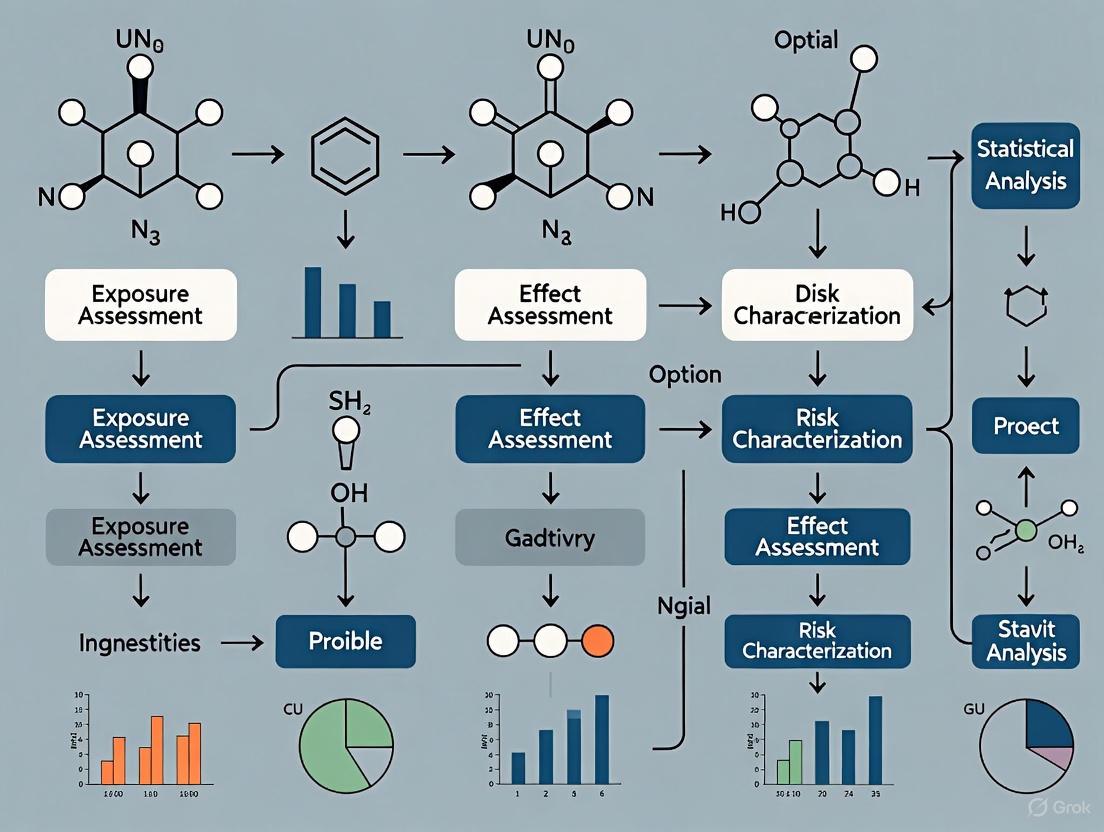
This article provides a comprehensive guide to the statistical analysis of ecotoxicity data, tailored for researchers, scientists, and drug development professionals.
From Data to Decision: A Modern Statistical Analysis Framework for Ecotoxicology
Abstract
This article provides a comprehensive guide to the statistical analysis of ecotoxicity data, tailored for researchers, scientists, and drug development professionals. It covers the foundational principles of ecotoxicology and the purpose of statistical analysis, explores the shift from traditional hypothesis testing to modern regression-based methods like ECx and benchmark dose (BMD), and addresses common troubleshooting scenarios and experimental design optimizations. The content also delves into validation techniques, comparative analyses of statistical software, and the application of advanced models including Generalized Linear Models (GLMs) and Bayesian frameworks to ensure robust and reproducible results in environmental risk assessment.
The Bedrock of Ecotoxicology: Understanding Organisms, Endpoints, and Statistical Purpose
Frequently Asked Questions (FAQs)
Q: What is the ECOTOX Knowledgebase and how can it support my research? A: The ECOTOXicology Knowledgebase (ECOTOX) is the world's largest compilation of curated ecotoxicity data, providing single chemical ecotoxicity data for over 12,000 chemicals and ecological species with over one million test results from over 50,000 references. It supports chemical safety assessments and ecological research through systematic, transparent literature review procedures, offering reliable curated ecological toxicity data for chemical assessments and research [1].
Q: My research involves sediment toxicity tests. When should I use natural field-collected sediment versus artificially formulated sediment? A: Using natural field-collected sediment contributes to more environmentally realistic exposure scenarios and higher well-being for sediment-dwelling organisms. However, it lowers comparability and reproducibility among studies due to differences in base sediment characteristics. Artificially formulated sediment, recommended by some OECD guidelines, provides higher homogeneity but may negatively impact natural behavior, feeding, reproduction, and survival of test organisms, potentially deviating from natural contaminant fate and bioavailability [2].
Q: Why is there a current push to update statistical guidance in ecotoxicology, such as OECD No. 54? A: Standardized methods and guidelines are still largely based on statistical principles and approaches that can no longer be considered state-of-the-art. A revision of documents like OECD No. 54 is needed to better reflect current scientific and regulatory standards, incorporate modern statistical practices in hypothesis testing, provide clearer guidance on model selection for dose-response analyses, and address methodological gaps for data types like ordinal and count data [3] [4].
Troubleshooting Experimental Protocols
Issue: Inconsistent results in sediment ecotoxicity tests
Solution: Follow these six key recommendations for using natural field-collected sediment [2]:
- Collection Site: Collect natural sediment from a well-studied site, historically and through laboratory analysis of background contamination.
- Storage: Collect larger quantities of sediment and store them prior to experiment initiation to ensure a uniform sediment base.
- Characterization: Characterize sediment used in testing for, at minimum, water content, organic matter content, pH, and particle size distribution.
- Spiking Method: Select spiking method, equilibration time, and experimental setup based on contaminant properties and the specific research question.
- Controls: Include a control sediment treated similarly to the spiked sediment and a solvent control when appropriate.
- Exposure Confirmation: Quantify experimental exposure concentrations in the overlying water, porewater (if applicable), and bulk sediment at the beginning and end of each experiment.
Key Data and Reagents
| Metric | Data Volume |
|---|---|
| Number of Chemicals | > 12,000 |
| Number of Ecological Species | > 12,000 |
| Number of Test Results | > 1,000,000 |
| Number of References | > 50,000 |
Essential Research Reagent Solutions
| Reagent/Material | Function in Ecotoxicology |
|---|---|
| Natural Field-Collected Sediment | Provides environmentally realistic exposure scenarios for benthic organisms and improves organism well-being during testing [2]. |
| Artificially Formulated Sediment | Offers a theoretically homogeneous substrate, as recommended by some standard guidelines (e.g., OECD), though may lack ecological realism [2]. |
| Control Sediment | Serves as a baseline for comparing effects in spiked or contaminated sediments, essential for validating test results [2]. |
Experimental Workflow and Statistical Analysis Diagrams
Research Workflow
Statistical Analysis Flow
Frequently Asked Questions
Q: What defines an environmental compartment in ecotoxicology studies? A: An environmental compartment is a part of the physical environment defined by a spatial boundary, such as the atmosphere, soil, surface water, sediment, or biota. The behavior and fate of chemical contaminants are determined by the properties of these compartments and the physicochemical characteristics of the chemicals themselves [5].
Q: Why is the selection of key test organisms critical? A: Key test organisms serve as biological indicators for the health of an entire environmental compartment. Their response to a stressor, such as a chemical contaminant, provides vital data on potential toxic effects, which is then analyzed using statistical flowcharts to determine ecological risk [5].
Q: How do I choose the right test organism for a sedimentary system? A: The choice depends on the research question, the contaminant's properties, and the organism's ecological relevance. Benthic organisms like midge larvae (e.g., Chironomus riparius) or oligochaete worms are often selected because they live in and interact closely with sediments, providing direct exposure pathways [5].
Q: A common issue is low statistical power in my ecotoxicological tests. What could be the cause? A: Low statistical power can stem from high variability in the test organism's response, an insufficient number of replicates, or an exposure concentration that is too low to elicit a measurable effect above background noise. Review your experimental design and ensure your sample size is adequate for the expected effect size.
Q: My control groups are showing unexpected effects. How should I troubleshoot this? A: Unexpected control group effects suggest contamination of the control medium, unsuitable environmental conditions (e.g., dissolved oxygen, temperature), or that the test organisms were not properly acclimated. Verify the purity of your control water, sediments, and food, and meticulously document all holding and acclimation conditions.
Experimental Protocols for Key Test Organisms
Aquatic Compartment: Acute Toxicity Test withDaphnia magna
Principle: This test assesses the acute immobilization of the freshwater cladoceran Daphnia magna after 48 hours of exposure to a chemical substance or effluent, providing a standard metric for aquatic toxicity (EC50).
Methodology:
- Test Organism: Use young, neonatal Daphnia magna (< 24 hours old) from healthy laboratory cultures.
- Test Medium: Reconstituted standard freshwater (e.g., ISO or OECD standard) with a controlled pH, hardness, and temperature.
- Exposure: A minimum of five test concentrations and a control are required, each with multiple replicates (e.g., 4 beakers per concentration). Each replicate contains a specified number of daphnids (e.g., 5) in a defined volume of test solution.
- Conditions: Maintain a constant temperature (18-22°C) and a photoperiod of 16 hours light:8 hours dark for the 48-hour test duration. Do not feed the organisms during the test.
- Endpoint Measurement: Record the number of immobile (non-swimming) daphnids in each beaker at 48 hours.
- Data Analysis: The percentage of immobile organisms at each concentration is calculated, and the EC50 (the concentration that immobilizes 50% of the test organisms) is determined using statistical probit analysis or logistic regression.
Sedimentary Compartment: Bioaccumulation Test withLumbriculus variegatus
Principle: This test determines the potential for a chemical to accumulate in the aquatic oligochaete Lumbriculus variegatus from spiked sediment, yielding a biota-sediment accumulation factor (BSAF).
Methodology:
- Test Organism: Use Lumbriculus variegatus of a specific size range from a synchronized laboratory culture.
- Sediment Spiking: A known quantity of the test chemical is thoroughly mixed into a standardized, uncontaminated natural or formulated sediment. The spiked sediment is then conditioned for a period (e.g., 28 days) to allow for equilibration.
- Exposure: Introduce a known number of worms into beakers containing the spiked sediment and overlying water. Include control sediments spiked only with the carrier solvent.
- Conditions: Maintain a constant temperature and aerate the overlying water gently. A 28-day exposure period is common, followed by a 24-hour depuration period in clean water to clear the gut contents.
- Sample Analysis: After depuration, the worms are collected, and the tissue concentration of the test chemical is measured. Parallel samples of the sediment are also analyzed to determine the chemical concentration.
- Data Analysis: The BSAF is calculated as the ratio of the chemical concentration in the worm tissue (lipid-normalized) to the concentration in the sediment (organic carbon-normalized).
Terrestrial Compartment: Reproduction Test withEisenia fetida
Principle: This test evaluates the effect of a chemical on the reproduction and survival of the earthworm Eisenia fetida in an artificial soil substrate.
Methodology:
- Test Organism: Use adult earthworms (Eisenia fetida) with a well-developed clitellum.
- Soil Spiking: The test chemical is mixed into a standardized artificial soil (e.g., a mix of sand, kaolinite clay, peat, and calcium carbonate). Multiple concentrations are prepared.
- Exposure: Introduce a specified number of adult worms (e.g., 10) into containers holding the spiked soil. The test runs for 4 weeks, during which the worms are fed a controlled amount of food.
- Conditions: Maintain containers in constant darkness at a defined temperature (e.g., 20°C) and soil moisture content.
- Endpoint Measurement: Adult survival is assessed at the end of the 4 weeks. The number of juvenile worms produced is determined by carefully washing the soil contents through a sieve.
- Data Analysis: The results are used to calculate the EC50 for reproduction inhibition (the concentration that reduces the number of juveniles by 50%) and the NOEC (No Observed Effect Concentration) using statistical analysis of variance (ANOVA).
Statistical Analysis Workflow for Ecotoxicology Research
The diagram below outlines a logical workflow for the statistical analysis of data from ecotoxicology experiments, from raw data to interpretation.
Statistical Analysis Flowchart
The Scientist's Toolkit: Research Reagent Solutions
| Item | Function in Ecotoxicology |
|---|---|
| Reconstituted Freshwater | A standardized, chemically defined water medium used in aquatic toxicity tests (e.g., with Daphnia or algae) to ensure reproducibility and eliminate confounding variables from natural water sources. |
| Formulated Sediment | A synthetic sediment with a standardized composition of sand, silt, clay, and organic carbon. It is used in sediment toxicity tests to provide a consistent and reproducible substrate for spiking with contaminants. |
| Artificial Soil | A standardized soil mixture used in terrestrial earthworm tests. Its defined composition allows for the accurate dosing of test chemicals and ensures that results are comparable across different laboratories. |
| Positive Control Substances | Reference toxicants, such as potassium dichromate (for Daphnia) or chloracetamide (for earthworms), used to verify the sensitivity and health of the test organisms. A successful test requires the positive control to produce a predictable toxic response. |
| Carrier Solvents | Substances like acetone or dimethyl formamide (DMF) are used to dissolve poorly water-soluble test chemicals before they are introduced into the test medium. The solvent concentration must be minimized and consistent across all treatments, including a solvent control. |
Conceptual Foundations and FAQs
Q1: What is a surrogate endpoint, and why is it used in ecotoxicology and drug development? A surrogate endpoint is a biomarker or measurement that is used as a substitute for a direct measure of how a patient feels, functions, or survives (in medicine) or for a measure of overall ecological fitness (in ecotoxicology). They are used because they can often be measured more easily, frequently, or cheaply than the true endpoint of ultimate interest [6]. According to the FDA, a surrogate endpoint is "a marker... that is not itself a direct measurement of clinical benefit," but that is known or reasonably likely to predict that benefit [7].
Q2: What are the key criteria for a valid surrogate endpoint? A valid surrogate should be consistently measurable, sensitive to the intervention, and on the causal pathway to the true endpoint. Most importantly, a change in the surrogate endpoint caused by an intervention must reliably predict a change in the hard, true endpoint (e.g., survival, population viability) [6].
Q3: Why might a surrogate endpoint like growth or reproduction fail to predict overall fitness? Surrogates can fail for several reasons, as seen in clinical medicine:
- Pleiotropic Effects: The experimental treatment may affect multiple biological pathways. While it improves the surrogate, it might have unrelated harmful effects. For example, a drug may reduce tumor size (a surrogate) but increase fatal infections through immune suppression, negating any survival benefit [6].
- Lack of Causality: The surrogate may be correlated with, but not causally on the pathway to, the true endpoint. For example, suppressing premature ventricular contractions (PVCs) after a heart attack did not reduce mortality, even though PVCs predict higher mortality [6].
- Heterogeneous Populations: The surrogate may work well in one subpopulation but not in another. In myeloma trials, the surrogate "progression-free survival" (PFS) predicted overall survival well in most patients, but not in a specific genetic subgroup, where an improvement in PFS was paradoxically linked to worse survival [8].
Q4: How are surrogate endpoints regulated for drug approval? The FDA maintains a "Table of Surrogate Endpoints" that have been used as the basis for drug approval. This includes endpoints like "Forced Expiratory Volume in 1 second (FEV1)" for asthma/COPD and "Reduction in amyloid beta plaques" for Alzheimer's disease (under accelerated approval) [7]. This demonstrates that with sufficient validation, surrogates are critical for accelerating the development of new therapies.
Experimental Protocols for Endpoint Analysis
This section outlines standard methodologies for measuring core endpoints in ecotoxicology, framed within a statistical analysis workflow.
Protocol for Survival Analysis (e.g., in Acute Toxicity Testing)
Objective: To determine the lethal effects of a stressor over a specified duration. Methodology:
- Experimental Design: Organisms are randomly assigned to several concentrations of a toxicant and a control group. Each group is replicated.
- Exposure & Monitoring: Organisms are exposed under controlled conditions (temperature, pH, light). Mortality is recorded at regular intervals (e.g., 24h, 48h, 96h). Organisms are not fed during short-term tests.
- Data Collection: The primary data is the number of dead organisms in each replicate at each observation time.
- Statistical Analysis: Data are analyzed using Probit Analysis or Logistic Regression to calculate LC50 values (Lethal Concentration for 50% of the population) and their confidence intervals. Time-to-event data can be analyzed using Kaplan-Meier survival curves and Cox Proportional Hazards models [9].
Protocol for Reproduction Analysis (e.g., in Chronic Life-Cycle Tests)
Objective: To assess the sublethal effects of a stressor on reproductive output and success. Methodology:
- Experimental Design: Organisms (e.g., daphnids, fish) are exposed to sublethal concentrations of a toxicant through all or part of their life cycle, including reproductive maturity.
- Exposure & Monitoring: Tests are longer-term (e.g., 21 days for Daphnia). Endpoints include the number of offspring produced per female, number of broods, time to first reproduction, and egg viability.
- Data Collection: Daily counts of offspring are typical. For fish, egg counts and hatch rates are recorded.
- Statistical Analysis: Data are often analyzed using Analysis of Variance (ANOVA) followed by post-hoc tests to compare means between treatment groups. If data violates assumptions of normality, non-parametric tests (e.g., Kruskal-Wallis) are used. Reproduction data is often a key input for population modeling [9].
Protocol for Growth Analysis
Objective: To quantify the effects of a stressor on energy acquisition and allocation towards somatic growth. Methodology:
- Experimental Design: Similar to reproduction tests, organisms are exposed to sublethal concentrations over a defined period.
- Exposure & Monitoring: Organisms are measured (e.g., length, weight) at the beginning and end of the exposure period. Interim measurements may also be taken.
- Data Collection: The primary data is the change in body size (length or weight) per unit time.
- Statistical Analysis: Growth rates are analyzed using ANOVA. Analysis of Covariance (ANCOVA) can be used with initial size as a covariate. Model II regression is appropriate when comparing the scaling of different growth metrics [9].
The Statistical Analysis Workflow in Ecotoxicology
The following diagram illustrates the logical flow from experimental data to the interpretation of fitness surrogates, incorporating key statistical decision points.
The Scientist's Toolkit: Key Research Reagent Solutions
The following table details essential materials and concepts used in experiments involving fitness surrogates.
| Item/Concept | Function & Application |
|---|---|
| Test Organisms (e.g., Daphnia magna, Danio rerio, Chironomus riparius) | Standardized biological models with known life histories. Their responses to toxicants in survival, growth, and reproduction tests are used to extrapolate potential ecological effects [9]. |
| LC50 / EC50 | A quantitative statistical estimate of the concentration of a toxicant that is lethal (LC50) or causes a specified effect (EC50, e.g., immobility) in 50% of the test population after a specified exposure time. It is a fundamental endpoint for comparing toxicity [9]. |
| NOEC / LOEC | The No Observed Effect Concentration (NOEC) and the Lowest Observed Effect Concentration (LOEC) are statistical estimates identifying the highest concentration causing no significant effect and the lowest concentration causing a significant effect, respectively, compared to the control [9]. |
| Progression-Free Survival (PFS) | A clinical surrogate endpoint defined as the time from the start of treatment until disease progression or death. It is commonly used in oncology trials (e.g., myeloma) as a surrogate for overall survival, though its validity can be context-dependent [8]. |
| Minimal Residual Disease (MRD) | A highly sensitive biomarker used in hematologic cancers (e.g., multiple myeloma) to detect the small number of cancer cells remaining after treatment. It is an emerging surrogate endpoint for accelerated drug approval [8]. |
Causal Pathways Linking Surrogates to Fitness
The relationship between a surrogate and the true endpoint is strongest when the surrogate lies on the causal pathway. The following diagram contrasts valid and invalid causal pathways for common surrogates.
In ecotoxicology, statistical analysis transforms raw data from tests on organisms into summary criteria that quantify a substance's toxic effect. The most common criteria are the No Observed Effect Concentration (NOEC), the Lowest Observed Effect Concentration (LOEC), and Effect Concentration (ECx) values [10] [11].
Q: What is the fundamental difference between the NOEC/LOEC approach and the ECx approach?
A: The key difference lies in their underlying methodology. NOEC and LOEC are determined via hypothesis testing (comparing treatments to a control), while ECx values are derived via regression analysis (modeling the entire concentration-response relationship) [10].
The following table summarizes the definitions and characteristics of these key endpoints.
| Summary Criterion | Full Name & Definition | Key Characteristics |
|---|---|---|
| NOEC [10] [11] | No Observed Effect Concentration: The highest tested concentration at which there is no statistically significant effect (p < 0.05) compared to the control group. | - Dependent on the specific concentrations chosen for the test.- Does not provide an estimate of the effect at that concentration.- Does not include confidence intervals or measures of uncertainty. |
| LOEC [10] [11] | Lowest Observed Effect Concentration: The lowest tested concentration that produces a statistically significant effect (p < 0.05) compared to the control group. | - The concentration immediately above the NOEC.- Like NOEC, its value is constrained by the experimental design. |
| ECx [10] [11] | Effect Concentration for x% effect: The concentration estimated to cause a given percentage (x%) of effect (e.g., 10%, 50%) relative to the control. It is derived from a fitted concentration-response model. | - Utilizes data from all test concentrations.- Provides a specific estimate of the effect level.- Allows for the calculation of confidence intervals to express uncertainty. A common variant is the EC10. |
| MATC [11] | Maximum Acceptable Toxicant Concentration: The geometric mean of the NOEC and LOEC (MATC = √(NOEC × LOEC)). It represents a calculated "safe" concentration. | - Can be used to derive a NOEC if only the MATC is reported (NOEC ≈ MATC / √2). |
Troubleshooting Common Experimental and Statistical Issues
Q: My LOEC is the lowest concentration I tested. What is my NOEC, and how can I report this properly?
A: In this case, the NOEC is technically undefined because there is no tested concentration below the LOEC [10]. This is a major limitation of the NOEC/LOEC approach. In risk assessment, a common workaround is to apply a conversion factor if the effect level at the LOEC is known. For instance, if the LOEC has an effect between 10% and 20%, it is sometimes approximated that NOEC = LOEC / 2 [11]. However, you should clearly state this assumption in your reporting. This problem highlights an advantage of the ECx approach, which can estimate low-effect concentrations even if they fall between tested doses [10].
Q: Regulatory guidelines are moving away from NOEC/LOEC. Why, and what are the main criticisms?
A: Regulatory bodies like the OECD have recommended a shift towards regression-based ECx values due to several critical disadvantages of the NOEC/LOEC approach [10]:
- Potential to Mislead: The term "No Observed Effect" can be misinterpreted as "No Effect," when it merely means no statistically significant effect was detected in that specific test design [10].
- No Estimate of Uncertainty: NOEC/LOEC values are simple test concentrations and do not come with confidence intervals, giving a false impression of certainty [10].
- Inefficient Use of Data: They ignore the information contained in the full concentration-response curve, using only a limited amount of the data generated by the test organisms [10].
- Dependence on Test Design: Their values are highly sensitive to the number and spacing of the concentration groups chosen by the experimenter [10].
Q: Are there valid reasons to still use NOEC/LOEC?
A: Yes, some scientists argue that a blanket ban on NOEC/LOEC is misguided. There are real-world scenarios where hypothesis testing (NOEC/LOEC) is more appropriate than regression-based ECx estimation [12]. For example, ECx models may not be suitable for all types of data or may offer no practical advantage in certain situations. The key is a thoughtful consideration of study design and the choice of the most meaningful statistical approach for the specific research question [12].
Essential Experimental Protocols and Methodologies
Chronic Ecotoxicity Test Workflow
The diagram below outlines a generalized workflow for a chronic ecotoxicity study, from design to data analysis.
Detailed Methodology for Key Experiments
A standard chronic ecotoxicity test, such as those aligned with OECD guidelines, follows a structured protocol [10] [9]:
- Test Organism and System Setup: Select relevant species (e.g., algae, daphnids, fish). Prepare a dilution series of the test substance and a control medium. Each concentration and the control should have multiple replicates (e.g., 3-4) to account for biological variation.
- Exposure and Monitoring: Randomly assign organisms to each test chamber. Maintain controlled environmental conditions (temperature, light, pH) throughout the exposure period. Renew test solutions periodically if it is a static-renewal or flow-through test.
- Endpoint Measurement: At test termination, measure predefined sublethal endpoints. For growth, measure the length or weight of surviving organisms. For reproduction, count the number of offspring produced per parent organism.
- Data Collection and Preparation: Compile raw data for statistical analysis. Calculate the mean response for each replicate and check data for normality and homogeneity of variance, which are assumptions for many statistical tests.
The Scientist's Toolkit: Research Reagent Solutions
The following table lists essential materials and their functions in standard ecotoxicity testing.
| Item/Category | Function in Ecotoxicity Testing |
|---|---|
| Reference Toxicants | A standard chemical (e.g., potassium dichromate, copper sulfate) used to validate the health and sensitivity of the test organisms. A test is considered valid if the EC50 for the reference toxicant falls within an expected range. |
| Culture Media | Synthetic water or soil preparations that provide essential nutrients for maintaining healthy cultures of the test organisms (e.g., algae, daphnia) before and during the assay. |
| Dilution Water | A standardized, clean water medium (e.g., reconstituted hard or soft water per OECD standards) used to prepare accurate dilution series of the test substance. |
| Solvents / Carriers | A small amount of a non-toxic solvent (e.g., acetone, dimethyl formamide) may be used to dissolve a water-insoluble test substance. A solvent control must be included in the experimental design. |
Visualization and Color Contrast Guidelines for Scientific Diagrams
Creating clear and accessible visualizations is critical for scientific communication. The following guidelines ensure your diagrams are readable by everyone, including those with visual impairments.
Accessible Color Palette for Scientific Figures
The palette below is designed for high clarity and adheres to accessibility principles [13] [14].
| Color Name | HEX Code | Use Case & Notes |
|---|---|---|
| Blue | #4285F4 |
Primary data series, main flow. |
| Red | #EA4335 |
Highlighting significant effects, LOEC, or warnings. |
| Yellow | #FBBC05 |
Secondary data series, cautionary notes. Ensure text on this background is dark (#202124). |
| Green | #34A853 |
Control groups, "no effect" indicators, safe thresholds. |
| White | #FFFFFF |
Diagram background. |
| Light Grey | #F1F3F4 |
Node backgrounds, section shading. |
| Dark Grey | #5F6368 |
Borders, secondary lines. |
| Black | #202124 |
Primary text color for high contrast against light backgrounds. |
Key Color Contrast Rules
All visual elements must meet the following Web Content Accessibility Guidelines (WCAG) for contrast [15] [13]:
- Normal Text: A contrast ratio of at least 4.5:1 between the text color and its background color.
- Large-Scale Text (18pt+ or 14pt+bold): A contrast ratio of at least 3:1 [13].
- User Interface Components and Graphical Objects: A contrast ratio of at least 3:1 against adjacent colors [13].
Critical Rule for DOT Scripts: When defining a node in your diagram, explicitly set both the fillcolor (background) and fontcolor to ensure high contrast. For example, for a yellow node, use dark text: [fillcolor="#FBBC05" fontcolor="#202124"].
Integrating Physicochemical Properties to Identify Relevant Environmental Compartments
Frequently Asked Questions (FAQs) & Troubleshooting Guides
Data Compilation and Curation
Q: What are the minimal reporting requirements for test compound properties to ensure data reusability?
A transparent and detailed reporting of the test compound is fundamental. Your methodology should include [16]:
- Source and Purity: The commercial source, lot number, and stated purity of the test substance.
- Chemical Characterization: Information on the chemical composition, including the presence and concentration of known impurities or additives.
- Verification: Details of any analytical methods used to verify the chemical identity and concentration of the test substance before and during the experiment.
- Critical Properties: Key physicochemical properties such as water solubility, vapor pressure, octanol-water partition coefficient (Log Kow), and dissociation constant (pKa). Summarize these for easy comparison in your reports [16]:
| Property | Description | Importance in Compartment Identification |
|---|---|---|
| Water Solubility | The maximum amount of a chemical that dissolves in water. | High solubility suggests a potential for aqueous environmental compartments (freshwater, marine). |
| Vapor Pressure | A measure of a chemical's tendency to evaporate. | High vapor pressure indicates a potential for the chemical to partition into the atmospheric compartment. |
| Log Kow | The ratio of a chemical's solubility in octanol to its solubility in water. | A high Log Kow suggests a potential for bioaccumulation and partitioning into organic matter/lipids and sediments. |
| pKa | The pH at which half of the molecules of a weak acid or base are dissociated. | Determines the speciation (charged vs. uncharged) of the molecule, which influences solubility, sorption, and toxicity across different pH levels. |
Q: My experimental data shows high variability in measured exposure concentrations. What could be the cause?
Inconsistent exposure confirmation is a common issue that undermines data reliability. Follow this troubleshooting guide [16]:
| Problem | Potential Cause | Solution |
|---|---|---|
| High variability in measured concentrations | - Instability of the test substance in the test system.- Inhomogeneous dosing solutions.- Loss of chemical due to sorption to test vessel walls. | - Validate chemical stability under test conditions.- Use appropriate solvents and mixing procedures.- Use test vessels made of low-sorption materials (e.g., glass, specific plastics). |
| Measured concentration significantly lower than nominal | - Chemical degradation (hydrolysis, photolysis).- Volatilization.- Microbial degradation. | - Report both nominal and measured concentrations. [16]- Characterize degradation kinetics.- Use closed or flow-through systems as appropriate. |
| Lack of measured exposure data | - No analytical verification performed. | This is a critical failure. Always include analytical confirmation of exposure concentrations; data without it may be deemed unreliable for regulatory purposes or meta-analyses. [16] |
Statistical Analysis and Flowchart Design
Q: How can I ensure my statistical analysis flowchart is accessible to all colleagues, including those using assistive technologies?
Creating accessible diagrams is a key best practice. Relying solely on a visual chart can exclude users. Here is the recommended protocol [17]:
- Provide a Text-Based Alternative: The most robust solution is to provide a text version of the flowchart's logic. This can be done using nested lists or headings that represent the structure [17].
- List Example:
- Heading Example: Use heading levels (H1, H2, H3) to represent the hierarchy of decisions in your chart [17].
- Create a Single Accessible Image: If a visual chart is also needed, export the entire flowchart as a single, high-resolution image. For this image, provide concise alt-text that describes the overall purpose and structure, such as: "Flowchart for identifying relevant environmental compartments based on physicochemical properties. Text details found in the accompanying guide." [17]
- Apply Strict Color Contrast Rules: Ensure sufficient contrast between all foreground elements (text, arrows, symbols) and their background colors. For standard text, the Web Content Accessibility Guidelines (WCAG) require a contrast ratio of at least 4.5:1 [15].
Q: What are the common design pitfalls that make flowcharts difficult to follow?
Avoid these common issues to improve clarity [18]:
- Disorganized Flow: Placing shapes too close together or using long, winding connectors. Maintain consistent spacing and a logical left-to-right or top-to-bottom flow [18].
- Poor Color Contrast: Using color schemes where text or shapes do not distinctly stand out from the background, forcing readers to strain their eyes [18].
- Overcomplication: Including too much detail in one diagram. If a flowchart is too complex, break it into multiple, simpler, linked diagrams [17] [18].
- Undefined Decision Paths: Forks in the logic that are not clearly labeled. Always ensure decision points and the conditions for each path are explicitly defined [18].
Experimental Protocol: Systematic Review and Data Curation Pipeline
This protocol, based on established systematic review practices, outlines the methodology for identifying, curating, and integrating ecotoxicity data to support the identification of relevant environmental compartments [1].
1. Problem Formulation & Literature Search
- Objective: To gather existing ecotoxicity data for a target chemical and use its physicochemical properties to guide the assessment of relevant environmental compartments.
- Search Strategy: Develop a comprehensive search string using online scientific databases (e.g., Web of Science, Scopus). The search should include the chemical name, synonyms, and common acronyms, combined with keywords like "ecotoxicology," "toxicity," and "environmental fate." [1]
- Documentation: Record the exact search strings, databases used, and date of search for full transparency.
2. Study Screening & Selection
- Process: Screen identified references in two phases [1]:
- Title/Abstract Screen: Assess relevance based on pre-defined criteria (e.g., presence of original toxicity data, relevant ecological species).
- Full-Text Review: Apply strict eligibility criteria for acceptability. Key criteria include [1] [16]:
- Analytical verification of exposure concentrations.
- Use of appropriate controls with documented performance.
- Reporting of raw data or effect concentrations in a usable form.
- Flowchart: The study selection process is documented using a PRISMA-style flowchart, as shown in Diagram 1 [1].
3. Data Extraction & Curation
- Data Fields: Extract relevant data into a standardized template. Essential fields include [1] [16]:
- Chemical Information: Name, CASRN, measured physicochemical properties.
- Test Organism: Species, life stage, source.
- Experimental Conditions: Test type (static, flow-through), duration, temperature, pH, endpoints measured.
- Results: Raw data, calculated endpoints (LC50, NOEC), and statistical methods.
- Quality Assurance: All extracted data should be subject to peer review and verification before being added to the final dataset [1].
Visualizing the Systematic Review Workflow
The following diagram illustrates the experimental protocol for literature review and data curation, which forms the basis for identifying relevant environmental compartments.
Decision Framework for Environmental Compartments
This diagram outlines the logical decision process for prioritizing environmental compartments based on a chemical's key physicochemical properties.
The Scientist's Toolkit: Research Reagent Solutions
| Item | Function in Ecotoxicology Research |
|---|---|
| Reference Toxicants | Standard chemicals (e.g., potassium dichromate, sodium chloride) used to assess the health and sensitivity of test organisms, ensuring the reliability of bioassay results. [16] |
| Analytical Grade Solvents | High-purity solvents used for dissolving test substances, extracting analytes from environmental matrices, and preparing standards for chemical verification. [16] |
| Certified Reference Materials (CRMs) | Standards with certified chemical concentrations and properties. Used to calibrate instruments and validate analytical methods for quantifying chemical exposure. [16] |
| In-Situ Passive Samplers | Devices deployed in the environment (e.g., SPMD, POCIS) to measure the time-weighted average concentration of bioavailable contaminants in water, sediment, or air. |
| Standardized Test Organisms | Cultured organisms (e.g., Daphnia magna, Pseudokirchneriella subcapitata) with known sensitivity and control performance, providing reproducible and comparable toxicity data. [1] |
The Statistical Toolbox: Implementing Hypothesis Tests, Regression Models, and ECx Calculation
Frequently Asked Questions (FAQs)
Q1: What are the fundamental limitations of NOEC/LOEC that justify this paradigm shift?
The No Observed Effect Concentration (NOEC) and Lowest Observed Effect Concentration (LOEC) have several critical limitations [10]:
- Dependence on Test Design: The NOEC depends on the arbitrary choice of test concentrations and the number of replications. A poorly designed experiment with high variability can misleadingly result in a high NOEC [19] [10].
- False Impression of a "No-Effect" Level: The name is potentially misleading; it is not a true "no effect" concentration but merely the highest concentration tested that did not show a statistically significant effect in that specific test [10].
- No Information on Effect Magnitude or Uncertainty: NOEC/LOEC provide no estimate of the variability or uncertainty around the result and cannot describe the concentration-response relationship, making them an inefficient use of data and test organisms [10].
Q2: How do regression-based ECx values address these limitations?
Regression-based procedures model the entire concentration-response relationship [10]. The Effective Concentration (ECx), which is the concentration that causes an x% effect (e.g., EC10, EC50), offers significant advantages [19]:
- Quantifies Effect and Uncertainty: Allows for the calculation of confidence intervals, providing an estimate of the reliability of the result [10].
- Makes Full Use of Data: Uses all data points from the experiment to model the biological response, leading to more robust and informative conclusions [19] [10].
- Enables Extrapolation: The model can estimate effect concentrations that were not directly tested, which is particularly useful when the LOEC is the lowest tested concentration and the NOEC is therefore undefined [10].
Q3: What are the practical challenges when implementing regression-based methods, and how can they be overcome?
- Challenge 1: Model Selection and Fit. Choosing an inappropriate regression model can lead to inaccurate ECx estimates.
- Solution: Use statistical software that supports multiple models (e.g., logistic, probit). Evaluate model fit using goodness-of-fit criteria (e.g., R², AIC) and residual analysis. Ensure your experimental design includes a sufficient number of concentration levels to adequately define the response curve [19].
- Challenge 2: Experimental Effort and Cost. Generating data suitable for regression analysis may require more experimental effort, such as testing more concentrations.
- Solution: The increased initial effort is justified by the more robust and informative output. Furthermore, machine learning approaches are now being developed to predict dose-effect curves, which can significantly reduce the experimental workload in the future [20].
- Challenge 3: Dealing with Intraspecific Variation. Traditional tests often use a single genotype, which may not represent the response of a natural, genetically diverse population [21].
- Solution: Incorporate multiple genotypes or strains into toxicity testing where feasible. Research shows that using a single genotype can fail to produce an estimate within the 95% confidence interval of the population response over half of the time, highlighting the importance of accounting for genetic diversity for accurate risk assessment [21].
Q4: How can novel methods like machine learning (ML) enhance dose-response analysis?
ML models can predict dose-effect relationships while accounting for complex interactions between multiple pollutants. For instance [22]:
- FLIT-SHAP: An explainable ML approach that can extract dose-response relationships (overall, main, and interaction effects) for individual pollutants within a complex mixture, revealing synergistic or antagonistic effects that traditional models miss.
- Reduced Experimental Workload: ML models, such as Gradient-Boosted Decision Trees (GBDT), have been shown to accurately predict toxicity curves for municipal wastewater, potentially reducing the required experimental workload by at least 75% [20].
Troubleshooting Guides
Issue 1: Poor Model Fit in Regression Analysis
Problem: The regression model does not adequately fit your concentration-response data, leading to unreliable ECx estimates.
Diagnosis and Resolution:
- Visualize Data: Plot the observed data points and the fitted curve. Look for systematic deviations (e.g., S-shaped data fit with a linear model).
- Check Model Assumptions: Ensure your data meets the assumptions of the chosen model (e.g., normality, homoscedasticity of residuals).
- Try Alternative Models: Test different non-linear models (e.g., log-logistic, Gompertz, Weibull) to find the best fit for your data's distribution.
- Review Experimental Design: If poor fit persists, the issue may be with the data. Ensure you have an adequate range of concentrations that capture both the lower and upper asymptotes of the response curve [19].
Issue 2: Handling Non-Additive (Synergistic/Antagonistic) Effects in Chemical Mixtures
Problem: Traditional models like Concentration Addition (CA) and Independent Action (IA) assume additivity, but real-world pollutant mixtures often interact.
Diagnosis and Resolution:
- Identify the Need: Suspect interactions when the observed mixture toxicity consistently deviates from predictions based on individual component toxicities.
- Employ Advanced Techniques:
- Statistical Methods: Use methods like Bayesian kernel machine regression (BKMR) or weighted quantile sum (WQS) regression to handle multi-pollutant exposures [22].
- Machine Learning: Apply ML models like XGBoost combined with explanation frameworks (e.g., FLIT-SHAP) to elucidate individual pollutant effects and their interactions within a mixture, providing dose-response patterns even with interacting components [22].
Issue 3: High Uncertainty in Low-Effect Zone (e.g., EC10) Estimates
Problem: The confidence intervals for low-effect concentrations like EC10 are very wide, making the estimate unreliable.
Diagnosis and Resolution:
- Increase Replication: More replicates at concentrations around the anticipated low-effect zone will reduce variability and tighten confidence intervals [19].
- Optimize Concentration Spacing: Ensure you have several test concentrations in the low-effect range to better define this part of the curve.
- Use More Sensitive Endpoints: If possible, select biological endpoints that show a clear graded response at low concentrations.
Experimental Protocols
Protocol 1: Determining a Regression-Based EC50 for Acute Toxicity
Objective: To determine the concentration that causes a 50% effect in a population over a short-term exposure.
Materials:
- Test organisms (e.g., Daphnia magna)
- Test chemical in known concentrations
- Control dilution water
- Exposure chambers
- Environmental control system (temperature, light)
Procedure:
- Design: Select at least five concentrations and a control, spaced logarithmically to cover a range from 0% to 100% effect.
- Exposure: Randomly assign organisms to each treatment and control group. Use a minimum of four replicates per concentration.
- Randomization: Randomize the position of exposure chambers in the test system to avoid positional bias.
- Observation: Record the response (e.g., mortality, immobilization) at specified time intervals (e.g., 24h and 48h).
- Data Analysis: Fit a non-linear regression model (e.g., a log-logistic model) to the data. Use statistical software to calculate the EC50 and its 95% confidence interval from the fitted curve.
Protocol 2: Applying FLIT-SHAP for Mixture Toxicity Analysis
Objective: To model the dose-response relationship of individual pollutants in a mixture, accounting for interactions [22].
Materials:
- Laboratory equipment for oxidative potential (OP) measurement (e.g., dithiothreitol (DTT) assay)
- Redox-active species (e.g., PQN, 1,2-NQ, Cu(II), Mn(II))
- Computational resources with Python/R and XGBoost, SHAP libraries
Procedure:
- Data Generation: Conduct laboratory-simulated measurements of OP using a mixture of multiple redox-active species. The concentration range for each species should be based on environmental relevance, including a zero concentration [22].
- Model Training: Train a robust machine learning model, such as eXtreme Gradient Boosting (XGBoost), on the generated concentration and OP data [22].
- Interpretation with FLIT-SHAP: Apply the FLIT-SHAP method to the trained model. This method localizes the intercept of the standard SHAP model to:
- Extract the overall, main, and total-interaction (synergistic/antagonistic) dose-response relationships for each pollutant.
- Visualize how interactions between species alter the OP at different concentration levels [22].
Data Presentation
Table 1: Comparison of NOEC/LOEC and Regression-Based ECx Approaches
| Feature | NOEC/LOEC (ANOVA-type) | Regression-Based ECx |
|---|---|---|
| Statistical Basis | Hypothesis testing (e.g., Dunnett's test) | Non-linear regression modeling |
| Output | Two discrete concentrations (NOEC, LOEC) | A continuous ECx value with confidence intervals |
| Dependence on Test Design | High; arbitrary concentration spacing affects result [10] | Lower; interpolates within tested range |
| Information on Curve Shape | No [10] | Yes, models the entire relationship [10] |
| Quantification of Uncertainty | No [10] | Yes, via confidence intervals [10] |
| Data Efficiency | Low; uses only significance testing between groups [10] | High; uses all data points to fit a model [10] |
| Recommended Use | Phasing out as a main summary parameter [19] [10] | Preferred method for modern risk assessment [19] [10] |
Table 2: Key Research Reagent Solutions in Ecotoxicology
| Reagent / Material | Function in Experiment | Example Application |
|---|---|---|
| Dithiothreitol (DTT) | A probe to measure the oxidative potential (OP) of particulate matter by simulating lung antioxidant responses. | Quantifying the toxicity of PM components and their mixtures [22]. |
| Phenanthrenequinone (PQN) | A redox-active quinone used as a standard challenge in OP assays. | Studying the contribution of organic species to the OP of PM in laboratory-controlled mixtures [22]. |
| Daphnia magna | A model freshwater crustacean used in standard ecotoxicity testing. | Determining acute (immobilization) and chronic (reproduction) toxicity endpoints for chemicals [21]. |
| Zebrafish Embryos | A vertebrate model for developmental toxicity and high-throughput screening. | Predicting the dose-effect curve of municipal wastewater toxicity using machine learning [20]. |
| Microcystis spp. | A genus of cyanobacteria that produce microcystin toxins. | Studying the effects of harmful algal blooms (HABs) and intraspecific variation in toxin tolerance [21]. |
Visualizations
Diagram 1: Decision Flowchart for Ecotoxicity Data Analysis
Diagram 2: Workflow for Machine Learning-Based Mixture Toxicity Analysis
This technical support center provides troubleshooting guides and frequently asked questions (FAQs) for researchers in ecotoxicology and related fields navigating three specific statistical tests. Proper application of Dunnett's, Williams', and Jonckheere-Terpstra tests is crucial for analyzing data from toxicity studies, dose-response experiments, and other research involving multiple comparisons or ordered alternatives. The following sections offer detailed protocols and solutions to common problems framed within the context of ecotoxicological research.
Test Selection Guide
The table below summarizes the core purpose and application context for each statistical test to help guide your selection.
| Test Name | Primary Purpose | Ideal Use Case in Ecotoxicology |
|---|---|---|
| Dunnett's Test [23] | Multiple comparisons to a single control group [23]. | Comparing several pesticide treatment groups to an untreated control to identify which concentrations cause a significant effect [23]. |
| Williams' Test | To test for a monotonic trend (increasing or decreasing) across ordered treatment groups. | Analyzing a dose-response relationship where you expect a consistent increase (or decrease) in mortality with increasing contaminant concentration. |
| Jonckheere-Terpstra Test [24] [25] | To determine if there is a statistically significant ordered trend between an ordinal independent variable and a dependent variable [24] [25]. | Assessing whether reproductive success in birds decreases with increasing levels of environmental pollutant exposure (e.g., "Low," "Medium," "High") [24]. |
Figure 1: Statistical Test Selection Flowchart for Ecotoxicology Experiments
Dunnett's Test
Troubleshooting Guide
| Problem | Possible Cause | Solution |
|---|---|---|
| Test statistic not displayed in output. | Software may not display it by default [26]. | In software like JMP, the test statistic (Q, similar to a t-statistic) can often be found in detailed output tables, such as the "LSMeans Differences Dunnett" table [26]. |
| Unequal group sizes. | Original Dunnett's table assumes equal group sizes [27]. | Most modern statistical software can handle unequal sample sizes computationally. Verify that your software uses the corrected calculation [27]. |
| Interpretation of result is unclear. | - | A significant result (p < 0.05) for a treatment indicates its mean is significantly different from the control mean. The sign of the difference (positive/negative) indicates the direction of the effect [23]. |
Frequently Asked Questions (FAQs)
Q1: What is the test statistic for Dunnett's procedure, and how do I report it? The test statistic for Dunnett's test is often denoted as Q in software outputs, which is equivalent to a t-statistic for multiple comparisons to a control [26]. When reporting results for a publication, you should include the Q statistic, its associated degrees of freedom, and the p-value for each significant comparison [26].
Q2: My experiment has one control and three treatment groups. How many comparisons does Dunnett's test make? Dunnett's test makes (k-1) comparisons, where k is the total number of groups (including the control) [23]. In your case, with 4 total groups, it performs 3 comparisons. This makes it more powerful than tests like Tukey's that would perform all possible pairwise comparisons[k(k-1)/2 = 6 comparisons] [23].
Jonckheere-Terpstra Test
Troubleshooting Guide
| Problem | Possible Cause | Solution |
|---|---|---|
| A significant J-T result, but medians are not perfectly ordered. | The J-T test is a test of stochastic ordering, not just medians. It can be significant even if medians are equal, as long as the overall distributions show a trend [28]. | This is not necessarily an error. Interpret the result as a general trend in the data distributions across the ordered groups. |
| Negative test statistic. | The predicted order of the alternative hypothesis is the reverse of the actual data trend [28]. | A negative J-T statistic with a significant p-value supports an alternative hypothesis that the values are decreasing as the group order increases [28]. |
| Test is not significant, but some group differences are. | The J-T test evaluates a single, consistent trend across all groups. A reversal in trend between two groups can reduce the overall statistic [28]. | The test may lack power if the true pattern is not monotonically increasing or decreasing. Consider if your hypothesis is truly about a directional trend. |
Frequently Asked Questions (FAQs)
Q1: What is the key difference between the Kruskal-Wallis test and the Jonckheere-Terpstra test? Both are non-parametric, but they test different hypotheses. The Kruskal-Wallis test is a general test that determines if there are any significant differences among the medians of three or more independent groups, without specifying the nature of those differences [24] [25]. The Jonckheere-Terpstra test is more specific and powerful when you have an a priori ordered alternative hypothesis; it tests specifically for an increasing or decreasing trend across the groups [24] [25].
Q2: What are the critical assumptions I must check before running the Jonckheere-Terpstra test? The main assumptions are [24] [25]:
- Ordinal or Continuous Data: The dependent variable should be measured on an ordinal, interval, or ratio scale.
- Ordinal Independent Variable: The independent variable should consist of two or more categorical, independent groups with a logical order (e.g., "Low," "Medium," "High").
- Independence of Observations: There must be no relationship between the observations in different groups.
- A Priori Order and Direction: You must specify the order of the groups and the predicted direction of the trend (increasing or decreasing) before looking at the data [24].
Williams' Test
Troubleshooting Guide
| Problem | Possible Cause | Solution |
|---|---|---|
| Test fails to detect a known trend. | The test assumes a specific monotonic dose-response shape. The data may have a non-monotonic (e.g., umbrella) shape. | Visually inspect the data. If the trend reverses, the standard Williams test is not appropriate. Consider the Mack-Wolfe test for umbrella alternatives. |
| Assumption of normality and equal variance violated. | Biological data, such as count or percentage data from ecotoxicology studies, often violate these parametric assumptions [29]. | Check if your software offers a non-parametric version of the Williams test. Alternatively, data transformation might be necessary before analysis. |
Frequently Asked Questions (FAQs)
Q1: When should I use Williams' test over the Jonckheere-Terpstra test? Use Williams' test when you are working with continuous data that meets parametric assumptions (like normality) and you have a specific reason to believe the trend follows a monotonic pattern (consistently increasing or decreasing), often modeled by a regression function. Use the Jonckheere-Terpstra test as a non-parametric alternative when your data are ordinal or do not meet parametric assumptions, as it tests for a trend based on the ranks of the data.
Q2: My Williams' test is significant. What is the main conclusion? A significant Williams' test allows you to conclude that there is a statistically significant monotonic trend across the ordered treatment groups. This means that as you move from one ordered group to the next (e.g., from low dose to high dose), the response variable consistently increases (or decreases, depending on your hypothesis) in a way that is unlikely to be due to random chance alone.
The Scientist's Toolkit: Essential Research Reagents and Materials
The table below lists key materials and solutions commonly used in ecotoxicology experiments that generate data for the statistical tests discussed above.
| Item | Function in Ecotoxicology Research |
|---|---|
| Test Chemical/Compound | The substance whose toxic effects are being investigated. Its source, purity, and chemical properties must be well-characterized and reported [16]. |
| Vehicle/Solvent Control | A negative control group exposed to the solvent (e.g., water, acetone, DMSO) used to deliver the test chemical, but without the test chemical itself. This is the baseline for comparison in tests like Dunnett's [16]. |
| Analytical Grade Reagents | High-purity chemicals used to confirm the exposure concentrations in test vessels via chemical analysis. This is critical for verifying the dose-response relationship [16]. |
| Defined Animal Feed | A consistent, contaminant-free diet for test organisms to ensure that observed effects are due to the test chemical and not nutritional variability or contaminants in food [29]. |
| Reference Toxicant | A standard chemical (e.g., potassium dichromate, copper sulfate) with known and reproducible toxicity used to validate the health and sensitivity of the test organisms over time [29]. |
Figure 2: Experimental Workflow for Robust Statistical Analysis
Frequently Asked Questions
Q1: What are the fundamental differences between Log-Logistic, Probit, and Weibull models for dose-response analysis?
These models are nonlinear regression models used to describe the relationship between dose and effect, but they differ in their underlying assumptions and shape characteristics [30]. The Log-logistic model (including its parameterized forms like LL.4 in R) is symmetric about its inflection point [30]. The Probit model is similar to the Logit model but is based on the cumulative Gaussian distribution [30]. The Weibull model is asymmetric and provides more flexibility for curves where the effect changes at a different rate on either side of the inflection point [30] [31].
Q2: I received a 'singular gradient' error when fitting a model with nls in R. How can I resolve this?
This common error often arises from an issue with the initial parameter values provided to the algorithm [32]. Solutions include:
- Use the
drcpackage: It provides robust self-starting functions (e.g.,LL.4,W1.4) that automatically calculate sensible initial values, often resolving the issue [32]. - Refine initial estimates: If using
nls, ensure your starting values are as close as possible to the true parameter values. Plotting the data and manually estimating the upper, lower asymptotes, and EC50 can help. - Check the scale: If your concentration values span several orders of magnitude, use log-transformed concentrations in your model. The
drcpackage functions likeLL2.4are designed for this and handle the log-transformation within the model [32].
Q3: My dose-response data shows stimulatory effects at low doses (hormesis) before inhibition at higher doses. Can these models handle that? Standard 4-parameter models (Log-logistic, Weibull) are designed for monotonic curves and typically cannot describe non-monotonic, hormetic data [30] [33]. For such data, specialized models are required. The Brain-Cousens model and the Cedergreen–Ritz–Streibig model are extensions of the log-logistic model specifically designed to account for hormesis [30]. Recent research also proposes more universal dynamic models, like the Delayed Ricker Difference Model (DRDM), which can fit various curve types, including those with hormesis [30].
Q4: How do I choose the best model for my dataset? The best practice is to fit several models and use statistical criteria to compare their goodness-of-fit [31] [33].
- Visually inspect the fitted curves overlaid on the raw data.
- Use information criteria like the Bayesian Information Criterion (BIC) or Akaike Information Criterion (AIC). A lower BIC value generally indicates a better model, as it rewards goodness-of-fit while penalizing model complexity to avoid overfitting [33].
- Check the residual plots for patterns that might suggest a poor fit.
Q5: How can I calculate and plot mortality percentages as the response variable? To use mortality (or survival) percentages, you must first aggregate your raw data. If your raw data has a binary status column (e.g., 1=survived, 0=died), you can calculate the survival percentage for each concentration and replicate group [34]. These calculated percentages then become the response variable for the model.
Troubleshooting Guides
Problem 1: Model Fitting Fails or Yields Unreasonable Parameter Estimates
| Symptom | Possible Cause | Solution |
|---|---|---|
"Singular gradient" error (in nls). |
Poor initial parameter values [32]. | Use the drc package or manually refine starting values. |
| EC50 estimate is far outside the tested concentration range. | Model lacks sufficient data points near the true EC50. | Ensure your experimental design includes concentrations bracketing the expected effective range. |
| Upper or lower asymptote estimates are unrealistic. | The measured effect does not reach a clear plateau at the highest/lowest doses. | Test more extreme concentrations or constrain the parameters if biologically justified. |
Problem 2: Confidence Intervals for the Curve Are Missing or Look Incorrect
- Cause: The prediction was made without requesting an interval, or the model fit is too uncertain.
- Solution: When generating predictions for plotting, explicitly request the confidence interval. The
drcpackage'spredictfunction and thedrmfunction handle this seamlessly [34] [35].
Problem 3: Handling Multiphasic Dose-Response Curves
- Cause: The biological system exhibits more than one point of inflection, suggesting multiple underlying mechanisms of action [33].
- Solution: The standard 4-parameter models will fail. Use a model designed for multiphasic curves. One approach is to use a general model that combines multiple independent Hill-type processes [33]: ( E(C) = \prod{i=1}^{n} Ei(C) ) where ( E_i(C) ) is the effect of the i-th independent process described by a Hill-type equation. Specialized software like Dr. Fit has automated algorithms to generate and rank models with varying degrees of multiphasic features [33].
Experimental Protocols & Data Presentation
Standard Protocol for Dose-Response Curve Fitting in R
- Data Preparation: Load your data with columns for dose/concentration and the response. Ensure the response is in the correct units (e.g., percentage, raw signal, cell count) [31] [35].
- Initial Visualization: Plot the raw data using a scatter plot to understand the underlying trend (e.g., monotonic decrease, sigmoidal shape, hormesis) [31].
- Model Fitting: Use the
drcpackage to fit multiple models. - Model Selection: Compare models using the
AICorBICfunction. Visually inspect the fits using theplotfunction. - Parameter Extraction: Use the
summary()function on the best model to obtain parameters (EC50, hill slope, asymptotes) and their standard errors. - Visualization with Confidence Band: Generate a smooth prediction with confidence intervals and plot it alongside the raw data, as shown in the troubleshooting guide above.
Summary of Key Model Parameterizations
The following table summarizes the common four-parameter model used in the drc package, which can be adapted to represent Log-logistic, Weibull, and other forms.
Table 1: Key Parameterizations of the Four-Parameter Dose-Response Model in drc.
| Parameter | Symbol | Description | Biological/Toxicological Interpretation |
|---|---|---|---|
| Upper Limit | d | The response value at dose zero (control). | The baseline level of the measured effect in the absence of the stressor. |
| Lower Limit | c | The response value at infinitely high doses. | The maximum possible effect (e.g., minimum cell viability, maximum inhibition). |
| Hill Slope | b | The steepness of the curve at the inflection point. | Reflects the cooperativity of the effect; a steeper slope suggests a more abrupt transition. |
| EC50 / IC50 | e | The dose that produces the effect halfway between the upper and lower limits. | The potency of the chemical. For inhibition, this is often called IC50. |
The core model structure is [35]: ( f(x) = c + \frac{d-c}{1+(\frac{x}{e})^b} ) Where ( x ) is the dose, ( f(x) ) is the predicted response, and ( b, c, d, e ) are the parameters described above.
The Scientist's Toolkit
Table 2: Essential Research Reagent Solutions and Computational Tools
| Item / Software | Function in Dose-Response Analysis |
|---|---|
| R Statistical Environment | A free software environment for statistical computing and graphics, essential for complex curve fitting [31] [32]. |
drc R Package |
A core package specifically for the analysis of dose-response data. It provides a suite of functions for fitting, comparing, and visualizing a wide array of models [31] [34] [32]. |
bmd R Package |
Used to calculate Benchmark Doses (BMD) and their lower confidence limits (BMDL), which are critical values for chemical risk assessment [31]. |
| Dr. Fit Software | A freely available tool designed for automated fitting of dose-response curves, including those with multiphasic (hormetic) features [33]. |
| ECOTOX Knowledgebase | A curated database of single chemical ecotoxicity data, used to obtain high-quality experimental data for modeling and validation [1]. |
Workflow and Model Relationships Visualization
The following diagram illustrates the logical workflow for dose-response analysis within an ecotoxicology framework, from data collection to model selection and interpretation.
Dose-Response Analysis Workflow in Ecotoxicology
The diagram below shows the relationship between different models and the types of data they are designed to fit, highlighting the path from simple to complex models.
Model Selection Based on Data Characteristics
Frequently Asked Questions (FAQs)
Q1: What is the fundamental difference between an ECx and a Benchmark Dose (BMD)?
While both are point-of-departure metrics derived from dose-response data, they are defined differently. An ECx (e.g., EC10, EC50) is the Effective Concentration that causes an x% change in the response relative to the maximum possible effect [36]. In contrast, the Benchmark Dose (BMD) is the dose that produces a predetermined change in the response rate of an adverse effect, known as the Benchmark Response (BMR) [37]. The key difference is that the BMD is model-derived and accounts for the entire dataset and variability, making it less dependent on the specific doses tested in the experiment compared to the traditional NOAEL/LOAEL approach [37].
Q2: My dataset has only one dose group showing a response above the control. Is it suitable for BMD modeling?
Generally, no. Datasets in which a response is only observed at a single, high dose are usually not suitable for reliable BMD modeling [37]. A minimum of three dosing groups plus one control group is typically required to establish a clear dose-response trend, which is essential for fitting mathematical models [37].
Q3: How do I choose a Benchmark Response (BMR) value for my analysis?
The BMR is not universally fixed and should ideally be based on biological or toxicological knowledge of the test system [38]. However, regulatory bodies provide default values. The European Food Safety Authority (EFSA) often uses a 5% BMR for continuous data and a 10% excess risk for quantal (binary) data [37]. The US EPA frequently recommends a 10% BMR for both data types [37]. The BMR should be chosen in the lower end of the observable dose range of your specific dataset [38].
Q4: Multiple models in the BMDS software fit my data adequately. How do I select the best one?
Current EPA guidance recommends a decision process. First, check if the BMDLs from all adequately fitting models are "sufficiently close" (generally within a 3-fold range). If they are not, you should select the model with the lowest BMDL for a conservative estimate. If the BMDLs are sufficiently close, you should select the model with the lowest Akaike Information Criterion (AIC). If multiple models have the same AIC, it is recommended to combine the BMDLs from those models [37].
Q5: Why is the BMDL, rather than the BMD, used to derive health guidance values?
The BMDL is the lower confidence limit of the BMD. It is a more conservative and statistically robust point of departure because it accounts for uncertainty in the BMD estimate [37] [38]. Using the BMDL helps ensure that the derived health guidance values, such as the Reference Dose (RfD) or Acceptable Daily Intake (ADI), are protective of human health by incorporating the statistical uncertainty of the experimental data [37].
Troubleshooting Guides
Problem 1: Inadequate Model Fit or Failure to Calculate BMDL
- Symptoms: The software fails to converge, provides an error, or the fitted model visually poorly represents the data points.
- Potential Causes and Solutions:
- Insufficient Data Spread: The response may be only at background levels or already at maximum at all tested doses. Ensure your study includes doses that elicit a range of responses between the background and maximum effect [39].
- Poor Data Quality or High Variability: High variability within dose groups can prevent a good model fit. Review your experimental protocol to identify and control for sources of variability.
- Incorrect Data Type Specification: Ensure you have correctly specified your data as quantal (dichotomous) or continuous in the software, as this determines the available models and calculations [37].
- Model Misspecification: The chosen model family (e.g., log-normal, Weibull) may be inappropriate for your data's dose-response shape. Try other available models or consider using model averaging techniques, which are now available in some software like the
bmdR package [38].
Problem 2: Large Confidence Intervals on ECx or BMD Estimates
- Symptoms: The confidence interval for your calculated metric is very wide, indicating high uncertainty.
- Potential Causes and Solutions:
- Small Sample Size: This is a common cause. Increasing the number of replicates per dose group can reduce variability and tighten confidence intervals.
- Poor Dose Spacing: If doses are too far apart, the model has less information to define the curve's shape precisely. Designs with more dose groups and spacing that captures the rising part of the curve are preferable [37] [39].
- High Intra-group Variability: Identify and minimize technical and biological sources of noise in your assay.
Problem 3: Discrepancies Between NOAEL and BMDL Values
- Symptoms: The calculated BMDL is significantly higher or lower than the study's determined NOAEL.
- Interpretation and Solutions: This is expected and highlights a key advantage of the BMD approach. The BMDL is less dependent on arbitrary dose selection and sample size than the NOAEL [37].
- If BMDL > NOAEL: This often occurs when the sample size is large, giving a more powerful and precise estimate [37].
- If BMDL < NOAEL: This can happen with small sample sizes, where the NOAEL may be overstated due to low statistical power. The BMDL provides a more conservative and statistically justified estimate in such cases [37]. Rely on the BMDL as it uses all the dose-response information.
Quantitative Data and Metric Definitions
Table 1: Summary of Key Dose-Response Metrics
| Metric | Definition | Typical Use |
|---|---|---|
| EC50 | The concentration that produces 50% of the maximum possible response [36]. | Measures a compound's potency; commonly used in pharmacology and toxicology. |
| EC10 | The concentration that produces a 10% change in response relative to the maximum possible effect. | Used as a point of departure for risk assessment, estimating a low-effect level. |
| BMD | The dose that produces a predetermined change in the response rate (the BMR) [37]. | A model-derived point of departure for risk assessment that uses all experimental data. |
| BMDL | The lower confidence limit (usually 95%) of the BMD [37] [38]. | A conservative value used to derive health guidance values (e.g., RfD, ADI). |
Table 2: Default Benchmark Response (BMR) Values by Data Type and Authority
| Response Data Type | Examples | Default BMR |
|---|---|---|
| Continuous | Body weight, cell proliferation, blood cell count [37] | 5% (EFSA) [37] / 10% (EPA) [37] |
| Quantal (Dichotomous) | Tumor incidence, mortality rate [37] | 10% (Excess Risk) [37] [38] |
Experimental Protocols and Workflow
Protocol 1: Benchmark Dose Analysis using Regulatory Software
This protocol outlines the steps for performing a BMD analysis using software like the US EPA's BMDS.
- Data Evaluation: Confirm your dataset is suitable. It must show a clear dose-response trend with a minimum of three dose groups and one control group [37]. The data should be reported as either quantal (e.g., 5/50 affected) or continuous (mean ± SD) [39].
- Define BMR: Select an appropriate Benchmark Response (BMR) based on your data type and relevant regulatory guidance (see Table 2).
- Model Fitting: Run several mathematical models (e.g., Log-Logistic, Weibull, Gamma) available in the software against your dose-response data.
- Model Evaluation: Inspect the goodness-of-fit for each model (e.g., p-value > 0.1 indicates an adequate fit). Visually assess how well the model curve fits the data points [37].
- Model Selection: If multiple models fit adequately, apply the model selection criteria (e.g., lowest AIC, sufficiently close BMDLs) to choose a single best model or use model averaging [37] [38].
- Record BMDL: The primary output for risk assessment is the BMDL from the selected model.
Protocol 2: Calculating EC50 from Concentration-Response Data
For a simple, non-computational estimation of the EC50 when data is limited or for verification:
- Plot the Data: Graph the concentration (x-axis, typically log-scale) against the response (y-axis, % of maximum effect).
- Identify 50% Response: Draw a horizontal line from the 50% mark on the y-axis to the point where it intersects the fitted curve or the linear portion of your data.
- Interpolate EC50: From the intersection point, draw a vertical line down to the x-axis. The concentration value at this point is the estimated EC50 [36]. For more accuracy, a mathematical interpolation method using the data points immediately above and below the 50% response level can be employed [36].
Visual Workflows
BMD Analysis Workflow
The Scientist's Toolkit
Table 3: Essential Software and Reagents for Dose-Response Analysis
| Tool / Reagent | Function / Description | Application in Analysis |
|---|---|---|
| US EPA BMDS | A standalone software package providing a suite of models for BMD analysis. | The preferred tool for regulatory submissions to agencies like the US EPA [37]. |
R Package bmd |
An extension package for the R environment that uses the drc package for dose-response analysis. |
Offers high flexibility, modern statistical methods (e.g., model averaging), and integration with other R analyses [38]. |
| PROAST | Software from the Dutch National Institute for Public Health (RIVM). | An internationally recognized tool for BMD estimation, particularly in Europe [37]. |
| Positive Control Compound | A chemical with a known and reproducible dose-response effect. | Used to validate the experimental assay system and ensure it is responding as expected. |
| Vehicle/Solvent Control | The substance (e.g., DMSO, saline) used to dissolve the test compound without causing effects itself. | Essential for establishing the baseline (background) response level (p0) for BMD/ECx calculation [37] [38]. |
Leveraging Modern Statistical Software and Packages in R
Frequently Asked Questions (FAQs)
Q1: What is R and why is it suitable for ecotoxicology research?
R is a system for statistical computation and graphics, consisting of a language plus a run-time environment. It is particularly suitable for ecotoxicology research because it contains functionality for a large number of statistical procedures and a flexible graphical environment. Among these are linear and generalized linear models, nonlinear regression models, time series analysis, classical parametric and nonparametric tests, clustering, and smoothing, which are fundamental for analyzing ecotoxicity data [40]. Furthermore, specialized add-on packages are available for specific ecotoxicological purposes, such as biolutoxR, an R-Shiny package designed for analyzing data from toxicity tests based on bacterial bioluminescence inhibition [41].
Q2: Where can I obtain R and how do I install it? R can be obtained via CRAN, the "Comprehensive R Archive Network". The installation process differs by operating system:
- Windows: Binaries are available in the
bin/windowsdirectory of a CRAN site. - Mac: A standard Apple installer package is available in the
bin/macosxdirectory of a CRAN site. - Unix-like systems: You can use available binaries or compile R from the source using the commands
./configure,make, and thenmake install[40].
Q3: I am getting an error that an object was not found. What does this mean? This is a common error that typically means R is looking for something that doesn't exist in the current environment. The most common causes are:
- Misspelling the name of an object, function, variable, or package.
- Not having run the code that creates the object in the correct order.
- Not having loaded the required package using
library()[42]. Always check your object names and the order of your code execution. Usingls()can help you see the objects you have created [42].
Q4: My loop or function stops with an error. How can I find out which element caused it?
When a loop stops due to an error, the value of the index (e.g., i) will be the one that caused the failure. You can inspect this value after the loop stops. Then, you can step through the problematic iteration manually by setting the index to that value and running the code inside the loop line-by-line to isolate the issue [43].
Q5: How can I improve my Google searches for R error messages? To effectively Google an error message:
- Do not copy-paste the entire message; remove specifics like your variable names or data values.
- Include "in R" at the end of your search.
- Add the name of the function and the package it comes from to your search [43].
For example, for an error about differing rows in
data.frame, search for: "Error in data.frame arguments imply differing number of rows in R" [43].
Troubleshooting Guides
Guide 1: Resolving Common R Error Messages
The table below summarizes frequent errors, their likely causes, and solutions.
| Error Message | Likely Cause | Solution |
|---|---|---|
Error: object '...' not found [42] |
Misspelled object name or object not created. | Check spelling and ensure the object creation code has run. Use ls() to list existing objects. |
Error: could not find function "..." [42] |
Misspelled function name or package not loaded. | Check function spelling and ensure the required package is loaded with library(packagename). |
Error: unexpected '...' in ... [42] [43] |
Syntax error: missing or misplaced comma, parenthesis, bracket, or quote. | Use RStudio's code diagnostics to check for punctuation. Check that all (, {, and " are properly closed. |
Error in if (...) {: missing value where TRUE/FALSE needed [42] |
A logical statement (e.g., in an if condition) contains an NA value. |
Use is.na() to handle missing values before the logical check. |
...replacement has ... rows, data has ... [43] |
Trying to assign a vector of the wrong length into a data frame column. | Ensure the vector you are assigning has the same length as the number of rows in the data frame. |
Error in ...: number of items to replace is not a multiple of replacement length [43] |
The number of items to replace does not match the number of items available. | Check that the lengths of objects on both sides of an assignment (e.g., df[,] <- vec) are compatible. |
Error in ...: undefined columns selected [43] |
Likely forgot a comma inside brackets when subsetting a data frame. | Check subsetting syntax: df[rows, columns]. |
Guide 2: Debugging Workflow for Ecotoxicity Data Analysis
When your script produces an error or unexpected results, follow this logical workflow to identify and fix the problem. The process ensures a systematic approach, from locating the error to verifying the solution.
Guide 3: Protocol for Bioluminescence Inhibition Toxicity Analysis
The following diagram outlines the experimental and computational workflow for a standard toxicity test based on bacterial bioluminescence inhibition, as implemented in the biolutoxR package. This protocol allows for the assessment and quantification of toxicity, culminating in the calculation of the median effective concentration (EC50) [41].
Detailed Methodology:
- Test Solution Preparation: Prepare a dilution series of the chemical or environmental sample of interest to be tested.
- Bacterial Exposure: In a controlled setting, expose the bioluminescent bacteria (e.g., Vibrio fischeri) to each dilution for a standardized, short period [41].
- Response Measurement: Use a luminometer to measure the light output of the bacteria after exposure. The inhibition of bioluminescence is the primary metabolic response measured.
- Data Pre-processing: Use routine tools to clean and prepare the raw luminescence data for analysis. This may include normalization and calculation of inhibition percentages.
- Statistical Analysis in R: Use the
biolutoxRR-Shiny package to perform the core analysis. The package generalizes data analysis for this bioassay, facilitating data entry and cleaning [41]. - Model Fitting and EC50 Calculation: The package fits a dose-response model to the data. The median effective concentration (EC50), the concentration that causes a 50% reduction in bioluminescence, is the key toxicity metric calculated.
- Visualization and Reporting: The tool simplifies access to results by automatically creating relevant, dynamic graphs, such as the dose-response curve, for inclusion in reports and publications [41].
The Scientist's Toolkit: Research Reagent Solutions
The following table details key materials and computational tools used in ecotoxicological bioassays based on bacterial bioluminescence inhibition.
| Item | Function / Explanation |
|---|---|
| Bioluminescent Bacteria (e.g., Vibrio fischeri) | The test organism. Its bioluminescent metabolic response is the measured endpoint; inhibition indicates toxicity. |
| Luminometer | An instrument that measures the intensity of light (bioluminescence) emitted by the bacteria after exposure to a test solution. |
| R Statistical Environment | The core platform for statistical analysis, data visualization, and performing calculations like EC50 [40]. |
biolutoxR R-Shiny Package |
A specialized tool that provides a digital, user-friendly interface for analyzing bacterial bioluminescence toxicity test data, from cleaning to visualization [41]. |
| OECD Statistical Analysis Guidelines | Documents providing internationally recognized main statistical methods for the analysis of data from ecotoxicological studies [9]. |
Frequently Asked Questions (FAQs)
What is the fundamental difference between a GLM and a GAM?
Both models relate predictor variables to a response variable, but they define this relationship differently.
- GLMs assume a linear relationship on the link scale. The predictors form a linear combination (e.g.,
β₀ + β₁*X₁ + β₂*X₂), which is then connected to the mean of the response variable via a link function [44] [45]. - GAMs relax the linearity assumption. They model the response as a sum of smooth functions of the predictors (e.g.,
s₁(X₁) + s₂(X₂)), allowing the data to determine the potential non-linear shape of each relationship [46] [47]. GAMs are an extension of GLMs that provide greater flexibility for capturing complex, non-linear patterns [48] [49].
My GLM's residuals show a pattern. Could the linearity assumption be violated, and how can I test for this?
Yes, patterned residuals often suggest a violation of the linearity assumption. This is a common issue in ecological data, where relationships are frequently non-linear [45].
Testing Protocol:
- Visual Inspection: Plot the standardized residuals against the predicted values on the link scale. For a well-specified model, the residuals should be randomly scattered around zero without discernible patterns [45].
- Comparison with a GAM: Fit a GAM to the same data and use the
gam.check()function in R (from themgcvpackage) for diagnostics [46]. This function provides plots to assess residuals and a p-value to test if the basis dimension (k) for a smooth term is sufficient. - Formal Test for Linearity: You can perform a formal statistical test by comparing your GLM to a more flexible GAM. This is typically done using an analysis of variance (ANOVA) to check if the GAM provides a significantly better fit [45].
When modeling species count data, my GLM with a Poisson distribution has a much larger variance than the mean. What is this issue, and how can it be addressed?
This issue is known as overdispersion, where the variance exceeds the mean, violating the Poisson assumption that the mean equals the variance [44] [45].
Troubleshooting Guide:
- Problem Confirmation: Check the model's residual deviance against its degrees of freedom. If the ratio is substantially greater than 1, the model is overdispersed.
- Solution 1: Use a Different Distribution. Switch to a distribution that accounts for extra variance, such as the Negative Binomial distribution [44].
- Solution 2: Use a Quasi-Likelihood Approach. Fit a quasi-Poisson model, which incorporates a dispersion parameter to adjust the standard errors.
- Solution 3: Check for Model Misspecification. Overdispersion can also be caused by missing predictors, outliers, or a incorrect link function. Re-evaluate your model structure [45].
In ecotoxicology, I need to predict LC50 values for a new chemical. How can I use these models, and what features are important?
This is a classic application for QSAR (Quantitative Structure-Activity Relationship) modeling, where molecular features are used to predict toxicological outcomes [50].
Experimental Protocol:
- Data Curation: Use a benchmark dataset like ADORE, which provides acute aquatic toxicity data for fish, crustaceans, and algae, along with chemical properties and molecular representations [50].
- Feature Engineering: Expand your dataset with informative features, including:
- Chemical Properties: LogP (lipophilicity), molecular weight, etc.
- Molecular Representations: SMILES codes, molecular fingerprints.
- Species-Specific Data: Phylogenetic information can be critical for cross-species predictions [50].
- Model Fitting and Validation:
- Use Poisson Regression (a type of GLM) if your response is a count of affected individuals [44].
- Use a GAM if you suspect non-linear thresholds in the dose-response relationship [47] [48].
- Employ a strict train-test splitting strategy based on chemical scaffolds to avoid data leakage and ensure the model can generalize to truly new chemicals [50].
Key Comparisons at a Glance
Core Components of a GLM
| Component | Description | Common Examples |
|---|---|---|
| Random Component (Error Distribution) | Specifies the probability distribution of the response variable [44]. | Normal (continuous data), Binomial (binary data), Poisson (count data) [44]. |
| Systematic Component (Linear Predictor) | The linear combination of predictor variables and coefficients [44]. | η = β₀ + β₁X₁ + β₂X₂ |
| Link Function | A function that connects the linear predictor to the mean of the response variable [44]. | Identity (Normal), Logit (Binomial), Log (Poisson) [44]. |
GLM vs. GAM: Model Selection
| Aspect | Generalized Linear Models (GLMs) | Generalized Additive Models (GAMs) |
|---|---|---|
| Relationship Modeling | Assumes a linear relationship between predictors and the link-transformed response [47]. | Captures non-linear relationships through flexible smooth functions [47]. |
| Model Complexity | Simpler, parametric model [47]. | More complex, semi-parametric or non-parametric model [48]. |
| Interpretability | Highly interpretable coefficients [47]. | Interpretable via smooth function plots, but not via single coefficients [47]. |
| Primary Advantage | Simplicity, speed, and clear coefficient interpretation [44]. | Flexibility to discover complex data patterns without overfitting [46] [47]. |
Workflow and Model Structure
Statistical Model Selection Workflow
Generalized Linear Model (GLM) Architecture
Key Research Reagent Solutions for Ecotoxicological Modeling
| Item | Function in Analysis |
|---|---|
| ADORE Dataset | A benchmark dataset for machine learning in ecotoxicology. Provides curated data on acute aquatic toxicity for fish, crustaceans, and algae, essential for model training and validation [50]. |
| ECOTOX Database | The US EPA's comprehensive database for chemical toxicity information. A primary source for curating ecotoxicological data [50]. |
| R Statistical Software | The primary programming environment for fitting GLMs and GAMs. Key packages include stats (for GLMs), mgcv (for GAMs), and boot (for cross-validation) [46] [48]. |
| Maximum Likelihood Estimation (MLE) | The standard statistical method for estimating the parameters (β-coefficients) of a GLM. It finds the parameter values that make the observed data most probable [44] [51]. |
| Iteratively Reweighted Least Squares (IRLS) | The core algorithm used to perform MLE and fit a GLM to data [44]. |
| Smoothing Splines / Basis Functions | The mathematical building blocks that define the flexible smooth functions (s()) in a GAM. The number of basis functions (k) controls the potential "wiggliness" of the smooth [46]. |
| AIC (Akaike Information Criterion) | A metric used for model selection. When comparing models, the one with the lower AIC is generally preferred, as it balances model fit with complexity [45]. |
Overcoming Common Pitfalls: Experimental Design, Data Variability, and Method Selection
Frequently Asked Questions (FAQs)
FAQ 1: What are the core limitations of the NOEC that this technical guide should focus on? The two primary limitations are its direct dependence on test concentration selection and statistical replication.
- Dependence on Test Concentration: The NOEC must be one of the tested concentrations. Its value is not a statistically derived point estimate but is entirely determined by the experimental design. A poorly chosen concentration series can lead to an overestimation of the safe concentration [52].
- Dependence on Replication and Variability: The NOEC is derived from hypothesis testing (e.g., ANOVA). Higher variability in the test data reduces statistical power, making it harder to detect significant effects. Paradoxically, this can lead to a higher (less protective) NOEC, as the test fails to reject the null hypothesis even when substantial effects are present [52].
FAQ 2: My analysis resulted in a high NOEC. Does this guarantee the substance is safe at that concentration? No. A high NOEC can be misleading and does not guarantee safety. It could be an artifact of high data variability, low statistical power due to limited replication, or an insufficient range of test concentrations that missed the true effect threshold. The actual effect at the NOEC can be substantial and biologically relevant [52].
FAQ 3: Are there regulatory alternatives to the NOEC for my ecotoxicology studies? Yes, regulatory guidance is moving towards regression-based methods. You should consider:
- ECx Values: The concentration that causes an x% effect (e.g., EC10, EC50) is derived from a dose-response model and does not depend on the specific test concentrations chosen [52] [53].
- Benchmark Dose (BMD): A more recent model-based approach for estimating a predetermined level of effect, gaining traction in risk assessment [53].
- No-Significant-Effect Concentration (NSEC): A proposed alternative that combines elements of both hypothesis testing and regression modeling [53].
FAQ 4: What tools can help me transition from NOEC to more robust statistical methods? Several resources are available:
- Statistical Software: Open-source software like R provides powerful packages (e.g.,
drc) for fitting dose-response models and calculating ECx values [53]. - Specialized Tools: Software like ToxGenie offers a user-friendly interface designed specifically for toxicological data analysis, automating the calculation of ECx, NOEC, and LOEC in compliance with OECD and US EPA standards [54].
- Updated Guidance: Keep informed of revisions to key documents like the OECD No. 54 guideline, which is under revision to incorporate modern statistical practices [3] [53].
Troubleshooting Guides
Problem: Inconsistent NOEC values between similar tests.
- Potential Cause: The concentration spacing or replication levels differed between the tests, directly influencing the NOEC outcome.
- Solution: Transition to a dose-response analysis. Re-analyze your raw data using a regression model to calculate an EC10 or EC20. These values are independent of test design and will be more consistent and reliable for comparison [52].
Problem: High variability in endpoint measurement leads to a high (non-protective) NOEC.
- Potential Cause: As data variability increases, the statistical power to detect a significant difference decreases, artificially inflating the NOEC.
- Solution:
- Improve experimental control to reduce unnecessary variability where possible.
- Ensure adequate replication to increase statistical power.
- Move beyond hypothesis testing. Use regression-based methods like ECx estimation, which are less sensitive to variability and provide a confidence interval around the point estimate, offering a measure of uncertainty [52] [53].
Problem: Need to derive a Predicted No-Effect Concentration (PNEC) for risk assessment, but the NOEC seems unreliable.
- Potential Cause: Using a single, design-dependent NOEC value for extrapolation to ecosystem-level protection is fraught with uncertainty.
- Solution: Use the Species Sensitivity Distribution (SSD) method. This requires multiple toxicity values (preferably EC10 or NOEC values from robust tests) for different species. The HC5 (hazardous concentration for 5% of species) is derived from the SSD, and a PNEC is calculated by applying a small assessment factor to the HC5. This method is statistically robust and accounts for interspecies sensitivity variation [55].
Experimental Protocols & Data Analysis Workflow
Protocol for a Chronic Toxicity Test (e.g., Daphnia Reproduction)
1. Objective: Determine the sublethal effects of a test substance on the reproduction of Daphnia magna over 21 days.
2. Experimental Design:
- Test Concentrations: Establish a minimum of 5 test concentrations, plus a negative control, in a geometric series. The range should ideally span from no observable effect to a clear effect (>50% reduction in young).
- Replication: A minimum of 10 replicates (individual daphnids) per treatment and control is recommended to provide sufficient statistical power.
- Endpoint Measurement: The primary endpoint is the total number of live offspring produced per adult over 21 days.
3. Statistical Analysis Flow: The following diagram outlines the modern, recommended statistical analysis workflow for ecotoxicology data, moving away from the traditional NOEC approach.
Protocol for Deriving a PNEC using Species Sensitivity Distribution (SSD)
1. Objective: Derive a Predicted No-Effect Concentration (PNEC) for an aquatic environment for a specific metal (e.g., Silver).
2. Data Collection:
- Gather chronic toxicity data (preferably NOEC or EC10) for at least 10 species from different taxonomic groups (e.g., algae, invertebrates, fish) from reliable databases like USEPA ECOTOX [55].
- Critical Step: Split data by taxonomic group to construct more accurate "split SSD" curves, as sensitivities can vary significantly [55].
3. Data Analysis:
- Fit a statistical distribution (e.g., log-normal) to the chronic toxicity data for each taxonomic group.
- Calculate the Hazardous Concentration for 5% of the species (HC5) from each SSD curve.
- Derive the PNEC by applying an Assessment Factor (AF) of 1-5 to the lowest HC5, depending on the data quality and diversity [55].
4. Consideration of Bioavailability:
- For metals, use tools like the Bioavailability Model (Bio-met) to calculate a Bioavailability Factor (BioF) based on local water parameters (pH, hardness, DOC) [55].
- Adjust the PNEC for site-specific conditions: Site-Specific PNEC = PNEC / BioF [55].
Data Presentation
Table 1: Comparison of Key Ecotoxicity Metrics
| Metric | Definition | Dependence on Test Design | Robustness to Variability | Regulatory Acceptance |
|---|---|---|---|---|
| NOEC | No Observed Effect Concentration; highest tested concentration with no significant effect vs. control. | High | Low; decreases with poor replication/high noise. | Traditional but being phased out. |
| ECx | Effect Concentration for x% effect; derived from a fitted dose-response curve. | Low | High; provides confidence intervals. | Increasingly preferred and recommended. |
| BMD | Benchmark Dose; a model-derived dose for a specified level of effect. | Low | High; uses all data and model uncertainty. | Emerging alternative, gaining traction. |
| Data Availability | Assessment Factor (AF) | Application Example |
|---|---|---|
| At least 1 L(E)C50 from each of three trophic levels (fish, invertebrate, algae) | 1000 | Divide the lowest acute LC/EC50 by 1000. |
| 2 chronic NOECs (from two species) | 50 | Divide the lowest chronic NOEC by 50. |
| Chronic NOECs from at least 3 species (representing three trophic levels) | 10 | Divide the lowest chronic NOEC by 10. |
| Species Sensitivity Distribution (SSD) with HC5 | 1 - 5 | Apply an AF of 1-5 to the HC5 value [55]. |
The Scientist's Toolkit: Research Reagent Solutions
Table 3: Essential Reagents and Tools for Ecotoxicology Research
| Item | Function in Ecotoxicity Testing |
|---|---|
| Standard Test Organisms (e.g., Daphnia magna, Pseudokirchneriella subcapitata, Rainbow Trout) | Model species representing different trophic levels (invertebrates, primary producers, vertebrates) for generating reliable and comparable toxicity data [55] [56]. |
| Good Laboratory Practice (GLP) Protocols | A quality system ensuring the integrity, reliability, and reproducibility of non-clinical safety test data. |
| USEPA ECOTOX Knowledgebase | A comprehensive, publicly available database providing single-chemical toxicity data for aquatic and terrestrial life, essential for building SSDs [55]. |
| Bioavailability Modeling Tools (e.g., Bio-met, mBAT) | Software used to adjust toxicity thresholds and PNEC values for site-specific water chemistry (hardness, pH, DOC), crucial for accurate metal risk assessment [55]. |
Statistical Analysis Software (e.g., R with drc package, ToxGenie) |
Tools for performing robust statistical analyses, from dose-response modeling (ECx) to hypothesis testing, ensuring regulatory compliance and scientific accuracy [53] [54]. |
Strategies for Handling High Variability and 'Poor' Experiments
Frequently Asked Questions
Q1: What are the primary statistical causes of a 'poor' or highly variable ecotoxicity experiment? A "poor" experiment often stems from high variability within treatment groups, which can obscure the true effect of a toxicant. Key statistical indicators include low statistical power, wide confidence intervals around critical estimates (like the LC50), and an inability to detect a dose-response relationship. High variability can be caused by factors like biological heterogeneity, inconsistent experimental conditions, or measurement error [57].
Q2: Which statistical methods are most robust for analyzing dose-response data with high variability? Modern statistical guidance recommends moving beyond traditional hypothesis testing methods (like NOEC/LOEC) towards more powerful model-based approaches [3]. Key robust methods include:
- Probit Analysis: Converts dose-response data into a straight line to estimate key endpoints like LC50, effectively modeling the relationship between dose and the probability of a response [57].
- Regression Modeling: Both linear and non-linear (e.g., four-parameter logistic) models can fit sigmoidal dose-response curves, making full use of all data points instead of just pairwise comparisons to the control [57].
- Benchmark Dose (BMD) Approach: This method models the entire dose-response curve to interpolate the dose that causes a predefined, low level of effect (e.g., a 5% or 10% change). It is considered superior to the NOEC/LOEC approach as it is not limited to the tested doses and provides a quantitative estimate of risk [57].
Q3: How can I quantify and communicate uncertainty in my experimental results? It is crucial to report the precision of your estimates. This is typically done by calculating:
- Confidence Intervals (CIs): A 95% confidence interval provides a range of values that is likely to contain the true value of a parameter (e.g., the true LC50). Narrower intervals indicate greater precision [57].
- Standard Error: This measures the variability of a statistic (like the mean) across multiple samples. Smaller standard errors indicate more precise estimates [57].
Q4: My data doesn't fit standard models. What are the options for non-standard data types like ordinal or count data? There is a recognized methodological gap and a current push to update statistical guidance in ecotoxicology to address these specific data types. The revision of the OECD No. 54 document aims to incorporate assessment approaches for ordinal and count data, which require specialized statistical models beyond those used for continuous or binary data [3].
Q5: Where can I find updated and internationally harmonized statistical guidelines for ecotoxicology? The key reference is OECD Document No. 54, "Current Approaches in the Statistical Analysis of Ecotoxicity Data." However, note that this document is currently under revision to better reflect modern statistical techniques and regulatory standards. Researchers should monitor for the updated version, which will incorporate state-of-the-art practices like improved model selection for dose-response analyses and methods for time-dependent toxicity assessment [9] [3].
Troubleshooting Guide: Addressing High Variability
| Problem Area | Potential Cause | Diagnostic Check | Corrective Action & Statistical Strategy |
|---|---|---|---|
| Experimental Design | Inadequate sample size or replication. | Low statistical power; wide confidence intervals. | Increase replication. Use power analysis to determine optimal sample size before the experiment. |
| Biological heterogeneity of test organisms. | High variance within control and treatment groups. | Standardize organism source, age, and size. Use a more homogeneous population if scientifically valid. | |
| Data Analysis | Relying on No Observed Effect Concentration (NOEC) / Lowest Observed Effect Concentration (LOEC). | Results are highly dependent on arbitrary choice of test concentrations [57]. | Shift to Benchmark Dose (BMD) modeling. It uses the full dose-response curve and is not limited to tested doses, providing a more robust and quantitative estimate [57]. |
| Using outdated or insufficient statistical methods. | Inability to model the data effectively; poor model fit. | Apply probit analysis or non-linear regression (e.g., four-parameter logistic model) to better fit common sigmoidal dose-response curves [57]. | |
| Data Interpretation | Poor quantification of uncertainty. | Point estimates (e.g., LC50) are reported without measures of precision. | Always report confidence intervals for key toxicological endpoints to communicate the reliability of your estimates [57]. |
| Analyzing non-standard data (e.g., count, ordinal) with methods for continuous data. | Model assumptions are violated, leading to unreliable results. | Seek and apply specialized statistical models designed for these data types, as recommended in ongoing updates to international guidelines [3]. |
Experimental Protocol for Robust Dose-Response Analysis
The following workflow outlines a modern methodology for designing and analyzing an ecotoxicity experiment to effectively manage variability and produce reliable results.
The Scientist's Toolkit: Key Research Reagent Solutions
| Item | Function in Ecotoxicology |
|---|---|
| Standardized Test Organisms (e.g., Daphnia magna, fathead minnow) | Genetically similar and sensitive organisms that help control for biological variability, making results more reproducible and comparable across studies. |
| Reference Toxicants (e.g., Potassium dichromate, Sodium chloride) | Chemical standards used to assess the health and sensitivity of test organisms over time, validating that the experimental system is performing as expected. |
| Statistical Analysis Software (e.g., R with ecotoxicology packages) | Essential for performing advanced statistical analyses like probit analysis, benchmark dose modeling, and generating confidence intervals. |
| OECD Test Guidelines | Internationally agreed-upon testing methods that ensure experiments are conducted in a consistent, reliable, and scientifically sound manner. |
| Power Analysis Software/Tools | Used before an experiment to calculate the minimum sample size required to detect a true effect, thus preventing under-powered, inconclusive studies. |
Bootstrap Methods for Realistic Confidence Interval Estimation
Technical Support Center: Troubleshooting Guides and FAQs
This section addresses common challenges researchers face when implementing bootstrap methods in ecotoxicology.
Frequently Asked Questions
Q: When should I choose bootstrapping over traditional parametric methods for confidence interval estimation in my ecotoxicology data?
- A: Bootstrap methods are particularly advantageous when your data violates the assumptions of traditional methods. This includes situations with small sample sizes, non-Gaussian distributions, or when your statistical estimate is complex and lacks a known analytical formula for standard errors [58]. Bootstrap is also recommended when your data exhibits over-dispersion (greater variability than expected by the binomial model), a common issue in dose-response experiments with organisms housed in containers [59].
Q: My dose-response data shows high variability between container replicates. How can bootstrapping provide more realistic confidence intervals?
- A: In cases of high variability, the bootstrap method treats your entire dataset as a distribution to be resampled. By repeatedly sampling your container-level data with replacement and recalculating the statistic of interest (e.g., EC50), the bootstrap builds an empirical distribution of that statistic. This process naturally incorporates the variability from your replicates, leading to wider and more realistic confidence intervals for high-variance data compared to methods like the delta method, which only considers pooled response rates [59].
Q: What is a "double bootstrap" and when is it needed in demographic toxicity assessment?
- A: The double bootstrap is a technique used when the statistic you are bootstrapping is itself derived from a set of uncertain estimates. For example, in demographic toxicity, you may first bootstrap life table data to generate a distribution of the population growth rate (r) for each treatment concentration. A second bootstrap is then performed on these sets of r-values to account for the uncertainty in the regression curve that models r as a function of concentration. This provides a robust confidence interval for a toxicity estimate (like an ECx) derived from the demographic model [60].
Q: How can I handle severe outliers in my small biomolecular dataset without discarding data?
- A: A robust approach is to combine bootstrapping with the Most Frequent Value (MFV) method. The MFV identifies the dataset's densest region, making it highly resistant to outliers. A hybrid parametric bootstrapping procedure can be applied where original data points are resampled, new values are simulated based on their uncertainties, and the MFV is calculated for each bootstrap sample. This MFV-HPB framework provides stable confidence intervals without removing data or relying on distributional assumptions [61].
Troubleshooting Common Experimental Issues
Problem: Bootstrap confidence intervals appear unstable or too narrow.
- Solution: Ensure you are using a sufficient number of bootstrap replications. For reliable confidence intervals, especially percentile-based methods, 1,000 to 2,000 replications are often considered a minimum. For final results, using more (e.g., 5,000 or 10,000) can provide greater stability [58]. Also, verify that your resampling scheme correctly reflects the hierarchical structure of your experiment (e.g., resampling containers, not just individual organisms).
Problem: The bootstrap procedure is failing or producing errors.
- Solution: Check that your statistic of interest is a function of the empirical distribution. Bootstrap methods can fail if the data is highly discrete, contains too many ties, or if the statistic is non-measurable (e.g., estimating a parameter at the boundary of the parameter space). In such cases, smoothed bootstrap or parametric bootstrap adaptations may be necessary [58].
Experimental Protocols for Key Bootstrap Applications
Protocol: Bootstrap for Dose-Response EC50 Estimation with Over-Dispersed Data
This protocol is designed for quantal data (e.g., mortality, immobility) in ecotoxicology where variability between replicates is high [59].
- Data Preparation: Organize your data such that each experimental unit (e.g., a container of organisms) is a distinct record, with its corresponding dose level and observed response rate.
- Resampling: Generate a bootstrap sample by randomly selecting containers with replacement from your original dataset, maintaining the total number of containers. This is repeated to create a large number (e.g., 5,000) of bootstrap datasets.
- Model Fitting: For each bootstrap dataset, pool the data to calculate the overall response rate at each dose and fit your chosen dose-response model (e.g., a probit model on the log10 of the dose).
- Parameter Estimation: From each fitted model, estimate the statistic of interest, such as the EC50 (the dose causing a 50% response).
- Confidence Interval Construction: Sort the 5,000 bootstrap estimates of the EC50 from lowest to highest. The 2.5th and 97.5th percentiles of this distribution form the 95% percentile confidence interval for your original EC50 estimate.
Protocol: Double Bootstrap for Demographic Toxicity Endpoints
This protocol estimates confidence intervals for effect concentrations (ECx) derived from population growth rates, accounting for uncertainty in both the life table data and the concentration-response regression [60].
- First Bootstrap - Life Table Level:
- From your original life table response experiment (LTRE) data, which includes individual records of survivorship and fecundity, randomly resample individuals with replacement for each treatment concentration.
- For each resampled dataset, calculate the intrinsic population growth rate (r) using the Leslie matrix model. This yields a bootstrap distribution of r-values for each concentration.
- Regression:
- Fit a regression model (e.g.,
r = f(c), where c is concentration) to the set of median r-values from the first bootstrap.
- Fit a regression model (e.g.,
- Second Bootstrap - Regression Level:
- From the bootstrap distributions of r for each concentration, randomly select one r-value per concentration.
- Fit the regression model
r = f(c)to this new set of points. - From this fitted curve, calculate your demographic endpoint (e.g., EC10, the concentration that reduces the population growth rate by 10%).
- Iteration and CI Construction: Repeat steps 3a-c a large number of times (e.g., 2,000) to build a distribution of the EC10. The 2.5th and 97.5th percentiles of this final distribution provide the 95% confidence interval for the demographic EC10.
Data Presentation: Bootstrap Applications in Ecotoxicology
The following tables summarize key scenarios and quantitative outcomes from bootstrap applications.
Table 1: Comparison of Confidence Interval Methods for EC50 Estimation in Simulated Dose-Response Data with Different Variance Levels [59]
| Dataset Variability | Delta Method CI | Bootstrap CI | Key Advantage of Bootstrap |
|---|---|---|---|
| Low Variance | Narrow Interval | Slightly wider than Delta | Data-informed, slightly more conservative interval. |
| High Variance | Same narrow Interval | Substantially wider Interval | Correctly accounts for extra-binomial variation, providing a more realistic and reliable CI. |
Table 2: Essential "Research Reagent Solutions" for Bootstrap Analysis in Ecotoxicology
| Item / Concept | Function in the Analysis |
|---|---|
| Empirical Data Distribution | Serves as the non-parametric "reagent" from which all bootstrap samples are drawn, replacing strong parametric assumptions. |
| Resampling Algorithm | The core "reaction" procedure that generates new datasets by sampling with replacement, creating the basis for uncertainty estimation. |
| Dose-Response Model (e.g., Probit) | The statistical "assay" applied to each bootstrap sample to estimate the toxicological parameter of interest (e.g., EC50). |
| Percentile Method | The "purification" step that uses the quantiles of the bootstrap distribution to derive a confidence interval without relying on symmetric standard errors. |
| Leslie Matrix Model | A key tool for demographic toxicity, translating individual-level survivorship and fecundity data into a population-level growth rate (r). |
Workflow Visualization for Bootstrap Methods
The following diagrams illustrate the logical workflow for standard and advanced bootstrap procedures in an ecotoxicological context.
Bootstrap for Dose-Response Analysis
Double Bootstrap for Demographic Toxicity
Optimizing Experimental Design to Improve Statistical Power and Precision
Troubleshooting Guides and FAQs
Frequently Asked Questions
Q1: In my ecotoxicology experiment, why can't a large volume of omics data (e.g., thousands of genes) compensate for a small number of biological replicates?
The number of biological replicates, not the quantity of data per replicate, is fundamental for statistical inference. A sample size of one organism per treatment is useless for population-level inference, regardless of whether you generate millions of sequence reads for that organism. Each replicate must be an independent, randomly selected experimental unit. Measuring thousands of features from a few non-independent samples creates pseudoreplication, which artificially inflates sample size and leads to false positives [62].
Q2: What are the most effective strategies to improve my experiment's statistical power when my sample size is unavoidably small?
With a fixed sample size, you can improve power by increasing the treatment effect's "signal" or reducing the "noise" of variance. Key strategies include [63] [64]:
- Increase Signal Intensity: Use a more intense treatment or intervention to create a larger detectable effect.
- Reduce Noise via Measurement: Improve outcome measurements through consistency checks, triangulation, or using administrative data to reduce measurement error.
- Reduce Noise via Homogeneity: Use a more homogeneous sample by screening out extreme outliers or focusing on a specific sub-population. This reduces baseline variability, making it easier to detect a treatment effect.
- Optimize Outcome Measures: Choose outcomes closer in the causal chain to the intervention, as they are often less variable and more directly affected.
Q3: My experiment involves complex, real-world conditions where a classic A/B test isn't feasible. What are the recommended alternative designs?
When randomized controlled trials (RCTs) are not possible, several robust quasi-experimental designs can be applied [65]:
- Geolift Tests: Ideal for measuring the impact of regional marketing campaigns or large-scale environmental interventions by comparing treated geographic regions with untreated control regions.
- Synthetic Control Methods: Used to evaluate an intervention's effect on a single unit (e.g., a specific ecosystem) by creating a weighted combination of untreated units that closely resembles the treated unit's pre-treatment outcomes.
- Multifactorial Designs (e.g., Fractional Factorial): These designs efficiently test multiple variables simultaneously, revealing not only individual effects but also critical interaction effects between factors, which would be missed by traditional one-factor-at-a-time experiments [66].
Q4: Are NOEC/LOEC values still considered best practice for reporting ecotoxicology results?
The use of No-Observed-Effect Concentration (NOEC) and Lowest-Observed-Effect Concentration (LOEC) has been debated for over 30 years. Regulatory statistical practices in ecotoxicology are actively evolving, and there is a significant push towards more modern approaches [53]. The revision of the key OECD document No. 54 (planned for 2026) is expected to encourage a shift from hypothesis testing (ANOVA) towards continuous regression-based models (e.g., dose-response modeling) as the default. These methods provide more robust estimates, such as Effect Concentration (ECx) or Benchmark Dose (BMD) [53].
Q5: What software tools are available to assist with specialized statistical analysis in toxicology?
While professional commercial software and free R packages are options, they often require significant statistical knowledge or coding skill. Specialized software like ToxGenie has been developed to address this gap. It is designed specifically for toxicology, providing an intuitive interface and automating specialized analyses like the Spearman-Karber method and NOEC/LOEC determination without requiring advanced statistical training [67].
Troubleshooting Common Experimental Issues
Problem: Inconsistent results between similar experiments or inability to replicate findings.
- Potential Cause: Low statistical power due to inadequate sample size or high variance. An underpowered experiment has a low probability of detecting a true effect, leading to unreliable and inconsistent results.
- Solution: Conduct an a priori power analysis to determine the necessary sample size before starting the experiment. If increasing the sample size is not feasible, implement the variance reduction techniques outlined in FAQ Q2 [63].
Problem: The cumulative results from multiple small-scale experiments do not align with observed overall business or ecosystem-level metrics.
- Potential Cause: Reliance on rigid p-value thresholds (e.g., p < 0.05) for decision-making without considering the practical significance or the risk of false positives in a program of multiple tests.
- Solution: Move beyond binary decision-making based solely on p-values. Adopt a more nuanced approach that considers the cost of false positives versus false negatives. Leading organizations are implementing hierarchical Bayesian models to better estimate the true cumulative impact of multiple experiments [65].
Problem: Difficulty analyzing data from a dose-response experiment with complex, non-linear patterns.
- Potential Cause: Use of outdated statistical methods that treat concentration as a categorical variable (like ANOVA) instead of using its continuous nature.
- Solution: Apply modern regression-based tools capable of handling non-linear relationships. Generalized Additive Models (GAMs) are powerful for exploring smooth, non-linear patterns in dose-response data. Generalized Linear Models (GLMs) with appropriate link functions are also recommended over data transformation for many types of toxicological data [53].
Quantitative Data and Strategies for Improved Power
Table 1: Strategies to Improve Statistical Power in Small-Sample Experiments
| Strategy Category | Specific Tactic | Mechanism of Action | Practical Example in Ecotoxicology |
|---|---|---|---|
| Enhancing Signal | Increase treatment intensity [63] | Amplifies the true effect size, making it easier to detect. | Testing a higher, more environmentally relevant concentration of a contaminant to ensure a measurable biological response. |
| Reducing Noise | Use homogenous samples [63] | Reduces within-group variance by minimizing baseline differences. | Using organisms from the same age cohort and breeding population in a toxicity test. |
| Improve measurement precision [63] | Reduces variance from measurement error in the outcome (Y). | Using automated cell counters instead of manual counting for biomarker analysis. | |
| Optimizing Design | Stratification & matching [63] | Creates more comparable treatment and control groups by balancing known covariates. | Assigning test organisms to tanks (blocks) based on their initial weight to control for its effect. |
| Collect longitudinal data [63] | Averages out idiosyncratic temporal shocks and measurement error. | Measuring reproductive output in a fish study weekly over a month instead of a single endpoint. |
Table 2: Comparison of Common Statistical Models in Ecotoxicology
| Model Type | Typical Use Case | Key Advantage | Key Limitation |
|---|---|---|---|
| ANOVA / Hypothesis Testing [53] | Comparing effects across categorical treatment levels (e.g., Control, Low, Medium, High). | Simple to implement and interpret. | Treats concentration as a category, losing information and statistical power. |
| Dose-Response Modeling (e.g., GLM) [53] | Modeling the relationship between a continuous dose/concentration and a response. | Uses data more efficiently, provides estimates like EC50. | Requires selection of an appropriate model (e.g., logit, probit). |
| Generalized Additive Models (GAMs) [53] | Exploring and modeling complex, non-linear dose-response relationships. | Highly flexible; does not assume a specific functional form for the relationship. | Can be computationally intensive and may overfit the data without care. |
Experimental Protocols and Workflows
Detailed Protocol: Conducting a Power Analysis for an Ecotoxicology Study
Power analysis is a critical step to be performed before an experiment begins to determine the sample size required to detect a meaningful effect [62].
- Define the Statistical Test: Identify the primary statistical test you plan to use for your final analysis (e.g., t-test, ANOVA, regression).
- Choose Effect Size: Determine the minimum effect size you consider biologically important. This can be based on:
- Pilot data from a small-scale preliminary experiment.
- Effect sizes reported in similar published studies in the literature.
- A reasoned decision (e.g., a 50% change in enzyme activity is the smallest meaningful effect) [62].
- Estimate Within-Group Variance: Obtain an estimate of the variability (standard deviation) for your primary outcome measure within a treatment group. This also typically comes from pilot data or previous studies.
- Set Significance and Power Levels: Conventionally, a significance level (alpha) of 0.05 and a power level of 0.80 are used.
- Calculate Sample Size: Use statistical software (e.g., R, G*Power) to input the above parameters and calculate the required number of biological replicates per group.
Workflow for a Rigorous Ecotoxicology Experiment
The following diagram visualizes the key stages of designing and executing a robust ecotoxicology experiment.
The Scientist's Toolkit: Research Reagent Solutions
| Technique | Primary Function | Key Application in Aquatic Ecotoxicology |
|---|---|---|
| Genomics | Characterizes the structure and function of an organism's complete set of genes. | Identifying genetic polymorphisms and mutations induced by pollutant exposure; assessing population-level genetic diversity. |
| Transcriptomics | Analyzes the complete set of RNA transcripts in a cell or tissue at a specific time. | Revealing changes in gene expression patterns in fish gills or liver in response to toxicant exposure. |
| Proteomics | Identifies and quantifies the complete set of proteins in a biological sample. | Discovering protein biomarkers of stress (e.g., heat shock proteins) and understanding post-translational modifications. |
| Metabolomics | Profiles the complete repertoire of small-molecule metabolites. | Providing a snapshot of cellular physiology and revealing disruptions in metabolic pathways (e.g., energy metabolism). [68] |
Conceptual Diagram: Integrating Multi-Omics Data in Ecotoxicology
Modern investigations often integrate multiple omics techniques to build a comprehensive picture of toxicity mechanisms. The following diagram illustrates a typical integrated workflow and the logical relationships between different data types.
In ecotoxicology research, the selection of a statistical model is a critical step that extends beyond achieving a good fit to the data. It involves a careful balance between statistical excellence and biological plausibility—the principle that the model and its inferences should be consistent with established biological knowledge and the reality of the experimental system [69]. This balance is essential for generating reliable, reproducible, and meaningful conclusions that can effectively support environmental risk assessments. This guide addresses common challenges researchers face in this process.
Troubleshooting Guide: Model Selection Issues
| Problem Description | Common Causes | Recommended Solutions |
|---|---|---|
| Poor Model Fit | Incorrect error structure, overlooked non-linear relationships, or influential outliers. | Re-specify the model family (e.g., Gaussian, Poisson) and validate using residual plots and goodness-of-fit tests (e.g., AIC). |
| Overfitting | Model is excessively complex with too many parameters for the available data. | Simplify the model by removing non-significant terms; use cross-validation or information criteria (AIC/BIC) for selection [1]. |
| Violation of Model Assumptions | Data does not meet assumptions of independence, normality, or homoscedasticity. | Apply data transformations; use generalized linear models (GLMs) or non-parametric methods; and assess using diagnostic plots [9]. |
| Low Biological Plausibility | Model is statistically adequate but contradicts known toxicological mechanisms. | Integrate evidence from curated knowledgebases (e.g., ECOTOX) to inform model structure and validate inferences [70] [69]. |
| Handling of "Surrogate" Data | Using data from in vitro or animal models as a substitute for human or environmental scenarios [69]. | Formally assess indirectness by evaluating the relevance of the surrogate population, exposure, and outcome to the target context of concern [69]. |
Frequently Asked Questions (FAQs)
Q1: What is biological plausibility in the context of ecotoxicological statistical models? Biological plausibility is the concept that a statistical model's inferences about an exposure-outcome relationship should be consistent with existing biological and toxicological knowledge [69]. It asks whether the relationship your model describes makes sense given what is known about the underlying mechanisms. For example, a model showing a hormetic response (low-dose stimulation, high-dose inhibition) should be supported by mechanistic evidence for such an effect.
Q2: How can I assess the biological plausibility of my model's results? You can assess it by:
- Consulting Authoritative Databases: Compare your findings with existing data in curated knowledgebases like the ECOTOXicology Knowledgebase (ECOTOX), which contains over one million test results for ecological species [70] [1].
- Evaluating Mechanistic Evidence: Review the literature for in vivo and in vitro studies that explain the potential biological mechanisms behind the observed relationship [69].
- Applying the GRADE Framework: Systematically assess the certainty of your evidence, explicitly considering the indirectness of any surrogate data (e.g., from lab models) and how mechanistic knowledge supports the generalizability of your findings [69].
Q3: My model has a great statistical fit but is biologically implausible. What should I do? A good statistical fit on its own is not sufficient. A biologically implausible model is often a sign that the model is misspecified or that the analysis is capturing an artifact rather than a true effect. You should:
- Prioritize biological plausibility over a marginally better statistical fit.
- Re-examine your data for confounding factors or biases.
- Consider alternative model structures that are constrained by known biological principles.
- Clearly acknowledge and discuss the limitation in your research report.
Q4: What are the best resources for finding high-quality ecotoxicity data to inform my models? The ECOTOXicology Knowledgebase (ECOTOX) is a comprehensive, publicly available resource from the US EPA. It is the world's largest compilation of curated single-chemical ecotoxicity data, with over one million test results from more than 50,000 references, covering over 13,000 aquatic and terrestrial species and 12,000 chemicals [70] [1]. Its data is abstracted using systematic and transparent review procedures.
Experimental Protocols
Protocol 1: Systematic Data Curation from the ECOTOX Knowledgebase
The ECOTOX Knowledgebase employs a rigorous, systematic pipeline for identifying and curating ecotoxicity data, which researchers can emulate for their literature reviews [1].
1. Literature Search & Screening:
- Develop a structured search strategy using controlled vocabularies for chemicals and species of interest.
- Screen identified references first by title and abstract, then by full-text review, to select studies that are applicable (e.g., relevant species, chemical, reported exposure concentration) and acceptable (e.g., documented controls, reported endpoints) [1].
2. Data Extraction:
- From each qualifying study, extract pertinent methodological details and results into a structured database. Key data fields include:
- Chemical and species information.
- Study design and test conditions (exposure duration, route, etc.).
- Measured endpoints and results (e.g., LC50, NOEC).
- This process follows well-established standard operating procedures (SOPs) to ensure consistency [1].
3. Data Integration & Validation:
- The extracted data undergoes quality checks before being added to the knowledgebase.
- The data is made interoperable with other chemical and toxicity databases, enhancing its reusability for modeling and assessment [1].
The Scientist's Toolkit: Research Reagent Solutions
| Essential Resource | Function in Ecotoxicology Research |
|---|---|
| ECOTOX Knowledgebase | A comprehensive, curated database providing single-chemical toxicity data for aquatic and terrestrial species. It supports model development and validation by offering a vast repository of empirical evidence [70] [1]. |
| Systematic Review Protocols | A structured methodology for identifying, evaluating, and synthesizing evidence. It minimizes bias and maximizes transparency when gathering data to inform or validate statistical models [1]. |
| GRADE Framework | A systematic approach for rating the certainty of a body of evidence. It helps operationalize assessments of biological plausibility through its indirectness domain, evaluating how well surrogate data (e.g., from lab models) translates to the target scenario [69]. |
| New Approach Methodologies (NAMs) | Includes in vitro assays and computational models. These tools help elucidate biological mechanisms, providing evidence for the "mechanistic aspect" of biological plausibility and reducing reliance on animal testing [1]. |
| Quantitative Structure-Activity Relationship (QSAR) Models | Computational tools that predict a chemical's toxicity based on its physical structure. They are valuable for filling data gaps and can be informed and validated by the empirical data in ECOTOX [70] [1]. |
Diagram: Integrating Evidence for Model Selection This workflow outlines the decision process for selecting a model that balances statistical and biological evidence.
Guidelines for Dealing with Subtoxic Stimuli and Low Sample Size Challenges
Frequently Asked Questions
1. What defines a 'subtoxic' concentration in an ecotoxicity test? A subtoxic concentration is one that provokes less than 50% cell death compared to the untreated control cell population. In this range, chronic health effects may be expected despite the absence of acute, overt toxicity [71].
2. Why is the NOEC (No Observed Effect Concentration) considered a poor statistical endpoint? The NOEC is heavily criticized because its value depends on the arbitrary choice of test concentrations and the number of replications used in an experiment. Furthermore, it can reward poorly executed experiments, as high variability in the data can lead to a higher (less sensitive) NOEC. Most importantly, no confidence interval can be calculated for a NOEC [72].
3. What is the recommended alternative to the NOEC approach? Regression-based estimation procedures, which calculate ECx values (the concentration that causes an x% effect), are the recommended alternative. Methods like the log-logistic model provide a more robust, quantitative effect value along with its confidence intervals, offering greater statistical power and reliability, especially with low sample sizes [72].
4. How should I handle low sample sizes when using hypothesis tests like Dunnett's test? With low sample size, your statistical power to detect true effects is reduced. To mitigate this, it is crucial to:
- Use tests with higher sensitivity: Non-parametric tests like the Jonkheere-Terpstra test can be more powerful for detecting trends when data does not meet normality assumptions or sample sizes are small [72].
- Prioritize regression methods: Dose-response modelling with a limited number of concentrations can be more informative than hypothesis testing, as it uses all the data to fit a continuous response curve [72] [3].
5. My data shows high variability. How does this impact the analysis of subtoxic effects? High variability disproportionately inflates the NOEC, making it seem like a substance is less toxic than it actually is. When using regression-based ECx values, high variability will result in wider confidence intervals, accurately reflecting the uncertainty in your estimate. In the subtoxic range, this variability can mask subtle biological responses [72].
6. Are there updated guidelines for the statistical analysis of ecotoxicity data? Yes, the OECD Document No. 54, which provides key statistical guidance, is currently under revision. The update aims to incorporate modern statistical practices, offer clearer guidance on model selection for dose-response analysis, and better address methodological gaps for complex data types [3].
Experimental Protocol: Assessing Effects at Subtoxic Concentrations
The following protocol outlines a methodology for evaluating subtoxic effects, adapted from a study on silica particles [71].
1. Particle Synthesis and Characterization
- Synthesis: Prepare spherical and rod-shaped silica particles via modified Stöber methods. Use tetraethyl orthosilicate (TEOS) and control reagent ratios and temperature to obtain different sizes (e.g., nanospheres: 60 nm, microspheres: 430 nm). For rods, use a cationic surfactant (CTAB) as a soft template.
- Characterization: Perform in-depth physicochemical characterization to ensure uniformity and rule out confounding factors.
- Scanning Electron Microscopy (SEM): Determine particle size, shape, and morphology.
- Dynamic Light Scattering (DLS): Measure hydrodynamic diameter and polydispersity index (PDI) to confirm low agglomeration (PDI < 0.3).
- X-ray Powder Diffraction (XRD): Confirm particles are non-crystalline (amorphous).
- IR Spectroscopy: Verify the complete removal of synthesis additives like CTAB.
- Zeta Potential: Measure surface charge at pH 7.
2. Cell Culture and Exposure
- Cell Line: Use NR8383 rat alveolar macrophages as a model for inhalation toxicity.
- Dosimetry Modeling: Employ an in vitro Sedimentation, Diffusion and Dosimetry (ISDD) model to estimate the actual dose delivered to cells over time, as sedimentation rates vary significantly between nano- and micro-particles.
- Exposure: Expose cells to a range of particle concentrations (e.g., from 0 to ≥200 µg/mL) to establish a full dose-response curve. Identify the subtoxic range (concentrations causing <50% cell death), typically below 100 µg/mL in the referenced study.
3. Assessing Toxic and Subtoxic Endpoints
- Viability Assays: Measure cell death to determine LC50 and define the subtoxic range.
- Cellular Uptake: Analyze particle internalization using Confocal Laser Scanning Microscopy (CLSM) and Fluorescence-Acted Cell Sorting (FACS). Validate intracellular presence and location (e.g., endolysosomes) using Focused Ion Beam/Scanning Electron Microscopy (FIB/SEM).
- Subtoxic Effect Screening: In the subtoxic range, probe for subtle adverse effects using a panel of assays:
- Reactive Oxygen Species (ROS) Detection
- Protein Microarrays
- Cytokine Release Assays (e.g., for IL-1β, GDF-15, TNF-α, CXCL1)
- Functional Assays: Use the Particle-Induced Cell Migration Assay (PICMA) with leukocytes (e.g., dHL-60 cells) to assess chemoattraction as a predictor of inflammatory potential.
Statistical Analysis Workflow
The diagram below outlines the statistical decision process for analyzing ecotoxicity data, emphasizing subtoxic stimuli and small sample sizes.
ECx vs. NOEC: Key Concepts and Recommendations
The following table summarizes the core differences between the two main statistical approaches for summarizing ecotoxicity data.
| Feature | Regression-Based ECx | ANOVA-Based NOEC |
|---|---|---|
| Definition | The concentration causing a specific, quantitative effect (e.g., EC10, EC50). | The highest tested concentration showing no statistically significant effect. |
| Dependence on Test Design | Low. The estimate is interpolated from the dose-response model. | High. Value is limited to and dictated by the specific concentrations tested. |
| Handling of Variability | High variability results in wider confidence intervals, accurately reflecting uncertainty. | High variability artificially inflates the NOEC, making a toxicant appear safer. |
| Statistical Power | Generally higher power, especially with regression models that use all data points. | Lower power, particularly with low sample sizes, as it relies on comparing discrete groups. |
| Output | A point estimate with a measurable confidence interval. | A single value with no associated confidence interval. |
| Regulatory Trend | Recommended by OECD to replace NOEC [72]. | Phased out due to major statistical shortcomings [72] [3]. |
The Scientist's Toolkit: Key Research Reagents & Materials
| Item Name | Function / Explanation |
|---|---|
| NR8383 Alveolar Macrophages | A cell line derived from rat lung used as a primary model for studying the inhalation toxicity of particles and their subtoxic effects [71]. |
| Tetraethyl Orthosilicate (TEOS) | A common precursor used in the Stöber method for the synthesis of monodisperse, amorphous silica particles of controlled size and shape [71]. |
| dHL-60 Cells | Differentiated HL-60 cells (a human promyelocytic leukemia cell line) used as a model for neutrophil granulocytes in functional assays like the Particle-Induced Cell Migration Assay (PICMA) [71]. |
| Cetyltrimethylammonium Bromide (CTAB) | A cationic surfactant used as a soft template in the synthesis of rod-shaped silica particles, directing anisotropic growth [71]. |
| Polyethyleneimine-FITC (PEI-FITC) | A fluorescently labeled polyelectrolyte used to coat silica particles, enabling tracking of cellular uptake and intracellular localization via fluorescence microscopy and FACS [71]. |
Ensuring Robustness: Model Validation, Software Comparison, and Regulatory Alignment
This technical support center provides troubleshooting guides and FAQs for researchers validating regression models, with a specific focus on applications in ecotoxicology research, such as analyzing dose-response relationships and mixture toxicity.
Troubleshooting Guides
Guide 1: Diagnosing a Poorly Fitting Regression Model
Problem: Your regression model has a high R-squared value, but you suspect it does not fit the data well or its predictions are unreliable.
Investigation and Solutions:
Perform a Residual Analysis Create the following residual plots to check for violations of regression assumptions. If you observe any clear patterns, your model may be inadequate [73] [74].
Table: Common Residual Plot Patterns and Solutions
Pattern Observed What it Suggests Corrective Actions Curved or non-linear pattern [75] [76] The model's functional form is incorrect; a linear model may not be suitable. Add higher-order terms (e.g., x²) for predictors [74], or use non-linear regression or Generalized Additive Models (GAMs) [53]. Funnel or fan shape [77] [76] Heteroscedasticity (non-constant variance of errors) [76]. Apply a transformation to the response variable (e.g., log) [76] or use weighted least squares regression [76]. Outliers (points far from zero) [77] Potential anomalous data points that are unduly influencing the model. Verify the data for these points for errors. Consider robust regression methods if they are valid but influential observations [77]. Use Goodness-of-Fit Statistics R-squared alone is insufficient [73] [75]. Use a suite of metrics to evaluate your model.
Table: Key Goodness-of-Fit Metrics for Model Diagnosis
Metric Interpretation Application in Ecotoxicology R-squared (R²) Proportion of variance in the response variable explained by the model [73] [78]. Useful for a preliminary check, but a high value does not guarantee a good fit for dose-response data [73] [75]. Adjusted R-squared Adjusts R² for the number of predictors, penalizing model complexity [73]. Preferable to R² when comparing models with different numbers of parameters. Root Mean Squared Error (RMSE) Measures the average prediction error in the units of the response variable [78]. A lower RMSE indicates higher predictive accuracy, crucial for estimating values like ECx (Effect Concentration) [78]. Akaike Information Criterion (AIC) Estimates model quality, balancing fit and complexity; lower values are better [78]. Ideal for comparing different dose-response models (e.g., 2- vs. 5-parameter models) [53] [78].
The following diagram outlines the diagnostic workflow for a poorly fitting model:
Guide 2: Handling Outliers and Influential Points
Problem: You are concerned that a few data points are having an excessive impact on your regression results, such as your dose-response curve.
Investigation and Solutions:
Identify Potential Outliers and Influential Points Use the following diagnostics, available in most statistical software like R [77] [53]:
Table: Diagnostics for Outliers and Influential Points
Diagnostic What it Measures Interpretation Studentized Residuals How many standard deviations a residual is from zero [77]. Absolute values > 3 suggest a potential outlier [77]. Leverage How extreme an observation is in the predictor space (e.g., a very high concentration) [77]. Values > 2p/n (p=# of parameters, n=sample size) indicate high leverage. Cook's Distance (D) The overall influence of a point on the regression coefficients [77]. D > 1.0, or values that stick out from the rest, indicate high influence [77]. Addressing the Points
- First, investigate: Check for data entry errors. If the point is a valid measurement, consult domain knowledge to determine if it is biologically plausible.
- Do not automatically remove: Valid outliers are part of the experimental reality. Their removal must be scientifically justified [77].
- Consider robust methods: If influential points are a concern, use robust regression techniques that are less sensitive to them [77].
- Report transparently: Always report the presence and handling of any outliers or influential points in your research.
Frequently Asked Questions (FAQs)
Q1: My residual plots show a funnel shape. Why is this a problem, and how can I fix it?
A funnel shape in a residuals-versus-fitted plot indicates heteroscedasticity [76]. This violates the regression assumption of constant variance (homoscedasticity), which can lead to inefficient parameter estimates and invalid confidence intervals [76]. To address this:
- Apply a transformation to your response variable (e.g., logarithmic or square root) [76].
- Use weighted least squares regression instead of ordinary least squares [76].
Q2: What are the best practices for model validation in regulatory ecotoxicology?
The field is moving towards more modern statistical practices [53]. Key recommendations include:
- Prefer regression-based models over simple hypothesis testing (ANOVA) for dose-response analysis, as they use concentration as a continuous variable and provide more informative estimates like ECx [53].
- Use Generalized Linear Models (GLMs) with appropriate link functions instead of transforming data to achieve normality [53].
- Explore modern methods like Generalized Additive Models (GAMs) for non-linear patterns and Bayesian frameworks as an alternative to frequentist methods [53].
- Always perform visual inspection of the data and model fits, and invest in training for robust statistical design [53].
Q3: How do I check if the errors of my model are independent?
Correlated errors (autocorrelation) are a common issue in time-ordered data.
- Graphical Check: Create a residual sequence plot (residuals vs. time/run order). If errors are independent, the points will be randomly scattered with no visible trends [75] [77].
- Statistical Test: Use the Durbin-Watson test to formally check for autocorrelation [73] [77] [74]. A significant p-value suggests correlated errors.
Q4: What should I do if my model has a good R² but fails a lack-of-fit test?
This discrepancy suggests that while your model explains a large portion of the variance, its functional form may be incorrect [75]. A high R² can be achieved even with a misspecified model, especially if you have many predictors [73]. The failed lack-of-fit test is a stronger indicator that you are missing important terms (e.g., quadratic effects) or interactions between variables [75]. Focus on residual analysis to identify the pattern and refine the model's functional form.
The Researcher's Toolkit: Essential Reagents for Regression Validation
Table: Key "Reagents" for Your Statistical Analysis
| Tool / Technique | Function/Purpose | Example Use in Ecotoxicology |
|---|---|---|
| Residual vs. Fitted Plot | Diagnostic graphic to check for non-linearity and heteroscedasticity [76] [74]. | First step after fitting any dose-response model. |
| Normal Q-Q Plot | Assesses whether model residuals follow a normal distribution [77] [76]. | Checking the normality assumption before deriving confidence intervals for an EC50 estimate. |
| Cook's Distance | Statistical measure to identify observations that strongly influence the model [77]. | Flagging individual toxicity tests that disproportionately alter the dose-response curve. |
| Akaike Information Criterion (AIC) | Metric for model selection that balances goodness-of-fit with model complexity [78]. | Comparing a 2-parameter log-logistic model to a 4-parameter model for a dataset. |
| Durbin-Watson Test | Formal statistical test for autocorrelation in the residuals [73] [77]. | Validating independence of errors in a time-series toxicity study. |
| Generalized Linear Models (GLMs) | A flexible class of models for data that do not meet standard normality assumptions [53]. | Modeling proportion data (e.g., mortality, hatch rate) using logistic regression without transformation. |
The following diagram provides a logical roadmap for the entire model validation process, integrating the tools and checks discussed.
This technical support center provides troubleshooting guides and FAQs for researchers, scientists, and drug development professionals engaged in ecotoxicology research. The content is framed within the context of a broader thesis on statistical analysis, focusing on the specific challenges and workflows encountered in ecotoxicology. The guides below address common issues and provide detailed methodologies to ensure robust and reproducible statistical analyses.
Troubleshooting Guides & FAQs
FAQ 1: What is the primary consideration when choosing between hypothesis testing and dose-response modeling for ecotoxicity data?
Answer: The choice hinges on whether you treat chemical concentrations as categories or as a continuous variable. Hypothesis testing (e.g., ANOVA) treats concentrations as distinct categories, while dose-response modeling uses concentration as a continuous predictor in a regression framework [53]. For contemporary ecotoxicology research, continuous regression-based models are recommended as the default choice whenever possible, as they provide more detailed information and make better use of the data [53].
FAQ 2: My dataset has a nested structure (e.g., multiple tests from the same lab or on related species). Which statistical approach should I use?
Answer: For nested or hierarchical data structures, we recommend using Generalized Linear Mixed Models (GLMMs). These models can better capture the nested structures and variability in your data, providing more accurate and reliable results [53].
FAQ 3: Which software is best for automating complex analytical workflows and ensuring reproducibility?
Answer: The best tools for automation and reproducibility are those that support scripting and syntax. IBM SPSS Statistics allows you to save and rerun workflows using syntax [79], while R and Python offer complete programmatic control, making them ideal for creating reproducible analytical pipelines [79] [80]. SAS Viya also supports integration with both Python and R scripts [79].
FAQ 4: Where can I find a reliable source of curated ecotoxicity data?
Answer: The EPA's Ecotoxicology (ECOTOX) Knowledgebase is a comprehensive, publicly available resource. It provides curated data on the effects of single chemical stressors on ecologically relevant aquatic and terrestrial species, compiled from over 53,000 references [70].
Comparative Software Capabilities
The table below summarizes key statistical software tools, their primary strengths, and pricing to help you select the most appropriate tool for your ecotoxicology research.
| Software Tool | Best For | Key Statistical Strengths | Starting Price (Annual) |
|---|---|---|---|
| IBM SPSS Statistics [79] | Market research, advanced modeling, business intelligence [79] [80] | ANOVA, regression, t-tests, factor analysis; reliable with large datasets [79] | $99/user/month [79] |
| SAS Viya [79] | Predictive analytics for enterprise teams [79] | Cloud-based ML pipelines, scalable analytics, integration with Python & R [79] | Pay-as-you-go [79] |
| Minitab [79] | Quality control, Six Sigma, process improvement [79] [80] | Regression, control charts, process capability analysis [79] | $1,851/year [79] |
| R [79] | Data science, academic research, advanced modeling [79] [80] | Extensive libraries for statistical analysis (e.g., GLMs, dose-response), customizable packages [79] [53] | Free [79] |
| Python [79] | Custom data pipelines, automation, machine learning [79] | Flexible libraries (e.g., NumPy, Pandas, SciPy) for data manipulation and analysis [79] [80] | Free [79] |
| JMP [79] | Interactive data analysis and visualization [79] [80] | Dynamic visual feedback, exploratory data analysis, design of experiments [79] | Information not provided in search results |
| Julius [79] | AI-powered analysis and visual reporting for business teams [79] | Natural language queries, automated reporting, fast setup for non-technical users [79] | $16/month [79] |
Experimental Protocols for Ecotoxicology
Protocol 1: Conducting a Dose-Response Analysis using Generalized Linear Models (GLMs)
This protocol outlines the steps for fitting a dose-response curve, which is fundamental for calculating metrics like the ECx (the concentration causing an x% effect) [53].
1. Objective: To determine the relationship between the concentration of a chemical stressor and the magnitude of effect on a test organism.
2. Materials & Reagents:
- Test Chemical: The substance under investigation.
- Test Organisms: Ecologically relevant aquatic or terrestrial species (e.g., Daphnia magna, fathead minnows).
- Exposure Chambers: Containers for housing organisms during the test.
- Statistical Software: R, Python, or IBM SPSS Statistics.
3. Procedure:
a. Experimental Design: Expose groups of test organisms to a range of at least five concentrations of the chemical, plus a control group.
b. Data Collection: Record the response of interest (e.g., mortality, growth inhibition, reproduction) for each organism at each concentration.
c. Data Preparation: Import the data into your statistical software. The dataset should include columns for concentration (continuous variable) and response (dependent variable).
d. Model Fitting: Fit a generalized linear model (GLM). A common approach is to use a log-logit or probit link function for binary data (e.g., dead/alive). In R, this can be done using the glm() function.
e. Model Validation: Check the model's goodness-of-fit (e.g., using residual plots and statistical tests).
f. ECx Estimation: Use the fitted model to calculate the ECx values and their confidence intervals.
4. Troubleshooting:
- Issue: The model does not converge.
- Solution: Verify the initial parameter estimates and ensure the concentration range is appropriate. Consider using a different link function or a more flexible model, such as a generalized additive model (GAM) [53].
Protocol 2: Implementing a Benchmark Dose (BMD) Approach
This methodology provides an alternative to the NOEC/LOEC paradigm and is increasingly recommended for risk assessment [53].
1. Objective: To determine the Benchmark Dose (BMD) and its lower confidence limit (BMDL), which can be used as a point of departure for risk assessment.
2. Materials & Reagents: (Same as Protocol 1)
3. Procedure: a. Follow Steps 3a-3c from Protocol 1. b. Define a Benchmark Response (BMR): Select a level of response that is considered biologically significant (e.g., a 10% change from the control). c. BMD Modeling: Use specialized BMD software (often integrated into statistical platforms or available as standalone tools) to fit a suite of mathematical models (e.g., exponential, power, polynomial) to the data. d. Model Averaging: The BMD is typically derived from the model(s) with the best fit, and model averaging may be used to account for model uncertainty. e. BMDL Calculation: The software will calculate the BMDL, which is the lower confidence bound of the BMD.
4. Troubleshooting:
- Issue: High uncertainty in the BMDL estimate.
- Solution: This is often due to low sample size or high variability in the data. If possible, increase replication or refine the experimental design to reduce variability.
Research Reagent Solutions
The table below lists essential resources for ecotoxicology research.
| Resource / Solution | Function in Research |
|---|---|
| EPA ECOTOX Knowledgebase [70] | A comprehensive, publicly available database providing single-chemical toxicity data for aquatic and terrestrial species, used for developing chemical benchmarks and informing risk assessments. |
| Test Organisms (e.g., Daphnia, D. rerio) [70] | Standardized, ecologically relevant species used as biological models to assess the adverse effects of chemical stressors in controlled laboratory experiments. |
| R Software & Packages [79] [53] | A free, open-source statistical computing environment with extensive packages (e.g., for dose-response analysis, GLMs, GAMs) that provide state-of-the-art analytical capabilities. |
| Quantitative Structure-Activity Relationship (QSAR) Models [70] | Computational models that predict the toxicity of chemicals based on their physical and chemical properties, helping to prioritize chemicals for testing and fill data gaps. |
Statistical Workflow Visualization
Ecotox Statistical Analysis Workflow
The diagram below outlines the logical workflow for the statistical analysis of ecotoxicity data, from data sourcing to regulatory application.
Statistical Model Decision Tree
This diagram provides a detailed decision tree for selecting the appropriate statistical model based on data characteristics and research objectives.
Frequently Asked Questions (FAQs)
Q1: What is the primary goal of the Globally Harmonized System (GHS) and how does it impact ecotoxicology research?
The GHS aims to establish "a globally harmonized classification and compatible labeling system, including safety data sheets and easily understandable symbols" for chemicals [81]. For ecotoxicology researchers, this translates to standardized criteria for classifying chemical hazards, which ensures that the environmental toxicity data you generate is consistently interpreted and communicated across international borders, thereby enhancing public health and environmental protection [81].
Q2: Which specific OECD Test Guidelines are most relevant for generating GHS environmental hazard classifications?
While the GHS provides the classification criteria, the OECD Test Guidelines are the internationally recognized methodologies for generating the data required for this classification. Key guidelines include those for acute aquatic toxicity (e.g., using fish, Daphnia, and algae), which directly feed into GHS categories for hazardous to the aquatic environment.
Q3: Our statistical analysis outputs must be incorporated into GHS Safety Data Sheets (SDS). Which sections are most critical for our ecotoxicological data?
Your experimental results are crucial for specific sections of the SDS. Primarily, you will feed data into:
- Section 9: Physical and chemical properties (e.g., test substance stability).
- Section 11: Toxicological information (e.g., acute toxicity, repeated dose toxicity).
- Section 12: Ecological information (e.g., acute and chronic aquatic toxicity, degradability). The GHS mandates a standard format and approach for how this information appears on safety data sheets, ensuring consistency [81].
Q4: What are the common pitfalls in applying statistical methods to ecotoxicology data for regulatory submission?
Common issues include misunderstanding the minimum statistical power required by certain OECD guidelines, improper handling of censored data (e.g., values below detection limits), and misapplication of hypothesis tests for determining No Observed Effect Concentrations (NOECs) versus regression-based models like EC/LC50 estimation.
Troubleshooting Guides
Problem: Inconsistent GHS classification outcomes for the same substance across different regulatory jurisdictions.
| Possible Cause | Solution |
|---|---|
| Use of different statistical thresholds or confidence levels in data analysis (e.g., 80% vs 90% confidence intervals). | Verify and document the exact statistical parameters (e.g., α-level, confidence interval) specified in the relevant OECD guideline and GHS criteria. Re-analyze data using the mandated parameters. |
| Reliance on different vintages of OECD Test Guidelines that have been updated. | Always consult the most recent version of the OECD Test Guideline and cross-reference it with the latest GHS annexes for environmental hazard classification. |
| Variation in the quality or completeness of raw data used for classification. | Implement a robust Quality Assurance/Quality Control (QA/QC) protocol for all primary ecotoxicity data, ensuring it adheres to Good Laboratory Practice (GLP) standards. |
Problem: Poor color contrast in generated charts and diagrams fails to meet accessibility standards.
| Possible Cause | Solution |
|---|---|
| Using light-colored text on a light background (e.g., yellow on white). | Ensure the visual presentation of text and images of text has a contrast ratio of at least 4.5:1 (or 3:1 for large-scale text) [82]. Use automated checking tools available in many software applications. |
| Applying transparent overlays or gradients that reduce effective contrast. | Manually check the contrast ratio in the final exported image or document. Avoid using "red" as it often fails; opt for "dark red" instead [82]. |
| Inheriting default styles from a template that does not comply with enhanced contrast requirements (Level AAA). | For critical informational graphics, aim for the enhanced contrast ratio of 7:1 for standard text [15]. |
Experimental Protocol: Acute Daphnia sp. Immobilization Test (OECD 202) for GHS Classification
This protocol outlines the methodology for determining the acute toxicity of a chemical substance to the freshwater crustacean Daphnia magna or Daphnia pulex, a key test for GHS "Hazardous to the aquatic environment" classification.
1. Principle Young daphnids, aged less than 24 hours at the test start, are exposed to the test substance at a range of concentrations for a period of 48 hours. The primary endpoint is immobility, and the EC50 (median Effective Concentration) is calculated using appropriate statistical methods.
2. Materials and Reagents (Research Reagent Solutions)
| Item | Function/Brief Explanation |
|---|---|
| Daphnia sp. Cultures | Test organisms. Must be from a healthy, genetically identifiable brood with known sensitivity (e.g., periodic reference substance testing). |
| Reconstituted Standard Water | A synthetic water with defined hardness, pH, and alkalinity, providing a standardized medium for the test to ensure reproducibility. |
| Test Substance Stock Solution | A concentrated, solubilized form of the chemical under investigation. Vehicle (e.g., acetone, DMSO) use must be minimized and justified. |
| Reference Substance (e.g., K₂Cr₂O₇) | A positive control to validate the test organism's sensitivity and the overall test system performance. |
3. Procedure
- Test Design: A minimum of five test concentrations and a control (and a vehicle control if needed) are used, typically in a logarithmic series. Each concentration requires a minimum of four replicates, with five daphnids per replicate.
- Exposure: Daphnids are randomly allocated to test beakers containing the test solutions. Beakers are maintained under controlled light (16h light:8h dark) and temperature (18-22°C) for 48 hours.
- Observations: Immobilization (the inability to swim after gentle agitation) is recorded at 24h and 48h. Observations on dissolved oxygen, pH, and temperature are also made.
4. Statistical Analysis and GHS Classification
- Data Analysis: The 48-hour EC50 value and its 95% confidence limits are determined using a prescribed statistical method, such as probit analysis, the Trimmed Spearman-Karber method, or logistic regression.
- GHS Application: The EC50 value (typically in mg/L) is then used in conjunction with degradation and bioaccumulation data to assign an Acute Aquatic Hazard Category (Category 1 or Category 2) according to the GHS criteria.
Quantitative Data for GHS Classification
Table 1: GHS Acute Aquatic Hazard Categories and Criteria
| Hazard Category | Criteria (Typically based on 48-96 hr EC/LC50 for aquatic organisms) |
|---|---|
| Category 1 (Acute Hazard) | L(E)C50 ≤ 1 mg/L (for most trophic levels: fish, crustacea, algae) |
| Category 2 (Acute Hazard) | 1 mg/L < L(E)C50 ≤ 10 mg/L |
Table 2: WCAG 2.1 Color Contrast Requirements for Scientific Visualizations
| Text Type | Minimum Contrast Ratio (Level AA) | Enhanced Contrast Ratio (Level AAA) |
|---|---|---|
| Standard Text | 4.5:1 | 7:1 [15] |
| Large-Scale Text (≥ 18pt or ≥ 14pt & bold) | 3:1 | 4.5:1 [82] [15] |
� Experimental Workflow and Regulatory Alignment Diagram
Diagram 1: Ecotoxicology Data Generation to GHS Classification Workflow
Diagram 2: Statistical Results to Regulatory Compliance Pathway
Frequently Asked Questions: Navigating Statistical Analysis in Ecotoxicology
How do I choose between ANOVA-type models and regression models for dose-response analysis? The core difference lies in how the concentration variable is treated. ANOVA-type models treat concentrations as categories, while regression models (dose-response models) use concentration as a continuous predictor variable [53]. For chronic toxicity data, continuous regression-based models are increasingly recommended as the default choice because they use more of the available information and avoid arbitrary categorization [53].
My dataset has unequal numbers of positive and negative toxicity outcomes. How does this affect my model? This is a common issue known as class imbalance, which can significantly bias model performance. Research on chronic liver toxicity data shows that predictive performance (CV F1 score) drops when using over-sampling or under-sampling techniques to correct this imbalance [83]. The optimal approach depends on your data and model; it's recommended to test how different balancing techniques affect your specific endpoint [83].
What are the practical implications of using NOEC/LOEC versus point estimates like ECx? A recent meta-analysis quantified that the median percent effect occurring at the NOEC is 8.5%, at the LOEC is 46.5%, and at the MATC (which lies between them) is 23.5% [84]. This means these hypothesis-testing results correspond to specific effect levels. The study also provides adjustment factors to convert between these metrics (e.g., median NOEC to EC5 adjustment factor is 1.2) [84], allowing for more streamlined comparisons in risk assessment.
Which machine learning models perform best for predicting chronic toxicity outcomes? Model performance is highly dependent on the specific dataset and endpoint. One comprehensive study comparing 7 ML algorithms for chronic liver effects found that ensemble methods like Random Forests and Gradient Boosting often showed strong performance, sometimes outperforming simpler similarity-based approaches [83]. However, they also noted that simpler classifiers should be considered first, as complex models don't always guarantee better performance [83].
How can I ensure my statistical analysis follows current best practices? There is a recognized movement toward modernizing statistical practices in ecotoxicology. Key recommendations include: using generalized linear models (GLMs) with appropriate link functions instead of data transformation; considering benchmark dose (BMD) approaches as alternatives to traditional NOEC/LOEC; and exploring Bayesian methods as complements to frequentist statistics [53].
Troubleshooting Common Statistical Analysis Issues
Problem: Inconsistent results between ANOVA and regression approaches when analyzing the same chronic toxicity dataset.
- Potential Cause: The two methods test different hypotheses. ANOVA detects if any concentration groups differ significantly from others, while regression models the functional relationship between concentration and effect magnitude [53].
- Solution:
- Prefer continuous regression models (dose-response) as they provide more biological insight and utilize the data more efficiently [53].
- Use ANOVA only for preliminary screening when the primary question is simply "Does any treatment group differ?"
- For a nuanced understanding, apply both methods but interpret them correctly: a significant ANOVA shows an effect exists, while a regression model quantifies how the effect changes with dose.
Problem: Machine learning model for toxicity prediction has high accuracy but poor real-world performance.
- Potential Cause 1: Data leakage from an improper train-test split, inflating performance metrics.
- Solution: Use structured data splits that mimic real prediction scenarios. The ADORE benchmark dataset, for example, provides splits based on chemical occurrence and molecular scaffolds to test a model's ability to generalize to new chemicals [50].
- Potential Cause 2: "Black-box" models providing uninterpretable results.
- Solution: Implement Interpretable Machine Learning (IML) frameworks. Use methods like SHAP (SHapley Additive exPlanations) to identify which molecular descriptors or experimental conditions most drive predictions, turning model output into mechanistically understandable insights [85].
Problem: Statistical output indicates a significant effect, but the dose-response relationship is not biologically plausible.
- Potential Cause: Violation of statistical test assumptions (e.g., normality, homogeneity of variances) can lead to misleading p-values [86].
- Solution:
- Always perform preliminary diagnostic checks. For ANOVA, use Levene's test for homogeneity of variances [86].
- If assumptions are violated, do not rely solely on hypothesis-testing outcomes. Visually inspect the data and consider using more robust statistical methods like generalized linear models (GLMs) which can handle non-normal data and variance heterogeneity through appropriate link functions [53].
Table 1: Impact of Data Balancing Techniques on Model Performance (Chronic Liver Effects)
| Balancing Approach | Mean CV F1 Performance | Standard Deviation | Key Observation |
|---|---|---|---|
| Unbalanced Data | 0.735 | 0.040 | Highest baseline performance [83] |
| Over-sampling | 0.639 | 0.073 | Performance drop; poorer k-NN performance contributed [83] |
| Under-sampling | 0.523 | 0.083 | Largest performance decrease [83] |
Table 2: Relationship Between Hypothesis-Testing and Point Estimate Metrics
| Toxicity Metric | Median % Effect Occurring at this Metric | Median Adjustment Factor to Convert to EC5 |
|---|---|---|
| NOEC | 8.5% | 1.2 [84] |
| LOEC | 46.5% | 2.5 [84] |
| MATC | 23.5% | 1.8 [84] |
| EC10 | --- | 1.3 [84] |
| EC20 | --- | 1.7 [84] |
Table 3: Key Resources for Computational Ecotoxicology Analysis
| Resource Name | Type | Function & Application |
|---|---|---|
| ToxRefDB (Toxicity Reference Database) [83] | Database | Provides curated in vivo animal toxicity data from repeat-dose studies for model training and validation [83]. |
| ECOTOX Knowledgebase [50] | Database | A primary source for single-chemical ecotoxicity data for aquatic and terrestrial life, used for building robust datasets [50]. |
| ADORE Dataset [50] | Benchmark Dataset | A curated dataset on acute aquatic toxicity for fish, crustaceans, and algae, designed to standardize the comparison of ML model performance [50]. |
| Generalized Linear Models (GLMs) [53] | Statistical Tool | A flexible class of models that handle non-normal data and various variance structures, modernizing the analysis of dose-response relationships [53]. |
| SHAP (SHapley Additive exPlanations) [85] | Explainable AI (XAI) Tool | Interprets complex "black-box" ML model outputs, identifying key features driving predictions for mechanistic insight [85]. |
Experimental Protocol: Workflow for Comparing Statistical and ML Models on Toxicity Data
The following diagram outlines a recommended workflow for a robust comparison of different modeling approaches, as discussed in the FAQs and troubleshooting guides.
In ecotoxicology, determining the concentration of a chemical that does not cause harmful effects is fundamental to environmental protection and chemical risk assessment. For decades, the primary metrics for this purpose were the No-Observed-Effect Concentration (NOEC) and the No-Effect Concentration (NEC). However, each has significant limitations. The NOEC is constrained by the test concentrations chosen in the experiment and does not use the full concentration-response relationship, while the NEC assumes the biological response has a true threshold, which is not always biologically plausible [87] [53].
The No-Significant-Effect Concentration (NSEC) is a recently proposed alternative designed to overcome these drawbacks. It is defined as the highest concentration for which the predicted response is not statistically significantly different from the predicted response at the control (zero concentration), based on a fitted concentration-response model [87] [88]. This approach decouples the estimate from the specific treatment concentrations used in the experiment and allows for statements about the precision of the estimate, representing a substantial methodological improvement [87].
FAQ: Core Concepts and Troubleshooting
Q1: In what specific situations should I choose the NSEC over the NEC or a low ECx value?
The choice of metric should be guided by the nature of your concentration-response (C-R) data. The table below summarizes the key decision factors.
Table: Choosing the Right No-Effect or Low-Effect Toxicity Metric
| Metric | When to Use | Underlying Data Pattern | Key Advantage |
|---|---|---|---|
| NSEC | No clear threshold; a monotonic decrease in response from the control. | Smooth, monotonically decreasing C-R curve. | Model-based; not limited to tested concentrations; provides precision estimates [87]. |
| NEC | A clear threshold effect is evident and biologically plausible. | Flat response up to a threshold, then a decrease. | The preferred threshold metric when a true threshold exists [87] [88]. |
| EC10 | A "low-effect" concentration is acceptable for your assessment. | Smooth, monotonically decreasing C-R curve. | Conceptually simple and widely used, though it represents an effect, not a "no-effect" [87]. |
| NOEC | Only when required by specific regulatory guidelines. | Any pattern, but treated as categorical groups. | Simple concept. However, it is heavily criticized for its dependency on experimental design and lack of statistical robustness [87] [57] [53]. |
Q2: I am estimating an NSEC, but my model fit is poor or the confidence intervals are extremely wide. What are the likely causes and solutions?
This is a common issue, often stemming from problems in the experimental data. The troubleshooting guide below outlines potential causes and corrective actions.
Table: Troubleshooting Guide for NSEC Estimation
| Problem Symptom | Potential Cause | Corrective Action & Solution |
|---|---|---|
| Poor model fit & wide CIs | Insufficient data points or poor spread of concentrations across the effective range. | Ensure an adequate number of test concentrations and replicates. Pre-test to identify the critical effect range [16]. |
| Unstable estimate | High variability in the control or treatment responses. | Improve control of experimental conditions (e.g., temperature, pH). Use genetically similar test organisms. Report control performance data [16]. |
| Model violation | The data does not follow the assumed sigmoidal model (e.g., non-monotonic). | Visually inspect the data. Consider using more flexible models like Generalized Additive Models (GAMs) to explore the relationship [53]. |
| Imprecise estimate | Inadequate replication leading to low statistical power. | Increase replication to better estimate variability. Conduct a power analysis during experimental design [16]. |
Q3: How does the NSEC improve upon the traditional NOEC from a statistical standpoint?
The NSEC addresses all major criticisms of the NOEC:
- Concentration Independence: The NOEC must be one of your tested concentrations. The NSEC is a model-based estimate and can fall between test concentrations [87].
- Use of Full C-R Relationship: The NOEC relies on pairwise comparisons (e.g., Dunnett's test) that ignore the relationship between concentrations. The NSEC is derived from a model fitted to all the data [87] [53].
- Statements of Precision: It is not possible to calculate a confidence interval for a NOEC. For the NSEC, both frequentist (confidence intervals) and Bayesian (credible intervals) methods allow you to quantify and report its uncertainty [87].
- Resistance to Poor Experiments: A poorly designed experiment with high variability can artificially inflate the NOEC (making a toxicant seem safer). The NSEC, as a model parameter, is less susceptible to this flaw [87].
Experimental Protocol: Estimating the NSEC
The following workflow provides a generalized protocol for the statistical estimation of the NSEC from ecotoxicity data. Adhering to a structured workflow ensures reproducibility and rigor [16].
Figure 1: Statistical Workflow for NSEC Estimation in Ecotoxicology
Step 1: Data Curation & Verification Before statistical analysis, verify the quality and completeness of your data. This includes:
- Exposure Confirmation: Analytically verify test concentrations rather than relying solely on nominal concentrations [16].
- Control Performance: Document the performance of control groups, as this is the baseline for all comparisons [16].
- Raw Data: Ensure raw, non-transformed replicate-level data is available for analysis and archiving [16].
Step 2: Model Selection & Fitting
- Fit a flexible, monotonically decreasing function to the C-R data. Fisher & Fox (2023) used a three-parameter sigmoidal function for this purpose [87] [88].
- Use model diagnostics (e.g., residual plots, Akaike Information Criterion (AIC)) to assess the goodness-of-fit. Consider Generalized Linear Models (GLMs) or other nonlinear models as appropriate for your data type [53].
Step 3: NSEC Estimation & Uncertainty
- Using the fitted model, calculate the predicted mean response across a range of concentrations.
- At each concentration, compute the difference between its predicted response and the predicted response at the control (zero concentration).
- Calculate the confidence interval for this difference (frequentist) or its posterior distribution (Bayesian).
- The NSEC is the highest concentration at which the confidence interval for the difference from the control includes zero (i.e., the difference is not statistically significant) [87].
Step 4: Reporting & Archiving
- Report the NSEC value along with its confidence or credible intervals.
- Adhere to modern reporting standards by providing all raw data, typically as supplementary information, to enable critical analysis and re-evaluation [16].
- Detail the statistical methods, including the software and packages used (e.g., R packages
drc[53]).
Table: Key Resources for Ecotoxicology Research and Analysis
| Resource / Reagent | Category | Function & Application | Source / Example |
|---|---|---|---|
| ECOTOX Knowledgebase | Database | A comprehensive, curated source of single-chemical toxicity data for over 13,000 species and 12,000 chemicals. Used for literature data mining, developing Species Sensitivity Distributions (SSDs), and chemical prioritization [70] [1]. | U.S. Environmental Protection Agency (EPA) |
R package drc |
Software Tool | Provides a flexible platform for dose-response curve analysis, including the fitting of various non-linear models, and the estimation of ECx values and NECs [87] [53]. | R Foundation |
| Generalized Linear Models (GLMs) | Statistical Framework | A class of models that extend linear regression to handle non-normal error distributions (e.g., binomial, Poisson). Recommended as a core tool for modern ecotoxicology data analysis [53]. | Open-source statistical software (e.g., R) |
| Benchmark Dose (BMD) Approach | Statistical Metric | An alternative model-based method for estimating a dose associated with a specified low level of effect (Benchmark Response). Its lower confidence limit (BMDL) is used in risk assessment [57] [53]. | EFSA, OECD Guidance |
| Three-parameter sigmoidal model | Statistical Model | A specific mathematical function used to describe a smooth, monotonic concentration-response relationship, forming the basis for NSEC calculation in the seminal paper [87] [88]. | Fisher & Fox, 2023 |
FAQ: Regulatory Context and Future Directions
Q4: Is the use of the NSEC or other model-based metrics supported by regulatory bodies?
The regulatory landscape is evolving. There is a strong and growing consensus among scientists and statisticians that the NOEC should be phased out of regulatory practice due to its well-documented flaws [53]. International organizations like the Organisation for Economic Co-operation and Development (OECD) are actively working to revise key guidance documents (e.g., OECD No. 54) to reflect contemporary statistical methods, which would likely include greater emphasis on model-based approaches like the NSEC and BMD [53]. While the NEC is currently the preferred no-effect metric in some jurisdictions like Australia and New Zealand, the NSEC is presented as a robust alternative for non-threshold data [87].
Q5: What are the future trends in the statistical analysis of ecotoxicity data?
The field is moving towards:
- Regression as Default: Continuous regression-based models are increasingly recommended over hypothesis testing (ANOVA) of treatment categories as the default analytical approach [53].
- Bayesian Methods: Bayesian statistics are being more widely adopted for ecotoxicology, offering a coherent framework for quantifying uncertainty and incorporating prior knowledge [87] [53].
- Improved Training: There is a push for better training in statistical science and data literacy for ecotoxicologists, covering experimental design, modern regression techniques, and Bayesian frameworks [53].
The Role of Bayesian Methods as an Alternative to Frequentist Frameworks
Frequently Asked Questions
1. What is the fundamental difference in how Frequentist and Bayesian statistics interpret probability? Frequentist statistics defines probability as the long-run frequency of an event occurring over many repeated trials. It treats parameters as fixed, unknown values to be estimated solely from observed data [89] [90]. In contrast, Bayesian statistics interprets probability as a measure of belief or uncertainty about an event. It treats parameters as random variables with probability distributions, allowing for the incorporation of prior knowledge which is updated with new data to form a posterior belief [89] [91].
2. When should I prefer a Bayesian approach over a Frequentist one in my research? A Bayesian approach is particularly advantageous when:
- You have limited sample sizes, as prior information can help stabilize estimates [89] [92].
- Prior knowledge or expert belief is available and relevant to incorporate (e.g., from historical data or previous studies) [93] [94].
- Your analysis requires adaptive designs (e.g., interim analyses, sample size re-estimation) or complex models [93] [95].
- You need intuitive, direct probabilistic statements about parameters, such as "the probability that the treatment effect is greater than zero is 95%" [91] [96].
3. What are the main challenges or criticisms of Bayesian methods? The primary challenges include:
- Computational Complexity: Bayesian methods often require computationally intensive techniques like Markov Chain Monte Carlo (MCMC) for sampling from posterior distributions [89] [94].
- Subjectivity in Prior Selection: The choice of the prior distribution can be subjective and, if poorly justified, may introduce bias into the results [89] [96].
- Interpretation Complexity: Concepts like posterior distributions and credible intervals can be more challenging to interpret than their Frequentist counterparts for those unfamiliar with Bayesian concepts [89].
4. How do I handle the selection of a prior distribution, especially with limited prior information? When prior information is limited or you wish to be objective, you can use non-informative or weakly informative priors. These are designed to have minimal influence on the posterior distribution, allowing the data to dominate the analysis. Common choices include diffuse normal distributions or uniform distributions over a plausible range [96] [95]. For regulatory submissions, it is often recommended to use priors based on empirical evidence from previous clinical trials rather than expert opinion alone [94].
5. Are Bayesian methods accepted in regulatory submissions for drug and device development? Yes, Bayesian methods are increasingly accepted. The U.S. Food and Drug Administration (FDA) has issued guidance on their use in medical device clinical trials [94]. They are also used in drug development, particularly in settings involving adaptive trials, rare diseases, or when integrating real-world evidence [93] [95]. However, sponsors are often expected to demonstrate the robustness of their Bayesian design by evaluating its frequentist operating characteristics, such as Type I error rate and power [95].
Comparison of Statistical Frameworks
The table below summarizes the core distinctions between the Frequentist and Bayesian approaches.
| Aspect | Frequentist Approach | Bayesian Approach |
|---|---|---|
| Interpretation of Probability | Long-term frequency of events [89] [90] | Measure of belief or uncertainty [89] [91] |
| Treatment of Parameters | Fixed, unknown constants [96] | Random variables with associated distributions [96] |
| Use of Prior Information | Does not incorporate prior beliefs; analysis is based solely on observed data [89] | Explicitly incorporates prior knowledge via the prior distribution [89] [94] |
| Output & Interpretation | Point estimates, confidence intervals, p-values. A 95% CI means that in repeated sampling, 95% of such intervals would contain the true parameter [89]. | Posterior distributions, credible intervals. A 95% credible interval means there is a 95% probability the true parameter lies within the interval, given the data and prior [89] [92]. |
| Handling of Uncertainty | Relies on confidence intervals or test statistics [89] | Quantifies uncertainty directly through probability distributions of parameters [89] |
| Computational Demands | Generally lower; often uses optimization (e.g., Maximum Likelihood Estimation) [89] | Generally higher; often requires MCMC sampling or other simulation methods [89] [94] |
| Ideal Use Cases | Large sample sizes, standardized hypothesis testing, situations requiring strict error control [96] [92] | Small sample sizes, adaptive trials, complex models, incorporation of prior knowledge [89] [93] [92] |
Experimental Protocols
Protocol 1: Conducting a Bayesian A/B Test
This protocol outlines the steps for a simple Bayesian A/B test, such as comparing two webpage conversion rates.
- Define Hypothesis and Priors: Formulate a hypothesis (e.g., "Version B has a higher conversion rate than Version A"). Specify prior distributions for the conversion rates of both groups. In the absence of strong prior knowledge, use weakly informative priors like
Beta(1, 1), which is uniform across all possibilities [91] [92]. - Collect Data: Run the experiment and collect data on successes (e.g., conversions) and failures for both variations.
- Compute Posterior Distribution: Update your prior beliefs with the new data. For a binary outcome with a
Beta(α, β)prior, the posterior distribution isBeta(α + successes, β + failures). This update can be performed analytically for conjugate models or via MCMC for more complex models [90] [94]. - Calculate Decision Metrics: From the posterior distributions, calculate actionable metrics:
- Make a Decision: Based on the computed probabilities and risk tolerance, make a decision (e.g., launch Version B if
P(B > A) > 0.95). - Iterate: Use the posterior from this experiment as the prior for the next round of testing, creating a continuous learning cycle [91].
Protocol 2: Incorporating Historical Data in a Clinical Trial using a Power Prior
This methodology is used in clinical trials to formally incorporate historical control data into the analysis of a new study [95].
- Identify Historical Data: Source relevant historical data (
D_historical) from previous trials. The relevance and quality of this data must be rigorously justified [94] [95]. - Specify Initial Prior and Likelihood: Define an initial prior
π_0(θ)for the parameter of interest (e.g., response rate) and a likelihood modelL(θ | D_historical)for the historical data. - Define the Power Prior: Construct the power prior as
π(θ | D_historical, a0) ∝ L(θ | D_historical)^(a0) * π_0(θ). The parametera0(a value between 0 and 1) controls the degree of borrowing from the historical data. Ana0of 1 fully incorporates the historical data, while ana0of 0 discounts it completely [95]. - Calibrate
a0: Use simulation studies to calibrate thea0parameter. The goal is to balance the benefit of increased information with the risk of bias if the historical data is not exchangeable with the current data. This step often involves assessing frequentist operating characteristics like Type I error [95]. - Update with Current Data: Collect current trial data (
D_current) and combine it with the power prior to form the posterior distribution:π(θ | D_current, D_historical, a0) ∝ L(θ | D_current) * π(θ | D_historical, a0). - Conduct Posterior Inference: Perform the final analysis based on the posterior distribution to make inferences about the treatment effect [95].
Workflow and Conceptual Diagrams
Bayesian Analysis Workflow
Framework Selection Guide
The Scientist's Toolkit: Key Reagents & Software
| Tool Name | Type | Primary Function | Key Considerations |
|---|---|---|---|
| Markov Chain Monte Carlo (MCMC) | Computational Algorithm | A class of algorithms for sampling from a probability distribution; fundamental for approximating complex posterior distributions in Bayesian analysis [89] [94]. | Requires convergence diagnostics (e.g., trace plots, Gelman-Rubin statistic) to ensure samples are representative of the true posterior [94]. |
| Power Prior | Statistical Model/Technique | A method for formally incorporating historical data into a new analysis by weighting the historical data's likelihood with a power parameter (a0) [95]. |
The choice of a0 is critical; it can be fixed or dynamically modeled. Requires sensitivity analysis to assess robustness [95]. |
| Probabilistic Graphical Models (PGMs) | Modeling Framework | A graph-based representation of the conditional dependencies between random variables in a model. Helps visualize and structure complex Bayesian models [97]. | Useful for communicating model assumptions and the data-generating process to interdisciplinary teams [97]. |
| PyMC3 (Python) | Software Library | A popular, open-source probabilistic programming library for Python that allows users to fit Bayesian models using an intuitive syntax [96]. | Well-integrated with the Python data science stack (NumPy, Pandas). Supports a wide variety of MCMC samplers. |
| Stan | Software Language/Platform | A state-of-the-art platform for statistical modeling and high-performance statistical computation. It uses its own probabilistic programming language [96]. | Known for its efficient Hamiltonian Monte Carlo (HMC) sampler. Has interfaces for R, Python, and other languages. |
| RStan (R) | Software Interface | The R interface for Stan, allowing R users to define and fit models using the Stan language and sampling engine [96]. | The leading tool for Bayesian analysis in the R ecosystem. Steeper learning curve than some alternatives. |
Conclusion
The statistical analysis of ecotoxicity data is undergoing a significant transformation, moving away from the criticized NOEC/LOEC approach towards a more powerful and informative regression-based paradigm centered on ECx and benchmark dose values. This shift, supported by modern computational tools and a growing suite of models from GLMs to Bayesian frameworks, enables a more robust and transparent risk assessment process. For researchers and drug development professionals, embracing these contemporary methods is crucial for improving data literacy, reducing animal testing through better experimental design, and ultimately supporting more confident environmental decision-making. Future progress hinges on stronger collaboration between statisticians and ecotoxicologists, ongoing training in modern statistical science, and the continued refinement of international guidelines like the OECD document No. 54 to reflect these advanced methodologies.
References
- 1. The ECOTOXicology Knowledgebase: A Curated Database of ... [https://pmc.ncbi.nlm.nih.gov/articles/PMC9408435/]
- 2. When and How to Conduct Ecotoxicological Tests Using ... [https://academic.oup.com/etc/article/43/8/1757/7829412]
- 3. High time to Update Statistical Guidance in Ecotoxicology ... [https://pubmed.ncbi.nlm.nih.gov/40824079/]
- 4. High Time to Update Statistical Practices in Ecotoxicology [https://www.setac.org/resource/high-time-to-update-statistical-practices-in-ecotoxicology.html]
- 5. 3.1: Environmental compartments [https://chem.libretexts.org/Bookshelves/Environmental_Chemistry/Environmental_Toxicology_(van_Gestel_et_al.)/03%3A_Environmental_Chemistry_-_From_Fate_to_Exposure/3.01%3A_Environmental_compartments]
- 6. The perils of surrogate endpoints - PMC [https://pmc.ncbi.nlm.nih.gov/articles/PMC4554958/]
- 7. Table of Surrogate Endpoints That Were the Basis of Drug ... [https://www.fda.gov/drugs/development-resources/table-surrogate-endpoints-were-basis-drug-approval-or-licensure]
- 8. Progression-free survival as a surrogate endpoint in ... [https://www.nature.com/articles/s41408-024-01109-4]
- 9. Current Approaches in the Statistical Analysis of Ecotoxicity ... [https://www.oecd.org/en/publications/current-approaches-in-the-statistical-analysis-of-ecotoxicity-data_9789264085275-en.html]
- 10. Ecotoxicology - NOEC and LOEC [https://www.quantics.co.uk/blog/ecotoxicology-noec-and-loec/]
- 11. What Are EC10, NOEC, LOEC and MATC and How to Use ... [https://www.chemsafetypro.com/Topics/CRA/What_Are_EC10,_NOEC,_LOEC_and_MATC_in_Ecotoxicity_and_How_to_Use_Them_in_Risk_Assessment.html]
- 12. The Drive to Ban the NOEC/LOEC in Favor of ECx Is ... [https://pubmed.ncbi.nlm.nih.gov/22991182/]
- 13. Color Contrast Guidelines for Text & UI Accessibility [https://daily.dev/blog/color-contrast-guidelines-for-text-and-ui-accessibility]
- 14. Color palette - Partner Marketing Hub - Google [https://partnermarketinghub.withgoogle.com/brands/google-news/visual-identity/color-palette/]
- 15. Text has enhanced contrast | ACT Rule | WAI [https://www.w3.org/WAI/standards-guidelines/act/rules/09o5cg/]
- 16. How we can make ecotoxicology more valuable to ... [https://www.sciencedirect.com/science/article/abs/pii/S004896971631614X]
- 17. Key Considerations for Flowchart Accessibility - MN.gov [https://mn.gov/mnit/about-mnit/accessibility/news/?id=38-436349]
- 18. Keep it simple & follow these flowchart rules for better ... [https://nulab.com/learn/design-and-ux/keep-it-simple-follow-flowchart-rules-for-better-diagrams/]
- 19. Statistical analysis of regulatory ecotoxicity tests [https://pubmed.ncbi.nlm.nih.gov/11680762/]
- 20. Using machine learning models to predict the dose-effect ... [https://pubmed.ncbi.nlm.nih.gov/39899932/]
- 21. Intraspecific genetic variation is critical to robust toxicological ... [https://pmc.ncbi.nlm.nih.gov/articles/PMC10274664/]
- 22. Applications to the oxidative potential of particulate matter [https://www.sciencedirect.com/science/article/abs/pii/S0304389424014432]
- 23. Dunnett's test [https://en.wikipedia.org/wiki/Dunnett%27s_test]
- 24. Jonckheere-Terpstra test using SPSS Statistics [https://statistics.laerd.com/spss-tutorials/jonckheere-terpstra-test-using-spss-statistics.php]
- 25. Jonckheere-Terpstra Test in SPSS - Performing, Explained [https://spssanalysis.com/jonckheere-terpstra-test-in-spss/]
- 26. Solved: Dunnett's Test Statistic [https://community.jmp.com/t5/Discussions/Dunnett-s-Test-Statistic/td-p/222728]
- 27. Dunnett's Test [https://real-statistics.com/one-way-analysis-of-variance-anova/unplanned-comparisons/dunnetts-test-2/]
- 28. Jonckheere-Terpstra interpretation - Cross Validated [https://stats.stackexchange.com/questions/36184/jonckheere-terpstra-interpretation]
- 29. Statistical analysis of avian reproduction studies [https://enveurope.springeropen.com/articles/10.1186/s12302-022-00603-5]
- 30. A Universal Delayed Difference Model Fitting Dose-response ... [https://pmc.ncbi.nlm.nih.gov/articles/PMC8689633/]
- 31. 2.1 Dose-Response Modeling - GitHub Pages [https://uncsrp.github.io/Data-Analysis-Training-Modules/dose-response-modeling.html]
- 32. Dose Response - Global curve fitting using R [https://stackoverflow.com/questions/42465934/dose-response-global-curve-fitting-using-r]
- 33. An automated fitting procedure and software for dose ... [https://www.nature.com/articles/srep14701]
- 34. Plotting Dose Response Curve from Survival Data [https://stackoverflow.com/questions/69741213/plotting-dose-response-curve-from-survival-data]
- 35. Dose Response Curve Analysis [https://rstudio-pubs-static.s3.amazonaws.com/378543_5b5bda32bf0541a485ccc49efbea680a.html]
- 36. A simple and accurate mathematical method for calculation ... [https://www.sciencedirect.com/science/article/abs/pii/S1056871998000380]
- 37. What Is Benchmark Dose (BMD) and How to Calculate BMDL [https://www.chemsafetypro.com/Topics/CRA/What_Is_Benchmark_Dose_(BMD)_and_How_to_Calculate_BMDL.html]
- 38. bmd: an R package for benchmark dose estimation - PMC [https://pmc.ncbi.nlm.nih.gov/articles/PMC7750002/]
- 39. Benchmark Dose (BMD) Methods [https://19january2017snapshot.epa.gov/bmds/benchmark-dose-bmd-methods_.html]
- 40. R FAQ - CRAN - R Project [https://cran.r-project.org/doc/FAQ/R-FAQ.html]
- 41. biolutoxR: An R-Shiny package for easy performing data ... [https://www.sciencedirect.com/science/article/pii/S2352711025000287]
- 42. A Beginner's Guide to Troubleshooting R Code - Bioinformatics [https://bioinformatics.ccr.cancer.gov/docs/btep-coding-club/CC2023/Troubleshooting_Rprog/]
- 43. Chapter 11 Troubleshooting in R | Reproducible Data Science [https://ecorepsci.github.io/reproducible-science/troubleshooting.html]
- 44. A Comprehensive Introduction to Generalized Linear Models [https://medium.com/@sahin.samia/a-comprehensive-introduction-to-generalized-linear-models-fd773d460c1d]
- 45. Generalized nonlinearity in animal ecology: Research ... [https://pmc.ncbi.nlm.nih.gov/articles/PMC11237342/]
- 46. Generalised additive models by Sophie Lee [https://www.ncrm.ac.uk/resources/online/all/?id=20851]
- 47. Guide to Generalized Additive Models (GAMs) [https://www.analyticsvidhya.com/blog/2023/09/understanding-generalized-additive-models-gams-a-comprehensive-guide/]
- 48. Generalized Models: An Application to Identify ... [https://www.mdpi.com/1999-4907/8/3/59]
- 49. What are Generalised Additive Models? | TDS Archive [https://medium.com/data-science/generalised-additive-models-6dfbedf1350a]
- 50. A benchmark dataset for machine learning in ecotoxicology [https://www.nature.com/articles/s41597-023-02612-2]
- 51. The ultimate beginner's guide to generalized linear models ... [https://albert-rapp.de/posts/14_glms/14_glms]
- 52. DEBtox info: about ECx and NOEC [https://www.debtox.info/about_ecx.html]
- 53. Updating statistical practice in ecotoxicology: reflections ... [https://pmc.ncbi.nlm.nih.gov/articles/PMC12047014/]
- 54. Home | Easy Toxicity Data Analysis with ToxGenie [https://toxgenie.com/]
- 55. Proposal of novel Predicted No Effect Concentrations ... [https://www.nature.com/articles/s41598-025-92692-4]
- 56. No Observed Effect Concentration - an overview [https://www.sciencedirect.com/topics/chemistry/no-observed-effect-concentration]
- 57. 5.4 Statistical analysis and interpretation of toxicity data [https://fiveable.me/ecotoxicology/unit-5/statistical-analysis-interpretation-toxicity-data/study-guide/ApdEDVhTZ50SwKyj]
- 58. The bootstrap: a tutorial [https://www.sciencedirect.com/science/article/abs/pii/S0169743900001027]
- 59. Bootstrap method in dose-response modelling [https://www.quantics.co.uk/blog/bootstrap-method-dose-response-modelling/]
- 60. Estimation of demographic toxicity through the double ... [https://www.sciencedirect.com/science/article/abs/pii/S0043135402003573]
- 61. Robust Method for Confidence Interval Estimation in Outlier ... [https://www.mdpi.com/2218-273X/15/5/704]
- 62. How thoughtful experimental design can empower ... [https://www.nature.com/articles/s41467-025-62616-x]
- 63. Seven ways to improve statistical power in your experiment ... [https://blogs.worldbank.org/en/impactevaluations/seven-ways-improve-statistical-power-your-experiment-without-increasing-n]
- 64. Improving statistical power in small-sample experiments [https://www.statsig.com/perspectives/improve-statistical-power-small-samples]
- 65. Rethinking Experimental Statistics: New Standards for 2025 [https://www.geteppo.com/blog/rethinking-experimental-statistics-new-standards]
- 66. Use Statistics to Experiment, Surface New Data and Boost ... [https://www.forbes.com/sites/rkoselka/2025/11/20/how-to-experiment-with-more-real-data-to-boost-performance/]
- 67. Why I Developed ToxGenie, a New Toxicity Data Statistical ... [https://toxgenie.com/why-toxgenie-is-a-game-changer-for-toxicology-research/]
- 68. Application of Multi-Omics Techniques in Aquatic ... [https://www.mdpi.com/2305-6304/13/8/653]
- 69. Biological plausibility in environmental health systematic ... [https://pmc.ncbi.nlm.nih.gov/articles/PMC11897980/]
- 70. Ecotoxicology (ECOTOX) Knowledgebase Resource Hub [https://www.epa.gov/comptox-tools/ecotoxicology-ecotox-knowledgebase-resource-hub]
- 71. Subtoxic cell responses to silica particles with different size ... [https://www.nature.com/articles/s41598-020-78550-5]
- 72. Statistical analysis of regulatory ecotoxicity tests [https://www.sciencedirect.com/science/article/abs/pii/S0045653500006007]
- 73. Regression validation [https://en.wikipedia.org/wiki/Regression_validation]
- 74. Check Your Residual Plots to Ensure Trustworthy ... [https://statisticsbyjim.com/regression/check-residual-plots-regression-analysis/]
- 75. Model Validation Using Residuals [https://www.fuelcellstore.com/blog-section/fuel-cell-information/model-validation-using-residuals]
- 76. Everything to Know About Residual Analysis [https://www.6sigma.us/six-sigma-in-focus/residual-analysis/]
- 77. Multiple Regression Residual Analysis and Outliers [https://www.jmp.com/en/statistics-knowledge-portal/what-is-multiple-regression/mlr-residual-analysis-and-outliers]
- 78. Goodness of Fit Tests: A Comprehensive Guide with ... [https://medium.com/@lala.ibadullayeva/goodness-of-fit-tests-a-comprehensive-guide-with-python-and-r-implementations-ce4a33bf3eda]
- 79. 11 Best Statistical Analysis Tools: Features & Pricing in 2025 [https://julius.ai/articles/statistical-analysis-tools]
- 80. Top 9 Statistical Software Analysis in 2025 [https://www.myengineeringbuddy.com/blog/top-9-statistical-software-analysis-2025/]
- 81. Global Harmonization of Hazard Classification and Labeling ... [https://www.phmsa.dot.gov/international-program/global-harmonization-hazard-classification-and-labeling-systems]
- 82. Accessibility Bytes No. 2: Color Contrast [https://www.section508.gov/blog/accessibility-bytes/color-contrast/]
- 83. A Comparison of Machine Learning Approaches for ... [https://pmc.ncbi.nlm.nih.gov/articles/PMC11235188/]
- 84. Bridging the gap between hypothesis-based test results and ... [https://academic.oup.com/etc/article/44/6/1575/8099908]
- 85. Interpretable Machine Learning Framework for Predicting ... [https://www.sciencedirect.com/science/article/abs/pii/S0013935125026428]
- 86. Two Common Mistakes in Applying ANOVA Test [https://papers.ssrn.com/sol3/papers.cfm?abstract_id=4221619]
- 87. Introducing the No‐Significant‐Effect Concentration [https://academic.oup.com/etc/article/42/9/2019/7729878]
- 88. Introducing the No-Significant-Effect Concentration [https://pubmed.ncbi.nlm.nih.gov/36942362/]
- 89. vs Frequentist Approaches in Machine... - GeeksforGeeks Bayesian [https://www.geeksforgeeks.org/data-science/frequentist-vs-bayesian-approaches-in-machine-learning/]
- 90. Bayesian Statistics: A Beginner's Guide [https://www.quantstart.com/articles/Bayesian-Statistics-A-Beginners-Guide/]
- 91. vs. Frequentist : Bayesian Statistics Comparing ... | Amplitude Methods [https://amplitude.com/blog/frequentist-vs-bayesian-statistics-methods]
- 92. versus Bayesian statistics | LaunchDarkly | Documentation frequentist [https://launchdarkly.com/docs/guides/experimentation/bayesian-frequentist]
- 93. Application of Bayesian approaches in drug development [https://pmc.ncbi.nlm.nih.gov/articles/PMC9931171/]
- 94. Guidance for the Use of Bayesian Statistics in Medical ... [https://www.fda.gov/regulatory-information/search-fda-guidance-documents/guidance-use-bayesian-statistics-medical-device-clinical-trials]
- 95. Using Bayesian statistics in confirmatory clinical trials in the ... [https://bmcmedresmethodol.biomedcentral.com/articles/10.1186/s12874-024-02235-0]
- 96. or Bayesian : Choosing your statistical approach Frequentist [https://www.statsig.com/perspectives/bayesian-or-frequentist-choosing-your-statistical-approach]
- 97. 2. Model building — Bayesian workflow documentation [https://francescacapel.com/BayesianWorkflow/notebooks/model_building.html]