FDP vs UDP: A Comparative Guide to Modern Acute Oral Toxicity Testing for Drug Development
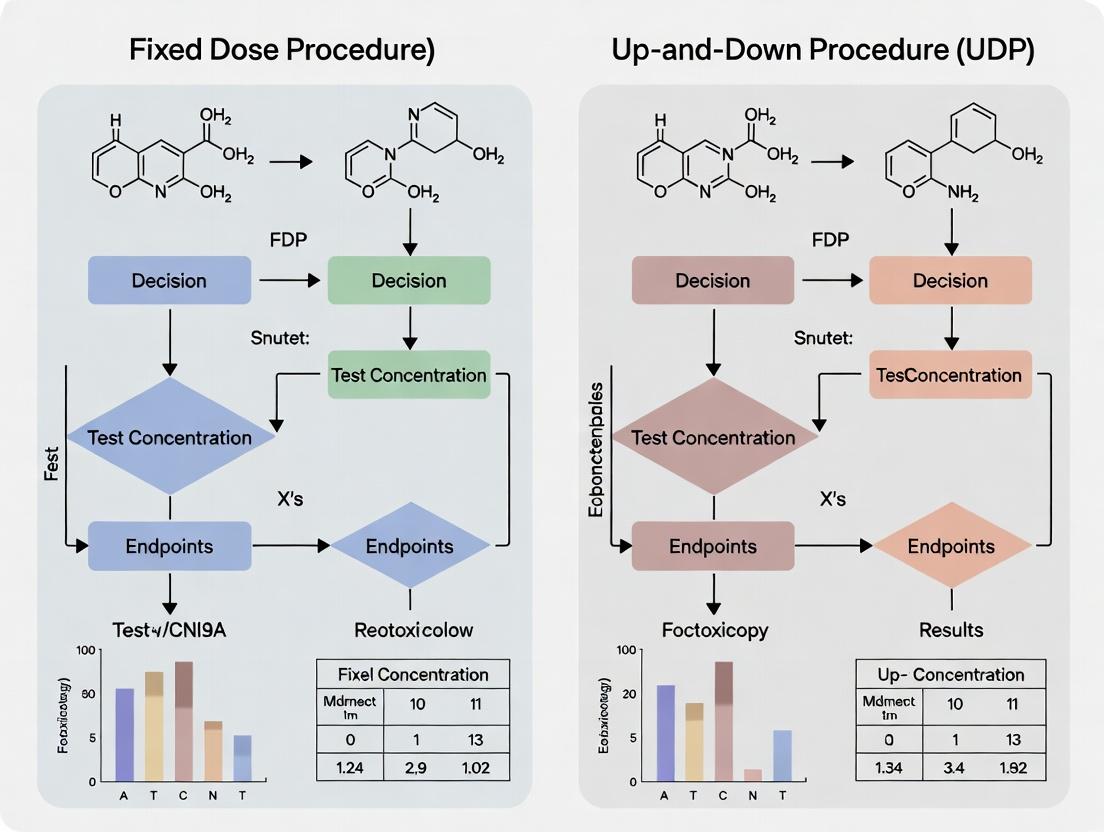
This article provides a comprehensive comparison of two pivotal alternative methods in acute systemic toxicity testing: the Fixed Dose Procedure (FDP) and the Up-and-Down Procedure (UDP).
FDP vs UDP: A Comparative Guide to Modern Acute Oral Toxicity Testing for Drug Development
Abstract
This article provides a comprehensive comparison of two pivotal alternative methods in acute systemic toxicity testing: the Fixed Dose Procedure (FDP) and the Up-and-Down Procedure (UDP). Developed as refinements to the classical LD50 test, both procedures align with the 3Rs principles (Reduction, Refinement, Replacement) by significantly reducing animal use while maintaining regulatory relevance [citation:2]. We explore their foundational concepts, methodological workflows, and regulatory frameworks (OECD TG 420 for FDP, OECD TG 425 for UDP). The analysis delves into troubleshooting common challenges, optimizing protocol design, and critically comparing their performance in terms of animal efficiency, classification accuracy, and data output. A key finding from comparative studies indicates that the UDP showed consistent hazard classification with the conventional LD50 in 23 out of 25 cases and required only 6-10 animals, offering both an LD50 estimate and classification [citation:1][citation:3]. This guide is tailored for researchers and drug development professionals seeking to implement ethical, efficient, and scientifically robust acute toxicity testing strategies.
From Classical LD50 to Modern Alternatives: The Evolution of Acute Toxicity Testing
Historical Context and Evolution of Acute Toxicity Testing
The classical LD₅₀ (median lethal dose) test, introduced by J.W. Trevan in 1927, was designed to statistically determine the dose of a substance expected to cause death in 50% of a treated animal population [1]. For decades, it served as the cornerstone of acute toxicity evaluation for chemicals, pharmaceuticals, and consumer products, primarily for hazard classification and labeling [1]. The test typically required large numbers of animals (often 40-100) across multiple dose groups to generate a precise dose-mortality curve [1].
However, the classical method faced mounting criticism due to its scientific and ethical limitations. Scientifically, the single endpoint of mortality provided little information on the mechanism of toxicity, onset of clinical signs, or potential for recovery. Ethically, the procedure caused substantial distress and suffering in a large number of animals, often without providing commensurate scientific or regulatory value [1]. The test's reliance on high mortality rates conflicted with evolving standards for animal welfare.
This growing concern catalyzed the development of alternative methods aligned with the 3Rs principles (Replacement, Reduction, and Refinement) first articulated by Russell and Burch in 1959 [1]. The 1980s marked a pivotal turn, with increased advocacy and regulatory momentum to replace, reduce, and refine animal use in toxicology [1]. This led to the development and regulatory adoption of alternative in vivo methods that significantly reduced animal use and suffering, notably the Fixed Dose Procedure (FDP), the Acute Toxic Class (ATC) method, and the Up-and-Down Procedure (UDP) [1].
Table 1: Historical Evolution of Key LD₅₀ Estimation Methods
| Method | Year Introduced | Typical Animal Number | Key Characteristics | Regulatory & 3Rs Status |
|---|---|---|---|---|
| Classical LD₅₀ | 1927 | 40-100 [1] | Uses mortality curve; high precision for LD50 point. | Largely suspended; high animal use, severe distress [1]. |
| Karbal Method | 1931 | 30 [1] | Calculated formula based on death counts. | Not approved; moderate reduction [1]. |
| Reed & Muench | 1938 | 40 [1] | Arithmetic calculation using cumulative data. | Not approved; moderate reduction [1]. |
| Miller & Tainter | 1944 | 50 [1] | Uses probit analysis of mortality data. | Not approved; high animal use [1]. |
| Fixed Dose (FDP) | 1992 | 5-20 [2] | Identifies non-lethal toxic dose; avoids death endpoint. | OECD TG 420; Refinement & Reduction [1]. |
| Up & Down (UDP) | 1990s | 6-10 [3] | Sequential dosing; estimates LD50 with fewer animals. | OECD TG 425; Significant Reduction [1]. |
Comparative Analysis: FDP vs. UDP in Modern Hazard Assessment
The Fixed Dose Procedure (FDP; OECD TG 420) and the Up-and-Down Procedure (UDP; OECD TG 425) represent the two most prominent in vivo alternatives that adhere to the 3Rs. A direct comparison is central to their appropriate application in regulatory science.
The FDP is based on the principle of refinement. Its primary objective is to identify a dose that causes clear evidence of toxicity (such as clinical signs) but not mortality, classifying substances based on this observation [2]. It uses fixed pre-defined dose levels (e.g., 5, 50, 300, 2000 mg/kg) and a small number of animals (typically 5 per sex per step) [2]. The outcome is a hazard classification rather than a precise LD₅₀ estimate.
In contrast, the UDP is a sequential testing method designed for significant reduction in animal numbers. It administers the test substance to one animal at a time, with the dose for each subsequent animal adjusted up or down based on the survival or death of the previous one [2]. This efficient staircase design typically uses only 6-10 single-sex animals to provide a point estimate of the LD₅₀ and its confidence intervals, making it directly applicable to all classification systems [3] [4].
Table 2: Core Comparison of OECD-Approved 3Rs Methods for Acute Oral Toxicity
| Feature | Fixed Dose Procedure (FDP) | Up-and-Down Procedure (UDP) | Acute Toxic Class (ATC) |
|---|---|---|---|
| OECD Guideline | 420 [1] | 425 [1] | 423 [1] |
| Primary 3R Focus | Refinement (avoids mortality) | Reduction (minimizes numbers) | Reduction (uses fewer groups) |
| Typical Animal Use | 5-20 animals [2] | 6-10 animals (one sex) [3] [4] | 6-18 animals [2] |
| Key Endpoint | Signs of non-lethal toxicity | Mortality (LD50 estimate) | Mortality (lethal dose range) |
| Dose Selection | Fixed, pre-set levels | Based on prior outcome (sequential) | Fixed, pre-set levels |
| Output | Hazard classification band | Point estimate of LD50 | Hazard classification band |
| Regulatory Concordance* | ~80% with Classical LD50 [4] | ~92% with Classical LD50 [4] | Similar to FDP |
*Data from Lipnick et al. (1995): Concordance with Classical LD50 classification for 25 chemicals was 23/25 for UDP and 16/20 for FDP [3] [4].
A pivotal 1995 comparative study by Lipnick et al. evaluated the concordance in hazard classification between these methods and the classical LD₅₀. The study found a 92% concordance rate (23/25 cases) between UDP and the classical LD₅₀, compared to an 80% rate (16/20 cases) for the FDP [3] [4]. The direct concordance between UDP and FDP was 70% (7/10 cases) [4]. This demonstrates that the UDP provides classification outcomes consistent with the classical test while using far fewer animals and also yields a valuable quantitative LD₅₀ estimate.
Diagram 1: Workflow Comparison: Fixed Dose vs. Up-and-Down
Detailed Experimental Protocols
Protocol for the Up-and-Down Procedure (UDP) – OECD TG 425
Objective: To estimate the acute oral LD₅₀ of a substance with a confidence interval and classify its hazard, using a minimal number of animals.
Materials: Test substance, vehicle, healthy young adult female rats (e.g., Sprague-Dawley, ~8-12 weeks old), oral gavage equipment, weighing scales, clinical observation sheets, statistical software.
Procedure:
- Dose Preparation: Prepare the test substance in a suitable vehicle (e.g., 0.5% methylcellulose) to achieve the desired concentration for a dosing volume of 10 mL/kg body weight [2].
- Starting Dose: Select a starting dose as close as possible to the best estimate of the LD₅₀ from existing data. A default of 175 mg/kg is suggested if no information is available.
- Dosing Sequence:
- Dose a single animal orally and observe for 48 hours for survival or death.
- If the animal survives, the dose for the next animal is increased by a factor of 3.2 times the original dose (0.5 log intervals). If it dies, the dose for the next animal is decreased by the same factor [2].
- Continue this sequential dosing of single animals at 48-hour intervals.
- Stopping Rule: The test is typically stopped after a predetermined number of animals (e.g., 6-10) or when a pre-defined reversal pattern in survival/death outcomes is met.
- Observations: Record detailed clinical signs of toxicity (e.g., piloerection, lethargy, convulsions), their time of onset, duration, and reversibility for each animal. Weigh animals at the start and end of the observation period.
- Data Analysis: Calculate the LD₅₀ and its confidence intervals using the maximum likelihood estimator method prescribed in OECD TG 425 (e.g., using the AOT425StatPgm software provided by the EPA).
- Classification: Assign a GHS hazard category (1-5) based on the calculated LD₅₀ point estimate and its confidence limits.
Protocol for the Fixed Dose Procedure (FDP) – OECD TG 420
Objective: To identify the dose that causes clear signs of toxicity but not mortality, enabling hazard classification without requiring lethal endpoints.
Materials: Same as UDP, with the addition of more cages for housing small groups.
Procedure:
- Dose Selection: Choose from one of four fixed dose levels: 5, 50, 300, or 2000 mg/kg. A sighting study using single animals may be conducted to choose an appropriate starting dose [2].
- Initial Group Dosing: Administer the selected dose orally to a group of five animals of one sex (usually females). Observe intensively for clinical signs of toxicity over 24 hours, then daily for a total of 14 days [2].
- Decision Criteria:
- If three or more animals show clear, potentially life-threatening signs of toxicity, the study stops. The substance is classified based on this dose.
- If fewer than three animals show clear toxicity and no animals die, dose a new group of five animals at the next higher fixed dose level.
- If mortality occurs, the test may revert to a limit test or another protocol.
- Observations: Meticulously record all clinical observations, body weights, and any mortality. Necropsy all animals at termination.
- Classification: The substance is classified based on the lowest fixed dose level at which clear toxicity was observed in at least three animals. If no toxicity is seen at 2000 mg/kg, it may be classified as "Not Hazardous" above a certain limit.
Table 3: Classification Concordance from Lipnick et al. (1995) Study
| Comparison | Number of Chemicals Tested | Number with Consistent Classification | Concordance Rate |
|---|---|---|---|
| UDP vs. Classical LD₅₀ | 25 | 23 | 92% [3] [4] |
| FDP vs. Classical LD₅₀ | 20 | 16 | 80% [3] [4] |
| UDP vs. FDP | 10 | 7 | 70% [4] |
The Regulatory Landscape and the Push for New Approach Methodologies (NAMs)
Regulatory acceptance of the 3Rs principles has moved from alternative in vivo methods toward a broader embrace of New Approach Methodologies (NAMs) that aim to replace animals entirely.
The FDA Modernization Act 2.0 (2022) was a pivotal legal change, removing the mandatory requirement for animal testing for drugs and explicitly allowing data from cell-based assays, microphysiological systems (organs-on-chips), and computer models to support investigational new drug applications [5]. The FDA has since published a "Roadmap to Reducing Animal Testing" and initiated programs like ISTAND to qualify novel drug development tools [6] [5].
Similarly, the U.S. EPA is actively implementing strategies to reduce vertebrate animal testing under programs like TSCA, promoting the use of NAMs for endpoints such as eye irritation and skin sensitization [5].
Globally, the UK's 2025 strategic roadmap, "Animal Replacement in Science," aims for a paradigm shift, prioritizing complete replacement where possible. It sets ambitious timelines, such as replacing skin and eye irritation tests with validated human epidermal models by 2026, and reducing dog and non-human primate use in specific safety studies by 35-50% by 2030 [7].
These regulatory shifts create a clear pathway for integrating non-animal data into safety assessments. The future lies in Integrated Approaches to Testing and Assessment (IATA), which combine data from in silico models, in vitro assays (like 3D organoids or multi-organ chips), and targeted in vivo studies only when absolutely necessary [8] [7].
Diagram 2: Ecosystem for Modern, Human-Relevant Toxicity Assessment
The Scientist's Toolkit: Essential Research Reagent Solutions
Table 4: Key Reagents and Materials for Modern Acute Toxicity Assessment
| Item | Function & Application | Considerations for 3Rs |
|---|---|---|
| Primary Human Cells & Stem Cells (e.g., hepatocytes, cardiomyocytes, iPSCs) | Foundation for building human-relevant in vitro models (2D, 3D, organoids). Provide species-specific metabolic and toxicological responses. | Replacement: Core material for non-animal test systems. |
| Organ-on-a-Chip (OOC) Kits & Microfluidic Devices | Provide a dynamic, physiologically relevant microenvironment to model organ-level function and toxicity. Can be linked for systemic ADME studies. | Replacement: Aims to replicate human organ interactions without animals. Refinement: Can reduce follow-up animal studies. |
| Matrices & Scaffolds (e.g., Basement membrane extracts, synthetic hydrogels) | Support 3D cell culture and tissue organization, crucial for maintaining differentiated phenotypes in organoids and tissue models. | Replacement: Enables complex in vitro models that replace animal tissue explants. |
| High-Content Screening (HCS) Assay Kits (e.g., for cytotoxicity, apoptosis, oxidative stress) | Enable multiplexed, mechanistic toxicity profiling in cell-based systems. Generate rich data for hazard prioritization. | Replacement/Reduction: Screen and prioritize compounds, minimizing unnecessary animal tests. |
| In Silico Prediction Software & Databases (e.g., QSAR tools, Toxicogenomics databases, PBPK platforms) | Predict toxicity based on chemical structure, biological pathways, and pharmacokinetics. Used for risk assessment and read-across. | Replacement: Pure computational replacement. Reduction: Guides targeted testing. |
| Defined Animal Diets & Environmental Enrichment | For necessary in vivo work (e.g., UDP/FDP), ensures animal health and welfare, reducing stress-induced data variability. | Refinement: Improves animal wellbeing and data quality. |
| Clinical Chemistry & Hematology Analyzers | For analyzing in vivo (terminal) or ex vivo (perfused OOC) fluid samples to assess organ damage and systemic effects. | Reduction/Refinement: Allows more data per animal (reduction) and sensitive early endpoint detection (refinement). |
The trajectory from the classical LD₅₀ test to the adoption of FDP and UDP represents a critical evolution in toxicological science, driven by ethical imperatives and the pursuit of human-relevant data. The comparative data clearly shows that the UDP achieves a superior balance, offering high concordance (92%) with traditional classification while requiring far fewer animals (6-10) and providing a quantitative LD₅₀ estimate [3] [4].
The future, however, lies beyond refined animal tests. The convergence of regulatory modernization (e.g., FDA Modernization Act 2.0/3.0), ambitious national roadmaps (e.g., UK 2025 strategy), and advanced technologies (AI, organs-on-chips, omics) is creating an irreversible momentum toward a new paradigm [8] [7] [5]. In this paradigm, targeted, mechanistic, human-based NAMs will form the first lines of assessment, with refined in vivo tests like the UDP reserved for specific, justified cases within an IATA framework. The ultimate goal is a safety assessment ecosystem that is not only more humane but also more predictive and relevant for human health.
The development of the Fixed Dose Procedure (FDP) and the Up-and-Down Procedure (UDP) represents a pivotal shift in the philosophy of acute toxicity testing. These methods emerged as humane alternatives to the classical LD₅₀ test, which required large numbers of animals to precisely determine a lethal dose [9]. The core philosophical divide centers on their primary endpoints: the FDP seeks to identify a dose that causes clear signs of "evident toxicity" without necessarily causing death, thereby refining animal welfare. In contrast, the UDP aims to estimate the median lethal dose (LD₅₀) with statistical confidence but does so by sequentially dosing individual animals, dramatically reducing the total number used [9].
Adopted as Organisation for Economic Co-operation and Development (OECD) Test Guidelines 420 (FDP) and 425 (UDP), these procedures are now globally recognized for regulatory classification under systems like the Globally Harmonised System (GHS) [9] [10]. Their evolution is underpinned by the "3Rs" principle (Reduction, Refinement, Replacement), with the FDP emphasizing refinement and the UDP focusing on reduction [9]. This article details their application, protocols, and innovations, providing a framework for researchers to select a fit-for-purpose methodology within modern drug development.
Comparative Analysis: Fundamental Principles and Operational Metrics
The choice between FDP and UDP is guided by the specific regulatory, scientific, and ethical requirements of a study. The table below summarizes their core operational characteristics.
Table 1: Fundamental Comparison of the Fixed Dose Procedure (FDP) and Up-and-Down Procedure (UDP)
| Feature | Fixed Dose Procedure (FDP; OECD 420) | Up-and-Down Procedure (UDP; OECD 425) |
|---|---|---|
| Primary Objective | To identify the dose causing "evident toxicity" for hazard classification, not to calculate a precise LD₅₀ [9] [10]. | To estimate the LD₅₀ and its confidence intervals with a sequential testing design [9] [11]. |
| Testing Principle | Sightings approach. Small groups of animals (usually 5/sex) are tested at one of four predefined fixed dose levels (5, 50, 300, 2000 mg/kg) [9]. | Sequential (staircase) design. A single animal is dosed, and the outcome (death/survival) determines the dose for the next animal (up or down) [9] [11]. |
| Key Endpoint | "Evident Toxicity": Clear signs that exposure to a higher dose would result in mortality [10]. Mortality is not the goal. | Mortality (Death/Survival) within a specified observation period [9] [11]. |
| Animal Use | Typically uses fewer animals than classical tests but more than UDP for a single test run. Uses groups of animals. | Significantly reduced. Requires 6-15 animals tested sequentially, leading to the fewest total animals among in vivo methods [12] [11]. |
| Primary Advantage | Refinement: Actively avoids lethal endpoints, reducing suffering. Provides excellent observational data on toxic signs [10]. | Reduction: Minimizes animal use. Provides a point estimate of LD₅₀, which is sometimes specifically requested. |
| Primary Limitation | Perceived subjectivity in defining "evident toxicity"; may not yield a precise LD₅₀ value [10]. | Can be time-consuming (traditionally 20-42 days) and requires specialized statistical software for analysis [11] [13]. |
| Output | An Acute Toxicity Estimate (ATE) range for classification (e.g., GHS Category 1-5) [9]. | A calculated LD₅₀ value with confidence intervals [11]. |
Experimental Protocols and Methodological Details
Protocol for the Fixed Dose Procedure (OECD TG 420)
1. Preparatory Phase:
- Dose Selection: Choose a starting dose from the predefined levels (5, 50, 300, or 2000 mg/kg) based on any available information (e.g., QSAR, in vitro data) [9].
- Animals: A single sex (usually females) or both sexes may be used. Healthy, young adult rodents are assigned to groups.
2. Main Test:
- A group of five animals receives the initial fixed dose via oral gavage.
- Animals are observed intensively for clinical signs of toxicity over 24-48 hours.
- The critical decision point is the assessment of "evident toxicity." This is defined as clear signs that a higher dose would be expected to cause mortality. Recent guidance identifies signs such as ataxia, laboured respiration, and eyes partially closed as highly predictive of subsequent lethality [10].
- Decision Logic:
- If 3 or more animals show "evident toxicity," the test stops. This dose level is used for classification.
- If fewer than 3 animals show "evident toxicity" and no mortality is seen, the test proceeds to the next higher fixed dose level with a new group of five animals.
- If mortality occurs at a dose level not expected to be lethal, the test may be repeated at a lower dose [9].
3. Outcome:
- The procedure identifies the dose that causes evident toxicity (but not death) and the dose below it. The Acute Toxicity Estimate (ATE) is derived, typically as the geometric mean of these two doses, for hazard classification [9].
Protocol for the Up-and-Down Procedure (OECD TG 425) & Improved UDP (iUDP)
1. Preparatory Phase:
- Parameter Setting: Estimate an initial LD₅₀ and a dose progression factor (typically 1.3x or 3.16x logarithmic intervals). This is often done using the OECD's AOT425StatPgm software [11] [13].
- Animals: A single animal is used per step.
2. Classic UDP Main Test:
- The first animal is dosed slightly below the estimated LD₅₀.
- It is observed for a fixed period (traditionally 48 hours).
- Sequential Decision:
- The test continues until a stopping criterion is met (e.g., a set number of reversals from survival to death). The software then calculates the LD₅₀ and confidence intervals.
3. Improved UDP (iUDP) Protocol:
- A key innovation to address the long duration of classic UDP is the Improved UDP (iUDP).
- The primary modification is the reduction of the observation time between dosing sequential animals from 48 hours to 24 hours. This change is based on the finding that most acute chemical-induced mortality occurs within the first 24 hours [11] [13].
- Procedure: All steps are identical to the classic UDP, except the outcome for the nth animal is assessed at 24 hours to determine the dose for the (n+1)th animal. Survivors continue to be monitored for a full 14-day period for delayed effects [13].
- Validation: A 2022 study demonstrated that iUDP produced LD₅₀ values for alkaloids (nicotine, sinomenine HCl, berberine HCl) that were comparable to the modified Karber method but used ~90% fewer animals and ~85% less test compound, while reducing average testing time from 42 to 22 days [11] [13].
Data Presentation: Quantitative Comparison of Efficiency
The practical advantages of UDP and its improved variant are clearly demonstrated in direct experimental comparisons. The following table quantifies the gains in animal, compound, and time efficiency.
Table 2: Experimental Efficiency: iUDP vs. Modified Karber Method (mKM) [11] [13]
| Test Substance (Oral in Mice) | Method | Animals Used (n) | LD₅₀ ± SD (mg/kg) | Total Compound Used | Avg. Test Duration |
|---|---|---|---|---|---|
| Nicotine (Highly Toxic) | iUDP | 8 | 32.71 ± 7.46 | 0.0082 g | 22 days |
| mKM | 74 | 22.99 ± 3.01 | 0.0673 g | 14 days | |
| Sinomenine HCl (Moderately Toxic) | iUDP | 8 | 453.54 ± 104.59 | 0.114 g | 22 days |
| mKM | 83 | 456.56 ± 53.38 | 1.24 g | 14 days | |
| Berberine HCl (Low Toxicity) | iUDP | 7 | 2954.93 ± 794.88 | 1.9 g | 22 days |
| mKM | 83 | 2825.53 ± 1212.92 | 12.7 g | 14 days |
Visualizing Methodological Workflows
The following diagrams illustrate the fundamental decision logic of each procedure.
FDP Decision Workflow: Identifying Evident Toxicity
UDP Decision Workflow: Sequential Dose Escalation
The Scientist's Toolkit: Essential Research Reagents & Materials
Conducting FDP or UDP studies requires specific reagents, software, and animal models. The following toolkit is derived from standard protocols and recent research [11] [13] [10].
Table 3: Research Reagent Solutions for Acute Toxicity Testing
| Category | Item / Reagent | Specifications / Function |
|---|---|---|
| Test Animals | ICR (CD-1) Mice or Sprague-Dawley Rats | Young adult, typically female. Specific pathogen-free (SPF) status is standard. Housing requires controlled temperature (20-22°C), humidity (50-70%), and a 12h light/dark cycle [11]. |
| Test Compounds | High-Purity Chemical Standards | e.g., Nicotine (purity >99%, CAS 54-11-5), Sinomenine HCl (>99%, CAS 115-53-7). Purity must be known for accurate dose calculation [11] [13]. |
| Vehicle | 0.5% Carboxymethylcellulose (CMC) Sodium Salt, Sterile Water, Corn Oil | Commonly used, physiologically compatible vehicles for preparing homogenous dosing suspensions or solutions via oral gavage. |
| Clinical Observation | Standardized Clinical Scoring Sheet | Critical for FDP. Documents signs like ataxia, piloerection, laboured respiration, lethargy, and eyes partially closed to assess "evident toxicity" [10]. |
| Software | AOT425StatPgm | OECD-provided statistical program for UDP to design dose sequences and calculate LD₅₀ with confidence intervals [11]. |
| Analytical Tools | Scale (0.1 mg precision), Gavage Needles (Ball-tipped), Syringes | For precise weighing of compound and safe, accurate oral administration to rodents. |
| Reference Standards | OECD Test Guidelines 420 & 425 | Definitive procedural documents outlining all requirements for regulatory compliance [9]. |
The FDP and UDP represent two successful, philosophically distinct implementations of the 3Rs. The FDP (OECD 420) is the preferred choice when the goal is hazard classification with a strong emphasis on animal welfare refinement, as it avoids lethal endpoints. Recent data providing clearer definitions of "evident toxicity" (e.g., ataxia, laboured respiration) are likely to increase its adoption and reliability [10].
The UDP (OECD 425), particularly the iUDP variant, is superior when a point estimate of the LD₅₀ is required, when test compound is limited or highly valuable, and when the primary goal is maximal reduction in animal use. The iUDP's optimization of the observation period makes it a highly efficient and modern tool for acute toxicity assessment [11] [13].
In the broader context of model-informed drug development (MIDD), data from these tests feed into computational models (e.g., QSAR, PBPK) for human risk prediction [14]. The strategic choice between FDP and UDP should be based on the specific Question of Interest (QoI) and Context of Use (COU), aligning methodology with the needs of regulatory science and ethical research practice.
Thesis Context: FDP vs. UDP in Modern Toxicological Research
The evolution of acute oral toxicity testing is defined by the paradigm shift from the traditional LD50 test to the OECD Test Guidelines (TG) 420 (Fixed Dose Procedure, FDP) and 425 (Up-and-Down Procedure, UDP). These frameworks are central to a broader thesis examining the refinement of hazard assessment through humane endpoints and statistical efficiency. The core distinction lies in their foundational endpoints: TG 420 replaces lethality with the observation of "evident toxicity," aiming to eliminate death and severe suffering as test outcomes [10]. In contrast, TG 425 uses a sequential dosing design to estimate a precise LD50 and confidence interval with significantly fewer animals than the classical method [15] [3]. This thesis argues that the choice between FDP and UDP is not merely procedural but philosophical, balancing the ethical imperative of the 3Rs (Reduction, Refinement, Replacement) against the regulatory and scientific need for a quantitative potency estimate. The global regulatory endorsement of these methods under the OECD's Mutual Acceptance of Data (MAD) system underscores their scientific validity and positions them as complementary, rather than competing, tools in a modern, tiered safety assessment strategy [16].
Comparative Analysis of TG 420 (FDP) and TG 425 (UDP)
The following tables summarize the quantitative and methodological distinctions between the two standardized frameworks.
Table 1: Core Protocol Specifications and Outcomes
| Feature | OECD TG 420: Fixed Dose Procedure (FDP) | OECD TG 425: Up-and-Down Procedure (UDP) |
|---|---|---|
| Primary Endpoint | Evident toxicity (clear signs that a higher dose would be lethal) [10]. | Lethality, used to calculate an LD50 with a confidence interval [15] [17]. |
| Typical Animal Use | 5 animals per sex, tested at a single fixed dose level [10]. | 6-10 animals of a single sex (typically female), dosed sequentially [3] [17]. |
| Dosing Scheme | Fixed, pre-selected doses (5, 50, 300, 2000 mg/kg). | Adaptive sequential dosing based on previous outcome [15] [17]. |
| Key Output | Identification of a toxicity class (e.g., GHS category) and an Acute Toxicity Estimate (ATE). | A point estimate of the LD50, a confidence interval, and a GHS classification [15] [18]. |
| Main Advantage | Avoids mortality and severe suffering; strong on ethical refinement [10]. | Provides a quantitative LD50 with high statistical confidence using fewer animals [3] [18]. |
Table 2: Performance Comparison from Validation Studies
| Comparison Metric | TG 425 (UDP) vs. Conventional LD50 | TG 420 (FDP) vs. Conventional LD50 | UDP vs. FDP |
|---|---|---|---|
| Classification Consistency | 23 out of 25 cases (92%) consistent [3]. | 16 out of 20 cases (80%) consistent [3]. | 7 out of 10 cases (70%) consistent [3]. |
| Animal Use Reduction | Significant reduction (typically <10 vs. 40-60 animals) [3] [17]. | Moderate reduction (typically 10-20 vs. 40-60 animals) [3]. | UDP generally uses fewer animals than FDP [3]. |
| Regulatory Data Generated | Direct LD50 value applicable to all classification systems [3]. | Hazard class; may require bridging data for certain systems. | UDP provides more universally applicable quantitative data. |
Detailed Experimental Protocols
Protocol for OECD TG 420: Fixed Dose Procedure (FDP)
1. Pre-Test Planning:
- Dose Selection: Choose from the predefined fixed doses (5, 50, 300, or 2000 mg/kg) based on preliminary information. The goal is to select a dose that induces clear signs of toxicity ("evident toxicity") but not mortality [10].
- Animal Model: Healthy young adult rodents (rats preferred). A single sex (typically female) is used, starting with 5 animals [10].
2. Procedure:
- Administer the test substance in a single oral dose via gavage to all animals in the group [10].
- Critical Observation for "Evident Toxicity": Observe animals intensely, particularly within the first 4 hours and daily for at least 14 days. The study's pivotal decision hinges on identifying signs that robustly predict lethality at a higher dose. Recent analysis supports signs like ataxia, laboured respiration, and eyes partially closed as highly predictive. Signs like lethargy or decreased respiration have lower but appreciable predictive value [10].
- Decision Rule:
- If 3 or more animals survive without evident toxicity, the test is complete. The LD50 is greater than the dose tested.
- If 3 or more animals show evident toxicity or die, the LD50 is less than the dose tested.
- If an intermediate outcome occurs (e.g., only 1-2 animals show toxicity), testing proceeds at a lower or higher fixed dose with a new group of animals [10].
3. Analysis & Reporting:
- Determine the ATE and assign a GHS hazard classification based on the observed outcome bracket [10].
Protocol for OECD TG 425: Up-and-Down Procedure (UDP)
1. Pre-Test Planning:
- Determine Starting Dose: Use the best available estimate of the LD50. In the absence of data, a starting dose of 175 mg/kg is recommended [17].
- Set Dose Progression Factor: A default factor of 3.2 (half-log interval) is used [17].
- Animal Model: Healthy young adult rodents (female rats preferred). Animals are fasted prior to dosing [15] [17].
2. Limit Test (for presumed low-toxicity substances):
- Administer 2000 mg/kg to a single animal.
- If it survives, dose up to 4 additional animals sequentially.
- Stopping Rule: If 3 or more survive, the LD50 > 2000 mg/kg. If 3 or more die, proceed to the main test [17].
3. Main Test (Sequential Dosing):
- Dose the first animal below the estimated LD50.
- Dosing Sequence: Observe each animal for 48 hours before dosing the next. If an animal dies, decrease the dose for the next animal by the progression factor (e.g., ÷3.2). If it survives, increase the dose for the next animal [15] [17].
- Stopping Rules (test terminates when):
- Three consecutive animals survive at the highest tested dose.
- Five reversals (survival→death or death→survival) occur in any six consecutive animals.
- Four animals have been tested after the first reversal, and specified statistical confidence levels (likelihood ratios) are met [17].
- Software (e.g., AOT425StatPgm) is typically used to manage dosing decisions and calculations in real-time [18].
4. Analysis & Reporting:
- Calculate the LD50 and its confidence interval using the maximum likelihood method [15] [17].
- Assign GHS classification based on the LD50 value [15].
Visualized Workflows and Pathways
OECD TG 420 vs 425 Decision and Analysis Workflow
OECD TG 425 UDP Sequential Dosing Algorithm
Evident Toxicity Assessment in OECD TG 420 FDP
The Scientist's Toolkit: Key Research Reagent Solutions
Table 3: Essential Materials and Reagents for FDP/UDP Studies
| Item | Function in Protocol | Typical Specification / Note |
|---|---|---|
| Laboratory Rodents | Test system for in vivo toxicity. | Healthy young adult rats (female preferred for sensitivity), 8-12 weeks old, specific pathogen-free [17]. |
| Dosing Vehicle (e.g., Methylcellulose, Corn Oil) | Solubilizes or suspends test compound for oral gavage. | Selected based on compound solubility; aqueous solutions preferred. Volume typically ≤1 mL/100g body weight [17]. |
| Oral Gavage Needles/Cannulas | Accurate oral administration of test substance. | Stainless steel or flexible tubing, ball-tipped to prevent injury, appropriate gauge for animal size. |
| Clinical Observation Scoring System | Standardizes recording of toxic signs (critical for FDP). | Validated checklist including signs like ataxia, respiration changes, piloerection, etc. [10]. |
| Statistical Software (AOT425StatPgm) | Guides UDP dosing sequence and calculates LD50/CI. | EPA-provided software for real-time dose selection and final statistical analysis [18]. |
| Histopathology Supplies | For gross necropsy and tissue analysis. | Fixatives (e.g., 10% NBF), embedding materials, stains for potential target organ analysis [15]. |
Historical Trajectory and Key Drivers in the Adoption of Alternative Methods
The development of alternative acute toxicity testing methods represents a pivotal shift in toxicology, driven by the ethical imperative of the 3Rs principles (Reduction, Refinement, Replacement) and the scientific need for reliable hazard assessment. The classical LD50 test, introduced in 1927, required large numbers of animals (40-100) to determine a precise median lethal dose [1]. By the 1980s, growing ethical concerns and scientific critique of the test's utility catalyzed the search for humane alternatives [1].
This evolution culminated in the OECD's adoption of three refined in vivo methods: the Fixed-Dose Procedure (FDP, OECD 420) in 1992, the Acute Toxic Class (ATC) method (OECD 423) in 1996, and the Up-and-Down Procedure (UDP, OECD 425) in 1998 [1]. These procedures achieved significant animal reduction (using 6-15 animals versus 40-100) and shifted the endpoint from mortality to the observation of clear signs of toxicity, minimizing suffering [3] [19]. More recently, an Improved UDP (iUDP) has been developed to address the traditional method's long experimental duration, further enhancing efficiency [11]. Within the broader thesis on FDP versus UDP research, this trajectory highlights a continuous trade-off between classification accuracy, animal use, resource efficiency, and the value of obtaining a quantitative LD50 estimate.
Quantitative Comparison of FDP and UDP
Comparative studies have evaluated the performance of FDP and UDP against the classical LD50 benchmark and each other, focusing on classification concordance, animal use, and resource efficiency.
Table 1: Comparative Performance of FDP and UDP from Validation Studies
| Performance Metric | Fixed-Dose Procedure (FDP) | Up-and-Down Procedure (UDP) | Comparative Notes |
|---|---|---|---|
| Concordance with LD50 Classification | 16 out of 20 cases (80%) [3] | 23 out of 25 cases (92%) [3] | UDP showed higher agreement with the classical LD50 classification system. |
| Mutual Concordance (FDP vs. UDP) | 7 out of 10 cases (70%) [3] | Same 7 out of 10 cases [3] | Highlights inherent differences in methodological endpoints. |
| Typical Animal Number (One Sex) | 15-30 animals [3] [1] | 6-10 animals [3] | UDP consistently requires the fewest animals. |
| Key Endpoint | Signs of "evident toxicity" [19]. Mortality is not a goal. | Mortality and survival, used to estimate an LD50 [3]. | FDP is a hazard classification tool. UDP provides a quantitative LD50 for classification. |
| Substance Requirement (iUDP vs. mKM) | Not typically measured. | 87-92% less compound used (e.g., 0.0082g vs. 0.0673g for nicotine) [11]. | iUDP is advantageous for testing valuable or scarce compounds. |
| Experimental Duration (Traditional vs. Improved) | Approximately 14 days [1]. | Traditional: 20-42 days [11]. Improved (iUDP): ~22 days [11]. | iUDP reduces the long timeframe that previously limited UDP adoption. |
Table 2: Historical Trajectory of Acute Oral Toxicity Test Methods
| Decade | Method Name | Key Characteristic | Animal Use | Status/Driver |
|---|---|---|---|---|
| 1920s | Classical LD50 [1] | Precise lethal dose 50 estimation. | Very High (40-100) | Original standard; ethical and scientific critique drove alternatives. |
| 1980s-90s | Fixed-Dose Procedure (FDP) [20] | Avoids lethal endpoints; uses evident toxicity. | Low (15-30) | Refinement & Reduction; Adopted as OECD 420 (1992). |
| 1980s-90s | Up-and-Down Procedure (UDP) [21] | Sequential dosing; estimates LD50. | Very Low (6-10) | Maximal Reduction; Adopted as OECD 425 (1998). |
| 2020s | Improved UDP (iUDP) [11] | Shortened observation between doses. | Very Low (6-10) | Efficiency Driver; Reduces traditional UDP duration from up to 42 days to ~22 days. |
Detailed Experimental Protocols
Protocol for the Fixed-Dose Procedure (OECD 420)
The FDP is designed to identify the dose that causes evident toxicity, avoiding mortality as an endpoint [19].
Phase 1: Preliminary Sighting Study (Dose Range Finding)
- Objective: To select an appropriate starting dose for the main test (5, 50, 300, or 2000 mg/kg).
- Procedure: Single animals are dosed sequentially, starting at 50 mg/kg. Dosing proceeds to the next higher fixed dose if no signs of toxicity are observed, or to the next lower dose if lethal or severe effects occur. The aim is to find a dose causing clear signs of toxicity but not death.
- Endpoint: The highest dose producing signs of toxicity without lethality is selected as the starting dose for the main study.
Phase 2: Main Study
- Animals: Five healthy young adult animals of one sex (typically females) per dose group [19].
- Dosing: The selected starting dose is administered via oral gavage to the first group of five animals.
- Observation: Animals are observed intensively for signs of "evident toxicity" (e.g., prostration, ataxia, labored breathing) for up to 14 days [19].
- Decision Logic:
- If no animals show evident toxicity, a second group of five animals is dosed at the next higher fixed dose.
- If evident toxicity is observed in some animals, but no death/severe toxicity occurs, testing stops. The dose is classified.
- If death or severe toxicity occurs, testing stops. The previous lower dose level is tested with a new group of five animals to determine the correct classification.
- Classification: The result allows classification according to the Globally Harmonized System (GHS) based on the dose causing evident toxicity.
Protocol for the Improved Up-and-Down Procedure (iUDP)
The iUDP modifies the traditional OECD 425 UDP by shortening the observation period between animals to 24 hours, significantly reducing total study time [11].
Phase 1: Preparation and Parameter Setting
- Software Setup: Use the AOT425StatPgm software. Input the estimated LD50, sigma (standard deviation), and a step-size factor (T) based on the expected slope of the dose-response curve [11].
- Dose Series Generation: The software generates a pre-defined series of doses in a geometric progression (e.g., ..., 80, 50, 32, 20, 12.6, 8 mg/kg...).
Phase 2: Sequential Dosing and Stopping Rules
- Animals: Healthy young adult animals of one sex (typically females).
- Initial Dose: The first animal receives a dose from the series near the estimated LD50.
- Sequential Logic (24-hour observation):
- Observe the animal for 24 hours for survival or death.
- If the animal survives, the next animal receives the next higher dose in the series.
- If the animal dies, the next animal receives the next lower dose in the series [11].
- Stopping Criteria: The test concludes when one of the following occurs:
- Three consecutive animals survive at the highest administered dose.
- Five "reversals" (a survival followed by a death, or vice versa) occur in any sequence of six consecutive animals.
- A statistical confidence criterion is met (as calculated by the software after a minimum of four animals post-first reversal).
- LD50 Calculation: The software calculates the estimated LD50 and its confidence interval using maximum likelihood estimation based on the sequence of outcomes.
The Scientist's Toolkit: Research Reagent Solutions
Table 3: Essential Materials and Reagents for FDP and UDP Studies
| Item | Function & Specification | Protocol Relevance |
|---|---|---|
| Test Substances | High-purity (>99%) compounds for accurate dosing (e.g., Nicotine, Sinomenine HCl) [11]. | Critical for both FDP and UDP. Purity ensures reliable toxicity profiles and classification. |
| Vehicle/Solvent | Appropriate physiological solvent (e.g., saline, methylcellulose, corn oil) for compound dissolution/suspension. | Ensures accurate and humane oral gavage administration. Choice affects bioavailability. |
| OECD 420 & 425 Software (AOT425StatPgm) | Statistical software for UDP to generate dose sequences, determine stopping points, and calculate LD50/confidence intervals [11]. | Essential for UDP/iUDP. Guides the sequential dosing design and provides final quantitative results. |
| Oral Gavage Equipment | Stainless steel or flexible plastic feeding needles (ball-tipped) of appropriate length and gauge [19]. | Standardized administration for both protocols, ensuring dose is delivered to the stomach. |
| Clinical Observation Checklist | Standardized sheet for recording signs of toxicity (e.g., piloerection, ataxia, labored breathing, prostration). | Critical for FDP to identify "evident toxicity." Important for UDP for humane monitoring. |
| Fixed Dose Solutions | Pre-prepared dosing solutions at the four key fixed concentrations (5, 50, 300, 2000 mg/kg) [19]. | Specific to FDP. Streamlines the main study after the sighting phase. |
Protocols in Practice: Step-by-Step Workflows for FDP and UDP
This document provides detailed application notes and protocols for the Fixed Dose Procedure (FDP), OECD Test Guideline 420, with a specific focus on the critical operational pillars of starting dose selection and the standardized identification of the 'evident toxicity' endpoint. The content is framed within a broader research thesis comparing the FDP with the Up and Down Procedure (UDP, OECD TG 425). Both methods represent significant refinement and reduction alternatives to the classical LD50 test, prioritizing animal welfare by using fewer subjects and replacing mortality with signs of morbidity as the primary endpoint [1]. The core distinction lies in their design: the FDP uses fixed dose levels and small groups of animals to observe clear signs of toxicity, while the UDP employs a sequential, stair-case dosing design in single animals to estimate a lethality threshold [22]. This protocol details the FDP's execution, empowering researchers to generate reliable classification and labeling data while aligning with the 3Rs principles (Replacement, Reduction, Refinement) [10] [1].
Starting Dose Selection: Strategies and Pre-Test Considerations
Selecting an appropriate starting dose is paramount to the FDP's efficiency, aiming to minimize animal use and avoid severe suffering. The goal is to begin testing at a dose most likely to produce clear signs of toxicity without causing severe morbidity or mortality.
Data-Driven Selection Strategies
The choice of starting dose should be informed by all available relevant information. The following decision table outlines the primary strategies:
Table 1: Strategies for Selecting the FDP Starting Dose
| Available Data | Recommended Strategy | Action & Starting Dose Choice |
|---|---|---|
| Existing in vivo toxicity data (e.g., from a similar route, compound class) | Read-Across & Estimation | Use data to estimate an Acute Toxicity Estimate (ATE). Select the fixed dose level (5, 50, 300, 2000 mg/kg) just below the estimated LD50 or toxic dose [22]. |
| No relevant data available | Rangefinding Test | Conduct a preliminary study using a small number of animals (e.g., 1-2 per sex) at one or two dose levels (e.g., 300 and 2000 mg/kg) to inform the choice for the main study [1]. |
| Robust in vitro cytotoxicity data (e.g., IC50 values) | Correlative Prediction | While not yet a standalone regulatory alternative, cytotoxicity data can support dose selection for the main study by identifying potentially potent compounds [1]. |
| Structure-Activity Relationship (SAR) data | In Silico Profiling | Use (Q)SAR tools to predict toxicity class. This information can guide the initial dose selection, particularly to avoid mistakenly beginning at a dangerously high dose [1]. |
Default and Safety-Net Approaches
In the absence of any informative data, a default starting dose of 300 mg/kg is recommended for substances of unknown toxicity [22]. If there is a suspicion of high toxicity, a conservative starting dose of 5 or 50 mg/kg should be chosen to prevent severe adverse effects. The principle is to "start low" if there is uncertainty; it is more efficient to proceed to a higher dose level in a subsequent step than to begin at a dose causing lethal or severe irreversible toxicity.
Defining and Identifying the 'Evident Toxicity' Endpoint
The endpoint of the FDP is 'evident toxicity,' defined as clear signs of toxicity that predict exposure to a higher dose would likely lead to death [10]. This endpoint is a refinement over mortality, but its perceived subjectivity has historically been a barrier to adoption [10]. Recent collaborative work has provided data-driven clarity to standardize this assessment.
Clinical Signs Predictive of Evident Toxicity
Analysis of historical data has identified clinical signs with high Positive Predictive Value (PPV) for subsequent mortality at a higher dose [10]. These signs should be used to objectively determine when the endpoint has been reached.
Table 2: Clinical Signs Predictive of Evident Toxicity in FDP [10]
| Clinical Sign | Predictive Value for Mortality at Higher Dose | Key Observations |
|---|---|---|
| Ataxia | High PPV | Incoordination, stumbling, inability to walk normally. |
| Laboured Respiration | High PPV | Dyspnoea, gasping, visibly difficult or obstructed breathing. |
| Eyes Partially Closed | High PPV | Ptosis, squinting, not related to normal sleep cycle. |
| Lethargy / Prostration | Moderate to High PPV | Marked decreased activity, reluctance to move, inability to right itself. |
| Decreased Respiration Rate | Moderate PPV | Shallow, slow breathing. |
| Piloerection | Context-Dependent | Often a general sign of distress; more predictive in combination. |
| Loose Faeces / Diarrhoea | Lower but Appreciable PPV | May indicate systemic toxicity, especially if severe. |
Standardized Assessment Protocol
- Observation Schedule: Animals must be observed intensively within the first hour post-dosing, and at least daily thereafter for a total of 14 days. Times of onset, peak, and resolution of signs must be recorded.
- Decision Logic: The presence of one or more signs from the "High PPV" category (e.g., ataxia with laboured respiration) is sufficient to classify the dose level as producing "evident toxicity." Signs with lower PPV should be considered in combination with other observations.
- Weight of Evidence: The judgment is based on the severity and nature of signs. Transient, mild piloerection is not "evident toxicity." Sustained prostration with ataxia is definitive.
Diagram 1: Evident Toxicity and Humane Endpoint Assessment Workflow (Max 760px)
Detailed Experimental Protocol for OECD TG 420
Principle
The FDP exposes small groups of animals to one of a series of fixed dose levels (5, 50, 300, 2000 mg/kg body weight). The procedure continues until a dose is identified that causes evident toxicity, or until the highest dose is administered without such effects, enabling classification according to the Globally Harmonized System (GHS) [22].
- Animals: Young adult, healthy rodents (typically rats). Females should be nulliparous and non-pregnant.
- Housing: Standard laboratory conditions, acclimatization for at least 5 days.
- Assignment: Animals are randomly assigned to treatment groups. A main study typically uses one sex per dose step, unless significant sex differences are anticipated.
Step-by-Step Procedural Workflow
Diagram 2: Fixed Dose Procedure (OECD 420) Decision Logic (Max 760px)
Classification and Data Interpretation
The outcome of the procedure leads directly to a hazard classification.
Table 3: FDP Outcome to GHS Classification Mapping
| Observation at a Dose Level | Action | Resulting GHS Category (Oral) | Hazard Statement (Example) |
|---|---|---|---|
| Mortality at 5 or 50 mg/kg | Stop Test | Category 1 or 2 | Fatal if swallowed (H300) |
| Evident Toxicity at 5 mg/kg | Stop Test | Category 2 | Fatal if swallowed (H300) |
| Evident Toxicity at 50 mg/kg | Stop Test | Category 3 | Toxic if swallowed (H301) |
| Evident Toxicity at 300 mg/kg | Stop Test | Category 4 | Harmful if swallowed (H302) |
| No Evident Toxicity at 2000 mg/kg | Stop Test | Not Classified | (May be labeled as Acute Tox. 5 or not classified) |
Comparative Analysis: FDP vs. Up-and-Down Procedure (UDP)
Within the thesis context, a direct comparison between FDP and UDP is essential. Both are OECD-approved alternatives but differ in design, endpoint, and statistical output.
Table 4: Comparative Analysis: Fixed Dose Procedure vs. Up-and-Down Procedure
| Parameter | Fixed Dose Procedure (OECD 420) | Up-and-Down Procedure (OECD 425) |
|---|---|---|
| Primary Endpoint | Evident Toxicity (morbidity) [10] | Mortality (lethality) [22] |
| Experimental Design | Fixed doses tested in small groups (e.g., 5 animals/step). | Sequential dosing of single animals based on previous outcome [22]. |
| Dose Selection | Pre-defined levels (5, 50, 300, 2000 mg/kg). | Flexible; adjusted by a defined progression factor (e.g., 3.2x) based on animal response [22]. |
| Key Output | Hazard Classification (e.g., Toxic, Harmful). | Point Estimate of LD50 with confidence intervals. |
| Animal Use (Typical) | 5-15 animals (often fewer if toxic at low dose). | 6-9 animals on average [1]. |
| Advantage (3Rs) | Refinement: Uses morbidity, not death. Clear stopping rules. | Reduction: Can estimate LD50 with very few animals. |
| Thesis Context: Best For | Classification & labeling where GHS category is the goal. Prioritizes animal welfare (refinement). | Quantitative risk assessment where an LD50 value is needed. Prioritizes minimal numbers (reduction). |
Diagram 3: Comparative Framework of FDP and UDP Experimental Designs (Max 760px)
Regulatory Acceptance and Application Notes
The FDP (OECD 420) is a fully accepted and validated test guideline for the classification of chemicals globally [22]. It is recognized by regulatory bodies including those in the European Union, the United States, and other OECD member countries [23]. In the U.S., it is accepted by agencies such as the EPA for relevant regulatory purposes [23].
- Application Note 1: The FDP is particularly suited for safety assessment for classification and labeling under systems like GHS. It provides the required hazard category without needing to calculate an exact LD50 [22].
- Application Note 2: The "evident toxicity" endpoint has been strengthened by recent data analyses (see Table 2). Researchers should use these defined clinical signs to ensure consistent, objective, and defensible study conclusions, increasing regulatory confidence in the method [10].
- Application Note 3: In a tiered testing strategy, the FDP can be effectively used following a negative in vitro cytotoxicity test to confirm a substance does not require classification, or after a rangefinding study to pinpoint the appropriate starting dose [1].
The Scientist's Toolkit: Essential Reagents and Materials
Table 5: Key Research Reagent Solutions for FDP Execution
| Item / Reagent | Function in FDP Protocol | Technical Specifications & Notes |
|---|---|---|
| Test Substance Vehicle | To dissolve or suspend the test compound for accurate oral gavage administration. | Choose based on solubility (e.g., methylcellulose, corn oil, saline). Must be non-toxic at administered volumes. |
| Positive Control Substance | To validate the responsiveness of the animal model and the proficiency of the technical staff. | A substance with known toxicity profile (e.g., sodium arsenite, nicotine). Used during laboratory proficiency checks [22]. |
| Clinical Observation Scoring Sheet | To systematically record the onset, severity, and duration of clinical signs of toxicity. | Must be pre-formatted to include all signs listed in Table 2. Digital or paper-based. |
| Animal Weighing & Dosing System | To accurately measure body weight and calculate/administers the precise dose volume (mg/kg). | Calibrated digital scales and adjustable positive-displacement pipettes or syringes. |
| Pathology & Histology Reagents | For terminal necropsy and tissue preservation if required by protocol (e.g., to investigate target organs). | Buffered formalin, tissue processing reagents, H&E stain. |
| Data Analysis Software | To compile observational data, calculate mean body weights, and generate final study reports. | Can range from spreadsheets (Excel) to specialized toxicology data management systems. |
The Up-and-Down Procedure (UDP) represents a refined methodological approach in acute oral toxicity testing, designed to estimate the median lethal dose (LD₅₀) with significant reductions in animal use. Utilizing sequential dosing steps guided by real-time statistical analysis, the UDP converges on a toxicity estimate using typically 6 to 10 animals of a single sex, in contrast to the 40-60 animals historically required by conventional LD₅₀ tests [4] [3]. This application note details the protocol, statistical foundation, and implementation of the UDP, positioning it within the critical research discourse that compares its efficiency and output against the Fixed-Dose Procedure (FDP). The UDP is codified in international guidelines, including the OECD Test Guideline 425, and is supported by specialized software (AOT425StatPgm) for execution and calculation [18].
The evolution of humane and efficient toxicology has driven the development of alternative methods to the classical LD₅₀ test. The Fixed-Dose Procedure (FDP) and the Up-and-Down Procedure (UDP) are the two foremost alternatives, each with a distinct philosophical and operational basis. Comparative research forms a core thesis for evaluating their respective merits [4] [24].
The FDP focuses on observing clear signs of toxicity rather than mortality at a few pre-defined dose levels to classify substances into hazard bands. While it reduces suffering, it does not generate a point estimate of the LD₅₀ [4]. In contrast, the UDP is a sequential bioassay designed explicitly to estimate the LD₅₀ and its confidence interval with minimal animals. It achieves this by making each dosing decision based on the outcome of the previous animal, thereby concentrating animals near the dose-response curve's inflection point [18] [3].
Key comparative studies, such as those by Lipnick et al. (1995) and Yam et al. (1991), demonstrate that the UDP provides superior concordance with classical LD₅₀ classifications and requires fewer animals than both the FDP and traditional methods [4] [24]. The choice between UDP and FDP ultimately hinges on the regulatory and scientific requirement for a quantitative LD₅₀ estimate versus a hazard classification based on toxic manifestations.
Comparative Analysis: UDP, FDP, and Classical LD₅₀
The following tables synthesize quantitative findings from validation studies, highlighting the operational and performance characteristics of each method.
Table 1: Comparison of Key Operational Parameters
| Parameter | Classical LD₅₀ | Fixed-Dose Procedure (FDP) | Up-and-Down Procedure (UDP) |
|---|---|---|---|
| Primary Endpoint | Mortality | Signs of evident toxicity | Mortality |
| Objective | Calculate precise LD₅₀ & slope | Assign hazard classification | Estimate LD₅₀ & confidence interval |
| Typical Animal Number | 40-60 (both sexes) | 15-20 (usually females) | 6-10 (single sex, often females) [4] [24] |
| Dosing Scheme | Concurrent, multiple fixed doses | Concurrent, at one or two fixed doses | Sequential, dose adjusted per outcome |
| Statistical Output | LD₅₀, slope, confidence limits | Toxicity class, NOAEL | LD₅₀, confidence limits |
| OECD Test Guideline | 401 (Deleted) | 420 | 425 |
Table 2: Performance in Hazard Classification Concordance (Lipnick et al., 1995) [4] [3]
| Methods Compared | Number of Matched Classifications / Total Cases | Concordance Rate |
|---|---|---|
| UDP vs. Classical LD₅₀ | 23 / 25 | 92% |
| FDP vs. Classical LD₅₀ | 16 / 20 | 80% |
| UDP vs. FDP | 7 / 10 | 70% |
The UDP Algorithm: Core Methodology and Protocol
The UDP is a staircasing method where the dose for the current animal is determined by the outcome (death or survival) of the previous animal [18].
Experimental Protocol
Objective: To determine the acute oral LD₅₀ of a test substance and its 95% confidence interval using a minimal number of animals.
Test System:
- Species: Rat (preferred).
- Sex: Typically females, due to generally higher sensitivity and reduced variability [4].
- Health Status: Healthy, young adults.
- Fasting: Animals are fasted prior to dosing (e.g., overnight).
- Housing: Standard laboratory conditions, single housing may be used post-dosing.
Materials & Reagents:
- Test substance and vehicle.
- Gavage needles (oral intubation tubes).
- Weighing balance and dosing formulation equipment.
- Software: AOT425StatPgm (EPA/OECD-approved for dose calculation and termination rules) [18].
Pre-Test:
- Select an initial dose based on prior information (e.g., pilot test, analog data).
- Define a dose progression factor (typically 3.2, or log increment of 0.5).
- Program the dosing series and stopping rules into the AOT425StatPgm software.
Sequential Dosing Procedure:
- Dose the first animal at the best estimate of the LD₅₀.
- Observe for a standard period (e.g., 48 hours).
- Determine outcome: Survival or death.
- Calculate next dose: The software analyzes the sequence of all outcomes to date and recommends the next dose.
- If the animal dies, the dose for the next animal is decreased by one progression step.
- If the animal survives, the dose for the next animal is increased by one progression step [18].
- Dose the next animal at the newly calculated level.
- Repeat steps 2-5.
Stopping Rule: Testing continues until a pre-defined statistical stopping criterion is met. The AOT425StatPgm algorithm determines this point, typically requiring a minimum of 5 animals and ensuring the confidence interval for the LD₅₀ is sufficiently narrow. A common rule is to stop after a fixed number of reversals (e.g., 5) in the direction of the dosing sequence [18].
Observations:
- Record clinical signs, time of onset and progression, and mortality.
- Conduct necropsy on all animals that die and optionally on survivors at termination.
Diagram 1: UDP Sequential Dosing Decision Logic (Width: 760px)
Statistical Estimation of LD₅₀
Upon test termination, the maximum likelihood estimation (MLE) is applied to the sequence of doses and binary outcomes to calculate the LD₅₀ and its confidence interval. The AOT425StatPgm software automates this complex calculation [18]. The core model is:
LD₅₀ = 10^μ
where μ is the MLE of the mean of the underlying dose-response distribution (typically log-normal). The software provides:
- Point estimate of the LD₅₀.
- Upper and lower 95% confidence limits.
- Standard error.
- Dose-response slope (if estimable).
Application Notes & Detailed Protocols
Protocol: Validation of UDP Against a Reference Compound
Purpose: To confirm laboratory proficiency in executing the UDP before testing novel compounds.
Procedure:
- Select a reference compound with a well-characterized LD₅₀ (e.g., sodium chloride, aspirin).
- Run a complete UDP test as per Section 3.1, using the AOT425StatPgm software.
- Compare the resulting LD₅₀ estimate and its 95% confidence interval with the established literature value.
- Acceptance Criterion: The published LD₅₀ value should fall within the calculated 95% confidence interval.
Protocol: Direct Comparative Study (UDP vs. FDP)
Purpose: To generate data contributing to the methodological thesis comparing classification and efficiency outcomes [4] [24].
Procedure:
- Test Article: Use a compound with unknown or moderately known acute toxicity.
- Arm 1 - UDP:
- Use 8 female rats.
- Conduct sequential UDP per guideline.
- Output: LD₅₀ (mg/kg), CI, and clinical signs.
- Arm 2 - FDP (OECD TG 420):
- Use 15 female rats (5 per dose level, starting at 50 mg/kg).
- Observe for "evident toxicity."
- Output: Hazard Classification (e.g., Category 3, 4).
- Analysis:
- Map the UDP LD₅₀ to the same hazard classification system.
- Compare the concordance of classifications.
- Document and compare the number, severity, and onset of clinical observations.
- Compare total animal usage.
Diagram 2: Workflow for a Direct UDP vs. FDP Comparative Study (Width: 760px)
Computational Implementation and Software Guide
The AOT425StatPgm is integral to compliant UDP execution [18].
Key Software Functions:
- Pre-Test Setup: Allows input of initial dose, dose progression factor, and stopping rule parameters.
- Real-Time Guidance: After each animal's outcome is entered, it recommends the next dose and indicates if stopping criteria are met.
- Final Calculation: Computes the LD₅₀, confidence interval, and other statistics at test termination.
- Data Integrity: Maintains a complete audit trail of the dosing sequence.
Table 3: AOT425StatPgm Inputs and Outputs
| Phase | User Input | Software Output / Action |
|---|---|---|
| Setup | Initial dose estimate, dose progression factor (e.g., 3.2) | Accepts parameters, sets up trial. |
| Iterative Testing | Outcome (Live/Dead) for the most recent animal. | 1. Recommends next dose.2. Evaluates stopping rule. |
| Termination | Final animal outcome. | Calculates and reports:- LD₅₀ estimate (mg/kg)- 95% Confidence Interval- Standard Error- Dose-response slope estimate |
The Scientist's Toolkit: Essential Research Reagents and Materials
Table 4: Key Reagents and Materials for UDP Implementation
| Item | Function | Protocol Note |
|---|---|---|
| AOT425StatPgm Software | Performs real-time dose calculation, determines stopping point, and computes final LD₅₀ & confidence interval [18]. | Mandatory for OECD TG 425 compliance. Free from EPA website. |
| Female Rats (e.g., Sprague-Dawley) | Standardized in vivo test system. Females are typically used due to sensitivity and reduced variability [4]. | Healthy, young adults (8-12 weeks old). Acclimate for 5+ days. |
| Dosing Vehicle (e.g., Water, Methylcellulose) | To solubilize or suspend test article for accurate oral gavage administration. | Choice depends on chemical properties of test substance. |
| Oral Gavage Needle | For accurate, intr-esophageal delivery of the test substance directly to the stomach. | Correct ball-tip size for animal weight to prevent injury. |
| Clinical Observation Checklist | Standardized form for recording signs, onset, duration, and severity of toxicity. | Critical for secondary endpoint data (e.g., CNS, PNS, autonomic effects). |
| Reference Toxicant | A chemical with a known and stable LD₅₀ (e.g., Sodium Chloride). | Used for laboratory proficiency testing and method validation. |
The comparative analysis of the Fixed-Dose Procedure (FDP) and the Up-and-Down Procedure (UDP) for acute oral toxicity testing represents a critical case study in the evolution of animal research. This evolution is guided by the imperative to balance scientific rigor with the ethical principles of the 3Rs (Replacement, Reduction, Refinement) [25]. A foundational 1991 study demonstrated that both the UDP and FDP offered a significant reduction in animal use compared to the classical LD₅₀ test while still providing adequate information for hazard classification [24]. Subsequent analysis confirmed that the UDP typically requires the fewest animals [26]. This direct comparison forms the thesis backbone: selecting a testing methodology (FDP vs. UDP) inherently dictates fundamental animal model parameters, including sex selection, group sizes, and the degree of potential distress, thereby influencing the entire experimental design from a welfare-centric perspective. Furthermore, this historical shift toward alternative methods is now accelerating due to modern regulatory changes, such as the FDA's plan to phase out animal testing requirements for certain drugs, which prioritizes New Approach Methodologies (NAMs) [27].
Sex Selection in Animal Models for Toxicity Testing
The choice of animal sex in toxicology studies is a significant consideration that impacts animal use, data variability, and translational relevance. In the context of FDP and UDP research, practices and justifications have been informed by both historical precedent and biological necessity.
- UDP Practice and Justification: The UDP has commonly employed female-only cohorts. The scientific justification for this is twofold. First, early validation work found that LD₅₀ values obtained using females in the UDP were in good agreement with those obtained using both sexes in the classical test [24]. Second, the use of a single sex reduces overall animal numbers and eliminates variability introduced by hormonal cycles in females or aggressive behaviors in group-housed males, leading to more consistent initial toxicity signals within the sequential dosing design of the UDP [26].
- Biological Imperative for Sex-Balanced Research: However, the reliance on a single sex for definitive safety assessment is increasingly seen as a limitation. Males and females can differ markedly in their pharmacokinetic and pharmacodynamic responses to chemicals. Consequently, regulatory guidance for longer-term and later-stage studies strongly emphasizes the inclusion of both sexes to identify potential differential toxicities. This ensures that the safety profile of a substance is adequately characterized for the entire population.
- Advancements and Setbacks in Sex Selection Technology: The desire to control sex ratios in research and agriculture has driven the search for efficient sperm-sorting technologies. A method proposed in 2019, based on activating Toll-like receptors (TLR7/8) on X-chromosome-bearing sperm, was recently debunked. Research demonstrated that TLR7/8 proteins are shared between X and Y sperm due to their shared cytoplasmic bridges during development, making them ineffective for selection [28]. This underscores the biological challenge of circumventing evolutionarily balanced sex ratios. The current standard remains flow cytometric sorting based on DNA content difference, which, while effective, is expensive and results in significant sperm loss [28].
Table 1: Sex Selection Considerations in Preclinical Toxicity Testing
| Aspect | Traditional UDP Approach | Contemporary Regulatory Expectation | Technological Frontier |
|---|---|---|---|
| Typical Model | Female rodents only [24]. | Both sexes, unless scientifically justified [27]. | Genetically defined models of both sexes. |
| Primary Justification | Reduction, consistency, historical validation [24] [26]. | Biological relevance, identifying sex-biased toxicity. | Precision in creating required cohorts. |
| Key Challenge | Potential for missing sex-specific effects. | Increased animal numbers and inter-group variability. | Efficient, low-cost separation of X/Y sperm remains difficult [28]. |
| Impact on FDP/UDP Choice | Favors UDP for minimal animal use in early screening. | May favor FDP if dual-sex cohorts are used from the outset. | Could future enable single-sex cohorts from any species/strain on demand. |
Determining Animal Numbers: Sample Size and Statistical Rigor
Calculating the appropriate sample size is a critical scientific and ethical obligation that directly relates to the core thesis of method comparison. Underpowered studies waste animals and resources, while overpowered studies unnecessarily subject more animals to testing [29] [30].
- Fundamental Statistical Parameters: Sample size determination requires defining several key parameters: the significance level (α, Type I error), typically 0.05; the desired statistical power (1-β), usually 80-90%; the expected variability (standard deviation) within the data; and the effect size, which is the minimum biologically or toxicologically meaningful difference one aims to detect [29] [31].
- Power Analysis vs. Resource Equation: The gold standard is an a priori power analysis. This method uses the parameters above, often informed by pilot data or literature, to calculate the required
N[29] [30]. For complex designs where effect size cannot be estimated, the resource equation method can be used as a crude guide. It suggests that the degrees of freedom in an ANOVA (E, calculated as total animals minus total groups) should lie between 10 and 20 for adequate sensitivity [29]. - Application to FDP and UDP: The inherent design of FDP and UDP directly addresses sample size. The UDP's sequential design is a primary reason it uses the fewest animals, as it leverages information from each animal to decide the next dose, rather than testing a fixed number per dose group simultaneously [24] [26]. The FDP also uses fewer animals than a classic LD₅₀ but typically more than the UDP, as it tests small groups at predefined doses to observe signs of toxicity rather than mortality [24].
Table 2: Key Factors in Animal Study Sample Size Calculation [29] [30] [31]
| Factor | Description | Impact on Sample Size | Consideration for FDP/UDP |
|---|---|---|---|
| Effect Size | Minimum difference of scientific/clinical importance. | Larger effect size → Smaller N required. |
UDP aims to find a lethal dose range; FDP aims to observe toxicity signs. The "effect" is defined differently. |
| Variability (SD) | Standard deviation of the measured endpoint. | Greater variability → Larger N required. |
Inbred strains reduce variability. Single-sex groups (as in UDP) may have lower variability than mixed-sex groups. |
| Significance (α) | Probability of a false positive (Type I error). | Smaller α (e.g., 0.01) → Larger N required. |
Typically fixed at 0.05. Regulatory studies may demand stricter levels. |
| Power (1-β) | Probability of detecting a true effect. | Higher power (e.g., 90%) → Larger N required. |
Standard is 80%. High-stakes safety endpoints may justify 90%+ power. |
| Attrition | Expected loss of animals during the study. | Higher expected attrition → Larger initial N required. |
Corrected Sample Size = Calculated N / (1 - [%attrition/100]) [29]. More relevant for longer-term studies than acute tests. |
Welfare Refinements and the Regulatory Evolution
Welfare refinements encompass all modifications to experimental design that minimize pain, distress, and lasting harm. The shift from the classical LD₅₀ to the FDP and UDP represents a major historical refinement, as these methods focus on observing signs of toxicity rather than solely on mortality [24]. Today, this trend is accelerating due to significant regulatory policy shifts.
- Regulatory Momentum for NAMs: The U.S. FDA has announced a clear plan to phase out animal testing requirements, promoting New Approach Methodologies (NAMs) like cell-based assays, organ chips, and sophisticated computer models [27]. A recent timeline highlights pivotal milestones, including the FDA Modernization Act 2.0 (2022), which removed the animal-testing mandate from federal law, and the 2025 FDA roadmap stating animal use should become "the exception rather than the rule" [25].
- Direct Impact on FDP/UDP Use: These policies create a new framework for toxicity assessment. While FDP and UDP already serve as reduction refinements, they are now part of a broader strategy. The regulatory expectation is to justify any animal use and to integrate NAM data where possible. For instance, preliminary cytotoxicity data from in vitro assays could be used to more accurately select the starting dose for a UDP, further reducing the number of animals needed [26].
- Implementation in Research: Major funders like the NIH are aligning with this shift. As of 2025, the NIH has indicated it will no longer fund proposals relying exclusively on animal data, requiring the integration of at least one validated human-relevant method [25]. This policy change incentivizes researchers to adopt a tiered testing strategy, using NAMs for initial screening and hazard identification before proceeding to the most refined animal studies, such as the UDP or FDP, only when absolutely necessary.
Detailed Experimental Protocols
Protocol: The Up-and-Down Procedure (UDP) for Acute Oral Toxicity
This protocol follows the OECD Guideline 425 and is designed to estimate the LD₅₀ with a minimal number of animals [26].
1. Pre-Test Planning & Justification:
- Objective: To estimate the acute oral LD₅₀ and identify target organs of toxicity.
- Animal Model: Typically, female rodents (rats or mice) are used [24]. Provide scientific justification for sex and strain selection.
- Sample Size Justification: The UDP uses a sequential design. Starting with one animal, a maximum of five animals is typically sufficient to reach a stopping point. A priori statistical justification is based on the sequential probability ratio test inherent to the method, not traditional power analysis.
- Welfare Endpoints: Define clear, observational humane endpoints (e.g., severe ataxia, moribund state) to intervene before death. The study director must be authorized to euthanize any animal reaching these endpoints.
2. Dose Selection & Administration:
- A starting dose is selected from a fixed series (e.g., 1.75, 5.5, 17.5, 55, 175, 550, 2000 mg/kg) based on available in vitro or structure-activity data.
- The test substance is administered orally by gavage to a single, fasted animal.
3. Sequential Dosing & Observation:
- The animal is observed intensively for 48 hours for signs of toxicity (clinical observations, body weight).
- The outcome (survival/death or meeting a humane endpoint) determines the dose for the next animal:
- If the animal survives, the next animal receives a higher dose.
- If the animal dies or is euthanized due to toxicity, the next animal receives a lower dose.
- This process continues. A common stopping rule is to test until three consecutive animals survive at a given dose level after one has died at a higher dose, or until specific upper/boundary doses are tested.
4. Data Analysis & Classification:
- The LD₅₀ and its confidence interval are calculated using a maximum likelihood estimator (e.g., the method of Dixon or Bruce).
- All clinical observations and gross necropsy findings are reported. The LD₅₀ estimate is used to assign a globally harmonized system (GHS) toxicity classification [24] [26].
Protocol: The Fixed-Dose Procedure (FDP) for Acute Oral Toxicity
This protocol follows OECD Guideline 420 and aims to identify the dose that produces clear signs of toxicity without causing lethal effects [24].
1. Pre-Test Planning & Justification:
- Objective: To identify the dose that produces evident toxicity and to classify the substance accordingly, without a precise LD₅₀ estimate.
- Animal Model: Small groups (typically 5 animals per sex, per dose) are used. Both sexes should be included unless justified [24].
- Sample Size Justification: A fixed number of animals (e.g., 5/sex/dose) is used. The total number is justified by the protocol's predefined steps and the need to observe a range of effects in both sexes.
- Welfare Endpoints: As with UDP, predefined humane endpoints are critical. The goal is to observe "clear signs of toxicity," which may include distress, but the procedure is designed to avoid mortality.
2. Sighteing Study & Main Test Dose Selection:
- A sighteing study uses single animals (one per dose) at doses like 5, 50, 300, and 2000 mg/kg to identify a dose that produces clear signs of toxicity without being lethal.
- Based on the sighteing study, a dose is selected for the main test (e.g., 5, 50, 300, or 2000 mg/kg).
3. Main Test Administration & Observation:
- A group of 5 animals per sex receives the selected fixed dose via oral gavage.
- Animals are observed meticulously for 14 days post-administration, with daily clinical exams and body weight recordings.
- The primary endpoint is the presence or absence of clear, objective signs of toxicity (e.g., labored breathing, ungroomed appearance, ataxia) in each animal.
4. Data Analysis & Classification:
- If the test produces clear toxicity, the substance is classified based on that dose. If no clear toxicity is seen at 2000 mg/kg, a limit test is performed. If no toxicity is seen at a lower dose (e.g., 300 mg/kg), the procedure may escalate to the next higher dose with new animals.
- Classification is based on the lowest dose at which clear toxicity is observed, not on mortality [24].
Diagrams for Experimental Workflows and Decision Logic
Sequential Decision Logic in the Up-and-Down Procedure (UDP)
Fixed-Dose Procedure (FDP) Testing and Evaluation Workflow
Decision Logic for Selecting Acute Toxicity Test Methods
The Scientist's Toolkit: Essential Materials and Reagents
Table 3: Research Reagent Solutions for Acute Oral Toxicity Studies
| Item | Function & Description | Specific Application Note |
|---|---|---|
| Inbred Rodent Strains | Genetically homogeneous animals (e.g., Sprague-Dawley rats, CD-1 mice) reduce inter-individual variability, allowing for smaller group sizes and more precise results [30]. | Critical for both UDP & FDP. Strain choice should be justified and consistent with historical control data. |
| Vehicle for Dosing | An appropriate, non-toxic solvent or suspension medium (e.g., methylcellulose, corn oil, saline) for dissolving or suspending the test compound for oral gavage. | Compatibility with the test substance and lack of biological effects must be confirmed. A vehicle control group is often required. |
| Clinical Observation Scoring System | A standardized checklist or scoring sheet for objective, quantitative assessment of animal health and signs of toxicity (e.g., piloerection, lacrimation, posture). | Core refinement tool. Essential for identifying humane endpoints in UDP and defining "clear signs of toxicity" in FDP. Must be validated and used consistently. |
| Statistical Power Analysis Software | Software tools (e.g., GPower, PS) used to calculate necessary sample sizes *a priori based on effect size, variability, alpha, and power [29] [30]. | Mandatory for ethical justification. Used for FDP group sizing and to justify the number of dose levels. The UDP's sequential design has its own statistical justification. |
| Humane Endpoint Analgesia/Euthanasia Solution | Approved chemical agents (e.g., inhalant or injectable anesthetics) for prompt and painless euthanasia of animals that reach predefined severe morbidity criteria. | Fundamental welfare requirement. Must be immediately available. The protocol must define who is authorized to make the endpoint call. |
| In Vitro Cytotoxicity Assay Kits | Ready-to-use kits (e.g., MTT, LDH assay) to assess compound toxicity in cell lines. Data can inform the starting dose selection for UDP, potentially reducing animal use [26]. | Aligns with the Replacement/Reduction 3Rs. Used in a tiered testing strategy before any in vivo study. |
The Fixed Dose Procedure (FDP) and the Up-and-Down Procedure (UDP) represent two pivotal methodological approaches in the assessment of acute oral toxicity, a critical first step in the hazard classification and labeling of chemicals and pharmaceuticals [32] [3]. This analysis is framed within a broader thesis examining the comparative utility, efficiency, and regulatory applicability of FDP versus UDP in contemporary drug development and chemical safety evaluation. The core objective of both procedures is to determine a substance's toxic potential reliably, but they diverge significantly in experimental design, statistical philosophy, and data output, influencing their integration into global hazard communication systems like the Globally Harmonized System (GHS) [33].
The FDP, formalized by the OECD (Test Guideline 420), uses fewer animals than the classical LD50 test and relies on the observation of clear signs of toxicity at predefined fixed doses rather than precise mortality estimation [32]. In contrast, the UDP employs a sequential dosing design where each animal's outcome dictates the dose for the next, efficiently converging on an estimate of the LD50 and its confidence intervals [3]. The evolution of regulatory frameworks, including new hazard classes for endocrine disruption and PBT/vPvB substances under the EU's CLP Regulation, demands robust, interpretable data from such tests to ensure accurate classification and labeling [34]. This article provides detailed application notes and protocols for executing these tests, analyzing their outcomes, and translating results into compliant hazard classifications within today's dynamic regulatory landscape.
Quantitative Comparison of FDP, UDP, and Classical LD50
A critical comparative study offers direct insight into the performance of these methodologies [3]. The analysis focused on consistency in hazard classification according to the European Economic Community (EEC) system.
Table 1: Comparative Performance of Acute Oral Toxicity Test Methods [3]
| Comparison Metric | UDP vs. Conventional LD50 | FDP vs. Conventional LD50 | UDP vs. FDP |
|---|---|---|---|
| Consistency in Classification | 23 out of 25 cases (92%) | 16 out of 20 cases (80%) | 7 out of 10 cases (70%) |
| Typical Animal Usage | 6-10 animals (one sex) | Generally more than UDP; uses fixed dose groups | 6-10 animals (one sex) |
| Key Data Output | Point estimate of LD50 with confidence intervals | Categorization based on observed toxic signs at fixed doses | LD50 estimate vs. hazard category |
| Primary Advantage | Efficient LD50 estimation for all classification systems; minimal animal use | Reduced suffering; clear criteria for "evident toxicity"; OECD Guideline 420 [32] | UDP provides an LD50 value, which is directly applicable to dose-response modeling and all classification schemes [3] |
The UDP demonstrated high concordance with the classical LD50 test while using significantly fewer animals. It also provides a quantitative LD50 estimate, making its data directly usable across multiple classification systems. The FDP, while humane and standardized, showed slightly lower concordance with the LD50 and yields a categorical output rather than a point estimate [3].
Detailed Experimental Protocols
Fixed Dose Procedure (FDP) Protocol
The FDP is designed to identify the dose that causes clear signs of toxicity (evident toxicity) but not necessarily mortality [32].
Primary Protocol:
- Dose Selection: Choose a starting dose from one of four predefined fixed dose levels (e.g., 5, 50, 300, 2000 mg/kg). The goal is to identify the dose that causes evident toxicity while avoiding lethality.
- Animal Assignment: Assign a single group of animals (typically 5 rodents of one sex, usually females) to the initial dose [32].
- Observation Period: Administer the dose orally and observe animals for a standard period (typically 14 days) for clinical signs of "evident toxicity." This is defined as clear, non-lethal signs of systemic or organ-specific toxicity that compromise the animal's normal state.
- Decision Tree:
- If no evident toxicity is observed, the next higher fixed dose is tested in a new group.
- If evident toxicity is observed without mortality, this dose is considered to have caused toxicity, and a lower dose may be tested to confirm the threshold.
- If mortality occurs, the test is terminated, and the result indicates a higher hazard class.
- Classification: The substance is classified based on the lowest dose at which evident toxicity is observed, using a predefined classification table (e.g., OECD GHS categories) [32].
Up-and-Down Procedure (UDP) Protocol
The UDP uses sequential dosing to estimate the LD50 efficiently [3].
Primary Protocol:
- Step Size & Starting Dose: Determine a dose progression factor (e.g., 3.2x) and select a starting dose based on limited prior information.
- Sequential Dosing: Dose a single animal at the starting level.
- If the animal survives, increase the dose for the next animal.
- If the animal dies, decrease the dose for the next animal.
- Stopping Rule: Continue the sequence until a predetermined number of reversal points (e.g., at least 4) are obtained, where the outcome (death/survival) differs from the previous animal's outcome.
- Statistical Calculation: Apply a maximum likelihood estimation (e.g., Dixon's method) to the sequence of doses and outcomes to calculate the LD50 and its 95% confidence interval [3].
- Classification: The calculated LD50 value is mapped directly to GHS or other acute oral toxicity hazard categories.
Flowchart: Comparative Workflow for FDP and UDP Test Methods
The Scientist's Toolkit: Essential Research Reagent Solutions
Table 2: Key Reagents and Materials for Acute Toxicity Testing & Data Analysis
| Item | Function & Specification | Application Notes |
|---|---|---|
| Standard Reference Substances | Compounds with known, reproducible LD50 values (e.g., potassium dichromate, sodium chloride). | Used for periodic validation of experimental conditions, animal strain sensitivity, and procedural competency. |
| Vehicle Controls | Appropriate solvents/vehicles for test substance administration (e.g., carboxymethylcellulose, corn oil, saline). | Ensures observed effects are due to the test substance and not the administration vehicle. Must be selected for compatibility. |
| Clinical Pathology Kits | Reagents for analyzing serum biochemistry (liver/kidney enzymes) and hematology. | Critical for identifying target organ toxicity and providing supporting data for "evident toxicity" in FDP. |
| Statistical Analysis Software | Programs capable of probit analysis, maximum likelihood estimation (e.g., OECD QSAR Toolbox, commercial stats packages). | Essential for calculating LD50 and confidence intervals from UDP data and for performing statistical comparisons [3]. |
| GHS/CLP Classification Software | Regulatory databases and software that map LD50 values or toxicity categories to hazard classes, signal words, and H/P statements [34] [33]. | Streamlines the translation of experimental results into compliant hazard labels and Safety Data Sheet (SDS) information. |
Data Analysis, Interpretation & Integration into Hazard Communication
Statistical Interpretation of Outcomes
- FDP Data: Analysis is primarily categorical. The key outcome is the identification of the dose at which "evident toxicity" manifests. Statistical evaluation focuses on the reliability of the observed signs and the decision logic to avoid mortality [32]. The result is a toxicity category (e.g., GHS Category 3, 4, or 5).
- UDP Data: Analysis is quantitative and probabilistic. Using sequential response data, statistical methods like the maximum likelihood estimator provide an LD50 value (e.g., 250 mg/kg) with a measure of uncertainty (confidence interval) [3]. This allows for more nuanced risk assessment and dose-response modeling.
Pathway to Hazard Classification and Labeling
The experimental outcome, whether a toxicity category (FDP) or an LD50 value (UDP), is the primary input for hazard classification. This process is now governed by complex, updated regulatory frameworks.
Decision Logic: From Test Data to Hazard Classification and Labeling
Constructing the Compliant Label
The final hazard class triggers specific, mandatory label elements under GHS and regulations like the EU's CLP [33] [36]:
- Pictogram: The skull and crossbones for acute toxicity Categories 1-3, or the exclamation mark for Category 4.
- Signal Word: "Danger" for more severe categories (1-3), "Warning" for less severe (4) [33].
- Hazard Statement (H-Phrase): Standardized text (e.g., H300: "Fatal if swallowed").
- Precautionary Statements (P-Phrases): Instructions for safe handling, storage, and emergency response.
- New CLP Elements: For substances in the EU market, new hazard statements like EUH440 ("Accumulates in the environment and living organisms") for PBT substances are now mandatory [34]. The CLP 2025 update also imposes stricter label design rules (e.g., black text on white background, minimum font sizes) and extends labeling obligations to digital advertising [35] [36].
Regulatory Implications & Integration into Development Pipelines
Data from FDP or UDP studies are foundational for regulatory submissions. For pharmaceutical development, these data form a critical part of the non-clinical safety package in an Investigational New Drug (IND) application to the FDA or equivalent agencies worldwide [37]. The choice of test method can impact the data's acceptability; while both are accepted, the UDP's provision of a quantitative LD50 may be preferred for certain risk-benefit analyses.
Globally, regulatory alignment is progressing but remains complex. The FDA has begun approving non-animal alternatives for specific endpoints, signaling a shift toward New Approach Methodologies (NAMs) [32]. In the EU, the revised CLP Regulation mandates classification for new hazard classes, with transitional deadlines requiring substance re-evaluation by November 2026 and mixtures by May 2028 [34] [36]. This forces sponsors to re-examine existing acute toxicity data in a broader toxicological context.
Furthermore, the SPIRIT 2025 statement emphasizes protocol transparency, including detailed statistical analysis plans and data sharing policies, which directly applies to the reporting of toxicology studies like the FDP and UDP that support clinical trials [38]. Adherence to such standards ensures data integrity from the bench through to regulatory review and public dissemination.
Navigating Challenges and Enhancing Protocol Efficiency in FDP and UDP
The Fixed Dose Procedure (FDP), established under OECD Test Guideline 420, was developed as a humane alternative to the classical LD50 test, aiming to determine acute oral toxicity without relying primarily on mortality as an endpoint [39]. Instead, it uses the observation of "evident toxicity" – defined as clear signs that exposure to a higher dose would result in death – to assign substances to hazard classification bands [39]. This method stands in contrast to the Up-and-Down Procedure (UDP, OECD TG 425), which uses sequential dosing of single animals to estimate an LD50 with a confidence interval [15]. While the FDP aligns with the 3Rs principle (Replacement, Reduction, and Refinement) by seeking to minimize severe suffering, its implementation is challenged by two core methodological pitfalls: the inherent subjectivity in identifying "evident toxicity" and the inflexibility of its fixed-dose spacing, which can reduce the precision of hazard classification. This application note details these pitfalls, provides refined experimental protocols, and positions the FDP within the broader research context of UDP comparison, ultimately aiming to improve the reliability and adoption of this alternative method.
Comparative Analysis: FDP vs. UDP Performance and Pitfalls
A direct comparison of the FDP and UDP reveals fundamental differences in design, endpoint, and performance, which contextualize the specific pitfalls of the FDP.
Table 1: Core Methodological Comparison of FDP and UDP
| Aspect | Fixed Dose Procedure (FDP, OECD TG 420) | Up-and-Down Procedure (UDP, OECD TG 425) |
|---|---|---|
| Primary Endpoint | Observation of "evident toxicity" to categorize into hazard classes [39]. | Mortality used to estimate a precise LD50 with confidence intervals [15]. |
| Dosing Design | Small groups (typically 5 animals) dosed at one of four fixed levels (5, 50, 300, 2000 mg/kg). | Single animals dosed sequentially, with the dose for the next animal adjusted based on the previous outcome [15]. |
| Key Advantage | Avoids mortality as a primary endpoint, reducing severe suffering. | Provides a point estimate (LD50) usable across all classification systems; requires fewer total animals [3]. |
| Key Pitfall | Subjectivity in defining "evident toxicity"; inflexible dose spacing may misclassify borderline substances [39]. | Requires timely death for clear decision-making; less efficient for substances with delayed effects [15]. |
| Typical Animal Use | Generally requires more animals than UDP [3]. | Efficient, using between 6 and 10 animals of one sex [3]. |
Quantitative analyses highlight the impact of these methodological differences on reliability. A comparative study found that the UDP and the conventional LD50 test provided consistent hazard classification in 23 out of 25 cases (92%). In contrast, the FDP and the conventional LD50 were consistent in only 16 out of 20 cases (80%) [3]. Furthermore, the UDP and FDP agreed in only 7 out of 10 cases (70%) [3]. This higher rate of discordance for the FDP underscores the practical consequences of its underlying pitfalls.
Pitfall 1: Subjectivity in Assessing 'Evident Toxicity'
The core concept of "evident toxicity" is inherently vulnerable to observer interpretation, leading to inconsistent classification. To address this, recent research has analyzed historical data to identify clinical signs with high predictive value for subsequent mortality.
Table 2: Predictive Value of Clinical Signs for 'Evident Toxicity' [39]
| Clinical Sign | Positive Predictive Value (PPV) for Death at Higher Dose | Recommendation for Defining Evident Toxicity |
|---|---|---|
| Ataxia | 0.88 | Highly predictive; strong indicator. |
| Laboured Respiration | 0.75 | Highly predictive; strong indicator. |
| Eyes Partially Closed | High (specific PV not stated) | Predictive, especially in combination. |
| Lethargy | Appreciable, but lower than above | Supports classification but weaker alone. |
| Decreased Respiration Rate | Appreciable, but lower than above | Supports classification but weaker alone. |
Protocol 1: Standardized Assessment of 'Evident Toxicity' This protocol refines the observational phase of OECD TG 420 to mitigate subjectivity.
- Pre-Study Training: All technicians must complete training on standardized clinical sign recognition using video libraries and positive control substances.
- Structured Observation Periods: Conduct intensive observations at 30 min, 1, 2, 4, 6, and 24 hours post-dosing, with daily observations thereafter for 14 days [39].
- Checklist-Driven Scoring: Use a standardized form that lists signs (e.g., ataxia, labored respiration, posture). Severity of each sign must be scored (e.g., 0=absent, 1=mild, 2=marked).
- Decision Matrix for "Evident Toxicity": Classify an animal as showing "evident toxicity" if it exhibits one or more "high predictive value" signs (Table 2) at a marked severity level, OR a combination of two or more such signs at mild/marked severity.
- Independent Review: The final classification should be confirmed by a second, independent trained observer blinded to the initial assessment.
Decision Workflow for Evident Toxicity and Mortality
Pitfall 2: Dose Spacing and Inflexible Design
The FDP uses widely spaced, predefined dose levels (5, 50, 300, 2000 mg/kg). This coarse spacing can misclassify substances with true toxicities near the boundary of two categories. For example, a substance with a true LD50 of 400 mg/kg may show no evident toxicity at 300 mg/kg but cause mortality at 2000 mg/kg, leading to an underestimation of hazard. The UDP's sequential design dynamically adjusts the tested dose based on the previous outcome, allowing it to "hone in" on the lethal range with finer resolution and fewer animals [18].
Protocol 2: Modified FDP with a Dose-Range Finding (DRF) Prelude This hybrid protocol incorporates a UDP-like element to inform FDP dose level selection.
- Initial DRF using UDP Principles: Dose a single animal at a best-estimate starting dose. Based on survival/evident toxicity, dose a second animal at a higher or lower dose (using a scaling factor of e.g., 2.0) after a 48-hour interval [15]. Continue with 1-2 more animals until a dose causing evident toxicity/mortality is identified.
- Select FDP Starting Dose: Based on the DRF, choose the official FDP starting dose from the four fixed levels to be one level below the dose that caused evident toxicity.
- Proceed with Standard FDP: Administer the selected fixed dose to a group of 5 animals. Observe and classify according to Protocol 1.
- Data Integration: If the initial DRF provides a clear progression (e.g., no toxicity at 50 mg/kg, evident toxicity at 300 mg/kg), it can strengthen the final classification confidence.
Dose Spacing Logic in FDP, UDP, and a Hybrid Approach
The Scientist's Toolkit: Essential Research Reagents and Materials
Table 3: Research Toolkit for Acute Oral Toxicity Studies
| Item | Function & Description | Relevance to Pitfall Mitigation |
|---|---|---|
| AOT425StatPgm Software [18] | Official EPA/OECD software for designing UDP studies and calculating LD50/confidence intervals. | Enables precise UDP execution for comparison studies or initial DRF for a modified FDP. |
| Standardized Clinical Observation Checklist | A validated form listing clinical signs (ataxia, respiration, etc.) with severity scores. | Reduces subjectivity in FDP by ensuring consistent, quantifiable assessment of "evident toxicity." |
| Positive Control Substances | Chemicals with well-characterized toxicity profiles (e.g., sodium chloride, cycloheximine). | Essential for training technicians and validating the laboratory's ability to correctly identify evident toxicity. |
| Gavage Needles (Ball-Tipped) | For accurate and safe oral administration of test substance suspensions/solutions. | Ensures accurate dosing, a fundamental requirement for both FDP and UDP reliability. |
| Digital weighing scales (0.01g precision) | For accurate measurement of test substance formulation and weekly animal body weight. | Critical for dose preparation and monitoring the animal's condition post-dosing. |
| Statistical Software (e.g., R, SAS) | For advanced statistical analysis, including maximum likelihood estimation for LD50 [15]. | Necessary for full data analysis from UDP studies and for comparing classification outcomes. |
Integrated Experimental Protocol: Comparing FDP and UDP
Protocol 3: Head-to-Head Comparison of FDP and UDP for Substance Classification This protocol is designed to generate data on the consistency and performance of both methods.
- Test Substance & Animals: Use a blinded test substance. Assign healthy, fasted young adult female rats (typically 8-12 weeks old) to two separate arms: FDP and UDP [15].
- FDP Arm: Execute Protocol 1 (Standardized FDP), beginning at the 300 mg/kg dose level. Use a group size of 5 animals. Determine the hazard class based on observed toxicity.
- UDP Arm: Execute OECD TG 425. Dose the first animal at 175 mg/kg. Observe for 48 hours. If it survives, dose the next animal at a higher dose (e.g., 550 mg/kg); if it dies, dose lower (e.g., 55 mg/kg). Continue sequencing until a stopping rule is met (typically 4-6 animals) [15] [18]. Use AOT425StatPgm to calculate the LD50 and 95% confidence interval [18].
- Classification & Comparison: Convert the UDP LD50 point estimate to an equivalent GHS hazard class. Compare this classification with the one derived from the FDP arm. Note any discordance and analyze the raw clinical sign data from the FDP arm to see if borderline signs were present.
Within the broader thesis of FDP vs. UDP research, the FDP presents a philosophically preferable but technically challenging alternative. Its pitfalls—subjectivity in endpoint assessment and coarse dose spacing—directly contribute to its lower consistency with traditional methods compared to the UDP [3].
To advance the reliability and uptake of the FDP, researchers should:
- Adopt Standardized "Evident Toxicity" Criteria: Implement checklists and decision matrices based on high-PPV clinical signs like ataxia and labored respiration [39].
- Consider Hybrid Study Designs: Utilize an initial UDP-based dose-range finding step to select the most informative starting dose for the definitive FDP study, mitigating the pitfall of coarse dose spacing.
- Conduct Comparative Validation: For novel or borderline substance classes, head-to-head studies (Protocol 3) are recommended to determine which method (FDP or UDP) provides more reliable and reproducible classification for that chemical space.
By rigorously addressing these pitfalls through refined protocols and objective criteria, the FDP can better fulfill its role as a humane and scientifically robust tool within the modern toxicology paradigm.
Within the context of research comparing the Fixed Dose Procedure (FDP) and the Up and Down Procedure (UDP), a core challenge persists: minimizing animal use while maximizing the reliability and utility of acquired toxicity data [3] [24]. This article provides detailed application notes and protocols for strategically optimizing study designs in acute oral toxicity testing. We focus on methodologies that balance the ethical imperative of reduction with the scientific requirements for robust classification and the generation of sufficient data for hazard assessment [40] [41]. The evolution from the classical LD50 test to alternative methods like UDP and FDP, and further to innovative designs like the Response Surface Pathway (RSP), represents a concerted effort to address this strategic balance [41] [24].
Application Notes: Quantitative Comparison of Methodologies
2.1 Core Performance Metrics of UDP, FDP, and Classical LD50 A comparative analysis of the UDP, FDP, and the classical LD50 test reveals significant differences in efficiency and output. The UDP consistently demonstrates superior animal economy, requiring only 6-10 animals of a single sex to produce reliable classifications [3]. Available literature indicates that when sex differences in acute toxicity exist, females are often more sensitive, justifying the use of a single sex in most cases [3]. In contrast, the classical LD50 and the FDP typically require more animals [3].
Table 1: Comparative Analysis of Acute Oral Toxicity Testing Procedures
| Procedure | Typical Animal Number (One Sex) | Classification Consistency with Classical LD50 | Key Output | Primary Advantage |
|---|---|---|---|---|
| Classical LD50 | 40-60+ | Benchmark | Precise LD50 point estimate, dose-response curve | Historical benchmark, full dose-response data |
| Up and Down (UDP) | 6-10 [3] | 23/25 cases (92%) [3] | LD50 estimate, classification | Optimal animal reduction, provides LD50 estimate |
| Fixed Dose (FDP) | 15-30 | 16/20 cases (80%) [3] | Toxicity classification, observed effect levels | Avoids mortality endpoints, identifies toxic signs |
| Response Surface (RSP) | 15-36 (optimized) [41] | Not directly compared (provides LD50) | LD50 with confidence interval, efficient convergence | Rapid convergence, flexible, optimized sample size |
2.2 Data Requirements and Classification Confidence The choice between UDP and FDP often hinges on the required data type. The UDP is designed to estimate an LD50 value, making its data directly applicable to all classification systems based on acute oral toxicity [3]. The FDP, however, aims to identify a discernible toxicity threshold (not necessarily mortality) to assign a hazard class, which may provide different but complementary information on toxic signs [24]. A study comparing both methods found they both offered adequate information for classification under the European Economic Community (EEC) system while using fewer animals than the classical test [24].
2.3 Strategic Implementation of the ARRIVE 2.0 Guidelines Transparent reporting is non-negotiable for ethical and reproducible science. The ARRIVE 2.0 guidelines provide a framework to ensure that the benefits of animal research—including studies using optimized designs like UDP or RSP—are fully realized [40]. Adherence to these guidelines is critical for assessing methodological rigor.
Table 2: ARRIVE Essential 10 Checklist for Acute Toxicity Studies
| Item | Description | Application to UDP/FDP Studies |
|---|---|---|
| 1. Study Design | Groups, controls, experimental unit. | Specify sequential (UDP) or fixed-dose (FDP) design; unit is single animal. |
| 2. Sample Size | Number per group and justification. | Report final N; justify via procedural rules (UDP stopping criteria) or pre-set tiers (FDP/RSP). |
| 3. Inclusion/Exclusion | Criteria for animals and data points. | Define health/weight criteria; specify rules for handling non-lethal outcomes in FDP. |
| 4. Randomisation | Allocation of animals to dose steps. | State randomisation of animal order to treatment sequence to avoid bias. |
| 5. Blinding | Who was aware of group allocation. | Describe blinding of personnel assessing outcome (e.g., mortality, clinical signs). |
| 6. Outcome Measures | Primary and secondary measures. | Primary: Mortality (UDP/LD50) or evident toxicity (FDP). Secondary: Time to event, clinical signs. |
| 7. Statistical Methods | Methods and software for analysis. | Specify method for LD50 estimation (e.g., maximum likelihood for UDP) and confidence intervals. |
| 8. Experimental Animals | Species, strain, sex, age, source. | Detail species/strain, sex chosen (e.g., females), age/weight range, supplier. |
| 9. Experimental Procedures | Precise description of interventions. | Describe dosing (route, volume, formulation), fasting, observation frequency and duration. |
| 10. Results | Outcomes for each analysis. | Report all results: dose sequence & outcomes (UDP), animals per dose & outcomes (FDP), final estimate. |
Detailed Experimental Protocols
3.1 Protocol: Up-and-Down Procedure (UDP) for Acute Oral Toxicity
- Objective: To estimate the acute oral median lethal dose (LD50) and classify a substance using a minimal number of animals through a sequential dosing design [3].
- Test System: Typically female rodents (e.g., rats), based on evidence of equal or greater sensitivity [3]. Animals are healthy and acclimatized.
- Dosing Preparation: Select a starting dose based on prior information. Define a dose progression factor (often 1.3x or 0.5 log intervals).
- Sequential Dosing:
- Dose one animal at the starting dose.
- Observe for a predetermined period (e.g., 24-48 hours) for survival/death.
- Decision Rule: If the animal survives, increase the dose for the next animal by the progression factor. If the animal dies, decrease the dose for the next animal.
- Continue dosing single animals sequentially, with each dose decision based on the outcome of the previous animal.
- Stopping Criteria: The test continues until a pre-defined number of reversals (e.g., from survival to death or vice versa) are observed, or a set maximum number of animals is used (typically 6-10) [3].
- Data Analysis: The LD50 and its confidence interval are calculated using statistical methods appropriate for sequential designs (e.g., maximum likelihood method [41]).
3.2 Protocol: Fixed Dose Procedure (FDP) for Acute Oral Toxicity
- Objective: To identify the dose that causes clear signs of toxicity (evident toxicity) but not necessarily mortality, enabling hazard classification without requiring lethal endpoints [24].
- Test System: Rodents of one sex, housed in small groups (e.g., 5 per cage).
- Dose Selection: Testing begins at a dose expected to cause some signs of toxicity but not severe mortality (e.g., 50, 150, 500 mg/kg). A sighting study with single animals may be used to choose the appropriate starting dose.
- Tiered Testing:
- Dose a group of 5 animals at the selected fixed dose.
- Observe meticulously for clinical signs of toxicity, mortality, and gross pathology.
- Decision Rule:
- If evident toxicity is seen in at least one animal, and mortality is not the endpoint, testing stops for classification.
- If mortality occurs, testing may stop or proceed to a lower dose tier depending on the protocol.
- If no evident toxicity is observed, testing proceeds to the next higher dose tier with a new group of animals.
- Outcome: The study identifies the dose at which evident toxicity is manifested, which is then used for hazard classification according to regulatory tables [24].
3.3 Protocol: Optimized Response Surface Pathway (RSP) Design
- Objective: To efficiently converge on and estimate the LD50 with a confidence interval using a structured multi-level design that can reduce animal use compared to basic RSP or other methods [41].
- Design Principle: The procedure uses the results from one dose level (or "design level") to determine the dose for the next level [41].
- Pre-Study Setup:
- Define a plausible dose window (DL to DU) based on prior knowledge.
- Calculate the mid-dose (m) of this window as the starting dose.
- Calculate the dose adjustment factor (k) using the formula for a geometric series to ensure the design covers the dose window:
DU = m * (k^n - 1) / (k^n - k^(n-1))[41].
- Experimental Sequence:
- Level 1: Dose an odd number of animals (e.g., 3, 5) at the starting dose (m).
- Decision Rule: If mortality >50%, the next dose is
m2 = m - (m/k). If mortality ≤50%,m2 = m + (m/k)[41]. - Level 2: Dose a new group of animals at m2. The number of animals can be equal to or greater than Level 1 to increase power [41].
- Subsequent Levels: Iterate the process, reducing the dose step each level (e.g., divided by k^i). The dose for level i is:
mi = m(i-1) ± (m / k^(i-1))[41]. - Optimization: Animal numbers can be increased at higher dose levels to improve precision where the response curve is steeper, or the design can be run on just three levels to use as few as 15 animals without loss of information [41].
- Data Analysis: Pool data from all design levels. The LD50 and its confidence interval are estimated using parametric or non-parametric dose-response modeling.
Visualizations and Workflows
Diagram 1: Sequential Dosing in the Up-and-Down Procedure (UDP)
Diagram 2: Optimized Response Surface Pathway (RSP) Design Process
The Scientist's Toolkit: Essential Research Reagents & Materials
Table 3: Key Reagent Solutions and Materials for Acute Toxicity Studies
| Item | Function & Description | Application Note |
|---|---|---|
| Reference Toxins (e.g., Yessotoxin, Azaspiracid-1) | Pure chemical toxins used as positive controls or model compounds to validate and optimize new experimental designs (e.g., RSP) in vivo [41]. | Critical for protocol development. Requires careful handling and precise preparation of dosing solutions in an appropriate vehicle. |
| Vehicle/Solvent (e.g., Saline, 1% Tween/Water) | The medium in which the test substance is dissolved or suspended for administration. Must be non-toxic at administered volumes. | Vehicle choice depends on test compound solubility. A vehicle control group is often essential to distinguish compound effects from vehicle effects. |
| Animal Models (ICR mice, NMRI mice, Sprague-Dawley rats) | In vivo test systems. Strain and species are selected based on regulatory guidelines, historical data availability, and sensitivity [41]. | Health status (e.g., SPF), age, weight range, and sex must be standardized and reported per ARRIVE guidelines [40]. Females are often used in UDP [3]. |
| Dosing Formulation Equipment | Precision balances, pH meters, sonicators, vortex mixers, and sterile syringes/gavage needles for oral dosing. | Ensures accurate and homogenous dose preparation. Dosing volume is typically standardized by animal body weight (e.g., 10 mL/kg). |
| Clinical Observation Scoring System | A standardized checklist or sheet for recording time of onset, severity, and type of clinical signs (e.g., piloerection, ataxia, labored breathing). | Essential for FDP where "evident toxicity" is the primary endpoint [24]. Requires trained personnel to ensure consistency and objectivity. |
| Statistical Analysis Software | Software packages (e.g., R, SAS, specialized toxicology software) capable of sequential analysis, probit/logit analysis, and confidence interval estimation for LD50. | Necessary for deriving the primary quantitative endpoints from raw mortality/survival data in UDP and RSP designs [41]. |
Within the framework of a thesis comparing the Fixed Dose Procedure (FDP) and the Up-and-Down Procedure (UDP), the integration of supplementary observational data is not merely beneficial—it is critical for robust and humane toxicological science. Both the FDP and UDP are established OECD guidelines (OECD TG 420 and 425, respectively) for determining acute oral toxicity, primarily generating an endpoint like the LD₅₀ or a classification band. However, the foundational thesis of this research posits that the true scientific value and translational relevance of these tests are substantially enhanced by moving beyond a single mortality endpoint.
The integration of detailed clinical signs and definitive histopathological examination transforms these protocols from mere hazard identification tools into rich sources of mechanistic insight. Clinical signs provide a real-time, in-life narrative of toxicosis, revealing target organs and the progression of adverse effects. Histopathology delivers the definitive, microscopic truth, confirming or refining clinical observations, identifying subtle lesions pre-clinically, and elucidating the precise cellular injury caused by a test substance. This integrated approach aligns with the 3Rs principle (Replacement, Reduction, Refinement) by maximizing information gained from each animal, potentially reducing the need for follow-up studies, and refining endpoints to focus on observable morbidity rather than just mortality. This document provides detailed application notes and protocols for systematically incorporating these supplementary observations within FDP and UDP study designs.
Core Principles: Clinical Signs and Histopathology as Integrated Endpoints
2.1 Clinical Signs (In-Life Observations) Clinical signs are the first line of evidence in toxicology. In the context of FDP/UDP studies, their systematic recording is paramount.
- Purpose: To identify the onset, progression, and reversibility of toxic effects; to estimate the humane endpoint; to generate hypotheses about target organ toxicity.
- Key Parameters: Include changes in motor activity (e.g., hyperactivity, ataxia, prostration), autonomic function (e.g., lacrimation, piloerection, salivation), neurological status (e.g., tremors, convulsions), sensory responses, respiratory patterns (dyspnea), and general physical condition (e.g., piloerection, posture).
- Integration Value: The pattern and timing of signs can differentiate between general systemic toxicity and specific organ damage, informing the selection of tissues for histopathological evaluation.
2.2 Histopathology Histopathology is the cornerstone for definitive diagnosis in toxicology and is considered the gold standard for identifying and characterizing tissue-level injury [42]. In regulatory contexts, such as for anti-tumor drugs, principles mandate that use is ideally based on a confirmed pathological diagnosis [43].
- Purpose: To provide an objective, microscopic confirmation of target organ toxicity identified clinically; to discover subclinical lesions not manifested as overt signs; to determine the nature and severity of cellular damage (e.g., necrosis, inflammation, degeneration).
- Process: Involves gross necropsy (macroscopic examination of organs), tissue fixation (typically in 10% neutral buffered formalin), processing, embedding, sectioning, and staining (e.g., Hematoxylin and Eosin, H&E) for microscopic evaluation by a qualified pathologist.
- Integration Value: It transforms subjective clinical observations into objective, anatomical data. For instance, observed dyspnea can be linked to histopathological findings of pulmonary edema or alveolar damage, while neurological signs can be correlated with neuronal necrosis or gliosis in the central nervous system.
Integrated Assessment Workflow for FDP and UDP Studies
The following diagram illustrates the logical workflow for integrating clinical and pathological observations into the core sequence of an acute toxicity test, ensuring a continuous feedback loop that enriches data interpretation.
Figure 1: Integrated Assessment Workflow for Acute Toxicity Studies. This flowchart outlines the sequential and parallel processes for combining mortality data (core FDP/UDP) with in-life clinical observations and terminal histopathological analysis to generate a comprehensive final report.
Detailed Experimental Protocols
4.1 Protocol for Systematic Clinical Observation in Acute Studies
- Pre-Dosing Baseline: Observe and record normal behavior and appearance for each animal 1-2 hours before dosing.
- Post-Dosing Schedule:
- Critical Period: First 4 hours post-dosing: observe continuously or at 15, 30, 60, 120, and 240-minute intervals.
- Extended Period: 24-hour period: additional observations at 6, 8, and 24 hours post-dosing.
- Study Duration: Continue at least once daily for a total of 14 days, as per guideline requirements.
- Method: Use a standardized checklist or scoring sheet. Record the time of onset, severity (e.g., mild, moderate, severe), and duration of each sign. Note the progression and any reversibility.
- Humane Endpoint Application: Pre-defined, objective criteria (e.g., prolonged convulsion, severe prostration >X hours, inability to access food/water) must be established before study start. Animals reaching these endpoints are euthanized promptly and count as test fatalities for the primary endpoint, but full clinical and pathological data are collected.
4.2 Protocol for Histopathological Tissue Collection and Processing
- Necropsy: Perform on all animals found dead or euthanized (at humane endpoint or scheduled termination). Conduct a full gross necropsy. Weigh key organs (liver, kidneys, heart, spleen, brain, adrenals) and examine for macroscopic lesions.
- Tissue Fixation: Immediately immerse collected tissues in a 10-fold volume of 10% Neutral Buffered Formalin. For optimal fixation, ensure tissue slices are no thicker than 5mm. Fix for a minimum of 48 hours before processing.
- Tissue Trimming and Processing:
- Follow a standard organ trimming guide (e.g., from RITA or STP).
- Process fixed tissues through a graded series of alcohols (dehydration), a clearing agent (e.g., xylene), and infiltrate with molten paraffin wax using an automated tissue processor.
- Embedding, Sectioning, and Staining:
- Embed processed tissues in paraffin blocks.
- Section blocks at 4-5 micrometers thickness using a microtome.
- Mount sections on glass slides and dry.
- Stain slides with Hematoxylin and Eosin (H&E) using an automated stainer or manual protocol.
- Pathological Examination: A board-certified veterinary pathologist examines slides blinded to dose groups. Findings are recorded using a standardized lexicon (e.g., INHAND terminology). Severity grades (e.g., minimal, mild, moderate, severe) and distribution are noted.
The Scientist's Toolkit: Key Research Reagent Solutions
| Item | Primary Function in Integrated FDP/UDP Studies |
|---|---|
| 10% Neutral Buffered Formalin | The standard fixative for preserving tissue morphology post-necropsy. Prevents autolysis and prepares tissues for histopathological processing. |
| Hematoxylin and Eosin (H&E) Stain | The routine stain for histopathology. Hematoxylin stains nuclei blue, eosin stains cytoplasm and extracellular matrix pink, allowing clear cellular visualization. |
| Standardized Clinical Observation Checklist | A predefined sheet for consistent, quantitative recording of type, onset, severity, and duration of clinical signs. Ensures data uniformity and objectivity. |
| Humane Endpoint Criteria Document | A pre-approved, study-specific list of objective clinical signs that trigger euthanasia, refining animal distress and defining a non-lethal experimental endpoint. |
| Tissue Processing/Embedding Cassettes | Labeled cassettes hold tissues during fixation, processing, and embedding, ensuring traceability from animal to final microscope slide. |
| Digital Pathology Slide Scanner | (Advanced Tool) Converts glass histopathology slides into high-resolution digital images for remote review, archiving, and quantitative image analysis. |
Application Notes: Comparative Analysis of FDP and UDP with Integrated Observations
The value of integrating clinical and pathological data manifests differently across the two methodological philosophies, as summarized in the table below.
Table 1: Impact of Integrated Observations on FDP and UDP Methodologies
| Aspect | Fixed Dose Procedure (FDP) Context | Up-and-Down Procedure (UDP) Context |
|---|---|---|
| Primary Design Goal | Identifies a dose causing clear signs of toxicity (not mortality) to classify into hazard bands. | Precisely estimates a mortality-based endpoint (LD₅₀) using sequential dosing. |
| Role of Clinical Signs | Central Endpoint. The "evident toxicity" criterion is defined by specific clinical signs. Detailed observation is the core activity. | Supplementary but vital. Informs humane endpoints and provides context for the cause of death/moribundity between dosing steps. |
| Role of Histopathology | Crucial for defining "evident toxicity" at a tissue level. Can determine if clinical signs correlate with significant organ damage at the fixed dose. | Highly valuable for mechanistic clustering. Animals dying at similar doses may show different target organ lesions, revealing multiple toxicological mechanisms. |
| Key Benefit of Integration | Transforms a yes/no observation of "evident toxicity" into a descriptive profile of the substance's toxic syndrome, aiding more accurate classification. | Maximizes data from each animal in the sequential series. Each death/endpoint yields full clinical-pathological correlation, building a detailed dose-response profile. |
| Contribution to 3Rs | High. Relies on morbidity (clinically/histologically defined) rather than mortality, directly refining the endpoint. | Moderate-High. Potentially reduces animal use via precise estimation, and refines through humane endpoints informed by clinical signs. |
Integrating meticulous clinical observations and definitive histopathological analysis into FDP and UDP studies is a paradigm shift from binary endpoint determination to mechanistic toxicological profiling. This integrated approach directly supports the ethical principles of the 3Rs and generates data of significantly higher scientific and translational value. For the broader thesis comparing FDP and UDP, this integration provides a critical lens: it reveals that FDP, when supplemented with pathology, becomes a powerful tool for understanding the nature of toxicity at a defined hazardous dose. Conversely, it shows that UDP, beyond estimating an LD₅₀, can unravel complex dose-response relationships for different organ systems. Ultimately, the conscientious adoption of these supplementary observations ensures that acute toxicity testing is not only more humane but also more informative, driving safer and more efficient drug development.
Head-to-Head Analysis: Validating the Performance of FDP Against UDP
This document provides detailed application notes and experimental protocols for assessing the concordance of alternative acute toxicity testing methods with the classical LD50 classification. The research is framed within a broader thesis investigating the regulatory utility and performance parity of the Fixed Dose Procedure (FDP) and the Up-and-Down Procedure (UDP) as refined, animal-sparing alternatives to the traditional LD50 test [1]. The central thesis posits that while both FDP and UDP achieve significant reductions in animal use (adhering to the 3Rs principles of Reduction and Refinement), their ability to reliably reproduce the hazard classifications derived from classical LD50 values is critical for regulatory acceptance and chemical safety labeling [44] [45]. This analysis is essential for drug development professionals and regulatory scientists who must justify the use of these alternative methods by demonstrating their diagnostic concordance with the established benchmark, despite the inherent biological variability present in all in vivo acute toxicity assays [45].
Quantitative Concordance Analysis: FDP vs. UDP vs. Classical LD50
A pivotal study by Lipnick et al. (1995) provides direct, comparative data on the concordance of hazard classifications between these methods [3]. The results, summarized in Table 1, form the empirical core of the comparative efficacy analysis.
Table 1: Concordance of Hazard Classifications Between Acute Toxicity Testing Methods [3]
| Comparison | Number of Tested Chemicals | Chemicals with Concordant Classification | Empirical Concordance Rate |
|---|---|---|---|
| UDP vs. Classical LD50 | 25 | 23 | 92% |
| FDP vs. Classical LD50 | 20 | 16 | 80% |
| UDP vs. FDP | 10 | 7 | 70% |
Key Interpretation: The data indicates that the UDP shows superior concordance (92%) with the classical LD50 classification compared to the FDP (80%). This high concordance, coupled with its efficient use of animals (typically 6-10), supports its utility for generating data that aligns with traditional hazard assessment schemes [3]. The lower concordance between UDP and FDP (70%) highlights fundamental methodological differences; the FDP uses predefined fixed doses and relies on the observation of "evident toxicity," while the UDP sequentially doses individual animals to estimate a precise LD50 [1] [44].
Detailed Experimental Protocols
Protocol: Up-and-Down Procedure (UDP; OECD TG 425)
The UDP is a sequential method used to estimate the LD50 and identify the appropriate toxicity class [1].
1. Pre-test Planning:
- Animal Model: Typically use healthy, young adult rats (e.g., Sprague-Dawley). One sex (often females due to generally higher sensitivity) is sufficient for screening, reducing animal use [3].
- Dosing Steps: Select a dosing progression factor (e.g., 1.5x or 2.0x the previous dose) based on expected toxicity. A default progression of 3.2x (log10 dose interval of 0.5) is common.
2. Sequential Dosing & Observation:
- Administer a single dose to one animal.
- Observe meticulously for 48 hours for signs of toxicity or death.
- Decision Rule: If the animal survives, the dose for the next animal is increased by one step. If the animal dies, the dose for the next animal is decreased by one step.
- Continue this sequential process, typically with a total of 6-10 animals [3]. Testing stops when a predefined stopping criterion is met (e.g., after a set number of reversals in the dosing direction).
3. Endpoint and Calculation:
- The primary endpoint is mortality.
- Use the maximum likelihood estimation (e.g., using the AOT425StatPgm software provided by OECD) to calculate the LD50 point estimate and its confidence intervals from the pattern of survival and death.
4. Classification:
- Assign a GHS or EPA hazard category based on the calculated LD50 value and its confidence interval [44].
Diagram 1: Sequential decision workflow for the Up-and-Down Procedure (UDP).
Protocol: Fixed Dose Procedure (FDP; OECD TG 420)
The FDP aims to identify the dose that causes clear signs of "evident toxicity" but not mortality, thereby classifying substances without requiring a precise LD50 [1].
1. Dose Selection & Animal Groups:
- Select a starting dose from one of four fixed dose levels (5, 50, 300, or 2000 mg/kg) based on preliminary information.
- Dose a group of 5 animals of one sex (typically females) at this selected dose.
2. Observation for Evident Toxicity:
- Observe animals intensely for signs of toxicity (e.g., prostration, convulsions, labored breathing) over 14 days. Mortality is not the primary goal.
- Decision Rule (Evident Toxicity): If the dose causes "evident toxicity" in at least one animal, but fewer than 100% of animals die, the test can stop for classification.
3. Sequential Testing Logic:
- If no evident toxicity or mortality is seen, the test proceeds to the next higher fixed dose with a new group of 5 animals.
- If mortality occurs at a given dose, the procedure may involve testing at the next lower dose to refine the classification.
4. Classification:
- The hazard classification is based on the dose level at which evident toxicity is observed, using a decision matrix provided in the OECD guideline. The result is a categorical classification (e.g., GHS Category 3 or 4) rather than a point LD50 estimate.
Diagram 2: Fixed-dose testing logic and classification workflow for the FDP.
The Scientist's Toolkit: Research Reagent Solutions
Table 2: Essential Materials and Reagents for Acute Toxicity Testing Protocols
| Category | Item/Solution | Function & Specification | Key Consideration |
|---|---|---|---|
| Biological Model | Laboratory Rodents (Rat) | In vivo model for systemic toxicity response. Typically Sprague-Dawley or Wistar strains [45]. | Use young, healthy adults. Single-sex testing (females) is often justified and reduces variability [3]. |
| Test Substance Prep | Vehicle/Formulation | To dissolve or suspend the test chemical for accurate oral gavage (e.g., methylcellulose, corn oil, saline). | Must ensure stability and homogeneity of dose; non-toxic vehicle controls are mandatory. |
| Dosing Apparatus | Oral Gavage Needle | For precise intragastric administration of the test substance. | Correct needle size (ball-tipped) is critical to avoid tracheal administration and injury. |
| Clinical Assessment | Clinical Observation Sheet | Standardized checklist for recording signs of toxicity (e.g., piloerection, ataxia, tremors) [44]. | Essential for FDP's "evident toxicity" endpoint. Enables consistent scoring between technicians. |
| Statistical Tool | LD50 Calculation Software (e.g., AOT425StatPgm) | Applies maximum likelihood estimators to UDP data to generate LD50 point estimates and confidence intervals. | Required for OECD TG 425 compliance. Output is directly used for GHS classification. |
| Reference Data | Historical Control & Benchmark Databases | Compiled databases of curated LD50 values (e.g., from EPA, ECHA) [45]. | Provides context for new results, helps gauge biological variability, and is vital for validating New Approach Methodologies (NAMs). |
Statistical Considerations & Concordance Validation
Validating concordance requires robust statistical approaches beyond simple percentage agreement, acknowledging the inherent variability of the in vivo benchmark.
- Accounting for In Vivo Variability: A large-scale analysis of repeat LD50 studies found that replicate tests on the same chemical resulted in the same GHS hazard category only ~60% of the time [45]. This establishes a "margin of uncertainty" (approximately ±0.24 log10 mg/kg) for any single LD50 value. Therefore, alternative methods should not be expected to have perfect concordance.
- Sample Size for Comparative Studies: When designing studies to demonstrate the efficacy of a protective agent (e.g., a radioprotectant) by shifting the LD50, specific sample size formulas based on probit/logit models and relative potency (e.g., Dose Reduction Factor) should be used to ensure adequate statistical power, rather than defaulting to traditional large group sizes [46].
- Analysis of Discordant Cases: A complete efficacy analysis must investigate chemicals where FDP/UDP and classical LD50 classifications disagree. This involves reviewing the quality of original study data, the specific toxicity profile (e.g., delayed mortality not captured in FDP observation window), and whether the result falls near a classification boundary within the margin of uncertainty [45].
The ethical and scientific imperative to minimize animal use in research, particularly in regulatory toxicology, has driven the development and adoption of alternative testing strategies. Central to this evolution is the transition from classical lethality-based tests (e.g., OECD TG 401) to the Fixed Dose Procedure (FDP) and the Up and Down Procedure (UDP), both of which align with the 3Rs principles (Replacement, Reduction, Refinement) [22]. This analysis provides a direct comparison of these two pivotal methods, focusing on their required sample sizes, statistical performance, and overall ethical impact. The core thesis is that while both procedures represent a significant reduction in animal use compared to historical methods, their differing designs—fixed group dosing versus sequential single-animal dosing—lead to distinct efficiencies and welfare outcomes that must be carefully weighed for different testing scenarios [22] [11].
Quantitative Comparison of Sample Sizes and Performance
The following table summarizes the key operational parameters, animal use, and performance characteristics of the FDP and UDP, based on current OECD Test Guidelines and validation studies.
Table 1: Direct Comparison of FDP (OECD TG 420) and UDP (OECD TG 425)
| Parameter | Fixed Dose Procedure (FDP) | Up and Down Procedure (UDP) |
|---|---|---|
| Core Design Principle | Testing small, fixed-size groups (e.g., 5 animals/sex) at predefined dose levels. The endpoint is evident toxicity, not death [22]. | Sequential dosing of single animals. The dose for the next animal is determined by the outcome (death/survival) of the previous one [22] [11]. |
| Typical Sample Size | 5-15 animals per sex, tested in groups. Recent biometric evaluations support using as few as 2 animals per group following a sighting study [47]. | Typically requires 6-10 animals total (not per sex) for a full test, but can range from 1 to 15 depending on substance toxicity [22] [11]. |
| Primary Endpoint | Observation of "evident toxicity" (clear signs of systemic toxicity) at a given dose level [22]. | Mortality (death or survival) within a specified observation period [11]. |
| Output | Classification according to the Globally Harmonized System (GHS) (e.g., Very Toxic, Toxic, Harmful, Unclassified) [22]. | Estimated LD50 value with a confidence interval [11]. |
| Key Advantage | Significant welfare refinement by using morbidity, not mortality, as the endpoint. Can be highly conservative in hazard classification [47] [22]. | Maximizes reduction in animal numbers, especially for low-toxicity or high-toxicity substances. Provides a point estimate of lethal dose [11]. |
| Limitation / Ethical Consideration | May use more animals than UDP for certain substances if multiple fixed groups are tested. Relies on expert judgment of "evident toxicity" [22]. | Uses death as an endpoint. The sequential nature can prolong individual animal distress and extend total study duration (up to 20-42 days in traditional UDP) [11]. |
| Refinement Potential | High. Focus on clinical signs allows for early intervention and minimizes severe suffering [22]. | Lower regarding the endpoint. However, Improved UDP (iUDP) protocols reduce observation times between dosing, shortening total study duration and associated welfare burden [11]. |
Statistical Context of Sample Size Justification: The sample sizes for both methods are derived from statistical reliability and regulatory acceptance, not arbitrary numbers. For more complex research beyond standardized toxicology, sample size calculation via power analysis is the scientific gold standard. This method requires pre-defining the effect size, standard deviation, significance level (alpha, typically 0.05), and statistical power (typically 80%). For simpler or exploratory studies, the resource equation method can be used, where the degrees of freedom (E = total animals - total groups) should lie between 10 and 20 for adequate analysis without waste [29].
Detailed Experimental Protocols
Protocol 1: Fixed Dose Procedure (OECD TG 420)
Objective: To determine the acute oral toxicity of a substance for hazard classification and labeling, using evident toxicity as the primary endpoint to minimize lethality [22].
Materials:
- Test substance, vehicle.
- Healthy young adult rodents (typically rats), acclimatized.
- Dosing equipment (gavage needles, syringes).
- Clinical observation sheets for standardized scoring of signs.
Procedure:
- Sighting Study (Optional but Recommended): Conduct a preliminary study using 1-3 animals to inform the choice of the starting dose for the main test and to identify target organs. This step itself is a major refinement and reduction tool [47].
- Dose Selection: Choose a starting dose from a fixed series (e.g., 5, 50, 300, 2000 mg/kg body weight) based on the sighting study or existing data [22].
- Main Test: Administer the starting dose to a group of 5 animals per sex via oral gavage.
- Observation & Decision Tree (See Diagram 1):
- Observe animals meticulously for 14 days, with intense monitoring in the first 24 hours.
- If evident toxicity is observed: The test stops. The substance is classified based on the dose that induced toxicity.
- If mortality is high (≥90%): The test stops at a higher classification.
- If no evident toxicity is observed: Proceed to test the next higher fixed dose with a new group of animals.
- If unexpected mortality occurs in the absence of evident toxicity: This triggers a review and may require testing an intermediate dose [22].
- Classification: Assign GHS classification based on the dose level that produced evident toxicity, or mortality if it occurred.
Protocol 2: Up and Down Procedure (OECD TG 425)
Objective: To estimate the acute oral median lethal dose (LD50) and its confidence interval using a sequential design that minimizes the number of animals required [11].
Materials:
- As in Protocol 1.
- Statistical software (e.g., AOT425StatPgm) for calculating dose progressions and final LD50 [11].
Procedure:
- Starting Dose Estimation: Use the best available information (e.g., from a sighting study, analogous substances, or in vitro data) to estimate a starting dose close to the expected LD50. A default of 175 mg/kg is used in the absence of information [22].
- Dose Progression: Define a dose progression factor (typically 3.2 or 1.6-fold). Software calculates the sequential dose series [11].
- Sequential Dosing (See Diagram 2):
- Dose a single animal at the starting dose.
- Observe for a predetermined period (e.g., 24-48 hours in improved UDPs) [11].
- Decision Rule: If the animal dies, administer a lower dose to the next animal. If it survives, administer a higher dose to the next animal.
- Stopping Rules: Continue the sequence until a pre-defined statistical stopping criterion is met. Common rules include: a) 3 consecutive survivals at the highest dose tested, b) 5 reversals (mortality/survival patterns) in any 6 consecutive animals, or c) reaching a statistical confidence threshold [11].
- Data Analysis: Input the sequence of doses and outcomes (death/survival) into validated software (AOT425StatPgm) to calculate the LD50 estimate and its 95% confidence interval.
Visualizing Experimental Pathways and Workflows
Diagram 1: Fixed Dose Procedure (FDP) Decision Pathway [22]. This flowchart outlines the stepwise logic and decision points based on group outcomes, leading to hazard classification.
Diagram 2: Up and Down Procedure (UDP) Sequential Workflow [11]. This diagram illustrates the iterative, animal-by-animal dosing process where the outcome for one animal dictates the dose for the next until statistical stopping criteria are met.
The Scientist's Toolkit: Essential Research Reagent Solutions
Table 2: Essential Resources for Implementing FDP and UDP Studies
| Tool / Resource | Function / Description | Relevance to FDP/UDP |
|---|---|---|
| AOT425StatPgm Software | Official OECD software for designing UDP dose sequences and calculating the final LD50 and confidence intervals [11]. | Critical for protocol design and data analysis in UDP. |
| G*Power / nQuery Advisor | Statistical software for a priori sample size calculation via power analysis for more complex research designs [29]. | Essential for justifying sample sizes beyond standardized guidelines and for pilot studies. |
| Clinical Observation Scoring Sheets | Standardized forms for recording clinical signs of toxicity (e.g., piloerection, labored breathing, motor activity). | Crucial for FDP to consistently identify "evident toxicity." Also vital for UDP humane monitoring. |
| CUSP Database | The FDP's Compliance Unit Standard Procedures database; a repository of validated, IACUC-approved animal research protocols [48]. | Provides templates and proven protocols for procedures, supporting reproducible and compliant study design. |
| OECD Test Guidelines 420 & 425 | The definitive regulatory protocols for the FDP and UDP, respectively [22]. | The mandatory reference for study design, conduct, and reporting to ensure regulatory acceptance. |
| Welfare Assessment Tools | Structured schemes (e.g., score sheets, behavioral metrics) to objectively assess animal well-being and define humane endpoints [49]. | Key for implementing the Refinement principle in both procedures and for establishing cumulative endpoint policies. |
Ethical Impact Analysis and Future Directions
The ethical impact of choosing FDP over UDP, or vice versa, extends beyond simple animal counts. The FDP offers a superior refinement advantage by deliberately avoiding lethality as an endpoint, thereby reducing severe suffering [22]. However, its fixed-group design may, in some cases, use more animals than a UDP sequence. The UDP excels in reduction, frequently requiring the fewest total animals, but accepts mortality as a primary data point [11]. The emergence of the Improved UDP (iUDP), which shortens observation intervals, addresses a key welfare concern by reducing the total study duration and associated distress [11].
A critical ethical consideration for both methods is the management of cumulative endpoints and lifetime use. Surveys indicate only about 36% of institutions have formal policies on cumulative animal use, leaving significant room for ethical standardization [49]. Implementing objective welfare assessment tools is recommended to make endpoint decisions—such as euthanasia, adoption, or re-use—transparent and science-based [49].
The future of ethical testing lies in the broader context of the 3Rs. While FDP and UDP represent monumental strides in Reduction and Refinement, global efforts are accelerating toward Replacement via Non-Animal Methodologies (NAMs) like organ-on-a-chip systems, advanced in silico models, and human-relevant in vitro assays [50] [51]. These technologies promise not only greater ethical compliance but also improved scientific predictivity for human outcomes [51]. Until full replacement is feasible, the principled selection between FDP and UDP, grounded in a detailed understanding of their sample size efficiencies and ethical trade-offs, remains a cornerstone of responsible science.
Conceptual Foundations and Regulatory Context
The assessment of acute oral toxicity is a fundamental requirement in the safety evaluation of chemicals, pharmaceuticals, and agrochemicals. Historically, the conventional LD₅₀ test, which estimates the median lethal dose for 50% of a test population, served as the global standard [52]. However, due to ethical imperatives to reduce animal use and scientific critiques regarding the utility of a precise LD₅₀ value, alternative methods were developed [53]. Two primary alternatives have emerged: the Fixed Dose Procedure (FDP), designed for hazard classification, and the Up-and-Down Procedure (UDP), which provides an estimate of the LD₅₀ [3].
The core distinction lies in their primary output. The FDP is a hazard identification tool. It uses pre-defined fixed doses (e.g., 5, 50, 500, and 2000 mg/kg) to identify the dose that causes clear signs of toxicity without causing lethal outcomes. Its goal is to assign a substance to a toxicity class within systems like the Globally Harmonized System (GHS), which categorizes chemicals into one of five hazard categories based on acute toxicity potential [54]. In contrast, the UDP is a quantitative estimation tool. Using a sequential dosing strategy, it derives a point estimate for the LD₅₀, providing a numerical value that can be applied to multiple, different hazard classification schemes [3].
These methodologies exist within a stringent regulatory framework. The GHS provides the harmonized criteria for classification, driving the need for standardized testing [54]. Furthermore, workplace safety regulations, such as the OSHA Hazard Communication Standard, mandate accurate hazard classification to ensure proper labeling and safety data sheets, directly linking test outcomes to real-world safety practices [55].
Comparative Analysis of FDP and UDP
The following tables summarize the key procedural, output, and performance characteristics of the FDP and UDP, drawing from comparative studies.
Table 1: Procedural and Output Comparison of FDP and UDP
| Aspect | Fixed Dose Procedure (FDP) | Up-and-Down Procedure (UDP) |
|---|---|---|
| Primary Objective | Hazard classification into predefined toxicity categories [3] [2]. | Estimation of the LD₅₀ value [3] [2]. |
| Testing Principle | Administration of pre-set fixed doses to small groups of animals to identify the dose that produces "clear evidence of toxicity" but not mortality [2]. | Sequential dosing of single animals: increase dose if the previous animal survives, decrease if it dies, to bracket the LD₅₀ [2]. |
| Typical Doses | 5, 50, 500, and 2000 mg/kg [2]. | Starts near the estimated LD₅₀; proceeds in defined intervals (e.g., a factor of 1.5-3.0) [2]. |
| Key Endpoint | Observation of "clear signs of toxicity" (e.g., ataxia, labored breathing) at a non-lethal dose [3]. | Mortality (death) of the test animal [3]. |
| Primary Output | Toxicity hazard class (e.g., GHS Category 1-5) [54]. | A point estimate of the LD₅₀ with confidence intervals [53]. |
| Animal Use | Typically uses groups of 5 animals per dose step, usually of one sex [24]. | Uses 6-10 sequential animals, typically of one sex, resulting in significant reduction [3]. |
| Sex of Animals | Originally both sexes; often one sex (females) is deemed sufficient [3] [24]. | Routinely uses females only, as they are often more sensitive, which is considered acceptable for classification [3] [24]. |
Table 2: Performance Comparison Based on Validation Studies
| Performance Metric | Fixed Dose Procedure (FDP) | Up-and-Down Procedure (UDP) | Notes & Source |
|---|---|---|---|
| Agreement with Conventional LD₅₀ Classification | 16 out of 20 cases (80%) [3]. | 23 out of 25 cases (92%) [3]. | Measures consistency in placing chemicals into the same hazard category. |
| Agreement Between FDP and UDP | 7 out of 10 cases (70%) [3]. | 7 out of 10 cases (70%) [3]. | Direct comparison shows some divergence in classification outcomes. |
| Average Number of Animals Used | Fewer than conventional LD₅₀, but more than UDP [3]. | 6-10 animals, the fewest among the three methods [3] [24]. | Major ethical advantage for UDP. |
| Additional Data Provided | Excellent for observing and recording the nature and onset of toxic signs [24]. | Provides an LD₅₀ value applicable to all classification systems; also records toxic signs [3] [24]. | UDP's LD₅₀ output offers broader regulatory flexibility. |
| Statistical Foundation | Relies on expert judgment of toxicity signs; less statistically intensive. | Employs maximum likelihood estimation or Spearman-Kärber methods for robust LD₅₀ and confidence interval calculation [53]. | Modern UDP uses parametric statistical models for precision [53]. |
Detailed Experimental Protocols
Protocol for the Fixed Dose Procedure (FDP)
This protocol follows OECD Guideline 420 and is designed to identify the dose that causes clear signs of toxicity to enable hazard classification.
1. Preliminary & Preparatory Phase:
- Test System: Healthy young adult rats (e.g., Sprague-Dawley, Wistar). Females are typically used due to generally higher sensitivity [3] [2].
- Dose Selection: Four fixed dose levels are used: 5, 50, 500, and 2000 mg/kg body weight [2].
- Starting Dose: A sighting study or existing data is used to select the most appropriate starting dose from the four options to avoid excessive mortality.
2. Main Test Procedure:
- A single dose is administered orally via gavage to a group of five animals of the same sex.
- Animals are observed intensively for clinical signs of toxicity (e.g., piloerection, altered motor activity, prostration) at least twice within the first hour and daily for 14 days.
- The criterion for a "positive" outcome is not mortality but the presence of "clear evidence of toxicity." This is defined as unmistakable signs that the substance has caused biological distress.
- Decision Rule:
- If 3 or more animals show "clear evidence of toxicity," the testing stops. The dose level is considered toxic, and the lower adjacent dose is used for classification.
- If fewer than 3 animals show clear toxicity, and fewer than 3 die, the next higher fixed dose is tested in a new group of five animals.
- If 3 or more animals die, the test is terminated. This lethal dose is used for classification.
3. Outcome & Classification:
- The dose level that produces clear signs of toxicity (not mortality) in at least 3 animals is the basis for classification.
- This result is mapped directly to the GHS acute toxicity hazard categories (e.g., Category 3 for toxicity at 50 mg/kg, Category 4 for toxicity at 500 mg/kg, etc.) [54].
Protocol for the Up-and-Down Procedure (UDP)
This protocol follows OECD Guideline 425 and uses a sequential design to estimate the LD₅₀ with confidence intervals.
1. Preliminary & Preparatory Phase:
- Test System: Healthy young adult rats, typically females [3] [2].
- Dose Spacing: A default progression factor of 3.2 (log scale) is recommended. A factor of 1.5-2.0 may be used for more precise estimation.
- Starting Dose: The best estimate of the LD₅₀ from existing data. If unknown, a limit test at 2000 mg/kg or a conservative starting dose is used.
2. Sequential Testing Procedure:
- A single animal is dosed orally.
- It is observed for 48 hours. The key endpoint is survival.
- Decision Rule:
- If the animal survives, the dose for the next animal is increased by the predefined progression factor.
- If the animal dies, the dose for the next animal is decreased by the same factor.
- This process continues sequentially. Testing is stopped when a pre-defined stopping criterion is met (e.g., after testing a minimum of 5 animals, and the last administered dose reverses the outcome of the first tested animal, creating a "turnaround").
3. Data Analysis & Estimation:
- The sequence of outcomes (survival/death) and corresponding doses are analyzed using a maximum likelihood estimation (MLE) statistical method [53].
- The software calculates:
- The point estimate of the LD₅₀.
- The confidence intervals for the LD₅₀ (typically 90% or 95%).
- This numerical LD₅₀ value (e.g., 250 mg/kg with 90% CI: 175-357 mg/kg) is then used to assign a hazard class according to any desired classification system (GHS, EPA, etc.) [3] [52].
Visual Workflow and Regulatory Integration
Sequential workflows of FDP and UDP and their integration into hazard classification.
The Scientist's Toolkit: Essential Research Reagents and Materials
Table 3: Key Reagents and Materials for Acute Toxicity Testing
| Item/Category | Function in FDP/UDP Studies | Specific Notes & Considerations |
|---|---|---|
| Test Substance | The chemical or pharmaceutical agent being evaluated for acute toxicity. | Must be of defined purity and stability. The vehicle for administration (e.g., water, methylcellulose, corn oil) must be non-toxic and appropriate for the substance [52]. |
| Laboratory Animals (Rats) | The in vivo model system for assessing toxicological response. | Strain: Sprague-Dawley or Wistar are common. Sex: Females are often preferred for initial tests due to potential higher sensitivity and to reduce animal use [3] [24]. Status: Healthy, young adults, acclimatized. |
| Dosing Apparatus | For accurate oral administration of the test substance. | Gavage needles (oral feeding needles) of appropriate size and ball diameter to ensure safe intragastric delivery without injury. Syringes for measuring volume. |
| Clinical Observation Tools | To identify and record signs of toxicity, which is the critical endpoint for FDP and supplemental data for UDP. | Standardized clinical scoring sheets. Tools for measuring physiological parameters (e.g., weight scale, thermometer). High-resolution video recording systems for continuous or retrospective behavioral analysis. |
| Statistical Software | For analyzing sequential UDP data to calculate the LD₅₀ and its confidence intervals. | Software capable of Maximum Likelihood Estimation (e.g., OECD UDP Tool, SAS, R packages). For FDP, simpler descriptive statistics may suffice [53]. |
| Reference Standards & Historical Control Data | To validate test system performance and provide context for observed toxic signs. | Negative Control Substance (vehicle alone). Positive Control Substance (a compound with known toxicity profile). Historical data on common background lesions and clinical signs in the animal colony. |
| Globally Harmonized System (GHS) Classification Tables | To translate test results (toxic dose or LD₅₀ value) into a regulatory hazard category. | Essential reference documents containing the oral toxicity dose bands (e.g., Category 1: ≤5 mg/kg; Category 5: 2000-5000 mg/kg) that define labeling and safety requirements [52] [54]. |
This document provides a detailed comparative analysis of the Fixed-Dose Procedure (FDP) and the Up-and-Down Procedure (UDP) for acute toxicity testing, framed within the broader context of dose-finding and combination therapy research. It synthesizes current methodologies, quantitative performance data, and statistical frameworks to guide researchers in model selection. The analysis extends to related statistical paradigms used in drug development, including indirect treatment comparisons and adaptive trial designs, providing a holistic view of mathematical approaches in preclinical and clinical research. Adherence to the 3Rs principles (Reduction, Refinement, Replacement) and regulatory guidelines (OECD) is emphasized throughout [47] [1].
The determination of acute toxicity, historically centered on the median lethal dose (LD₅₀), has evolved significantly to prioritize animal welfare without compromising scientific integrity. The Fixed-Dose Procedure (FDP, OECD TG 420) and the Up-and-Down Procedure (UDP, OECD TG 425) represent two refined, OECD-approved in vivo approaches that use fewer animals than the classical LD₅₀ test [1]. The FDP utilizes a stepped series of fixed doses, observing for signs of "evident toxicity" rather than lethality as the primary endpoint. In contrast, the UDP employs a sequential dosing design where the dose for the next animal depends on the outcome for the previous one, efficiently estimating the LD₅₀ [3] [56].
The choice between FDP and UDP is not merely procedural but a fundamental mathematical and statistical decision impacting efficiency, classification accuracy, and resource allocation. This analysis compares their operating characteristics, provides explicit experimental protocols, and situates them within the wider statistical toolkit for drug development, including indirect comparisons of drug efficacy and adaptive dose-finding designs.
Comparative Analysis: Quantitative Performance and Model Characteristics
Core Performance Metrics from Empirical Studies
A seminal comparison of the UDP, FDP, and conventional LD₅₀ test evaluated their consistency in classifying chemicals under the European Economic Community system [3]. Key findings are summarized in Table 1.
Table 1: Performance Comparison of Acute Toxicity Testing Procedures [3]
| Comparison Metric | UDP vs. Conventional LD₅₀ | FDP vs. Conventional LD₅₀ | UDP vs. FDP |
|---|---|---|---|
| Consistency in Classification | 23 out of 25 cases (92%) | 16 out of 20 cases (80%) | 7 out of 10 cases (70%) |
| Typical Animal Use (one sex) | 6-10 animals | More than UDP | More than UDP |
| Primary Endpoint | Lethality (LD₅₀ estimate) | Evident Toxicity | Varies by protocol |
| Output for Classification | Direct LD₅₀ estimate | Categorical toxicity range | Different inference bases |
The UDP demonstrated high concordance with the traditional LD₅₀ and superior animal efficiency. Crucially, the UDP provides a point estimate of the LD₅₀, making its results directly applicable to all classification systems, whereas the FDP yields a toxicity range [3].
Mathematical Foundations and Decision Rules
The mathematical frameworks of FDP and UDP dictate their operational logic and efficiency.
Fixed-Dose Procedure (FDP): This is a sequential, stepwise test using small groups of animals (e.g., 5 or fewer) at predefined fixed doses (e.g., 5, 50, 300, 2000 mg/kg). The decision to escalate or de-escalate the dose for the next group depends on the observation of "evident toxicity" in the current group. Its statistical strength lies in its predefined, simple decision rules, but its precision is limited by the width of the dose intervals [47] [1].
Up-and-Down Procedure (UDP): This is a sequential stochastic design where each animal's dose is adjusted based on the previous outcome (survival/death or evident toxicity). Advanced versions, like the Cumulative Group Up-and-Down Design, treat subjects in small cohorts and use cumulative data to decide on the next dose level. Simulation studies indicate this design has superior operating characteristics in finding the target dose (e.g., Maximum Tolerated Dose in Phase I trials) and assigning more patients to it, performing close to a theoretical nonparametric optimal bound [56].
Table 2: Strengths and Limitations of FDP and UDP Mathematical Models
| Model | Core Mathematical Strength | Key Statistical Limitation | Optimal Use Case |
|---|---|---|---|
| Fixed-Dose Procedure (FDP) | Simple, rule-based algorithm; easy to implement and interpret; focuses on morbidity over mortality (refinement). | Provides only a toxicity range, not a point estimate; accuracy constrained by preselected dose spacing. | Screening for hazard classification where an exact LD₅₀ is not required; when "evident toxicity" is a sufficient endpoint. |
| Up-and-Down Procedure (UDP) | Dynamically estimates the target dose (LD₅₀ or MTD) with high efficiency; uses fewer animals; design can be optimized (e.g., group sequential). | Sequential design can be sensitive to outlier responses; traditional 3+3 UDP has poor performance characteristics. | Determining a precise LD₅₀ for classification or an MTD for clinical trials; studies with severe animal or cost constraints. |
Detailed Experimental Protocols
Protocol for the Fixed-Dose Procedure (OECD TG 420)
Objective: To classify a test substance based on the dose that induces evident toxicity. Principle: Animals are dosed sequentially at one of four fixed dose levels. The procedure starts at a dose expected to produce evident toxicity but not mortality. Based on the outcome, subsequent animals receive a higher or lower fixed dose [47] [1].
- Selection of Starting Dose: Based on all available information (e.g., from a sighting study using one animal [47]).
- Dosing and Observation: A single animal (or small group) is administered the starting dose. It is observed intensively for signs of "evident toxicity," a defined moribund state short of death.
- Decision Rule:
- If evident toxicity is not observed, the next animal/group receives the next higher fixed dose.
- If evident toxicity is observed, additional animals are dosed at the same level to confirm (typically up to 5 animals total at that dose). Alternatively, testing may proceed at the next lower dose for confirmation.
- Endpoint & Classification: The study identifies the dose causing evident toxicity. Classification (e.g., according to GHS) is based on this dose, not a calculated LD₅₀.
Protocol for the Up-and-Down Procedure (OECD TG 425)
Objective: To estimate the LD₅₀ with a confidence interval and classify the substance. Principle: Doses are adjusted up or down for each subsequent animal based on the outcome (survival or death) of the previous animal, using a predefined step size (e.g., a factor of 3.2) [3] [56].
- Limit Test: A single animal may be tested at a limit dose (e.g., 2000 mg/kg). If it survives, the LD₅₀ is greater than the limit dose, and testing may stop.
- Main Test: If the limit test is not applicable, the main test begins at an estimate of the LD₅₀.
- Animal 1 receives the starting dose.
- If it dies, the dose for Animal 2 is decreased by one step.
- If it survives, the dose for Animal 2 is increased by one step.
- Sequential Testing: This process continues, typically until a predefined stopping rule is met (e.g., after testing a set number of animals or after a specific reversal pattern).
- Statistical Calculation: The final sequence of outcomes (a series of "D" and "S") is analyzed using maximum likelihood estimation (e.g., the Dixon and Mood method) to compute the LD₅₀ and its confidence interval.
Visualization of Methodologies and Statistical Contexts
Workflow Comparison of FDP and UDP
Broader Statistical Contexts in Drug Development
The Scientist's Toolkit: Essential Reagents and Materials
This section details key resources for conducting and analyzing studies within the FDP/UDP and broader drug development paradigm.
Table 3: Research Reagent Solutions and Essential Materials
| Item Name / Category | Function & Description | Example / Specification |
|---|---|---|
| OECD Test Guidelines | Definitive regulatory protocols for standardized toxicity testing. Ensure global acceptance of study data. | TG 420 (FDP), TG 425 (UDP), TG 402 (Acute Dermal Toxicity) [47] [1]. |
| Reference Standards for FDCs | Well-characterized drug combinations for bioequivalence testing and formulation development. | Cardiovascular polypills (e.g., Aspirin + Ramipril + Atorvastatin) [57]. |
| Statistical Software Packages | For sequential analysis, dose estimation, and advanced modeling. | R, SAS, or specialized software for probit analysis (for UDP LD₅₀), Bayesian MCMC for Mixed Treatment Comparisons [58]. |
| Validated Biomarker Assays | PD markers for target engagement and efficacy surrogates in early-phase trials and dose rationale development. | Specific biomarkers validated for disease areas (e.g., HbA1c in diabetes, imaging biomarkers in Alzheimer's) [59]. |
| Specialized Formulation Materials | Enables development of complex FDC dosage forms to overcome physicochemical incompatibilities. | Hot-melt extrusion polymers, multilayer tablet presses, 3D printing pharmaceuticals [57]. |
| In Silico Prediction Tools | Computational models for preliminary toxicity screening, supporting the 3Rs replacement principle. | (Q)SAR models for acute toxicity prediction; software for model-informed drug development [59] [1]. |
The Up-and-Down Procedure stands out for its statistical efficiency in generating a point estimate (LD₅₀ or MTD) with minimal animal use, making it a powerful tool for precise hazard characterization and early clinical dose-finding [3] [56]. The Fixed-Dose Procedure offers a robust, rule-based alternative that refines the experimental endpoint away from lethality, suitable for definitive hazard classification [47] [1].
The mathematical choice between these models hinges on the study's primary objective: precise estimation versus categorical classification. This foundational decision mirrors broader statistical choices in drug development, such as selecting between a direct RCT and an adjusted indirect comparison when comparing drug efficacies [58], or implementing an adaptive dose-finding design versus a traditional 3+3 design in Phase I trials [56] [60].
Ultimately, the integration of these models—from optimized preclinical testing (UDP/FDP) to sophisticated clinical trial design and analysis—forms a cohesive quantitative framework. This framework, increasingly supported by modeling, simulation, and innovative formulation science for FDCs [59] [57], is essential for accelerating the development of safe and effective therapeutics.
Conclusion
The comparative analysis of the Fixed Dose Procedure (FDP) and the Up-and-Down Procedure (UDP) underscores a significant evolution in acute toxicity testing toward more ethical and scientifically sound practices. Both methods successfully address the core mandate of the 3Rs by drastically reducing animal use compared to the classical LD50 test [citation:2]. The choice between FDP and UDP is not a matter of superiority but of strategic alignment with study objectives. The FDP provides a humane, observation-focused approach for definitive hazard classification, while the UDP offers exceptional animal efficiency (6-10 animals) and the unique advantage of providing a quantitative LD50 estimate, making its data directly applicable to all major classification systems [citation:1][citation:3]. For the modern researcher, the decision hinges on whether the primary need is a clear categorization of toxicity or a point estimate for risk assessment modeling. Future directions will likely involve greater integration of these in vivo refinements with emerging non-animal alternatives, such as in silico and in vitro models, to create integrated testing strategies. Ultimately, the judicious application of FDP and UDP represents a responsible step in biomedical research, balancing regulatory requirements with ethical imperatives and robust scientific practice.
References
- 1. Advances in acute toxicity testing: strengths, weaknesses ... [https://pmc.ncbi.nlm.nih.gov/articles/PMC6117820/]
- 2. Acute and Repeated-Dose Toxicity Studies [https://content.noblelifesci.com/blog/acute-and-repeated-dose-toxicity-studies]
- 3. Comparison of the up-and-down, conventional LD50 ... [https://pubmed.ncbi.nlm.nih.gov/7896233/]
- 4. Comparison of the up-and-down, conventional LD50 ... [https://www.sciencedirect.com/science/article/pii/027869159400136C]
- 5. Regulatory Applications of 3Rs - National Toxicology Program [https://ntp.niehs.nih.gov/whatwestudy/niceatm/accept-methods/apps]
- 6. Replacing and Reducing Animal Testing at CDER [https://www.fda.gov/about-fda/center-drug-evaluation-and-research-cder/replacing-and-reducing-animal-testing-cder]
- 7. 英国发布《科学试验中的动物替代》战略规划图 [https://finance.sina.com.cn/stock/med/2025-11-28/doc-infyxfii9381726.shtml]
- 8. <開放報名中> 2025/12/18 (星期四) 【FDA Modernization Act ... [https://www.biotech-edu.com/fda-modernization-actnew/]
- 9. Up-and-down Procedure - an overview [https://www.sciencedirect.com/topics/pharmacology-toxicology-and-pharmaceutical-science/up-and-down-procedure]
- 10. New supporting data to guide the use of evident toxicity in ... [https://www.sciencedirect.com/science/article/pii/S027323002300185X]
- 11. Improved up-and-down procedure for acute toxicity ... [https://bmcpharmacoltoxicol.biomedcentral.com/articles/10.1186/s40360-021-00541-7]
- 12. Comparison of the up-and-down method and the fixed ... [https://www.sciencedirect.com/science/article/pii/027869159190023Z]
- 13. Improved up-and-down procedure for acute toxicity ... [https://pmc.ncbi.nlm.nih.gov/articles/PMC8725450/]
- 14. Advancing drug development with “Fit-for-Purpose” modeling ... [https://pmc.ncbi.nlm.nih.gov/articles/PMC12436579/]
- 15. Test No. 425: Acute Oral Toxicity: Up-and-Down Procedure [https://www.oecd.org/en/publications/2022/06/test-no-425-acute-oral-toxicity-up-and-down-procedure_g1gh2953.html]
- 16. Guidelines for the Testing of Chemicals [https://www.oecd.org/en/topics/sub-issues/testing-of-chemicals/test-guidelines.html]
- 17. Acute Toxicology Test OECD 425 [https://altogenlabs.com/toxicology/acute-toxicology-test-oecd-425/]
- 18. Acute Oral Toxicity Up-And-Down-Procedure [https://www.epa.gov/pesticide-science-and-assessing-pesticide-risks/acute-oral-toxicity-and-down-procedure]
- 19. Test No. 420: Acute Oral Toxicity - Fixed Dose Procedure [https://www.oecd.org/en/publications/2002/02/test-no-420-acute-oral-toxicity-fixed-dose-procedure_g1gh2949.html]
- 20. - Fixed - Wikipedia dose procedure [https://web.archive.org/web/20250703104048/https://en.wikipedia.org/wiki/Fixed-dose_procedure]
- 21. The Most Popular, Most Reliable, and Most Overlooked Dose ... [https://nejsds.nestat.org/journal/NEJSDS/article/86]
- 22. Fixed Dose Procedure - an overview [https://www.sciencedirect.com/topics/pharmacology-toxicology-and-pharmaceutical-science/fixed-dose-procedure]
- 23. Alternative Methods Accepted by US Agencies [https://ntp.niehs.nih.gov/whatwestudy/niceatm/accept-methods]
- 24. Comparison of the up-and-down method and the fixed ... [https://pubmed.ncbi.nlm.nih.gov/2040488/]
- 25. A Recent Timeline of U.S. Actions to Reduce and Replace ... [https://emulatebio.com/alternatives-to-animal-testing-in-drug-development/]
- 26. of the Comparison -and- up , conventional LD50, and down - fixed ... dose [https://www.semanticscholar.org/paper/Comparison-of-the-up-and-down%2C-conventional-LD50%2C-Lipnick-Cotruvo/09c01be8a0d74db8579ec7355a5de9c6d93464cf]
- 27. FDA Announces Plan to Phase Out Animal Testing ... [https://www.fda.gov/news-events/press-announcements/fda-announces-plan-phase-out-animal-testing-requirement-monoclonal-antibodies-and-other-drugs]
- 28. CAHNR Researchers Debunk New Sex Selection Method [https://today.uconn.edu/2025/10/cahnr-researchers-debunk-new-sex-selection-method/]
- 29. How to calculate sample size in animal studies? - PMC [https://pmc.ncbi.nlm.nih.gov/articles/PMC3826013/]
- 30. How to Calculate Animal Research Sample Size [https://www.taconic.com/resources/animal-research-sample-size-calculation]
- 31. Sample Size Calculations (IACUC) | Office of Research [https://www.bu.edu/research/forms-policies/iacuc-sample-size-calculations/]
- 32. - Fixed - Wikipedia dose procedure [https://web.archive.org/web/20250926222627/https://en.m.wikipedia.org/wiki/Fixed-dose_procedure]
- 33. Ultimate Guide to GHS Labeling and Packaging ... [https://www.complianceandrisks.com/blog/ultimate-guide-to-ghs-labeling-and-packaging-requirements-ensuring-global-compliance-in-2025/]
- 34. New hazard classes 2023 - ECHA - European Union [https://echa.europa.eu/new-hazard-classes-2023]
- 35. Updated CLP Regulation – 4 Critical Changes [https://intersolia.com/updated-clp-regulation-4-things-you-need-to-know/]
- 36. CLP 2025 regulation – new labelling rules for hazardous ... [https://www.labelprint24.com/en/magazine/CLP-2025-regulation-new-labelling-rules-for-hazardous-substances-1148]
- 37. Investigational New Drug (IND) Application [https://www.fda.gov/drugs/types-applications/investigational-new-drug-ind-application]
- 38. SPIRIT 2025 statement: Updated guideline for protocols of ... [https://pmc.ncbi.nlm.nih.gov/articles/PMC12037212/]
- 39. New supporting data to guide the use of evident toxicity in ... [https://pubmed.ncbi.nlm.nih.gov/37838350/]
- 40. Updated guidelines for reporting animal research - PMC [https://pmc.ncbi.nlm.nih.gov/articles/PMC7360023/]
- 41. The development of response surface pathway design to ... [https://pmc.ncbi.nlm.nih.gov/articles/PMC3987828/]
- 42. 临床诊断和病理诊断哪个准确性高 [https://m.baidu.com/bh/m/detail/ar_16302035539275311748]
- 43. 精准医疗时代,凸显病理... [http://maxim.com.cn/sitecn/xyzx/1665.html]
- 44. The diverse ways to determine experimental dose in animals [https://medcraveonline.com/HPMIJ/the-diverse-ways-to-determine-experimental-dose-in-animals.html]
- 45. Evaluation of Variability Across Rat Acute Oral Systemic ... [https://pmc.ncbi.nlm.nih.gov/articles/PMC9237992/]
- 46. Determination of Sample Sizes for Demonstrating Efficacy of ... [https://pmc.ncbi.nlm.nih.gov/articles/PMC3036987/]
- 47. Biometrical evaluation of the performance of the revised ... [https://www.sciencedirect.com/science/article/pii/S0273230017301915]
- 48. FDP Hosts New Animal Research Protocol Database [https://www.faseb.org/journals-and-news/washington-update/fdp-hosts-new-animal-research-protocol-database]
- 49. Developing Recommendations for Cumulative Endpoints ... [https://www.mdpi.com/2076-2615/11/7/2031]
- 50. Global Challenges in Reducing Animal Use: Refining ... [https://www.linkedin.com/pulse/global-challenges-reducing-animal-use-refining-research-jivago-rolo-bs2yf]
- 51. THE FUTURE IS ANIMAL-FREE - ACCELERATING ... [https://www.eceae.org/arguments/the-future-is-animal-free-accelerating-humane-and-human-relevant-science]
- 52. What is a LD₅₀ and LC₅₀? [https://www.ccohs.ca/oshanswers/chemicals/ld50.html]
- 53. The median lethal dose and its estimation [https://pubmed.ncbi.nlm.nih.gov/3994505/]
- 54. Overview of the GHS Classification Scheme in Hazard ... - NCBI [https://www.ncbi.nlm.nih.gov/books/NBK253967/]
- 55. OSHA Hazard Classification: What You Need to Know [https://www.kha.com/osha-hazard-classification-what-you-need-to-know/]
- 56. Up-and-down designs for phase I clinical trials - PMC [https://pmc.ncbi.nlm.nih.gov/articles/PMC4217164/]
- 57. The Development of Innovative Dosage Forms of the Fixed ... [https://www.mdpi.com/1999-4923/14/4/834]
- 58. Overview of methods for comparing the efficacies of drugs ... [https://pmc.ncbi.nlm.nih.gov/articles/PMC3895352/]
- 59. Clinical pharmacology—how it shapes the drug ... [https://link.springer.com/article/10.1007/s00228-025-03811-z]
- 60. Understanding Adaptive Clinical Trials [https://www.allclinicaltrials.com/blog/adaptive-design-clinical-trials]