Extracting Insights from Ecosystems: A Comprehensive Guide to Data Extraction Methods for Ecotoxicology Systematic Reviews
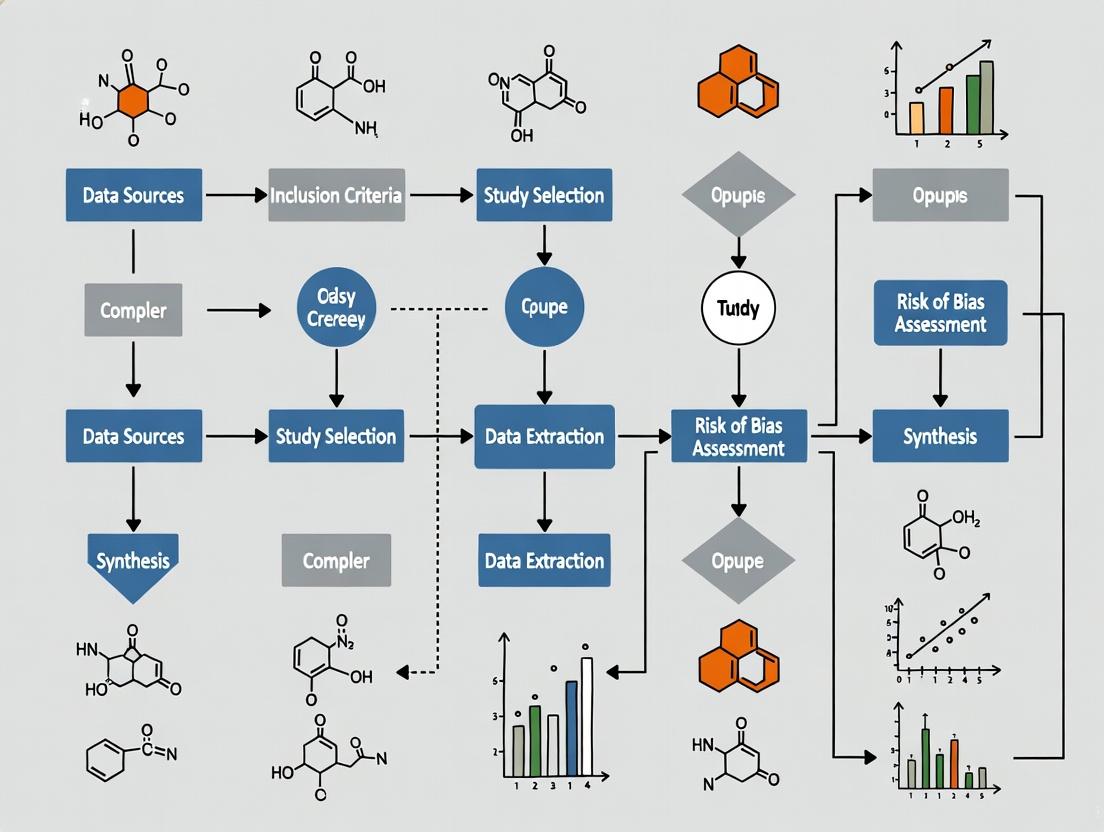
Systematic reviews in ecotoxicology are crucial for evidence-based decision-making in environmental protection and chemical risk assessment, yet their execution is hindered by complex, labor-intensive data extraction processes.
Extracting Insights from Ecosystems: A Comprehensive Guide to Data Extraction Methods for Ecotoxicology Systematic Reviews
Abstract
Systematic reviews in ecotoxicology are crucial for evidence-based decision-making in environmental protection and chemical risk assessment, yet their execution is hindered by complex, labor-intensive data extraction processes. This article provides a comprehensive guide for researchers, scientists, and drug development professionals, analyzing the evolving landscape of data extraction methods. It covers the foundational principles and specialized frameworks unique to ecotoxicology, examines the progression from manual extraction to semi-automated techniques, including the emerging role of Large Language Models (LLMs). The article addresses common challenges and optimization strategies to ensure data integrity and reviews validation criteria for comparing different methodological approaches. By integrating key findings and future directions, this guide aims to equip professionals with the knowledge to enhance the efficiency, reproducibility, and scientific rigor of their systematic reviews.
Building the Blueprint: Foundational Frameworks and Core Concepts for Ecotoxicology Data Extraction
The Imperative for Systematic Reviews in Ecotoxicology and Environmental Health
The fields of ecotoxicology and environmental health (EH) are defined by complex questions concerning the effects of chemical, physical, and biological agents on ecosystems and human health. The evidence base is vast, heterogeneous, and rapidly expanding, driven by scientific advancement and regulatory demands [1]. In this context, systematic reviews (SRs) and related evidence synthesis methodologies have transitioned from a novel approach to an imperative scientific practice. They provide a structured, transparent, and bias-minimizing framework to navigate this complexity, forming the cornerstone of evidence-based decision-making for chemical risk assessment, policy formulation, and public health protection [2] [3]. This article details the application notes and protocols essential for conducting robust systematic reviews and evidence maps within this domain, framed within a broader thesis on advancing data extraction methodologies.
Scientific and Policy Imperative
The conduct of SRs in toxicology and EH has increased dramatically, with publications in toxicology approximately doubling from 2016 to 2020 [3]. This growth is propelled by a paradigm shift toward evidence-based approaches within major regulatory and public health bodies worldwide, including the U.S. Environmental Protection Agency (EPA) and the European Food Safety Authority (EFSA) [1]. These frameworks mandate rigorous, unbiased synthesis of all available evidence to inform risk assessments and policies.
However, the unique nature of EH evidence poses distinct challenges. Data is often highly connected (e.g., linking a chemical, its metabolic pathway, a molecular endpoint, and an ecological outcome), heterogeneous (spanning in vitro, animal, epidemiological, and field studies), and complex [1]. Traditional, narrative reviews are susceptible to selection and confirmation bias, making them unsuitable for definitive conclusions. Systematic methodologies are therefore not merely beneficial but essential to produce credible, high-value syntheses that can withstand scrutiny and guide sound decisions [2] [3].
Methodological Foundations: Reviews, Maps, and Protocols
Systematic reviews and systematic evidence maps (SEMs) serve complementary purposes. A Systematic Review aims to answer a specific, narrowly focused research question (e.g., "Does exposure to chemical X cause effect Y in organism Z?") through critical appraisal and synthesis, potentially including meta-analysis [4]. In contrast, a Systematic Evidence Map aims to catalogue and characterize a broader evidence base (e.g., "What is known about the ecotoxicological effects of chemical class A?") to identify trends, gaps, and clusters for further research or review [1] [4]. SEMs are particularly valuable for problem formulation and prioritization in chemicals policy [1].
The foundation of both is a publicly accessible protocol. The protocol is a detailed, prospective work plan that locks in the rationale, objectives, and methods, guarding against bias arising from post-hoc changes in approach [5] [6]. Key registries include PROSPERO (health-focused), the Collaboration for Environmental Evidence (CEE) library, and INPLASY, which offers rapid publication [5] [6] [7].
Table 1: Core Elements of a Systematic Review Protocol for Ecotoxicology/EH
| Protocol Section | Key Components & Frameworks | Purpose & Notes |
|---|---|---|
| Introduction | Rationale, Background, Objectives [6] | Justifies the review, states its aims, and identifies knowledge gaps. |
| Research Question | PECO/PICO Framework [8]:• Population/Organism• Exposure/Intervention• Comparator• Outcome | Defines the review's scope with precision. PECO (Population, Exposure, Comparator, Outcome) is often more applicable than PICO in EH [8]. |
| Methods: Eligibility | Inclusion & Exclusion Criteria [5] [6] | Explicitly states which studies will be selected based on PECO elements, study design, language, date, etc. |
| Methods: Search | Information Sources, Search Strategy, Grey Literature [6] | Ensures reproducibility and comprehensiveness. Must detail databases, search strings, and efforts to find unpublished data. |
| Methods: Study Selection | Screening Process, Conflict Resolution [5] | Describes the title/abstract and full-text screening phases, often using tools like Covidence or Rayyan [9]. |
| Methods: Data Extraction | Data Collection Process, Forms, Management [5] | Specifies what data will be extracted (e.g., study design, exposure details, outcomes, effect sizes) and how. |
| Methods: Risk of Bias | Quality Assessment Tools [5] | Details tools for evaluating study reliability (e.g., OHAT, SYRCLE for animal studies). |
| Methods: Synthesis | Data Synthesis Plan [6] | Outlines plans for narrative, qualitative, or quantitative (meta-analysis) synthesis. |
Detailed Protocol for Systematic Evidence Mapping
Systematic Evidence Mapping is a critical first step for navigating broad EH topics. The following protocol, derived from CEE guidance and adapted for EH complexity, focuses on creating a queryable database of evidence [1].
Objective: To systematically catalogue and characterize the available scientific literature on [Broad Chemical Class/Stressors] and their [Broad Category of Ecological or Health Outcomes] to visualize the distribution and types of evidence, identify knowledge clusters and gaps, and inform future research prioritization and specific systematic review questions.
Experimental Protocol:
Define Scope & Develop Codebook: Engage stakeholders to finalize the map's breadth. Develop a hierarchical codebook for data extraction. This includes controlled vocabularies (ontologies) for key entities:
- Stressors: Chemical names, CAS numbers, classes.
- Organisms/Populations: Species, taxonomic groups, human populations.
- Outcomes: Biochemical, physiological, pathological, population-level, ecosystem-level endpoints.
- Study Design: In silico, in vitro, in vivo (acute/chronic), observational, field study.
Search & Screen: Execute a comprehensive search across multiple databases (e.g., PubMed, Web of Science, Scopus, GreenFile, TOXLINE). Search strings will combine terms for the stressor and broad outcome domains. Grey literature will be sought from regulatory agency websites and thesis repositories. Screening will follow the PRISMA flow diagram, performed independently by two reviewers.
Data Extraction & Coding: For each included study, extract metadata (authors, year) and code data according to the codebook. The recommended advanced method is to structure this data as a knowledge graph, not a flat table. In a graph, entities (e.g., "Atrazine," "Xenopus laevis," "Vitellogenin") are stored as "nodes," and their relationships (e.g., "causes increase in," "is a metabolite of") are stored as "edges." This schemaless, on-read approach is uniquely suited to EH's interconnected data [1].
Database Development & Validation: Implement the knowledge graph using graph database technology (e.g., Neo4j). Develop a user-friendly front-end interface that allows users to query the map visually (e.g., "Show all studies on amphibians and endocrine disruption"). Validate the coding consistency through dual independent extraction on a subset of studies.
Analysis & Visualization: Analyze and report the map descriptively. Use interactive visualizations to show evidence volume by year, species, outcome, or study type. Critical gaps are identified as well-studied stressors with no data on key species or outcomes.
Systematic Evidence Mapping Workflow
Specialized Considerations for Ecotoxicology & EH
Conducting SRs in this field requires adaptation of general biomedical standards. The COSTER recommendations provide a consensus-based, cross-sector guide covering 70 practices across eight domains specific to toxicology and EH [2]. Key considerations include:
- Problem Formulation: Framing a reviewable question from a broad policy or research need.
- Handling Grey Literature: Regulatory reports and industry studies are crucial for unbiased assessment but require careful appraisal [2].
- Risk of Bias/Quality Assessment: Using tools validated for different study types (e.g., in vivo toxicology, epidemiology, ecological field studies) is critical. The OHAT (Office of Health Assessment and Translation) and SYRCLE (SYstematic Review Centre for Laboratory animal Experimentation) tools are widely used.
- Dealing with Complexity: Evidence often involves multiple stressors, species, and endpoints with non-linear relationships. Narrative synthesis and evidence mapping are frequently as important as meta-analysis.
Journals like Environment International now enforce stringent, specialized submission criteria for evidence syntheses, requiring adherence to PRISMA or ROSES reporting standards and triage using tools like CREST_Triage [4]. This underscores the field's commitment to methodological rigor.
Innovation in Data Extraction: Automation & Knowledge Graphs
Data extraction is the most time-consuming and labor-intensive stage of a review [10]. Advancements in automation and data structuring are therefore central to the thesis of improving SR efficiency and scalability in EH.
(Semi-)Automated Data Extraction: A living systematic review of methods up to 2024 shows a growing field, with 117 identified publications [10]. While most early efforts focused on extracting PICO elements from clinical trial texts using classical NLP, recent trends are decisive:
- Shift to Relation Extraction: Moving from extracting isolated entities (e.g., a chemical name, an outcome) to extracting the precise relationship between them (e.g., "chemical X increases biomarker Y") [10].
- Rise of Large Language Models (LLMs): LLMs are emerging as powerful tools for data extraction. However, current applications show a trend of decreasing reporting quality for quantitative performance metrics (like recall) and lower reproducibility compared to earlier, model-specific approaches [10].
- Focus on Interoperability: There is a push for shared datasets and code (available in ~45% of recent publications) to facilitate comparison and tool development [10].
Protocol for (Semi-)Automated Data Extraction Pilot:
- Task Definition: Define a specific extraction task (e.g., extract chemical name, species, dose, and reported effect size from results sections).
- Training Data Creation: Manually annotate a corpus of 50-100 full-text PDFs relevant to the review topic.
- Tool Selection & Prompt Engineering: Choose an LLM API (e.g., GPT-4, Claude) or a specialized tool (e.g., EPPI-Reviewer's ML features). For LLMs, iteratively develop and refine prompts (instructions) using the training set.
- Execution & Validation: Run the automated tool on a new set of studies. Have two human reviewers independently extract data from the same set. Compare all three outputs (Human1, Human2, AI).
- Performance Metrics & Integration: Calculate inter-rater agreement (Fleiss' Kappa) between humans and between humans and the AI. Use AI output as a "first pass" to accelerate human review, not replace it.
Knowledge Graphs as an Extraction Goal: The ultimate output of extraction should be a structured, computable format. A knowledge graph is ideal for EH data, as it preserves the complex relationships inherent in toxicological pathways [1]. It transforms the review from a static document into a dynamic, queryable knowledge base.
Knowledge Graph Data Structure for EH Evidence
Table 2: Performance Metrics of Data Extraction Methods (Representative Data from Literature) [10]
| Extraction Method | Typical Precision | Typical Recall | Key Advantages | Key Limitations |
|---|---|---|---|---|
| Manual Extraction (Dual Review) | Very High (~98-100%) | Very High (~98-100%) | Gold standard for accuracy; handles complexity. | Extremely time/resource intensive. |
| Classical NLP (e.g., SVM, Rules) | Moderate-High (75-90%) | Moderate (70-85%) | Reproducible; good for defined entities. | Requires technical expertise; poor generalizability. |
| Deep Learning (e.g., BERT) | High (80-95%) | High (80-95%) | Better context understanding; state-of-the-art for specific tasks. | Requires large training datasets; computationally intensive. |
| Large Language Models (LLMs) | Variable (60-95%)* | Variable (65-90%)* | No task-specific training needed; flexible. | Output can be non-deterministic; metrics often under-reported; risk of hallucination. |
Note: Performance is highly dependent on prompt engineering, task complexity, and the specific LLM used. Recent trends indicate declining completeness in reporting these metrics [10].
The Researcher's Toolkit
Table 3: Essential Research Reagent Solutions for Ecotoxicology/EH Systematic Reviews
| Tool / Resource | Category | Primary Function | Relevance to Data Extraction Thesis |
|---|---|---|---|
| Covidence, Rayyan | Review Management | Streamlines screening, full-text review, and manual data extraction via collaborative web platforms. | Primary interface for human-driven extraction; some are beginning to integrate basic AI functions for prioritization [5] [9]. |
| EPPI-Reviewer | Review Management & Automation | Advanced tool supporting machine learning for screening and custom data extraction forms. | Features built-in classifiers and NLP tools to (semi-)automate the extraction of study characteristics and outcomes [10]. |
| RevMan, R (metafor, meta) | Statistical Synthesis | Software for performing meta-analysis and generating forest/funnel plots. | The endpoint for extracted quantitative data. Requires clean, structured numerical data from the extraction phase. |
| Neo4j, GraphXR | Graph Database & Visualization | Platforms to create, query, and visualize knowledge graphs. | Core innovation. Enables implementation of a graph-based data model for SEMs and complex reviews, turning extracted data into an interactive knowledge base [1]. |
| Python (spaCy, Transformers) | Programming / NLP | Libraries for building custom natural language processing and machine learning pipelines. | Enables the development of tailored, automated data extraction systems for specific EH concepts (e.g., chemical, species, endpoint) from text [10]. |
| PRISMA, ROSES | Reporting Guidelines | Checklists and flow diagrams for transparent reporting of reviews and maps. | Ensures the methods and results of the data extraction process are fully documented and reproducible [4]. |
| COSTER Guidelines | Conduct Guidelines | Domain-specific recommendations for planning and conducting EH SRs [2]. | Informs the design of the extraction protocol, especially for handling grey literature and assessing risk of bias in diverse study types. |
| PROSPERO, INPLASY | Protocol Registries | Public repositories for registering review protocols prospectively. | Guards against bias in the extraction and synthesis plan; a mandatory step for rigorous reviews [7]. |
The imperative for systematic reviews in ecotoxicology and environmental health is unequivocal, driven by the demands of evidence-based policy and the intrinsic complexity of the field. Mastering the detailed protocols for systematic reviews and evidence maps is fundamental. The future of scalable, efficient, and insightful evidence synthesis lies in the innovative convergence of two paths: the structured, relationship-rich data model provided by knowledge graphs and the advancing power of (semi-)automated extraction technologies, particularly LLMs. Researchers who integrate these advanced methodologies with foundational rigor will be best positioned to synthesize the evidence needed to protect environmental and human health.
Within the rigorous process of evidence synthesis, data extraction serves as the critical translational step where information from primary studies is systematically captured into a structured format for analysis and synthesis [11]. In the specific domain of ecotoxicology systematic reviews, this involves distilling complex experimental data on chemical effects, environmental concentrations, and biological endpoints from diverse study reports. The fidelity of this process directly determines the validity of subsequent meta-analyses and the strength of environmental risk assessments. Current methodologies are evolving from manual, error-prone spreadsheet approaches toward more structured, hierarchical, and semi-automated systems to handle the inherent complexity of ecological data, which often includes multiple species, life stages, endpoints, and exposure scenarios [12].
Current Practices and Quantitative Insights
A survey of systematic reviewers reveals heterogeneous approaches to data extraction. A 2022 survey (n=162) found that spreadsheet software remains the dominant tool, while independent duplicate extraction is considered the gold standard for minimizing error [13].
Table 1: Survey Results on Current Data Extraction Practices (2022, n=162) [13]
| Practice or Opinion | Percentage of Respondents | Key Insight |
|---|---|---|
| Use of spreadsheet software | 83% | Indicates widespread reliance on flexible but error-prone tools. |
| Use of adapted or newly developed forms | 65% (adapted), 62% (new) | Most teams customize extraction tools for each review. |
| Piloting of extraction forms | 74% | A majority validate their forms before full extraction. |
| Independent duplicate extraction as most appropriate | 64% | Considered best practice to reduce errors. |
| Perceived top research gap: Reducing errors | 60% | Highlights concern over data accuracy. |
| Perceived top research gap: Support tools/(semi-)automation | 46% | Strong interest in technological assistance. |
Concurrently, a living systematic review on automation methods (2025, n=117 publications) shows a rapidly advancing field, though practical application lags [10].
Table 2: Status of (Semi)Automated Data Extraction Research (Living Review, 2025) [10]
| Aspect | Finding | Implication for Ecotoxicology |
|---|---|---|
| Primary study type targeted | 96% focus on Randomized Controlled Trials (RCTs) | A significant gap exists for automating extraction from diverse ecotoxicology study designs (e.g., chronic toxicity tests, field studies). |
| Most extracted entities | PICO elements (Population, Intervention, Comparator, Outcome) | Suggests frameworks like PECO (Population, Exposure, Comparator, Outcome) could be targeted for automation in environmental health. |
| Data availability | 45% of publications share data | Promotes reproducibility and model training. |
| Code availability | 42% of publications share code | Essential for validating and adapting tools. |
| Publicly available tools | Only 8% of publications result in an accessible tool | Highlights a major translation barrier between research and usable software for reviewers. |
| Emerging trend | Use of Large Language Models (LLMs) | LLMs show promise but current trends indicate challenges with reproducibility and accuracy of quantitative data extraction. |
Experimental Protocols for Ecotoxicology Systematic Reviews
Protocol 1: Hierarchical Data Extraction (HDE) for Complex Ecotoxicological Data
Hierarchical Data Extraction is designed to manage nested, repeating data sets common in ecotoxicology (e.g., multiple endpoints measured across several species and exposure concentrations) [12].
Methodology:
- Form Configuration: Create discrete electronic forms for each data type level.
- Root Form: Captures study-level metadata (e.g., author, year, test substance, test type [acute/chronic]).
- Child Form 1 - Test Organism: Created for each species/life stage, linked to the root. Captures species name, age, source.
- Child Form 2 - Exposure Scenario: Created for each concentration/duration tested, linked to a Test Organism form. Captures concentration, duration, medium.
- Child Form 3 - Endpoint Result: Created for each measured endpoint (e.g., LC50, growth inhibition, reproduction), linked to an Exposure Scenario form. Captures endpoint type, mean value, standard deviation, sample size.
- Piloting and Key Definition: Pilot the form structure on 5-10% of included studies. Designate a "key" question on each form (e.g., "Species name" for Test Organism form) whose answer will appear in the navigation tree for easy identification [12].
- Data Extraction: Reviewers navigate a dynamic tree interface. They create new child form instances on-the-fly as they encounter new data layers in a paper, with software automatically managing parent-child links.
- Output Generation: Data exports in an analysis-ready vertical format, preserving the hierarchy (e.g., each row represents a unique endpoint, with columns for its associated concentration, species, and study metadata) [12].
Protocol 2: Validation and Piloting of Data Extraction Forms
Piloting is essential to ensure consistency, clarity, and completeness of the extraction process [11].
Methodology:
- Develop Draft Forms: Based on the review question (e.g., "What is the ecotoxicity of Chemical X to aquatic invertebrates?"), draft forms using the HDE principle or a standard template.
- Select Pilot Sample: Randomly select a representative sample (typically 10-15%) of the included studies, ensuring a mix of study designs and report formats [11].
- Independent Dual Extraction: Two reviewers independently extract data from the pilot sample using the draft forms.
- Calculate Inter-Rater Reliability (IRR): For categorical items (e.g., risk of bias judgments), calculate Cohen's Kappa. For continuous data (e.g., LC50 values), calculate intraclass correlation coefficients or simple percent agreement.
- Consensus Meeting & Form Revision: Reviewers discuss and resolve all discrepancies. The extraction form is revised to clarify ambiguous items, add missing fields, or remove redundant ones. This process is iterated until high IRR (>0.8) is achieved.
- Procedure Documentation: All decisions, form versions, and piloting results are documented in the review's methodology section [13].
Protocol 3: Implementing Semi-Automated Extraction with LLMs
This protocol outlines a human-in-the-loop approach using LLMs to augment manual extraction.
Methodology:
- Task Definition & Prompt Engineering: Define a discrete, structured extraction task (e.g., "Extract all reported NOEC (No Observed Effect Concentration) values and their associated test species from this paragraph"). Develop and iteratively refine precise prompts with clear instructions on output format (e.g., JSON) [10].
- Document Chunking: For full-text processing, split PDF documents into manageable sections (e.g., by heading, or fixed token-size chunks) respecting logical boundaries like "Materials and Methods" or "Results."
- Model Querying & Output Generation: Use an API to submit prompts with text chunks to a capable LLM. Critical: Always use a consistent model version and temperature setting (e.g., temperature=0) for reproducibility [10].
- Human Verification & Curation: Treat all LLM outputs as preliminary data. A trained reviewer must verify every extracted data point against the source text. This step is non-negotiable due to model tendencies for "hallucination" or misrepresentation of quantitative data [10].
- Integration into Workflow: The verified data is then integrated into the master extraction database (e.g., the HDE system). The process should be documented, including prompt versions, model used, and verification rate.
Visualizing the Data Extraction Workflow
The following diagram illustrates the integrated workflow for manual and semi-automated data extraction within an ecotoxicology systematic review.
Systematic Review Data Extraction Workflow
The structure of Hierarchical Data Extraction (HDE) is key to managing complex ecotoxicology data, as shown in the following conceptual diagram.
Hierarchical Data Extraction Form Structure
The Scientist's Toolkit: Essential Materials for Data Extraction
Table 3: Essential Tools and Resources for Systematic Data Extraction
| Tool/Resource Category | Specific Item or Software | Function in Data Extraction | Considerations for Ecotoxicology |
|---|---|---|---|
| Structured Extraction Software | DistillerSR, Covidence, Rayyan [11] | Provides platform for creating, piloting, and executing dual-reviewer extraction with built-in conflict resolution. Some support HDE [12]. | Evaluate support for non-PICO frameworks (e.g., PECO) and complex, nested data outputs. |
| Flexible & Ubiquitous Tools | Microsoft Excel, Google Sheets [13] [11] | Highly accessible for custom form creation. Useful for initial prototyping and simple reviews. | Prone to error, lacks audit trails, and becomes unmanageable with complex hierarchical data [12]. |
| Specialized Systematic Review Tools | RevMan (Cochrane) [11] | Integrated tool for full review production, including extraction and meta-analysis. | Best suited for clinical/intervention data; may be less flexible for ecological endpoints. |
| Reference & Text Management | EndNote, Zotero, Mendeley | Manage and annotate included study PDFs. Essential for organizing the corpus of literature. | Integration with extraction software (e.g., direct PDF import) streamlines the workflow. |
| (Semi)Automation & NLP Tools | Large Language Model APIs (e.g., GPT-4, Claude), Custom NLP scripts [10] | Assist in locating and drafting extractions for specific data points from text, speeding up the reviewer's work. | Require extensive human verification [10]. Effectiveness depends on prompt engineering and model suitability for scientific text. |
| Validation Instruments | Pre-designed piloting protocol, IRR calculation scripts (e.g., in R or Python) [11] | Ensure consistency and reliability between extractors before full-scale extraction begins. | Critical for training reviewer teams and ensuring the extraction form captures ecotoxicological data accurately. |
| Reporting Guidelines | PRISMA checklist, INCREASE checklist (under development) [13] | Guide the transparent reporting of the data extraction methods, enhancing reproducibility. | Using such checklists is a best practice for methodological rigor. |
The systematic review has become a cornerstone of evidence-based decision-making, initially formalized in clinical medicine through frameworks like PICO (Population, Intervention, Comparator, Outcome) [10]. This structured approach is fundamental for developing focused research questions and for the subsequent data extraction phase, where key study characteristics are captured in a standardized form [10]. However, the direct application of PICO to ecological and ecotoxicological research presents significant conceptual challenges. In environmental health, the "intervention" is often an unintentional exposure, and the "population" may encompass non-human species or entire ecosystems [14]. Consequently, the PECO framework (Population, Exposure, Comparator, Outcome) has emerged as a critical adaptation, reframing the question to better suit the assessment of environmental exposures and their effects [14].
This evolution from PICO to what can be termed the ECO framework (expanding to encompass Ecosystem, Contaminant/stressor, and Outcome) is not merely a change in acronym but a fundamental shift in perspective. It is situated within a broader thesis on advancing data extraction methods for ecotoxicology systematic reviews. The goal is to develop rigorous, transparent, and repeatable protocols that can handle the complexity of ecological data, which is often heterogeneous and contextual [15] [16]. The Collaboration for Environmental Evidence (CEE) explicitly recommends using PICO or PECO structures to guide the design of data coding and extraction forms, underscoring the framework's operational importance [15]. This article details the application notes and protocols for implementing and adapting these extraction frameworks to answer pressing ecological questions reliably and efficiently.
Deconstructing the Framework: From PICO to ECO Components
Adapting the data extraction framework requires a clear understanding of how each component transforms from a clinical to an ecological context. This translation ensures that systematic reviews in ecotoxicology capture the necessary information for a robust synthesis.
- Population (P) to Ecosystem/Community/Population: In clinical PICO, the Population is a defined patient group. In ECO, this expands to the biological unit of interest. This could be a specific species (e.g., Pimephales promelas, the fathead minnow), a functional group, an ecological community, or an entire ecosystem. Defining this requires specifying taxonomic details, life stage, health status, and relevant habitat descriptors [17] [18].
- Intervention (I) to Exposure/Contaminant/Stressor (E): The active "Intervention" becomes the "Exposure." This is a passive environmental stressor to which the population is subjected [14]. It must be defined with precision, including:
- Identity: The specific chemical (e.g., benzo[a]pyrene), physical agent, or biological stressor.
- Magnitude: Concentration or intensity (e.g., 50 μg/L).
- Duration & Timing: Acute (e.g., 96-hour) vs. chronic exposure, and life-stage specificity [17].
- Route: Waterborne, dietary, sediment, etc.
- Comparator (C): This element remains crucial but its nature changes. In therapy, it's often a placebo or standard care. In ECO, the comparator is typically defined by the exposure gradient. Key approaches include [14]:
- Incremental Comparison: Evaluating the effect of a unit increase in exposure (e.g., per 10 dB increase in noise) [14].
- High vs. Low: Comparing effects at the highest versus lowest observed or measured exposure levels.
- Exposed vs. Reference/Unexposed: Comparing a contaminated site to a clean reference site.
- Before-After/Control-Impact (BACI): A robust design comparing changes over time between impacted and control populations.
- Outcome (O): Outcomes in ecotoxicology are diverse measures of effect. These can range from molecular and biochemical responses (e.g., CYP1A1 enzyme induction, vitellogenin mRNA expression) to physiological, histological, individual fitness (growth, reproduction, mortality), and population- or community-level endpoints [17] [16]. A single study may report multiple outcomes.
Table: Comparative Analysis of Framework Components
| Framework Component | Clinical PICO Context | Ecological ECO Context | Key Extraction Variables for ECO |
|---|---|---|---|
| Population (P) | Human patients (age, sex, disease status) | Species, community, or ecosystem; Life stage; Habitat type; Health status | Taxonomic identification; Life stage; Sex; Habitat descriptors; Sample size |
| Exposure/Intervention (E/I) | Therapeutic drug, procedure | Chemical contaminant, physical stressor, non-native species | Stressor identity; Measured concentration/intensity; Exposure duration & frequency; Exposure matrix (water, soil, etc.) |
| Comparator (C) | Placebo, standard therapy, alternative drug | Reference site, lower exposure level, pre-exposure state, experimental control | Type of comparator (e.g., spatial reference, dose-control); Comparator exposure level; Characteristics of control/reference system |
| Outcome (O) | Clinical endpoint (mortality, symptom score) | Biological effect at sub-organismal, individual, or population level | Endpoint type (mortality, growth, reproduction, biomarker); Measurement method; Units; Time of measurement |
| Additional Context | Study design (RCT) | Field monitoring, mesocosm, lab experiment; Ecological relevance | Study design type; Test system scale (lab/field); Temperature, pH, other abiotic factors; Geographic location |
Data Extraction Protocols for ECO-Based Systematic Reviews
Implementing the ECO framework requires a meticulous, multi-stage process to ensure data integrity, transparency, and reproducibility. The following protocol, synthesized from systematic review guidance, provides a detailed roadmap [15].
Stage 1: Protocol Development & Form Pilot-Testing
- Action: Based on the a priori ECO question, design a detailed data coding and extraction form. This is typically a spreadsheet or database with predefined fields for all ECO elements, study metadata (author, year, location), and critical appraisal criteria [15].
- Protocol: Pilot-test the form on a representative subset (e.g., 5-10%) of the included full-text articles. This must involve at least two independent reviewers. The goal is to identify ambiguities in coding instructions, missing data fields, and inconsistencies in interpretation [15].
- Output: A finalized, piloted extraction form and a detailed codebook documenting rules for handling all variables. This form should be included in the systematic review protocol.
Stage 2: Data Coding and Extraction Execution
- Action: Reviewers systematically apply the finalized form to all included studies. Data coding records study characteristics (meta-data), while data extraction records quantitative results and findings [15].
- Protocol:
- Extract and record all relevant ECO variables as defined in the codebook.
- For quantitative outcomes, extract raw data or summary statistics (e.g., mean, standard deviation, sample size for control and exposed groups) necessary for effect size calculation [15].
- Document the precise location (page, figure, table) of the extracted data within the source article.
- Note any assumptions or transformations applied during extraction (e.g., converting standard error to standard deviation).
- Output: A complete, populated database of coded study characteristics and extracted results.
Stage 3: Quality Assurance and Agreement Assessment
- Action: Ensure the reliability and repeatability of the extraction process.
- Protocol: A minimum of a random subset (e.g., 10-20%) of studies should be extracted independently by two reviewers. Inter-reviewer agreement is assessed (e.g., using Cohen's kappa for categorical variables, correlation for continuous variables). Discrepancies are resolved through discussion or adjudication by a third reviewer. This process validates the extraction rules and minimizes human error [15].
- Output: A measure of inter-reviewer reliability and a final, consensus dataset for analysis.
Stage 4: Data Transformation and Synthesis Preparation
- Action: Prepare extracted data for statistical synthesis or qualitative analysis.
- Protocol: Transform extracted summary statistics into a common effect size metric appropriate for the data (e.g., log response ratio, Hedges' g, odds ratio). Impute missing statistics only using justified, pre-specified methods (e.g., algebraic conversion, contact with authors), and conduct sensitivity analyses to assess the impact of imputation [15].
- Output: A standardized dataset ready for meta-analysis or other evidence synthesis methods.
The following diagram illustrates this integrated workflow.
The Scientist's Toolkit: Essential Reagents and Methods
Implementing ecotoxicological systematic reviews and the associated frameworks relies on a suite of established and emerging methodologies. The following table details key research tools and their functions.
Table: Key Research Reagent Solutions and Methodologies
| Item/Method | Primary Function in Ecotoxicology | Relevance to ECO Framework & Data Extraction |
|---|---|---|
| In situ Caged Bioassays (e.g., caged fathead minnows) [17] | Provides a controlled measure of biological effects in real-world environments, linking exposure to outcome at the organism level. | Directly generates data for Population (species) and Outcome (individual-level effects) under field-based Exposure. Critical for weight-of-evidence assessments. |
| High-Throughput In Vitro Assays (e.g., T47D-kBluc estrogen receptor assay, Attagene Factorial assays) [17] | Screens for chemical activity against specific biological pathways (endocrine disruption, xenobiotic metabolism, cytotoxicity). | Provides mechanistic Outcome data. Used in prioritization frameworks to flag chemicals with high ecotoxicological potential even when traditional toxicity data is limited [17]. |
| Molecular Biomarkers (e.g., CYP1a1, Vtg mRNA quantification via RT-qPCR) [17] | Measures sub-organismal, early biological responses to exposure, indicating specific mechanisms of action. | Sensitive Outcome measures that provide evidence of biological activity before higher-level effects manifest. Useful for diagnosing exposure and effect. |
| Chemical Analysis (LC/MS/MS, GC/MS) | Identifies and quantifies specific contaminants in environmental matrices (water, sediment, tissue). | Defines the Exposure component with precision (identity and magnitude). Essential for establishing dose-response relationships and exposure gradients (Comparator). |
| Adverse Outcome Pathways (AOPs) | Organizes knowledge linking a molecular initiating event to an adverse outcome at the organism/population level. | A conceptual framework that helps structure Outcome data, supports extrapolation, and strengthens weight-of-evidence assessments for causality [16] [19]. |
| Weight-of-Evidence (WoE) Integration Software/Procedures | Systematically combines lines of evidence from different sources (chemistry, in vitro, in vivo, field) to reach a conclusion. | The overarching method for synthesizing extracted ECO data. Provides transparent, structured decision-making for hazard identification and prioritization [16] [17] [19]. |
Application in Weight-of-Evidence and Chemical Prioritization
The ECO framework provides the structured data necessary for advanced synthesis methods like Weight-of-Evidence (WoE) analysis. A practical application is the prioritization of contaminants detected in environmental monitoring. As demonstrated in a study of the Milwaukee Estuary, multiple lines of evidence—each aligned with ECO components—can be integrated to rank chemicals for further action [17].
Protocol for a WoE-Based Chemical Prioritization Framework [17]:
- Assemble Evidence Lines: For each detected chemical, gather data on:
- Exposure: Detection frequency, concentration, and environmental distribution.
- Ecotoxicological Potential (Outcome): Data from in vivo toxicity tests, in vitro bioactivity assays, and QSAR predictions.
- Environmental Fate: Persistence and bioaccumulation potential.
- Score and Weight Evidence: Assign quantitative or semi-quantitative scores to each evidence line based on reliability and relevance (e.g., Klimisch scores) [16]. Weights can reflect the perceived strength of each line.
- Integrate and Prioritize: Combine scores, often using predefined algorithms or decision rules, to generate an overall prioritization score. Chemicals are then binned into categories (e.g., High, Medium, Low Priority), with clear delineation between data-sufficient and data-limited substances [17].
- Recommend Actions: High-priority, data-sufficient chemicals are flagged for definitive risk assessment. High-priority, data-limited chemicals are flagged for targeted ecotoxicological testing.
Table: Example Prioritization Output from Milwaukee Estuary Study [17]
| Priority Bin | Data Sufficiency | Number of Chemicals (Example) | Recommended Management Action |
|---|---|---|---|
| High Priority | Sufficient | 4 (e.g., fluoranthene, benzo[a]pyrene) | Candidate for definitive risk assessment and potential regulatory action. |
| High/Medium Priority | Limited | 21 | Candidate for targeted ecotoxicological research to fill data gaps. |
| Medium/Low Priority | Varies | 34 | Lower immediate concern; consider for future monitoring. |
| Low Priority | Sufficient | 1 (2-methylnaphthalene) | Likely minimal risk; requires no further action. |
This WoE process, fueled by systematically extracted ECO data, transforms a list of detected chemicals into a risk-informed management strategy. The following diagram visualizes this integration process.
The transition from PICO to ECO is a necessary evolution for generating reliable evidence in ecotoxicology. Successful implementation hinges on several key practices. First, clearly define the adapted ECO elements at the protocol stage, using specific scenarios (e.g., incremental exposure vs. high-low comparison) to guide what data will be extracted [14]. Second, invest in rigorous pilot-testing and dual review of the extraction process to ensure consistency, as the heterogeneity of ecological studies makes this step more critical than in clinical reviews [15]. Third, plan for data transformation and synthesis from the outset, acknowledging that extracting raw or summary statistics is essential for meaningful meta-analysis [15]. Finally, employ the extracted ECO data within structured WoE frameworks to move beyond simple narrative synthesis to transparent, defensible conclusions that can effectively inform environmental risk assessment and management decisions [16] [17] [19]. By adhering to these detailed application notes and protocols, researchers can leverage the power of systematic review to address complex ecological questions with greater rigor and impact.
This application note details the methodological challenges of data extraction for systematic reviews (SRs) in ecotoxicology, framed within the broader thesis of advancing (semi)automated data extraction methods. Ecotoxicology presents unique obstacles compared to clinical research, including profound study heterogeneity (multiple species, endpoints, and experimental designs) and pervasive data scarcity (incomplete reporting, limited datasets) [20]. These challenges complicate the implementation of standardized, automated extraction tools that are increasingly used in evidence synthesis [10]. We provide detailed protocols for managing these issues, from designing piloted extraction forms [21] to implementing semi-automated tools like Dextr [22]. Supported by comparative data tables and workflow visualizations, this note equips researchers with practical strategies to enhance the rigor, efficiency, and reproducibility of data extraction in ecotoxicological evidence synthesis.
Within evidence-based toxicology, the systematic review is a core tool for transparently and rigorously synthesizing research [20]. Data extraction is the critical bridge between identified primary studies and synthesized evidence, involving the systematic capture of study characteristics, interventions/exposures, and outcomes into structured forms [23]. In ecotoxicology, this stage is particularly burdensome due to the field's inherent complexity. The broader thesis of this work posits that adapting and developing data extraction methodologies—both manual and (semi)automated—is essential to overcome the field's specific barriers [10] [22].
Traditional narrative reviews in toxicology, while useful for expert commentary, often lack transparency and methodological rigor, increasing the risk of bias and irreproducibility [20]. SR methodology, adapted from clinical research, addresses these shortcomings but requires significant adaptation. The central challenges are twofold: 1) Study Heterogeneity: Ecotoxicological evidence derives from diverse streams (in vivo, in vitro, in silico), involves myriad species and strains, and assesses a wide array of toxicological endpoints and outcomes [20]. 2) Data Scarcity: Primary studies frequently suffer from incomplete reporting of essential methodological details and quantitative results, and there is a lack of large, standardized, publicly available datasets to train machine learning (ML) models [10] [22]. These challenges necessitate tailored protocols and tools, moving beyond frameworks designed for clinical trials.
Core Challenge 1: Profound Study Heterogeneity
Ecotoxicological reviews must integrate evidence from fundamentally different study types, each with variable data reporting standards. This heterogeneity complicates the creation of universal data extraction templates and automated tools.
Table 1: Manifestations and Data Extraction Implications of Study Heterogeneity in Ecotoxicology
| Aspect of Heterogeneity | Manifestion in Literature | Implication for Data Extraction |
|---|---|---|
| Evidence Streams | In vivo (animal), in vitro (cell), in chemico, in silico (QSAR) models, and field observational studies [20]. | Requires extraction forms with distinct modules for each study type; complicates direct comparison and synthesis. |
| Experimental Subjects | Multiple species (e.g., Daphnia magna, Danio rerio, Rattus norvegicus), strains, sexes, and life stages [20]. | Necessitates detailed extraction of organism taxonomy, genetic strain, and husbandry conditions as potential effect modifiers. |
| Exposure Regimens | Variable routes (dietary, waterborne, injection), durations (acute, chronic), doses/concentrations, and use of complex mixtures. | Extracting dose-response data requires capturing exact values, units, and temporal patterns, often from text, tables, or figures. |
| Measured Endpoints | Lethality (LC50), sub-lethal effects (growth, reproduction, behavior), biochemical markers (gene expression, enzyme activity) [20]. | Extraction must accommodate diverse outcome types (continuous, dichotomous, ordinal) and their associated statistical measures (mean, SD, N). |
Protocol 2.1: Designing Hierarchical Extraction Forms for Heterogeneous Studies Objective: To create a flexible, piloted data extraction form that captures complex, nested data relationships common in ecotoxicology. Materials: Systematic review protocol, access to representative primary studies, form-building software (e.g., REDCap, Microsoft Excel, specialized SR tool) [24] [23]. Procedure:
- Define Core & Modular Fields: Based on the review PECO/PICO question, define core fields applicable to all studies (e.g., author, year, test substance). Create modular sections for specific evidence streams (e.g., an "in vivo mammalian toxicokinetics" module) [21] [23].
- Incorporate Entity Linking: Design the form to explicitly connect related entities. For example, a single study may report multiple experiments; each experiment may have multiple dose groups; each dose group links to specific outcome measures. Tools like Dextr are explicitly built to support this hierarchical data structure [22].
- Pilot and Revise: Two independent reviewers extract data from a sample (e.g., 5-10) of the most heterogeneous included studies [21] [23]. The pilot tests:
- Clarity: Are instructions unambiguous?
- Completeness: Does the form capture all relevant data?
- Consistency: Do reviewers record data identically?
- Resolve Discrepancies & Refine: Reviewers compare extractions, resolve disagreements through discussion or third-party arbitration, and use insights to refine the form and its guidance [21] [23].
- Proceed with Dual Extraction: Implement the final form, with all studies extracted in duplicate by two independent reviewers to minimize error [23].
Core Challenge 2: Pervasive Data Scarcity
Data scarcity in ecotoxicology manifests as both incomplete reporting within primary studies and a lack of large, annotated public datasets. This limits the performance and applicability of automated extraction tools.
Table 2: Comparison of Manual vs. Semi-Automated Data Extraction Workflows Performance data adapted from the evaluation of the Dextr tool on environmental health animal studies [22].
| Performance Metric | Manual Extraction Workflow (n=51 studies) | Semi-Automated Workflow (Dextr Tool, n=51 studies) | Statistical Significance & Implication |
|---|---|---|---|
| Median Extraction Time per Study | 933 seconds | 436 seconds | p < 0.01. Semi-automation substantially reduces time burden, a key advantage given data scarcity. |
| Precision Rate | 95.4% | 96.0% | p = 0.38. No significant difference. Automation does not increase error rates for extracted items. |
| Recall Rate | 97.0% | 91.8% | p < 0.01. Small but significant reduction. Highlights the tool may miss some relevant data points, underscoring the need for user verification [22]. |
A 2024 living systematic review on automated data extraction found that while tools are advancing, only 8% of publications described publicly available tools, and 45% provided data [10]. This "scarcity of data about data" hinders tool development and validation for ecotoxicology.
Protocol 3.1: Implementing and Validating a Semi-Automated Extraction Tool (Dextr) Objective: To integrate a semi-automated tool into the review workflow to improve efficiency while maintaining accuracy, specifically for complex, hierarchically structured data. Materials: The Dextr web application (or similar tool), a set of PDFs for included studies, a predefined data extraction schema [22]. Procedure:
- Tool Training & Schema Upload: Configure the tool by uploading the review's data extraction schema. Dextr uses this to make prediction targets.
- User-Verified Prediction Cycle:
- Machine Prediction: The tool processes a study PDF, highlighting text spans it predicts correspond to schema items (e.g., a dose value, a species name).
- Human Verification: The reviewer accepts, rejects, or corrects each prediction. This critical step ensures accuracy and creates new annotated data for the tool's continuous learning [22].
- Entity Connection: The reviewer explicitly links verified entities (e.g., linking a specific dose to a specific outcome measure) within the tool's interface.
- Export and Quality Control: Export the machine-readable, annotated data. A second reviewer should perform quality control on a subset (e.g., 20%) of studies processed by the first reviewer to ensure consistency [22] [23].
- Handling Missing Data: Document all instances where critical data (e.g., standard deviation, exposure duration) is unreported. Develop and document a priori rules for handling such missingness (e.g., imputation, exclusion) in the SR protocol [23].
(Semi-Automated Data Extraction with Human Verification)
Integrated Data Extraction Protocol for Ecotoxicology SRs
This protocol synthesizes best practices to address heterogeneity and scarcity simultaneously.
Phase 1: Planning & Form Design (Pre-Extraction)
- Develop Detailed, Piloted Forms: Follow Protocol 2.1. Include fields for: PECO elements, funding source, organism details, exposure parameters, all outcome data with measures of variance, and risk-of-bias indicators [21] [23].
- Plan for Data Types: Pre-specify how different effect measures (e.g., odds ratios, mean differences, LC50 values) will be handled, converted, or harmonized for synthesis [23].
- Define Automation Strategy: Decide if and where (screening, extraction of specific fields) (semi)automation will be used. Document the choice of tool and its validation process [10] [23].
Phase 2: Execution & Quality Assurance
- Dual Independent Extraction: Two reviewers extract data independently for all studies to minimize error [23].
- Implement Tool Integration: If using a tool like Dextr, follow Protocol 3.1. The "human-in-the-loop" verification is non-optional for ensuring reliability [22].
- Resolve Discrepancies: Reviewers compare extractions. All disagreements are resolved by consensus or third-party adjudication. The process and final decisions are documented [21] [23].
- Contact Authors: Systematically contact corresponding authors to request missing or unclear critical data (e.g., exact p-values, baseline data). Document all contact attempts and responses [23].
Phase 3: Data Processing & Reporting
- Convert and Calculate: Transform extracted data into the desired format for synthesis (e.g., calculate effect sizes, standardize units). Use reliable tools (e.g., Campbell Collaboration's effect size calculator) [23].
- Populate Evidence Tables: Create clear summary tables (e.g., Characteristics of Included Studies, Summary of Findings) to present extracted data [23].
- Archive and Share: Publish the final extraction forms and, where possible, the extracted datasets in publicly accessible repositories to combat data scarcity for future reviews and tool training [10] [23].
(Integrated Data Extraction Workflow for Ecotoxicology)
The Scientist's Toolkit: Key Reagent Solutions
Table 3: Essential Tools and Resources for Ecotoxicology Data Extraction
| Tool/Resource Name | Type/Category | Primary Function in Data Extraction | Key Consideration for Ecotoxicology |
|---|---|---|---|
| Dextr [22] | Semi-Automated Extraction Software | Provides ML-powered predictions for data points with mandatory user verification; supports hierarchical entity linking. | Specifically evaluated on environmental health animal studies; excels at capturing complex study designs. |
| Cochrane Handbook [20] [23] | Methodological Guidance | The gold-standard reference for SR conduct, including data extraction processes, form design, and bias reduction. | Requires adaptation for non-clinical study types (e.g., toxicological assays, ecological field studies). |
| PRISMA & PRISMA-P [23] | Reporting Guidelines | Checklists for reporting protocols (PRISMA-P) and final reviews (PRISMA), including mandatory items on data extraction processes. | Ensures transparent reporting of how heterogeneity and data scarcity were handled. |
| Effect Size Converter (e.g., Campbell Collaboration) [23] | Statistical Utility | Calculates or converts between different effect size metrics (e.g., Cohen's d, odds ratios). | Critical for synthesizing outcomes reported in diverse metrics across studies. |
| Systematic Review Management Software (e.g., Rayyan, Covidence, EPPI-Reviewer) | Workflow Management | Platforms that often include structured data extraction form builders, dual-reviewer workflows, and discrepancy resolution modules. | Check for flexibility to create custom forms that capture ecotoxicology-specific data. |
| REDCap [24] | Electronic Data Capture Platform | Secure, web-based application for building and managing customized data collection forms and databases. | Highly customizable for complex, hierarchical extraction forms; good for team-based projects. |
The Critical Role of Data Extraction in Ecotoxicology Systematic Reviews
Within the framework of a broader thesis on advancing data extraction methods for ecotoxicology systematic reviews, the development and execution of a robust extraction plan is a foundational imperative. Systematic reviews are complex, methodology-driven projects designed to minimize bias and maximize transparency when synthesizing existing evidence to answer specific research questions [3]. In ecotoxicology, this evidence base is vast and heterogeneous, encompassing studies on diverse stressors—from classic chemical toxicants and endocrine disruptors like 17α-ethinylestradiol (EE2) [25] to engineered nanomaterials (ENMs) [26]—across multiple species and levels of biological organization.
The prevalence of systematic reviews in toxicology has approximately doubled from 2016 to 2020 [3]. However, their scientific quality is often variable, with common shortcomings in conduct and reporting undermining their reliability [3]. At the heart of these quality issues lies data extraction: the critical process of systematically capturing and organizing quantitative results, study characteristics, and methodological details from included primary studies. A poorly designed or executed extraction phase introduces systematic error, compromises synthesis, and can lead to misleading conclusions that misinform policy and future research. Therefore, a robust, pre-defined extraction plan is not merely a procedural step but a non-negotiable pillar of scientific integrity and utility in evidence-based ecotoxicology.
Table 1: The Imperative for Robust Extraction: Growth and Challenges in Ecotoxicology Systematic Reviews
| Aspect | Quantitative Data & Trends | Implications for Data Extraction |
|---|---|---|
| Growth in Volume | Number of toxicology systematic reviews in Web of Science ~doubled from 2016 to 2020 [3]. | Increases the demand for and reliance on synthesized evidence, making extraction accuracy paramount. |
| Identified Quality Shortcomings | Reviews of systematic reviews in environmental health consistently find important methodological shortcomings [3]. | Highlights a systemic need for standardized, rigorous protocols to improve reliability. |
| Data Heterogeneity | Ecotoxicity data for ENMs is characterized by inconsistent reporting, varying test preparations, and diverse biological endpoints [26]. | Extraction plans must be meticulously detailed to capture complex, non-standardized data (e.g., physicochemical properties, exposure conditions). |
| Regulatory Reliance | New Approach Methodologies (NAMs) and Integrated Approaches to Testing and Assessment (IATA) depend on reliable data for read-across and grouping strategies [27] [26]. | Flawed extraction creates "garbage in, garbage out" scenarios, compromising safety assessments and the 3Rs (Replacement, Reduction, Refinement) agenda [27]. |
Application Notes: Core Principles and Protocol Development
A robust extraction plan is a detailed, prospectively developed protocol that serves as the operational blueprint for the review team. Its development is guided by core principles aimed at ensuring accuracy, consistency, completeness, and clarity.
- Pre-Definition is Paramount: Every element to be extracted must be defined before the process begins. This includes the specific outcome metrics (e.g., LC50, NOEC, biomarker expression level), study design descriptors, and risk-of-bias criteria.
- Pilot Testing is Essential: The extraction form and guidelines must be piloted on a sample of 5-10 included studies by all reviewers. This uncovers ambiguities, ensures common understanding, and refines the protocol [3].
- Independent Duplication Mitigates Error: Data should be extracted independently by at least two reviewers, with a pre-defined process for resolving discrepancies through discussion or third-party adjudication [28]. This is a key guard against human error and subjective interpretation.
- Transparency Ensances Reproducibility: The final extraction protocol, including the blank form and coding guidelines, should be made publicly available, such as in a supplemental file, aligning with FAIR (Findable, Accessible, Interoperable, and Reusable) data principles [26].
Protocol Development Workflow: The following workflow, derived from best practices and case studies [25] [3] [28], outlines the key stages in creating a robust extraction plan:
Detailed Extraction Protocols from Ecotoxicology Case Studies
The theoretical framework above is best understood through practical examples. The following table compares extraction approaches from published systematic reviews on different ecotoxicology topics, illustrating both commonalities and context-specific adaptations.
Table 2: Comparison of Data Extraction Protocols from Ecotoxicology Systematic Reviews
| Review Focus & Citation | Key Extracted Data Elements | Specialized Protocol Notes | Handling of Complex Data |
|---|---|---|---|
| Reproductive Effects of Micro-pollutants [28] | Study design, population/model, pollutant type & exposure metric, reproductive outcome (e.g., sperm conc., hormone level), effect size (OR, SMD), confidence intervals, covariates. | Followed PRISMA guidelines. Extracted data to perform meta-analysis, requiring precise numeric effects and measures of variance. | Managed heterogeneity in exposure metrics (e.g., urine vs. air concentration) via subgroup analysis and sensitivity analysis. |
| Persistence & Toxicity of EE2 [25] | Sample type (water, soil, biota), concentration (influent/effluent), detection method, removal efficiency, reported toxicity endpoints. | Used PRISMA framework. Extraction focused on environmental fate and occurrence data alongside toxicological results. | Compiled concentration ranges across matrices (water, soil, crop) for comparative environmental risk assessment. |
| Grouping Strategies for Nanomaterials [26] | Pristine material properties: Core element, size, surface area, purity. System-dependent properties: Hydrodynamic size (with/without BSA). Ecotoxicological endpoints: Algal growth inhibition, D. magna mortality, cell viability. | Emphasized extraction of both inherent and measured physicochemical properties. Highlighted the critical need for standardized reporting of ENM characteristics. | Addressed the challenge of "autocorrelated" properties (e.g., size and surface area) by extracting a full suite of parameters for multivariate analysis. |
Detailed Protocol: Extracting Data for Engineered Nanomaterial (ENM) Ecotoxicity Reviews Based on the NanoReg2 project [26], a specialized extraction protocol for ENM studies is essential:
- Extract Inherent Physicochemical Properties: Record the core composition (e.g., TiO2, ZnO), primary particle size, specific surface area, shape, and purity as reported by the material supplier.
- Extract Dispersion Protocol Details: Document the dispersion medium (e.g., water, BSA solution), sonication energy and time, and the final concentration of stabilizers (e.g., BSA %). Note if a standardized protocol like NanoGENOTOX SOP was used.
- Extract System-Dependent Characterization: Capture the measured properties in the exposure medium: hydrodynamic diameter (e.g., via DLS), polydispersity index, and zeta potential.
- Extract Ecotoxicological Data: Record the test organism, exposure duration, measured endpoint (e.g., % inhibition, LC50), and its value with variance. Note the exposure medium composition.
- Cross-Reference and Flag: Create a link between the specific material batch, its dispersion protocol, its characterized state in the test system, and the resulting biological endpoint. Flag studies missing any of these critical data clusters.
The decision-making pathway during extraction, especially for complex or poorly reported data, can be visualized as follows:
Table 3: Research Reagent Solutions & Essential Tools for Data Extraction
| Item / Tool | Function in the Extraction Process | Example from Search Results |
|---|---|---|
| Standardized Reporting Guideline (PRISMA) | Provides a minimum set of items to report, ensuring the extraction plan and its results are fully transparent [25] [28]. | Used as the foundational framework in reviews on EE2 [25] and micro-pollutants [28]. |
| Pilot-Tested Extraction Form (Digital) | The structured instrument (e.g., Google Form, MS Form, REDCap) used to record extracted data consistently. Must be piloted. | Implicitly required for independent duplicate extraction and resolving discrepancies [3] [28]. |
| Reference Management Software | Manages the flow of studies from search to screening to extraction, tracking decisions and reviewer assignments. | Essential for handling the hundreds to thousands of records identified [25] [28]. |
| Bovine Serum Albumin (BSA) | A critical biochemical reagent used to create stable, reproducible dispersions of nanomaterials in ecotoxicity testing [26]. | Its use or absence must be extracted as a key methodological variable, as it significantly influences ENM behavior and toxicity [26]. |
| FAIR Data Principles Framework | A guiding concept (Findable, Accessible, Interoperable, Reusable) for planning extraction to ensure the resulting dataset supports future reuse and integration [26]. | Cited as necessary to overcome barriers to grouping and read-across for ENMs by creating interoperable datasets [26]. |
Implementing the Plan: From Protocol to Actionable Dataset
Implementation begins with training all reviewers on the finalized protocol and using the piloted extraction form. The process of independent duplicate extraction followed by discrepancy resolution is non-negotiable for quality assurance [28]. A third reviewer should adjudicate unresolved disagreements.
The final output is a curated, high-quality dataset ready for synthesis. This dataset is the direct product of the extraction plan and determines all subsequent conclusions. In ecotoxicology, this may enable dose-response meta-analysis [28], grouping of materials based on extracted properties [26], or a weight-of-evidence assessment for environmental risk [27] [25]. A robust extraction plan thus sets the stage for a systematic review that is not only methodologically sound but also capable of informing regulatory science, advancing the 3Rs, and contributing to a more sustainable and ethical toxicological paradigm [27].
From Manual to Machine: A Practical Guide to Data Extraction Methods and Tools
This document establishes a definitive protocol for manual data extraction and double-review processes within ecotoxicology systematic reviews (SRs). Adherence to these practices is critical for ensuring the credibility, reproducibility, and regulatory acceptance of synthesized evidence used in environmental risk assessment and chemical safety evaluation. The guidelines synthesize established SR methodology [11] with field-specific standards such as the COSTER recommendations for toxicology and environmental health research [2]. The core mandate is the implementation of independent dual extraction followed by formalized consensus to minimize random error and cognitive bias, thereby protecting the integrity of the review's conclusions [11] [29].
In ecotoxicology, systematic reviews are foundational for hazard identification, dose-response assessment, and ultimately, the derivation of safe exposure limits. The data extraction phase is where the empirical evidence from primary studies is translated into a structured format for synthesis; it is consequently one of the most labour-intensive and error-prone stages of the SR process [29]. Errors introduced during extraction—whether from oversight, misinterpretation, or subjective judgment—propagate directly into the meta-analysis and final conclusions, potentially jeopardizing chemical safety decisions.
The "gold standard" of dual independent review with consensus is not merely a recommendation but a methodological imperative. It functions as a quality control system, dramatically reducing the rate of data entry mistakes and improving the consistency of subjective judgments (e.g., risk-of-bias assessments). This protocol provides a detailed, actionable framework for implementing this standard, emphasizing planning, piloting, and documentation tailored to the complex data hierarchies common in ecotoxicology (e.g., multiple species, endpoints, exposure durations).
Comprehensive Protocols for Dual-Review Data Extraction
The following protocol is structured into three sequential phases, incorporating a 10-step guideline adapted for ecotoxicology [29].
Phase 1: Planning and Tool Development
Objective: To design a pilot-tested, detailed data extraction form and a structured relational database that accurately reflects the review question and the hierarchical nature of ecotoxicological data.
Step 1 – Determine Data Items: Assemble a development team including content experts, methodologies, and a data manager. Define the full set of data items required to answer the review question(s), assess risk of bias, and perform potential meta-analyses. For ecotoxicology, this typically includes:
- Study Identifiers & Context: Author, year, source, funding, chemical identity (CAS RN), exposure medium.
- Test System: Species (Latin name), life stage, sex, source, housing.
- Exposure Regime: Duration, route, concentration(s) (with units), frequency, vehicle/control.
- Endpoint & Outcome: Effect category (mortality, growth, reproduction), specific measurement, time of assessment, data type (continuous, dichotomous), summary statistics (mean, SD, SE, N, response rate).
- Risk of Bias: Items aligned with tools like SciRAP or other ecological risk-of-bias instruments [2].
Step 2 – Define Data Structure (Entity Grouping): Organize data items into logical entities to prevent data redundancy. A hierarchical structure is essential.
- Root Entity (STUDY): Data reported once per study (e.g., author, year, test substance).
- Branch Entity (TEST GROUP): Data repeated for each exposure concentration or experimental group (e.g., dose level, mean response).
- Branch Entity (OUTCOME): Data repeated for each measured endpoint within a group (e.g., specific biomarker, survival count). This structure efficiently manages studies reporting multiple concentrations and effects [29].
Step 3 – Build and Pilot the Extraction Form: Develop the form in the chosen software (see Toolkit). It must include clear instructions for every field. A critical pilot phase is then conducted:
- At least two reviewers independently extract data from an identical subset (e.g., 5-10%) of included studies.
- The team meets to compare extractions item-by-item, calculating inter-rater reliability (e.g., percent agreement, Cohen's kappa for categorical items).
- The form and instructions are refined iteratively to resolve ambiguities until acceptable agreement (>90% or kappa >0.8) is achieved [11].
Phase 2: Independent Dual Data Extraction
Objective: To execute a blinded, independent extraction of data from all included studies by two separate reviewers.
- Step 4 – Reviewer Training: All reviewers complete training using the finalized form and pilot studies. They must be calibrated on interpreting subjective criteria.
- Step 5 – Independent Extraction: Reviewers extract data without consultation. Software should facilitate blinding to each other's entries where possible [11]. Documentation of uncertainties and decisions is mandatory.
Phase 3: Consensus, Validation, and Data Locking
Objective: To identify and resolve discrepancies systematically, resulting in a single, accurate dataset.
- Step 6 – Discrepancy Identification: The extraction software or a manual comparison flags disagreements for each data point.
- Step 7 – Consensus Process: The two original reviewers discuss each discrepancy, referring back to the source document. They document the rationale for the final decision.
- Step 8 – Adjudication: If consensus cannot be reached, a third reviewer (an arbiter or methodologist) makes the final decision.
- Step 9 – Data Validation & Locking: The finalized dataset undergoes a final quality check (e.g., range checks for outliers, unit consistency). The database is then locked, and an audit trail of all changes is preserved.
Table 1: Quantitative Performance Benchmarks for the Double-Review Process
| Performance Metric | Target Benchmark | Measurement Method | Rationale |
|---|---|---|---|
| Pilot Phase Agreement | >90% item agreement or κ >0.8 | Percent agreement; Cohen's Kappa for categorical items | Ensures the extraction form is unambiguous and reviewers are calibrated before full extraction [11]. |
| Full Extraction Discrepancy Rate | <15% of all data items | (Number of discrepant items / Total items extracted) x 100 | A manageable rate indicates good initial reviewer alignment; a very low rate may suggest lack of independence. |
| Time for Consensus | Documented per study | Record time spent resolving discrepancies for each study | Provides metrics for project planning and identifies complex studies. |
| Final Data Error Rate | <1% (Post-consensus) | Random audit of a subset of finalized entries against source documents | Validates the overall accuracy of the locked dataset. |
Visual Workflow for Data Extraction and Consensus
The following diagram illustrates the formal workflow and decision points for the dual-review extraction and consensus process.
Dual-Review Data Extraction and Consensus Workflow
The Scientist's Toolkit: Essential Materials and Software
Table 2: Research Reagent Solutions for Data Extraction
| Tool / Resource | Primary Function | Application Notes |
|---|---|---|
| Systematic Review Software (e.g., Covidence, DistillerSR) | Provides integrated platform for screening, extraction (with side-by-side PDF view), automatic discrepancy highlighting, and consensus management [11]. | Ideal for teams; enforces process rigor and maintains an audit trail. Subscription cost is a consideration. |
| Relational Database (e.g., Microsoft Access, Epi Info) | Enforces structured data entry and manages complex, hierarchical data (e.g., multiple outcomes nested within doses, nested within studies) more effectively than flat tables [29]. | Essential for large, complex reviews. Requires upfront design time but minimizes downstream data cleaning. |
| Flat-file Database (e.g., Microsoft Excel, Google Sheets) | Accessible and flexible for simple reviews or as a preliminary tool. Can incorporate data validation (drop-downs, range checks) [11]. | Prone to errors in complex data structures. Manual discrepancy checking is time-consuming. Best for small-scale projects. |
| Reference Management Software (e.g., EndNote, Zotero) | Organizes PDFs, facilitates sharing and annotation among the review team. | Integrates with some SR software. Critical for managing large libraries of included studies. |
| Project Management Tool (e.g., MS Teams, Trello) | Coordinates team tasks, timelines, and communication. Documents meeting minutes and key decisions. | Vital for maintaining project schedule and transparency, especially for distributed teams. |
Validation and Reporting Protocols
Inter-Rater Reliability (IRR) Assessment: Quantify agreement before (pilot) and after (full extraction) the consensus process. Report percent agreement for all items and Cohen’s Kappa for categorical judgments (e.g., risk-of-bias ratings) [11].
Audit Trail Documentation: Maintain a living log of all decisions, including:
- Modifications to the extraction form post-pilot.
- Rationale for resolving each discrepancy during consensus.
- Justifications for arbiter decisions.
- This log is a critical appendix to the final review.
Reporting in the Manuscript: The method section must detail:
- The number of extractors and their expertise.
- The use of independent extraction and consensus.
- The piloting process and IRR results.
- The method for handling disagreements.
- A statement confirming data were locked post-consensus.
Systematic reviews (SRs) represent the most trusted form of evidence, positioned at the top of the evidence pyramid [30]. In fields like ecotoxicology, they are crucial for synthesizing evidence on the effects of chemicals, pollutants, and stressors on ecosystems and organisms. However, the traditional SR process is notoriously resource-intensive, often taking a team approximately a year to complete [30]. The exponential growth of scientific literature further intensifies this burden, creating a significant bottleneck for timely, evidence-based decision-making in environmental protection and chemical risk assessment.
This urgency has catalyzed a paradigm shift toward semi-automation and full automation of SR workflows. The integration of digital tools, artificial intelligence (AI), and machine learning (ML) promises to enhance the efficiency, reproducibility, and scalability of evidence synthesis [30] [31]. For ecotoxicology, this transition is particularly pertinent. Research questions often involve complex, multi-faceted data from diverse study types (in vivo, in vitro, field studies) reported across heterogeneous sources, making manual extraction and synthesis exceptionally challenging.
This article, framed within a broader thesis on data extraction methods for ecotoxicology SRs, provides detailed application notes and protocols. It focuses on the software, workflows, and experimental methodologies enabling the transition to (semi)automated evidence synthesis. The content is designed for researchers, scientists, and drug development professionals seeking to implement these advanced techniques in their review processes.
Levels of Automation and Key Software Tools
Automation in systematic reviews is not a binary state but a spectrum. Tools offer varying levels of assistance, from purely manual workflow management to fully autonomous extraction and synthesis. The choice of tool depends on the review's scope, complexity, and the team's technical capacity.
The "Big Four" Comprehensive Platforms
Four established tools provide end-to-end support for the entire SR workflow, from reference import to synthesis. These platforms are particularly strong for interventional reviews but require customization for other types, such as ecotoxicological risk assessments [30].
Table 1: Comprehensive Systematic Review Software Platforms [30] [32]
| Tool | Primary Subscription Model | Key Features for Automation | Considerations for Ecotoxicology |
|---|---|---|---|
| EPPI-Reviewer | Monthly (per review/user) | Advanced ML for priority screening, data extraction classifiers, open-source code base. | High customizability is beneficial for non-standard data fields (e.g., species, endpoint, exposure pathway). |
| Covidence | Annual (individual/organizational) | Streamlined collaborative screening, risk of bias (RoB) assessment, deduplication. | User-friendly for teams; may require workarounds for environmental RoB tools. |
| DistillerSR | Monthly or Annual | Audit trail, complex form logic for data extraction, active learning for screening. | Robust form builder can accommodate complex ecotoxicology data schemas. |
| JBI SUMARI | Annual (individual/organizational) | Supports multiple review types (effectiveness, diagnostic, prognosis). | Built-in frameworks for different study designs may align with various ecotoxicology questions. |
Specialized and Emerging Tools
Beyond comprehensive platforms, specialized tools target specific stages of the review pipeline, such as search strategy development, deduplication, and notably, data extraction.
Table 2: Specialized Tools for Screening and Data Extraction [30] [10] [31]
| Tool Name | Primary Function | Automation Capability | Application Note |
|---|---|---|---|
| SWIFT-ActiveScreener | Study Screening | Active learning (ML) to prioritize relevant records. | Reduces manual screening workload by up to 50-90%. |
| RobotReviewer | Risk of Bias Assessment | NLP to automatically extract RoB judgments from RCT texts. | Trained primarily on biomedical RCTs; performance on ecotoxicology studies may vary. |
| BioDB Extractor | Data Extraction | Customized extraction from bioinformatics DBs (e.g., KEGG, UniProt) [33]. | Useful for extracting molecular pathway or genomic data in eco-toxicogenomics reviews. |
| LLM-based Scripts (e.g., GPT, Claude) | Data Extraction & Coding | Instruction prompting for extracting PECO elements (Population, Exposure, Comparator, Outcome). | Requires meticulous prompt engineering and human validation; excels at text summarization. |
A living systematic review (LSR) of automated data extraction methods found that as of 2024, 117 publications described relevant approaches. Of these, 96% focused on Randomized Controlled Trials (RCTs), highlighting a significant gap for other study designs [10]. Only 9 (8%) of these published methods were implemented as publicly available tools, indicating that much of the innovation remains in the proof-of-concept stage [10].
Diagram 1: Semi-Automated Systematic Review Workflow (76 characters)
Experimental Protocols for Automated Data Extraction
Implementing automated data extraction requires a methodical approach. The following protocol is adapted from methodologies cited in the living systematic review on data extraction automation [10] and tailored for an ecotoxicology context.
Protocol: Building a Supervised ML Model for Extracting Exposure Data
Objective: To develop and validate a supervised Natural Language Processing (NLP) model that automatically identifies and extracts 'exposure' parameters (e.g., chemical name, concentration, duration, route) from full-text ecotoxicology studies.
Materials & Software:
- Corpus: A set of 200-500 full-text PDFs of ecotoxicology studies relevant to the research question.
- Annotation Tool: BRAT, doccano, or Label Studio.
- ML/NLP Environment: Python with libraries (spaCy, scikit-learn, Transformers) or a platform with ML features (e.g., EPPI-Reviewer).
- Validation Framework: Custom scripts for calculating precision, recall, and F1-score.
Procedure:
Annotation Schema Development:
- Define the entities to extract (e.g.,
CHEMICAL,CONCENTRATION,TEST_ORGANISM,ENDPOINT). - Develop detailed guidelines with examples for human annotators.
- Define the entities to extract (e.g.,
Dual Human Annotation & Adjudication:
- At least two domain experts independently annotate a subset (e.g., 50-100 papers) using the annotation tool.
- An adjudicator (a third expert) resolves discrepancies to create a "gold standard" training set. Calculate and report inter-annotator agreement (e.g., Cohen's Kappa).
Model Training:
- Convert annotated texts into a format suitable for model training (e.g., IOB tagging).
- Split the gold standard data into training (70%), validation (15%), and test (15%) sets.
- Train an NLP model. Start with a pre-trained model (like SciBERT, fine-tuned on scientific text) and perform transfer learning on your annotated ecotoxicology corpus.
Model Validation & Iteration:
- Apply the trained model to the held-out test set. Compare its extractions against the human gold standard.
- Calculate performance metrics (Precision, Recall, F1-score) for each entity type.
- Analyze errors and refine the annotation schema or training data iteratively.
Integration & Application:
- Integrate the validated model into the review workflow, typically within a software platform that supports custom ML models (e.g., EPPI-Reviewer) or as a standalone script.
- Apply the model to the remaining full texts. All automatic extractions must be verified by a human reviewer; the model acts as a first-pass to highlight and suggest data points.
Diagram 2: ML-Based Data Extraction Pipeline Protocol (58 characters)
Protocol: Leveraging Large Language Models (LLMs) for Data Extraction
Objective: To utilize a prompting-based approach with a Large Language Model (LLM) to extract structured data from text segments.
Materials & Software:
- LLM Access: API access to a model such as GPT-4, Claude 3, or an open-source alternative (e.g., Llama 3).
- Prompt Engineering Interface: Jupyter Notebooks, OpenAI Playground, or a custom web interface.
- Validation Dataset: A pre-existing "gold standard" set of 20-30 text excerpts with known correct extractions.
Procedure:
Prompt Development & System Messaging:
- Craft a clear system message defining the AI's role (e.g., "You are a systematic review assistant expert in ecotoxicology.").
- Develop a detailed, structured prompt that specifies the exact output format (e.g., JSON) and defines all fields (PECO elements, sample size, result values).
Few-Shot Learning:
- Structure the prompt to include 2-3 clear examples of an input text block and the corresponding, perfectly formatted output. This "few-shot" technique dramatically improves accuracy.
Pilot Testing & Validation:
- Run the prompt on the validation dataset. Manually compare LLM outputs to the gold standard.
- Calculate precision and recall. Refine the prompt iteratively based on error patterns (e.g., the model confusing units, missing numeric ranges).
Batch Processing with Quality Checks:
- Develop a script to send text segments from your full-text corpus to the LLM API and collect responses.
- Implement a rule-based or similarity-based check to flag outputs that deviate from the expected format or contain improbable values for human review.
Critical Application Note: A key finding from recent literature is that while LLM-based tools facilitate access to automation, they show a trend of decreasing quality in results reporting, especially for quantitative results, and lower reproducibility [10]. Therefore, human oversight and robust validation are non-negotiable.
The Scientist's Toolkit: Research Reagent Solutions
Implementing automation requires more than just software; it necessitates a suite of "research reagents" – curated data, standards, and foundational assets. The following table details essential components for building automated ecotoxicology review workflows.
Table 3: Research Reagent Solutions for Automated Ecotoxicology Reviews
| Item Category | Specific Tool / Resource | Function in the Workflow | Access / Notes |
|---|---|---|---|
| Gold-Standard Corpora | Manually annotated ecotoxicology full-texts (e.g., for exposure, outcome). | Serves as training, validation, and test data for developing or benchmarking custom ML/NLP models. | Must be created in-house; potential for community sharing to accelerate field progress. |
| Terminologies & Ontologies | ECOTOX Knowledgebase vocabulary, ChEBI, ENVO (Environment Ontology), GO (Gene Ontology). | Provides standardized terms for chemical names, organisms, and effects. Enables semantic normalization of extracted data. | Publicly available. Critical for mapping extracted text to a consistent synthesis framework. |
| Pre-trained Language Models | SciBERT, BioBERT, BlueBERT. | NLP models pre-trained on massive scientific corpora. Provide a strong foundation for transfer learning on ecotoxicology text. | Open-source. Fine-tuning these on a domain-specific corpus is more efficient than training from scratch. |
| Validated Extraction Prompts | Library of optimized LLM prompts for PECO extraction, risk of bias signaling questions. | Accelerates the use of LLMs by providing proven, reproducible prompts for common extraction tasks. | Can be developed and shared within research teams or consortia. |
| Reporting Standards | PRISMA (especially PRISMA-S for search reporting), ROSES for environmental SRs. | Digital checklist integrated into workflow tools ensures automated processes capture and report all necessary methodological details. | Publicly available. Adherence is crucial for the transparency and credibility of (semi)automated reviews. |
The field of ecotoxicology faces a data paradox: an ever-growing volume of scientific literature contains mechanistic insights crucial for chemical safety assessments, yet this information remains largely buried in unstructured text, inaccessible for systematic analysis [34] [35]. This creates a significant bottleneck for core research activities, including the development of Adverse Outcome Pathways (AOPs)—conceptual frameworks that map the sequence of events from a molecular perturbation to an adverse ecological outcome—and the execution of systematic reviews to synthesize evidence [34] [36]. Performing these tasks manually is increasingly untenable, leading to delays, potential oversights, and a slow pace of knowledge integration [37] [38].
Within this context, Natural Language Processing (NLP) emerges as a transformative technology for data extraction. This article details how NLP, specifically through Named Entity Recognition (NER) and Relationship Extraction (RE), is deployed to automate the mining of toxicological evidence. By converting unstructured text into structured, computable data, NLP directly supports the mechanistic underpinnings of modern ecotoxicology. It accelerates the construction of AOPs by identifying molecular initiating events, key events, and their causal relationships [34] [37]. Furthermore, it streamlines systematic reviews by efficiently screening vast literature corpora, allowing scientists to focus their expertise on critical appraisal and synthesis rather than manual search and retrieval [38] [36]. The subsequent sections provide quantitative evidence of this impact, detailed protocols for implementation, and a visualization of the integrated workflow.
Quantitative Impact of NLP on Toxicological Research Efficiency
The application of NLP in toxicology and systematic review workflows delivers measurable improvements in efficiency and scope. The following tables summarize key performance data from recent implementations.
Table 1: Performance Metrics of NLP Models in Toxicology and Systematic Review Screening
| Application Context | Model/Task | Key Performance Metric | Result | Implication for Research |
|---|---|---|---|---|
| Toxicology Entity Recognition [37] | NER for Compounds & Phenotypes | F1 Score (Cross-validation) | Compounds: 88%Phenotypes: 56% | Reliable automated identification of chemicals and biological effects, forming the basis for relationship mining. |
| Systematic Review Screening [38] | Abstract Component-Based Screening (BioM-ELECTRA) | Workload Reduction vs. Recall | 88.6% workload reduction at 0.93 recall | Dramatically decreases manual screening time while capturing almost all relevant studies. |
| Systematic Review Screening [38] | Best-Performing Model | F₁₀-Score (Recall-Weighted) | 0.89 (Model using Title, Methods, Results) | Selective training on key abstract sections outperforms using full abstract text. |
Table 2: Scale and Output of NLP-Supported Data Resources in Ecotoxicology
| Resource / Project | Primary Function | Scale of Data | NLP's Role | Reference |
|---|---|---|---|---|
| ECOTOX Knowledgebase [36] | Curated ecotoxicity data repository | >1 million test results; >50,000 references; >12,000 chemicals | Supports systematic literature review and data curation pipeline following PRISMA guidelines. | [36] |
| ONTOX Project Case Study [37] | Extract mechanistic info for liver AOPs (cholestasis, steatosis) | Analyzed abstracts for 813 compounds (up to 100/compound) | Pipeline for NER and rule-based relationship extraction from PubMed. | [37] |
| Biomedical Literature (General) [35] | Biomedical NER and Relation Detection | >30 million publications in PubMed | Fundamental tools (BioNER, BioRD) are indispensable for managing literature volume. | [35] |
Experimental Protocol: Extracting Mechanistic Information for Adverse Outcome Pathways
The following protocol is adapted from a published case study demonstrating an NLP pipeline to extract evidence for liver toxicity AOPs [37]. It provides a template for researchers to extract compound-phenotype relationships from scientific literature.
Objective: To automatically identify chemical compounds and associated phenotypic outcomes (e.g., cholestasis, steatosis) from toxicology literature, and extract causal relationships between them to inform AOP development.
Materials & Input:
- Compound List: A curated list of chemicals of interest (e.g., 813 compounds from the ASPIS cluster) [37].
- Literature Source: PubMed database, accessed programmatically.
- Software Tools: Python packages:
metapub(for querying PubMed),biopython(for text retrieval),spaCy(for NLP pipeline including tokenization, parsing, and dependency matching) [37]. - Pre-trained Model:
scispaCy en-core-sci-lgmodel, a language model trained on scientific literature, used as a foundation for custom NER model training [37].
Procedure:
Literature Retrieval:
- For each compound in the list, automatically query PubMed using the format:
"[Compound Name] AND toxic* AND (human OR Animals, Laboratory OR Disease Models, Animal)". - Retrieve a maximum of the first 100 relevant abstracts per compound to manage computational load.
- Remove duplicate abstracts from the combined corpus.
- For each compound in the list, automatically query PubMed using the format:
Text Preprocessing:
- Use the
spaCypipeline to process each abstract. - Perform sentencization (splitting text into individual sentences).
- Perform tokenization (splitting sentences into words/tokens).
- Perform semantic dependency parsing (identifying grammatical structure and relationships between tokens).
- Use the
Named Entity Recognition (NER):
- Employ a machine learning-based NER model to identify and classify entities of interest within each sentence.
- The model should be fine-tuned to recognize two key entity types:
COMPOUND: Chemical compounds or substances.PHENOTYPE: Biological events at any organizational level (molecular, cellular, organ, organism).
- Training Note: The model is initialized from the
scispaCy en-core-sci-lgmodel and retrained on a manually annotated corpus of toxicology text (e.g., from PubMed and ECHA reports) to optimize for this domain [37].
Relationship Extraction (RE):
- Implement a rule-based extraction model using
spaCy'sDependencyMatcher. - For sentences containing at least one
COMPOUNDand onePHENOTYPEentity, analyze the dependency parse tree. - Define a rule: Two entities are considered causally related if they share a common ancestor verb in the dependency tree, and the lemma (base form) of that verb is in a predefined list of causal verbs (e.g., induces, causes, inhibits, increases, leads to) [37].
- Extract the triple:
(COMPOUND, CAUSAL_VERB, PHENOTYPE).
- Implement a rule-based extraction model using
Output and Validation:
- Generate a structured output (e.g., JSON or CSV) listing all extracted entity-relation triples, linked to the source sentence and abstract ID.
- Manual validation is critical: A domain expert should review a sample of extracted relationships to assess precision and recall, and to refine the list of causal verbs or NER model as needed.
Visualizing the NLP Workflow and AOP Integration
The following diagrams illustrate the technical pipeline for extracting toxicological evidence and its integration into the AOP framework, a core conceptual model in ecotoxicology.
NLP-Powered Evidence Extraction for AOP Development
Rule-Based Relationship Extraction from a Dependency Tree
Implementing NLP for toxicological data extraction requires a combination of specialized software, pre-trained models, and curated data resources.
Table 3: Research Reagent Solutions for NLP in Toxicology
| Tool / Resource Name | Type | Primary Function in Toxicology NLP | Key Features / Notes |
|---|---|---|---|
| spaCy [37] | Software Library (Python) | Industrial-strength NLP pipeline. Used for tokenization, dependency parsing, and facilitating rule-based relationship extraction. | Provides fast, customizable processing and a DependencyMatcher for creating semantic rules [37]. |
| scispaCy [37] | Pre-trained Language Model | Domain-specific model for scientific text. Serves as the foundation for fine-tuning custom NER models in toxicology. | Includes en-core-sci-lg, trained on biomedical and computer science literature, providing a strong vocabulary base [37]. |
| ECOTOX Knowledgebase [36] | Curated Database | Gold-standard source of ecological toxicity data. Used for validation, benchmarking, and as a corpus for model training. | Contains over 1 million curated test results. Its systematic review methodology aligns with NLP-assisted curation goals [36]. |
| AOP Wiki [34] [37] | Knowledge Repository | Central repository for AOPs. Serves as a target schema for organizing extracted entities (MIEs, KEs, AOs) and relationships (KERs). | Provides a structured framework to map NLP-extracted mechanistic evidence [34]. |
| Causal Verb List [37] | Rule Set | Core component of a rule-based relationship extraction model. Defines the linguistic triggers for causal relationships. | Example verbs: induce, cause, inhibit, increase, lead to. The list must be refined by domain experts for optimal precision [37]. |
| PubMed | Literature Database | Primary source of unstructured text for mining. Accessed programmatically via APIs (e.g., using metapub and biopython in Python) [37]. |
Provides millions of abstracts; queries can be tailored using toxicology-specific search terms. |
The integration of NLP for entity and relationship extraction marks a pivotal shift in ecotoxicology research methodology. By implementing protocols like the one detailed for liver toxicity, researchers can systematically transform unstructured literature into structured evidence, directly feeding the development of AOPs and enhancing the efficiency and reproducibility of systematic reviews [37] [36]. This automated evidence-gathering reduces a significant manual burden, allowing scientists to dedicate more effort to higher-order tasks such as mechanistic reasoning, weight-of-evidence analysis, and ecological risk characterization [34] [38].
Future advancements will likely involve more sophisticated relationship extraction models that move beyond rule-based systems to deep learning approaches capable of discerning complex, implicit, and long-distance dependencies in text [39] [40]. Furthermore, the integration of large language models (LLMs) holds promise for more nuanced understanding and summarization of toxicological findings [37]. Ultimately, these technologies are converging to create an automated evidence ecosystem. This ecosystem supports the core thesis that advanced data extraction methods are not merely supportive but are fundamental to advancing the pace, reliability, and mechanistic depth of ecotoxicology systematic reviews in the 21st century.
Systematic reviews in ecotoxicology are foundational for synthesizing evidence to inform chemical risk assessment, environmental policy, and public health guidelines. However, this process is critically bottlenecked by the data extraction phase, where reviewers must manually locate, interpret, and codify qualitative and quantitative information from hundreds or thousands of heterogeneous studies. Information on chemical substances, biological endpoints, dose-response relationships, and experimental conditions is often embedded in complex, unstructured text, tables, and figures within PDF documents. The volume of scientific literature continues to grow, making traditional manual extraction increasingly unsustainable, prone to human error and subjectivity, and a barrier to maintaining "living" systematic reviews that can be updated with new evidence in near-real-time [41].
The emergence of Large Language Models (LLMs) represents a paradigm shift with the potential to automate and augment this critical workflow. Unlike traditional rule-based or classical machine learning approaches that require extensive, domain-specific training data, modern LLMs possess advanced natural language understanding, reasoning, and instruction-following capabilities [42]. When strategically deployed, they can function as tireless, consistent assistants to human reviewers. For ecotoxicology, this means the ability to automatically scan full-text articles to identify relevant study designs (e.g., in vivo, in vitro), extract details on test organisms and exposure regimes, parse numerical results from tables and text, and even summarize qualitative findings on mechanisms of toxicity. This transition from manual labor to AI-assisted intelligence promises to enhance the efficiency, accuracy, scalability, and timeliness of evidence synthesis in environmental science [42] [41].
Core LLM Architectures and Technologies for Data Extraction
2.1 Model Selection for Scientific Text Processing Selecting the appropriate LLM is crucial for balancing performance, cost, and task specificity in research settings. For ecotoxicology, models with strong reasoning, instruction-following, and document layout understanding are essential.
Table 1: 2025 Leading Open-Source LLMs for Scientific Data Analysis and Extraction [43]
| Model | Developer | Core Architecture | Key Strengths for Ecotoxicology | Context Window | Primary Use Case |
|---|---|---|---|---|---|
| Qwen2.5-VL-72B-Instruct | Qwen2.5 | Visual Language Model | Superior multimodal analysis of charts, tables, and documents; extracts structured data from scanned PDFs. | 131K tokens | Extracting data from complex figures, tables, and document layouts. |
| DeepSeek-V3 | deepseek-ai | Mixture of Experts (671B) | Advanced mathematical and statistical reasoning; excels at complex calculations and quantitative data manipulation. | 131K tokens | Processing dose-response data, statistical results, and performing quantitative checks. |
| GLM-4.5V | Zhipu AI | Multimodal MoE (106B total, 12B active) | State-of-the-art on multimodal benchmarks; flexible "thinking mode" for speed vs. depth trade-offs. | 66K tokens | General-purpose extraction from text and images with adaptable reasoning depth. |
For resource-constrained environments or high-throughput preprocessing tasks, lightweight models like Qwen3 0.6B offer a cost-effective solution. When deployed on optimized hardware such as AWS Graviton processors, they can provide a 31% cost reduction and 42% speed improvement for simple classification and entity extraction tasks, forming an efficient first pass in a multi-stage extraction pipeline [44].
2.2 Post-Training and Specialization Techniques General-purpose LLMs often require specialization to perform reliably on niche, technical domains like ecotoxicology. Post-training techniques adapt a base model without the prohibitive cost of full retraining.
- Supervised Fine-Tuning (SFT): The model is trained on a curated dataset of (instruction, output) pairs specific to ecotoxicology data extraction (e.g., "Extract the NOAEL value from this text."). This significantly improves task accuracy and adherence to desired output formats [45].
- Parameter-Efficient Fine-Tuning (PEFT): Techniques like LoRA (Low-Rank Adaptation) update less than 1% of a model's parameters, dramatically reducing computational cost and memory requirements while achieving performance close to full fine-tuning. This is ideal for adapting large models on limited academic budgets [45].
- Retrieval-Augmented Generation (RAG): This framework enhances the LLM's responses by grounding them in external, authoritative knowledge sources. For ecotoxicology, a RAG system can retrieve relevant information from curated databases (e.g., ECOTOX, PubChem, toxicity guidelines) to provide context, verify extracted data, and reduce factual hallucinations [45].
Application Notes: LLM-Assisted Workflows for Ecotoxicology Systematic Reviews
The integration of LLMs into the systematic review workflow follows a phased, human-in-the-loop approach to ensure reliability and accuracy [42] [41].
3.1 Document Processing and Information Retrieval The first step involves converting heterogeneous source documents into a consistent, machine-readable format. LLM-powered tools excel at this stage.
- Intelligent Web Scraping for Grey Literature: Tools like Parsera use LLMs to understand and navigate complex website structures, bypass anti-scraping measures, and extract unstructured data from agency reports, regulatory dossiers, or conference proceedings. It can handle dynamic content, infinite scroll, and login walls with custom scripts, crucial for gathering comprehensive evidence [46].
- PDF Parsing and Structuring: Dedicated APIs (e.g., Google Document AI, Adobe PDF Extract API) convert PDFs—whether born-digital or scanned—into structured JSON, preserving layout information, reading order, and separating text, tables, and figures. LLMs like Qwen2.5-VL can then process these structured outputs to locate relevant sections (e.g., Materials & Methods, Results) and extract specific data points [43] [47].
3.2 Qualitative and Contextual Data Extraction Ecotoxicology reviews often require synthesizing qualitative information (e.g., study objectives, reported ecological effects, author conclusions). A pilot study in environmental science demonstrated the potential and limits of LLMs for such tasks [42].
- Performance: When extracting contextual data from community-based fisheries management literature, one LLM implementation produced responses that were on par with human reviewers for certain questions. However, LLMs collectively were not reliable at discerning the mere presence or absence of such contextual data [42].
- Protocol: This underscores the need for a structured protocol: 1) Human reviewers first define clear extraction questions and coding notes; 2) LLMs perform initial extraction; 3) Human reviewers rigorously validate all outputs, especially for nuanced or implicit information [42].
3.3 Quantitative Data and Complex Variable Extraction Extracting numerical data (e.g., LC50 values, confidence intervals, sample sizes) and complex variables (e.g., chemical CAS numbers, species taxonomy) is a strength of advanced LLMs but requires rigorous validation.
- Collaborative Dual-LLM Extraction Protocol: A seminal method mimics the dual-reviewer process. Two different LLMs (e.g., GPT-4 and Claude-3) independently extract data from the same text. When their extractions are concordant, they show high accuracy (~94%). When discordant, a "cross-critique" step is triggered, where each LLM critiques the other's extraction, which can resolve over 50% of disagreements and significantly improve accuracy [41]. This protocol is directly applicable to extracting trial characteristics and outcome data from ecotoxicology studies.
- Multimodal Data Extraction: Critical data in ecotoxicology is often locked within tables and figures. Vision-language models (VLMs) like Qwen2.5-VL-72B and GLM-4.5V can interpret graphs of dose-response curves, read data tables embedded in images, and transcribe this information into structured formats [43].
Diagram Title: Dual-LLM Cross-Critique Workflow for High-Accuracy Data Extraction [41]
Detailed Experimental Protocols
4.1 Protocol: Collaborative LLM Extraction for Quantitative Ecotoxicology Data This protocol adapts the dual-LLM method for extracting data from ecotoxicology study reports [41].
Objective: To accurately extract predefined quantitative and categorical variables (e.g., test substance, species, endpoint, value, unit, exposure time) from the full text and tables of primary ecotoxicology studies. Materials:
- Source Documents: PDFs of peer-reviewed ecotoxicology studies.
- LLM Services: Access to APIs of two state-of-the-art LLMs (e.g., GPT-4-Turbo, Claude-3 Opus).
- Prompt Framework: A structured prompt template containing: variable definitions, output format specification (JSON), and instructions for handling ambiguity or missing data.
- Validation Dataset: A gold-standard dataset of manually extracted data from a subset of papers.
Procedure:
- Document Preprocessing: Convert PDFs to clean text. Use a PDF extraction API to isolate and caption tables and figures. Chunk long texts respecting model context windows, with token overlap [47] [41].
- Independent Dual Extraction:
- For each document chunk/table, send the identical prompt with the source text and extraction instructions to both LLM A and LLM B independently.
- Set model
temperature=0for deterministic outputs.
- Concordance Assessment:
- Programmatically compare the extracted JSON from both LLMs for each variable.
- Define concordance: Exact match for numericals; semantic equivalence for text (can use a third LLM for initial similarity scoring).
- Cross-Critique of Discordances:
- For each discordant variable, create a new prompt for LLM A containing: the original source text, LLM B's extraction, and the instruction: "Critique this extraction. Is it accurate based on the source? Provide your own corrected extraction."
- Repeat the process, asking LLM B to critique LLM A's extraction.
- If the critiques converge on a single answer, adopt it. If not, flag for human review.
- Human Validation & Curation:
- A domain expert reviews all concordant extractions via spot-checking (e.g., 20%).
- The expert reviews 100% of discordant extractions and cross-critique resolutions.
- Final adjudicated data forms the curated dataset and can be used to refine prompts.
4.2 Protocol: Detoxification of LLM Training Data for Sensitive Ecological Research LLMs trained on broad internet data may generate biased or unsafe content. This protocol outlines a "detoxification" step for generating/refining training data for ecotoxicology-specific models [48].
Objective: To create a high-quality, non-toxic dataset for fine-tuning LLMs on ecotoxicology tasks, ensuring outputs are scientifically neutral and free from harmful bias. Principles: Employ a step-by-step "Detox-Chain" method: Detect toxic spans, mask them, fulfill masks with neutral terms, and then use the cleansed text for training [48]. Procedure:
- Toxic Span Detection:
- Use a toxicity detection API (e.g., Perspective API) or a fine-tuned span detection model (e.g., Span-CNN) to score and identify toxic n-grams in the raw text corpus [48].
- Iterative Masking and Fulfilling:
- Replace identified toxic spans with a
[MASK]token. - Use a masked language model (e.g., BERT) to generate neutral, context-appropriate replacements for the mask.
- Iterate: Re-check the fulfilled text for toxicity; if detected, repeat the masking process.
- Replace identified toxic spans with a
- Validation:
- Assess the final dataset using metrics: Toxicity Probability (percentage of texts flagged as toxic), SEMantic Similarity (SEM) between original and cleansed text, and Perplexity (PPL) to ensure language fluency is preserved [48].
The Scientist's Toolkit: Essential Research Reagent Solutions
Table 2: Key Tools and Platforms for LLM-Powered Ecotoxicology Data Extraction
| Tool Category | Specific Tool / API | Primary Function in Workflow | Key Consideration for Ecotoxicology |
|---|---|---|---|
| Multimodal LLM API | Qwen2.5-VL-72B API [43] | Extracts and interprets data from complex charts, tables, and diagrams within papers. | Essential for processing dose-response curves, molecular pathway diagrams, and data-rich tables common in toxicology. |
| High-Reasoning LLM API | DeepSeek-V3 API [43] | Performs complex reasoning on extracted data, calculates derivatives, checks statistical consistency. | Useful for verifying internal consistency of study results and performing unit conversions or aggregation. |
| PDF Structuring Engine | Adobe PDF Extract API [47] | Converts PDFs into structured JSON with precise layout and reading order preserved. | Maintains the link between a data point in a table and its corresponding footnote or caption, which is critical for accurate extraction. |
| Intelligent Web Scraper | Parsera Library [46] | Automates data collection from regulatory agency websites, chemical databases, and grey literature sources. | Enables comprehensive evidence gathering beyond journal publishers, including vital data from EFSA, EPA, or ECHA. |
| Collaborative Workflow Platform | Custom Scripts using Dual-LLM Protocol [41] | Implements the concordance/cross-critique pipeline to maximize extraction accuracy. | Can be built using Python to orchestrate calls to multiple LLM APIs and automate the comparison and critique steps. |
| Lightweight Model Server | Ollama on AWS Graviton [44] | Hosts a specialized, fine-tuned lightweight model (e.g., Qwen3-0.6B) for fast, low-cost pre-screening or simple extractions. | Ideal for high-volume initial processing or deployment in resource-limited settings, offering significant cost savings. |
Security, Bias, and Validation in LLM-Based Extraction
6.1 Threat Models and Data Poisoning Risks The use of LLMs, especially those fine-tuned on externally sourced data, introduces security risks. Data poisoning attacks occur when an adversary manipulates the training data to cause the model to produce malicious or biased outputs during inference [49]. For ecotoxicology, a poisoned model could systematically underestimate toxicity values or misclassify chemical hazards. Key attack vectors include:
- Concept Poisoning: Injecting data that creates an incorrect association (e.g., linking a toxic chemical with benign health effects).
- Backdoor Triggers: Embedding specific, seemingly benign phrases in training data that, when encountered during use, trigger the model to output incorrect data [49]. Mitigation Strategy: Researchers must procure training and fine-tuning datasets from trusted, vetted sources. Employ anomaly detection during data curation and conduct rigorous output validation on a hold-out test set to identify potential poisoning.
6.2 Mitigating Bias and Ensuring Domain-Specific Accuracy LLMs can perpetuate societal biases and lack domain-specific knowledge. A model may default to common but irrelevant toxicological profiles or misunderstand technical jargon.
- Strategy 1: Domain-Adaptive Fine-Tuning: As detailed in Section 2.2, use SFT/PEFT on high-quality, expert-annotated ecotoxicology extraction datasets. This grounds the model in authoritative science [45].
- Strategy 2: Knowledge Grounding via RAG: Integrate a retrieval system that fetches relevant facts from trusted databases (e.g., IARC monographs, ACToR) during the extraction process. This constrains hallucinations and provides traceability [45].
- Strategy 3: Human-in-the-Loop Validation: Establish mandatory human review checkpoints, particularly for critical variables like study reliability assessment (e.g., OHAT risk of bias, Klimisch score) and extracted numerical outcomes. The collaborative dual-LLM protocol inherently flags uncertain extractions for human review [42] [41].
Deployment and Cost Optimization Strategies
Deploying LLMs sustainably requires careful architectural planning.
- Hybrid Pipeline Architecture: Implement a multi-stage extraction pipeline. Use a fast, lightweight model (e.g., Qwen3 0.6B on Graviton CPUs) for initial document classification and simple entity extraction [44]. Route only the complex, high-value extraction tasks (e.g., interpreting a results table) to the large, powerful, and more expensive models (e.g., GPT-4, Claude-3) [43]. This optimizes speed and cost.
- Caching and Vector Databases: Store and index all extracted data and intermediate representations in a vector database. For recurring queries or similar documents, the system can retrieve past extractions instead of reprocessing, saving API calls and computational resources.
- Asynchronous and Batch Processing: Design workflows to process batches of documents asynchronously outside of peak interactive hours. This leverages lower cloud computing costs and efficient parallelization offered by libraries like Parsera's async mode [46].
The accelerating introduction of chemicals into commerce, coupled with expansive regulatory mandates, has created an urgent need for efficient, reliable, and transparent methods for ecological safety assessment [36]. In this context, systematic reviews have emerged as the gold standard for evidence synthesis, requiring a structured approach to minimize bias and enhance reproducibility. The foundational step of any systematic review—comprehensive data collection—presents a significant bottleneck due to the volume and dispersion of scientific literature.
Curated ecotoxicological databases directly address this challenge by serving as pre-processed, quality-controlled starting points for evidence identification. The Ecotoxicology (ECOTOX) Knowledgebase, maintained by the U.S. Environmental Protection Agency, is the world's largest compilation of curated single-chemical toxicity data for ecological species [36]. It embodies the application of systematic review principles to data curation, transforming primary literature into a structured, interoperable, and reusable resource. For researchers conducting systematic reviews or meta-analyses, leveraging such a resource is not merely a convenience but a methodological imperative that enhances the transparency, efficiency, and reliability of the data extraction phase.
This application note details protocols for utilizing ECOTOX within a systematic review framework, providing researchers with a roadmap to harness its structured data, thereby streamlining the initial phases of evidence synthesis and allowing greater focus on advanced analysis and interpretation.
The utility of ECOTOX as a primary data source is underscored by its extensive and growing coverage of the ecotoxicological literature. The following tables summarize the core quantitative metrics of the database, illustrating its capacity to support broad and detailed systematic investigations.
Table 1: Core Data Metrics of the ECOTOX Knowledgebase (as of 2025)
| Data Category | Metric | Description & Relevance for Systematic Review |
|---|---|---|
| Literature Foundation | >53,000 references [50] | Compiled from peer-reviewed and gray literature, providing a substantial pre-identified evidence base. |
| Toxicity Records | >1 million test results [50] | Individual datum points (e.g., LC50, NOEC) available for extraction and analysis. |
| Chemical Coverage | >12,000 chemicals [50] | Supports reviews on specific compounds, chemical classes, or comparative toxicity. |
| Species Coverage | >13,000 aquatic & terrestrial species [50] | Enables taxon-specific reviews or the construction of species sensitivity distributions (SSDs). |
| Update Cycle | Quarterly [50] | Ensures incorporation of recent studies, maintaining relevance for current reviews. |
Table 2: ECOTOX Data Fields Critical for Systematic Review Screening & Extraction
| Field Category | Example Data Fields | Use in Systematic Review Workflow |
|---|---|---|
| Study Identification | Reference ID, Author, Year, Title | Facilitates duplicate removal and tracking of included studies. |
| Chemical Identity | Chemical Name, CASRN, DTXSID | Links to authoritative chemical information (e.g., CompTox Dashboard) for verification [50]. |
| Test Organism | Species Name, Genus, Family, Kingdom | Allows filtering by taxonomic group and supports ecological relevance assessments. |
| Experimental Design | Test Location (Field/Lab), Exposure Medium, Test Duration, Endpoint Type | Enables application of pre-defined eligibility criteria based on study design. |
| Results & Metrics | Effect Concentration (e.g., EC50, LC50), Measured Response, Statistical Significance, Control Response | Provides the quantitative data required for meta-analysis and effect size calculation. |
| Quality Indicators | Concentration Verified, Control Mortality, Solvent/Loading Controls Reported | Aids in critical appraisal and risk-of-bias assessments within the review. |
Application Protocol: Integrating ECOTOX into a Systematic Review Workflow
The following protocol outlines a standardized methodology for using ECOTOX as the primary source in an ecotoxicology systematic review, aligning with established guidelines like PRISMA.
Protocol 3.1: Systematic Data Extraction via ECOTOX
Objective: To identify, screen, and extract all relevant toxicity data for a target chemical or stressor from the ECOTOX Knowledgebase in a reproducible manner.
Materials:
- Access to the ECOTOX Knowledgebase (publicly available online) [50].
- Data management software (e.g., systematic review manager, spreadsheet).
- Pre-defined review protocol with explicit PICO/PECO elements: Population (species/environment), Intervention/Exposure (chemical, concentration), Comparator (control conditions), Outcome (toxicity endpoint).
Procedure:
- Define Search Strategy: Formulate a structured query within ECOTOX using its
SEARCHfeature.
Execute Search & Export Results: Run the query and use the
CUSTOMIZABLE OUTPUTfunction to export all relevant data fields (see Table 2) into a structured format (e.g., .csv, .xlsx). Export the complete result set, not a filtered subset, to maintain a record of all initially identified records.Deduplicate & Screen for Eligibility:
- Deduplication: Remove duplicate records based on a unique reference identifier.
- Title/Abstract Screening: Apply eligibility criteria to the exported metadata. ECOTOX's standardized vocabularies (e.g., for endpoint or species) enable rapid filtering [36].
- Full-Text Screening: For references passing initial screening, retrieve the original publications. Verify data accuracy and extract details not fully captured in ECOTOX (e.g., specific experimental setup nuances).
Critical Appraisal & Data Harmonization:
- Risk of Bias Assessment: Evaluate study reliability using criteria such as those from Klimisch et al. (1997). Use ECOTOX fields like "Control Response" and "Concentration Verified" as initial indicators [36].
- Data Harmonization: Standardize extracted effect values (e.g., convert all concentrations to µg/L, standardize time units). ECOTOX data is already curated with controlled vocabularies, significantly reducing this burden [36].
Evidence Synthesis: Proceed with qualitative synthesis, quantitative meta-analysis, or SSD development using the curated and harmonized dataset.
Protocol 3.2: Gap Analysis and Validation Using ECOTOX Data
Objective: To identify data deficiencies for a target chemical and to validate New Approach Methodology (NAM) predictions using curated in vivo data.
Materials:
- ECOTOX-extracted dataset for the target chemical.
- Outputs from NAMs (e.g., QSAR predictions, in vitro assay results).
- Statistical or visualization software (e.g., R, Python).
Procedure:
- Map Available Evidence: Using your extracted ECOTOX data, create an evidence map. Categorize data by taxonomic group (fish, invertebrates, algae), endpoint (mortality, growth, reproduction), and exposure duration.
- Visualization: Use a heat map or bubble chart to illustrate data density and obvious gaps [51].
Identify Critical Data Gaps: Compare the evidence map against regulatory or assessment needs (e.g., data required for an SSD or for a specific trophic level). Prioritize gaps where no reliable data exists for sensitive species or chronic endpoints.
Validate NAM Predictions:
- Align Endpoints: Match NAM outputs (e.g., pathway-based in vitro points of departure) to relevant apical endpoints in the ECOTOX dataset (e.g., reproduction toxicity data).
- Perform Correlation Analysis: Statistically compare the sensitivity distributions of in vivo data from ECOTOX with predicted toxicity values. ECOTOX data provides the essential empirical anchor for evaluating NAM accuracy and applicability domains [36].
Visualizing the Workflow: From Database Query to Evidence Synthesis
The integration of ECOTOX into a systematic review follows a logical, sequential process. The diagram below outlines this workflow, highlighting decision points and iterative refinement stages.
Diagram 1: ECOTOX Integration in Systematic Review Workflow (Width: 760px)
The ECOTOX data curation pipeline itself is a systematic review applied at scale. The internal process used by EPA curators ensures the quality of data that researchers then access, as shown in the following pathway.
Diagram 2: ECOTOX Systematic Data Curation Pipeline (Width: 760px)
Effective use of curated databases extends beyond the platform itself. The following toolkit comprises essential resources and considerations for executing robust, database-informed systematic reviews.
Table 3: Research Reagent Solutions for Integrated Ecotoxicology Reviews
| Tool / Resource | Function | Application in Review Process |
|---|---|---|
ECOTOX EXPLORE Feature |
Allows browsing when precise search parameters are unknown [50]. | Scoping Phase: Identifying relevant endpoints, species, or related chemicals at the outset of a review. |
| ECOTOX-Chemical Dashboard Linkage | Provides direct access to chemical structures, properties, and toxicity predictions [50]. | Data Verification & Enrichment: Confirming chemical identity and sourcing physico-chemical data for modeling. |
| Interoperability (APIs) | Enables programmatic access to ECOTOX data for integration with other tools [36]. | Automated Workflows: Building reproducible pipelines that combine ECOTOX data with statistical analysis or visualization scripts. |
| PRISMA Guidelines | Reporting standards for systematic reviews and meta-analyses. | Protocol Design & Reporting: Structuring the review methodology and ensuring transparent reporting of the ECOTOX search and yield. |
| Data Visualization Software | Tools (e.g., R/ggplot2, Python/Matplotlib) for creating SSDs, forest plots, and evidence maps. | Evidence Synthesis & Communication: Transforming extracted ECOTOX data into informative graphs and charts for analysis and presentation [51]. |
Accessibility & Visualization Note: When creating diagrams or charts from extracted data, adhere to accessibility standards. For graphical objects conveying critical information (e.g., data points in a scatter plot, legend symbols), ensure a minimum contrast ratio of 3:1 against adjacent colors [52]. In all diagrams, explicitly set fontcolor properties to ensure high contrast against node background colors (fillcolor), as implemented in the DOT scripts provided in Section 4 [53] [54].
Systematic reviews (SRs) in ecotoxicology face unique challenges in data extraction due to the complexity of environmental studies, which involve diverse organisms, exposure regimes, endpoints, and non-standardized reporting formats. Traditional software platforms like Covidence streamline screening and manual extraction, reportedly saving an average of 71 hours per review [55]. However, the field is rapidly evolving with the integration of artificial intelligence (AI) to tackle large-scale data sources like the U.S. EPA’s ToxCast program, one of the largest toxicological databases used for developing AI-driven prediction models [56]. This progression from structured workflow tools to advanced AI platforms represents a critical pathway for enhancing the efficiency, reproducibility, and depth of evidence synthesis in ecotoxicology and next-generation risk assessment (NGRA).
Tool Landscape: From Workflow Management to AI Automation
The ecosystem of tools supporting SRs ranges from comprehensive workflow managers to specialized automation software. The selection depends on the review's scope, complexity, and the desired level of automation. A living systematic review of data extraction methods found that of 117 publications on automation, 96% focused on randomized controlled trials, with only 8% resulting in publicly available tools [10]. This highlights a significant gap, particularly for environmental health sciences which have unique data needs [22].
Table 1: Comparative Analysis of Systematic Review Tool Types
| Tool Category | Primary Function | Key Examples | Benefits for Ecotoxicology SRs | Major Limitations |
|---|---|---|---|---|
| Dedicated SR Workflow Software | Manages the end-to-end SR process: deduplication, screening, data extraction, quality assessment. | Covidence [55], DistillerSR [57], JBI SUMARI [58] | Structured, collaborative environment; built-in PRISMA diagram generators; reduces manual workload in screening. | Extraction forms may lack flexibility for complex ecotox data (e.g., dose-response curves); limited automation in extraction. |
| Screening & Collaboration Tools | Focuses primarily on title/abstract and full-text screening with team collaboration features. | Rayyan [58] [57], CADIMA [58] | Excellent for rapid, blinded screening; often free or low-cost; good for large, interdisciplinary teams. | No integrated data extraction or synthesis capabilities; requires export to other tools for analysis. |
| Semi-Automated Data Extraction Tools | Uses NLP and ML to identify and extract specific data entities from full-text articles with user verification. | Dextr [22], EPPI-Reviewer [58] [57] | Can capture complex, hierarchical data (e.g., multiple experiments per study); significantly reduces extraction time while maintaining accuracy. | Often require initial training/annotation; may be domain-specific; not all are publicly available. |
| AI-Language Model Platforms | Leverages LLMs for interrogating document libraries, screening, and complex information retrieval. | Documind [57], Fine-tuned ChatGPT [59] | Can process diverse, interdisciplinary literature; answers natural language queries across bulk PDFs; potential for high-level synthesis. | Risk of hallucination; requires careful prompt engineering and validation; black-box nature can reduce reproducibility. |
Application Notes & Protocols
3.1 Protocol for Manual Data Extraction Using Covidence This protocol establishes a rigorous, reproducible process for extracting data within a dedicated SR platform, forming the baseline against which automated methods are evaluated [11] [21].
- Form Development: Create a custom data extraction template within Covidence. For an ecotoxicology SR, fields should include: Reference details; Test organism (species, life stage); Chemical exposure (name, CAS, dose/concentration, duration, route); Experimental design (control type, n, temperature); Endpoints measured (mortality, reproduction, growth, biomarkers); Results (mean, variance, sample size, significance metrics); and Risk of bias items (e.g., blinding, randomization).
- Pilot Testing & Calibration: Independently extract data from a pilot sample of 5-10 included studies by at least two reviewers. Calculate inter-rater reliability (e.g., Cohen's Kappa). Refine the form and instructions iteratively until consistent agreement is achieved [21].
- Dual Independent Extraction: For the main review, two reviewers perform extraction independently using the side-by-side PDF and form view in Covidence. The software automatically highlights discrepancies.
- Consensus & Adjudication: Reviewers resolve discrepancies through discussion. Unresolved items are escalated to a third reviewer for adjudication.
- Export & Validation: Export the finalized data to CSV for analysis. Perform a final internal validation check on a random sample of extracted items against the source PDFs.
3.2 Protocol for Semi-Automated Extraction Using Dextr Dextr is a tool designed to address complex extraction needs in environmental health literature by connecting extracted entities hierarchically [22].
- Task Definition & Annotation: Define the target data entities and their relationships (e.g., a Study contains Experiments, each with Exposure Groups and measured Outcomes). The development team creates a small annotated dataset (approx. 10-15 studies) using the tool’s interface, marking up text spans for each entity.
- Model Training & Prediction: Dextr’s underlying machine learning model is trained on the annotations. The model then processes new full-text PDFs, predicting and highlighting potential data points.
- User Verification & Correction: A reviewer works through each document, verifying, correcting, or rejecting the model’s predictions via a simple interface. This step is critical for accuracy.
- Structured Export: The tool exports verified data in a structured, machine-readable format (e.g., JSON), preserving the hierarchical links between entities for downstream analysis.
3.3 Protocol for AI-Assisted Screening with Fine-Tuned LLMs This protocol adapts a method from environmental science [59] to leverage LLMs for consistent application of eligibility criteria.
- Development of Screening Prompts: Translate the SR’s PICOs (Population/Test system, Intervention/Chemical, Comparator, Outcome) into detailed, unambiguous prompt instructions for the LLM (e.g., ChatGPT). Include examples of "include" and "exclude" decisions.
- Fine-Tuning on Expert Decisions: After pilot screening by human reviewers on a sample of articles (e.g., 100-200), use the resulting binary-labeled dataset ("include"/"exclude") to fine-tune the base LLM. This adapts the model to the specific domain and review question [59].
- Batch Screening & Majority Voting: Run the fine-tuned model multiple times (e.g., 15 runs) on each title/abstract in the remaining corpus to account for model stochasticity. Use a majority vote (e.g., ≥8 runs) to determine the final screening decision [59].
- Human Validation: Assess the model’s performance on a held-out test set of human-screened articles. All inclusions suggested by the AI must undergo verification by a human reviewer at the full-text stage.
Experimental Methods for Tool Evaluation
When integrating a new tool into an ecotoxicology SR workflow, its performance must be empirically evaluated against a manual "gold standard."
4.1 Experimental Design for Evaluating Extraction Tools
- Objective: To compare the accuracy and efficiency of a semi-automated tool (e.g., Dextr) against dual independent manual extraction.
- Sample: A random sample of 50 primary ecotoxicology studies from the SR’s included set [22].
- Groups:
- Manual Group: Two trained reviewers perform extraction using the Covidence protocol (see 3.1).
- Semi-Automated Group: One reviewer performs extraction using the Dextr protocol (see 3.2), with the tool’s predictions.
- Metrics:
- Accuracy: Calculate precision (percentage of tool-extracted items that are correct) and recall (percentage of all true data items that the tool found) against a reconciled master dataset [22].
- Efficiency: Measure the median time per study for each workflow [22].
- Inter-Rater Reliability: For the manual group, calculate Cohen’s Kappa. For the semi-automated group, measure agreement between the tool’s initial prediction and the reviewer’s final decision.
- Statistical Analysis: Use paired t-tests or Wilcoxon signed-rank tests to compare time differences. Report precision and recall with 95% confidence intervals.
4.2 Framework for Validating AI-Screening Tools
- Objective: To assess the reliability of a fine-tuned LLM for title/abstract screening.
- Method: Use a benchmark dataset of 1,000 citations, each with a consensus human screening decision ("include"/"exclude").
- Procedure: Apply the fine-tuned LLM with majority voting (see 3.3) to the benchmark dataset.
- Analysis: Generate a confusion matrix and calculate:
- Agreement: Cohen’s Kappa between the AI decisions and the human consensus.
- Performance Metrics: Sensitivity (recall for inclusions), specificity, and workload reduction (percentage of citations the AI correctly excludes, saving human screening effort) [59].
Integrated Workflow for Ecotoxicology SRs
The future of efficient and comprehensive ecotoxicology SRs lies in a hybrid, tool-integrated workflow that leverages the strengths of each tool category.
AI-Augmented SR Workflow for Ecotoxicology
5.2 Pathway for Integrating ToxCast Data via AI Platforms A cutting-edge application in ecotoxicology SRs is the secondary analysis of high-throughput screening (HTS) data like ToxCast within the review synthesis phase.
AI Integration of ToxCast Data into SR Synthesis
Table 2: The Scientist's Toolkit: Essential Digital Research Reagents
| Tool / Resource Name | Category | Primary Function in Ecotoxicology SR | Key Consideration |
|---|---|---|---|
| Covidence [55] [11] [57] | Workflow Management | Manages screening, extraction, and quality assessment in a unified, collaborative platform. | Institutional subscription often required; extraction forms may need customization for complex ecotox data. |
| Rayyan [58] [57] | Screening | Provides fast, collaborative title/abstract screening with keyword highlighting and mobile access. | Free tier available; ideal for large screening workloads before moving to extraction in another tool. |
| Dextr [22] | Semi-Automated Extraction | Extracts hierarchical, connected data from complex study designs common in environmental health. | Requires an initial investment in training/annotation; excels at capturing dose-response and multi-experiment data. |
| EPPI-Reviewer [58] [57] | Workflow & Analysis | Supports coding, clustering, and synthesis of both quantitative and qualitative data; includes text mining. | Powerful for complex, mixed-method reviews; has a steeper learning curve. |
| U.S. EPA ToxCast Database [56] | Primary Data Source | Provides curated in vitro bioactivity data for thousands of chemicals, used for AI model training and hypothesis generation. | Essential for developing NGRA contexts; requires bioinformatic/cheminformatic expertise for direct analysis. |
| Fine-tuned LLM (e.g., ChatGPT API) [59] | AI Automation | Assists in consistent application of eligibility criteria during screening and extraction of specific concepts. | Performance is highly dependent on prompt engineering and fine-tuning; outputs require rigorous human validation. |
| Documind / Similar AI Platforms [57] | Document Interrogation | Allows natural language querying of an entire uploaded library of PDFs to identify studies or data meeting specific criteria. | Useful for rapid scoping and locating specific information across a full-text corpus; risk of missing context. |
Navigating Pitfalls and Enhancing Rigor: Troubleshooting Common Data Extraction Challenges
Incomplete reporting of methods and results in primary ecotoxicology studies constitutes a significant reporting gap that undermines the utility of research for evidence synthesis and regulatory decision-making. This gap is particularly acute in specialized subfields like behavioral ecotoxicology, where diverse, non-standardized endpoints and experimental designs are common, yet rarely addressed by traditional test guidelines [60]. The failure to fully document methodology, experimental conditions, and results limits the reproducibility of studies, impedes their evaluation for reliability and relevance, and ultimately excludes valuable data from systematic reviews and risk assessments [60] [20].
This application note, framed within a broader thesis on data extraction for ecotoxicology systematic reviews, details standardized protocols and tools designed to address this gap. By implementing structured evaluation frameworks and transparent data curation pipelines, researchers and assessors can improve the reporting quality of primary studies and enhance the efficiency and reliability of data extraction for evidence synthesis.
Quantitative Analysis of Reporting Completeness
The following tables summarize key metrics and criteria related to reporting quality and data curation in ecotoxicology. They are derived from current frameworks like EthoCRED and the ECOTOX knowledgebase.
Table 1: Scope of Curated Data and Reporting Gaps in Major Resources
| Resource / Framework | Primary Focus | Number of Curated References | Number of Curated Test Results | Key Reporting Challenge Addressed |
|---|---|---|---|---|
| ECOTOX Knowledgebase (Ver 5) [36] | Curated single-chemical ecotoxicity data | > 50,000 | > 1,000,000 | Standardization of data extraction from heterogeneous literature for reuse. |
| EthoCRED Framework [60] | Relevance & reliability evaluation of behavioral ecotoxicity studies | Framework applied to studies; not a database. | Framework applied to studies; not a database. | Lack of specific criteria for evaluating diverse behavioral endpoints and non-standard designs. |
| EPA ECOTOX Acceptance Criteria [61] | Screening open literature for ecological risk assessment | Not specified (used for screening). | Not specified (used for screening). | Ensuring minimum reporting standards (e.g., concentration, duration, control) for study inclusion. |
Table 2: EthoCRED Evaluation Criteria for Behavioral Ecotoxicology Studies [60]
| Evaluation Dimension | Number of Criteria | Examples of Criteria | Purpose in Addressing Reporting Gaps |
|---|---|---|---|
| Relevance | 14 | Population relevance, ecological context, exposure scenario alignment. | Assesses whether the study's design and endpoints are applicable to the specific assessment question. |
| Reliability | 29 | Description of test organism source & husbandry, quantification of behavior, blinding of observations, statistical appropriateness. | Systematically checks for the reporting of methodological details critical for judging study validity and reproducibility. |
| Reporting Recommendations | 72 | Specify software/hardware for behavioral tracking, report raw data metrics, detail acclimation procedures. | Provides a checklist for authors to improve completeness and transparency of future publications. |
Detailed Protocols for Study Evaluation and Data Extraction
Protocol: Applying the EthoCRED Framework for Study Evaluation
This protocol provides a method for consistently evaluating the relevance and reliability of behavioral ecotoxicology studies, a field highly susceptible to reporting gaps [60].
- Objective: To transparently assess the suitability of a behavioral ecotoxicology study for use in a specific chemical risk assessment or systematic review.
- Materials: Primary study publication, EthoCRED manual (available at ethocred.org), evaluation form.
- Procedure:
- Framing: Define the specific assessment question (e.g., "Does chemical X affect predator avoidance in freshwater fish?").
- Relevance Assessment: Apply the 14 relevance criteria to the study. Determine if the test species, behavioral endpoint, exposure pathway, and ecological context align with the assessment question. Document justification for each judgment.
- Reliability Assessment: Apply the 29 reliability criteria. Systematically check the publication for reporting of key methodological details. Criteria are grouped into domains:
- Test Organism: Source, life stage, health status, acclimation.
- Exposure Design: Chemical characterization, concentration verification, control groups.
- Behavioral Assay: Experimental setup validation, environmental controls, ethogram definition, quantification methods.
- Data & Analysis: Raw data presentation, statistical methods, handling of outliers.
- Categorization: Assign summary categories (e.g., High, Medium, Low) for both relevance and reliability based on pre-defined decision rules in the EthoCRED manual.
- Integration: Weigh the relevance and reliability judgments to form an overall conclusion on the study's suitability for the assessment purpose.
Protocol: Systematic Data Curation for the ECOTOX Knowledgebase
This protocol outlines the pipeline for identifying, screening, and extracting data from the literature, ensuring consistent and transparent curation [36].
- Objective: To identify, review, and extract ecotoxicity data from the scientific literature for inclusion in the ECOTOX knowledgebase.
- Materials: Access to scientific databases, ECOTOX Standard Operating Procedures (SOPs), controlled vocabularies, data curation platform.
- Procedure:
- Search Strategy Development: For a target chemical, develop a comprehensive search string using systematic review principles.
- Literature Retrieval: Execute searches across multiple databases (e.g., PubMed, Web of Science) and grey literature sources.
- Initial Screening (Title/Abstract): Apply broad applicability criteria: studies must involve a single chemical, an ecologically relevant species, and report a biological effect.
- Full-Text Review & Data Extraction: a. Acceptability Screening: Apply detailed criteria [61] [36]: study must report a concurrent exposure concentration/dose, explicit duration, an acceptable control, a calculated endpoint (e.g., LC50, EC50), and verify the species. b. Data Coding: Extract metadata using controlled vocabularies: chemical details, test species (verified taxonomically), test location (lab/field), exposure medium, duration. c. Results Extraction: Extract all quantitative toxicity endpoint data, associated measures of variance (e.g., standard deviation), and sample sizes. Record exact values as reported.
- Quality Assurance: A second reviewer independently checks a subset of extracted records. Discrepancies are resolved by consensus or third-party adjudication.
- Data Entry & Publication: Curated data are entered into the ECOTOX database and made publicly available through quarterly updates.
Visualization of the Integrated Evaluation Workflow
The following diagram illustrates the integrated workflow for addressing the reporting gap, combining principles from systematic review, the EthoCRED framework, and the ECOTOX curation pipeline.
Table 3: Research Reagent Solutions for Enhanced Data Extraction
| Tool / Resource | Primary Function | Application in Addressing Reporting Gaps |
|---|---|---|
| EthoCRED Evaluation Framework [60] | A structured set of 14 relevance and 29 reliability criteria with 72 reporting recommendations for behavioral studies. | Provides a standardized checklist to evaluate and improve the completeness of methodological reporting in a complex sub-discipline. |
| ECOTOX Knowledgebase & SOPs [36] | The world's largest curated ecotoxicity database, with documented systematic review procedures for data extraction. | Offers a model transparent curation pipeline and controlled vocabularies to ensure consistent data capture from variably reported studies. |
| Collaboration for Environmental Evidence (CEE) Guidelines [15] | Standards for data coding and extraction in environmental systematic reviews and maps. | Provides foundational methodology for designing reproducible data extraction forms and processes to handle heterogeneous study reporting. |
| EPA ECOTOX Acceptance Criteria [61] | Minimum criteria for a study to be considered in U.S. EPA ecological risk assessments (e.g., reported concentration, duration, control). | Serves as a baseline screening tool to identify studies with fundamental reporting deficiencies that preclude their use in assessment. |
| PRISMA Guidelines (Referenced in [36] [20]) | Preferred Reporting Items for Systematic Reviews and Meta-Analyses. | A reporting standard for systematic reviews themselves, ensuring the process of identifying and handling the reporting gap is transparent. |
Within the rigorous framework of a systematic review, data extraction is the foundational process of capturing key characteristics and results from included studies in a structured, standardized format [62]. In ecotoxicology, this task is complicated by the diversity of test organisms, endpoints (e.g., mortality, reproduction, growth), exposure regimes, and environmental variables reported across studies [63]. A poorly designed extraction form leads to inconsistent data capture, increased reviewer bias, and ultimately, a compromised synthesis that may misinform chemical risk assessments and regulatory decisions [36].
The critical remedial step is the formal piloting of the data extraction form on a sample of included studies before full-scale extraction begins. This guide details the application notes and protocols for implementing this step, contextualized within ecotoxicology systematic reviews and aligned with the FAIR principles (Findable, Accessible, Interoperable, and Reusable) that modern resources like the ECOTOXicology Knowledgebase (ECOTOX) champion [36].
Application Notes: The Value of Piloting in Ecotoxicology
Piloting is not a cursory check but a structured evaluation that refines the review’s operational core. Its primary functions are:
- Clarity and Consistency: Ensures all team members identically interpret form fields (e.g., what constitutes a "sublethal endpoint" or "chronic exposure").
- Form Completeness: Identifies missing fields for critical ecotoxicological data, such as sediment organic carbon content (for hydrophobic compounds), water hardness (for metal toxicity), or specific life stages tested.
- Workflow Efficiency: Uncovers cumbersome form logic, streamlining the extraction process for what can be a high volume of studies. The ECOTOX database, containing over one million test results, exemplifies the scale of data that systematic methods aim to manage [36].
- Validation of Extraction Rules: Tests the practical application of the review’s eligibility and data handling rules documented in the protocol.
Skipping this step risks propagating errors through all subsequent analysis, potentially necessitating a resource-intensive re-extraction of all data.
Experimental Protocols
Protocol for Designing the Preliminary Extraction Form
Objective: To create a draft data extraction form tailored to an ecotoxicology systematic review question. Materials: Review protocol, PICO/PECO framework, examples of existing extraction forms from similar reviews [11]. Procedure:
- Define Core Domains: Structure the form around key domains informed by the review question. For an ecotoxicology review, this typically includes [36] [62]:
- Citation & Study ID: Author, year, DOI.
- Chemical & Exposure: Chemical identity (CASRN), formulation, measured vs. nominal concentration, exposure route (water, sediment, diet), duration, frequency.
- Test Organism: Species name (genus, species), life stage, sex, source (lab-cultured, field-collected), feeding status.
- Test System & Conditions: Test type (acute, chronic), system (static, renewal, flow-through), temperature, pH, light regime, relevant water/sediment chemistry.
- Methodology & Endpoints: Details of control groups, measured apical endpoints (e.g., LC50, EC50, NOEC), statistical methods used, data transformations.
- Results: Quantitative outcome data (means, standard deviations, sample sizes, effect sizes) for each relevant experimental group.
- Study Funding & Notes: Source of funding, reviewer comments.
- Select Tool & Build Form: Choose a data extraction tool (see Table 1) and construct the draft form. Use features like drop-down menus for controlled vocabularies (e.g., test types, endpoints) and validation rules for numeric ranges to minimize free-text entry errors [11].
- Document Instructions: Write a detailed, accompanying instruction manual with definitions and examples for every form field.
Table 1: Common Data Extraction Tools for Systematic Reviews
| Tool | Primary Use Case | Key Benefit for Piloting | Consideration |
|---|---|---|---|
| Systematic Review Software (e.g., Covidence, Rayyan) | End-to-end review management | Built-in pilot mode; automatically flags discrepancies between reviewers for discussion [11]. | Licensing costs; may have a learning curve. |
| Spreadsheet Software (e.g., Excel, Google Sheets) | Accessible, customizable forms | Highly flexible; easy to create and modify; most researchers are familiar [11]. | Discrepancies must be identified manually; higher risk of versioning errors. |
| Survey Platforms (e.g., REDCap, Qualtrics) | Complex, logic-driven forms | Excellent for complex branching logic; can ensure blinding [11]. | May require setup expertise; less integrated with screening tools. |
| Dedicated Databases (e.g., Access) | Large, complex reviews with related data tables | Robust for managing relational data (e.g., linking multiple endpoints to one exposure group) [11]. | Requires significant development time and technical skill. |
Protocol for Executing the Pilot Phase
Objective: To test and refine the draft extraction form and procedures. Materials: Draft extraction form, instruction manual, 5-10 randomly selected full-text articles from the included studies, at least two trained reviewers. Duration: 1-2 weeks.
Procedure:
- Random Sample Selection: Independently, the review lead selects a random sample (5-10%, minimum 5-10 studies) from the full list of included studies. This avoids bias in article selection [11].
- Independent Dual Extraction: Two reviewers independently extract data from the same pilot studies using the draft form and instructions. They should note any ambiguities, difficulties, or missing data points.
- Consensus Meeting & Discrepancy Analysis: Reviewers meet to compare their extractions. All discrepancies are identified and resolved through discussion, consulting a third reviewer if necessary.
- Form Revision: The form and its instructions are revised to address the root causes of the discrepancies. Common issues include:
- Ambiguous Field Definitions: Clarify terminology.
- Missing Response Options: Add new categories to drop-down menus.
- Structural Problems: Reorganize form flow or add necessary fields.
- Iteration (If Required): If substantial changes are made, the revised form should be piloted on 1-2 new studies to ensure the modifications are effective.
- Finalization & Team Training: Lock the final form. Conduct a training session for all extractors using the revised form and instructions, and a completed example from the pilot.
Table 2: Common Errors Identified and Resolved During Piloting
| Category | Example of Pilot Error | Resulting Form Revision |
|---|---|---|
| Ambiguity | Different interpretation of "exposure duration" (mean vs. median vs. range). | Field changed to "Exposure duration (hours, specify if mean, median, or range)". |
| Completeness | Inability to record water chemistry data (e.g., dissolved organic carbon) critical for interpreting metal toxicity. | New fields added for key modifying parameters. |
| Format | Reviewers entering textual notes in a numeric "Effect Size" field. | Field format locked to "number"; a new "Effect Size Notes" field added. |
| Workflow | Excessive time spent extracting detailed control data for every endpoint. | Logic added: "Are control data consistent across all endpoints?" If yes, a single control data section is enabled. |
Workflow Diagram: The Form Piloting and Refinement Process
Protocol for Post-Pilot Quality Assurance
Objective: To maintain extraction quality throughout the full review. Procedure:
- Ongoing Dual Extraction: Continue independent extraction by two reviewers for all studies, or a defined subset (e.g., 100%), as resourced [62].
- Regular Calibration: Schedule brief team check-ins every 20-25 studies to discuss edge cases and maintain consistency.
- Data Validation: Prior to synthesis, perform range and logic checks on the complete dataset (e.g., ensuring LC50 values are positive, exposure durations align with test type).
Visualization of Systematic Review Data Relationships in Ecotoxicology
The following diagram maps the logical relationships between core data entities extracted in an ecotoxicology systematic review, illustrating how piloting ensures these elements are correctly linked.
The Scientist's Toolkit: Research Reagent Solutions
Table 3: Essential Tools for Data Extraction in Ecotoxicology Systematic Reviews
| Tool / Resource | Function in Extraction & Piloting | Example / Note |
|---|---|---|
| Systematic Review Platforms (Covidence, Rayyan) | Provides integrated environments for screening, building custom extraction forms, dual independent extraction, and automatic discrepancy resolution [11]. | Covidence allows creation of forms with text, single-choice, and numeric fields, and exports data for analysis [11]. |
| Reference Databases (ECOTOX, PubMed, Web of Science) | Authoritative sources for identifying ecotoxicity literature. ECOTOX is the world's largest curated ecotoxicity database, exemplifying systematic extraction outcomes [36]. | The ECOTOX Knowledgebase contains over 1 million test results from over 50,000 references, curated using systematic methods [36]. |
| Controlled Vocabularies & Taxonomies | Standardized terminology for organisms, chemicals, and endpoints reduces ambiguity during extraction. | Using NCBI Taxonomy IDs for species and CAS Registry Numbers for chemicals. |
| Statistical Software (R, Python, RevMan) | Used for post-extraction data analysis, meta-analysis, and creating summary visualizations (forest plots, funnel plots). | The metafor package in R is widely used for ecological meta-analysis. |
| Automation & NLP Tools | Emerging tools, including Large Language Models (LLMs), can assist in (semi-)automating the extraction of PICO/PECO elements from text, though human verification remains crucial [64]. | A 2025 living review notes a trend of LLMs being used for extraction but cautions about potential decreases in reporting quality and reproducibility [64]. |
| Color Palette Tools (Viz Palette) | Ensures data visualizations created from extracted data are accessible to those with color vision deficiencies, adhering to WCAG contrast guidelines [65] [66]. | Tools like Viz Palette allow testing of color combinations against simulations of different color vision deficiencies [65]. |
In the rigorous domain of ecotoxicology systematic reviews (SRs), where data extraction forms the critical bridge between primary research and synthesized evidence, managing disagreements among reviewers is not merely an administrative task. It is a fundamental methodological safeguard. Disagreements during screening or data extraction often reveal ambiguous eligibility criteria, unclear protocol definitions, or nuanced interpretations of complex ecological data, such as sublethal endpoints or species-specific toxicological outcomes. A structured, transparent process for resolving these conflicts is therefore essential to ensure the reliability, reproducibility, and validity of the review's conclusions [67] [68]. This article provides detailed application notes and protocols for identifying, managing, and resolving reviewer conflicts, framed within the specialized context of data extraction for ecotoxicology SRs.
Recent advancements in (semi)automated data extraction present new opportunities and challenges for managing reviewer workload and consistency. A 2025 living systematic review of data extraction methods analyzed 117 publications, providing a quantitative snapshot of the field [10].
Table 1: Analysis of Automated Data Extraction Literature (2025 Update) [10]
| Category | Metric | Finding |
|---|---|---|
| Publication Focus | Used full texts | 30 (26%) |
| Used titles/abstracts only | 87 (74%) | |
| Study Type Target | Developed classifiers for RCTs | 112 (96%) |
| Extracted Entities | Most frequent entity | PICOs (Population, Intervention, Comparator, Outcome) |
| Reproducibility & Sharing | Publications with available data | 53 (45%) |
| Publications with available code | 49 (42%) | |
| Implemented publicly available tools | 9 (8%) | |
| Emerging Technology | Notable trend | Use of Large Language Models (LLMs) |
The review notes a trend of decreasing reporting quality for quantitative results like recall when using LLMs, highlighting the irreplaceable role of human expert judgment and the continued need for robust conflict resolution protocols even as tools evolve [10].
Foundational Protocols: Dual-Independent Review with Adjudication
The cornerstone of reliable data extraction is the dual-independent review process. This protocol minimizes individual bias and error, and the conflicts that arise are a valuable diagnostic tool [67] [68].
Protocol 3.1: Title and Abstract Screening for Conflict Identification
- Objective: To efficiently identify potentially relevant ecotoxicology studies while documenting initial disagreements on eligibility.
- Materials: Systematic review software (e.g., Rayyan, Covidence), predefined PECO-based eligibility criteria [69] [67].
- Procedure:
- Two reviewers independently assess each record's title and abstract against the criteria.
- For each record, reviewers classify as "Yes," "No," or "Maybe."
- The software automatically flags records where reviewer decisions ("Yes"/"No") disagree.
- All conflicts are compiled for the first-stage resolution meeting [67].
Protocol 3.2: Full-Text Review and Data Extraction with Calibration
- Objective: To make final inclusion decisions and extract data with high inter-rater reliability.
- Procedure:
- Reviewers independently assess the full text of provisionally included studies.
- For data extraction, a piloted, standardized form is used. A joint calibration exercise on 2-3 sample studies is performed before independent extraction begins [69].
- All extractions are performed independently. The software or a spreadsheet highlights cells where extracted data (e.g., a mean effect size, sample size, or species name) differs beyond a pre-specified tolerance.
- A senior reviewer (adjudicator) is identified in advance to resolve persistent disagreements [67] [68].
The systematic review workflow, from search to synthesis, with integrated conflict checkpoints, is visualized below.
Diagram 1: SR Workflow with Conflict Checkpoints
Strategic Approaches to Conflict Resolution
When conflicts are identified, a tiered strategy should be employed, escalating from discussion to formal adjudication.
Table 2: Strategic Approaches to Resolving Reviewer Conflicts
| Approach | Description | When to Use | Expected Outcome |
|---|---|---|---|
| Consensus Discussion | Reviewers meet to discuss the specific conflict, referencing the protocol and primary paper. | First-line for all conflicts; ideal for simple misunderstandings or oversights. | Mutual agreement and a single, reconciled decision or data point. |
| Third-Party Adjudication | A pre-assigned senior reviewer or methodologist examines the evidence and makes a binding decision [67] [68]. | When consensus cannot be reached after discussion; for complex, high-stakes interpretations. | A final, protocol-justified decision documented with rationale. |
| Protocol Clarification & Retraining | The conflict triggers a review and refinement of the data extraction codebook, followed by retraining and re-extraction for a batch of studies. | When conflicts reveal widespread ambiguity in a specific field (e.g., extracting "biomarker response"). | Improved clarity, reduced future conflicts, and enhanced consistency. |
| Quantitative Reconciliation | For numerical discrepancies, calculate and agree upon a tolerance level (e.g., ±5% for LC50 values). Use the source document to verify. | Conflicts over numeric data extraction from tables, figures, or text. | A single, verified value for analysis. |
Protocol 4.1: Structured Consensus Meeting
- Objective: To resolve conflicts through documented, reasoned discussion.
- Procedure:
- Reviewers convene with the list of conflicts.
- For each item, the first reviewer states their decision and rationale, referencing the source document and protocol.
- The second reviewer does the same.
- Together, they re-examine the source evidence.
- They reach a consensus decision, which is recorded.
- If consensus is not reached in 5 minutes, the item is escalated to adjudication [68].
The decision pathway for managing unresolved conflicts is shown below.
Diagram 2: Conflict Resolution Pathway
Implementing these protocols requires a combination of specialized software, reference materials, and governance structures.
Table 3: Research Reagent Solutions for Managing Reviews and Conflicts
| Tool / Resource | Primary Function | Role in Conflict Management |
|---|---|---|
| Rayyan / Covidence | Web-based platforms for collaborative systematic review management (screening, full-text review) [69] [67]. | Automatically flags conflicts during screening; provides a central, auditable platform for discussion and resolution. |
| Large Language Models (LLMs) | Emerging tools for (semi)automated data extraction and text summarization [10]. | Can be used to draft initial extractions or summaries for reviewers to verify and amend, potentially reducing low-level discrepancies. Performance and reproducibility require careful validation. |
| PRIOR / PRISMA Checklists | Reporting guidelines for overviews of reviews and systematic reviews [69] [68]. | Provide a standardized framework to ensure the review process—including conflict resolution steps—is transparently reported. |
| Data Extraction Codebook | A living document defining every variable to be extracted, with examples and decision rules. | Serves as the primary reference during consensus discussions, reducing subjective interpretation. |
| Project-Specific SOP | A Standard Operating Procedure detailing the conflict escalation process and adjudicator role [68]. | Ensures all team members follow the same, pre-agreed process, preventing ad hoc resolutions. |
Application in Ecotoxicology: A Case Protocol
Protocol 6.1: Resolving Conflicts in Ecotoxicological Data Extraction
- Scenario: Reviewers conflict on extracting a "no-observed-effect concentration" (NOEC) from a chronic fish toxicity study. One reviewer extracts the value from a statistical analysis table; the other argues the study's effect threshold is better represented by a "lowest-observed-effect concentration" (LOEC) from the main text.
- Resolution Steps:
- Refer to Codebook: Consult the project codebook. Does it explicitly define the hierarchy of sources for toxicological endpoints (e.g., statistical table > text > figure)?
- Consensus Discussion: Reviewers jointly re-examine the manuscript. Does the author state a preferred value? Is the statistical analysis appropriate for the data?
- Adjudication: If unresolved, the adjudicator (a senior ecotoxicologist) examines the evidence. They may decide to extract both values with an explanatory footnote, adhering to the principle of preserving source data complexity.
- Documentation: The final decision and its rationale are recorded in the data extraction sheet and the review's methodological log.
- Outcome: This conflict may lead to a codebook update, clarifying extraction rules for NOEC/LOEC values and establishing a protocol for handling ambiguous statistical reporting, thereby improving consistency for subsequent extractions.
Documentation and Reporting Standards
Transparent reporting of how conflicts were managed is crucial for the review's credibility. The PRISMA flow diagram should document the number of conflicts at each stage [67]. The methods section must explicitly state:
- "Data extraction was performed independently in duplicate by two reviewers."
- "All disagreements were resolved through consensus discussion or, when necessary, by consultation with a third reviewer (adjudicator)." [68]
- A brief description of the adjudication process and the expertise of the adjudicators should be included.
By institutionalizing these strategies for managing disagreement, ecotoxicology systematic review teams transform conflict from a source of error into a mechanism for refining protocols, enhancing precision, and ultimately strengthening the scientific rigor of the synthesized evidence.
The systematic review, a cornerstone of evidence-based science, is experiencing a transformative yet challenging integration with artificial intelligence. In fields like ecotoxicology, where timely synthesis of evidence on chemical impacts is critical for environmental and public health policy, the traditional data extraction process is a notorious bottleneck [10]. The emergence of Large Language Models (LLMs) promises (semi)automation of this labor-intensive task, potentially accelerating reviews such as those assessing stress-induced impacts on macroinvertebrate communities [70]. However, the inherent non-determinism and reproducibility challenges of LLMs introduce significant new risks [71]. This creates a fundamental tension: leveraging automation to enhance systematic review scalability while ensuring the extracted data remains accurate, consistent, and verifiable—the very pillars of scientific integrity. This document details application notes and experimental protocols for employing LLMs in data extraction within ecotoxicology systematic reviews, emphasizing strategies to mitigate reproducibility challenges and uphold research quality.
Current Landscape: Data Extraction Automation and LLMs
The automation of data extraction for systematic reviews is an active field, increasingly dominated by LLM-based approaches. A 2024 living systematic review on the topic provides a quantitative snapshot of the evidence base [10].
Table 1: Summary of Evidence from a Living Systematic Review on Automated Data Extraction (2024 Update) [10]
| Category | Metric | Count (Percentage) | Implication for Practice |
|---|---|---|---|
| Included Publications | Total Records | 117 | Broad evidence base, but fragmented. |
| Text Source | Used Full Texts | 30 (26%) | Majority of models operate on limited information (titles/abstracts), potentially missing critical data. |
| Used Titles/Abstracts Only | 87 (74%) | ||
| Primary Study Focus | Randomized Controlled Trials (RCTs) | 112 (96%) | Heavy bias towards RCTs; methods for ecological/observational study designs are less developed. |
| Extracted Entities | PICO Elements | Most Frequent | Confirms PICO (Population, Intervention, Comparator, Outcome) as the standard extraction framework. |
| Reproducibility Assets | Public Data Availability | 53 (45%) | Less than half of studies share data, hindering independent validation. |
| Public Code Availability | 49 (42%) | Code sharing is similarly limited, obstructing replication of methods. | |
| Available Tools | Publicly Implemented Tools | 9 (8%) | A severe gap between published methods and usable, accessible software for reviewers. |
A key trend noted in the latest review update is the rapid adoption of LLMs, coinciding with a concerning "trend of decreasing quality of results reporting, especially quantitative results such as recall and lower reproducibility of results" [10]. This underscores the core challenge: LLMs facilitate access to powerful automation but can erode the methodological rigor essential for systematic reviews.
Core Reproducibility Challenges with LLM-Assisted Extraction
Reproducibility in LLMs means obtaining identical or functionally equivalent outputs given the same inputs and conditions. In data extraction, this translates to consistently identifying and codifying the same data points (e.g., effect sizes, species counts, chemical concentrations) from a study document. This is difficult due to several interconnected factors [71]:
- Non-Deterministic Model Architectures: Many model implementations use inherent randomness (e.g., top-k sampling) to generate diverse, creative text. This is antithetical to deterministic data extraction.
- Prompt Sensitivity: Minor changes in prompt phrasing, formatting, or exemplar choice can lead to vastly different extractions, making a stable protocol difficult to define.
- Context Window Limitations: The finite token input restricts the amount of text (e.g., a full PDF) that can be processed at once, forcing chunking strategies that lose broader context and affect interpretation.
- Model Updates and Drift: Proprietary API-based models (e.g., GPT-4) are updated without notice, potentially altering performance on extraction tasks and breaking previously "working" prompts.
- Hallucination and Fabrication: LLMs may generate plausible-sounding but incorrect data, such as inventing numerical results not present in the source text.
Diagram 1: Factors Affecting LLM Output Reproducibility in Data Extraction. The core LLM engine is influenced by multiple stochastic and variable factors, leading to a critical question on the reproducibility of its output.
Application Notes: Protocols for LLM-Assisted Data Extraction in Ecotoxicology
The following protocols are designed to integrate LLMs into the systematic review data extraction workflow while enforcing safeguards for reproducibility and accuracy. They assume a team with at least two human reviewers [11].
Protocol 4.1: Foundational Setup and Pilot Phase
- Define the Extraction Schema Rigorously: Before any LLM use, explicitly define every data item to be extracted. For an ecotoxicology review on macroinvertebrate stress, this includes [70]:
- Population/Subject: Stressor type (e.g., pesticide, metal), concentration, exposure regime.
- Intervention/Exposure: Specific details of the experimental or field exposure.
- Comparator: Control or reference conditions.
- Outcomes: Reported metrics (e.g., species richness, abundance, EC50 values, beta-diversity indices).
- Study Characteristics: eDNA methodology (if applicable), sample type, bioinformatic pipeline—critical for assessing heterogeneity [70].
- Develop and Version-Control the Prompt Library: Create a structured prompt template for each data type. Use clear instructions, specified output formats (e.g., JSON), and include in-context examples (few-shot learning). Store all prompts in a version-controlled system (e.g., Git). Example Prompt Snippet for Extracting an Outcome:
- Conduct a Calibration Pilot: Select a random sample of 5-10 included studies. All human reviewers perform manual extraction. The team then runs the LLM extraction pipeline on the same studies. Compare human-human and human-LLM agreement using metrics like inter-rater reliability (IRR). Use discrepancies to refine the extraction schema and prompts iteratively [11].
Protocol 4.2: Deterministic LLM Extraction Workflow
This protocol aims to maximize output consistency.
Diagram 2: A Deterministic LLM Data Extraction and Validation Workflow. Key reproducibility steps include fixed text chunking, versioned prompts, deterministic API parameters (temperature=0), and comprehensive logging.
- Input and Preprocessing: Convert PDFs to plain text using a consistent tool (e.g.,
pdftotext). Apply a fixed rule set for chunking text (e.g., by section headers like "Methods," "Results") to ensure identical input is presented to the LLM in each run. - Structured LLM Call: For each chunk, call the LLM API using the versioned prompt. Crucially, set the model's sampling temperature to 0 to minimize randomness, and fix a random
seedif the API allows [71]. - Output Parsing and Logging: Design the prompt to demand a structured output (JSON, XML). Implement a parser to extract this. The system must log a complete audit trail: a hash of the input text chunk, the exact prompt version, the LLM parameters (model, temperature, seed, timestamp), and the raw output.
- Human Verification and Adjudication: The LLM's extractions are treated as a first draft. At least two human reviewers independently verify every extracted data point against the original PDF [11] [72]. Discrepancies between LLM output and human reviewers, or between reviewers, are resolved by consensus or a third adjudicator. The final, verified data is what enters the analysis.
Protocol 4.3: Reproducibility Audit Protocol
To validate the entire process, an audit should be performable at any time.
- Snapshot the Pipeline: Archive the exact versions of all software, model APIs (note the specific model version, e.g.,
gpt-4-2025-01-01), and prompt library used for the primary extraction. - Re-run on Sample: Periodically, re-run the entire pipeline on a random sample (e.g., 10%) of studies using the archived snapshot.
- Compare Outputs: Compare the newly extracted outputs with the originally logged outputs. Calculate a percentage agreement. Any divergence indicates a failure of reproducibility, potentially due to model drift or undeclared changes in the preprocessing pipeline.
The Scientist's Toolkit: Essential Reagents and Solutions
Table 2: Research Reagent Solutions for Reproducible LLM-Assisted Data Extraction
| Tool / Reagent Category | Specific Examples | Function & Role in Reproducibility | Key Considerations |
|---|---|---|---|
| Systematic Review Management Platforms | Covidence [11], Rayyan | Provides a structured environment for the entire review, including dual human data extraction, discrepancy resolution, and export. Serves as the system of record for final, human-verified data. | Can be used in parallel with LLM tools; the LLM output is an input to the human review step within these platforms. |
| LLM Access & Interface | OpenAI API, Anthropic Claude API, Open-source LLMs (via Hugging Face) | The core engine for (semi)automation. Proprietary APIs offer power but risk drift; open-source models (e.g., LLaMA, Mistral) offer full control and version pinning for perfect reproducibility [71]. | Choice involves a trade-off: API convenience vs. open-source control. For maximum reproducibility, self-hosted open-source models are superior. |
| Prompt Management & Versioning | Git/GitHub, Text files with version tags, PromptHub | Stores and tracks the evolution of prompt templates. Absolute requirement for knowing what exact "reagent" was used to generate the data. | Prompts are experimental protocols; they must be documented with the same rigor as a lab method. |
| Computational Notebooks | Jupyter, R Markdown, Quarto | Combines code (for text preprocessing, API calls, parsing), narrative documentation, and results in one executable environment. Ideal for creating a reproducible and reportable extraction pipeline. | The entire extraction analysis can be packaged and shared, allowing others to re-execute it step-by-step. |
| Data & Audit Logging | Structured Logs (JSON Lines), SQLite Database | Records every extraction attempt: input hash, prompt ID, model parameters, timestamp, raw output, parser result. This audit trail is non-negotiable evidence for reproducibility claims. | Enables the Reproducibility Audit Protocol (4.3). Without logs, reproduction is impossible. |
Integrating LLMs into the data extraction workflow for ecotoxicology systematic reviews presents a powerful path to efficiency but necessitates a rigorous, protocol-driven approach to combat reproducibility challenges. The key is to frame the LLM not as an autonomous reviewer, but as a sophisticated, non-deterministic tool whose output requires deterministic human oversight and verification. By adopting the protocols outlined—rigorous piloting, deterministic engineering, comprehensive logging, and structured human validation—research teams can harness the speed of automation while safeguarding the scientific integrity of their synthesis. As the field progresses, the development and adoption of standardized benchmarks for LLM performance in domain-specific extraction tasks, similar to the need for standardized reporting in eDNA studies [70], will be crucial for building trust and enabling reliable, reproducible scientific progress.
Error Prevention and Quality Control Protocols
This document establishes error prevention and quality control protocols for data extraction, a critical phase within systematic reviews for ecotoxicology research. The shift towards evidence-based toxicology and the exponential growth of chemical and omics data necessitate rigorous, transparent methods to minimize bias and error [3]. High-quality data extraction is foundational for deriving reliable toxicity reference values, supporting regulatory decisions, and developing New Approach Methodologies (NAMs) [73] [74]. This protocol integrates established frameworks from authoritative sources like the ECOTOX knowledgebase with advanced techniques to ensure the integrity, reproducibility, and utility of extracted ecotoxicological data [75] [76].
Foundational Principles from the ECOTOX Systematic Pipeline
The U.S. EPA's ECOTOXicology Knowledgebase exemplifies a mature, systematic data curation pipeline, having processed over 50,000 references to generate more than one million test results for over 12,000 chemicals [76]. Its protocol, refined over decades, provides a benchmark for error prevention.
Core Protocol: Systematic Literature Review & Data Extraction [75] [76]
- Problem Formulation & Planning: Define the chemical and ecological scope using a PECO statement (Population, Exposure, Comparator, Outcome).
- Search Term Development: Verify chemical identity via CASRN and compile all synonyms, trade names, and relevant forms from sources like the EPA Chemicals Dashboard.
- Literature Search & Acquisition: Execute chemical-specific search strings across multiple databases (e.g., PubMed, Web of Science) to identify potentially applicable studies.
- Title/Abstract Screening: Apply predefined inclusion criteria (see Table 1) to filter studies.
- Full-Text Review for Applicability: Assess the full manuscript against inclusion/exclusion criteria. Document the specific reason for excluding any study (e.g., "Mixture," "No Concentration," "Review").
- Data Extraction: Extract relevant study metadata and toxicity results into a structured database using controlled vocabularies. Key data fields include unique chemical identifiers (DTXSID, CASRN), taxonomic identifiers (NCBI TaxID), test conditions, and quantitative endpoints (e.g., LC50, NOEC, LOEC).
- Quality Assurance: Independent verification of extracted data by a second reviewer is mandated to prevent transcription errors and ensure consistent application of rules.
- Data Provision: Curated data is updated quarterly to the public interface, supporting tools for Species Sensitivity Distributions (SSD) and ecological risk assessments [75].
Table 1: Inclusion Criteria for Study Selection (ECOTOX Model) [75]
| Key Area (PECO) | Data Requirement |
|---|---|
| Population | Taxonomically verifiable, ecologically relevant organisms (excluding bacteria, humans, viruses for ecological focus). |
| Exposure | Single, verifiable chemical toxicant; quantified exposure amount (concentration/dose); known exposure duration. |
| Comparator | Study must include a control treatment. |
| Outcome | Measured biological effect (e.g., mortality, growth, reproduction) concurrent with exposure. |
| Publication Type | Primary source of data (not a review); full article in English. |
Table 2: Common Exclusion Reasons & Error Prevention Rationale [75]
| Exclusion Reason | Description | Quality Control Purpose |
|---|---|---|
| Mixture | Paper reports results only for chemical mixtures; no single-chemical data. | Ensures clarity of causal agent and prevents confounding in dose-response analysis. |
| No Concentration/Dose | Authors report an effect but do not provide quantifiable exposure level. | Upholds the fundamental requirement for quantitative risk assessment. |
| Modeling | Paper presents only model results without underlying primary toxicity data. | Distinguishes between raw empirical data and derived model predictions. |
| Fate | Only reports chemical distribution in media (e.g., adsorption, degradation), not biological effects. | Focuses extraction on toxicological, not environmental fate, endpoints. |
Error Prevention Strategies in Data Extraction
Preventing errors requires proactive measures embedded in the workflow, extending beyond basic data checking.
A. Pre-Extraction Protocol Harmonization Before extraction begins, the team must codify decision rules for ambiguous scenarios:
- Handling Non-Standard Endpoints: Define how to record "no observed effect" (e.g., as NOEC > highest tested concentration).
- Unit Standardization: Establish conversions to a standard unit system (e.g., µg/L, mg/kg) a priori.
- Data Source Hierarchy: Prioritize data from validated test guidelines (OECD, EPA, ASTM) over non-guideline studies, noting the distinction.
B. Intelligent, Assisted Extraction Processes Leverage technology to reduce manual error:
- Automated Data Capture: Use tools with Optical Character Recognition (OCR) and Natural Language Processing (NLP) to extract data from tables and text in PDFs, achieving up to 98-99% accuracy for structured documents [77].
- Database-Supported Extraction: Platforms like the redesigned ECOTOX Ver 5 use controlled vocabularies in dropdown menus to ensure consistency for fields like species name, endpoint, and test medium [76].
C. Editorial and Peer-Review Interventions Journal editors play a critical role in elevating quality. Key interventions include [3]:
- Mandating Protocol Registration: Requiring pre-registration of systematic review protocols to lock in methodology and prevent outcome-driven analysis.
- Adhering to Reporting Guidelines: Enforcing the use of checklists (e.g., PRISMA) to ensure complete reporting.
- Screening for Methodological Rigor: Implementing initial editorial checks for a documented, reproducible search strategy and clear inclusion criteria before sending for peer review.
- Utilizing Specialist Reviewers: Engaging reviewers with specific expertise in systematic review methodology and the relevant toxicological domain.
Quality Control Verification Protocols
QC is an active, multi-layer process to verify data accuracy and consistency post-extraction.
A. Tiered Verification Process
- Primary Verification (100% Check): A second reviewer independently verifies every data point extracted by the first reviewer against the original source. Discrepancies are resolved by consensus or senior arbitrator decision.
- Logical Consistency Checks: Automated or manual checks for implausible values (e.g., mortality >100%, LOEC < NOEC).
- Source Traceability Audit: A random audit (e.g., 10% of records) ensures every extracted data point can be traced back to a specific page, figure, or table in the source document.
B. Technical QC for Omics Data Extraction Molecular ecotoxicology introduces specific QC requirements. For example, a protocol for RNA extraction from the cladoceran Moina micrura established the following QC benchmarks [78]:
- Quantity: RNA concentration (e.g., 26.90 ± 6.89 ng/µl via column-based kit).
- Purity: Spectrophotometric ratios (A260/230 = 1.95 ± 0.15; A260/280 = 1.85 ± 0.09).
- Integrity: RNA Integrity Number (RIN = 7.20 ± 0.16) via capillary electrophoresis.
- Functional Validation: Successful amplification of housekeeping genes (actin, alpha-tubulin) via RT-PCR (Ct = 32-35 cycles).
For multi-omics extraction from tissues like Gammarus fossarum, a biphasic (MTBE/Methanol) protocol simultaneously extracts proteins, lipids, and metabolites. Key QC steps include [79]:
- Process Blanks: Include extraction blanks to identify background contamination in LC-MS/MS analysis.
- Technical Replicates: Analyze multiple aliquots of the same sample to assess instrumental precision.
- Quality Control Samples: Use standardized reference materials or pooled biological samples across analytical batches to monitor platform stability.
The Scientist's Toolkit: Essential Reagents & Platforms
Table 3: Research Reagent Solutions for Ecotoxicology Data Extraction
| Item / Solution | Function in Protocol | Example / Specification |
|---|---|---|
| Biphasic Extraction Solvent | Simultaneous extraction of polar (metabolites, proteins) and non-polar (lipids) compounds from a single sample. | MTBE/Methanol/Water mixture [79]. |
| RNA Stabilization Reagent | Immediately preserves RNA integrity in field-collected or stress-exposed organism samples to prevent degradation. | RNAlater or similar. |
| Column-Based RNA Kit | Provides high-quality, DNA-free RNA suitable for downstream transcriptomics (qPCR, RNA-Seq). Includes DNase I step. | Qiagen RNeasy Micro Kit (validated for Moina micrura) [78]. |
| Glycogen (Molecular Grade) | Acts as an inert carrier to precipitate and improve recovery of low-concentration nucleic acids during isolation. | 20 µg per extraction; particularly effective in phenol-chloroform protocols [78]. |
| LC-MS/MS Grade Solvents | Ultra-pure solvents for metabolomics/lipidomics to minimize background noise and ion suppression in mass spectrometry. | Acetonitrile, Methanol, Water with 0.1% Formic Acid. |
| Internal Standard Mix | A set of isotopically labeled compounds added to each sample prior to extraction to correct for technical variability. | For metabolomics: labeled amino acids, lipids, central carbon metabolites. |
| Curation Database Platform | A structured relational database with controlled vocabularies to store extracted study metadata and toxicity results. | Model: EPA ECOTOX knowledgebase structure [76]. |
| Automated Text Mining Tool | AI/NLP-assisted software to extract chemical, species, and endpoint data from literature PDFs into structured tables. | Tools like Scrapfly AI API or bespoke solutions [77]. |
The systematic review stands as a cornerstone of evidence-based environmental science, tasked with synthesizing fragmented and heterogeneous data into actionable knowledge. This task is particularly formidable in ecotoxicology, where the research landscape is defined by complex chemical mixtures, subtle sublethal effects, and the modifying influence of dynamic environmental variables. Traditional data extraction methods, often designed for clinical or simpler toxicological data, falter under this complexity, risking the loss of critical mechanistic insight and contextual understanding. This document, framed within a broader thesis on advancing data extraction methodologies for ecotoxicology systematic reviews, presents a suite of application notes and protocols. These are designed to systematically capture, model, and visualize the multifaceted data characteristic of modern ecotoxicology, thereby enhancing the reliability, reproducibility, and utility of systematic review outcomes for researchers, scientists, and environmental risk assessors [80].
Foundational Models for Data Extraction and Structuring
Dynamic Energy Budget (DEB) Theory for Sublethal Effects
A primary challenge in data extraction is quantifying and comparing sublethal effects (e.g., reduced growth, reproduction) across studies. Dynamic Energy Budget (DEB) theory provides a powerful process-based modeling framework that translates observed sublethal impacts into fundamental physiological parameters [81].
- Core Principle: DEB models describe an organism's acquisition and allocation of energy to maintenance, growth, and reproduction. Toxicity modules describe how a toxicant alters key DEB parameters, most commonly the maximum assimilation rate (
{pAm}) and the maintenance rate coefficient ([pM]) [81]. - Data Extraction Utility: When extracting data from primary studies, the goal is to obtain the parameters needed to fit or apply DEB models. This shifts focus from merely recording observed effect sizes (e.g., 20% reduction in growth) to capturing the exposure and response data that allow estimation of toxicant scaling concentrations (
C_K) and no-effect concentrations (C_NEC).
Table 1: Key DEB-Tox Parameters for Data Extraction
| Parameter Symbol | Interpretation | Typical Units | Role in Data Extraction |
|---|---|---|---|
C |
Ambient toxicant concentration | mg/L, μg/L | Mandatory. The exposure metric. |
J_X or F |
Ingestion/Feeding rate | mg food/ind./time | Priority. A sensitive, commonly affected endpoint [81]. |
L, W |
Body size (length, weight) | mm, mg | Priority. For calculating growth rates. |
R |
Reproduction rate | # offspring/ind./time | Priority. A critical population-relevant endpoint. |
L_p, L_h |
Life stage milestones (puberty, birth) | mm, days | Important. To identify shifts in life history. |
C_NEC |
No-Effect Concentration | mg/L | Model Output. The threshold concentration below which no effects are assumed. |
C_K |
Effect scaling concentration | mg/L | Model Output. Indicates the concentration range over which effects manifest [81]. |
Protocol: Extracting Data for DEB-Tox Analysis
Objective: To systematically extract data from primary literature suitable for calibrating a DEB-tox model.
Materials: Structured data extraction spreadsheet, statistical software (R, Python), DEBtox model implementation (e.g., DEBtox R package).
Procedure:
- Study Screening: Identify studies reporting chronic exposure with measurements of at least two of the following over time: survival, body size (length/weight), reproduction, and feeding/ingestion rate.
- Data Harvesting:
- Record species, life stage, and experimental temperature.
- For each treatment (control & toxicant concentrations), extract time-series data tables for the above endpoints. If not in tables, digitize data from figures using plotting software.
- Record exact exposure concentrations (
C) and renewal regimes. - Note food type and feeding level (
f, if reported).
- Data Structuring: Organize data in a tidy format. Each row should represent an observation at a specific time for a specific endpoint and concentration.
- Parameter Estimation: Use a DEB-tox modeling script to fit the data. The model will estimate core parameters (like
C_NECandC_Kfor effects on assimilation or maintenance) by minimizing the difference between model predictions and observed data [81]. - Output Documentation: Document the estimated
C_NECandC_Kvalues with confidence intervals. These standardized parameters become the extracted "data points" for the systematic review's meta-analysis, as they are independent of experimental duration and protocol [81].
Visualizing Complex Relationships and Workflows
Effective visualization is critical for understanding extracted data relationships and communicating systematic review methodologies [80].
Diagram 1: DEB-Tox Modeling and Data Integration Workflow
Title: Workflow for integrating experimental data into DEB-Tox models.
Diagram 2: Interactive Visualization for Systematic Review Exploration
Title: Architecture for an interactive ecotoxicology data dashboard.
Advanced Protocols for Complex Data
Protocol for Mixture Interaction Data Assessment
Objective: To categorize and extract data on toxicological interactions in chemical mixtures. Materials: Interaction classification scheme (e.g., Concentration Addition (CA), Independent Action (IA), Synergy, Antagonism), data extraction forms. Procedure:
- Identify Mixture Studies: Screen for studies exposing organisms to two or more chemicals.
- Extract Dose-Response Data: For each chemical individually and the mixture, extract full dose-response data for a common endpoint (e.g., survival, reproduction).
- Model Expected Effect: Calculate the predicted joint effect under the CA and IA reference models.
- Determine Interaction: Compare the observed mixture effect to the predicted effect. Categorize as:
- Additive: Observed ≈ Predicted (CA or IA).
- Synergistic: Observed > Predicted.
- Antagonistic: Observed < Predicted.
- Extract Metrics: Record the Interaction Index or Model Deviation Ratio (MDR). Note environmental conditions (pH, DOM) that may modulate interactions.
Protocol for Integrating Environmental Covariates
Objective: To extract data on how environmental variables modify chemical toxicity. Procedure:
- Covariate Identification: Pre-define key covariates (temperature, pH, dissolved organic carbon (DOC), water hardness, salinity).
- Co-data Extraction: Alongside toxicity data, systematically extract measured values for relevant covariates from the materials/methods section.
- Structuring for Meta-Regression: Structure data such that each effect size (e.g., EC50, DEB
C_K) is linked to its corresponding covariate values. This creates a dataset for statistical analysis of how toxicity varies with environment [82]. - Model Fitting: Use mixed-effects meta-regression models to quantify the influence of continuous (e.g., temperature) and categorical (e.g., sediment type) covariates on the extracted toxicity parameters.
Table 2: Key Research Reagent Solutions and Tools for Ecotoxicological Data Workflows
| Tool/Resource Name | Function/Brief Explanation | Application in Data Extraction & Synthesis |
|---|---|---|
| ECOTOX Knowledgebase [82] | A comprehensive, curated database of single-chemical toxicity effects for aquatic and terrestrial species. | Primary data source for building initial datasets; provides historical context and data for QA/QC of extracted values. |
| SeqAPASS Tool [82] | An in silico tool for cross-species extrapolation based on protein sequence similarity. | Informs the extrapolation of toxicity data across species during evidence synthesis, especially for data-poor taxa. |
| DEBkiss / DEBtox Models [81] | Simplified implementations of DEB theory for toxicological application. | Standardizes extracted sublethal data into physiological parameters (C_NEC, C_K) for comparison across studies. |
| Species Sensitivity Distribution (SSD) Toolbox [82] | Software to fit distributions to species-specific toxicity data and estimate hazardous concentrations (e.g., HC5). | Used in the synthesis phase to analyze extracted data and derive protective environmental thresholds. |
| Interactive Visualization Software (e.g., Tableau, R Shiny) [80] | Platforms for creating dynamic dashboards and visualizations from structured data. | Enables the creation of interactive systematic review outputs, allowing stakeholders to explore data by species, chemical, or endpoint [80]. |
| Chemical Translator Tools | Algorithms and databases for translating between chemical identifiers (CAS, name, SMILES). | Critical for data cleaning and linking mixture components across studies during the extraction phase. |
Data Presentation Standards
Table 3: Summary Table for Extracted Mixture Toxicity Data
| Mixture ID | Component A (Conc.) | Component B (Conc.) | Test Organism | Endpoint | Observed Mixture EC50 | Predicted EC50 (CA) | Interaction Type (MDR) | Key Environmental Covariates |
|---|---|---|---|---|---|---|---|---|
| MIX_001 | Copper (5 µg/L) | Diazinon (0.1 µg/L) | Daphnia magna | 48-hr Mortality | 12 µg/L (Total) | 18 µg/L | Synergistic (1.5) | pH: 7.5; DOC: 2 mg/L |
| MIX_002 | PFOS (10 mg/L) | Cadmium (2 mg/L) | Fathead Minnow | Growth (28-day) | 8.5 mg/L (Total) | 8.2 mg/L | Additive (1.03) | Temperature: 20°C; Hardness: High |
Table 4: Meta-Regression Output for Environmental Modifiers
| Toxicity Parameter | Covariate | Number of Studies | Slope Estimate (β) | 95% CI | p-value | Interpretation |
|---|---|---|---|---|---|---|
| Log(LC50) for Metals | Water Hardness (mg/L CaCO3) | 45 | +0.015 | [0.010, 0.020] | <0.001 | Hardness significantly reduces metal toxicity. |
DEB C_K for Organics |
Temperature (°C) | 22 | -0.05 | [-0.10, 0.00] | 0.05 | Trend suggests increased toxicity at higher temperatures. |
| Reproduction NOEC | pH | 18 | Varies | -- | 0.32 | No significant overall effect of pH found in this dataset. |
Measuring Success: Validating, Benchmarking, and Comparing Extraction Methodologies
In the context of systematic reviews for ecotoxicology, the data extraction phase is critical for transforming primary study findings into a structured, analyzable format. This process, often supported by machine learning (ML) classifiers or structured human review, is subject to error. Validation metrics—Recall, Precision, and the F1 Score—provide a quantitative framework to evaluate the performance of these extraction methods, moving beyond simple accuracy to deliver a nuanced understanding of error types [83] [84].
The need for these metrics is paramount in ecotoxicology, where data is often imbalanced. For instance, in a corpus of scientific literature, the number of studies reporting a significant toxic effect for a common chemical may be vastly outnumbered by those finding no effect [84]. A naive data extraction tool that always tags "no effect" would have high accuracy but would completely fail to extract the critical, less frequent data points. Precision and Recall address this by focusing on the correct identification of the "positive" class (e.g., a study reporting an effect above a threshold, or a study deemed "reliable" according to criteria like CRED) [83] [85].
The trade-off between these metrics guides method optimization. Maximizing Recall ensures that nearly all relevant data is captured—crucial when missing a key study (a false negative) could skew a risk assessment. Maximizing Precision ensures that the data captured is highly relevant—crucial for maintaining the integrity of the extracted database and minimizing the labor of manual verification [86] [84]. The F1 Score, as their harmonic mean, offers a single balanced metric for scenarios where both error types carry significant cost [87].
Foundational Metrics: Definitions, Formulas, and Interpretation
Performance evaluation begins with the confusion matrix, a 2x2 table that cross-tabulates the actual classes (e.g., "Relevant Study" vs. "Irrelevant Study") with the classes predicted by the extraction system. From this matrix, four fundamental outcomes are derived [83] [84].
- True Positive (TP): A relevant study correctly identified as relevant.
- False Positive (FP): An irrelevant study incorrectly tagged as relevant (Type I error).
- False Negative (FN): A relevant study missed and tagged as irrelevant (Type II error).
- True Negative (TN): An irrelevant study correctly identified as such.
The core metrics are calculated directly from these values, as defined in the table below.
Table 1: Core Validation Metrics for Binary Classification in Data Extraction
| Metric | Formula | Interpretation in Ecotoxicology Data Extraction | Focus |
|---|---|---|---|
| Recall (Sensitivity) | TP / (TP + FN) [83] | The proportion of all truly relevant studies that were successfully extracted by the system. Measures completeness. | Minimizing False Negatives (misses). |
| Precision | TP / (TP + FP) [83] | The proportion of studies tagged as relevant by the system that are actually relevant. Measures correctness or purity of the extracted set. | Minimizing False Positives (noise). |
| F1 Score | 2 * (Precision * Recall) / (Precision + Recall) [83] [87] | The harmonic mean of Precision and Recall. Provides a single score that balances the two, especially useful for imbalanced datasets. | Balancing both types of error. |
| Accuracy | (TP + TN) / (TP+FP+FN+TN) [83] | The proportion of all studies that were correctly classified. Can be misleading if classes are imbalanced. | Overall correctness. |
The logical relationship between the confusion matrix and these derived metrics is foundational for understanding model performance.
Diagram 1: Derivation of Metrics from the Confusion Matrix (Max Width: 760px)
Experimental Protocol: Evaluating a Data Extraction System
This protocol details the steps to train and validate a machine learning classifier for automatically tagging ecotoxicity study relevance, using the CRED evaluation framework as a gold standard [85].
3.1 Objective To develop and validate a supervised ML model (e.g., Logistic Regression, Random Forest) that classifies individual ecotoxicity study abstracts or data entries as "Reliable & Relevant" or "Not Reliable/Not Relevant" based on the CRED criteria, and to evaluate its performance using precision, recall, and F1 score [85] [87].
3.2 Materials & Reagents (The Scientist's Toolkit) Table 2: Essential Toolkit for Computational Ecotoxicology Data Extraction
| Tool / Reagent | Function & Specification | Application in Protocol |
|---|---|---|
| Annotated Dataset | A corpus of ecotoxicity study citations/abstracts, where each is manually labeled (e.g., "CRED Reliable", "CRED Not Reliable") by domain experts [85]. | Serves as the gold-standard training and testing data. |
| Text Vectorizer | Algorithm (e.g., TF-IDF, Word2Vec, Sentence Transformer) to convert textual data (abstracts) into numerical feature vectors. | Transforms raw text into a format usable by ML models. |
| ML Classifier Library | Software library such as scikit-learn (Python) containing classification algorithms [86] [87]. |
Provides the trainable model algorithms (e.g., LogisticRegression, RandomForestClassifier). |
| Validation Metrics Module | Library functions (e.g., sklearn.metrics.precision_score, recall_score, f1_score) for calculating performance metrics [86] [88]. |
Automates computation of precision, recall, F1 from predictions. |
| K-Fold Cross-Validator | A resampling procedure (e.g., sklearn.model_selection.KFold) to split data into k training/validation sets [88]. |
Reduces overfitting and provides robust performance estimate. |
3.3 Step-by-Step Methodology
- Data Preparation & Labeling:
- Assemble a library of ecotoxicity study references from sources like PubMed, Web of Science, and regulatory dossiers.
- Apply the CRED evaluation criteria (or similar systematic framework) to each study to assign a binary relevance/reliability label [85] [73]. This creates the gold-standard labels.
- Preprocess text: remove stop words, punctuation, and perform lemmatization.
Feature Engineering & Dataset Splitting:
- Use a text vectorizer to transform study abstracts into feature vectors.
- Split the labeled dataset into a training set (e.g., 70%) and a held-out test set (30%). The test set is locked away for final evaluation only.
Model Training & Hyperparameter Tuning:
- Using the training set, perform k-fold cross-validation (e.g., k=5) [88]. For each fold, train a classifier on (k-1) subsets and validate on the remaining subset.
- Tune model hyperparameters (e.g., regularization strength for logistic regression) to optimize the F1 Score on the validation folds. This balances precision and recall during development.
Performance Evaluation & Threshold Selection:
- Apply the final tuned model to the locked test set to generate predicted probabilities.
- Vary the classification threshold (the probability above which a study is tagged "relevant") and plot the resulting Precision and Recall values.
- Select the operational threshold based on the systematic review's goal: a lower threshold favors higher recall (capture more); a higher threshold favors higher precision (cleaner output) [83].
- Calculate the final Precision, Recall, and F1 Score at the chosen threshold using the test set predictions [86].
3.4 Expected Outputs & Analysis
- A precision-recall curve visualizing the trade-off across thresholds.
- A final confusion matrix for the test set at the selected threshold.
- A table of final metric scores (Precision, Recall, F1).
- Analysis: For example, "The model achieved a recall of 0.92 and a precision of 0.85 at the chosen threshold, indicating it captures 92% of all relevant studies while 15% of its extracted items require manual filtering. The F1 score of 0.88 reflects a strong balance suitable for semi-automated screening."
Application in Systematic Review Workflows: A Case Integration
Validation metrics are not an endpoint but a guide for integrating automated tools into the rigorous workflow of an ecotoxicology systematic review (SR). The SR process, as outlined by frameworks like that of the Texas Commission on Environmental Quality (TCEQ), involves problem formulation, literature search, study selection, data extraction, quality assessment, evidence integration, and confidence rating [73].
Table 3: Metric Selection Guide for Systematic Review Stages
| Systematic Review Stage [73] | Potential Automation Task | Primary Metric & Justification |
|---|---|---|
| Study Screening (Title/Abstract) | Classify studies as "Include" or "Exclude" based on PICO criteria. | High Recall is critical. It is acceptable to have some false positives (irrelevant studies passing) that will be filtered later, but missing a relevant study (false negative) is irrecoverable. |
| Data Extraction | Extract specific numeric endpoints (e.g., LC50, NOEC) or qualitative findings from full text. | High Precision is often prioritized. Inaccurate extractions (false positives) corrupt the evidence base and require extensive correction. A tool can be designed for high precision, with human experts filling recall gaps. |
| Risk of Bias / Quality Assessment | Classify studies as "High," "Medium," or "Low" reliability based on reporting criteria (e.g., CRED) [85]. | F1 Score provides a good balance. Misclassifying a low-reliability study as high (false positive) or vice versa (false negative) can both skew the final weight of evidence assessment. |
The integration of a validated classifier into this workflow creates a semi-automated, metrics-driven pipeline. The following diagram illustrates this integration point, showing where the classifier acts and how its performance metrics inform the review's progress and reliability.
Diagram 2: Integration of a Validated Classifier in a Systematic Review Workflow (Max Width: 760px)
In this integrated workflow, the classifier's high recall ensures the "Include" pool is highly comprehensive. Its moderate precision is acceptable because the subsequent, more resource-intensive manual data extraction and CRED evaluation step will filter out the remaining false positives [85]. Crucially, a quality control loop involves manually checking a random sample of the "Exclude" pool to audit the classifier's recall in production, providing data for potential model retraining and continuous improvement.
The systematic review (SR) process is foundational to evidence-based ecotoxicology, synthesizing data on chemical hazards, species sensitivity, and ecological risk. Data extraction—the systematic capture of key study characteristics, experimental parameters, and quantitative results—is the most time-intensive phase, often consuming weeks or months of researcher effort [23]. In ecotoxicology, this task is uniquely complex, involving heterogeneous data on diverse taxonomic groups (fish, crustaceans, algae), varied experimental endpoints (LC50, EC50, NOEC), and intricate experimental conditions (exposure duration, water chemistry) [89]. The manual extraction of such data is prone to inconsistencies and errors, with studies showing error rates in outcome data extraction ranging from 8% to 63% in other fields, potentially altering meta-analytic conclusions [21].
Automation using natural language processing (NLP) and artificial intelligence (AI) promises to address these challenges by increasing efficiency, consistency, and scalability [10] [90]. Within the broader thesis on advancing data extraction methods for ecotoxicology SRs, this application note provides a pragmatic benchmark of current tool performance. It synthesizes quantitative evidence from real-world evaluations, presents detailed protocols for implementing and testing these tools, and provides a curated toolkit for researchers aiming to integrate automation into their evidence synthesis workflows.
Performance Analysis of Current Automation Tools
The performance of automation tools varies significantly based on their underlying technology (classical NLP vs. Large Language Models), the complexity of the data being extracted, and their integration into a semi-automated workflow with human verification.
Table 1: Performance Metrics of Semi-Automated Data Extraction Tools
| Tool / Study | Technology | Field of Application | Key Performance Metrics | Result |
|---|---|---|---|---|
| Dextr [22] | Machine Learning (ML) with user verification | Environmental Health / Toxicology | Precision: 96.0% (Semi-auto) vs. 95.4% (Manual)Recall: 91.8% (Semi-auto) vs. 97.0% (Manual)Time/Study: 436 sec (Semi-auto) vs. 933 sec (Manual) | No significant precision loss, small recall reduction, >50% time saving. |
| Generative AI (GPT-4 Turbo, Elicit) [42] | Large Language Model (LLM) | Qualitative Environmental Science (CBFM) | Ability to discern data presence: Low reliabilityOutput quality vs. human: On par for at least one tool | Useful for supportive extraction but unreliable for determining data relevance; requires human oversight. |
| AI Tool T1 (Non-Generative) [91] | Non-generative AI | General Scientific Literature Review | Data extraction accuracy: Outperformed generative AI tools | Higher accuracy in structured data extraction from PDFs. |
| AI Tools T3 & T4 (Generative) [91] | Generative AI (LLMs) | General Scientific Literature Review | Data extraction accuracy: Lower than non-generative AI | Lower accuracy compared to non-generative counterpart. |
Table 2: Scope of Automation in Published Systematic Reviews (Analysis of 123 Studies) [90]
| SR Stage Automated | Number of Studies (n=123) | Percentage | Notes on Real-World Application |
|---|---|---|---|
| Record Screening | 89 | 72.4% | Most common stage for automation; performance varies by topic. |
| Search | 19 | 15.4% | -- |
| Data Extraction | 13 | 10.6% | Considered complex; often targets specific fields (e.g., PICO). |
| Risk of Bias Assessment | 9 | 7.3% | -- |
| Full-Text Selection | 6 | 4.9% | -- |
| Evidence Synthesis/Reporting | 4 | 3.2% | Rarely automated. |
| Multiple Stages | 11 | 8.9% | Integrated workflow automation remains uncommon. |
A critical finding from recent living systematic reviews is the emergence of LLMs as a flexible tool for extraction. However, this has coincided with a concerning trend of decreasing quality in results reporting, particularly for quantitative metrics like recall, and lower reproducibility of results [10]. This underscores the necessity of rigorous benchmarking and transparent reporting when these tools are applied in real-world research contexts like ecotoxicology.
Detailed Experimental Protocols for Benchmarking
Protocol for Evaluating a Semi-Automated Tool (e.g., Dextr)
This protocol is adapted from the evaluation of the Dextr tool for environmental health studies [22].
- Objective: To compare the precision, recall, and time efficiency of a semi-automated data extraction workflow against a fully manual workflow for extracting data from ecotoxicology study reports.
- Materials:
- A curated corpus of 50-100 full-text PDFs of primary ecotoxicology studies (e.g., focusing on acute aquatic toxicity in fish).
- A pre-defined, pilot-tested data extraction form specific to the research question (e.g., including fields for test species, chemical CAS RN, endpoint (LC50), exposure time, value, and unit).
- The semi-automated extraction tool (e.g., Dextr, or a similar ML-based platform).
- A reference standard ("golden") dataset created by dual, independent manual extraction with consensus adjudication.
- Procedure:
- Preparation: Develop and train the tool's model on a subset of annotated documents (not part of the test set). The annotation schema must match the data extraction form.
- Manual Workflow Arm: Two independent reviewers extract data from all studies using the standard form. Disagreements are resolved by a third reviewer. Time taken per study is recorded. This results in the reference dataset.
- Semi-Automated Workflow Arm: A single reviewer uses the tool to extract data from all studies. The tool suggests extractions, which the reviewer must verify, correct, or approve. Time taken per study is recorded.
- Comparison: The outputs from the semi-automated arm are compared field-by-field against the reference dataset. Calculate:
- Precision: (Correctly extracted items by tool) / (All items extracted by tool).
- Recall: (Correctly extracted items by tool) / (All items in reference dataset).
- Time Savings: Median time per study (Manual - Semi-automated).
- Analysis: Use statistical tests (e.g., McNemar's for proportions, Wilcoxon signed-rank for time) to determine if differences in precision, recall, and time are significant.
Protocol for Comparative Benchmarking of Multiple AI Tools
This protocol is based on comparative evaluations of AI-enhanced review tools [91].
- Objective: To assess and compare the accuracy and utility of different commercial or open-access AI tools in extracting specific data points from ecotoxicology literature.
- Materials:
- A sample of 20-30 full-text PDFs from ecotoxicology studies.
- A list of 5-10 specific, structured data items to extract (e.g., "Test organism species," "Chemical name," "Reported LC50 value in mg/L," "Exposure duration in hours").
- Two or more AI tools (e.g., one non-generative AI tool, one LLM-based tool like those integrated into EPPI-Reviewer or DistillerSR, and a general-purpose LLM via API).
- A validated reference dataset for the sample.
- Procedure:
- Tool Setup: Configure each tool according to its documentation. For LLM-based tools, develop and refine standardized prompts for each data item.
- Blinded Extraction: For each tool and each PDF, execute the data extraction for all target items. Document all outputs verbatim.
- Post-Processing: Standardize outputs (e.g., unifying units, species nomenclature) without referring to the reference data.
- Validation: A reviewer, blinded to the tool source, compares each extracted data point to the reference standard. Categorize matches as: Exact Match, Partial Match (e.g., correct value wrong unit), or Incorrect/Missing.
- Accuracy Calculation: For each tool, calculate accuracy as (Number of Exact Matches) / (Total Data Points Attempted).
- Analysis: Compare accuracy scores across tools. Qualitatively analyze error patterns (e.g., tools consistently misinterpreting tables, struggling with non-standard units).
Workflow Diagrams for Automated Data Extraction
Diagram 1: Semi-Automated Data Extraction and Benchmarking Workflow (760px)
Diagram 2: LLM-Assisted Extraction with Human-in-the-Loop (760px)
The Scientist's Toolkit: Essential Research Reagent Solutions
Table 3: Key Tools and Platforms for Automated Data Extraction in Research
| Tool / Resource | Type / Category | Primary Function in Ecotoxicology SRs | Access / Notes |
|---|---|---|---|
| ADORE Dataset [89] | Benchmark Data | Provides a curated, standardized dataset of acute aquatic toxicity for fish, crustaceans, and algae. Serves as a ground-truth corpus for training and validating ML models. | Open access. Includes chemical, species, and experimental data from ECOTOX. |
| ECOTOX Knowledgebase | Primary Data Source | EPA database containing over 1.1 million test results. The essential source for building ecotoxicology-specific extraction corpora [89]. | Open access. Requires significant cleaning and processing for ML use. |
| Dextr [22] | Semi-Automated Extraction Tool | A web-based tool designed for extracting complex, hierarchical data (e.g., multi-dose experiments). Features user verification to ensure accuracy. | Method described in literature; evaluation shows high precision and time savings. |
| EPPI-Reviewer [31] [92] | Comprehensive SR Management Platform | Supports the entire SR workflow. Includes NLP and ML functionalities for screening, coding, and data extraction within an integrated system. | Subscription-based. Used by Cochrane and other major reviewers. |
| DistillerSR [31] [92] | AI-Enabled SR Management Platform | A flexible, configurable platform for managing reviews. Uses AI for priority screening and can be configured for data extraction forms and workflows. | Subscription-based. Offers automation features. |
| Systematic Review Toolbox [31] [92] | Tools Catalogue | A web-based catalogue to discover software tools for all stages of evidence synthesis, filtered by discipline, cost, and function. | Open access. Essential for identifying new and specialized tools. |
| LLM APIs (e.g., OpenAI GPT, Anthropic Claude) | Foundational AI Model | Provide powerful, general-purpose text understanding and generation. Can be leveraged via custom prompts and pipelines for qualitative and quantitative data extraction [42]. | API-based access. Requires prompt engineering and rigorous validation. |
Synthesis and Implications for Ecotoxicology Research
The benchmark data indicates a maturing but cautious landscape for automation. Semi-automated tools with integrated human verification, like Dextr, demonstrate a viable path forward, offering significant time savings (≈50%) without compromising precision [22]. This model is particularly suited to ecotoxicology's complex data hierarchies. The promise of LLMs is tempered by their current limitations; while flexible and capable of generating useful extracts, they are not reliably accurate on their own and can introduce reproducibility challenges [10] [42]. The non-generative AI tools currently outperform generative LLMs in accurate structured data extraction [91].
For ecotoxicology researchers, the immediate practical implication is to adopt a semi-automated, human-in-the-loop strategy. Automation should be viewed as a powerful assistive technology to increase reviewer productivity and consistency, not as a replacement for expert judgment. Future work must focus on developing and validating domain-specific models trained on curated ecotoxicology corpora like ADORE [89], and on establishing standardized reporting guidelines for automated extraction methods to ensure transparency and reproducibility in systematic reviews.
Within the domain of ecotoxicology, the demand for robust, transparent, and timely systematic reviews is greater than ever. These reviews form the bedrock of chemical risk assessments, environmental regulation, and the development of New Approach Methodologies (NAMs) [36]. The foundational step of data extraction—the process of capturing key study characteristics, experimental details, and toxicological outcomes from scientific literature—is notoriously resource-intensive. This analysis is situated within a broader thesis investigating how evolving data extraction methodologies can address the critical need for efficiency and scalability in ecotoxicological evidence synthesis without compromising the rigor required for regulatory and research applications. As the volume of literature grows and the push for rapid chemical assessments intensifies, the transition from purely manual processes to semi-automated and fully AI-driven extraction presents a pivotal shift in how ecotoxicological knowledge is curated and utilized [93] [10].
Defining the Extraction Paradigms
Manual Extraction
Manual extraction is a human-centric process where researchers systematically read study documents and transcribe relevant data into structured forms or databases. It is the traditional standard, exemplified by curated databases like the ECOTOXicology Knowledgebase (ECOTOX), which relies on rigorous, protocol-driven human review [36]. The process emphasizes deep comprehension, expert judgment in handling complex and ambiguous data, and strict adherence to predefined criteria for study eligibility and data points.
Semi-Automated Extraction
Semi-automated extraction employs rule-based algorithms, machine learning (ML), or natural language processing (NLP) to identify and suggest data points from text, which are then verified, corrected, and finalized by a human expert. This paradigm aims to balance the speed of automation with the accuracy of human oversight. Tools like Dextr, developed for environmental health literature, typify this approach by using models to pre-populate extraction fields for user review [94] [95].
AI-Driven Extraction
AI-driven extraction utilizes advanced artificial intelligence, including large language models (LLMs) and deep learning, to autonomously interpret text, understand context, and populate structured data fields with minimal human intervention. This approach seeks to maximize throughput and scale. Its application in systematic reviews is an area of active research and development, with emerging tools exploring full automation of extraction tasks traditionally performed by humans [93] [10].
Performance Metrics and Comparative Analysis
The choice of extraction methodology involves trade-offs between time, accuracy, and resource allocation. The following table synthesizes key comparative metrics derived from current tools and studies.
Table 1: Comparative Performance Metrics of Extraction Methodologies
| Metric | Manual Extraction | Semi-Automated Extraction | AI-Driven Extraction |
|---|---|---|---|
| Time per Study | High (e.g., ~933 seconds median) [95] | Reduced (~53% less, e.g., 436 seconds median) [95] | Potentially very low (highly variable, dependent on model) [93] [10] |
| Precision (Correctness) | High (e.g., 95.4%) [95] | Comparable to manual (e.g., 96.0%) [95] | Emerging; can be high but may show decreasing quality in quantitative reporting [10] |
| Recall (Completeness) | High (e.g., 97.0%) [95] | Slightly reduced but high (e.g., 91.8%) [95] | Not consistently reported; generalizability and reliability are current challenges [10] |
| Handling Complexity | Excellent. Expert judgment manages nuanced, interconnected data. | Good. Tools like Dextr can link entities (e.g., doses to outcomes) [94]. | Limited. Struggles with complex, multi-part data relationships without extensive training. |
| Start-up Resource Need | Low (trained personnel, protocol). | Moderate (tool access, user training, possible customization). | High (specialized AI expertise, computational resources, validation frameworks) [96]. |
| Scalability | Poor. Linear time increase with more studies. | Good. Significant time savings accumulate. | Theoretically excellent. Enables processing of large corpora. |
| Transparency & Audit Trail | High. Human decisions are documented via notes. | High. User verification creates a clear edit history. [94] | Low. "Black box" nature of LLMs makes traceability difficult [10]. |
| Best Suited For | Foundational databases (ECOTOX), highly complex or novel data, small-scale reviews. | Standardized, high-volume extraction tasks (e.g., chemical toxicity profiles). | Exploratory evidence mapping, rapid reviews, and as an assistive technology under expert review. |
Application Notes and Protocols in Ecotoxicology
Protocol for Manual Data Curation: The ECOTOX Model
The ECOTOX Knowledgebase provides a benchmark for systematic manual curation in ecotoxicology [36].
- Protocol Development: Establish detailed Standard Operating Procedures (SOPs) for literature search, screening, and data abstraction.
- Literature Search & Screening: Execute comprehensive searches across multiple databases. Screen titles/abstracts, then full texts against pre-defined eligibility criteria (e.g., relevant species, chemical, controlled experiment).
- Data Abstraction: Trained reviewers extract data into controlled vocabularies. Fields include chemical, species, exposure parameters, endpoints (e.g., LC50, NOEC), and test conditions.
- Quality Control (QC): A second independent reviewer verifies a subset of extractions to ensure consistency and accuracy.
- Data Management: Curated data is entered into a relational database, with ongoing updates and maintenance.
Protocol for Semi-Automated Extraction: Implementing the Dextr Tool
The evaluation of Dextr outlines a workflow for integrating semi-automation [94] [95].
- Tool Setup and Calibration: Upload target articles to the Dextr web platform. Pre-configured models for environmental health literature identify entities.
- AI-Assisted First Pass: The tool pre-populates data fields (e.g., species, dose, endpoint) using a combination of NLP and LLMs.
- Expert Review and Verification: The human extractor reviews all suggestions. They correct errors, fill in missed data, and confirm accurate entries. This verification step is critical.
- Entity Connection: The reviewer uses the tool's interface to logically link related entities (e.g., associating a specific dose with its corresponding mortality result in a complex study).
- Export and QC: Finalized, structured data is exported in a machine-readable format (e.g., JSON, CSV) for analysis. A QC process similar to manual review can be applied.
Protocol for AI-Driven Evidence Mapping in eDNA Studies
AI-driven methods are increasingly applied to novel data streams like environmental DNA (eDNA) for biomonitoring [70] [96]. A protocol for automated extraction from eDNA metabarcoding literature might include:
- Objective Definition: Task the AI with extracting key entities: Stressors (e.g., pesticide, heavy metal), Biotic Matrix (water, sediment), DNA Extraction Method, Sequencing Platform, Bioinformatic Pipeline, Diversity Metrics (alpha/beta diversity), and Taxonomic Shifts.
- Model Selection & Prompt Engineering: Choose a suitable LLM and design precise, context-rich prompts. For example: "From the following abstract, extract the chemical stressor, the concentration studied, the eDNA source, and the reported change in macroinvertebrate beta diversity."
- Batch Processing and Output Generation: Run the model across a corpus of hundreds or thousands of relevant study abstracts or full-text sections.
- Structured Synthesis and Gap Analysis: Automatically compile results into structured tables. Use AI to cluster studies by stressor type or ecosystem, and to identify methodological commonalities or data gaps (e.g., "limited studies on pharmaceutical impacts using sediment eDNA").
- Human Validation Spot-Check: Given current limitations, a domain expert must validate a significant random sample of the AI's extractions to assess accuracy and calibrate trust in the results [10].
Workflow Visualization
Diagram 1: Comparative Data Extraction Workflows
The Scientist's Toolkit: Key Reagents and Materials
Table 2: Essential Research Reagents and Materials for Featured Extraction Methodologies
| Item | Primary Function | Extraction Context |
|---|---|---|
| Controlled Vocabulary/Thesaurus | Standardizes terminology for extracted data (e.g., species names, endpoint definitions). Ensures consistency and interoperability. | Manual & Semi-Automated (Critical for database integrity) [36]. |
| Magnetic Beads (Silica-coated) | Bind nucleic acids (DNA/RNA) in the presence of chaotropic salts for purification and isolation from complex samples. | Semi-Automated/AI-Driven (Core to automated nucleic acid extraction systems for eDNA) [97] [98]. |
| Chaotropic Salts (e.g., Guanidinium Thiocyanate) | Denature proteins, inhibit nucleases, and promote binding of nucleic acids to silica surfaces. | All (Fundamental to chemical lysis in molecular biology, including eDNA protocols) [97] [99]. |
| Large Language Model (LLM) API Access | Provides the core AI engine for interpreting scientific text, identifying entities, and structuring information. | AI-Driven & Semi-Automated (Essential for tools like Dextr and novel AI-driven pipelines) [94] [10]. |
| Annotated Training/Validation Dataset | A "gold-standard" set of documents with manually extracted data. Used to train and evaluate the performance of machine learning models. | Semi-Automated & AI-Driven (Critical for developing, calibrating, and validating automated tools) [10] [95]. |
| Environmental DNA (eDNA) Preservation Buffer | Stabilizes DNA immediately upon sample collection to prevent degradation by microbial activity. | All (Prerequisite for generating data from eDNA studies, which are a growing subject of review) [70] [98]. |
| Deep Eutectic Solvents (DES) | "Green" solvents used in modern extraction techniques for bioactive compounds (e.g., plant-derived antioxidants for ecotoxicity tests). | Manual (Associated with novel, environmentally friendly lab extraction methods reviewed in the literature) [99]. |
Discussion and Future Directions
The trajectory of data extraction in ecotoxicology is moving decisively toward greater integration of automation. Manual extraction remains indispensable for establishing high-quality benchmark datasets and handling studies of exceptional complexity. However, the demonstrated 53% reduction in time with maintained accuracy from tools like Dextr makes a compelling case for semi-automation as the new practical standard for many systematic review and evidence mapping tasks in the field [95].
The promise of AI-driven extraction is tempered by significant challenges, including the "black box" problem, reproducibility issues, and a noted trend of decreasing quality in reporting quantitative performance metrics like recall [10]. For the foreseeable future, its most effective role in ecotoxicology may be as a powerful assistive technology for exploratory evidence mapping and rapid review phases, rather than as a fully autonomous replacement for human expertise.
Future advancements hinge on creating hybrid systems that leverage AI's speed for initial processing and pattern recognition while seamlessly integrating expert human oversight for verification and complex judgment. Furthermore, the development of ecotoxicology-specific AI models trained on domain-specific literature (like the corpus within ECOTOX) will be crucial to improve accuracy for key concepts such as toxicological endpoints and experimental designs. As these tools evolve, the ecotoxicology community must also develop and adopt standard guidelines for reporting and validating AI-assisted extraction to ensure the continued reliability of the systematic reviews that underpin environmental protection.
Generalizability and Adaptability of Tools Across Ecotoxicology Domains
The push for New Approach Methodologies (NAMs)—including in silico, in chemico, and in vitro assays—is transforming ecotoxicology by generating complex, multi-modal data streams [100]. Concurrently, systematic reviews and meta-analyses remain foundational for ecological risk assessment, requiring the efficient extraction of high-quality data from both traditional studies and emerging NAMs reports [9]. The central challenge lies in the limited generalizability of existing data extraction tools, which are predominantly developed for and validated on clinical trial data, particularly randomized controlled trials (RCTs) [10]. Adapting these tools for ecotoxicology demands addressing key domain-specific disparities: the diversity of tested species and toxicological endpoints, the prevalence of non-RCT study designs (e.g., chronic toxicity tests, field studies), and the integration of mechanistic data from NAMs [101]. This document provides application notes and protocols for assessing and enhancing the adaptability of data extraction tools to bridge this gap and support robust, evidence-based environmental safety decisions [102].
Quantitative Landscape of Current Data Extraction Tools
A living systematic review on the (semi)automation of data extraction reveals a field concentrated on human health research. The following table summarizes the current evidence base, highlighting the gap for ecotoxicology applications [10].
Table 1: Characteristics of Automated Data Extraction Tools & Studies (Based on a Review of 117 Publications) [10]
| Characteristic | Metric | Implication for Ecotoxicology |
|---|---|---|
| Primary Literature Focus | 112 (96%) focused on Randomized Controlled Trials (RCTs) | Ecotoxicology relies heavily on non-RCT designs (e.g., cohort, case-control, observational field studies), creating a model applicability gap. |
| Text Source for Extraction | 30 (26%) used full texts; remainder used titles/abstracts only. | Full-text analysis is critical for extracting detailed methodological data (e.g., test species, exposure regime, endpoint measures) and results from ecotoxicity studies. |
| Availability of Data & Code | Data available from 53 (45%); Code from 49 (42%) publications. | Moderate availability supports reproducibility and adaptation, but domain-specific retraining is needed for ecotoxicology corpora. |
| Publicly Available Tools | 9 (8%) implemented as publicly available tools. | Highlights a significant translational bottleneck; few tools are operational for end-users in systematic review teams. |
| Commonly Extracted Entities | PICOs (Population, Intervention, Comparator, Outcome) are most frequent. | The PECO framework (Population, Exposure, Comparator, Outcome) is the direct analogue, but entities like test species, exposure matrix, and ecological endpoint require specific labeling. |
The review also notes the emergent use of Large Language Models (LLMs) for extraction but cautions about a trend of decreasing reporting quality and lower reproducibility for quantitative results, underscoring the need for rigorous validation in new domains [10].
Foundational Protocol: Adapting a Generic Extraction Tool for Ecotoxicology
This protocol outlines steps to adapt a general-purpose data extraction tool or model for use in an ecotoxicology systematic review.
3.1. Objective: To customize and validate a machine learning-based data extraction tool (initially trained on clinical literature) to accurately identify and extract PECO elements and key experimental details from ecotoxicological journal articles.
3.2. Materials & Reagents:
- Software: A data extraction tool or framework (e.g., one based on NLP/LLMs) [10].
- Corpus Development: Access to bibliographic databases (PubMed, Embase, Web of Science) [9].
- Reference Management: Software for deduplication and screening (e.g., Covidence, Rayyan) [9].
- Validation Framework: The EcoSR (Ecotoxicological Study Reliability) framework for critical appraisal [102].
3.3. Procedure: Step 1: Define the Ecotoxicology-Specific Data Schema.
- Map the clinical PICO framework to ecotoxicology's PECO (Population: Test organism/species, Exposure: Chemical & regimen, Comparator: Control group, Outcome: Measured endpoint) [9].
- Extend the schema to include mandatory fields for reliability assessment per the EcoSR framework, such as test substance characterization, exposure verification, statistical methods, and compliance with test guidelines [102].
Step 2: Create a Domain-Specific Training and Validation Corpus.
- Conduct a systematic search for ecotoxicology reviews on a sample topic (e.g., "freshwater invertebrate toxicity of neonicotinoids").
- From the included studies, create a gold-standard dataset by manually annotating full-text PDFs with the schema defined in Step 1. A minimum of 50-100 documents is recommended for initial model fine-tuning.
Step 3: Tool Adaptation and Fine-Tuning.
- If using a rule-based or classical ML tool, develop and train new domain-specific vocabulary and rules for recognizing ecotoxicological terms.
- If using a trainable LLM, perform supervised fine-tuning on the annotated corpus from Step 2. This teaches the model the specific structure and terminology of ecotoxicity literature.
Step 4: Performance Validation and Iteration.
- Run the adapted tool on a held-out set of annotated documents (not used in training).
- Calculate standard performance metrics (Precision, Recall, F1-score) for each extracted data field [10].
- Perform error analysis: Manually review false positives and negatives to identify persistent model failures. Use these insights to refine the annotation guidelines, training data, or model parameters.
Step 5: Integration into Systematic Review Workflow.
- Deploy the validated tool in a semi-automated workflow. The tool performs initial extraction, and a human reviewer verifies and corrects the output.
- Benchmark the time-to-extraction and error rates against a manual extraction control group to quantify efficiency gains.
Visualization: The Tool Adaptation and Evaluation Workflow
The following diagram, created with DOT language, illustrates the logical workflow for the adaptation protocol described in Section 3.
Diagram 1: Workflow for Adapting a Data Extraction Tool to Ecotoxicology
The Scientist's Toolkit: Research Reagent Solutions
Successful implementation of the protocol requires the following key digital and methodological "reagents."
Table 2: Essential Research Reagents for Cross-Domain Tool Adaptation [10] [102] [9]
| Reagent Category | Specific Tool/Framework | Function in the Adaptation Process |
|---|---|---|
| Systematic Review Workflow | Covidence, Rayyan, EndNote | Manages the reference pipeline, deduplication, and screening for building the domain-specific training corpus [9]. |
| Reliability Assessment Framework | EcoSR (Ecotoxicological Study Reliability) Framework | Provides the critical appraisal criteria that must be encoded into the data extraction schema, ensuring extracted data supports quality evaluation [102]. |
| Model Architecture & Code | Available code from data extraction publications (42% of studies) [10] | Provides a foundational, modifiable codebase for machine learning or NLP models, accelerating development versus building from scratch. |
| Validation & Benchmarking Dataset | Gold-standard annotated ecotoxicology full-text corpus (self-created) | Serves as the essential ground truth for training, fine-tuning, and objectively measuring the performance of the adapted tool. |
| New Approach Methodologies (NAMs) Data Integrator | Conceptual frameworks for integrating in silico, in vitro, and mechanistic data [101] [100] | Guides the extension of extraction schemas beyond traditional apical endpoints to include Key Events, biomarkers, and computational model outputs. |
Advanced Protocol: Extending Adaptation for NAMs and Integrated Assessments
Ecotoxicology is increasingly using New Approach Methodologies (NAMs) that generate mechanistic data [100]. This protocol extends the foundational adaptation to handle these complex, multi-modal studies.
6.1. Objective: To adapt a data extraction pipeline to capture structured data from studies employing both traditional in vivo endpoints and NAMs (e.g., in vitro assays, 'omics, QSAR predictions) for a Weight-of-Evidence assessment [101].
6.2. Procedure: Step 1: Schema Extension for Mechanistic Data.
- Expand the PECO schema to include a "Key Events and Mechanisms" module. Define fields to capture molecular initiating events, cellular key events, assay types (e.g., ERα binding assay), omics platforms, and predictive model outputs.
Step 2: Develop a Multi-Modal Annotation Strategy.
- For annotated corpus creation, develop guidelines for extracting data from text, tables, and supplementary files. Train annotators to identify links between apical outcomes described in the text and supporting mechanistic data in figures or datasets.
Step 3: Tool Integration for Complex Data Types.
- Configure the extraction tool or pipeline to handle structured data tables often found in supplementary information. This may require integrating a separate table parser or object character recognition (OCR) tool.
Step 4: Linkage and Evidence Mapping.
- Implement a post-processing logic to link extracted apical outcomes (e.g., reduced reproduction in Daphnia) with extracted mechanistic key events (e.g., in vitro binding to a relevant receptor). This creates a structured evidence map for an Adverse Outcome Pathway (AOP)-informed review.
Step 5: Validation in a Case Study.
- Apply the extended pipeline to a review question on a chemical with a well-defined mode of action (e.g., an endocrine disruptor). Validate the completeness and accuracy of the extracted, linked evidence against a manually constructed AOP network.
Visualization: Data Flow for Integrated NAMs-Based Assessment
The following diagram maps the logical flow of information in a systematic review that integrates traditional and NAMs data, identifying points for automated extraction.
Diagram 2: Data Integration Flow for NAMs-Informed Systematic Reviews
Application Notes for Implementation
- Start with a Pilot: Apply the foundational protocol to a focused, well-defined review question before scaling to broader topics. This limits the vocabulary and study design variability during initial development.
- Prioritize Transparency: Document all adaptations, including the final annotated corpus, training parameters, and validation results. This aligns with open science principles and is critical for regulatory acceptance [102].
- Manage Expectations: Full automation is unlikely. The goal is semi-automation where the tool reduces reviewer burden by performing initial high-recall extraction, with the human expert providing final validation and synthesizing complex, nuanced findings [10].
- Iterate Based on Error Analysis: Systematic error analysis is not a failure but a core development step. Common failure points in adapting clinical tools include misclassifying test species, missing exposure medium details, and misinterpreting non-standard statistical result presentations.
The exponential growth of scientific literature presents a formidable challenge for systematic reviews in ecotoxicology. The manual extraction of data from primary studies is a well-documented bottleneck, characterized by its time-consuming, repetitive, and error-prone nature [10]. This process is further complicated in ecotoxicology by the need to capture complex, hierarchical data involving multiple species, varied exposure regimes, diverse endpoints, and intricate dose-response relationships [22]. The FAIR Guiding Principles (Findable, Accessible, Interoperable, and Reusable), first formalized in 2016, provide a critical framework to address these challenges [103] [104] [105]. They emphasize machine-actionability—the capacity for computational systems to process data with minimal human intervention—which is essential for managing large volumes of complex data [103] [106].
Within the context of a thesis on data extraction methods for ecotoxicology systematic reviews, applying the FAIR principles transforms the output from a static collection of findings into a dynamic, reusable digital asset. This shift is pivotal for advancing the field, enabling meta-analyses, data integration, and the development of predictive toxicological models. The goal is not merely to automate extraction but to ensure that the extracted data itself is curated for future discovery and reuse, thereby maximizing the return on the substantial investment required to conduct rigorous systematic reviews [105].
Current Landscape & Quantitative Analysis of Extraction Methods
A living systematic review on data extraction (semi)automation, current up to 2024, provides a comprehensive overview of the field [10]. The evidence indicates a research domain in transition, heavily focused on clinical trial data but with clear trends relevant to ecotoxicology.
Table 1: Analysis of Included Publications in a Living Systematic Review on Data Extraction Automation (2024 Update) [10]
| Category | Number of Publications | Percentage of Total (N=117) | Key Implications for Ecotoxicology |
|---|---|---|---|
| Text Used for Extraction | |||
| Titles & Abstracts Only | 87 | 74% | Highlights a focus on initial screening; full-text extraction remains a complex challenge. |
| Full Texts Used | 30 | 26% | |
| Primary Study Type Targeted | |||
| Randomized Controlled Trials (RCTs) | 112 | 96% | Reveals a major gap; ecotoxicology relies on animal models, in-vitro studies, and environmental sampling, which are structurally different from RCTs. |
| Data Availability & Code Sharing | |||
| Data Publicly Available | 53 | 45% | Indicates room for improvement in supporting reproducibility and reuse (FAIR R1). |
| Code Publicly Available | 49 | 42% | |
| Tool Availability | |||
| Publicly Available Tools | 9 | 8% | Underscores the significant barrier to entry for researchers seeking to adopt semi-automated methods. |
The review identifies the PICO framework (Population, Intervention, Comparator, Outcome) as the most frequently extracted entity set in clinical reviews [10]. For ecotoxicology, this can be adapted to a PECO framework (Population, Exposure, Comparator, Outcome), which requires tools capable of capturing more nuanced experimental parameters (e.g., chemical species, exposure medium, duration, endpoint measurement type). A significant finding is the recent emergence of Large Language Models (LLMs) as a tool for extraction. However, this trend has coincided with a noted decrease in the reporting quality of quantitative performance results like recall, raising concerns about the reproducibility and reliability of these nascent methods [10].
Application Notes & Protocols for FAIR Data Extraction
Implementing FAIR principles requires integrating specific practices into every stage of the data extraction workflow for an ecotoxicology systematic review.
Protocol: Semi-Automated Data Extraction with Human Verification
This protocol is adapted from the development and evaluation of "Dextr," a tool designed for environmental health literature [22].
Objective: To accurately and efficiently extract complex, hierarchical data from ecotoxicology study reports using a semi-automated tool with integrated user verification, ensuring the output is structured for FAIR compliance.
Materials:
- Source Documents: PDFs of included primary studies.
- Extraction Tool: A semi-automated web tool (e.g., Dextr, or similar NLP-powered platform) that supports token-level annotation and entity linking [22].
- Pre-defined Extraction Schema: A structured form or database template defining all data elements (e.g., adapted PECO, chemical identifiers, test organism details, exposure parameters, outcome statistics, risk of bias indicators).
- Standardized Vocabularies: Lists of controlled terms (e.g., from ECOTOX, ChEBI, NCBI Taxonomy, OBO Foundry ontologies) to be used for key fields.
Procedure:
- Tool Training & Calibration: For machine-learning-based tools, initiate the project by manually annotating a small, representative subset of studies (e.g., 5-10) within the tool. This creates a gold-standard training set that informs the model's predictions for subsequent documents.
- Automated Prediction: Upload new study PDFs to the tool. The system processes the text and populates the extraction schema with its predictions, highlighting entities and their proposed relationships (e.g., linking a specific dose to a specific outcome in a specific test group).
- Human Verification: A reviewer examines every prediction made by the tool. They can accept, reject, or modify the extracted data. This step is non-negotiable for ensuring accuracy and is a core strength of the semi-automated approach [22].
- Export & Structure: Upon completion, export the verified data in both a human-readable format (e.g., CSV, Excel) and a machine-actionable, structured format (e.g., JSON-LD, RDF). The export should preserve the entity relationships established during extraction.
FAIR Integration Points:
- Interoperability (I1, I2): During schema design, map data fields to standard ontologies. For example, encode test species with NCBI Taxonomy IDs and chemicals with InChIKeys or DTXSIDs.
- Reusability (R1.2): Configure the export function to include provenance metadata for each data point, recording the source document (by persistent identifier), the extraction tool version, and the date and reviewer of verification.
Protocol: FAIRification of an Extracted Ecotoxicology Dataset
This protocol details steps to be applied to a completed extracted dataset to ensure its FAIRness for public deposition and reuse.
Objective: To prepare a finalized extracted dataset from a systematic review for public sharing in a repository, ensuring it meets the FAIR principles.
Procedure:
- Assign Persistent Identifiers (F1): Obtain a Digital Object Identifier (DOI) for the dataset from a repository. Ensure each primary study referenced within the dataset is also identified by its DOI or PMID where possible.
- Enrich with Detailed Metadata (F2, R1): Create a comprehensive
READMEfile or data dictionary. Describe all variables, units, and controlled vocabularies used. Explicitly state the data usage license (e.g., CC BY 4.0) to govern reuse (R1.1). Document the review's PECO question and full search strategy to provide context. - Apply Standardized Formats (I1): Convert the primary dataset from proprietary formats (e.g.,
.xlsx) into open, non-proprietary formats (e.g.,.csv,.tsv). For complex relational data, consider providing a normalized SQLite database or RDF triples. - Deposit in a Trusted Repository (A1, F4): Upload the dataset, metadata, and codebook to a domain-specific or generalist trusted repository (e.g., EPA's Environmental Dataset Gateway, Zenodo, Figshare). This ensures preservation and provides a standard HTTP/HTTPS protocol for access (A1.1).
- Link and Contextualize (I3, R1.3): In the repository metadata, link this dataset to the associated systematic review protocol (e.g., on PROSPERO) and the final published review article. Cite any community standards or reporting guidelines (e.g., PRISMA, ECOTOX reporting guidelines) that were followed.
Visualizing Workflows and Signaling Pathways
FAIR Data Lifecycle in Ecotoxicology Reviews
The diagram illustrates the sequential and iterative stages for transforming literature data into a FAIR digital object.
Title: FAIR Data Lifecycle for an Ecotoxicology Systematic Review
Semi-Automated Extraction with FAIR Output Workflow
This diagram details the integration of FAIR practices into a semi-automated extraction pipeline.
Title: Semi-Automated Data Extraction and FAIRification Workflow
The Scientist's Toolkit: Research Reagent Solutions
This table lists essential digital "reagents" and tools for implementing FAIR-aligned data extraction in ecotoxicology.
Table 2: Essential Toolkit for FAIR Ecotoxicology Data Extraction
| Tool/Resource Category | Specific Examples | Function in FAIR Extraction | Principle Addressed |
|---|---|---|---|
| Extraction Schema & Frameworks | PECO (Population, Exposure, Comparator, Outcome) framework; Risk of Bias (RoB) tools. | Provides the structural blueprint for what data to extract, ensuring consistency and completeness. | R1.3 (Community Standards) |
| Standardized Vocabularies & Ontologies | Chemical: ChEBI, CompTox Dashboard [107]. Species: NCBI Taxonomy. Assays: OBO Foundry (e.g., ECTO). | Enables unambiguous identification of concepts, allowing data from different sources to be integrated and queried reliably. | I1, I2 (Interoperability) |
| Semi-Automated Extraction Tools | Dextr [22], other NLP platforms with custom model training. | Accelerates the extraction process, provides structured digital output, and supports creation of annotated training data. | F1, I1 (Machine-actionability) |
| Persistent Identifier Services | DOI (via Zenodo, Figshare), PubMed ID (PMID), Chemical InChIKey. | Provides permanent, globally unique references to datasets, studies, and entities, making them reliably findable and citable. | F1 (Findability) |
| Trusted Data Repositories | General: Zenodo, Figshare. Domain-specific: EPA Environmental Dataset Gateway, Dryad. | Preserves data long-term, provides access protocols, and often mints identifiers. Ensures accessibility even if original project ends. | A1, F4 (Accessibility) |
| Metadata Standards | Dublin Core, DataCite Metadata Schema, domain-specific templates. | Provides a structured format for describing the who, what, when, and how of a dataset, enabling discovery and understanding. | F2, R1 (Reusability) |
Conclusion
The field of data extraction for ecotoxicology systematic reviews stands at a pivotal juncture, balancing the time-tested rigor of manual methods with the promising efficiency of AI-driven automation. The evidence indicates that while tools like LLMs offer transformative potential, they introduce new challenges in reproducibility and quantitative accuracy that must be carefully managed [citation:1]. A hybrid, semi-automated approach—leveraging curated databases like ECOTOX for foundational data, employing NLP for entity recognition, and utilizing LLMs as sophisticated assistants with human oversight—appears to be the most prudent path forward [citation:1][citation:6]. The ultimate goal is not full automation, but augmented intelligence: enhancing the reviewer's capability to conduct more comprehensive, transparent, and timely syntheses of ecological evidence. Future progress hinges on improved reporting standards for primary studies, the development of ecotoxicology-specific ontologies for machine learning, and a commitment to the FAIR principles for shared data [citation:3][citation:6]. By adopting these evolving methodologies, the ecotoxicology community can strengthen the foundational evidence needed for robust environmental risk assessments and sustainable chemical management, bridging the gap between data science and evidence-based environmental protection.
References
- 1. A Survey of Systematic Evidence Mapping Practice and the ... [https://pmc.ncbi.nlm.nih.gov/articles/PMC7261145/]
- 2. Recommendations for the conduct of systematic reviews in ... [https://www.sciencedirect.com/science/article/pii/S016041202031881X]
- 3. Improving the Quality of Toxicology and Environmental ... [https://pmc.ncbi.nlm.nih.gov/articles/PMC9472299/]
- 4. Policies and Guidelines - Environment International [https://www.sciencedirect.com/journal/environment-international/about/policies-and-guidelines/guidance-notes-for-authors-of-systematic-reviews-systematic-evidence-maps-and-related-manuscript-types]
- 5. LibGuides: Systematic Reviews: Step 2: Develop a Protocol [https://guides.lib.unc.edu/systematic-reviews/protocol]
- 6. Systematic Reviews: Creating a Protocol - Research Guides [https://guides.lib.lsu.edu/c.php?g=872965&p=7854737]
- 7. INPLASY's guidance for registering systematic review ... [https://inplasy.com/how-to-register/]
- 8. Doing a systematic review: Step 1: creating a protocol ... [https://libguides.reading.ac.uk/systematic-review/protocol]
- 9. A comprehensive guide to conduct a systematic review and ... [https://pmc.ncbi.nlm.nih.gov/articles/PMC12366998/]
- 10. Data extraction methods for systematic review (semi)automation [https://pmc.ncbi.nlm.nih.gov/articles/PMC8361807/]
- 11. Systematic Reviews: Step 7: Extract Data from Included Studies [https://guides.lib.unc.edu/systematic-reviews/extract-data]
- 12. Hierarchical Data Extraction Form [https://www.distillersr.com/resources/guides-white-papers/hierarchical-data-extraction]
- 13. Systematic reviewers used various approaches to data ... [https://www.sciencedirect.com/science/article/abs/pii/S0895435623001403]
- 14. Identifying the PECO: A framework for formulating good ... [https://pmc.ncbi.nlm.nih.gov/articles/PMC6908441/]
- 15. 6. Data Coding and Data Extraction [https://environmentalevidence.org/information-for-authors/6-data-coding-and-data-extraction/]
- 16. A critical review of frameworks used for evaluating ... [https://www.sciencedirect.com/science/article/abs/pii/S0160412016302690]
- 17. A framework for prioritizing contaminants in retrospective ... [https://pmc.ncbi.nlm.nih.gov/articles/PMC10601791/]
- 18. 7. Framing the Problem and Identifying Potential Solutions [https://books.openbookpublishers.com/10.11647/obp.0321/ch7.xhtml]
- 19. Systematic Reviews and Evidence-Based Toxicology [https://toxstrategies.com/services/systematic-reviews-and-evidence-based-toxicology/]
- 20. A primer on systematic reviews in toxicology - PMC [https://pmc.ncbi.nlm.nih.gov/articles/PMC5489636/]
- 21. Development, testing and use of data extraction forms in ... [https://bmcmedresmethodol.biomedcentral.com/articles/10.1186/s12874-020-01143-3]
- 22. Evaluation of a semi-automated data extraction tool for ... [https://www.sciencedirect.com/science/article/pii/S0160412021006504]
- 23. Systematic Reviews and Meta-Analyses: Data Extraction [https://guides.lib.vt.edu/SRMA/extraction]
- 24. Data Analytics and Visualization Software: Home - Guides [https://guides.mclibrary.duke.edu/data]
- 25. A Systematic Review of the Environmental Persistence ... [https://www.ijert.org/a-systematic-review-of-the-environmental-persistence-toxicity-pathways-and-policy-implications-of-ee2-across-urban-and-agricultural-systems]
- 26. Standardization of nanoecotoxicology to facilitate grouping ... [https://www.sciencedirect.com/science/article/abs/pii/S0048969725023368]
- 27. Mapping the ethical and sustainable transition in toxicology [https://link.springer.com/article/10.1007/s00204-025-04209-7]
- 28. Systematic literature review and meta-analysis on the ... [https://www.frontiersin.org/journals/toxicology/articles/10.3389/ftox.2025.1671098/full]
- 29. Data extraction and comparison for complex systematic ... [https://pmc.ncbi.nlm.nih.gov/articles/PMC10691069/]
- 30. Digital Tools to Support the Systematic Review Process [https://pmc.ncbi.nlm.nih.gov/articles/PMC12035789/]
- 31. A narrative review of recent tools and innovations toward ... [https://www.sciencedirect.com/science/article/pii/S186592172300140X]
- 32. Software Comparison - Systematic Review Toolbox [https://hslib.jabsom.hawaii.edu/systematicreview/softwarecomparison]
- 33. BioDB extractor: customized data extraction system for ... [https://biodatamining.biomedcentral.com/articles/10.1186/s13040-015-0067-z]
- 34. Natural language processing in toxicology [https://www.sciencedirect.com/science/article/pii/S266653442200023X]
- 35. Named Entity Recognition and Relation Detection for ... [https://pmc.ncbi.nlm.nih.gov/articles/PMC7485218/]
- 36. The ECOTOXicology Knowledgebase: A Curated Database of ... [https://pmc.ncbi.nlm.nih.gov/articles/PMC9408435/]
- 37. The application of natural language processing for the ... [https://pmc.ncbi.nlm.nih.gov/articles/PMC11116573/]
- 38. Improving Systematic Review Updates With Natural Language ... [https://pmc.ncbi.nlm.nih.gov/articles/PMC11986382/]
- 39. Named entity recognition and relationship extraction for ... [https://www.sciencedirect.com/science/article/abs/pii/S0925231224019428]
- 40. Relationship extraction between entities with long distance ... [https://www.nature.com/articles/s41598-025-00915-5]
- 41. Collaborative Large Language Models for Automated Data ... [https://pmc.ncbi.nlm.nih.gov/articles/PMC11469465/]
- 42. Evaluating generative AI for qualitative data extraction in ... [https://environmentalevidencejournal.biomedcentral.com/articles/10.1186/s13750-025-00362-9]
- 43. 终极指南- 2025年最佳开源LLM数据分析模型 [https://www.siliconflow.com/articles/zh-Hans/best-open-source-LLM-for-data-analysis]
- 44. 使用Graviton机型推理LLM模型实践指南| 亚马逊AWS官方博客 [https://aws.amazon.com/cn/blogs/china/practice-guide-for-llm-model-inference-using-graviton-instances/]
- 45. 掌握2025 年LLM 后训练技巧:将模型从通才提升为专家 [https://macaron.im/zh/blog/post-training-llm-techniques-2025]
- 46. 2025最强LLM网页抓取指南:用Parsera 3行代码搞定99%的 ... [https://blog.csdn.net/gitblog_00170/article/details/146536485]
- 47. 最佳PDF数据提取API(2025年) [https://parseur.com/zh/blog/zui-jia-shu-ju-ti-qu-api]
- 48. 提出一种针对LLMs简单有效的思维链解毒方法 [https://cloud.tencent.com/developer/article/2315446]
- 49. 大型语言模型的中毒攻击的系统评价原创 [https://blog.csdn.net/hao_wujing/article/details/148592943]
- 50. Ecotoxicology (ECOTOX) Knowledgebase Resource Hub [https://www.epa.gov/comptox-tools/ecotoxicology-ecotox-knowledgebase-resource-hub]
- 51. 7 Types of Comparison Charts for Effective Data Visualization [https://ninjatables.com/types-of-comparison-charts/?srsltid=AfmBOorucIsAMkmUXovk2WZcHAljxZjeLtb1OqhSm23-eGTBjAu3z6Di]
- 52. Understanding Success Criterion 1.4.11: Non-text Contrast [https://www.w3.org/WAI/WCAG21/Understanding/non-text-contrast.html]
- 53. Key Considerations for Flowchart Accessibility - MN.gov [https://mn.gov/mnit/about-mnit/accessibility/news/?id=38-436349]
- 54. Text has enhanced contrast | ACT Rule | WAI [https://www.w3.org/WAI/standards-guidelines/act/rules/09o5cg/]
- 55. Covidence - Better systematic review management [https://www.covidence.org/]
- 56. AI-based toxicity prediction models using ToxCast data [https://www.sciencedirect.com/science/article/pii/S0300483X25001891]
- 57. Top Systematic Review Software for Researchers in 2025 [https://www.documind.chat/blog/systematic-review-software]
- 58. Tools - Systematic Reviews & Evidence Synthesis Methods [https://guides.lib.utexas.edu/systematicreviews/tools]
- 59. AI-assisted evidence screening method for systematic reviews ... [https://environmentalevidencejournal.biomedcentral.com/articles/10.1186/s13750-025-00358-5]
- 60. EthoCRED: a framework to guide reporting and evaluation of ... [https://pmc.ncbi.nlm.nih.gov/articles/PMC11885694/]
- 61. Evaluation Guidelines for Ecological Toxicity Data in the ... [https://www.epa.gov/pesticide-science-and-assessing-pesticide-risks/evaluation-guidelines-ecological-toxicity-data-open]
- 62. Systematic Reviews: Data Extraction [https://med.cornell.libguides.com/systematicreviews/dataextraction]
- 63. | Home Ecotoxicology [https://www.springer.com/journal/10646?error=cookies_not_supported&code=6d059798-9ee6-46d8-a687-5535620b470d]
- 64. for Data ... | F1000Research extraction methods systematic review [https://f1000research.com/articles/10-401]
- 65. Best Color Palettes for Scientific Figures and Data ... [https://www.simplifiedsciencepublishing.com/resources/best-color-palettes-for-scientific-figures-and-data-visualizations]
- 66. Building color palettes in your data visualization style guides [https://pmc.ncbi.nlm.nih.gov/articles/PMC10797256/]
- 67. Study Selection or Screening - Systematic Reviews [https://library.hmsom.edu/SystematicReviews/Screening]
- 68. Guidance for systematic reviews in journal author instructions [https://pmc.ncbi.nlm.nih.gov/articles/PMC11795970/]
- 69. A step-by-step guide for conducting an umbrella review [https://pmc.ncbi.nlm.nih.gov/articles/PMC12509336/]
- 70. eDNA-based approaches advance ecotoxicology: Insights ... [https://www.sciencedirect.com/science/article/pii/S1470160X25001980]
- 71. The Reproducibility Challenge in Large Language Models [https://www.linkedin.com/pulse/reproducibility-challenge-large-language-models-amita-kapoor-rwfac]
- 72. Chapter 5: Collecting data [https://www.cochrane.org/authors/handbooks-and-manuals/handbook/current/chapter-05]
- 73. Guidelines for performing systematic reviews in the ... [https://www.sciencedirect.com/science/article/pii/S0273230017303100]
- 74. Advancing human health risk assessment: the role of new ... [https://www.frontiersin.org/journals/toxicology/articles/10.3389/ftox.2025.1632941/full]
- 75. Collecting, Evaluating, and Communicating Ecotoxicology ... Data [https://www.slideshare.net/slideshow/collecting-evaluating-and-communicating-ecotoxicology-data-ecotox-knowledgebase/277681669]
- 76. A Curated Database of Ecologically Relevant Toxicity Tests to ... [https://academic.oup.com/etc/article/41/6/1520/7730623]
- 77. Best Data Patterns in Extraction 2025 [https://blog.dreamfactory.com/best-data-extraction-patterns-in-2025]
- 78. Assessment of RNA extraction from cladocerans | PLOS One protocols [https://journals.plos.org/plosone/article?id=10.1371/journal.pone.0264989]
- 79. Development of a multi-omics extraction for method ... ecotoxicology [https://pubmed.ncbi.nlm.nih.gov/36113334/]
- 80. Visual Evidence: Increasing Usability of Systematic ... [https://pmc.ncbi.nlm.nih.gov/articles/PMC6774757/]
- 81. Sublethal toxicant effects with dynamic energy budget theory [https://pmc.ncbi.nlm.nih.gov/articles/PMC2797403/]
- 82. Ecotoxicological Assessment & Modeling [https://www.epa.gov/chemical-research/ecotoxicological-assessment-modeling]
- 83. Classification: Accuracy, recall, precision, and related metrics [https://developers.google.com/machine-learning/crash-course/classification/accuracy-precision-recall]
- 84. Accuracy vs. precision vs. recall in machine learning [https://www.evidentlyai.com/classification-metrics/accuracy-precision-recall]
- 85. Criteria for Reporting and Evaluating ecotoxicity Data ... [https://pmc.ncbi.nlm.nih.gov/articles/PMC5044958/]
- 86. Understanding Precision, Recall, and F1 Score Metrics [https://medium.com/@piyushkashyap045/understanding-precision-recall-and-f1-score-metrics-ea219b908093]
- 87. Understanding and Applying F1 Score: AI Evaluation ... [https://arize.com/blog-course/f1-score/]
- 88. Metrics and validation - Amazon SageMaker AI [https://docs.aws.amazon.com/sagemaker/latest/dg/autopilot-metrics-validation.html]
- 89. A benchmark dataset for machine learning in ecotoxicology [https://www.nature.com/articles/s41597-023-02612-2]
- 90. Automation of systematic reviews of biomedical literature [https://pmc.ncbi.nlm.nih.gov/articles/PMC11229257/]
- 91. Comparison of AI-Enhanced Tools for Automating Scientific ... [https://www.ispor.org/heor-resources/presentations-database/presentation-cti/ispor-2025/poster-session-2/comparison-of-ai-enhanced-tools-for-automating-scientific-literature-reviews]
- 92. 5 software tools to support your systematic review processes [https://www.ifis.org/en/research-skills-blog/software-tools-to-support-your-systematic-review-processes]
- 93. Comparing Artificial Intelligence and manual methods in ... [https://www.sciencedirect.com/science/article/pii/S089543562500071X]
- 94. Dextr: Automated Data Extraction Tool [https://www.niehs.nih.gov/research/atniehs/labs/iha/projects/dextr]
- 95. Evaluation of a semi-automated data extraction tool for public ... [https://pubmed.ncbi.nlm.nih.gov/34920276/]
- 96. Artificial intelligence in environmental monitoring [https://www.sciencedirect.com/science/article/pii/S2773049224000278]
- 97. Automated DNA Extraction Systems vs Manual Methods [https://www.biochain.com/blog/automated-dna-extraction-systems-vs-manual-methods-how-automatic-extraction-instruments-are-changing-research/]
- 98. Environmental DNA metabarcoding for benthic monitoring [https://www.sciencedirect.com/science/article/pii/S0048969721068595]
- 99. Environmentally Friendly Techniques and Their Comparison ... [https://pmc.ncbi.nlm.nih.gov/articles/PMC8036828/]
- 100. Progress on new approach methods (NAMs) in ecotoxicology [https://academic.oup.com/etc/article-abstract/44/9/2389/8111641]
- 101. Unlocking the future of environmental safety: a framework ... [https://www.sciencedirect.com/science/article/pii/S3050620425000235]
- 102. An integrated ecotoxicological study reliability framework ... [https://pubmed.ncbi.nlm.nih.gov/39873747/]
- 103. FAIR Principles [https://www.go-fair.org/fair-principles/]
- 104. FAIR data [https://en.wikipedia.org/wiki/FAIR_data]
- 105. A Guide to the FAIR Principles [https://www.openscience.eu/article/infrastructure/guide-fair-principles]
- 106. What are the FAIR Data Principles? [https://asklib.hms.harvard.edu/nih-dmsp/faq/377100]
- 107. United States Core Data for Interoperability (USCDI) [https://www.healthit.gov/isp/united-states-core-data-interoperability-uscdi]