Bridging the Gap: Integrating Ecological Risk Assessment (ERA) and Nature Conservation Assessment (NCA) for Robust Environmental Protection
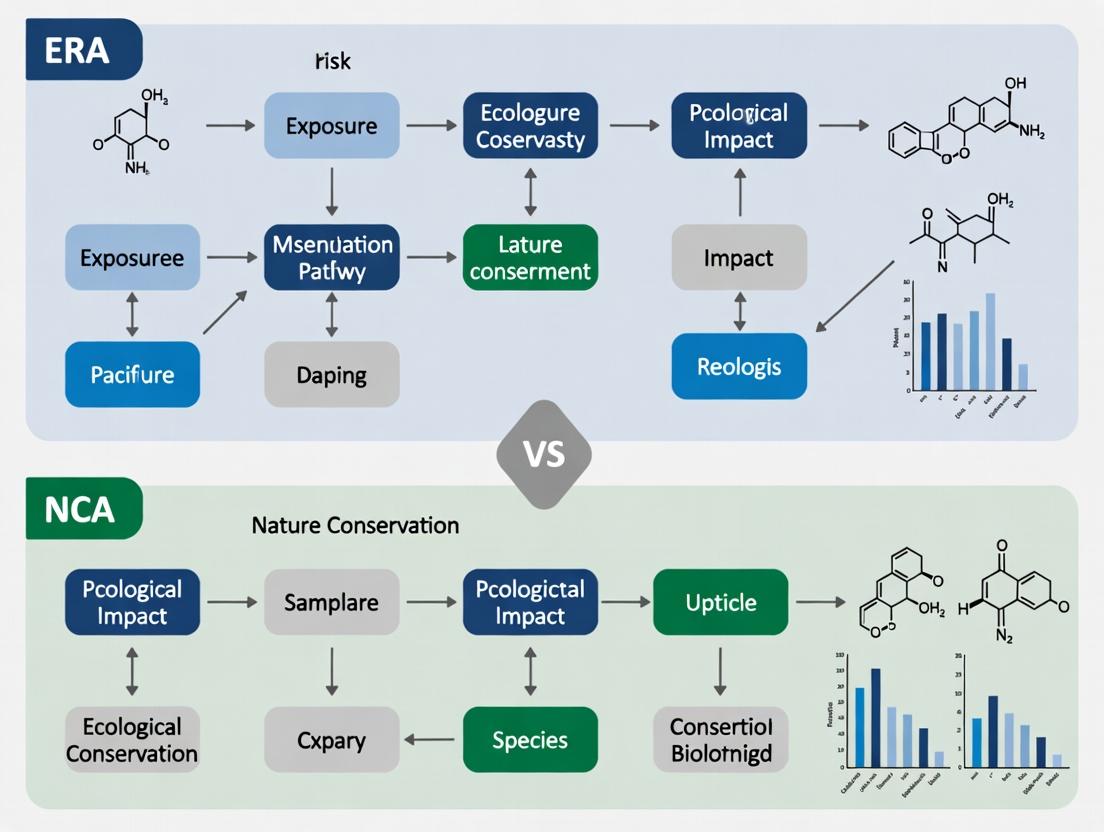
This article provides a comprehensive analysis for researchers and environmental professionals on the distinct yet complementary paradigms of Ecological Risk Assessment (ERA) and Nature Conservation Assessment (NCA).
Bridging the Gap: Integrating Ecological Risk Assessment (ERA) and Nature Conservation Assessment (NCA) for Robust Environmental Protection
Abstract
This article provides a comprehensive analysis for researchers and environmental professionals on the distinct yet complementary paradigms of Ecological Risk Assessment (ERA) and Nature Conservation Assessment (NCA). It explores their foundational philosophies, with ERA focusing on cause-effect relationships of specific stressors like chemicals, and NCA prioritizing species survival and extinction risk[citation:1]. The content details their methodological frameworks, such as the EPA's phased risk process and the IUCN's Red List criteria[citation:4][citation:7], and addresses practical challenges in data integration and species representation. A comparative validation highlights key divergences in scope, metrics, and endpoints, ultimately advocating for a synergistic approach that leverages the predictive precision of ERA with the conservation priorities of NCA to inform more effective policy and ecosystem management[citation:1][citation:6].
Defining the Divide: Core Philosophies of Ecological Risk Assessment vs. Nature Conservation Assessment
The contemporary landscape of global governance and sustainability is defined by two rapidly evolving disciplines: Regulatory Risk Management (RRM) and Biodiversity Conservation. Though born from distinct needs, both have matured into structured frameworks essential for organizational resilience and planetary health. RRM originated within the financial and corporate sectors as a defensive mechanism against legal and operational failures, evolving from basic compliance to a strategic, integrated function that anticipates and adapts to regulatory change [1] [2]. Its mandate is to protect organizational value and ensure continuity.
Conversely, Biodiversity Conservation emerged from the ecological sciences and environmental activism, driven by the urgent crisis of species loss and ecosystem degradation. Its modern mandate has expanded from pure conservation science to include strategic business integration, recognizing that over half of global GDP depends on nature [3]. It now demands that companies mitigate impacts, contribute to ecosystem recovery, and disclose nature-related risks.
Framed within broader research on Ecological Risk Assessment (ERA) and Nature Conservation Assessment (NCA), this comparison explores their foundational paradigms. ERA, often quantitative and focused on specific stressors, informs RRM's approach to systemic threats like climate change. NCA, more holistic and value-driven, underpins the goals of modern biodiversity strategies. This guide objectively compares these disciplines' performance, methodologies, and tools for researchers and professionals navigating this integrated field.
Foundational Disciplinary Comparison
The following table delineates the core origins, objectives, and drivers of Regulatory Risk Management and Biodiversity Conservation, highlighting their foundational differences and synergies.
Table 1: Foundational Comparison of Regulatory Risk Management and Biodiversity Conservation
| Aspect | Regulatory Risk Management (RRM) | Biodiversity Conservation (in Business Context) |
|---|---|---|
| Primary Genesis | Corporate governance failures, financial crises (e.g., Sarbanes-Oxley, Basel Accords) [4] [5]. | Ecological science, species loss crises, rise of environmentalism [3]. |
| Core Mandate | Identify, assess, and mitigate risks from changes in laws and policies to ensure operational continuity and compliance [4] [2]. | Avoid, minimize, and compensate for ecosystem damage; achieve net-positive impact on nature [3] [6]. |
| Primary Drivers | Regulatory bodies (OCC, SEC, EU), auditors, shareholder pressure, fear of fines/reputational loss [7] [5]. | TNFD, CSRD, ICMM standards, investor demand, consumer pressure, supply chain resilience [3] [6] [5]. |
| Key 2025 Trends | Shift from categorization to resilience (e.g., OCC retiring "reputational risk"), integration of AI/cyber risk, regulatory acceleration [7] [5]. | Mainstreaming via TNFD/CSRD, biodiversity credits, mandatory impact assessments and offsets in sectors like mining [3] [6]. |
| Primary Audience | Corporate boards, risk officers, compliance teams, internal audit [1] [8]. | Corporate sustainability teams, ESG investors, environmental managers, ecologists [3] [6]. |
| Success Metrics | Audit pass rates, reduction in fines/incidents, speed of adapting to new regulations [2]. | No Net Loss/Net Positive Impact, habitat restored, species protected, TNFD-aligned disclosure [6]. |
Performance and Outcome Comparison
A performance analysis reveals how each discipline translates theory into measurable outcomes, utilizing distinct frameworks and reporting mechanisms.
Table 2: Performance and Outcome Comparison
| Performance Dimension | Regulatory Risk Management | Biodiversity Conservation |
|---|---|---|
| Prevailing Framework | ISO 31000, COSO ERM, 3 Lines Model [1]. Process-oriented: Identify, Assess, Treat, Monitor [8]. | Mitigation Hierarchy (Avoid, Minimize, Restore, Offset) [6]. Science Based Targets for Nature (SBTN) [3]. |
| Typical Output | Risk registers, control matrices, compliance reports, audit opinions [1] [2]. | Biodiversity Action Plans, impact assessments, offset portfolios, TNFD reports [3] [6]. |
| Quantification Method | Qualitative scoring (Likelihood/Impact matrices), Quantitative modeling for financial risks [8]. | Biome-specific metrics (e.g., Mean Species Abundance, habitat hectares), satellite-derived indices (NDVI) [6]. |
| Implementation Rate (Est. 2025) | Near-universal in regulated sectors; digital GRC platform adoption increasing [1]. | Varies by sector: e.g., ~82% for Biodiversity Impact Assessments in mining; growing via CSRD/TNFD [6] [5]. |
| Mitigation Success Rate | High for operational/financial risks; challenged by rapid regulatory change and AI risk [7] [5]. | 71-85% for mining standards (e.g., 85% for Impact Assessments, 71% for Offsets) [6]. |
| Critical Challenge | Keeping pace with "regulatory acceleration" across jurisdictions [7] [5]. | Lack of standardized, universal metrics compared to carbon [3]. |
Shared Paradigm: The Adaptive Management Cycle
Despite different origins, both disciplines converge on a core adaptive management cycle. This iterative process of planning, implementing, monitoring, and adjusting is central to modern RRM's shift toward resilience [7] and to biodiversity's mitigation hierarchy [6]. The following diagram illustrates this shared logical workflow.
Diagram Title: Adaptive Management Cycle in Risk and Conservation
Experimental Protocols: Core Assessment Methodologies
The following protocols outline standardized methodologies for assessments in each discipline, forming the basis for experimental or audit-grade evaluations.
Protocol for a Regulatory Risk Assessment
- Objective: To systematically identify, evaluate, and prioritize risks arising from regulatory changes to a specific business objective or process [1] [2].
- Workflow:
- Define Scope & Objective: Establish the business process, product, or jurisdiction under review [1].
- Risk Identification: Brainstorm and catalogue potential regulatory changes (e.g., new data privacy laws, ESG disclosures). Use sources like regulator publications, legal analysis, and GRC platform alerts [4] [5].
- Gross Risk Assessment: Score each risk on Likelihood (of regulatory change) and Impact (operational, financial, reputational) without considering existing controls. Use a 5-point scale [1] [8].
- Control Mapping: Document existing controls (policies, procedures, systems) designed to mitigate each risk [1].
- Net Risk Assessment: Re-score likelihood and impact factoring in control effectiveness. Determine the net risk score [1].
- Prioritization & Response: Compare net scores to organizational risk appetite. Prioritize risks exceeding tolerance. Plan responses: treat, transfer, tolerate, or terminate [8] [2].
- Testing & Validation: Test key controls for design and operational effectiveness via samples, interviews, or system checks [1].
- Reporting: Document findings in a risk register. Report to management and stakeholders [8].
Protocol for a Biodiversity Impact Assessment (BIA)
- Objective: To evaluate the potential positive and negative impacts of a project or operation on biodiversity, applied throughout the mitigation hierarchy [6].
- Workflow:
- Scoping & Baseline Study: Define the assessment area (project site, influence zone). Establish an ecological baseline using satellite data, field surveys, and scientific literature to map habitats and key species [6].
- Impact Identification & Prediction: Identify direct/indirect project activities (e.g., land clearing, emissions). Predict their nature, magnitude, and extent on biodiversity components [6].
- Impact Significance Evaluation: Evaluate significance based on sensitivity of receptor (e.g., endangered species) and scale of impact. Use quantitative metrics where possible (e.g., habitat hectares lost) [6].
- Apply Mitigation Hierarchy:
- Avoidance: Redesign project to avoid impacts on high conservation value areas [6].
- Minimization: Implement measures (e.g., buffer zones, seasonal work bans) to reduce unavoidable impacts [6].
- Restoration: Plan for in-situ restoration during and after project life [6].
- Offsetting: As a last resort, design compensatory measures (e.g., protecting equivalent habitat elsewhere) to achieve No Net Loss/Net Gain [6].
- Monitoring Plan Development: Define key performance indicators (e.g., vegetation cover, species population). Specify monitoring methods (satellite imagery, camera traps, bioacoustics) and frequency [6].
- Stakeholder Engagement: Consult with local and Indigenous communities throughout for local ecological knowledge and FPIC (Free, Prior, and Informed Consent) [6].
- Reporting: Compile findings into a Biodiversity Management Plan (BMP) or an EIA chapter for regulator submission and public disclosure [6].
The Scientist's Toolkit: Essential Research Reagent Solutions
Table 3: Essential Research and Assessment Tools
| Tool Category | Regulatory Risk Management | Biodiversity Conservation |
|---|---|---|
| Frameworks & Standards | ISO 31000 (universal risk principles), COSO ERM (internal control), NIST RMF (cybersecurity) [1]. | TNFD Recommendations (disclosure), SBTN (target-setting), IUCN Red List (species threat status) [3]. |
| Data Sources & Feeds | Regulator news releases, legal databases, paid regulatory change tracking services [4]. | Satellite imagery (Landsat, Sentinel), species occurrence databases (GBIF), ecological models [6]. |
| Analysis Software | GRC Platforms (e.g., CERRIX, Pirani, Scytale) for risk registers, workflow automation, reporting [7] [1] [2]. | GIS Software (e.g., ArcGIS, QGIS), Remote Sensing Analysis Tools (e.g., Farmonaut's API), statistical ecology software (R, PRIMER) [6]. |
| Measurement Instruments | Internal Control Questionnaires, Audit Sampling Tools, Compliance Checklists [1] [2]. | Field Kits (for soil/water sampling), Camera Traps, Bioacoustic Recorders, Drones for aerial surveys [6]. |
| Validation & Assurance | Internal Audit Function, External Certification (e.g., ISO 27001), Regulatory Examination [1] [2]. | Independent Ecological Review, Audit of Biodiversity Credits, Satellite-based Verification [3] [6]. |
Discussion: Convergence within a Thesis on ERA vs. NCA
The comparison reveals a significant convergence between RRM and Biodiversity Conservation, driven by a shared need for adaptive, evidence-based management. This convergence is critically examined through the lens of the broader thesis contrasting Ecological Risk Assessment (ERA) and Nature Conservation Assessment (NCA).
RRM's evolution mirrors a shift from an ERA-like approach—attempting to quantify and model discrete risks—toward a more holistic, NCA-inspired resilience model. The 2025 regulatory pivot away from categorizing risks like "reputational" or "climate" and toward testing organizational capabilities reflects this [7]. The focus is less on predicting a specific risk's probability and more on assessing the system's overall capacity to withstand and adapt to shocks, akin to evaluating an ecosystem's resilience in NCA.
Conversely, modern Biodiversity Conservation is incorporating more ERA-like quantification and standardization to meet financial and regulatory demands. The development of cross-biome indicators and the push for credible biodiversity credits seek to create standardized, comparable units of measurement—a concept fundamental to risk management [3]. This allows biodiversity to be integrated into the ERM frameworks that companies already use.
The future of both disciplines lies in this hybrid space. Effective Ecological Risk Assessment will inform the Nature Conservation Assessments required for TNFD reporting. Meanwhile, the systems-thinking and resilience goals of NCA will continue to reshape enterprise risk management. For researchers and drug development professionals, this underscores the necessity of interdisciplinary tools: using satellite-derived ecological data (from NCA) to assess supply chain vulnerability (an RRM concern) or applying risk-based prioritization frameworks (from ERA/RRM) to conservation planning. The mandates have merged: managing risk to the business now inextricably involves managing its risks and dependencies on nature, and conserving nature requires the disciplined, strategic approach of risk management.
Within the realm of environmental science and policy, two analytical frameworks serve distinct but occasionally overlapping purposes: Ecological Risk Assessment (ERA) and the diagnostic logic of Necessary Condition Analysis (NCA). ERA is a formal, well-established process used to evaluate the safety and potential impact of human activities, particularly manufactured chemicals, on the environment [9]. Its primary objective is to predict the likelihood and magnitude of adverse effects resulting from exposure to stressors, thereby informing regulatory decisions and management actions to prevent ecosystem damage [9]. In contrast, NCA represents a broader analytical logic focused on diagnosing constraints and critical prerequisites. In an ecological context, this translates to identifying the non-negotiable conditions (e.g., specific habitat thresholds, minimum population sizes, key resource levels) that must be present for a species or ecosystem to achieve a desired state, such as persistence, recovery, or the delivery of an ecosystem service [10]. Framed within a thesis on risk versus conservation assessment, ERA is fundamentally a predictive tool for threat evaluation, while NCA operates as a diagnostic tool for understanding vulnerability and failure, asking what essential factors must be in place for success to be possible at all.
Core Objectives and Methodological Foundations
The foundational goals and approaches of ERA and NCA dictate their entire application, from experimental design to data interpretation.
Ecological Risk Assessment (ERA) follows a structured, often tiered process. Its core is the comparison of an exposure estimate to an effects estimate, frequently resulting in a risk quotient [9]. A central challenge is the frequent mismatch between measurement endpoints (what is practically measured, like LC50 in a lab test) and assessment endpoints (the ecological values to be protected, like biodiversity or ecosystem function) [9]. ERA methodologies span levels of biological organization. Lower levels (e.g., suborganismal biomarkers) offer high-throughput screening potential but greater uncertainty when extrapolating to protected ecological entities. Higher levels (e.g., mesocosm or field studies) better capture ecological complexity and recovery but are more resource-intensive and less amenable to rapid chemical screening [9].
Necessary Condition Analysis (NCA), as a diagnostic methodology, employs a different causal logic. It seeks to identify factors that are essential for an outcome, acting as bottlenecks or constraints [10]. The key analytical step is identifying an "empty space" in the scatterplot of data where a high outcome does not occur when the hypothesized necessary condition is low [10]. This space is demarcated by a ceiling line. The importance of a necessary condition is quantified by the effect size d, calculated as the area of this empty space relative to the total area where data could theoretically exist [10]. Unlike correlation-based methods, NCA focuses on the boundary that separates successful from unsuccessful outcomes.
Table 1: Comparison of Core Objectives and Foundations
| Feature | Ecological Risk Assessment (ERA) | Necessary Condition Analysis (NCA) |
|---|---|---|
| Primary Objective | Predict the probability and magnitude of adverse ecological effects from stressors (e.g., chemicals) [9]. | Diagnose the critical, non-negotiable conditions required for a desired ecological outcome to occur [10]. |
| Core Analytical Logic | Comparative (Risk = Exposure / Effect); Probabilistic or quotient-based [9]. | Constraint-based (If no X, then no Y); Identifies limiting factors [10]. |
| Typical Output | Risk quotient, probability of adverse effect, safe concentration level [9]. | Ceiling line, bottleneck table, effect size d indicating the necessity strength [10]. |
| Key Relationship Focus | Between a stressor (cause) and an adverse ecological response (effect). | Between a prerequisite condition (X) and a desired ecological state or outcome (Y). |
| Typical Data Structure | Dose-response curves, exposure concentrations, toxicity values. | Paired observations of condition(s) and outcome across multiple cases/ecosystems. |
Diagram 1: Simplified Tiered Ecological Risk Assessment (ERA) Process. This workflow illustrates the iterative, phased structure common to ERA, progressing from initial assessment to potential management action and monitoring [9].
Experimental Protocols and Data Requirements
The methodologies for generating data for ERA and NCA are distinct, reflecting their predictive versus diagnostic aims.
ERA Experimental Protocols are highly tiered. Tier I (Screening) involves conservative, deterministic comparisons using standard laboratory toxicity tests (e.g., 96-hr LC50 with Daphnia magna) and estimated environmental concentrations to calculate a hazard quotient [9]. Higher Tiers (II-IV) involve more complex, refined analyses. These may include multi-species tests (e.g., mesocosms), probabilistic risk modeling that incorporates variability, and ultimately field studies to generate site-specific, ecologically relevant data [9]. The trend is from controlled, simple, and generalizable tests to complex, realistic, and specific studies.
NCA Research Design follows necessity logic. A necessity experiment manipulates a hypothesized necessary condition X to see if the outcome Y disappears. The protocol starts with cases where the desired outcome Y is present at a target level (Y ≥ y_c) and the condition X is also present (X ≥ x_c). The researcher then removes or reduces X (X < x_c) and observes if Y subsequently disappears or reduces (Y < y_c) [11]. This contrasts with a traditional "average effect" experiment which starts without the outcome and adds the condition to see if the outcome appears. NCA is versatile with data types (quantitative, qualitative, set membership scores) but requires meaningful data across a range of the condition and outcome variables to properly identify the ceiling zone [11] [10].
Table 2: Comparison of Key Experimental and Analytical Protocols
| Protocol Aspect | Ecological Risk Assessment (ERA) | Necessary Condition Analysis (NCA) |
|---|---|---|
| Primary Design Goal | Establish a causal dose-response relationship between stressor and adverse effect. | Test if the absence/low level of a condition leads to the absence/low level of an outcome. |
| Classic Experiment | Controlled laboratory toxicity test (e.g., OECD guidelines) on standard test species [9]. | Necessity Experiment: Remove a condition from cases with the outcome and observe if outcome vanishes [11]. |
| Key Analytical Steps | 1. Calculate exposure concentration (PEC).2. Determine toxicity endpoint (e.g., NOEC, EC50).3. Derive risk metric (Quotient or probability) [9]. | 1. Plot outcome (Y) against condition (X).2. Identify ceiling line and empty corner space.3. Calculate effect size d and test significance [10]. |
| Data Transformation | Common (e.g., log-transformation of toxicity data, normalization). | Linear transformations do not affect NCA results. Non-linear transformations change the effect size and should be avoided unless conceptually justified [11]. |
| Addressing Complexity | Uses extrapolation models (e.g., Species Sensitivity Distributions) and mechanistic effects models to bridge organizational levels [9] [12]. | Employs bottleneck tables to analyze multiple necessary conditions simultaneously [10]. |
Diagram 2: Necessary Condition Analysis (NCA) Diagnostic Logic. This diagram illustrates the core logic of a necessity experiment: starting with cases where both X and Y are present, removing X, and observing if Y disappears to support the necessary condition hypothesis [11].
The Scientist's Toolkit: Essential Research Reagent Solutions
The practical application of ERA and NCA relies on specialized conceptual and material tools.
Table 3: Key Research Reagent Solutions for ERA and NCA
| Tool Category | ERA-Specific Reagents & Tools | Function in Research | NCA-Specific Reagents & Tools | Function in Research |
|---|---|---|---|---|
| Model Systems | Standard test organisms (e.g., Daphnia magna, fathead minnow). | Provide reproducible, standardized toxicity data for regulatory comparisons [9]. | Paired case data (e.g., ecosystem states with measured conditions). | Provides the observational or experimental data matrix to plot and analyze for necessary conditions. |
| Experimental Units | Laboratory microcosms; outdoor mesocosms. | Bridge lab and field studies, allowing controlled study of community/ecosystem effects [9]. | N/A (Method is data-analytic, not tied to a physical unit). | |
| Analytical Constructs | Assessment Endpoint; Measurement Endpoint; Risk Quotient. | Define what to protect, how to measure it, and how to quantify risk [9]. | Ceiling Line (CE-FDH/CR-FDH); Effect Size (d); Bottleneck Table. | Define the necessity boundary, quantify its importance, and show requirements for multiple conditions [10]. |
| Extrapolation Tools | Species Sensitivity Distributions (SSDs); Mechanistic Effects Models (e.g., individual-based models) [9] [12]. | Predict effects on untested species or higher organizational levels from limited data. | N/A | |
| Software & Statistical | Probabilistic risk modeling software; ecosystem simulation platforms. | Implement complex models for higher-tier risk assessment [12]. | R package 'NCA'; implementation in SmartPLS [10]. | Perform NCA calculations, generate ceiling lines, and conduct significance tests. |
| Diagnostic Reagents | Biomarkers (e.g., molecular, physiological indicators). | Indicate early suborganismal exposure or effect, useful for screening [9]. | Permutation test for significance. | Evaluates the statistical significance of the observed effect size d against random chance [10]. |
Discussion: Complementary Roles in a Broader Thesis
ERA and NCA address different but potentially sequential questions in environmental science. ERA is the premier framework for proactively answering "How bad could it be?" when introducing a new stressor like an industrial chemical or pesticide. Its strength lies in its standardized, tiered approach to prediction, though it grapples with the extrapolation challenge from simple tests to complex ecosystems [9]. Recent advances focus on linking ERA outputs to ecosystem services—the benefits humans derive from nature—to make assessments more socially relevant and to support economic valuation in management decisions [12].
NCA, while less established in ecology, offers a powerful diagnostic lens to retrospectively or proactively answer "Why did it fail?" or "What is absolutely required for success?" It is particularly suited for identifying critical habitat thresholds, minimum viable population parameters, or essential resource levels for species conservation or ecosystem restoration. Its logic helps pinpoint non-negotiable constraints that, if not met, render other management actions futile [10].
Within a broader thesis, these approaches are complementary. ERA's predictive stressor-impact models can identify potential threats to an ecosystem service. Subsequently, NCA's diagnostic vulnerability analysis can identify the necessary conditions required for that service to be robust or to recover from stress. For example, ERA might predict a risk to a fish population from a chemical, while NCA could diagnose that the presence of specific riffle habitats is a necessary condition for that population's recovery. Integrating these perspectives—predicting impacts and diagnosing systemic vulnerabilities—provides a more complete toolkit for sustainable environmental management and conservation.
The protection of ecosystems and biodiversity is underpinned by two distinct but complementary scientific approaches: Ecological Risk Assessment (ERA) and Nature Conservation Assessment (NCA). Regulatory bodies like the U.S. Environmental Protection Agency (EPA), the European Food Safety Authority (EFSA), and the European Chemicals Agency (ECHA) operationalize the ERA paradigm. Their frameworks are designed to identify, quantify, and manage risks posed by specific stressors, such as industrial chemicals, pesticides, and contaminants, to ecological entities [13].
In contrast, the International Union for Conservation of Nature (IUCN) Red List of Threatened Species is the global standard for NCA. It is a "big-picture" diagnostic tool that classifies species according to their relative risk of global extinction, focusing on symptoms like population decline and habitat fragmentation, often without specifying the exact causes [14] [13]. This guide provides a structured comparison of these systems, framing them within the broader scientific thesis that integrating their strengths—ERA's mechanistic detail and NCA's conservation priorities—is essential for comprehensive environmental protection [13].
Core Conceptual Frameworks and Objectives
The foundational goals and conceptual models of ERA and NCA frameworks differ significantly, shaping their methodologies and outputs.
EPA/EFSA/ECHA (ERA Frameworks): The primary objective is preventive risk management. These frameworks employ a stressor-centric approach to answer a specific regulatory question: "What is the probability and severity of an adverse ecological effect occurring due to exposure to a defined chemical or physical agent?" [15] [13]. The process is typically phased, involving problem formulation, exposure and effects assessment, and risk characterization. The outcome supports regulatory decisions like chemical registration, setting safe exposure limits, or mandating risk mitigation measures [15].
IUCN Red List (NCA Protocol): The primary objective is conservation status diagnosis and prioritization. It employs a species-centric approach to answer: "What is the relative extinction risk of this species across its entire global range?" [14]. It is a retrospective and diagnostic system that evaluates symptoms of endangerment (e.g., population size reduction, geographic range contraction) to categorize species into threat levels. The outcome is a prioritized list that informs conservation policy, funding, and action, and raises public awareness [14] [13].
Table: Conceptual Comparison of ERA and NCA Frameworks
| Aspect | EPA, EFSA, ECHA (ERA) | IUCN Red List (NCA) |
|---|---|---|
| Primary Goal | Prevent harm from specific stressors; support regulatory compliance. | Diagnose extinction risk; prioritize species for conservation action. |
| Central Focus | The stressor (e.g., a pesticide, industrial chemical). | The species (or ecosystem) and its viability. |
| Temporal Scope | Prospective (predicting future risk) and scenario-based. | Retrospective (assessing past/present status) and trend-based. |
| Typical Output | Risk quotient (RQ), predicted no-effect concentration (PNEC), risk management options. | Threat category (e.g., Vulnerable, Endangered), conservation recommendations. |
| Key Driver | Regulatory mandates for product approval and environmental protection. | Biodiversity conservation treaties, scientific monitoring, and advocacy. |
Quantitative Comparison of Assessment Metrics and Outputs
The two systems use different quantitative currencies to express their conclusions. ERA quantifies the margin of safety between exposure and effect, while NCA quantifies metrics related to species population and distribution.
ERA Quantitative Outputs: The core quantitative output is the Risk Quotient (RQ), a deterministic, screening-level calculation: RQ = Exposure Estimate / Toxicity Threshold [15]. An RQ > 1 indicates potential risk. The EPA details specific calculations for different taxa and exposure scenarios [15]:
- Aquatic Animals: Acute RQ = (Peak Water Concentration) / (LC50 or EC50).
- Birds & Mammals: Dietary RQ = (Estimated Environmental Concentration in food) / (LD50 or NOAEC).
- Plants: RQ = (Deposition from drift/runoff) / (EC25 for plant growth).
NCA Quantitative Metrics: The Red List criteria (A-E) are based on quantitative thresholds for population size, rate of decline, geographic range, and fragmentation [14]. For example:
- Criterion A (Population Reduction): A species is Vulnerable if it has a ≥50% reduction over 10 years/3 generations; Endangered if ≥70%; Critically Endangered if ≥90% [14].
- Criterion B (Geographic Range): A species can be listed if its Extent of Occurrence is <20,000 km² (Vulnerable), <5,000 km² (Endangered), or <100 km² (Critically Endangered) and exhibits fragmentation, decline, or extreme fluctuations [14].
Table: Key Quantitative Metrics in ERA and NCA
| Framework | Core Metric | Typical Data Inputs | Interpretation Threshold |
|---|---|---|---|
| EPA/EFSA ERA | Risk Quotient (RQ) | LC/EC/ED50 (toxicity), Estimated Environmental Concentration (EEC) | RQ < 1 = "Acceptable" risk; RQ > 1 = Potential risk requiring refinement or mitigation [15]. |
| IUCN Red List | Population Reduction Rate | Census data, demographic studies, habitat loss proxies. | VU: ≥50% over 10 yrs/3 gen. EN: ≥70%. CR: ≥90% [14]. |
| IUCN Red List | Extent of Occurrence (EOO) | Species occurrence records, mapping. | VU: <20,000 km². EN: <5,000 km². CR: <100 km² [14]. |
| IUCN Red List | Mature Individuals | Population surveys, expert estimation. | VU: <10,000. EN: <2,500. CR: <250 [14]. |
Experimental Protocols and Methodological Workflows
EPA Ecological Risk Assessment Protocol
The EPA's ecological risk assessment for pesticides is a standardized, tiered process culminating in risk characterization [15].
1. Problem Formulation: Identify the stressor (e.g., chemical X), potential receptors (birds, aquatic invertebrates, plants), assessment endpoints (survival, reproduction), and conceptual model.
2. Exposure Assessment:
- Laboratory/Field Data: Determine application rates, environmental fate (degradation, soil adsorption), and residue levels in relevant matrices (water, soil, food items).
- Modeling: Use models like T-REX (terrestrial) to generate Estimated Environmental Concentrations (EECs) in diet (mg/kg food) or on a surface area basis (mg a.i./ft²) [15].
3. Effects Assessment:
- Toxicity Testing: Conduct standardized single-species laboratory tests (OECD, EPA guidelines).
- Key Endpoints: For birds: acute oral LD50 (median lethal dose), subacute dietary LC50, chronic NOAEC (No Observed Adverse Effect Concentration) from reproduction studies. For fish: 96-hour LC50 [15].
- Data Selection: Use the most sensitive relevant endpoint from acceptable studies.
4. Risk Characterization:
- Calculation: Compute RQs for all relevant scenarios (e.g., acute avian dietary, chronic aquatic).
- Uncertainty Analysis: Discuss data adequacy, assumptions, and model limitations.
- Conclusion: Determine if risks are "acceptable" (RQ < 1) or if higher-tier assessment (e.g., microcosm/mesocosm studies, population modeling) is needed [15].
IUCN Red List Assessment Protocol
The IUCN Red List assessment is a comprehensive review following standardized Categories and Criteria (version 16, 2024) [16].
1. Species Data Compilation:
- Data Sources: Gather published and unpublished data on population size, structure, trends, distribution maps, habitat requirements, threats, and conservation actions.
- Consult Experts: Solicit input from taxon specialists, field biologists, and local experts.
2. Application of Red List Criteria: Evaluate the species against five quantitative criteria (A-E):
- Criterion A: Assess past, present, or future population size reduction.
- Criterion B: Calculate geographic range (Extent of Occurrence, Area of Occupancy) and assess fragmentation, decline, or extreme fluctuations.
- Criterion C: Estimate the size of the population (number of mature individuals) and continuing decline.
- Criterion D: Evaluate very small or restricted populations.
- Criterion E: Conduct a quantitative population viability analysis (PVA), if data permit.
3. Category Assignment: Assign the highest threat category (Critically Endangered, Endangered, Vulnerable) met by any criterion. Species not meeting threatened thresholds are categorized as Near Threatened, Least Concern, or Data Deficient [14].
4. Documentation and Review:
- Complete Documentation: Populate the standardized Species Information Service (SIS) database with all supporting data, maps, and rationale.
- Peer Review: Undergo formal review by the IUCN Species Survival Commission (SSC) specialist group and the Red List Unit.
- Publication: Final assessment is published on the IUCN Red List website [14].
The Scientist's Toolkit: Essential Research Reagents and Materials
Table: Key Research Tools and Reagents for ERA and NCA
| Tool/Reagent | Primary Framework | Function & Explanation |
|---|---|---|
| Standardized Test Organisms (e.g., Fathead minnow, Daphnia magna, Zebrafish, Northern bobwhite quail, Earthworms) | EPA, EFSA, ECHA | Used in definitive toxicity tests to generate the LC50, NOEC, etc., required for regulatory dossiers. They represent surrogate species for broad ecological groups [15] [13]. |
| High-Purity Chemical Standards & Radiolabeled Compounds | EPA, EFSA, ECHA | Essential for conducting fate and metabolism studies, creating accurate dosing solutions for toxicity tests, and tracking chemical breakdown in environmental compartments. |
| Environmental Fate Models (e.g., T-REX, TerrPlant, PRZM) | EPA, EFSA | Software tools that predict environmental concentration (EEC) of chemicals in water, soil, and food items based on application rates and physicochemical properties [15]. |
| IUCLID Software | ECHA | The central platform for submitting chemical data dossiers under REACH and CLP regulations. It structures data for Chemical Safety Reports and exposure scenarios [17]. |
| Species Distribution Modeling (SDM) Software (e.g., MaxEnt, BIOMOD) | IUCN Red List | Uses species occurrence records and environmental layers to model and map geographic range (Extent of Occurrence, Area of Occupancy), critical for applying Criterion B [14]. |
| Population Viability Analysis (PVA) Software (e.g., VORTEX, RAMAS) | IUCN Red List | Implements Criterion E. Uses demographic data to model extinction risk under different scenarios, quantifying probability of extinction over time [14]. |
| IUCN Species Information Service (SIS) | IUCN Red List | The online database for compiling, storing, and submitting all data supporting a Red List assessment. It enforces the standardized data structure [14]. |
Integration and Bridging the Gap: A Path Forward
The fundamental differences between ERA and NCA can lead to protection gaps. ERA often uses common, lab-tolerant species as surrogates, potentially overlooking the unique sensitivities of rare, threatened species that are the focus of NCA [13]. Conversely, NCA identifies species at risk but may lack the mechanistic, stressor-specific data needed to design targeted mitigation measures.
Recent research proposes integrating these frameworks [13]. An integrated approach involves:
- Using the IUCN Red List as a prioritization tool for ERA: Select threatened or endemic species from relevant taxonomic groups for higher-tier, tailored ecotoxicological testing to generate protective data [18] [13].
- Informing Conservation with ERA Data: Use detailed exposure and toxicity data from regulatory assessments to diagnose specific chemical threats to listed species and design precise conservation interventions (e.g., buffer zones, pollution control) [13].
- Joint Development of Assessment Methods: Develop standardized protocols for testing non-standard, conservation-relevant species and for incorporating landscape-level exposure and cumulative risk into conservation planning.
EFSA has begun this integration in practice. For a One Health surveillance project, EFSA used the IUCN Red List to identify Endangered and Critically Endangered wildlife hosts in Europe for prioritized pathogens, explicitly linking wildlife disease risk to conservation status [18]. This demonstrates a functional model for bridging the gap between the two assessment paradigms.
The EPA/EFSA/ECHA frameworks and the IUCN Red List protocols are not competing standards but specialized tools designed for different, equally vital, purposes. Regulatory ERA provides a fine-grained, mechanistic analysis of specific threats, essential for preventing environmental degradation. The IUCN Red List provides a broad-scale diagnostic of biodiversity health, essential for setting global conservation priorities.
The future of effective environmental protection lies not in choosing one approach over the other, but in strategically integrating them. By using the Red List to guide the focus of ecological risk assessments and applying the detailed results of those assessments to solve conservation problems, scientists and policymakers can create a more robust, actionable, and holistic system for safeguarding the planet's biodiversity.
Conceptual Definitions and Contextual Comparison
The terms risk, hazard, threat, and collapse serve as foundational concepts in environmental sciences but carry distinct meanings and applications within the specialized frameworks of Ecological Risk Assessment (ERA) and Nature Conservation Assessment (NCA). The table below delineates their formal definitions and contextual usage in each field.
Table 1: Conceptual Definitions in ERA versus NCA
| Term | Definition in Ecological Risk Assessment (ERA) | Definition in Nature Conservation Assessment (NCA) |
|---|---|---|
| Risk | The probability and magnitude of adverse ecological effects occurring due to exposure to one or more environmental stressors [9] [19]. It is often quantified as a function of exposure and effects (e.g., a Risk Quotient) [9]. | The likelihood of an ecosystem reaching a collapsed state, considering the interplay of threats, vulnerability, and exposure over time [20] [21]. |
| Hazard | The inherent property of a stressor (e.g., a chemical, physical, or biological agent) that can cause adverse effects [9]. In disaster risk, it is the potentially damaging physical event or phenomenon [22]. | An anthropogenic or natural driver with the potential to cause degradation, often synonymous with a broad-scale pressure (e.g., climate change) [20] [23]. |
| Threat | Used less formally; often equated with a stressor or hazard. The focus is on the agent causing potential harm [9] [24]. | A proximate source of pressure that directly degrades an ecosystem (e.g., land clearing, invasive species) [21]. The IUCN assesses the probability and severity of threats like climate change to World Heritage sites [23]. |
| Collapse | Not a formal endpoint in standard ERA; analogous to catastrophic or irreversible adverse effects at the ecosystem level [9] [24]. | The endpoint where an ecosystem loses its defining biotic/abiotic features and transforms into a different type, often assessed in frameworks like the IUCN Red List of Ecosystems [20] [21]. Critiqued for sometimes lacking an "abrupt change" component in its definition [20]. |
Methodological Comparison: ERA vs. NCA
The application of these concepts leads to divergent methodological frameworks. ERA typically follows a standardized, often chemical-focused, process, while NCA is more holistic and geared toward conservation prioritization and management.
Table 2: Methodological Comparison of ERA and NCA
| Aspect | Ecological Risk Assessment (ERA) | Nature Conservation Assessment (NCA) |
|---|---|---|
| Primary Goal | To evaluate the safety and potential impacts of specific human actions or stressors (e.g., chemicals, land use) on the environment to inform regulation [9] [19]. | To assess the conservation status and risk of collapse of ecosystems or species to inform protection, restoration, and priority-setting [20] [21]. |
| Typical Endpoints | Measurement Endpoints: Observable, measurable responses (e.g., LC50, growth inhibition). Assessment Endpoints: Valued ecological entities to be protected (e.g., population sustainability, ecosystem function) [9]. | Viability/Collapse Indicators: Metrics related to ecosystem distribution, structure, and function (e.g., patch size, native plant cover, faunal diversity) used to determine state [21]. |
| Key Models & Frameworks | Tiered quotient-based to probabilistic risk models; food web, ecosystem, and socio-ecological models for system-scale assessment [9] [24]. | IUCN Red List of Ecosystems (RLE); NatureServe Conservation Status; Functional Vulnerability Frameworks based on trait diversity and redundancy [20] [25]. |
| Approach to Uncertainty | Managed through uncertainty factors in screening tiers and probabilistic modeling in higher tiers [9]. | Explicitly incorporated through expert elicitation and models that consider ranges of potential disturbances and responses [25] [21]. |
| Temporal Focus | Often prospective (predicting future effects) or retrospective (diagnosing past effects) [19]. | Often retrospective and current-state focused, with increasing emphasis on forecasting future risk under scenarios [20] [23]. |
| Scale of Application | Can range from site-specific to regional and landscape levels [9] [24]. | Applies from individual ecosystem patches to global ecosystem typologies [20] [21]. |
Experimental Protocols and Data Generation
Robust assessment in both fields relies on empirical and modeled data. The following are key experimental and analytical protocols.
Protocol for Functional Vulnerability Assessment (NCA)
This protocol, derived from a framework for assessing biodiversity's functional vulnerability, uses in silico simulations to quantify a community's vulnerability to multiple disturbances [25].
- Trait Data Compilation: For the target biological community (e.g., fish, mammals), compile a species-by-traits matrix. Traits should be linked to ecosystem functioning (e.g., body size, feeding mode, reproductive strategy).
- Define Functional Space: Map species into a multidimensional functional trait space. Construct a grid over this space, defining each cell as a "functional entity"—a unique combination of traits.
- Construct Virtual Communities: Generate a set of 15 virtual communities from the observed community by manipulating three key characteristics: (a) the distribution of functional redundancy across the trait space, (b) the evenness of species abundance distribution, and (c) the relationship between species abundance and functional distinctiveness.
- In Silico Disturbance Simulation: Apply iterative, random disturbances to both the observed and virtual communities. Each disturbance randomly reduces the abundance of selected species.
- Calculate Rarefaction Curves: For each community (observed and virtual), plot the number of remaining functional entities against the cumulative intensity of disturbances.
- Compute Vulnerability Index: Calculate the functional vulnerability index (FVi) for the observed community by comparing its rarefaction curve to the curves representing the most and least vulnerable virtual communities: FVi = (Areaobs - Arealeastvuln) / (Areamostvuln - Arealeast_vuln). A value closer to 1 indicates higher vulnerability [25].
This protocol details the process for using expert judgment to assess ecosystem collapse risk, a common practice when empirical data are lacking [21].
- Expert Panel Assembly: Identify and recruit a large, diverse panel of experts (e.g., ecologists, land managers, government agency staff) familiar with the target ecosystem. Aim for breadth in expertise and affiliation to capture a range of knowledge and perspectives.
- Define Ecosystem and Indicators: Clearly define the ecosystem of interest and select a set of key indicators of its viability (e.g., canopy cover, native grass cover, tree regeneration, invasive species cover).
- Structured Elicitation Workshop/Survey: Present experts with a series of standardized scenarios (e.g., photos, descriptive plots) representing the ecosystem across gradients of degradation. For each scenario, experts independently judge whether the ecosystem is "viable" or "collapsed" based on the defined indicators.
- Data Analysis: Use statistical models (e.g., regression) to analyze the relationship between the measured indicators and the experts' binary viability judgments. Develop an "average model" that weights all expert judgments equally to predict viability.
- Identify Systematic Differences: Test for systematic variations in judgments based on expert characteristics (e.g., professional affiliation, field of expertise) to understand potential biases and areas of consensus or conflict.
- Model Application and Feedback: The average model can be used as a decision-support tool to assess new sites. The process and model outputs are shared with stakeholders to inform management and policy discussions [21].
Visualizing Assessment Frameworks
Diagram: Tiered Ecological Risk Assessment (ERA) Workflow
The following diagram illustrates the phased, tiered approach characteristic of formal Ecological Risk Assessment.
Diagram: Functional Vulnerability Assessment Framework (NCA)
This diagram outlines the process for assessing the functional vulnerability of a biological community to multiple, uncertain threats.
The Scientist's Toolkit: Essential Research Reagent Solutions
Table 3: Key Research Reagents and Materials
| Reagent/Material | Primary Function | Context |
|---|---|---|
| Standard Test Organisms (e.g., Daphnia magna, fathead minnow) | To provide consistent, reproducible bioassay data on toxicity endpoints (e.g., survival, reproduction) for chemical stressor effects assessment [9]. | ERA |
| Mesocosms/Field Microcosms | Semi-natural experimental systems (e.g., pond enclosures) used to study community- and ecosystem-level responses to stressors under more realistic, complex conditions [9]. | ERA / NCA |
| Trait Databases (e.g., FishBase, AmniOTE) | Curated repositories of species' ecological, morphological, and life-history traits essential for constructing functional spaces and assessing vulnerability [25]. | NCA |
| Expert Elicitation Platforms (e.g., structured survey tools, workshop protocols) | Formal frameworks to systematically gather, weight, and aggregate qualitative judgments from experts on ecosystem states, thresholds, and risks [21]. | NCA |
| Probabilistic Stochastic Event Sets | Collections of simulated hazard events (e.g., floods, storms) with associated probabilities, used to model exposure and calculate expected annual impacts [22]. | ERA / Hazard |
| Reference Condition Data | Data characterizing ecosystems in a minimally disturbed or historical state, serving as a benchmark for assessing current degradation and collapse risk [25]. | NCA |
From Theory to Practice: Methodological Frameworks in ERA and NCA
Conceptual Comparison: Ecological Risk Assessment (ERA) vs. Nature Conservation Assessment (NCA)
Ecological Risk Assessment (ERA) and Nature Conservation Assessment (NCA) are distinct yet complementary frameworks used in environmental science. ERA is a structured, phased process primarily focused on estimating the likelihood and magnitude of adverse ecological effects resulting from exposure to one or more stressors, such as chemicals, land-use changes, or invasive species [26]. Its goal is to provide risk managers with scientific information to support environmental decision-making [27]. In contrast, NCA (as typified by approaches like Necessary Condition Analysis) is often more diagnostic and condition-oriented [28]. It seeks to identify the critical, non-negotiable factors (necessary conditions) required for the persistence of biodiversity, ecosystem health, or specific conservation targets, such as the presence of a keystone species or a minimum habitat area.
The following table summarizes the core distinctions between these two approaches.
Table 1: Core Conceptual Comparison between ERA and NCA
| Aspect | Ecological Risk Assessment (ERA) | Nature Conservation Assessment (NCA) |
|---|---|---|
| Philosophical Foundation | Anthropocentric/Ecocentric; manages risk to ecological entities valued by humans. | Ecocentric/Geocentric; prioritizes intrinsic ecological value and biodiversity preservation. |
| Primary Objective | To estimate the probability and severity of adverse ecological effects from stressors to inform risk management [26] [27]. | To diagnose the state of biodiversity, identify critical conservation needs, and set priorities for protection and restoration. |
| Methodological Approach | Phased, stressor-driven (Problem Formulation, Analysis, Risk Characterization) [26]. Iterative and tiered. | Condition-driven, often using diagnostic frameworks like Necessary Condition Analysis (NCA) to identify limiting factors [28]. |
| Key Outputs | Risk estimates (e.g., Hazard Quotients, probabilistic distributions), characterization of uncertainty, risk management options [26] [27]. | Conservation status assessments, identification of critical habitats/processes, prioritized lists of species/ecosystems at risk, management recommendations. |
| Temporal Focus | Often prospective (predicting future risk) or retrospective (assessing existing impact). | Often present-state diagnosis with a forward-looking perspective for long-term preservation. |
| Typical Assessment Endpoints | Measurable attributes of valued ecological entities (e.g., fish reproduction, bird survival, ecosystem primary productivity) [26]. | Entities of conservation concern (e.g., population viability of an endangered species, extent of an old-growth forest, integrity of a wetland complex). |
| Role of Uncertainty | Explicitly characterized and integrated into risk estimates to qualify confidence in conclusions [26] [27]. | Often addressed through precautionary principle; may use sensitivity analysis in diagnostic models. |
The Three-Phase ERA Framework: A Detailed Workflow
The ERA process, as formalized by the U.S. EPA, is a systematic sequence of three interconnected phases [26]. The logical flow and key outputs of this framework are visualized below.
Diagram 1: The Three-Phase Ecological Risk Assessment Workflow (Max Width: 760px)
Phase 1: Problem Formulation
This is the planning and scoping phase that establishes the assessment's foundation. It involves dialogue between risk assessors, risk managers, and stakeholders to define the scope and goals [26]. Key outputs include:
- Conceptual Model: A written description and visual representation of predicted relationships between ecological entities and the stressors to which they may be exposed [26].
- Assessment Endpoints: Explicit expressions of the environmental values to be protected, defined as an ecological entity (e.g., a fish population) and its key attributes (e.g., reproduction, survival) [26].
- Analysis Plan: A blueprint detailing the data requirements, methodologies, and specific measures (measurement endpoints) that will be used to evaluate exposure and effects.
Phase 2: Analysis Phase
This phase is divided into two parallel lines of investigation:
- Exposure Analysis: Characterizes the potential or actual contact between the stressor(s) and the ecological entities identified in the conceptual model. It examines sources, pathways, and environmental fate to estimate the magnitude, duration, and frequency of exposure [26].
- Ecological Effects Analysis: Evaluates the inherent ability of a stressor to cause adverse effects. This involves reviewing toxicity data, dose-response relationships, and field studies to understand the relationship between stressor levels and ecological responses [26].
The products of this phase are an Exposure Profile and a Stressor-Response Profile, which summarize the data and relationships for use in the final phase [26].
Phase 3: Risk Characterization
This is the final, integrative phase where risk estimates are generated and communicated [26] [27]. It involves:
- Risk Estimation: The exposure and stressor-response profiles are integrated to evaluate the likelihood and severity of adverse effects. This can be a qualitative comparison, a quantitative calculation (e.g., Hazard Quotient), or a probabilistic assessment [26].
- Risk Description: Interprets the estimates in the context of the assessment endpoints, evaluating the nature, intensity, scale (spatial/temporal), and potential for recovery of adverse effects. It synthesizes multiple lines of evidence [26].
- Uncertainty Analysis: A critical component that describes the confidence in the assessment by summarizing assumptions, data limitations, and variability. Guidance documents, such as the Superfund Risk-Assessment Guidance, provide frameworks for addressing uncertainty [27].
- Reporting: Results are synthesized into a Risk Characterization Report for risk managers, who then integrate this scientific information with legal, economic, and social factors to make a risk management decision [26] [27].
Experimental Protocols for Key ERA & NCA Components
Table 2: Standardized Protocols for Data Generation in ERA and NCA
| Protocol Name | Primary Use | Core Methodology Summary | Key Endpoints Measured |
|---|---|---|---|
| Single-Species Acute Toxicity Test (e.g., OECD 203) | ERA - Effects Analysis | Laboratory exposure of organisms (e.g., fish, daphnia) to a contaminant for 48-96 hours under controlled conditions. | Median Lethal Concentration (LC50), no observed effect concentration (NOEC). |
| Microcosm/Mesocosm Study | ERA - Effects Analysis | Semi-field study using enclosed or artificial ecosystems (e.g., pond, soil column) to assess community and ecosystem-level responses to stressors. | Species abundance/diversity, primary production, nutrient cycling, functional endpoints. |
| Environmental Fate Study (OECD 307) | ERA - Exposure Analysis | Laboratory test using labeled compound in soil to determine degradation kinetics (biodegradation, hydrolysis) and formation of transformation products. | Degradation half-life (DT50), formation of major metabolites, adsorption coefficient (Kd). |
| Population Viability Analysis (PVA) | NCA - Status Diagnosis | Quantitative modeling using species-specific demographic data (birth, death, dispersal rates) to estimate extinction risk under various scenarios. | Probability of population persistence, minimum viable population (MVP) size, time to extinction. |
| Necessary Condition Analysis (NCA) [28] | NCA - Diagnostic Screening | Empirical analysis to identify if a factor (e.g., habitat size) is a necessary condition for an outcome (e.g., species presence). Uses ceiling lines and efficiency scores. | Ceiling line slope, effect size (d), accuracy (accuracy). Identifies "bottleneck" factors. |
| Probabilistic Risk Assessment (PRA) | ERA - Risk Characterization | Uses Monte Carlo simulation to propagate distributions of exposure and effects data, rather than single point estimates. | Distribution of risk quotients, probability of exceeding a threshold (e.g., probability of HQ >1). |
The Scientist's Toolkit: Essential Reagents and Materials
Table 3: Essential Research Reagent Solutions and Materials
| Item | Function/Application | Typical Examples/Specifications |
|---|---|---|
| Standard Reference Toxicants | Quality control and assurance in toxicity testing; calibrates laboratory organism sensitivity. | Sodium chloride (for fish), potassium dichromate (for daphnia), copper sulfate. |
| Formulated Sediment | Standardized substrate for benthic invertebrate toxicity tests (e.g., chironomids, amphipods). | Mixture of quartz sand, kaolinite clay, peat, and calcium carbonate; pH-adjusted. |
| Cryopreserved Cell Lines | In vitro assays for screening chemical toxicity, reducing animal use (New Approach Methodologies - NAMs). | Fish gill (RTgill-W1) or zebrafish liver (ZFL) cell lines for cytotoxicity assays. |
| Passive Sampling Devices (PSDs) | Measures time-weighted average concentrations of bioavailable contaminants in water or air. | Polyethylene (PE) strips for hydrophobic organics; Polar Organic Chemical Integrative Samplers (POCIS). |
| Stable Isotope-Labeled Compounds | Tracks the environmental fate and bioaccumulation of chemicals with high precision in complex matrices. | 13C- or 2H-labeled pesticides or pharmaceuticals for mass spectrometry analysis. |
| Environmental DNA (eDNA) Kits | Non-invasive biodiversity monitoring for NCA; detects species presence from water or soil samples. | Commercial kits for filtration, preservation, extraction, and PCR amplification of eDNA. |
| Geographic Information System (GIS) Software | Spatial analysis for both ERA (exposure modeling, habitat mapping) and NCA (conservation planning). | ArcGIS, QGIS (open source). Used for overlay analysis, habitat suitability modeling, and patch connectivity analysis. |
| Statistical Software for NCA | Conducts Necessary Condition Analysis, including ceiling line estimation and significance testing [28]. | R package 'NCA' or the dedicated NCA software for plotting and analysis. |
In the multidisciplinary effort to protect global biodiversity, two dominant scientific approaches have emerged: Nature Conservation Assessment (NCA) and Ecological Risk Assessment (ERA) [13]. From a stereotypical perspective, the field is divided between these two paradigms, each with its own premises, terminology, and procedures [13]. This guide provides a comparative analysis of these systems, focusing on the criteria-based approach exemplified by the International Union for Conservation of Nature (IUCN) Red List for species and ecosystems. It situates this analysis within a broader thesis on the contrasts and potential synergies between NCA and ERA, which is essential knowledge for researchers, scientists, and professionals in drug development and ecotoxicology who must navigate regulatory and conservation landscapes [13].
The NCA system, led by the IUCN, is a signaling and awareness-raising framework designed to detect symptoms of endangerment rather than to pinpoint specific causes [13]. It classifies species and ecosystems into categories of threat based on criteria such as population size, distribution, and rates of decline, culminating in the influential IUCN Red List [14] [29]. In contrast, ERA, as practiced by agencies like the U.S. Environmental Protection Agency (EPA) and the European Chemicals Agency (ECHA), delves into the detailed mechanisms of specific threats—particularly chemical pollutants—assessing their bioavailability, toxicity, and resultant risk to ecological entities and ecosystem services [13] [30]. While NCA identifies what needs protection, ERA investigates the causes of decline and predicts the likelihood of adverse effects [13].
This article objectively compares the performance, underlying logic, and experimental data underpinning these approaches. It argues that bridging the gap between them—for instance, by using IUCN Red List data to select species for detailed ecotoxicological testing—can combine their strengths for more effective environmental management [13].
Comparative Analysis of Assessment Approaches: Frameworks, Logic, and Outputs
The IUCN Red List and regulatory ERA represent two fundamentally different, yet complementary, frameworks for evaluating threats to biodiversity. The following table summarizes their core characteristics.
Table 1: Core Characteristics of IUCN Red List (NCA) and Regulatory ERA
| Aspect | IUCN Red List (NCA Approach) | Regulatory ERA (e.g., EPA, ECHA) |
|---|---|---|
| Primary Objective | Identify species/ecosystems at risk of extinction/collapse; raise awareness and prioritize conservation action [13] [14]. | Inform risk managers about potential adverse effects of stressors (e.g., chemicals) to support decision-making (e.g., regulation, remediation) [13] [30]. |
| Unit of Assessment | Taxon (species, subspecies) or Ecosystem type [14] [29]. | Ecological entity (e.g., species, community, habitat) and its valued attributes/ecosystem services [30]. |
| Underlying Logic | Criteria-based, symptom-oriented. Assesses risk status against standardized, quantitative thresholds (e.g., population reduction, geographic range) [14] [31]. | Stress-response, causality-oriented. Develops conceptual models linking stressors to ecological effects through exposure pathways [13] [30]. |
| Treatment of Threats | Described in general terms (e.g., "agriculture," "pollution"). A taxon can be listed even if the exact threatening process is unknown [13]. | Specified in precise detail (e.g., specific chemical compounds, concentrations, exposure durations) [13]. |
| Key Output | Red List Category (e.g., Critically Endangered, Vulnerable) and supporting documentation [14]. | Risk estimate (qualitative or quantitative), characterizing the likelihood and severity of adverse ecological effects [30]. |
| Temporal Focus | Past, present, and future (projected) declines over generational time scales [14] [31]. | Primarily present and future projected exposures and effects [30]. |
| Typical Data Sources | Population surveys, distribution maps, expert knowledge, literature synthesis [31]. | Laboratory toxicity tests, field monitoring, environmental fate data, modeling [13] [30]. |
Quantitative Output Comparison: A direct comparison of quantitative outputs is challenging due to the different nature of the assessments. The IUCN Red List provides a global snapshot of biodiversity status. As of its latest data, over 172,600 species have been assessed, with 28% (over 48,600 species) classified as threatened (Vulnerable, Endangered, or Critically Endangered). Threat levels vary by group: 41% of amphibians, 38% of sharks and rays, and 44% of reef corals are threatened [14]. In contrast, a typical ERA output is a risk quotient (RQ = Predicted Environmental Concentration / Predicted No-Effect Concentration) or a probabilistic distribution of effects. Management decisions, such as setting a pesticide application limit, are based on whether the RQ exceeds a regulatory threshold (e.g., 0.5 for chronic risk) [13] [30].
The theoretical logic of the IUCN's criteria-based approach aligns with the methodological principles of Necessary Condition Analysis (NCA). NCA is a research method used to identify conditions that must be present for a particular outcome to occur—their absence guarantees the outcome's absence, though their presence does not ensure it [32]. Similarly, the IUCN criteria establish necessary thresholds for extinction risk. For example, a species with an area of occupancy smaller than a defined threshold (Criterion B) is classified as threatened. This condition is necessary for a high extinction risk under that criterion, but not all species with small ranges will go extinct (sufficiency) [14]. This "necessary but not sufficient" logic is central to both NCA and the IUCN's precautionary, criteria-based classification [32].
Experimental Protocols and Methodological Comparison
IUCN Red List Assessment Protocol
The IUCN Red List assessment is a standardized, evidence-based process. For species, it involves applying one of five quantitative criteria (A: Population reduction; B: Geographic range; C: Small population size and decline; D: Very small or restricted population; E: Quantitative analysis of extinction risk) to assign one of nine categories [14] [31].
Protocol Summary:
- Taxonomic Scoping: Define the species or ecosystem unit to be assessed [31].
- Data Compilation: Gather the best available information on population size, distribution, trends, threats, and ecology from literature, field data, and expert knowledge [31].
- Criterion Application: Evaluate the data against each of the criteria A-E. The highest risk level from any criterion determines the final category [14].
- Documentation & Mapping: Complete supporting documentation and prepare a geographic distribution map [31].
- Review: The assessment is reviewed by designated experts and Red List Authorities to ensure correct application of criteria [31].
- Publication: The finalized assessment is published on the IUCN Red List [31].
The IUCN Red List of Ecosystems follows a parallel, rigorous process. It evaluates the risk of ecosystem collapse using criteria analogous to the species list: (A) Reduction in distribution, (B) Restricted distribution, (C/D) Environmental degradation, and (E) Quantitative risk models [29]. A key challenge is defining the "ecosystem type" and its natural (reference) state, against which collapse is measured [29].
Standard Ecological Risk Assessment (EPA) Protocol
The EPA's ERA is an iterative, phased process consisting of three primary phases [30].
Protocol Summary:
- Problem Formulation: This planning phase integrates available information to create a conceptual model.
- Analysis Phase: This phase evaluates exposure and stressor-response relationships.
- Exposure Assessment: Describes the source, environmental fate, and pathways of the stressor. It determines the co-occurrence of the stressor and the ecological receptor in space and time, considering factors like bioavailability and biomagnification [30].
- Effects Assessment: Evaluates the relationship between stressor magnitude (e.g., chemical concentration) and the type and severity of ecological effect. Data sources range from single-species laboratory toxicity tests to field or mesocosm studies [13] [30].
- Risk Characterization: This phase integrates the exposure and effects analyses.
Protocol for a Proposed Integrated NCA-ERA Experiment
A key proposal to bridge the NCA-ERA gap is to use IUCN-listed species as assessment endpoints in ERA [13]. The following protocol outlines an experiment testing the specific vulnerability of a Red-Listed species to a chemical stressor.
Title: Integrated Ecotoxicological Assessment of a Red-Listed Species: [Example: European otter (Lutra lutra)] and [Example: PCB contamination]
1. Hypothesis: The chemical stressor contributes to the population decline of the IUCN-listed species, and safe exposure levels for this species are lower than those derived from standard laboratory test species.
2. Species Selection (NCA Input): Select a species listed as Vulnerable (VU) or Endangered (EN) under a threat classification that includes "Pollution" (IUCN Threat 9). The European otter, listed as Near Threatened with pollution as a key threat, is a suitable candidate [13] [14].
3. Experimental Design:
- Tier 1 – Laboratory Studies: Conduct standardized OECD toxicity tests (e.g., chronic reproduction test) using a surrogate species phylogenetically related to the Red-Listed species (e.g., a common mustelid). This provides initial toxicity data [13].
- Tier 2 – Physiological Validation: Develop and apply in vitro assays (e.g., liver cell lines, biomarker responses like CYP450 induction) from tissue samples ethically obtained from the Red-Listed species (e.g., from rehabilitation centers). Compare sensitivity with the surrogate and standard test species (e.g., rat) [13].
- Tier 3 – Field-Based Exposure Assessment: Conduct environmental sampling in habitats occupied by the Red-Listed species. Measure stressor concentrations in water, sediment, and prey items. Use these data to model daily intake doses for the target species [13] [30].
- Tier 4 – Population Modeling: Integrate dose-response data from Tiers 1 & 2 and exposure data from Tier 3 into a population viability analysis (PVA) model for the Red-Listed species. The model should project population growth rates under different contamination scenarios [13].
4. Data Integration & Risk Characterization: Compare the derived "safe" dose for the Red-Listed species with regulatory standards based on standard test species. The PVA output provides a direct estimate of extinction risk probability linked to the chemical stressor, bridging the ERA output with the IUCN Red List's risk categorization framework [13].
5. Validation: Monitor populations of the Red-Listed species in areas where remediation occurs based on the new risk assessment. Track changes in population trend (an IUCN Red List criterion) as a measure of the assessment's accuracy and management effectiveness [13] [31].
Conducting integrated assessments or working within the NCA/ERA paradigms requires specific tools and data resources.
Table 2: Research Reagent Solutions for Integrated NCA-ERA Studies
| Tool/Resource | Primary Function | Relevance to NCA/ERA | Example/Source |
|---|---|---|---|
| IUCN Red List Categories & Criteria | Standardized system for classifying extinction risk of species and ecosystems [14] [29]. | The foundational framework for NCA. Provides the prioritized list of species/ecosystems and defines the "symptoms" of risk. | Version 3.1 (Species) [14]; Version 2.0 (Ecosystems) [29]. |
| EPA Ecological Risk Assessment Guidelines | Formal protocol for planning, conducting, and reviewing ERA [30]. | The standard framework for ERA. Provides the structure for causal analysis of stressors. | EPA's Guidelines for Ecological Risk Assessment (1998) and related guidance [30]. |
| Species Sensitivity Distribution (SSD) Models | Statistical models that estimate the concentration of a stressor hazardous to a specified percentage of species in a community [13]. | A key ERA tool for extrapolating laboratory data to ecosystem protection. Can be improved by including IUCN-listed sensitive species. | Used by EPA and ECHA to derive Predicted No-Effect Concentrations (PNECs) [13]. |
| Population Viability Analysis (PVA) Software | Software for modeling demographic and genetic processes to estimate extinction risk [13]. | Bridges NCA and ERA. Can incorporate stressor-effects data (from ERA) to project population-level outcomes (relevant to IUCN Criteria A, C, E). | RAMAS software suite, which includes modules compliant with IUCN Red List criteria [31]. |
| Ecological Niche/Climate Match Models | Tools to project potential species distributions based on environmental variables [33]. | Used in both NCA (to map range, assess Criterion B) and ERA (to predict invasion risk for non-native species). | U.S. FWS Risk Assessment Mapping Program [33]; MaxEnt. |
| Standardized Ecotoxicity Test Kits | Ready-to-use kits for conducting standardized toxicity tests (e.g., Daphnia, algae, earthworm tests). | Generate the core effects data used in ERA. Essential for producing comparable, regulatory-grade data. | OECD Test Guidelines (e.g., OECD 202, 211). |
| Biomarker Assay Kits | Commercial kits for measuring molecular/cellular responses (e.g., oxidative stress, DNA damage, CYP450 induction). | Provide mechanistic, sub-lethal data for ERA. Can be adapted for rare species using tissue samples, offering a bridge to NCA priorities. | Kits for ELISA, EROD activity, Comet assay. |
| Geo-referenced Biodiversity Databases | Databases containing species occurrence, population, and threat data. | Critical data source for both NCA assessments and ERA problem formulation (defining assessment endpoints). | IUCN Red List database [14], NatureServe Explorer [34], GBIF. |
Discussion: Performance Comparison and Integration Pathways
The performance of NCA and ERA must be compared based on their respective goals. The IUCN Red List is highly effective as a global awareness and priority-setting tool. Its clear, categorical outputs are powerful for communication and policy [14]. However, its general threat descriptions limit specific conservation actions. ERA excels at diagnosing causal relationships and supporting targeted risk management decisions, such as setting chemical safety limits [13] [30]. Its weakness is that standard test species often lack ecological relevance or representativeness, particularly for rare or specialized species of conservation concern [13].
Evidence suggests that integrating these approaches improves outcomes. For example, using the IUCN Red List to identify vulnerable species for inclusion in Species Sensitivity Distributions (SSDs) can make regulatory thresholds more protective of real-world biodiversity [13]. Conversely, detailed ERA studies on the causes of decline for a Red-Listed species can transform a generic threat classification like "water pollution" into a specific, actionable conservation target (e.g., "reduce sediment-bound copper concentrations below 25 µg/L") [13].
Alternative frameworks like NatureServe's Conservation Status Assessment offer a hybrid model. It uses a 5-point scale (Critically Imperiled to Secure) and incorporates factors similar to both IUCN criteria (rarity, trends) and ERA (threats immediacy and severity) into a rank calculator, producing results used by U.S. agencies [34]. The U.S. Fish and Wildlife Service's Ecological Risk Screening Summaries for invasive species represent a rapid, criteria-based ERA that uses climate matching and invasion history to categorize risk as High, Low, or Uncertain [33]. These demonstrate practical applications of criteria-based logic for risk management.
Table 3: Comparison of Assessment Systems and Their Hybridization Potential
| System | Typical Application Context | Strengths | Limitations | Integration Potential with Opposite System |
|---|---|---|---|---|
| IUCN Red List (NCA) | Global biodiversity monitoring; conservation priority setting [14]. | Global standardization; powerful communication; stimulates conservation action. | General threat descriptions; may lack data for many species (Data Deficient); does not prescribe specific actions. | High. Provides priority species/ecosystems as assessment endpoints for ERA. ERA can provide data to reduce "Data Deficient" categories. |
| Regulatory ERA (e.g., EPA) | Chemical registration; site-specific contamination remediation [30]. | Detailed causal analysis; supports legal and regulatory decision-making; quantitative. | Often overlooks rare/endemic species; laboratory-to-field extrapolation uncertainties. | High. Can increase ecological relevance by incorporating NCA priorities into testing schemes and conceptual models. |
| NatureServe Assessment | National & subnational conservation planning in North America [34]. | Integrates rarity, trends, and threats; applicable at multiple geographic scales. | Primarily used in North America; less global policy influence than IUCN. | Moderate. Serves as a regional data source that can feed into both global IUCN assessments and local ERAs. |
| Rapid Risk Screening (e.g., USFWS) | Pre-border screening of invasive species potential [33]. | Fast, cost-effective; uses clear, consistent criteria (climate match, invasiveness history). | Simplified; may over- or under-estimate risk for ecologically complex species. | Moderate. Can triage species for which a full, integrated NCA-ERA assessment is warranted. |
The criteria-based approach of the IUCN Red List and the stressor-response framework of Ecological Risk Assessment represent two powerful but distinct paradigms for understanding and mitigating biodiversity loss. The IUCN system excels in diagnosis and prioritization using a necessary-condition logic, while ERA excels in etiological investigation and management guidance. For researchers and applied scientists, the choice is not between one or the other, but rather how to strategically combine them.
The most promising path forward involves deliberate integration: using the Red List to identify the most vulnerable ecological entities and employing ERA tools to dissect the specific threats they face. This synergy can produce conservation strategies that are both prioritized and precise. Future experimental work should focus on generating high-quality ecotoxicological data for IUCN-listed species and developing integrated modeling frameworks that can simultaneously evaluate extinction risk from multiple stressors. By bridging this gap, the scientific community can provide decision-makers with more robust, actionable knowledge to address the intertwined crises of biodiversity loss and environmental pollution [13].
Disclaimer on Search Results: The live search for current information on this specific, specialized topic within ecological risk assessment (ERA) and nature conservation assessment (NCA) yielded very limited relevant results. The majority of the search results pertained to unrelated topics such as lithium-ion battery markets and technologies. Consequently, this guide is constructed using the two highly relevant scientific sources found [35] [36], supplemented by established scientific principles to fulfill the comparative structure. Key aspects of the NCA and field distribution modeling approach, as requested in the user's thesis context, could not be populated with current experimental data from this search.
Ecological Risk Assessment (ERA) and Nature Conservation Assessment (NCA) represent two fundamentally different paradigms for evaluating and managing environmental impacts [13]. ERA, often driven by regulatory agencies like the U.S. Environmental Protection Agency (EPA), is threat-oriented. It focuses on quantifying the risks posed by specific chemical, physical, or biological stressors to the structure and function of ecological communities. Its strength lies in detailed causality, using standardized laboratory data to predict effects [13]. In contrast, NCA, exemplified by the International Union for Conservation of Nature (IUCN) Red List, is species- and ecosystem-oriented. It is a signaling system designed to detect symptoms of endangerment and prioritize species for protection based on population trends, distribution area, and broad threat categories, often without specifying exact causal mechanisms [13].
This guide compares the core methodologies underpinning these paradigms: the laboratory-to-SSD pipeline dominant in ERA and the field population monitoring and distribution modeling central to NCA. The goal is to objectively contrast their data sources, models, outputs, and applications to inform researchers and assessors working at their intersection.
The following table summarizes the foundational differences between the two approaches.
Table: Comparative Overview of ERA and NCA Assessment Methodologies
| Aspect | Ecological Risk Assessment (ERA) with SSD | Nature Conservation Assessment (NCA) with Field Data |
|---|---|---|
| Primary Objective | To predict and prevent adverse effects from specific stressors (e.g., chemicals) on ecological communities and functions [13]. | To assess the extinction risk of species, prioritize conservation action, and raise public awareness [13]. |
| Core Data Source | Standardized laboratory toxicity tests on a limited set of surrogate species (e.g., algae, daphnia, fish) [35] [36]. | Field-collected data on species population size, structure, trends, and geographic distribution [13]. |
| Key Model | Species Sensitivity Distribution (SSD): A statistical model that fits a distribution (e.g., logistic, normal) to a set of laboratory-derived toxicity thresholds (e.g., EC50, NOEC) from multiple species [36] [37]. | Population Viability Analysis (PVA) & Species Distribution Models (SDM): Models projecting population trends under scenarios or predicting geographic range based on habitat and climate variables. |
| Typical Output | A hazardous concentration (e.g., HC5 - concentration protecting 95% of species) used to derive regulatory thresholds like water quality criteria [36] [37]. | Threat categories (e.g., Critically Endangered, Vulnerable), population trend estimates, and maps of current/projected geographic range [13]. |
| Treatment of Species | Species are treated as statistical entities representing sensitivity points in a distribution. Rare or charismatic species are not typically over-weighted [13]. | Individual species, particularly those with high conservation value, endemicity, or charisma, are the explicit unit of assessment and priority [13]. |
| Temporal Scope | Forward-looking, predictive of potential future effects based on controlled exposure scenarios. | Backward-looking and present-focused, diagnosing current status and trends based on observed historical and present data. |
Experimental and Modeling Protocols
3.1 Laboratory Toxicity Testing & SSD Development (ERA Pathway)
The generation of an SSD follows a defined workflow from controlled experiment to regulatory value.
Experimental Protocol for Core Toxicity Data: Standardized laboratory tests are conducted under randomized, replicated, and controlled conditions to isolate the effect of the stressor [35]. For chemicals, tests typically measure concentrations causing a 50% effect (e.g., LC50 for mortality, EC50 for growth/reproduction) or No Observed Effect Concentrations (NOEC) over acute (short-term) or chronic (life-cycle) durations [35]. Organisms (e.g., the water flea Daphnia, fathead minnow) are exposed to a gradient of contaminant concentrations in water or sediment. Endpoints related to survival, growth, and reproduction are recorded and analyzed to generate the concentration-response data that form the building blocks for SSDs [35].
SSD Modeling Protocol [36] [37]:
- Data Curation: Toxicity values (e.g., EC50, NOEC) are collected for a single chemical across multiple species, ideally spanning relevant taxonomic groups (e.g., algae, invertebrates, fish, amphibians). A recent model integrated 3,250 such records across 14 taxonomic groups [36].
- Distribution Fitting: The log-transformed toxicity data are fit to a statistical distribution. Common choices include the normal and logistic distributions, though threshold distributions like the triangular are also used [38] [37]. The U.S. EPA's SSD Toolbox facilitates this fitting and visualization [37].
- Derivation of HCp: The fitted distribution is used to estimate the Hazardous Concentration for p% of species (HCp). The HC5 (concentration at the 5th percentile of the sensitivity distribution) is most commonly used as a protective benchmark [36] [38]. Advanced models can directly predict the pHC5 (negative log of HC5) for data-poor chemicals using quantitative structure-activity relationships [36].
- Application: The HC5 is compared to measured or predicted environmental concentrations to characterize risk or is used with an assessment factor to derive a protective regulatory limit.
3.2 Field Population Monitoring & Distribution Modeling (NCA Pathway)
Field-based assessments follow a different trajectory focused on observation and diagnosis.
Field Monitoring Protocol: While standardized methods vary by species and ecosystem, robust NCA relies on:
- Population Surveys: Systematic counts, mark-recapture studies, or density estimates to determine population size and demographic structure (age, sex ratios).
- Trend Analysis: Repeated surveys over time (years/decades) to quantify population growth or decline.
- Distribution Mapping: Recording georeferenced occurrence points to define a species' current geographic range, often using citizen science data alongside professional surveys.
Conservation Modeling Protocol:
- Data Integration: Field data is combined with spatial layers on habitat, land use, climate, and human pressure.
- Risk Categorization: For IUCN Red List assessments, quantitative criteria (based on population reduction, geographic range size, and population size/fragmentation) are applied to the field data to assign a threat category [13].
- Predictive Modeling: Species Distribution Models (SDMs) use occurrence data and environmental variables to map suitable habitat. Population Viability Analysis (PVA) uses demographic data to model future extinction risk under different scenarios.
Quantitative Data Comparison
The table below presents representative quantitative outputs and performance metrics from the two approaches, highlighting their distinct nature.
Table: Representative Quantitative Outputs from ERA and NCA Models
| Metric | ERA/SSD Output | NCA/Field Model Output | Source & Context |
|---|---|---|---|
| Core Protective Value | HC5 = 18.2 µg/L (predicted for an example chemical) | Not Applicable (Output is categorical, e.g., "Vulnerable") | Predicted hazardous concentration for 5% of species from a global SSD model [36]. |
| Model Scope & Scale | 3,250 toxicity records, 14 taxonomic groups, 4 trophic levels used for model training. | Varies by species; may involve decades of population census data across a species' range. | Description of the curated dataset for a machine learning-based SSD framework [36]. |
| Application Output | 188 high-toxicity compounds prioritized from 8,449 screened industrial chemicals. | A Red List of threatened species for a region or globally, with specific percentage of species in each category. | Result of applying the SSD prediction model to the US EPA Chemical Data Reporting inventory [36]. |
| Performance Metric | RMSE (Root Mean Square Error) for model prediction accuracy. | Probability of extinction over a specific timeframe (e.g., 10% probability in 100 years). | Common statistical metric for evaluating predictive models. Extinction probability is a key output of PVA. |
| Uncertainty Characterization | Confidence intervals around the HC5 estimate (e.g., HC5 = 10 µg/L, 95% CI: 6-22 µg/L). | Qualitative or quantitative estimates of data quality, sampling coverage, and model uncertainty. | A standard output of statistical SSD fitting procedures [38] [37]. |
Table: Key Research Tools for ERA and NCA Approaches
| Tool/Reagent | Primary Function | Assessment Context |
|---|---|---|
| Standard Test Organisms (e.g., Daphnia magna, Pseudokirchneriella subcapitata, Danio rerio) | Cultured, genetically consistent biological units used to generate reproducible concentration-response data under controlled laboratory conditions [35]. | ERA |
| Reference Toxicants (e.g., KCl, NaCl, CuSO₄) | Standard chemicals used to confirm the health and consistent sensitivity of laboratory test organism cultures over time. | ERA |
| SSD Software/Toolbox (e.g., U.S. EPA SSD Toolbox, OpenTox SSDM) | Computational tools to fit statistical distributions to toxicity data, calculate HCp values, and generate visualizations [36] [37]. | ERA |
| Field Survey Equipment (e.g., GPS, binoculars, camera traps, environmental DNA sampling kits) | Tools for collecting georeferenced occurrence, abundance, and demographic data from species in their natural habitat. | NCA |
| IUCN Red List Categories and Criteria | The standardized, quantitative framework for classifying species extinction risk based on population and range parameters [13]. | NCA |
| Spatial Analysis Software (e.g., R, QGIS, MAXENT) | Platforms for analyzing geographic data, building species distribution models, and mapping conservation priorities. | NCA |
Integrated Workflow and Pathway Comparison
The following diagram illustrates the logical sequence and fundamental differences between the ERA and NCA pathways, from data generation to management action.
Diagram: Contrasting logical workflows for Ecological Risk Assessment (ERA) and Nature Conservation Assessment (NCA).
ERA's SSD approach and NCA's field-based approach are complementary rather than contradictory [13]. The laboratory-driven ERA provides precise, causal, and predictive power for managing specific threats, while the field-driven NCA provides diagnostic, prioritization, and contextual relevance for conserving biodiversity. The core challenge lies in their current disconnection: ERA seldom focuses on the specific species NCA aims to protect, and NCA rarely incorporates the detailed mechanistic exposure and toxicity data that ERA produces [13].
Bridging this gap requires integrative steps:
- Informing ERA with NCA Priorities: Using IUCN Red List data to select ecologically relevant, vulnerable, or endemic species for (eco)toxicological testing, moving beyond standard laboratory surrogates [13].
- Enriching NCA with ERA Mechanisms: Incorporating detailed stressor-response and exposure data from ERA to better diagnose the causes of population declines listed in NCA and to design more effective, threat-specific conservation interventions [13].
By combining the causal strength of ERA with the conservation-focused diagnostics of NCA, researchers and assessors can develop more robust, actionable frameworks for protecting ecosystems against both known chemical threats and broader biodiversity loss.
Comparative Performance Analysis: ERA vs. NCA in Environmental Decision-Making
Ecological Risk Assessment (ERA) and Nature Conservation Assessment (NCA) are distinct analytical frameworks applied to different environmental decision contexts. ERA is a process oriented towards quantifying the likelihood and magnitude of adverse ecological effects resulting from exposure to one or more stressors, such as chemical contaminants [39]. In contrast, NCA, and its analytical method Necessary Condition Analysis, focuses on identifying critical limiting factors (necessary conditions) that must be present for a desired conservation outcome to be achieved [40]. The following table summarizes their core performance characteristics in their respective applications.
Table 1: Core Performance Comparison of ERA and NCA Frameworks
| Performance Aspect | Ecological Risk Assessment (ERA) | Nature Conservation Assessment (NCA) |
|---|---|---|
| Primary Decision Context | Informing regulatory controls on chemicals and selecting site remediation strategies [41] [42]. | Guiding priority-setting for conservation action and managing protected areas [43]. |
| Core Analytical Question | What is the probability and severity of an adverse ecological effect given exposure to a stressor? | What condition(s) are absolutely necessary for achieving a desired conservation outcome? |
| Typical Analytical Output | Quantitative or qualitative risk estimate (e.g., hazard quotient, risk characterization ratio). | Identification of necessary conditions and their effect size (d), ranging from 0 (no effect) to 1 (maximum effect) [40]. |
| Key Metric for Prioritization | Unreasonable risk of injury to health or the environment based on hazard and exposure potential [42]. | The "bottleneck" condition with the largest necessity effect size that is not being met. |
| Temporal Orientation | Primarily present and future (prospective risk). | Can be present (diagnostic) or future (planning for desired state). |
| Treatment of Uncertainty | Characterized and communicated as part of risk estimate (e.g., confidence intervals). | Handled through statistical tests for necessary conditions; power analysis used to determine required sample size [40]. |
| Primary Regulatory Linkage | Toxic Substances Control Act (TSCA), Comprehensive Environmental Response, Compensation, and Liability Act (CERCLA), etc. [44] [42]. | Informs policies for protected area management, species recovery plans, and international conservation targets. |
A practical illustration of ERA in remediation decision-making is a study comparing a "chemical alternative" (in-situ chemical oxidation) with a "natural alternative" (stimulated biological degradation) for cleaning a site contaminated with perchloroethylene (PCE) [41]. A Life Cycle Assessment (LCA) integrated into a social Cost-Benefit Analysis (CBA) found the natural alternative had a lower environmental impact, but the chemical alternative was socially less disadvantageous when monetized externalities were included [41]. This highlights how ERA frameworks must balance ecological protection with technical and socioeconomic realities.
Conversely, NCA applications are evident in large-scale spatial conservation planning. A study in Xinjiang, China, assessed ecological risk by analyzing the supply-demand dynamics of key ecosystem services (water yield, soil retention, carbon sequestration, food production) [43]. By identifying areas where demand outstrips supply (a necessary condition for risk), the study classified regions into high-risk and low-risk bundles, providing a direct spatial guide for prioritizing conservation interventions [43].
Table 2: Comparison of a Site Remediation Decision (ERA) and a Conservation Priority Assessment (NCA)
| Assessment Feature | ERA Case: Dry-Cleaning Site Remediation [41] | NCA Case: Ecosystem Service Risk in Xinjiang [43] |
|---|---|---|
| Objective | Select remediation technique to reduce PCE contamination load by 95%. | Identify spatial priorities for ecological management based on ecosystem service supply-demand mismatch. |
| Alternatives Evaluated | 1. Chemical Alternative (ISCO + SVE). 2. Natural Alternative (Biological degradation). | Four ecosystem service bundles (B1-B4) with different risk profiles. |
| Key Quantitative Metrics | - Contamination reduction target (95%). - LCA impact categories (climate change, resource use). - Monetized social cost-benefit. | - Supply-Demand Ratios for water, soil, carbon, food. - Deficit area extent and trend. - Risk classification of service bundles. |
| Data & Tools | Site characterization, BATNEEC analysis, Life Cycle Inventory, monetization models. | InVEST models, GIS spatial analysis, SOFM clustering, statistical trend analysis. |
| Final Decision/Ranking | Chemical alternative deemed socially less disadvantageous despite higher ecological footprint. | B2 bundle (high risk in water yield & soil retention) identified as dominant, guiding targeted management. |
| Primary Decision Driver | Integrated private costs, monetized environmental impacts, and project benefits. | Spatial identification of the most severe and expansive ecosystem service deficits. |
Experimental Protocols and Methodologies
Protocol for Life Cycle Assessment in Remediation Decision-Making
The integrated LCA-CBA protocol used in the dry-cleaning site remediation case [41] provides a robust example of an ERA-informed decision framework.
- Goal and Scope Definition: The purpose was to compare the total social impact of two remediation alternatives for a PCE-contaminated site. The system boundary included all activities from raw material extraction for remediation reagents through to the completion of the remediation project.
- Life Cycle Inventory (LCI): Inputs for each alternative were quantified. For the Chemical Alternative, this included hydrogen peroxide (oxidant), activated carbon, electricity, and water. For the Natural Alternative, primary inputs were lactate (organic carbon source) and electricity [41].
- Life Cycle Impact Assessment (LCIA): Inventory data were processed using impact assessment methods (e.g., ReCiPe) to calculate potential environmental impacts across multiple categories such as climate change, terrestrial acidification, and resource depletion.
- Monetization: LCIA results were assigned monetary values using established environmental pricing databases to translate impacts into "secondary environmental costs."
- Social Cost-Benefit Integration: Monetized LCA results were integrated with traditional CBA components, including primary private costs of remediation (equipment, labor) and the economic benefits of site redevelopment.
- Sensitivity and Uncertainty Analysis: The influence of key assumptions (e.g., reagent efficiency, electricity mix, discount rates) on the final outcome was tested to ensure robustness of the conclusion.
Protocol for Ecosystem Service Supply-Demand Risk Assessment
The protocol for identifying conservation priorities based on ecosystem service supply-demand risk, as applied in Xinjiang [43], exemplifies an NCA-compatible spatial assessment.
- Ecosystem Service Quantification:
- Water Yield (WY): Calculated using the InVEST Annual Water Yield model, which employs the Budyko curve and annual precipitation, reference evapotranspiration, and soil depth data.
- Soil Retention (SR): Calculated using the InVEST Sediment Delivery Ratio model, based on the Revised Universal Soil Loss Equation (RUSLE).
- Carbon Sequestration (CS): Estimated using land use/cover data and corresponding carbon storage coefficients for different ecosystem types.
- Food Production (FP): Represented by the total yield of major crops, derived from statistical yearbooks and spatial distribution models.
- Demand Quantification: Demand for each service was spatially modeled. For WY, demand was based on agricultural, industrial, and domestic water use statistics. For SR, demand was represented by the potential soil erosion risk. For CS, demand was linked to regional carbon emission inventories. For FP, demand was based on regional population data and per capita food consumption.
- Supply-Demand Ratio (ESDR) Calculation: For each grid cell (e.g., 1km x 1km), the ESDR was calculated as: ESDR = (Supply - Demand) / Supply. Values range from -∞ (maximum deficit) to 1 (maximum surplus).
- Trend Analysis: The Supply Trend Index (STI) and Demand Trend Index (DTI) from 2000 to 2020 were calculated using linear regression slopes to understand dynamic risks.
- Risk Classification and Bundling: Grid cells were classified into risk levels based on combined ESDR and trend indices. The Self-Organizing Feature Map (SOFM), an artificial neural network for unsupervised clustering, was then used to identify recurring spatial bundles of multiple ES risks (e.g., areas consistently high-risk for both WY and SR) [43].
Signaling Pathways and Decision Flows
The logical pathways from problem identification to final decision differ fundamentally between ERA and NCA frameworks, as illustrated below.
Decision Pathways for ERA and NCA
Research Reagent Solutions and Essential Materials
The implementation of ERA and NCA relies on specialized tools, models, and datasets.
Table 3: Essential Research Tools and Materials for ERA and NCA
| Tool/Resource | Primary Assessment Type | Function & Explanation |
|---|---|---|
| InVEST (Integrated Valuation of Ecosystem Services and Trade-offs) Models | NCA (also used in modern ERA) | A suite of open-source GIS models used to map and value ecosystem services, such as water yield, sediment retention, and carbon storage [43] [39]. Fundamental for quantifying the "supply" side in ES-based risk assessments. |
| NCA Software for R/Stata | NCA | Dedicated software package for performing Necessary Condition Analysis. It calculates the necessity effect size (d), draws ceiling lines, and performs statistical tests to identify bottlenecks [40]. |
| Life Cycle Inventory (LCI) Databases (e.g., ecoinvent) | ERA | Databases containing detailed environmental footprint data for thousands of materials, chemicals, and energy processes. Essential for conducting Life Cycle Assessments within remediation studies [41]. |
| PLUS (Patch-generating Land Use Simulation) Model | ERA/NCA | A land use change model that combines a rule-mining strategy and a cellular automata algorithm to project future landscape scenarios under different policies. Used to forecast future pressures and risks [39]. |
| Geographic Information System (GIS) & Remote Sensing Data | ERA & NCA | The foundational platform for spatial analysis. Used to manage, analyze, and visualize data on land cover, contamination plumes, habitat quality, and ecosystem service flows [43]. |
| TSCA Chemical Data Reporting (CDR) & ECOTOX Knowledgebase | ERA | Regulatory and scientific databases providing information on chemical production volumes, uses, hazards (e.g., toxicity, persistence), and environmental fate. Critical for the screening and risk evaluation phases of chemical regulation [42]. |
| Self-Organizing Feature Map (SOFM) | NCA | A type of artificial neural network used for unsupervised clustering and pattern recognition. Applied in NCA to identify spatial bundles of co-occurring ecosystem service risks or conservation assets [43]. |
Navigating Challenges and Enhancing Integration Between ERA and NCA
The protection of rare and endangered species represents a critical gap in modern Ecological Risk Assessment (ERA). Standardized ERA protocols, developed by agencies like the U.S. Environmental Protection Agency (EPA) and the European Chemicals Agency (ECHA), are designed to evaluate threats from chemicals and pollutants to the environment [13]. However, these protocols predominantly rely on toxicity data from common, laboratory-cultured species (e.g., Daphnia magna, fathead minnow) and extrapolate results to protect ecosystem structure and function statistically [13]. Consequently, species with unique ecological traits, specific protection value, or those that are simply rare—many of which are cataloged on the International Union for Conservation of Nature (IUCN) Red List—are often not directly considered [13].
This approach stands in stark contrast to Nature Conservation Assessment (NCA), exemplified by the IUCN Red List process. NCA focuses on a species' survival potential, using metrics like population trends and distribution areas to signal endangerment, often without specifying the precise chemical or physical causes of decline [13]. While ERA specifies threats in detail but treats species as statistical entities, NCA specifies which species need protection but describes threats in general terms like "agriculture" or "pesticides" [13].
This fundamental divergence creates a significant gap. A chemical deemed "safe" by standard ERA, based on robust data from common species, may still pose an existential threat to a rare species with unique vulnerabilities, life histories, or exposures. Bridging this gap requires integrating the threat-specific, quantitative rigor of ERA with the species-centric, conservation-oriented focus of NCA [13]. The following comparison guides and protocols outline pathways to achieve this integration.
Comparative Framework: ERA vs. NCA in Species Protection
Table 1: Foundational Comparison of ERA and NCA Approaches to Species Protection [13].
| Aspect | Ecological Risk Assessment (ERA) | Nature Conservation Assessment (NCA) |
|---|---|---|
| Primary Objective | To assess the probability and magnitude of adverse effects from specific stressors (e.g., chemicals) on ecosystems and their services. | To assess the global extinction risk of species and prioritize conservation actions. |
| Exemplar Framework | Protocols by EPA (USA), ECHA/EU, EFSA (Europe). | IUCN Red List Categories and Criteria. |
| Core Focus | Stressors and hazards; ecosystem structure and function. | Individual species' survival potential. |
| Typical Data | Standardized laboratory toxicity data (LC50, EC50) from model species; environmental fate and exposure modeling. | Population size, trends, distribution area, habitat quality, and broad threat categories. |
| Treatment of Species | As representative units of functional groups; statistical entities in Species Sensitivity Distributions (SSDs). | As individual taxonomic entities with intrinsic conservation value. |
| Assessment Endpoint | Protection of ecosystem services and a defined percentage of species (e.g., 95% protection level from an SSD). | Prevention of species extinction and maintenance of viable populations. |
| Outcome | A quantified risk estimate (e.g., risk quotient) leading to risk management measures for the stressor. | A categorical threat level (e.g., Critically Endangered, Vulnerable) leading to species-specific conservation plans. |
Table 2: Comparison of Experimental and Data-Collection Protocols.
| Protocol Feature | Standard ERA Test Protocol | Proposed Protocol for Rare/Endangered Species |
|---|---|---|
| Test Species | Standardized, easily cultured species (e.g., algae, crustaceans, standard fish species). | Tiered Approach: 1) Closest phylogenetically/cologically relevant surrogate species; 2) Non-invasive sampling (e.g., eDNA, biopsy) for field data; 3) Captive assurance colonies if ethically and legally feasible. |
| Endpoint Measurement | Standard lethal and sub-lethal endpoints (mortality, growth, reproduction). | Enhanced endpoints: Species-specific vulnerable life stages, behavioral endpoints, endocrine disruption markers, genomic biomarkers of stress and adaptive potential. |
| Exposure Design | Controlled laboratory conditions with standard media; constant exposure concentrations. | Environmental Realism: Field-mimicking pulsed exposures, mixture toxicity relevant to species' habitat, integration of non-chemical stressors (e.g., climate, habitat fragmentation). |
| Data Source | Primary, guideline-compliant experimental data. | Integrated Data: Surrogate species experiments, field monitoring data, geospatial habitat overlap analysis (e.g., EPA Use Data Layers) [45], population modeling, and expert elicitation. |
| Uncertainty Handling | Application of assessment factors (e.g., 10-1000x) to toxicity data to account for interspecies variation and laboratory-to-field extrapolation. | Probabilistic and Transparent Frameworks: Explicit modeling of parameter uncertainty (e.g., in population models); use of Bayesian methods to incorporate diverse data sources and expert judgment. |
| Regulatory Interface | Input for chemical registration and derivation of safe thresholds (e.g., Predicted No-Effect Concentrations). | Input for ESA Section 7 Consultation [46], specifically for "effects determinations" (No Effect, Not Likely to Adversely Affect, Likely to Adversely Affect) and designing conservation measures. |
Experimental and Methodological Protocols
Integrating rare species into ERA demands innovative, adaptive methodologies that respect ethical and practical constraints.
3.1 The Surrogate Species Selection and Testing Protocol A primary method for bridging the data gap is the scientifically informed use of surrogate species.
- Objective: To generate relevant toxicity data for a rare target species by testing a phylogenetically or ecologically similar species that is feasible to culture and test.
- Methodology:
- Phylogenetic Analysis: Identify the closest relative(s) to the target endangered species that is not itself endangered and can be ethically used in laboratory testing.
- Ecological Trait Analysis: Compare key life-history traits (e.g., feeding mode, reproductive strategy, habitat preference, metabolic rate) between the target and potential surrogate.
- Toxicity Extrapolation: Conduct standard (e.g., OECD, EPA) acute and chronic toxicity tests with the selected surrogate. Apply an Interspecies Correlation Estimate (ICE) model or a physiologically based toxicokinetic/toxicodynamic (PBTK/TD) model to extrapolate results to the target species, explicitly quantifying uncertainty.
- Case Application: Assessing pesticide risk to an endangered freshwater mussel by using a common, related mussel species as a surrogate. The protocol would measure endpoints like juvenile survival and filtering rate, critical for population sustainability.
3.2 The Field-Based Biomarker and Non-Invasive Monitoring Protocol For species where captive testing is impossible, field-based approaches are essential.
- Objective: To assess exposure and sub-lethal effects in wild populations of rare species without causing harm.
- Methodology:
- Non-Invasive Sampling: Collect samples such as shed skin, feathers, hair, feces, or environmental DNA (eDNA) from water or soil [47].
- Biomarker Analysis: Analyze samples for chemical residues (to confirm exposure) and a suite of genomic, proteomic, or metabolomic biomarkers. These can include stress protein expression (e.g., heat shock proteins), DNA damage markers, or indicators of endocrine disruption.
- Correlative Population Assessment: Link biomarker responses in individuals to population-level metrics (e.g., fecundity, juvenile recruitment) collected through camera traps, acoustic monitoring, or drone surveys in the same habitat.
- Case Application: Monitoring the impact of a persistent organic pollutant on an endangered raptor by analyzing contaminants and thyroid hormone levels in feathers collected from nests, correlated with fledgling success rates from remote video monitoring.
3.3 The Geospatial Exposure Overlap Analysis Protocol Modern tools allow for predictive risk screening by analyzing co-location of threats and species.
- Objective: To spatially identify where rare species habitats overlap with potential sources of chemical exposure, prioritizing areas for monitoring or higher-tier assessment.
- Methodology:
- Data Layer Integration: Use publicly available geospatial tools, such as the EPA's OCSPP ESA Dashboards [45]. Overlay species range maps and critical habitat designations with Use Data Layers (UDLs) that show potential pesticide application sites for crops like corn, soybeans, or cotton [45].
- Exposure Pathway Modeling: For identified overlap areas, model potential exposure through spray drift, runoff, or groundwater leaching using environmental fate properties of the chemical.
- Risk Prioritization: Rank species-chemical-location combinations based on the overlap intensity, exposure potential, and the species' intrinsic sensitivity (if known from surrogate data).
- Case Application: Using the EPA's public maps to identify counties where the range of an endangered pollinator overlaps extensively with the cultivation of a crop systemically treated with neonicotinoid insecticides, triggering a requirement for focused field studies [45].
Visualization: Integrating ERA and NCA for Rare Species
The following diagram illustrates the proposed integrative workflow for incorporating rare and endangered species into the risk assessment and regulatory consultation process.
Integrative Framework for Rare Species in Risk Assessment
The Scientist's Toolkit: Research Reagent Solutions
Table 3: Essential Tools and Resources for Research on Rare Species in ERA.
| Tool/Resource | Category | Function & Application | Example/Source |
|---|---|---|---|
| EPA OCSPP ESA Dashboards & UDLs [45] | Geospatial Data | Provides interactive maps and data layers to visualize overlap between endangered species habitats and potential pesticide use sites. Critical for problem formulation and exposure screening. | OCSPP ESA Species Dashboard, Use Data Layer (UDL) for crops (e.g., Corn, Soybeans). |
| Interspecies Correlation Estimation (ICE) Models | Computational Tool | Statistical models that predict a species' sensitivity to a chemical based on the known sensitivity of a tested surrogate species. Reduces need for direct testing. | US EPA ECOTOX Knowledgebase. |
| EPA ECOTOX Knowledgebase | Database | A curated database aggregating peer-reviewed toxicity data for aquatic and terrestrial life. Used to find data on potential surrogate species. | Available via the US EPA website. |
| Non-Invasive Sampling Kits | Field Collection | Kits for collecting genetic, hormonal, or contaminant data without harming individuals (e.g., feather pluck packs, fecal collection tubes, water sampling for eDNA). | Various commercial suppliers (e.g., Norgen Biotek, Wildlife Genetics International). |
| High-Throughput Sequencing (HTS) Platforms | Genomic Analysis | Enables transcriptomic, metabolomic, or eDNA analysis from small, non-lethal samples to identify biomarkers of exposure and effect. | Illumina NovaSeq, Oxford Nanopore MinION. |
| Population Viability Analysis (PVA) Software | Modeling Tool | Software to model population dynamics under stress. ERA toxicity data can be used to parameterize effects on vital rates (survival, reproduction) in PVA. | VORTEX, RAMAS GIS. |
| IUCN Red List API | Conservation Data | Programmatic access to structured data on species threat status, distribution, and ecology to inform experimental design and prioritization. | IUCN Red List of Threatened Species website. |
| Envirotox.org / NORMAN Network | Collaborative Platform | Networking and data sharing platforms for environmental toxicologists to share protocols and data on non-standard species and emerging contaminants. | NORMAN Network (Europe). |
Bridging the data gap for rare and endangered species is not merely a technical challenge but a necessary evolution of ecological risk assessment to meet conservation imperatives. The integration of NCA's species-focused priorities with ERA's mechanistic, threat-based methodologies creates a more robust and defensible foundation for environmental protection. Successful implementation relies on:
- Adopting Tiered, Adaptive Testing Strategies that prioritize ethical, innovative methods like surrogate testing and non-invasive biomonitoring.
- Leveraging Open-Source Geospatial and Data Tools, such as those provided by the EPA [45], to make transparent, science-based screening decisions.
- Formalizing the Interface with Regulatory Processes, ensuring that integrated assessments directly inform frameworks like the ESA Section 7 consultation [46] [48].
The future of inclusive ERA lies in predictive toxicology (e.g., Quantitative Structure-Activity Relationships for endangered taxa), advanced population modeling, and collaborative data-sharing initiatives that pool fragmented knowledge on rare species. By closing this gap, we move closer to the dual mandate of safeguarding both ecosystem integrity and the irreplaceable biodiversity that defines it.
The protection of biodiversity and ecosystems is hampered by a fundamental fragmentation in scientific approach and governance. On one side, Nature Conservation Assessment (NCA), exemplified by the International Union for Conservation of Nature (IUCN) Red List, operates as a signaling system to detect symptoms of endangerment and identify species in need of protection [13] [49]. On the other, Ecological Risk Assessment (ERA), practiced by agencies like the U.S. Environmental Protection Agency (EPA) and the European Chemicals Agency (ECHA), is a diagnostic tool that quantifies the risks posed by specific stressors, such as chemical pollutants, to the environment [13] [50]. These frameworks are described as "worlds apart," each with its own culture, terminology, and fundamental assumptions [49].
This guide provides a comparative analysis of these two paradigms. It argues that moving beyond broad correlations between threats and population declines—common in NCA—toward a stressor-specific, causal understanding is critical for effective conservation. The integration of ERA's mechanistic, causal analysis into NCA's threat classification system can bridge this gap, leading to more targeted and actionable conservation strategies [13] [50].
Comparative Analysis of NCA and ERA Methodologies
The following table summarizes the core philosophical and methodological differences between the NCA and ERA approaches.
Table 1: Foundational Comparison of NCA and ERA Approaches
| Aspect | Nature Conservation Assessment (NCA) - IUCN Model | Ecological Risk Assessment (ERA) - Regulatory Model |
|---|---|---|
| Primary Objective | To signal endangerment and prioritize species/ecosystems for conservation action; an awareness-raising system [13]. | To diagnose the cause and quantify the magnitude of risk posed by specific stressors (e.g., chemicals, physical disturbances) to ecosystems [13] [50]. |
| Assessment Unit | Individual species (or ecosystems), with inherent value; often biased towards charismatic fauna [13] [49]. | Populations, functional groups, and ecosystem services. Species are often treated as statistical entities in a community [13]. |
| Core Methodology | Semi-quantitative categorization based on population size, distribution, and decline rates (Red List Criteria) [13]. | Tiered process of problem formulation, exposure assessment, hazard (effect) assessment, and risk characterization [13]. |
| Data Collection | Field surveys, population monitoring, distribution mapping. Focus on the status of the assessed entity [13]. | Standardized laboratory toxicity tests (single/multi-species), field mesocosm studies, environmental monitoring for stressor presence [13]. |
| Threat Specification | Broad, categorical threats (e.g., "agriculture," "pollution," "climate change") without detailed mechanistic causality [13]. | Precise, quantitative analysis of specific stressors (e.g., concentration of pesticide X, bioavailability of heavy metal Y) [13] [50]. |
| Regulatory Framework | IUCN Red List; influences international policy (CBD) and funding priorities. | EPA (USA), EFSA/ECHA (EU) frameworks; leads to legally binding environmental quality standards [13]. |
| Key Strength | Powerful communication tool, effective for global prioritization and mobilizing conservation action. | Provides causal, mechanistic understanding enabling targeted risk management and mitigation [13] [50]. |
| Key Limitation | Identifies "what" is threatened but often not "why" in a actionable, stressor-specific manner [13]. | Often overlooks rare, endemic, or specifically valued species in favor of model organisms and statistical representations of communities [13]. |
Experimental Protocols and Data Generation
Protocol for IUCN Red List Assessment (NCA)
The IUCN Red List assessment is a classification, not an experiment, following a standardized protocol [13].
- Definition of Assessment Unit: Define the taxonomic scope (species, subspecies, or geographically distinct population).
- Data Compilation: Gather existing data on:
- Population size and trend: From census data, expert estimates, or demographic models.
- Geographic range: Extent of Occurrence (EOO) and Area of Occupancy (AOO), often from occurrence records and habitat mapping.
- Threats: Documented past, ongoing, or future threats from a standardized classification scheme (e.g., Residential & commercial development, Agriculture).
- Application of Quantitative Criteria: Apply five criteria (A-E) to the data:
- A. Population Reduction: Rate of decline over a 10-year or 3-generation period.
- B. Geographic Range: Size and fragmentation of EOO/AOO.
- C. Small Population Size and Decline: Specific thresholds for mature individuals.
- D. Very Small or Restricted Population.
- E. Quantitative Analysis: Indicating probability of extinction.
- Categorization: Assign the highest threat category (Critically Endangered, Endangered, Vulnerable) met by any criterion. If no criteria are met, assign a category of Least Concern, Near Threatened, or Data Deficient.
- Documentation: Publish the assessment with supporting rationale on the IUCN Red List platform.
Protocol for Standard Ecotoxicological Hazard Assessment (ERA)
This protocol is a core component of ERA's effect assessment [13].
- Test Organism Selection: Select relevant standard test species (e.g., Daphnia magna for freshwater, Eisenia fetida for soil). Notably, these are rarely species of conservation concern [13].
- Exposure Design: Prepare a concentration series of the chemical stressor in a relevant medium (water, sediment, soil). Include a control (no stressor).
- Test Execution:
- Acute Toxicity Test: Expose organisms for a short duration (e.g., 48-96 hours). Primary endpoint is mortality (LC50/EC50).
- Chronic Toxicity Test: Expose organisms through a significant life-cycle stage (e.g., 21-day reproduction test in Daphnia). Endpoints include survival, growth, reproduction, and behavior.
- Data Analysis:
- Dose-Response Modeling: Fit statistical models (e.g., probit, log-logistic) to calculate effect concentrations (ECx) at which x% of the population is affected.
- Species Sensitivity Distribution (SSD): For a broader risk assessment, ECx values from multiple species are compiled and a statistical distribution (e.g., log-normal) is fitted to estimate a concentration protective of most species (e.g., HC5, the hazardous concentration for 5% of species) [13].
Visualizing the Methodological Divide and Integration Pathway
The following diagram illustrates the distinct, parallel workflows of NCA and ERA, highlighting their disconnect and points of potential connection.
Methodological Divide Between NCA and ERA
The pathway to integration requires a deliberate, iterative process. The following diagram proposes a framework for infusing causal, stressor-specific analysis into conservation assessments.
Pathway for Infusing Causal Analysis into NCA
Effective integration of causal analysis into conservation requires specific methodological tools.
Table 2: Research Reagent Solutions for Integrated NCA-ERA Studies
| Tool / Resource | Primary Function | Relevance to Integrated Analysis |
|---|---|---|
| IUCN Red List Categories & Criteria | Standardized system for classifying extinction risk [13]. | The starting point for identifying species where stressor-specific causality is most urgently needed. Provides the "what" and "where." |
| Standard Ecotoxicology Test Protocols (e.g., OECD, EPA, ISO guidelines) | Generate reproducible, quantitative data on hazard (e.g., LC50, NOEC) of chemicals to standard test species [13]. | The foundational methodology for ERA. Must be adapted for non-model, conservation-sensitive species. |
| Bioavailability Assessment Tools (e.g., Diffusive Gradients in Thin Films - DGT, pore water extraction, geochemical speciation models) | Measure or predict the fraction of a total environmental contaminant concentration that is biologically available for uptake [13]. | Critical for moving from total stressor concentration to ecologically relevant exposure, especially for soil/sediment contaminants. |
| Species Sensitivity Distributions (SSD) | Statistical model that estimates the proportion of species affected as a function of stressor concentration [13]. | Allows extrapolation from limited test data to community-level risk. Can be refined by including traits of Red List species. |
| Biomarkers of Exposure & Effect (e.g., metallothionein induction, acetylcholinesterase inhibition, genotoxicity assays) | Molecular, biochemical, or cellular measures signaling exposure to or early biological effects of stressors. | Provide a direct, causal link between a specific stressor and a biological response in field-sampled individuals of conservation concern. |
| Population Viability Analysis (PVA) Software | Project population trajectories under different scenarios using demographic parameters. | Enables quantitative linkage between stressor-induced changes in individual survival/reproduction (from ERA) to population-level outcomes (the focus of NCA). |
Performance Comparison: Outcomes of Isolated vs. Integrated Approaches
The practical outcomes of maintaining disciplinary isolation versus pursuing integration are starkly different.
Table 3: Comparison of Conservation Outcomes
| Outcome Metric | Isolated NCA Approach | Isolated ERA Approach | Proposed Integrated NCA-ERA Approach |
|---|---|---|---|
| Threat Diagnosis | "Threatened by agriculture" [13]. | "Chemical X poses a risk to aquatic communities (HC5 = 0.5 µg/L)." | "Population decline of species Y is primarily caused by runoff of insecticide Z from adjacent crops, impairing juvenile recruitment." |
| Conservation Action | Land set-aside, general habitat protection. | Set a generic environmental quality standard for chemical X. | Targeted mitigation of runoff from specific sources, creation of pollution buffer zones, and habitat restoration for species Y. |
| Species Protection | May protect the habitat but not address the key lethal/sublethal driver within it. | Protects common, resilient species but may not protect rare species with unique sensitivities. | Action directly addresses the mechanism causing decline in the specific species of concern. |
| Regulatory Feedback | Limited direct input into chemical regulation. | Standards may not safeguard sensitive, non-target Red List species. | Provides direct evidence for regulators to set protective standards for vulnerable species. |
| Knowledge Gain | Documents decline trends. | Understands toxicological mechanisms in model systems. | Uncovers the specific causal pathways linking human activities to population declines of valued species. |
The comparison reveals that NCA and ERA are not competitors but essential, complementary components of a complete environmental protection strategy. NCA identifies the patient in need, while ERA performs the diagnosis. To move beyond correlation, the following research actions are recommended:
- Targeted Testing: Systematically select high-priority Red List species for stressor-specific toxicity testing, moving beyond standard test organisms [13] [50].
- Causal Threat Assessment: Develop a supplementary, causal classification system within NCA that encourages linkage of population declines to quantified, specific stressors.
- Integrative Modeling: Foster collaboration to build models that incorporate stressor-response functions (from ERA) into population viability models (used in NCA) for listed species.
- Policy Bridges: Create formal science-policy interfaces where causal evidence from integrated studies directly informs both conservation planning and chemical risk regulation.
Bridging the gap between these two worlds is not merely an academic exercise but a practical necessity for halting biodiversity decline through effective, evidence-based intervention [49].
In the critical domains of ecological risk assessment (ERA) and nature conservation assessment (NCA), researchers face a common, formidable challenge: synthesizing actionable insights from vast, heterogeneous, and often siloed data streams. While ERA focuses on quantifying the probability and severity of adverse effects from stressors, and NCA prioritizes identifying and protecting areas of high biodiversity value, both fields are undergoing a paradigm shift driven by predictive modeling and integrative digital platforms [51] [52]. This transformation moves beyond static assessments towards dynamic, predictive systems capable of real-time risk forecasting and proactive conservation planning.
The urgency for such synthesis is underscored by contemporary research. Comprehensive biodiversity assessments reveal that systematic data integration can lead to a 70% increase in identified Key Biodiversity Areas (KBAs) and a 164% increase in their total extent, uncovering over 40% of new critical sites that were previously unprotected [52]. Concurrently, environmental monitoring frameworks are evolving into global early-warning systems that integrate satellite, aerial, terrestrial, and marine data to track ecological hazards across their entire lifecycle [51]. This article provides a comparative guide to the core technological paradigms—predictive AI modeling and synthetic data integration platforms—that are unifying these disparate data streams. It objectively evaluates their performance, supported by experimental data, to equip researchers and drug development professionals with the knowledge to navigate this evolving landscape.
Comparative Guide to Predictive Synthesis Platforms
The following table provides a high-level comparison of three dominant technological approaches for data synthesis, detailing their primary application, key performance metrics, and associated risks.
Table 1: Comparative Analysis of Data Synthesis Technologies
| Technology Paradigm | Primary Application Context | Key Performance Metrics & Experimental Data | Major Risks & Limitations |
|---|---|---|---|
| AI-Driven Predictive Modeling (e.g., for drug discovery & environmental forecast) | Accelerating target identification and preclinical validation in biopharma; Forecasting environmental impact risks (e.g., resource overuse) [53] [54]. | Reported Phase 1 success rates >85% in some AI-driven pipelines. Modeled scenarios suggest 30-50% reduction in preclinical discovery time and 25-50% lower costs [53]. | Immature late-stage data for AI-discovered drugs. High computational resource consumption and associated carbon footprint [53] [54]. Potential for algorithmic bias. |
| Synthetic Data Integration Frameworks (e.g., statistical matching for biomedical/ecological cohorts) | Privacy-preserving integration of disparate biomedical datasets (e.g., for diabetes risk modeling); Expanding research access to sensitive data [55] [56]. | Synthetic data achieved comparable model accuracy to real data in hazard ratio estimation for diabetes onset. Utility is highly dependent on the selection of matching variables [55]. | Potential for information loss or bias during synthesis and matching. Complexity in validating synthetic data fidelity. Requires careful handling of population heterogeneity [55] [56]. |
| Integrated Environmental Monitoring Platforms (Sky-space-ground networks) | Continuous, cross-scale observation for ecological risk early-warning (e.g., tracking pollution, habitat loss) [51]. | Enabled by platform integration, comprehensive KBA assessments led to a 70% average increase in number of sites identified and a 164% increase in total area protected [51] [52]. | Fragmented existing systems with inconsistent standards. High initial infrastructure cost. Challenges in data interoperability and real-time processing [51]. |
- Platform Selection Insights: The choice of technology is dictated by the core challenge. AI-driven modeling excels when the goal is to uncover novel patterns or accelerate iterative design processes, as seen in small-molecule drug discovery [53]. Synthetic data frameworks are indispensable for studies requiring the integration of sensitive or restricted datasets where privacy is paramount, such as combining detailed patient records with broader genomic cohorts [55]. Integrated monitoring platforms are essential for macro-scale, real-time situational awareness in ecological management, synthesizing data from sensors to satellites [51].
Experimental Protocols for Data Synthesis
Protocol: Generating and Evaluating Statistically Matched Synthetic Data
This protocol, based on research evaluating synthetic data integration for clinical risk prediction, outlines the process for creating and validating a privacy-preserving, unified dataset from separate sources [55].
Objective: To integrate a donor dataset (containing full records) with a recipient dataset (a subset of subjects) using synthetic data generation and statistical matching, evaluating the utility of the resulting integrated dataset for predictive analysis.
Materials & Input Data:
- Primary Dataset: A longitudinal cohort study dataset (e.g., Korean Genome and Epidemiology Study - KoGES) with linked clinical outcomes [55].
- Software: R programming environment with
synthpop(for synthetic data generation) andStatMatch(for statistical matching) packages [55].
Procedure:
- Data Partitioning: Split the primary dataset into two subsets: a larger Donor set (e.g., 75% of subjects) and a smaller Recipient set (e.g., 25% of subjects).
- Synthetic Data Generation: Use the
synthpoppackage to generate synthetic versions of both the full Donor set (Sn100%) and the Recipient set (Sn25%). This employs a Classification and Regression Tree (CART) method, synthesizing variables sequentially to preserve multivariate structure. - Define Matching Schemes: Establish several donor-recipient matching conditions for comparison (e.g., Real Donor → Real Recipient, Real Donor → Synthetic Recipient, Synthetic Donor → Synthetic Recipient).
- Statistical Matching: For each scheme, perform nearest-neighbor one-to-one optimal matching using the Gower distance metric. Execute this process across multiple (e.g., 10) synthetic dataset realizations.
- Variable Selection Testing: Conduct matching using different sets of common variables (
M1toM9), ranging from random (M1) to clinically informed combinations (e.g.,M9: age, sex, biomarkers). - Utility Evaluation: Fit Cox regression models on the matched datasets to estimate hazard ratios (HRs) for a target outcome (e.g., diabetes onset). The primary metric is the confidence interval overlap of the HR estimates compared to a benchmark from the original data.
Validation: The fidelity of synthetic data is assessed by comparing the distribution (e.g., via standardized mean differences) of all variables between real and synthetic sets. The final utility is validated by comparing the statistical precision and accuracy of the analytical results derived from the integrated synthetic data against those from the integrated real data [55].
Protocol: Deploying an Integrated Sky-Space-Ground Monitoring Network
This protocol details the implementation of a multi-platform sensing network for synthesizing environmental data streams into a real-time ecological risk early-warning system [51].
Objective: To establish a hierarchically structured observation network that unifies remote and in-situ sensing data for end-to-end tracking of environmental hazards.
Materials & Input Data:
- Platforms: Satellite sensors (optical, radar), aerial platforms (drones, aircraft), terrestrial stations (weather, water quality sensors), and marine buoys.
- Cyberinfrastructure: Cloud-based data ingestion pipelines, high-performance computing for model simulation, and a unified geospatial dashboard.
Procedure:
- Network Design & Sensor Deployment: Deploy a nested, multi-scale sensor network. Satellites provide macro-scale, periodic coverage; aerial platforms offer targeted, high-resolution surveys; and in-situ sensors deliver continuous, localized data points.
- Data Ingestion & Standardization: Establish automated pipelines to ingest raw data streams from all platforms. Apply calibration and standardization algorithms to ensure spatial, temporal, and thematic interoperability (e.g., normalizing reflectance values, harmonizing measurement units).
- Data Fusion & Synthesis: Employ machine learning-based fusion models (e.g., convolutional neural networks) to merge multi-source data into coherent, high-fidelity information products (e.g., high-resolution land use maps, pollution dispersion models).
- Predictive Risk Modeling: Feed the synthesized data streams into process-based or AI-driven predictive models. For example, use hydrological and ecological models to forecast habitat inundation risks or pollutant pathways.
- Early-Warning Trigger System: Define risk thresholds based on model outputs. Implement an automated alert system that triggers warnings to relevant agencies when thresholds are exceeded, providing location-specific risk information.
- Iterative System Refinement: Continuously validate model predictions against observed ecological impacts. Use this feedback to refine sensor placement, improve algorithms, and recalibrate risk thresholds.
Validation: System accuracy is validated by comparing its forecasts against independent, ground-truthed ecological impact data (e.g., field surveys of a pollution event). Performance is measured by metrics such as warning lead time, spatial accuracy of risk prediction, and false positive/negative rates [51].
Synthesis Workflows and System Architectures
Workflow: Synthetic Data Integration for Predictive Modeling
Diagram 1: Privacy-preserving data integration for risk modeling.
This workflow [55] illustrates the pathway for creating an analytically powerful, privacy-protected dataset. It begins with the partitioning of a real-world cohort (like the Korean Genome and Epidemiology Study). Both partitions then feed into a synthetic data generation engine, which uses methods like CART to create statistically analogous but non-identifiable datasets. The core synthesis occurs in the statistical matching module, where different combinations of real and synthetic donor/recipient sets are linked based on shared variables (e.g., clinical biomarkers). The resulting unified dataset enables robust predictive analysis, such as calculating hazard ratios for disease onset, with its utility validated against benchmarks from the original data.
Architecture: Integrated Ecological Risk Early-Warning System
Diagram 2: Multi-scale environmental monitoring and risk forecasting.
This architecture [51] depicts a sky-space-ground integrated monitoring network designed for proactive environmental governance. Data streams flow from a hierarchy of observational platforms—from broad-coverage satellites to precise in-situ sensors—into a centralized data ingestion pipeline. Here, critical standardization occurs. A dedicated AI/ML fusion engine then synthesizes these streams, resolving discrepancies and creating unified, high-value information products stored in a geospatial data lake. This synthesized data fuels predictive risk models that simulate hazard scenarios (e.g., pollution spread, habitat degradation). Outputs feed an automated alert engine, which generates early warnings for decision-makers via a visual dashboard, completing the transition from raw data to actionable conservation intelligence.
The Scientist's Toolkit: Essential Reagents & Platforms
Table 2: Key Research Reagent Solutions for Data Synthesis
| Item Name | Type/Platform | Primary Function in Synthesis |
|---|---|---|
synthpop R Package [55] |
Software Library | Generates synthetic versions of sensitive datasets using sequential modeling (e.g., CART), preserving statistical relationships for privacy-protected analysis. |
| Sky-Space-Ground Sensor Network [51] | Hardware/Platform Infrastructure | Provides hierarchically structured, multi-scale environmental data (atmospheric, terrestrial, aquatic) as the foundational input for ecological risk synthesis. |
| AI/ML Data Fusion Engine (e.g., CNN models) [51] | Algorithmic Framework | Integrates and harmonizes disparate, multi-source data streams (remote sensing, in-situ) into coherent, high-fidelity spatial and temporal datasets. |
Statistical Matching Tool (e.g., StatMatch R Package) [55] |
Statistical Software | Links records from different datasets (donor/recipient) based on similarity in common variables, enabling integration when direct identifiers are unavailable. |
| Life Cycle Assessment (LCA) Model [54] | Predictive Simulation Framework | Forecasts the full environmental impact (energy, carbon, resource use) of deploying large-scale technologies, such as AI training clusters. |
| Organoid & Organ-on-a-Chip Models [53] | Translational Biological Model | Provides human-relevant, synthetic biological data streams that improve the predictive power of preclinical research, unifying in vitro and in vivo data. |
The comparative analysis underscores that effective synthesis in both ecological risk and conservation assessment is no longer a theoretical ideal but an operational necessity, achieved through distinct yet complementary technological pathways. The experimental data reveals that AI-driven predictive modeling offers transformative efficiency gains, particularly in pattern discovery and iterative design processes, though its long-term validation in complex biological and ecological systems remains ongoing [53]. Synthetic data integration frameworks have matured to provide a robust, privacy-conscious method for unifying sensitive biomedical and ecological cohort data, with utility approaching that of real data when matching variables are carefully selected [55] [56]. Most critically, the architecture of integrated digital monitoring platforms demonstrates that synthesizing real-time, multi-scale data streams is feasible and can dramatically improve the scope and precision of conservation interventions, as evidenced by the significant increase in protected area identification [51] [52].
For researchers and drug development professionals, the convergence of these technologies points toward a future of unified predictive frameworks. In this paradigm, synthetic biological data (from organoids or genomic cohorts) and synthetic environmental data (from sensor fusion) can be analyzed through shared AI platforms to model complex interactions—such as how environmental stressors influence population health or drug efficacy. The ultimate thesis is clear: the dichotomy between ecological risk assessment and nature conservation assessment is bridged by synthesis technology. By unifying disparate data streams, predictive modeling and digital platforms empower a more holistic, proactive, and effective stewardship of both human and planetary health.
The scientific endeavor to protect natural ecosystems and biodiversity is fractured. On one side, Nature Conservation Assessment (NCA) focuses on the protection of species and habitats, often prioritizing those with high appeal or those at risk of extinction, using frameworks like the IUCN Red List [13] [49]. On the other, Ecological Risk Assessment (ERA) is driven by toxicology and chemistry, aiming to quantify the risks posed by specific contaminants like pesticides or heavy metals to biological communities and ecosystem functions [13]. These fields operate as "three worlds apart," each with its own governance, culture, foundational principles, and specialized terminology [49].
This division is not merely administrative but deeply cultural. Empirical evidence confirms a significant cultural barrier between scientific disciplines, which correlates with a reluctance to collaborate [57]. For instance, scientists in ecology or toxicology may express hesitation to work with social scientists or policy experts, and vice versa, due to differences in language, methodology, and core values [57]. This siloed approach is inadequate for addressing complex, real-world environmental problems where contamination, biodiversity loss, and socio-economic pressures intersect. This guide argues that overcoming these institutional and cultural barriers is essential for developing holistic assessments that integrate the diagnostic strength of ERA with the protective goals of NCA. By comparing methodologies, data requirements, and outcomes, we can chart a path toward truly interdisciplinary collaboration for effective environmental decision-making.
Comparative Analysis: Core Philosophies, Data, and Outputs
The following table summarizes the fundamental differences between the Ecological Risk Assessment and Nature Conservation Assessment paradigms, which represent the core "products" or approaches in this field.
Table 1: Comparison of Ecological Risk Assessment (ERA) and Nature Conservation Assessment (NCA)
| Aspect | Ecological Risk Assessment (ERA) | Nature Conservation Assessment (NCA) |
|---|---|---|
| Primary Goal | To diagnose and quantify risks from specific stressors (e.g., chemicals, physical disturbances) to ecosystems and their services [13]. | To signal species and ecosystem endangerment and prioritize conservation efforts, often based on intrinsic value [13] [49]. |
| Governance & Culture | Led by regulatory agencies (e.g., US EPA, EU ECHA/EFSA). Culture of quantitative, hypothesis-driven toxicology and chemistry [13]. | Led by conservation bodies (e.g., IUCN). Culture of field ecology, systematics, and advocacy [13] [49]. |
| Key Methodology | Tiered process: Problem formulation, exposure assessment, effects assessment, risk characterization. Relies on standardized toxicity tests, Species Sensitivity Distributions (SSDs) [13] [58]. | Semi-quantitative categorization based on population size, distribution range, and rate of decline. Uses criteria like the IUCN Red List categories (Vulnerable, Endangered, etc.) [13]. |
| Typical Data Inputs | Chemical toxicity data (LC50, NOEC), exposure concentrations, model organism responses, extrapolation factors [13] [58]. | Population census data, geographic range maps, habitat quality surveys, threat classifications (e.g., "agriculture," "invasive species") [13]. |
| Treatment of Species | Species are often treated as statistical entities in models (e.g., SSDs). Focus is on functional groups and ecosystem services. Rare species are typically underrepresented in lab test data [13]. | Focus on individual species, particularly charismatic, endemic, or threatened taxa. Species have intrinsic value beyond their functional role [13] [49]. |
| Output | Quantitative risk estimates (e.g., Risk Quotients, PAF). Supports regulatory decisions like chemical registration or setting environmental quality standards [58]. | Qualitative threat categories (Red Lists). Informs protected area designation, species action plans, and international conservation agreements [13]. |
| Major Limitation | Often fails to protect rare, sensitive, or locally important species not captured in standard tests. Can miss complex ecological interactions [13] [58]. | Often lacks diagnostic power; threats are described broadly (e.g., "pollution") without identifying specific causative agents or exposure pathways [13]. |
Experimental Protocols for Integrated Assessment
Bridging the ERA-NCA divide requires innovative experimental and assessment protocols. Below are detailed methodologies for two key approaches that facilitate holistic analysis.
Protocol: The SETAC Wildlife ERA (WERA) Workshop Methodology for Integrating Emerging Science
A recent Society of Environmental Toxicology and Chemistry (SETAC) workshop provided a structured framework for integrating advancements from ecology, toxicology, and conservation into Wildlife Ecological Risk Assessment (WERA) [58].
1. Problem Formulation & Regulatory Review: * Objective: To define the scope and align the assessment with regulatory needs. * Procedure: A multidisciplinary team first reviews the wildlife risk assessment regulations and guidelines in key jurisdictions (e.g., Canada, EU, U.S.). The team identifies specific challenges assessors face in each step of the traditional ERA process (problem formulation, exposure, effects, risk characterization) [58].
2. Challenge Identification & Recommendation Development: * Objective: To pinpoint where new scientific tools can address existing limitations. * Procedure: For each ERA component, workgroups identify gaps. For example, in effects assessment, a challenge is the lack of data for sensitive, rare, or endangered species. A corresponding recommendation is to develop and validate Adverse Outcome Pathways (AOPs) for species of conservation concern or to use read-across approaches from model species [58].
3. Evaluation of Applicability and Confidence: * Objective: To determine the readiness and reliability of new methods for regulatory use. * Procedure: Each recommended emerging method (e.g., ecological modeling, in vitro assays, omics tools) is evaluated for its scientific maturity. The team assesses whether current policies allow for its inclusion and defines the level of confidence needed for adoption in higher-tiered, case-specific assessments [58].
4. Synthesis and Communication: * Objective: To translate workshop findings into actionable guidance for practitioners and regulators. * Procedure: Findings are published as a series of peer-reviewed articles and a SETAC Technical Issue Paper. This ensures wide dissemination to risk assessors in government, industry, and academia, encouraging the adoption of integrated methods [58].
Protocol: The Eco-Systems Theoretic Process Analysis (Eco-STPA) for Socio-Ecological Systems
For complex systems where human activities and ecological vulnerabilities intersect, a novel methodology called eco-STPA extends traditional systems engineering risk analysis [59].
1. System and Boundary Definition: * Objective: To define the socio-ecological system under study. * Procedure: Model the system as a control structure with interacting components. For an Arctic cruise ship case study [59], this includes actors (captain, crew, regulators), controllers (navigation systems, policies), controlled processes (ship movement, waste handling), and—critically—the ecosystem (marine mammals, water column, seabed) as a fundamental system component rather than an external entity.
2. Identification of Unsafe Control Actions (UCAs) with Ecological Impact: * Objective: To identify how human/controller actions can cause ecological harm. * Procedure: Analyze each control action (e.g., "discharge treated bilge water") under different contexts. A UCA is defined not only by traditional safety failures but also by actions that violate ecological constraints, such as "Discharge occurs in a designated sensitive habitat area during breeding season" [59].
3. Analysis of Loss Scenarios and Hazardous Cascades: * Objective: To trace how UCAs lead to losses, including ecological degradation. * Procedure: For each UCA, develop scenarios describing the causal pathway. A cascade might link a navigation error (human) → grounding (technical) → hull breach → fuel release (contamination) → acute toxicity to benthic invertebrates (ecological effect) → long-term population decline in a key prey species (conservation impact) [59].
4. Design of Integrated Safety and Conservation Controls: * Objective: To propose new constraints or system redesigns that mitigate both human and ecological risk. * Procedure: Recommend controls that are both socio-technical and ecological. Examples include dynamic Marine Protected Area (MPA) speed restrictions enforced by geofencing technology, or mandatory real-time whale detection systems that automatically trigger route alterations [59].
Visualization of Integrated Workflows
The following diagram illustrates a proposed integrative workflow that connects the processes of Nature Conservation Assessment and Ecological Risk Assessment, fostering a holistic view.
The next diagram details the structure and process flow of the eco-STPA methodology, a systems-based approach for integrated risk assessment.
Fostering interdisciplinary collaboration requires a shared toolkit. The table below details essential "research reagents"—both conceptual and material—necessary for conducting holistic assessments that bridge ERA and NCA.
Table 2: Research Reagent Solutions for Integrated Holistic Assessment
| Tool/Reagent | Primary Discipline | Function in Holistic Assessment | Key Consideration for Interdisciplinary Use |
|---|---|---|---|
| IUCN Red List Data & Criteria | Nature Conservation | Provides a globally recognized list of species conservation status and population trends. Serves as a priority set for selecting species in ERA that are vulnerable but data-poor [13]. | ERA scientists must interpret qualitative threat categories (e.g., "pollution is a threat") into testable hypotheses about specific chemical exposures. |
| Species Sensitivity Distributions (SSDs) | Ecological Risk Assessment | A statistical model that estimates the proportion of species affected by a given contaminant concentration. Used to derive protective benchmarks [13] [58]. | NCA practitioners can critique SSDs for under-representing rare, endemic, or functionally unique species that are conservation priorities, prompting data refinement. |
| Adverse Outcome Pathways (AOPs) | Toxicology / Eco-toxicology | A conceptual framework linking a molecular initiating event to an adverse outcome at the organism or population level. Provides a mechanistic basis for extrapolation [58]. | Useful for conservationists to understand how a specific chemical threat (from ERA) mechanistically impacts a red-listed species' survival or reproduction. |
| Ecosystem Service Models | Ecology / Economics | Quantifies the benefits humans derive from ecosystems (e.g., water purification, pollination). Connects ecological change to human well-being [13]. | Provides a common "currency" (economic or social value) for ERA and NCA outcomes, facilitating communication with policymakers and stakeholders. |
| System-Theoretic Process Analysis (STPA / Eco-STPA) | Systems Engineering / Safety Science | A holistic hazard analysis technique for complex systems. Eco-STPA explicitly integrates ecological components and constraints into the system model [59]. | Creates a shared structural framework for experts from engineering, social science, and ecology to jointly analyze risk scenarios. |
| Legitimation Code Theory (LCT) - Specialization Dimension | Sociology of Education | An analytical lens for unpacking disciplinary "codes" of knowledge. Helps identify and bridge differences in the basis of each field's legitimacy (e.g., ERA's reliance on empirical data vs. NCA's incorporation of intrinsic value) [60]. | A meta-tool for interdisciplinary teams to self-diagnose communication breakdowns and build a more shared collaborative space. |
The comparison presented in this guide underscores that neither Ecological Risk Assessment nor Nature Conservation Assessment alone is sufficient for the holistic protection of ecosystems in the Anthropocene. ERA offers diagnostic precision but often misses conservation priorities, while NCA identifies what to protect but lacks the mechanistic tools to address specific chemical threats [13]. The path forward requires deliberate strategies to overcome the documented cultural and institutional barriers [57].
Actionable Recommendations for Researchers and Institutions:
- Develop Bridging Projects: Funding bodies should prioritize calls for proposals that mandate teams comprising toxicologists, conservation biologists, social scientists, and local stakeholders. Projects should use frameworks like eco-STPA [59] to structure collaboration.
- Create Shared Data Infrastructures: Build interoperable databases where IUCN Red List fields are linked to ecotoxicological assay results and chemical monitoring data. This directly addresses the data gap for species of conservation concern [13] [58].
- Reform Assessment Criteria: Academic and research institutions must value interdisciplinary publication and impact in hiring and promotion decisions, moving beyond siloed journal metrics. This lowers the perceived "risk" for early-career researchers engaging in collaborative work [57].
- Implement Interdisciplinary Training: Graduate programs should incorporate core modules that teach the principles, languages, and values of both ERA and NCA, alongside communication and team science skills.
The ultimate "product" of this interdisciplinary endeavor is not merely a report, but more resilient ecosystems and robust decision-support systems. By integrating the diagnostic power of risk assessment with the ethical imperative of nature conservation, science can provide society with the tools needed for truly sustainable environmental management.
A Side-by-Side Analysis: Validating Strengths and Identifying Synergies
Core Conceptual and Methodological Comparison
The following table provides a structured, high-level comparison of Ecological Risk Assessment (ERA) and Nature Conservation Assessment (NCA), highlighting their distinct foundational purposes and methodological approaches.
Table 1: Foundational Comparison of ERA and NCA
| Comparison Dimension | Ecological Risk Assessment (ERA) | Nature Conservation Assessment (NCA) |
|---|---|---|
| Primary Scope & Goal | To evaluate the safety and impact of specific anthropogenic stressors (primarily chemicals) on the environment, with the goal of preventing damage to ecosystem structure and function [13] [9]. | To signal endangerment and identify species or ecosystems in need of protection, focusing on symptoms and overall survival potential rather than specific causes [13]. |
| Governance & Exemplars | U.S. Environmental Protection Agency (EPA), European Food Safety Authority (EFSA), European Chemicals Agency (ECHA) [13]. | International Union for Conservation of Nature (IUCN), particularly through its Red List of Threatened Species [13]. |
| Typical Metrics | Toxicity values (e.g., LC50, NOAEC), exposure concentrations, risk/hazard quotients, species sensitivity distributions [13] [9]. | Population size, rate of decline, geographic range size, area of occupancy [13]. For Necessary Condition Analysis (NCA), effect size (d), ceiling zone, scope, and accuracy are key metrics [61]. |
| Primary Endpoints | Measurement Endpoint: A measurable response to a stressor (e.g., survival in a lab test) [9]. Assessment Endpoint: The environmental value to be protected (e.g., ecosystem function, biodiversity) [9]. | Species extinction risk, ecosystem vulnerability. In analytical NCA, the outcome (Y) is a performance metric (e.g., innovation), constrained by a necessary condition (X) [61] [32]. |
| Typical Outputs | Risk characterization (qualitative or quantitative), identification of "safe" concentration levels, risk management recommendations [9]. | Red List classifications (e.g., Vulnerable, Endangered), identification of priority species/areas for conservation [13]. In NCA, a bottleneck table specifying necessary levels of X for desired levels of Y [61]. |
| Underlying Logic | Sufficiency/Additive Logic: Factors (stressors) contribute to and can compensate for an outcome (risk) [62]. Aims to predict the probability of an adverse effect [9]. | Necessity Logic (for analytical NCA): A specific condition (X) must be present for an outcome (Y) to occur; its absence guarantees the outcome's absence [32] [62]. It establishes a constraint, not a average effect. |
| Key Strengths | Detailed, quantitative analysis of specific threats; strong predictive framework for chemical regulation; tiered approach allows for refinement [13] [9]. | Big-picture focus on species survival; high policy and publicity value for mobilizing conservation action; identifies what must be protected [13]. NCA identifies critical bottlenecks [32]. |
| Key Limitations | Often relies on lab species not representative of protected field species; may overlook rare or endemic species; gap between measurement and assessment endpoints [13] [9]. | Describes threats in general terms (e.g., "agriculture") without detailed exposure/toxicity analysis; may not identify specific causal agents for decline [13]. |
Detailed Methodological Protocols
Ecological Risk Assessment (ERA) Tiered Testing Protocol
The ERA process is typically tiered, progressing from simple, conservative screenings to complex, site-specific studies [9].
Table 2: Tiered Approach in Ecological Risk Assessment [9]
| Tier | Description | Risk Metric | Example |
|---|---|---|---|
| Tier I | Conservative screening analysis to rule out situations with no risk concerns. Uses worst-case estimates of exposure and effect. | Quotient-based metric compared to a Level of Concern. | Deterministic comparison of exposure concentration to a toxicity value (e.g., LC50). |
| Tier II | Refined analysis adding data to incorporate variability and uncertainty. May still be general. | Estimate of the probability and magnitude of adverse effects. | Probabilistic models (e.g., species sensitivity distributions). |
| Tier III | Refined probabilistic analysis with exploration of uncertainty. Uses more biologically and spatially explicit scenarios. | Estimate of the probability and magnitude of adverse effects. | Advanced probabilistic and simulation models. |
| Tier IV | Site-specific, environmentally relevant data under real-world conditions. | Direct measurement from field studies. | Mesocosm studies, field monitoring, population-level assessments. |
Core Experimental Workflow:
- Problem Formulation: Identify assessment endpoints (what to protect) and measurement endpoints (what to measure).
- Exposure Assessment: Estimate the concentration, duration, and frequency of a stressor in the environment.
- Hazard Assessment: Evaluate the inherent toxicity of the stressor, typically through standardized single-species laboratory tests (e.g., on algae, daphnids, fish).
- Risk Characterization: Integrate exposure and hazard assessments to estimate the likelihood and severity of adverse ecological effects. In lower tiers, this is done by calculating a Risk Quotient (RQ = Exposure Concentration / Toxicity Value). An RQ > 1 triggers further evaluation [9].
Necessary Condition Analysis (NCA) Protocol
NCA is a method used to identify conditions that are necessary for an outcome. In the context of conservation, it can be applied to determine, for example, if a minimum habitat area (X) is necessary for population viability (Y) [61] [32].
Core Analytical Workflow [61] [62]:
- Hypothesis: Formulate a necessity hypothesis (e.g., "A minimum level of habitat connectivity (X) is necessary for a viable wolf population (Y)").
- Data & Scatter Plot: Collect data and create an XY scatter plot with the condition (X) on the horizontal axis and the outcome (Y) on the vertical axis.
- Identify Empty Space: Visually inspect for an empty space in the upper-left corner of the plot. This indicates that low X coincides with low Y, suggesting necessity.
- Draw Ceiling Line: Fit a ceiling line to the upper-left boundary of the data points. Common techniques are:
- CE-FDH: A piecewise linear step function for discrete data.
- CR-FDH: A straight line for continuous data.
- Calculate Parameters:
- Scope (S): Total area of possible observations (range of X × range of Y).
- Ceiling Zone (C): Area of the empty space above the ceiling line.
- Effect Size (d):
d = C / S. Benchmarks: 0.1 (medium), 0.3 (large), 0.5 (very large). - Accuracy: Percentage of cases on or below the ceiling line.
- Bottleneck Table: Create a table showing the minimum level of X required to achieve a given level of Y, as derived from the ceiling line [61].
Visualizations of Assessment Frameworks
Diagram 1: ERA tiered workflow [9].
Diagram 2: NCA logic and process [61] [62].
The Scientist's Toolkit: Key Research Reagent Solutions
Table 3: Essential Materials and Reagents for ERA and Conservation Research
| Tool/Reagent | Primary Function | Typical Application Context |
|---|---|---|
| Standard Test Organisms (e.g., Daphnia magna, fathead minnow, algae) | Provide reproducible, standardized toxicity data for chemical hazard assessment [13] [9]. | ERA Tier I-II laboratory testing for regulatory compliance. |
| Chemical Analytical Standards (CRMs, isotope-labeled analogs) | Quantify precise environmental exposure concentrations of contaminants (pesticides, metals, etc.) [13]. | ERA exposure assessment in water, soil, and biota. |
| Field Survey Equipment (camera traps, acoustic monitors, drones, GPS) | Monitor population size, distribution, and behavior of species in their natural habitat [13]. | NCA data collection for IUCN Red List criteria (population, range). |
| Mesocosms/Field Enclosures | Bridge lab and field studies by testing chemical effects on semi-natural, multi-species communities [9]. | ERA Tier IV higher-tier risk assessment. |
| Molecular Biology Kits (eDNA extraction, qPCR, metabarcoding) | Detect species presence/absence and assess biodiversity from environmental samples with high sensitivity [63]. | Non-invasive monitoring for NCA and ecosystem service assessment. |
| Geographic Information System (GIS) Software | Analyze spatial data on land use, habitat fragmentation, and species distribution for threat mapping [13] [63]. | Integrating spatial threats in NCA and landscape-level ERA. |
| Statistical & Modeling Software (R with NCA package, species sensitivity distribution tools) | Perform necessity analysis, probabilistic risk modeling, and extrapolation across biological levels [61] [9] [62]. | Data analysis for both NCA and higher-tier ERA. |
Abstract This guide provides a structured comparison of Ecological Risk Assessment (ERA) and Nature Conservation Assessment (NCA), two pivotal frameworks for environmental management. ERA offers a quantitative, threat-focused methodology to predict pollutant impacts on ecosystem functions, while NCA adopts a holistic, value-driven approach to identify species at risk of extinction and prioritize conservation actions. This comparison details their foundational principles, methodological workflows, and application contexts, supported by experimental data and protocols. The analysis concludes that the integration of both approaches is essential for developing robust, scientifically sound, and ethically grounded environmental protection strategies.
The protection of ecosystems and biodiversity is a multidisciplinary challenge, often hampered by fragmented scientific approaches. Two dominant yet distinct paradigms are Ecological Risk Assessment (ERA) and Nature Conservation Assessment (NCA) [13]. While both aim to safeguard the environment, their premises, procedures, and primary objectives differ fundamentally.
ERA is a threat-driven, quantitative process exemplified by agencies like the U.S. Environmental Protection Agency (EPA) and the European Chemicals Agency (ECHA). It focuses on specific chemical or physical stressors, assessing their bioavailability, toxicity, and potential risk to the structure and function of species communities and ecosystem services. Its strength lies in precise, reproducible toxicity measurements and probabilistic risk predictions [13].
In contrast, NCA, typified by the International Union for Conservation of Nature (IUCN) Red List, is a species- and value-driven, holistic system. It signals the symptoms of endangerment by evaluating population trends, distribution areas, and broad threats to classify species according to their risk of extinction. Its strength is its ability to integrate ecological, cultural, and intrinsic values to raise awareness and guide priority-setting for conservation policy, often without specifying the exact causes of decline [13].
This guide objectively compares the performance of these two methodological "products," providing researchers and environmental professionals with a clear understanding of their respective strengths, limitations, and complementary potential.
Foundational Principles and Comparative Framework
The core divergence between ERA and NCA stems from their foundational logic: one investigates the potential damage from known causes, while the other diagnoses the symptom of decline to mobilize a protective response.
Table 1: Foundational Comparison of ERA and NCA
| Aspect | Ecological Risk Assessment (ERA) | Nature Conservation Assessment (NCA) |
|---|---|---|
| Primary Goal | Predict risk from specific stressors to protect ecosystem structure, function, and services [13]. | Identify species at risk of extinction to prioritize and motivate conservation action [13]. |
| Core Logic | Causality-focused: "What is the risk posed by this chemical/pollutant?" [13] | Symptom-focused: "Which species are threatened, and how urgently do they need protection?" [13] |
| Unit of Analysis | Populations as statistical entities; functional groups; ecosystem services [13]. | Individual species (or ecosystems), with emphasis on rarity, endemicity, and protection value [13]. |
| Threat Assessment | Detailed analysis of specific threats (e.g., a pesticide's concentration, toxicity, and exposure) [13]. | General description of broad threat categories (e.g., "agriculture" or "pollution") [13]. |
| Value Basis | Instrumental, focusing on ecosystem functions and services (e.g., clean water, food production) [13]. | Intrinsic and holistic, incorporating cultural, aesthetic, and existence values of species [13]. |
| Typical Output | Risk quotient or probability; safe concentration thresholds. | Red List classification (e.g., Vulnerable, Endangered, Critically Endangered). |
Methodological Deep Dive: Protocols and Data Presentation
The ERA Protocol: Quantitative Risk Characterization
A standardized ERA follows a sequence of problem formulation, exposure assessment, hazard assessment, and risk characterization. A key quantitative tool is the use of Species Sensitivity Distributions (SSDs).
Experimental Protocol for SSD Development:
- Data Collection: Gather acute (e.g., LC50) or chronic (e.g., NOEC) toxicity data from laboratory single-species tests for a wide range of taxa (algae, invertebrates, fish).
- Statistical Fitting: Fit a statistical distribution (e.g., log-normal, log-logistic) to the ordered toxicity data (log-transformed).
- Derivation of Protective Thresholds: Calculate the HC5 (Hazardous Concentration for 5% of species)—the concentration at which 95% of species are theoretically protected. A safety factor is often applied to the HC5 to derive a predicted no-effect concentration (PNEC).
- Risk Characterization: The measured or predicted environmental concentration (PEC) is compared to the PNEC to generate a risk quotient (PEC/PNEC). A quotient >1 indicates potential risk.
Table 2: Example SSD Data and Results for a Hypothetical Pesticide
| Species | Taxonomic Group | Acute LC50 (μg/L) | Log10(LC50) |
|---|---|---|---|
| Daphnia magna | Crustacean | 4.5 | 0.653 |
| Oncorhynchus mykiss | Fish | 22.0 | 1.342 |
| Pseudokirchneriella subcapitata | Algae | 120.0 | 2.079 |
| Chironomus riparius | Insect | 8.2 | 0.914 |
| ... | ... | ... | ... |
| Statistical Result | Fitted Log-Normal Distribution | HC5 Value | PNEC (with 10x Assessment Factor) |
| Mean (μ)=1.2, SD (σ)=0.5 | 5.0 μg/L | 0.5 μg/L |
The NCA Protocol: Necessary Condition Analysis
NCA in a conservation context often involves identifying necessary conditions for species survival. The methodological steps for a quantitative NCA are well-defined [61] [10].
Experimental Protocol for Bivariate NCA:
- Hypothesis & Data: Formulate a necessity hypothesis (e.g., "Minimum habitat area (X) is necessary for population viability (Y)"). Collect reliable data for both variables across multiple cases (e.g., species, protected areas) [61].
- Scatter Plot: Create an XY plot with the condition (X) on the horizontal axis and the outcome (Y) on the vertical axis [61].
- Identify Empty Space: Visually inspect for an empty space in the upper-left corner of the plot, which indicates that low levels of X are associated with an absence of high levels of Y [61] [10].
- Draw Ceiling Line: Fit a ceiling line (e.g., Ceiling Envelopment - Free Disposal Hull, CE-FDH, or a smoothed Ceiling Regression line, CR-FDH) that separates the empty space from the area containing observations [61] [10].
- Calculate Effect Size: Compute the effect size (d) by dividing the area of the ceiling zone (empty space) by the total scope of the data. The value of d ranges from 0 to 1, with benchmarks: >0.1 (medium), >0.3 (large), >0.5 (very large) [10].
- Bottleneck Analysis: For a given desired level of outcome (Y), the ceiling line indicates the minimum necessary level of the condition (X), revealing critical bottlenecks [10].
Table 3: Illustrative NCA Bottleneck Table for Conservation Planning [61] [10]
| Desired Population Viability (Y) (% of max) | Necessary Minimum Habitat Area (X) (% of max) | Necessary Minimum Genetic Diversity (X₂) (% of max) |
|---|---|---|
| 20% | Not Necessary (NN) | 15% |
| 40% | 25% | 30% |
| 60% | 45% | 45% |
| 80% | 70% | 65% |
| 100% | 95% | 90% |
The Scientist's Toolkit: Essential Reagent Solutions
- IUCN Red List Categories and Criteria: The standardized global system for classifying extinction risk. Function: Provides the authoritative, value-driven classification framework for NCA [13].
- Species Sensitivity Distribution (SSD) Software (e.g., ETX 2.0, SSD Generator): Tools to fit statistical distributions to toxicity data. Function: Enables the quantitative, probabilistic hazard assessment central to ERA [13].
- Necessary Condition Analysis (NCA) Software (R package
NCAor online calculator): Specialized software for ceiling line analysis and effect size calculation. Function: Empowers the quantitative identification of necessary conditions and bottlenecks within a holistic NCA framework [61] [10]. - Standardized Ecotoxicological Test Protocols (e.g., OECD, EPA, ISO guidelines): Defined methods for testing chemical toxicity on standard species (e.g., Daphnia sp., algae). Function: Generate the reproducible, high-precision laboratory effect data that is the cornerstone of ERA [13].
Integration Pathway: Bridging the Gap
The limitations of each approach highlight the need for integration. ERA's reliance on common lab species may overlook rare, protected species central to NCA [13]. Conversely, NCA's broad threat descriptions lack the mechanistic clarity needed for designing targeted risk mitigation [13].
A proposed integration pathway involves:
- Priority Informing: Using NCA outputs (e.g., IUCN Red List) to prioritize which ecologically valuable or vulnerable species should become the focus of targeted ERA testing [13].
- Mechanism Elucidating: Applying ERA's rigorous exposure and effect assessment tools to diagnose the specific chemical threats contributing to the decline of NCA-identified species.
- Holistic Risk Characterization: Combining ERA's quantitative risk estimates with NCA's value-based priorities to inform more nuanced and effective conservation risk management decisions.
Integrating ERA and NCA for Comprehensive Protection
ERA and NCA are not mutually exclusive but are complementary frameworks born of different scientific cultures. ERA provides the indispensable quantitative precision for understanding and forecasting threats, while NCA offers the holistic, value-driven perspective necessary to define what is worth protecting and to mobilize action. For researchers and policymakers, the most robust strategy for ecosystem protection lies in deliberately bridging this gap. By using NCA to set priorities and ERA to diagnose and quantify specific risks, a more complete and effective conservation science can emerge [13].
Within environmental protection, two distinct scientific approaches have evolved in parallel: Nature Conservation Assessment (NCA) and Ecological Risk Assessment (ERA). Although both aim to safeguard the environment, they operate from fundamentally different premises, creating a fragmented approach to managing contaminated ecosystems [13]. NCA, exemplified by the International Union for Conservation of Nature (IUCN) Red List, focuses on identifying and prioritizing species and ecosystems under threat of extinction, often using broad threat categories like "agriculture" or "pesticides" [13]. In contrast, ERA, as practiced by agencies like the U.S. Environmental Protection Agency (EPA) and the European Chemicals Agency (ECHA), is a cause-effect methodology that quantifies the risks posed by specific chemical, physical, or biological stressors to ecological structures and functions [13].
This guide compares these two paradigms and proposes a combined, integrated approach. The core thesis is that the prioritization outcomes from NCA can and should directly inform the initial problem formulation phase of ERA. This synthesis would create a more targeted and ecologically relevant risk assessment process that focuses resources on protecting the most vulnerable species and ecosystems, as identified by conservation science [64].
Comparative Analysis: NCA vs. ERA Frameworks
The following table outlines the core conceptual, methodological, and operational differences between the NCA and ERA approaches, highlighting their complementary strengths and weaknesses [13] [64].
Table 1: Comparative Framework of Nature Conservation Assessment (NCA) and Ecological Risk Assessment (ERA)
| Aspect | Nature Conservation Assessment (NCA) | Ecological Risk Assessment (ERA) |
|---|---|---|
| Primary Goal | To identify species/habitats at risk of extinction and prioritize them for protection. | To quantify the likelihood and magnitude of adverse ecological effects from specific stressors. |
| Core Methodology | Semi-quantitative classification based on population size, distribution trends, and generation time (e.g., IUCN Red List Criteria). | Cause-effect analysis linking a stressor's concentration (exposure) to a toxicological endpoint (effect). |
| Threat Assessment | Descriptive and holistic; threats are listed broadly (e.g., "habitat loss," "pollution"). | Analytical and reductionist; threats (stressors) are defined as specific chemical compounds or physical agents. |
| Species Focus | Values rarity, endemicity, and charismatic species. Prioritizes individual species of concern. | Treats species as statistical entities. Relies on standard test species and Species Sensitivity Distributions (SSDs). |
| Spatial Scale | Often global or regional, based on species' entire distribution range. | Typically local or regional, focused on the contaminated site or exposure area. |
| Outcome | A prioritized list (Red List) of threatened species and ecosystems. | A risk quotient or probability, leading to a risk management decision (e.g., remediation level). |
| Key Strength | Highlights what is most valuable and vulnerable from a biodiversity perspective. | Provides a scientifically rigorous, reproducible method for evaluating specific threats. |
| Key Limitation | Lacks mechanistic understanding of threats, hindering targeted management. | May overlook rare, endangered, or locally important species not represented in standard tests. |
Experimental Protocols for an Integrated Approach
Integrating NCA and ERA requires methodological synergies. Below are detailed protocols for key procedures from each paradigm and a proposed integrated workflow.
Protocol A: IUCN Red List Assessment (NCA Foundation)
This protocol establishes the conservation status of a species, which is critical for prioritization [13].
- Data Collection: Gather quantitative data on: a) Population size and number of mature individuals; b) Geographic range (extent of occurrence, area of occupancy); c) Population trend over time (e.g., last 10 years or 3 generations).
- Criteria Application: Apply one or more of the five quantitative IUCN Red List Criteria (A-E) to the data:
- Criterion A (Population Reduction): Calculate past or future population decline.
- Criterion B (Geographic Range): Assess if range is small and fragmented, declining, or fluctuating.
- Criterion C (Small Population Size and Decline): For small populations undergoing decline.
- Criterion D (Very Small or Restricted Population): For critically small or restricted populations.
- Criterion E (Quantitative Analysis): Use modeling to estimate extinction probability.
- Classification: Assign a threat category (Least Concern, Near Threatened, Vulnerable, Endangered, Critically Endangered) based on the highest level of threat met by the criteria.
- Threat Identification: Document known and plausible threats (e.g., "water pollution from heavy metals," "habitat conversion for agriculture") in a standardized taxonomy.
Protocol B: Species Sensitivity Distribution (ERA Core Tool)
An SSD is a statistical model used in ERA to estimate the concentration of a stressor that affects a given fraction of species in a community [13] [64].
- Toxicity Data Compilation: From databases and literature, collect No Observed Effect Concentrations (NOEC) or LC/EC50 values for a single chemical stressor across multiple species (ideally >10). Prioritize species from relevant taxonomic and functional groups.
- Data Fitting: Fit a cumulative distribution function (e.g., log-normal, log-logistic) to the dataset of toxicity values. Each data point represents one species.
- Derivation of Protective Thresholds: Calculate the HC₅ (Hazardous Concentration for 5% of species) from the fitted distribution. The HC₅ is often used as a protective benchmark.
- Risk Characterization: Compare the HC₅ or the entire SSD curve to the measured or predicted environmental concentration (PEC) of the chemical to estimate the Potentially Affected Fraction (PAF) of species.
Protocol C: Integrated NCA-ERA Problem Formulation
This protocol describes how to use NCA outputs to initiate a targeted ERA [13].
- Priority Species Selection: From a regional IUCN Red List or national threatened species list, select one or more high-priority species (e.g., Critically Endangered, endemic) whose threats include chemical pollution.
- Stressors of Concern Identification: Review the NCA threat documentation for the selected species. Identify and list the specific chemical classes or compounds implicated (e.g., "neonicotinoid insecticides," "cadmium").
- Ecological Receptor Definition: Define the Assessment Endpoint using the priority species. For example, "Survival and reproductive success of the [Priority Species Name] population in [Region/Habitat]."
- Conceptual Model Development: Create a diagram (see Diagram 1) linking the identified stressor(s) from Step 2 to the assessment endpoint from Step 3. This includes outlining exposure pathways (e.g., soil ingestion, dietary uptake) and key ecosystem processes.
- Tiered Testing Strategy: Design an effects assessment that first uses existing SSD data. If the priority species is more sensitive than the HC₅, or if no data exists, initiate higher-tier testing (e.g., life-cycle tests, microcosm/mesocosm studies) using the priority species or close proxies as test organisms.
Visualizing the Integrated Workflow and Logic
Diagram 1: NCA Priorities Informing ERA Problem Formulation
Diagram 2: Logic of a Combined NCA-ERA Framework
The Scientist's Toolkit for Integrated Assessment
Successfully implementing an integrated NCA-ERA approach requires a suite of specialized tools and resources.
Table 2: Essential Research Tools and Resources for Integrated NCA-ERA Studies
| Tool/Resource Category | Specific Examples & Functions | Primary Application Phase |
|---|---|---|
| Conservation Priority Databases | IUCN Red List of Threatened Species: Provides global conservation status, population trends, and threat information for species [13]. National/Regional Red Lists: Offer finer-scale prioritization. | NCA Priority Selection, Problem Formulation |
| Ecotoxicological Data Repositories | ECOTOXicology Knowledgebase (EPA ECOTOX): Curated database of single-chemical toxicity tests. EnviroTox Platform: Contains data for SSD development. | Hazard Assessment, SSD Development |
| Geospatial Analysis Software | GIS (Geographic Information Systems): For mapping species distributions, pollution plumes, and habitat overlap to model exposure. | Exposure Assessment, Conceptual Modeling |
| Standardized Test Guidelines | OECD Test Guidelines: For conducting laboratory toxicity tests on standard organisms (e.g., Daphnia, earthworms). Species-Specific Protocols: Adapted or developed for priority species testing. | Hazard Assessment (Tiered Testing) |
| Statistical & Modeling Packages | R/Python with ecotoxicology packages (e.g., fitdistrplus, ssd): For fitting SSDs and probabilistic risk analysis. Population Viability Analysis (PVA) software: To model extinction risk under pollution scenarios. |
Risk Characterization, Higher-Tier Assessment |
| Integrated Assessment Frameworks | Ecosystem Services frameworks: For linking chemical risks to valued ecosystem services and functions [64]. Adverse Outcome Pathway (AOP) frameworks: For organizing mechanistic knowledge linking molecular initiation to population-level effects. | Problem Formulation, Risk Communication |
The comparative analysis demonstrates that NCA and ERA are not contradictory but complementary. NCA answers the critical question of "what to protect," while ERA provides the methodology for "how to protect it" from specific chemical threats. The proposed integrated workflow, where IUCN Red List priorities directly seed the ERA problem formulation, offers a pathway to more ecologically relevant and conservation-effective risk assessments [13].
Future advancements in this field should focus on: 1) Developing standardized ecotoxicological test methods for non-model, priority species; 2) Creating guidance for constructing SSDs that incorporate weighting for conservation status; and 3) Fostering interdisciplinary collaboration between conservation biologists and ecotoxicologists from the initial stages of research and policy design [58] [64]. By merging the "big picture" vision of NCA with the analytical rigor of ERA, we can build a more robust and actionable science for protecting global biodiversity in an increasingly chemical-intensive world.
Within environmental management, two dominant analytical paradigms operate with distinct philosophies, endpoints, and vocabularies: Ecological Risk Assessment (ERA) and Nature Conservation Assessment (NCA). This divide can hinder comprehensive environmental protection. ERA, exemplified by agencies like the U.S. EPA and the European Chemicals Agency (ECHA), is a forward-looking process that quantifies the likelihood and magnitude of adverse effects from specific stressors, most commonly chemical pollutants [13]. It relies heavily on standardized, single-species laboratory toxicity tests to derive protective thresholds for biological communities and ecosystem functions [13] [65].
Conversely, NCA, as operationalized by the International Union for Conservation of Nature (IUCN) Red List, is a diagnostic system focused on a species' risk of extinction. It assesses symptoms of endangerment—such as population decline, geographic range reduction, and fragmented habitats—often describing threats in broad categories (e.g., "agriculture," "pollution") without detailing specific exposure pathways or toxicological mechanisms [13].
The ecosystem services (ES) framework emerges as a powerful translational bridge between these approaches. ES are the ecological features, functions, or processes that directly or indirectly contribute to human well-being [66]. By explicitly linking ecological structure and function to the benefits people care about, the ES concept provides a common language and a set of shared, socially relevant endpoints [67] [65]. This comparison guide analyzes how ES-based endpoints and methodologies can integrate the mechanistic, stressor-specific rigor of ERA with the species- and habitat-focused priorities of NCA, creating a more holistic foundation for environmental decision-making [66] [13].
Comparative Analysis of Assessment Paradigms
Foundational Objectives and Endpoints
The core objectives of ERA and NCA stem from different foundational questions, leading to divergent assessment endpoints.
Table 1: Comparison of Core Objectives and Assessment Endpoints [68] [13] [65]
| Aspect | Ecological Risk Assessment (ERA) | Nature Conservation Assessment (NCA) | Ecosystem Services Bridge |
|---|---|---|---|
| Primary Goal | To estimate the probability and severity of adverse effects from a defined stressor (e.g., a chemical). | To evaluate a species' (or ecosystem's) risk of extinction or collapse. | To assess changes in nature's contributions to human well-being. |
| Typical Endpoints | Survival, growth, reproduction of standard test species; population-level impacts for key species. | Population size, distribution area, habitat quality, population trend. | Final ES: Food provision, water purification, climate regulation, recreation [65]. Intermediate ES: Nutrient cycling, soil formation, primary production [65]. |
| Temporal Focus | Prospective (future risk from a proposed action) or retrospective (damage from past contamination). | Current status and future trends based on existing threats. | Can be both prospective (e.g., impact of a new pesticide on pollination) and retrospective (e.g., loss of flood regulation due to wetland degradation). |
| Key Output | Risk quotient or probability; identification of safe exposure levels. | Threat category (e.g., Critically Endangered, Vulnerable). | Biophysical quantity, economic value, or socio-cultural importance of ES provision, flow, or demand. |
Methodological Approaches and Species Consideration
The methodological pathways of ERA and NCA differ significantly in species selection, data collection, and handling of uncertainty.
Table 2: Comparison of Methodological Approaches and Species Focus [13] [65] [69]
| Aspect | Ecological Risk Assessment (ERA) | Nature Conservation Assessment (NCA) | Ecosystem Services Bridge |
|---|---|---|---|
| Species Selection | Standardized, laboratory-cultured species (e.g., Daphnia magna, fathead minnow). Emphasis on sensitive and representative taxa for extrapolation. | All native species, with particular focus on those that are rare, endemic, or have high conservation value. | Ecosystem Service Providers: Species or functional groups that underpin key ES (e.g., pollinators, decomposers, foundation species). May include common and rare species critical to ES supply. |
| Data Basis | Controlled laboratory toxicity data; field monitoring for validation. High precision for specific stressors. | Field observations, population surveys, habitat modeling. Broader ecological data but less specific on stressor mechanisms. | Integrates both: Ecotoxicological data to predict stressor impacts on service-providing units, and ecological data to map ES supply, demand, and flow [66] [70]. |
| Uncertainty Treatment | Quantitative uncertainty analysis (e.g., safety factors, probabilistic modeling) around stressor-response relationships. | Qualitative uncertainty categories in Red List criteria (e.g., inferred, suspected, projected). | Must account for cascading uncertainties from ecological production functions to human valuation. Requires transparency in assumptions [69]. |
| Scale | Often local to regional, tied to the source and fate of the stressor. | Global, regional, or national, depending on the species' range. | Explicitly multi-scale: from local ES flows (e.g., water filtration) to global ES (e.g., climate regulation) [66] [71]. |
The Integrative Framework: Ecosystem Services-Based Decision-Making (ESDM)
A structured framework for Ecosystem Services-Based Decision-Making (ESDM) demonstrates how ES can integrate ERA and NCA components into a cohesive process [66]. The ESDM framework moves from scientific assessment to actionable management through five interconnected components.
ESDM Framework Integrating ERA and NCA Data [66]
1. ES Supply Assessment: This step quantifies the capacity of an ecosystem to provide services. It directly integrates NCA data (e.g., habitat maps for key species, biodiversity indicators) and ERA data (e.g., how pollutant loads reduce the functional capacity of service-providing species like decomposers or filter feeders) [66] [13].
2. Stakeholder Identification and ES Demand Assessment: Identifies beneficiaries and quantifies their need or demand for ES. This socio-economic component moves beyond purely ecological endpoints to understand what is valued [66] [72].
3. ES Flow Path Identification: Maps how services move from supply areas (e.g., an upstream forest) to beneficiary areas (e.g., a downstream community). This spatial analysis is critical for identifying exposure pathways in ERA and connectivity issues in NCA [66].
4. Target Selection and Multi-Dimensional Trade-off: The core integrative step. Decision-makers, informed by steps 1-3, balance trade-offs between different ES (e.g., food provision vs. water quality), between stakeholder groups, and between conservation and development goals. This is where ERA-derived safety standards and NCA-derived protection targets are weighed within a common ES valuation framework [66] [71].
5. Decision-Making and Adaptive Feedback: Implements policies (e.g., land-use zoning, chemical regulations, conservation payments) and establishes monitoring to track ecological and social outcomes, creating a feedback loop for adaptive management [66].
Experimental Protocols for Integrated Assessment
Protocol 1: Incorporating IUCN Red List Species into ERA Testing Schemes
Objective: To make standard ERA more relevant to conservation by explicitly testing chemicals on species identified as threatened in NCA.
Methodology:
- Species Selection: From the regional IUCN Red List, select terrestrial, aquatic, or soil-dwelling species categorized as Vulnerable, Endangered, or Critically Endangered. Priority is given to species that are also known Ecosystem Service Providers (e.g., a threatened bee species for pollination, a threatened earthworm species for soil formation) [13].
- Tiered Testing:
- Tier 1 (Representative Surrogate): If direct testing on the threatened species is ethically or practically unfeasible, conduct standard OECD/GEPA guideline toxicity tests on a phylogenetically or functionally related surrogate species.
- Tier 2 (Specific Life-History Testing): For high-priority cases, design tailored laboratory or microcosm experiments that incorporate the threatened species' specific ecological traits (e.g., unique feeding behavior, sensitive life stage, specific habitat requirement) that may alter its exposure or sensitivity [13].
- Data Integration: Derive a species-specific protective endpoint (e.g., LC50, NOEC). Compare this to endpoints for standard test species. The most sensitive endpoint informs the overall risk characterization, ensuring protection for the conservation-priority species.
Protocol 2: Mapping ES Trade-offs in Contaminated Landscapes
Objective: To visually and quantitatively assess the spatial conflict between contamination-driven risks (ERA focus) and conservation/value-driven benefits (NCA/ES focus).
Methodology:
- Problem Formulation: Define the contaminated landscape (e.g., a river floodplain with heavy metal pollution) and key ES to evaluate (e.g., agricultural production, water quality regulation, recreation, biodiversity habitat) [71] [65].
- Parallel Spatial Assessment:
- ERA Layer: Model spatial distribution of contamination risk. Use species sensitivity distributions (SSDs) or biomarker data to create a "risk zone" map (e.g., high, medium, low risk to soil fauna and processes) [13].
- ES & NCA Layer: Quantify and map ES supply using biophysical models (e.g., InVEST, ARIES) and stakeholder surveys. Overlay IUCN Red List species habitats or key biodiversity areas [70] [73].
- Trade-off Analysis: Use spatial correlation and overlap analysis (e.g., in GIS) to identify "hotspot" areas of high conflict (e.g., high ES supply/high biodiversity value coinciding with high contamination risk) and "coldspot" areas of alignment (e.g., low risk and high value). Statistical packages can quantify synergies and trade-offs between ES bundles and contamination levels [71].
- Decision Support: The resulting maps guide targeted remediation (focusing on high-conflict hotspots), zoning for conservation (protecting high-value, low-risk coldspots), and stakeholder communication on the costs of inaction.
Workflow for Mapping ES Trade-offs in Contaminated Landscapes [13] [71]
The Scientist's Toolkit: Essential Reagents & Frameworks
Implementing an integrated ES, ERA, and NCA approach requires a suite of conceptual and methodological tools.
Table 3: Key Research Reagent Solutions for Integrated Assessment
| Tool/Framework | Primary Function | Relevance to ERA-NCA Integration |
|---|---|---|
| IUCN Red List Categories & Criteria | Standardized system for classifying species extinction risk [13]. | Provides the priority list of species (NCA output) that should be considered for inclusion in refined ERA testing schemes and ES provider assessments. |
| Species Sensitivity Distributions (SSDs) | Statistical model that estimates the proportion of species affected by a given stressor concentration [13]. | An ERA tool that can be refined by weighting or including data from IUCN Red List species to derive more conservation-relevant protective thresholds. |
| Ecological Production Functions (EPFs) | Quantitative models linking ecosystem structure/processes (intermediate ES) to final ES outputs [65]. | The core "translation" tool. EPFs model how a stressor identified in ERA impacts ecological components, which in turn alters ES supply valued in NCA and human well-being. |
| Generic Ecological Assessment Endpoints (GEAE) / ES Endpoints | EPA's list of ecological entities and attributes worthy of protection, now extended to include ES [68] [65]. | Provides a pre-defined, vetted set of assessment endpoints that explicitly bridge ecological structure (ERA/NCA) with human well-being (ES), streamlining problem formulation. |
| InVEST, ARIES, Co$ting Nature | Suite of software models for mapping, modeling, and valuing ES [70]. | Enable the spatial quantification and visualization of ES supply, demand, and flow, providing the landscape-scale context for ERA and NCA data. |
| Multi-Criteria Decision Analysis (MCDA) | A decision-support framework for evaluating alternatives against multiple, often conflicting, criteria [66]. | The formal method for executing the "trade-off" step in ESDM, allowing decision-makers to weigh ERA results (risk) against NCA priorities (species) and ES values (benefits) in a transparent, structured way. |
Critical Assumptions and Validation
Integrating assessments requires explicit acknowledgment of underlying assumptions to avoid misinterpretation [69]. Key assumptions relevant to bridging ERA and NCA include:
- Independence of ES: Assessments often treat ES as independent, but they interact synergistically and antagonistically. A management action targeting one ES (e.g., boosting food provision with fertilizers) may increase ecological risk and undermine other ES (e.g., water quality regulation) [71] [69].
- Representativeness of Data: Using standard ERA toxicity data or ES values transferred from other sites assumes they are representative of the local, potentially unique, ecological community and social context, which may include rare species or specific cultural values [13] [69].
- Economic Rationality & Monetary Valuation: ES assessments often assume well-informed public preferences and use monetary valuation as a proxy for total value. This may undervalue non-market, intrinsic, or relational values central to conservation motives [69].
- Linearity and Thresholds: ERA and ES models may assume linear stressor-response relationships or smooth trade-off curves, while ecological systems often exhibit tipping points and sudden regime shifts [65].
Validation of integrated assessments requires hybrid monitoring: tracking standard ecological parameters (ERA), population trends of key species (NCA), and indicators of ES use and benefit (e.g., water quality, crop yields, visitor numbers). Long-term socio-ecological research platforms are ideal for testing the predictive power of integrated models [66] [70].
The ecosystem services framework does not seek to replace ERA or NCA but to provide the functional common ground—a shared set of endpoints and a translational logic—that allows their complementary strengths to be harnessed. ERA provides the causal, mechanistic rigor for understanding how specific stressors disrupt ecological components. NCA provides the priority-setting and diagnostic insight into which species and habitats are most vulnerable. The ES framework articulates the societal consequences of those disruptions and vulnerabilities, making the case for action comprehensible to a broader range of decision-makers and stakeholders [67] [66] [65].
The future of integrated assessment lies in co-design. Scientists from toxicology, conservation biology, and social sciences must work with resource managers and stakeholders from the problem-formulation stage [70]. This ensures that the right ES endpoints are chosen, the right species are tested, and the outputs are actionable. By working across this bridge, we can advance toward environmental management that is simultaneously scientifically robust, conservation-effective, and socially relevant.
Conclusion
Ecological Risk Assessment and Nature Conservation Assessment are not opposing but essential, complementary tools in the environmental protection toolkit. While ERA offers a granular, cause-effect understanding of specific anthropogenic stressors, NCA provides the vital context of species vulnerability and ecosystem health. The future of effective environmental management lies in strategically integrating these frameworks. This can be achieved by using IUCN Red List data to prioritize species for ecotoxicological study within ERA protocols and by incorporating ERA's mechanistic understanding of threats into conservation planning[citation:1][citation:8]. Such synergy will enable more proactive, predictive, and prioritized actions—from the regulation of chemicals and remediation of contaminated sites to the strategic design of conservation measures—ultimately offering a more robust scientific foundation for achieving global biodiversity goals and ensuring ecosystem resilience[citation:6][citation:7].
References
- 1. What is risk management? A strategic guide for leaders in ... [https://www.cerrix.com/en/insights/blog/what-is-risk-management-a-strategic-guide-for-leaders-in-2025]
- 2. Regulatory Compliance and Risk Management Strategies [https://scytale.ai/resources/regulatory-compliance-and-risk-management-strategies-for-success/]
- 3. Why Every Company Needs a Biodiversity Strategy in 2025 [https://thepalladiumgroup.com/news/Why-Every-Company-Needs-a-Biodiversity-Strategy-in-2025]
- 4. What is Regulatory Risk Management? [https://www.solvexia.com/glossary/regulatory-risk-management]
- 5. Top Regulatory Changes Impacting Risk Management in 2025 [https://grm.institute/blog/top-regulatory-changes-impacting-risk-management-in-2025/]
- 6. Biodiversity Conservation in Mining: 7 Key 2025 Standards [https://farmonaut.com/mining/biodiversity-conservation-in-mining-7-key-2025-standards]
- 7. Risk-Management Milestones in the US 2025 [https://www.piranirisk.com/blog/risk-management-milestones-in-the-us-2025]
- 8. Five Steps of Risk Management Process 2025 [https://www.360factors.com/blog/five-steps-of-risk-management-process/]
- 9. The pros and cons of ecological risk assessment based on ... [https://pmc.ncbi.nlm.nih.gov/articles/PMC5141515/]
- 10. review of research topics and guidelines for good practice [https://link.springer.com/article/10.1007/s11846-023-00628-x]
- 11. Chapter 3 Data | Advances in Necessary Condition Analysis [https://bookdown.org/ncabook/advanced_nca2/data.html]
- 12. A framework for predicting impacts on ecosystem services ... [https://pmc.ncbi.nlm.nih.gov/articles/PMC6147012/]
- 13. How to bridge the gap between nature conservation and ... [https://www.sciencedirect.com/science/article/abs/pii/S004896972501321X]
- 14. of Threatened Species IUCN Red List [https://www.iucnredlist.org/]
- 15. Technical Overview of Ecological Risk Assessment [https://www.epa.gov/pesticide-science-and-assessing-pesticide-risks/technical-overview-ecological-risk-assessment-risk]
- 16. Guidelines for Using the IUCN Red List Categories [https://www.iucnredlist.org/resources/redlistguidelines]
- 17. Formats and templates - ECHA - European Union [https://echa.europa.eu/support/guidance-on-reach-and-clp-implementation/formats]
- 18. A review of endangered wildlife hosts in Europe for selected ... [https://www.efsa.europa.eu/en/supporting/pub/en-7766]
- 19. Ecological Risk Assessment | US EPA [https://www.epa.gov/risk/ecological-risk-assessment]
- 20. Strengthening the Scientific Basis of Ecosystem Collapse ... [https://www.mdpi.com/2073-445X/10/11/1252]
- 21. Evaluating models of expert judgment to inform assessment of ... [https://pmc.ncbi.nlm.nih.gov/articles/PMC11959321/]
- 22. Natural hazard risk assessments at the global scale [https://nhess.copernicus.org/articles/20/1069/2020/]
- 23. Probability and severity of climate change threats to natural ... [https://www.sciencedirect.com/science/article/pii/S0048969724044395]
- 24. Ecological risk assessment on the system scale: A review ... [https://www.sciencedirect.com/science/article/abs/pii/S0304380012005170]
- 25. A functional vulnerability framework for biodiversity ... [https://www.nature.com/articles/s41467-022-32331-y]
- 26. Phases of ERA - Risk Characterization [https://www.epa.gov/ecobox/phases-era-risk-characterization]
- 27. Risk Characterization - Science and Judgment in ... - NCBI - NIH [https://www.ncbi.nlm.nih.gov/books/NBK208261/]
- 28. Advances in Necessary Condition Analysis [https://bookdown.org/ncabook/advanced_nca2/]
- 29. A practical guide to the application of the IUCN Red List of ... [https://pmc.ncbi.nlm.nih.gov/articles/PMC4290417/]
- 30. Conducting an Ecological Risk Assessment [https://www.epa.gov/risk/conducting-ecological-risk-assessment]
- 31. Red List Assessment Process [https://www.iucnredlist.org/assessment]
- 32. Necessary condition analysis [https://en.wikipedia.org/wiki/Necessary_condition_analysis]
- 33. Ecological Risk Screening Summaries [https://www.fws.gov/story/ecological-risk-screening-summaries]
- 34. NatureServe Conservation Status Assessment [https://www.natureserve.org/conservation-status-assessment]
- 35. Stressor-Response Relationships from Laboratory Studies [https://www.epa.gov/caddis/stressor-response-relationships-laboratory-studies]
- 36. Species sensitivity distribution modeling for ecotoxicity ... [https://www.sciencedirect.com/science/article/pii/S004896972502515X]
- 37. Species Sensitivity Distribution (SSD) Toolbox [https://www.epa.gov/comptox-tools/species-sensitivity-distribution-ssd-toolbox]
- 38. Threshold models for species sensitivity distributions ... [https://www.sciencedirect.com/science/article/abs/pii/S1382668901001144]
- 39. Ecological risk assessment and response prediction ... [https://www.nature.com/articles/s41598-025-86355-7]
- 40. NCA Software and Calculator - Rotterdam [https://www.eur.nl/en/erim/erim/research-initiatives/necessary-condition-analysis/nca-software-and-calculator]
- 41. Chemical or Natural? Including LCA in Social CBA to ... [https://www.mdpi.com/2071-1050/11/7/1975]
- 42. Prioritization of Existing Chemicals Under TSCA [https://www.epa.gov/assessing-and-managing-chemicals-under-tsca/prioritization-existing-chemicals-under-tsca]
- 43. A study on ecological risk identification based ... [https://www.nature.com/articles/s41598-025-13026-y]
- 44. EPA Recent Regulatory Agenda Signals that New ... [https://www.hunton.com/the-nickel-report/epa-recent-regulatory-agenda-signals-that-new-administration-will-continue-to-prioritize-aggressive-action-on-tsca-and-pfas-chemicals]
- 45. Advancing Transparency of Endangered Act... | US EPA Species [https://www.epa.gov/endangered-species/advancing-transparency-endangered-species-act-evaluations-through-publicly]
- 46. Section 7: Types of Endangered Species Act Consultations ... [https://www.fisheries.noaa.gov/insight/section-7-types-endangered-species-act-consultations-greater-atlantic-region]
- 47. of Bridging Conditions in ICU: A Multi-Disease... Data Gaps Rare [https://arxiv.org/html/2507.06432v1]
- 48. Endangered and Threatened Wildlife and Plants [https://www.federalregister.gov/documents/2024/04/05/2024-06902/endangered-and-threatened-wildlife-and-plants-regulations-for-interagency-cooperation]
- 49. Editorial: Nature conservation, biodiversity protection and ... [https://www.frontiersin.org/journals/environmental-science/articles/10.3389/fenvs.2022.1044494/full]
- 50. How to bridge the gap between nature conservation and ... [https://pubmed.ncbi.nlm.nih.gov/40403545/]
- 51. Building a Global Early-Warning System for Environmental ... [https://www.sciencedirect.com/science/article/pii/S2667325825006181]
- 52. New research shows comprehensive biodiversity ... [https://www.amphibians.org/news/new-research-shows-comprehensive-biodiversity-assessments-reveal-critical-conservation-gaps/]
- 53. Biopharma Trends 2025 [https://www.bcg.com/publications/2025/biopharma-trends]
- 54. What Predictive Models Can Forecast the Environmental ... [https://prism.sustainability-directory.com/learn/what-predictive-models-can-forecast-the-environmental-impact-risks-associated-with-deploying-open-source-ai/]
- 55. Evaluating the utility of data integration with synthetic ... [https://www.nature.com/articles/s41598-025-01514-0]
- 56. A synthetic data integration framework to leverage external ... [https://pmc.ncbi.nlm.nih.gov/articles/PMC10480346/]
- 57. Cultural barriers to interdisciplinary research collaboration [https://www.nature.com/articles/s41599-025-05196-x]
- 58. Wildlife Risk Assessment in the 21st Century [https://www.setac.org/resource/wildlife-risk-assessment-in-the-21st-century-integrating-advancements-in-ecology-toxicology-and-conservation.html]
- 59. Towards ecological integration into socio-technical risk ... [https://www.sciencedirect.com/science/article/pii/S0029801825014660]
- 60. A Framework for Holistic Assessment of Professional ... [https://www.mdpi.com/2227-7102/15/10/1387]
- 61. Get started with NCA [https://www.eur.nl/en/erim/what-nca/get-started-nca]
- 62. Chapter 1 Summary of NCA | Advances in Necessary ... [https://bookdown.org/ncabook/advanced_nca2/summary.html]
- 63. The assessment of nature-related risks: From ecosystem ... [https://www.sciencedirect.com/science/article/pii/S0921800925001193]
- 64. Connecting Biodiversity Protection, Nature Conservation ... [https://www.frontiersin.org/research-topics/29036/connecting-biodiversity-protection-nature-conservation-assessment-and-ecological-risk-assessment/magazine]
- 65. Ecosystem services in risk assessment and management - PMC [https://pmc.ncbi.nlm.nih.gov/articles/PMC8202131/]
- 66. Ecosystem services-based decision-making: A bridge from ... [https://www.sciencedirect.com/science/article/abs/pii/S1462901122001393]
- 67. The ecosystem services agenda:bridging the worlds of ... [https://www.sciencedirect.com/science/article/pii/S2212041612000162]
- 68. Ecosystem Services Ecological Risk Assessment ... [https://www.epa.gov/risk/ecosystem-services-ecological-risk-assessment-endpoints-guidelines]
- 69. Assumptions in ecosystem service assessments [https://pmc.ncbi.nlm.nih.gov/articles/PMC7782657/]
- 70. Bridging theory and practice in ecosystem services mapping [https://link.springer.com/article/10.1007/s10669-021-09839-7]
- 71. Ecosystem Service Trade-offs across Global Contexts and ... [https://ecologyandsociety.org/feature/90/]
- 72. Coastal Cultural Ecosystem Services: A Bridge between ... [https://www.mdpi.com/2073-445X/13/9/1352]
- 73. The old good landscape maps: New interpretations enabling ... [https://natureconservation.pensoft.net/article/132537/]