BMD vs. NOAEL in Modern Risk Assessment: A Scientific and Practical Guide for Researchers
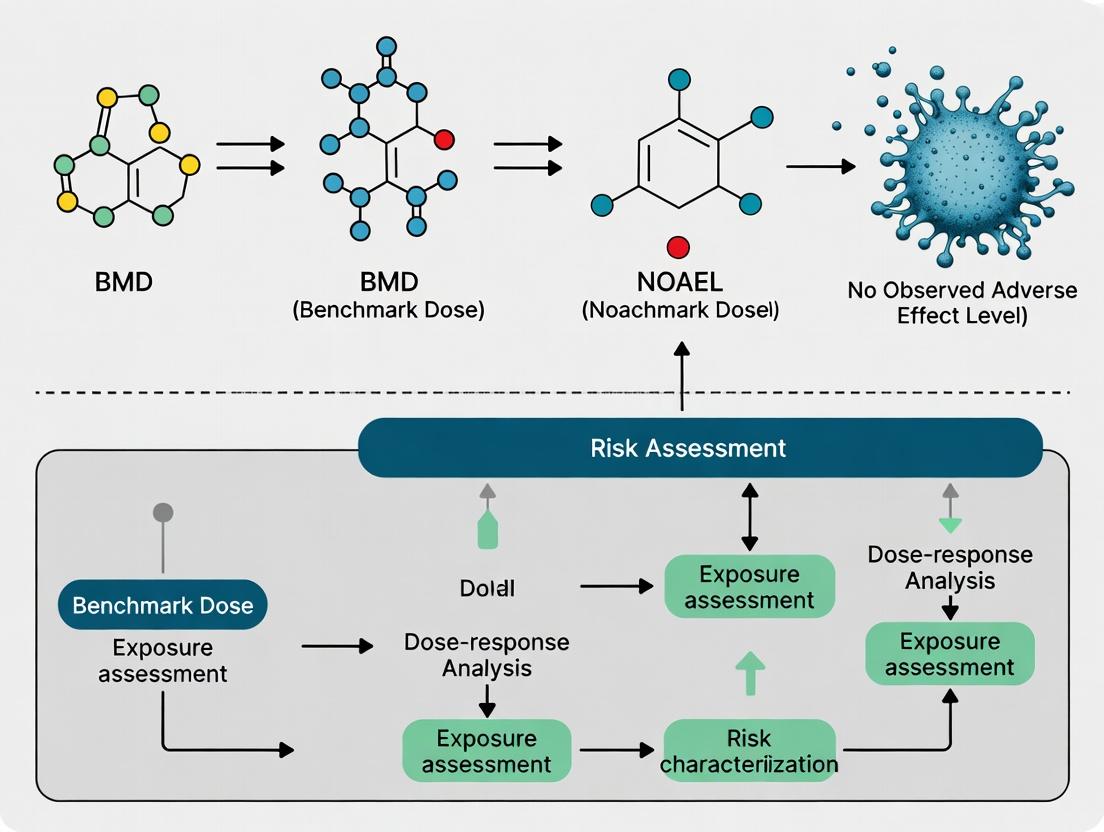
This article provides a comprehensive analysis of the Benchmark Dose (BMD) and No-Observed-Adverse-Effect Level (NOAEL) approaches in human health and environmental risk assessment.
BMD vs. NOAEL in Modern Risk Assessment: A Scientific and Practical Guide for Researchers
Abstract
This article provides a comprehensive analysis of the Benchmark Dose (BMD) and No-Observed-Adverse-Effect Level (NOAEL) approaches in human health and environmental risk assessment. Tailored for researchers, scientists, and drug development professionals, it explores the foundational principles of each method, details the latest methodological advancements including the shift to Bayesian analysis, addresses common implementation challenges, and presents comparative validation data from real-world studies. The scope synthesizes current regulatory guidance, such as the 2022 EFSA update which reconfirms BMD as the scientifically superior method[citation:2], and offers practical insights for selecting and applying these critical tools in toxicology and safety evaluation.
Understanding the Core: Defining NOAEL and BMD in Toxicological Risk Assessment
The No-Observed-Adverse-Effect Level (NOAEL) represents a fundamental concept in toxicology and risk assessment, defined as the highest dose or concentration of a substance that, under defined exposure conditions, causes no detectable adverse effects on the morphology, functional capacity, growth, development, or lifespan of test organisms when compared to an appropriate control group [1] [2]. For decades, the NOAEL has served as the primary point of departure (PoD) for establishing safe exposure levels, such as Acceptable Daily Intakes (ADIs) and Reference Doses (RfDs), by applying standard safety or uncertainty factors [3].
Its determination is a professional judgment based on study design, the drug's intended pharmacology, and the spectrum of observed off-target effects [4] [5]. However, this traditional approach is increasingly scrutinized within modern risk assessment frameworks, especially when contrasted with the more statistically rigorous Benchmark Dose (BMD) methodology. This analysis details the traditional foundations of NOAEL, its complete dependence on specific experimental designs, and its inherent scientific and statistical limitations, thereby contextualizing the ongoing shift toward BMD in regulatory science.
Traditional Foundations and Definitions of NOAEL
The concept of a "no-effect" level emerged from the fundamental need to identify safe exposure thresholds. It is predicated on the biological principle of a threshold, a dose below which an adverse effect does not occur [1] [6]. Scientific evidence supports the existence of such thresholds even for highly potent substances, demonstrated by ineffective concentrations of molecules like botulinum toxin (approximately 7 × 10⁻¹⁷ M) and aflatoxin (1.6 × 10⁻¹¹ M) [1] [6].
A critical review of regulatory and scientific literature reveals a lack of a consistent, standardized definition for what constitutes an "adverse effect," leading to variability in NOAEL identification [4] [5].
Table 1: Variability in NOAEL Definitions and Concepts
| Source | Key Definition/Concept | Focus |
|---|---|---|
| General Scientific | The highest exposure level with no statistically or biologically significant increase in adverse effects [2]. | Statistical and biological significance. |
| U.S. EPA | An exposure level with no statistically or biologically significant increases in adverse effect frequency or severity [2]. | Distinguishes adverse effects from non-adverse ones. |
| Drug Development | A professional opinion based on study design, expected pharmacology, and off-target effects [4] [5]. | Integrates clinical context and risk-benefit. |
| Related Concept (NOEL) | The maximal dosage at which no difference from controls is detected [1] [6]. | Any effect, not necessarily adverse. |
This definitional ambiguity underscores that the NOAEL is not an absolute biological constant but a study-specific determination heavily influenced by design and interpretation.
Reliance on Experimental Design: Protocols and Methodologies
The value and reliability of a NOAEL are intrinsically tied to the details of the experimental protocol. A standard NOAEL study follows a defined workflow, with each stage impacting the final outcome.
Figure 1: Traditional Workflow for Empirical NOAEL Determination. Key design factors (yellow) and the critical expert judgment step (red) directly control the outcome.
Core Experimental Protocol for NOAEL Determination
The following protocol outlines the standard in vivo methodology for identifying a NOAEL in a rodent toxicology study, consistent with OECD and ICH guidelines [2].
1. Objective: To identify the highest dose of a test substance that does not produce a statistically or biologically significant adverse effect in the test model over a defined exposure period.
2. Materials and Reagents:
- Test Substance: Characterized for purity and stability.
- Animals: Defined strain and species (typically rodents like Sprague-Dawley rats or CD-1 mice). Animals are acclimatized and randomly assigned to groups.
- Vehicle: Appropriate for solubilizing/ suspending the test substance (e.g., carboxymethylcellulose, corn oil).
- Equipment: Dosing apparatus (gavage needles, infusion pumps), clinical pathology analyzers, histological processing equipment.
- Fixatives: Neutral buffered formalin for tissue preservation.
3. Experimental Procedure:
- Dose Selection: A minimum of three dose groups and a concurrent vehicle control group are established. The high dose should elicit toxicity (e.g., minimal toxicity but not exceeding 10% body weight loss), the low dose should aim for no observable effects, and the mid-dose should be interpolated [1].
- Group Size & Duration: Group size is critical for statistical power; OECD guidelines often recommend at least 10 animals per sex per group for subchronic studies. Duration aligns with the testing guideline (e.g., 28-day, 90-day, or 2-year bioassays) [1].
- Dosing & Monitoring: Animals are dosed daily via the intended route (oral, dermal, inhalation). They are monitored daily for clinical signs, morbidity, and mortality. Body weight and food consumption are tracked weekly.
- Terminal Examination: At study end, blood is collected for hematology and clinical chemistry. A full necropsy is performed. All major organs are weighed, preserved, and processed for histopathological examination by a board-certified pathologist.
4. Data Analysis and NOAEL Identification:
- Data are compared using appropriate statistical tests (e.g., ANOVA, Dunnett's test).
- The NOAEL is identified as the highest dose group where there is no statistically significant increase in adverse findings compared to the control.
- The step from the NOAEL to the next higher dose (the Lowest-Observed-Adverse-Effect Level, or LOAEL) should show a clear adverse effect.
Protocol for Estimating NOAEL from Hormetic Meta-Data
A specialized protocol exists for deriving a NOAEL from hormetic dose-responses (where low-dose stimulation occurs), often encountered in literature meta-analyses [7]. 1. Data Mining: Collect individual treatment means, standard deviations/errors, and sample sizes for all dose groups from published studies. 2. Model Fitting: Fit a suitable hormetic dose-response model (e.g., Brain-Cousens model) to the aggregated data. 3. NOAEL Estimation: Define the NOAEL as the dose level at which the fitted response curve first deviates below the control response level (or a predefined threshold like 10% change) and continues to show adverse effects at higher doses [7].
The Scientist's Toolkit: Key Reagents and Models in NOAEL Research
Table 2: Key Research Reagents and Models in Traditional Toxicological Research
| Item / Model | Function in NOAEL Research | Example / Context |
|---|---|---|
| Rodent Models (Rat, Mouse) | Primary in vivo system for toxicity bioassays; used to establish dose-response and identify target organs. | Sprague-Dawley rat in a 90-day oral toxicity study. |
| Vehicle Controls | Ensure that observed effects are due to the test article and not the delivery medium. | Corn oil (for lipophilic compounds), carboxymethylcellulose suspension. |
| Reference Toxicants | Positive controls to validate the sensitivity and responsiveness of the test system. | N-Nitrosodiethylamine for hepatocarcinogenicity studies. |
| Clinical Pathology Assays | Quantify functional changes in blood and serum (hematology, clinical chemistry). | ALT/AST levels for liver injury; BUN/Creatinine for renal function. |
| Histopathology | The gold standard for identifying morphological adverse effects at the tissue and cellular level. | Identification of hepatocellular hypertrophy or renal tubular degeneration. |
| Proven Human Developmental Toxicants | Used in alternative test validation to assess predictive capability. | Valproic acid, retinoic acid [8]. |
| High-Potency Toxins (e.g., TCDD) | Used to explore the limits of threshold concepts and extreme dose-response relationships. | 2,3,7,8-Tetrachlorodibenzo-p-dioxin (TCDD) for studying receptor-mediated toxicity [1]. |
Critical Analysis of Inherent Limitations
The NOAEL approach is fraught with significant limitations that affect its reliability and scientific robustness for modern risk assessment.
1. Dependence on Study Design: The NOAEL is intrinsically linked to the selected doses, spacing, and group size of a particular study. It may be falsely high in a poorly designed study with wide dose intervals or low statistical power [1]. It cannot be extrapolated beyond the specific conditions, duration, and species of the test.
2. Statistical Weaknesses: The NOAEL is, by definition, one of the experimental doses tested. It carries no information on the shape of the dose-response curve below or around it. It is highly sensitive to sample size—smaller studies with higher variability tend to produce higher NOAELs [3] [9]. It fails to quantify the uncertainty or variability in the estimate.
3. Problem of "Adversity" Judgment: The core of the NOAEL is distinguishing adverse from non-adverse effects, a process that is subjective and inconsistent among toxicologists [4] [5]. Effects may be statistically significant but biologically irrelevant, or adaptive and not harmful.
4. Inefficient Use of Data: The NOAEL ignores the full dose-response dataset, focusing only on a single point. All information from the other dose groups, including the severity and incidence of effects at the LOAEL and above, is discarded in the final PoD determination [3].
5. Hormesis Challenge: For substances exhibiting hormesis (low-dose stimulation, high-dose inhibition), the traditional NOAEL model fails to adequately capture the biphasic response, potentially misidentifying the threshold [7].
NOAEL vs. BMD: A Paradigm Shift in Risk Assessment
The Benchmark Dose (BMD) approach was developed to overcome the limitations of the NOAEL. Regulatory bodies like EFSA now explicitly state the BMD approach is scientifically more advanced [3] [10].
Figure 2: Conceptual Shift from the NOAEL Paradigm to the BMD Paradigm in Risk Assessment.
Table 3: Comparative Analysis of NOAEL and BMD Approaches
| Feature | NOAEL Approach | BMD Approach | Implication for Risk Assessment |
|---|---|---|---|
| Basis of PoD | Highest experimental dose without adverse effect. | Dose estimated by modeling to produce a predefined Benchmark Response (BMR, e.g., 10% change). | BMD is independent of experimental dose selection; NOAEL is tied to it. |
| Data Usage | Uses only the NOAEL dose group data (and control). | Uses all dose-response data to fit a mathematical model. | BMD utilizes information more efficiently and is less sensitive to single data points. |
| Statistical Power | Varies directly with group size; low power inflates NOAEL. | Incorporates variability into model fit and confidence intervals. | BMD provides a more consistent PoD across studies of different quality. |
| Uncertainty Quantification | None inherent to the NOAEL value itself. | Explicitly calculates confidence/credible intervals (BMDL/BMDU). | BMDL (lower bound) provides a conservative, statistically defined PoD with known uncertainty. |
| Result | A single, study-specific dose value. | A model-derived estimate with a measure of confidence. | BMD supports more transparent, reproducible, and scientifically defensible decisions. |
Empirical comparisons demonstrate that when dose-response data are clear, the BMDL often falls between the NOAEL and LOAEL [9]. However, for studies with unclear or non-monotonic responses, the NOAEL approach can fail, whereas Bayesian BMD methods offer more stable estimates [10] [9]. The international regulatory trajectory is clear: there is a firm reiteration for test guidelines to be reconsidered to facilitate the wider application of the BMD approach [3] [10].
The NOAEL is a foundational concept born from the practical need to find safe exposure levels and rooted in the biological principle of thresholds. However, its reliance on subjective judgment and specific experimental designs, coupled with its inherent statistical flaws—including the disregard for the full dose-response curve and the lack of uncertainty quantification—render it a limited tool for modern, quantitative risk assessment. The progressive shift toward the BMD paradigm represents an evolution in the field, moving from a discrete, design-dependent observation to a continuous, model-based estimation that makes better use of data, quantifies uncertainty, and supports more consistent and transparent public health decisions. Understanding the limitations of NOAEL is therefore not merely academic but essential for driving the adoption of more robust methodologies in regulatory science.
The paradigm for determining a Point of Departure (POD) in chemical risk assessment is shifting. For decades, the No-Observed-Adverse-Effect Level (NOAEL) approach has been the standard, but its well-documented statistical and methodological limitations have driven the adoption of a more robust, model-based alternative: the Benchmark Dose (BMD) approach [11] [12]. This article, framed within a broader thesis on BMD versus NOAEL, details the conceptual foundation, practical application, and procedural protocols of the BMD methodology. The core thesis posits that the BMD approach represents a scientifically advanced progression in risk assessment, offering greater consistency, better utilization of dose-response data, and explicit quantification of uncertainty compared to the NOAEL [3] [13]. Authorities like the U.S. Environmental Protection Agency (EPA) and the European Food Safety Authority (EFSA) now recommend BMD as the preferred method for deriving a POD to establish health-based guidance values (e.g., Reference Dose, Acceptable Daily Intake) [11] [14]. This document provides researchers and risk assessors with the necessary application notes and experimental protocols to implement this state-of-the-science approach.
Theoretical Foundations: BMD, BMR, and Model Selection
Core Definitions and the Benchmark Response (BMR)
The Benchmark Dose (BMD) is defined as the dose or concentration of a substance that produces a predetermined, low-level change in the response rate of an adverse effect. This predetermined change is called the Benchmark Response (BMR) [11]. The BMR is typically expressed as an extra risk (e.g., 10% increase in tumor incidence) or a change in central tendency (e.g., 5% decrease in body weight) relative to the background response in the control group [11].
The choice of BMR is critical and often follows default values based on data type and regulatory body, though substance-specific justification is possible [15] [16]. EFSA maintains an inventory of applied BMR values to inform this decision [16].
Table 1: Default Benchmark Response (BMR) Values by Data Type and Authority
| Response Data Type | Examples | Default BMR (EFSA) | Default BMR (U.S. EPA) |
|---|---|---|---|
| Quantal/Dichotomous | Tumor incidence, mortality | 10% extra risk | 10% extra risk [11] |
| Continuous | Body weight, enzyme activity | 5% change in mean | 1 standard deviation change [11] [15] |
From BMD to BMDL: Accounting for Uncertainty
The statistical modeling process does not yield a single, precise BMD value. Instead, it estimates a confidence interval for the BMD. The lower one-sided confidence limit (usually the 95% lower bound) is termed the BMDL (Benchmark Dose Lower bound) [11] [14]. The BMDL is conservatively selected as the POD for risk assessment because it represents a dose with a high confidence that the true response is below the BMR [3]. The upper confidence limit (BMDU) is also informative, as the BMDU/BMDL ratio quantifies the statistical uncertainty in the dose-response dataset [3].
Model Selection and Averaging
A suite of mathematical dose-response models (e.g., Gamma, Logistic, Hill, Exponential) can be fit to the experimental data [11] [14]. Contemporary best practice, as endorsed by EFSA, is moving towards model averaging. This technique avoids reliance on a single "best" model by calculating a weighted average of the BMD estimates from all models that provide an adequate fit to the data, with weights based on statistical criteria like the Akaike Information Criterion (AIC) [3] [15]. When model averaging tools are not accessible, a suboptimal but acceptable alternative is to select a single model based on the lowest AIC among adequately fitting models [3].
Diagram 1: BMD analysis workflow.
Application Notes and Experimental Protocols
Prerequisites: Data Suitability Evaluation
Before BMD modeling, the suitability of the toxicological dataset must be assessed. The following criteria are essential [11] [14]:
- Data Type: The endpoint must be reported as quantal (counts) or continuous data.
- Dose-Response Trend: A clear (typically monotonic) trend with dose must be present.
- Study Design: A minimum of three dose groups plus a concurrent control group is required. Datasets where a response is observed only at the highest dose are usually unsuitable.
- Data Reporting: For quantal data, both the number of affected subjects and the total group size per dose are necessary [14].
Protocol: Stepwise BMD Analysis Using Standard Software
The following protocol outlines the BMD analysis process using standard software like EPA's BMDS or RIVM's PROAST [11].
Table 2: Protocol for Benchmark Dose Analysis
| Step | Action | Description & Rationale | Software Implementation |
|---|---|---|---|
| 1. Data Preparation | Format dose-response data. | Organize data with columns for dose, response (e.g., incidence, mean), and measures of variance (e.g., standard deviation, group size). | Input data into BMDS/PROAST template. |
| 2. BMR Definition | Set the Benchmark Response. | Select a default BMR (e.g., 10% extra risk for quantal data) or provide biological justification for a different value [16]. | Set BMR parameter in software. |
| 3. Model Execution | Run a suite of models. | Execute multiple predefined mathematical models (e.g., Logistic, Gamma, Weibull for quantal data). | Use software's batch run function. |
| 4. Fit Evaluation | Assess model adequacy. | Apply goodness-of-fit criteria (e.g., p-value > 0.1, visual inspection of fit). Reject models with poor fit [11]. | Review software-generated fit statistics and plots. |
| 5. Model Selection/Averaging | Derive the final BMD estimate. | Preferred: Apply model averaging to all adequate models. Alternative: Select the model with the lowest AIC among adequate models [3]. | Use model averaging module (if available) or compare AIC values. |
| 6. POD Selection | Identify the BMDL. | From the chosen model(s), report the full confidence interval (BMDL, BMDU). Use the BMDL as the conservative POD for risk assessment [3]. | Record the BMDL value from the output. |
Protocol: Comparative Analysis of BMDL vs. NOAEL (Case Study)
This protocol is designed to empirically compare PODs derived from the BMD and NOAEL approaches, a core element of risk assessment research [9].
Objective: To calculate and compare the BMDL and NOAEL from the same dose-response dataset. Materials: A suitable quantal dataset (e.g., tumor incidence from a rodent bioassay) with at least three dose groups and a control [9]. Procedure:
- NOAEL Determination: Use pairwise statistical tests (e.g., Fisher's Exact, Cochran-Armitage) comparing each dose group to the control. The NOAEL is the highest dose without a statistically significant (p < 0.05) increase in adverse effect.
- BMDL Determination: Follow the protocol in Table 2 using the same dataset. Use a BMR of 10% extra risk and multiple software platforms (e.g., BMDS, PROAST) to observe potential variability [9].
- Comparison & Analysis: Calculate the ratio of BMDL to NOAEL. Categorize results as: BMDL > NOAEL, BMDL between NOAEL and LOAEL, or BMDL < NOAEL. Analyze how data quality (e.g., dose-spacing, sample size, clarity of dose-response) influences these outcomes [11] [9].
Comparative Analysis: BMD vs. NOAEL in Thesis Context
A thesis on BMD versus NOAEL must critically evaluate their methodological foundations. The BMD approach uses all dose-response data to model the curve and estimate a POD corresponding to a consistent, predefined biological effect (the BMR). In contrast, the NOAEL is limited to being one of the experimental dose levels and is highly dependent on study design (dose selection, sample size) [11] [12].
Table 3: Methodological Comparison: BMD vs. NOAEL
| Aspect | Benchmark Dose (BMD) Approach | NOAEL Approach |
|---|---|---|
| Basis of POD | Model-derived estimate corresponding to a defined BMR (e.g., 10% effect). | An experimentally tested dose level with no statistically significant adverse effect. |
| Data Utilization | Uses the entire dose-response curve and data from all dose groups. | Depends primarily on the data from the NOAEL and control groups. |
| Statistical Uncertainty | Quantifies uncertainty via the BMD confidence interval (BMDL-BMDU). | Does not quantify statistical uncertainty or power of the study. |
| Study Design Dependence | Less dependent on dose selection, spacing, and sample size. | Highly sensitive to dose spacing, selection, and small sample sizes. |
| Comparative Potency | Enables direct comparison across studies/chemicals using a consistent BMR. | Difficult to compare, as the underlying effect level at each NOAEL is unknown and variable. |
Empirical research supports the thesis that BMD is a superior POD. A 2022 analysis of 193 carcinogenicity datasets found that BMDLs calculated using model averaging were generally comparable to or higher than NOAELs for datasets with clear dose-response relationships [9]. Crucially, the BMD approach can also provide a more sensitive and scientifically justifiable POD for studies where the NOAEL may be inadequately high due to poor study design [11].
Diagram 2: Dose-response curve interpretation and comparison.
Advanced Applications and Future Directions
The BMD framework is extensible to complex risk assessment scenarios:
- Joint-Action and Chemical Mixtures: Research extends BMD modeling to two-agent studies, defining a "benchmark profile" (BMP) where combined exposures achieve the BMR, crucial for assessing mixture risks [17].
- Non-Monotonic Dose Responses (NMDRs): For endocrine-disrupting chemicals (EDCs) exhibiting NMDRs, BMD modeling can be applied to the low-dose rising arm of the curve to establish a more protective POD than a NOAEL, which may miss low-dose effects entirely [18].
- Bayesian Methods: Emerging guidance, such as from the UK Committee on Toxicity, explores Bayesian BMD modeling, which incorporates prior knowledge and may offer advantages in handling uncertainty and model averaging compared to traditional frequentist methods [13].
The Scientist's Toolkit for BMD Analysis
Table 4: Essential Research Reagent Solutions & Software for BMD Analysis
| Tool Name | Type | Primary Function | Source/Reference |
|---|---|---|---|
| Benchmark Dose Software (BMDS) | Software Suite | The U.S. EPA's primary tool for fitting dose-response models, evaluating fit, and calculating BMD/BMDL. Provides a range of models for quantal, continuous, and nested data. | U.S. EPA [14] |
| PROAST Software | Software Suite | RIVM's (Netherlands) modeling software for BMD analysis, widely used by EFSA. Offers capabilities for model averaging. | RIVM [11] [13] |
| Bayesian Benchmark Dose (BBMD) Software | Software Suite | Implements Bayesian model averaging for BMD estimation, representing a next-generation approach to handling model and statistical uncertainty. | Indiana University [9] |
| EFSA BMR Inventory | Database | A curated repository of applied BMR values from international risk assessments, aiding in the selection of biologically justified BMRs. | EFSA [16] |
| High-Quality Toxicity Dataset | Data | The fundamental reagent. Requires well-designed studies with adequate dose groups, sample size, and clear reporting of individual or group response data. | OECD Guidelines, GLP Studies [9] |
Reporting and Compliance Protocols
Transparent reporting is critical. A complete BMD analysis report must include [3]:
- Data Description: A clear presentation of the raw dose-response data used.
- Rationale for BMR: Justification for the chosen BMR value.
- Modeling Details: List of all models run, their parameter estimates, and goodness-of-fit statistics (AIC, p-value).
- Selection Process: Description of the model selection or averaging procedure.
- Final Results: The BMD confidence interval (BMDL and BMDU), with the BMDL identified as the POD.
- Visualization: A plot of the dose-response data with the fitted model(s), BMR line, and BMD confidence interval indicated.
The selection of a Point of Departure (POD) is the foundational step in quantitative human health risk assessment, serving as the starting point for deriving health-based guidance values such as Reference Doses (RfDs) or Occupational Exposure Limits (OELs) [19]. For decades, the No-Observed-Adverse-Effect Level (NOAEL) has been the dominant regulatory tool for this purpose [20]. However, significant methodological limitations inherent to the NOAEL approach have driven a major evolution in regulatory toxicology toward the Benchmark Dose (BMD) methodology [10].
This shift represents more than a simple change in technique; it is a fundamental transition from a study-design-dependent observation to a model-informed, data-driven estimation. The NOAEL is identified as the highest tested dose without a statistically or biologically significant adverse effect, making it inherently dependent on the specific dose spacing and sample sizes chosen by study designers [20]. In contrast, the BMD is a statistically derived estimate of the dose corresponding to a predetermined, low-level change in adverse response (the Benchmark Response or BMR), typically a 5% or 10% extra risk [14] [21]. Its lower confidence limit (BMDL) is then used as the POD, incorporating quantitative uncertainty analysis directly into the risk assessment process [10] [19].
Leading regulatory bodies now explicitly recommend BMD as the scientifically superior approach. The European Food Safety Authority (EFSA) reconfirms it as a "scientifically more advanced method," and the U.S. Environmental Protection Agency (EPA) designates it as the preferred approach for deriving PODs [14] [10]. This article details the application notes, experimental protocols, and practical toolkit necessary for implementing BMD analysis, framing this evolution within the broader thesis that BMD provides a more robust, consistent, and informative foundation for modern risk assessment research.
Quantitative Comparison: BMD vs. NOAEL
The core advantages and limitations of the BMD and NOAEL approaches are quantitatively and qualitatively distinct. The following table synthesizes their key characteristics, highlighting the scientific and regulatory rationale for the paradigm shift.
Table 1: Comparative Analysis of NOAEL and BMD Methodologies for Risk Assessment
| Characteristic | NOAEL/LOAEL Approach | BMD/BMDL Approach | Implication for Risk Assessment |
|---|---|---|---|
| Statistical Basis | Depends on statistical significance tests (e.g., p-values) at individual dose groups [20]. | Derived from modeling the entire dose-response curve; BMDL is a lower confidence bound (e.g., 95%) on the estimated BMD [14] [21]. | BMD is less dependent on statistical power and more consistently accounts for uncertainty. |
| Utilization of Data | Uses only data from the NOAEL and LOAEL dose groups; ignores the shape of the dose-response curve [20]. | Uses all dose-response data to fit a model, providing a more complete and efficient use of experimental data [10]. | BMD extracts more information from the same study, improving reliability. |
| Dependency on Study Design | Highly sensitive to dose selection, spacing, and sample size. A poorly designed study can yield an unreliable NOAEL [20]. | Generally more robust to study design variations; can be calculated even if a NOAEL is not explicitly identified [14]. | BMD reduces arbitrariness and improves consistency across studies. |
| Quantification of Uncertainty | No inherent measure of uncertainty. Uncertainty Factors (UFs) are applied later but are not directly linked to the quality of the dose-response data [19]. | Uncertainty is quantified via the confidence interval (BMDL to BMDU). The BMDU/BMDL ratio directly reflects the uncertainty in the BMD estimate [10]. | Provides a transparent, quantitative metric of confidence in the POD. |
| Benchmark Response | Not applicable; the "effect level" is undefined and varies between studies. | Based on a predefined, standardized BMR (e.g., 10% extra risk), allowing for consistent comparison across chemicals and endpoints [14] [21]. | Enables harmonized risk assessment and potency comparisons. |
| Regulatory Status | Traditional, widely accepted standard; remains necessary for datasets unsuitable for modeling [14] [20]. | Preferred method by major agencies (EPA, EFSA, ECHA) where data are sufficient [22] [14] [10]. | Regulatory practice is actively transitioning to BMD as the default. |
A concrete example from regulatory practice illustrates the outcome of this comparison. The European Chemicals Agency (ECHA), in setting OELs, has performed BMD modeling for multiple carcinogens. Their analysis shows that a reliably calculated BMDL generally yields more conservative (i.e., protective) risk estimations compared to using the T25 (a cancer risk-specific metric) or traditional NOAEL/LOAEL as the POD [22]. This conservatism, rooted in the statistical lower confidence limit, provides an added layer of health protection.
Regulatory Evolution and Current Status
The adoption of BMD is an ongoing, structured evolution within global regulatory bodies, moving from endorsement to prescribed implementation.
Table 2: Evolution of BMD Guidance and Application in Key Regulatory Bodies
| Agency | Key Guidance/Position | Current Stance & Software | Notable Developments |
|---|---|---|---|
| U.S. EPA | 1995 initial guidelines; 2012 Benchmark Dose Technical Guidance [23]. | Preferred approach for POD derivation [14]. Primary tool: BMDS Online (released 2022), with desktop and Python (pybmds) versions [23]. |
Transition from standalone software (BMDS) to web-based and programmable platforms for broader, integrated use. |
| EFSA (EU) | 2009 initial guidance; updated in 2017 and again in 2022 [10]. | Scientifically more advanced method than NOAEL. Recommends a shift to a Bayesian paradigm with model averaging [10]. | Major update to recommend Bayesian inference over frequentist methods, unifying models for quantal and continuous data [10]. |
| ECHA (EU) | Incorporated into Occupational Exposure Limit (OEL) setting process [22]. | Actively applies BMD modeling for cancer risk assessment since 2023, comparing software tools (PROAST, EFSA Open Analytics) [22]. | BMDL used to derive health-based OELs or Exposure-Risk Relationships (ERRs) for carcinogens [22]. |
| ATSDR | Follows EPA guidance; uses BMDL in Toxicological Profiles for MRL derivation [21]. | Uses BMDL as POD when suitable data exist; provides public examples (e.g., 1,2,3-trichloropropane) [21]. | Demonstrates public health application, showing full calculation from BMDL to final guideline value [21]. |
A pivotal development is EFSA's 2022 guidance update, which marks a significant technical advancement by advocating for a shift from frequentist to Bayesian statistical paradigms [10]. In the Bayesian framework, prior knowledge (e.g., from similar compounds or endpoints) can be formally incorporated via "informative priors," and uncertainty about the model parameters is expressed as probability distributions. This approach "can mimic a learning process and reflects the accumulation of knowledge over time" [10]. For the risk assessor, the output is a credible interval for the BMD, with the BMDL remaining the potential Reference Point, and the BMDU/BMDL ratio explicitly quantifying uncertainty [10].
Experimental Protocols for BMD Analysis
Implementing BMD analysis requires a structured workflow. The following protocol, aligned with current EFSA and EPA guidance, details the key steps.
Protocol: Bayesian Benchmark Dose Analysis for Quantitative Risk Assessment
I. Objective: To determine a BMDL as a Point of Departure (POD) for deriving a health-based guidance value (e.g., RfD, DNEL, OEL) from dose-response data.
II. Pre-Modeling Phase: Data Preparation & Evaluation [14]
- Study & Endpoint Selection: Identify the critical study and the adverse critical effect. The endpoint must be adverse and biologically relevant.
- Data Suitability Check: Ensure the dataset is suitable for modeling. Minimum requirements typically include:
- A monotonic dose-response trend.
- At least three dose groups (including control), though more groups improve reliability.
- Data reported with measures of variance (e.g., standard deviation for continuous data, incidence counts for quantal data).
- Preferably, one dose group with a response near the intended BMR (e.g., 10%).
- BMR Selection: Define the Benchmark Response. A default BMR of a 10% extra risk is common for quantal data. For continuous data, a BMR of one control standard deviation change from the control mean is often used [10].
III. Modeling Phase: Bayesian Analysis with Model Averaging (Per EFSA 2022 Guidance) [10]
- Model Selection & Averaging: Do not rely on a single best-fitting model. Instead, use a suite of default models (e.g., exponential, Hill, logistic for quantal data) and employ Bayesian Model Averaging (BMA). BMA computes a weighted average of the BMD estimates from all viable models, where weights are based on each model's posterior probability. This accounts for model uncertainty directly in the BMD estimate.
- Prior Specification: Define prior distributions for model parameters. Use "informative priors" when justified by existing knowledge (e.g., typical slope parameters for a class of compounds) to improve estimation. Otherwise, use "vague" or "weakly informative" priors.
- Software Execution: Run the analysis using software capable of Bayesian BMA (e.g., EFSA's Open Analytics platform, R packages like
PROASTorBMDSimplementations). Input the dose-response data, selected BMR, and chosen model suite. - Diagnostic Checks: Assess model fit.
- Review goodness-of-fit statistics (e.g., posterior predictive checks).
- Examine residual plots for patterns.
- Ensure the BMD estimate is within the experimental dose range and not extrapolated far beyond the data.
IV. Post-Modeling Phase: Derivation of the POD [10] [21] [19]
- POD Selection: From the BMA output, select the lower bound of the credible interval (BMDL) as the POD. For a 95% credible interval, this is the 5th percentile.
- Uncertainty Characterization: Calculate the BMDU/BMDL ratio. A ratio > 10 indicates high uncertainty in the BMD estimate, which should be considered in the overall risk assessment.
- Derivation of Health-Based Guidance Value:
- Apply necessary adjustment factors to the BMDL (e.g., for intermittent exposure, convert to human equivalent dose) [21].
- Apply Uncertainty Factors (UFs) to account for interspecies differences, intraspecies variability, database deficiencies, etc. [19].
- Calculate: Health-Based Value = Adjusted BMDL / (UF₁ × UF₂ × ...) [21].
BMD Analysis Workflow: From Data to Health-Based Value
The Scientist's Toolkit for BMD Implementation
Successfully integrating BMD into risk assessment requires both conceptual understanding and practical tools. The following toolkit details essential resources.
Table 3: Research Reagent Solutions: Essential Toolkit for BMD Implementation
| Tool Category | Specific Item / Software | Function & Purpose | Key Features for Researchers |
|---|---|---|---|
| Statistical Software Platforms | EPA BMDS Online/Desktop [23] | Web-based and offline software suites for performing BMD modeling aligned with EPA guidance. | User-friendly interface, wide model selection (dichotomous, continuous, nested), graphical results, compliance with EPA Technical Guidance. |
| EFSA Open Analytics / PROAST (RIVM) [22] [10] | Platforms implementing EFSA's Bayesian BMD guidance with model averaging. | Implements the Bayesian paradigm and model averaging as recommended by EFSA's 2022 guidance. Used by ECHA for OEL setting [22]. | |
R packages (e.g., bayesBMD, drc) |
Open-source programming environment for custom or advanced BMD modeling. | Maximum flexibility for research, allows custom model development, integration into reproducible analysis pipelines. | |
| Guidance Documents | EFSA Guidance (2022) [10] | The definitive EU guideline on applying the BMD approach, detailing the shift to Bayesian methods. | Provides the step-by-step workflow, criteria for BMR selection, and rationale for Bayesian model averaging. Essential for regulatory work in the EU. |
| EPA Benchmark Dose Technical Guidance (2012) [14] | Foundational U.S. guidance document on concepts, data requirements, and application of BMD. | Details data evaluation, model selection principles, and reporting requirements. Critical for understanding EPA's framework. | |
| Data & Reporting Standards | Structured Data Templates | Pre-formatted spreadsheets for organizing dose-response data for input into BMD software. | Minimizes data entry errors, ensures all necessary variables (dose, N, incidence, mean, SD) are correctly formatted. |
| Model Diagnostics Checklist | A standardized list of outputs to review (goodness-of-fit p-value, residual plots, BMD confidence interval width). | Ensures rigorous and consistent evaluation of model reliability before accepting a BMDL. | |
| Educational Resources | BMD Online Training Modules (EPA, EFSA) | Self-paced courses covering the theory and hands-on application of BMD modeling. | Reduces the learning curve for scientists new to dose-response modeling. |
The regulatory evolution from NOAEL to BMD as the preferred POD is a clear response to the demand for more scientific, transparent, and consistent risk assessments. This transition forms a core thesis in modern toxicology: while the NOAEL offers simplicity, it does so at the cost of scientific robustness and informational value. The BMD methodology, despite its requirement for suitable data and statistical expertise, provides a framework that fully utilizes experimental data, quantifies uncertainty, and minimizes arbitrariness.
The latest advancements, particularly the move toward Bayesian inference championed by EFSA, represent the next frontier, allowing for the formal incorporation of prior knowledge and a more intuitive probabilistic expression of uncertainty [10]. For researchers and drug development professionals, mastering BMD protocols and tools is no longer optional but essential for engaging with contemporary regulatory science. The future of the field lies in refining these models, developing standardized "informative priors" for common endpoints, and further integrating BMD outputs with physiologically based pharmacokinetic (PBPK) models to move from external dose to target site dose, ultimately leading to ever more precise and protective human health risk assessments.
Within the continuum of chemical risk assessment, the derivation of Health-Based Guidance Values (HBGVs) and the calculation of Margins of Exposure (MOE) represent two core, complementary applications for converting toxicological data into protective benchmarks [24]. The selection between these approaches, and the foundational point of departure (PoD) upon which they are built, is central to the ongoing methodological debate surrounding Benchmark Dose (BMD) modeling versus the No-Observed-Adverse-Effect Level (NOAEL) [13].
An HBGV, such as an Acceptable Daily Intake (ADI) or Reference Dose (RfD), defines a dose (e.g., mg/kg body weight/day) estimated to be without appreciable risk to human health over a lifetime [24] [25]. It is derived by applying a composite uncertainty factor (UF) to a PoD (e.g., NOAEL or BMDL) [25] [21]. In contrast, the MOE is a ratio, not a safe threshold. It is calculated by dividing a PoD by the estimated human exposure level [26]. A larger MOE indicates a lower potential health concern. The MOE is the recommended tool for substances where establishing an HBGV is inappropriate, particularly for genotoxic and carcinogenic compounds [26] [27].
The choice of PoD methodology is critical. The traditional NOAEL/LOAEL approach identifies the highest dose without a statistically significant adverse effect, which is heavily dependent on study design and statistical power [13]. The BMD approach, conversely, uses mathematical models to fit all dose-response data, estimating the dose corresponding to a predefined Benchmark Response (BMR), such as a 10% extra risk (BMD10). The BMD Lower Confidence Limit (BMDL) is typically used as a more robust and statistically quantifiable PoD [13] [21]. Major agencies like EFSA and the U.S. EPA now recommend BMD as the preferred method where suitable data exist [13].
The application of uncertainty factors is common to both HBGV and MOE frameworks. Default factors (typically multiples of 10) account for interspecies extrapolation and human variability, summing to a default factor of 100 for non-genotoxic chemicals [26] [25]. Additional factors may address study duration, severity, or database deficiencies [28]. For genotoxic carcinogens, a larger composite factor is applied within the MOE framework, leading to a target MOE of 10,000 (based on animal studies) to indicate low public health concern [26] [27].
Table 1: Core Concepts in Dose-Response Assessment for Risk Application
| Concept | Definition | Primary Use | Typical Derivation |
|---|---|---|---|
| Point of Departure (PoD) | A dose on the experimental dose-response curve that marks the beginning of low-dose extrapolation [13]. | Starting point for deriving HBGVs or MOEs. | NOAEL, LOAEL, or BMDL from critical study. |
| No-Observed-Adverse-Effect Level (NOAEL) | The highest experimentally tested dose at which no statistically significant adverse effects are observed [13] [21]. | Traditional PoD for HBGV derivation. | Identified via pairwise statistical comparison to controls. |
| Benchmark Dose Lower Limit (BMDL) | A lower confidence bound on the dose estimated to produce a specified low level of change (the BMR) [13] [21]. | Preferred statistical PoD for HBGV and MOE. | Derived from mathematical modeling of the full dose-response curve. |
| Health-Based Guidance Value (HBGV) | An estimate of a daily exposure level without appreciable risk over a lifetime (e.g., ADI, RfD, TDI) [24]. | Defines a "safe" intake level for non-genotoxic chemicals. | PoD / (Composite Uncertainty Factors). |
| Margin of Exposure (MOE) | The ratio of a PoD to the estimated human exposure level [26]. | Risk characterization tool, especially for genotoxic carcinogens. | PoD / Estimated Human Exposure. |
Application Protocols: Stepwise Methodologies
Protocol for Deriving an HBGV (e.g., Reference Dose)
This protocol outlines the steps for deriving a chronic oral RfD, integrating both NOAEL and BMD approaches [29] [25] [21].
1. Hazard Identification & Data Collection:
- Conduct a systematic review of available toxicological literature, prioritizing robust, guideline-compliant studies [27].
- Identify all significant adverse effects (e.g., reproductive, organ-specific, endocrine) [29].
2. Critical Effect & Study Selection:
- Determine the critical effect—the adverse effect occurring at the lowest dose.
- Select the key study that best characterizes the dose-response for the critical effect.
3. Point of Departure (PoD) Determination:
- Option A (NOAEL Approach): Identify the highest dose with no statistically significant increase in the critical effect versus the control group [21].
- Option B (BMD Approach - Preferred): a. Define the Benchmark Response (BMR). For quantal data, a 10% extra risk (BMD10) is common; for continuous data, a 1 standard deviation change or 5% change from controls may be used [13]. b. Fit multiple mathematical models (e.g., logistic, probit, gamma) to the dose-response data. c. Select the best-fitting model based on statistical criteria (e.g., Akaike Information Criterion, visual fit, residual analysis). d. Calculate the BMD (dose at the BMR) and its BMDL (lower 95% confidence interval) [13] [21]. e. Use the BMDL as the PoD.
4. Application of Uncertainty Factors (UFs):
- Apply a composite UF to the PoD to account for uncertainties [25] [28]:
- UFₐ (Interspecies): Default = 10. May be reduced with PK/TK data showing comparable metabolism [28].
- UFₕ (Human Variability): Default = 10. May be modified for specific susceptible populations [28].
- UFₛ (Subchronic to Chronic): Applied if PoD is from a subchronic study. Default = up to 10.
- UFₗ (LOAEL to NOAEL): Applied if PoD is a LOAEL. Default = up to 10 [28].
- UF₉ (Database Deficiencies): Applied based on expert judgment for incomplete data (e.g., missing reproductive toxicity) [25].
5. Calculation of the HBGV:
- RfD = PoD / (UFₐ × UFₕ × UFₛ × UFₗ × UF₉) [21].
- The final value is expressed in mg/kg body weight/day.
Protocol for Calculating and Interpreting a Margin of Exposure
This protocol follows EFSA guidance for risk characterization of chemicals where an HBGV cannot be established [26] [27].
1. Problem Formulation:
- Determine if the substance is genotoxic and carcinogenic, or has significant data gaps precluding an HBGV [26] [27].
2. PoD Determination (as per Section 2.1, Step 3):
- Use BMD modeling as the preferred method to derive a robust PoD (BMDL) [13].
3. Human Exposure Assessment:
- Gather occurrence data (concentration in food, water, etc.) and consumption data for different population groups (average, high consumers) [27].
- Calculate estimated daily exposure (mg/kg body weight/day) for each group.
4. MOE Calculation:
- MOE = PoD / Estimated Human Daily Exposure [26].
- Calculate separate MOEs for different population groups and exposure scenarios.
5. Risk Characterization & Interpretation:
- Compare calculated MOEs to target MOE values:
- For non-genotoxic chemicals: A target MOE of 100 or greater (accounting for interspecies and human variability) is generally of low concern [26]. This may be increased (e.g., to 500) for additional uncertainties [27].
- For genotoxic and carcinogenic chemicals: A target MOE of 10,000 or greater (based on animal BMDL10) is considered of low concern from a public health perspective [26] [27].
- An MOE below the target indicates a potential health concern, with lower values representing higher priority for risk management action [26] [27].
Table 2: Comparison of HBGV and MOE Application Protocols
| Step | HBGV (RfD/ADI) Derivation | MOE Calculation & Application |
|---|---|---|
| 1. Scope | Establish a "safe" daily intake level. | Characterize risk from existing exposure levels. |
| 2. Chemical Suitability | Primarily for non-genotoxic substances. | Essential for genotoxic carcinogens; used for substances with major data gaps [26] [27]. |
| 3. PoD Selection | NOAEL or (preferably) BMDL. | BMDL is strongly preferred [13]. |
| 4. Core Calculation | PoD / Composite Uncertainty Factors. | PoD / Estimated Human Exposure. |
| 5. Output Interpretation | Exposure > HBGV indicates potential risk. | MOE < Target MOE indicates potential concern. Comparison is relative [26]. |
| 6. Default Target | Built into the composite UF (typically 100). | Non-genotoxic: ≥100. Genotoxic Carcinogen: ≥10,000 [26] [27]. |
Practical Implementation: Case Studies and Data Integration
Case Study 1: Bisphenol Analogues – HBGV Derivation via Integrated BMD/NOAEL
A 2024 study derived RfDs for five BPA analogues, showcasing the integration of methods [29].
- Toxicological Data: Animal studies identified reproductive toxicity, organ damage, and endocrine disruption as key risks.
- PoD Determination: For BPB, BPP, and BPZ, BMD modeling was performed to derive BMDLs. For BPAF and BPAP, NOAEL/LOAEL values from studies were used as the PoD.
- UF Application & RfD Calculation: Standard UFs were applied. Calculated RfDs varied widely, from 0.04 ng/kg-bw/day for BPAF (based on NOAEL) to 5.13 μg/kg-bw/day for BPZ (based on BMD) [29].
- Context in BMD vs. NOAEL: This case demonstrates the contemporaneous use of both methods depending on data suitability and highlights how BMD modeling can be applied to modern endocrine disruptor assessment.
Case Study 2: Organoarsenic Species – MOE Application for Carcinogens and Non-Carcinogens
EFSA's 2024 risk assessment of small organoarsenics provides a definitive example of MOE application [27].
- Chemical-Specific Paths: Two compounds required different approaches due to distinct toxicity profiles.
- For MMA(V) (non-genotoxic): The critical effect was weight loss. A BMDL₁₀ of 18.2 mg/kg-bw/day was set as the PoD. Given additional uncertainties, a target MOE of 500 (greater than the default 100) was established. Calculated human MOEs were >>500, indicating no health concern [27].
- For DMA(V) (genotoxic & carcinogenic): The critical effect was bladder tumors. A BMDL₁₀ of 1.1 mg/kg-bw/day was set as the PoD. Following EFSA's Scientific Committee advice, the target MOE was 10,000. Calculated MOEs for high consumers were frequently below 10,000, raising health concerns [27].
- Context in BMD vs. NOAEL: This assessment relied exclusively on BMD-derived PoDs, underscoring its status as the preferred, more robust method for quantitative risk assessment, particularly for serious endpoints like cancer.
Integrating TK/TD Data and Refining Uncertainty Factors
Moving beyond default UFs is a key advancement in refining HBGVs and MOEs.
- Chemical-Specific Adjustment Factors (CSAFs): Using toxicokinetic (TK) data (on absorption, metabolism, excretion) and toxicodynamic (TD) data (on target organ sensitivity) allows replacement of default 10-fold factors with data-derived values [28]. For example, if human clearance of a compound is proven to be 4 times faster than in rats, the interspecies TK UF could be reduced from 10 to 2.5.
- Harmonization Considerations: Factors must be applied judiciously to avoid double-counting uncertainties. Expert judgment is required to assess interdependence (e.g., between severity of effect and LOAEL-to-NOAEL extrapolation) [28].
Table 3: Case Study Comparison of Derived Values and Methods
| Case Study | Chemical(s) | Critical Effect | PoD Method | Derived Value | Key Insight |
|---|---|---|---|---|---|
| Bisphenol Analogues [29] | BPAF, BPAP | Reproductive, organ damage | NOAEL/LOAEL | RfDs: 0.04 ng/kg-bw/day, 2.31 ng/kg-bw/day | Very low RfDs highlight high potency of some analogues. |
| Bisphenol Analogues [29] | BPB, BPP, BPZ | Reproductive, organ damage | BMD Modeling | RfDs: 1.05, 0.23, 5.13 μg/kg-bw/day | BMD allows quantitative potency comparison across analogues. |
| Organoarsenics (EFSA) [27] | MMA(V) | Weight loss (diarrhoea) | BMD Modeling | BMDL₁₀: 18.2 mg/kg-bw/day; Target MOE: 500 | Use of an increased target MOE (500 > 100) incorporates extra uncertainty. |
| Organoarsenics (EFSA) [27] | DMA(V) | Urinary bladder tumours | BMD Modeling | BMDL₁₀: 1.1 mg/kg-bw/day; Target MOE: 10,000 | MOEs < 10,000 for high consumers trigger risk management consideration. |
The Scientist's Toolkit: Research Reagent Solutions
Table 4: Essential Resources for Dose-Response Analysis and Risk Application
| Tool / Resource | Function in HBGV/MOE Derivation | Application Notes |
|---|---|---|
| BMD Modeling Software (e.g., EPA BMDS, EFSA PROAST) | Fits mathematical models to dose-response data to calculate BMD and BMDL values [13]. | Essential for implementing the preferred BMD approach. Software choice may influence model availability and statistical methods. |
| Systematic Review Platforms (e.g., DistillerSR, Rayyan) | Supports transparent, reproducible identification and selection of critical toxicological studies from literature. | Mitigates bias in the foundational data collection phase of hazard assessment. |
| Toxicokinetic Modeling Software (e.g., GastroPlus, Simcyp) | Enables development of PBPK models to extrapolate dose across species and routes, informing CSAFs. | Key for replacing default interspecies UFs with data-derived values, refining PoD [28]. |
| Uncertainty Analysis Tools (e.g., Crystal Ball, @Risk) | Facilitates probabilistic analysis of composite uncertainty factors and exposure estimates. | Moves beyond deterministic "point estimate" calculations to characterize variability and uncertainty distributions. |
| Curated Toxicity Databases (e.g., EPA IRIS, ATSDR ToxProfiles) | Provide peer-reviewed PoDs, HBGVs, and critical effect data for many chemicals [21]. | Primary source for existing assessments; essential for contextualizing new findings. |
| Statistical Analysis Software (e.g., R, SAS) | Performs fundamental statistical tests for NOAEL determination and advanced analyses for dose-response. | Required for the initial data analysis from toxicology studies that feeds into BMD modeling or NOAEL identification. |
Visualizing Workflows and Decision Pathways
Diagram 1: Decision pathway for selecting HBGV or MOE framework
Diagram 2: Protocol workflow for BMD modeling to derive a point of departure
From Theory to Practice: Implementing BMD Analysis with Modern Software and Guidelines
The selection of a Point of Departure (POD) is a foundational step in human health risk assessment, serving as the critical starting point for establishing safe exposure levels for chemicals [13]. For decades, the No-Observed-Adverse-Effect Level (NOAEL) has been the traditional cornerstone of this process. The NOAEL is identified as the highest tested dose at which no statistically or biologically significant adverse effects are observed [13]. However, this approach possesses significant limitations: its value is entirely dependent on the specific doses selected for the study, it ignores the shape of the dose-response curve, and its statistical power is inherently linked to sample size [13].
In contrast, the Benchmark Dose (BMD) methodology, introduced nearly four decades ago, offers a more robust and quantitative alternative [13]. The BMD approach fits mathematical models to all available dose-response data for a given adverse effect to estimate the dose corresponding to a predefined, low-level change in response, known as the Benchmark Response (BMR) [13]. The lower confidence limit of this estimate, the BMDL, is then typically used as the POD [13]. Major regulatory bodies, including the U.S. Environmental Protection Agency (EPA) and the European Food Safety Authority (EFSA), now recommend the BMD approach as the preferred method where appropriate, citing its more efficient use of data and quantifiable uncertainty [30] [13]. This document outlines a standardized, stepwise workflow designed to guide researchers from initial data evaluation through to the defensible selection of a BMDL, framed within the ongoing paradigm shift from NOAEL to BMD-based risk assessment.
Phase 1: Comprehensive Data Suitability & Pre-Modeling Assessment
Before any modeling, a rigorous evaluation of the available toxicological data is essential to determine its fitness for a reliable BMD analysis.
Objective: To systematically review and qualify experimental data, ensuring it meets the minimum requirements for dose-response modeling and to identify the most sensitive, biologically relevant endpoint for analysis [31].
Protocol: Endpoint Selection & Data Quality Review
- Hazard Identification & Critical Effect Selection: Review all studied adverse effects (e.g., clinical pathology, histopathology, organ weight changes, tumor incidence). Based on biological plausibility and severity, identify the critical effect—the adverse effect occurring at the lowest dose. Preventing this effect is assumed to prevent all other more severe effects [31].
- Data Type Classification: Categorize the data for the critical endpoint as:
- Dose-Response Structure Verification: Confirm the study design includes a control group and at least three dose groups with escalating levels of exposure, with the highest dose demonstrating a clear adverse effect. This structure is necessary to adequately characterize the curve's shape [13].
- Evaluation of Data Suitability for BMD vs. NOAEL:
- Assess if the study has sufficient dose groups and spacing to model a curve. Sparse or poorly spaced data may force reliance on the NOAEL.
- Determine if the observed responses show a monotonic increasing trend with dose. A clear trend is necessary for stable model fitting.
- For continuous data, verify that measures of variance (e.g., standard deviation) are reported for each dose group.
Table 1: Suitability Assessment for Different Data Types in BMD Modeling
| Data Type | Description | Key Suitability Criteria for BMD | Common Endpoint Examples |
|---|---|---|---|
| Traditional Apical | Observable adverse outcomes in whole organisms. | Clear monotonic trend; ≥3 dose groups + control; low intra-group variance. | Organ weight change, clinical chemistry (e.g., serum creatinine), histopathology incidence [31]. |
| Biomarker | Measurable indicator of biological change or effect. | Quantifiable, reproducible, and linked to a specific adverse outcome pathway. | Urinary β2-microglobulin (kidney toxicity), N-acetyl-β-D-glucosaminidase (NAG) [30]. |
| Transcriptomic | Genome-wide gene expression changes. | Use of curated gene sets (e.g., pathways) for BMD derivation; correlation with apical endpoints. | Gene expression pathways associated with oxidative stress, DNA damage, or specific modes of action [32]. |
Phase 2: BMD Modeling & Curve Fitting
This phase involves the technical application of mathematical models to the qualified data to estimate the BMD.
Objective: To fit a suite of plausible mathematical models to the dose-response data, estimate the BMD for a pre-defined BMR, and select the best-fitting model.
Protocol: Model Execution & Selection
- Define the Benchmark Response (BMR): Select a low but measurable response level that defines the "benchmark." Common defaults are:
- A 10% extra risk for dichotomous data.
- A change equivalent to 1 standard deviation from the control mean for continuous data [13].
- The BMR should be justified based on biological or statistical considerations and recorded for transparency.
- Model Suite Selection: Select multiple mathematical models appropriate for the data type (e.g., Log-Logistic, Weibull, Gamma for quantal; Linear, Polynomial, Exponential for continuous). Regulatory software like BMDS (EPA) or PROAST (EFSA) provide standard suites [13].
- Model Fitting & Statistical Evaluation: Run the data through all selected models. For each model, evaluate:
- Goodness-of-fit (p-value > 0.1 typically indicates adequate fit).
- Parameter parsimony (prefer simpler models if fit is adequate).
- Visual inspection of the fitted curve against the observed data.
- Best Model Selection: Apply a consistent decision framework. The preferred model is typically the one with the lowest Akaike Information Criterion (AIC) among all models that show adequate goodness-of-fit. The BMD estimate from this model is carried forward [13].
Title: BMD Modeling and Model Selection Workflow
Phase 3: BMDL Selection, Uncertainty Analysis & Reporting
The final phase focuses on deriving the POD, characterizing uncertainty, and contextualizing the result within the risk assessment framework.
Objective: To calculate the BMDL from the best model, integrate cross-disciplinary evidence (e.g., toxicogenomics, mode of action), and produce a final, actionable POD for risk characterization.
Protocol: Integrative BMDL Determination & Documentation
- Calculate the BMDL: From the selected best model, compute the BMDL, which is typically the lower bound of a one-sided 95% confidence interval on the BMD. The BMDL, not the central BMD estimate, is used as the conservative POD for risk assessment [13].
- Conduct Uncertainty and Sensitivity Analysis:
- Uncertainty: Document sources, including experimental variability, model choice, and BMR definition. The difference between the BMDL and the upper confidence bound (BMDU) can indicate statistical uncertainty [13].
- Sensitivity: Assess how the BMDL changes with different justified BMRs or by excluding potential outlier data points.
- Integrate Supporting Evidence (Weight of Evidence): Corroborate the BMDL with independent data where possible:
- Compare with transcriptomic PODs derived from key pathway analysis (e.g., the median BMD of genes in a toxicity-related pathway), which often align within an order of magnitude of apical BMDLs [32].
- Evaluate consistency with shorter-duration studies. Advanced probabilistic frameworks can integrate subacute data to derive PODs that align with chronic values, validating the relevance of the chosen endpoint [33].
- Final Reporting & Contextualization: Generate a comprehensive report that includes:
- The final BMDL value and the model from which it was derived.
- A comparison to the traditional NOAEL/LOAEL from the same dataset, highlighting the dose difference and the more robust foundation of the BMDL.
- A discussion of the BMDL's position within the spectrum of regulatory values for the chemical (e.g., comparison to existing reference doses or tolerable intakes).
Table 2: BMDL Outputs and Comparative Analysis for Select Case Studies
| Chemical | Critical Endpoint | Selected Best Model | BMDL (POD) | Study NOAEL | Comparative Insight |
|---|---|---|---|---|---|
| Cadmium | Urinary β2-microglobulin excretion (kidney toxicity) [30] | Likely Quantal Linear | ~0.95-3.24 μg/g creatinine (equivalent intake) [30] | Based on 5.24 μg/g creatinine threshold [30] | BMDL for more sensitive endpoints (total protein, NAG) suggests existing guidelines may be underprotective [30]. |
| Benzo[a]pyrene | Forestomach hyperplasia (5-week study) [33] | Probabilistic (Sigmoid) | 0.01 - 6.94 mg/kg [33] | 0.06 - 5.2 mg/kg [33] | Probabilistic POD from subacute data aligns with traditional NOAEL range, supporting use of shorter studies [33]. |
| Naphthalene | Olfactory epithelial degeneration (inhalation) [33] | Probabilistic (Hyperbolic) | 0.02 - 12.9 ppm (5-week) [33] | Traditional NOAEL [33] | Framework demonstrates capacity to derive protective RfCs from subchronic data across exposure routes [33]. |
Title: Three-Phase Workflow from Data to BMDL
Table 3: Key Research Reagent Solutions for BMD-Based Risk Assessment
| Tool / Resource | Function in Workflow | Application Notes |
|---|---|---|
| BMD Software (BMDS, PROAST) | Performs mathematical model fitting, statistical evaluation, and BMD/BMDL calculation for dichotomous and continuous data [13]. | BMDS is the EPA's standard; PROAST is widely used in Europe. Proficiency in one is essential for reproducible analysis. |
| Transcriptomic Analysis Suite (BMDExpress) | Facilitates BMD modeling of genome-wide expression data. Identifies sensitive pathways and derives transcriptional PODs [32]. | Used to generate supporting evidence for apical BMDL. Effective gene selection approaches (e.g., median pathway BMD) yield PODs consistent with apical endpoints [32]. |
| Chemical-Specific Biomarker Assays | Quantifies early, sensitive indicators of toxic effect (e.g., urinary kidney injury markers) to generate continuous data for BMD modeling [30]. | Critical for identifying more sensitive endpoints than traditional histopathology. Examples: Kits for β2-microglobulin, NAG, kidney injury molecule-1 (KIM-1). |
| Probabilistic Modeling Framework | Integrates mode of action (MOA) and uncertainty to derive probabilistic PODs from varied data types and exposure durations [33]. | An advanced tool for uncertainty quantification. Allows integration of subchronic data, reducing reliance on lifetime bioassays [33]. |
| Curated Biological Pathway Databases (IPA, KEGG, GO) | Provides gene sets for toxicogenomic analysis, linking gene expression changes to biological processes and adverse outcome pathways [32]. | Essential for moving from thousands of individual gene BMDs to a few mechanistically relevant pathway-based PODs. |
This structured workflow provides a clear, defensible path for deriving a BMDL, directly addressing the methodological limitations of the NOAEL approach. By emphasizing data quality assessment, transparent model selection, and comprehensive uncertainty analysis, it aligns with modern regulatory preferences for a more quantitative and informative risk assessment paradigm [13]. The integration of toxicogenomic data and probabilistic methods further strengthens the biological plausibility and robustness of the derived POD [33] [32]. For researchers engaged in the BMD vs. NOAEL debate, adopting this workflow represents not just a technical update, but a commitment to a more scientific, data-driven foundation for protecting public health.
Within the paradigm of modern chemical and pharmaceutical risk assessment, the determination of a Point of Departure (PoD) is a foundational step. For decades, the No-Observed-Adverse-Effect Level (NOAEL) was the dominant approach, identified as the highest experimental dose without a statistically significant adverse effect [13]. However, the NOAEL is constrained by its dependency on study design, selected dose spacing, and statistical power, often disregarding the shape of the dose-response curve [34] [35].
The Benchmark Dose (BMD) approach, introduced as a scientifically advanced alternative, models the dose-response relationship across all data points to estimate the dose corresponding to a predefined, low-level change in response—the Benchmark Response (BMR) [36] [13]. The lower confidence limit of the BMD (BMDL) is typically used as the PoD. This method provides a more robust and quantifiable estimation of risk, utilizing all experimental data and explicitly accounting for variability [34] [35]. The selection of the BMR value is therefore a critical analytical decision, directly influencing the BMDL and subsequent health-based guidance values (e.g., Tolerable Daily Intake). This document outlines the default BMR values for continuous and quantal data, details protocols for their application, and situates this process within the broader methodological shift from NOAEL- to BMD-driven risk assessment [22] [30].
Default BMR Values: A Comparative Regulatory Analysis
The definition of an appropriate BMR default is not globally harmonized. Major regulatory bodies provide guidance based on data type (quantal or continuous) and the desired level of conservatism. The following table synthesizes the prevailing defaults and recommendations.
Table 1: Default Benchmark Response (BMR) Values and Recommendations by Data Type and Authority
| Data Type | Regulatory Authority | Recommended Default BMR | Basis & Notes | Typical Use Case |
|---|---|---|---|---|
| Quantal (Dichotomous) | EFSA, US EPA, ECHA | 10% Extra Risk (BMR10) | Standard default for tumor incidence and other dichotomous outcomes. Provides a balance between sensitivity and stability [22] [13]. | Carcinogen risk assessment (e.g., for OEL setting) [22]. |
| Continuous | EFSA | 5% Change in Mean Response | A change considered biologically significant and often yields a BMDL comparable to a study NOAEL [34] [35]. | General non-cancer toxicological endpoints (e.g., organ weight, enzyme activity). |
| Continuous | US EPA | 1 Standard Deviation (SD) from Control Mean | Accounts for background variability within the study. The associated BMD is intended to be relatively consistent across studies [34]. | Recommended as a reporting standard alongside other BMRs [34]. |
| Continuous (Advanced) | General Theory of Effect Size (GTES) | Scaled % Change | Scales the percent change relative to the maximum possible response in the dataset, aiming for greater biological relevance than a fixed percentage [34] [35]. | Endpoints with a known or modeled maximum response level. |
Critical Interpretation: The choice between a 5% change and a 1 SD BMR can lead to substantially different BMD estimates [34]. The 5% default may be more intuitive but is sensitive to study-specific measurement error. The 1 SD approach explicitly incorporates within-group variability but may not translate equitably across populations with different baseline variances [34]. Consequently, endpoint-specific BMR justification, informed by historical control data and biological relevance, is increasingly advocated over rigid default application [34].
Experimental Protocols for BMD Analysis with BMR
Protocol 1: Bayesian Model-Averaged BMD Analysis for Hazard Characterization
This protocol implements a state-of-the-art Bayesian framework to account for model uncertainty, which is a key advantage over single-model fits and the NOAEL approach [36] [34].
1. Objective: To derive a robust BMDL for a specified BMR by averaging across multiple plausible dose-response models, reducing reliance on a single model choice.
2. Materials & Software:
- Dataset: Dose-grouped data (means, SD, N for continuous; incidence counts for quantal).
- Software: ToxicR (R package), BBMD (web software), or EFSA Open Analytics/BMABMDR platform [36].
- Computational Environment: R environment (v4.2.0 or higher) for ToxicR; modern web browser for BBMD/EFSA platform [36].
3. Procedure: Step 1 – Data Preparation & BMR Specification: Format data according to software requirements. For continuous data, define the BMR as a 5% relative change (EFSA default) or a 1 SD change (EPA standard). For quantal data (e.g., tumor incidence), set the BMR to 10% extra risk [34] [22].
Step 2 – Model Suite Selection: Select a family of nested models. For continuous data, this typically includes exponential (Exp2, Exp3, Exp4, Exp5) and Hill models. For quantal data, use models like Logistic, Probit, Gamma, and Multistage [36]. The software often provides a default suite.
Step 3 – Prior Distribution Selection: Choose a prior distribution for model parameters. Options include:
- Non-informative Priors: For minimal prior influence.
- Data-based Informative Priors: Derived from historical datasets.
- Informative Priors (EFSA): Transformed "natural parameters" for easier interpretation [36]. Note: The choice of prior and the method for approximating the marginal likelihood (ML) can significantly impact model weights and the final BMDL [36].
Step 4 – Marginal Likelihood Calculation & Model Averaging: Execute the Bayesian analysis. The software will: a) Estimate the posterior distribution for each model. b) Approximate the Marginal Likelihood (ML) for each model using a method such as Bridge Sampling, Laplace Approximation, or the Schwarz Criterion [36]. c) Compute posterior model probabilities (weights) from the MLs. d) Generate a model-averaged posterior distribution for the BMD.
Step 5 – BMDL Derivation & Sensitivity Analysis: From the model-averaged posterior, extract the BMDL (e.g., the 5th or 10th percentile) corresponding to the pre-specified BMR. Perform a sensitivity analysis by comparing results using different ML approximation methods and prior distributions to assess robustness [36].
Protocol 2: Comparative BMR Analysis for Pharmaceutical Safety Endpoints
This protocol, designed for drug development, compares PoDs derived from different BMR values against the traditional study NOAEL [35].
1. Objective: To evaluate the sensitivity of hazard characterization to BMR choice by analyzing multiple toxicological endpoints from standard non-clinical studies.
2. Materials:
- Data: Comprehensive endpoint data (clinical pathology, hematology, histopathology incidence) from a repeated-dose toxicity study (e.g., 28-day or 90-day).
- Software: PROAST (RIVM, web or software version) or BMDS [22] [35].
3. Procedure: Step 1 – Endpoint Categorization & NOAEL Determination: Categorize each endpoint as continuous or quantal. A study pathologist and toxicologist determine the study NOAEL using standard pairwise statistical comparisons.
Step 2 – Parallel BMD Modeling: For each endpoint, run separate BMD analyses using three different BMR definitions: a) Fixed % Change: 5% decrease/increase from control mean (continuous) or 10% extra risk (quantal). b) Variability-based: 1 Standard Deviation change (continuous). c) General Theory of Effect Size (GTES): A scaled percentage accounting for the maximal possible response [34] [35].
Step 3 – BMDL Compilation & Comparison: For each endpoint, compile the BMDL values from the three BMR approaches. Create a comparison table plotting each BMDL against the study NOAEL.
Step 4 – Analysis & Interpretation: Identify which BMR approach yields the Critical Effect Size (i.e., the lowest BMDL across endpoints). Assess whether the BMDL-based PoD is more conservative (lower) or less conservative (higher) than the NOAEL. Interpret findings: A BMDL below the NOAEL may indicate an effect at doses interpolated between experimental groups, a key advantage of the BMD approach [35].
Visualization of Key Methodological Frameworks
BMD Determination and Model Averaging Workflow
Diagram 1: BMD Determination and Model Averaging Workflow
Bayesian Model Averaging (BMA) Logic
Diagram 2: Bayesian Model Averaging (BMA) Logic
Table 2: Key Research Reagent Solutions for BMD Analysis
| Tool / Resource | Type | Function & Description | Key Consideration |
|---|---|---|---|
| ToxicR | Software (R Package) | Successor to EPA's BMDS. Performs frequentist and Bayesian BMD analysis, including model averaging for dichotomous and continuous data [36]. | Allows custom model development; integrates with R workflow. |
| BBMD | Software (Web Application) | User-friendly web interface for Bayesian BMD modeling. Facilitates complex model averaging and prior specification without command-line coding [36]. | Proprietary; dependent on server access. |
| EFSA Open Analytics / BMABMDR | Software (R Package & Platform) | EFSA's platform for BMD modeling. Uses transformed "natural parameters" for priors and includes the PROAST engine for analysis [36] [22]. | Aligned with latest EFSA guidance; may have different default settings. |
| PROAST | Software (Web & Standalone) | Dose-response modeling software developed by RIVM (NL). Used extensively by EFSA and ECHA for both frequentist and Bayesian BMD analysis [22] [13]. | Considered a regulatory standard in Europe. |
| Benchmark Dose Technical Guidance (EPA) | Guidance Document | Defines US EPA's framework for BMD analysis, including default BMR recommendations (e.g., 1 SD for continuous data) [34] [13]. | Essential for US regulatory submissions. |
| EFSA Guidance on BMD (2017, 2022) | Guidance Document | Outlines EFSA's preferred methodology, including the use of Bayesian model averaging and default BMRs (5%, 10%) [34] [13]. | Essential for EU regulatory submissions. |
| Historical Control Database | Data Resource | Repository of control group data from past studies. Critical for evaluating the biological relevance of a chosen BMR and for informing prior distributions [34]. | Reduces study-specific noise; improves interpretation. |
The transition from NOAEL- to BMD-based risk assessment represents a significant advancement in toxicological sciences [13] [35]. Central to this paradigm is the informed selection of the BMR, which moves the critical decision point from identifying a no-effect dose to defining a biologically plausible low-effect level. As demonstrated, regulatory defaults (5%, 10%, 1 SD) provide necessary standardization but can yield different hazard characterizations [34] [30]. The emerging best practice is a tailored, endpoint-specific BMR justification, supported by historical data and potentially advanced methods like the General Theory of Effect Size [34] [35].
Furthermore, the integration of Bayesian model averaging directly addresses a key weakness of both the NOAEL (model-blind) and single-model BMD approaches by quantifying and incorporating model uncertainty into the final BMDL estimate [36] [34]. This yields a more robust and reliable PoD. In conclusion, determining the BMR is not a mere technical step but a core scientific judgment that links statistical analysis to biological understanding. A transparent, well-reasoned BMR selection within a modern BMD framework provides a more informative, consistent, and protective foundation for human health risk assessment than the traditional NOAEL approach [22] [35].
The determination of a Point of Departure (POD) is a foundational step in human health risk assessment, directly influencing the derivation of safety thresholds such as the Reference Dose (RfD) or Acceptable Daily Intake (ADI) [11]. For decades, the No-Observed-Adverse-Effect Level (NOAEL) approach served as the standard, relying on identifying the highest experimental dose without a statistically significant increase in adverse effects [37]. However, this method possesses well-documented limitations: it is constrained by the specific doses selected in the study, does not account for the shape of the dose-response curve, and its value is highly sensitive to sample size [11].
The Benchmark Dose (BMD) methodology was developed as a superior, model-based alternative. It involves fitting mathematical models to dose-response data to estimate the dose corresponding to a predetermined, low-level change in response rate, known as the Benchmark Response (BMR) [11] [10]. A key advantage is the calculation of a confidence interval, with the lower bound (BMDL) typically used as a conservative POD [11]. This approach makes full use of the dose-response data, is less dependent on experimental design, and allows for consistent risk comparisons across studies [38].
The ongoing paradigm shift extends beyond the choice of NOAEL versus BMD to the very statistical philosophy underpinning the analysis. The frequentist approach, which defines probability as the long-run frequency of events and reports confidence intervals, has traditionally dominated. The Bayesian paradigm, which treats probability as a measure of belief or uncertainty and uses prior knowledge to compute posterior probability distributions, is now gaining authoritative endorsement [38] [10]. This shift is most evident in the recommendation for Bayesian model averaging (BMA), which robustly handles model uncertainty by combining estimates from multiple plausible dose-response models, weighted by their posterior probabilities [10].
This article details the application of these advanced statistical paradigms within the context of modern risk assessment, providing explicit protocols and analytical toolkits for researchers.
Core Conceptual Comparison: BMD vs. NOAEL
The transition from NOAEL to BMD represents a fundamental advancement in scientific rigor. The table below summarizes the critical distinctions between the two approaches, highlighting why major regulatory bodies like the US EPA and the European Food Safety Authority (EFSA) now prefer the BMD methodology [11] [38].
Table 1: Fundamental Comparison of the NOAEL and BMD Approaches for Deriving a Point of Departure.
| Aspect | NOAEL Approach | BMD Approach |
|---|---|---|
| Basis | A dose level selected from the experiment. | Statistical modeling of the entire dose-response curve. |
| Dose-Response Information | Ignored; uses only data from the NOAEL and control groups. | Fully utilized to characterize the curve's shape. |
| Dependency on Experimental Design | Highly dependent on dose selection, spacing, and sample size. | Less dependent; can interpolate between dose levels. |
| Statistical Uncertainty | Not quantified for the NOAEL itself. | Quantified via the confidence/credible interval (BMDL-BMDU). |
| Benchmark | Not defined; varies across studies. | Corresponds to a consistent, predefined Benchmark Response (BMR). |
| Result for POD | A single, observed dose level (NOAEL). | A modeled dose (BMD) with a lower confidence bound (BMDL). |
| Regulatory Stance | Traditional standard; being phased out. | The preferred, scientifically advanced method [38]. |
Quantitative Performance in Simulation Studies
Simulation studies comparing frequentist and Bayesian methods provide empirical evidence for their performance. A 2025 study simulating a Personalized Randomized Controlled Trial (PRACTical) design for antibiotic treatments offers direct comparative metrics [39].
Table 2: Performance Metrics of Frequentist vs. Bayesian Analyses in a Simulated PRACTical Trial [39].
| Performance Measure | Frequentist Model | Bayesian Model (Strong Informative Prior) | Notes |
|---|---|---|---|
| Probability of Predicting True Best Tx | ≥ 80% | ≥ 80% | Achieved at sample sizes of N ≤ 500. |
| Probability of Interval Separation (Proxy Power) | Up to 96% (PIS) | Up to 96% (PIS) | Required larger samples (N=1500-3000) to reach 80%. |
| Probability of Incorrect Interval Separation (Proxy Type I Error) | < 0.05 (PIIS) | < 0.05 (PIIS) | Maintained across all sample sizes (N=500-5000) in null scenarios. |
| Key Conclusion | Both methods performed similarly in identifying the best treatment when using uncertainty intervals. | Bayesian analysis with a good prior did not outperform frequentist in this metric. | Using intervals for decision-making was highly conservative, requiring large sample sizes. |
Detailed Experimental and Computational Protocols
Protocol 1: Bayesian Model Averaging for BMD Determination
This protocol implements the current EFSA guidance for deriving a BMD using Bayesian model averaging [38] [10].
Objective: To estimate a robust Benchmark Dose (BMD) and its lower credible bound (BMDL) by combining evidence from multiple dose-response models, thereby accounting for model uncertainty.
Materials & Data Requirements:
- Dose-response dataset with a minimum of 3 dose groups + 1 control group [11].
- A predefined Benchmark Response (BMR): 10% extra risk for quantal data; 5% (EFSA) or 10% (EPA) relative change for continuous data [11].
- Software: EFSA's BMD Platform, US EPA BMDS, or R/PROAST with BMA capabilities [11] [10].
Procedure:
- Model Selection & Fitting: Fit a suite of predefined dose-response models (e.g., logistic, probit, quantal-linear, Weibull) to the data. For continuous data, assume normal or log-normal distribution of responses [10].
- Prior Specification: Define prior distributions for model parameters. Use weakly informative or default priors for general use. Informative priors may be constructed from historical data on similar compounds if justified [10].
- Model Averaging: For each model (Mk), calculate its posterior model probability (P(Mk | Data)), which is proportional to the model's marginal likelihood multiplied by its prior probability [10].
- BMD Estimation: Compute the model-averaged BMD posterior distribution. The BMD estimate is the mean or median of this distribution. The 95% credible interval is derived from its percentiles [10].
- BMDL/BMDU Derivation: The BMDL is the lower bound (e.g., 5th percentile) of the credible interval and serves as the potential Reference Point. The BMDU (upper bound, e.g., 95th percentile) is used to calculate the BMDU/BMDL ratio, which quantifies the uncertainty in the BMD estimate [10].
- Diagnostics & Acceptance: Verify model fits using goodness-of-fit statistics (e.g., posterior predictive checks). The final model-averaged curve should provide an adequate description of the observed data.
Protocol 2: Frequentist Analysis of a Personalized Randomized Controlled Trial (PRACTical)
Adapted from a simulation study on antibiotic treatments, this protocol outlines a frequentist analysis for a complex trial design without a single standard-of-care arm [39].
Objective: To rank the efficacy of multiple treatments across different patient subgroups using direct and indirect comparisons within a fixed-effects logistic regression framework.
Materials:
- Trial data with a binary primary outcome (e.g., 60-day mortality).
- Patient subgroup (
pattern) defining individual randomization lists. - Statistical software (e.g., R with
statspackage) [39].
Procedure:
- Data Structure: For patient (i) in subgroup (k) receiving treatment (j), the binary outcome (y_{ijk}) is modeled. Treatments and subgroups are categorical fixed effects.
- Model Specification: Fit a multivariable logistic regression model:
logit(P(y_{ijk}=1)) = β0 + γ_k + ψ_jwhere (γk) is the subgroup effect (relative to a reference subgroup) and (ψj) is the treatment effect (log odds ratio relative to a reference treatment) [39]. - Parameter Estimation: Use maximum likelihood estimation to obtain coefficients and 95% confidence intervals for each treatment effect (ψ_j).
- Treatment Ranking: Rank treatments based on their point estimates (e.g., odds ratios). Use the confidence intervals to assess precision and perform pairwise comparisons.
- Performance Metrics: In simulation settings, calculate:
- Probability of predicting the true best treatment.
- Probability of Interval Separation (PIS): The probability that the confidence intervals for the top two treatments do not overlap (a proxy for power) [39].
- Probability of Incorrect Interval Separation (PIIS): The probability that non-overlapping intervals incorrectly rank treatments (a proxy for Type I error) [39].
Protocol 3: Bayesian Adaptive Dose-Finding (Continual Reassessment Method - CRM)
This protocol is used in Phase I oncology trials to identify the Maximum Tolerated Dose (MTD) [40].
Objective: To dynamically assign doses to successive patient cohorts based on accumulating toxicity data, targeting a pre-specified probability of dose-limiting toxicity (DLT).
Materials:
- A predefined skeleton of prior probabilities of DLT at each dose level.
- A parametric dose-toxicity model (e.g., logistic).
- Software for Bayesian computation (e.g., R, Stan).
Procedure:
- Prior Definition: Elicit a prior distribution for the dose-toxicity curve parameter(s). A common approach is to specify a "skeleton" of prior DLT probabilities ((p1, p2, ..., p_k)) for each of the (k) dose levels [40].
- Dose Assignment for First Cohort: Administer the dose level believed to be safest (often the lowest dose or one near the prior MTD estimate).
- Posterior Updating: After the DLT outcomes for a cohort are observed, apply Bayes' theorem to update the posterior distribution of the dose-toxicity model parameters.
- MTD Estimation & Next Dose Selection: The updated model estimates the probability of DLT at each dose. The next cohort is assigned to the dose whose estimated DLT probability is closest to the target rate (e.g., 25%).
- Trial Continuation & Stopping: Repeat steps 3-4 for each new cohort. The trial stops according to pre-defined rules (e.g., after a fixed number of cohorts). The final recommended MTD is the dose selected for the last cohort or an average over the last several cohorts [40].
Visualizing Workflows and Paradigms
Table 3: Key Research Reagent Solutions for Model Averaging and Dose-Response Analysis.
| Tool / Resource | Type | Primary Function | Key Application / Note |
|---|---|---|---|
| US EPA BMDS | Software | Frequentist BMD modeling; fits multiple models to calculate BMD/BMDL. | Industry standard for traditional BMD analysis. Includes model fitting and confidence interval estimation [11]. |
| EFSA BMD Platform / R4EU | Software | Bayesian BMD modeling with model averaging capabilities. | Implements EFSA's preferred Bayesian paradigm. Hosted on secure servers for EFSA experts [38] [10]. |
| PROAST (RIVM) | Software (R package) | Dose-response modeling for both frequentist and Bayesian analysis. | Internationally recognized tool used by regulatory bodies. Offers flexible modeling options [11]. |
| rstanarm (R package) | Software | Bayesian regression modeling via Stan. | Used for implementing Bayesian logistic regression models in clinical trial simulations (e.g., PRACTical design) [39]. |
| Bayesian Model Averaging (BMA) | Methodological Framework | Combines estimates from multiple models, weighted by posterior probability. | Recommended by EFSA to handle model uncertainty in BMD analysis. Provides more robust inference than single-model selection [38] [10]. |
| Informative Prior Distribution | Statistical Construct | Encodes historical or expert knowledge into a probability distribution. | Used in Bayesian analysis to improve precision. Construction requires careful justification to avoid bias [40] [10]. |
| Model Averaging Weights (Posterior Model Probabilities) | Statistical Output | Quantifies the relative evidence for each candidate model given the data. | Critical output of BMA. Determines the contribution of each model to the final averaged estimate [10] [41]. |
| BMDU/BMDL Ratio | Statistical Metric | Quantifies the uncertainty in the BMD estimate. | A key output of Bayesian BMD analysis. A larger ratio indicates greater uncertainty in the estimated BMD [10]. |
This document provides a comprehensive technical overview of primary Benchmark Dose (BMD) software platforms—including EPA BMDS, PROAST, and BBMD—and their role in modern quantitative risk assessment. Framed within the critical discourse on BMD versus the traditional No-Observed-Adverse-Effect-Level (NOAEL) approach, the article details the core algorithms, application protocols, and regulatory context of these tools. The BMD method is recognized as a more scientific and quantitative alternative to the NOAEL, as it accounts for the shape of the dose-response curve and is less dependent on study design factors like dose selection and spacing [42]. This resource serves as a structured guide for researchers and risk assessors, featuring comparative software analysis, standardized experimental workflows, and integration pathways with regulatory assessment platforms to support robust, data-driven point-of-departure derivation.
The determination of a point of departure (POD) is a foundational step in human health risk assessment. For decades, the No-Observed-Adverse-Effect-Level (NOAEL) approach was the standard method, identified as the highest experimental dose without a statistically significant adverse effect. However, the NOAEL has well-documented limitations: it is critically dependent on the specific dose selection, spacing, and sample size of a given study and does not utilize information on the shape of the dose-response curve or variability in the data [42].
The Benchmark Dose (BMD) method, formally introduced as an alternative in the 1980s, addresses these shortcomings by modeling the dose-response relationship to estimate a dose (the BMD) that corresponds to a specified level of adverse effect, the Benchmark Response (BMR) [42]. A lower confidence bound (BMDL) is then derived, which accounts for statistical uncertainty and study quality (e.g., sample size). This model-based approach provides a more consistent, scientifically robust, and informative POD than the NOAEL, leading to its adoption as the preferred method by health agencies worldwide [43] [42]. This article details the essential software tools that operationalize the BMD methodology for researchers and regulators.
Core BMD Software Platforms: Purpose and Key Features
Multiple software platforms have been developed to facilitate BMD modeling, each with distinct strengths, development histories, and intended use cases. The U.S. Environmental Protection Agency's (EPA) Benchmark Dose Software (BMDS) is a flagship tool for regulatory analysis, while PROAST, BMDExpress, and the R package ToxicR cater to advanced statistical modeling, high-throughput toxicogenomics, and customizable research pipelines, respectively [43] [44].
Table 1: Comparative Overview of Core BMD Software Platforms
| Software Platform | Primary Developer/Maintainer | Core Purpose & Use Case | Key Differentiating Features | Accessibility |
|---|---|---|---|---|
| EPA BMDS (Online/Desktop) | U.S. Environmental Protection Agency (EPA) [43] | Regulatory risk assessment; deriving PODs for single endpoints. | Official EPA algorithms; extensive peer review; guided workflow for risk assessors [42]. | Web-based (BMDS Online) and desktop versions; freely available [43]. |
| PROAST | Netherlands National Institute for Public Health (RIVM) [43] | Dose-response modeling with advanced statistical capabilities. | Ability to include covariates in analysis; extended model set [43]. | Runs in R or S-PLUS; freely available. |
| BMDExpress | NIEHS/NTP, Health Canada, EPA, Sciome LLC [43] | High-throughput analysis of toxicogenomic (e.g., transcriptomic) data. | Workflow to transform 'omics data into BMD values for gene sets/pathways; automated batch processing [43] [44]. | Desktop application; freely available. |
| ToxicR | NIEHS/NTP, in cooperation with EPA [44] | Custom research analysis and pipeline development within R. | Open-source R package; combines core EPA BMDS/NTP BMDExpress code with full programming flexibility; allows Bayesian and frequentist analysis [44]. | R package (CRAN/GitHub); open-source, freely available [44]. |
| Bayesian BMDS (BBMD) | Private/Commercial | Bayesian dose-response modeling and model averaging. | Focus on advanced Bayesian methods for model averaging and uncertainty analysis. | Web-based platform; subscription-based for full features [44]. |
Detailed Application Notes & Experimental Protocols
Protocol 1: Benchmark Dose Analysis for a Single Endpoint Using EPA BMDS Online
This protocol outlines the standard workflow for determining a BMD and BMDL for a single dichotomous (e.g., incidence) or continuous (e.g., organ weight) endpoint, as recommended in EPA guidance [43] [42].
Objective: To fit a suite of dose-response models to experimental data, select the most appropriate model, and derive a POD (BMDL) for risk assessment.
Materials & Dataset:
- Dataset: A dose-response dataset with group sample sizes, dose levels, and response means (continuous) or incidence counts (dichotomous).
- Software: Access to EPA BMDS Online (recommended) or BMDS Desktop [43].
Procedure:
- Data Preparation & Input: Log into BMDS Online. Create a new analysis and select the data type (Dichotomous, Continuous, or Nested Dichotomous). Manually enter data or upload a CSV file in the specified format, ensuring columns for dose, response, and sample size (N).
- Model Settings Configuration: Define the Benchmark Response (BMR). For dichotomous data, a BMR of 10% extra risk is commonly used. For continuous data, a BMR of 1 standard deviation change from the control mean is typical. Retain other model parameters (e.g., confidence level, parameter constraints) at their EPA-recommended defaults unless a specific justification exists [42].
- Model Execution & Evaluation: Execute the recommended suite of models (e.g., Gamma, Logistic, Quantal-Linear for dichotomous data). For each model, evaluate:
- Goodness-of-fit: p-value > 0.1 generally indicates adequate fit.
- AIC Value: Used to compare models; a lower AIC suggests a better balance of fit and parsimony.
- Parameter Estimates: Should be plausible and have reasonable confidence intervals.
- Model Selection & POD Derivation: If multiple models show adequate fit, select the model with the lowest AIC as the best-fitting model. The BMDL from this model is typically used as the POD. The BMDS report provides the BMD, BMDL, model equation, and a plot of the fitted curve for documentation [43].
Protocol 2: High-Throughput Transcriptomic Point-of-Departure Analysis Using BMDExpress
This protocol describes the workflow for analyzing genome-wide gene expression data to identify pathways and processes affected at low doses and to derive a transcriptomic POD [43] [44].
Objective: To process dose-response microarray or RNA-seq data, calculate BMDs for individual genes and gene sets, and identify a conservative pathway-level BMDL for use in screening and prioritization.
Materials & Dataset:
- Dataset: Normalized gene expression matrix (e.g., log2 transformed) with samples grouped by dose level.
- Software: BMDExpress (version 2 or 3) [43].
- Gene Set Annotations: Pathway definitions (e.g., GO, KEGG, Reactome) integrated into the software.
Procedure:
- Data Import & Pre-Filtering: Import the expression matrix and study design. Apply initial variance-based or fold-change filtering to remove non-responsive genes and reduce computation time.
- Dose-Response Modeling: For each remaining gene, the software fits continuous dose-response models (e.g., Hill, Power, Linear). A best-fit model is selected based on statistical criteria (lowest AIC). Genes with poor fit (e.g., p-value < 0.1) or model failures are filtered out.
- Gene Set Analysis: Genes are mapped to predefined biological pathways or gene ontology terms. The BMD values for genes within a set are subjected to distributional analysis. The median BMD of the genes in a pathway and its lower confidence bound (BMDL) are calculated. Pathways are filtered based on a minimum number of genes and statistical significance (e.g., Fisher's exact test for enrichment).
- POD Identification & Reporting: The final output is a list of affected pathways ranked by their BMDL values. The lowest pathway BMDL (or a percentile like the 5th) from a set of sensitive, relevant pathways is often proposed as a transcriptomics-derived POD for the chemical. Results can be exported for visualization in tools like the Health Assessment Workspace Collaborative (HAWC) [43].
Regulatory Integration & Assessment Platforms
BMD analyses are rarely the final product; they are integrated into broader chemical or drug safety assessments. Platforms like HAWC are designed to support this integrative, evidence-synthesis workflow [43].
Health Assessment Workspace Collaborative (HAWC): HAWC is an open-source, web-based system designed to document and visualize the entire risk assessment workflow. Researchers can use HAWC to systematically import literature, extract data (e.g., from animal bioassays or epidemiology studies), store and visualize the results of dose-response analyses (including direct output from BMDS), and finally synthesize evidence across studies [43]. This creates a transparent, auditable record of the scientific decisions from data selection to final POD derivation, which is critical for regulatory acceptance.
Table 2: Key Research Reagent Solutions for BMD Modeling & Analysis
| Reagent / Resource | Function in BMD Analysis | Example Source / Note |
|---|---|---|
| Standardized Toxicity Dataset | Provides the experimental dose-response data for modeling. Essential for method validation and comparison. | U.S. EPA IRIS assessments, NTP technical reports, or published literature in toxicology journals. |
| R Statistical Environment | Platform for running PROAST and ToxicR, and for custom statistical analysis and visualization of BMD results. | Comprehensive R Archive Network (CRAN). Required for flexible, programmatic analysis [44]. |
| Benchmark Response (BMR) Justification | The predefined effect level (e.g., 10% extra risk) that defines the BMD. Not a physical reagent but a critical conceptual input. | Based on biological, statistical, or regulatory precedent. Must be explicitly defined and justified in the analysis report [42]. |
| Gene Set/Pathway Definitions | Ontologies that map genes to biological functions for interpretation of high-throughput data in BMDExpress. | Gene Ontology (GO), Kyoto Encyclopedia of Genes and Genomes (KEGG), Reactome. Integrated into BMDExpress. |
| HAWC Project Workspace | An online workspace to synthesize evidence, store extracted data, and visualize BMD modeling results in an assessment context. | HAWC (https://hawcproject.org/). Used to create a transparent, structured assessment narrative [43]. |
Logical Workflows and Software Ecosystem
BMD vs NOAEL Assessment Workflow
BMD Software Ecosystem & Integration
The determination of safety margins represents a cornerstone of chemical and pharmaceutical risk assessment. For decades, the No-Observed-Adverse-Effect Level (NOAEL) served as the primary point of departure (POD) for calculating human exposure limits [11]. However, the Benchmark Dose (BMD) approach, particularly the use of its lower confidence limit (BMDL), has emerged as a scientifically advanced alternative, now recommended as the preferred method by major regulatory bodies including the U.S. Environmental Protection Agency (EPA) and the European Food Safety Authority (EFSA) [11] [13]. This shift is central to modern toxicological research, framing a critical debate on methodological robustness within the field.
The fundamental distinction lies in how each method extracts a POD from dose-response data. The NOAEL is constrained by the specific doses tested in a study and is highly dependent on study design factors like dose spacing and sample size [11]. In contrast, the BMD method applies mathematical models to the entire dose-response curve to estimate the dose corresponding to a predetermined, low-level biological effect, known as the Benchmark Response (BMR) [11] [13]. The BMDL, representing a statistical lower confidence bound on this estimate, is then used as a more robust and conservative POD [11] [21].
This document provides detailed application notes and experimental protocols for integrating the BMDL into the calculations of two key safety metrics: the Margin of Exposure (MOE) and the Margin of Safety (MOS). These protocols are designed for researchers and drug development professionals operating within this evolving paradigm, where the choice between BMDL and NOAEL directly impacts the quantification of risk and the determination of safety.
Core Concepts, Definitions, and Formulas
Defining the Key Metrics: BMDL, MOE, and MOS
- Benchmark Dose Lower Confidence Limit (BMDL): A statistical lower bound (typically the 95% lower confidence limit) of the dose estimated to produce a predefined benchmark response (BMR) [11] [21]. It is used as a conservative point of departure for risk assessment.
- Margin of Exposure (MOE): A ratio used to characterize risk by comparing a point of departure (like BMDL or NOAEL) to the estimated human exposure level [45] [46]. For substances that are both genotoxic and carcinogenic, EFSA has standardized the use of the term "MOE" [46].
- Margin of Safety (MOS): A term with multiple definitions. It is commonly used interchangeably with MOE (e.g.,
MOS = NOAEL / Exposure) [45]. In a specific pharmacological context, it can also be defined as the ratio of a lethal dose (LD₁) to an effective dose (ED₉₉) [45].
Quantitative Benchmarks and Defaults
The selection of an appropriate BMR is critical. Default values vary by data type and regulatory body.
Table 1: Default Benchmark Response (BMR) Values [11]
| Response Data Type | Examples | Default BMR |
|---|---|---|
| Continuous Data | Body weight, cell proliferation, clinical chemistry parameters | 5% (EFSA), 10% (EPA) |
| Quantal (Dichotomous) Data | Tumor incidence, mortality, presence of a specific lesion | 10% |
Core Calculation Formulas
The formulas for MOE and MOS are structurally identical, differing primarily in the context of their application and the terminology endorsed by specific agencies (e.g., EFSA now primarily uses MOE) [46].
Table 2: Formulas for Calculating Safety Margins
| Metric | Formula | Key Application Context |
|---|---|---|
| Margin of Exposure (MOE) | MOE = Point of Departure (POD) / Human Exposure Estimate [45] |
Preferred term for risk assessment, especially for genotoxic carcinogens [46]. |
| Margin of Safety (MOS) | MOS = Point of Departure (POD) / Human Exposure Estimate [45] |
Commonly used in cosmetic and general chemical safety assessment; equivalent to MOE in this context. |
| MOS (Pharmacological) | MOS = LD₁ / ED₉₉ [45] |
Used specifically in pharmaceutical development to assess therapeutic index. |
Selection of the Point of Departure (POD):
- For non-genotoxic chemicals: The POD can be a NOAEL, LOAEL, or BMDL [45].
- For genotoxic and carcinogenic chemicals: A BMDL is typically required as a NOAEL is often not identifiable. The BMDL₁₀ (for a 10% extra risk) is frequently used from carcinogenicity studies [47] [48].
Interpretation of Safety Margins
The magnitude of the calculated margin indicates the level of concern.
Table 3: Interpretation of MOE/MOS Values
| Chemical Hazard Type | MOE/MOS Value | Interpretation & Regulatory Implication |
|---|---|---|
| Non-Genotoxic (Threshold Effects) | ≥ 100 | Generally considered protective of public health [45]. |
| Genotoxic & Carcinogenic | ≥ 10,000 | Considered "of low concern" from a public health perspective [47] [46] [48]. |
| Genotoxic & Carcinogenic | < 10,000 | Indicates a higher level of concern, potentially triggering risk management actions [46] [49]. |
The 10,000 benchmark integrates a default 100-fold factor for interspecies and intraspecies differences and an additional 100-fold factor for uncertainties related to the carcinogenic process and extrapolation below the POD [46].
Experimental Protocols
Protocol 1: BMDL Derivation for Use as a Point of Departure
This protocol details the steps to derive a BMDL from experimental toxicology data.
Objective: To fit dose-response models to experimental data, determine a BMD for a specified BMR, and calculate its lower confidence limit (BMDL) for use in safety margin calculations.
Pre-Modeling Data Suitability Assessment [11]:
- Verify the data type (quantal or continuous).
- Confirm a clear dose-response trend exists.
- Ensure a minimum of three dose groups plus a concurrent control group.
- Establish that the dataset is not limited to an effect observed only at the highest dose.
Procedure:
- Software Selection: Load data into specialized software. Internationally recognized packages include:
- Data Input & BMR Specification: Input dose groups, response data (means and measures of variance for continuous; incidence and group size for quantal), and specify the BMR based on data type and relevant guidance (see Table 1).
- Model Fitting & Selection: Run multiple plausible mathematical models (e.g., log-logistic, probit, Weibull for quantal; linear, polynomial, power for continuous).
- Model Evaluation: Accept models that provide an adequate fit to the data based on statistical criteria (e.g., p-value for goodness-of-fit > 0.1) [11]. The software will output a BMD and BMDL for each accepted model.
- BMDL Selection: Apply selection criteria to choose a single "best" BMDL for risk assessment:
- Reporting: Document the selected model, its parameters, the BMR, the calculated BMD and BMDL (with units), and all model fit statistics.
Protocol 2: Calculation and Interpretation of MOE/MOS
This protocol outlines the process for calculating and interpreting safety margins using a BMDL-derived POD, based on a case study methodology [47].
Objective: To integrate a BMDL POD with human exposure estimates to calculate an MOE/MOS and interpret its public health significance.
Procedure:
- Obtain the Point of Departure (POD): Use the BMDL derived from Protocol 1. For genotoxic carcinogens, this is often the BMDL₁₀ from a rodent carcinogenicity bioassay [47] [48].
- Estimate Human Exposure: Derive a human exposure estimate (e.g., mg/kg body weight/day) relevant to the assessment scenario (e.g., chronic dietary intake, occupational exposure). Use measured or modeled data, specifying the exposed population (e.g., general public, high consumers, workers).
- Calculate MOE/MOS: Apply the formula:
MOE = BMDL / Human Exposure Estimate. - Interpret the Result: Compare the calculated MOE to established thresholds of concern (see Table 3).
- Uncertainty Analysis: Qualitatively or quantitatively discuss key uncertainties, including:
- Choice of BMR and its impact (e.g., using a BMR of 50% instead of 5% can significantly alter the MOE and regulatory conclusion) [47].
- Variability in human exposure estimates.
- Appropriateness of the animal model and study duration.
Diagram 1: Integrated workflow for BMDL derivation and MOE calculation.
BMDL vs. NOAEL: A Decision Framework for POD Selection
The choice between BMDL and NOAEL is not merely technical but fundamental to the risk assessment's scientific integrity. The following table summarizes the comparative advantages and limitations, guiding researchers in selecting the most appropriate POD.
Table 4: Decision Matrix for POD Selection: BMDL vs. NOAEL
| Criterion | Benchmark Dose (BMDL) | NOAEL/LOAEL Approach | Recommendation for Use |
|---|---|---|---|
| Basis in Data | Uses all dose-response data; models the entire curve [11] [13]. | Depends only on single dose group near the threshold [11]. | Prefer BMDL for a more complete, data-driven estimate. |
| Statistical Power | Less dependent on sample size; uncertainty is reflected in the confidence interval [11] [50]. | Highly dependent on sample size; small studies may yield falsely high NOAELs [11] [50]. | Prefer BMDL for studies with limited group sizes or variable data. |
| Dose Selection & Spacing | Not limited to experimental doses; estimates POD between doses [11]. | Limited to tested doses; poor spacing can compromise result [11]. | Prefer BMDL when dose spacing is wide or suboptimal. |
| Biological Relevance | Corresponds to a consistent, predefined response level (BMR), allowing cross-study comparison [11]. | Level of effect at the NOAEL is unknown and variable between studies [11]. | Prefer BMDL for comparative risk assessment or potency ranking. |
| Handling of Uncertainty | Quantifies uncertainty via confidence intervals (BMDL/BMDU) [21] [13]. | Does not quantify uncertainty in the estimate [11]. | Prefer BMDL for probabilistic risk assessments or transparent uncertainty analysis. |
| Ease & Familiarity | Requires specialized software/expertise; process can be time-consuming [11] [50]. | Simple to derive; long-standing familiarity in regulatory practice [11]. | NOAEL may be acceptable for screening or when data is insufficient for modeling. |
Diagram 2: Decision tree for selecting a point of departure (BMDL vs. NOAEL).
Table 5: Research Reagent Solutions for BMDL and Safety Margin Analysis
| Tool / Resource | Primary Function | Key Features & Notes |
|---|---|---|
| EPA Benchmark Dose Software (BMDS) | Desktop application for fitting dose-response models and calculating BMD/BMDL [11] [50]. | User-friendly interface; includes many standard models; widely accepted in regulatory submissions. |
| RIVM PROAST Software | R package and web application for BMD modeling and probabilistic analysis [11] [13]. | Highly flexible; supports advanced (e.g., Bayesian) methods; favored by EFSA. |
| Risk21 Matrix Tool | A visual framework for integrating exposure and hazard data to contextualize MOE values [47]. | Facilitates communication of risk prioritization by plotting POD vs. exposure on a logarithmic matrix. |
| Historical Control Databases | Repository of background incidence/values for pathological endpoints in animal models. | Critical for setting biologically relevant BMRs, as variability differs by endpoint [47] [50]. |
| Human Exposure Assessment Models | Tools for estimating dietary intake, occupational exposure, or aggregate/cumulative exposure. | Provides the denominator for MOE calculation; accuracy is paramount for valid risk characterization [47]. |
| Guidance Documents (EFSA, EPA) | Official recommendations on BMR selection, model fitting, and MOE interpretation [46] [13]. | Essential for ensuring regulatory compliance and application of current best practices. |
Navigating Challenges: Data Pitfalls, Model Selection, and Refining BMD Analysis
The scientific advancement from the No-Observed-Adverse-Effect Level (NOAEL) to the Benchmark Dose (BMD) approach represents a paradigm shift in quantitative risk assessment. While the NOAEL is limited to identifying the highest experimental dose without a statistically significant adverse effect, the BMD methodology utilizes the full dose-response curve to estimate a dose corresponding to a predefined, low-level benchmark response (BMR) [11]. Regulatory bodies, including the European Food Safety Authority (EFSA) and the U.S. Environmental Protection Agency (EPA), now recognize the BMD as a scientifically superior method for deriving a Reference Point, as it accounts for the shape of the dose-response relationship and provides a more consistent and transparent quantification of uncertainty [38] [10]. However, the successful application of BMD modeling is critically dependent on the underlying data. These application notes provide detailed protocols for evaluating dataset suitability, implementing BMD analyses, and interpreting results within the context of modern, Bayesian-informed risk assessment frameworks.
Data Suitability Criteria for BMD Modeling
Not all toxicological or epidemiological datasets are appropriate for BMD analysis. A systematic evaluation of data quality and structure is a prerequisite. The following table outlines the essential suitability criteria.
Table 1: Criteria for Assessing Dataset Suitability for BMD Modeling
| Criterion | Minimum Requirement for BMD Modeling | Rationale & Consequence of Non-Compliance |
|---|---|---|
| Study Design & Dose Groups | A minimum of three dose groups (excluding the concurrent control). Dose spacing should be reasonably even on a logarithmic scale [11]. | Fewer groups provide insufficient points to define the curve's shape. Poor spacing can miss the critical effect region, leading to unstable or unreliable model fits. |
| Response Data Type | Data must be reportable as quantal (dichotomous) or continuous measurements [11]. | BMD models are mathematically designed for these data types. Ordinal or categorical data require specialized transformation or are unsuitable. |
| Presence of a Dose-Response Trend | A monotonic (consistently increasing or decreasing) trend in adverse response with dose must be observable [11]. | BMD modeling aims to characterize a functional relationship. Absence of a trend suggests no causal relationship or an inappropriate endpoint for the dose range. |
| Response in Multiple Dose Groups | The critical adverse effect should be observed in more than one dose group (ideally including mid-range doses) [11]. | A response occurring only at the highest dose (a "step-function") does not provide information on the dose-response shape, making model fitting arbitrary. |
| Data Variability & Quality | The dataset must have acceptable within-group variability and be derived from a study with good laboratory practices. Control group response should be plausible. | High variability obscures the signal. Poor-quality data (e.g., high control group effect) invalidates the baseline, making BMR calculation unreliable. |
| Sample Size per Group | Sufficient subjects per group to reliably estimate the response rate (e.g., typically n≥5 for animal studies; larger for human epidemiological data) [51]. | Small sample sizes lead to high statistical uncertainty, resulting in extremely wide BMD confidence/credible intervals that are not informative for risk assessment. |
Key Decision Logic: A dataset failing to meet Criteria 1-4 is generally not amenable to standard BMD modeling. The NOAEL/LOAEL approach may be a more appropriate, if less informative, alternative. For datasets failing only on criterion 5 or 6, Bayesian methods that can incorporate informative priors may sometimes improve stability, but results must be interpreted with extreme caution [10].
Core BMD Modeling Concepts and Protocol Parameters
Defining the Benchmark Response (BMR)
The Benchmark Response (BMR) is the predetermined change in response rate, relative to the background, used to calculate the BMD. Its selection is a critical policy-informed scientific decision.
Table 2: Standard Default Benchmark Response (BMR) Values [10] [11]
| Data Type | Common Default BMR | Typical Justification & Examples |
|---|---|---|
| Quantal (Dichotomous) | 10% Extra Risk | A compromise between sensitivity and practicality. Used for tumor incidence, mortality, or significant lesion prevalence. |
| Continuous | 5% or 10% Relative Change | EFSA recommends 5% (1 SD change) [10]; EPA often uses 10%. Applied to parameters like body weight, enzyme activity, or cell counts. |
| Continuous (Hybrid) | 1 Standard Deviation (SD) Shift | An alternative method that defines the BMR based on the control group's variability, often corresponding to a ~5-10% change. |
BMD vs. NOAEL: Comparative Analysis
Understanding the operational differences between BMD and NOAEL is essential for contextualizing data suitability.
Table 3: Comparative Analysis: BMD Approach vs. NOAEL Approach [12] [11]
| Aspect | Benchmark Dose (BMD) Approach | NOAEL/LOAEL Approach |
|---|---|---|
| Basis of Determination | Statistical model fitted to all dose-response data. | Relies on a single dose level from the experimental design. |
| Dependency on Study Design | Less dependent on dose selection and spacing. | Highly dependent on the arbitrary choice and spacing of test doses. |
| Use of Dose-Response Information | Fully utilizes the shape and slope of the curve. | Ignores the shape of the dose-response relationship. |
| Account for Uncertainty & Variability | Quantifies uncertainty via confidence/credible intervals (BMDL/BMDU). | Does not account for statistical power or sample size explicitly. |
| Consistency Across Studies | Produces a point (BMD) corresponding to a consistent response level (BMR), enabling cross-chemical comparison. | Corresponds to a variable response level, hindering comparison. |
| Handling of Inadequate Data | May fail to compute or yield unreliable intervals with poor data, signaling a problem. | Can still derive a value (NOAEL/LOAEL) even from uninformative data, potentially masking inadequacies. |
| Applicability to Human Data | Can be adapted for epidemiological data (e.g., using odds ratios) [52]. | Difficult to apply to observational human study data. |
Thesis Context: The transition from NOAEL to BMD is not merely a change in calculation but a fundamental shift toward a more data-intensive, model-based, and transparent risk assessment paradigm. The BMD's explicit quantification of uncertainty (via the BMDL-BMDU interval) is its greatest strength, directly informing the application of assessment factors and the reliability of the final guidance value [38].
Protocol I: BMD Analysis for Experimental Toxicology Data
This protocol details the steps for analyzing standard toxicological data from controlled animal studies, aligned with EFSA and EPA guidance.
Objective: To derive a robust BMDL (Benchmark Dose Lower bound) as a Point of Departure (POD) for risk assessment from a qualified experimental dataset.
Pre-Analysis Data Curation & Evaluation
- Data Assembly: Compile data for a single critical endpoint. Required columns: Dose (numerical), Group Size (N), and Response. For quantal data: Number Affected. For continuous data: Mean, Measure of Variability (SD or SE), and N per group.
- Suitability Screening: Apply criteria from Table 1. Use graphical analysis (e.g., a scatter plot of response vs. log(dose)) to visually confirm a monotonic trend and adequate spread of responses.
- BMR Selection: Justify the BMR based on endpoint severity and data type, using defaults in Table 2 as a starting point.
Model Fitting & Selection (Bayesian Model Averaging)
Current best practice, as endorsed by EFSA, employs Bayesian Model Averaging (BMA) over the traditional frequentist "best-model" approach [38] [10].
- Define Model Suite: Fit a suite of predefined dose-response models (e.g., Hill, logistic, exponential, probit) to the data. EFSA guidance provides a unified set for quantal and continuous data [10].
- Implement Bayesian Analysis: Using software like the EFSA BMD Platform or PROAST:
- Assign prior distributions to model parameters (often weakly informative).
- Compute the posterior probability of each model given the data.
- Estimate the BMD and its 95% credible interval for each model.
- Perform Model Averaging: The final BMD estimate is not from a single "best" model but is a weighted average across all viable models, weighted by their posterior probability. This inherently accounts for model uncertainty.
- Output Key Metrics:
- BMD: The weighted average dose at the chosen BMR.
- BMDL/BMDU: The lower and upper bounds of the 95% credible interval for the averaged estimate.
- BMDL/BMDU Ratio: A measure of uncertainty. A ratio >10 typically indicates high uncertainty in the BMD estimate [10].
Acceptance Criteria & Interpretation
- Goodness-of-Fit: The model suite should adequately describe the data. Diagnostic plots (e.g., fitted vs. observed) should show no systematic bias.
- Uncertainty Assessment: A BMDL/BMDU ratio >20 suggests the data may be too limited to support a reliable BMD, warranting consideration of the NOAEL as a more conservative POD.
- Reporting: The final report must specify the BMR, the software and models used, the model-averaged BMD/BMDL, and the BMDU/BMDL ratio.
BMD Analysis Workflow for Experimental Data
Protocol II: BMD Analysis for Epidemiological Data
Applying BMD to human observational studies (cohort or case-control) allows for direct risk estimation without animal-to-human extrapolation but introduces complexity [52].
Objective: To derive a BMDL from published epidemiological summary data (e.g., adjusted Odds Ratios (ORs) or Relative Risks (RRs)).
Data Extraction and Transformation
- Data Source: Extract data from systematic reviews or meta-analyses. Required information for each exposure category: exposure level (e.g., μg/L arsenic), number of cases (A), controls (B) or person-time (T), and the adjusted effect estimate (OR/RR) with its confidence interval [52].
- Data Representation: Epidemiological data must be transformed for BMD software. Two primary methods exist:
- Effective Counts Method: Convert adjusted ORs/RRs and confidence intervals back into "effective" case and control counts that account for confounding [52].
- Continuous Data Method: Treat the adjusted log(OR) or log(RR) for each dose group as a continuous outcome, with its standard error as the measure of variability [52].
Model Fitting and Challenges
- Model Choice: Use dichotomous models (if using effective counts) or continuous models (if using log(OR) as outcome). Recent research suggests the continuous method aligns better with standard toxicological BMD practice [52].
- Addressing Extra Uncertainty: Priors in the Bayesian analysis must account for exposure measurement error and uncontrolled confounding, which are significant in epidemiological data. This often leads to wider credible intervals than experimental data.
- Benchmark Response: The BMR is defined on the excess risk scale. For OR-based data, careful conversion is required to approximate risk, especially for common outcomes.
Specific Acceptance Criteria
- Consistency Check: BMD estimates should be similar across different transformation methods (effective count vs. continuous). Significant discrepancies indicate underlying data or transformation issues.
- Plausibility: The derived BMD should fall within or near the observed range of human exposures in the study. Extrapolation far outside this range is highly uncertain.
- Confounder Adjustment: The analysis is only as valid as the confounder adjustment in the original study summary estimates. Unadjusted data are generally unsuitable for direct BMD modeling.
BMD Analysis Workflow for Epidemiological Data
The Scientist's Toolkit: Essential Research Reagent Solutions
Implementing robust BMD analyses requires both specialized software and a foundation of sound experimental materials.
Table 4: Essential Toolkit for BMD-Based Risk Assessment Research
| Category | Item / Solution | Function & Application Notes |
|---|---|---|
| Software & Platforms | EFSA BMD Platform / US EPA BMDS | Core software for fitting dose-response models, performing BMA (EFSA platform), and calculating BMD/BMDL. Essential for Protocol I [10] [11]. |
| Software & Platforms | PROAST Software (RIVM) | Alternative, powerful package for BMD analysis, capable of both frequentist and Bayesian modeling [11]. |
| Software & Platforms | R/Python Statistical Packages (e.g., bmds in R, PyMC) |
For custom, advanced, or Bayesian hierarchical modeling, especially for complex epidemiological data (Protocol II). |
| Experimental Reagents | Positive Control Compounds (e.g., Sodium Arsenite for genotoxicity, Acetaminophen for hepatotoxicity) | Critical for validating the sensitivity and responsiveness of the in vivo or in vitro test system used to generate dose-response data. |
| Experimental Reagents | Vehicle/Solvent Controls (e.g., Corn Oil, Carboxymethyl Cellulose, Saline) | Ensures that the observed effects are due to the test agent and not the administration medium. Data from these groups form the "background" for BMR calculation. |
| Reference Materials | Certified Analytical Standards | For accurate dosing and exposure verification in animal studies or for calibrating measurements of environmental/biological samples in epidemiological studies. |
| Data Management | Electronic Laboratory Notebook (ELN) | Ensures traceable, auditable raw data collection—the foundational requirement for any subsequent statistical analysis, including BMD. |
| Methodological Guidance | EFSA & EPA BMD Guidance Documents | Provide the definitive regulatory framework, default parameters (BMR, model suites), and acceptance criteria for compliant risk assessment [38] [10]. |
The determination of data suitability is the critical first step in modern dose-response assessment. While the BMD approach offers a powerful, quantitative alternative to the NOAEL, its application is constrained by fundamental data requirements: a clear dose-response trend, adequate dose-grouping, and sufficient statistical power. Experimental toxicology data meeting these criteria should be analyzed using state-of-the-art Bayesian Model Averaging to fully account for model uncertainty. For epidemiological data, specialized transformation techniques enable BMD application, but results must be scrutinized for plausibility and consistency. By adhering to the protocols and suitability criteria outlined here, researchers can ensure that BMD modeling is applied appropriately, yielding robust, transparent, and scientifically defensible Points of Departure for protecting human health.
The transition from the No-Observed-Adverse-Effect Level (NOAEL) to the Benchmark Dose (BMD) approach represents a paradigm shift in toxicological risk assessment, moving from a single, experiment-dependent datum to a model-based, data-informed point of departure [3]. This thesis argues that the BMD framework is fundamentally superior for modern risk assessment because it provides a more rigorous, transparent, and quantitative foundation for decision-making. However, its full potential is often unrealized when confronted with problematic datasets—characterized by unclear dose-response relationships, extreme results (e.g., all-or-nothing responses), or sparse data points. These challenges can render traditional single-model BMD estimation unreliable or impossible.
This document provides application notes and protocols for addressing these failures. It details advanced methodological strategies, including probabilistic frameworks, model averaging, and the adaptation of innovative trial design principles, to derive robust and health-protective risk estimates even from suboptimal data. The presented approaches align with and extend current regulatory guidance, which reconfirms the BMD as scientifically advanced and recommends model averaging as the preferred method, while acknowledging the practical challenges of sparse data [3].
The following tables summarize key quantitative findings from recent research employing advanced methods to handle data limitations, demonstrating their concordance with or superiority to traditional approaches.
Table 1: Probabilistic vs. Traditional Point of Departure (POD) Estimates from Shorter-Duration Studies [33]
This table compares PODs derived from a Mode of Action (MOA)-based probabilistic framework using subacute/subchronic data against traditional NOAEL/LOAEL/BMD values.
| Chemical | Study Duration | Probabilistic POD Range (mg/kg or ppm) | Traditional POD Range (mg/kg or ppm) | Key Finding |
|---|---|---|---|---|
| Benzo[a]pyrene (Oral) | 5 weeks | 0.01 – 6.94 mg/kg | 0.06 – 5.2 mg/kg (BMD/NOAEL/LOAEL) | Probabilistic PODs are consistent with traditional values, validating the use of shorter-duration data. |
| Benzo[a]pyrene (Oral) | 13 weeks | (Aligned with traditional) | 0.06 – 5.2 mg/kg (BMD/NOAEL/LOAEL) | Further confirmation of framework validity with subchronic data. |
| Naphthalene (Inhalation) | 5 weeks | 0.02 – 12.9 ppm | Aligns with traditional NOAELs | Shorter-duration data captured dose-response behavior relevant to chronic outcomes. |
| Naphthalene (Inhalation) | 13 weeks | 0.03 – 14.0 ppm | Aligns with traditional NOAELs | Probabilistic RfCs were comparable to established regulatory benchmarks. |
Table 2: Margin of Exposure (MOE) Comparison: BMD vs. NOAEL Approach [53]
This table contrasts the risk assessment outcomes for 4-Methylimidazole (4-MEI) using the model-based BMD method versus the traditional NOAEL method.
| Parameter | BMD-Based Assessment | NOAEL/LOAEL-Based Assessment | Implication for Risk |
|---|---|---|---|
| Point of Departure | Benchmark Dose Lower Bound (BMDL) | NOAEL / LOAEL | BMD uses all dose-response data; NOAEL depends on a single dose level. |
| Calculated Margin of Exposure (MOE) | 1489 | 735 | The BMD approach yielded a larger (more protective) MOE in this case. |
| Risk Conclusion | MOE > 100 = Low concern | MOE > 100 = Low concern | Both methods concluded low risk, but confidence is higher with the more data-efficient BMD. |
Table 3: Performance of Model-Based vs. Qualitative Methods in Duration-Ranging Simulations [54]
This table summarizes the relative performance of different statistical methods in a simulated duration-ranging trial for tuberculosis treatment, analogous to dose-ranging.
| Method Category | Specific Method | Power to Detect Relationship | Accuracy of Curve Estimation | Accuracy of Optimal Duration Estimation |
|---|---|---|---|---|
| Model-Based | MCP-Mod (Model Selection) | Superior | Enabled | Superior |
| Model-Based | MCP-Mod (Model Averaging) | Superior | Enabled | Superior |
| Model-Based | Fractional Polynomials | Superior | Enabled | Superior |
| Qualitative | Pairwise Dunnett Tests | Inferior | Not Enabled | Inferior |
Detailed Experimental Protocols
Protocol: Enhanced MOA-Based Probabilistic Dose-Response Assessment
This protocol refines the standard BMD approach by integrating mechanistic knowledge and alternative fitting functions to manage uncertainty in sparse or shorter-duration datasets [33].
1. Define Mode of Action (MOA) and Key Events:
- Construct a conceptual, qualitative model linking exposure to apical adverse outcome via measurable key events.
- Output: A pathway diagram identifying potential points for data collection and model parameterization.
2. Data Collation & Selection:
- Gather all available dose-response data for key events and the apical outcome.
- Prioritize data quality but explicitly include shorter-duration (e.g., subacute [5-week], subchronic [13-week]) studies for evaluation [33].
- Output: A curated dataset with doses, responses, variance measures, and study duration.
3. Probabilistic Model Framework Implementation:
- Model Suite: Fit the data using an expanded suite of models beyond standard Hill/Exponential functions. Incorporate sigmoid, hyperbolic tangent (tanh), and arctangent functions to better capture various response shapes [33].
- Parameter Distributions: Define plausible distributions (e.g., uniform, lognormal) for each model parameter based on biological plausibility and data uncertainty.
- Monte Carlo Simulation: Run simulations (e.g., 10,000 iterations) sampling from parameter distributions to generate a family of dose-response curves.
4. Derivation of Probabilistic Reference Values:
- For each simulation iteration, calculate the dose corresponding to a predefined Benchmark Response (BMR) (e.g., 10% extra risk).
- The collection of these doses forms a probability distribution for the BMD.
- The 5th percentile of this distribution serves as the probabilistic BMDL for use as a Point of Departure (POD).
- Apply standard uncertainty factors to the probabilistic POD to derive a Probabilistic Reference Dose (RfD) or Concentration (RfC) [33].
5. Validation:
- Compare the probabilistic RfD/RfC and the range of simulated PODs to existing traditional values (NOAEL, LOAEL, standard BMDL) and established regulatory benchmarks.
- Acceptance Criterion: Probabilistic PODs should show substantial overlap with or conservatively bound traditional values [33].
Protocol: MCP-Mod for Sparse or Unclear Dose-Response Data
Adapted from clinical dose-finding for therapeutic duration-ranging, this protocol provides a robust, pre-specified strategy for identifying a signal and modeling a relationship when data are limited [54].
1. Pre-Specification of Candidate Models:
- Before data analysis, define a library of plausible dose-response shapes.
- Recommended Library: Include the Linear, Emax, Sigmoid Emax (Hill), and Quadratic models [54].
- For each model, define a set of plausible parameter values (e.g., multiple ED50 values for the Emax model) to create a set of "model contrasts."
2. Multiple Comparison Procedure (MCP) Step - Testing for a Signal:
- Test the pre-specified model contrasts against the null hypothesis of no dose-response relationship.
- Adjust p-values for multiplicity using a suitable method (e.g., Dunnett).
- Decision: If any contrast test is statistically significant, an overall dose-response signal is confirmed. If none are significant, the analysis stops—no reliable BMD can be estimated from the data [54].
3. Model Fitting and Selection/Averaging (Mod) Step:
- Option A (Model Selection): Fit all candidate models to the data. Select the model with the best fit, as determined by the lowest Akaike Information Criterion (AIC) [54] [3].
- Option B (Model Averaging - Preferred): Use the data to calculate weights for each candidate model (e.g., based on AIC). The final model used for BMD estimation is the average of all models, weighted by their support. This is the recommended approach per EFSA to account for model uncertainty [3].
- BMD Estimation: From the selected or averaged model, calculate the BMD for the target BMR and its confidence interval (BMDL, BMDU). The BMDL serves as the POD.
4. Handling "Failed" Analyses:
- If the MCP step finds no signal or the best-fitting model is biologically implausible, the data may be insufficient for a reliable BMD.
- Actions: Report the NOAEL/LOAEL with clear caveats, or use the probabilistic framework (Protocol 3.1) to quantify and propagate the extreme uncertainty.
Visualizations
Diagram 1: Workflow for Probabilistic BMD Assessment
Diagram 2: MCP-Mod Procedure for Model Uncertainty
The Scientist's Toolkit: Essential Research Reagents and Solutions
Table 4: Key Tools for Advanced Dose-Response Analysis
| Tool/Reagent Category | Specific Example / Name | Function in Addressing Sparse/Unclear Data |
|---|---|---|
| BMD Software | EPA BMDS, PROAST, BBMD | Core platforms for fitting standard dose-response models and calculating BMD/BMDL. Essential for initial data exploration [3]. |
| Statistical Programming Environment | R (with drc, BMD, MCPMod packages) |
Provides flexibility for implementing advanced protocols: probabilistic frameworks, custom model suites, MCP-Mod, and model averaging beyond default software options [33] [54]. |
| Probabilistic & Simulation Software | R (mc2d), Python (NumPy, SciPy), specialized Monte Carlo add-ons |
Enables the implementation of Protocol 3.1 by facilitating parameter distribution sampling and probabilistic outcome calculation [33]. |
| Predefined Model Libraries | EFSA 2017 Default Models (e.g., Exponential, Hill, Logistic) [3]; MCP-Mod Candidate Set (Linear, Emax, etc.) [54] | Provides a scientifically vetted, pre-specified set of models to avoid cherry-picking and ensure consistency, crucial for the MCP-Mod protocol. |
| Model Averaging Algorithms | Akaike Information Criterion (AIC)-based weighting, Bootstrap Model Averaging [54] [3] | Mechanistically combines multiple plausible models to produce a single, more robust estimate that accounts for model uncertainty, directly addressing unclear response shapes. |
| High-Quality, Mechanistic Data | Transcriptomics, Proteomics, High-Content Imaging for Key Events | Informs the Mode of Action (MOA) in probabilistic assessments. Provides richer, intermediate endpoint data that may show clearer dose-response relationships than apical endpoints alone [33]. |
The evaluation of chemical hazards and the establishment of safe exposure limits are foundational to public health protection. For decades, the No-Observed-Adverse-Effect Level (NOAEL) has served as the cornerstone of this process, identifying the highest experimental dose where no significant adverse effects are observed. However, this approach possesses inherent limitations, including its dependence on the selected doses and sample sizes of a given study and its failure to quantify the dose-response curve's shape [55]. In contrast, Benchmark Dose (BMD) modeling represents a more robust, data-driven methodology. It fits mathematical models to dose-response data to estimate a predetermined level of change (the Benchmark Response, or BMR), yielding a BMD and its associated lower confidence limit (BMDL) [55]. This quantitative framework allows for greater utilization of data, accounts for variability, and facilitates cross-study comparisons.
The transition from NOAEL- to BMD-based risk assessments necessitates sophisticated computational tools. Different software platforms implement a variety of statistical models and algorithms, which can lead to variations in output. Therefore, interpreting results requires a deep understanding of software-specific assumptions, model fitting procedures, and output metrics. This application note provides detailed protocols and frameworks for researchers and risk assessors to critically evaluate and interpret results from key computational tools within this evolving paradigm.
Key Computational Tools: Capabilities and Outputs
A suite of software tools has been developed to facilitate BMD modeling. The U.S. Environmental Protection Agency's (EPA) Benchmark Dose Software (BMDS) suite is a primary resource, offering both web-based (BMDS Online) and desktop applications with access to numerous mathematical models [55]. Complementary tools like Categorical Regression (CatReg) allow for the analysis of severity-based toxicity data [55]. Other commonly used platforms include PROAST (from the Dutch National Institute for Public Health and the Environment) and various R packages (e.g., drc, BMD), each with unique interfaces and statistical engines.
Table 1: Comparison of Primary BMD Modeling Software Platforms
| Software Tool | Primary Developer | Key Features | Model Types Supported | Primary Outputs |
|---|---|---|---|---|
| BMDS Suite | U.S. EPA [55] | User-friendly interface, extensive documentation, EPA-preferred tool. Includes BMDS Online, Desktop, and pybmds. | Dichotomous, continuous, nested dichotomous, cancer models. | BMD, BMDL, model fit statistics (AIC, p-value), dose-response plot. |
| CatReg | U.S. EPA [55] | Analyzes categorical toxicity data (e.g., severity scores). Complements BMDS. | Categorical regression models. | Category-specific dose estimates, severity-weighted benchmarks. |
| PROAST | RIVM (Netherlands) | Advanced for toxicological risk assessment, handles combined data from multiple studies. | Dichotomous, continuous, nested. | BMD, BMDL, model averaging capabilities. |
R Packages (e.g., drc) |
Open-source community | High flexibility, customizable for research, integrable into reproducible scripts. | Wide range of non-linear dose-response models. | Model parameters, ED values (analogous to BMD), confidence intervals. |
Experimental Protocol: Conducting a BMD Analysis
This protocol outlines the standardized steps for performing a BMD analysis, from data preparation to model selection and interpretation, with notes on tool-specific considerations.
Data Preparation and Formatting
- Requirement: Dose-response data must be formatted according to software specifications. For BMDS, this typically involves a plain text file with columns for dose, response (mean or incidence), and sample size/standard deviation (for continuous data) [55].
- Procedure: Compile experimental data. Ensure doses are on a linear (not log) scale unless specified. For continuous data, calculate group mean, measure of variability (SD, SE), and sample size (N). For dichotomous data, compile the number of affected subjects and total subjects per dose group.
Defining the Benchmark Response (BMR)
- Requirement: The BMR must be defined a priori. Common defaults are a 10% extra risk for dichotomous data or a one standard deviation change from the control mean for continuous data.
- Procedure: Justify the selected BMR based on biological or statistical considerations. Note that some tools (e.g., PROAST) may offer different BMR definitions. Record this choice, as it critically influences the final BMDL.
Model Fitting and Execution
- Requirement: Run multiple plausible mathematical models (e.g., Hill, Power, Linear, Polynomial) on the dataset.
- Procedure (BMDS-specific):
- Load the formatted data file into BMDS.
- Select the appropriate data type (dichotomous, continuous, etc.).
- Specify the BMR.
- Select 3-5 models for execution. Allow the software to run iterative fits to minimize the deviation between the model curve and the data points.
- Execute the analysis.
Model Selection and Interpretation of Results
- Requirement: Identify the best-fitting model(s) using predefined statistical and biological criteria.
- Procedure:
- Review Fit Statistics: Examine the Akaike Information Criterion (AIC); lower values indicate a better balance of fit and model complexity. A scaled residual absolute value >2 for any dose group suggests poor local fit.
- Evaluate Visual Fit: Inspect the dose-response curve overlay on the data points. The model should follow the data trend without obvious systematic bias.
- Apply Biological Plausibility: Reject models with inappropriate shapes (e.g., U-shaped curves without biological justification) even if statistical fit is adequate.
- Select Model and Derive BMDL: If multiple models are statistically and biologically plausible, the lowest resulting BMDL is often selected as the point of departure to ensure health protection. The final report must document all models run, their fit statistics, and the rationale for the final selection.
Diagram 1: BMD Model Evaluation and Selection Workflow [55]
Interpreting Tool-Specific Outputs and Discrepancies
A major challenge arises when the same dataset analyzed in different software yields different BMDL values. Interpreting these discrepancies requires investigating several key areas.
Table 2: Common Sources of Discrepancy in BMD Results Across Software
| Source of Discrepancy | Description | Investigation Protocol |
|---|---|---|
| Default Algorithmic Settings | Differences in convergence criteria, maximum iterations, or parameter bounds. | Action: Run tools with identical, explicitly set parameters (e.g., BMR, confidence level). Compare manuals for default settings. |
| Model Parameterization | The same conceptual model (e.g., Hill) may be mathematically parameterized differently across tools. | Action: Compare the fundamental model equations in software documentation. Parameter estimates will differ; the fitted curve and BMDL should be similar. |
| Method for BMDL Calculation | Variation in techniques for calculating the lower confidence limit (e.g., profile-likelihood vs. delta method). | Action: Note the method used by each tool. Profile-likelihood is generally more reliable for non-linear models. Report the method with results. |
| Handling of Model Ambiguity | Tools differ in automating model selection or averaging. BMDS requires user choice; PROAST offers model averaging. | Action: Do not rely on fully automated selection. Perform the protocol in Section 3.4 manually for each tool and compare the rationale. |
Diagram 2: Pathway for Investigating Discrepancies Between Software Tools
The Scientist's Toolkit: Essential Research Reagent Solutions
Table 3: Essential Digital and Analytical Reagents for BMD Research
| Item | Function in BMD/NOAEL Research | Example/Specification |
|---|---|---|
| Benchmark Dose Software (BMDS) | Primary tool for fitting dose-response models and calculating BMD/BMDL values as per U.S. EPA guidelines [55]. | BMDS Online or Desktop (latest interim release) [55]. |
| Statistical Software (R/Python) | Provides a flexible environment for custom data analysis, advanced visualization, and the use of specialized packages for dose-response modeling. | R with drc, BMD packages; Python with scipy, statsmodels. |
| Categorical Regression Software (CatReg) | Specialized tool for analyzing toxicity data where effects are graded in order of severity (e.g., minimal, mild, severe) [55]. | CatReg 3.1.0.7 (requires specific R version) [55]. |
| Digital Color Standards for Reporting | Ensures consistent, accessible visual communication of risk gradients and data categories in publications and reports [56]. | Use of semantic color palettes (e.g., green/yellow/red for low/medium/high risk) with verified contrast ratios [57] [58]. |
| Data Visualization Tool | Creates clear, publication-quality graphs of dose-response curves, model fits, and comparative data. | Tools with precise control over chart elements and adherence to color contrast guidelines (WCAG) [57] [58]. |
| Digital Spectral Data / Standards | Used in ancillary research (e.g., analytical chemistry of test compounds) to ensure precise quantification and quality control of administered doses [56]. | Spectral fingerprints for chemical identification and purity assessment [56]. |
Visualization and Reporting: Best Practices for Clarity
Effective communication of BMD analysis results is critical. Adherence to visualization best practices prevents misinterpretation.
- Color for Communication: Use color strategically. A single-color gradient effectively shows a continuous dose-response relationship. Semantic colors (red/orange/green) are powerful for indicating risk levels (e.g., BMDL relative to a reference value) but must be used consistently [58]. Avoid rainbow color scales, which can misrepresent ordinal data and confuse viewers with color vision deficiency [58].
- Ensure Accessibility: All visual elements must have sufficient color contrast. For graphical objects and lines in charts, a minimum contrast ratio of 3:1 against the background is recommended [57]. Text within diagrams must have high contrast against its node color [57].
- Standardized Diagrams: Use clear flowcharts (like Diagram 1) to document the decision-making process for model selection. This ensures transparency and reproducibility in the risk assessment.
The interpretation of computational results in benchmark dose analysis is not a rote exercise. It is an expert-driven process that requires understanding the biostatistical principles behind dose-response modeling and the specific architectures of the software tools employed. By employing the detailed protocols outlined here—rigorous data preparation, systematic multi-model evaluation, and forensic investigation of inter-tool discrepancies—researchers can generate robust, defensible points of departure for risk assessment. This meticulous, software-aware approach ensures that the scientific advantages of the BMD paradigm are fully realized, moving beyond the limitations of the traditional NOAEL towards a more quantitative and reliable foundation for protecting human health.
Within the framework of modern risk assessment research, the debate between the Benchmark Dose (BMD) and the No-Observed-Adverse-Effect Level (NOAEL) approaches centers on statistical robustness versus traditional design [12]. The BMD method is reconfirmed as a scientifically more advanced approach, as it utilizes dose-response modeling to estimate a point of departure (the BMD and its lower confidence bound, the BMDL) corresponding to a predefined benchmark response (e.g., a 10% change) [10]. In contrast, the NOAEL is identified as the highest tested dose without a statistically significant adverse effect, a value heavily dependent on study design factors like dose spacing and sample size [21].
A significant portion of the existing toxicological literature is built upon studies explicitly designed for NOAEL identification, characterized by fewer dose groups, limited sample sizes per group, and dose selections that may not optimally characterize the low-dose curve shape. This creates a critical gap for researchers and assessors who must derive modern, quantitative risk values from legacy data. This document provides application notes and detailed protocols for extracting robust BMD estimates from studies originally designed for a NOAEL, thereby bridging this methodological divide within a comprehensive risk assessment thesis.
Comparative Foundations and the Rationale for Bridging
The fundamental differences between the two paradigms necessitate specific bridging strategies. The following table summarizes the core distinctions and implications for data analysis.
Table 1: Core Methodological Differences Between NOAEL and BMD Approaches
| Aspect | NOAEL-Based Design | BMD Approach | Implication for Bridging Strategies |
|---|---|---|---|
| Primary Output | A single dose level from the experimental design. | A modeled dose (BMD) for a specified effect level (BMR) and its confidence interval (BMDL) [10]. | BMD must be estimated from limited data points. |
| Dose-Response Utilization | Relies on statistical significance testing between individual dose groups and control. | Fits mathematical models to the entire dose-response dataset [21]. | Requires sufficient data points to fit models, which may be scarce. |
| Sensitivity to Design | Highly sensitive to the number of animals per group, dose spacing, and statistical power. | More efficient use of data; less dependent on dose spacing, but requires a range of responses [59]. | Legacy data may have poor dose placement for modeling. |
| Uncertainty Quantification | Implicit and addressed via uncertainty factors (UFs). | Explicitly quantified via the confidence/credible interval around the BMD (BMDL-BMDU) [10]. | Strategies must account for and communicate increased uncertainty from suboptimal data. |
| Benchmark Response (BMR) | Not applicable. | A predefined, standardized effect level (e.g., 10% extra risk, 1 SD change) is central to the calculation [10]. | The BMR must be justified and applied consistently during re-analysis. |
The necessity of bridging is demonstrated in practice. For example, a comparative analysis of styrene neurotoxicity data found that while the NOAEL/LOAEL analysis identified a LOAEL of 15 ppm, BMD modeling estimated that a 5-10% response could occur at doses as low as 0.3 to 4 ppm, revealing potential risk at exposures previously considered without adverse effect [60].
Application Notes and Protocols
Protocol 1: Retrospective BMD Analysis of NOAEL-Optimized Data
Objective: To derive a BMD point of departure from a completed toxicity study designed and analyzed primarily for NOAEL identification.
Workflow Overview:
Diagram 1: Workflow for Retrospective BMD Analysis of Legacy Data (90 characters)
Detailed Methodology:
Data Extraction and Curation:
- Obtain the complete individual animal data or precise group means, measures of variance (standard deviation, standard error), and group sizes for the critical endpoint. Aggregate data from the study report is the minimum requirement [21].
- Key Task: Reconstruct the dose-response dataset. For continuous data, ensure the direction of adversity (increase or decrease) is consistent.
Suitability Assessment:
- Plot the dose-response relationship. A study suitable for BMD analysis should show a monotonic or plausible non-monotonic trend across doses.
- Decision Point: If only a control and one dose group show an effect (a common design for NOAEL), the data may be insufficient for reliable modeling. In such cases, the NOAEL remains the only usable point of departure, but this limitation must be explicitly stated [10].
Benchmark Response (BMR) Selection:
- For quantal data, a BMR of 10% extra risk is commonly used. For continuous data, a BMR of 1 standard deviation (SD) change from the control mean is a recommended default, as it is often consistent with a 10% extra risk for quantal data derived from the same endpoint [10].
- Documentation: Justify the chosen BMR based on endpoint biology and regulatory precedent.
Model Fitting and Averaging:
- Use established software (e.g., EFSA's BMD Platform, US EPA's BMDS, PROAST) to fit a suite of relevant models (e.g., Hill, logistic, exponential) [10].
- Critical Step - Model Averaging: Do not rely on a single "best-fit" model. Instead, apply Bayesian Model Averaging (BMA). BMA computes a weighted average of the BMD estimates from all viable models, where the weights are based on the model's posterior probability given the data. This approach accounts for model uncertainty and is now the recommended preferred method [10].
- The primary output is the BMDL, the lower bound of the credible interval from the model average, which serves as the point of departure.
Reporting and Uncertainty Characterization:
- Report the BMDL, the BMDU (upper bound), and the BMDU/BMDL ratio. A large ratio (e.g., >10) indicates high uncertainty in the BMD estimate, which is a critical finding when analyzing sparse, NOAEL-optimized data [10].
- Clearly state the original study design limitations and how they affect the confidence in the derived BMDL.
Protocol 2: Integrated Analysis of Epidemiological Data for BMD
Objective: To utilize human observational data, which is inherently not designed for NOAEL, to inform a BMD for a toxicological endpoint.
Rationale: Epidemiological studies often measure exposure as a continuous variable and health outcomes across a population, naturally providing a dose-response relationship suitable for BMD modeling [61].
Detailed Methodology:
- Data Source Identification: Utilize large-scale human datasets with quantitative exposure biomarkers and relevant health metrics (e.g., NHANES, which links biochemical markers to bone mineral density measurements) [61].
- Exposure-Response Modeling:
- Employ generalized additive models (GAMs) with smoothed curve fitting to visualize and model the non-linear relationship between exposure and effect without assuming a specific parametric shape initially [61].
- Define an adverse outcome (e.g., osteoporosis diagnosis, BMD below a clinical threshold).
- BMD Calculation: From the fitted continuous model, calculate the exposure level associated with a predetermined increase in the probability of the adverse outcome or a specified change in a continuous marker (e.g., a 0.05 g/cm² decrease in BMD). Use bootstrapping or Bayesian methods to derive a confidence interval for this exposure level, which serves as the BMD/BMDL.
- Integration with Toxicological Data: This human-derived BMDL can be compared to or used to calibrate BMDLs from animal studies, potentially informing species extrapolation factors or reducing assessment uncertainty.
Protocol 3: Predictive Enrichment via Machine Learning
Objective: To overcome limited dose-response points in a single study by using machine learning (ML) to integrate data from multiple studies or predict toxicological outcomes based on chemical features.
Detailed Methodology:
- Dataset Assembly: Create a structured database from multiple historical toxicity studies on related chemicals or endpoints. Features should include chemical descriptors (e.g., molecular weight, functional groups), experimental conditions, and dose-response outcomes (NOAELs, LOAELs, or ideally, raw data) [62].
- Model Training: Train supervised ML models (e.g., Random Forest, Gradient Boosting). For example, use chemical features and low-dose outcome data to predict the likelihood or severity of effect at a higher, untested dose, thereby helping to define a more complete dose-response curve [62].
- Application for Gap-Filling: For a new chemical with sparse experimental data, the ML model can predict a probable dose-response trend. This predicted trend can guide the placement of additional in vitro or in silico tests to virtualize additional "dose groups," creating a data-rich profile amenable to traditional BMD modeling.
- Validation: Always validate predictions against any available holdout experimental data and quantify prediction uncertainty.
The Scientist's Toolkit: Essential Research Reagent Solutions
Table 2: Key Tools and Resources for Implementing Bridging Strategies
| Tool/Resource | Primary Function | Relevance to Bridging Strategies |
|---|---|---|
| EFSA BMD Platform (R4EU) | A web-based tool implementing the latest EFSA guidance, including Bayesian model averaging [10]. | The primary recommended tool for performing Protocol 1, ensuring alignment with current regulatory best practices. |
| US EPA Benchmark Dose Software (BMDS) | A desktop application for frequentist BMD modeling with a wide array of models. | Useful for initial model fitting and comparison, especially for users familiar with the frequentist paradigm. |
| PROAST Software (RIVM) | An R-based suite for BMD analysis, capable of both frequentist and Bayesian approaches. | Offers high flexibility for advanced statistical analysis and model averaging of continuous and quantal data. |
| R/Python with brms/Stan or pymc | Statistical programming environments for custom Bayesian analysis. | Essential for implementing complex Bayesian model averaging (Protocol 1) or developing custom machine learning models (Protocol 3). |
| ATSDR Toxicological Profiles & EPA IRIS [21] | Databases of curated toxicity assessments. | Provide examples of how BMD and NOAEL data have been used to derive health guidelines, serving as benchmarks for analysis. |
| Public Datasets (e.g., NHANES, Tox21) | Sources of human epidemiological and high-throughput screening data. | Critical data sources for executing Protocol 2 (epidemiological BMD) and training models in Protocol 3. |
| Chemical Descriptor Databases (e.g., PubChem, OPERA) | Sources of quantitative chemical structure data. | Supply the essential features needed for predictive toxicology and machine learning approaches in Protocol 3. |
The strategic protocols outlined here provide a pragmatic pathway for risk assessors and researchers navigating the transition from a NOAEL-centric to a BMD-centric paradigm. The core thesis—that BMD provides a more scientifically robust, transparent, and data-efficient point of departure—is strongly supported by regulatory guidance [10]. However, the practical constraint of legacy data is best addressed not by discarding past work, but by applying sophisticated, conservative re-analysis techniques.
Bayesian model averaging stands out as the most critical technical advancement for bridging the gap, as it formally accounts for the model uncertainty inherent in analyzing sparse datasets [10]. Furthermore, the integration of epidemiological data and predictive modeling represents the frontier of this field, moving beyond retrospective analysis towards a more integrative and predictive risk assessment framework. By employing these strategies, researchers can extract greater value from existing studies, reduce reliance on default uncertainty factors, and ultimately build a more quantitative and defensible foundation for public health protection.
The determination of safe exposure levels for chemicals and pharmaceuticals is a cornerstone of public health protection. For decades, the No-Observed-Adverse-Effect Level (NOAEL) has served as the primary point of departure for risk assessments. The NOAEL is defined as the highest tested dose or exposure level at which no statistically or biologically significant adverse effects are observed [2] [1]. Its derivation is a professional judgment based on study design, expected pharmacology, and the spectrum of observed effects [4]. However, this approach has significant limitations: it is dependent on the specific doses selected for the study, does not account for the shape of the dose-response curve, and provides no quantitative measure of uncertainty [1].
In contrast, the Benchmark Dose (BMD) methodology is a model-based approach that fits mathematical models to all the dose-response data to estimate the dose corresponding to a predetermined, low incidence of adverse effect, known as the Benchmark Response (BMR) [63]. Leading regulatory bodies, including the U.S. Environmental Protection Agency (EPA) and the European Food Safety Authority (EFSA), now recognize the BMD as a scientifically more advanced method compared to the NOAEL [64] [38]. EFSA's 2022 guidance firmly reconfirms this position and recommends a shift from frequentist to Bayesian statistical paradigms for BMD modeling, as it better reflects the accumulation of knowledge and uncertainty [38].
This evolution from NOAEL to BMD frames the central thesis of modern risk assessment research. The transition is not merely a change in calculation but a fundamental shift towards a more quantitative, transparent, and data-driven process. Within this framework, expert judgment remains irreplaceable, pivoting from selecting a NOAEL to critically evaluating model fits, interpreting the biological plausibility of dose-response curves, and integrating mechanistic data. These application notes provide detailed protocols for implementing this expert judgment in the review of BMD modeling outputs and their biological context.
Core Principles: From NOAEL Limitations to BMD Advantages
The limitations of the NOAEL approach necessitate the adoption of more robust methodologies. A critical weakness is its fundamental dependence on study design. The NOAEL must be one of the tested experimental doses; therefore, its value is arbitrary and can change if the spacing of test doses is altered [1]. It also fails to characterize the slope or uncertainty of the dose-response relationship below the observed effect range. Statistically, it is highly sensitive to sample size—a study with greater variability may produce a higher NOAEL not because the substance is less toxic, but because the study lacked power to detect an effect [4] [1].
The BMD method directly addresses these shortcomings. By modeling the entire dose-response curve, it utilizes all experimental data, provides a consistent basis for risk assessment across studies, and explicitly quantifies uncertainty through confidence intervals (e.g., the BMDL, the lower confidence bound of the BMD) [63] [38]. The core output is a reference point that corresponds to a specified, standardized level of effect (the BMR), such as a 10% extra risk or a one-standard-deviation change from controls for continuous data [64].
Table 1: Key Comparative Characteristics of NOAEL and BMD Approaches
| Characteristic | NOAEL Approach | BMD Approach |
|---|---|---|
| Basis of Derivation | Relies on a single, tested dose level where no adverse effect is observed [2]. | Derived by modeling the entire dose-response dataset to estimate a dose at a predetermined benchmark response (BMR) [63]. |
| Utilization of Data | Uses only data from the NOAEL and control groups, ignoring the shape of the dose-response curve [1]. | Uses all dose-response data to inform the shape and uncertainty of the relationship [38]. |
| Quantification of Uncertainty | Does not provide a statistical measure of uncertainty or variability [4]. | Provides confidence/credible intervals (BMDL/BMDU), explicitly quantifying uncertainty in the estimate [38]. |
| Influence of Study Design | Highly sensitive to the selection and spacing of test doses [1]. | Less dependent on dose spacing, as it interpolates between data points [63]. |
| Sample Size Sensitivity | Larger sample sizes can lead to lower NOAELs by enabling detection of smaller effects [1]. | More stable and consistent across studies with different sample sizes when data quality is sufficient [38]. |
| Role of Expert Judgment | Focuses on defining "adversity" and selecting the appropriate dose level [4]. | Shifts to evaluating model fit, biological plausibility, and appropriate BMR selection [64]. |
Application Protocols for Expert Review
Protocol 1: Systematic Review of Dose-Response Modeling Outputs
This protocol details the step-by-step evaluation of BMD modeling results, as generated by software like EPA's BMDS [65].
Objective: To ensure the selected BMD/BMDL is derived from a statistically robust and biologically credible model fit.
Materials & Software:
- Complete dose-response dataset.
- Benchmark Dose Software (BMDS Online or Desktop) [65] or equivalent Bayesian BMD software.
- Statistical guidelines (e.g., EFSA 2022 Guidance) [38].
Procedure:
- Model Execution & Suite Selection: Run an appropriate suite of models (e.g., exponential, polynomial, Hill) as recommended by current guidance [38]. For Bayesian analysis, specify prior distributions as per protocol.
- Initial Fit Assessment: Visually inspect the overlay of each model curve on the observed data points. The curve should provide a plausible fit across the entire dose range.
- Statistical Goodness-of-Fit Evaluation: For each model, record key fit statistics:
- P-value: A p-value > 0.1 (for the Chi-square or other goodness-of-fit test) indicates an adequate fit to the data.
- AIC/BIC: Lower values of the Akaike or Bayesian Information Criterion indicate a better balance of model fit and parsimony.
- Residual Analysis: Check for systematic patterns in residuals, which suggest model misspecification.
- BMD Confidence Interval Scrutiny: Examine the width of the confidence interval (BMDL to BMDU). A BMDU/BMDL ratio greater than an order of magnitude (e.g., >10) may indicate excessive uncertainty, poor model fit, or inadequate data [38].
- Model Averaging (If Applicable): When no single model is clearly superior, use model averaging (especially recommended in Bayesian frameworks) to derive a weighted BMD estimate that accounts for model uncertainty [38].
- Sensitivity Analysis: Test the sensitivity of the BMDL to the chosen BMR value (e.g., 5% vs. 10% extra risk) and to the inclusion/exclusion of potential outlier data points.
- Documentation: Compile a summary table of all models run, their fit statistics, estimated BMD/BMDL values, and a rationale for the final model selection or averaging outcome.
Protocol 2: Integrating Biological Context into Dose-Response Assessment
Expert judgment must anchor statistical outputs in biological plausibility. This protocol outlines the integration of mechanistic and toxicological context.
Objective: To evaluate whether the modeled dose-response relationship is consistent with known or hypothesized mechanisms of action and overall toxicological profile.
Materials:
- Histopathology reports and clinical observation data from the toxicity study.
- Literature on compound's pharmacology, kinetics, and known toxicity pathways.
- Data on in vitro or 'omics assays (if available).
Procedure:
- Adversity Concordance Check: Verify that the critical effect being modeled is universally considered adverse. Consult histopathology findings and clinical signs to confirm the effect represents impaired function or damage, not an adaptive, transient, or non-adverse change [4].
- Temporal & Dose-Progression Analysis: Assess the progression of the effect with dose and time. A biologically plausible curve should generally reflect a monotonic increase in severity or incidence. Examine if the effect appears only after a certain threshold dose, which should align with the modeled curve shape (e.g., a hockey-stick or threshold model) [1].
- Mechanistic Plausibility Review: Compare the dose-response curve shape (e.g., linear, sub-linear, supralinear) with the expected mechanism. For example, a receptor-mediated saturable process may yield a sigmoidal curve. Use available pathway data to assess consistency.
- Cross-Endpoint Consistency: Evaluate if the BMD estimates for related, co-occurring adverse effects are in a similar dose range. Large discrepancies may warrant investigation into differences in sensitivity or mechanism.
- Biological Risk Factor Integration: Consider host factors that could influence susceptibility (e.g., health status, genetics, age) and agent-specific factors (e.g., virulence, infectious dose for biologics) as part of a holistic biological risk assessment [66]. Assess how these might affect the extrapolation of the BMD to human populations.
- Uncertainty Characterization: Document all biological uncertainties, such as mode-of-action assumptions, relevance of the animal model, and interspecies differences, which are critical for the subsequent application of assessment factors to the BMDL.
Table 2: Summary of Statistical Methods for Dose-Response Analysis and Expert Review Focus
| Methodological Category | Description | Strengths | Key Limitations for Expert to Scrutinize |
|---|---|---|---|
| Frequentist BMD Modeling [64] [63] | Fits a suite of pre-specified models, using p-values and information criteria to select the best fit. | Well-established, widely implemented in software (e.g., EPA BMDS). Provides confidence intervals. | Model selection can be subjective. Confidence intervals rely on asymptotic approximations which may be unreliable with sparse data. |
| Bayesian BMD Modeling [38] | Incorporates prior knowledge (priors) and updates beliefs based on data to produce a posterior distribution for the BMD. | Quantifies all uncertainty probabilistically. Allows for formal incorporation of prior information (e.g., from similar compounds). | Choice of prior distributions can influence results, requiring justification and sensitivity analysis. Computationally intensive. |
| Model Averaging [38] | Combines estimates from multiple models, weighted by their statistical support (e.g., AIC weights, posterior model probabilities). | Accounts for model uncertainty, reducing reliance on a single "best" model. Recommended by EFSA. | Requires a well-defined set of candidate models. Can be sensitive to the choice of weighting scheme. |
| Non-Parametric & Advanced Methods [67] | Includes smoothing splines, kernel regression, and causal inference methods like instrumental variables. | Flexible, makes fewer assumptions about the functional form of the dose-response. Some can address confounding. | Can be data-hungry. Results may be harder to interpret biologically. Causal methods require strong, often untestable, assumptions. |
Visualization of the Expert Judgment Workflow
Title: BMD Expert Review Workflow: Three-Phase Protocol
Title: Biological Context Factors for Dose-Response Assessment
The Scientist's Toolkit: Essential Research Reagent Solutions
Table 3: Key Reagents, Software, and Materials for BMD-Based Risk Assessment Research
| Item | Category | Function in Research | Example/Note |
|---|---|---|---|
| BMDS Software Suite | Software | Primary tool for performing frequentist BMD modeling. Fits multiple models, calculates fit statistics, and estimates BMD/BMDL [64] [65]. | EPA BMDS Online or Desktop (v25.1+) [65]. Essential for protocol adherence. |
| Bayesian BMD Modeling Software | Software | Implements Bayesian dose-response analysis and model averaging as recommended by modern guidance [38]. | Various packages in R (e.g., bayesBMD), Stan, or dedicated commercial suites. |
| Statistical Analysis Software | Software | For data preparation, advanced or non-standard analyses (e.g., splines, causal inference), and creating publication-quality plots [67]. | R, Python (with SciPy/Statsmodels), SAS, or GraphPad Prism. |
| High-Quality Histopathology Services | Research Service | Provides the definitive diagnosis of tissue-level adverse effects, which are often the basis for the critical endpoint in BMD analysis [4]. | Contract research organizations (CROs) with board-certified veterinary pathologists. |
| Clinical Chemistry & Hematology Analyzers | Laboratory Instrument | Generates continuous data on biochemical and hematological parameters, which can be modeled using continuous BMD methods [64]. | Platforms from manufacturers like IDEXX, Abbott, Siemens. |
| Reference Toxicity Studies | Data Source | Well-designed, GLP-compliant studies (e.g., 90-day subchronic) provide the essential dose-response datasets for modeling. | OECD Test Guidelines (e.g., TG 408, 451). Foundation for all analysis. |
| Mechanistic Assay Kits | Laboratory Reagent | Provides data on key events in a mode of action (e.g., oxidative stress, inflammation, DNA damage) to inform biological plausibility. | Commercial ELISA, PCR array, or activity assay kits for specific biomarkers. |
| Systematic Review Management Tool | Software | Aids in managing the literature review process for gathering biological context and existing dose-response data [67]. | Tools like Rayyan, Covidence, or DistillerSR. |
Head-to-Head Comparison: Empirical Evidence on BMDL and NOAEL Outcomes
The derivation of a Point of Departure (POD) is a foundational step in human health risk assessment, forming the basis for health-based guidance values such as Reference Doses (RfDs) or Acceptable Daily Intakes (ADIs). For decades, the No-Observed-Adverse-Effect Level (NOAEL) approach served as the standard method. However, its well-documented limitations—including high dependency on study design (dose selection and spacing) and sample size, and its failure to utilize the full shape of the dose-response curve—have driven the scientific community toward more statistically robust alternatives [3] [11].
The Benchmark Dose (BMD) approach has emerged as the scientifically advanced successor. It applies mathematical models to the full dataset to estimate the dose corresponding to a predetermined Benchmark Response (BMR), such as a 5% or 10% change in adverse effect incidence [11]. Major regulatory bodies, including the European Food Safety Authority (EFSA) and the U.S. Environmental Protection Agency (EPA), now explicitly recommend the BMD method as the preferred approach for deriving a POD, citing its more comprehensive use of data and ability to quantify uncertainty [3] [38]. The core of contemporary risk assessment research, therefore, revolves around validating and refining BMD methodologies against the traditional NOAEL standard, ensuring they are not only more sophisticated but also consistently health-protective and practical for regulatory application [68] [69].
Comparative Analysis: BMD vs. NOAEL in Regulatory Practice
The transition from NOAEL to BMD is supported by systematic comparisons of their outputs, limitations, and applications within real-world regulatory frameworks.
Table 1: Fundamental Comparison of the NOAEL and BMD Approaches
| Aspect | NOAEL Approach | BMD Approach | Regulatory Implication |
|---|---|---|---|
| Basis of POD | Highest experimental dose without a statistically significant adverse effect. | Statistical estimate of dose (BMDL) at a defined benchmark response (BMR). | BMD is independent of arbitrary dose spacing; BMDL accounts for statistical uncertainty [3] [11]. |
| Data Utilization | Relies primarily on data from the NOAEL dose group and the control. | Models the entire dose-response relationship using all dose groups. | BMD makes more complete use of experimental data, extracting more information from the same study [3]. |
| Sample Size Dependency | Highly dependent; larger studies tend to yield lower (more conservative) NOAELs. | Less sensitive to sample size, though precision improves with more data. | BMD provides a more consistent and stable POD across studies of varying design [11]. |
| Uncertainty Quantification | Does not explicitly quantify variability or model uncertainty. | Provides a confidence interval (BMDL-BMDU); the BMDU/BMDL ratio reflects estimate uncertainty. | Allows for transparent communication of statistical confidence in the POD [3] [38]. |
| Regulatory Status | Traditional standard; familiar but being phased out. | Recommended as the superior method by EFSA, US EPA, and others [3] [38]. | Newer guidance recommends Bayesian model averaging for optimal BMD estimation [38]. |
Validation studies consistently demonstrate that BMD-derived PODs are concordant with, and often more sensitive than, traditional NOAELs. For instance, a 2025 probabilistic framework analysis of Benzo[a]pyrene and Naphthalene found that PODs derived from subchronic (13-week) data aligned closely with traditional NOAELs and BMDs, supporting the use of shorter-duration studies in predictive risk assessment [68]. However, critiques persist. Some analyses, such as a 2020 study from the Swiss Federal Food Safety and Veterinary Office (FSVO), argue that the BMD model can be unduly influenced by high-dose effects that may be irrelevant to low-dose risk, suggesting that in such cases, the biologically anchored NOAEL may be preferable [70]. This highlights that the choice of method may depend on specific data characteristics and the mode of action.
Table 2: Case Study Comparison: PODs from Empirical and Model-Derived Methods
| Chemical & Study | NOAEL | LOAEL | BMD10 | BMDL10 | Critical Effect | Source |
|---|---|---|---|---|---|---|
| 1,2,3-Trichloropropane (Chronic oral in rats) | 3 mg/kg/day | 10 mg/kg/day | 2.56 mg/kg/day | 0.66 mg/kg/day | Bile duct hyperplasia | [21] |
| Benzo[a]pyrene (Probabilistic, 13-week) | 0.06-5.2 mg/kg (range) | Not Specified | Aligned with trad. BMD | 0.01-6.94 mg/kg (range) | Derived from probabilistic framework | [68] |
| Naphthalene (Probabilistic inhalation, 5-week) | Aligned with NOAEL | Not Specified | Aligned with trad. BMD | 0.02-12.9 ppm | Derived from probabilistic framework | [68] |
Application Notes & Protocols
This section details standardized protocols for applying the BMD approach, reflecting current regulatory guidance and advanced research frameworks.
Protocol 1: Conducting a BMD Analysis in Accordance with EFSA Guidance
This protocol outlines the steps for a standard BMD analysis as per EFSA's updated guidance, which now recommends Bayesian model averaging [38].
- Problem Formulation & Critical Effect Selection: Define the risk assessment question and identify the critical adverse effect (the first significant effect occurring at the lowest dose) from the key toxicology study.
- Data Preparation & BMR Definition: Prepare dose-group data (mean response, measure of variance, sample size). Define the BMR:
- Model Execution & Averaging: Using software (e.g., BMDS, PROAST), fit a suite of recommended dose-response models to the data. Apply Bayesian model averaging—the preferred method—to combine estimates from all viable models, weighted by their statistical support, to produce a single BMD estimate and its credible interval (BMDL-BMDU) [38].
- Model Fit & Diagnosis: Assess goodness-of-fit (e.g., via posterior predictive checks in Bayesian analysis). The BMDU/BMDL ratio should be examined; a large ratio indicates high uncertainty in the BMD estimate [3] [38].
- POD Selection & Reporting: Select the BMDL (the lower bound of the credible interval) as the POD. The final report must transparently document all inputs, models run, fit statistics, and the final averaged results [3].
Protocol 2: Applying a Probabilistic MOA-Based Framework for Early-Stage Data
This protocol, based on 2025 research, enables the derivation of probabilistic PODs from shorter-duration studies by integrating Mode of Action (MOA) knowledge [68].
- MOA Pathway Construction: Develop a quantitative adverse outcome pathway (AOP) linking the molecular initiating event to the apical adverse outcome. Define mathematical relationships between key events.
- Integration of Alternative Fitting Functions: Model the dose-response at different key events using a variety of flexible functions (e.g., sigmoid, hyperbolic tangent, arctangent) rather than a single standard model.
- Probabilistic Analysis: Define probability distributions for all uncertain parameters (e.g., kinetic rates, model parameters). Use Monte Carlo simulation to propagate this uncertainty, generating a probability distribution for the POD.
- Validation & Comparison: Compare the central tendency (e.g., median) and confidence bounds of the probabilistic POD distribution against traditional NOAEL and BMD values from chronic studies to validate the framework's predictive capability [68].
Protocol 3: Reviewing a Key Study for Non-Cancer Risk Assessment
This protocol, adapted from ATSDR guidelines, is used when a site-specific exposure exceeds a health guideline and the basis of the critical study must be evaluated [21].
- Identify the Critical Study and POD: Retrieve the toxicological profile or assessment document (e.g., from ATSDR or EPA IRIS) to identify the key study, the critical effect, and the reported NOAEL/LOAEL or BMDL.
- Extract Key Parameters: Systematically extract data into a standardized table:
- Study reference, species, strain, exposure route/duration.
- NOAEL, LOAEL, and all observed effects.
- If BMD-derived: BMR, BMD, BMDL, and the model used.
- Applied uncertainty factors and the final derived value (e.g., RfD, MRL).
- Evaluate for Context of Overexposure: Compare the site-specific exposure against the original POD (e.g., BMDL) and the final health guideline. This contextualizes the magnitude of overexposure relative to the point where the critical effect begins to appear [21].
Visualizing Frameworks and Workflows
BMD vs NOAEL Derivation Workflow
MOA-Based Probabilistic Dose-Response Framework
Key Study Review Protocol for Non-Cancer Risk
Table 3: Key Research Reagent Solutions for BMD Analysis & Validation
| Item / Solution | Function / Purpose | Application Context |
|---|---|---|
| Benchmark Dose Software (BMDS) | EPA's standalone software for fitting dose-response models and calculating BMD/BMDL using frequentist statistics. | Standard BMD analysis for quantal and continuous data; widely accepted for regulatory submissions [11]. |
| PROAST Software (RIVM) | R package for dose-response analysis offering both frequentist and Bayesian approaches, including model averaging. | Advanced analyses, particularly in line with EFSA's guidance on Bayesian model averaging [11] [38]. |
Probabilistic Modeling Platform (e.g., R, Python with libraries like pymc) |
Enables custom implementation of probabilistic frameworks, Monte Carlo simulation, and integration of alternative fitting functions. | Developing and applying MOA-based probabilistic frameworks as described in recent research [68]. |
| Chemical Agents for Case Study Validation (e.g., Benzo[a]pyrene, Naphthalene, 1,2,3-Trichloropropane) | Well-studied toxicants with existing in vivo data and established NOAEL/BMD values. | Serving as benchmark chemicals for validating new BMD methodologies or frameworks against traditional approaches [68] [21]. |
| Adverse Outcome Pathway (AOP) Knowledge Base | Structured, crowdsourced repositories of AOPs detailing molecular initiating events, key relationships, and adverse outcomes. | Informing the biological plausibility of dose-response models and constructing MOA-based frameworks for probabilistic assessment [68] [69]. |
Within the paradigm of chemical and pharmaceutical risk assessment, the derivation of a Point of Departure (PoD) is a fundamental step for establishing health-based guidance values [21]. For decades, the No-Observed-Adverse-Effect Level (NOAEL) served as the traditional PoD, identified as the highest tested dose without a statistically significant increase in adverse effects [13]. The Benchmark Dose (BMD) approach, introduced as a scientifically advanced alternative, applies mathematical models to the entire dose-response dataset to estimate the dose corresponding to a predetermined Benchmark Response (BMR) [10] [13]. The BMD Lower Confidence Limit (BMDL) is typically used as the PoD, as it provides a conservative estimate that accounts for statistical uncertainty in the BMD estimate [10] [11].
Regulatory bodies like the European Food Safety Authority (EFSA) and the U.S. Environmental Protection Agency (EPA) now recommend the BMD approach as the preferred method where suitable data exist [10] [13]. EFSA's 2022 guidance confirms the BMD approach as "scientifically more advanced" than the NOAEL approach, primarily because it makes better use of dose-response data, quantifies uncertainty, and is less dependent on study design factors like dose selection and sample size [10] [38]. A critical, practical question for researchers and regulators transitioning to this method is understanding how the derived BMDL compares to the traditional NOAEL: when it is higher, lower, or similar. This relationship has direct implications for the protectiveness of resulting safety limits and the interpretation of historical risk assessments [9].
Quantitative Comparison of BMDL and NOAEL Values
Empirical studies comparing BMDL and NOAEL values across large datasets provide critical insight into their practical relationship. The quantitative patterns illustrate that the BMDL is not a simple proportional surrogate for the NOAEL but a distinct metric whose relative value is influenced by data quality and analytical methodology.
Comparative Analysis from Pesticide Carcinogenicity Data
A pivotal 2022 study analyzed 193 tumorigenicity datasets from 50 pesticides to compare BMDLs derived from different software with corresponding NOAELs [9]. The results, summarized in the table below, reveal a central tendency for BMDL values to fall between the NOAEL and the LOAEL.
Table 1: Comparison of Carcinogenic BMDL and NOAEL from 193 Pesticide Datasets [9]
| Software & Approach | BMDL between NOAEL & LOAEL | BMDL < NOAEL | BMDL > NOAEL | Failed/Extreme Calculations |
|---|---|---|---|---|
| PROAST (Model Avg.) | 61.7% | 19.7% | 14.0% | 4.7% |
| BMDS (Frequentist) | 48.2% | 18.1% | 16.6% | 17.1% |
| BBMD (Bayesian) | 53.9% | 28.5% | 14.5% | 3.1% |
The study concluded that for datasets exhibiting a clear dose-response relationship, the BMD approach provides a PoD similar to the NOAEL [9]. Notably, datasets resulting in failed BMDL calculations or extremely low BMDLs (significantly below the NOAEL) were typically associated with unclear, non-monotonous dose-response relationships [9]. Furthermore, Bayesian approaches (e.g., BBMD) resulted in fewer computational failures compared to frequentist methods (e.g., BMDS) [9].
Case Study: POD Comparison for Eight Pesticides
Research on eight pesticides used in pome fruit production further illustrates the variable relationship. The study calculated BMDLs for critical effects (e.g., erythrocyte acetylcholinesterase inhibition, clinical observations) and compared them to the regulatory NOAEL [71].
Table 2: BMDL vs. NOAEL for Selected Pesticide Critical Effects [71]
| Pesticide | Critical Effect | NOAEL (mg/kg/day) | BMDL05 (mg/kg/day) | BMDL10 (mg/kg/day) | Ratio (BMDL/NOAEL) |
|---|---|---|---|---|---|
| Phosmet | Erythrocyte AChE Inhibition | 0.75 | 0.71 | 1.0 | ~0.95 - 1.33 |
| Azinphos-methyl | Plasma AChE Inhibition | 0.1 | 0.04 | 0.07 | 0.4 - 0.7 |
| Acetamiprid | Clinical Observations | 10.1 | 9.7 | 12.5 | ~0.96 - 1.24 |
| Methoxyfenozide | Clinical Observations | 1000 | 600 | 750 | 0.6 - 0.75 |
The results demonstrate that neither the BMDL nor the NOAEL is consistently more protective (lower). The ratio of BMDL to NOAEL varied, with some BMDLs being lower (e.g., Azinphos-methyl), some approximately equivalent (e.g., Phosmet), and others slightly higher [71]. The choice of BMR (5% vs. 10% extra risk) also influences this relationship.
Conditions Determining the BMDL-NOAEL Relationship
The relationship between BMDL and NOAEL is not random but is determined by specific characteristics of the toxicological data and study design.
When BMDL is Likely to be LOWER than NOAEL
- Poor Study Sensitivity/High Variability: When within-group variability is high or sample size is small, statistical power to detect a significant effect is reduced. This can lead to a higher NOAEL, while the BMDL will be lowered to account for the wider confidence intervals around the estimated BMD [71].
- Unclear or Shallow Dose-Response: If the dose-response trend is not monotonic or the increase in response is very shallow, the NOAEL may be established at a relatively high dose. The BMD model, attempting to fit this erratic data, may produce a very low or failed BMDL estimate [9].
- Sparse Dose Spacing: If there is a large gap between the dose identified as the NOAEL and the next higher dose (LOAEL), the true threshold of effect lies somewhere in this interval. The BMDL can estimate this threshold, often resulting in a value lower than the NOAEL but higher than a simple interpolation might suggest [11].
When BMDL is Likely to be HIGHER than NOAEL
- Large Sample Sizes & Clear Dose-Response: With high-quality data featuring low variability, a statistically significant difference from control may be detected at a lower dose. This can lead to a lower NOAEL. The BMDL, being a model-based estimate of a consistent response level (the BMR), may be higher than this sensitive NOAEL, particularly if the chosen BMR represents a very small effect change [11].
- Conservative BMR Selection: Using a lower BMR (e.g., a 5% benchmark response for continuous data as recommended by EFSA) will result in a lower BMD. However, the corresponding BMDL may still be higher than a NOAEL identified for a very subtle, statistically significant effect detected in a powerful study [10] [71].
When BMDL is Likely SIMILAR to NOAEL
- Well-Behaved, Monotonic Data: The most common scenario for similarity occurs with robust datasets that show a clear, monotonic dose-response relationship with optimal dose spacing. In these cases, the NOAEL and LOAEL are adjacent doses, and the BMDL often falls between them, showing reasonable agreement with the NOAEL [9].
- Use of Model Averaging or Bayesian Methods: Modern approaches like Bayesian model averaging, recommended by EFSA, tend to produce more stable and reliable BMDL estimates. These methods reduce the influence of model uncertainty and are less prone to generating extreme outliers, leading to BMDLs that more frequently approximate the NOAEL range [10] [9].
Decision Logic for BMDL and NOAEL Comparison
Methodological Approaches and Experimental Protocols
Protocol 1: Conducting a BMD Analysis with Bayesian Model Averaging (Per EFSA 2022 Guidance)
This protocol outlines the steps for implementing the current EFSA-recommended Bayesian paradigm [10].
Data Preparation & Suitability Assessment:
- Input: Collect dose-response data for the critical endpoint. Ensure a minimum of three dose groups plus a control group [11].
- Assessment: Evaluate data for a monotonic trend. EFSA guidance provides criteria to decide if data are suitable for modeling; non-monotonous data may require expert judgment or may not be amenable to BMD analysis [10] [9].
- BMR Selection: For continuous data, a default BMR of 5% is recommended. For quantal (dichotomous) data, a BMR of 10% extra risk is typically used [10] [11].
Model Fitting & Averaging:
- Software: Use software capable of Bayesian model averaging (e.g., EFSA's integrated platform, BBMD).
- Procedure: Fit a suite of predefined dose-response models (e.g., exponential, Hill, logistic) to the data. In the Bayesian framework, assign prior distributions to model parameters; EFSA recommends using informative priors based on historical data where available [10].
- Averaging: Perform model averaging, where the final BMD estimate is a weighted average of estimates from all viable models, with weights based on model posterior probabilities.
Derivation of BMDL and Uncertainty Characterization:
- From the averaged dose-response curve, calculate the BMD (posterior median) corresponding to the chosen BMR.
- Derive the BMDL and BMDU (upper bound) as the lower and upper limits of the 90% credible interval (e.g., 5th and 95th percentiles of the BMD posterior distribution).
- Calculate the BMDU/BMDL ratio as a metric of uncertainty. A high ratio indicates greater uncertainty in the BMD estimate [10].
Protocol 2: Comparative Analysis of BMDL vs. NOAEL in a Research Context
This protocol is designed for researchers empirically investigating the relationship between the two metrics across a compound or dataset series.
Dataset Curation:
- Assemble a library of high-quality toxicology study data, ensuring each dataset includes dose levels, group sizes, response values (mean ± SD for continuous, incidence for quantal), and the reported NOAEL/LOAEL.
- Example Source: Utilize publicly available risk assessment reports from agencies like EFSA or the U.S. EPA [9] [21].
Parallel PoD Derivation:
- NOAEL Confirmation: Re-evaluate the reported NOAEL using standard statistical tests (e.g., Dunnett's test for continuous data, Fisher's exact test for quantal data) to verify its determination.
- BMDL Calculation: Run each dataset through multiple BMD software platforms (e.g., BMDS, PROAST, BBMD) using both frequentist and Bayesian approaches. Apply consistent BMRs (e.g., BMDL10 for quantal, BMDL05 for continuous data).
Quantitative Comparison and Trend Analysis:
- For each dataset, calculate the BMDL/NOAEL ratio.
- Categorize outcomes: BMDL < NOAEL, BMDL ≈ NOAEL (e.g., within 3-fold), BMDL > NOAEL [71].
- Correlate the ratio and category with study characteristics: sample size per group, dose spacing, within-group variability, and steepness of dose-response curve. Statistical analysis (e.g., regression) can identify which factors are significant predictors of the BMDL/NOAEL relationship [9].
Table 3: Key Research Reagent Solutions and Software Tools
| Tool Name | Type | Primary Function | Key Feature / Use Case |
|---|---|---|---|
| EFSA BMD Platform | Software Platform | Hosts BMD modeling software using Bayesian model averaging. | Implements the 2022 EFSA guidance; recommended for food/feed risk assessments in the EU [10]. |
| U.S. EPA BMDS | Software Suite | Frequentist-based BMD modeling for quantal and continuous data. | Widely used for regulatory assessments in the U.S.; includes extensive model options and fit statistics [11] [71]. |
| PROAST Software | Software Package | Dose-response modeling developed by the Dutch National Institute (RIVM). | Supports both frequentist and Bayesian approaches; used by EFSA and other agencies [9] [13]. |
| BBMD | Software | Web-based Bayesian BMD modeling. | User-friendly interface for implementing Bayesian model averaging; reduces calculation failures seen in frequentist methods [9]. |
| Historical Control Database | Data Resource | Compilation of control group data from past studies. | Critical for determining biologically relevant BMRs and for constructing informative priors in Bayesian analysis [10]. |
| Uncertainty Factor (UF) Database | Data Resource | Compiled chemical-specific data on interspecies and intraspecies kinetics/dynamics. | Allows replacement of default UFs (e.g., 10x10) with chemical-specific adjustment factors (CSAFs) after deriving a PoD [72] [73]. |
The comparative analysis of Benchmark Dose (BMD) and No Observed Adverse Effect Level (NOAEL) approaches forms a critical axis in modern toxicological risk assessment [29] [53]. The BMD method, which models the dose-response relationship to derive a confidence bound for a predetermined effect level (e.g., a 10% benchmark response), offers a more quantitative and statistically robust alternative to the traditional NOAEL, which identifies the highest dose with no statistically significant adverse effect [29]. This case study analyzes large-scale epidemiological and toxicological data on pesticide carcinogenicity through the lens of this methodological debate. It demonstrates how integrating population-scale exposure patterns with advanced dose-response modeling can bridge the gap between ecological association and causal risk quantification, thereby informing more protective and scientifically justified regulatory standards [74] [75] [76].
A seminal 2024 study exemplifies the integration of nationwide datasets to elucidate patterns between agricultural pesticide use and cancer incidence [74]. The research strategy involved linking county-level pesticide application data from the U.S. Geological Survey (USGS) with cancer incidence rates from the NIH/CDC State Cancer Profiles and key confounder data (smoking rates, Social Vulnerability Index, agricultural land use) [74].
Core Quantitative Findings: The study identified significant associations between specific latent class patterns of pesticide use and increased incidence rates for multiple cancer types. The calculated incidence rate ratios (IRRs) provide a quantitative measure of this association, with an IRR > 1.0 indicating higher incidence in counties with particular pesticide use profiles [74].
Table 1: Cancer Incidence Associations from Latent Class Analysis of Pesticide Use Patterns [74]
| Cancer Type | Significant Association with Pesticide Use Patterns? | Reported Strength of Association (Incidence Rate Ratio - IRR) | Comparative Risk Context |
|---|---|---|---|
| All Cancers Combined | Yes | IRR comparable to smoking for some patterns | Provides a population-wide risk perspective |
| Leukemia | Yes | Significantly elevated IRR | Strong evidence from multiple studies [75] |
| Non-Hodgkin's Lymphoma | Yes | Significantly elevated IRR | Linked to specific herbicides (e.g., glyphosate) [74] |
| Colon Cancer | Yes | Significantly elevated IRR | Consistent with strong evidence from cohort studies [75] |
| Lung Cancer | Yes | Significantly elevated IRR | Analysis controlled for county-specific smoking rates |
| Pancreatic Cancer | Yes | Significantly elevated IRR | |
| Bladder Cancer | Yes | Significantly elevated IRR |
Protocol 1: Epidemiological Data Integration & Latent Class Analysis (LCA)
This protocol details the methodology for conducting a population-level ecological analysis of pesticide and cancer data [74].
1.1 Data Acquisition and Harmonization
- Pesticide Use Data: Obtain low-bound estimated annual agricultural pesticide use (in kilograms) at the county level from the USGS Pesticide National Synthesis Project database. The data includes 69+ specific compounds [74].
- Cancer Incidence Data: Acquire age-adjusted cancer incidence rates (per 100,000 population) for selected cancers at the county level from the NIH/CDC State Cancer Profiles for a stable 5-year period (e.g., 2015-2019) [74].
- Covariate Data: Collect county-level data for key confounders: smoking prevalence, Social Vulnerability Index (SVI) from the CDC, percentage of agricultural land from the USDA, and total population from the U.S. Census [74].
- Harmonization: Link all datasets using the unique county Federal Information Processing Standard (FIPS) codes. Convert raw pesticide mass into use quartiles on a national scale to normalize for the LCA.
1.2 Latent Class Analysis (LCA) for Pattern Identification
- Software: Execute analysis using PROC LCA (v.1.3.2) in SAS (v.9.4) or equivalent statistical software [74].
- Model Fitting: Fit a series of models specifying 2 through 8 latent classes. Use quartile-coded pesticide data as manifest variables.
- Model Selection: Evaluate model fit using statistics including log-likelihood, Akaike Information Criterion (AIC), and Bayesian Information Criterion (BIC). Although fit metrics may not definitively plateau, select a model (e.g., 5-8 classes) that balances statistical fit with interpretability and narrative utility [74].
- Profile Assignment: Use the final model to assign each county a probability of belonging to each latent class. Assign each county to the class for which it has the highest posterior probability, creating a categorical "pesticide use pattern" variable for subsequent regression analysis.
1.3 Statistical Modeling of Association
- Model Specification: Employ generalized linear models (GLMs), such as negative binomial regression, with the cancer incidence rate as the outcome. The primary independent variable is the LCA-derived pesticide use pattern category [74].
- Covariate Adjustment: Include smoking rate, SVI, agricultural land percentage, and log-transformed total population as fixed-effect covariates to control for confounding.
- Output: Calculate Incidence Rate Ratios (IRRs) with 95% confidence intervals for each pesticide use pattern relative to the lowest-use reference pattern. Interpret findings as regional trends, acknowledging the ecological study design prevents causal inference at the individual level [74].
Comparative Analysis: BMD vs. NOAEL in Chemical Risk Assessment
The integration of BMD modeling into risk assessment frameworks represents a significant advancement over the NOAEL/LOAEL approach [29] [53]. The following table contrasts the application and outcomes of both methods using data from recent assessments of bisphenol analogues and 4-methylimidazole (4-MEI).
Table 2: Comparative Application of BMD and NOAEL/LOAEL Methods in Recent Risk Assessments [29] [53]
| Assessment Parameter | BMD Modeling Approach | Traditional NOAEL/LOAEL Approach | Comparative Insight & Advantage |
|---|---|---|---|
| Primary Output | Benchmark Dose (BMD) and its lower confidence limit (BMDL) for a specified Benchmark Response (BMR, e.g., 10%). | No Observed Adverse Effect Level (NOAEL) or Lowest Observed Adverse Effect Level (LOAEL). | BMD leverages all dose-response data; BMDL accounts for statistical uncertainty. NOAEL is limited to the tested doses. |
| Study Example: Bisphenols | Derived BMDL10 for BPB (10.5 μg/kg-bw/day), BPP (2.3 μg/kg-bw/day), BPZ (51.3 μg/kg-bw/day) [29]. | Used to derive RfDs for BPAF (0.04 ng/kg-bw/day) and BPAP (2.31 ng/kg-bw/day) where BMD modeling was not feasible [29]. | Demonstrates BMD's precision for quantitative comparison across analogs. NOAEL remains necessary for data-poor chemicals. |
| Study Example: 4-MEI | Modeled dose-response for reduced litter size; BMDL10 = 148.9 mg/kg-bw/day. MOE (BMDL/Exposure) = 1489 [53]. | Identified LOAEL = 75 mg/kg-bw/day. MOE (LOAEL/Exposure) = 735 [53]. | Key Lesson: BMD-derived MOE was 2x larger, providing a more robust (conservative) basis for concluding "low concern" (MOE > 100). |
| Uncertainty Handling | Quantified via confidence intervals on the BMD. Uncertainty factors (UFs) applied after to BMDL. | Relies entirely on applied UFs, which must account for choice of NOAEL/LOAEL and data variability. | BMD explicitly models statistical uncertainty, reducing reliance on default UFs for study design limitations. |
| Regulatory Context | Endorsed by EPA Benchmark Dose Technical Guidance (2012) for stronger, data-driven assessments [76]. | Established historical method; often used in screening-level assessments or with limited data. | BMD is encouraged for replacing NOAELs to strengthen the scientific foundation of risk values [76]. |
Protocol 2: Benchmark Dose (BMD) Modeling for Risk Assessment
This protocol outlines the steps for applying BMD modeling to toxicological data to derive a point of departure (POD), as exemplified in recent assessments [29] [53].
2.1 Data Preparation and Endpoint Selection
- Data Source: Use data from high-quality toxicology studies, typically chronic or sub-chronic rodent bioassays. The 4-MEI assessment utilized a National Toxicology Program (NTP) Reproductive Assessment by Continuous Breeding study [53].
- Endpoint Identification: Select a critical adverse effect relevant to human health (e.g., reduced litter size, tumor incidence, organ weight change). The endpoint must show a dose-related response.
- Dataset Organization: Structure data with columns for dose groups (including control), number of animals per group, and the incidence or mean ± SD of the effect.
2.2 Model Fitting and Selection
- Software: Utilize specialized software such as the EPA's Benchmark Dose Software (BMDS).
- Model Suite: Fit a suite of relevant mathematical models (e.g., multistage, Weibull, Log-Logistic, Quantal-Linear) to the dose-response data.
- Goodness-of-Fit Evaluation: For each model, evaluate the goodness-of-fit using the p-value (target > 0.1) and examine the visual fit of the curve. Also, inspect the Akaike Information Criterion (AIC) for model comparison.
- BMD/BMDL Calculation: For the selected model(s), calculate the BMD and BMDL for a predefined Benchmark Response (BMR). A BMR of 10% extra risk (for quantal data) or 10% change from control (for continuous data) is commonly used. The BMDL is the lower one-sided 95% confidence limit on the BMD.
2.3 Derivation of Risk Metrics
- Point of Departure (POD): The BMDL is designated as the POD for risk assessment.
- Margin of Exposure (MOE) Calculation: Divide the POD by the human exposure estimate (e.g., 90th percentile dietary exposure). ( \text{MOE} = \frac{\text{POD (BMDL)}}{\text{Human Exposure Estimate}} ) [53].
- Risk Characterization: Compare the calculated MOE to a risk management threshold (e.g., MOE > 100 is considered of low concern). An MOE based on a BMDL is generally more robust and health-protective than one based on a NOAEL/LOAEL, as demonstrated in the 4-MEI case [53].
Table 3: Key Research Reagents and Resources for Integrated Carcinogenicity and Risk Assessment Research
| Item / Resource | Function in Research | Application Context & Notes |
|---|---|---|
| USGS Pesticide National Synthesis Project Data | Provides standardized, county-level estimates of agricultural pesticide use for the United States. | Foundational for large-scale ecological and epidemiological studies linking use patterns to health outcomes [74]. |
| NIH/CDC State Cancer Profiles | Provides authoritative, age-adjusted cancer incidence and mortality rates at state and county levels. | Essential for outcome data in population health studies; integrates NPCR and SEER registry data [74]. |
| PROC LCA Software (SAS) | Statistical package for performing Latent Class Analysis on categorical or clustered data. | Used to identify underlying, unobserved patterns of pesticide use from complex application data [74]. |
| EPA Benchmark Dose Software (BMDS) | A suite of models for fitting dose-response data and calculating BMD/BMDL values. | The standard tool for implementing the BMD approach in regulatory and academic toxicology [29] [53] [76]. |
| Social Vulnerability Index (SVI) | A composite CDC metric quantifying a community's resilience to external stressors. | A critical covariate for controlling for socio-demographic confounders in population health studies [74]. |
| Standardized Biomonitoring Assays | Methods for quantifying pesticides or their metabolites (e.g., glyphosate, organophosphates) in biological samples. | Enables precise individual exposure assessment in cohort studies, moving beyond ecological measures [75]. |
| IARC Monographs on Pesticides | Comprehensive, independent evaluations of the carcinogenic hazard of chemicals to humans. | Provides authoritative, consensus-driven hazard classifications that inform study hypotheses and regulatory policy [75]. |
| EPA Risk Assessment Guidelines | Framework documents (e.g., Guidelines for Carcinogen Risk Assessment, BMD Technical Guidance) outlining formal procedures. | Defines the regulatory science context and accepted methodologies for deriving risk values [76]. |
The selection of a Point of Departure (PoD), also termed a Reference Point (RP), is the foundational step in quantitative chemical risk assessment [46]. This value anchors the calculation of the Margin of Exposure (MOE)—the ratio of the PoD to estimated human exposure—which directly informs regulatory safety conclusions [46]. For decades, the No-Observed-Adverse-Effect Level (NOAEL), derived empirically from experimental data, was the standard PoD. However, the Benchmark Dose (BMD) approach, which models the complete dose-response relationship, is now recognized as a scientifically more advanced and informative method [10].
This article, framed within the context of a thesis comparing BMD and NOAEL methodologies, details how the choice between these PoDs critically influences the derived MOE and subsequent safety judgments. We provide application notes and experimental protocols to guide researchers in implementing the modern BMD approach, which better quantifies uncertainty and utilizes all available experimental data [10] [50].
Quantitative Comparison of BMD and NOAEL Approaches
The choice between BMD and NOAEL has substantive quantitative and qualitative implications for risk assessment. The following tables summarize the core differences and their practical impact.
Table 1: Fundamental Methodological Differences Between NOAEL and BMD Approaches
| Aspect | NOAEL (Empirical) | BMD (Model-Based) | Impact on Risk Assessment |
|---|---|---|---|
| Definition | Highest experimentally tested dose with no statistically significant adverse effect. [77] | Lower confidence limit (BMDL) of a dose estimated to produce a predetermined, low-level effect (e.g., 10% extra risk). [10] [78] | BMD is not constrained by the arbitrary doses selected for the study. [50] |
| Data Usage | Relies on a single dose group (the NOAEL) and its comparison to controls. | Uses all dose-response data to fit a mathematical model. [10] [50] | BMD incorporates more information, leading to a more stable and reliable PoD. |
| Study Power | Highly sensitive to study design (group size, dose spacing). Low power yields a higher, less protective NOAEL. [50] | Less sensitive to study design. Low power yields a wider confidence interval and a lower, more protective BMDL. [50] | BMD incentivizes better-powered studies and provides a more consistent level of protection. |
| Uncertainty Quantification | No inherent quantification of statistical uncertainty around the PoD. | Explicitly quantifies uncertainty via the BMD confidence/credible interval (BMDL-BMDU). [10] | Enables transparent communication of data quality and informs the size of assessment factors. |
| Critical Effect Size | Not applicable; based on statistical significance. | Requires expert judgment to set a Biologically Based Benchmark Response (BMR). [77] [78] | BMD introduces a consistent, effect-based target but requires careful BMR justification. |
Table 2: Impact of PoD Choice on MOE and Safety Conclusions: A Novel Food Case Study
Analysis of 190 European Food Safety Authority (EFSA) Novel Food opinions (2004-2024) reveals the current landscape of PoD application [77].
- Prevalence: The NOAEL was used as the RP in 43 opinions, the LOAEL in 2, and the BMD in only 7 [77].
- Implication for MOE: For a subchronic study, a standard default assessment factor of 200 is typically applied to the PoD to derive a safe intake level. The choice of PoD directly scales this result [77].
- Safety Conclusion: A larger MOE indicates a lower concern. For genotoxic carcinogens, an MOE of 10,000 or more (based on a BMDL₁₀) is considered of low public health concern [46].
| Scenario | Derived PoD (example) | Applied Assessment Factor | Resulting Safe Intake Level | MOE for a Given Human Exposure | Implied Safety Concern |
|---|---|---|---|---|---|
| Using a NOAEL | 100 mg/kg bw/day | 200 (for subchronic to chronic, interspecies, intraspecies) [77] | 0.5 mg/kg bw/day | 500 (for 0.001 mg/kg bw/day exposure) | Higher concern (MOE < 10,000) |
| Using a BMDL₁₀ | 25 mg/kg bw/day | 200 | 0.125 mg/kg bw/day | 125 (for 0.001 mg/kg bw/day exposure) | Even higher concern (Lower MOE) |
| Key Takeaway | The BMDL is often lower than the NOAEL for the same dataset, leading to a smaller (more conservative) MOE and a potentially more protective safety conclusion. [50] |
Detailed Experimental Protocols for POD Derivation
Protocol for Determining a NOAEL from a Standard OECD Toxicity Study
1. Objective: To identify the highest experimental dose at which no biologically adverse effects are observed that are statistically significantly different from the control group.
2. Materials & Data Requirements:
- Data Source: A GLP-compliant, repeated-dose toxicity study (e.g., OECD TG 408, 90-day oral) [77].
- Endpoints: Clinical pathology (hematology, clinical chemistry), organ weights, histopathology, and functional observations.
- Statistical Analysis Software (e.g., SAS, R).
3. Methodology:
- Critical Effect Selection: Review all endpoints. The "critical effect" for PoD determination is the most sensitive adverse effect considered relevant to human health.
- Dose-Group Analysis: For the critical effect, perform appropriate statistical tests (e.g., ANOVA with Dunnett's test, Williams' test) to compare each dose group to the concurrent control group.
- NOAEL Identification: The NOAEL is the highest dose in the sequence where:
- No statistically significant (p < 0.05) adverse effect is observed for the critical endpoint.
- No biologically significant adverse trend is noted by expert judgment.
- LOAEL Identification: The dose immediately above the NOAEL, where a significant adverse effect is observed, is designated the LOAEL. If all doses show adverse effects, the lowest dose is the LOAEL [77].
4. Limitations & Reporting: The NOAEL is dependent on the study's dose selection and statistical power [50]. The final report must explicitly state the critical effect, the statistical methods used, and the justification for the NOAEL.
Protocol for Bayesian BMD Modeling and BMDL Derivation (Per EFSA 2022 Guidance)
1. Objective: To estimate a dose (BMD) associated with a specified low-level change (Benchmark Response, BMR) in a critical endpoint and derive its lower credible bound (BMDL) as the PoD, using Bayesian model averaging [10].
2. Materials & Data Requirements:
- Dataset: Individual or group mean response data with measures of variability (SD, SE) for all dose groups, including controls.
- BMR Definition: A pre-specified, biologically relevant change (e.g., a 10% extra risk for quantal data; a 5% or 1 SD change in mean for continuous data) [78].
- Software: EFSA's R4EU platform, US EPA BMDS, or PROAST software implementing Bayesian methods [10].
3. Methodology:
- Data Preparation & Suitability Check: Assess if data are suitable for modeling (e.g., monotonic dose-response). EFSA guidance provides criteria for this determination [10].
- Model Suite Selection: Apply a unified set of default dose-response models (e.g., exponential, Hill, logistic) for the data type (quantal/continuous) [10].
- Bayesian Model Averaging (BMA):
- Fit all models in the default suite using Bayesian inference, which incorporates prior knowledge (e.g., weakly informative priors) and yields posterior distributions for model parameters [10].
- Calculate the posterior model probability for each model based on its fit to the data.
- The final BMD posterior distribution is the average of all model-specific posterior distributions, weighted by their model probabilities. This accounts for model uncertainty [10].
- BMDL/BMDU Derivation: From the averaged BMD posterior distribution, calculate the 5th percentile (BMDL) and the 95th percentile (BMDU) to form a 90% credible interval [10].
- Uncertainty Assessment: The BMDU/BMDL ratio is reported as a measure of statistical uncertainty in the BMD estimate. A large ratio indicates high uncertainty [10].
4. Reporting: The report must detail the BMR justification, the model suite, prior specifications, the BMA results (model weights), the final BMDL, BMDU, and their ratio.
Impact of Critical Effect Size Selection on Hazard Characterization
The BMD approach requires defining a Critical Effect Size (CES) or Benchmark Response (BMR). This choice is subjective and significantly influences the PoD [78].
Table 3: Impact of CES Selection on BMDL Estimates (Illustrative PFAS Example) [78]
| Critical Effect Size (CES) Metric | Description | Typical Use Case | Impact on BMDL |
|---|---|---|---|
| 5% Relative Change | A 5% change from the background mean response. | EFSA default for continuous data (e.g., hormone levels) [78]. | Lower, more conservative BMDL. Closer to traditional NOAEL estimates. |
| 10% Relative Change | A 10% change from background. | Common for quantal data (e.g., tumor incidence). Used for continuous data requiring a larger signal. | Higher, less conservative BMDL than 5%. |
| 1 Standard Deviation (SD) | A change equal to the control group's standard deviation. | US EPA recommended metric for continuous data [78]. | Highly variable. BMDL depends on study-specific variability, not biological relevance. |
| General Theory of Effect Size (GTES) | CES scaled to the estimated maximum response in the dose-response curve. [78] | For endpoints where the plausible maximum effect can be estimated. | Aims for biologically relevant and endpoint-specific BMDL. |
- Key Finding: A study on PFAS risk assessment demonstrated that using a CES of 5% versus 1 SD could alter the BMDL by an order of magnitude, directly impacting the derived guidance value [78]. Bayesian modeling with an appropriate CES tended to produce more stable and biologically plausible PoDs compared to frequentist methods [78].
Visualization of Methodological Pathways and Relationships
Diagram 1: Decision Pathway from Data to Safety Conclusion
Diagram 2: The MOE Framework and Influence of PoD Uncertainty
The Scientist's Toolkit: Essential Reagents and Materials
Table 4: Key Research Reagent Solutions for Dose-Response Studies
| Item | Function in Risk Assessment Research | Example / Specification |
|---|---|---|
| Standard Reference Compounds | Positive controls for assay validation and ensuring laboratory proficiency. | Sodium azide (mutagenicity), 2,3,7,8-TCDD (aryl hydrocarbon receptor activation). |
| In Vitro Bioassay Kits | High-throughput screening for specific modes of action (e.g., genotoxicity, endocrine disruption). | Ames II MPF Assay, Luciferase-based reporter gene assays (CALUX). |
| Clinical Pathology Reagents | For analyzing blood and serum parameters in in vivo studies (critical for identifying adverse effects). | Automated hematology analyzer reagents, clinical chemistry assay kits (for ALT, AST, creatinine, etc.). |
| Histopathology Supplies | For tissue fixation, processing, staining, and microscopic evaluation of organ toxicity. | 10% Neutral Buffered Formalin, Hematoxylin and Eosin (H&E) stain, special stain kits. |
| BMD Modeling Software | Essential for performing benchmark dose analysis as per regulatory guidance. | EFSA R4EU Platform [10], US EPA Benchmark Dose Software (BMDS), PROAST. |
| Statistical Software | For initial data analysis, statistical testing (e.g., for NOAEL determination), and graphical presentation. | R (with drc, BMD packages), SAS, GraphPad Prism. |
Within quantitative toxicological risk assessment, the derivation of a Point of Departure (PoD) is fundamental for establishing health-based guidance values. Historically, the No-Observed-Adverse-Effect Level (NOAEL) approach has been widely used, identifying the highest experimental dose without a statistically significant adverse effect. However, this method has well-documented limitations: it is dependent on the selected doses and sample sizes of the study, ignores the shape of the dose-response relationship, and fails to quantify uncertainty [3].
The Benchmark Dose (BMD) approach represents a scientifically advanced paradigm. It applies mathematical models to the complete dose-response data to estimate the dose corresponding to a predefined, low level of adverse effect, the Benchmark Response (BMR). The lower confidence limit of this dose (the BMDL) is typically used as the PoD [3]. This thesis argues that the BMD framework is superior to the NOAEL approach, primarily through its comprehensive utilization of experimental data, enhanced consistency and objectivity, and explicit quantification and communication of uncertainty. This document provides detailed application notes and experimental protocols to facilitate the adoption of BMD methodology in research and regulatory science.
Comparative Methodology: BMD vs. NOAEL
Foundational Principles and Workflow
The core distinction between the two methodologies lies in their use of data. The NOAEL is a single observed data point from the study design, while the BMD is a model-derived estimate that uses all dose-response data [3]. The BMD workflow is inherently more systematic, as outlined in Figure 1.
Figure 1: BMD Analysis Workflow for Risk Assessment
Quantitative Comparison of Outputs and Performance
A direct comparison of outputs from BMD and NOAEL analyses, as shown in Table 1, highlights key differences in data usage, uncertainty handling, and consistency. Empirical studies, such as a 2022 analysis of 193 pesticide tumorigenicity datasets, demonstrate these differences in practice [79].
Table 1: Comparative Analysis of BMD and NOAEL Methodologies
| Feature | BMD Approach | NOAEL Approach | Implication for Risk Assessment |
|---|---|---|---|
| Data Utilization | Uses all dose-response data by fitting mathematical models [3]. | Relies on a single dose group (the NOAEL) and the adjacent LOAEL. | BMD is less dependent on study design (dose spacing, group size) and more robust [3]. |
| Uncertainty Quantification | Explicitly models statistical uncertainty via the BMD confidence interval (BMDL-BMDU) [3]. | No quantitative expression of statistical uncertainty; relies on application of uncertainty factors. | Enables transparent communication of data quality; BMDU/BMDL ratio informs reliability [3]. |
| Point of Departure | BMDL (lower confidence limit of the BMD) is the recommended PoD [3]. | The NOAEL itself is the PoD. | BMDL accounts for sample size; for a well-designed study, BMDL ≈ NOAEL, but BMDL is more stable [79]. |
| Consistency & Objectivity | Formal, model-based process improves consistency and reproducibility across assessors [3]. | Subjective judgment can influence selection of the "critical effect" and the NOAEL. | Reduces inter-assessor variability, leading to more harmonized risk assessments globally. |
| Handling of Problematic Data | Can perform model averaging; software may fail or produce extreme values with poor data [79] [3]. | May be derived even from studies with unclear dose-response, but with high uncertainty. | BMD forces recognition of poor data quality (failed models, wide confidence intervals) [79]. |
The 2022 software comparison study found that when data exhibited a clear monotonic dose-response, BMDLs were generally similar to NOAELs [79]. However, for datasets with "non-monotonous and sporadic responses," frequentist BMD software sometimes failed to calculate a BMDL or produced values considerably lower than the NOAEL [79]. This is not a flaw of the BMD method but rather a quantitative reflection of the data's inadequacy to define a reliable PoD—an issue the NOAEL approach overlooks. The study also noted that Bayesian BMD software provided fewer calculation failures, highlighting the importance of software selection [79].
Protocols for BMD Application in Tumor Risk Assessment
Protocol 1: Selection and Preparation of Tumor Data for BMD Modeling
Objective: To ensure the biological relevance and technical quality of tumor data prior to BMD analysis for carcinogen risk assessment [80]. Background: Selecting appropriate tumor data sets is critical. The relevance of the tumor type to human disease, the quality of the pathological examination, and the study design must be evaluated [80].
Procedure:
- Biological Relevance Assessment:
- Review the tumor's mode of action (MoA). Determine if it is relevant to humans (e.g., mediated by a receptor not present in humans) [80].
- For genotoxic carcinogens, prioritize malignant tumors over benign ones, unless the benign tumor is a known precursor [80].
- Consult authoritative sources (IARC monographs, EPA/EFSA assessments) for context on tumor relevance.
Data Quality and Usability Check:
- Ensure study design is adequate (e.g., OECD Test Guideline-compliant chronic bioassay).
- Verify that incidence data (number of animals with tumor, total animals per group) are available for all dose groups and the control.
- Confirm the presence of a statistically significant trend test (e.g., Cochran-Armitage) or a significant increase in a specific dose group, indicating a potential treatment-related effect [80].
- Assess if the tumor response shows a monotonic dose-response pattern. Non-monotonic data require expert judgment and may be unsuitable for standard BMD modeling [79].
Data Preparation for Software Input:
- Format data with columns: Dose, Incidence (n with tumor), Total (N in group).
- The BMR is typically set at an extra risk of 10% (0.10) for tumor data, though a lower BMR (e.g., 5%) may be justified [3].
Protocol 2: Executing a BMD Analysis Using Model Averaging
Objective: To derive a BMDL and BMDU using a suite of mathematical models, with model averaging as the preferred method to account for model uncertainty [3]. Background: EFSA and other agencies recommend model averaging over selecting a single "best" model, as it provides a more robust estimate that incorporates uncertainty across plausible models [3].
Procedure:
- Software Selection: Use BMD software that supports model averaging (e.g., US EPA's BMDS, R package
PROAST, or Bayesian BMD (BBMD) software) [79]. - Define Model Suite: Load the prepared tumor incidence data. Select a standard suite of dichotomous models (e.g., Multistage, Log-Logistic, Probit, Weibull, Quantal-Linear) [3].
- Run and Evaluate Individual Fits:
- Execute the software to fit all models. The software will provide goodness-of-fit metrics (e.g., p-value, Akaike Information Criterion (AIC)). EFSA recommends using AIC for model comparison [3].
- Exclude models with unacceptable fit (e.g., p-value < 0.1).
- Apply Model Averaging:
- In the software, select the model averaging function. The averaging algorithm typically weights each model based on its AIC value.
- Run the averaging procedure. The output will include the averaged BMD and its confidence interval (BMDLavg and BMDUavg).
- Interpret and Report:
- The BMDLavg is used as the PoD.
- Calculate and report the BMDUavg/BMDLavg ratio as a metric of statistical uncertainty in the dose estimate. A wide ratio indicates higher uncertainty [3].
- Document all steps, including the suite of models, fit statistics, weights assigned in averaging, and final results.
The Scientist's Toolkit: Essential Reagents & Software for BMD Analysis
Table 2: Key Research Reagent Solutions for BMD-Related Research
| Item / Reagent | Function / Purpose | Application Context |
|---|---|---|
| Histopathology Reagents (H&E stains, specific immunohistochemistry antibodies) | To accurately identify, classify, and quantify treatment-related tumor lesions and pre-neoplastic changes. | Essential for generating the high-quality incidence data required for BMD modeling of carcinogenicity studies [80]. |
| BMD Software Suites (EPA BMDS, PROAST, BBMD, BMDx) | To perform mathematical modeling of dose-response data, calculate BMD/BMDL, and execute model averaging. | Core computational tool for implementing the BMD methodology. Software choice (frequentist vs. Bayesian) can impact results, especially with problematic data [79] [3]. |
| Statistical Analysis Software (R, SAS, Python with SciPy/Statsmodels) | To perform preliminary trend and pairwise tests, manage data, and create visualizations of dose-response curves. | Supports data preparation, initial analysis, and custom scripting for advanced or non-standard BMD analyses. |
| Positive Control Carcinogens (e.g., N-Nitroso compounds, Aflatoxin B1) | To verify the sensitivity and responsiveness of the experimental model system in a bioassay. | Used in the design of carcinogenicity studies to ensure the biological system can detect tumorigenic effects, thereby validating the generated data for potential BMD use. |
Advanced Integration: BMD Principles in Biomarker-Driven Risk Assessment
The core advantages of the BMD approach—data integration, dynamic updating, and uncertainty quantification—are reflected in modern, biomarker-based clinical risk assessment frameworks. These parallels, illustrated in Figure 2, demonstrate the translational utility of BMD principles.
Figure 2: Pathway for Integrating Multi-Scale Data in Advanced Risk Assessment
Case Study & Protocol: Building a Multi-Biomarker Risk Model
Objective: To develop and validate an integrative risk prediction model for cancer screening by combining multiple biomarkers and epidemiological data, analogous to using all data points in BMD analysis [81]. Background: A 2025 study developed a model for five cancers using 54 biomarkers and 26 exposure variables from over 42,000 individuals [81]. This mirrors the BMD philosophy by integrating diverse data streams to produce a more robust and individualized risk estimate.
Procedure:
- Cohort and Data Collection:
- Establish a prospective cohort with baseline biological samples and detailed exposure assessment [81].
- Collect a wide panel of biomarkers (e.g., proteins, enzymes, metabolic factors) and structured epidemiological data (smoking, diet, family history).
- Data Preprocessing and Feature Selection:
- Model Training and Validation:
- Split data into discovery and independent validation cohorts.
- Train multiple supervised learning models (e.g., logistic regression, random forests) using selected features.
- Validate model performance on the held-out cohort using metrics like the Area Under the ROC Curve (AUROC). The cited study achieved an AUROC of 0.767 [81].
- Risk Stratification and Application:
- Stratify the population into risk percentiles (e.g., high, intermediate, low) based on model output.
- Validate clinically: In the cited study, 9.64% of the high-risk group were diagnosed with cancer or precancerous lesions upon follow-up screening, a yield 5.02 times higher than the low-risk group [81].
This biomarker integration protocol exemplifies the BMD principle of superior data use. Just as BMD uses all dose-response points rather than one, this model uses dozens of data points per individual rather than a single biomarker, creating a more stable and accurate risk estimate.
Uncertainty Quantification: The Defining Advantage
The explicit treatment of uncertainty is the most significant advantage of the BMD framework over the NOAEL approach. In risk assessment, it is critical to distinguish between variability (true heterogeneity in populations or systems) and uncertainty (lack of knowledge) [82]. BMD directly addresses statistical uncertainty, while the NOAEL approach subsumes it into default safety factors.
Characterizing Uncertainty in the BMD Output
The BMD confidence interval provides a direct quantitative measure of statistical uncertainty related to experimental data [3]. A key output is the BMDU/BMDL ratio. EFSA recommends always reporting this ratio [3]. A narrow ratio (e.g., < 10) indicates a precise BMD estimate derived from high-quality, responsive data. A wide ratio signals substantial statistical uncertainty, potentially due to a shallow dose-response curve, high inter-animal variability, or small study groups. This transparency forces assessors and decision-makers to confront data quality.
Framework for Comprehensive Uncertainty Analysis
Figure 3 places the BMD's statistical uncertainty within the broader context of a full risk assessment, illustrating how multiple sources of variability and uncertainty propagate.
Figure 3: Integrated Uncertainty Analysis Framework in Risk Assessment
Protocol: Uncertainty Analysis Reporting for BMD-Based Assessments Objective: To transparently document and communicate all significant sources of uncertainty in a risk assessment using a BMD-derived PoD. Procedure:
- Report BMD Output Statistics: Present the BMR, the averaged BMD, the BMDL, the BMDU, and the BMDU/BMDL ratio. Discuss the implications of the ratio's magnitude [3].
- Identify and Categorize Other Uncertainties:
- Model Uncertainty: Acknowledge that model averaging addresses this, but the choice of model suite and averaging method remains a source of uncertainty [3].
- Biological Uncertainties: Discuss uncertainties in cross-species extrapolation, mode of action relevance, and susceptibility in sub-populations [80].
- Exposure Uncertainties: Qualitatively or quantitatively describe uncertainties in exposure scenarios, measurements, and projections [82].
- Use a Structured Template: Adopt a standardized reporting template, as suggested by EFSA, to ensure completeness and transparency in communicating the assessment's strengths and limitations [3].
The BMD approach represents a fundamental advancement in the science of risk assessment. Its mandated use by leading regulatory bodies like EFSA is grounded in its superior use of all available dose-response data, its promotion of consistent and objective PoD derivation through formal modeling, and its unparalleled capacity for explicit uncertainty quantification [3]. As shown in comparative studies, the BMDL provides a PoD that is as or more protective than the NOAEL while being more stable and informative [79].
The future of risk assessment lies in further integration of BMD principles with emerging data streams. This includes the application of BMD methods to human epidemiological data [3] and the use of high-throughput screening and toxicogenomics data to define novel PoDs for pathway-based risk assessment. Furthermore, the integration of dynamic, biomarker-based risk monitoring—as seen in clinical oncology with tools like the Continuous Individualized Risk Index (CIRI) [83]—echoes the BMD philosophy of using all available information to refine risk estimates over time. The adoption and continued refinement of the BMD methodology are essential for achieving more predictive, personalized, and transparent chemical risk assessment in the 21st century.
Conclusion
The BMD approach represents a scientifically advanced evolution from the traditional NOAEL, offering a more rigorous, data-driven foundation for risk assessment by fully utilizing dose-response information and quantifying uncertainty[citation:2][citation:3]. While NOAEL remains a familiar and sometimes necessary tool, especially for data not amenable to modeling, the clear regulatory and scientific momentum favors BMD for deriving protective reference points. Future directions include wider integration of Bayesian methodologies, continued refinement of software and guidelines to improve consistency, and crucially, the reconsideration of toxicity test guidelines to generate data optimized for BMD analysis[citation:2][citation:5]. For researchers and developers, mastering both concepts and understanding their comparative strengths is essential for robust safety evaluation and informed regulatory decision-making.
References
- 1. No-Observed-Adverse-Effect Level - an overview [https://www.sciencedirect.com/topics/pharmacology-toxicology-and-pharmaceutical-science/no-observed-adverse-effect-level]
- 2. No-observed-adverse-effect level [https://en.wikipedia.org/wiki/No-observed-adverse-effect_level]
- 3. Update: use of the benchmark dose approach in risk ... [https://pmc.ncbi.nlm.nih.gov/articles/PMC7009819/]
- 4. The no-observed-adverse-effect-level in drug safety ... [https://pubmed.ncbi.nlm.nih.gov/15979222/]
- 5. The no-observed-adverse-effect-level in drug safety ... [https://www.sciencedirect.com/science/article/abs/pii/S0273230005000723]
- 6. No Observed Adverse Effect Level - an overview [https://www.sciencedirect.com/topics/agricultural-and-biological-sciences/no-observed-adverse-effect-level]
- 7. Estimating the no-observed-adverse-effect-level (NOAEL) ... [https://www.sciencedirect.com/science/article/pii/S2215016121003587]
- 8. Current Practices for Assessing Risk for Developmental ... [https://www.ncbi.nlm.nih.gov/books/NBK225665/]
- 9. Comparison of the lower limit of benchmark dose ... [https://www.sciencedirect.com/science/article/abs/pii/S0273230022000885]
- 10. Guidance on the use of the benchmark dose approach in risk ... [https://pmc.ncbi.nlm.nih.gov/articles/PMC9593753/]
- 11. What Is Benchmark Dose (BMD) and How to Calculate BMDL [https://www.chemsafetypro.com/Topics/CRA/What_Is_Benchmark_Dose_(BMD)_and_How_to_Calculate_BMDL.html]
- 12. Comparison of BMD with NOAEL and LOAEL Values ... [https://link.springer.com/chapter/10.1007/978-3-642-79451-3_5]
- 13. Benchmark dose modelling in a UK chemical risk assessment ... [https://cot.food.gov.uk/Benchmark%20dose%20modelling%20in%20a%20UK%20chemical%20risk%20assessment%20framework]
- 14. Benchmark Dose (BMD) Methods [https://19january2017snapshot.epa.gov/bmds/benchmark-dose-bmd-methods_.html]
- 15. Benchmark dose (BMD) modeling: current practice, issues, ... [https://pubmed.ncbi.nlm.nih.gov/29516780/]
- 16. Inventory of BMR values for BMD analysis - EFSA [https://www.efsa.europa.eu/en/supporting/pub/en-8761]
- 17. Benchmark dose profiles for joint-action quantal data in ... [https://pubmed.ncbi.nlm.nih.gov/23278519/]
- 18. What Is the Concept of 'Benchmark Dose' (BMD) and How ... [https://pollution.sustainability-directory.com/learn/what-is-the-concept-of-benchmark-dose-bmd-and-how-might-it-replace-noael-for-edcs/]
- 19. What Is Point of Departure (POD) and How to Use It ... [https://www.chemsafetypro.com/Topics/CRA/What_is_Point_of_Departure_(POD)_in_Toxicology_and_How_to_Use_It_to_Calculate_Reference_Dose_RfD.html]
- 20. The role of the benchmark dose in a regulatory context [https://www.sciencedirect.com/science/article/abs/pii/S027323000500139X]
- 21. Identify Data from Studies Used to Develop Non-Cancer ... [https://www.atsdr.cdc.gov/pha-guidance/conducting_scientific_evaluations/indepth_toxicological_analysis/IdentifyDataNon-CancerGuidelines.html]
- 22. P23-13 Applying Benchmark Dose Modelling in ... [https://www.sciencedirect.com/science/article/abs/pii/S0378427425022714]
- 23. About Benchmark Dose Software (BMDS) [https://www.epa.gov/bmds/about-benchmark-dose-software-bmds]
- 24. Health-Based Guidance Values (HBGVs), Benchmark ... [https://www.linkedin.com/pulse/health-based-guidance-values-hbgvs-benchmark-dose-levels-alzaben-m7o7f]
- 25. How Health-Based Values and Health Risk Limits are ... [https://www.health.state.mn.us/communities/environment/risk/rules/water/methods.html]
- 26. Margin of Exposure - EFSA - European Union [https://www.efsa.europa.eu/en/topics/topic/margin-exposure]
- 27. Risk assessment of small organoarsenic species in food - EFSA [https://www.efsa.europa.eu/en/plain-language-summary/risk-assessment-small-organoarsenic-species-food]
- 28. Considerations for application of adjustment factors [https://www.sciencedirect.com/science/article/abs/pii/S0273230016301362]
- 29. Oral reference dose (RfD) derivation for five bisphenol A ... [https://www.sciencedirect.com/science/article/pii/S0147651325012564]
- 30. Benchmark dose modeling to define permissible exposure ... [https://www.oaepublish.com/articles/jeea.2025.29]
- 31. Conducting a Human Health Risk Assessment [https://www.epa.gov/risk/conducting-human-health-risk-assessment]
- 32. PMC - PubMed Central [https://pmc.ncbi.nlm.nih.gov/articles/PMC5399047/]
- 33. Enhanced MOA-based probabilistic dose-response ... [https://www.sciencedirect.com/science/article/pii/S0147651325016367]
- 34. Selection of the critical effect size alters hazard ... [https://www.frontiersin.org/journals/toxicology/articles/10.3389/ftox.2025.1525089/full]
- 35. Benchmark dose-response analyses for multiple endpoints ... [https://www.sciencedirect.com/science/article/pii/S0041008X21003367]
- 36. Evaluating marginal likelihood approximations of dose ... [https://www.sciencedirect.com/science/article/abs/pii/S2468111325000076]
- 37. Overview of Risk Assessment - NCBI - NIH [https://www.ncbi.nlm.nih.gov/books/NBK10201/]
- 38. Guidance on the use of the benchmark dose approach ... - EFSA [https://www.efsa.europa.eu/en/efsajournal/pub/7584]
- 39. A comparison of frequentist and Bayesian approaches to the ... [https://pmc.ncbi.nlm.nih.gov/articles/PMC12123875/]
- 40. Use of Bayesian statistics in drug development [https://pmc.ncbi.nlm.nih.gov/articles/PMC3657986/]
- 41. Special Issue : Bayesian and Frequentist Model Averaging [https://www.mdpi.com/journal/econometrics/special_issues/bayesian_frequentist_model_averaging]
- 42. Introduction to benchmark dose methods and U.S. EPA's ... [https://www.sciencedirect.com/science/article/abs/pii/S0041008X10004096]
- 43. Training & Resources | US EPA [https://www.epa.gov/bmds/training-resources]
- 44. ToxicR: A computational platform in R for ... - PubMed Central [https://pmc.ncbi.nlm.nih.gov/articles/PMC9997717/]
- 45. What Are Margin of Exposure (MOE) and Margin of Safety ... [https://www.chemsafetypro.com/Topics/CRA/margin_of_safety_MOS_margin_of_exposure_MOE_difference_chemical_risk_assessment.html]
- 46. Statement on the use and interpretation of the margin ... [https://pmc.ncbi.nlm.nih.gov/articles/PMC12332500/]
- 47. Margin of exposure case study of 48 compounds with both ... [https://pmc.ncbi.nlm.nih.gov/articles/PMC10107494/]
- 48. Assessing the safety of genotoxic and carcinogenic impurities [https://www.efsa.europa.eu/en/press/news/120330]
- 49. Margin of Safety - an overview [https://www.sciencedirect.com/topics/agricultural-and-biological-sciences/margin-of-safety]
- 50. Use of benchmark dose models in risk assessment for ... [https://pmc.ncbi.nlm.nih.gov/articles/PMC6937384/]
- 51. Relation between benchmark dose and no-observed-adverse-effect level in clinical research: effects of daily alcohol intake on blood pressure in Japanese salesmen - PubMed [https://pubmed.ncbi.nlm.nih.gov/16492185/]
- 52. Benchmark dose modeling for epidemiological dose ... [https://pmc.ncbi.nlm.nih.gov/articles/PMC12369292/]
- 53. Reproductive and developmental toxicity risk assessment ... [https://www.sciencedirect.com/science/article/pii/S0273230025000868]
- 54. Comparison of methods for identifying the optimal ... [https://pmc.ncbi.nlm.nih.gov/articles/PMC12462354/]
- 55. Benchmark Dose Tools | US EPA [https://www.epa.gov/bmds]
- 56. Digital Color Standards [https://www.gardco.com/digital-color-standards?srsltid=AfmBOopMnnyZVQObSoat3U71h9gxlSvOLv-gQ74yawK38t44aksnuvjH]
- 57. Contrast Checker [https://webaim.org/resources/contrastchecker/]
- 58. Reporting Best Practices: Using Color to Communicate Data [https://onspring.com/reporting-best-practices-using-color-to-communicate-data/]
- 59. (PDF) Comparison of BMD with NOAEL and LOAEL Values Derived... [https://www.academia.edu/86496024/Comparison_of_BMD_with_NOAEL_and_LOAEL_Values_Derived_from_Subchronic_Toxicity_Studies]
- 60. A health risk benchmark for the neurologic effects of styrene... [https://pubmed.ncbi.nlm.nih.gov/11332541/]
- 61. Association between blood-derived biological aging and bone ... [https://pmc.ncbi.nlm.nih.gov/articles/PMC12519605/]
- 62. Exploring Novel Biomarkers for Early Detection of ... [https://www.medrxiv.org/content/10.1101/2025.05.30.25328641v1.full-text]
- 63. BMDS User Guide documentation - GitHub Pages [https://usepa.github.io/bmds-user-guide/]
- 64. BMDS Training Videos [https://www.epa.gov/bmds/bmds-training-videos]
- 65. Benchmark Dose Software User Guide (November 2024) [https://www.epa.gov/bmds/benchmark-dose-software-user-guide-november-2024]
- 66. Biological Risk Assessment Process | Safe Labs Portal [https://www.cdc.gov/safe-labs/php/biological-risk-assessment/process.html]
- 67. Reviewing methodological approaches to dose-response ... [https://pmc.ncbi.nlm.nih.gov/articles/PMC12082932/]
- 68. Enhanced MOA-based probabilistic dose-response ... [https://pubmed.ncbi.nlm.nih.gov/41172743/]
- 69. Advancements in Developmental Toxicity Risk Assessment... [https://www.linkedin.com/pulse/advancements-developmental-toxicity-risk-assessment-benchmark-thomas-fwvef]
- 70. Responses at high doses may distort the benchmark dose in ... [https://www.blv.admin.ch/blv/en/home/lebensmittel-und-ernaehrung/publikationen/wissenschaftliche-publikationen/tierstudien-hohe-dosen-benchmark-dosis.html]
- 71. Use of benchmark dose models in risk assessment for ... [https://www.sciencedirect.com/science/article/abs/pii/S0273230019302685]
- 72. The Scientific Basis of Uncertainty Factors Used in Setting ... [https://pmc.ncbi.nlm.nih.gov/articles/PMC4643360/]
- 73. Identification of novel uncertainty factors and thresholds ... [https://www.sciencedirect.com/science/article/abs/pii/S0160412017319487]
- 74. Comprehensive assessment of pesticide use patterns and ... [https://www.frontiersin.org/journals/cancer-control-and-society/articles/10.3389/fcacs.2024.1368086/full]
- 75. Exposures to pesticides and risk of cancer - PubMed Central [https://pmc.ncbi.nlm.nih.gov/articles/PMC9880902/]
- 76. Risk Assessment Guidance | US EPA [https://www.epa.gov/risk/risk-assessment-guidance]
- 77. Establishing toxicological reference points for the novel ... [https://www.sciencedirect.com/science/article/abs/pii/S0924224425004960]
- 78. Selection of the critical effect size alters hazard characterization [https://pmc.ncbi.nlm.nih.gov/articles/PMC11949891/]
- 79. Comparison of the lower limit of benchmark dose ... [https://pubmed.ncbi.nlm.nih.gov/35691450/]
- 80. Selection of appropriate tumour data sets for Benchmark ... [https://www.sciencedirect.com/science/article/pii/S0278691513007059]
- 81. Development and validation of an integrative 54 biomarker -based risk ... [https://biomarkerres.biomedcentral.com/articles/10.1186/s40364-025-00812-z]
- 82. Uncertainty and Variability | US EPA [https://www.epa.gov/expobox/uncertainty-and-variability]
- 83. Dynamic risk profiling using serial tumor biomarkers for personalized... [https://pmc.ncbi.nlm.nih.gov/articles/PMC7380118/]