Beyond Rodent Models: A Systematic Guide to Cross-Species LD50 Comparison for Predictive Toxicology and Risk Assessment
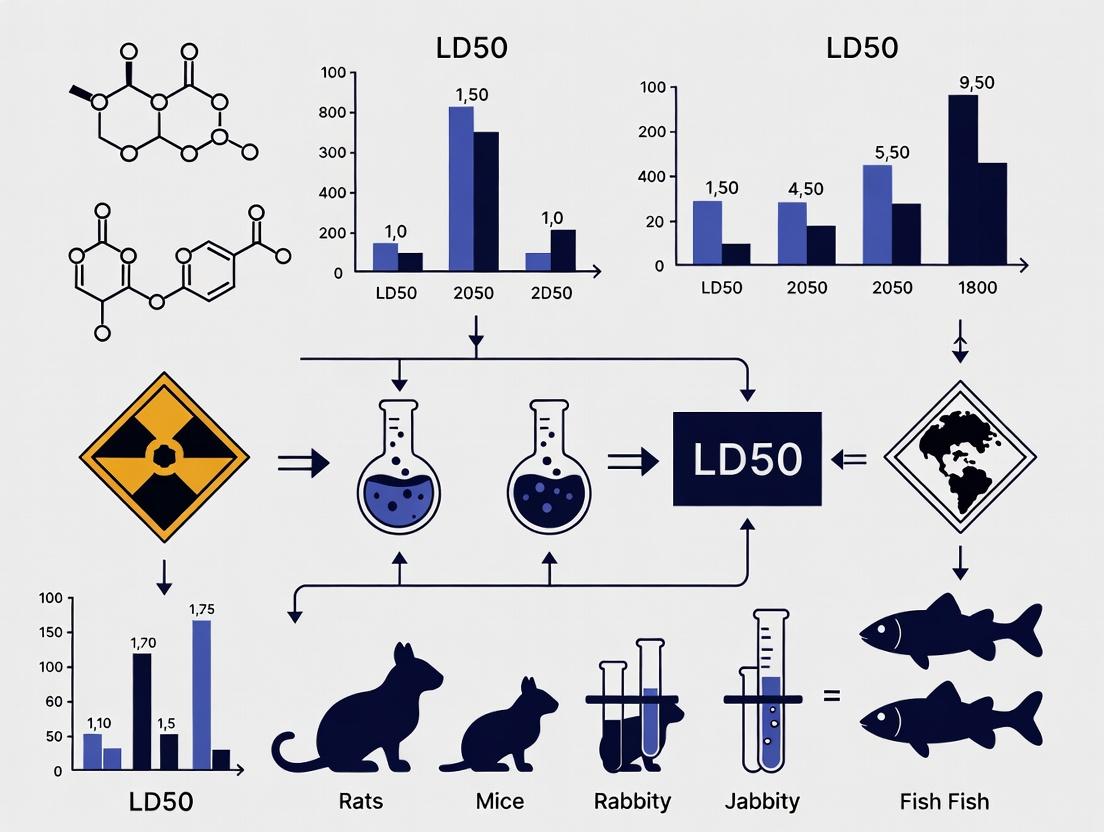
This article provides a comprehensive analysis of methodologies and challenges in comparing Lethal Dose 50 (LD50) values across different species—a critical task for researchers, toxicologists, and drug development professionals.
Beyond Rodent Models: A Systematic Guide to Cross-Species LD50 Comparison for Predictive Toxicology and Risk Assessment
Abstract
This article provides a comprehensive analysis of methodologies and challenges in comparing Lethal Dose 50 (LD50) values across different species—a critical task for researchers, toxicologists, and drug development professionals. It explores the foundational principles of species sensitivity and variability, reviews advanced methodological approaches including in silico QSAR models and database-calibrated assessments, addresses common troubleshooting issues in data interpretation and extrapolation, and establishes frameworks for the validation and comparative analysis of cross-species toxicity data. By synthesizing current research and regulatory perspectives, this guide aims to enhance the accuracy of human health and ecological risk predictions derived from animal studies.
Decoding Species Sensitivity: The Scientific and Ecological Basis of Variable LD50 Values
The median lethal dose (LD50) is a foundational metric in toxicology, defined as the dose of a substance required to kill 50% of a test population within a specified time frame [1] [2]. First introduced by J.W. Trevan in 1927, this standardized measure was developed to compare the relative acute toxicity of various substances, such as drugs and chemicals, by using death as a common, unambiguous endpoint [1] [3]. The value is typically expressed as the mass of substance administered per unit mass of the test subject (e.g., milligrams per kilogram of body weight) [1]. A core principle is that a lower LD50 value indicates higher toxicity [2].
The utility of LD50 extends beyond a simple toxicity ranking. It is critical for risk assessment, informing safety standards in pharmacology, industrial chemical handling, and environmental protection [4]. By providing a quantitative benchmark, LD50 allows researchers and regulators to establish exposure limits, design protective measures, and prioritize chemicals for further study [5]. Its determination involves constructing a dose-response curve, which models the relationship between increasing doses and the percentage mortality in a population [6].
Standardized Experimental Protocol for LD50 Determination
Determining an LD50 value follows a standardized experimental protocol designed to ensure reproducibility and comparability. The following workflow outlines the key stages from animal model selection to final statistical calculation.
Figure 1: Standard workflow for determining median lethal dose (LD50).
Detailed Methodology
- Animal Model Selection: Tests are most commonly performed on rats and mice. The species, strain, age, sex, and body weight must be standardized and documented, as these factors significantly influence results [3] [4].
- Route of Administration: The substance is administered via a single, controlled route. Common routes include:
- Oral (Gavage): Mimics ingestion.
- Dermal: Application to shaved skin to assess absorption.
- Inhalation: Exposure to a controlled concentration of aerosol or gas in a chamber, yielding an LC50 (Lethal Concentration 50) value [3].
- Injection: Intravenous (IV), intraperitoneal (IP), or intramuscular (IM) for precise dosing [3].
- Experimental Design: Animals are randomly allocated into several groups (typically 4-6). Each group receives a different log-increasing dose of the test substance, while a control group receives the vehicle alone. Group sizes commonly range from 5 to 10 animals [4].
- Observation Period: After administration, animals are closely monitored for 14 days for signs of toxicity (lethargy, convulsions, etc.) and mortality [3]. The time of death is recorded.
- Data Analysis and Calculation: Mortality data at each dose level are used to plot a dose-response curve. The LD50 value and its confidence intervals are calculated using statistical methods such as the probit analysis, logit analysis, or the Spearman-Kärber method [7] [6]. The resulting value must be reported alongside the test species, route of administration, and observation period (e.g., LD50 (oral, rat) = 250 mg/kg) [3].
Cross-Species Comparison of LD50 Values
A central thesis in comparative toxicology is that LD50 values for a given substance can vary dramatically between species. This variability is driven by differences in physiology, metabolism, absorption, and genetic makeup [1]. Understanding this is critical for extrapolating animal data to human risk assessment.
Comparative Data: Rodenticides in Target vs. Non-Target Species
The following table illustrates stark interspecies differences using data for common rodenticides. It shows the grams of commercial bait required to deliver an LD50 dose, highlighting how a product toxic to a pest rodent can pose vastly different risks to birds, pets, or livestock [8].
Table 1: Cross-Species Comparison of Bait Required for LD50 Dose of Rodenticides [8]
| Species (1kg body weight) | Difenacoum (50ppm) | Bromadiolone (50ppm) | Brodifacoum (50ppm) | Warfarin (200ppm) |
|---|---|---|---|---|
| Rat (Target) | 40 g | 20 g | 5.8 g | 3,200 g |
| Mouse (Target) | Not Provided | Not Provided | Not Provided | Not Provided |
| Dog (Non-Target) | 200 g | 200 g | 5 g | 80 g |
| Cat (Non-Target) | 2,000 g | 500 g | 500 g | 40 g |
| Chicken (Non-Target) | 1,000 g | 1,000 g | 200 g | 4,000 g |
| Pig (Non-Target) | 1,600 g | 60 g | 10 g | 4 g |
Key Insights from Data:
- Potency Variance: Brodifacoum is highly potent across all species listed, requiring only 5.8g for a rat and 5g for a dog to reach LD50. In contrast, first-generation anticoagulants like warfarin require vastly larger amounts (kg-scale for rats) [8].
- Differential Sensitivity: A substance dangerous to one species may be less so to another. For example, a pig is more sensitive to warfarin (4g LD50) than a rat (3200g LD50), while a cat is more sensitive to bromadiolone than a chicken [8].
- Risk to Non-Target Species: The data directly informs ecological risk assessments. The low LD50 of brodifacoum for dogs indicates a high risk of secondary poisoning, a critical factor in pest management strategies [8].
The Challenge of Human Extrapolation
The interspecies variability shown above underscores the primary challenge in toxicology: animal LD50 data cannot be directly applied to humans [5] [9]. For instance, the dioxin TCDD is extremely toxic to guinea pigs but has not been unambiguously linked to acute human death from short-term exposure [9]. Therefore, human risk assessment uses animal-derived LD50 values as a starting point, applying safety factors (often 10-fold for interspecies differences and another 10-fold for human variability) to estimate a "virtually safe" dose for humans [5].
Advanced Concepts and Comparative Metrics
Therapeutic Index (TI)
For pharmaceuticals, the LD50 alone is insufficient. It must be compared to the drug's efficacy. The Therapeutic Index (TI) = LD50 / ED50, where ED50 is the median effective dose [1]. A high TI indicates a wide safety margin between the therapeutic and toxic doses. This is a more meaningful comparative metric for drug development than LD50 alone.
Alternative and Related Metrics
Other dose-response parameters provide a more complete toxicological profile:
- LD₀₁ / LD₉₉: The dose lethal to 1% or 99% of the population, describing the extremes of the dose-response curve [1].
- NOAEL/NOEL: The No-Observed-Adverse-Effect Level and No-Observed-Effect Level, critical for establishing safe chronic exposure limits [5].
- LCt₅₀: Used for inhalation hazards (especially chemical warfare agents), integrating Concentration (C) and exposure Time (t) based on Haber's Law, though it does not apply to substances rapidly detoxified by the body [1].
Algorithmic and Modeling Advances
Traditional testing is being supplemented by computational methods. New algorithms, such as one developed for snake venom antiserum, aim to derive accurate LD50 and ED50 values using fewer animals by leveraging mathematical relationships between dose, body weight, and response [7]. Furthermore, quantitative structure-activity relationship (QSAR) models and machine learning are being used to predict LD50 values based on chemical properties, reducing reliance on animal testing [9].
The Scientist's Toolkit: Essential Research Reagents and Materials
Conducting robust LD50 studies requires specialized materials and tools. The following table details key components of the research toolkit.
Table 2: Essential Research Toolkit for LD50 Studies
| Tool/Reagent Category | Specific Examples | Primary Function in LD50 Protocol |
|---|---|---|
| Test Substance Preparation | Pure chemical compound, Vehicle (e.g., corn oil, saline, carboxymethylcellulose), Solvents (if required) | To prepare accurate, stable, and administrable dose formulations for the chosen route (oral, injectable, etc.). |
| Animal Models | Specific pathogen-free (SPF) rodents (e.g., Sprague-Dawley rats, Swiss-Webster mice), with defined age, sex, and weight. | To provide a standardized, reproducible biological system for dose-response testing. |
| Dosing Apparatus | Oral gavage needles, Precision syringes, Inhalation exposure chambers, Dermal applicators. | To ensure precise, consistent, and controlled administration of the test substance via the specified route. |
| Clinical Observation Tools | Standardized clinical scoring sheets, Video recording equipment, Body weight scales, Feed/water consumption monitors. | To systematically record signs of toxicity, morbidity, and changes in physiological parameters during the observation period. |
| Statistical Analysis Software | Software capable of probit or logit analysis (e.g., SAS, R, Prism, specialized LC50/LD50 calculators). | To fit dose-response data to a statistical model and accurately calculate the median lethal dose (LD50) with confidence intervals. |
Visualization: From Animal Dose-Response to Human Risk Assessment
The final diagram synthesizes the core challenge of interspecies research: translating animal experimental data into meaningful human safety guidance. It shows the parallel processes in animal testing and human risk assessment, connected by the crucial, yet uncertain, step of interspecies extrapolation.
Figure 2: Translating animal LD50 data to human safety assessment involves key uncertainties.
The determination of chemical toxicity via the median lethal dose (LD50) or concentration (LC50) is a cornerstone of safety science, used to make critical go/no-go decisions in drug development and to assess ecological risk [10]. The LD50 represents the amount of a substance that causes death in 50% of a test population, providing a standardized measure of acute toxicity [3]. Historically, these assessments have relied heavily on rodent models, primarily rats and mice, due to their physiological and genetic similarity to humans, small size, and ease of genetic manipulation [11] [12]. Over 95% of the mouse genome is shared with humans, making them a primary model for studying disease mechanisms and toxicity [13] [12].
However, the critical challenge lies in extrapolating data from these standardized rodent tests to predict outcomes in humans and diverse ecological species. This cross-species extrapolation is fraught with complexity due to interspecies differences in anatomy, physiology, metabolism, and genetics [14] [15]. For instance, a chemical's toxicity can vary significantly based on the route of exposure (oral, dermal, inhalation) and the test species [3]. Furthermore, regulatory requirements are increasingly demanding a reduction in animal testing, pushing the field toward New Approach Methodologies (NAMs), including in silico models and computational toxicology [10].
This guide frames the comparison of LD50 values within the broader thesis that robust cross-species comparison is not merely an academic exercise but an imperative. It is essential for accurate human health risk assessment, effective ecological protection, and the development of reliable alternative methods that can reduce reliance on animal testing while improving predictive accuracy.
Comparative Analysis: Rodents, Humans, and Ecological Receptors
Rodents as Proxies for Human Health: Rodent models are invaluable for biomedical research, contributing to approximately 90% of Nobel Prize-winning studies in Physiology or Medicine [15]. Their utility stems from their ability to model complex disease processes, test therapeutic interventions, and provide toxicity data required by regulatory authorities before human trials [11]. Specific models, such as genetically engineered mice (GEMs) and patient-derived tumor xenografts (PDTXs), allow for sophisticated studies of cancer biology and drug efficacy [11]. For metabolic diseases like obesity and type 2 diabetes, rodent models have been instrumental in unraveling pathophysiological mechanisms, though researchers must critically assess species-specific differences in physiology [16].
Limitations and Interspecies Variability: Despite their advantages, rodents are imperfect human surrogates. Key physiological differences can lead to translational failures. For example, significant differences exist in drug metabolism, immune system function, and disease progression [13]. A chemical with a high LD50 in rats (indicating low toxicity) may still pose a significant risk to humans due to unique metabolic pathways, and vice-versa [3]. This variability underscores why testing in a single species is insufficient for comprehensive risk assessment and why understanding the mechanisms of toxicity is crucial for reliable extrapolation [14].
Extension to Ecological Risk Assessment (ERA): The paradigm of cross-species extrapolation extends beyond human health to protect ecosystems. Ecological Risk Assessment (ERA) requires toxicity data for a wide array of non-target species, including birds, mammals, fish, aquatic invertebrates, and plants [17]. It is logistically and ethically impossible to test every chemical on every potential species. Therefore, regulators rely on extrapolation from standard test species (e.g., laboratory rats, fathead minnows, daphnia) to predict effects on thousands of others [14]. The U.S. Environmental Protection Agency (EPA) uses a deterministic "quotient method," comparing an estimated environmental exposure concentration to a toxicity endpoint (like an LC50) to calculate a Risk Quotient (RQ) [17]. The reliability of this entire framework depends on the accuracy of the cross-species extrapolation models employed.
Data Presentation: Quantitative Comparisons Across Species and Models
The following tables summarize key quantitative data, illustrating the variability in toxicity metrics across species and the performance of modern predictive models designed to bridge these gaps.
Table 1: Acute Toxicity (LD50/LC50) Classifications and Comparative Values
| Toxicity Rating | Oral LD50 (Rat) mg/kg | Inhalation LC50 (Rat) ppm/4hr | Dermal LD50 (Rabbit) mg/kg | Probable Lethal Dose for 70kg Human | Example Chemical (Dichlorvos) |
|---|---|---|---|---|---|
| 1: Extremely Toxic | ≤ 1 | ≤ 10 | ≤ 5 | A taste, a drop (<7 drops) | Inhalation LC50: 1.7 ppm [3] |
| 2: Highly Toxic | 1-50 | 10-100 | 5-43 | 4 ml (1 tsp) | Intraperitoneal LD50 (rat): 15 mg/kg [3] |
| 3: Moderately Toxic | 50-500 | 100-1000 | 44-340 | 30 ml (1 fl. oz.) | Dermal LD50 (rat): 75 mg/kg [3] |
| 4: Slightly Toxic | 500-5000 | 1000-10,000 | 350-2810 | 600 ml (1 pint) | Oral LD50 (rat): 56 mg/kg [3] |
| 5: Practically Non-toxic | 5000-15000 | 10,000-100,000 | 2820-22590 | 1 Litre | Oral LD50 (dog): 100 mg/kg [3] |
Table 2: Performance of Machine Learning Models for Acute Toxicity Prediction (Selected Examples)
| Species | Endpoint | Model Type | Dataset Size (Compounds) | Key Performance Metric | Notes |
|---|---|---|---|---|---|
| Rat | Oral LD50 | Collaborative Acute Toxicity Modeling Suite (CATMoS) | >11,000 (classification) | High accuracy & robustness vs. in vivo [10] | Consensus model from multiple algorithms; tested on pharmaceutical compounds [10]. |
| Rat | Oral LD50 | Bayesian Classification (Assay Central) | 11,297 | Balanced Accuracy: 0.61–0.84 [10] | Eight models based on different toxicity categories [10]. |
| Mouse | Oral LD50 | Regression & Classification | 803 (oral) | 5-fold cross-validation statistics [10] | Data curated from ChEMBL for multiple administration routes [10]. |
| Fish | LC50 | Classification | Up to 2,983 | Based on threshold (≤1 / ≥100 mg/L) [10] | Combined data from ECOTOX and other databases [10]. |
| Daphnia | LC50 | Classification | Up to 1,377 | Based on threshold (≤1 / ≥100 mg/L) [10] | Data from ECOTOX and other sources [10]. |
Experimental Protocols: From In Vivo Tests to In Silico Models
1. Standard In Vivo LD50 Test Protocol (OECD Guidelines): This traditional method involves exposing groups of healthy, young adult animals (typically rats or mice) to a range of single doses of the test substance [3].
- Procedure: Animals are assigned to dose groups. The substance is administered via the relevant route (oral gavage, dermal application, inhalation). For inhalation tests (LC50), animals are exposed in chambers to a known concentration of a gas or vapor for a set period (often 4 hours) [3].
- Observation: Animals are clinically observed individually for signs of toxicity and mortality for a minimum of 14 days post-administration [3].
- Analysis: The number of deaths in each group is recorded. The LD50/LC50 value and its confidence interval are calculated using statistical methods (e.g., probit analysis) from the dose-response data [4].
- Endpoint: The dose/concentration estimated to kill 50% of the test population is derived [10] [3].
2. Computational LD50 Model Building Protocol (as per recent ML studies): This protocol outlines the creation of machine learning models to predict toxicity, reducing animal use [10].
- Data Curation: Large datasets are compiled from public sources (e.g., ChEMBL, ECOTOX) [10]. Entries are sanitized: duplicates and salts are removed, charges are neutralized, and molecular structures are standardized. For regression, LD50 values are converted to –log(mg/kg). For aquatic toxicity classification, the most sensitive species value is retained, and compounds are binarized as high or low toxicity based on thresholds (e.g., ≤1 mg/L and ≥100 mg/L) [10].
- Descriptor Generation & Model Training: Numerical descriptors (e.g., Extended Connectivity Fingerprints - ECFP6) representing molecular structures are generated. Multiple machine learning algorithms (e.g., Naïve Bayesian, Random Forest, Deep Learning) are trained on the curated data to classify or regress the toxicity endpoint [10].
- Validation: Model performance is rigorously evaluated using 5-fold cross-validation. For the rat CATMoS models, an external curated test set was used to validate predictions against known in vivo results [10].
- Applicability Domain: The chemical space for which the model makes reliable predictions is defined, which is a key requirement for OECD-compliant QSAR models [10].
3. Ecological Risk Quotient (RQ) Calculation Protocol (EPA Method): This is a screening-level method used in pesticide risk assessment [17].
- Exposure Estimation (EEC): The Estimated Environmental Concentration is calculated using models that consider pesticide use patterns, fate, transport, and organism behavior. For birds, this could be the concentration in diet (mg/kg diet) or the dose per unit area (mg a.i./ft²) [17].
- Toxicity Endpoint Selection: The most sensitive relevant toxicity endpoint from laboratory studies is selected. For an acute avian risk assessment, this is the lowest available LD50 (single oral dose) or LC50 (dietary) [17].
- Risk Quotient Calculation: A point estimate RQ is calculated: RQ = EEC / Toxicity Endpoint. For a dietary-based acute avian assessment: RQ = (Concentration in Diet, mg/kg) / (Avian LD50, mg/kg) [17].
- Risk Characterization: The calculated RQ is compared to pre-defined Levels of Concern (LOCs). An RQ exceeding the LOC indicates potential risk and may trigger more refined assessments or risk mitigation measures [17].
The Scientist's Toolkit: Research Reagent Solutions
Table 3: Essential Tools and Resources for Cross-Species Toxicity Research
| Tool/Resource | Type | Primary Function in Research |
|---|---|---|
| Assay Central Software | Software Platform | Enables building, validating, and deploying machine learning models for toxicity prediction using Bayesian algorithms and other methods [10]. |
| RDKit / Indigo Toolkit | Open-Source Cheminformatics | Provides fundamental functions for molecular sanitization, descriptor calculation, and structure standardization during data curation for computational modeling [10]. |
| CATMoS (Collaborative Acute Toxicity Modeling Suite) | Consensus Model Platform | Provides a curated dataset and consensus predictions from multiple modeling groups for rat oral LD50, offering high robustness for prioritization [10]. |
| EPA T-REX Model | Ecological Exposure Model | Calculates dietary- and dose-based Risk Quotients (RQs) for birds and mammals exposed to pesticides via spray, granular, or seed treatment applications [17]. |
| Genetically Engineered Mouse (GEM) Models | Biological Model | Allows for the study of disease mechanisms and compound efficacy in vivo by activating oncogenes or inactivating tumor-suppressor genes in a tissue-specific manner [11]. |
| Patient-Derived Tumor Xenograft (PDTX) Models | Biological Model | Conserves original human tumor characteristics (heterogeneity, genetics) when engrafted into immunodeficient mice, providing a more clinically relevant model for oncology drug testing [11]. |
| Rat Resource & Research Center (RRRC) / Mutant Mouse Regional Resource Centers (MMRRC) | Biorepository | Preserves and distributes genetically characterized rat and mouse strains, ensuring accessibility and reproducibility of research using these animal models [12]. |
The imperative for cross-species comparison is undeniable. Moving from rodent LD50 data to informed decisions about human health and ecological safety requires a multifaceted strategy that acknowledges both the power and the limitations of animal models. The future of the field lies in the integrated use of comparative biology, mechanistic toxicology, and advanced computational tools.
The development and regulatory adoption of New Approach Methodologies (NAMs), including the machine learning models detailed here, are critical for reducing animal use while potentially improving the accuracy and scope of toxicity predictions [10] [14]. Success will depend on improving data quality and accessibility, developing frameworks that combine relatedness-, traits-, and genomics-based extrapolation methods, and maintaining rigorous validation against high-quality experimental data [14]. By critically evaluating rodent data within this broader comparative framework, researchers and risk assessors can make more reliable, protective, and ethical decisions that safeguard both human and environmental health.
Visualizing Frameworks and Workflows
Diagram Title: A framework for cross-species toxicity extrapolation [14].
Diagram Title: EPA ecological risk quotient workflow [17].
Determining the median lethal dose (LD50) is a fundamental component of acute toxicity testing, providing a standardized point of comparison for chemical hazards [1] [3]. However, translating these animal-derived values into accurate human health risk assessments presents a significant scientific challenge due to profound interspecies variability. Historically, this uncertainty has been addressed through the application of default safety factors [18]. For decades, a 100-fold factor has been commonly used, divided into two 10-fold components: one for interspecies differences and another for intraspecies (human) variability [18]. While practical, these defaults are recognized as largely arbitrary and may not be protective or scientifically appropriate for all substances [18] [19].
The core thesis of this guide is that moving beyond these generic defaults requires a mechanistic understanding of the key biological drivers of variability. Empirical data increasingly show that predictable physiological and metabolic principles, rather than random differences, govern much of the observed variation in LD50 values across species [19]. This guide will objectively compare the performance of traditional default approaches with more sophisticated, data-driven methods for interspecies extrapolation, focusing on three primary factors: metabolism, physiology (allometry), and route of exposure. We will provide supporting experimental data and protocols to equip researchers with the tools for more accurate and scientifically defensible cross-species comparisons in toxicology and drug development.
Comparative Analysis of Extrapolation Methodologies
A critical step in risk assessment is extrapolating an effect level (like an LD50) from an animal model to a human equivalent. The table below compares the prevailing methodologies, their scientific basis, performance, and ideal applications.
Table 1: Comparison of Methodologies for Interspecies LD50 Extrapolation
| Methodology | Core Principle | Typical Performance & Uncertainty | Key Advantages | Major Limitations | Best Use Context |
|---|---|---|---|---|---|
| Default Safety Factor | Application of a generic 10-fold interspecies uncertainty factor [18]. | Variable; can be under- or over-protective. Factor of 10 may be inadequate for certain kinetics [18]. | Simple, requires no chemical-specific data, provides consistent regulatory benchmark. | Arbitrary, ignores chemical-specific toxicokinetics/dynamics, can lead to inaccurate risk estimates [18]. | Screening-level assessment; data-poor situations. |
| Body Weight Scaling (Allometric Exponent 1.0) | Assumes toxicity is equivalent when dose is normalized per kg of body weight [19]. | Poor agreement with empirical LD50 data; generally not supported [19]. | Intuitively simple. | Biologically implausible; fails to account for fundamental metabolic rate differences between species [19]. | Not recommended as a generic approach. |
| Caloric Demand/Metabolic Body Size Scaling (Allometric Exponent 0.75) | Scales dose based on metabolic rate, which correlates with body weight^0.75 [19]. | Strong empirical support for pharmacokinetic parameters (AUC, Clearance); reliable for interspecies extrapolation [19]. | Biologically grounded, data-driven, widely applicable across diverse chemicals. | Requires identification of appropriate point of departure; less accurate for locally acting agents. | Default data-informed approach for systemic toxicants when PBPK models are unavailable. |
| Physiologically Based Pharmacokinetic (PBPK) Modeling | Mathematical modeling of absorption, distribution, metabolism, and excretion based on species-specific physiology [19]. | High accuracy; reduces uncertainty to chemical-specific parameters. | Most scientifically rigorous, accounts for complex kinetics and metabolism, species- and route-specific. | Resource-intensive, requires substantial chemical-specific and physiological data. | Priority chemicals with rich data; drug development; refining risk assessments. |
Factor 1: Metabolic Pathways and Biotransformation
Role in Variability: Interspecies differences in drug metabolism are a primary source of variability in toxic response [20]. Variations in the expression, activity, and polymorphism of enzymes (e.g., CYPs, UGTs) can drastically alter the internal dose of a parent compound or toxic metabolite [18] [20]. These differences can render a species more susceptible or resistant compared to humans.
Supporting Experimental Data: Evidence underscores the limitation of default factors. A meta-analysis of enzyme activities suggests that chemical-specific adjustment factors can vary widely, often exceeding the standard 10-fold factor [18]. For instance, studies on human variability in susceptibility to cancer have suggested a factor of 25 may be more appropriate than 10 [18]. This metabolic variability is a key reason why a one-size-fits-all safety factor is problematic.
Detailed Experimental Protocol: In Vitro Metabolic Stability Assay for Cross-Species Comparison
Objective: To quantify interspecies differences in the metabolic clearance of a test compound using hepatic subcellular fractions.
Materials:
- Test Compound: Solution of known concentration.
- Liver Microsomes/S9 Fractions: From human, rat, mouse, and dog (commercially available).
- Co-factor Solutions: NADPH regenerating system (for Phase I), UDPGA (for Phase II).
- Buffers: Potassium phosphate buffer (pH 7.4).
- Stop Solution: Acetonitrile with internal standard.
- Analytical Instrumentation: LC-MS/MS system.
Procedure:
- Incubation: Combine microsomes (0.5 mg/mL protein), test compound (1 µM), and co-factors in buffer. Run duplicates.
- Time Course: Aliquot reactions are stopped with ice-cold acetonitrile at pre-set times (e.g., 0, 5, 15, 30, 60 min).
- Sample Processing: Centrifuge stopped reactions; analyze supernatant via LC-MS/MS to determine parent compound concentration.
- Data Analysis: Plot ln(compound concentration) vs. time. The slope represents the elimination rate constant (k). Calculate in vitro intrinsic clearance: CLint, in vitro = k / (microsomal protein concentration).
- Comparison: Normalize clearance values across species (e.g., per mg microsomal protein). A 10-fold or greater difference in CLint indicates significant metabolic variability not captured by default factors.
Factor 2: Physiological Scaling and Allometry
Role in Variability: Fundamental physiological processes—such as cardiac output, glomerular filtration, and metabolic rate—scale predictably with body size across mammalian species. Ignoring these relationships is a major source of error in dose extrapolation [19].
Supporting Experimental Data: Empirical analysis of pharmacokinetic data from 71 substances across species shows strong agreement with caloric demand scaling (exponent 0.75), but poor agreement with simple body weight scaling (exponent 1.0) [19]. For example, clearance (CL) scales with BW^0.75, meaning a smaller animal clears a proportionally larger dose per kg body weight per unit time. Consequently, administering equal mg/kg doses to a mouse and a human does not result in equivalent systemic exposure; the mouse experiences a lower exposure, making it appear less sensitive if raw LD50 values are compared directly.
Allometric Scaling Calculation: The general allometric equation is: P = a × BW^b Where P is the physiological parameter (e.g., equivalent dose), a is the allometric coefficient, BW is body weight, and b is the allometric exponent (0.75 for caloric demand scaling).
Table 2: Allometric Scaling Factors for Interspecies Extrapolation (Based on a 70 kg Human)
| Species | Typical Body Weight (kg) | Body Weight Scaling Factor (BW^1.0) | Caloric Demand Scaling Factor (BW^0.75) |
|---|---|---|---|
| Mouse | 0.025 | 2800 | 12.9 |
| Rat | 0.25 | 280 | 7.2 |
| Dog | 10 | 7 | 2.3 |
| Human | 70 | 1 | 1.0 |
Interpretation: To estimate a human equivalent dose (HED) from a rat LD50 of 100 mg/kg using caloric demand scaling: HED = 100 mg/kg ÷ 7.2 ≈ 13.9 mg/kg. Using body weight scaling would incorrectly suggest a HED of 100 mg/kg ÷ 280 ≈ 0.36 mg/kg, vastly overestimating human sensitivity.
Factor 3: Route of Exposure and Toxicokinetics
Role in Variability: The route of exposure (oral, intravenous, dermal, inhalation) dramatically affects the internal dose by influencing absorption rate, first-pass metabolism, and bioavailability [21]. This introduces significant variability when comparing LD50 values derived from different routes.
Supporting Experimental Data: Analysis of 527 compounds shows lethal toxicity (log 1/LD50) is well-correlated between intravenous (IV), intraperitoneal (IP), and intramuscular (IM) routes (R > 0.91), but poorly correlated between oral and IV routes (R = 0.82) [21]. Systemic bias exists: IV administration is typically the most sensitive route, while oral is the least sensitive, primarily due to differences in absorption rates and first-pass hepatic metabolism [21]. For example, the insecticide dichlorvos shows an oral LD50 in rats of 56 mg/kg but an intraperitoneal LD50 of just 15 mg/kg [3].
Table 3: Impact of Exposure Route on Acute Toxicity in Rats (Illustrative Data)
| Chemical | Oral LD50 (mg/kg) | Intraperitoneal LD50 (mg/kg) | Dermal LD50 (mg/kg) | Inhalation LC50 (ppm/4h) |
|---|---|---|---|---|
| Dichlorvos [3] | 56 | 15 | 75 | 1.7 |
| Ethanol [1] | 7060 | Not Provided | Not Provided | Not Provided |
| Sodium Chloride [1] | 3000 | Not Provided | Not Provided | Not Provided |
Detailed Experimental Protocol: Toxicokinetic Study Across Routes
Objective: To characterize the effect of exposure route on systemic exposure (AUC) and acute toxicity for a test compound.
Materials:
- Test Animals: Groups of male/female rats (e.g., Sprague-Dawley).
- Test Compound: Formulated for oral gavage, IV injection, and dermal application.
- Dosing Supplies: Gavage needles, syringes, IV catheters, occlusive dressings for dermal route.
- Blood Collection: Catheters or microsampling techniques.
- Bioanalytical Equipment: LC-MS/MS.
Procedure:
- Dosing: Administer a single sub-lethal dose of the compound to separate animal groups via oral, IV, and dermal routes. Dose levels should be equimolar.
- Serial Blood Sampling: Collect blood samples at multiple time points post-administration (e.g., 5, 15, 30 min, 1, 2, 4, 8, 24h).
- Bioanalysis: Quantify parent compound (and major metabolites) concentration in plasma.
- Toxicokinetic Analysis: Calculate AUC, Cmax, Tmax, and bioavailability (F) for each route. Bioavailability (F) = (AUCoral / Doseoral) / (AUCIV / DoseIV).
- Correlation with LD50: Compare the AUC at the LD50 dose for each route (if data available). The route with the lowest AUC at lethality is the most systemically potent.
Visualization of Key Concepts
Diagram 1: Framework for Interspecies LD50 Extrapolation (760x460 px)
Table 4: Key Research Reagent Solutions for Interspecies Toxicity Research
| Tool / Resource | Function in Interspecies Research | Example/Source |
|---|---|---|
| Population-Based In Vivo Models | Model genetic diversity within a species to quantify variability in toxic response and identify sensitive subpopulations. | Diversity Outbred (DO) mice, Collaborative Cross (CC) mice [18]. |
| In Vitro Metabolic Systems | Compare species-specific metabolic rates and pathways without in vivo studies. | Liver microsomes, hepatocytes, or S9 fractions from human, rat, dog, mouse [20]. |
| Genetically Diverse Cell Lines | Assess inter-individual human variability in toxicodynamic response in a controlled system. | Population-based human cell line models (e.g., from 1000 Genomes donors) [18]. |
| Consensus QSAR Platforms | Generate health-protective LD50 predictions when experimental data are absent, using consensus of multiple models. | CATMoS, VEGA, TEST models combined into a Conservative Consensus Model (CCM) [22]. |
| Curated Reference LD50 Databases | Provide high-quality, replicated in vivo data to understand baseline variability and validate alternative methods. | AcutoxBase, EPA CompTox Chemicals Dashboard, ECHA database [23]. |
| PBPK Modeling Software | Integrate physiological, physicochemical, and metabolic data to mechanistically simulate internal dose across species and routes. | Commercial (GastroPlus, Simcyp) and open-source (PK-Sim) platforms. |
| Chemical Descriptor Software | Calculate physicochemical properties (logP, pKa, molecular weight) critical for QSAR and kinetic modeling. | OPERA, RDKit, ChemAxon. |
The comparative analysis of median lethal dose (LD50) values across different species represents a foundational pillar in ecotoxicology and drug development. To synthesize these discrete comparisons into a robust, predictive framework for ecological risk assessment, researchers employ Species Sensitivity Distributions (SSDs). An SSD is a statistical model that characterizes the variation in sensitivity to a toxicant across a community of species, typically by fitting a probability distribution (often log-normal) to a set of toxicity data points, such as LD50 or EC50 values [24]. The core parameters of this distribution—the mean and the standard deviation (SD)—quantify the central tendency and the variability in species sensitivity, respectively [24].
Accurately determining these parameters is critical. They are used to calculate the Hazardous Concentration for 5% of species (HC5), a key metric for deriving predicted no-effect concentrations (PNECs) for environmental pollutants [25] [24]. However, constructing a reliable SSD traditionally requires toxicity data for a minimum of 8-10 species, a significant barrier for new or data-poor chemicals [24]. This challenge has driven innovation in two key areas: 1) the development of computational models to predict SSD parameters with limited data, and 2) the refinement of statistical frameworks to quantify uncertainty in SSD estimates. This guide objectively compares these emerging methodologies against traditional laboratory-based testing, providing researchers with a clear overview of the tools available for quantifying variability in species sensitivity.
Product Comparison Guide: QSAR Platforms for LD50 and Toxicity Prediction
A primary alternative to extensive biological testing is the use of Quantitative Structure-Activity Relationship (QSAR) models. These computational tools predict toxicological endpoints, like rat oral LD50, based on the chemical structure of a compound [22]. The following table compares the performance of leading QSAR platforms and a consensus approach in predicting Globally Harmonized System (GHS) acute toxicity categories.
Table 1: Performance Comparison of QSAR Models for Acute Oral Toxicity Prediction (Rat LD50) [22]
| Model / Approach | Key Description | Over-prediction Rate (Less Safe) | Under-prediction Rate (More Safe) | Primary Utility |
|---|---|---|---|---|
| TEST | Standalone QSAR model for toxicity estimation. | 24% | 20% | Initial screening, data gap filling. |
| CATMoS | Comprehensive Automated Toxicological Model using Simulations. | 25% | 10% | High-throughput toxicity prediction. |
| VEGA | Platform hosting multiple validated QSAR models. | 8% | 5% | Regulatory assessments, robust predictions. |
| Conservative Consensus Model (CCM) | Adopts the lowest predicted LD50 from TEST, CATMoS, and VEGA. | 37% | 2% | Health-protective screening under high uncertainty. |
Comparative Analysis: While individual models like VEGA offer a balanced performance with low under-prediction (5%), the Conservative Consensus Model (CCM) is explicitly designed for a precautionary principle [22]. By selecting the lowest predicted LD50 value from three independent models, the CCM minimizes the risk of underestimating toxicity (2% under-prediction) at the cost of a higher over-prediction rate (37%) [22]. This makes the CCM particularly valuable for prioritizing chemicals of concern or for making initial safety decisions in the absence of experimental data.
Experimental Protocol: Consensus QSAR Modeling
The methodology for developing and applying the CCM, as detailed in the research, involves a defined workflow [22].
- Input Compilation: The chemical structures of 6,229 organic compounds are standardized.
- Parallel Prediction: Each compound is submitted to three independent QSAR models: TEST, CATMoS, and VEGA to generate three distinct rat oral LD50 predictions.
- Consensus Application: For each compound, the lowest predicted LD50 value among the three outputs is identified and assigned as the CCM prediction.
- Validation & Categorization: Predicted LD50 values are converted into GHS toxicity categories. Performance is evaluated by comparing these predicted categories to the categories derived from experimental LD50 values, calculating rates of over- and under-prediction.
Diagram 1: Workflow of a Conservative Consensus QSAR Model for LD50 Prediction (77 characters)
Core Methodology: Quantifying SSD Parameters and Their Uncertainty
When experimental data for multiple species are available, the standard approach is to fit a log-normal distribution to the log10-transformed toxicity values (e.g., LD50s). The mean (μ) and standard deviation (σ) of this fitted distribution are the foundational SSD parameters [24].
Advanced Protocol: Estimating SSD Parameters from Minimal Data
A breakthrough protocol addresses the data scarcity problem by using toxicity data from just three species to predict the μ and σ for a full SSD [24].
- Data Curation: Collect quality-assured acute toxicity data (LC50/EC50) for at least 8 species per chemical, spanning algae, crustaceans, and fish. Data is log10-transformed [24].
- Full SSD Parameterization: For each chemical, calculate the sample mean and sample SD of the log-transformed data from all available species (the "true" reference values) [24].
- Three-Species Subsampling: For each chemical, randomly select one species from each of the three core taxonomic groups (algae, crustacean, fish). Calculate the mean and SD from only these three data points [24].
- Model Development: Build multiple linear regression models where the full SSD's μ and σ are the dependent variables. Predictors include physicochemical descriptors (e.g., log KOW) and, crucially, the mean and SD calculated from the three-species subset [24].
- Validation: Models are validated using a hold-out set of chemicals not used in the training phase [24].
Table 2: Performance of Models Predicting Full SSD Parameters from Limited Data [24]
| Prediction Target | Predictor Variables Used | Coefficient of Determination (R²) | Key Interpretation |
|---|---|---|---|
| SSD Mean (μ) | Physicochemical descriptors only (e.g., log KOW) | 0.62 | Descriptors alone explain a moderate amount of variance. |
| SSD Mean (μ) | Mean & SD from 3 species + descriptors | 0.96 | Three-species data drastically improves prediction accuracy. |
| SSD SD (σ) | Physicochemical descriptors only | 0.49 | Poor predictive power for variability using structure alone. |
| SSD SD (σ) | Mean & SD from 3 species + descriptors | 0.75 | Substantial improvement, enabling feasible σ estimation. |
Quantifying Uncertainty: The Assessment Factor Framework
The uncertainty in an estimated HC5 is formally quantified using an Assessment Factor (AF). The required AF size depends on the sample size (number of species tested) and the true, unknown variability (σ) in species sensitivity [25]. A derived statistical relationship shows that to protect 95% of species with 95% confidence, the AF can be calculated as [25]: AF = exp( t * σ * √(1 + 1/n) ) Where t is the critical value from the non-central t-distribution, σ is the estimated SD of the log-normal SSD, and n is the sample size [25]. This equation explicitly guides researchers on how much to adjust an HC5 estimate based on the quality and variability of their data.
Diagram 2: From Toxicity Data to Protected Concentration with Assessment Factors (95 characters)
Case Study: Beyond LD50 - The BeeGUTS TKTD Modeling Approach
A case study on bee pesticide risk assessment illustrates a paradigm shift from comparing static LD50 values to modeling dynamic toxicological processes. Traditional bee risk assessment relies on comparing 48-hour LD50 values between honey bees and other species [26]. However, the LD50 is time-dependent and influenced by physiological differences (e.g., body size, honey stomach volume), confounding true sensitivity comparisons [26].
The Toxicokinetic-Toxicodynamic (TKTD) modeling approach (BeeGUTS) separates these factors [26].
- Toxicokinetics (TK): Models the uptake, distribution, and elimination of the chemical within the bee over time.
- Toxicodynamics (TD): Models the damage accumulation and resulting mortality, characterized by an internal effect threshold, a time-independent parameter.
Table 3: Comparison of Traditional LD50 vs. TKTD Modeling for Bee Sensitivity Assessment
| Aspect | Traditional 48-hr LD50 Comparison | BeeGUTS TKTD Modeling Approach |
|---|---|---|
| Core Metric | Median Lethal Dose at 48 hours. | Internal threshold concentration (TD parameter). |
| Time Dependency | Highly time-dependent; value valid only for the test duration. | Time-independent; separates kinetics from dynamics. |
| Physiology Influence | Confounded by species size, feeding rates, and detoxification speed. | Explicitly accounted for in the toxicokinetic module. |
| Comparative Outcome | Can overestimate sensitivity differences between species [26]. | Reveals that honey bees are among the more sensitive species, with smaller inter-species differences than LD50s suggest [26]. |
| Data Requirement | Standard acute test results. | Time-series survival data from acute or chronic tests. |
This approach provides a more robust basis for cross-species extrapolation than simple LD50 comparisons, aligning with the SSD goal of understanding intrinsic sensitivity distributions [26].
Table 4: Key Research Reagent Solutions for SSD and LD50 Comparison Studies
| Item / Solution | Function in Research | Example / Note |
|---|---|---|
| Standard Test Organisms | Provide consistent, comparable toxicity endpoints (LC50, EC50) for SSD construction. | Algae (Pseudokirchneriella subcapitata), Crustacean (Daphnia magna), Fish (Oncorhynchus mykiss) [24]. |
| QSAR Software Platforms | Predict toxicity endpoints and classify hazards for data-poor chemicals. | VEGA, TEST, CATMoS models for rat oral LD50 prediction [22]. |
| Physicochemical Descriptors | Serve as predictors in models linking chemical structure to SSD parameters. | Log KOW (octanol-water partition coefficient), molecular weight [24]. |
| Curated Toxicity Databases | Source of quality-assured experimental data for model training and validation. | Data from regulatory assessments (e.g., Japan's IERAs) [24]. |
| Statistical Software & Packages | Perform distribution fitting, calculate HC5/PNEC, and implement uncertainty analysis. | R or Python with packages for SSD modeling and non-central t-distribution calculations [25]. |
| TKTD Modeling Software | Analyze time-series toxicity data to derive intrinsic sensitivity parameters. | BeeGUTS model framework for bee toxicity data [26]. |
Diagram 3: Logical Workflow Integrating Key Toolkit Components for SSD Analysis (85 characters)
Core Mechanistic Comparison of Toxicant Classes
This guide organizes toxicants by their primary Mode of Action (MoA), defined as a general functional or anatomical change leading to adverse outcomes, distinct from the precise biochemical mechanism [27]. This framework is essential for hazard assessment, predicting additive effects in mixtures, and interpreting cross-species differences in toxicity metrics like LD₅₀.
Table 1: Foundational Comparison of Narcotic, Neurotoxic, and Specific Toxicant Modes of Action
| Characteristic | Narcotics (Baseline Toxicity) | Neurotoxicants | Specific Receptor/Enzyme Toxicants |
|---|---|---|---|
| Primary MoA | Nonspecific membrane disruption (narcosis) [27]. | Disruption of nervous system function, structure, or development [28]. | Specific interaction with a defined molecular target (e.g., receptor, enzyme). |
| Biochemical Target | Lipid bilayer of cellular membranes [27]. | Ion channels, neurotransmitter systems, neuronal or glial cell integrity [29] [28]. | Specific proteins (e.g., Ah receptor, acetylcholinesterase) [27]. |
| Key Molecular Event | Accumulation in membranes, altering integrity and function [27]. | Oxidative stress, excitotoxicity, mitochondrial dysfunction, neuroinflammation [29] [30]. | High-affinity binding or catalytic inhibition/activation. |
| Potency Correlation | Correlates with lipophilicity (Kow); compounds are approximately equipotent based on tissue concentration [27]. | Varies widely; depends on affinity for neural targets and pharmacokinetics [29]. | Correlates with affinity for the specific target; potency varies dramatically between congeners [27]. |
| Additivity in Mixtures | Concentrations are directly additive (similar action) [27]. | May be additive if they share the same neurotoxic pathway (e.g., oxidative stress) [29]. | Additive only for compounds acting on the same specific target [27]. |
| Tissue Concentration at Effect | Acute lethality at ~2–8 μmol/g (lipid-normalized) [27]. | Sub-lethal effects can occur at very low concentrations; lethal dose varies [29]. | Can trigger effects at very low tissue concentrations (e.g., mutagenicity) [27]. |
| Representative Agents | Simple PAHs, many inert organic solvents [27]. | Methamphetamine, cocaine, lead, manganese, organophosphates (chronic) [29] [28]. | TCDD (AhR agonist), organophosphate pesticides (AChE inhibitors), MPP+ [27] [31]. |
Table 2: Comparison of Neurotoxicant Subcategories and Their Specific Mechanisms
| Neurotoxicant Class | Primary Molecular Target/Event | Downstream Consequences | Functional/Clinical Manifestation |
|---|---|---|---|
| Psychostimulants (e.g., Methamphetamine, Cocaine) | Monoamine transporter disruption → excessive dopamine/serotonin release [29]. | Oxidative stress, mitochondrial dysfunction, excitotoxicity [29]. | Cognitive impairment, psychosis, motor deficits [29]. |
| Dissociative Anesthetics (e.g., Ketamine, N₂O) | NMDA receptor antagonism (Ketamine) [29]; NMDAR antagonism & cobalamin oxidation (N₂O) [32]. | Glutamatergic disruption, excitotoxicity, impaired methylation & myelination (N₂O) [29] [32]. | Cognitive deficits, demyelinating neuropathy, paralysis [29] [32]. |
| Opioids (e.g., Heroin) | μ-opioid receptor agonism [29]. | Oxidative stress, neuroinflammation, mitochondrial dysfunction [29]. | Respiratory depression, cognitive deficits, leukoencephalopathy [29]. |
| Developmental Neurotoxicants (e.g., lead, PCBs) | Disruption of neural cell proliferation, migration, differentiation, synaptogenesis [31]. | Altered neural circuitry and connectivity [31]. | Lifelong cognitive, motor, or social deficits [31]. |
| Local Anesthetic Toxicity (e.g., high-dose lidocaine) | Disruption of mitochondrial function, uncoupling of oxidative phosphorylation [28]. | ATP depletion, oxidative stress, neuronal damage [28]. | Persistent neurological injury (e.g., cauda equina syndrome) [28]. |
Key Experimental Protocols for MoA Identification and Toxicity Assessment
In Vivo Acute Oral LD₅₀ Determination (OECD TG 423, 223)
This protocol establishes a foundational toxicity metric for cross-species and cross-compound comparison [4].
- Objective: Determine the single dose of a substance that causes lethality in 50% of a test population within a specified period [4].
- Test System: Typically rodents (rats/mice) or birds (e.g., Bobwhite quail) [4] [33]. Species selection is critical for extrapolation.
- Procedure:
- Healthy young adult animals are randomly assigned to dose groups (typically 4-6).
- Test compound is administered once via oral gavage in a graduated dose series.
- Animals are observed meticulously for 14 days for signs of morbidity, mortality, and toxic response (clinical observations can provide initial MoA clues).
- Time of death and gross pathological findings are recorded.
- Data Analysis: Mortality data are plotted (dose vs. % mortality) to generate a dose-response curve. The LD₅₀ value and its confidence interval are calculated using probit or logit analysis [4].
- Interpretation for MoA: Steep dose-response curves may indicate a specific receptor-mediated MoA, while shallower curves can suggest nonspecific toxicity. Notable differences in LD₅₀ across species can hint at variations in toxicokinetics or the presence/absence of a specific target [33].
High-Throughput In Vitro Neurotoxicity Screening (NeuriTox Assay)
This protocol identifies specific neurotoxicants by assessing neurite outgrowth impairment, distinguishing them from general cytotoxins [31].
- Objective: Screen chemical libraries for specific developmental neurotoxicity potential using human-derived neurons.
- Test System: LUHMES cells (Lund human mesencephalic cells), differentiated into dopaminergic neurons over 6 days [31].
- Procedure [31]:
- Cell Culture & Differentiation: LUHMES progenitors are seeded and differentiated using tetracycline, cAMP, and GDNF to mature neurons.
- Compound Exposure: On day 6 of differentiation, cells are exposed to test compounds (e.g., a range up to 20 µM) for 48 hours in a 96-well plate format.
- High-Content Imaging: Cells are fixed, stained for neuronal markers (e.g., β-III-tubulin) and a nuclear dye.
- Image Analysis: Automated analysis quantifies total neurite length per neuron and cell viability (nuclear count/health).
- Data Analysis: Concentration-response curves are generated for both neurite length and viability. A compound is flagged as a specific neurotoxicant if it significantly inhibits neurite outgrowth at concentrations that do not reduce cell viability [31].
- Interpretation for MoA: This assay can pinpoint compounds with specific MoAs affecting neuronal connectivity (e.g., microtubule disruptors like colchicine) and differentiate them from baseline narcotics, which typically show concurrent cytotoxicity [31].
Visualizing Mechanistic Pathways and Screening Workflows
Diagram 1: Comparative Pathways from Exposure to Adverse Outcome by MoA
Comparative Toxicant Pathways: Narcotics, Neurotoxicants, Specific Toxicants
Diagram 2: High-Throughput Screening Workflow for Neurotoxicant Identification
In Vitro Screening Workflow for Specific Neurotoxicity [31]
The Scientist's Toolkit: Essential Reagents and Models
Table 3: Key Research Reagent Solutions for MoA-Driven Toxicology
| Reagent / Model System | Function in MoA Research | Application Example |
|---|---|---|
| LUHMES Cells | Human-derived dopaminergic neuronal precursor cell line. Differentiate into mature, homogeneous neurons for high-throughput neurotoxicity screening [31]. | Identifying specific developmental neurotoxicants by measuring neurite outgrowth inhibition (NeuriTox assay) [31]. |
| Neuronal Differentiation Media | Typically contains tetracycline, cAMP, and glial cell-derived neurotrophic factor (GDNF). Drives and supports terminal differentiation of progenitor cells into functional neurons [31]. | Essential for preparing LUHMES or similar cells for neurotoxicity testing that requires mature neuronal phenotypes [31]. |
| Poly-L-Ornithine (PLO) / Fibronectin Coating | Provides a substrate that enhances neuronal attachment, survival, and neurite outgrowth in vitro. | Standard coating protocol for culturing primary neurons or neuronal cell lines like LUHMES [31]. |
| High-Content Imaging Assay Kits | Kits containing fluorescent dyes for β-III-tubulin (neurons), MAP2 (neurites), and nuclear/viability markers (e.g., DAPI, propidium iodide). Enable multiplexed, automated quantification of neuronal health. | Critical for endpoint analysis in high-throughput neurotoxicity screens to quantify neurite length and cell viability simultaneously [31]. |
| NTP80 Compound Library | A curated library of 75+ chemicals with known or suspected neuro/developmental toxicity, PAHs, flame retardants, etc. Serves as a benchmark for assay validation [31]. | Used as a test set to evaluate the predictive performance of new in vitro toxicity assays (e.g., NeuriTox, PeriTox) [31]. |
| Bobwhite Quail (Colinus virginianus) | Standard avian model for in vivo acute oral toxicity testing (OECD TG 223). Used for determining species-specific LD₅₀ values [33]. | Developing cross-species toxicity extrapolation models and QSARs for ecological risk assessment [33]. |
From Animal Data to Human Predictions: Methodologies for Extrapolating and Applying Cross-Species LD50
Lethal Dose 50 (LD50) and Lethal Concentration 50 (LC50) are standard measures of acute toxicity, representing the dose or concentration of a substance required to cause death in 50% of a treated test population within a defined period [3]. These values provide a foundational, quantitative method for comparing the relative poisoning potency of different chemicals, overcoming the challenge of comparing diverse toxic effects by using mortality as a common, unambiguous endpoint [3]. The concept was pioneered by J.W. Trevan in 1927 to standardize the evaluation of drugs and medicines [3] [5].
Acute toxicity refers to adverse effects occurring shortly after a single administration or a short-term exposure (typically up to 24 hours or 14 days of observation) [3]. LD50 applies to administered doses (oral, dermal, injection), while LC50 specifically refers to concentrations in an environmental medium, most commonly air for inhalation studies [3]. The values are expressed as the weight of chemical per unit body weight of the test animal (e.g., mg/kg for LD50) or as a concentration in air (e.g., ppm or mg/m³ for LC50) [3].
These tests are crucial for hazard identification, safety labeling (e.g., signal words like "Danger" or "Warning"), and establishing initial safety guidelines for human exposure, particularly in occupational and environmental health [34] [35]. They help define the toxic potency of a substance, where a lower LD50/LC50 value indicates higher toxicity [3] [4].
Comparative Analysis of Oral, Dermal, and Inhalation Study Designs
The route of exposure fundamentally influences a chemical's toxicity profile and is a critical variable in hazard assessment. Oral, dermal, and inhalation studies are designed to reflect different real-world exposure scenarios.
Oral LD50 Studies are the most frequently performed lethality tests [3]. This route is relevant for assessing risks from ingestion, such as drug overdose, food contamination, or accidental poisoning [3]. Experimentally, it is simpler and less expensive than other methods [3].
Dermal LD50 Studies evaluate toxicity when a chemical is applied to the skin, which is vital for occupational safety where skin contact is common [3]. The test measures the dose required to cause systemic toxicity after percutaneous absorption.
Inhalation LC50 Studies assess the toxicity of airborne substances, including gases, vapors, and particulates [3]. This is critical for setting workplace air quality standards and evaluating the risk from airborne pollutants. Exposure in these studies is typically for a fixed duration, often 4 hours [3].
The following table summarizes the core design elements and regulatory applications of these three primary test paradigms.
Table 1: Core Design Elements of Traditional Acute Toxicity Tests by Exposure Route [3] [34] [35]
| Design Parameter | Oral LD50 Study | Dermal LD50 Study | Inhalation LC50 Study |
|---|---|---|---|
| Primary Objective | Determine lethal dose by ingestion. | Determine lethal dose via skin absorption. | Determine lethal concentration by respiration. |
| Typical Test Species | Rat, mouse [3]. | Rat, rabbit [3]. | Rat, mouse [3]. |
| Exposure Duration | Single administration (gavage or feeding). | Single application to clipped skin (often 24-hour occluded contact). | Fixed period (commonly 4 hours) [3]. |
| Observation Period | Usually 14 days post-administration [3]. | Usually 14 days post-application [3]. | Usually 14 days post-exposure [3]. |
| Key Expression of Result | LD50 (mg of substance/kg body weight). | LD50 (mg of substance/kg body weight). | LC50 (ppm or mg/m³) with exposure time (e.g., 4-hr LC50). |
| Primary Regulatory Use | Drug safety, food poisoning, consumer product labeling [3]. | Occupational safety for chemicals handled by workers [3] [35]. | Workplace air quality standards, volatile chemical labeling [3]. |
| GHS Hazard Category (Example) | Cat. 1: ≤5 mg/kg; Cat. 2: >5-50 mg/kg [35]. | Cat. 1: ≤50 mg/kg; Cat. 2: >50-200 mg/kg [35]. | (Based on 4-hr exposure) Cat. 1: ≤0.1 mg/L; Cat. 2: >0.1-0.5 mg/L [34]. |
Detailed Experimental Protocols and Methodologies
Oral Acute Toxicity (OECD Guidelines)
Standardized guidelines, such as those from the Organisation for Economic Co-operation and Development (OECD), ensure consistency and reliability. The traditional oral LD50 test (OECD TG 401) has been largely superseded by more humane Fixed Dose Procedure (OECD TG 420), Acute Toxic Class Method (OECD TG 423), and Up-and-Down Procedure (OECD TG 425) [34]. These refined methods use fewer animals and focus on observing signs of severe toxicity rather than necessarily lethality.
A typical Fixed Dose Procedure involves [34]:
- Animal Selection: Healthy young adult rodents (usually rats), fasted prior to dosing.
- Dose Administration: A single dose is administered by oral gavage. Testing starts at a dose expected to produce clear signs of toxicity but not severe lethal effects (e.g., 50, 150, 500 mg/kg).
- Clinical Observations: Animals are observed intensively for toxic signs (e.g., changes in motor activity, tremors, convulsions, lethargy) for at least 14 days.
- Pathological Examination: Survivors are necropsied, and gross pathological changes are noted.
- Endpoint Determination: The study identifies the dose causing clear, observable toxicity. An LD50 estimate can be derived, but the primary goal is to classify the substance into a potency band (e.g., highly toxic, moderately toxic).
Dermal Acute Toxicity (OECD Guidelines)
The Dermal LD50 Test (OECD TG 402) evaluates systemic toxicity after a single topical application [34].
Key Protocol Steps:
- Skin Preparation: Fur is closely clipped from the dorsal/lumbar region of the test animal (e.g., rat, rabbit) 24 hours before application.
- Substance Application: The test substance, often moistened with water or a vehicle, is uniformly applied over approximately 10% of the body surface area. The site is covered with a porous gauze dressing and occlusive wrapping to prevent ingestion and evaporation for a 24-hour period.
- Post-Exposure: After 24 hours, the wrapping is removed, and residual test substance is washed off.
- Observations: Animals are observed daily for 14 days for mortality, clinical signs of toxicity, and local skin reactions (irritation).
- Data Analysis: Mortality data is analyzed using probit or logistic regression to calculate the dermal LD50 value in mg/kg.
Inhalation Acute Toxicity (OECD Guidelines)
The Acute Inhalation Toxicity Test (OECD TG 403) determines the LC50 of a substance in air [34].
Key Protocol Steps:
- Generation of Exposure Atmosphere: The test substance (gas, vapor, aerosol, or dust) is generated in a calibrated inhalation chamber at a constant, measurable concentration.
- Exposure: Groups of animals (usually rats) are placed in the chamber and exposed nose-only or whole-body to the target concentration for a fixed period, typically 4 hours [3].
- Post-Exposure Monitoring: Animals are removed, monitored for clinical signs, and observed for a standard 14-day period.
- Analytical Verification: The actual concentration of the test substance in the chamber air is measured analytically throughout the exposure period.
- Endpoint Calculation: The LC50 (expressed in mg/L or ppm) is calculated based on mortality at the end of the observation period.
Experimental Workflow for Acute Toxicity Testing
Comparative Toxicity Data and Interspecies Variation
A chemical's measured toxicity can vary dramatically depending on the route of exposure and the species tested. These differences are critical for accurate risk extrapolation.
Route-to-Route Comparisons
Data for specific chemicals illustrate how toxicity can change with the exposure pathway. For example, the insecticide dichlorvos shows significantly higher toxicity via inhalation compared to oral or dermal routes [3]:
- Oral LD50 (rat): 56 mg/kg
- Dermal LD50 (rat): 75 mg/kg
- Inhalation LC50 (rat): 1.7 ppm (4-hour exposure)
This pattern highlights the efficiency of the respiratory system in absorbing toxins and delivering them to systemic circulation. Consequently, a substance classified as "moderately toxic" orally may be "extremely toxic" by inhalation according to standard toxicity scales [3].
Interspecies Sensitivity
Significant differences in sensitivity exist even among avian species, as shown in a dataset comparing oral and dermal LD50 values for various pesticides [36]. For instance, for the insecticide fensulfothion:
- Oral LD50 for House Sparrow: 0.32 mg/kg
- Oral LD50 for Mallard Duck: 0.749 mg/kg
- Dermal LD50 for House Sparrow: 1.00 mg/kg
- Dermal LD50 for Mallard Duck: 2.86 mg/kg
These data show the house sparrow is more sensitive than the mallard to this compound by both routes. A broader analysis of bird species data found a statistically significant but moderate correlation (r=0.55) between oral and dermal LD50 values, leading to the predictive model: log Dermal LD50 = 0.84 + 0.62 * log Oral LD50 [36]. This model suggests dermal toxicity is generally lower (higher LD50) but can be estimated from oral data with caution, as the relationship is not perfectly predictive.
Table 2: Interspecies Variation in Acute Toxicity for Selected Chemicals [3] [36]
| Chemical | Species | Oral LD50 (mg/kg) | Dermal LD50 (mg/kg) | Inhalation LC50 | Notes |
|---|---|---|---|---|---|
| Dichlorvos | Rat | 56 | 75 | 1.7 ppm (4h) | Demonstrates high inhalation hazard [3]. |
| Dichlorvos | Rabbit | 10 | - | - | Rabbit is ~5.6x more sensitive than rat orally [3]. |
| Dichlorvos | Pig | 157 | - | - | Pig is ~2.8x less sensitive than rat orally [3]. |
| Carbofuran (Carbamate) | House Sparrow | 1.3 | 100.0 | - | Large (>75x) difference between oral and dermal routes [36]. |
| Parathion (Organophosphate) | Mallard Duck | 2.34 | 28.3 | - | Dermal LD50 is ~12x higher than oral [36]. |
| Disulfoton (Organophosphate) | Mallard Duck | 6.54 | 192.0 | - | Dermal LD50 is ~29x higher than oral [36]. |
| Disulfoton (Organophosphate) | Red-winged Blackbird | 3.2 | 1.00 | - | Exception: Dermal toxicity higher than oral [36]. |
The Scientist's Toolkit: Essential Research Reagents and Materials
Conducting standardized LD50/LC50 studies requires specific materials and reagents to ensure consistent, reproducible results.
Table 3: Key Research Reagent Solutions and Materials for LD50/LC50 Studies
| Item | Function in Study | Typical Specification / Example |
|---|---|---|
| Test Substance (Pure Chemical) | The agent whose toxicity is being evaluated. Must be characterized for identity and purity. | >98% purity. Mixtures are rarely studied in classic LD50 tests [3]. |
| Vehicle/Control Article | A solvent or medium used to dissolve or suspend the test substance for administration. Ensures effects are due to the test substance alone. | Water, saline, corn oil, methylcellulose, or acetone (for dermal contact tests) [26]. |
| Laboratory Animal Diets | Provides standardized nutrition before, during (if applicable), and after exposure to maintain animal health and reduce confounding variables. | Certified rodent or rabbit feed, ad libitum except during fasting before oral gavage. |
| Anesthetic/Analgesic Agents | Used ethically for humane endpoints or necessary procedures (e.g., blood collection) during the observation period. | Isoflurane (inhalant), ketamine/xylazine (injectable). Their use is protocol-dependent. |
| Clinical Pathology Reagents | Used to analyze blood and urine samples collected during or post-study to assess organ function and metabolic disturbances. | Kits for serum chemistry (ALT, AST, BUN, creatinine), hematology (CBC), and urinalysis. |
| Fixative Solution | Preserves tissue morphology for subsequent histological examination from necropsied animals. | 10% Neutral Buffered Formalin. |
| Inhalation Chamber & Analytics | For LC50 studies: generates, houses, and analytically verifies the constant concentration of test atmosphere. | Whole-body or nose-only exposure chamber with real-time aerosol monitors or gas analyzers [34]. |
| Dosing Apparatus | Ensures accurate and precise delivery of the test substance. | Oral gavage needle (ball-tipped for safety), calibrated syringe, topical application syringe, occlusive dressing for dermal studies. |
Modern Context: From Traditional LD50 to Cross-Species Prediction
Traditional LD50/LC50 tests provide crucial hazard identification data but have limitations, including high animal use, single-endpoint focus (death), and challenges in translating results directly to human health [5] [4]. Modern toxicology is evolving to address the core thesis of cross-species comparison through more sophisticated frameworks.
1. Mechanistic and Modeling Approaches: Studies now emphasize understanding toxicokinetics (what the body does to the chemical) and toxicodynamics (what the chemical does to the body) [26]. For example, research on bees shows that a 48-hour LD50 is a poor comparator between species because differences in body size, metabolism, and exposure kinetics confound the result [26]. Toxicokinetic-Toxicodynamic (TKTD) models, like the Bee General Uniform Threshold Model for Survival (BeeGUTS), separate physiological kinetics from inherent species sensitivity, providing a more robust basis for cross-species extrapolation [26].
2. Computational and In Vitro Methods: To reduce animal testing and improve human relevance, New Approach Methodologies (NAMs) are being prioritized [35]. These include computational models that use chemical properties and biological data to predict toxicity. Advanced machine learning frameworks now integrate genotype-phenotype differences between preclinical models (e.g., mice) and humans to better predict human-specific toxicities, such as neurotoxicity, which are poorly extrapolated from traditional animal LD50 data alone [37].
Evolution from Traditional LD50 to Predictive Frameworks
A core challenge in ecotoxicology and comparative risk assessment is translating toxicity data across different exposure routes and species. Externally measured endpoints, such as the Lethal Concentration 50 (LC50) for aquatic organisms, are route-specific and difficult to compare directly with Lethal Dose 50 (LD50) values from oral or inhalation studies in mammals [38]. This creates significant uncertainty when extrapolating hazards in a broader ecological or translational context.
This guide objectively compares the standard external (LC50) approach with the alternative method of converting LC50 to an internal dose using Bioconcentration Factors (BCF). The central thesis is that internal dose, estimated as a Critical Body Residue (CBR) or Lethal Residue 50 (LR50), provides a more unified and mechanistic basis for comparing toxicity across species and exposure routes than external concentrations alone [39] [38]. By bridging aquatic and terrestrial exposure routes, this conversion facilitates a more accurate comparison of LD50 values, advancing the goal of understanding intrinsic species sensitivity.
Performance Comparison: External LC50 vs. BCF-Derived Internal Dose
The primary advantage of converting to an internal dose is the reduction of variability introduced by differences in chemical uptake and pharmacokinetics across species. The following tables summarize key comparative findings.
Table 1: Comparison of Core Concepts and Metrics
| Aspect | Standard LC50 Approach | BCF-Based Internal Dose Approach |
|---|---|---|
| Primary Metric | Lethal Concentration 50 (LC50) in water (e.g., mg/L) [40]. | Critical Body Residue (CBR) or Lethal Residue 50 (LR50) in tissue (e.g., mmol/kg) [39] [38]. |
| Basis | External exposure in the medium. | Internal concentration at the presumed site of toxic action. |
| Key Converting Parameter | Not applicable. | Bioconcentration Factor (BCF) or Bioaccumulation Factor (BAF) [40]. |
| Relationship | LC50 = CBR / BCF (at steady-state) [39]. | LR50 = LC50 × BCF [38]. |
| Primary Application | Setting water quality criteria (e.g., CMC, CCC) [40]. | Cross-species and cross-route toxicity extrapolation; mode of action analysis [39] [38]. |
Table 2: Quantitative Comparison of Variability Across Test Types [38]
| Toxicity Metric | Exposure Route | Typical Test Organisms | Average Standard Deviation (log10 units) | Interpretation of Variability |
|---|---|---|---|---|
| LC50 | Aquatic (water) | Fish, invertebrates, algae | ~0.5 | Higher variability. Reflects differences in species' uptake efficiency, gill physiology, and water chemistry. |
| LD50 | Oral (dietary) | Birds, mammals | ~0.3 | Lower variability. Less influenced by external medium, but affected by gut absorption and metabolism. |
| LR50 (LC50 × BCF) | Internal (tissue) | Derived for aquatic species | Reduced vs. LC50 | Lowest variability. Internal concentration is a better predictor of toxic effect, normalizing for uptake differences. |
The data indicate that internal lethal residues (LR50) derived from LC50 and BCF exhibit reduced variability compared to raw LC50 values [38]. This supports the thesis that internal dose serves as a more consistent metric for comparing intrinsic toxicity across diverse species, a foundation for robust LD50 comparisons.
Experimental Protocol for Conversion
The conversion of LC50 to internal dose is grounded in toxicokinetic modeling. The following protocol details the application of a one-compartment model, as used in the Chemical Exposure Toxicity Space (CETS) model [39].
Core Principle and Equation
The model assumes the organism is a single compartment where chemical uptake from water and elimination are first-order processes. The internal concentration in the organism (CF) over time is given by [39]:
C_F = C_W × (k₁/(k₂ + k_M)) × (1 − exp[−(k₂ + k_M)t])
Where:
C_W= Dissolved concentration in water (mg/L)k₁= First-order uptake rate constant (L/kg/day)k₂= First-order elimination rate constant (1/day)k_M= First-order metabolic transformation constant (1/day)t= Exposure time (days)
At a lethal endpoint (e.g., 96-hour LC50), the internal concentration C_F is assumed to equal the Critical Body Residue for 50% lethality (CBR50). The ratio k₁/(k₂ + k_M) is the Bioconcentration Factor (BCF). For a non-metabolized chemical (k_M = 0), the steady-state BCF simplifies to k₁/k₂ [39].
Step-by-Step Conversion Methodology
- Determine the LC50: Obtain a validated LC50 value (preferably time-specific, e.g., 96-hr LC50) for the chemical and species of interest from standard toxicity tests (e.g., OECD Test Guideline 203) [39].
- Obtain or Estimate the BCF:
- Preferred: Use a measured BCF from a standardized test (e.g., OECD TG 305) [39].
- Estimated: For non-polar organic chemicals, a BCF can be estimated from the octanol-water partition coefficient (
K_OW) and the organism's lipid fraction (L):BCF ≈ L × K_OW[39]. - For metabolized chemicals, use a metabolism-corrected BCF (
BCF_M = k₁/(k₂ + k_M)).
- Calculate the Internal Dose (CBR50): Apply the fundamental conversion equation:
CBR_50 = LC_50 × BCFThis yields an estimated Lethal Residue 50 (LR50) in units of mass or moles per kg of organism tissue [38]. - Apply to Cross-Species Comparison: The derived CBR50 (LR50) can be compared directly with:
- LR50 values from other aquatic species for the same chemical.
- Internally-derived doses from mammalian LD50 studies after accounting for mammalian pharmacokinetics (reverse dosimetry) [41].
- Critical target-site concentrations proposed for specific modes of toxic action (e.g., narcosis baseline) [39].
Conceptual and Analytical Workflows
Diagram 1: Workflow for Converting Aquatic LC50 to Internal Dose
Diagram 2: Methodology for Cross-Species Toxicity Comparison [38]
The Scientist's Toolkit: Key Research Reagent Solutions
Table 3: Essential Materials and Tools for BCF-Based Internal Dose Research
| Tool/Reagent | Function in Conversion Research | Typical Source/Example |
|---|---|---|
| Standardized Toxicity Test Kits (e.g., OECD 203) | To generate high-quality, reproducible LC50 data for the chemical of interest. | Commercial lab suppliers; regulatory test guidelines. |
| Bioconcentration Test Systems (e.g., OECD 305) | To generate empirical BCF values via controlled uptake/elimination studies. | Flow-through or semi-static exposure chamber systems. |
| Chemical Analysis Standards (Pure analyte & internal standards) | For accurate quantification of chemical concentration in water and tissue matrices. | Certified reference material (CRM) providers. |
| Passive Sampling Devices (e.g., SPMD, POCIS) | To measure freely dissolved chemical concentration (C_W), improving BCF/LC50 accuracy. |
Environmental sampling suppliers. |
| Toxicokinetic Modeling Software | To implement one-compartment or PBPK models for BCF prediction and dose conversion. | E.g., AQUAWEB model, EPA ECOSAR [39]. |
| High-Throughput Log KOW Analyzers | To measure octanol-water partition coefficient, a key parameter for estimating baseline BCF. | Shake-flask or HPLC-based analytical methods. |
| Biomonitoring Analytical Suites (LC-MS/MS, GC-MS) | To validate internal dose predictions by measuring actual tissue residues (LR50). | Analytical instrumentation. |
| Curated Toxicity Databases | To access existing LC50, LD50, and BCF data for meta-analysis [38]. | E.g., EPA ECOTOX, AQUIRE [38]. |
The median lethal dose (LD₅₀) for rat oral acute toxicity is a foundational metric in chemical hazard classification, required by global regulatory frameworks such as the Globally Harmonized System (GHS) and U.S. EPA guidelines [42]. Its experimental determination, however, is constrained by ethical concerns, significant financial costs, and time-intensive protocols [43]. Computational toxicology, particularly Quantitative Structure-Activity Relationship (QSAR) modeling, has emerged as a critical alternative to prioritize chemicals for testing and fill data gaps [44].
QSAR models for rat oral LD₅₀ correlate the chemical structure of a compound with its toxicological endpoint using statistical or machine learning algorithms. Early models were often limited to congeneric series with simple mechanisms [44]. Recent advancements leverage large, diverse datasets and hybrid methodologies to improve predictive accuracy and interpretability for regulatory application [45] [42]. This guide compares the performance, experimental data, and protocols of contemporary QSAR modeling approaches within the broader context of interspecies toxicity extrapolation research.
Methodological Comparison of Key QSAR Modeling Approaches
The predictive performance of a QSAR model is fundamentally tied to its methodology. This section details and compares the experimental protocols for three distinct modern approaches: combinatorial QSAR, hybrid mechanistic modeling, and conservative consensus strategies.
Combinatorial QSAR on a Large Diverse Dataset
A foundational study developed robust models using a combinatorial QSAR workflow on one of the largest publicly available datasets: 7,385 unique organic compounds with experimental rat oral LD₅₀ values [44].
Experimental Protocol:
- Data Curation: LD₅₀ values (in mol/kg) were compiled from literature and converted to –log(mol/kg). Salts, inorganic, and organometallic compounds were removed.
- Dataset Splitting: To enable a direct comparison with the commercial tool TOPKAT, 3,472 compounds overlapping with TOPKAT's training set were used as the modeling set. The remaining 3,913 compounds formed the external validation set [44].
- Model Development: Five distinct QSAR model types were developed on the modeling set using various descriptor sets (e.g., Dragon, EPA MCASE descriptors) and statistical techniques.
- Consensus & Validation: A consensus prediction was generated by averaging the predicted LD₅₀ from all five individual models. Predictive accuracy was measured by the coefficient of determination (R²) between actual and predicted values on the external set [44].
Workflow Visualization: The combinatorial approach integrates multiple modeling paths to arrive at a consensus prediction, enhancing reliability.
Diagram 1: Combinatorial QSAR Workflow for LD50 Prediction [44]
Hybrid Mechanistic QSAR for Organophosphorus Agents
For high-toxicity compounds like organophosphorus (OP) nerve agents, a hybrid mechanistic QSAR framework was developed to integrate conventional descriptors with toxicodynamic insights [45].
Experimental Protocol:
- Mechanistic Descriptor Calculation: Density Functional Theory (DFT) calculations were performed to determine the phosphorylation interaction energy (X₁), a key determinant of the irreversible inhibition of acetylcholinesterase (AChE). Molecular docking simulations estimated the AChE binding affinity (X₂) [45].
- Descriptor Integration: These mechanistic descriptors (X₁, X₂) were combined with standard physicochemical descriptors (e.g., log P, molecular weight) to form the feature set.
- Model Training & Selection: Both linear regression and non-linear (Random Forest) models were trained. Feature importance analysis identified AChE binding affinity (X₂) and phosphorylation energy (X₁) as the most influential predictors [45].
Mechanism Visualization: The hybrid model explicitly incorporates the biochemical pathway of OP toxicity, linking molecular interactions to the systemic lethal outcome.
Diagram 2: Mechanistic Basis for Hybrid OP LD50 QSAR Model [45]
Conservative Consensus QSAR (CCM) Approach
A Conservative Consensus Model (CCM) prioritizes health-protective predictions by combining outputs from multiple established QSAR platforms [22].
- Experimental Protocol:
- Model Selection & Prediction: Three independent QSAR models—TEST, CATMoS, and VEGA—were used to predict LD₅₀ values for a dataset of 6,229 organic compounds [22].
- Consensus Rule: For each compound, the lowest predicted LD₅₀ value (most toxic prediction) among the three models was selected as the CCM output. This "minimum-of-three" rule is intentionally conservative [22].
- Performance Evaluation: Accuracy was assessed by comparing the GHS toxicity category derived from predicted LD₅₀ against the category from experimental data. Under-prediction (predicting a more toxic category than actual) and over-prediction errors were quantified [22].
Performance Comparison of QSAR Models and Experimental Data
Predictive Accuracy Across Modeling Strategies
The table below compares the key performance metrics of the QSAR modeling approaches discussed, based on external validation studies.
Table 1: Performance Comparison of Rat Oral LD50 QSAR Modeling Approaches
| Modeling Approach | Dataset Size (Compounds) | Key Algorithm / Descriptors | External Validation Metric | Reported Performance | Primary Advantage |
|---|---|---|---|---|---|
| Combinatorial Consensus [44] | 7,385 (3,913 external set) | Multiple descriptor sets & algorithms; consensus average | R² (Coefficient of Determination) | R²: 0.24 to 0.70 (varies by applicability domain) | High chemical space coverage; robust validation |
| Hybrid Mechanistic (for OP agents) [45] | Not explicitly stated | Random Forest with DFT & docking descriptors (X₁, X₂) | Model-internal validation metrics | Feature Importance: X₂ (Binding Affinity) > X₁ (Energy) | High mechanistic interpretability for nerve agents |
| Conservative Consensus (CCM) [22] | 6,229 | Consensus (min value) of TEST, CATMoS, VEGA | GHS Category Misclassification | Under-prediction Rate: 2% (vs. 5-20% for single models) | Maximizes health protection; minimizes unsafe errors |
| Large-Scale EPA/NICEATM Initiative [42] | ~12,000 (2,895 external set) | Multiple integrated QSAR & SAR models | RMSE (Root Mean Square Error) | Best Integrated Model RMSE: < 0.50 (log mmol/kg) | Designed for specific regulatory endpoints (GHS, EPA cats.) |
Experimental Data Variability and Interspecies Correlation
A critical foundation for cross-species extrapolation is understanding the reliability and correlation of experimental rodent LD₅₀ data itself.
Table 2: Experimental LD50 Data Variability and Rodent Interspecies Correlation [46]
| Aspect Analyzed | Findings from the ACuteTox Project Survey | Implication for QSAR Modeling |
|---|---|---|
| Intraspecies Variability | For most substances, variability among literature LD₅₀ values for a single species followed a log-normal distribution. Good reproducibility was observed [46]. | Defines the "noise floor" for model accuracy; perfect prediction is impossible due to inherent experimental variance. |
| Rat vs. Mouse Correlation | Ordinary regression of rat and mouse oral LD₅₀ showed a high correlation, with coefficients of determination (R²) ranging between 0.8 and 0.9 [46]. | Supports the potential for interspecies extrapolation models. Rat-based QSARs may provide a good initial estimate for mouse toxicity. |
| Impact on Classification | Statistical modeling indicated that, considering variability, ~54% of substances would, with 90% probability, fall into a single GHS category; ~44% would span two adjacent categories [46]. | Provides a realistic performance benchmark for classification-based QSAR models; predicting the exact category is challenging. |
The Scientist's Toolkit: Essential Research Reagents & Software
Implementing or evaluating QSAR models requires access to specific software tools and databases.
Table 3: Key Research Reagent Solutions for QSAR Modeling of Rat LD50
| Tool / Resource Name | Type | Primary Function in LD50 QSAR | Access |
|---|---|---|---|
| VEGA [22] [47] | Integrated QSAR Platform | Provides user-friendly access to multiple validated toxicity prediction models, including for acute oral toxicity. | Free, platform available online. |
| OECD QSAR Toolbox [47] | Workflow & Database Tool | Profiles chemicals, identifies analogues, and facilitates (Q)SAR and read-across predictions for filling data gaps. | Free, download required. |
| T.E.S.T. (Toxicity Estimation Software Tool) [22] [47] | QSAR Software | Estimates toxicity values, including rat oral LD₅₀, using various machine learning and statistical methods. | Free from U.S. EPA. |
| ChemBench / EPA Chemistry Dashboard [44] [42] | Database & Portal | Hosts large curated toxicity datasets and models (e.g., the 7,385 compound dataset, NICEATM models) for community use. | Web-based access. |
| Dragon / RDKit [44] [43] | Molecular Descriptor Software | Calculates thousands of molecular descriptors from chemical structure, which serve as the input features for QSAR models. | Commercial (Dragon) & Open-Source (RDKit). |
| SARpy [33] | Structural Alert Extraction Tool | Automatically identifies molecular fragments (structural alerts) associated with toxicity from a training set. | Integrated into the VEGAHUB platform. |
Application in Regulatory Contexts and Cross-Species Considerations
Regulatory Acceptance and Weight of Evidence
Direct use of QSAR predictions for primary ingredient registration remains limited but is growing under frameworks like New Approach Methodologies (NAMs) [47]. QSAR is extensively used for prioritization and in Weight of Evidence (WoE) assessments, especially for impurities and metabolites [47]. For a prediction to be reliable, researchers must:
- Evaluate the Applicability Domain (AD) of the model to the query compound.
- Assess the confidence level of the prediction.
- Compare results across multiple models or data sources for consistency [47].
Towards Cross-Species Extrapolation in a Broader Thesis
The high correlation between rat and mouse oral LD₅₀ (R²: 0.8-0.9) [46] provides a strong empirical basis for extrapolation within rodents. Multi-species machine learning models are being developed that predict LD₅₀/LC₅₀ for rat, mouse, fish, and daphnia from public data, highlighting the shared and unique features influencing toxicity across taxa [48].
- Workflow for Interspecies Comparison: A generalized research workflow for cross-species toxicity modeling begins with multi-species data collection and proceeds through model development and validation.
Diagram 3: Research Workflow for Cross-Species LD50 Modeling [46] [48] [33]
- Challenges & Future Directions: Key challenges include varying data quality across species, defining the applicability domain for broad models, and managing dual-use concerns for predicted high-toxicity agents [48]. Future work integrating mechanistic toxicokinetic data and advanced AI for multimodal feature extraction will be crucial for improving extrapolation from rat to human-relevant outcomes [43].
The prediction of acute oral toxicity, quantified by the median lethal dose (LD50), is a cornerstone of chemical safety assessment and regulatory decision-making across industries. Traditional in vivo testing, particularly in rats, has provided the foundational data for hazard classification and risk assessment but faces increasing ethical, financial, and time-related constraints [10]. In response, computational toxicology has developed a suite of quantitative structure-activity relationship (QSAR) and machine learning (ML) models to provide in silico LD50 estimates [49]. A persistent challenge in the field is navigating the variability in predictions from different models, each trained on distinct datasets and algorithms, which complicates reliable, health-protective decision-making, especially for novel compounds [50].
This comparison guide examines the emergence of the Conservative Consensus Model (CCM) as a strategic solution to this challenge. Framed within the broader thesis of comparing LD50 values across species [10], the CCM represents a paradigm shift from seeking a single most accurate model to employing a consensus strategy that prioritizes health protection. By systematically selecting the most conservative (i.e., lowest) predicted LD50 value from a panel of established models, the CCM explicitly minimizes the risk of under-predicting toxicity—a critical failure in safety assessment [22] [51]. This guide objectively compares the performance of the CCM against its constituent individual models and contextualizes its utility within the expanding ecosystem of multi-species computational toxicology.
Comparison Guide: CCM vs. Individual QSAR Models
The performance of the Conservative Consensus Model (CCM) is best evaluated against the individual models that constitute its panel. The following analysis is based on a study applying the CCM approach to a dataset of 6,229 organic compounds, where predictions from the TEST, CATMoS, and VEGA models were combined [22] [51].
Table 1: Performance Comparison of CCM and Individual Models for Rat Oral LD50 Prediction [22] [51]
| Model | Over-prediction Rate (False Negative) | Under-prediction Rate (False Positive) | Key Characteristics |
|---|---|---|---|
| Conservative Consensus Model (CCM) | 37% | 2% | Selects the lowest predicted LD50 from constituent models; maximally health-protective. |
| TEST | 24% | 20% | Uses a consensus of hierarchical clustering, FDA, and nearest-neighbor methods [52]. |
| CATMoS | 25% | 10% | A collaborative suite of models from multiple groups; demonstrates high accuracy and robustness [10]. |
| VEGA | 8% | 5% | Provides predictions with reliability indices; generally has high specificity. |
Analysis of Comparative Performance: The data illustrates the definitive trade-off engineered by the CCM strategy. The model achieves its primary objective of minimizing under-prediction (2%), which is the most critical error from a safety perspective, as it could incorrectly label a toxic substance as safe. This rate is substantially lower than that of TEST (20%), CATMoS (10%), and VEGA (5%) [22] [51].
This safety gain comes at the expected cost of a higher over-prediction rate (37%). Over-prediction, where a less toxic compound is classified as more hazardous, is conservatively biased and leads to a "fail-safe" or precautionary classification. While this may trigger unnecessary follow-up testing, it is preferred in screening and priority-setting contexts where protecting health is paramount [22]. Furthermore, structural analysis confirmed that the CCM's performance was not biased against any specific chemical classes or functional groups, supporting its broad applicability [51].
Detailed Experimental Protocols
Protocol for the Conservative Consensus Model (CCM)
The methodology for developing and validating the CCM, as applied to rat acute oral toxicity, follows a transparent workflow [22] [51].
- Dataset Curation: A reference dataset of 6,229 organic compounds with high-quality experimental rat oral LD50 values is compiled. LD50 values are converted to corresponding hazard categories as defined by the Globally Harmonized System of Classification and Labelling of Chemicals (GHS).
- Individual Model Prediction: Each compound in the dataset is submitted to three independent, validated QSAR platforms:
- TEST (Toxicity Estimation Software): Uses a consensus of several QSAR methodologies [52].
- CATMoS (Collaborative Acute Toxicity Modeling Suite): Employs a consensus prediction from multiple machine learning models [10].
- VEGA: Provides predictions based on its internal QSAR models and reliability estimates.
- Consensus Formation: For each compound, the predicted LD50 values from TEST, CATMoS, and VEGA are compared. The lowest predicted LD50 value (indicating the highest predicted toxicity) is selected as the output of the Conservative Consensus Model (CCM).
- Validation & Analysis: The GHS category derived from the CCM’s predicted LD50 is compared to the category from the experimental value. Performance is measured by calculating over-prediction (experimental category less severe than predicted) and under-prediction (experimental category more severe than predicted) rates. Chemical space analysis is performed to identify any structural biases.
Diagram Title: Conservative Consensus Model (CCM) Workflow for Health-Protective LD50 Estimation
Protocol for Cross-Species LD50 Model Development
Building predictive LD50 models for species beyond the rat involves specific data curation challenges [10].
- Multi-Source Data Curation: LD50 data for mouse, fish, and daphnia are collected from public databases like ChEMBL (for mouse) and the ECOTOX Knowledgebase (for aquatic species) [10].
- Data Standardization:
- Numerical Values: Entries without numerical LD50/LC50 values are removed. For regression models, values are converted to -log(mg/kg).
- Duplicate Management: Duplicate entries for the same compound are identified using canonical SMILES. For continuous models, values are averaged; for classification, the most sensitive (lowest) value is retained.
- Salt Stripping & Neutralization: Salts are removed, and structures are neutralized to their parent form using toolkits like RDKit.
- Threshold-Based Classification: For binary classification (high/low toxicity), thresholds are applied (e.g., ≤1 mg/L for high aquatic toxicity, ≥100 mg/L for low) [10].
- Model Building & Validation: Various machine learning algorithms (e.g., Random Forest, Support Vector Machines, Deep Neural Networks) are trained using molecular fingerprints as descriptors [49] [10]. Models are validated via rigorous 5-fold cross-validation and evaluated using metrics like balanced accuracy to account for imbalanced datasets.
Diagram Title: Cross-Species Acute Toxicity Model Development and Validation Workflow
The Scientist's Toolkit: Essential Research Reagent Solutions
Table 2: Key Software and Tools for Computational LD50 Prediction
| Tool/Software | Provider/Platform | Primary Function in Research | Key Feature for CCM/LD50 Studies |
|---|---|---|---|
| TEST | U.S. Environmental Protection Agency (EPA) | Estimates toxicity from molecular structure using multiple QSAR methods [52]. | Provides one of the consensus predictions; high chemical coverage [22]. |
| CATMoS | NIEHS/EPA Collaboration | A comprehensive suite of models for predicting rat acute oral toxicity [10]. | Serves as a robust component model in the CCM consensus panel [51]. |
| VEGA | VEGA Hub | A platform integrating various QSAR models with reliability assessment [22]. | Provides predictions with associated uncertainty, contributing to the CCM. |
| OECD QSAR Toolbox | Organisation for Economic Co-operation and Development | Supports (Q)SAR and read-across for gap filling and hazard assessment [53]. | Used for profiling chemicals and forming analog groups for read-across. |
| Assay Central | Private/Research Groups | Software for building, validating, and deploying machine learning models [10]. | Used in curating data and building cross-species classification/regression models. |
| RDKit | Open-Source Cheminformatics | A toolkit for cheminformatics and machine learning [10]. | Essential for data preprocessing (sanitization, salt stripping, descriptor calculation). |
Contextualizing CCM in Multi-Species LD50 Prediction
The principles underlying the CCM are highly relevant to the expanding field of cross-species toxicity prediction. While the foundational CCM research focuses on rat oral LD50 [22] [51], the need for health-protective estimates is universal. The development of models for mouse, fish, and daphnia demonstrates both the possibility and complexity of predicting acute toxicity across diverse biological systems [10].
Table 3: Overview of Cross-Species LD50/LC50 Modeling Efforts [10]
| Species | Exposure Route | Modeling Approach | Data Source | Application Context |
|---|---|---|---|---|
| Rat | Oral | Classification & Regression (CATMoS, TEST, etc.) | NICEATM/EPA, literature [10] [52] | Chemical screening, regulatory hazard classification. |
| Mouse | Oral, IV, IP, SC, IM | Classification & Regression | ChEMBL database [10] | Early drug development, translational safety research. |
| Freshwater Fish | Aquatic | Classification (High/Low Toxicity) | ECOTOX Knowledgebase [10] | Environmental risk assessment of chemicals. |
| Daphnia | Aquatic | Classification (High/Low Toxicity) | ECOTOX Knowledgebase [10] | Ecological toxicology screening. |
A critical insight from multi-species modeling is the varying correlation of LD50 values across species and routes of administration. This variability reinforces the need for cautious, health-protective estimates when extrapolating data, a need directly addressed by the CCM philosophy. Implementing a conservative consensus approach for other species could streamline priority-setting in ecological risk assessment and early drug discovery, where data may be even sparser than for rat oral toxicity [10].
The Conservative Consensus Model (CCM) represents a strategically optimized tool in computational toxicology. It shifts the performance goal from pure accuracy to reliably minimized risk, making it exceptionally valuable for initial chemical screening, priority setting, and decisions requiring a high margin of safety. As shown, the CCM’s 2% under-prediction rate significantly outperforms individual models, ensuring that potentially hazardous chemicals are rarely missed [22] [51].
The future of this approach lies in its integration into broader New Approach Methodology (NAM) frameworks and its extension to other endpoints and species. As computational models for mouse and aquatic toxicity mature [10], applying similar conservative consensus principles could enhance the reliability of safety decisions across the domains of human health and environmental toxicology. The CCM establishes a pragmatic, health-protective standard for leveraging the collective power of diverse in silico models under conditions of uncertainty.
The derivation of human-equivalent toxicity values from animal data is a cornerstone of chemical risk assessment. This guide objectively compares three core methodological approaches: the traditional in vivo LD₅₀ test, modern in silico (Q)SAR models, and the emerging Database-Calibrated Assessment Process (DCAP). The DCAP represents a paradigm shift, applying a standardized, data-driven calibration to existing animal study results to derive human health values efficiently [54]. Framed within a broader thesis on cross-species extrapolation, this comparison evaluates each method's scientific rationale, procedural workflow, accuracy, and applicability. Quantitative performance data and detailed experimental protocols are provided to inform researchers and drug development professionals in selecting appropriate strategies for human toxicity prediction.
A central challenge in toxicology and drug development is accurately extrapolating chemical toxicity observed in laboratory animals to human health risk. The median lethal dose (LD₅₀), defined as the dose required to kill half the members of a tested population, has been a historical standard for quantifying acute toxicity [1]. However, its predictive value for human lethality is limited by interspecies physiological differences, variability in test conditions, and ethical concerns regarding animal use [55]. This has spurred the development of alternative approaches, including computational models and systematic assessment frameworks. The Database-Calibrated Assessment Process (DCAP), developed by the U.S. Environmental Protection Agency (EPA), offers a novel, transparent method to generate oral, non-cancer human health toxicity values by calibrating existing animal toxicology data against a database of authoritative assessments [56] [54]. This guide provides a side-by-side comparison of these key methodologies within the critical context of cross-species research.
Methodological Comparison
This section provides a systematic, point-by-point comparison of the Database-Calibrated Assessment Process (DCAP), traditional in vivo LD₅₀ testing, and computational (Q)SAR modeling.
Core Methodological Parameters
Table 1: Comparison of Fundamental Methodological Parameters.
| Parameter | Database-Calibrated Assessment (DCAP) | Traditional In Vivo LD₅₀ | Computational (Q)SAR Models |
|---|---|---|---|
| Primary Input | Existing in vivo repeat-dose toxicity study data (Dose-Response Summary Values - DRSVs) [54]. | Live test animals (typically rats or mice) exposed to the test substance [1]. | Chemical structure identifiers (e.g., SMILES, InChI) and/or molecular descriptors [42]. |
| Core Process | Systematic data extraction, conversion to human equivalent doses, and calibration against a benchmark database [54]. | Experimental administration of escalating doses to groups of animals to observe mortality [1]. | Statistical or machine-learning correlation of structural features with toxicological endpoints [42]. |
| Key Output | Calibrated Toxicity Value (CTV) – an estimated daily oral human dose without appreciable risk [54]. | A single point estimate: the dose (mg/kg) lethal to 50% of the test population [1]. | A predicted LD₅₀ value or toxicity classification (e.g., GHS category) [42]. |
| Temporal Scope | Focuses on chronic, non-cancer oral toxicity for lifetime exposure risk assessment [56] [54]. | Measures acute (single-dose) lethality, typically within 24-96 hours [1] [42]. | Can be developed for both acute (LD₅₀) and chronic endpoints, depending on training data. |
| Regulatory Foundation | Built upon EPA guidance for dose-response assessment and toxicity value derivation (e.g., benchmark dose guidance) [57]. | Historically required for hazard classification under systems like EPA Categories and GHS [42]. | Increasingly accepted for regulatory screening and priority setting, e.g., in ICCVAM initiatives [42]. |
Performance and Reliability Metrics
Table 2: Comparison of Accuracy, Reliability, and Resource Metrics.
| Metric | DCAP | Traditional LD₅₀ | (Q)SAR Models |
|---|---|---|---|
| Interspecies Predictive Accuracy | High; calibrated against a database of human-health benchmark values [54]. Explicitly addresses cross-species extrapolation. | Variable and often poor; direct rodent-to-human extrapolation is unreliable [58] [55]. | Varies by model; depends on the relevance of training data for human toxicity. Some models show strong correlation (r² >0.8) for specific datasets [58]. |
| Quantitative Uncertainty Handling | Explicitly incorporates traditional and process-specific uncertainties into the final CTV [54]. | Uncertainty is high but often implicit; reflected in wide confidence intervals and inter-species/site variability [1]. | Uncertainty can be quantified via confidence intervals or applicability domain assessments for individual predictions [42]. |
| Throughput & Scalability | High; designed for efficient assessment of thousands of data-rich chemicals lacking an official review [54]. | Very low; costly, time-consuming, and requires many animals per chemical [42]. | Very high; can generate instant predictions for thousands of chemicals once a model is built [42]. |
| Transparency & Reproducibility | High; aims for a fully transparent, documented process with standardized conversion factors [56] [54]. | Moderate; experimental details are documented, but protocol variations can affect results [1]. | Model-dependent; open-source models with published descriptors offer high transparency [42]. |
| Animal Use | No new animal testing; repurposes existing data [56]. | High; requires significant animal use, leading to ethical concerns and driving the search for alternatives [42]. | None for individual predictions, though development may rely on historical animal data. |
Application and Use Case Landscape
Table 3: Comparison of Practical Application Parameters.
| Application Parameter | DCAP | Traditional LD₅₀ | (Q)SAR Models |
|---|---|---|---|
| Primary Use Case | Priority Setting & Screening: Providing robust, human-health-informed toxicity values for chemicals lacking full expert assessments to inform regulatory and stakeholder decisions [56] [54]. | Hazard Classification & Labeling: Categorizing chemicals according to acute toxicity under systems like GHS and EPA categories [42]. | Early Screening & Data Gap Filling: Rapid toxicity estimation for large chemical libraries, prioritizing resources, and assessing compounds with no available data [42]. |
| Data Dependency | Requires a foundation of existing, high-quality in vivo toxicity studies. Less suitable for data-poor chemicals [54]. | Generates primary data, but requires access to animal testing facilities and ethical approval. | Dependent on the quality and breadth of the training dataset. Predictions are unreliable for chemicals outside the model's applicability domain [42]. |
| Stage in R&D Pipeline | Mid to late stage; used for risk assessment of existing chemicals in the environment or commerce. | Early stage (historically); for initial hazard identification of new chemical entities. | Early stage; used virtually at the design phase to screen out potentially highly toxic compounds. |
| Regulatory Acceptance | Under active development and review by EPA's Board of Scientific Counselors (BOSC) [59]. Proposed as a new ORD product [56]. | Long-standing, globally recognized standard for acute toxicity classification, though its use is now discouraged or banned in some contexts [58]. | Gaining acceptance for specific regulatory endpoints (e.g., identifying "very toxic" or "non-toxic" chemicals) as part of integrated testing strategies [42]. |
Detailed Experimental Protocols
The DCAP Protocol
The DCAP is a multi-step, standardized workflow for deriving a Calibrated Toxicity Value (CTV) [54].
- Data Aggregation: Dose-Response Summary Values (DRSVs) – such as No-Observed-Adverse-Effect Levels (NOAELs), Lowest-Observed-Adverse-Effect Levels (LOAELs), or Benchmark Doses (BMDs) – are extracted from all available, relevant in vivo repeat-dose toxicity studies for a chemical. These are sourced from databases like the EPA's ToxValDB [54].
- Dose Conversion: Each DRSV is converted to a Human Equivalent Dose (HED) using standard allometric scaling factors (typically body weight to the ¾ power) and route-specific adjustment factors to normalize for interspecies differences in toxicokinetics [54].
- Database Calibration: The distribution of all HEDs for a chemical is compared to a separate, curated database of Point-of-Departure (POD) values from authoritative human health assessments (e.g., EPA IRIS assessments). A calibration percentile (e.g., the 25th percentile) is determined that best predicts these authoritative PODs [54].
- Uncertainty Analysis: Multiple uncertainty factors are applied, including those for interspecies extrapolation, intra-human variability, database calibration confidence, and subchronic-to-chronic duration extrapolation [54].
- CTV Derivation: The final CTV is calculated by applying the calibrated percentile to the HED distribution and dividing by the composite uncertainty factor. The CTV represents a chronic daily oral dose estimated to be without appreciable risk to humans [54].
Traditional LD₅₀ Test Protocol
The classical LD₅₀ test, while now often replaced or refined, follows a standard procedure [1] [55].
- Test System Selection: Healthy young adult animals (usually rodents like rats or mice) of a defined strain and sex are acclimated to laboratory conditions.
- Dose Preparation & Administration: The test substance is prepared in a suitable vehicle. A range of pre-selected doses (typically 3-5, spaced logarithmically) is administered to groups of animals (e.g., 5-10 per group) via the specified route (oral gavage is common for acute oral LD₅₀).
- Observation Period: Animals are closely monitored for signs of toxicity and mortality for a fixed period, usually 14 days. The time of death is recorded.
- Data Analysis: The dose-response mortality data are analyzed using a statistical method (e.g., probit analysis, Karber method) to calculate the dose estimated to be lethal to 50% of the population, along with its confidence interval.
- Pathology: A gross necropsy is often performed on all animals that die during the study and on survivors at termination to identify target organs.
Computational (Q)SAR Modeling Protocol
The development of a (Q)SAR model for acute toxicity prediction involves the following key steps [42].
- Dataset Curation: A large inventory of rat acute oral LD₅₀ values (e.g., ~12,000 chemicals from sources like EPA's DSSTox) is compiled. The dataset is split into a training set (~75%) and an external validation set (~25%) [42].
- Chemical Standardization & Descriptor Generation: Chemical structures are standardized ("QSAR-ready"). Numerical descriptors representing structural and physicochemical properties (e.g., molecular weight, log P, topological indices) are calculated for each compound [42].
- Model Training: Various statistical and machine-learning algorithms (e.g., multiple linear regression, random forests, neural networks) are applied to the training set to build a mathematical relationship between the descriptors and the toxicity endpoint (continuous LD₅₀ value or classification category) [42].
- Validation & Integration: Model performance is rigorously evaluated using the external validation set. Metrics like Root Mean Square Error (RMSE) for regression and balanced accuracy for classification are reported. Integrated modeling strategies may combine multiple models to improve overall performance and reliability [42].
Visualizing the Workflows and Relationships
The DCAP Workflow
DCAP: From Data to Calibrated Toxicity Value
Interspecies Dose Conversion Logic
Interspecies Dose Conversion Framework
Integrated Toxicity Assessment Strategy
Integrated Strategy for Human Toxicity Prediction
The Scientist's Toolkit: Essential Research Reagents & Materials
Table 4: Key Research Tools for Cross-Species Toxicity Assessment.
| Tool/Resource | Primary Function | Relevance to Methodology |
|---|---|---|
| Toxicity Values Database (ToxValDB) | A comprehensive repository of dose-response summary values from in vivo toxicity studies. | DCAP: The primary source of input data (DRSVs) for the calibration process [54]. |
| Benchmark Dose (BMD) Modeling Software | Software that fits mathematical models to dose-response data to derive a point of departure (POD) with associated confidence limits. | All Methods: Preferred over NOAEL/LOAEL for deriving inputs for DCAP and modern risk assessment; can refine traditional study analysis [57]. |
| Chemical Structure Databases (e.g., DSSTox, PubChem) | Curated databases providing standardized chemical structures, identifiers, and properties. | (Q)SAR & DCAP: Essential for model development (training sets) and for correctly identifying chemicals in toxicity databases [42]. |
| (Q)SAR Software Platforms | Software that enables the calculation of molecular descriptors and the development or application of predictive toxicity models. | (Q)SAR: Core tool for building and deploying computational models for toxicity prediction [42]. |
| Allometric Scaling Calculators | Tools that apply standardized scaling factors (e.g., body weight^3/4) to convert doses between species. | DCAP & Traditional Risk Assessment: Critical for the step of converting animal-derived DRSVs to Human Equivalent Doses (HEDs) [54]. |
| Curated Human Assessment Database | A database of authoritative human health toxicity values (e.g., EPA IRIS assessments) with well-defined PODs. | DCAP: Serves as the calibration benchmark against which the distribution of HEDs is compared to determine the calibration percentile [54]. |
The evolution of methods for deriving human-equivalent toxicity values reflects the field's progression from observational animal lethality tests toward predictive, data-integrated, and human-relevant frameworks. The traditional LD₅₀ test provides a direct but narrow measure of acute lethality with significant limitations in cross-species predictability [1] [55]. Computational (Q)SAR models offer powerful, high-throughput screening tools that can effectively prioritize chemicals and fill data gaps, though their accuracy is constrained by their training data [42]. The Database-Calibrated Assessment Process (DCAP) emerges as a strategic middle ground, systematically repurposing existing animal study data through a transparent, calibrated protocol to generate human health-informed toxicity values efficiently [54]. For researchers engaged in cross-species toxicity extrapolation, the choice of method is not exclusive but contextual. An integrated strategy—using (Q)SAR for early screening, DCAP for efficient risk assessment of data-rich chemicals, and reserving targeted animal testing for definitive regulatory questions—represents a modern, resource-conscious, and scientifically robust approach to protecting human health.
Within the paradigm of computational toxicology and modern chemical risk assessment, the U.S. Environmental Protection Agency’s (EPA) CompTox Chemicals Dashboard and the Toxicity Values Database (ToxValDB) serve as critical, interconnected resources. They are designed to address the challenge of assessing thousands of data-poor chemicals by providing centralized access to curated experimental and predicted data [60]. This guide objectively compares their scope, functionality, and application, with a particular focus on supporting research that compares Lethal Dose 50 (LD₅₀) values across different species.
The CompTox Chemicals Dashboard is a publicly accessible web application that serves as a overarching portal for chemistry, toxicity, and exposure information for over one million chemical substances [61] [62]. Its primary role is data integration and dissemination, pulling from numerous underlying databases and models to provide a unified interface for chemical assessment [60]. In contrast, ToxValDB is a specialized, curated database that focuses specifically on human health-relevant in vivo toxicity study results, derived toxicity values, and media exposure guidelines [63] [64]. It is a core data source feeding into the Dashboard, providing the standardized animal toxicity data against which new approach methodologies (NAMs) are benchmarked [63].
The table below summarizes the core characteristics and quantitative metrics of each resource, highlighting their complementary roles.
Table 1: Core Comparison of ToxValDB and the CompTox Chemicals Dashboard
| Feature | ToxValDB (v9.6.1) | CompTox Chemicals Dashboard |
|---|---|---|
| Primary Purpose | Curated repository of standardized summary-level in vivo toxicity and guideline values [63]. | Integrated portal for accessing and visualizing diverse chemistry, toxicity, and exposure data [61] [62]. |
| Key Data Types | In vivo study results (e.g., LOAEL, NOAEL), derived values (e.g., RfD), exposure guidelines (e.g., MCL) [63]. | Chemical structures, properties, bioactivity (ToxCast/Tox21), exposure predictions, in vivo toxicity (via ToxValDB), ecological data [61] [62]. |
| Chemical Coverage | 41,769 unique chemicals (34,654 with defined structures) [63]. | Over 1,000,000 chemical substances [62]. |
| Record Volume | 242,149 records from 36 source tables [63]. | Integrates millions of records from dozens of underlying sources. |
| LD₅₀ Data | Contains LD₅₀ data as part of its curated in vivo study records [63]. | Provides access to ToxValDB LD₅₀ data and links to external resources like ECOTOX; enables batch searching for cross-species analysis [10] [62]. |
| Key Functionality | Data standardization, curation, and QC; serves as a reference dataset for modeling [63]. | Chemical searching (ID, mass, formula), batch processing, real-time property prediction, data visualization, and tool integration (e.g., GenRA, WebTEST) [61] [60]. |
Experimental Protocols for LD₅₀ Data Curation and Cross-Species Modeling
Robust comparison of LD₅₀ values across species depends on high-quality, curated data and validated computational models. The following protocols detail the methodologies underpinning the resources discussed.
Protocol 1: ToxValDB Data Curation and Standardization Workflow
This protocol describes the backend process used to create the reliable in vivo data within ToxValDB, which is foundational for any subsequent analysis [63].
- Source Data Acquisition: Data is programmatically or manually extracted from original sources, including regulatory agencies (e.g., ECHA IUCLID), public databases (e.g., EPA ToxRefDB, ECOTOX), and scientific literature.
- Staging and Preservation: Extracted data is imported into a staging database, maintaining its original format and fields to preserve source fidelity.
- Data Standardization:
- Vocabulary Mapping: All data fields are mapped to a controlled, standardized vocabulary (e.g., standardizing health effect terms like "liver necrosis").
- Unit Normalization: Dose and concentration values are converted to standardized units (e.g., mg/kg-day).
- Chemical Identifier Harmonization: Chemical records are linked to standardized structure-based identifiers (DTXSIDs) using the DSSTox backbone [61].
- Quality Control and Deduplication: Automated and manual QC checks are performed. Duplicate records for the same chemical-study combination are identified and consolidated. Recent versions (v9.5+) have implemented formal QC workflows, significantly improving data reliability [63].
- Database Integration: The curated, standardized records are loaded into the main ToxValDB (a MySQL relational database) and made accessible via the CompTox Chemicals Dashboard for querying and download [63] [65].
Protocol 2: Building Machine Learning Models for Cross-Species LD₅₀ Prediction
This protocol, based on published research, outlines steps for developing computational models to predict LD₅₀, leveraging resources like ToxValDB for training data [10].
- Multi-Source Data Collection: Gather LD₅₀/LC₅₀ data for target species (e.g., rat, mouse, fish, daphnia) from public databases accessible via the Dashboard ecosystem, such as ChEMBL, ECOTOX, and curated datasets like those from the Collaborative Acute Toxicity Modeling Suite (CATMoS) [10].
- Data Curation and Standardization:
- Remove entries lacking numerical values or with ambiguous qualifiers (e.g., ">5000 mg/kg").
- Standardize chemical structures using toolkits like RDKit: neutralize charges, remove salts, and generate canonical SMILES [10].
- For regression models, convert LD₅₀ values to –log(mg/kg). Average values for duplicate compounds after checking for consistency [10].
- For classification models, binarize data using a toxicity threshold (e.g., EPA Category II: ≤ 500 mg/kg for "active" toxicity) [10].
- Model Training and Validation:
- Split data into training and external test sets.
- Calculate molecular descriptors or fingerprints (e.g., ECFP6).
- Train multiple machine learning algorithms (e.g., Random Forest, Naïve Bayesian, Deep Learning).
- Validate using 5-fold cross-validation and evaluate the external test set with metrics like balanced accuracy (classification) or R² (regression) [10].
- Applicability Domain Assessment: Define the chemical space where model predictions are reliable. This is a critical OECD principle for QSAR models and is essential for informing users about prediction uncertainties for novel chemicals [10].
- Deployment and Integration: Successful models can be deployed as prediction tools, potentially integrated into workflow environments or used to screen the vast chemical space of data-poor substances in the Dashboard [10].
This table details key resources, many accessible through the CompTox Dashboard, that are essential for conducting cross-species LD₅₀ comparisons and computational toxicology research.
Table 2: Research Reagent Solutions for Computational Toxicity
| Resource | Primary Function | Relevance to LD₅₀/Species Comparison |
|---|---|---|
| ToxValDB [63] [65] | Provides curated, standardized in vivo toxicity endpoint data. | Foundational dataset for accessing standardized oral, inhalation, and other route-specific LD₅₀/LC₅₀ values from animal studies, enabling direct cross-study and cross-species comparisons. |
| ECOTOX Knowledgebase [62] [65] | Comprehensive resource for single-chemical toxicity effects on aquatic and terrestrial species. | Critical for ecological cross-species analysis. Provides LC₅₀/LD₅₀ data for fish, daphnids, birds, and plants, allowing comparisons between mammalian and ecological toxicity. |
| DSSTox Chemistry Database [61] [65] | Provides curated chemical structures and identifiers, forming the chemistry backbone for EPA tools. | Enables accurate chemical identification and mapping across different toxicity datasets, ensuring correct alignment of compounds when comparing endpoints from rats, mice, fish, etc. |
| ToxCast/Tox21 Bioactivity Data [61] [60] | Provides high-throughput screening (HTS) data from in vitro assays for thousands of chemicals. | Supports mechanistic cross-species extrapolation. HTS bioactivity profiles can inform on potential modes of action, helping to interpret differences or similarities in LD₅₀ values across species. |
| Generalized Read-Across (GenRA) Tool [61] | A tool within the Dashboard to perform read-across predictions of toxicity based on chemical similarity. | Facilitates data gap filling for chemicals lacking LD₅₀ data for a specific species by allowing predictions based on analogs with known data from other species. |
| WebTEST (Toxicity Estimation Software Tool) [61] | A tool that provides QSAR predictions for various toxicity endpoints. | Enables in silico estimation of missing LD₅₀ values using QSAR models, providing a complementary approach to experimental data for cross-species profiling. |
Integrated Ecosystem and Data Workflow Visualization
Title: Integrated Ecosystem of EPA Toxicity Data Resources
Title: ToxValDB Data Curation and Research Application Workflow
Navigating Uncertainty: Troubleshooting Pitfalls and Optimizing Cross-Species LD50 Data Interpretation
Within toxicology and drug development, the median lethal dose (LD₅₀) serves as a foundational metric for comparing chemical toxicity across species [3]. This comparative analysis is crucial for hazard classification, risk assessment, and the extrapolation of animal data to potential human effects [23]. However, the reliability of such cross-species comparisons is fundamentally challenged by inherent variability and systematic biases. Research demonstrates that even replicate LD₅₀ studies on the same chemical in the same species (rats) result in the same hazard classification only about 60% of the time, with an associated margin of uncertainty of ±0.24 log₁₀ (mg/kg) [23]. This inherent biological and methodological noise forms the baseline against which interspecies differences must be discerned.
A critical, often overlooked pitfall in this landscape is the profound impact of test species number and selection bias on estimates of toxicological variability. The number of species tested directly influences the calculated mean and standard deviation of species sensitivity distributions (SSDs), which are key for ecological risk assessment [66]. This dependency means that variability estimates—and consequently, safety thresholds derived from them—can be unstable and artificially low when based on an insufficient or non-representative set of species. This guide objectively compares the performance of different testing strategies and data interpretation frameworks in mitigating these pitfalls, providing researchers with a clear roadmap for generating more robust and reproducible cross-species toxicity estimates.
Quantitative Comparison of Variability Across Testing Approaches
The following tables synthesize key experimental data, highlighting how the number of species, choice of model, and methodology influence the observed variability and reliability of LD₅₀ values.
Table 1: Impact of Test Species Number on Variability Estimates in Species Sensitivity Distributions (SSDs) [66]
| Parameter | Finding | Implication for Cross-Species Comparison |
|---|---|---|
| Dependency of Mean (μ) | The calculated mean lethal level (e.g., LD₅₀) for a chemical depends on the number of species tested. | Estimates of "average" toxicity for a chemical are not absolute but are a function of the test assemblage. |
| Dependency of Std. Dev. (σ) | The standard deviation (variability) of the SSD is highly dependent on the number of species tested. | Estimates of interspecies variability are unstable with small 'n'; safety factors based on σ may be underprotective. |
| Stabilization Point | Variability estimates (σ) begin to stabilize only after testing with approximately 50 to 70 species. | Most standard test batteries (using 3-5 species) are insufficient to characterize true biological variance. |
| Mode of Action (MoA) Effect | For LD₅₀ data, standard deviations were similar across different MoAs. | A default variability estimate may be cautiously applied when data are scarce, but the mean remains unstable. |
Table 2: Quantitative Data on Methodological and Biological Variability in Rat LD₅₀ Studies [23]
| Metric | Value | Context and Source |
|---|---|---|
| Reproducibility of Hazard Categorization | 60% | Likelihood that two independent studies on the same chemical yield the same GHS/EPA hazard category [23]. |
| Quantified Margin of Uncertainty | ±0.24 log₁₀ (mg/kg) | Intrinsic noise margin for a discrete rat acute oral LD₅₀ value, derived from 2,441 chemicals [23]. |
| Dataset Size | 5,826 quantitative LD₅₀ values; 1,885 chemicals | Basis for the variability analysis, compiled from international databases [23]. |
| Failed Variability Attribution | Chemical structure, properties, or use category could not explain variance. | Suggests variability stems from intrinsic biological or subtle protocol differences [23]. |
Table 3: Comparison of Traditional, Refined, and Alternative Toxicity Testing Methods [67]
| Method (OECD Guideline) | Animal Use (Relative) | Primary Endpoint | Key Advantage | Key Limitation for Variability |
|---|---|---|---|---|
| Classical LD₅₀ (Historical) | Very High (~100 animals) | Precise lethal dose | Direct point estimate. | High inter-study variability; ethical concerns [67]. |
| Fixed Dose Procedure (FDP, 420) | Reduced | Signs of toxicity, not death | Avoids mortality-focused testing; reduces distress [67]. | Yields a toxicity range, not a point LD₅₀. |
| Acute Toxic Class (ATC, 423) | Reduced | Lethality range | Uses sequential dosing; fewer animals [67]. | Categorical output, less precise for comparative analysis. |
| Up-and-Down Procedure (UDP, 425) | Significantly Reduced | Lethality threshold | Dramatically reduces animal numbers (6-10) [67]. | Statistical estimation can be sensitive to starting dose. |
| In Silico (Q)SAR Models | None (Computational) | Predicted LD₅₀ or category | High throughput; no animals; can flag extreme toxins [42]. | Predictive accuracy depends on training data quality/scope. |
Experimental Protocols for Critical Cited Studies
This study quantified the inherent variability of the in vivo rat acute oral LD₅₀ test method.
- Data Compilation & Curation: LD₅₀ values were collected from five major public databases (ChemProp, HSDB, ChemIDplus, AcutoxBase, eChemPortal). Data were restricted to rat studies with values convertible to mg/kg units.
- Data Cleaning: Entries were manually curated to remove duplicates (identical values from the same study reported across databases), unrealistic values (>10,000 mg/kg), and complex mixtures. For chemicals with multiple entries, expert judgment was used to retain only independent study values (e.g., removing confidence intervals or sex-specific doses reported as separate entries).
- Variability Analysis: The final dataset of 5,826 LD₅₀ values for 1,885 chemicals was analyzed. Conditional probability was calculated to determine how often two independent studies for the same chemical resulted in concordant hazard classifications (e.g., U.S. EPA or GHS categories).
- Uncertainty Quantification: The distribution of replicate LD₅₀ values (on a log₁₀ scale) was analyzed to calculate a margin of uncertainty (±0.24 log₁₀ mg/kg) that characterizes the intrinsic noise of the method.
This meta-analysis investigated how the number of species tested influences statistical parameters of Species Sensitivity Distributions (SSDs).
- Data Collection: Three large databases for LC₅₀ (aquatic), LR₅₀ (tissue residue), and LD₅₀ (oral) data were compiled. Data spanned multiple chemical modes of action (MoAs) and a wide range of species.
- Data Processing: For each chemical, all available data points across species for a given endpoint were aggregated. The mean (μ) and standard deviation (σ) of the log-transformed toxicity values (e.g., LD₅₀) were calculated for that chemical. This was only done for chemicals tested on more than one species.
- Grouping by MoA: Chemicals were categorized by their known MoA (e.g., narcosis, neurotoxicity). The calculated μ and σ values for individual chemicals within an MoA group were then averaged.
- Dependency Analysis: The relationship between the calculated σ for a chemical and the number of species (n) used in its calculation was analyzed across all MoAs. The analysis demonstrated that σ is not stable until 'n' is large (50-70 species).
This study developed computational models to predict rat acute oral LD₅₀ and hazard categories.
- Dataset Preparation: A curated dataset of ~12,000 chemical LD₅₀ values was split into a Training Set (TS, 75%) and an external Evaluation Set (ES, 25%), ensuring balanced coverage of toxicity ranges.
- Endpoint Definition: Five regulatory endpoints were modeled: 1) continuous LD₅₀ point estimates, 2) binary "very toxic" classification (<50 mg/kg), 3) binary "non-toxic" classification (>2000 mg/kg), 4) U.S. EPA 4-category hazard, and 5) GHS 5-category hazard.
- Model Development: Multiple independent (Q)SAR methodologies (both statistical and knowledge-based) were applied to the TS to build predictive models for each endpoint.
- Integrated Model Strategy: Predictions from single models were combined using integrated strategies (e.g., Pareto optimization) to improve overall accuracy and robustness.
- External Validation: The final integrated models were applied to the held-out ES to assess real-world predictive performance. The best models achieved a prediction RMSE <0.50 log units for point estimates and balanced accuracy >0.80 for binary endpoints.
Visualization of Methodologies and Relationships
(Diagram Title: Relationship Between Testing Pitfalls, Data Variability, and Risk Assessment)
The Scientist's Toolkit: Key Research Reagent Solutions
Table 4: Essential Databases, Models, and Tools for Cross-Species LD₅₀ Research
| Tool/Resource Name | Type | Primary Function in LD₅₀ Research | Key Consideration Regarding Variability |
|---|---|---|---|
| EPA CompTox Chemicals Dashboard [23] | Database | Provides chemical identifiers, structures, and properties for data curation and QSAR modeling. | Essential for standardizing chemical information across disparate LD₅₀ data sources, reducing one source of variability. |
| ECOTOX Database [68] | Database | EPA's curated repository of ecological toxicity test results (LC₅₀, etc.) for aquatic and terrestrial species. | Critical for building multi-species SSDs. Users must screen data for acceptability based on defined criteria (e.g., exposure duration, control groups) [68]. |
| AcutoxBase, HSDB, ChemProp [23] [42] | Database | Primary sources of curated in vivo acute oral toxicity (LD₅₀) data. | Inherent variability exists between values for the same chemical. Used as the empirical benchmark for defining uncertainty margins and validating alternatives [23]. |
| (Q)SAR Prediction Models [42] | Computational Tool | Predicts LD₅₀ or hazard category from chemical structure, reducing animal testing. | Performance is validated against variable in vivo data. Best used for prioritization and screening; predictions carry their own uncertainty which should be quantified [42]. |
| SSD Generator Software | Analytical Tool | Fits statistical distributions to species sensitivity data to derive protective thresholds (e.g., HC₅). | Output is highly sensitive to input species number and identity. The pitfall of small 'n' must be explicitly addressed when interpreting results [66]. |
| OECD Test Guidelines (e.g., 423, 425) [67] | Standardized Protocol | Provides internationally harmonized methods for in vivo acute toxicity testing. | Reduces inter-laboratory protocol variability. However, intrinsic biological variability remains, as quantified by Kleinstreuer et al. [23] [67]. |
The median lethal dose (LD50) is a cornerstone parameter for the initial hazard classification of chemicals, required by regulatory frameworks worldwide to protect human and environmental health [69]. However, for a vast number of substances in commerce—including new industrial chemicals, pharmaceuticals, and compounds of security concern—experimental LD50 data from animal studies are absent or limited [70]. The generation of such data is constrained by high costs, time requirements, and ethical imperatives to reduce animal testing [69]. Furthermore, existing information sources like Material Safety Data Sheets (MSDS) are often incomplete or inconsistent, failing to provide the reliable, quantitative hazard data needed for robust risk assessment [70]. This creates significant data gaps that must be addressed through alternative, New Approach Methodologies (NAMs) [33].
This guide compares the primary computational strategies developed to fill these gaps by predicting acute oral toxicity, focusing on their performance, optimal applications, and underlying methodologies. Framed within broader research on cross-species toxicity extrapolation, these in silico tools are indispensable for prioritizing chemicals for further testing, supporting regulatory classifications, and enabling hazard assessment when traditional data are unavailable.
Comparative Analysis of Predictive Approaches for LD50
The performance of computational models varies based on their underlying methodology, design philosophy (e.g., health-protective vs. accuracy-optimized), and the chemical domain they are applied to. The following table synthesizes key performance metrics from recent studies for the major predictive approaches.
Table 1: Performance Comparison of Computational Approaches for Predicting Rat Oral LD50
| Predictive Approach | Representative Tool/Study | Key Performance Metrics | Primary Advantage | Reported Limitation / Consideration |
|---|---|---|---|---|
| Consensus QSAR | Conservative Consensus Model (CCM) [22] | Under-prediction rate: 2% (vs. 5-20% for individual models); Over-prediction rate: 37% [22]. | Maximizes health protection by selecting the most conservative (lowest LD50) prediction from multiple models. | High over-prediction rate may lead to over-classification of hazard. |
| Integrated (Q)SAR Modeling | Large-scale modeling on ~12k chemicals [69] | Best integrated models: RMSE < 0.50 (log mmol/kg); Classification balanced accuracy: >0.80 (binary) [69]. | Combines multiple statistical and knowledge-based methods to improve overall accuracy and reliability. | Performance can be variable across different chemical classes. |
| Quantitative Read-Across | Generalised Read-Across (GenRA) [71] | Global performance: R² = 0.61, RMSE = 0.58. Local performance (within clusters): R² up to 0.91 [71]. | Predictions are based on actual experimental data from closest analogues, improving interpretability. | Dependent on the availability and quality of data for similar source chemicals. |
| QSAR for Avian Species | Bobwhite quail model [33] | Training accuracy: 0.75; External validation accuracy: 0.69 [33]. | Provides a critical tool for ecological risk assessment where avian data are scarce. | Model accuracy for new, structurally diverse chemicals requires further improvement. |
Analysis of Comparative Performance: The Conservative Consensus Model (CCM) is explicitly designed for health-protective assessment, making it a prudent choice for screening and prioritization where the consequence of underestimating toxicity is high [22]. Its 2% under-prediction rate is superior to individual models, though this comes at the cost of a higher over-prediction rate (37%). In contrast, Integrated (Q)SAR models built on very large datasets aim to optimize overall predictive accuracy, achieving strong statistical performance (RMSE <0.50) [69]. Quantitative Read-Across (GenRA) offers a balanced approach, with reasonable global performance that improves significantly when applied within local, structurally-similar chemical clusters (R² up to 0.91) [71]. This makes it highly valuable for filling data gaps within well-defined chemical families.
Experimental Protocols and Methodologies
The predictive approaches outlined above rely on rigorous, standardized protocols. This section details the general workflow and a specific case study applying these methods to high-concern chemicals.
General Workflow for In Silico LD50 Prediction
A standardized workflow is essential for reproducible and reliable predictions. The following diagram illustrates the common steps from problem definition to prediction and validation.
Protocol Steps:
- Problem Definition: Clearly define the regulatory need (e.g., a point LD50 estimate or a hazard classification) for the target chemical lacking data [72].
- Input Preparation: Obtain a standardized chemical identifier. The QSAR-ready SMILES is most critical, as it is a representation of the molecular structure stripped of salts and standardized for computational analysis [72].
- Data Retrieval & Analogue Identification: Search large-scale toxicity databases (e.g., compiled by the EPA NCCT and NICEATM [69]) for experimental data on the target or, more commonly, for structurally similar "source" analogues. Similarity is typically calculated using molecular fingerprints [71] [72].
- Model Application: Apply the chosen computational model(s). This could be a single QSAR, a read-across prediction using data from identified analogues, or a suite of models for a consensus approach [22] [73].
- Prediction & Uncertainty: Generate the predicted LD50 value with an associated measure of confidence (e.g., standard deviation from multiple analogues, model applicability domain alert) [71].
- Endpoint Mapping: Convert the predicted LD50 value (in mg/kg) into a regulatory hazard category, such as those defined by the U.S. EPA or the Globally Harmonized System (GHS) [69].
- Reporting: Document the prediction, the underlying data and analogues, the methodology, and the uncertainty assessment for transparent decision-making.
Case Study Protocol: Predicting Toxicity for V-Series Nerve Agents
A 2023 study on organophosphorus chemical warfare agents (V-series nerve agents) provides a concrete example of this workflow applied to chemicals with extreme toxicity and very limited experimental data [73].
Objective: To predict acute oral LD50 values in rats for nine V-series nerve agents (e.g., VX, VM) using multiple in silico tools.
Materials & Software:
- Chemicals: SMILES notations for nine V-agents [73].
- Software: QSAR Toolbox (v4.6), Toxicity Estimation Software Tool (TEST), ProTox-II browser application [73].
Methodology:
- Input: The Simplified Molecular Input Line Entry System (SMILES) for each agent was used as the chemical structure input [73].
- Categorization & Read-Across (QSAR Toolbox): Each agent was profiled for its organic functional groups. A read-across was performed by identifying structurally similar compounds with experimental LD50 data from the tool's databases. Dissimilar structures were excluded to form a category of close analogues for each target agent [73].
- QSAR Prediction (TEST & ProTox-II): The SMILES were submitted to the TEST software, which employs a suite of QSAR models, and to the ProTox-II web server, which uses similarity-based and machine learning models [73].
- Consensus Analysis: Predictions from all tools were compiled and compared. For these high-toxicity compounds, the most health-protective (lowest LD50) prediction was given particular weight, aligning with the conservative consensus principle [22] [73].
- Outcome: The study ranked the relative lethality of the agents, identifying VX and VM as the most toxic, which was consistent with the limited available expert knowledge [73].
Cross-Species Extrapolation in Predictive Modeling
A core challenge in toxicology is extrapolating hazard data across species. Computational models are now being developed not just for the standard rat model but also for ecologically and economically relevant species like birds, which are critical for environmental risk assessment of pesticides [33].
The process of developing and applying a cross-species QSAR model, as demonstrated for Bobwhite quail, involves specific considerations for data collection, model building, and extrapolation, as illustrated below.
Key Insights for Cross-Species Modeling:
- Data Scarcity: Avian LD50 data are even sparser than mammalian data. The Bobwhite quail model was built on a training set of only 199 pesticides, highlighting the challenge [33].
- Performance: The model showed good training accuracy (0.75) but a drop in external validation (0.69), indicating the need for larger, high-quality datasets to improve robustness [33].
- Extrapolation Strategy: A credible cross-species framework does not simply apply a rat model to birds. It involves developing species-specific models where possible and using mechanistic data (e.g., toxicokinetic differences, unique metabolic pathways) to inform and justify extrapolations between taxa [33]. This integrated approach is essential for the broader thesis of comparing LD50 values across species.
The Scientist's Toolkit: Essential Research Reagent Solutions
Implementing the strategies described requires a suite of software, databases, and computational resources. The following table details key components of the modern computational toxicologist's toolkit.
Table 2: Essential Research Reagent Solutions for In Silico LD50 Prediction
| Tool/Resource Name | Type | Primary Function in LD50 Prediction | Key Features / Notes |
|---|---|---|---|
| EPA CompTox Chemicals Dashboard | Database & Tool Suite | Provides access to chemical structures (QSAR-ready SMILES), properties, and experimental toxicity data (ToxValDB) for hundreds of thousands of chemicals [71] [54] [72]. | Integrated platform that hosts the GenRA read-across tool and links to other prediction models [71] [72]. |
| QSAR Toolbox | Expert Software | Facilitates chemical categorization, read-across, and trend analysis by filling data gaps using extensive databases of experimental results [73]. | Recommended by OECD and ECHA; particularly useful for grouping chemicals and identifying suitable analogues [73]. |
| Toxicity Estimation Software Tool (TEST) | QSAR Software | Predicts LD50 and other toxicity endpoints using a consensus of various QSAR methodologies (e.g., group contribution, neural networks) [22] [73]. | EPA-developed, freely available software that provides multiple estimates and an applicability domain assessment [73]. |
| VEGA Hub | Platform of QSAR Models | Provides access to multiple, transparent QSAR models for various endpoints, including acute oral toxicity [22] [33]. | Models are documented with details on algorithms, training sets, and applicability domains, supporting regulatory use [22]. |
| Generalised Read-Across (GenRA) | Read-Across Algorithm | Predicts toxicity based on the weighted average of data from the most structurally similar source chemicals in a training set [71] [72]. | Available within the EPA Dashboard; allows user-defined similarity thresholds and number of analogues [72]. |
| SARpy | Structural Alert Tool | Automatically extracts molecular fragments (structural alerts) associated with high or low toxicity from a training dataset [33]. | Used to develop interpretable classification models, as in the Bobwhite quail case study [33]. |
| Acute Toxicity Databases | Data Repositories | Provide curated experimental LD50 values for model building, validation, and read-across source data. Examples include AcutoxBase, HSDB, and the ICCVAM-modeling dataset [69]. | The quality, size, and curation level of the database directly impact prediction reliability [69]. |
This guide provides a structured framework for interpreting and translating acute oral toxicity data across the two predominant classification scales: the Hodge and Sterner Scale and the Gosselin, Smith and Hodge Scale [3]. A direct comparison reveals that the same numerical LD₅₀ value can receive dramatically different verbal descriptors and numerical class ratings between these systems, creating significant potential for miscommunication in hazard labeling, regulatory submission, and scientific literature [3]. For instance, a chemical with a rat oral LD₅₀ of 2 mg/kg is classified as "Class 1 – Extremely Toxic" under Hodge and Sterner but as "Class 6 – Super Toxic" under the Gosselin scale [3]. Effective navigation requires strict citation of the scale used, understanding the intended use context of each, and applying standardized experimental protocols—such as the OECD-approved Up-and-Down Procedure—to generate robust, reproducible data for cross-species extrapolation [74] [67].
Comparative Analysis of Toxicity Classification Scales
The Hodge and Sterner Scale and the Gosselin, Smith and Hodge (GSH) Scale are both designed to categorize chemicals based on their acute lethal potency, but they employ different class numbering, terminology, and slightly different threshold values [3]. This divergence stems from their distinct historical development and primary applications, which researchers must understand to avoid critical errors in hazard assessment.
Table 1: Comparative Structure of Hodge & Sterner vs. Gosselin, Smith & Hodge Classification Scales
| Hodge & Sterner Scale [3] | Gosselin, Smith & Hodge Scale [3] | ||||
|---|---|---|---|---|---|
| Toxicity Rating | Commonly Used Term | Oral LD₅₀ (Rat) mg/kg | Toxicity Class | Commonly Used Term | Probable Oral Lethal Dose for Humans |
| 1 | Extremely Toxic | ≤ 1 | 6 | Super Toxic | A taste (< 7 drops) |
| 2 | Highly Toxic | 1 – 50 | 5 | Extremely Toxic | 1 tsp (4 ml) |
| 3 | Moderately Toxic | 50 – 500 | 4 | Very Toxic | 1 oz (30 ml) |
| 4 | Slightly Toxic | 500 – 5000 | 3 | Moderately Toxic | 1 pint (600 ml) |
| 5 | Practically Non-toxic | 5000 – 15000 | 2 | Slightly Toxic | 1 quart (1 L) |
| 6 | Relatively Harmless | ≥ 15000 | 1 | Practically Non-Toxic | > 1 quart |
The core conflict is immediately apparent: the numeric ratings are inverted. Under Hodge and Sterner, a lower number (e.g., Class 1) indicates greater toxicity, while under the GSH scale, a higher number (e.g., Class 6) indicates greater toxicity [3]. This inversion is a primary source of confusion. Furthermore, the verbal descriptors do not align perfectly. For example, "Extremely Toxic" in Hodge and Sterner (Class 1, ≤1 mg/kg) corresponds most closely to "Super Toxic" in the GSH scale (Class 6), while the GSH scale's "Extremely Toxic" is Class 5 (5-50 mg/kg), a range that falls into "Highly Toxic" (Class 2) in the Hodge and Sterner system [3].
Implications for Research and Regulation
The choice of scale has direct consequences. Regulatory frameworks in different jurisdictions may implicitly or explicitly prefer one system, impacting chemical labeling (e.g., "Danger" vs. "Warning") and hazard communication [3]. In scientific reporting, failing to specify the scale can render published toxicity data ambiguous. For example, stating a chemical is "Class 4" is meaningless without the scale reference. Best practice mandates that all publications and safety data sheets (SDS) explicitly reference the classification scale used (e.g., "Oral LD₅₀ (rat) = 250 mg/kg, corresponding to Class 3 (Moderately Toxic) on the Hodge and Sterner Scale") [3].
Experimental Protocols for Generating Classification Data
Robust classification hinges on standardized, reproducible methods for determining LD₅₀ values. While the classical LD₅₀ test, involving large numbers of animals across multiple dose groups, was the historical standard, modern guidelines emphasize the "3Rs" (Reduction, Refinement, Replacement) [67]. The following protocols are now widely accepted and endorsed by bodies like the Organisation for Economic Co-operation and Development (OECD).
Table 2: Comparison of Modern Acute Oral Toxicity Test Methods
| Parameter | Classical LD₅₀ Test | Up-and-Down Procedure (UDP) OECD 425 [74] [67] | Fixed Dose Procedure (FDP) OECD 420 [67] |
|---|---|---|---|
| Primary Objective | Determine precise LD₅₀ with confidence intervals. | Estimate the LD₅₀ and identify toxicity class using sequential dosing. | Identify the dose causing clear signs of toxicity without lethal endpoints, to assign a hazard class. |
| Typical Animal Use | 40-60 animals (both sexes, multiple groups) [67]. | 6-10 animals (typically single sex) [74]. | 5-20 animals (females often used) [67]. |
| Dosing Strategy | Single dose administered simultaneously to several groups at different levels. | Sequential dosing: one animal at a time, with the next dose adjusted based on the previous outcome. | Administration of a pre-selected fixed dose to a group; the outcome dictates the next step (e.g., a higher or lower fixed dose). |
| Endpoint | Death. | Death or survival within a set observation period (e.g., 48 hours). | Clear observations of toxic signs rather than mortality. |
| Output | Precise LD₅₀ value with statistical confidence limits. | Estimated LD₅₀ and confidence interval; clear classification outcome. | Classification directly into a hazard category (e.g., toxic, harmful). |
| Advantages | High statistical precision. | Drastic reduction in animal use; provides an LD₅₀ estimate [74]. | Avoids death as an endpoint; uses humane endpoints; good for classification. |
| Disadvantages | High animal use; severe suffering at lethal doses. | Requires specialized statistical design; longer test duration per compound. | Does not generate a precise LD₅₀ value. |
Detailed Protocol: The Up-and-Down Procedure (UDP)
The UDP is a refined, humane, and resource-efficient method recommended for generating data suitable for both scale classification and quantitative analysis [74].
- Test Substance & Preparation: Use a pure, well-characterized chemical. Prepare dosing formulations appropriate for oral gavage (e.g., solution or suspension in a suitable vehicle like water, corn oil, or methylcellulose).
- Animals: Use healthy young adult rodents, typically rats. A single sex (often females due to generally higher sensitivity) is sufficient, as sexes usually show similar acute toxicity responses [74]. Animals are fasted prior to dosing.
- Starting Dose: Select a starting dose based on any available prior information (e.g., from a sighting study or analogous compounds). The initial dose should be the best estimate of the LD₅₀.
- Dosing Sequence: Dose one animal singly. Observe for a defined period (typically 48 hours) for survival or death.
- If the animal survives, the dose for the next animal is increased by a factor (e.g., 3.2 times the original dose).
- If the animal dies, the dose for the next animal is decreased by the same factor.
- Test Continuation: This sequential process continues, with each new dose based on the outcome from the previous animal. The test typically runs until a pre-defined stopping rule is met, often after a set number of reversals (e.g., four reversals in the outcome trend).
- Data Analysis & LD₅₀ Calculation: The pattern of outcomes (sequences of survival and death) is analyzed using maximum likelihood estimation (e.g., the Dixon method) to calculate the LD₅₀ estimate and its confidence intervals [74].
- Classification: The calculated LD₅₀ value (in mg/kg) is then referenced against the chosen classification scale (Table 1) to assign a toxicity class and descriptor.
Cross-Species Extrapolation within a Broader Thesis on LD₅₀ Comparison
A central challenge in toxicology is translating findings from animal models, primarily rats and mice, to human risk assessment [75]. LD₅₀ values are inherently species-specific due to differences in anatomy, physiology, metabolism, and genetics [75] [67]. A robust thesis on comparing LD₅₀ across species must therefore move beyond simple numerical conversion.
Table 3: Factors Influencing LD₅₀ Values Across Species
| Factor | Impact on LD₅₀ | Example / Implication |
|---|---|---|
| Metabolic Pathways | Differences in cytochrome P450 enzymes can lead to altered activation or detoxification of a compound. | A prodrug requiring enzymatic activation may be less toxic (higher LD₅₀) in a species lacking that specific enzyme. |
| Body Size & Physiology | Allometric scaling (not simple mg/kg proportionality) affects distribution, clearance, and target organ dose. | Small animals have higher metabolic rates, potentially leading to faster clearance and a higher apparent LD₅₀ for some compounds. |
| Genetic & Phenotypic Differences | Species-specific variations in drug target expression, essentiality, and network connectivity [75]. | A drug targeting a gene essential in humans but not in mice may show low toxicity (high LD₅₀) in mice but cause severe adverse events in humans [75]. |
| Route of Administration | Absorption, first-pass metabolism, and bioavailability vary by route and species anatomy. | An oral LD₅₀ may differ significantly from a dermal or inhalation LC₅₀ for the same species, and these relationships may not hold constant across species [3]. |
| Example: Dichlorvos | Oral LD₅₀ varies from 10 mg/kg (rabbit) to 157 mg/kg (pig), demonstrating over an order of magnitude interspecies variability [3]. | Highlights the danger of assuming a single safety factor when extrapolating from one test species to humans. |
When animal LD₅₀ data is used for human risk assessment, safety (or uncertainty) factors (typically 10-fold for interspecies differences and an additional 10-fold for intraspecies variability) are applied to derive a tentative safe exposure level. However, emerging strategies advocate for a more mechanistic, data-driven approach. Incorporating genotype-phenotype difference (GPD) features—such as comparing gene essentiality, tissue expression profiles, and biological network connectivity between model organisms and humans—into predictive models has been shown to significantly improve the accuracy of predicting human-specific drug toxicity, outperforming models based on chemical structure alone [75].
Diagram 1: Workflow for Comparative Toxicity Assessment & Classification
Diagram 2: Pathway Analysis for Cross-Species Toxicity Translation
The Scientist's Toolkit: Research Reagent Solutions
Selecting appropriate materials is fundamental to generating reliable toxicity data. This table details key reagents and their functions in standard acute oral toxicity studies.
Table 4: Essential Materials for Acute Oral Toxicity Testing
| Item / Reagent | Function / Purpose | Specification / Notes |
|---|---|---|
| Test Substance | The chemical agent whose toxicity is being evaluated. | Should be of the highest available purity. Characterize identity and stability. Document lot number and source [3]. |
| Vehicle | To dissolve or suspend the test substance for administration via oral gavage. | Common vehicles: distilled water, corn oil, 0.5% methylcellulose, saline. Must be non-toxic and compatible with the test substance. Include a vehicle control group. |
| Laboratory Rodents | In vivo model system for assessing systemic acute toxicity. | Typically Sprague-Dawley or Wistar rats, or Swiss-Webster mice. Use consistent strain, sex, age (8-12 weeks), and weight range. Source from accredited vendors [3] [74]. |
| OECD Test Guideline | The standardized procedural protocol. | Provides the accepted international standard for study design, conduct, and reporting (e.g., OECD TG 425 for UDP) [74] [67]. |
| Clinical Chemistry & Hematology Assays | To quantify organ damage or systemic effects in satellite or moribund animals. | Kits for analyzing serum markers (e.g., ALT, AST, BUN, Creatinine) and blood cell counts. Supports identification of target organs. |
| Histopathology Reagents | To preserve and examine tissue morphology. | Fixative (e.g., 10% Neutral Buffered Formalin), stains (H&E), and materials for tissue processing and slide preparation. Provides definitive evidence of pathological lesions. |
| Statistical Software | To calculate LD₅₀, confidence intervals, and analyze data. | Software capable of probit analysis, logit analysis, or maximum likelihood estimation (e.g., OECD-specific software for UDP analysis). |
The median lethal dose (LD50), defined as the dose of a substance that causes death in 50% of a test population, has been a cornerstone of toxicological safety assessment since its introduction by J.W. Trevan in 1927 [67] [3]. It serves as a primary tool for the hazard classification and labeling of chemicals, providing a standardized measure of acute toxicity [67] [76]. However, its utility is intrinsically linked to a specific, narrow context: the assessment of adverse effects following a single or short-term exposure within 24 hours [67].
This guide is framed within a broader thesis investigating the comparison of LD50 values across different species. A core argument is that while LD50 offers a quantifiable point for comparing the acute toxic potency of chemicals, its value is severely limited for predicting long-term (chronic) health risks. Chronic exposure involves repeated or continuous contact with lower concentrations of an agent over months or years, leading to fundamentally different health outcomes—such as cancer, organ damage, and neurological disorders—that may be irreversible and manifest only after a significant latency period [77]. Relying solely on a single-dose mortality endpoint fails to capture these complex pathogenic pathways, creating a critical gap in comprehensive risk assessment. This analysis will objectively compare the paradigm of acute LD50 testing with the frameworks required for chronic risk evaluation, supported by experimental data and a focus on the implications of interspecies variability.
Comparative Analysis of Acute and Chronic Toxicity Assessment Paradigms
The following tables summarize the core distinctions between acute toxicity testing (exemplified by the LD50) and the assessment of chronic toxicity, followed by a comparison of common testing methodologies.
Table 1: Fundamental Characteristics of Acute vs. Chronic Exposure and Assessment
| Characteristic | Acute Exposure & LD50 Assessment | Chronic Exposure & Risk Assessment |
|---|---|---|
| Primary Objective | To determine the dose causing lethality/immmediate harm for hazard classification and labeling [67] [3]. | To evaluate cumulative effects of long-term, low-dose exposure for comprehensive risk characterization and safety standard setting [77] [78]. |
| Timeframe | Short-term: Single or multiple doses within 24 hours; effects observed over minutes to a maximum of 14 days [67] [3]. | Long-term: Repeated exposure over months to years (often a lifetime); effects may be delayed for years [77]. |
| Typical Endpoint | Death (mortality) is the primary quantal endpoint. Non-lethal signs of toxicity may also be noted [67]. | Non-lethal pathological states: carcinogenicity, organ toxicity (e.g., liver, kidney), reproductive impairment, neurotoxicity, and immune dysfunction [77] [79]. |
| Dose-Response Relationship | Focuses on establishing a curve to find the median lethal dose (LD50) or concentration (LC50) [4]. | Focuses on identifying No-Observed-Adverse-Effect Levels (NOAELs) or Lowest-Observed-Adverse-Effect Levels (LOAELs) from long-term studies [80] [79]. |
| Regulatory Use | Used for Globally Harmonized System (GHS) acute toxicity classification (Categories 1-5) [77] [3]. Forms the basis for Short-Term Exposure Limits (STELs) and emergency response planning [77]. | Informs Permissible Exposure Limits (PELs), Tolerable Daily Intakes (TDIs), and chronic toxicity classifications under GHS [77] [80]. Essential for pesticide registration and ecological risk assessment [79]. |
| Key Limitation for Risk Assessment | Does not predict chronic effects, cumulative damage, or diseases with long latency periods [77]. | Studies are complex, time-consuming, expensive, and require more resources [78]. |
Table 2: Comparison of Standardized Toxicity Testing Methods
| Test Method (Guideline) | Type | Typical Duration | Key Endpoint(s) | Primary Use & Regulatory Driver |
|---|---|---|---|---|
| Classical LD50 (Historical) | Acute in vivo | ≤14 days | LD50 (Mortality) | Historical hazard identification; largely replaced due to animal welfare concerns (3Rs) [67]. |
| Fixed Dose Procedure (OECD 420) | Acute in vivo (Refined) | ≤14 days | Evident toxicity (not mortality), leading to a classification dose [67]. | Reduction & Refinement: Uses fewer animals (typically 5-20) and avoids lethal endpoints [67]. |
| Acute Toxic Class Method (OECD 423) | Acute in vivo (Refined) | ≤14 days | Lethality, used to assign a toxicity class [67]. | Reduction: Uses sequential dosing with small groups (3 animals/step) to minimize use [67]. |
| Up-and-Down Procedure (OECD 425) | Acute in vivo (Refined) | ≤14 days | LD50 estimate using sequential dosing of single animals [67]. | Significant Reduction: Can estimate LD50 with 6-10 animals on average [67]. |
| Avian Reproduction Test | Chronic in vivo | ~20 weeks | NOAEC/LOAEC for egg production, fertility, hatchability, offspring survival [79]. | Chronic Risk Assessment: For pesticides to assess long-term effects on bird populations [79]. |
| Fish Early Life-Stage Test | Chronic in vivo | 28-60+ days | NOAEC/LOAEC for growth, development, and survival of larval/juvenile fish [79]. | Chronic Aquatic Risk: Assesses long-term impacts of chemicals on fish populations [79]. |
| Mammalian Two-Generation Reproduction Study | Chronic in vivo | 2 generations (∼30+ weeks) | NOAEC/LOAEC for reproductive system function, fertility, and offspring development [79]. | Chronic/Reproductive Risk: Core study for identifying endocrine disruptors and reproductive toxicants [79]. |
Experimental Protocols and Methodologies
Protocol for a Classical Oral LD50 Study in Rodents
This protocol outlines the traditional methodology, now largely superseded by refined tests but foundational for understanding acute toxicity assessment [67] [3].
- Test System Preparation: Healthy young adult animals (typically rats or mice) of a defined strain, sex, and age are acclimatized to laboratory conditions. Animals are randomly assigned to groups [4].
- Dose Selection and Group Allocation: Based on range-finding studies, at least 3-5 dose levels are selected, spaced by a constant multiplicative factor (e.g., 2x). A control group receives the vehicle only. The classical test used large group sizes (e.g., 10 animals per dose) [67].
- Dosing: The test substance, prepared in a suitable vehicle, is administered once to each animal via oral gavage. The dose is recorded as mg of substance per kg of animal body weight (mg/kg) [3].
- Observation Period: Animals are observed intensively for the first 4-8 hours, then at least daily for a total of 14 days. All observations, including signs of toxicity (e.g., piloerection, lethargy, tremors), time of onset, and mortality are meticulously recorded [67].
- Necropsy and Histopathology: Animals found dead and survivors sacrificed at termination undergo gross necropsy. Target organs may be preserved for histopathological examination [67].
- Data Analysis and LD50 Calculation: The dose-response data (dose vs. percent mortality) are plotted. The LD50 value and its confidence intervals are calculated using statistical probit analysis or the Reed-Muench method [67].
Protocol for a Chronic Mammalian Toxicity Study (e.g., Two-Generation Reproduction Test)
This protocol exemplifies the complexity of chronic assessment, which investigates effects beyond mortality [79].
- Test System and Design: The study is conducted over two generations (F0 and F1) of rodents (rats). Multiple dose groups (typically 3 + control) are exposed to the test substance continuously via diet, drinking water, or gavage.
- F0 Generation Exposure: Parental (F0) animals are exposed for a pre-mating period (e.g., 10 weeks), during mating, and (for females) through gestation and lactation.
- Assessment of F0 Adults: Adults are monitored for clinical signs, body weight, food/water consumption. Specific toxicological endpoints include hematology, clinical chemistry, and detailed histopathology of organs at termination [79].
- F1 Generation Evaluation: Offspring (F1) are counted, sexed, and weighed at birth. Litter size, pup viability, and physical development are monitored. Selected F1 pups continue exposure through maturation, mating to produce an F2 generation, and the same suite of assessments is repeated.
- Core Reproductive Endpoints: Key measures include mating performance, fertility index, gestation length, litter size and weight, pup survival, and sex ratio. Offspring are also assessed for morphological abnormalities and functional development [79].
- Data Analysis and NOAEC Determination: Data are analyzed for statistical and biological significance across dose groups. The No-Observed-Adverse-Effect Concentration (NOAEC) is identified as the highest dose level at which there are no statistically or biologically significant adverse effects compared to the control [80] [79].
Visualizing Concepts and Workflows
The following diagrams illustrate the logical relationship between acute and chronic risk frameworks and a generalized experimental workflow for chronic toxicity assessment.
Diagram 1: Conceptual Relationship Between Acute and Chronic Risk Assessment
Diagram 2: Generalized Workflow for Chronic Toxicity Risk Assessment
The Scientist's Toolkit: Research Reagent Solutions for Mechanistic Chronic Toxicity Studies
Moving beyond LD50 requires tools to investigate specific mechanisms of chronic toxicity. The following table details essential materials for advanced in vitro and ex vivo studies.
Table 3: Key Research Tools for Investigating Chronic Toxicity Mechanisms
| Tool/Reagent | Category | Primary Function in Chronic Risk Research |
|---|---|---|
| Primary Human Hepatocytes | Cell Culture System | Gold standard for investigating hepatotoxicity (a common chronic endpoint) and species-specific metabolic activation of pro-carcinogens. Used to assess chronic lipid accumulation, cholestasis, and enzyme induction [81]. |
| 3D Organoid Co-cultures | Advanced In Vitro Model | Represents tissue complexity (e.g., liver, kidney, lung). Allows study of cell-cell interactions, chronic inflammation, and repeated-dose toxicity over weeks, bridging the gap between monolayer cells and whole animals. |
| Neutral Red Uptake (NRU) Assay Kit | Cytotoxicity Assay | Measures basal cytotoxicity via lysosomal function. The 3T3 NRU assay is a validated in vitro method for classifying substances for acute systemic toxicity, serving as a potential replacement for some animal tests [67]. Its adaptation to long-term exposure can screen for cumulative cellular damage. |
| Comet Assay (Single Cell Gel Electrophoresis) Kit | Genotoxicity Assay | Detects DNA strand breaks at the single-cell level. A crucial tool for identifying mutagenic potential, a key initiating event in carcinogenesis and a chronic effect not addressed by LD50 [77]. |
| α-Smooth Muscle Actin (α-SMA) Antibody | Histopathology Reagent | Immunohistochemical marker for activated hepatic stellate cells. Used to quantify liver fibrosis (cirrhosis), a classic result of chronic toxic insult (e.g., from ethanol, drugs) [80]. |
| LC-MS/MS Systems | Analytical Instrumentation | Enables high-sensitivity quantification of test chemicals and their metabolites in biological matrices (e.g., blood, tissue) during low-dose, long-term exposure studies. Critical for defining internal dosimetry and pharmacokinetics in chronic models. |
| Transcriptomic Panels (e.g., RNA-seq services) | Molecular Profiling | Allows unbiased screening for changes in gene expression pathways following sub-chronic or chronic exposure. Identifies early biomarkers of effect (e.g., oxidative stress, proliferation, immune response) prior to histopathological changes [81]. |
The comparative analysis underscores that LD50 and chronic risk assessment address fundamentally different questions. The LD50 provides a critical, standardized metric for acute hazard classification, and its refinement under the 3Rs principles represents significant scientific progress [67]. Statistical analyses, such as those from the ACuteTox project, show that while rodent LD50 data can be reproducible and well-correlated between species like rats and mice, this acute endpoint has poor predictive capacity for chronic outcomes [81].
A complete safety assessment for chemicals, particularly those with potential for long-term human or environmental exposure, must integrate data from both paradigms. The future lies in tiered testing strategies that use refined acute tests (like OECD TG 423/425) for initial classification, followed by targeted in vitro and in silico models to screen for specific chronic effects (e.g., genotoxicity, endocrine disruption), and ultimately, well-designed chronic bioassays where significant risk is indicated [78] [79]. Understanding the severe limitations of LD50 for long-term risk is the first step in designing these more intelligent, humane, and protective testing strategies. For researchers comparing LD50 values across species, this work must be done with the explicit understanding that such comparisons are valid only for acute toxicity hazard, not for extrapolating the risks of sustained exposure.
This guide provides an objective comparison between traditional animal-based toxicity testing, centered on metrics like the Lethal Dose 50 (LD50), and emerging New Approach Methodologies (NAMs). It is framed within the broader thesis of comparing LD50 values across species—a practice that reveals significant variability and underscores the scientific impetus for adopting more human-relevant testing models [82] [83].
Comparative Analysis: Traditional Animal Testing vs. New Approach Methodologies (NAMs)
The following table summarizes the core differences between the two paradigms across scientific, ethical, regulatory, and practical dimensions.
Table 1: Core Comparison of Traditional Animal Testing and New Approach Methodologies
| Aspect | Traditional Animal Testing (LD50-centric) | New Approach Methodologies (NAMs) |
|---|---|---|
| Primary Objective | Determine acute toxicity metrics (e.g., LD50, LC50) in model animals [5]. | Predict human-relevant toxicity and efficacy using human biology-based systems [84]. |
| Typical Output | A single dose (mg/kg) lethal to 50% of a test animal population [4]. | Multiparametric data on cellular responses, molecular pathways, and organ-specific effects [84]. |
| Species Relevance | Uses rodents, rabbits, dogs, or non-human primates; responses can differ significantly from humans [83] [84]. | Utilizes human cells, tissues, and genetic data, aiming to directly model human biology [85] [84]. |
| Key Limitations | High interspecies variability (LD50 can vary by an order of magnitude) [82] [83]. Poor prediction of human immune/neurological effects [84]. | May not yet fully capture systemic organ interactions or long-term chronic effects [84]. |
| Regulatory Status | Historically mandated; now being phased out or refined under new laws (e.g., FDA Modernization Act 2.0) [85] [84]. | Actively encouraged and accepted for specific contexts; regulatory validation and guidance are evolving [85] [86]. |
| Test Duration & Cost | Can take months to years, involving high costs for animal procurement, housing, and care [87]. | Often faster (days to weeks) and can be more cost-effective at scale, especially for high-throughput screening [87]. |
| Ethical Alignment | Raises significant animal welfare concerns, even with refinements [86]. | Aligns with the "Replacement" principle of the 3Rs (Replace, Reduce, Refine) [86]. |
Experimental Protocols and Methodologies
Protocol for Determining Oral LD50 in Rodents
The classical LD50 test is a dose-response study designed to quantify acute lethality [5] [4].
- Test Substance & Animals: A homogeneous chemical is administered to healthy, young adult rodents (typically rats or mice) of a defined strain and sex [4].
- Dosing Groups: Animals are randomly divided into several groups (e.g., 5-10). Each group receives a single, precise oral dose of the test substance via gavage, with doses spaced logarithmically (e.g., 10, 50, 100, 500 mg/kg body weight). A control group receives the vehicle only [4].
- Observation Period: Animals are closely monitored for 14 days for signs of morbidity (lethargy, convulsions) and mortality [5].
- Data Analysis: The number of deaths in each group is recorded. The LD50 value and its 95% confidence intervals are calculated using statistical methods like probit or logistic regression analysis of the dose-mortality curve [5] [4].
Protocol for Hepatotoxicity Assessment Using a Liver-on-a-Chip NAM
This protocol exemplifies a human-relevant, mechanistic alternative to animal liver toxicity studies.
- System Setup: A microfluidic "organ-on-a-chip" device is seeded with primary human hepatocytes or stem cell-derived liver cells. Perfusable channels mimic blood flow, providing nutrients and test compounds [84].
- Dosing and Exposure: The test compound is introduced into the perfusion medium at physiologically relevant concentrations. Multiple chips can be run in parallel for different doses and time points (e.g., 24, 48, 72 hours).
- Endpoint Analysis: Non-invasive, real-time monitoring of cellular health is conducted. At sacrifice points, the following is analyzed:
- Cellular Integrity: Release of biomarkers like alanine aminotransferase (ALT) into the effluent.
- Metabolic Function: Measurement of albumin and urea synthesis.
- Mechanistic Insight: Genomic (transcriptomics) or proteomic analysis to identify perturbed pathways (e.g., oxidative stress, bile acid transport) [84].
- Data Integration: The multiparametric data is used to generate a human-relevant toxicity profile and a point of departure for risk assessment, moving beyond a single lethal dose metric.
Species Sensitivity Analysis: LD50 Variability
A core thesis in comparative toxicology is that chemical sensitivity varies widely across species, challenging the extrapolation of animal data to humans. This variability is influenced by factors such as metabolism, physiology, and the chemical's mode of action [82] [83].
Table 2: Comparative LD50 Values Highlighting Interspecies Variability
| Chemical | Mode of Action | Species | Route | LD50 (mg/kg) | Key Insight |
|---|---|---|---|---|---|
| Isopropyl Alcohol | Central nervous system depression [88]. | Rat | Oral | 5,045 - 5,840 [88] | Demonstrates significant intraspecies variability even for a common solvent. |
| Mouse | Oral | ~3,600 [88] | Mouse is more sensitive than rat or rabbit to oral IPA. | ||
| Rabbit | Oral | 5,000 - 6,410 [88] | |||
| Nicotine | Neurotoxin (agonist at nicotinic acetylcholine receptors) [5]. | Rat | Oral | ~50 [5] | Extremely potent neurotoxin; illustrates high toxicity of target-specific chemicals [82]. |
| Sodium Chloride | Systemic electrolyte imbalance [5]. | Rat | Oral | ~3,000 [5] | Relatively high LD50 indicates lower acute toxicity, but human sensitivity can differ. |
| General Trend | Narcotics (membrane disruption) [82]. | Multiple cold/warm-blooded | Various | Highest LD50 ranges | Less target-specific, requiring higher doses for lethality [82]. |
| Specific Neurotoxins/Pesticides [82]. | Multiple cold/warm-blooded | Various | Lowest LD50 ranges | High potency due to specific interference with critical physiological processes [82]. |
The Scientist's Toolkit: Essential Research Reagent Solutions
Table 3: Key Reagents and Platforms for NAMs-Based Toxicity Research
| Item | Function in NAMs Research |
|---|---|
| Primary Human Cells / Stem Cell-Derived Cells | Provide the biologically relevant foundation for in vitro models, capturing human-specific metabolic and response pathways [84]. |
| Extracellular Matrix (ECM) Hydrogels (e.g., Matrigel, collagen) | Support 3D cell culture and organoid formation, allowing for more physiologically realistic tissue structure and function than 2D monolayers [84]. |
| Microfluidic Organ-on-a-Chip Platforms | Device scaffolds that simulate tissue-tissue interfaces, fluid flow, and mechanical forces to create more realistic miniaturized organ models [84]. |
| High-Content Screening (HCS) Imaging Systems | Automated microscopy platforms that quantify multiple cellular endpoints (morphology, biomarker expression) simultaneously for high-throughput toxicity screening. |
| Multi-omics Analysis Kits (Transcriptomics, Proteomics) | Enable deep mechanistic investigation of toxicity pathways by profiling changes in gene expression, protein abundance, and metabolic activity in response to compounds [84]. |
| AI/ML-Integrated Computational Toxicology Software | Platforms used to model dose-response, predict toxicity from chemical structure, and integrate diverse in vitro data to extrapolate to human in vivo outcomes [85] [84]. |
Visualizing the Transition: Pathways and Workflows
NAM Workflow for Toxicity Prediction This diagram outlines the integrated, tiered workflow of New Approach Methodologies, moving from computational predictions to increasingly complex human-cell-based models, culminating in a data-driven safety assessment [84] [87].
Regulatory Evolution from Animal to NAM-Centric This diagram shows the key regulatory milestones driving the transition, from changing laws to the implementation of pilot programs that build evidence for future NAM-centric guidelines [85] [84] [86].
Factors Driving LD50 Variability Across Species This diagram illustrates the core physiological and biochemical factors that contribute to the wide variability in LD50 values observed between different animal species, highlighting a fundamental challenge for cross-species extrapolation [82] [83].
Benchmarking and Validation: Frameworks for Reliable Cross-Species Toxicity Comparisons and Decision-Making
This guide establishes a core validation framework for cross-species toxicity prediction models, focusing on the comparison of LD₅₀ values. Effective validation requires assessing model performance, ensuring biological relevance, and applying robust statistical and visualization practices [26] [89] [90].
The following table compares four prominent modeling approaches used in cross-species prediction, highlighting their core methodologies and primary applications in toxicity research.
Table 1: Comparison of Cross-Species Prediction Modeling Approaches
| Modeling Approach | Core Methodology | Primary Application in Toxicity | Key Advantage |
|---|---|---|---|
| Toxicokinetic-Toxicodynamic (TKTD) Models [26] | Separates chemical uptake/elimination (TK) from internal damage processes (TD) to estimate time-independent effect thresholds. | Bee species sensitivity comparison; Moving beyond fixed-time LD₅₀. | Provides a mechanistic, time-independent estimate of inherent species sensitivity. |
| Conservative Consensus QSAR [22] | Combines predictions from multiple QSAR models (e.g., TEST, CATMoS, VEGA) by selecting the lowest (most toxic) LD₅₀ value. | Predicting rat acute oral toxicity for health-protective risk assessment. | Maximizes health protection by minimizing under-prediction of toxicity. |
| Single-Species Classification QSAR [33] | Uses structural alerts and machine learning to classify compounds into toxicity categories (e.g., low, moderate, high) for a specific species. | Predicting acute oral toxicity in Bobwhite quail. | Provides interpretable rules (structural alerts) linked to toxicity classes. |
| Multi-Genome Deep Learning [91] | Trains deep neural networks on genomic and regulatory data from multiple species (e.g., human and mouse) simultaneously. | Predicting regulatory sequence activity and variant effects across species. | Improves prediction accuracy by leveraging conserved biological grammars across species. |
Validation Metrics and Performance Benchmarks
A robust validation framework requires multiple metrics to assess model performance, generalizability, and applicability. The following table summarizes key quantitative benchmarks from recent studies.
Table 2: Model Performance and Validation Metrics
| Model / Study | Key Performance Metric | Result | Implication for Validation |
|---|---|---|---|
| Conservative Consensus Model (CCM) [22] | Under-prediction Rate (Health Protective) | 2% | Excellent for screening; minimizes false negatives (under-predicting toxicity). |
| Conservative Consensus Model (CCM) [22] | Over-prediction Rate | 37% | High false positive rate; may lead to over-conservative risk assessment. |
| Bobwhite Quail QSAR [33] | Test Set Accuracy | 55% | Highlights potential overfitting; underscores need for rigorous external validation. |
| Bobwhite Quail QSAR [33] | External Validation Set Accuracy | 69% | Demonstrates model's ability to generalize to new data, a critical validation step. |
| Multi-Genome Training (CAGE) [91] | Average Correlation Improvement | +0.013 (human), +0.026 (mouse) | Quantitative benefit of cross-species training data for predictive accuracy. |
Experimental and Computational Protocols
Detailed, reproducible methodologies are essential for model development and validation.
Protocol 1: Toxicokinetic-Toxicodynamic (TKTD) Modeling for Bee Species Sensitivity Comparison [26]
- Objective: To derive and compare the inherent chemical sensitivity of different bee species, moving beyond time-dependent LD₅₀ values.
- Procedure:
- Data Collection: Gather acute oral or contact toxicity test data for multiple bee species, with mortality recorded over time, not just at a single endpoint (e.g., 48 hours).
- Exposure Scenario Definition: Model the internal concentration of the toxicant over time.
- For acute oral tests: Model uptake during the feeding period followed by first-order elimination from the honey stomach.
- For acute contact tests: Model the decline of the external dose on the bee's cuticle using a first-order rate constant.
- Model Calibration: Use the Bee General Uniform Threshold Model for Survival (BeeGUTS) framework. Calibrate the model parameters, most importantly the critical effect threshold, by fitting the model to the time-series mortality data.
- Validation: Validate the calibrated model by predicting survival time courses for tests not used in calibration.
- Sensitivity Comparison: Compare the estimated critical effect threshold parameters across species. This parameter is a time-independent proxy for inherent sensitivity.
Protocol 2: Development and Validation of a Conservative Consensus QSAR Model [22]
- Objective: To create a health-protective model for rat acute oral LD₅₀ prediction by combining multiple QSAR models.
- Procedure:
- Dataset Curation: Compile a large, high-quality dataset of organic compounds with reliable experimental rat oral LD₅₀ values (e.g., 6,229 compounds).
- Individual Model Prediction: Generate LD₅₀ predictions for all compounds using several established QSAR models (e.g., TEST, CATMoS, VEGA).
- Consensus Formation: For each compound, apply the conservative consensus rule: select the lowest predicted LD₅₀ value (i.e., the most toxic prediction) from among all individual models.
- Performance Evaluation:
- Convert experimental and predicted LD₅₀ values into Globally Harmonized System (GHS) toxicity categories.
- Calculate under-prediction (experimental category is more toxic than predicted) and over-prediction (predicted category is more toxic than experimental) rates.
- The primary validation goal is to achieve an under-prediction rate as close to 0% as possible to ensure health protection.
Protocol 3: Spatial Cross-Validation for Species Distribution Models [89]
- Objective: To properly evaluate model performance and prevent over-optimism when data exhibit spatial autocorrelation (common in ecological and cross-species data).
- Procedure:
- Data Splitting (Spatial Blocking): Instead of randomly splitting data into training and test sets, divide the geographical area of study into distinct spatial blocks or folds.
- Iterative Training/Validation: Iteratively hold out all data points from one or several spatial blocks as the validation set, while using data from all other blocks to train the model.
- Performance Aggregation: Calculate performance metrics (e.g., AUC, correlation) for each validation fold and aggregate them (e.g., average). This provides a more realistic estimate of the model's ability to predict in new, spatially distinct areas.
- Contrast with Random CV: Compare the aggregated performance from spatial cross-validation with that from traditional random cross-validation. A significant drop in performance with spatial CV indicates strong spatial structure and potential overfitting in the random CV approach.
Framework and Model Visualization
The following diagrams outline the core validation workflow and the criteria for comparing different model paradigms.
Validation Framework for Cross-Species Models
Criteria for Comparing Model Paradigms
Data Visualization and Reporting Standards
Effective visualization is critical for interpreting model results and conveying uncertainty. Adherence to established best practices ensures clarity and accessibility [92] [93] [94].
Table 3: Data Visualization Specifications for Model Reporting
| Aspect | Specification | Rationale & Reference |
|---|---|---|
| Color Palette | Use perceptually uniform color spaces (e.g., CIE Lab, Viridis). Max of ~6 distinct colors for categorical data [93] [94]. | Ensures intuitive interpretation and accessibility for color-blind readers [94] [90]. |
| Contrast | Explicitly set fontcolor with high contrast against node/bar fillcolor in diagrams. |
Maintains readability under various display conditions and for all users [92]. |
| Chart Integrity | Bar charts must start at zero. Avoid 3D effects and "visual math" like pie charts with similar wedges [93]. | Prevents visual distortion and misinterpretation of quantitative relationships [93] [90]. |
| Chart Selection | Match chart type to data story: e.g., box plots for distributions, scatter plots for correlations, heatmaps for matrices [90]. | Presents data in the most intuitive and statistically appropriate format [95] [90]. |
| Accessibility | Validate visuals for grayscale printing and use accessibility checkers. Provide alt-text for complex figures [93] [90]. | Ensures compliance with FAIR principles and broad accessibility [94] [90]. |
The Scientist's Toolkit: Research Reagent Solutions
This table lists essential computational and data resources for developing and validating cross-species prediction models.
| Tool / Resource | Function in Validation | Key Feature / Note |
|---|---|---|
| BeeGUTS TKTD Model [26] | Calibrates time-independent effect thresholds from time-series toxicity data. | Enables comparison of inherent species sensitivity, separating kinetics from dynamics. |
| SARpy Software [33] | Extracts Structural Alerts (SAs) from molecular datasets for interpretable QSAR models. | Provides mechanistic insight by identifying molecular fragments associated with toxicity. |
| VEGAHUB Platform [22] [33] | Provides access to multiple QSAR models (e.g., VEGA, TEST) and consensus tools. | Essential for building and applying consensus models for health-protective predictions. |
| ENMeval / blockCV R Packages [89] | Implements spatial and environmental block cross-validation techniques. | Critical for obtaining realistic performance estimates for models trained on spatially autocorrelated data. |
| ggplot2 (R) / Seaborn (Python) [90] | Creates standardized, publication-quality visualizations adhering to best practices. | Flexibility to implement accessible color palettes and appropriate chart geometries. |
| EFSA OpenFoodTox & EPA ECOTOX DBs [33] | Sources of curated, experimental toxicity data across species for model training/testing. | High-quality, regulatory-grade data is fundamental for building reliable models. |
The median lethal dose (LD₅₀) is a foundational metric in toxicology, defined as the amount of a substance that causes the death of 50% of a test population within a specified time frame [3]. This quantal measurement provides a standardized point of comparison for the acute toxicity of diverse substances, from pharmaceuticals and pesticides to industrial chemicals [3]. Its utility lies in offering a common benchmark—mortality—for chemicals that may cause vastly different toxicological effects, such as neurotoxicity, hepatotoxicity, or renal failure [3].
This analysis is situated within a broader thesis investigating the interspecies extrapolation of toxicological hazard. A core challenge in chemical safety assessment is that an LD₅₀ value is not an intrinsic property of a chemical but a biological response contingent on the experimental organism, its physiology, and the exposure context [3] [4]. For instance, dichlorvos, an organophosphate insecticide, exhibits significant variability: its oral LD₅₀ ranges from 10 mg/kg in rabbits to 157 mg/kg in pigs [3]. Understanding the sources and magnitude of this variability—across chemical classes with different modes of action and taxonomic groups with differing metabolic pathways—is critical for robust risk assessment and the development of predictive non-animal methodologies (NAMs) [96] [69].
Quantitative Comparison of LD50 Values
The following tables synthesize experimental LD₅₀ data to illustrate key dimensions of variability: across species for a single chemical, across chemical classes within a species, and within a regulatory hazard classification framework.
Table 1: Interspecies Variability in LD₅₀ for Dichlorvos [3] This table demonstrates how a single chemical can exhibit a wide range of toxicity depending on the test species, highlighting the critical importance of taxonomic selection in hazard assessment.
| Species | Route of Exposure | LD₅₀ Value (mg/kg) | Relative Toxicity (Lower value = more toxic) |
|---|---|---|---|
| Rat | Oral | 56 | Baseline |
| Rabbit | Oral | 10 | 5.6x more toxic than rat |
| Mouse | Oral | 61 | Slightly less toxic than rat |
| Dog | Oral | 100 | 1.8x less toxic than rat |
| Pig | Oral | 157 | 2.8x less toxic than rat |
| Pigeon | Oral | 23.7 | 2.4x more toxic than rat |
| Rat | Dermal | 75 | Less toxic than oral route in rat |
| Rat | Inhalation (LC₅₀) | 1.7 ppm (4h) | Significantly more toxic via inhalation |
Table 2: Comparative Acute Oral Toxicity of Selected Chemicals in Rats This table compares the LD₅₀ of chemicals from different functional classes, illustrating the broad spectrum of acute toxic potency [3] [69].
| Chemical | Chemical Class | Approximate Oral LD₅₀ in Rat (mg/kg) | EPA Toxicity Category [69] |
|---|---|---|---|
| Botulinum toxin | Biological neurotoxin | 0.000001 | I (Highly Toxic) |
| Ouabain | Cardiac glycoside | ~15 | I |
| Nicotine | Alkaloid | ~50 | I |
| Phenol | Organic solvent | ~300 | II (Moderately Toxic) |
| Sodium chloride | Inorganic salt | ~3000 | III (Slightly Toxic) |
| Ethanol | Alcohol | ~7000 | IV (Practically Non-Toxic) |
Table 3: Toxicity Classification Schemes Regulatory bodies use defined LD₅₀ ranges to classify chemical hazards. The two most common scales differ in their class boundaries and descriptors, underscoring the need to specify the scheme used when categorizing a chemical [3].
| Hodge and Sterner Scale [3] | Gosselin, Smith and Hodge Scale [3] |
|---|---|
| Toxicity Rating & Term | Toxicity Rating & Term |
| 1: Extremely Toxic (≤1 mg/kg) | 6: Super Toxic (<5 mg/kg) |
| 2: Highly Toxic (1-50 mg/kg) | 5: Extremely Toxic (5-50 mg/kg) |
| 3: Moderately Toxic (50-500 mg/kg) | 4: Very Toxic (50-500 mg/kg) |
| 4: Slightly Toxic (500-5000 mg/kg) | 3: Moderately Toxic (0.5-5 g/kg) |
| 5: Practically Non-toxic (5-15 g/kg) | 2: Slightly Toxic (5-15 g/kg) |
| 6: Relatively Harmless (≥15 g/kg) | 1: Practically Non-toxic (>15 g/kg) |
Experimental Protocols for LD50 Determination
The determination of an LD₅₀ value follows standardized, though varied, experimental protocols. The classic acute oral toxicity test, as described by the Organisation for Economic Cooperation and Development (OECD), involves administering a single dose of the test substance to groups of laboratory animals (typically rats or mice) via gavage [3]. Animals are observed for signs of toxicity for a period of up to 14 days, and mortality is recorded [3]. The LD₅₀ value is calculated from the dose-mortality data using statistical methods such as probit analysis [97]. For inhalation studies, the lethal concentration 50 (LC₅₀) is determined by exposing groups of animals to a known concentration of a chemical in air for a set duration (commonly 4 hours) [3].
To reduce animal use, several alternative methods have been validated:
- Acute Toxic Class (ATC) Method: A sequential testing procedure using only three animals of one sex per step at predefined dose levels. Depending on mortality, no more than six animals are used per dose level, reducing animal use by 40-70% compared to the classic LD₅₀ test [97].
- Fixed Dose Procedure: Focuses on identifying doses that cause evident toxicity short of death, rather than lethality itself.
- Up-and-Down Procedure: Doses are administered sequentially to individual animals, with each dose level dependent on the outcome of the previous animal, optimizing the number of animals required [97].
A 1989 comparative study of five calculation methods concluded that the approximate lethal dose method, which requires only about six animals, provides sufficient information to rank chemicals by toxicity and is a suitable alternative to the classical test for classification purposes [97].
In Silico and Non-Animal Methodologies (NAMs)
Given the ethical, financial, and translational limitations of animal testing, significant effort is directed toward developing computational and in vitro NAMs for toxicity prediction [96] [69].
(Q)SAR Modeling: Quantitative Structure-Activity Relationship models correlate the chemical structure of a compound with its biological activity. For acute toxicity, large datasets are essential for building robust models. A key initiative compiled a database of ~12,000 rat oral LD₅₀ values to support the development of models for five regulatory endpoints [69]. These include predicting whether a chemical is "very toxic" (LD₅₀ < 50 mg/kg) or "non-toxic" (LD₅₀ > 2000 mg/kg), providing point estimates of the LD₅₀, and categorizing chemicals according to the U.S. EPA or Globally Harmonized System (GHS) classification schemes [69]. Integrated modeling strategies, which combine multiple statistical and knowledge-based models, have shown improved predictive performance, with some achieving balanced accuracies over 0.80 for binary classification [69].
Integrated NAMs Frameworks: The European Partnership for Alternative Approaches to Animal Testing (EPAA) has proposed a tiered framework for classifying chemicals based on systemic toxicity risk without animal data [96]. This matrix-based approach assesses two key properties:
- Bioavailability (Toxicokinetics): The predicted maximum plasma concentration (Cmax) of a chemical after a standard dose, simulated using physiologically based kinetic (PBK) modeling.
- Bioactivity (Toxicodynamics): The potency (AC₅₀) and severity of adverse effects observed in a battery of in vitro assays (e.g., from the EPA's ToxCast program) [96]. Chemicals are then categorized into levels of concern (Low, Medium, High) to guide risk management. This paradigm represents a shift from observing apical endpoints like death in animals to understanding and predicting key biological events leading to toxicity in humans [96].
Diagram 1: General Pathway of Acute Systemic Toxicity (76 characters)
Diagram 2: Tiered NAMs Framework for Hazard Assessment (73 characters)
The Scientist's Toolkit: Research Reagent Solutions
Table 4: Essential Research Reagents and Materials for LD50-Related Studies
| Item/Category | Function & Explanation |
|---|---|
| Reference Toxicants | Used as positive controls and for method validation. Examples include potassium cyanide (highly toxic) and sodium chloride (low toxicity) to calibrate assay sensitivity [69] [97]. |
| Vehicle/Solvents | To dissolve or suspend test chemicals for administration. Common examples include corn oil, methylcellulose, saline, and dimethyl sulfoxide (DMSO). Choice affects bioavailability [3]. |
| In Silico Prediction Software | (Q)SAR platforms (e.g., Derek Nexus, OECD QSAR Toolbox) used to predict toxicity endpoints from chemical structure, prioritizing chemicals for testing or filling data gaps [96] [69]. |
| Cryopreserved Hepatocytes | Primary cells used in vitro to model hepatic metabolism, a key determinant of interspecies differences in toxicity [96]. |
| ToxCast Assay Kits | Commercially available kits for high-throughput in vitro screening of bioactivity across hundreds of molecular pathways, providing AC₅₀ data for NAMs frameworks [96]. |
| Physiologically Based Kinetic (PBK) Model Inputs | Parameters like tissue partition coefficients and enzyme kinetic constants (Vmax, Km) are needed to build species-specific models for predicting internal dose [96]. |
| Clinical Chemistry & Hematology Analyzers | For analyzing blood and serum from in vivo studies to identify target organ damage (e.g., liver enzymes, kidney markers) that may precede or accompany lethality [3]. |
This systematic comparison underscores that LD₅₀ is a highly variable endpoint influenced by a complex interplay of chemical properties and biological systems. Key determinants of variability include:
- Route of Exposure: Dramatically alters systemic dose (e.g., dichlorvos is far more toxic by inhalation than oral administration in rats) [3].
- Taxonomic Group: Metabolic capacity, body size, and physiological differences lead to orders-of-magnitude variance in sensitivity [3] [4].
- Chemical Mode of Action: Neurotoxicants, metabolic poisons, and uncouplers interact with biological systems of differing conservation across species.
The historical reliance on single-species, single-route LD₅₀ tests for hazard classification is therefore limited for predicting human risk. The future of acute systemic toxicity assessment lies in mechanistic-based tiered strategies that integrate in silico predictions, in vitro bioactivity and bioavailability data, and targeted, hypothesis-driven in vivo studies only when essential [96]. This paradigm shift, driven by the EPAA and other consortia, aims to provide more human-relevant hazard data while reducing animal use. For researchers comparing LD₅₀ values, it is imperative to report all experimental parameters (species, strain, sex, route, vehicle) and to interpret differences in the context of underlying toxicokinetic and toxicodynamic mechanisms.
The translation of animal-derived acute toxicity data into protective human health limits constitutes a cornerstone of modern chemical and drug safety evaluation. The median lethal dose (LD₅₀), defined as the dose that causes death in 50% of a test animal population, serves as a fundamental quantitative benchmark for acute toxicity potency [3]. However, the core challenge within a broader thesis on cross-species extrapolation lies in the systematic and scientifically defensible bridging of this animal-centric endpoint to Human Health Reference Values (HHRVs) like Occupational Exposure Limits (OELs). These OELs are reference values designed to prevent adverse health effects in most workers exposed to a chemical for 8 hours a day, 40 hours a week [98].
This comparison guide objectively evaluates the principal methodological paradigms used to perform this integration. It contrasts the traditional reliance on in vivo testing coupled with assessment factors against the emerging capabilities of New Approach Methodologies (NAMs), including quantitative structure-activity relationship (QSAR) models and artificial intelligence (AI). The analysis is grounded in experimental and regulatory data, examining each approach's performance, underlying protocols, and utility for setting science-based public health limits.
Comparative Analysis of Methodological Approaches for LD₅₀-to-HHRV Integration
The following table summarizes the key characteristics, performance, and regulatory applicability of the primary approaches used to link animal LD₅₀ data to human health limits.
Table 1: Comparison of Methodologies for Integrating Animal LD₅₀ Data with Human Health Limits
| Approach | Core Methodology | Key Performance & Data Output | Primary Advantages | Major Limitations | Regulatory Acceptance |
|---|---|---|---|---|---|
| Traditional In Vivo Testing & Assessment Factors | OECD TG 423 (Acute Toxic Class) or similar protocols using rats/mice. LD₅₀ is determined experimentally and converted via assessment/safety factors (e.g., 10x for interspecies, 10x for intraspecies) [3] [99]. | Produces a quantitative point estimate (LD₅₀ value in mg/kg). Basis for GHS classification [99]. Variability can be high; e.g., for dichlorvos, oral LD₅₀ ranges from 56 mg/kg (rat) to 157 mg/kg (pig) [3]. | Long history, standardized, globally recognized. Provides empirical, whole-organism systemic toxicity data. | High animal use, cost, and time. Species-specific differences can be large. Requires expert judgment for extrapolation [99]. | Fully accepted as a standard information requirement under regulations like REACH and for GHS classification [100] [99]. |
| Computational QSAR Models (e.g., CATMoS) | In silico prediction based on structural similarity and calculated molecular properties. Uses a training set of known LD₅₀ data [100]. | Predicts GHS category or LD₅₀ range. For 860 REACH chemicals, CATMoS predictions matched or were adjacent to experimental GHS category for ~67% of chemicals when expert judgement was applied [100]. | Non-animal, high-throughput, low cost. Can screen vast chemical libraries early in development. | Limited applicability domain (organic chemicals only). Performance drops for very toxic chemicals. Requires reliability assessment and expert judgment [100]. | Conditionally accepted. Proposed for use under REACH revision when prediction reliability is high and combined with expert judgement [100]. |
| Integrated Weight-of-Evidence (WoE) & NAMs Framework | Systematic integration of all available data: in vivo, in vitro, QSAR, read-across, and human evidence. Follows defined criteria like those in OSHA Appendix A [99] [101]. | Yields a hazard classification and qualitative/quantitative risk characterization. Human data is given precedence where reliable and relevant [99]. | Maximizes use of existing data, human-relevant. Can identify non-bioavailable chemicals or modes of action not relevant to humans [99] [101]. | Process can be complex and resource-intensive. Requires high-level toxicological expertise. Formal validation frameworks for NAMs are still evolving [101]. | Increasingly endorsed. Required by OSHA hazard classification criteria and advocated for in EU Chemicals Strategy for Sustainability [99] [101]. |
| AI & Deep Learning Models | Machine learning models trained on large, diverse toxicity databases (e.g., TOXRIC, ChEMBL) to identify complex patterns linking structure to toxicity endpoints [102]. | Predicts multiple toxicity endpoints (acute, organ-specific, etc.). Aims for higher accuracy by leveraging multimodal data (structure, bioactivity, omics) [102]. | Potential for superior predictive accuracy and handling of complex data. Can continuously learn from new data. | "Black box" nature can limit interpretability. High-quality, curated training data is critical. Validation standards are under development. | Emerging/Early stage. Gaining significant research interest and pilot use in pharmaceutical R&D, not yet standard for regulatory OEL derivation [102]. |
Detailed Experimental and Assessment Protocols
Protocol for Traditional In Vivo Acute Oral Toxicity Testing (OECD Guideline 423)
This protocol is a mainstay for generating the foundational LD₅₀ data [3] [100].
- Test System: Healthy young adult rodents (typically rats), sex specified, acclimatized to laboratory conditions.
- Dose Administration: A single dose of the test chemical is administered via oral gavage to fasted animals. The protocol uses a stepwise procedure with fixed dose levels (e.g., 5, 50, 300, 2000 mg/kg body weight) to minimize animal use.
- Observation Period: Animals are observed individually for signs of toxicity, morbidity, and mortality for at least 14 days. Clinical observations include changes in skin, fur, eyes, mucous membranes, respiratory, circulatory, autonomic and central nervous systems, and behavioral patterns [3].
- Pathology: All animals are subjected to gross necropsy. Target organs are identified and may be preserved for histopathology.
- Data Analysis & LD₅₀ Determination: Mortality data at each dose level are analyzed to identify the dose that causes lethality in 50% of animals, often using statistical probit analysis. The result is reported as LD₅₀ (oral, rat) in mg/kg bw [3].
Protocol for Computational Prediction Using CATMoS
This protocol describes the use of a leading QSAR model for acute oral toxicity prediction [100].
- Input Preparation: The chemical structure of the query compound is encoded as a SMILES (Simplified Molecular Input Line Entry System) string. The model standardizes the structure using a "QSAR-ready" workflow, removing salts and solvents.
- Applicability Domain (AD) Check: The model evaluates if the query compound falls within its AD based on:
- Global AD: A Boolean index based on the leverage of the compound relative to the model's training set.
- Local AD: A continuous index (0-1) based on similarity to the five nearest neighbors in the training set. A threshold (e.g., >0.5) is typically applied [100].
- Prediction Generation: If within the AD, the model calculates predictions for:
- GHS hazard category (1-5).
- Point estimate for LD₅₀ (mg/kg) with an uncertainty range (typically ±0.25 log units).
- Binary classifications (e.g., very toxic vs. non-toxic) [100].
- Reliability Assessment & Expert Judgement: The predictor must perform a critical reliability check:
- Examine the confidence level index (0-1).
- Review the identity and experimental toxicity of the five nearest neighbors provided by the model.
- Integrate other available data (read-across, in vitro) in a weight-of-evidence approach.
- Assign a final reliability category (High, Moderate, Low) to the prediction [100].
Protocol for Weight-of-Evidence Hazard Classification (Based on OSHA/REACH Principles)
This protocol outlines the integrative process for classifying hazards for human health [99].
- Data Collection: Gather all available relevant information:
- Human Data: Epidemiological studies, case reports, occupational exposure data.
- Animal Data: Single-dose (LD₅₀) and repeated-dose studies.
- Alternative Data: Validated in vitro test results, QSAR predictions, read-across from structurally similar substances.
- Data Quality Evaluation: Assess the reliability and relevance of each data point. Consider test methodology, statistical power, and consistency.
- Weight-of-Evidence Analysis:
- Reliable human data on the chemical of interest generally has the highest precedence [99].
- Positive results in well-conducted animal studies typically justify classification, unless mechanistic data prove the effect is not relevant to humans [99].
- Data from alternative methods are used to support or refute conclusions, considering their validated applicability.
- Both positive and negative evidence are considered together.
- Hazard Determination: Based on the WoE analysis, the chemical is classified according to criteria (e.g., GHS Acute Toxicity Category 1-4) if the evidence meets the classification thresholds [99].
Visualizing Workflows and Relationships
Workflow for Animal-to-Human Extrapolation in Risk Assessment
Diagram Title: Animal LD₅₀ to Human Health Limit Risk Assessment Workflow
CATMoS In Silico Prediction and Validation Pathway
Diagram Title: CATMoS Prediction and Reliability Assessment Pathway
The Scientist's Toolkit: Essential Research Reagent Solutions
Table 2: Key Research Tools and Materials for LD₅₀-HHRV Integration Studies
| Tool/Reagent | Function in Research | Example/Specification |
|---|---|---|
| Standardized Test Animals | Provide the biological system for in vivo acute toxicity testing, the traditional source of LD₅₀ data. | Specific pathogen-free (SPF) rats (e.g., Sprague-Dawley, Wistar) or mice, of defined age, sex, and strain [3]. |
| OECD Test Guidelines | Provide internationally recognized, validated experimental protocols to ensure reliability and reproducibility of generated data. | OECD TG 423 (Acute Oral Toxicity - Acute Toxic Class Method) or TG 436 (Acute Inhalation Toxicity) [100]. |
| Toxicity Value Databases | Curated repositories of experimental toxicity data used for model training, validation, and read-across. | TOXRIC, DSSTox: Contain animal LD₅₀ values [102]. ChEMBL, DrugBank: Include drug toxicity and ADMET data [102]. |
| QSAR/Computational Platforms | Software tools for generating in silico toxicity predictions based on chemical structure. | OPERA/CAATMoS: A freely available suite for predicting acute oral toxicity [100]. OCHEM: A platform for building and sharing QSAR models [102]. |
| Occupational Exposure Limit (OEL) Lists | Compendiums of established human health reference values, serving as the target for extrapolation and a benchmark for comparison. | Lists from the Japan Society for Occupational Health (JSOH), American Conference of Governmental Industrial Hygienists (ACGIH), or Deutsche Forschungsgemeinschaft (DFG) [98]. |
| Weight-of-Evidence Framework Document | Regulatory guidelines that outline the process for integrating disparate data sources for hazard classification. | OSHA 29 CFR 1910.1200, Appendix A: Provides mandatory health hazard criteria, including classification based on WoE [99]. |
| Adverse Event Databases | Sources of human toxicity data that provide real-world evidence of chemical effects, given precedence in WoE. | FDA FAERS: Database of post-marketing adverse event reports for drugs [102]. |
Regulatory agencies like the U.S. Environmental Protection Agency (EPA) are tasked with setting protective human health and ecological standards, such as Reference Doses (RfDs) and Aquatic Life Benchmarks, often with limited direct data [103] [104]. A fundamental challenge in this process is cross-species extrapolation—using toxicity data from animal models to predict risk in humans or to protect a broad range of species in an ecosystem. This practice is foundational to chemical risk evaluations under laws like the Toxic Substances Control Act (TSCA) [105]. The traditional cornerstone of acute toxicity assessment has been the median lethal dose (LD₅₀), a measure of the dose required to kill 50% of a test population. However, reliance on simple, single-time-point LD₅₀ values for comparing sensitivity across species is increasingly recognized as problematic, as it can conflate physiological differences with true toxicodynamic sensitivity [26]. This guide compares the traditional LD₅₀ approach with modern, model-driven methodologies for cross-species extrapolation, examining their application in regulatory standard setting.
Comparison of Methodologies for Cross-Species Toxicity Evaluation
The following table summarizes the core principles, advantages, and limitations of the two primary approaches for using animal data to inform cross-species safety standards.
Table 1: Comparison of Traditional LD₅₀-Based and Modern Modeling Approaches for Cross-Species Extrapolation
| Feature | Traditional LD₅₀ Comparison | Modern Toxicokinetic-Toxicodynamic (TKTD) & Computational Models |
|---|---|---|
| Core Principle | Direct comparison of the dose causing 50% mortality in a standard test (e.g., 48-hr) across species [26]. | Separates chemical fate in the organism (toxicokinetics) from its mechanism of action (toxicodynamics) to estimate a time-independent threshold [26]. |
| Data Input | Single endpoint mortality data at a fixed time. | Time-series survival data across multiple concentrations [26]. |
| Output for Risk Assessment | A point estimate (LD₅₀) used with assessment factors (e.g., 10x) [26]. | An estimated internal threshold dose (e.g., z* in GUTS models) representing inherent sensitivity [26]. |
| Handling of Exposure | Assumes constant external exposure, ignoring uptake, distribution, and elimination [26]. | Explicitly models exposure kinetics (e.g., decline of dose in contact tests) [26]. |
| Extrapolation Power | Low. Simple ratio comparisons (e.g., bird dermal/oral LD₅₀) can be used but with high uncertainty [36]. | High. Allows for more confident extrapolation across exposure routes and scenarios based on physiological parameters. |
| Regulatory Application Example | Categorizing toxicity based on fixed mg/kg ranges (e.g., "High" toxicity: oral LD₅₀ 50-500 mg/kg) [104]. | Informing species sensitivity distributions for bees, showing honey bees are among the more sensitive species, supporting the use of assessment factors [26]. |
| Key Limitation | Highly time- and test-protocol-dependent, mixing kinetic and dynamic differences, leading to potentially biased sensitivity rankings [26]. | Requires more complex data for calibration and validation. Computational models need high-quality cross-species genomic annotations [91] [106]. |
Experimental Data and Case Studies
Case Study: Bee Species Sensitivity Distributions
A pivotal 2024 study applied the TKTD model (BeeGUTS) to acute oral toxicity data for multiple pesticides across several bee species [26]. The key finding was that when kinetic differences are accounted for, the variation in inherent sensitivity between honey bees and other wild bees (like Bombus and Osmia) is smaller than comparisons based on 48-hour LD₅₀ values suggest. The honey bee was confirmed to be among the more sensitive species, providing a scientific basis for its use as a protective surrogate in risk assessment with an appropriate assessment factor [26].
Table 2: Summary of Experimental LD₅₀ Data for Avian Dermal Toxicity Estimation (EPA TIM Model) [36] This dataset underpins a regulatory model for predicting dermal toxicity from oral data when direct dermal LD₅₀ values are unavailable.
| Compound | Class | Species | Oral LD₅₀ (mg/kg) | Dermal LD₅₀ (mg/kg) |
|---|---|---|---|---|
| Aldicarb | Carbamate | Mallard | 3.4 | 60.0 |
| Carbofuran | Carbamate | House Sparrow | 1.3 | 100.0 |
| Demeton | Organophosphate | Mallard | 7.19 | 24.0 |
| Disulfoton | Organophosphate | Mallard | 6.54 | 192.0 |
| Fensulfothion | Organophosphate | House Sparrow | 0.32 | 1.00 |
| Parathion | Organophosphate | Mallard | 2.34 | 28.3 |
Key Finding: Regression analysis of this data yielded the predictive model: log Dermal LD₅₀ = 0.84 + 0.62 * log Oral LD₅₀ (R²=0.30) [36]. This statistically derived relationship allows regulators to estimate a missing dermal endpoint for birds, facilitating a more complete risk assessment.
Case Study: Machine Learning for Genomic Cross-Species Prediction
Beyond toxicology, cross-species data integration is revolutionizing the understanding of shared biology. A 2020 study trained a deep neural network simultaneously on human and mouse genomic regulatory data (from ENCODE/FANTOM) [91]. The joint multi-genome model improved prediction accuracy for gene expression (CAGE data) in both species compared to models trained on a single genome. This demonstrates that regulatory grammars are conserved enough that data from model organisms can refine predictive models for human biology, a principle that could inform the mechanistic basis of toxicity pathways [91].
Detailed Experimental Protocols
- Data Collection: Obtain raw time-series survival data from acute oral or contact toxicity tests for the chemical of interest across multiple bee species. Data should include survival counts at regular intervals (e.g., 1, 4, 8, 24, 48, 72 hours).
- Exposure Scenarios: Define the exposure pattern for the test type.
- Acute Oral: Model a pulsed exposure where bees feed on contaminated sucrose solution for a defined period (e.g., 2-4 hours), followed by clean food.
- Acute Contact: Model a first-order decline of the external dose on the bee's cuticle using a species-specific uptake/availability rate constant (
k_ca).
- Model Fitting: Calibrate the BeeGUTS model parameters (including the critical internal threshold
z*and damage repair ratek_r) for each species-chemical combination by fitting the model predictions to the observed survival time-series data using maximum likelihood or Bayesian inference. - Sensitivity Comparison: Compare the derived
z*values across species. A lowerz*indicates higher inherent toxicodynamic sensitivity. This provides a kinetics-corrected sensitivity ranking independent of the test duration.
- Data Compilation: Assemble a curated dataset of paired oral and definitive dermal LD₅₀ values for birds from historical studies. The EPA dataset includes 42 studies across chemicals and species [36].
- Data Transformation: Log-transform both oral and dermal LD₅₀ values (base-10) to meet assumptions of normality and homoscedasticity for linear regression.
- Model Development: Perform simple linear regression with log(Dermal LD₅₀) as the response variable and log(Oral LD₅₀) as the predictor.
- Model Evaluation: Assess the fit using the correlation coefficient (r), R-squared, and p-value of the slope. Evaluate if adding chemical properties (e.g., molecular weight) significantly improves the model.
- Application: Use the finalized regression equation to predict a dermal LD₅₀ for a bird species when only an oral LD₅₀ is available for a related compound.
Visualizing Workflows and Relationships
Diagram 1: Cross-Species Data in Regulatory Application Workflow (Max Width: 760px)
Diagram 2: Experimental Design for Cross-Species Toxicity Studies & Extrapolation (Max Width: 760px)
The Scientist's Toolkit: Essential Research Reagents and Materials
Table 3: Key Research Reagent Solutions for Cross-Species Toxicity and Genomic Studies
| Item | Function in Cross-Species Research | Example Application/Note |
|---|---|---|
| Standardized Test Organisms | Provide consistent, reproducible biological material for toxicity testing or genomic reference. | Honey bees (Apis mellifera), laboratory rodents (Sprague-Dawley rats), daphnids (Daphnia magna). Essential for generating baseline data [26]. |
| Defined Chemical Dosing Solutions | Ensure precise and accurate administration of the test compound via oral, dermal, or inhalation routes. | Prepared in appropriate vehicles (e.g., acetone for contact tests, sucrose solution for oral bee tests [26]). Concentration must be verified analytically. |
| ATAC-seq & ChIP-seq Kits | Enable profiling of chromatin accessibility and histone modifications to identify regulatory regions. | Used to generate cross-species functional genomics data for training machine learning models [91]. |
| scRNA-seq & scATAC-seq Platforms | Allow measurement of gene expression or chromatin state at single-cell resolution across species. | Critical for building cross-species cell atlases and identifying conserved cell types [106] [107]. Kits from 10x Genomics, CH-ATAC-seq method [107]. |
| Homology Mapping Databases | Provide gene orthology relationships essential for aligning genomic data across species. | ENSEMBL Compara is used to map one-to-one orthologs for cross-species single-cell data integration [106]. |
| TKTD Modeling Software | Computational tools to fit and calibrate models that separate kinetics from dynamics. | BeeGUTS model software for bee toxicity data [26]. GUTS frameworks more broadly applicable. |
| Data Integration Algorithms | Bioinformatics tools to merge and analyze datasets from different species, correcting for "species effect." | SeuratV4, scVI, Harmony are top-performing for scRNA-seq integration [106]. SAMap is specialized for distant species [106]. |
Comparative Analysis: Standardized vs. Non-Standardized Data Approaches in LD50 Research
The validity of any meta-analysis, particularly one comparing sensitive toxicological endpoints like the median lethal dose (LD50) across species, is fundamentally dependent on the consistency and interoperability of the underlying data. The following comparison guides illustrate the operational and analytical outcomes of employing standardized, curated data infrastructures versus traditional, non-standardized approaches.
Table 1: Comparison of Database Curation Practices
| Curation Practice | Traditional, Ad-Hoc Approach | Future-Proofed, Systematic Approach | Impact on LD50 Meta-Analysis |
|---|---|---|---|
| Literature Search & Strategy | Unstructured; potentially incomplete or non-reproducible [108]. | Carefully strategized using predefined protocols (e.g., PRISMA guidelines) and documented search strings [108] [109]. | Ensures comprehensive data capture, reduces selection bias, and allows for replication in cross-species comparisons. |
| Data Structure & Modeling | Built for a single research question; often flat or poorly documented [108]. | Structured for multiple uses within a Common Data Model (CDM); normalized and relationally defined [110] [108] [111]. | Enables complex queries (e.g., joining chemical, species, and toxicological data) and reuse for new research questions beyond the original study. |
| Vocabulary & Semantic Harmonization | Relies on source codes (e.g., ICD-9, local drug codes); meaning is context-dependent [110]. | Maps all source codes to Standard Concepts within a controlled ontology (e.g., OHDSI Vocabularies) [110] [111]. | Allows valid pooling of studies from different countries/institutions that used different coding systems for the same condition or chemical. |
| Version Control & Maintenance | Limited or non-existent; static snapshot [108]. | Systematic versioning of both the database and the incorporated vocabularies [108] [111]. | Provides an audit trail, allows updates with new data, and ensures the analysis can be refreshed as knowledge evolves. |
| Accessibility & Collaboration | Often private or shared via ad-hoc means [108]. | Designed for community use; often open-source with clear licensing (e.g., OHDSI, public toxicity databases) [110] [108]. | Facilitates large-scale collaborative research, independent validation, and the development of shared analytical tools. |
Table 2: Performance of Predictive Models Using Curated vs. Non-Curated Data This table compares the outcomes of quantitative structure-activity relationship (QSAR) models, which predict toxicity endpoints like LD50, highlighting how data quality and consensus methods affect reliability [22] [33].
| Model / Data Aspect | Performance/Outcome | Implication for Predictive Toxicology |
|---|---|---|
| Single QSAR Model (TEST, CATMoS, or VEGA) | Variable accuracy; under-prediction rates range from 5% to 20% for rat oral LD50 [22]. | Reliance on a single model or data source introduces uncertainty, which is problematic for safety-critical applications. |
| Conservative Consensus Model (CCM) | Lowest under-prediction rate (2%); prioritizes health-protective predictions by selecting the lowest predicted LD50 from multiple models [22]. | Maximizes safety by reducing false negatives (i.e., missing a toxic compound), suitable for regulatory screening. |
| QSAR for Bobwhite Quail (Training Set) | Accuracy of 0.75 [33]. | Demonstrates feasibility of building predictive models for ecotoxicology using curated data from sources like OpenFoodTox and ECOTOX. |
| QSAR for Bobwhite Quail (External Validation) | Accuracy dropped to 0.69 [33]. | Highlights the challenge of model generalizability and the critical need for high-quality, diverse external validation data. |
| Species Sensitivity Distributions (SSDs) | Means of internal lethal levels (LD50, LC50) are largely similar across administration routes for a given mode of action [66]. | Supports the principle of cross-species and cross-endpoint extrapolation when data is standardized, aiding in efficient risk assessment. |
Experimental Protocol for LD50 Meta-Analysis
The following detailed methodology is adapted from a published meta-analysis investigating the protective effect of diphenhydramine against cholinesterase inhibitor poisoning in animals, which serves as a prime example of synthesizing LD50 data across multiple species and studies [109].
1. Objective and Protocol Registration:
- Define the precise research question (e.g., "Does diphenhydramine increase the LD50 of cholinesterase inhibitors in experimental animals?").
- Develop and register a detailed study protocol outlining the search strategy, inclusion/exclusion criteria, and planned statistical methods prior to beginning the review [109].
2. Systematic Literature Search:
- Sources: Search multiple scientific databases (e.g., PubMed, Scopus, Web of Science) and specialized toxicology resources (e.g., ECOTOX, TOXRIC) [102] [109].
- Strategy: Use a structured search string combining keywords and controlled vocabulary terms (e.g., "LD50", "diphenhydramine", "organophosphate", "rats", "mice") [109].
- Guidelines: Follow the Preferred Reporting Items for Systematic Reviews and Meta-Analysis (PRISMA) guidelines to ensure completeness and transparency [109].
3. Study Screening and Selection:
- Inclusion Criteria: Predefine criteria such as: (i) in vivo studies reporting acute LD50 values, (ii) for specified cholinesterase inhibitors, (iii) with and without diphenhydramine pretreatment, (iv) in defined animal models (e.g., mice, rats, chicks) [109].
- Screening: Use systematic review management software (e.g., Covidence, DistillerSR) for title/abstract and full-text screening by multiple independent reviewers to minimize bias [112].
- Flow Documentation: Record the number of studies identified, screened, assessed for eligibility, and finally included in a PRISMA flow diagram [109].
4. Data Extraction and Curation:
- Structured Extraction: Extract data into a pre-designed, normalized database. Key fields include [109]:
- Study Identifiers: Author, year, journal.
- Experimental Subjects: Species, strain, sex, weight, sample size (n).
- Chemicals: Toxicant name, diphenhydramine dose and timing.
- Outcome: LD50 value (mg/kg), confidence intervals, route of administration.
- Calculated Metrics: Protection ratio (LD50 with diphenhydramine / LD50 without).
- Vocabulary Standardization: Map all extracted terms (e.g., chemical names, species, units) to standardized concepts. For example, map "Norway rat" and "Rattus norvegicus" to a single species code [110] [111].
5. Data Analysis and Synthesis:
- Effect Size Calculation: For each study, calculate the effect size (e.g., log-transformed protection ratio or standardized mean difference) [109].
- Meta-Analytic Model: Use appropriate statistical software (e.g., R with
metaforpackage) to perform a random-effects meta-analysis, which accounts for heterogeneity between studies [109]. - Heterogeneity & Bias Assessment: Quantify heterogeneity using the I² statistic and Cochran’s Q test. Investigate sources of heterogeneity via subgroup analysis (e.g., by toxicant class: organophosphates vs. carbamates). Assess publication bias using funnel plots and Egger’s regression test [109].
- Visualization: Generate forest plots to display individual study effect sizes and the pooled estimate with confidence intervals [109].
Workflow for Data Harmonization in Cross-Species Meta-Analysis
The following diagram illustrates the critical steps and decision points in transforming disparate, non-standardized toxicity data into a harmonized dataset suitable for robust cross-species meta-analysis. This process underpins the thesis that semantic and structural standardization is a prerequisite for reliable comparative research.
Table 3: Research Reagent Solutions for LD50 Meta-Analysis
| Tool / Resource Name | Category | Primary Function in Meta-Analysis |
|---|---|---|
| OHDSI Standardized Vocabularies [110] [111] | Reference Ontology | Provides over 10 million standardized medical concepts from 136 source vocabularies. Enables semantic harmonization of conditions, drugs, and procedures across disparate datasets, which is crucial for correctly identifying toxicants and outcomes in pooled analyses. |
| Common Data Model (OMOP CDM) [110] [111] | Data Model Standard | Defines a consistent relational database structure (tables, fields, relationships). Allows analytical code to be written once and executed across multiple, structurally identical databases containing different source data. |
| Covidence, DistillerSR [112] | Systematic Review Management | Web-based platforms specifically designed to manage the systematic review process. They facilitate reference upload, duplicate removal, blinded screening by multiple reviewers, data extraction form creation, and conflict resolution. |
| Review Manager (RevMan) [112] | Meta-Analysis Software | Cochrane Collaboration's software for preparing and maintaining systematic reviews. It supports study data entry, risk-of-bias assessment, meta-analysis (including forest plots), and grading of evidence. |
| TOXRIC, ECOTOX, DSSTox [102] | Specialized Toxicity Databases | Curated public repositories of experimental toxicity data. Provide essential high-quality data for model training (QSAR) or for inclusion in meta-analyses. ECOTOX is particularly focused on ecotoxicological data for wildlife species. |
| VEGA, TEST, CATMoS [22] | QSAR Prediction Platforms | Software tools that provide validated QSAR models for predicting toxicological endpoints, including acute oral LD50. Can be used to fill data gaps or to apply consensus modeling approaches for more robust predictions. |
| R / Python (metafor, pandas) | Statistical Programming | Open-source programming environments with extensive libraries for statistical analysis, data manipulation, and advanced meta-analysis. Essential for custom analyses, heterogeneity exploration, and complex modeling. |
| SARpy [33] | Structural Alert Extraction | Software used to identify molecular fragments (structural alerts) associated with toxicity from a dataset of chemical structures. Supports the development of interpretable QSAR models for toxicity prediction. |
Conclusion
Comparing LD50 values across species is a complex but indispensable practice for translating toxicological findings from controlled animal studies to real-world human health and ecological protections. A robust approach requires understanding foundational variability driven by physiology and mode of action, employing advanced methodological tools like QSAR consensus models and database-calibrated assessments, diligently troubleshooting data quality and applicability, and finally validating predictions within structured regulatory frameworks. The future of the field points toward greater integration of large, curated databases like ToxValDB, increased reliance on New Approach Methodologies (NAMs) that reduce animal testing, and the development of more sophisticated computational models that can accurately predict toxicological outcomes across the tree of life. For researchers and risk assessors, mastering this multidimensional comparison is key to making informed, protective, and ethically sound decisions in biomedical and environmental science.
References
- 1. Median lethal dose [https://en.wikipedia.org/wiki/Median_lethal_dose]
- 2. Median lethal dose (LD50) [https://revive.gardp.org/resource/median-lethal-dose-ld50/?cf=encyclopaedia]
- 3. What is a LD₅₀ and LC₅₀? [https://www.ccohs.ca/oshanswers/chemicals/ld50.html]
- 4. Lethal Dose 50% ( LD ): AP... | Albert Blog & Resources 50 [https://www.albert.io/blog/lethal-dose-50-ld50-ap-environmental-science-review/]
- 5. Lethal Dose 50% ( LD ) - AP Enviro Study Guide 50 [https://fiveable.me/ap-enviro/unit-8/lethal-dose-50-percent-ld50/study-guide/TAa4nnWGzeffK0Gvo6iO]
- 6. Median lethal dose | Research Starters [https://www.ebsco.com/research-starters/chemistry/median-lethal-dose]
- 7. The new algorithm for calculation of median lethal dose ... [https://www.sciencedirect.com/science/article/pii/S2314459916300370]
- 8. Lethal Dose 50 (LD50) - everything you need to know [https://ppconline.org/technical-features/ld50-everything-you-need-to-know]
- 9. The MSDS HyperGlossary: LD-50, 50% Lethal Dose [https://www.ilpi.com/msds/ref/ld50.html]
- 10. Comparing LD50/LC50 Machine Learning Models for Multiple ... [https://pmc.ncbi.nlm.nih.gov/articles/PMC10348353/]
- 11. Use of rodents as models of human diseases - PMC [https://pmc.ncbi.nlm.nih.gov/articles/PMC3895289/]
- 12. The Impact of Rodents on Advances in Biomedical Research [https://pmc.ncbi.nlm.nih.gov/articles/PMC3987984/]
- 13. Review Rodent models for human diseases [https://www.sciencedirect.com/science/article/abs/pii/S0014299915002630]
- 14. Cross-species extrapolation of chemical sensitivity [https://www.sciencedirect.com/science/article/pii/S0048969720353298]
- 15. The Importance of Animal Models in Biomedical Research [https://www.mdpi.com/2076-2615/13/7/1223]
- 16. Editorial: Are Rodent Models Fit for Investigation of Human ... [https://www.frontiersin.org/journals/nutrition/articles/10.3389/fnut.2017.00058/full]
- 17. Technical Overview of Ecological Risk Assessment [https://www.epa.gov/pesticide-science-and-assessing-pesticide-risks/technical-overview-ecological-risk-assessment-risk]
- 18. and intra-species variability in risk assessment [https://pmc.ncbi.nlm.nih.gov/articles/PMC9547244/]
- 19. Allometric principles for interspecies extrapolation in ... [https://www.sciencedirect.com/science/article/abs/pii/S0273230004000261]
- 20. and inter-species differences in drug metabolism - PubMed [https://pubmed.ncbi.nlm.nih.gov/20978360/]
- 21. Effect of exposure routes on the relationships of lethal ... [https://www.sciencedirect.com/science/article/abs/pii/S027323001530057X]
- 22. Conservative consensus QSAR approach for the prediction ... [https://www.sciencedirect.com/science/article/pii/S2468111325000349]
- 23. Evaluation of Variability Across Rat Acute Oral Systemic ... [https://pmc.ncbi.nlm.nih.gov/articles/PMC9237992/]
- 24. Estimating species sensitivity distributions on the basis of ... [https://pmc.ncbi.nlm.nih.gov/articles/PMC7936562/]
- 25. Revisiting assessment factors for species sensitivity ... [https://www.sciencedirect.com/science/article/pii/S0147651322010107]
- 26. Comparing Sensitivity of Different Bee Species to Pesticides [https://academic.oup.com/etc/article/43/6/1431/7829476]
- 27. Modes of Toxic Action - an overview [https://www.sciencedirect.com/topics/agricultural-and-biological-sciences/modes-of-toxic-action]
- 28. Mechanism of Neurotoxicity - an overview [https://www.sciencedirect.com/topics/medicine-and-dentistry/mechanism-of-neurotoxicity]
- 29. Neurotoxicity mechanisms and clinical implications of six ... [https://pmc.ncbi.nlm.nih.gov/articles/PMC11873747/]
- 30. Neurotoxicity of psychoactive substances: A mechanistic ... [https://www.sciencedirect.com/science/article/abs/pii/S2468202021000607]
- 31. A High-Throughput Approach to Identify Specific ... [https://pmc.ncbi.nlm.nih.gov/articles/PMC10266261/]
- 32. Mechanisms Involved in the Neurotoxicity and Abuse ... [https://www.mdpi.com/1422-0067/23/23/14747]
- 33. Predicting Acute Oral Toxicity in Bobwhite Quail [https://www.mdpi.com/2076-3298/12/2/56]
- 34. Acute Toxicity Study - an overview [https://www.sciencedirect.com/topics/medicine-and-dentistry/acute-toxicity-study]
- 35. Fire Codes and the GHS - Part 3: Toxicity - oral and dermal ... [https://www.linkedin.com/pulse/fire-codes-ghs-part-3-toxicity-oral-dermal-exposure-kilpatrick-jj0fc]
- 36. Appendix H - Dermal Toxicity Estimation [https://www.epa.gov/pesticide-science-and-assessing-pesticide-risks/tim-version-30-beta-technical-description-and-2]
- 37. Drug toxicity prediction based on genotype-phenotype ... [https://www.sciencedirect.com/science/article/pii/S2352396425004384]
- 38. Dose–response characteristics for various test types (LC50 ... [https://www.academia.edu/30434549/Sensitivity_of_species_to_chemicals_Dose_response_characteristics_for_various_test_types_LC50_LR50_and_LD50_and_modes_of_action]
- 39. The chemical exposure toxicity space (CETS) model [https://pmc.ncbi.nlm.nih.gov/articles/PMC5412845/]
- 40. 40 CFR Part 132 -- Water Quality Guidance for the Great ... [https://www.ecfr.gov/current/title-40/chapter-I/subchapter-D/part-132]
- 41. Exposure Reconstruction (Biomonitoring and Reverse ... [https://www.epa.gov/expobox/exposure-assessment-tools-approaches-exposure-reconstruction-biomonitoring-and-reverse]
- 42. SAR and QSAR modeling of a large collection of LD50 rat ... [https://jcheminf.biomedcentral.com/articles/10.1186/s13321-019-0383-2]
- 43. Computational toxicology in drug discovery: applications of ... [https://pmc.ncbi.nlm.nih.gov/articles/PMC12499773/]
- 44. QSAR Modeling of Rat Acute Toxicity by Oral Exposure [https://pmc.ncbi.nlm.nih.gov/articles/PMC2796713/]
- 45. Hybrid QSAR modeling of LD50 in organophosphorus ... [https://www.sciencedirect.com/science/article/abs/pii/S2468111325000234]
- 46. Acute oral toxicity: variability, reliability, relevance and ... [https://pubmed.ncbi.nlm.nih.gov/20709128/]
- 47. Cosmetic Ingredient Toxicity: How Computational Models ... [https://www.cirs-group.com/en/cosmetics/how-is-the-toxicity-of-new-cosmetic-ingredients-calculated-a-technical-analysis-of-computational-models-for-predicting-new-ingredient-toxicity]
- 48. Comparing LD50/LC50 Machine Learning Models for Multiple ... [https://pubmed.ncbi.nlm.nih.gov/37457397/]
- 49. Overview of Computational Toxicology Methods Applied in ... [https://pmc.ncbi.nlm.nih.gov/articles/PMC11677645/]
- 50. Development and application of consensus in silico ... [https://www.frontiersin.org/journals/pharmacology/articles/10.3389/fphar.2024.1307905/full]
- 51. Conservative consensus QSAR approach for the prediction of ... [https://researchonline.ljmu.ac.uk/id/eprint/26966/]
- 52. An evaluation of the performance of selected (Q)SARs ... [https://www.sciencedirect.com/science/article/abs/pii/S2468111320300451]
- 53. Assessment of uncertainty and credibility of predictions by ... [https://www.semanticscholar.org/paper/d4f52a1678ee26b0a6939bf8349fcd360cdc3079]
- 54. Database-calibrated toxicity values for human health ... [https://pubmed.ncbi.nlm.nih.gov/40963224/]
- 55. 22.4: The Lethal Dose [https://chem.libretexts.org/Bookshelves/Introductory_Chemistry/Chemistry_for_Changing_Times_(Hill_and_McCreary)/22%3A_Poisons/22.04%3A_The_Lethal_Dose]
- 56. Database Calibrated Assessment Product (DCAP) Panel [https://www.epa.gov/bosc/database-calibrated-assessment-product-dcap-panel]
- 57. Derivation of Toxicity Values - Review of EPA's Integrated Risk ... [https://www.ncbi.nlm.nih.gov/books/NBK230077/]
- 58. Prediction of Human Lethal Doses and Concentrations ... [https://pubmed.ncbi.nlm.nih.gov/33626883/]
- 59. EPA Database Calibrated Assessment Product (DCAP) ... [https://www.federalregister.gov/documents/2024/12/13/2024-29242/epa-database-calibrated-assessment-product-dcap-panel-under-the-board-of-scientific-counselors]
- 60. Sourcing data on chemical properties and hazard data from the... [https://pmc.ncbi.nlm.nih.gov/articles/PMC9667884/]
- 61. CompTox Chemicals Dashboard: About [https://www.epa.gov/comptox-tools/comptox-chemicals-dashboard-about]
- 62. CompTox Chemicals Dashboard [https://www.epa.gov/comptox-tools/comptox-chemicals-dashboard]
- 63. Development of the toxicity values database, ToxValDB [https://www.sciencedirect.com/science/article/abs/pii/S2468111325000258]
- 64. Development of the toxicity values database, ToxValDB [https://ui.adsabs.harvard.edu/abs/2025CmTox..3500365W/abstract]
- 65. Downloadable Computational Toxicology Data [https://www.epa.gov/comptox-tools/downloadable-computational-toxicology-data]
- 66. Sensitivity of species to chemicals: Dose–response ... [https://www.sciencedirect.com/science/article/abs/pii/S0147651313002637]
- 67. Advances in acute toxicity testing: strengths, weaknesses ... [https://pmc.ncbi.nlm.nih.gov/articles/PMC6117820/]
- 68. Evaluation Guidelines for Ecological Toxicity Data in the ... [https://www.epa.gov/pesticide-science-and-assessing-pesticide-risks/evaluation-guidelines-ecological-toxicity-data-open]
- 69. SAR and QSAR modeling of a large collection of LD50 rat ... [https://pmc.ncbi.nlm.nih.gov/articles/PMC6717335/]
- 70. Limitations of Information About Health Effects of Chemicals [https://pmc.ncbi.nlm.nih.gov/articles/PMC1495173/]
- 71. A case study using acute oral toxicity data [https://www.sciencedirect.com/science/article/abs/pii/S2468111319300271]
- 72. 2.6 Read-Across Toxicity Predictions [https://uncsrp.github.io/Data-Analysis-Training-Modules/read-across-toxicity-predictions.html]
- 73. The prediction of acute toxicity (LD50) for organophosphorus ... [https://pmc.ncbi.nlm.nih.gov/articles/PMC10761519/]
- 74. Comparison of the up-and-down, conventional LD50 ... [https://www.sciencedirect.com/science/article/pii/027869159400136C]
- 75. Drug toxicity prediction based on genotype-phenotype ... [https://pmc.ncbi.nlm.nih.gov/articles/PMC12597050/]
- 76. 7.7.2 Evaluating Toxicity Data | Environment, Health and Safety [https://ehs.cornell.edu/research-safety/chemical-safety/laboratory-safety-manual/chapter-7-safe-chemical-use/77-1]
- 77. Acute vs. Chronic Exposure: The Difference in Chemical ... [https://cloudsds.com/workplace-safety/acute-vs-chronic-exposure-the-difference-in-chemical-hazards/]
- 78. Acute Vs. Chronic Bioassay Testing [https://www.aquaticbioassay.com/post/acute-vs-chronic-bioassay-testing-understanding-the-contrasts]
- 79. Analysis Phase: Ecological Effects Characterization [https://www.epa.gov/pesticide-science-and-assessing-pesticide-risks/technical-overview-ecological-risk-assessment-0]
- 80. Development of Toxicological Risk Assessment Models for ... [https://pmc.ncbi.nlm.nih.gov/articles/PMC5037477/]
- 81. Acute oral toxicity: Variability, reliability, relevance and ... [https://www.sciencedirect.com/science/article/pii/S0273230010001315]
- 82. Sensitivity of species to chemicals: dose-response characteristics for... [https://pubmed.ncbi.nlm.nih.gov/23932508/]
- 83. Shortcomings of LD50-values and acute toxicity testing in ... [https://pubmed.ncbi.nlm.nih.gov/6880786/]
- 84. How new approach methodologies are reshaping drug ... [https://www.mckinsey.com/industries/life-sciences/our-insights/the-synthesis/how-new-approach-methodologies-are-reshaping-drug-discovery]
- 85. FDA Announces Plan to Phase Out Animal Testing ... [https://www.fda.gov/news-events/press-announcements/fda-announces-plan-phase-out-animal-testing-requirement-monoclonal-antibodies-and-other-drugs]
- 86. Ethical use of animals in medicine testing [https://www.ema.europa.eu/en/human-regulatory-overview/research-development/ethical-use-animals-medicine-testing]
- 87. NAMs and the Funding Frontier: How Modern Toxicology ... [https://www.jhutoxicologypolicyresearch.org/tox-blog/blog46]
- 88. Ithy - Understanding LD for Isopropyl Alcohol (IPA) 50 Values [https://ithy.com/article/ipa-toxicity-info-dwdwjq0p]
- 89. Data: cross-validation matters in species distribution models [https://datadryad.org/dataset/doi:10.5061/dryad.rr4xgxdhf]
- 90. Effective Data Visualization in Life Sciences: Tools, charts ... [https://lifesciences.enago.com/blogs/effective-data-visualization-in-life-sciences-tools-charts-and-best-practices]
- 91. Cross-species regulatory sequence activity prediction - PMC [https://pmc.ncbi.nlm.nih.gov/articles/PMC7392335/]
- 92. Ten simple rules to colorize biological data visualization [https://journals.plos.org/ploscompbiol/article?id=10.1371/journal.pcbi.1008259]
- 93. Data Visualization: Chart Dos and Don'ts - Research Guides [https://guides.library.duke.edu/datavis/topten]
- 94. Ten simple rules to colorize biological data visualization - PMC [https://pmc.ncbi.nlm.nih.gov/articles/PMC7561171/]
- 95. How to visualise biological data [https://www.embl.org/about/info/course-and-conference-office/2020/09/how-to-visualise-biological-data/]
- 96. Framework for classifying chemicals for repeat dose toxicity ... [https://link.springer.com/article/10.1007/s00204-025-04069-1]
- 97. Comparison of five methods for the determination of lethal ... [https://www.academia.edu/110560776/Comparison_of_five_methods_for_the_determination_of_lethal_dose_in_acute_toxicity_studies]
- 98. Recommendation of occupational exposure limits (2025– ... [https://pmc.ncbi.nlm.nih.gov/articles/PMC12461246/]
- 99. 1910.1200 App A - Health Hazard Criteria (Mandatory) [http://www.osha.gov/laws-regs/regulations/standardnumber/1910/1910.1200AppA]
- 100. Can acute oral in vivo toxicity testing for EU REACH be ... [https://www.sciencedirect.com/science/article/abs/pii/S0273230025000911]
- 101. A call to action: Advancing new approach methodologies ... [https://www.sciencedirect.com/science/article/pii/S0273230025001345]
- 102. Artificial Intelligence-Driven Drug Toxicity Prediction [https://pmc.ncbi.nlm.nih.gov/articles/PMC12299075/]
- 103. Summary of September 2025 Updates to Aquatic Life ... [https://www.epa.gov/pesticide-science-and-assessing-pesticide-risks/summary-september-2025-updates-aquatic-life]
- 104. About the Health Effects Fact Sheets [https://www.epa.gov/haps/about-health-effects-fact-sheets]
- 105. Procedures for Chemical Risk Evaluation Under the Toxic ... [https://www.federalregister.gov/documents/2025/09/23/2025-18431/procedures-for-chemical-risk-evaluation-under-the-toxic-substances-control-act-tsca]
- 106. Benchmarking strategies for cross-species integration of ... [https://www.nature.com/articles/s41467-023-41855-w]
- 107. Construction of single-cell cross-species chromatin ... [https://www.sciencedirect.com/science/article/pii/S1534580724000352]
- 108. Best practices for building and curating databases ... [https://pubmed.ncbi.nlm.nih.gov/35258608/]
- 109. A Meta-Analysis of Median Lethal Doses in Experimental ... [https://pubmed.ncbi.nlm.nih.gov/38505441/]
- 110. OHDSI Standardized Vocabularies—a large-scale centralized ... [https://pmc.ncbi.nlm.nih.gov/articles/PMC10873827/]
- 111. Chapter 5 Standardized Vocabularies | The Book of OHDSI [https://ohdsi.github.io/TheBookOfOhdsi/StandardizedVocabularies.html]
- 112. Tools - Systematic Reviews and Meta-Analyses [https://guides.lib.vt.edu/SRMA/tools]