Automating Trust: How AI and Computational Pipelines Are Revolutionizing Data Quality in Ecotoxicology
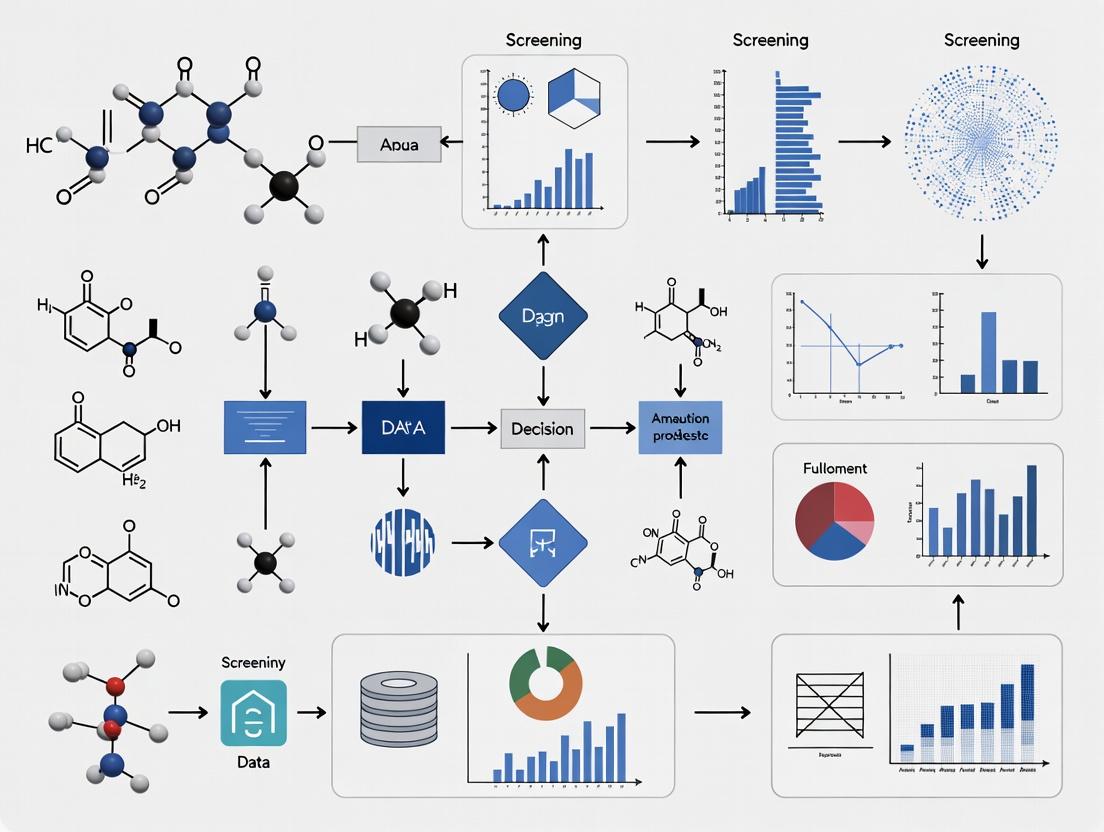
The exponential growth of ecotoxicological data, driven by high-throughput methods and environmental sensor networks, has rendered traditional manual quality assurance (QA) and quality control (QC) processes unsustainable.
Automating Trust: How AI and Computational Pipelines Are Revolutionizing Data Quality in Ecotoxicology
Abstract
The exponential growth of ecotoxicological data, driven by high-throughput methods and environmental sensor networks, has rendered traditional manual quality assurance (QA) and quality control (QC) processes unsustainable. This article explores the critical transition to automated data quality screening tools, addressing a spectrum of needs from foundational concepts to practical implementation for researchers and drug development professionals. We first establish the urgent need for automation, highlighting challenges like evaluator bias and the impracticality of manually screening millions of data points [citation:1][citation:5]. We then detail methodological applications, from EPA-developed frameworks like TADA for water quality data to advanced computational pipelines like RASRTox that automatically acquire and rank toxicological data [citation:3][citation:9]. The discussion extends to troubleshooting data integration, managing streaming data, and optimizing tool performance. Finally, we examine validation through benchmark datasets like ADORE and the comparative performance of AI-assisted assessments against human evaluation, demonstrating how these tools enhance consistency, speed, and reliability in hazard and risk assessments [citation:1][citation:6].
The Data Deluge: Why Manual QA/QC is Obsolete in Modern Ecotoxicology
Modern ecotoxicology and environmental risk assessment (ERA) are confronting a fundamental shift in scale. The volume of relevant data has expanded from curated collections of hundreds of studies to vast, unstructured repositories containing thousands to millions of individual data points [1] [2]. This expansion is driven by the proliferation of research on emerging contaminants like microplastics and pharmaceuticals, increased monitoring, and the availability of legacy data from diverse sources [3] [4]. Concurrently, regulatory and scientific demands for robust, transparent decision-making require that every data point used in an ERA undergoes a rigorous evaluation of its reliability and relevance [5] [4].
Manual quality assessment, the traditional mainstay, is no longer feasible. Evaluating a single study against comprehensive criteria can take an expert assessor hours. With the exponential growth in published literature, manual screening has become a critical bottleneck, prone to inconsistencies, evaluator bias, and semantic ambiguities [1] [2]. This document details the application notes and protocols for automated data quality screening tools, which represent the essential transition from manual, small-scale review to systematic, high-throughput evaluation. These tools are not intended to replace expert judgment but to augment and standardize the initial screening phases, ensuring that human expertise is focused on the most complex validation tasks [5].
Quantifying the Challenge: Data Volume and Variability
The challenge is twofold: sheer volume and profound variability in data quality. The following tables quantify these aspects, drawing from current research and established frameworks.
Table 1: Scale and Performance of Manual vs. AI-Assisted Data Screening
| Metric | Traditional Manual Review | AI-Assisted Screening (Current) | Target for Automation |
|---|---|---|---|
| Studies Processed Per Assessor Day | 2-5 full evaluations | Dozens of initial screenings & rankings [1] [2] | Hundreds of autonomous evaluations |
| Typical Evaluation Time Per Study | 1-4 hours | Minutes for initial classification [1] | Near real-time |
| Primary Bottleneck | Expert assessor availability & consistency | Refinement of AI prompts & validation of outputs | Integration with diverse data formats |
| Consistency | Variable; subject to evaluator bias and fatigue | High; applies same criteria uniformly [1] [2] | Objectively reproducible |
| Example Throughput | Manual review of 73 microplastics studies would take weeks [2] | AI tools screened 73 studies for QA/QC criteria efficiently [1] [2] | Screening entire digital libraries (10,000+ studies) |
Table 2: Key Sources of Variability in Ecotoxicological Data Quality [6] [4]
| Source of Variability | Impact on Data Quality | Order of Magnitude Influence |
|---|---|---|
| Toxicokinetic/Toxicodynamic Factors (e.g., metabolic rate, lipid content) | Alters the relationship between external exposure and internal effective dose. | Can change reported LC50 by 10-1000x [6] |
| Test Design & Reporting (e.g., exposure duration, control performance) | Affects reproducibility and reliability of the endpoint. | Major factor in Klimisch/CRED scoring; can render data unusable [3] [4] |
| Modifying Factors (e.g., water chemistry, temperature) | Influences chemical bioavailability and organism sensitivity. | Can significantly alter toxicity metrics [6] |
| Data Completeness & Transparency | Determines ability to independently verify or re-analyze results. | Critical for reliability scoring (CRED Criteria 17-20) [4] |
Foundational Frameworks for Data Quality Assessment
Automated tools must be built upon standardized, transparent frameworks to ensure their outputs are meaningful and defensible. Two core frameworks underpin this field.
Data Quality Objectives (DQOs) and the PARCCS Criteria: The foundation of any quality assessment is a clear statement of DQOs, which define the project's data needs [5]. These are operationalized through the PARCCS indicators: Precision, Accuracy, Representativeness, Comparability, Completeness, and Sensitivity [5]. Automated screening tools are configured to check for conformance with these predefined indicators during the verification and validation process.
The CRED (Criteria for Reporting and Evaluating Ecotoxicity Data) Methodology: For evaluating individual studies, the CRED method provides a structured, categorical approach that improves upon earlier Klimisch scores [3] [4]. It assesses 20 criteria across four domains: test substance, test organism, test design/conditions, and data analysis/reporting. Each criterion is judged as "fully," "partially," or "not" fulfilled, leading to a final reliability score (R1-R4) [4]. This structured checklist is ideal for translation into automated screening logic.
Table 3: Core Data Quality Dimensions for Assessment [7] [5]
| Dimension | Definition | Key Questions for Automated Screening |
|---|---|---|
| Integrity | Data is protected from unauthorized alteration. | Is the dataset complete and has its chain of custody been documented? |
| Unambiguity | Data elements are clearly defined and understood. | Are all parameters, units, and codes explicitly defined in metadata? |
| Consistency | Data is uniform across the dataset. | Are naming conventions, formats, and units used consistently? |
| Completeness | Expected data is present. | Are all required fields populated? Is supporting data (e.g., controls, QC) included? |
| Correctness | Data accurately represents the real-world values it is intended to model. | Does the data fall within expected plausible ranges? Do calculated values match reported results? |
Diagram 1: Evolution from Manual to Automated Data Quality Screening.
Application Notes: Protocols for Automated Screening
Protocol: AI-Assisted QA/QC Screening for Literature Data
This protocol is adapted from a pioneering application using Large Language Models (LLMs) to screen microplastics studies, demonstrating a scalable approach to literature triage [1] [2].
Objective: To rapidly and consistently screen a large corpus of scientific literature against predefined QA/QC criteria, ranking studies for suitability in exposure and risk assessment.
Materials:
- Input Data: Digital corpus of scientific publications (PDFs or plain text).
- AI Tool: Access to a capable LLM (e.g., OpenAI's ChatGPT, Google's Gemini) via API or interface.
- QA/QC Criteria: A structured list of criteria derived from relevant guidelines (e.g., for microplastics in drinking water) [1].
- Prompt Template: A pre-engineered text prompt to instruct the LLM.
Procedure:
- Criteria Formalization: Translate the project's DQOs and PARCCS requirements into a concrete checklist of 10-15 yes/no or categorical questions. Example: "Does the study explicitly state the particle size range of microplastics analyzed?" [1] [2].
- Prompt Engineering: Develop a system prompt that:
- Defines the AI's role as a data quality screener.
- Lists the exact evaluation criteria.
- Instructs the AI to output a structured response (e.g., JSON) containing: Study ID, a score for each criterion, a brief justification, and an overall suitability ranking (e.g., High, Medium, Low).
- Batch Processing: Feed the text of each study into the LLM using the engineered prompt. Automated scripting (via Python, etc.) is used to manage large batches.
- Human-in-the-Loop Validation: Randomly select a subset (e.g., 20%) of the AI-processed studies for parallel, blind evaluation by a human expert. Compare results to calibrate the AI prompt and identify edge cases.
- Output and Triage: Use the AI-generated rankings to prioritize which studies undergo full, manual CRED evaluation. Studies ranked "Low" may be archived or flagged for rapid review.
Key Application Note: The AI acts as a force multiplier, not a replacement. Its strength is in handling the initial, repetitive screening task with high consistency, freeing experts to perform the nuanced, final validation on a pre-filtered, high-priority subset [5].
Protocol: Systematic Data Evaluation Using CRED Workflow
This protocol details the stepwise evaluation of individual study reliability, a process that can be partially automated through rule-based systems or AI trained on CRED outputs [4].
Objective: To assign a transparent and defensible reliability score (R1-R4) to an ecotoxicology study for use in regulatory decision-making.
Materials:
- Study Report: The full text, tables, and supplementary materials of the study.
- CRED Evaluation Sheet: A digital or physical form listing the 20 CRED criteria [4].
- Relevant Guidelines: OECD test guidelines, ASTM standards, or other methodology references pertinent to the study.
Procedure:
- Initial Administrative Screen: Confirm the study's basic relevance (organism, endpoint, chemical). Check for fundamental flaws (e.g., lack of control, obvious contamination).
- Criterion-by-Criterion Assessment: For each of the 20 CRED criteria, examine the study report and assign a fulfillment level:
- Fully (F): The study report contains all information required by the criterion.
- Partially (P): The study report contains some, but not all, required information.
- Not (N): The required information is absent or clearly flawed.
- Not Applicable (NA): The criterion does not apply to this study design.
- Expert Judgment Integration: Based on the pattern of F, P, and N scores, assign a final reliability category:
- R1 (Reliable without restrictions): All key criteria fully met.
- R2 (Reliable with restrictions): Most key criteria fully met, minor shortcomings.
- R3 (Not reliable): One or more key criteria not met or partially met, introducing significant uncertainty.
- R4 (Not assignable): Insufficient information to evaluate.
- Documentation: Record the justification for each criterion rating and the final score in a standardized format. This audit trail is critical for transparency.
Automation Potential: Steps 1 and 2 are prime candidates for automation. Natural Language Processing (NLP) models can be trained to extract information related to specific criteria (e.g., "identify the text stating the exposure concentration") and flag its presence or absence.
Diagram 2: AI-Assisted QA/QC Screening Workflow for Literature.
Diagram 3: CRED Reliability Evaluation Workflow and Scoring.
Table 4: Research Reagent Solutions for Automated Data Quality Screening
| Tool Category | Specific Tool/Resource | Function in Automated Screening |
|---|---|---|
| AI & NLP Models | General-purpose LLMs (ChatGPT, Gemini, Claude) | Perform initial literature triage, extract specific information from text, and summarize findings against criteria [1] [2]. |
| Evaluation Frameworks | CRED Evaluation Criteria, EPA QA/G-9 Guidance | Provide the standardized, structured checklist against which studies are programmatically or AI-evaluated [7] [4]. |
| Data Management Systems | Environmental Data Management Systems (EDMS) | Serve as the platform to store raw data, metadata, and the associated quality flags (validation qualifiers) generated by automated or manual review [5]. |
| Rule-Based Screening Scripts | Custom Python/R scripts using regex, statistical checks | Automate verification tasks: checking data ranges, consistency of units, completeness of fields, and conformance to PARCCS thresholds [5]. |
| Reference Databases | OECD Guidelines, ECOTOX Knowledgebase | Provide the authoritative reference points for test acceptability and historical control ranges, which can be used to build validation rules. |
Future Directions and Integration
The future lies in deep integration. Next-generation tools will seamlessly combine NLP information extraction, rule-based PARCCS verification, and predictive modeling to flag potential quality issues before an experiment is finalized. The ultimate goal is a continuous data quality assessment loop embedded within the scientific workflow. As data generation accelerates towards millions of data points—from high-throughput in vitro assays, omics technologies, and real-time environmental sensors—these automated screening protocols will transition from a useful aid to an indispensable component of credible, scalable ecotoxicological science and regulatory decision-making [1] [5]. The scale of the challenge necessitates a fundamental shift in methodology, where intelligent tools handle the scale, and human experts focus on the depth and nuance of environmental protection.
Ecotoxicology research is foundational to environmental safety, regulatory compliance, and sustainable product development. The field generates vast quantities of data from tests on aquatic and terrestrial organisms to assess the hazards of chemicals, pharmaceuticals, and environmental pollutants [8]. However, the traditional manual frameworks for ensuring the quality and reliability of this data are increasingly recognized as a critical bottleneck. These methods are fundamentally challenged by three interconnected limitations: inconsistency in evaluation, the introduction of human bias, and prohibitive time consumption [9] [1].
The demand for high-quality data is escalating, driven by stringent global regulations like the European Union's REACH and growing public awareness of environmental sustainability [8]. Concurrently, the volume and complexity of data are exploding, with over 350,000 chemicals registered worldwide and databases like the US EPA's ECOTOX containing over 1.1 million entries [10]. Manually screening this data for quality assurance and quality control (QA/QC) is no longer practically feasible. This creates an urgent need for automated, scalable solutions. Recent breakthroughs demonstrate that artificial intelligence (AI), particularly large language models (LLMs), can standardize and accelerate data reliability assessments, offering a transformative path forward for harmonized risk assessment in data-intensive regulatory domains [1]. This document details these limitations and provides application notes and protocols for implementing automated screening tools.
Quantifying the Limitations: A Data-Driven Perspective
The constraints of traditional manual methods can be quantified across key dimensions, impacting the efficiency, reliability, and scalability of ecotoxicological research.
Table 1: Comparative Analysis of Traditional vs. AI-Assisted Data Quality Screening
| Dimension | Traditional Manual Methods | AI-Assisted Automated Screening | Quantitative Impact / Evidence |
|---|---|---|---|
| Processing Speed | Labor-intensive, sequential review. | Parallel, high-speed processing of vast datasets. | AI can reduce daily monitoring time from 4 hours to 20 minutes [9]. LLMs evaluate studies at machine speed [1]. |
| Consistency & Standardization | Prone to semantic ambiguity and evaluator drift. | Applies predefined QA/QC criteria uniformly to all data. | AI replicates human assessments with high consistency, overcoming semantic ambiguities [1]. |
| Scalability | Difficulties scaling with data volume or new formats. | Highly scalable and adaptable to new data sources. | Can screen 73+ studies systematically [1]; handles "endless information" [9]. |
| Bias Mitigation | Susceptible to cognitive biases (confirmation, selection). | Can be designed to minimize subjective bias in screening. | Addresses publication bias and small-study effects that distort meta-analysis [11]. |
| Resource Requirement | High demand for expert analyst time. | Reduces demand for repetitive manual screening. | Enables a team of 2 analysts to serve 180k stakeholders [9]. |
| Error Rate | Manual data entry and judgment errors. | Automated extraction reduces transcription errors. | Not explicitly quantified, but automation inherently reduces manual error rates. |
Table 2: Statistical Measures of Inconsistency in Meta-Analysis (Traditional Context)
| Statistic | Primary Function | Limitation in Traditional Context | Proposed Advanced Alternative |
|---|---|---|---|
| Q Test / I² | Tests for presence of heterogeneity; quantifies its magnitude. | Low power with few studies; assumes normal between-study distribution [11]. | Hybrid Test: Combines multiple T_(p) statistics for robust power across skewed or heavy-tailed distributions [11]. |
| Subgroup Analysis | Explores sources of inconsistency. | Often post-hoc and susceptible to "fishing." | Pre-specified, AI-clustered subgrouping based on study features. |
| Outlier Detection | Identifies extreme studies. | Often relies on arbitrary cut-offs (e.g., visual inspection). | T_(p) Statistics: Use different mathematical powers (e.g., p=1 for robust sum, p→∞ for maximum) to systematically detect outliers [11]. |
Detailed Limitation 1: Inconsistency
Inconsistency refers to unwanted variability in research findings or data quality judgments that arises from differences in methodology, execution, or evaluation, rather than from true biological or chemical effects.
- Root Causes in Ecotoxicology: Inconsistency stems from methodological heterogeneity (e.g., different test species, exposure durations, endpoints like LC50 or EC50), population differences (e.g., species strains, life stages), and, critically, subjective QA/QC judgments [11] [10]. When manually assessing study reliability, evaluators may interpret vague QA/QC criteria differently due to semantic ambiguity [1].
- Impact on Risk Assessment: Inconsistent data integration leads to unreliable meta-analyses and unpredictable risk assessments. Traditional statistical measures like the Q test can fail to detect inconsistency when the number of studies is small or when the distribution of effects is non-normal (e.g., skewed by publication bias) [11]. This undermines regulatory decision-making and chemical safety assurance.
Application Note: Protocol for AI-Assisted Consistency Screening
This protocol uses Large Language Models (LLMs) to perform standardized QA/QC screening for microplastics in drinking water studies, as validated by recent research [1].
Objective: To automate the consistent application of predefined QA/QC criteria for evaluating the reliability of scientific studies, replicating human expert judgment with high fidelity.
Materials:
- LLM Access: API or interface to a model such as OpenAI's ChatGPT or Google's Gemini [1].
- QA/QC Framework: A published, structured list of criteria for evaluating study reliability (e.g., for microplastics in water) [1].
- Corpus of Studies: Digital texts (PDFs or plain text) of scientific studies to be evaluated.
Procedure:
- Prompt Engineering: Translate the human QA/QC framework into a structured LLM system prompt. The prompt must define the task, list all criteria, and specify the exact output format (e.g., JSON containing scores, confidence, and justifications).
- Study Processing: Convert study PDFs to plain text. For large studies, use a "chunking" strategy: first, instruct the LLM to identify and extract the Methods, Results, and Quality Indicators sections.
- Batch Evaluation: Submit the extracted relevant text chunks for each study to the LLM with the engineered prompt. Use parallel API calls to process multiple studies simultaneously.
- Aggregation & Scoring: Programmatically aggregate the LLM's outputs for each study. Calculate a composite reliability score or rank based on the criteria.
- Validation: For a subset of studies, compare AI-generated scores with scores from independent human experts. Calculate inter-rater agreement metrics (e.g., Cohen's kappa) to validate performance.
AI-Assisted QA/QC Screening Workflow [1]
Detailed Limitation 2: Bias
Bias is a systematic deviation from true representation or judgment. In traditional ecotoxicology, it infiltrates both the evidence base (through study conduct and publication) and the data screening process itself.
- Types of Bias:
- Publication Bias: Studies with statistically significant or "positive" results are more likely to be published than null studies. This skews the available data for meta-analysis [11].
- Selection Bias: In manual literature screening, reviewers may unconsciously select studies that align with their hypotheses.
- Confirmation Bias: During data quality evaluation, reviewers may judge studies supporting their prior beliefs more favorably.
- Compounding Effect: These biases interact. Publication bias creates a skewed pool of data, which human reviewers then filter with their own cognitive biases, potentially doubling the distortion in the final synthesized evidence [11].
Application Note: Protocol for a Hybrid Inconsistency Test
This protocol implements a robust statistical test to detect inconsistency in meta-analysis, which is less susceptible to being masked by biased data distributions [11].
Objective: To powerfully detect between-study inconsistency (heterogeneity) even when the distribution of effect sizes is non-normal (e.g., skewed, heavy-tailed, or contaminated by outliers).
Materials:
- Meta-Analysis Dataset: Effect sizes (Y_i) and their standard errors (s_i) from k independent studies.
- Statistical Software: R or Python with capabilities for resampling methods.
Procedure:
- Calculate Standardized Deviances: For each study i, compute the standardized deviate: Z_i = (Y_i - θ_hat) / s_i, where θ_hat is the common-effect estimate.
- Compute Alternative Tp Statistics: For a set of integer powers *p* (e.g., 1, 2, 3, 4, ∞), compute the statistic *Tp = Σ |Zi|^p*. *T2* is the traditional Q statistic. T_1 is more robust to outliers. T_∞ is the maximum absolute deviate, sensitive to a single outlier.
- Calculate P-value for Each Tp: Derive the null distribution for each *Tp* using a parametric resampling method: a. Assume homogeneity (τ² = 0). Simulate new effect sizes Y_i^ ~ N(θ_hat, s_i²). b. For each simulation, recalculate θ_hat* and the T_p* statistics. c. Repeat many times (e.g., 10,000) to build the empirical null distribution for each T_p. d. The P-value for each test is the proportion of simulated T_p* values exceeding the observed T_p.
- Compute Hybrid Test P-value: Let P_min be the minimum P-value from the set of individual T_p tests. Derive the null distribution for P_min using the same resampling procedure (step 3), recording the minimum P-value from each simulation. The final hybrid test P-value is the proportion of simulated P_min values smaller than the observed P_min.
- Interpretation: A significant hybrid test indicates inconsistency is present. The power of the test remains high across various inconsistency patterns.
Detailed Limitation 3: Time Consumption
Time is the most palpable constraint. Manual QA/QC, literature screening, and data extraction are profoundly slow, creating a mismatch between the pace of research and the need for timely decisions.
- The Volume Challenge: The ECOTOX database alone contains over 1.1 million entries [10]. Manually evaluating even a fraction for a systematic review can take months. A case study showed that an AI system reduced the time for daily information monitoring from 4 hours to 20 minutes—a 92% reduction [9].
- Opportunity Cost: The time scientists spend on repetitive screening tasks is diverted from higher-value activities like experimental design, complex data interpretation, and innovation. This slows the entire research lifecycle and delays regulatory submissions and product development [8].
Application Note: Protocol for Creating a Machine Learning Benchmark Dataset
High-quality, standardized datasets are prerequisites for developing and fairly comparing automated screening and prediction tools. This protocol outlines the creation of the ADORE benchmark dataset for aquatic toxicity prediction [10].
Objective: To curate a well-described, feature-rich dataset from the ECOTOX database to serve as a community standard for developing and benchmarking machine learning models in ecotoxicology.
Materials:
- Primary Source: The US EPA ECOTOX database (pipe-delimited ASCII files) [10].
- Secondary Sources: PubChem for chemical identifiers (SMILES, InChIKey), phylogenetic databases for species traits.
- Processing Tools: Scripting language (Python/R) for data wrangling.
Procedure:
- Taxonomic Filtering: Filter the ECOTOX species file to retain only three key taxonomic groups: Fish, Crustaceans, and Algae.
- Endpoint Harmonization:
- For Fish: Include only mortality (MOR) endpoints (e.g., LC50). Standardize exposure period to ≤96 hours.
- For Crustaceans: Include mortality (MOR) and immobilization/intoxication (ITX) endpoints. Standardize exposure to ≤48 hours.
- for Algae: Include effects on population growth: mortality (MOR), growth (GRO), population (POP), physiology (PHY). Standardize exposure to ≤72 hours [10].
- Data Cleaning & Fusion: a. Link test results to species taxonomy and chemical identifiers (CAS, DTXSID, InChIKey). b. Remove entries with missing critical data (e.g., species group, chemical ID, effect concentration). c. Exclude in vitro tests and tests on early life stages (e.g., embryos) to focus on standard acute in vivo toxicity [10]. d. Merge with external chemical data (molecular descriptors from PubChem) and species data (phylogenetic features).
- Challenge Definition & Splitting: a. Define specific ML challenges (e.g., "Can a model trained on fish and algae data predict toxicity for crustaceans?"). b. Split the curated dataset into training and test sets using scaffold splitting (based on chemical structure) to test a model's ability to generalize to novel chemistries, not just interpolate [10].
- Documentation & Release: Publish the dataset with a complete data descriptor, including a feature glossary, sourcing details, and the rationale for all filtering decisions to ensure reproducibility.
Benchmark Dataset Creation for ML in Ecotoxicology [10]
Implementing automated data quality screening requires a combination of data, software, and standardized frameworks.
Table 3: Research Reagent Solutions for Automated Ecotoxicology Screening
| Tool / Resource | Type | Primary Function | Source / Example |
|---|---|---|---|
| ECOTOX Database | Reference Data | Provides core ecotoxicology test results (LC50, EC50) for model training and validation. | United States Environmental Protection Agency (US EPA) [10]. |
| ADORE Dataset | Benchmark Data | A curated, feature-rich dataset for fair comparison of ML models predicting acute aquatic toxicity. | Published in Scientific Data [10]. |
| Large Language Models (LLMs) | Analysis Engine | Automates text-based tasks: QA/QC scoring, data extraction from literature, summarizing findings. | OpenAI's ChatGPT, Google's Gemini [1]. |
| QA/QC Criteria Frameworks | Protocol | Provides the standardized rules and questions an AI system is prompted to apply during screening. | Published criteria for specific domains (e.g., microplastics in water) [1]. |
| Hybrid Test Software | Statistical Tool | Implements advanced, robust tests for detecting inconsistency in meta-analyses with non-normal data. | Custom R/Python code based on methodology from [11]. |
| Chemical Identifiers (InChIKey, SMILES) | Standardization | Unique, standardized representations of chemical structure for unambiguous data linking and featurization. | PubChem, CompTox Chemicals Dashboard [10]. |
| OECD Test Guidelines | Regulatory Standard | Defines internationally accepted test methods, providing the basis for judging methodological quality. | Organisation for Economic Co-operation and Development (OECD) [10]. |
In ecotoxicology, data quality determines the reliability of chemical hazard assessments, ecological risk evaluations, and the validity of predictive models. High-quality data is characterized by its accuracy, completeness, consistency, and fitness for purpose, enabling confident decision-making in research and regulation [12]. The increasing volume of data from high-throughput screening (HTS) assays and automated literature curation necessitates robust, automated quality screening tools [13] [14]. Poor data quality, which can cost organizations significant resources, leads to misinterpretation of toxicity, flawed risk assessments, and ultimately, inadequate environmental protection [12]. A model-based analysis has demonstrated that undocumented variability—from factors like exposure duration and species physiology—can cause differences in toxicity metrics (e.g., LC50) by one to three orders of magnitude, highlighting the critical need for stringent quality control [6]. This document outlines the core principles, evaluation protocols, and practical tools for defining and ensuring data quality, framed within the development of automated screening systems.
Core Principles and Dimensions of Data Quality
A structured framework is essential for managing data quality across its lifecycle [12]. In ecotoxicology, quality is multi-dimensional, encompassing both the intrinsic properties of the data and its contextual relevance for specific applications.
Table 1: Core Dimensions of Ecotoxicological Data Quality
| Quality Dimension | Definition | Ecotoxicological Application Example | Common Risk & Source of Error |
|---|---|---|---|
| Accuracy & Integrity | Data correctly represents the true value or phenomenon it describes, free from error or bias. | Correct reporting of a chemical concentration (e.g., mg/L) and the corresponding mortality endpoint (LC50). | Transcription errors; analytical instrument calibration drift; undocumented model assumptions influencing dose metrics [6]. |
| Completeness | All necessary data fields and expected records are present without omission. | A study record includes chemical CAS RN, species name, exposure duration, endpoint value, and control group results. | Missing metadata (e.g., pH, water temperature); partial reporting of sub-lethal endpoints. |
| Consistency & Standardization | Data is uniform in format, definition, and measurement units across different datasets and sources. | Use of controlled vocabularies (e.g., ToxRefDB) [13]; standardized units for toxicity values across the ECOTOX Knowledgebase. | Inconsistent taxonomic nomenclature; mixing of nominal and measured concentrations without annotation. |
| Relevance & Fitness for Purpose | Data is applicable and useful for the specific context of the analysis or decision at hand. | Using a freshwater fish toxicity study to assess risk in a freshwater ecosystem. | Applying data from a non-standard test organism to a regulatory assessment for a standard species. |
| Validity & Plausibility | Data conforms to defined syntax (format, type, range) and biological/chemical plausibility rules. | A reported LC50 value falls within a plausible range based on the chemical's mode of action and similar substances. | Physicochemically impossible solubility values; outlier values resulting from experimental artifact. |
| Traceability & Lineage | The origin of the data and all transformations it has undergone are fully documented. | Ability to trace a summarized toxicity value in ToxValDB back to the original primary literature source [13]. | Lack of provenance documentation for data extracted from secondary literature or reviews. |
These dimensions are interdependent. For instance, data cannot be accurate if it is incomplete (e.g., missing a crucial test condition). Automated screening tools operationalize these principles by checking data against predefined rules and metrics [12].
Automated Data Quality Screening: Tools and Applications
The shift from purely manual curation to automated and semi-automated processes addresses the challenge of managing large-scale ecotoxicology data [14]. These tools integrate into systematic review workflows to enhance efficiency without sacrificing accuracy.
Table 2: Key EPA Databases for Ecotoxicology and Associated Quality Features
| Database/Resource | Primary Content | Key Data Quality Features | Role in Automated Screening |
|---|---|---|---|
| ECOTOX Knowledgebase [13] [14] | Curated ecotoxicity data for aquatic and terrestrial species. | Standardized curation protocols; use of automated tools for literature screening and data evaluation. | Source of high-quality curated data for model training; framework for automated quality checks (e.g., completeness of required fields). |
| Toxicity Reference Database (ToxRefDB v3.0) [13] | In vivo animal toxicity data from guideline studies. | Controlled vocabulary; structured data from over 6,000 studies. | Provides a "gold standard" dataset of high-quality guideline study data for benchmarking. |
| Toxicity Value Database (ToxValDB v9.6) [13] | Aggregated in vivo toxicology data and derived values from over 40 sources. | Standardized summary format; facilitates comparison across sources. | Enables automated consistency checks by providing multiple values for the same chemical-endpoint combination. |
| ToxCast Data [13] | High-throughput screening (HTS) assay data for thousands of chemicals. | Extensive assay metadata and experimental data. | Requires robust QA/QC pipelines to manage and validate large-scale in vitro screening data. |
| CompTox Chemicals Dashboard [13] | Integrates chemical properties, exposure, hazard, and risk data. | Links chemicals across data sources via unique identifiers (DTXSID). | Serves as a platform for automated cross-database consistency verification (e.g., structure-identifier mapping). |
Adopting automated tools within the ECOTOX curation pipeline, such as for title/abstract screening, has demonstrated an 83% reduction in the level of effort required to identify relevant journal articles, while maintaining consistency with manual reviews [14]. This efficiency gain is critical for expanding the coverage and timeliness of this vital resource.
Diagram 1: Automated Literature Curation for ECOTOX Knowledgebase [14].
Experimental Protocols for Data Quality Evaluation
Protocol: Screening and Reviewing Open Literature Toxicity Data
This protocol is adapted from the EPA OPP guidelines for evaluating data from the ECOTOX Knowledgebase and other open literature sources [15].
Objective: To systematically identify, evaluate, and categorize ecotoxicity studies for use in ecological risk assessments.
Materials:
- Access to the ECOTOX Knowledgebase and/or scientific literature databases.
- EPA OPP Evaluation Guidelines [15].
- Data extraction and review summary template (e.g., Open Literature Review Summary - OLRS).
Procedure:
- Literature Acquisition:
- Execute a predefined search strategy for the chemical(s) of concern, typically via the ECOTOX Knowledgebase [15].
- Retrieve the complete text of all potentially relevant studies.
Initial Screening (Acceptance Criteria):
- Evaluate each study against 14 minimum acceptance criteria [15]. Core criteria include:
- Effects from exposure to a single chemical.
- Biological effect on live, whole organisms.
- Reported concurrent concentration/dose and exposure duration.
- Comparison to an acceptable control group.
- The study is a full article in the primary literature published in English.
- Evaluate each study against 14 minimum acceptance criteria [15]. Core criteria include:
Data Extraction & Quality Review:
- For studies passing initial screening, extract detailed data into a structured template.
- Assess study reliability based on:
- Methodological Soundness: Adherence to standard test guidelines (e.g., OECD, EPA), clarity of methods, appropriate statistical analysis.
- Reporting Completeness: Documentation of test conditions (e.g., temperature, pH, solvent), chemical verification, raw data availability.
- Result Plausibility: Consistency of results within the study and with existing data for similar chemicals/species.
Categorization and Documentation:
- Categorize the study based on its quality and usefulness (e.g., "Core" for risk assessment, "Supportive", "Not Usable").
- Complete an Open Literature Review Summary (OLRS) for each study, documenting the rationale for acceptance/rejection and categorization.
- Submit OLRS to designated data management staff for archiving and tracking [15].
Protocol: Implementing Automated Quality Checks in a Data Pipeline
Objective: To embed automated data quality validation rules within an ecotoxicological data processing pipeline.
Materials:
- Raw ecotoxicity dataset (e.g., from automated extraction tools).
- Programming environment (e.g., Python, R) or data quality tool.
- Defined quality rules and thresholds.
Procedure:
- Rule Definition:
- Translate quality dimensions into explicit, machine-executable rules. Examples:
- Completeness: Required fields (Chemical ID, Endpoint Value, Species) !=
NULL. - Validity: Endpoint Value > 0; Exposure Duration in allowed list (
"24h","48h","96h"). - Plausibility: LC50 (mg/L) ≤ Water Solubility (mg/L) for the same chemical.
- Consistency: Species name matches an entry in a controlled taxonomy table.
- Completeness: Required fields (Chemical ID, Endpoint Value, Species) !=
- Translate quality dimensions into explicit, machine-executable rules. Examples:
Implementation & Profiling:
- Code the rules into validation scripts or configure them within a data quality tool.
- Execute an initial data profile to measure baseline metrics (e.g., percentage completeness, duplicate count).
Execution and Flagging:
- Run validation scripts on new or updated data batches.
- Flag records that violate rules. Severity levels can be assigned (e.g., "Error" for missing chemical ID, "Warning" for value slightly outside expected range).
Reporting and Remediation:
- Generate a data quality scorecard with metrics for each dimension [12].
- Route flagged records to a review queue for manual investigation by a data steward.
- Document all corrections to maintain data lineage.
Diagram 2: Tiered Data Evaluation & Categorization Process [15].
Table 3: Key Research Reagent Solutions & Resources
| Tool/Resource | Function in Quality Assurance | Relevance to Automated Screening |
|---|---|---|
| ECOTOX Knowledgebase [13] [15] | Provides a vast, curated source of ecotoxicity data for benchmarking and validation. | Serves as a reference dataset for training and testing automated data extraction and quality classification algorithms. |
| EPA CompTox Chemicals Dashboard [13] | Central hub for chemical identifiers, properties, and linked hazard data. | Enables automated cross-referencing and validation of chemical identities and associated data across tools. |
| ToxValDB [13] | Aggregates toxicity values from multiple sources in a standardized format. | Allows for automated outlier detection by comparing a new data point against a distribution of existing values. |
| Controlled Vocabularies & Ontologies (e.g., in ToxRefDB) [13] | Standardize terms for species, endpoints, and effects. | Critical for ensuring consistency in data labeling, which enables reliable automated grouping and analysis. |
| Data Quality Rule Engines (e.g., open-source libraries, commercial DQ tools) [12] | Execute predefined validation rules on datasets. | The core implementer of automated checks for completeness, validity, and business logic (e.g., "exposure duration must be positive"). |
| Literature Mining Tools (e.g., Abstract Sifter) [13] | Assist in the semi-automated screening and prioritization of scientific literature. | Reduces manual effort in the initial phases of systematic review, directly supporting the curation pipeline [14]. |
Defining and ensuring data quality in ecotoxicology is a foundational activity that transitions from abstract principles to concrete, actionable protocols. The core dimensions of accuracy, completeness, consistency, and relevance provide the framework for evaluation [12]. The integration of automated and semi-automated screening tools—exemplified by advancements in curating the ECOTOX Knowledgebase—is transformative, offering dramatic gains in efficiency while maintaining high standards [14]. For researchers and regulators, the consistent application of detailed evaluation protocols, such as those formalized by the EPA [15], is essential for generating reliable, defensible data. As the field evolves towards greater reliance on high-throughput and in silico methods, the development and refinement of automated data quality screening tools will remain a critical thesis, ensuring that the expanding universe of ecotoxicological data remains robust and fit for its purpose of protecting environmental health.
The field of toxicology is undergoing a fundamental transformation, driven by converging regulatory pressures and rapid technological innovation. Growing societal and ethical concerns regarding animal testing, embodied in the 3Rs (Replacement, Reduction, and Refinement) principles, are being codified into policy [16]. Simultaneously, regulatory agencies worldwide are acknowledging the scientific limitations of traditional animal models, which have a human toxicity predictivity rate of only 40–65%, and are actively encouraging more human-relevant methods [16] [17]. This regulatory push is a key driver for the development and adoption of New Approach Methodologies (NAMs).
NAMs are defined as any non-animal, human-biology-based approach—encompassing in vitro, in chemico, and in silico (computational) methods—used for chemical safety assessment [16] [17]. They represent a shift from observational animal toxicology to a mechanistic, hypothesis-driven paradigm focused on understanding perturbations of biological pathways relevant to human health. The ultimate goal is Next Generation Risk Assessment (NGRA), an exposure-led framework that integrates diverse NAMs data to ensure protective safety decisions [16].
A critical consequence of this shift is an exponential increase in the volume, velocity, and variety of data generated. Complex in vitro systems like organ-on-a-chip models, high-content screening assays, and multi-omics analyses produce rich, multifaceted datasets [17]. This data-rich environment creates a pressing need for robust, automated tools to ensure data quality, standardization, and reproducibility—cornerstones for regulatory acceptance and scientific confidence. This document details application notes and experimental protocols for implementing automated data quality screening within NAMs-based ecotoxicology research, framed as an essential component of a modern, credible testing strategy.
Application Notes: Implementing Automated Quality Screening for NAMs
The integration of automated data quality screening is not merely a technical convenience but a prerequisite for the reliable use of NAMs in regulatory contexts. Effective implementation addresses several core challenges inherent to complex, next-generation data.
Ensuring Data Integrity and Standardization
NAMs generate complex data from diverse platforms (e.g., gene expression, cellular imaging, kinetic parameters). Manual quality assurance/quality control (QA/QC) is too slow, inconsistent, and prone to evaluator bias to handle this scale [1]. Automated screening applies standardized, pre-defined criteria uniformly across all datasets.
- Objective Metrics: Algorithms can check for adherence to pre-set Minimum Criteria (e.g., positive/negative control performance, coefficient of variation thresholds, signal-to-noise ratios) and Optimal Performance Standards (e.g., dynamic range, Z'-factor for high-throughput screens).
- Consistency: Automated tools eliminate human inconsistency in applying semantic QA/QC criteria, ensuring that a "reliable" study is classified the same way every time [1].
- Traceability: Every data point can be linked to its quality metrics, creating an auditable trail from raw data to processed result, which is vital for regulatory submissions.
Facilitating Reproducibility and Cross-Study Comparison
A major barrier to NAMs acceptance is the perceived difficulty in reproducing results across laboratories. Automated screening mitigates this by enforcing protocol adherence and flagging outliers.
- Protocol Compliance Checks: Software can cross-reference metadata (e.g., cell passage number, serum batch, dosing solvent) against standard operating procedure (SOP) requirements.
- Inter-Laboratory Benchmarking: When multiple labs use the same automated screening pipeline, their data quality can be objectively compared, identifying technical rather than biological variations.
- Data Curation for Reuse: High-quality, screened datasets are primed for entry into shared repositories, fueling the development of more predictive computational models and read-across approaches [18].
Accelerating Regulatory Acceptance and Defining Approaches
Regulators require confidence that NAMs data is robust and fit-for-purpose. Automated quality control provides transparent, objective evidence of data reliability.
- Building Confidence: Consistent, high-quality data from automated screening supports the validation of new NAMs and helps build the "weight-of-evidence" needed for regulatory decisions [16].
- Enabling Defined Approaches (DAs): DAs are fixed data interpretation procedures applied to data generated from specific NAMs combinations (e.g., for skin sensitization) [16]. Automated screening is essential to ensure the input data for a DA meets the required quality specifications, as outlined in OECD test guidelines like TG 497.
- Efficiency in Review: Regulatory reviewers can more efficiently audit studies where quality metrics are programmatically generated and summarized, accelerating the review cycle.
The following table contrasts the characteristics of traditional versus NAM-based data screening paradigms.
Table 1: Comparison of Traditional vs. NAM-Based Data Screening Paradigms
| Feature | Traditional Animal Study Screening | NAMs Data Screening with Automation |
|---|---|---|
| Primary Focus | Adherence to procedural guideline (OECD TG); historical control ranges. | Adherence to mechanistic performance standards; control performance; technical reliability. |
| Data Volume | Low to moderate (clinical observations, histopathology, clinical pathology). | Very high (high-content imaging, omics, real-time kinetic data). |
| Screening Method | Manual audit by study director and QA unit. | Automated algorithmic checks against predefined criteria, with human oversight of flags. |
| Key Metrics | Mortality, clinical signs, organ weights, histopathology findings. | Cell viability, assay interference, control CVs, Z'-factor, pathway perturbation strength. |
| Speed | Slow (weeks to months for full study audit). | Rapid (real-time to hours for initial quality pass/fail). |
| Consistency | Prone to inter-evaluator variability. | High, due to standardized, programmatic application of rules. |
| Outcome | Study deemed valid or invalid. | Data streams tagged with quality scores; unfit data excluded from downstream analysis. |
Experimental Protocols
The successful deployment of NAMs hinges on rigorous, standardized protocols. Below are detailed methodologies for two critical processes: validating a NAMs-based Defined Approach and implementing an AI-assisted quality screening system.
Protocol: Validation of a Defined Approach (DA) for Skin Sensitization Assessment
This protocol outlines the steps to validate a specific DA, such as the one described in OECD TG 497, which integrates results from the Direct Peptide Reactivity Assay (DPRA), KeratinoSens, and h-CLAT to replace the murine Local Lymph Node Assay (LLNA) [16].
- Objective: To demonstrate that the DA provides equivalent or superior predictivity of human skin sensitization hazard compared to the traditional LLNA, using a set of reference chemicals.
- Materials:
- Test chemicals: A curated list of ≥30 substances covering a range of sensitization potencies and chemical classes.
- In chemico assay: DPRA kit.
- In vitro assays: KeratinoSens (ARE-Nrf2 luciferase reporter gene assay) and h-CLAT (Human Cell Line Activation Test) kits.
- Reference data: Reliable human and/or LLNA data for all test chemicals.
- DA prediction model: The fixed data interpretation procedure (DIP) as specified in OECD TG 497.
- Procedure:
- Assay Execution: Perform the DPRA, KeratinoSens, and h-CLAT assays for all test chemicals in triplicate, strictly following respective OECD Test Guidelines (TGs 442C, 442D, 442E).
- Data Generation: Record raw data and calculate the relevant metrics (e.g., % peptide depletion for DPRA, EC1.5 for KeratinoSens, CV75 for h-CLAT).
- Automated Quality Check: Subject raw data from each assay run to automated screening:
- Verify positive and negative control values fall within historical acceptance ranges.
- Confirm replicate variability (CV) is below a pre-defined threshold (e.g., <20%).
- Flag any assay run where quality checks fail for re-analysis.
- Apply DA DIP: Input the quality-checked results into the standardized DA prediction model (e.g., 2-out-of-3 concordance rule or an integrated scoring model).
- Performance Assessment:
- Compare DA predictions (Sensitizer/Non-sensitizer) against the reference human/LLNA dataset.
- Calculate accuracy, sensitivity, specificity, and concordance.
- Demonstrate that performance meets or exceeds predefined validation criteria (e.g., ≥80% accuracy).
- Expected Outcome: A validated, reproducible testing strategy that does not require new animal data, supported by a transparent record of data quality at each step.
Protocol: AI-Assisted QA/QC Screening for Ecotoxicology Literature Data
Adapted from a study on microplastics research, this protocol uses a Large Language Model (LLM) to standardize the evaluation of study reliability for data extraction in systematic reviews or hazard assessment [1].
- Objective: To rapidly and consistently screen a large corpus of scientific literature against predefined QA/QC criteria, identifying studies suitable for inclusion in exposure or risk assessment.
- Materials:
- Literature Corpus: A digital collection of relevant scientific papers (PDF format).
- QA/QC Criteria: A structured list of quality items (e.g., "Was a negative control used?", "Was particle size characterization reported?", "Was the analytical method validated?").
- AI Tool: Access to a commercial or open-source LLM API (e.g., OpenAI GPT, Google Gemini).
- Prompt Engineering Interface: A platform for developing and testing instructional prompts for the LLM.
- Procedure:
- Criteria Formalization: Translate QA/QC criteria into a clear, unambiguous checklist. Assign a weight or points to each item if a scoring system is desired.
- Prompt Development: Create a system prompt that instructs the LLM to act as a data quality evaluator. The prompt must include the criteria and instruct the model to extract evidence and provide a score or classification.
- Example Prompt: "You are an expert in ecotoxicology study quality assessment. For the provided study text, evaluate it based on the following criteria: 1. Reporting of control groups... [list criteria]. For each criterion, state 'Yes,' 'No,' or 'Unclear,' and provide the supporting sentence from the text. Finally, calculate a total score and classify the study as 'High,' 'Medium,' or 'Low' reliability."
- Pilot and Calibration:
- Run the prompt on a small subset of papers (5-10) manually scored by human experts.
- Compare AI and human outputs. Refine the prompt to resolve discrepancies and improve accuracy.
- Batch Processing: Automate the extraction of text from PDFs and submit it in batches to the LLM using the finalized prompt.
- Result Aggregation & Review:
- Compile LLM outputs (scores, classifications, evidence snippets) into a structured database or spreadsheet.
- Implement a human review step for studies on the border between classification tiers or where the LLM indicated "Unclear" for critical criteria.
- Expected Outcome: A consistently screened library of studies with associated quality scores, dramatically reducing the time required for systematic review while improving transparency and reproducibility of the screening process [1].
Table 2: Research Reagent Solutions for NAMs Implementation
| Research Reagent/Platform | Primary Function in NAMs |
|---|---|
| Organ-on-a-Chip (Microphysiological System) | Microengineered devices that mimic organ-level structure and function (e.g., lung, liver, kidney). Used to model systemic toxicity, absorption, and complex tissue-tissue interactions in a human-relevant context [17]. |
| IPS-Derived Human Cells | Induced pluripotent stem cells differentiated into target cell types (e.g., cardiomyocytes, neurons). Provide a limitless, human-genetic-background source of cells for in vitro assays, overcoming donor variability [17]. |
| High-Content Screening (HCS) Assay Kits | Multiplexed fluorescent assay kits that measure multiple cellular endpoints (e.g., cytotoxicity, oxidative stress, mitochondrial health) via automated imaging. Enable high-throughput mechanistic profiling of chemicals [17]. |
| Multi-Omics Analysis Suites | Integrated platforms for transcriptomics, proteomics, or metabolomics. Used to identify mechanistic signatures of toxicity, map effects onto Adverse Outcome Pathways (AOPs), and discover biomarkers [16] [17]. |
| Physiologically Based Kinetic (PBK) Modeling Software | In silico tools that simulate the absorption, distribution, metabolism, and excretion (ADME) of chemicals. Critical for translating in vitro effective concentrations to human-relevant external doses in NGRA [16] [17]. |
| Defined Approach (DA) Prediction Model | A fixed data interpretation procedure, often software-based, that integrates results from specific in chemico and in vitro NAMs to predict a toxicological endpoint, as per OECD guidelines [16]. |
Integration and Workflow Visualization
The successful application of NAMs within a modern ecotoxicology framework requires the seamless integration of diverse methodologies, all underpinned by automated data quality control. The following diagram illustrates this conceptual workflow and the critical role of quality screening.
NAM Integration and Validation Workflow
The AI-assisted screening protocol itself can be visualized as a sequential, iterative process, as shown in the following diagram.
AI-Assisted QA/QC Screening Protocol
The rise of NAMs is inextricably linked to regulatory pressures demanding more human-relevant, ethical, and predictive toxicology. However, the data-rich, mechanistic nature of NAMs introduces new challenges in quality assurance and standardization that traditional approaches cannot meet. As detailed in these application notes and protocols, automated data quality screening tools—from algorithmic checks of assay performance to AI-driven literature evaluation—are not merely supportive technologies but foundational components of a credible NAMs ecosystem. They provide the consistency, transparency, and efficiency required to build scientific and regulatory confidence. The future of ecotoxicology and risk assessment lies in the seamless integration of advanced biological models with robust digital quality infrastructure, enabling a truly protective and animal-free paradigm for chemical safety [18] [16] [17].
Ecotoxicology faces a dual challenge: escalating volumes of chemical and environmental data, and the imperative for robust, reproducible hazard assessments. Traditional manual quality assurance (QA) and data curation are time-consuming, subjective, and unsustainable[reference:0]. This document frames the adoption of automated screening intelligence within the broader thesis that computational and artificial intelligence (AI) tools are essential for ensuring data quality, accelerating risk assessment, and enabling high-throughput ecotoxicology. The following application notes and detailed protocols illustrate this paradigm shift.
Application Notes: Key Studies in Automated Screening
1. AI-Assisted Data Quality Evaluation for Microplastics Risk Assessment
- Objective: To standardize and accelerate the QA/QC screening of microplastics research data using Large Language Models (LLMs)[reference:1].
- Method: Developed specific prompts based on established QA/QC criteria for microplastics in drinking water. These prompts were used to instruct LLMs (ChatGPT, Gemini) to evaluate 73 published studies (2011-2024)[reference:2].
- Outcome: The AI tools effectively extracted relevant information, interpreted study reliability, and replicated human assessments, demonstrating promise for improving speed, consistency, and applicability in QA/QC tasks[reference:3].
2. Automated Computational Pipeline for Ecological Hazard Assessment (RASRTox)
- Objective: To rapidly acquire, score, and rank toxicological data for streamlined ecological hazard assessments, particularly for Endangered Species Act consultations[reference:4].
- Method: Developed the RASRTox pipeline to automatically extract and categorize ecological toxicity benchmark values from curated data sources (ECOTOX, ToxCast) and QSAR models (TEST, ECOSAR)[reference:5].
- Outcome: As a proof of concept, Points-of-Departure (PODs) generated for 13 chemicals were generally within an order of magnitude of traditional Toxicity Reference Values (TRVs), demonstrating utility for rapidly identifying critical studies for screening value derivation[reference:6].
Table 1: Performance Metrics of Featured Automated Screening Tools
| Tool / Method | Primary Function | Data Source / Scale | Key Performance Outcome | Reference |
|---|---|---|---|---|
| LLM (ChatGPT/Gemini)-Assisted QA/QC | Standardized data quality screening & study ranking | 73 microplastics studies (2011-2024) | High consistency in replicating human reliability assessments; dramatic reduction in screening time. | [reference:7] |
| RASRTox Computational Pipeline | Automated data acquisition, scoring, and ranking for hazard assessment | ECOTOX, ToxCast, TEST, ECOSAR; 13-chemical proof of concept | Generated PODs within an order of magnitude of traditional TRVs for most chemicals. | [reference:8] |
| High-Throughput Ecotoxicology (HiTEC) - Cell Painting | High-content phenotypic profiling for chemical screening | Adapted for non-human (e.g., fish, insect) cell lines | Enables screening at a higher throughput than many current organism-level test methods. | [reference:9] |
Experimental Protocols
Protocol 1: Implementing an LLM-Assisted Data Quality Screen
- Step 1 – Criteria Formalization: Translate existing QA/QC guidelines (e.g., for microplastics in water) into a structured checklist of yes/no or scored items.
- Step 2 – Prompt Engineering: Develop a system prompt that defines the LLM’s role as a data quality auditor. Provide the checklist and instructions for evaluating text from scientific abstracts or full methods sections.
- Step 3 – Batch Processing: Use the LLM’s API (e.g., OpenAI, Gemini) to submit the text of multiple studies (e.g., 73 studies) with the standardized prompt.
- Step 4 – Output Parsing & Validation: Programmatically extract the LLM’s scored evaluations. Validate a subset (e.g., 20%) against independent human expert ratings to calculate concordance metrics (e.g., Cohen’s kappa)[reference:10].
Protocol 2: Executing the RASRTox Computational Pipeline
- Step 1 – Data Acquisition: Script automated queries to public toxicity databases (ECOTOX, ToxCast) and QSAR model servers (TEST, ECOSAR) for a target chemical list[reference:11].
- Step 2 – Data Extraction & Categorization: Parse retrieved data to extract key endpoints (e.g., LC50, NOEC), associated species, and test conditions. Categorize data by taxon and toxicity measure.
- Step 3 – Scoring & Ranking: Apply predefined scoring rules based on test guideline adherence, species relevance, and data quality. Rank studies and calculated benchmark values (PODs) by score.
- Step 4 – Benchmark Comparison & Reporting: Compare pipeline-generated PODs against accepted benchmarks (e.g., TRVs, WQC). Generate a report highlighting top-ranked studies and consensus PODs for review by a toxicologist[reference:12].
Visualization: Workflow Diagrams
Diagram 1: RASRTox Automated Pipeline for Ecological Hazard Assessment (76 chars)
Diagram 2: AI-Assisted Data Quality Screening Workflow (53 chars)
Table 2: Key Research Reagent Solutions & Computational Tools
| Item | Category | Function in Automated Screening |
|---|---|---|
| ECOTOX Knowledgebase | Database | Curated repository of ecotoxicological effects data for chemicals, serving as a primary source for automated pipelines like RASRTox[reference:13]. |
| EPA ToxCast/Tox21 Data | Database | High-throughput screening data for thousands of chemicals, used for in vitro bioactivity profiling and predictive modeling. |
| TEST & ECOSAR | QSAR Software | Automated tools for predicting toxicity endpoints based on chemical structure, filling data gaps in hazard assessment[reference:14]. |
| Cell Painting Assay Kits | Wet-Lab Reagent | Enable high-content, phenotypic profiling in non-human cell lines, forming the basis for high-throughput in vitro screening in ecotoxicology[reference:15]. |
| Python/R with Bio‑/Eco‑ Libraries | Programming Environment | Essential for scripting data acquisition, analysis, pipeline automation, and integrating with AI/ML frameworks (e.g., scikit-learn, TensorFlow). |
| LLM APIs (OpenAI, Gemini) | AI Service | Provide the core engine for natural language processing tasks in automated study evaluation, data extraction, and summarization[reference:16]. |
| Automated Liquid Handlers & Imagers | Laboratory Hardware | Enable the physical execution of high-throughput assays (e.g., cell painting) by performing repetitive pipetting and image capture without manual intervention. |
From Theory to Toolbox: Implementing Automated Screening Pipelines and Frameworks
The advancement of ecotoxicology research and chemical risk assessment is increasingly constrained by the volume and heterogeneity of environmental data. Manual data quality screening has become a critical bottleneck, being too time-consuming, inconsistent, and practically unfeasible for the vast number of studies being published [1]. This document frames the architecture of automated workflows within the context of a broader thesis on automated data quality screening tools. The thesis posits that robust, modular pipeline architectures are fundamental to deploying artificial intelligence (AI) and computational toxicology methodologies effectively. These architectures standardize and accelerate the evaluation of data reliability, thereby harmonizing risk assessments and enabling faster, evidence-based environmental protection decisions [1] [19].
Foundational Components of Automated Pipelines
Automated pipeline architectures are structured workflows that connect data processing, model training, evaluation, and deployment into seamless, repeatable systems [20]. In the context of ecotoxicology, they transform raw, disparate data into validated, actionable insights for hazard assessment. Effective architectures balance automation with the flexibility required for scientific experimentation [20].
Core Architectural Modules
A robust pipeline for data quality screening can be decomposed into modular components, each with a distinct function. This modularity enhances reuse, simplifies testing, and improves system reliability [20].
Table 1: Core Components of an Automated Data Screening Pipeline
| Pipeline Component | Primary Function | Key Output |
|---|---|---|
| Data Ingestion & Acquisition | Programmatically collects data from diverse curated sources (e.g., ECOTOX, ToxCast, literature databases). | Raw, structured, and unstructured datasets. |
| Preprocessing & Feature Engineering | Cleanses data (handles null values, normalizes units), extracts relevant entities (chemical names, endpoints), and structures information for analysis [21]. | Standardized, analysis-ready data frames. |
| Quality Assessment & Scoring | Applies rule-based and AI-driven checks to evaluate data against predefined QA/QC criteria (e.g., completeness, methodology reliability) [1] [22]. | Quality scores, reliability flags, and identified data gaps. |
| Modeling & Prediction | Utilizes New Approach Methodologies (NAMs) like quantitative structure-activity relationships (QSAR) or AI models to fill data gaps or predict toxicity [19]. | Predicted toxicity values (e.g., points-of-departure). |
| Ranking & Prioritization | Synthesizes experimental and predicted data to rank chemicals or studies based on hazard potential or data confidence. | Prioritized lists for further expert review. |
| Reporting & Visualization | Generates standardized assessment reports, visual summaries, and data lineage documentation. | Audit trails, interactive dashboards, and regulatory submission documents. |
Architectural Patterns: Orchestration and Flow
These modular components are coordinated by an orchestration tool that manages their execution order, dependencies, and failure handling. The workflow is typically represented as a directed acyclic graph (DAG), ensuring a logical, non-circular flow of data [20]. The choice of orchestration tool (e.g., Apache Airflow, Kubeflow, Prefect) depends on the team's infrastructure and the need for ML-specific capabilities [20].
Diagram 1: Modular Architecture for Automated Data Screening (Max width: 760px)
Data Quality Testing: Techniques and Integration
The quality assessment module is the core of the screening pipeline. It systematically applies a suite of tests to ensure data is fit for purpose. Moving from manual, subjective checks to an automated framework is critical for scalability and consistency [1] [21].
Essential Data Testing Methods for Ecotoxicology
Different testing methods address specific quality dimensions. An effective pipeline integrates multiple techniques.
Table 2: Key Data Quality Testing Methods and Their Application [21] [22]
| Testing Method | Description | Application in Ecotoxicology Screening | When to Use |
|---|---|---|---|
| Completeness Testing | Verifies all required data fields and records are present. | Checks for missing critical fields (e.g., chemical CAS RN, dose concentration, species, effect endpoint). | Initial data ingestion and during study evaluation [22]. |
| Consistency Testing | Ensures data follows uniform rules across sources. | Validates consistent use of units (μg/L vs. ppb), taxonomic nomenclature, and endpoint terminology. | When integrating data from multiple studies or databases [21]. |
| Accuracy/Plausibility Testing | Assesses if data correctly represents real-world values. | Applies boundary checks (e.g., negative concentration values) or compares reported results against known chemical properties. | During scoring of individual study reliability [22]. |
| Uniqueness Testing | Identifies unintended duplicate records. | Flags potentially duplicate entries for the same chemical-species-endpoint combination from the same study. | During database compilation and deduplication. |
| Referential Integrity Testing | Validates relationships between linked data points. | Ensures that a cited test guideline or a species ID links to a valid entry in a master reference table. | In structured relational databases linking studies to references. |
The Role of AI in Quality Assessment
Large Language Models (LLMs) like GPT and Gemini offer transformative potential for automating the screening of textual data, such as journal articles and regulatory reports. They can be prompted to extract specific information and evaluate study reliability based on predefined QA/QC criteria with high consistency, replicating human assessments at scale [1]. This AI-assisted screening acts as a force multiplier for expert toxicologists.
Diagram 2: AI-Assisted Data Quality Assessment Workflow (Max width: 760px)
Implementation Protocols and Case Studies
Protocol: Implementing an Automated Screening Pipeline (RASRTox Model)
The following protocol is adapted from the development of RASRTox (Rapidly Acquire, Score, and Rank Toxicological data), an automated computational pipeline for ecological hazard assessment [19].
Objective: To create a reproducible pipeline that extracts, scores, and ranks ecological toxicity data from multiple sources to support efficient Biological Evaluations under the Endangered Species Act. Materials: See "The Scientist's Toolkit" (Section 6). Procedure:
- Data Acquisition:
- Configure connectors to extract data from curated sources (ECOTOX, ToxCast).
- Implement web scraping or API-based ingestion for systematic literature review, focusing on predefined chemical lists and species.
- Data Processing & Standardization:
- Apply text parsing to identify and extract key entities: chemical identifiers, test species, effect endpoints, and toxicity values (e.g., LC50, NOEC).
- Standardize all units of measurement and normalize taxonomic names to a common ontology (e.g., ITIS).
- Structure the extracted data into a unified schema.
- Quality Scoring:
- Apply rule-based checks derived from established QA/QC frameworks (e.g., EPA Guidance) [7]. For example, flag studies that lack control group data or clear dose-response information.
- (Optional AI Integration) For textual methodology sections, use a prompted LLM to score reliability based on criteria like test guideline adherence and statistical reporting [1].
- Assign a categorical score (e.g., High, Medium, Low Reliability) to each data point.
- Predictive Modeling for Data Gaps:
- For chemicals or species with insufficient experimental data, trigger QSAR models (e.g., ECOSAR, TEST) to predict toxicity values [19].
- Clearly label all predicted values and associate uncertainty metrics.
- Data Ranking & Synthesis:
- Integrate experimental and predicted data.
- Rank chemicals based on the potency (toxicity value) and confidence (quality score) of the supporting data.
- Generate a summarized report highlighting the most critical studies and primary data gaps. Validation: As performed in the RASRTox study, validate pipeline output by comparing machine-derived points-of-departure (PODs) for a set of chemicals against traditional benchmarks like Toxicity Reference Values (TRVs). Successful pipelines show PODs generally within an order of magnitude of TRVs [19].
Protocol: AI-Assisted QA/QC Screening for Literature
This protocol details the method for using LLMs to evaluate individual studies, as demonstrated in microplastics research [1].
Objective: To standardize and accelerate the evaluation of study reliability for inclusion in systematic reviews or risk assessments. Materials: Access to an LLM API (e.g., OpenAI GPT, Google Gemini); a set of scientific studies in digital text format; a defined QA/QC checklist. Procedure:
- Prompt Engineering:
- Develop a structured prompt that includes: (a) the role ("You are an expert toxicologist"), (b) the task ("Evaluate the reliability of this study"), (c) the explicit criteria from the QA/QC checklist (e.g., "Was the sampling method clearly described?", "Were appropriate controls used?"), and (d) the required output format (e.g., a JSON object with scores and text rationale).
- Batch Processing:
- Chunk study texts to fit within the LLM's context window, prioritizing Methods and Results sections.
- Automate the sending of prompts and collection of responses using a scripting language (Python).
- Response Parsing and Aggregation:
- Parse the LLM's structured output to extract numerical scores and categorical flags.
- Aggregate scores across a corpus of studies to enable comparative ranking. Validation: Manually score a random subset of studies and calculate inter-rater consistency (e.g., Cohen's Kappa) between the human reviewer and the AI tool to ensure acceptable agreement [1].
Quantitative Analysis and Visualization of Pipeline Output
The output of an automated screening pipeline is quantitative and requires appropriate statistical analysis and visualization to support decision-making.
Key Analytical Steps:
- Descriptive Statistics: Summarize the compiled dataset. Calculate central tendency (mean, median) and dispersion (range, standard deviation) of toxicity values for key chemical-species groups [23].
- Sensitivity Analysis: Perform statistical tests (e.g., t-tests, ANOVA) to determine if derived toxicity values or quality scores differ significantly between chemical classes, taxonomic groups, or test methodologies [23].
- Uncertainty Characterization: Quantify and visualize uncertainty, which may arise from model predictions (QSAR), interspecies extrapolation, or data quality variance.
Table 3: Recommended Visualizations for Pipeline Output Analysis [24] [23]
| Analytical Goal | Recommended Visualization | Purpose in Ecotoxicology |
|---|---|---|
| Compare toxicity across chemicals | Bar Chart (with error bars) | Visually compare mean LC50 values for multiple chemicals, showing variance. |
| Show distribution of data quality scores | Histogram or Pie Chart | Illustrate the proportion of studies rated as High, Medium, or Low reliability. |
| Track data completeness over time | Line Chart | Show the trend in the average number of reported QA criteria in published studies per year. |
| Correlate predicted vs. experimental values | Scatter Plot | Validate QSAR model performance by plotting predicted toxicity against experimental data. |
| Rank chemical hazard | Dot Plot or Ordered Bar Chart | Rank chemicals by hazard potency, often incorporating confidence intervals or quality score shading. |
The Scientist's Toolkit: Essential Research Reagent Solutions
This table details key software, tools, and resources required to implement the automated workflows described.
Table 4: Essential Toolkit for Building Automated Screening Pipelines
| Tool/Resource Category | Specific Examples | Function in the Pipeline |
|---|---|---|
| Orchestration & Workflow Management | Apache Airflow, Kubeflow, Prefect, Nextflow [20] | Coordinates the execution of pipeline components as Directed Acyclic Graphs (DAGs). |
| Data Version Control & Reproducibility | DVC (Data Version Control), MLflow, Git LFS [20] | Versions datasets, models, and experiments to ensure full reproducibility of any analysis run. |
| Computational Toxicology & QSAR | EPA TEST, ECOSAR [19] | Provides predictive models to estimate toxicity for chemicals lacking experimental data. |
| Data Quality Testing Frameworks | Great Expectations, Deequ, custom scripts using pandas | Implements and executes automated data quality tests (completeness, uniqueness, etc.) [21]. |
| AI/LLM for Text Analysis | OpenAI API, Google Gemini API, spaCy [1] | Automates the extraction and reliability scoring of information from textual study reports. |
| Curated Data Sources | EPA ECOTOXicology Knowledgebase (ECOTOX), EPA ToxCast [19] | Provides high-quality, structured experimental toxicity data for ingestion and validation. |
| Visualization & Reporting | Python (Matplotlib, Seaborn, Plotly), R (ggplot2), ChartExpo [23] | Generates publication-quality charts, interactive dashboards, and final assessment reports. |
The evaluation of chemical toxicity faces a critical data gap, with traditional in vivo testing being too resource-intensive to assess the vast number of chemicals in commerce [25]. This challenge underscores the urgent need for automated data quality screening tools within ecotoxicology research. Such tools are essential for efficiently processing, validating, and interpreting large-scale data from New Approach Methodologies (NAMs) [25]. Framed within a broader thesis on these automated systems, this application note presents a case study on the Rapid Automated Screening and Ranking Tool for Toxicology (RASRTox). RASRTox exemplifies how integrating high-throughput biological data with computational read-across can accelerate hazard assessment while enforcing rigorous, automated data quality checks to ensure reliability and reproducibility.
Core Methodology: The RASRTox Framework
RASRTox is built upon the Generalized Read-Across (GenRA) approach, a data-driven technique that predicts a target chemical's toxicity using data from structurally or biologically similar source chemicals [25]. RASRTox enhances this core by automating data acquisition from public knowledgebases and applying systematic quality filters before ranking chemical hazards.
Theoretical Foundation: The framework is informed by the Adverse Outcome Pathway (AOP) concept, which organizes knowledge about toxicity events across biological scales [26]. RASRTox utilizes mechanistic bioactivity data (e.g., targeted transcriptomics) to anchor predictions in biological plausibility, supporting cross-species extrapolation and a more nuanced understanding of chronic or sublethal effects relevant to ecotoxicological risk assessment [26].
Experimental Protocols & Application Notes
Protocol 1: Automated Data Acquisition and Curation
This protocol details the automated ingestion and primary processing of ecotoxicological data.
- Objective: To programmatically gather, standardize, and perform initial quality screening on raw toxicity data from public repositories.
- Procedure:
- Source Data Retrieval: The system connects via API to the ECOTOX Knowledgebase [27] and other relevant sources. A query is built for a target chemical (e.g., CAS RN) to retrieve all available toxicity test results for aquatic and terrestrial species.
- Initial Ingestion & Standardization: Retrieved data (including species, chemical, endpoint, effect value, and experimental conditions) is parsed. Key fields (e.g., units, effect concentrations) are standardized into a common schema (e.g., all concentrations converted to µM).
- Automated Primary Quality Control (QC): Each record undergoes automated checks based on pre-defined rules:
- Completeness: Flags records missing critical fields (e.g., effect concentration, species name) [28].
- Validity: Checks if numeric values fall within plausible biological ranges (e.g., pH, temperature) [28].
- Consistency: Cross-references reported chemical identifiers with the EPA CompTox Dashboard for verification [27].
- Output: A standardized, QC-flagged dataset is compiled for the target chemical and its potential analogues.
Protocol 2: Hybrid Descriptor Generation for Read-Across
This protocol describes the creation of chemical and biological descriptors to quantify similarity for read-across, a core step in RASRTox.
- Objective: To generate a "hybrid descriptor" that combines chemical structure and in vitro bioactivity data to form a robust basis for similarity searching [25].
- Materials:
- Chemical structures (SMILES) for target and library chemicals.
- Targeted transcriptomic data (e.g., from HepaRG cells) measuring the response of a focused gene panel (e.g., 93 genes covering nuclear receptor activation, xenobiotic metabolism, cellular stress) [25].
- Procedure:
- Chemical Fingerprint Calculation: For each chemical, compute an extended-connectivity fingerprint (ECFP) or similar molecular fingerprint to represent its structural features.
- Bioactivity Fingerprint Calculation: Process transcriptomic concentration-response data. Generate a binary "hit-call" for each gene (1 if significantly modulated, 0 if not) across tested concentrations. This vector forms the bioactivity fingerprint [25].
- Descriptor Fusion: For each chemical, concatenate the normalized chemical fingerprint and the bioactivity fingerprint to create a single hybrid descriptor vector.
- Similarity Metric: Calculate pairwise similarity between the target chemical and all chemicals in the source library using the Tanimoto coefficient applied to the hybrid descriptors.
Protocol 3: Predictive Modeling and Hazard Ranking
This protocol covers the final prediction and ranking of hazards using the k-Nearest Neighbors (k-NN) algorithm.
- Objective: To predict in vivo toxicity outcomes and rank the relative hazard of the target chemical.
- Procedure:
- Neighborhood Formation: Using the hybrid descriptor similarity matrix, identify the k-nearest neighbors (e.g., k=5) for the target chemical from a library of chemicals with known in vivo toxicity data (e.g., from ToxRefDB) [25].
- Toxicity Prediction: Apply a similarity-weighted activity model. The probability of the target chemical having a specific toxicity outcome (e.g., liver histopathology) is calculated as the sum of the similarities of neighbors that show that outcome, divided by the total sum of similarities to all k neighbors.
- Uncertainty Quantification: Calculate a confidence metric (e.g., the mean similarity of the k neighbors). A low mean similarity indicates a poorly populated chemical space and higher prediction uncertainty.
- Hazard Ranking: For multiple targets, rank them based on the predicted probability of a severe adverse outcome, weighted by the confidence metric. This generates a priority list for further testing or assessment.
Data Presentation & Performance
The performance of the RASRTox framework was evaluated by benchmarking its hybrid descriptor approach against chemical descriptors alone, using historical data. Predictive accuracy was measured using the Area Under the Receiver Operating Characteristic Curve (ROC AUC).
Table 1: Predictive Performance of RASRTox Descriptor Approaches for Repeat-Dose Toxicity [25]
| Toxicity Endpoint Category | ROC AUC (Chemical Descriptors Only) | ROC AUC (Transcriptomic Descriptors Only) | ROC AUC (Hybrid Descriptors) | % Improvement with Hybrid Descriptors |
|---|---|---|---|---|
| All Endpoints (922 outcomes) | 0.55 | 0.56 | 0.59 | +7.3% |
| Liver-Specific Toxicity | 0.58 | 0.64 | 0.68 | +17.2% |
| Kidney-Specific Toxicity | 0.61 | 0.62 | 0.65 | +6.6% |
Table 2: Automated Data Quality Checks in the RASRTox Pipeline [28]
| Check Type | Description | Implementation in RASRTox | Purpose |
|---|---|---|---|
| Completeness | Identifies missing critical data fields. | Flags ECOTOX records lacking an effect concentration (EC50/LC50) or species binomial. | Ensures data sufficiency for modeling. |
| Validity | Ensures data conforms to expected formats/ranges. | Checks if reported pH is between 4-10 or temperature is biologically plausible. | Removes physiologically irrelevant records. |
| Consistency | Verifies alignment across different data sources. | Cross-validates chemical identifiers (CAS RN) against the CompTox Dashboard. | Prevents errors from misidentification. |
| Uniqueness | Detects and merges duplicate records. | Identifies duplicate entries from multiple literature sources based on species, endpoint, and value. | Prevents data skewing from over-representation. |
Visualizing the RASRTox Workflow and Integration
Diagram 1: The RASRTox Automated Workflow for Hazard Prediction (100 chars)
Diagram 2: RASRTox as an Instance of a Broader Thesis Framework (98 chars)
The Scientist's Toolkit: Research Reagent Solutions
Table 3: Essential Research Reagents and Materials for RASRTox-Style Analysis
| Item | Function in RASRTox Context | Notes / Example |
|---|---|---|
| HepaRG Cell Line | Differentiated human hepatoma cell line used to generate targeted transcriptomic bioactivity fingerprints. Expresses a full repertoire of xenobiotic-metabolizing enzymes, providing a metabolically competent system for in vitro testing [25]. | Critical for generating biologically relevant bioactivity descriptors. |
| Targeted Transcriptomic Panel | A predefined set of gene probes (e.g., 93 genes) covering key toxicity pathways: nuclear receptor activation, xenobiotic metabolism, cellular stress, apoptosis [25]. | Enables cost-effective, high-throughput bioactivity screening compared to whole transcriptome sequencing. |
| ToxRefDB v2.0 | A comprehensive database of in vivo toxicity studies from traditional animal testing, used as the reference ground-truth dataset for training and validating read-across predictions [25]. | Serves as the benchmark for model performance evaluation. |
| Chemical Libraries (ToxCast Ph I/II) | Well-curated libraries of environmental chemicals dissolved in DMSO, with analytical quality control performed. Used as the source chemical set for building descriptor spaces [25]. | Provides the chemical space for similarity searching and neighbor identification. |
| ECOTOX Knowledgebase | Public repository of curated ecotoxicology data from peer-reviewed literature. Serves as a primary source for automated data acquisition on species-level toxicity [27]. | Enables rapid gathering of endpoint-specific data for model contextualization or validation. |
| GenRA-py Python Package | Implementation of the Generalized Read-Across algorithm, facilitating automated similarity calculations and toxicity predictions based on k-NN [25]. | The core computational engine for the read-across prediction step. |
Within ecotoxicology and environmental health research, the reliability of conclusions is intrinsically tied to the quality of the underlying data [1]. As datasets grow in size and complexity, traditional manual quality assurance (QA) and quality control (QC) checks become prohibitively time-consuming and inconsistent [1]. This establishes a critical need for robust, transparent, and automated data screening tools. The U.S. Environmental Protection Agency's (EPA) Tools for Automated Data Analysis (TADA) project directly addresses this need within the domain of water quality science [29].
TADA is an open-source suite of R packages and applications designed to help researchers, tribes, states, and other stakeholders efficiently discover, compile, clean, and assess water quality data from the national Water Quality Portal (WQP) [29] [30]. By providing a standardized, programmatic workflow for data validation and harmonization, TADA serves as a practical implementation of automated quality screening principles. It enables scientists to transform the WQP's vast, multi-source data holdings—over 420 million results from more than 1,000 organizations—into analysis-ready datasets with documented quality flags [29] [31]. This capability is foundational for high-quality exposure and risk assessments, such as those required in microplastics research or pharmaceutical ecotoxicology, where data consistency and traceability are paramount [1].
Foundational Principles: The WQP and the Need for Standardization
TADA's utility is derived from its design to work seamlessly with the Water Quality Portal (WQP), the nation's largest single point of access for water quality data [29]. The WQP itself is a warehouse that aggregates data from two primary sources: the U.S. Geological Survey's National Water Information System (NWIS) and the EPA's Water Quality Exchange (WQX) framework, which includes data from state, tribal, federal, and local partners [32] [31].
A core challenge is that participating organizations submit data using their own systems and conventions. The WQX framework maps this disparate data to a common schema, but semantic differences, unit variations, and data entry inconsistencies remain [29]. TADA is built specifically to address these issues by applying a series of automated QA/QC screens and data wrangling steps to WQP data, flagging potential issues for user review without altering the original data in the portal [29] [33].
Table 1: Key Data Sources and Components of the TADA Workflow
| Component | Description | Role in Automated Screening |
|---|---|---|
| Water Quality Portal (WQP) | Public data warehouse containing >420 million water quality results from federal, state, tribal, and local sources [29] [31]. | Provides the raw, multi-source data that requires harmonization and quality checking. |
| Water Quality Exchange (WQX) | Standardized data format and submission framework used to push data to the WQP [31]. | Establishes the common schema that enables automated processing. |
| WQX QAQC Domain Service | EPA service providing validation reference tables for characteristic names, units, and methods [29]. | The authoritative source TADA uses to flag invalid metadata and results. |
| USGS dataRetrieval R Package | Core R package for accessing WQP web services [33]. | Underpins TADA's data retrieval functions, providing direct API access. |
TADA R Package (EPATADA) |
Open-source R package providing functions for data retrieval, cleaning, flagging, and analysis [33] [30]. | Executes the automated screening workflow, applying rules and generating quality flags. |
Application Notes: Core Functions for Data Discovery and Cleaning
Automated Data Retrieval and Initial Processing
The TADA_DataRetrieval function is the entry point for the workflow. It builds upon the USGS dataRetrieval package to pull data from the WQP using flexible filters (e.g., date range, location, characteristic name, organization) and immediately applies initial standardization [33]. A critical feature is its ability to handle spatial queries via an area of interest (aoi_sf) or specific tribal land areas, ensuring relevant data collection even across organizational boundaries [33].
Systematic Quality Flagging and Data Harmonization
Once retrieved, data undergoes a series of automated checks executed by functions like TADA_RunKeyFlagFunctions. This process leverages the WQX QAQC validation tables to flag records with invalid characteristic names, units, or speciation [29] [33]. Other key functions include:
TADA_FlagMissing: Identifies records with critical missing metadata.TADA_FlagResultUnit: Flags mismatches between reported values and expected units.TADA_HarmonizeSynonyms: Standardizes varied terminology (e.g., "Nitrate" vs. "Nitrate (NO3)") to a common vocabulary.TADA_SimpleCensoredMethods: Standardizes the treatment of non-detect or censored data (e.g., values reported as "<" a detection limit) [33].
The outcome is a fully flagged dataset. Users can then filter based on these flags, deciding which records to retain for analysis based on their specific QC tolerances [29].
Geospatial Integration and Assessment Unit Crosswalking
For assessments under the Clean Water Act, linking discrete monitoring locations to official waterbody Assessment Units (AUs) is essential. TADA's Module 2 provides geospatial tools to automate this complex task [34]. The TADA_CreateAUMLCrosswalk function creates a crosswalk by intelligently combining multiple data sources in a user-defined priority order:
- User-supplied crosswalk (highest priority).
- Existing crosswalk stored in the EPA's ATTAINS system.
- Automated geospatial join using catchment data, which links monitoring locations to AUs based on spatial intersection [34].
This automated crosswalk generation saves immense manual effort and supports consistent, reproducible waterbody assessments.
Diagram 1: Automated Workflow for Creating an Assessment Unit Crosswalk.
Experimental Protocols for Automated Data Quality Screening
Protocol 1: Data Retrieval and Quality Flagging for Ecotoxicological Analysis
Objective: To generate an analysis-ready dataset for a specific contaminant (e.g., a pharmaceutical or nutrient) from the WQP, with documented quality flags.
Installation and Setup:
Targeted Data Retrieval: Use
TADA_DataRetrievalwith specific filters to limit dataset size and relevance.Execute Core QA/QC Functions: Run the sequence of automated screening functions.
Review and Filter Based on Flags: Inspect the generated
TADA.Flagcolumns and apply filters suited to your analysis.
Protocol 2: Geospatial Crosswalk for Site-Based Assessment
Objective: To associate monitoring locations with official assessment units for a watershed-scale ecotoxicological study.
Prepare the Cleaned Dataset: Begin with a TADA-cleaned dataset (from Protocol 1) for your area of interest.
Generate the Crosswalk: Execute the
TADA_CreateAUMLCrosswalkfunction. Optionally, provide a known user crosswalk.Visualize and Validate: Use mapping functions to verify assignments.
Integrate with Analysis: Merge the crosswalk information back into your dataset to enable assessments at the waterbody (AU) level.
Diagram 2: End-to-End TADA Data Screening and Preparation Workflow.
Table 2: Essential Toolkit for Implementing Automated Screening with TADA
| Tool/Resource | Function/Purpose | Access Point |
|---|---|---|
EPATADA R Package |
Core library containing all TADA functions for data retrieval, cleaning, flagging, and geospatial work [33] [34]. | GitHub: USEPA/EPATADA [30] |
dataRetrieval R Package (USGS) |
Underpins data access from the WQP. Required dependency for TADA [33]. | CRAN or GitHub: USGS-R/dataRetrieval |
| TADA R Shiny Applications | User-friendly web interfaces (under development) for executing TADA workflows without direct R coding [29]. | Accessed via EPA upon release. |
| Water Quality Portal (WQP) Web Services | The API through which TADA retrieves all data. Understanding its filters (site, date, characteristic) is key [32]. | https://www.waterqualitydata.us |
| WQX QAQC Validation Tables | The authoritative reference for valid codes. Used by TADA to flag invalid entries [29]. | EPA Domain Value Service |
| ATTAINS Geospatial Services | Provides assessment unit geometries and existing crosswalks for geospatial functions in TADA [34]. | EPA Geospatial Services |
| TADA Working Group & Helpdesk | Community for support, feedback, and collaboration. The helpdesk (wqx@epa.gov) assists with data issues [29] [35]. |
Email: mywaterway@epa.gov or wqx@epa.gov [29] [35] |
The EPA's TADA framework exemplifies the practical application of automated data quality screening to a vast, public environmental data resource. By addressing the fundamental challenges of multi-source data heterogeneity through standardized, transparent, and flexible computational workflows, TADA enables researchers to build more reliable foundations for ecotoxicological analysis and risk assessment [29] [1].
Its development philosophy—open-source, community-driven, and agile—ensures the tool evolves to meet user needs, mirroring the broader trend toward automation in science [29]. For ecotoxicologists and environmental health scientists, integrating TADA into a research workflow shifts effort from manual data cleaning to interpretive analysis, enhances reproducibility, and facilitates the use of large-scale public data in a manner that is consistent with emerging AI-assisted evaluation paradigms [1]. As such, TADA is not merely a utility for water quality data but a transferable model for implementing automated quality control in data-intensive environmental research domains.
Modern ecotoxicological risk assessment and chemical safety evaluation require the synthesis of heterogeneous data streams. Regulatory bodies, such as the U.S. Environmental Protection Agency (EPA), consider both guideline studies from registrants and data from the open literature in ecological risk assessments [15]. Concurrently, predictive computational tools like the OECD QSAR Toolbox offer methods for data gap filling using read-across and quantitative structure-activity relationship (QSAR) models, drawing from databases encompassing over 155,000 chemicals and 3.3 million experimental data points [36]. This creates a complex landscape where traditional experimental toxicity values (e.g., EC50, NOEC), regulatory hazard classification and labelling (CLP) codes, and in silico QSAR predictions must be harmonized.
The central challenge within a thesis on automated data quality screening tools is to establish a robust, transparent, and reproducible protocol for integrating these disparate data types. Automated screening must not only assess the intrinsic quality of individual data points—governed by criteria such as test duration, control performance, and reporting standards [15]—but also evaluate the consistency and reliability of data across these different sources. For instance, a chronic No Observed Effect Concentration (NOEC) from a standardized test, a "Chronic Toxicity to Aquatic Life" hazard statement (H410) from the CLP regulation, and a predicted chronic toxicity value from a QSAR model all convey information about a chemical's long-term aquatic hazard. An effective automated tool must screen each piece of data for validity, weigh their respective reliabilities, and flag significant discrepancies for expert review. This article outlines detailed application notes and protocols for achieving this integration, serving as a methodological foundation for developing next-generation data curation and analysis systems in ecotoxicology.
The integration pipeline begins with the standardized ingestion and quality screening of data from its three primary origins: experimental databases, regulatory hazard classifications, and QSAR prediction platforms.
Experimental Ecotoxicity Data: The ECOTOX Knowledgebase and Beyond
The U.S. EPA's ECOTOX Knowledgebase is a cornerstone resource, providing curated information on the effects of single chemicals to aquatic and terrestrial species [15] [37]. For data to be incorporated into such evaluative frameworks and subsequently into an integrated screening tool, it must pass stringent acceptability criteria. These criteria form the first automated quality gate.
Protocol 2.1.1: Initial Screening of Experimental Literature Data
- Objective: To filter raw literature entries for fundamental suitability in ecological risk assessment.
- Procedure:
- Data Retrieval: Execute a search against a source database (e.g., ECOTOX) using predefined chemical identifiers (CAS RN, name).
- Rule-Based Filtering: Apply sequential binary filters based on the following mandatory attributes [15]:
- The study investigates a single chemical stressor.
- The test organism is an aquatic or terrestrial plant or animal.
- A biological effect on a live, whole organism is reported.
- A concurrent chemical concentration or dose is explicitly stated.
- An explicit exposure duration is provided.
- Output: A subset of records passing all mandatory filters proceeds to the next quality gate. Records failing any filter are logged with the reason for exclusion.
Protocol 2.1.2: Quality and Relevance Assessment for Accepted Studies
- Objective: To evaluate the methodological soundness and regulatory relevance of pre-screened experimental studies.
- Procedure:
- Attribute Verification: For the pre-screened subset, verify the presence and validity of additional key attributes [15]:
- The chemical is of regulatory concern.
- The study is published as a full article in English.
- A calculated endpoint (LC50, NOEC, EC10, etc.) is reported.
- Treatments are compared to an acceptable control.
- Test location (lab/field) and species are reported and taxonomically verified.
- Klimisch Score Assignment (Optional but Recommended): For studies from databases like REACH, retrieve or algorithmically estimate a Klimisch score (1-reliable without restriction, 2-reliable with restriction, 3-not reliable, 4-not assignable) as a summary quality metric [38].
- Endpoint Normalization: Classify endpoints into standardized bins (e.g., Acute EC50 equivalent, Chronic NOEC equivalent) to enable cross-study comparison, following practices used in large-scale analyses [38].
- Output: A structured dataset where each record is tagged with a unique ID, validated attributes, a quality indicator, and a normalized endpoint classification.
- Attribute Verification: For the pre-screened subset, verify the presence and validity of additional key attributes [15]:
Table 1: Key Experimental Endpoints and Quality Screening Criteria
| Data Category | Typical Endpoints | Critical Quality Filters | Common Source Databases |
|---|---|---|---|
| Acute Aquatic Toxicity | LC50 (fish), EC50 (daphnia), ErC50 (algae) | Exposure duration (24-96h), control survival >90%, concentration verification | ECOTOX [15], REACH [38] |
| Chronic Aquatic Toxicity | NOEC, LOEC, EC10/20 (fish, daphnia, algae) | Test duration (e.g., ≥21d fish early life stage), control response, statistical power | ECOTOX [15], JRC-REACH DB [38] |
| Terrestrial Toxicity | LD50 (birds, bees), NOEC (soil organisms) | Route of exposure (oral/dermal), vehicle control, species life stage | ECOTOX [15] |
| Behavioral & Sublethal | Locomotor activity, feeding rate, avoidance [39] | Video tracking validation, baseline behavior established, environmental controls | Specialized literature, behavioral databases |
Regulatory Hazard Codes: Interpreting CLP Classifications
The European Union's Classification, Labelling and Packaging (CLP) regulation provides standardized hazard statements (e.g., H400 "Very toxic to aquatic life") based on specific toxicity threshold criteria. These codes are a condensed, regulatory interpretation of underlying experimental data.
Protocol 2.2.1: Parsing and Encoding Hazard Statements
- Objective: To convert textual hazard classifications into structured, machine-readable toxicity thresholds.
- Procedure:
- Data Acquisition: Obtain official hazard classifications from sources like the ECHA Classification and Labelling Inventory.
- Statement Mapping: Map each hazard statement (H-code) to its defining quantitative criteria according to the CLP regulation Annex I.
- Example: H400 ("Very toxic to aquatic life") corresponds to an acute L(E)C50 ≤ 1 mg/L for freshwater organisms.
- Threshold Assignment: Assign the numeric threshold value(s) and the affected taxonomic group(s) to the chemical record.
- Uncertainty Tagging: Flag classifications that are "harmonized" (legally binding) vs. "self-classified" (from the registrant).
- Integration Note: These derived thresholds become comparators for experimental data and QSAR predictions. A study reporting a fish LC50 of 0.5 mg/L should be consistent with an H400 classification.
QSAR Predictions: Leveraging the OECD Toolbox
The OECD QSAR Toolbox is a critical platform for generating predictive data. Its reliability hinges on a structured workflow: profiling a target chemical, defining a category of similar chemicals, and filling data gaps via read-across or trend analysis [36].
Protocol 2.3.1: Generating and Validating a Read-Across Prediction
- Objective: To produce a reliable predicted toxicity value using analogue data.
- Procedure:
- Chemical Profiling: Input the target chemical structure. Execute relevant profilers (e.g., for covalent binding, metabolic activation) to identify key functional groups and potential mechanisms of toxicity [36].
- Analogue Identification & Category Building:
- Search for structural and mechanistic analogues within the Toolbox's databases.
- Apply similarity metrics (e.g., Tanimoto coefficient).
- Build a preliminary category and use the Toolbox's consistency assessment tools to evaluate the toxicological similarity of the category members.
- Data Gap Filling:
- Select the desired endpoint (e.g., fish chronic NOEC).
- Perform read-across: use experimental data from the nearest analogue(s). Optionally, apply trend analysis if a property trend exists within the category.
- Alternatively, run an external QSAR model if available and applicable for the endpoint [36].
- Prediction Assessment: Use the Toolbox's reporting function to document the category, chosen analogue(s), experimental data used, and the final prediction. Assess the prediction reliability based on the number and quality of analogues, mechanistic consistency, and data spread [40].
- Output: A predicted toxicity value accompanied by a transparency report detailing the approach, source data, and a reliability confidence level (e.g., high, moderate, low).
Table 2: Summary of Data Source Characteristics and Integration Challenges
| Data Source | Nature of Information | Key Strength | Primary Uncertainty/Challenge | Role in Automated Screening |
|---|---|---|---|---|
| Experimental Values | Empirical observation | Direct evidence, regulatory acceptance | Variability in test design, study quality, relevance | Provide the empirical anchor; quality filters are applied here first. |
| Hazard Codes (CLP) | Regulatory interpretation | Legal clarity, hazard-based thresholds | Loss of granularity (only thresholds), may lag behind new science | Provide a regulatory benchmark for consistency checking. |
| QSAR Predictions | In silico estimation | Data gap filling, rapid screening | Model applicability domain, transparency of analogue selection | Provide data where none exists; reliability must be quantified. |
Integrated Data Screening and Reconciliation Workflow
The core of the automated tool is a logic engine that executes a sequential screening and reconciliation workflow on data assembled for a single chemical.
Diagram 1: Automated data integration and screening workflow.
Protocol 3.1: Master Data Integration and Reconciliation Protocol
- Objective: To automatically compile, quality-check, and reconcile data from all three streams for a target chemical, producing a confidence-weighted assessment.
- Procedure:
- Data Assembly: Execute Protocols 2.1.1, 2.2.1, and 2.3.1 in parallel or retrieve their pre-processed outputs for the target chemical.
- Matrix Construction: Populate an Integrated Data Matrix (see Table 3 for concept). Each row is a data point tagged with its source type, endpoint, value, unit, quality score, and original reference.
- Intra-Source Consistency Check:
- For experimental data, compare values for the same endpoint and species. Flag outliers using statistical methods (e.g., values beyond 1.5 times the interquartile range). Prioritize higher-quality studies (e.g., higher Klimisch scores).
- For multiple QSAR predictions, check for consensus. Predictions from models within the same applicability domain should be relatively close.
- Inter-Source Consistency Check (Reconciliation Logic):
- Experimental vs. Hazard Code: Confirm that the most reliable experimental data point(s) align with the parsed CLP threshold. For example, if the lowest reliable acute LC50 is 0.8 mg/L, it should trigger an H400 classification. Flag mismatches for review.
- QSAR vs. Experimental/Hazard: Compare the reliable QSAR prediction to the empirical anchor. Use acute-to-chronic extrapolation (ACE) ratios where necessary for comparison (e.g., an acute prediction can be compared to chronic data using a factor, though these factors are taxon-specific [38]). Calculate the fold-difference and flag predictions that fall outside an acceptable range (e.g., >10-fold difference).
- Apply Taxa-Specific ACE Ratios: If comparing acute data to chronic classifications or predictions, use scientifically derived ratios, such as geometric mean ACE ratios of 10.64 for fish, 10.90 for crustaceans, and 4.21 for algae, as informed by large-scale REACH data analysis [38].
- Confidence Scoring and Reporting:
- Assign an overall confidence score to the integrated profile based on the quality, quantity, and consistency of the underlying data.
- Generate a final report that includes the data matrix, a summary of checks performed, all flags raised, and a reconciled hazard assessment recommendation.
Table 3: Conceptual Integrated Data Matrix for Chemical "X"
| Source ID | Data Type | Endpoint | Taxonomic Group | Value (mg/L) | Quality Score | Consistency Flag | Notes |
|---|---|---|---|---|---|---|---|
| EXP-001 | Experimental (Guideline) | 96h LC50 | Oncorhynchus mykiss | 0.85 | 1 (Klimisch) | OK | Core regulatory study. |
| EXP-002 | Experimental (Literature) | 48h EC50 | Daphnia magna | 1.2 | 2 (Klimisch) | OK | Published in peer-reviewed journal. |
| QSAR-01 | Prediction (Read-Across) | 96h LC50 | Fish (general) | 0.95 | Moderate Reliability | OK | Based on 3 structural analogues. |
| CLP-01 | Hazard Code | H400 Threshold | Aquatic organisms | 1.0 | N/A | CHECK | Exp. value (0.85) is below threshold (1.0). H400 is confirmed. |
The Scientist's Toolkit: Essential Research Reagent Solutions
- OECD QSAR Toolbox: Free software for chemical grouping, read-across, and QSAR prediction. It is the central platform for generating mechanistically supported in silico predictions and accessing large toxicity databases [36].
- U.S. EPA ECOTOX Knowledgebase: A comprehensive, publicly accessible database of peer-reviewed ecotoxicity data for aquatic and terrestrial life. It is an essential primary source for experimental data retrieval and curation [15] [37].
- Sequence Alignment to Predict Across Species Susceptibility (SeqAPASS): An online tool from the EPA that extrapulates toxicity knowledge across species using protein sequence similarity. It aids in cross-species extrapolation for data-poor species [37].
- Behavioral Analysis Systems (e.g., ZebraLab, ToxmateLab): Automated video tracking and analysis systems for quantifying sublethal behavioral endpoints (locomotion, feeding) in aquatic (zebrafish, daphnia) and terrestrial organisms. These provide sensitive, ecologically relevant data for integrated assessments [39].
- REACH Database Extracts (e.g., JRC-REACH): Curated subsets of data submitted under the EU REACH regulation. These provide large volumes of quality-controlled experimental data, useful for deriving statistical parameters like ACE ratios [38].
- Validation Toolkits for QSAR Models: Software tools and protocols for assessing the reliability and applicability domain of QSAR predictions. These are critical for assigning confidence levels to in silico data [40].
Diagram 2: Logic for reconciling data from different sources.
Application Notes & Implementation Considerations
- Weight of Evidence (WoE) Automation: The reconciliation logic forms the basis for an automated WoE approach. Rules must be configurable, allowing users to define thresholds for "acceptable fold-difference" and weightings for different data sources (e.g., guideline study > literature study > QSAR prediction).
- Handling Data-Poor Chemicals: For chemicals with no experimental data, the protocol relies entirely on QSAR predictions. The tool must clearly communicate the elevated uncertainty and highlight that the assessment is "prediction-only." Using consensus predictions from multiple models or well-justified read-across is critical [36] [40].
- Continuous Updating: An effective automated system must have a strategy for periodically re-running queries as source databases (ECOTOX, REACH) are updated and as new QSAR models are developed.
- Transparency and Reporting: As emphasized by both the EPA guidelines and QSAR validation principles, the tool's output must not be a black box [15] [40]. Every flag, decision, and reconciliation step must be logged in an audit trail. The final report should mirror the transparency of the OECD QSAR Toolbox's reporting module [36].
- Validation Against Known Outcomes: During tool development, the entire workflow should be validated using a set of chemicals with well-established, consensus hazard profiles (e.g., from authoritative risk assessments). This tests the accuracy of the automated integration and reconciliation logic.
The Role of Large Language Models (LLMs) in Screening Study Reliability
Application Notes: Integrating LLMs into Ecotoxicology Data Quality Screening
The integration of Large Language Models (LLMs) into the data quality screening workflow represents a paradigm shift for ecotoxicology, a field inundated with vast, heterogeneous data from studies on contaminants like microplastics and pesticides [1]. Manual Quality Assurance and Quality Control (QA/QC) is often too slow, inconsistent, and semantically ambiguous to be practical at scale [1]. LLMs offer a solution by automating the extraction, interpretation, and evaluation of study metadata and methodological rigor against predefined QA/QC criteria [1].
This application is framed within a broader thesis on automated data quality tools, where the primary objective is to standardize and accelerate the reliability assessment of primary studies for use in systematic reviews, weight-of-evidence analyses, and regulatory risk assessments [1]. The core function of the LLM in this context is not to generate new scientific insights but to act as a highly scalable, consistent, and rapid relevance and reliability assessor, replicating human expert judgment at a fraction of the time and cost [41].
Empirical evidence supports this application. Studies have shown that LLM-generated relevance judgments can achieve high correlation (Kendall's τ up to 0.94) with human-assessed system rankings in information retrieval tasks [41]. Furthermore, research applying LLMs to screen microplastics studies demonstrated their effectiveness in extracting information and interpreting study reliability based on specific QA/QC prompts [1]. However, a key finding is that LLMs can be more "lenient" judges than humans, tending to label more documents as relevant or reliable [41]. This underscores the necessity of rigorous benchmarking, calibration, and human oversight within the automated screening pipeline.
Quantitative Performance of LLMs in Domain-Specific Tasks
The performance of LLMs varies significantly by model, task, and domain. A comparative evaluation in psychiatry provides a relevant proxy for specialized scientific assessment [42].
Table 1: Performance of LLMs on a Psychiatry Knowledge Assessment (150 MCQs) [42]
| LLM Model | Approximate Parameters | Accuracy (First Attempt) | Key Reliability Finding |
|---|---|---|---|
| GPT-3.5 | 175 billion | 58.0% (87/150) | Lower response consistency across trials. |
| GPT-4 | ~1.8 trillion | 84.0% (126/150) | High consistency; performance significantly better than GPT-3.5. |
| GPT-4o | Optimized version of GPT-4 | 87.3% (131/150) | High consistency; no significant difference from GPT-4. |
Crucially, a strong positive correlation was found between response consistency (reliability across repeated trials) and accuracy for all models [42]. This suggests that measuring variance in LLM outputs for the same query can serve as a proxy for confidence in its judgment—a critical metric for automated screening systems [42] [43].
Alignment of LLM and Human Judgments in Screening Tasks
When used for assessment, LLMs do not perfectly replicate human judgment but can produce highly aligned rankings. Data from information retrieval evaluations illustrate this relationship [41].
Table 2: Comparison of Human and LLM-Based Relevance Assessment Metrics [41]
| Assessment Type | Typical Agreement Metric | Reported Range (Human vs. LLM) | Interpretation & Benchmark |
|---|---|---|---|
| Binary Relevance | Cohen's Kappa (κ) | κ = 0.07 to 0.49 | Slight to moderate agreement. Human-human κ can be >0.5. |
| Graded Relevance | Cohen's Kappa (κ) | κ = 0.3 to 0.4 | Fair to moderate agreement. |
| System Ranking | Kendall's Tau (τ) | τ = 0.86 to 0.94 | Strong to very strong correlation. τ ≥ 0.90 is a high benchmark. |
The disparity between moderate Cohen's Kappa scores and high Kendall's Tau correlations indicates that while LLMs and humans may disagree on the absolute grade for a specific document, their relative ordering of which studies are more or less reliable is often consistent [41]. For a screening workflow focused on ranking or prioritizing studies, this alignment is highly valuable.
Experimental Protocols for LLM-Based Study Screening
A robust protocol for deploying LLMs in study screening must address prompt engineering, evaluation, and validation to ensure reliable and trustworthy outputs [43]. The following methodology is adapted from successful applications in environmental science and information retrieval [1] [41].
Protocol: Iterative Prompt Development for QA/QC Criteria
Objective: To create and refine LLM prompts that accurately instruct the model to evaluate ecotoxicology studies against a defined set of QA/QC criteria (e.g., based on CRED or OHAT guidelines). Materials: A gold-standard corpus of 20-30 ecotoxicology studies, each manually scored for reliability by domain experts; access to an LLM API (e.g., GPT-4, Claude 3); a structured prompt template. Procedure:
- Criterion Formalization: Translate each QA/QC criterion into a clear, unambiguous question or instruction. For example: "Extract the reported method for particle size characterization for the tested microplastics" or "Does the study include a positive control? State Yes or No." [1].
- Base Prompt Creation: Develop a structured prompt with:
- System Role: "You are a rigorous scientific assistant specializing in ecotoxicology study evaluation."
- Task Context: Explain the purpose is to screen for study reliability for use in risk assessment.
- Structured Output Format: Mandate a JSON, XML, or markdown-table output with specific fields (e.g.,
criterion,extracted_text,compliance_score,rationale). - Evaluation Instructions: List the formalized criteria and required response format [1].
- Iterative Testing & Refinement:
- Run the prompt on the gold-standard corpus.
- Compare LLM outputs to expert scores. Calculate inter-rater reliability (e.g., Cohen's Kappa).
- Identify systematic errors (e.g., missed information, misinterpretation).
- Refine prompt language, add negative examples ("If the study says X, do not conclude Y"), or break complex criteria into sub-questions.
- Repeat for 3-5 cycles until performance plateaus.
Protocol: Benchmarking LLM Reliability and Robustness
Objective: To evaluate the chosen LLM's consistency, factual accuracy, and robustness for the screening task, moving beyond single-query accuracy [43]. Materials: A validated test set of studies; LLM API; scripts for repeated querying and analysis. Procedure:
- Semantic Consistency Test:
- For each test study, generate 5-10 semantically equivalent variants of the core screening prompt (e.g., rephrased questions, different instruction order).
- Process each variant and extract the final judgment (e.g., "Tier 1", "Tier 2").
- Encode the textual rationale for each judgment using a sentence embedding model (e.g.,
all-MiniLM-L6-v2). - Calculate the average pairwise cosine similarity of the embeddings across all variants for a single study. A high average similarity indicates strong semantic consistency [43].
- Syntactic Robustness Test (Adversarial Check):
- Based on the finding that LLMs can overly rely on syntactic templates, test for this vulnerability [44].
- Create "nonsense" prompts that follow the grammatical structure of a reliable study description but replace key scientific terms with gibberish (e.g., "The 24-hr LC50 for fluorinated wobble-molecules in Daphnia magna was determined via randomized quantum titration.").
- A model that still assigns a high-reliability score to such input is likely relying on spurious syntactic correlations rather than semantic understanding, indicating a need for more robust prompt design or model selection [44].
- Confidence Calibration Analysis:
- For a subset of queries, request the LLM to provide a confidence score (0-100%) alongside its judgment.
- Bin predictions by confidence level (e.g., 90-100%, 80-89%).
- Within each bin, calculate the accuracy rate (agreement with expert judgment).
- Plot accuracy vs. confidence. A well-calibrated model will have a diagonal plot (e.g., 90% confidence equals 90% accuracy). Calculate Expected Calibration Error (ECE). Systematic overconfidence signals the need for output post-processing or threshold adjustments [43].
Protocol: Integrated Human-AI Screening Workflow
Objective: To establish a validated, efficient, and trustworthy production pipeline for high-throughput study screening. Procedure:
- AI First Pass: All incoming studies are processed by the validated LLM screening system. Each study receives a preliminary reliability tier and a confidence score.
- Automated Triage:
- High-Confidence Matches: Studies the LLM scores as high/low reliability with high confidence and which match clear historical patterns are automatically sorted.
- Low-Confidence/Discrepant Items: Studies where the LLM has low confidence, or where its judgment conflicts with simple metadata rules (e.g., a study labeled "high reliability" but published in a known predatory journal), are flagged for expert review.
- Expert Audit & Feedback Loop: A domain expert reviews all flagged studies and a random sample (e.g., 10%) of the auto-sorted studies. Expert corrections are fed back as new gold-standard data for continuous fine-tuning and prompt refinement.
Diagram 1: Automated Study Screening and Triage Workflow. This workflow integrates LLM-based first-pass screening with automated triage logic and human expert oversight to ensure efficiency and reliability.
Implementing an LLM-based screening system requires more than just a base model. The following tools and resources are essential for development, evaluation, and deployment.
Table 3: Research Reagent Solutions for LLM-Based Screening Systems
| Tool/Resource Category | Specific Examples & Functions | Relevance to Screening Protocol |
|---|---|---|
| LLM Models & APIs | GPT-4/4o (OpenAI), Claude 3 (Anthropic), Gemini (Google), Llama 3 (Meta). Function: Core inference engines for processing text and generating judgments [42] [1]. | The primary analysis tool. Choice affects cost, performance, and data privacy. |
| Benchmark Datasets | TruthfulQA (tests for misconceptions) [45], ToxiGen (adversarial hate speech) [45], domain-specific gold-standard corpora. Function: Evaluate model truthfulness, robustness, and task-specific accuracy. | Used in Protocol 2.2 to test model weaknesses (e.g., hallucination, bias) before deployment. |
| Evaluation Frameworks | HELM Safety (holistic evaluation) [45], DecodingTrust (trustworthiness) [45], UMBRELA (relevance assessment) [41]. Function: Provide standardized tests and metrics for model safety and alignment. | Informs the design of robustness and consistency tests in Protocol 2.2. |
| Embedding Models | all-MiniLM-L6-v2 (SentenceTransformers), OpenAI Embeddings API. Function: Convert text to numerical vectors to measure semantic similarity [43]. |
Core to measuring semantic consistency in Protocol 2.2. |
| Adversarial Test Libraries | AdvBench (jailbreaking strings) [45], ForbiddenQuestions (harmful queries) [45], custom syntactic tests [44]. Function: Stress-test model safeguards and robustness. | Used in Protocol 2.2 to probe for syntactic bias and vulnerability to prompt injection. |
| Human-in-the-Loop Platforms | Labelbox, Scale AI, Prodigy. Function: Streamline the creation of gold-standard data and the expert audit process. | Supports Protocol 2.3 by managing the expert review queue and feedback data collection. |
Diagram 2: The Five Core Concepts of LLM Reliability for Screening. A reliable screening system depends on these interconnected properties, which must be measured and optimized for production use [43].
Navigating Pitfalls: Ensuring Robustness in Automated Data Quality Systems
The field of ecotoxicology is undergoing a foundational transformation, driven by the adoption of New Approach Methodologies (NAMs). These methodologies, which include in vitro assays, high-throughput screening, 'omics technologies, and in silico models, are essential for addressing data gaps for thousands of chemicals in an efficient and ethical manner [46]. The shift towards NAMs is central to modern paradigms like "Toxicology for the 21st Century" and is propelled by the need to reduce reliance on animal testing while improving the human and ecological relevance of risk assessments [47].
The effectiveness of this transformation hinges on the development and deployment of automated data quality screening tools. These tools are designed to manage, interpret, and integrate the complex, high-dimensional data generated by NAMs into frameworks such as Adverse Outcome Pathways (AOPs) and Integrated Approaches to Testing and Assessment (IATA) [48]. However, the very nature of this data introduces two pervasive and interconnected failure points that can compromise the validity of safety decisions: data heterogeneity and semantic ambiguity. Data heterogeneity refers to the vast differences in format, scale, structure, and origin of data from diverse NAMs [49]. Semantic ambiguity arises from the inconsistent use of biological, toxicological, and experimental terminology across studies and databases [50]. This article details these failure points within the context of automated screening and provides actionable application notes and experimental protocols to mitigate their risks, ensuring robust, reproducible, and regulatory-acceptable ecotoxicological research.
Deconstructing the Failure Points
Data Heterogeneity: The Integration Bottleneck
Data heterogeneity in ecotoxicology NAMs stems from the use of disparate technologies, each with its own output signature. Automated screening tools must reconcile these differences to build a coherent weight-of-evidence.
Key Dimensions of Heterogeneity:
- Format & Structure: Data ranges from structured numerical matrices (high-throughput screening, LC50 values) and semi-structured annotations (JSON from bioinformatics pipelines) to unstructured text (experimental notes, literature abstracts) and complex image data (high-content microscopy, histopathology) [49].
- Scale & Dimension: 'Omics data (transcriptomics, metabolomics) are high-dimensional with thousands of features per sample, while traditional toxicity endpoints (e.g., survival, growth) are low-dimensional. Merging these scales without appropriate normalization leads to model bias.
- Temporal Resolution: Data points can be static (endpoint measurements) or dynamic (time-series from Toxicokinetic-Toxicodynamic (TKTD) models or real-time biosensors) [50]. Integrating static apical endpoints with dynamic mechanistic data is a significant challenge.
- Provenance & Quality: Data originates from various sources (e.g., public repositories like ToxCast, institutional labs, published literature) with differing levels of experimental control, reporting standards, and inherent noise [46].
Table 1: Common Data Types in Ecotoxicology NAMs and Associated Heterogeneity Challenges
| Data Type | Typical Format | Scale/Dimension | Primary Heterogeneity Challenge | Impact on Automated Screening |
|---|---|---|---|---|
| High-Throughput Screening | Structured (CSV, HDF5) | Moderate (10s-100s of assays) | Protocol variability, concentration-response curve fitting algorithms. | Inconsistent bioactivity calls, difficulty in comparing potency across studies. |
| Transcriptomics/Proteomics | Semi-structured (JSON, MAGE-TAB) | High (1000s of genes/proteins) | Normalization methods, gene identifier mapping, batch effects. | False positive pathway perturbations, spurious correlations during data fusion. |
| TKTD Model Output | Time-series arrays, Parameters | Dynamic, Model-dependent | Model structure choices (e.g., GUTS-RED-IT vs. SD), parameter estimation methods [50]. | Inability to meta-analyze or compare effect thresholds across models. |
| Pathology & Imaging | Unstructured (Images, TIFF/PNG) | High (Pixel-level data) | Staining variability, resolution, annotation standards. | Failure of computer vision algorithms to consistently identify lesions or phenotypic changes. |
| Legacy & Literature Data | Unstructured/Semi-structured (PDF, Text) | Variable | Inconsistent terminology, missing metadata, obsolete formats [51]. | High error rate in automated data extraction and curation pipelines. |
Semantic Ambiguity: The Communication Breakdown
Semantic ambiguity undermines the findable, accessible, interoperable, and reusable (FAIR) principles critical for data utility. It occurs when the same term describes different concepts (polysemy) or different terms describe the same concept (synonymy).
Critical Areas of Ambiguity:
- Biological Effect Terminology: Terms like "inflammation," "oxidative stress," or "cell death" are used across levels of biological organization (molecular, cellular, organ) with varying specificity. An automated tool may fail to link "apoptosis" measured in a hepatocyte assay to "hepatic necrosis" observed in vivo without explicit ontological mapping.
- Experimental Protocol Descriptors: Descriptions of exposure regimes (e.g., "chronic," "sub-lethal"), control types (e.g., "vehicle," "solvent," "negative"), and endpoint measurements (e.g., "viability," "inhibition") are often reported inconsistently [50].
- Chemical Identifiers: Use of common names, trade names, or inconsistent SMILES strings without standard InChI keys can lead to misidentification of substances in automated searches and read-across predictions.
- Model Evaluation Metrics: As highlighted in studies on TKTD models, terms like "good fit" or "acceptable prediction" are subjective. Quantitative goodness-of-fit (GoF) metrics like NRMSE or SPPE require standardized cut-off values to be interpretable by automated systems [50].
Application Notes & Experimental Protocols
The following protocols provide concrete methodologies to address these failure points in automated data screening workflows.
Protocol: Multi-Omics Data Integration for AOP Enrichment
Objective: To standardize the ingestion, transformation, and integration of heterogeneous transcriptomic and metabolomic data to evaluate key event relationships in an Adverse Outcome Pathway.
The Scientist's Toolkit:
- Bioinformatics Pipeline (e.g., Nextflow/Snakemake): For workflow orchestration [49].
- Containerization (Docker/Singularity): Ensures software and version reproducibility.
- Metadata Schema (ISA-Tab): Standard for experimental metadata.
- Gene/Protein Identifier Mapper (e.g., g:Profiler, UniProt ID Mapping): Resolves semantic ambiguity in biological entities.
- Pathway Analysis Tool (e.g., GSEA, Ingenuity Pathway Analysis): Links gene lists to canonical pathways.
- Statistical Environment (R/Python): For data normalization and integration (e.g., MOFA2, mixOmics).
Detailed Methodology:
- Ingestion & Profiling: Ingest raw data (FASTQ files, mass spectrometry peaks) and associated metadata using a versioned pipeline. Perform automated data profiling to report key metrics: sequence read quality, missing values %, intensity distribution, and adherence to minimum metadata requirements [49].
- Semantic Normalization: Map all gene identifiers (e.g., Ensembl, RefSeq) and metabolite IDs (e.g., HMDB, ChEBI) to a common ontology (e.g., NCBI Gene Ontology, ChEBI). Flag unmapped entries for manual curation.
- Transformative Harmonization: Apply variance-stabilizing transformation (e.g., DESeq2 for RNA-Seq) and probabilistic quotient normalization (for metabolomics) within their respective domains. Output is a normalized, identifier-mapped matrix per omics layer.
- Integrated Analysis: Apply multi-omics factor analysis to identify latent factors that covary across the transcriptomic and metabolomic datasets. Statistically link these factors to the Molecular Initiating Events (MIEs) and Key Events (KEs) defined in the target AOP (e.g., via over-representation analysis of factor-loaded genes/metabolites against AOP-Wiki curated gene lists).
- Quality Reporting: The automated tool must generate a quality report detailing mapping success rates, normalization plots, batch effect correction results, and final statistical confidence scores for AOP KE enrichment.
Diagram: Automated Multi-Omics Data Integration Workflow.
Protocol: Semantic Annotation of Legacy Ecotoxicology Data
Objective: To extract and unambiguously annotate experimental findings from legacy literature (PDFs) and structured databases for use in automated read-across and IATA.
The Scientist's Toolkit:
- Text Mining Engine (e.g., NLP with spaCy/AllenNLP): For named entity recognition.
- Ecotoxicology Ontologies (e.g., ECOTOX, UBERON, CHEBI): Provide standardized vocabularies.
- Chemical Resolver (e.g., EPA CompTox Chemicals Dashboard API): Converts chemical names to DSSTox IDs.
- Rule-Based Logic Interpreter: Applies predefined annotation rules.
- Curation Interface: For human-in-the-loop verification of ambiguous terms.
Detailed Methodology:
- Text Processing & Entity Recognition: Convert PDFs to structured text. Use a pre-trained NLP model to identify and extract entities: Chemical Names, Species/Taxa, Assay Types, Endpoints (e.g., "LC50", "NOEC"), and Numerical Values with units.
- Ambiguity Resolution: Pass extracted chemical names through the Chemical Resolver API to obtain a standardized DTXSID. Map species names to NCBI Taxonomy IDs. Send assay and endpoint terms to a rule-based interpreter that uses context (surrounding words) to map phrases to controlled terms (e.g., "fish early life stage test" -> "OECD TG 210").
- Confidence Scoring & Flagging: Assign a confidence score (0-1) to each annotation based on NLP model probability and the certainty of ontology mapping. Automatically flag all annotations below a pre-set threshold (e.g., <0.85) for manual review in the curation interface.
- Structured Output: Export the fully annotated data as a structured JSON-LD file, linking each entity to its ontology URI, creating a FAIR-compliant dataset ready for integration into IATA weight-of-evidence assessments [48].
Protocol: Quantitative Validation of TKTD Model Predictions
Objective: To establish an automated, quantitative protocol for assessing the goodness-of-fit of Toxicokinetic-Toxicodynamic (TKTD) models, moving beyond subjective visual assessment to ensure consistent model acceptance criteria [50].
The Scientist's Toolkit:
- TKTD Modeling Platform (e.g., openGUTS, morse R package): For model calibration and simulation [50].
- Computational Scripting Environment (R/Python): For automated calculation of GoF metrics.
- Visualization Library (e.g., ggplot2, Matplotlib): For generating standardized diagnostic plots.
- Reference Database of GoF Thresholds: Curated from studies like Bauer et al. (2024) and EFSA guidance, providing acceptable ranges for metrics like NRMSE and SPPE [50].
Detailed Methodology:
- Model Calibration & Prediction: Using the calibration dataset, fit the TKTD model (e.g., GUTS-RED). Generate survival predictions for the independent validation exposure scenario.
- Automated Metric Calculation: For both calibration and validation fits, programmatically calculate a suite of Goodness-of-Fit (GoF) metrics:
- Normalized Root-Mean-Square Error (NRMSE): Aggregates prediction error over time.
- Survival Probability Prediction Error (SPPE): Quantifies error at the end of the experiment [50].
- Posterior Predictive Check (PPC): Assesses whether observations fall within the predicted uncertainty bounds.
- Threshold-Based Evaluation: Compare the calculated metrics against pre-defined, standardized acceptance thresholds (e.g., NRMSE < 15%; SPPE-max < 20%) derived from community surveys and regulatory guidance [50]. The automated tool must pass/fail the model fit based on these objective criteria.
- Report Generation: Produce a validation report containing the quantitative metrics, their pass/fail status, and standardized diagnostic plots (time-series fits, residual plots). This ensures the evaluation is reproducible and transparent, addressing semantic ambiguity in the phrase "model validity."
Diagram: Automated TKTD Model Validation Workflow.
The Scientist's Toolkit: Essential Reagents & Solutions
Table 2: Key Research Reagent Solutions for Data Quality Assurance
| Item Category | Specific Example/Name | Function in Addressing Failure Points | Key Benefit |
|---|---|---|---|
| Standard Reference Materials | Certified Chemical Standards (e.g., NIST) | Provides an anchor for chemical identification and assay calibration across labs, reducing data heterogeneity. | Ensures analytical accuracy and cross-study comparability. |
| Quality-Controlled Biologicals | Certified Cell Lines (e.g., from ATCC), Standardized Test Organisms (e.g., C. elegans N2) | Minimizes biological variability introduced by reagent source, a key source of noise and hidden heterogeneity. | Improves intra- and inter-laboratory reproducibility of in vitro and in vivo assays. |
| Metadata Standards | ISA-Tab Framework, OECD Harmonised Templates (OHTs) | Provides a structured format for reporting experimental metadata, combating semantic ambiguity by enforcing controlled terms. | Makes data FAIR; enables automated metadata parsing and integration [47]. |
| Ontologies & Controlled Vocabularies | Gene Ontology (GO), Environment Ontology (ENVO), ECOTOX Ontology | Defines unambiguous meanings for biological, chemical, and experimental terms. Serves as a dictionary for automated semantic annotation tools. | Resolves synonymy/polysemy; enables accurate data linkage across sources [48]. |
| Benchmark Datasets | Public TKTD calibration datasets, ToxCast/CRCG data | Provides standardized, community-vetted data for validating the performance of new analytical or in silico models. | Offers a "ground truth" to test and calibrate automated screening algorithms [46]. |
The successful automation of data quality screening in ecotoxicology is not merely a software challenge but a fundamental data science and ontology problem. Data heterogeneity and semantic ambiguity are inherent failure points that, if unmanaged, will propagate errors, undermine model predictions, and erode regulatory and scientific confidence in NAMs [52]. Addressing these points requires a dual strategy: implementing rigorous, standardized experimental protocols (as outlined above) and adopting a shared semantic infrastructure of ontologies and reporting standards.
The future of reliable automated screening lies in explainable AI (XAI) and knowledge graphs. XAI can elucidate how integrated heterogeneous data leads to a toxicity prediction, while knowledge graphs can explicitly map relationships between chemicals, genes, outcomes, and ambiguous terms, turning semantic challenges into structured, queryable assets [48]. By embedding the protocols and principles described here into the data generation and curation lifecycle, researchers can build a more resilient foundation for next-generation risk assessment, ultimately accelerating the transition to a more predictive and animal-free ecotoxicology.
The integration of real-time sensor networks into environmental monitoring represents a paradigm shift in ecotoxicology research. These systems enable the continuous tracking of chemical exposures and biological responses in dynamic ecosystems, from freshwater streams to marine environments. However, the volume and velocity of streaming data introduce significant quality assurance challenges, including sensor drift, signal noise, and transmission artifacts, which can compromise the integrity of scientific conclusions and risk assessments [53] [54]. This article details application notes and protocols for implementing robust, automated quality control (QC) systems, framed within a broader thesis on developing reliable screening tools for ecotoxicology. The goal is to equip researchers with methodologies to ensure that real-time data streams are sufficiently trustworthy for informing chemical prioritization, regulatory decisions, and mechanistic toxicology studies [55].
Application Notes & Experimental Protocols
Protocol 1: Data Acquisition & Stream Ingestion for Sensor Networks
This protocol establishes a pipeline for acquiring and ingesting data from environmental sensors (e.g., multi-parameter water quality sondes, passive sampling devices) into a processing system.
- Objective: To reliably collect and transmit high-frequency sensor data with embedded metadata (sensor ID, location, timestamp) to a centralized QC platform.
- Materials: IoT-enabled sensor units, network gateway, time-synchronization server (NTP), ingestion service (e.g., Apache Kafka, FastAPI WebSocket server) [54] [56].
- Procedure:
- Sensor Configuration: Calibrate all sensors against standard references prior to deployment. Configure logging intervals (e.g., 1-5 minute readings).
- Data Packaging: Structure each reading as a JSON object containing:
{"sensor_id": "string", "timestamp": "ISO8601", "parameters": {"pH": value, "conductivity": value, "temp": value}, "calibration_cycle": integer}. - Stream Ingestion: Deploy a WebSocket server (e.g., using FastAPI) to maintain persistent connections with sensor gateways [56]. Implement authentication for secure data submission.
- Initial Validation: At the ingestion point, apply schema validation using a Pydantic model to reject malformed packets. Check for basic value ranges (e.g., pH between 0-14) [56].
- Buffering & Forwarding: Route validated packets to a stream processing buffer (e.g., Apache Kafka topic) for subsequent QC analysis [54].
Protocol 2: Near-Real-Time Automated Quality Control (NRAQC)
This protocol implements the core automated QC checks on the ingested data stream, inspired by microservices architecture principles [53].
- Objective: To apply a series of validation algorithms to identify and flag anomalous, missing, or unreliable data points within seconds of their arrival.
- Materials: Stream processing framework (e.g., Apache Flink, Spark Streaming), QC microservice, time-series database for short-term history [54].
- Procedure:
- Microservice Deployment: Deploy the NRAQC logic as a scalable microservice subscribing to the data buffer [53].
- QC Check Execution: For each incoming data point, execute the following parallel checks:
- Range/Plausibility Test: Flag values outside scientifically plausible limits (e.g., dissolved oxygen > 20 mg/L).
- Rate-of-Change Test: Flag physiologically or chemically impossible sudden changes (e.g., temperature shift >1°C/minute).
- Frozen Value Test: Identify sequences of identical values indicating a stuck sensor.
- Contextual Consistency Test: Flag unlikely co-occurrences (e.g., very high conductivity with near-zero salinity).
- Stateful Processing: Maintain a short-term window (e.g., last 6 hours) of data for each sensor to enable pattern recognition and anomaly detection against recent history [54].
- Flag Assignment & Routing: Append a
qc_flag(e.g.,PASS,WARN_RANGE,FAIL_FROZEN) and confidence score to each reading. Route flagged data to an alert dashboard and a separate topic for manual review.
Protocol 3: Integration with Chemical Prioritization Workflows (PikMe)
This protocol bridges real-time sensor data with chemical prioritization tools to inform targeted ecotoxicology screening [57].
- Objective: To use validated environmental concentration data from sensors as an input for prioritizing chemicals of emerging concern in a specific ecosystem.
- Materials: Validated data stream from Protocol 2, PikMe tool or equivalent (e.g., CompTox Chemicals Dashboard APIs), chemical registry data [55] [57].
- Procedure:
- Data Aggregation: Aggregate validated, real-time concentration data for detected chemicals over a defined period (e.g., 24-hour mean).
- Exposure Input: Use the aggregated concentrations as the exposure metric input for a prioritization tool.
- Prioritization Run: Execute the PikMe tool with a scenario-focused module. Prioritize based on:
- Environmental Fate: Use persistence (P) and mobility (M) scores for groundwater vulnerability.
- Bioaccumulation & Toxicity: Use bioaccumulation (B) and ecotoxicity (T) scores for aquatic life risk [57].
- List Generation: Generate a ranked list of detected chemicals for subsequent targeted analysis (e.g., non-targeted screening using LC-HRMS) or toxicity testing using New Approach Methodologies (NAMs) [55].
Data Presentation
Table 1: Comparison of automated QC checks for sensor data streams. Performance metrics are based on application in pilot studies.
| QC Check Type | Algorithm Description | Typical Threshold | Flag Assigned | Data Loss Prevented (%) [53] |
|---|---|---|---|---|
| Range/Plausibility | Values compared against absolute physical/chemical limits. | pH: 0-14; DO: 0-20 mg/L | FAIL_RANGE |
~15% |
| Rate-of-Change | Absolute difference between consecutive readings. | ΔTemp < 1°C/min; ΔpH < 0.5/min | WARN_SPIKE |
~5% |
| Frozen Value | Identical values repeated over a defined window. | 10 consecutive identical readings | FAIL_FROZEN |
~2% |
| Contextual Consistency | Machine learning model checks parameter correlations against clean training data. | Anomaly score > 3σ from model prediction | WARN_CONTEXT |
~8% |
Chemical Prioritization Output (PikMe Scenario)
Table 2: Example output from a PikMe prioritization run for an urban stream sensor network, integrating detected concentrations with hazard scores. [57]
| Rank | Chemical Name (DTXSID) | Median Conc. (μg/L) | P Score | B Score | T Score | Integrated Priority Score |
|---|---|---|---|---|---|---|
| 1 | Tris(1,3-dichloroisopropyl)phosphate | 0.15 | High (3) | Medium (2) | High (3) | 8.0 |
| 2 | Carbamazepine | 1.20 | Medium (2) | Low (1) | High (3) | 6.5 |
| 3 | Diethylhexyl phthalate | 0.08 | Medium (2) | High (3) | Medium (2) | 6.3 |
| 4 | Atrazine | 0.05 | Medium (2) | Low (1) | Medium (2) | 4.8 |
Scores are illustrative: P (Persistence), B (Bioaccumulation), T (Toxicity) often scaled 1-3 [57].
Visualizations
Diagram 1: Architecture for real-time sensor data QC & ecotoxicology integration.
Diagram 2: Chemical prioritization workflow using PikMe modular scoring.
The Scientist's Toolkit: Research Reagent Solutions
Table 3: Essential tools and resources for implementing automated QC and integration in ecotoxicology. [55] [56] [57]
| Tool/Resource | Type/Function | Application in Protocol |
|---|---|---|
| CompTox Chemicals Dashboard | A centralized database for environmental chemical data (chemistry, hazard, exposure). | Source of chemical identifiers, property data, and toxicity values for prioritization (Protocol 3) [55]. |
| OPERA Suite | Open-source QSAR models predicting physicochemical properties, toxicity, and environmental fate parameters. | Provides predicted data for chemicals lacking experimental values in hazard scoring modules (Protocol 3) [57]. |
| FastAPI WebSocket Server | A Python web framework for building asynchronous APIs, ideal for low-latency, bidirectional data streaming. | Core component of the data ingestion layer, maintaining persistent connections with field sensors (Protocol 1) [56]. |
| Apache Kafka | A distributed event streaming platform for high-throughput, fault-tolerant data ingestion and processing. | Serves as the scalable buffer for validated sensor data before QC analysis (Protocols 1 & 2) [54]. |
| Apache Flink | A framework for stateful computations over unbounded data streams, enabling complex event processing. | Engine for running the NRAQC microservice with stateful checks (e.g., rate-of-change) (Protocol 2) [54]. |
| PikMe Tool | A modular, open-access chemical prioritization tool that integrates multiple data sources for flexible scoring. | Executes scenario-based prioritization using sensor-derived exposure data and hazard scores (Protocol 3) [57]. |
| httk R Package | An open-source package for high-throughput toxicokinetics, enabling forward and reverse dosimetry. | Supports interpretation of bioactivity data from NAMs in relation to estimated exposure concentrations [55]. |
Within the framework of developing automated data quality screening tools for ecotoxicology research, the precise calibration of algorithmic flagging systems is paramount. This article details application notes and protocols for optimizing these tools, focusing on the critical balance between sensitivity (true positive rate) and specificity (true negative rate) [58]. We present a multi-objective optimization strategy, drawing parallels from advanced fields like medical diagnostics and sensor design, where algorithmic tuning directly impacts downstream analysis validity [59] [60]. The discussion is grounded in the practical challenges of environmental data, such as microplastics risk assessment, where high-volume, heterogeneous datasets demand automated, reliable quality control [1]. We provide structured evaluation metrics, experimental protocols for algorithm validation, and a toolkit of software solutions to empower researchers in building robust, transparent, and high-performance data screening pipelines.
Automated data quality screening is a cornerstone of modern, data-intensive ecotoxicology. The goal is to develop algorithms that can automatically flag data points, records, or entire datasets that are erroneous, anomalous, or of questionable reliability. The performance of these "flagging" algorithms is primarily judged by two interdependent metrics [61]:
- Sensitivity (Recall/True Positive Rate): The proportion of genuinely problematic data points that are correctly identified and flagged by the algorithm. A high-sensitivity system minimizes false negatives, ensuring major errors are not missed.
- Specificity (True Negative Rate): The proportion of truly acceptable data points that are correctly left unflagged. A high-specificity system minimizes false positives, preventing the wasteful manual review of good data.
Optimizing an algorithm involves navigating the inherent trade-off between these two metrics [58]. Altering a decision threshold to catch more true positives (increasing sensitivity) typically increases false positives (reducing specificity), and vice-versa. The optimal balance is not universal but is determined by the specific research context and the cost of different error types. In ecotoxicological risk assessment, for instance, failing to flag a critical data error (false negative) could lead to an underestimation of environmental risk, with severe consequences. Therefore, the optimization strategy must be carefully designed to reflect these priorities [1].
Table 1: Core Performance Metrics for Binary Classification Flagging Algorithms [58] [61]
| Metric | Formula | Interpretation in Ecotoxicology Screening |
|---|---|---|
| True Positive (TP) | - | An erroneous or poor-quality data point correctly flagged. |
| True Negative (TN) | - | A valid data point correctly left unflagged. |
| False Positive (FP) | - | A valid data point incorrectly flagged (Type I error). Increases manual verification burden. |
| False Negative (FN) | - | An erroneous data point incorrectly missed (Type II error). Propagates error into analysis. |
| Sensitivity / Recall | TP / (TP + FN) | Algorithm's ability to catch true data quality issues. |
| Specificity | TN / (TN + FP) | Algorithm's ability to avoid alarming on good data. |
| Precision | TP / (TP + FP) | Proportion of flagged items that are truly problematic. |
| F1-Score | 2 * (Precision * Recall) / (Precision + Recall) | Harmonic mean of Precision and Recall, useful for imbalanced datasets. |
Algorithmic Approaches for Optimization
Optimizing flagging algorithms requires moving beyond simple, single-threshold rules to more sophisticated strategies that can manage complexity and multiple objectives.
Multi-Objective Optimization (MOO) is a paradigm directly applicable to balancing sensitivity and specificity. Instead of seeking a single "best" solution, MOO identifies a Pareto frontier—a set of solutions where improving one metric inevitably worsens the other [60]. This allows researchers to select an operating point based on the current project's tolerance for false positives vs. false negatives. Techniques like Multi-Objective Particle Swarm Optimization (MOPSO), as demonstrated in the optimization of Surface Plasmon Resonance biosensors, can efficiently navigate complex parameter spaces to find this optimal frontier for data screening algorithms [60].
Adaptive and Metaheuristic Algorithms are crucial when the data landscape is complex. Nature-inspired optimization algorithms (e.g., Genetic Algorithms, Differential Evolution) can be integrated with classical statistical methods to reduce computational cost while preserving accuracy [62]. For example, combining Otsu's method for thresholding with a Harris Hawks Optimization algorithm has been shown to significantly reduce computational load in image segmentation tasks—a concept transferable to segmenting "good" from "bad" data in high-dimensional ecotoxicology datasets [62].
Leveraging AI and Large Language Models (LLMs) represents a frontier in screening optimization. LLMs like ChatGPT and Gemini can be prompted with expert-derived Quality Assurance/Quality Control (QA/QC) criteria to perform consistent, rapid, and scalable reliability assessments of scientific literature or data descriptors [1]. This AI-assisted screening standardizes evaluations, overcoming human inconsistency and bias, and can be tuned to adjust the conservatism (sensitivity/specificity balance) of the screening process.
Table 2: Algorithm Optimization Strategies and Their Characteristics
| Strategy | Primary Mechanism | Advantages | Considerations for Ecotoxicology |
|---|---|---|---|
| Multi-Objective PSO [60] | Swarm intelligence searching Pareto-optimal sensitivity/specificity sets. | Finds balanced solutions; Handles complex, non-linear relationships. | Requires definition of clear fitness functions; Can be computationally intensive. |
| Hybrid (e.g., Otsu + HHO) [62] | Heuristic algorithm optimizes parameters of a statistical model. | Reduces computational cost; Maintains or improves model accuracy. | Needs adaptation from image domain to tabular/sequence data. |
| AI/LLM-Powered Screening [1] | NLP models apply QA/QC rules to textual data descriptions. | High consistency, scalability; Can interpret complex, unstructured notes. | Performance depends on prompt engineering and training data; "Black box" nature. |
| Threshold-Relaxation Algorithms | Implement multiple, context-dependent thresholds (e.g., reflexive testing) [59]. | Efficient use of resources; Can stratify risk (definite, borderline, definite reject). | Requires well-defined sub-populations or confidence metrics. |
Application in Ecotoxicology: A Case-Based Workflow
The integration of these optimization principles is illustrated in the domain of microplastics human health risk assessment. The volume of data is vast, and study quality is highly variable, making manual QA/QC impractical [1].
A proposed AI-optimized screening workflow involves:
- Definition of Gold-Standard QA/QC Criteria: Domain experts codify criteria for data reliability (e.g., particle contamination controls, spectroscopic confirmation, blank correction procedures) into a structured checklist [1] [63].
- Algorithm Training and Tuning: An LLM is prompted with these criteria and a set of manually reviewed studies. Its outputs (e.g., "reliable," "unreliable," "requires verification") are compared against human judgments. The prompting strategy and internal decision thresholds are iteratively adjusted to map the Pareto frontier of sensitivity and specificity [1].
- Deployment and Reflexive Screening: The optimized model screens new studies. A two-threshold (reflexive) approach can be employed: studies with clear-pass scores are accepted, clear-fail scores are rejected, and those in the "borderline" zone are earmarked for efficient expert review [59]. This mimics clinical diagnostic algorithms and optimally allocates human resources.
- Continuous Validation: Performance metrics are continuously monitored against a hold-out set of expert-coded studies. Drift in data characteristics (e.g., new analytical methods) triggers re-optimization.
Diagram 1: AI-Optimized Reflexive Screening Workflow for Data Quality.
Experimental Protocols for Validation
Protocol 1: Establishing a Ground-Truth Benchmark for Algorithm Training
- Curate a Representative Dataset: Assemble a diverse set of ecotoxicology data entries or study descriptions (N > 200) that reflect the expected spectrum of quality [63].
- Conduct Blind Expert Review: Have at least two domain experts independently review each entry against a predefined QA/QC checklist. Resolve discrepancies through consensus or a third reviewer.
- Assign Ground-Truth Labels: Label each entry as "Accept," "Reject," or "Borderline." This labeled dataset is split into training/validation (70%) and test (30%) sets.
Protocol 2: Optimizing a Threshold-Based Flagging Algorithm using Multi-Objective Search
- Feature Extraction: For each data entry in the training set, compute relevant quality indicators (e.g., value range violations, missingness rate, deviation from control groups).
- Define Objective Functions: Formulate two objectives to be optimized simultaneously: Maximize Sensitivity and Maximize Specificity.
- Execute MOPSO:
- Initialize a swarm of particles, where each particle's position represents a vector of algorithm parameters (e.g., thresholds for each feature, weighting factors).
- For each particle, compute the sensitivity and specificity on the validation set.
- Update particle velocities and positions based on personal and global "best" positions, where "best" is defined in terms of non-dominance on the Pareto front.
- Iterate for a fixed number of generations or until convergence [60].
- Pareto Front Analysis: Select the final operating point from the Pareto-optimal set based on project needs (e.g., "Must have sensitivity > 95%").
Protocol 3: Validating an LLM-Based Screening Tool [1]
- Prompt Engineering: Develop a structured prompt that instructs the LLM (e.g., GPT-4, Gemini) to act as a data quality auditor, listing the specific QA/QC criteria.
- Batch Processing & Tuning: Submit the training set study abstracts/methods sections to the LLM. Compare LLM outputs ("Reliable"/"Unreliable") to ground truth. Refine the prompt and adjust the LLM's classification threshold (e.g., the
temperatureor confidence score cutoff) to map different sensitivity/specificity pairs. - Performance Assessment: Run the final, optimized prompt on the held-out test set. Report not just accuracy, but the full confusion matrix, precision, recall, F1-score, and the area under the ROC curve (AUC-ROC) [61].
The Scientist's Toolkit: Key Solutions and Materials
Selecting the right tools is essential for implementing optimized screening pipelines.
Table 3: Research Reagent Solutions for Automated Data Quality Screening
| Tool / Solution | Type | Primary Function in Screening | Application Note |
|---|---|---|---|
| Great Expectations [64] | Open-source Python library | Defines, validates, and profiles data "expectations" (rules). | Excellent for setting validation rules on new data pipelines. Can compute metrics that feed into flagging algorithms. |
| Deequ [64] | Open-source Scala/lib (Apache Spark) | Creates "unit tests for data" at scale on tabular data. | Ideal for verifying quality constraints on massive, structured ecotoxicology datasets (e.g., from high-throughput assays). |
| Soda Core [64] | Open-source CLI/Python tool | Uses YAML files to define scans and checks for data quality. | Simple integration for scheduled data quality checks; results can trigger alerts for manual review. |
| Monte Carlo [64] | Commercial platform | Provides end-to-end data observability with ML-powered anomaly detection. | Useful for monitoring ongoing data pipelines and automatically flagging drifts or anomalies in key metrics. |
| Large Language Models (APIs) [1] | AI Service (e.g., OpenAI, Anthropic, Google) | Natural language processing for screening study text, lab notes, or unstructured data fields. | Key for automating the QA/QC of methodological descriptions in literature reviews or internal reports. Requires careful prompt design. |
| Custom MOPSO/GA Framework | Custom Code (e.g., PyGMO, DEAP) | Implements multi-objective optimization to tune flagging algorithm parameters. | Necessary for finding the optimal sensitivity/specificity frontier for custom-built screening logic. |
Diagram 2: Multi-Objective Optimization for the Sensitivity-Specificity Trade-Off.
The integration of Human-in-the-Loop (HITL) design principles represents a critical evolution in the development and application of automated data quality screening tools for ecotoxicology research. This field faces a paradigm shift driven by the need for high-throughput screening (HTS) to manage a backlog of thousands of chemicals requiring safety assessment [65]. While automated bioanalytical systems and computational tools offer the necessary scale, they introduce risks of algorithmic bias, epistemic injustice, and a detachment of data from biological and ecological context [66]. A HITL framework, re-imagined beyond simple supervisory approval to a space of dialogue and collaborative sense-making, is essential to mitigate these risks [66]. It ensures that the interpretive, ethical, and participatory dimensions of research are maintained, anchoring computational outputs to real-world meaning and ensuring that automated tools serve, rather than unintentionally distort, the goals of environmental and human health protection [66] [67].
When and Why: Defining Thresholds for Expert Review Integration
Expert review is not a blanket requirement for all data points but a targeted intervention activated by specific, pre-defined triggers within the automated screening workflow. Integration is imperative at stages where algorithmic uncertainty is high, contextual interpretation is vital, or ethical implications are significant.
- Interpretive Thresholds: Review is required when automated tools flag anomalies that lack clear biological plausibility. This includes multi-cluster response patterns identified by quality control algorithms like CASANOVA, where a single chemical exhibits statistically distinct concentration-response curves, potentially indicating assay artifact, compound impurity, or a complex mechanistic interaction [68]. Similarly, predictions from Quantitative Structure-Activity Relationship (QSAR) models for chemicals with novel or ambiguous molecular scaffolds demand expert validation against known toxicological pathways [27].
- Ethical & Contextual Thresholds: Expert review must be triggered for data or model decisions with high ethical stakes or real-world consequences. This includes the prioritization of chemicals for regulatory restriction, where decisions impact market access and environmental policy [27]. Furthermore, models trained or validated on data that may underrepresent specific taxonomic groups or ecological compartments require review to audit for and correct systematic biases that could lead to unequal protection [66].
- Participatory Thresholds: Engagement with domain experts (e.g., toxicologists, ecologists) and stakeholder experts (e.g., risk managers, community scientists) is crucial when defining the problem scope, success metrics, and operational logic of the screening tool itself. This ensures the tool is designed for meaningful outcomes, not just analytical efficiency [66].
Table 1: Key Performance Metrics and Thresholds for Expert Review
| Metric / Trigger | Description | Quantitative Threshold for Review | Source / Tool |
|---|---|---|---|
| Response Pattern Inconsistency | A single chemical produces multiple, statistically distinct concentration-response clusters. | Identification of ≥2 clusters via ANOVA-based methods (e.g., CASANOVA) [68]. | QC Algorithms (e.g., CASANOVA) |
| QSAR Prediction Uncertainty | The predicted toxicity value falls outside the model's reliable applicability domain. | Prediction interval exceeds a pre-set limit (e.g., ±1.5 log units). | QSAR Model Software |
| Data Source Heterogeneity | Data pooled from studies with highly divergent methodologies, species, or endpoints. | High heterogeneity index (e.g., I² > 75%) in meta-analyses. | ECOTOX Database [27] |
| Algorithmic Confidence Score | The screening tool's internal metric for reliability of an automated classification. | Confidence score below a calibrated threshold (e.g., <0.85). | Proprietary to Screening Platform |
Application Notes: Protocols for HITL in Data Quality Screening
Application Note 001: Expert-Aided Resolution of Multi-Cluster qHTS Data
Background: Quantitative High-Throughput Screening (qHTS) can generate multiple concentration-response profiles ("repeats") per compound. Automated quality control (Q/C) using methods like Cluster Analysis by Subgroups using ANOVA (CASANOVA) is essential, as studies show only ~20% of active compounds exhibit a single, consistent response cluster across repeats [68]. The remaining compounds present multi-cluster patterns where potency estimates (e.g., AC50) can vary by orders of magnitude, necessitating expert resolution.
Protocol Workflow:
- Automated Clustering: Run CASANOVA on all compound response data. The algorithm performs ANOVA to cluster repeats into statistically supported subgroups, with demonstrated error rates below 5% for incorrect clustering decisions [68].
- Flagging & Triage: Automatically flag all compounds with >1 cluster for review. System presents clusters visually (graphs) with associated metadata (e.g., source lab, plate ID, compound purity batch).
- Expert Review Phase:
- Contextual Analysis: The expert examines metadata for systematic technical artifacts (e.g., all repeats from one lab form a distinct cluster).
- Biological Plausibility Assessment: Expert evaluates if different clusters represent legitimate biological phenomena (e.g., bimodal response, cytotoxicity at high concentrations) versus clear noise.
- Decision & Annotation: Expert makes a final call: (a) Select a single representative cluster based on quality metrics, (b) Discard the compound due to uninterpretable data, or (c) Request re-testing. All decisions and rationales are logged.
- Re-integration: The expert-validated potency estimate (or "no data" flag) is fed back into the database for downstream modeling and prioritization.
Application Note 002: Curating and Augunting the ECOTOX Knowledgebase
Background: The U.S. EPA's ECOTOX Knowledgebase is a foundational resource containing over 1 million test records from 53,000 references, covering 13,000 species and 12,000 chemicals [27]. While automated data abstraction and mining are used, HITL design is critical for maintaining its scientific integrity and utility for model training.
Expert Review Integration Points:
- Data Entry and Curation: Experts review automated text-mining outputs for critical fields (e.g., effect endpoints, species taxonomy, experimental conditions) to ensure accurate and consistent encoding into the structured database.
- Model Training Set Curation: Before using ECOTOX data to train QSAR or read-across models, experts review the selected dataset to identify and exclude outliers, correct misclassified endpoints, and ensure a balanced representation of chemical spaces and taxonomic groups.
- User Support and Interpretation: The "human-in-the-loop" extends to end-users. Scientists and risk assessors querying the database can access expert support (e.g., ecotox.support@epa.gov) for complex data interpretation and integration into assessments [27].
Table 2: ECOTOX Knowledgebase Summary for Model Training & Validation [27]
| Database Dimension | Volume | Utility in Automated Screening |
|---|---|---|
| Total Test Records | >1,000,000 | Provides large-scale training data for predictive toxicity models. |
| Number of Chemicals | ~12,000 | Covers a broad chemical space for QSAR and read-across development. |
| Number of Species | ~13,000 (aquatic & terrestrial) | Enables cross-species extrapolation and model validation. |
| Data Sources | >53,000 peer-reviewed references | Ensures data is grounded in published, empirical science. |
Table 3: Projected Timelines for HITL Review Protocols
| Review Protocol | Automated Phase Duration | Expert Review Phase Duration | Expected Outcome |
|---|---|---|---|
| qHTS Multi-Cluster Resolution | 2-4 hours (batch processing) | 15-30 minutes per flagged compound | Validated potency estimate or data exclusion note. |
| ECOTOX Dataset Curation for Model Training | 1-2 days (data mining/filtering) | 3-5 days (expert sampling & validation) | Curated, high-quality dataset for machine learning. |
| New Chemical Priority Review | <1 hour (automated scoring) | 1-2 days (panel review & consensus) | Priority list for targeted testing with documented rationale. |
The Scientist's Toolkit: Essential Research Reagents & Solutions
Table 4: Key Research Reagent Solutions for HITL Ecotoxicology
| Item / Solution | Function | Application in HITL Context |
|---|---|---|
| CASANOVA Software Package | ANOVA-based clustering of qHTS concentration-response profiles [68]. | Automated Trigger: Identifies compounds requiring expert review due to inconsistent response patterns. |
| ECOTOX Knowledgebase | Curated repository of single-chemical toxicity data [27]. | Ground Truth Reference: Provides context for expert evaluation of automated screening outputs and data for model training. |
| Robotic Liquid Handlers & Microfluidic Chips | Enable high-throughput, automated exposure of test systems (cells, small organisms) [65]. | Data Generation: Produces the high-volume, consistent data streams that necessitate subsequent automated and expert screening. |
| Model Organism Biotests (e.g., Daphnia magna, Lemna sp.) | Standardized whole-organism toxicity assays [65]. | Interpretive Bridge: Experts use results from these biologically complex systems to validate and interpret findings from higher-throughput, simpler in vitro assays. |
| QSAR Modeling Software | Predicts toxicity based on chemical structure. | Priority Setting: Generates predictions that experts review, especially for chemicals falling outside the model's known applicability domain. |
Detailed Experimental Protocols
Objective: To statistically identify chemical compounds with inconsistent replicate response patterns in qHTS data for prioritization in expert review.
Materials:
- qHTS dataset with multiple concentration-response profiles (repeats) per compound.
- Statistical computing environment (R, Python).
- CASANOVA algorithm implementation.
Methodology:
- Data Preprocessing: Normalize response values. Define noise bands (e.g., based on negative controls).
- Compound-Level ANOVA: For each chemical, apply CASANOVA:
- a. The algorithm treats each technical or experimental repeat as a subgroup.
- b. It performs an ANOVA to test the null hypothesis that all repeats belong to the same population (i.e., a single response pattern).
- c. Based on statistical significance and effect size, it clusters repeats into distinct, supported subgroups.
- Flagging Rule: Automatically flag any compound where CASANOVA identifies two or more statistically significant clusters among its repeats.
- Output Generation: For each flagged compound, generate a visualization plot showing concentration-response curves color-coded by cluster assignment and a summary file with metadata (e.g., cluster-specific AC50 estimates, variance metrics).
Protocol: Three-Stage Expert Review for Data Quality and Prioritization
Objective: To provide a structured, transparent framework for human experts to review and adjudicate compounds flagged by automated screening tools.
Materials:
- Flagged compound reports from automated QC (e.g., CASANOVA output).
- Access to full experimental metadata and source databases (e.g., ECOTOX).
- Standardized review checklist and digital logging tool.
Methodology: Stage 1: Technical Artifact Review (Individual Expert)
- Step 1.1: Correlate cluster membership with technical metadata (assay plate, run date, chemical supplier, concentration spacing).
- Step 1.2: If a clear technical confounder is identified (e.g., all high-potency clusters from a single source lab), note this as the likely cause.
- Step 1.3: Make an initial recommendation: Accept (if artifact explains variance), Reject (if data is irredeemably compromised), or Proceed to Stage 2.
Stage 2: Biological Plausibility & Context Assessment (Panel of 2-3 Experts)
- Step 2.1: Review the shape and potency of clusters in the context of known toxicology for the chemical or its analogs (query ECOTOX, literature).
- Step 2.2: Assess if multi-modal responses are biologically plausible (e.g., receptor activation at low concentration, cytotoxicity at high concentration).
- Step 2.3: Reach a consensus decision: Select a representative cluster, Compute a weighted average, or Flag for confirmatory testing.
Stage 3: Ethical & Prioritization Review (Interdisciplinary Panel)
- Step 3.1: For chemicals moving toward regulatory consideration, review the ecological and socioeconomic implications of the expert-refined data.
- Step 3.2: Ensure decisions are documented with clear rationale, creating an audit trail for the entire HITL process.
- Step 3.3: Finalize the compound's classification and priority score for the next phase of assessment.
Visualizing the HITL Workflow: Diagrams
Diagram Title: HITL Workflow for Ecotoxicology Data Screening
Diagram Title: Three-Stage Expert Review Protocol Detail
The field of ecotoxicology is undergoing a paradigm shift driven by the accelerating development of new chemicals, the recognition of mixture and climate change effects, and the implementation of high-throughput testing strategies [69] [65]. Automated data quality screening tools are central to managing this new data landscape, but their utility is contingent on their ability to evolve alongside scientific and regulatory standards. Static tools risk generating outputs that are misaligned with contemporary risk assessment questions, such as the toxicological implications of chemical interactions or the influence of non-chemical stressors like temperature [69]. This document provides application notes and detailed protocols for ensuring these critical tools remain relevant, accurate, and fit-for-purpose within a modern ecotoxicology research framework.
Application Note: Key Drivers Necessitating Tool Updates
The design and updating of automated screening tools must be informed by specific, evolving challenges in environmental science and regulation.
2.1 Evolving Regulatory Endpoints and Data Structures Regulatory agencies worldwide are progressively, if slowly, moving towards integrating chemical mixture effects and climate change considerations into Water Quality Standards (WQS) [69]. This shift is not merely about changing numerical thresholds but involves more complex data requirements. Tools must now be capable of screening data that characterizes interactive effects (additivity, synergism, antagonism) and data generated under variable environmental conditions (e.g., different temperatures) [69]. Furthermore, standardized data reporting models, such as the EFSA Standard Sample Description (SSD2) for chemical monitoring, mandate that screening tools can parse and validate increasingly structured and complex data submissions [70].
2.2 The High-Throughput Data Deluge The adoption of New Approach Methodologies (NAMs) and High-Throughput Screening (HTS) generates vast, multi-dimensional datasets from cell-based assays, Lab-on-a-Chip systems, and automated phenotypic screens on small model organisms [65] [71]. This creates a "data bottleneck" at the quality assessment stage. Automated screening tools are essential to triage this data, but they must be updated to handle new endpoint types (e.g., high-content imaging metrics, OMICs data streams) and the unique noise profiles associated with miniaturized, automated platforms [65].
2.3 Refinement of Data Quality Objectives (DQOs) The parameters for "acceptable" data are not static. As analytical methods improve and regulatory questions become more nuanced, the Data Quality Objectives (DQOs) against which tools screen must be refined. This includes updates to criteria for precision, accuracy, representativeness, comparability, completeness, and sensitivity (PARCCS) [5]. For instance, a tool calibrated for screening data on a single contaminant may lack the logic to assess the representativeness of a sample designed to characterize a complex mixture.
Table 1: Drivers for Updating Automated Data Quality Screening Tools
| Update Driver | Impact on Tool Requirements | Primary Source |
|---|---|---|
| Integration of Mixture Effects | Must screen data for interaction models (concentration addition, independent action) and flag data unsuitable for mixture assessment. | [69] |
| Climate Change Considerations | Needs to contextualize toxicity data with meta-data on temperature, pH, and other climate-variable conditions during testing. | [69] |
| High-Throughput Screening (HTS) | Requires algorithms to process high-volume, high-velocity data from automated platforms and image-based endpoints. | [65] |
| Standardized Data Reporting (e.g., SSD2) | Must incorporate validation rules for specific data model fields and formats to ensure compliance. | [70] |
| Evolving PARCCS Criteria | Underlying validation rules must be modifiable to reflect updated agency or project-specific DQOs. | [5] |
Core Protocol: A Framework for Tool Maintenance and Update
The following protocol outlines a systematic, iterative process for maintaining the relevance of an automated data quality screening tool.
3.1 Protocol: Periodic Tool Relevance Audit
- Objective: To systematically compare tool performance and parameters against current regulatory, scientific, and data source landscapes.
- Materials: Current tool documentation; regulatory agency publications (e.g., USEPA, ECHA, EFSA); recent scientific literature; a corpus of recent, "gold-standard" ecotoxicity datasets.
- Procedure:
- Regulatory Alignment Check (Quarterly): Review updates from key agencies [69]. Identify new guideline documents, updated test methods (e.g., OECD), or new priority substances. Determine if the tool's underlying rules (e.g., acceptance thresholds, required meta-data fields) reflect these changes.
- Scientific Literature Review (Biannual): Conduct a targeted review for emerging endpoints (e.g., novel biomarkers, behavioral metrics) and new statistical approaches for data analysis [72]. Assess if the tool can process or flag these new data types.
- Data Source Compatibility Test (With each new instrument/platform): When a new HTS instrument (e.g., a new Lab-on-a-Chip reader) is adopted, feed its raw output data into the tool. Verify that the tool correctly parses the file format, identifies key columns, and applies appropriate quality flags without error.
- Gap Analysis Report: Document any misalignments found in steps 1-3. Categorize gaps as critical (prevents core function), major (reduces accuracy for common data), or minor (affects edge cases).
3.2 Protocol: Implementing Updates to Screening Logic
- Objective: To safely modify the tool's data processing and validation rules based on findings from the Relevance Audit.
- Materials: Gap Analysis Report; development/test environment for the tool; validation dataset suite.
- Procedure:
- Rule Specification: For each identified gap, formally specify the new or modified data validation rule. For example: "For assays tagged with climatevariable= temperature, the meta-data field testtemperature must be populated and within the range of 5-30°C" [69].
- Update in Test Environment: Implement logic changes in an isolated test environment. Never update the production tool directly.
- Validation with Historical Data: Run the updated tool on a curated suite of historical data where the quality status is known. The tool's output must correctly re-classify any data points whose status should change based on the new rules.
- Validation with Challenge Data: Run the tool on a "challenge dataset" containing subtle errors or novel data structures it was updated to handle (e.g., data simulating a mixture interaction study). Confirm it performs as designed.
- Documentation & Versioning: Update all user and technical documentation. Create a new, immutable version number for the tool. Clearly log all changes made and their scientific/regulatory justification.
- Deployment to Production: After successful validation, deploy the new version to the production environment. Recommend a parallel run with the old version for a short period on new data to ensure consistency where expected.
3.3 Protocol: Integrating Tool Outputs into Data Usability Assessment
- Objective: To ensure the automated tool's outputs are effectively used in the final, human-driven data usability decision, as defined by environmental data management best practices [5].
- Materials: Tool output report (with flags/qualifiers); project Data Quality Objectives (DQOs); full laboratory data package; validation qualifier guide.
- Procedure:
- Tool Output as Input: Frame the automated tool's report as the "verification" and preliminary "validation" step [5]. Its flags (e.g., "R" for rejected, "J" for estimated) are inputs to the broader assessment.
- Review Project DQOs: The scientist must review the project's specific DQOs and decision rules. A tool may flag data as estimated ("J"), but for a screening-level assessment, such data may still be usable.
- Holistic Review: Integrate tool flags with a review of non-analytical data quality (e.g., sample location accuracy, chain-of-custody) which the tool may not assess [5].
- Make Usability Determination: Based on the synthesis of automated flags and holistic review, assign a final usability category (e.g., "Definitive," "Screening," "Unusable") to each data point or set.
- Document Rationale: For any decision that overrides or contextualizes an automated flag, document the scientific rationale. This creates an audit trail and refines future tool logic.
Diagram 1: Automated Data Screening & Update Workflow (83 characters)
Advanced Applications and Experimental Protocols
4.1 Application Note: Screening Data for Chemical Mixture Assessment Traditional tools screen data against a threshold for a single substance. Modern tools must be updated to evaluate data's suitability for assessing mixtures, where the combined effect can be additive, synergistic, or antagonistic [69].
- Required Update: Incorporate logic that checks if a dataset contains the necessary concentration-response information for multiple co-occurring chemicals. Tools should flag studies that only test individual compounds as "not suitable for mixture interaction analysis."
- Experimental Validation Protocol: To test this update, prepare a validation dataset with three subsets: 1) valid mixture dose-response data, 2) single-chemical data, and 3) mixture data missing critical concentration levels. The updated tool must correctly flag subset 2 and 3 while accepting subset 1.
4.2 Application Note: Quality Control for High-Throughput Phenotypic Screening HTS using small model organisms (e.g., Daphnia, zebrafish embryos) relies on automated imaging and behavioral tracking [65]. Data quality screening must move beyond chemical analytics to assess biological readout validity.
- Required Update: Integrate image analysis-derived quality metrics into screening rules. For example, a rule may flag data from any well where pre-exposure embryo motility fell below a threshold, indicating potential underlying health issues.
- Experimental Workflow: 1) Automated platform conducts 96-well exposure. 2) Imaging system records behavior/morphology. 3) Primary analysis software outputs both toxicity endpoints (e.g., LC50) and quality metrics (e.g., baseline activity, focus clarity). 4) The updated screening tool ingests both data streams, applying rules to the quality metrics to assign a confidence flag to the corresponding toxicity endpoint.
Diagram 2: Context-Aware Data Screening Logic (73 characters)
Table 2: Protocol for Validating Tool Updates for Mixture & HTS Data
| Step | Action | Purpose | Success Criteria |
|---|---|---|---|
| 1. Test Dataset Creation | Curate datasets representing old (single-chemical) and new (mixture/HTS) paradigms. | Provides a ground truth for validation. | Datasets cover all critical edge cases and expected data formats. |
| 2. Baseline Run | Run old tool version on all test data. | Establishes performance baseline. | Old tool correctly handles old data; fails or ignores new data aspects. |
| 3. Updated Tool Run | Run new tool version on all test data. | Tests new logic implementation. | New tool correctly flags old data and applies new rules to new data types. |
| 4. Output Comparison | Compare flags and outputs between the two runs. | Identifies specific changes in behavior. | Changes occur only where intended by the new logic (e.g., new flags for missing mixture data). |
| 5. Expert Review | Scientist reviews flagged data from new tool. | Human-in-the-loop validation. | Expert confirms tool's flags are scientifically justified and useful. |
The Scientist's Toolkit: Research Reagent Solutions
Table 3: Essential Components for Implementing Updated Data Screening
| Toolkit Item | Function in Tool Maintenance | Example/Notes |
|---|---|---|
| Validation Dataset Suite | A curated, static set of data with known quality attributes used to verify tool performance after any update. | Includes "good" data, data with known errors, and data representing new formats (HTS, mixture studies). |
| PARCCS Criteria Template | A dynamic document defining the project-specific Precision, Accuracy, etc., criteria that the tool's rules encode [5]. | Serves as the direct specification for programming screening logic. Must be version-controlled. |
| Regulatory Watchlist | A monitored list of key agencies and their publications to inform the Relevance Audit [69]. | e.g., OECD Test Guidelines, USEPA ECOTOX updates, EFSA guidance, EU WFD watch lists. |
| Standard Data Model Schema | The formal schema (e.g., SSD2 adaptation) that defines required and optional data fields for tool ingestion [70]. | Ensures consistency in data submission and allows the tool to perform structural validation. |
| Versioned Rule Library | The repository of all data screening rules (e.g., "IF mixturestudy=TRUE THEN require concentrationmatrix") with change logs. | Enables transparency, rollback if needed, and ensures all team members use the same logic. |
| Challenge Problem Set | A set of difficult, real-world data scenarios used to stress-test tool updates beyond the standard validation suite. | Includes complex mixture data, data from extreme climates, and noisy HTS outputs. |
Diagram 3: Tool Update Lifecycle Management (68 characters)
Benchmarks and Benchmarks: Validating Tools and Comparing Performance
The field of ecotoxicology is at a critical juncture. With over 350,000 chemicals and mixtures registered for use globally and continuous pressure to reduce costly and ethically challenging animal testing, the demand for reliable in silico prediction methods has never been greater [10]. Traditional quantitative structure-activity relationship (QSAR) models, while valuable, are limited by their reliance on chemical features alone and their typically simple, explainable architectures [73]. Machine learning (ML) offers a transformative potential by integrating diverse data types—chemical, biological, and ecological—to build more powerful predictive models of chemical toxicity [73] [74].
However, the successful application of ML is hamstrung by a fundamental lack of standardization. Model performances are only genuinely comparable when evaluated on identical, well-understood datasets with comparable chemical and biological scope [73] [74]. The absence of such benchmarks leads to fragmented research, irreproducible results, and an inability to objectively judge methodological progress. This directly impedes the regulatory acceptance of computational models as alternatives to animal tests [10].
This article argues that the adoption of curated, publicly available benchmark datasets is the foundational step needed to overcome these barriers. We introduce the ADORE (A benchmark Dataset for machine learning in ecotoxicology) dataset as a pioneering solution [10]. Framed within a broader thesis on automated data quality screening, we posit that ADORE exemplifies how standardized data, coupled with rigorous quality assessment protocols, can catalyze progress, improve reproducibility, and accelerate the development of reliable automated screening tools for ecotoxicological hazard assessment.
Introducing the ADORE Benchmark Dataset
ADORE is a comprehensive, publicly available dataset designed specifically to serve as a common benchmark for ML in aquatic ecotoxicology [10]. Its core purpose is to enable direct, fair comparison of different ML models and algorithms by providing a standardized foundation for training and testing.
The dataset focuses on acute mortality and related endpoints for three ecologically and regulatory-relevant taxonomic groups: fish, crustaceans, and algae [73]. The primary source is the ECOTOXicology Knowledgebase (ECOTOX) from the United States Environmental Protection Agency (US EPA), the world's largest curated repository of ecotoxicity data [75]. The ADORE compilation process involved extracting, filtering, and harmonizing data from ECOTOX (release September 2022) based on strict criteria for test duration, endpoint type, and organism life stage to ensure data quality and relevance [10].
Table 1: Core Characteristics of the ADORE Dataset
| Characteristic | Description |
|---|---|
| Primary Source | US EPA ECOTOX Knowledgebase (Sep 2022 release) [10] [75] |
| Taxonomic Scope | Fish, Crustaceans, Algae [10] |
| Core Endpoint | Acute mortality (LC50/EC50), typically for exposures ≤ 96 hours [10] |
| Key Species | Rainbow trout (O. mykiss), Fathead minnow (P. promelas), Water flea (D. magna), Chlorella vulgaris [73] [76] |
| Total Number of Species | 203 (140 fish, 17 crustaceans, 46 algae) [76] |
| Number of Data Points | > 8,200 (across all challenges and splits) [76] |
| Primary Data Identifier | Chemical: InChIKey, DTXSID, CAS RN; Test: unique result_id [10] |
Key Innovations: Beyond Basic Toxicity Values
ADORE distinguishes itself from a simple toxicity value compilation by incorporating rich, standardized feature sets essential for advanced ML:
- Chemical Representations: It provides multiple molecular representations for chemicals, including MACCS, PubChem, Morgan, and ToxPrints fingerprints, Mordred descriptors, and mol2vec embeddings [73] [74]. This allows researchers to investigate which representations best capture toxicity-related properties.
- Species Representations: To encode biological sensitivity, ADORE integrates species-specific data, including ecological traits, life-history parameters, and—crucially—phylogenetic distance matrices [73] [74]. This leverages the assumption that closely related species may exhibit similar sensitivity profiles.
- Structured Challenges & Splits: To prevent data leakage and enable meaningful evaluation, ADORE provides predefined data splits and research "challenges" of varying complexity [73]. These range from predicting toxicity for single, well-studied species (e.g., D. magna) to the most complex task of cross-taxon prediction (e.g., using algae and crustacean data to predict fish toxicity) [76].
Application Notes and Protocols for ADORE
Protocol 1: Dataset Acquisition and Exploration
Objective: To correctly download, interpret, and begin exploring the ADORE dataset for a defined research challenge.
Background: ADORE is structured as a collection of files corresponding to specific challenges (e.g., F2F for fish-to-fish, AC2F for algae/crustacean-to-fish). Understanding this structure is critical for selecting the appropriate data.
Procedure:
1. Access: The dataset is available through the scientific data repository linked in the original publication [10].
2. Select Challenge: Choose the data split corresponding to your research question. Key options include:
- F2F, A2A, C2C: For intra-taxon predictions within fish, algae, or crustaceans [76].
- AC2F-same: For cross-taxon prediction where chemicals in the test set (fish) are also present in the training set (algae/crustaceans).
- AC2F-diff: For a more stringent cross-taxon prediction where test set chemicals are unseen during training [76].
3. Load Data: Load the provided training and test set files (typically in .csv format) using a computational environment (e.g., Python, R).
4. Explore Features: Identify the columns for the toxicity endpoint (e.g., log-transformed LC50) and the associated feature sets (chemical fingerprints, phylogenetic distances, species traits).
Critical Step: Adhere strictly to the provided train-test splits. Creating new random splits from the raw data may lead to data leakage due to repeated measurements for the same chemical-species pair, artificially inflating model performance [73] [74].
Protocol 2: Experimental Design for Cross-Species Prediction
Objective: To design and execute a machine learning experiment that evaluates a model's ability to predict toxicity across taxonomic groups.
Rationale: Cross-species prediction is a "grand challenge" in computational ecotoxicology. Success here could significantly reduce fish testing by using data from less-protected taxa like algae and invertebrates as surrogates [73].
Experimental Workflow:
- Training Data: Use the combined algae and crustacean data from the AC2F challenge sets.
- Test Data: Use the held-out fish data from the corresponding AC2F set.
- Model Training: Train ML models (e.g., Random Forest, Gradient Boosting) or graph neural networks (e.g., Graph Convolutional Networks) using the provided features [76].
- Performance Benchmarking: Evaluate model performance on the fish test set using regression metrics (e.g., Root Mean Square Error, R²) or classification metrics (e.g., AUC-ROC if using toxicity thresholds). The baseline performance decrease for this task can be significant; for example, one study noted an approximate 17% reduction in AUC for cross-species prediction compared to within-species modeling [76].
Protocol 3: Data Quality Assessment Using the CRED Framework
Objective: To implement an automated or semi-automated screening protocol for assessing the reliability and relevance of new ecotoxicity data prior to its incorporation into model training or database expansion. Background: The Klimisch method for data evaluation has been criticized for lack of detail and inconsistency [77]. The Criteria for Reporting and Evaluating ecotoxicity Data (CRED) method provides a more transparent, criteria-based framework for evaluating both reliability (study methodological quality) and relevance (appropriateness for the assessment context) [77]. Integration with Automated Screening: 1. Digitize CRED Criteria: Translate the ~20 reliability and 13 relevance criteria from the CRED checklist into a structured format (e.g., a decision tree or weighted scoring system) [77]. 2. Natural Language Processing (NLP) Application: Develop or apply NLP tools to scan experimental method sections of new literature or data entries for keywords and statements corresponding to CRED criteria (e.g., "control mortality," "test concentration verified," "OECD guideline"). 3. Triaging and Flagging: Use the automated output to triage studies: - High-score studies can be fast-tracked for inclusion. - Medium-score studies are flagged for targeted expert review on specific, potentially missing criteria. - Low-score studies are excluded or placed in a low-priority tier. Outcome: This protocol, inspired by frameworks like CRED, forms the core of a proposed automated data quality screening tool, ensuring that models like those trained on ADORE are built upon a foundation of high-quality, consistently assessed evidence.
The Scientist's Toolkit: Essential Research Reagent Solutions
Table 2: Key Research Reagents and Resources for ADORE-Based Research
| Resource Name | Type | Primary Function in Experiment | Key Feature / Note |
|---|---|---|---|
| ECOTOX Knowledgebase [75] [27] | Primary Data Repository | Source of curated, experimental ecotoxicity data for dataset compilation and expansion. | Contains >1 million test results; uses systematic review procedures; interoperable with other tools. |
| RDKit | Open-Source Cheminformatics Toolkit | Generation and manipulation of chemical feature sets (e.g., Morgan fingerprints, Mordred descriptors). | Essential for creating and comparing the molecular representations provided in ADORE. |
| ClassyFire [73] | Automated Chemical Classification | Assigns chemical taxonomy (kingdom, class, subclass) for feature engineering or model interpretation. | Used in ADORE to provide explanatory chemical categories, not direct modeling features. |
| PhyloTree or TimeTree | Phylogenetic Database | Derivation of phylogenetic distance matrices for encoding species relatedness. | Underpins the phylogenetic feature set in ADORE, based on time since species divergence. |
| CRED Evaluation Framework [77] | Data Quality Assessment Protocol | Provides criteria for systematically evaluating the reliability and relevance of ecotoxicity studies. | Serves as a model for building automated data quality screening modules. |
| Graph Neural Network Libraries (e.g., PyTorch Geometric, DGL) | Deep Learning Framework | Implementation of advanced models like GCN or GAT for learning from molecular graph structures. | Studies show GCN models can achieve high performance (AUC 0.982-0.992) on single-species ADORE tasks [76]. |
The introduction of benchmark datasets like ADORE represents a paradigm shift toward standardization in computational ecotoxicology. By providing a common, richly featured, and carefully split dataset, ADORE directly addresses the reproducibility crisis in ML-based science and establishes a necessary condition for measurable progress [74].
The true power of this standardization is unlocked when integrated with automated data quality screening tools. The rigorous curation process behind ADORE's source data (ECOTOX) and the structured evaluation criteria from frameworks like CRED provide the blueprint for such automation [75] [77]. Future tools can leverage these principles to continuously and consistently ingest new literature, assess its quality, and expand or refine benchmark datasets.
For researchers and drug development professionals, engaging with ADORE is not merely about using a dataset. It is about participating in an emerging ecosystem of standards that promises more reliable toxicity predictions, reduced animal testing, and faster, cost-effective chemical safety assessments. The challenge now is for the community to adopt, utilize, and build upon this benchmark, driving the field toward a future where high-quality, standardized data and robust automated screening are the foundation of ecological risk assessment.
Ecotoxicology research generates vast quantities of data to assess the impact of chemicals on aquatic and terrestrial ecosystems. The reliability of ecological risk assessments depends fundamentally on the quality and consistency of this underlying data [78]. Traditional manual Quality Assurance/Quality Control (QA/QC) screening of studies is too slow, prone to inconsistencies, and practically unfeasible given the rapid growth of published literature [1]. This creates a critical need for automated data quality screening tools.
Framed within a broader thesis on automating data quality workflows in ecotoxicology, this document establishes the quantitative metrics and experimental protocols necessary to rigorously evaluate such screening tools. Performance must be measured beyond simple speed, assessing how well the tool replicates expert human judgment, improves consistency, and accurately classifies data for use in regulatory decision-making and research [1] [15]. This guide provides researchers, scientists, and drug development professionals with a standardized framework for this quantitative evaluation.
Foundational Metrics for Screening Tool Performance
The performance of an automated screening tool is multi-dimensional. Evaluation requires metrics that assess its classification accuracy, operational efficiency, and impact on data utility. The following table synthesizes core quantitative metrics derived from data quality frameworks [79] and ecotoxicological screening guidelines [15].
Table 1: Core Quantitative Metrics for Evaluating Screening Tool Performance
| Metric Category | Specific Metric | Calculation / Description | Target Benchmark (Example) |
|---|---|---|---|
| Classification Accuracy | Precision (Positive Predictive Value) | True Positives / (True Positives + False Positives) | >0.90 |
| Recall (Sensitivity) | True Positives / (True Positives + False Negatives) | >0.85 | |
| F1-Score | 2 * (Precision * Recall) / (Precision + Recall) | >0.875 | |
| Agreement with Human Expert (e.g., Cohen's Kappa, % Agreement) | Measures concordance between tool and human reviewer classification [1]. | Kappa > 0.80 | |
| Operational Efficiency | Screening Throughput | Studies processed per unit time (e.g., studies/hour). | 10-100x manual rate |
| Time-to-Value Reduction | Reduction in time from data ingestion to risk-assessment-ready dataset. | >50% reduction | |
| Data Utility & Impact | Data-to-Errors Ratio [79] | (Total Data Points - Error Count) / Total Data Points | >0.99 |
| Percent Reduction in "Dark Data" [79] | Proportion of previously unused data that becomes usable post-screening. | Increase by >20% | |
| Reconciliation Discrepancy Rate [80] | Rate of mismatches when comparing tool-output to a verified source-of-truth. | <1.0% |
Key Dimensions from Data Quality: These metrics map to fundamental data quality dimensions. Accuracy is assessed via classification metrics against expert judgment. Completeness is measured by the tool's ability to identify missing critical fields (e.g., exposure duration, control groups) [15] [79]. Consistency is evaluated by the tool's stable performance across different chemical classes or taxonomic groups. Validity is confirmed by checking if data conforms to predefined rules (e.g., LC50 values within plausible ranges) [79].
Experimental Protocols for Tool Validation
Protocol A: Benchmarking Against a Curated Ecotoxicology Dataset
Objective: To evaluate the tool's accuracy and reliability in classifying studies based on standard acceptability criteria. Background: Benchmark datasets like ADORE (Acute Aquatic Toxicity Dataset) provide curated, high-quality data for fish, crustaceans, and algae, with verified toxicity endpoints (e.g., LC50, EC50) and critical experimental metadata [10]. Methodology:
- Dataset Partitioning: Use the predefined training/test splits from a benchmark dataset (e.g., ADORE) [10]. The test set should contain studies "unseen" during the tool's training/configuration.
- Criterion Mapping: Program the tool with explicit screening criteria derived from regulatory guidelines. For example:
- Blinded Evaluation: Run the automated tool on the test set. Simultaneously, have 2-3 independent expert reviewers classify the same studies using the same criteria.
- Quantitative Analysis: Create a confusion matrix comparing the tool's classification (Accept/Reject/Flag) to the expert consensus. Calculate Precision, Recall, F1-Score, and Cohen's Kappa for inter-rater agreement [1].
Protocol B: Longitudinal Performance and Drift Assessment
Objective: To monitor the tool's performance stability and adaptability over time as new data and research methodologies emerge. Methodology:
- Establish Baseline: Using Protocol A, establish baseline performance metrics on an initial dataset (Time T0).
- Scheduled Re-evaluation: At regular intervals (e.g., quarterly), sample the latest published studies from target journals or databases (e.g., ECOTOX updates).
- Control Group Inclusion: Include a randomized subset of studies from the original T0 test set as a control in each evaluation cycle.
- Metric Tracking: Plot performance metrics (F1-Score, Kappa) over time. A significant drop in performance on new data indicates "model drift," suggesting the need for retraining or recalibration. Stable performance on the T0 control group confirms core functionality remains intact.
Protocol C: Comparison with AI-Assisted Screening Workflows
Objective: To compare the performance of a rules-based automated tool against emerging AI-assisted screening methods [1]. Methodology:
- Task Definition: Define a specific, complex screening task suited for AI. Example: Evaluating the "reliability" of a microplastics exposure study based on a paragraph of its Methods section [1].
- Prompt Engineering: For the AI (LLM) method, develop and refine specific prompts that incorporate the evaluation criteria (e.g., "Evaluate if the study clearly describes particle size characterization and contamination controls...").
- Head-to-Head Trial: Apply both the rules-based tool (if capable) and the AI-powered tool to the same set of study abstracts or method sections.
- Outcome Analysis: Measure and compare:
- Accuracy: Against expert human judgment.
- Speed: Time taken to process the batch.
- Consistency: Variability in outputs for identical inputs across multiple runs.
- Explanation Quality: Ability to provide a clear rationale for the classification decision.
Workflow for Automated Screening and Expert Reconciliation
Visualization of the Validation Pathway
The experimental validation of a screening tool requires a structured, iterative pathway to ensure robust performance assessment.
Experimental Validation Protocol for Screening Tools
The Scientist's Toolkit: Essential Research Reagent Solutions
Implementing and evaluating automated screening requires both digital and methodological "reagents."
Table 2: Essential Toolkit for Developing and Testing Screening Tools
| Toolkit Component | Function in Evaluation | Example/Notes |
|---|---|---|
| Curated Benchmark Datasets | Serves as the "gold standard" ground truth for accuracy testing. Must have expert-verified classifications. | ADORE dataset for aquatic toxicity [10]; ECOTOX database extractions [15]. |
| Explicit Screening Criteria Ruleset | The formalized logic against which tool output is compared. Ensures evaluation consistency. | Derived from EPA/OPP guidelines [15] or OECD test validity criteria. |
| Data Reconciliation Software | Automates comparison between tool outputs and reference tables, calculating discrepancy rates [80]. | Tools like DQOps for comparing row counts, sums, null values across datasets [80]. |
| Inter-Rater Reliability Statistics | Quantifies agreement between tool and human experts, beyond simple percent agreement. | Cohen's Kappa, Fleiss' Kappa; Accounts for agreement by chance. |
| Version-Controlled Code/Prompt Repository | Tracks iterations of the screening algorithm or LLM prompts, enabling reproducible refinement. | Git repository storing tool versions, prompt histories, and evaluation results. |
| LLM/AI Access with Prompt Engineering Interface | For developing and testing AI-assisted screening counterparts as per Protocol C [1]. | API access to models like GPT-4, Gemini, with platforms for systematic prompt testing. |
Quantitatively evaluating an automated screening tool is not a one-time event but the foundation of a continuous improvement cycle. Initially, validation against a benchmark dataset establishes a baseline (Protocol A). Subsequent integration into a research workflow then requires monitoring via longitudinal checks (Protocol B) and reconciliation against new expert evaluations [80].
The ultimate metric of success is the tool's ability to increase the trustworthiness and usability of ecotoxicological data. This is achieved by transparently demonstrating high accuracy against expert judgment, robust consistency, and a clear capacity to handle the scale and complexity of modern environmental data [1] [79]. By adopting this metrics-driven framework, researchers can ensure their automated screening tools are not just fast, but are scientifically valid and reliable contributors to ecological risk assessment and chemical safety evaluation.
Manual study evaluation in systematic reviews (SRs) is time-consuming and prone to inconsistencies due to subjective interpretations of eligibility criteria. This application note examines a 2025 case study that developed an AI-assisted evidence-screening framework for environmental SRs[reference:0]. The fine-tuned ChatGPT-3.5 Turbo model demonstrated substantial agreement with human reviewer consensus (Cohen’s Kappa = 0.79 in title/abstract screening; 0.61 in full‑text screening) and exhibited significantly higher internal consistency (Fleiss’s Kappa = 0.81–0.78) compared to the variable performance of human experts[reference:1]. The AI‑assisted workflow also reduced screening time per article by 87.8% and achieved a 10.7% overall return on investment[reference:2]. These findings underscore the potential of large language models (LLMs) to deliver more consistent, efficient, and cost‑effective study evaluation—a critical capability for automated data‑quality screening in ecotoxicology and other evidence‑intensive fields.
Ecotoxicology research generates vast volumes of heterogeneous data from in vivo, in vitro, and in silico studies. Traditional manual quality‑assurance/quality‑control (QA/QC) checks are too slow and subjective to handle this scale, leading to inconsistencies that undermine the reliability of risk assessments[reference:3]. Automated data‑quality screening tools, particularly those leveraging AI, promise to standardize and accelerate the evaluation of study reliability. This application note situates a recent comparative analysis of AI versus human expert consistency within the broader thesis that AI‑driven tools can transform QA/QC workflows in ecotoxicology. The featured study[reference:4] provides a concrete protocol for integrating a fine‑tuned LLM into evidence screening, offering a template for similar applications in ecotoxicological data curation.
Application Notes: Key Findings from the AI‑vs‑Human Consistency Study
The case study fine‑tuned ChatGPT‑3.5 Turbo to screen articles for a systematic review on land‑use and fecal‑coliform relationships. Key outcomes are summarized below.
Agreement with Human Consensus
- Title/abstract screening (Step 1): The AI model achieved substantial agreement (Cohen’s κ = 0.79) with the consensus of three human reviewers[reference:5]. One reviewer (R2) outperformed the AI (κ = 0.90), while the other two reviewers showed lower agreement (κ < 0.60)[reference:6].
- Full‑text screening (Step 2): Agreement was moderate (κ = 0.61), closely matching reviewer R1 (κ = 0.58) and slightly below R3 (κ = 0.69)[reference:7].
Internal Consistency
The model’s decisions across 15 independent runs showed high repeatability: Fleiss’s κ was 0.81 in Step 1 and 0.78 in Step 2[reference:8]. Over 90% of articles received consistent answers in at least 10 of the 15 runs[reference:9].
Variability Comparison
- AI stability: ChatGPT’s κ scores ranged narrowly: 0.53–0.84 (Step 1) and 0.46–0.66 (Step 2)[reference:10].
- Human variability: Human reviewers’ κ scores varied widely: 0.24–1.00 (Step 1) and 0.35–0.84 (Step 2)[reference:11].
Efficiency and Return on Investment (ROI)
The AI‑assisted workflow cut the average screening time per article from 4.5 min (manual) to 0.55 min—an 8× speed‑up and 87.8% time savings[reference:12]. Overall screening costs were reduced by 10%, yielding an ROI of 10.7%[reference:13].
Experimental Protocols
AI Model Fine‑Tuning Protocol
| Step | Action | Parameters / Notes |
|---|---|---|
| 1. Training data preparation | Three domain experts independently screen a sample of articles (titles/abstracts and full‑texts) using predefined eligibility criteria. Their consensus labels form the ground‑truth dataset. | Experts represent complementary disciplines (e.g., environmental science, land‑use hydrology). |
| 2. Model fine‑tuning | Fine‑tune ChatGPT‑3.5 Turbo (via OpenAI API) using the labeled dataset. | Hyperparameters: batch size = 2, learning rate = 0.2, epochs = 3. Temperature = 0.4, top‑p = 0.8 for inference[reference:14]. |
| 3. Stochasticity control | Run the fine‑tuned model 15 times per article; take the majority vote (≥ 8 consistent runs) as the final decision. | This reduces variability inherent in LLM stochasticity[reference:15]. |
| 4. Prompt refinement | For full‑text screening, update the prompt to direct the model to focus on results and discussion sections. | Prompt engineering is critical for aligning the model with domain‑specific criteria[reference:16]. |
Evaluation Protocol
| Step | Metric | Purpose |
|---|---|---|
| 1. Agreement assessment | Cohen’s Kappa between AI/human decisions and the expert consensus. | Measures how closely the AI or individual reviewers match the agreed‑upon “gold standard.” |
| 2. Internal consistency | Fleiss’s Kappa across the 15 model runs. | Quantifies the repeatability of the AI’s decisions. |
| 3. ROI calculation | Compare labor hours, token costs, and subscription fees of AI‑assisted screening versus manual screening. | Evaluates time and cost efficiency of the automated approach[reference:17]. |
Table 1: Agreement (Cohen’s Kappa) with Expert Consensus
| Rater | Step 1 (Title/abstract) | Step 2 (Full‑text) |
|---|---|---|
| ChatGPT‑3.5 Turbo | 0.79 (substantial) | 0.61 (moderate) |
| Reviewer R1 | < 0.60 | 0.58 |
| Reviewer R2 | 0.90 | 0.72 |
| Reviewer R3 | 0.59 | 0.69 |
Source: [reference:18][reference:19]
Table 2: Internal Consistency (Fleiss’s Kappa) of AI Across 15 Runs
| Screening step | Fleiss’s Kappa | Interpretation |
|---|---|---|
| Step 1 (Title/abstract) | 0.81 | Substantial consistency |
| Step 2 (Full‑text) | 0.78 | Substantial consistency |
Source: [reference:20]
Table 3: Time and Cost Comparison (ROI)
| Metric | Manual screening | AI‑assisted screening | Improvement |
|---|---|---|---|
| Time per article | 4.5 min | 0.55 min | 8× faster |
| Total screening time (581 + 339 articles) | 69.4 h | 11 h | 87.8% time savings |
| Total cost | $1,041 | $925 | 10% cost reduction |
| Overall ROI | — | 10.7% | Net gain |
Source: [reference:21]
Diagrams
Workflow of AI‑Assisted Evidence Screening
Consistency Range: AI vs. Human Reviewers
The Scientist’s Toolkit: Essential Materials for AI‑Assisted Evidence Screening
| Item | Function / Role | Example / Note |
|---|---|---|
| Large Language Model (LLM) | Core AI engine for text comprehension and decision‑making. | ChatGPT‑3.5 Turbo (OpenAI API); can be substituted with Gemini, Claude, or open‑source LLMs. |
| Fine‑tuning platform | Allows customization of the LLM with domain‑specific labeled data. | OpenAI Fine‑tuning API; Hugging Face Transformers for open‑source models. |
| Reference‑management software | Organizes articles, removes duplicates, and tracks screening stages. | Zotero, EndNote, Rayyan. |
| Bibliographic databases | Source of literature for the systematic review. | Scopus, Web of Science, PubMed, ProQuest. |
| Statistical‑analysis environment | Computes agreement metrics (Cohen’s κ, Fleiss’s κ) and ROI. | RStudio (R) or Python (pandas, scikit‑learn). |
| Domain‑expert team | Provide ground‑truth labels, refine eligibility criteria, and validate model outputs. | At least 2–3 experts from complementary disciplines (e.g., ecotoxicology, chemistry, risk assessment). |
| Prompt‑engineering guidelines | Structured templates to instruct the LLM on eligibility criteria. | Include explicit directives to focus on specific sections (e.g., “evaluate based on Methods and Results”). |
| Validation protocol | Defines how to measure agreement, consistency, and cost‑effectiveness. | PRISMA 2020 guidelines; Cochrane Handbook recommendations. |
The comparative analysis demonstrates that a fine‑tuned LLM can achieve agreement with human expert consensus comparable to that of individual reviewers, while delivering superior internal consistency and significant efficiency gains. For ecotoxicology, where data‑quality screening is a bottleneck in risk assessment, this AI‑assisted approach offers a reproducible template. By adapting the protocol to ecotoxicological QA/QC criteria (e.g., Klimisch scores, SYRCLE risk‑of‑bias domains), researchers can automate the evaluation of study reliability, reduce subjective variability, and accelerate evidence synthesis. Future work should focus on validating such models on larger, diverse ecotoxicology datasets and integrating them into end‑to‑end automated data‑curation pipelines.
The following tables synthesize core interoperability standards and quantitative metrics for key data sources in predictive ecotoxicology.
Table 1: Foundational Interoperability Standards and Specifications
| Standard/Acronym | Full Name & Primary Developer | Core Function & Format | Key Application in Data Screening |
|---|---|---|---|
| FHIR [81] | Fast Healthcare Interoperability Resources (HL7) | Defines healthcare data exchange via web technologies; organizes data into "Resources" (e.g., Patient, Observation). Uses JSON, XML. | Standardizes structure of clinical and experimental data for aggregation and analysis [81]. |
| CQL [81] | Clinical Quality Language (HL7) | High-level, human-readable language for expressing clinical rules and quality measure logic. | Encodes formal, executable logic for automated data quality checks and computable quality measures [81]. |
| ELM [81] | Expression Logical Model (HL7) | Machine-readable data model (in JSON/XML) derived from CQL. | Provides a portable, executable format for CQL logic, enabling consistent rule execution across different systems [81]. |
| openEHR [82] | openEHR Specifications | Provides standardised, reusable clinical information models (Archetypes/Templates) and a query language (AQL). | Enables interoperable DQ assessment by decoupling measurement methods from system-specific schemas [82]. |
| SMILES [10] [83] | Simplified Molecular Input Line Entry System | Line notation for representing molecular structure as a string. | Serves as a canonical, interoperable chemical identifier for linking toxicity data across platforms [10]. |
| InChI/InChIKey [10] | IUPAC International Chemical Identifier | Standardized identifier for chemical substances, with a hashed "Key" version. | Provides a non-proprietary, universal identifier for precise chemical matching across databases [10]. |
Table 2: Quantitative Overview of Key Ecotoxicology Data Resources
| Resource Name | Primary Content | Reported Scale (Substances/Data Points) | Key Interoperability Features |
|---|---|---|---|
| ECOTOX Database [10] | Curated results from ecotoxicity tests. | >1.1 million entries; >12,000 chemicals; ~14,000 species (as of 2022). | Provides unique identifiers (resultid, speciesnumber) and chemical IDs (CAS, DTXSID, InChIKey) for cross-referencing [10]. |
| ADORE Benchmark Dataset [10] | Acute aquatic toxicity for fish, crustaceans, algae, expanded with chemical/phylogenetic features. | Core dataset from ECOTOX; includes defined data splits for machine learning benchmarking. | Provides standardized, pre-processed data with canonical SMILES and explicit train/test splits to ensure reproducible and comparable model evaluation [10]. |
| CompTox Chemicals Dashboard [83] [84] | Aggregated chemical properties, toxicity, and fate data (experimental and predicted). | Serves as the primary source for >1.1 million substances in tools like PikMe [83]. | Central hub using DSSTox Substance IDs (DTXSID) as a primary key, accessible via API for programmatic data integration [83]. |
| PikMe Tool Data [83] | Prioritization scores for persistence, bioaccumulation, mobility, and toxicity. | Integrates data for >1 million substances from multiple sources (CompTox, OPERA, NORMAN, etc.). | Modular architecture allows integration of external chemical lists and uses standardized identifiers (SMILES, InChIKey) for interoperability [83]. |
| ComptoxAI Knowledge Graph [84] | Graph-structured knowledge linking chemicals, genes, pathways, and adverse outcomes. | Integrates data from >12 authoritative sources (e.g., PubChem, AOP-DB, DisGeNET) [84]. | Built on a formal ontology, enforcing semantic consistency. Uses a graph database (Neo4j) and provides REST API for flexible querying [84]. |
Detailed Experimental Protocols
Protocol for Constructing a Standardized Ecotoxicology Benchmark Dataset
This protocol is derived from the methodology for creating the ADORE (Aquatic toxicity DOwnloadable REsource) dataset [10].
Objective: To create a cleaned, standardized, and machine-learning-ready dataset from raw ecotoxicology database extracts to ensure reproducibility and fair model comparison.
Materials & Input Data:
- Primary Source: Pipe-delimited ASCII text files from the US EPA ECOTOX database (e.g., species.txt, tests.txt, results.txt, media.txt) [10].
- Taxonomic Focus: Entries for Fish, Crustaceans, and Algae.
- Endpoint Focus: Acute mortality and comparable endpoints (e.g., LC50 for fish, EC50 for immobilization in crustaceans, population growth inhibition in algae) [10].
Procedure:
- Data Acquisition and Initial Harmonization: Download the latest quarterly release of the ECOTOX database. Load individual tables separately and harmonize column names and data types [10].
- Taxonomic Filtering: Filter the
speciestable to retain only entries where theecotox_groupfield is "Fish", "Crusta", or "Algae". Remove entries with missing critical taxonomic classification fields (class, order, family, genus, species) [10]. - Endpoint and Experimental Validity Filtering: Filter the
resultsandteststables.- Retain only studies with an exposure duration ≤ 96 hours.
- Select only relevant effect and endpoint codes (e.g., mortality "MOR" for fish).
- Exclude in vitro tests and tests on early life stages (e.g., eggs, embryos) to maintain a focus on whole-organism acute toxicity [10].
- Chemical Identifier Standardization: For each chemical record, prioritize and retain standardized identifiers: InChIKey, DTXSID, and CAS Registry Number. Acquire and append canonical SMILES strings from sources like PubChem using these identifiers [10].
- Data Integration and Deduplication: Join the filtered
species,tests,results, andmediatables using unique keys (species_number,test_id,result_id). Apply deduplication rules based on a hierarchy of preferred test mediums, exposure types, and effect concentrations. - Creation of Benchmark Splits: Partition the final integrated dataset into predefined training, validation, and test sets. Implement splitting strategies that minimize data leakage, such as scaffold splitting (based on molecular substructures) or temporal splitting, to realistically assess model generalizability [10].
- Metadata and Documentation: Generate comprehensive documentation, including a data dictionary (glossary of all features), detailed descriptions of all filtering steps, and the exact code used for splitting.
Output: A versioned, downloadable dataset package containing the cleaned data tables, the splitting indices, and full documentation.
Protocol for Implementing an Interoperable Data Quality Assessment Engine
This protocol is based on the openCQA (open Clinical Quality Assessment) method [82] and the principles of a Clinical Quality Engine [81].
Objective: To perform automated, comparable data quality (DQ) assessments on heterogeneous datasets using standard-based, knowledge-driven measurement methods.
Materials & Infrastructure:
- DQ Assessment Tool: An instance of a tool like openCQA [82] or a custom engine capable of executing CQL/ELM logic [81].
- Standardized Data Models: Data must be accessible via a standardized API (e.g., FHIR REST API [81] or openEHR REST API [82]) or transformed into a Common Data Model (CDM) like OMOP.
- DQ Knowledge Base: A repository of formalized DQ measurement methods (MMs). These can be CQL libraries [81] or openEHR archetype/template-based constraints [82].
Procedure:
- Formalize Data Quality Measurement Methods (MMs):
- Define each MM as a 5-tuple containing: (1) descriptive tags, (2) target data path (e.g., FHIR resource element or openEHR archetype path), (3) the calculation function, (4) parameters, and (5) result data type [82].
- For clinical/experimental logic, author rules in CQL. For example, a rule to flag "unusually high acute fish LC50 values" would reference the relevant observation resource and a threshold [81].
- Translate CQL logic into its executable ELM representation (JSON/XML) [81].
- Configure the DQ Assessment Engine:
- Deploy a clinical quality engine (e.g., a CQL Execution Engine) or a tool like openCQA.
- Load the compiled DQ knowledge base (ELM files or MM 5-tuples) into the engine.
- Execute Assessment on Target Data:
- The engine connects to the source data via its standardized API.
- It executes each applicable MM against the dataset. For example, it retrieves all
Observationresources with a code for "LC50" and evaluates them against the defined rules [81]. - Calculations are performed (e.g., completeness percentages, validity checks, plausibility distributions).
- Generate and Export Standardized Reports:
- Governance and Iteration: Maintain the DQ knowledge base in a version-controlled system (e.g., git). Update MMs based on new requirements or findings, independent of the engine's software, enabling collaborative governance by domain experts [82].
Output: A structured report (JSON/XML) detailing DQ metrics per measurement method, highlighting conformance violations, missing data rates, and implausible values.
Visualizations of Workflows and Systems
Diagram 1: ADORE Benchmark Dataset Creation Workflow
Diagram 2: Interoperable Data Quality Assessment Engine
The Scientist's Toolkit: Essential Research Reagent Solutions
Table 3: Key Digital Reagents and Tools for Interoperable Ecotoxicology Research
| Item Category | Specific Tool / Resource | Primary Function & Role in Interoperability |
|---|---|---|
| Core Data Sources | US EPA ECOTOX Database [10] | Foundational source of curated experimental ecotoxicity results. Provides unique record IDs and multiple chemical identifiers for cross-referencing. |
| CompTox Chemicals Dashboard [83] [84] | Authoritative hub for chemical information. Its DSSTox Substance ID (DTXSID) serves as a pivotal, stable identifier for linking data across tools and databases. | |
| Standardized Identifiers | InChIKey & SMILES [10] [83] | Universal, non-proprietary representations of chemical structure. Essential for accurate chemical matching and descriptor calculation across platforms. |
| DSSTox Substance ID (DTXSID) [83] [84] | A curated, quality-controlled chemical identifier used by the US EPA. Acts as a primary key in integrated systems like ComptoxAI and PikMe. | |
| Prioritization & Screening Tools | PikMe [83] | Modular tool for scoring chemicals based on P, B, M, T properties. Its flexibility allows integration of external lists and project-specific prioritization scenarios. |
| QSAR Toolbox [83] | Software for chemical grouping, read-across, and PBT profiling. Uses standardized workflows to access regulatory data (e.g., from ECHA) and apply QSAR models. | |
| Data Infrastructure & AI | ComptoxAI [84] | Graph-based knowledge base linking chemicals, biological pathways, and adverse outcomes. Its ontology-driven structure enforces semantic consistency for complex queries. |
| ADORE Dataset [10] | A benchmark dataset with predefined splits. Serves as a standardized "reagent" for fairly comparing the performance of different machine learning models. | |
| Quality & Interoperability Standards | CQL / ELM [81] | A language and model for encoding executable data quality and business rules. Enables portable, comparable quality assessments independent of underlying software. |
| FHIR Resources & API [81] | A modern standard for data exchange. Using FHIR profiles and RESTful APIs allows diverse systems (lab, clinical, environmental) to share structured data seamlessly. |
Establishing a Framework for Validation in Ecotoxicology
The transition from manual to automated screening paradigms in ecotoxicology introduces powerful capabilities for high-throughput analysis but also necessitates rigorous validation frameworks to ensure data integrity and biological relevance. This process moves beyond simple data checks to a holistic assessment of screening fitness, ensuring that automated outcomes are both technically sound and contextually meaningful for decision-making.
Automated data quality screening tools must be evaluated across multiple, interdependent dimensions. Research indicates that while frameworks vary, core dimensions such as accuracy, completeness, consistency, and timeliness are foundational across domains [86]. For ecotoxicology, these dimensions translate into specific validation targets: the accuracy of phenotypic classification, the completeness of concentration-response data, the consistency of replicate measurements, and the timeliness of analysis relative to dynamic biological processes [87].
A critical distinction in this process is between data validation and broader data quality. Validation acts as a gatekeeper, involving specific checks on data format, type, and value against predefined rules at the point of entry or analysis. In contrast, data quality is an ongoing, systemic measure of a dataset's overall condition and suitability for use, assessed across multiple attributes throughout its lifecycle [88]. Successful adoption depends on excelling at both.
Table 1: Core Data Quality Dimensions for Automated Screening Validation
| Dimension | Definition in Screening Context | Example Validation Metric |
|---|---|---|
| Accuracy | The degree to which automated phenotypic classifications match ground-truth biological states [86]. | Percentage concordance with manual expert scoring; Sensitivity/Specificity of anomaly detection. |
| Completeness | The extent to which required data for a conclusive assay result is present [88]. | Percentage of wells/plates with successful, analyzable image data; Missing value rate for key features. |
| Consistency | Uniformity in data format, structure, and biological response across replicates, plates, and experimental runs [86]. | Coefficient of Variation (CV) for positive/negative controls across plates; Schema change detection rate. |
| Timeliness | The readiness of screened data and analysis results within a timeframe suitable for decision-making [64]. | Time from assay completion to availability of analyzed dose-response curves. |
| Reliability | The stability and reproducibility of the automated screening outcome under defined conditions. | Inter-run reproducibility rate (e.g., Z'-factor consistency); Performance drift monitoring over time. |
Protocols for Implementing Automated Quality Control
Implementing automated quality control (QC) requires moving from static testing to dynamic, observability-driven monitoring. This shift is essential for scaling screening programs while maintaining trust in outcomes.
Phase 1: Foundational Data Testing. Initial validation employs programmatic tests on critical data pipelines to catch known failure modes. Using open-source tools like Great Expectations or dbt Core, researchers can codify assumptions about their screening data [64] [89]. Essential tests for image-based screening include:
- Schema Validation: Confirming metadata structure (e.g., plate barcodes, well identifiers, concentration values) is consistent and correctly typed.
- Range & Distribution Checks: Ensuring key quantitative readouts (e.g., cell count, fluorescence intensity) fall within biologically plausible ranges.
- Uniqueness & Completeness: Verifying the absence of duplicate well entries and that all expected data points are present [90].
Phase 2: Machine Learning-Augmented Monitoring. To detect unforeseen anomalies ("unknown unknowns"), foundational testing is augmented with automated data quality monitoring. Machine learning models learn the historical structure and trends of control data to identify deviations without pre-set rules [64]. For instance, an ML model can monitor the distribution of a control population's morphological features across hundreds of plates, flagging subtle drifts caused by reagent degradation or instrument calibration shifts that would escape threshold-based rules.
Phase 3: Full Data Observability. For mature, large-scale screening operations, a full data observability approach integrates testing, monitoring, and context. It is built on five pillars [90]:
- Freshness: Monitoring the pipeline to ensure screened data and results are up-to-date.
- Quality: Applying the automated tests and ML monitors described above.
- Volume: Tracking the completeness of data (e.g., confirming an expected number of images per well).
- Schema: Automatically detecting changes in data structure.
- Lineage: Mapping the provenance of data points from raw images through to final analysis, which is critical for troubleshooting and understanding impact [90].
This tiered protocol ensures that quality assurance evolves with the scale and complexity of the screening campaign.
The Researcher's Toolkit for Automated Screening
Building a robust automated screening workflow requires a suite of specialized tools and reagents, each serving a critical function in the validation and analysis pipeline.
Table 2: Essential Toolkit for Automated High-Content Screening & Validation
| Tool/Reagent Category | Specific Example | Primary Function in Validation & Adoption |
|---|---|---|
| Open-Source Data Quality Libraries | Great Expectations [64], Deequ (PyDeequ) [89], Soda Core [64] | Codify and execute data quality tests (schema, freshness, uniqueness) on screening metadata and results. |
| High-Content Analysis Software | CellProfiler [87], CellProfiler Analyst [87] | Automate image analysis to extract quantitative morphological features; use supervised machine learning for phenotypic classification. |
| Specialized Culture Platforms | Thermoformed Microwell Arrays (e.g., 300MICRONS) [87] | Provide a scalable, standardized 3D microenvironment for generating uniform organoid/embryo models, reducing biological noise. |
| Key Signaling Pathway Modulators | CHIR99021 (Wnt activator) [87], Retinoic Acid [87], FGF4 with Heparin [87] | Serve as pharmacological tools for system validation, perturbing specific pathways to ensure the model responds as expected. |
| Reporter Cell Lines | ES cell line with Gata6:H2B-Venus reporter [87] | Enable real-time, label-free tracking of specific cell fate decisions (e.g., extraembryonic endoderm formation), serving as a benchmark for assay performance. |
| Observability & Lineage Tools | Data observability platforms (e.g., Monte Carlo [64]), Datafold [64] | Provide end-to-end monitoring of the data pipeline and track data lineage from raw images to final results for auditability and debugging. |
Experimental Protocols: From Validation to Routine Adoption
Protocol 4.1: Primary Validation of an Automated Phenotypic Classifier
Objective: To establish the accuracy and reliability of an automated image analysis pipeline against manual expert scoring.
- Generate Reference Dataset: Using a standardized protocol (e.g., generating stem cell-based embryo models (XEn/EPiCs) in microwell arrays [87]), treat samples with a panel of known pathway modulators to induce a spectrum of phenotypic outcomes.
- Manual Ground Truth Annotation: An expert biologist, blinded to the treatment conditions, manually scores each sample for key phenotypes (e.g., "normal cavity formation," "arrested development," "abnormal morphology").
- Automated Analysis: Process the same image set through the automated pipeline (e.g., using CellProfiler for segmentation and feature extraction, followed by a pre-trained classifier in CellProfiler Analyst [87]).
- Performance Calculation: Construct a confusion matrix comparing manual vs. automated classification. Calculate key validation metrics: Accuracy, Precision, Recall (Sensitivity), and Specificity. The pipeline is considered validated for a given phenotype if recall and specificity exceed pre-defined thresholds (e.g., >90%).
- Edge Case Analysis: Manually review all misclassified instances to identify systematic errors (e.g., poor segmentation at certain object densities) and refine the analysis algorithm.
Protocol 4.2: External Validation and Population Robustness Checking
Objective: To assess whether a validated screening model performs consistently across diverse biological contexts, a critical step before broad adoption.
- Contextual Data Curation: Apply the screening assay and model to a new, distinct biological cohort. In ecotoxicology, this could involve using a different stem cell line, a donor-derived cell source, or models with different genetic backgrounds.
- Performance Re-Evaluation: Run the new data through the unchanged, validated pipeline from Protocol 4.1. Calculate the same performance metrics.
- Statistical Comparison: Formally compare performance between the original validation cohort and the new external cohort using appropriate statistical tests (e.g., DeLong's test for comparing AUC-ROC [91]).
- Analysis of Failure Modes: If performance degrades significantly (e.g., as seen in AI models applied to new patient demographics [91]), perform root cause analysis. Investigate whether the drift is due to technical (imaging, staining) or biological (baseline phenotype) differences.
- Model Calibration/Adaptation: Based on findings, decide to either (a) recalibrate the model's decision thresholds using data from the new cohort, (b) implement ensemble methods that weight multiple models, or (c) in cases of fundamental biological difference, retrain the model on a more diverse dataset.
Protocol 4.3: Implementing Continuous Quality Monitoring for a Live Screen
Objective: To deploy automated checks that ensure data quality throughout an active, high-throughput screening campaign.
- Define Control Strategy: Designate specific wells on every screening plate for positive controls (a compound inducing a known strong phenotype) and negative controls (vehicle-only).
- Automate Metric Extraction: Configure the image analysis pipeline to automatically calculate QC metrics for each plate, including:
- Z'-factor: A measure of assay robustness and separation between positive and negative controls.
- Signal-to-Noise Ratio (SNR): For intensity-based readouts.
- Control Phenotype Rate: The percentage of control wells correctly classified by the automated model.
- Set Up Monitoring Dashboard: Use a data observability tool or a custom script to ingest QC metrics and visualize them on a dashboard with statistical process control (SPC) limits. For example, plot the Z'-factor across sequential plates with upper and lower control limits.
- Configure Automated Alerts: Establish rules to trigger alerts (e.g., email, Slack) if QC metrics fall outside acceptable ranges (e.g., Z' < 0.5), signaling a potential issue with reagents, instruments, or cell health.
- Root Cause Analysis Workflow: Document a standard operating procedure (SOP) for responding to alerts, including steps to check instrument logs, reagent batch numbers, and control images to diagnose and rectify the issue.
Quantitative Benchmarks for Adoption Decisions
The final step from validation to adoption requires defining quantitative success criteria. These benchmarks provide clear go/no-go decision points for implementing an automated screening system in routine research or safety assessment.
Table 3: Performance Benchmarks for Adopting an Automated Screening Tool
| Benchmark Category | Specific Metric | Threshold for Adoption | Rationale & Source |
|---|---|---|---|
| Classification Accuracy | Area Under the ROC Curve (AUC-ROC) | AUC > 0.90 for binary phenotype classification | Indicates excellent ability to discriminate between biological states. External validation studies in healthcare AI aim for similar thresholds [91]. |
| Assay Robustness | Z'-factor | Z' > 0.50 for control populations on every plate | A robust, reproducible assay signal is essential for reliable hit identification. This is a community-standard for HTS [87]. |
| Operational Reliability | Pipeline Failure Rate | Unplanned analysis pipeline failures < 2% of runs | Ensures operational continuity and trust in the automated workflow. Derived from best practices in data engineering reliability. |
| Context Generalizability | Performance Drift | Degradation in AUC < 0.05 when applied to a new relevant cell line or model system | Ensures the tool is not overly specific to a single biological context, promoting wider utility. Highlights the risk of "underspecification" [91]. |
| Impact on Workflow | Analysis Time Reduction | >80% reduction in time from data acquisition to interpreted results compared to manual methods | Justifies the initial investment and demonstrates tangible efficiency gains, a key driver for adoption. |
Conclusion
The integration of automated data quality screening tools marks a fundamental advancement for ecotoxicology, transforming it from a data-limited to a data-informed science. As synthesized from the four intents, these tools address the foundational crisis of scale and consistency, provide practical methodological frameworks for implementation, offer pathways to overcome technical and integration challenges, and are increasingly validated against robust benchmarks. The key takeaway is that automation is not a replacement for scientific expertise but a force multiplier that enhances reproducibility, accelerates risk assessment timelines, and allows researchers to focus on high-level interpretation. For biomedical and clinical research, the implications are profound. The principles and pipelines developed in environmental contexts are directly transferable to toxicology data in drug development, enabling more efficient screening of chemical libraries and more reliable safety assessments. Future directions must focus on developing cross-disciplinary standard protocols, fostering open-source tool communities, and further harnessing AI to not only screen data quality but also to identify subtle, biologically meaningful patterns within the vast, now-trustworthy, datasets. This evolution promises more protective environmental policies and safer therapeutic developments.
References
- 1. Using artificial intelligence tools for data quality evaluation ... [https://www.sciencedirect.com/science/article/pii/S0160412025000923]
- 2. Using artificial intelligence tools for data quality evaluation ... [https://pubmed.ncbi.nlm.nih.gov/39987688/]
- 3. Ecotoxicity testing: guidelines and evaluation [https://imi-premier.eu/ecotoxicity-testing-guidelines-and-evaluation/]
- 4. Coral Ecotoxicological Data Evaluation for the Environmental ... [https://academic.oup.com/etc/article/40/12/3441/7717077]
- 5. Analytical Data Quality Review: Verification, Validation ... - EDM [https://edm-1.itrcweb.org/analytical-data-quality-review/]
- 6. Data quality and relevance in ecotoxicity [https://pubmed.ncbi.nlm.nih.gov/26343167/]
- 7. Guidance for Data Quality Assessment [https://www.epa.gov/quality/guidance-data-quality-assessment]
- 8. Ecotoxicology Testing Services Market Evolution: Key ... [https://www.linkedin.com/pulse/ecotoxicology-testing-services-market-evolution-key-trends-ixtsc]
- 9. Market Insights Strategy: Traditional Research vs. AI-Driven ... [https://www.infodesk.com/blog/market-insights-strategy-traditional-research-vs-ai-driven-analysis]
- 10. A benchmark dataset for machine learning in ecotoxicology [https://www.nature.com/articles/s41597-023-02612-2]
- 11. Alternative tests and measures for between-study ... [https://pmc.ncbi.nlm.nih.gov/articles/PMC12632047/]
- 12. Data Quality Framework: A Step‑By‑Step Guide [2025] [https://www.ewsolutions.com/data-quality-framework/]
- 13. Downloadable Computational Toxicology Data | US EPA [https://www.epa.gov/comptox-tools/downloadable-computational-toxicology-data]
- 14. Utilizing automated and semi-automated data analytic tools for curating data in the ECOTOX Knowledgebase | Science Inventory | US EPA [https://cfpub.epa.gov/si/si_public_record_Report.cfm?Lab=CCTE&dirEntryId=350367]
- 15. Evaluation Guidelines for Ecological Toxicity Data in the ... [https://www.epa.gov/pesticide-science-and-assessing-pesticide-risks/evaluation-guidelines-ecological-toxicity-data-open]
- 16. New approach methodologies (NAMs): identifying and ... [https://pmc.ncbi.nlm.nih.gov/articles/PMC10964841/]
- 17. New Approach Methodologies (NAMs): The Future of ... [https://emulatebio.com/new-approach-methodologies-nams-the-future-of-toxicology-and-safety-testing/]
- 18. A call to action: Advancing new approach methodologies ... [https://www.sciencedirect.com/science/article/pii/S0273230025001345]
- 19. An automated computational data pipeline to rapidly ... [https://pubmed.ncbi.nlm.nih.gov/38752675/]
- 20. How to Build Automated AI Pipeline Architectures [https://galileo.ai/blog/automated-ai-pipelines-architectures]
- 21. Data Quality Testing: Key Techniques & Best Practices [2025] [https://atlan.com/data-quality-testing/]
- 22. 7 data testing methods, why you need them & when to use ... [https://www.ibm.com/think/insights/data-testing-methods]
- 23. Top 6 Visualizations for Quantitative Data Analysis Methods [https://chartexpo.com/blog/quantitative-data-analysis-methods]
- 24. 7 Types of Comparison Charts for Effective Data Visualization [https://ninjatables.com/types-of-comparison-charts/?srsltid=AfmBOoqBK3btxsoLFb1mWw6FSxO5_AlhiN7t6nkcsVQnDi-AzJ0ArNxN]
- 25. Repeat-dose toxicity prediction with Generalized Read ... [https://pmc.ncbi.nlm.nih.gov/articles/PMC10259651/]
- 26. I. Challenges and research needs in ecotoxicology [https://pubmed.ncbi.nlm.nih.gov/25439131/]
- 27. Ecotoxicology (ECOTOX) Knowledgebase Resource Hub [https://www.epa.gov/comptox-tools/ecotoxicology-ecotox-knowledgebase-resource-hub]
- 28. How to automate your data quality checks [https://www.metaplane.dev/blog/automated-data-quality-checks]
- 29. Tools for Automated Data Analysis (TADA) - Water Quality ... [https://www.epa.gov/waterdata/TADA]
- 30. USEPA/EPATADA: This R package can be used to compile ... [https://github.com/USEPA/EPATADA]
- 31. Water Quality Data | US EPA [https://www.epa.gov/waterdata/water-quality-data]
- 32. WQP User Guide [https://www.waterqualitydata.us/portal_userguide/]
- 33. Water Quality Portal Data Discovery and Cleaning • EPATADA [https://usepa.github.io/EPATADA/articles/TADAModule1.html]
- 34. TADA Module 2: Geospatial Functions • EPATADA [https://usepa.github.io/EPATADA/articles/TADAModule2.html]
- 35. Learn More about Water Quality Data [https://www.epa.gov/waterdata/learn-more-about-water-quality-data]
- 36. Toolbox QSAR [https://qsartoolbox.org/?section=download]
- 37. Ecotoxicological Assessment & Modeling | US EPA [https://www.epa.gov/chemical-research/ecotoxicological-assessment-modeling]
- 38. Comparing Options for Deriving Chemical Ecotoxicity ... [https://pmc.ncbi.nlm.nih.gov/articles/PMC6851631/]
- 39. : how animal behavior analysis can help in research ? Ecotoxicology [https://www.viewpoint.fr/news/ecotoxicology-using-behavior-analysis-systems-to-assess-the-impact-of-hazardous-substances-on-living-organisms]
- 40. reliability of Prediction models: an overview of various... QSAR [https://pubmed.ncbi.nlm.nih.gov/35267067/]
- 41. A Comparison of LLM-based Relevance Assessment ... [https://arxiv.org/html/2504.12558v1]
- 42. Assessing the Accuracy and Reliability of Large Language ... [https://pmc.ncbi.nlm.nih.gov/articles/PMC12134693/]
- 43. LLM Reliability Evaluation Methods to Prevent Production ... [https://galileo.ai/blog/llm-reliability]
- 44. Researchers discover a shortcoming that makes LLMs less ... [https://news.mit.edu/2025/shortcoming-makes-llms-less-reliable-1126]
- 45. 10 LLM safety and bias benchmarks [https://www.evidentlyai.com/blog/llm-safety-bias-benchmarks]
- 46. Advancing human health risk assessment: the role of new ... [https://www.frontiersin.org/journals/toxicology/articles/10.3389/ftox.2025.1632941/full]
- 47. Advancing human health risk assessment: the role of new ... [https://pmc.ncbi.nlm.nih.gov/articles/PMC12537679/]
- 48. The dawn of animal-free safety: A comprehensive review ... [https://www.sciencedirect.com/science/article/pii/S305047592500853X]
- 49. : Use Cases, Heterogeneous & Best Practices Data Tools [https://lakefs.io/blog/heterogeneous-data/]
- 50. Comparison of visual assessment and quantitative ... [https://pmc.ncbi.nlm.nih.gov/articles/PMC11790204/]
- 51. Overcome Data Integration Challenges in 2025 - Data -Nizant [https://datanizant.com/data-integration-challenges/]
- 52. Unlocking the future of environmental safety: a framework ... [https://www.sciencedirect.com/science/article/pii/S3050620425000235]
- 53. Near Real-time Autonomous Quality Control for Streaming Environmental Sensor Data - ScienceDirect [https://www.sciencedirect.com/science/article/pii/S1877050918314170]
- 54. Real time data streaming: 4 use cases, 5 components and ... [https://www.instaclustr.com/education/real-time-streaming/real-time-data-streaming-4-use-cases-5-components-and-6-best-practices/]
- 55. NAMs Training: Getting Started [https://www.epa.gov/chemical-research/nams-training-getting-started]
- 56. How to Stream IoT Sensor Data - Hex Shift - Medium [https://hexshift.medium.com/how-to-stream-iot-sensor-data-406902812eb3]
- 57. a flexible prioritization tool for chemicals of emerging concern [https://academic.oup.com/etc/advance-article/doi/10.1093/etojnl/vgaf237/8263823?searchresult=1]
- 58. 12 Important Model Evaluation Metrics for Machine ... [https://www.analyticsvidhya.com/blog/2019/08/11-important-model-evaluation-error-metrics/]
- 59. Diagnostic approach for multiple sclerosis: optimizing ... [https://pubmed.ncbi.nlm.nih.gov/39703160/]
- 60. Algorithm assisted comprehensive optimization of SPR ... [https://www.sciencedirect.com/science/article/abs/pii/S0956566325007225]
- 61. Evaluation metrics and statistical tests for machine learning [https://www.nature.com/articles/s41598-024-56706-x]
- 62. Comprehensive evaluation of optimization algorithms for ... [https://www.nature.com/articles/s41598-025-14261-z]
- 63. Testing – A Quick Checklist to Measure... - Data Ladder Quality Data [https://dataladder.com/data-quality-test-checklist/]
- 64. 12 Best Data for 2025 Quality Tools [https://lakefs.io/data-quality/data-quality-tools/]
- 65. High-throughput screening paradigms in ecotoxicity testing [https://www.sciencedirect.com/science/article/abs/pii/S0045653522024225]
- 66. Human in the Loop: Interpretive and Participatory AI in Research [https://gcdi.commons.gc.cuny.edu/2025/10/10/human-in-the-loop-interpretive-and-participatory-ai-in-research/]
- 67. Enabling people-centric climate action using human-in-the- ... [https://www.sciencedirect.com/science/article/pii/S2352154625000014]
- 68. Quality Control of Quantitative High Throughput Screening ... [https://pmc.ncbi.nlm.nih.gov/articles/PMC6520559/]
- 69. Updating Water Quality Standards Criteria Considering ... [https://www.mdpi.com/2071-1050/17/12/5422]
- 70. Chemical monitoring reporting guidance: 2025 data collection [https://www.efsa.europa.eu/en/supporting/pub/en-9245]
- 71. New Approach Methodologies [https://www.setac.org/page/sciencehts/]
- 72. Current Approaches in the Statistical Analysis of Ecotoxicity ... [https://www.oecd.org/en/publications/current-approaches-in-the-statistical-analysis-of-ecotoxicity-data_9789264085275-en.html]
- 73. ADORE | A benchmark dataset in ecotoxicology to foster ... [https://www.datascience.ch/articles/adore-benchmark-dataset-ecotoxicology-adoption-machine-learning]
- 74. Benchmark data for machine learning in ecotoxicology [https://communities.springernature.com/posts/benchmark-data-for-machine-learning-in-ecotoxicology]
- 75. The ECOTOXicology Knowledgebase: A Curated Database of ... [https://pmc.ncbi.nlm.nih.gov/articles/PMC9408435/]
- 76. A Comparative Evaluation of Machine Learning and Deep ... [https://pmc.ncbi.nlm.nih.gov/articles/PMC12391983/]
- 77. Criteria for Reporting and Evaluating ecotoxicity Data ... [https://pmc.ncbi.nlm.nih.gov/articles/PMC5044958/]
- 78. Assessment of Ecotoxicity - A Framework to Guide ... - NCBI [https://www.ncbi.nlm.nih.gov/books/NBK253975/]
- 79. 12 Data to Measure Quality in 2025 Metrics Data Quality [https://lakefs.io/data-quality/data-quality-metrics/]
- 80. How to Reconcile Data with Table Checks, Examples Comparison [https://dqops.com/docs/categories-of-data-quality-checks/how-to-reconcile-data-and-detect-differences/]
- 81. The Language of Interoperability and Digital Quality ... [https://www.ncqa.org/resources/the-language-of-interoperability-and-digital-quality-measurement/]
- 82. A method for interoperable knowledge-based data quality ... [https://bmcmedinformdecismak.biomedcentral.com/articles/10.1186/s12911-021-01458-1]
- 83. PikMe: a flexible prioritization tool for chemicals of emerging ... [https://academic.oup.com/etc/advance-article/doi/10.1093/etojnl/vgaf237/8263823]
- 84. Automating Predictive Toxicology Using ComptoxAI - PMC [https://pmc.ncbi.nlm.nih.gov/articles/PMC9805296/]
- 85. Electronic health record data quality assessment and tools [https://pmc.ncbi.nlm.nih.gov/articles/PMC10531113/]
- 86. A Comparison of Data Quality Frameworks: A Review [https://www.mdpi.com/2504-2289/9/4/93]
- 87. Automated, High‐Throughput Phenotypic Screening and ... [https://pmc.ncbi.nlm.nih.gov/articles/PMC10811479/]
- 88. Data Validation vs Data Quality: 12 Key Differences [https://atlan.com/blog/data-quality/vs-data-validation/]
- 89. Open Source Data : Top Picks for Quality Tools 2025 [https://atlan.com/open-source-data-quality-tools/]
- 90. Data Testing Vs. Data Quality Monitoring Vs. ... [https://www.montecarlodata.com/blog-data-testing-vs-data-quality-monitoring-vs-data-observability-whats-right-for-your-team/]
- 91. External Validation of an Ensemble Model for Automated ... [https://experts.illinois.edu/en/publications/external-validation-of-an-ensemble-model-for-automated-mammograph]