Animal LD50 Data in Human Risk Assessment: Reliability, Limitations, and the Rise of New Approach Methodologies
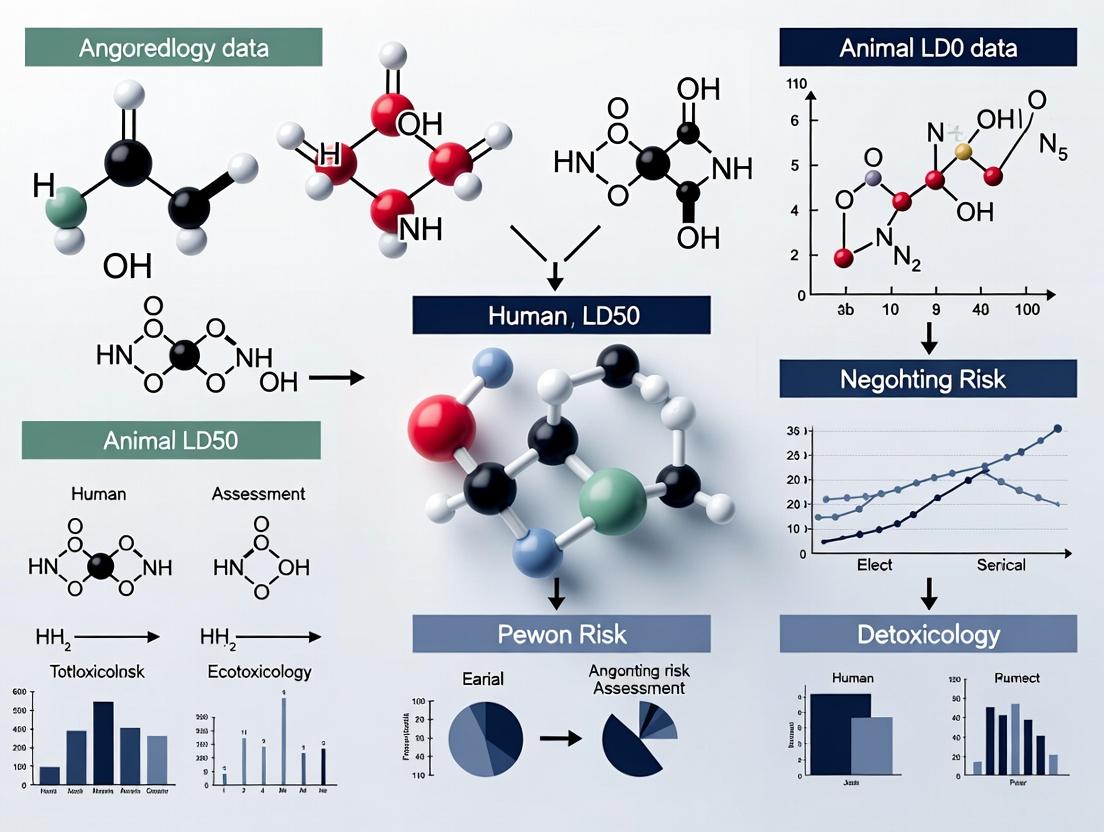
This article provides a critical evaluation of the reliability of animal LD50 data for predicting human health risks, tailored for researchers, scientists, and drug development professionals.
Animal LD50 Data in Human Risk Assessment: Reliability, Limitations, and the Rise of New Approach Methodologies
Abstract
This article provides a critical evaluation of the reliability of animal LD50 data for predicting human health risks, tailored for researchers, scientists, and drug development professionals. The scope progresses from establishing the foundational definition and role of LD50 in regulatory history to detailing its methodological application in formal risk assessment frameworks like the EPA's four-step process. It then tackles core scientific limitations—including interspecies variation, ethical concerns, and high resource costs—and explores optimization strategies via computational models and conservative consensus approaches. Finally, the article validates the ongoing paradigm shift towards human-relevant New Approach Methodologies (NAMs), examining in vitro and in silico alternatives, integrated assessment frameworks, and the barriers to their regulatory acceptance. The synthesis offers a forward-looking perspective on transitioning to a more predictive, efficient, and ethical safety science.
The Bedrock of Toxicity Testing: Defining LD50 and Its Historical Role in Hazard Identification
What is LD50? Quantifying the Lethal Dose for 50% of a Test Population
The median lethal dose (LD50) is a foundational toxicological unit defined as the dose of a substance required to kill 50% of a test population under controlled conditions within a specified time [1] [2]. Originally developed by J.W. Trevan in 1927 to standardize the potency of drugs and biological agents, this metric provides a quantifiable benchmark for comparing the acute toxicity of diverse chemicals [1] [2]. For researchers and drug development professionals, the LD50 value serves as a critical initial data point for hazard classification, informing safety protocols and regulatory decisions [3] [4].
However, within the context of human risk assessment, the reliability of animal-derived LD50 data is a subject of ongoing scientific scrutiny. While it offers a standardized comparison, significant limitations arise from interspecies physiological differences, genetic variability within test populations, and the inherent ethical and practical constraints of traditional testing methods [1] [5]. This guide compares classical in vivo LD50 determination methods with contemporary alternative protocols, examining their experimental workflows, data output, and relevance for extrapolating risk to humans. The evolution toward computational and refined animal methods reflects the field's pursuit of more predictive, humane, and human-relevant toxicological data [3] [4].
Defining the Metric: Core Concepts and Calculation
The LD50 value is expressed as the mass of a substance administered per unit mass of the test subject, most commonly as milligrams per kilogram (mg/kg) of body weight [1]. This normalization allows for the comparison of toxicity across different substances and animal sizes, though toxicity does not always scale linearly with body mass [1]. The related term LC50 (Lethal Concentration 50) refers to the lethal concentration of a chemical in air or water, with the exposure duration (e.g., 4 hours) being critical [1] [2].
The choice of a 50% mortality endpoint is a statistical compromise that avoids the high variability associated with measuring effects at the extremes (e.g., LD01 or LD99) and reduces the number of animals required to define the dose-response curve [1] [6]. The underlying assumption is a monotonic dose-response relationship, where mortality increases with the administered dose [6]. The resulting sigmoidal curve plots the percentage of mortality against the dose (often logarithmically transformed), with the LD50 located at its midpoint [7] [6].
Table 1: Key Dose-Response Terms in Toxicology
| Term | Definition | Primary Use |
|---|---|---|
| LD50 | Lethal dose for 50% of the population [1]. | Gold standard for comparing acute toxicity. |
| LD01 / LD99 | Lethal dose for 1% or 99% of the population [1]. | Assessing threshold or extreme lethality. |
| LC50 | Lethal concentration in air/water for 50% of population [2]. | Inhalation or aquatic toxicity studies. |
| ED50 | Effective dose for 50% of the population. | Pharmacology (therapeutic effect). |
| Therapeutic Index | Ratio of LD50 to ED50 [1]. | Quantifying drug safety margin. |
Statistical estimation is required in practice because the exact dose-response curve is unknown. Based on mortality counts from groups of animals administered different doses, researchers use models like logistic regression or probit analysis to interpolate the dose corresponding to 50% mortality [6]. The precision of the LD50 estimate depends on the number of animals, the number of dose groups, and the spacing of the doses [6].
Experimental Methodologies: From Classical to Contemporary Protocols
Classical LD50 Test
The original "classical" protocol, developed in the 1920s, involved administering the test substance to large groups of animals (often 50-100 rodents) across 4-6 predefined dose levels [4]. Animals were observed for 14 days for signs of toxicity and mortality [2]. The LD50 and its confidence interval were calculated using statistical methods like the probit analysis developed by Litchfield and Wilcoxon or the arithmetic method of Reed and Muench [4]. While this method aimed for statistical precision, it required significant numbers of animals and caused severe distress, leading to ethical and scientific criticism [4] [8].
Refined Animal-Based Methods (The 3Rs Principle)
To address the drawbacks of the classical test, regulatory bodies like the OECD have approved refined methods that adhere to the "3Rs" principle (Reduction, Refinement, Replacement) [4].
- Fixed Dose Procedure (FDP, OECD TG 420): This method does not aim to find a lethal dose. Instead, it identifies a dose that causes clear signs of toxicity (but not death) in a small group of animals, using that information to classify the substance into a hazard category [4].
- Acute Toxic Class (ATC) Method (OECD TG 423): This sequential testing procedure uses even fewer animals (typically 3 per step) and employs a stepwise dosing strategy to assign the substance to a defined toxicity class [4].
- Up-and-Down Procedure (UDP, OECD TG 425): This is the most significant reduction alternative. It doses animals sequentially, one at a time, with the dose for the next animal adjusted up or down based on the outcome for the previous one. Sophisticated computer programs (e.g., EPA's AOT425StatPgm) calculate the LD50 and confidence interval, typically using 6-9 animals instead of 40-50 [4] [9].
Table 2: Comparison of Key Acute Oral Toxicity Testing Methods
| Method (OECD Guideline) | Approx. Animal Use (Rodents) | Primary Objective | Key Advantage | Regulatory Status |
|---|---|---|---|---|
| Classical LD50 (Historical) | 40-100 [4] | Determine precise LD50 value with confidence intervals. | Historical standard, extensive data. | Largely suspended; not compliant with modern 3Rs. |
| Fixed Dose Procedure (420) | 10-20 [4] | Identify hazard class based on evident toxicity. | Avoids lethal endpoints, reduces suffering. | Approved (1992). |
| Acute Toxic Class (423) | 6-18 [4] | Assign substance to a pre-defined toxicity class. | Efficient stepwise approach, uses few animals. | Approved (1996). |
| Up-and-Down (425) | 6-9 [4] [9] | Estimate LD50 and confidence interval. | Drastic animal reduction, precise statistical output. | Approved (1998). |
| In Silico (Q)SAR (Non-Test) | 0 | Predict toxicity from chemical structure. | High-throughput, no animals, useful for screening. | Used for prioritization; gaining regulatory acceptance [3]. |
In Silico and In Vitro Alternatives
Computational toxicology methods are emerging as replacements. (Quantitative) Structure-Activity Relationship [(Q)SAR] models predict LD50 values by analyzing the relationship between a chemical's structural properties and its known toxicological activity [3]. A major collaborative project by NICEATM and the U.S. EPA compiled a database of ~12,000 rat oral LD50 values to develop and validate such models for regulatory endpoints [3]. These models can predict whether a chemical is "very toxic" (LD50 < 50 mg/kg) or "non-toxic" (LD50 > 2000 mg/kg) with balanced accuracies over 0.80 [3]. While not yet a full replacement for all regulatory needs, they are invaluable for prioritization and screening.
Comparative Data Analysis: LD50 in Context
LD50 values span an immense range, illustrating the vast differences in acute toxicity between common substances. It is critical to note that these values are specific to the test animal, route, and conditions and cannot be directly translated to a "human LD50." [1] [5]
Table 3: Comparative LD50 Values for Selected Substances (Rodent, Oral Route) [1] [5]
| Substance | Approximate LD50 (mg/kg) | Toxicity Classification | Context for Human Risk |
|---|---|---|---|
| Botulinum Toxin | 0.000001 (1 ng/kg) [5] | Extremely Toxic | Human lethal dose is minute; extreme hazard. |
| Sodium Cyanide | 6.4 [5] | Highly Toxic | Well-known rapid poison; high acute risk. |
| Nicotine | 50 [5] | Highly Toxic | Toxic if ingested; hazard different from smoking. |
| Paracetamol (Acetaminophen) | 2000 [1] | Slightly Toxic | Human hepatotoxicity at high doses; species difference is key. |
| Aspirin | 200 [5] | Moderately Toxic | Human therapeutic drug; overdose possible. |
| Sodium Chloride (Table Salt) | 3000 [1] | Slightly Toxic | Essential nutrient; toxicity from extreme intake. |
| Ethanol | 7060 [1] | Practically Non-Toxic | Recreational drug; chronic toxicity differs. |
| Water | >90,000 [1] | Relatively Harmless | Practically non-toxic; illustrates scale. |
The therapeutic index (TI = LD50 / ED50) is a more relevant metric than LD50 alone for drug development, as it quantifies the margin between efficacy and lethality [1]. A substance with a low LD50 can be safely used if its effective dose is much lower (high TI), whereas a substance with a high LD50 can be dangerous if its effective dose is close to its toxic dose (low TI).
Reliability for Human Risk Assessment: Critical Limitations
The extrapolation of animal LD50 data to predict human acute toxicity is fraught with uncertainty, forming the core of the thesis on its limited reliability.
- Interspecies Variability: Metabolic, physiological, and anatomical differences can lead to dramatically different responses. For example, paracetamol is significantly more toxic to humans than to rats [1] [5]. Chocolate is harmless to humans but toxic to dogs [1].
- Intraspecies Variability: LD50 is a population median. It does not account for genetic diversity, age, sex, health status, or microbiome differences within the human population that can create susceptible subpopulations [1] [7].
- Route of Exposure: The LD50 varies drastically with the route of administration (oral, dermal, intravenous, inhalation) [1] [2]. Human exposure scenarios may not match the test route.
- Mechanistic vs. Descriptive Data: A single LD50 number provides no information on the mechanism of toxicity, time course of death, or specific organ pathology, which are crucial for understanding human risk and developing treatments [8].
- Acute vs. Chronic Effects: LD50 measures only acute lethality. It offers no insight into long-term effects of low-dose exposure, such as carcinogenicity, endocrine disruption, or neurotoxicity [2].
Therefore, while animal LD50 data are essential for initial hazard identification and classification, they are merely the first step in a comprehensive risk assessment. Reliable human risk assessment requires data from multiple sources: mechanistic studies, in vitro assays using human cells or tissues, pharmacokinetic modeling, epidemiological data, and a thorough understanding of expected human exposure scenarios.
The Scientist's Toolkit: Essential Reagents and Materials
Table 4: Key Research Reagents and Materials for LD50-Related Studies
| Item | Function in LD50 Research |
|---|---|
| Laboratory Rodents (e.g., Sprague-Dawley Rats) | The standard in vivo model organism for determining mammalian acute oral toxicity [2] [3]. |
| Test Substance (High Purity) | The chemical agent being evaluated. Testing is nearly always performed using a pure form to ensure accurate dosing and interpretation [2]. |
| Vehicle (e.g., Carboxymethylcellulose, Corn Oil) | A neutral substance used to dissolve or suspend the test compound for accurate oral gavage or other administration. |
| Gavage Needle/Syringe | For precise oral administration of the test substance to rodents. |
| Clinical Chemistry & Hematology Assay Kits | To quantify biomarkers of organ damage (e.g., liver enzymes, creatinine) in sub-acute studies or satellite animal groups. |
| Histopathology Supplies (Fixatives, Stains) | For microscopic examination of tissues (liver, kidney, heart, etc.) to identify target organs and pathological lesions. |
| Computer with Statistical Software (e.g., AOT425StatPgm) | Essential for designing UDP studies, calculating sequential doses, and determining the final LD50 estimate with confidence intervals [9]. |
| (Q)SAR Software & Chemical Databases | For in silico prediction of toxicity. Relies on large curated databases like the EPA's ~12,000 compound rat LD50 inventory [3]. |
Historical Development and Core Principles
The median lethal dose (LD50) test, formally introduced by J.W. Trevan in 1927, was designed to quantify the acute toxicity of substances by determining the dose expected to kill 50% of a tested animal population within a specified timeframe [4]. This metric provided a standardized, reproducible point for comparing the toxicity of chemicals, which was rapidly adopted for drug and chemical safety assessment. The original "Classical LD50" protocol, developed in the 1920s, required large numbers of animals—often up to 100 individuals across five dose groups—to generate a precise dose-response curve [4].
The conceptual foundation of the LD50 test is its role in acute systemic toxicity evaluation, which assesses adverse effects occurring within 24 hours of a single or multiple exposures via oral, dermal, or inhalation routes [4]. Its results became crucial for the hazard classification and labeling of substances, providing a foundational metric for regulatory decisions worldwide [4] [10]. The test's endpoint, while focused on mortality, also involves observing signs of toxicity, which can offer insights into a substance's mechanism of action and target organs [4].
Evolution of Protocols: From Classical LD50 to Modern Alternatives
The drive to reduce animal use and refine testing procedures led to significant methodological evolution, guided by the "3Rs" framework (Replacement, Reduction, and Refinement) established by Russell and Burch in 1959 [4].
Table 1: Evolution of Key LD50 Estimation Methods
| Method (Year Introduced) | Key Principle | Typical Animal Number | Regulatory Status (OECD Guideline) | Primary Advantage |
|---|---|---|---|---|
| Classical LD50 (1920s) | Precise mortality curve across multiple doses. | 40-100+ | Superseded | Historical benchmark for toxicity ranking. |
| Fixed Dose Procedure (1992) | Identifies a dose causing evident toxicity but not death. | 10-20 | OECD 420 | Significantly reduces mortality and distress. |
| Acute Toxic Class Method (1996) | Uses stepwise dosing to assign a toxicity class. | 6-18 | OECD 423 | Requires fewer animals than classical test. |
| Up-and-Down Procedure (2001) | Adjusts dose for each animal based on previous outcome. | 6-10 | OECD 425 | Most efficient reduction in animal numbers. |
The transition from the Classical LD50 began in earnest in the 1980s and 1990s with the development and OECD adoption of alternative in vivo methods that prioritize the 3Rs [4]. The Fixed Dose Procedure (FDP), adopted in 1992 (OECD 420), abandons the goal of precisely finding the 50% lethality point. Instead, it focuses on identifying a dose that produces clear signs of toxicity without necessarily causing death, thereby minimizing animal suffering [4]. The Acute Toxic Class (ATC) method and the Up-and-Down Procedure (UDP) further reduce animal numbers by using sequential, step-wise dosing strategies [4]. These modern protocols accept a less precise estimate of the lethal dose in exchange for ethical gains and efficiency, while still providing robust data for hazard classification under systems like the Globally Harmonized System (GHS) [4].
Modern Computational Models for Acute Toxicity Prediction
The most recent evolution involves the partial or complete replacement of animal testing through New Approach Methodologies (NAMs), particularly advanced computational models [11] [4]. These in silico tools leverage large historical datasets to predict toxicity, addressing the need to assess millions of commercially available chemicals that lack experimental data [11].
Quantitative Structure-Activity Relationship (QSAR) models are a cornerstone of this approach. They operate on the principle that a chemical's structure determines its biological activity and toxicity. For regulatory use, QSAR models must fulfill specific validation principles, including having a defined endpoint, an unambiguous algorithm, and a defined domain of applicability [11]. Major software tools implementing these models include the OECD QSAR Toolbox, OASIS, and Derek [11].
A significant advancement is the development of consensus models that combine predictions from multiple individual algorithms to improve reliability. The Collaborative Acute Toxicity Modeling Suite (CATMoS) is a prominent example, generating consensus predictions from various machine-learning models built on a large, curated dataset of rat acute oral toxicity [11]. Studies show that a Conservative Consensus Model (CCM), which selects the lowest predicted LD50 value from multiple models (like CATMoS, VEGA, and TEST), offers a health-protective approach. It exhibits a very low under-prediction rate (2%), meaning it rarely underestimates toxicity, though it has a higher over-prediction rate (37%) [12].
Table 2: Performance of Selected Computational Models for Rat Acute Oral Toxicity Prediction
| Model | Model Type | Key Performance Metrics | Strengths | Application Context |
|---|---|---|---|---|
| TEST | Statistical QSAR Consensus (Hierarchical Clustering, FDA, Nearest Neighbor) | External Test Set: R²: 0.626, MAE: 0.431 [10]. Broad chemical coverage [10]. | Makes predictions for a wide array of chemicals; freely available. | Screening and priority-setting where experimental data is absent [10]. |
| TIMES | Hybrid Expert System (Mechanistic SARs + QSARs) | Training Set R²: 0.85 [10]. Performance similar to TEST but for fewer chemicals [10]. | Incorporates mechanistic reasoning and AOP-like constructs. | Useful for chemicals within its well-defined mechanistic categories [10]. |
| CATMoS | Consensus Machine Learning Model | High accuracy and robustness vs. in vivo results [11]. | Leverages collective strengths of multiple algorithms; high predictive confidence. | Prioritizing in vivo testing; used in pharmaceutical industry for compound triage [11]. |
| Conservative Consensus Model (CCM) | Consensus of multiple models (e.g., TEST, CATMoS, VEGA) | Under-prediction rate: 2%; Over-prediction rate: 37% [12]. | Maximizes health protection by selecting the most conservative (lowest) LD50 prediction. | Hazard identification under conditions of high uncertainty or for priority risk assessment [12]. |
Experimental Protocols and Methodologies
Modern In Vivo Protocol: OECD Guideline 425 (Up-and-Down Procedure)
The UDP represents the state-of-the-art in refined animal testing for acute oral toxicity [4]. The procedure begins with a limit test at 2000 mg/kg. If no mortality is observed, the test is concluded, classifying the substance in a low toxicity category. If necessary, the main test proceeds using a sequential dosing strategy. A single animal is dosed at a best-estimate starting dose. If it survives, the next animal receives a higher dose; if it dies, the next receives a lower dose. The test continues with a minimum of six animals, with dosing intervals adjusted based on outcomes. The LD50 and its confidence intervals are calculated using a maximum likelihood method. This protocol typically uses only 6-10 animals, a drastic reduction from classical methods, and limits severe suffering [4].
In Silico Prediction Protocol Using QSAR Models
A standard workflow for computational prediction involves several key steps [11] [10]:
- Chemical Standardization: The input chemical structure (e.g., via SMILES notation or CAS number) is converted into a QSAR-ready format. This involves removing salts, neutralizing charges, and standardizing tautomers using toolkits like RDKit [11] [10].
- Descriptor Calculation: Numerical representations (molecular descriptors) or structural fingerprints (e.g., Extended Connectivity Fingerprints - ECFP6) are generated to characterize the molecule computationally [11].
- Model Application & Prediction: The descriptors are submitted to the model(s). In tools like TEST, multiple underlying methods (hierarchical, FDA) generate predictions, and a consensus value is derived [10]. For the CCM, predictions from several platforms (TEST, CATMoS, VEGA) are collected, and the lowest predicted LD50 value is selected as the final, health-protective estimate [12].
- Applicability Domain Assessment: A critical step determines whether the query chemical falls within the structural and property space of the chemicals used to train the model. Predictions for chemicals outside this domain are considered unreliable [11].
The Reliability of Animal LD50 Data for Human Risk Assessment
The core thesis regarding the reliability of animal LD50 data for human risk assessment must account for inherent variability and uncertainty. A critical analysis of a large reference dataset (~16,713 studies) reveals substantial inherent variability in experimental animal LD50 values [10]. For chemicals with multiple studies, the range of reported values can span an order of magnitude or more. This variability stems from factors like animal strain, sex, laboratory protocol, and housing conditions.
This inherent noise in the biological benchmark itself challenges the validation of alternative methods. When evaluating computational models like TEST and TIMES, their prediction errors must be weighed against the background variability of the experimental data [10]. A model prediction falling within the 95% confidence interval of the experimental data may be considered sufficiently accurate for classification purposes, even if it does not match a single idealized value.
Furthermore, the translation from rat to human introduces another layer of uncertainty due to interspecies differences in toxicokinetics (absorption, distribution, metabolism, excretion) and toxicodynamics [4]. Regulatory frameworks address these uncertainties by applying assessment factors (e.g., 10-fold for interspecies differences) to animal-derived LD50 values when estimating potential human lethal doses. The trend toward more health-protective models, like the Conservative Consensus Model, which intentionally errs on the side of over-predicting toxicity, is a direct response to these uncertainties, aiming to ensure safety even in the face of data limitations and biological variability [12].
Integrated Hazard Assessment and Future Directions
Modern chemical hazard assessment, as exemplified by frameworks like the Enhesa GHS+, no longer relies on a single LD50 value [13]. Acute oral toxicity is integrated as one supplemental endpoint within a comprehensive evaluation of human health and environmental hazards. The overall process is systematic [13]:
- Chemical Identity Confirmation using CAS RN or SMILES.
- List Screening against hundreds of regulatory and authoritative lists.
- Endpoint-Level Assessment, where data from experiments, read-across analogs, and in silico models are weighed using weight-of-evidence and often a precautionary principle.
- Overall Hazard Categorization using a rules-based system that synthesizes all endpoint findings into a final hazard category (e.g., Green, Yellow, Red) [13].
In this integrated system, a predicted or experimental LD50 value feeds into the acute toxicity endpoint assessment. If high-quality experimental data is lacking, a conservative QSAR prediction or data from a read-across analog is used to fill the gap, ensuring a complete assessment [13]. The future of acute toxicity testing lies in further developing and validating these integrated testing strategies (ITS). These strategies intelligently combine in silico tools, high-throughput in vitro assays (like 3T3 NRU cytotoxicity), and targeted in vivo tests only when absolutely necessary. The goal is to maximize the use of non-animal data for screening and prioritization, enhance human relevance, and provide a more mechanistic understanding of toxicity, all while firmly adhering to the principles of the 3Rs [11] [4].
Timeline of LD50 Test Evolution
Integrated Hazard Assessment Workflow
- OECD Testing Guidelines (420, 423, 425): The definitive international standards for conducting refined in vivo acute oral toxicity tests. They provide step-by-step protocols to ensure scientific validity, reproducibility, and ethical compliance [4].
- QSAR-Ready Chemical Structures: Standardized molecular representations (typically as SMILES strings) with salts removed and charges neutralized. This is a mandatory pre-processing step for reliable computational toxicity prediction, ensuring models interpret the correct molecular entity [11] [10].
- Reference LD50 Datasets (e.g., NICEATM/EPA): Large, curated collections of historical animal toxicity data. These are essential for training, validating, and benchmarking new predictive models. The ICCVAM reference set of ~16,713 studies is a prime example [10].
- Consensus Modeling Software (e.g., CATMoS Platform): Software that aggregates predictions from multiple underlying machine learning or QSAR models. Using a consensus approach improves prediction reliability and robustness, making it a key tool for modern hazard assessment [12] [11].
- Chemical Hazard Assessment Framework (e.g., GHS+): A structured rule-based system that integrates data from multiple endpoints (acute toxicity, mutagenicity, ecotoxicity, etc.) to assign an overall hazard category. This moves decision-making beyond a single LD50 value to a holistic profile [13].
- Applicability Domain Assessment Tool: A method or module (often integrated into QSAR software) to determine whether a chemical of interest falls within the structural space of a model's training set. It is critical for qualifying predictions and avoiding unreliable extrapolations [11].
1. Introduction: The LD50 in Human Risk Assessment The median lethal dose (LD50) test, introduced by Trevan in 1927, is a standardized measurement for quantifying the acute toxicity of substances by determining the dose that causes death in 50% of a test animal population [14] [2]. Despite its historical role in toxicological hazard ranking and regulatory classification, its reliability for direct human risk assessment is fundamentally limited. This limitation stems from interspecies variability, ethical and statistical inefficiencies of the classical test design, and the critical distinction between external exposure and internal biologically effective dose [15] [16] [17]. This guide compares traditional in vivo LD50 protocols with modern alternative approaches, framing the analysis within the imperative to enhance predictive reliability for human health by standardizing exposure route assessment and integrating human-relevant values.
2. Standardizing Exposure: Routes, Dosimetry, and Internal Dose Accurate risk assessment requires moving beyond administered dose to understand how exposure route affects internal dose. The U.S. EPA defines multiple dose metrics: potential dose (inhaled/ingested amount), applied dose (at absorption barrier), internal dose (absorbed into bloodstream), and biologically effective dose (interacting with target tissues) [18]. For inhalation, a primary occupational route, the internal dose can be significantly lower than the potential dose due to respiratory physiology and clearance mechanisms [18].
Table 1: Key Metrics for Inhalation vs. Oral Exposure Assessment
| Exposure Metric | Inhalation Route (Air) | Oral Route | Critical Parameter |
|---|---|---|---|
| Primary Metric | Concentration (C~air~: mg/m³ or ppm) [18] | Dose (mg/kg body weight) [2] | Media-specific measurement |
| Temporal Adjustment | Cair-adj = C~air~ × (ET/24) × EF × (ED/AT) [18] | Not typically applied to single-dose LD50 | Exposure time (ET), frequency (EF), duration (ED), averaging time (AT) |
| Intake/Dose Calculation | ADD = (C~air~ × InhR × ET × EF × ED) / (BW × AT) [18] | LD50 = Administered mass / Body Weight [2] | Inhalation rate (InhR), Body weight (BW) |
| Species Conversion Challenge | Lung anatomy, ventilation rate, deposition efficiency [18] | Gastrointestinal physiology, metabolism, absorption [17] | Requires dosimetric adjustment factors |
3. Comparative Analysis of Experimental Protocols This section details and compares the classical LD50 test with a refined alternative and a non-animal method.
3.1. Classical Oral LD50 Test (OECD Guideline 401 - Historical)
- Objective: Determine the single oral dose causing 50% mortality in a defined animal population.
- Methodology: Groups of 8-10 animals (typically rodents) per dose level are administered the substance via gavage. Four or more dose levels are used to span the expected mortality range from 0% to 100% [2]. Animals are observed for 14 days for mortality and clinical signs of toxicity.
- Endpoint & Analysis: The LD50 and its confidence interval are calculated using probit or logistic regression analysis of mortality vs. log(dose).
- Limitations: High animal use (40-100+); significant suffering; results are highly sensitive to protocol variables (species, strain, sex, housing) [14] [16]. The endpoint (death) provides limited mechanistic insight for human risk assessment.
3.2. Fixed Dose Procedure (FDP - OECD Guideline 420)
- Objective: Identify a discernible non-lethal toxic effect (signs of severe toxicity) to classify a substance's hazard, avoiding mortality as an endpoint.
- Methodology: A sighting study determines a starting dose (e.g., 5, 50, 300, 2000 mg/kg). A single group of 5 animals (one sex) is then dosed at this level. If clear signs of severe toxicity (not death) manifest, the test stops, and the substance is classified. If mortality occurs, a lower dose is tested [14].
- Endpoint & Analysis: The procedure identifies the dose causing clear signs of "evident toxicity." Classification is based on predefined dose bands.
- Advantages: Significant reduction (up to 70%) in animal use; emphasizes morbidity over mortality, providing more relevant toxicity data; aligns with the 3Rs (Replacement, Reduction, Refinement) [14].
3.3. In Vitro Cytotoxicity Assays (Baseline Toxicity Screening)
- Objective: Predict starting points for acute oral systemic toxicity using mammalian cell lines.
- Methodology: Established cell lines (e.g., NHK, 3T3) are exposed to a range of substance concentrations for 24-72 hours. Cell viability is measured using endpoints like neutral red uptake, MTT reduction, or ATP content [14] [16].
- Endpoint & Analysis: The concentration inhibiting 50% of cell viability (IC50) is calculated. Regression models can correlate IC50 ranges with in vivo LD50 classification bands.
- Advantages: No live animals used; high throughput; provides mechanistic data; uses human cells for greater relevance [16]. Limitations: Cannot model complex pharmacokinetics or organ-system interactions; best used in integrated testing strategies.
Table 2: Protocol Comparison for Acute Toxicity Testing
| Feature | Classical LD50 | Fixed Dose Procedure | In Vitro Cytotoxicity |
|---|---|---|---|
| Primary Endpoint | Mortality (LD50) [2] | Signs of severe toxicity [14] | Cell viability (IC50) |
| Animals/Cells per Test | 40-100+ animals [16] | 5-15 animals [14] | 0 animals; multi-well plates |
| Duration | 14 days observation [2] | 14 days observation | 24-72 hours |
| Statistical Output | Precise LD50 with confidence intervals | Hazard classification band | IC50 with confidence intervals |
| Predictive Value for Human Acute Toxicity | Limited by interspecies differences [15] | Improved via morbid symptomology | Promising for ranking; requires validation |
| Regulatory Acceptance | Historically required; now largely retired | Accepted for classification (OECD, EPA, EU) | Accepted as part of weight-of-evidence; growing acceptance |
4. Data Analysis: Interspecies Variability and Visualization A core challenge in applying animal data is interspecies variability. A meta-analysis of LD50, LC50 (lethal concentration), and LR50 (lethal tissue residue) data found that while internal doses (biologically effective dose) are more comparable across species and routes, external lethal doses can vary over several orders of magnitude [17]. For example, the insecticide dichlorvos shows variable toxicity: Oral LD50 (rat) = 56 mg/kg, but Inhalation LC50 (rat) = 1.7 ppm [2].
Table 3: Illustrative Interspecies Variability in Acute Toxicity (Sample Values)
| Substance | Species | Route | LD50/LC50 | Toxicity Class (Hodge & Sterner) |
|---|---|---|---|---|
| Dichlorvos [2] | Rat | Oral | 56 mg/kg | Moderately Toxic |
| Rat | Inhalation | 1.7 ppm (4h) | Extremely Toxic | |
| Rabbit | Oral | 10 mg/kg | Highly Toxic | |
| Dog | Oral | 100 mg/kg | Slightly Toxic | |
| Nicotine [15] | Rat | Oral | 50 mg/kg | Highly Toxic |
| Ethanol [15] | Rat | Oral | 7000 mg/kg | Practically Non-toxic |
Effective visualization of such comparative data is essential. Bar charts are optimal for comparing discrete values (e.g., LD50 across species) [19] [20]. Dose-response curves, typically line charts, visualize the continuous relationship between dose and effect, highlighting the slope and critical values like LD50, LD10, and NOAEL [15]. A box plot (or whisker plot) is the most robust method to display the distribution, median, and variability of LD50 data across multiple studies or species [21].
Table 4: Data Visualization Methods for Toxicity Data
| Chart Type | Best For | Example in Toxicity Assessment | Pros/Cons |
|---|---|---|---|
| Bar Chart [19] [20] | Comparing exact values across categories. | Directly comparing LD50 values of 5 chemicals for the same species/route. | Pro: Simple, universally understood. Con: Can oversimplify variability. |
| Dose-Response Curve (Line Chart) [15] | Showing the relationship between dose and effect (mortality, response %). | Plotting % mortality vs. log(dose) to derive LD50 and curve slope. | Pro: Shows complete relationship, slope indicates toxicity range. Con: Requires multiple data points per agent. |
| Box Plot (Whisker Plot) [21] | Displaying data distribution (median, range, interquartile range). | Showing variability in reported LD50s for one chemical across different labs or species. | Pro: Excellent for showing variability and outliers. Con: Less familiar to some general audiences. |
Diagram 1: Workflow for Analyzing Interspecies Toxicity Data
5. The Scientist's Toolkit: Reagents & Essential Materials
- Test Substances: High-purity chemical or well-characterized mixture [2].
- Vehicle/Control Article: Solvent (e.g., corn oil, saline, methyl cellulose) for dose formulation and control groups.
- Cell Culture System (In Vitro): Validated cell line (e.g., NHK, 3T3), culture medium, sera, trypsin/EDTA [16].
- Viability Assay Kits: MTT, Neutral Red, or ATP-based assay kits for quantifying cytotoxicity [16].
- Animal Models (When Required): Defined strain, sex, and age of rodents (e.g., Sprague-Dawley rat, CD-1 mouse) from accredited breeders [2].
- Dosing Apparatus: Oral gavage needles, calibrated inhalation chambers, precision micropipettes.
- Data Analysis Software: Software for probit/logit analysis (e.g., EPA BMDS), statistical packages (R, SAS, GraphPad Prism), and visualization tools.
6. Alternative Approaches and the Expression of Modern Values The field is transitioning from a singular focus on lethality to an expression of values prioritizing human relevance, efficiency, and ethics. This includes:
- Integrated Testing Strategies (ITS): Combining computational (in silico) models like QSAR, high-throughput in vitro assays, and targeted in vivo tests only for confirmation [14] [16].
- Adoption of Subacute Endpoints: Using more informative endpoints like organ toxicity biomarkers, clinical pathology, and histopathology.
- Dosimetric Adjustment: Applying physiologically based pharmacokinetic (PBPK) modeling to extrapolate animal doses to human equivalent doses based on internal dosimetry, addressing the core limitation of route-to-route and species extrapolation [18] [17].
Diagram 2: Integrated Testing Strategy Workflow
7. Conclusion Reliable human risk assessment cannot rely on the classical LD50 as a standalone, direct metric. Standardization must focus on the route of exposure to understand internal dosimetry and on the expression of values that favor human-relevant, mechanistic, and ethical testing strategies [18] [16] [17]. While animal-derived acute toxicity data provide a historical benchmark, its future utility lies within integrated approaches that use modern in silico and in vitro tools to prioritize and refine testing, ultimately enhancing the predictive accuracy and human relevance of safety assessments.
The assessment of chemical toxicity has evolved from systems based on observational animal data to globally harmonized frameworks designed for human protection. The Hodge and Sterner scale, developed in the mid-20th century, established a systematic but simplistic method for categorizing substance toxicity based primarily on oral rat LD₅₀ values [22]. This scale categorized chemicals from "practically nontoxic" to "super toxic" and was foundational for early hazard communication. However, its reliance on a single, animal-derived metric presented significant limitations for accurate human risk prediction.
This historical approach contrasts with the modern Globally Harmonized System of Classification and Labelling of Chemicals (GHS), developed by the United Nations. The GHS is an integrated, evidence-based system that classifies chemicals according to their physical, health, and environmental hazards and communicates this information through standardized labels and safety data sheets (SDS) [23]. Its core objectives are to enhance the protection of human health and the environment, facilitate international trade, and reduce the burden of compliance for companies operating in multiple jurisdictions [23]. The transition from Hodge and Sterner to GHS represents a paradigm shift from animal-centric lethality data to a multifaceted, human-focused assessment that incorporates a broader spectrum of toxicological endpoints.
Comparative Analysis of Classification Systems
The fundamental difference between the two systems lies in their data inputs, classification criteria, and intended application. The table below provides a direct comparison of their toxicity categories and the underlying experimental data.
Table 1: Comparison of Hodge & Sterner Oral Toxicity Scale and GHS Acute Oral Toxicity Categories
| Hodge & Sterner Category | Approx. Rat Oral LD₅₀ (mg/kg) | GHS Acute Oral Toxicity Category | GHS Hazard Statement & Signal Word | Typical LD₅₀ Range (mg/kg) |
|---|---|---|---|---|
| Practically Non-Toxic | > 15,000 | Not Classified | — | ≥ 5000 |
| Slightly Toxic | 5,001 – 15,000 | Category 5 | H303: May be harmful if swallowed (Warning) | 2000 – 5000 |
| Moderately Toxic | 501 – 5,000 | Category 4 | H302: Harmful if swallowed (Warning) | 300 – 2000 |
| Very Toxic | 1 – 500 | Category 3 | H301: Toxic if swallowed (Danger) | 50 – 300 |
| Extremely Toxic | < 1 | Category 2 | H300: Fatal if swallowed (Danger) | 5 – 50 |
| Super Toxic | < 0.01 | Category 1 | H300: Fatal if swallowed (Danger) | ≤ 5 |
The GHS system introduces critical refinements. First, it uses standardized hazard statements (H-codes) and signal words ("Danger" or "Warning") to convey precise risk [23]. Second, GHS classification is not based solely on LD₅₀ but considers the weight of evidence from various sources, including in vitro studies and human experience [24]. Third, GHS mandates a suite of communication elements, including pictograms and precautionary statements, creating a more robust and actionable hazard communication tool compared to the single-number output of the Hodge and Sterner scale [25].
The Scientific Challenge: Reliability of Animal LD₅₀ Data for Human Risk
The central thesis questioning the reliability of animal LD₅₀ data for human risk assessment is supported by substantial scientific evidence. Traditional acute toxicity testing protocols, such as the OECD Up-and-Down Procedure, are designed to determine the dose lethal to 50% of a test population (typically rodents) with statistical confidence [22]. While standardized, these protocols face inherent limitations:
- Interspecies Metabolic and Physiological Differences: Fundamental genetic and phenotypic variations mean that a compound's metabolic pathway, rate of clearance, or target organ sensitivity can differ drastically between rodents and humans [26].
- High Variability and Ethical Cost: LD₅₀ tests require significant numbers of animals and can cause severe suffering. Efforts to reduce animal use, like the limit test (using a maximum of 5 animals at a high dose), highlight the ethical and resource-intensive nature of these assays [22].
- Narrow Scope of Endpoints: LD₅₀ measures only one endpoint—death—over a short period. It provides no data on organ-specific toxicity, long-term chronic effects, carcinogenicity, or reproductive harm, which are critical for comprehensive human safety assessment [24].
This translational gap has direct consequences. A significant proportion of drug candidates that appear safe in preclinical animal studies fail in clinical trials or are withdrawn post-marketing due to unforeseen human adverse events, such as cardiovascular or neurotoxicity [26] [27]. For example, the appetite suppressant sibutramine showed no severe cytotoxicity in preclinical studies but was later withdrawn due to life-threatening cardiovascular risks in humans [26]. This underscores that lethality in animals is a poor, standalone predictor of complex human toxicities.
Modern Alternatives and Performance Data
The field is rapidly moving toward New Approach Methodologies (NAMs) that aim to reduce, refine, and replace animal testing [24]. These include integrated testing strategies that combine in vitro assays (like 3D organoids), in silico models (like QSAR and PBPK modeling), and omics technologies (transcriptomics, proteomics) [24]. A prominent advancement is the use of artificial intelligence and machine learning to integrate diverse data streams for human-specific toxicity prediction.
A 2025 study demonstrates the power of a genotype-phenotype differences (GPD) machine learning model [26]. This model moves beyond chemical structure to incorporate biological disparities between preclinical models (e.g., mice, cell lines) and humans in areas like gene essentiality and tissue expression profiles.
Table 2: Performance Comparison of Toxicity Prediction Models
| Model / Approach | Core Data Input | Reported Performance (AUROC) | Key Strength | Primary Limitation |
|---|---|---|---|---|
| Traditional Animal LD₅₀ | Rodent lethality dose | Not applicable (single endpoint) | Standardized, historical data baseline | Poor human translatability, ethical cost, narrow scope [22]. |
| Chemical Structure-Based AI | Molecular descriptors & fingerprints | ~0.50 (Baseline in GPD study) | High-throughput, early screening | Misses biologically-driven human-specific toxicity [26]. |
| GPD-Integrated AI Model [26] | Chemical features + interspecies genotype-phenotype differences | 0.75 | Captures human-specific biological risk; identifies neuro/cardio toxicity signals. | Requires high-quality genetic and phenotypic data across species. |
| NAM/IATA Framework [24] | In vitro, in silico, read-across, omics data | Varies by endpoint (qualitative "weight of evidence") | Mechanistic insight, addresses multiple toxicity endpoints, reduces animal use. | Lack of standardized validation frameworks for regulatory acceptance. |
The experimental protocol for the GPD model involved compiling a dataset of 434 "risky" drugs (associated with clinical trial failure or post-market withdrawal) and 790 approved drugs [26]. For each drug target, differences in gene essentiality, tissue expression profiles, and biological network connectivity between humans and preclinical models were quantified. A Random Forest model integrating these GPD features with chemical descriptors significantly outperformed models based on chemical structure alone, particularly for predicting hard-to-detect toxicities like neurotoxicity [26].
The workflow for modern, human-focused hazard assessment integrates these new methodologies, as shown in the following diagram.
Diagram: Workflow Shift from Animal-Centric to Integrated Evidence-Based Hazard Assessment. The traditional path (top, yellow) relies on linear extrapolation from animal data, while the modern GHS/NAMs path (bottom, green) integrates diverse human-relevant evidence streams for a more robust classification.
The Scientist's Toolkit: Research Reagent Solutions
Transitioning to human-focused assessment requires new tools. The following table details essential reagents and materials for contemporary toxicology research.
Table 3: Essential Research Reagent Solutions for Modern Toxicity Assessment
| Reagent/Material | Function in Research | Application Context |
|---|---|---|
| Human Primary Cells & iPSC-Derived Cells | Provide human-specific biological response data, overcoming interspecies differences. Used in 2D/3D culture systems. | In vitro toxicity screening, organ-on-a-chip models, mechanistic studies [24]. |
| Toxicogenomics Panels (Transcriptomics/Proteomics) | Measure genome-wide gene expression or protein changes in response to toxicants. Identifies biomarkers and modes of action. | Developing Adverse Outcome Pathways (AOPs), calculating benchmark doses (BMD), understanding mechanistic toxicity [24]. |
| QSAR Software & Chemical Databases | Predict toxicity based on chemical structure similarity and properties. Enables high-throughput virtual screening. | Early compound prioritization, read-across justification for data-poor chemicals, filling data gaps [24]. |
| PBPK (Physiologically Based Pharmacokinetic) Modeling Software | Simulates the absorption, distribution, metabolism, and excretion (ADME) of chemicals in humans and animals. | Interspecies and inter-route extrapolation, predicting internal target organ doses [24]. |
| Machine Learning Platforms (e.g., for GPD Analysis) | Integrate diverse data types (chemical, genomic, phenotypic) to identify complex patterns predicting human toxicity. | Building advanced models like GPD-based classifiers for human-specific risk prediction [26] [27]. |
| Standardized GHS Label Elements (Pictograms, H/P Codes) | Tools for the accurate communication of classified hazards in laboratory and workplace settings. | Ensuring compliant labeling of research chemicals and secondary containers, supporting hazard communication programs [23] [25]. |
Regulatory Implementation and Future Directions
The adoption of GHS and NAMs is actively reshaping the regulatory landscape. In the United States, OSHA's updated Hazard Communication Standard (HCS) aligns with GHS Rev. 7, with key compliance deadlines approaching: substance reclassification by January 19, 2026, and mixture reclassification by July 19, 2027 [28]. This update emphasizes clearer labels, especially for small containers, and more detailed Safety Data Sheets [23] [28].
Regulatory agencies are increasingly building frameworks for NAM acceptance. The European Chemicals Agency (ECHA) and the U.S. EPA are developing guidance for using read-across, QSAR, and PBPK models within Integrated Approaches to Testing and Assessment (IATA) [24]. The future direction involves greater automation, data harmonization (FAIR principles), and the use of AI to manage the vast data generated by high-throughput NAMs [24]. The continued integration of human-relevant biology into hazard identification and classification promises to close the reliability gap left by traditional animal data, leading to more robust protection of human health.
The Fundamental Role of LD50 in Initial Hazard Identification for Chemicals and Pharmaceuticals
For decades, the median lethal dose (LD50) has served as a cornerstone metric in toxicology, providing a standardized measure of a substance's acute toxicity [7]. Defined as the dose required to kill 50% of a test population within a specified time, its numerical value (expressed in mg/kg of body weight) offers a seemingly straightforward basis for classifying chemical hazards, prioritizing risks, and establishing initial safety guidelines [7]. In pharmaceutical development, it traditionally defined the starting point for safety margins, informing the calculation of the therapeutic index.
However, the reliability of animal-derived LD50 data for predicting human risk forms a critical point of scholarly and practical debate. This comparison guide examines the fundamental role of the LD50 test within the contemporary landscape of hazard identification. It objectively evaluates its performance against a suite of New Approach Methodologies (NAMs), framing the discussion within a broader thesis on the translational reliability of animal data for human safety. The evolution toward integrated testing strategies and computational toxicology reflects a concerted effort to address the scientific, ethical, and extrapolation challenges inherent in the classical paradigm [24] [29].
The Traditional LD50 Protocol: Methodology and Inherent Limitations
The classical determination of LD50 follows a standardized in vivo experimental protocol. Researchers administer logarithmically spaced doses of a test compound to groups of laboratory animals, typically rats or mice, via a relevant route (e.g., oral, dermal, intravenous) [7]. Mortality is recorded over a fixed observation period, usually 14 days. The resulting data is plotted on a dose-response curve, with the dose corresponding to 50% mortality interpolated as the LD50 value [7].
Table 1: Key Limitations of the Traditional Animal LD50 Test
| Limitation Category | Specific Issues | Impact on Human Risk Assessment |
|---|---|---|
| Ethical & Resource | High animal use; subject to the 3Rs (Replacement, Reduction, Refinement) principle; costly and time-consuming [24]. | Impedes high-throughput screening; increasing regulatory and societal pressure to find alternatives [29]. |
| Interspecies Extrapolation | Metabolic, physiological, and genetic differences between rodents and humans [30]. | Introduces uncertainty in predicting the effective toxic dose in humans. |
| Protocol Variability | Results can vary with species, strain, sex, age, and laboratory conditions [7]. | Affects the reproducibility and consistency of data used for global hazard classification. |
| Endpoint Specificity | Measures only mortality, providing no mechanistic insight into the pathway of toxicity or target organ effects [31]. | Limits utility for understanding mode of action and for assessing chemicals with similar LD50s but different underlying toxicities. |
| Statistical & Predictive Value | A single point estimate (LD50) may not accurately reflect the shape of the entire dose-response curve for human-relevant outcomes [32]. | Poor correlation with human lethal doses for some chemical classes; historically, prediction can be poor [32]. |
Diagram 1: Traditional animal LD50 test workflow and key limitations.
Performance Comparison: LD50 versus New Approach Methodologies (NAMs)
The limitations of the traditional test have catalyzed the development and validation of NAMs. These include in vitro assays, in silico models, and omics technologies, which are often integrated within a weight-of-evidence framework [24]. The table below provides a comparative performance analysis of these alternatives against the classical LD50.
Table 2: Comparative Performance of Hazard Identification Methods for Acute Toxicity
| Methodology | Key Description | Experimental Performance & Data | Relative Advantages | Relative Disadvantages |
|---|---|---|---|---|
| Traditional LD50 (Rat) | In vivo mortality endpoint in rodents [7]. | Long historical dataset; regulatory acceptance. Direct measure of systemic toxicity. | High animal use, cost, time. Poor human extrapolation for some classes. No mechanism [32]. | |
| Consensus QSAR Models | Computational models predicting toxicity from chemical structure [12]. | CCM model: Under-prediction rate 2% (health protective), over-prediction 37% on 6,229 compounds [12]. | Very fast, low cost, no animals. Good for screening/prioritization [12] [30]. | Reliant on quality training data. Can be a "black box." Limited for novel scaffolds [31]. |
| Mechanistic QSAR/Hybrid Models | QSAR integrated with molecular docking & DFT calculations for mechanism [31]. | For nerve agents: Model identified AChE binding affinity as key predictor; enabled LD50 prediction for novel agents (e.g., Novichok) [31]. | Provides mechanistic insight (e.g., AChE inhibition). Better for novel, highly toxic substances [31]. | Computationally intensive. Requires expert knowledge. |
| Integrated Testing Strategies (IATA) | Defined approaches combining in chemico, in vitro, & in silico data within a framework [24]. | Used for skin sensitization & other endpoints. Aims to replicate Adverse Outcome Pathways (AOPs). | Animal-free, mechanistically informative. Can improve accuracy via weight-of-evidence [24]. | Complex to develop and validate. Regulatory acceptance can be slow [29]. |
| Human Cell-Based In Vitro Assays | High-throughput screening using human cell lines (2D/3D) or organoids [24] [30]. | Can generate IC50 values correlating to organ-specific toxicity. Data feeds into in vitro to in vivo extrapolation (IVIVE) models. | Human-relevant biology. Medium-high throughput. Can elucidate cellular mechanisms. | May not capture complex systemic physiology (ADME). |
| Rodent-to-Human Extrapolation Analysis | Retrospective correlation of historical rodent LD50 with human lethal dose [32]. | Study of 36 chemicals: Best correlation was mouse intraperitoneal LD50 to human dose (r²=0.838) [32]. | Maximizes utility of existing historical data. Can inform quantitative extrapolation factors. | Based on limited, high-quality human data. Route-specific correlations vary [32]. |
The data reveals a critical trade-off. While traditional LD50 provides a whole-organism systemic response, its predictive reliability for humans is variable [32]. Conversely, QSAR models offer exceptional throughput and are increasingly robust for conservative hazard classification, as shown by the very low under-prediction rate of the Conservative Consensus Model (CCM) [12]. The most significant advancement may be mechanistically grounded hybrid models, which for specific toxicants like nerve agents can surpass the predictive utility of a stand-alone rodent LD50 by identifying the molecular initiating event (e.g., AChE binding energy) [31].
Experimental Protocols for Key Alternative Methods
Consensus Quantitative Structure-Activity Relationship (QSAR) Modeling
This protocol leverages multiple computational models to generate a health-protective prediction [12].
- Input Chemical Structure: A standardized chemical structure (e.g., SMILES string) is prepared.
- Multi-Model Prediction: The structure is run through several established QSAR platforms (e.g., TEST, CATMoS, VEGA) to obtain individual predicted LD50 values [12].
- Apply Consensus Rule: A conservative consensus model (CCM) selects the lowest predicted LD50 value from the individual model outputs [12].
- Hazard Classification: The consensus LD50 value is converted into a Globally Harmonized System (GHS) toxicity category for classification.
- Performance Validation: Model performance is benchmarked against a large, curated dataset of experimental rodent LD50 values, with accuracy measured by rates of under-prediction (non-conservative error) and over-prediction (conservative error) [12].
Hybrid Mechanistic QSAR for Organophosphorus Agents
This detailed protocol integrates computational chemistry to capture toxicodynamic mechanisms [31].
- Descriptor Calculation:
- Conventional Descriptors: Calculate physicochemical properties (e.g., log P, molecular weight).
- Quantum Chemical Descriptors: Use Density Functional Theory (DFT) to compute the serine phosphorylation interaction energy, a key step in acetylcholinesterase (AChE) inhibition [31].
- Molecular Docking: Perform docking simulations of the agent into the AChE active site to estimate binding affinity (docking score) [31].
- Model Training & Validation: Combine all descriptors into a dataset. Use machine learning algorithms (e.g., Random Forest) to build a model correlating descriptors with experimental LD50 values. Validate using cross-validation techniques [31].
- Prediction & Interpretation: Apply the trained model to predict LD50 for novel compounds. Use feature importance analysis to identify which mechanistic descriptor (e.g., binding energy) drives the prediction [31].
Diagram 2: Integrating New Approach Methodologies (NAMs) for hazard identification.
Transitioning from traditional methods to integrated strategies requires a new toolkit. The table below details key resources for implementing modern hazard identification approaches.
Table 3: Research Reagent Solutions for Modern Hazard Identification
| Item/Resource | Type | Primary Function in Hazard ID | Example/Notes |
|---|---|---|---|
| OECD QSAR Toolbox | Software | Filling data gaps via read-across from structurally similar chemicals with existing data [24]. | Uses chemical categorization and workflow to predict toxicity. |
| Defined Approaches (DAs) | Protocol | Standardized, animal-free testing strategies for specific endpoints (e.g., skin sensitization) [29]. | Combines specific in chemico and in vitro assay results in a fixed formula. |
| Physiologically Based Kinetic (PBK) Models | Software | In vitro to in vivo extrapolation (IVIVE); translates in vitro concentration to in vivo dose [24]. | Tools like httk R package model human pharmacokinetics. |
| Toxicity Databases | Database | Provide curated experimental data for model training and validation [30]. | PubChem, ChEMBL, DSSTox provide LD50, assay data [30]. |
| Human Cell Lines & Organoids | Biological | Provide human-relevant mechanistic data on cellular stress and death pathways [24] [30]. | Primary hepatocytes, 3D liver spheroids, iPSC-derived cells. |
| High-Throughput Screening (HTS) Assays | Assay | Rapidly profile chemical bioactivity across many targets or cellular pathways [24]. | Used in programs like the U.S. EPA's ToxCast. |
| Transcriptomics Platforms | Platform | Generate omics data to identify gene expression signatures of toxicity and inform AOPs [24]. | Used in benchmark dose (BMD) modeling for point-of-departure derivation. |
| Molecular Docking Software | Software | Predicts binding affinity of chemicals to biological targets (e.g., enzymes, receptors) [31]. | Key for mechanistic QSAR of agents like acetylcholinesterase inhibitors [31]. |
The fundamental role of LD50 is undeniably evolving. Its strength as a standardized, systemic endpoint ensures its data will remain a valuable component in hazard classification and for validating new approaches. However, within the thesis focusing on reliability for human risk assessment, its stand-alone utility is limited by interspecies differences and a lack of mechanistic insight.
The comparative analysis demonstrates that no single method fully replaces the traditional LD50. Instead, the future lies in tiered, integrated strategies. Initial hazard can be rapidly and conservatively screened using consensus QSAR models [12]. For priority compounds, mechanistically driven NAMs—which may include targeted in vitro assays, omics, and PBK modeling—can provide human-relevant data on the pathway of toxicity, offering more reliable insight into potential human risk than an animal LD50 alone [24] [31]. The ultimate goal is a Next-Generation Risk Assessment (NGRA) paradigm where the "fundamental role" of LD50 is fulfilled by a suite of fit-for-purpose, reliable, and human-biology-focused methods [24] [29].
From Animal Dose to Human Risk: The Methodological Framework for Applying LD50 Data
Integrating Animal Data into the Human Health Risk Assessment Paradigm
This guide compares the traditional paradigm of using animal toxicity data, primarily the lethal dose 50 (LD50), for human health risk assessment against modern, alternative approaches. The analysis is framed within the critical thesis of the reliability of animal data for predicting human outcomes, providing researchers with a data-driven comparison of methodologies.
Performance Comparison: Traditional vs. Modern Risk Assessment Approaches
The following table summarizes the core characteristics, advantages, and limitations of the established animal-based paradigm versus emerging alternative methodologies [11] [33] [34].
Table: Comparison of Animal-Based and Alternative Risk Assessment Paradigms
| Aspect | Traditional Animal Testing (LD50 Focus) | Modern Alternative Approaches (NAMs) |
|---|---|---|
| Core Data | In vivo LD50/LC50 from rodents (rat, mouse) [11]. | In silico predictions, high-throughput in vitro assays, human cell-based models, and curated databases [11] [35]. |
| Regulatory Foundation | Long-established OECD guidelines; basis for hazard classification [11]. | Governed by OECD principles for QSAR validation; gaining regulatory acceptance [11]. |
| Primary Advantage | Provides a whole-organism, systemic response under controlled conditions [34]. | Dramatically reduces animal use; faster, cheaper; can handle thousands of data-poor chemicals [11]. |
| Key Reliability Limitation | Interspecies extrapolation uncertainty; requires 10-fold safety factor; variable human concordance [33] [34]. | Models are limited by their training data quality and applicability domain [11]. |
| Major Throughput Limitation | Low-throughput, time-consuming, and resource-intensive [11]. | Very high-throughput for screening; final validation for novel chemicals may still be needed [11]. |
| Predictive Performance | For pharmaceuticals, rodent studies predicted 43% of human toxicities; non-rodents predicted 63% [34]. | Consensus models like CATMoS show high accuracy (e.g., >80% for rat oral acute toxicity) in external validations [11]. |
Experimental Data on Model Performance and Interspecies Concordance
Performance of Computational LD50 Models
Recent collaborative efforts have developed machine learning models to predict acute oral toxicity. Key performance metrics from the Collaborative Acute Toxicity Modeling Suite (CATMoS) and related studies are summarized below [11].
Table: Performance Metrics of Computational LD50 Prediction Models
| Model / Study | Species/Endpoint | Algorithm/Type | Key Performance Metric | Result |
|---|---|---|---|---|
| CATMoS (Consensus) [11] | Rat, Acute Oral LD50 | Multiple algorithm consensus | External validation accuracy | Demonstrated high accuracy and robustness vs. in vivo data |
| Assay Central Models [11] | Rat, Acute Oral Toxicity | Bayesian classification (ECFP6) | Balanced accuracy (external) | Range: 0.61 – 0.84 across eight models |
| Multi-Species Models [11] | Mouse, Fish, Daphnia | Classification & Regression | 5-fold cross-validation | Performance varies by dataset; enables prioritization for testing |
| Industry Validation [11] | Pharmaceutical Compounds | CATMoS application | Separation of low/high toxicity | Effectively identified compounds with LD50 >2000 mg/kg |
Reliability and Concordance of Animal LD50 Data for Human Prediction
The reliability of animal data is fundamentally challenged by interspecies differences. The following table compiles key concordance rates from large-scale analyses [33] [34] [36].
Table: Interspecies Concordance of Toxicity Data
| Analysis Focus | Data Source | Concordance Rate Finding | Implication for Human Risk Assessment |
|---|---|---|---|
| Pharmaceutical Toxicity [34] | 150 compounds, 12 companies | 61% overall concordance (same organ, severe effects). Rodents alone: 43%. Non-rodents alone: 63%. | Animal studies miss a substantial fraction of human toxicities; non-rodents may be more predictive. |
| Acute Oral LD50 Variability [36] | ACuteTox project (97 substances) | Rat vs. mouse LD50 showed high correlation (R²=0.8-0.9). Substance-specific differences were significant for some (e.g., warfarin). | High rodent-rodent correlation supports internal reliability, but does not validate human predictability. |
| EPA Toxicity Values [34] | 22 chemicals (IRIS database) | Human-based RfDs were lower (less protective) than animal-based RfDs for ~32% of chemicals. | Default safety factors applied to animal data may, in some cases, under-protect human health. |
| Stroke Treatment Translation [33] | Meta-analysis of interventions | Only 3 of 494 interventions effective in animal stroke models showed convincing effect in patients. | Highlights a major "translational gap" for complex disease endpoints beyond acute toxicity. |
Detailed Experimental and Computational Protocols
Protocol for Traditional In Vivo Acute Oral Toxicity Testing (OECD Guideline 423/425)
The standard protocol for deriving an LD50 or classifying acute toxicity involves [34]:
- Test System: Use healthy young adult rodents (typically rats), of a single sex (usually females), acclimatized to laboratory conditions.
- Dosing: Administer a single dose of the test chemical via oral gavage. A stepwise procedure (up-and-down method) or fixed doses are used to minimize animal use.
- Observation Period: Monitor animals meticulously for 14 days post-administration for signs of morbidity, mortality, and clinical symptoms.
- Pathology: Conduct gross necropsy on all animals found dead or sacrificed at termination.
- Data Analysis: Calculate the LD50 (dose causing 50% mortality) using statistical methods (e.g., probit analysis) or assign a toxicity class (e.g., GHS category) based on mortality at fixed doses.
Protocol for Building a Machine Learning LD50 Prediction Model
A modern workflow for creating an in silico prediction model, as employed in recent studies [11], includes:
- Data Curation: Acquire and sanitize high-quality in vivo LD50 data from public sources (e.g., EPA's ToxRefDB, ChEMBL). Remove duplicates, neutralize salts, and standardize structures using cheminformatics tools (e.g., RDKit).
- Data Preparation: For classification models, binarize LD50 values using a threshold (e.g., ≤ 50 mg/kg for "highly toxic"). For regression models, convert LD50 to –log(mg/kg). Split data into training and external test sets.
- Descriptor Generation: Calculate numerical representations (descriptors) for each chemical structure, such as extended connectivity fingerprints (ECFP6) or physicochemical properties.
- Model Training & Validation: Train multiple algorithms (e.g., Naïve Bayesian, Random Forest, Deep Learning) on the training set. Evaluate performance using 5-fold cross-validation (measuring accuracy, sensitivity, specificity). Avoid data leakage.
- External Validation & Consensus: Test the final model(s) on a held-out external dataset. In consortia like CATMoS, predictions from multiple models are aggregated into a single consensus prediction to improve robustness [11].
- Applicability Domain Assessment: Define the chemical space for which the model's predictions are reliable, based on the training data.
Visualizing the Integrated Risk Assessment Workflow
The following diagram illustrates how traditional and modern data streams converge within a contemporary, integrated human health risk assessment paradigm.
Diagram: Integrated Data Workflow for Modern Risk Assessment
Researchers integrating animal data into risk assessment can leverage these key public resources and tools [11] [35].
Table: Key Research Reagent Solutions and Data Resources
| Resource Name | Provider | Primary Function | Relevance to LD50 & Risk Assessment |
|---|---|---|---|
| Toxicity Reference Database (ToxRefDB v3.0) | U.S. EPA [35] | Curated database of in vivo animal toxicity studies. | Provides structured, high-quality animal data from thousands of studies for model training and retrospective analysis. |
| Toxicity Value Database (ToxValDB v9.6) | U.S. EPA [35] | Compilation of summarized toxicity values and experimental data. | Offers a standardized format for comparing toxicity data across chemicals and sources, aiding weight-of-evidence reviews. |
| CompTox Chemicals Dashboard | U.S. EPA [35] | Interactive portal for chemical property, exposure, and hazard data. | Integrates multiple data streams (ToxCast, ToxRefDB, predictions) for a unified chemical safety assessment. |
| ECOTOX Knowledgebase | U.S. EPA [11] [35] | Database of ecotoxicological effects of chemicals on aquatic and terrestrial species. | Enables cross-species comparisons and modeling for ecological and human health endpoints. |
| Assay Central / CATMoS Models | Academic/Industry Consortium [11] | Software and consensus models for predicting acute and other toxicities. | Provides validated machine learning models to prioritize chemicals for testing and fill data gaps for LD50. |
| High-Throughput Toxicokinetics (HTTK) Package | U.S. EPA [35] | In vitro toxicokinetic data and models for chemical clearance. | Supports interspecies extrapolation by linking external dose to internal concentration, refining PBPK models. |
This guide provides a comparative analysis of traditional animal-derived toxicity data, primarily the median lethal dose (LD₅₀), within the U.S. Environmental Protection Agency's (EPA) standardized risk assessment framework. It objectively evaluates the performance, uncertainties, and evolving alternatives to animal data at each stage of the process, contextualized within the broader thesis on the reliability of such data for human risk assessment [37] [38].
Comparative Analysis: LD₅₀ Performance in Risk Assessment
The table below summarizes the role and key challenges of using animal LD₅₀ data within the four-step EPA risk assessment paradigm [39] [37] [38].
| Assessment Step | Primary Role of Animal LD₅₀ Data | Key Performance Limitations & Uncertainties | Emerging Alternative Approaches |
|---|---|---|---|
| Hazard Identification | Identify potential for acute lethal toxicity and classify hazard (e.g., "highly toxic") [4]. | - Species-specific physiology may not predict human response [33].- Binary endpoint (death) ignores subtler, clinically relevant toxicity [4]. | - In vitro cytotoxicity assays (e.g., 3T3 NRU) [4].- Computational (in silico) structure-activity models [4]. |
| Dose-Response Assessment | Provide a quantitative potency metric (dose causing 50% mortality) for extrapolation [39]. | - High-dose to low-dose extrapolation introduces uncertainty [39].- Inter-species kinetic/dynamic differences are poorly quantified [33]. | - Fixed Dose Procedure (FDP), Acute Toxic Class (ATC) methods (animal reduction) [4].- Pathway-based assays using human cells [4]. |
| Exposure Assessment | Not directly applicable; defines a severe toxicological endpoint for safety margin calculations. | - LD₅₀ from controlled lab exposure does not reflect real-world human exposure scenarios [39]. | -- |
| Risk Characterization | Informs hazard quotients or safety margins for acute exposure scenarios. | - Compounds all preceding uncertainties (species, dose, exposure) [40].- "Standardization fallacy" may reduce real-world predictive value [33]. | - Integrated testing strategies combining alternative methods [4]. |
The Scientist's Toolkit: Research Reagent Solutions for Toxicity Testing
The following table details essential materials and their functions in traditional and modern toxicity testing protocols.
| Item/Category | Function in Toxicity Testing | Example & Notes |
|---|---|---|
| In Vivo Test Models | Provide a whole-organism system to assess complex systemic toxicity, absorption, and distribution. | Rodents (rats, mice), rabbits, dogs. Use is guided by the 3Rs principle (Reduction, Refinement, Replacement) [4]. |
| In Vitro Cell Cultures | Replace or reduce animal use by screening for basal cytotoxicity or specific mechanistic endpoints. | 3T3 fibroblast cell line (for Neutral Red Uptake assay) [4]; Normal Human Keratinocytes (for skin irritation) [4]. |
| Toxicant Standards & Reagents | Ensure consistency and reproducibility in experimental dosing and endpoint measurement. | Chemical reference standards, cell culture media, vital dyes (e.g., Neutral Red for cell viability) [4]. |
| In Silico Platforms | Use computational models to predict toxicity based on chemical structure and known data, prioritizing chemicals for testing. | QSAR (Quantitative Structure-Activity Relationship) software and databases [4]. |
| OECD Test Guidelines | Provide internationally standardized, validated experimental protocols for regulatory acceptance. | e.g., OECD TG 420 (Fixed Dose Procedure), TG 423 (Acute Toxic Class Method), TG 425 (Up-and-Down Procedure) [4]. |
Detailed Methodologies & Workflows
EPA's Four-Step Risk Assessment Process
The EPA's process is the foundation for evaluating human health risks from environmental chemicals [37] [38]. Animal toxicity data, including LD₅₀, are primarily integrated in the first two steps.
EPA Risk Assessment Process & Animal Data Integration
- Planning and Scoping: The process begins by defining the risk assessment's purpose, scope, and technical approach, identifying the populations and health effects of concern [39] [37].
- Step 1: Hazard Identification: Determines if a chemical can cause adverse health effects and characterizes the strength of evidence. Animal studies are a primary data source when human epidemiological data are unavailable [39]. An LD₅₀ value is used here to classify a chemical's acute toxicity potential (e.g., from "extremely toxic" to "relatively harmless") [4].
- Step 2: Dose-Response Assessment: Quantifies the relationship between exposure dose and the probability or severity of an effect [39]. The LD₅₀ is a key data point from animal studies for acute effects. A major challenge is extrapolating from the high doses used in animal studies to the lower doses typical of human environmental exposure, and from animal species to humans, which introduces significant uncertainty [39] [33].
- Step 3: Exposure Assessment: Estimates the intensity, frequency, and duration of human exposure to the chemical through various pathways (e.g., air, water, food) [37]. Animal data is not directly used in this step, which relies on environmental monitoring and human activity data.
- Step 4: Risk Characterization: Synthesizes information from the previous steps to produce an overall risk estimate, including a description of associated uncertainties [37] [40]. For acute risks, the estimated human exposure level might be compared to the animal-derived LD₅₀ (with uncertainty factors applied) to calculate a margin of safety.
Experimental Protocol: The Classical LD₅₀ Test
The classical LD₅₀ test, introduced in the 1920s, was designed to precisely determine the dose that kills 50% of a test population [4].
Objective: To quantitatively determine the median lethal dose (LD₅₀) of a chemical substance in a defined animal population. Procedure:
- Animals: A large number (historically 40-100) of healthy, young adult animals (typically rodents) of a single species and strain are used [4] [33].
- Dosing: Animals are randomly divided into several groups (e.g., 5 groups). Each group receives a different single dose of the test substance, usually via oral gavage. Dose levels are spaced logarithmically (e.g., factor of 2 apart) to bracket the expected lethal range.
- Observation: Following administration, animals are observed intensively for signs of toxicity (e.g., lethargy, convulsions) and mortality over a fixed period, typically 14 days [4].
- Analysis: The number of deaths in each dose group is recorded. The LD₅₀ value, along with its confidence interval, is calculated using statistical probit analysis, plotting mortality probability against the logarithm of the dose [4].
Limitations & Refinements: Due to its use of many animals and causing severe distress, the classical method has been largely replaced by refined methods like the OECD Fixed Dose Procedure (OECD TG 420), which uses fewer animals and focuses on identifying evident toxicity rather than causing mortality [4].
From Animal Data to Human Risk Estimate: The Uncertainty Cascade
The workflow below illustrates how uncertainties accumulate when animal LD₅₀ data is used to estimate human risk, impacting the final risk characterization [39] [33] [40].
Uncertainty Cascade in Animal-to-Human Risk Extrapolation
Key sources of uncertainty include:
- Interspecies Extrapolation: Differences in physiology, metabolism, and toxicokinetics between animals and humans mean a dose toxic to a rat may not be equally toxic to a human [33].
- Intraspecies Variability: Animal studies use genetically similar individuals, but the human population includes wide genetic diversity, age ranges, and health statuses (e.g., children, the elderly, those with pre-existing conditions), leading to variable susceptibility [39] [37].
- High-to-Low Dose & Acute-to-Chronic Extrapolation: LD₅₀ measures acute lethality at high doses. Predicting the effect of low-level, long-term environmental exposure is highly uncertain and may involve different biological mechanisms [39].
- Exposure Scenario Differences: Lab exposure is pure and controlled, whereas human exposure is to complex mixtures, through various routes, and in different environmental matrices [39].
While historically foundational, animal LD₅₀ data presents significant limitations for reliable human risk assessment. Its primary weakness lies in the uncertainties introduced through species extrapolation and the focus on a severe, non-specific endpoint (death) that may not inform on relevant human health outcomes [33]. Systematic reviews suggest that in some fields, fewer than 50% of animal studies successfully predict human outcomes [33].
Regulatory practice is evolving. There is a strong drive toward the 3Rs principle (Reduction, Refinement, Replacement) [4]. Reduction/refinement methods like the Fixed Dose Procedure are now standard. True replacement strategies—such as validated in vitro assays (e.g., 3T3 NRU phototoxicity test) and in silico models—are gaining regulatory acceptance for specific endpoints and are critical for improving the human relevance and reliability of the data fed into the EPA's risk assessment paradigm [4].
The median lethal dose (LD50), defined as the dose of a substance that kills 50% of a test population under controlled conditions, has served as a cornerstone of acute toxicity assessment for nearly a century [7]. In drug development and chemical safety evaluation, a critical task is extrapolating rodent LD50 values to estimate potentially lethal doses in humans. This process is fundamental for establishing initial safety margins, setting doses for first-in-human trials, and classifying chemical hazards [3].
However, this extrapolation is not straightforward. The reliability of animal LD50 data for human risk assessment is challenged by intrinsic biological variations—including differences in metabolism, physiology, and pharmacokinetics between species [41]. Furthermore, traditional in vivo LD50 tests themselves have significant limitations: they require the sacrifice of large numbers of animals, incur high monetary and time costs, and can yield highly variable results depending on species, strain, sex, and laboratory conditions [3] [4].
This guide objectively compares the dominant methodologies for performing this extrapolation. It evaluates traditional allometric scaling against modern in silico and New Approach Methodologies (NAMs), providing researchers with a clear framework for selecting appropriate strategies based on data availability, regulatory context, and required precision.
Comparative Analysis of Extrapolation Methodologies
The following table summarizes the core characteristics, performance, and appropriate use cases for the primary methods of extrapolating animal LD50 to human potency.
Table 1: Comparison of Methodologies for Extrapolating Animal LD50 to Human Potency
| Methodology | Core Principle | Typical Input Data Required | Reported Performance/Uncertainty | Key Advantages | Major Limitations | Best Use Context |
|---|---|---|---|---|---|---|
| Allometric Scaling (Caloric Demand) | Scales dose based on metabolic rate (BW^0.75) across species [42]. | Animal LD50 (preferably multiple species), body weights. | Supported by pharmacokinetic data; general uncertainty factor of ~10 [42]. | Biologically plausible; simple calculation; widely accepted for pharmacokinetics. | Poor agreement for acute LD50 data; assumes toxicity driven by metabolism [42]. | Initial screening for chemicals lacking species-specific data. |
| Allometric Scaling (Body Weight) | Assumes equal potency per unit body weight (BW^1.0) across species [42]. | Animal LD50, body weights. | Empirical agreement is poor and may result from data selection bias [42]. | Simplest model; conservative for smaller test species. | Least biologically justified; often inaccurate. | Rarely recommended; historical use. |
| Quantitative Structure-Activity Relationship (QSAR) | Predicts toxicity based on computational analysis of chemical structure [3]. | Chemical structure (e.g., SMILES), historical LD50 database. | Best integrated models: RMSE <0.50 (log mmol/kg); Balanced accuracy >0.80 for binary classification [3]. | High-throughput; reduces animal testing; can predict human toxicity directly. | Dependent on quality/training data; applicability domain restrictions. | Early prioritization and screening of novel compounds (e.g., Novichoks) [43]. |
| New Approach Methodologies (NAMs) | Uses in vitro bioactivity and mechanistic data to derive human-relevant points of departure [44]. | In vitro assay data (e.g., ToxCast), transcriptomics (tPOD), AOP knowledge. | tPODs can closely replicate PODs from traditional animal studies [44]. | Human-relevant biology; provides mechanistic insight; aligns with 3Rs. | Framework still evolving; validation for all endpoints ongoing; complex integration. | Mechanism-informed risk assessment; filling data gaps for data-poor chemicals. |
Historical and Standard In Vivo LD50 Protocols
The classical LD50 test was introduced in 1927 by J.W. Trevan to standardize the potency of biological agents like digitalis and insulin [4] [41]. Its use expanded to industrial chemicals, pesticides, and cosmetics, often driven by regulatory requirements [41].
Standard Protocol for Classical Oral LD50 Testing in Rodents
This protocol details the traditional, resource-intensive process that generates the foundational data for interspecies extrapolation [7] [4].
Objective: To determine the median lethal dose (LD50) of a test substance following a single oral administration to rats or mice.
Materials:
- Animals: Young adult rodents (typically rats), often both sexes. Classical tests used 40-100 animals per substance [4].
- Test Substance: Prepared in a suitable vehicle (e.g., water, corn oil, methylcellulose).
- Equipment: Gavage tubes, syringes, calibrated scales, animal housing.
Procedure:
- Dose Selection: Based on a pilot study, at least four logarithmically spaced dose levels are selected, aiming to produce mortality between 0% and 100%.
- Animal Allocation: Animals are randomly assigned to dose groups (e.g., 10 animals per group) and a vehicle control group. They are fasted prior to dosing.
- Administration: A single, precise volume of the test substance is administered via oral gavage to each animal.
- Observation: Animals are observed intensively for the first 4-6 hours, then at least daily for 14 days for signs of toxicity (e.g., lethargy, convulsions, diarrhea) and mortality [4].
- Necropsy: Animals found dead or sacrificed at termination undergo gross necropsy.
- Data Analysis: The LD50 value and its confidence interval are calculated using statistical methods like the probit analysis (Miller and Tainter method) or the method of Reed and Muench [4].
Limitations & Variability: This method is criticized for causing significant animal distress and for its scientific limitations. A major international study in the late 1970s involving 80 laboratories showed marked discrepancies in results for the same five substances, highlighting poor reproducibility [41]. Furthermore, species-specific differences are a major obstacle to extrapolation; a compound may be slightly toxic in mice but highly poisonous in rats [41].
Modern Alternative 1: In Silico QSAR Prediction
(Q)SAR modeling represents a paradigm shift, predicting toxicity directly from chemical structure, thereby bypassing initial animal testing and associated interspecies uncertainty [3].
Protocol for Consensus QSAR Modeling of Rat Oral LD50
This protocol is based on large-scale collaborative projects, such as those led by the U.S. EPA and NICEATM, which compiled LD50 data for ~12,000 chemicals [3].
Objective: To develop and apply a consensus QSAR model for predicting rat oral LD50 and regulatory hazard classifications.
Materials:
- Software: QSAR Toolbox (OECD), Toxicity Estimation Software Tool (TEST - US EPA), or proprietary platforms [3] [43].
- Databases: Curated training set of chemical structures and associated LD50 values (e.g., from EPA's Chemistry Dashboard, DSSTox) [3].
- Input: Chemical structure of the query compound (as SMILES string or drawing).
Procedure [3]:
- Data Curation: A large dataset of rat oral LD50 values is compiled from sources like Acutoxbase and HSDB. Duplicates are removed, and structures are standardized to "(Q)SAR-ready" forms.
- Descriptor Calculation: Numerical descriptors representing chemical properties (constitutional, topological, electrotopological) are computed for each compound.
- Model Training: Multiple model types (e.g., regression, classification using neural networks, random forests) are trained on a subset of the data (e.g., 75%) to predict either continuous LD50 values or hazard categories (e.g., GHS, EPA categories).
- Validation: Model performance is rigorously tested on a held-out external evaluation set (e.g., 25% of data). Metrics like RMSE (for regression) and balanced accuracy (for classification) are calculated.
- Consensus Prediction: For a new chemical, predictions from multiple individual models are aggregated. The final LD50 estimate or hazard classification is derived from this consensus or integrated model, which improves reliability [3].
- Extrapolation to Humans: The predicted rodent LD50 can be used as the starting point for allometric scaling or, increasingly, the in silico model may provide a direct human toxicity estimate if trained on relevant data.
Application Case - Novichok Agents: For highly toxic, rare compounds like Novichok nerve agents, experimental testing is prohibitive. Studies have used the TEST software to predict rat oral LD50 for 17 Novichok candidates, identifying A-232 as the deadliest. This in silico approach is essential for hazard assessment of such compounds [43].
Modern Alternative 2: Allometric Scaling Principles
Allometric scaling uses mathematical power laws to relate biological parameters (like metabolic rate) to body weight across species, providing a method to convert a toxic dose between animals and humans [42].
Protocol for Allometric Scaling of LD50 Using Caloric Demand
Objective: To extrapolate an experimentally derived LD50 from a test species (e.g., rat) to an estimated human equivalent dose (HED).
Materials: Animal LD50 value (in mg/kg), average body weights (BW) of the test species and humans.
Procedure [42]:
- Select the Allometric Exponent: Choose the scaling exponent. Caloric demand scaling (exponent = 0.75) is empirically supported by pharmacokinetic data and is preferred over body weight scaling (exponent = 1.0), which performs poorly for acute toxicity data [42].
- Apply the Scaling Formula:
HED (mg/kg) = Animal LD50 (mg/kg) × (Human BW / Animal BW)^(1 - 0.75)Simplified:HED = Animal LD50 × (Human BW / Animal BW)^0.25Example: To scale a rat LD50 (150 mg/kg) to a HED: Assume rat BW = 0.25 kg, human BW = 70 kg.HED = 150 mg/kg × (70 kg / 0.25 kg)^0.25 = 150 × (280)^0.25 ≈ 150 × 4.09 ≈ 614 mg/kg. - Apply Uncertainty Factors: The extrapolated HED represents a statistical estimate. A default uncertainty factor of 10 is typically applied to derive a "safe" or starting dose for humans to account for inter-individual and interspecies variability beyond body size.
Key Limitation: It is critical to note that the empirical foundation for allometric scaling of acute LD50 values is weak. A 2004 analysis concluded that agreement was poor for LD50 datasets, and apparent support for body weight scaling was likely due to biased data selection in some databases [42]. Its use is more robust for pharmacokinetic parameters (AUC, clearance).
Modern Alternative 3: New Approach Methodologies (NAMs)
NAMs represent a fundamental shift towards human-relevant, mechanistic data for risk assessment, minimizing reliance on interspecies extrapolation [44].
Protocol for Deriving a Transcriptomic Point of Departure (tPOD)
Objective: To use gene expression changes in human in vitro systems to identify a bioactivity threshold that can serve as a surrogate for a point of departure (POD) traditionally derived from animal LD50 studies.
Materials [44]:
- In Vitro System: Human primary cells or complex models like microphysiological systems (MPS, "organs-on-chip").
- Assay: High-throughput transcriptomics (e.g., RNA-seq, TempO-Seq).
- Analysis Platform: Frameworks like EPA's Transcriptomic Assessment Product (ETAP) or Health Canada's HAWPr toolkit.
Procedure [44]:
- Dose-Response Exposure: Human cell systems are exposed to a range of concentrations of the test chemical.
- Transcriptomic Analysis: Genome-wide gene expression is measured for each dose.
- Bioactivity Assessment: Gene expression profiles are analyzed. The lowest dose that produces a statistically significant, biologically relevant change in gene expression is identified as the Benchmark Concentration (BMC).
- Mapping to Adverse Outcome Pathways (AOPs): The altered genes are mapped to established AOPs to link the molecular perturbation to a potential adverse health outcome.
- tPOD Derivation: The BMC, often adjusted by a conservative assessment factor, is established as the transcriptomic Point of Departure (tPOD).
- Risk Assessment: The tPOD (in µM) is converted to a human equivalent dose using in vitro to in vivo extrapolation (IVIVE) modeling, which incorporates human pharmacokinetic parameters, thus providing a human-relevant starting point for risk assessment without using animal LD50 data.
Performance: Case studies, such as with the pesticide halauxifen-methyl, demonstrate that tPODs can closely replicate PODs derived from traditional animal studies, validating their utility [44].
Visualizing Methodological Relationships and Workflows
Diagram 1: Evolution of Methodologies for Human Potency Estimation. This diagram traces the progression from historical animal-dependent methods to modern predictive and human-biology-focused approaches, all interrogated by the central thesis on the reliability of animal data.
Diagram 2: Workflow for Consensus In Silico LD50 Prediction and Extrapolation. This flowchart details the steps in a modern QSAR pipeline, from chemical input to human potency estimate, highlighting the consensus approach that improves reliability [3] [43].
Table 2: Key Research Reagents and Resources for LD50 Extrapolation Studies
| Item / Resource | Function / Description | Example Tools / Sources |
|---|---|---|
| Curated LD50 Databases | Provide high-quality experimental data for model training and validation. Essential for QSAR and read-across. | EPA Chemistry Dashboard; NICEATM/NCCT Rat Acute Oral LD50 Inventory (~12k chems) [3]; Acutoxbase; HSDB [3]. |
| (Q)SAR Software Platforms | Computational tools to predict toxicity endpoints from chemical structure. | OECD QSAR Toolbox [43]; EPA's TEST (Toxicity Estimation Software Tool) [43]; Commercial platforms (e.g., CASE Ultra, SciQSAR). |
| New Approach Methodology (NAM) Assays | In vitro test systems that provide human-relevant mechanistic data. | High-throughput transcriptomics (e.g., TempO-Seq); EPA ToxCast assay suite; Microphysiological Systems ("Organs-on-chip") [44]. |
| Allometric Scaling Calculators | Simple tools to perform body weight-based dose conversions across species. | Widely implemented in spreadsheets; integrated into some pharmacokinetic software (e.g., WinNonlin). |
| Chemical Structure Standardization Tools | Prepare and validate chemical structures for computational analysis by removing salts, standardizing tautomers. | OpenBabel; ChemAxon Standardizer; KNIME chemistry nodes. |
| Adverse Outcome Pathway (AOP) Knowledge | Frameworks linking molecular perturbations to adverse health outcomes, guiding NAM data interpretation. | AOP-Wiki (OECD); US EPA AOP resources [44]. |
| Integrated Risk Assessment Platforms | Combine diverse data streams (in vivo, in vitro, in silico) to support decision-making with confidence scores. | Health Canada's HAWPr toolkit; US EPA's ICE (Integrated Chemical Environment) [44]. |
The extrapolation of animal LD50 to human potency is evolving from a reliance on simple, uncertain allometric scaling of animal data towards a multi-faceted, evidence-driven integration of modern tools.
For researchers, the choice of method depends on the context:
- For novel compounds with no analogue data: A consensus QSAR prediction provides an efficient, animal-free starting point for hazard classification and preliminary risk assessment [3] [43].
- When a robust rodent LD50 exists and speed is critical: Allometric scaling (caloric demand) remains a simple, though uncertain, option for initial human equivalent dose estimation, provided a substantial uncertainty factor (≥10) is applied [42].
- For mechanism-informed risk assessment or to address specific data gaps: NAMs, particularly those deriving a transcriptomic Point of Departure (tPOD), offer a human-biology-based alternative that can reduce or replace the need for interspecies extrapolation and align with the 3Rs principles [44].
- For the highest confidence in regulatory submissions: An integrated strategy is emerging as best practice. This combines in silico predictions, in vitro mechanistic data (from NAMs), and targeted in vivo data (from refined tests like the Fixed Dose Procedure) within a weight-of-evidence framework [3] [44].
The overarching thesis—questioning the reliability of animal LD50 data for human risk assessment—is validated by the empirical weaknesses of allometric scaling and the historical variability of the test itself. The field is therefore moving decisively towards human-relevant prediction and mechanistically grounded extrapolation, reducing reliance on the problematic translation of animal lethality data.
The foundational practice of extrapolating toxicity data from animal studies to humans is underpinned by the application of uncertainty factors (UFs). This guide objectively compares the performance, reliability, and application of traditional default UFs against modern, data-driven alternatives within the critical context of human risk assessment. The central thesis examines the inherent limitations of animal LD₅₀ (median lethal dose) data and evaluates whether established and emerging methodologies adequately account for interspecies and intraspecies differences to ensure health-protective outcomes [32] [45].
Comparison of Uncertainty Factor Application Frameworks
The following table summarizes the key characteristics, performance, and applications of major approaches for managing uncertainty in toxicological extrapolation.
| Method / Model | Core Principle | Reported Performance Metrics | Key Advantages | Primary Limitations | Best Application Context |
|---|---|---|---|---|---|
| Default 10x10 UF [46] [45] | Application of fixed 100-fold factor (10 for interspecies, 10 for intraspecies) to an animal NOAEL/LOAEL. | Intended for "adequate" protection; not a worst-case. Protection level loosely equated to risk of 1/100,000 [45]. | Simple, consistent, requires minimal data. Globally accepted in regulatory frameworks. | Policy-driven, not chemical-specific. May be under- or over-protective. Does not inherently protect against mixture effects [45]. | Screening-level assessments; data-poor situations; standardized regulatory submissions. |
| Probabilistic & Data-Derived UFs [46] | Derives factors from empirical distributions of toxicokinetic/toxicodynamic differences or chemical-specific data. | Can yield factors smaller or larger than defaults. Allows for chemical category-specific adjustments (e.g., for cleaning products) [46]. | Scientifically robust, transparent, reduces conservatism where justified. Can refine TK/TD components separately. | Requires substantial, high-quality data for reliable distributions. More complex to implement and justify. | Data-rich assessments; chemical category read-across; refining limits for well-studied substances. |
| Conservative Consensus QSAR (CCM) [12] | Combines multiple QSAR model predictions (TEST, CATMoS, VEGA) and selects the lowest predicted LD₅₀ (most conservative). | Under-prediction rate: 2% (lowest). Over-prediction rate: 37% (highest). Health-protective [12]. | Maximizes health protection under uncertainty. No bias against specific chemical classes found. Useful when no experimental data exists. | High over-prediction rate may overestimate hazard. Relies on quality of underlying models and training data. | Prioritization and screening of new compounds; filling data gaps for initial hazard characterization. |
| Interspecies Correlation Estimation (ICE) [47] | Uses log-linear regression models to predict acute toxicity for an untested species from a surrogate species' known sensitivity. | Prediction accuracy benchmarked against inter-test variability. Confidence intervals (~2 orders of magnitude) guide acceptance [47]. | Reduces animal testing (NAM). Extrapolates across diverse aquatic species. Transparent and statistically defined uncertainty. | Primarily developed for ecological (aquatic) risk assessment. Uncertainty can be large for out-of-domain predictions. | Ecological risk assessment; estimating toxicity for untested aquatic species; supporting species sensitivity distributions. |
| Physiologically Based Pharmacokinetic (PBPK) Modeling [48] | Mathematical models simulating chemical absorption, distribution, metabolism, and excretion across species based on physiology. | Enables quantitative prediction of target tissue dose in humans from animal data or in vitro systems. | Mechanistic, species-specific. Integrates in vitro to in vivo extrapolation (IVIVE). Can address life-stage and population variability. | High resource requirement for model development and validation. Dependent on availability of physiological and chemical-specific parameters. | Refining cross-species dosimetry for key compounds; risk assessments for sensitive subpopulations; replacing default TK UFs. |
Experimental Protocols for Key Studies
1. Protocol for Conservative Consensus QSAR Modeling [12]
- Objective: To generate a health-protective prediction of rat acute oral toxicity (LD₅₀) and Globally Harmonized System (GHS) classification using a consensus of computational models.
- Dataset: 6,229 organic compounds with experimental rat oral LD₅₀ data.
- Modeling Suite: Three established QSAR models: TEST (Toxicity Estimation Software Tool), CATMoS (Collaborative Acute Toxicity Modeling Suite), and VEGA.
- Consensus Method: For each compound, the LD₅₀ value was predicted by all three models. The Conservative Consensus Model (CCM) output was assigned as the lowest of the three predicted values (i.e., the most toxic estimate).
- Performance Evaluation: Predicted LD₅₀ values were converted to GHS toxicity categories. Accuracy was measured by the rate of under-prediction (predicting a less toxic category than experimental) and over-prediction (predicting a more toxic category than experimental).
2. Protocol for Correlating Rodent LD₅₀ to Human Lethal Doses [32]
- Objective: To quantify the predictive relationship between rodent LD₅₀ values and human lethal doses/concentrations.
- Chemical Set: 36 chemicals from the Multicentre Evaluation of In Vitro Cytotoxicity (MEIC) programme.
- Data Collection: Median mouse and rat LD₅₀ values were compiled from historical data for four routes of administration: oral, intravenous, intraperitoneal (IP), and subcutaneous.
- Statistical Analysis: Linear regression was performed between the log-transformed rodent median LD₅₀ values (for each route) and log-transformed human lethal dose (or concentration) estimates.
- Outcome: The coefficient of determination (r²) was calculated to assess correlation strength. The best predictions for human lethal dose were achieved using mouse IP (r²=0.838) and rat IP (r²=0.810) data.
Visualization of Methodologies
Traditional Uncertainty Factor Application Workflow
Modern and Alternative Assessment Approaches
The Scientist's Toolkit: Research Reagent Solutions
| Tool / Reagent | Category | Primary Function in UF Research |
|---|---|---|
| QSAR Model Suites (TEST, CATMoS, VEGA) [12] | Computational Software | Predict acute and chronic toxicity endpoints from chemical structure, forming the basis for consensus modeling to fill data gaps. |
| Web-ICE Platform [47] | Computational Database/Model | Provides statistical ICE models to extrapolate acute toxicity sensitivity between aquatic species, supporting ecological risk assessment with reduced animal testing. |
| PBPK Modeling Software (e.g., GastroPlus, Simcyp) [48] | Computational Simulator | Mechanistically models interspecies differences in toxicokinetics (absorption, distribution, metabolism, excretion) to replace default TK UFs with chemical-specific data. |
| High-Throughput In Vitro Toxicity Assays [49] | Biological Reagent/Assay | Generates human-relevant toxicity data on mechanisms and potency (e.g., cell viability, genomic responses) for use in IVIVE and as inputs for PBPK models. |
| Chemical-Specific TK/TD Datasets [46] | Research Data | Empirical data on species differences in metabolism (TK) and target organ sensitivity (TD) used to derive probabilistic distributions for data-driven UFs. |
| Standardized Toxicological Databases (e.g., ECOTOX, CompTox) [47] | Curated Data Repository | Provide curated historical animal toxicity data (LD₅₀, NOAEL) essential for analyzing variability and validating extrapolation models. |
The median lethal dose (LD50) has served as a foundational metric in toxicology for decades, providing a standardized measure of a substance's acute toxicity. Regulatory bodies worldwide utilize this value to classify hazards, mandate labeling, and establish occupational exposure limits to protect human health [50] [51]. However, its application sits at the center of a critical thesis regarding the reliability of animal data for human risk assessment. While animal-derived LD50 values offer a reproducible point of comparison, significant uncertainties arise from interspecies extrapolation, variability in experimental protocols, and ethical concerns regarding animal use [52] [34]. This guide objectively compares the use of the classical LD50 test with modern alternative methodologies within regulatory frameworks, examining the supporting data, experimental protocols, and the ongoing shift toward strategies that prioritize both scientific relevance and animal welfare.
Regulatory Application of LD50 Data: Frameworks and Classifications
Regulatory bodies integrate LD50 data into a weight-of-evidence approach for hazard classification, which also considers human experience, mechanistic data, and findings from in vitro studies [50]. The process is designed to identify intrinsic hazardous properties, though expert judgment is required to interpret data for classification purposes [50].
Hazard Classification and Labelling (GHS/OSHA)
The Globally Harmonized System (GHS), adopted by OSHA in the Hazard Communication Standard (29 CFR 1910.1200), uses oral and dermal LD50 values to categorize chemicals into specific hazard classes [51]. This classification directly dictates the required pictograms, signal words, and hazard statements on labels and Safety Data Sheets (SDSs) [51].
Table 1: GHS Acute Toxicity Hazard Categories for Oral Exposure and Corresponding Label Elements [51]
| GHS Category | Oral LD50 Range (mg/kg) | Signal Word | Hazard Pictogram | Example Hazard Statement |
|---|---|---|---|---|
| 1 | ≤ 5 | Danger | Skull and crossbones | Fatal if swallowed |
| 2 | >5 to ≤ 50 | Danger | Skull and crossbones | Fatal if swallowed |
| 3 | >50 to ≤ 300 | Danger | Skull and crossbones | Toxic if swallowed |
| 4 | >300 to ≤ 2000 | Warning | Exclamation mark | Harmful if swallowed |
| 5 | >2000 to ≤ 5000 | Warning | - | May be harmful if swallowed |
For mixtures, regulators apply bridging principles or additivity formulas based on the toxicity of ingredients when data for the complete mixture are lacking [50].
Setting Occupational Exposure Limits: NIOSH IDLH Values
The NIOSH Immediately Dangerous to Life or Health (IDLH) value is a critical exposure limit designed to protect workers from acute effects that could impair escape or cause serious injury. In deriving IDLH values, NIOSH follows a tiered hierarchy of data preference [53].
- Human acute toxicity data are used first if sufficient.
- If human data are insufficient, animal acute inhalation LC50 data are considered. Data from exposure durations other than 30 minutes are adjusted using the formula: Adjusted LC50 (30 min) = LC50(t) × (t/0.5)^(1/n), where t is the exposure duration in hours and n is a chemical-specific constant (often conservatively set to 3.0) [53].
- If reliable inhalation data are unavailable, animal oral LD50 data are converted. The estimated dose for a 70-kg worker is divided by 10 m³ (a rough estimate of inhaled air over 30 minutes) to derive an air concentration, which is then divided by a safety factor of 10 to establish a preliminary IDLH [53].
This explicit reliance on animal lethality data, adjusted with safety factors, highlights both its utility and the inherent uncertainty in translating animal doses to protective human air concentrations.
Comparative Analysis: Classical LD50 Test vs. Alternative Methods
The traditional OECD Test Guideline 401 method for determining the LD50 has been criticized for using large numbers of animals and causing significant distress. Regulatory science has validated alternative methods that reduce animal use while providing sufficient information for classification [54] [55].
Table 2: Comparison of the Classical LD50 Test with Key Alternative Methods
| Method | Primary Objective | Typical Animal Use | Key Endpoint | Regulatory Acceptance | Advantages | Disadvantages/Limitations |
|---|---|---|---|---|---|---|
| Classical LD50 (OECD 401) | Determine precise dose killing 50% of animals | 40-60 animals or more | Single point estimate (LD50 value) | Historically universal; now largely superseded | Provides a quantitative value for dose-response modeling. | High animal use; significant suffering; high inter-lab variability. |
| Fixed Dose Procedure (FDP) | Identify a dose that causes clear signs of toxicity without mortality | 5-20 animals | Observation of evident toxicity at a fixed dose | OECD TG 420; Accepted for GHS classification | Drastically reduces animal use and mortality; focuses on signs of toxicity [55]. | Does not generate a precise LD50. |
| Acute Toxic Class (ATC) Method | Classify substance into a toxicity band using sequential dosing | 6-18 animals | Mortality range for classification banding | OECD TG 423; Accepted for GHS classification | Uses fewer animals; avoids lethal endpoints; excellent inter-laboratory reproducibility [54]. | Does not generate a precise LD50. |
| Up-and-Down Procedure (UDP) | Estimate the LD50 with a confidence interval using sequential dosing | 6-10 animals | Statistical estimate of LD50 | OECD TG 425; Accepted for GHS classification | Significantly reduces animal use (up to 70-80%) compared to classical method. | Can be more time-consuming; less efficient for very toxic or very safe substances. |
A 1992 international validation study of the ATC method demonstrated it allocated chemicals to the same toxicity classes as the LD50 test in 86% of tests with excellent reproducibility between laboratories [54]. Similarly, an international validation of the FDP confirmed it provided consistent results for risk assessment and classification while subjecting animals to less pain and distress [55].
Detailed Experimental Protocols
Protocol: Classical Oral LD50 Test (Historical OECD 401)
This protocol outlines the standard procedure that has been used as the basis for regulatory classification for decades.
- Objective: To determine the single oral dose expected to kill 50% of young adult rodents.
- Test System: Typically groups of 10 healthy young adult rats (5 per sex) for each of at least 3 dose levels.
- Procedure:
- A sighting study is conducted to determine an appropriate dose range.
- Animals are randomly assigned to dose groups and fasted prior to dosing.
- The test substance is administered in a single bolus via oral gavage.
- Animals are observed meticulously for 14 days for signs of toxicity, morbidity, and mortality. Body weights are recorded.
- All animals found dead or sacrificed in extremis undergo gross necropsy.
- Data Analysis: The LD50 value and its confidence interval are calculated using probit analysis or other statistical methods on mortality data at 24 hours and 14 days.
Protocol: Fixed Dose Procedure (OECD 420)
This alternative aims to identify a dose that causes clear signs of toxicity (evident toxicity) rather than death.
- Objective: To identify a fixed dose that causes clear signs of non-lethal toxicity.
- Test System: Small sequential groups of 5 healthy rats (typically one sex).
- Procedure:
- A sighting study begins at one of four fixed dose levels (5, 50, 300, or 2000 mg/kg).
- A group of 5 animals is dosed. If survival is less than 100% without evident toxicity, the procedure may switch to the ATC method.
- Based on the outcome (mortality, evident toxicity, or no toxicity), a second fixed dose is tested in a new group of 5 animals to confirm the classification.
- Detailed clinical observations are the primary endpoint.
- Data Analysis: The substance is classified into a GHS hazard category based on the dose at which evident toxicity is observed, not mortality. This method reduces compound-related mortality [55].
Diagram 1: Regulatory Decision Pathway for Acute Toxicity Hazard Classification. The process prioritizes human data and allows for method selection based on the need to minimize animal testing.
The Scientist's Toolkit: Essential Reagents and Materials
Table 3: Key Research Reagent Solutions for Acute Toxicity Testing
| Item | Function in Experimental Protocol |
|---|---|
| Standardized Laboratory Rodents (e.g., Sprague-Dawley rats, CD-1 mice) | Provides a consistent, well-characterized biological model for dose-response assessment. Genetic uniformity helps control variability. |
| Reference Control Chemicals (e.g., Potassium Dichromate, Cyclophosphamide) | Used to validate testing procedures and ensure laboratory performance remains within historical control ranges for response. |
| Vehicle/Solvents (e.g., Carboxymethylcellulose, Corn Oil, Saline) | Used to dissolve or suspend test compounds for accurate dosing via gavage or injection, ensuring bioavailability. |
| Clinical Chemistry & Hematology Analyzers | For analyzing blood samples to assess systemic toxic effects on organs (e.g., liver, kidney) and hematological system. |
| Pathology Supplies (Fixatives, Microtomes, Stains) | For processing and examining tissues histopathologically to identify target organ lesions. |
| Statistical Analysis Software (e.g., for Probit Analysis) | Required for calculating LD50 values, confidence intervals, and performing statistical comparisons in the classical test. |
Diagram 2: Paradigm Shift in Animal Testing for Acute Toxicity. The transition from classical to alternative methods embodies the application of the 3Rs (Replacement, Reduction, Refinement), significantly reducing animal numbers and distress [54] [55].
Regulatory use of LD50 data exemplifies a pragmatic application of animal toxicology for urgent public health protection. The data provide a standardized, reproducible metric that enables consistent hazard classification and the derivation of occupational exposure limits like IDLH values [53] [51]. However, the scientific community acknowledges the limitations of extrapolating from high-dose animal lethality to human risk, as underscored by the routine application of tenfold safety factors and the preference for human data when available [34] [53].
The evolution toward validated alternative methods (FDP, ATC, UDP) represents a significant advancement, aligning regulatory needs with ethical animal use principles and 21st-century toxicology goals. These methods demonstrate that classification and labeling—the primary regulatory uses of acute toxicity data—do not require a precise LD50 value, thereby upholding the thesis that reliance on the classical LD50 test for risk assessment is often neither the most reliable nor the most humane scientific approach. The future lies in further developing and implementing New Approach Methodologies (NAMs) that can more accurately predict human responses, continuing to improve the reliability of the risk assessment paradigm [52].
Navigating the Pitfalls: Critical Limitations of Animal LD50 and Modern Optimization Strategies
The median lethal dose (LD50) is a fundamental toxicological metric defined as the dose of a substance required to kill half the members of a tested animal population under controlled conditions [56]. It is a cornerstone of human health risk assessment for chemicals, pharmaceuticals, and environmental toxins. The standard paradigm relies on extrapolating toxicity data from animal models, predominantly rodents, to predict effects in humans. However, the reliability of this extrapolation is fundamentally constrained by profound interspecies variations in physiology, metabolism, and genetic background. This guide critically examines these limitations by comparing data derived from different species and highlights emerging multi-omics approaches that quantify these disparities, thereby assessing the consequent uncertainty in human risk assessment.
Core Interspecies Limitations in Toxicity Testing
The assumption that animal models are predictive of human toxicity is challenged at multiple biological levels. Physiologically, differences in body size, organ function, lifespan, and reproductive biology can alter the absorption, distribution, and target organ susceptibility to a toxicant. For instance, a compound's toxicity is often expressed as mass per kilogram of body weight, but metabolic rates and detoxification pathways do not scale linearly across species [56].
Metabolically, variations are even more pronounced. The expression and activity of cytochrome P450 enzymes, conjugating enzymes, and other metabolic machinery differ significantly between rodents and humans. A compound that is rapidly detoxified in a rat may accumulate to toxic levels in humans, or vice-versa. A prodrug activated in a mouse liver may remain inert in humans.
At the genetic level, the core issue is that the genetic networks underlying disease susceptibility and drug metabolism are not fully conserved. Recent large-scale genomic studies emphasize that even within the human species, genetic ancestry significantly influences metabolic pathways and disease risk [57] [58]. This intraspecies variation underscores the greater chasm that exists between species. Reliance on a single, inbred animal strain fails to capture the genetic diversity of human populations, let alone our unique genomic architecture.
Comparative Data: Interspecies & Intraspecies Variation in Key Biomarkers
The following tables synthesize data illustrating the scale of variation, both between different animal species and among human populations, for key metabolic and toxicological parameters.
Table 1: Comparative Acute Oral LD50 Values Across Species for Selected Substances This table highlights how the same compound can exhibit dramatically different toxicity in different mammalian species, complicating the choice of an appropriate model and the extrapolation to humans [56].
| Substance | Species | LD50 (mg/kg body weight) | Notes & Implications for Human Extrapolation |
|---|---|---|---|
| Theobromine | Rat | 950 | Nearly 3-fold difference between rat and dog. Demonstrates significant species-specific metabolism, making a single animal model unreliable for predicting human (especially sensitive subpopulations) response to methylxanthines. |
| Dog | 300 | ||
| Ethanol | Rat | 9,900 | While often considered directly scalable by weight, metabolic rate, body water percentage, and enzyme kinetics (ADH) differ, making simple weight-based extrapolation inaccurate. |
| Nicotine | Mouse | 24 (oral) | Route of administration drastically alters toxicity [56]. This underscores that human exposure scenarios (e.g., dermal, inhalation) may not be mirrored by standard animal test routes. |
| Mouse | 7.1 (intravenous) | ||
| Sodium Chloride | Rat | 3,000 | Essential compounds exhibit toxicity at high doses; physiological regulation (renal function) varies greatly between species, affecting the toxic threshold. |
Table 2: Genetic and Metabolic Variation in Human Populations: Insights from Multi-Ancestry Studies Recent multi-omics studies reveal substantial metabolic differences between human populations, which serve as a proxy for understanding the even larger gaps between humans and other species [57] [58].
| Metabolic Parameter / Finding | Comparison | Key Implication for Cross-Species Extrapolation |
|---|---|---|
| SNP-based Heritability of Plasma Metabolites | Median ~0.23 (Chinese) vs. ~0.26 (European) [57]. | The genetic contribution to metabolic variation is significant and comparable across human groups, implying a strong genetic component that is likely differently structured in animals. |
| Population-Specific Genetic Associations | 582 lead variant-metabolite associations found only in Chinese cohort, not in Europeans [57]. | Genetic background dictates unique metabolic associations. If such differences exist within humans, the divergence between human and rodent genomes will lead to vastly different metabolic responses to toxins. |
| Causal Gene Identification Precision | Multi-ancestry meta-analysis produced smaller, higher-probability credible sets for causal variants than single-population studies [57]. | Relying on data from a single, genetically homogeneous animal strain provides a low-resolution, potentially misleading view of the genetic determinants of toxicity pathways. |
| Disease-Metabolite Causal Links (MR Analysis) | Genetically predicted glycine levels ↓ with CAD/heart failure risk in both East Asian and European cohorts [57] [58]. | While some core biology is conserved, many such relationships are population-specific. Animal models may correctly identify some pathways but completely miss others relevant to specific human genetic backgrounds. |
Experimental Protocols for Quantifying Variation
To systematically evaluate the limitations of animal LD50 data, researchers employ protocols designed to quantify interspecies and intraspecies differences. The following are key methodological frameworks.
1. Multi-Population Genome-Wide Association Study (GWAS) of Metabolomes
- Objective: To identify genetic variants associated with blood metabolite levels and assess the transferability of these associations across diverse populations and, by extension, infer cross-species conservation.
- Protocol: a. Cohort Establishment: Recruit large, deeply phenotyped cohorts from distinct genetic ancestries (e.g., >10,000 Chinese Han individuals and >200,000 European individuals from UK Biobank) [57] [58]. b. Metabolite Profiling: Quantify circulating metabolites (e.g., 171 via NMR spectroscopy) from plasma under standardized conditions [57]. c. Genotyping & Imputation: Perform high-density genotyping and impute to reference panels specific to each ancestry. d. GWAS Execution: Conduct ancestry-specific GWAS for each metabolite, followed by meta-analysis. e. Cross-Population Comparison: Compare effect sizes, allele frequencies, and significance of associated loci. Perform trans-ancestry meta-analysis to improve fine-mapping resolution [57]. f. Functional & Causal Inference: Annotate variants, prioritize causal genes, and use Mendelian Randomization to infer causal relationships between metabolites and diseases [58].
2. Burden Testing for Rare Variant Effects on Metabolism
- Objective: To understand how rare, damaging heterozygous gene variants progressively influence metabolic networks and complex traits, modeling the subtle functional variations that differ between species.
- Protocol: a. Integrated Data Collection: Obtain paired whole-exome sequencing (WES) and high-throughput metabolomics data (e.g., ~1,300 plasma metabolites) from a large cohort [59]. b. Variant Aggregation: Aggregate qualifying rare variants (e.g., predicted loss-of-function, damaging missense) within each gene. c. Gene-Based Burden Test: Test the association between the burden of rare variants in a gene and the levels of individual metabolites, using stringent significance thresholds (e.g., P < 5.04 × 10⁻⁹) [59]. d. In Silico and Experimental Validation: Simulate gene knockout effects using whole-body metabolic models and validate key findings (e.g., KYNU gene effects on kynurenine pathway metabolites) via targeted assays [59].
From Animal LD50 to Human Risk: Paths & Uncertainty
Table 3: Essential Research Reagent & Tool Solutions This toolkit enables the quantitative study of interspecies variation, moving beyond traditional LD50 testing.
| Tool / Reagent Category | Specific Examples | Function in Addressing Variation |
|---|---|---|
| Multi-Omics Profiling Platforms | NMR Spectroscopy, LC-MS/MS for Metabolomics [57]; Whole-Exome/Genome Sequencing [59]. | Quantify end-point molecular phenotypes (metabolites) and their genetic determinants across species or populations for direct comparison. |
| Biobanked Human Cohorts | UK Biobank (European), Biobank Japan, China Kadoorie Biobank [57] [58]. | Provide large-scale, real-world human genomic, metabolomic, and health outcome data as a crucial benchmark for validating animal findings. |
| In Silico Metabolic Models | Whole-Body Metabolic (WBM) Models, in silico knockout simulations [59]. | Predict the systemic metabolic consequences of genetic or enzymatic differences between species without in vivo experimentation. |
| Cross-Species Cell Systems | Primary hepatocytes, organoids, or induced pluripotent stem cell (iPSC)-derived cells from multiple species. | Enable controlled, side-by-side comparison of cellular responses, metabolism, and toxicity pathways in a human-relevant context. |
| Statistical Genetics Software | PLINK, METAL (for GWAS meta-analysis), MR-Base (for Mendelian Randomization) [57] [60]. | Analyze genetic associations, perform cross-population comparisons, and infer causal relationships to bridge animal and human data. |
Metabolite-Disease Genetic Link Research Workflow
The evidence clearly demonstrates that interspecies variation in physiology, metabolism, and genetic background is not a minor confounding factor but a fundamental scientific limitation in the traditional animal LD50-to-human extrapolation model. Simple dose scaling is inadequate. The intrinsic genetic architecture of metabolic pathways differs significantly even among human populations, forecasting even greater disparities between humans and model organisms [57] [59].
Enhancing the reliability of human risk assessment requires a paradigm shift from over-reliance on a single animal model to an integrative, comparative approach. This approach must prioritize:
- Multi-Species Toxicity Profiling: Systematically comparing ADME (Absorption, Distribution, Metabolism, Excretion) and toxicity across phylogenetically diverse species to identify conserved versus species-specific pathways.
- Incorporation of Human In Vitro and Biomarker Data: Using human cell-based systems and biomarkers (like those identified in metabolomics GWAS) to ground-truth animal findings and build quantitative in vitro-in vivo extrapolation (QIVIVE) models.
- Utilization of Population Genomics Insights: Applying knowledge about human genetic diversity and its impact on metabolism [58] [59] to interpret animal data, identifying which toxicological mechanisms are most likely to be relevant or variable across human subpopulations.
Ultimately, acknowledging and quantitatively measuring these sources of variation is the first step toward more robust, predictive, and personalized toxicological risk assessment.
The Thalidomide tragedy represents the archetypal translational failure in pharmaceutical history, fundamentally altering the relationship between drug development, animal testing, and human risk assessment [61]. Developed as a sedative, thalidomide was aggressively marketed in the late 1950s as a safe treatment for morning sickness in pregnant women, with distributors claiming it could be given with "complete safety" to pregnant women and nursing mothers [61]. Its development and authorization corresponded to the prevailing standards of the 1950s, a time when knowledge about medicinal product safety was less advanced, and systematic testing for teratogenicity was not required [62].
Critical to its perceived safety was its performance in acute animal toxicity studies, particularly the LD50 (Lethal Dose 50) test, which determined the single dose lethal to 50% of a test animal population [2]. Researchers found it virtually impossible to give test animals a lethal dose, leading to the drug being deemed harmless to humans [61]. However, no tests were conducted on pregnant animals [62] [61]. The consequence of this profound translational gap was catastrophic: when taken between the 20th and 37th day of pregnancy, thalidomide caused severe birth defects including limb malformations (phocomelia), and damage to eyes, ears, heart, and internal organs [63] [61]. Worldwide, over 10,000 children were affected, with approximately half dying shortly after birth [63] [62].
This guide objectively compares the predictive value of traditional animal testing paradigms, exemplified by the thalidomide case, with modern approaches to human risk assessment. It situates this analysis within a broader thesis on the reliability of animal LD50 and efficacy data, examining the persistent issues of false positives (where animal safety or efficacy does not translate to humans) and false negatives (where human risks are missed in animal studies).
Comparative Analysis of Predictive Values
The following table summarizes key historical and contemporary data on the translational success rates of preclinical animal studies to human outcomes, highlighting the scope of the predictive gap.
Table 1: Translational Success Rates of Preclinical Animal Studies to Human Outcomes
| Therapeutic Area / Drug Example | Animal Model Findings | Human Outcome | Translational Result | Key Reason for Discrepancy |
|---|---|---|---|---|
| Thalidomide (Sedative/Teratogen) [63] [62] [61] | Very high LD50; no acute lethality in standard models. Not tested for teratogenicity in pregnant animals. | Severe teratogenicity (limb defects, organ malformations) in humans. | False Negative for Safety | Lack of specific teratogenicity testing; species-specific sensitivity (differences in metabolism and protein degradation). |
| Acute Ischemic Stroke Therapies [33] | 494 interventions showed positive effect in animal models (primarily rodents). | Only 3 interventions showed convincing effect in human clinical trials. | False Positive for Efficacy | Idealized animal models (young, healthy), immediate treatment, use of neuroprotective anesthetics, inadequate study design (lack of blinding, randomization). |
| Anti-Angiogenesis Drugs (e.g., Sunitinib) [33] | Sustained treatment inhibited tumors and improved survival in rodent models. | Short-term treatment in models increased metastasis; complex efficacy and safety profile in humans. | Misleading Efficacy/Safety | Model does not replicate full spectrum of human cancer biology and evasion mechanisms. |
| HIV/AIDS Vaccines [33] | Promising immunogenicity and protection in chimpanzee and macaque models. | 100% failure rate in predicting human efficacy. | False Positive for Efficacy | Fundamental differences in disease pathogenesis and immune response between species. |
| Antihistamines for Morning Sickness (Doxylamine/Pyridoxine) [64] | Animal teratology studies showed no increased risk. | Meta-analyses of human data confirm fetal safety; no increased risk of malformations. | True Negative for Risk | Animal findings correctly predicted absence of human teratogenic risk. |
Detailed Experimental Protocols and Methodologies
Historical Protocol: Thalidomide Acute Toxicity (LD50) Testing (1950s)
The original safety assessment for thalidomide relied heavily on the acute LD50 test [61].
- Objective: To determine the single-dose toxicity and estimate a lethal dose for 50% of a test population.
- Test System: Adult rodents (rats and mice). Notably, pregnant animals were not used [62].
- Chemical Administration: Thalidomide was administered orally in a single dose.
- Endpoint Measurement: Mortality was monitored over a period of up to 14 days. The dose at which 50% of the animals died (LD50) was calculated [2].
- Key Outcome: The LD50 was found to be exceedingly high, leading to the conclusion that the drug had a "wide therapeutic window" and was safe [61]. The protocol lacked any investigation of chronic toxicity, teratogenicity, or species-specific metabolic pathways.
Modern Protocol: Enhanced Teratogenicity Assessment (ICH S5 Guideline)
In response to the thalidomide tragedy, standardized testing for developmental and reproductive toxicity (DART) became mandatory.
- Objective: To identify effects of a substance on pregnant females and embryonic/fetal development.
- Test System: Typically two species: rats and rabbits. Animals are young, healthy, and sexually mature.
- Study Design: Dosing occurs during the period of major organogenesis (critical period for teratogenic effects). Groups include control (vehicle) and multiple dose levels of the test article.
- Key Measurements:
- Maternal: Clinical signs, body weight, food consumption.
- Fetal: Uterine contents are examined for resorptions, fetal death, live fetuses. Live fetuses are weighed and examined for external, visceral, and skeletal malformations.
- Analysis: Statistical comparison of treated and control groups for all parameters. The study is considered negative only if the highest dose tested causes no developmental toxicity, providing a significant margin of safety over the proposed human dose.
Protocol for Assessing Translation in Stroke Research (Systematic Review)
A systematic review by Sena et al. (cited in [33]) analyzed why so many neuroprotective drugs failed in human trials despite success in animals.
- Objective: To identify factors contributing to the disparity between animal model efficacy and clinical trial outcomes.
- Method: Systematic search and meta-analysis of animal studies (494 interventions) and corresponding human trials for acute ischemic stroke.
- Key Analyzed Variables:
- Model Characteristics: Species, age, comorbidities (e.g., hypertension), type of ischemic induction.
- Study Quality: Presence of randomization, blinding, sample size calculation, conflict of interest statements.
- Intervention Timing: Time from stroke induction to treatment in animals vs. humans.
- Outcome Measures: Types of behavioral/histological endpoints in animals vs. clinical/functional scales in humans.
- Findings: Only 3 of 494 interventions translated successfully. Major factors included poor study quality (lack of blinding/randomization), use of young healthy animals vs. elderly comorbid patients, and vastly different treatment windows [33].
Visualization of Pathways and Workflows
The following diagrams, generated using DOT language, illustrate the mechanistic pathway of thalidomide's teratogenic effect and the standard workflow for translational risk assessment, highlighting key points of potential failure.
Mechanism of Thalidomide Teratogenicity
The Translational Risk Assessment Workflow
The Scientist's Toolkit: Key Research Reagents & Materials
Table 2: Essential Reagents and Materials for Advanced Translational Safety Assessment
| Item/Category | Function in Translational Research | Relevance to Addressing the Translational Gap |
|---|---|---|
| CRBN-Binding Molecular Glues | Small molecules (like thalidomide derivatives) used to study targeted protein degradation. | Tool to probe the specific mechanism of thalidomide teratogenicity (SALL4 degradation) and develop safer analogs [65]. |
| Species-Specific Hepatocytes | Primary liver cells from human, rat, mouse, and dog. Used in in vitro metabolism studies. | Identifies species differences in drug metabolism that can lead to false negatives (unique human toxic metabolites) or false positives (metabolites not formed in humans). |
| Humanized Animal Models | Genetically engineered mice with humanized genes (e.g., for drug metabolizing enzymes, immune system, disease targets). | Aims to bridge species gaps by expressing human-relevant biology in a live test system, improving predictive value for efficacy and safety. |
| Embryonic Stem Cells (ESCs) & Induced Pluripotent Stem Cells (iPSCs) | Human stem cells capable of differentiating into various cell lineages. Used in developmental toxicity assays. | Provides a human-cell-based platform (in vitro) to screen for teratogenic effects, complementing animal DART studies and addressing species specificity. |
| Validated Biomarker Assays | Kits and reagents to measure specific biochemical markers of organ injury (e.g., kidney, liver, heart) in serum/plasma. | Allows for earlier and more sensitive detection of toxicity in both animal studies and human trials, facilitating cross-species comparison. |
| Reference Control Compounds | Well-characterized drugs with known human outcomes (e.g., valproic acid [teratogen], aspirin [low-risk]). | Used to validate new testing platforms (e.g., stem cell assays) by ensuring they correctly classify compounds with known human risk profiles. |
The thalidomide disaster permanently exposed the perils of relying on a narrow set of animal tests, like the LD50, for comprehensive human risk assessment [61] [66]. As the comparative data shows, the translational gap manifests as both false negatives for safety and false positives for efficacy, driven by species differences, inadequate study design, and the "standardization fallacy" where overly homogenous animal studies yield non-reproducible results [33].
Modern translational science has moved beyond the LD50 as a sole metric of safety. It now integrates rigorous DART testing, mechanistic toxicology (elucidating pathways like SALL4 degradation), and careful consideration of study quality to mitigate bias [64] [33] [65]. The ultimate goal is a weight-of-evidence approach that synthesizes data from in silico, in vitro (including human stem cells), and in vivo models, acknowledging the limitations of each while striving for a predictive, human-relevant understanding of drug risk and efficacy. This framework, built upon the lessons of historical failures, remains essential for protecting public health while advancing therapeutic innovation.
The median lethal dose (LD50) test, which determines the dose of a substance required to kill 50% of a test animal population, has been a cornerstone of toxicology since its introduction in 1927 [15]. For decades, it served as a primary tool for classifying chemical hazards, establishing acute exposure limits, and prioritizing substances for further testing. Its use is deeply embedded in regulatory frameworks worldwide, such as the U.S. Environmental Protection Agency's (EPA) ecological risk assessments for pesticides [67]. However, the test's scientific validity for predicting human risk, coupled with significant ethical and resource concerns, has prompted a critical reevaluation within the scientific community.
This reevaluation occurs within a dual framework of constraint. Ethically, the 3Rs principle (Replacement, Reduction, and Refinement), formalized in 1959, mandates a continuous effort to replace animal use, reduce the number of animals used, and refine procedures to minimize suffering [68]. Financially and environmentally, animal studies incur high costs. These include direct expenses for animal procurement, housing, and care, as well as substantial indirect environmental costs from resource-intensive breeding facilities, high energy consumption for climate control, and the disposal of biological and chemical waste [69].
The core scientific challenge lies in the translational reliability of animal LD50 data for human risk assessment. While some analyses, such as a 2021 study on MEIC chemicals, found "excellent prediction of human lethal dose" could be derived from rodent intraperitoneal LD50 values [32], broader critiques highlight persistent problems. Systematic reviews have shown that fewer than 50% of animal studies sufficiently predict human outcomes, with specific fields like stroke research showing a dramatic disconnect between preclinical success and clinical failure [33]. This guide provides a comparative analysis of traditional LD50 testing against modern non-animal and complementary approaches, assessing their performance within the pressing context of ethical imperatives, resource limitations, and the paramount goal of reliable human safety assessment.
Comparative Analysis: Animal LD50 vs. Alternative & Complementary Methods
The following table provides a structured comparison of the traditional animal LD50 test against emerging non-animal methods and enhanced animal study designs, based on key parameters relevant to researchers and regulators.
Table 1: Comparison of Traditional LD50 Testing with Alternative and Enhanced Approaches
| Evaluation Parameter | Traditional Animal LD50 Test | Non-Animal Alternative Methods (e.g., in silico, in chemico) | Enhanced Animal Study Designs (Applying 3Rs) |
|---|---|---|---|
| Primary Objective | Determine acute lethal toxicity for hazard classification and ranking [15] [67]. | Predict toxicity endpoints to replace or prioritize animal tests; mechanism elucidation [68]. | Obtain reliable toxicity data while applying Reduction & Refinement; improve translatability [70]. |
| Typical Experimental Output | Single point estimate: dose (mg/kg) killing 50% of animals [15]. | Predictive score, classification, or estimated toxic dose range. | LD50 with confidence intervals; additional data on sublethal effects and onset [32]. |
| Key Experimental Advantages | • Long-established, standardized protocol.• Provides a tangible, historically accepted metric.• Direct whole-organism systemic response. | • High throughput, rapid results.• Eliminates animal use (Replacement) [68].• Can explore human-specific pathways.• Lower direct cost and resource use. | • Reduced animal numbers (Reduction) [70].• Improved animal welfare (Refinement) [70].• Richer data set from each animal.• May improve external validity via controlled heterogenization [33]. |
| Key Limitations & Challenges | • High animal cost and ethical burden.• Poor interspecies translatability for many compounds [33].• Provides limited mechanistic insight.• High financial and environmental cost [69]. | • Often require validation against existing animal data.• May not capture complex systemic interactions (e.g., neuro-endocrine-immune).• Regulatory acceptance can be slow. | • Still requires animal use.• More complex study design and analysis.• Potential for increased per-animal cost. |
| Regulatory Acceptance Status | Fully accepted and often required for various classifications [67]. | Gaining acceptance for specific endpoints (e.g., skin corrosion). Broader acceptance is an active area of development [68]. | Accepted, especially when complying with animal welfare mandates. Improved design is encouraged. |
| Estimated Resource Intensity (Cost, Time) | High: Weeks to months; significant per-animal costs for purchase, housing, and personnel [69]. | Low to Moderate: Minutes to days; cost primarily in technology/software. | Variable: Similar time to traditional test; potential for higher per-animal cost offset by using fewer animals. |
A critical quantitative analysis of the animal model's predictive value comes from a 2021 study that correlated historical rodent LD50 data with known human lethal doses for 36 chemicals from the Multicenter Evaluation of In Vitro Cytotoxicity (MEIC) program [32].
Table 2: Correlation of Rodent LD50 with Human Lethal Dose (MEIC Chemicals Study) [32]
| Route of Administration | Species | Correlation with Human Lethal Dose (r²) | Correlation with Human Lethal Concentration (r²) |
|---|---|---|---|
| Intraperitoneal | Mouse | 0.838 | 0.753 |
| Intraperitoneal | Rat | 0.810 | 0.785 |
| Oral | Mouse | 0.645 | Not reported |
| Oral | Rat | 0.665 | Not reported |
| Intravenous | Mouse | 0.707 | Not reported |
| Intravenous | Rat | 0.663 | Not reported |
This data indicates that, for this specific set of chemicals, rodent LD50 values can show strong correlations with human toxicity, particularly via the intraperitoneal route. The authors suggest this offers "some reparation" for the historical use of animals in such tests by enabling the mining of existing data for predictive modeling [32]. However, it is crucial to note that these are correlations for a limited set of chemicals and do not guarantee accurate prediction for novel compounds with unknown mechanisms, highlighting the ongoing need for careful interpretation of animal data [33].
Experimental Protocols and Workflows
This section details the core methodologies for generating and applying LD50 and alternative data.
Protocol A: Standard In Vivo LD50 Test (OECD Guideline 401, Historical)
Although the classical LD50 test has been largely superseded by more humane alternatives like the Fixed Dose Procedure, understanding its protocol is foundational.
- Objective: To determine the single dose of a test substance that causes 50% mortality in a population of healthy, young adult laboratory animals (typically rats or mice) within a fixed observation period (usually 14 days) [15].
- Test System: Homogeneous groups of animals (by species, strain, sex, age, weight) are acclimatized under standardized housing conditions.
- Dosing: Animals are randomly assigned to several dose groups (typically 4-6). A range-finding study is conducted to set dose levels for the main test. The substance is administered in a single bolus via the relevant route (oral gavage, injection, etc.) [15].
- Observations: Animals are monitored frequently for signs of morbidity (lethargy, neurological symptoms, distress) and mortality. The time of death is recorded.
- Data Analysis: Mortality data at the end of the observation period is analyzed using probit or logistic regression to calculate the median lethal dose (LD50) and its confidence interval [15].
- Key Limitations: The procedure causes severe suffering to animals at or above the lethal dose. It uses a significant number of animals (often 40-60) to generate a single data point with limited information on sublethal toxicity or mechanism [70].
Protocol B: The Margin of Exposure (MOE) Approach for Comparative Risk Assessment
This complementary approach uses existing animal LD50 data in a refined framework for human risk ranking, as applied to drugs of abuse [71].
- Objective: To prioritize risks of different chemicals by calculating the ratio between a toxicological threshold (derived from animal LD50) and the estimated human exposure level [71].
- Toxicological Threshold (Benchmark Dose): Published LD50 values for a substance across species and studies are collected. A lower confidence limit on a benchmark dose (BMDL10, the dose associated with 10% lethality) is extrapolated from the LD50, often using linear low-dose extrapolation [71].
- Human Exposure Estimation: Data on typical human intake (e.g., mg/kg bodyweight per day) is gathered from consumption surveys, prescription data, or wastewater analysis. A probability distribution is often used to model population variability [71].
- MOE Calculation: The MOE is calculated as: MOE = BMDL10 / Human Daily Intake. A lower MOE indicates a higher risk. Probabilistic methods like Monte Carlo simulations can be used to generate population risk distributions [71].
- Interpretation: In a study comparing drugs, alcohol and heroin had the lowest MOEs (highest risk), while cannabis had an MOE >10,000 (lowest risk), validating epidemiological rankings through a toxicological model [71].
Protocol C: Integrated Testing Strategy (ITS) Combining Non-Animal Methods
An ITS represents a Replacement and Reduction strategy that leverages multiple alternative sources before considering an animal study.
- Objective: To assess acute systemic toxicity potential without using animals, or to drastically reduce animal use by prioritizing only chemicals of high concern for in vivo testing.
- Workflow:
- In silico (Q)SAR Modeling: The chemical structure is analyzed using Quantitative Structure-Activity Relationship models to predict toxicity based on similarity to known compounds.
- In chemico and In vitro Assays: The chemical is tested in a battery of cell-based assays. Key assays might include:
- Basal Cytotoxicity Assays: Using established mammalian cell lines (e.g., NIH-3T3) to determine general cell death potential (IC50).
- Mechanism-Specific Assays: Testing for activation of specific toxicity pathways (e.g., mitochondrial dysfunction, membrane damage).
- Biokinetic Modeling: In vitro concentrations are translated to estimated in vivo doses using physiologically based kinetic (PBK) models.
- Weight-of-Evidence Prediction: Data from all non-animal sources are integrated using a defined decision framework or algorithm to predict an in vivo toxicity classification (e.g., Globally Harmonized System category) or a virtual LD50 range.
- Optional Targeted In Vivo Test: If the non-animal prediction is inconclusive or indicates high potency, a refined, limited in vivo study (e.g., using a stepped-dose design with humane endpoints) may be conducted for confirmation [68].
The following diagram illustrates the conceptual and practical relationship between traditional and modern approaches within the 3Rs framework.
Pathways for Modern Toxicity Assessment Within the 3Rs
Protocol D: Investigating Translational Failure in Animal Models
Addressing the core thesis on reliability, this protocol outlines a meta-experimental approach to diagnose why animal LD50 data may not predict human response.
- Objective: To identify sources of discrepancy between preclinical animal toxicity data and clinical human outcomes for a specific class of compounds (e.g., neuroprotective agents) [33].
- Methodology:
- Systematic Review: Identify all published animal studies testing the acute toxicity or efficacy of the target compound class.
- Data Extraction & Risk of Bias Assessment: Extract study design elements: species, strain, sex, age, disease induction model, dosing regimen, and outcome measures. Assess methodological quality (randomization, blinding, sample size calculation) [33].
- Analysis of Study Power: Calculate the statistical power of each study based on reported group sizes, effect sizes, and variance. Identify underpowered studies likely to produce unreliable results [33].
- Investigation of Standardization Fallacy: Examine whether extreme standardization of animal models (e.g., single strain, specific age, identical housing) may have produced results that are not generalizable to heterogeneous human populations. Analyze if heterogenization of experimental conditions in animal studies improves the predictivity of outcomes for human variability [33].
- Translation to Human Physiology: Compare the animal model's pathophysiology (e.g., induced stroke in a young, healthy rodent) to the human condition (e.g., stroke in an elderly patient with comorbidities) to identify biologically plausible reasons for failure [33].
The following diagram maps common points of failure in the translation from animal toxicity studies to human risk assessment.
Translation Failure Analysis from Animal Study to Human Risk
Implementation and Integration
Implementing alternatives and refining animal use is an active process supported by funding and evolving guidelines.
- Funding and Support: Numerous grants are available to drive the 3Rs forward. These include the Colgate-Palmolive Grant for Alternative Research (for developing non-animal safety assessments), the Johns Hopkins CAAT Reduction Grant (for meta-research to identify non-predictive animal models), and the Lush Prize (rewarding work to end animal testing) [68].
- Regulatory Integration: Agencies like the U.S. EPA employ the Risk Quotient (RQ) method, where RQ = Exposure Estimate / Toxicity Value (e.g., LC50), to screen for ecological risk from pesticides [67]. While this currently relies on animal-derived toxicity values, there is a push to accept validated alternative data. The Interagency Coordinating Committee on the Validation of Alternative Methods (ICCVAM) coordinates this effort in the U.S. [68].
- The Scientist's Toolkit: Research Reagent Solutions: Advancing both alternative methods and more refined animal studies requires specialized tools.
- Recombinant Antibodies: Non-animal-derived antibodies produced in vitro, eliminating the need for animal immunization for antibody production [68].
- Organ-on-a-Chip/Microphysiological Systems (MPS): Engineered microfluidic cell culture devices that simulate human organ physiology and response, used for mechanistic toxicity testing [68].
- (Q)SAR Software Platforms: Commercial and open-source software (e.g., OECD QSAR Toolbox, VEGA) that predicts toxicity from chemical structure.
- Humane Endpoint Scoring Systems: Standardized grimace scales and behavioral assessment tools that allow earlier, less painful endpoints in animal studies, a key Refinement technique [68].
- Environmental Enrichment: Standardized housing items (nesting, shelters, manipulanda) that improve animal welfare, reducing stress-induced data variability [70].
The classical animal LD50 test exists at a complex intersection of science, ethics, and resource management. While historical data can show predictive value in specific contexts [32], the test itself is increasingly viewed as a last resort due to its high ethical cost, significant financial and environmental burden [69], and documented limitations in reliably predicting human risk for novel entities [33]. The 3Rs principle provides an indispensable framework for navigating this landscape.
The future of acute toxicity assessment lies in intelligent integration. Non-animal methods (Replace) will continue to advance, with organ-on-chip and computational toxicology offering human-relevant mechanistic data. For contexts where in vivo data is still scientifically justified, rigorous study design—including adequate power, randomization, and consideration of the "standardization fallacy"—is critical to improving the translatability of animal data (Reduction and Refinement) [33]. Furthermore, approaches like the Margin of Exposure demonstrate how existing animal data can be used more effectively in comparative risk contexts [71].
Ultimately, moving beyond reliance on the LD50 requires a cultural and regulatory shift towards accepting weight-of-evidence assessments built from novel approach methodologies. This transition, supported by ongoing funding and validation efforts [68], promises not only to alleviate ethical and resource constraints but also to build a more predictive and reliable foundation for assessing human health risk.
The median lethal dose (LD50), defined as the amount of a substance required to kill 50% of a test population under controlled conditions, has been a cornerstone of acute toxicity testing since its introduction by J.W. Trevan in 1927 [2] [1]. This quantal measurement was developed to standardize the comparison of toxic potency between chemicals that cause death through diverse biological mechanisms [2]. For decades, regulatory decisions concerning chemical classification, labeling, and safety margins have relied heavily on LD50 values derived from animal studies, typically using rats or mice [4].
However, the translational reliability of animal LD50 data for human risk assessment is fundamentally challenged by interspecies differences in anatomy, physiology, and biochemistry [72] [73]. Validation studies indicate that only 43–63% of toxicity predictions from rodent and non-rodent models correlate with human outcomes [73]. Furthermore, traditional in vivo LD50 determination, especially the classical method requiring up to 100 animals, raises significant ethical and scientific concerns, leading to the development of the 3Rs principles (Replacement, Reduction, Refinement) [4].
This context frames a critical thesis: in the face of inherent uncertainty in cross-species extrapolation and variable data quality, a conservative, health-protective strategy is essential for public health. Such an approach prioritizes the identification of the lowest relevant toxicity estimate—whether from the most sensitive validated animal species, the most relevant route of exposure, or the most protective predictive model—to establish safety margins that minimize the risk of unforeseen human toxicity. This guide compares traditional and modern methodologies for deriving LD50 estimates, evaluating their performance and applicability within a framework designed to optimize predictive value for human safety.
Comparative Analysis of LD50 Determination Methodologies
The evolution of LD50 determination reflects a shift from high-animal-use protocols to refined in vivo methods and, increasingly, to non-animal (in silico and in vitro) alternatives. The following section compares these methodologies in detail.
Traditional and RefinedIn VivoProtocols
Traditional animal-based methods vary in animal numbers, procedural complexity, and regulatory acceptance.
Table 1: Comparison of Historical and Refined In Vivo LD50 Determination Methods.
| Method (Year Introduced) | Typical Animal Number | Key Principle | Advantages | Disadvantages/Limitations | Regulatory Status (Example) |
|---|---|---|---|---|---|
| Classical LD50 (1927) [4] | 50-100 | Direct observation of mortality across multiple dose groups to calculate precise LD50. | Established, large historical dataset. | High animal use, severe distress, high cost, inter-species uncertainty [4]. | Largely suspended; not aligned with 3Rs. |
| Fixed Dose Procedure (FDP, OECD 420) [4] | 10-20 | Uses fixed dose levels; focuses on signs of toxicity rather than mortality to classify hazard. | Significant animal reduction, less suffering. | Does not provide a precise LD50 value. | OECD Guideline 420 (1992). |
| Acute Toxic Class (ATC, OECD 423) [4] | 6-18 | Sequential testing using 3 animals per step to assign a toxicity class. | Efficient use of animals, stepwise approach. | Provides a range, not a precise value. | OECD Guideline 423 (1996). |
| Up-and-Down Procedure (UDP, OECD 425) [4] | 6-10 | Doses one animal at a time; next dose depends on previous outcome. | Minimal animal use, can estimate LD50 and confidence intervals. | Can be prolonged for slow-acting substances. | OECD Guideline 425 (2001). |
Core Experimental Protocol (Up-and-Down Procedure, OECD 425):
- Test System Selection: Healthy young adult rodents (e.g., rats), fasted prior to oral gavage [2].
- Dosing: A single animal is dosed at a best estimate of the LD50. If the animal survives, the next animal receives a higher dose; if it dies, the next receives a lower dose [4].
- Observation: Animals are closely monitored for signs of toxicity (e.g., lethargy, ataxia) for 14 days post-administration [2] [4].
- Endpoint & Calculation: The pattern of survival and mortality from a sequence of 6-10 animals is analyzed using a maximum likelihood method to estimate the LD50 and its confidence intervals [4].
- Reporting: The result is reported as LD50 (oral, rat) = X mg/kg body weight [2].
ModernIn Silicoand Computational Approaches
Computational toxicology aims to predict acute toxicity using quantitative structure-activity relationship (QSAR) models and artificial intelligence (AI), adhering to the 3Rs principle of replacement [73].
Table 2: Comparison of Leading In Silico Models for Rat Oral LD50 Prediction.
| Model / Approach | Underlying Technology | Key Strength | Reported Under-Prediction Rate | Reported Over-Prediction Rate | Primary Use Case |
|---|---|---|---|---|---|
| TEST [12] [74] | QSAR, group contribution method. | Publicly available, provides multiple estimates. | 20% | 24% | Early screening, priority setting. |
| CATMoS [12] [74] | Machine learning ensemble (Random Forest, SVM, etc.). | High predictive accuracy, developed for large-scale screening. | 10% | 25% | High-throughput toxicity prediction. |
| VEGA [12] [74] | QSAR with applicability domain and reliability assessment. | Built-in reliability indicators for each prediction. | 5% | 8% | Regulatory support, weight-of-evidence assessment. |
| Conservative Consensus Model (CCM) [12] [74] | Consensus of TEST, CATMoS, VEGA (selects lowest predicted value). | Maximizes health protection, minimizes under-prediction. | 2% | 37% | Priority setting under high uncertainty; health-protective risk assessment. |
Core Experimental Protocol (Conservative Consensus QSAR Modeling):
- Dataset Curation: A large, high-quality dataset of experimental rat oral LD50 values for diverse organic compounds is assembled (e.g., 6,229 compounds) [12] [74].
- Descriptor Calculation: Molecular structure descriptors (e.g., topological, electronic, geometrical) are computed for each compound.
- Individual Model Prediction: The curated dataset is processed through multiple independent, validated QSAR platforms (TEST, CATMoS, VEGA) to generate individual LD50 predictions [12] [74].
- Consensus Application: For each chemical, the predictions from all models are compared. The lowest predicted LD50 value (indicating highest predicted toxicity) is selected as the output of the Conservative Consensus Model (CCM) [12] [74].
- Validation & Analysis: The accuracy of individual and consensus predictions is evaluated against the experimental data. Performance is measured by the rate of under-prediction (predicting a substance as less toxic than it is, a critical safety failure) and over-prediction (predicting a substance as more toxic than it is) [12] [74].
Diagram: Workflow of a Conservative Consensus Modeling Approach for Health-Protective LD50 Estimation.
Performance Data and Application in Risk Assessment
The choice of methodology directly impacts the resulting toxicity classification and subsequent risk management decisions. The performance of the conservative approach can be quantitatively compared to other methods.
Quantitative Performance Comparison
Data from a 2025 study comparing QSAR models on a dataset of 6,229 compounds provides clear performance metrics [12] [74].
Table 3: Predictive Performance of Individual QSAR Models vs. the Conservative Consensus Model (CCM).
| Model | Under-Prediction Rate (Safety Critical Error) | Over-Prediction Rate (Conservative Error) | Key Implication for Risk Assessment |
|---|---|---|---|
| TEST | 20% | 24% | High rate of unsafe under-predictions limits standalone use for protective assessment. |
| CATMoS | 10% | 25% | Better safety profile than TEST, but 1 in 10 predictions may still be unsafe. |
| VEGA | 5% | 8% | Most reliable individual model; low under-prediction is desirable. |
| Conservative Consensus Model (CCM) | 2% | 37% | Minimizes hazardous under-prediction to 2%, making it optimal for health-protective screening. High over-prediction is acceptable for safety-first approaches. |
The data show a clear risk-management trade-off: the CCM's strategy of selecting the lowest predicted value drastically reduces the under-prediction rate (from 5-20% down to 2%) at the expense of a higher over-prediction rate (37%) [12] [74]. In a regulatory context focused on preventing harm, this bias toward caution is a feature, not a flaw.
From LD50 to Toxicity Classification and Human Risk
LD50 values, whether experimental or predicted, are used to classify chemicals according to standardized systems like the Globally Harmonized System (GHS). For example, an oral LD50 ≤ 5 mg/kg classifies a substance as "Category 1: Fatal if swallowed" [2]. These classifications drive hazard communication (labels, Safety Data Sheets) and inform the derivation of health-protective exposure limits, such as Acceptable Daily Intakes (ADIs) or Occupational Exposure Limits (OELs) [2].
Applying a conservative estimate (like the CCM output or the lowest relevant animal LD50) at this classification stage inherently builds a larger safety factor into the entire downstream risk assessment process. This is particularly crucial for data-poor chemicals, where uncertainty about human sensitivity is high. As noted in foundational texts on animal model validity, the core challenge is the lack of a gold standard for human prediction, underscoring the need for prudent, protective frameworks [72].
The Scientist's Toolkit: Essential Research Reagents and Solutions
Table 4: Key Research Reagent Solutions for Acute Toxicity Testing and Prediction.
| Item / Solution | Function in LD50 Research | Application Context |
|---|---|---|
| Standardized Animal Models (e.g., Sprague-Dawley rats, CD-1 mice) [2] [75] | Provide the biological system for in vivo acute toxicity testing. Consistency in strain, age, and health status is critical for reproducible results. | In vivo protocols (FDP, ATC, UDP). |
| Vehicle Control Substances (e.g., Carboxymethylcellulose, Corn oil, Saline) | Used to dissolve or suspend test chemicals for administration while controlling for effects of the delivery medium itself. | All in vivo dosing procedures [4]. |
| QSAR Software Platforms (e.g., TEST, VEGA, CATMoS software suites) [12] [74] | Provide the computational environment to calculate molecular descriptors and run validated models for in silico LD50 prediction. | Computational toxicology, early screening, data gap filling. |
| High-Quality Chemical Toxicity Databases (e.g., EPA's CompTox Chemicals Dashboard, NTP databases) | Supply curated, experimental toxicity data essential for training, validating, and benchmarking predictive models. | Developing and validating QSAR/AI models [73]. |
| Defined Cell Lines for Cytotoxicity (e.g., 3T3 mouse fibroblasts, normal human keratinocytes) [4] | Serve as the biological substrate for in vitro assays that correlate cytotoxicity with acute systemic toxicity potential. | In vitro replacement tests (e.g., 3T3 NRU assay). |
| Machine Learning/AI Development Environments (e.g., Python with Scikit-learn, TensorFlow) | Enable the development of custom predictive models by integrating diverse data (chemical structure, in vitro assay results, omics data) [73]. | Developing next-generation, mechanism-informed toxicity predictors. |
The comparative analysis demonstrates that methodological choices in LD50 estimation directly influence the protective quality of a human risk assessment.
- For Health-Protective Prioritization & Screening: The Conservative Consensus Model (CCM) is the recommended strategy. Its minimized under-prediction rate (2%) makes it superior for identifying potentially hazardous chemicals when data are limited, ensuring public health protection is prioritized [12] [74].
- For Regulatory Classification & Decision-Making: A weight-of-evidence approach should be employed. This includes seeking the lowest relevant experimental LD50 (considering the most sensitive species and appropriate exposure route) [2] and integrating reliable in silico predictions (like from VEGA or a CCM) as supporting evidence, especially for data-poor substances.
- For Future Method Development: Investment should focus on validating and integrating novel tools. This includes advancing in vitro to in vivo extrapolation (IVIVE) models and AI systems that improve mechanistic relevance and predictive accuracy for human outcomes, thereby reducing overall uncertainty [73]. As with any method, the relevance and reliability of these new approaches for a specific purpose must be formally established [76].
Ultimately, optimizing predictive value for human safety requires acknowledging and proactively accounting for the uncertainties in animal-to-human extrapolation. Systematically applying conservative, health-protective approaches at the stage of toxicity data generation and selection is a scientifically prudent and ethically responsible strategy to mitigate risk and enhance public health protection.
The foundational reliance on animal-derived toxicity data, such as the median lethal dose (LD₅₀), faces critical challenges regarding its reliability for human risk assessment. These include high inter-species variability, substantial costs, ethical concerns, and throughput limitations that leave tens of thousands of chemicals untested [77] [78]. This context drives the urgent need for New Approach Methodologies (NAMs) to modernize chemical safety evaluation [29]. Quantitative Structure-Activity Relationship (QSAR) modeling has emerged as a pivotal computational NAM [79].
QSAR is a mathematical modeling technique that correlates a quantitative measure of biological activity (e.g., LD₅₀, carcinogenic potency) with descriptors representing the chemical structure and physicochemical properties of a compound [79] [80]. The core principle is that the structure of a molecule determines its properties and, consequently, its biological activity [80]. By learning from existing experimental data, validated QSAR models can predict the activity of new, structurally similar chemicals, thereby filling critical data gaps [79] [77].
This guide provides an objective comparison of QSAR methodologies against traditional animal testing and among themselves. It details experimental protocols, performance metrics, and practical resources, framing the discussion within the overarching thesis of transitioning toward more reliable, human-relevant, and efficient toxicological screening tools.
Comparative Analysis: QSAR Models vs. Traditional Animal Testing
The following table outlines a fundamental comparison between QSAR approaches and conventional animal toxicity studies, highlighting the complementary and disruptive role of computational tools.
Table 1: Comparison of QSAR Models and Traditional Animal Testing
| Aspect | Traditional Animal Testing (e.g., LD₅₀ Studies) | QSAR Models (Screening/Prioritization) |
|---|---|---|
| Primary Objective | Hazard identification and dose-response characterization for regulatory submission. | High-throughput screening, risk-based prioritization, and data gap filling for untested chemicals. |
| Throughput & Speed | Very low (months to years per chemical). | Very high (thousands of chemicals per day). |
| Cost per Compound | Extremely high (can exceed $1M for a full battery) [77]. | Very low once the model is developed. |
| Ethical Considerations | High, involving animal use. | No animal use (in silico). |
| Basis for Prediction | Empirical observation of effects in live animal models. | Mathematical correlation between chemical structure descriptors and biological activity. |
| Key Limitations | Species extrapolation uncertainty, high variability, low throughput. | Dependent on quality/availability of training data; limited to its defined applicability domain. |
| Regulatory Acceptance | Long-standing, gold-standard for hazard identification. | Increasingly accepted for prioritization and screening within integrated strategies (e.g., IATA, NGRA) [81] [29]. |
| Ideal Application | Definitive hazard assessment for high-priority chemicals. | Early-stage screening, ranking large chemical inventories, and identifying candidate chemicals for targeted testing. |
The Reliability Challenge of Animal LD₅₀ Data: A key thesis in modern toxicology questions the reliability of single-endpoint animal data like LD₅₀ for predicting complex human outcomes. Research indicates poor correlation between rodent LD₅₀ and chronic human carcinogenic potency (TD₅₀) [82]. This variability stems from biological differences and the inherent noise in acute lethality as an endpoint. QSAR models can circumvent this by predicting more relevant points of departure (PODs) or by integrating multiple data types, thereby aiming for a more robust and mechanistically informed prediction [77].
Performance Comparison of Key QSAR Modeling Approaches
QSAR is not a monolithic technique. Different methodological frameworks offer varying strengths, performance levels, and computational complexities. The choice of model depends on the available data and the specific prediction task.
Table 2: Comparison of Major QSAR Modeling Approaches
| Model Type | Key Description | Typical Performance (AUC/Accuracy) | Best For | Limitations |
|---|---|---|---|---|
| 2D/Descriptor-Based [79] | Uses calculated molecular descriptors (e.g., logP, molecular weight). | Varies widely (e.g., AUC 0.75-0.85 in classification) [83]. | High-throughput screening, large diverse chemical sets. | May miss critical 3D conformational effects. |
| 3D-QSAR (e.g., CoMFA) [79] | Analyzes interaction fields based on aligned 3D molecular structures. | High when alignment is correct; robust for congeneric series. | Lead optimization, understanding steric/electrostatic requirements. | Requires correct 3D alignment; sensitive to conformation. |
| Machine Learning (e.g., Random Forest) [83] | Uses algorithms (RF, SVM, NN) to find complex patterns in descriptor data. | Often top-performing (e.g., RF AUC up to 0.798 in benchmarks) [83]. | Complex, non-linear relationships in large datasets. | Risk of overfitting; "black box" interpretation challenges. |
| Comprehensive Ensemble [83] | Combines predictions from multiple diverse model types/subjects. | Superior performance (Ave. AUC 0.814, outperforming single models) [83]. | Maximizing predictive accuracy and robustness. | Computationally intensive; complex to develop and implement. |
| q-RASAR [79] | Hybrid model merging QSAR with read-across similarity. | Improved extrapolation within analog series. | Refining predictions for chemicals with close analogs. | Dependent on the quality of the analog selection. |
Supporting Experimental Data: A benchmark study on 19 PubChem bioassays demonstrated that a comprehensive ensemble method (combining multiple fingerprint types and learning algorithms via meta-learning) achieved an average AUC of 0.814, consistently outperforming 13 individual model types. The best single model (ECFP-Random Forest) achieved an AUC of 0.798 [83]. For predicting repeat-dose toxicity points of departure (PODs), a state-of-the-art Random Forest QSAR model on 3,592 chemicals reported an R² of 0.53 and a root mean square error (RMSE) of 0.71 log₁₀ mg/kg/day [77] [78].
Essential Experimental Protocols for QSAR Model Development and Validation
A rigorous, transparent protocol is critical for developing reliable and regulatory-acceptable QSAR models. The following workflow, adapted from established guidelines and recent research, details the key steps [79] [77].
QSAR Model Development & Validation Workflow
Protocol Detail: Developing a POD Prediction Model with Uncertainty Quantification A seminal study [77] [78] on predicting repeat-dose Points of Departure (PODs) provides a robust protocol:
- Data Source: Compile a large, diverse dataset from publicly available in vivo toxicity databases (e.g., EPA's ToxValDB v9.6, containing 237,804 records). The final dataset included 3,592 chemicals with associated effect levels (NOAEL, LOAEL, etc.) [35] [77].
- Descriptor Generation: Calculate structural and physicochemical descriptors for all chemicals (e.g., using RDKit or similar toolkits). Include study-type and species as additional descriptors.
- Modeling with Uncertainty:
- Point Estimate Model: Train a Random Forest regressor to predict a single POD value (POD_QSAR). The best model achieved an external validation R² = 0.53 and RMSE = 0.71 log₁₀ mg/kg/day [78].
- Confidence Interval Model: Acknowledge experimental variability. Construct a log-normal distribution of PODs for each chemical (mean = median experimental POD, SD = 0.5 log units, based on typical study variability). Use bootstrap resampling (e.g., 1000 iterations) of this distribution to generate a 95% confidence interval for each prediction.
- Validation & Analysis:
- Use stringent external validation with a held-out test set.
- Perform enrichment analysis: The study showed that 80% of the true top 5% most potent chemicals were found in the predicted top 20%, proving high value for screening and prioritization despite the statistical error metrics [77].
Implementing QSAR research requires access to specialized data, software, and computational resources.
Table 3: Research Reagent Solutions for Computational Toxicology
| Resource Name | Type | Primary Function / Utility | Source / Accessibility |
|---|---|---|---|
| EPA CompTox Chemicals Dashboard [35] | Database & Tool | Central hub for chemical identifiers, properties, bioactivity data (ToxCast), and curated in vivo toxicity values (ToxValDB). | U.S. EPA, Publicly Accessible |
| ToxValDB (v9.6+) [35] | Database | A large compilation of standardized in vivo toxicology data and derived values for model training and validation. | Downloadable via EPA CompTox [35] |
| PubChem BioAssay [83] | Database | Source of high-throughput screening (HTS) data and biological activity outcomes for millions of compounds. | NIH, Publicly Accessible |
| RDKit | Software Library | Open-source cheminformatics toolkit for descriptor calculation, fingerprint generation, and molecular operations. | Open Source |
| OECD QSAR Toolbox | Software | Integrated tool for chemical grouping, read-across, and (Q)SAR model application, aligned with regulatory needs. | OECD, Freely Available |
| KNIME / Python (scikit-learn, keras) | Analytics Platform | Visual or programmatic environments for building, training, and validating machine learning-based QSAR models. | Open Source / Freely Available |
QSAR in the Regulatory and Research Ecosystem
QSAR models do not operate in isolation. Their highest value is realized within Integrated Approaches to Testing and Assessment (IATA) [29]. In an IATA, QSAR predictions are combined with in vitro assay data (e.g., from ToxCast HTS [35]), pharmacokinetic modeling (IVIVE/PBPK), and existing in vivo data to form a weight-of-evidence for decision-making. This approach directly addresses the thesis on LD₅₀ reliability by reducing dependency on any single, potentially flawed data source.
Regulatory acceptance is growing but hinges on model transparency, validation, and defined Applicability Domain (AD) [79] [29]. The OECD Principles for QSAR Validation provide the international standard. A 2025 survey of risk assessors confirmed QSARs are among the most widely known and used NAMs, though barriers like lack of standardized guidance and trust in predictions persist [29].
QSAR within an Integrated Risk Assessment Framework
QSAR models represent a mature, high-performance technology for toxicological screening and prioritization. When rigorously validated and applied within their domain, they offer a superior alternative to animal LD₅₀ data for initial risk-based ranking, addressing core issues of cost, throughput, and ethics. Their predictive performance, especially from ensemble methods, is robust enough for effective decision-making in chemical triage [83] [77].
The future of QSAR lies in deeper integration with artificial intelligence, high-content biological data (transcriptomics, proteomics), and Adverse Outcome Pathway (AOP) frameworks [81]. This evolution will shift models from purely correlative to more mechanistically driven, enhancing their predictive reliability for human health outcomes and accelerating the paradigm shift away from reliance on traditional animal toxicity endpoints.
Beyond Animals: Validating and Transitioning to Human-Relevant New Approach Methodologies (NAMs)
The classical median lethal dose (LD50) test, established in 1927, has been a cornerstone of toxicological hazard identification for nearly a century [4]. This test aims to determine the dose of a substance that causes death in 50% of a population of experimental animals, primarily rodents, and has been fundamental for classifying chemicals from "extremely toxic" to "relatively harmless" [4]. However, its reliability for predicting human risk is fundamentally challenged by significant interspecies variability, ethical concerns, and scientific limitations.
A comprehensive analysis of rodent LD50 data for 97 reference substances found that while rat and mouse data showed a high correlation (coefficients of determination between 0.8 and 0.9), the inherent variability meant that for a majority of substances, an LD50 value could span two adjacent Globally Harmonised System (GHS) toxicity categories [36]. This variability, coupled with the ethical imperative to reduce animal testing, has driven the development of alternative methods [4]. The historical trajectory has evolved from using large numbers of animals in classical LD50 tests (up to 100 animals) to refined reduction methods like the Fixed Dose Procedure (OECD 420) and the Up and Down Procedure (OECD 425), which use fewer animals [4]. The paradigm is now shifting decisively toward replacement strategies that do not use animals at all, underpinned by New Approach Methodologies (NAMs) and a Next Generation Risk Assessment (NGRA) framework [84] [85] [86].
Comparative Analysis: From Classical LD50 to Modern Alternatives
This section objectively compares the performance, characteristics, and supporting data of classical animal-based LD50 methods against refined in vivo alternatives and modern non-animal NAMs.
Table 1: Comparison of Classical, Refined, and Next-Generation Methodologies for Acute Toxicity Assessment
| Methodology | Year Introduced / Guideline | Animal Use / Test System | Key Endpoint | Regulatory Acceptance | Primary Advantages | Primary Limitations |
|---|---|---|---|---|---|---|
| Classical LD50 | 1927 [4] | Large numbers (e.g., 40-100 rodents) [4] | Dose causing 50% mortality | Historical basis for classification [4] | Direct measure of lethality; long-established data. | High animal use, significant suffering, high variability, poor human translatability [36] [4]. |
| Fixed Dose Procedure (FDP) | 1992 (OECD 420) [4] | Reduced animals (e.g., 5-20 rodents) [4] | Evident toxicity, not mortality. | OECD Guideline 420 [4] | Significant animal reduction, refinement (less suffering). | Still requires animals, endpoints are observational [4]. |
| Up-and-Down Procedure (UDP) | 1980s (OECD 425) [4] | Sequentially dosed animals (typically 6-10) [4] | Statistical estimate of LD50. | OECD Guideline 425 [4] | Further reduction in animal numbers. | Complex statistical analysis, sequential design can prolong study [4]. |
| Approximate LD50 (Small-N) | 1940s [87] | Small number of animals (e.g., 4-5 doses) [87] | Estimated LD50. | Not a formal guideline. | Can provide reliable estimate (±20%) with far fewer animals [87]. | Less precise than full LD50; not a standardized guideline [87]. |
| 3T3 Neutral Red Uptake (NRU) Cytotoxicity | 1990s | In vitro mouse fibroblast cell line. | Concentration inhibiting 50% cell viability (IC50). | OECD Guideline 129 (for identification of chemicals not requiring classification) [4]. | Full replacement, high-throughput, cost-effective. | Measures basal cytotoxicity only; may not capture organ-specific or systemic toxicity [4] [86]. |
| Hybrid QSAR Modeling | Modern (e.g., 2025) [31] | In silico computational system. | Predicted LD50 based on chemical structure and mechanistic descriptors. | Used for screening and prioritization; gaining regulatory confidence [31] [86]. | No animals, rapid, applicable to untested chemicals, provides mechanistic insight [31]. | Dependent on quality of input data and model training; validation required for novel chemistries [31]. |
Foundational Experimental Data and Protocols
Key Findings on the Reliability of Animal LD50 Data
The foundation for the shift away from classical LD50 rests on critical analyses of its reliability. A key study analyzing a database of 97 substances for the ACuteTox project found that the inherent biological variability of the rodent LD50 test limits its precision for precise categorization [36]. Statistical modeling showed that, based on this variability, only about 54% of substances would consistently fall into a single GHS toxicity category with 90% probability, while approximately 44% would span two adjacent categories [36]. Furthermore, a retrospective study of 364 LD50 determinations concluded that an "approximate LD50" derived from a well-designed study using only 4-5 animals per dose group was within ±20% of the full LD50 value in 90% of cases, challenging the need for large animal numbers [87].
Experimental Protocols for Featured Non-Animal Methods
Protocol 1: 3T3 Neutral Red Uptake (NRU) In Vitro Cytotoxicity Assay
- Objective: To identify chemicals that do not require a classification for acute systemic toxicity based on their lack of cytotoxic potential [4].
- Test System: Balb/c 3T3 mouse fibroblast cell line.
- Procedure:
- Cells are seeded into microtiter plates and allowed to adhere and grow for 24 hours.
- Test chemicals are applied in a series of concentrations in triplicate.
- After a 48-hour exposure, the test substance is removed, and a neutral red dye solution is added.
- Following a 3-hour incubation, the dye is extracted from viable cells with a desorbing solution.
- The absorbance of the extracted dye is measured spectrophotometrically.
- Endpoint: The concentration that inhibits 50% of cellular uptake of the neutral red dye (IC50) is calculated. An IC50 value > 2 mM is used as a criterion to suggest the chemical may not require classification for acute oral toxicity [4].
Protocol 2: Hybrid QSAR Modeling for Organophosphorus Nerve Agent LD50 Prediction [31]
- Objective: To predict rat oral LD50 values for highly toxic organophosphorus (OP) nerve agents using a mechanism-informed computational model.
- Test System: In silico model integrating quantum chemistry, molecular docking, and machine learning.
- Procedure:
- Mechanistic Descriptor Generation:
- Molecular Docking: Simulates the binding affinity (X₂) of the OP agent to the active site of acetylcholinesterase (AChE).
- Density Functional Theory (DFT) Calculation: Computes the serine phosphorylation interaction energy (X₁), representing the "aging" reaction that irreversibly inhibits AChE.
- Descriptor Integration: These mechanistic descriptors (X₁, X₂) are combined with conventional physicochemical descriptors (e.g., molecular weight, log P) to form a comprehensive feature set.
- Model Training & Validation: Machine learning algorithms (e.g., Random Forest) are trained on a dataset of OP agents with known LD50 values. The model's performance is validated using cross-validation techniques.
- Mechanistic Descriptor Generation:
- Endpoint: A predicted LD50 value (mg/kg) for novel or untested OP nerve agents, with the model identifying AChE binding affinity (X₂) as the most critical predictive factor [31].
Defining the New Paradigm: NAMs and NGRA
New Approach Methodologies (NAMs) are defined as any in vitro, in chemico, or in silico method that improves chemical safety assessment through more human-relevant models and reduces reliance on animal data [85] [86]. Next Generation Risk Assessment (NGRA) is the overarching, exposure-led, and hypothesis-driven framework that integrates data from NAMs to reach a safety decision [84] [86]. Crucially, NGRA does not seek to replicate the animal test but to build a human-biology-based assessment of risk.
Table 2: Key NAM Technologies and Their Role in NGRA
| NAM Category | Example Technologies | Primary Function in NGRA | Current Validation/Regulatory Status |
|---|---|---|---|
| Computational (In silico) | QSAR models, Read-Across, PBPK modeling [31] [86]. | Hazard screening, prioritization, predicting metabolism and internal exposure. | OECD QSAR Toolbox; defined approaches for specific endpoints under development [86]. |
| Biochemistry-Based (In chemico) | Direct Peptide Reactivity Assay (DPRA) for skin sensitization. | Measuring intrinsic chemical reactivity. | Accepted within OECD-defined approaches for skin sensitization (TG 497) [86]. |
| Cell-Based (In vitro) | 2D cell cultures, high-content screening, 3D organoids [85] [86]. | Assessing pathway-specific bioactivity (e.g., cytotoxicity, receptor activation). | OECD TG 129 (3T3 NRU); other assays used in defined approaches or for internal decision-making [4] [86]. |
| Complex In Vitro Models | Microphysiological Systems (MPS) or "organ-on-a-chip" [86]. | Modeling tissue-level responses and simple organ interactions. | Active research and validation; not yet standard for regulatory NGRA but promising for future [86]. |
Table 3: Research Reagent Solutions for Mechanistic Toxicology
| Reagent / Solution | Category | Brief Function in Research |
|---|---|---|
| Balb/c 3T3 Fibroblast Cell Line | In vitro test system | A standard mammalian cell line used in the NRU assay to measure basal cytotoxicity as an indicator of acute toxic potential [4]. |
| Recombinant Human Acetylcholinesterase (AChE) | In chemico / in silico tool | The target enzyme for organophosphorus nerve agents; used in molecular docking simulations to calculate binding affinity (X₂), a key descriptor in hybrid QSAR models [31]. |
| Neutral Red Dye | In vitro assay reagent | A vital dye absorbed by lysosomes of live cells; its measured uptake is proportional to the number of viable cells, serving as the endpoint in the 3T3 NRU cytotoxicity assay [4]. |
| Density Functional Theory (DFT) Software | In silico tool | Computational chemistry software used to calculate quantum chemical properties, such as the serine phosphorylation interaction energy (X₁), providing mechanistic insight into a toxicant's reactivity [31]. |
NGRA Workflow: An Exposure-Led, Hypothesis-Driven Process
Diagram 1: The iterative, exposure-led workflow of a Next Generation Risk Assessment (NGRA).
Discussion: Reliability, Relevance, and the Path Forward
The transition to NAMs and NGRA is fundamentally rooted in addressing the limited reliability and human relevance of animal LD50 data. While rodent studies show high intra-species correlation, their predictive value for human toxicity is modest, with estimates of true positive predictivity ranging from 40% to 65% [86]. The NGRA framework addresses this by anchoring the assessment in human biology (using human-derived cells and pathways) and realistic human exposure [84] [86].
A significant barrier remains the benchmarking of NAMs against traditional animal data, which is often treated as a "gold standard" [86]. True validation should assess whether NAM-based NGRAs are protective of human health, not whether they replicate effects in a different species [86]. Successes for specific endpoints like skin sensitization, where defined approaches using NAMs now outperform animal tests in predicting human responses, demonstrate the feasibility of this paradigm [86].
Mechanistic Pathway: Organophosphorus Agent Toxicity The power of NAMs is exemplified in their ability to model specific toxicity pathways, moving beyond observational death endpoints.
Diagram 2: The mechanism of organophosphorus nerve agent toxicity, modeled by hybrid QSAR.
The evidence compels a paradigm shift. The historical reliance on the classical animal LD50 test is undermined by its ethical burden, significant variability, and questionable human predictivity. The trajectory of change—from reduction and refinement to full replacement—has culminated in the development of NAMs and the NGRA framework.
This new paradigm is not merely a set of alternative tests but a fundamental rethinking of risk assessment: it is exposure-led, hypothesis-driven, and grounded in human biology. It leverages in silico predictions, in vitro bioactivity data, and mechanistically informed models to build a protective case for human safety. While scientific, technical, and regulatory barriers to full adoption remain, the successes for defined endpoints and the compelling rationale for human relevance make the shift toward NAMs and NGRA an inevitable and necessary evolution in toxicology and risk assessment research.
The reliance on animal-derived LD₅₀ (Lethal Dose 50) values as a cornerstone of traditional toxicological risk assessment is increasingly questioned within the scientific community. The LD₅₀, which represents the single dose required to kill 50% of a test animal population, has been a standard metric for classifying acute toxicity since its inception in 1927 [2]. However, its application to human health risk assessment is fraught with limitations. Significant interspecies differences in physiology, metabolism, and drug response pathways mean that toxicity data from rodents or other animals often fail to accurately predict human outcomes [73] [88]. Regulatory analyses suggest that only 43-63% of toxicity findings in rodents and non-rodents translate to humans, with prediction rates for specific target organ damage falling below 30% [73]. Furthermore, the ethical and financial burdens of animal testing, coupled with demands for higher-throughput screening, have driven the development of New Approach Methodologies (NAMs) [89] [24].
NAMs encompass a suite of human-relevant, non-animal approaches, including advanced in vitro models and in silico tools [24]. This guide focuses on the evolution and comparison of three critical in vitro NAM categories: two-dimensional (2D) cell cultures, three-dimensional (3D) organoids/spheroids, and microphysiological systems (MPS), often called organs-on-chips. The central thesis is that as model complexity increases from 2D to MPS, so too does their physiological relevance and potential to generate more reliable human toxicity data, thereby reducing dependency on animal LD₅₀ studies. This transition is actively supported by regulatory shifts, such as the U.S. FDA's Modernization Act 2.0, which permits the use of qualified non-animal methods in drug development [90].
Table: Limitations of Animal LD₅₀ Data for Human Risk Assessment
| Limitation | Description | Impact on Human Risk Assessment |
|---|---|---|
| Interspecies Variability | Differences in metabolism, physiology, and genetic background between animals and humans [73]. | Poor concordance (often <60%) for toxicity prediction, leading to false negatives or positives [73]. |
| High-Dose Extrapolation | LD₅₀ tests use extremely high doses to cause acute death within a short period [88] [2]. | Difficult to extrapolate results to low-dose, chronic human exposure scenarios relevant to environmental or drug safety [88]. |
| Limited Mechanistic Insight | Endpoint is simple mortality, providing little data on mechanism of action or organ-specific toxicity pathways [2]. | Hinders understanding of biochemical pathways and development of safer chemical or drug designs. |
| Ethical & Resource Burden | Tests require significant numbers of animals, are costly, and time-consuming [89] [24]. | Not sustainable for testing the tens of thousands of chemicals in commerce lacking safety data [24]. |
Comparative Analysis of In Vitro NAM Platforms
The journey from simple 2D cultures to sophisticated MPS represents a paradigm shift towards recapitulating human tissue architecture and function. Each platform offers distinct advantages and trade-offs in complexity, throughput, cost, and physiological fidelity.
2D Cell Cultures represent the historical standard. Cells are grown in a monolayer on flat, rigid plastic surfaces. While they offer unmatched simplicity, reproducibility, and suitability for high-throughput screening, they suffer from a lack of tissue-specific architecture. This distorted environment leads to altered cell morphology, polarity, and gene expression, particularly the downregulation of crucial drug-metabolizing enzymes (e.g., CYPs) and transporters, limiting their predictive power [89] [91]. They are largely inadequate for modeling tissue-barrier functions or complex cell-cell interactions.
3D Organoids and Spheroids are self-organizing cell aggregates that restore crucial cell-cell and cell-matrix interactions. Cultured in suspension or embedded in extracellular matrix gels, these models develop gradients of nutrients, oxygen, and metabolic waste, creating more physiologically relevant zones of proliferation and stress [89]. This environment helps maintain higher levels of liver-specific functions, such as albumin production and CYP450 enzyme activity, compared to 2D cultures [91]. They are powerful tools for disease modeling and drug efficacy screening but often lack systemic components like perfusion, which limits nutrient exchange and long-term viability.
Microphysiological Systems (MPS) are engineered microfluidic devices designed to mimic the minimal functional unit of an organ. They incorporate tissue-relevant 3D structure, multiple cell types, dynamic fluid flow (perfusion), and mechanical forces (e.g., cyclic strain in lung or intestine chips) [89] [92]. Perfusion delivers nutrients and oxygen while removing waste, enabling cultures to remain functional for weeks. This allows for the study of complex processes like immune cell recruitment, vascular permeability, and inter-organ communication in linked multi-organ systems [89] [92]. MPS aim to bridge the gap between static in vitro models and in vivo physiology.
Table: Comparative Overview of In Vitro NAM Platforms
| Feature | 2D Cell Culture | 3D Spheroids/Organoids | Microphysiological Systems (MPS) |
|---|---|---|---|
| Architecture | Monolayer; flat and rigid. | 3D aggregate; cell-cell/matrix contact. | 3D tissue structure within perfused micro-chambers. |
| Physiological Relevance | Low; loss of native phenotype and polarity. | Moderate; restored tissue-like morphology and signaling. | High; incorporates flow, mechanical cues, and often multiple cell types. |
| Drug Metabolism (CYP450) | Typically low or absent [91]. | Enhanced expression compared to 2D [91]. | Can approach in vivo-like levels; responsive to inducers [89]. |
| Throughput & Cost | Very High throughput; Low cost per assay. | Moderate-High throughput; Moderate cost. | Low-Moderate throughput; High cost per assay. |
| Study Duration | Days (< 7) [92]. | Typically < 7 days [92]. | Weeks (~28 days) [92]. |
| Key Advantage | Simplicity, scalability, high-content screening. | Better modeling of tumor biology and cell signaling. | Recapitulation of dynamic tissue microenvironment and systemic interactions. |
| Primary Use Case | Initial cytotoxicity screens, mechanistic studies on single cell types. | Disease modeling (e.g., cancer), efficacy testing, metabolic studies. | ADME/Tox studies, disease mechanism investigation, pre-clinical human data generation [89]. |
Performance Benchmarking: Experimental Data and Protocols
Direct comparative studies reveal how advancements in model complexity translate to improved predictive accuracy for human toxicity, particularly for challenging endpoints like drug-induced liver injury (DILI).
3.1 Case Study: Predicting Drug-Induced Liver Injury (DILI) A 2024 experimental study directly compared 2D monolayers and 3D spheroids using two human liver cell lines (HepG2 and HepaRG) exposed to known hepatotoxicants like acetaminophen and amiodarone [91].
- Cytotoxicity & Sensitivity: 3D spheroids of both cell types showed enhanced sensitivity to drug-induced cytotoxicity compared to their 2D counterparts, as measured by ATP depletion. This suggests 3D models may detect toxicity at more physiologically relevant concentrations [91].
- Functional Biomarkers: In response to toxins, 3D models exhibited more significant increases in liver injury biomarkers (ALT, AST) and decreases in liver function markers (albumin, urea) than 2D models, better mimicking in vivo organ dysfunction [91].
- Metabolic Competence: A critical differentiator was the expression of cytochrome P450 (CYP) enzymes. HepG2 cells showed negligible expression of key CYP1A2 and CYP2C9 enzymes in both formats. In contrast, HepaRG cells, especially in 3D format, demonstrated significantly higher basal and inducible expression of CYP1A2, CYP2C9, and CYP3A4. This metabolic functionality is essential for activating prodrugs or generating toxic metabolites, a common DILI mechanism missed in simpler models [91].
Table: Experimental Performance of Liver Models in DILI Assessment [91]
| Cell Model | Culture Format | CYP450 Expression | Sensitivity to Toxins | Functional Biomarker Response | Human Relevance |
|---|---|---|---|---|---|
| HepG2 | 2D Monolayer | Very Low (CYP1A2, 2C9 absent) | Low | Weak | Poor |
| HepG2 | 3D Spheroid | Low | Moderate | Moderate | Low-Moderate |
| HepaRG | 2D Monolayer | Moderate (Inducible) | Moderate | Strong | Moderate |
| HepaRG | 3D Spheroid | High (Inducible) | High | Very Strong | High |
3.2 MPS for Organ-Specific and Systemic Toxicology MPS models extend beyond cellular endpoints to replicate organ-level functions. For example, liver MPS (Liver-chips) using primary human hepatocytes co-cultured with non-parenchymal cells can maintain albumin and urea production, CYP450 induction, and bile acid transport for several weeks [89]. Kidney-chips with proximal tubule epithelial cells under flow reabsorb electrolytes and show heightened sensitivity to nephrotoxins like cisplatin compared to static cultures [89]. The true power of MPS is evident in multi-organ systems, where fluidically linked chips (e.g., liver-gut-kidney) can model systemic pharmacokinetics (PK) and pharmacodynamics (PD), such as first-pass metabolism and remote organ toxicity [89].
3.3 Detailed Experimental Protocol: 3D Hepatic Spheroid Toxicity Assay The following protocol is synthesized from a key comparative study [91]:
Cell Seeding for Spheroid Formation:
- Culture HepaRG or HepG2 cells in standard 2D flasks until 80% confluent.
- Trypsinize, neutralize with medium, and centrifuge to pellet cells.
- Resuspend cells in appropriate growth medium supplemented with HepaRG Thaw/Plate supplement (for HepaRG) or 10% FBS (for HepG2).
- Seed cells at a density of 1.5 x 10⁴ cells/well in a 100 µL volume into ultra-low attachment (ULA) 96-well plates. The ULA surface prevents cell adhesion, forcing aggregation.
- Incubate plates at 37°C, 5% CO₂ for 3-7 days, allowing spheroids to form and mature. Change media carefully every 2-3 days.
Compound Treatment & CYP450 Induction (Optional):
- Prepare stock solutions of test compounds (e.g., acetaminophen, amiodarone) and positive control inducers (omeprazole for CYP1A2, rifampicin for CYP2C9/3A4) in DMSO. Ensure final DMSO concentration in media does not exceed 0.1%.
- For induction studies, treat mature spheroids with inducers at specified concentrations (e.g., 50 µM Omeprazole, 10 µM Rifampicin) for 48-72 hours prior to toxicity testing [91].
- For toxicity assays, treat spheroids with a dilution series of the test compound. Incubate for the desired period (e.g., 24-72 hours).
Endpoint Analysis:
- Viability: Use the CellTiter-Glo 3D Assay. Add an equal volume of reagent to each well, mix vigorously on an orbital shaker for 5 minutes to lyse spheroids, incubate for 25 minutes, and measure luminescence. Compare to untreated controls to calculate % viability.
- Functional Biomarkers: Collect supernatant. Quantify ALT/AST release using activity assay kits and albumin/urea secretion using ELISA or colorimetric kits, per manufacturer instructions.
- Gene Expression (qPCR): Harvest spheroids, extract RNA, and perform reverse transcription. Analyze expression of target genes (e.g., CYP1A2, CYP3A4, ALB) via quantitative PCR, normalizing to housekeeping genes (e.g., GAPDH).
The Scientist's Toolkit: Essential Reagents and Materials
Transitioning from 2D to advanced 3D and MPS models requires specialized reagents and hardware to support complex tissue culture.
Table: Key Research Reagent Solutions for Advanced In Vitro Models
| Item Name | Category | Function in Experiment | Example/Note |
|---|---|---|---|
| Ultra-Low Attachment (ULA) Plates | Consumable | Promotes the formation of 3D cell aggregates (spheroids/organoids) by preventing cell adhesion to the plate surface. | Corning Spheroid Microplates; Used in 3D DILI studies [91]. |
| Extracellular Matrix (ECM) Hydrogels | Reagent | Provides a physiologically relevant 3D scaffold that supports cell growth, signaling, and differentiation. Mimics the native tissue microenvironment. | Matrigel, collagen I, synthetic PEG-based hydrogels. |
| HepaRG Cell Line & Culture Supplement | Cell Model & Reagent | Differentiable human hepatic cell line that expresses high levels of drug-metabolizing enzymes. Specialized medium supplements maintain functionality. | Gibco HepaRG cells + Thaw/Plate/General Purpose Supplement; Used as a metabolically competent model [91]. |
| CYP450 Inducers (Positive Controls) | Reagent | Used to validate the metabolic competence of a liver model by stimulating the expression of key cytochrome P450 enzymes. | Omeprazole (CYP1A2), Rifampicin (CYP2C9/CYP3A4) [91]. |
| CellTiter-Glo 3D Viability Assay | Assay Kit | Optimized luminescence assay for quantifying ATP in 3D multicellular structures. Includes reagents for efficient spheroid lysis. | Promega; Used for viability assessment in 3D spheroids [91]. |
| Multi-Chip Plate (MPS Consumable) | Hardware/Consumable | The core consumable for an MPS system. Contains microfluidic channels and chambers for housing 3D tissues under perfusion. Often organ-specific. | PhysioMimix Liver-12 or Liver-48 plate [92]. |
| MPS Controller & Perfusion Driver | Hardware | Provides controlled, pulsatile or continuous fluid flow through the micro-chips. Regulates pressure, flow rate, and direction to mimic blood flow. | PhysioMimix Controller and MPS Driver [92]. |
| Organ-Specific Primary Cells | Cell Model | Primary human cells (e.g., hepatocytes, renal proximal tubule epithelial cells) are the gold standard for MPS to capture donor-specific physiology and genetics. | Cryopreserved primary human hepatocytes (PHHs) for liver-chip models [89]. |
Integration into Risk Assessment and Future Perspectives
The ultimate goal of advancing in vitro NAMs is their integration into regulatory decision-making frameworks to improve human health risk assessment. This requires moving beyond standalone models to Integrated Approaches to Testing and Assessment (IATA) [24]. An IATA strategically combines multiple sources of information—in silico predictions (e.g., QSAR, molecular docking), high-throughput in vitro data (e.g., ToxCast), and targeted higher-order in vitro data (from 3D or MPS)—within a weight-of-evidence framework to reach a safety conclusion without new animal studies [24].
Key to this integration is the use of in vitro data to calculate a Point of Departure (PoD), such as a benchmark concentration (BMC) for a pathway perturbation, which can then be extrapolated to a human equivalent dose using Physiologically Based Kinetic (PBK) modeling [24]. For example, cytotoxicity data from a liver MPS can inform a PBK model to predict a safe daily exposure level, potentially replacing an LD₅₀-derived value. Regulatory agencies like the U.S. EPA and EFSA are increasingly utilizing such frameworks [24].
However, challenges remain for widespread MPS adoption, including the need for standardized protocols, demonstration of inter-laboratory reproducibility, and clear validation guidelines mapping MPS endpoints to regulatory questions [89] [90]. Ongoing initiatives like the FDA's ISTAND program aim to establish qualification pathways for these novel tools [89].
The evolution from 2D cultures to 3D organoids and MPS marks a critical transition toward more human-relevant toxicology. As demonstrated, increased model complexity correlates with enhanced functional phenotype, metabolic competence, and predictive accuracy for organ-specific injuries like DILI. While 2D models remain valuable for high-throughput initial screening, and 3D models offer a balanced platform for disease modeling and efficacy testing, MPS provide the highest physiological fidelity for investigating complex pharmacokinetic/pharmacodynamic relationships and systemic toxicity.
This progression directly addresses the core limitations of animal LD₅₀ data by providing human-specific, mechanistically rich data that can be generated faster and with greater ethical alignment. The future of human risk assessment lies not in a single model but in the intelligent integration of these in vitro NAMs with in silico approaches within IATA frameworks. This strategy promises to enhance the reliability of safety decisions, reduce dependence on animal testing, and ultimately accelerate the development of safer drugs and chemicals.
The reliability of animal-derived LD50 data for predicting human risk has been a persistent concern in toxicology, characterized by species-specific metabolic differences, ethical constraints, and significant translational gaps [93]. Despite their historical role, traditional animal models show limited predictive value for human outcomes, with approximately 90% of drug candidates failing in clinical trials despite promising animal data [93]. This crisis in translation has accelerated the adoption of New Approach Methodologies (NAMs), particularly in silico models that offer human-relevant predictions while adhering to the 3Rs principles (Replacement, Reduction, and Refinement) [93].
This guide provides a comparative analysis of three pivotal in silico methodologies: Quantitative Structure-Activity Relationship (QSAR) modeling, read-across, and machine learning (ML)-based toxicity prediction. Framed within the critical examination of animal LD50 reliability, we evaluate these approaches based on predictive performance, interpretability, regulatory acceptance, and their capacity to elucidate human-specific toxicity mechanisms.
Quantitative Comparison ofIn SilicoNAMs
The following table summarizes the core characteristics, performance, and applications of the three main in silico methodologies, based on current literature and experimental data.
Table 1: Comparative Performance of In Silico NAMs for Toxicity Prediction
| Feature | Traditional & Hybrid QSAR | Read-Across & Hybrid Methods | Advanced Machine Learning (ML) & Deep Learning (DL) |
|---|---|---|---|
| Core Principle | Establishes a quantitative mathematical relationship between chemical descriptors (e.g., logP, molecular weight) and a toxicological endpoint [94]. | Predicts toxicity for a "target" chemical using data from similar, well-studied "source" compounds [95]. | Uses algorithms to learn complex, non-linear patterns from large datasets of chemical structures and biological activities [96] [97]. |
| Typical Accuracy/Performance | Varies by model and endpoint. Modern QSARs are foundational but can be limited by the "activity cliff" problem [95]. | Hybrid Chemical-Biological Read-Across showed improved accuracy over chemical-only methods: CCR of 0.802 for Ames mutagenicity and 0.787 for rat acute oral toxicity [95]. | Multimodal Deep Learning (Vision Transformer + MLP) reported an accuracy of 0.872, F1-score of 0.86, and PCC of 0.919 [97]. |
| Key Strengths | Interpretable, well-established, and widely accepted for specific regulatory endpoints (e.g., ICH M7 for mutagenicity) [98]. | Intuitively justifiable; hybrid methods enhance reliability by incorporating bioactivity profiles to overcome structural similarity limitations [95]. | High predictive power for complex endpoints; capable of multi-task learning and integrating diverse data types (images, descriptors, -omics) [96] [97]. |
| Major Limitations | Struggles with chemicals outside its "applicability domain"; limited by quality of input descriptors and the activity cliff [95]. | Highly dependent on expert judgment for similarity justification; can be subjective without robust biological data [95]. | Often a "black box" with poor interpretability; requires very large, high-quality datasets and significant computational resources [96]. |
| Regulatory Acceptance | High for defined uses (e.g., impurity qualification). Supported by tools like OECD QSAR Toolbox [98] [29]. | Accepted within frameworks like REACH, but requires rigorous assessment (RAAF). Gaining traction with hybrid approaches [98] [29]. | Emerging; accepted as part of a weight-of-evidence approach. Greater acceptance for screening/prioritization than definitive hazard classification [99] [29]. |
| Primary Use Case | Early screening, prioritization, and regulatory submission for well-defined endpoints [98]. | Filling data gaps for regulatory dossiers where in vivo data is lacking but similar compounds exist [98] [95]. | Prioritization in early discovery, predicting novel mechanisms, and integrating high-throughput screening (HTS) data like ToxCast [96] [97]. |
Detailed Methodologies and Experimental Protocols
Hybrid Chemical-Biological Read-Across Protocol
A seminal study developed a hybrid read-across method to significantly improve the prediction of Ames mutagenicity and rat acute oral toxicity [95]. The protocol is designed to overcome the "activity cliff" problem, where structurally similar compounds exhibit dissimilar toxicities.
1. Data Curation:
- Toxicity Datasets: Two large, curated datasets were used: one containing 3,979 unique compounds with Ames mutagenicity results (binary outcome), and another with 7,332 compounds with rat acute oral LD50 values (continuous outcome) [95].
- Biological Profile (Bioprofile) Generation: Biological activity data for all compounds was mined from thousands of PubChem bioassays. Assays were filtered to include only those where at least five compounds from the dataset showed an active response. This generated a comprehensive, binary bioprofile vector for each compound, indicating active or inactive responses across the selected assay panel [95].
2. Similarity Calculation:
- Chemical Similarity (
S_chem): Calculated using 192 standardized 2D chemical descriptors (e.g., physical properties, atom counts) generated via Molecular Operating Environment (MOE) software. Pairwise similarity was computed as 1 minus the normalized Euclidean distance between descriptor vectors [95]. - Biosimilarity (
S_bio): Calculated using a Tanimoto-like coefficient that accounts for shared active and inactive assay outcomes between two compounds, with a weighting (w) that gives more importance to shared active responses [95]. - Hybrid Neighbor Identification: For a target compound, its chemical nearest neighbor (
CN) is first identified from the training set. The final prediction is not based solely on thisCN, but on the compound in the training set that is most biosimilar to thisCN. This two-step process identifies analogs that are both chemically and biologically similar to the target [95].
3. Prediction and Validation:
- For the Ames dataset, the toxicity class (mutagenic/non-mutagenic) of the identified hybrid neighbor was assigned to the target.
- For the acute toxicity dataset, the quantitative LD50 value (as -log10 LD50) of the hybrid neighbor was used.
- Models were validated using 5-fold cross-validation, and performance was assessed using metrics like Correct Classification Rate (CCR) and Root Mean Square Error (RMSE). The hybrid method outperformed chemical-only read-across, demonstrating the value of incorporating public bioactivity data [95].
Multimodal Deep Learning for Toxicity Prediction Protocol
A state-of-the-art approach employs a multimodal deep learning architecture to fuse different chemical representations for superior predictive performance [97].
1. Data Integration and Preprocessing:
- Multimodal Dataset: A custom dataset was created by integrating chemical property tabular data (e.g., molecular weight, logP) with 2D molecular structure images, aligned via CAS numbers [97].
- Image Processing: Molecular structure images (e.g., from PubChem) were standardized to a resolution of 224x224 pixels. They were then processed as sequences of 16x16 patches [97].
- Tabular Data Processing: Numerical chemical descriptors were normalized, and categorical features were encoded.
2. Model Architecture and Training:
- Vision Transformer (ViT) Pathway: A ViT model (ViT-Base/16), pre-trained on ImageNet-21k, was fine-tuned on the molecular image dataset. It extracts a 128-dimensional feature vector (
f_img) capturing structural patterns [97]. - Multilayer Perceptron (MLP) Pathway: The tabular chemical property data is processed through an MLP network, outputting a complementary 128-dimensional feature vector (
f_tab) [97]. - Joint Fusion Mechanism: The
f_imgandf_tabvectors are concatenated into a unified 256-dimensional representation (f_fused). This fused vector is passed to a final MLP classifier for toxicity prediction [97]. - Training: The entire model (ViT fine-tuning layers, MLP, fusion classifier) is trained end-to-end using a binary cross-entropy loss function, enabling the two pathways to learn synergistic representations [97].
3. Experimental Workflow for In Silico NAMs The following diagram illustrates the generalized workflow for developing and applying the in silico NAMs discussed, from data sourcing to regulatory application.
Implementing these in silico methodologies requires access to specific software tools, databases, and computational resources.
Table 2: Essential Research Toolkit for In Silico NAMs
| Tool/Resource | Primary Function | Relevance to Method |
|---|---|---|
| OECD QSAR Toolbox [98] [95] | A software application for grouping chemicals, profiling, and filling data gaps via read-across and trend analysis. | Core tool for read-across and QSAR applications, especially in regulatory contexts. |
| ToxCast/Tox21 Database [96] | A large public database containing high-throughput screening (HTS) bioactivity data for thousands of chemicals. | Primary source of biological activity data for training ML models and building hybrid read-across bioprofiles. |
| PubChem [95] | A public repository of chemical structures, properties, and bioactivity data from millions of experiments. | Key resource for sourcing chemical structures, descriptors, and bioassay data for bioprofile generation. |
| VEGA, Toxtree, Derek Nexus [98] | Standalone software platforms offering validated (Q)SAR models and rule-based toxicity prediction (e.g., for genotoxicity). | Used in battery approaches for QSAR predictions and regulatory submissions (e.g., ICH M7). |
| Python/R with ML Libraries (e.g., TensorFlow, PyTorch, scikit-learn) [97] | Programming environments with libraries for building custom machine learning and deep learning models. | Essential for developing and implementing advanced ML/DL models, including multimodal architectures. |
| Molecular Operating Environment (MOE) or RDKit [95] | Software toolkits for computational chemistry, used to calculate molecular descriptors and fingerprints. | Used to generate the chemical descriptors that are fundamental inputs for QSAR, read-across, and ML models. |
Regulatory Context and Integration into Risk Assessment
The regulatory acceptance of in silico NAMs is evolving from skepticism to qualified endorsement. These methods are increasingly integrated into Next-Generation Risk Assessment (NGRA) and Integrated Approaches to Testing and Assessment (IATA) [99] [29].
- Screening and Prioritization: In silico tools are widely accepted for these early-stage purposes. Regulatory agencies encourage their use to prioritize chemicals for more costly experimental testing, thereby reducing animal use [29].
- Defined Regulatory Endpoints: For specific, well-defined endpoints like mutagenicity (under ICH M7), QSAR predictions from two complementary models (one statistical, one rule-based) can be used to justify the classification of impurities without new animal tests [98].
- Filling Data Gaps: Under regulations like REACH, read-across is an accepted strategy to fill data gaps for a target chemical by using data from source analogs. However, it requires a rigorous justification documented in a Read-Across Assessment Framework (RAAF), where hybrid methods incorporating biological evidence can provide stronger support [98] [95].
- Barriers to Full Acceptance: Key barriers identified by risk assessors include a lack of standardized guidance, uncertainty in interpreting results, and the perceived "black box" nature of advanced ML models [29]. Successful integration requires clear context-of-use definitions, model transparency, and demonstration of reliability through validation [99].
The comparative analysis reveals that no single in silico methodology is superior for all contexts. The future of human-relevant toxicity prediction lies in strategic hybridization:
- Hybridizing Methods: Combining the interpretability of read-across with the power of bioactivity data (hybrid read-across) or the predictive strength of ML with mechanistic QSAR insights creates more robust tools [95] [97].
- Hybridizing Paradigms: The most pragmatic path forward is a tiered hybrid framework that strategically integrates in silico NAMs with in vitro NAMs and targeted in vivo studies [93]. In silico models excel at high-throughput screening and mechanistic hypothesis generation, while critical systemic questions may still require targeted animal models, albeit in reduced numbers [93] [99].
- Focus on Mechanism: Moving beyond correlative prediction toward mechanistic understanding is critical. Integrating in silico predictions with Adverse Outcome Pathways (AOPs) and quantitative mechanistic models (e.g., PBPK, QSP) will strengthen the biological plausibility of predictions and build greater confidence for their use in safeguarding human health [99].
The traditional reliance on animal studies, such as the Lethal Dose 50 (LD50) test, has long been a cornerstone of human health risk assessment [7]. The LD50 value represents the dose of a substance estimated to be lethal for 50% of a test animal population and is used to infer toxic effects in humans [100]. However, this approach faces significant challenges regarding ethical concerns, resource intensity, and uncertain human relevance [101]. Crucially, extrapolating from animal LD50 data to human risk requires applying default uncertainty factors (e.g., a 10-fold factor for interspecies differences) to account for unknown variations in sensitivity, a process that lacks mechanistic precision [102].
In response, modern toxicology is shifting toward Integrated Approaches to Testing and Assessment (IATA). IATA are pragmatic, hypothesis-driven frameworks designed to answer specific regulatory questions by strategically combining multiple information sources—including physicochemical properties, in chemico and in vitro assays, in silico models, and existing data—thereby minimizing unnecessary animal testing [103] [104]. A critical enabler of this shift is the Adverse Outcome Pathway (AOP) framework [105]. An AOP provides a structured, mechanistic understanding of the sequence of causally linked events, from a Molecular Initiating Event (MIE) through intermediate Key Events (KEs) to an Adverse Outcome (AO) of regulatory concern [105]. By organizing biological knowledge, AOPs furnish the scientific context needed to develop targeted IATA, guiding the selection of relevant non-animal methods and informing the integration of data across different biological levels [101] [106].
This guide compares these two foundational frameworks—AOPs and IATA—within the critical context of moving beyond apical animal endpoints like LD50 toward more reliable, mechanism-based human risk assessment.
Framework Comparison: AOPs vs. IATA
The following table outlines the core definitions, purposes, and components of the AOP and IATA frameworks, highlighting their distinct yet complementary roles.
Table 1: Comparative Analysis of the AOP and IATA Frameworks
| Feature | Adverse Outcome Pathway (AOP) | Integrated Approaches to Testing & Assessment (IATA) |
|---|---|---|
| Core Definition | A conceptual framework that describes a chain of causally linked key events within biological pathways, leading from a molecular perturbation to an adverse outcome [105]. | A pragmatic, application-oriented framework that integrates multiple information sources for chemical hazard/risk characterization [103] [104]. |
| Primary Purpose | To organize and communicate mechanistic knowledge about toxicity pathways. It serves as a hypothesis-generating tool to understand how chemicals cause adverse effects [105] [106]. | To support specific regulatory decisions by providing a structured process for generating, gathering, and evaluating evidence fit for a defined purpose [103]. |
| Key Components | 1. Molecular Initiating Event (MIE)2. Key Events (KEs)3. Adverse Outcome (AO)4. Key Event Relationships (KERs) [105] | 1. A defined regulatory problem/question [104]2. Multiple information sources (e.g., (Q)SAR, in vitro, existing data) [103]3. A weight-of-evidence integration strategy [104]4. Expert judgment (though some parts can be standardized) [104] |
| Relationship to Testing | An AOP itself does not prescribe tests. It identifies measurable KEs, which can then inform the selection of specific assays (in vitro, in chemico) to populate the pathway with data [106]. | IATA explicitly designs a testing and assessment strategy. It uses tools like AOPs to select the most informative, efficient combination of tests and non-testing methods to fill knowledge gaps [101] [105]. |
| Output | A knowledge repository (e.g., in the AOP-Wiki) detailing biological pathways and their evidence. It may be qualitative or, if data are sufficient, quantitative [105]. | A conclusion or prediction regarding a specific hazard or risk assessment endpoint (e.g., "chemical X is likely a skin sensitizer") [103]. |
| Standardization | OECD guidance exists for AOP development and review, promoting consistent structure and quality assessment of the scientific evidence [105]. | IATA are inherently flexible. However, components like Defined Approaches (DAs) with fixed data interpretation procedures can be standardized and validated for specific endpoints [104]. |
Experimental Protocols: From AOP to IATA Application
The following case study details the step-by-step methodology for implementing an AOP-informed IATA for skin sensitization, a well-established endpoint that has successfully transitioned to non-animal testing strategies.
Table 2: Key Experimental Protocol for an AOP-Informed IATA: Skin Sensitization Case Study
| Protocol Step | Detailed Methodology & Purpose | Linked AOP Element / IATA Component |
|---|---|---|
| 1. Problem Formulation & AOP Consultation | Define the regulatory question: "Does chemical X have the potential to induce skin sensitization?" Consult the AOP Knowledgebase (AOP-KB) to identify the relevant AOP (e.g., AOP 40 for Skin Sensitization) [105]. Review the established pathway: MIE (covalent binding to skin proteins), KEs (keratinocyte activation, dendritic cell activation), and AO (allergic contact dermatitis). | IATA Component: Defined regulatory problem. AOP Role: Provides the mechanistic rationale and identifies measurable key events for test selection [105] [106]. |
| 2. Existing Data Review & WoE Analysis | Collect all existing data on Chemical X: physicochemical properties, in silico (Q)SAR predictions for electrophilicity (the MIE), and any historical in vivo or in vitro data. Perform a weight-of-evidence analysis to determine if the question can be answered without new testing. | IATA Component: Integration of existing information sources. AOP Role: AOP KERs help interpret the biological relevance of existing data (e.g., a positive QSAR for protein binding supports the MIE hypothesis) [105]. |
| 3. Strategic Test Selection & Tiered Testing | If existing data are insufficient, design a tiered testing strategy based on the AOP:Tier 1 (MIE): Perform the Direct Peptide Reactivity Assay (DPRA) (OECD TG 442C) to measure covalent binding to peptides.Tier 2 (Cellular KEs): Based on Tier 1 results, proceed to the KeratinoSens assay (OECD TG 442D) to measure keratinocyte activation, or the h-CLAT assay (OECD TG 442E) to measure dendritic cell activation [105]. | IATA Component: Targeted generation of new data. AOP Role: Directly maps assays to specific KEs, creating a biologically meaningful testing battery that covers essential pathway nodes [101] [105]. |
| 4. Data Integration & Prediction | Integrate results using a Defined Approach (DA). For example, apply the 2-out-of-3 DA: if at least 2 of the 3 key assays (DPRA, KeratinoSens, h-CLAT) are positive, classify the chemical as a skin sensitizer. Alternatively, use a statistical or rule-based model (like an IATA Data Interpretation Procedure) to generate a final prediction [105] [104]. | IATA Component: Data Interpretation Procedure (DIP). AOP Role: The causal logic of the AOP justifies why data from these specific, disparate assays can be combined to predict the apical AO [106]. |
| 5. Uncertainty Assessment & Reporting | Document all data, assumptions, and the integration process. Explicitly assess uncertainties (e.g., assay applicability domain limitations, metabolic activation not covered). Use OECD reporting templates (e.g., for DA or IATA) to ensure consistency and regulatory transparency [103]. | IATA Component: Reporting and consideration of uncertainty. AOP Role: Identifying gaps in the AOP (e.g., missing KEs for certain chemistries) helps characterize and explain the boundaries of the assessment's certainty [104]. |
Pathways and Workflows: Visualizing the Integration
The following diagrams illustrate the logical structure of an AOP and how it is operationalized within an IATA workflow.
Diagram 1: Generic Adverse Outcome Pathway (AOP) Structure This diagram depicts the core linear logic of an AOP, connecting a molecular perturbation to an adverse outcome through measurable biological events.
Diagram 2: AOP-Informed IATA Development Workflow This flowchart shows the iterative process of using an AOP to build a tailored testing and assessment strategy for regulatory decision-making.
Implementing AOP-informed IATA requires a suite of specialized tools and resources. The following table details key solutions for researchers in this field.
Table 3: Research Reagent Solutions for AOP & IATA Implementation
| Tool / Resource | Category | Primary Function in AOP/IATA Research | Example / Source |
|---|---|---|---|
| AOP Knowledgebase (AOP-KB) | Knowledge Repository | The central platform for developing, sharing, and searching for AOPs and their components (MIEs, KEs, KERs). Essential for finding mechanistic context [105]. | AOP-Wiki (core component) [105] |
| Defined Approaches (DAs) | Data Integration Tool | Standardized, rule-based formulas for integrating data from specific test methods to predict an endpoint. Reduce expert judgment variability and aid regulatory acceptance [104]. | e.g., "2 out of 3" DA for skin sensitization [105]; OECD IATA templates [103] |
| Reconstructed Human Epidermis (RhE) Models | In Vitro Test System | 3D human cell-based models used to test key events like skin irritation, corrosion, or sensitization. A prime example of a NAM applicable across multiple IATA [104]. | EpiDerm, EpiSkin, SkinEthic |
| High-Throughput Screening (HTS) Assays | In Vitro Test System | Enable rapid testing of chemicals across many biological targets (e.g., nuclear receptors, enzymes). Useful for screening MIEs or early KEs and prioritizing chemicals for further assessment [101]. | Tox21/ToxCast consortium assay pipelines |
| (Q)SAR Software & Databases | In Silico Tool | Predict chemical properties and biological activity (including MIEs like protein binding) based on chemical structure. Used for initial hazard screening, read-across, and filling data gaps [103] [105]. | OECD QSAR Toolbox; VEGA platform; DEREK nexus |
| Microphysiological Systems (MPS) | Advanced In Vitro Model | "Organ-on-a-chip" systems that mimic human organ physiology and connectivity. Aim to model complex Key Event Relationships and ADME processes within an AOP network for more holistic assessment [104]. | Liver-chip, Kidney-chip, multi-organ systems |
| OECD Guidance Documents | Regulatory Guidance | Provide internationally agreed-upon standards for developing AOPs, constructing IATA, and validating new test methods. Critical for ensuring regulatory relevance and acceptance [103] [106]. | OECD Series on Testing & Assessment (e.g., No. 260 on AOPs in IATA) [106] |
The Reliability of Animal Data and the Imperative for Human-Relevant Methods
Traditional human health risk assessment has long relied on data from animal studies, with metrics like the median lethal dose (LD50) serving as a cornerstone for hazard classification and toxicity prediction. However, the fundamental scientific and ethical limitations of extrapolating animal data to humans have driven the development of New Approach Methodologies (NAMs). NAMs encompass in vitro, in silico, and omics-based methods designed to provide human-relevant mechanistic data on chemical hazards [107]. A central challenge in adopting these methods for regulatory decision-making is establishing confidence in their human relevance. This requires systematic workflows to validate not only the NAMs themselves but also the adverse outcome pathways (AOPs) they interrogate [108].
This guide compares a pragmatic, evidence-based workflow for assessing human relevance against traditional, assumption-driven approaches. The workflow provides a structured, transparent framework to evaluate toxicological pathways and associated NAMs, moving beyond the default assumption that observations in animals are directly relevant to humans unless proven otherwise [107].
Workflow Comparison: Pragmatic Assessment vs. Traditional Assumption
The following table contrasts the key characteristics of the modern human relevance assessment workflow with the traditional approach it seeks to replace.
Table 1: Comparison of Human Relevance Assessment Approaches
| Assessment Feature | Traditional/Assumption-Based Approach | Pragmatic Evidence-Based Workflow [108] [107] |
|---|---|---|
| Foundational Principle | Human relevance of animal findings is assumed unless contradictory evidence exists. | Human relevance must be actively evaluated through structured assessment of biological and empirical evidence. |
| Scope of Assessment | Often focuses solely on the adverse outcome (e.g., tumor, organ toxicity). | Systematically assesses all elements of a toxicological pathway (MIE, KEs, KERs) and associated NAMs. |
| Key Questions | Is there evidence the effect is not relevant to humans? | 1. Are AOP elements qualitatively likely in humans?2. Do human syndromes share the pathway's outcome?3. Are there quantitative kinetic/dynamic differences? |
| Type of Evidence | Primarily reliant on in vivo animal data. | Integrates diverse evidence: comparative biology, in vitro NAM data, ‘omics, clinical pathology, PBPK modeling. |
| Output & Decision | Binary (relevant/not relevant) or qualitative weight-of-evidence statement. | Scored confidence (Strong/Moderate/Weak) for the human relevance of the AOP and each associated NAM. |
| Transparency | Can be opaque, relying on expert judgement without explicit rationale. | Promotes transparency via standardized templates, documented evidence streams, and explicit reasoning [107]. |
Experimental Data from Workflow Application
The pragmatic workflow has been applied to several AOP case studies, generating comparative data on human relevance confidence. The following table summarizes key outcomes.
Table 2: Case Study Applications and Human Relevance Assessments
| AOP Case Study | Chemical Stressor / Adverse Outcome | Key Evidence Streams Analyzed | Confidence in Human Relevance of AOP | Confidence in Associated NAMs |
|---|---|---|---|---|
| Triazole-induced Craniofacial Malformations [108] [109] | Triazole fungicides / Disruption of retinoic acid metabolism leading to developmental defects. | Evolutionary conservation of CYP26 enzyme target; clinical data from genetic syndromes affecting RA pathway; in vitro human cell assays. | Moderate to Strong support for pathway relevance. | Moderate to Strong support for NAMs measuring RA pathway disruption. |
| Mitochondrial Complex I Inhibition to Parkinsonian Deficits [107] | Inhibitors like rotenone / Neuronal dysfunction leading to motor deficits. | Conservation of mitochondrial complex I; clinical data from Parkinson's disease; comparisons of neuronal susceptibility across species. | Evaluation in progress; framework guides evidence gap identification. | Enables targeted evaluation of NAMs for mitochondrial function and neurite outgrowth. |
| CYP2E1 Activation to Liver Cancer [107] | e.g., Ethanol / Metabolic activation leading to oxidative stress and neoplasia. | Human-specific expression and polymorphism data for CYP2E1; human epidemiological data; comparative toxicokinetics. | Evaluation in progress; framework highlights critical data on human enzyme activity and repair mechanisms. | Guides selection of metabolically competent in vitro liver models (e.g., incorporating human-specific CYP expression). |
Core Experimental Protocol for Human Relevance Assessment
Applying the pragmatic workflow involves a multi-step protocol centered on three core questions [108] [107].
Phase 1: Preparation and AOP Evaluation
- Input Requirement: Begin with an established AOP possessing at least a moderate weight of evidence according to modified Bradford-Hill criteria [107].
- Step 1 – Deconstruct Pathway: Map all individual elements: Molecular Initiating Event (MIE), Key Events (KEs), Key Event Relationships (KERs), and the Adverse Outcome (AO).
Phase 2: Systematic Evidence Gathering & Assessment
- Step 2 – Qualitative Biological Plausibility (Question 1): For each AOP element, gather evidence on its likelihood in humans. Sources include:
- Evolutionary Conservation: Analyze sequence and functional homology of molecular targets (e.g., via BLAST, UniProt).
- Tissue-specific Expression: Use databases (Human Protein Atlas, GTEx) to confirm targets are expressed in relevant human tissues.
- Functional Studies: Review literature on the pathway's operation in human cells or clinical settings.
- Step 3 – Empirical Evidence from Human Pathobiology (Question 2): Investigate if human diseases or syndromes with a similar adverse outcome share the proposed pathway. Sources include:
- Clinical Databases: OMIM, ClinVar, PubMed.
- Biomarker Data: Assess if KE biomarkers are present in human patients.
- Step 4 – Quantitative Extrapolation Analysis (Question 3): Evaluate kinetic and dynamic differences.
- Toxicokinetics: Use in silico PBPK modeling or in vitro clearance data to compare metabolite formation and clearance rates between test systems and humans.
- Toxicodynamics: Compare sensitivity (e.g., IC50 values) of molecular targets between species using published in vitro data.
Phase 3: Integration, Scoring, and Reporting
- Step 5 – Weight-of-Evidence Integration: Synthesize evidence from all questions using developed templates [107]. Judge the overall support for human relevance as Strong, Moderate, or Weak.
- Step 6 – NAM Relevance Assessment: For NAMs linked to each AOP element, evaluate if the test system (e.g., cell line, readout) adequately reflects the human biological context assessed in Steps 2-4.
- Step 7 – Documentation: Complete the workflow template, explicitly linking evidence to conclusions, to ensure transparency and reproducibility.
Successfully implementing the workflow requires leveraging a specific toolkit of databases, tools, and experimental models.
Table 3: Research Toolkit for Human Relevance Assessment
| Tool/Resource Name | Type | Primary Function in Workflow |
|---|---|---|
| AOP-Wiki (aopwiki.org) | Knowledgebase | The central repository for developed AOPs; provides the structured pathway to be assessed [107]. |
| Comparative Toxicogenomics Database (CTD) | Database | Uncovers gene-chemical-disease relationships to support evidence for KEs and human disease links. |
| Human Protein Atlas | Database | Provides evidence for tissue/cell-specific expression of proteins (MIEs, KEs) in humans [107]. |
| OMIM (Online Mendelian Inheritance in Man) | Database | Identifies human genetic syndromes with phenotypes matching the AO, informing Question 2. |
| UniProt | Database | Provides detailed protein data, including sequence conservation and functional domains across species. |
| BioPortal | Ontology Repository | Accesses controlled vocabularies (e.g., GO, MP) for standardizing biological terms across studies. |
| PBPK Modeling Software (e.g., GastroPlus, Simcyp) | In Silico Tool | Models interspecies and in vitro-to-in vivo kinetic differences for Question 3 analysis. |
| Primary Human Cells (e.g., hepatocytes, iPSC-derived neurons) | In Vitro Model | Provides a human-relevant biological system for testing KEs and validating NAMs. |
| Guidance & Templates [107] | Document | Provides the structured framework and reporting format to ensure consistent, transparent application. |
Workflow and Pathway Visualization
Diagram 1: Human Relevance Assessment Workflow for AOPs & NAMs
Diagram 2: AOP for Triazole-Induced Craniofacial Malformations
The reliability of traditional animal-derived toxicity data, such as the lethal dose 50% (LD50), as a predictor for human risk is a central question in modern toxicology and drug development [7]. The LD50 test, which determines the dose of a substance lethal to 50% of a test animal population, has long been a cornerstone of safety assessment [7]. However, its translation to human health contexts is fraught with challenges stemming from interspecies physiological differences, ethical concerns, and methodological variability [7]. These limitations are starkly illustrated in areas like tuberculosis vaccine development, where promising results in standard animal models like mice and guinea pigs have repeatedly failed to translate into clinical efficacy in humans [110].
This translational gap underscores a broader thesis: sole reliance on animal data, including LD50, can provide a false sense of certainty in human risk assessment. In response, New Approach Methodologies (NAMs) have emerged as a promising paradigm. NAMs are defined as any non-animal technology, methodology, or approach that can provide information for chemical hazard and risk assessment [24]. This includes in vitro assays, in silico models (like QSAR), omics technologies, and tissue chips [29] [24]. This guide objectively compares the performance of established animal-based methods with emerging NAM alternatives, framing the analysis within the critical need for more reliable, human-relevant safety data.
Current Regulatory Acceptance and Use of NAMs
The integration of NAMs into regulatory decision-making is progressing but remains heterogeneous. A 2025 survey of 222 human health risk assessors from industry, regulatory agencies, and academia provides a snapshot of this landscape [29].
Familiarity and Use: There is a significant disparity in the adoption of different NAM types. Quantitative Structure-Activity Relationship (QSAR) models are the most widely recognized and utilized, whereas advanced tools like omics approaches are seldom used in regulatory submissions [29]. This gap is driven by factors such as the availability of standardized guidance, perceived robustness, and historical precedence.
Regulatory Context: Acceptance varies by the purpose of the assessment. NAMs find greater uptake for screening and prioritization of chemicals, where they help triage large compound libraries. Their use for definitive hazard identification and characterization, which has direct implications for product labeling and restriction, is more cautious and subject to greater scrutiny [29].
Key Regulatory Drivers: Recent policy shifts signal accelerating change. In April 2025, the U.S. FDA released a roadmap for replacing animal models in preclinical monoclonal antibody development, and the NIH established a new office to scale non-animal approaches [111]. These build upon the FDA Modernization Act 3.0 and a 2021 European Parliament resolution aiming for the full replacement of animal testing [111]. Furthermore, agencies like the U.S. EPA, ECHA, and EFSA are actively developing frameworks for NAM implementation [24].
Table 1: Regulatory Acceptance and Use of Different NAMs (Survey Data) [29]
| NAM Category | Familiarity Among Assessors | Current Regulatory Use | Primary Application Context |
|---|---|---|---|
| QSAR / Read-Across | High | Widespread | Prioritization, Read-across for data gaps |
| In Vitro Assays | Medium | Moderate | Hazard screening, Mechanistic support |
| Omics Technologies | Low | Seldom | Exploratory, Hypothesis generation |
| PB(P)K Models | Medium | Growing | Interspecies extrapolation, Dose-setting |
| Organ-on-a-Chip | Low | Limited (Emerging) | Case-by-case for specific organ toxicity |
Comparative Performance: Animal LD50 vs. NAM-Based Predictions
The Traditional Animal LD50 Protocol
The classic acute oral toxicity test involves administering a single dose of a test substance to groups of laboratory animals (typically rats or mice) [7]. Animals are observed for 14 days for mortality and clinical signs. The LD50 value, expressed in mg/kg body weight, is statistically derived from the dose-response curve where 50% of animals die [7]. Major limitations include:
- High Inter-species Uncertainty: Physiological and metabolic differences between rodents and humans limit predictive value.
- Ethical Burden: Causes significant animal suffering and death.
- Low Throughput and High Cost: Time-consuming and resource-intensive.
- Variable Results: Outcomes can be influenced by animal strain, sex, and laboratory protocols [110] [7].
NAM-Based Alternatives: The QSAR Consensus Model
As a case study, a 2025 study evaluated a Conservative Consensus Model (CCM) for predicting rat oral LD50 and associated Globally Harmonized System (GHS) classification [12]. The methodology is as follows:
Experimental Protocol:
- Dataset: 6,229 organic compounds with high-quality experimental rat oral LD50 data.
- Model Selection: Predictions were generated from three established QSAR platforms: TEST, CATMoS, and VEGA.
- Consensus Rule: For each compound, the lowest predicted LD50 value (i.e., the most toxic prediction) from the three models was selected as the CCM output. This "health-protective" approach errs on the side of safety.
- Performance Evaluation: Predicted GHS categories (based on predicted LD50) were compared to categories derived from experimental LD50. Under-prediction (predicting a less toxic category than the experimental data) is a critical safety failure. Over-prediction (predicting a more toxic category) is conservative and protective of health [12].
Performance Data: The study demonstrated that while no model is perfect, a consensus approach can optimize for safety.
Table 2: Performance Comparison of LD50 Prediction Models [12]
| Model | Under-prediction Rate (Safety Critical Failure) | Over-prediction Rate (Health-Protective) | Key Advantage |
|---|---|---|---|
| TEST (Individual) | 20% | 24% | Established model performance |
| CATMoS (Individual) | 10% | 25% | Modern, algorithm-driven |
| VEGA (Individual) | 5% | 8% | High accuracy |
| Conservative Consensus Model (CCM) | 2% | 37% | Maximizes health protection; minimizes safety risk |
Interpretation: The CCM successfully reduced the under-prediction rate to a mere 2%, the lowest of all models, by design. The corresponding increase in over-prediction to 37% is a trade-off that regulators may accept for screening and prioritization, as it flags more compounds for further scrutiny, ensuring toxic ones are not missed. Structural analysis confirmed no chemical class was consistently under-predicted, validating its robustness [12].
Barriers and Drivers for Widespread NAM Implementation
Despite their promise, NAMs face significant hurdles to full regulatory adoption, as identified by risk assessors [29].
Table 3: Key Barriers and Drivers for NAM Implementation [29] [24] [111]
| Category | Barriers | Drivers & Enablers |
|---|---|---|
| Scientific Validation | Lack of standardized validation frameworks; concerns over reproducibility for complex endpoints. | Publication of successful case studies; development of OECD guidance and reporting standards (e.g., OORF for omics). |
| Regulatory Acceptance | Uncertainty about regulatory uptake; lack of definitive test guidelines (TGs) for many NAMs. | New FDA/NIH roadmaps [111]; inclusion in IATA frameworks; regulatory use of PBK models for PFAS risk assessment [24]. |
| Technical & Operational | High cost and expertise for advanced models (e.g., MPS); low throughput compared to animal assays. | Automation and AI/ML for data analysis [24]; growing commercial provider ecosystem; demonstrated cost savings in drug development [111]. |
| Cultural & Expertise | Reliance on traditional methods; lack of training and trust in new methodologies. | Generational shift in scientists; targeted training programs; advocacy from industry consortia (e.g., EPAA). |
The Scientist's Toolkit: Essential Reagents and Platforms for NAMs
Transitioning to NAM-based assessment requires a new set of research tools and materials.
Table 4: Key Research Reagent Solutions for NAM Implementation
| Tool/Reagent | Function in NAMs | Example Use Case |
|---|---|---|
| Induced Pluripotent Stem Cells (iPSCs) | Provides a renewable, human-derived source for generating diverse cell types (hepatocytes, neurons, etc.) for in vitro assays. | Creating patient-specific liver models for hepatotoxicity screening [111]. |
| 3D Extracellular Matrix (ECM) Hydrogels | Supports the formation of complex 3D tissue structures like spheroids and organoids, enabling more physiologically relevant cell-cell interactions. | Culturing primary liver spheroids for chronic toxicity testing [111]. |
| Microphysiological System (MPS) Chips | Microfluidic devices that house living human cells in a controlled, dynamic environment to mimic organ-level function (e.g., lung, liver, heart). | Human Liver-Chip for predicting drug-induced liver injury with high specificity [111]. |
| QSAR Software Platforms (TEST, VEGA, ADMET Predictor) | In silico tools that predict toxicity and ADMET properties from chemical structure alone. | Rapid acute toxicity prediction and GHS classification for thousands of chemicals during prioritization [12]. |
| Toxicogenomics Panels | Multiplexed assays to measure genome-wide changes in gene expression following chemical exposure, linking exposure to mechanistic pathways. | Identifying biomarkers of effect and populating Adverse Outcome Pathway (AOP) frameworks [24]. |
| Physiologically Based Kinetic (PBK) Modeling Software | Computational models that simulate the absorption, distribution, metabolism, and excretion (ADME) of chemicals in humans and animals. | Extrapolating in vitro effective doses to human equivalent doses for risk assessment [24]. |
Visualizing Workflows and Pathways
NAM vs. Traditional Risk Assessment Workflow
AOP Framework Informing Human Risk Assessment
The evidence indicates that a paradigm shift from animal-centric testing to Integrated Approaches to Testing and Assessment (IATA) anchored in human-relevant NAMs is both necessary and underway. The case of QSAR models for acute toxicity demonstrates that computational tools can provide health-protective predictions with a lower risk of missing hazardous chemicals compared to relying on a single animal test [12]. Furthermore, advanced in vitro models like MPS show superior specificity in detecting human-specific toxicities [111].
The thesis that animal LD50 data is an unreliable sole predictor for human risk is strongly supported by both the historical failures in translation [110] and the emerging performance data of NAMs. The future of human risk assessment lies not in the wholesale replacement of one method with another, but in the intelligent integration of complementary NAMs—from QSAR screening to sophisticated tissue chips—within a robust IATA framework. This will be driven by continued regulatory guidance [111], community-wide validation efforts, and the growing toolkit available to scientists, ultimately leading to more reliable, ethical, and human-relevant safety assessments.
Conclusion
The reliance on animal LD50 data has been a cornerstone of human health risk assessment, providing a standardized, albeit imperfect, metric for acute toxicity. As outlined, its application within structured frameworks is methodologically sound, yet fundamentally constrained by interspecies differences, ethical concerns, and resource intensity. The critical exploration of its limitations underscores an urgent need for evolution. The concurrent validation of New Approach Methodologies (NAMs)—spanning sophisticated in vitro models, powerful in silico predictions, and integrated assessment strategies—charts a clear future direction. This transition represents more than a technical substitution; it is a paradigm shift toward a more human-relevant, mechanistic, and efficient predictive toxicology. For biomedical and clinical research, successful integration hinges on continued validation of NAMs, development of standardized workflows for human relevance assessment [citation:10], and proactive collaboration between scientists and regulators to overcome adoption barriers [citation:8]. The ultimate goal is a robust, ethical safety science that more accurately and rapidly protects human health.
References
- 1. Median lethal dose [https://en.wikipedia.org/wiki/Median_lethal_dose]
- 2. What is a LD₅₀ and LC₅₀? [https://www.ccohs.ca/oshanswers/chemicals/ld50.html]
- 3. SAR and QSAR modeling of a large collection of LD50 rat ... [https://pmc.ncbi.nlm.nih.gov/articles/PMC6717335/]
- 4. Advances in acute toxicity testing: strengths, weaknesses ... [https://pmc.ncbi.nlm.nih.gov/articles/PMC6117820/]
- 5. 22.4: The Lethal Dose [https://chem.libretexts.org/Bookshelves/Introductory_Chemistry/Chemistry_for_Changing_Times_(Hill_and_McCreary)/22%3A_Poisons/22.04%3A_The_Lethal_Dose]
- 6. Median lethal dose | Research Starters [https://www.ebsco.com/research-starters/chemistry/median-lethal-dose]
- 7. Lethal Dose 50% (LD50) - AP® Environmental Science [https://www.albert.io/blog/lethal-dose-50-ld50-ap-environmental-science-review/]
- 8. The role of the LD50 determination in drug safety evaluation [https://www.sciencedirect.com/science/article/abs/pii/027323008390051X]
- 9. Acute Oral Toxicity Up-And-Down-Procedure [https://www.epa.gov/pesticide-science-and-assessing-pesticide-risks/acute-oral-toxicity-and-down-procedure]
- 10. An evaluation of the performance of selected (Q)SARs/ ... [https://pmc.ncbi.nlm.nih.gov/articles/PMC7641510/]
- 11. Comparing LD50/LC50 Machine Learning Models for Multiple ... [https://pmc.ncbi.nlm.nih.gov/articles/PMC10348353/]
- 12. Conservative consensus QSAR approach for the prediction ... [https://www.sciencedirect.com/science/article/pii/S2468111325000349]
- 13. Chemical Hazard Assessment Process | Enhesa GHS+ [https://www.enhesa.com/sustainable-chemistry/ghsplus/]
- 14. Alternative approaches in median lethality (LD50) and ... [https://pubmed.ncbi.nlm.nih.gov/2690401/]
- 15. Lethal Dose 50% ( LD ) - AP Enviro Study Guide 50 [https://fiveable.me/ap-enviro/unit-8/lethal-dose-50-percent-ld50/study-guide/TAa4nnWGzeffK0Gvo6iO]
- 16. Animals Used in Testing [https://navs.org/insight/animals-used-in-testing/]
- 17. Sensitivity of species to chemicals: dose-response characteristics for... [https://pubmed.ncbi.nlm.nih.gov/23932508/]
- 18. Exposure Assessment Tools by Routes - Inhalation [https://www.epa.gov/expobox/exposure-assessment-tools-routes-inhalation]
- 19. 80 types of charts & graphs for data visualization (with ... [https://www.datylon.com/blog/types-of-charts-graphs-examples-data-visualization]
- 20. 7 Types of Comparison Charts for Effective Data Visualization [https://ninjatables.com/types-of-comparison-charts/?srsltid=AfmBOorvUqCQwGafb05CixPBVB5XtJN9lxsuuDWK-wLDQVCFwFbN5wxc]
- 21. Visualizing Quantitative Data: Best Experience [https://powerdrill.ai/blog/visualizing-quantitative-data-best-experience]
- 22. Chapter: 2 Animal and In Vitro Toxicity Testing [https://www.nationalacademies.org/read/11523/chapter/4]
- 23. Ultimate Guide to GHS Labeling and Packaging ... [https://www.complianceandrisks.com/blog/ultimate-guide-to-ghs-labeling-and-packaging-requirements-ensuring-global-compliance-in-2025/]
- 24. Advancing human health risk assessment: the role of new ... [https://pmc.ncbi.nlm.nih.gov/articles/PMC12537679/]
- 25. The Complete Guide to Hazard Sign Symbols (GHS & ... [https://www.safetydecals.com/blogs/news/hazard-sign-symbol?srsltid=AfmBOorTIUWdWNNEj89-oho2a-NOmIO3qhkbnOOBD8rCIy6GMcDs-79x]
- 26. Drug toxicity prediction based on genotype-phenotype ... [https://pmc.ncbi.nlm.nih.gov/articles/PMC12597050/]
- 27. The role of machine learning in predictive toxicology [https://www.sciencedirect.com/science/article/pii/S0024320525004564]
- 28. HAZCOM Update 2025: What Employers Must Know About ... [https://www.friedlandergroup.com/blog/hazcom-update-2025-what-employers-must-know-about-oshas-new-rules-and-sds]
- 29. New approach methodologies in human health risk ... [https://www.sciencedirect.com/science/article/pii/S0160412025000303]
- 30. Artificial Intelligence-Driven Drug Toxicity Prediction [https://pmc.ncbi.nlm.nih.gov/articles/PMC12299075/]
- 31. Hybrid QSAR modeling of LD50 in organophosphorus ... [https://www.sciencedirect.com/science/article/abs/pii/S2468111325000234]
- 32. Prediction of Human Lethal Doses and Concentrations ... [https://pubmed.ncbi.nlm.nih.gov/33626883/]
- 33. Can animal data predict human outcome? Problems and ... [https://pmc.ncbi.nlm.nih.gov/articles/PMC3411287/]
- 34. Values and Limitations of Animal Toxicity Data - NCBI - NIH [https://www.ncbi.nlm.nih.gov/books/NBK215893/]
- 35. Downloadable Computational Toxicology Data [https://www.epa.gov/comptox-tools/downloadable-computational-toxicology-data]
- 36. Acute oral toxicity: variability, reliability, relevance and ... [https://pubmed.ncbi.nlm.nih.gov/20709128/]
- 37. Human Health Risk Assessment [https://www.epa.gov/risk/human-health-risk-assessment]
- 38. The NRC Risk Assessment Paradigm [https://www.epa.gov/fera/nrc-risk-assessment-paradigm]
- 39. Conducting a Human Health Risk Assessment [https://www.epa.gov/risk/conducting-human-health-risk-assessment]
- 40. Risk Characterization - Science and Judgment in ... - NCBI - NIH [https://www.ncbi.nlm.nih.gov/books/NBK208261/]
- 41. Ld50 Toxicity Test - Hansard - UK Parliament [https://hansard.parliament.uk/Commons/1981-11-24/debates/e7e4dcf6-639d-4ccc-aae6-281a630255b0/Ld50ToxicityTest]
- 42. Allometric principles for interspecies extrapolation in ... [https://www.sciencedirect.com/science/article/abs/pii/S0273230004000261]
- 43. Application of toxicology in silico methods for prediction of ... [https://pmc.ncbi.nlm.nih.gov/articles/PMC10182927/]
- 44. Advancing NAMs for Risk Assessment: Perspectives from SOT ... [https://www.jhutoxicologypolicyresearch.org/tox-blog/blog43]
- 45. Dispelling urban myths about default uncertainty factors in ... [https://pmc.ncbi.nlm.nih.gov/articles/PMC3708776/]
- 46. Identification of novel uncertainty factors and thresholds ... [https://www.sciencedirect.com/science/article/abs/pii/S0160412017319487]
- 47. Uncertainty analysis and updated user guidance for ... [https://pmc.ncbi.nlm.nih.gov/articles/PMC12199407/]
- 48. Chemical risk assessment in food animals via ... [https://www.sciencedirect.com/science/article/pii/S0160412025001230]
- 49. Comparative assessment of solvents toxicity using early life ... [https://www.frontiersin.org/journals/toxicology/articles/10.3389/ftox.2025.1672301/full]
- 50. 1910.1200 App A - Health Hazard Criteria (Mandatory) [http://www.osha.gov/laws-regs/regulations/standardnumber/1910/1910.1200AppA]
- 51. Acute Toxic Liquid Label: Tips for Safer Compliance [https://www.whitlam.com/blog/resources/acute-toxic-liquid-label/]
- 52. Examining animal testing for risk assessment: A WC-12 ... [https://pubmed.ncbi.nlm.nih.gov/38182013/]
- 53. Criteria for Determining IDLH Values | NIOSH [https://archive.cdc.gov/www_cdc_gov/niosh/idlh/criteria.html]
- 54. A national validation study of the acute-toxic-class method [https://pubmed.ncbi.nlm.nih.gov/1444812/]
- 55. The international validation of a fixed-dose procedure as ... [https://www.sciencedirect.com/science/article/pii/0278691590901176]
- 56. 半數致死量- 維基百科,自由的百科全書 [https://zh.wikipedia.org/wiki/%E5%8D%8A%E6%95%B8%E8%87%B4%E6%AD%BB%E9%87%8F]
- 57. 解析中国人群代谢物遗传密码:多组学研究揭示疾病关联新机制 [https://www.ebiotrade.com/newsf/2025-3/20250321061330176.htm]
- 58. Cell Genomics | 郑琰/郝兴杰/金力团队合作解析跨人种血液 ... [https://evocom.fudan.edu.cn/info/1047/1421.htm]
- 59. 解析杂合基因变异的渐进效应是破解复杂疾病的关键 [https://news.bioon.com/article/2abe8583e8a3.html]
- 60. 论文实验数据怎么分析比较 [https://www.fanruan.com/blog/article/557245/]
- 61. Thalidomide [https://www.sciencemuseum.org.uk/objects-and-stories/medicine/thalidomide]
- 62. The history of the Thalidomide tragedy [https://www.thalidomide-tragedy.com/en/the-history-of-the-thalidomide-tragedy]
- 63. Thalidomide disaster [https://museumoffailure.com/exhibition/thalidomide-disaster]
- 64. Bias against the null hypothesis: Scaring pregnant women ... [https://pmc.ncbi.nlm.nih.gov/articles/PMC4020645/]
- 65. After 60 years, scientists uncover how thalidomide ... [https://www.dana-farber.org/newsroom/news-releases/2018/after-60-years-scientists-uncover-how-thalidomide-produced-birth-defects]
- 66. Thalidomide Tragedy [https://zamann-pharma.com/glossary/thalidomide-tragedy/]
- 67. Technical Overview of Ecological Risk : Assessment ... | US EPA Risk [https://www.epa.gov/pesticide-science-and-assessing-pesticide-risks/technical-overview-ecological-risk-assessment-risk]
- 68. Animal Use Alternatives (3Rs) | National Agricultural Library [https://www.nal.usda.gov/animal-health-and-welfare/animal-use-alternatives]
- 69. What is the environmental cost of research? [https://animalfreescienceadvocacy.org.au/issues/environmental-impact/]
- 70. Ethical Considerations in Animal Research: The Principle ... [https://pubmed.ncbi.nlm.nih.gov/33090120/]
- 71. of alcohol, tobacco, cannabis and... Comparative risk assessment [https://www.nature.com/articles/srep08126?error=cookies_not_supported]
- 72. Validating animal models for preclinical research [https://pubmed.ncbi.nlm.nih.gov/20602541/]
- 73. Advancing Drug Safety in Drug Development - PubMed Central [https://pmc.ncbi.nlm.nih.gov/articles/PMC11187637/]
- 74. Conservative consensus QSAR approach for the prediction of ... [https://researchonline.ljmu.ac.uk/id/eprint/26966/]
- 75. Understanding Validity in Animal Models for Drug Discovery [https://www.taconic.com/resources/validated-animal-models]
- 76. The Validation and Acceptance of Alternatives to Animal ... [https://www.sciencedirect.com/science/article/abs/pii/S0887233399000673]
- 77. Structure-based QSAR Models to Predict Repeat Dose ... [https://pmc.ncbi.nlm.nih.gov/articles/PMC8128699/]
- 78. Structure-based QSAR models to predict repeat dose ... [https://www.sciencedirect.com/science/article/abs/pii/S2468111320300499]
- 79. Quantitative structure–activity relationship - Wikipedia [https://en.wikipedia.org/wiki/Quantitative_structure%E2%80%93activity_relationship]
- 80. Quantitative Structure-Activity Relationship - an overview | ScienceDirect Topics [https://www.sciencedirect.com/topics/pharmacology-toxicology-and-pharmaceutical-science/quantitative-structure-activity-relationship]
- 81. Revisiting the approaches to DNA damage detection in genetic... [https://biodatamining.biomedcentral.com/articles/10.1186/s13040-025-00447-8]
- 82. Development of Quantitative Structure-Activity Relationship ... [https://assessments.epa.gov/risk/document/&deid%3D238403]
- 83. Comprehensive ensemble in QSAR prediction for drug discovery | BMC Bioinformatics [https://link.springer.com/article/10.1186/s12859-019-3135-4]
- 84. Principles underlying the next generation risk assessment ... [https://toxminds.com/principles-underlying-the-next-generation-risk-assessment-approach-ngra/]
- 85. New Approach Methods (NAMs) [https://www.fda.gov/food/toxicology-research/new-approach-methods-nams]
- 86. New approach methodologies (NAMs): identifying and ... [https://pmc.ncbi.nlm.nih.gov/articles/PMC10964841/]
- 87. Retrospective study on the reliability of an “approximate LD ... [https://link.springer.com/article/10.1007/BF00348852]
- 88. In vitro models for liver toxicity testing - PMC [https://pmc.ncbi.nlm.nih.gov/articles/PMC3593300/]
- 89. Microphysiological Systems as an Emerging In Vitro ... [https://www.sciencedirect.com/science/article/abs/pii/S0090955625094966]
- 90. Integrating New Approach Methodologies (NAMs) into ... [https://www.mdpi.com/2313-7673/10/12/796]
- 91. Comparison of in vitro models for drug-induced liver injury ... [https://www.jbtr.or.kr/archive/view_article?pid=jbtr-25-2-53]
- 92. PhysioMimix® Core Microphysiological System MPS [https://cn-bio.com/physiomimix-core/]
- 93. How Merging NAMs and Traditional Models Look in ... [https://www.criver.com/eureka/how-merging-nams-and-traditional-models-look-discovery]
- 94. In Silico Frontiers Shaping the Next Generation of ... [https://pmc.ncbi.nlm.nih.gov/articles/PMC12445007/]
- 95. Using a Hybrid Read-Across Method to Evaluate Chemical ... [https://pmc.ncbi.nlm.nih.gov/articles/PMC6508079/]
- 96. AI-based toxicity prediction models using ToxCast data [https://www.sciencedirect.com/science/article/pii/S0300483X25001891]
- 97. Multimodal deep learning for chemical toxicity prediction ... [https://www.nature.com/articles/s41598-025-95720-5]
- 98. Simply Predict® | Read-Across and QSAR experts | in silico ... [https://www.simplypredict.ai/]
- 99. New Approach Methodologies: What Clinical Pharmacologists ... [https://pmc.ncbi.nlm.nih.gov/articles/PMC12404678/]
- 100. 7.7.2 Evaluating Toxicity Data | Environment, Health and Safety [https://ehs.cornell.edu/research-safety/chemical-safety/laboratory-safety-manual/chapter-7-safe-chemical-use/77-1]
- 101. Applying Adverse (AOPs) to support Outcome ... Pathways Integrated [https://pubmed.ncbi.nlm.nih.gov/25261300/]
- 102. EPA's Use of Data from Intentional Human Dosing Studies in ... [https://www.ncbi.nlm.nih.gov/books/NBK215889/]
- 103. Integrated Approaches to Testing and Assessment (IATA) [https://www.oecd.org/en/topics/sub-issues/assessment-of-chemicals/integrated-approaches-to-testing-and-assessment.html]
- 104. Replacement of animal testing by integrated approaches to ... [https://pmc.ncbi.nlm.nih.gov/articles/PMC9151502/]
- 105. The Use of Adverse (AOPs) to... | SpringerLink Outcome Pathways [https://link.springer.com/chapter/10.1007/978-981-13-2447-5_11]
- 106. AOPs in Integrated Approaches to Testing and Assessment [https://foodpackagingforum.org/news/use-of-aops-in-integrated-approaches-to-testing-and-assessment-of-chemicals]
- 107. Refinement of a workflow for human relevance assessment ... [https://www.frontiersin.org/journals/toxicology/articles/10.3389/ftox.2025.1616817/full]
- 108. A pragmatic workflow for human relevance assessment of ... [https://www.sciencedirect.com/science/article/pii/S0273230025000583]
- 109. A pragmatic workflow for human relevance assessment of ... [https://pubmed.ncbi.nlm.nih.gov/40228575/]
- 110. The Impact of Animal Models and Strain Standardization on ... [https://pmc.ncbi.nlm.nih.gov/articles/PMC12299527/]
- 111. Recent NAM Guidelines Provide Much-Needed Step ... [https://www.genengnews.com/topics/translational-medicine/recent-nam-guidelines-provide-much-needed-step-toward-a-more-productive-biotech-industry/]