Acute vs. Chronic Toxicity Testing: A Strategic Guide for Research and Drug Development
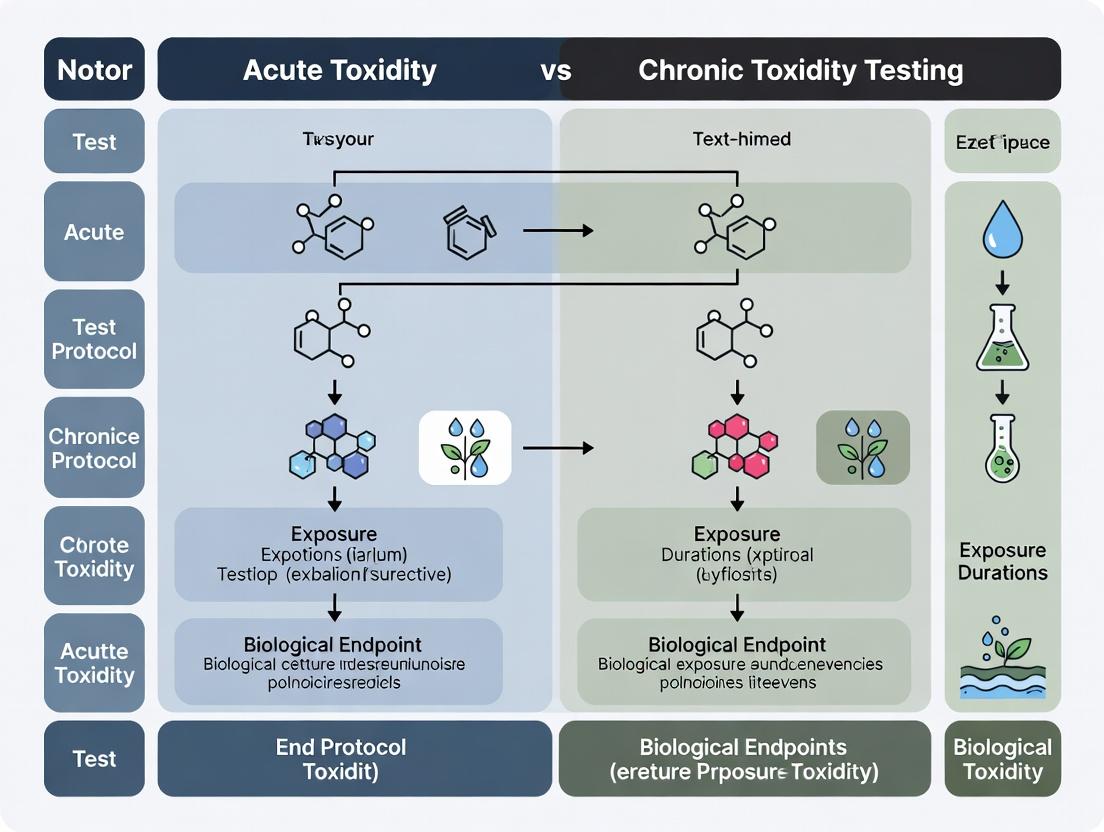
This article provides a comprehensive guide for researchers and drug development professionals on the distinct yet complementary roles of acute and chronic toxicity testing.
Acute vs. Chronic Toxicity Testing: A Strategic Guide for Research and Drug Development
Abstract
This article provides a comprehensive guide for researchers and drug development professionals on the distinct yet complementary roles of acute and chronic toxicity testing. It begins by establishing the foundational differences in definitions, temporal dynamics, and primary objectives between these two testing paradigms, anchored in regulatory science and the principle that 'the dose makes the poison.' The guide then details the core methodological frameworks, including standardized in vivo protocols, the strategic integration of sub-chronic studies, and the application of alternative methods aligned with the 3Rs principles (Replacement, Reduction, Refinement). A critical troubleshooting section analyzes common challenges such as inter-species extrapolation, low-concordance target organs, and strategies for determining optimal study duration to avoid unnecessary animal use. Finally, the article explores validation and comparative analysis, focusing on the predictive value of short-term data for long-term risk, the construction of robust weight-of-evidence assessments, and the future of next-generation testing methodologies like organ-on-a-chip and AI-driven predictive toxicology. The conclusion synthesizes the strategic interplay between acute and chronic data in building a complete safety profile and outlines the future trajectory of toxicity testing toward more human-relevant, mechanistic, and efficient systems.
Defining the Divide: Core Concepts, Objectives, and Regulatory Context of Acute and Chronic Toxicity
Within toxicity testing research, the temporal dimension of exposure fundamentally dictates the nature of the biological insult and the experimental approaches required to characterize it. Immediate damage (acute toxicity) results from a single or short-term exposure, producing a rapid, often overt, pathological effect [1]. In contrast, cumulative insult (chronic toxicity) arises from the progressive summation of incremental injury from repeated sub-threshold exposures over extended periods, leading to delayed dysfunction or disease [1]. This distinction is not merely one of timescale but reflects divergent underlying biological mechanisms, risk assessment paradigms, and testing methodologies. This whitepaper, framed within the broader thesis of acute versus chronic toxicity testing, provides an in-depth technical analysis of these core concepts, detailing their defining characteristics, mechanistic bases, and the specialized experimental protocols designed to elucidate them.
Core Definitions and Temporal Frameworks
The classification of toxicity by exposure frequency and duration provides the foundational lexicon for research and regulation [1].
Table 1: Core Characteristics of Immediate Damage vs. Cumulative Insult
| Characteristic | Immediate Damage (Acute Toxicity) | Cumulative Insult (Chronic Toxicity) |
|---|---|---|
| Exposure Profile | Single or multiple exposures within 24 hours [1]. | Repeated exposures over months to years (>3 months) [1]. |
| Onset of Effects | Rapid, often within minutes to hours (e.g., cyanide poisoning) [1]. | Delayed, manifesting after prolonged latent periods (e.g., fibrosis, neuropathy) [1]. |
| Primary Nature of Injury | Often reversible (e.g., narcosis) or catastrophic and irreversible (e.g., corrosive damage) [1]. | Typically progressive and irreversible, involving adaptation, repair, and compensatory mechanisms [1]. |
| Key Testing Endpoints | Mortality (LD₅₀/LC₅₀), severe clinical signs, organ-specific acute failure [2]. | Morbidity, functional decrements (reproduction, growth), pathological change (inflammation, neoplasia), biochemical markers [2] [3]. |
| Typical Risk Assessment Output | Hazard classification, safety thresholds for single exposures [4]. | No Observed Adverse Effect Level (NOAEL), reference doses (RfD), cancer slope factors, lifetime risk estimates [5]. |
Regulatory testing frameworks operationalize these definitions into standardized study durations [2] [3] [6].
Table 2: Standardized Testing Durations in Toxicity Assessment
| Study Type | Typical Duration (Rodents) | Primary Purpose | Regulatory Context |
|---|---|---|---|
| Acute | ≤24 hours exposure [1]. | Identify immediate hazards, determine LD₅₀/LC₅₀ for classification [4]. | Mandatory first-tier testing for chemicals and pesticides [2] [4]. |
| Subacute | ~28 days (repeated dosing) [1]. | Screen for toxicity, inform doses for longer studies. | Often used in pharmaceutical development. |
| Subchronic | 90 days (1-3 months) [1] [6]. | Identify target organs, establish preliminary NOAEL, guide chronic study design [3] [6]. | Standard for food ingredients, pesticides, and general chemicals [3] [6]. |
| Chronic | >6 months, typically 12-24 months [4]. | Characterize cumulative effects, carcinogenic potential, and establish definitive NOAEL for risk assessment. | Required for long-term exposure risk assessment of pesticides, food additives, and environmental contaminants [2]. |
Biological Mechanisms and Pathophysiological Pathways
The divergence between immediate and cumulative outcomes is rooted in distinct, though sometimes overlapping, pathophysiological sequences.
3.1 Mechanisms of Immediate Damage Immediate toxicity often results from the direct interaction of a toxicant with critical molecular targets at high dose. This includes:
- Excitotoxicity: Massive, acute release of glutamate following insults like traumatic brain injury (TBI) leads to rapid calcium influx and necrotic neuronal death [7].
- Acute Cytotoxicity: Overwhelming oxidative stress or metabolic inhibition, such as from cyanide blocking cytochrome c oxidase, causing catastrophic energy failure [1].
- Direct Tissue Destruction: Corrosive chemicals (e.g., strong acids) causing immediate protein denaturation and cell lysis upon contact [1].
3.2 Mechanisms of Cumulative Insult Cumulative toxicity involves lower-level, repeated challenges that perturb homeostasis, engaging more complex, persistent pathways:
- Sustained Low-Level Inflammation: Repeated irritant exposure (e.g., on skin) or persistent endogenous inflammatory signals (e.g., post-TBI) lead to chronic inflammation, tissue remodeling, and fibrosis [8] [7].
- Progressive Oxidative Stress: Continuous generation of reactive oxygen/nitrogen species (ROS/RNS) depletes antioxidant defenses, leading to cumulative macromolecular damage implicated in neurodegeneration and aging [7].
- Altered Cell Signaling and Gene Expression: Repeated perturbations can dysregulate normal signaling (e.g., growth factors, hormones), leading to proliferative or degenerative diseases [9].
- Accumulation of Toxicant or Effect: The toxicant itself may accumulate in the body (e.g., heavy metals), or subclinical injury may incrementally accrue until a functional threshold is crossed (e.g., organophosphate-induced neuropathy) [1].
The diagram below illustrates the key divergent and convergent pathways underlying these two toxicity paradigms.
Graph 1: Divergent and Convergent Pathways of Toxicity. This diagram contrasts the linear, high-impact pathways of immediate damage with the cyclical, progressive pathways of cumulative insult. It also shows how a single insult (e.g., TBI) can trigger both acute and chronic cascades that converge on progressive pathology [7].
Experimental Methodologies and Protocols
Protocol for Assessing Immediate Damage: Human Acute Skin Irritation Patch Test
This ethical human test method replaces animal testing for predicting acute chemical skin irritation potential [10] [8].
- Objective: To classify the acute skin irritation potential of a chemical or formulation relative to a benchmark irritant (20% Sodium Dodecyl Sulfate, SDS) [10].
- Test System: Human volunteers under IRB-approved protocols. Subjects with sensitive skin or dermatological conditions are typically excluded [10].
- Graduated Exposure: Patches containing the test material are applied to the skin (typically the back) under occlusion for increasing durations (e.g., 0.5, 1, 2, 3, 4 hours) in a sequential or step-wise design [10].
- Endpoint Assessment: Skin reactions (erythema, edema) are assessed at fixed times (e.g., 1 and 24 hours) after patch removal. A positive response is defined as a clear visible reaction (e.g., uniform erythema) [10].
- Data Analysis: The incidence of positive responses at each time point is plotted. The TR₅₀ (time required to produce a reaction in 50% of subjects) is calculated and compared to the TR₅₀ of 20% SDS. A test material with a significantly shorter TR₅₀ than SDS is classified as an irritant [10].
- Key Results from Detergent Testing: This method successfully ranked product irritancy. Mold removers were most irritating (TR₅₀=0.37h), while powder detergents were least (>16h) [10].
Table 3: Human Patch Test Results for Product Irritancy Ranking
| Product Category | Average TR₅₀ (Hours) | Classification vs. 20% SDS (TR₅₀=1.81h) |
|---|---|---|
| Mold/Mildew Removers | 0.37 | More Irritating |
| Disinfectants/Sanitizers | 0.64 | More Irritating |
| Liquid Laundry Detergents | 3.48 | Less Irritating |
| Shampoos | 5.40 | Less Irritating |
| Powder Laundry Detergents | >16.00 | Much Less Irritating |
Protocol for Studying Cumulative Insult Interactions: Smog Chamber for Sunlight-Enhanced Toxicity
This system studies how cumulative exposure to sunlight (a physical stressor) modifies the toxicity of chemical mixtures over time [9].
- Objective: To simulate atmospheric aging and quantify how sunlight transforms primary air pollutant mixtures into more toxic secondary products [9].
- System Setup: A large, controlled-environment chamber (smog chamber) is filled with a precise mixture of primary pollutants (e.g., nitrogen oxides, volatile organic compounds). It is equipped with a high-intensity light source simulating solar radiation, and controls for temperature and humidity [9].
- Exposure Generation: The mixture is irradiated for defined periods (e.g., equivalent to 1-day of sunlight). Samples of the chamber atmosphere are drawn at intervals directly into in vitro (e.g., air-liquid interface lung cell cultures) or in vivo exposure systems [9].
- Endpoint Analysis:
- Chemical: Quantification of the loss of primary pollutants and formation of secondary products (e.g., ozone, formaldehyde, secondary organic aerosols) [9].
- Biological: Assessment of cytotoxicity, oxidative stress markers, and pro-inflammatory cytokine release in exposed cells. Genomic analyses can show dramatic increases in gene expression perturbations after irradiation (e.g., from 19 to 709 genes altered) [9].
- Interpretation: The experiment demonstrates cumulative risk where the combined insult of chemicals and sunlight over time creates a hazard greater than the sum of its parts [9].
Protocol for Subchronic-to-Chronic Rodent Toxicity Study
The 90-day subchronic study is a cornerstone for identifying cumulative effects and setting doses for chronic studies [3] [6].
- Animals and Design: Young, healthy rodents (at least 20/sex/group) are randomized into control, low, mid, and high-dose groups. Dosing is via diet, gavage, or inhalation for 90 days [6].
- Core In-Life Measurements:
- Clinical Observations: Twice daily for mortality and morbidity [3].
- Cage-side Exams: Detailed observations for signs of toxicity (e.g., posture, behavior, secretions) weekly [3].
- Body Weight and Feed Consumption: Measured weekly to calculate feed efficiency [3].
- Ophthalmology, Hematology, Clinical Chemistry: Performed pre-study and at termination to assess systemic function [3].
- Terminal Procedures:
- Necropsy: Full gross examination of all organs [3].
- Organ Weights: Critical organs (e.g., liver, kidneys, brain, heart, adrenals, gonads) are weighed to detect hypertrophy or atrophy [3].
- Histopathology: A comprehensive set of tissues (40+ organs) from control and high-dose groups are examined microscopically. If effects are seen, tissues from lower-dose groups are analyzed to establish a dose-response [3].
- Key Output: Identification of the No Observed Adverse Effect Level (NOAEL), the highest dose causing no biologically significant adverse effects, which is used to establish safety margins for human exposure [3].
Quantitative Risk Assessment: Bridging Acute and Chronic Data
Quantitative risk assessment (QRA) translates toxicity data into quantitative estimates of risk, applying differently for acute and chronic endpoints [5].
For Non-Cancer Cumulative Risks (e.g., organ toxicity): The Hazard Quotient (HQ) is calculated for individual chemicals: HQ = Estimated Exposure / Reference Dose (RfD). An HQ < 1 indicates risk is considered negligible. For mixtures, Hazard Indices (HI = Σ HQs) are summed for chemicals affecting the same target organ [5].
For Cancer Risks (from chronic exposure): The Excess Lifetime Cancer Risk (ELCR) is estimated: ELCR = Estimated Exposure × Inhalation Unit Risk (IUR). Risks below 1 in 1,000,000 (10⁻⁶) are typically considered negligible [5].
Table 4: QRA Comparing Heated Tobacco Product (HTP) vs. Cigarette Smoke
| Risk Metric | Description | Result for 3R4F Cigarette | Result for HTP Aerosol | Percent Reduction |
|---|---|---|---|---|
| Non-Cancer Hazard Index (HI) | Sum of HQs for respiratory, cardiovascular, etc. effects. | Baseline (1.0) | <0.1 | >90% |
| Total Excess Lifetime Cancer Risk (ELCR) | Sum of ELCRs for all carcinogens measured. | Baseline (1.0) | <0.1 | >90% |
This QRA demonstrates how comparative analysis of emission data, using toxicity reference values, can quantify the potential reduction in cumulative insult from a modified product [5].
The following diagram outlines the integrated workflow from toxicity testing to quantitative risk assessment.
Graph 2: Integrated Workflow from Toxicity Testing to Risk Assessment. This diagram shows the sequential and iterative process of generating toxicity data and using it to derive quantitative risk estimates, which inform regulatory decision-making [2] [5] [6].
The Scientist's Toolkit: Essential Research Reagents & Materials
Table 5: Key Reagents and Materials for Toxicity Testing Research
| Category | Item | Function & Application |
|---|---|---|
| In Vivo Model Systems | Rodents (Rat, Mouse) | Primary species for systemic toxicity, carcinogenicity, and reproductive studies [3] [6]. |
| Rabbits | Standard model for dermal and ocular irritation testing [4]. | |
| Aquatic Species (Fathead minnow, Daphnia) | Used for ecotoxicity testing under EPA guidelines [2]. | |
| Exposure & Dosing | Gavage Needles & Formulation Vehicles | For precise oral administration of test compounds [3]. |
| Inhalation Chambers & Nebulizers | For generating controlled atmospheres of aerosols, gases, or vapors for inhalation studies [9]. | |
| Dermal Patches & Occlusive Chambers | For controlled topical application in skin irritation and sensitization tests [10]. | |
| Analytical & Clinical Pathology | Automated Hematology Analyzer | To measure red/white blood cell counts, hemoglobin, etc., for systemic toxicity screening [3]. |
| Clinical Chemistry Analyzer | To quantify serum enzymes (ALT, AST), electrolytes, and metabolites for organ function assessment [3]. | |
| ELISA/Multiplex Assay Kits | To quantify biomarkers of effect (e.g., cytokines, liver enzymes, oxidative stress markers) [9] [7]. | |
| Histopathology | Tissue Fixatives (e.g., 10% NBF) | To preserve tissue architecture for microscopic evaluation [3]. |
| Automated Tissue Processors & Microtomes | For preparing thin, consistent tissue sections for staining [3]. | |
| Special Stains (H&E, Trichrome, IHC markers) | For visualizing general morphology, fibrosis, and specific cell types/proteins [3]. | |
| In Vitro & Alternative Methods | Reconstituted Human Epidermis (RHE) Models | For in vitro skin corrosion/irritation testing, replacing animal methods [8]. |
| Air-Liquid Interface (ALI) Cell Cultures | For direct, realistic inhalation toxicity testing of air pollutants [9]. | |
| High-Throughput Screening Assays | For mechanistic toxicity screening on nuclear receptors, enzyme inhibition, etc. |
Temporal Dimensions and Manifestation of Toxic Effects
The fundamental distinction between acute and chronic toxicity represents a cornerstone of chemical safety evaluation, dictating testing strategies, risk assessment models, and regulatory standards. Acute toxicity describes adverse effects occurring within a short time frame (minutes to days) following a single or limited number of exposures, often revealing immediate pathological outcomes like mortality, organ failure, or severe clinical signs [11]. In contrast, chronic toxicity encompasses insidious harm manifesting after prolonged, repeated exposure over a significant portion of an organism's lifespan (months to years), potentially leading to cancer, organ dysfunction, reproductive deficits, or other degenerative diseases [12] [13].
This whitepaper argues that a sophisticated understanding of the temporal dimension—bridging acute insults to chronic outcomes—is critical for advancing predictive toxicology. Relying solely on long-term, high-cost animal studies is increasingly viewed as unsustainable from both ethical and resource perspectives [12] [14]. A modern paradigm integrates mechanistic in vitro assays and computational modeling to elucidate the biological pathways that, when perturbed briefly, initiate a cascade of events culminating in chronic disease. This approach aligns with the global shift toward New Approach Methodologies (NAMs), which seek to provide human-relevant, efficient, and mechanistic data for safety decisions [11] [14]. By framing toxicity within its temporal context, researchers can better identify early key events in adverse outcome pathways, thereby enabling the use of short-term tests to protect against long-term harm.
Core Concepts and Key Parameters
The experimental characterization of toxic effects across different time scales relies on specific, standardized parameters. These metrics serve as the quantitative foundation for hazard identification and risk assessment.
Table 1: Key Parameters in Acute vs. Chronic Toxicity Testing
| Parameter | Acute Toxicity (In Vivo Focus) | Chronic Toxicity (In Vivo Focus) | Modern NAMs Alternative (In Vitro/In Silico) |
|---|---|---|---|
| Primary Metric | LD₅₀/LC₅₀ (Lethal Dose/Concentration for 50% of population), NOAEL (No Observed Adverse Effect Level) | NOAEL, LOAEL (Lowest Observed Adverse Effect Level), BMD (Benchmark Dose) | Transcriptomic Point of Departure (tPOD), In Vitro IC₅₀/EC₅₀, Predicted LC₅₀ [14] |
| Typical Exposure Duration | Single or repeated doses over ≤24 hours [11]. | Continuous or repeated exposure for ≥12 months (rodents) [13]. | Short-term exposure (hours to days) to cells or tissues [14]. |
| Critical Endpoints | Mortality, moribundity, clinical signs, gross pathology. | Body weight/organ weight changes, clinical pathology (hematology, chemistry), histopathology, tumor incidence, reproductive effects [13]. | Cytotoxicity, gene expression changes, pathway perturbation, cellular stress responses [14]. |
| Typical Test System | Young adult rodents (OECD TG 403, 436). | Rodents (two sexes) over a major life stage (OECD TG 452) [13]. | Cell lines (e.g., RTgill-W1), primary cells, engineered tissues (e.g., EpiAirway), co-culture systems [11] [14]. |
| Temporal Insight | Identifies immediate hazards and lethal potency. | Reveals cumulative damage, adaptive responses, and delayed pathogenesis (e.g., carcinogenesis) [12]. | Provides early mechanistic signals that may predict chronic apical outcomes, linking molecular initiation to potential long-term effects [14]. |
The emergence of transcriptomic points of departure (tPODs) is a pivotal development. A tPOD is a statistically derived dose or concentration at which a significant change in global gene expression occurs. Research indicates that tPODs from short-term in vitro exposures can correlate with and often be more protective than traditional chronic in vivo NOAELs, suggesting that molecular initiating events captured early can forecast later adverse outcomes [14].
Experimental Protocols for Temporal Toxicity Assessment
This protocol leverages the OECD Test Guideline 249 (Fish Gill Cell Line Cytotoxicity) to generate mechanistically rich data for calculating a tPOD, bridging acute in vitro exposure with predictive insights for chronic aquatic toxicity.
1. Cell Culture and Exposure:
- Cell Line: Maintain rainbow trout gill (RTgill-W1) cells in standard culture flasks using L-15 medium supplemented with fetal bovine serum.
- Preparation: Seed cells into 96-well plates at a density optimized for confluence after attachment. Prior to exposure, replace growth medium with a specialized, protein-free exposure medium (L-15/ex).
- Dosing: Prepare a logarithmic series of test chemical concentrations (e.g., eight concentrations in triplicate) in L-15/ex. Include a solvent control (e.g., DMSO) and a positive control (e.g., 3,4-dichloroaniline). Expose cells for the standard 24-48 hour period.
2. RNA Sequencing and Bioinformatics:
- Lysate Collection: After exposure, remove medium and directly lyse cells in the wells with a TRIzol-like reagent. Lysates can be stored at -80°C.
- Library Preparation & Sequencing: Isolate total RNA. Prepare sequencing libraries using a standardized kit (e.g., UPXome). Pool libraries and perform high-throughput sequencing on an Illumina platform to obtain ~20 million reads per sample.
- Differential Expression Analysis: Map sequence reads to the reference genome. Normalize read counts and perform statistical analysis to identify genes whose expression is significantly altered in a dose-dependent manner.
3. tPOD Calculation via Benchmark Dose (BMD) Modeling:
- Data Input: Use the dose-response data for each statistically significant gene.
- Model Fitting: Fit multiple mathematical models (e.g., power, linear, polynomial) to each gene's expression profile. Select the best-fit model based on statistical goodness-of-fit criteria (e.g., lowest Akaike Information Criterion).
- BMD Derivation: Calculate the Benchmark Dose (BMD) for each gene, defined as the dose that causes a predetermined, modest change in expression (e.g., one standard deviation from the control mean).
- Final tPOD: Compile the BMDs for all responsive genes. The tPOD is typically defined as the lower confidence bound of the 10th percentile of these gene-specific BMDs (BMDL₁₀). This value represents a conservative, protective estimate of the dose at which significant biological pathway perturbation begins.
This protocol describes the use of a reconstructed human airway tissue model to assess acute inhalation toxicity potential, replacing or refining traditional animal-based LC₅₀ tests.
1. Tissue Model Preparation:
- System: Use a commercial reconstructed human bronchial epithelium model (e.g., EpiAirway). These are 3D, differentiated tissues cultured at an air-liquid interface (ALI).
- Pre-conditioning: Upon receipt, acclimate tissues in provided maintenance medium in a 37°C, 5% CO₂ incubator for 24-48 hours.
2. Air-Liquid Interface (ALI) Exposure:
- Dosing Strategy: Apply the test substance directly to the apical (air) surface of the tissue in a vehicle appropriate for volatile or particulate materials. For liquids, a small volume is carefully pipetted. For gases or aerosols, use specialized exposure chambers.
- Exposure Duration: Expose tissues for a defined period (typically 1-4 hours).
- Post-Exposure Incubation: After exposure, gently wash the apical surface to remove residual test material and return tissues to fresh culture medium for a post-exposure recovery period (e.g., 20-44 hours).
3. Toxicity Endpoint Measurement:
- Viability Assessment: Measure tissue viability using a standard assay like MTT or Alamar Blue, which quantifies mitochondrial activity. Treat tissues with the dye solution for several hours and measure spectrophotometric absorbance or fluorescence.
- Data Analysis: Calculate cell viability as a percentage of the vehicle control. The concentration that reduces viability by 50% (IC₅₀) is determined. This in vitro IC₅₀ can be used in IVIVE (In Vitro to In Vivo Extrapolation) models to predict a potential in vivo LC₅₀ value for risk assessment.
4. Integrated Testing Strategy: This assay is part of a larger framework like the Collaborative Modeling Project for Acute Inhalation Toxicity (CoMPAIT), which aims to develop and validate computational models that predict inhalation LC₅₀ values from chemical structure or in vitro data [11].
This outlines the core design elements of a traditional in vivo chronic study, which remains a regulatory benchmark for assessing long-term effects.
1. Experimental Design:
- Animals: Use young, healthy rodents (typically rats). Assign at least 20 animals per sex per dose group randomly.
- Groups: Include at least three treated dose groups and a concurrent control group. Dose selection is based on sub-acute (90-day) study results, with the highest dose intended to elicit toxicity but not excessive mortality.
- Route and Frequency: Administer the test substance daily via diet, drinking water, or oral gavage for a period of 12 months.
2. In-Life Observations and Monitoring:
- Clinical Observations: Perform detailed daily observations for morbidity and mortality. Conduct systematic physical examinations weekly.
- Functional Tests: Monitor food and water consumption. Measure body weight weekly.
- Clinical Pathology: Collect blood samples at interim intervals (e.g., 6 months) and at terminal sacrifice for hematology and clinical chemistry. Perform urinalysis at similar intervals.
3. Terminal Procedures and Histopathology:
- Necropsy: At the end of the 12-month period, perform a full necropsy on all animals. Record gross findings and weights of all major organs.
- Tissue Preservation: Preserve a comprehensive list of organs and tissues (e.g., all gross lesions, brain, heart, liver, kidneys, etc.) in fixative.
- Histopathological Examination: Process fixed tissues, embed in paraffin, section, stain with Hematoxylin and Eosin (H&E), and examine microscopically. This is the most critical endpoint for identifying chronic lesions, pre-neoplastic changes, and tumors.
4. Data Analysis and Reporting:
- Compile and statistically analyze all data (body weight, consumption, clinical pathology, organ weights, histopathology incidence).
- Determine the NOAEL and LOAEL for the study based on the totality of biological effects observed.
The Scientist's Toolkit: Essential Research Reagents and Materials
Table 2: Key Research Reagent Solutions for Temporal Toxicity Studies
| Item | Function & Application | Example in Protocol |
|---|---|---|
| RTgill-W1 Cell Line | A permanent cell line derived from rainbow trout gills used as a standard model for fish acute and mechanistic toxicity testing [14]. | Protocol 3.1: Serves as the in vitro system for pesticide exposure and tPOD derivation. |
| Reconstructed Human Airway Tissues (EpiAirway) | 3D, differentiated human bronchial epithelial tissues cultured at an air-liquid interface (ALI) to model the human respiratory tract for inhalation toxicity testing [11]. | Protocol 3.2: Used for direct apical exposure to test substances to determine in vitro IC₅₀. |
| Specialized Exposure Medium (L-15/ex) | A protein-free, animal-component-free buffer designed to hold test chemicals in solution without interfering with cell health or chemical bioavailability during in vitro fish cell tests [14]. | Protocol 3.1: Used as the vehicle for diluting and exposing pesticides to RTgill-W1 cells. |
| UPXome / RNA-Seq Library Prep Kits | Commercial kits used to convert isolated total RNA into cDNA libraries compatible with next-generation sequencing platforms for transcriptomic analysis [14]. | Protocol 3.1: Used to prepare sequencing libraries from exposed cell lysates for gene expression profiling. |
| BMD/BMDL Modeling Software | Computational tools (e.g., US EPA's BMDS, R package "BMDExpress") that fit mathematical models to dose-response data to calculate a Benchmark Dose and its lower confidence limit [14]. | Protocol 3.1: Used to analyze transcriptomic dose-response data and calculate the final tPOD (BMDL₁₀). |
| IVIVE (In Vitro to In Vivo Extrapolation) Models | Computational frameworks that convert in vitro concentration-response data to an equivalent in vivo dose, often incorporating pharmacokinetic parameters [11]. | Protocol 3.2: Used to translate in vitro IC₅₀ from airway tissues to a predicted in vivo inhalation LC₅₀. |
Visualizing Pathways and Workflows
From Acute Exposure to Chronic Outcome Prediction
Transcriptomic Point of Departure (tPOD) Workflow
Integrated Testing Strategy for Inhalation Toxicity
Primary Objectives and Regulatory Imperatives for Each Testing Paradigm
In the context of advancing research on acute versus chronic toxicity testing, the distinction between these two paradigms is foundational to chemical and drug safety assessment. Acute toxicity testing evaluates adverse effects from a single or short-term exposure, primarily for hazard identification, classification, and labeling. In contrast, chronic toxicity testing investigates the consequences of prolonged, repeated exposure to identify cumulative organ damage, dose-response relationships, and establish safe exposure limits [15] [16]. The regulatory landscape governing these tests is complex, involving guidelines from agencies like the U.S. Environmental Protection Agency (EPA), Food and Drug Administration (FDA), and international bodies like the Organisation for Economic Co-operation and Development (OECD) [17] [18] [19]. While traditional methods rely heavily on animal models, a significant paradigm shift is underway toward New Approach Methodologies (NAMs)—encompassing in vitro, in chemico, and in silico methods—driven by the principles of the 3Rs (Replacement, Reduction, and Refinement) and the pursuit of more human-relevant data [15] [20]. This guide details the core objectives, regulatory requirements, experimental protocols, and the evolving framework of NAMs for both testing paradigms.
Primary Objectives and Core Requirements of Each Paradigm
The fundamental goals of acute and chronic toxicity testing dictate their design, duration, and regulatory application. The following table summarizes their contrasting primary objectives.
Table 1: Core Objectives of Acute vs. Chronic Toxicity Testing
| Aspect | Acute Toxicity Testing | Chronic Toxicity Testing |
|---|---|---|
| Primary Objective | Identify adverse effects from a single or short-term exposure (≤24 hours) [16]. | Determine effects from prolonged, repeated exposure (usually ≥12 months) [21] [22]. |
| Key Goals | - Hazard classification & labeling (e.g., GHS categories) [17].- Estimate lethal dose (e.g., LD₅₀/LC₅₀) [17] [16].- Identify target organs and species differences [16].- Set doses for longer-term studies [16]. | - Characterize cumulative toxicity & effects with long latency [21].- Establish dose-response relationships & a No-Observed-Adverse-Effect Level (NOAEL) [21] [22].- Identify the majority of chronic pathological effects [21]. |
| Typical Study Duration | Single dose; observation for 14 days [16]. | At least 12 months of dosing in rodents [21] [22]. |
| Regulatory Use | - Informing product labels and hazard warnings [17].- Setting acceptable human exposure limits for single events [17].- Risk assessment for accidental exposures [17]. | - Supporting long-term human exposure safety (e.g., food additives, drugs) [23] [22].- Deriving health-based guidance values (HBGVs) for continuous exposure [15]. |
| Common Test Guidelines | OECD TG 420 (Fixed Dose), 423 (Acute Toxic Class), 425 (Up-and-Down); EPA 870.1100 [16] [18]. | OECD TG 451/452; EPA 870.4100; FDA Redbook IV.C.5.a [18] [22]. |
Regulatory Imperatives and Guidelines
Regulatory requirements for toxicity testing are established by multiple national and international authorities to ensure standardized safety assessments.
Acute Toxicity Regulatory Landscape
In the United States, at least six federal agencies require acute systemic toxicity data for regulatory decisions [17]. The specific requirements and flexibility to use non-animal methods vary.
Table 2: U.S. Agency Requirements for Acute Systemic Toxicity Data [17]
| Agency | Key Legislations | Substances Regulated | Flexibility for Non-Animal Methods |
|---|---|---|---|
| Consumer Product Safety Commission (CPSC) | Federal Hazardous Substances Act | Hazardous consumer products | Some flexibility for classification. |
| Environmental Protection Agency (EPA) | FIFRA, Toxic Substances Control Act (TSCA) | Pesticides, industrial chemicals | Actively implementing alternative approaches (e.g., Up-and-Down Procedure) [24]. |
| Food and Drug Administration (FDA) | Federal Food, Drug, and Cosmetic Act | Food ingredients, color additives, medical devices | For drugs, acute data often subsumed by repeated-dose studies; flexibility exists for other products [17]. |
| Occupational Safety and Health Administration (OSHA) | Occupational Safety and Health Act | Workplace chemicals | Uses data for hazard communication; accepts GHS classification which may be derived from alternatives. |
| Department of Transportation (DOT) | Hazardous Materials Transportation Act | Transported hazardous materials | Requires data for classification; follows internationally accepted test methods. |
Globally, the OECD Test Guidelines provide the standard. Modern guidelines like the Fixed Dose Procedure (OECD TG 420) and the Up-and-Down Procedure (OECD TG 425) use fewer animals (5-9) than the classical LD₅₀ test, focusing on evident toxicity rather than mortality [17] [16]. The EPA promotes a process for establishing and implementing alternative approaches to traditional in vivo acute studies for pesticides, aiming to reduce animal use [24].
Chronic Toxicity Regulatory Landscape
Chronic testing is mandated for substances with potential long-term human exposure. Key guidelines include:
- EPA 40 CFR 798.3260 / OPPTS 870.4100: Requires testing in two mammalian species (one rodent, one non-rodent) for at least 12 months. It specifies detailed requirements for animal numbers, dose selection, and clinical examinations [21] [18].
- FDA Redbook 2000 IV.C.5.a.: Guides chronic toxicity studies for food ingredients in rodents, emphasizing a minimum 12-month study to determine a NOAEL and characterize toxicity [22].
- ICH Guidelines (M3(R2), S4, S6(R1)): Provide international harmonized standards for pharmaceuticals. For small molecules, chronic studies typically involve 6 months in rodents and 9 months in non-rodents, though a 6-month non-rodent study is acceptable in the EU [23]. For biologics like monoclonal antibodies, 6-month studies in one pharmacologically relevant species are standard, with ongoing evaluation of whether shorter durations (e.g., 3 months) are sufficient based on a Weight of Evidence (WOE) risk assessment [23].
Experimental Protocols and Methodologies
StandardIn VivoProtocol Specifications
The design of standard animal studies differs significantly between acute and chronic paradigms.
Table 3: Comparative Experimental Design for Standard In Vivo Studies
| Parameter | Acute Toxicity Study (Oral Example) | Chronic Toxicity Study (Typical) |
|---|---|---|
| Species | Usually one rodent species (rat or mouse) [16]. | Two species: a rodent (rat) and a non-rodent (dog) [21]. |
| Animals per Sex per Dose Group | 5-9 (using modern OECD TGs) [17]. | Rodent: ≥20; Non-rodent: ≥4 [21] [22]. |
| Age at Dosing Start | Young adult [16]. | Rodent: 6-8 weeks; Dog: 4-9 months [21]. |
| Dose Groups | Usually 3-5, plus control [16]. | Minimum of 3 dose levels + concurrent control [21]. |
| Dosing Route | Oral, dermal, or inhalation [17]. | Oral (feed, gavage), dermal, or inhalation [21]. |
| Dosing Regimen | Single administration [16]. | Daily (or 5-7 days/week) for ≥12 months [21]. |
| Core Observations | Mortality, clinical signs, body weight, gross necropsy [16]. | Daily clinical signs, weekly body weight, detailed hematology, clinical biochemistry, urinalysis, comprehensive histopathology [21]. |
| Key Endpoint | Lethality or signs of evident toxicity for classification [17] [16]. | NOAEL, target organ toxicity, detailed pathological assessment [21]. |
New Approach Methodologies (NAMs) and Defined Approaches
NAMs represent a paradigm shift from observing apical endpoints in animals to understanding toxicity pathways in human-relevant systems [15] [20].
- Components of NAMs: Include in silico (QSAR, read-across), in chemico (peptide reactivity assays), and in vitro methods (cell-based assays, microphysiological systems (MPS), omics) [15].
- Defined Approaches (DAs): These are fixed combinations of NAMs with a prescribed data interpretation procedure (DIP). Successful examples include OECD TG 497 for skin sensitization, which integrates in chemico and in vitro data, and TG 467 for eye irritation [20]. DAs facilitate regulatory acceptance by ensuring standardized and reproducible assessments.
- Workflow for Systemic Toxicity Assessment: A NAM-based strategy for systemic effects involves a tiered approach: 1) Exposure assessment to define relevant human concentrations; 2) Bioactivity profiling using high-throughput in vitro assays; 3) Mechanistic investigation using omics and pathway analysis; 4) Quantitative in vitro to in vivo extrapolation (QIVIVE) using physiologically based kinetic (PBK) modelling to predict systemic doses; and 5) Risk characterization by comparing bioequivalent doses with exposure estimates [15] [20].
- Validation and Benchmarking: A critical challenge is validating NAMs without defaulting to animal data as the sole "gold standard," given that rodent predictivity for human toxicity is limited (~40-65%) [20]. The focus is shifting toward demonstrating human biological relevance and protective risk assessment rather than replicating animal outcomes [20].
Diagram 1: A comparison of the acute and chronic toxicity testing paradigms and their convergence through New Approach Methodologies (NAMs).
Diagram 2: A tiered workflow for implementing New Approach Methodologies (NAMs) in systemic toxicity assessment.
The Scientist's Toolkit: Essential Research Reagent Solutions
Table 4: Key Research Reagent Solutions in Toxicity Testing
| Reagent / Assay System | Category | Primary Function in Toxicity Testing |
|---|---|---|
| Reconstructed Human Epidermis (RHE) Models | In Vitro | Replace animal skin for corrosion/irritation testing (OECD TG 431, 439) [16] [19]. |
| Bovine Corneal Opacity and Permeability (BCOP) Assay | Ex Vivo | Identify eye corrosives/severe irritants, reducing rabbit use (OECD TG 437) [16]. |
| ARE-Nrf2 Luciferase Test (e.g., KeratinoSens) | In Vitro | Detect activation of the Keap1-Nrf2 pathway, a key event in skin sensitization (OECD TG 442D) [16] [19]. |
| Direct Peptide Reactivity Assay (DPRA) | In Chemico | Measure covalent binding to skin proteins, a molecular initiating event for sensitization (OECD TG 442C) [16]. |
| 3T3 Neutral Red Uptake Phototoxicity Test | In Vitro | Predict phototoxic potential by comparing cytotoxicity with/without UV light (OECD TG 432) [16]. |
| Rat or Human Liver S9 Fraction | In Vitro | Provide metabolic activation (Cytochrome P450 enzymes) for genotoxicity assays (e.g., Ames test) [18]. |
| Microphysiological Systems (MPS) | In Vitro | Model organ-level function and inter-tissue communication (e.g., liver-chip, kidney-chip) for repeated-dose toxicity assessment [15]. |
| GARDskin Assay | In Vitro | Genomic biomarker-based assay for skin sensitization potency assessment [20]. |
Signaling Pathways and Adverse Outcome Pathways (AOPs)
The AOP framework is a central concept in modern toxicology, linking a molecular initiating event (MIE) through a series of key events (KEs) to an adverse outcome (AO) at the organism level [15]. This framework supports the development of NAMs by identifying measurable KEs that can be tested in vitro.
Diagram 3: The relationship between an Adverse Outcome Pathway (AOP) for skin sensitization and the testing methods that inform its Key Events (KEs).
For example, the well-developed AOP for skin sensitization begins with the MIE of covalent binding to skin proteins [20]. This leads to KE1: keratinocyte inflammatory response (measurable by the KeratinoSens assay), KE2: dendritic cell activation (measurable by the h-CLAT assay), and KE3: T-cell proliferation, culminating in the AO: allergic contact dermatitis. Defined Approaches like OECD TG 497 integrate data from assays targeting these different KEs to make a hazard prediction without animal testing [20] [19].
The future of toxicity testing lies in the systematic adoption of NAMs within an NGRA framework. This requires:
- Moving beyond one-to-one replacement: Success depends on integrated testing strategies, not finding a single in vitro replacement for each animal test [20].
- Building confidence through fit-for-purpose validation: Demonstrating that NAMs provide protective, human-relevant data for decision-making, with benchmarking against animal data being only one component [15] [20].
- Adapting regulatory frameworks: Shifting from hazard-based classification to exposure-led, risk-based assessment will be necessary to fully leverage NAMs [15] [20].
- Embracing flexibility in chronic testing: For certain modalities like monoclonal antibodies, evidence supports using WOE assessments to justify shorter study durations (e.g., 3-month studies), reducing animal use without compromising safety [23].
The transition from traditional acute and chronic animal tests to a human biology-based NGRA paradigm is not merely a technical challenge but a conceptual evolution. It promises more relevant safety assessments, aligned with both ethical imperatives and scientific progress [15] [20].
The dose-response relationship is the cornerstone principle of toxicology, quantitatively defining the correlation between the magnitude of an administered exposure and the incidence of a specific biological effect [25]. This relationship is universally visualized as a sigmoid curve when the response is plotted against the logarithm of the dose, characterized by a threshold, a linear phase of increasing effect, and a plateau at maximum response. The scientific and regulatory assessment of chemical safety fundamentally relies on deriving specific metrics from this curve, which differ profoundly based on the temporal nature of the exposure.
Acute toxicity describes adverse effects occurring within a short time (usually up to 14 days) following a single or multiple exposures over 24 hours or less [26]. Its primary goal is to identify the poisoning potential of a substance, with the lethal dose for 50% of a test population (LD50) being its most iconic metric [27]. In contrast, chronic toxicity results from repeated exposures, often at lower levels, over a significant portion of a test organism's lifespan (months or years) [26]. The objective here shifts from identifying lethality to determining the highest dose that causes no observed adverse effects (NOAEL) or the lowest dose that does (LOAEL), which are then used to establish safe human exposure thresholds [25]. This guide provides an in-depth technical analysis of these core metrics and the experimental frameworks that generate them, situated within the critical research continuum from acute to chronic toxicity testing.
Core Toxicological Metrics: Definitions, Applications, and Distinctions
Key metrics are extracted from dose-response studies to serve specific purposes in hazard identification, classification, and risk assessment. The following table summarizes the defining characteristics of the primary metrics discussed in this guide.
Table 1: Core Toxicological Dose-Response Metrics
| Metric | Full Name | Primary Study Type | Key Purpose | Typical Units |
|---|---|---|---|---|
| LD₅₀ | Median Lethal Dose | Acute Toxicity | Quantify acute lethal potency for hazard classification [25] [27] | mg/kg body weight [25] |
| LC₅₀ | Median Lethal Concentration | Acute Inhalation Toxicity | Quantify acute lethal potency of airborne substances [25] [27] | mg/L (air) or ppm [25] |
| NOAEL | No Observed Adverse Effect Level | Repeated Dose (Chronic) Toxicity | Identify the highest dose without adverse effects for safety threshold derivation [25] | mg/kg bw/day [25] |
| LOAEL | Lowest Observed Adverse Effect Level | Repeated Dose (Chronic) Toxicity | Identify the lowest dose causing adverse effects when NOAEL is not found [25] | mg/kg bw/day [25] |
| EC₅₀ | Median Effective Concentration | Ecotoxicity | Measure potency for non-lethal effects (e.g., immobility, growth inhibition) [25] | mg/L (water) [25] |
LD50 and LC50: The LD50 (Median Lethal Dose) is a statistically derived single dose expected to cause death in 50% of treated animals [25] [27]. It is a standardized measure for comparing the inherent acute toxicity of substances across different chemicals and studies. A lower LD50 value indicates higher acute toxicity [25]. For airborne substances, the LC50 (Lethal Concentration 50%) is used, representing the concentration in air causing 50% mortality after a set exposure period (typically 4 hours) [27]. These values are pivotal for Globally Harmonized System (GHS) hazard classification and labeling (e.g., "Danger" or "Warning") [25].
NOAEL and LOAEL: In repeated-dose studies (e.g., 28-day, 90-day, or chronic), the NOAEL (No Observed Adverse Effect Level) is identified as the highest tested dose at which there are no biologically significant increases in adverse effects compared to the control group [25]. Effects may occur at this level but are not deemed adverse. The LOAEL (Lowest Observed Adverse Effect Level) is the lowest tested dose where such significant adverse effects are observed [25]. These levels are not inherent properties of the chemical but are determined by the specific design, dosing intervals, and sensitivity of a given study. The NOAEL is the critical point of departure for establishing safe exposure limits for humans, such as the Acceptable Daily Intake (ADI) or Reference Dose (RfD), by applying assessment (uncertainty) factors [25].
Comparative Context: The fundamental distinction lies in their endpoints: LD50 measures a severe, acute outcome (death), while NOAEL is based on the spectrum of sub-lethal adverse effects (e.g., organ weight changes, clinical chemistry alterations, histopathological lesions) observed over prolonged exposure. This is illustrated in the comparative data for the insecticide dichlorvos [27]:
- Oral LD₅₀ (rat): 56 mg/kg (a single dose)
- Inhalation LC₅₀ (rat): 1.7 ppm for 4 hours (a single exposure) These values classify it as moderately to highly toxic acutely [27]. In contrast, a hypothetical 90-day study might identify a NOAEL of 0.5 mg/kg/day based on observed cholinesterase inhibition at higher doses, demonstrating how chronic endpoints yield much lower safety thresholds.
Experimental Protocols for Determining Key Metrics
Protocols for Acute Lethality (LD50/LC50)
Traditional LD50 tests involve administering a range of single doses to groups of animals (typically rodents) via the relevant route (oral, dermal, inhalation), followed by a 14-day observation period [27]. Due to animal welfare concerns and the need for reduction and refinement, fixed-dose and sequential methods have largely replaced the classic mortality-driven protocols.
OECD Guideline 420: Fixed Dose Procedure (FDP) This method uses preset dose levels (5, 50, 300, 2000 mg/kg, and optionally 5000 mg/kg) and aims to identify a dose causing clear signs of toxicity (e.g., evident morbidity) rather than death [28].
- Pre-test: A single animal is dosed at a starting level (often 300 mg/kg). Based on the outcome (mortality or severe signs), the dose for the main test is adjusted.
- Main test: A group of five animals (one sex initially) receives the selected dose. The objective is to find the dose that causes clear evidence of toxicity but not mortality. If this is achieved, the test stops. Otherwise, a higher or lower fixed dose is tested in a new group.
- The result is a categorization of toxicity (e.g., "Category 3" for 300 mg/kg) rather than a precise LD50 value, which is sufficient for hazard classification.
OECD Guideline 425: Up-and-Down Procedure (UDP) This sequential method is highly efficient, using as few as 6-10 animals to estimate the LD50 and its confidence intervals [28].
- A single animal is dosed at a best-estimate starting point. If it survives, the next animal receives a higher dose; if it dies, the next receives a lower dose. The step size between doses is predefined (e.g., a factor of 3.2).
- This sequential testing continues based on the outcome for each previous animal, following a set stopping rule.
- A statistical model (such as the maximum likelihood method) is applied to the sequence of outcomes to estimate the LD50 and its variance.
Protocols for Determining NOAEL/LOAEL
NOAEL and LOAEL are derived from subchronic or chronic repeated-dose toxicity studies. There is no single standardized test, but the study design follows well-established principles.
- Study Design: Groups of animals (typically rodents and non-rodents) are exposed to the test substance daily for a defined period (28 days, 90 days, or 12-24 months) [25] [28]. A minimum of three dose groups plus a concurrent control group is standard.
- Dose Selection: The high dose should induce clear toxicity but not excessive mortality (typically informed by acute or range-finding studies). The low dose should aim to be a NOAEL, and the mid-dose should produce mild, observable effects.
- Endpoint Monitoring: Throughout the study, animals are closely monitored for clinical signs, body weight, food/water consumption, hematology, clinical biochemistry, and organ weights [28]. At termination, a full histopathological examination of tissues and organs is conducted.
- Data Analysis and NOAEL Identification: All collected data are analyzed statistically and biologically. The NOAEL is identified as the highest dose level that does not produce a statistically significant or biologically adverse increase in any toxicological parameter compared to controls. The LOAEL is the next highest dose where such adverse effects are observed.
The Scientist's Toolkit: Essential Reagents and Materials
Conducting dose-response studies requires standardized reagents, materials, and biological systems to ensure reproducibility, validity, and regulatory acceptance.
Table 2: Key Research Reagent Solutions for Dose-Response Studies
| Category/Item | Function & Purpose | Technical Specifications & Notes |
|---|---|---|
| Test Substance | The chemical agent whose toxicity is being characterized. | Must be of defined purity, stability, and batch consistency. Prepared in a suitable vehicle (e.g., corn oil, methylcellulose, saline) [28]. |
| Vehicle/Formulation Reagents | To dissolve, suspend, or deliver the test substance at the required concentrations without causing toxicity themselves. | Common examples: Carboxymethylcellulose (suspending agent), Tween-80 (emulsifier), Corn Oil (vehicle for lipophilic compounds), Phosphate-Buffered Saline (aqueous vehicle) [28]. |
| Clinical Pathology Kits | For analyzing in-life toxicity biomarkers in blood (hematology) and serum/plasma (clinical chemistry). | Kits for enzymes (ALT, AST), metabolites (creatinine, BUN), ions, and cell counts. Vital for identifying target organ toxicity. |
| Histopathology Reagents | For tissue preservation, processing, staining, and microscopic evaluation to identify morphological changes. | Includes fixatives (10% Neutral Buffered Formalin), embedding media (paraffin), stains (Hematoxylin and Eosin - H&E), and special stains for specific tissues. |
| Validated Animal Models | Biological systems for in vivo toxicity assessment. | Rodents: Specific strains of rats (Sprague-Dawley, Wistar) and mice (ICR, C57BL/6) [28]. Non-rodents: Beagle dogs, minipigs, non-human primates (for advanced studies). |
| Diet & Bedding | Standardized nutrition and housing to minimize variable physiological responses. | Certified, contaminant-free rodent diets. Sterilized corn cob or aspen bedding. Environmental conditions (temp, humidity, light cycle) are strictly controlled. |
Visualizing Concepts and Workflows
Dose-Response Curve with Key Metrics and Application Flow
Workflow for Acute and Chronic Toxicity Assessment
From Protocol to Practice: Standardized Testing Frameworks and Strategic Study Design
Within the comprehensive landscape of toxicological research, the distinction between acute and chronic toxicity is foundational. Acute toxicity refers to adverse effects occurring shortly after a single, short-term, or brief exposure to a substance, where effects often appear immediately and can be reversible [29]. In contrast, chronic toxicity results from repeated exposures over a longer period, where effects may be significantly delayed and are often irreversible [30] [29]. This technical guide focuses on the evolving paradigms for assessing acute toxicity, a critical endpoint for initial hazard identification, safety labeling, and emergency response planning.
The traditional cornerstone of acute toxicity assessment has been the in vivo determination of the Lethal Dose 50 (LD50)—the dose that causes death in 50% of tested animals [29]. However, driven by scientific, ethical (the 3Rs principles), and regulatory imperatives, the field is undergoing a transformative shift. This shift is marked by the refinement of traditional animal protocols to reduce suffering and animal numbers and, more significantly, by the development and integration of sophisticated in silico (computational) models designed to predict toxicity based on chemical structure. Framing acute toxicity testing within the broader context of chronic toxicity research is essential; while the exposure scenarios and biological endpoints differ, the ultimate goal is a cohesive, mechanism-based understanding of chemical hazard across all timescales of exposure. The progression from acute to chronic testing represents a continuum from identifying immediate hazards to understanding long-term health risks, with emerging alternative methods offering tools applicable across this spectrum [31].
Defining the Scope: Acute versus Chronic Toxicity
A clear understanding of the operational differences between acute and chronic toxicity is prerequisite to discussing testing frameworks. The table below summarizes the key distinguishing characteristics.
Table 1: Core Characteristics of Acute versus Chronic Toxicity
| Characteristic | Acute Toxicity | Chronic Toxicity |
|---|---|---|
| Exposure Pattern | Single, short-term, or brief repeated exposure within 24 hours [29]. | Repeated, long-term exposure over a significant portion of a lifespan (e.g., 12+ months in rodents) [13]. |
| Onset of Effects | Rapid, often immediate or within hours/days of exposure [30]. | Delayed, with effects manifesting after months or years of exposure [29]. |
| Primary Measured Endpoint | Mortality, often quantified by LD50 (oral, dermal) or LC50 (inhalation) [29]. Observations of severe clinical signs. | Morbidity. Focus on functional impairment, organ pathology, tumor formation, and reproductive effects [13]. |
| Typical Testing Objective | Hazard identification, classification, and labeling (e.g., GHS/CLP categories). Emergency response guidance. | Risk assessment for long-term health effects, establishment of safe exposure limits (e.g., Acceptable Daily Intake). |
| Common Test Guidelines (OECD) | TG 423 (Acute Toxic Class Method), TG 425 (Up-and-Down Procedure). | TG 452 (Chronic Toxicity Studies) [13], TG 451 (Carcinogenicity Studies). |
| Example Agents | Cyanide, phenol, high-concentration solvents [30]. | Heavy metals (e.g., arsenic, lead), tobacco smoke, certain persistent organic pollutants [30] [29]. |
The LD50 value remains a central metric for acute oral toxicity. It is crucial to interpret this value correctly: a lower LD50 indicates greater toxicity [29]. Regulatory frameworks like the Globally Harmonized System (GHS) use LD50 ranges to assign hazard categories (Category 1 being the most toxic). It is critical to recognize that inherent biological variability means a single chemical's experimentally derived LD50 can span an order of magnitude, a point of reference when evaluating the performance of predictive models [32].
Refined In Vivo Testing Methodologies
Refined in vivo methods aim to minimize animal suffering and reduce the number of animals used while generating reliable data for acute hazard classification.
OECD Test Guideline 423 (Acute Toxic Class Method): This is a stepwise procedure using a small number of animals (typically 3 per step) of a single sex. Animals are dosed sequentially at fixed dose levels (5, 50, 300, and 2000 mg/kg body weight). The outcome is not a precise LD50 but a determination of the dose range that causes mortality, allowing for direct classification into one of the predefined GHS toxicity classes. This method significantly reduces animal use compared to the older, traditional LD50 protocols.
OECD Test Guideline 425 (Up-and-Down Procedure): This statistical method involves dosing animals one at a time or in small groups at a minimum of 48-hour intervals. The dose for each subsequent animal is adjusted up or down based on the outcome (death or survival) of the previous animal. A computer program analyzes the sequence of outcomes to estimate the LD50 and its confidence intervals. This method can further reduce animal numbers, particularly for substances of low or very high toxicity.
Key Considerations: These refined tests are specifically designed for hazard classification and not for providing detailed mechanistic insights into the mode of toxic action. Their continued relevance lies in providing in vivo anchor points for validating non-animal methods and fulfilling specific regulatory requirements where alternative methods are not yet accepted [32].
In Silico Predictive Models for Acute Toxicity
In silico toxicology uses computational models to predict the toxicological effects of chemicals from their molecular structure. For acute toxicity, Quantitative Structure-Activity Relationship (QSAR) models are paramount [33].
Core Modeling Approaches:
- Quantitative Structure-Activity Relationship (QSAR): Mathematical models that correlate descriptors of chemical structure (e.g., molecular weight, lipophilicity, presence of functional groups) with a biological activity, such as LD50 [33].
- Read-Across: A non-quantitative approach where the known properties of one or more "source" chemicals are used to predict the properties of a similar "target" chemical based on structural similarity.
- Machine Learning (ML) & AI: Advanced algorithms (e.g., random forests, neural networks) that can identify complex, non-linear patterns in large chemical datasets to improve predictive accuracy [33] [34].
Leading Tools and Performance: Table 2: Key In Silico Models for Acute Oral Toxicity Prediction
| Model | Description | Key Output | Reported Performance & Notes |
|---|---|---|---|
| CATMoS (Collaborative Acute Toxicity Modeling Suite) [35] [32] | A freely available, consensus QSAR model within the OPERA suite. Developed via an international consortium. | Predicts GHS categories, EPA categories, and point estimates for LD50 with confidence metrics. | On REACH chemicals, high-reliability predictions match or are adjacent to experimental category [32]. Requires expert judgment for regulatory application; sole reliance can lead to misclassification [35]. |
| AOrTA (Acute Oral Toxicity Alert) [36] | A global QSAR model with additional local models for specific chemical classes (e.g., esters, alcohols). | Predicts CLP/GHS classification categories. Includes prediction refinement based on closest analogues. | Designed for regulatory use under the QSAR Assessment Framework. Uses a high-quality, curated dataset from ECHA dossiers. |
| Leadscope Model Applier [34] | A commercial software platform with extensive toxicology databases and predictive models. | Provides toxicity profiles, including acute oral toxicity predictions aligned with CLP regulations. | 2025.0 release added 2,000+ new curated acute toxicity records from REACH, improving model robustness [34]. |
Critical Model Components:
- Applicability Domain (AD): A defined chemical space within which the model's predictions are considered reliable. Chemicals outside the AD (e.g., inorganic compounds, mixtures, novel scaffolds) have uncertain predictions [32] [36].
- Validation: Models must be internally and externally validated to assess their predictive power and avoid overfitting.
- Expert Judgement: As emphasized in recent evaluations, computational output must be integrated with expert analysis. This includes assessing the quality of the training data, reviewing nearest structural analogues, and evaluating mechanistic plausibility [35] [32]. A pure "black-box" approach is not considered sufficient for regulatory decision-making.
Integrated Testing Strategies and Workflows
The future of acute toxicity assessment lies not in a single method but in Integrated Approaches to Testing and Assessment (IATA). These strategies combine multiple lines of evidence (in silico, in vitro, and refined in vivo) within a weight-of-evidence framework to reach a conclusion.
The In Silico Forensic Toxicology Workflow provides a template for a systematic integrated approach [33]:
- Data Curation & Problem Formulation: Gather all existing chemical, toxicological, and study data.
- Model Selection & Computational Analysis: Apply relevant QSAR and read-across tools, ensuring the chemical falls within the models' applicability domains.
- Expert Review & Validation: Critically assess predictions against known biology, analogue data, and any available in vitro data. This step is crucial for regulatory acceptance.
- Targeted Experimental Confirmation: Use computational predictions to guide focused, hypothesis-driven in vitro assays or, if absolutely necessary, a refined in vivo study to resolve uncertainties.
- Final Assessment & Reporting: Synthesize all evidence into a transparent, documented hazard assessment.
Integrated Testing Strategy Workflow [33] [32]
This integrated paradigm underscores the complementary roles of different methods. In silico tools provide rapid, cost-effective screening and mechanistic hypotheses. Targeted in vivo tests provide definitive data for complex or high-priority cases where uncertainties remain. This synergy is central to modern regulatory science, as seen in the EPA's strategic vision for implementing alternative approaches [37].
Market Trends and the Evolving Testing Landscape
The early toxicity testing market, which includes acute toxicity assessment, is experiencing significant growth and transformation, driven by technological and regulatory forces.
Table 3: Market Trends in Early Toxicity Testing
| Trend | Description | Implication for Acute Toxicity |
|---|---|---|
| Market Growth | The global market was valued at $1.47 billion in 2024 and is projected to grow at a CAGR of 8.3% to $2.19 billion by 2029 [31]. | Indicates robust investment and demand for more efficient, predictive testing solutions. |
| Rise of In Silico & NAMs | A major trend is the adoption of in silico models and other New Approach Methodologies (NAMs) [31]. | Directly supports the replacement and reduction of animal use for acute endpoints, aligning with EU REACH goals [35] [32]. |
| Advanced Alternative Models | Emergence of sophisticated platforms like zebrafish embryo screening (e.g., ZBEScreen) and organ-on-a-chip models [31]. | Provides in vivo-like systemic biology in a higher-throughput, more ethical format for screening acute systemic toxicity. |
| Personalized Medicine | Growing focus on tailored therapies increases demand for precise safety assessments [31]. | Pushes toxicity testing towards more mechanistic, pathway-based understanding, bridging acute and chronic effects. |
These trends highlight a clear industrial and scientific shift away from standalone animal tests and towards integrated, knowledge-driven testing strategies. The acquisition of specialized toxicology firms (e.g., Scantox's acquisition of Gentronix in 2024) to expand in silico and genetic toxicology capabilities further exemplifies this shift [31].
The framework for acute toxicity testing is evolving from a reliance on observational animal mortality studies to a predictive, science-based paradigm anchored in computational toxicology and defined integrated strategies. As demonstrated by tools like CATMoS and AOrTA, in silico models have achieved a level of performance where they can, with appropriate expert oversight, serve as replacements for in vivo tests in specific regulatory contexts [35] [36]. However, challenges remain, including the need for transparent validation, clear guidance on expert judgment, and expansion of applicability domains to cover more complex chemistries.
Future progress will depend on:
- Enhancing Model Interpretability: Moving beyond "black box" predictions to models that provide mechanistic insights into the Mode of Action (MoA) for acute toxicity [32].
- Bridging Acute and Chronic Effects: Developing integrated models that can use early, acute perturbations in key pathways to predict potential long-term adverse outcomes.
- Regulatory Harmonization: Continued collaboration between industry, academia, and regulators to develop internationally accepted standards for validating and applying these new approaches [37].
In the context of a broader thesis on toxicity testing, acute toxicity assessment is no longer an isolated endpoint but the first, critical node in a network of toxicological understanding. Its modernization through refined in vivo methods and robust in silico models paves the way for a more efficient, ethical, and ultimately more human-relevant safety science ecosystem.
The Scientist's Toolkit: Essential Research Reagents and Materials
Table 4: Key Reagents and Tools for Acute Toxicity Research
| Item / Solution | Function / Purpose | Typical Application |
|---|---|---|
| OECD TG 423 & 425 Protocols | Standardized experimental guidelines for refined in vivo acute oral toxicity testing. | Conducting regulatory-accepted animal studies for hazard classification with minimal animal use. |
| CATMoS or AOrTA Software | Freely available QSAR platforms for predicting acute oral toxicity and GHS/CLP categories. | Initial hazard screening, read-across justification, and as part of a weight-of-evidence assessment [35] [36]. |
| Commercial In Silico Platforms (e.g., Leadscope) | Comprehensive software suites with extensive databases and predictive models for multiple toxicity endpoints [34]. | Generating detailed toxicity profiles, identifying structural alerts, and supporting regulatory submissions. |
| Zebrafish Embryos (Zebrafish Models) | A vertebrate model offering high-throughput, real-time assessment of developmental and systemic toxicity in a whole organism [31]. | Early screening for acute systemic toxicity and organ-specific effects, serving as a bridge between in silico and mammalian in vivo studies. |
| Defined Chemical Libraries for Validation | Curated sets of chemicals with high-quality, reference in vivo acute toxicity data (e.g., from ECHA REACH dossiers). | Benchmarking and validating the performance of new in silico models or integrated testing strategies [32] [36]. |
| Toxicogenomics Assay Kits | Tools for measuring gene expression changes related to specific toxicological pathways (e.g., oxidative stress, inflammation). | Investigating the mechanistic basis of acute toxicity predictions from in silico models or observed in alternative in vivo models. |
Complementary Roles in Modern Toxicology
The assessment of chemical and pharmaceutical safety relies on a tiered toxicological strategy that progresses from acute to sub-chronic and finally chronic studies. This progression is fundamental to a comprehensive thesis on acute versus chronic toxicity testing. Acute toxicity studies evaluate adverse effects resulting from a single or short-term exposure, focusing on immediate, often severe outcomes like mortality or overt organ damage [30]. In contrast, chronic toxicity studies investigate the adverse health effects of prolonged, repeated exposure, which may involve subtle, cumulative damage, organ dysfunction, or cancer [30] [38]. Sub-chronic studies, typically lasting 1-3 months, serve as a critical bridge between these two, identifying target organs and providing dose-ranging data to inform the design of longer-term chronic studies [39].
This guide details the technical design of sub-chronic and chronic studies, focusing on the core pillars of species selection, study duration, and endpoint analysis. These studies are mandated to support late-stage clinical trials and new drug applications, providing the data necessary to characterize risks associated with long-term human use [23]. The design must be scientifically rigorous, ethically conscious (adhering to the 3Rs principles: Replacement, Reduction, and Refinement), and compliant with global regulatory guidelines [40] [41].
Strategic Species Selection and Justification
Selecting the most appropriate animal species is the cornerstone of a predictive nonclinical safety program. The primary goal is to use a species that responds to the test substance in a manner pharmacologically and toxicologically relevant to humans [41].
Foundational Principles for Selection
For small molecule pharmaceuticals, the key considerations are comparative pharmacokinetics and metabolism. The species chosen should metabolize the compound in a way that produces a similar profile of active and inactive metabolites as expected in humans [40] [41]. For biologics (e.g., monoclonal antibodies, recombinant proteins), selection is fundamentally based on pharmacological relevance. The test species must express the target epitope with sufficient homology to the human target to allow for meaningful binding and elicit a similar downstream pharmacological response [40] [41]. The use of non-relevant species is discouraged as it may yield misleading results.
Industry practice has led to the predominant use of a limited set of species. A collaborative survey by the NC3Rs and the Association of the British Pharmaceutical Industry (ABPI) provided quantitative data on species use across drug modalities [40].
Table 1: Species Selection Patterns by Drug Modality (Based on NC3Rs/ABPI Survey Data) [40]
| Drug Modality | Primary Rodent Species | Primary Non-Rodent Species | % Tested in Two Species | Key Justification Drivers |
|---|---|---|---|---|
| Small Molecules | Rat (Predominant) | Dog (Common), NHP (Case-by-case) | 97% | Metabolism, PK, Regulatory Expectation, Historical Data |
| Monoclonal Antibodies | Rat (Minority, ~17%) | NHP (Majority, ~96%) | ~35% | Pharmacological Relevance (Cross-reactivity), PK/ADA |
| Recombinant Proteins | Rat (~60%) | NHP (~87%), Dog | 80% | Pharmacological Relevance, PK |
| Synthetic Peptides | Rat (~92%) | Dog (~50%), NHP (~50%) | 100% | Pharmacological Relevance, Metabolism |
| Antibody-Drug Conjugates | Rat (~66%) | NHP (100%) | 83% | Pharmacological Relevance, PK/ADA, Toxin Metabolism |
The Species Selection Workflow
The process is iterative and science-driven, moving from in silico and in vitro assessments to in vivo confirmation.
Diagram: A science-driven workflow for selecting toxicology species.
Defining Study Duration and Regulatory Alignment
Study duration is dictated by the intended clinical use and specific regulatory guidelines, with flexibility based on modality and risk assessment.
Standard Duration Requirements
The International Council for Harmonisation (ICH) provides the core guidance. For small molecules (ICH M3(R2)), the standard requires a 6-month study in rodents and a 9-month study in non-rodents to support clinical trials longer than six months [23] [39]. For biologics (ICH S6(R1)), a 6-month study in one pharmacologically relevant species (usually non-rodent) is typically sufficient [23]. Sub-chronic studies are generally 3 months (13 weeks) in duration and support clinical trials up to one month [39].
Evolving Flexibility and Duration Optimization
Recent data and regulatory discussions support more flexible, science-based approaches to reduce animal use and accelerate development:
- Monoclonal Antibodies: An industry consortium analysis found that for over 85% of mAbs, studies ≥6 months revealed no new toxicities of human concern beyond those seen in shorter (e.g., 3-month) studies [23]. A Weight-of-Evidence (WoE) model has been developed to justify a 3-month study for lower-risk mAbs, correctly advising strategy for ~90% of cases [23].
- Non-Rodent Duration: A key disparity exists between regions for small molecules (6-month EU vs. 9-month US/Japan). Industry is advocating for wider acceptance of the 6-month non-rodent study globally, aligning with biologic practice and offering significant resource and animal-use reductions [23].
- Oncology Drugs (ICH S9): For advanced cancer therapeutics, shorter durations (e.g., 3 months) in both rodent and non-rodent are generally acceptable [23].
Table 2: Standard and Flexible Chronic Toxicity Study Durations [23] [39]
| Guideline / Modality | Traditional Rodent Duration | Traditional Non-Rodent Duration | Emerging Flexible Approach |
|---|---|---|---|
| ICH M3(R2) (Small Molecules) | 6 months | 9 months (Global) / 6 months (EU) | Advocacy for global 6-month non-rodent study [23]. |
| ICH S6(R1) (Biologics) | Not always required | 6 months | WoE model for 3-month study for lower-risk mAbs [23]. |
| ICH S9 (Advanced Cancer) | 3 months | 3 months | Standard practice. |
| Sub-chronic (General) | 3 months (13 weeks) | 3 months (13 weeks) | Standard practice for clinical support up to 1 month. |
Comprehensive Endpoints and Analytical Methodologies
Chronic and sub-chronic studies integrate a wide array of endpoints to detect and characterize adverse effects. The core methodology involves comparing treated groups (low, mid, high dose) to a concurrent control group.
Core In-Life and Terminal Endpoints
- Clinical Observations & Ophthalmology: Daily checks for morbidity/mortality, detailed physical exams weekly, and periodic ophthalmologic examinations [39].
- Body Weight and Food Consumption: Measured and recorded at least weekly. Failure to gain weight normally is a sensitive indicator of systemic toxicity [30].
- Clinical Pathology: Hematology, clinical chemistry, and urinalysis are performed at interim intervals and study termination. Key parameters include liver enzymes (ALT, AST), kidney markers (BUN, creatinine), electrolytes, and blood cell counts [23].
- Anatomic Pathology: The cornerstone of chronic studies. A full necropsy is performed on all animals. Protocol: All major organs are weighed (absolute and relative-to-body-brain weights). Tissues are preserved in 10% neutral buffered formalin, processed, embedded in paraffin, sectioned, stained with Hematoxylin and Eosin (H&E), and examined microscopically by a board-certified veterinary pathologist [39]. Special stains (e.g., Masson's trichrome for fibrosis, immunohistochemistry for specific biomarkers) are used as needed.
- Toxicokinetics: Serial blood sampling to measure drug exposure (AUC, Cmax, Tmax) and confirm dose proportionality. This links observed effects to systemic exposure levels [23].
Specialized Endpoints for Chronic Studies
- Recovery Period Assessment: To evaluate the reversibility of findings, a subset of animals from control and high-dose groups is maintained without dosing for a period (e.g., 4-8 weeks) after the main dosing phase concludes, then subjected to full terminal analysis [23] [39].
- Immunogenicity: Critical for biologics. The formation of anti-drug antibodies (ADA) is monitored as it can alter pharmacokinetics, reduce efficacy, or cause immune complex disease [39].
- Biomarkers: Specific, quantifiable indicators of organ injury or pharmacological effect (e.g., cardiac troponins, urinary kidney injury molecule-1) may be incorporated to enhance sensitivity.
Experimental Protocol: A Standard Chronic Toxicity Study Outline
Title: 6-Month Repeated-Dose Oral Toxicity Study of [Test Article] in Sprague-Dawley Rats with a 4-Week Recovery Period. Objective: To characterize the toxicological profile of [Test Article] following daily oral administration for 6 months. Test System: Sprague-Dawley rats, 7-8 weeks old at dosing initiation. Groups: 4 groups (Vehicle Control, Low, Mid, High Dose), 20/sex/group for main study, plus 5/sex/group for recovery (Control and High only). Dosing: Daily oral gavage, dose volume based on most recent body weight. Endpoint Schedule:
- Daily: Mortality, clinical signs.
- Weekly: Body weight, food consumption.
- Interim (Months 1, 3): Clinical pathology (10 animals/sex/group).
- Terminal (Month 6): All main study animals undergo full clinical pathology, gross necropsy, organ weights, and histopathology.
- Recovery (Post-dose Week 4): Recovery animals undergo the same terminal procedures.
- TK Sampling: Sparse sampling from satellite animals at designated intervals.
The Scientist's Toolkit: Essential Reagents and Materials
Table 3: Key Research Reagent Solutions for Chronic Toxicity Studies
| Item / Reagent | Function / Application | Technical Notes |
|---|---|---|
| Formalin (10% Neutral Buffered) | Universal fixative for preserving tissue architecture for histopathological evaluation. | Prevents autolysis; standard fixation time is 24-48 hours before trimming [39]. |
| Hematoxylin and Eosin (H&E) Stain | Routine histological stain. Hematoxylin stains nuclei blue; eosin stains cytoplasm and connective tissue pink. | The primary stain for initial microscopic examination of all tissues [39]. |
| Clinical Chemistry & Hematology Analyzers | Automated systems to quantify serum/plasma biomarkers (enzymes, metabolites) and complete blood counts. | Essential for objective assessment of organ function and systemic effects. |
| Luminex/xMAP Technology | Multiplex immunoassay platform for quantifying panels of cytokines, chemokines, and other biomarkers from small sample volumes. | Crucial for immunogenicity and biomarker assessment in biologics testing [39]. |
| Anti-Drug Antibody (ADA) Assay Kits | Immunoassays (e.g., bridging ELISA, electrochemiluminescence) to detect and characterize immune responses against biologic therapeutics. | Required for all biotherapeutic programs to assess ADA impact on PK, PD, and safety [39]. |
| Liquid Chromatography-Mass Spectrometry (LC-MS/MS) | Gold standard for bioanalysis of small molecules and some peptides for toxicokinetic assessments. | Provides high sensitivity and specificity for measuring drug concentrations in plasma [23]. |
| Specific Histological Stains | Special stains for detailed pathology (e.g., Masson's Trichrome for fibrosis, Perls' Prussian Blue for iron, Oil Red O for lipids). | Applied as a follow-up to H&E to characterize specific findings. |
Guidelines for Animal Care, Diet, and Group Assignment in Long-Term Studies
The design and execution of long-term animal studies are undergoing a critical re-evaluation within biomedical and toxicological research. This shift is driven by the strategic pivot from primarily acute toxicity testing toward a more comprehensive understanding of chronic toxicity, which requires studies over substantial portions of an animal's lifespan to identify delayed-onset effects, carcinogenicity, and organ system degeneration [42]. Concurrently, a significant regulatory and scientific movement aims to reduce reliance on traditional animal models through the development and validation of New Approach Methodologies (NAMs), including computational models, organ-on-a-chip systems, and advanced in vitro assays [42] [43] [44]. The U.S. National Institutes of Health (NIH) has established a new office to develop and scale these human-biology-based methods, emphasizing that translatability to human health outcomes is now a paramount criterion for evaluating all proposed research, including animal studies [42] [45].
Within this evolving framework, long-term in vivo studies remain indispensable for specific endpoints that NAMs cannot yet replicate, such as complex neurobehavioral outcomes, multiorgan systemic interactions, and lifetime bioaccumulation effects [44]. Consequently, refining these studies to maximize scientific validity, animal welfare, and translational relevance is more crucial than ever. This guide provides detailed technical protocols for animal care, diet, and group assignment specifically tailored for long-term chronic toxicity and carcinogenicity studies, ensuring they meet the highest standards of rigorous, reproducible science demanded by modern regulatory and funding bodies [42].
Foundational Regulatory and Ethical Frameworks
All long-term animal research must comply with a structured ethical and regulatory hierarchy. The Animal Welfare Act (AWA) sets the U.S. federal minimum standards for care, handling, and housing for covered species [46]. Institutional oversight is provided by the Institutional Animal Care and Use Committee (IACUC), which is mandated to review protocols and conduct facility inspections semi-annually [46]. Furthermore, the scientific community's commitment to the 3Rs Principle (Replacement, Reduction, Refinement) is now explicitly embedded in major policy initiatives, such as the European Union's roadmap to phase out animal testing for chemical safety assessments [44].
Table 1: Core Regulatory and Ethical Frameworks Governing Long-Term Studies
| Framework | Key Mandate | Primary Application in Long-Term Studies |
|---|---|---|
| Animal Welfare Act (AWA) [46] | Sets minimum standards for housing, enclosure, feeding, watering, and veterinary care for covered species. | Defines baseline requirements for space, environmental conditions, and well-being over extended periods. |
| IACUC Protocol Review [46] | Ensures ethical justification, consideration of alternatives, and minimization of pain and distress. | Mandatory approval of study duration, endpoints, group sizes, and humane intervention points. |
| 3Rs Principle (Refinement Focus) [44] | To replace animals with alternatives where possible, reduce the number used, and refine procedures to lessen suffering. | Drives the implementation of enriched housing, advanced monitoring techniques, and humane endpoints to improve welfare in chronic studies. |
| NIH Policy on Translatability [42] [45] | Prioritizes research with clear translational relevance to human biology and disease. | Requires strong scientific justification for the animal model chosen and its relevance to chronic human health outcomes. |
Animal Care and Housing: Optimization for Chronic Studies
Housing conditions are a critical, often confounding, variable in long-term studies. Chronic stress induced by suboptimal housing can skew data related to immunology, metabolism, neurobiology, and tumor development.
Species-Specific Housing Guidelines: While standard laboratory rodents are the most common models, guidelines must adapt to species. For instance, newly released guidelines for humane rabbit housing emphasize their need for space, hiding areas, and sensitive social structures, which are vital for mitigating stress in longer-term studies [47]. Similar principles apply to other species used in chronic testing, such as canines and non-human primates.
Environmental Enrichment and Social Housing: Unless scientifically justified for single housing (e.g., aggressive species or specific toxicology endpoints), social housing is a critical refinement. For rodents, providing nesting material, shelters, running wheels, and chewing objects meets behavioral needs and reduces stereotypic behaviors. The One Health approach, which emphasizes the interconnection of human, animal, and environmental health, supports creating a housing environment that promotes the animal's overall well-being to yield more physiologically normal data [48].
Environmental Control: Consistency is paramount. Parameters must be continuously monitored and logged:
- Temperature & Humidity: Maintained within a narrow, species-appropriate range (e.g., 20-26°C for rodents).
- Light Cycle: A consistent 12:12 light:dark cycle is standard, with timing controlled automatically.
- Noise & Vibration: Facilities should minimize unpredictable loud noises and vibrations, which are potent stressors.
Chronic Toxicity Study Operational Workflow
Dietary Standardization: The Cornerstone of Reproducibility
Diet is one of the most significant uncontrolled variables in long-term studies. Nutritional composition can directly interact with test compounds, influence metabolic pathways, and affect background disease rates (e.g., nephropathy, cardiomyopathy in rodents).
Diet Formulation and Selection: Two primary types are used:
- Natural Ingredient (Closed Formula) Diets: Ingredients are listed, but exact concentrations may vary between batches. Require stringent supplier batch certification.
- Purified (Open Formula) Diets: Ingredients are precisely defined synthetic chemicals (e.g., casein, L-cystine, specific oils, vitamin and mineral mixes). They offer superior reproducibility and are essential for nutrition-focused or metabolic studies [42].
Key Nutritional Components for Long-Term Health: Guidelines for companion animals, like the FEDIAF Nutritional Guidelines, emphasize balanced levels of protein, fats, fibers, vitamins, and minerals to support lifelong health [49]. While specific requirements differ for laboratory species, the principle is identical: the basal diet must support normal growth, maintenance, and aging without inducing nutritional deficiencies or excesses that could confound toxicity endpoints.
Feeding Protocols: Ad libitum feeding is common but can lead to obesity, reduced lifespan, and increased tumor burden in rodents. Controlled feeding (measured or time-restricted) improves healthspan, reduces variability, and is increasingly recommended for chronic studies. Freshness must be ensured, with diets stored at low temperatures (<4°C) in darkness to prevent rancidity of fats and degradation of vitamins.
Table 2: Critical Dietary Components and Their Impact in Chronic Rodent Studies
| Dietary Component | Function | Risk of Imbalance in Long-Term Studies | Best Practice Control |
|---|---|---|---|
| Protein (e.g., Casein) | Tissue repair, enzyme function. | Excess: Accelerated nephropathy in rats. Deficiency: Poor coat, weight loss, immunodeficiency. | Use purified diets with fixed, appropriate percentage (e.g., 12-20% for maintenance). |
| Fats & Fatty Acids | Energy, cell membrane integrity, inflammation modulation. | Rancid fats: Oxidative stress, inflammation. Imbalanced omega-6:omega-3 ratio: Alters inflammatory disease progression. | Use stabilized fats; specify oil sources; monitor peroxidation values; store diets at -20°C. |
| Phytoestrogens | Naturally occurring in soybean meal. | Bind to estrogen receptors; can dramatically alter background rates of hormonally sensitive tumors (mammary, pituitary). | Use phytoestrogen-low or phytoestrogen-free diets (e.g., using alfalfa or purified ingredients). |
| Caloric Density | Total metabolizable energy. | Ad libitum access leads to obesity, metabolic syndrome, and shortened lifespan, confounding toxicity signals. | Implement controlled feeding regimens to maintain optimal body condition. |
Experimental Design and Group Assignment
Robust group assignment is critical to isolate the effect of the test agent from biological variability and environmental noise.
Stratified Randomization: Animals should not be assigned randomly. Stratified randomization ensures groups are balanced at baseline for factors that influence outcomes. The most common stratification factor is body weight at weaning or at the start of dosing. Animals are sorted into weight categories (e.g., light, medium, heavy), and an equal number from each category is randomly assigned to each study group. For genetically variable models, litter is another critical stratification factor to avoid litter-specific effects.
Group Size Justification (The "Reduction" Principle): Group size (n) must be statistically justified via a power analysis based on the expected effect size of the primary endpoint, not historical convention. This aligns with the NIH's emphasis on rigorous methodology [42]. A chronic carcinogenicity study in rodents typically uses 50 animals per sex per group, but smaller studies may be justified with proper statistical planning.
Control Groups: Long-term studies require comprehensive control groups:
- Vehicle Control: Receives the dosing agent (e.g., saline, corn oil) alone.
- Naïve/Untreated Control: Handled but not dosed, to assess handling stress effects.
- Pair-Fed Control (if applicable): If the test compound suppresses appetite, this group receives the same amount of food as consumed by the dosed group, isolating toxicity from reduced caloric intake.
- Positive Control (for some endpoints): To validate the assay's sensitivity.
Blinding: Technicians performing clinical observations, animal handling, and data collection should be blinded to group assignment to prevent observer bias.
Monitoring, Welfare, and Humane Endpoints in Chronic Studies
Long-term studies present unique welfare challenges as animals age and may develop progressive or debilitating conditions.
Clinical Observation Scoring: A standardized, quantitative scoring sheet must be used daily or weekly. It should assess posture, activity, coat condition, respiration, neurological signs, and palpable masses. Scores trigger predefined interventions.
Body Weight and Food Consumption: These are the most sensitive, non-invasive indicators of systemic toxicity. They should be measured at least weekly. A sustained decrease of >10% from baseline, or from control group weight, is a major warning sign.
Defining and Implementing Humane Endpoints: The goal is to minimize suffering while preserving scientific objectives. Endpoints must be defined a priori in the IACUC protocol. Examples include:
- Rapid, progressive weight loss (>20%).
- Large tumor burden interfering with mobility or function.
- Signs of severe pain or distress unresponsive to analgesia.
- Debilitation preventing access to food or water.
Humane Endpoint Decision Framework for Chronic Studies
The Scientist's Toolkit: Essential Research Reagents and Materials
Table 3: Essential Research Reagents and Materials for Long-Term Animal Studies
| Item Category | Specific Examples | Function & Justification |
|---|---|---|
| Defined Animal Diets | Purified AIN-93G/M diets, Phytoestrogen-free rodent chow. | Provides standardized, reproducible nutrition; eliminates confounding from variable soy isoflavones [50] [49]. |
| Environmental Enrichment | Nesting material (e.g., Enviro-Dri), shelters (red mouse houses), running wheels (for some models). | Meets behavioral needs, reduces stress, refines animal welfare, leading to more reliable physiological data [47]. |
| Animal Identification | Subcutaneous microchips, ear tags/punches, tattoos. | Enables reliable, permanent individual identification crucial for longitudinal data tracking over months/years. |
| Clinical Assessment Tools | Digital weighing scales, scoring sheets, algesiometers, in-cage monitoring systems. | Allows for objective, quantitative tracking of health and early signs of toxicity or pain. |
| Biological Sample Preservation | RNAlater, formalin, cryovials, -80°C freezer. | Ensures high-quality preservation of tissues, blood, and RNA/DNA for endpoint and potential future 'omics analyses. |
| Data Management Software | Electronic lab notebooks (ELNs), specialized vivarium software (e.g., LabVantage, Provantis). | Ensures secure, organized, and auditable tracking of all longitudinal data, diet batches, and animal history. |
The execution of high-quality long-term animal studies is a demanding but essential discipline within the broader transition to next-generation toxicity assessment. By implementing rigorous guidelines for care, diet, and design as outlined here, researchers ensure that the animal studies still deemed necessary are conducted to the highest standard of scientific and ethical rigor. These studies must be strategically positioned within an integrated testing strategy that increasingly incorporates NAMs such as high-throughput in vitro screens, toxicogenomics, and physiologically based kinetic (PBK) models [43] [44].
The ultimate goal, underscored by both U.S. and EU policy, is to generate the most predictive human-relevant data possible while faithfully upholding the principles of the 3Rs [42] [44]. Meticulous attention to the foundational methodologies described in this guide directly supports this goal, ensuring that long-term animal models contribute valid, reproducible, and translationally meaningful data to the comprehensive safety assessment of chemicals, drugs, and environmental agents.
The evaluation of chemical and pharmaceutical safety is undergoing a foundational transformation, driven by the dual imperatives of scientific relevance and ethical responsibility. Historically, toxicology has relied heavily on in vivo animal models, with the rodent median lethal dose (LD50) test standing as the century-old "gold standard" for acute toxicity assessment [51]. However, this paradigm faces critical challenges: ethical concerns regarding animal distress, significant interspecies translational limitations, high costs, and low throughput that is ill-suited for evaluating thousands of existing and new chemicals [52] [53].
This whitepaper frames the integration of in vitro assays and the 3Rs principles (Replacement, Reduction, and Refinement) within the broader research context of acute versus chronic toxicity testing. Acute toxicity, characterized by adverse effects from a single or short-term exposure, has been the primary focus for initial hazard classification [51]. In contrast, chronic toxicity results from prolonged or repeated exposures and often involves more complex mechanisms that can be difficult to predict from short-term studies alone [54]. The central thesis is that innovative in vitro and in silico methods, guided by the 3Rs, are not merely alternatives but essential components of a more predictive, human-relevant, and efficient testing strategy that bridges acute findings to chronic outcomes. This shift is underscored by legislative and regulatory evolution, notably the U.S. FDA Modernization Act 2.0 of 2023, which removed the mandatory requirement for animal testing for new drugs, and ongoing efforts by the European Medicines Agency (EMA) and the World Health Organization (WHO) to incorporate 3Rs approaches into international guidelines [55] [53].
Scientific Foundations: FromIn VivoEndpoints toIn VitroMechanisms
The 3Rs Principles as a Framework for Innovation
The 3Rs principles—Replacement, Reduction, and Refinement—established by Russell and Burch in 1959, provide the ethical and practical framework for this transition [56] [57].
- Replacement refers to substituting conscious, sentient animals with non-sentient systems. This includes absolute replacement with in vitro models (e.g., 3D tissue cultures, organ-on-chip), in silico models, or relative replacement using organisms with lower neurophysiological sensitivity [57].
- Reduction involves minimizing the number of animals used without compromising statistical or scientific rigor. This is achieved through improved experimental design, data sharing, and the use of prior information [57].
- Refinement aims to lessen the severity of inhumane procedures and improve animal welfare throughout their life [56].
The modern interpretation of the 3Rs actively stimulates the development of New Approach Methodologies (NAMs), which include advanced in vitro models, computational toxicology, and 'omics technologies [53].
KeyIn VitroAssay Platforms and Predictive Targets
High-throughput in vitro screening is a cornerstone of alternative testing. The U.S. Tox21 consortium, a collaboration among federal agencies, has screened approximately 10,000 compounds (the Tox21 10K library) against nearly 80 cell-based and biochemical assays using quantitative high-throughput screening (qHTS) [52]. Research demonstrates that data from these assays show significant utility in predicting acute systemic toxicity. Machine learning models using Tox21 assay data achieved Area Under the Receiver Operating Characteristic Curve (AUC-ROC) values of 0.73 to 0.79, indicating good predictive power [52] [58].
Critical assay targets identified as top predictors of acute toxicity include:
- Acetylcholinesterase (AChE) Inhibition: Directly linked to neurotoxicity, a common acute effect of organophosphates and carbamates [58].
- p53 Pathway Induction: A key marker of genomic stress and cellular damage, signaling potential for severe cytotoxicity [52].
- Cytochrome P450 Activity: Perturbation indicates potential for metabolic disruption and reactive metabolite formation [58].
Concurrently, chemical structure-based models (e.g., QSAR) have shown even higher predictive performance (AUC-ROC: 0.83-0.93) for acute toxicity, with chemical features like organophosphate and carbamate groups being strongly associated with high toxicity [52] [58]. The integration of both chemical descriptor data and biological assay data represents a powerful, complementary approach.
Table 1: Predictive Performance of Machine Learning Models for Acute Oral Toxicity (Based on Tox21 & CATMoS Data) [52] [58]
| Model Input Data Type | Machine Learning Algorithms Evaluated | Key Performance Metric (AUC-ROC Range) | Top Predictive Features Identified |
|---|---|---|---|
| Chemical Structure (e.g., ToxPrint chemotypes) | Random Forest, Naïve Bayes, eXtreme Gradient Boosting, Support Vector Machine | 0.83 – 0.93 | Organophosphates, Carbamates, specific molecular fragments |
| In Vitro Assay Data (Tox21 qHTS) | Random Forest, Naïve Bayes, eXtreme Gradient Boosting, Support Vector Machine | 0.73 – 0.79 | AChE inhibition, p53 induction, Cytochrome P450 activity |
Concordance Between Short-Term and Long-TermIn VivoFindings
A critical question is whether data from short-term studies can reliably inform on chronic risk. The CSL-Tox analysis, an open-source framework comparing 192 short/mid-term and long-term toxicity studies, provides valuable insight [54]. The analysis found a high overall concordance, with 73-89% of findings in long-term studies also detected in shorter studies. However, concordance varied by organ system; for example, findings in the gastrointestinal tract and lymphoreticular system showed lower concordance, suggesting these systems may require longer exposure for some toxicities to manifest [54]. This evidence supports strategic reduction by optimizing the duration and number of long-term animal studies, particularly when early studies show no adverse effects in sensitive target organs.
Table 2: Concordance of Adverse Findings Between Short/Mid-term and Long-term Toxicity Studies (CSL-Tox Analysis) [54]
| Molecule Type / Category | Overall Concordance Rate | Notes on Discordance |
|---|---|---|
| All Molecules (Aggregate) | 73% - 89% | High concordance supports potential for study reduction. |
| Large Molecules (Biologics) | High Concordance | Generally showed stable toxicity profiles over time. |
| Small Molecules | Variable by Organ System | Majority showed good concordance; specific organ systems differed. |
| Target Organ Systems with Lower Concordance | N/A | Gastrointestinal, Lymphoreticular systems more likely to show new findings in chronic studies. |
Integrated Methodologies and Experimental Protocols
A Tiered, Integrated Testing Strategy (ITS) Workflow
A modern testing strategy follows a tiered, weight-of-evidence approach that logically sequences non-animal methods before any in vivo testing. The International Consortium on In Silico Toxicology (IST) has proposed protocols for such integrated assessments [51] [59]. The workflow below visualizes this iterative process for acute toxicity assessment.
Diagram Title: Tiered Integrated Testing Strategy for Acute Toxicity Assessment
Protocol: Building a Machine Learning Model for Acute Toxicity Prediction
This protocol outlines the steps for developing a predictive model using in vitro data, as exemplified by recent Tox21 research [52] [58].
Objective: To construct a binary classification model that predicts acute oral toxicity (e.g., "very toxic" vs. "non-toxic") using in vitro qHTS assay data.
Materials & Data Sources:
- Toxicity Labels: Obtain acute oral toxicity data from a curated source like the Collaborative Acute Toxicity Modeling Suite (CATMoS) project. The dataset includes rat LD50 values for over 15,000 substances, categorized into hazard classes [52].
- In Vitro Bioactivity Data: Download qHTS data from the Tox21 program (available via PubChem). This includes concentration-response data for ~10,000 compounds across ~80 assays [52].
- Software: Python (with scikit-learn, pandas, numpy) or R for data processing and modeling.
Methodology:
- Data Curation & Merging:
- Filter the CATMoS data to create a binary endpoint (e.g., LD50 ≤ 50 mg/kg as "toxic" vs. LD50 > 2000 mg/kg as "non-toxic").
- Merge the toxicity labels with the Tox21 assay data using unique compound identifiers (e.g., CAS RN). This creates a matched dataset where each compound has both a toxicity label and an associated bioactivity profile.
- Feature Engineering & Preprocessing:
- Process the qHTS concentration-response data to derive features. Common approaches include using the area under the concentration-response curve (AUC), the half-maximal activity concentration (AC50), or the efficacy (maximal response) for each assay.
- Handle missing values (e.g., imputation or removal) and normalize feature scales.
- Model Training & Validation:
- Split the matched dataset into a training set (e.g., 80%) and a hold-out test set (20%).
- Train multiple machine learning algorithms (e.g., Random Forest, eXtreme Gradient Boosting, Support Vector Machine) on the training set using cross-validation to tune hyperparameters.
- Performance Evaluation & Interpretation:
- Evaluate models on the independent test set using metrics like AUC-ROC, accuracy, sensitivity, and specificity.
- Employ feature importance analysis (e.g., Random Forest feature importance, SHAP values) to identify which in vitro assay targets (e.g., AChE, p53) are most predictive of acute toxicity.
Protocol: Comparative Analysis of Study Durations (CSL-Tox Workflow)
This protocol, based on the open-source CSL-Tox R workflow, compares findings from studies of different durations to assess the necessity of long-term studies [54].
Objective: To statistically evaluate the concordance of adverse findings between short-term and long-term general toxicity studies for a given compound or portfolio.
Materials: Internal toxicology study reports (for rodents and non-rodents) in PDF format, containing summary and conclusion sections with expert adjudication of adversity.
Methodology:
- Data Extraction & Curation:
- Manually or semi-automatically extract key data from reports: study duration, species, dose levels, NOAEL, and, crucially, all treatment-related adverse findings.
- Categorize findings into standardized, high-level organ system terms (e.g., "Hepatobiliary," "Renal").
- Flag findings as "adverse" based on the expert assessment in the report summary.
- Data Structuring:
- For each test molecule, pair data from its short-term/mid-term study (e.g., ≤6 weeks) with data from its corresponding long-term study (e.g., ≥26 weeks).
- Create a structured database linking findings to the specific study, duration, and dose.
- Statistical Comparison & Analysis:
- Calculate Concordance: For each paired study, determine if adverse findings in the long-term study were also present in the short-term study at any dose.
- Apply Bayesian Analysis: Construct contingency tables to calculate positive/negative likelihood ratios, assessing the predictive value of short-term findings for long-term outcomes.
- Analyze NOAEL Trends: Compare the NOAELs across durations to see if they decrease (increased sensitivity) in longer studies.
- Portfolio-Level Insight Generation:
- Aggregate results across multiple compounds to identify patterns (e.g., are toxicities in certain organ systems more likely to appear only after prolonged exposure?).
- Use these insights to inform program-level decisions on the design and necessity of chronic study durations.
Practical Implementation and Case Studies
Table 3: Key Research Reagent Solutions for Integrated Toxicity Testing
| Item / Resource | Function in Testing Strategy | Example / Source |
|---|---|---|
| Tox21 10K Compound Library | A standardized reference chemical set for screening and model building, enabling cross-study comparison. | Available from U.S. Tox21 Program [52]. |
| Validated In Vitro Assay Kits | To measure specific mechanistic endpoints predictive of toxicity. | AChE inhibition assays, p53 pathway reporter assays, high-content cytotoxicity assays. |
| CATMoS Dataset & Models | Provides curated acute toxicity data and benchmarked QSAR models for validation and read-across. | Open-source data and models from the Collaborative Acute Toxicity Modeling Suite [52] [58]. |
| CSL-Tox R Workflow | An open-source analytical tool for comparing toxicity findings across study durations to support reduction. | Available via Scientific Reports [54]. |
| Metabolically Competent Cell Systems | To account for bioactivation of pro-toxicants, bridging a key gap between in vitro and in vivo results. | Primary hepatocytes, HepaRG cells, or co-cultures with S9 fractions. |
| Adverse Outcome Pathway (AOP) Frameworks | Conceptual maps linking molecular initiating events to organism-level toxicity, guiding assay selection. | OECD AOP Knowledge Base. |
Case Study: Applying 3Rs in Pharmaceutical Generic Development
The development of differentiated generic drugs (e.g., new formulations, fixed-dose combinations) offers a clear opportunity to apply 3Rs through regulatory reliance on existing data. A case study describes the approval of a fixed-dose combination of aspirin and omeprazole via the U.S. FDA's 505(b)(2) pathway [60]. No new nonclinical animal studies were conducted. The approval was based on:
- Replacement/Reduction: Leveraging the extensive existing safety and efficacy data for the individual active ingredients.
- Scientific Justification: Relying on comparative pharmacokinetic and in vitro data to demonstrate equivalence and lack of interaction. This approach, endorsed by the EMA and FDA, prevents unnecessary duplication of animal testing and exemplifies pragmatic replacement and reduction for regulated products [60] [53].
The future of toxicity testing lies in Integrated Approaches to Testing and Assessment (IATA), which formally combine in silico, in vitro, and targeted in vivo information within a defined framework, such as the IST protocols [51] [59]. Emerging technologies like organ-on-chip microphysiological systems, 3D bioprinted tissues, and high-content transcriptomics offer the potential to model chronic endpoints like repeated-dose organ toxicity and carcinogenicity more effectively in vitro [53] [57].
Conclusion: The integration of in vitro assays and the 3Rs principles represents a paradigm shift from a reliance on apical animal endpoints to a mechanism-based, human-relevant understanding of toxicity. This transition, firmly situated within the context of bridging acute and chronic risk assessment, is not merely an ethical choice but a scientific necessity. It enhances predictive accuracy, increases throughput for chemical safety evaluation, and aligns with global regulatory evolution. Successful implementation requires continued validation of NAMs, development of open-source tools like CSL-Tox, harmonization of international guidelines as highlighted by the WHO [55], and a commitment from researchers and regulators to embrace a weight-of-evidence approach that prioritizes biological understanding over traditional procedural checkboxes.
Navigating Complexities: Challenges in Species Extrapolation, Data Concordance, and Program Efficiency
Addressing Interspecies Extrapolation and Human Relevance
The central objective of toxicity assessment is to predict adverse outcomes in humans or environmental populations using data generated from standardized test systems. This process inherently relies on interspecies extrapolation—the translation of effects observed in laboratory models to a target species—and temporal extrapolation—the prediction of long-term, chronic outcomes from shorter-term, often acute, studies. Within the broader thesis context of acute versus chronic toxicity testing, these extrapolations present a significant scientific challenge: the biological mechanisms driving acute lethal effects can differ fundamentally from those underlying chronic sublethal pathologies, and species sensitivity to these mechanisms can vary dramatically [61] [62].
Traditional paradigms often assume consistency. For chemicals with a non-specific narcotic mode of action (MoA), small interspecies differences in acute toxicity and low acute-to-chronic ratios (ACRs) are expected [61]. However, emerging evidence contradicts these assumptions, revealing that even structurally similar narcotics like methanol, ethanol, and 2-propanol can exhibit unexpected interspecies sensitivity and divergent acute versus chronic toxicity trends, challenging the reliability of default extrapolation factors [61]. Similarly, the joint toxicity of chemical mixtures, such as heavy metals, can shift from additive to synergistic or antagonistic depending on exposure duration, complicating risk assessments based solely on acute data [62].
This whitepaper provides an in-depth technical guide on contemporary strategies to address these uncertainties. It examines the fundamental principles, details advanced methodological frameworks like transcriptomic points of departure (tPODs), and presents a mechanistic toolkit for researchers and drug development professionals to enhance the human and ecological relevance of toxicity predictions, moving beyond empirical correlations toward biologically grounded extrapolation.
Foundational Principles and Quantitative Discrepancies
The empirical foundation for extrapolation is built on large datasets comparing toxicity metrics across species and exposure durations. Analyzing these datasets reveals critical patterns and exceptions that inform modeling approaches.
A pivotal study on narcotic compounds demonstrated significant discrepancies. While acute toxicity showed low interspecies variation as expected, chronic toxicity revealed much wider sensitivity distributions. Notably, the toxicity ranking of alcohols inverted from acute to chronic exposure, and the ACRs for methanol and ethanol far exceeded the canonical value of 10 used for narcotics [61]. This underscores that chemical similarity does not guarantee similar toxicological profiles across time or species.
Conversely, research on heavy metal mixtures demonstrates how interaction types (additive, synergistic, antagonistic) are not static properties but can flip based on exposure duration. For instance, a mixture of Cu²⁺ and Zn²⁺ was additive in an acute test but antagonistic in a chronic test, while Ni²⁺ and Zn²⁺ showed an opposite shift from antagonistic to synergistic [62]. This temporal dynamism in mixture interactions invalidates simple extrapolations from acute mixture data.
Table 1: Acute vs. Chronic Toxicity Discrepancies for Narcotic Compounds [61]
| Compound | Acute Toxicity Trend (LC50) | Chronic Toxicity Trend (NOEC) | Acute-to-Chronic Ratio (ACR) | Key Implication |
|---|---|---|---|---|
| 2-Propanol | Most toxic | Least toxic | Low (~10) | Follows expected narcosis model. |
| Methanol | Least toxic | Intermediate toxicity | Very High (>10) | Defies model; suggests enhanced chronic bioactivation or penetration. |
| Ethanol | Intermediate toxicity | Most toxic | Very High (>10) | Defies model; chronic mechanism differs from acute narcosis. |
Table 2: Dynamic Interaction Shifts in Heavy Metal Mixture Toxicity [62]
| Metal Mixture | Acute Interaction Type | Chronic Interaction Type | Implication for Risk Assessment |
|---|---|---|---|
| Cu²⁺ + Zn²⁺ | Additive | Antagonistic | Acute data overestimates chronic combined risk. |
| Ni²⁺ + Zn²⁺ | Antagonistic | Synergistic | Acute data severely underestimates chronic combined risk. |
| Hg²⁺ + Ag⁺ + Cu²⁺ | Antagonistic | Antagonistic | Interaction type is consistent across exposure durations. |
Methodological Frameworks: From In Vivo to In Vitro and In Silico
The Transcriptomic Point of Departure (tPOD) Approach
A paradigm-shifting methodology involves deriving transcriptomic points of departure (tPODs) from in vitro systems. This approach is based on the hypothesis that the concentration at which significant gene expression perturbations occur in a short-term exposure is predictive of apical effect concentrations from long-term in vivo studies [14].
Experimental Protocol: tPOD Derivation in RTgill-W1 Cells [14]
- Cell Culture: Maintain rainbow trout gill epithelial cells (RTgill-W1) following OECD Test Guideline 249. Culture in L-15/exposure medium (L-15/ex) at 19°C.
- Chemical Exposure: Expose cells to a logarithmic concentration series of the test chemical (e.g., pesticides, pharmaceuticals). Include a solvent control (e.g., DMSO ≤0.5%) and a positive control (e.g., 3,4-dichloroaniline).
- RNA Sequencing: After a defined exposure period (e.g., 24-48h), lyse cells and extract total RNA. Prepare sequencing libraries (e.g., using UPXome 3’ mRNA-Seq kit). Sequence on an appropriate platform (e.g., Illumina NextSeq 2000).
- Bioinformatic Analysis: Map reads to the reference genome and quantify gene expression. Perform differential expression analysis for each treatment concentration versus control.
- Benchmark Dose (BMD) Modeling: For each significantly altered gene, fit dose-response models using software like ExpressAnalyst or BMDExpress. The model with the best statistical fit is used to calculate the BMD, the concentration that causes a predetermined benchmark response (e.g., one standard deviation from control).
- tPOD Determination: The tPOD is defined as the lower confidence bound of the BMD (BMDL) for the most sensitive gene or a percentile (e.g., the mode) of all valid gene-specific BMDLs. This single concentration value serves as the transcriptomic POD.
This method has shown strong correlations between in vitro tPODs and in vivo chronic toxicity values for fish, supporting its potential to replace or reduce certain long-term animal tests [14].
Chronic In Vivo Study Framework
The traditional gold standard for chronic toxicity assessment remains the in vivo study, as codified in guidelines like OECD TG 452 [13].
Experimental Protocol: Rodent Chronic Oral Toxicity Study (OECD TG 452) [13]
- Animals and Grouping: Use young, healthy rodents (typically rats). Assign at least 20 animals per sex per group to a minimum of three dose groups and a concurrent control group.
- Dose Administration: Administer the test substance daily, typically via oral gavage, for a period of 12 months. The high dose should elicit toxicity but not exceed 10% mortality. The low dose should aim to produce no adverse effects (NOAEL).
- In-Life Observations: Conduct daily clinical observations, weekly body weight measurements, and detailed functional tests (e.g., ophthalmology, sensory reactivity). Perform haematology, clinical biochemistry, and urinalysis at interim intervals (e.g., 3, 6 months) and at termination.
- Terminal Procedures: Perform a full necropsy on all animals. Preserve organs and tissues for histopathological examination. Weigh key organs (e.g., liver, kidneys, heart, brain).
- Data Analysis: Determine the NOAEL and the lowest-observed-adverse-effect level (LOAEL) based on statistical and biological significance of findings across clinical, biochemical, and pathological endpoints.
Workflow for Integrating Approaches
A modern, tiered testing strategy integrates these methodologies. The following workflow diagram outlines a logical framework for using in vitro tPODs to inform and potentially reduce the scope of definitive in vivo chronic studies.
Diagram 1: A tiered testing strategy for chronic toxicity. A workflow integrating in vitro transcriptomics and pharmacokinetic (PK) modeling to inform and refine a traditional in vivo chronic study, aiming for a more efficient and mechanistic risk assessment.
The Scientist's Toolkit: Essential Research Reagents and Materials
Table 3: Key Research Reagent Solutions for Featured Experiments
| Item Name | Function/Description | Typical Application |
|---|---|---|
| RTgill-W1 Cell Line | A permanent cell line derived from rainbow trout (Oncorhynchus mykiss) gills. Serves as a model for fish respiratory epithelium and general cytotoxicity. | In vitro toxicity screening (OECD TG 249), transcriptomic studies (tPOD derivation) for aquatic toxicology and interspecies comparison [14]. |
| L-15 Exposure Medium (L-15/ex) | A protein-free, animal-component-free adaptation of Leibovitz's L-15 medium. Designed to prevent chemical binding for accurate exposure concentration in vitro. | Cell culture and chemical exposure medium for RTgill-W1 and other piscine cell lines in standardized tests [14]. |
| Photobacterium sp. NAA-MIE | A luminescent bacterial strain isolated from marine fish. Luminescence inhibition correlates with metabolic disruption by toxicants. | Rapid, cost-effective acute and chronic luminescence inhibition assays for single metals and complex mixtures [62]. |
| UPXome 3’ mRNA-Seq Kit | A library preparation kit for next-generation sequencing that targets the 3’ poly-A tail of mRNA, enabling efficient, cost-effective transcriptome profiling. | Preparation of RNA sequencing libraries for transcriptomic analysis and tPOD derivation from in vitro samples [14]. |
| Benchmark Dose (BMD) Software (e.g., BMDExpress, ExpressAnalyst) | Statistical software packages designed to fit mathematical models to dose-response data and calculate benchmark doses (BMD) and their confidence limits (BMDL). | Critical for analyzing transcriptomic or apical toxicity data to derive quantitative points of departure (PODs) [14]. |
Mechanistic Understanding: Pathways and Interactions
To move beyond empirical correlation, understanding the biological pathways that confer interspecies sensitivity and drive chronic outcomes is essential.
Mechanistic Basis for Acute-Chronic Discrepancies
For narcotics like ethanol, acute toxicity is primarily driven by non-specific membrane disruption leading to narcosis. However, chronic toxicity may involve metabolic activation. For instance, ethanol is metabolized to acetaldehyde by alcohol dehydrogenase, a reactive metabolite that can form protein and DNA adducts, leading to sustained cellular stress and damage not seen in acute exposure [61]. Species differences in the expression and activity of these metabolizing enzymes are a key source of variable sensitivity in chronic scenarios.
Signaling Pathways in Chronic Metal Mixture Toxicity
The shift from antagonistic to synergistic interactions in chronic metal mixture exposure (e.g., Ni²⁺ + Zn²⁺) suggests prolonged co-exposure dysregulates shared adaptive or detoxification pathways.
A proposed mechanistic network involves the disruption of metal homeostasis and the activation of oxidative stress and inflammatory pathways. The following diagram illustrates how chronic, low-dose co-exposure can overwhelm compensatory mechanisms, leading to synergistic activation of adverse outcome pathways (AOPs).
Diagram 2: A proposed pathway for synergistic chronic metal toxicity. Chronic co-exposure to metals like Ni²⁺ and Zn²⁺ may disrupt shared homeostasis, leading to sustained oxidative stress and inflammation that overwhelms compensatory responses like the NRF2 pathway, resulting in synergistic cell damage.
Addressing interspecies extrapolation and human relevance requires a multi-faceted strategy that integrates quantitative data, advanced methodologies, and mechanistic insight. Key conclusions are:
- Default extrapolation factors are frequently inadequate. Empirical ACRs and mixture models can fail due to fundamental mechanistic shifts between acute and chronic exposure and variable species-specific responses [61] [62].
- Transcriptomic PODs offer a transformative tool. tPODs from short-term, human-relevant in vitro systems show strong predictive value for chronic in vivo outcomes, supporting the 3Rs (Replacement, Reduction, Refinement) and providing mechanistically anchored points for extrapolation [14].
- Mechanistic understanding is non-negotiable. Identifying the key events and pathways that differentiate acute from chronic toxicity and that define species sensitivity (e.g., metabolic activation, stress response pathways) is critical for building credible in vitro to in vivo and cross-species extrapolations.
Strategic Recommendations for Researchers:
- Adopt a Tiered Testing Strategy: Implement in vitro transcriptomic screening (tPOD) as a priority to inform and refine the design of subsequent in vivo chronic studies, as illustrated in Diagram 1.
- Investigate Temporal Mechanistic Shifts: For chemicals of concern, design studies to explicitly compare molecular initiating events and key pathway perturbations after acute versus prolonged exposure.
- Validate Cross-Species Pathways: When using non-mammalian models (e.g., fish cells) for human prediction, focus conservation analysis on the specific toxicity-relevant pathways (e.g., DNA damage response, oxidative stress) rather than assuming general concordance.
This technical guide examines the critical scientific and methodological factors determining when short-term toxicological and clinical studies can reliably predict long-term health outcomes. Framed within the broader thesis of acute versus chronic toxicity testing, this analysis reveals that predictive concordance is not inherent but must be empirically validated through specific, multimodal approaches. Successful prediction hinges on several pillars: the mechanistic relevance of short-term endpoints to long-term pathology, the application of advanced computational modeling (particularly artificial intelligence and machine learning) to integrate multimodal data, and the rigorous validation of these models against prospective or emulated long-term trials [63]. The transition from traditional, sequential animal testing to a data-driven paradigm is essential for addressing the ethical, temporal, and economic limitations of chronic studies while improving the accuracy of early safety assessments [63]. This document provides researchers and drug development professionals with a framework for evaluating and enhancing concordance through validated experimental protocols, quantitative benchmarks, and essential computational toolkits.
The fundamental challenge in preclinical drug development is accurately forecasting chronic toxicities—which manifest over months or years—from studies lasting only days or weeks. This discordance is a primary cause of drug attrition, with approximately 30% of preclinical candidates and marketed drugs failing due to unforeseen toxicity [63]. Traditional toxicology relies on a linear paradigm: acute (single-dose) studies inform sub-acute (repeated-dose, ~28-day) studies, which in turn inform chronic (6-24 month) studies [63]. This process is costly, time-consuming, and faces increasing ethical scrutiny under the 3Rs (Replacement, Reduction, Refinement) principle [63].
The core thesis of this guide is that concordance is achievable when short-term studies capture the initiating molecular and cellular events that inexorably progress to long-term organ dysfunction or systemic disease. This requires a shift from purely observational, apical endpoint measurement (e.g., serum chemistry, histopathology at study end) to a mechanistically anchored, predictive approach. Modern frameworks achieve this by:
- Identifying Mechanistic Biomarkers: Moving beyond canonical markers to capture early, causal signals in toxicity pathways [64].
- Leveraging High-Throughput In Vitro Data: Utilizing programs like the U.S. EPA's ToxCast, which provides rich short-term bioactivity profiles for thousands of chemicals, as a basis for predicting long-term outcomes [65].
- Applying Advanced Computational Integration: Using AI/ML to model the complex, nonlinear relationship between short-term perturbations and long-term adverse outcomes [63].
Quantitative Validation of Short-to-Long-Term Predictive Models
Empirical evidence for concordance is found in the performance metrics of validated predictive models. The following tables summarize key quantitative data from recent research, demonstrating the potential accuracy of well-constructed models.
Table 1: Performance of Predictive Models in Clinical & Preclinical Contexts
| Model Context | Short-Term Input Data | Predicted Long-Term Outcome | Key Performance Metric | Result | Source |
|---|---|---|---|---|---|
| Sarcopenia Mortality [64] | 12 clinical features (e.g., Age, Neutrophil count, Uric Acid) | 10-year all-cause mortality | Area Under Curve (AUC) | 0.800 at 10 years | [64] |
| Amycretin Therapy [66] | Synthetic patient data from short-term RCTs (~12-40 wks) | Long-term efficacy & discontinuation at 52-68 weeks | Model Fidelity / Prediction Accuracy | >99% data fidelity; 82-87% response accuracy | [66] |
| AI for Toxicity Prediction [63] | Chemical structure & in vitro ToxCast bioactivity | Organ-specific chronic toxicity (e.g., hepatotoxicity) | Predictive Performance | Approaches or surpasses animal assay accuracy | [63] |
Table 2: Temporal Concordance of a Multimodal Mortality Prediction Model [64] This table shows how prediction accuracy evolves over time for a model built on baseline short-term measurements.
| Time Point | 1 Year | 3 Years | 5 Years | 10 Years |
|---|---|---|---|---|
| AUC Value | 0.753 | 0.773 | 0.782 | 0.800 |
| Interpretation | Good early predictive capability | Increasing accuracy | High accuracy for mid-term | Highest accuracy for long-term outcome |
Core Methodologies for Establishing Concordance
The following experimental and computational protocols are foundational for research aimed at validating the predictive power of short-term studies.
Protocol for Multimodal Biomarker Identification and Model Development
This protocol is adapted from methodologies used to develop prognostic models for long-term outcomes using baseline clinical data [64].
Objective: To identify a parsimonious set of short-term, measurable features that reliably predict a specified long-term adverse outcome.
Workflow:
- Cohort Definition & Data Collection:
- Establish a retrospective or prospective cohort with well-defined inclusion/exclusion criteria.
- Collect comprehensive baseline (
t=0) data: demographic, clinical, lifestyle, and broad biomarker panels (e.g., hematology, clinical chemistry, inflammatory markers). - Ensure rigorous, long-term follow-up (
t>1 year) for the definitive outcome (e.g., mortality, organ failure, disease progression) [64].
Feature Pre-processing & Engineering:
- Handle missing data using appropriate imputation methods.
- Calculate derived biomarker ratios with potential mechanistic significance (e.g., Neutrophil-to-Lymphocyte Ratio (NLR), Hemoglobin-to-RDW Ratio (HRR)) [64].
- Normalize or standardize continuous variables as required.
Machine Learning-Driven Feature Selection:
- Apply multiple ML algorithms (e.g., Lasso Regression, XGBoost, Random Forest) to identify the most predictive features from the high-dimensional baseline dataset.
- Use consensus across methods to select a robust, minimal feature set for the final model [64].
Predictive Model Construction & Validation:
- Construct a time-to-event (Cox regression) model or a supervised classifier using the selected features.
- Validate model performance using temporal validation (train on earlier cohort, test on later cohort) or bootstrapping.
- Assess discrimination (via AUC/C-index), calibration (via plots), and clinical utility (via Decision Curve Analysis) [64].
Short-Term Predictor Development Workflow
Protocol for AI-Based Toxicity Prediction Using In Vitro Bioactivity Data
This protocol outlines the use of high-throughput screening (HTS) data to predict in vivo chronic toxicity, a cornerstone of Next-Generation Risk Assessment (NGRA) [65] [63].
Objective: To train an AI/ML model that maps chemical structures and short-term in vitro ToxCast bioactivity profiles to in vivo toxicity endpoints.
Workflow:
- Data Acquisition & Curation:
- Obtain chemical structures (SMILES) and corresponding in vivo toxicity labels (e.g., hepatotoxic, carcinogenic) from databases like EPA's ToxRefDB.
- Obtain corresponding short-term in vitro bioactivity profiles from the ToxCast/Tox21 program, which includes assays for nuclear receptor signaling, stress response, etc. [65].
- Curate a matched dataset, ensuring chemical identity alignment and handling of conflicting results.
Molecular Representation & Feature Integration:
- Convert chemical structures into numerical features using molecular fingerprints (e.g., ECFP), descriptors (e.g., logP, molecular weight), or graph-based representations [63].
- Integrate the in vitro bioactivity profile as an additional high-dimensional feature vector for each chemical.
- Split data into training, validation, and hold-out test sets.
Model Training & Optimization:
- Train a machine learning model (e.g., Random Forest, Gradient Boosting, or Graph Neural Network) using the integrated features to predict the in vivo toxicity label.
- Optimize hyperparameters using the validation set. Employ techniques to address class imbalance if present.
Validation & Mechanistic Interpretation:
- Assess model performance on the held-out test set using AUC, accuracy, and precision-recall metrics.
- Perform feature importance analysis to identify which in vitro assays (biological pathways) most strongly drive the prediction, thereby providing mechanistic insight into the concordance [63].
AI Pathway for Toxicity Concordance
The Scientist's Toolkit: Essential Research Reagents & Solutions
Implementing concordance analysis requires both biological and computational tools. The following table details key resources.
Table 3: Research Toolkit for Concordance Analysis
| Category | Item / Solution | Function & Rationale | Example / Source |
|---|---|---|---|
| Biological Data Sources | ToxCast/Tox21 Database | Provides a vast, public resource of short-term, high-throughput screening bioactivity data for thousands of chemicals, serving as primary input for predictive models [65]. | U.S. EPA ToxCast Dashboard |
| Clinical Biobanks & Cohort Data | Provides linked short-term biomarker and long-term outcome data necessary for training and validating clinical prediction models [64]. | NHANES with mortality follow-up [64] | |
| Computational Platforms | ADMET Prediction Platforms | Integrated software that combines chemical descriptor calculation with ML models to predict absorption, distribution, metabolism, excretion, and toxicity from structure [63]. | Platforms utilizing QSAR, Random Forest, or Deep Learning [63] |
| Graph Neural Network (GNN) Libraries | Enable direct learning from molecular graph structures (atoms as nodes, bonds as edges), capturing nuanced structural features critical for toxicity [63]. | PyTorch Geometric, Deep Graph Library | |
| Analytical & Validation Tools | Synthetic Trial Emulation Framework | Allows for the reconstruction of individual patient data and virtual head-to-head trials to test long-term predictions from short-term data in silico [66]. | Methods described for amylin-pathway therapies [66] |
| Model Interpretation Libraries | Tools like SHAP or LIME help explain AI model predictions, identifying which short-term assay signals contribute most, thereby building mechanistic confidence in concordance [63]. | SHAP (SHapley Additive exPlanations) | |
| Reporting Standards | CONSORT-AI Extension | A reporting guideline critical for ensuring the transparent and reproducible reporting of AI/ML components in clinical trials, which is essential for validating predictive tools [67]. | CONSORT-AI 2020 Statement [67] |
Critical Evaluation & Future Directions
While the presented methodologies show significant promise, several critical challenges must be addressed to advance the field:
- Data Quality & Standardization: The predictive power of models is limited by the quality, completeness, and standardization of underlying toxicity data. Initiatives to improve data curation are essential [63].
- Interpretability & Mechanistic Causality: The "black box" nature of complex AI models can hinder regulatory acceptance and mechanistic understanding. Developing explainable AI (XAI) that links predictions to established toxicity pathways is a key future direction [65] [63].
- Domain Applicability and Blind Spots: Models trained on existing chemical spaces may fail for novel structural classes or mechanisms. Continuous learning frameworks and advanced techniques like generative modeling are needed to address these blind spots [63].
- Regulatory Adoption: For predictive models to impact drug development, regulatory pathways for their acceptance must be clarified. Recent FDA draft guidance on "Predetermined Change Control Plans for AI-Enabled Devices" is a step in this direction [68].
The convergence of high-throughput biology, multimodal data integration, and explainable artificial intelligence represents the most promising path toward reliable concordance. By adopting these frameworks, researchers can transform short-term studies from mere hazard identification tools into powerful, predictive engines for long-term safety assessment.
Identifying Low-Concordance Target Organs and Understanding Progression
1. The Concordance Challenge in Preclinical Toxicology
A foundational analysis of histopathological findings from the eTOX database reveals a critical challenge in predictive toxicology: inter-species target organ concordance is low. When controlling for exposure levels, dosing duration, and sex, statistical analysis demonstrates that while the presence of a toxic finding shows some positive concordance, the absence of toxicity is poorly predicted between species. Most significantly, target-organ toxicities themselves are rarely concordant. For example, in short-term studies, liver toxicity concordance between female rats and dogs showed an average positive likelihood ratio (LR+) of only 1.84 and a negative likelihood ratio (LR-) of 0.73, indicating weak predictive power [69]. This lack of concordance underscores a major translational gap in extrapolating preclinical safety data to human clinical outcomes.
Table 1: Concordance Metrics for Target Organ Toxicities Across Species [69]
| Target Organ / Finding | Species Comparison | Study Duration | Average LR+ (Positive Concordance) | Average LR- (Negative Concordance) | Concordance Interpretation |
|---|---|---|---|---|---|
| Liver Toxicity | Female Rat vs. Dog | Short-term | 1.84 | 0.73 | Low positive concordance; poor prediction of absence. |
| Histopathological Findings (General) | Across 4 Preclinical Species | Variable | 33% of assoc. had LR+ > 10 | 12.5% of assoc. had LR- < 0.1 | Presence of pathology more predictable than absence. |
| Top 10 Positively Concordant Associations | Between Rodents & Non-Rodents | Matched Conditions | High LR+ | N/A | 60% were between different histopathological findings, suggesting divergent pathogenesis. |
2. Mechanisms and Biomarkers of Toxicological Progression
Progression from acute to chronic toxicity often involves distinct mechanistic pathways that are not observable in short-term studies. Chronic exposure can lead to bioaccumulation, as seen with the chemical warfare agent adamsite in fish, where trace concentrations in water led to significant accumulation in muscle tissue over 28 days, concurrently reducing growth rates [70]. This progression is frequently mediated by sustained oxidative stress, evidenced by the elevation of detoxification enzymes like superoxide dismutase (SOD) and glutathione-S-transferase (GST) [70] [71].
The transition from adaptive to adverse responses is a key progression phase. In bivalves exposed to cadmium, an initial increase in protective biomarkers like metallothionein (MT) and SOD is observed. However, under sustained exposure, these systems can become saturated or overwhelmed, leading to a decline in biomarker levels and a rise in damage markers like malondialdehyde (MDA), signaling irreversible damage [72]. This nonlinear, time-dependent biomarker response pattern is a critical hallmark of progression that simple acute endpoints fail to capture.
Table 2: Progression of Biomarker Responses from Acute to Chronic Exposure [70] [71] [72]
| Exposure Phase | Typical Duration | Key Biomarker/Pathway Events | Interpretation & Progression Significance |
|---|---|---|---|
| Acute / Early | Hours to Days | Induction of MT, SOD, GST; AChE inhibition [71] [72]. | Initial adaptive, protective response; indicates exposure and early stress. |
| Sub-Acute / Sustained | Days to Weeks | Peak and plateau of MT/SOD; onset of bioaccumulation; histopathological changes (e.g., fatty change) [70] [73]. | Compensatory phase; systems are stressed but may maintain homeostasis. |
| Chronic / Late | Weeks to Months | Saturation/decline of MT; significant rise in MDA; reduced growth; irreversible histopathology (e.g., necrosis, fibrosis) [70] [72]. | Transition to adversity; detoxification systems fail, leading to oxidative damage and organ dysfunction. |
Progression from Adaptive Response to Adverse Outcome
3. Experimental Protocols for Progression Analysis
3.1 Chronic Low-Dose In Vivo Exposure Study This protocol is designed to identify cumulative effects and low-concordance organ responses missed in acute studies [70].
- Test System: Juvenile or adult model organisms (e.g., Danio rerio, rodents). Species and strain selection should be justified based on metabolic relevance to human pathways of concern.
- Dosing Regimen: Exposure to environmentally or therapeutically relevant trace concentrations (e.g., ng/L to µg/L for aquatic models, low mg/kg/day for rodents) via a relevant route (oral, aqueous). A 28-day minimum duration is standard for chronic aquatic tests [70]; rodent studies may extend to 90 days.
- Endpoint Analysis:
- Toxicokinetics: Regular measurement of test article concentration in exposure media and target tissues (e.g., muscle, liver) to calculate uptake (K~u~), depuration (K~d~), and bioconcentration factor (BCF) [71].
- Life History Parameters: Weekly tracking of body weight, length, and growth rate [70].
- Biomarker Panels: Terminal or serial sampling (if feasible) of key organs. Assays should include oxidative stress (SOD, GST, CAT activity, MDA levels), tissue-specific damage (e.g., AChE for neurotoxicity), and detoxification response (e.g., CYP1A1/2 induction, MT levels) [71] [73] [72].
- Histopathology: Comprehensive necropsy and microscopic examination of all major organs, with special attention to liver, kidney, and gill/gastrointestinal tract as primary contact organs [69] [74].
3.2 Integrated In Vitro-In Vivo Concordance Protocol This methodology bridges mechanistic in vitro data with in vivo outcomes to validate biomarkers and understand discordant findings [73].
- Test Systems:
- In vitro: Use physiologically relevant human cell models. For hepatotoxicity, differentiated HepaRG cells are recommended due to their stable expression of phase I/II enzymes and transporter proteins. For nephrotoxicity, RPTEC/tERT1 immortalized proximal tubule cells are suitable [73].
- In vivo: Data from corresponding rodent or non-rodent studies on the same compounds.
- Experimental Procedure:
- Concentration Setting: Determine the highest non-cytotoxic concentration in vitro (e.g., via MTT assay) for chronic endpoint assessment.
- Multi-Omics Profiling: Expose in vitro systems to the test article for a sustained period (e.g., 72 hours). Analyze effects using transcriptomics (RNA-seq, PCR arrays) and targeted proteomics (multiplex immunoassays) [73].
- Pathway Analysis: Use bioinformatics tools to map affected pathways (e.g., oxidative stress response, nuclear receptor activation, steatosis pathways) [73].
- Comparative Mapping: Systematically compare the list of perturbed pathways and gene/protein markers from the in vitro system with the histopathological and clinical chemistry findings from the corresponding in vivo study. Calculate prediction accuracy metrics [73].
Integrated In Vitro-In Vivo Concordance Analysis Workflow
4. Advancing Beyond Traditional Models: NAMs and AI
The limitations of low interspecies concordance are driving the adoption of New Approach Methodologies (NAMs) and artificial intelligence (AI). NAMs, such as complex in vitro models, provide human-relevant mechanistic data. For instance, differentiated HepaRG cells and RPTEC/tERT1 kidney cells can model key events in adverse outcome pathways (AOPs), like steatosis, by detecting changes in lipid metabolism and oxidative stress markers [73]. However, current NAMs are primarily used for early screening and mechanistic de-risking, not as full replacements for in vivo studies, due to limitations in capturing systemic toxicokinetics and complex organ interactions [75].
AI and machine learning are emerging as powerful tools to integrate disparate data streams and improve prediction. By leveraging large-scale toxicity databases (e.g., TOXRIC, ChEMBL, PubChem), AI models can identify complex structure-activity relationships (SAR) and predict organ-specific toxicity endpoints [76]. The future lies in integrative frameworks that combine high-content data from human-based NAMs with in silico predictions and legacy in vivo data to build more reliable, human-centric models of toxicological progression [76] [77].
5. The Scientist's Toolkit: Essential Research Reagents and Models
Table 3: Key Research Reagent Solutions for Target Organ Toxicity Studies
| Reagent / Model Name | Primary Application | Function & Rationale | Key Citations |
|---|---|---|---|
| HepaRG Cell Line | Hepatotoxicity screening & mechanism. | Differentiated human liver cell line with stable expression of CYPs, transporters, and phase II enzymes. Models metabolic activation and chronic responses like steatosis. | [73] |
| RPTEC/tERT1 Cell Line | Nephrotoxicity screening & mechanism. | Immortalized human renal proximal tubule epithelial cell line. Maintains kidney-specific functions and toxicological responses, useful for repeated-dose studies. | [73] |
| Metallothionein (MT) ELISA/Assay Kits | Biomarker of metal exposure & oxidative stress. | Quantifies MT protein levels, indicating detoxification response to metals (Cd, Zn) and general cellular stress. Saturation signals loss of adaptation. | [72] |
| Oxidative Stress Assay Panel (SOD, GST, MDA, CAT) | Assessing antioxidant defense and damage. | Measures enzyme activities (SOD, GST, Catalase) and lipid peroxidation product (MDA). Tracks progression from adaptive response to oxidative damage. | [71] [72] |
| Acetylcholinesterase (AChE) Activity Assay Kit | Neurotoxicity biomarker. | Measures inhibition of AChE, a key enzyme in neurotransmission. Sensitive indicator for organophosphate/carbamate toxicity and some psychiatric drugs. | [71] |
| TOXRIC, ChEMBL, DSSTox Databases | In silico prediction & data mining. | Curated databases of chemical structures, toxicity endpoints (acute, chronic, organ-specific), and bioactivity data for training and validating QSAR/AI models. | [76] |
6. Implications for Drug Development and Risk Assessment
The reality of low-concordance target organs necessitates a strategic shift in preclinical safety assessment. The primary implication is that negative findings in a single preclinical species, particularly for chronic endpoints, provide limited assurance of human safety. Regulatory study designs must therefore prioritize mode-of-action understanding over mere observation. This involves employing biomarker-driven progression analysis in chronic studies to distinguish adaptive from adverse changes and identify early signals of toxicity that may be species-specific [73] [72].
For novel therapeutic modalities with uncertain dose-efficacy relationships (e.g., biologics, immunotherapies), the traditional goal of identifying a maximum tolerated dose (MTD) may be less relevant than finding a biologically optimal dose (BOD). This requires clinical trial designs (e.g., model-based continual reassessment methods) that incorporate both efficacy and toxicity biomarkers, acknowledging that their relationship may not be monotonic [78]. Ultimately, building a robust safety case relies on a weight-of-evidence approach that converges data from human-relevant NAMs, mechanistically anchored biomarkers, and carefully interpreted in vivo studies, explicitly acknowledging and investigating areas of interspecies discordance rather than ignoring them.
Strategies for Optimizing Testing Cascades and Minimizing Unnecessary Animal Use
The landscape of regulatory toxicology is undergoing a fundamental transformation, driven by scientific advancement, ethical imperatives, and policy reform. The traditional reliance on animal testing, particularly for distinguishing acute from chronic toxicological outcomes, is being reevaluated within the framework of the 3Rs principles (Replacement, Reduction, and Refinement) [53]. This shift is not merely ethical but is grounded in the pursuit of more human-relevant, predictive, and efficient safety data. A strategic, optimized testing cascade is central to this paradigm, ensuring that every animal study is justified, informative, and preceded by the maximum possible data from non-animal methods.
This technical guide details strategies for designing such cascades, with a specific focus on generating robust data for acute and chronic hazard identification while minimizing animal use. The context is framed by a critical research thesis: that acute toxicity data are often a poor predictor of chronic outcomes due to differing mechanisms of action, cumulative effects, and repair capacities [79]. Therefore, intelligent testing strategies must move beyond simple dose-escalation from acute to chronic studies and instead employ targeted, mechanism-driven approaches that use fewer animals to answer more precise questions.
The Strategic Framework for Optimized Testing Cascades
An optimized testing cascade is a pre-planned, tiered decision-making process where the results of one test inform the need for and design of the next. The goal is to maximize information gain while controlling resource expenditure and animal use.
Core Principles
The design of any modern testing strategy is built on four pillars:
- The 3Rs Integration: The principle of Replacement, Reduction, and Refinement is the foundational ethical and scientific guideline [53]. Replacement is prioritized through the frontline use of New Approach Methodologies (NAMs). Reduction is achieved by using optimized statistical designs and shared control groups. Refinement is ensured by employing the least sentient species and minimizing distress.
- Human Biological Relevance: The cascade should prioritize methods with the greatest translatability to human physiology, such as human cell-based in vitro models, microphysiological systems (organ-on-a-chip), and computational models.
- Mechanistic Anchoring: Tests should be linked to specific Adverse Outcome Pathways (AOPs). Understanding the key molecular initiating event allows for targeted testing, whether for acute cytotoxicity or delayed functional impairment.
- Iterative Data Integration: The cascade is not linear but iterative. Data from all tiers—in silico, in chemico, in vitro, and in vivo—are integrated into a weight-of-evidence assessment to decide on the next step.
A Tiered Testing Cascade Strategy
The following workflow diagram illustrates a decision-tree logic for implementing an optimized, tiered testing strategy that prioritizes non-animal methods.
Table 1: Comparison of Acute vs. Chronic Toxicity Testing Paradigms
| Aspect | Acute Toxicity Testing | Chronic Toxicity Testing | Implication for Cascade Design |
|---|---|---|---|
| Primary Goal | Identify immediate hazards, lethal dose (LD50/LC50), target organs [80]. | Identify effects from prolonged/repeated exposure (cancer, organ dysfunction, reproductive harm). | Acute data inform starting doses for chronic studies but cannot replace them [79]. |
| Typical Duration | Short-term (24-96 hours for in vivo; hours for in vitro) [80] [79]. | Long-term (weeks to years in vivo; days to weeks in advanced in vitro models). | Chronic assays are resource-intensive, emphasizing the need for robust prior screening. |
| Key Endpoints | Mortality, morbidity, clinical observations, histopathology of obvious damage. | Body weight trends, clinical pathology, detailed histopathology, tumor incidence, functional assays. | Cascade must include endpoints predictive of chronic outcomes (e.g., transcriptomic changes) [79]. |
| Animal Use Burden | Lower per test, but historically high due to mandatory regulatory requirements. | Very high due to prolonged housing, large group sizes, and generational studies. | Major focus for reduction via replacement with chronic-like in vitro systems. |
| Predictive Value for Opposite Regime | Limited. A non-toxic acute dose may be chronically toxic due to bioaccumulation or repair mechanism fatigue. | High. Chronic NOAEL (No Observed Adverse Effect Level) is protective for acute exposure. | Justifies a cascade where chronic hazard screening precedes or replaces definitive acute animal studies. |
Experimental Protocols & Methodologies
In Vitro Transcriptomic Point of Departure (tPOD) Protocol
This protocol, based on OECD Guideline 249 and recent research [79], provides a powerful non-animal method to derive a concentration-response threshold that can be compared to traditional in vivo acute and chronic values.
- Objective: To calculate a transcriptomic Point of Departure (tPOD) using rainbow trout gill cells (RTgill-W1) as a surrogate for fish acute and chronic toxicity testing.
- Test System: RTgill-W1 cell line (ATCC CRL-2523).
- Chemicals: Test chemicals (e.g., pesticides, pharmaceuticals). Positive control: 3,4-dichloroaniline [79].
- Procedure:
- Cell Culture & Exposure: Maintain cells in standard culture. Seed cells in 96-well plates for viability assessment and in appropriate cultureware for RNA sequencing. Expose cells to a minimum of 8 concentrations of the test chemical (and controls) in triplicate. Use a solvent control if needed (≤0.1% v/v).
- Cell Viability Assessment (Parallel Plate): After 24-48h exposure, perform a cell viability assay (e.g., AlamarBlue, MTT) to determine median effect concentrations (e.g., EC50).
- RNA Extraction & Sequencing: For tPOD analysis, harvest cells from designated wells after 24h exposure. Extract total RNA, assess quality (RIN > 8), and prepare sequencing libraries (e.g., using UPXome kit) [79].
- Bioinformatic Analysis: Sequence libraries (e.g., Illumina platform). Map reads to the reference genome, quantify gene expression. Use specialized software (e.g., ExpressAnalyst, BMD Express) to perform benchmark dose (BMD) modeling on the transcriptional profiles.
- tPOD Derivation: The tPOD is defined as the lowest concentration among the benchmark doses (BMDs) calculated for all statistically significant gene expression changes or enriched pathways. The tPOD mode (most frequent BMD value) is a robust summary metric [79].
- Data Integration: The derived tPOD (in µM) is compared to existing in vivo acute (LC50) and chronic (NOEC/LOEC) data via correlation analysis (see Table 2).
Optimized In Vivo Sentinel Testing via MCMC Strategy
For scenarios where in vivo testing remains necessary (e.g., complex systemic effects), statistical optimization can drastically reduce animal numbers. This protocol adapts a strategy used for disease surveillance in trade networks [81] to toxicity testing cascades.
- Objective: To efficiently identify toxic responses in a population (of animals or tissues) using a minimal number of sentinel subjects.
- Conceptual Model: Treat a dose-response study as a "network" where each dose group is a node. The goal is to detect the "outbreak" (toxicity threshold) with the fewest sampled "nodes" (animals).
- Procedure:
- Define Prior Beliefs: Use existing in silico and in vitro data (e.g., tPOD) to establish a prior probability distribution for the likely toxic dose range.
- Implement MCMC Sampling: Instead of pre-assigning a fixed number of animals to each dose group, use a Markov Chain Monte Carlo (MCMC) or simulated annealing algorithm to dynamically allocate the next test animal.
- Decision Rule: After each animal's response is observed (toxic/non-toxic), the algorithm updates the probability model for the dose-response curve and selects the next most informative dose to test.
- Stopping Criterion: Testing continues until the toxic threshold (e.g., LD10, BMD) is estimated with a predefined statistical confidence (narrow credible interval).
- Outcome: This adaptive design can reduce the number of animals required by 75-89% compared to traditional fixed-design studies (e.g., OECD TG 423 or 425) [81].
Table 2: Performance of Non-Animal Methods in Predicting In Vivo Outcomes (Example Data)
| Test Method (In Vitro/In Silico) | Predicted Endpoint | Correlation with In Vivo Endpoint (Species) | Key Statistical Outcome | Implied Animal Reduction Potential |
|---|---|---|---|---|
| RTgill-W1 tPOD (Transcriptomics) [79] | Transcriptomic Point of Departure (µM) | Rainbow Trout Acute LC50 (µM) | R² = 0.63, p < 0.0001, n=20 | Could replace or prioritize in vivo acute fish tests. |
| RTgill-W1 tPOD (Transcriptomics) [79] | Transcriptomic Point of Departure (µM) | Fish Chronic Lethal EC (µM) | R² = 0.59, p = 0.0013, n=14 | Could inform or replace screening-level chronic fish tests. |
| Microtox Acute Test (A. fischeri) [80] | Bacterial Luminescence Inhibition | (Used for environmental hazard identification) | No simple correlation found for complex matrices [80]. | Useful for rapid screening but not a direct replacement for vertebrate tests. |
| MCMC Sentinel Testing [81] | Early detection of positive response | Size of outbreak/disease cascade in a network | 89% improvement over random baseline testing. | Directly reduces animal use in required in vivo tests by optimizing design. |
The following workflow details the integration of the in vitro tPOD protocol into a coherent cascade that minimizes animal use.
The Scientist's Toolkit: Key Reagent Solutions
Table 3: Essential Research Reagents & Materials for Implementing Optimized Cascades
| Item | Function in the Testing Cascade | Example/Protocol Reference |
|---|---|---|
| RTgill-W1 Cell Line | A well-characterized fish gill cell line used for deriving transcriptomic Points of Departure (tPOD) as an alternative to acute and chronic fish toxicity tests [79]. | Available from ATCC (CRL-2523). Cultured in Leibovitz's L-15 medium. |
| Microtox Basic Kit | A standardized bioassay using the bioluminescent bacteria Aliivibrio fischeri for rapid, low-cost screening of acute aquatic toxicity in environmental samples [80]. | Used for initial hazard identification of complex mixtures (e.g., sediment eluates). |
| UPXome or Equivalent RNA Library Prep Kit | Prepares sequencing libraries from low-input RNA samples for transcriptomic analysis, a core step in tPOD derivation [79]. | Enables high-sensitivity gene expression profiling from in vitro models. |
| BMD Express Software | Performs benchmark dose (BMD) modeling on transcriptomic or toxicological data to calculate a point of departure (POD) for risk assessment [79]. | Critical for analyzing dose-response omics data to derive a robust tPOD. |
| IV-MBM EQP Ver. 2.1 (or similar) | Software for modeling chemical concentrations in in vitro test wells, accounting for losses due to volatility, binding, and degradation [79]. | Ensures accurate dosing and interpretation of in vitro results, improving predictivity. |
| Specialized Cell Culture Media for Organoids/MPS | Supports the growth and functional maintenance of complex in vitro models like liver spheroids, kidney organoids, or multi-organ chips. | Enables longer-term, chronic endpoint assessment in human-relevant systems. |
Optimizing testing cascades is an iterative, multidisciplinary process. The strategies outlined here demonstrate that significant reduction in animal use is achievable without compromising—and often enhancing—the quality of safety data.
- Front-Load with Human-Relevant NAMs: Begin every cascade with a battery of in silico and in vitro tests, prioritizing those like the tPOD assay that show strong correlation with in vivo chronic outcomes [79]. This can often justify waiving standalone acute animal studies.
- Adopt Adaptive In Vivo Designs: When in vivo data are necessary, move beyond fixed-dose protocols. Implement adaptive statistical designs like MCMC-guided testing to reduce animal numbers by 75% or more [81].
- Target Chronic Endpoints Early: The research thesis that acute and chronic toxicities are distinct is supported by data [79]. Therefore, cascades should integrate chronic-relevant endpoints (e.g., repeated-dose transcriptomics, organoid functional decline) early in the screening process to better inform the need for a chronic animal study.
- Embrace Regulatory Evolution: The 2023 FDA Modernization Act 2.0 provides a clear mandate for this shift [53]. Develop testing strategies that align with this new paradigm, using alternative methods as primary sources of evidence and animal studies as targeted, confirmatory tools only when justified.
Benchmarking and Future-Proofing: Validating Predictions and Comparing Next-Generation Methodologies
Assessing the Predictive Value of Acute Data for Chronic Hazard Assessment
The central challenge in predictive toxicology lies in accurately forecasting long-term, low-exposure health hazards from data generated in short-term, high-dose experiments. Traditional chronic toxicity testing, while essential, is resource-intensive, time-consuming, and raises significant ethical concerns due to its reliance on long-term animal studies [82]. Consequently, a critical research question within the broader thesis of acute versus chronic testing is whether acute toxicity endpoints can serve as reliable predictors for chronic adverse outcomes.
This paradigm is driven by regulatory necessity and the 3Rs principle (Replacement, Reduction, and Refinement) [83]. The hypothesis is grounded in the understanding that while acute toxicity (e.g., median lethal dose, LD₅₀) and chronic toxicity (e.g., lowest observed effect level, LOEL) manifest over different timescales, they may share underlying biological mechanisms, such as oxidative stress, inflammation, or specific organelle dysfunction [83] [70]. The emergence of artificial intelligence (AI) and machine learning (ML), coupled with vast chemical and biological databases, has provided unprecedented tools to explore this relationship, moving the field from qualitative correlation to quantitative prediction [76] [84] [85].
This technical guide examines the scientific foundations, computational methodologies, and experimental frameworks for assessing the predictive value of acute data in chronic hazard assessment. It synthesizes current approaches, evaluates their performance and limitations, and provides a roadmap for researchers aiming to develop and validate predictive models in this domain.
Conceptual and Biological Framework for Prediction
The predictive link between acute and chronic toxicity is not a simple linear extrapolation but is founded on shared mechanistic biology. Acute toxicity typically results from the immediate, often overwhelming, disruption of critical physiological functions. In contrast, chronic toxicity arises from the cumulative impact of repeated, sub-lethal insults, leading to adaptive responses, progressive tissue damage, and long-term pathological changes [82].
The bridging hypothesis posits that the initial molecular initiating events (MIEs) triggered by a high, acute dose are qualitatively similar to those activated by lower, repeated doses in a chronic setting. The difference lies in the magnitude, timing, and the organism's ability to repair and adapt. For instance, a compound causing acute hepatotoxicity through cytochrome P450-induced oxidative stress will likely cause chronic liver injury via the same pathway, albeit with different phenotypic outcomes such as inflammation, fibrosis, or neoplasia over time [70].
A crucial concept is the Acute-to-Chronic Ratio (ACR), often used in ecotoxicology to estimate chronic toxicity from acute data by applying a default assessment factor [86]. However, the ACR is highly variable across chemicals and species, underscoring the need for more sophisticated, chemical-specific predictive models rather than generalized extrapolation factors [86].
Table 1: Core Concepts in Acute and Chronic Toxicity Assessment
| Concept | Acute Toxicity | Chronic Toxicity | Predictive Linkage |
|---|---|---|---|
| Primary Endpoint | Mortality (LD₅₀/LC₅₀), Severe Clinical Signs | LOEL/NOEL, Organ Pathology, Tumor Incidence | Shared Molecular Initiating Events (MIEs) |
| Exposure Paradigm | Single or short-term (≤24h) high dose | Repeated, long-term (weeks to years) low dose | Dose-response continuum; cumulative effects |
| Key Mechanisms | Immediate system overload (e.g., ATP depletion, receptor blockade) | Cumulative damage, oxidative stress, inflammation, genomic instability | Overlap in stress-response pathways (e.g., Nrf2, NF-κB) |
| Typical Assay Duration | 24-96 hours | 28 days to 2 years (rodent lifespan) | Temporal scaling is a major modeling challenge |
Methodological Approaches: From Read-Across to Machine Learning
Predictive methodologies range from traditional chemical grouping techniques to advanced computational models. The choice of method depends on data availability, the chemical space, and the required prediction accuracy.
1. Read-Across and Chemical Category Formation: This is a foundational technique where the chronic toxicity of a "target" chemical is inferred from experimental data on "source" chemicals considered to be similar. Similarity is typically based on chemical structure, functional groups, or physicochemical properties, under the principle that structurally similar chemicals exhibit similar biological activity [83]. A formalized approach uses the k-Nearest Neighbor (k-NN) algorithm to form a category for each query chemical. The chronic toxicity value (e.g., LOEL) for the target is then predicted by taking the arithmetic mean of the values from its k most similar analogs [83]. The validity of this prediction hinges on the accuracy of the initial acute toxicity classification that forms the category.
2. Quantitative Structure-Activity Relationship (QSAR) Modeling: QSAR models establish a quantitative mathematical relationship between descriptors of a chemical's structure and its toxicological activity. For predicting chronic toxicity from acute data, hybrid or sequential models can be constructed. A model may first classify acute toxicity potency (e.g., LD₅₀ class) and then, within that class, predict a chronic endpoint like LOEL using structural descriptors [83] [86]. These models are particularly valuable for regulatory prioritization of chemicals lacking data [87] [86].
3. Modern Machine Learning and AI-Driven Prediction: This represents the state-of-the-art, leveraging large, diverse datasets to uncover complex, non-linear relationships that simpler models miss.
- Algorithm Selection: Random Forest (RF) and Support Vector Machine (SVM) are frequently top performers for structured chemical data [88] [84]. Deep Learning (DL) models, such as Graph Neural Networks (GNNs), excel with complex molecular graph representations but require large datasets [84].
- Data Integration: Predictive performance is enhanced by fusing multiple data types. This includes chemical descriptors, in vitro assay results (e.g., cytotoxicity, high-content imaging), in vivo acute toxicity data, and even omics data (transcriptomics, proteomics) which can reveal shared pathway perturbations between acute and chronic responses [89] [85].
- Interpretability: Tools like SHapley Additive exPlanations (SHAP) analysis are critical for moving beyond "black-box" predictions. They help identify which chemical features or substructures are driving the toxicity prediction, offering insights into potential mechanisms and building trust in the model [84].
Table 2: Performance Comparison of Predictive Modeling Algorithms
| Algorithm | Typical Use Case | Advantages for Acute-Chronic Prediction | Key Limitations | Reported Accuracy (Example) |
|---|---|---|---|---|
| k-Nearest Neighbor (k-NN) | Read-across, category formation [83] | Simple, intuitive, directly uses analog data. | Performance depends on data density; poor for novel chemotypes. | ~74-81% correct LD₅₀ class prediction; ~74-77% LOEL prediction within one order of magnitude [83]. |
| Random Forest (RF) | Endpoint classification & regression [88] [86] | Handles high-dimensional data; robust to noise; provides feature importance. | Can overfit with noisy or small datasets. | Often top performer in comparative studies for aquatic toxicity prediction [86]. |
| Support Vector Machine (SVM) | Classification of toxicity classes [88] | Effective in high-dimensional spaces; good generalization with clear margin. | Less efficient with very large datasets; kernel choice is critical. | Widely used for carcinogenicity and organ toxicity prediction [88]. |
| Graph Neural Network (GNN) | Direct learning from molecular graphs [84] | Learns optimal features directly from structure; captures spatial relationships. | Requires large training sets (>10k samples); computationally intensive. | Attentive FP GNN reported low error for acute aquatic toxicity tasks [84]. |
Predictive Modeling Workflow from Acute to Chronic Hazard
Experimental Protocols for Generating Foundational Data
The reliability of any predictive model is contingent on the quality of the underlying experimental data. Standardized protocols for generating acute and chronic endpoints are therefore fundamental.
Protocol 1: Standard Subacute/Subchronic Rodent Toxicity Study (28- to 90-Day) This protocol is a cornerstone for generating data on cumulative target organ toxicity, which is essential for validating acute-to-chronic prediction models [82].
- Test System: Young adult rodents (e.g., Crl:CD(SD) rats), typically 8-10 per sex per group.
- Dose Groups: At least three dose levels (low, mid, high) plus a vehicle control. The high dose should elicit signs of toxicity (e.g., reduced body weight gain <10%) but not cause severe mortality or suffering.
- Administration: Daily dosing via the intended route (oral gavage, inhalation, dermal) for 28 to 90 consecutive days.
- In-Life Observations: Daily clinical signs; weekly body weight and food consumption measurements.
- Terminal Procedures: At study end, animals are anesthetized. Blood is collected for comprehensive hematology and clinical chemistry (markers of liver, kidney, and metabolic function). A full necropsy is performed: all major organs are weighed, examined for gross lesions, and preserved for histopathology.
- Endpoint Derivation: The Lowest Observed Adverse Effect Level (LOAEL) is identified as the lowest dose producing statistically or biologically significant adverse effects. The No Observed Adverse Effect Level (NOAEL) is the dose immediately below the LOAEL.
Protocol 2: Multi-Biomarker Assessment in a Chronic Aquatic Model (e.g., Zebrafish) This protocol is used in ecotoxicology and translational research to link chronic exposure to molecular and physiological effects, providing rich data for model training [70].
- Test System: Wild-type or transgenic zebrafish (Danio rerio), early life stages or adults.
- Exposure Design: Semi-static or flow-through exposure to sub-lethal concentrations of the test chemical (e.g., 0.1, 0.2, 0.5 μg/L) for 28 days. Include a solvent control.
- Life-History Monitoring: Regular measurement of survival, growth (body length, weight), and developmental abnormalities.
- Tissue Sampling & Biomarker Analysis:
- Bioaccumulation: Analyze chemical concentration in whole body or specific tissues (e.g., muscle) using LC-MS/MS [70].
- Oxidative Stress: Homogenize gill or liver tissue to assay for enzymatic biomarkers (e.g., Catalase, Glutathione S-transferase activity) and lipid peroxidation products (e.g., malondialdehyde) [70].
- Gene Expression: Extract RNA from target tissues and perform qPCR for genes involved in detoxification (e.g., cyp1a), oxidative stress response, and apoptosis.
- Histopathology: Preserve whole fish or dissected organs in formalin for sectioning and staining (H&E) to assess tissue damage, inflammation, or neoplasia.
Table 3: Key Research Reagent Solutions for Predictive Toxicology
| Item / Resource | Function & Application | Technical Notes |
|---|---|---|
| PaDEL Software Descriptors [83] | Calculates 1D, 2D, and 3D chemical descriptors and fingerprints for QSAR/ML modeling. | Critical for converting chemical structure into numerical features. Estate fingerprints were optimal in a key k-NN study [83]. |
| Toxicology Databases (e.g., TOXRIC, ICE, DSSTox) [76] [84] | Provide curated, structured experimental toxicity data (acute LD₅₀, chronic LOEL) for model training and validation. | Data quality and standardization are major challenges. Integrated Chemical Environment (ICE) provides high-quality rat acute toxicity data [84]. |
| Biomarker Assay Kits (e.g., Catalase, GST, Lipid Peroxidation) | Quantify enzymatic activity and oxidative damage in tissues from chronic exposure studies. | Essential for generating mechanistic data linking exposure to cellular stress, a common acute-chronic pathway [70]. |
| CCK-8 / MTT Cell Viability Assays [76] | Standard in vitro cytotoxicity tests to generate acute cellular toxicity data. | Used for preliminary hazard screening and as input features for models predicting in vivo outcomes. |
| Graph Neural Network Frameworks (e.g., Attentive FP) [84] | Deep learning libraries designed to operate directly on molecular graph structures. | Provide state-of-the-art predictive performance and often include built-in attention mechanisms for interpretability [84]. |
| SHAP (SHapley Additive exPlanations) Library [84] | A post-hoc model interpretation tool to explain predictions of any ML model. | Identifies key chemical features contributing to a toxicity prediction, bridging model output and mechanistic hypothesis [84]. |
Shared Signaling Pathways in Acute and Chronic Toxicity
The predictive value of acute data for chronic hazard assessment is substantiated but not universal. Success depends on the chemical domain, the biological endpoint, and the sophistication of the modeling approach. Traditional read-across and QSAR methods provide a valuable framework, especially for data-gap filling in regulatory contexts. However, the integration of modern AI/ML with multimodal data—chemical, in vitro biomarker, and in vivo acute response data—represents the most promising path toward robust, mechanism-informed predictions [89] [85].
Future progress in this field hinges on several key developments:
- High-Quality, Standardized Data: The creation of large, publicly available benchmark datasets linking well-characterized acute responses to detailed chronic outcomes is paramount [88].
- Mechanistic Integration: Predictive models must evolve to incorporate Adverse Outcome Pathway (AOP) knowledge, moving from correlative patterns to causal, biology-based predictions [87].
- Interpretable AI: As models grow more complex, tools for explainability like SHAP will be non-negotiable for gaining scientific and regulatory acceptance [84].
- Prospective Validation: Ultimately, the credibility of predictive models requires rigorous prospective validation against new experimental chronic studies, closing the loop between in silico prediction and empirical observation.
Within the broader thesis of acute versus chronic toxicity testing, this body of work demonstrates that acute data, when interrogated with advanced computational tools and a deep understanding of shared biology, can significantly refine and reduce the need for standalone chronic toxicity studies. This accelerates safety assessment, aligns with the 3Rs, and enables a more proactive, predictive approach to chemical and drug hazard characterization.
The paradigm of toxicity testing is undergoing a fundamental transition, driven by the need for more human-relevant, mechanistic, and efficient safety assessments. At the core of this shift is the Weight-of-Evidence (WoE) approach, a systematic methodology for assembling, weighing, and integrating diverse lines of scientific evidence to reach a robust conclusion on hazard and risk [90]. This guide frames WoE within the critical context of a broader thesis on acute versus chronic toxicity testing.
Traditional regulatory frameworks have historically relied on standardized in vivo animal studies to identify adverse effects. Acute toxicity testing, focused on immediate effects from short-term, often high-dose exposures, and chronic toxicity testing, concerned with long-term, low-dose outcomes, have followed parallel but distinct paths [91]. However, both face shared challenges: they are resource-intensive, raise ethical concerns under the 3Rs (Replacement, Reduction, Refinement) principle, and can struggle with human translatability [92].
WoE frameworks directly address these challenges by moving beyond reliance on any single data source. They strategically integrate historical in vivo data, mechanistic in vitro assays, and predictive in silico models to build a comprehensive biological narrative [93]. For chronic effects, which are particularly costly and complex to study in vivo, WoE leverages in vitro systems like 3D organoids to model prolonged cellular stress and in silico physiologically based kinetic (PBK) models to extrapolate long-term exposure scenarios [94] [92]. This integrated, hypothesis-driven strategy enhances confidence in safety decision-making, supports the identification of sensitive populations, and is central to modern concepts like New Approach Methodologies (NAMs) and Integrated Approaches to Testing and Assessment (IATA) [95] [96].
Comparative Foundations: Acute vs. Chronic Toxicity Paradigms
A clear understanding of the distinct and overlapping features of acute and chronic toxicity is essential for designing effective WoE strategies. The following table summarizes their key characteristics and the implications for integrated testing.
Table 1: Comparative Analysis of Acute vs. Chronic Toxicity Testing Paradigms
| Characteristic | Acute Toxicity | Chronic Toxicity |
|---|---|---|
| Primary Objective | Identify immediate hazards, lethal dose (e.g., LD₅₀), and target organs from short-term exposure. | Characterize long-term effects (e.g., cancer, organ dysfunction, reproductive harm) from prolonged or repeated low-dose exposure. |
| Typical Exposure Duration | ≤24 hours to 14 days. | Months to years (often a significant portion of the test organism's lifespan). |
| Key Endpoints Measured | Mortality, clinical signs, gross pathology, and histopathology of evident target organs [91]. | Body weight trends, clinical pathology, detailed histopathology across all organ systems, tumorigenicity, and functional deficits [91]. |
| Dominant Traditional Model | In vivo acute lethality and fixed-dose procedure tests (OECD TG 401, 420, 423, 425). | In vivo subchronic (90-day) and chronic (2-year) rodent bioassays [91]. |
| Major Challenges | High animal use per chemical, limited mechanistic insight, poor prediction of human-specific effects. | Extremely high cost and duration, massive animal use, ethical burden, interspecies extrapolation uncertainties. |
| Promising NAMs for Integration | High-throughput in vitro cytotoxicity screens (RTgill-W1 assay) [97], high-content imaging, and acute QSAR models. | 3D organoid/microphysiological systems (MPS), in vitro repeated-dose toxicity, omics for pathway analysis, PBK models for temporal extrapolation [94] [92]. |
| WoE Integration Focus | Rapid prioritization and screening; correlating in vitro cell death mechanisms with in vivo apical outcomes. | Understanding mechanistic pathways (Adverse Outcome Pathways); linking early in vitro key events to long-term in vivo adverse outcomes [96]. |
The evolution from these traditional models is guided by the need to balance four competing objectives: depth of mechanistic information, breadth of chemical and endpoint coverage, animal welfare, and resource conservation [91]. WoE approaches utilizing NAMs are crucial for navigating these tensions, particularly for chronic endpoints where traditional testing is most burdensome.
The Weight-of-Evidence Framework: Principles and Process
A structured WoE process transforms disparate data into a defensible, transparent conclusion. It is not a simple tally of positive and negative results, but a critical analysis of the strength, relevance, consistency, and reliability of each line of evidence [90].
Core Principles
- Systematicity: The assessment follows a pre-defined, transparent protocol to minimize bias [90].
- Linearity: Data are organized into distinct "lines of evidence" (e.g., a line for in vivo histopathology, a line for in vitro mechanistic assay data, a line for in silico structural alerts).
- Assessibility: Each data point is evaluated for its reliability (technical quality of the study) and relevance (pertinence to the specific hazard question and human biology) [96].
- Integration: The weighted lines of evidence are synthesized to determine if they converge to support or refute a specific hazard hypothesis, identifying data gaps and uncertainties [93].
The WoE Workflow
The following diagram outlines a generalized WoE workflow for toxicity assessment, illustrating the integration of different data types and the critical evaluation steps.
Quantitative WoE Frameworks
Frameworks like the Integrated Approaches to Testing and Assessment (IATA) operationalize WoE for regulatory use. An IATA is defined as "a structured approach that integrates and weighs all relevant existing evidence and guides the generation of new data using weight-of-evidence to inform regulatory decisions" [92]. The OECD's IATA framework often utilizes the Adverse Outcome Pathway (AOP) concept as a scaffold for organizing mechanistic data from NAMs, linking a molecular initiating event to an adverse outcome. Assessing the human relevance of each key event in an AOP is a critical WoE activity [96].
Table 2: Frameworks for Implementing Weight-of-Evidence in Toxicology
| Framework | Primary Scope | Key Components for Integration | Role in Acute/Chronic Context |
|---|---|---|---|
| Integrated Approach to Testingand Assessment (IATA) [92] | Regulatory hazard/risk assessment for chemicals. | Defined workflow; may incorporate WoE, AOPs, defined approaches (DAs), and testing guidance. | Provides a regulatory-accepted structure to integrate NAM data for both acute (e.g., skin sensitization) and chronic (e.g., repeated-dose) endpoints. |
| Adverse Outcome Pathway (AOP) [96] | Organizing mechanistic knowledge across biological scales. | Molecular Initiating Event (MIE), Key Events (KEs), Key Event Relationships (KERs). | Serves as a conceptual scaffold. Chronic AOPs are more complex; WoE assesses the human relevance and empirical support for each KE/KER. |
| Mode of Action/HumanRelevance Framework (WHO/IPCS) [96] | Establishing human relevance of toxicological effects. | 1. Establish MoA in animals.2. Consider qualitative human relevance.3. Consider quantitative differences. | Central to WoE for chronic hazards (e.g., carcinogenicity). Guides the use of in vitro and in silico data to answer the human relevance questions. |
| Systematic Review [90] | Unbiased evidence synthesis for health risk assessment. | Protocol development, comprehensive search, risk of bias assessment, meta-analysis. | Ensures transparency and reduces bias when integrating existing in vivo literature, especially for chronic effects where data may be conflicting. |
Methodologies and Protocols for Key Lines of Evidence
1In VivoData: Utilization and Refinement
Historical and newly generated in vivo data remain a cornerstone for WoE, providing essential context on apical outcomes. The focus is on extracting maximum mechanistic insight from existing studies and refining new studies to reduce animal use.
- Protocol Emphasis for Chronic Studies: Modern subchronic and chronic studies are designed with embedded translational endpoints. This includes serial blood collections for toxicokinetics (to link external dose to internal target exposure), advanced imaging, and transcriptomic/proteomic analysis of target tissues at interim time points. This creates "bridging data" that directly connect with in vitro pathway responses [91].
- WoE Integration: Data from guideline studies (e.g., histopathology findings, NOAEL/LOAEL) form a critical line of evidence. Their reliability is assessed based on GLP compliance, study design, and reporting completeness. Their relevance is weighed considering species-specific physiology and dose relevance to human exposure scenarios [96].
2In VitroAssays: From Classical to Complex
In vitro models provide mechanistic resolution and human biological relevance. Their evolution is marked by increasing physiological complexity.
High-Throughput Screening (HTS) and Cell Painting
Protocol: Cell Painting Assay for Phenotypic Profiling [97]
- Cell Model: Seed relevant cell lines (e.g., RTgill-W1 for fish toxicology, human primary hepatocytes, or iPSC-derived cells) in 384-well microplates.
- Dosing: Treat cells with a concentration range of the test chemical (typically 8 concentrations, n=3) and controls (DMSO vehicle, positive cytotoxicant) for a defined period (24-72h).
- Staining: Fix cells and stain with a multiplexed dye set: Hoechst 33342 (nuclei), Concanavalin A/Alexa Fluor 488 (endoplasmic reticulum), Wheat Germ Agglutinin/Alexa Fluor 555 (Golgi and plasma membrane), MitoTracker Deep Red (mitochondria), and Phalloidin/Alexa Fluor 647 (actin cytoskeleton).
- Imaging & Analysis: Acquire high-content images using an automated microscope. Extract ~1,500 morphological features (e.g., texture, shape, intensity) per cell using image analysis software (e.g., CellProfiler).
- Bioactivity Call & Potency: Use standardized algorithms (e.g., Mahalanobis distance) to identify treatments that induce a significant morphological change relative to vehicle controls. Calculate a Phenotype Altering Concentration (PAC) or an AC₅₀.
WoE Integration: Cell Painting provides a sensitive, agnostic detection of bioactivity often at sub-cytotoxic concentrations. Its multivariate profile can be linked to specific mechanisms via reference compound profiles, serving as a rich source of mechanistic key event data for AOPs [97].
AdvancedIn VitroModels: 3D Organoids and MPS
Protocol: Repeated-Dose Toxicity in a Liver Spheroid Model
- Spheroid Generation: Cultivate primary human hepatocytes or HepaRG cells with non-parenchymal cells in ultra-low attachment plates to form 3D spheroids over 5-7 days.
- Long-Term Exposure: Transfer mature spheroids to a microfluidic bioreactor or a multi-well plate. Continuously perfuse or replace media containing a clinically relevant concentration of the test compound for 14-28 days.
- Endpoint Monitoring:
- Daily: Assess medium for albumin/urea (function) and LDH release (acute injury).
- Weekly: Quantify ATP content (viability) and perform live/dead staining (confocal imaging).
- Terminal: Fix spheroids for histology (steatosis, fibrosis markers) and analyze for transcriptomic changes (RNA-seq) to identify pathways of adaptive and adverse response.
- Data Analysis: Model time- and concentration-dependent changes to derive a point of departure (PoD) for functional impairment or chronic injury.
WoE Integration: These models provide critical data on temporal progression of toxicity, mimicking repeated low-dose exposure. They fill a key gap between acute in vitro assays and chronic in vivo studies, offering human-relevant data on key events like metabolic adaptation, oxidative stress, and inflammatory signaling [94] [98].
3In SilicoModels: Prediction and Extrapolation
Computational tools are indispensable for integrating data and extrapolating across scales.
Quantitative Structure-Activity Relationship (QSAR)
Protocol: Use OECD QSAR Toolbox or commercial software.
- Profiling: Input chemical structure. The tool identifies relevant profilers (e.g., structural alerts, metabolite simulators, protein binding domains).
- Data Gap Filling: Search databases for experimental data on analogues defined by the profilers.
- Read-Across Justification: Perform a WoE-based read-across: Justify the similarity of the source and target chemicals (structure, metabolism, mechanism). Evaluate and report the adequacy, consistency, and uncertainties of the underlying data [99].
- Prediction: Apply a validated QSAR model (if available) for a specific endpoint (e.g., Ames mutagenicity, hERG inhibition).
Physiologically Based Kinetic (PBK) Modeling forIn VitrotoIn VivoExtrapolation (IVIVE)
Protocol: Using an open-source tool like httk (High-Throughput Toxicokinetics) in R.
- Parameterization: Input chemical-specific parameters (logP, pKa, molecular weight). Use in vitro hepatic clearance data (from microsomes or hepatocytes) if available; otherwise, use in silico predictions.
- IVIVE for In Vitro Assays: For an in vitro AC₅₀, run a reverse dosimetry simulation. The model calculates the equivalent human oral dose or steady-state plasma concentration required to produce the in vitro bioactive concentration at the target site.
- Context of Use: Compare the IVIVE-derived human equivalent dose with expected human exposure levels to assess risk. For chronic WoE, the model can simulate repeated dosing to estimate tissue accumulation over time [92].
The Integration Workflow: A Practical Case Study
The following diagram and case study illustrate how disparate data streams are synthesized within a WoE framework for a hypothetical chemical with suspected chronic hepatotoxicity.
Case Study Narrative: The integrated assessment begins with a rat 28-day study showing liver effects. In silico QSAR identifies a structural alert for mitochondrial toxicity, which is confirmed by an in vitro assay in HepG2 cells. A more physiologically relevant human liver spheroid model, exposed repeatedly, reveals activation of the PPARγ pathway and lipid accumulation (steatosis), linking the acute mitochondrial insult to a chronic adverse outcome. An AOP for PPARγ-mediated steatosis provides a validated biological framework. Finally, a PBK model performs IVIVE, showing that the bioactive concentration in the spheroid model is equivalent to a human dose close to the in vivo NOAEL, strengthening the quantitative concordance. The WoE conclusion is that the chemical poses a plausible hepatotoxicity risk via a mitochondria-PPARγ axis, with the in vitro PoD providing a protective estimate for human risk assessment [93] [92] [96].
Table 3: Key Research Reagent Solutions for Integrated WoE Studies
| Category & Item | Function in WoE Approach | Example/Catalog Consideration |
|---|---|---|
| Cell-Based Assays | ||
| RTgill-W1 Cell Line [97] | A fish gill epithelial cell line used in a standardized (OECD TG 249) in vitro acute fish toxicity assay. Enables replacement of fish acute lethality tests. | Source: Approved culture collections. |
| iPSC-Derived Cell Types (e.g., hepatocytes, cardiomyocytes, neurons) | Provide a human-relevant, genetically diverse source of cells for chronic endpoint modeling (e.g., repeated-dose hepatotoxicity, chronic cardiotoxicity). | Commercial differentiation kits or pre-differentiated cells. |
| 3D Culture Matrix (e.g., Basement Membrane Extract, synthetic hydrogels) | Supports the formation of physiologically relevant organoids and spheroids with proper cell-cell and cell-matrix interactions for chronic culture. | Matrigel or defined synthetic alternatives like PEG-based hydrogels. |
| Assay Kits & Dyes | ||
| Multiplexed Cell Health Assay Kits (e.g., measuring ATP, caspase, ROS simultaneously) | Enables efficient, multi-parametric endpoint analysis from a single well, capturing co-occurring key events for WoE. | Luminescent/fluorescent combo kits from major suppliers. |
| Cell Painting Dye Set [97] | A standardized set of 5-6 fluorescent dyes for unbiased phenotypic profiling. Generates high-content data for mechanism identification and bioactivity detection. | Custom cocktail or individual dyes: Hoechst, ConA, WGA, MitoTracker, Phalloidin. |
| Microphysiological Systems | ||
| Organ-on-Chip (OOC) Devices (e.g., liver-chip, multi-organ chip) | Microfluidic devices that emulate tissue-tissue interfaces, fluid flow, and mechanical cues. Crucial for studying systemic chronic toxicity and ADME processes. | Commercial platforms (e.g., Emulate, Mimetas) or open-source designs. |
| In Silico Tools | ||
| OECD QSAR Toolbox | Software to profile chemicals, identify analogues, fill data gaps via read-across, and apply (Q)SAR models. Essential for WoE based on structural and mechanistic similarity [99]. | Free software from OECD. |
High-Throughput Toxicokinetics (httk) R Package |
Open-source suite for PBK modeling and IVIVE. Translates in vitro concentrations to human equivalent doses, a critical quantitative integration step [92]. | CRAN package httk. |
| Data Integration & Analysis | ||
| AOP Knowledge Base (AOP-Wiki) | Central repository of established AOPs. Provides the mechanistic framework to link in silico alerts and in vitro key events to in vivo adverse outcomes [96]. | Online resource (aopwiki.org). |
The Weight-of-Evidence approach represents the logical evolution of toxicology from a checklist of standard tests to a dynamic, hypothesis-driven science. By strategically integrating the strengths of in vivo, in vitro, and in silico data, it addresses the core challenges of both acute and chronic toxicity assessment. This integration enhances predictive capacity, secures human relevance, and aligns with ethical and resource constraints.
The future of WoE is tied to the maturation of NAMs and the development of standardized, quantitative frameworks for integration. Key frontiers include:
- Automated WoE Platforms: Leveraging AI to systematically extract, evaluate, and synthesize evidence from vast, disparate data sources [98].
- Advanced Biomarkers of Chronicity: Developing in vitro endpoints that reliably predict long-term in vivo outcomes, such as markers of cellular senescence, epigenetic changes, or progressive fibrotic signaling.
- Regulatory Harmonization: Continued development of IATA case studies and formalized guidance (e.g., from OECD, FDA, ECHA) to build confidence in WoE-based decisions, particularly for data-poor chemicals and complex chronic endpoints [92] [99].
Ultimately, a robust WoE framework does not seek to immediately eliminate all animal data but to contextualize it within a broader biological narrative built from human-relevant systems. It is through this integrated lens that the fields of acute and chronic toxicity testing will converge towards more predictive, preventive, and precise safety assessment.
Comparative Analysis of Testing Strategies for Different Molecule Classes
This technical guide provides a comparative analysis of testing strategies for different molecule classes within the critical context of acute versus chronic toxicity research. We examine the evolution from traditional animal-based paradigms toward New Approach Methodologies (NAMs), including advanced in vitro and in silico models. The analysis details specific experimental protocols for small molecules, biologics, and novel modalities, supported by quantitative data on endpoints such as Points of Departure (PoDs) and chronicity indices. Furthermore, we present standardized workflows and a dedicated research toolkit designed to enable more human-relevant, mechanistic, and efficient safety assessments across the drug development pipeline.
The foundational paradigm of human health risk assessment has long been predicated on the use of laboratory mammalian toxicity studies, operating under the premise that adverse effects observed in animals are predictive of potential human hazards [100]. This approach, codified in guidelines from organizations like the OECD and U.S. FDA, has provided a workable framework for regulatory decision-making for decades [100] [101]. However, this paradigm faces significant tensions between the need for depth of information, breadth of chemical coverage, animal welfare, and the conservation of resources [100].
A pivotal shift was envisioned in the 2007 National Research Council report, "Toxicity Testing in the 21st Century: A Vision and a Strategy," which advocated for a move away from high-dose animal studies toward a focus on perturbations of toxicity pathways in human-derived systems [100]. This transformation is driven by scientific advances and legislative mandates promoting the "3 Rs" (Replacement, Reduction, and Refinement of animal use) [100]. The core challenge within this modern context lies in accurately characterizing chronic toxicity—adverse effects from long-term, often low-level exposure—using data that may be derived from shorter-term acute toxicity studies [102] [103]. This guide analyzes how testing strategies for different molecule classes are adapting to meet this challenge, integrating mechanistic understanding, advanced in vitro models, and computational extrapolation to bridge the gap between acute and chronic risk assessment.
Molecule Class Considerations in Acute vs. Chronic Endpoints
The inherent physicochemical and biological properties of a molecule class fundamentally dictate its toxicokinetic and toxicodynamic profile, influencing the design and interpretation of both acute and chronic studies.
Small Molecules & Chemicals: Traditional toxicity testing frameworks are largely built around this class. Acute toxicity for small molecules is often linked to rapid receptor interaction, enzyme inhibition, or physicochemical disruption (e.g., pH change). Chronic toxicity, however, frequently involves more complex mechanisms such as metabolic bioactivation to reactive intermediates, mitochondrial dysfunction over time, or genotoxic stress leading to mutagenicity and carcinogenicity. The FDA's Redbook guidelines detail specific study designs for these endpoints, including genetic toxicity batteries, subchronic (90-day), and chronic (1-year+) studies [101]. A critical issue for small molecules is bioaccumulation potential, where lipophilicity (high log P) drives long-term tissue retention, making Haber's rule (C × t = constant) for time-concentration extrapolation less applicable and necessitating longer-term chronic studies [103].
Biologics (Proteins, Antibodies, Peptides): The toxicity of biologics is primarily driven by pharmacology-based (on-target) effects in non-human species and immunogenic responses. Acute effects often manifest as cytokine release syndromes or hypersensitivity. Chronic effects may involve sustained modulation of the immune system, leading to immunosuppression or autoimmune phenomena, or progressive organ damage due to prolonged target inhibition. Testing strategies must utilize relevant species expressing the target epitope, and standard chronic rodent studies may be less predictive. Instead, studies of longer duration in pharmacologically relevant animal models (e.g., non-human primates, transgenic mice) are critical, alongside sophisticated in vitro immunogenicity assays.
Novel Modalities (Oligonucleotides, ADCs, Cell & Gene Therapies): These classes present unique challenges. Antisense oligonucleotides can cause acute complement activation and chronic renal tubular toxicity due to accumulation. Antibody-Drug Conjugates (ADCs) combine the targeted delivery of a biologic with the cytotoxic payload of a small molecule, requiring hybrid testing strategies that assess both the antibody's immunogenicity and the payload's chronic off-target toxicity. Cell and Gene Therapies introduce risks of acute infusion reactions and chronic clonal expansion, insertional mutagenesis, or sustained transgenic expression. Testing strategies are highly customized, focusing on biodistribution, persistence, and tumorigenicity over extended periods, often exceeding standard chronic study timelines.
Comparative Testing Strategies and Regulatory Frameworks
Traditional and emerging testing strategies for major toxicity endpoints vary significantly in their approach to acute versus chronic assessment. The following table provides a comparative overview.
Table 1: Comparison of Acute vs. Chronic Testing Strategies for Core Toxicity Endpoints
| Toxicity Endpoint | Acute Testing Strategy (Traditional) | Chronic Testing Strategy (Traditional) | Emerging NAMs Strategy (Integrated) |
|---|---|---|---|
| Systemic Toxicity | Single-dose rodent study (e.g., OECD 420, 423). Endpoint: LD₅₀ or mortality. Duration: 24-72h [101]. | Repeated-dose rodent/non-rodent study (e.g., 90-day subchronic, 1-year chronic). Endpoints: clinical pathology, histopathology, organ weights. | High-content imaging in human cell lines (e.g., HepaRG) over multiple time points to derive chronicity index and extrapolated PoD [103]. PBPK modeling for interspecies and dose extrapolation. |
| Genotoxicity | Battery approach: In vitro Ames test + mouse lymphoma assay + chromosomal aberration test. Short-term (hours-days) [101]. | In vivo micronucleus or comet assay integrated into 28-day or chronic studies. Assesses cumulative DNA damage. | In vitro micronucleus in 3D human tissues; TGx transcriptomic biomarkers to distinguish genotoxic mechanisms; integration with QSAR alerts. |
| Carcinogenicity | Not applicable for acute assessment. | Lifetime bioassays in two rodent species (typically 2 years). High cost and animal use [100]. | Integrated testing strategies combining in vitro cell transformation assays, genotoxicity NAMs, transcriptomics, and mechanistic QSAR to identify non-genotoxic carcinogens. |
| Developmental & Reproductive Toxicity (DART) | Limited information from acute studies. | Multi-generational rodent studies (OECD 416) or enhanced pre-postnatal development studies. Very lengthy and complex. | Embryonic stem cell tests (EST), micropatterned human pluripotent cell assays, and zebrafish embryo models to screen for developmental hazards. |
| Ecotoxicity | Short-term aquatic tests (e.g., 48-h Daphnia, 96-h fish LC₅₀) [102]. | Long-term lifecycle or early life stage tests (e.g., 21-d Daphnia reproduction, 28-42-d fish growth) [102]. | Adverse Outcome Pathway (AOP)-driven in vitro assays targeting molecular initiating events; use of Application Factors (AF) derived from acute-to-chronic ratios (ACR) for screening [102]. |
The regulatory framework for these strategies is in transition. While agencies like the FDA mandate specific animal test batteries for chemicals under certain regulations (e.g., CFR Title 21 for drugs) [100], there is growing acceptance of weight-of-evidence approaches that incorporate NAMs. The acute to chronic ratio (ACR) or its inverse, the Application Factor (AF), is a recognized regulatory tool in ecotoxicology to estimate chronic thresholds (e.g., Maximum Acceptable Toxicant Concentration, MATC) from acute LC₅₀ data when chronic data are lacking [102]. For human health, the extrapolation from in vitro PoDs to chronic in vivo reference doses using kinetic modeling and time-concentration-response analysis represents a core component of the modern paradigm [103].
Experimental Protocols for Next-Generation Assessment
Protocol:In VitroChronicity Assessment Using Time-Concentration-Response Analysis
This protocol enables the quantification of cumulative toxicity and extrapolation from acute to chronic PoDs in human cell systems [103].
- Test System Preparation: Culture differentiated HepaRG cells (a human hepatocyte model) in William's Medium E supplemented with 10% FBS, insulin, and hydrocortisone [103]. Seed cells onto 96- or 384-well imaging plates.
- Time-Concentration Exposure Design: Expose cells to a minimum of 8 concentrations of the test substance, spanning a range from no effect to complete cytotoxicity. For each concentration, set up parallel plates or wells for analysis at multiple time points (e.g., 6, 24, 48, 72, 96, 120 hours).
- High-Content Imaging Endpoint Measurement: At each designated time point, stain cells with fluorescent dyes for nuclear integrity (Hoechst), cell membrane permeability (propidium iodide), and a key functional marker (e.g., mitochondrial membrane potential with TMRM). Automatically image plates using a high-content screening microscope.
- Data Analysis & Modeling: For each time point, generate a concentration-response curve for the selected endpoint (e.g., % cell death). Calculate an effective concentration (e.g., IC₁₀ or IC₅₀) for each time point. Fit the time-dependent ICₓ values to the modified Haber's rule: C = kt⁻ⁿ, where C is the effective concentration, t is time, k is a constant, and n is the chronicity index [103]. Plot log(C) vs. log(t) to determine the slope (-n).
- Extrapolation: Use the fitted model to extrapolate the effective concentration (PoD) from an acute time point (e.g., 24h) to a chronic in vitro exposure time (e.g., 720h, simulating 90 days). A chemical with n > 1 shows strong time-dependent cumulative toxicity, while n ≈ 0 indicates the effect is concentration-dependent only.
Protocol: 3D Organotypic Model for Mechanistic Chronic Endpoint Evaluation
This protocol assesses complex endpoints like invasion and proliferation in a tissue-relevant context, providing data for computational model calibration and chronic hazard identification [104].
- Model Fabrication (Omentum Mimetic): In a 96-well plate, pipette 100 µl of a gel solution containing human omental fibroblasts (4x10⁴ cells/ml) and collagen I (5 ng/µl). Incubate for 4 hours at 37°C to polymerize. Add 50 µl of media containing human mesothelial cells (20,000 cells) on top. Culture for 24 hours to form a confluent mesothelial layer [104].
- Test Compound Exposure & Cell Seeding: Seed fluorescently labeled ovarian cancer cells (e.g., PEO4 line) onto the mesothelial surface at 1x10⁵ cells/well in low-serum (2% FBS) media. Add the test compound at relevant concentrations to the culture medium.
- Chronic Endpoint Measurement (Proliferation/Invasion): For proliferation, after 7-14 days of chronic, low-dose exposure, assess viability using 3D-compatible assays like CellTiter-Glo 3D. For invasion, at defined intervals, fix the model and perform confocal microscopy imaging of z-stacks to quantify the depth and extent of cancer cell invasion through the mesothelial layer and into the collagen/stromal matrix.
- Data Integration: The resulting dose-response data on 3D proliferation and invasion under chronic exposure conditions serve as high-quality inputs for calibrating computational models of disease progression and treatment response, offering a more predictive alternative to 2D monolayer data [104].
Title: In Vitro Chronicity Assessment Workflow
Quantitative Data Analysis and Interpretation
The quantitative output from modern testing strategies enables direct comparison across molecule classes and exposure scenarios. A central concept is the chronicity index (n) derived from modified Haber's rule analysis [103]. This index quantifies the degree to which toxicity accumulates over time.
Table 2: Chronicity Index (n) Interpretation and Implications for Testing
| Chronicity Index (n) Value | Interpretation | Implication for Acute-to-Chronic Extrapolation | Example Molecule Class Behavior |
|---|---|---|---|
| n ≈ 0 | Effect is purely concentration-dependent (Cmax-driven). No cumulative toxicity over time. | Acute PoD (e.g., 24h IC₅₀) is similar to chronic PoD. Standard acute tests are highly predictive. | Some receptor antagonists with rapid, reversible binding. |
| n ≈ 1 | Effect follows Haber's Rule (C × t = constant). Linear cumulative toxicity. | Doubling exposure time halves the effective concentration. Default extrapolation factor of 10 from subchronic to chronic is often applied [103]. | Many conventional small molecules with moderate bioaccumulation. |
| n > 1 | Strong time-dependent cumulative toxicity. Effect increases disproportionately with time. | Extrapolated chronic PoD is much lower than predicted by Haber's rule. Chronic studies are critical; acute data underestimates hazard. | Molecules causing irreversible binding, DNA adduct formation, or severe mitochondrial impairment. |
| n changes over time | Dynamic toxicodynamic response, e.g., increasing sensitivity due to adaptive failure. | Complex, non-linear extrapolation required. Mechanistic modeling is essential. | Immunomodulators where effects cascade, or chemotherapeutics inducing resistant cell populations. |
Applying this analysis framework allows for the stratification of molecules based on their cumulative toxicity potential. For instance, a biologic with an on-target mechanism may show an n ≈ 0 if it does not accumulate, while a lipophilic small molecule that disrupts mitochondrial respiration may demonstrate n > 1. This prioritizes resources, directing molecules with high 'n' values toward more thorough chronic evaluation, whether in refined animal models or advanced MPS.
The Scientist's Toolkit: Essential Reagents & Platforms
Table 3: Key Research Reagent Solutions for Modern Toxicity Testing
| Reagent/Platform | Function & Application | Relevance to Acute/Chronic Testing |
|---|---|---|
| HepaRG Cell Line | Highly differentiated human hepatocyte model; expresses major drug-metabolizing enzymes and nuclear receptors. | Ideal for assessing chronic hepatotoxicity and metabolic bioactivation of small molecules over long-term in vitro exposures [103]. |
| 3D Organotypic Co-culture Models | Patient-derived stromal cells (fibroblasts, mesothelial) combined with ECM proteins (collagen I) to mimic tissue microenvironments [104]. | Enables study of chronic, complex endpoints like cell invasion, fibrosis, and tumor-stroma interactions not possible in 2D. |
| PEG-Based Hydrogels (e.g., Rastrum Bioink) | Defined-stiffness, RGD-functionalized matrices for 3D bioprinting of uniform cell spheroids or tissues [104]. | Supports long-term (weeks) 3D culture for chronic proliferation and therapy response studies with high reproducibility. |
| High-Content Screening (HCS) Imaging Systems | Automated fluorescence microscopy for multiplexed, cell-based endpoint quantification (morphology, organelle health, protein expression). | Enables kinetic, time-course analyses from the same culture well, essential for generating time-concentration-response data and calculating chronicity indices [103]. |
| CellTiter-Glo 3D Assay | Luminescent ATP quantitation assay optimized for 3D culture models; penetrates microtissues. | Gold-standard for measuring viability and proliferation in 3D chronic toxicity studies, as it correlates with cell mass [104]. |
| Physiologically Based Kinetic (PBK) Modeling Software | In silico platforms (e.g., GastroPlus, Simcyp) to model ADME processes across species and scales. | Critical for extrapolating in vitro PoDs to in vivo doses and translating acute exposure concentrations to chronic human equivalent doses. |
The comparative analysis reveals that testing strategies are undergoing a fundamental reorientation from phenotypic observation in animals toward mechanistic understanding in human-based systems. The distinction between acute and chronic toxicity is increasingly addressed not merely by test duration, but by quantitative analysis of toxicodynamics over time, as exemplified by the chronicity index.
For researchers and drug development professionals, this shift necessitates the integration of skills across disciplines: cell biology for developing advanced in vitro models, computational toxicology for data extrapolation and modeling, and systems biology for pathway analysis. The future of the field, as highlighted in forward-looking scientific conferences, lies in further integrating multi-omics data, Artificial Intelligence/Machine Learning (AI/ML) for pattern recognition in complex datasets, and microphysiological systems (MPS) that connect organ modules to model systemic chronic effects [105]. The ultimate goal is a definitive testing framework where the molecular class-specific mechanisms of action are elucidated through targeted in vitro assays, the kinetics of toxicity are quantified, and chronic risk is accurately predicted through integrated computational models, ensuring robust protection of human health while aligning with ethical and resource-efficient science.
The field of toxicology is undergoing a foundational shift, moving from traditional, observational animal-based models toward a mechanistic, human-focused predictive paradigm. This transition is critically framed within the distinct challenges of acute versus chronic toxicity testing. Acute testing, focused on immediate, high-dose effects, has historically been easier to model but often misses subtler, long-term consequences. Chronic toxicity assessment, essential for understanding carcinogenicity, organ fibrosis, and metabolic disorders, requires capturing complex, time-dependent biological adaptations that traditional models frequently fail to predict [106].
This whitepaper details the convergent validation of three disruptive technologies that together address this core challenge: Organ-on-a-Chip (OoC) systems that provide human-relevant physiological contexts for both acute insults and prolonged exposure studies; multi-omics analytics that unravel the molecular initiating events and key pathway perturbations underlying toxicity; and AI-driven computational models that integrate diverse data streams to forecast toxicological outcomes. The synergy of these tools enables a more reliable, ethical, and efficient framework for safety assessment, aligning with regulatory evolution such as the FDA Modernization Act 2.0 and driving a significant reduction in late-stage drug attrition [107] [98].
The Acute vs. Chronic Toxicity Testing Paradigm: Challenges and Technological Needs
The fundamental distinction between acute and chronic toxicity dictates different experimental and analytical requirements. A failure to adequately model chronic effects is a primary cause of late-stage drug failure [98].
Acute Toxicity is characterized by rapid onset, often following a single or short-term exposure. Testing focuses on immediate cytotoxicity, organ-specific acute failure (e.g., cardiotoxicity via hERG inhibition), and severe immune reactions. The primary challenge is accurate human extrapolation from animal or simple cell models [106].
Chronic Toxicity manifests after prolonged or repeated sub-toxic exposures, involving complex mechanisms like genomic instability, epigenetic changes, immune system dysregulation, and progressive tissue remodeling. Traditional 28-day or 90-day rodent studies are costly, time-consuming, and of questionable human translatability, particularly for immune and neurological effects [106] [98].
The limitations of current approaches create a pressing need for integrated solutions:
- Physiological Relevance: Systems must sustain cellular phenotypes and organ-level functions for weeks to months.
- Mechanistic Insight: Tools must identify Key Events in Adverse Outcome Pathways (AOPs) beyond gross histopathology.
- Predictive Power: Models must quantitatively extrapolate from in vitro doses and short-term omics signatures to long-term in vivo risk [106] [98].
Table 1: Comparative Analysis of Acute vs. Chronic Toxicity Testing Requirements
| Testing Aspect | Acute Toxicity Assessment | Chronic Toxicity Assessment |
|---|---|---|
| Primary Objective | Identify immediate, often dose-dependent harmful effects (e.g., necrosis, acute organ failure). | Identify delayed, adaptive, or cumulative effects from prolonged exposure (e.g., fibrosis, carcinogenesis). |
| Key Endpoints | Cell viability, membrane integrity, acute clinical pathology markers, histopathology of gross lesions. | Proliferative changes, genomic instability, immune cell infiltration, fibrosis biomarkers, omics profile shifts. |
| Traditional Model Limitations | Species-specific acute responses; 2D cell cultures lack tissue-level physiology [98]. | Extreme cost and duration of rodent bioassays; poor prediction of human-specific immune and metabolic effects [106]. |
| Next-Generation Solution Needs | High-throughput human OoC for acute mechanistic response; AI models trained on acute high-dose data. | Long-term culture OoC systems (4+ weeks); longitudinal multi-omics; AI trained on temporal omics and low-dose data [108] [107]. |
Core Technology Pillars: Capabilities and Validation
Organ-on-a-Chip (OoC) Systems: Engineering Physiological Relevance
OoC technology utilizes microfluidics and tissue engineering to create miniature, perfused models of human organ units. Their ability to apply physiological shear stress, mechanical cues, and multi-tissue interfaces makes them uniquely suited for both acute barrier disruption tests and long-term chronic effect studies [108] [107].
Validation and Performance: Progress is marked by specific validation milestones. Patient-derived tumor organoids (PDOs) in chip systems have shown >87% accuracy in predicting clinical drug response in colorectal cancer [107] [109]. For toxicology, systems like the Liver-Chip have been qualified by pharmaceutical companies for drug-induced liver injury (DILI) prediction, demonstrating superior performance over static cultures in detecting both acute and chronic insults [108].
Technical Advancements (2024-2025):
- High-Throughput Platforms: The 2025 launch of systems like the AVA Emulation System enables 96 independent chips per run, reducing consumable costs by 4-fold and hands-on time by >50%, making chronic duration studies feasible at scale [108].
- Advanced Consumables: The Chip-R1 Rigid Chip, constructed from low-drug-absorbing plastics, minimizes compound loss—critical for accurate chronic low-dose pharmacokinetic (PK) and toxicokinetic (TK) modeling [108].
- Complex Model Development: Recent showcases include immunocompetent Lymph Node-Chips for immuno-safety, Blood-Brain Barrier (BBB) Chips for neurotoxicity, and multi-organ systems for studying metabolite-mediated toxicity [108].
Table 2: Representative Organ-on-a-Chip Platforms and Applications (2025)
| Platform/System | Key Specifications | Primary Toxicity Testing Applications | Throughput & Scale |
|---|---|---|---|
| AVA Emulation System (Emulate) | 3-in-1 platform: microfluidic control, automated imaging, incubator. Generates >30,000 data points in a 7-day experiment [108]. | High-throughput DILI, nephrotoxicity, chronic cytokine release syndrome. | 96 chips per run. Scales for dose-response and chronic exposure studies. |
| PhysioMimix Core (CN Bio) | PDMS-free multi-chip plates; adjustable recirculating flow; supports 4-week cultures [110]. | ADME, chronic hepatotoxicity, multi-organ (e.g., liver-kidney) toxicity cascades. | Up to 288 samples per controller unit. |
| Vascularized PDO-Chip (Research Platform) | Integrates patient-derived organoids with functional, stratified microvasculature [107] [109]. | Chemotherapy efficacy/toxicity, anti-angiogenic drug testing, metastasis studies. | Lower throughput, high physiological relevance for mechanistic chronic studies. |
Multi-Omics Integration: Deciphering Mechanistic Pathways
Omics technologies provide the deep molecular data needed to move from observing toxicity to understanding its mechanism. Transcriptomics, proteomics, metabolomics, and epigenomics are integrated to construct detailed Adverse Outcome Pathways (AOPs) and identify novel biomarkers [106] [85].
Validated Applications:
- Mechanistic Toxicology: A study quantified γ-H2AX via mass spectrometry in HepG2 cells as a biomarker for DNA double-strand breaks, successfully ranking the genotoxic potential of 34 chemotherapeutics [106].
- Pathway Analysis: Multi-omics revealed that the neurotoxicity of entrectinib operates through suppression of THBS1 and inhibition of the PI3K-AKT/TGF-β pathways, offering clear therapeutic targets for mitigation [106].
- Biomarker Discovery: Tools like the Multi-Dimensional Transcriptomic Ruler (MDTR) use KEGG pathway analysis on transcriptomic data to quantitatively measure liver toxicity, outperforming conventional metrics in detecting dose-dependent effects [106].
AI-Driven Predictive Toxicology: From Data to Forecast
AI and machine learning (ML) integrate high-dimensional data from OoC experiments, omics, chemical structures, and real-world evidence to build predictive models. The global AI in predictive toxicology market, valued at USD 635.8 Mn in 2025, is projected to grow at a CAGR of 29.7% to 2032, underscoring its rapid adoption [111].
Model Types and Validation:
- Classical ML & Deep Learning: Used for quantitative structure-activity relationship (QSAR) models and pattern recognition in complex datasets. An Artificial Neural Network (ANN) model predicted linezolid-induced thrombocytopenia with 96.32% accuracy, surpassing traditional logistic regression [106].
- Integration with AOPs: Novel methodologies integrate Molecular Initiating Events (MIEs) from AOPs with toxicokinetic data, combining multiple QSAR models to enhance sensitivity for complex endpoints like cholestasis [106].
- Real-World Data Mining: AI models mine databases like the FDA Adverse Event Reporting System (FAERS) to characterize clinical toxicity patterns. For example, analysis identified distinct profiles for KRAS G12C inhibitors: sotorasib with hepatobiliary disorders and adagrasib with renal injuries [106].
Integrated Experimental Protocols for Validation
The validation of these technologies requires standardized, robust experimental workflows that generate reproducible, high-quality data for AI model training and regulatory submission.
Protocol for a Chronic Hepatotoxicity Study Using a Multi-Omics-Informed Liver-Chip
Objective: To assess the potential of a drug candidate to cause chronic drug-induced liver injury (DILI) after repeated dosing over 28 days. Materials: PhysioMimix Liver-Chip system or equivalent; primary human hepatocytes & non-parenchymal cells (Kupffer, stellate); Chip-R1 consumables; test compound; culture media; RNA/protein extraction kits; LC-MS/MS system for metabolomics [108] [110]. Procedure:
- Chip Seeding & Maturation: Seed hepatocytes in the parenchymal channel and endothelial/Kupffer cells in the vascular channel. Perfuse with media and allow tissue maturation and albumin/urea production to stabilize for 7 days [110].
- Chronic Dosing Regimen: Introduce the test compound into the vascular medium at a therapeutically relevant concentration (and multiples thereof). Maintain continuous perfusion with daily medium changes. Include vehicle and positive control (e.g., trovafloxacin) chips.
- Longitudinal Sampling: At days 7, 14, 21, and 28, collect effluent for analysis of clinical biomarkers (ALT, AST, albumin, lactate dehydrogenase). Periodically image for morphological assessment (steatosis, ballooning).
- Endpoint Multi-Omics Analysis: At day 28, lyse chips for:
- Transcriptomics: Bulk RNA-seq to identify pathways related to oxidative stress, fibrosis (TGF-β), apoptosis, and inflammation.
- Proteomics: Mass spectrometry to quantify changes in cytochrome P450 enzymes, stress response proteins, and secreted cytokines.
- Metabolomics: Profile effluent to identify accumulation of toxic metabolites (e.g., reactive acyl glucuronides) or disruption of bile acid profiles [106].
- Data Integration: Use bioinformatics to map omics changes onto known DILI AOPs. Compare the multi-omics signature to signatures from known hepatotoxicants to classify risk.
Protocol for AI Model Training on Integrated OoC and Omics Data
Objective: To train a deep learning model to predict chronic nephrotoxicity from short-term (7-day) OoC transcriptomic data. Data Curation: Assemble a dataset from historical and new experiments containing: 1) Chemical descriptors of tested compounds; 2) Transcriptomic profiles from Kidney-Chips after 7-day exposure; 3) Corresponding in vivo chronic nephrotoxicity labels (positive/negative) from 28-day rat studies or known clinical outcomes [98] [85]. Model Architecture & Training:
- Use a graph neural network (GNN) to process the chemical structure and a convolutional neural network (CNN) to process the transcriptomic pathway enrichment scores (e.g., from MDTR analysis).
- Fuse the outputs from both networks in a fully connected layer for final binary classification (nephrotoxic/non-nephrotoxic).
- Train the model using k-fold cross-validation and hold out a completely independent test set of compounds for final performance assessment. Validation Metrics: Report accuracy, sensitivity, specificity, and area under the receiver operating characteristic curve (AUC-ROC). Perform external validation using data from a partner institution's OoC platform to assess generalizability [85].
Visualization of Integrated Workflows and Data Synthesis
The following diagrams, generated using Graphviz DOT language, illustrate the logical relationships and data flow within the integrated predictive toxicology framework.
Diagram 1: Integrated Predictive Toxicology Workflow. This diagram illustrates the convergence of experimental biology and computational analysis. Data generated from acute and chronic exposures on OoC platforms, enriched by multi-omics profiling and contextualized by AOP knowledge, are synthesized by AI models to produce validated toxicity predictions [106] [98] [85].
Diagram 2: Multi-Omics Data Integration Pathway. This workflow details how different omics layers from a single OoC experiment are integrated bioinformatically. The consensus signature is mapped to established AOPs to elucidate mechanism and can also be mined to discover novel, combination biomarkers superior to single-analyte tests [106].
The Scientist's Toolkit: Essential Research Reagents and Materials
Successful implementation of the described protocols relies on a curated set of specialized tools and materials.
Table 3: Key Research Reagent Solutions for Next-Gen Toxicology
| Category | Specific Item / Solution | Function & Importance | Example/Source |
|---|---|---|---|
| OoC Hardware | High-Throughput Chip Controller | Provides precise, programmable perfusion to multiple chips in parallel, enabling chronic studies with physiological flow. | AVA Emulation System Controller [108]; PhysioMimix Controller [110]. |
| OoC Consumables | PDMS-Free, Low-Absorption Chips | Minimizes nonspecific binding of test compounds, especially critical for lipophilic molecules and accurate PK/TK modeling in chronic studies. | Chip-R1 Rigid Chip [108]; PhysioMimix PDMS-free plates [110]. |
| Cells & Culture | Primary Human Cells / iPSC-Derived Cells | Provides genetically human, metabolically competent tissue with donor variability, essential for human-relevant toxicity. | Vendor-validated primary hepatocytes, renal proximal tubule cells [110]. |
| Assay Kits | Luminescent/Optic Viability & Functional Assays | Adapted for microfluidic chip formats to assess cytotoxicity (ATP), barrier integrity (TEER), and organ-specific function (albumin, urea). | Commercial kits compatible with small volume effluents. |
| Omics Analysis | Single-Cell RNA-seq Library Prep Kits | Enables deconvolution of heterogeneous cellular responses within an OoC tissue (e.g., separating hepatocyte from Kupffer cell signals). | 10x Genomics Chromium; Parse Biosciences kits. |
| Bioinformatics | Pathway Analysis & AOP Databases | Software to map omics data to curated biological pathways (KEGG, Reactome) and structured AOP frameworks (OECD). | MDTR Tool [106]; IPA; AOP-Wiki. |
| AI/ML | Curated Toxicogenomics Databases | High-quality, structured datasets for training and validating AI models (chemical structures, omics profiles, toxicity labels). | TG-GATEs; LTKB; DrugMatrix. |
Regulatory and Future Perspectives
The regulatory landscape is evolving to accommodate these new methodologies. The FDA Modernization Act 2.0 is a pivotal change, allowing OoC and other NAMs data to potentially replace certain animal studies for investigational new drug applications [107]. The establishment of the CDER AI Steering Committee further indicates regulatory readiness to evaluate AI/ML-based evidence [98].
Persistent Challenges and Future Directions:
- Standardization and Validation: Inter-laboratory reproducibility of OoC models and universal standards for omics data reporting are needed for regulatory acceptance [98].
- Data Quality and Integration: The "garbage in, garbage out" principle holds; AI models require large, high-quality, and curated datasets. Efforts to consolidate disparate toxicology databases are ongoing [111] [85].
- Model Interpretability: Moving from "black box" to explainable AI is crucial for mechanistic understanding and regulatory trust [98] [85].
- Immune System Integration: A major frontier is the incorporation of functional adaptive immune components into OoC systems to better predict immunotoxicity and immune-related adverse events [108] [107].
The integration of Organ-on-a-Chip, multi-omics, and AI represents a validated and rapidly maturing frontier. By providing human-relevant, mechanistic, and predictive insights into both acute and chronic toxicity, this convergent approach is poised to reduce drug development costs and failures, align with ethical imperatives, and ultimately deliver safer therapeutics to patients.
Conclusion
Acute and chronic toxicity testing are not opposing forces but essential, interconnected components of a holistic safety assessment strategy. A foundational understanding of their distinct purposes—identifying immediate hazards versus uncovering insidious, long-term risks—is critical for designing efficient and predictive non-clinical programs. Methodologically, the field is evolving from traditional animal-centric models toward integrated testing strategies that leverage refined in vivo protocols, sophisticated in vitro systems, and powerful in silico models, all guided by the 3Rs principles. However, challenges remain in extrapolating data across species and ensuring the concordance of findings across different study durations. The future of toxicity testing lies in successfully validating and adopting next-generation methodologies that offer greater human relevance, mechanistic insight, and efficiency. For biomedical and clinical research, the strategic synthesis of acute and chronic data is paramount for accurately defining therapeutic windows, supporting regulatory submissions, and ultimately ensuring patient safety while accelerating the development of novel therapies. The grand challenge is to foster a collaborative effort across academia, industry, and regulators to build a new, predictive toxicological science for the 21st century.
References
- 1. Toxic Injury - an overview [https://www.sciencedirect.com/topics/pharmacology-toxicology-and-pharmaceutical-science/toxic-injury]
- 2. Analysis Phase: Ecological Effects Characterization [https://www.epa.gov/pesticide-science-and-assessing-pesticide-risks/technical-overview-ecological-risk-assessment-0]
- 3. Template For Subchronic Toxicity Study in Rodents [https://www.fda.gov/food/ingredients-additives-gras-packaging-guidance-documents-regulatory-information/template-subchronic-toxicity-study-rodents]
- 4. It turns out this is the difference between acute and chronic ... [https://www.imlresearch.com/en/it-turns-out-this-is-the-difference-between-acute-and-chronic-toxicity-tests-on-pesticide-products-pesticide-manufacturers-must-know/]
- 5. Comparative and cumulative quantitative risk assessments ... [https://pmc.ncbi.nlm.nih.gov/articles/PMC7658373/]
- 6. IV.C.4.a. Subchronic Toxicity Studies with Rodents [https://www.fda.gov/regulatory-information/search-fda-guidance-documents/redbook-2000-ivc4a-subchronic-toxicity-studies-rodents]
- 7. Long-Term Consequences of Traumatic Brain Injury [https://pmc.ncbi.nlm.nih.gov/articles/PMC4677116/]
- 8. A strategy for skin irritation testing [https://pubmed.ncbi.nlm.nih.gov/11887101/]
- 9. Cumulative Risk: Toxicity and Interactions of Physical and ... [https://pmc.ncbi.nlm.nih.gov/articles/PMC3871930/]
- 10. Comparative assessment of the acute skin irritation ... [https://www.sciencedirect.com/science/article/pii/S0278691505001560]
- 11. Alternative Methods for Acute Inhalation Toxicity [https://ntp.niehs.nih.gov/whatwestudy/niceatm/test-method-evaluations/acute-systemic-tox/acute-inhalation-toxicity]
- 12. EXPERIMENTAL METHODS USED IN DETERMINING ... [https://www.sciencedirect.com/science/article/abs/pii/S0031699725073673]
- 13. Test No. 452: Chronic Toxicity Studies [https://www.oecd.org/en/publications/2018/06/test-no-452-chronic-toxicity-studies_g1gh2957.html]
- 14. a case study of rainbow trout cells exposed to pesticides [https://academic.oup.com/etc/article/44/9/2622/7958584]
- 15. New approach methodologies in human regulatory ... [https://www.sciencedirect.com/science/article/pii/S0160412023003550]
- 16. Acute Toxicity Study - an overview [https://www.sciencedirect.com/topics/pharmacology-toxicology-and-pharmaceutical-science/acute-toxicity-study]
- 17. Status of Acute Systemic Toxicity Testing Requirements ... [https://pmc.ncbi.nlm.nih.gov/articles/PMC5878133/]
- 18. Series 870 - Health Effects Test Guidelines [https://www.epa.gov/test-guidelines-pesticides-and-toxic-substances/series-870-health-effects-test-guidelines]
- 19. Guidelines for the Testing of Chemicals [https://www.oecd.org/en/topics/sub-issues/testing-of-chemicals/test-guidelines.html]
- 20. New approach methodologies (NAMs): identifying and ... [https://pmc.ncbi.nlm.nih.gov/articles/PMC10964841/]
- 21. 40 CFR 798.3260 -- Chronic toxicity. [https://www.ecfr.gov/current/title-40/chapter-I/subchapter-R/part-798/subpart-D/section-798.3260]
- 22. Redbook 2000: IV.C.5.a. Chronic Toxicity Studies with ... [https://www.fda.gov/regulatory-information/search-fda-guidance-documents/redbook-2000-ivc5a-chronic-toxicity-studies-rodents]
- 23. Exploring Greater Flexibility for Chronic Toxicity Study ... [https://pmc.ncbi.nlm.nih.gov/articles/PMC11408957/]
- 24. Test Guidelines for Pesticide Data Requirements [https://www.epa.gov/pesticide-science-and-assessing-pesticide-risks/test-guidelines-pesticide-data-requirements]
- 25. Definition of Toxicological Dose Descriptors (LD50, LC50 ... [http://www.chemsafetypro.com/Topics/CRA/Toxicology_Dose_Descriptors.html]
- 26. Acute toxicity [https://en.wikipedia.org/wiki/Acute_toxicity]
- 27. What is a LD₅₀ and LC₅₀? [https://www.ccohs.ca/oshanswers/chemicals/ld50.html]
- 28. 化学药物急性毒性试验技术:详细整理版 [http://www.360doc.com/content/24/1011/19/723238_1136312809.shtml]
- 29. 7.7.1 Toxic Effects - Environment, Health and Safety [https://ehs.cornell.edu/book/export/html/1388]
- 30. The difference between acute & chronic toxicity [https://www.biologicalwasteexpert.com/blog/the-difference-between-acute-chronic-toxicity]
- 31. Early Toxicity Testing Global Market Report 2025 [https://www.thebusinessresearchcompany.com/report/early-toxicity-testing-global-market-report]
- 32. Can acute oral in vivo toxicity testing for EU REACH be ... [https://www.sciencedirect.com/science/article/abs/pii/S0273230025000911]
- 33. In Silico Forensic Toxicology: Is It Feasible? - PMC [https://pmc.ncbi.nlm.nih.gov/articles/PMC12474045/]
- 34. New Features in Leadscope Model Applier 2025.0 and Their ... [https://www.instem.com/new-features-in-leadscope-model-applier-2025-0-and-their-role-in-predictive-toxicology-risk-assessment/]
- 35. Can acute oral in vivo toxicity testing for EU REACH be ... [https://pubmed.ncbi.nlm.nih.gov/40436129/]
- 36. P18-53 AOrTA: a reliable in silico tool to predict acute oral ... [https://www.sciencedirect.com/science/article/abs/pii/S0378427425020855]
- 37. Process for Establishing & Implementing Alternative ... [https://www.epa.gov/pesticide-science-and-assessing-pesticide-risks/process-establishing-implementing-alternative]
- 38. Understanding Acute, Chronic, and Sub-Acute Toxicity ... [https://ecomundo.eu/en/blog/acute-chronic-sub-acute-toxicity-levels]
- 39. When to Start Subchronic & Chronic Toxicology Studies [https://labtesting.wuxiapptec.com/2024/09/04/when-to-start-subchronic-chronic-toxicology-studies/]
- 40. Justification for species for pharmaceutical selection studies... toxicity [https://pmc.ncbi.nlm.nih.gov/articles/PMC7786171/]
- 41. for Pharmaceutical Species Studies | SpringerLink Selection Toxicity [https://link.springer.com/rwe/10.1007/978-3-031-35529-5_133]
- 42. Advancing NIH's Mission Through a Unified Strategy [https://www.nih.gov/about-nih/nih-director/statements/advancing-nihs-mission-through-unified-strategy]
- 43. FDA-NIH Workshop: Reducing Animal Testing - 07/07/2025 [https://www.fda.gov/news-events/fda-meetings-conferences-and-workshops/fda-nih-workshop-reducing-animal-testing-07072025]
- 44. Roadmap towards phasing out animal testing [https://single-market-economy.ec.europa.eu/sectors/chemicals/reach/roadmap-towards-phasing-out-animal-testing_en]
- 45. NIH Provides Clarification on New Policy Affecting ... [https://www.faseb.org/journals-and-news/washington-update/nih-provides-clarification-on-new-policy-affecting-proposals-for-animal-studies]
- 46. Animal Welfare Act | National Agricultural Library - USDA [https://www.nal.usda.gov/animal-health-and-welfare/animal-welfare-act]
- 47. New Guidelines Provide a Blueprint for Humane Rabbit ... [https://www.sheltermedicine.com/new-guidelines-provide-a-blueprint-for-humane-rabbit-housing-in-animal-shelters/]
- 48. AAHA announces new One Health guidelines [https://www.dvm360.com/view/aaha-announces-new-one-health-guidelines]
- 49. FEDIAF releases updated guidelines for cat and dog food [https://www.petfoodindustry.com/news-newsletters/pet-food-news/news/15754967/fediaf-releases-updated-guidelines-for-cat-and-dog-food]
- 50. 3 Key Takeaways from the 2025 Pet Food Production and ... [https://www.petfoodinstitute.org/3-key-takeaways-from-the-2025-pet-food-production-and-ingredient-analysis-report/]
- 51. Principles and Procedures for Assessment of Acute Toxicity ... [https://pmc.ncbi.nlm.nih.gov/articles/PMC9934006/]
- 52. Prediction of chemical-induced acute toxicity using in vitro ... [https://pmc.ncbi.nlm.nih.gov/articles/PMC11563913/]
- 53. The new paradigm in animal testing – “3Rs alternatives” [https://www.sciencedirect.com/science/article/abs/pii/S0273230024001466]
- 54. CSL-Tox: an open-source analytical framework for the ... [https://www.nature.com/articles/s41598-023-41899-4]
- 55. Summary of NC3Rs final report to WHO Expert Committee ... [https://www.sciencedirect.com/science/article/pii/S1045105624000356]
- 56. Strategies to apply 3Rs in preclinical testing - PMC [https://pmc.ncbi.nlm.nih.gov/articles/PMC8491455/]
- 57. 3Rs Principle and Legislative Decrees to Achieve High ... [https://www.mdpi.com/2076-2615/13/2/277]
- 58. Prediction of chemical-induced acute toxicity using in vitro ... [https://www.sciencedirect.com/science/article/abs/pii/S0041008X24002965]
- 59. Principles and procedures for assessment of acute toxicity ... [https://www.sciencedirect.com/science/article/abs/pii/S2468111322000251]
- 60. Application of the 3Rs principles in the development ... [https://www.sciencedirect.com/science/article/abs/pii/S0273230021001574]
- 61. Discrepancies in the acute versus chronic toxicity of ... [https://www.sciencedirect.com/science/article/abs/pii/S0045653511014639]
- 62. Comparison of Joint Effect of Acute and Chronic Toxicity for ... [https://www.mdpi.com/1660-4601/18/12/6644]
- 63. Computational toxicology in drug discovery: applications of ... [https://pmc.ncbi.nlm.nih.gov/articles/PMC12499773/]
- 64. Multimodal data-driven prognostic model for predicting long ... [https://pmc.ncbi.nlm.nih.gov/articles/PMC12369588/]
- 65. AI-based toxicity prediction models using ToxCast data [https://www.sciencedirect.com/science/article/pii/S0300483X25001891]
- 66. Synthetic Target Trial Emulation and Predictive Modeling of ... [https://www.sciencedirect.com/science/article/pii/S2589936825000702]
- 67. Concordance with CONSORT-AI guidelines in reporting of ... [https://pmc.ncbi.nlm.nih.gov/articles/PMC12414185/]
- 68. Recently Issued Guidance Documents [https://www.fda.gov/vaccines-blood-biologics/biologics-guidances/recently-issued-guidance-documents]
- 69. Statistical analysis of preclinical inter-species concordance ... [https://www.sciencedirect.com/science/article/pii/S0273230022001957]
- 70. Multi-biomarker assessment of chronic toxicity induced by ... [https://www.sciencedirect.com/science/article/pii/S0045653524023786]
- 71. Comparative Toxicokinetics and Biomarker Responses of ... [https://www.mdpi.com/2305-6304/13/6/481]
- 72. Comparative analysis of immunomodulatory biomarker ... [https://www.frontiersin.org/journals/marine-science/articles/10.3389/fmars.2025.1674599/full]
- 73. towards enhancing specific target organ toxicity analysis [https://link.springer.com/article/10.1007/s00204-024-03839-7]
- 74. Evaluation of Sub-acute toxicity and safety profile of ... [https://journals.plos.org/plosone/article?id=10.1371/journal.pone.0327697]
- 75. New approach methodologies for assessing ... [https://www.sciencedirect.com/science/article/pii/S0890623825002060]
- 76. Artificial Intelligence-Driven Drug Toxicity Prediction [https://pmc.ncbi.nlm.nih.gov/articles/PMC12299075/]
- 77. Human disease models in drug development [https://www.nature.com/articles/s44222-023-00063-3]
- 78. Model-based phase I designs incorporating toxicity and ... [https://pmc.ncbi.nlm.nih.gov/articles/PMC2931331/]
- 79. a case study of rainbow trout cells exposed to pesticides [https://pubmed.ncbi.nlm.nih.gov/39820313/]
- 80. Comparing acute toxicity testing and extensive targeted ... [https://www.sciencedirect.com/science/article/pii/S0304389425013664]
- 81. Optimizing testing strategies for early detection of disease ... [https://pubmed.ncbi.nlm.nih.gov/37114989/]
- 82. Chronic Toxicity Testing for Long-Term Safety Assessment [https://www.solutions.bocsci.com/chronic-toxicity-testing.html]
- 83. Acute Toxicity-Supported Chronic Toxicity Prediction: A k- ... [https://pmc.ncbi.nlm.nih.gov/articles/PMC4463722/]
- 84. Machine Learning‐Enabled Drug‐Induced Toxicity Prediction - PMC [https://pmc.ncbi.nlm.nih.gov/articles/PMC12021114/]
- 85. The role of machine learning in predictive toxicology [https://www.sciencedirect.com/science/article/pii/S0024320525004564]
- 86. New Models to Predict the Acute and Chronic Toxicities of ... [https://www.mdpi.com/1420-3049/26/22/6983]
- 87. A review of quantitative structure-activity relationship ... [https://www.sciencedirect.com/science/article/pii/S2468111322000391]
- 88. Review of machine learning and deep learning models for ... [https://pmc.ncbi.nlm.nih.gov/articles/PMC10798180/]
- 89. Frontiers | Applications and challenges of biomarker-based predictive models in proactive health management [https://www.frontiersin.org/journals/public-health/articles/10.3389/fpubh.2025.1633487/full]
- 90. Weight of evidence and systematic review methodology in ... [https://ki.se/en/imm/education/international-training-in-health-risk-assessment/novel-methods-and-approaches-in-health-risk-assessment]
- 91. Approaches for Improving Existing Toxicity-Testing Strategies [https://www.nationalacademies.org/read/11523/chapter/8]
- 92. Advancing human health risk assessment: the role of new ... [https://pmc.ncbi.nlm.nih.gov/articles/PMC12537679/]
- 93. Unlocking the future of environmental safety: a framework ... [https://www.sciencedirect.com/science/article/pii/S3050620425000235]
- 94. Advances in Cytotoxicity Testing: From In Vitro Assays to In ... [https://pubmed.ncbi.nlm.nih.gov/41303685/]
- 95. Advances in Cytotoxicity Testing: From In Vitro Assays to In ... [https://www.mdpi.com/1422-0067/26/22/11202]
- 96. Refinement of a workflow for human relevance assessment ... [https://www.frontiersin.org/journals/toxicology/articles/10.3389/ftox.2025.1616817/full]
- 97. A combination of high-throughput in vitro and in silico new ... [https://academic.oup.com/etc/article/44/9/2599/7942992]
- 98. Advancing predictive toxicology: overcoming hurdles and ... [https://pubs.rsc.org/en/content/articlehtml/2025/dd/d4dd00257a]
- 99. Instem at SOT 2025: A Resounding Success in Advancing In ... [https://www.instem.com/instem-at-sot-2025-a-resounding-success-in-advancing-in-silico-toxicology/]
- 100. Background and Definitions - NCBI - NIH [https://www.ncbi.nlm.nih.gov/books/n/nap26906/ch2/]
- 101. Redbook 2000: IV.B.1. General Guidelines for Toxicity ... [https://www.fda.gov/regulatory-information/search-fda-guidance-documents/redbook-2000-ivb1-general-guidelines-designing-and-conducting-toxicity-studies]
- 102. Chronic toxicity - Wikipedia [https://en.wikipedia.org/wiki/Chronic_toxicity]
- 103. Extrapolating from acute to chronic toxicity in vitro - PMC [https://pmc.ncbi.nlm.nih.gov/articles/PMC8434427/]
- 104. A comparative analysis of 2D and 3D experimental data for ... [https://www.nature.com/articles/s41598-023-42486-3]
- 105. Discovery & Development US 2025 [https://oxfordglobal.com/discovery-development/events/discovery-development-us]
- 106. Advances and applications of predictive toxicology in ... [https://pmc.ncbi.nlm.nih.gov/articles/PMC12580204/]
- 107. Application and development of Organ-on-a-Chip technology ... [https://pmc.ncbi.nlm.nih.gov/articles/PMC12446035/]
- 108. Expanding the Frontiers of Human Biology with Organ-on-a ... [https://emulatebio.com/expanding-the-frontiers-of-human-biology-with-organ-on-a-chip-technology-highlights-from-the-2025-mps-world-summit/]
- 109. Application and development of Organ-on-a-Chip ... [https://www.frontiersin.org/journals/oncology/articles/10.3389/fonc.2025.1643230/full]
- 110. PhysioMimix® Core Microphysiological System MPS [https://cn-bio.com/physiomimix-core/]
- 111. AI in Predictive Toxicology Market Outlook 2025–2032 [https://finance.yahoo.com/news/ai-predictive-toxicology-market-outlook-150800478.html]