Selecting Ecotoxicity Test Organisms: A Strategic Framework for Researchers and Drug Developers
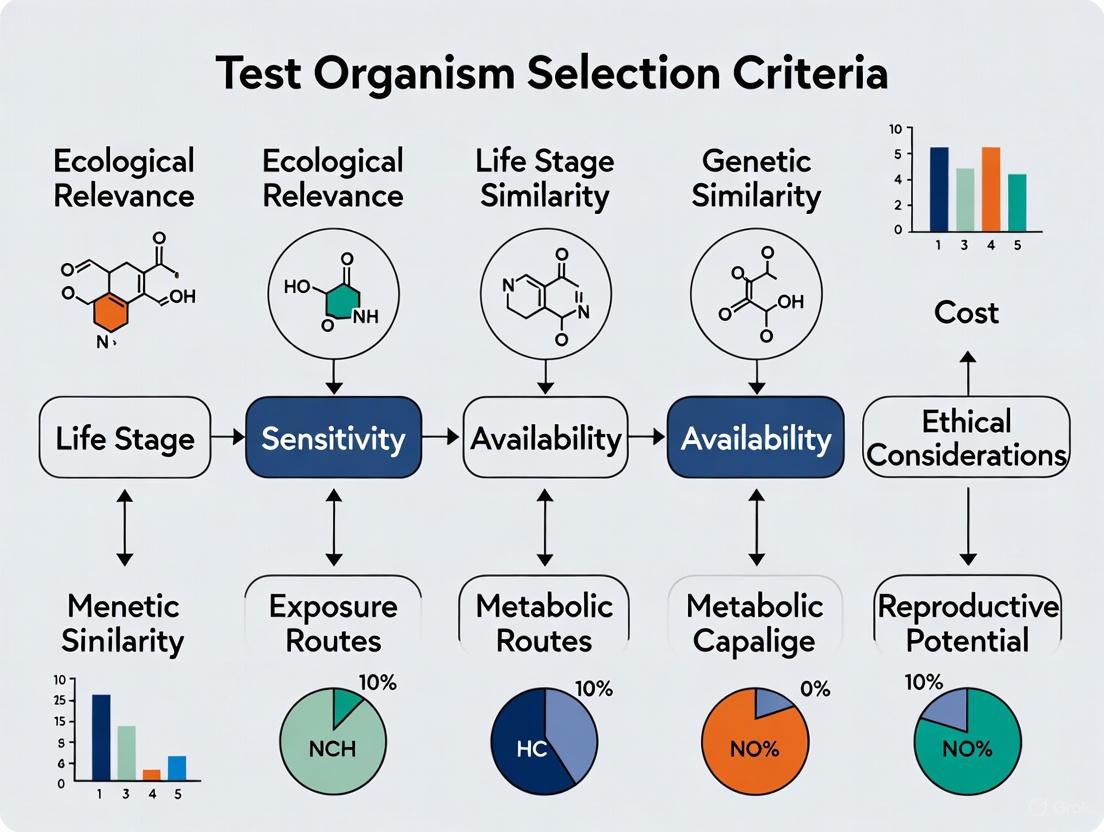
This article provides a comprehensive framework for researchers, scientists, and drug development professionals on the strategic selection of ecotoxicity test organisms.
Selecting Ecotoxicity Test Organisms: A Strategic Framework for Researchers and Drug Developers
Abstract
This article provides a comprehensive framework for researchers, scientists, and drug development professionals on the strategic selection of ecotoxicity test organisms. It bridges foundational principles with advanced applications, covering the core criteria for organism selection, established and emerging methodological approaches, strategies for troubleshooting and optimizing test batteries, and the validation of methods for regulatory acceptance. By synthesizing current standards and future-oriented New Approach Methodologies (NAMs), this guide aims to enhance the ecological relevance, predictive power, and efficiency of environmental safety assessments in chemical and pharmaceutical development.
The Core Principles: Defining Ecotoxicity and Organism Selection Criteria
Ecotoxicology is a scientific discipline dedicated to understanding the effects of toxic chemical stressors on biological organisms, particularly within population, community, and ecosystem contexts. Regulatory and research agencies utilize ecotoxicity test data to assess hazards associated with substances that may be released into the environment, including industrial chemicals, pharmaceuticals, pesticides, food additives, and color additives [1]. These data inform hazard assessments and evaluate potential risks to aquatic life (e.g., invertebrates, fish), birds, wildlife species, and the broader environment. The foundational principles of ecotoxicology integrate elements from ecology and toxicology to support chemical safety evaluations and environmental protection regulations worldwide.
Internationally, the Organisation for Economic Co-operation and Development (OECD) Test Guidelines serve as the standard methods for non-clinical environment and health safety testing of chemicals and chemical products [2]. These guidelines are integral to the Mutual Acceptance of Data (MAD) system, which harmonizes testing across OECD member and adhering countries to avoid duplicative requirements. In the United States, the Environmental Protection Agency (EPA) has developed extensive Ecological Effects Test Guidelines under Series 850 to meet toxicity testing requirements for terrestrial and aquatic organisms under multiple statutory frameworks [3]. These standardized test methods ensure that chemical safety assessments are conducted with scientific rigor, reproducibility, and regulatory consistency across international jurisdictions.
Standardized Test Organisms and Methodologies
Standardized ecotoxicity tests utilize a diverse array of model organisms selected for their availability, adaptability to laboratory testing, potential to be tested at different life stages, low maintenance cost, historical data availability, and their capacity to represent broader ecological populations [1]. The selection of model species considers their "domain of applicability" and the conservation of toxicity-relevant biological traits between model species and ecological target species. The following table summarizes the primary test organisms and their applications in regulatory ecotoxicology:
Table 1: Standardized Test Organisms in Ecotoxicology
| Test Organism Group | Example Species | Common Test Guidelines | Measured Endpoints |
|---|---|---|---|
| Aquatic Invertebrates | Daphnia magna (water flea) | OECD 202, EPA 850.1010 | Acute immobilization, reproduction, growth |
| Fish | Oncorhynchus mykiss (rainbow trout) | OECD 203, 210, 236; EPA 850.1075 | Acute mortality, early life stage toxicity, embryo toxicity |
| Aquatic Plants | Lemna spp. (duckweed) | OECD 221, EPA 850.4400 | Growth inhibition, frond number, chlorophyll content |
| Algae | Pseudokirchneriella subcapitata | OECD 201, EPA 850.4500 | Growth inhibition, biomass yield |
| Terrestrial Invertebrates | Eisenia fetida (earthworm) | OECD 222, EPA 850.3100 | Survival, reproduction, growth |
| Birds | Colinus virginianus (bobwhite quail) | OECD 206, EPA 850.2100 | Acute oral toxicity, dietary toxicity, reproduction |
| Bees | Apis mellifera (honey bee) | OECD 213, 214; EPA 850.3020 | Acute contact toxicity, residual toxicity |
Recent updates to testing guidelines reflect scientific advancements and evolving regulatory needs. In June 2025, the OECD published 56 new, updated, and/or corrected test guidelines, including a new test guideline for acute toxicity to mason bees and updates to guidelines for acute and early life stage toxicity in fish and toxicity to aquatic plants [4]. These updates ensure testing keeps pace with scientific progress while promoting best practices aligned with the Replacement, Reduction, and Refinement (3Rs) principles for animal experimentation [2].
Criteria for Evaluating Ecotoxicity Studies
The reliability and relevance of ecotoxicity studies are critically evaluated before their use in regulatory decision-making. The Criteria for Reporting and Evaluating Ecotoxicity Data (CRED) project provides a framework to improve the reproducibility, transparency, and consistency of these evaluations [5]. According to the CRED framework, reliability concerns the inherent quality of a test report relating to standardized methodology and the clarity of experimental procedures and findings, while relevance addresses the appropriateness of data for a specific hazard identification or risk characterization purpose.
The U.S. EPA's Evaluation Guidelines for Ecological Toxicity Data in the Open Literature establish specific acceptance criteria for studies to be considered in ecological risk assessments [6]. For a study to be accepted, it must meet these minimum criteria:
- The toxic effects are related to single chemical exposure
- The toxic effects are on an aquatic or terrestrial plant or animal species
- There is a biological effect on live, whole organisms
- A concurrent environmental chemical concentration/dose or application rate is reported
- There is an explicit duration of exposure
- The article is published in English as a full, publicly available primary source
- A calculated endpoint is reported with treatments compared to an acceptable control
- The study location and tested species are reported and verified
Table 2: Study Evaluation Criteria Comparison
| Evaluation Aspect | Klimisch Method | CRED Criteria | EPA Guidelines |
|---|---|---|---|
| Reliability Focus | GLP compliance, standardized methods | Study design, performance, analysis | Experimental design, control comparison |
| Relevance Assessment | Limited guidance | Purpose-specific assessment | Problem formulation-driven |
| Transparency | Limited criteria | 20 reliability, 13 relevance criteria | 14 specific acceptance criteria |
| Documentation | Score (1-4) | Detailed evaluation guidance | Open Literature Review Summary (OLRS) |
| Application Flexibility | Rigid categorization | Adaptable to various study types | Focused on regulatory risk assessment |
The evolution from the traditional Klimisch method to more comprehensive frameworks like CRED addresses previous limitations in specificity, essential criteria, and guidance for both reliability and relevance evaluations [5]. This progression enables more consistent and transparent regulatory decisions based on scientific evidence.
Advanced Methodologies and Emerging Approaches
Molecular Ecotoxicology and Omics Technologies
Molecular tools and omics technologies are transforming ecotoxicology by providing deeper mechanistic understanding of toxicological pathways. The SETAC Europe 2025 session on Molecular Ecotoxicology and Omics Perspectives highlighted advances in transcriptomics, metabolomics, lipidomics, and proteomics that contribute to environmental risk assessment [7]. These approaches enable researchers to identify molecular initiating events in adverse outcome pathways and develop more predictive toxicity assessments.
Transcriptomic Point of Departure (tPOD) has emerged as a promising method to derive quantitative threshold values from RNAseq data. In the case of tamoxifen effects in zebrafish, the tPOD derived from zebrafish embryos was in the same order of magnitude but slightly more sensitive than the NOEC from a two-generation study [7]. Similarly, comparisons of tPODs estimated in rainbow trout alevins with conventional fish toxicity tests showed that tPOD values were equally or more conservative than values from chronic tests, supporting their use as alternative methods aligned with 3R principles.
Toxicokinetic-Toxicodynamic (TKTD) Modeling
The application of General Unified Threshold Models of Survival (GUTS) represents a significant advancement in ecotoxicological modeling. These models integrate toxicokinetic (what the organism does to the chemical) and toxicodynamic (what the chemical does to the organism) processes to predict survival under time-variable exposure scenarios [8]. Recent research comparing visual assessment and quantitative goodness-of-fit metrics on GUTS model fits found that quantitative indices and visual assessments generally agreed on model performance, with dose-response curve plots tending to be scored better than time series representations of the same data.
The OECD's recent updates to several test guidelines now allow collection of tissue samples for omics analysis, including Test No. 203 (Fish Acute Toxicity Test), Test No. 210 (Fish Early-life Stage Toxicity Test), and Test No. 236 (Fish Embryo Acute Toxicity Test) [9]. This integration of traditional and advanced methodologies enhances the mechanistic understanding of toxic effects while supporting the development of New Approach Methodologies (NAMs).
Experimental Protocols in Ecotoxicology
Standardized Aquatic Toxicity Test Protocol: Daphnia Acute Immobilization Test
Principle: This test assesses the acute toxicity of chemicals to the freshwater cladoceran Daphnia magna or Daphnia pulex by determining the concentration that causes 50% immobilization (EC50) after 48 hours of exposure [1].
Materials and Reagents:
- Test Chambers: 50-100 mL glass beakers or disposable plastic vessels
- Reconstituted Water: Standardized freshwater with defined hardness, pH, and alkalinity
- Daphnia Cultures: Neonates (<24 hours old) from laboratory cultures
- Aeration System: To maintain dissolved oxygen near saturation
- Test Substance: Analytical grade chemical with known purity
- Dilution Water: Reconstituted freshwater for preparing concentration series
Procedure:
- Prepare at least five concentrations of the test substance in geometric series, plus control(s)
- Randomly assign 10 daphnids to each test chamber with 50 mL test solution
- Maintain test chambers at 20±2°C with a 16:8 hour light:dark photoperiod
- Do not feed organisms during the 48-hour test period
- Record immobilization (lack of movement after gentle agitation) at 24 and 48 hours
- Measure actual chemical concentrations at test initiation and periodically throughout
- Calculate EC50 values using appropriate statistical methods (e.g., probit analysis)
Quality Control:
- Immobilization in control groups must not exceed 10%
- Dissolved oxygen concentration must remain ≥60% saturation
- Temperature variation should not exceed ±2°C
- Test validity requires reference toxicant EC50 within established historical range
Terrestrial Plant Toxicity Test: Seedling Emergence and Seedling Growth
Principle: This test assesses the effects of chemicals on seedling emergence and early growth of terrestrial plants exposed to treated soil or substrate [3].
Materials and Reagents:
- Test Species: Two monocotyledonous and two dicotyledonous species (e.g., ryegrass, oat, radish, lettuce)
- Test Substrate: Standardized soil with known properties or natural soil
- Growth Chambers: Controlled environment with adjustable light, temperature, humidity
- Application Equipment: Precision sprayer or incorporation system for test substance
- Measurement Tools: Calipers, drying oven, analytical balance
Procedure:
- Mix test substance with soil to create a concentration series
- Place soil in appropriate containers and plant seeds at recommended depths
- Maintain appropriate moisture and environmental conditions for specific species
- Record seedling emergence daily until control plants reach certain growth stage
- Harvest plants at test termination (typically 14-21 days after emergence)
- Measure endpoints: emergence, shoot height, visible phytotoxicity, biomass
Data Analysis:
- Calculate EC25 and EC50 values for emergence and growth measurements
- Determine NOEC and LOEC using appropriate statistical tests
- Evaluate dose-response relationships for each species and endpoint
Visualization of Ecotoxicology Testing Framework
The following diagram illustrates the integrated framework for ecotoxicology testing and assessment, highlighting the relationships between standardized testing, advanced methodologies, and regulatory applications:
Ecotoxicology Testing and Assessment Framework
The Scientist's Toolkit: Essential Research Reagents and Materials
Table 3: Essential Research Reagents for Ecotoxicology Studies
| Reagent/Material | Function | Application Examples |
|---|---|---|
| Reconstituted Freshwater | Standardized aqueous medium for aquatic tests | Daphnia and fish toxicity tests [1] |
| Standard Reference Toxicants | Quality control and laboratory proficiency assessment | Potassium dichromate for Daphnia, sodium chloride for fish |
| Formulated Sediments | Standardized substrate for benthic organism tests | Chironomid and amphipod sediment toxicity tests |
| Cryopreservation Media | Long-term storage of cells and tissues for omics analysis | Tissue banking for transcriptomic and proteomic studies [9] |
| RNA Stabilization Reagents | Preservation of RNA integrity for transcriptomics | tPOD determination in fish embryos [7] |
| Enzyme Assay Kits | Biomarker response quantification | Acetylcholinesterase inhibition for neurotoxicity |
| Cell Culture Media | Maintenance of in vitro systems | Fish cell lines for alternative toxicity testing |
| Chemical Analysis Standards | Analytical quantification and method validation | HPLC/GC-MS analysis of test substance concentrations |
| Toripristone | Toripristone, CAS:91935-26-1, MF:C31H39NO2, MW:457.6 g/mol | Chemical Reagent |
| Saframycin H | Saframycin H, CAS:92569-01-2, MF:C32H36N4O9, MW:620.6 g/mol | Chemical Reagent |
Ecotoxicology continues to evolve from traditional whole-organism toxicity testing toward integrated approaches that incorporate mechanistic understanding through molecular techniques and predictive modeling. The selection of test organisms remains guided by their representativeness of ecological communities, practical laboratory considerations, and regulatory requirements. Recent advances in omics technologies and computational toxicology are enhancing the scientific basis for chemical risk assessment while supporting the implementation of 3R principles. The ongoing development of internationally harmonized test guidelines ensures that ecotoxicity testing maintains scientific rigor while adapting to technological innovations and changing regulatory needs. As the field progresses, the integration of standardized testing with New Approach Methodologies will continue to refine our ability to protect ecosystems from chemical stressors while reducing reliance on animal testing.
Ecotoxicity testing relies on a compartmentalized view of the environment to assess the potential adverse effects of chemicals on ecosystems. The aquatic, sediment, and terrestrial compartments represent distinct but interconnected environments, each hosting unique biological communities and posing specific challenges for ecotoxicological assessment. Understanding the structural and functional characteristics of these compartments is fundamental to selecting appropriate test organisms and designing relevant testing protocols. This framework is essential for developing accurate ecological risk assessments that protect ecosystem health while advancing the goals of chemical and pharmaceutical regulation.
The Aquatic Compartment
Compartment Characteristics and Ecological Relevance
The aquatic compartment includes freshwater, estuarine, and marine ecosystems characterized by the dominance of water as the medium for biological processes. This compartment serves as a primary recipient for many environmental contaminants through direct discharge, surface runoff, and atmospheric deposition [10]. From an ecotoxicological perspective, the aquatic environment presents unique challenges due to the high mobility of contaminants, complex exposure pathways, and the sensitivity of aquatic organisms to dissolved pollutants. The compartment's high connectivity facilitates contaminant dispersal across large geographical areas, making it particularly vulnerable to pollution events [11].
Aquatic ecosystems are characterized by distinct vertical stratification (water column vs. benthic zones) and horizontal connectivity (rivers, lakes, oceans), which influence both exposure scenarios and ecological effects. The physicochemical properties of water (pH, hardness, temperature, dissolved organic carbon) significantly modify chemical bioavailability and toxicity, necessitating standardized testing conditions to ensure reproducible results [12].
Standard Test Organisms and Selection Criteria
Regulatory guidelines for aquatic ecotoxicity testing employ standardized test species selected for their ecological relevance, sensitivity to contaminants, and practicality for laboratory culture. These surrogate species represent different trophic levels and taxonomic groups within aquatic ecosystems [12].
- Freshwater Fish: Standard test species include rainbow trout (Oncorhynchus mykiss) as a cold-water species and bluegill sunfish (Lepomis macrochirus) as a warm-water species. These vertebrate species are used in acute (96-hour LC50) and chronic (early life-stage) tests, providing data on mortality, growth, and reproductive impacts [12].
- Aquatic Invertebrates: The water flea (Daphnia magna or D. pulex) is a cornerstone of aquatic testing, serving as a representative of freshwater invertebrates. Its particulate feeding behavior, transparent body, and parthenogenetic reproduction make it ideal for acute (48-hour EC50) and chronic (21-day reproduction) tests [12].
- Aquatic Plants: Algae (e.g., Pseudokirchneriella subcapitata, formerly Selenastrum capricornutum) and aquatic vascular plants (e.g., Lemna gibba, duckweed) are used to assess phytotoxicity. Algal growth inhibition tests (72-96 hour EC50) evaluate impacts on primary producers, which form the base of aquatic food webs [12].
Table 1: Standard Aquatic Test Organisms and Endpoints
| Test Organism | Test Type | Standard Duration | Primary Endpoints | Guideline Reference |
|---|---|---|---|---|
| Rainbow Trout (Oncorhynchus mykiss) | Acute Toxicity | 96 hours | LC50 (Lethal Concentration) | OECD 203 |
| Water Flea (Daphnia magna) | Acute Toxicity | 48 hours | EC50 (Immobilization) | OECD 202 |
| Water Flea (Daphnia magna) | Chronic Toxicity | 21 days | NOEC/LOEC (Reproduction) | OECD 211 |
| Freshwater Algae (Pseudokirchneriella subcapitata) | Growth Inhibition | 72-96 hours | EC50 (Biomass) | OECD 201 |
| Fathead Minnow (Pimephales promelas) | Early Life-Stage | 28-32 days | Hatchability, Growth, Survival | OECD 210 |
Detailed Experimental Protocol: Acute Toxicity Test withDaphnia magna
Principle: Young daphnids, aged less than 24 hours at test initiation, are exposed to a range of concentrations of the test substance diluted in reconstituted water. The immobility (the inability to swim) is recorded after 48 hours and compared with control values to determine the EC50 [12].
Materials and Reagents:
- Test Organism: Daphnia magna, neonates (<24 hours old) from healthy, cultured populations
- Test Substance: Known concentration and purity, with appropriate solvent controls if necessary
- Reconstituted Water: Standardized water with defined hardness, pH, and alkalinity (e.g., EPA Moderately Hard Water)
- Test Chambers: Glass or chemically inert vessels, typically 50-100 mL capacity
- Environmental Chamber: Maintained at 20°C ± 2°C with a 16:8 hour light:dark cycle
- Aeration System: For oxygen saturation (if required for static-renewal tests)
Procedure:
- Preparation: Prepare a stock solution of the test substance and dilute it to at least five concentrations, preferably in a geometric series. Prepare a control (and solvent control if applicable).
- Randomization: Randomly assign at least 10 daphnids to each test chamber, with four replicates per concentration.
- Exposure: Add the daphnids to the test chambers containing 50 mL of the respective test solution. Do not feed the organisms during the 48-hour test.
- Monitoring: Record temperature and dissolved oxygen at the beginning and end of the test. Check pH in the control and highest concentration.
- Endpoint Assessment: After 48 hours, record the number of immobile daphnids in each chamber. Gently agitate the water to stimulate movement if necessary. An organism is considered immobile if it fails to resume swimming.
- Data Analysis: Calculate the EC50 value using appropriate statistical methods (e.g., Probit analysis, Trimmed Spearman-Karber).
Quality Control:
- Control mortality must not exceed 10%.
- Test temperature must remain within 20°C ± 2°C.
- Dissolved oxygen concentration must be ≥ 60% saturation at the end of the test.
The Sediment Compartment
Compartment Characteristics and Ecological Relevance
Sediments represent the depositional environment at the bottom of water bodies, forming a critical interface between the water column and the benthic zone. This compartment acts as a long-term sink for hydrophobic contaminants, heavy metals, and other pollutants that adsorb to particulate matter [10] [13]. Sediment-bound contaminants can persist for decades, creating a legacy of pollution that continues to impact ecosystems long after primary sources are controlled. The sediment compartment is characterized by reducing conditions and distinct physicochemical gradients (e.g., oxygen, pH, redox potential) that dramatically influence the bioavailability and transformation of contaminants [13].
The bioavailability of sediment-associated contaminants depends on multiple factors, including sediment composition (grain size, organic carbon content), pore water chemistry, and biological traits of sediment-dwelling organisms. This complexity necessitates testing approaches that consider the whole sediment matrix rather than aqueous exposures alone [13].
Standard Test Organisms and Selection Criteria
Sediment test organisms are primarily benthic invertebrates that live in or on sediments and have direct, prolonged contact with contaminated sediments. They are selected based on their ecological relevance, sensitivity, sediment-processing behavior, and trophic level [13].
- Amphipods: Marine and estuarine amphipods (e.g., Leptocheirus plumulosus, Ampelisca abdita) and freshwater amphipods (e.g., Hyalella azteca) are widely used in whole-sediment tests. Their burrowing and feeding activities make them highly exposed to sediment contaminants [13].
- Midges: The larvae of the dipteran Chironomus riparius (freshwater) or C. dilutus are key test organisms. As deposit-feeders that construct sediment tubes, they are directly exposed to contaminants throughout their larval development, making them ideal for life-cycle tests [12].
- Oligochaetes: Freshwater worms (e.g., Lumbriculus variegatus) and marine polychaetes (e.g., Neanthes arenaceodentata) are used in bioaccumulation and toxicity tests. Their sediment-ingesting behavior provides a critical exposure route for assessing trophic transfer [13].
Table 2: Standard Sediment Test Organisms and Endpoints
| Test Organism | Test Type | Standard Duration | Primary Endpoints | Guideline Reference |
|---|---|---|---|---|
| Freshwater Amphipod (Hyalella azteca) | Whole-Sediment Toxicity | 10-28 days | Survival, Growth | EPA 600-R-99-064 |
| Freshwater Midge (Chironomus dilutus) | Whole-Sediment Toxicity | 10-20 days | Survival, Growth, Emergence | OECD 218/219 |
| Marine Amphipod (Leptocheirus plumulosus) | Whole-Sediment Toxicity | 10-28 days | Survival, Growth | EPA 600-R-99-064 |
| Freshwater Oligochaete (Lumbriculus variegatus) | Bioaccumulation | 28 days | Bioaccumulation Factor (BAF) | OECD 315 |
Detailed Experimental Protocol: Whole-Sediment Toxicity Test withChironomus dilutus
Principle: This test evaluates the toxicity of contaminated field-collected or spiked sediments by exposing first-instar Chironomus larvae for a period of 10-20 days. Endpoints include survival, growth (ash-free dry weight), and for longer tests, emergence to adulthood [13].
Materials and Reagents:
- Test Organism: First-instar Chironomus dilutus larvae (<24 hours old)
- Test Sediment: Field-collected or laboratory-spiked sediment, characterized for particle size, organic carbon, and moisture content
- Reference Sediment: A clean, uncontaminated sediment with similar characteristics
- Overlying Water: Reconstituted or site water appropriate for the test species
- Test Chambers: 300-mL to 1-L beakers filled with 2 cm of sediment and 600-800 mL of overlying water
- Aeration System: Gentle aeration to maintain oxygen without disturbing the sediment surface
- Food Supply: Suspended fish food or other appropriate diet
Procedure:
- Test Setup: Place the test sediment into replicate test chambers to a depth of approximately 2 cm. Carefully add overlying water without disturbing the sediment surface. Allow chambers to equilibrate for 2-3 days before adding organisms.
- Organism Introduction: Randomly assign 10-20 first-instar larvae to each test chamber.
- Test Maintenance: Maintain test systems at 23°C ± 1°C with a 16:8 hour light:dark cycle. Feed larvae a defined amount of fish food suspension daily. Monitor and record water quality parameters (temperature, dissolved oxygen, pH, ammonia) regularly.
- Renewal: For longer tests (e.g., 20-day), consider renewing the overlying water periodically while minimizing sediment disturbance.
- Termination and Endpoint Assessment: After 10 days, carefully sieve the contents of each chamber to retrieve the larvae. Count the number of surviving organisms and determine the ash-free dry weight per replicate to assess growth. For 20-day tests, also record the number of emerged adults.
Quality Control:
- Survival in the control sediment must be ≥ 80%.
- Growth in the control sediment must meet minimum acceptable levels (e.g., ≥ 0.45 mg ash-free dry weight per organism for C. dilutus).
- Overlying water dissolved oxygen must remain ≥ 2.5 mg/L near the sediment-water interface.
The Terrestrial Compartment
Compartment Characteristics and Ecological Relevance
The terrestrial compartment encompasses the soil ecosystem and the above-ground habitats it supports. Soil is a complex, heterogeneous matrix comprising mineral particles, organic matter, water, air, and a vast diversity of organisms. This compartment receives contaminants through pesticide applications, atmospheric deposition, waste disposal, and accidental spills [10]. The fate and effects of chemicals in terrestrial systems are governed by soil properties such as texture, pH, cation exchange capacity, and organic matter content, which collectively influence a chemical's mobility, persistence, and bioavailability [14].
Unlike aquatic systems where exposure occurs primarily through water, terrestrial organisms face multiple exposure routes: direct contact with soil, ingestion of soil or contaminated food, and inhalation of soil pore air. This complexity requires careful consideration in test design and organism selection [14].
Standard Test Organisms and Selection Criteria
Terrestrial test organisms are selected to represent different functional groups, trophic levels, and exposure pathways within soil ecosystems. Standard tests focus on plants, soil invertebrates, and pollinators, which play critical roles in ecosystem functioning [12] [14].
- Plants: Terrestrial plants, typically monocotyledons (e.g., oat, Avena sativa) and dicotyledons (e.g., lettuce, Lactuca sativa), are used in seedling emergence and vegetative vigor tests. They represent primary producers and assess impacts on germination and growth [12].
- Earthworms: The earthworm Eisenia fetida is the standard test species for soil invertebrate testing. As soil-ingesting organisms that constantly interact with the soil matrix, they are highly exposed to soil contaminants and serve as key indicators of soil health [12].
- Birds: Avian species such as the Northern Bobwhite (Colinus virginianus) and Mallard Duck (Anas platyrhynchos) are used in acute oral and dietary tests, representing vertebrate wildlife exposed through contaminated food and water [12].
- Bees: The honey bee (Apis mellifera) is a standard test organism for evaluating pesticide risks to pollinators, assessing both acute contact toxicity and residual toxicity on foliage [12] [15].
Table 3: Standard Terrestrial Test Organisms and Endpoints
| Test Organism | Test Type | Standard Duration | Primary Endpoints | Guideline Reference |
|---|---|---|---|---|
| Earthworm (Eisenia fetida) | Acute Toxicity | 14 days | LC50 (Mortality) | OECD 207 |
| Earthworm (Eisenia fetida) | Reproduction | 56 days | NOEC (Reproduction) | OECD 222 |
| Terrestrial Plants (e.g., Lettuce, Oat) | Seedling Emergence/Vigor | 14-21 days | EC25 (Emergence, Biomass) | OECD 208 |
| Honey Bee (Apis mellifera) | Acute Contact | 48-96 hours | LD50 (Mortality) | OECD 214 |
| Mason Bee (Osmia sp.) | Acute Contact | 48-96 hours | LD50 (Mortality) | OECD 254 |
| Northern Bobwhite (Colinus virginianus) | Acute Oral | 14 days | LD50 (Mortality) | OECD 223 |
| Northern Bobwhite (Colinus virginianus) | Reproduction | 20 weeks | NOAEC (Reproduction) | OCSPP 850.2300 |
Detailed Experimental Protocol: Earthworm Acute Toxicity Test
Principle: Adult earthworms (Eisenia fetida) are exposed to a range of concentrations of a test substance mixed into an artificial soil substrate. Mortality is assessed after 14 days to determine the LC50 [12].
Materials and Reagents:
- Test Organism: Mature Eisenia fetida with a well-developed clitellum
- Artificial Soil: A standardized mixture of 10% sphagnum peat, 20% kaolinite clay, and 70% industrial sand, adjusted to pH 6.0 ± 0.5 with calcium carbonate
- Test Substance: Known concentration and purity
- Test Containers: 1-L glass or plastic containers with perforated lids for aeration
- Environmental Chamber: Maintained at 20°C ± 2°C with continuous dim light
- Food Supply: A small amount of dried, powdered mammal fodder or oatmeal
Procedure:
- Soil Preparation: Prepare the artificial soil and moisten it to approximately 40-60% of the maximum water-holding capacity. Mix the test substance into the soil in a geometric series of at least five concentrations.
- Test Initiation: Place 500 g (wet weight) of the treated soil into each test container. Introduce 10 adult earthworms, which have been rinsed and briefly blotted dry, into each container.
- Test Maintenance: Maintain the test containers in the environmental chamber for 14 days. Feed the worms a small amount of food (e.g., 5 g of oatmeal) at the start of the test and after one week.
- Monitoring: Weigh containers weekly and replenish water to maintain constant moisture. Check for and remove any dead worms every 24-48 hours during the first week and at day 7 and 14.
- Termination and Assessment: After 14 days, carefully empty the soil from each container and count the number of surviving worms. A worm is considered dead if it does not respond to a gentle mechanical stimulus.
Quality Control:
- Control mortality must not exceed 10%.
- The average individual weight loss of worms in the control should not exceed 20%.
- Soil pH should be measured in the control and highest concentration at the start and end of the test.
Integrated Testing Strategies and Emerging Approaches
The Watershed as an Integrative Unit
Recent frameworks advocate for moving beyond isolated compartment testing toward integrated approaches that reflect ecological reality. The Net Watershed Exchange (NWE) concept uses the watershed as the fundamental spatial unit, integrating all terrestrial and aquatic ecosystems and their hydrologic carbon exchanges [16]. This approach helps bridge gaps between land- and atmosphere-based carbon flux estimates and addresses the challenge of lateral carbon transfer, where carbon fixed in terrestrial ecosystems is transported to aquatic systems [16] [11]. Applying this landscape perspective to ecotoxicity can improve risk assessment by accounting for cross-compartment contaminant transfers.
(Q)SAR and In Silico Methods
With increasing regulatory restrictions on animal testing, computational approaches are gaining prominence for preliminary screening. (Quantitative) Structure-Activity Relationship ((Q)SAR) models predict environmental fate parameters (e.g., Persistence, Bioaccumulation) and toxicity based on a chemical's structural properties [17]. Tools like VEGA, EPI Suite, and TEST provide valuable data for filling information gaps, with their reliability heavily dependent on the Applicability Domain (AD) of the model [17].
Omics and Advanced Methodologies
Updated OECD Test Guidelines (e.g., Test No. 203, 210, 236) now allow for the collection of tissue samples for omics analysis, providing deeper mechanistic insights into biological responses to chemical exposure at the molecular level [15]. Furthermore, the inclusion of new test species like the Mason bee (Osmia sp.) in OECD Test Guideline 254 reflects efforts to address biodiversity and protect key ecosystem services like pollination [15].
The Scientist's Toolkit: Essential Research Reagents and Materials
Table 4: Key Reagents and Materials for Ecotoxicity Testing
| Item | Function/Application | Example/Notes |
|---|---|---|
| Reconstituted Water | Provides a standardized, reproducible aqueous medium for aquatic tests. | EPA Moderately Hard Water: Specific recipe of salts to control hardness, alkalinity, and pH. |
| Artificial Soil | Standardized substrate for terrestrial tests with earthworms and other soil invertebrates. | OECD formulation: 10% peat, 20% kaolinite clay, 70% industrial sand, pH adjusted to 6.0. |
| Control Sediments | Provide a baseline for comparing effects in sediment tests; can be clean reference sediments or formulated sediments. | Characterized for key parameters like particle size distribution, organic carbon content, and pH. |
| Standard Test Diets | Nutritionally consistent food for maintaining test organisms during culture and testing. | Examples: Fish food flakes for daphnia, powdered oatmeal for earthworms, specific pollen mixes for bees. |
| Solvent Carriers | Used to dissolve poorly water-soluble test substances for dosing. | Solvents like acetone, dimethyl formamide (DMF); must be non-toxic at concentrations used and include solvent controls. |
| Chemical Standards | Pure substances of known concentration and identity used for test substance verification and analytical calibration. | Critical for ensuring the accuracy and reliability of dosing in both definitive tests and range-finding studies. |
| Prolylrapamycin | Prolylrapamycin | Prolylrapamycin is an analog of Rapamycin (Sirolimus) for mTOR signaling pathway research. This product is for research use only (RUO). Not for personal use. |
| 6-Benzoylheteratisine | 6-Benzoylheteratisine, CAS:99759-48-5, MF:C29H37NO6, MW:495.6 g/mol | Chemical Reagent |
Visualizing Ecotoxicity Testing Workflows and Conceptual Frameworks
Diagram 1: Standard Aquatic Toxicity Testing Workflow
Diagram 2: Landscape-Scale Contaminant Transfer Between Compartments
Application Note: Foundational Principles for Test Organism Selection
The selection of appropriate test organisms is a critical initial step in ecological risk assessment (ERA), as their responses to chemical exposure serve as predictive evidence of potential environmental impacts [18]. The foundational principle guiding selection is that test species should be representative of the ecosystem being assessed, with physiological traits adapted to the specific region [18]. Regulatory frameworks worldwide, including the U.S. Federal Insecticide, Fungicide, and Rodenticide Act (FIFRA), mandate ecological effects testing as part of pesticide registration processes, requiring manufacturers to conduct, analyze, and fund numerous scientific tests to demonstrate safety for nontarget wildlife [19]. These regulatory processes increasingly consider data from open literature alongside standardized guideline studies, particularly for assessing impacts on threatened and endangered species [6].
Core Selection Criteria Framework
The essential criteria for selecting ecotoxicity test organisms form an interconnected framework ensuring ecological relevance, regulatory acceptance, and practical feasibility. The most critical criteria encompass:
Taxonomic Identification and Clarity: Species must have verified taxonomy and well-analyzed morphological and physiological traits, including life cycle and reproduction patterns [18] [5]. Proper taxonomic identification ensures reproducibility and allows for meaningful interspecies comparisons.
Geographical Distribution and Habitat Representation: Organisms should be representative of the specific geographical region of interest [18]. Species native to the assessment area provide more relevant data, especially when site-specific information is required [18].
Ecological Role and Trophic Level Position: Test species should occupy defined positions within ecological communities, representing specific trophic levels (e.g., producers, primary consumers, secondary consumers, decomposers) and fulfilling important ecological functions [20] [18]. Selecting species from multiple trophic levels provides a more comprehensive assessment of potential ecosystem impacts.
Laboratory Adaptability and Culture Potential: Practical considerations include ease of manipulation, small size, short life cycle, and established culture methods [18] [19]. Species must adapt to laboratory conditions while maintaining ecological relevance.
Sensitivity to Chemical Exposure: Organisms should demonstrate appropriate susceptibility to environmental contaminants to provide protective assessment outcomes [18]. A range of sensitivities across tested species helps establish protective thresholds.
Standardized Method Availability: Well-established, scientifically accepted testing methodologies must be available for the species to ensure consistency and comparability of results [5] [19].
Table 1: Essential Selection Criteria for Ecotoxicity Test Organisms
| Criterion Category | Specific Requirements | Regulatory/Assessment Purpose |
|---|---|---|
| Taxonomy | Clear taxonomy; Well-analyzed morphological and physiological traits; Known life cycle and reproduction patterns | Ensures reproducibility and allows for meaningful interspecies comparisons and extrapolations |
| Distribution | Representative of geographical region of interest; Native to assessment area; Defined habitat type | Provides regionally relevant data for site-specific assessments |
| Ecological Role | Defined position in trophic level; Important ecological function; Role in nutrient cycling or as habitat provider | Represents ecosystem structure and function; Captures food web interactions |
| Practical Considerations | Ease of laboratory culture; Short life cycle; Small size; Established testing methodologies | Ensures feasibility and standardization of testing protocols |
Experimental Protocols: Implementation and Evaluation
Protocol for Criteria-Based Test Species Selection
Purpose and Scope
This protocol provides a systematic approach for selecting ecotoxicity test organisms based on the essential criteria of taxonomy, distribution, and ecological role. The methodology aligns with international standards for ecological risk assessment while allowing for region-specific adaptations [18] [5].
Materials and Equipment
- Geographical distribution maps and ecological databases
- Taxonomic identification keys and verification resources
- Ecological niche modeling software (optional)
- Laboratory culture facilities appropriate for candidate species
- Reference toxicants for sensitivity validation
Procedure
Step 1: Compile Candidate Species List
- Identify potential test species through literature review of ecological studies in the target region [18]
- Consult taxonomic databases to verify nomenclature and phylogenetic relationships
- Document known physiological traits, habitat preferences, and ecological functions for each candidate
Step 2: Evaluate Taxonomic Suitability
- Verify taxonomic classification using authoritative databases
- Assess availability of morphological and life history data
- Confirm that identification keys exist for reliable species recognition
Step 3: Assess Geographical Distribution
- Map current and historical distribution patterns within the target assessment region [18]
- Evaluate population status and conservation concerns
- Determine habitat specificity and environmental tolerance ranges
Step 4: Characterize Ecological Role
- Identify trophic level position (producer, primary consumer, secondary consumer, decomposer) [20]
- Document role in nutrient cycling, energy flow, or habitat provision [18]
- Assess importance in food web dynamics and ecosystem function
Step 5: Evaluate Practical Implementation Factors
- Assess ease of collection and laboratory acclimation
- Develop or adapt culture methods maintaining genetic diversity
- Establish life cycle parameters and reproductive characteristics under controlled conditions [18]
Step 6: Validate Sensitivity and Response Characteristics
- Conduct range-finding tests with reference toxicants
- Compare sensitivity to known standard test species
- Evaluate consistency of response across multiple life stages
Step 7: Document and Review Selection Justification
- Compile complete assessment against all selection criteria
- Identify potential limitations and research needs
- Establish standardized testing protocols for selected species
Protocol for Evaluating Ecotoxicity Data Quality
Purpose and Scope
This protocol outlines procedures for evaluating the reliability and relevance of ecotoxicity studies based on the CRED (Criteria for Reporting and Evaluating Ecotoxicity Data) framework, which provides transparent criteria for assessing study quality [5].
Materials
- CRED evaluation checklist (20 reliability criteria, 13 relevance criteria) [5]
- Study evaluation tracking system
- Taxonomic verification resources
- Statistical analysis software
Procedure
Step 1: Initial Relevance Screening
- Assess appropriateness of test species for specific assessment purpose
- Evaluate match between test endpoints and assessment goals
- Determine environmental relevance of exposure conditions
Step 2: Reliability Assessment
- Evaluate experimental design (controls, replicates, concentration series)
- Assess chemical characterization and exposure verification
- Review statistical analysis and endpoint derivation methods
- Verify organism health and test condition documentation
Step 3: Taxonomic Verification
- Confirm test organism identification and source
- Assess life stage and health status appropriateness
- Document any genetic or population-specific characteristics
Step 4: Geographical and Ecological Context Evaluation
- Assess environmental relevance of test conditions to assessment scenario
- Evaluate appropriateness of species for specific ecosystem being assessed
- Consider seasonal and life cycle factors in experimental timing
Step 5: Data Quality Integration
- Categorize studies based on reliability and relevance assessments
- Identify data gaps and uncertainties
- Determine suitability for quantitative or qualitative use in risk assessment
The Scientist's Toolkit: Research Reagent Solutions
Table 2: Essential Research Materials and Resources for Ecotoxicity Test Species Selection
| Resource Category | Specific Examples | Function in Selection Process |
|---|---|---|
| Taxonomic Databases | NCBI Taxonomy Database; Regional species inventories; Taxonomic keys | Verification of species identification; Phylogenetic relationship analysis |
| Distribution Mapping Tools | Geographical Information Systems (GIS); Species distribution models; Ecological atlases | Determination of geographical representation; Habitat suitability assessment |
| Ecological Role References | Trophic level classifications; Food web studies; Ecological trait databases | Characterization of ecosystem function; Trophic position assessment |
| Culture System Components | Aquaculture systems; Climate-controlled chambers; Specialized feed formulations | Laboratory adaptation and maintenance; Life cycle studies under controlled conditions |
| Reference Toxicants | Sodium dodecyl sulfate; Sodium nitrite; Copper salts [21] | Sensitivity validation; Method standardization and quality control |
| Data Quality Assessment Tools | CRED evaluation checklist [5]; EPA ECOTOX acceptance criteria [6] | Reliability and relevance assessment of existing ecotoxicity studies |
| Zoledronate disodium | Zoledronate Disodium | Zoledronate disodium salt for research. Study bone biology, osteoporosis, and cancer metastases. For Research Use Only. Not for human or veterinary use. |
| Nepetoidin B | Nepetoidin B, MF:C17H14O6, MW:314.29 g/mol | Chemical Reagent |
Advanced Applications and Integration Approaches
Species Sensitivity Distribution Modeling
The selection of appropriate test species directly influences the development of Species Sensitivity Distributions (SSDs), which statistically aggregate toxicity data to quantify the distribution of species sensitivities and estimate hazardous concentrations (e.g., HC5, the concentration affecting 5% of species) [20]. SSDs built using species representing multiple taxonomic groups and trophic levels provide more robust and protective risk assessments [20] [21]. Research demonstrates that global and class-specific SSD models can be developed using curated datasets spanning multiple taxonomic groups across four trophic levels: producers (e.g., algae), primary consumers (e.g., insects), secondary consumers (e.g., amphibians), and decomposers (e.g., fungi) [20].
Addressing Regional Representation Gaps
Current international test guidelines predominantly feature species from North America and Europe, creating significant gaps for assessments in other regions like East Asia [18]. Research identifies promising region-specific test species including Zacco platypus, Misgurnus anguillicaudatus, Hydrilla verticillata, Neocaridina denticulata spp., and Scenedesmus obliquus for East Asian assessments [18]. These species demonstrate how regional selection criteria application can address geographical representation gaps in ecotoxicity testing.
Emerging Approaches and Future Directions
New approach methodologies (NAMs) are increasingly important for addressing data gaps while reducing animal testing [20] [1]. Machine learning techniques, such as pairwise learning applied to chemical-species pairs, can predict sensitivity and help prioritize testing needs [22]. Additionally, the CRED framework provides standardized evaluation criteria that improve the reproducibility, transparency, and consistency of reliability and relevance evaluations for ecotoxicity studies [5].
The selection of appropriate test organisms is a critical determinant of success in ecotoxicity testing. The ideal model organism must not only exhibit biological relevance to the assessment endpoint but also demonstrate practical adaptability to laboratory environments. This application note examines the essential practical considerations for cultivating and maintaining key model organisms used in ecotoxicity testing, providing detailed protocols and comparative analyses to guide researchers in organism selection. Within regulatory ecotoxicology, standardized tests using specific organisms provide data for chemical risk assessments conducted by agencies worldwide, including the U.S. Environmental Protection Agency (EPA) [1]. The practical traits of these organisms—their culture requirements, life cycle characteristics, and overall ease of use—directly impact the reliability, reproducibility, and cost-effectiveness of the toxicity data generated, which in turn influences regulatory decisions [6] [5].
Essential Practical Criteria for Test Organism Selection
When establishing a testing program, researchers must evaluate multiple practical dimensions of potential test organisms. The U.S. EPA and other regulatory bodies emphasize the importance of using test organisms chosen for their "availability, adaptability to laboratory testing, potential to be tested at different life stages, low-cost of maintenance, [and] historical data" [1]. These criteria ensure that laboratories can consistently produce high-quality, reliable data that meets regulatory standards for evaluating potential pesticide effects on non-target organisms [6].
Beyond these fundamental practicalities, a data-driven approach to organism selection is increasingly valuable. While historical precedent often guides choices, leveraging genomic data, protein structure, and evolutionary context can help identify organisms with high biological relevance to specific research problems, potentially leading to more predictive toxicity models [23]. Furthermore, proper reporting of all methodological details—from test design to exposure conditions and statistical analysis—is crucial for regulatory acceptance of the resulting data [5].
Comparative Analysis of Standard Test Organisms
The following section provides a detailed comparison of commonly used test organisms, with quantitative data summarized for direct comparison of their key practical traits.
Table 1: Comparative Practical Traits of Standard Aquatic Test Organisms
| Organism | Optimal Culture Temperature (°C) | Life Cycle Duration | Ease of Culture | Space Requirements | Regulatory Testing Applications |
|---|---|---|---|---|---|
| Daphnia magna | 20 ± 1 | ~7-10 days (first brood) | Moderate | Low | Acute and chronic toxicity testing; EPA TEG 850.1010 / OECD 202 |
| Rainbow trout (Oncorhynchus mykiss) | 12 ± 2 | 2-3 years to maturity | Difficult | High | Acute toxicity testing; EPA TEG 850.1075 / OECD 203 |
| Fathead minnow (Pimephales promelas) | 25 ± 1 | 3-4 months to maturity | Moderate | Moderate | Acute and chronic toxicity, including larval survival and growth; EPA TEG 850.1075 / OECD 210 |
| Zebrafish (Danio rerio) | 28.5 ± 1 | 3-4 months to maturity | Moderate | Moderate | Developmental toxicity, endocrine disruption; OECD 236 |
| Green alga (Chlamydomonas reinhardtii) | 22 ± 2 | ~8-10 hours (doubling time) | Easy | Very Low | Growth inhibition testing; OECD 201 |
Table 2: Laboratory Infrastructure Demands for Test Organism Maintenance
| Organism Type | Feeding Requirements | Water Quality Monitoring | Specialized Equipment | Personnel Time Commitment |
|---|---|---|---|---|
| Microalgae | Simple nutrient solutions | Moderate (pH, nutrients) | Incubator/shaker, spectrophotometer | Low (minutes daily) |
| Invertebrates (Daphnia) | Live algae (e.g., Chlorella) | High (DO, pH, hardness) | Dissolved oxygen meter, water filtration | Moderate (hours weekly) |
| Small Fish Species | Commercial flakes, live/frozen food | Very High (ammonia, nitrite, nitrate) | Recirculating systems, biofilters, aeration | High (daily feeding, system checks) |
Detailed Culture Protocols
Daphnia magna Culturing Protocol
Principle: Daphnia magna (water flea) is a cornerstone freshwater crustacean in ecotoxicology, used for assessing chemical effects on survival, reproduction, and behavior in aquatic invertebrates.
Materials:
- Culture Vessels: Glass aquaria or food-grade plastic containers (2-10L)
- Culture Medium: Reconstituted moderately hard water (EPA recipe: 192 mg/L NaHCO₃, 120 mg/L CaSO₄·2H₂O, 120 mg/L MgSO₄, 8 mg/L KCl)
- Food Source: Freshly cultured green algae (Chlorella vulgaris or Selenastrum capricornutum) at 100,000-300,000 cells/mL/day, supplemented with yeast
- Environmental Control: Temperature-controlled chamber (20 ± 1°C), 16:8 hour light:dark cycle
- Aeration: Gentle air supply without creating water currents
Procedure:
- Water Preparation: Prepare reconstituted water 24 hours before use and aerate to stabilize pH and oxygenate.
- Inoculation: Transfer 20-50 adult daphnids per liter of culture medium.
- Daily Maintenance: Feed algae suspension daily; monitor water quality parameters (pH 7.0-8.5, dissolved oxygen >6 mg/L).
- Harvesting: For toxicity tests, collect neonates (<24 hours old) using a wide-bore pipette to avoid damage.
- Culture Renewal: Replace 50-80% of culture medium twice weekly to maintain water quality and remove waste.
Quality Control:
- Maintain brood sizes >6 neonates per adult under control conditions
- Keep control mortality <20% in chronic tests
- Document culture health and reproduction data regularly
RTgill-W1 Cell Line Maintenance Protocol
Principle: The RTgill-W1 cell line, derived from rainbow trout gill epithelium, represents a New Approach Methodology (NAM) that can reduce or replace fish in acute toxicity testing [24] [25].
Materials:
- Cell Line: RTgill-W1 (ATCC or equivalent source)
- Culture Medium: Leibovitz's L-15 medium supplemented with 10% fetal bovine serum, 2 mM L-glutamine, 100 U/mL penicillin, and 100 µg/mL streptomycin
- Culture Vessels: T-75 flasks for maintenance; 96-well plates for toxicity testing
- Incubation: Non-humidified incubator at 19-21°C (ambient CO₂)
Procedure:
- Subculturing:
- Remove spent medium and rinse cells with phosphate-buffered saline (PBS)
- Add trypsin-EDTA (0.05%) and incubate until cells detach (5-10 minutes)
- Neutralize trypsin with complete medium and centrifuge at 200 × g for 5 minutes
- Resuspend pellet in fresh medium and seed at 1:3 to 1:5 split ratio
- Feeding: Replace medium every 2-3 days
- Cryopreservation:
- Suspend cells in complete medium with 10% DMSO at 1-5 × 10ⶠcells/mL
- Freeze at -1°C/minute to -80°C before transferring to liquid nitrogen
Applications:
- Miniaturized OECD Test Guideline 249: Fish cell line acute toxicity [24]
- Cell Painting assay for high-throughput phenotypic screening [25]
- Mechanism-based toxicity assessment using transcriptomics
The Scientist's Toolkit: Essential Research Reagents
Table 3: Key Reagent Solutions for Ecotoxicity Testing
| Reagent/Equipment | Function | Application Notes |
|---|---|---|
| Reconstituted Freshwater | Standardized aqueous medium for aquatic tests | EPA recipes available for different hardness levels; essential for test reproducibility |
| L-15 Medium with FBS | Culture medium for piscine cell lines | Supports RTgill-W1 growth without COâ‚‚ control; serum lot selection critical for consistency |
| Algal Food Suspension | Nutrition for daphnid cultures | Chlorella vulgaris at 3-5 × 10ⶠcells/mL; quality affects daphnid health and reproduction |
| Dimethyl Sulfoxide (DMSO) | Vehicle for poorly soluble test chemicals | Keep final concentration ≤0.1% to avoid solvent toxicity; include solvent controls |
| Cell Viability Assays | Assessment of cytotoxic effects | AlamarBlue, MTT, or CFDA-AM for fish cells; neutral red uptake for daphnid cells |
| In Vitro Disposition Model | Predicts freely dissolved chemical concentrations | Corrects for chemical sorption in vitro; improves in vitro-in vivo extrapolation [24] |
| FK-3000 | FK-3000|6,7-di-O-acetylsinococuline|For Research | FK-3000 is a plant-derived compound for cancer research, inhibiting NF-κB/COX-2. For Research Use Only. Not for human or veterinary diagnostic or therapeutic use. |
| Glucopiericidin B | Glucopiericidin B, CAS:108073-61-6, MF:C31H47NO9, MW:577.7 g/mol | Chemical Reagent |
Experimental Workflows
Integrated Testing Strategy Workflow
The following diagram illustrates a modern, integrated approach to ecotoxicity testing that combines in silico, in vitro, and in vivo elements:
This workflow emphasizes how preliminary in silico and in vitro approaches can prioritize chemicals for targeted in vivo testing, reducing animal use while maintaining regulatory relevance [1] [24].
Organism Selection Decision Framework
The following diagram outlines a systematic approach for selecting appropriate test organisms based on research objectives and practical constraints:
This decision framework highlights the importance of considering both regulatory context and practical laboratory constraints when selecting test organisms, moving beyond traditional selection based solely on historical precedent [23] [1].
Regulatory Considerations and Method Validation
For regulatory acceptance, ecotoxicity studies must demonstrate reliability through standardized evaluation criteria. The CRED (Criteria for Reporting and Evaluating Ecotoxicity Data) framework provides 20 reliability and 13 relevance criteria for assessing aquatic ecotoxicity studies [5]. Similarly, the U.S. EPA has established specific evaluation guidelines for ecological toxicity data from open literature, which include minimum acceptance criteria such as explicit exposure duration, concurrent chemical concentration measurements, and comparison to appropriate controls [6].
Regulatory agencies are increasingly accepting NAMs that demonstrate sufficient predictivity of in vivo outcomes. For example, the combination of in vitro fish cell assays with in silico modeling has shown promising concordance with traditional fish acute toxicity tests, with 59% of adjusted in vitro phenotype altering concentrations (PACs) falling within one order of magnitude of in vivo lethal concentrations [24] [25]. This represents a significant advancement toward reducing animal use in ecotoxicity testing while maintaining scientific rigor.
The practical laboratory traits of test organisms—their culture requirements, life cycle characteristics, and ease of use—fundamentally shape ecotoxicity testing programs. As the field evolves toward more efficient, human-relevant, and ethical testing strategies, the integration of traditional whole-organism approaches with innovative in silico and in vitro methods represents the future of regulatory ecotoxicology. By carefully considering the practical aspects of organism selection and culture detailed in this application note, researchers can establish robust, reproducible testing systems that generate high-quality data for environmental decision-making while optimizing resource utilization.
Interspecies Variability and the Need for Diverse Test Species
Interspecies variability presents a fundamental challenge in toxicology and drug development, where data from model organisms must be extrapolated to humans. Traditional risk assessment has relied on default 10-fold safety factors to account for uncertainties in inter-species and inter-individual extrapolation [26]. However, these default assumptions are increasingly recognized as insufficient for capturing the complex toxicodynamic differences across species [27]. The emergence of novel experimental models now enables quantitative characterization of this variability, moving risk assessment away from heuristic approaches toward evidence-based, chemical-specific adjustment factors [28]. This application note details experimental strategies for characterizing interspecies variability, with specific protocols for using primary dermal fibroblasts from diverse species to inform chemical safety decisions.
The Scientific Basis for Diverse Species Testing
Historical Context and Current Limitations
For over 70 years, chemical risk assessment has employed default uncertainty factors to address interspecies differences. The original 100-fold safety factor was subdivided into two 10-fold factors accounting for inter-species and inter-individual variability [26]. Regulatory agencies further divided these into toxicokinetic and toxicodynamic components, with the U.S. Environmental Protection Agency using a factor of 3.16 (10^0.5) for interspecies toxicodynamic differences [27]. However, authoritative bodies disagree on the appropriate values, and these defaults often lack chemical-specific justification [27].
The fundamental problem lies in the genetic uniformity of traditional rodent models used in regulatory toxicology. Inbred strains and F1 hybrids provide phenotypic uniformity but risk drawing conclusions from "outlier" strains not representative of heterogeneous populations [26] [28]. This limitation jeopardizes the translation of animal data to human health protection.
Evidence for Species-Specific Toxicodynamic Differences
Recent systematic analyses demonstrate substantial interspecies differences in biological responses. A review of 484 eyeblink conditioning experiments across ten species revealed consistent interspecies differences in acquisition rates, timing parameters, and stimulus protocols, challenging assumptions of mechanistic equivalence [29]. In toxicology, studies using primary dermal fibroblasts from 54 diverse species showed that both inter-species and inter-individual components contribute to sensitivity to cell death, with the magnitude of differences being chemical-dependent [27].
Table 1: Quantitative Evidence of Interspecies Variability in Biological Systems
| Experimental System | Number of Species | Key Variability Finding | Reference |
|---|---|---|---|
| Eyeblink conditioning | 10 | Consistent differences in acquisition rates and timing parameters | [29] |
| Cytotoxicity screening | 54 | Chemical-dependent variability in sensitivity to cell death | [27] |
| Dermal fibroblast stress resistance | 58 | Longer-lived species show greater resistance to chemical stressors | [27] |
Experimental Models for Assessing Interspecies Variability
In Vitro Models Using Primary Cells
Primary dermal fibroblasts have emerged as a valuable model for interspecies comparisons because they can be procured from a large number of animals and individuals and maintain species-specific characteristics in culture [27]. These cells retain differences in longevity across mammals, preserved at the level of global gene expression and metabolite concentrations [27]. Studies using fibroblasts from up to 58 mammalian and avian species demonstrated that cells from longer-lived species are more resistant to various chemicals and stress conditions [27].
The experimental workflow for utilizing this model involves:
In Vivo Population-Based Models
Genetically diverse mouse models have been developed to better characterize population variability. The Diversity Outbred and Collaborative Cross populations derive from common genetically heterogeneous ancestor strains, providing a toolbox for quantitative characterization of variability in drug and chemical effects [26] [28]. These models allow researchers to examine genetic contributions to susceptibility while controlling environmental factors, bridging the gap between inbred strains and human population diversity.
Protocol: Interspecies Cytotoxicity Screening Using Primary Dermal Fibroblasts
Research Reagent Solutions
Table 2: Essential Materials for Interspecies Fibroblast Cytotoxicity Screening
| Category | Specific Items | Function/Application | Example Sources/Products |
|---|---|---|---|
| Cell Culture | Primary dermal fibroblasts from 54+ species | Interspecies variability assessment | Various species-specific sources |
| DMEM, MEM Alpha, FBS, L-glutamine | Cell culture maintenance | Fisher Scientific, MilliporeSigma | |
| Fibroblast Basal Medium, Growth Kit | Low-serum culture conditions | ATCC | |
| Chemical Library | 40 test compounds | Cytotoxicity screening | MilliporeSigma, Santa Cruz Biotechnology |
| Drugs, environmental pollutants, food/flavor agents | Representative chemical classes | Supplemental Table 1 [27] | |
| Assay Components | Cell Titer-Glo Luminescent Assay | Cell viability quantification | Promega |
| Tissue culture-treated 384-well microplates | High-throughput screening | Corning | |
| Tetraoctylammonium bromide, H2O2 | Control compounds | MilliporeSigma, Fisher Scientific |
Detailed Methodology
Cell Sourcing and Culture Conditions
Primary dermal fibroblasts should be obtained from a taxonomically diverse set of species. The published protocol utilized cells from 68 individuals representing 54 species, including humans, typical preclinical species, and representatives from other orders of mammals and birds [27]. Cells are maintained in appropriate media formulations (DMEM, MEM Alpha, or Fibroblast Basal Medium) supplemented with fetal bovine serum and growth factors according to species requirements. All cells are cultured under standard conditions (37°C, 5% CO2) and used at low passages to maintain phenotypic stability.
Chemical Preparation and Plate Design
A diverse chemical panel is essential for comprehensive variability assessment. The protocol employs 40 chemicals including:
- Antineoplastic and other pharmaceutical compounds
- Environmental pollutants (flame retardants, pesticides)
- Food, flavor, and fragrance agents
Chemicals are selected based on three criteria:
- Compounds with in vivo toxicity values in multiple preclinical species
- Agents with reverse toxicokinetics data for in vitro-to-in vivo comparison
- Compounds with existing in vitro cytotoxicity data
Stock solutions are prepared in DMSO and stored at -80°C. For screening, compounds are serially diluted in 384-well deep-well plates using appropriate buffers.
Concentration-Response Screening
Cells are seeded in tissue culture-treated 384-well microplates at optimized densities for each species. After 24-hour attachment, cells are exposed to chemical concentrations in duplicate or triplicate, including vehicle controls. Plates are incubated for 24-72 hours based on the doubling time of each cell type. Cell viability is quantified using the Cell Titer-Glo Luminescent Cell Viability Assay, which measures ATP content as a surrogate for metabolically active cells.
Data Analysis and Variability Quantification
Data analysis involves normalizing raw luminescence values to vehicle controls (100% viability) and positive cytotoxicity controls (0% viability). Concentration-response curves are fitted using four-parameter logistic models to derive AC50 values (concentration causing 50% activity reduction). Variability components are partitioned using mixed-effects models that account for both inter-species and inter-individual variability.
Table 3: Quantitative Outputs from Interspecies Cytotoxicity Screening
| Output Metric | Description | Application in Risk Assessment |
|---|---|---|
| AC50 Values | Concentration causing 50% cytotoxicity for each chemical-species combination | Basis for comparing relative sensitivity across species |
| Inter-species Variability Factor | Ratio of most to least sensitive species for a given chemical | Direct comparison to default factors of 3.16 or 2.5 |
| Intra-species Variability Factor | Ratio of most to least sensitive individual within a species | Informs default 3.16 factor for human variability |
| Chemical-specific Adjustment Factor | Experimentally-derived alternative to default factors | Replaces default assumptions with data-driven values |
Application in Risk Assessment
The experimental data generated through this protocol directly addresses key uncertainties in chemical risk assessment. Concentration-response cytotoxicity data from diverse species enables derivation of chemical-specific adjustment factors to replace default assumptions [27]. For some chemicals, the observed inter-species variability exceeds default factors, while for others it may be lower, enabling more precise risk characterization.
This approach contributes to the paradigm shift in risk assessment from reliance on in vivo toxicity testing toward higher-throughput in vitro methods [27]. The strategy extends beyond replacing animal tests to specifically addressing toxicodynamic interspecies variability, a longstanding data gap in chemical safety evaluation.
Characterizing interspecies variability is essential for robust chemical risk assessment and drug development. The protocol described here for interspecies cytotoxicity screening using primary dermal fibroblasts provides a practical approach to generate chemical-specific data on toxicodynamic differences. This experimental strategy, combined with emerging population-based in vivo models, enables moving beyond default uncertainty factors toward evidence-based safety decisions. As the field advances, integration of such approaches into regulatory frameworks will enhance the scientific basis of chemical risk assessment while potentially reducing animal use through targeted, mechanistically-informed testing strategies.
From Theory to Bench: Building Your Ecotoxicity Test Battery
Standardized test guidelines are foundational tools for assessing the potential effects of chemicals on human health and the environment. These guidelines provide internationally recognized methodologies that ensure testing is conducted consistently, reliably, and efficiently across different laboratories and regulatory jurisdictions. For researchers investigating ecotoxicity test organism selection criteria, understanding these standardized frameworks is essential for designing scientifically valid and regulatory-relevant studies. The development and maintenance of these guidelines involve collaborative efforts from regulatory agencies, academia, industry, and environmental organizations worldwide, ensuring they reflect state-of-the-art science while addressing evolving regulatory needs [2].
The importance of these standardized approaches extends beyond methodological consistency. They form the basis for the Mutual Acceptance of Data (MAD) system, which enables test data generated in one country to be accepted for regulatory purposes in another, thereby reducing redundant testing and facilitating international cooperation in chemical safety assessment [2]. For ecotoxicity researchers, this international harmonization is particularly valuable when selecting test organisms, as it provides clear frameworks for determining which species and testing approaches will yield regulatory-accepted results across multiple jurisdictions.
Organization for Economic Co-operation and Development (OECD)
The OECD Guidelines for the Testing of Chemicals represent a comprehensive collection of internationally recognized methods for chemical safety assessment. These guidelines are uniquely positioned as globally accepted standards for non-clinical environmental and health safety testing of chemicals and chemical products, including industrial chemicals, pesticides, and personal care products [2]. The OECD guidelines are systematically organized into five thematic sections: Physical Chemical Properties (Section 1), Effects on Biotic Systems (Section 2), Environmental Fate and Behaviour (Section 3), Health Effects (Section 4), and Other Test Guidelines (Section 5) [2]. This structured approach enables researchers to locate appropriate testing methodologies for specific assessment endpoints relevant to their ecotoxicity organism selection research.
The OECD guidelines undergo continuous expansion and updating to reflect scientific progress. Recent updates in 2025 have introduced new approaches for omics analysis, defined approaches for surfactant chemicals, and revisions to incorporate the latest advancements in alternative methods that reduce reliance on animal testing through the application of the 3Rs (Replacement, Reduction, and Refinement) Principles [2]. For ecotoxicity researchers, these updates signify the evolving nature of test organism selection criteria, with increasing emphasis on mechanistic understanding and alternative testing approaches that may complement or supplement traditional whole-organism testing.
United States Environmental Protection Agency (EPA)
The EPA's Test Guidelines for Pesticides and Toxic Substances provide the methodological foundation for generating data submitted to support regulatory decisions under key US statutes, including the Federal Insecticide, Fungicide, and Rodenticide Act (FIFRA), the Federal Food, Drug, and Cosmetic Act (FFDCA), and the Toxic Substances Control Act (TSCA) [30] [31]. These guidelines are developed through a collaborative process involving EPA scientists and external experts from the scientific community, industry, non-profit organizations, and other governmental bodies [31]. The EPA engages in extensive harmonization activities with the OECD to align its testing approaches with international standards, reducing testing burdens while promoting scientific consistency [31].
A significant aspect of EPA's guideline development is its active participation in the Interagency Coordinating Committee for the Validation of Alternative Methods (ICCVAM), which focuses on developing and validating toxicology test methods that reduce, refine, or replace animal use while maintaining scientific rigor [31]. For ecotoxicity researchers, this emphasis on alternative methods influences test organism selection by encouraging consideration of non-whole animal approaches and lower trophic level species that can provide predictive data for higher organisms. The EPA's Health Effects Test Guidelines (Series 870) encompass comprehensive testing approaches for acute toxicity, subchronic toxicity, chronic toxicity, genetic toxicity, neurotoxicity, and specialized endpoints [32], providing a structured framework for determining appropriate test organisms based on specific assessment goals.
International Organization for Standardization (ISO)
The International Organization for Standardization (ISO) develops internationally agreed standards that represent distilled wisdom from global experts representing manufacturers, sellers, buyers, customers, trade associations, users, and regulators [33]. While ISO standards cover a vast range of activities beyond chemical testing, they include relevant standards for quality management, environmental management, health and safety, and specific laboratory methodologies that support ecotoxicity testing [33] [34]. ISO standards are developed through a consensus-driven process that ensures global relevance and applicability across different regulatory and technical contexts.
For ecotoxicity researchers, ISO standards provide supporting frameworks for laboratory quality assurance, environmental monitoring, and specific testing methodologies that complement the substance-specific testing guidelines provided by OECD and EPA. The most widely implemented ISO standards include ISO 9001 for quality management systems, ISO/IEC 27001 for information security, and ISO 14001 for environmental management systems [34]. These management standards establish foundational requirements for laboratory operations and data integrity that indirectly influence test organism selection by ensuring consistency in test system maintenance, environmental control, and data documentation practices.
ASTM International
ASTM International develops technical standards for materials, products, systems, and services, including extensive laboratory testing standards that specify standard dimensions, design, and manufacturing requirements for laboratory equipment and instruments [35]. With over 13,000 global standards developed through the work of more than 35,000 technical members worldwide, ASTM standards provide critical specifications that ensure experimental consistency and apparatus interoperability across different testing facilities [36]. While ASTM standards typically focus more on equipment and general testing approaches rather than chemical-specific testing protocols, they nevertheless provide important foundational support for ecotoxicity testing programs.
For researchers focused on ecotoxicity test organism selection, ASTM standards offer guidance on appropriate laboratory apparatus, test system design, and quality control measures that support the implementation of OECD and EPA testing guidelines. The organization's commitment to serving global societal needs through standards that positively impact public health and safety aligns with the overarching goals of chemical safety assessment [36]. ASTM's proficiency testing programs and certified reference materials further support method validation and quality assurance in ecotoxicity testing laboratories [36].
Table 1: Comparison of Major Standardization Bodies and Their Ecotoxicity Testing Relevance
| Organization | Primary Focus | Key Ecotoxicity Documents | Regulatory Acceptance | Relevance to Test Organism Selection |
|---|---|---|---|---|
| OECD | Chemical safety testing across all sectors | Section 2: Effects on Biotic Systems; Section 3: Environmental Fate | Mutual Acceptance of Data across member countries | High - Directly specifies test organisms and methods |
| EPA | US regulatory requirements for pesticides and toxic substances | Ecological Effects Test Guidelines; Series 870 - Health Effects | Required for US regulatory submissions under FIFRA, TSCA | High - Detailed species and testing requirements for regulatory compliance |
| ISO | General standardization across all industries | Quality management (9001), Environmental management (14001) | Internationally recognized, support compliance | Medium - Indirect through quality systems and supporting methods |
| ASTM | Materials, products, systems, and services | Laboratory testing standards; environmental assessment standards | Widely referenced in industry and some regulations | Medium - Apparatus specifications and general testing approaches |
Application Notes: Ecotoxicity Testing Frameworks
Regulatory Context and Purpose
Ecotoxicity testing guidelines serve distinct regulatory purposes depending on their originating organization. OECD guidelines facilitate international harmonization through the Mutual Acceptance of Data system, allowing studies conducted in accordance with these methods to be accepted across OECD member countries [2]. This international acceptance is particularly valuable for multinational chemical producers and researchers developing testing strategies with global applicability. EPA guidelines, while harmonized with OECD approaches where possible, are specifically tailored to meet US regulatory requirements under FIFRA, FFDCA, and TSCA [31]. Understanding these regulatory contexts is essential for researchers selecting test organisms, as regulatory priorities may influence which species are considered most appropriate for specific chemical classes or environmental compartments.
The EPA's ecological testing framework incorporates both guideline studies submitted by registrants and relevant data from the open literature, evaluated according to established criteria for reliability and relevance [6]. This dual approach acknowledges the value of scientifically sound research beyond standardized protocols while maintaining quality standards through systematic evaluation. For ecotoxicity researchers, this means that test organism selection may extend beyond traditionally accepted guideline species if scientific justification supports their relevance to specific assessment endpoints, provided that studies meet established criteria for test design, performance, and reporting.
Evaluation Criteria for Ecotoxicity Studies
The Criteria for Reporting and Evaluating Ecotoxicity Data (CRED) project addresses recognized challenges in the consistency and transparency of ecotoxicity study evaluations [5]. The CRED framework includes 20 reliability criteria and 13 relevance criteria, accompanied by extensive guidance to improve reproducibility and consistency in study evaluations across different regulatory frameworks, countries, institutes, and individual assessors [5]. This systematic approach helps address the limitations of earlier evaluation methods, particularly the Klimisch method, which has been criticized for being unspecific and leaving considerable room for interpretation [5].
For researchers selecting test organisms, the CRED criteria provide valuable guidance for designing studies that will meet regulatory acceptance standards. The reliability criteria focus on intrinsic study quality relating to standardized methodology and the clarity and plausibility of findings, while relevance criteria address the appropriateness of data for specific hazard identification or risk characterization purposes [5]. This distinction is important, as a study may be methodologically reliable but not relevant for a particular assessment context, or vice versa. The CRED evaluation method has been rated by risk assessors as more accurate, applicable, consistent, and transparent than the traditionally used Klimisch method [5].
Table 2: Key Evaluation Criteria for Ecotoxicity Studies Based on CRED Framework
| Evaluation Category | Number of Criteria | Examples of Specific Criteria | Impact on Test Organism Selection |
|---|---|---|---|
| Reliability | 20 | Experimental design adequacy, control performance, concentration verification, statistical appropriateness | Guides selection of organisms with established testing protocols and known response characteristics |
| Relevance | 13 | Taxonomic representation, ecological significance, endpoint sensitivity, exposure scenario alignment | Ensures selected organisms appropriately represent protection goals and exposure scenarios |
| Reporting Quality | 50 (across 6 categories) | Test organism characterization, exposure conditions documentation, statistical analysis transparency | Supports complete reporting of organism source, health status, acclimation, and maintenance conditions |
Emerging Trends and Methodological Developments
Recent developments in test guidelines reflect evolving scientific priorities and technological capabilities. The OECD's 2025 updates demonstrate increased incorporation of New Approach Methodologies (NAMs), including defined approaches for specific chemical classes, integrated testing strategies, and opportunities for omics analyses in traditional toxicity tests [2]. These advancements align with growing emphasis on the 3Rs principles (Replacement, Reduction, and Refinement of animal testing) in regulatory toxicology [2] [31]. For ecotoxicity researchers, these trends signal a gradual shift in test organism selection toward greater use of in vitro systems, lower trophic organisms, and specialized assays that provide mechanistic insight while reducing vertebrate testing.
The EPA's participation in ICCVAM and collaboration with international partners like the Japanese Center for the Validation of Alternative Methods (JaCVAM) and the European Center for the Validation of Alternative Methods (ECVAM) further accelerates the development and regulatory acceptance of alternative methods [31]. These initiatives have yielded validated alternatives for commonly required product safety tests, including acute lethality, sensitization, skin corrosion, and eye corrosion [31]. For researchers designing ecotoxicity testing strategies, these developments create opportunities to incorporate innovative approaches that may provide equivalent or superior scientific information while aligning with animal welfare considerations.
Experimental Protocols for Ecotoxicity Assessment
Standardized Test Organism Maintenance Protocols
Proper maintenance of test organisms is fundamental to generating reliable ecotoxicity data. Standardized protocols for organism acquisition, acclimation, holding conditions, and health assessment provide the foundation for reproducible testing. While specific requirements vary by test species, common elements include appropriate water quality parameters (for aquatic organisms), temperature control, photoperiod regulation, and provision of nutritionally adequate feed. The EPA's Ecological Effects Test Guidelines and OECD Section 2 guidelines provide species-specific requirements for commonly tested organisms, including daphnids, algae, fish, and aquatic invertebrates [2] [6].
For aquatic testing, standard procedures require maintenance of water quality parameters within specified ranges, including pH (typically 6.0-8.5 for freshwater species), hardness, temperature (±2°C of test temperature), and dissolved oxygen (≥60% saturation) [6]. Test organisms should be acclimated to test conditions gradually before study initiation, with acceptable control survival established as a prerequisite for test validity—generally ≥90% for fish and aquatic invertebrate tests and ≥70% for more sensitive early life stage tests [6]. These maintenance protocols ensure that test organisms are in optimal condition at study initiation, reducing confounding factors and improving data quality.
Acute Ecotoxicity Testing Protocols
Acute ecotoxicity tests evaluate adverse effects resulting from short-term exposure to chemicals, typically measuring mortality as the primary endpoint. Standardized acute testing protocols follow a similar basic structure across different taxonomic groups, though specific details vary based on organism characteristics and exposure pathways. The general workflow begins with test solution preparation through serial dilution of a stock solution, followed by randomized distribution of test organisms to exposure chambers, monitoring of effects at specified intervals, and statistical analysis of concentration-response relationships.
The following Graphviz diagram illustrates the standardized workflow for acute ecotoxicity testing:
Figure 1: Acute Ecotoxicity Testing Workflow
For aquatic testing, the basic static renewal protocol involves exposing groups of organisms to at least five concentrations of the test substance and appropriate controls, with test solutions typically renewed every 24 hours to maintain stable chemical concentrations [6]. Test durations are species-specific: 48 hours for daphnids, 96 hours for most fish species, and 96 hours for many aquatic invertebrates [6]. Test validity requires control survival meeting predetermined criteria (e.g., ≥90% for fish, ≥80% for daphnia), temperature maintenance within ±1°C of specified test temperature, and dissolved oxygen concentrations ≥60% saturation for coldwater species or ≥40% for warmwater species [6].
Chronic Ecotoxicity Testing Protocols
Chronic ecotoxicity tests evaluate sublethal effects resulting from prolonged chemical exposure, assessing endpoints such as growth, reproduction, development, and behavior. These tests are particularly relevant for estimating long-term environmental risks and deriving water quality criteria or predicted no-effect concentrations. Chronic testing protocols follow a similar overall structure to acute tests but extend over longer durations and incorporate more complex endpoint assessments.
The following Graphviz diagram illustrates the key decision points in chronic testing and test organism selection:
Figure 2: Chronic Testing and Organism Selection Criteria
Chronic tests typically employ a geometric series of at least five test concentrations plus appropriate controls, with test solutions renewed frequently (often daily) to maintain exposure concentrations and water quality [6]. Common chronic endpoints include algal growth inhibition (72-hour tests), daphnia reproduction (21-day tests), and fish early life-stage development (28-60 days depending on species) [6]. Test validity criteria are more stringent for chronic tests, requiring control survival ≥80% for daphnia and fish, specific minimum reproduction in control daphnia (e.g., ≥60 neonates per female), and algal growth in controls must reach a specific minimum density [6].
The Scientist's Toolkit: Essential Research Reagents and Materials
Successful implementation of ecotoxicity testing protocols requires specific research reagents, laboratory materials, and test systems that ensure methodological consistency and regulatory compliance. The following table details essential components of the ecotoxicity researcher's toolkit, with items selected based on their critical functions in standardized testing approaches.
Table 3: Essential Research Reagents and Materials for Ecotoxicity Testing
| Category/Item | Specification Requirements | Function in Ecotoxicity Testing | Regulatory References |
|---|---|---|---|
| Reference Toxicants | Certified purity; stability verification; mode of action relevance | Positive control validation; test organism sensitivity verification; laboratory performance monitoring | [6] [5] |
| Dilution Water | Consistent quality; specified hardness, pH, alkalinity; contaminant-free | Test solution preparation; control exposure medium; organism culture maintenance | [6] |
| Culture Media | Species-specific formulations; standardized preparation; nutrient optimization | Test organism culturing; life-stage specific support; nutritional requirement fulfillment | [6] |
| Endpoint-Specific Reagents | Analytical grade solvents; molecular biology grade reagents; validated kits | Biochemical analyses; histopathological processing; molecular endpoint assessment | [5] |
| Water Quality Verification Kits | Calibrated instruments; certified reference materials; standardized methods | pH, hardness, alkalinity, ammonia monitoring; dissolved oxygen measurement; test condition maintenance | [6] |
| Test Chambers | Chemically inert materials; appropriate surface-area-to-volume ratios; controlled environmental features | Exposure system containment; organism housing during tests; controlled experimental conditions | [35] |
| Piroxicam Cinnamate | Piroxicam Cinnamate, CAS:87234-24-0, MF:C24H19N3O5S, MW:461.5 g/mol | Chemical Reagent | Bench Chemicals |
| Larixol | Larixol, MF:C20H34O2, MW:306.5 g/mol | Chemical Reagent | Bench Chemicals |
Standardized test guidelines from OECD, EPA, ISO, and ASTM provide comprehensive frameworks for designing, conducting, and interpreting ecotoxicity studies with scientific and regulatory relevance. For researchers focused on test organism selection criteria, these guidelines offer validated approaches that balance scientific rigor with practical feasibility while supporting international harmonization through the Mutual Acceptance of Data system. The ongoing development and refinement of these guidelines reflect advancing scientific understanding and technological capabilities, particularly in areas of alternative method development and integrated testing strategies.
Successful implementation of these standardized approaches requires careful attention to test organism selection, maintenance, and endpoint assessment protocols, all supported by appropriate reagents and laboratory materials. By adhering to these established frameworks while remaining informed of emerging developments, ecotoxicity researchers can generate high-quality, regulatory-relevant data that supports informed chemical safety decisions while advancing the science of ecological risk assessment.
The selection of appropriate model organisms is a critical first step in ecological risk assessment. The core battery of standard tests often includes representatives from three different trophic levels: algae (primary producers), daphnia (primary consumers), and fish (secondary consumers). This triad provides a comprehensive view of potential toxic effects across an ecosystem. The criteria for selecting these organisms include sensitivity to a broad range of substances, well-understood biology, ease of culturing in laboratory conditions, and ecological relevance. This document outlines detailed application notes and experimental protocols for using these model organisms within a research framework focused on optimizing organism selection criteria for ecotoxicity testing.
Comparative Quantitative Data for Test Organisms
The quantitative data derived from tests using these model organisms are fundamental for calculating safety thresholds. The table below summarizes a comprehensive comparison of acute toxicity data for new substances notified in the European Union, highlighting the relative sensitivity of each organism type [37].
Table 1: Comparative Acute Toxicity Data for Fish, Daphnia, and Algae
| Test Organism | Typical Test Duration | Common Endpoint | Relative Sensitivity in Acute Tests | Key Findings from Comparative Studies |
|---|---|---|---|---|
| Algae | 72-96 hours | Growth inhibition | Most sensitive | The algal growth inhibition test was generally the most sensitive of the three tests for new substances. |
| Daphnia | 48 hours | Immobilization | Intermediate | Correlation between fish and Daphnia toxicity values was better than the correlation with algae. |
| Fish | 96 hours | Mortality | Least sensitive | Toxicity values among the three organisms correlated more strongly than any correlation with log Pow. |
For chronic toxicity and bioaccumulation assessment, Daphnia magna presents specific advantages, particularly for hydrophobic compounds. Recent research has developed robust methods for simultaneous testing, yielding data such as the following for heterocyclic polyaromatic hydrocarbons (PAHs) [38]:
Table 2: Chronic Toxicity and Bioaccumulation Parameters for Heterocyclic PAHs in Daphnia magna
| Test Chemical | EC10 (Reproduction) | Depuration Rate Constant (kâ‚‚) | Proposed Advantages over Fish Testing |
|---|---|---|---|
| Benzo[b]naphtho[1,2-d]thiophene | 0.1 - 15 μg Lâ»Â¹ | ~2 orders of magnitude higher than in fish | Faster uptake and depuration kinetics; more ethical; higher throughput. |
| Benzo[b]naphtho[1,2-d]furan | 0.1 - 15 μg Lâ»Â¹ | ~2 orders of magnitude higher than in fish | Reaches steady-state faster; sufficient biomass for reliable chemical quantification. |
| 7H-benzo[c]carbazole | 0.1 - 15 μg Lâ»Â¹ | ~2 orders of magnitude higher than in fish | Can be used as a screening tool to trigger further, more demanding fish tests. |
Detailed Experimental Protocols
Protocol for Chronic Reproductive Toxicity and Bioaccumulation Testing inDaphnia magna
This protocol describes a method using passive dosing to maintain stable, long-term exposure to hydrophobic chemicals, enabling the simultaneous assessment of chronic reproductive toxicity and bioaccumulation potential [38].
Key Materials:
- Organism: Daphnia magna (e.g., Clone 5), cultured in M4 medium according to OECD guideline 211.
- Test Chemicals: Hydrophobic compounds (e.g., heterocyclic PAHs like Benzo[b]naphtho[1,2-d]thiophene).
- Passive Dosing System: Polydimethylsiloxane (PDMS) disks (2 g each).
- Food Source: Desmodesmus subspicatus algae, fed at 0.2 mg C per Daphnia per day.
Methodology:
- Passive Dosing System Preparation: Cast and load PDMS disks with the test chemical. The loaded disks are then placed in the test vessels to maintain a constant freely dissolved concentration (Cfree) of the chemical throughout the test.
- Exposure and Culture: Neonate daphnids (<24 hours old) are introduced into the test vessels. Tests are maintained in a climate chamber at 20 ± 1 °C with a 16:8 hour light:dark cycle. Organisms are fed regularly, and the medium is renewed as per standard guidelines.
- Toxicity Assessment (Chronic): The test is run for a duration of 21 days. The primary endpoint is reproductive toxicity, quantified by the 10% Effect Concentration (EC10) based on the number of offspring produced.
- Bioaccumulation Assessment: During the exposure phase, daphnids are sampled to measure internal chemical concentrations. Following the uptake phase, a subset of organisms is transferred to a clean medium for the depuration phase.
- Data Analysis: The depuration rate constant (kâ‚‚) is calculated. This constant is independent of the uptake route and is proposed as a reliable indicator of bioaccumulation potential for screening purposes.
Protocol for Acute Toxicity Testing with Fish, Daphnia, and Algae
This protocol summarizes the standard acute toxicity tests for the three trophic levels, as used in regulatory frameworks [37].
Key Materials:
- Fish: Species such as zebrafish (Danio rerio) or rainbow trout (Oncorhynchus mykiss).
- Daphnia: Daphnia magna.
- Algae: Species such as Pseudokirchneriella subcapitata or Desmodesmus subspicatus.
Methodology:
- Fish Acute Toxicity Test: Juvenile fish are exposed to a range of concentrations of the test substance for a period of 96 hours. The endpoint is mortality, and the result is expressed as the LC50 (Lethal Concentration for 50% of the population).
- Daphnia Acute Immobilization Test: Neonatal daphnids are exposed to the test substance for 48 hours. The endpoint is immobilization, and the result is expressed as the EC50 (Effective Concentration for 50% of the population).
- Algal Growth Inhibition Test: Algae are exposed to the test substance for 72 to 96 hours. The endpoint is the inhibition of growth (biomass or cell count) relative to a control, and the result is expressed as the EC50 or ErC50.
Workflow Diagram for Test Organism Selection
The following diagram illustrates the logical decision process for selecting and applying model organisms in ecotoxicity testing, based on the research criteria and data outcomes.
Diagram 1: Ecotoxicity Test Organism Selection Workflow
The Scientist's Toolkit: Essential Research Reagents and Materials
Successful ecotoxicity testing relies on a standardized set of reagents and materials. The following table details key solutions and items essential for conducting the experiments described in these protocols.
Table 3: Essential Research Reagent Solutions and Materials for Ecotoxicity Testing
| Reagent/Material | Function/Application | Example & Specification |
|---|---|---|
| M4 Medium | Culture and testing medium for Daphnia magna. Provides necessary ions and nutrients for survival and reproduction. | Prepared according to OECD guideline 211 [38]. |
| Polydimethylsiloxane (PDMS) Disks | Polymer donor for passive dosing. Maintains constant freely dissolved concentrations (Cfree) of hydrophobic test chemicals [38]. | 2 g disks, loaded with test compound (e.g., heterocyclic PAHs) [38]. |
| Algal Food Stock | Nutrition for Daphnia magna during chronic tests. | Desmodesmus subspicatus suspension, fed at 0.2 mg C per Daphnia per day [38]. |
| Test Chemicals (Reference Substances) | Used for method validation and as positive controls. Includes known toxicants and hydrophobic model substances. | Heterocyclic Polyaromatic Hydrocarbons (NSO-PAHs) like Benzo[b]naphtho[1,2-d]thiophene [38]. |
| Climate-Controlled Chamber | Provides stable environmental conditions for chronic tests, ensuring reproducibility. | Set to 20 ± 1 °C with a 16:8 hour light/dark cycle [38]. |
| Imidapril Hydrochloride | Imidapril Hydrochloride | Imidapril hydrochloride is an ACE inhibitor for research use only (RUO). It is not for human or veterinary diagnostic, therapeutic, or personal use. |
| Nargenicin A1 | Nargenicin A1, CAS:70695-02-2, MF:C28H37NO8, MW:515.6 g/mol | Chemical Reagent |
Incorporating Resident Species for Region-Specific Risk Assessment
Ecological risk assessment (ERA) is a critical process for evaluating the potential adverse effects of chemicals on ecosystems. The selection of appropriate test species is a foundational step in this process, as their responses to chemical exposure serve as predictive evidence of environmental impact [18]. Traditionally, ERA has relied on a limited set of standardized model species recommended in international test guidelines (e.g., Danio rerio, Daphnia magna). However, most of these species originate from and are primarily relevant to North American and European temperate climates [18].
The fundamental limitation of this approach becomes evident when assessing risks in distinct biogeographical regions such as East Asia. Species native to a specific region possess physiological and ecological traits adapted to local environmental conditions, making their responses more relevant for predicting chemical impacts on that particular ecosystem [18]. Furthermore, global regulatory frameworks are increasingly emphasizing the need for more environmentally relevant testing scenarios. This application note details the rationale and methodologies for incorporating resident species into region-specific ERAs, using East Asia as a model context, to generate more ecologically meaningful data for chemical safety decisions.
The Rationale for Resident Species in ERA
Limitations of Standard Model Organisms
International test guidelines, such as those from the Organisation for Economic Co-operation and Development (OECD), often recommend a narrow set of model species. While these species are selected for their ease of culture and well-established test methods, their geographical origins can limit their representativeness for ecosystems in other parts of the world [18]. For East Asia, a major global producer of industrial chemicals, there is a notable disparity between the species used in standardized tests and the species that are ecologically representative of its local environments [18]. This reliance on non-native species can introduce uncertainty into risk assessments, as it fails to account for the unique sensitivities and exposure scenarios of resident biological communities.
Ecological and Regulatory Imperatives
The use of resident species enhances the ecological realism of ERAs. Native species are integral components of their local food webs and ecosystem processes, and their physiological traits are adapted to the regional environment [18]. Consequently, data generated using these species can be more directly extrapolated to protect local ecosystem structure and function.
From a regulatory perspective, there is a growing recognition of the value of open literature and data from resident species. The U.S. Environmental Protection Agency's Office of Pesticide Programs, for instance, uses the ECOTOXicology Knowledgebase (ECOTOX) to obtain relevant data on the ecotoxicological effects of pesticides, which includes studies on a wide variety of species beyond standard guidelines [6]. This underscores the importance of a diverse and ecologically relevant dataset for robust regulatory decision-making.
Candidate Resident Species for East Asia and Their Utility
Based on a comprehensive review of species traits and available ecotoxicity research, five resident species have been identified as promising test organisms for ERA in East Asia [18]. The table below summarizes their key characteristics and applications.
Table 1: Promising Resident Test Species for Ecological Risk Assessment in East Asia
| Species Name | Common Name / Group | Primary Trophic Role | Key Physiological & Ecological Traits | Utility in ERA |
|---|---|---|---|---|
| Zacco platypus | Pale Chub / Fish | Secondary consumer | Widespread distribution in East Asian freshwater systems; sensitive ecological indicator. | Assessing chemical effects on vertebrate populations; organism- and population-level endpoints (e.g., mortality, growth). |
| Misgurnus anguillicaudatus | Pond Loach / Fish | Benthic consumer | Bottom-dwelling, contact with sediment; tolerant of harsh conditions. | Evaluating effects of sediment-associated contaminants; biomarker development for sub-lethal stress. |
| Hydrilla verticillata | Hydrilla / Macrophyte | Primary producer | Improves water quality; role in nutrient cycling; monoecious type originated in Korea. | Measuring phytotoxicity (e.g., growth inhibition); assessing impacts on primary production and ecosystem function. |
| Neocaridina denticulata spp. | Freshwater Shrimp | Invertebrate consumer | Widespread distribution; important role in aquatic food webs. | Invertebrate toxicity testing; complementary data to standard daphnid tests. |
| Scenedesmus obliquus | Green Alga | Primary producer | Unicellular green algae; rapid growth; CO2 fixation efficiency; can grow in wastewater. | Rapid screening of chemical toxicity to primary producers; high-growth efficiency in lab culture. |
These species were selected against nine rigorous criteria, including clear taxonomy, geological distribution in East Asia, ecological role, well-analyzed physiological traits, applicability to laboratory culture, and documented sensitivity to chemical exposure [18]. Together, they represent multiple trophic levels and can form a versatile test battery for a comprehensive ERA.
Experimental Protocols for Resident Species Testing
General Workflow for Species Selection and Testing
The process of integrating a resident species into a standardized testing framework involves a sequence of critical steps, from initial evaluation to data interpretation. The following workflow diagram outlines this systematic approach.
Detailed Protocol: Acute Toxicity Test withScenedesmus obliquus
This protocol provides a methodology for assessing the impact of chemicals on the freshwater green alga S. obliquus, a primary producer native to East Asia [18].
4.2.1 Principle The test assesses the inhibition of algal growth after exposure to a chemical over a specified period (typically 72-96 hours). The endpoint is the concentration that causes a 50% reduction in growth (ErC50) compared to the control.
4.2.2 Materials and Reagents Table 2: Research Reagent Solutions for Algal Toxicity Testing
| Reagent / Material | Specification / Function |
|---|---|
| Test Organism | Scenedesmus obliquus (e.g., from a culture collection like CCAP). |
| Growth Medium | OECD Freshwater Algal Growth Medium (e.g., AAP medium), provides essential nutrients. |
| Test Chemical | Analytical grade, with known purity. Prepare a stock solution in water or a suitable solvent. |
| Solvent Control | If needed (e.g., acetone, DMSO); final concentration in test ≤ 0.1 mL/L. |
| Culture Flasks | Erlenmeyer flasks (250 mL), sterilizable. |
| Environmental Chamber | Provides controlled temperature (e.g., 15°C–40°C, optimal ~25°C), light intensity (150 μmol/(m²·s)), and photoperiod (e.g., 16:8 light:dark) [18]. |
| Cell Counting Instrument | Hemocytometer, electronic particle counter, or fluorometer for measuring algal biomass. |
4.2.3 Experimental Procedure
- Pre-culturing: Maintain S. obliquus in the growth medium under controlled environmental conditions until a log-phase culture is achieved.
- Test Initiation: Inoculate a series of test flasks containing the growth medium and a range of concentrations of the test chemical with an initial algal density of ~10â´ cells/mL. Include a control and a solvent control if applicable.
- Exposure: Place all test flasks in the environmental chamber (e.g., 25°C, continuous light) for 72 hours [18].
- Monitoring: Gently agitate flasks daily to ensure suspension and gas exchange.
- Harvesting and Measurement: At test termination, measure algal biomass in each flask. Cell density is the primary measurement, but dry weight or chlorophyll content can be alternatives.
- Data Analysis: Calculate the average specific growth rate for each treatment. Determine the ErC50 and NOEC (No Observed Effect Concentration) using appropriate statistical methods.
Detailed Protocol: Bioaccumulation Assessment withMisgurnus anguillicaudatus
The pond loach is particularly suited for studying chemicals that partition into sediments.
4.3.1 Principle This test determines the potential of a chemical to accumulate in the tissues of a benthic organism following exposure via spiked sediment or water, yielding a Bioconcentration Factor (BCF).
4.3.2 Materials and Reagents
- Test Organism: Misgurnus anguillicaudatus, juvenile or adult stages.
- Sediment and Water: Natural or reconstituted sediments and site-specific or standardized reconstituted water.
- Dosing Apparatus: Systems for flow-through or semi-static renewal of overlying water.
- Analytical Equipment: GC-MS, LC-MS for quantifying chemical concentration in tissue, sediment, and water.
4.3.3 Experimental Procedure
- Acclimation: Acclimate fish to test conditions prior to exposure.
- Exposure: Expose fish to the test chemical, typically via spiked sediment, under controlled conditions. A water-only exposure can be run in parallel.
- Sampling: At predetermined intervals, collect samples of water, sediment, and fish tissue.
- Analysis: Analyze chemical concentrations in all samples.
- Calculation: Calculate the BCF as the ratio of the chemical concentration in the fish tissue (whole body or specific organ) to the concentration in the water or sediment at steady state.
Data Management, Curation, and Integration into Risk Assessment
Leveraging the ECOTOX Knowledgebase
The ECOTOXicology Knowledgebase (ECOTOX) is a critical tool for supporting ERA with curated ecotoxicity data. It is the world's largest compilation of curated single-chemical ecotoxicity data, containing over one million test results for more than 12,000 chemicals and ecological species [39]. The database employs systematic review and data curation processes consistent with standardized guidelines, ensuring data quality and verifiability [39]. Data from studies on resident species, once published in the open literature and meeting quality criteria, can be incorporated into ECOTOX, making them accessible for regulatory and research applications [6] [39].
Quality Acceptance Criteria for Open Literature Data
For a study on a resident species to be considered for regulatory use, it should meet minimum acceptability criteria, which include [6]:
- Toxic effects are related to single chemical exposure.
- A biological effect on live, whole organisms is reported.
- A concurrent environmental chemical concentration/dose and explicit exposure duration are reported.
- Treatments are compared to an acceptable control.
- The tested species is reported and verified.
- The study is a publicly available primary source (e.g., full article in English).
The Scientist's Toolkit
Table 3: Essential Research Reagents and Materials for Resident Species Ecotoxicity Testing
| Tool Category | Specific Examples | Function / Application |
|---|---|---|
| Curated Databases | EPA ECOTOX Knowledgebase [39] | Provides curated ecotoxicity data for over 12,000 chemicals to support hazard assessment and research. |
| Computational (Q)SAR Models | VEGA, EPI Suite, TEST [17] | Predicts environmental fate parameters (e.g., Persistence, Bioaccumulation) to prioritize chemicals for testing, especially under animal testing bans. |
| Standardized Guidelines | OECD Test Guidelines (e.g., No. 254 for Mason bees) [15] | Provides internationally recognized standardized test methods to ensure reliability and regulatory acceptance of data. |
| Laboratory Culturing Supplies | Growth media, environmental chambers, culture vessels | Supports the maintenance and propagation of resident test species under controlled laboratory conditions. |
| Analytical Instrumentation | GC-MS, LC-MS, fluorometers, particle counters | Quantifies chemical concentrations in matrices (water, sediment, tissue) and measures biological responses (e.g., algal density). |
| Lunarine | Lunarine, MF:C25H31N3O4, MW:437.5 g/mol | Chemical Reagent |
| Glidobactin C | Glidobactin C|CAS 108351-52-6|RUO | Glidobactin C is a potent proteasome inhibitor for cancer research. This product is For Research Use Only. Not for human or veterinary use. |
Ecotoxicity testing requires a comprehensive approach that considers the vast biodiversity of ecosystems, which includes nearly 6.5 million terrestrial species and 2.2 million marine species [40]. Given this diversity, ecotoxicologists rely on a carefully selected set of indicator organisms from different trophic levels to predict the relative hazard of chemical substances effectively [40]. Testing across multiple trophic levels—including primary producers (plants, algae, fungi), invertebrates (crustaceans, worms, insects), and vertebrates (fish, amphibians, birds, mammals)—provides a more complete understanding of a chemical's potential ecological impact [40]. This multi-trophic approach helps identify differential sensitivities among species and allows for more accurate predictions of ecosystem-level effects, ensuring that protection goals extend beyond individual organisms to populations and communities [40].
Organism Selection Criteria and Standard Test Species
The selection of test organisms should be guided by the environmental compartments (water, soil, sediment, air) into which a chemical is expected to partition based on its physicochemical properties [40]. Standardized test organisms are chosen based on their ecological relevance, sensitivity to contaminants, laboratory culturing feasibility, and standardized methodological protocols.
Table 1: Standard Test Organisms for Freshwater Aquatic Ecotoxicity Testing
| Trophic Level | Organism Group | Standard Species | Test Endpoints | Test Duration | Guideline |
|---|---|---|---|---|---|
| Primary Producer | Algae | Pseudokirchneriella subcapitata, Desmodesmus subspicatus | Growth inhibition (biomass) | 3 days | OECD 201 [41] |
| Primary Consumer | Crustaceans | Daphnia magna, Daphnia pulex | Acute immobilization | 2 days | OECD 202 [41] |
| Primary Consumer | Crustaceans | Daphnia magna | Reproduction | 21 days | OECD 211 [41] |
| Secondary Consumer | Fish | Brachydanio rerio (zebrafish), Oncorhynchus mykiss (rainbow trout) | Survival | 4 days | OECD 203 [41] |
| Secondary Consumer | Fish | Brachydanio rerio, Pimephales promelas | Early-life stage (hatching, survival, growth) | 32-95 days | OECD 210 [41] |
Table 2: Standard Test Organisms for Terrestrial Ecotoxicity Testing
| Trophic Level | Organism Group | Standard Species | Test Endpoints | Key Considerations |
|---|---|---|---|---|
| Primary Producer | Vascular Plants | Lemna minor (duckweed) | Growth rate (frond number/biomass) | 7-day test; OECD 221 [41] |
| Decomposer | Soil Invertebrates | Earthworms (e.g., Eisenia fetida) | Survival, reproduction | Important for soil health assessment [40] |
| Primary Consumer | Insects | Bees (e.g., Apis mellifera) | Acute mortality, sublethal effects | Critical pollinator species [40] |
| Secondary Consumer | Birds | Quail, duck | Acute and chronic toxicity | Typically tested for pesticide registration [40] |
| Secondary Consumer | Mammals | Wild mammal species | Acute toxicity | Often extrapolated from lab rodent data [40] |
Experimental Protocols for Multi-Trophic Testing
Protocol for Aquatic Multi-Trophic Assessment
This integrated protocol assesses chemical effects across freshwater aquatic trophic levels, modified from established OECD guidelines to address particle-specific considerations for materials like micro- and nanoplastics [42].
Materials and Reagents:
- Test chemical (verified purity)
- Synthetic freshwater (prepared according to standard recipes [42])
- Culture media for algae (Pseudokirchneriella subcapitata)
- Reconstituted water for Daphnia magna
- Appropriate fish culture water (e.g., dechlorinated tap water for zebrafish)
- Aeration systems for fish tests
- Controlled environment chambers with temperature and light control
Procedure:
- Test Material Preparation: For insoluble or particulate materials (e.g., microplastics), generate representative particles using top-down approaches (ball or centrifugal milling). Characterize particle size, shape, and chemical composition using appropriate analytical methods [42].
- Exposure System Setup: Prepare a concentration series of the test substance. For particles, use dispersion methods that maintain exposure throughout the test duration, considering aggregation and settling behavior [42] [41].
- Algal Testing (Primary Producers): Inoculate algal cultures at approximately 10^4 cells/mL into test flasks. Maintain constant illumination and temperature. Monitor growth every 24 hours for 72 hours using cell counts or fluorescence [41]. Include controls for shading effects when testing particulates [41].
- Daphnid Testing (Primary Consumers): Use young daphnids (<24 hours old) for testing. Conduct acute (48-hour) or chronic (21-day) tests. For chronic tests, renew test solutions three times weekly and monitor daily for immobilization (acute) or reproduction (chronic) [41]. Observe for particle adherence to organisms [41].
- Fish Testing (Secondary Consumers): Use fish embryos (for early-life stage tests) or juvenile fish. Conduct tests in appropriate systems with aeration and waste management. Monitor survival, hatching success (embryos), growth, and abnormal behavior [41]. For semi-static tests with particulates, consider exposure renewal frequency carefully [41].
- Data Collection and Analysis: Record all endpoint measurements. Calculate EC50/LC50 values for acute tests and NOEC/LOEC values for chronic tests using appropriate statistical methods.
Protocol for Terrestrial Multi-Trophic Assessment
Materials and Reagents:
- Standardized soil (e.g., artificial soil for earthworm tests)
- Plant growth substrates
- Test chemical application solutions
- Controlled environment plant growth chambers
Procedure:
- Soil Preparation and Spiking: Mix test chemical homogenously with soil. For particulate materials, consider mixing methods that ensure uniform distribution without excessive damage to soil structure [42].
- Plant Testing: Use species such as Lemna minor (aquatic) or terrestrial plants like ryegrass or lettuce. For Lemna, expose plants to contaminated water and count fronds weekly. For terrestrial plants, sow seeds in contaminated soil and monitor germination, growth, and biomass [41].
- Earthworm Testing: Introduce adult earthworms to test soil. Monitor survival weekly and reproduction endpoints (cocoon production, juvenile count) after 28-56 days [41].
- Data Collection and Analysis: Collect all relevant endpoint data. Analyze using appropriate statistical methods to determine effect concentrations.
Workflow Visualization for Test Organism Selection
The following diagram illustrates the systematic approach to selecting appropriate test organisms across trophic levels based on chemical properties and assessment goals.
Figure 1. Systematic workflow for selecting test organisms across trophic levels in ecotoxicity assessment. The process begins with chemical characterization, identifies relevant environmental compartments, selects appropriate trophic levels, and chooses standard test organisms before conducting tiered testing and final hazard categorization.
Table 3: Essential Research Tools for Ecotoxicity Testing
| Tool/Resource | Function/Purpose | Example Sources/Options |
|---|---|---|
| ECOTOX Knowledgebase | Comprehensive source of curated ecotoxicity data for over 12,000 chemicals and 13,000 species [43] [44] | US EPA ECOTOX Database (https://www.epa.gov/ecotox) [43] |
| OECD Test Guidelines | Internationally recognized standardized test protocols for chemical safety assessment [41] | OECD Guidelines 201 (Algae), 202 (Daphnia), 203 (Fish), etc. [41] |
| Synthetic Test Waters | Standardized aqueous media for aquatic testing; controls ionic composition affecting chemical bioavailability [42] | Prepared according to standard recipes (e.g., EPA, OECD, or ISO methods) [42] |
| Chemical Dispersion Protocols | Methods for preparing stable dispersions of insoluble or particulate test materials (e.g., MNPs) [42] [41] | Mechanical milling, sonication with/without dispersants [42] |
| Particle Characterization Tools | Analysis of particle size, shape, surface charge, and aggregation state in test media [42] | DLS, SEM, TEM, EDX, spectroscopy methods [42] [41] |
Data Compilation and Analysis Strategies
Effective ecotoxicity assessment requires systematic compilation and categorization of data. The ECOTOX Knowledgebase, with over one million test records, serves as a primary resource for curated single-chemical toxicity data [43] [44]. When compiling data, prioritize information based on the environmental compartments identified through physicochemical property review [40]. For missing data, use estimation methods such as read-across approaches (using data from similar chemicals) or Quantitative Structure-Activity Relationship (QSAR) models [40] [45]. Categorize toxicity as high, medium, or low for each endpoint with associated uncertainty assessments [40]. Finally, create visual displays to show relative hazards across different environmental media, facilitating comparison between chemical alternatives [40].
For complex materials like micro- and nanoplastics, traditional testing protocols may require modifications to account for particle-specific behavior, including dynamic aggregation, settling, and interactions with test organisms [42] [41]. In these cases, include appropriate controls such as:
- Dispersion controls when using dispersing agents [41]
- Metal salt controls for metallic nanomaterials that may release ions [41]
- Shading controls for algal tests with particulates [41]
These considerations ensure that observed effects are properly attributed to the test material rather than methodological artifacts.
Ecotoxicity testing serves as a critical tool for evaluating the potential impacts of chemicals on environmental health. The selection of appropriate endpoints has evolved significantly from traditional observations of mortality and growth to incorporating sophisticated biochemical biomarkers that provide early warning signals of adverse effects. This evolution reflects the scientific community's growing understanding of ecotoxicological mechanisms and the need for more predictive risk assessment frameworks.
The fundamental hierarchy of ecotoxicity endpoints spans multiple biological levels, from sub-cellular responses to ecosystem-level effects. Biomarkers, defined as objectively measurable indicators of biological processes, pathogenic processes, or pharmacological responses to therapeutic interventions [46] [47], provide crucial insights into toxicant mechanisms at the sub-organism level. When selecting test organisms for ecotoxicity studies, researchers must consider multiple criteria including clear taxonomy, geographical distribution, ecological role, habitat type, physiological traits, laboratory applicability, and sensitivity to chemical exposure [18]. The integration of traditional and biomarker endpoints creates a comprehensive approach to chemical safety assessment, particularly important in regulatory contexts and product development.
The Endpoint Spectrum in Ecotoxicology
Traditional Endpoints: Mortality and Growth
Traditional ecotoxicity endpoints have formed the cornerstone of environmental risk assessment for decades. These include lethality (mortality) and growth inhibition, which are measured in standardized test guidelines required by regulatory agencies worldwide [6] [40]. These endpoints provide population-relevant data that directly link to ecological impacts, as survival and reproductive fitness are essential for species persistence.
Mortality is typically quantified through LC50 (lethal concentration for 50% of test organisms) or EC50 (effect concentration for 50% of test organisms) values, while growth inhibition is measured through metrics such as biomass reduction or body length changes [40]. These traditional endpoints remain valuable for several reasons: they are ecologically relevant, standardized across laboratories, and provide foundational data for risk assessment frameworks. However, they often lack sensitivity and provide limited mechanistic information about toxicant action.
Table 1: Traditional Endpoints in Ecotoxicity Testing
| Endpoint Category | Specific Metrics | Test Organisms | Application in Risk Assessment |
|---|---|---|---|
| Acute Toxicity | LC50, EC50 | Daphnia magna, fish species | Classification and labeling according to GHS |
| Chronic Toxicity | NOEC, LOEC | Algae, invertebrates, fish | Derivation of predicted no-effect concentrations |
| Growth Inhibition | Biomass reduction, body length | Algae, plants, fish | Assessment of impacts on primary productivity and population fitness |
| Reproductive Effects | Number of offspring, spawning frequency | Daphnia, fish | Population-level risk assessment |
Biochemical Biomarkers: Mechanism-Based Endpoints
Biochemical biomarkers represent measurable changes at the molecular and cellular levels that signal exposure to or effects of environmental contaminants [46] [18]. Unlike traditional endpoints that manifest at organismal or population levels, biomarkers provide early warning signals of potential adverse effects, often before significant ecological damage occurs. The U.S. FDA-NIH BEST Resource clarifies that biomarkers serve as indicators of normal biological processes, pathogenic processes, or responses to exposure [46].
The CYTOTHREAT project demonstrated the superior sensitivity of biomarker endpoints, showing that DNA damage (measured via comet assay) in aquatic organisms occurred at significantly lower concentrations of cytostatic pharmaceuticals than those affecting reproduction [48]. This highlights the value of biomarkers in detecting effects at environmentally relevant concentrations where traditional endpoints might show no impact.
Table 2: Categories of Biochemical Biomarkers in Ecotoxicology
| Biomarker Category | Specific Markers | Biological Significance | Detection Methods |
|---|---|---|---|
| Oxidative Stress | Lipid peroxidation, antioxidant enzymes (SOD, CAT) | Indicates reactive oxygen species generation | Spectrophotometry, ELISA |
| Genotoxicity | DNA strand breaks, micronucleus formation | Reveals damage to genetic material | Comet assay, micronucleus test |
| Neurotoxicity | Acetylcholinesterase inhibition | Disruption of nervous system function | Enzyme activity assays |
| Metabolic Disruption | CYP450 enzyme activities, vitellogenin | Altered metabolic pathways, endocrine disruption | PCR, immunoassays |
| Protein Damage | Heat shock proteins, ubiquitin | Cellular stress response | Western blotting, proteomics |
Experimental Protocols for Endpoint Assessment
Standardized Mortality and Growth Tests
Standardized protocols for traditional endpoints follow established test guidelines from organizations such as OECD, EPA, and ISO. These methods ensure reproducibility and regulatory acceptance across different laboratories and jurisdictions.
Acute Toxicity Test with Daphnia magna
- Test Organisms: Use young daphnids (<24 hours old) from laboratory cultures
- Test Chambers: Glass or inert plastic vessels with 50-100 mL test solution volume
- Test Concentration: Minimum of five concentrations with dilution factor ≤2.2
- Control: Clean dilution water with same characteristics as test solutions
- Replication: Minimum of four replicates per concentration with five organisms each
- Exposure Conditions: 20°C ± 1°C, 16:8 hour light:dark cycle
- Endpoint Measurement: Record immobility (lack of movement) after 48 hours of exposure
- Data Analysis: Calculate EC50 using probit analysis or nonlinear regression
Algal Growth Inhibition Test
- Test Organisms: Pseudokirchneriella subcapitata or Scenedesmus obliquus [18]
- Test Medium: Prepared according to OECD guideline 201 with essential nutrients
- Inoculum Density: 10^4 cells/mL initial concentration
- Test Concentration: Minimum of five concentrations with dilution factor ≤3.2
- Control: Culture medium without test substance
- Exposure Conditions: 21-24°C, continuous illumination 60-120 µE/m²/s
- Exposure Duration: 72 hours
- Endpoint Measurement: Measure cell density daily using automated cell counter or fluorometry
- Data Analysis: Calculate growth rate inhibition and yield inhibition
Biochemical Biomarker Assessment Methods
Biochemical biomarker protocols provide mechanism-based information about toxicant effects at sublethal concentrations. The following protocols represent commonly employed methods in modern ecotoxicology.
Comet Assay for Genotoxicity Assessment
- Cell Isolation: From target tissue (gill, hemolymph, liver) by mechanical dissociation or enzymatic treatment
- Slide Preparation: Embed cells in low-melting-point agarose on microscope slides
- Cell Lysis: Immerse slides in cold lysis buffer (2.5M NaCl, 100mM EDTA, 10mM Tris, 1% Triton X-100, pH 10) for 1-24 hours
- DNA Unwinding: Place slides in electrophoresis buffer (300mM NaOH, 1mM EDTA, pH >13) for 20-40 minutes
- Electrophoresis: Run at 0.7-1.5 V/cm for 20-40 minutes
- Neutralization: Rinse with neutralization buffer (0.4M Tris, pH 7.5)
- Staining: Use fluorescent DNA-binding dye (ethidium bromide, SYBR Gold)
- Analysis: Score 50-100 cells per sample for DNA damage using tail length, tail moment, or % DNA in tail
Antioxidant Enzyme Activity Assessment
- Sample Preparation: Homogenize tissue in cold buffer (50-100mM phosphate buffer, pH 7.0-7.5) with protease inhibitors
- Centrifugation: 10,000-15,000 × g for 15-30 minutes at 4°C
- Superoxide Dismutase (SOD) Assay:
- Principle: Inhibition of cytochrome c reduction by superoxide radicals
- Reaction mixture: 50mM phosphate buffer (pH 7.8), 0.1mM EDTA, 0.1mM xanthine, 0.025mM cytochrome c, xanthine oxidase
- Measurement: Monitor absorbance at 550nm for 1-5 minutes
- Catalase (CAT) Assay:
- Principle: Decomposition of hydrogen peroxide
- Reaction mixture: 50mM phosphate buffer (pH 7.0), 10-20mM Hâ‚‚Oâ‚‚
- Measurement: Monitor decrease in absorbance at 240nm for 1-3 minutes
- Data Normalization: Express activity per mg protein (Bradford method) or wet tissue weight
Conceptual Framework for Endpoint Selection
The relationship between traditional endpoints and biochemical biomarkers follows a hierarchical pattern that connects molecular initiating events to population-relevant outcomes. The following diagram illustrates this conceptual framework for endpoint selection in ecotoxicity testing:
The Scientist's Toolkit: Essential Research Reagents and Materials
Successful implementation of ecotoxicity endpoints requires specific reagents, test systems, and analytical tools. The following table details essential components for comprehensive ecotoxicity assessment:
Table 3: Research Reagent Solutions for Ecotoxicity Testing
| Category | Specific Items | Function/Application | Examples/Sources |
|---|---|---|---|
| Test Organisms | Daphnia magna, Pseudokirchneriella subcapitata, Danio rerio | Standardized test species for regulatory testing | Commercial culture suppliers, in-house cultures |
| Culture Media | ISO medium, OECD reconstituted water, ALGAL medium | Maintenance of test organisms and dilution water for tests | Prepared in lab from reagents or commercial sources |
| Biochemical Assay Kits | Lipid peroxidation (MDA) assay, GSH/GSSG assay, caspase activity assay | Quantification of oxidative stress and apoptosis endpoints | Commercial suppliers (Sigma-Aldrich, Cayman Chemical) |
| Molecular Biology Reagents | DNA isolation kits, PCR master mixes, cDNA synthesis kits | Genotoxicity assessment and gene expression analysis | Commercial suppliers (Qiagen, Thermo Fisher, Bio-Rad) |
| Analytical Standards | Reference chemicals, metabolite standards, internal standards | Chemical analysis and quality control | Certified reference material producers (NIST, ERA) |
| Cell Culture Materials | Cell lines (ZFL, RTG-2), culture media, fetal bovine serum | In vitro toxicology and mechanistic studies | Commercial suppliers (ATCC, ECACC) |
| Fraxamoside | Fraxamoside, MF:C25H30O13, MW:538.5 g/mol | Chemical Reagent | Bench Chemicals |
| 4-Hydroxynonenal | 4-Hydroxynonenal (HNE) | High-quality 4-Hydroxynonenal for studying oxidative stress, lipid peroxidation, and cell signaling. For Research Use Only. Not for human use. | Bench Chemicals |
The evolution from traditional mortality and growth endpoints to biochemical biomarkers represents significant progress in ecotoxicological testing. This integrated approach allows for both ecological relevance through traditional endpoints and early detection through biomarker responses. The CYTOTHREAT project demonstrated the practical value of this approach, where genotoxicity biomarkers revealed effects of cytostatic pharmaceuticals at concentrations far below those affecting traditional endpoints [48].
Future directions in endpoint selection include the development of adverse outcome pathways linking molecular initiating events to population-level effects, increased use of omics technologies for comprehensive biomarker discovery, and implementation of high-throughput screening methods for rapid toxicity assessment. Furthermore, the identification of region-specific test species, such as those proposed for East Asia [18], will enhance the environmental relevance of ecotoxicity data across different geographical regions.
As ecotoxicity testing continues to evolve, the strategic selection of complementary endpoints will remain crucial for accurate chemical risk assessment and environmental protection. The integration of traditional and biomarker approaches provides a powerful toolkit for understanding and predicting the ecological impacts of chemical contaminants.
Enhancing Assessment Efficacy: Multicriteria Analysis and Alternative Methods
Selecting appropriate ecotoxicity tests is a fundamental challenge in ecological risk assessment (ERA). Researchers and regulators must navigate a complex landscape of competing priorities: the demand for scientifically robust and ecologically relevant data, the practical constraints of time and budgetary resources, and the ethical imperative to reduce animal testing [1]. This challenge is particularly acute in regulatory contexts for chemicals, pesticides, and pharmaceuticals, where decisions with significant environmental and economic consequences rely on these data [6] [19].
The core dilemma lies in the frequent inverse relationship between a test's ecological relevance and its practicality. Single-species laboratory tests, while standardized, cost-effective, and reproducible, often lack the ecological complexity of real-world environments [49]. Conversely, field studies or complex mesocosms offer greater environmental realism but are prohibitively expensive, logistically complex, and difficult to replicate, making them unsuitable for routine screening [19] [49]. Furthermore, the choice of test organism is critical, as sensitivity to a chemical can vary dramatically between species and taxonomic groups [20] [50].
This Application Note provides a structured framework for selecting ecotoxicity tests that balance cost, relevance, and sensitivity. It synthesizes current methodologies, quantitative data on test performance and costs, and standardized protocols to support decision-making for researchers and regulatory professionals engaged in chemical safety assessment.
Quantitative Comparison of Ecotoxicity Testing Approaches
A critical step in test selection is understanding the relative costs and capabilities of different testing approaches. The following table synthesizes data on various standard and emerging test methods, highlighting their key characteristics.
Table 1: Comparative Analysis of Ecotoxicity Testing Approaches
| Test Type / Method | Relative Cost | Test Duration | Ecological Relevance | Key Applications | Primary Limitations |
|---|---|---|---|---|---|
| Single-Species Laboratory Tests [19] [49] | Low to Medium | Days to Weeks | Low to Medium | Initial hazard identification; Regulatory compliance [3] | Limited ecological realism; Species-specific sensitivity [18] |
| Microscale Toxicity Test Kits (e.g., immobilized taxa) [49] | Low | Hours to Days | Low | High-throughput screening; Rapid effluent assessment [49] | Limited endpoints (often acute); May not use resident species [49] |
| Species Sensitivity Distributions (SSD) [20] | Medium (Data compilation & modeling) | N/A (Modeling approach) | High (When based on diverse species) | Deriving PNEC*; Chemical prioritization & risk assessment [20] [50] | Dependent on quality and quantity of underlying toxicity data [20] |
| Field Studies / Mesocosms [19] [49] | Very High | Months to Years | High | Higher-tier risk assessment; Validation of laboratory predictions [19] | Costly, complex, low replication; Difficult to control variables [49] |
| New Approach Methodologies (NAMs) [1] | Varies (Often Medium) | Varies (Often Short) | Developing (Mechanistic insight) | Pathway-based toxicity; Reducing vertebrate testing [1] | Regulatory acceptance still evolving; Correlation to apical endpoints required [1] |
*PNEC: Predicted No Effect Concentration
A Framework for Test Selection and Implementation
Defining Test Organism Selection Criteria
Selecting the right test organism is a cornerstone of a relevant and effective ecotoxicity assessment. The following criteria, adapted from international efforts to identify promising test species, provide a systematic guide [18].
- Clear Taxonomy and Biology: The organism must have a well-defined taxonomic classification and its life cycle, reproductive pattern, and key physiological traits should be thoroughly understood to establish proper test conditions and interpret results [18].
- Ecological Representativeness: The species should be geographically distributed in the region of interest and play a recognized role in a specific trophic level (e.g., primary producer, primary consumer, secondary consumer) within the ecosystem [20] [18].
- Laboratory Tractability: The organism must be amenable to laboratory culture or collection. Ideal species have a small size, short life cycle, and are easy to handle and maintain under controlled conditions, ensuring a consistent supply for testing [19] [18].
- Sensitivity and Toxicological Relevance: The organism should demonstrate measurable and reproducible sensitivity to chemical exposure. The availability of established protocols and documented toxicity data across multiple levels of biological organization (from biomarkers to population-level effects) enhances its utility [5] [18].
Decision Workflow for Test Selection
The following diagram outlines a logical workflow for selecting an ecotoxicity testing strategy based on project-specific goals and constraints.
Decision Workflow for Ecotoxicity Test Selection
Evaluating Data Reliability and Relevance
Once data is generated, a transparent evaluation of its quality is essential before use in risk assessment. The Criteria for Reporting and Evaluating Ecotoxicity Data (CRED) provides a more accurate and transparent framework than older methods (e.g., Klimisch) for assessing reliability and relevance [5].
Table 2: Key Criteria for Evaluating Ecotoxicity Studies (based on CRED)
| Evaluation Domain | Key Reliability Criteria | Key Relevance Criteria |
|---|---|---|
| Test Design & Reporting | Clear description of test design; Concurrent control(s); Explicit exposure duration; Test substance specification [5]. | Test endpoint (e.g., mortality, reproduction) aligns with assessment purpose (e.g., acute vs. chronic risk) [5]. |
| Test Organism | Test species reported and verified; Life stage, age, and source documented [5]. | Test species is representative of the ecosystem or trophic level under assessment [5] [18]. |
| Exposure Conditions | Concentration/dose is measured and reported; Environmental conditions (e.g., pH, temperature) are controlled and documented [5]. | Exposure pathway and duration are environmentally realistic for the scenario being assessed [5]. |
| Data Analysis | Appropriate statistical methods; Data reported for all replicates; Calculated endpoint (e.g., EC50, NOEC) is clearly defined [5]. | The results are applicable for the specific regulatory context (e.g., derivation of a PNEC or Water Quality Standard) [5]. |
Detailed Experimental Protocols
Protocol: Algal Acute Toxicity Test
This protocol is adapted from the US EPA OPPTS 850.4500 guideline for determining the acute toxicity of chemicals to freshwater algae [51] [3].
4.1.1 Principle The test assesses the inhibition of algal growth after 96 hours of exposure to a chemical substance. Growth is measured by the increase in cell numbers or biomass in treated flasks compared to control flasks, and ECx values (e.g., EC50, EC10) are calculated [51].
4.1.2 Materials and Reagents
- Test Organism: Freshwater green alga Selenastrum capricornutum (or other recommended species) from an actively growing, standardized culture [51].
- Nutrient Medium: Standardized algal growth medium (e.g., OECD, ASTM) prepared with glass-distilled or deionized water [51].
- Test Substance: Technical grade active ingredient or formulated product. A carrier solvent may be used if necessary, requiring a separate carrier control [51].
- Apparatus: Erlenmeyer flasks (125-500 mL); Growth chamber with controlled temperature and continuous illumination; Hemocytometer or electronic particle counter; pH meter; Analytical equipment for verifying test substance concentrations [51].
4.1.3 Experimental Procedure
- Range-Finding Test: Expose algae to a broad, log-spaced concentration series (e.g., 0.1, 1, 10, 100 mg/L) for up to 96 hours to determine the approximate effect range. No replicates are necessary [51].
- Definitive Test Preparation: Prepare a geometric series of at least five test concentrations (e.g., ratio of 1.5-2.0) based on the range-finding results. Prepare a minimum of three replicates per concentration and for the control(s) [51].
- Inoculation and Incubation: Inoculate each flask with algae to an initial density of approximately (1 \times 10^4) cells/mL. Place all flasks in the growth chamber under constant, specified light and temperature conditions [51].
- Monitoring and Harvest: At 96 hours (and optionally at 24, 48, and 72 hours), determine the algal density in each flask using a direct (microscopic cell count) or calibrated indirect method (e.g., spectrophotometry) [51].
- Analytical Chemistry: Measure the pH in all flasks at the start and end of the test. Determine the actual concentration of the test substance in the treatment flasks at the start and end of the exposure period using validated analytical methods [51].
4.1.4 Data Analysis
- Calculate the average specific growth rate for each replicate.
- Calculate the percentage inhibition in growth rate for each treatment relative to the control.
- Use non-linear regression or probit analysis to plot a concentration-response curve and calculate the desired EC values (e.g., EC10, EC50) with 95% confidence intervals [51].
Protocol: Constructing a Species Sensitivity Distribution (SSD)
SSDs are statistical models used to derive a protective chemical concentration (e.g., HCâ‚…) for an ecosystem by aggregating toxicity data across multiple species [20] [50].
4.2.1 Principle Toxicity values (e.g., EC50, NOEC) for a single chemical from a set of species are fitted to a statistical distribution (e.g., log-normal, log-logistic). The 5th percentile of this distribution (HCâ‚…) is the concentration predicted to affect 5% of species, and can be used to derive a Predicted No-Effect Concentration (PNEC) [20] [50].
4.2.2 Data Collection and Curation
- Source Data: Compile data from reliable sources such as the US EPA ECOTOX Knowledgebase, EnviroTox, or peer-reviewed literature. A minimum of 9-10 species from different taxonomic groups is recommended for a robust SSD [20] [50].
- Data Evaluation: Critically evaluate each study for reliability and relevance using a defined method (e.g., CRED criteria). Exclude studies that do not meet quality thresholds [5].
- Data Segregation: For increased accuracy, consider building "split SSD" curves for different taxonomic groups (e.g., algae, invertebrates, fish) if data are sufficient, as sensitivities can differ significantly [50].
4.2.3 Model Fitting and HCâ‚… Derivation
- Input Data: Use the selected, quality-checked toxicity values (preferably log-transformed).
- Distribution Fitting: Fit the data to a probability distribution using appropriate statistical software. The log-normal distribution is commonly used.
- Calculate HCâ‚…: Determine the 5th percentile (HCâ‚…) from the fitted cumulative distribution function.
- Derive PNEC: Apply an appropriate Assessment Factor (AF, typically 1-5) to the HCâ‚… to account for uncertainties and derive the PNEC:
PNEC = HCâ‚… / AF[50]. The AF is chosen based on the quality and diversity of the input data.
The Scientist's Toolkit: Key Research Reagent Solutions
Table 3: Essential Materials and Organisms for Ecotoxicity Testing
| Reagent / Test Organism | Function in Ecotoxicity Testing | Specific Application Example |
|---|---|---|
| Standardized Algal Cultures (e.g., Selenastrum capricornutum, Pseudokirchneriella subcapitata) [51] [18] | Primary producers; used to assess chemical impacts on photosynthesis and population growth. | Algal growth inhibition tests for herbicide evaluation and deriving water quality criteria [51]. |
| Cladocerans (e.g., Daphnia magna) [1] [3] | Primary consumers (filter feeders); key model for acute and chronic toxicity in aquatic invertebrates. | 48-hour acute immobilization test; 21-day reproduction study [3]. |
| Model Fish Species (e.g., Danio rerio, Pimephales promelas, Oryzias latipes) [1] [18] | Secondary consumers; represent vertebrate toxicity for acute lethality, chronic development, and reproduction. | Fish acute toxicity test (96-hr LC50); Fish Early Life Stage (FELS) test [3]. |
| Resident Test Species (e.g., Zacco platypus, Hydrilla verticillata) [18] | Provide regionally relevant data; may offer traits not found in standard species. | Site-specific environmental risk assessment in East Asia [18]. |
| Immobilized Test Kits (e.g., dormant forms of crustaceans) [49] | Enable rapid, on-demand testing without maintaining live cultures; reduce cost and space. | High-throughput screening of industrial effluents or environmental samples [49]. |
| US EPA ECOTOX Knowledgebase [20] [6] | Curated database of peer-reviewed ecotoxicity literature; provides data for SSDs and literature reviews. | Sourcing single-chemical toxicity data for chemical prioritization and SSD construction [20]. |
Multicriteria Decision Analysis (MCDA) for Test Battery Design
The design of an ecotoxicological test battery is a complex process, requiring the integration of multiple test systems to evaluate the potential adverse effects of chemicals across different trophic levels and endpoints. A test battery that relies on a single test system may over or underestimate the potential toxicity of a substance [52]. Multicriteria Decision Analysis (MCDA) provides a structured, transparent, and reproducible framework for navigating these complexities, enabling researchers to select an optimal set of test organisms and methods that are representative, cost-effective, and capable of detecting a wide range of effects [53] [52]. This document outlines application notes and protocols for applying MCDA to the design and evaluation of ecotoxicity test batteries, supporting the broader research objective of establishing robust test organism selection criteria.
Key Concepts and MCDA Methods
MCDA supports decision-making in problems characterized by multiple, often conflicting criteria, high uncertainty, and various forms of data [53]. The general MCDA process involves several iterative steps: problem definition and structuring, identification of stakeholders, selection of criteria and indicators, definition of alternatives, preference modeling (weighting and aggregation), and finally, comparison and evaluation of alternatives coupled with sensitivity analysis [54] [55].
For ecotoxicity test battery design, the "alternatives" are the individual bioassays or test organisms available for inclusion in the battery. MCDA methods can be broadly classified into several families, each with distinct characteristics suitable for different decision contexts. The following table summarizes three methods commonly applied in environmental and sustainability assessments, which are highly relevant to ecotoxicology.
Table 1: Common MCDA Methods for Test Battery Design
| Method | Type | Key Principle | Advantages for Test Battery Design |
|---|---|---|---|
| PROMETHEE (Preference Ranking Organization METHod for Enrichment Evaluation) [54] [56] | Outranking | Based on pairwise comparisons of alternatives using preference functions for each criterion. | High flexibility in defining preference thresholds; provides partial (PROMETHEE I) and complete (PROMETHEE II) rankings; robust and avoids rank reversal [54] [56]. |
| TOPSIS (Technique for Order Preference by Similarity to Ideal Solution) [54] [55] | Single Synthesizing Criterion | Selects the alternative that is closest to the theoretical "ideal" solution and farthest from the theoretical "worst" solution. | Rational and understandable logic; straightforward computation; requires limited subjective input compared to other methods [54]. |
| AHP (Analytic Hierarchy Process) [53] [56] | Single Synthesizing Criterion | Structures the decision problem into a hierarchy and uses pairwise comparisons to derive criteria weights and alternative scores. | Breaks down complex problems into manageable parts; uses a consistent scale (1-9) for comparisons; allows for consistency checking of judgments [56]. |
The selection of an MCDA method depends on the problem context and the type of information available. Elementary methods like the Weighted Sum Method (WSM) are simple and easily understood but may be less suited for complex trade-offs [54] [55].
Defining Criteria for Test Battery Selection
The selection of appropriate criteria is critical as they operationalize the goals of the test battery. Criteria should be unambiguous, comprehensive, operational, and understandable [54]. For ecotoxicity test battery design, criteria typically span technical, practical, and regulatory dimensions.
Table 2: Exemplary Criteria for Evaluating Ecotoxicity Tests
| Criterion Category | Specific Criterion | Indicator / Measurement Unit | Rationale |
|---|---|---|---|
| Ecological Relevance | Trophic Level | Categorical (e.g., primary producer, primary consumer, decomposer) | Ensures the battery represents different ecological niches and functional roles [52]. |
| Ecological Endpoint | Categorical (e.g., mortality, growth inhibition, reproduction, mobility) | Captures diverse types of toxicological effects at individual and population levels [41] [52]. | |
| Technical & Practical | Sensitivity to Reference Toxicants | E.g., EC50/LC50 for phenol or potassium dichromate (mg/L) [52] | Validates test procedure and allows for inter-laboratory comparison; a test is sensitive if it detects effects of known toxicants at low concentrations. |
| Test Duration | Hours or Days | Impacts throughput and feasibility; shorter tests may be preferable for rapid screening. | |
| Cost | Relative cost unit (e.g., low, medium, high) | Considers reagents, equipment, and personnel time for assay execution. | |
| Standardization | Categorical (e.g., OECD, ISO, EPA guideline available) | Use of standardized tests (e.g., OECD 202 for Daphnia, OECD 201 for algae) ensures reliability, reproducibility, and regulatory acceptance [41] [52]. | |
| Methodological | Metabolic Scope | Categorical (e.g., aerobic, anaerobic) | Accounts for potential toxicity to organisms with different metabolic pathways. |
| Susceptibility to Interference | Qualitative description (e.g., "shading effects" in algal tests) | Identifies potential abiotic factors that may confound results, requiring specific controls [41]. |
Protocol: Application of MCDA for Test Battery Design
This protocol provides a step-by-step methodology for designing an ecotoxicity test battery using MCDA, illustrated with a hypothetical case study for assessing the toxicity of a novel agri-chemical.
Phase 1: Problem Structuring and Definition of Alternatives
- Define the Goal: Clearly articulate the purpose of the test battery. Example: "To select a battery of 4-5 ecotoxicity tests for the initial hazard assessment of a new fungicide, ensuring broad ecological coverage and regulatory relevance."
- Identify Stakeholders: Identify experts and end-users of the assessment. For test battery design, this typically includes ecotoxicologists, regulatory affairs specialists, and environmental chemists. Their involvement is crucial for criteria selection and weighting [54] [55].
- Define Alternatives: Compile a list of candidate test organisms and assays. Example Alternatives:
Vibrio fischeribioluminescence inhibition test (Microtox)- Pseudokirchneriella subcapitata algal growth inhibition test
- Daphnia magna acute immobilization test
- Thamnocephalus platyurus toxicity test
- Danio rerio (zebrafish) embryo acute toxicity test
- In vitro cytotoxicity test using a fish cell line (e.g., RTG-2)
Phase 2: Criteria Selection and Performance Matrix Elaboration
- Select Criteria: Based on Table 2, and in consultation with stakeholders, select a final set of criteria. For this case, we select: Trophic Level, Ecological Endpoint, Sensitivity (via EC50 for a reference toxicant), Test Duration, Cost, and Standardization Status.
- Construct the Performance Matrix: Evaluate each alternative against each criterion. This involves gathering data from literature, experimental results, and expert judgment.
Table 3: Performance Matrix for Candidate Test Assays
| Alternative Test | Trophic Level | Ecological Endpoint | Sensitivity (Phenol EC50, mg/L) | Test Duration (hr) | Cost | Standardization (Y/N) |
|---|---|---|---|---|---|---|
| Vibrio fischeri | Decomposer | Metabolic Inhibition | ~16.5 [52] | 0.5 | Low | Yes |
| P. subcapitata | Primary Producer | Growth Inhibition | - | 96 | Medium | Yes |
| D. magna | Primary Consumer | Immobilization | - | 48 | Low | Yes |
| T. platyurus | Primary Consumer | Mortality | - | 24 | Medium | Yes |
| D. rerio Embryo | Secondary Consumer | Lethality/Malformation | - | 96 | High | Yes |
| RTG-2 Cell Line | N/A (in vitro) | Cytotoxicity | - | 24-72 | Medium | Emerging |
Phase 3: Preference Modeling and Weighting
- Elicit Criteria Weights: Determine the relative importance of each criterion. This can be done through expert workshops, surveys, or pairwise comparisons (as in AHP) [54] [56] [55]. Example:
- A stakeholder workshop results in the following normalized weight vector: Sensitivity (0.30), Trophic Level (0.25), Standardization (0.20), Ecological Endpoint (0.15), Cost (0.05), Test Duration (0.05).
- Select an MCDA Method and Aggregate: Choose an appropriate method (e.g., PROMETHEE II, TOPSIS) from Table 1. For PROMETHEE, this involves selecting preference functions (e.g., V-shape, Gaussian) and thresholds (indifference
q, preferencep) for each criterion [54]. The performance matrix and weights are then processed using the chosen MCDA algorithm to compute a ranking of the test alternatives.
Phase 4: Analysis and Recommendation
- Rank Alternatives and Conduct Sensitivity Analysis: The MCDA method outputs a ranked list of tests. A sensitivity analysis is mandatory to test the robustness of the ranking against changes in weights or other parameters [54] [57]. This identifies which criteria are driving the results.
- Formulate the Final Test Battery: Based on the robust ranking and the initial goal (e.g., select 4-5 tests), choose the top-ranked alternatives. Example MCDA-driven battery:
- Vibrio fischeri (for rapid, sensitive screening)
- P. subcapitata (for primary producer representation)
- D. magna (for standardized primary consumer testing)
- D. rerio embryo (for vertebrate-level toxicity)
The following workflow diagram summarizes the key stages of the MCDA process for test battery design.
The Scientist's Toolkit: Key Reagents and Materials
The execution of a test battery requires specific reagents and materials. The following table lists essential items for a battery incorporating common assays.
Table 4: Essential Research Reagents and Materials for Ecotoxicity Testing
| Reagent / Material | Function / Application | Example Test Organisms / Assays |
|---|---|---|
| Reference Toxicants (e.g., Phenol, Potassium Dichromate) | Validation of test procedure and organism sensitivity; quality control [52]. | Universal for all tests (e.g., Microtox, D. magna, Algae). |
| Test Organisms (live cultures) | The core biological component of the bioassay. | P. subcapitata (algae), D. magna (crustacean), T. platyurus (crustacean), D. rerio (fish). |
| Lyophilized Bacterial Reagents (e.g., Vibrio fischeri) | Ready-to-use biological material for bioluminescence inhibition tests. | Microtox and other bacterial toxicity screening assays. |
| Cell Lines (e.g., RTG-2, HepG2) | In vitro models for assessing cytotoxicity and mechanistic endpoints. | Fish (RTG-2) or human (HepG2) cell-based assays [52]. |
| Culture Media & Reagents | To maintain, grow, and handle test organisms under standardized conditions. | Specific media for algae (e.g., OECD 201), Daphnia, and cell cultures. |
| Viability/Cytotoxicity Assay Kits (e.g., MTT, Neutral Red) | Quantitative measurement of cell metabolic activity or membrane integrity. | In vitro cytotoxicity tests with fish or mammalian cell lines [52]. |
| Genotoxicity Assay Kits (e.g., Ames Test strains) | Assessment of mutagenic potential of a test substance. | Salmonella typhimurium reverse mutation assay (Ames test) [52]. |
The application of MCDA to test battery design provides a systematic and defensible methodology for integrating diverse technical and practical considerations. By making the decision process transparent and traceable, it moves beyond subjective selection towards a robust, evidence-based strategy [53]. This approach directly supports advanced research on test organism selection criteria by providing a framework to quantitatively compare and evaluate the trade-offs inherent in assembling an effective ecotoxicity testing strategy. As new test methods emerge, the MCDA framework can be iteratively updated, ensuring that test battery design remains aligned with the latest scientific knowledge and regulatory needs.
Within ecotoxicity testing, the selection of appropriate test organisms is a cornerstone of ecological risk assessment. Traditional in vivo testing, while informative, faces significant challenges including ethical concerns, high costs, and time-intensive procedures, particularly given the thousands of chemical substances requiring evaluation [58] [59]. The European Union's REACH regulation, along with similar frameworks globally, increasingly promotes the use of New Approach Methodologies (NAMs) to reduce reliance on animal testing [60] [61]. This application note details the practical implementation of two pivotal in silico methodologies—read-across and Quantitative Structure-Activity Relationship (QSAR) modeling—for filling ecotoxicity data gaps. These methods are especially relevant for informing test organism selection by predicting potential hazards across different taxonomic groups, thereby streamlining the assessment process and enhancing its scientific robustness [62].
Read-Across: Application and Protocol
Core Principle and Rationale
Read-across is a hypothesis-based method used to predict the untested properties of a target substance by using data from one or more similar source substances that have existing experimental data [62]. Its application is driven by the need for efficient data gap filling, particularly for substances with little or no experimental data, while adhering to the principles of the 3Rs (Replacement, Reduction, and Refinement) in animal testing.
A systematic analysis of regulatory decisions under REACH between 2008 and 2023 revealed that nearly half (49%) of read-across hypotheses were accepted, with group read-across showing significantly higher odds of regulatory acceptance compared to single-analogue approaches [60]. This underscores the importance of a rigorous and well-justified methodology.
Step-by-Step Experimental Protocol
The following workflow, based on guidance from the European Food Safety Authority (EFSA) and the OECD QSAR Toolbox, outlines the critical steps for a transparent and defensible read-across assessment [63] [62].
Step 1: Problem Formulation Clearly define the assessment goal and the specific endpoint to be predicted (e.g., acute fish toxicity LC50, bioaccumulation potential). This determines the data requirements and the scope of similarity to be established [62].
Step 2: Target Substance Characterization Gather all available information on the target substance, including:
- Chemical structure and physicochemical properties (e.g., log Kow, molecular weight).
- Mechanistic information, such as metabolic pathways and potential toxicological modes of action (e.g., reactivity, narcosis). Profiling tools within software like the QSAR Toolbox are invaluable for this step [63].
Step 3: Source Substance Identification Identify candidate source substances that are structurally and mechanistically similar to the target. This can be done via:
- Structural similarity searches (e.g., based on functional groups, carbon chain length for homologues).
- Mechanistic grouping using profilers that identify shared toxicological alerts.
- Formation of a chemical category where a group of substances share a common pattern in their properties and toxicity [63] [60].
Step 4: Source Substance Evaluation Critically evaluate the quality and adequacy of the experimental data available for the source substance(s). The data must be reliable, relevant to the endpoint, and preferably generated under standardized test guidelines [62] [61].
Step 5: Data Gap Filling and Uncertainty Assessment Justify and execute the data transfer from the source to the target.
- If needed, use bridging studies (e.g., on a shared property like biodegradation) to strengthen the biological plausibility of the hypothesis.
- Systematically assess all sources of uncertainty, such as any residual structural dissimilarity, data quality issues, or gaps in the mechanistic understanding. The analysis of ECHA decisions highlights that the absence of such justifications is a common reason for rejection [60] [61].
Step 6: Conclusion and Reporting Document the entire process transparently, providing a clear rationale for the acceptance of the read-across hypothesis and a summary of the uncertainty analysis. Tools like the QSAR Toolbox include reporting functions to facilitate this [63].
Performance Data for Read-Across
Table 1: Analysis of Read-Across Submissions under REACH (2008-2023)
| Category | Number of Proposals | Acceptance Rate | Key Factors Influencing Acceptance |
|---|---|---|---|
| All Read-Across | 304 | 49% | Justification of similarity, uncertainty analysis, data quality [60] |
| Group Read-Across | 136 | Significantly higher odds | Consistency of the category, trend analysis [60] |
| Analogue Read-Across | 168 | Lower odds than group | Strength of bridging data, structural & metabolic similarity [60] |
QSAR Modeling: Application and Protocol
Core Principle and Rationale
QSAR models are computational tools that mathematically link chemical descriptors (e.g., molecular weight, lipophilicity, topological indices) to a biological activity or property of interest [59]. In ecotoxicity, they are used for prioritizing chemicals for testing, screening new substances, and providing supporting evidence in risk assessments, thereby reducing the need for experimental studies on organisms.
Advanced QSAR approaches now incorporate multispecies data and study covariates (e.g., species, exposure duration) as model features, enabling predictions across a wider range of ecological contexts and experimental conditions [58] [59].
Step-by-Step Experimental Protocol
The protocol below is exemplified by the development of a robust multispecies fish toxicity model, as described in the literature [59].
Step 1: Data Acquisition and Curation
- Source Data: Compile a high-quality dataset of experimental ecotoxicity endpoints from curated databases like the EPA's ECOTOX or the CompTox Chemicals Dashboard [59].
- Data Cleaning: Standardize endpoints (e.g., LC50, NOEC), units, and experimental conditions (e.g., exposure duration, species). This step is critical for model consistency and performance. A published model for fish toxicity was trained on 34,645 acute LC50 experiments after rigorous cleaning [59].
Step 2: Descriptor Calculation
- Compute a suite of chemical descriptors for each substance in the dataset. Commonly used descriptors include:
- OPERA descriptors for physicochemical properties.
- PaDEL descriptors, which include 1D and 2D molecular information like electrotopological states [59].
- Feature scaling (e.g., logarithmic scaling for wide-ranging descriptors) may be applied to normalize the data.
Step 3: Model Training and Validation
- Algorithm Selection: Use modern machine learning algorithms. Ensemble methods that combine multiple models (e.g., Random Forest, Gradient Boosted Trees, Support Vector Regression) have demonstrated high predictive power [58] [59].
- Validation: Rigorously validate the model using external test sets not seen during training. This provides a realistic estimate of predictive performance on new chemicals. Metrics like R² and Root-Mean-Square Error (RMSE) are commonly reported [59].
Step 4: Prediction and Reporting
- Apply the validated model to predict the endpoint for the target chemical.
- Always define and consider the model's Applicability Domain (AD)—the chemical space within which the model is reliable. Predictions for chemicals outside the AD should be treated with caution [17].
- Use explainable AI (XAI) techniques, such as SHapley Additive exPlanations (SHAP), to interpret the model's predictions and identify which chemical features drove the outcome [58].
Performance Data for QSAR Models
Table 2: Performance Metrics of Selected Ecotoxicity QSAR Models
| Model / Tool | Endpoint | Performance | Key Features |
|---|---|---|---|
| Bio-QSAR (2024) [58] | Aquatic Toxicity (Multispecies) | R² up to 0.92 | Combines tree-boosting with mixed-effects; explainable via SHAP |
| Ensemble Model (2019) [59] | Fish LC50 (Multispecies) | 81% within one order of magnitude; RMSE: 0.83 log10(mg/L) | Stacked ensemble (RF, GBT, SVR); uses experimental covariates |
| ECOSAR [59] | Fish LC50 | ~69% within one order of magnitude | Traditional tool; well-established but lower accuracy than newer models |
| TEST [59] | Fathead Minnow LC50 | RMSE: 0.77 log10(mol/L) | QSAR model for a specific test condition |
The Scientist's Toolkit: Essential Research Reagent Solutions
Table 3: Key Software and Data Resources for In Silico Ecotoxicology
| Tool / Resource | Type | Function in Research | Access |
|---|---|---|---|
| OECD QSAR Toolbox [63] | Software Suite | Profiling chemicals, finding analogues, building categories, and performing read-across. | Free |
| VEGA [17] | QSAR Platform | Hosts multiple QSAR models for endpoints like persistence, bioaccumulation, and toxicity. | Free |
| EPA CompTox Dashboard [59] | Database | Provides access to chemical properties, toxicity data, and predicted values (e.g., OPERA descriptors). | Free |
| ECOTOX Database [59] | Database | Curated repository of in vivo ecotoxicity data for aquatic and terrestrial organisms. | Free |
| PaDEL-Descriptor [59] | Software | Calculates molecular descriptors and fingerprints for QSAR model development. | Free |
| EPI Suite [17] | Software Suite | Estimates physicochemical properties and environmental fate parameters (e.g., with BIOWIN, KOWWIN). | Free |
Read-across and QSAR modeling represent powerful, complementary in silico methodologies that are integral to modern ecotoxicity assessment. When applied rigorously, they provide a scientifically defensible means to fill data gaps, prioritize testing, and ultimately support more informed and ethical selection of test organisms. The consistent themes for success are transparency, robust justification of the hypothesis or model, and a thorough assessment of uncertainty. As these methodologies continue to evolve with advancements in machine learning and explainable AI, their value and acceptance in regulatory science for ecological research and chemical safety are poised to grow significantly.
The Rise of New Approach Methodologies (NAMs) in Ecotoxicology
New Approach Methodologies (NAMs) are defined as “any technology, methodology, approach or combination thereof that can be used to replace, reduce or refine (i.e., 3Rs) animal toxicity testing and allow for more rapid or effective prioritization and/or assessment of chemicals†[64]. In ecotoxicology, this encompasses in silico (computational), in chemico (abiotic chemical reactivity measures), and in vitro (cell-based) assays, as well as testing on non-protected species or life stages [64]. The driving force behind NAM adoption includes ethical considerations, the need for higher-throughput screening of vast chemical inventories, and the scientific goal of obtaining more human- and ecologically-relevant mechanistic data [65].
The evolution of ecotoxicology toward a NAM-based paradigm represents a fundamental shift from traditional, whole-organism animal testing toward an exposure-led, hypothesis-driven framework that integrates innovative tools to understand chemical effects on ecosystems [65]. This shift is critical for your thesis research on test organism selection, as NAMs provide new criteria for selecting biologically and ecologically relevant models based on mechanistic understanding rather than tradition.
Key Application Areas of NAMs
Regulatory Adoption and Recent Guidelines
The regulatory landscape for NAMs is advancing rapidly, with significant developments in 2025. The Organisation for Economic Co-operation and Development (OECD) has updated multiple Test Guidelines to incorporate NAMs, facilitating harmonized testing across 38 member countries through the Mutual Acceptance of Data principle [9]. These updates reflect a concerted effort to reduce and replace animal use while expanding the applicability domains of non-animal methods.
Table 1: Recent OECD Test Guideline Updates Supporting NAMs (2025)
| Test Guideline Number | Title | Key Update | Significance for Ecotoxicology |
|---|---|---|---|
| 467 | Defined Approaches for Serious Eye Damage and Eye Irritation | Expanded applicability domain to include surfactants | Broadens chemical coverage for hazard assessment |
| 497 | Defined Approaches on Skin Sensitisation | Allows use of TG 442C, 442D, 442E as alternate data sources; includes new Defined Approach for point of departure | Enhances weight-of-evidence approaches for potency assessment |
| 444A | In Vitro Immunotoxicity IL-2 Luc and IL-2 Luc LTT Assays | Added variant with better predictive capacity for immunotoxicants | Improves human relevance for immunotoxicity screening |
| 249 | Fish Cell Line Acute Toxicity - RTgill-W1 | Accepted since 2021; reduces/replaces fish testing | Direct replacement of animal use in aquatic toxicology |
| 250 | EASZY Assay - Detection of Endocrine Active Substances | Uses zebrafish embryos to reduce/replace animal use | Provides endocrine disruption screening with reduced animal use |
| 203, 210, 236 | Fish Tests (Acute, Early-life Stage, Fish Embryo) | Updated to allow tissue sampling for omics analysis | Enables mechanistic data collection alongside traditional endpoints |
The U.S. Environmental Protection Agency (EPA) has developed extensive training resources to support the implementation of these advanced methodologies, including tools like SeqAPASS for cross-species extrapolation, the ECOTOX Knowledgebase, and the Toxicity Estimation Software Tool (T.E.S.T.) [66]. Additional resources such as the CompTox Chemicals Dashboard and Web-ICE (Interspecies Correlation Estimation) further enhance the toolbox available to ecotoxicologists [66].
In Silico Approaches: QSAR and Predictive Modeling
Quantitative Structure-Activity Relationship (QSAR) models represent a cornerstone of in silico NAMs, enabling prediction of ecotoxicological effects based on chemical structure. Recent research has compiled a comprehensive dataset of aquatic ecotoxicity predictions for 2,697 organic chemicals to benchmark QSAR model performance [67]. This dataset includes predictions from multiple platforms (ECOSAR, VEGA, and T.E.S.T.) for six endpoints across algae, daphnia, and fish species, providing valuable resources for filling data gaps in chemical risk assessments [67].
The utility of these approaches extends beyond screening to include characterization of ecotoxicological impacts in life cycle assessment and chemical prioritization [68]. The implementation of these models in tools like USEtox facilitates global comparisons and standardized ecotoxicity characterization [68]. For your research on test organism selection, QSAR predictions offer a means to prioritize chemicals for testing and select sensitive species based on predicted mode of action.
Table 2: Comparison of QSAR Platforms for Ecotoxicity Prediction
| Platform | Version | Endpoints Covered | Key Features | Applications in Ecotoxicology |
|---|---|---|---|---|
| ECOSAR | 2.2 | Acute and chronic toxicity to algae, daphnia, fish | Class-specific predictions; multiple models per endpoint | Chemical screening and prioritization |
| VEGA | 1.1.5 | Multiple ecotoxicity endpoints | Quality assessment of predictions; consensus approaches | Hazard assessment with reliability estimation |
| T.E.S.T. | 5.1.1.0 | Aquatic toxicity | Multiple algorithms (consensus, hierarchical, etc.) | Data gap filling for risk assessment |
| USEtox | N/A | Characterization factors for LCA | Global recommendations; species sensitivity distribution | Life cycle impact assessment |
In Vitro and Alternative Testing Strategies
In vitro systems in ecotoxicology include cell lines, tissue cultures, and embryo-based tests that reduce or replace the use of protected life stages. The RTgill-W1 cell line assay (OECD TG 249) represents a successful example of a fish cell-based method that can replace acute fish testing for some applications [69]. Similarly, the EASZY assay (OECD TG 250) using zebrafish embryos detects endocrine active substances while reducing animal use [69].
A critical advancement in vitro testing is the development of methods for extrapolating from acute to chronic toxicity. Traditional in vitro methods typically involve short-term exposures (6-72 hours), limiting their direct applicability to chronic risk assessment. However, innovative experimental designs that characterize toxicodynamics as a function of both concentration and time enable extrapolation to chronic exposure scenarios [70]. This approach involves generating concentration-time-response data to derive a chronicity index that quantifies a chemical's potential for cumulative effects over time [70].
The HepaRG cell line has been utilized in such time-response analyses, demonstrating how short-term assays can provide information about long-term toxicity potential through the application of modified Haber's rule (C = ktâ»â¿), where the relationship between effect concentration and exposure time follows a hyperbolic decay [70]. This relationship becomes linear on a log-log scale, enabling straightforward extrapolation from shorter to longer exposure scenarios [70].
Detailed Experimental Protocols
Protocol: Acute-to-Chronic Extrapolation In Vitro
This protocol enables the characterization of chemical toxicity across multiple timepoints to derive chronic toxicity estimates from shorter-term exposures [70].
Materials and Reagents
Table 3: Research Reagent Solutions for Acute-to-Chronic Extrapolation
| Item | Specifications | Function | Source/Example |
|---|---|---|---|
| HepaRG Cell Line | Cryopreserved, passage-controlled | Human-relevant hepatocyte model for toxicology | Biopredic International |
| Maintenance Medium | William's Medium E with 10% FCS, 2 mM l-glutamine, 1% penicillin/streptomycin, 5 μg/ml bovine insulin, 50 μM hydrocortisone | Cell culture and maintenance | Custom preparation per [70] |
| Test Chemical Stocks | High-purity, prepared in appropriate solvent (DMSO, ethanol, or water) | Toxicant exposure | Varies by chemical |
| Multi-well Plates | 96-well or 384-well, tissue culture treated | High-throughput exposure system | Various commercial sources |
| Viability Assay Reagents | ATP content, membrane integrity, or apoptosis markers | Endpoint measurement | Commercial assay kits |
| Live-Cell Imaging System | High-content imaging capability | Time-resolved response monitoring | Various commercial sources |
Experimental Workflow
Step-by-Step Procedure
Cell Culture and Seeding: Thaw cryopreserved HepaRG cells and seed into multi-well plates at a density of 1×10ⶠcells per 75 cm² flask in maintenance medium. Allow cells to attach and reach appropriate confluence [70].
Chemical Exposure Preparation: Prepare serial dilutions of test chemicals in exposure medium, ensuring solvent concentrations do not exceed cytotoxic levels (typically ≤0.1% for DMSO). Include vehicle controls and positive controls.
Time-Course Exposure: Explicate cells to test chemicals across multiple concentrations and monitor responses at various time points (e.g., 6, 24, 48, and 72 hours). Maintain replicate plates for each time point [70].
Endpoint Assessment: Measure relevant endpoints at each time point using high-content imaging or plate-based assays. Viability markers (ATP content, membrane integrity), apoptosis markers, and cell proliferation are commonly used.
Data Analysis: Calculate effect concentrations (e.g., ICâ‚…â‚€) for each time point. Fit the concentration-time-response data to the modified Haber's rule model: C = ktâ»â¿, where C is the effect concentration, t is time, k is a constant, and n defines the time-dependency [70].
Extrapolation and Chronicity Index: Extrapolate to longer exposure times using the fitted model. Calculate the chronicity index as the ratio between acute and chronic points of departure to quantify cumulative toxicity potential [70].
Protocol: Integrated Testing Strategy for Chemical Screening
This protocol combines multiple NAMs for comprehensive chemical assessment without animal testing, adapted from successful implementations for pesticides like Captan and Folpet [65].
Materials and Reagents
- In Chemico Reactivity Assays: Direct Peptide Reactivity Assay (DPRA) reagents
- In Vitro Cell-Based Assays: KeratinoSens or LuSens reporter cell lines
- Computational Tools: OECD QSAR Toolbox, VEGA, or ECOSAR platforms
- Tissue Models: Reconstructed human epidermis (RhCE) for eye irritation
- Fish Cell Line: RTgill-W1 for aquatic toxicity assessment
Experimental Workflow
Step-by-Step Procedure
Computational Profiling: Initiate assessment with QSAR tools to predict ecotoxicological endpoints and physicochemical properties. Use read-across to fill data gaps with analogs.
Protein Reactivity Assessment: Perform Direct Peptide Reactivity Assay (DPRA) to evaluate covalent binding potential to skin proteins, a key molecular initiating event in skin sensitization [9].
Cellular Response Evaluation: Conduct reporter gene assays (KeratinoSens/LuSens) to assess Keap1-Nrf2-ARE pathway activation, a key event in cellular response to electrophilic stress.
Tissue-Level Assessment: Utilize reconstructed human cornea-like epithelium (RhCE) tests for eye irritation potential and fish cell lines (RTgill-W1) for aquatic toxicity [9].
Data Integration: Apply defined approaches with fixed data interpretation procedures, such as those outlined in OECD TG 497 for skin sensitization, to integrate results from multiple sources into a conclusive classification [9].
Risk Characterization: Combine hazard data with exposure estimates to characterize risk, using bioactivity:exposure ratios or other risk-based approaches.
Implementation Challenges and Future Directions
Despite significant progress, barriers to NAM implementation persist, including scientific validation requirements, regulatory acceptance hurdles, and technical capacity limitations [65]. A primary challenge is the perception that NAMs must perfectly replicate animal test results, when in fact they aim to provide more biologically relevant information for human and ecological risk assessment [65].
The benchmarking of NAMs against animal data presents a conceptual challenge, as traditional animal tests themselves have limitations in predictivity for human health outcomes, with rodent models showing only 40-65% true positive human toxicity predictivity [65]. This raises important questions about the use of animal data as a "gold standard" for validating NAMs.
Future directions in ecotoxicology NAMs development include:
- Advanced Microphysiological Systems: Development of multi-species organ-on-a-chip platforms to better model ecosystem interactions.
- Omics Integration: Incorporation of transcriptomics, proteomics, and metabolomics for pathway-based assessment.
- Cross-Species Extrapolation Tools: Enhanced computational tools like SeqAPASS to predict chemical susceptibility across diverse aquatic and terrestrial species.
- High-Throughput Screening: Implementation of robotic platforms for rapid chemical prioritization.
For your thesis research on test organism selection, NAMs offer new paradigms for choosing ecologically relevant species based on mechanistic understanding of chemical susceptibility, molecular pathway conservation, and ecological niche considerations. The tools and protocols described here provide a foundation for incorporating these approaches into your research framework.
The selection of appropriate test organisms is a cornerstone of ecotoxicological research, directly influencing the accuracy and relevance of environmental risk assessments. Traditional endpoints, while valuable, often fail to reveal the underlying molecular mechanisms of toxicity, potentially leading to incomplete hazard evaluations. The integration of transcriptomics and metabolomics provides a powerful, complementary framework that elucidates these mechanisms from gene expression to functional metabolic phenotypes. This holistic approach can uncover molecular initiating events and key pathway perturbations, offering a more robust scientific basis for selecting sensitive and mechanistically relevant test organisms in ecotoxicity studies [71] [72]. By revealing the precise biochemical impacts of pollutants, this integrated strategy moves beyond traditional toxicity endpoints, enabling the development of more predictive models and supporting the identification of sensitive species and early biomarkers of effect for environmental monitoring.
Key Concepts and Workflow
The integrated transcriptomic and metabolomic workflow offers a systems-level view of toxicological effects. Transcriptomics captures the complete set of RNA transcripts in a biological sample, providing a snapshot of actively expressed genes and revealing how an organism's gene expression profile responds to toxicant exposure [73] [74]. Metabolomics characterizes the full complement of small-molecule metabolites, representing the functional endpoint of cellular processes and the most proximal reflection of an organism's physiological state in response to environmental stressors [75] [72]. When combined, these approaches can directly link molecular initiating events to functional outcomes, bridging the gap between exposure and adverse effects.
The following diagram illustrates the conceptual relationship and workflow for integrating these two omics technologies, from sample collection through data integration.
Experimental Protocols
Integrated Transcriptomic and Metabolomic Analysis
This protocol details a comprehensive procedure for assessing toxicological effects in test organisms, exemplified by a study on Okadaic Acid (OKA) induced hepatotoxicity in LO2 cells [76]. The integration of these omics layers provides a powerful framework for identifying mechanistically relevant biomarkers for ecotoxicity testing.
3.1.1 Sample Preparation and Processing
- Transcriptomics Sample Preparation: Extract total RNA from homogenized tissue or cell samples using a commercial kit with an on-column DNase digestion step to remove genomic DNA contamination. Assess RNA integrity and purity using an automated electrophoresis system; ensure all samples have an RNA Integrity Number (RIN) > 8.0. For RNA sequencing, prepare libraries using a standardized kit, with optional ribosomal RNA depletion for non-model organisms. For qPCR validation, reverse transcribe 1 µg of total RNA into cDNA [76] [74].
- Metabolomics Sample Preparation: Homogenize tissue or cell samples in a cold methanol:water extraction solvent (e.g., 80:20 v/v) using a bead beater or rotor-stator homogenizer. Maintain samples at 4°C throughout processing to inhibit enzyme activity. After homogenization, centrifuge at high speed (e.g., 14,000 × g for 15 min at 4°C) to pellet proteins and debris. Collect the supernatant containing metabolites and dry under a gentle nitrogen stream. Reconstitute the dried metabolite extract in a solvent compatible with the subsequent LC-MS analysis [72] [77].
3.1.2 Instrumental Analysis and Data Acquisition
- Transcriptomic Profiling (RNA-Seq): Sequence the cDNA libraries on a high-throughput sequencing platform to generate a minimum of 20 million paired-end reads per sample. For model organisms with a reference genome, align sequencing reads using a splice-aware aligner. For non-model organisms, perform de novo transcriptome assembly. Identify differentially expressed genes (DEGs) using established bioinformatics tools, applying a false discovery rate (FDR) correction (e.g., FDR < 0.05) and a minimum fold-change threshold (e.g., |log2FC| > 1) [73] [74].
- Metabolomic Profiling (LC-MS): Analyze the reconstituted metabolite extracts using a UPLC system coupled to a high-resolution mass spectrometer. Employ both reversed-phase and HILIC chromatography to maximize metabolite coverage. Acquire data in both positive and negative ionization modes with data-dependent acquisition (DDA) to collect MS and MS/MS spectra. Identify metabolites by matching accurate mass and MS/MS fragmentation spectra against reference databases such as HMDB, METLIN, or custom spectral libraries [72] [78].
3.1.3 Data Integration and Validation
- Integrated Pathway Analysis: Perform functional enrichment analysis on the list of DEGs using Gene Ontology (GO) and Kyoto Encyclopedia of Genes and Genomes (KEGG) databases. Independently, map significantly altered metabolites onto KEGG metabolic pathways. Integrate the results to identify pathways significantly perturbed at both the gene expression and metabolic levels, such as the MAPK signaling pathway and glutathione metabolism in the case of OKA [76] [71].
- Experimental Validation: Validate key transcriptomic findings using qPCR on independent samples. Design primers for target genes (e.g., MAP2K3, MAP3K8, TNF for OKA) and reference genes. Perform reactions in triplicate and analyze using the comparative Ct method. For functional validation, use pharmacological inhibitors (e.g., p38 inhibitor SB203580) to confirm the role of identified key pathways in the observed toxicity [76].
The Scientist's Toolkit: Essential Reagents and Materials
Table 1: Key research reagents and solutions for integrated transcriptomic and metabolomic studies in ecotoxicology.
| Item Name | Function/Application | Example/Specification |
|---|---|---|
| RNA Stabilization Reagent | Preserves RNA integrity in tissues/cells post-sampling prior to extraction. | RNAlater or similar; critical for field sampling. |
| High-Resolution Mass Spectrometer | Detection and quantification of metabolites with high mass accuracy. | Q-Exactive series (Orbitrap) or similar LC-MS systems [78] [77]. |
| Next-Generation Sequencer | High-throughput sequencing of cDNA for transcriptome analysis. | Illumina NovaSeq or similar platforms [71] [74]. |
| Pharmacological Inhibitors | Functional validation of key toxicity pathways identified by multi-omics. | SB203580 (p38 MAPK inhibitor) [76]. |
| Reference Metabolite Databases | Identification of unknown metabolites from MS/MS spectra. | The Human Metabolome Database (HMDB), METLIN [78]. |
| Bioinformatics Software | Differential expression analysis, pathway mapping, and data integration. | DESeq2, EdgeR (for RNA-Seq); XCMS, MetaboAnalyst (for metabolomics) [71] [74]. |
Data Interpretation and Application
Case Study: Okadaic Acid Hepatotoxicity
The application of integrated transcriptomics and metabolomics is exemplified by a study on Okadaic Acid (OKA), a marine biotoxin, which revealed a cohesive toxicological mechanism. Transcriptomic analysis in LO2 cells identified the MAPK signaling pathway as highly enriched, with key genes like MAP2K3, MAP3K8, and TNF being significantly upregulated. This was functionally validated by western blot showing increased phospho-p38 levels and rescue of cytotoxicity with the p38 inhibitor SB203580 [76]. Concurrent metabolomics revealed significant disruption in glutathione metabolism and related pathways, with specific metabolites like gamma-glutamylglutamate being altered. The integration showed that OKA induces metabolic dysfunction and oxidative stress via the p38 MAPK pathway, providing a comprehensive mechanism that could not be derived from either approach alone [76].
Quantitative Data from Representative Analysis
Table 2: Example quantitative data from an integrated transcriptomic and metabolomic analysis of a test organism exposed to a toxicant.
| Analysis Type | Key Measured Entity | Change/Magnitude | Biological Interpretation |
|---|---|---|---|
| Transcriptomics | MAPK Signaling Pathway Genes (e.g., MAP2K3, MAP3K8) | Significant Upregulation (Log2FC > 1) | Activation of stress response and pro-apoptotic signaling. |
| Transcriptomics | Number of Differentially Expressed Genes (DEGs) | 231 (106 up, 125 down) | Widespread disruption of cellular processes. |
| Metabolomics | Glutathione Metabolism Metabolites | Significant Pathway Enrichment (p < 0.05) | Induction of oxidative stress and perturbation of redox homeostasis. |
| Metabolomics | Gamma-glutamylglutamate | Significant Alteration | Direct evidence of disrupted glutathione cycling. |
| Integrated Validation | Cell Viability with p38 inhibitor (SB203580) | Significant Mitigation of OKA-induced toxicity | Confirms critical role of p38 MAPK pathway in the mechanism. |
The signaling pathways identified through integrated analysis are often central to the mechanism of toxicity. The following diagram details the MAPK signaling pathway, a commonly activated stress response pathway in ecotoxicology, as demonstrated in the OKA case study.
The integration of transcriptomics and metabolomics provides a powerful, systems-level framework for advancing ecotoxicity test organism selection. This approach moves beyond traditional endpoints to uncover mechanistic toxicity pathways, such as the detailed p38 MAPK activation and metabolic dysfunction revealed in the OKA case study. These deep mechanistic insights enable the selection of test organisms based on conserved molecular and metabolic sensitivities to specific contaminants, thereby improving the ecological relevance and predictive power of environmental risk assessments. Furthermore, the identification of robust biomarkers of effect through this integrated approach, including specific gene expression signatures and metabolite shifts, offers valuable tools for monitoring environmental health. As these technologies become more accessible, their application will be crucial for developing a more mechanistic and predictive foundation for ecotoxicology.
Ensuring Predictive Power: Validation, Regulatory Needs, and Future Tests
Validation Frameworks and Regulatory Acceptance of Test Methods
The selection of appropriate test organisms is a cornerstone of ecotoxicological research, directly influencing the reliability and regulatory acceptance of environmental hazard assessments. This field bridges fundamental scientific research and applied regulatory science, requiring robust validation frameworks to ensure that data generated is both biologically meaningful and legally defensible. Regulatory agencies worldwide rely on standardized ecotoxicity tests to evaluate the potential risks of chemicals, pesticides, pharmaceuticals, and industrial substances to aquatic and terrestrial ecosystems [1]. The objective of these assessments is to protect environmental health, including that of threatened and endangered species [6] [1].
This application note provides detailed protocols and contextual guidance for navigating the complex landscape of test method validation and regulatory acceptance. It is framed within a broader thesis on ecotoxicity test organism selection criteria, addressing the critical need for transparent, consistent, and scientifically sound evaluation of ecotoxicity studies. The content is designed for researchers, scientists, and drug development professionals who must generate data that satisfies both scientific scrutiny and stringent regulatory requirements across multiple jurisdictions, including the U.S. Environmental Protection Agency (EPA) and international bodies like the Organisation for Economic Co-operation and Development (OECD).
Regulatory Frameworks and Key Guidance Documents
Navigating the regulatory landscape for ecotoxicity testing requires an understanding of the key frameworks and guidance documents issued by authoritative bodies. These documents outline the principles for test method validation, data evaluation, and regulatory acceptance, ensuring that studies are reliable and relevant for decision-making.
In the United States, the EPA's Office of Pesticide Programs (OPP) has issued detailed Evaluation Guidelines for Ecological Toxicity Data in the Open Literature [6]. These guidelines establish a systematic procedure for screening, reviewing, and incorporating data from the open literature into ecological risk assessments. The process is particularly critical for evaluations conducted under the Registration Review program and for endangered species litigation. The guidelines specify that for a study to be considered reliable and relevant, it must meet minimum acceptance criteria, including: toxic effects related to single-chemical exposure, effects on aquatic or terrestrial plants or animals, a reported biological effect on live whole organisms, a concurrent environmental chemical concentration or dose, and an explicit duration of exposure [6].
Internationally, the OECD Guidance Document on the Validation and International Acceptance of New or Updated Test Methods for Hazard Assessment provides a synopsis of the current state of test method validation [79]. It outlines fundamental principles for validating new or updated test methods, facilitating their international acceptance. While the principles were initially written for biology-based tests, they are applicable to a wide range of testing methodologies. The core purpose of this document is to ensure that new test methods are scientifically robust and reproducible before they are adopted into the suite of OECD Test Guidelines, which are standard methods used by regulatory agencies worldwide.
A significant advancement in the evaluation of individual studies is the CRED criteria (Criteria for Reporting and Evaluating Ecotoxicity Data) [5]. Developed to improve the reproducibility, transparency, and consistency of reliability and relevance evaluations, the CRED framework addresses known shortcomings of earlier methods, such as the Klimisch score. The CRED evaluation method includes a detailed set of 20 reliability criteria and 13 relevance criteria, accompanied by extensive guidance for assessors [5]. This framework helps risk assessors make unbiased, transparent, and detailed evaluations of aquatic ecotoxicity studies, though its principles can be adapted for terrestrial tests.
U.S. federal agencies, coordinated through groups like the Interagency Coordinating Committee on the Validation of Alternative Methods (ICCVAM) Ecotoxicology Workgroup (EcoWG), are actively working to identify testing needs and promote the development and use of New Approach Methodologies (NAMs) [1]. These efforts aim to reduce, refine, or replace animal use in ecotoxicity testing while maintaining scientific and regulatory rigor. The overarching regulatory imperative is to ensure that all test methods, whether traditional or novel, undergo proper validation to establish their scientific credibility and fitness for purpose.
Establishing Criteria for Reliable and Relevant Ecotoxicity Data
The regulatory acceptance of an ecotoxicity study hinges on the dual pillars of reliability (inherent scientific quality) and relevance (appropriateness for a specific assessment) [5]. A study must be well-conducted and well-documented to be considered reliable, and its design and endpoints must align with the specific regulatory question at hand to be deemed relevant.
The following table summarizes the core acceptance criteria derived from major regulatory guidance, providing a checklist for researchers when designing and reporting studies.
Table 1: Core Criteria for Evaluating Ecotoxicity Studies
| Criterion Category | Specific Requirement | Regulatory Source |
|---|---|---|
| Test Substance & Exposure | Relates to single chemical exposure | [6] |
| Concurrent concentration/dose/application rate reported | [6] | |
| Explicit exposure duration reported | [6] | |
| Test Organism | Aquatic or terrestrial plant or animal species | [6] |
| Test species is reported and taxonomically verified | [6] | |
| Effect Measurement | Biological effect on live, whole organisms is measured | [6] |
| Treatment(s) are compared to an acceptable control | [6] | |
| A calculated endpoint (e.g., LC50, NOEC) is reported | [6] | |
| Study Documentation | Presented as a full, primary source article | [6] |
| Study location (lab, field, mesocosm) is reported | [6] | |
| Publicly available and published in English | [6] |
Beyond these baseline criteria, the CRED framework provides a more granular set of questions for evaluating reliability. These cover critical aspects of experimental design and reporting, including: test substance characterization (e.g., source, purity, chemical identity), test organism details (e.g., life stage, source, health status, feeding regimen), exposure conditions (e.g., test system type, media, renewal regime, measured concentrations, environmental factors like temperature/pH/light), and data and statistical analysis (e.g., raw data availability, use of replicates, appropriate statistical methods, concentration-response relationship) [5].
The evaluation of relevance is context-dependent. A reliable study might not be relevant if, for example, an acute mortality test is used to assess a chemical with an endocrine disruption mode of action, which typically requires chronic or specific sublethal endpoints [5]. Relevance considerations include the appropriateness of the test organism, endpoint, exposure duration, and environmental realism relative to the specific regulatory assessment being performed.
Experimental Protocols for Regulatory-Accepted Ecotoxicity Testing
Adherence to standardized protocols is essential for generating data that meets regulatory acceptance criteria. The following section outlines generalized, yet detailed, methodologies for conducting acute toxicity tests with aquatic organisms, a common and foundational assessment required by many regulatory frameworks.
Protocol: Static Acute Toxicity Test with Freshwater Cladocerans (e.g.,Daphnia magna)
1. Principle This test determines the short-term toxicity of a substance to the freshwater cladoceran Daphnia magna or other relevant species. The endpoint is immobilization (the inability to swim) after 48 hours of exposure, under static conditions. The result is typically expressed as the EC50 (Effective Concentration that immobilizes 50% of the test organisms).
2. Test Organism
- Species: Daphnia magna Straus (other species like Ceriodaphnia dubia may be specified).
- Age: Neonates (first instar), less than 24 hours old at test initiation.
- Source: Obtain from in-house laboratory cultures with documented history and healthy, reproducible performance. Culture conditions (e.g., light, temperature, food) must be standardized.
- Health: Organisms must be apparently healthy and actively swimming.
3. Reagents and Materials Table 2: Research Reagent Solutions for Aquatic Ecotoxicity Testing
| Item | Function/Description |
|---|---|
| Reconstituted Freshwater | Standardized test medium; prepared with deionized water and salts (e.g., CaCl₂, MgSO₄, NaHCO₃, KCl) to mimic natural water and ensure organism health. |
| Test Substance Stock Solution | A concentrated solution of the test material in a solvent (e.g., acetone, dimethylformamide) or water; used to prepare test concentrations. Use the lowest possible solvent volume (e.g., ≤ 0.1 mL/L). |
| Yeast, Cerophyll, Trout Chow (YCT) | Standardized food source for maintaining daphnid cultures and during longer tests. |
| Aerated, Dechlorinated Tap Water | For culturing organisms and preparing test media if reconstituted water is not used; must be characterized. |
| Dissolved Oxygen Meter | For monitoring and ensuring oxygen concentration remains above a specified minimum (e.g., > 3 mg/L for daphnids). |
| pH Meter | For monitoring and reporting the pH of the test solutions. |
| Temperature-Controlled Incubator | To maintain test temperature within a narrow range (e.g., 18°C ± 2°C) with an appropriate light-dark cycle (e.g., 16:8 h). |
4. Experimental Procedure
- Test Chamber Preparation: Use glass beakers or other chemically inert vessels of appropriate volume (e.g., 50-100 mL per replicate). Label each chamber clearly.
- Test Concentration Preparation: Prepare a geometric series of at least five test concentrations (e.g., 1, 2, 4, 8, 16 mg/L) via serial dilution from a stock solution. Include a negative control (test medium only) and a solvent control if a solvent was used.
- Replication and Organism Allocation: Assign a minimum of four replicates per test concentration and control. Randomly allocate five neonates to each replicate chamber, containing the appropriate test solution.
- Exposure and Conditions: Place test chambers in a temperature-controlled incubator with appropriate lighting. The test is static (no renewal of test solution) for 48 hours. Do not feed the organisms during the acute test.
- Data Collection and Monitoring: At 24 and 48 hours, record the number of immobilized organisms in each chamber. Immobilized organisms are those that are not able to swim within 15 seconds after gentle agitation of the test vessel. Also, record observations of mortality and any abnormal behavior. Monitor and record temperature and pH at test initiation and termination; dissolved oxygen should be measured at test termination in at least the control and highest concentration.
5. Data Analysis
- Calculate the percentage of immobilized organisms in each replicate at 48 hours.
- Use appropriate statistical software (e.g., using Probit, Trimmed Spearman-Karber, or Linear Interpolation methods) to calculate the EC50 value with 95% confidence intervals.
- The test is considered valid if immobilization in the negative control does not exceed 10% at the end of the 48-hour exposure.
The workflow for this protocol, from problem formulation to regulatory application, is summarized in the following diagram.
Application and Documentation for Regulatory Submission
Successfully navigating the regulatory submission process requires more than just generating effects data. It demands rigorous documentation and a clear demonstration that the submitted studies adhere to established validation and acceptance frameworks.
Implementing a Risk-Based and Lifecycle Approach
Modern validation is increasingly adopting a risk-based approach and a lifecycle management perspective, concepts emphasized in pharmaceutical and medical device validation that are equally relevant to ecotoxicology [80] [81]. This involves:
- Risk Assessment: Prioritizing validation efforts on test methods and endpoints that have the highest impact on the overall environmental risk assessment. For example, more stringent validation is required for critical quality attributes directly affecting conclusions about product safety or environmental impact [80].
- Lifecycle Management: Viewing method validation not as a one-time event, but as a continuous process that includes initial design and feasibility, qualification, and ongoing verification during routine use [81]. This aligns with the EPA's need to consider data from the entire lifecycle of a pesticide during Registration Review.
Documentation and the CRED Evaluation Framework
To ensure a study meets regulatory bars, researchers should use frameworks like CRED both as a reporting guide and a pre-submission checklist. Documentation must be comprehensive and satisfy data integrity principles such as ALCOA+ (Attributable, Legible, Contemporaneous, Original, Accurate, plus Complete, Consistent, Enduring, and Available) [82]. Key documentation elements include:
- Raw Data: All original observations and measurements.
- Test Substance Characterization: Certificate of analysis, source, purity, and formulation details.
- Test Organism Information: Species, source, life stage, health status, and culture conditions.
- Detailed Methodology: A complete description of the test system, exposure regime, measurements taken, and statistical methods used, sufficient to allow for exact replication.
- Results: All raw data, summary tables, calculations, and a clear presentation of the final endpoints.
The following diagram illustrates the critical decision-making process a regulator uses when evaluating a submitted ecotoxicity study, highlighting the distinct assessments of reliability and relevance.
The validation and regulatory acceptance of ecotoxicity test methods are governed by a well-defined but evolving framework of guidelines and criteria. A successful regulatory submission depends on the careful selection of test organisms and endpoints, strict adherence to standardized or scientifically justified protocols, and comprehensive documentation that transparently demonstrates the reliability and relevance of the study. By integrating these principles—from the initial application of CRED evaluation criteria to the final risk-based lifecycle management of data—researchers can generate high-quality, defensible ecotoxicity data that effectively supports environmental protection and chemical regulation. The consistent and transparent application of these frameworks is fundamental to building scientific and regulatory confidence in the assessment of environmental hazards.
Ecotoxicity testing serves as a fundamental component of environmental risk assessment (ERA), providing critical data for predicting the potential impacts of chemicals on ecosystems [18]. Within this framework, the 50% Effect Concentration (EC50) and the No Observed Effect Concentration (NOEC) are two central toxicity metrics used to quantify chemical hazards. The EC50 represents the concentration of a chemical estimated to cause a specified effect in 50% of a test population under defined conditions, while the NOEC is the highest tested concentration at which no statistically significant effect is observed compared to the control [51]. Analyzing these values across a diverse range of species is vital for understanding comparative sensitivity, which informs the selection of appropriate test organisms and the development of protective environmental regulations [18]. This application note details the methodologies for deriving and comparing these endpoints, framed within broader research on ecotoxicity test organism selection criteria.
Key Toxicity Endpoints and Regulatory Significance
The selection of toxicity endpoints is guided by the need to protect ecosystem structure and function. The following table summarizes the core endpoints discussed in this protocol.
Table 1: Key Ecotoxicity Endpoints and Their Regulatory Applications
| Endpoint | Definition | Typical Test Duration | Primary Regulatory Application |
|---|---|---|---|
| EC50 | The concentration causing a 50% effect (e.g., mortality, growth inhibition) in the test population relative to the control [51]. | Acute (e.g., 24-96 hours) or Chronic (e.g., days to weeks) | Hazard identification, derivation of acute toxicity thresholds, and model fitting for Species Sensitivity Distributions (SSD) [50]. |
| NOEC | The highest tested concentration that does not cause a statistically significant adverse effect compared to the control [83]. | Primarily Chronic | Derivation of chronic toxicity thresholds and setting of predicted no-effect concentrations (PNEC) for long-term risk assessment [50]. |
| HC5 | The Hazardous Concentration for 5% of species, derived from a statistical distribution of toxicity data (e.g., EC50 or NOEC values) for multiple species [50]. | N/A (Extrapolated value) | Setting environmental quality standards and Predicted No-Effect Concentrations (PNEC) for ecosystem protection [50]. |
The reliability of these endpoints for decision-making depends heavily on the quality and transparency of the original ecotoxicity studies. Evaluation frameworks like the Criteria for Reporting and Evaluating Ecotoxicity Data (CRED) provide a structured set of criteria to assess both the reliability (intrinsic scientific quality) and relevance (appropriateness for a specific assessment) of individual studies [5]. Furthermore, regulatory bodies like the U.S. Environmental Protection Agency (EPA) have established guidelines for accepting data from the open literature, which require, among other things, that the study presents a full article in English, includes a concurrent control, reports an explicit exposure duration, and provides a calculated endpoint like the EC50 or NOEC [6].
Experimental Protocols for Key Ecotoxicity Tests
Standardized testing ensures consistency and comparability of data across studies. The following protocols are prescribed by regulatory authorities such as the U.S. EPA [51].
Algal Acute Toxicity Test
This test assesses the phytotoxicity of chemicals to primary producers, a critical component of the aquatic food web.
- 1. Purpose: To develop data on the inhibition or stimulation of algal growth by chemical substances, determining EC10, EC50, and EC90 values [51].
- 2. Test Species: Commonly uses the freshwater green alga Selenastrum capricornutum and the marine diatom Skeletonema costatum. Test algae must be from actively growing stock cultures [51].
- 3. Range-Finding Test:
- Conducted with a widely spaced concentration series (e.g., log intervals) to determine the concentration range for the definitive test.
- A single exposure for up to 96 hours is sufficient. Definitive testing is unnecessary if the highest concentration (e.g., water saturation) causes <50% growth reduction or the lowest concentration (e.g., detection limit) causes >50% reduction [51].
- 4. Definitive Test:
- Exposure System: Static, non-renewal test in Erlenmeyer flasks.
- Test Concentrations: Five or more concentrations in a geometric series (ratio 1.5-2.0), with a minimum of three replicates per concentration.
- Inoculation: Begin test by introducing algae to achieve an initial density of approximately (1 \times 10^4) Selenastrum cells/mL or (7.7 \times 10^4) Skeletonema cells/mL [51].
- Controls: Every test must include a control (and a carrier control if used) with the same conditions but no test substance.
- Duration & Measurements: The test lasts 96 hours. Algal growth response (cell count or biomass) in all containers is determined at 24, 48, 72, and 96 hours. Indirect methods (e.g., spectrophotometry) must be calibrated with direct microscopic counts [51].
- Endpoint Calculation: Percentage inhibition or stimulation of growth is calculated for each concentration. EC10, EC50, and EC90 values and concentration-response curves are determined from these data.
- Additional Analyses: Includes microscopic examination for abnormal morphology and subculturing from inhibited treatments to differentiate algistatic from algicidal effects [51].
- 5. Test Conditions:
- Temperature & Light: Maintained in a controlled growth chamber with specific temperature and light intensity appropriate for the species.
- pH: Measured in control and test containers at the start and end of the test.
- Chemical Analysis: The concentration of the test chemical is determined at the start and end of the test using validated analytical methods [51].
Avian Acute Oral Toxicity Test
This test assesses the short-term risk of pesticides to birds.
- 1. Purpose: To determine the acute oral toxicity, expressed as the LD50 (median lethal dose) [19].
- 2. Test Species: Northern bobwhites and mallards are standard species. Birds must be in good health, at least 16 weeks old, and preconditioned to the test facilities for at least 15 days [19].
- 3. Test Procedure:
- Dosing: The test substance is administered orally via direct injection into the stomach or crop, or using capsules.
- Experimental Design: The standard study uses ten birds for each of five dose levels.
- Observation Period: Birds are observed for a minimum of 14 days. Mortality and all signs of intoxication are recorded.
- Post-Mortem: An internal examination is conducted to determine the condition of major organs [19].
- 4. Endpoint: The LD50 value (mg of substance per kg of body weight) is calculated.
The workflow for conducting and evaluating these tests, from setup to regulatory application, is summarized in the diagram below.
The Scientist's Toolkit: Essential Research Reagents and Materials
The following table lists key materials required for conducting high-quality ecotoxicity tests, as derived from the cited guidelines and protocols.
Table 2: Essential Research Reagents and Materials for Ecotoxicity Testing
| Item | Specification/Function |
|---|---|
| Test Organisms | Selected based on ecological relevance, sensitivity, and availability (e.g., Daphnia magna, Selenastrum capricornutum, Pimephales promelas, Danio rerio) [18] [51]. Must be healthy, from the same source, and of uniform age/size [19]. |
| Reference Toxicant | A standard toxic chemical (e.g., copper sulfate, potassium dichromate) used to verify the sensitivity and health of test organisms and to monitor laboratory performance over time [83]. |
| Nutrient Medium | A chemically defined growth medium for culturing and testing aquatic organisms (e.g., algae, fish). Must be prepared with glass-distilled or deionized water [51]. |
| Control Water/Diet | Water or food that is free of the test substance and any carrier, used as a baseline for comparing toxic effects. Requires verification of acceptable quality (e.g., low conductivity, nondetectable chlorine) [83]. |
| Solvent/Carrier | A chemically safe agent (e.g., acetone, dimethyl sulfoxide) for dissolving poorly water-soluble test substances. Must be non-toxic at the concentrations used and require a separate carrier control [83]. |
| Test Chambers | Containers (e.g., Erlenmeyer flasks, aquaria) must be made of non-toxic materials (e.g., borosilicate glass), cleaned thoroughly, and be identical across the test [51] [83]. |
| Water Quality Meter | Instruments for monitoring and maintaining critical parameters (pH, temperature, dissolved oxygen, conductivity) within specified ranges throughout the test [83]. |
Data Integration and Cross-Species Sensitivity Analysis
Once reliable EC50 and NOEC values are obtained for a suite of species, they can be synthesized to support environmental decision-making. The Species Sensitivity Distribution (SSD) is a powerful statistical tool for this purpose. An SSD curve is fitted to a set of toxicity values (e.g., EC50s for acute effects, NOECs for chronic effects) for a chemical across multiple species [50]. From this distribution, the Hazardous Concentration for 5% of species (HC5) is derived, which is then often used to establish a Predicted No-Effect Concentration (PNEC) [50]. This approach acknowledges the varying sensitivities of different taxonomic groups. Research shows that constructing "split SSD" curves—separate curves for algae, invertebrates, and fish—can be scientifically more appropriate and lead to more accurate and protective PNEC values, especially for metals [50].
Furthermore, for metals, it is critical to account for bioavailability, which is influenced by local water chemistry (e.g., pH, hardness, dissolved organic carbon). Tools like the Bioavailability Factor (BioF) or the Biotic Ligand Model (BLM) can be used to adjust PNEC values for site-specific conditions, making the risk assessment more environmentally relevant [50]. The logical relationship between cross-species data and the derivation of protective thresholds is illustrated below.
The rigorous comparison of EC50 and NOEC values across species is a cornerstone of ecological risk assessment. This process, underpinned by standardized test protocols, systematic evaluation of data reliability, and advanced statistical integration via SSDs, provides a scientific basis for selecting appropriate test organisms and deriving protective environmental standards. The move towards split SSDs and the incorporation of bioavailability adjustments represent significant advancements in refining these assessments, ensuring they are both ecologically relevant and protective of entire ecosystems. The frameworks and methodologies detailed in this application note provide researchers and regulators with the tools to systematically analyze comparative sensitivity and make informed decisions for environmental protection.
The Toxicological Priority Index (ToxPi) is an analytical framework designed to integrate diverse data from multiple sources into visual and numerical rankings of chemicals or other entities, facilitating transparent and evidence-based decision-making in toxicology and beyond [84]. At its core, ToxPi transforms complex, multi-dimensional data into integrated visual profiles that resemble pie charts, where each "slice" represents a distinct data domain and its relative contribution to the overall prioritization score [85]. This approach enables researchers to move beyond simple binary outcomes and incorporate quantitative dose-response information, potency considerations, and multiple biomarkers into a holistic assessment [86].
The significance of ToxPi has grown with the increasing emphasis on New Approach Methodologies (NAMs) and the need to reduce reliance on animal testing [87]. By providing a mechanism to synthesize information from high-throughput in vitro assays, computational models, and traditional toxicology studies, ToxPi supports the transition to more human-relevant, efficient testing strategies. Its application within ecotoxicity research is particularly valuable for addressing the challenge of selecting appropriate test organisms by providing a transparent, quantitative framework for comparing potential hazards across species and endpoints [85].
ToxPi Fundamentals: Calculation and Visualization
Core Mathematical Framework
The ToxPi framework operates through a systematic process of data integration, normalization, and visualization. The calculation begins with assembling all relevant data into a matrix where rows represent compounds and columns represent individual information types (e.g., numerical values from various assays) [85]. The process involves three critical steps:
- Data Preparation and Normalization: Each data type is normalized to a [0,1] scale by dividing individual values by the maximum value within that data column. This creates standardized slice scores that enable comparison across different measurement scales and units [85].
- Slice Integration: Related data columns can be grouped into conceptual domains or "slices." For instance, multiple assays measuring estrogen receptor activity might be integrated into a single ER slice. The values within each slice are summed and normalized to create a composite slice score [85].
- Overall Score Calculation: The final ToxPi score is calculated by summing all slice scores. These scores enable rank ordering of compounds based on their integrated bioactivity or toxicity profiles [85].
A key advantage of this approach is its flexibility in handling diverse data types, including chemical properties, in vitro assay results, exposure estimates, and in vivo study outcomes [85]. The framework can also incorporate uncertainty through bootstrap sampling, generating confidence intervals for both individual slice scores and overall ToxPi rankings [85].
Visualization and Interpretation
ToxPi's visualization component transforms numerical scores into intuitive radial diagrams where each wedge represents a data domain. The length of each wedge from the center corresponds to its normalized score, while the angular width can reflect assigned weights if differential weighting is applied [85]. This visualization makes complex data integration transparent—users can immediately see which data domains drive specific rankings and compare profiles across multiple compounds.
Table 1: ToxPi Software Distribution Options
| Software Name | Type | Primary Features | Use Cases |
|---|---|---|---|
| toxpiR [84] | R Package | Statistical analysis, programmatic access | Advanced users, batch processing, integration into analytical workflows |
| ToxPi Java GUI [84] | Standalone Application | Graphical user interface, interactive visualization | Desktop analysis, exploratory data analysis, educational purposes |
| ToxPi*GIS [84] | Geospatial Toolkit | Map integration, spatial visualization | Environmental justice studies, regional prioritization, exposure mapping |
The framework offers multiple output formats, including static compound profiles, rank-order plots showing overall scores versus ranking position, and hierarchical clustering diagrams that group compounds with similar bioactivity profiles [88]. These complementary visualizations help identify patterns, chemical classes, and potential mechanisms of action based on response similarity [86].
Application in Ecotoxicity and Test Organism Selection
Integration with Ecological Testing Guidelines
Within ecotoxicity assessment, ToxPi provides a systematic approach for integrating data from standardized test guidelines issued by organizations such as the OECD and U.S. EPA. The recently updated OECD Chemical Testing Guidelines (2025) include several relevant methods, such as the new Test Guideline No. 254 for Mason bee acute contact toxicity testing, which addresses critical pollinator protection needs [15]. Similarly, the U.S. EPA's Ecological Effects Test Guidelines (Series 850) provide methods for aquatic and sediment-dwelling fauna, terrestrial wildlife, beneficial insects, and plants [3].
Table 2: Selected Ecological Test Guidelines for ToxPi Integration in Test Organism Selection
| Test Organism Category | Example Test Guidelines | Key Endpoints | Relevance to ToxPi Slices |
|---|---|---|---|
| Aquatic Organisms | OECD 203 (Fish Acute Toxicity), OECD 210 (Fish Early-life Stage), OECD 236 (Fish Embryo Acute Toxicity) [15] | Mortality, growth, developmental effects | Aquatic toxicity slice, developmental toxicity slice |
| Terrestrial Invertebrates | OECD 254 (Mason Bee Acute Contact) [15], EPA 850.3020 (Honey Bee Acute Contact) [3] | Mortality, behavioral effects | Pollinator toxicity slice, invertebrate sensitivity slice |
| Soil Organisms | EPA 850.3100 (Earthworm Subchronic Toxicity) [3] | Growth, reproduction, mortality | Soil toxicity slice, subchronic effects slice |
| Plants | EPA 850.4100 (Seedling Emergence), EPA 850.4400 (Aquatic Plant Toxicity) [3] | Germination, growth, vegetative vigor | Plant toxicity slice, growth inhibition slice |
When constructing a ToxPi model for ecotoxicity assessment, data from these standardized tests can be organized into slices representing different taxonomic groups, trophic levels, or endpoint types. This facilitates direct comparison of chemical effects across species and helps identify particularly sensitive organisms that should be prioritized for testing or protection [85].
Case Study: Rapid Hazard Characterization
A compelling example of ToxPi's application comes from a study that performed rapid hazard characterization of 42 environmental chemicals using a five-cell-type in vitro model representing human hepatocytes, neurons, cardiomyocytes, endothelial cells, and primary endothelial cells [87]. Researchers derived points-of-departure (PODs) from concentration-response data and integrated them using ToxPi to create NAM-based risk characterizations.
The study demonstrated that ToxPi effectively clustered chemicals by class (e.g., metal salts, PAHs, pesticides) and identified cell type-specific patterns [87]. This approach successfully replicated known chemical classifications using a limited suite of targeted assays, highlighting ToxPi's utility for rapid decision-making in scenarios such as chemical spill response or prioritization for further testing.
Workflow for rapid hazard characterization using ToxPi
Experimental Protocols
Protocol 1: ToxPi Analysis of In Vitro Genotoxicity Data
This protocol details the integration of benchmark dose (BMD) data from the MultiFlow DNA damage assay into ToxPi profiles, based on a 2025 study synthesizing genotoxicity results [86].
Materials and Equipment
- Test Compounds: Known genotoxicants with varying modes of action (e.g., Mitomycin C, Benzo[a]pyrene, 2-Aminoanthracene)
- In Vitro System: MultiFlow DNA damage assay kit measuring γH2AX and p53 biomarkers at 4-hour and 24-hour time points
- Metabolic Activation: Rat liver S9 fraction (0.25% vol/vol) for studies requiring metabolic activation
- Software: PROAST (v70.3) for BMD modeling and ToxPi (v2.3) for data integration and visualization
- Data Formatting Tool: Microsoft Excel or similar for preparing comma-separated value (csv) files
Procedure
Generate Dose-Response Data
- Treat cells with test compounds across a minimum of five concentrations in triplicate
- Include both 4-hour and 24-hour exposure time points
- Perform parallel treatments with and without S9 metabolic activation
- Measure γH2AX and p53 biomarkers using flow cytometry according to MultiFlow assay specifications
Calculate Benchmark Doses
- Import dose-response data into PROAST software
- Set critical effect size (CES) to 0.3 (30% change from control) for all endpoints except the RNC endpoint (CES = -0.3)
- Execute BMD modeling to generate BMD, BMDL (lower confidence bound), and BMDU (upper confidence bound) values for each compound-endpoint combination
- Export BMD results to a structured table format
Prepare Data for ToxPi Analysis
- Create a data matrix in Excel with compounds as rows and BMD values as columns
- Organize columns by biomarker (γH2AX, p53), time point (4h, 24h), and metabolic condition (-S9, +S9)
- Replace any missing values with "NA" to maintain file structure
- Save the final matrix as a comma-separated value (csv) file
Configure and Execute ToxPi Analysis
- Launch ToxPi Java GUI and import the prepared csv file
- Define slices according to experimental design (e.g., group 4h γH2AX -S9 and +S9 into one slice)
- Apply uniform normalization across all BMD values
- Run the analysis to generate ToxPi profiles and hierarchical clustering
Interpret Results
- Examine individual compound profiles to identify dominant patterns of genotoxicity
- Analyze clustering results to group compounds with similar mechanisms of action
- Compare slice contributions across compounds to identify time- and metabolism-dependent effects
Protocol 2: Ecotoxicity Weighting Scheme for Test Organism Selection
This protocol outlines the development of a weighted ToxPi model for prioritizing test organisms in ecotoxicity assessment, incorporating both regulatory requirements and ecological considerations.
Materials
- Ecotoxicity Data: Acute and chronic toxicity values for candidate test organisms across multiple chemical classes
- Ecological Relevance Parameters: Data on trophic level, ecosystem service provision, and conservation status
- Regulatory Testing Requirements: Lists of required organisms from OECD, EPA, and other regulatory frameworks
- Practical Considerations: Information on culturing difficulty, testing costs, and methodological standardization
Procedure
Define Assessment Context and Scope
- Determine the specific regulatory or research question being addressed
- Identify the chemical classes or ecosystems of primary concern
- Establish the balance between ecological relevance and practical feasibility
Select Candidate Organisms and Data Collection
- Compile a list of potential test organisms from existing guidelines and ecological literature
- Gather toxicity data for reference chemicals across all candidate organisms
- Collect ancillary data on ecological relevance, regulatory acceptance, and practical considerations
Construct ToxPi Slices and Apply Weighting
- Create slices representing key decision criteria:
- Sensitivity to reference chemicals (normalized to most sensitive organism = 1)
- Ecological relevance (incorporating trophic level and ecosystem services)
- Regulatory acceptance (based on inclusion in standardized guidelines)
- Practical considerations (cost, ease of culturing, methodological robustness)
- Apply differential weighting based on assessment goals
- Example weighting for ecological protection focus:
- Ecological relevance: 40%
- Sensitivity: 30%
- Regulatory acceptance: 20%
- Practical considerations: 10%
- Create slices representing key decision criteria:
Run ToxPi Analysis and Validate Results
- Execute ToxPi analysis with defined slices and weights
- Examine organism rankings and profile shapes
- Perform sensitivity analysis by adjusting weights to test ranking robustness
- Compare results with expert judgment and existing testing schemes
Weighted ToxPi model for test organism selection
The Scientist's Toolkit: Research Reagent Solutions
Table 3: Essential Research Reagents and Resources for ToxPi Implementation
| Reagent/Resource | Specifications | Function in ToxPi Workflow |
|---|---|---|
| iPSC-Derived Cell Models [87] | iCell Hepatocytes 2.0, iCell Neurons, iCell Cardiomyocytes, iCell Endothelial Cells | Provide human-relevant toxicity data for multiple tissue types; replace animal testing in accordance with NAM principles |
| MultiFlow DNA Damage Assay Kit [86] | Measures γH2AX, p53, and p-H3 biomarkers at multiple time points | Generates multiplexed genotoxicity data for quantitative BMD analysis and ToxPi integration |
| PROAST Software [86] | R GUI-based package (v70.3) for benchmark dose modeling | Calculates BMD point estimates and confidence intervals from dose-response data for ToxPi slice creation |
| ToxPi Software Distributions [84] | toxpiR (R package), Java GUI (v2.3), ToxPi*GIS (geospatial toolkit) | Performs data integration, normalization, visualization, and clustering to generate ToxPi profiles and rankings |
| OECD Test Guidelines [15] | e.g., TG 254 (Mason Bee), TG 203 (Fish Acute), TG 210 (Fish Early-life) | Provide standardized ecotoxicity data for cross-species comparisons and test organism selection criteria |
| U.S. EPA Ecological Test Guidelines [3] | Series 850 (Aquatic, Terrestrial, Plant Tests) | Supply regulatory-relevant ecotoxicity endpoints for weighting schemes in organism prioritization |
The Toxicological Priority Index represents a powerful framework for addressing the complex challenge of test organism selection in ecotoxicity research. By transparently integrating diverse data sources—from high-throughput in vitro assays to standardized ecological tests—ToxPi enables evidence-based prioritization that balances ecological relevance, regulatory requirements, sensitivity, and practical considerations. The protocols and applications detailed in this article provide researchers with practical methodologies for implementing ToxPi analyses in both regulatory and research contexts. As the field continues to shift toward NAMs and more sophisticated chemical assessment paradigms, tools like ToxPi will play an increasingly vital role in ensuring that limited testing resources are directed toward the most informative organisms and endpoints, ultimately leading to more efficient and protective ecological risk assessments.
U.S. Federal Agency Testing Requirements and Data Uses
In the United States, the protection of environmental health from chemical substances is a priority shared across multiple federal agencies. These agencies utilize ecotoxicity test data to assess hazards and evaluate potential risks to aquatic life, birds, wildlife species, and ecosystems [1]. The regulatory landscape governing these assessments is complex, stemming from mandates in key statutes such as the Toxic Substances Control Act (TSCA), the Federal Insecticide, Fungicide, and Rodenticide Act (FIFRA), and the Endangered Species Act (ESA) [1] [89]. This framework necessitates the generation of high-quality, reliable ecotoxicity data, which in turn places critical importance on the selection of appropriate test organisms. The choice of model species is a foundational step, ideally considering their "domain of applicability" and the conservation of toxicity-relevant biological traits between the model species and the ecological target species they are intended to represent [1].
The development and use of these test methods are being actively re-evaluated. There is a concerted interagency effort, guided by initiatives like the Strategic Roadmap for Establishing New Approaches to Evaluate the Safety of Chemicals and Medical Products in the United States, to incorporate New Approach Methodologies (NAMs) [1]. These approaches aim to reduce, refine, or replace animal use in chemical safety evaluations while making testing more efficient and predictive.
Agency Testing Requirements and Data Applications
Different U.S. federal agencies have specific testing needs and data applications driven by their unique regulatory mandates. The requirements and subsequent use of ecotoxicity data are summarized in the table below.
Table 1: Ecotoxicity Testing Requirements and Data Uses of U.S. Federal Agencies
| Agency/Program | Key Test Organisms & Systems | Primary Data Uses & Regulatory Applications |
|---|---|---|
| EPA Office of Pesticide Programs (OPP) [89] [90] | Aquatic: Cladocerans (Daphnia magna, Ceriodaphnia dubia), fathead minnow (Pimephales promelas), green alga (Raphidocelis subcapitata).Sediment: Midge (Chironomus dilutus), amphipod (Hyalella azteca).Terrestrial: Non-Target Arthropods (honey bee, parasitoid wasp, predatory mite) [89]. | Registration review of pesticides, new pesticide registrations, ecological risk assessments, derivation of water and sediment quality criteria, fulfilling data requirements under 40 CFR Part 158 [90]. |
| EPA Toxic Substances Program (TSCA) [1] [91] | Testing requirements vary based on chemical substance and its conditions of use. Can include aquatic and terrestrial organisms. | Conducting risk evaluations for existing industrial chemicals (e.g., phthalates, siloxanes) [91], reviewing Premanufacture Notices (PMNs) for new chemicals, issuing Significant New Use Rules (SNURs) [92]. |
| Endangered Species Assessments [89] | Standard test species used as surrogates for listed species; development of new testing methods with more representative surrogates. | Assessing pesticide risks to federally listed threatened and endangered species, informing pesticide mitigation strategies under the Endangered Species Act [89]. |
| Interagency Coordinating Committee on the Validation of Alternative Methods (ICCVAM) [1] | Focus on developing and validating non-animal New Approach Methodologies (NAMs). | Coordinating efforts to develop and implement alternative test methods to reduce, refine, or replace animal use in chemical safety evaluations across federal agencies [1]. |
Experimental Protocol: Whole Sediment Toxicity Test
Whole sediment toxicity testing is routinely required for pesticide registration actions. The following provides a generalized methodology for conducting a whole sediment test with benthic invertebrates, such as the amphipod Hyalella azteca or the midge Chironomus dilutus, based on EPA guidance [90].
1. Objective: To determine the toxicity of a chemical substance, like a pesticide, in contaminated sediment to benthic organisms by measuring endpoints such as survival, growth, and reproduction.
2. Materials and Reagents:
- Test Organisms: Age-specific, laboratory-cultured amphipods (e.g., Hyalella azteca) or midge larvae (e.g., Chironomus dilutus).
- Test Sediment: Field-collected or laboratory-spiked sediment. Control sediment must be from a clean reference site or formulated to have similar characteristics without toxicants.
- Test Chambers: Appropriately sized glass or plastic aquaria.
- Reconstituted Water: Standardized water suitable for the test organism (e.g., moderate hardness water for H. azteca).
- Aeration System: To provide gentle aeration without suspending sediment.
- Test Substance: The chemical of concern (e.g., pesticide) of known purity.
3. Experimental Procedure:
- Preparation: Collect and characterize the control and test sediments for parameters like grain size, pH, organic carbon content, and background contaminants.
- Loading: Add a defined volume of homogenized sediment (e.g., 2 cm layer) to each test chamber. Carefully add overlying water to avoid disturbing the sediment surface.
- Acclimation: Allow the test system to equilibrate for a period (e.g., 72 hours) before adding organisms, with aeration and under controlled temperature and light conditions.
- Exposure: Randomly introduce a specified number of organisms (e.g., 10-20 amphipods) into each test chamber. Each treatment and control should have multiple replicates.
- Maintenance: Maintain the test system under constant temperature and a controlled light-dark cycle. Feed organisms an appropriate diet as per standard protocol. Monitor and record water quality parameters (temperature, dissolved oxygen, pH, conductivity, ammonia) throughout the test.
- Termination: The test duration is species- and endpoint-specific. A 10-day survival and growth test for H. azteca is common. Upon termination, sediment is sieved to retrieve surviving organisms, which are then counted and measured for biomass.
4. Data Analysis:
- Calculate survival (%) in each replicate.
- Determine dry weight per surviving organism for growth assessment.
- Use statistical analyses (e.g., analysis of variance (ANOVA) followed by a Dunnett's test) to compare survival and growth in test sediments to the control.
- Calculate effect concentrations (e.g., LC~50~, EC~50~) using appropriate statistical models.
Organism Selection Criteria and Data Evaluation
The selection of test organisms is not arbitrary; it is guided by a set of practical and ecological criteria to ensure data quality and regulatory relevance. Model species are typically chosen for their availability, adaptability to laboratory testing, low-cost maintenance, and the existence of historical data [1]. Furthermore, the test organism must have the potential to serve as a representative of broader populations and life cycles.
Once a study is conducted, its data must be rigorously evaluated before being used in regulatory decision-making. The Criteria for Reporting and Evaluating Ecotoxicity Data (CRED) framework was developed to improve the reproducibility, transparency, and consistency of these evaluations [5]. The CRED method distinguishes between two key concepts:
- Reliability: Evaluates the inherent scientific quality of the test report, relating to standardized methodology and the clarity and plausibility of the findings.
- Relevance: Covers the extent to which the data are appropriate for a particular hazard identification or risk characterization [5].
A reliable study may not be relevant for every assessment (e.g., a robust acute fish test is not relevant for assessing an endocrine disruptor with chronic effects), underscoring the need for separate evaluations [5].
Table 2: Key Criteria for Evaluating Ecotoxicity Studies and Selecting Test Organisms
| Evaluation Category | Specific Criteria for Consideration |
|---|---|
| Reliability of a Study (CRED Criteria) [5] | Clear description of test substance, test organism (species, life stage, source), exposure conditions (duration, temperature, media), experimental design (replicates, controls), statistical methods, and results. Demonstration that test guidelines (e.g., EPA, OECD) were followed. |
| Relevance of a Study (CRED Criteria) [5] | Appropriateness of the test endpoint (e.g., mortality vs. reproduction), test duration (acute vs. chronic), exposure route, and the selected test organism for the specific regulatory question and ecological compartment being assessed. |
| Test Organism Selection Criteria [1] | Ecological representativeness (trophic level, habitat), sensitivity to pollutants, availability for year-round testing, ease of culturing in the lab, existence of standardized test protocols, and genetic uniformity. |
Emerging Trends and the Scientist's Toolkit
New Approach Methodologies (NAMs)
A significant shift is underway toward the use of NAMs, which include in chemico, in vitro, and in silico methods. Programs like EPA's Toxicity Forecaster (ToxCast) utilize high-throughput screening assays to rapidly evaluate the bioactivity of thousands of chemicals, providing data for prioritization and hazard characterization [1] [93]. The adoption of NAMs is gaining regulatory acceptance for specific applications, such as identifying endocrine activity and assessing skin sensitization [1].
Advanced Modeling and Geospatial Analysis
For endangered species assessments, regulatory agencies are moving beyond simple screening models. Advanced methodologies incorporating geospatial exposure modeling are being developed to account for local environmental conditions and agronomic practices. This leads to more realistic, species-specific exposure estimates and more effective risk mitigation strategies [89].
The Scientist's Toolkit: Essential Research Reagents and Materials
Table 3: Key Reagents and Materials for Ecotoxicity Testing
| Item | Function in Ecotoxicity Testing |
|---|---|
| Standardized Test Organisms (e.g., Daphnia magna, Hyalella azteca) | Acts as a reproducible biological model to assess the toxicological effects of chemicals under controlled laboratory conditions. |
| Reconstituted Laboratory Water | Provides a consistent and defined aquatic exposure medium, eliminating the variability of natural water sources. |
| Reference Toxicants (e.g., KCl, CuSOâ‚„) | Used to confirm the health and sensitivity of test organisms before and during testing, ensuring data validity. |
| Whole Sediment | The test substrate for evaluating the toxicity of contaminants that partition into bedded sediments to benthic invertebrates. |
| High-Throughput Screening Assays (e.g., ToxCast) | In vitro test systems used to rapidly screen thousands of chemicals for bioactivity across numerous biological pathways [93]. |
| Geospatial Data Layers (e.g., crop location, soil type) | Input data for advanced exposure models to refine ecological risk assessments for endangered species [89]. |
The field of ecotoxicology is undergoing a significant paradigm shift, moving from traditional whole-animal toxicity testing towards a more mechanistic, efficient, and predictive approach. This transition is driven by the need to assess the environmental hazard of thousands of existing and new chemicals, often in complex mixtures, while reducing reliance on animal testing and accelerating the pace of risk assessment [94]. Central to this evolution are two complementary concepts: the Adverse Outcome Pathway (AOP) framework and high-throughput in vitro systems. Adverse Outcome Pathways provide a conceptual construct that portrays existing knowledge concerning the linkage between a direct molecular initiating event (MIE) and an adverse outcome (AO) at a biological level of organization relevant to risk assessment [95]. These pathways are chemical-agnostic, describing toxicological processes from a purely biological perspective, which allows them to be associated with any chemical that is bioavailable and can activate the associated MIE [95]. When integrated with high-throughput screening (HTS) strategies—which employ advanced laboratory automation, robotic liquid handling, and microfluidic chip-based systems to rapidly perform thousands of biochemical, genetic, or phenotypic biotests per day—AOPs transform into pragmatic tools for chemical prioritization and ecological hazard assessment [94].
The strategic implementation of these approaches is particularly valuable for research on ecotoxicity test organism selection criteria. By clarifying the conserved biological pathways across species, AOPs enable more targeted testing strategies and intelligent model selection based on mechanistic understanding rather than convention alone. This application note details practical protocols and methodologies for implementing AOP-guided high-throughput in vitro systems within ecotoxicological research, with specific emphasis on fish models and computational integration for predictive hazard assessment.
AOP Framework Fundamentals and Development
Core Components and Structural Principles
Each AOP comprises two fundamental modular components: Key Events (KEs) and Key Event Relationships (KERs), which link together in a causal chain spanning from molecular to organism or population levels [95]. The table below outlines the core components of the AOP framework.
Table 1: Core Components of the Adverse Outcome Pathway Framework
| Component | Description | Biological Organization Level |
|---|---|---|
| Molecular Initiating Event (MIE) | Initial point of chemical-biological interaction within the organism | Molecular |
| Key Events (KEs) | Measurable changes in biological state essential for progression from MIE to AO | Cellular, Tissue, Organ |
| Key Event Relationships (KERs) | Causal linkages between pairs of KEs | Between adjacent biological levels |
| Adverse Outcome (AO) | Change in morphology/physiology impairing functional capacity | Organism, Population |
The AOP framework operates according to five core principles that guide development and application: (1) AOPs are not chemical-specific; (2) AOPs are modular; (3) individual AOPs are the pragmatic units of development and evaluation; (4) AOP networks are the functional units of prediction for most real-world applications; and (5) AOPs are living frameworks that evolve with new knowledge [95].
AOP Development Workflow and Evidence Evaluation
AOPs can be developed through multiple strategies determined by data availability and intended application. Bottom-up approaches begin with an MIE, while top-down approaches start from an AO, and middle-out strategies initiate from an intermediate KE [95]. Case study strategies begin with an AOP based on one or a few model chemicals, which are subsequently generalized, while AOP development by analogy defines an AOP in one organism with extrapolation to other species [95]. The weight-of-evidence for biological plausibility of KERs is assessed using modified Bradford-Hill considerations, with web-based tools such as the AOP-Wiki (a central repository for qualitative AOPs) and Effectopedia (which assembles quantitative relationships underpinning KERs) facilitating collaborative development and evaluation [95] [96].
High-Throughput In Vitro Systems for Ecotoxicity Testing
Technological Foundations and Platform Specifications
High-throughput screening in ecotoxicology broadly defines the implementation of advanced laboratory automation, robotic liquid handling, or microfluidic chip-based systems in conjunction with bioassays that allow rapid performance of thousands of biochemical, genetic, or phenotypic biotests per day [94]. These systems enable the efficient prioritization of chemicals by generating dose-response data for numerous compounds and concentrations simultaneously, dramatically reducing the time, cost, and resources required for initial hazard assessment compared to conventional whole-organism tests.
Recent technological innovations have yielded increasingly sophisticated exposure systems. For inhalation toxicology, the high-throughput exposure system (HTES) delivers aerosols to cell-based test systems cultured at the air-liquid interface (ALI) in 96-well insert microplates, facilitating consistent and interpretable dose-response relationships [97]. This system provides 11 aerosol concentration levels in a single batch, including a vehicle control and eight technical replicates per level, yielding 96 data points with notable low background noise and close approximation to physiological lung conditions [97]. For aquatic toxicology, miniaturized versions of established tests have been developed, such as the plate reader-based acute toxicity assay in RTgill-W1 cells adapted from the OECD Test Guideline 249 [24].
Table 2: High-Throughput Platform Specifications and Applications
| Platform Type | Throughput Capacity | Key Features | Application Examples |
|---|---|---|---|
| 96-well HTES | 11 concentration levels with 8 replicates each | Continuous-flow air-liquid interface, precise aerosol conditioning | Inhalation toxicology of cigarette smoke and heated tobacco aerosols [97] |
| Miniaturized RTgill-W1 assay | 225 chemicals screened | Adapted from OECD TG 249, plate reader-based | Fish acute toxicity prediction [24] |
| Cell Painting with RTgill-W1 | High-content morphological profiling | Multiparametric cytological feature analysis | Phenotypic anchoring of chemical bioactivity [24] |
Addressing Technical Challenges in HTS Implementation
The implementation of HTS in ecotoxicology faces several technical challenges that require careful consideration. These include: (1) the need for translation of existing automation technologies from allied fields like drug discovery; (2) requirements for development of bespoke new hardware systems tailored to ecotoxicological applications; (3) development of sophisticated data analysis algorithms for complex datasets; and (4) addressing perceived end-user needs and adoption barriers within the research community [94]. For in vitro to in vivo extrapolation, in vitro disposition models that account for sorption of chemicals to plastic and cells over time are critical for predicting freely dissolved concentrations that can be compared with in vivo toxicity data [24].
Integrated Experimental Protocols
Protocol: High-Throughput Fish Acute Toxicity Screening Using RTgill-W1 Cells
This protocol details a tiered testing strategy for predicting fish acute toxicity using a combination of in vitro and in silico methods, adapted from Nyffeler et al. (2025) [24].
Materials and Reagents
- RTgill-W1 cell line (rainbow trout gill epithelium)
- Leibovitz's L-15 medium supplemented with fetal bovine serum
- 384-well microplates
- Test chemicals dissolved in DMSO (final concentration ≤0.1%)
- CellTiter-Glo Luminescent Cell Viability Assay kit
- Cell Painting reagents: Hoechst 33342, Concanavalin A, Syto14, Phalloidin, WGA
- High-content imaging system
Procedure
- Cell Culture and Seeding: Maintain RTgill-W1 cells in complete L-15 medium at 20°C. Seed cells into 384-well plates at 2,000 cells/well in 50 μL medium and incubate for 24 hours to allow attachment.
- Chemical Exposure: Prepare chemical stocks in DMSO and serially dilute in exposure medium. Replace cell culture medium with 50 μL of chemical exposure medium (n=4 replicates per concentration). Include vehicle controls (0.1% DMSO) and positive controls (100 μM rotenone).
- Incubation: Expose cells for 48 hours at 20°C.
- Cell Viability Assessment:
- Add 25 μL CellTiter-Glo reagent to each well, incubate for 10 minutes with shaking.
- Measure luminescence using a plate reader.
- Calculate cell viability relative to vehicle controls.
- Cell Painting Assay:
- Fix cells with 4% formaldehyde for 20 minutes.
- Permeabilize with 0.1% Triton X-100 for 15 minutes.
- Stain with Cell Painting cocktail for 60 minutes.
- Image using high-content imaging system (20× objective, 9 sites/well).
- Extract morphological features using image analysis software.
- Data Analysis:
- Generate concentration-response curves for viability and morphological features.
- Calculate EC50 values for viability and Phenotype Altering Concentrations (PACs) for morphological changes.
- Apply in vitro disposition modeling to adjust for chemical losses.
Protocol: AOP-Based Mechanistic Screening for Thyroid Disruption
This protocol employs AOP-informed endpoints for detecting thyroid hormone system disruption, a key pathway in fish development.
Materials and Reagents
- Rat pituitary GH3 cell line or fish thyroid follicle cultures
- Thyroid hormone-responsive luciferase reporter construct
- Thyrotropin-releasing hormone, thyroid hormones (T3, T4)
- Luciferase assay kit
- qPCR reagents for thyroid-responsive genes
- Chemicals: Known thyroid disruptors (e.g., propylthiouracil, methimazole) and test compounds
Procedure
- MIE Assessment (Thyroperoxidase Inhibition):
- Prepare thyroid follicles from fish thyroid tissue.
- Expose to test chemicals for 24 hours with iodide supplementation.
- Measure thyroid hormone production using ELISA.
- KE1 Assessment (Thyroid Hormone Synthesis Disruption):
- Culture GH3 cells stably transfected with thyroid hormone-responsive luciferase reporter.
- Expose to test chemicals for 48 hours with/without T3 stimulation.
- Measure luciferase activity as indicator of thyroid receptor activation.
- KE2 Assessment (Altered Thyroid Hormone Levels):
- Measure expression of thyroid-responsive genes (e.g., thrβ, tg) using qPCR.
- Normalize to housekeeping genes (gapdh, β-actin).
- AO Assessment (Impaired Development):
- For positive compounds from earlier assays, conduct zebrafish embryo toxicity test.
- Expose embryos (6-24 hpf) to test chemicals.
- Assess developmental endpoints: hatching rate, malformations, swim bladder inflation.
- AOP Network Integration: Map chemical effects across multiple KEs to establish weight-of-evidence for thyroid disruption.
Data Analysis, Computational Integration, and Visualization
In Vitro to In Vivo Extrapolation (IVIVE) using In Vitro Disposition Modeling
A critical component of AOP-based testing strategies is the translation of in vitro effect concentrations to predicted in vivo toxicity values. Research has demonstrated that applying in vitro disposition modeling that accounts for chemical sorption to plastic and cells over time significantly improves concordance between in vitro bioactivity and in vivo fish toxicity data [24]. For the 65 chemicals where comparison was possible, 59% of adjusted in vitro Phenotype Altering Concentrations (PACs) were within one order of magnitude of in vivo toxicity lethal concentrations for 50% of test organisms, with in vitro PACs being protective for 73% of chemicals [24].
Table 3: Performance Metrics for High-Throughput In Vitro to In Vivo Extrapolation
| Method | Concordance with In Vivo LC50 | Protective Rate | Key Advance |
|---|---|---|---|
| Plate reader-based cell viability | Moderate | 65% | Miniaturization of OECD TG 249 |
| Imaging-based cell viability | Comparable to plate reader | 67% | Multiparametric assessment |
| Cell Painting phenotypic profiling | Higher sensitivity | 73% | Detection of subtle morphological effects |
| IVIVE with disposition modeling | 59% within 10-fold | 73% | Accounts for bioavailable fraction |
Workflow Visualization: AOP-Guided High-Throughput Screening
The following diagram illustrates the integrated workflow for AOP-guided high-throughput screening in ecotoxicology:
Diagram 1: AOP-guided high-throughput screening workflow for ecotoxicity testing.
Pathway Visualization: AOP Network for Thyroid Disruption in Fish
The following diagram illustrates a simplified AOP network for thyroid disruption in fish:
Diagram 2: Simplified AOP network for thyroid disruption in fish.
The Scientist's Toolkit: Essential Research Reagent Solutions
Table 4: Key Research Reagents for AOP-Guided High-Throughput Ecotoxicology
| Reagent/Platform | Function | Application Notes |
|---|---|---|
| RTgill-W1 Cell Line | Fish gill epithelium model for aquatic toxicology | Maintain at 20°C in Leibovitz's L-15 medium; suitable for miniaturized OECD TG 249 [24] |
| Cell Painting Assay Kit | Multiparametric morphological profiling | Uses 5-6 fluorescent dyes to capture diverse cellular features; more sensitive than viability assays [24] |
| VITROCELL 96 Exposure System | Air-liquid interface aerosol exposure | Enables 11 concentration levels with 8 replicates; suitable for native aerosol testing [97] |
| Tobacco Smoking Machine VC 1 | Standardized aerosol generation | Compatible with conventional cigarettes and heated tobacco products; follows ISO standards [97] |
| In Vitro Disposition Model | Predicts freely dissolved concentrations | Accounts for chemical sorption to plastic and cells; critical for IVIVE [24] |
| AOP-KB (AOP Wiki) | Collaborative AOP development platform | Central repository for qualitative AOPs; facilitates sharing of AOP knowledge [95] |
Application in Ecotoxicity Test Organism Selection
The integration of AOPs with high-throughput in vitro systems provides a scientifically robust framework for ecotoxicity test organism selection. By identifying conserved biological pathways across species through the AOP framework, researchers can make informed decisions about model organism selection based on mechanistic understanding rather than tradition alone. For example, the development of AOPs for thyroid disruption facilitates the selection of appropriate fish species for testing based on the conservation of thyroid signaling pathways rather than simply choosing standard test species [96]. Similarly, cross-species AOP networks enable extrapolation of toxicity information across taxonomic groups, reducing the need for redundant testing in multiple species.
This approach aligns with the 3Rs principles (Replacement, Reduction, and Refinement) by providing opportunities to replace animal testing with in vitro systems for specific pathways, reduce animal use through more targeted testing strategies, and refine tests to focus on the most biologically relevant endpoints. Furthermore, the U.S. EPA's High-Throughput Toxicology program demonstrates how these approaches are being implemented at a regulatory level to screen thousands of chemicals while reducing reliance on animal tests [98].
The integration of Adverse Outcome Pathways with high-throughput in vitro systems represents a transformative approach to ecotoxicity testing that is both mechanistically grounded and practically efficient. The protocols and methodologies detailed in this application note provide researchers with practical tools for implementing these approaches in chemical prioritization and hazard assessment. As these technologies continue to evolve, they will play an increasingly important role in ecotoxicity test organism selection by providing a scientific basis for model choice and enabling more predictive assessment of chemical effects across species. The future of ecotoxicology lies in the intelligent integration of pathway-based understanding with high-throughput technologies to create more efficient, predictive, and mechanistically transparent testing strategies.
Conclusion
The strategic selection of ecotoxicity test organisms is a critical, multi-faceted process that moves beyond a simple checklist. A successful strategy integrates foundational ecological principles with practical methodological applications, is refined through troubleshooting and optimization frameworks like multicriteria analysis, and is ultimately validated for regulatory decision-making. The future of ecotoxicity testing lies in the intelligent integration of traditional whole-organism tests with innovative New Approach Methodologies (NAMs), including in vitro systems and in silico models, all framed within Adverse Outcome Pathways (AOPs). For biomedical and clinical researchers, this evolution promises more efficient, predictive, and mechanistically informed environmental safety assessments, enabling the development of safer chemicals and pharmaceuticals while adhering to the principles of reduction and refinement in animal testing.
References
- 1. Current Ecotoxicity Testing Needs Among Selected U.S. ... [https://pmc.ncbi.nlm.nih.gov/articles/PMC9623878/]
- 2. Guidelines for the Testing of Chemicals [https://www.oecd.org/en/topics/sub-issues/testing-of-chemicals/test-guidelines.html]
- 3. Series 850 - Ecological Effects Test Guidelines [https://www.epa.gov/test-guidelines-pesticides-and-toxic-substances/series-850-ecological-effects-test-guidelines]
- 4. OECD Updates Multiple Test Guidelines [https://bluefrogscientific.com/chemical-regulatory-news-and-views/oecd-updates-multiple-test-guidelines]
- 5. CRED: Criteria for reporting and evaluating ecotoxicity data [https://academic.oup.com/etc/article/35/5/1297/7742288]
- 6. Evaluation Guidelines for Ecological Toxicity Data in the ... [https://www.epa.gov/pesticide-science-and-assessing-pesticide-risks/evaluation-guidelines-ecological-toxicity-data-open]
- 7. Molecular Ecotoxicology and Omics Perspectives: Session ... [https://www.setac.org/resource/molecular-ecotoxicology-and-omics-perspectives-session-highlights-from-setac-europe-2025.html]
- 8. Comparison of visual assessment and quantitative ... [https://pubmed.ncbi.nlm.nih.gov/39887272/]
- 9. OECD Releases 2025 Test Guideline Programme Updates [https://www.icapo.org/news/oecd-releases-2025-test-guideline-programme-updates]
- 10. Exploring the environmental legacy of contaminants in soil ... [https://www.sciencedirect.com/science/article/abs/pii/S0013935124001506]
- 11. Integrating Aquatic and Terrestrial Perspectives to Improve ... [https://www.frontiersin.org/journals/earth-science/articles/10.3389/feart.2019.00127/full]
- 12. Analysis Phase: Ecological Effects Characterization [https://www.epa.gov/pesticide-science-and-assessing-pesticide-risks/technical-overview-ecological-risk-assessment-0]
- 13. EPA EcoBox Tools by Effects - Aquatic [https://www.epa.gov/ecobox/epa-ecobox-tools-effects-aquatic]
- 14. Terrestrial Organisms [https://www.neonscience.org/data-collection/terrestrial-organisms]
- 15. OECD Chemical Testing Guidelines 2025 Updated [https://auxilife.com/oecd-announces-comprehensive-updates-to-chemical-testing-guidelines-strengthening-environmental-protection-and-animal-welfare/]
- 16. Integrating terrestrial and aquatic ecosystems to constrain ... [https://pmc.ncbi.nlm.nih.gov/articles/PMC10030657/]
- 17. Comparative Study of (Q)SAR Models for Predicting the ... [https://www.sciencedirect.com/science/article/pii/S3050620425000491]
- 18. Proposing Effective Ecotoxicity Test Species for Chemical ... [https://www.mdpi.com/2305-6304/12/1/30]
- 19. Testing Requirements for Wildlife [https://pesticidestewardship.org/non-target/testing-requirements/]
- 20. Species sensitivity distribution modeling for ecotoxicity ... [https://www.sciencedirect.com/science/article/pii/S004896972502515X]
- 21. Comparison of model-averaging and single-distribution ... [https://academic.oup.com/etc/article/44/3/834/7942970]
- 22. Improving the Ecotoxicological Hazard Assessment of ... [https://pmc.ncbi.nlm.nih.gov/articles/PMC12355940/]
- 23. A data-driven approach to match organisms and ... [https://research.arcadiascience.com/pub/idea-selecting-better-models/release/1/]
- 24. A combination of high-throughput in vitro and in silico new ... [https://academic.oup.com/etc/article/44/9/2599/7942992]
- 25. A combination of high-throughput in vitro and in silico new ... [https://pubmed.ncbi.nlm.nih.gov/39937625/]
- 26. and intra-species variability in risk assessment [https://pmc.ncbi.nlm.nih.gov/articles/PMC9547244/]
- 27. A New Approach Method for Characterizing Inter-species ... [https://pmc.ncbi.nlm.nih.gov/articles/PMC8530970/]
- 28. and intra-species variability in risk assessment [https://www.sciencedirect.com/science/article/abs/pii/S0273230022000848]
- 29. Interspecies variations in eyeblink conditioning [https://www.sciencedirect.com/science/article/pii/S0149763425003999]
- 30. Test Guidelines for Pesticides and Toxic Substances [https://www.epa.gov/test-guidelines-pesticides-and-toxic-substances]
- 31. About Test Guidelines for Pesticides and Toxic Substances [https://www.epa.gov/test-guidelines-pesticides-and-toxic-substances/about-test-guidelines-pesticides-and-toxic]
- 32. Series 870 - Health Effects Test Guidelines [https://www.epa.gov/test-guidelines-pesticides-and-toxic-substances/series-870-health-effects-test-guidelines]
- 33. ISO - Standards [https://www.iso.org/standards.html]
- 34. Popular standards [https://www.iso.org/popular-standards.html]
- 35. Laboratory Testing Standards [https://store.astm.org/products-services/standards-and-publications/standards/laboratory-testing-standards.html]
- 36. ASTM International | ASTM [https://www.astm.org/]
- 37. Acute toxicity data: A comprehensive comparison of results of ... [https://academic.oup.com/etc/article-abstract/19/7/1931/7829997]
- 38. Daphnia magna as an Alternative Model for (Simultaneous ... [https://pmc.ncbi.nlm.nih.gov/articles/PMC12080252/]
- 39. A Curated Database of Ecologically Relevant Toxicity Tests to ... [https://academic.oup.com/etc/article/41/6/1520/7730623]
- 40. 7 Assessment of Ecotoxicity | A Framework to Guide Selection of... [https://nap.nationalacademies.org/read/18872/chapter/9]
- 41. Practical considerations for conducting ecotoxicity test ... [https://pmc.ncbi.nlm.nih.gov/articles/PMC3325413/]
- 42. Exposure protocol for ecotoxicity testing of microplastics ... [https://www.nature.com/articles/s41596-023-00886-9]
- 43. Ecotoxicology (ECOTOX) Knowledgebase Resource Hub [https://www.epa.gov/comptox-tools/ecotoxicology-ecotox-knowledgebase-resource-hub]
- 44. The ECOTOXicology Knowledgebase: A Curated Database of ... [https://pmc.ncbi.nlm.nih.gov/articles/PMC9408435/]
- 45. Curated mode-of-action data and effect concentrations for ... [https://www.nature.com/articles/s41597-023-02904-7]
- 46. BEST ( Biomarkers , EndpointS , and other Tools) Resource [Internet] [https://pubmed.ncbi.nlm.nih.gov/27010052/]
- 47. Applications and challenges of biomarker-based predictive ... [https://pmc.ncbi.nlm.nih.gov/articles/PMC12399543/]
- 48. Fate and effects of cytostatic pharmaceuticals in the environment and... [https://cordis.europa.eu/project/id/265264/reporting]
- 49. Toxicity testing: ecological relevance and relative efficacy ... [http://www.scielo.org.za/scielo.php?script=sci_arttext&pid=S1816-79502020000200011]
- 50. Proposal of novel Predicted No Effect Concentrations ... [https://www.nature.com/articles/s41598-025-92692-4]
- 51. 40 CFR Part 797 -- Environmental Effects Testing Guidelines [https://www.ecfr.gov/current/title-40/chapter-I/subchapter-R/part-797]
- 52. A test battery for the ecotoxicological evaluation of the agri- ... [https://www.sciencedirect.com/science/article/abs/pii/S0147651304000119]
- 53. MCDA applications in chemical alternatives assessment [https://link.springer.com/article/10.1007/s10669-025-10043-0]
- 54. Multicriteria Decision Analysis for Sustainability ... [https://link.springer.com/chapter/10.1007/978-3-031-48359-2_18]
- 55. MCDA for the sustainability assessment of energy ... [https://energsustainsoc.biomedcentral.com/articles/10.1186/s13705-025-00546-8]
- 56. Addressing the Scientific Gaps Between Life Cycle ... [https://www.mdpi.com/2032-6653/16/1/44]
- 57. Multi-criteria decision analysis for sustainability ... [https://www.itas.kit.edu/english/rg_bio_baha20_toolent.php]
- 58. Bio-QSARs 2.0: Unlocking a new level of predictive power ... [https://www.sciencedirect.com/science/article/pii/S0160412024001934]
- 59. Ensemble QSAR Modeling to Predict Multispecies Fish ... [https://pmc.ncbi.nlm.nih.gov/articles/PMC7047609/]
- 60. A Systematic Analysis of Read-Across Adaptations in Testing ... [https://pmc.ncbi.nlm.nih.gov/articles/PMC11976166/]
- 61. Learning from experience: A retrospective analysis of read- ... [https://www.sciencedirect.com/science/article/pii/S027323002500114X]
- 62. Guidance on the use of readâ€across for chemical ... - EFSA [https://www.efsa.europa.eu/en/efsajournal/pub/9586]
- 63. QSAR Toolbox [https://qsartoolbox.org/]
- 64. Progress on new approach methods (NAMs) in ecotoxicology [https://academic.oup.com/etc/article-abstract/44/9/2389/8111641]
- 65. New approach methodologies (NAMs): identifying and ... [https://pmc.ncbi.nlm.nih.gov/articles/PMC10964841/]
- 66. New Approach Methods (NAMs) Training [https://www.epa.gov/chemical-research/new-approach-methods-nams-training]
- 67. Dataset on aquatic ecotoxicity predictions of 2697 ... [https://pmc.ncbi.nlm.nih.gov/articles/PMC10641136/]
- 68. Ecotoxicity characterization of chemicals: Global ... [https://www.sciencedirect.com/science/article/pii/S0045653522033008]
- 69. Alternative Methods Accepted by US Agencies [https://ntp.niehs.nih.gov/whatwestudy/niceatm/accept-methods]
- 70. Extrapolating from acute to chronic toxicity in vitro - PMC [https://pmc.ncbi.nlm.nih.gov/articles/PMC8434427/]
- 71. Application of Multi-Omics Techniques in Aquatic ... [https://www.mdpi.com/2305-6304/13/8/653]
- 72. Metabolomic Studies for the Evaluation of Toxicity Induced by ... [https://pmc.ncbi.nlm.nih.gov/articles/PMC8402193/]
- 73. Transcriptomics in ecotoxicology - PMC [https://pmc.ncbi.nlm.nih.gov/articles/PMC2868166/]
- 74. DIKW of transcriptomics in ecotoxicology: extracting ... [https://academic.oup.com/etc/article/44/9/2400/7943008]
- 75. Metabolomics in environmental toxicology: Applications ... [https://www.sciencedirect.com/science/article/pii/S2214158822000083]
- 76. Integrating network toxicology, transcriptomics, and ... [https://www.sciencedirect.com/science/article/pii/S0147651325009212]
- 77. Integration of transcriptomics and metabolomics reveals ... [https://www.frontiersin.org/journals/pharmacology/articles/10.3389/fphar.2024.1333167/full]
- 78. Integrated Metabolomics and Transcriptomics Analyses ... [https://pmc.ncbi.nlm.nih.gov/articles/PMC11871944/]
- 79. Guidance Document on the Validation and International ... [https://www.oecd.org/en/publications/guidance-document-on-the-validation-and-international-acceptance-of-new-or-updated-test-methods-for-hazard-assessment_e1f1244b-en.html]
- 80. How to Define Effective Validation Acceptance Criteria [https://altabrisagroup.com/validation-acceptance-criteria/]
- 81. How to be prepared for Pharmaceutical Validation in 2025 [https://www.gillsprocess.com/blog-1/2024/12/11/how-to-be-prepared-for-pharmaceutical-validation-in-2025]
- 82. Why test method validation matters in 2025 [https://lgilab.com/understanding-the-importance-of-test-method-validation-in-2025/]
- 83. 252.403. Essential quality control requirements—toxicity ... [https://www.pacodeandbulletin.gov/Display/pacode?file=/secure/pacode/data/025/chapter252/s252.403.html&d=reduce]
- 84. ToxPi - The Toxicological Prioritization Index | Official site for ... [https://toxpi.github.io/]
- 85. Chapter: Appendix C Toxicological Priority Index (ToxPi) [https://nap.nationalacademies.org/read/18872/chapter/19]
- 86. Synthesizing Genotoxicity Results in the MultiFlow Assay ... [https://pmc.ncbi.nlm.nih.gov/articles/PMC11986802/]
- 87. Rapid Hazard Characterization of Environmental Chemicals ... [https://pmc.ncbi.nlm.nih.gov/articles/PMC7941183/]
- 88. Using the Toxicological Prioritization Index To Visualize ... [https://community.fangraphs.com/using-the-toxicological-prioritization-index-to-visualize-baseball/]
- 89. Ecotoxicology Experts Take the Stage at SETAC North ... [https://www.stone-env.com/news-and-insights/resource-library/detail/ecotoxicology-experts-take-the-stage-at-setac-north-america-2025]
- 90. Toxicity Testing and Ecological Risk Assessment Guidance ... [https://www.epa.gov/pesticide-science-and-assessing-pesticide-risks/toxicity-testing-and-ecological-risk-assessment]
- 91. Recent Federal Developments for October 2025 [https://www.lawbc.com/recent-federal-developments-for-october-2025/]
- 92. Significant New Use Rules on Certain Chemical ... [https://www.federalregister.gov/documents/2025/04/04/2025-05480/significant-new-use-rules-on-certain-chemical-substances-24-45e]
- 93. Toxicity Forecasting (ToxCast) [https://www.epa.gov/comptox-tools/toxicity-forecasting-toxcast]
- 94. High-throughput screening paradigms in ecotoxicity testing [https://www.sciencedirect.com/science/article/abs/pii/S0045653522024225]
- 95. Adverse outcome pathways: a concise introduction for ... [https://pmc.ncbi.nlm.nih.gov/articles/PMC5805086/]
- 96. Practical approaches to adverse outcome pathway ... [https://academic.oup.com/etc/article/36/6/1429/7740225]
- 97. Next-generation high-throughput in vitro exposure system for ... [https://enveurope.springeropen.com/articles/10.1186/s12302-025-01258-8]
- 98. High-Throughput Toxicology [https://www.epa.gov/chemical-research/high-throughput-toxicology]