LD50, LC50, and NOAEL: A Comprehensive Guide to Key Toxicity Measures for Drug Development
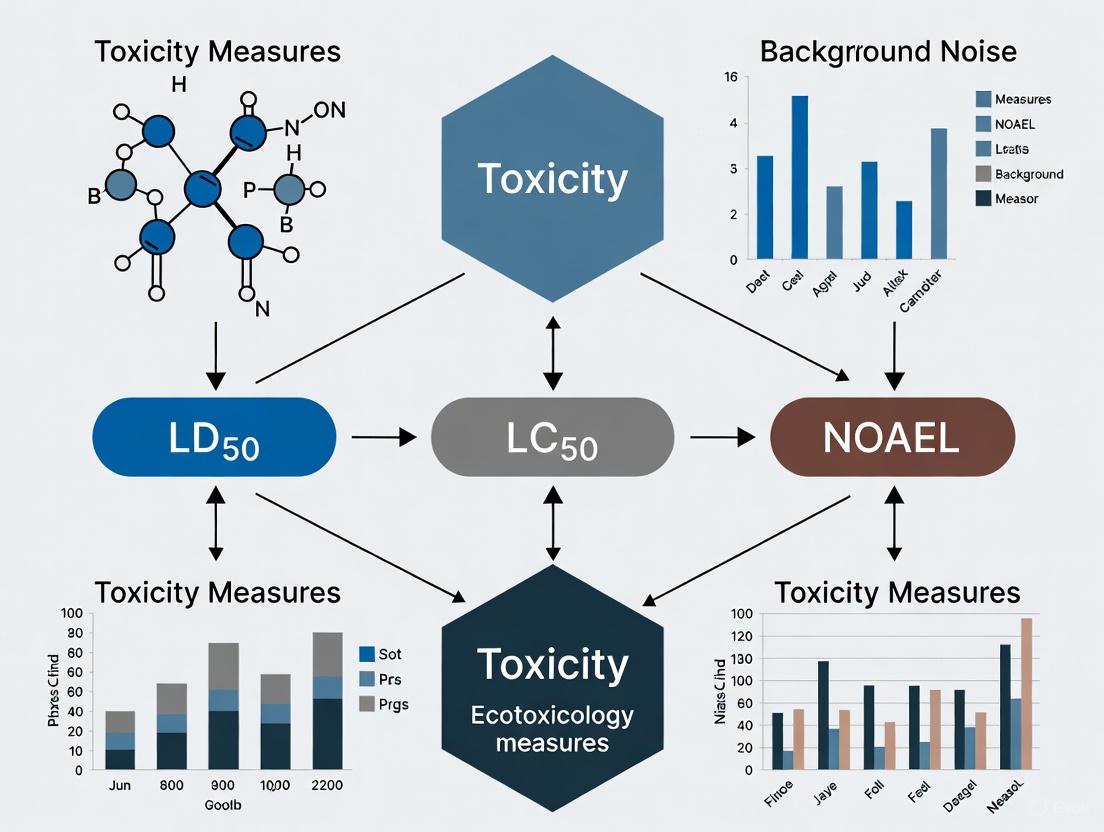
This article provides a thorough exploration of fundamental toxicity measures—LD50, LC50, and NOAEL—essential for researchers, scientists, and professionals in drug development and toxicology.
LD50, LC50, and NOAEL: A Comprehensive Guide to Key Toxicity Measures for Drug Development
Abstract
This article provides a thorough exploration of fundamental toxicity measures—LD50, LC50, and NOAEL—essential for researchers, scientists, and professionals in drug development and toxicology. It covers the foundational definitions, historical context, and statistical basis of these descriptors, then progresses to methodological aspects including testing protocols, regulatory guidelines, and data interpretation. The content addresses current challenges such as interspecies variability and ethical concerns, highlighting modern troubleshooting approaches like computational QSAR models and in vitro alternatives. Finally, it offers a comparative analysis of these metrics for informed risk assessment, synthesizing key takeaways and future directions in toxicity testing for biomedical and clinical research.
Understanding the Basics: Defining LD50, LC50, and NOAEL in Modern Toxicology
Toxicological dose descriptors are fundamental parameters that quantify the relationship between the exposure dose of a chemical substance and the magnitude of its biological effect [1]. These descriptors form the cornerstone of hazard identification, risk assessment, and regulatory decision-making in toxicology. They provide a standardized methodology for comparing toxicity across different chemical entities, establishing safety thresholds, and communicating hazard potential to researchers, regulators, and the public. The development and proper application of these descriptors enable scientists to derive no-effect threshold levels for human health, such as the Derived No-Effect Level (DNEL) or Reference Dose (RfD), and for the environment, known as the Predicted No-Effect Concentration (PNEC) [1].
The science of toxicology operates on the principle that the dose determines the poison, a concept credited to Paracelsus. Modern toxicology has evolved this principle into sophisticated quantitative relationships described by dose-response curves. Dose descriptors represent specific points on these curves, allowing for the objective characterization of toxicological properties. For systemic toxicants—chemicals that affect organ function—toxic effects are generally treated as having an identifiable exposure threshold below which no adverse effects are observed in a population [2]. This threshold concept distinguishes the risk assessment of systemic toxicants from that of non-threshold agents like genotoxic carcinogens.
Table 1: Categories of Toxicological Dose Descriptors
| Category | Descriptor Examples | Primary Application |
|---|---|---|
| Acute Lethality | LD50, LC50 | GHS hazard classification, emergency response planning |
| Subchronic/Chronic Toxicity | NOAEL, LOAEL, BMD | Derivation of chronic health-based guidance values (e.g., RfD, ADI) |
| Environmental Toxicity | EC50, NOEC, DT50 | Environmental hazard classification and risk assessment |
| Carcinogenicity | T25, BMD10 | Cancer risk assessment |
Core Definitions and Quantitative Data
Toxicological dose descriptors are stratified based on the nature and duration of the toxic effect they represent. Understanding their precise definitions, units, and applications is essential for accurate risk assessment.
Acute Lethality Descriptors
LD50 (Lethal Dose, 50%): A statistically derived dose that is expected to cause death in 50% of the treated animal population under defined test conditions [1] [3]. This descriptor is typically obtained from acute toxicity studies where animals are exposed to a single dose or multiple doses within 24 hours.
LC50 (Lethal Concentration, 50%): The analogous concentration of a substance in air or water that is expected to cause death in 50% of the test population during a specified exposure period [1]. For inhalation toxicity, air concentrations are used as exposure values, making LC50 the more relevant parameter.
A lower LD50 or LC50 value indicates higher acute toxicity. These values are crucial for Globally Harmonized System (GHS) classification, where substances are categorized into specific hazard classes based on their acute toxicity potential [1].
Threshold Descriptors for Repeated Exposure
NOAEL (No Observed Adverse Effect Level): The highest experimentally tested exposure level at which there are no statistically or biologically significant increases in the frequency or severity of adverse effects between the exposed population and its appropriate control group [1] [2]. Some effects may be produced at this level, but they are not considered adverse or harmful.
LOAEL (Lowest Observed Adverse Effect Level): The lowest experimentally tested exposure level at which there are statistically or biologically significant increases in the frequency or severity of adverse effects between the exposed population and its appropriate control group [1].
NOAEL and LOAEL are typically derived from repeated dose toxicity studies (e.g., 28-day, 90-day, or chronic studies) and reproductive toxicity studies. They form the basis for deriving threshold safety levels for human exposure, such as Reference Doses (RfDs) and Occupational Exposure Limits (OELs) [1].
Environmental Toxicity Descriptors
EC50 (Median Effective Concentration): In ecotoxicology, this refers to the concentration of a test substance that results in a 50% reduction in a non-lethal endpoint, such as algal growth (EbC50) or Daphnia immobilization [1]. These are obtained from acute aquatic toxicity studies.
NOEC (No Observed Effect Concentration): The highest concentration in an environmental compartment (water, soil, etc.) below which no unacceptable effects are observed [1]. It is typically obtained from chronic aquatic and terrestrial toxicity studies.
DT50 (Half-Life): The time required for an amount of a compound to be reduced by half through degradation processes in an environmental compartment (water, soil, air, etc.) [1]. This descriptor measures the persistence of a substance and is used in environmental exposure modeling.
Carcinogenicity Descriptors
For chemicals acting as non-threshold carcinogens, where a NOAEL may not be identifiable, different descriptors are employed [1]:
T25: The chronic dose rate estimated to produce tumors in 25% of animals at a specific tissue site after correction for spontaneous incidence, within the test species' lifetime.
BMD10 (Benchmark Dose): A statistically derived dose estimated to produce a predetermined, low incidence of tumors (e.g., 10%) in a specific tissue after correction for spontaneous incidence.
Table 2: Comprehensive Summary of Key Toxicological Dose Descriptors
| Descriptor | Full Name | Definition | Typical Units | Key Application |
|---|---|---|---|---|
| LD50 | Lethal Dose, 50% | Dose killing 50% of test population | mg/kg body weight | Acute toxicity classification |
| LC50 | Lethal Concentration, 50% | Concentration killing 50% of test population | mg/L (air/water) | Inhalation/aquatic toxicity |
| NOAEL | No Observed Adverse Effect Level | Highest dose with no significant adverse effects | mg/kg bw/day | Chronic RfD/DNEL derivation |
| LOAEL | Lowest Observed Adverse Effect Level | Lowest dose with significant adverse effects | mg/kg bw/day | Used when NOAEL is not established |
| EC50 | Median Effective Concentration | Concentration causing 50% response reduction | mg/L | Environmental hazard assessment |
| NOEC | No Observed Effect Concentration | Highest concentration with no unacceptable effects | mg/L | Chronic environmental risk assessment |
| BMD10 | Benchmark Dose | Dose producing 10% tumor incidence | mg/kg bw/day | Carcinogen risk assessment |
| DT50 | Half-Life | Time for 50% compound degradation | Days | Environmental persistence assessment |
Experimental Protocols and Methodologies
Protocol for Determining LD50and Acute Toxicity
The determination of LD50 follows standardized test guidelines, such as those established by the Organization for Economic Cooperation and Development (OECD). The traditional acute oral toxicity test (OECD TG 401) has been largely replaced by more humane methods that use fewer animals, such as the Fixed Dose Procedure (OECD TG 420), the Acute Toxic Class Method (OECD TG 423), and the Up-and-Down Procedure (OECD TG 425) [4].
Experimental Workflow:
- Test Article Preparation: The chemical is characterized for purity, stability, and solubility. An appropriate vehicle (e.g., corn oil, carboxymethyl cellulose) is selected to prepare homogeneous dosing formulations.
- Animal Selection and Acclimation: Healthy young adult rats or mice of a defined strain (typically Sprague-Dawley rats or CD-1 mice) are selected. Animals are acclimated to laboratory conditions for at least 5 days prior to dosing.
- Dose Administration: Animals are fasted overnight prior to dosing. A single dose of the test substance is administered via oral gavage using a stomach tube or a suitable intubation cannula. The dose volume is typically kept constant (e.g., 10 mL/kg), with varying concentrations of the test substance.
- Clinical Observations: Animals are observed individually for signs of toxicity, morbidity, and mortality at least once during the first 30 minutes, periodically during the first 24 hours, and daily thereafter for a total of 14 days. Observations include changes in skin, fur, eyes, mucous membranes, respiratory patterns, circulatory responses, autonomic functions, and somatomotor activity.
- Body Weight and Pathology: Individual body weights are recorded shortly before dosing, weekly, and at the time of death or sacrifice. All animals found dead or sacrificed are subjected to gross necropsy to identify target organs.
- Data Analysis and LD50 Calculation: The LD50 value is calculated using appropriate statistical methods based on the mortality data observed at each dose level. For the Fixed Dose Procedure, the LD50 is estimated from the dose that induces clear signs of toxicity but not mortality.
Figure 1: Experimental workflow for acute oral toxicity testing.
Protocol for Establishing NOAEL/LOAEL from Repeated Dose Studies
The NOAEL and LOAEL are typically determined through subchronic (e.g., 90-day) or chronic (e.g., 1-2 year) toxicity studies, following guidelines such as OECD TG 408 (Repeated Dose 90-Day Oral Toxicity Study in Rodents).
Experimental Workflow:
- Study Design: At least three test groups and a control group are used, with a sufficient number of animals (typically 10-20 rodents per sex per group) to allow for meaningful statistical analysis. Dose selection is based on the results of range-finding studies.
- Dose Administration: The test substance is administered daily (7 days per week) for 90 days via the relevant route (oral, dermal, or inhalation). For oral studies, the test substance is often administered via gavage or mixed in the diet.
- In-life Observations: All animals are observed at least twice daily for morbidity and mortality. Detailed clinical observations are conducted at least once weekly. Individual body weights and food consumption are measured weekly.
- Ophthalmological and Clinical Pathology: All animals undergo ophthalmological examination before the study and near the completion of the study. Hematology, clinical chemistry, and urinalysis parameters are evaluated at the end of the study.
- Necropsy and Histopathology: A full necropsy is performed on all animals, including organ weight determination for key organs. A comprehensive set of tissues is preserved and examined microscopically for the control and high-dose groups, and for any target organs identified across all dose groups.
- NOAEL/LOAEL Determination: The NOAEL is identified as the highest dose level at which no statistically or biologically significant adverse effects are observed. The LOAEL is the lowest dose level at which such adverse effects first become apparent.
Figure 2: Experimental workflow for repeated dose toxicity testing.
Advanced Concepts and Modern Approaches
Kinetic Maximum Dose (KMD) in Modern Study Design
Traditional dose-setting in toxicology studies has often relied on the concept of Maximum Tolerated Dose (MTD), which aims to use the highest dose that an animal can tolerate without succumbing to overt toxicity [5]. However, this approach has significant limitations, as doses at or near the MTD can induce toxic effects secondary to metabolic overload, disregarding fundamental toxicokinetic principles.
The Kinetic Maximum Dose (KMD) represents a scientifically advanced alternative for dose selection [5]. The KMD is defined as the maximum dose at which the test compound's absorption, distribution, metabolism, and elimination (ADME) processes remain unsaturated. Beyond this dose, disproportionate increases in systemic exposure occur, leading to toxicity that may not be relevant to human exposure scenarios.
The determination of KMD incorporates toxicokinetic (TK) studies that measure blood or plasma concentrations of the test compound and its metabolites at various time points after administration. This data is used to calculate key TK parameters such as C~max~ (maximum concentration), T~max~ (time to maximum concentration), and AUC (area under the concentration-time curve). The dose at which these parameters begin to increase disproportionately indicates saturation of clearance mechanisms and defines the KMD.
Computational Toxicology and Machine Learning Approaches
Modern toxicology is increasingly leveraging artificial intelligence (AI) and machine learning (ML) to predict toxicological dose descriptors, thereby reducing reliance on animal testing [4] [6] [7]. These computational approaches align with the global movement toward New Approach Methodologies (NAMs) and the 3Rs principle (Replacement, Reduction, and Refinement) in animal research.
Machine Learning Models for Acute Toxicity Prediction:
- Data Sources: Large-scale toxicity databases such as TOXRIC (containing over 80,000 unique compounds and 122,594 toxicity measurements) and the EPA's ToxCast program provide extensive data for model training [6] [7].
- Algorithm Development: Models employ various algorithms including random forest, support vector machines, neural networks, and graph convolution networks to establish relationships between chemical structure and toxicological endpoints.
- Model Performance: The Collaborative Acute Toxicity Modeling Suite (CATMoS) represents a consensus approach that leverages multiple models, demonstrating high accuracy and robustness comparable to animal studies for predicting LD50 values [4].
- Recent Advances: The ToxACoL (Adjoint Correlation Learning) paradigm represents a significant advancement by modeling relationships between multiple toxicity endpoints, enabling knowledge transfer from data-rich to data-scarce endpoints and improving prediction accuracy for human-relevant toxicity by 43-87% [7].
Table 3: The Scientist's Toolkit for Toxicological Dose Assessment
| Tool/Reagent | Category | Function in Dose Assessment |
|---|---|---|
| Rodent Models (Rat/Mouse) | In Vivo System | Primary test species for determining LD50, NOAEL, and LOAEL in standardized studies |
| In Vitro Toxicity Assays | Alternative Method | High-throughput screening for mechanistic toxicity, supporting 3Rs principles |
| Liquid Chromatography-Mass Spectrometry (LC-MS/MS) | Analytical Instrument | Quantification of test compound and metabolites in toxicokinetic studies for KMD determination |
| Physiologically Based Pharmacokinetic (PBPK) Modeling | Computational Tool | Predicts tissue dosimetry and extrapolates toxicity across species and exposure scenarios |
| Machine Learning Algorithms | Computational Tool | Predicts toxicity endpoints from chemical structure, reducing animal testing needs |
| Clinical Pathology Analyzers | Diagnostic Tool | Automated analysis of hematological and clinical chemistry parameters for NOAEL determination |
| Histopathology Equipment | Diagnostic Tool | Tissue processing, staining, and microscopic examination for identifying adverse effects |
Applications in Risk Assessment and Regulatory Science
Toxicological dose descriptors are not merely academic concepts; they serve as critical inputs for chemical risk assessment and the derivation of human health-based guidance values. The process of converting experimental dose descriptors to protective human exposure limits involves several key steps and uncertainty factors.
The Reference Dose (RfD) is derived by dividing the NOAEL (or LOAEL) from the most sensitive relevant species by composite Uncertainty Factors (UFs) and a Modifying Factor (MF) [2]:
RfD = NOAEL / (UFH × UFA × UFS × UFL × MF)
Where:
- UFH = Uncertainty factor for interspecies (animal-to-human) differences (typically 10)
- UFA = Uncertainty factor for intraspecies (human-to-human) variability (typically 10)
- UFS = Uncertainty factor for subchronic-to-chronic extrapolation
- UFL = Uncertainty factor for LOAEL-to-NOAEL extrapolation
- MF = Modifying factor for additional uncertainties (typically 1-10)
This approach ensures that the derived RfD is protective of sensitive human subpopulations, including children, the elderly, and individuals with pre-existing health conditions. The RfD represents a daily exposure level that is likely to be without an appreciable risk of deleterious effects over a lifetime [2].
For environmental risk assessment, the Predicted No-Effect Concentration (PNEC) is derived by applying assessment factors to the most sensitive ecotoxicological descriptor (e.g., EC50 or NOEC) from base-set organisms representing different trophic levels (algae, Daphnia, and fish) [1].
The evolution of toxicological dose descriptors continues with the integration of mechanistic data, high-throughput in vitro screening, and sophisticated computational models. These advancements promise more human-relevant risk assessments while reducing the reliance on traditional animal testing. As toxicology moves toward a more pathway-based understanding of toxicity, the fundamental dose descriptors described in this document will continue to serve as the quantitative foundation for chemical safety assessment and regulatory decision-making.
The Median Lethal Dose (LD50) represents a foundational concept in toxicology, defined as the dose of a substance required to kill 50% of a test population under standardized conditions [8] [9]. Developed by J.W. Trevan in 1927, this metric was originally designed to standardize the potency of biologically derived medicines like digitalis and insulin [10] [11]. Its introduction provided a statistically robust method for comparing the acute toxicity of different substances, establishing a reproducible benchmark that avoided the extremes of minimal or absolute lethality [3].
For decades, LD50 testing became a global standard, incorporated into regulatory guidelines worldwide for pharmaceutical, industrial chemical, and agrochemical safety assessment [12]. However, its widespread application also generated significant controversy regarding animal welfare, scientific relevance, and reproducibility [10] [11]. This comprehensive review examines the historical context of Trevan's innovation, its methodological evolution, the criticisms that shaped its modern application, and the advanced alternatives currently transforming acute toxicity assessment.
The Trevan Era: Origins and Initial Methodology
Historical Context and Scientific Need
Prior to Trevan's work, toxicity testing lacked standardization. Methods for evaluating drug potency were highly variable, making it difficult to compare results between laboratories or establish consistent dosing for therapeutic agents [10]. Biological products like diphtheria antitoxin exhibited natural variation between batches, necessitating a reliable method to standardize their strength [11]. Trevan's seminal 1927 paper, "The Error of Determination of Toxicity," addressed this need by introducing a statistically rigorous approach to lethality testing [10].
The innovation centered on using death as a universal endpoint, enabling comparisons between chemicals with different mechanisms of action [9]. The 50% mortality rate was selected because it represented the point of maximum sensitivity in a population response, where statistical variation was minimized compared to extreme endpoints like LD01 or LD99 [3]. This methodological breakthrough coincided with increasing regulatory oversight of pharmaceuticals and industrial chemicals, creating demand for standardized safety assessment protocols [12].
Original Experimental Protocol
Trevan's classical LD50 determination involved several meticulous steps:
- Test population: Homogeneous groups of laboratory animals, typically rats or mice, of similar age, weight, and genetic background [12]
- Dose administration: Substances administered via oral, dermal, or inhalation routes with precise control of dosage [9]
- Observation period: Monitoring for 14 days post-administration to account for delayed effects [11]
- Data analysis: Plotting dose-response curves and calculating the precise dose causing 50% mortality using statistical methods [10]
The original process required significant numbers of animals to achieve statistical precision, with early tests sometimes using 60-100 animals per substance [11]. The results were expressed as mass of substance per unit body mass (typically mg/kg), enabling direct comparison between different chemicals and test systems [9].
Evolution of Methodological Approaches
Refinements in Statistical Methodology
Following Trevan's initial work, several researchers developed more efficient statistical approaches for LD50 determination:
Table 1: Evolution of LD50 Statistical Methods
| Method | Developer(s) | Year | Key Innovation | Animal Use |
|---|---|---|---|---|
| Classical LD50 | J.W. Trevan | 1927 | Original dose-mortality curve analysis | High (60-100 animals) |
| Karber's Method | G. Karber | 1931 | Simplified arithmetic calculation | Moderate |
| Probit Analysis | D. Finney | 1952 | Statistical transformation of dose-response data | Moderate |
| Litchfield & Wilcoxon | J.T. Litchfield & F. Wilcoxon | 1949 | Graphical nomogram method for estimation | Reduced |
| Up-and-Down Procedure | W.J. Dixon & A.M. Mood | 1948 | Sequential dosing minimizing animals | Significant reduction |
| Fixed Dose Procedure | OECD | 1992 | Non-lethal endpoints, toxicity classification | Minimal |
Probit analysis, developed by Finney, transformed mortality percentages into probability units ("probits") that exhibited a linear relationship with logarithm of dose, enabling more precise LD50 calculation with confidence limits [10]. The Litchfield and Wilcoxon method provided a simplified graphical approach that gained widespread adoption in industrial toxicology laboratories due to its practicality without complex calculations [10] [12].
These methodological refinements progressively reduced animal requirements while improving the statistical reliability of acute toxicity assessments [12].
Regulatory Adoption and Standardization
The LD50 test was incorporated into numerous international regulatory frameworks, including:
- OECD Guidelines for Chemical Testing (Organization for Economic Cooperation and Development)
- EPA Toxic Substances Control Act (United States Environmental Protection Agency)
- FDA Pharmaceutical Requirements (Food and Drug Administration)
- EEC Directives (European Economic Community) [11]
This regulatory entrenchment occurred despite Trevan's original purpose being specifically for standardizing highly variable biological products rather than all chemical classes [11]. By the 1970s-1980s, LD50 testing had become a standardized requirement for product classification and labeling under emerging systems like the Globally Harmonized System (GHS) [13].
Criticisms and Limitations
Scientific Limitations
Research conducted in the decades following Trevan's work revealed substantial limitations in the LD50 concept:
- Inter-species Variability: LD50 values show poor correlation between species, undermining extrapolation to humans [12] [3]. For example, a compound might be slightly toxic in mice but highly poisonous in rats [11].
- Intra-species Variability: Factors including age, sex, diet, genetic strain, and housing conditions significantly influence results [12] [11]. Seasonal variations and even bedding material can affect outcomes [11].
- Route-dependent Toxicity: Substances exhibit different toxicities based on administration route (oral, dermal, inhalation), making single-route testing insufficient for comprehensive safety assessment [9].
- Poor Predictivity for Human Response: Species-specific metabolic pathways and mechanisms of toxicity limit the human relevance of animal LD50 data [12] [11].
A significant international study in the late 1970s involving 100 laboratories across 13 countries demonstrated marked discrepancies in LD50 results for the same substances despite standardized protocols [11]. This irreproducibility challenged the fundamental premise of LD50 as a "biological constant" [12].
Ethical Concerns
The ethical implications of LD50 testing generated increasing controversy through the 1970s-1980s:
- Animal Suffering: The test caused "appreciable pain" to animals, with observed symptoms including "agonising pain, convulsions, bleeding, diarrhoea, and eventually lingering death over a number of days" [11].
- Mortality Endpoint: Death as a required outcome raised significant welfare concerns among researchers and the public [11].
- Large Scale Use: In 1980 alone, British laboratories used 484,849 animals for LD50 tests [11].
These concerns prompted toxicologists to reconsider whether the scientific value justified the ethical costs, particularly for substances with low toxicity potential [12] [11].
Modern Applications and Alternative Approaches
Contemporary Use in Regulatory Science
Despite limitations, LD50 remains embedded in chemical classification and labeling systems:
Table 2: GHS Classification System Based on LD50 Values
| GHS Category | Oral LD50 (mg/kg) | Dermal LD50 (mg/kg) | Inhalation LC50 (mg/L) | Hazard Statement |
|---|---|---|---|---|
| 1 | ≤5 | ≤50 | ≤0.1 | Fatal if swallowed/ in contact with skin/ if inhaled |
| 2 | 5-50 | 50-200 | 0.1-0.5 | Fatal if swallowed/ in contact with skin/ if inhaled |
| 3 | 50-300 | 200-1000 | 0.5-2.5 | Toxic if swallowed/ in contact with skin/ if inhaled |
| 4 | 300-2000 | 1000-2000 | 2.5-5 | Harmful if swallowed/ in contact with skin/ if inhaled |
| 5 | 2000-5000 | 2000-5000 | 5-20 | May be harmful if swallowed/ in contact with skin/ if inhaled |
The Threshold of Toxicological Concern (TOC) approach has been developed for chemicals with limited toxicity data, using LD50 values within a framework of conservative safety factors to establish health-protective exposure levels [13]. This application represents a shift from precise lethality determination to hazard characterization and risk-based assessment [13].
Alternative Methods and the 3Rs Principle
Modern toxicology has embraced alternative approaches aligned with the 3Rs principles (Replacement, Reduction, and Refinement):
- In vitro systems: Cell culture models using human cells provide species-relevant toxicity data without whole animals [14] [11]. The FDA approved alternative methods to LD50 for testing Botox in 2011 [8] [3].
- In silico approaches: Quantitative Structure-Activity Relationship (QSAR) models predict toxicity based on chemical structure [14]. Computational tools like the EPA's TEST software can estimate LD50 values without animal testing [14].
- Tiered testing strategies: Simplified initial assessments (e.g., Fixed Dose Procedure) reduce animal use by 70-80% compared to classical LD50 [12].
- Integrated testing strategies: Combining acute toxicity assessment with other toxicological evaluations to maximize information from minimal testing [12].
These innovations reflect a paradigm shift from lethality quantification to comprehensive toxicity characterization, emphasizing mechanism of action, target organ identification, and human relevance [12] [11].
Essential Research Reagents and Experimental Tools
Table 3: Research Toolkit for Acute Toxicity Assessment
| Reagent/Equipment | Function in Toxicity Assessment | Application Context |
|---|---|---|
| Laboratory Rodents | In vivo model for acute systemic toxicity | Classical LD50 determination (now reduced) |
| Cell Culture Systems | In vitro models for cytotoxicity assessment | Human-relevant preliminary screening |
| Chemical Standards | Reference compounds for assay validation | Quality control and inter-laboratory comparison |
| QSAR Software | Computer-based toxicity prediction | Priority setting and screening before animal testing |
| Clinical Chemistry Analyzers | Measure biochemical parameters in blood/tissues | Identification of target organ toxicity |
| Histopathology Equipment | Tissue processing and microscopic examination | Morphological analysis of toxic effects |
| Analytical Chemistry Instruments | Quantify compound concentration and metabolites | Exposure verification and pharmacokinetic analysis |
The evolution of LD50 from Trevan's 1927 innovation to contemporary applications illustrates the dynamic nature of toxicological science. While the concept remains historically significant and embedded in classification systems, its practical application has been substantially transformed. Modern approaches emphasize mechanistic understanding, human relevance, and ethical responsibility, moving beyond the simple quantification of lethality that defined earlier toxicology.
The continued development of novel alternative methods – particularly in silico and in vitro systems – promises to further revolutionize acute toxicity assessment while addressing scientific and ethical limitations of traditional approaches. This evolution reflects toxicology's ongoing maturation from a descriptive to a predictive science, better positioned to protect human health while respecting ethical boundaries in research methodology.
In toxicological risk assessment, LD50 (Lethal Dose 50%) and LC50 (Lethal Concentration 50%) represent fundamental parameters for quantifying acute toxicity. While both metrics measure the potency of chemical substances required to cause 50% mortality in a test population, they differ critically in their application and exposure context. LD50 refers to the dose administered via oral, dermal, or injection routes, while LC50 applies to airborne concentrations or aquatic exposure environments. This whitepaper delineates the scientific distinctions, methodological frameworks, and regulatory applications of these parameters within a comprehensive toxicity assessment paradigm that includes NOAEL (No Observed Adverse Effect Level) for establishing safety thresholds. Through detailed protocols, data comparison, and emerging computational approaches, we provide drug development professionals with the necessary toolkit for informed toxicological evaluation and decision-making.
Acute toxicity refers to the ability of a substance to cause adverse effects relatively soon after a single administration or short-term exposure (minutes up to approximately 24-48 hours) [9]. The median lethal dose (LD50) is defined as the dose of a substance that causes death in 50% of a test animal population under standardized conditions, while the median lethal concentration (LC50) represents the concentration of a substance in air (or water) that causes death in 50% of the test population during a specified exposure period [3] [9] [15]. These values are statistically derived and provide a standardized basis for comparing the intrinsic acute toxicity of different chemical entities.
The LD50 concept was first introduced by J.W. Trevan in 1927 to estimate the relative poisoning potency of drugs and medicines, using death as a standardized endpoint to enable comparisons between chemicals with different mechanisms of action [3] [9]. These parameters have since become cornerstones of regulatory toxicology, serving as critical inputs for GHS hazard classification, safety data sheets, and risk assessment models across pharmaceutical, chemical, and environmental sectors [15].
Defining LD50: Lethal Dose 50%
Core Definition and Measurement
LD50 represents a statistically derived single dose that causes death in 50% of exposed animals within a specified observation period [3] [16]. The value is typically normalized to body weight and expressed as milligrams of substance per kilogram of body weight (mg/kg) [3]. This normalization enables comparison of toxicity across species of different sizes, though toxicity does not always scale linearly with body mass [3].
The choice of 50% lethality as a benchmark reduces the amount of testing required compared to measuring extremes (e.g., LD01 or LD99) while providing a statistically robust measure of central tendency [3]. However, it is crucial to recognize that LD50 does not represent an absolute threshold; some individuals may be killed by much lower doses (hypersensitive), while others may survive doses significantly higher than the LD50 (resistant) [3].
Routes of Administration
LD50 values must always be qualified by the route of administration, as toxicity can vary significantly depending on how a substance enters the body [3] [9]:
- Oral (PO): Administration through the mouth, relevant for food, drugs, and accidental ingestion
- Dermal (skin): Application on the skin, important for occupational exposure scenarios
- Intravenous (IV): Injection into veins, typically showing highest immediate toxicity
- Intraperitoneal (IP): Injection into the abdominal cavity
- Intramuscular (IM): Injection into muscle tissue
- Subcutaneous (SC): Injection beneath the skin
The same compound can have dramatically different LD50 values depending on the administration route due to differences in absorption, distribution, metabolism, and excretion [9]. For example, dichlorvos shows an oral LD50 in rats of 56 mg/kg but an intraperitoneal LD50 of 15 mg/kg, demonstrating significantly higher toxicity when introduced directly into the abdominal cavity [9].
Defining LC50: Lethal Concentration 50%
Core Definition and Measurement
LC50 represents the concentration of a chemical in air (or water) that causes death in 50% of test animals during a specified exposure period [9] [15]. For airborne substances, LC50 is typically expressed as parts per million (ppm) or milligrams per cubic meter (mg/m³) [9]. In environmental contexts, particularly aquatic toxicology, LC50 refers to the concentration in water (mg/L) that is lethal to 50% of test organisms over a defined period, commonly 96 hours for fish [4] [17].
The exposure duration is a critical parameter for LC50 values and must always be specified [9]. Standard inhalation toxicity tests typically employ a 4-hour exposure period followed by clinical observation for up to 14 days [9]. The LC50 value is then derived from the concentration that proves lethal to half the animals during this observation window [9].
Haber's Law and Time-Concentration Relationships
The concept of LC50 incorporates the relationship between concentration and exposure time, often expressed through Ct products (concentration × time) [3]. This relationship, sometimes referred to as Haber's Law, assumes that exposure to 1 minute of 100 mg/m³ is equivalent to 10 minutes of 10 mg/m³ [3]. However, this relationship does not hold for all chemicals, particularly those that are rapidly metabolized or detoxified (e.g., hydrogen cyanide) [3]. For such substances, the lethal concentration may be reported as LC50 with qualification of exposure duration without assuming linear time-concentration relationships [3].
Critical Differences Between LD50 and LC50
While both LD50 and LC50 measure acute lethal toxicity, they differ fundamentally in their application, units, and experimental approaches. The table below summarizes these key distinctions:
Table 1: Fundamental Differences Between LD50 and LC50
| Parameter | LD50 | LC50 |
|---|---|---|
| What it measures | Dose (amount) of substance | Concentration in exposure medium |
| Primary routes | Oral, dermal, injection | Inhalation, aquatic immersion |
| Typical units | mg/kg body weight | ppm, mg/m³ (air); mg/L (water) |
| Exposure context | Direct administration | Environmental concentration |
| Time specification | Single administration, observation period | Specified exposure duration (e.g., 4-hour, 96-hour) |
| Key variables | Body weight, route of administration | Breathing rate (inhalation), water temperature (aquatic) |
| Common test species | Rats, mice | Rats (inhalation); Fish, daphnia (aquatic) |
The most appropriate parameter depends on the anticipated exposure scenario. LD50 is most relevant for pharmaceutical dosing, food contaminants, and situations where a specific quantity of material is ingested or applied to the skin. LC50 is more applicable for occupational exposure to airborne chemicals, environmental contamination, and aquatic toxicology [9].
Experimental Protocols and Methodologies
LD50 Testing Protocol
Traditional LD50 determination follows established guidelines from organizations such as the Organization for Economic Cooperation and Development (OECD) [4]:
- Test System Selection: Healthy young adult animals (typically rats or mice) of both sexes are acclimatized to laboratory conditions [9].
- Dose Administration:
- For oral administration, substances are administered via gavage in a single dose
- For dermal administration, substances are applied to shaved skin for a fixed period (typically 24 hours)
- Animals are fasted prior to oral administration (typically 16-18 hours) to ensure uniform absorption
- Observation Period: Animals are clinically observed for up to 14 days after administration, recording all signs of toxicity, morbidity, and mortality [9].
- Dose-Response Analysis: Multiple dose groups are tested to establish a mortality range from 0% to 100%, with the LD50 calculated using statistical methods (e.g., probit analysis) from this dose-response data [3].
- Necropsy: Deceased animals undergo gross necropsy to identify target organ toxicity [18].
Table 2: Key Research Reagents and Materials for LD50 Testing
| Item | Function/Application |
|---|---|
| Laboratory rodents (rats, mice) | Primary test system for in vivo toxicity assessment |
| Gavage needles | Precise oral administration of test substances |
| Metabolic cages | Individual housing for collection of excreta and monitoring of food/water intake |
| Clinical chemistry analyzers | Assessment of hematological and biochemical parameters |
| Histopathology equipment | Tissue processing, staining, and microscopic examination for organ damage |
| Statistical software | Dose-response analysis and LD50 calculation (e.g., probit analysis) |
LC50 Testing Protocol
Inhalation LC50 testing follows a distinct methodological framework:
- Atmosphere Generation: Test substance is mixed with air at known concentrations in inhalation chambers [9].
- Exposure System: Animals are placed in chambers where they are exposed to the test atmosphere for a fixed period (typically 4 hours) [9].
- Concentration Verification: Chamber atmospheres are analytically monitored throughout exposure to verify concentration consistency [9].
- Post-Exposure Observation: Animals are removed from chambers and clinically observed for up to 14 days [9].
- Concentration-Response Analysis: Multiple concentration groups are tested to establish mortality range, with LC50 calculated using statistical methods [9].
For aquatic toxicity testing (e.g., fish LC50), test organisms are exposed to various concentrations of the test substance in water for a specified period (commonly 96 hours), with mortality recorded at regular intervals [17].
The following diagram illustrates the key decision points in selecting and interpreting these acute toxicity measures:
Toxicity Classification and Interpretation
Toxicity Scales and Categorization
LD50 and LC50 values provide a basis for classifying substances according to their acute toxicity potential. Two common classification systems are widely used:
Table 3: Toxicity Classes According to Hodge and Sterner Scale
| Toxicity Rating | Commonly Used Term | Oral LD50 (rats) mg/kg | Inhalation LC50 (rats, 4hr) ppm | Dermal LD50 (rabbits) mg/kg | Probable Lethal Dose for Man |
|---|---|---|---|---|---|
| 1 | Extremely Toxic | 1 or less | 10 or less | 5 or less | 1 grain (a taste, a drop) |
| 2 | Highly Toxic | 1-50 | 10-100 | 5-43 | 4 ml (1 tsp) |
| 3 | Moderately Toxic | 50-500 | 100-1000 | 44-340 | 30 ml (1 fl. oz.) |
| 4 | Slightly Toxic | 500-5000 | 1000-10,000 | 350-2810 | 600 ml (1 pint) |
| 5 | Practically Non-toxic | 5000-15,000 | 10,000-100,000 | 2820-22,590 | 1 litre (or 1 quart) |
| 6 | Relatively Harmless | 15,000 or more | 100,000 | 22,600 or more | 1 litre (or 1 quart) |
Table 4: Toxicity Classes According to Gosselin, Smith and Hodge
| Toxicity Rating or Class | Dose | For 70-kg Person (150 lbs) |
|---|---|---|
| 6 Super Toxic | Less than 5 mg/kg | 1 grain (a taste – less than 7 drops) |
| 5 Extremely Toxic | 5-50 mg/kg | 4 ml (between 7 drops and 1 tsp) |
| 4 Very Toxic | 50-500 mg/kg | 30 ml (between 1 tsp and 1 fl. oz.) |
| 3 Moderately Toxic | 500-5000 mg/kg | 30-600 ml (between 1 fl. oz. and 1 pint) |
| 2 Slightly Toxic | 5-15 g/kg | 600-1200 ml (1 pint to 1 quart) |
| 1 Practically Non-Toxic | Above 15 g/kg | More than 1 quart |
It is essential to note which scale is being referenced when classifying compounds, as the same LD50 value may receive different ratings across systems [9]. For example, a chemical with an oral LD50 of 2 mg/kg would be rated as "1" and "highly toxic" according to Hodge and Sterner but rated as "6" and "super toxic" according to Gosselin, Smith and Hodge [9].
Comparative Toxicity Examples
The following table provides representative LD50 values for common substances, illustrating the wide range of acute toxicity:
Table 5: Comparative LD50 Values for Selected Substances
| Substance | Animal, Route | LD50 (mg/kg) | Toxicity Classification |
|---|---|---|---|
| Botulinum toxin | Human, estimated oral | 0.000000001 | Super toxic |
| Sarin | Human, estimated | 0.001-0.03 | Super toxic |
| Sodium cyanide | Rat, oral | 6.4 | Extremely toxic |
| Nicotine | Rat, oral | 50 | Highly toxic |
| Caffeine | Rat, oral | 192 | Moderately toxic |
| Aspirin | Rat, oral | 1,600 | Slightly toxic |
| Ethanol | Rat, oral | 7,060 | Slightly toxic |
| Table salt | Rat, oral | 3,000 | Slightly toxic |
| Vitamin C | Rat, oral | 11,900 | Practically non-toxic |
| Water | Rat, oral | >90,000 | Relatively harmless |
Integration with Other Toxicity Measures: NOAEL and Beyond
NOAEL in Toxicological Assessment
While LD50 and LC50 measure acute lethality, NOAEL (No Observed Adverse Effect Level) represents the highest dose or exposure level at which no statistically or biologically significant adverse effects are observed in treated subjects compared to appropriate controls [18]. NOAEL is typically derived from longer-term repeated dose studies (28-day, 90-day, or chronic toxicity studies) and forms the foundation for establishing safety thresholds in human risk assessment [15] [18].
The relationship between these parameters can be visualized along a typical dose-response curve:
Regulatory Application and Safety Assessment
In regulatory toxicology, NOAEL values from animal studies are used to establish safe starting doses for human clinical trials through the application of safety factors [18]. The Human Equivalent Dose (HED) is calculated using allometric scaling, with typical safety factors of 10-fold for interspecies differences and an additional 10-fold for intraspecies variability, resulting in a 100-fold safety margin for establishing acceptable exposure limits [18].
For pharmaceutical development, the therapeutic index (ratio of LD50 to ED50) provides a more meaningful safety measure than LD50 alone, as it relates toxicity to efficacy [3]. Drugs with a high therapeutic index have a wide margin between effective and toxic doses, while those with a low therapeutic index require careful therapeutic drug monitoring [3].
Modern Approaches and Future Directions
Computational Toxicology and Machine Learning
Traditional LD50/LC50 determination has required significant animal testing, but modern approaches are increasingly leveraging computational methods to reduce animal use while maintaining predictive accuracy [4]. Initiatives such as the Collaborative Acute Toxicity Modeling Suite (CATMoS) utilize machine learning models trained on existing in vivo data to generate consensus predictions for acute oral toxicity [4].
These computational models must comply with OECD guidelines for quantitative structure-activity relationships (QSAR), requiring [4]:
- A defined endpoint
- An unambiguous algorithm
- A defined domain of applicability
- Appropriate measures of goodness-of-fit, robustness, and predictivity
- A mechanistic interpretation, if possible
Machine learning models have demonstrated high performance in separating compounds with undesirable LD50 values (<300 mg/kg) from those with low acute oral toxicity (>2000 mg/kg), enabling prioritization of in vivo testing and significant reduction in animal use [4].
Alternative Testing Strategies
Growing regulatory and ethical pressures are driving development of New Approach Methodologies (NAMs) including in vitro systems and computational models [4]. The European Parliament's 2021 vote to phase out animal testing in research and testing underscores the importance of developing validated alternative methods [4].
These approaches include:
- In vitro cytotoxicity assays using human cell lines
- Organs-on-chips and 3D tissue models
- Transcriptomic and proteomic biomarkers of toxicity
- High-throughput screening approaches
While these methods show promise for specific toxicity endpoints, predicting in vivo acute toxicity remains challenging due to complex toxicokinetic factors including absorption, distribution, metabolism, and excretion that cannot be fully captured in simplified in vitro systems [4].
LD50 and LC50 represent complementary yet distinct approaches to quantifying acute toxicity, with LD50 measuring administered dose and LC50 measuring environmental concentration. Both parameters provide critical information for hazard classification, risk assessment, and safety evaluation across pharmaceutical, chemical, and environmental domains. While these measures have historically relied on animal testing, modern toxicology is increasingly embracing computational approaches and novel testing methodologies to reduce animal use while maintaining predictive accuracy. Integration of these acute toxicity measures with subchronic and chronic endpoints such as NOAEL provides a comprehensive framework for safety assessment and risk-based decision making in drug development and chemical safety evaluation. As toxicological science advances, the continued evolution of these paradigms will enhance our ability to predict and manage chemical risks while reducing reliance on traditional animal testing.
Within toxicological risk assessment, the No-Observed-Adverse-Effect Level (NOAEL) and Lowest-Observed-Adverse-Effect Level (LOAEL) represent critical dose-response benchmarks for establishing chemical safety thresholds. This technical guide examines the definition, derivation, and application of NOAEL and LOAEL within the broader context of toxicity measures including LD50 and LC50. We detail standardized experimental protocols for determining these values across study types, analyze quantitative data from representative studies, and present methodological frameworks for translating experimental results into human safety standards. The interfaces between these established assessment tools and emerging approaches such as Benchmark Dose modeling are critically evaluated to provide researchers and drug development professionals with comprehensive methodological guidance grounded in current regulatory practice.
Toxicological dose descriptors are quantitative measures that identify the relationship between a specific effect of a chemical substance and the dose at which it occurs [1]. These parameters form the foundation of hazard identification, risk assessment, and regulatory decision-making for pharmaceuticals, industrial chemicals, and environmental contaminants [1]. In systematic toxicological evaluation, dose descriptors span a continuum from lethal potency indicators (LD50, LC50) to sublethal effect thresholds (NOAEL, LOAEL), each providing distinct insights into chemical hazard profiles.
The No-Observed-Adverse-Effect Level (NOAEL) is defined as the highest exposure level at which there are no biologically significant increases in the frequency or severity of adverse effects between the exposed population and its appropriate control [19] [1]. Conversely, the Lowest-Observed-Adverse-Effect Level (LOAEL) represents the lowest exposure level at which there are biologically significant increases in frequency or severity of adverse effects [19] [1]. These values are typically derived from controlled experimental studies and are essential for establishing threshold-based safety limits for non-carcinogenic effects [20].
Table 1: Fundamental Toxicological Dose Descriptors
| Dose Descriptor | Definition | Primary Application |
|---|---|---|
| LD50 | Statistically derived dose lethal to 50% of test population | Acute toxicity assessment [1] |
| LC50 | Statistically derived concentration lethal to 50% of test population | Inhalation toxicity assessment [1] |
| NOAEL | Highest dose with no observed adverse effects | Chronic toxicity, risk assessment [19] [1] |
| LOAEL | Lowest dose with observed adverse effects | Chronic toxicity, risk assessment [19] [1] |
| EC50 | Concentration producing 50% of maximal effect | Ecotoxicity, potency assessment [1] |
Experimental Determination of NOAEL and LOAEL
Study Design Considerations
Determination of NOAEL and LOAEL values requires carefully controlled studies designed to characterize the dose-response relationship of test substances. The selection of experimental animal species and strains is of utmost importance, with preference given to models with similarity to humans in metabolic profiles, physiological mechanisms, and therapeutic target characteristics [21]. Standardized testing approaches include:
Repeated Dose Toxicity Studies: These studies constitute the primary source for NOAEL/LOAEL determination and are typically conducted at three dose levels (low, mid, and high) plus a control group [1] [22]. Common protocols include 28-day, 90-day, and chronic (≥12 month) exposures with daily administration of test substance via relevant routes (oral, dermal, or inhalation) [1]. Study designs incorporate comprehensive clinical observations, clinical pathology, gross necropsy, and histopathological examination to detect potential adverse effects [22].
Reproductive and Developmental Toxicity Studies: These specialized assessments evaluate effects on fertility, embryonic development, and postnatal growth [1]. Such studies are particularly sensitive for identifying LOAELs for endocrine-disrupting compounds and developmental toxicants at exposure levels that may not produce maternal toxicity.
Methodological Workflow
The experimental workflow for establishing NOAEL and LOAEL follows a standardized progression from study design through data interpretation:
Figure 1: Experimental Workflow for NOAEL/LOAEL Determination
Critical Methodological Elements
Dose Selection and Spacing: Appropriate dose spacing is critical for accurate NOAEL/LOAEL determination. Studies designed with excessively wide dose intervals may identify a LOAEL but fail to establish a true NOAEL, necessitating the application of larger uncertainty factors in risk assessment [21]. Optimal dose spacing reflects judgment on the likely steepness of the dose-response slope, with steeper slopes requiring tighter spacing [21].
Adversity Determination: A fundamental challenge in NOAEL/LOAEL derivation is distinguishing between adverse effects and adaptive, non-adverse responses. According to the U.S. EPA, adverse ecological effects are "changes that are considered undesirable because they alter valued structural or functional characteristics of ecosystems or their components" [23]. This determination considers the type, intensity, and scale of the effect as well as potential for recovery [23].
Statistical Power: Study sensitivity for detecting adverse effects depends on appropriate sample sizes and statistical methods. Underpowered studies may fail to detect statistically significant effects at lower doses, resulting in inflated NOAEL values [24].
Quantitative Data and Comparative Analysis
Experimental data from toxicological studies provide concrete examples of NOAEL and LOAEL values across different substances and test systems:
Table 2: Experimentally Determined NOAEL and LOAEL Values
| Substance | Test System | NOAEL | LOAEL | Critical Effect | Reference |
|---|---|---|---|---|---|
| Oxydemeton-methyl | Rat (90-day) | 0.5 mg/kg/day | 2.3 mg/kg/day | Weight loss, convulsions | [21] |
| Boron | Rat | 55 mg/kg/day | 76 mg/kg/day | Developmental toxicity | [22] |
| Barium | Rat (chronic) | 0.21 mg/kg/day | 0.51 mg/kg/day | Increased blood pressure | [21] |
| Acetaminophen | Human | 25 mg/kg/day | 75 mg/kg/day | Hepatotoxicity | [22] |
The ratio between LOAEL and NOAEL values provides insight into the steepness of the dose-response curve. Analysis of multiple datasets suggests that this ratio is frequently less than 10-fold, reflecting typical experimental dose spacing [21]. This observation has important implications for uncertainty factor application when using LOAEL rather than NOAEL values in risk assessment.
Interrelationship with Other Toxicity Measures
NOAEL and LOAEL exist within a continuum of toxicological dose descriptors that collectively characterize compound hazard. The relationship between these parameters can be visualized within a comprehensive dose-response framework:
Figure 2: Dose-Response Continuum of Toxicological Measures
This continuum illustrates the progression from no effect through adverse effects to lethality. The Maximum Tolerated Dose (MTD) represents the highest dose that does not produce unacceptable toxicity in chronic studies [21], while the LD50 quantifies acute lethal potency [1]. Each parameter serves distinct purposes in hazard characterization and risk assessment.
Research Applications and Risk Assessment Framework
Derivation of Human Exposure Limits
NOAEL and LOAEL values serve as critical points of departure for establishing human exposure thresholds. The reference dose (RfD) represents a daily exposure level unlikely to produce adverse effects in humans over a lifetime and is calculated using the following standard formula [22] [20]:
RfD = NOAEL ÷ (UFinter × UFintra × UFsubchronic × UFLOAEL × MF)
Where uncertainty factors (UF) account for:
- UFinter (Interspecies variability): Typically 10-fold to account for differences between test species and humans [20]
- UFintra (Intraspecies variability): Typically 10-fold to protect sensitive human subpopulations [20]
- UFsubchronic (Study duration): 10-fold when extrapolating from subchronic to chronic exposure [20]
- UFLOAEL (LOAEL to NOAEL extrapolation): 10-fold when only LOAEL is available [20]
- MF (Modifying factor): 1-10 based on professional judgment of database completeness [20]
The Scientist's Toolkit: Essential Research Reagents and Materials
Table 3: Essential Research Materials for NOAEL/LOAEL Studies
| Research Material | Specifications | Application in Toxicity Testing |
|---|---|---|
| Laboratory Animals | Specific pathogen-free rodents (rats, mice); defined strains (Sprague-Dawley, Wistar, Beagle dogs) | In vivo toxicity assessment; species selection critical for human relevance [21] |
| Clinical Chemistry Analyzers | Automated systems for serum biochemistry (liver enzymes, renal markers, electrolytes) | Detection of organ-specific toxicity [23] |
| Histopathology Equipment | Tissue processors, microtomes, stains (H&E, special stains) | Morphological assessment of target organs [22] |
| Environmental Control Systems | Regulated housing conditions (temperature, humidity, light cycles) | Standardization to minimize confounding variables [22] |
| Statistical Software | Packages for dose-response modeling (PROC PROBIT, BMDS) | Statistical analysis of treatment effects [23] |
| Sanggenon A | Sanggenon A, CAS:76464-71-6, MF:C25H24O7, MW:436.5 g/mol | Chemical Reagent |
| Pirmagrel | Pirmagrel|CAS 85691-74-3|Thromboxane Synthase Inhibitor | Pirmagrel is a potent thromboxane synthase inhibitor for cardiovascular research. This product is For Research Use Only. Not for human or veterinary use. |
Advanced Methodological Approaches
Benchmark Dose (BMD) Modeling
While the NOAEL/LOAEL approach remains widely used, Benchmark Dose (BMD) modeling represents a more sophisticated statistical alternative that utilizes the entire dose-response curve rather than a single point [20]. The BMD is defined as the dose that produces a predetermined change in response rate compared to background (benchmark response, typically 5-10%) [1]. The lower confidence limit on the BMD (BMDL) is often used as a point of departure for risk assessment, offering advantages over NOAEL including better utilization of dose-response data, reduced dependence on dose spacing, and quantifiable uncertainty characterization [20].
Special Cases and Limitations
Non-Threshold Toxicants: For non-threshold carcinogens, theoretical considerations suggest that no completely safe exposure level exists [1] [22]. In such cases, NOAEL and LOAEL concepts are inappropriate, and alternative approaches such as T25 (chronic dose rate producing 25% tumor incidence) or BMD10 (dose producing 10% tumor incidence) are employed for risk assessment [1].
Study Design Limitations: NOAEL values are influenced by study design factors including dose selection, sample size, and measurement sensitivity [24]. Inconsistent definitions of adversity among toxicologists further complicate cross-study comparisons and regulatory standardization [24].
NOAEL and LOAEL values are integral to regulatory toxicology, serving as the basis for establishing Acceptable Daily Intakes (ADIs), Reference Doses (RfDs), and Occupational Exposure Limits (OELs) [1]. Regulatory frameworks such as the U.S. EPA's Integrated Risk Information System (IRIS) and the Clean Water Act criteria development rely on rigorous evaluation of NOAEL/LOAEL data from standardized testing protocols [20].
In conclusion, NOAEL and LOAEL represent foundational concepts in threshold toxicology, providing practical benchmarks for chemical risk assessment. While methodological advancements such as BMD modeling offer enhanced statistical approaches, the NOAEL/LOAEL paradigm remains firmly established in both regulatory practice and drug development workflows. Understanding the theoretical basis, methodological requirements, and practical applications of these dose descriptors remains essential for toxicologists and risk assessors across research and regulatory domains.
The dose-response relationship forms the cornerstone of toxicological science, providing a fundamental framework for understanding the biological effects of chemical substances on living organisms. This principle, which can be traced back to ancient Greek concepts of moderation and harmony, posits that the magnitude of a biological response is a function of the concentration or dose of a chemical [25]. In modern toxicology, this relationship is quantitatively expressed through a suite of standardized metrics that enable scientists, researchers, and drug development professionals to evaluate both the hazardous effects and safe exposure levels of substances. Key among these metrics are LD50 (Lethal Dose 50%), LOAEL (Lowest Observed Adverse Effect Level), NOAEL (No Observed Adverse Effect Level), and DNEL (Derived No-Effect Level), each serving a distinct purpose in hazard characterization and risk assessment [1].
The conceptual foundation of dose-response was evident in ancient times, with Hesiod's 'Harmonia' in the 8th century BC and the Delphic maxim 'meden agan' (nothing too much) expressing the core principle that substance effects are dose-dependent [25]. Mithridates VI Eupator (132-63 BCE) practically demonstrated this concept through his experiments with poisons and antidotes, developing tolerance through progressive sublethal dosing—an early exploration of the threshold concept now formalized in modern toxicology [25]. Paracelsus (1493-1541) later crystallized this understanding with his famous declaration that "the dose makes the poison," establishing the fundamental principle that all chemicals can be toxic at sufficient exposure levels [25].
In contemporary toxicology, the dose-response curve provides a visual representation of this relationship, enabling the derivation of critical toxicity measures that inform regulatory decisions, safety standards, and pharmaceutical development. This technical guide explores the interrelationship of these key parameters, their experimental determination, and their application in protecting human health and the environment.
Fundamental Concepts in Dose-Response Toxicology
Key Toxicity Measures and Their Definitions
Toxicological dose descriptors are standardized metrics that quantify the relationship between chemical exposure and biological effects. These parameters form the basis for hazard classification, risk assessment, and the derivation of safe exposure limits [1].
Table 1: Core Toxicological Dose Descriptors and Their Definitions
| Acronym | Full Name | Definition | Primary Application |
|---|---|---|---|
| LD50 | Lethal Dose 50% | A statistically derived dose at which 50% of test animals are expected to die [1] | Acute toxicity assessment and classification |
| LC50 | Lethal Concentration 50% | The concentration of a substance in air or water that causes death in 50% of test animals over a specified period [26] | Inhalation and aquatic toxicity evaluation |
| NOAEL | No Observed Adverse Effect Level | The highest exposure level at which no biologically significant adverse effects are observed [1] [27] | Chronic toxicity studies and derivation of safety thresholds |
| LOAEL | Lowest Observed Adverse Effect Level | The lowest exposure level at which biologically significant adverse effects are observed [1] [27] | Risk assessment when NOAEL cannot be determined |
| DNEL | Derived No-Effect Level | The exposure level below which no adverse effects are expected for human populations [1] | Human health risk assessment and regulatory standard setting |
The Dose-Response Curve Framework
The dose-response curve graphically represents the relationship between the dose of a substance and the magnitude of the biological response. This curve typically follows a sigmoidal shape, with response increasing with dose. The critical parameters—LD50, NOAEL, LOAEL—occupy specific positions along this curve, illustrating their interrelationships [1] [27].
The visualization above illustrates the fundamental relationship between key toxicological parameters on a standard dose-response curve. The NOAEL represents the highest point on the curve before adverse effects become apparent, establishing the upper bound of apparent safety. The LOAEL marks the transition where adverse effects first become detectable, indicating the threshold of toxicity. Further along the curve, the LD50 represents the point of significant mortality, characterizing a substance's acute lethal potential [1] [27]. The DNEL is derived by applying assessment factors to the NOAEL (or LOAEL when NOAEL is unavailable) to establish a human safety threshold, accounting for interspecies and intra-human variability [1].
Experimental Protocols and Methodologies
Acute Toxicity Testing (LD50/LC50 Determination)
The determination of LD50 and LC50 values follows standardized experimental protocols designed to quantify acute toxicity. These tests measure the lethal potential of substances through various exposure routes.
Table 2: LD50/LC50 Experimental Protocol Overview
| Protocol Aspect | Standard Specifications | Methodological Details |
|---|---|---|
| Test Organisms | Rodents (rats, mice), aquatic species (fish, Daphnia) | Healthy young adult animals, specific pathogen-free status [26] |
| Exposure Routes | Oral, dermal, inhalation | Route selection based on anticipated human exposure scenarios [1] [26] |
| Dose Concentrations | 5-6 geometrically spaced doses | Range-finding studies determine appropriate concentration series [26] |
| Observation Period | 14 days for mammals, 24-96 hours for aquatic species | Monitoring for mortality, clinical signs, and behavioral changes [26] |
| Statistical Analysis | Bliss probit method, Karber's method, Litchfield-Wilcoxon | Computerized statistical packages for precise LD50 calculation with confidence intervals [26] |
For inhalation studies, the LC50 is determined by exposing test animals to carefully controlled atmospheric concentrations of the test substance for a specified duration (typically 2-4 hours) [26]. In aquatic toxicity testing, the exposure time must be clearly specified (e.g., 24-hour LC50, 48-hour LC50, or 96-hour LC50) as toxicity increases with exposure duration [26]. The experimental data are analyzed using statistical methods such as probit analysis or graphical interpolation to determine the precise concentration or dose that would be lethal to 50% of the test population.
Repeated Dose Toxicity Testing (NOAEL/LOAEL Determination)
NOAEL and LOAEL values are derived from repeated dose toxicity studies that evaluate the effects of prolonged chemical exposure. These studies provide critical data for establishing safety thresholds and identifying target organs of toxicity.
Standard Study Designs:
- 28-day repeated dose study: Initial screening for general toxicity patterns
- 90-day subchronic study: Comprehensive evaluation of cumulative effects
- Chronic toxicity studies: Exposure for majority of test species' lifespan [1]
Methodological Framework:
- Dose Group Selection: Typically 3-5 dose groups plus control
- Dose Level Identification: Range from no-effect to clearly adverse effect levels
- Endpoint Monitoring: Clinical observations, clinical pathology, histopathology
- Statistical Analysis: Identification of highest dose with no adverse effects (NOAEL) and lowest dose with adverse effects (LOAEL) [1] [27]
The NOAEL is identified as the highest tested dose that does not produce statistically or biologically significant adverse effects compared to the control group. The LOAEL is the lowest tested dose at which such adverse effects are observed [27]. These values are critically important for deriving threshold safety exposure levels for humans, including the Derived No-Effect Level (DNEL), occupational exposure limits (OELs), and acceptable daily intake (ADI) values [1].
The Scientist's Toolkit: Essential Research Reagents and Materials
Table 3: Key Research Reagents and Experimental Materials
| Reagent/Material | Function in Toxicity Testing | Application Context |
|---|---|---|
| Laboratory Rodents | In vivo model for mammalian toxicity | LD50 determination, repeated dose studies [26] |
| Daphnia magna | Freshwater crustacean for aquatic toxicity screening | LC50 testing, environmental hazard assessment [1] |
| Cell Culture Systems | In vitro models for mechanistic toxicology | Preliminary screening, mode of action studies |
| Analytical Standards | Reference materials for dose verification | Quantitative analysis, method validation |
| Pathology Reagents | Tissue processing and staining | Histopathological evaluation in NOAEL/LOAEL studies |
| Environmental Chambers | Controlled atmosphere for inhalation studies | LC50 determination via inhalation route [26] |
| Statistical Software | Dose-response modeling and curve fitting | LD50/LC50 calculation, benchmark dose modeling [26] |
| Tolindate | Tolindate, CAS:27877-51-6, MF:C18H19NOS, MW:297.4 g/mol | Chemical Reagent |
| Columbamine | Columbamine, CAS:3621-36-1, MF:C20H20NO4+, MW:338.4 g/mol | Chemical Reagent |
Quantitative Data Comparison and Interpretation
Toxicity Value Ranges and Classification
Toxicological dose descriptors span orders of magnitude, reflecting the vast differences in potency among chemical substances. Understanding these ranges is essential for proper hazard assessment and classification.
Table 4: Comparative Ranges of Key Toxicological Parameters
| Toxicity Measure | Typical Units | Value Range Examples | Interpretation Guidance |
|---|---|---|---|
| LD50 (oral, rat) | mg/kg body weight | <5 (very toxic) to >5000 (practically non-toxic) | Lower value indicates higher toxicity [1] |
| LC50 (inhalation, rat) | mg/L or ppm | <0.1 (highly toxic) to >10 (low toxicity) | Concentration-dependent, exposure time must be specified [26] |
| NOAEL | mg/kg bw/day | Varies by substance and study duration | Higher value indicates lower chronic toxicity [1] |
| EC50 (ecotoxicity) | mg/L | <1 (very toxic) to >100 (low toxicity) | Environmental hazard classification [1] |
The interpretation of these values requires careful consideration of study design and test conditions. For example, the LD50 of a single substance can vary significantly based on the route of administration, as demonstrated by the insecticide dichlorvos, which shows oral, dermal, and inhalation LD50 values of 56 mg/kg, 75 mg/kg, and 1.7 ppm respectively in rats [26]. Similarly, LC50 values for aquatic organisms must be interpreted in context with exposure duration, as toxicity typically increases with longer exposure times.
DNEL Derivation and Application
The Derived No-Effect Level (DNEL) represents the human exposure threshold below which adverse effects are not expected. It is derived from animal study NOAELs (or LOAELs) through the application of assessment factors that account for various uncertainties:
DNEL Derivation Formula: DNEL = NOAEL / (UF₠× UF₂ × UF₃ × UF₄ × UF₅)
Where assessment factors (UF) typically include:
- Interspecies variability (UFâ‚): Typically 10-fold for animal-to-human extrapolation
- Intra-human variability (UFâ‚‚): Typically 10-fold for sensitive subpopulations
- Study duration (UF₃): Subchronic to chronic extrapolation
- LOAEL to NOAEL (UFâ‚„): When only LOAEL is available
- Database completeness (UFâ‚…): Quality and comprehensiveness of available data [1] [2]
This approach mirrors the U.S. Environmental Protection Agency's Reference Dose (RfD) methodology, which similarly divides the NOAEL by uncertainty factors to derive a human safety threshold [2]. The resulting DNEL serves as a benchmark for evaluating human exposure risks in occupational, consumer, and environmental contexts, forming the basis for regulatory standards and risk management decisions.
Advanced Concepts and Modern Approaches
Beyond Traditional Metrics: Benchmark Dose and Hormesis
While NOAEL and LOAEL have long served as the foundation for risk assessment, several limitations have prompted the development of complementary approaches:
Benchmark Dose (BMD) Modeling:
- Utilizes the entire dose-response curve rather than a single point
- BMDLâ‚â‚€ represents the lower confidence limit of the dose that produces a 10% response
- Provides more robust statistical basis than NOAEL/LOAEL approach [1]
T25 and BMD10 for Carcinogens: For non-threshold carcinogens where NOAEL cannot be identified, the T25 (chronic dose rate producing 25% tumor incidence) or BMD10 (dose producing 10% tumor incidence) may be used to calculate a Derived Minimal Effect Level (DMEL) [1].
Hormesis Concept: The historical practice of Mithridates, who developed tolerance to poisons through progressive sublethal dosing, illustrates the phenomenon of hormesis—the biphasic dose response characterized by low-dose stimulation and high-dose inhibition [25]. This concept, recognized since ancient times but now gaining renewed scientific attention, suggests that some substances may exhibit beneficial effects at very low doses despite being toxic at higher exposures.
Integration into Risk Assessment Framework
The dose descriptors discussed form a cohesive framework for modern chemical risk assessment:
This integrated framework demonstrates how experimentally derived dose descriptors feed into the risk assessment process, ultimately informing regulatory standards and protective measures. The DNEL and related metrics (Reference Dose, Predicted No-Effect Concentration) serve as the critical bridge between toxicological science and public health protection, enabling evidence-based decision-making in chemical regulation and pharmaceutical development.
The dose-response relationship, visually represented through the dose-response curve and quantified through parameters such as LD50, NOAEL, LOAEL, and DNEL, provides an essential conceptual framework for modern toxicology. These interconnected metrics enable researchers and regulatory professionals to characterize chemical hazards, derive safe exposure thresholds, and protect human health and environmental quality. While traditional approaches focusing on single-point estimates (NOAEL, LOAEL) remain widely used, advances in statistical modeling and benchmark dose methodology offer enhanced precision for risk assessment. The continued evolution of these concepts, building upon foundations laid centuries ago, ensures that toxicological science remains capable of addressing emerging chemical challenges through rigorous, quantitative assessment of dose-response relationships.
This technical guide provides an in-depth analysis of the fundamental units of measurement employed in toxicological studies, specifically focusing on mg/kg body weight (bw) for LD50 (Lethal Dose 50%) and mg/L for LC50 (Lethal Concentration 50%) and EC50 (Median Effective Concentration). Within the broader context of toxicity measure research, a precise understanding of these units and their application is paramount for accurate risk assessment, drug development, and regulatory decision-making. This whitepaper delineates the experimental protocols for deriving these descriptors, presents quantitative data in structured formats, and explores their integral role in establishing safety thresholds for human health and the environment, serving the needs of researchers, scientists, and drug development professionals.
Toxicological dose descriptors are quantitative measures that identify the relationship between a specific effect of a chemical substance and the dose or concentration at which it occurs [1]. These descriptors, including LD50, LC50, and EC50, form the cornerstone of hazard identification and risk assessment. They are utilized for the GHS (Globally Harmonized System of Classification and Labelling of Chemicals) hazard classification and are critical for deriving no-effect threshold levels for human health, such as the Derived No-Effect Level (DNEL) or Reference Dose (RfD), and for the environment, known as the Predicted No-Effect Concentration (PNEC) [1]. The accurate interpretation of their units—milligrams per kilogram body weight (mg/kg bw) and milligrams per liter (mg/L)—is non-negotiable for valid cross-study comparisons and evidence-based safety determinations.
Core Concepts and Units of Measurement
LD50 and the Meaning of mg/kg bw
The LD50 (Lethal Dose 50%) is a statistically derived dose of a substance that causes death in 50% of a test animal population following a single exposure [1] [9]. It is a standard measure of acute toxicity.
The unit mg/kg bw represents the mass of the substance administered per unit of body weight of the test animal.
- mg: The mass of the chemical agent in milligrams.
- kg bw: The body weight of the test subject in kilograms.
This unit normalizes the administered dose to the animal's body size, allowing for a more equitable comparison of toxicity across animals of different weights and, cautiously, across different species [9]. For example, an LD50 (oral, rat) of 5 mg/kg means that 5 milligrams of the substance per 1 kilogram of the rat's body weight, administered in a single oral dose, is expected to be lethal to half of the test population [9]. A lower LD50 value indicates higher acute toxicity [1].
LC50 and EC50 and the Meaning of mg/L
The LC50 (Lethal Concentration 50%) is used primarily for inhalation toxicity, where exposure occurs through a medium like air or water. It is the concentration of a chemical in air that causes death in 50% of the test animals after a specified exposure duration, typically 4 hours [1] [9].
The EC50 (Median Effective Concentration) is the concentration of a substance that induces a specified biological response in 50% of the test population under defined conditions [28]. Unlike LC50, the effect is not necessarily death, but can include immobilization (e.g., in Daphnia), growth reduction, or any other measurable, non-lethal endpoint [1] [29].
The unit mg/L represents the mass of the substance present in a unit volume of the exposure medium (air or water).
- mg: The mass of the chemical in milligrams.
- L: The volume of the carrier medium (air for inhalation LC50, water for aquatic EC50) in liters.
In inhalation studies, LC50 may also be expressed in parts per million (ppm) [9]. In ecotoxicology, EC50 values, expressed in mg/L, are crucial for acute environmental hazard classification and calculating the PNEC [1].
Table 1: Summary of Key Toxicological Dose Descriptors and Their Units
| Dose Descriptor | Full Name | Definition | Common Units | Primary Application |
|---|---|---|---|---|
| LD50 | Lethal Dose 50% | Dose causing death in 50% of test population | mg/kg body weight | Acute oral or dermal toxicity |
| LC50 | Lethal Concentration 50% | Air concentration causing death in 50% of test population | mg/L, ppm (for air) | Acute inhalation toxicity |
| EC50 | Median Effective Concentration | Concentration causing a specific non-lethal effect in 50% of test population | mg/L | Aquatic toxicity, pharmacodynamics |
| NOAEL | No Observed Adverse Effect Level | Highest dose with no biologically significant adverse effects | mg/kg bw/day | Repeated dose toxicity, risk assessment |
Experimental Protocols and Methodologies
Protocol for Determining LD50
The acute oral LD50 test is a standardized procedure, often following OECD (Organisation for Economic Co-operation and Development) guidelines.
- Test System Selection: Healthy young adult animals, typically rats or mice, are acclimatized to laboratory conditions. The species, strain, sex, and weight are recorded [9].
- Test Substance Administration: The substance, usually in a pure form, is administered once orally via gavage. Different groups of animals receive different doses of the substance [9].
- Dose Group Design: Several dose groups are established to create a dose-response curve. A control group receives the vehicle only.
- Observation Period: Following administration, animals are clinically observed for up to 14 days for signs of morbidity and mortality [9].
- Data Analysis: The LD50 value is calculated using statistical methods (e.g., probit analysis) from the mortality data across the dose groups at the end of the observation period. The result is reported as LD50 (oral, rat) = X mg/kg [9].
Protocol for Determining LC50 (Inhalation)
- Chamber Preparation: The test substance (gas, vapour, or aerosol) is mixed to a known and stable concentration in a specially designed inhalation chamber [9].
- Animal Exposure: Groups of test animals are placed in the chamber and exposed to the test atmosphere for a fixed period, usually 4 hours [9].
- Concentration Monitoring: The concentration of the chemical in the chamber air is continuously monitored and recorded (e.g., in mg/L or ppm).
- Post-Exposure Observation: After exposure, animals are removed from the chamber and observed for up to 14 days, similar to the LD50 study [9].
- Calculation: The LC50 value, representing the concentration that caused 50% mortality, is statistically determined and reported with the exposure time (e.g., LC50 (rat) - 1000 ppm/4hr) [9].
Protocol for Determining EC50 (Aquatic Toxicity)
The Daphnia immobilization test (following standards like ISO 6341) is a classic example.
- Test Organism: A cohort of young, healthy Daphnia (water fleas) of similar age is selected.
- Exposure Setup: The test chemical is dissolved in water to create a series of concentrations (e.g., 5-7 concentrations in a geometric series). A control group is placed in uncontaminated water.
- Incuation: Daphnia are incubated in these solutions for a fixed period, typically 24 or 48 hours [29].
- Endpoint Measurement: After the exposure period, the number of immobile (a proxy for dead or severely impaired) Daphnia in each container is counted [29].
- Data Processing: The EC50 is calculated from the concentration-response data using statistical interpolation, often with nonlinear regression software. The result is expressed in mg/L [28] [29].
The following diagram illustrates the logical workflow and relationship between these core toxicological measures and their derived safety thresholds.
Diagram: Relationship between toxicity measures and derived safety thresholds.
The Scientist's Toolkit: Essential Research Reagents and Materials
The following table details key reagents and materials essential for conducting the standard toxicological experiments described in this guide.
Table 2: Key Research Reagent Solutions for Toxicity Testing
| Reagent/Material | Function | Example Application |
|---|---|---|
| Standard Test Organisms (e.g., Rats, Mice, Daphnia magna) | Biologically relevant models for estimating chemical effects on living systems. | LD50 (rat), LC50 (mouse), EC50 (Daphnia immobilization test) [9] [29]. |
| Caspase-Glo 3/7 Assay | Homogeneous luminescent method to measure activation of caspase-3 and caspase-7 enzymes, biomarkers for apoptosis. | Mechanistic toxicity screening in cell-based assays (e.g., qHTS) [30]. |
| Cell Viability Assays (e.g., ATP-based assays) | Measures cellular ATP concentrations as a proxy for the number of metabolically active cells. | In vitro cytotoxicity screening across various cell lines (HEK293, HepG2, etc.) [30]. |
| Defined Medium & Serum | Provides essential nutrients for the maintenance and growth of in vitro cell cultures during toxicity testing. | Culturing cell lines for qHTS and mechanistic studies [30]. |
| Spinulosin | Spinulosin (CAS 85-23-4) - High-Purity Reagent | Spinulosin is a fungal metabolite for research. This purple-black crystalline compound is for Research Use Only (RUO). Explore its properties and applications. |
| bisindolylmaleimide iii | bisindolylmaleimide iii, CAS:683775-59-9, MF:C23H20N4O2, MW:384.4 g/mol | Chemical Reagent |
Interpretation and Application in Risk Assessment
Contextualizing Toxicity Values
Interpreting LD50/LC50 values requires reference to established toxicity classification scales. It is critical to note that different scales exist.
Table 3: Toxicity Classification Based on Hodge and Sterner Scale
| Toxicity Rating | Commonly Used Term | Oral LD50 in Rats (mg/kg) | Probable Lethal Dose for Man |
|---|---|---|---|
| 1 | Extremely Toxic | 1 or less | 1 grain (a taste, a drop) |
| 2 | Highly Toxic | 1-50 | 4 ml (1 tsp) |
| 3 | Moderately Toxic | 50-500 | 30 ml (1 fl. oz.) |
| 4 | Slightly Toxic | 500-5000 | 600 ml (1 pint) |
| 5 | Practically Non-toxic | 5000-15,000 | 1 litre (or 1 quart) |
| 6 | Relatively Harmless | 15,000 or more | 1 litre (or 1 quart) |
Source: Adapted from [9]
A chemical with an oral LD50 of 2 mg/kg in rats would be classified as "Highly Toxic" on this scale. However, it is vital to confirm which scale is being referenced, as an alternative scale (Gosselin, Smith and Hodge) would classify the same chemical as "Super Toxic" [9].
From Dose Descriptors to Safety thresholds
Dose descriptors like the NOAEL (No Observed Adverse Effect Level) and its unit, mg/kg bw/day, are fundamental for chronic risk assessment. The NOAEL, obtained from longer-term repeated dose studies, is the highest dose without biologically significant adverse effects [1]. It is used to derive human safety thresholds like the DNEL or Acceptable Daily Intake (ADI) by applying assessment factors to account for interspecies differences and human variability [1] [31]. The process of extrapolating from an animal NOAEL to a Human Equivalent Dose (HED) for clinical trials often uses allometric scaling based on body surface area, which accounts for differences in metabolic rates [31]. The formula is:
HED (mg/kg) = Animal NOAEL (mg/kg) × (Weightanimal / Weighthuman)^(1 - 0.67) [31]
For instance, a rat NOAEL of 18 mg/kg leads to an HED of approximately 2.5 mg/kg for a 60 kg human, which is then divided by a safety factor (often 10) to establish a safe starting dose for clinical trials [31].
A precise and nuanced understanding of the units mg/kg bw for LD50 and mg/L for LC50 and EC50 is foundational to toxicological science. These units are not mere conventions but are intrinsically linked to specific experimental protocols and mathematical models for deriving these critical values. They enable the comparison of toxic potency between chemicals, inform hazard classification, and serve as the primary input for quantitative risk assessment models that protect human health and the environment. For the drug development professional and researcher, mastery of these concepts is indispensable for designing robust toxicological studies, interpreting data accurately, and making informed decisions throughout the product development lifecycle.
The Role of Dose Descriptors in GHS Hazard Classification and Chemical Risk Assessment
In toxicology and chemical risk assessment, dose descriptors are quantitative measures that define the relationship between the dose or concentration of a chemical and the magnitude of its biological effect [1]. These parameters serve as the fundamental bridge between empirical toxicological data and the protective standards implemented in the Globally Harmonized System of Classification and Labelling of Chemicals (GHS). For researchers and drug development professionals, understanding these descriptors is essential for accurately classifying chemical hazards, deriving safe exposure thresholds, and designing safer chemical products and pharmaceuticals.
The GHS provides a standardized framework for classifying chemical hazards and communicating risk information through safety data sheets and labels [32]. This system relies heavily on established toxicological dose descriptors to ensure consistency in hazard classification across international boundaries. Within this context, dose descriptors transform experimental data from animal studies and clinical observations into actionable safety information that protects human health and the environment.
Core Dose Descriptors in Toxicology
Acute Toxicity Descriptors
LDâ‚…â‚€ (Lethal Dose 50%) is a statistically derived dose of a substance that causes death in 50% of tested animals when administered through a specific route (typically oral or dermal) [1] [9]. It is expressed in milligrams of substance per kilogram of body weight (mg/kg bw) [1]. A lower LDâ‚…â‚€ value indicates higher acute toxicity, allowing for direct comparison of toxicity potency between different chemicals [9].
LCâ‚…â‚€ (Lethal Concentration 50%) is the analogous measure for inhalation exposure, representing the concentration of a substance in air that causes death in 50% of test animals during a specified exposure period (typically 4 hours) [1] [9]. Its units are milligrams per liter of air (mg/L) or parts per million (ppm) [1]. LCâ‚…â‚€ values are particularly relevant for occupational health and safety assessments where inhalation is a primary exposure route [9].
Table 1: Toxicity Classification Based on LDâ‚…â‚€ Values (Oral, Rat)
| Toxicity Class | LDâ‚…â‚€ Range (mg/kg) | Probable Lethal Dose for 70 kg Human | Examples |
|---|---|---|---|
| Super Toxic | < 5 | A taste (7 drops or less) | Botulinum toxin |
| Extremely Toxic | 5-50 | < 1 teaspoonful | Arsenic trioxide, Strychnine |
| Very Toxic | 50-500 | < 1 ounce | Phenol, Caffeine |
| Moderately Toxic | 500-5,000 | < 1 pint | Aspirin, Sodium chloride |
| Slightly Toxic | 5,000-15,000 | < 1 quart | Ethyl alcohol, Acetone |
| Practically Non-Toxic | >15,000 | >1 quart | Water, Sucrose |
Subchronic and Chronic Toxicity Descriptors
NOAEL (No Observed Adverse Effect Level) represents the highest tested dose or exposure level at which there is no statistically or biologically significant increase in the frequency or severity of adverse effects between the exposed population and its appropriate control group [1]. NOAEL values, typically expressed as mg/kg bw/day, are derived from repeated dose toxicity studies (28-day, 90-day, or chronic) and reproductive toxicity studies [1]. They are critical for establishing Derived No-Effect Levels (DNELs), Occupational Exposure Limits (OELs), and Acceptable Daily Intakes (ADIs) for human safety assessments [1].
LOAEL (Lowest Observed Adverse Effect Level) is the lowest tested dose at which statistically or biologically significant adverse effects are observed [1]. When a NOAEL cannot be determined from study data, the LOAEL is used to derive threshold safety levels, though this requires the application of larger assessment factors to account for increased uncertainty [1].
BMD (Benchmark Dose) is a modeled dose that produces a predetermined level of response, such as a 10% increase in tumor incidence (BMDâ‚â‚€) [1]. The BMD approach offers advantages over NOAEL/LOAEL methodology by incorporating dose-response data from the entire study rather than relying on a single dose group, thereby utilizing more experimental information and providing a more consistent risk assessment basis [33].
Ecotoxicological Descriptors
ECâ‚…â‚€ (Median Effective Concentration) represents the concentration of a substance in water that causes a specified effect (e.g., immobilization, growth reduction) in 50% of the exposed test organisms over a defined period [1]. It is a key parameter for aquatic hazard classification and is typically expressed in mg/L [1].
NOEC (No Observed Effect Concentration) is the highest tested concentration in an environmental compartment (water, soil) at which no unacceptable effects are observed on exposed organisms, typically derived from chronic aquatic toxicity studies [1]. Both ECâ‚…â‚€ and NOEC values contribute to the calculation of Predicted No-Effect Concentrations (PNEC) for environmental risk assessments [1].
Dose Descriptors in GHS Hazard Classification
GHS Classification Framework
The GHS classifies chemicals into hazard categories based on the potency of their toxic effects, with these categories directly correlating to specific ranges of dose descriptor values [32] [33]. The system employs a tiered approach where experimental data from standardized test guidelines are used to determine the appropriate hazard category for each endpoint.
For acute toxicity, the GHS establishes five hazard categories based on LDâ‚…â‚€ (oral, dermal) or LCâ‚…â‚€ (inhalation) values, with Category 1 representing the most severe toxicity [33]. The specific criteria vary depending on the exposure route, and for inhalation, they further differentiate between gases, vapors, dusts, and mists [34].
Table 2: GHS Acute Toxicity Hazard Categories (Based on Rev. 7)
| Hazard Category | Oral LDâ‚…â‚€ (mg/kg) | Dermal LDâ‚…â‚€ (mg/kg) | Inhalation LCâ‚…â‚€ (Gases, ppm) | Inhalation LCâ‚…â‚€ (Dusts/Mists, mg/L) | Signal Word |
|---|---|---|---|---|---|
| 1 | ≤ 5 | ≤ 50 | ≤ 100 | ≤ 0.5 | Danger |
| 2 | 5-50 | 50-200 | 100-500 | 0.5-2.0 | Danger |
| 3 | 50-300 | 200-1000 | 500-2500 | 2.0-10.0 | Danger |
| 4 | 300-2000 | 1000-2000 | 2500-20000 | 10.0-20.0 | Warning |
| 5 | 2000-5000 | 2000-5000 | - | - | Warning |
From Dose Descriptors to Hazard Communication
Once a chemical is classified using dose descriptor data, the GHS mandates specific hazard communication elements, including:
- Hazard statements (H-statements): Standard phrases describing the nature and degree of the risk [32]
- Precautionary statements (P-statements): Measures recommended to minimize or prevent adverse effects [32]
- Pictograms: Symbolic representations of hazards [32]
For example, a chemical with an oral LD₅₀ ≤ 5 mg/kg (Category 1) would carry the hazard statement "H300: Fatal if swallowed" and the skull and crossbones pictogram [32]. This standardized communication ensures consistent safety information across international markets and workplace environments.
Experimental Determination of Dose Descriptors
Protocol for Acute Toxicity Testing (LDâ‚…â‚€/LCâ‚…â‚€)
Objective: To determine the lethal dose or concentration that kills 50% of test animals within a specified time period following a single exposure [9].
Test System: Typically uses rats or mice of both sexes, though other species may be employed for specific endpoints [9]. Animals are acclimated to laboratory conditions before testing and randomly assigned to treatment groups.
Experimental Design:
- Route of Administration: Selected based on anticipated human exposure (oral, dermal, or inhalation) [9]
- Dose Groups: Typically 4-6 dose groups with 5-10 animals per group [9]
- Dose Selection: Based on range-finding studies to identify doses that cause mortality between 0% and 100%
- Observation Period: 14 days post-administration with clinical observations recorded at least daily [9]
- Inhalation Exposure: Typically 4-hour exposure period in inhalation chambers with carefully controlled atmospheric concentrations [9] [34]
Data Analysis:
- Mortality data are collected and recorded at specific intervals
- LDâ‚…â‚€ or LCâ‚…â‚€ values are calculated using statistical methods such as probit analysis, logit analysis, or the Thompson Moving Average method
- Results are expressed with confidence intervals and include the test animal species, route of administration, and exposure duration [9]
Protocol for Repeated Dose Toxicity Testing (NOAEL/LOAEL)
Objective: To identify the highest dose at which no adverse effects are observed (NOAEL) and the lowest dose at which adverse effects are observed (LOAEL) following repeated exposure [1].
Test System: Typically uses rodents (rats or mice) or non-rodents (dogs) of both sexes. Group sizes are generally larger than in acute studies (at least 10-20 animals per sex per group for rodents).
Experimental Design:
- Duration: Varies by objective (28-day, 90-day, or chronic studies) [1]
- Dose Groups: Typically至少3 dose groups plus a control group
- Dose Selection: Based on acute toxicity data and range-finding studies, with the highest dose selected to produce toxicity but not excessive mortality
- Routes of Administration: Oral (gavage, diet, or drinking water), dermal, or inhalation based on expected human exposure
- Endpoint Measurements: Clinical observations, body weight, food consumption, clinical pathology (hematology, clinical chemistry), organ weights, and comprehensive histopathology [1]
Data Analysis:
- Statistical analysis of continuous data using ANOVA followed by appropriate post-hoc tests
- Analysis of frequency data using Chi-square or Fisher's exact test
- NOAEL/LOAEL determination based on statistical and biological significance of observed effects [1]
- Benchmark Dose (BMD) modeling may be applied as a more sophisticated alternative to NOAEL/LOAEL approach [1]
The Scientist's Toolkit: Essential Research Reagents and Materials
Table 3: Essential Materials for Toxicological Testing
| Reagent/Material | Function in Research | Application Context |
|---|---|---|
| Laboratory Rodents (Rats, Mice) | Primary test system for in vivo toxicity studies | LDâ‚…â‚€/LCâ‚…â‚€ determination, NOAEL studies |
| Controlled Atmosphere Chambers | Precisely regulate chemical concentrations during inhalation exposure | LCâ‚…â‚€ determination for gases, vapors, aerosols |
| Metabolic Cages | House animals separately for precise measurement of food/water intake and excreta collection | Repeated dose toxicity studies |
| Clinical Chemistry Analyzers | Quantify biochemical parameters in blood and urine | Organ function assessment in subchronic/chronic studies |
| Histopathology Equipment | Process and examine tissue specimens for morphological changes | Target organ identification in NOAEL/LOAEL studies |
| Statistical Analysis Software | Calculate dose-response relationships and determine statistical significance | LDâ‚…â‚€/LCâ‚…â‚€ calculation, BMD modeling |
| GHS Classification Software | Assign hazard categories based on toxicological data | Regulatory compliance and safety data sheet preparation |
| Erythromycin Thiocyanate | Erythromycin Thiocyanate, CAS:7704-67-8, MF:C38H68N2O13S, MW:793.0 g/mol | Chemical Reagent |
| 1,2-Dihydroxynaphthalene | 1,2-Dihydroxynaphthalene, CAS:574-00-5, MF:C10H8O2, MW:160.17 g/mol | Chemical Reagent |
Dose descriptors serve as the critical foundation for evidence-based chemical risk assessment and hazard communication within the GHS framework. From the classic LDâ‚…â‚€ and LCâ‚…â‚€ for acute toxicity to the more nuanced NOAEL, LOAEL, and BMD for repeated exposure effects, these parameters provide the quantitative basis for protecting human health and the environment. For researchers and drug development professionals, mastery of these concepts enables not only regulatory compliance but also the design of safer chemicals and more effective pharmaceuticals. As toxicological science advances, the continued refinement of these dose descriptors and their application methods will further enhance the scientific rigor of chemical risk assessment globally.
From Theory to Practice: Testing Methods, Protocols, and Regulatory Applications
The Organisation for Economic Co-operation and Development (OECD) Test Guidelines provide standardized methodologies for assessing the acute toxicity of chemicals through various exposure routes, forming a critical component of chemical risk assessment frameworks globally. These protocols enable researchers to determine key toxicity parameters including the median lethal dose (LD50), median lethal concentration (LC50), and no-observed-adverse-effect level (NOAEL). The standardized nature of these tests ensures reliability and reproducibility of data across different laboratories while promoting the reduction and refinement of animal use in toxicity testing. Within the broader context of toxicity measures research, these guidelines facilitate evidence-based chemical classification and labeling under the Globally Harmonized System (GHS), providing crucial information for protecting human health and the environment [35] [36].
The scientific rigor embedded in these protocols allows for meaningful cross-chemical comparisons and supports regulatory decision-making for a wide range of substances including industrial chemicals, pharmaceuticals, and pesticides. As toxicology continues to evolve, these guidelines are periodically updated to incorporate scientific advances and address emerging challenges such as the testing of nanomaterials and other novel materials [37]. This technical guide focuses specifically on the core OECD protocols for acute oral and inhalation toxicity testing, providing researchers with detailed methodological information and practical implementation considerations.
Acute Oral Toxicity Testing Protocols
OECD Test Guideline 420: Acute Oral Toxicity - Fixed Dose Procedure
The OECD Test Guideline 420 (Fixed Dose Procedure) was designed to prioritize animal welfare while generating reliable acute toxicity data. Unlike traditional LD50 tests that focus on mortality as the primary endpoint, this method identifies the dose that produces clear signs of toxicity without necessarily causing lethal outcomes [36]. The philosophical foundation of TG 420 is that the main study employs only moderately toxic doses, actively avoiding administration of doses expected to be lethal whenever possible.
The experimental protocol employs a stepwise dosing procedure using fixed doses of 5, 50, 300, and 2000 mg/kg body weight, with an exceptional dose level of 5000 mg/kg available when necessary. The test typically uses groups of five animals per dose level, with females being the preferred sex. The initial dose selection is informed by a sighting study that identifies the dose likely to produce some signs of toxicity without severe toxic effects or mortality. Based on outcomes at each stage, subsequent groups receive higher or lower fixed doses until the dose causing evident toxicity is identified, or until no effects are observed at the highest dose or deaths occur at the lowest dose [36].
Key procedural aspects include:
- Route of administration: Oral gavage using stomach tube or suitable intubation cannula
- Fasting protocol: Animals are fasted prior to dosing to ensure consistent absorption
- Observation period: Minimum 14-day observation period with daily detailed observations
- Endpoint measurements: Body weight measurements at least weekly, detailed clinical observations, and gross necropsy at termination
This method provides sufficient information for hazard classification according to the Globally Harmonized System while reducing animal suffering compared to traditional LD50 protocols [36].
OECD Test Guideline 425: Acute Oral Toxicity: Up-and-Down Procedure
The OECD Test Guideline 425 (Up-and-Down Procedure) represents a statistical approach to acute toxicity testing that further reduces animal numbers while permitting estimation of an LD50 with confidence intervals. This method is particularly suitable for materials that produce death within a couple of days after administration [38].
The protocol employs sequential dosing of single animals rather than concurrent dosing of groups. The standard dosing interval is 48 hours, allowing adequate observation time before proceeding to the next animal. The procedure begins with one animal dosed at a level just below the best preliminary estimate of the LD50. Based on the outcome (survival or death), the next animal receives either a lower or higher dose according to a predefined decision matrix [38].
The protocol includes two distinct testing approaches:
- Limit test: Efficiently identifies chemicals likely to have low toxicity
- Main test: Provides precise LD50 estimation with confidence intervals
All animals undergo a minimum 14-day observation period with special attention given to the first 4 hours post-dosing. Body weights are recorded at least weekly, and all animals undergo gross necropsy at study termination. The LD50 calculation employs the maximum likelihood method, with narrower confidence intervals indicating better LD50 estimation precision [38]. Software tools are available to assist with the complex statistical calculations required by this protocol.
Table 1: Comparison of OECD Acute Oral Toxicity Test Guidelines
| Parameter | TG 420 (Fixed Dose) | TG 425 (Up-and-Down) |
|---|---|---|
| Primary objective | Identify toxic signs without severe lethality | Estimate LD50 with confidence intervals |
| Animal use | 5 animals per dose level | Sequential single animals |
| Dosing levels | 5, 50, 300, 2000 mg/kg (exceptionally 5000) | Dose progression based on response |
| Dosing interval | Concurrent group dosing | 48-hour intervals between animals |
| Observation period | At least 14 days | At least 14 days |
| Statistical output | Classification range | LD50 point estimate with confidence interval |
| Preferred species | Rat (single sex, normally females) | Rat (female preferably) |
Experimental Workflow for Acute Oral Toxicity Testing
The following diagram illustrates the standardized workflow for conducting acute oral toxicity studies according to OECD guidelines:
Acute Inhalation Toxicity Testing Protocols
OECD Test Guideline 403: Acute Inhalation Toxicity
OECD Test Guideline 403 provides a comprehensive framework for assessing health hazards likely to arise from short-term exposure to test articles via inhalation, covering gases, vapors, and aerosols/particulates [35]. The guideline encompasses two distinct study designs:
- Traditional LC50 protocol: Animals are exposed to one limit concentration or at least three concentrations for a predetermined duration (generally 4 hours), using approximately 10 animals per concentration.
- Concentration x Time (C x t) protocol: Animals are exposed to one limit concentration or a series of concentrations over multiple time durations, typically using 2 animals per C x t interval [35].
The experimental protocol specifies:
- Exposure duration: Typically 4 hours, though other durations may be justified
- Observation period: Minimum 14 days post-exposure
- Measurements: Daily observations, body weight measurements, and gross necropsy
- Species: Rat as the preferred species
This guideline enables comprehensive quantitative risk assessment and classification according to the Globally Harmonized System by estimating key parameters including median lethal concentration (LC50), non-lethal threshold concentration (LC01), and slope of the concentration-response relationship. The protocol also allows identification of potential sex-specific susceptibility to inhaled substances [35].
Additional Inhalation Toxicity Guidelines and Testing Strategies
While TG 403 serves as the core guideline for acute inhalation toxicity, the OECD framework includes complementary guidelines for specific testing scenarios. The OECD Guidance Document on Inhalation Toxicity Studies assists researchers in selecting the most appropriate test guideline to meet specific data requirements while minimizing animal usage and suffering [37].
This guidance document provides additional support for:
- Study design optimization for inhalation studies
- Protocol interpretation across multiple test guidelines (TG 403, TG 436, TG 433, TG 412, and TG 413)
- Nanomaterial testing via inhalation in 28-day and 90-day toxicity studies
- Inhalation route adaptation for other OECD guidelines that don't specifically mention inhalation (e.g., carcinogenicity, chronic toxicity, reproductive, and neurologic endpoints) [37]
The strategic approach to inhalation testing emphasizes the Three Rs principle (Replacement, Reduction, and Refinement) while ensuring robust scientific outcomes for chemical risk assessment.
Table 2: OECD Acute Inhalation Toxicity Testing Parameters
| Parameter | Traditional LC50 Protocol | C x T Protocol |
|---|---|---|
| Objective | Estimate LC50, LC01, and slope | Estimate LC50, LC01, and slope |
| Animals per group | ~10 animals per concentration | 2 animals per C x t interval |
| Exposure scheme | Single duration, multiple concentrations | Multiple durations and concentrations |
| Observation period | At least 14 days | At least 14 days |
| Test article forms | Gases, vapors, aerosols/particulates | Gases, vapors, aerosols/particulates |
| Data output | Quantitative risk assessment, GHS classification | Quantitative risk assessment, GHS classification |
| Sex susceptibility | Can identify sex differences | Can identify sex differences |
Experimental Workflow for Acute Inhalation Toxicity Testing
The following diagram illustrates the decision process and workflow for conducting acute inhalation toxicity studies:
The Scientist's Toolkit: Essential Research Reagents and Materials
Successful execution of OECD acute toxicity tests requires specific materials and reagents that ensure protocol compliance and data reliability. The following table details essential components of the toxicity researcher's toolkit:
Table 3: Essential Research Reagent Solutions for Acute Toxicity Studies
| Reagent/Material | Function | Application Notes |
|---|---|---|
| Laboratory Rodents | In vivo model for toxicity assessment | Rats preferred; specific pathogen-free; defined age/weight ranges |
| Dosing Apparatus | Accurate substance administration | Oral gavage tubes, intubation cannulae, inhalation exposure chambers |
| Analytical Grade Test Substance | Material being evaluated for toxicity | Well-characterized purity, stability, and formulation |
| Vehicle Controls | Appropriate solvents for test article delivery | Physiological saline, carboxymethylcellulose, corn oil, etc. |
| Clinical Chemistry Analyzers | Objective assessment of toxicity | Enzymes, metabolic parameters, organ function markers |
| Histopathology Supplies | Tissue preservation and examination | Fixatives (e.g., formalin), staining reagents, embedding materials |
| Inhalation Exposure Systems | Controlled atmosphere generation and exposure | Whole-body or nose-only exposure chambers, aerosol generators |
| Statistical Analysis Software | Data evaluation and LD50/LC50 calculation | Specialized packages for TG 425, 432, 455 available |
| L-I-OddU | L-I-OddU, MF:C8H9IN2O5, MW:340.07 g/mol | Chemical Reagent |
| Piperacillin | Piperacillin, CAS:66258-76-2, MF:C23H27N5O7S, MW:517.6 g/mol | Chemical Reagent |
Integration with Globally Harmonized System (GHS) Classification
A fundamental application of OECD acute toxicity test data is chemical classification and labeling under the Globally Harmonized System. The protocols are specifically designed to generate data that align with GHS classification criteria, creating a direct pathway from experimental results to hazard communication [35] [36].
The test guidelines provide:
- Classification thresholds for acute toxicity categories
- Decision logic for assigning hazard categories based on LD50/LC50 values
- Distinction criteria for different routes of exposure (oral, dermal, inhalation)
- Guidance for extrapolating between routes when data are limited
This integration ensures that data generated through OECD protocols have direct regulatory applicability and facilitate the global harmonization of chemical hazard classification, ultimately enhancing workplace safety and public health protection.
OECD Test Guidelines for acute oral and inhalation toxicity represent sophisticated, ethically conscious tools for chemical safety assessment. Through continuous refinement, these protocols balance scientific rigor with animal welfare considerations, incorporating the principles of the Three Rs while generating robust, reproducible data for risk assessment. The structured methodologies outlined in TG 403, TG 420, and TG 425 provide researchers with comprehensive frameworks for generating critical toxicity parameters including LD50, LC50, and NOAEL values.
As toxicological science advances, these guidelines continue to evolve, addressing emerging challenges such as nanomaterial testing and integrating technological innovations in exposure systems and analytical methods. Their role in supporting evidence-based chemical regulation and the Globally Harmonized System ensures that OECD acute toxicity guidelines remain foundational elements of modern toxicology practice and chemical risk assessment frameworks worldwide.
Acute toxicity refers to the adverse effects resulting from a single or finite number of doses of a substance administered over a short period, typically within 24 hours [39]. The primary goal of acute toxicity testing is to identify the short-term poisoning potential of a substance, including target organs, the time course of toxic effects, and potential for recovery [39]. Historically, the LD50 (Lethal Dose 50%)—the statistically derived dose that kills 50% of test animals—served as the cornerstone for assessing acute toxicity [9]. Developed by J.W. Trevan in 1927, the LD50 test enabled standardized comparison of toxic potency between chemicals [9].
However, traditional LD50 testing required large numbers of animals (40-50) and caused significant suffering [40] [41]. Regulatory and scientific evolution has since prioritized the 3Rs (Replacement, Reduction, and Refinement) in animal testing, leading to the development of alternative methods that are more humane, use fewer animals, and provide adequate data for classification and risk assessment [42] [41]. This whitepaper details three such validated and internationally accepted alternative methods: the Fixed Dose Procedure, the Acute Toxic Class Method, and the Up-and-Down Procedure.
Methodologies and Experimental Protocols
Fixed Dose Procedure (FDP)
The Fixed Dose Procedure (OECD Test Guideline 420) was proposed by the British Toxicology Society in 1984 as an alternative that uses evident toxicity rather than death as the primary endpoint [42].
Experimental Protocol
- Objective: To identify the appropriate toxicity class based on the dose that produces clear signs of "evident toxicity," avoiding lethal doses.
- Test System: Typically uses rats (5 animals per sex per step) [42].
- Dose Levels: Predefined fixed doses (e.g., 5, 50, 300, and 2000 mg/kg) are used in a stepwise manner [42].
- Procedure:
- A starting dose is selected based on prior information (e.g., 300 mg/kg if no information is available).
- A single dose is administered to one group of animals.
- Animals are observed meticulously for signs of "evident toxicity" (e.g., prostration, seizures) but not mortality for 14 days.
- Decision Logic:
- If survival <90% at 50 mg/kg, a second group receives 5 mg/kg. Survival <90% at this dose leads to a "very toxic" classification [42].
- If 90% survive at 50 mg/kg but show evident toxicity, the substance is classified as "toxic" [42].
- If no evident toxicity at 50 mg/kg, a subsequent group receives 500 mg/kg. Survival with no toxicity at this stage leads to a "slightly toxic" or "unclassified" designation [42].
The FDP successfully reduces animal use and refines the procedure by focusing on morbidity rather than mortality endpoints [42].
Acute Toxic Class (ATC) Method
The Acute Toxic Class Method (OECD Test Guideline 423) is a sequential testing procedure using a small number of animals per step to assign a substance to a predefined toxicity class [43] [41].
Experimental Protocol
- Objective: To determine the toxicity class of a substance efficiently using minimal animals.
- Test System: Typically uses rats (3 animals of one sex per step) [41].
- Dose Levels: Four predefined starting doses aligned with the Globally Harmonized System (GHS): 5, 50, 300, and 2000 mg/kg [43].
- Procedure:
- A starting dose is selected (300 mg/kg is default with no prior information).
- Three animals are dosed sequentially.
- The outcome (mortality pattern) determines the next step:
- No further testing is needed if the result is conclusive.
- Testing continues at a higher or lower dose level with another three animals if required.
- The process continues until a classification can be made, using no more than six animals per dose level.
The ATC method is based on the Probit model and reduces animal usage by 40-70% compared to the classical LD50 test [41]. By 2003, over 85% of acute oral toxicity tests in Germany were conducted using the ATC method [41].
Up-and-Down Procedure (UDP)
The Up-and-Down Procedure (OECD Test Guideline 425) further minimizes animal use by dosing animals sequentially one at a time [44] [40].
Experimental Protocol
- Objective: To estimate the LD50 and its confidence interval using a minimal number of animals (typically 6-10) [44] [40].
- Test System: Prefers female rats (generally more sensitive) [40].
- Dose Levels: Doses are adjusted up or down by a factor of 3.2 times the original dose based on the outcome from the previous animal [44].
- Procedure:
- A starting dose is selected just below the best estimated LD50; 175 mg/kg is used if no information is available [44].
- A single animal is dosed and observed for 48 hours for mortality.
- Decision Logic:
- If the animal survives, the dose for the next animal is increased.
- If the animal dies, the dose for the next animal is decreased.
- Testing continues until a stopping rule is met (e.g., after a fixed number of reversals).
- Surviving animals are monitored for delayed death for a total of 7 days [40].
The UDP uses sophisticated computer-assisted computational methods (e.g., the AOT425StatPgm provided by the EPA) to calculate the LD50, confidence intervals, and determine when to stop testing [44]. This method is not recommended for substances where delayed deaths beyond 48 hours are common [40].
Workflow Diagram of the Three Methods
The following diagram illustrates the decision-making logic and sequential nature of the three alternative testing methods.
Comparative Analysis of the Three Methods
Quantitative Comparison of Method Parameters
The table below summarizes the key characteristics of the three alternative acute oral toxicity testing methods for direct comparison.
| Parameter | Fixed Dose Procedure (FDP) | Acute Toxic Class (ATC) | Up-and-Down Procedure (UDP) |
|---|---|---|---|
| OECD Test Guideline | 420 [43] | 423 [43] | 425 [44] [43] |
| Primary Objective | Classification based on morbidity [42] | Classification into predefined classes [41] | LD50 estimation with confidence interval [44] |
| Primary Endpoint | Evident Toxicity [42] | Mortality [41] | Mortality [40] |
| Animals per Step | 5 animals (often one sex) [42] | 3 animals (one sex) [41] | 1 animal [40] |
| Typical Total Animals | 10-15 [42] | 6-12 [41] | 6-10 [40] |
| Dosing Scheme | Fixed doses (e.g., 5, 50, 300, 2000 mg/kg) [42] | Fixed doses aligned with GHS [43] | Sequential, adjustable doses (factor of 3.2) [44] |
| Key Principle | Uses "evident toxicity" to avoid mortality; stepwise limit test [42] | Sequential testing on groups of 3; uses mortality for class assignment [41] | Binary outcome (death/survival) determines next dose [44] [40] |
| Statistical Basis | Not specified; uses observed toxicity | Probit Model [41] | Maximum Likelihood Estimation [44] |
| Reduction vs. LD50 | Significant reduction [42] | 40-70% reduction [41] | Major reduction (from 40-50 to 6-10) [40] |
Advantages and Limitations
- Animal Welfare: All three methods represent a significant refinement over the classical LD50 test. The FDP is particularly notable for using morbidity rather than mortality as its primary endpoint [42].
- Regulatory Acceptance: All are OECD-approved guidelines and are accepted for chemical classification and labeling globally [44] [43] [41]. The classical LD50 test (OECD 401) has been deleted, making the use of these alternatives mandatory in many jurisdictions [41].
- Efficiency and Accuracy: The ATC method and FDP are highly efficient for classification purposes, while the UDP provides a point estimate (LD50) with a confidence interval, which is useful for more precise risk assessments [44] [45]. Mathematical comparisons suggest that a hybrid method combining features of both FDP and ATC could be even more efficient [45].
The Scientist's Toolkit: Essential Reagents and Materials
Successful execution of acute toxicity studies requires specific reagents, materials, and tools. The following table details key components of the research toolkit.
| Item | Function/Application |
|---|---|
| Test Animals (Rodents) | Typically specific-pathogen-free (SPF) rats or mice. Female rats are often preferred in the UDP due to generally higher sensitivity [40]. |
| Dosing Formulations | Vehicles to prepare homogeneous, stable solutions/suspensions of the test substance for oral gavage (e.g., carboxymethylcellulose, corn oil) [9]. |
| AOT425StatPgm Software | Computer program (from U.S. EPA) essential for the UDP; calculates dosing sequences, stopping points, and the final LD50 with confidence intervals [44]. |
| Clinical Observation Checklists | Standardized sheets for recording signs of toxicity (e.g., piloerection, salivation, convulsions), time of onset, severity, and duration [42] [39]. |
| Necropsy & Histopathology Supplies | Tools for gross necropsy and tissue processing to identify target organ toxicity in animals that die or are sacrificed at the study's end [39]. |
| (R)-donepezil | (R)-Donepezil|Acetylcholinesterase Inhibitor|RUO |
| 4-Methoxyphenyl isothiocyanate | 4-Methoxyphenyl isothiocyanate, CAS:2284-20-0, MF:C8H7NOS, MW:165.21 g/mol |
The Fixed Dose Procedure, Acute Toxic Class Method, and Up-and-Down Procedure have successfully replaced the classical LD50 test, embodying the principles of the 3Rs. These methods provide robust data for hazard classification and risk assessment while using significantly fewer animals and causing less suffering [42] [41].
The future of toxicity testing continues to evolve with initiatives like Toxicity Testing in the 21st Century (Tox21) [46] [47]. This collaborative U.S. federal program aims to shift the paradigm towards using in vitro high-throughput screening assays on human cells and computational systems biology models to better predict chemical effects on human health [46] [47]. While the alternative animal tests described here remain vital for current safety assessments, the ongoing development and validation of in vitro and in silico methods promise a future with greater human relevance and further reduced reliance on animal testing.
The No Observed Adverse Effect Level (NOAEL) is a fundamental toxicological parameter defined as the highest exposure level at which there are no biologically significant increases in the frequency or severity of adverse effects between the exposed population and its appropriate control group [1]. Within the context of broader toxicity assessment frameworks that include measures such as LD50 (Lethal Dose 50%) and LC50 (Lethal Concentration 50%), the NOAEL provides a critical threshold for establishing safety limits for non-lethal, adverse effects resulting from repeated or chronic exposure [1]. Whereas LD50/LC50 values quantify acute lethality, the NOAEL is instrumental for determining thresholds for systemic toxicity, reproductive harm, and developmental effects, thereby forming the scientific basis for deriving human safety thresholds such as the Derived No-Effect Level (DNEL), Reference Dose (RfD), and Occupational Exposure Limits (OELs) [1].
The determination of a NOAEL is a critical output from standardized toxicology studies, primarily repeated-dose and reproductive toxicity investigations. Its accurate identification relies entirely on a well-designed study that adequately characterizes the dose-response relationship. This guide details the essential study design considerations for determining reliable NOAELs, providing a technical resource for researchers and drug development professionals.
Foundational Concepts: Dose Descriptors and the Dose-Response Curve
In toxicology, dose descriptors identify the relationship between a specific effect of a chemical and the dose at which it occurs [1]. These descriptors are pivotal for hazard classification and risk assessment. The following table summarizes key dose descriptors and their relationship to the NOAEL.
Table 1: Key Toxicological Dose Descriptors and Their Characteristics
| Dose Descriptor | Full Name | Definition | Typical Units | Primary Study Type |
|---|---|---|---|---|
| LD50/LC50 | Lethal Dose/Lethal Concentration 50% | A statistically derived dose/concentration that causes lethality in 50% of a test population [1] [9]. | mg/kg bw (LD50); mg/L (LC50) [1] | Acute Toxicity Studies [1] |
| NOAEL | No Observed Adverse Effect Level | The highest tested dose or exposure level at which no biologically significant adverse effects are observed [1]. | mg/kg bw/day, ppm [1] | Repeated Dose, Reproductive Toxicity [1] |
| LOAEL | Lowest Observed Adverse Effect Level | The lowest tested dose or exposure level at which biologically significant adverse effects are observed [1]. | mg/kg bw/day, ppm [1] | Repeated Dose, Reproductive Toxicity [1] |
| NOAEC | No Observed Adverse Effect Concentration | The highest concentration in a study with no observed adverse effect; used for inhalation studies [1]. | mg/L/6h/day [1] | Inhalation Toxicity Studies [1] |
| BMD10 | Benchmark Dose 10% | A derived dose that produces a predetermined level of change in the response rate of an adverse effect (e.g., 10% tumor incidence) [1]. | mg/kg bw/day [1] | Carcinogenicity Studies [1] |
The interplay between these descriptors can be visualized on a classic dose-response curve. The NOAEL and LOAEL represent pivotal points on this curve, marking the transition from no adverse effects to observable adverse effects.
Figure 1: Relationship between key toxicological dose descriptors on a dose-response curve. The NOAEL marks the highest point without adverse effects, preceding the LOAEL and more severe effect levels like BMD10 and LD50.
Study Designs for NOAEL Determination
The reliable identification of a NOAEL is contingent upon employing robust, guideline-compliant study designs. The two primary sources for NOAEL data are repeated-dose toxicity studies and developmental and reproductive toxicity (DART) studies.
Repeated Dose Toxicity Studies
Repeated dose studies are designed to detect adverse effects resulting from repeated daily exposure to a substance over a specified duration, typically spanning 28 days, 90 days, or chronically (one year or more) [1]. These studies are fundamental for characterizing target organ toxicity and establishing a NOAEL for systemic effects.
Core Experimental Protocol:
- Test System and Grouping: The study uses a rodent species (typically rat) or a non-rodent species (typically dog). Each study includes at least three test groups and a concurrent control group, with a sufficient number of animals (e.g., 10-20 per sex per group) to allow for robust statistical analysis [48].
- Dose Selection: Dose levels are a critical aspect of the design. They are primarily based on results from prior acute or short-term repeated dose studies. The highest dose should induce overt toxicity but not severe suffering or mortality, while the lowest dose should aim to be a NOAEL. Intermediate doses help characterize the dose-response relationship [48].
- Administration and Duration: The test substance is administered daily, most commonly via the oral route (e.g., gavage, diet). The dosing period varies by study type: 28 days, 90 days, or 12 months for chronic studies [1]. Males are dosed for a minimum of four weeks in screening studies, while females may be dosed for longer periods, especially in reproductive screens [48].
- Endpoint Measurements: A wide array of endpoints is monitored to detect adverse effects, including:
- Clinical observations: Signs of morbidity, abnormal behavior, and food/water consumption.
- Body weight: Tracked regularly as a sensitive indicator of systemic health.
- Clinical pathology: Hematology, clinical chemistry, and urinalysis.
- Ophthalmic examinations.
- Gross necropsy and histopathology: Comprehensive microscopic examination of organs and tissues post-mortem [48].
Reproductive and Developmental Toxicity (DART) Studies
DART studies represent a specialized and complex area of toxicology focused on effects on the reproductive system and developing offspring [49]. Expert judgment is required to distinguish adverse effects from normal biological variation.
Core Experimental Protocol (e.g., OECD TG 422): This screening test guideline combines repeated dose and reproductive/developmental endpoints [48].
- Dosing Regimen:
- Males: Dosed for a minimum of four weeks, covering the entire spermatogenic cycle.
- Females: Dosed throughout the study, approximately 63 days, covering the pre-mating, mating, gestation, and lactation periods [48].
- Mating and Evaluation: A "one male to one female" mating design is used. The resulting offspring are observed for critical developmental parameters [48].
- Key Endpoints for NOAEL Determination [49]:
- Fertility Indices: Mating and fertility indices, although fertility index alone is considered a poor predictor in isolation.
- Reproductive Outcome: Viable litter size is a stable and often highly sensitive measure of reproductive toxicity. A decrement of ≥1.5 pups/litter is generally considered biologically relevant [49].
- Neonatal Growth: Pup body weights are measured at birth and throughout lactation. Mean pup body weight differences of ≥5% are typically significant.
- Offspring Survival: Pup survival is monitored, especially before litter standardization on postnatal day (PND) 4. In a treatment group of 20-30 animals, just two total litter losses are considered biologically relevant [49].
- Malformations and Variations: Permanent structural deviations (malformations) are clearly adverse, while transient changes (variations) require expert judgment to determine biological significance and adversity.
Table 2: Key Endpoints and Adversity Considerations in DART Studies
| Endpoint Category | Specific Metrics | Adversity Considerations & Historical Control (HC) Data |
|---|---|---|
| Fertility | Mating Index, Fertility Index | Fertility index is an indirect measure; HC Female Fertility Index Mean = 93.4% (SD=6.6) [49]. |
| Reproductive Outcome | Live Litter Size | A decrease of ≥1.5 pups/litter is biologically relevant. HC Mean = 14.1 (SD=0.90) [49]. |
| Neonatal Growth | Pup Body Weights (PND 1, 21) | A difference of ≥5% is typically significant. HC: PND 1 Male Mean = 7.1g; PND 21 Male Mean = 49.2g [49]. |
| Offspring Survival | Pre- and Post-cull Survival | Two total litter losses in a group of 20-30 animals is relevant. HC: Birth to PND 4 survival = 98.3% [49]. |
| Structural Effects | Fetal Malformations, Variations | Malformations are generally adverse. Variations require assessment of permanence, functional consequence, and incidence [49]. |
Methodological Workflow and Data Interpretation
The process of determining a NOAEL extends from study initiation to final data integration and risk assessment. The following diagram outlines the critical stages and decision points.
Figure 2: Workflow for NOAEL determination, outlining the process from study design through hazard identification to final risk assessment.
Principles for Data Interpretation and Adversity Determination: A 2022 HESI-DART workshop emphasized a two-step framework for interpreting DART data, which is broadly applicable to NOAEL determination [49]:
- Step 1 - Hazard Identification: Analyze data at the individual endpoint level to determine if an effect is adverse. This involves considering biological plausibility, magnitude of change, dose-response relationship, and statistical significance. The presence of a dose-response is a key indicator of a treatment-related effect.
- Step 2 - Risk Assessment using Weight of Evidence (WoE): Integrate all findings from a study and across studies. A single adverse finding may be sufficient to identify a LOAEL, but the overall WoE, including consideration of maternal toxicity in developmental studies, is crucial for context and risk characterization [49].
The following table catalogues critical reagents and methodological solutions required for conducting high-quality toxicology studies aimed at NOAEL determination.
Table 3: Essential Research Reagent Solutions for Toxicology Studies
| Reagent / Material | Function and Role in NOAEL Determination |
|---|---|
| Certified Reference Standard | High-purity test substance is essential for accurate dosing, formulation, and reproducible toxicokinetics. The foundation of any reliable study. |
| Formulation Vehicles (e.g., CMC, Corn Oil) | Inert carriers that ensure uniform delivery and bioavailability of the test substance via oral gavage or diet. |
| Clinical Chemistry & Hematology Assay Kits | Enable quantitative assessment of organ function (e.g., liver, kidney) and systemic physiological status, key for identifying adverse effects. |
| Histopathology Reagents (Fixatives, Stains, Embedding Media) | Preserve and prepare tissues for microscopic examination, allowing for the identification of morphological changes in organs, a critical endpoint. |
| ELISA/Kits for Hormone Level Analysis | Quantify reproductive (e.g., testosterone, estrogen) and thyroid hormones, which are sensitive endpoints in repeated dose and DART studies [48]. |
| OECD Test Guidelines (e.g., TG 412, 413, 422, 443) | Provide internationally accepted, standardized protocols for study design, conduct, and reporting, ensuring regulatory acceptance of the resulting NOAEL. |
The determination of a NOAEL is a cornerstone of non-clinical safety assessment, directly informing the derivation of human exposure thresholds. A scientifically robust NOAEL is wholly dependent on a meticulously designed and executed study that incorporates adequate dose selection, comprehensive endpoint analysis, and rigorous statistical evaluation. As toxicological science evolves with the integration of New Approach Methodologies (NAMs), the fundamental principles of dose-response characterization, adversity determination, and WoE analysis remain paramount. Mastering the design considerations outlined in this guide ensures the generation of reliable, high-quality data that forms the basis for protecting human health and ensuring the safety of pharmaceuticals and chemicals.
The LD50 (Lethal Dose 50%) represents a fundamental toxicological parameter denoting the dose required to kill 50% of a test population under standardized conditions. Historically used for acute toxicity assessment and hazard classification, this dose descriptor plays a critical, albeit indirect, role in the establishment of safe starting doses for first-in-human (FIH) clinical trials. This technical guide examines the methodological framework for translating preclinical LD50 data, integrated with other toxicological parameters like the No Observed Adverse Effect Level (NOAEL), into a Maximum Recommended Starting Dose (MRSD) for human trials. Within the context of modern oncology drug development and initiatives such as the FDA's Project Optimus, we also explore the evolving paradigm that supplements traditional lethality endpoints with model-informed drug development (MIDD) approaches and comprehensive efficacy-safety profiling to optimize therapeutic windows.
In toxicology, dose descriptors quantitatively define the relationship between the dose of a chemical substance and the magnitude of its biological effect [1]. These descriptors, including LD50, LC50 (Lethal Concentration 50%), NOAEL, and LOAEL (Lowest Observed Adverse Effect Level), form the cornerstone of hazard identification, risk assessment, and the derivation of safety thresholds for human exposure [1].
The LD50 is a statistically derived dose from acute toxicity studies at which 50% of the test animals are expected to die [1] [9]. It is typically expressed in milligrams of substance per kilogram of body weight (mg/kg) [1]. A lower LD50 value indicates higher acute toxicity, allowing for the comparative ranking of substances [9] [3]. While its primary use has been in GHS hazard classification, its role in drug development is more nuanced, serving as a critical reference point for understanding the extreme upper bounds of toxicity, which informs the selection of doses for subsequent, more detailed subacute and chronic toxicity studies.
Fundamental Toxicological Dose Descriptors and Their Units
A comprehensive understanding of toxicity requires multiple dose descriptors, each providing distinct information about the dose-response relationship. The following table summarizes key parameters essential for drug development.
Table 1: Key Toxicological Dose Descriptors in Drug Development
| Dose Descriptor | Full Name | Definition | Typical Units | Primary Application |
|---|---|---|---|---|
| LD50 | Lethal Dose 50% | Dose causing 50% mortality in a test population. | mg/kg bw (body weight) [1] | Acute toxicity ranking; informing dose ranges for repeated-dose studies [9]. |
| LC50 | Lethal Concentration 50% | Air concentration causing 50% mortality in a test population via inhalation. | mg/L or ppm [1] | Assessment of inhalation acute toxicity. |
| NOAEL | No Observed Adverse Effect Level | Highest dose where no biologically significant adverse effects are observed. | mg/kg bw/day or ppm [1] | Pivotal for deriving safe human exposure limits (e.g., DNEL, RfD) [1]. |
| LOAEL | Lowest Observed Adverse Effect Level | Lowest dose causing biologically significant increases in adverse effects. | mg/kg bw/day or ppm [1] | Used when a NOAEL cannot be determined; requires larger assessment factors. |
| ED50 | Effective Dose 50% | Dose that produces a desired therapeutic effect in 50% of the population. | mg/kg bw | Calculating the Therapeutic Index (TI = LD50/ED50). |
| BMD10 | Benchmark Dose 10% | Derived dose that gives a 10% incidence of tumors. | mg/kg bw/day [1] | Risk assessment for carcinogens, an alternative to NOAEL. |
Methodological Workflow: From Animal LD50 to Human Starting Dose
The translation of animal toxicity data into a safe human starting dose is a structured, multi-step process. The U.S. Food and Drug Administration (FDA) provides guidance on this process, which primarily leverages the NOAEL from repeated-dose toxicity studies but is fundamentally informed by the context provided by acute toxicity data like the LD50 [31]. The following diagram illustrates the workflow for calculating the Maximum Recommended Starting Dose (MRSD).
Step 1: Determine the No Observed Adverse Effect Level (NOAEL)
The process begins not directly with the LD50, but with the NOAEL derived from repeated-dose toxicity studies (e.g., 28-day or 90-day studies) [1] [31]. The NOAEL is defined as the highest exposure level at which there are no biologically significant increases in the frequency or severity of adverse effects compared to the control group [1]. This value is more relevant than the LD50 for establishing chronic safety thresholds, as it identifies a level of exposure that causes no harm.
Step 2: Convert the Animal NOAEL to a Human Equivalent Dose (HED)
The animal NOAEL must be converted to a HED to account for differences in metabolic rates and body surface area between species. Simple conversion based on body weight (mg/kg) is insufficient. The preferred method uses body surface area normalization, which employs a Conversion Factor (Km) [31].
The formula for this conversion is: HED (mg/kg) = Animal NOAEL (mg/kg) × (Weightanimal / Weighthuman)^(1 - 0.67) or, more commonly, using the Km factor: HED (mg/kg) = Animal NOAEL (mg/kg) × (Animal Km / Human Km) [31]
Table 2: Body Surface Area Conversion Factors (Km) for Dose Translation
| Species | Average Body Weight (kg) | Km Factor | Km Ratio (for HED Calculation) |
|---|---|---|---|
| Human | 60 | 37 | 1.0 |
| Mouse | 0.02 | 3 | 0.081 |
| Rat | 0.15 | 6 | 0.162 |
| Dog | 10 | 20 | 0.541 |
| Monkey | 3 | 12 | 0.324 |
To calculate HED: Multiply the animal dose (mg/kg) by the Km ratio provided above. [31]
Example Calculation: If the NOAEL for a drug in rats (150 g) is determined to be 50 mg/kg, the HED is calculated as: HED = 50 mg/kg × 0.162 = 8.1 mg/kg For a 60 kg human, this equates to a total dose of 486 mg [31].
Steps 3-5: Species Selection, Safety Factor Application, and MRSD Derivation
- Step 3: Select Most Appropriate Species: The HED is calculated for all species used in toxicology testing. The most sensitive species (the one with the lowest HED) is typically used to ensure maximum safety [31].
- Step 4: Apply a Safety Factor: The HED from the most sensitive species is then divided by a safety factor (usually 10) to account for interspecies (animal-to-human) and intraspecies (human-to-human) variability in sensitivity [31].
- Step 5: Establish the MRSD: The result of this calculation is the MRSD, which is the dose selected for the initial administration to human subjects in a clinical trial [31].
Continuing the Example: The HED of 8.1 mg/kg is divided by a safety factor of 10. MRSD = 8.1 mg/kg / 10 = 0.81 mg/kg For a 60 kg human, the total starting dose is 48.6 mg.
Experimental Protocols for Determining Key Parameters
Protocol for Acute Oral Toxicity Testing (LD50 Determination)
The OECD Guidelines for the Testing of Chemicals describe standardized methods for LD50 determination [9].
- Test System: Commonly uses healthy young adult rats or mice. The animals are randomly assigned to test groups.
- Dose Administration: The test substance is administered in a single dose by oral gavage. A control group receives the vehicle alone.
- Dose Levels: Multiple dose levels are tested, typically with 5-10 animals per dose level. The dose range should be sufficient to produce both non-lethal and lethal effects.
- Observation Period: Following administration, animals are observed meticulously for up to 14 days for signs of toxicity, morbidity, and mortality [9].
- Data Analysis: The number of deaths at each dose level is recorded. The LD50 value and its confidence interval are calculated using statistical methods such as the probit or logit analysis.
Protocol for Repeated-Dose Toxicity Testing (NOAEL Determination)
- Test System: Rodents (rats or mice) and non-rodents (e.g., dogs) are used. The study duration can be 28-days, 90-days, or chronic (6 months to 1 year).
- Dose Administration: At least three dose levels are used—a high dose that produces clear toxicity (helping to identify the LOAEL), a mid-dose, and a low dose that is anticipated to be the NOAEL.
- In-Life Observations: Daily clinical observations, detailed weekly physical examinations, body weight measurements, and food consumption monitoring.
- Terminal Analysis: At the end of the study, hematology, clinical chemistry, urinalysis, gross necropsy, and histopathological examination of organs and tissues are performed.
- Data Analysis: The NOAEL is identified as the highest dose level at which no statistically or biologically significant adverse effects are observed in comparison to the control group.
The Scientist's Toolkit: Essential Reagents and Materials
Table 3: Key Research Reagent Solutions for Toxicity Testing
| Reagent / Material | Function and Application in Toxicity Studies |
|---|---|
| Test Compound | High-purity, well-characterized chemical substance whose toxicity profile is being established. The formulation should mimic the intended clinical formulation. |
| Vehicle Controls | Solvents or suspending agents (e.g., carboxymethylcellulose, saline, DMSO) used to administer the test compound. Essential for distinguishing compound-related effects from vehicle effects. |
| Clinical Chemistry Assays | Commercial diagnostic kits for measuring biomarkers in serum/plasma (e.g., ALT, AST, Creatinine, BUN) to assess organ function and damage. |
| Histopathology Reagents | Fixatives (e.g., 10% Neutral Buffered Formalin), stains (H&E), and embedding media for the preservation and microscopic evaluation of tissues. |
| In Vivo Imaging Agents | For advanced studies, contrast agents or molecular probes may be used to non-invasively monitor organ toxicity or target engagement. |
| Fosamprenavir Sodium | Fosamprenavir Sodium |
| Tropisetron | Tropisetron, CAS:89565-68-4, MF:C17H20N2O2, MW:284.35 g/mol |
Modern Context: Evolution Beyond Traditional LD50/MTD Paradigms
While the aforementioned framework is well-established, the field of oncology drug development is undergoing a significant shift. The traditional approach of escalating to the Maximum Tolerated Dose (MTD), derived from methods like the "3+3 design," is often poorly suited for modern targeted therapies and immunotherapies [50].
- Limitations of MTD: Studies show that nearly 50% of patients in late-stage trials for small molecule targeted therapies require dose reductions due to intolerable side effects, indicating that the MTD-based dosage is often too high [50]. This is because targeted therapies may have a wider therapeutic window than cytotoxic chemotherapeutics.
- FDA's Project Optimus: This initiative encourages a reform in dosage selection, moving away from a singular focus on MTD and towards identifying dosages that maximize both efficacy and safety [50] [51]. This requires the evaluation of multiple dosages in clinical trials to better characterize the exposure-response relationship for both efficacy and safety endpoints.
- Model-Informed Drug Development (MIDD): Quantitative approaches are now critical. Techniques such as population pharmacokinetic (PK) modeling, exposure-response (ER) modeling, and Quantitative Systems Pharmacology (QSP) are used to integrate all available nonclinical and clinical data [51]. These models can predict drug concentrations and responses at doses not directly studied, characterize the therapeutic index, and support the selection of an optimized dosage for registrational trials [51].
The LD50 remains a foundational concept in toxicology, providing critical initial data on the acute toxicity potential of a new drug substance. Its primary application in drug development lies in informing the design of subsequent, more definitive repeated-dose studies that yield the NOAEL, which is directly used in the allometric scaling calculations to determine a safe FIH starting dose (MRSD). However, the landscape of drug development, particularly in oncology, is rapidly evolving. The emergence of targeted therapies and the limitations of the historical MTD-focused approach have catalyzed a shift towards more nuanced, quantitative, and holistic frameworks. Regulatory initiatives like Project Optimus and the adoption of model-informed drug development strategies underscore the imperative to optimize dosages based on the totality of efficacy and safety data, ultimately ensuring that patients receive therapies that are not only effective but also as safe as possible.
This technical guide examines the central role of the No-Observed-Adverse-Effect Level (NOAEL) in quantitative toxicological risk assessment. As a fundamental point of departure, the NOAEL provides the critical experimental basis for establishing safety thresholds that protect human health from chemical exposures. This whitepaper details the methodologies for deriving Derived No-Effect Levels (DNELs), Occupational Exposure Limits (OELs), and Acceptable Daily Intakes (ADI) from NOAEL values, incorporating appropriate assessment factors to account for scientific uncertainty. Within the broader context of toxicity measures including LD50 and LC50, the NOAEL represents a more nuanced approach for evaluating chronic and non-lethal toxic effects, serving as the cornerstone for modern regulatory decision-making in chemical safety and drug development.
In toxicological risk assessment, dose descriptors quantitatively define the relationship between chemical exposure and the magnitude of biological effects. These parameters form the foundation for hazard characterization, safety evaluation, and regulatory standard setting. The most significant descriptors include:
LD50 (Lethal Dose 50%): A statistically derived dose that is expected to cause death in 50% of tested animals under controlled experimental conditions [1]. This measure is typically expressed in milligrams of substance per kilogram of body weight (mg/kg bw) and serves as a primary indicator of acute toxicity potential.
LC50 (Lethal Concentration 50%): Analogous to LD50 but specific to inhalation exposures, LC50 represents the concentration of a substance in air that causes death in 50% of test animals during a specified exposure period [1]. The units are typically milligrams per liter (mg/L) or parts per million (ppm).
NOAEL (No-Observed-Adverse-Effect Level): The highest experimentally tested exposure level at which no biologically significant adverse effects are observed in comparison to an appropriate control group [1] [24]. This parameter is determined through repeated-dose animal studies (e.g., 28-day, 90-day, or chronic toxicity studies) and is expressed in mg/kg bw/day.
LOAEL (Lowest-Observed-Adverse-Effect Level): The lowest experimentally tested exposure level at which statistically or biologically significant adverse effects are observed [1]. When a NOAEL cannot be determined from study design limitations, the LOAEL serves as an alternative starting point for safety threshold derivation, though requires the application of larger assessment factors.
Table 1: Key Toxicological Dose Descriptors and Their Applications
| Dose Descriptor | Full Name | Primary Application | Common Units | Study Type |
|---|---|---|---|---|
| LD50 | Lethal Dose, 50% | Acute toxicity classification | mg/kg bw | Acute |
| LC50 | Lethal Concentration, 50% | Inhalation acute toxicity | mg/L, ppm | Acute |
| NOAEL | No-Observed-Adverse-Effect Level | Chronic risk assessment | mg/kg bw/day | Repeated dose |
| LOAEL | Lowest-Observed-Adverse-Effect Level | Risk assessment when NOAEL not identifiable | mg/kg bw/day | Repeated dose |
| EC50 | Median Effective Concentration | Ecotoxicology | mg/L | Aquatic toxicity |
| NOEC | No Observed Effect Concentration | Environmental risk assessment | mg/L | Chronic aquatic toxicity |
The Concept of NOAEL: Definition and Determination
Theoretical Foundation
The NOAEL represents a professional judgment based on comprehensive study design considerations, including the test compound's intended pharmacological activity, its spectrum of off-target effects, and the biological significance of observed changes [24]. There exists no universally consistent standard for defining what constitutes an "adverse effect," which introduces variability in NOAEL determination across different toxicological evaluations [24]. Generally, an adverse effect is recognized as "a test item-related change in the morphology, physiology, growth, development, reproduction or life span of the animal model that likely results in impairment of functional capacity to maintain homeostasis and/or an impairment of the capacity to respond to an additional challenge" [52].
Experimental Protocol for NOAEL Determination
The determination of a NOAEL follows a standardized experimental approach:
Study Design: Multiple groups of test animals (typically rodents) are exposed to varying doses of the test substance, including a control group receiving vehicle only. Study durations vary based on the intended application:
- Subacute: 28 days of repeated dosing
- Subchronic: 90 days of repeated dosing
- Chronic: 6 months to 2 years of repeated dosing
Dose Selection: Dose levels are carefully selected to include:
- A clearly toxic high dose that produces observable adverse effects
- Intermediate doses that may show mild or transitional effects
- A low dose that demonstrates no adverse effects
Endpoint Monitoring: Comprehensive biological parameters are monitored throughout the study, including:
- Clinical observations (behavior, signs of toxicity)
- Body weight and food consumption measurements
- Clinical pathology (hematology, clinical chemistry)
- Organ weights at termination
- Histopathological examination of tissues and organs
Statistical Analysis: Data from all dose groups are compared statistically to the control group to identify biologically significant differences. The highest dose level showing no statistically significant adverse effects compared to controls is designated the NOAEL.
Data Interpretation: Toxicologists evaluate the biological relevance of observed effects, considering their relationship to treatment, severity, and potential reversibility to distinguish adverse effects from adaptive, physiological, or incidental findings.
Derivation of Safety Thresholds from NOAEL
Fundamental Principles and Uncertainty Factors
The derivation of human safety thresholds from animal NOAEL data incorporates assessment factors (also termed uncertainty factors or safety factors) to account for various sources of scientific uncertainty. The standard 100-fold assessment factor is typically partitioned as follows:
- 10-fold for interspecies differences (animal to human)
- 10-fold for intraspecies variability (human to human)
These factors accommodate differences in toxicokinetics (absorption, distribution, metabolism, excretion) and toxicodynamics (mechanisms of action, sensitivity at target sites) [53]. In cases where a LOAEL must be used instead of a NOAEL, an additional 10-fold factor is typically applied, resulting in a total 1000-fold assessment factor [1].
Acceptable Daily Intake (ADI)
The ADI represents the maximum amount of a chemical that can be ingested daily over a lifetime without appreciable health risk to humans [53]. The derivation follows this methodology:
ADI = NOAEL / Assessment Factor
Where the assessment factor is typically 100 (10 for interspecies differences × 10 for intraspecies variability) [53].
Table 2: ADI Derivation Example
| Study Type | Test Species | NOAEL (mg/kg bw/d) | Critical Effect |
|---|---|---|---|
| Reproductive Toxicity | Rat | 50 | Reduced fetal weight |
| Chronic Toxicity | Rat | 30 | Liver hypertrophy |
| Carcinogenicity | Mice | 10 | Tumor induction |
In this example, the most sensitive endpoint (carcinogenicity with NOAEL = 10 mg/kg bw/d) is selected for ADI calculation: ADI = 10 mg/kg bw/d ÷ 100 = 0.1 mg/kg bw/d
For a 60 kg adult, this translates to 6 mg of the substance per day (60 kg × 0.1 mg/kg bw/d) [53].
Derived No-Effect Level (DNEL)
Under the European REACH regulation, the DNEL represents the exposure level below which no adverse effects are expected for human populations [1]. The derivation methodology parallels ADI derivation but incorporates more nuanced assessment factors:
DNEL = NOAEL / (AF₠× AF₂ × ... AFₙ)
Where AF represents various assessment factors that may include:
- Interspecies differences
- Intraspecies variability
- Study duration extrapolation
- Database completeness considerations
- Nature and severity of the effect
The relationship between key toxicological parameters can be visualized on a typical dose-response curve, demonstrating the progressive derivation of safety thresholds from experimental data [1].
Occupational Exposure Limits (OELs)
OELs represent airborne concentrations of substances to which most workers can be exposed repeatedly without adverse health effects [54]. The derivation follows a structured framework:
Problem Formulation: Define the scope, including operational conditions, exposed population, and relevant health endpoints [54].
Literature Review: Compile and evaluate all relevant toxicological and epidemiological data.
Weight-of-Evidence Assessment: Identify key studies and critical effects.
Point of Departure Selection: Typically the NOAEL from the most relevant inhalation study.
Assessment Factor Application: Adjust for scientific uncertainties specific to occupational settings.
OEL Derivation: Calculate the health-based OEL [54].
Occupational settings may establish both Time-Weighted Average (TWA) limits for chronic exposures (typically 8 hours) and Short-Term Exposure Limits (STEL) for acute effects (typically 15 minutes) [54]. The multidisciplinary approach incorporates expertise in toxicology, epidemiology, exposure science, and industrial hygiene to establish scientifically robust OELs [54].
Table 3: Comparison of Safety Thresholds Derived from NOAEL
| Safety Threshold | Definition | Primary Application | Key Assessment Factors |
|---|---|---|---|
| ADI | Maximum daily intake without appreciable risk | Food additives, pesticides, drugs | Interspecies (10), intraspecies (10) |
| DNEL | Exposure level below which no adverse effects are expected | Industrial chemicals under REACH | Variable based on data quality and effect severity |
| OEL | Airborne concentration protective of workers | Occupational settings | Study duration, database completeness, route-to-route extrapolation |
Methodological Considerations and Advanced Approaches
Limitations of NOAEL-Based Approaches
While foundational to risk assessment, NOAEL-based approaches present several methodological limitations:
- Study Design Dependence: The NOAEL is constrained by the specific dose levels and sample sizes used in experimental studies [13].
- Statistical Limitations: The NOAEL does not provide information about the shape of the dose-response curve or the statistical confidence in the estimate [13].
- Adversity Interpretation: Variability in defining "adverse" versus "non-adverse" effects introduces subjectivity [24] [52].
- Dichotomous Nature: The NOAEL identifies a single point rather than a continuous risk estimate.
Alternative Approaches: BMD and T25
For chemicals where conventional NOAELs cannot be identified, particularly non-threshold carcinogens, alternative approaches include:
Benchmark Dose (BMD) Modeling: A mathematical modeling approach that fits dose-response data to determine a BMDL10 (the lower confidence limit on the dose producing a 10% response) [1]. This method utilizes the complete dose-response dataset rather than relying on a single dose level.
T25 Method: For carcinogenicity assessment, the T25 represents the chronic dose rate expected to produce 25% of animals with tumors at a specific tissue site after correction for spontaneous incidence [1]. This approach is particularly valuable when NOAELs cannot be established for carcinogenic effects.
Special Cases and Context-Specific Applications
Pharmaceutical Safety Assessment: In drug development, NOAELs from nonclinical studies inform first-in-human starting doses and establish safety margins for clinical trials [52]. Safety pharmacology studies specifically focus on detecting potential adverse effects on vital functions (CNS, cardiovascular, respiratory) [52].
Threshold of Toxicological Concern (TTC): For chemicals with limited toxicity data, the TTC approach establishes conservative exposure thresholds based on chemical structure and known toxicity distributions, providing a screening-level risk assessment tool [13].
Visualizing Relationships: From Experimental Data to Safety Thresholds
The following diagram illustrates the conceptual relationship between key toxicological parameters and their role in deriving safety thresholds:
Dose-Response Relationship and Safety Threshold Derivation
The Scientist's Toolkit: Essential Reagents and Materials
Table 4: Essential Research Materials for Toxicological Testing
| Reagent/Material | Function in Toxicity Testing | Application Context |
|---|---|---|
| Laboratory Rodents (Rat, Mouse) | In vivo model for toxicity assessment | LD50, NOAEL determination |
| Metabolic Activation Systems (S9 fraction) | Hepatic enzyme preparation for metabolite generation | In vitro genotoxicity testing |
| Cell Culture Systems (HepG2, CHO) | In vitro models for cytotoxicity screening | Preliminary toxicity assessment |
| Clinical Chemistry Assays | Quantification of biochemical parameters | Organ function assessment |
| Histopathology Reagents (Fixatives, Stains) | Tissue preservation and morphological examination | Target organ identification |
| Analytical Standards | Reference materials for exposure verification | Dose confirmation, bioanalysis |
| Antileishmanial agent-23 | Antileishmanial agent-23|For Research|RUO | Antileishmanial agent-23 is a novel research compound for leishmaniasis studies. This product is for Research Use Only (RUO) and not for human or veterinary use. |
| 3-Nitrocoumarin | 3-Nitrocoumarin, CAS:28448-04-6, MF:C9H5NO4, MW:191.14 g/mol | Chemical Reagent |
The NOAEL remains a cornerstone of modern toxicological risk assessment, providing the fundamental experimental basis for deriving protective human health standards including DNELs, OELs, and ADIs. While alternative approaches such as Benchmark Dose modeling offer statistical advantages, the NOAEL continues to serve as a practical and interpretable point of departure for safety threshold establishment. Understanding the methodological principles, applications, and limitations of NOAEL-based approaches is essential for researchers, toxicologists, and regulators engaged in chemical safety evaluation and drug development. As toxicological science advances, the integration of NOAEL data with computational approaches and novel testing methodologies will continue to refine our ability to establish scientifically robust safety thresholds that protect human health while enabling chemical innovation.
The assessment of environmental hazards is a critical component of ecotoxicology and chemical risk management. This guide details the application of two fundamental dose descriptors—the median effective concentration (EC50) and the no observed effect concentration (NOEC)—for assessing aquatic toxicity and their pivotal role in calculating the predicted no-effect concentration (PNEC). The PNEC represents the concentration of a substance in the environment below which adverse effects are unlikely to occur, forming a cornerstone for environmental risk assessment (ERA) and regulatory decision-making [55]. Framed within broader research on toxicity measures such as LD50 (median lethal dose) and NOAEL (no observed adverse effect level), this guide provides a technical roadmap for researchers and drug development professionals to quantify ecological hazards and protect aquatic ecosystems.
Core Toxicity Dose Descriptors
Definition and Determination of Key Parameters
Toxicological dose descriptors quantify the relationship between the concentration or dose of a substance and the magnitude of its effect on test organisms.
- EC50 (Median Effective Concentration): The concentration of a substance that causes a predetermined effect (e.g., 50% immobilization in Daphnia, 50% growth inhibition in algae) in 50% of the test population over a specified exposure period. It is typically derived from acute toxicity studies, and its unit is mg/L [1]. A lower EC50 indicates higher potency.
- NOEC (No Observed Effect Concentration): The highest tested concentration at which there are no statistically significant adverse effects compared to the control group. It is usually obtained from chronic (long-term) toxicity studies, with units of mg/L [1]. The NOEC does not indicate the concentration at which effects begin, only that they are not detectable at that level under the test conditions.
- LC50 (Median Lethal Concentration): A specific form of EC50 where the effect measured is mortality. It is the concentration of a substance in air or water that causes death in 50% of the test population within a defined observation period [9] [3].
- LD50 (Median Lethal Dose): The administered dose of a substance required to kill 50% of a test population. It is expressed as mass of substance per unit mass of test animal (e.g., mg/kg body weight) and is a standard measure of acute systemic toxicity [9] [3].
Table 1: Key Toxicity Dose Descriptors and Their Characteristics
| Descriptor | Full Name | Typical Study Duration | Endpoint Measured | Common Units |
|---|---|---|---|---|
| EC50 | Median Effective Concentration | Acute or Chronic | Sub-lethal effects (e.g., growth, reproduction) | mg/L |
| NOEC | No Observed Effect Concentration | Chronic | Any adverse effect | mg/L |
| LC50 | Median Lethal Concentration | Acute | Mortality | mg/L or ppm |
| LD50 | Median Lethal Dose | Acute | Mortality | mg/kg body weight |
Relationship to Broader Toxicity Measures
The dose-response curve integrates these descriptors, illustrating the progression from no effect to lethal effects. The NOEC/NOAEL represents the highest point on the curve with no significant effect. As the concentration increases, the EC50 (for sub-lethal effects) and LC50/LD50 (for lethal effects) are reached [1]. This continuum allows for a comprehensive hazard characterization, bridging the gap between subtle, chronic responses and acute lethality.
From Toxicity Data to PNEC Calculation
The PNEC is derived by applying an Assessment Factor (AF) to the most sensitive toxicity endpoint from a set of laboratory studies. The AF accounts for uncertainties when extrapolating from laboratory data to natural ecosystems, including interspecies variability, laboratory-to-field extrapolation, and acute-to-chronic extrapolation [55].
The Deterministic Method
This common approach uses the lowest available toxicity value from a base set of trophic levels (algae, invertebrates, and fish).
Basic Formula:
PNEC = (Lowest EC50 or NOEC) / Assessment Factor [55]
The choice of AF depends on the quality, quantity, and duration of the available ecotoxicological data [55].
Table 2: Example Assessment Factors (AFs) for Freshwater Aquatic Toxicity
| Data Available | Assessment Factor (AF) | Basis for PNEC Calculation |
|---|---|---|
| Short-term (acute) L(E)C50 tests for three trophic levels (e.g., algae, daphnia, fish) | 1000 | Lowest L(E)C50 value |
| Long-term (chronic) NOEC tests for two trophic levels | 50 | Lowest NOEC value |
| Long-term (chronic) NOEC tests for three trophic levels | 10-50 | Lowest NOEC value [55] [56] |
| Species Sensitivity Distribution (SSD) | 1-5 | HC5 (Hazardous Concentration for 5% of species) [57] |
Example Calculation: If the available chronic data for a substance are:
- NOEC (Algae growth inhibition): 100 mg/L
- NOEC (Daphnia reproduction): 10 mg/L
- NOEC (Fish): 20 mg/L
The most sensitive endpoint is the Daphnia NOEC of 10 mg/L. Using an AF of 10 (for three chronic NOECs), the PNEC would be:
PNEC = 10 mg/L / 10 = 1 mg/L [55]
The Species Sensitivity Distribution (SSD) Method
The SSD method is a more advanced and data-intensive approach that models the distribution of sensitivities across multiple species. A cumulative distribution function is fitted to NOECs or EC10/EC50 values from a set of species [57]. The hazardous concentration for 5% of species (HC5) is then derived from the curve. The PNEC is calculated by dividing the HC5 by an AF, typically between 1 and 5, to account for uncertainties in the SSD model itself [57]. Recent research proposes using "split SSD" curves built separately for different taxonomic groups (e.g., algae, invertebrates, fish) to derive more accurate and protective PNEC values, as sensitivities can vary significantly between groups [57].
Advanced Methodologies and Experimental Protocols
Standardized Aquatic Toxicity Testing
Regulatory acceptance of toxicity data requires adherence to internationally standardized test guidelines (e.g., OECD, EPA). The core test battery encompasses organisms from different trophic levels.
Table 3: Essential Research Reagents and Test Systems for Aquatic Toxicity
| Reagent / Test System | Trophic Level | Function in Hazard Assessment |
|---|---|---|
| Freshwater Algae (e.g., Pseudokirchneriella subcapitata) | Primary Producer | Measures growth inhibition (EbC50/ErC50) over 72-96 hours, indicating effects on primary productivity. |
| Freshwater Crustaceans (e.g., Daphnia magna) | Primary Consumer | Measures acute immobilization (EC50) over 48 hours or chronic effects on reproduction (NOEC) over 21 days. |
| Fish (e.g., Danio rerio, zebrafish) | Secondary Consumer | Measures acute lethality (LC50) over 96 hours or chronic endpoints like growth and survival (NOEC). |
| Activated Sludge | Microbial Community | Assesses inhibition of microbial activity in sewage treatment plants (PNEC-STP), crucial for chemical fate. |
| Reconstituted Freshwater | Test Medium | A standardized, reproducible water medium that eliminates confounding variables from water chemistry. |
Detailed Experimental Workflow for an Acute Daphnia Immobilization Test (OECD 202):
- Test Organism Preparation: Cultivate a synchronized population of Daphnia magna (< 24 hours old) in reconstituted freshwater under controlled conditions (e.g., 20°C, 16:8 light:dark cycle).
- Test Substance Preparation: Prepare a stock solution of the test substance. Dilute it with reconstituted freshwater to create a geometric series of at least five concentrations.
- Exposure and Replication: Randomly assign five daphnids to each test vessel containing the test solutions and a negative control (freshwater only). Use at least four replicates per concentration.
- Exposure Duration and Conditions: Keep the test vessels under static or semi-static conditions for 48 hours without feeding.
- Endpoint Measurement and Analysis: After 48 hours, record the number of immobile (non-swimming) daphnids in each vessel. Use statistical methods (e.g., probit analysis) to calculate the EC50 value and its 95% confidence interval.
Figure 1: Generalized workflow for standardized aquatic toxicity testing, leading to PNEC derivation.
Incorporating Bioavailability and Microcosm Studies
For metals, toxicity and bioavailability are highly influenced by water chemistry (e.g., pH, hardness, dissolved organic carbon). Tools like the Bioavailability Factor (BioF) are used to adjust PNEC values for site-specific conditions, providing a more realistic risk assessment [57]. Aquatic microcosms represent a higher tier of testing, simulating complex ecosystems to study ecological impacts at the community level. They serve as an intermediate step between single-species tests and field studies, helping to validate safety thresholds like the HC5 from SSDs against observed ecosystem-level no-effect concentrations [58].
Risk Characterization and Application
The final step in ERA is risk characterization, where the PEC (Predicted Environmental Concentration) is compared to the PNEC.
Risk Quotient (RQ) = PEC / PNEC [57] [56]
- If RQ < 1, the risk is considered acceptable or low.
- If RQ ≥ 1, there is a potential risk, indicating a need for further testing or risk management measures [55].
This framework is vital for various applications, including the regulation of pharmaceuticals, where specific action limits (e.g., 0.01 μg/L in the EU) trigger the need for comprehensive ERA [56], and for assessing environmental impacts in industrial contexts such as mining, where metals pose a significant threat to aquatic life [57].
Figure 2: The role of PNEC in the environmental risk assessment and risk characterization process.
In the field of drug development and chemical safety, quantitative toxicity measures—including LD50, LC50, and NOAEL—serve as critical endpoints for evaluating the potential risks substances may pose to human health and the environment. These metrics form the scientific foundation upon which robust regulatory frameworks are built. For researchers and scientists operating in regulated industries, navigating the complex intersection of toxicological science and regulatory requirements is paramount. Three predominant regulatory frameworks govern how toxicity data must be developed, presented, and applied: the European Union's REACH (Registration, Evaluation, Authorisation and Restriction of Chemicals) regulation, the CLP (Classification, Labelling and Packaging) regulation, and the ICH (International Council for Harmonisation of Technical Requirements for Pharmaceuticals for Human Use) guidelines. Understanding the specific requirements of these frameworks ensures not only legal compliance but also facilitates the development of safer chemicals and pharmaceuticals through a standardized, scientifically-grounded approach to toxicity assessment.
Table: Core Toxicity Measures in Regulatory Decision-Making
| Toxicity Measure | Full Name | Definition | Primary Regulatory Use |
|---|---|---|---|
| LD50 | Lethal Dose 50% | A statistically derived single dose that causes death in 50% of test animals [1] [9]. | Acute toxicity classification under CLP; hazard identification for REACH [9]. |
| LC50 | Lethal Concentration 50% | The concentration of a chemical in air (or water) that causes death in 50% of test animals over a specified period [1] [9]. | Inhalation toxicity assessment under REACH and CLP [9]. |
| NOAEL | No Observed Adverse Effect Level | The highest tested dose or exposure level at which no biologically significant adverse effects are observed [1]. | Derivation of DNELs for REACH risk assessment; establishing safety thresholds in ICH studies [1]. |
| LOAEL | Lowest Observed Adverse Effect Level | The lowest tested dose or exposure level at which biologically significant adverse effects are observed [1]. | Used in risk assessment when a NOAEL cannot be determined [1]. |
Foundational Toxicity Data and Dose Descriptors
Toxicological dose descriptors are quantitative values that identify the relationship between a specific effect of a chemical and the dose at which it occurs. These descriptors are determined through standardized experimental studies and are fundamental for GHS hazard classification and chemical risk assessment [1].
Acute Toxicity Measures (LD50/LC50)
LD50 (Lethal Dose 50%) is a measure of acute toxicity, representing the dose that is lethal to 50% of a test animal population. It is typically expressed in milligrams of substance per kilogram of body weight (mg/kg bw) [1] [9]. A lower LD50 value indicates higher acute toxicity. For inhalation toxicity, LC50 (Lethal Concentration 50%) is used, which measures the lethal concentration in air (often expressed as mg/L or ppm) over a set duration, usually 4 hours [1] [9]. These values are crucial for classifying chemicals into toxicity categories under the CLP Regulation, which directly influences warning labels, pictograms, and safety data sheets [9].
Repeated Dose and Chronic Toxicity Measures (NOAEL/LOAEL)
For effects resulting from repeated exposure, different dose descriptors are utilized. The NOAEL (No Observed Adverse Effect Level) is the highest exposure level at which no biologically significant adverse effects are observed in a study [1]. When a NOAEL cannot be identified, the LOAEL (Lowest Observed Adverse Effect Level), the lowest exposure level that causes an adverse effect, is used instead [1]. These values, expressed in mg/kg bw/day, are typically derived from subchronic (e.g., 28-day or 90-day) or chronic toxicity studies. They are indispensable for determining safety thresholds for human exposure, such as the Derived No-Effect Level (DNEL) under REACH, and for establishing acceptable daily intakes [1].
Ecotoxicity and Environmental Fate Measures
Environmental risk assessment requires its own set of descriptors. EC50 (Median Effective Concentration) is the concentration of a substance that causes a 50% reduction in a non-lethal effect in an ecological population, such as algae growth or Daphnia immobilization [1]. The NOEC (No Observed Effect Concentration) represents the highest tested concentration in an environmental compartment where no unacceptable effect is observed [1]. For evaluating a chemical's persistence in the environment, the DT50 (half-life) measures the time required for half of the substance to degrade in a specific environmental compartment like soil or water [1]. These parameters are critical for the environmental safety evaluation required under REACH [59].
Experimental Protocols for Key Toxicity Tests
Generating regulatory-grade toxicity data requires adherence to rigorously defined experimental protocols. These methodologies are designed to ensure the reliability, reproducibility, and relevance of the data for regulatory decision-making.
Acute Systemic Toxicity (LD50/LC50) Testing
The objective of this test is to determine the dose or concentration of a substance that causes death in 50% of a group of test animals following a single administration [9].
- Test System: Typically uses healthy young adult rats or mice. The choice of species and strain should be justified [9].
- Test Substance Administration: The substance is administered via the route relevant to potential human exposure (oral, dermal, or inhalation). For oral LD50, the substance is often given via gavage. For dermal LD50, it is applied to clipped skin under a semi-occlusive dressing. For inhalation LC50, animals are exposed to a measured concentration of the substance in an inhalation chamber for a fixed period (usually 4 hours) [9].
- Dose Levels and Group Size: A minimum of three dose groups is used, with doses selected to produce a range of mortality effects. Group sizes are sufficient to allow for statistically robust analysis [9].
- Observation Period: Animals are observed individually for signs of toxicity, morbidity, and mortality for at least 14 days post-administration. All observations are systematically recorded [60].
- Data Analysis: The LD50 or LC50 value, along with confidence intervals, is calculated using an approved statistical method (e.g., probit analysis) at the end of the observation period [9].
Repeated Dose 28-Day and 90-Day Oral Toxicity Testing
The objective of this test is to identify the adverse effects that occur with repeated daily dosing of a substance and to determine the NOAEL/LOAEL for these effects [61].
- Test System: Typically uses rodents (rats). Animals are randomly assigned to groups at the start of the study.
- Test Groups and Dose Selection: At least three dose groups and a concurrent control group are used. The high dose should induce toxicity but not severe suffering or mortality, the low dose should not induce any adverse effects (aiming to identify the NOAEL), and the mid-dose should ideally produce minimal toxic effects.
- Dosing and Administration: The test substance is administered daily, usually 7 days a week, via oral gavage or mixed into the diet, for a period of 28 or 90 days.
- In-life Observations: Includes daily clinical observations, detailed weekly physical examinations, and frequent measurements of body weight and food consumption.
- Terminal Investigation: At the end of the dosing period, a full necropsy is performed. Hematology, clinical chemistry, and urinalysis are conducted. All major organs are weighed, and a comprehensive histopathological examination is performed on preserved organs and tissues from all animals in the control and high-dose groups, and any target organs identified.
In Vitro Genetic Toxicity Testing (Ames Test)
The objective of the Bacterial Reverse Mutation Assay (Ames test) is to evaluate the potential of a substance to induce gene mutations in bacterial cells [61].
- Test System: Uses specific strains of Salmonella typhimurium and Escherichia coli that are sensitive to mutagenic agents. Each strain detects different types of mutations.
- Metabolic Activation: Tests are conducted both in the presence and absence of a exogenous metabolic activation system (typically rat liver S9 fraction) to mimic mammalian metabolic conditions.
- Dose Levels and Plating: The test substance is evaluated over a range of concentrations. Each concentration, along with vehicle controls, is incubated with the bacterial strains and plated onto minimal glucose agar plates.
- Incubation and Analysis: Plates are incubated for 48-72 hours. The number of revertant colonies (mutated back to histidine independence) on each plate is counted and compared to the spontaneous revertant count in the vehicle control plates. A positive result is indicated by a dose-related and statistically significant increase in revertant colonies in one or more strains.
Successful execution of toxicology studies requires a suite of specialized reagents, software, and tools.
Table: Essential Research Reagents and Solutions for Toxicity Testing
| Reagent/Solution | Function/Application | Example Use Case |
|---|---|---|
| Vehicle Control Solvents | To dissolve or suspend the test substance without inducing toxic effects themselves. | Administration of insoluble test compounds in oral gavage or dermal application studies. |
| Clinical Chemistry Assay Kits | To quantify biomarkers of organ function and damage in blood/urine (e.g., ALT, AST, BUN, Creatinine). | Assessing liver and kidney injury in repeated-dose toxicity studies. |
| S9 Metabolic Activation System | A liver homogenate providing mammalian metabolic enzymes for in vitro assays. | Used in the Ames test and other in vitro genotoxicity assays to detect promutagens. |
| Hematology Analyzer Reagents | For the automated analysis of blood cell counts and differentials. | Monitoring for bone marrow toxicity or effects on the immune system. |
| Histopathology Processing Reagents | Includes fixatives (e.g., 10% Neutral Buffered Formalin), processing reagents, stains (H&E). | Tissue preservation, processing, and staining for microscopic evaluation. |
Table: Key Software Tools for Computational Toxicology and Data Management
| Software/Tool | Primary Function | Regulatory Relevance |
|---|---|---|
| IUCLID | The international standard for storing, managing, and submitting data on chemicals. | Mandatory for preparing registration dossiers for REACH [59] [62]. |
| QSAR Modelling Software (e.g., PaDEL, MCASE) | Predicts toxicity endpoints based on chemical structure, reducing animal testing [63]. | Used for filling data gaps under REACH; predictions require robust justification [63]. |
| KNIME, RDKit | Creates virtual combinatorial libraries and builds machine learning models for toxicity prediction [63]. | Supports early-stage drug discovery and prioritization before synthesis. |
Navigating the REACH and CLP Frameworks
REACH (Registration, Evaluation, Authorisation & Restriction of Chemicals)
REACH is a cornerstone of EU chemicals legislation, placing the responsibility on industry to manage chemical risks [59]. Its key processes are:
- Registration: Companies must register substances they manufacture or import in quantities of 1 tonne or more per year with the European Chemicals Agency (ECHA). The registration dossier includes technical data on intrinsic properties, uses, and a Chemical Safety Report (CSR) for substances ≥10 tonnes/year, which features derived no-effect levels (DNELs) based on toxicity endpoints like NOAELs [59] [62].
- Evaluation: ECHA and Member States evaluate the registration dossiers to assess compliance and the potential risks of substances [59].
- Authorisation: The goal for Substances of Very High Concern (SVHCs) is eventual substitution. Companies must apply for authorization to use SVHCs listed on Annex XIV, demonstrating that risks are adequately controlled or that the socioeconomic benefits outweigh the risks [59] [64].
- Restriction: REACH provides a mechanism to restrict or ban the manufacture, placement on the market, or use of substances that pose an unacceptable risk to human health or the environment [59].
CLP (Classification, Labelling & Packaging)
The CLP Regulation ensures the hazards of substances and mixtures are clearly communicated to workers and consumers. It mandates manufacturers, importers, or downstream users to classify, label, and package their hazardous chemicals before placing them on the market [65]. Classification is based on specific scientific criteria applied to toxicity data. For example, a substance's acute toxicity category is directly determined by its LD50 (oral, dermal) or LC50 (inhalation) value [9] [65]. Once classified, the hazards must be communicated through standardized label elements, including pictograms, signal words (e.g., "Danger"), and hazard statements (e.g., "Fatal if swallowed") [65].
Key Compliance Obligations for Industry
- SVHC Management: Companies must monitor the REACH Candidate List, which is updated every six months (typically in January and June). If an SVHC is present in an article above 0.1% (w/w), they must provide sufficient information to downstream recipients and consumers upon request (Article 33 obligation) [62] [64].
- Data Submission: Notifications for substances in articles must be submitted to the SCIP database (Substances of Concern In articles as such or in complex objects (Products)) under the Waste Framework Directive [62].
- Staying Current: The EU is continually refining its chemical legislation. A REACH recast (overhaul) is expected to be proposed by the end of 2025, potentially introducing significant changes to registration, restriction, and authorization processes [64]. Furthermore, the CLP Regulation is under revision to better address endocrine disruptors and the effects of chemical mixtures, and to reduce animal testing [65].
ICH Guidelines for Preclinical Drug Safety Testing
The ICH guidelines provide a unified standard for the development of pharmaceuticals across the EU, US, and Japan. For preclinical toxicity testing, several key guidelines define the requirements for an Investigational New Drug (IND) or New Drug Application (NDA).
Core Toxicology Studies for IND/NDA Submission
A robust preclinical safety package is required to support human clinical trials and market approval [61]. This includes:
- General Toxicology: These studies (single dose and repeat dose) identify target organ toxicity, dose-response relationships, and determine a No Observed Adverse Effect Level (NOAEL). They are conducted in two mammalian species (one rodent and one non-rodent) and via two routes of administration, one of which should be the intended clinical route [61].
- Safety Pharmacology: This assesses the potential adverse effects of a drug on vital physiological functions. Core battery studies include cardiovascular system (e.g., hERG assay to assess pro-arrhythmic risk), central nervous system, and respiratory system evaluations [61].
- Genetic Toxicology: These tests evaluate the mutagenic potential of a drug. The standard battery includes an in vitro test for gene mutation (e.g., Ames test), an in vitro test for chromosomal damage (e.g., chromosomal aberration assay or micronucleus assay), and an in vivo test for genotoxicity [61].
- Reproductive and Developmental Toxicology (DART): DART studies are segmented to assess effects on fertility and early embryonic development (Segment I), embryonic-fetal development (Segment II), and pre- and postnatal development (Segment III) [61].
- Carcinogenicity: These long-term studies (e.g., 104-week rat study) assess the tumorigenic potential of drugs intended for chronic use. They are typically required for marketing approval [61].
The E6(R3) Good Clinical Practice Update
While primarily focused on clinical trials, the ICH E6(R3) guideline signifies a modernized, risk-based approach to clinical research that complements the preclinical framework. It emphasizes quality by design, flexible and proportional approaches to trial management, and the integration of technological innovations [66]. This overarching philosophy encourages a holistic view of drug development, from preclinical safety assessment through to clinical trials.
Emerging Trends: Computational Toxicology and the 3Rs
A major shift is underway in toxicology, driven by the need for faster assessments, deeper mechanistic understanding, and reduced animal use.
- Computational (In Silico) Toxicology: This field uses computer models based on chemical structure and existing data to predict toxicity hazards. Methods include Quantitative Structure-Activity Relationship (QSAR) models, machine learning (ML), and deep learning (DL) [63]. These tools are increasingly used in regulatory contexts under REACH to help fill data gaps and prioritize substances for further testing, aligning with the 3Rs principle (Replacement, Reduction, and Refinement of animal testing) [63] [65].
- Adverse Outcome Pathway (AOP) Framework: The AOP framework provides a structured representation of the sequence of events from a molecular initiating event to an adverse outcome at the organism or population level. It serves as a foundational tool for organizing mechanistic knowledge and supporting the development of alternative testing strategies [63].
- Integrated Approaches to Testing and Assessment (IATA): IATA are pragmatic, flexible approaches that integrate and weight multiple sources of evidence (e.g., in chemico, in vitro, in silico, and existing in vivo data) to inform a regulatory decision on a chemical's hazard or risk [63].
Navigating the intricate landscape of REACH, CLP, and ICH guidelines is a fundamental requirement for the successful and compliant development of chemicals and pharmaceuticals. A deep understanding of core toxicity measures like LD50, LC50, and NOAEL is not merely an academic exercise but a practical necessity, as these endpoints directly feed into hazard classification, risk assessment, and the establishment of safe exposure limits. As science and technology advance, the regulatory frameworks are also evolving. The forthcoming REACH recast, the ongoing update of the CLP regulation, and the adoption of ICH E6(R3) all point toward a future that embraces computational toxicology, promotes alternative methods, and demands greater supply chain transparency. For researchers and drug development professionals, staying abreast of these changes is critical. By systematically generating high-quality toxicity data and adhering to the structured requirements of these frameworks, scientists can ensure the safety of their products, achieve regulatory compliance, and ultimately contribute to the protection of human health and the environment.
Navigating Challenges: Variability, Ethical Concerns, and Modern Alternative Methods
Traditional toxicity measures, including the Lethal Dose 50 (LDâ‚…â‚€) and Lethal Concentration 50 (LCâ‚…â‚€), have served as cornerstone methodologies in toxicology for decades. The LDâ‚…â‚€ represents the amount of a material, given all at once, that causes the death of 50% of a group of test animals, while the LCâ‚…â‚€ refers to the concentration of a chemical in air (or water) that kills 50% of test animals during a specified exposure period [9]. These measures were originally developed by J.W. Trevan in 1927 to estimate the relative poisoning potency of drugs and medicines, providing a standardized approach for comparing chemicals that affect the body through different mechanisms [9].
These traditional tests are conducted by administering pure forms of chemicals to animals through various routes, including oral (by mouth), dermal (applied to skin), or inhalation (breathing), with rats and mice being the most commonly used species [9]. The resulting values are expressed as the weight of chemical per kilogram of animal body weight (mg/kg for LD₅₀) or as concentration in air (ppm or mg/m³ for LC₅₀) [9]. Regulatory agencies worldwide rely on these data to determine hazard categorization, require appropriate precautionary labeling, and perform quantitative risk assessments for chemical products [67].
Despite their longstanding use, these traditional measures face significant challenges in accurately predicting human responses. The fundamental assumption that animal data can be directly extrapolated to humans is complicated by profound interspecies differences in physiology, metabolism, and susceptibility. Furthermore, increasing ethical concerns regarding animal testing, coupled with evidence of substantial biological variability in test results, have prompted the scientific community to critically reevaluate these established methodologies [68] [67].
Fundamental Limitations of LDâ‚…â‚€ and LCâ‚…â‚€ Testing
Technical and Methodological Constraints
The conventional determination of LDâ‚…â‚€ and LCâ‚…â‚€ values suffers from significant technical limitations that impact their reliability and interpretability. A comprehensive analysis of rat acute oral toxicity data revealed substantial variability even under standardized testing conditions. When multiple independent studies were conducted on the same chemicals, replicate studies resulted in the same hazard categorization only approximately 60% of the time on average [67]. This variability translates to a margin of uncertainty of ±0.24 logâ‚â‚€ (mg/kg) associated with discrete in vivo rat acute oral LDâ‚…â‚€ values, meaning that a reported LDâ‚…â‚€ of 100 mg/kg could reasonably range from 57 to 174 mg/kg due to inherent biological and methodological variability [67].
The sources of this variability are multifactorial, potentially arising from differences in animal strain, age, sex, dietary factors, housing conditions, and specific protocol implementations across testing facilities [67]. Despite investigations into whether chemical properties (structural features, physicochemical characteristics, or functional uses) could explain this variability, no clear correlations were identified, suggesting that inherent biological variability and subtle protocol differences underlie the inconsistent results [67].
Interspecies Variability Challenges
The translation of animal toxicity data to human health risk assessment is significantly complicated by profound interspecies differences. Research on biotransformation kinetics, using pyrene as an example compound, demonstrates extensive variability across species. A comprehensive analysis of 241 biotransformation rate constants (kM) across 61 unique species spanning 24 classes and 13 phyla/divisions revealed variability spanning four orders of magnitude (4.9×10â»âµ – 6.7×10â»Â¹ hâ»Â¹) [69]. This remarkable diversity highlights the challenge of predicting toxicokinetics in humans based on animal models alone.
Significant differences in toxic responses have been observed even among closely related species. For dichlorvos, an insecticide commonly used in household pesticide strips, oral LDâ‚…â‚€ values varied considerably across species: 56 mg/kg for rats, 61 mg/kg for mice, 100 mg/kg for dogs, and 157 mg/kg for pigs [9]. These findings underscore that toxicity can differ markedly between test species, raising questions about which animal model most accurately predicts human response.
The influence of ecological traits further complicates interspecies extrapolation. Research indicates that omnivorous species generally exhibit higher biotransformation rates than specialists, suggesting that animals with broader dietary choices may have evolved more diverse detoxification mechanisms and gut microflora [69]. This ecological perspective reveals that feeding guild and evolutionary adaptations significantly influence toxicokinetics, factors rarely considered in traditional toxicity testing paradigms.
Table 1: Variability in Acute Toxicity Values Across Species
| Chemical | Species | Route | Value | Reference |
|---|---|---|---|---|
| Dichlorvos | Rat | Oral LDâ‚…â‚€ | 56 mg/kg | [9] |
| Dichlorvos | Mouse | Oral LDâ‚…â‚€ | 61 mg/kg | [9] |
| Dichlorvos | Dog | Oral LDâ‚…â‚€ | 100 mg/kg | [9] |
| Dichlorvos | Pig | Oral LDâ‚…â‚€ | 157 mg/kg | [9] |
| Dichlorvos | Rat | Inhalation LCâ‚…â‚€ | 1.7 ppm (4-hour) | [9] |
| Pyrene | Various (61 species) | Biotransformation (kM) | 4.9×10â»âµ – 6.7×10â»Â¹ hâ»Â¹ | [69] |
Route-to-Route Extrapolation Uncertainties
Toxicity values can vary significantly depending on the route of administration, creating additional challenges for risk assessment. For dichlorvos, the intraperitoneal LDâ‚…â‚€ (15 mg/kg) was considerably lower than the oral (56 mg/kg) or dermal (75 mg/kg) values in rats [9]. Similarly, the inhalation LCâ‚…â‚€ (1.7 ppm for a 4-hour exposure) represented a much higher potency compared to oral administration [9]. These route-dependent differences reflect variations in absorption, first-pass metabolism, and distribution, further complicating the extrapolation of toxicity data across exposure scenarios relevant to humans.
Ethical Imperatives and Regulatory Evolution
Ethical Concerns in Traditional Testing
The ethical framework governing biological research, particularly the Belmont Report principles of respect for persons, beneficence, and justice, is increasingly at odds with traditional toxicity testing methods [70]. These concerns extend beyond animal studies to include ethical challenges in human clinical trials that rely on animal data for initiation. When clinical trials are terminated prematurely, particularly those involving vulnerable populations such as children and adolescents with serious health conditions, it raises fundamental ethical questions about informed consent and the fiduciary responsibility of researchers to participants [70].
Recent data indicates that the National Institutes of Health had cut approximately 4,700 grants connected to more than 200 ongoing clinical trials as of July 2025. These studies planned to involve more than 689,000 people, including roughly 20% who were infants, children, and adolescents [70]. Many of these young participants were dealing with serious health challenges such as HIV, substance use, and depression, and the studies specifically focused on improving the health of people from historically marginalized groups [70]. Such disruptions not only break trust with participants but also diminish the scientific value of the research, as contaminated study designs may require participant withdrawal and render collected data unusable [70].
Regulatory Shifts and the 3Rs Principle
Regulatory agencies worldwide are increasingly emphasizing the "Replace, Reduce, and Refine" (3Rs) principles to minimize animal use in toxicity testing [68]. The International Council for Harmonisation of Technical Requirements for Pharmaceuticals for Human Use (ICH) has established guidelines that encourage alternative approaches, while recent regulatory developments in Europe and the United States FDA Modernization Act aim to reduce or replace animal testing [68]. Despite these evolving expectations, animal toxicity studies remain the "gold standard" for predicting human safety risks in drug development, though complete replacement is not yet feasible [68].
The standard paradigm for nonclinical safety assessments of small molecule drugs has traditionally required evaluation in one rodent and one non-rodent species. However, for biotherapeutics (large molecule drugs typically consisting of modified versions of human proteins or antibodies), testing may be conducted in a single species if it is the only pharmacologically relevant one [68]. This species-specific approach represents a step toward reducing animal use while maintaining scientific rigor.
Table 2: Evolution of Regulatory Approaches to Toxicity Testing
| Regulatory Aspect | Traditional Approach | Evolving Approach | Reference |
|---|---|---|---|
| Species Requirements | Typically one rodent and one non-rodent species | Single species may suffice for biotherapeutics | [68] |
| Testing Duration | Both short-term and chronic studies required | Case-by-case waiver of long-term studies | [68] |
| Ethical Framework | Primarily focused on data generation | Incorporation of 3Rs principles (Replace, Reduce, Refine) | [68] |
| Legislative Context | Animal testing as gold standard | FDA Modernization Act 2.0 enabling alternatives | [68] |
Advanced Methodologies Addressing Current Limitations
New Approach Methodologies (NAMs)
The field of toxicology is increasingly moving toward New Approach Methodologies that do not require laboratory animals [67]. These approaches include in vitro systems, computational models, and integrated testing strategies that can provide human-relevant toxicity data while addressing ethical concerns. The development of these methodologies requires robust reference data sets to characterize reproducibility and inherent variability in traditional in vivo tests, which then serve to contextualize results and set performance expectations for NAMs [67].
For acute oral toxicity, rodent LDâ‚…â‚€ values remain the primary reference comparator for validating NAMs. The observed variability in in vivo tests (±0.24 logâ‚â‚€ mg/kg) provides a crucial benchmark for evaluating the performance of alternative methods [67]. This margin of uncertainty must be considered when developing and validating non-animal approaches, as perfect concordance with a highly variable reference standard is neither expected nor necessary for method acceptance.
Interspecies Correlation Estimation (ICE) Models
Interspecies Correlation Estimation models represent a powerful approach for predicting chemical toxicity across species without additional animal testing. Recent advances have integrated machine learning with ICE models to enhance their predictive capability. For example, researchers have developed ICE models for predicting metal toxicity in soil environments based on typical soil scenarios, with 32 optimized ICE models demonstrating high predictive accuracy (R² = 0.65-0.90) [71].
These models leverage the understanding that soil properties contribute significantly (0.687) to metal toxicity variability—more than metal structural characteristics (0.313) [71]. By clustering soils into typical scenarios (acidic low-clay, neutral high-clay, and alkaline medium-clay), researchers can improve prediction accuracy while accounting for environmental variability. Such approaches demonstrate how surrogate species data can be used to predict toxicity in target species, reducing testing needs while maintaining environmental relevance.
Weight of Evidence and Alternative Testing Strategies
A Weight of Evidence assessment approach is increasingly being applied to minimize animal use while ensuring robust nonclinical safety assessments. Analysis of Pfizer's biotherapeutics portfolio over 25 years revealed that for many molecules, long-term toxicity studies provided no additional human-relevant safety information beyond what was identified in shorter-term studies [68]. This finding suggests opportunities to reduce animal testing through careful case-by-case evaluation rather than applying standardized testing requirements across all compounds.
For biotherapeutics, which typically have high specificity with minimal off-target activity, most findings in toxicity studies are mediated by intended or exaggerated primary pharmacology [68]. This characteristic means potential toxicity can often be predicted in studies of shorter duration, unlike small molecules which may have more diverse off-target effects. However, immunogenicity and immune-mediated drug reactions present unique challenges for biotherapeutics, as animal models often poorly predict these responses in humans [68].
Experimental Protocols and Methodologies
Traditional LDâ‚…â‚€ and LCâ‚…â‚€ Testing Protocols
The conventional determination of LDâ‚…â‚€ follows standardized protocols where chemicals are administered to groups of animals in graduated doses, and mortality is recorded over a specified observation period (typically up to 14 days) [9]. The LDâ‚…â‚€ value is then calculated using statistical methods to determine the dose that would prove lethal to 50% of the test population. Testing is most commonly performed using pure forms of chemicals rather than mixtures, and may be conducted via oral, dermal, or injection routes [9].
For LCâ‚…â‚€ determination, chemicals (usually gases or vapors) are mixed at known concentrations in special air chambers where test animals are placed for a set period (traditionally 4 hours) [9]. The animals are clinically observed for up to 14 days, and the concentration that kills 50% of the test animals during the observation period is designated the LCâ‚…â‚€ value [9]. The test duration may vary depending on specific regulatory requirements, and results must specify the test animal species and exposure duration [9].
Threshold of Concern (TOC) Approach
The Threshold of Concern approach provides a method for establishing health-protective air concentrations for chemicals with limited toxicity information. This method, adapted from Munro et al. (1996), involves classifying chemicals into different toxicity potency classes based on the Globally Harmonized System of Classification and Labeling of Chemicals (GHS) [13]. The approach establishes conservative threshold concentrations below which no appreciable risk to human health is expected to occur, reducing the need for extensive animal testing for low-risk compounds.
The TOC methodology has been adapted for inhalation exposure by calculating ratios of NOAELs (No-Observed-Adverse-Effect Levels) from acute inhalation studies to LCâ‚…â‚€ data [13]. This adaptation allows for the derivation of health-protective air concentrations without compound-specific toxicity data, using a database of well-characterized reference chemicals to establish protective thresholds for data-poor substances.
Alternative Testing Strategies Workflow
The following workflow diagram illustrates the integrated approach for modern toxicity assessment that addresses the limitations of traditional methods:
The Scientist's Toolkit: Research Reagent Solutions
Table 3: Essential Research Tools for Modern Toxicity Assessment
| Research Tool | Function/Application | Relevance to Limitations | |
|---|---|---|---|
| ICE Models | Predict toxicity across species using existing data | Addresses interspecies variability by leveraging correlation patterns | [71] |
| Cramer Classification System | Categorizes chemicals into structural classes correlating with toxicity potency | Supports Threshold of Concern approach for data-poor chemicals | [13] |
| Biotransformation Rate Constants (kM) | Quantify metabolic conversion of chemicals across species | Directly measures interspecies differences in toxicokinetics | [69] |
| ToxPrint Chemotype Fingerprints | Structural characterization for cheminformatics analysis | Enables chemical-based variability assessment | [67] |
| Globally Harmonized System (GHS) | Standardized classification of chemical hazards | Provides consistent framework for comparing toxicity potency | [13] |
| Weight of Evidence Framework | Systematic integration of diverse data sources | Enables reduction of animal testing through comprehensive assessment | [68] |
The limitations of traditional toxicity testing methods—particularly their susceptibility to interspecies variability and growing ethical concerns—have prompted significant evolution in safety assessment paradigms. The substantial variability in LDâ‚…â‚€ values (±0.24 logâ‚â‚€ mg/kg), coupled with profound differences in toxic responses across species, underscores the scientific imperative to develop more reliable and human-relevant approaches [67] [69].
The integration of New Approach Methodologies, Interspecies Correlation Estimation models, and Weight of Evidence assessments represents a promising path forward that addresses both scientific and ethical limitations [68] [71] [67]. These approaches leverage advances in computational toxicology, in vitro systems, and mechanistic understanding to reduce reliance on animal testing while potentially improving the human relevance of safety assessments.
Regulatory acceptance of these novel approaches is steadily growing, supported by legislative developments such as the FDA Modernization Act 2.0 [68]. However, complete replacement of animal studies remains challenging, necessitating continued refinement of alternative methods and development of robust validation frameworks. The ongoing evolution of toxicity testing strategies promises not only to address ethical concerns but also to generate more predictive, human-relevant safety data that better protects public health.
In the domain of toxicology and drug development, the accurate assessment of a substance's potential to cause harm is paramount. Researchers and regulatory bodies rely on a suite of standardized metrics to quantify toxicity and establish safety thresholds. These measures are critical for understanding the risk-benefit profile of pharmaceuticals, agrochemicals, and industrial compounds. Among the most fundamental are LDâ‚…â‚€ (Lethal Dose 50%), a statistically derived dose that causes death in 50% of a test population over a specified period [9] [1]; LCâ‚…â‚€ (Lethal Concentration 50%), the concentration of a chemical in air or water that is lethal to 50% of the test population [9] [60]; and NOAEL (No Observed Adverse Effect Level), the highest exposure level at which there are no biologically significant increases in adverse effects compared to the control group [1] [72]. These endpoints serve as the foundation for hazard classification, risk assessment, and the derivation of safe human exposure limits, such as the Acceptable Daily Intake (ADI) [1] [72].
The determination of these values is not a simple binary process. The outcomes are highly sensitive to a multitude of experimental and biological variables. A comprehensive understanding of how factors like the test species, route of administration, and prevailing environmental conditions influence these results is therefore not merely an academic exercise—it is a critical necessity for interpreting data, extrapolating findings to humans, and making sound regulatory decisions. This guide provides an in-depth technical examination of these key influencing factors, framed within the context of modern toxicity research for an audience of scientists and drug development professionals.
Foundational Toxicity Metrics and Their Determinations
Quantitative Definitions and Relationships
Toxicity measures exist on a continuum, from those quantifying lethal effects to those identifying subtle, non-lethal adverse outcomes. The table below summarizes the key dose descriptors and their roles in toxicological assessment.
Table 1: Key Toxicological Dose Descriptors and Their Applications
| Acronym | Full Name | Definition | Typical Units | Primary Use |
|---|---|---|---|---|
| LDâ‚…â‚€ [9] [1] | Lethal Dose 50% | The dose causing death in 50% of a test population. | mg/kg body weight | Acute toxicity hazard classification. |
| LCâ‚…â‚€ [9] [1] | Lethal Concentration 50% | The concentration in air or water causing death in 50% of a test population. | mg/L (air/water), ppm | Acute inhalation or aquatic toxicity assessment. |
| NOAEL [1] [72] | No Observed Adverse Effect Level | The highest dose with no statistically or biologically significant adverse effects. | mg/kg bw/day | Point of departure for chronic risk assessment (e.g., ADI). |
| LOAEL [1] [72] | Lowest Observed Adverse Effect Level | The lowest dose that produces statistically or biologically significant adverse effects. | mg/kg bw/day | Used when a NOAEL cannot be determined. |
| TDLo [73] | Lowest Published Toxic Dose | The lowest dose reported to cause toxic effects, including tumorigenic or reproductive harm. | mg/kg | Assessing long-term human toxicity endpoints. |
These parameters are intrinsically linked through the dose-response curve. The LDâ‚…â‚€ and LCâ‚…â‚€ represent points on the extreme end of this curve, characterizing acute lethal potency. In contrast, the NOAEL and LOAEL are derived from the lower end of the curve, identifying thresholds for the onset of adverse effects, which is crucial for determining safe long-term exposure levels [1]. The TDLo is particularly relevant for human-specific risk assessment, as it focuses on chronic toxicity, carcinogenicity, and reproductive effects from reported data [73].
Standardized Experimental Protocols
The determination of these metrics follows rigorous, standardized protocols to ensure consistency and reliability.
- LDâ‚…â‚€/LCâ‚…â‚€ Testing: These tests are typically conducted using laboratory animals like rats or mice. The animals are divided into groups and exposed to a range of doses or concentrations of the test substance via a specific route (oral, dermal, inhalation). For oral and dermal LDâ‚…â‚€, animals are observed for about 4 days; for inhalation LCâ‚…â‚€, exposure is typically 4 hours. The number of deaths in each group is recorded, and the median lethal dose or concentration is calculated through statistical analysis (e.g., probit analysis) of the dose-mortality data [9] [60].
- NOAEL/LOAEL Determination: These levels are identified from repeated dose toxicity studies, such as subchronic (e.g., 90-day) or chronic (e.g., 2-year) feeding studies in rodents. Groups of animals are exposed to fixed, sub-lethal doses of the chemical over the study duration. Extensive clinical, hematological, biochemical, and histopathological examinations are conducted. The NOAEL is identified as the highest dose group where no adverse effects are observed, while the LOAEL is the lowest dose group where adverse effects are first detected [1] [72].
The following diagram illustrates the workflow for establishing these toxicity metrics, from experimental design to regulatory application.
Diagram 1: Experimental workflow for toxicity assessment, showing parallel pathways for acute (LD50/LC50) and chronic (NOAEL/LOAEL) endpoints.
Critical Factor 1: Inter-Species and Intra-Species Variations
Mechanistic Basis: Toxicokinetics and Toxicodynamics
A chemical's effect in a biological system is governed by its Toxicokinetics (TK)—what the body does to the chemical—and Toxicodynamics (TD)—what the chemical does to the body. TK encompasses Absorption, Distribution, Metabolism, and Excretion (ADME), all of which can vary dramatically between species and even between individuals of the same species [74].
- Metabolism: This is a primary source of variation. Differences in the abundance and activity of metabolizing enzymes (e.g., Cytochrome P450 families) between species can lead to different rates of detoxification or, conversely, activation of a compound into a more toxic metabolite [74]. For instance, a compound might be rapidly detoxified in a rat but slowly metabolized in a dog, leading to higher and more prolonged exposure in the latter.
- Absorption and Excretion: Variations in gastrointestinal pH, gut flora, blood flow rates, and the efficiency of renal or biliary excretion can significantly alter the systemic exposure to a chemical [74].
- Sex Differences: A growing body of evidence highlights the significant impact of sex on toxicity. A 2025 study specifically developed chemometric models to predict human-specific TDLo values for both men and women separately, acknowledging that sexual dimorphism in metabolism and hormone systems can lead to divergent toxicological outcomes [73].
Quantitative Evidence of Species Differences
The impact of species variation is starkly evident in experimental data. For example, the insecticide dichlorvos shows widely differing oral LDâ‚…â‚€ values across species [9]:
- Rat: 56 mg/kg
- Mouse: 61 mg/kg
- Dog: 100 mg/kg
- Pig: 157 mg/kg
This demonstrates that a chemical's potency ranking can be relative to the test species. A compound that is highly toxic in rats may be moderately toxic in pigs, complicating the extrapolation to humans. Furthermore, a 2011 analysis of pesticide studies found that study design parameters like dose spacing and group size had a greater influence on the determined NOAEL than the exposure duration itself, highlighting that interspecies comparisons must account for methodological differences [72].
Critical Factor 2: Route and Method of Administration
Impact on Systemic Exposure and Bioavailability
The route of administration dictates the pathway a chemical takes to enter the bloodstream, directly influencing its bioavailability—the fraction of the administered dose that reaches systemic circulation [74]. This, in turn, affects the dose that ultimately reaches the target organs and elicits a toxic response.
- Oral Administration: The chemical must survive the acidic environment of the stomach and enzymatic degradation in the gut, cross the intestinal barrier, and potentially undergo first-pass metabolism in the liver before entering systemic circulation. This process often reduces bioavailability [74].
- Intravenous (IV) Injection: By bypassing absorption barriers, IV administration delivers 100% of the dose directly into the bloodstream, resulting in immediate and complete systemic exposure [74].
- Dermal Administration: Absorption through the skin is typically slow and inefficient, but can be influenced by the chemical's properties and the condition of the skin [9].
- Inhalation: Gases, vapors, and aerosols are absorbed through the lungs, which offer a large surface area and rapid entry into the blood, leading to quick systemic effects [9].
Comparative Toxicity by Route
The same chemical can exhibit vastly different toxicities depending on the route of exposure, as illustrated by the LDâ‚…â‚€ values for dichlorvos in rats [9]:
- Oral LDâ‚…â‚€: 56 mg/kg
- Dermal LDâ‚…â‚€: 75 mg/kg
- Intraperitoneal LDâ‚…â‚€: 15 mg/kg
- Inhalation LCâ‚…â‚€: 1.7 ppm (4-hour exposure)
This data shows that intraperitoneal injection is the most potent route for this chemical under test conditions, followed by oral and dermal administration. The inhalation LCâ‚…â‚€, while in different units, indicates high toxicity via the respiratory route. Consequently, the most relevant route for occupational risk assessment (dermal, inhalation) may not be the one for which the most data (oral) is available [9].
Critical Factor 3: Environmental and Experimental Conditions
The Role of Temperature and Humidity
Environmental conditions are not merely background variables; they can actively modulate biological responses to toxicants. Research on COVID-19 case fatality rates (CFR) provides a compelling example of how temperature and humidity can influence the severity of a disease outcome. A 2022 study found that the odds ratio of death from COVID-19 was negatively associated with temperature, with maxima (OR = 1.29 at -0.1°C) occurring at virus exposure and after symptom onset, and minima (OR = 0.71 at 21.7°C) occurring at the same distinct periods [75].
The proposed mechanisms are twofold. First, lower temperatures can enhance the stability and viability of viruses (or other pathogens/chemicals) outside the host, potentially leading to a higher initial infectious dose or exposure. Second, temperature and humidity can influence the host's immune response. Cool, dry conditions may impair innate immune defenses in the respiratory tract, making an individual more susceptible to severe outcomes after infection [75]. This underscores that environmental conditions can affect both the external chemical/agent and the internal physiological response of the test system.
Study Design Parameters
Controlled laboratory studies must account for parameters that can introduce variability in results [72]:
- Exposure Duration: While intuitively important, analysis of pesticide studies suggests that for effects manifesting within a similar timeframe, differences in exposure duration (e.g., subchronic vs. chronic) may have less impact on the NOAEL than other factors, with geometric means of NOAEL ratios often between 1.1 and 2.5 [72].
- Dose Spacing and Group Size: These are critical. Wide spacing between test doses can lead to an overestimation of the NOAEL, as the true threshold may lie between two widely separated doses. Similarly, a small group size reduces the statistical power to detect adverse effects, also potentially leading to an inflated NOAEL [72].
Table 2: Summary of Key Influencing Factors and Their Impact on Toxicity Outcomes
| Factor Category | Specific Variable | Mechanism of Influence | Impact on Toxicity Metrics |
|---|---|---|---|
| Biological | Test Species | Differences in ADME processes (TK/TD) [74]. | LDâ‚…â‚€ and NOAEL can vary by an order of magnitude between species (e.g., dichlorvos oral LDâ‚…â‚€: rat=56 mg/kg vs pig=157 mg/kg) [9]. |
| Sex | Sexual dimorphism in metabolism and hormone systems [73]. | Requires separate predictive models for men and women for endpoints like TDLo [73]. | |
| Administration | Route of Exposure | Alters bioavailability and first-pass metabolism [74]. | Dichlorvos in rats: IV/IP << Oral < Dermal [9]. |
| Environmental | Temperature & Humidity | Affects agent stability and host immune response [75]. | Lower temperatures associated with higher COVID-19 fatality (OR=1.29 at -0.1°C vs 0.71 at 21.7°C) [75]. |
| Experimental Design | Dose Spacing | Influences precision in identifying the true threshold effect [72]. | Identified as a major factor influencing NOAEL variability, sometimes more than exposure duration [72]. |
| Group Size | Affects statistical power to detect adverse effects [72]. | Larger groups provide more reliable NOAEL/LOAEL estimates [72]. |
The Scientist's Toolkit: Essential Research Reagents and Materials
The following table details key reagents, technologies, and methodologies that are indispensable for modern, high-quality toxicology research.
Table 3: Essential Research Reagent Solutions for Advanced Toxicology Studies
| Tool / Reagent | Function & Application | Technical Relevance |
|---|---|---|
| KNIME Cheminformatics [73] | An open-source platform for data curation and analysis. | Used for chemical data workflows, including handling duplicates and inconsistent values, ensuring data quality prior to model development. |
| q-RASAR Models [73] | A novel quantitative Read-Across Structure-Activity Relationship approach. | Blends QSAR and read-across to enhance predictive accuracy and reduce mean absolute error for human toxicity endpoints like pTDLo. |
| SHAP Analysis [73] | (SHapley Additive exPlanations) A game theory-based method for model interpretation. | Provides mechanistic interpretability for machine learning models by identifying key molecular features driving toxicity predictions. |
| Microsampling Techniques [74] | Blood collection of very small volumes (10–50 µL). | Enables efficient toxicokinetic (TK) studies by reducing animal stress (aligns with 3Rs), allowing direct correlation of TK and toxicity in the same animal. |
| Stochastic SEIR Models [75] | A compartmental model (Susceptible-Exposed-Infectious-Recovered) that incorporates randomness. | Used in conjunction with Bayesian inference to estimate instantaneous case fatality rates (iCFR), accounting for reporting delays. |
| DLNM coupled with GLMM [75] | Distributed Lag Non-Linear Models + Generalized Linear Mixed Models. | Statistical tools to explore non-linear exposure-lag-response associations between environmental factors (e.g., temperature) and health outcomes (e.g., iCFR), while accounting for random effects (e.g., by country). |
The determination of toxicity measures such as LDâ‚…â‚€, LCâ‚…â‚€, and NOAEL is a complex process whose outcomes are highly sensitive to a triad of influential factors: the biological test system (species, sex), the exposure protocol (route, duration), and the environmental and experimental conditions (temperature, study design). Ignoring these variables can lead to significant misinterpretation of data and flawed risk assessments. The modern toxicologist must therefore adopt a nuanced and critical approach, leveraging advanced computational models like q-RASAR and SHAP [73], refined experimental techniques like microsampling [74], and sophisticated statistical frameworks like DLNM [75] to control for these variables. By systematically accounting for these factors, researchers can bridge the gap between animal data and human relevance more effectively, ultimately guiding the development of safer chemicals and pharmaceuticals while adhering to the principles of the 3Rs (Replacement, Reduction, Refinement) in toxicology.
The field of toxicology is undergoing a significant transformation, moving away from traditional animal-based tests towards innovative, human-relevant alternative methods. This shift is driven by the widespread adoption of the 3R principles (Replacement, Reduction, and Refinement) and advancements in biomedical technology. At the forefront of this transition are validated New Approach Methodologies (NAMs), including the 3T3 Neutral Red Uptake (NRU) Cytotoxicity Assay, which represents a pivotal tool for modern safety assessment. Framed within the context of a broader thesis on classic toxicity measures (LD50, LC50, NOAEL), this whitepaper details how this EURL ECVAM (European Union Reference Laboratory for Alternatives to Animal Testing)-validated method serves as a practical application of the 3Rs, enabling researchers to obtain crucial data while minimizing animal use. The 3T3 NRU assay fundamentally challenges the historical reliance on the median lethal dose (LD50), a parameter first introduced by Trevan in 1927 that determines the dose lethal to 50% of a test animal population [76] [77]. By providing a mechanistically based, in vitro approach for identifying chemicals with low potential for acute oral toxicity, this assay exemplifies how next-generation risk assessment (NGRA) is being implemented in pharmaceutical development and chemical safety evaluation [76] [78].
Theoretical Foundation: From Basal Cytotoxicity to In Vivo Prediction
Conceptual Basis of the 3T3 NRU Assay
The 3T3 NRU assay is predicated on the concept of basal cytotoxicity—the ability of chemicals to disrupt structures and functions that are universal to all cells, such as cell membrane integrity, energy production, metabolism, and molecular transport [78]. This is distinct from tests that assess effects on specific molecular targets (e.g., receptors, ion channels). The underlying hypothesis is that for many chemicals, systemic acute toxicity manifests initially through such basal cytotoxic mechanisms [78]. The assay employs the BALB/c 3T3 mouse fibroblast cell line, which lacks specialized metabolic competence (phase I and II metabolism) and specific molecular targets, making it an ideal system for measuring nonspecific, basal cytotoxic effects [78]. The endpoint measured is cellular viability through the uptake of the vital dye Neutral Red. Viable cells actively incorporate and bind this dye within their lysosomes, whereas damaged or dead cells lose this capacity. The concentration-dependent reduction in dye uptake following chemical exposure thus serves as a quantifiable marker of cytotoxicity [79] [80].
Correlation between In Vitro IC50 and In Vivo LD50
The regulatory utility of the 3T3 NRU assay stems from established correlations between the in vitro half-maximal inhibitory concentration (IC50) and the in vivo median lethal dose (LD50) in rodents. The IC50 represents the concentration of a test substance that decreases cell viability by 50% in the assay [78]. Research, including the analysis of the Registry of Cytotoxicity, has demonstrated correlation rates of approximately 60-70% between in vitro IC50 values and oral rat LD50 values [78] [80]. This relationship enables the use of cytotoxicity data to estimate starting doses for in vivo acute oral toxicity studies, significantly contributing to the reduction and refinement of animal use [80]. Notably, the precision for predicting low systemic toxicity (high LD50) from in vitro data is substantially better than for predicting high toxicity (low LD50), making the assay particularly valuable for identifying substances that do not require classification for acute oral toxicity [78].
The Validated Test Method: Protocol and Implementation
Detailed Experimental Workflow
The 3T3 NRU Cytotoxicity Assay follows a standardized, transferable protocol that has been rigorously validated in inter-laboratory studies. The detailed, step-by-step methodology is as follows [80]:
- Cell Seeding: Balb/c 3T3 cells, stored in liquid nitrogen, are thawed, resuspended, and transferred to a culture flask. After achieving optimal growth, cells are treated with trypsin to detach them, resuspended in medium, counted, and precisely seeded into the inner 60 wells of a 96-well plate using a multichannel pipette.
- Test Article Dosing: The test material is serially diluted to create a range of concentrations. These dilutions are then added to the inner wells containing the cells. The outer wells of the plate are typically filled with buffer to prevent evaporation. Each plate includes solvent control wells (negative controls) to determine 100% viability.
- Incubation and Exposure: The plates are incubated with the test substance for a defined period (typically 48 hours) under standard cell culture conditions.
- Test Article Removal and Rinse: After the exposure period, the test material is removed by decanting. The plates are then rinsed with a buffered saline solution to eliminate any residual test substance that could interfere with the subsequent Neutral Red uptake.
- Addition of Vital Dye: A solution of Neutral Red dye is added to all wells. The plates are returned to the incubator for an additional 3 hours to allow viable cells to incorporate and bind the dye.
- Solvent Extraction: The Neutral Red solution is carefully decanted, and a solvent (e.g., an acidified ethanol solution) is added to all wells. This solvent rapidly fixes the cells and extracts the dye that has been taken up by the viable cells.
- Spectrophotometric Measurement: The 96-well plates are placed on a plate shaker to ensure even distribution of the extracted dye. A plate reader (spectrophotometer) then measures the absorbance of each well at a specific wavelength (typically 540 nm). The absorbance values (optical density) are directly proportional to the number of viable cells in each well.
The following diagram illustrates this experimental workflow:
Data Analysis and Interpretation
The raw absorbance data from the plate reader is used to calculate cell viability relative to the solvent control wells. The percentage viability is plotted against the logarithm of the test substance concentration to generate a dose-response curve. The IC50 value is then determined from this curve, representing the concentration that causes a 50% reduction in viability compared to the controls [78] [80]. For regulatory application in predicting acute oral toxicity, the IC50 value is used in conjunction with a predefined prediction model or regression equation to estimate the corresponding in vivo LD50 value. A key regulatory application is the identification of substances that do not require classification for acute oral toxicity according to the EU Classification, Labelling and Packaging (CLP) Regulation. Substances with a predicted LD50 greater than 2000 mg/kg body weight (the threshold for classification) can be identified with high sensitivity (92-96%) and a low false negative rate (4-8%) [78] [81].
Regulatory Validation and Context within Integrated Testing Strategies
EURL ECVAM Validation Journey
The 3T3 NRU Cytotoxicity Assay has undergone a comprehensive, multi-phase validation process coordinated by EURL ECVAM to rigorously assess its reliability and relevance for regulatory use. The key milestones in this journey are summarized in the table below [81]:
Table 1: Key Milestones in the EURL ECVAM Validation of the 3T3 NRU Cytotoxicity Assay
| Date | Validation Stage | Key Outcome/Action |
|---|---|---|
| Jun 2007 | Submission | Test method received by EURL ECVAM (TM2007-03). |
| Oct 2008 | Validation Planning | First validation meeting to plan a follow-up study on predicting non-classified chemicals (LD50 > 2000 mg/kg). |
| Mar 2011 | Validation Finalized | Completion of the EURL ECVAM-coordinated validation study with a final Validation Report. |
| Oct 2011 | Peer-Review | Endorsement of the working group's peer-review consensus report at the 35th ESAC plenary meeting. |
| Mar 2012 | Peer-Review Finalized | Formal ESAC Opinion on the study included in the subsequent EURL ECVAM Recommendation. |
| Apr 2013 | Recommendation | Publication of the EURL ECVAM Recommendation on the use of the assay for acute oral toxicity testing. |
| Oct 2015 | Regulatory Acceptance | Inclusion in the ECHA Guidance on Information Requirements and Chemical Safety Assessment (Chapter R.7a). |
This validation process confirmed that the assay is a scientifically valid tool for identifying substances with low acute oral toxicity potential. The EURL ECVAM Recommendation specifically advises that data from the 3T3 NRU assay should be considered before embarking on animal studies and can form a crucial part of a Weight-of-Evidence (WoE) or Integrated Approach to Testing and Assessment (IATA) for hazard identification [78] [81].
Integration into a Tiered Testing Strategy
The 3T3 NRU assay is not designed as a standalone, one-for-one replacement for the in vivo LD50 test. Instead, its true power is realized when it is embedded within a tiered testing strategy or IATA. The following diagram illustrates its role in a logical testing sequence designed to minimize animal use:
In this strategy, a negative result from the 3T3 NRU assay (indicating low cytotoxicity and a predicted LD50 > 2000 mg/kg) provides compelling evidence to support a waiver for an in vivo test, in accordance with OECD Guidance Document 237 [78]. This approach is particularly effective because the vast majority of industrial chemicals are not acutely toxic, allowing the assay to efficiently screen out a large number of substances from unnecessary animal testing [78]. For substances that are positive in the assay or for which additional certainty is required, the in vitro data can still inform the selection of appropriate starting doses for subsequent in vivo tests (OECD TG 420, 423, 425), thereby refining those procedures and reducing animal suffering [80] [77].
Essential Research Reagent Solutions
The successful execution of the 3T3 NRU assay relies on a set of core reagents and materials. The following table details these essential components and their critical functions within the experimental protocol.
Table 2: Essential Research Reagent Solutions for the 3T3 NRU Cytotoxicity Assay
| Reagent/Material | Function and Importance in the Assay |
|---|---|
| BALB/c 3T3 Cell Line | An immortalized mouse fibroblast cell line. It is the biological sensor in the assay, chosen for its consistency and relevance in measuring basal cytotoxicity. Proper maintenance of cell line integrity is critical for assay reproducibility [78] [80]. |
| Neutral Red Dye | A vital supravital dye that is actively transported and accumulated in the lysosomes of viable, healthy cells. It serves as the key colorimetric endpoint for quantifying cell viability. Impurities or instability in the dye solution can compromise results [79] [80]. |
| Cell Culture Medium | A nutrient-rich, buffered solution (e.g., DMEM or RPMI) supplemented with serum and antibiotics. It provides the necessary nutrients and environment for maintaining 3T3 cell health and proliferation before and during chemical exposure [80]. |
| Solvent for Test Article | A biocompatible solvent (e.g., DMSO, ethanol, or water) used to dissolve and deliver the test substance into the aqueous cell culture environment. The solvent must not be cytotoxic at the concentrations used and must maintain the test article in solution [80]. |
| Lysis/Solvent Solution | An acidified organic solvent (e.g., a solution of acetic acid and ethanol) used to rapidly fix the cells and extract the Neutral Red dye from the lysosomes after the uptake period. This creates a homogeneous solution for spectrophotometric reading [80]. |
Variants and Related Validated Methods
The fundamental principle of the 3T3 NRU assay has been successfully adapted to address specific toxicity endpoints beyond general acute oral toxicity. The most prominent variant is the 3T3 NRU Phototoxicity Test (OECD Test Guideline 432), which is designed to identify chemicals that cause skin irritation upon exposure to light [79] [82]. This assay runs parallel plates: one exposed to a non-cytotoxic dose of UVA/visible light and the other kept in the dark. Cytotoxicity is measured in both conditions via NRU. The Photo-Irritation Factor (PIF) or Mean Photo Effect (MPE) is calculated by comparing the concentration-response curves from the irradiated and non-irradiated plates. A significant increase in cytotoxicity in the light-exposed plate indicates phototoxic potential [79] [82]. This test has fully replaced animal testing for the assessment of acute phototoxicity for many regulatory purposes [79].
The 3T3 Neutral Red Uptake Cytotoxicity Assay stands as a paradigm of the 3R principles in modern toxicology. As a EURL ECVAM-validated method, it provides a scientifically robust, mechanistically grounded, and human-cell-based approach for identifying substances with low potential for acute oral toxicity. Its integration into tiered testing strategies and WoE assessments directly contributes to a significant reduction and refinement of animal use in regulatory safety assessment. For researchers and drug development professionals, mastering this and other New Approach Methodologies is no longer optional but essential for conducting ethical, efficient, and predictive toxicological research in the 21st century. The continued development, validation, and regulatory adoption of such methods will be crucial for the ongoing evolution of toxicity testing away from its historical reliance on animal lethality studies and towards a more human-relevant and humane future.
The assessment of chemical toxicity relies on specific quantitative measures that describe the relationship between the dose of a chemical and the observed biological effect. These measures form the cornerstone of human health and environmental risk assessments, enabling the classification of chemicals and the derivation of safe exposure thresholds [1].
LDâ‚…â‚€ (Lethal Dose, 50%) is a statistically derived dose that causes death in 50% of a test animal population during short-term exposure [9]. It is a standard measure of acute toxicity and is typically expressed in milligrams of substance per kilogram of body weight (mg/kg) [9]. A lower LDâ‚…â‚€ value indicates higher toxicity. For inhalation exposure, the analogous measure is LCâ‚…â‚€ (Lethal Concentration, 50%), which measures the concentration of a chemical in air (or water) that causes death in 50% of the test population [9] [1].
In contrast to these acute lethality measures, NOAEL (No Observed Adverse Effect Level) represents the highest exposure level at which no biologically significant adverse effects are observed [1]. It is typically obtained from longer-term, repeated-dose toxicity studies and is crucial for establishing chronic exposure safety thresholds for humans, such as the Derived No-Effect Level (DNEL) or Reference Dose (RfD) [1]. When a NOAEL cannot be determined, the LOAEL (Lowest Observed Adverse Effect Level), which is the lowest exposure level that produces statistically or biologically significant adverse effects, may be used instead [1].
Table 1: Key Toxicological Dose Descriptors and Their Applications
| Dose Descriptor | Full Name | Typical Units | Primary Application |
|---|---|---|---|
| LDâ‚…â‚€ | Lethal Dose, 50% | mg/kg body weight | Acute oral or dermal toxicity classification [9] [1] |
| LCâ‚…â‚€ | Lethal Concentration, 50% | mg/L (air/water) | Acute inhalation toxicity classification [9] [1] |
| NOAEL | No Observed Adverse Effect Level | mg/kg bw/day | Chronic toxicity risk assessment; derivation of safety thresholds [1] |
| LOAEL | Lowest Observed Adverse Effect Level | mg/kg bw/day | Chronic toxicity risk assessment when NOAEL is not identifiable [1] |
| TDLo | Lowest Published Toxic Dose | mg/kg | Human-specific chronic toxicity, carcinogenicity, and reproductive toxicity assessment [73] |
These toxicity measures are foundational for regulatory hazard classification. For instance, the Hodge and Sterner Scale uses LD₅₀ values to categorize chemicals into toxicity classes ranging from "Extremely Toxic" (LD₅₀ ≤ 1 mg/kg) to "Practically Non-toxic" (LD₅₀ = 5,000-15,000 mg/kg) [9]. However, the reliance on traditional animal testing to derive these parameters presents significant challenges, including high financial costs, ethical concerns, and questions about human translatability, which have accelerated the development and adoption of computational toxicology methods [73].
The Role of Computational Toxicology
Computational toxicology is a rapidly evolving field that utilizes computer-based modeling to predict the potential toxicity of chemicals in a faster and more cost-efficient manner than traditional in vivo or in vitro methods [83]. These approaches are particularly valuable for emergency exposure situations where rapid insights are needed, for prioritizing chemicals for experimental testing, and for reducing reliance on animal studies [73] [83]. The field encompasses a wide range of techniques, including Quantitative Structure-Activity Relationship (QSAR) models, read-across, physiologically based pharmacokinetic (PBPK) modeling, and molecular docking [83].
Regulatory bodies worldwide are increasingly encouraging the use of these in silico methods. For example, the European Union's REACH (Registration, Evaluation, Authorisation and Restriction of Chemicals) regulation actively promotes non-animal testing methods like QSAR to reduce animal use and associated costs [84]. These computational tools not only provide predictions but also help uncover the mechanisms of action by which chemicals interact with biological systems, offering a more holistic insight into how chemical-induced disturbances in one molecular pathway can create ripple effects across connected pathways [83].
QSAR Modeling for LDâ‚…â‚€ Prediction
Core Principles and Methodologies
Quantitative Structure-Activity Relationship (QSAR) modeling is based on the fundamental principle that the biological activity or toxicity of a chemical compound is a direct function of its molecular structure [85]. QSAR models mathematically relate quantitative descriptors of chemical structure to a specific toxicological endpoint, such as LDâ‚…â‚€, enabling the prediction of toxicity for untested compounds [85]. The development of a robust QSAR model involves several critical steps, from data collection and curation to model validation.
A key advancement in the field is the combinatorial QSAR approach, which involves generating multiple models using different descriptor sets and statistical algorithms, then selecting the best-performing ones or creating a consensus model [85]. This approach acknowledges that no single QSAR method works best for all datasets, especially for large and chemically diverse toxicity endpoints [85]. Another significant innovation is the q-RASAR (quantitative Read-Across Structure-Activity Relationship) model, which integrates the strengths of traditional QSAR and similarity-based read-across methods to enhance predictive accuracy [73]. The q-RASAR approach uses descriptors obtained from both the molecular structure and read-across predictions, effectively harnessing statistical learning and similarity-based information [73].
Experimental Protocol for QSAR Model Development
Data Collection and Curation The first step involves compiling a comprehensive dataset of chemical structures and their corresponding experimental LDâ‚…â‚€ values from reliable sources such as the TOXRIC database, OpenFoodTox, ECOTOX, or other public repositories [73] [84]. The dataset must undergo rigorous curation, which includes:
- Removing duplicate entries and compounds with missing or inconsistent data [73].
- Excluding inorganic and organometallic compounds, isomeric mixtures, polymers, and chemical mixtures to maintain a dataset of unique organic chemicals [84] [85].
- Standardizing chemical structures and representations, such as converting all structures to Simplified Molecular Input Line Entry System (SMILES) notation and standardizing them using tools like VEGAHUB or KNIME workflows [84].
- For classification models, converting continuous LDâ‚…â‚€ values into toxicity classes (e.g., low, moderate, high) based on established regulatory thresholds [84].
Descriptor Calculation and Model Training Following data preparation, the next steps involve:
- Calculating molecular descriptors (0D-2D or 3D) using software such as Dragon, or other descriptor packages [85]. These descriptors numerically represent structural features relevant to toxicity.
- Splitting the dataset into a training set (typically 80%) for model development and a test set (20%) for internal validation [84]. An additional external validation set from a completely independent source (e.g., PPDB database) should be used to assess the model's generalizability [84].
- Applying statistical and machine learning algorithms to build the models. Common methods include Partial Least Squares (PLS), Random Forest (RF), and Support Vector Machine (SVM) [73]. For classification tasks, software like SARpy can be used to automatically identify Structural Alerts (SAs)—molecular fragments statistically associated with toxicity—and generate predictive rules [84].
Model Validation and Application Robust validation is crucial for assessing a model's predictive power and reliability:
- Internal validation using the test set to calculate performance metrics such as accuracy [84].
- External validation using the hold-out validation set to evaluate how the model performs on entirely new data [85].
- Applying Y-randomization to ensure the model is not based on chance correlations [73].
- Defining the Applicability Domain (AD) of the model, which describes the chemical space within which the model can make reliable predictions [85]. Predictions for compounds outside this domain should be treated with caution.
- Utilizing explainable AI (XAI) techniques like SHAP (SHapley Additive exPlanations) analysis to interpret the model, identify the key molecular features driving toxicity predictions, and provide mechanistic insights [73].
The following diagram illustrates this comprehensive workflow for developing a validated QSAR model.
Multivariate Interpolation for LDâ‚…â‚€ Calculation
Multivariate interpolation presents an alternative computational approach for predicting LDâ‚…â‚€ values. This method leverages the Quantitative Structure-Toxicity Relationship (QSTR) by considering multiple toxicologic endpoints and chemical features simultaneously to create a predictive model [86]. Rather than relying on a single type of descriptor or model, it interpolates or estimates the LDâ‚…â‚€ value of a new compound based on its position in a multi-dimensional space defined by the properties of compounds with known toxicity [86].
The core of this approach involves viewing each compound with a known LDâ‚…â‚€ as a data point in an n-dimensional space, where the dimensions are defined by a set of relevant molecular descriptors or other toxicity endpoints. The LDâ‚…â‚€ value for a new, unknown compound is then estimated by interpolating between the values of the nearest neighboring data points in this chemical space. This method can offer more accurate predictions than simple linear regression for complex datasets, as it can capture non-linear relationships and interactions between different molecular features that contribute to toxicity [86].
Specialized computer programs have been developed to facilitate these calculations. For instance, programs written in BASIC and FORTRAN have been created to determine the LDâ‚…â‚€ (or EDâ‚…â‚€) using the method of moving average interpolation, offering user flexibility for toxicological applications [86]. The logical flow of this methodology is outlined below.
Comparative Analysis of Modeling Approaches
Different computational approaches offer varying advantages and limitations for predicting acute toxicity. The table below summarizes the performance and characteristics of various models as reported in recent scientific literature.
Table 2: Performance and Characteristics of Different LDâ‚…â‚€ Prediction Models
| Model / Study | Endpoint & Species | Dataset Size | Methodology | Reported Performance |
|---|---|---|---|---|
| Combinatorial QSAR [85] | Acute Oral LD₅₀ (Rat) | 7,385 compounds | Multiple descriptor sets & machine learning algorithms | External validation R²: 0.24 - 0.70 (depending on Applicability Domain) [85] |
| PLS-based q-RASAR [73] | pTDLo (Human, Men & Women) | 138 (Men), 120 (Women) | Integration of QSAR and read-across | Rigorous validation; applied to DrugBank screening [73] |
| Classification QSAR [84] | Acute Oral LDâ‚…â‚€ (Bobwhite Quail) | 199 compounds (training/test) | SARpy for Structural Alerts (SAs) | Training Accuracy: 0.75; External Validation Accuracy: 0.69 [84] |
| Multivariate Interpolation [86] | LDâ‚…â‚€ (Mice) | Not Specified | QSTR-based multivariate interpolation | Considered multiple toxicologic endpoints for accurate prediction [86] |
Successful implementation of computational toxicology models requires a suite of software tools, databases, and algorithmic resources. The following table details key resources used in the studies cited within this guide.
Table 3: Essential Computational Resources for Toxicity Prediction
| Resource Name | Type | Primary Function | Relevance to LDâ‚…â‚€ Prediction |
|---|---|---|---|
| TOPKAT [85] | Software | Toxicity Prediction using QSTRs | Predicts 16 toxicity endpoints from QSTRs; used as a benchmark in model comparisons [85] |
| Dragon [85] | Software | Molecular Descriptor Calculation | Generates thousands of molecular descriptors for use as independent variables in QSAR models [85] |
| SARpy [84] | Software | Structural Alert Extraction | Automatically identifies molecular fragments (Structural Alerts) correlated with toxicity from SMILES strings [84] |
| KNIME [73] | Software | Data Curation Workflow | Provides cheminformatics extensions for data curation, standardization, and descriptor calculation [73] |
| TOXRIC [73] | Database | Toxicological Data | Source of experimentally derived TDLo values for model training and validation [73] |
| OpenFoodTox & ECOTOX [84] | Database | Toxicological Data (EFSA & EPA) | Curated sources of experimental toxicity data for pesticides and environmental chemicals [84] |
| CvTdb [87] | Database | Toxicokinetic Time-Course Data | EPA repository of concentration-time data for parameter estimation (e.g., Vd, t½) using tools like invivoPKfit [87] |
| SHAP Analysis [73] | Algorithm | Model Interpretation | Explains the output of any machine learning model, identifying key features that drive predictions for mechanistic insight [73] |
The field of computational toxicology is rapidly advancing toward more integrative and sophisticated modeling frameworks. Key future directions include the development of sex-specific toxicity prediction models, as evidenced by recent work creating separate models for men and women, which acknowledges the biological factors that can differentially influence chemical toxicity [73]. Furthermore, the integration of toxicokinetic data—how the body absorbs, distributes, metabolizes, and excretes chemicals—is gaining traction. Public repositories like the Concentration versus Time Database (CvTdb) and open-source analysis tools like invivoPKfit allow for the estimation of parameters such as elimination half-life (tâ‚/â‚‚) and volume of distribution (Vd), which are critical for translating external exposure doses into internal tissue concentrations [87]. This integration of PBPK (Physiologically Based Pharmacokinetic) modeling with QSAR represents a powerful approach for refining risk assessment.
Another promising area is the application of explainable AI (XAI) to move beyond "black box" predictions. Techniques like SHAP analysis help identify the key molecular features influencing toxicity, thereby enhancing model transparency and providing valuable mechanistic insights [73]. This aligns with the growing demand for interpretable models in regulatory science. Finally, the expansion of q-RASAR methodologies and the continuous improvement of consensus models that average predictions from multiple high-performing individual models are proving to yield higher accuracy and greater chemical space coverage than any single model [73] [85].
In conclusion, computational approaches for LDâ‚…â‚€ prediction, primarily through QSAR modeling and multivariate interpolation, have matured into reliable tools that provide significant strategic advantages in toxicity assessment. They enable the rapid, cost-effective screening of chemicals, help prioritize compounds for further testing, and contribute to the reduction of animal use. As these models become more interpretable, biologically integrated, and refined for specific populations, their value in supporting regulatory decision-making and the design of safer chemicals will only continue to grow.
The field of toxicology is undergoing a fundamental paradigm shift from traditional animal-based testing toward a more human-relevant, efficient, and ethical framework for safety assessment. This transition is driven by scientific advancement, regulatory change, and the persistent need to improve the predictivity of toxicological risk assessment for human health. Traditional toxicity measures such as the Lethal Dose 50 (LD50), Lethal Concentration 50 (LC50), and No-Observed-Adverse-Effect Level (NOAEL) have long served as cornerstones of hazard identification and risk assessment [9] [1] [88]. The LD50 represents the dose of a substance that causes death in 50% of a test animal population, while the LC50 measures the lethal concentration of a chemical in air or water [9]. The NOAEL identifies the highest tested dose at which no adverse effects are observed [88]. These standard measures face significant limitations, including interspecies extrapolation uncertainties, high resource demands, and ethical concerns regarding animal use.
A new framework is emerging that integrates New Approach Methodologies (NAMs)—including advanced in vitro models, computational toxicology, and toxicokinetic (TK) assessment—within a Weight-of-Evidence (WoE) approach. This integrated strategy provides a scientifically rigorous basis for waiving certain animal studies, particularly for well-understood substance classes like monoclonal antibodies [89]. This technical guide examines the core principles and methodologies for implementing these modern approaches, framed within the context of evolving perspectives on traditional toxicity measures.
The Scientific and Regulatory Foundation
Traditional Toxicity Measures and Their Limitations
Traditional toxicity testing has relied heavily on a suite of standardized measures that quantify the relationship between dose and response. Understanding these concepts is crucial for developing and validating their modern replacements.
LD50 (Lethal Dose 50%): A statistically derived dose that causes lethality in 50% of test animals, typically obtained from acute toxicity studies and expressed in mg/kg body weight [9] [1]. A lower LD50 value indicates higher acute toxicity. For example, dichlorvos, an insecticide, has an oral LD50 in rats of 56 mg/kg, classifying it as highly toxic [9].
LC50 (Lethal Concentration 50%): The analogous measure for inhalation exposures, representing the concentration of a chemical in air that causes death in 50% of test animals during a specified exposure period (typically 4 hours) [9]. It is expressed as mg/L or ppm.
NOAEL (No-Observed-Adverse-Effect Level): The highest exposure level at which no biologically significant adverse effects are observed in a study [1] [88]. It is typically derived from repeated-dose toxicity studies (e.g., 28-day, 90-day, or chronic studies) and is crucial for establishing threshold-based safety limits such as Acceptable Daily Intakes (ADIs) and Reference Doses (RfDs) [90] [1].
LOAEL (Lowest-Observed-Adverse-Effect Level): The lowest exposure level at which statistically or biologically significant adverse effects are observed [1] [88].
While these traditional endpoints have provided valuable safety data for decades, they face several critical limitations. Their reliance on animal models introduces significant uncertainties in human extrapolation due to interspecies differences in physiology, metabolism, and susceptibility. The high resource requirements—including cost, time, and animal numbers—present practical constraints. From an ethical standpoint, the substantial animal use, particularly in lethal testing, raises significant concerns. Furthermore, these measures often provide limited insight into mechanisms of toxicity or human-relevant adverse outcome pathways.
The Regulatory Shift Toward NAMs
Recent regulatory developments demonstrate a decisive move away from mandatory animal testing requirements. In April 2025, the U.S. Food and Drug Administration (FDA) announced a groundbreaking plan to phase out animal testing requirements for monoclonal antibodies and other drugs, replacing them with more human-relevant methods [89]. This shift is supported by the FDA Modernization Act 2.0 (2021), which amended the Federal Food, Drug, and Cosmetic Act to allow for alternatives to animal testing [91].
The FDA's "Roadmap to Reducing Animal Testing in Preclinical Safety Studies" encourages drug developers to leverage advanced computer simulations, human-based lab models (e.g., organoids, organ-on-a-chip systems), and real-world human data [89] [91]. The roadmap outlines a 3-5 year transition for implementing these approaches, with regulatory incentives for companies that submit strong safety data from non-animal tests [91]. Similar progress is evident in environmental toxicology, where the EPA utilizes toxicity data for developing Integrated Risk Information System (IRIS) assessments and establishing Reference Doses (RfDs) and Reference Concentrations (RfCs) [90].
Table 1: Comparison of Traditional Toxicity Measures
| Measure | Definition | Typical Study Type | Units | Application |
|---|---|---|---|---|
| LD50 | Dose causing 50% mortality in test population | Acute toxicity | mg/kg body weight | Acute hazard classification, safety forecasting |
| LC50 | Concentration causing 50% mortality in test population | Acute inhalation toxicity | mg/L or ppm | Inhalation risk assessment |
| NOAEL | Highest dose with no observed adverse effects | Repeated-dose toxicity | mg/kg bw/day or ppm | Derivation of ADI, RfD, safety thresholds |
| LOAEL | Lowest dose with observed adverse effects | Repeated-dose toxicity | mg/kg bw/day or ppm | Risk assessment when NOAEL cannot be determined |
Core Framework: Weight-of-Evidence and Next-Generation Risk Assessment
Principles of Weight-of-Evidence Approach
A Weight-of-Evidence approach represents a systematic methodology for evaluating and integrating all available relevant data to reach a robust, scientifically defensible conclusion about chemical safety. In the context of waiving animal studies, WoE involves the transparent integration of multiple lines of evidence from complementary sources to build a comprehensive understanding of a substance's toxicological profile without conducting certain traditional in vivo studies [92].
Key principles include:
- Comprehensiveness: Considering all relevant, reliable data regardless of source
- Transparency: Clearly documenting data sources, quality assessments, and integration methods
- Consistency: Applying uniform criteria for evaluating different types of evidence
- Systematic Evaluation: Using structured frameworks to minimize bias in evidence interpretation
As noted in discussions from the 2025 Tobacco Science Research Conference, "The combination of QRA, WoE approaches, and in vitro testing can deliver more realistic, decision-relevant assessments" of product safety [92].
Next-Generation Risk Assessment (NGRA)
Next-Generation Risk Assessment represents a paradigm shift from traditional approaches by integrating NAMs into a tiered, hypothesis-driven framework. A 2025 study on pyrethroids demonstrated a tiered NGRA framework that integrates toxicokinetics (TK) with toxicodynamics (TD) to evaluate combined chemical exposures more accurately than conventional risk assessment [93].
The tiered approach includes:
- Bioactivity data gathering and establishing bioactivity indicators using in vitro systems like ToxCast assays
- Exploring combined risk assessment possibilities by examining relative potencies and modes of action
- Margin of Exposure (MoE) analysis with TK modeling to refine risk assessment based on internal doses
- Refining bioactivity indicators using TK approaches to improve NAM-based effect assessment
- Confirming risk conclusions by comparing bioactivity-based MoEs with standard safety factors [93]
This framework allows for a more nuanced assessment that addresses tissue-specific pathways as critical risk drivers, particularly important for chemicals with complex exposure profiles like pyrethroids [93].
Table 2: Tiered Framework for Next-Generation Risk Assessment
| Tier | Key Activities | Methodologies | Output |
|---|---|---|---|
| Tier 1: Bioactivity Screening | Bioactivity data gathering, hypothesis generation | ToxCast assays, high-throughput screening | Bioactivity indicators, preliminary hazard identification |
| Tier 2: Combined Risk Exploration | Examine relative potencies, mode of action analysis | In vitro bioactivity profiling, NOAEL/ADI correlation | Assessment of combined risk potential, rejection/acceptance of same mode of action hypothesis |
| Tier 3: Exposure Refinement | Margin of Exposure analysis, TK modeling | Physiologically Based TK (PBTK) modeling, exposure estimation | Risk assessment screening based on internal doses, identification of critical risk drivers |
| Tier 4: Bioactivity Refinement | Refine bioactivity indicators using TK approaches | In vitro to in vivo extrapolation (IVIVE), intracellular concentration estimation | Improved NAM-based effect assessment, reduced uncertainty in effect concentrations |
| Tier 5: Risk Confirmation | Compare NAM-based and standard risk assessments | Bioactivity MoE calculation, safety factor application | Confirmed risk conclusions, identification of data gaps for targeted testing |
Methodologies and Experimental Protocols
In Vitro Model Systems
Advanced in vitro systems form the foundation of NAM-based safety assessment, providing human-relevant data for WoE approaches.
Primary Human Cell Cultures
- Protocol: Isolate primary cells from human tissue sources (e.g., hepatocytes from liver resections, keratinocytes from skin). Culture in optimized, defined media with appropriate extracellular matrix support.
- Application: Metabolism studies, target organ toxicity assessment, species comparison.
- Quality Controls: Viability >85% (trypan blue exclusion), functional characterization (e.g., albumin secretion for hepatocytes), genotype/phenotype verification.
3D Organoids and Microphysiological Systems
- Protocol: Seed cells in specialized scaffolds or microfluidic devices to create three-dimensional tissue models. For liver organoids: differentiate induced pluripotent stem cells (iPSCs) through definitive endoderm to hepatocyte-like cells in Matrigel with sequential growth factor exposure.
- Application: Repeat-dose toxicity assessment, tissue-specific effects, complex tissue modeling.
- Quality Controls: Histological assessment of 3D structure, functional markers (e.g., CYP450 activities), barrier integrity (TEER for barrier tissues), reproducibility between batches.
Gene Reporter Assays
- Protocol: Engineer cell lines with reporter constructs (e.g., luciferase under control of stress response elements). Expose to test articles for 24-72 hours, measure reporter activity.
- Application: Pathway-specific activity assessment, mechanism-based toxicity screening.
- Quality Controls: Positive control responses, linear range of detection, cell viability concurrent assessment.
Toxicokinetic Assessment
Toxicokinetic assessment bridges the gap between in vitro bioactivity and predicted in vivo effects by quantifying the relationship between external exposure, internal tissue concentrations, and biological activity.
In Vitro TK Modeling
- Protocol: Determine time-dependent compound concentrations in in vitro systems using LC-MS/MS analysis. Calculate apparent permeability, intrinsic clearance, and protein binding.
- Data Analysis: Use one-compartment or physiologically-based modeling to estimate steady-state concentrations and elimination half-lives in in vitro systems.
- Application: Relate in vitro effect concentrations to predicted in vivo doses.
Physiologically-Based Toxicokinetic (PBTK) Modeling
- Protocol: Develop mathematical models incorporating species-specific physiological parameters (organ volumes, blood flows), compound-specific parameters (partition coefficients, metabolic rates), and exposure scenarios.
- Validation: Compare model predictions with available in vivo TK data or human biomonitoring data.
- Application: In vitro to in vivo extrapolation (IVIVE), prediction of target tissue concentrations, interindividual variability assessment, species extrapolation.
Bioactivity-Based Margin of Exposure (MoE) Calculation
- Protocol: Calculate MoE as the ratio between in vitro bioactivity concentration (e.g., AC50 from ToxCast) and predicted human plasma/tissue concentration: MoE = Chuman / AC50in vitro.
- Application: Risk-based prioritization, quantitative risk assessment using in vitro data.
Computational and In Silico Approaches
Computational methods enhance the WoE approach by providing additional lines of evidence and facilitating data integration.
Quantitative Structure-Activity Relationship (QSAR) Modeling
- Protocol: Develop statistical models relating molecular descriptors to biological activity using curated training sets of chemicals with known toxicological profiles.
- Validation: Apply OECD principles for QSAR validation—defined endpoint, unambiguous algorithm, appropriate domain of applicability, mechanistic interpretation, and statistical validation.
- Application: Predicting toxicity endpoints for data-poor chemicals, prioritizing chemicals for testing, supporting read-across.
Adverse Outcome Pathway (AOP) Development
- Protocol: Systematically assemble existing knowledge into AOP frameworks linking molecular initiating events through key events to adverse outcomes.
- Application: Designing integrated testing strategies, supporting extrapolation, identifying key events for monitoring.
Integrated Testing Strategy Design
- Protocol: Develop decision frameworks that strategically combine in silico, in vitro, and targeted in vivo data to address specific regulatory endpoints.
- Application: Waiving of specific animal tests, comprehensive safety assessment with reduced animal use.
Integration and Decision Frameworks
Conceptual Workflow for Waiving Animal Studies
The following diagram illustrates the integrated workflow for applying WoE approaches to justify waiving specific animal studies:
Diagram 1: WoE Decision Workflow
Relationship Between Traditional and NAM-Based Approaches
Understanding how NAM-based approaches relate to traditional toxicity measures is essential for building confidence in these new methods:
Diagram 2: Traditional vs. NAM-Based Approaches
The Scientist's Toolkit: Essential Reagents and Materials
Successful implementation of WoE approaches requires specific research tools and materials. The following table details essential components for establishing these modern testing frameworks.
Table 3: Research Reagent Solutions for WoE Approaches
| Category | Specific Tools/Reagents | Function/Application | Key Considerations |
|---|---|---|---|
| In Vitro Model Systems | Primary human hepatocytes, iPSC-derived cells, 3D organoid kits, Organ-on-a-chip devices | Provide human-relevant toxicology data, model tissue-specific responses | Donor variability, functional characterization, reproducibility, scalability |
| Toxicokinetic Tools | LC-MS/MS systems, PBTK modeling software, Protein binding assays, Metabolic stability kits | Quantify compound concentrations, Predict in vivo exposure from in vitro data, IVIVE | Sensitivity, model validation, appropriate software selection |
| Computational Toxicology | QSAR software, AOP-Wiki, ToxCast database access, Read-across platforms | Predict toxicity, Organize mechanistic knowledge, Access high-throughput screening data | Domain of applicability, data quality, transparency |
| Pathway-Specific Assays | Reporter gene assays, High-content screening kits, Multiplex cytokine panels, CRISPR screening libraries | Mechanism-based testing, Identify molecular initiating events, Stress pathway activation | Relevance to adverse outcomes, assay reliability, appropriate controls |
| Analytical Tools | High-content imaging systems, Plate readers, Flow cytometers, RNA-seq platforms | Endpoint measurement, Phenotypic assessment, Transcriptomic analysis | Throughput, sensitivity, data analysis capabilities |
The integration of Weight-of-Evidence approaches with New Approach Methodologies represents a transformative advancement in toxicological risk assessment. By strategically combining advanced in vitro systems, toxicokinetic modeling, and computational approaches, researchers can build robust, human-relevant safety assessments that may justify waiving certain animal studies. This transition is supported by evolving regulatory frameworks, including the FDA's 2025 plan to phase out animal testing requirements for monoclonal antibodies [89].
The successful implementation of these approaches requires careful attention to data quality, transparent integration of multiple evidence streams, and clear communication of uncertainties. As demonstrated in the tiered NGRA framework for pyrethroids, these methods can provide more nuanced, mechanistically informed risk assessments that address contemporary challenges such as combined exposures and interindividual variability [93]. While traditional toxicity measures like LD50 and NOAEL will continue to inform historical comparisons and benchmark establishment, the future of toxicology lies in these more predictive, human-relevant approaches that align with both scientific progress and ethical imperatives.
In chemical risk assessment, the identification of a No Observed Adverse Effect Level (NOAEL) represents the optimal point of departure for establishing safe exposure limits. However, researchers and regulators frequently encounter situations where only a Lowest Observed Adverse Effect Level (LOAEL) is available, presenting significant challenges for deriving protective health-based guidance values. This technical guide examines the theoretical foundations and practical methodologies for addressing this critical data gap. We explore traditional uncertainty factor applications, advanced benchmark dose modeling, and the emerging role of New Approach Methodologies (NAMs) within Integrated Approaches for Testing and Assessment (IATA). By synthesizing current regulatory practices and innovative computational tools, this work provides drug development professionals and toxicologists with a structured framework for converting LOAELs to protective limits while quantifying and reducing associated uncertainties, ultimately strengthening risk assessment decisions in data-poor scenarios.
In conventional toxicological risk assessment, dose-response relationships are characterized using specific metrics that define the threshold at which chemical exposures begin to manifest adverse effects. The NOAEL (No Observed Adverse Effect Level) represents the highest tested dose where no biologically significant adverse effects are observed, while the LOAEL (Lowest Observed Adverse Effect Level) identifies the lowest tested dose that produces statistically or biologically significant adverse effects [1]. The LDâ‚…â‚€ (Lethal Dose 50%) and LCâ‚…â‚€ (Lethal Concentration 50%) provide measures of acute toxicity, quantifying the dose or concentration required to cause lethality in 50% of a test population over a specified period [9] [1].
The fundamental challenge arises when only a LOAEL is identifiable from available toxicological studies. This scenario introduces substantial uncertainty in risk assessment because the true threshold for adverse effects lies at an undetermined point between the LOAEL and the next lower untested dose. Regulatory agencies including the EPA (Environmental Protection Agency), EFSA (European Food Safety Authority), and ECHA (European Chemicals Agency) must nevertheless establish protective exposure limits such as Reference Doses (RfDs), Acceptable Daily Intakes (ADIs), and Derived No-Effect Levels (DNELs) even when complete toxicological datasets are unavailable [94] [95]. This technical guide systematically addresses strategies to bridge this data gap while maintaining scientific rigor and public health protection.
Methodological Framework: From LOAEL to Protective Exposure Limits
Uncertainty Factor Application for LOAEL to NOAEL Conversion
The most established approach for addressing the LOAEL-only scenario involves applying a Uncertainty Factor (UF) specifically designated to account for the missing NOAEL. This LOAEL-to-NOAEL Uncertainty Factor (UFL) is applied in addition to other standard uncertainty factors when deriving health-based exposure limits [95].
The general equation for calculating a protective exposure limit when starting with a LOAEL is:
Health-Based Exposure Limit = LOAEL ÷ (UFA × UFH × UFL × UFS × UFD)
Where:
- UFA = Interspecies uncertainty factor (animal to human)
- UFH = Intraspecies uncertainty factor (human variability)
- UFL = LOAEL-to-NOAEL uncertainty factor
- UFS = Subchronic-to-chronic extrapolation factor
- UFD = Database insufficiency factor [95]
Different regulatory bodies apply varying default values for UFL based on their institutional frameworks and the quality of available evidence, as shown in Table 1.
Table 1: Default Uncertainty Factors Applied by Different Organizations for LOAEL-to-NOAEL Extrapolation
| Organization | Default UFL Value | Application Context | Key Considerations |
|---|---|---|---|
| ECHA | 1 | Chemical safety assessment | Prefers BMD modeling when possible; may use study-specific justification |
| ECETOC | 3 or BMD approach | Occupational exposure limits | Uses traditional factor or transitions to BMD based on data quality |
| TNO/RIVM | 1-10 | Health-based risk assessment | Flexible range depending on severity of effects at LOAEL |
| U.S. EPA | Typically 1-10 | Reference dose derivation | Considers severity of observed effects and dose spacing |
The scientific basis for UFL application recognizes that the magnitude of uncertainty varies depending on study characteristics, particularly the severity of effects observed at the LOAEL and the spacing between experimental dose groups [95]. For less severe effects with adequate dose spacing, smaller UFL values may be justified, while more severe effects with large dose intervals typically warrant larger default factors.
Benchmark Dose (BMD) Modeling as a Superior Alternative
Benchmark Dose (BMD) modeling represents a more scientifically advanced approach that mitigates the limitations of both NOAEL and LOAEL methodologies. Rather than relying on a single experimental dose, BMD modeling utilizes the entire dose-response dataset to derive a point of departure (PoD) corresponding to a specified level of effect change, typically a Benchmark Response (BMR) of 10% extra risk for continuous data [96] [97].
The BMD approach offers several distinct advantages for LOAEL-only situations:
- Utilizes all available dose-response data rather than single points
- Quantifies statistical uncertainty through confidence intervals
- Reduces dependence on study design factors like dose selection and spacing
- Provides more consistent risk estimates across studies and chemicals [96]
A case study examining bisphenol alternatives demonstrated BMD modeling's application in deriving RfDs when traditional NOAELs were unavailable. Researchers calculated BMD-derived RfDs of 1.05, 0.23, and 5.13 μg/kg-bw/day for BPB, BPP, and BPZ, respectively, providing quantitative risk metrics despite data limitations [97].
Integrated Approaches to Testing and Assessment (IATA)
The OECD defines Integrated Approaches to Testing and Assessment (IATA) as frameworks that "combine multiple sources of information for hazard identification, hazard characterization, and chemical safety assessment" [96]. IATA provides a structured methodology for weighing evidence from diverse sources—including in vitro assays, computational models, and existing in vivo data—to support regulatory decision-making when traditional toxicity data are incomplete.
Within IATA, LOAEL-only scenarios can be addressed through:
- Evidence integration from multiple similar chemicals via read-across
- Mechanistic understanding through Adverse Outcome Pathways (AOPs)
- Weight-of-evidence evaluation across complementary test systems
- Uncertainty analysis to quantify confidence in derived values [96]
Regulatory agencies increasingly accept IATA for filling data gaps, particularly through grouping and read-across approaches where data from structurally similar chemicals provide context for interpreting LOAEL values [96].
Experimental and Computational Protocols
Experimental Workflow for LOAEL-Based Risk Assessment
The following diagram illustrates the standardized decision framework for conducting risk assessment when only LOAEL data are available:
Protocol for Benchmark Dose Modeling Implementation
For researchers implementing BMD modeling to address LOAEL limitations, the following detailed protocol ensures robust application:
Step 1: Data Preparation and Quality Assessment
- Collect complete dose-response dataset including number of subjects, response incidence, and measures of variance
- Verify data quality and experimental design appropriateness
- Identify potential confounding factors and study limitations
Step 2: Model Selection and Fitting
- Select multiple mathematical models (e.g., logistic, probit, Weibull, gamma) compatible with the response type
- Fit each model to the experimental data using maximum likelihood estimation
- Evaluate model adequacy through goodness-of-fit measures (p > 0.1)
Step 3: BMD Calculation and Model Averaging
- Calculate BMD estimates for each adequate model at predetermined BMR (typically 10% extra risk)
- Execute model averaging to generate a weighted BMD estimate that incorporates model uncertainty
- Derive the BMD Lower Confidence Limit (BMDL) as the primary point of departure
Step 4: Uncertainty Factor Application
- Apply appropriate uncertainty factors to the BMDL to account for interspecies and interindividual variability
- The composite uncertainty factor is typically lower than for LOAEL approaches due to reduced model uncertainty
Step 5: Sensitivity and Uncertainty Analysis
- Conduct sensitivity analysis to evaluate the influence of BMR selection and model assumptions
- Quantify and document sources of uncertainty in the final risk estimate [96] [97]
The Scientist's Toolkit: Essential Research Reagents and Platforms
Table 2: Key Research Reagents and Computational Platforms for Advanced Risk Assessment
| Tool/Platform | Function | Application Context |
|---|---|---|
| EPA BMDS Software | Benchmark dose modeling and analysis | Deriving BMDL from incomplete dose-response data |
| OECD QSAR Toolbox | Read-across and chemical categorization | Filling data gaps using structurally similar compounds |
| Adverse Outcome Pathway (AOP) Wiki | Framework for mechanistic toxicity data | Organizing knowledge to support IATA applications |
| httk R Package | High-throughput toxicokinetics | Predicting internal dose from external exposure |
| ToxCast Database | High-throughput screening bioactivity | Hypothesis generation for mechanism-based assessment |
Advanced Applications: New Approach Methodologies (NAMs)
The emergence of New Approach Methodologies (NAMs) offers transformative potential for addressing LOAEL-only scenarios through innovative testing strategies that reduce reliance on traditional animal studies [96]. NAMs encompass in vitro assays, in silico models, omics technologies, and computational tools that provide mechanistic insight into toxicity pathways.
Integrating NAMs into LOAEL Assessment Frameworks
NAM-based approaches contribute to resolving LOAEL uncertainties through several mechanisms:
Toxicokinetic Modeling: Physiologically Based Pharmacokinetic (PBPK) models simulate absorption, distribution, metabolism, and excretion processes to translate external exposures to internal target site concentrations [96]. When applied to LOAEL data, PBPK modeling can identify whether observed effects correlate with peak concentration (Cmax) or cumulative exposure (AUC), refining cross-species extrapolation.
Transcriptomic Point of Departure (tPoD): High-throughput gene expression data from platforms like TempO-Seq can derive transcriptomic-based points of departure that complement traditional LOAEL values [96]. This approach identifies the highest dose without significant gene expression perturbation, effectively creating a mechanistically based NOAEL surrogate.
Integrated Testing Strategies: A tiered testing framework incorporating ToxCast/Tox21 high-throughput screening data, pathway-based assays, and targeted in vitro models can establish biological plausibility for effects observed at the LOAEL [98]. This weight-of-evidence approach reduces uncertainty in critical effect identification.
Case Study: Pyrethroid Risk Assessment Using NAMs
A recent tiered Next-Generation Risk Assessment (NGRA) case study for pyrethroids demonstrated the integration of NAMs to address data limitations [98]. The methodology included:
- Tier 1: ToxCast bioactivity profiling for hypothesis generation
- Tier 2: Combined risk assessment evaluating mode of action concordance
- Tier 3: Margin of Exposure (MoE) analysis with toxicokinetic modeling
- Tier 4: Bioactivity indicator refinement using PBPK modeling
- Tier 5: Risk characterization integrating dietary and non-dietary exposure sources
This approach successfully established bioactivity-based MoEs that supported regulatory decision-making while addressing uncertainties in traditional toxicity metrics [98].
Regulatory Considerations and Decision Context
The appropriate strategy for addressing LOAEL-only scenarios depends significantly on the regulatory context and decision framework. Table 3 compares methodological applications across different regulatory needs.
Table 3: Strategy Selection Based on Regulatory Context and Data Quality
| Regulatory Need | Recommended Approach | Typical UFL Range | Data Requirements |
|---|---|---|---|
| Priority Setting | Traditional UFL with default factor | 3-10 | Minimal; single study may suffice |
| Screening Assessment | Category-based TTC or read-across | Not applicable | Structure and basic properties |
| Health-Based Limit Derivation | BMD modeling with uncertainty factors | Replaced by BMDL | Complete dose-response dataset |
| Comprehensive Risk Assessment | IATA with WoE and NAM integration | Case-specific | Multiple information sources |
Quantifying and Documenting Uncertainty
Transparent characterization of uncertainty is essential when working with LOAEL-only data. The documentation should include:
- Rationale for UFL selection based on effect severity and dose spacing
- Assessment of database completeness and identification of critical data gaps
- Evaluation of alternative interpretations and conservative assumptions
- Quantitative uncertainty analysis where possible using probabilistic methods [95]
Regulatory agencies increasingly emphasize chemical-specific adjustment factors over default values when data support such refinements [95]. For example, toxicokinetic and toxicodynamic data can replace default interspecies and intraspecies uncertainty factors, thereby reducing reliance on generic UFL values.
The absence of NOAEL values in toxicological datasets presents persistent challenges for chemical risk assessment and regulatory decision-making. This technical guide has outlined a continuum of approaches from traditional uncertainty factor application to advanced computational methodologies that collectively address this fundamental data gap. The Benchmark Dose (BMD) modeling framework represents the most scientifically robust alternative, transforming the limitations of LOAEL-only scenarios into opportunities for more nuanced, quantitative risk characterization.
Emerging New Approach Methodologies (NAMs) and Integrated Approaches to Testing and Assessment (IATA) further expand the toolbox available to researchers, enabling mechanism-based extrapolations that reduce dependence on default assumptions. The successful integration of these methodologies into regulatory practice requires continued method validation, transparency in uncertainty characterization, and flexibility in application across different decision contexts.
For drug development professionals and toxicologists facing LOAEL-only situations, this guide provides a structured pathway for deriving health-protective exposure limits while actively working to reduce assessment uncertainties through both traditional and innovative approaches. As the field continues evolving toward more mechanistic and human-relevant risk assessment paradigms, the strategies outlined here will support scientifically rigorous decisions in the inevitable presence of data limitations.
The assessment of chemical mixtures represents a significant evolution beyond traditional toxicological measures such as LD50 (Lethal Dose 50%), LC50 (Lethal Concentration 50%), and NOAEL (No Observed Adverse Effect Level). While these standard dose descriptors provide crucial information about the toxicity of individual chemicals, they fall short in predicting the combined effects of chemical exposures encountered in real-world scenarios [1] [99]. The foundational principles of toxicology, established through the characterization of single chemical dose-response relationships, now require advanced mathematical modeling approaches to address the complexities of mixture toxicology.
Traditional toxicity measures serve specific purposes in hazard identification and risk assessment. LD50 and LC50 quantify acute toxicity by identifying doses or concentrations that cause lethality in 50% of test populations, providing a standardized approach for comparing toxic potency between substances [9]. NOAEL identifies the highest exposure level at which no biologically significant adverse effects are observed, serving as a critical point of departure for establishing safe exposure thresholds such as Reference Doses (RfD) and Acceptable Daily Intakes (ADI) [1]. However, these conventional approaches face limitations when applied to mixtures, particularly in the low-dose region where regulatory protection is focused, and where assumptions about additivity and interaction require rigorous testing [100] [101].
The central challenge in mixture toxicology lies in extrapolating from single-chemical data to predict combined effects, especially at exposure levels relevant to human environmental and occupational settings. As noted in recent evaluations, "mixture components in the low-dose region, particularly subthreshold doses, are often assumed to behave additively based on heuristic arguments" [100]. This assumption has profound implications for risk assessment practice but has not been consistently validated through experimental testing. The development of statistical frameworks for testing additivity, particularly at low doses, represents an important advancement in the field [100].
Mathematical Models for Mixture Interactions
Fundamental Concepts and Additivity Models
The prediction of mixture toxicity relies primarily on two reference models: dose addition and independent action. Dose addition applies to chemicals with similar modes of action, where components contribute to a common toxic outcome proportionally to their individual potencies. Independent action applies to chemicals with dissimilar modes of action, where components act through different biological pathways and their combined effect is predicted based on statistical independence [99] [101].
The table below summarizes the key mathematical approaches used in mixture risk assessment:
Table 1: Mathematical Models for Mixture Toxicity Assessment
| Model Name | Mathematical Basis | Application Context | Key Assumptions |
|---|---|---|---|
| Dose Addition | ∑(Ci/ECxi) = 1 | Similar mode of action/components target same physiological system | Components are toxicologically similar; response is concentration-driven |
| Independent Action | 1 - Î (1 - Ei) | Dissimilar modes of action | Components act independently; no toxicological interactions |
| Toxic Equivalency Factor (TEF) | TEQ = ∑(Ci × TEFi) | Complex mixtures with structurally related chemicals | Relative potency factors are constant across doses and endpoints |
| Hazard Index (HI) | HI = ∑(Ei/RfDi) | Regulatory screening for multiple chemicals | Additivity of effects; protective of public health |
| Binary Weight of Evidence (BINWOE) | Qualitative integration of interaction data | Chemical-specific interactions expected | Professional judgment can quantify likelihood of interactions |
The applicability of these models depends critically on the mechanistic understanding of how mixture components interact biologically. For dose addition, the fundamental assumption is that chemicals in a mixture are interchangeable, differing only in their potencies. This concept is implemented through the Toxic Equivalency Factor (TEF) approach, commonly used for assessing mixtures of dioxin-like compounds and polycyclic aromatic hydrocarbons, where the potency of each compound is expressed relative to a reference compound [99].
For independent action, the model assumes that chemicals act independently and do not influence each other's toxicity. The probability of an effect from the mixture is calculated from the probabilities of effects from individual components. However, as noted by researchers, "empirical data demonstrating that the concept is valid in mammalians is missing altogether" [101], highlighting a significant data gap in mixture toxicology.
Statistical Testing for Additivity at Low Doses
Traditional hypothesis testing frameworks for mixture interactions typically assume additivity in the null hypothesis and reject when there is significant evidence of interaction. This approach has limitations because "failure to reject may be due to lack of statistical power making the claim of additivity problematic" [100].
Advanced statistical methodologies have been developed specifically to test for additivity at select mixture groups of interest. These methods are based on statistical equivalence testing where the null hypothesis of interaction is rejected for the alternative hypothesis of additivity when data support the claim [100]. This approach:
- Controls the false positive rate for claims of additivity
- Uses prespecified additivity margins based on expert biological judgment
- Allows small deviations from additivity that are not biologically important to be statistically non-significant
- Provides a framework for making conclusions about additivity with known confidence levels
The implementation of this methodology was illustrated in a mixture of five organophosphorus pesticides that were experimentally evaluated alone and at relevant mixing ratios. Motor activity was assessed in adult male rats following acute exposure. The study found "evidence of additivity in three of the four low-dose mixture groups" [100], demonstrating the application of these statistical methods to real-world mixture assessment problems.
Low-Dose Extrapolation and Uncertainty Factors
The extrapolation of toxicological effects to low doses is a fundamental challenge in mixture risk assessment. Current practices often rely on the application of default uncertainty factors (typically 100-fold) to NOAELs derived from animal studies to establish safe human exposure levels [101]. These factors are intended to account for:
- Interspecies differences (10-fold) between test animals and humans
- Intraspecies variability (10-fold) within the human population
However, there are persistent questions about whether these default factors represent "worst-case scenarios" and whether their application provides adequate protection from mixture effects [101]. Historical analysis reveals that uncertainty factors are "intended to represent adequate rather than worst-case scenarios" and that "the intention of using assessment factors for mixture effects was abandoned thirty years ago" [101].
The concept of "acceptable risk" embedded in the derivation of ADIs and RfDs is typically defined as exposure "without appreciable risk," though this term "has never been quantitatively defined" [101]. Some proposals suggest that acceptable risk should correspond to an incidence of 1 in 100,000 over background for general populations or 1 in 1,000 for identifiable sensitive subpopulations [101]. The statistical power to detect such low incidence rates exceeds the capabilities of conventional toxicological studies, creating significant uncertainty in low-dose risk assessment for mixtures.
Experimental Protocols for Mixture Assessment
Testing for Additivity: Methodology
The experimental evaluation of mixture additivity follows a structured approach that integrates rigorous statistical design with traditional toxicological methods. A representative protocol for testing additivity at low doses involves the following key steps:
Mixture Selection: Identify chemicals of concern based on co-occurrence patterns, exposure data, or mechanistic considerations. The study with five organophosphorus pesticides exemplifies this approach, selecting chemicals based on their relevance to human exposure scenarios [100].
Dose-Range Finding: Conduct preliminary studies to establish the individual dose-response relationships for each mixture component. This includes determining LD50, LC50, or other relevant toxicity values to inform mixture ratio selection [1] [9].
Experimental Design: Define relevant mixture ratios based on environmental occurrence, exposure patterns, or equipotent contributions. Include both individual chemicals and mixture groups in the study design to enable additivity testing.
Additivity Margin Specification: Establish predefined "additivity margins" using expert biological judgment to define boundaries within which deviations from additivity are not considered biologically important [100].
Statistical Analysis: Apply equivalence testing methods where the null hypothesis of interaction is tested against the alternative of additivity. This approach contrasts with traditional hypothesis testing by making conclusions of additivity with controlled false positive rates [100].
The following diagram illustrates the experimental workflow for mixture additivity testing:
Diagram 1: Experimental workflow for mixture additivity testing
Advanced Mechanistic Studies
Beyond whole-mixture testing, advanced protocols aim to elucidate interaction mechanisms through:
- Physiologically Based Pharmacokinetic (PBPK) Modeling: Quantifying tissue dosimetry and metabolic interactions for mixture components [99]
- Toxicity Identification Evaluation (TIE): Characterizing complex unknown mixtures through fractionation and toxicity-tracking approaches [99]
- Omics Technologies: Applying genomic, proteomic, and metabolomic profiling to identify interaction pathways and biomarkers of combined effects
These mechanistic studies are particularly important for understanding whether interactions observed at high experimental doses are relevant to low exposure scenarios. The "low-dose extrapolation" problem remains a central challenge, as "it is impossible to say whether this level of protection is in fact realized with the tolerable doses that are derived by employing uncertainty factors" [101].
Research Tools and Reagents for Mixture Toxicology
The experimental assessment of chemical mixtures requires specialized reagents and methodological approaches. The following table details key research solutions used in mixture toxicology studies:
Table 2: Essential Research Reagents and Methods for Mixture Toxicology
| Reagent/Method | Function in Mixture Assessment | Application Example |
|---|---|---|
| Organophosphorus Pesticide Mixtures | Model mixture for testing additivity hypotheses | Testing statistical equivalence methods for additivity [100] |
| Binary Solvent Mixtures | Model for studying toxicokinetic interactions | Evaluating hepatotoxicity mechanisms in binary combinations [99] |
| Polycyclic Aromatic Hydrocarbon (PAH) Mixtures | Model complex environmental mixtures with common mode of action | TEF approach validation; DNA damage assessment [99] |
| Equivalence Testing Statistical Packages | Software for testing additivity hypothesis | Implementation of statistical equivalence methods for mixture data [100] |
| PBPK/PD Modeling Systems | Physiologically based pharmacokinetic and pharmacodynamic modeling | Predicting tissue dosimetry of mixture components [99] |
| Effect-Directed Analysis (EDA) | Fractionation of complex mixtures for toxicity identification | Identifying bioactive components in environmental samples [99] |
These research tools enable the implementation of the experimental protocols necessary for advancing mixture toxicology. The selection of appropriate model mixtures is critical, with considerations including environmental relevance, mechanistic understanding, and analytical feasibility.
Visualization of Mixture Risk Assessment Framework
The overall process for assessing risks from chemical mixtures integrates concepts from traditional toxicology with specialized mixture approaches. The following diagram illustrates this conceptual framework and the role of mathematical models:
Diagram 2: Framework for mixture risk assessment
The assessment of chemical mixtures requires the integration of traditional toxicological measures with advanced mathematical models and statistical approaches. While conventional dose descriptors like LD50, LC50, and NOAEL provide foundational data for single chemicals, their application to mixtures necessitates careful consideration of additivity assumptions, particularly in the low-dose region where human environmental exposures typically occur.
The development of statistical equivalence testing methods represents a significant advancement, enabling researchers to test hypotheses about additivity with controlled error rates rather than relying on potentially underpowered traditional tests. The experimental evidence to date suggests that additivity often provides a reasonable default assumption for mixture risk assessment, but this cannot be universally assumed without empirical verification.
The field continues to face challenges in low-dose extrapolation and the application of uncertainty factors, with ongoing debates about whether default approaches provide adequate protection for mixture effects. Future directions should include the development of more mechanistically informed models, the incorporation of new approach methodologies (NAMs) to reduce animal testing, and the refinement of statistical frameworks for evaluating interactions in complex mixture scenarios.
Comparative Analysis and Validation: Putting Toxicity Data into Context for Risk Assessment
In toxicology, the median lethal dose (LDâ‚…â‚€) is a crucial quantitative measure used to compare the acute toxicity of diverse substances. It represents the dose required to kill 50% of a tested animal population under controlled conditions [9] [3]. This value is typically expressed as mass of substance per unit mass of test subject (e.g., milligrams per kilogram), enabling direct comparison between chemicals of differing potencies [3]. A related measure, Lethal Concentration 50 (LCâ‚…â‚€), refers to the concentration of a chemical in air or water that causes death in 50% of test animals over a specified period, typically 4 hours for inhalation and 96 hours for water exposure [9] [60]. These standardized measures provide foundational data for regulatory standards, safety protocols, and risk assessment frameworks governing chemical and pharmaceutical development [9].
The LDâ‚…â‚€ concept was first introduced by J.W. Trevan in 1927 as a method to standardize the comparison of relative poisoning potency across drugs and chemicals [9] [3] [60]. By employing death as a universal endpoint, researchers could objectively compare substances that cause toxicity through different biological mechanisms. While the test was originally developed using laboratory animals, advances in computational toxicology have introduced alternative methods, including in silico prediction models and high-throughput screening assays that can supplement or replace animal testing in some contexts [102] [103].
Understanding LDâ‚…â‚€ values is particularly crucial in pharmaceutical development, where balancing therapeutic efficacy with safety margins is paramount. The therapeutic index, calculated as the ratio between LDâ‚…â‚€ and EDâ‚…â‚€ (the effective dose for 50% of the population), provides critical insight into a drug's safety profile [3]. This review examines the spectrum of LDâ‚…â‚€ values across chemical classes, explores methodological considerations in toxicity testing, and discusses the integration of traditional methods with modern computational approaches in toxicological research.
Experimental Protocols for LDâ‚…â‚€ Determination
Standardized Testing Methodologies
Determining LDâ‚…â‚€ values follows standardized protocols to ensure consistency and comparability across studies. The Organisation for Economic Cooperation and Development (OECD) Guidelines for the Testing of Chemicals provide internationally recognized methodologies [9]. In a typical experiment, groups of laboratory animals (most commonly rats or mice) are exposed to varying doses of the test substance. The animals are clinically observed for up to 14 days following exposure, with mortality recorded at each dose level [9] [60]. The LDâ‚…â‚€ value is then calculated through statistical analysis of the dose-response relationship, with the results qualified by the specific route of administration (e.g., "LDâ‚…â‚€ oral" or "LDâ‚…â‚€ dermal") [9].
Testing must account for the genetic characteristics, sex, and age of the test population, as these factors can significantly influence results [3]. The chemical is typically administered in pure form rather than as mixtures, and may be delivered via oral gavage, dermal application, inhalation, or injection (intravenous, intramuscular, or intraperitoneal) [9]. For inhalation studies (LC₅₀), the test substance is mixed at known concentrations in a specialized air chamber, with exposure usually lasting 4 hours [9]. The concentration is typically reported as parts per million (ppm) or milligrams per cubic meter (mg/m³) [9].
Key Protocol Considerations
- Animal Models: While rats and mice are most common, other species including dogs, hamsters, cats, guinea pigs, rabbits, and monkeys may be used depending on research requirements [9]. Species selection can significantly impact results due to metabolic and physiological differences.
- Administration Routes: The route of administration must reflect potential human exposure pathways. Oral and dermal routes are most common for occupational and environmental risk assessment, while intravenous and intraperitoneal routes provide data on direct systemic toxicity [9].
- Duration and Observation: The standard observation period is 14 days post-exposure, during which animals are monitored for clinical signs of toxicity beyond just mortality, including behavioral changes, neurological effects, and apparent suffering [9] [60].
- Dose Selection: Preliminary range-finding studies using small numbers of animals help identify appropriate dose levels for the definitive LDâ‚…â‚€ test, ensuring that the selected doses adequately characterize the dose-response relationship without excessive animal use.
The ethical implications of LDâ‚…â‚€ testing have led to increased regulatory scrutiny and the development of alternative methods. The U.S. Food and Drug Administration has approved alternative methods for testing certain products like Botox without animal tests [3]. Additionally, the EPA's ToxCast program utilizes high-throughput screening assays to rapidly evaluate thousands of chemicals using in vitro methods, reducing reliance on animal testing while generating comprehensive toxicity profiles [102].
LDâ‚…â‚€ Data Spectrum Across Chemical Classes
The acute toxicity of chemicals spans several orders of magnitude, from extremely toxic compounds requiring nanogram doses to substances with minimal toxicity even at gram quantities. The following tables categorize LDâ‚…â‚€ values across common chemicals, pharmaceuticals, and environmental contaminants, providing a comparative spectrum of acute toxicity.
Common Substances and Industrial Chemicals
Table 1: LDâ‚…â‚€ Values of Common Substances and Industrial Chemicals
| Substance | Animal, Route | LDâ‚…â‚€ (mg/kg) | Relative Toxicity |
|---|---|---|---|
| Water | Rat, oral | >90,000 [104] | Practically non-toxic |
| Sucrose (table sugar) | Rat, oral | 29,700 [3] | Practically non-toxic |
| Ethanol (alcohol) | Rat, oral | 7,060 [3] | Slightly toxic |
| Sodium chloride (table salt) | Rat, oral | 3,000 [3] [104] | Slightly toxic |
| Aspirin | Rat, oral | 200 [104] | Moderately toxic |
| Cadmium sulfide | Rat, oral | 7,080 [3] | Slightly toxic |
| Metallic arsenic | Rat, oral | 763 [104] | Moderately toxic |
| Sodium cyanide | Rat, oral | 6.4 [104] | Highly toxic |
| Hydrogen cyanide | Mouse, oral | 3.7 [104] | Highly toxic |
Pharmaceutical Compounds and Natural Toxins
Table 2: LDâ‚…â‚€ Values of Pharmaceuticals and Natural Toxins
| Substance | Animal, Route | LDâ‚…â‚€ (mg/kg) | Therapeutic Category |
|---|---|---|---|
| Vitamin C (ascorbic acid) | Rat, oral | 11,900 [3] | Vitamin |
| Ibuprofen | Rat, oral | 636 [3] | NSAID |
| Paracetamol (acetaminophen) | Rat, oral | 2,000 [3] | Analgesic |
| Δâ¹-Tetrahydrocannabinol (THC) | Rat, oral | 1,270 [3] | Cannabinoid |
| Caffeine | Rat, oral | 192 [104] | Stimulant |
| Nicotine | Rat, oral | 50 [104] | Alkaloid |
| Solanine | Rat, oral | 590 [3] | Natural toxin |
| Ricin | Rat, oral | 0.02-0.03 [104] | Natural toxin |
| Botulinum toxin | Human, multiple routes | 0.000001 [104] | Natural toxin |
Pesticides and Environmental Contaminants
Table 3: LDâ‚…â‚€ Values of Pesticides and Environmental Contaminants
| Chemical | Category | Oral LDâ‚…â‚€ in Rats (mg/kg) | Toxicity Classification |
|---|---|---|---|
| Aldicarb ("Temik") | Carbamate | 1 [104] | Extremely toxic |
| Parathion | Organophosphate | 3 [104] | Extremely toxic |
| Dieldrin | Chlorinated hydrocarbon | 40 [104] | Highly toxic |
| DDT | Chlorinated hydrocarbon | 87 [104] | Highly toxic |
| Carbaryl ("Sevin") | Carbamate | 307 [104] | Moderately toxic |
| Malathion | Organophosphate | 885 [104] | Slightly toxic |
| Methoxychlor | Chlorinated hydrocarbon | 5,000 [104] | Practically non-toxic |
| Methoprene | JH mimic | 34,600 [104] | Practically non-toxic |
These tables demonstrate the extraordinary range of acute toxicity across different chemical classes. Pharmaceutical compounds typically display moderate toxicity that balances therapeutic effects with safety margins, while certain natural toxins and specialized pesticides exhibit extreme potency. The variation highlights the importance of appropriate handling protocols and regulatory controls based on a substance's position within this toxicity spectrum.
Methodological Workflows in Toxicity Assessment
The determination of acute toxicity has evolved from traditional animal studies to incorporate modern computational approaches. The following workflows illustrate the key methodological frameworks in contemporary toxicity assessment.
Traditional LDâ‚…â‚€ Testing Workflow
Traditional LDâ‚…â‚€ Testing Workflow
Modern Computational Toxicology Workflow
Modern Computational Toxicology Workflow
The integration of traditional and computational approaches represents the current state-of-the-art in toxicological assessment. While traditional methods provide regulatory-accepted data, computational approaches offer higher throughput and reduced animal use. The complementary nature of these workflows enables more comprehensive safety assessments throughout chemical and pharmaceutical development.
Modern toxicity research relies on specialized databases, software tools, and experimental resources. The following toolkit categorizes essential resources for professionals engaged in toxicity assessment and LDâ‚…â‚€ research.
Table 4: Essential Data Resources for Toxicity Research
| Resource | Type | Key Features | Application in Research |
|---|---|---|---|
| EPA CompTox Chemicals Dashboard [102] [105] | Database | Chemistry, exposure & toxicity data for >1.2M chemicals | Chemical safety screening, hazard assessment |
| ToxCast [102] [103] | Database | High-throughput screening data for ~4,746 chemicals | Mechanistic toxicity profiling, prioritization |
| Tox21 [103] | Database | Qualitative toxicity data for 8,249 compounds across 12 targets | Benchmarking predictive models, nuclear receptor activity |
| ECOTOX [102] | Knowledgebase | Effects of chemical stressors on aquatic/terrestrial species | Environmental risk assessment, ecotoxicology |
| ACToR [102] | Aggregator | >1,000 worldwide sources on environmental chemicals | Comprehensive data aggregation, exposure assessment |
| ToxRefDB [102] | Database | In vivo study data from >6,000 guideline studies | Historical toxicity data, mode of action analysis |
| ChEMBL [103] | Database | Bioactivity data from drug discovery programs | Structure-activity relationships, lead optimization |
Computational Tools and Modeling Approaches
Table 5: Computational Tools for Toxicity Prediction
| Tool/Approach | Methodology | Application | Advantages |
|---|---|---|---|
| QSAR Models | Quantitative structure-activity relationships | Toxicity prediction from chemical structure | Interpretability, regulatory acceptance |
| Graph Neural Networks (GNNs) [103] | Graph-based learning on molecular structures | Molecular property prediction | Structure-toxicity relationship mapping |
| Transformer Models [103] | Natural language processing applied to SMILES | Chemical representation learning | Pattern recognition in large datasets |
| Read-Across | Similarity-based toxicity extrapolation | Data gap filling for untested chemicals | Regulatory acceptance, intuitive approach |
| Molecular Docking | Protein-ligand interaction modeling | Mechanism-based toxicity prediction | Structural insights, receptor binding affinity |
Table 6: Experimental Resources for Toxicity Assessment
| Resource | Type | Function | Research Context |
|---|---|---|---|
| High-Throughput Screening (HTS) [102] | Experimental platform | Rapid in vitro toxicity screening | ToxCast program, prioritization |
| High-Throughput Toxicokinetics (HTTK) [102] | Modeling approach | Linking external dose to internal concentration | In vitro to in vivo extrapolation (IVIVE) |
| Virtual Tissue Models [102] | Computational simulation | Predicting tissue-level effects | Reducing animal testing, mechanistic insight |
| Adverse Outcome Pathway (AOP) [103] | Conceptual framework | Organizing toxicity knowledge from molecular to organism level | Mechanistic understanding, testing strategy development |
These resources represent the foundational tools for modern toxicology research. The integration of traditional experimental data with computational approaches has created a multidisciplinary toolkit that enhances predictive accuracy while addressing ethical concerns through reduced animal testing. Researchers increasingly combine multiple resources to develop comprehensive safety assessments for chemical and pharmaceutical development.
Advanced Research Applications and Future Directions
Artificial Intelligence in Toxicity Prediction
The application of artificial intelligence (AI) represents a paradigm shift in toxicity assessment, enabling earlier identification of potential hazards in the development pipeline [103]. AI models are now capable of predicting diverse toxicity endpoints including hepatotoxicity, cardiotoxicity, nephrotoxicity, neurotoxicity, and genotoxicity based on various molecular representations [103]. These models typically employ sophisticated algorithms including Random Forest, XGBoost, Support Vector Machines (SVMs), neural networks, and Graph Neural Networks (GNNs) [103]. The integration of AI-based toxicity prediction into virtual screening pipelines allows compounds with likely toxicity issues to be filtered out before committing resources to in vitro assays, significantly increasing the efficiency of drug development [103].
Model development follows a systematic workflow comprising four key stages: data collection, data preprocessing, model development, and evaluation [103]. Data collection involves gathering chemical structures, bioactivity, and toxicity profiles from public databases like ChEMBL, DrugBank, and BindingDB, supplemented by proprietary data from in vitro assays, in vivo studies, clinical trials, and post-marketing surveillance [103]. During preprocessing, raw data is transformed through handling of missing values, standardization of molecular representations (e.g., SMILES strings or molecular graphs), and feature engineering [103]. Model evaluation employs performance metrics including accuracy, precision, recall, F1-score, and area under ROC curve (AUROC) for classification models, while regression models predicting continuous values like LD₅₀ use MSE, RMSE, MAE, and R² [103].
High-Throughput Screening and New Approach Methodologies (NAMs)
The EPA's ToxCast program exemplifies the shift toward high-throughput screening methods, using rapid in vitro assays to evaluate thousands of chemicals for potential health effects [102]. This approach generates mechanistic data across hundreds of biological endpoints, providing broad coverage of potential toxicity pathways while reducing animal testing [102]. These New Approach Methodologies (NAMs) include high-throughput transcriptomics (HTTr) and high-throughput phenotypic profiling (HTPP), which generate rich datasets for characterizing chemical-biological interactions [102].
The adverse outcome pathway (AOP) framework provides a conceptual structure for organizing toxicity knowledge, beginning with a molecular initiating event and proceeding through a series of causally connected key events until an adverse outcome is reached at the organism level [103]. This framework facilitates the integration of mechanistic insights with experimental data, supporting the development of targeted testing strategies and computational prediction models [103].
Integrated Testing Strategies and Future Outlook
By 2025, the field is expected to see accelerated adoption of advanced automation and AI-driven analysis, with increased integration of real-time data sharing and predictive analytics [106]. The push for faster, more accurate results will drive innovation in point-of-care testing and portable devices [106]. However, challenges remain, including high costs, regulatory hurdles, and data security concerns that may slow widespread adoption, particularly for smaller laboratories [106].
The future of toxicity testing lies in integrated testing strategies that combine traditional in vivo data with in vitro high-throughput screening, in silico predictions, and exposure science [102] [103]. This integrated approach supports more robust chemical safety assessments while addressing the limitations of any single method. As these methodologies continue to evolve, the field is moving toward a more connected, intelligent, and efficient toxicology ecosystem capable of supporting improved public health and environmental protection outcomes [106].
Toxicological risk assessment relies on distinct metrics to evaluate chemical safety, primarily categorized by the exposure duration and the nature of the observed effect. Acute toxicity, describing adverse effects from a single, short-term exposure, is quantified using the Lethal Dose 50 (LD50) and Lethal Concentration 50 (LC50). In contrast, chronic toxicity, which results from repeated exposures over a longer period, is characterized by threshold doses such as the No Observed Adverse Effect Level (NOAEL) and the No Observed Effect Concentration (NOEC). This whitepaper provides an in-depth technical guide on the definitions, experimental determinations, and applications of these fundamental dose descriptors. It further explores the integration of modern computational and in vitro methodologies that are reshaping traditional toxicological paradigms within pharmaceutical development and environmental safety assessment.
The foundational principle of toxicology, attributed to Paracelsus, is that "the dose makes the poison" [107]. This underscores that all chemicals can induce toxic effects, but the critical factors are the exposure amount, duration, and frequency. Toxic effects are systematically classified as either acute or chronic. Acute toxicity refers to harmful effects occurring shortly after a single or brief exposure, with effects that are often immediately apparent and may be reversible [107]. Chronic toxicity, however, results from frequent, repeated exposures over a significant portion of an organism's lifespan, where effects may be delayed, cumulative, and often irreversible [107].
To operationalize this principle, toxicologists use specific dose descriptors. LD50 and LC50 are the cornerstone metrics for acute toxicity, providing a statistically derived measure of the potency of a chemical to cause lethality [1] [9]. For repeated, sublethal exposures, NOAEL and NOEC define the highest tested doses or concentrations where no significant adverse effects are observed [1] [108]. These descriptors are not interchangeable; they are applied in distinct contexts for hazard classification, risk assessment, and the derivation of safe exposure thresholds for humans and the environment [1].
The following diagram illustrates the relationship between these key metrics on a generalized dose-response curve, highlighting their distinct roles in quantifying toxicity.
Core Concepts and Quantitative Definitions
Acute Toxicity Metrics: LD50 and LC50
LD50 (Lethal Dose 50%) is a statistically derived dose of a substance that causes the death of 50% of a population of test animals under defined, controlled conditions. It is typically expressed in milligrams of substance per kilogram of animal body weight (mg/kg bw) [1] [9].
LC50 (Lethal Concentration 50%) is the analogous measure for inhalation exposures, representing the concentration of a chemical in air (or water, in ecotoxicology) that is lethal to 50% of the test population during a specified exposure period (often 4 hours). Its units are typically milligrams per liter of air (mg/L) or parts per million (ppm) [1] [9].
A fundamental characteristic of these metrics is that a lower LD50 or LC50 value indicates higher acute toxicity [1] [109]. These values are pivotal for GHS (Globally Harmonized System of Classification and Labelling of Chemicals) hazard classification and for communicating the immediate dangers of chemicals.
Table 1: Toxicity Classification Based on LD50 and LC50 Values
| Toxicity Rating | Oral LD50 (Rat) (mg/kg) | Inhalation LC50 (Rat) (ppm/4h) | Dermal LD50 (Rabbit) (mg/kg) | Probable Lethal Dose for a 70 kg Human | Example Compounds |
|---|---|---|---|---|---|
| Super Toxic | < 5 | < 10 | < 5 | A taste (less than 7 drops) | Botulinum toxin [109] |
| Extremely Toxic | 5 - 50 | 10 - 100 | 5 - 43 | < 1 teaspoonful | Arsenic trioxide, Strychnine [109] |
| Very Toxic | 50 - 500 | 100 - 1,000 | 44 - 340 | < 1 ounce | Phenol, Caffeine [109] |
| Moderately Toxic | 500 - 5,000 | 1,000 - 10,000 | 350 - 2,810 | < 1 pint | Aspirin, Sodium chloride [109] |
| Slightly Toxic | 5,000 - 15,000 | 10,000 - 100,000 | 2,820 - 22,590 | < 1 quart | Ethyl alcohol, Acetone [109] |
Chronic Toxicity Metrics: NOAEL, LOAEL, and NOEC
NOAEL (No Observed Adverse Effect Level) is the highest experimentally tested exposure level at which there is no statistically or biologically significant increase in the frequency or severity of adverse effects between the exposed population and its appropriate control group. Any observed effects at this level are not considered harmful. NOAEL is typically expressed in mg/kg bw/day [1].
LOAEL (Lowest Observed Adverse Effect Level) is the lowest experimentally tested exposure level at which statistically or biologically significant adverse effects are observed. If a NOAEL cannot be determined from a study, the LOAEL is used for risk assessment, often with the application of larger assessment (safety) factors [1].
NOEC (No Observed Effect Concentration) is the environmental equivalent, used primarily in ecotoxicology. It is the highest tested concentration of a substance in an environmental compartment (e.g., water, soil) at which no unacceptable effect is observed on the test organisms. Its units are typically mg/L [1] [108].
In contrast to LD50/LC50, a higher NOAEL or NOEC value indicates lower chronic (systemic) toxicity [1]. These values are critical for establishing safe exposure thresholds, such as the Derived No-Effect Level (DNEL) for humans or the Predicted No-Effect Concentration (PNEC) for the environment [1].
Table 2: Comparative Overview of Key Toxicity Dose Descriptors
| Descriptor | Definition | Primary Application | Typical Units | Toxicity Interpretation | Key Studies |
|---|---|---|---|---|---|
| LD50 | Dose lethal to 50% of test population | Acute toxicity, Hazard classification | mg/kg bw | Lower value = Higher toxicity | Acute Oral, Dermal Toxicity |
| LC50 | Concentration lethal to 50% of test population | Acute inhalation & aquatic toxicity | mg/L, ppm | Lower value = Higher toxicity | Acute Inhalation Toxicity |
| NOAEL | Highest dose with no observed adverse effect | Repeated dose & reproductive toxicity | mg/kg bw/day | Higher value = Lower toxicity | 28-day, 90-day, Chronic Toxicity |
| NOEC | Highest concentration with no observed effect | Chronic environmental risk assessment | mg/L | Higher value = Lower toxicity | Chronic Aquatic Toxicity |
| LOAEL | Lowest dose with observed adverse effect | Repeated dose toxicity (if NOAEL not found) | mg/kg bw/day | Lower value = Higher toxicity | 28-day, 90-day, Chronic Toxicity |
Experimental Protocols and Determination
Protocol for Determining LD50 and LC50
The determination of LD50 and LC50 values is guided by standardized test guidelines from organizations like the OECD (Organisation for Economic Co-operation and Development).
A. Test System and Administration
- Animals: Rats and mice are most commonly used, though other species like rabbits or guinea pigs may be employed. The specific strain, sex, and age are standardized [9].
- Routes of Exposure: The three main routes are:
- Oral: The substance is administered directly to the stomach via gavage.
- Dermal: The substance is applied to the shaved skin of the animal under a occlusive covering for a set period (e.g., 24 hours).
- Inhalation: Animals are placed in an inhalation chamber and exposed to a known concentration of a gas, vapor, or aerosol for a defined period, typically 4 hours [9].
- Dosage: Multiple groups of animals are exposed to a range of logarithmically spaced doses of the test substance. A control group is included.
B. In-Life Observations and Endpoint Measurement
- Animals are observed individually for signs of morbidity and mortality at regular intervals during the exposure period and for a subsequent observation period, typically up to 14 days [9].
- Clinical observations include changes in skin, fur, eyes, mucous membranes, respiratory and circulatory patterns, autonomic and central nervous system activity, and behavioral patterns.
- The primary endpoint is death. The LD50/LC50 value and its confidence interval are calculated using statistical methods (e.g., probit analysis, logistic regression) at the end of the study based on mortality data [9].
Protocol for Determining NOAEL and NOEC
NOAEL and NOEC are derived from longer-term, repeated-dose studies.
A. Test System and Study Design
- Animals: Similar to acute studies, but the study duration is extended (e.g., 28 days, 90 days, or chronic/carcinogenicity studies lasting most of the animal's lifespan) [1].
- Dosing: Multiple groups of animals are administered the test substance daily at several dose levels. The highest dose is chosen to elicit overt toxicity (but not high mortality), while the lowest dose should aim to show no adverse effects. The study must include a concurrent control group [1] [110].
- For NOEC (Ecotoxicology): Aquatic organisms like Daphnia or fish are exposed to a range of concentrations of the test substance in water, often for a chronic duration such as 21-day Daphnia reproduction tests or early life-stage tests in fish [110].
B. Endpoint Analysis and Statistical Evaluation
- A wide range of endpoints is monitored, including clinical observations, body weight, food and water consumption, hematology, clinical chemistry, organ weights, and detailed macroscopic and microscopic histopathology [1].
- Data for continuous endpoints (e.g., body weight, enzyme levels) are analyzed using statistical tests like ANOVA followed by Dunnett's test to compare each dose group against the control group. For quantal data (e.g., presence or absence of a lesion), tests like Fisher's exact test may be used [108].
- The NOAEL is identified as the highest dose level at which no statistically significant or biologically adverse effects are observed compared to the control group. The dose immediately above the NOAEL, where adverse effects are first seen, is designated the LOAEL [1].
The workflow below generalizes the process of a toxicology study from experimental conduct to data analysis and risk assessment.
Applications in Drug Development and Risk Assessment
Traditional Applications and Risk Assessment Frameworks
The application of these dose descriptors is tailored to their specific purposes. LD50 and LC50 data are primarily used for hazard classification and labeling. For instance, a chemical with an oral LD50 of 10 mg/kg would be classified as "Extremely Toxic," requiring specific hazard symbols and warning phrases on its Safety Data Sheet (SDS) to ensure safe handling and transport [9] [109].
In contrast, NOAEL and NOEC are fundamental for quantitative risk assessment and establishing safe exposure limits [1]:
- For Human Health: The NOAEL (or LOAEL, if necessary) from animal studies is divided by assessment factors (e.g., 10 for interspecies differences, 10 for intraspecies variability) to derive a safe exposure level for humans, such as a Reference Dose (RfD) or a Derived No-Effect Level (DNEL) [1].
- For the Environment: The NOEC from chronic aquatic toxicity tests is divided by an assessment factor to calculate the Predicted No-Effect Concentration (PNEC), which represents a concentration below which unacceptable effects on the ecosystem are not expected [1].
Regulatory bodies like the U.S. Environmental Protection Agency (EPA) have formal guidelines for evaluating and incorporating these data, including from open literature, into ecological risk assessments [110].
The Evolving Role in Modern Investigative Toxicology
The pharmaceutical industry is undergoing a paradigm shift from descriptive toxicology to investigative (mechanistic) toxicology, which seeks to understand the underlying biological mechanisms of adverse effects [111]. This shift enhances the translatability of preclinical findings to humans and supports the prediction and mitigation of safety issues.
While traditional metrics like LD50 and NOAEL remain regulatory requirements, their context is changing. There is a strong drive to incorporate New Approach Methodologies (NAMs), which include:
- In vitro cell-based models, particularly 3D organoids and human induced pluripotent stem cell (iPSC)-derived cells (e.g., cardiomyocytes, hepatocytes), which better recapitulate human biology and can detect organ-specific toxicity like cardiotoxicity and hepatotoxicity [111] [112].
- Computational toxicology and AI/ML models that predict toxicity endpoints (LD50, organ toxicity) from chemical structure, thereby reducing animal testing [113].
These approaches are increasingly integrated into early drug discovery. For example, secondary pharmacological profiling screens candidate drugs against a panel of off-target receptors to identify potential mechanisms that could lead to chronic toxicity, allowing for early design of safer molecules [111].
The Scientist's Toolkit: Essential Reagents and Models
The following table details key reagents, models, and tools used in modern toxicology research, reflecting both traditional and advanced approaches.
Table 3: Research Reagent Solutions in Toxicology
| Tool / Reagent | Function and Application | Relevance to Toxicity Assessment |
|---|---|---|
| Rodent Models (Rats, Mice) | In vivo model for guideline acute and chronic toxicity studies. | Gold standard for determining LD50, NOAEL, and LOAEL in a whole-organism context [9]. |
| Human iPSC-Derived Cardiomyocytes | Heart cells derived from human stem cells for in vitro testing. | Detects functional cardiotoxicity (e.g., from hERG channel inhibition) via Ca2+ flux and contractility measurements; more human-relevant [112]. |
| 3D Liver Microtissues / Spheroids | In vitro 3D model of the liver using human cells. | Assesses drug-induced liver injury (DILI) by evaluating biomarkers (ALT, AST), mitochondrial dysfunction, and cell viability [111] [112]. |
| High-Content Screening (HCS) Systems | Automated imaging systems for detailed cellular analysis. | Quantifies complex phenotypes: cell viability, neurite outgrowth, nuclear morphology, and mitochondrial membrane potential [112]. |
| RDKit / Scopy Software | Cheminformatics toolkits for calculating molecular properties. | Computes physicochemical properties (log P, TPSA) used as features in QSAR and ML models to predict toxicity [113]. |
| Electrophysiology (E-Phys) Platforms | Instruments to measure ion channel activity in cells. | Critically important for directly measuring functional blockade of cardiac ion channels like hERG, a key cause of drug-induced arrhythmia [112]. |
The differentiation between acute toxicity metrics (LD50, LC50) and chronic toxicity metrics (NOAEL, NOEC) is fundamental to toxicological science. LD50 and LC50 provide a standardized measure of the intrinsic potential of a chemical to cause severe, immediate harm, which is crucial for hazard classification and emergency response planning. Conversely, NOAEL and NOEC are indispensable for defining safe, sublethal exposure thresholds over the long term, forming the bedrock of protective risk assessment for human health and the environment. The continued evolution of the field, driven by mechanistic investigative toxicology, sophisticated in vitro models, and powerful AI-driven predictive tools, is not rendering these traditional descriptors obsolete but is refining their interpretation and application. This progression promises more human-relevant, efficient, and predictive safety assessments in the future of drug development and chemical regulation.
In pharmacology and toxicology, the relationship between the dose of a substance and the magnitude of the effect it produces is fundamental to understanding its biological activity and safety profile. This dose-response relationship enables scientists to quantify and compare substances using standardized metrics. The famous axiom of Paracelsus (1493–1541), "dosis sola facit venenum" (the dose makes the poison), underscores that virtually all substances can be toxic at sufficiently high exposures, while many toxicants can be therapeutic at appropriate doses [114].
The median lethal dose (LD50) stands as one of the most recognized metrics in toxicology, representing the dose required to kill 50% of a test population over a specified period [3]. First introduced by J.W. Trevan in 1927 through studies on cocaine and other compounds, LD50 was conceived to overcome the limitations of comparing drugs based on minimum lethal doses, which varied significantly [115] [114]. However, lethality represents only one extreme endpoint in substance characterization. A comprehensive safety assessment requires comparison with other critical dose metrics, including the median effective dose (ED50), which quantifies therapeutic potency, and the median toxic dose (TD50), which identifies the dose producing defined toxic effects in 50% of a population [115].
This guide examines these essential dose metrics within the broader context of toxicity assessment, exploring their definitions, methodologies for determination, interrelationships, and limitations to provide researchers and drug development professionals with a comprehensive technical reference.
Core Concepts and Definitions of Key Metrics
Lethal Dose Measures (LD50)
The LD50 represents a statistically derived dose expected to cause death in 50% of a test animal population under defined conditions [3]. It serves as a general indicator of a substance's acute toxicity, with a lower LD50 value indicating higher toxicity [3]. The related parameter LC50 (lethal concentration) measures the concentration of a substance in air or water that kills 50% of test organisms, with LCt50 specifically accounting for both concentration and exposure time, commonly used in assessing chemical warfare agents [3]. For disease-causing organisms, the median infective dose (ID50) quantifies the number of organisms required to infect 50% of a test population [3].
Effective and Toxic Dose Measures
Median Effective Dose (ED50): The ED50 is defined as the dose at which 50% of individuals exhibit a specified quantal effect [115]. In graded dose-response curves, ED50 represents the dose required to produce 50% of that drug's maximal effect and serves as a measure of potency [115]. It's crucial to note that the ED50 depends entirely on how researchers define the quantal response endpoint, which can vary significantly between studies [115].
Median Toxic Dose (TD50): The TD50 represents the dose required to produce a particular toxic effect—other than death—in 50% of subjects [115]. Like the ED50, multiple TD50 values can exist for a single drug depending on which toxic effect is being monitored [115].
No Observed Adverse Effect Level (NOAEL): The NOAEL is defined as the highest dose that does not produce a significant increase in adverse effects compared to the control group [116] [117]. Regulatory guidance emphasizes that in determining NOAEL, any toxicity with biological significance should be considered, even if it lacks statistical significance [117]. The NOAEL is distinct from the No Observed Effect Level (NOEL), which notes any effect, not specifically adverse ones [117].
Table 1: Core Dose-Response Metrics and Their Definitions
| Metric | Definition | Primary Application |
|---|---|---|
| LD50 | Dose lethal to 50% of test population | Acute toxicity assessment [115] [3] |
| ED50 | Dose effective in 50% of population for therapeutic effect | Drug potency measurement [115] |
| TD50 | Dose causing specific toxic effect in 50% of population | Non-lethal toxicity quantification [115] |
| NOAEL | Highest dose with no significant adverse effects | Safety threshold determination [116] [117] |
| IC50 | Concentration causing 50% inhibition in biochemical assays | In vitro activity assessment [114] |
Experimental Protocols and Determination Methods
In Vivo Determination of LD50, ED50, and TD50
The determination of median doses requires carefully designed animal studies, typically using rodents, with standardized protocols to ensure reproducibility and comparability.
Animal Models and Group Allocation: Studies generally employ healthy, adult laboratory-bred rodents (mice or rats) of both sexes, unless specific gender-related effects are under investigation. Animals are randomly allocated into several dose groups (typically 4-6), with sufficient numbers (usually 10-20 animals per group) to achieve statistical significance. A control group receiving only the vehicle is always included [115] [114].
Dosing and Observation: Test substances are administered via the relevant route (oral, intravenous, subcutaneous, etc.) in a single dose or multiple doses, depending on the study objectives. For acute LD50 determination, animals are observed for a specified period (commonly 14 days) for mortality and signs of toxicity [114]. For ED50 studies, researchers administer the compound and measure the specific therapeutic response predetermined as the endpoint. TD50 studies similarly monitor for predefined toxic responses other than death.
Data Analysis and Curve Fitting: Mortality or response data are recorded for each dose group. A quantal dose-response curve is generated by plotting the percentage of animals responding (dying for LD50, showing therapeutic effect for ED50, or showing toxicity for TD50) against the logarithm of the dose [115] [118]. The resulting sigmoid curve is analyzed using statistical methods (probit analysis, logit analysis, or nonlinear regression) to calculate the dose at which 50% of the population would be expected to respond [115].
Determination of NOAEL and Related Metrics
NOAEL determination follows a different approach, typically occurring during repeated-dose toxicity studies. These studies administer three or more dose levels to groups of animals over a period ranging from 28 days to chronic exposures [116] [117]. The highest dose that does not produce biologically significant adverse effects is identified as the NOAEL. Regulatory guidance emphasizes that toxicity determinations should consider all drug-related changes, regardless of whether they represent primary or secondary responses, and should be limited to the current animal species and test conditions [116].
For certain classes of drugs, particularly oncology therapeutics, alternative metrics include the Highest Non-Severely Toxic Dose (HNSTD) and Severely Toxic Dose in 10% of animals (STD10). The HNSTD is defined as a dose that does not produce death, moribundity, or irreversible findings during a study, while STD10 represents the dose causing severe toxic effects in 10% of animals [116].
Critical Relationships and Derived Indices
Therapeutic Index and Therapeutic Window
The Therapeutic Index (TI) is a crucial derived parameter that expresses the relationship between toxic and therapeutic doses. It is most commonly defined as the ratio of the TD50 to the ED50 (TI = TD50/ED50), reflecting the selectivity of a drug for its desired effect rather than toxicity [115] [118]. Some sources alternatively define TI using LD50 as the numerator (TI = LD50/ED50), particularly for preclinical animal studies [115] [114].
The TI provides a numeric measure of a drug's safety margin, where larger values generally indicate a safer drug [115]. However, this index has limitations, as it does not account for differences in slope between dose-response curves for desired and toxic effects [115].
The Therapeutic Window represents the range between the minimum toxic dose and the minimum therapeutic dose, describing the dosage range over which a drug is effective for most of the population while maintaining acceptable toxicity [115].
Relationships Between Different Metrics
Understanding the mathematical and conceptual relationships between different dose metrics enables more comprehensive safety assessments. For irreversible inhibitors or toxicants that form covalent bonds with biological targets, both IC50 and LD50 become time-dependent parameters [114]. In such cases, IC50(t) represents the inhibitor concentration leading to 50% inhibition after time t, following the equation: IC50(t) = Ln2/(kᵢ·t), where kᵢ is the apparent second-order rate constant [114].
Research has established empirical relationships between in vitro and in vivo parameters. For example, the Interagency Coordinating Committee on the Validation of Alternative Methods proposed the following formula for estimating rat LD50 from in vitro IC50 data: LD50 (mg/kg) = 0.372 log IC50 (μg/mL) + 2.024 [114].
The Margin of Safety (MOS) provides an alternative risk quantification parameter, calculated as the ratio between the expected human dose and the NOAEL (MOS = Expected dose/NOAEL) [118]. This approach is particularly valuable for nondrug chemicals where therapeutic effects are not relevant.
Table 2: Derived Safety Indices and Their Applications
| Index | Calculation | Interpretation | Limitations |
|---|---|---|---|
| Therapeutic Index | TD50/ED50 or LD50/ED50 | Higher values indicate wider safety margin | Does not consider curve slopes; multiple values possible [115] |
| Therapeutic Window | Clinical dose range between minimal efficacy and toxicity | Defines safe dosing range in clinical practice | Population-dependent; varies between individuals [115] |
| Margin of Safety | Expected dose/NOAEL | Estimates exposure risk margin for chemicals | Does not account for idiosyncratic reactions [118] |
| LD50 Shift | Change in LD50 with treatment | Measures effectiveness of antidotes/therapies | Specific to particular toxicants and countermeasures [114] |
The Scientist's Toolkit: Essential Research Reagents and Materials
Table 3: Essential Research Materials for Dose-Response Studies
| Reagent/Material | Function/Application | Specific Examples |
|---|---|---|
| Laboratory Rodents | In vivo toxicity and efficacy testing | Specific pathogen-free Sprague-Dawley rats, CD-1 mice [115] [114] |
| Vehicle Solutions | Solubilize and administer test compounds | Carboxymethyl cellulose, Dimethyl sulfoxide (DMSO), Saline [117] |
| Clinical Chemistry Analyzers | Assess organ function and damage | Automated analyzers for serum ALT, AST, BUN, Creatinine [116] |
| Histopathology Equipment | Tissue fixation, processing, and evaluation | Formalin, paraffin embedding stations, hematoxylin and eosin stains [116] |
| Statistical Software | Dose-response curve fitting and analysis | Probit analysis modules, nonlinear regression packages [115] [114] |
| Cell-Based Assay Systems | Preliminary in vitro toxicity screening | Hepatocyte cultures, target receptor/enzyme assays [114] [119] |
Limitations and Modern Alternatives
While traditional dose metrics remain valuable, they present significant limitations. LD50 testing requires substantial animal numbers and has been criticized for ethical reasons and low reproducibility between facilities [3]. The U.S. Food and Drug Administration has approved alternative methods to LD50 for testing certain products like Botox without animal tests [3].
The predictive value of these metrics is complicated by species differences; substances relatively safe for rats may be extremely toxic to humans, and vice versa [3]. Furthermore, the TI can be misleading when dose-response curves for desired and toxic effects have different slopes, which pharmacology textbooks often misleadingly depict as parallel [115].
Modern approaches are addressing these limitations. Artificial intelligence and machine learning technologies are increasingly applied to chemical toxicity prediction, helping to address challenges of data heterogeneity and complex toxicity endpoint prediction while reducing animal testing [119]. Additionally, biomarker-based approaches and in vitro-in vivo extrapolation methods are gaining traction as complementary strategies for safety assessment [114].
Regulatory guidance, such as the FDA's "Estimating the Maximum Safe Starting Dose in Healthy Adult Volunteers," emphasizes using all available preclinical data and applying safety factors to HEDs derived from NOAEL values to ensure patient safety in first-in-human trials [117]. This comprehensive approach represents the current standard for transitioning from animal studies to human trials.
The therapeutic index (TI), traditionally defined as the ratio of the lethal dose for 50% of a population (LD50) to the effective dose for 50% of a population (ED50), serves as a fundamental metric in preclinical drug development for quantifying a drug's safety margin. This whitepaper delineates the core principles, experimental determination, and critical limitations of employing the LD50/ED50 ratio, contextualized within modern toxicological research on alternative measures such as No-Observed-Adverse-Effect Level (NOAEL). For researchers and drug development professionals, this guide provides a technical examination of standardized protocols, data interpretation, and the evolving framework of biomarker qualification that augment traditional toxicity assessment, supporting a more comprehensive and predictive approach to drug safety profiling.
In pharmacodynamics, the therapeutic index (TI) is a quantitative measure that reflects the margin of safety between a drug's therapeutic and toxic or lethal effects [115]. The classic formula for the therapeutic index is the ratio of the dose that produces toxicity in 50% of the population (TD50) to the dose that produces a therapeutic effect in 50% of the population (ED50), expressed as TI = TD50 / ED50 [120]. In preclinical animal studies, the median lethal dose (LD50) is often substituted for the TD50, resulting in the ratio TI = LD50 / ED50 [115] [120]. The resulting numerical value represents a relative safety margin; a higher TI indicates a wider margin between the effective dose and the lethal dose, suggesting a safer drug profile. Conversely, a low TI indicates a narrow safety margin, where effective doses are perilously close to lethal doses, necessitating careful dose titration and monitoring in clinical use [115].
The data required to calculate the TI are derived from quantal dose-response curves, which plot the cumulative percentage of a population exhibiting a specific, all-or-nothing response (such as efficacy or death) against the dose of the drug administered [115]. These curves are typically sigmoidal in shape. The ED50 is the dose at which 50% of the individuals exhibit the specified quantal therapeutic effect, while the LD50 is the statistically derived dose at which 50% of the animals are expected to die [115] [1]. It is critical to distinguish the median effective dose (ED50) used in this quantal context from the identical term used in graded dose-response curves, where it represents the dose required to produce 50% of a drug's maximal effect and is a measure of potency [115].
Table 1: Key Dose-Response Parameters in Drug Safety Profiling
| Parameter | Definition | Typical Units | Interpretation in Safety Assessment |
|---|---|---|---|
| ED50 | The dose at which 50% of the test population exhibits the specified therapeutic effect [115]. | mg/kg body weight | Measures a drug's efficacy; lower ED50 indicates higher potency. |
| LD50 | The dose required to kill 50% of the test subjects [115] [1]. | mg/kg body weight | Measures a drug's acute lethality; lower LD50 indicates higher acute toxicity. |
| Therapeutic Index (TI) | The ratio of LD50 to ED50 (TI = LD50 / ED50) [115] [120]. | Unitless | A higher TI value indicates a wider safety margin. |
| Therapeutic Window | The dosage range between the minimum dose producing a therapeutic effect and the maximum dose before unacceptable toxicity occurs [115]. | mg/L (plasma) or mg/kg/d | Provides a clinical dosage range for safe and effective use. |
| NOAEL | The highest exposure level at which there are no biologically significant adverse effects [1]. | mg/kg body weight/day | Used to derive threshold safety limits for humans (e.g., ADI, RfD). |
Quantitative Parameters and Data Interpretation
The LD50 value is a cornerstone of acute toxicity testing, primarily determined in animal models such as rodents. The units for LD50 are typically milligrams of substance per kilogram of body weight (mg/kg bw) [1]. A fundamental principle is that a lower LD50 value indicates higher acute toxicity [1]. For inhalation toxicity, the analogous parameter is the lethal concentration 50% (LC50), expressed as milligram per liter (mg/L) or parts per million (ppm) in the air [1]. The ED50 shares the same units (mg/kg bw) but is specific to the desired therapeutic endpoint, which must be clearly and consistently defined for the value to be meaningful and comparable [115].
While the TI provides a useful single-number estimate, it has significant limitations that necessitate careful interpretation. The TI is most reliable when the dose-response curves for efficacy and lethality are parallel. However, this is not always the case in reality. The slopes of these curves can differ dramatically between drugs, a factor the simple TI ratio does not capture [115]. For instance, a drug with a steep toxicity curve may have a high calculated TI, but its safety margin could be dangerously narrow when increasing the dose to achieve a full effect in 100% of the population. Furthermore, the TI derived from animal LD50 data may not accurately predict human risk due to interspecies differences in pharmacokinetics and pharmacodynamics [120]. The index also fails to account for idiosyncratic reactions, such as anaphylaxis, which are not dose-dependent [115].
Table 2: Comparison of Toxicological Dose Descriptors for Comprehensive Safety Profiling
| Descriptor | Study Type | Primary Use | Advantages | Limitations |
|---|---|---|---|---|
| LD50 | Acute Toxicity Study | GHS acute hazard classification; TI calculation [1]. | Standardized, provides a benchmark for acute lethality. | Does not provide information on sublethal toxicity or long-term exposure risks; animal welfare concerns. |
| NOAEL | Repeated Dose or Chronic Toxicity Study | Deriving human safety thresholds (e.g., DNEL, RfD, ADI) [1]. | Identifies a dose level without adverse effects, directly useful for risk assessment. | Dependent on study design (dose spacing, number of animals); reflects a single study-specific dose. |
| LOAEL | Repeated Dose or Chronic Toxicity Study | Used when a NOAEL cannot be determined to derive safety thresholds [1]. | Identifies the lowest dose with an observed adverse effect. | Requires the application of larger assessment factors for uncertainty. |
| BMD10 | Carcinogenicity Study | Risk assessment for carcinogens; an alternative to NOAEL [1]. | Uses all dose-response data; less dependent on study design than NOAEL. | More complex modeling required; not applicable for all types of toxicity. |
The relationship between these parameters on a dose-response curve provides a visual representation of a drug's safety profile. The following diagram illustrates the key concepts, including ED50, LD50, the derived Therapeutic Index, and the related NOAEL.
Experimental Protocols and Methodologies
Determination of LD50 (Acute Oral Toxicity Test)
The determination of the LD50 is typically conducted following standardized guidelines, such as the OECD Test Guideline 423 (Acute Oral Toxicity - Acute Toxic Class Method) or 425 (Up-and-Down Procedure). The following provides a generalized protocol for an acute oral toxicity study in rodents.
Objective: To estimate the median lethal dose (LD50) of a test substance after a single oral administration to rats or mice. Test System: Healthy young adult rodents (typically rats), nulliparous and non-pregnant females. Animals are acclimatized to laboratory conditions for at least five days prior to the test. Materials and Reagents:
- Test Substance: The drug or chemical of known purity and identity.
- Vehicle: A solvent or suspending agent (e.g., carboxymethyl cellulose, saline, corn oil) suitable for administering the substance.
- Animals: Rodents of a specified strain and weight range.
- Dosing Equipment: Oral gavage needles, syringes, and calibration tools.
- Clinical Pathology Analyzers: For measuring clinical biochemistry (e.g., serum creatinine, BUN) and hematology parameters.
- Necropsy and Histopathology Supplies: For gross pathological and histopathological examination of tissues.
Procedure:
- Dose Selection: Based on a preliminary range-finding study, select at least three dose levels spaced appropriately (e.g., logarithmic intervals) to produce a range of toxic effects and mortality rates.
- Animal Allocation and Dosing: Randomly allocate animals to treatment groups (typically 5-10 animals per sex per group). Administer the test substance as a single dose via oral gavage. A control group receives the vehicle only.
- Housing and Observation: House animals individually after dosing. Observe and record signs of toxicity, morbidity, and mortality at least once within the first 30 minutes, periodically during the first 24 hours (with special attention during the first 4 hours), and daily for a total of 14 days. Observations should include changes in skin, fur, eyes, mucous membranes, respiratory patterns, circulatory signs, autonomic and central nervous system effects, somatomotor activity, and behavior patterns.
- Body Weight and Food Consumption: Record individual animal body weights at the time of dosing, weekly thereafter, and at the time of death or euthanasia. Monitor food consumption weekly.
- Necropsy and Histopathology: All animals, including those that die during the study or are euthanized in extremis, undergo a gross necropsy. Preserve organs and tissues (e.g., liver, kidney, spleen, heart, lung, brain) from all animals in the control and high-dose groups for histopathological examination. Tissues from lower-dose groups are examined if a treatment-related effect is suspected.
- Data Analysis and LD50 Calculation: The LD50 value and its confidence interval are calculated using a specified statistical method (e.g., probit analysis, logit analysis, or the Thompson Moving Average method) based on the mortality data at 24 hours and cumulatively over the 14-day observation period.
Determination of ED50
The protocol for determining the ED50 is specific to the therapeutic effect under investigation. The general framework mirrors that of the LD50 study but uses a therapeutic endpoint instead of death.
Objective: To estimate the median effective dose (ED50) of a test substance for producing a specified therapeutic effect after administration. Test System: An appropriate animal model of the human disease or condition (e.g., a hypertensive rat model for an antihypertensive drug). Procedure:
- Model Induction and Validation: Induce the disease state in the animals (if applicable) and validate its establishment.
- Dose Administration: Allocate animals to different dose groups and administer the test substance.
- Response Measurement: Quantify the therapeutic response using a validated method (e.g., reduction in blood pressure, inhibition of bacterial growth, reduction in pain response). The response must be defined as a quantal, all-or-none event (e.g., "responder" may be defined as a animal showing a ≥50% reduction in a specific metric).
- Data Analysis: The ED50 value and its confidence interval are calculated using statistical methods like probit analysis on the dose-response data, where the response is the proportion of animals in each group classified as "responders."
Conversion from Short-Term to Chronic Toxicity Data
For many chemicals, only acute or subacute toxicity data are available, whereas chronic data are preferred for setting safe exposure limits. Research has established conversion factors (CFs) to estimate a chronic NOAEL from short-term data. One study evaluated distributions of ratios between (sub)acute and chronic toxicity data for 332 compounds [121]. By defining the CF as the upper 95% confidence limit of the 95th percentile for the relevant ratio distribution, they derived a CF of 87 for a subacute NOAEL (NOAELsubacute) and a CF of 1.7 × 10ⴠfor an LD50 [121]. Therefore, a conservative estimate of the chronic NOAEL can be derived as:
- NOAELchronic ≈ NOAELsubacute / 87
- NOAELchronic ≈ LD50 / 17,000
The study concluded that the NOAELsubacute is a better predictor of the NOAELchronic than the LD50, and the added value of an LD50 in estimating a NOAELchronic is limited when a NOAELsubacute is available [121].
The Scientist's Toolkit: Research Reagent Solutions
Table 3: Essential Materials and Reagents for Toxicity and Efficacy Studies
| Item | Function/Application | Specific Examples |
|---|---|---|
| Animal Disease Models | Provides a biologically relevant system for evaluating a drug's therapeutic potential (ED50) and toxicity profile. | Hypertensive rats (SHR), diabetic mice (db/db), xenograft models for oncology. |
| Vehicle Control Substances | To dissolve or suspend the test compound for administration; ensures that observed effects are due to the test compound and not the delivery medium. | Carboxymethyl cellulose (CMC) suspension, saline, dimethyl sulfoxide (DMSO), corn oil. |
| Clinical Pathology Assay Kits | To quantify biomarkers of tissue damage and organ function in serum/plasma and urine, supporting toxicity assessments. | Kits for serum creatinine (sCr), blood urea nitrogen (BUN), alanine aminotransferase (ALT), aspartate aminotransferase (AST). |
| Qualified Safety Biomarker Assays | To provide more specific and sensitive detection of drug-induced tissue injury than standard tests, both preclinically and clinically. | Urinary KIM-1, clusterin (nephrotoxicity); cardiac troponin (cardiotoxicity) [122]. |
| Histopathology Stains and Reagents | For the microscopic examination of tissues to identify and characterize morphological changes indicative of toxicity. | Hematoxylin and Eosin (H&E) stain, special stains for specific tissues (e.g., trichrome for fibrosis). |
| Statistical Analysis Software | To perform probit or logit analysis for calculating ED50, LD50, and their confidence intervals from dose-response data. | R, SAS, GraphPad Prism. |
Beyond the Ratio: Modern Approaches in Safety Assessment
The regulatory and scientific landscape for drug safety profiling has evolved significantly, moving beyond reliance solely on the LD50/ED50 ratio. Key developments include the adoption of more humane animal testing principles that reduce reliance on classical LD50 tests, and the critical advancement of biomarker qualification.
A formal regulatory qualification process has been established by agencies like the FDA, EMA, and PMDA to ensure that safety biomarkers are reliable tools for drug development and regulatory decision-making [122]. The FDA's process, underscored by the 21st Century Cures Act, is a collaborative, three-stage procedure involving submission of a Letter of Intent (LOI), a Qualification Plan (QP), and a Full Qualification Package (FQP) [123] [122]. Upon successful review, a biomarker is qualified for a specific Context of Use (COU), meaning it can be relied upon to have a specific interpretation in drug development for that context [123].
These qualified biomarkers offer significant advantages over traditional endpoints. For example, standard monitoring for kidney toxicity relies on serum creatinine and BUN, which are lagging indicators that increase only after significant injury has occurred. In contrast, the FDA has qualified novel urinary biomarkers such as Kidney Injury Molecule-1 (KIM-1), Albumin (ALB), and Clusterin (CLU) for use in nonclinical and clinical trials. These biomarkers can detect kidney injury earlier, at lower exposure levels, and with greater specificity than traditional markers [122]. Similar ongoing qualification projects focus on biomarkers for liver toxicity, skeletal muscle injury, and vascular injury. The following diagram illustrates this modern, translational pathway for qualifying and applying safety biomarkers.
This modern framework, which integrates traditional dose-response parameters with qualified translational biomarkers, provides a more robust, predictive, and comprehensive foundation for profiling drug safety throughout the development pipeline.
Within toxicology and drug development, the assessment of chemical potency and hazard has historically relied on established in vivo metrics such as the Lethal Dose 50 (LDâ‚…â‚€) and Lethal Concentration 50 (LCâ‚…â‚€). The LDâ‚…â‚€ represents the single dose of a substance required to kill 50% of a test animal population, while the LCâ‚…â‚€ represents the atmospheric concentration of a chemical that kills 50% of the test subjects during a set observation period [9]. These measures provide a standard for comparing the acute toxicity of different chemicals.
However, a global push driven by ethical considerations (the 3Rs principles of Replacement, Reduction, and Refinement of animal testing), scientific advancement, and regulatory needs has accelerated the development and implementation of alternative methods. This transition necessitates a rigorous, internationally harmonized validation process. This document outlines the framework for the scientific review of these novel methods and details the pivotal role of the Organisation for Economic Co-operation and Development (OECD) in establishing standardized testing guidelines that are accepted by regulatory authorities worldwide [124].
Core Concepts: LDâ‚…â‚€, LCâ‚…â‚€, and the Drive for Alternatives
Defining Key Toxicity Measures
Traditional acute toxicity measures are quantal, meaning an effect either occurs or does not, with death as the definitive endpoint to enable standardized potency comparisons between chemicals [9].
- LDâ‚…â‚€ (Lethal Dose 50): The amount of a substance administered in a single dose that causes the death of 50% of a group of test animals. It is typically expressed in milligrams of chemical per kilogram of animal body weight (mg/kg) [9].
- LC₅₀ (Lethal Concentration 50): The concentration of a substance in air (or water) that causes the death of 50% of a test animal group after a specified exposure period (commonly 4 hours). It is expressed as parts per million (ppm) or milligrams per cubic meter (mg/m³) [9].
- NOAEL (No Observed Adverse Effect Level): The highest tested dose or exposure level at which no statistically or biologically significant adverse effects are observed in the exposed population.
Toxicity Classification
The toxicity of a substance is inversely related to its LDâ‚…â‚€ or LCâ‚…â‚€ value. Smaller values indicate greater toxicity. The following table presents two common scales for classifying chemicals based on oral LDâ‚…â‚€ values in rats.
Table 1: Toxicity Classification Scales for Chemicals
| Toxicity Rating | Commonly Used Term | Oral LDâ‚…â‚€ (Rat) mg/kg | Probable Lethal Dose for a 70 kg Human |
|---|---|---|---|
| 1 | Extremely Toxic | ≤ 1 | A taste, a drop (1 grain) [9] |
| 2 | Highly Toxic | 1 - 50 | 1 teaspoon (4 ml) [9] |
| 3 | Moderately Toxic | 50 - 500 | 1 fluid ounce (30 ml) [9] |
| 4 | Slightly Toxic | 500 - 5000 | 1 pint (600 ml) [9] |
| 5 | Practically Non-toxic | 5000 - 15,000 | 1 quart (1 litre) [9] |
| 6 | Super Toxic | < 5 mg/kg | A taste (less than 7 drops) [9] |
The Imperative for Alternative Methods
While providing a standardized measure, the traditional LDâ‚…â‚€ test has significant limitations, including high animal usage, procedural distress, and limited information on long-term or chronic effects. This has fueled the development of alternative strategies, such as:
- In vitro systems: Using cell cultures and tissue models.
- In chemico methods: Assessing chemical reactivity in cell-free systems.
- Computational (in silico) models: Predicting toxicity based on chemical structure.
- Defined Approaches: Using fixed data interpretation procedures with integrated data from multiple sources.
Before these methods can be used for regulatory decision-making, they must undergo formal validation to ensure their scientific relevance and reliability.
The OECD and the Validation of Alternative Methods
The OECD Guidelines for the Testing of Chemicals
The OECD Guidelines for the Testing of Chemicals are internationally recognized standards for non-clinical health and environmental safety testing. They are an integral part of the Mutual Acceptance of Data (MAD) system, meaning that data generated in accordance with these Guidelines in one OECD member country must be accepted by other member countries for regulatory purposes [124]. This eliminates redundant testing, saves resources, and minimizes the use of laboratory animals.
The Guidelines are categorized into five sections:
- Physical Chemical Properties
- Effects on Biotic Systems
- Environmental Fate and Behaviour
- Health Effects (This section includes many alternative methods)
- Other Test Guidelines
The Process of Test Guideline Development and Update
The OECD Test Guidelines Programme is dynamic, continuously expanding and updating its guidelines to reflect scientific progress and meet regulatory needs. The process is collaborative, involving experts from regulatory agencies, academia, industry, and environmental and animal welfare organisations [124].
A key focus of recent updates is the incorporation of New Approach Methodologies (NAMs) that align with the 3Rs principles. For example, the OECD published updates in June 2025 that include:
- Allowing the collection of tissue samples for omics analysis in several guidelines to enable more sophisticated mechanistic toxicology from a single animal study [124].
- Updating Test Guideline 442C, 442D, and 442E to allow the use of in vitro and in chemico methods as alternate sources of information for skin sensitization assessment, reducing the need for in vivo tests [124].
- Introducing new Defined Approaches for specific endpoints, such as for surfactant chemicals, which provide standardized protocols for interpreting data from multiple sources [124].
This continuous refinement ensures that the Guidelines promote best practices and keep pace with scientific innovation.
Experimental Protocols for Key Alternative Methods
This section details the methodologies for established and emerging alternative approaches.
The Acute Toxic Class Method (OECD Test Guideline 423)
This method is a refined in vivo procedure that uses fewer animals than the traditional LDâ‚…â‚€ test to determine the acute toxicity of a substance by the oral route.
- Objective: To classify a substance into a predefined toxicity class based on the mortality of animals dosed in a stepwise procedure.
- Test System: Small rodents, typically rats.
- Procedure: The test uses a small number of animals per step (typically 3). Depending on the survival/mortality in the previous step, the same, a higher, or a lower dose is administered to a new group of animals. The process continues until the criteria for classification into a specific toxicity class are met, or until no more testing is required.
- Outcome: Substances are classified into global harmonized hazard categories (e.g., Very Toxic, Toxic, Harmful) rather than determining a precise LDâ‚…â‚€ value, which is sufficient for most regulatory classification and labeling purposes.
In Vitro Skin Sensitization (OECD Test Guideline 442C, D, E)
The adverse outcome pathway (AOP) for skin sensitization is well-established, enabling the development of non-animal testing strategies.
- Objective: To identify chemicals that have the potential to cause skin sensitization (allergic contact dermatitis).
- Key Events: The AOP involves four key molecular and cellular events: covalent binding to skin proteins (haptenation), keratinocyte activation, dendritic cell activation, and T-cell proliferation.
- Integrated Testing Strategies: No single in vitro method can cover all key events. Therefore, a combination of methods is used:
- Direct Peptide Reactivity Assay (DPRA) (TG 442C): An in chemico method that assesses a chemical's ability to covalently bind to model peptides, simulating the haptenation key event.
- ARE-Nrf2 Luciferase KeratinoSens (TG 442D): An in vitro method using a reporter gene in human keratinocyte cells to measure the activation of the Keap1-Nrf2 antioxidant response pathway, which is associated with keratinocyte activation.
- Human Cell Line Activation Test (h-CLAT) (TG 442E): An in vitro method that uses a human monocytic leukemia cell line (THP-1) to measure changes in the expression of specific cell surface markers (CD86 and CD54), indicative of dendritic cell activation.
Table 2: Key Research Reagent Solutions for Toxicity Testing
| Reagent / Assay | Function in Toxicity Assessment |
|---|---|
| Bacterial Reverse Mutation Assay (Ames Test) | Detects mutagenic chemicals by measuring their ability to induce mutations in specific strains of Salmonella typhimurium and Escherichia coli. |
| Reconstructed Human Epidermis (RhE) | 3D human skin models used to assess skin corrosion/irritation and as part of defined approaches for skin sensitization. |
| Freshly Isolated Hepatocytes | Primary liver cells used to study metabolism-mediated toxicity, hepatotoxicity, and clearance. |
| Specific OECD Reference Chemicals | Curated lists of chemicals with well-characterized toxicity profiles, used for calibrating equipment and validating new test methods. |
| Covalent Binding Assay Kits | In chemico kits used to measure a chemical's reactivity with nucleophilic amino acids, a key event in skin sensitization and other toxicities. |
Visualizing the Validation and Application Workflow
The following diagram illustrates the multi-stage process for the development, validation, and regulatory adoption of a new alternative test method.
Development and Validation of Alternative Methods
The next diagram outlines a defined approach for skin sensitization, integrating results from multiple in vitro and in chemico assays to reach a prediction without animal testing.
Defined Approach for Skin Sensitization Assessment
In traditional toxicology, the No Observed Adverse Effect Level (NOAEL) plays a central role in establishing safe exposure thresholds for chemicals. However, for non-threshold carcinogens—substances believed to pose some cancer risk at any level of exposure—the conventional NOAEL may be unidentifiable or scientifically inappropriate [1]. In such cases, dose descriptors like the T25 and the Benchmark Dose (BMD) provide critical alternative points of departure for quantitative risk assessment. This technical guide details the application of T25 and BMD10 within a modern risk assessment framework, offering protocols, comparative analysis, and visualization to aid researchers and drug development professionals in navigating these essential tools.
The hazard characterization process fundamentally aims to establish a relationship between the dose of a chemical and the incidence of adverse effects to identify a Reference Point (RP) or Point of Departure (POD) for human health risk assessment [125]. The NOAEL, defined as the highest exposure level at which no biologically significant adverse effects are observed, has historically served this purpose [1]. Similarly, the Lowest Observed Adverse Effect Level (LOAEL) is used when adverse effects are observed at all tested doses [1].
However, the NOAEL/LOAEL approach has significant limitations:
- It is constrained by the specific dose levels and spacing selected in the experimental design [126] [127].
- Its value is highly dependent on sample size, with smaller group sizes potentially leading to less power to detect an effect and thus an erroneously high NOAEL [126].
- Crucially, for many carcinogenicity studies, a conventional NOAEL cannot be identified, as even the lowest doses may show a statistically significant increase in tumor incidence compared to controls [1]. This is particularly true for non-threshold carcinogens, where it is assumed that any exposure carries some finite risk [128].
These limitations have driven the development and adoption of more advanced, modeling-based approaches, primarily the Benchmark Dose (BMD) methodology, and the use of the T25 descriptor for carcinogen potency ranking and risk assessment.
The T25 Dose Descriptor
Definition and Theoretical Basis
The T25 is defined as the chronic dose rate that will produce 25% of the animals with tumors at a specific tissue site, after correction for spontaneous incidence, within the standard lifetime of the test species [1] [129]. It is a statistically derived value used as an index of carcinogenic potency, often employed when a NOAEL is not obtainable.
The primary use of the T25 is for hazard ranking and as a starting point for calculating a Derived Minimal Effect Level (DMEL)—an exposure level below which the cancer risk is considered tolerable [128].
Experimental Protocol and Calculation
The T25 is typically derived from data from a rodent long-term carcinogenicity bioassay [128]. The following workflow outlines the key steps in its derivation:
Diagram 1: The T25 Derivation and Application Workflow.
The calculation of a DMEL from the T25 can follow different approaches, as summarized in the table below. A crucial step is modifying the experimental T25 to account for differences in bioavailability, resulting in a "corrected T25" [128].
Table 1: Methods for Calculating a DMEL from a T25 Dose Descriptor
| Method | Equation (General Population) | Key Parameters |
|---|---|---|
| Linearised Approach [128] | DMEL = Corrected T25 / (Allometric Factor * 250,000) |
- Allometric Scaling Factor: Rat=4, Mouse=7 [128]- 250,000: Composite factor (25,000 for workers x 10 for increased sensitivity) [128] |
| Large Assessment Factor Approach [128] | DMEL = Corrected T25 / 25,000 |
- 25,000: Composite assessment factor accounting for interspecies and intraspecies differences [128]. |
Example Calculation (Oral Route, Rat Study):
- T25 (rat, oral) = 10 mg/kg/day
- Bioavailability Correction (assuming 40% absorption): Corrected T25 = 4 mg/kg/day
- DMEL (Linearised Approach, General Population): 4 / (4 * 250,000) = 0.000004 mg/kg/day [128]
Critical Analysis and Limitations
While useful for potency ranking, the T25 method has drawn criticism. A primary concern is that the T25/linear extrapolation method assumes a linear relationship between dose and tumor incidence from the T25 down to zero dose, which may not be biologically valid for all carcinogens [129]. This assumption can lead to a "false assumption of precision" in risk estimates [129]. Consequently, its use in formal risk assessment is often viewed with caution, though it remains valuable for hazard assessment and ranking.
The Benchmark Dose (BMD) Approach
Definition and Theoretical Basis
The Benchmark Dose (BMD) is a model-derived dose associated with a predetermined, low level of adverse effect, known as the Benchmark Response (BMR) [127] [125]. The BMDL is the lower confidence bound of the BMD (typically the 95% lower confidence interval) and is generally preferred over the NOAEL as the Point of Departure because it accounts for statistical power and uses all the experimental data to characterize the dose-response curve [126] [125] [130].
For carcinogenic effects, the BMD10—the dose corresponding to a 10% extra risk of tumors—is frequently used as the point of departure [127] [125]. The BMDL10 is its lower confidence limit.
Experimental Protocol and Modeling Workflow
BMD modeling can be applied to various data types, including quantal (e.g., tumor presence/absence) and continuous data (e.g., organ weight, enzyme activity) [127]. The process involves fitting several mathematical models to the dose-response data from a toxicology study.
Diagram 2: The Benchmark Dose (BMD) Modeling Workflow.
Regulatory bodies like EFSA and the U.S. EPA now recommend the BMD approach as the preferred method for deriving a Reference Point, as it is considered "scientifically more advanced" than the NOAEL approach [125] [130]. EFSA's latest guidance also recommends a shift from frequentist to Bayesian paradigm for BMD modeling, using model averaging as the preferred method to account for uncertainty in model selection [130].
Calculation of a DMEL from BMD10
Similar to the T25, the BMD10 can serve as a starting point for deriving a tolerable exposure level like the DMEL.
Table 2: Methods for Calculating a DMEL from a BMD10 Dose Descriptor
| Method | Equation (General Population) | Key Parameters |
|---|---|---|
| Linearised Approach [128] | DMEL = BMDL10 / 40,000 |
- 40,000: Composite assessment factor for general population risk. |
| Large Assessment Factor Approach [128] | DMEL = Corrected BMDL10 / 10,000 |
- BMDL10: The lower confidence limit on the benchmark dose for a 10% response [128]. |
Comparative Analysis: T25 vs. BMD10
Table 3: Comparative Overview of T25 and BMD10 Dose Descriptors
| Feature | T25 | BMD10 / BMDL10 |
|---|---|---|
| Basis | Single, experimental dose group [129] | Model-derived from the entire dose-response dataset [127] [125] |
| Statistical Uncertainty | Does not explicitly account for statistical power or variability [129] | Explicitly accounts for uncertainty via confidence intervals (BMDL) [125] |
| Regulatory Acceptance | Valued for potency ranking; use in risk assessment is cautious [129] | Preferred Point of Departure by EFSA, EPA, and WHO [125] [130] |
| Handling of Study Design | Sensitive to dose spacing and selection [129] | Less dependent on experimental design; can interpolate between doses [126] |
| Model Dependency | Not model-based, but linear extrapolation is assumed for risk [129] | Explicitly model-based, with guidance on model selection and averaging [130] |
| Primary Application | Hazard ranking and DMEL calculation via simplified methods [128] | Quantitative risk assessment and derivation of health-based guidance values [125] |
Table 4: Key Research Reagents and Software Solutions for Dose-Response Analysis
| Item / Resource | Function / Application | Relevance to T25/BMD10 |
|---|---|---|
| Rodent Carcinogenicity Bioassay | In vivo study to observe tumor incidence over a lifetime of exposure. | The primary source of experimental data for deriving both T25 and BMD10 values [128]. |
| U.S. EPA BMDS Software | A suite of software tools for performing BMD modeling on toxicological data sets. | The recommended tool for frequentist BMD modeling, enabling calculation of BMDL10 [126] [127]. |
| RIVM PROAST Software | Software for dose-response modeling (BMD analysis) developed by the Dutch National Institute. | An alternative software for BMD analysis, capable of Bayesian and frequentist modeling [125] [130]. |
| Allometric Scaling Factors | Numerical factors (e.g., Rat=4, Mouse=7) to convert animal doses to human equivalent doses. | Critical for the "Linearised Approach" when converting a T25 or BMD from animal studies to a human-relevant DMEL [128]. |
The inability to identify a NOAEL for non-threshold carcinogens necessitates robust alternative methods for risk assessment. The T25 provides a straightforward, pragmatic tool for hazard ranking and a starting point for simplified risk characterization. In contrast, the BMD10/BMDL10, derived from sophisticated modeling of the entire dose-response curve, represents a scientifically more advanced and statistically powerful Point of Departure [125] [130].
For researchers and regulators, the choice between these descriptors involves a trade-off between simplicity and statistical rigor. The strong and growing endorsement of the BMD approach by major regulatory bodies signals a clear industry direction towards model-based, data-driven risk assessments that more fully utilize experimental data and quantitatively account for uncertainty.
The assessment of chemical toxicity, traditionally anchored by measures such as LD50 (Lethal Dose 50%), LC50 (Lethal Concentration 50%), and NOAEL (No Observed Adverse Effect Level), is a cornerstone of risk characterization in drug development and chemical safety [15] [131]. Historically, these parameters have been derived predominantly from in vivo (live animal) studies. While providing a whole-organism context, these studies are time-consuming, costly, raise ethical concerns, and can present challenges for interspecies extrapolation [132] [60]. The increasing pace of chemical and pharmaceutical development demands more efficient, predictive, and humane approaches. Integrated Testing Strategies (ITS) address this need by systematically combining the strengths of in silico (computational), in vitro (cell-based), and in vivo data. This paradigm shift aims to provide a more robust, mechanistic, and potentially human-relevant risk characterization while adhering to the principles of the 3Rs (Replacement, Reduction, and Refinement of animal use) [132].
The core premise of ITS is that no single test method can fully capture the complex pharmacokinetic and toxicodynamic interactions of a substance within a biological system. In silico models can rapidly screen thousands of compounds for properties like absorption and metabolism. In vitro systems can elucidate specific cellular and molecular mechanisms of toxicity. In vivo studies remain crucial for understanding systemic effects in a whole, living organism [132]. By integrating these data streams, ITS creates a complementary framework where the whole is greater than the sum of its parts, enabling more informed decision-making and a more comprehensive understanding of potential hazard and risk [133].
Core Toxicological Dose Descriptors and Their Determination
Understanding the fundamental dose descriptors is critical for designing ITS that accurately characterize risk. These descriptors quantify the relationship between exposure and effect, serving as the foundation for deriving safety thresholds.
Table 1: Key Toxicological Dose Descriptors for Risk Assessment
| Descriptor | Full Name | Definition | Typical Units | Application in Risk Assessment |
|---|---|---|---|---|
| LD50 [15] [60] | Lethal Dose 50% | A statistically derived single dose that causes death in 50% of a test animal population. | mg/kg body weight | Used for acute toxicity hazard classification and ranking of substance toxicity. A lower LD50 indicates higher toxicity [15]. |
| LC50 [15] | Lethal Concentration 50% | The concentration of a substance in air or water that causes death in 50% of a test population over a specified period. | mg/L (air/water) | Evaluates inhalation or aquatic toxicity. Like LD50, a lower LC50 signifies higher acute toxicity [15]. |
| NOAEL [15] [131] | No Observed Adverse Effect Level | The highest exposure level at which there are no biologically significant increases in the frequency or severity of adverse effects. | mg/kg bw/day | Used to derive threshold safety levels for humans, such as the Reference Dose (RfD) and Occupational Exposure Limits (OELs) [15]. |
| LOAEL [15] [131] | Lowest Observed Adverse Effect Level | The lowest exposure level at which there are statistically or biologically significant increases in the frequency or severity of adverse effects. | mg/kg bw/day | Used when a NOAEL cannot be determined; requires the application of larger assessment factors to derive safety levels [15]. |
| EC50 [15] | Median Effective Concentration | The concentration of a substance that causes a specific effect (e.g., immobilization, growth reduction) in 50% of the test population. | mg/L | Primarily used in ecotoxicology for environmental hazard classification and calculating the Predicted No-Effect Concentration (PNEC) [15]. |
| BMD10 [15] | Benchmark Dose 10% | A statistical lower confidence limit for the dose that produces a 10% increase in the incidence of an adverse effect (e.g., tumors). | mg/kg bw/day | A modern alternative to NOAEL/LOAEL, often considered more robust as it uses all the dose-response data [15]. |
Experimental Protocols for Key Dose Descriptors
The determination of these core descriptors follows standardized, though evolving, experimental protocols.
Protocol for Determining LD50/LC50 (Acute Toxicity): Traditionally, this test involves administering a range of single doses of the test substance to groups of laboratory animals, typically rats or mice. The route of administration (oral, dermal, inhalation) mimics potential human exposure. Animals are observed for 14 days for mortality and signs of toxicity. The LD50 value is then calculated statistically from the mortality data [60]. Advances in ITS promote the use of in vitro cytotoxicity assays and in silico models based on Quantitative Structure-Activity Relationships (QSAR) to estimate starting doses or, in some contexts, replace the animal test altogether [134].
Protocol for Determining NOAEL/LOAEL (Repeated-Dose Toxicity): These values are derived from subchronic (e.g., 90-day) or chronic (e.g., 2-year) animal studies. Groups of animals are exposed to a range of daily doses of the test substance over the study period. A comprehensive set of toxicological endpoints is evaluated, including clinical observations, body weight, food consumption, hematology, clinical chemistry, and detailed histopathological examination of organs and tissues. The NOAEL is identified as the highest dose group in which no adverse effects are observed, while the LOAEL is the lowest dose group where adverse effects are first detected [15] [131].
The Three Pillars of Integrated Testing
In Silico Methods
In silico methods are computational approaches that predict toxicity based on a compound's structure and known properties of similar chemicals.
QSAR (Quantitative Structure-Activity Relationship) Models: These models establish a mathematical relationship between a chemical's physicochemical properties (descriptors) and its biological activity. They can predict a wide range of pharmacokinetic (e.g., Caco-2 permeability, water solubility) and toxicological (e.g., AMES mutagenicity, LD50) endpoints [134]. Tools like pkCSM utilize such models to predict human intestinal absorption, blood-brain barrier permeability, and cytochrome P450 enzyme inhibition [134].
PBPK (Physiologically Based Pharmacokinetic) Modeling: PBPK models are computational simulations that describe the absorption, distribution, metabolism, and excretion (ADME) of a substance in the body. They can be used to extrapolate in vitro bioactivity concentrations or in vivo animal doses to relevant human internal doses, a process critical for in vitro-to-in vivo extrapolation (IVIVE) [133]. For nanomaterials, the Nano-IVIVE-PBPK framework is being developed to efficiently screen target cellular and tissue dosimetry and potential toxicity based on physicochemical properties [133].
Whole-Cell and Tissue-Level Simulations: These are more complex models that simulate the behavior of cells or tissues, such as modeling glioblastoma invasion by accounting for heterogeneous cell-to-cell adhesion properties [135].
In Vitro Methods
In vitro assays are conducted using isolated cells, tissues, or organs in a controlled laboratory environment.
Cell-Based Assays: These are used to measure cytotoxicity, genotoxicity (e.g., Ames test), and specific mechanistic endpoints (e.g., receptor binding, oxidative stress). The Caco-2 cell model, derived from human intestinal epithelium, is a standard for predicting oral drug absorption [134]. 3D cell cultures and spheroids, such as those used to study glioblastoma invasion, offer a more physiologically relevant model than traditional 2D cultures by better mimicking cell-cell and cell-matrix interactions [135].
High-Throughput Screening (HTS): HTS platforms automate in vitro testing, allowing for the rapid screening of thousands of compounds across multiple toxicity endpoints. This generates large data sets that can be used to build and validate in silico models and prioritize compounds for further testing.
In Vivo Methods
In vivo studies involve testing a substance in a live organism, providing irreplaceable data on complex systemic effects.
Traditional Mammalian Models: Rats and mice are commonly used to determine LD50, NOAEL, LOAEL, and to identify target organ toxicity. These studies provide a holistic view of a substance's effects under the influence of full-body metabolism, immune responses, and neurological feedback [131].
Alternative Animal Models: Models like the zebrafish offer a compromise between biological complexity and ethical/ practical considerations. Zebrafish embryos under five days post-fertilition are not considered experimental animals in some jurisdictions, aligning with the 3Rs principles. They provide a vertebrate system with high fecundity and transparency, allowing for efficient in vivo toxicological and efficacy testing [132].
Table 2: Comparison of Testing Methodologies in Toxicology
| Aspect | In Silico | In Vitro | In Vivo |
|---|---|---|---|
| Complexity | Mathematical representation of biological processes. | Isolated cells or tissues in a controlled environment. | Whole, living organism with systemic complexity. |
| Key Strengths | Very fast and cheap; high-throughput; no animals used; can predict mechanisms. | Cost-effective; time-efficient; human cells can be used; elucidates mechanisms. | Provides systemic, integrated response; considered the "gold standard" for many endpoints. |
| Key Limitations | Reliability depends on quality of input data and model domain; may lack biological nuance. | May not capture systemic ADME; can lack tissue-level complexity. | Time-consuming, expensive; ethical concerns; interspecies extrapolation uncertainties. |
| Example Applications | Predicting Caco-2 permeability, LD50, AMES toxicity [134]. | Caco-2 permeability for absorption, Ames test for mutagenicity, 3D spheroid invasion assays [134] [135]. | Rodent studies for deriving NOAEL/LOAEL; zebrafish for early-stage screening [132] [131]. |
A Framework for Integration: From Data to Decision
Effective ITS does not merely collect data from different sources; it integrates them into a cohesive weight-of-evidence assessment. The Nano-IVIVE-PBPK framework proposed for nanomaterials is a prime example of a sophisticated ITS [133]. It begins with in vitro assays to measure cellular uptake and release kinetics of a nanomaterial. These kinetic data are then modeled and parameterized. Finally, through IVIVE (In Vitro to In Vivo Extrapolation), the cellular kinetics are incorporated into a PBPK model to predict the tissue and organ-level dosimetry and potential toxicity in vivo, all based primarily on the nanomaterial's physicochemical properties [133].
This integrative approach allows for a more mechanistically informed risk characterization. Instead of relying solely on administered dose from animal studies, risk assessors can use the PBPK-predicted internal target tissue dose, which is more biologically relevant. This is particularly powerful for translating in vitro bioactivity concentrations to potential human health risks.
The Scientist's Toolkit: Essential Research Reagents and Materials
Table 3: Key Research Reagent Solutions for Integrated Testing
| Reagent/Material | Function in ITS | Application Example |
|---|---|---|
| Caco-2 Cell Line [134] | An in vitro model of the human intestinal mucosa used to predict the absorption of orally administered compounds. | Measuring the apparent permeability coefficient (Papp) to classify compounds as well or poorly absorbed [134]. |
| 3D Extracellular Matrix (ECM) Hydrogels (e.g., Matrigel, collagen) | Provides a physiologically relevant 3D environment for cell culture, mimicking the in vivo tissue context and enabling the study of complex cell behaviors. | Used in 3D spheroid invasion assays to study cancer cell migration and invasion patterns [135]. |
| Zebrafish Embryos [132] | A vertebrate in vivo model that bridges the gap between in vitro simplicity and mammalian complexity, useful for early-stage toxicity and efficacy screening. | Assessing developmental toxicity, neurotoxicity, and compound efficacy in a whole organism while adhering to 3R principles [132]. |
| P-glycoprotein Assay Systems [134] | Used to determine if a compound is a substrate or inhibitor of this key efflux transporter, which significantly impacts a drug's pharmacokinetics. | Predicting potential drug-drug interactions and bioavailability issues during early development [134]. |
| Cytochrome P450 Isoform Assays [134] | Determine the inhibition or induction of major drug-metabolizing enzymes (e.g., CYP3A4, CYP2D6), which is critical for predicting metabolic stability and interactions. | High-throughput screening of new chemical entities for potential metabolism-mediated toxicity or interactions [134]. |
Integrated Testing Strategies represent the future of toxicological risk assessment. By moving beyond reliance on any single method and instead strategically combining in silico, in vitro, and in vivo data, researchers can achieve a more mechanistic, efficient, and human-relevant understanding of chemical toxicity. The continued development and validation of computational models like PBPK, advanced in vitro systems like 3D spheroids, and the adoption of alternative in vivo models like zebrafish are crucial for the advancement of this field. Frameworks such as Nano-IVIVE-PBPK demonstrate the power of integration for translating data across testing modalities. As these strategies evolve, they will enhance our ability to characterize the risks of existing and new chemicals more robustly, ultimately leading to safer products and a greater depth of scientific understanding, all while refining and reducing the reliance on traditional animal testing.
Conclusion
LD50, LC50, and NOAEL represent complementary pillars in toxicological risk assessment, each providing distinct yet interconnected insights into substance toxicity. While LD50 and LC50 offer crucial data for acute hazard classification and emergency exposure scenarios, NOAEL provides the foundation for establishing safe chronic exposure thresholds essential for pharmaceutical development and environmental protection. The field is rapidly evolving beyond traditional animal testing toward integrated testing strategies that incorporate computational QSAR models, in vitro cytotoxicity assays, and weight-of-evidence approaches, reducing ethical concerns while improving predictive accuracy. Future directions will likely focus on enhancing computational prediction models, developing more sophisticated human-relevant in vitro systems, and creating standardized frameworks for evaluating complex chemical mixtures. These advances will enable more precise, human-relevant toxicity assessments that accelerate drug development while strengthening public and environmental health protections.
References
- 1. Definition of Toxicological Dose Descriptors (LD50, LC50 ... [http://www.chemsafetypro.com/Topics/CRA/Toxicology_Dose_Descriptors.html]
- 2. Reference Dose (RfD): Description and Use in Health Risk ... [https://www.epa.gov/iris/reference-dose-rfd-description-and-use-health-risk-assessments]
- 3. Median lethal dose [https://en.wikipedia.org/wiki/Median_lethal_dose]
- 4. Comparing LD50/LC50 Machine Learning Models for Multiple ... [https://pmc.ncbi.nlm.nih.gov/articles/PMC10348353/]
- 5. Principles of dose-setting in toxicology studies [https://pmc.ncbi.nlm.nih.gov/articles/PMC8536606/]
- 6. AI-based toxicity prediction models using ToxCast data [https://pubmed.ncbi.nlm.nih.gov/40645553/]
- 7. ToxACoL: an endpoint-aware and task-focused compound ... [https://www.nature.com/articles/s41467-025-60989-7]
- 8. - Simple English Wikipedia, the free encyclopedia LD 50 [https://simple.wikipedia.org/wiki/LD50]
- 9. What is a LDâ‚…â‚€ and LCâ‚…â‚€? [https://www.ccohs.ca/oshanswers/chemicals/ld50.html]
- 10. John William Trevan's concept of Median Lethal Dose ... [https://www.jpccr.eu/John-William-Trevan-s-concept-of-Median-Lethal-Dose-LD50-LC50-more-misused-than-used,139588,0,2.html]
- 11. Toxicity Test (Hansard, 24 November 1981) LD 50 [https://api.parliament.uk/historic-hansard/commons/1981/nov/24/ld50-toxicity-test]
- 12. Significance of the LD -test for the toxicological evaluation of... 50 [https://link.springer.com/article/10.1007/BF00332351]
- 13. Evaluation of acute inhalation toxicity for chemicals with ... [https://www.sciencedirect.com/science/article/abs/pii/S0273230006002078]
- 14. Application of toxicology in silico methods for prediction of ... [https://pmc.ncbi.nlm.nih.gov/articles/PMC10182927/]
- 15. of Definition Dose Descriptors ( Toxicological , LD , EC50...) 50 LC 50 [https://www.chemsafetypro.com/Topics/CRA/Toxicology_Dose_Descriptors.html]
- 16. Median lethal dose (LD50) [https://revive.gardp.org/resource/median-lethal-dose-ld50/?cf=encyclopaedia]
- 17. LC50 – Knowledge and References [https://taylorandfrancis.com/knowledge/Medicine_and_healthcare/Medical_ethics/LC50/]
- 18. NOAEL (No Observed Adverse Effect Level) [https://anilocus.com/encyclopedia/noael/?srsltid=AfmBOoq8WyE1Onzn9n533_GcAX6-WG4SLbNkNp2AR4_xwz18_agn4iyv]
- 19. 2.6.6.2.5: NOAEL and LOAEL [https://bio.libretexts.org/Courses/Coastline_College/ENVS_C100%3A_Environmental_Science_(Hoerer)/02%3A_Environmental_Chemistry/2.06%3A_Toxicology_MSDT/2.6.06%3A_Principles_of_Toxicology/2.6.6.02%3A_Dose_and_Dose_Response/2.6.6.2.05%3A_NOAEL_and_LOAEL]
- 20. 25 Pa. Code § 16.32. Threshold level toxic effects. [https://www.pacodeandbulletin.gov/Display/pacode?file=/secure/pacode/data/025/chapter16/s16.32.html&d=reduce]
- 21. Lowest-Observed-Adverse-Effect Level - an overview [https://www.sciencedirect.com/topics/pharmacology-toxicology-and-pharmaceutical-science/lowest-observed-adverse-effect-level]
- 22. Threshold dose [https://en.wikipedia.org/wiki/Threshold_dose]
- 23. EPA EcoBox Tools by Effects - Effects In ERA | US EPA [https://www.epa.gov/ecobox/epa-ecobox-tools-effects-effects-era]
- 24. The no-observed-adverse-effect-level in drug safety ... [https://pubmed.ncbi.nlm.nih.gov/15979222/]
- 25. The dose response principle from philosophy to modern ... [https://pmc.ncbi.nlm.nih.gov/articles/PMC6226566/]
- 26. LC50与LD50毒性测试详解 - 美国瑞安勃润滑油 [https://www.rlicn.com/lc50-ld50-toxic-test/]
- 27. 2.5: NOAEL and LOAEL [https://chem.libretexts.org/Bookshelves/Environmental_Chemistry/Toxicology_MSDT/6%3A_Principles_of_Toxicology/Section_2%3A_Dose_and_Dose_Response/2.5%3A_NOAEL_and_LOAEL]
- 28. EC50 [https://en.wikipedia.org/wiki/EC50]
- 29. EC50 – Knowledge and References [https://taylorandfrancis.com/knowledge/Engineering_and_technology/Engineering_support_and_special_topics/EC50/]
- 30. Characterization of Diversity in Toxicity Mechanism Using In ... [https://pmc.ncbi.nlm.nih.gov/articles/PMC2668196/]
- 31. A simple practice guide for dose conversion between ... [https://pmc.ncbi.nlm.nih.gov/articles/PMC4804402/]
- 32. GHS Classification (Rev.11, 2025) Summary - PubChem [https://pubchem.ncbi.nlm.nih.gov/ghs/]
- 33. Overview of the GHS Classification Scheme in Hazard ... - NCBI [https://www.ncbi.nlm.nih.gov/books/NBK253967/]
- 34. Fire Codes and the GHS - Part 4: Toxicity [https://hmexassistant.com/fire-codes-and-the-ghs-part-4-toxicity-inhalation/]
- 35. Test No. 403: Acute Inhalation Toxicity [https://www.oecd.org/en/publications/2009/09/test-no-403-acute-inhalation-toxicity_g1gh2927.html]
- 36. Test No. 420: Acute Oral Toxicity - Fixed Dose Procedure [https://www.oecd.org/en/publications/2002/02/test-no-420-acute-oral-toxicity-fixed-dose-procedure_g1gh2949.html]
- 37. Guidance Document on Inhalation Toxicity Studies [https://www.oecd.org/en/publications/guidance-document-on-inhalation-toxicity-studies-second-edition_fba59116-en.html]
- 38. Test No. 425: Acute Oral Toxicity: Up-and-Down Procedure [https://www.oecd.org/en/publications/2022/06/test-no-425-acute-oral-toxicity-up-and-down-procedure_g1gh2953.html]
- 39. Acute Toxicity Study - an overview [https://www.sciencedirect.com/topics/medicine-and-dentistry/acute-toxicity-study]
- 40. An up-and-down procedure for acute toxicity testing [https://pubmed.ncbi.nlm.nih.gov/3987991/]
- 41. Oral acute toxic class method: a successful alternative to ... [https://pubmed.ncbi.nlm.nih.gov/15896439/]
- 42. Fixed Dose Procedure - an overview [https://www.sciencedirect.com/topics/pharmacology-toxicology-and-pharmaceutical-science/fixed-dose-procedure]
- 43. Acute Toxic Class Method - an overview [https://www.sciencedirect.com/topics/agricultural-and-biological-sciences/acute-toxic-class-method]
- 44. Acute Oral Toxicity Up-And-Down-Procedure [https://www.epa.gov/pesticide-science-and-assessing-pesticide-risks/acute-oral-toxicity-and-down-procedure]
- 45. The fixed-dose procedure and the acute-toxic-class method [https://pubmed.ncbi.nlm.nih.gov/8962748/]
- 46. Toxicology Testing in the 21st Century (Tox21) | US EPA [https://www.epa.gov/chemical-research/toxicology-testing-21st-century-tox21]
- 47. TOXICITY TESTING IN THE 21ST CENTURY: A VISION AND ... [https://pmc.ncbi.nlm.nih.gov/articles/PMC4410863/]
- 48. Test No. 422: Combined Repeated Dose Toxicity Study ... [https://www.oecd.org/en/publications/2016/07/test-no-422-combined-repeated-dose-toxicity-study-with-the-reproduction-developmental-toxicity-screening-test_g1g6ecea.html]
- 49. Interpretation of developmental and reproductive toxicity ... [https://pmc.ncbi.nlm.nih.gov/articles/PMC11541376/]
- 50. Key Considerations for Improving Dosage Optimization in ... [https://www.aacr.org/blog/2025/10/03/key-considerations-for-improving-dosage-optimization-in-oncology/]
- 51. FDA-AACR Strategies for Optimizing Dosages for Oncology ... [https://pmc.ncbi.nlm.nih.gov/articles/PMC12536354/]
- 52. NOEL and NOAEL: A retrospective analysis of mention in ... [https://www.sciencedirect.com/science/article/abs/pii/S1056871919300280]
- 53. What Is Acceptable Daily Intake (ADI) and How to Calculate It [https://www.chemsafetypro.com/Topics/CRA/What_Is_Acceptable_Daily_Intake_(ADI)_and_How_to_Calculate_It.html]
- 54. An interdisciplinary framework for derivation of occupational ... [https://pmc.ncbi.nlm.nih.gov/articles/PMC9748553/]
- 55. How to Calculate Predicted No-Effect Concentration (PNEC) [http://www.chemsafetypro.com/Topics/CRA/How_to_Calculate_Predicted_No-Effect_Concentration_(PNEC).html]
- 56. Use of acute and chronic ecotoxicity data in environmental risk ... [https://academic.oup.com/etc/article/35/5/1201/7742069]
- 57. Proposal of novel Predicted No Effect Concentrations ... [https://www.nature.com/articles/s41598-025-92692-4]
- 58. Aquatic Microcosms in Ecotoxicology - PubMed Central - NIH [https://pmc.ncbi.nlm.nih.gov/articles/PMC12389751/]
- 59. REACH Regulation - Environment - European Commission [https://environment.ec.europa.eu/topics/chemicals/reach-regulation_en]
- 60. Lethal Dose 50% (LD50) - AP Enviro Study Guide [https://fiveable.me/ap-enviro/unit-8/lethal-dose-50-percent-ld50/study-guide/TAa4nnWGzeffK0Gvo6iO]
- 61. 6 Types of Toxicology Studies for IND & NDA Programs [https://labtesting.wuxiapptec.com/2024/05/02/toxicology-testing-types/]
- 62. REACH Compliance Checklist: Your Step-by-Step Guide [https://www.acquiscompliance.com/blog/reach-compliance-checklist-2025/]
- 63. Overview of Computational Toxicology Methods Applied in ... [https://pmc.ncbi.nlm.nih.gov/articles/PMC11677645/]
- 64. REACH Compliance Strategies for 2025: Staying Ahead of ... [https://www.assent.com/blog/reach-compliance-2025-recast-svhcs/]
- 65. Updating the European Union's regulation on classification ... [https://pmc.ncbi.nlm.nih.gov/articles/PMC8604748/]
- 66. E6(R3) Good Clinical Practice (GCP) September 2025 [https://www.fda.gov/regulatory-information/search-fda-guidance-documents/e6r3-good-clinical-practice-gcp]
- 67. Evaluation of Variability Across Rat Acute Oral Systemic ... [https://pmc.ncbi.nlm.nih.gov/articles/PMC9237992/]
- 68. Rethinking the necessity of long-term toxicity studies for ... [https://www.sciencedirect.com/science/article/abs/pii/S027323002400151X]
- 69. Metabolism Matters: Interspecies Variability and Ecological ... [https://papers.ssrn.com/sol3/papers.cfm?abstract_id=5413337]
- 70. Researchers Highlight Ethical Concerns When Clinical Trials ... [https://nursing.iu.edu/news-events/vital-signs/2025/2025-10-researchers-highlight-ethical-concerns-when-clinical-trials-are-cut-short.html]
- 71. Construction of multi-metal interspecies correlation ... [https://pubmed.ncbi.nlm.nih.gov/40024499/]
- 72. Study parameters influencing NOAEL and LOAEL in ... [https://www.sciencedirect.com/science/article/abs/pii/S0273230011001619]
- 73. Bridging chemistry and toxicology: Chemometric-driven ... [https://www.sciencedirect.com/science/article/abs/pii/S0304389425020503]
- 74. Toxicokinetics vs. Pharmacokinetics: Key Differences [https://www.allucent.com/resources/blog/what-toxicokinetics-tk]
- 75. Assessing the impact of temperature and humidity exposures ... [https://pmc.ncbi.nlm.nih.gov/articles/PMC8860752/]
- 76. The prediction of acute toxicity (LD50) for organophosphorus ... [https://pmc.ncbi.nlm.nih.gov/articles/PMC10761519/]
- 77. Advances in acute toxicity testing: strengths, weaknesses ... [https://pmc.ncbi.nlm.nih.gov/articles/PMC6117820/]
- 78. Acute Oral Toxicity: the 3T3 Neutral Red Uptake (NRU) Cytotoxicity ... [https://joint-research-centre.ec.europa.eu/reference-measurement/european-union-reference-laboratories/eu-reference-laboratory-alternatives-animal-testing-eurl-ecvam/alternative-methods-toxicity-testing/validated-test-methods-health-effects/acute-toxicity/acute-oral-toxicity-3t3-neutral-red_en]
- 79. Phototoxicity: 3T3 Neutral Red Uptake (NRU) Phototoxicity test ... [https://joint-research-centre.ec.europa.eu/eu-reference-laboratory-alternatives-animal-testing-eurl-ecvam/alternative-methods-toxicity-testing/validated-test-methods-health-effects/phototoxicity/phototoxicity-3t3-neutral-red-uptake-nru-phototoxicity-test_en]
- 80. NHEK & 3T3 [https://iivs.org/assays/cytotoxicity/nhek-3t3/]
- 81. 3T3 Neutral Red Uptake cytotoxicity assay | EURL ECVAM - TSAR [https://tsar.jrc.ec.europa.eu/test-method/tm2007-03]
- 82. Non Animal Testing, Alternative Test Methods, In Vitro Toxicology, IIVS | 3T3 Phototoxicity (OECD 432) [https://iivs.org/assays/phototoxicity/3t3-neutral-red-uptake/]
- 83. Computational Toxicology - an overview [https://www.sciencedirect.com/topics/pharmacology-toxicology-and-pharmaceutical-science/computational-toxicology]
- 84. Predicting Acute Oral Toxicity in Bobwhite Quail [https://www.mdpi.com/2076-3298/12/2/56]
- 85. QSAR Modeling of Rat Acute Toxicity by Oral Exposure [https://pmc.ncbi.nlm.nih.gov/articles/PMC2796713/]
- 86. Computer programs for calculation of median effective dose ... [https://www.semanticscholar.org/paper/Computer-programs-for-calculation-of-median-dose-or-Schaper-Thompson/28c4778b329bace53711a8c7097e6001ab10af96]
- 87. Informatics for toxicokinetics [https://pubmed.ncbi.nlm.nih.gov/40325299/]
- 88. No-Observed-Adverse-Effect Level - an overview [https://www.sciencedirect.com/topics/immunology-and-microbiology/no-observed-adverse-effect-level]
- 89. FDA Announces Plan to Phase Out Animal Testing ... [https://www.fda.gov/news-events/press-announcements/fda-announces-plan-phase-out-animal-testing-requirement-monoclonal-antibodies-and-other-drugs]
- 90. About the Health Effects Fact Sheets [https://www.epa.gov/haps/about-health-effects-fact-sheets]
- 91. FDA Eliminates Animal Testing: Impact on Biotechs [https://premier-research.com/perspectives/fda-eliminates-animal-testing-impact-on-biotechs/]
- 92. TSRC 2025 Tox Wrap Up: Risk Assessment Takes Center ... [https://labstat.com/tsrc-2025-wrap-up-key-takeaways-from-the-risk-assessment-session-panel/]
- 93. A tiered next-generation risk assessment framework ... [https://pmc.ncbi.nlm.nih.gov/articles/PMC12198285/]
- 94. Conducting a Human Health Risk Assessment [https://www.epa.gov/risk/conducting-human-health-risk-assessment]
- 95. The Scientific Basis of Uncertainty Factors Used in Setting ... [https://pmc.ncbi.nlm.nih.gov/articles/PMC4643360/]
- 96. Advancing human health risk assessment: the role of new ... [https://pmc.ncbi.nlm.nih.gov/articles/PMC12537679/]
- 97. Oral reference dose (RfD) derivation for five bisphenol A ... [https://www.sciencedirect.com/science/article/pii/S0147651325012564]
- 98. A tiered next-generation risk assessment framework ... [https://pubmed.ncbi.nlm.nih.gov/40332597/]
- 99. Toxicological Evaluation of Complex Mixtures: Prediction ... [https://auctoresonline.org/article/toxicological-evaluation-of-complex-mixtures-prediction-and-interactions---a-review]
- 100. Testing for Additivity at Select Mixture Groups of ... - PubMed [https://pubmed.ncbi.nlm.nih.gov/17184400/]
- 101. Dispelling urban myths about default uncertainty factors in ... [https://pmc.ncbi.nlm.nih.gov/articles/PMC3708776/]
- 102. Downloadable Computational Toxicology Data [https://www.epa.gov/comptox-tools/downloadable-computational-toxicology-data]
- 103. Recent advances in AI-based toxicity prediction for drug ... [https://www.frontiersin.org/journals/chemistry/articles/10.3389/fchem.2025.1632046/full]
- 104. 22.4: The Lethal Dose [https://chem.libretexts.org/Bookshelves/Introductory_Chemistry/Chemistry_for_Changing_Times_(Hill_and_McCreary)/22%3A_Poisons/22.04%3A_The_Lethal_Dose]
- 105. Toxic Exposure Data and Research Sources [https://www.publichealth.va.gov/exposureresearch/sources.asp]
- 106. How U.S. Toxicology Works — In One Simple Flow (2025) [https://www.linkedin.com/pulse/how-us-toxicology-works-one-simple-flow-2025-stat-scope-explorer-ry2tf/]
- 107. 7.7.1 Toxic Effects - Cornell EHS [https://ehs.cornell.edu/book/export/html/1388]
- 108. Relative robustness of NOEC and ECx against large ... - PMC [https://pmc.ncbi.nlm.nih.gov/articles/PMC6261558/]
- 109. 7.7.2 Evaluating Toxicity Data - Cornell EHS [https://ehs.cornell.edu/book/export/html/1390]
- 110. Evaluation Guidelines for Ecological Toxicity Data in the ... [https://www.epa.gov/pesticide-science-and-assessing-pesticide-risks/evaluation-guidelines-ecological-toxicity-data-open]
- 111. The evolving role of investigative toxicology in ... [https://www.nature.com/articles/s41573-022-00633-x]
- 112. What is Toxicology, Toxicity Assessment [https://www.moleculardevices.com/applications/toxicology]
- 113. Computational toxicology in drug discovery: applications of ... [https://pmc.ncbi.nlm.nih.gov/articles/PMC12499773/]
- 114. Quantitative Measurements of Pharmacological and ... [https://www.mdpi.com/2624-8549/4/4/97]
- 115. Therapeutic index, ED50, TD50 and LD50 [https://derangedphysiology.com/main/cicm-primary-exam/pharmacodynamics/Chapter-413/therapeutic-index-ed50-td50-and-ld50]
- 116. éžä¸´åºŠæ¯’ç†ç ”究ä¸å…³äºŽNOAELã€HNSTDå’ŒSTD10的解释åŠåº”用 [https://bydrug.pharmcube.com/news/detail/4e52a690c96a9b7576f8e92f98bf59c3]
- 117. 关于å‘布18个技术指导原则的通知- 附件 [http://gcpunion.org/portal/article/index.html?id=493]
- 118. Median Toxic Dose - an overview [https://www.sciencedirect.com/topics/pharmacology-toxicology-and-pharmaceutical-science/median-toxic-dose]
- 119. 人工智能关键技术在化å¦ç‰©è´¨æ¯’性预测ä¸çš„åº”ç”¨ç ”ç©¶è¿›å±• [https://www.ere.ac.cn/article/doi/10.19741/j.issn.1673-4831.2025.0337]
- 120. Therapeutic Index [https://pharmacologycanada.org/Therapeutic-Index]
- 121. Conversion factors estimating indicative chronic no ... [https://pubmed.ncbi.nlm.nih.gov/8812968/]
- 122. Qualification of translational safety biomarkers - PMC [https://pmc.ncbi.nlm.nih.gov/articles/PMC8606956/]
- 123. About Biomarkers and Qualification [https://www.fda.gov/drugs/biomarker-qualification-program/about-biomarkers-and-qualification]
- 124. Guidelines for the Testing of Chemicals [https://www.oecd.org/en/topics/sub-issues/testing-of-chemicals/test-guidelines.html]
- 125. Benchmark dose modelling in a UK chemical risk assessment ... [https://cot.food.gov.uk/Benchmark%20dose%20modelling%20in%20a%20UK%20chemical%20risk%20assessment%20framework]
- 126. Use of benchmark dose models in risk assessment for ... [https://pmc.ncbi.nlm.nih.gov/articles/PMC6937384/]
- 127. Benchmark Dose Modeling of In Vitro Genotoxicity Data [https://pmc.ncbi.nlm.nih.gov/articles/PMC6195882/]
- 128. How to Calculate Derived Minimal Effect Level (DMEL) [https://www.chemsafetypro.com/Topics/CRA/how_to_derive_dmel_derived_minimal_effect_level.html]
- 129. Scientific analysis of the proposed uses of T25 dose ... [https://www.ecetoc.org/publication/scientific-analysis-of-the-proposed-uses-of-t25-dose-descriptor-in-chemical-carcinogen-regulation-an-ecetoc-workshop-overview/]
- 130. Guidance on the use of the benchmark dose approach in risk ... [https://www.efsa.europa.eu/en/efsajournal/pub/7584]
- 131. Assessment of Toxicity - Science and Judgment in Risk ... - NCBI [https://www.ncbi.nlm.nih.gov/books/NBK208246/]
- 132. In Vitro vs. In Vivo vs. In Silico: Preclinical Assay Differences [https://www.zeclinics.com/blog/differences-between-in-vitro-in-vivo-and-in-silico-assays-in-preclinical-research]
- 133. Integration of In Vitro and In Vivo Models to Predict Cellular ... [https://pmc.ncbi.nlm.nih.gov/articles/PMC9798869/]
- 134. pkCSM [https://biosig.lab.uq.edu.au/pkcsm/theory]
- 135. the role of cell-to-cell adhesion heterogeneity [https://www.nature.com/articles/s41598-018-34521-5]