When Classroom Chemistry Meets the Environment
Imagine a chemistry class where abstract concepts come to life right before students' eyes. A simple experiment with onions reveals how everyday pollutants affect living organisms at the cellular level.
This isn't a scene from an advanced research laboratory but rather a practical activity conducted in Brazilian schools, demonstrating the transformative power of interdisciplinarity between chemistry, ecotoxicology, and education.
Each year, thousands of synthetic chemical substances are released into the environment, many with unknown effects on ecosystems and human health. Understanding these impacts requires an approach that combines the principles of chemistry with the study of toxic effects on biological systems—exactly what ecotoxicology does. When this integration reaches classrooms, it becomes a powerful tool for forming conscious, critical citizens capable of deciphering the complex relationships between human action and planetary health 1 .
What Is Ecotoxicology? The Bridge Science Between Disciplines
Ecotoxicology represents an integrative science that combines elements of environmental chemistry, toxicology, and ecology to investigate the effects of natural and synthetic contaminants on biological systems, from molecules to complete ecosystems.
Key Concepts in Ecotoxicology
| Concept | Definition | Practical Example |
|---|---|---|
| Bioaccumulation | Progressive accumulation of substances in tissues of living organisms | Mercury accumulation in fish |
| Biomarkers | Measurable indicators of exposure or effect to contaminants | Liver enzymes in fish exposed to pesticides |
| Synergistic effect | Combined response to multiple contaminants greater than individual sum | Mixture of pesticides and fertilizers in rivers |
| Persistence | Time a substance remains in the environment without degrading | DDT persists for years in soil |
Research Approaches
Laboratory Studies
Controlled experiments to establish cause-effect relationships
Field Studies
Examination of exposure and effects in natural environments
Epidemiological Approaches
Studying effects on human populations exposed to contaminants
Modeling
Predicting distribution and effects of contaminants in ecosystems
Why Bring Ecotoxicology to School? The Value of Interdisciplinarity
The integration between chemistry, ecotoxicology, and education represents a pedagogical revolution that transforms science learning. This approach "allows permeating various areas, especially Chemistry" through "expository, practical, and investigative methodologies" that relate chemistry to students' everyday environmental problems 1 .
Educational Benefits
- Contextualization of abstract chemical concepts
- Development of critical and observational thinking
- Connection between scientific knowledge and everyday decision-making
- Stimulation of interest and curiosity for science
Popular Topics
Research analyzing publications in the Chemistry Education journal identified that themes such as water, pesticides, waste, and plastic materials were the most addressed 3 .
Interdisciplinary Approaches
| Approach | Description | Benefits | Implementation Level |
|---|---|---|---|
| Problem-Based Learning | Students start from real problems to investigate causes, effects and solutions | Develops critical thinking and problem-solving skills | Intermediate |
| Citizen Science Projects | Collection and analysis of environmental samples by students | Connects school with community environmental monitoring | Advanced |
| Computational Simulations | Using digital tools to simulate pollutant dispersion | Visualizes complex processes without expensive equipment | Basic to Advanced |
| Didactic Sequences | Articulating chemistry concepts with socio-environmental problems | Contextualizes learning in real-world issues | Basic |
A Crucial Experiment: The Allium cepa Test in Toxicity Assessment
Among the various current methodologies in ecotoxicology, the Allium cepa test (onion) stands out as a powerful educational tool for its simplicity, low cost, and effectiveness in demonstrating genotoxic effects.
Methodology Step by Step
- Sample preparation: Collection of water or sediment to be tested
- Experiment setup:
- Select uniform-sized onion bulbs
- Remove outer scales and cut base for uniformization
- Place each bulb on containers with test solutions and controls
- Exposure and growth:
- Maintain bulbs under controlled conditions for 72-96 hours
- Ensure roots remain immersed in solutions
- Result analysis:
- Measure root length of each treatment group
- Collect root tips for microscopic slide preparation
- Analyze indicators of cellular and genetic damage

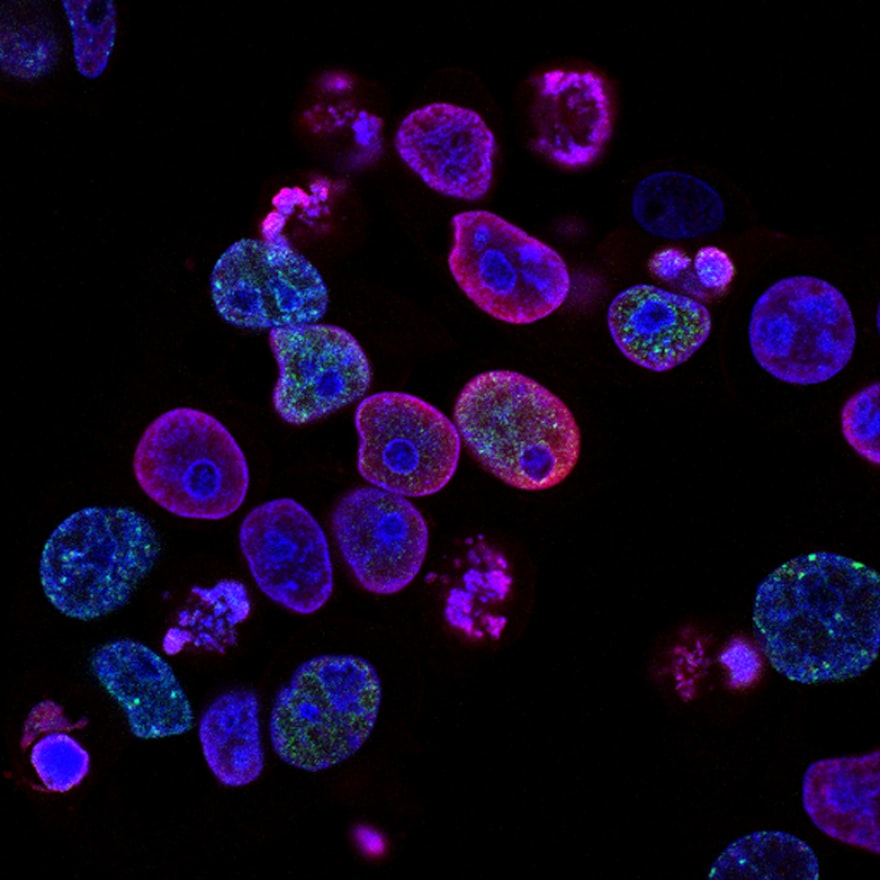
Microscopic view of onion root cells showing chromosomal abnormalities
Typical Results of Allium cepa Test with Different Pollutants
| Pollutant Tested | Concentration | Root Growth Inhibition | Chromosomal Changes Observed |
|---|---|---|---|
| Control (pure water) | - | 0% | No significant changes |
| Chlorinated water | 0.5 mg/L | 15% | Point chromosomal breaks |
| Cigarette extract | 10% | 42% | Micronuclei and chromatin bridges |
| Pesticide (glyphosate) | 0.1% | 65% | Severe chromosomal fragmentation |
| Industrial effluent | 5% | 78% | Multiple nuclear anomalies |
Common Abnormalities Observed
- Micronucleus formation: DNA fragments indicating genetic damage
- Chromosomal changes: Breaks, adhesions and chromatin bridges
- Mitotic inhibition: Reduction in cell division
- Nuclear anomalies: Changes in shape and size of cell nucleus
Research Reagents and Materials
| Reagent/Material | Primary Function |
|---|---|
| Onion bulbs (Allium cepa) | Test organism for bioassays |
| Control solutions | Comparison base for results |
| Specific dyes | Staining of cellular material |
| Microscopy slides | Sample mounting for microscopy |
| Micropipettes | Precise measurement of small volumes |
| Optical microscope | Magnification of cellular structures |
Practical Implementation: Bringing This Approach to Classrooms
The successful integration of ecotoxicology into chemistry teaching requires deliberate and planned pedagogical strategies. Brazilian research has identified that teachers who use interdisciplinary proposals "report success in developing critical thoughts and observations by students about the discussed themes" 1 .
Investigation Learning Units
Students start from real problems (e.g., pollution of a local river) to investigate causes, effects and solutions, applying chemical concepts in the context of environmental issues.
Citizen Science Projects
Collection and analysis of environmental samples by students, in collaboration with universities and research centers, contributing to community environmental monitoring.
Computational Simulations
Use of digital tools to simulate pollutant dispersion and their effects on ecosystems, complementing hands-on experiments.
University-School Collaboration
The approximation between universities and schools is pointed out as a fundamental strategy to overcome limitations of infrastructure and teacher training. "The laboratory infrastructure and knowledge acquired at the university can assist in the formation of critical citizens and awaken interest and curiosity for science" 1 .
Educating for a Sustainable Future
The integration between chemistry, ecotoxicology, and education represents much more than a simple pedagogical strategy—it is an urgent necessity to form citizens capable of understanding and facing the complex contemporary environmental challenges.
Critical Thinking
Students develop not only conceptual understanding but also critical capacity and engagement with planetary sustainability.
Future Impact
The future of the planet will depend largely on our ability to understand and mitigate the impacts of human activity on natural systems.