Adverse Outcome Pathways (AOP): A Transformative Framework for 21st Century Toxicology and Drug Development
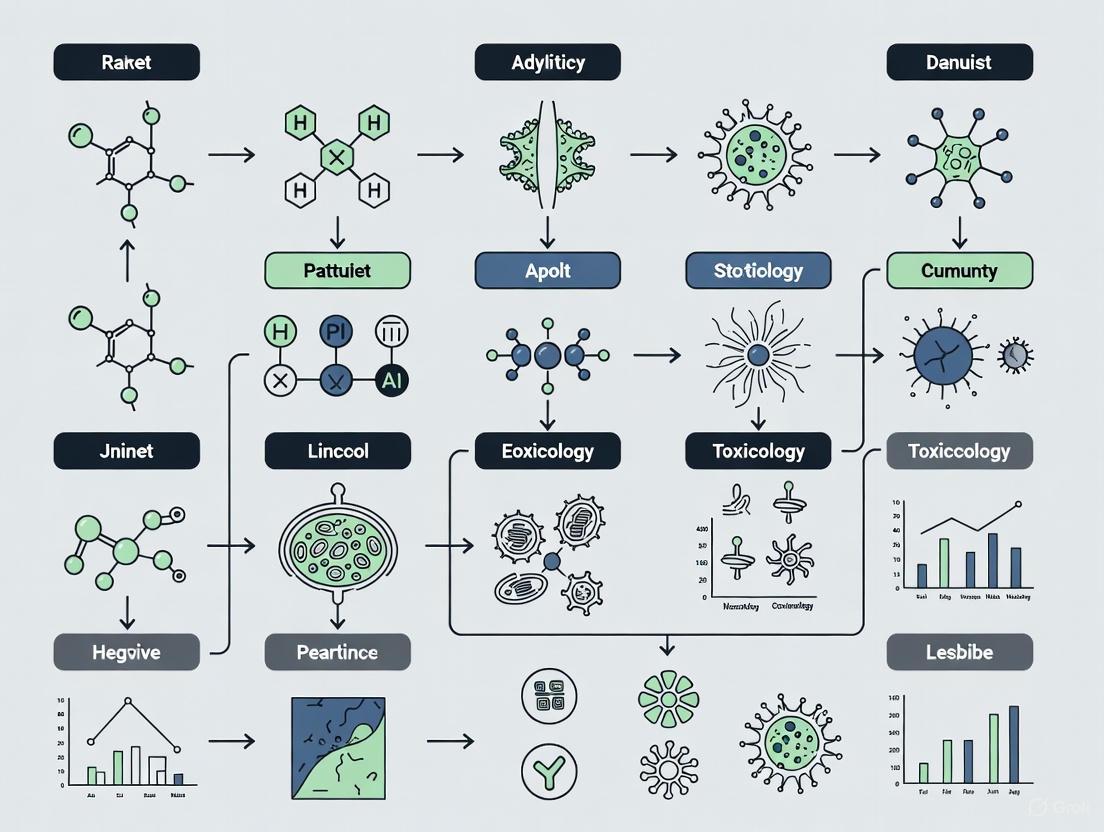
This article provides a comprehensive overview of the Adverse Outcome Pathway (AOP) framework, a conceptual tool designed to organize mechanistic biological data for predicting chemical hazards.
Adverse Outcome Pathways (AOP): A Transformative Framework for 21st Century Toxicology and Drug Development
Abstract
This article provides a comprehensive overview of the Adverse Outcome Pathway (AOP) framework, a conceptual tool designed to organize mechanistic biological data for predicting chemical hazards. Tailored for researchers and drug development professionals, it explores the foundational principles of AOPs, detailing their modular structure centered on Molecular Initiating Events (MIEs), Key Events (KEs), and Adverse Outcomes (AOs). The article delves into methodological advances, including the development of quantitative AOP (qAOP) models using systems toxicology and Bayesian networks, and illustrates their application in replacing animal testing and prioritizing endocrine-disrupting chemicals. It further addresses troubleshooting through international harmonization initiatives like the OECD Coaching Program and validates the framework's utility via case studies and comparative analysis with traditional risk assessment models. The synthesis aims to equip scientists with the knowledge to leverage AOPs for enhancing predictive toxicology and regulatory decision-making.
Deconstructing the AOP Framework: From Biological Dominos to Chemical-Agnostic Pathways
The Adverse Outcome Pathway (AOP) framework is a conceptual construct that organizes existing knowledge about biologically plausible and empirically supported links between a direct molecular perturbation and an adverse outcome of regulatory relevance [1]. It provides a standardized structure for describing sequential chains of causally linked events across different levels of biological organization that occur following exposure to a chemical or non-chemical stressor [2] [3]. The AOP framework serves as a translational tool that enhances communication between scientists who generate toxicity data and the risk assessors or regulators who use this information for decision-making [2]. By offering a structured approach to understanding toxicity pathways, AOPs support the use of different types of biological data to complement or potentially replace traditional in vivo animal studies, aligning with the 3Rs (refinement, reduction, and replacement) agenda in toxicology [4].
The fundamental structure of an AOP follows a linear sequence of events, typically starting with a Molecular Initiating Event (MIE) and progressing through measurable Key Events (KEs) at increasing levels of biological organization until an Adverse Outcome (AO) is reached [2] [1]. This conceptual framework has gained significant international traction through organizations such as the Organisation for Economic Co-operation and Development (OECD), which maintains an AOP Knowledge Base and oversees a formal AOP development program [3]. The utility of AOPs extends to both human health and ecological risk assessment, with particular value in prioritizing chemicals for further testing, building confidence in New Approach Methodologies (NAMs), and addressing the challenge of assessing thousands of data-poor chemicals in the environment [2] [5].
Core Components of an Adverse Outcome Pathway
Molecular Initiating Events (MIEs)
A Molecular Initiating Event (MIE) is defined as the initial interaction between a molecule (stressor) and a biomolecule or biosystem that can be causally linked to an outcome via a pathway [6]. It represents the point where a chemical directly interacts with a biological target within an organism to create a perturbation that starts the AOP [1]. By definition, the MIE occurs at the molecular level and anchors the "upstream" end of an AOP [1]. The MIE is the first biological "domino" in the sequence, triggering the cascade of events that follows [2].
MIEs can take various forms depending on the specific stressor and biological target involved. Common examples include:
- Chemical binding to specific receptors (e.g., estrogen receptor) [2]
- Inhibition of enzymes (e.g., acetylcholinesterase inhibition) [7]
- Direct chemical binding to DNA [2] [5]
- Generation of reactive oxygen species (ROS) [8]
- Inhibition of mitochondrial complex I [7]
A critical characteristic of MIEs is that they are not stressor-specific. Different chemicals or stressors can trigger the same MIE if they interact with the same biological target, and a single stressor might initiate multiple MIEs [2]. The precise definition and characterization of MIEs enable researchers to use a combination of biological and chemical approaches to identify and characterize these initial events, even for some of the most studied molecules in toxicology [6].
Key Events (KEs) and Key Event Relationships (KERs)
Key Events (KEs) represent measurable biological changes at different levels of biological organization that occur after a Molecular Initiating Event and before an Adverse Outcome [2] [5]. These events are essential, but not necessarily sufficient, for the progression from a defined biological perturbation toward a specific adverse outcome [1]. KEs provide verifiability to an AOP description and are represented as nodes in AOP diagrams or networks [1].
KEs occur at increasing levels of biological complexity, spanning from molecular and cellular levels to tissue, organ, and organism levels [2]. The sequence of KEs represents the progression of toxicity through biological systems, with each event causally linked to the next. Key Event Relationships (KERs) describe the scientifically-based connections between pairs of KEs, identifying one as upstream and the other as downstream [2] [1]. KERs facilitate inference or extrapolation of the state of a downstream KE from the known, measured, or predicted state of an upstream KE [1].
KERs are defined based on three types of evidence [2]:
- Biological plausibility - existing biological knowledge supports the relationship
- Empirical support - experimental evidence demonstrates that one KE causes another
- Quantitative understanding - knowledge of the conditions (timing, magnitude, duration) under which a change in one KE will cause a change in another
Adverse Outcomes (AOs)
An Adverse Outcome (AO) is a specialized type of key event measured at a level of organization that corresponds with an established protection goal and/or is functionally equivalent to an apical endpoint measured as part of an accepted guideline test [1]. AOs typically occur at the organ level or higher and anchor the "downstream" end of an AOP [1]. They represent biological changes considered relevant for risk assessment and regulatory decision-making, such as impacts on human health and well-being or effects on survival, growth, or reproduction in wildlife [2] [5].
Table 1: Characteristics of Core AOP Components
| Component | Definition | Level of Biological Organization | Role in AOP |
|---|---|---|---|
| Molecular Initiating Event (MIE) | Initial interaction between a stressor and a biomolecule that starts the AOP [6] [1] | Molecular | Anchors the upstream end of the AOP; the first "domino" in the sequence [2] |
| Key Event (KE) | Measurable biological change that is essential for progression toward the AO [2] [1] | Cellular, Tissue, Organ | Intermediate steps that verify progression along the pathway; nodes in AOP diagrams [1] |
| Adverse Outcome (AO) | Biological change relevant for risk assessment/regulatory decision making [2] [5] | Organ, Organism, Population | Anchors the downstream end of the AOP; represents the toxicological endpoint of concern [1] |
AOs are distinguished from other KEs by their direct relevance to regulatory protection goals. Examples include tumor formation, learning and memory impairment, reproductive dysfunction, population-level effects such as disrupted sex ratios in fish populations, and early life stage mortality [2] [7]. The identification of AOs is crucial for contextualizing the practical significance of the pathway and determining its applicability to risk assessment.
The AOP Conceptual Framework: Linking MIEs to AOs
The AOP framework conceptually links MIEs to AOs through a sequential series of KEs connected by KERs, creating a chain of events that spans multiple biological organizational levels [2]. This construct has been likened to a series of "biological dominos," where the initial interaction (MIE) triggers a cascade of biological changes (KEs) that ultimately lead to the adverse health effect (AO) [2] [5]. If any KE in the sequence does not occur (i.e., a domino does not fall), then none of the downstream KEs in the pathway will occur [2].
The following diagram illustrates the linear progression of an AOP from Molecular Initiating Event to Adverse Outcome:
A key principle of the AOP framework is that AOPs are not stressor-specific [2]. They depict generalized sequences of biological effects that can be expected for any stressor that directly changes a particular biological target defined by the MIE. For example, several different chemicals could all trigger the same MIE and subsequently follow the same AOP [2]. This principle enhances the predictive utility of AOPs by allowing knowledge gained from one chemical to be applied to others that share the same MIE.
Another important characteristic is that AOPs are modular, meaning any AOP can be represented as a sequence of "nodes" (KEs) and "edges" (KERs) linking those KEs together [2]. This modularity allows for the assembly of AOP networks when multiple AOPs share common KEs and/or KERs [2]. These AOP networks more accurately capture the complexity of real biological systems and become more complete as more AOPs are defined [2]. The following diagram illustrates how multiple AOPs can form an interconnected network:
AOPs are considered "living documents" that can be continually expanded or refined as new evidence emerges and new methods for measuring KEs become available [2]. This dynamic nature allows the AOP framework to incorporate advancing scientific knowledge and technological capabilities, enhancing its utility for chemical safety assessment over time.
Quantitative AOPs: From Qualitative to Quantitative Applications
While qualitative AOPs provide valuable conceptual frameworks, there is a growing need for quantitative AOPs (qAOPs) to support chemical risk assessment [7]. A qAOP incorporates mathematical representations of the Key Event Relationships, enabling prediction of the magnitude of biological changes needed before an adverse outcome is observed [7] [4]. The development of qAOPs represents a significant advancement in the field, as it allows for more precise extrapolation from in vitro data to in vivo outcomes and supports quantitative risk assessment [4].
Several mathematical approaches have been employed to develop qAOPs [7] [4]:
- Response-response relationships - Fitting functions to key event data bounding one or more KERs
- Biologically based mathematical modeling - Using ordinary differential equations to represent biological processes (systems biology modeling)
- Bayesian Network modeling - Implementing causal modeling approaches using Bayesian Networks, particularly useful for complex AOPs with multiple pathways
The transition from qualitative to quantitative AOPs faces several challenges, including the availability of quantitative data amenable to model development, the lack of studies that measure multiple key events simultaneously, and issues with model accessibility and transferability across platforms [7]. However, recent proof-of-concept studies have demonstrated the feasibility of qAOP modeling for complex scenarios, including chronic toxicity from repeated exposures [4].
Table 2: Comparison of Qualitative and Quantitative AOPs
| Characteristic | Qualitative AOP | Quantitative AOP (qAOP) |
|---|---|---|
| Primary Function | Organize knowledge; conceptual understanding of toxicity pathways [7] | Predict outcomes; support risk assessment decisions [7] [4] |
| KER Description | Qualitative based on biological plausibility [2] | Mathematical relationships between KEs [7] |
| Data Requirements | Empirical evidence of causal links [2] | Quantitative data on dose-response and timing [7] |
| Regulatory Application | Hypothesis generation; chemical prioritization [2] | Prediction of point-of-departure; extrapolation to human relevant exposures [4] |
| Temporal Component | Not explicitly included [4] | Can incorporate time (e.g., Dynamic Bayesian Networks) [4] |
qAOP development logically follows qualitative AOP development, building upon the established causal relationships to create predictive models [7]. The utility of qAOPs is particularly evident in their ability to reduce the time and resources spent on chemical toxicity testing while improving the extrapolation of data collected at the molecular level to predict whether an adverse outcome may occur at the organism level [7]. As the field advances, qAOPs are expected to play an increasingly important role in regulatory decision-making, especially with the growing use of New Approach Methodologies (NAMs) that generate in vitro and in silico data [4].
Experimental Approaches and Research Methodologies
Establishing Key Event Relationships
The development of robust AOPs requires rigorous experimental approaches to establish and validate Key Event Relationships. The OECD Guidance Document on Developing and Assessing Adverse Outcome Pathways provides a structured framework for building scientific confidence in AOPs through modified Bradford-Hill criteria [3] [7]. The weight of evidence (WoE) evaluation for KERs is based on three fundamental considerations: biological plausibility, empirical support, and quantitative understanding [2] [7].
Biological plausibility depends on established scientific knowledge about the biological relationship between events, including consistent mechanistic data from multiple studies [2]. Empirical support requires demonstration that altering the upstream key event consistently and predictably affects the downstream key event across multiple studies, preferably from different laboratories [2]. Quantitative understanding involves characterizing the conditions (dose-response, timing, magnitude) under which a change in one KE will cause a change in another KE [2].
Experimental approaches for establishing KERs include:
- In vitro assays that measure specific molecular and cellular responses
- In vivo studies using surrogate species to validate pathway conservation
- Cross-species extrapolation using tools like EPA's SeqAPASS to evaluate conservation of pathways across species [2]
- Multi-endpoint studies that measure multiple key events simultaneously to establish temporal and dose-response relationships [7]
Case Study: AChE Inhibition Leading to Neurodegeneration
A specific case study of AOP development for acetylcholinesterase (AChE) inhibition leading to neurodegeneration (AOP 281) illustrates the experimental approaches used in AOP construction [7]. This AOP begins with the Molecular Initiating Event of AChE inhibition, which results in an excess of acetylcholine in the synapse (KER 1) [7]. The build-up of acetylcholine overactivates muscarinic acetylcholine receptors within the brain (KER 2), initiating local seizures (KER 3) [7]. Spreading of the focal seizure through glutamate release (KER 4) and subsequent activation of NMDA receptors (KER 5) propagates the excitotoxicity and leads to elevated intracellular calcium levels (KER 6), status epilepticus (KER 7), and ultimately cell death (KER 8) and neurodegeneration (KER 9) [7].
The quantitative development of this AOP involved a comprehensive literature review encompassing over 200 papers, with data gathered and grouped into two categories: model development and model evaluation [7]. Ideally, model development data covers at least two adjacent key events, allowing for the establishment of quantitative relationships between them [7]. This case study highlights both the methodological approaches and the challenges in developing quantitative AOPs, particularly the need for data that spans multiple key events and the integration of diverse data types into coherent mathematical models.
Table 3: Essential Research Tools and Resources for AOP Development
| Tool/Resource | Function | Application in AOP Research |
|---|---|---|
| AOP Wiki | Primary platform for AOP development and dissemination [2] [3] | Crowdsourced AOP development; qualitative organization of AOP knowledge [2] [3] |
| AOP Knowledge Base | Suite of web-based tools for AOP information [3] | Central repository for AOP-related data; searchable database of AOPs [5] [3] |
| SeqAPASS Tool | Evaluate protein sequence similarity across species [2] | Cross-species extrapolation; assessment of pathway conservation [2] |
| Bayesian Network Analysis | Mathematical framework for causal modeling [7] [4] | Quantitative AOP development; prediction of adverse outcomes [7] [4] |
| In Vitro NAMs | New Approach Methodologies using cell-based systems [5] [4] | Generate data for key events; reduce animal testing [5] [4] |
The experimental workflow for AOP development typically begins with the identification of a well-established Adverse Outcome and works backward to identify preceding Key Events and the Molecular Initiating Event [1]. Alternatively, AOP development can begin with a well-characterized MIE and work forward to identify subsequent KEs and potential AOs [1]. In both approaches, the emphasis is on establishing causal relationships supported by robust experimental evidence rather than mere correlative associations.
Applications in Toxicology and Risk Assessment
The AOP framework has diverse applications in toxicology and risk assessment, significantly enhancing how scientists evaluate potential chemical hazards and assess risks. One of the most valuable applications is the enhanced use of data from New Approach Methods (NAMs) [2]. When traditional in vivo animal study data are lacking for a chemical, in vitro experiments can provide insights into the chemical's hazard potential if there is an AOP that links the in vitro data to an adverse outcome [2]. For example, if a chemical causes a specific DNA mutation in an in vitro screening assay and that mutation is the MIE in an AOP for liver cancer, the AOP information can be used as one tool to assess whether the chemical is a potential carcinogen [2].
Additional applications include [2]:
- Hypothesis-driven testing - Knowledge of health effects likely to follow a given MIE can help focus in vivo testing on sensitive species, life-stages, and toxicity endpoints
- Cross-species extrapolation - Using AOP knowledge to directly evaluate conservation of pathways and quantitative differences in toxicological response across species
- Evaluation of complex mixtures - Using insights from AOP networks to address uncertainties associated with prediction of mixture effects
- Chemical prioritization - Helping to narrow down the list of chemicals for subsequent testing when traditional toxicity data are lacking
The AOP framework also supports mode of action (MOA) analysis, which describes a biologically plausible sequence of key events leading to an observed effect supported by robust experimental observations and mechanistic data [1]. While AOPs and MOAs are related concepts, they are not synonymous. An MOA usually starts with the molecular initiating event but does not typically include consideration of exposure or effects at higher levels than the individual, whereas AOPs explicitly include these elements [1].
The framework is particularly valuable for addressing priority toxicological endpoints such as endocrine disruption, neurotoxicity, and immunotoxicity [5]. For example, EPA researchers are using AOPs to investigate key events underlying thyroid hormone-dependent developmental neurotoxicity and the effects of inhaled reactive gases on cells of the respiratory tract leading to inflammation, abnormal cell growth, and asthma [5]. Similarly, AOPs relevant to per- and polyfluoroalkyl substances (PFAS) are being developed to evaluate a wide range of adverse outcomes, including reproductive impairment, developmental toxicity, metabolic disorders, kidney toxicity, and cardiac toxicity [5].
The Adverse Outcome Pathway framework provides a systematic approach for organizing knowledge about the sequence of events linking molecular initiating events to adverse outcomes of regulatory concern. The core concepts of MIEs, KEs, and AOs form the foundational elements of this framework, enabling a structured understanding of toxicity pathways across multiple levels of biological organization. As a conceptual tool, the AOP framework enhances the interpretation of mechanistic data and supports more informed chemical safety assessment.
The transition from qualitative to quantitative AOPs represents the next frontier in AOP research, with promising developments in mathematical modeling approaches such as Bayesian Network analysis [7] [4]. These quantitative applications have the potential to transform chemical risk assessment by enabling predictions of adverse outcomes based on upstream key events measured using in vitro or in silico methods. However, challenges remain in data availability, model development, and establishing scientific confidence in quantitative predictions.
As the AOP knowledge base continues to expand through international collaborative efforts, the framework is poised to play an increasingly important role in regulatory decision-making. The "living document" nature of AOPs allows for continuous refinement as new scientific evidence emerges, ensuring that the framework remains relevant and responsive to advancing toxicological science. For researchers and drug development professionals, understanding these core concepts and their applications provides a valuable foundation for leveraging the AOP framework in chemical safety assessment and therapeutic development.
Within the framework of Adverse Outcome Pathways (AOPs), the concept of a 'Biological Domino' effect provides a powerful mechanistic model for understanding toxicity. An AOP describes a sequence of events commencing with the initial interaction of a stressor with a biomolecule within an organism, a Molecular Initiating Event (MIE), which can progress through a dependent series of intermediate Key Events (KEs) and culminates in an Adverse Outcome (AO) considered relevant to risk assessment [5] [9]. Key Event Relationships (KERs) are the scientifically grounded causal linkages that connect these individual key events, forming the backbone of the AOP and enabling predictive toxicology [9]. This conceptual domino effect is not merely a linear cascade but a structured representation of biological causality, where the relationship between an upstream and downstream event is both definable and measurable [10]. The AOP framework is intentionally chemical-agnostic, focusing on the biological progression of events rather than the properties of any specific chemical, thereby allowing for broad application across various stressors [10].
The Conceptual Foundation: KERs as Biological Dominos
The Domino Analogy in Biology and Toxicology
The domino effect serves as an apt analogy for AOPs. Just as a single falling domino can trigger a chain reaction, the molecular initiating event sets off a cascade of biological changes [5]. The EPA describes this succinctly: "A chemical exposure leads to a biological change within a cell and then a 'molecular initiating event' (e.g., chemical binding to DNA) triggers more dominos to fall in a cascade of sequential 'key events' (e.g., abnormal cell replication) along a toxicity pathway. Together, these events can result in an adverse health outcome... in a whole organism" [5]. This analogy extends to neurobiology, where falling dominoes have been used to model the all-or-nothing, unidirectional propagation of a nerve impulse—a characteristic shared by the key event relationships in an AOP [11]. In both systems, a stimulus must exceed a critical threshold to initiate the cascade, the pulse moves at a constant speed without losing energy, and the system requires energy to reset [11].
Core Definitions and Modularity Principle
The functional components of an AOP are built upon precise definitions and a modular structure:
- Molecular Initiating Event (MIE): A specialized type of key event that represents the initial point of chemical/stressor interaction at the molecular level within the organism that results in a perturbation that starts the AOP [9].
- Key Event (KE): A measurable biological change at the molecular, cellular, or tissue level that occurs after a molecular initiating event and before an adverse outcome. A KE is a change in biological or physiological state that is both measurable and essential to the progression of a defined biological perturbation leading to a specific adverse outcome [5] [9].
- Key Event Relationship (KER): A scientifically-based relationship that connects one key event to another, defines a causal and predictive relationship between the upstream and downstream event, and thereby facilitates inference or extrapolation of the state of the downstream key event from the known, measured, or predicted state of the upstream key event [9].
- Adverse Outcome (AO): A specialized type of key event that is generally accepted as being of regulatory significance on the basis of correspondence to an established protection goal [9].
A fundamental principle in AOP development is modularity. KEs and KERs are constructed as discrete, self-contained units that can be reused in multiple AOPs, enhancing consistency and efficiency [9] [10]. This means a single KE, such as "Reduced Granulosa Cell Proliferation," can be part of multiple pathways, and the KERs that describe its connection to other events are developed independently [12] [9].
Quantitative Assessment of Key Event Relationships
Evidence and Confidence Assessment for KERs
The establishment of a scientifically credible KER requires a structured assessment of supporting evidence. Confidence in a KER is evaluated based on biological plausibility, essentiality, and empirical support [9]. The OECD's AOP Developers' Handbook provides a framework for this evaluation, guiding developers to document the weight of evidence supporting each hypothesized relationship [9].
Table 1: Evidence Types Supporting Key Event Relationships
| Evidence Category | Description | Examples |
|---|---|---|
| Biological Plausibility | The relationship is consistent with established biological knowledge and mechanisms. | Established pathway from molecular biology; understood biochemical cascade [9]. |
| Essentiality | The upstream Key Event is necessary for the downstream Key Event to occur. | Experimental modulation (e.g., inhibition, knockout) of the upstream KE prevents the downstream KE [9]. |
| Empirical Support | Observational or experimental data demonstrates a consistent, quantifiable relationship between the KEs. | Dose-response, temporal, and incidence concordance between the two KEs from in vitro or in vivo studies [12] [9]. |
| Consistency & Specificity | The relationship is observed across multiple studies and is not a general, non-specific effect. | Replication across independent laboratories, models, or chemical stressors [9]. |
Essentiality is a critical concept, indicating that a KE plays a causal role in the pathway. If a given KE is prevented or fails to occur, progression to subsequent KEs in the pathway will not happen, thereby confirming its essential nature [9].
Quantitative KER Analysis and Parameters
For a KER to be predictive, the relationship between the upstream and downstream key events must be characterized as quantitatively as possible. This involves defining the conditions under which the progression from one event to the next can be expected [9]. The Organisation for Economic Co-operation and Development (OECD) recommends documenting quantitative understanding for KERs to enhance their utility in predictive modeling [9].
Table 2: Key Quantitative Parameters for Assessing KERs
| Parameter | Description | Utility in Risk Assessment |
|---|---|---|
| Dose-Response Concordance | The relationship between the dose/concentration of a stressor that causes the upstream KE and the dose that causes the downstream KE. | Predicts the potency required to drive the pathway forward; helps set exposure thresholds [9]. |
| Temporal Concordance | The time-course of the upstream KE occurrence relative to the downstream KE. | Establishes a plausible sequence of events; informs the timing for biomarker monitoring [9]. |
| Incidence Concordance | The proportion of test subjects or systems exhibiting the upstream KE that also exhibit the downstream KE. | Provides data on the strength and consistency of the relationship [9]. |
| Response-Response Relationship | A mathematical function describing how the magnitude or incidence of the upstream KE influences the downstream KE. | Enables quantitative prediction of downstream effects based on measurement of upstream events [10]. |
Tools like Effectopedia, part of the AOP Knowledge Base (AOP-KB), are designed to assemble data on these quantitative relationships, further strengthening the predictive power of the AOP framework [10].
Case Study: KER in a Defined AOP for Female Fertility
Experimental Protocol and Workflow
A specific example of a KER development is demonstrated in research linking Androgen Receptor (AR) antagonism to reduced granulosa cell proliferation in ovarian follicles (KER2273), which is part of AOP 345 on reduced female fertility [12]. The following diagram illustrates the experimental workflow and the logical relationships within this AOP segment.
The methodology for establishing this KER involved a systematic approach to ensure all relevant supporting evidence was retrieved and assessed for quality [12]. The workflow can be broken down into key experimental stages:
- KE Identification and Definition: The two adjacent Key Events (AR signaling and granulosa cell proliferation) were first developed and defined as discrete, measurable units [12].
- Evidence Retrieval: A systematic literature search was conducted to gather all available evidence linking the two events, focusing on studies in gonadotropin-independent follicles [12].
- Evidence Quality Assessment: The retrieved empirical evidence was critically assessed for its quality, reliability, and relevance [12].
- Plausibility and Essentiality Evaluation: Biological plausibility was established based on the understood role of AR in early follicular development. Essentiality was supported by data showing that disruption of AR action impairs this critical process [12].
- KER Documentation: The relationship (KER2273) was formally documented in the AOP-Wiki, including all supporting evidence and quantitative understandings, following OECD guidance [12] [9].
Research Reagent Solutions for KER Investigation
Studying a KER such as the one between AR antagonism and reduced granulosa cell proliferation requires specific research tools and reagents.
Table 3: Essential Research Reagents for Investigating KER2273
| Reagent / Material | Function in Experimental Protocol |
|---|---|
| AR Antagonists (e.g., Hydroxyflutamide) | Used as model stressors to specifically inhibit the Molecular Initiating Event (AR activation) and trigger the pathway [12]. |
| Primary Granulosa Cell Cultures | An in vitro model system to isolate and study the direct effects of AR antagonism on granulosa cell biology, excluding systemic confounders [12]. |
| Proliferation Assays (e.g., BrdU/EdU, MTT) | Quantitative methods to measure the downstream Key Event of reduced cell proliferation. These provide empirical data for dose-response and temporal concordance [12]. |
| Gene Expression Analysis (qPCR, RNA-Seq) | Tools to measure changes in transcript levels of AR-target genes, providing evidence for the upstream Key Event of decreased AR signaling [12]. |
| Immunohistochemistry (IHC) for AR | Used on ovarian tissue sections to localize and semi-quantify AR protein, confirming the presence of the molecular target in the relevant cell type [12]. |
This case study underscores the strategy of tackling isolated KERs as building blocks, which can accelerate the overall development of AOPs and, in turn, facilitate the creation of simple test methods for chemical screening and risk assessment [12].
Implementation and Regulatory Applications
From KERs to AOP Networks and Predictive Toxicology
While individual KERs are the modular building blocks, they are functionally assembled into AOP networks for most real-world applications [5] [9]. These networks provide insight into the complex interactions among biological pathways and can account for multiple stressors or MIEs leading to a common adverse outcome [5]. The primary application of these structured KERs and AOPs is in New Approach Methodologies (NAMs). AOPs are a critical component in building confidence in using in vitro NAMs data to predict adverse outcomes, thereby reducing reliance on animal testing [5]. For instance, EPA researchers use AOPs to develop in vitro methods for identifying carcinogenic chemicals and to understand the effects of chemical exposure on endpoints like developmental neurotoxicity [5]. The quantitative understanding captured in KERs allows risk assessors to use measurements of an upstream key event (e.g., from a high-throughput assay) to predict the likelihood and magnitude of a downstream adverse outcome, informing decisions on chemical safety [5] [9].
Accessing KERs and AOPs: Knowledge Bases and Tools
The collaborative and living nature of the AOP framework is supported by several key online resources:
- AOP-Wiki: A globally accessible platform and central repository for developing and disseminating AOP descriptions, including KERs, in accordance with OECD guidance [5] [9]. It is the most densely populated module of the AOP Knowledge Base (AOP-KB) [10].
- OECD-Endorsed AOPs: The OECD provides a repository of AOPs that have undergone a rigorous scientific review and endorsement process, providing a high level of confidence for regulatory use [5].
- Effectopedia: An open-source software platform designed for collaborative AOP development, with a strong focus on capturing quantitative and probabilistic relationships for KERs [10].
These platforms ensure that KERs and AOPs remain living frameworks, continuously updated and refined as new scientific evidence emerges [9] [10]. This dynamic characteristic is crucial for maintaining the relevance and scientific integrity of the AOP framework in advancing predictive toxicology and risk assessment.
Five Foundational Principles of AOP Development
The Adverse Outcome Pathway (AOP) framework is a conceptual construct that portrays existing knowledge concerning the sequence of causal events leading from a Molecular Initiating Event (MIE) to an Adverse Outcome (AO) at a level of biological organization relevant for risk assessment [13]. This whitepaper delineates the five foundational principles that guide the systematic development, evaluation, and application of AOPs. These principles ensure that AOPs are robust, reliable, and fit-for-purpose in supporting chemical safety assessment and regulatory decision-making, particularly in translating data from New Approach Methodologies (NAMs) to predictable adverse effects [2].
Principle 1: AOPs are Conceptual and Not Stressor-Specific
An AOP describes a generalized sequence of biological effects that can be expected for any stressor that triggers a specific Molecular Initiating Event [2]. The framework focuses on the biological pathway itself, independent of any specific chemical or stressor that might initiate it.
- Underlying Rationale: This principle emphasizes the modularity and reusability of AOP knowledge. A single AOP, such as "Aromatase Inhibition Leading to Reproductive Dysfunction" [7], can be applicable to any chemical that inhibits the aromatase enzyme, allowing for a generalized understanding of the toxicity pathway.
- Practical Implication: It allows regulators and researchers to use one well-established AOP to predict the potential hazard of entire classes of chemicals that share a common mechanism of action, thereby increasing the efficiency of chemical risk assessment [2].
Principle 2: AOPs are Modular and Composed of Key Events and Key Event Relationships
The structure of an AOP is modular, built from discrete, measurable Key Events (KEs) connected by scientifically supported Key Event Relationships (KERs) [13]. This modularity facilitates the assembly of AOP networks from existing, validated components.
- Key Definitions:
- Molecular Initiating Event (MIE): The initial interaction between a stressor and a biomolecule within an organism that starts the AOP [2] [13].
- Key Event (KE): A measurable change in biological state that is essential to the progression of the AOP toward the adverse outcome. KEs exist at different levels of biological organization (cellular, tissue, organ, organism) [13].
- Key Event Relationship (KER): A description of the causal or mechanistic linkage between two KEs. A KER defines how a change in an upstream event can be used to predict a change in a downstream event [13].
- Structural Workflow: The following diagram illustrates the logical flow and modular components of AOP development.
Principle 3: Key Events Must Be Essential and Measurable
For a biological change to be designated a Key Event in an AOP, it must be both measurable and essential for the progression to the Adverse Outcome [13]. Essentiality implies a causal role, meaning that if the KE is prevented, progression to subsequent KEs and the AO will not occur.
- Experimental Validation of Essentiality: The handbook recommends specific approaches to evaluate essentiality [13]:
- Biological Plausibility: The KE should be consistent with established biological knowledge.
- Empirical Support: Experimental evidence should demonstrate that the upstream KE causes the downstream KE.
- Essentiality Testing: Studies that experimentally modulate or inhibit a KE (e.g., through pharmacological inhibitors or genetic knockout) should demonstrate a consequent prevention of all downstream KEs and the AO.
- Quantitative Understanding: The conditions under which a change in an upstream KE will cause a change in a downstream KE should be described as quantitatively as possible, including aspects of timing, magnitude, and incidence [2] [13].
Principle 4: Development is Guided by Weight of Evidence and Quantitative Understanding
Confidence in an AOP for regulatory application is established through a systematic Weight of Evidence (WoE) assessment based on modified Bradford-Hill criteria [7] [13]. A key goal is the transition from qualitative AOPs to Quantitative AOPs (qAOPs).
- Weight of Evidence Criteria:
- Biological Plausibility: The degree to which the relationship between KEs is supported by established biological knowledge.
- Empirical Support: The strength and consistency of experimental data demonstrating that a change in the upstream KE leads to a predictable change in the downstream KE.
- Quantitative Understanding: The availability of data that defines the dose-response, temporal, and incidence relationships between KEs [2].
- qAOP Development Methods: A review of OECD-endorsed AOPs reveals that quantitative understanding can be presented and utilized in various ways to build qAOPs [7]:
- Response-Response Relationships: Using regression analysis to fit mathematical functions to data linking two KEs.
- Biologically-Based Mathematical Modeling: Using systems of ordinary differential equations to represent the underlying biology.
- Bayesian Networks: Using probabilistic models to describe complex AOPs with multiple pathways, capable of handling uncertainty.
Table 1: Categories of Quantitative Understanding (QU) in OECD-Endorsed AOPs (Based on a 2021 Review) [7]
| AOP ID | AOP Title | KERs with Low QU-WoE | KERs with Moderate QU-WoE | KERs with High QU-WoE |
|---|---|---|---|---|
| AOP 3 | Inhibition of mitochondrial complex I leading to parkinsonian motor deficits | 3 | 4 | 1 |
| AOP 25 | Aromatase inhibition leading to reproductive dysfunction | 1 | 7 | 0 |
| AOP 131 | Aryl hydrocarbon receptor activation leading to uroporphyria | 2 | 1 | 2 |
| AOP 54 | Inhibition of Na+/I- symporter leads to learning/memory impairment | 10 | 3 | 2 |
Principle 5: AOPs are Living Documents in a Collaborative Knowledgebase
AOPs are not static documents but evolving representations of scientific knowledge. They are intended to be updated and refined as new evidence emerges [2] [13]. The primary repository for this knowledge is the AOP-Wiki, which facilitates collaborative development and peer review.
- The AOP Development Workflow: The process is iterative and community-driven. The generalized workflow, as outlined in the AOP Developer's Handbook, is shown below [13].
- Endorsement and Versions: The OECD oversees a formal peer-review process, endorsing specific "snapshots" of AOPs. However, the living version in the AOP-Wiki continues to incorporate new knowledge, with tools available to track changes between versions [13].
Table 2: Key Research Reagents and Resources in AOP Framework Research
| Item / Resource | Function / Application in AOP Research |
|---|---|
| AOP-Wiki (aopwiki.org) | The primary collaborative knowledgebase for AOP development. It provides the platform for drafting, sharing, and peer-reviewing AOPs, KEs, and KERs [13]. |
| SeqAPASS Tool | A computational tool used to evaluate the conservation of molecular targets (like protein sequences) across species, supporting cross-species extrapolation in AOP application [2]. |
| In Vitro High-Throughput Screening Assays | These assays generate data on Molecular Initiating Events (MIEs) and early cellular Key Events, which can be used as inputs for AOP-based prediction of higher-order effects [2]. |
| Biomarker Assays | Validated analytical methods (e.g., ELISA, qPCR, immunohistochemistry) for measuring specific Key Events at the molecular, cellular, or tissue level in experimental studies [13]. |
| OECD AOP Developers' Handbook | The definitive guide providing practical instructions, templates, and WoE evaluation criteria for developing and assessing AOPs according to international standards [13]. |
The AOP framework is a powerful tool for structuring toxicological knowledge to support predictive risk assessment. Its utility and scientific credibility are anchored in the five foundational principles of being conceptual and not stressor-specific, modular in construction, reliant on essential and measurable key events, guided by rigorous weight of evidence and quantitative understanding, and existing as living documents. Adherence to these principles ensures that AOPs can effectively bridge the gap between mechanistic data from new approach methods and the adverse outcomes required for regulatory protection of human health and the environment.
The Role of the AOP Knowledge Base (AOP-KB) and OECD Programme
The Adverse Outcome Pathway (AOP) framework is a conceptual structure that organizes toxicological knowledge into a sequential chain of measurable biological events, linking a molecular-level initiating event to an adverse outcome of regulatory concern [2]. This framework provides a standardized approach for understanding toxicity mechanisms and supporting chemical safety assessment without sole reliance on traditional animal testing [14]. The AOP Knowledge Base (AOP-KB) is the central repository developed by the Organisation for Economic Co-operation and Development (OECD) to enable the global scientific community to collaboratively develop, share, and discuss AOP-related knowledge [15]. The AOP-KB represents a foundational resource for advancing 21st-century toxicology by facilitating the use of mechanistic data for predictive risk assessment and promoting the adoption of New Approach Methodologies (NAMs) that reduce dependence on animal studies [2] [16].
AOP-KB Architecture and Core Components
The AOP-KB is not a single system but rather a combination of four independently developed yet interoperable platforms, each serving a distinct function in AOP development and utilization [15]. These platforms synchronize and exchange data through a central AOP-KB Hub, creating a comprehensive knowledge ecosystem [15].
Table 1: Core Platforms of the AOP Knowledge Base
| Platform Name | Primary Function | Development Status |
|---|---|---|
| AOP-Wiki | Primary authoring tool for qualitative AOP development using a wiki interface; organizes knowledge via crowd-sourcing [15] [17]. | Fully operational [15] |
| Effectopedia | Modeling platform for collaborative development of AOPs with visual representation of knowledge and algorithms [15]. | Beta release available [15] |
| Intermediate Effects DB | Hosts chemical-related data from non-apical endpoint methods and links compounds to Molecular Initiating Events (MIEs) and Key Events (KEs) [15]. | Under development [15] |
| AOP Xplorer | Computational tool for automated graphical representation of AOPs and their networks [15]. | Under development [15] |
The AOP-Wiki serves as the primary entry point and user interface for most AOP development activities [17]. It employs controlled-vocabulary drop-down lists to facilitate the entry of ontology-based information, ensuring consistency in how biological objects, methods, life stages, and species are described across different AOPs [15]. This platform supports the OECD review process for AOPs and allows users to create snapshots of AOPs in PDF format for offline access [17].
The governance of the AOP-KB, particularly the AOP-Wiki, is managed by the AOP Knowledgebase Coordination Group (AOP-KB CG), composed of individuals and organizations that contribute financially or through substantial donations of time and expertise [17]. Membership is renewed annually, and new members can be accepted with the approval of the current CG [17].
The OECD AOP Programme: Governance and Development
The OECD AOP Programme was introduced in 2012 and is overseen by the Extended Advisory Group on Molecular Screening and Toxicogenomics (EAGMST) [18]. Its primary mission is to coordinate international AOP development, provide a standardized knowledge base, support regulatory uptake, and promote the global use of AOPs in chemical safety assessment [18]. The programme has established formal guidance documents including the "Guidance Document for Developing and Assessing Adverse Outcome Pathways" and the "Users' Handbook supplement to the Guidance Document" to ensure consistent and scientifically rigorous AOP development [18].
A critical initiative within the OECD programme is the AOP Coaching Program, launched in 2019 to pair novice AOP developers with experienced coaches [19]. This program aims to harmonize AOP development according to OECD guidance, while also initiating "gardening" efforts to remove redundant or synonymous Key Events in the AOP-Wiki [19]. These efforts improve AOP network creation, promote the reuse of extensively reviewed Key Events, and ensure the development of high-quality AOPs with enhanced regulatory utility [19].
The AOP development process under the OECD programme involves several critical stages:
- Knowledge Assembly: Expert collaboration to assemble existing biological knowledge and evidence into the structured AOP format [18].
- Weight-of-Evidence Assessment: Systematic evaluation of the evidence supporting each Key Event Relationship (KER) using established criteria including biological plausibility, empirical support, and quantitative understanding [2] [16].
- Scientific Review: Formal review of the assembled AOP by scientific experts to ensure accuracy and completeness [18].
- OECD Endorsement: Final endorsement by OECD working groups for AOPs with demonstrated regulatory relevance [17].
A more pragmatic approach to AOP development has recently been proposed, focusing on Key Event Relationships (KERs) as the core building blocks rather than attempting to develop complete AOPs in a single effort [16]. This approach recognizes that establishing causal links between pairs of Key Events is the most evidence-intensive part of AOP development and advocates for using systematic review approaches primarily for KERs that are not based on canonical knowledge [16].
Practical Application in Research and Regulatory Science
AOP-Based Research Methodologies
The AOP framework enables several advanced research methodologies that support modern chemical safety assessment:
- In Vitro to In Vivo Extrapolation: Using AOPs to translate mechanistic data from in vitro systems to predictions of in vivo toxicity [2]. For example, a chemical causing a specific DNA mutation in an in vitro screening assay (MIE) can be evaluated for potential carcinogenicity (AO) through a well-established AOP [2].
- Cross-Species Extrapolation: Addressing uncertainty in risk assessment by evaluating the conservation of pathways across species [2]. Tools like the EPA's SeqAPASS can confirm structural conservation of molecular targets (e.g., estrogen receptors) between test species and untested species, supporting extrapolation of AOP-based predictions [2].
- Complex Mixtures Assessment: Using AOP networks to understand and predict the combined effects of chemical mixtures [2]. When multiple chemicals share a Key Event (e.g., reduced maternal thyroid hormone levels) leading to the same adverse outcome (e.g., reduced birthweight), they may exhibit dose-additive effects that can be informed by AOP knowledge [2].
- Hypothesis-Driven Testing: Focusing traditional testing on sensitive species, life stages, and toxicity endpoints informed by AOP knowledge [2]. For instance, knowing that estrogen-mimicking chemicals bind to estrogen receptors (MIE) and lead to changed sex ratios in fish (AO) guides targeted exposure studies using surrogate fish species [2].
Essential Research Reagents and Tools
Table 2: Key Research Reagent Solutions for AOP Development
| Reagent/Tool Category | Specific Examples | Research Application in AOP Context |
|---|---|---|
| In Vitro Assay Systems | Receptor binding assays, transcriptional activation assays, high-content screening platforms | Measure Molecular Initiating Events (MIEs) and cellular-level Key Events [2] |
| Omics Technologies | Transcriptomics, proteomics, metabolomics platforms | Generate mechanistic data supporting Key Event Relationships and identifying novel Key Events [14] |
| Computational Toxicology Tools | QSAR models, molecular docking simulations, pharmacokinetic modeling software | Predict chemical interactions with biological targets (MIEs) and quantitative relationships between Key Events [2] [16] |
| Cross-Species Extrapolation Tools | SeqAPASS tool for protein sequence conservation analysis | Evaluate conservation of Molecular Initiating Events and Key Events across species to support ecological risk assessment [2] |
Current Status and Future Directions
As of 2025, the AOP-KB continues to evolve with several ongoing international initiatives. The Society for the Advancement of Adverse Outcome Pathways (SAAOP), which now affiliates with both the American Society for Cellular and Computational Toxicology (ASCCT) and the European Society for Toxicology In Vitro (ESTIV), plays a crucial role in supporting the AOP developer and user communities [17]. The SAAOP Knowledgebase Interest Group (SKIG), comprising over 40 international experts, focuses on hands-on improvements to the AOP framework and AOP-Wiki [14]. Recent SKIG activities have addressed ontology-based harmonization, AI tools for AOP development, integration of omics data, and automated access to AOP-Wiki contents [14].
Future directions for the AOP-KB and OECD programme include enhancing the quantitative aspects of AOPs to support more predictive toxicology, expanding AOP networks to capture complex biological systems more comprehensively, and strengthening the formal ontologies that underpin the AOP-KB to improve computational accessibility and integration [14]. There is also a growing emphasis on developing structured approaches to establish AOPs as a reliable foundation for regulatory decision-making, particularly in the context of the European Union's policy on animal protection and its roadmap toward phasing out animal testing for chemical safety assessments [14].
The AOP framework's strength lies in its ability to organize decentralized knowledge into a structured format that explicitly defines the evidence supporting causal connections between toxicological events [2] [16]. As the AOP-KB continues to mature, it is progressively fulfilling its potential as a central resource for transforming chemical safety assessment through mechanism-based understanding of toxicity.
Distinguishing AOPs from Mode of Action (MoA) and Risk Assessment
In modern toxicology and drug development, precisely defining how chemicals cause adverse effects is crucial for risk assessment and regulatory decision-making. The Adverse Outcome Pathway (AOP) framework has emerged as a powerful conceptual tool that organizes biological knowledge into a structured format, distinguishing it from, yet relating it to, established concepts like Mode of Action (MoA) and the comprehensive process of Risk Assessment. AOPs represent a paradigm shift towards a pathway-based approach for characterizing the inherent hazard of chemicals, which can be applied independently of any specific chemical stressor to support predictive toxicology [20]. This framework allows researchers and regulators to use mechanistic data from New Approach Methodologies (NAMs) to predict adverse outcomes, thereby reducing reliance on traditional animal testing [2] [5]. Understanding the distinctions and intersections between AOPs, MoA, and Risk Assessment is fundamental for researchers, scientists, and drug development professionals aiming to apply these concepts effectively in safety evaluations and regulatory submissions.
Defining the Concepts: AOP, MoA, and Risk Assessment
What is an Adverse Outcome Pathway (AOP)?
An Adverse Outcome Pathway (AOP) is an analytical construct that describes a sequential chain of causally linked events at different levels of biological organisation that lead to an adverse health or ecotoxicological effect [3]. It is not a specific pathway for a single chemical, but rather a generalizable framework that depicts a sequence of biological effects expected for any stressor that triggers a particular Molecular Initiating Event (MIE) [2].
The key components of an AOP are:
- Molecular Initiating Event (MIE): The initial interaction between a stressor (e.g., a chemical) and a biomolecule (e.g., a receptor, enzyme, or DNA) within an organism [2] [5].
- Key Events (KEs): Measurable biological changes at the cellular, tissue, or organ level that occur between the MIE and the Adverse Outcome. These are viewed as "essential" steps in the pathway [2].
- Key Event Relationships (KERs): Descriptions of the causal linkages between KEs, explaining how one event leads to the next. KERs are supported by evidence of biological plausibility, empirical support, and quantitative understanding [2].
- Adverse Outcome (AO): A biological change at the organism or population level considered relevant for risk assessment or regulatory decision-making (e.g., impacts on survival, growth, reproduction, or human health) [3] [5].
AOPs are conceptualized as a series of "biological dominos," where the falling of one domino (a KE) triggers the next in a cascade towards an adverse outcome [2] [5]. They are modular, can be assembled into networks, and are considered "living documents" that are refined as new biological evidence emerges [2].
What is Mode of Action (MoA)?
Mode of Action (MoA) describes a functional or anatomical change, at the cellular level, resulting from the exposure of a living organism to a substance [21] [22]. It is an intermediate level of complexity that sits between detailed molecular mechanisms and overall physiological outcomes. In the context of the International Program on Chemical Safety (IPCS) framework, an MoA is defined as a series of key events along a biological pathway from the initial chemical interaction through to the toxicological outcome [20].
It is critical to distinguish MoA from the more specific term Mechanism of Action (MOA), which refers to the precise biochemical interaction at the molecular level, such as the specific binding of a drug to an enzyme or receptor [21]. For example, a Mechanism of Action could be "binding to DNA," whereas the broader Mode of Action would be "transcriptional regulation" [22]. While an MoA does not need to be complete to be useful, its application depends on its level of completeness [20].
What is Risk Assessment?
Risk Assessment is a comprehensive, multi-step process used to characterize the nature and probability of adverse health or ecological effects resulting from exposure to a hazard. The US EPA and other regulatory bodies use it to inform regulatory decisions. Crucially, AOPs are not risk assessments [2]. While AOPs inform the characterization of hazard or effect, they do not explicitly address exposure, which is a key component of a risk assessment [2]. Risk assessment integrates hazard identification (for which AOPs can be a tool) with exposure assessment to determine the overall risk under specific conditions.
Comparative Analysis: AOP vs. MoA vs. Risk Assessment
The table below summarizes the core distinctions between these three concepts.
Table 1: Key Differences Between AOP, MoA, and Risk Assessment
| Feature | Adverse Outcome Pathway (AOP) | Mode of Action (MoA) | Risk Assessment |
|---|---|---|---|
| Definition & Scope | A conceptual framework organizing knowledge about a sequence of causally linked events from an MIE to an AO [2] [3]. | A description of the key functional and anatomical changes at the cellular level leading from a chemical interaction to a toxicological outcome [20]. | A comprehensive process integrating hazard, exposure, and dose-response to characterize risk [2]. |
| Specificity | Not stressor-specific; a generalized pathway applicable to any chemical causing the defined MIE [2]. | Traditionally describes the pathway for a specific chemical causing toxicity in a specific context [2] [20]. | Chemical- and scenario-specific; evaluates risk for a specific stressor under defined exposure conditions. |
| Primary Function | Hazard identification and mechanistic understanding; a tool for organizing data and predicting effects [2] [5]. | Establishing a causal chain for a specific chemical's toxicity to determine human relevance [20]. | Informing regulatory decisions and risk management by quantifying the probability of an adverse effect. |
| Relationship to Exposure | Does not include exposure assessment; begins with a biological interaction (MIE) [2]. | Implicitly includes exposure (as it starts with a specific chemical) but focuses on the subsequent biological pathway. | Explicitly includes exposure assessment as a core component. |
| Composition | Modular structure of MIE, KEs, KERs, and AO [2]. | A series of key events, established using Bradford-Hill criteria for causation [20]. | Integrates hazard identification, dose-response assessment, exposure assessment, and risk characterization. |
Visualizing the Relationship Between an AOP and a Chemical-Specific MoA
The following diagram illustrates how a generalized AOP serves as a knowledge framework to inform the development of a chemical-specific MoA, which in turn is used within a broader Risk Assessment that incorporates exposure science.
Figure 1: The role of AOPs in risk assessment. A generalized AOP framework informs the development of a chemical-specific Mode of Action (MoA), which contributes to hazard identification within a comprehensive Risk Assessment that also incorporates exposure science.
Practical Application and Experimental Protocols
The Scientist's Toolkit: Key Research Reagents and Methods
Building and applying AOPs and MoAs requires a diverse set of experimental tools. The following table details essential reagents and methodologies used in this field.
Table 2: Key Research Reagents and Methods for AOP/MoA Investigation
| Tool Category | Specific Examples | Primary Function in AOP/MoA Research |
|---|---|---|
| In Vitro Bioassays | High-throughput cell-based assays (e.g., Tox21 program) [20]; Receptor binding assays; Enzyme inhibition assays. | To identify potential Molecular Initiating Events (MIEs) and cellular-level Key Events (KEs) for thousands of chemicals rapidly. |
| 'Omics Technologies | Transcriptomics, Proteomics, Chemoproteomics [21]. | To generate mechanistic data and discover novel Key Events by measuring genome-wide changes in gene expression, protein abundance, or chemical-protein interactions. |
| Genetic Perturbation Tools | CRISPR-Cas9, siRNA [21]. | To establish causality for KEs by knocking out or knocking down a gene and testing if it abolishes the downstream pharmacological or toxicological effect (Reverse Genetics). |
| Microscopy & Imaging | Automated microscopy; Image analysis software [21]. | To detect phenotypic changes in cells (e.g., filamentation, blebbing) that serve as indicators of the MoA of a compound. |
| Computational & Modeling Tools | AOP-Wiki [3] [5]; SeqAPASS tool [2]; Pattern recognition algorithms [21]. | To develop and disseminate AOP knowledge; predict protein targets for small molecules; assess conservation of pathways across species. |
| Forphenicine | Forphenicine | Forphenicine is a potent alkaline phosphatase inhibitor and immunomodulator for research. This product is For Research Use Only. Not for human or veterinary use. |
| 5-Ethyl-5-(2-methylbutyl)barbituric acid | 5-Ethyl-5-(2-methylbutyl)barbituric acid, CAS:36082-56-1, MF:C11H18N2O3, MW:226.27 g/mol | Chemical Reagent |
Methodologies for Elucidating Key Events and Relationships
The process of building confidence in an AOP or MoA involves systematically gathering evidence for the Key Events and their causal relationships.
Identifying Key Events:
- Microscopy-based Methods: Treat target cells with the bioactive compound and observe phenotypic changes using (automated) microscopy. Changes such as conversion to spheroplasts (indicative of inhibited peptidoglycan synthesis) or filamentation (suggestive of inhibited DNA synthesis) provide clues about the MoA and potential KEs [21].
- Direct Biochemical Methods: A protein or small molecule drug candidate is labeled and traced throughout the body to identify its direct molecular targets through physical interaction, helping to define the MIE and early KEs [21].
- Omics-based Methods: Expose model systems to the stressor and use transcriptomics or proteomics to profile the global molecular changes. These profiles can be compared to those of compounds with known targets/MoAs to generate hypotheses about the KEs [21].
Establishing Causality for Key Event Relationships (KERs): The IPCS MoA framework uses a systematic approach, adapted from the Bradford-Hill criteria, to evaluate the evidence supporting the causal relationship between KEs [20]. The three pillars of evidence for a KER are:
- Biological Plausibility: The relationship should be consistent with the established biological knowledge of the system [2].
- Empirical Support: Experimental evidence must demonstrate that a change in the upstream KE leads to a predictable change in the downstream KE [2].
- Quantitative Understanding: Data should define the conditions (e.g., timing, magnitude) under which a change in the upstream KE is necessary and sufficient to cause a change in the downstream KE [2].
Workflow for AOP Development and Application
The diagram below outlines a generalized experimental workflow for developing an AOP and applying it for chemical safety assessment.
Figure 2: Workflow for AOP development and application. The process begins with hypothesis generation using chemical data, proceeds through iterative in vitro and mechanistic testing to identify Key Events, formalizes the pathway in the AOP-Wiki, and culminates in its application for safety assessment.
The distinctions between Adverse Outcome Pathways, Mode of Action, and Risk Assessment are foundational to modern, mechanistic toxicology. AOPs provide a generalized, non-stressor-specific knowledge framework for organizing biological events leading to an adverse outcome. In contrast, an MoA typically applies this knowledge to describe the causal pathway for a specific chemical. Both concepts are critical for hazard identification, but they are distinct from the comprehensive process of Risk Assessment, which integrates this hazard information with exposure science to quantify risk. The AOP framework, supported by international efforts from the OECD and the US EPA, serves as a translational tool that enhances the use of data from New Approach Methodologies [2] [3] [5]. By providing a structured and transparent way to represent biological knowledge, AOPs empower researchers and drug developers to make more informed predictions about chemical hazards, design targeted testing strategies, and ultimately build greater confidence in non-animal approaches for protecting human health and the environment.
Building and Applying Quantitative AOPs: From In Vitro Data to Regulatory Decisions
Transitioning from Qualitative to Quantitative AOPs (qAOPs)
The Adverse Outcome Pathway (AOP) framework has emerged as a critical tool in modern toxicology and chemical safety assessment, providing a structured approach to organize mechanistic data across multiple biological levels. While qualitative AOPs offer valuable conceptual frameworks, the transition to quantitative AOPs (qAOPs) represents a necessary evolution toward more predictive and reliable chemical risk assessment paradigms. This transition enables researchers to move beyond qualitative descriptions to mathematical models that can predict the probability and severity of adverse outcomes based on specific exposure conditions [23].
Q-AOPs are fundamentally toxicodynamic models built upon the foundation of qualitative AOPs but incorporate quantitative considerations of kinetics and dynamics. These models facilitate a more reliable prediction of chemically induced adverse effects by establishing dose-response relationships and response-response relationships across key events in the pathway [24]. The quantification of AOPs marks a significant advancement toward replacing traditional animal testing with mechanistically informed, human-relevant testing strategies based on in vitro and in silico approaches [25].
The core value of qAOPs lies in their ability to support regulatory decision-making by providing a scientific basis for identifying points of departure, establishing safety thresholds, and ultimately characterizing human and ecological risks. By incorporating quantitative parameters, these models allow for more precise extrapolations—from in vitro to in vivo conditions, across species, and from high to low exposure scenarios [24] [4].
Theoretical Foundation of qAOPs
Core Components and Definitions
A quantitative Adverse Outcome Pathway expands upon the qualitative AOP framework by incorporating mathematical relationships that define the connections between molecular initiating events (MIEs), key events (KEs), and the adverse outcome (AO). According to established literature, a full qAOP model represents any mathematical construct that models the dose-response or response-response relationships of all key event relationships (KERs) described in an AOP. Similarly, a partial qAOP models these relationships for more than one KER, while a quantitative KER focuses on modeling a single dose/response-response relationship [24].
The mathematical foundation of qAOPs allows for explicit incorporation of complex biological phenomena that are often embedded within descriptive AOPs, including feedback loops, biological thresholds, and signaling cascades. Models that incorporate these complex relationships can generate predictions with greater biological fidelity, thereby enhancing their utility in hazard and risk assessment contexts [24]. The qAOP framework effectively bridges the gap between qualitative pathway descriptions and the quantitative requirements of modern risk assessment, supporting the identification of early biomarkers that can lead to earlier diagnosis of disease or prediction of adverse effects measurable by in vitro assays [24].
Distinguishing Qualitative and Quantitative AOPs
Table 1: Comparison between Qualitative AOPs and Quantitative AOPs
| Feature | Qualitative AOP | Quantitative AOP |
|---|---|---|
| Primary Focus | Organizing mechanistic knowledge | Predicting probability and severity of adverse outcomes |
| Key Event Relationships | Descriptive, conceptual linkages | Mathematical functions (regressions, differential equations) |
| Dose-Response | Not inherently considered | Central component of the model |
| Temporal Aspects | Often implied rather than explicit | Explicitly modeled dynamics |
| Regulatory Application | Hazard identification | Risk characterization and safety assessment |
| Data Requirements | Mechanistic evidence from various sources | Quantitative data on response thresholds and kinetics |
| Extrapolation Capability | Limited to qualitative inferences | Supports in vitro to in vivo and cross-species extrapolation |
The transition from qualitative to quantitative AOPs represents a paradigm shift in toxicological assessment. While qualitative AOPs systematically structure knowledge about the cascade of key events from molecular initiating events to adverse outcomes, quantitative AOPs incorporate sufficient information to describe dose-response relationships and temporal patterns among these components. This quantification enables the identification of points of departure for calculating external doses needed to cause hazardous effects, making qAOPs indispensable for integrating dose-response assessment with exposure assessment [24].
Quantitative Modeling Approaches for AOPs
Mathematical Frameworks for Quantification
The development of qAOPs employs diverse mathematical approaches, each with distinct strengths and applications. The choice of modeling methodology depends on the biological complexity of the pathway, the nature of available data, and the specific questions requiring answers [24]. Useful AOP modeling methods range from statistical approaches and Bayesian networks to regression models and ordinary differential equations, with each method offering unique capabilities for representing biological relationships.
Bayesian Network (BN) formalism has gained particular popularity in qAOP development due to its ability to harmonize different types of data, provide a robust paradigm for causal modeling, and support prospective exploration of multiple hypotheses [4]. BN approaches have been successfully applied across various toxicity domains, including reproductive toxicity, developmental neural toxicity, cardiotoxicity, and kidney injury. The Dynamic Bayesian Network (DBN) represents an extension particularly suited for modeling repeated exposure scenarios, as it can capture the temporal evolution of key events across multiple exposures [4].
For more complex biological systems with well-characterized kinetics, ordinary differential equation (ODE) models offer a powerful alternative. These models can explicitly represent biochemical reactions, cellular signaling pathways, and physiological processes through mathematical equations that describe rate changes in key event biomarkers over time. ODE-based models typically require more extensive parameterization but provide greater mechanistic insight and predictive capability for interpolating across untested conditions [24].
Workflow for qAOP Development
The development of quantitative AOPs follows a systematic workflow that transforms qualitative biological knowledge into predictive mathematical models. Based on expert consensus and case study evaluations, a harmonized framework for qAOP development has emerged [23]. The process begins with question formulation, where modelers identify precisely what needs to be predicted to support the needs of end users or decision makers. This crucial first step ensures the model remains focused on addressing specific assessment goals [24].
The subsequent phase involves model structure definition, where the qualitative AOP serves as the conceptual foundation. Modelers must evaluate whether the existing AOP structure adequately represents the biological system or requires refinement or expansion to support quantitative predictions. This stage includes mapping the applicability domain of the underlying AOP to ensure it aligns with question requirements regarding species, life stages, temporal scales, and biological organization levels [24].
Following structure definition, the quantitative parameterization phase involves populating the model with mathematical relationships derived from experimental data. KERs are quantified using available evidence on dose-response and temporality, potentially derived from in vitro assays, in vivo studies, or existing literature. Finally, the model evaluation stage assesses predictive performance against independent datasets, with iterative refinement improving biological fidelity and predictive capability [24].
Diagram 1: Workflow for developing quantitative AOPs from qualitative foundations, showing the iterative process from problem definition to model application.
Essential Research Tools and Reagents
Q-AOP development relies on specialized software tools and computational resources that enable the construction, parameterization, and evaluation of quantitative models. The extensive and growing range of digital resources available to support qAOP modeling requires guidance for their practical application [23]. These resources span from general-purpose statistical packages to specialized modeling environments.
R statistical software has emerged as a predominant platform for qAOP development, providing comprehensive capabilities for Bayesian network analysis, differential equation modeling, and data visualization. The flexibility of R enables implementation of various modeling approaches, including the dynamic Bayesian networks used in recent proof-of-concept studies for repeated exposure scenarios [4]. Additionally, Microsoft Excel continues to serve as a valuable tool for initial data organization and preliminary analysis, particularly in the early stages of virtual dataset generation [4].
For specific modeling approaches, specialized tools offer enhanced capabilities. Bayesian network software such as Netica, GeNIe, or the bnlearn package in R provides dedicated environments for constructing and evaluating probabilistic networks. Differential equation modeling can be implemented through general mathematical computing environments like MATLAB or through specialized systems biology platforms such as COPASI or Virtual Cell. The selection of appropriate computational tools depends on the modeling methodology, data complexity, and required analytical capabilities [24] [4].
Experimental Assays and Biomarker Detection
Table 2: Essential Research Reagent Solutions for qAOP Development
| Reagent Category | Specific Examples | Function in qAOP Development |
|---|---|---|
| In Vitro Assay Systems | Primary hepatocytes, stem cell-derived cultures, 3D organoids | Provide human-relevant systems for quantifying key event responses |
| Biomarker Detection Kits | ELISA kits, Western blot reagents, PCR assays | Measure molecular and cellular key events with quantitative precision |
| Pathway Reporter Systems | Luciferase-based reporters, GFP-tagged pathway sensors | Enable dynamic monitoring of pathway activation in live cells |
| High-Content Screening Tools | Automated imaging systems, multi-parameter flow cytometry | Allow multiplexed measurement of multiple key events simultaneously |
| Toxicokinetic Tools | Mass spectrometry, radiolabeled compounds, protein binding assays | Quantify chemical distribution and metabolism relevant to MIE engagement |
| Reference Compounds | Prototypical pathway agonists and antagonists | Serve as positive controls for model validation and benchmarking |
The development of qAOPs requires reagents and assays capable of generating quantitative, dose-responsive data for key events in the pathway. These experimental tools must provide robust measurements across the relevant concentration ranges and exposure durations, with particular importance placed on assays that can capture early, predictive key events rather than solely measuring apical adverse outcomes [24]. For repeated exposure scenarios, assays must maintain viability and functionality over extended periods, potentially requiring specialized culture systems that support long-term homeostasis [4].
Advanced in vitro systems that incorporate metabolic competence, tissue-specific functionality, and cellular communication provide particularly valuable platforms for qAOP development. These systems better recapitulate the in vivo context in which adverse outcomes emerge, increasing the translational relevance of the quantitative relationships derived from them. Similarly, the inclusion of biomarker panels that capture multiple points along the pathway enables more comprehensive model parameterization and validation [4].
Implementing qAOPs: Case Studies and Experimental Protocols
Case Study 1: Dynamic Bayesian Network for Repeated Exposure
A recent proof-of-concept study demonstrated the application of Dynamic Bayesian Networks (DBNs) for modeling chronic toxicity following repeated exposures [4]. This approach addressed the significant challenge of capturing the temporal progression of key events across multiple exposure events, where the timing of chronic toxicity manifestation may vary among individuals even under identical repeated exposure conditions.
The experimental design incorporated a hypothetical AOP with two molecular initiating events (MIEs), two acute-phase key events, eight acute-phase biomarkers, six chronic-phase key events, and an adverse outcome. Researchers generated virtual datasets rather than actual experimental data, as appropriate chronic toxicity repeated exposure data for qAOP modeling remain scarce. The virtual data generation incorporated realistic assumptions: acute-phase biological responses showed robust dose-dependence for all exposures, while chronic-phase responses appeared only after a donor-specific number of exposure repetitions [4].
The implementation followed a structured protocol:
- Exposure Regimen Definition: Six exposure repetitions (E=6) with four doses including non-treated control
- Donor Population Modeling: Eight virtual donors (N=8) with variation in chronic response timing
- Data Structure Organization: Mathematical notation with exposure repetition indexed by e, donors by n, doses by d, and nodes (biological events) by v
- Model Training: Separate analysis of each exposure using static BN models followed by combined analysis using DBN
- Network Pruning: Application of lasso-based subset selection to identify evolving causal structures over time
This approach successfully calculated the probability of adverse outcomes based on observation of upstream key events earlier in the exposure timeline, providing a methodology for identifying early indicators of adverse outcomes [4].
Case Study 2: AOP for Oxidative Stress-Induced Chronic Kidney Disease
Another implementation case study quantified an AOP for chronic kidney disease induced by oxidative stress, specifically examining potassium bromate (KBrO3) as a stressor [25]. This example illustrated the transition from qualitative pathway description to quantitative model with particular relevance to human health risk assessment.
The experimental protocol for this qAOP development included:
- Molecular Initiating Event Characterization: Quantification of oxidative stress through measurement of reactive oxygen species (ROS) production, glutathione depletion, and lipid peroxidation
- Key Event Measurement: Cellular response assessments including inflammatory mediator release, profibrotic cytokine production, and tubular cell injury markers
- Adverse Outcome Verification: Histopathological evaluation of renal fibrosis and functional measurements of glomerular filtration rate
- Dose-Response Modeling: Establishment of quantitative relationships between oxidative stress intensity and cellular responses across multiple exposure levels
- Temporal Analysis: Assessment of the sequence and timing of key events following acute and repeated exposures
This qAOP demonstrated practical utility in supporting chemical safety assessment by providing a structured, quantitative framework linking molecular measurements to tissue-level adverse outcomes, thereby enabling more predictive risk assessment for oxidative stress-inducing compounds [25].
Diagram 2: Structure of a quantitative AOP showing the causal pathway from molecular initiating event to adverse outcome, with toxicokinetic components linking external exposure to internal dose.
Current Challenges and Future Directions
Methodological and Data Gaps
Despite significant progress in qAOP development, several challenges remain that limit broader implementation. A primary constraint is the scarcity of high-quality quantitative data appropriate for model parameterization, particularly for chronic toxicity endpoints and repeated exposure scenarios [4]. Existing data often derive from standardized toxicity tests designed for hazard identification rather than model development, creating mismatches between data characteristics and modeling needs.
The integration of toxicokinetics with toxicodynamic qAOP models represents another significant challenge. Q-AOPs primarily model toxicodynamic relationships—the biological responses to chemical exposure—but reliable prediction of in vivo outcomes requires linkage to toxicokinetic models that describe absorption, distribution, metabolism, and excretion processes [24]. The development of coupled toxicokinetic-toxicodynamic (TK-TD) models remains methodologically complex but essential for extrapolating from in vitro testing systems to in vivo outcomes.
Additionally, biological complexity often exceeds the simplified structure of defined AOPs. Biological networks typically contain redundancy, feedback loops, compensatory mechanisms, and cross-talk between pathways—features that are challenging to incorporate into predictive models. While simplified AOP structures enhance usability, oversimplification may reduce predictive accuracy, particularly for complex adverse outcomes influenced by multiple initiating events and modulating factors [4].
Emerging Applications and Development Needs
Future advancement of qAOP applications requires attention to several priority areas. First, establishing best practices for qAOP development, assessment, and application would promote consistency and reliability across the field [23]. Such best practices should address model documentation standards, validation approaches, and uncertainty characterization to facilitate regulatory acceptance.
Second, expansion of e-infrastructures supporting qAOP modeling would accelerate progress. Existing electronic resources could form the foundation of comprehensive platforms that integrate data repositories, modeling tools, and curated knowledge bases [23]. These infrastructures should support collaborative development and sharing of quantitative models alongside the qualitative AOPs in the AOP Knowledge Base.
Finally, demonstration of regulatory utility through case studies addressing specific risk assessment questions remains essential for broader adoption. These case studies should illustrate how qAOPs can support specific decision contexts, such as chemical prioritization, point of departure derivation, or species extrapolation [24]. As these demonstrations accumulate, confidence in qAOP applications will grow, supporting their integration into mainstream chemical safety assessment paradigms.
The proof-of-concept study using dynamic Bayesian networks for repeated exposure toxicity modeling revealed the potential for expanding AOP applicability to incorporate biological dynamism in toxicity appearance [4]. This approach, along with other evolving methodologies, promises to enhance our ability to predict complex toxicity scenarios that better reflect real-world exposure patterns and individual susceptibility factors.
The Adverse Outcome Pathway (AOP) framework has emerged as a critical tool for organizing mechanistic knowledge about how chemical stressors trigger biological perturbations leading to adverse effects of regulatory significance. An AOP describes a sequential chain of causally linked events, from a Molecular Initiating Event (MIE) through intermediate Key Events (KEs) to an Adverse Outcome (AO) at the individual or population level [26] [2]. While qualitative AOPs provide valuable frameworks for hazard identification, the advancement of quantitative AOPs (qAOPs) is essential for transforming chemical risk assessment [27] [28]. Quantitative models enable prediction of the probability or severity of an AO based on the intensity of perturbation at earlier events in the pathway, bridging the gap between mechanistic understanding and regulatory decision-making [28].
Computational approaches play a pivotal role in this quantification process, with three primary methodologies emerging as foundational: systems toxicology models, regression modeling, and Bayesian networks [27]. Each approach offers distinct advantages, data requirements, and applications within the AOP framework. Systems toxicology models leverage detailed mechanistic knowledge through mathematical representations of biological systems, typically requiring extensive parameterization [28]. Regression modeling provides statistical frameworks for establishing quantitative relationships between KEs based on experimental data [28]. Bayesian networks offer probabilistic graphical models that capture both the structural and quantitative relationships within AOPs while explicitly accounting for uncertainty [26] [28].
The integration of these computational approaches with the AOP framework supports the transition from traditional animal-based toxicity testing toward New Approach Methodologies (NAMs) anchored in human biology [26] [29]. This transition addresses important shortcomings of animal testing, including frequent failures to predict human toxicity and limited insight into involved biological pathways [26]. By combining in vitro assays with computational models, researchers can develop more human-relevant toxicity predictions while reducing animal use in accordance with the 3Rs (refinement, reduction, and replacement) principles [4] [30].
Foundational Concepts of the AOP Framework
Core Components and Principles
The AOP framework organizes toxicological knowledge into a structured sequence of measurable biological events. The pathway begins with a Molecular Initiating Event (MIE), which represents the initial interaction between a stressor and a biological target [2]. This interaction triggers a series of intermediate Key Events (KEs) at increasing levels of biological organization, culminating in an Adverse Outcome (AO) of regulatory relevance [2]. The causal relationships between consecutive events are described as Key Event Relationships (KERs), which are supported by evidence of biological plausibility, empirical support, and quantitative understanding [2].
AOPs are intentionally designed as simplified representations of complex biological systems, focusing on essential events necessary for predicting the AO [2]. They are not stressor-specific, meaning the same AOP can apply to any stressor that triggers the designated MIE [2]. This modular construction allows individual AOPs to be linked through shared KEs into AOP networks, which more accurately capture the complexity of real biological systems and enable prediction of multiple adverse outcomes [2].
Quantitative Implementation Challenges
While the qualitative AOP framework has proven valuable for hazard identification, its implementation in quantitative risk assessment requires overcoming several challenges. The transformation of qualitative AOPs into quantitative models (qAOPs) demands precise definition of relationships underlying the transition from one KE to the next, enabling prediction of the probability or severity of the AO for a given activation of the MIE [28]. This quantification must account for natural biological variability, uncertainty in measurements, and differences in sensitivity across species or individuals [28].
Another significant challenge involves capturing the dynamic nature of toxicological responses, particularly for chronic toxicity resulting from repeated exposures [4]. Traditional qAOP models often focus on single exposures to progressively higher doses, but many adverse outcomes require cumulative biological reactions elicited by repeated insults [4]. Expanding the AOP framework to incorporate temporal dynamics and repeated exposure scenarios remains an active area of research [4] [30].
Table 1: Core Components of the Adverse Outcome Pathway Framework
| Component | Description | Role in AOP |
|---|---|---|
| Molecular Initiating Event (MIE) | Initial interaction between stressor and biomolecule | Starting point of the pathway; determines pathway specificity |
| Key Event (KE) | Measurable biological change at different organizational levels | Intermediate steps demonstrating progression toward AO |
| Adverse Outcome (AO) | Regulatory relevant effect at individual or population level | Endpoint of the pathway; informs risk assessment decisions |
| Key Event Relationship (KER) | Causal link between consecutive events | Provides evidence for pathway continuity and predictability |
Computational Modeling Methodologies
Systems Toxicology Models
Systems toxicology approaches employ detailed mathematical representations of biological systems, typically using differential equations to capture dynamic interactions within toxicological pathways. These models are characterized by their strong foundation in mechanistic biology, attempting to represent the underlying physiological and biochemical processes with high fidelity [28]. This mechanistic foundation allows for robust extrapolation under different exposure scenarios and across species when sufficient physiological data are available [31].
However, systems biology models face significant challenges in implementation. As noted in research on renal toxicity qAOPs, such models can require extensive parameterization, with one example incorporating 57 differential equations and 335 parameters [28]. The substantial data requirements for calibrating these models often exceed what is practically available for most chemicals and pathways, limiting their widespread application [28]. These models are most valuable when applied to well-studied biological pathways where substantial mechanistic understanding exists, and when the research question justifies the significant resource investment required for model development and parameterization [27].
Regression Modeling
Regression approaches offer a more empirically driven methodology for qAOP development, establishing statistical relationships between KEs based on experimental data. These models quantify dose-response and response-response relationships using functions commonly applied in ecotoxicology, providing a less data-intensive alternative to systems biology models [28]. Bayesian regression techniques further enhance this approach by explicitly quantifying uncertainty in parameter estimates, which then propagates through the AOP [28].
The implementation of regression models in qAOP development typically follows a structured process. First, each dose-response and response-response relationship is quantified using appropriate regression functions. The fitted models with associated uncertainty are then used to simulate response values along predictor gradients. These simulated values subsequently parameterize the relationships within the AOP structure [28]. This approach was successfully demonstrated in a case study using Lemna minor exposed to 3,5-dichlorophenol, where it enabled quantification of AOP #245 ("Uncoupling of photophosphorylation leading to reduced ATP production associated growth inhibition") despite limited data availability [28].
Bayesian Networks
Bayesian networks (BNs) represent a powerful probabilistic modeling framework that naturally aligns with the structure of AOPs. BNs are graphical models consisting of nodes (representing variables) connected by directed arcs (representing causal relationships) that form a directed acyclic graph [26] [28]. Each node is associated with a conditional probability table that quantifies the relationship between the node and its parents [28]. This structure allows BNs to capture both the topology and quantitative relationships within AOPs while explicitly handling uncertainty [26].
The mathematical congruence between AOP networks and BNs arises from their shared representation as directed acyclic graphs [26]. This congruence enables researchers to leverage important BN properties, such as Markov blankets and d-separation, for model optimization and inference [26]. A Markov blanket represents the minimal set of nodes that, if their states are known, renders a target node conditionally independent of all other nodes in the network, allowing for simplified and more efficient models [26].
BNs support multiple types of inference critical for risk assessment applications. Prognostic inference runs forward from stressor nodes to predict the probability of an AO, while diagnostic inference runs backward from the AO to identify likely causes [28]. Omnidirectional inference allows reasoning from any set of known nodes to update probabilities for the remaining nodes, providing flexible hypothesis testing capabilities [28].
Table 2: Comparison of Computational Modeling Approaches for qAOP Development
| Approach | Key Features | Data Requirements | Best Applications |
|---|---|---|---|
| Systems Toxicology | Mechanistic differential equations; high biological fidelity | Extensive parameterization; often unavailable for most pathways | Well-studied pathways with substantial mechanistic data |
| Regression Modeling | Statistical dose-response relationships; empirical focus | Moderate; can be implemented with limited data | Data-poor scenarios; initial quantification of KERs |
| Bayesian Networks | Probabilistic graphical models; explicit uncertainty quantification | Flexible; can incorporate diverse data types and expert knowledge | Decision support; probabilistic risk estimation; complex AOP networks |
Integrated Bayesian Workflow for AOP Quantification
Model Development Process
The quantification of AOPs using Bayesian networks follows a systematic workflow that integrates experimental data with computational modeling. The process begins with establishing the network structure based on the AOP framework, where MIEs, KEs, and AOs are represented as nodes connected by directed edges corresponding to KERs [28] [30]. This structure must adhere to the directed acyclic graph constraint inherent to both BNs and AOPs [28].
Once the structure is defined, conditional probability tables (CPTs) are parameterized using experimental data. In the approach demonstrated by [28], this involves three key steps: (1) quantifying each dose-response and response-response relationship using Bayesian regression modeling, (2) applying the fitted regression models with associated uncertainty to simulate response values along predictor gradients, and (3) using the simulated values to parameterize the CPTs of the BN model. This approach efficiently leverages limited data while explicitly representing uncertainty in the quantified relationships.
For dynamic responses to repeated exposures, static BNs can be extended to Dynamic Bayesian Networks (DBNs) [4] [30]. DBNs capture temporal evolution by incorporating time-dependent relationships, enabling modeling of cumulative biological reactions elicited by repeated insults [4]. This extension is particularly valuable for chronic toxicity assessment, where adverse outcomes typically arise from prolonged or repeated exposures rather than single acute exposures [4].
BN Workflow: Diagram outlining the systematic workflow for Bayesian network quantification of AOPs.
Advanced Bayesian Applications
Recent advances in BN applications for AOPs have expanded beyond simple static networks to address complex toxicological challenges. Dynamic Bayesian Networks (DBNs) now enable modeling of chronic toxicity from repeated exposures, capturing how biological responses evolve over multiple exposure events [4]. These models can incorporate donor-to-donor variability observed in vitro, transforming this variability into an advantage for estimating population-level differences through Bayesian resampling methods [30].
Another significant advancement involves AOP network modeling using BNs, which addresses the reality that chemical stressors often affect multiple MIEs or KEs across interconnected pathways [28]. BN implementations of AOP networks have been demonstrated for various endpoints, including steatosis in human cells and reproductive toxicity in nematodes [28]. These networks more accurately represent the complexity of real biological systems and support prediction of interactive effects from multiple stressors.
The integration of BNs with dosimetry models further enhances their application in risk assessment. For inhalable substances, computational aerosol dosimetry models can account for differences between in vitro exposure concentrations and human exposure scenarios [30]. This integration allows for more realistic risk estimation by bridging the gap between experimental systems and real-world exposure conditions.
Case Studies and Experimental Applications
Drug-Induced Liver Injury Prediction
A compelling case study demonstrating the application of BNs to AOP networks involves predicting drug-induced liver injury (DILI), a major safety concern in pharmaceutical development [26]. Researchers constructed an AOP network for hepatotoxicity by integrating data from the Liver Toxicity Knowledge Base (LTKB) with gene expression data from the LINCS L1000 project [26]. The BN model incorporated mathematical properties of BNs, particularly Markov blankets, to develop significantly simplified and more efficient models for predicting hepatotoxicity potential [26].
This application confirmed that AOP networks are mathematically congruent with BNs and demonstrated how incorporation of BN properties enhances predictive performance while reducing model complexity [26]. The model successfully supported inference tasks for toxicity prediction, illustrating the practical utility of the BN approach for pharmaceutical safety assessment.
Airway Mucus Hypersecretion from Cigarette Smoke
Another sophisticated application of BN modeling for qAOPs addressed mucus hypersecretion induced by whole cigarette smoke (WCS) in human bronchial epithelial cells [30]. Researchers developed a BN-based probabilistic quantitative model for this disease-related risk estimation using in vitro data from repeated exposures of 3D-cultured human bronchial epithelial cells to WCS [30]. The AOP structure included ROS generation as the MIE, followed by KEs for EGFR activation, SP1 activation, mucin production, and goblet cell meta/hyperplasia, culminating in mucus hypersecretion as the AO [30].
The study incorporated a computational aerosol dosimetry model to account for differences between in vitro exposure concentrations and human exposure scenarios [30]. Results demonstrated dose- and exposure repetition-dependent increases in adverse outcome probability, reflecting the risk continuum of cigarette smoking [30]. The calculated in vitro odds ratios for chronic bronchitis were comparable to real-world odds ratios, validating the approach for estimating chronic inhalation effects of inhalable products [30].
Chronic Toxicity from Repeated Exposure
A proof-of-concept study addressed the significant challenge of modeling chronic toxicity resulting from repeated exposures [4]. Researchers developed a hypothetical AOP with two distinct modules—one for acute-phase responses and another for chronic-phase responses—recognizing that chronic-phase KEs are typically elicited only after repeated insults [4]. The model was quantified using virtual data generated with realistic assumptions, including donor-dependent variation in the timing of chronic-phase response manifestation [4].
This work demonstrated that Dynamic Bayesian Networks can calculate the probability of adverse outcomes based on activation of upstream KEs observed earlier, enabling identification of early indicators of AOs [4]. The study also introduced a data-driven AOP pruning technique using lasso-based subset selection, revealing that the causal structure of AOPs is itself dynamic and changes over time with repeated exposures [4].
Table 3: Key Research Reagents and Computational Tools for AOP Modeling
| Resource | Type | Application in AOP Modeling |
|---|---|---|
| AOP-Wiki | Knowledge Base | Central repository for AOP development and information sharing |
| SeqAPASS | Bioinformatics Tool | Predicting cross-species susceptibility based on protein sequence conservation |
| Liver Toxicity Knowledge Base (LTKB) | Database | Hepatotoxicity data for model parameterization and validation |
| LINCS L1000 | Gene Expression Database | Transcriptomic data for linking chemical exposures to pathway perturbations |
| CompTox Chemicals Dashboard | Database | Chemical property and bioactivity data for stressor characterization |
| Multiple-Path Particle Dosimetry (MPPD) | Dosimetry Model | Estimating in vivo exposure concentrations from in vitro data |
Implementation Considerations and Future Directions
Practical Implementation Guidelines
Successful implementation of computational models for qAOP development requires careful consideration of several practical factors. Model selection should be guided by the specific research question, available data, and intended application. For data-rich scenarios with substantial mechanistic understanding, systems toxicology approaches may be justified [28]. For most applications, particularly with limited data, Bayesian networks offer a flexible framework that can incorporate diverse data types while explicitly representing uncertainty [28].
Data quality and experimental design critically influence model performance. Experimental protocols should capture measurements across multiple levels of biological organization corresponding to KEs in the AOP [30]. For dynamic modeling of repeated exposures, longitudinal data collection is essential to capture the temporal evolution of responses [4]. Incorporating donor-to-donor variability rather than treating it as noise can enhance population-level inference through Bayesian resampling methods [30].
Model validation remains an essential step in qAOP development. Internal validation assesses model performance using the available data, while external validation tests predictive accuracy with independent datasets [28]. For BNs, validation should include evaluation of inference accuracy in multiple directions—prognostic (forward), diagnostic (backward), and omnidirectional [28]. Successful models demonstrate high accuracy rates, particularly when run from intermediate nodes with acceptable resolution for the AO [28].
Emerging Research Directions
The field of computational modeling for AOPs continues to evolve rapidly, with several promising research directions emerging. Integration of AEPs (Aggregate Exposure Pathways) with AOPs creates a comprehensive source-to-outcome framework that links exposure science with toxicological mechanisms [31]. This integration enables quantitative prediction of AOs based on initial contaminant sources by modeling transport, transformation, and exposure pathways [31].
Cross-species extrapolation represents another active research frontier. Computational approaches like the SeqAPASS tool and G2P-SCAN tool leverage existing biological knowledge to support predictions of chemical susceptibility across species [29]. By comparing relevant molecular and functional data from AOPs to mapped biological pathways, researchers can evaluate pathway conservation and expand the taxonomic domain of applicability for AOPs [29].
AEP-AOP Integration: Diagram showing the connection between Aggregate Exposure Pathways and Adverse Outcome Pathways.
Advancements in computational efficiency and model accessibility will further promote the adoption of these approaches. Development of standardized protocols, user-friendly software implementations, and shared repositories for quantitative models will lower barriers to implementation [27]. As these tools become more accessible, their integration into regulatory decision-making frameworks is expected to accelerate, supporting more efficient and human-relevant chemical safety assessment.
The future of computational modeling in AOP research lies in creating more integrated, dynamic, and probabilistic frameworks that capture the complexity of real-world toxicity scenarios while providing quantitative predictions suitable for risk assessment. By continuing to refine these approaches and demonstrate their utility through case studies and validation exercises, the field moves closer to realizing the vision of next-generation risk assessment based on mechanistic understanding rather than observational toxicity alone.
Integrating Toxicokinetics for In Vitro to In Vivo and Cross-Species Extrapolation
The integration of toxicokinetics (TK) with new approach methodologies (NAMs) represents a paradigm shift in modern chemical risk assessment. This technical guide details a tiered conceptual framework for employing TK-NAMs to enhance the extrapolation of in vitro bioactivity data to in vivo outcomes and across species, using pyrethroid insecticides as a case study [32]. The framework leverages in vitro bioactivity indicators, toxicokinetic modeling, and margin of exposure (MoE) analysis to establish a nuanced, regulatory-relevant approach for combined exposure assessment. This methodology provides a robust model for evaluating chemicals within the Adverse Outcome Pathway (AOP) framework, moving beyond the limitations of conventional risk assessment.
Conventional risk assessment (RA) often relies on acceptable daily intakes (ADIs) and default safety factors, which may not adequately address cumulative exposures or tissue-specific risks [32]. The widespread use of chemicals like pyrethroids, with potential for neurotoxicity and bioaccumulation, highlights the need for more refined methods. Next-Generation Risk Assessment (NGRA) that integrates TK with NAMs for toxicodynamics (TD) offers a powerful alternative [32]. This guide outlines a tiered framework designed to systematically refine risk evaluations by comparing NAM-based and standard risk assessments, integrating TK modeling to estimate internal doses, and assessing the combined risks of chemical mixtures, thereby providing key insights for regulatory decision-making within the AOP context.
A Tiered NGRA Framework for TK-TD Integration
The proposed framework is structured as a five-tiered process of increasing complexity, facilitating a systematic and hypothesis-driven evaluation [32]. The following workflow diagram illustrates the logical progression and key decision points within this framework.
Framework Rationale and Workflow
This tiered approach integrates information on individual chemicals using bioactivity indicators and allows for the re-assessment of regulatory toxicity studies to select organ-relevant NOAELs [32]. This enables an improved in vitro-in vivo comparison, demonstrating the capacity of bioactivity-based MoEs for combined exposure assessments. The process begins with hypothesis-driven hazard identification and progresses through to a refined risk characterization that incorporates realistic exposure scenarios.
Detailed Experimental Methodologies
Tier 1: Bioactivity Data Gathering and Bioactivity Indicators
Objective: To collect and organize in vitro bioactivity data for hypothesis generation and subsequent tiers of analysis [32].
- Data Source: Bioactivity data for pyrethroids (e.g., bifenthrin, cyfluthrin, cypermethrin, deltamethrin, lambda-cyhalothrin, permethrin) are obtained from the ToxCast database (CompTox Chemicals Dashboard) [32].
- Data Categorization:
- Tissue-Specific Analysis: Assays are grouped by relevance to tissue systems (e.g., brain, liver, lung, kidney, immune system, vascular).
- Gene/Pathway-Specific Analysis: Assays are categorized by biological function (e.g., neuroreceptor activity, cytochrome P450, apoptosis, DNA damage, androgen receptor signaling).
- Bioactivity Indicators: For each category, average AC50 values (concentration at 50% activity) are calculated. These averages serve as initial bioactivity indicators for comparing relative potencies and informing subsequent TK modeling.
Tier 2: Exploring Combined Risk Assessment
Objective: To test the hypothesis of a common mode of action and compare in vitro bioactivity with traditional toxicity metrics [32].
- Relative Potency Calculation:
- For each gene or tissue category, identify the pyrethroid with the lowest AC50 (highest potency).
- Calculate relative potencies for all pyrethroids in that category using the formula: Relative Potency = (Most Potent AC50 Value) / (Organ/Pathway Specific AC50 Value) [32].
- Pyrethroids without activity in a specific assay are assigned the highest AC50 value, represented as zero potency.
- Comparison with Regulatory Metrics:
- Collect NOAELs (No Observed Adverse Effect Level) and ADIs (Acceptable Daily Intake) from regulatory bodies (e.g., ECHA, EFSA).
- Calculate relative potencies based on ADI and NOAEL values using the same formula.
- Evaluate correlations by plotting relative potencies from ToxCast data against those derived from ADIs and organ-specific NOAELs.
Tier 3: Internal Dose and Margin of Exposure (MoE) Analysis
Objective: To transition from external dose to internal dose for risk assessment screening [32].
- TK Modeling: Apply toxicokinetic models to estimate internal concentrations in the toxicity studies (in vivo) and at realistic human exposure levels derived from sources like human biomonitoring and food monitoring data.
- MoE Calculation: The bioactivity-based MoE is calculated by comparing the internal concentration from TK modeling of in vitro bioactivity data (e.g., AC50) to the internal concentration estimated from human exposure. This identifies tissue-specific pathways as critical risk drivers.
Tier 4: Refined Bioactivity Assessment
Objective: To improve the NAM-based effect assessment using TK approaches [32].
- In vitro-in vivo Comparison: Refine bioactivity indicators using TK modeling to compare in vitro bioactivity concentrations with in vivo interstitial concentrations from regulatory studies.
- Uncertainty Analysis: Acknowledge and characterize areas where estimations remain uncertain, such as predicting intracellular concentrations.
Tier 5: Comprehensive Risk Characterization
Objective: To integrate all data for a final, contextualized risk assessment [32].
- MoE Evaluation: Confirm if dietary exposure in the relevant population (e.g., healthy adults) yields MoE values that remain below concern thresholds. Compare in vivo MoEs against standard safety factors.
- Cumulative Risk Assessment: Evaluate whether the calculated MoEs are sufficient to address additional non-dietary exposure from other chemical uses (e.g., biocides, pharmaceuticals).
Data Presentation and Analysis
Quantitative Data from Pyrethroid Case Study
Table 1: Collected NOAEL and ADI values for key pyrethroids from regulatory assessments [32].
| Substance | Peripheral – general NOAEL (mg/kg bw/d) | Brain – neuro repeated NOAEL (mg/kg bw/d) | Liver – long term NOAEL (mg/kg bw/d) | ADI (mg/kg bw/d) |
|---|---|---|---|---|
| Bifenthrin | 1.5 | 2.9 | 4.7 | 0.015 |
| Cyfluthrin | 2 | 2 | 12 | 0.02 |
| Cypermethrin | 5 | 20 | 5 | 0.05 |
| Deltamethrin | 1 | 4 | 1 | 0.36 |
| L-cyhalothrin | 0.25 | 0.5 | 1.7 | 0.005 |
| Permethrin | 5 | 25 | 25 | 0.05 |
Table 2: Key resources and reagents for implementing the TK-NAM framework.
| Research Reagent / Solution | Function in the Framework |
|---|---|
| ToxCast Database (CompTox) | Primary source of high-throughput in vitro bioactivity screening data for hypothesis generation and bioactivity indicator setting [32]. |
| TK/TD Modeling Software | Computational tools used for PBPK (Physiologically Based Pharmacokinetic) modeling to extrapolate in vitro concentrations and estimate internal doses in vivo [32]. |
| Pyrethroid Analytical Standards | Pure chemical standards essential for calibrating analytical instruments, validating assays, and generating reliable in vitro concentration-response data. |
| Tissue-Specific Bioassays | In vitro test systems targeting key pathways (e.g., neuroreceptor, cytotoxicity) used to generate toxicodynamic (TD) data relevant to specific Adverse Outcome Pathways (AOPs) [32]. |
| Human Biomonitoring Data | Data on chemical concentrations in human tissues/fluids; used to validate TK model predictions and establish realistic exposure inputs for risk assessment [32]. |
Visualization of Key Pathways and Workflows
TK-TD Integration Workflow for AOP Development
The following diagram illustrates the process of integrating TK and TD data to inform and quantify Adverse Outcome Pathways, a core objective of modern NGRA.
In Vitro to In Vivo Extrapolation (IVIVE) Logic
This diagram details the logical flow of using TK modeling to bridge the gap between in vitro bioactivity data and in vivo relevant doses, which is central to the tiered framework.
The Adverse Outcome Pathway (AOP) framework provides a structured approach to organizing toxicological knowledge from a Molecular Initiating Event (MIE) through intermediate Key Events (KEs) to an Adverse Outcome (AO) of regulatory relevance [33] [34]. While qualitative AOPs establish plausible connections between events, Quantitative AOPs (qAOPs) represent a significant advancement by incorporating mathematical relationships that describe the quantitative progression of effects along the pathway [34]. This transformation enables predictive toxicology by allowing researchers to forecast the probability and severity of adverse outcomes based on the intensity or duration of exposure [35]. The case study presented herein details the development of a qAOP for aromatase inhibition leading to reduced fecundity in fish, exemplifying the power of this framework for ecological risk assessment and regulatory decision-making [35].
This qAOP case study is situated within the broader context of New Approach Methodologies (NAMs) that seek to improve chemical safety assessment through mechanistically-based tools [33]. The qAOP framework is particularly valuable for predicting latent toxicities where early life exposures manifest as adverse effects at later life stages [35]. By building on established AOP networks and incorporating species-specific response data, this qAOP provides a template for quantifying the impact of endocrine-disrupting chemicals on fish population-relevant endpoints.
Key Event Relationships in the qAOP
The qAOP for aromatase inhibition and reduced fecundity organizes the cascade of effects into a series of measurable key events, with quantitative relationships established between consecutive events [35]. The pathway follows the sequence: Aromatase Inhibition → Decreased Estradiol (E2) → Decreased Vitellogenin (Vtg) → Reduced Fecundity.
Molecular Initiating Event and Early Key Events
Aromatase inhibition serves as the Molecular Initiating Event (MIE) in this pathway. Aromatase (CYP19) is the enzyme responsible for the conversion of androgens to estrogens, a process critical for female reproductive function [33]. Inhibition of this enzyme leads to a direct reduction in 17β-estradiol (E2) synthesis, which constitutes Key Event 1 (KE1) in the pathway [35].
The relationship between aromatase inhibition and decreased E2 can be described using a Hill-type concentration-response model:
E2 = E2_max / (1 + (C/EC50)^n)
Where E2_max represents the maximum estradiol level in unexposed fish, C is the concentration of the aromatase inhibitor, EC50 is the concentration producing 50% reduction in E2, and n is the Hill coefficient.
Intermediate Key Events and Vitellogenin Reduction
The decreased circulating E2 levels subsequently lead to reduced production of vitellogenin (Vtg), a yolk precursor protein synthesized in the liver under estrogenic control [35]. This relationship constitutes Key Event 2 (KE2) in the pathway and represents a critical link between the molecular initiating event and physiological consequences.
Experimental data from fathead minnow (Pimephales promelas) studies with the aromatase inhibitor fadrozole demonstrate a sigmoidal relationship between E2 concentrations and Vtg production [35]. The quantitative relationship follows the form:
Vtg = Vtg_max / (1 + e^(-k*(E2 - E2_50)))
Where Vtgmax is the maximum vitellogenin level, k is the slope parameter, and E250 is the estradiol concentration producing half-maximal Vtg response.
Adverse Outcome: Reduced Fecundity
The final Adverse Outcome (AO) in this pathway is reduced fecundity, measured as egg production in female fish [35]. The quantitative link between Vtg reduction and fecundity impairment (Key Event 3, KE3) represents the culmination of the pathway and has direct relevance to population-level effects.
Data from zebrafish (Danio rerio) exposed to benzo[a]pyrene as embryos demonstrate a linear relationship between plasma vitellogenin levels in adult females and their subsequent fecundity [35]:
Fecundity = m * Vtg + b
Where m represents the slope of the relationship and b the y-intercept.
Table 1: Quantitative Relationships Between Key Events in the Aromatase Inhibition qAOP
| Key Event Relationship | Mathematical Form | Parameters | Model Species |
|---|---|---|---|
| Aromatase Inhibition → Estradiol Reduction | Hill Equation | EC50 = 0.5-5.0 μg/L, n = 1.0-2.5 | Fathead minnow |
| Estradiol Reduction → Vitellogenin Reduction | Sigmoidal Dose-Response | E2_50 = 0.5-1.0 ng/mL, k = 2.0-4.0 | Fathead minnow, Zebrafish |
| Vitellogenin Reduction → Fecundity Reduction | Linear Regression | m = 15-25 eggs/(μg/mL), b = 10-20 eggs | Zebrafish |
Experimental Protocols and Methodologies
In Vitro Aromatase Inhibition Assay
Purpose: To quantify the inhibition potency of test chemicals on zebrafish CYP19a (ovarian aromatase) activity.
Materials:
- Recombinant zebrafish CYP19a enzyme or zebrafish ovarian microsomes
- Substrate: ¹â´C-androstenedione or testosterone
- Inhibitor: Test chemical (e.g., fadrozole, letrozole, prochloraz)
- Co-factors: NADPH regenerating system
- Termination/extraction solvent: Ethyl acetate with 0.1% trilostane
- Detection: Liquid scintillation counting or HPLC with radiometric detection
Procedure:
- Incubation Setup: Prepare reaction mixtures containing 50 mM potassium phosphate buffer (pH 7.4), 0.1-1.0 mg/mL microsomal protein, and varying concentrations of test chemical in DMSO (final concentration ≤0.1%).
- Pre-incubation: Incubate reactions at 28°C for 5 minutes.
- Reaction Initiation: Add NADPH regenerating system (1 mM NADPâº, 10 mM glucose-6-phosphate, 1 U/mL glucose-6-phosphate dehydrogenase) and ¹â´C-androstenedione (2-200 μM).
- Incubation: Continue incubation at 28°C for 30-60 minutes.
- Reaction Termination: Add 2 mL ethyl acetate containing 0.1% trilostane to stop reactions.
- Extraction: Extract estrogens twice with ethyl acetate, combine organic phases, and evaporate under nitrogen.
- Analysis: Reconstitute in mobile phase and quantify ¹â´C-estrogens (estrone and estradiol) by HPLC with radiometric detection or TLC separation followed by scintillation counting.
- Data Analysis: Calculate IC50 values using four-parameter logistic regression.
In Vivo Fish Short-Term Reproduction Assay
Purpose: To quantify the relationship between aromatase inhibition, plasma E2 reduction, Vtg suppression, and fecundity impacts.
Experimental Design:
- Test Species: Fathead minnow (Pimephales promelas) or zebrafish (Danio rerio)
- Exposure System: Flow-through or semi-static with daily renewal
- Test Concentrations: 5 concentrations plus controls (n=8-12 fish/tank, 4 replicates/treatment)
- Exposure Duration: 21 days for fathead minnow, 14 days for zebrafish
- Endpoints: Plasma E2, plasma Vtg, daily egg production, gonad histology
Sample Collection and Analysis:
- Blood Collection: Anesthetize fish in buffered MS-222, collect blood from caudal vein into heparinized microcapillary tubes.
- Plasma Separation: Centrifuge blood at 5,000 × g for 5 minutes, collect plasma.
- Steroid Hormone Analysis: Extract E2 from plasma with diethyl ether, measure using validated ELISA or RIA with appropriate parallelism and recovery checks.
- Vitellogenin Analysis: Quantify Vtg in plasma using species-specific ELISA with purified Vtg standards.
- Fecundity Monitoring: Collect and count eggs daily from spawning traps, record fertilization success.
Statistical Analysis:
- Calculate LOEC and NOEC using one-way ANOVA followed by Dunnett's test
- Fit concentration-response models using nonlinear regression
- Establish point of departure (PoD) for risk assessment using benchmark dose (BMD) modeling
Table 2: Key Research Reagents and Materials for qAOP Development
| Reagent/Material | Specifications | Function in qAOP |
|---|---|---|
| Recombinant zebrafish CYP19a | Baculovirus-expressed, >90% purity | Target enzyme for in vitro inhibition assays |
| Fadrozole hydrochloride | ≥98% purity, CAS 102676-47-1 | Reference aromatase inhibitor for assay validation |
| ¹â´C-Androstenedione | 50-60 mCi/mmol, >97% radiochemical purity | Radiolabeled substrate for aromatase activity measurement |
| Zebrafish vitellogenin ELISA | Species-specific, detection limit <0.5 ng/mL | Quantification of plasma Vtg as key intermediate event |
| Fathead minnow primary hepatocytes | Cryopreserved, viability >80% | In vitro system for studying E2 regulation of Vtg synthesis |
| NADPH regenerating system | 1 mM NADPâº, 10 mM G6P, 1 U/mL G6PD | Cofactor supply for cytochrome P450 enzyme activity |
qAOP Visualization and Computational Implementation
Aromatase Inhibition qAOP Pathway Diagram
Quantitative Response Relationships Diagram
Integration with Broader AOP Framework and Regulatory Applications
The qAOP for aromatase inhibition represents a component within a broader AOP network for reproductive impairment in fish [35] [34]. This pathway can intersect with other MIEs, including aryl hydrocarbon receptor (AHR) activation by polycyclic aromatic hydrocarbons, which can also lead to reduced fecundity through different mechanisms [35]. The quantitative understanding of each key event relationship enables the development of predictive models that can forecast population-level consequences from molecular initiation data.
Methodologies for qAOP Development
Current methodologies for advancing qAOPs include systems toxicology, regression modeling, and Bayesian network modeling [34]. Each approach offers distinct advantages:
- Systems toxicology incorporates computational models of biological systems to simulate perturbation responses
- Regression modeling establishes statistical relationships between key events based on empirical data
- Bayesian networks quantify probabilistic relationships and accommodate uncertainty in key event relationships
The integration of physiologically based pharmacokinetic (PBPK) modeling with qAOPs enhances their predictive power by accounting for chemical-specific absorption, distribution, metabolism, and excretion [33]. This integration allows for extrapolation across exposure scenarios and species.
Regulatory Applications and Future Directions
qAOPs support chemical risk assessment by providing mechanistic evidence for hazard identification and establishing quantitative relationships for dose-response assessment [35] [34]. The aromatase inhibition qAOP specifically contributes to the assessment of endocrine-disrupting chemicals by quantifying the impact on reproduction, an endpoint of high ecological relevance.
Future development of this qAOP should focus on:
- Interspecies extrapolation through comparative molecular studies
- Life-stage specific sensitivity by incorporating embryonic and larval exposure data
- Mixture toxicity assessment by modeling interactions at the molecular targets
- High-throughput testing implementation for rapid chemical screening
The continued refinement of this qAOP will enhance its utility in Next Generation Risk Assessment (NGRA) and support the transition from animal-intensive testing to mechanism-based approaches [33].
The paradigm of chemical safety assessment is undergoing a fundamental shift, moving away from traditional animal studies toward a more mechanistic and human-relevant approach. The Adverse Outcome Pathway (AOP) framework serves as the critical backbone for this transition, providing a structured model that links a molecular initiating event (MIE) through a cascade of key events (KEs) to an adverse outcome (AO) of regulatory concern. This whitepaper details the practical application of the AOP framework in two key areas: the assessment of skin sensitization and the prioritization of endocrine-disrupting chemicals (EDCs). For each, we explore how AOP-informed New Approach Methodologies (NAMs)—including in vitro assays and in silico models—are being integrated into defined testing strategies to support modern risk assessment without relying on new animal data [36].
The AOP Framework in Modern Toxicology
An Adverse Outcome Pathway is a structured representation of biological events that leads from a direct molecular perturbation to an adverse outcome relevant to risk assessment. The formal AOP framework is internationally harmonized and captured in the AOP-Wiki knowledge base. The utility of AOPs extends beyond theoretical knowledge organization; they provide the mechanistic context for designing integrated testing strategies and for justifying the use of NAMs in a regulatory context.
To manage the complexity of interconnected AOPs, computational tools are essential. The AOP-networkFinder is one such tool that allows researchers to reconstruct and visualize AOP networks from the AOP-Wiki database. It connects individual AOPs that share common Key Events, facilitating a comprehensive understanding of the biological landscape and supporting the development of AOP networks for complex endpoints [37]. The tool can export networks for further analysis in platforms like Cytoscape, making it a valuable resource for AOP development.
Application 1: Skin Sensitization Assessment
The skin sensitization AOP is one of the most developed and practically implemented pathways. Its KEs are well-defined: KE1 (Molecular Initiating Event) is the covalent binding of a chemical (hapten) to skin proteins; KE2 is the activation of keratinocytes and inflammatory responses; KE3 is the activation of dendritic cells; and KE4 is the proliferation of T-cells [38]. This robust AOP has directly enabled the development of OECD-approved in vitro tests that target each of these events, facilitating a complete non-animal testing strategy.
Integrated Testing Strategy and Predictive Modeling
A single in vitro test is insufficient to replace an animal study. Therefore, an Integrated Approach to Testing and Assessment (IATA) that combines multiple sources of information is necessary [38]. A prominent example is the combination of data from the DPRA (addressing KE1), KeratinoSens (addressing KE2), and h-CLAT (addressing KE3) assays.
Advanced computational models are now being built to integrate data from these NAMs. Hatakeyama et al. (2025) describe an Artificial Neural Network (ANN) model implemented in the open-source software R. This model uses in vitro data from DPRA, KeratinoSens, and h-CLAT, along with in silico structural alert parameters, to predict the LLNA EC3 value (a measure of sensitization potency) directly [38].
Table 1: Performance Metrics of the R-based ANN Predictive Model for Skin Sensitization [38]
| Metric | QwikNet Model | R-based Model |
|---|---|---|
| Correlation Coefficient (r) | 0.926 | 0.943 |
| Coefficient of Determination (r²) | 0.857 | 0.889 |
| RMS Error | 0.429 | 0.434 |
| Accuracy | 79.9% | 83.6% |
| Over-prediction Rate | 10.4% | 7.5% |
| Under-prediction Rate | 9.7% | 9.0% |
The workflow for this AOP-driven assessment is as follows:
Detailed Experimental Protocol: Key In Vitro Assays
Direct Peptide Reactivity Assay (DPRA - OECD TG 442C)
- Objective: To measure the reactivity of a test chemical with synthetic peptides containing cysteine or lysine, modeling the molecular initiating event (KE1) of skin sensitization.
- Procedure:
- Incubation: A solution of the test chemical is incubated with the cysteine peptide and the lysine peptide separately in phosphate buffer (pH 7.5 and 10.5, respectively) for 24 hours at 25°C.
- Analysis: The samples are analyzed by High-Performance Liquid Chromatography (HPLC) with a UV detector.
- Calculation: The percent depletion of each peptide is calculated based on the reduction in peak area compared to a control.
- Classification: The average percent depletion of the two peptides is used to classify the chemical as minimal, low, moderate, or high reactivity [38].
KeratinoSens Assay (OECD TG 442D)
- Objective: To assess the activation of the Keap1-Nrf2-ARE pathway in a recombinant keratinocyte cell line, addressing KE2 of the AOP.
- Procedure:
- Cell Culture: The genetically modified KeratinoSens cell line, containing a luciferase gene under the control of an Antioxidant Response Element (ARE), is cultured.
- Treatment: Cells are exposed to a range of concentrations of the test chemical for 48 hours.
- Measurement: Cell viability is measured using the MTT assay. Luciferase activity is measured using a luminometer after cell lysis.
- Criteria: A chemical is considered positive if it induces a statistically significant increase in luciferase activity (≥1.5-fold over baseline) in at least two consecutive concentrations where viability is >70% [38].
human Cell Line Activation Test (h-CLAT - OECD TG 442E)
- Objective: To measure the activation of dendritic cells by quantifying changes in the surface expression of CD86 and CD54, addressing KE3 of the AOP.
- Procedure:
- Cell Culture: The human THP-1 monocytic leukemia cell line is used as a model for dendritic cells.
- Treatment: THP-1 cells are exposed to the test chemical for 24 hours.
- Staining and Analysis: Cells are stained with fluorescently labeled antibodies against CD86 and CD54.
- Flow Cytometry: The relative fluorescence intensity (RFI) is measured using a flow cytometer.
- Criteria: A chemical is positive if it induces at least 150% RFI for CD86 or 200% RFI for CD54 at any tested concentration where viability is >50% [38].
Application 2: Prioritizing Endocrine Disruptors
The European Partnership for the Assessment of Risks from Chemicals (EU-PARC) is developing IATAs for evaluating endocrine disruption, specifically for thyroid hormone system disruption and anti-androgenic action [39]. These IATAs are built on the foundation of AOP networks and the OECD Conceptual Framework (CF).
The IATA Framework for Endocrine Disruption
An IATA provides a modular framework that combines existing data, AOP knowledge, and targeted testing from NAMs to conclude on the potential of a chemical to cause an adverse effect. The process for endocrine disruptors involves:
This framework utilizes the OECD CF levels, which organize relevant NAMs based on their biological complexity [39]:
- Level 1: Existing physicochemical and toxicological data.
- Level 2: In vitro assays targeting specific endocrine mechanisms (e.g., receptor binding, gene expression).
- Level 3: In vivo assays providing data on specific endocrine mechanisms.
- Level 4: In vivo assays providing data on adverse effects.
Key Methodologies and Computational Tools
The assessment of EDCs relies heavily on a suite of in silico and in vitro tools integrated within the IATA.
Table 2: Key NAMs for Endocrine Disruptor Prioritization and Assessment [39] [36]
| Method Category | Example Tools/Assays | Function in ED Assessment |
|---|---|---|
| In Silico (Q)SAR | OECD QSAR Toolbox, TIMES-SS | Identifying structural features associated with endocrine activity; grouping chemicals for read-across. |
| In Vitro Assays | ERα CALUX, AR CALUX, steroidogenesis assays | Measuring receptor binding (estrogen, androgen) and transcriptional activation. |
| Toxicogenomics | Transcriptomics (e.g., TempO-Seq) | Identifying gene expression signatures indicative of endocrine pathways perturbation. |
| PBK Modeling | httk R package, TK-Plate | Predicting internal tissue doses from external exposure for risk quantification. |
| AOP-Based Read-Across | AOP-helpFinder, AOP-networkFinder | Using AOP knowledge to justify extrapolation of data from source to target chemical. |
Read-across is a pivotal technique within this strategy. It involves using data from one or more well-studied "source" chemicals to predict the same property for a similar, data-poor "target" chemical. The AOP framework provides the mechanistic justification for read-across by demonstrating that the shared structural similarity translates to a shared biological pathway leading to the adverse outcome [36]. Regulatory agencies like ECHA and EFSA have published guidance on the use of read-across for endpoints like genotoxicity [36].
The Scientist's Toolkit: Essential Research Reagents and Materials
Table 3: Essential Research Reagent Solutions for AOP-Driven Safety Assessment
| Reagent / Material | Function and Application |
|---|---|
| Synthetic Peptides (Cysteine/Lysine) | Used in the DPRA assay to quantify a chemical's protein-binding reactivity (KE1 of skin sensitization AOP). |
| Recombinant KeratinoSens Cell Line | Immortalized human keratinocyte cell line with a stably transfected ARE-luciferase gene for detecting Nrf2 pathway activation (KE2). |
| THP-1 Cell Line | Human monocytic cell line used in the h-CLAT assay to model dendritic cell activation and measure CD86/CD54 expression (KE3). |
| CALUX Cell Lines | Engineered cell lines (e.g., ERα CALUX, AR CALUX) used for high-throughput screening of chemicals for receptor-mediated endocrine activity. |
| FAIR Data Management Platform | Digital platform ensuring data is Findable, Accessible, Interoperable, and Reusable, which is crucial for AOP development and NAM validation. |
| Buparvaquone | Buparvaquone, CAS:88426-33-9, MF:C21H26O3, MW:326.4 g/mol |
| Skullcapflavone Ii | Skullcapflavone Ii, CAS:55084-08-7, MF:C19H18O8, MW:374.3 g/mol |
The real-world applications in skin sensitization and endocrine disruptor prioritization demonstrate the transformative power of the AOP framework. By providing a structured, mechanistic understanding of toxicity, AOPs enable the defensible use of NAMs within IATAs. This shift is supported by the development of sophisticated open-source computational models, like the R-based ANN for skin sensitization, and modular IATA frameworks for endocrine disruption. The ongoing collaboration between researchers, regulators, and industry, as seen in projects like EU-PARC, is critical for refining these approaches, strengthening regulatory confidence, and ultimately achieving the goal of a human-relevant, animal-free chemical safety assessment system.
Navigating AOP Development Challenges: Best Practices and International Harmonization
Addressing Knowledge Gaps and Uncertainty in Key Event Relationships
Within the Adverse Outcome Pathway (AOP) framework, a Key Event Relationship (KER) describes a scientifically grounded causal connection between two measurable Key Events (KEs)—a change in biological state essential to progressing from a Molecular Initiating Event (MIE) to an Adverse Outcome (AO) of regulatory significance [40]. The AOP framework provides a structured approach for organizing mechanistic toxicological data from multiple biological levels, serving as a vital tool for chemical safety assessment [41] [23]. While qualitative AOPs offer valuable hypothetical pathways, quantitative understanding of KERs is fundamental for transforming AOPs into predictive tools for risk assessment [7]. This transition to quantitative AOPs (qAOPs) enables reliable prediction of adverse effects from mechanistic data, but is often hampered by significant knowledge gaps and uncertainties in these relationships [7] [23].
Systematic Identification and Characterization of KER Knowledge Gaps
A Structured Workflow for Gap Analysis
The first step in addressing KER uncertainties involves a systematic process to identify and characterize the specific nature of existing knowledge gaps, as derived from AOP development handbooks and case studies [40].
Classification Framework for KER Knowledge Gaps
Based on analysis of OECD-endorsed AOPs, KER knowledge gaps can be systematically categorized to guide targeted research efforts [7].
Table: Classification of KER Knowledge Gaps and Their Characteristics
| Gap Category | Description | Impact on qAOP Development |
|---|---|---|
| Quantitative Understanding | Lack of mathematical functions describing response-response relationships between KEs | Prevents development of predictive models and establishment of point-of-departure values |
| Empirical Support | Insufficient experimental evidence demonstrating concordance of dose, time, or incidence between adjacent KEs | Reduces confidence in causal inference and biological plausibility of the KER |
| Essentiality Evidence | Missing studies demonstrating that prevention or modulation of an upstream KE blocks downstream KEs | Limits establishment of causal rather than correlative relationships |
| Temporal Consistency | Uncertainty in the sequence and timing of KE progression | Hinders development of dynamic models that accurately predict time-to-effect |
| Domain of Applicability | Unknown boundaries for life stage, sex, taxa, or physiological contexts | Restricts reliable extrapolation beyond tested conditions |
Methodologies for Quantitative KER Data Collection and Analysis
Experimental Design for Quantitative KER Development
Filling quantitative KER gaps requires carefully designed experiments that measure multiple key events simultaneously across appropriate dose and time ranges [7]. The case study for AOP 281 (acetylcholinesterase inhibition leading to neurodegeneration) revealed that a significant barrier to qAOP development is the general lack of studies measuring multiple key events in a single experimental design [7].
Table: Experimental Protocols for KER Quantitative Data Generation
| Experimental Approach | Protocol Description | Data Output for KER Quantification |
|---|---|---|
| Dose-Response Analysis | Expose biological systems to a range of concentrations; measure upstream and downstream KEs at each concentration | Response-response relationships, benchmark doses, Hill coefficients for KER modeling |
| Temporal Sequence Analysis | Measure KEs at multiple time points following a fixed exposure to establish chronological progression | Kinetic parameters, time-to-event data, lag periods between KEs |
| Modulatory Experiments | Use pharmacological inhibitors, gene knockout, or RNA interference to prevent upstream KE and monitor downstream effects | Essentiality evidence, confirmation of causal rather than coincidental relationships |
| Multi-Species Comparison | Evaluate KER consistency across relevant species (in vitro to in vivo, rodent to human) | Domain of applicability data, extrapolation factors, taxonomic confidence |
| Omics Integration | Combine transcriptomics, proteomics, metabolomics with conventional enzymatic assays and functional measures | Comprehensive pathway coverage, identification of intermediate events, systems-level understanding |
Analytical Approaches for KER Quantification
Once quantitative data are available, several mathematical approaches can be applied to formally quantify KERs, each with distinct advantages and limitations [7].
The Research Toolkit for KER Uncertainty Resolution
Essential Research Reagents and Solutions
Table: Research Reagent Solutions for KER Analysis
| Reagent Category | Specific Examples | Function in KER Analysis |
|---|---|---|
| Specific Inhibitors | AChE inhibitors (e.g., chlorpyrifos-oxon), receptor antagonists | Establish essentiality by modulating upstream KEs and monitoring downstream effects |
| Molecular Probes | Calcium-sensitive dyes, ROS detection probes, fluorescent antibodies | Enable quantitative measurement of KE progression in real-time |
| Antibody Panels | Phospho-specific antibodies, apoptosis markers, oxidative stress markers | Provide multiplexed measurement of multiple KEs in single samples |
| qPCR/PCR Arrays | Pathway-focused gene expression panels, miRNA profiling | Quantify transcriptional KEs and identify potential intermediate events |
| CRISPR/Cas9 Systems | Gene knockout/knockdown for KEs of interest | Provide definitive essentiality evidence through genetic manipulation |
| Ufenamate | Ufenamate, CAS:67330-25-0, MF:C18H18F3NO2, MW:337.3 g/mol | Chemical Reagent |
| Phenylarsine Oxide | Phenylarsine Oxide, CAS:637-03-6, MF:C6H5AsO, MW:168.02 g/mol | Chemical Reagent |
Weight of Evidence Assessment for KER Confidence
Systematic assessment of the weight of evidence supporting each KER is essential for identifying the most critical knowledge gaps. The OECD guidance outlines modified Bradford-Hill considerations for evaluating KER confidence, including biological plausibility, empirical support, and quantitative understanding [7] [40]. This structured assessment approach helps prioritize which KER uncertainties most significantly impact the overall utility of the AOP for regulatory application.
Implementation Framework for Quantitative AOP Development
Workflow for Transitioning from Qualitative to Quantitative AOPs
Based on analysis of successful case studies, a structured workflow facilitates the efficient conversion of qualitative AOPs to quantitative qAOPs [7] [23].
AOP Network Considerations for KER Uncertainty
Most real-world scenarios require consideration of AOP networks rather than individual AOPs, as defined by "an assembly of two or more AOPs that share one or more KEs" [41]. This network perspective is particularly important when addressing KER uncertainties, as it reveals where limited quantitative understanding of a single KER may impact multiple adverse outcomes. The development of AOP networks can occur through either network-guided AOP development (intentionally developing AOPs with shared KEs) or AOP network derivation (extracting and linking existing AOPs from knowledgebases) [41].
Addressing knowledge gaps and uncertainties in Key Event Relationships represents a critical pathway for advancing the utility of the AOP framework in modern toxicology and chemical risk assessment. Through systematic gap identification, targeted experimental design, appropriate mathematical modeling, and structured weight-of-evidence assessment, researchers can transform qualitative pathway descriptions into quantitative predictive tools. The ongoing development of computational resources, harmonized reporting standards, and collaborative frameworks for data sharing will further accelerate the resolution of KER uncertainties, ultimately strengthening the scientific basis for chemical safety decision-making.
The Adverse Outcome Pathway (AOP) framework represents a paradigm shift in toxicological research and chemical risk assessment, offering a structured approach to mapping the sequence of events from a molecular initiating event to an adverse outcome of regulatory concern. Recognizing the critical need for standardized development practices, the Organisation for Economic Co-operation and Development (OECD) introduced the AOP Coaching Program in 2019. This initiative pairs novice AOP developers with experienced coaches to ensure consistent application of OECD guidance and principles throughout AOP development [19] [42]. The program addresses a fundamental challenge in toxicological science: transforming diverse mechanistic data into reliable, structured knowledge suitable for regulatory decision-making. By establishing international partnerships and standardized practices, the Coaching Program directly contributes to the harmonization of AOP development globally, enhancing the regulatory utility of the resulting AOP networks and supporting the protection of both human and environmental health [19].
The AOP Framework and Its Foundation
Core Concepts and Definitions
The AOP framework provides a systematic method for organizing biological knowledge into a sequence of measurable events that lead from a chemical perturbation to an adverse outcome. According to the OECD AOP Developers' Handbook, an AOP is composed of several core elements [13]:
- Molecular Initiating Event (MIE): The initial point of chemical interaction with a biomolecule within an organism that starts the AOP.
- Key Event (KE): A measurable change in biological state that is essential to the progression of the pathway toward the adverse outcome.
- Key Event Relationship (KER): A scientifically supported, causal relationship describing the linkage between an upstream and downstream key event.
- Adverse Outcome (AO): An adverse effect at the individual or population level that is of regulatory significance.
A fundamental principle of the AOP framework is its chemical-agnostic nature. AOPs describe biological pathways themselves, independent of specific chemicals, which allows for broad application across different stressors and contexts [13] [43]. This modular approach enables the reuse of KEs and KERs across multiple AOPs, creating interconnected AOP networks that better represent the complexity of biological systems and toxicological outcomes.
Regulatory Context and Historical Development
The AOP concept emerged from the field of ecotoxicology as a means to enhance the utility of mechanistic data for predicting adverse effects in wildlife populations [43]. It evolved in parallel with the Mode of Action (MOA) framework in human health toxicology, with both frameworks sharing an emphasis on identifying essential key events and establishing causal relationships between them. The formalization of the AOP framework was largely driven by the need to implement the vision outlined in the 2007 National Research Council report "Toxicity Testing in the 21st Century: A Vision and a Strategy," which advocated for a shift from traditional animal-based toxicology testing toward more efficient, mechanistic-based approaches [43].
The OECD established its AOP Development Programme in 2012 to promote and guide the development of AOPs suitable for regulatory safety assessments [19] [42]. This program led to the publication of the "Guidance Document for Developing and Assessing Adverse Outcome Pathways" in 2013, with a revised edition in 2017 [13]. The AOP Knowledge Base (AOP-KB), particularly the AOP-Wiki, serves as the central repository for AOPs developed through this international effort [13] [44].
The AOP Coaching Program: Operational Framework
Program Structure and Objectives
The OECD AOP Coaching Program was established to address the challenges faced by new AOP developers in navigating the technical requirements and conceptual principles of AOP development. The program's primary operational model involves pairing novices with experienced AOP developers (coaches) who provide guidance throughout the development process [19] [42]. This structured mentorship ensures that new developers adhere to OECD guidance and formatting standards, leading to higher quality AOP submissions with greater potential for regulatory application.
The program functions through several key mechanisms:
- One-on-one mentorship between coaches and developing teams
- International partnerships that harmonize AOP development approaches across countries
- "Gardening" activities that identify and resolve redundancies in the AOP-Wiki
- Quality assurance through expert review of AOP elements and relationships
Table 1: Core Objectives of the OECD AOP Coaching Program
| Objective | Mechanism | Outcome |
|---|---|---|
| Harmonization | Consistent application of OECD guidance and principles | Standardized AOPs suitable for regulatory use |
| Quality Assurance | Expert review of KE essentiality and KER support | Increased confidence in AOP predictions |
| Network Development | Gardening to remove redundant/synonymous KEs | Improved AOP network creation and utility |
| Capacity Building | Knowledge transfer from experienced to new developers | Sustainable AOP development community |
The Coaching Workflow and Development Process
The coaching process follows a structured workflow that aligns with the generalized AOP development approach outlined in the AOP Developers' Handbook [13]. Coaches guide developers through each stage of AOP construction, from initial conceptualization to final submission and review.
The coaching relationship particularly emphasizes the essentiality of key events - ensuring that each KE plays a causal role in the pathway such that if it is prevented, progression to subsequent KEs will not occur [13]. Coaches also provide critical guidance on weight of evidence (WoE) assessment for KERs, applying tailored Bradford-Hill considerations to evaluate biological plausibility, empirical support, and essentiality [13] [43].
Quantitative Methodologies in AOP Development
From Qualitative to Quantitative AOPs
While the AOP framework initially focused on qualitative relationships, there is growing emphasis on developing quantitative AOPs (qAOPs) that incorporate mathematical models to define precise relationships between KEs [27] [34]. This quantitative understanding enhances the predictive power of AOPs and strengthens their utility in chemical risk assessment. The AOP Coaching Program promotes the appropriate application of quantitative methods when sufficient data are available.
qAOPs integrate quantitative data and mathematical modeling to provide more precise comprehension of relationships between molecular initiating events, key events, and adverse outcomes [27]. This quantitative approach allows for better prediction of the conditions under which progression along the pathway can be expected, moving beyond qualitative description to dose-response and time-course modeling.
Key Methodological Approaches
Three primary methodological approaches have emerged for qAOP development, each with distinct strengths and data requirements:
Table 2: Quantitative Methodologies for AOP Development
| Methodology | Key Features | Data Requirements | Applications |
|---|---|---|---|
| Systems Toxicology | Computational models of biological systems; incorporates omics data | High-content molecular data (transcriptomics, proteomics); pathway information | Complex AOP networks; identification of novel KEs |
| Regression Modeling | Statistical relationships between KEs; dose-response and time-course analysis | Quantitative KE measurements across multiple doses and time points | Defining quantitative response thresholds; predicting AO from early KEs |
| Bayesian Network Modeling | Probabilistic relationships accounting for uncertainty and biological variability | Quantitative KE data with measures of variability; expert knowledge | Risk assessment applications; handling missing data or uncertainty |
Systems toxicology approaches leverage computational models of biological systems, often incorporating high-throughput omics data to map detailed network relationships [27]. These methods are particularly valuable for identifying novel key events and understanding the broader biological context of an AOP.
Regression modeling establishes statistical relationships between KEs, typically using dose-response and time-course data to define quantitative response thresholds [27]. This approach is widely used for its relative simplicity and interpretability, allowing developers to predict downstream events based on measurements of upstream events.
Bayesian network modeling represents KEs and their relationships as probabilistic networks, explicitly accounting for uncertainty and biological variability [27]. This approach is particularly valuable for risk assessment applications where complete data may be lacking, as it can incorporate both empirical data and expert knowledge.
Essential Research Reagents and Tools
The development and application of AOPs relies on a suite of specialized research reagents and computational tools that enable the measurement of key events and the construction of AOP networks.
Table 3: Research Reagent Solutions for AOP Development
| Reagent/Tool | Function | Application in AOP Development |
|---|---|---|
| AOP-Wiki (aopwiki.org) | Central repository for AOP knowledge | Primary platform for AOP development, collaboration, and knowledge sharing [13] [44] |
| OECD AOP Developers' Handbook | Guidance document for AOP development | Provides standardized template and best practices for AOP construction [13] |
| AOP-DB (AOP Database) | Computational resource linking AOP elements to biomedical data | Facilitates mapping of MIEs and KEs to gene, protein, and chemical information [45] |
| High-Throughput Screening Assays | In vitro tests for measuring molecular and cellular KEs | Generation of empirical data for KER quantification; supports essentiality assessments [27] [43] |
| Ontologies (e.g., EMBL-EBI, EMOD) | Standardized biological terminologies | Ensures consistent KE description and supports interoperability across AOPs [45] |
These resources collectively support the FAIR principles (Findable, Accessible, Interoperable, and Reusable) for AOP data, which are increasingly emphasized through initiatives like the FAIR AOP Roadmap [45]. The coordinated use of these reagents and tools enhances the quality, consistency, and regulatory acceptance of AOPs developed through the Coaching Program.
Impact and Future Directions
Documented Contributions and Outcomes
The AOP Coaching Program has made significant contributions to the quality and harmonization of AOP development since its inception. One of its primary achievements has been the identification and initiation of "gardening" efforts within the AOP-Wiki, which systematically address redundant or synonymous key events [19] [42]. This curation process is essential for creating coherent AOP networks where KEs can be reliably reused across multiple pathways.
The program has also enhanced international collaboration in AOP development, with coaches and developers from numerous countries working toward consistent application of OECD guidance [42]. This harmonization is critical for the regulatory acceptance of AOPs, as it ensures that AOPs developed in different contexts adhere to the same quality standards and scientific principles.
Integration with Emerging Technologies
Future directions for the AOP Coaching Program include greater integration with emerging computational approaches and data sources. Several parallel efforts are underway to enhance the machine-actionability of AOPs through improved mapping of biomedical and chemical stressor information [45]. These include:
- AOP-DB RDF and AOP Wiki RDF for semantic representation of AOP knowledge
- CompToxAI and ChatAOPAI4AOP exploring automated AOP creation
- OMICs data mapping initiatives for connecting high-throughput molecular data to AOPs
The FAIR AOP Cluster Workgroup is actively addressing the coordination of these various approaches to ensure compatibility and avoid duplication of effort [45]. This work will directly influence future iterations of the AOP-Wiki and the development of AOP-Wiki 3.0, with implications for how coaching is delivered and what technical skills are emphasized.
Expanding Regulatory Applications
As the AOP framework matures, the Coaching Program is increasingly focused on enhancing the regulatory utility of AOPs. This includes developing AOPs that directly support the application of New Approach Methodologies (NAMs) in chemical safety assessment, with the potential to reduce, refine, or replace animal testing [45]. Coaches work with developers to ensure that AOPs include the quantitative information needed for risk assessment applications and clearly articulate their relevance to established regulatory endpoints.
The continued success of the AOP Coaching Program will depend on its ability to adapt to evolving scientific and regulatory needs while maintaining the core principles of standardized, evidence-based AOP development. Through its unique combination of structured mentorship, international collaboration, and attention to quality assurance, the program represents a sustainable strategy for building global capacity in AOP development and advancing the application of mechanistic toxicological data in public health protection.
Best Practices for Model Building and Transparent Documentation
The Adverse Outcome Pathway (AOP) framework is an analytical construct that describes a sequential chain of causally linked events at different levels of biological organisation that lead to an adverse health or ecotoxicological effect [3]. As a knowledge assembly, interpretation, and communication tool, it supports the translation of pathway-specific mechanistic data into responses relevant to assessing and managing risks of chemicals to human health and the environment [46]. This framework facilitates the use of data streams often not employed by traditional risk assessors, including information from in silico models, in vitro assays, and short-term in vivo tests with molecular/biochemical endpoints [46]. The structured approach of AOP development enables greater capacity and efficiency in safety assessments for both single chemicals and chemical mixtures, while promoting the reduction of animal testing through New Approach Methodologies (NAMs) [47].
The fundamental structure of an AOP consists of a series of measurable Key Events (KEs) linked to one another by Key Event Relationships (KERs) [46]. The initial KE is typically a Molecular Initiating Event (MIE), which captures the interaction of a chemical with a biological macromolecule that triggers subsequent KEs, potentially culminating in an Adverse Outcome (AO) at the individual or population level [46]. A critical attribute of AOPs is that the KEs are causally linked to one another, an aspect that can be formally assessed using weight-of-evidence analyses [46]. Furthermore, AOPs are chemically-agnostic, capturing response-response relationships that result from a given perturbation of a MIE that could be caused by any of a number of chemical or non-chemical stressors [46].
Table 1: Core Components of an Adverse Outcome Pathway
| Component | Description | Biological Level |
|---|---|---|
| Molecular Initiating Event (MIE) | Initial chemical interaction with biomolecule | Molecular |
| Key Events (KEs) | Measurable, essential steps in pathway progression | Cellular, tissue, organ |
| Key Event Relationships (KERs) | Causal linkages between key events | Across biological levels |
| Adverse Outcome (AO) | Adverse effect of regulatory significance | Individual, population |
AOP Development Workflow and Methodologies
Structured Development Process
The development of scientifically robust AOPs follows a structured workflow that ensures consistency, reliability, and regulatory utility. The Organisation for Economic Co-operation and Development (OECD) has established comprehensive guidance through its AOP Development Programme, which includes harmonized approaches for description, evaluation, and technical review of AOPs [3]. The process begins with the identification of a well-defined Adverse Outcome of regulatory relevance, followed by systematic literature review to identify potential Key Events and their causal relationships [3] [19]. Developers must then delineate the essential KEs along the pathway, ensuring each is empirically measurable and biologically plausible [19]. The causal linkages between KEs are established through Weight-of-Evidence assessments using the Bradford-Hill considerations, documenting essential evidence supporting hypothesized relationships [46] [19].
A critical phase in AOP development involves the formal documentation of the pathway using standardized templates and terminology in the AOP-Wiki, the primary knowledge base for AOPs [3]. This platform serves as an interactive repository for describing, displaying, and archiving AOPs and AOP networks, currently containing more than 200 AOPs at different stages of development [46]. The OECD recommends that developers utilize the newly available online version of the Developers' Handbook, which provides practical guidance for developing an AOP within the AOP-Wiki platform [3]. Following development, AOPs undergo rigorous peer review through OECD's cooperative framework with scientific journals, ensuring scientific robustness and enhancing credibility for regulatory application [3].
Quantitative AOP Development
While initial AOPs were primarily qualitative constructs, the field has evolved toward developing Quantitative AOPs (qAOPs) that consider quantitative relationships between KEs, including feedback models designed to reflect system regulation [46]. These quantitative frameworks enable more predictive capabilities by mathematically defining response-response relationships along the pathway. For example, Conolly et al. described a qAOP that utilizes a feedback-controlled hypothalamic-pituitary-gonadal axis model to enable predictions of reproductive capacity in fish exposed to chemicals that inhibit sex steroid synthesis [46]. The development of qAOPs requires collection of quantitative data for each KE, establishing mathematical relationships between consecutive KEs, and computational modeling to simulate pathway perturbation under various exposure scenarios [46].
The FAIR AOP principles (Findable, Accessible, Interoperable, and Reusable) represent a critical advancement in AOP documentation and standardization [47]. The international FAIR AOP Cluster Workgroup, comprising academic, government, and industry partners, addresses the coordinated standardization and identification of mechanistic information and data associated with AOPs [47]. Their efforts facilitate standardized AOP annotation, promote machine actionability, and increase trustability of AOP information while directing community contribution through an open data model [47]. The FAIR AOP Roadmap for 2025 describes how, through coordinated efforts, AOP mechanistic data and metadata and related biomedical entities can be incorporated to improve the FAIR standards of the AOP framework, affecting future iterations of AOP FAIR enabling resources including the AOP-Wiki repository [47].
Table 2: Essential Research Reagent Solutions for AOP Development
| Reagent/Tool Category | Specific Examples | Function in AOP Development |
|---|---|---|
| In Vitro Assay Systems | High-throughput screening assays, omics technologies | Measuring Key Events at molecular and cellular levels |
| Computational Modeling Tools | Bayesian networks, QSAR models, systems biology models | Establishing quantitative relationships between KEs and predicting AOs |
| Literature Mining Tools | Text mining algorithms, structured vocabulary databases | Identifying potential KEs and supporting evidence from scientific literature |
| Biological Reference Materials | Certified reference chemicals, positive controls | Validating assay performance and establishing response benchmarks |
| Data Integration Platforms | AOP-Wiki, intermediate effect database | Documenting and sharing AOP knowledge in standardized formats |
AOP Network Construction and Visualization
The construction of AOP networks represents an advanced approach to capturing the complexity of toxicological pathways, moving beyond linear AOP constructs to interconnected networks that reflect biological reality [46]. A common misconception about AOPs is that they can depict KEs along a given pathway only in a linear manner, thus ignoring potentially important interactions between pathways [46]. However, linear AOPs can be systematically assembled to produce AOP networks that capture shared nodes and interactions among pathways [46] [19]. The OECD's AOP Coaching Program, introduced in 2019, contributes to a more harmonized approach to AOP development and construction of AOP networks with regulatory utility by pairing novices with experienced AOP developers [19].
The process of AOP network construction involves identifying shared Key Events across multiple AOPs, establishing cross-pathway interactions, and visualizing the resulting network to reveal emergent properties [19]. Coaches in the OECD program have helped to identify and initiate "gardening" efforts that remove redundant/synonymous KEs in the AOP-Wiki, allowing for improved AOP network creation, promoting the reuse of extensively reviewed KEs, and ensuring the development of high-quality AOPs [19]. This network approach enables researchers and regulators to identify critical nodes that influence multiple adverse outcomes, potentially revealing susceptible pathways and enabling more targeted testing strategies [46] [19].
Documentation Standards and Transparency Framework
OECD Documentation Requirements
Transparent documentation is fundamental to the AOP framework's regulatory acceptance and scientific credibility. The OECD provides explicit Guidance Documents for developing and assessing Adverse Outcome Pathways, which outline the minimum documentation requirements for each AOP component [3]. Each Key Event must be clearly defined with measurable parameters, biological context, and available assessment methodologies [3] [48]. Similarly, Key Event Relationships require documentation of empirical evidence, biological plausibility, essentiality, and quantitative understanding where available [48]. The OECD's guidance emphasizes the importance of documenting assumptions, uncertainties, and knowledge gaps to provide a balanced representation of the AOP's current scientific status and reliability [3] [48].
The AOP Wiki serves as the central repository for AOP documentation, providing a standardized template that ensures consistent capture of essential information [3]. This platform enables crowd-sourced collection of available knowledge and published research into descriptions of individual pathways using a user-friendly Wiki interface [3]. Documentation in the AOP Wiki includes both qualitative narrative descriptions and structured fields for capturing quantitative parameters, evidence tracking, and regulatory applicability [3]. The recent emphasis on FAIR principles (Findable, Accessible, Interoperable, and Reusable) has further refined documentation standards to enhance machine-actionability and computational utility of AOP knowledge [47]. The FAIR AOP Roadmap specifically addresses the coordination of FAIR supporting tools that implement and process AOP data and related metadata, referred to as FAIR Enabling Resources, and the establishment of coordinated and consensus bioinformatic methods [47].
Weight-of-Evidence Documentation
A critical aspect of AOP documentation is the systematic application and transparent reporting of Weight-of-Evidence assessments for both individual Key Event Relationships and the overall AOP [46] [19]. The OECD recommends using the modified Bradford-Hill considerations to evaluate the strength of evidence supporting hypothesized causal relationships [19]. This includes documenting evidence for dose-response concordance, temporal sequence, consistency, specificity, biological plausibility, and essentiality of each Key Event in the pathway [19]. Quantitative AOPs require additional documentation of mathematical models, parameter values, uncertainty distributions, and validation results [46]. Proper documentation of weight-of-evidence not only supports the scientific credibility of the AOP but also enables informed assessment of its appropriate applications and limitations in regulatory contexts [19] [48].
Table 3: Quantitative Data Requirements for AOP Documentation
| Data Category | Required Parameters | Documentation Standards |
|---|---|---|
| Key Event Measurements | Baseline values, dynamic range, variability, detection limits | Mean ± SD, sample size, experimental system, measurement methodology |
| Key Event Relationships | Response-response functions, temporal sequence, modulating factors | Mathematical model form, parameter estimates, confidence intervals, goodness-of-fit metrics |
| Dose-Response Concordance | Doses/concentrations eliciting connected KEs, threshold values | EC50 values, slope parameters, statistical significance levels |
| Inter-individual Variability | Population distribution of responses, susceptible subpopulations | Coefficient of variation, demographic factors influencing sensitivity |
| Uncertainty Characterization | Parameter uncertainty, model uncertainty, biological variability | Confidence intervals, probability distributions, sensitivity analysis results |
Regulatory Applications and Implementation
The practical utility of the AOP framework is demonstrated through its diverse applications in regulatory toxicology and chemical safety assessment. A well-established example involves the AOP for skin sensitization, which includes description of several intermediate KEs related to induction of inflammatory cytokines and proliferation of T-cells [46]. This AOP has supported the identification and validation of a suite of in vitro assays reflecting these intermediate KEs, enabling the replacement of traditional animal tests for evaluating sensitization potential of chemicals, particularly following legislative mandates in the European Union [46]. Data from this assay suite can be assessed using modeling approaches such as Bayesian network analysis to combine and weight data from different biological levels of organization to produce categorical predictions of sensitization potential [46].
Another significant application involves prioritizing endocrine disrupting chemicals, where the U.S. Environmental Protection Agency faces a mandate to screen thousands of chemicals for potential endocrine-mediated effects [46]. The AOP framework provides demonstrable linkages between in silico or in vitro measures of bioactivity and potential adverse effects in vivo, supporting both identification of assays suitable for detecting Molecular Initiating Events of concern and providing conceptual "phenotypic anchoring" for their use in prioritization processes [46]. The framework similarly supports assessment of pesticide toxicity to pollinators, where AOPs help connect laboratory molecular measurements to population-level consequences for ecologically significant species [46]. These applications highlight how the AOP framework serves as a translational bridge between mechanistic data and regulatory endpoints, enhancing the use of alternative methods in chemical safety assessment.
Within the Adverse Outcome Pathway (AOP) framework, defining the Applicability Domain (AD) is a critical process that establishes the boundaries within which a postulated pathway is biologically plausible and can be reliably used for predictive toxicology or regulatory decision-making [13]. The AD delineates the specific contexts—including taxonomic species, life stages, sex, and biological conditions—for which the causal relationships described by the AOP are expected to hold true [49] [13]. A clearly defined AD enhances the scientific confidence in using AOPs for extrapolating beyond tested conditions, thereby supporting the application of New Approach Methodologies (NAMs) in chemical risk assessment [47]. This guide provides a technical overview of the principles and methods for defining the applicability domain for AOPs, with a focus on species, life stages, and broader biological context.
Core Concepts of the AOP Framework and Applicability Domain
An Adverse Outcome Pathway (AOP) is a structured representation that describes a sequential chain of causally linked events at different levels of biological organization, beginning with a Molecular Initiating Event (MIE) and culminating in an Adverse Outcome (AO) relevant to risk assessment [13]. The intermediate steps are termed Key Events (KEs), and the causal connections between them are Key Event Relationships (KERs) [13]. The AOP framework provides a systematic approach for organizing mechanistic knowledge concerning the sequence of events required to produce an adverse effect.
The Applicability Domain for an AOP defines the circumstances under which the pathway is operative. According to the OECD AOP Developers' Handbook, the AD, often referred to as the Taxonomic Domain of Applicability (tDOA) when considering species, should be defined based on evidence of structural and functional conservation of the biological entities and processes involved in the KEs and KERs [49] [13]. The core elements to consider when defining the AD are:
- Structural Conservation: The presence and similarity of critical biological structures (e.g., proteins, genes, receptors, organelles) across different taxa, life stages, or biological contexts.
- Functional Conservation: The preservation of the biological function and interactions of these structures across the specified domains.
Table 1: Core Components of an AOP and their Role in Applicability Domain
| AOP Component | Description | Role in Applicability Domain |
|---|---|---|
| Molecular Initiating Event (MIE) | Initial interaction between a stressor and a biomolecule. | Determined by conservation of the molecular target (e.g., protein receptor). |
| Key Event (KE) | Measurable, essential change in biological state. | Depends on the presence and function of the underlying biological process. |
| Key Event Relationship (KER) | Causal, predictive link between an upstream and downstream KE. | Relies on the conserved functional response between linked events. |
| Adverse Outcome (AO) | An adverse effect of regulatory significance. | Must be relevant and manifest in the target species or context. |
Defining the Taxonomic Domain of Applicability (tDOA)
The Taxonomic Domain of Applicability (tDOA) specifies the species for which an AOP is considered valid. Many AOPs are initially developed based on empirical data from a single or a handful of species, but their utility is greatly increased if they can be reliably extrapolated to other untested species [49].
Evidence for Establishing tDOA
Evidence for tDOA can be derived from two primary sources, which together form a weight-of-evidence approach:
- Empirical Evidence: Data from toxicity tests or scientific literature that directly demonstrate the occurrence of KEs and the AO in specific species [49]. This evidence is often limited to a narrow set of tested organisms.
- Bioinformatic Evidence: The use of computational tools to extrapolate knowledge by evaluating the structural and functional conservation of the biological entities involved in the AOP across a wider range of species [49]. This approach is crucial for defining the biologically plausible tDOA beyond empirically tested species.
Methodological Workflow for Taxonomic Extrapolation
A hierarchical bioinformatic approach, exemplified by the Sequence Alignment to Predict Across Species Susceptibility (SeqAPASS) tool, can be used to evaluate cross-species susceptibility based on protein conservation [49]. The SeqAPASS tool evaluates cross-species protein sequence and structural similarities through three tiers of analysis.
SeqAPASS Workflow for tDOA
The three levels of evaluation in the SeqAPASS workflow are:
- Level 1: Evaluation of Primary Amino Acid Sequence: This initial level compares the full-length primary amino acid sequence of a query protein to protein sequences from other species to identify putative orthologs—genes in different species that evolved from a common ancestral gene and typically retain similar function [49].
- Level 2: Evaluation of Functional Domains: This tier assesses the conservation of specific functional domains within the protein that are critical for its activity (e.g., ligand-binding domains, catalytic sites) [49].
- Level 3: Evaluation of Critical Amino Acid Residues: The most refined level examines the conservation of specific amino acid residues known to be essential for the protein's interaction with a stressor (for an MIE) or for its functional activity within a pathway [49].
Case Study: tDOA for an AOP Involving Nicotinic Acetylcholine Receptor Activation
A case study demonstrated the use of SeqAPASS to define the tDOA for AOP 89, which links the activation of the nicotinic acetylcholine receptor (nAChR) to colony death/failure in honey bees (Apis mellifera) [49]. The study evaluated nine proteins involved in the AOP. The SeqAPASS analysis provided evidence for the structural conservation of these proteins across other Apis species and non-Apis bees, thereby defining a broader biologically plausible tDOA for the AOP [49].
Table 2: Summary of Bioinformatic Methods for Defining tDOA
| Method | Description | Key Output | Considerations |
|---|---|---|---|
| SeqAPASS Level 1 (Primary Sequence) | Compares full-length protein sequences to identify orthologs. | List of species with putative orthologs. | Broad screening tool; functional similarity is inferred. |
| SeqAPASS Level 2 (Functional Domains) | Assesses conservation of specific protein domains. | Evidence of conserved functional potential across species. | More refined than Level 1; requires knowledge of critical domains. |
| SeqAPASS Level 3 (Critical Residues) | Examines conservation of specific amino acids. | High-confidence evidence for conserved chemical susceptibility or protein function. | Provides the most precise evidence; requires detailed mechanistic data. |
Defining Applicability to Life Stages and Biological Context
Beyond taxonomy, the applicability of an AOP must be considered across different life stages and biological contexts (e.g., sex, disease states, circadian rhythms). The biological processes underlying KEs may be present and functional only at specific life stages or under certain physiological conditions [13].
Life Stage Considerations
The essentiality of a KE can vary with development. For example, a KE related to a hormone-signaling pathway might be applicable to adult stages but not to larval or embryonic stages where the pathway is not yet active or serves a different function. AOP developers should explicitly state the life stages for which empirical evidence exists and, based on biological knowledge, the stages for which the AOP is considered plausible [13].
Other Biological Contexts
Factors such as sex, health status, and nutritional state can influence the progression of an AOP. For instance, the presence of a specific enzyme required for a metabolic MIE might be sexually dimorphic. The AOP description should document any known or hypothesized influences of such factors on the KEs and KERs.
Experimental and Computational Protocols
Protocol for Bioinformatics Analysis of tDOA Using SeqAPASS
This protocol outlines the steps for using the SeqAPASS tool to gather evidence for the taxonomic domain of an AOP [49].
- Step 1: Identify Query Proteins: Determine the specific proteins involved in the MIE and other molecular KEs of the AOP. For AOP 89, this included nine proteins such as specific nAChR subunits [49].
- Step 2: Access the Tool: The SeqAPASS tool is publicly available online.
- Step 3: Perform Level 1 Analysis: Input the amino acid sequence or accession number for each query protein. Retrieve and analyze the results to identify orthologs across species.
- Step 4: Perform Level 2 Analysis: For each query protein, specify the known functional domains critical for its role in the AOP. Run the Level 2 analysis to evaluate the conservation of these domains in the orthologs identified in Level 1.
- Step 5: Perform Level 3 Analysis: For the molecular target of the MIE (e.g., a receptor), input the specific amino acid residues known to be critical for chemical binding or protein function. Run the Level 3 analysis to determine if these residues are conserved.
- Step 6: Integrate Evidence: Synthesize the results from all three levels for all query proteins. A species is considered within the biologically plausible tDOA if it shows consistent conservation of the essential proteins, domains, and residues across the AOP.
Protocol for Assessing Essentiality of a Key Event
Establishing that a Key Event is essential for the progression of the AOP is a core component of weight-of-evidence assessment and directly informs the AD [13].
- Step 1: Define the KE and its Measurement: Clearly describe the biological change and how it is quantified.
- Step 2: Modulate the KE: Design experiments to either inhibit (e.g., using chemical inhibitors, genetic knockout, RNAi) or enhance (e.g., using agonists, overexpression) the KE.
- Step 3: Monitor Downstream Events: Measure the subsequent KEs and the AO. If prevention or reduction of the upstream KE leads to the prevention or reduction of downstream KEs/AO, this provides strong evidence for its essentiality [13].
- Step 4: Document Context: Record the species, life stage, sex, and experimental conditions under which the essentiality was demonstrated. This forms the empirical basis for the AD for that specific KE.
The Scientist's Toolkit: Research Reagent Solutions
Table 3: Key Research Reagents and Tools for AD Determination
| Tool / Reagent | Function in AD Determination | Example Use Case |
|---|---|---|
| SeqAPASS Tool | Bioinformatics tool for assessing cross-species protein conservation. | Predicting tDOA by evaluating conservation of proteins in an AOP [49]. |
| AOP-Wiki | Central repository for AOP knowledge, including documented KEs and KERs. | Accessing existing evidence on AD and submitting new findings [47] [13]. |
| Specific Antibodies | Detect and quantify the presence and abundance of a protein target across tissues or species. | Confirming structural conservation (protein presence) in a new species for a molecular KE. |
| Chemical Inhibitors/Agonists | Modulate the activity of a specific protein target to test KE essentiality. | Conducting essentiality experiments to support a KER in a new biological context [13]. |
| CRISPR-Cas9 System | Genetically knock out or edit genes to test the essentiality of a molecular KE. | Providing definitive evidence for the role of a specific gene/protein in an AOP pathway. |
Defining the Applicability Domain is not an optional step but a fundamental requirement for the credible use of AOPs in predictive toxicology and regulatory science. A robust AD definition, encompassing taxonomy, life stage, and biological context, relies on a weight-of-evidence approach that integrates empirical data with bioinformatic predictions. By systematically applying the principles and methods outlined in this guide—such as the hierarchical use of the SeqAPASS tool and rigorous essentiality testing—researchers can increase scientific confidence in AOPs and enable their reliable extrapolation to protect human and environmental health. The ongoing international efforts, such as the FAIR AOP Roadmap and the OECD AOP Coaching Program, are crucial for harmonizing and standardizing these practices across the scientific community [47] [19].
Validating AOP Networks for Regulatory Confidence and Comparative Analysis
AOP Networks as the Functional Unit for Predictive Toxicology
The Adverse Outcome Pathway (AOP) framework is a systematic knowledge assembly and communication tool designed to support the translation of mechanistic, pathway-specific data into responses relevant for assessing and managing chemical risks to human health and the environment [46]. An AOP describes a sequential chain of causally linked events, commencing with a Molecular Initiating Event (MIE), where a chemical stressor interacts with a biological macromolecule, progressing through a series of measurable, essential Key Events (KEs), and culminating in an Adverse Outcome (AO) of regulatory significance [46] [13]. The causal relationships linking these events are termed Key Event Relationships (KERs) [13]. The AOP framework facilitates the use of non-traditional data streams—including from in silico models, in vitro assays, and high-throughput tests—thereby increasing the capacity and efficiency of safety assessments for both single chemicals and chemical mixtures [46].
A common initial misconception is that AOPs are strictly linear pathways, potentially ignoring important biological interactions [46]. However, the framework is inherently capable of capturing greater complexity. AOP networks are formed by linking individual AOPs through shared MIEs, KEs, or AOs [46] [28]. This network approach is critical for a more realistic representation of toxicological processes, as chemical stressors often affect multiple MIEs, and assessment scenarios frequently involve complex mixtures that perturb multiple pathways which can interact, leading to one or more AOs [28]. Consequently, AOP networks represent the functional unit for predictive toxicology, providing a holistic view of the biological system's response to perturbation.
The Critical Role of Quantitative AOPs (qAOPs) and Networks
While qualitative AOPs are valuable for hazard identification and hypothesis testing, successful implementation into regulatory risk assessment is limited without quantification [28]. A Quantitative AOP (qAOP) defines the relationships underlying the transition from one KE to the next with sufficient precision to allow quantitative prediction of the probability or severity of the AO occurring, given a specific level of MIE perturbation [28]. The development of qAOPs is a key step towards using the AOP concept for screening, prioritization, and ultimately, hazard and risk assessment [28].
Quantitative AOP models can take many forms, including sophisticated systems biology models. However, these often involve complex differential equations and have high data requirements, which can limit their application [28]. Promising, less data-demanding approaches for quantifying AOPs and AOP networks involve probabilistic modeling, such as through Bayesian Networks (BNs) [28]. A BN is a probabilistic graphical model consisting of nodes (representing variables like KEs) connected by directed arrows (representing causal relationships). The links are quantified using Conditional Probability Tables (CPTs), which determine the probability distribution of a child node for all combinations of its parent node states, allowing for the propagation of uncertainty throughout the model [28]. This structure is naturally suited for implementing qAOP networks, as both are acyclic directed graphs [28].
Case Study: Quantifying an AOP Network with a Bayesian Network
A proof-of-concept study demonstrated the quantification of AOP #245 ("Uncoupling of photophosphorylation leading to reduced ATP production associated growth inhibition") using a Bayesian network (AOP-BN) and a small experimental dataset from Lemna minor exposed to the pesticide 3,5-dichlorophenol [28]. The AOP network structure contained 2 MIEs, 3 KEs, and 1 AO.
The methodology involved three key steps [28]:
- Bayesian Regression Modeling: Each dose-response and response-response (KE) relationship was quantified using Bayesian regression, based on standard dose-response functions from ecotoxicology.
- Uncertainty Propagation: The fitted regression models, with their associated uncertainty, were used to simulate 10,000 response values along the predictor gradient.
- BN Parameterization: The simulated values were used to parameterize the CPTs of the BN model.
The resulting quantified AOP-BN model can be run in several directions, enhancing its utility [28]:
- Prognostic Inference: Run forward from the stressor node to predict the AO.
- Diagnostic Inference: Run backward from the AO node to infer potential causes.
- Omnidirectional Inference: Run from any intermediate MIE or KE node.
Table 1: Summary of the AOP-BN Case Study [28].
| Aspect | Description |
|---|---|
| AOP Title | AOP #245: Uncoupling of photophosphorylation leading to reduced ATP production associated growth inhibition |
| Biological Model | Lemna minor (aquatic plant) |
| Chemical Stressor | 3,5-dichlorophenol (pesticide) |
| Network Components | 2 Molecular Initiating Events (MIEs), 3 Key Events (KEs), 1 Adverse Outcome (AO) |
| Quantification Method | Bayesian regression modeling for Key Event Relationships (KERs) |
| Network Model | Bayesian Network (BN) with Conditional Probability Tables (CPTs) |
| Key Outcome | A proof-of-concept for a less data-demanding approach to qAOP development |
Experimental and Computational Protocols for AOP Network Development
The development of robust AOPs and AOP networks follows a systematic workflow, as outlined in the OECD AOP Developers' Handbook [13]. The process involves identifying and describing KEs, defining and supporting KERs, and finally, assessing the overall Weight of Evidence (WoE) for the pathway or network.
Workflow for AOP Development
The following diagram illustrates the generalized workflow for AOP development, which provides the foundation for constructing AOP networks.
Protocol 1: Assembling and Describing Key Events (KEs)
Objective: To identify and thoroughly describe the measurable biological changes that are essential to the progression of the AOP network [13].
Methodology:
- Define the MIE: Precisely describe the initial interaction between the chemical stressor and its biological target (e.g., receptor binding, protein oxidation) [13].
- Identify Intermediate KEs: List the measurable biological events at different levels of organization (cellular, tissue, organ) that cascade from the MIE. Each KE must be empirically measurable and essential for the progression to the AO [13].
- Define the AO: Specify the adverse outcome at the individual or population level that is of regulatory concern (e.g., reduced growth, organ failure, population decline) [13].
- Document Essentiality: For each KE, assemble evidence (e.g., from knockout, inhibition, or agonist studies) demonstrating that preventing or modulating the KE blocks or ameliorates downstream KEs and the AO [13].
Protocol 2: Defining Key Event Relationships (KERs) and Quantification
Objective: To establish and quantify the causal, predictive relationships between an upstream and downstream KE [13].
Methodology:
- Assess Biological Plausibility: Document the fundamental biological knowledge that supports a causal relationship between the two KEs, drawing from established physiological and toxicological understanding [13].
- Gather Empirical Evidence: Collect data from scientific literature or new experiments that demonstrate concordance in the time, dose-response, and incidence between the upstream and downstream KE. This is the foundation for quantification [28] [13].
- Quantify the Relationship (for qAOP):
- Data Collection: Gather paired data for the upstream and downstream KE from controlled studies.
- Model Fitting: Use regression modeling (e.g., Bayesian regression) to fit a dose-response or response-response function that describes the relationship [28].
- Incorporate Uncertainty: Use the fitted model to simulate response values and capture the uncertainty associated with the relationship [28].
- Build CPTs: Use the simulated data to parameterize the Conditional Probability Tables in a Bayesian Network, defining the probabilistic relationship between KEs [28].
Protocol 3: Weight of Evidence (WoE) Assessment for the AOP Network
Objective: To evaluate the confidence in the overall AOP network based on the strength of the evidence supporting the individual KERs [13] [46].
Methodology (Bradford-Hill Considerations): Apply modified Bradford-Hill criteria to evaluate the WoE [13]:
- Strength of KERs: Evaluate the consistency and magnitude of the response-response relationships.
- Consistency: Assess whether the AOP is consistent across multiple independent studies.
- Specificity: Consider the specificity of the MIE and early KEs to the AO. (Note: Low specificity is common and expected in AOP networks).
- Dose-Response Concordance: Analyze the alignment of dose-response relationships across KEs.
- Temporal Concordance: Verify that upstream KEs occur before downstream KEs.
- Biological Plausibility and Coherence: Ensure the AOP is consistent with the current understanding of biology.
Essential Research Tools and Reagents for AOP Network Development
The construction and application of AOP networks rely on a diverse toolkit of computational, experimental, and informatics resources.
Table 2: The Scientist's Toolkit for AOP Network Research.
| Tool/Reagent Category | Specific Examples & Functions | Application in AOP Networks |
|---|---|---|
| Computational Modeling Tools | Bayesian Networks (BNs): Probabilistic graphical models for quantifying KERs and propagating uncertainty [28]. | Core of qAOP networks; enables prognostic, diagnostic, and omnidirectional inference. |
| Bayesian Regression Modeling: A statistical approach for quantifying dose-response and response-response relationships with uncertainty [28]. | Used to parameterize the Conditional Probability Tables (CPTs) within a BN. | |
| Informatics & Knowledge Bases | AOP-Wiki (aopwiki.org): The primary interactive repository for AOP development and sharing, part of the OECD AOP Knowledge Base (AOP-KB) [46] [13]. | Central platform for collaborative AOP development, housing over 200 proposed AOPs that can be linked into networks. |
| OECD AOP Developers' Handbook: Provides practical, in-depth instructions for developing and reviewing AOPs in the AOP-Wiki [13]. | Essential guide for standardizing AOP description and ensuring scientific rigor. | |
| High-Throughput (HTP) Screening Assays | In vitro HTP Assays: Automated assays for detecting MIEs (e.g., receptor binding) or early KEs (e.g., gene expression) [46] [50]. | Provides mechanistic data for thousands of chemicals to support AOP-informed chemical prioritization (e.g., for endocrine disruptors). |
| Experimental Models for Essentiality | Lemna minor (Duckweed): An aquatic plant model used in ecotoxicology [28]. | Used for testing and quantifying AOPs related to plant health, such as AOP #245. |
| Transgenic/Knockout Models: In vivo or in vitro models where specific genes are modulated. | Used to establish the essentiality of a KE by demonstrating that its prevention blocks downstream AOs [13]. |
Visualization and Analysis of AOP Networks
Understanding the structure and behavior of AOP networks is facilitated by clear visualizations. The following diagram represents a generic AOP network structure, showcasing shared KEs and multiple pathways leading to a common AO, which can be analyzed using a Bayesian Network approach.
Applications in Predictive Toxicology and Regulatory Science
The AOP network framework has been successfully applied to diverse assessment scenarios, demonstrating its utility in predictive toxicology.
- Predicting Skin Sensitization: An AOP for skin sensitization, linking covalent binding to proteins (MIE) to the induction of inflammatory cytokines and T-cell proliferation (KEs), and ultimately to skin sensitization (AO), has provided the basis for a suite of validated in vitro assays. These assays, combined with modeling approaches like Bayesian networks, now allow for the categorical prediction of skin sensitization potential without the need for in vivo tests [46].
- Prioritizing Endocrine Disrupting Chemicals: With a mandate to screen thousands of chemicals for potential endocrine effects, the US EPA uses AOPs to link in vitro HTP data measuring MIEs (e.g., estrogen receptor activation) to adverse in vivo outcomes. The AOP framework provides the necessary linkages to support the use of these assays for prioritization, focusing testing resources on chemicals most likely to pose a risk [46].
- Quantitative Risk Assessment: The development of qAOPs, particularly those implemented as Bayesian Networks, moves the framework beyond hazard identification towards quantitative risk assessment. The case study on Lemna minor growth inhibition demonstrates how a qAOP network can predict the probability of an AO (growth inhibition) based on the level of stressor exposure, while fully accounting for uncertainties in the key event relationships [28].
Weight-of-Evidence Analyses for Assessing Causal Linkages
Within the Adverse Outcome Pathway (AOP) framework, the Weight-of-Evidence (WoE) assessment serves as a critical methodology for establishing scientific confidence in the hypothesized causal linkages between a Molecular Initiating Event (MIE) and an Adverse Outcome (AO) [51] [46]. An AOP describes a sequential chain of causally linked events, beginning with a molecular perturbation and culminating in an adverse outcome at the individual or population level, relevant to risk assessment [52] [46]. The primary purpose of a WoE evaluation is to transparently document the certainty that the available evidence supports these hypothesized relationships, thereby facilitating the use of mechanistic data in chemical safety and risk assessment decisions [51]. This structured approach is particularly vital for supporting the application of AOPs in regulatory contexts, where reliable predictions are necessary for prioritizing chemicals, identifying hazards, and potentially reducing reliance on traditional, resource-intensive animal studies [46].
Methodological Foundations of Weight-of-Evidence Assessment
The process of conducting a WoE assessment generally follows a structured, multi-step workflow designed to systematically assemble, weight, and integrate all relevant evidence [51].
The Core Three-Step Process
A robust WoE assessment involves three fundamental steps, as illustrated in Figure 1 below.
Step 1: Assembling the Evidence: This initial phase involves gathering all relevant lines of evidence supporting the proposed Key Event Relationships (KERs) within an AOP. This includes data from diverse sources such as in silico models, in vitro assays, and in vivo studies [51] [46]. The evidence should be organized to correspond directly with the specific KERs linking the Molecular Initiating Event, intermediate Key Events, and the final Adverse Outcome.
Step 2: Weighting the Evidence: Each individual line of evidence is critically evaluated and assigned a weight based on predefined criteria. This step assesses the quality, reliability, and relevance of each data point. Key considerations include the reproducibility of experimental data, the specificity of the observed response, and the consistency of findings across different studies and test systems [51].
Step 3: Weighing the Body of Evidence: The final, and most complex, step involves integrating the weighted lines of evidence to reach a conclusion about the overall strength and plausibility of the causal relationship. This synthesis moves beyond a simple checklist to a holistic judgment of how the collective evidence supports the AOP [51].
Quantitative Weight-of-Evidence Frameworks
While qualitative WoE assessments have their place, there is a growing emphasis on more quantitative and transparent approaches. These include scoring systems and Multi-Criteria Decision Analysis (MCDA) [51]. In an MCDA framework, WoE criteria are defined and assigned relative weights by subject matter experts. Lines of evidence related to an AOP are then scored on a constructed scale, and these weights and scores are integrated mathematically to produce an aggregated evidence score [51]. This method provides a more objective and reproducible evaluation of an AOP's robustness. Furthermore, the concept of a Quantitative Weight of Evidence (QWOE) is being applied in specific domains, such as assessing lung injury from E-cigarettes, to enable more predictive and quantitative risk assessments [8].
Key Evaluation Criteria for Causal Linkage
The evaluation of causal linkages within an AOP relies on adapted versions of the Bradford Hill criteria [51]. These criteria provide a structured way to assess the strength of inference for a causal relationship.
Bradford Hill Criteria in AOP Development
The table below summarizes the core Bradford Hill considerations and their application in WoE analysis for AOPs.
Table 1: Bradford Hill Criteria for Assessing Causal Linkages in AOPs
| Bradford Hill Consideration | Application in AOP WoE Analysis | Key Question for Evaluation |
|---|---|---|
| Strength | Assess the magnitude and consistency of the effect between KE and subsequent KE/AO across studies. | Is the association strong and reproducible across different experimental conditions? |
| Consistency | Evaluate whether the observed relationship is replicated by different researchers, using different methods, and in different species. | Have the key event relationships been consistently observed in independent studies? |
| Specificity | Determine if the MIE leads to a specific, predictable sequence of KEs and a defined AO. | Is the adverse outcome specific to the perturbation of the initiating molecular event? |
| Temporality | Verify that the MIE precedes the intermediate KEs, which in turn precede the AO. | Does the molecular initiating event unequivocally occur before the adverse outcome? |
| Biological Gradient | Establish a quantitative relationship between the dose/exposure of a stressor and the magnitude of the response at each KE. | Is there a dose-response or exposure-response relationship for the key events? |
| Plausibility | Evaluate the relationship based on current knowledge of biological pathways and mechanisms. | Is the proposed causal chain consistent with established biological knowledge? |
| Coherence | Ensure that the hypothesized causal relationship does not conflict with the generally known facts of the natural history and biology of the disease. | Does the AOP align with the broader understanding of the biology of the system? |
| Experiment | Assess evidence from controlled experiments where manipulation of a KE alters the downstream AO. | Does experimental alteration of a key event change the likelihood or severity of the adverse outcome? |
| Analogy | Consider evidence from similar stressors or pathways where causal linkages have been established. | Are there analogous pathways for which a causal relationship is already accepted? |
OECD-Recommended Aggregated Criteria
The Organisation for Economic Co-operation and Development (OECD) guidance on AOP development simplifies the Bradford Hill criteria into three aggregated categories for WoE evaluation, as shown in Figure 1 [51]:
- Biological Plausibility: This criterion assesses the scientific rigor and quality of the data supporting the KERs.
- Essentiality: This requires evidence that a Key Event is indeed necessary for the progression to the next event or the AO, often demonstrated through experimental inhibition or knockout studies.
- Empirical Support: This evaluates the extent and consistency of observed, experimental data that supports the hypothesized relationships.
Practical Application and Experimental Protocols
Translating the theoretical WoE framework into practice requires specific methodologies and tools to gather and evaluate evidence for an AOP.
The Scientist's Toolkit: Research Reagent Solutions
Generating evidence for an AOP involves a suite of experimental tools and reagents. The table below details key materials and their functions in investigating causal linkages.
Table 2: Essential Research Reagents and Tools for AOP WoE Analysis
| Category / Reagent Solution | Primary Function in AOP WoE | Example Application |
|---|---|---|
| In Vitro Assay Kits | Measure specific Key Events (e.g., cytotoxicity, oxidative stress, receptor activation) in a controlled system. | High-throughput screening for Molecular Initiating Events like receptor binding [46]. |
| qPCR Assays & Antibodies | Quantify changes in gene expression (mRNA) and protein levels, respectively, for biomarkers of Key Events. | Measuring transcriptional activation of stress response genes following a molecular perturbation. |
| Chemical Inhibitors / siRNA | Modulate (inhibit or silence) specific genes or proteins to test the "Essentiality" of a Key Event. | Using a specific antagonist to block a receptor and determine if it prevents downstream KEs. |
| 'Omics Technologies | Provide untargeted, global data on changes in genes (transcriptomics), proteins (proteomics), and metabolites (metabolomics). | Identifying novel potential Key Events and building evidence for biological plausibility and coherence. |
| AOP Knowledge Base (AOP-KB) | A web-based platform (e.g., AOP-Wiki) for assembling, sharing, and collaboratively evaluating AOPs and their supporting evidence [51]. | Central repository for housing all evidence, facilitating WoE assessment and peer review. |
Detailed Methodological Workflow
A robust WoE protocol involves a cyclical process of evidence generation and evaluation, as depicted in Figure 2.
- Define AOP Components: Clearly articulate the MIE, the sequential KEs, and the AO. This creates the foundational structure for the assessment [46].
- Gather Evidence Systematically: Conduct a comprehensive literature review and/or generate new experimental data for each KER. Utilize high-throughput screening data, 'omics data, and traditional toxicological studies to populate the evidence base [46].
- Evaluate Data Quality and Reliability: Critically appraise each study for methodological rigor. Prioritize evidence that demonstrates a dose-response relationship, is statistically significant, and is reproducible across different experimental systems [51].
- Apply WoE Criteria: For each KER, evaluate the assembled evidence against the Bradford Hill considerations or the OECD's aggregated criteria (Biological Plausibility, Essentiality, Empirical Support) [51].
- Integrate and Score the Evidence: Use a structured approach, such as a scoring matrix or MCDA, to combine the evaluations for each KER into an overall confidence level for the entire AOP (e.g., High, Moderate, or Low) [51].
- Document and Review: Transparently document all evidence, reasoning, and conclusions in a publicly accessible forum like the AOP-Wiki. Subject the WoE assessment to peer review to ensure its scientific robustness [51] [52].
Case Studies and Regulatory Applications
The practical utility of the WoE approach for AOPs is demonstrated through its application in diverse regulatory and research scenarios.
Case Study 1: Skin Sensitization: The development of an AOP for skin sensitization, which includes KEs related to covalent protein binding, inflammatory responses, and T-cell proliferation, is a premier example [46]. The strong WoE supporting this AOP has allowed it to form the basis for a defined approach to testing and assessment that integrates data from a suite of in vitro assays (e.g., Direct Peptide Reactivity Assay, KeratinoSens). This approach is now accepted by regulatory bodies like the OECD as a replacement for traditional in vivo tests [46].
Case Study 2: Prioritizing Endocrine Disruptors: The U.S. Environmental Protection Agency (EPA) utilizes AOPs to prioritize thousands of chemicals for potential endocrine activity [46]. WoE assessments establish the linkage between MIEs (e.g., estrogen receptor binding) and adverse outcomes (e.g., reproductive dysfunction). This allows data from high-throughput in vitro assays to be used with confidence to prioritize chemicals for more thorough testing [46].
Case Study 3: AOPs in Ecotoxicology: A review of four ecotoxicological AOP case studies illustrates that WoE strategies depend on the intended use and data availability [52]. The creation of an AOP often begins based on an initial motivation and then expands to include additional components or to address the domains of applicability. Web-based tools are highlighted as crucial aids in both AOP assembly and WoE evaluation [52].
Weight-of-Evidence analysis is the cornerstone of building credible and scientifically defensible Adverse Outcome Pathways. By providing a systematic, transparent, and often quantitative methodology for evaluating causal linkages, WoE transforms AOPs from hypothetical constructs into reliable tools for predictive toxicology. The adoption of standardized criteria, such as the Bradford Hill considerations, and the integration of advanced evaluation techniques like MCDA, ensure that WoE assessments can robustly support chemical prioritization, hazard identification, and regulatory decision-making within a modern, mechanistic risk assessment paradigm.
The Adverse Outcome Pathway (AOP) framework is a structured representation that connects a molecular initiating event (MIE), triggered by a chemical or physical stressor, to an adverse outcome (AO) of regulatory significance through a sequential chain of intermediate key events (KEs) linked by key event relationships (KERs) [10]. This chemical-agnostic framework provides a pragmatic tool for organizing mechanistic toxicological knowledge, supporting next-generation risk assessment without sole reliance on animal testing [53] [10]. Within this conceptual framework, this technical guide provides an in-depth validation case study for AOP 538: "Adverse outcome pathway of PFAS-induced vascular disrupting effects via activating oxidative stress related pathways," which shares remarkable mechanistic similarity with the AOP for "Deposition of Energy Leading to Abnormal Vascular Remodeling" [54] [55]. The deposition of energy, typically from ionizing radiation, serves as a prototypical stressor that initiates oxidative stress, creating a common mechanistic foundation that enables cross-AOP validation and application in both environmental toxicology and biomedical research [54] [55].
This AOP case study exemplifies how the framework functions as a living document, with the AOP-Wiki serving as a central repository for collaborative development and knowledge sharing within the scientific community [53] [10]. The structured approach allows researchers to identify critical knowledge gaps, design targeted experiments, and ultimately strengthen the weight of evidence for the proposed causal relationships [10] [54]. For drug development professionals, validated AOPs provide a mechanistic basis for predicting off-target vascular toxicity and developing safer pharmaceutical compounds, particularly for chemicals with structural similarities to prototypical stressors like perfluorinated compounds and radiation [55].
AOP Structure and Key Components
The AOP for "Deposition of Energy Leading to Abnormal Vascular Remodeling" begins with the molecular initiating event (MIE) of "Deposition of Energy," which encompasses ionization events from sources such as radiation exposure [54]. This MIE initiates a cascade of biological perturbations progressing through cellular and tissue-level key events before culminating in the adverse outcome of "Abnormal Vascular Remodeling" [54]. The AOP operates as a conceptual framework that organizes existing knowledge about the chain of events occurring at molecular and cellular levels, leading to adverse effects observed in living organisms [53].
Table 1: Key Events in the AOP for Deposition of Energy Leading to Vascular Remodeling
| Event Level | Event Title | Short Name | Description |
|---|---|---|---|
| Molecular Initiating Event | Deposition of Energy | Energy Deposition | Initial ionization events from stressors like radiation that trigger cellular damage [54] |
| Key Event | Oxidative Stress | Oxidative Stress | Imbalance between reactive oxygen species (ROS) production and antioxidant defenses [55] |
| Key Event | The NO Synthase Pathway Activation | NOS Activation | Alterations in nitric oxide synthase signaling leading to disrupted vascular tone [55] |
| Key Event | Ferroptosis Related Pathways Activation | Ferroptosis Activation | Iron-dependent programmed cell death pathway contributing to vascular damage [55] |
| Key Event | Increased, Vascular Endothelial Dysfunction | Endothelial Dysfunction | Functional impairment of the vascular endothelium preceding structural changes [55] |
| Adverse Outcome | Increase, Vascular Disrupting Effects | Abnormal Vascular Remodeling | Structural and functional alterations in blood vessels that impair circulatory function [54] [55] |
Key Event Relationships and Causal Flow
The sequential key event relationships form the predictive heart of the AOP framework, establishing scientifically plausible and evidence-based connections between measurable biological events [10]. In this AOP, deposition of energy directly initiates oxidative stress through ionization events that increase reactive oxygen species (ROS) production [54]. Oxidative stress then activates parallel pathways: the NO synthase pathway and ferroptosis-related pathways [55]. Both pathways converge to cause vascular endothelial dysfunction, which progressively leads to the adverse outcome of abnormal vascular remodeling [55]. This causal flow represents a simplified yet robust representation of the complex biological processes underlying radiation-induced vascular pathology, providing a structured approach for evaluating potential interventions at critical points in the pathway [54].
Figure 1: AOP Network for Deposition of Energy Leading to Abnormal Vascular Remodeling
Experimental Validation and Evidence Gathering
Weight of Evidence Assessment
According to OECD guidelines, AOP development requires systematic weight of evidence assessment using modified Bradford Hill criteria to evaluate the biological plausibility, essentiality, and empirical evidence supporting each key event relationship [10] [54]. The AOP for deposition of energy leading to vascular remodeling was developed through a rigorous process involving creation of a preliminary pathway with guidance from field experts and authoritative reviews, followed by a scoping review that informed final key event selection and evaluation of the Bradford Hill criteria for the KERs [54]. This systematic approach ensures that the AOP is built upon scientifically sound principles and identifies critical knowledge gaps that require further experimental investigation [54].
Table 2: Experimental Evidence Supporting Key Event Relationships
| Key Event Relationship | Biological Plausibility | Essentiality Evidence | Empirical Support | Uncertainties/ Gaps |
|---|---|---|---|---|
| Deposition of Energy → Oxidative Stress | Strong: Ionizing radiation directly increases ROS through water radiolysis | Strong: Antioxidants prevent downstream events | Extensive in vitro and in vivo radiation studies | Dose-response relationships at low exposure levels [54] |
| Oxidative Stress → NO Synthase Pathway Activation | Strong: ROS directly modulate NOS activity and NO bioavailability | Moderate: NOS inhibition studies show partial prevention | Demonstrated in endothelial cell cultures and animal models | Tissue-specific variations in response [55] |
| Oxidative Stress → Ferroptosis Activation | Moderate: ROS implicated in iron homeostasis and lipid peroxidation | Emerging: Ferroptosis inhibitors show protective effects | Limited evidence in vascular contexts; stronger in other tissues | Relative contribution to vascular pathology [55] |
| NOS/Ferroptosis Activation → Endothelial Dysfunction | Strong: Both pathways disrupt endothelial barrier function | Moderate: Combined inhibition approaches show additive effects | Ex vivo vascular reactivity measurements; imaging techniques | Temporal aspects of functional vs. structural changes [55] |
| Endothelial Dysfunction → Abnormal Vascular Remodeling | Strong: Chronic endothelial impairment precedes remodeling | Strong: Endothelial protection prevents remodeling | Histopathological evidence from clinical and animal studies | Reversibility potential at different stages [54] [55] |
Essentiality Assessment of Key Events
Essentiality of key events is assessed by determining if blocking or preventing an upstream event subsequently blocks or prevents downstream events and the adverse outcome [55]. For this AOP, essentiality evaluation requires experimental evidence demonstrating that:
- Application of antioxidants prevents oxidative stress and subsequent key events including NO synthase pathway activation, ferroptosis, and endothelial dysfunction [54]
- NOS inhibition modulates but does not completely prevent endothelial dysfunction, suggesting parallel pathways contribute to the adverse outcome [55]
- Ferroptosis inhibitors provide partial protection against endothelial dysfunction, particularly in specific vascular beds [55]
- Endothelial protective agents prevent the progression to abnormal vascular remodeling even in the presence of upstream key events [54]
The essentiality of individual key events may vary across different biological contexts, taxonomic groups, and life stages, highlighting the importance of clearly defining the AOP's domain of applicability [55].
Detailed Experimental Protocols for AOP Validation
In Vitro Assessment of Oxidative Stress and Endothelial Dysfunction
Protocol 1: Measurement of Intracellular ROS in Endothelial Cells
Purpose: To quantify oxidative stress as a key event following deposition of energy [54].
Materials and Reagents:
- Human umbilical vein endothelial cells (HUVECs) or other relevant endothelial cell lines
- DCFH-DA fluorescent probe (2',7'-dichlorodihydrofluorescein diacetate)
- Radiation source or chemical stressors (e.g., Hâ‚‚Oâ‚‚ for positive control)
- Antioxidants (e.g., N-acetylcysteine for essentiality testing)
- Fluorescence microplate reader or flow cytometer
- Cell culture reagents: DMEM medium, fetal bovine serum, penicillin-streptomycin
Procedure:
- Culture HUVECs in complete endothelial growth medium until 70-80% confluent
- Seed cells in 96-well black-walled plates at 10,000 cells/well for fluorescence reading or in 6-well plates for flow cytometry
- Pre-treat selected wells with antioxidants 2 hours before stressor exposure to test essentiality
- Expose cells to stressor (radiation or chemical inducer) at varying doses
- Load cells with 10 μM DCFH-DA in serum-free medium for 30 minutes at 37°C
- Wash cells with PBS and measure fluorescence intensity (excitation 485 nm, emission 535 nm)
- Normalize fluorescence values to protein content or cell number
Validation Parameters:
- Dose-response relationship between stressor intensity and ROS production
- Inhibition of ROS generation with antioxidant pre-treatment
- Temporal progression of oxidative stress following exposure
Ex Vivo Assessment of Vascular Reactivity
Protocol 2: Myographic Analysis of Vascular Function
Purpose: To evaluate endothelial dysfunction as a key event preceding abnormal vascular remodeling [54] [55].
Materials and Reagents:
- Wire or pressure myography system
- isolated arterial segments (rat mesenteric, murine aortic, or human donated vessels)
- Krebs-Henseleit physiological salt solution
- Vasoconstrictors: phenylephrine (1 nM-100 μM) or U46619
- Vasodilators: acetylcholine (1 nM-100 μM) for endothelium-dependent relaxation; sodium nitroprusside for endothelium-independent relaxation
- Oxygenation system (95% Oâ‚‚, 5% COâ‚‚)
- Force transducers and data acquisition system
Procedure:
- Dissect arterial segments (approximately 2 mm in length) and mount in myograph chambers
- Maintain vessels in oxygenated Krebs solution at 37°C
- Normalize vessel tension to an equivalent transmural pressure of 100 mmHg
- Pre-contract vessels with submaximal concentration of phenylephrine (EC70-80)
- Generate concentration-response curves to acetylcholine to assess endothelium-dependent relaxation
- Generate concentration-response curves to sodium nitroprusside to assess endothelium-independent relaxation
- Compare vascular function between control and treated vessels
Validation Parameters:
- Significant reduction in maximum response (Emax) to acetylcholine in treated vessels
- Preserved response to sodium nitroprusside indicating specific endothelial impairment
- Improved endothelial function with interventions that target upstream key events
Research Reagent Solutions for AOP Investigation
Table 3: Essential Research Reagents for AOP Validation Studies
| Reagent Category | Specific Examples | Research Application | Key Event Target |
|---|---|---|---|
| Oxidative Stress Inducers | Ionizing radiation sources, Hâ‚‚Oâ‚‚, tert-butyl hydroperoxide, menadione | Experimentally induce oxidative stress to establish causality | MIE to KE1: Energy Deposition to Oxidative Stress |
| ROS Detection Probes | DCFH-DA, MitoSOX Red, Amplex Red, dihydroethidium | Quantify intracellular and mitochondrial ROS production | KE1: Oxidative Stress measurement |
| Antioxidants | N-acetylcysteine, Tempol, vitamin E, mitoQ | Test essentiality by preventing oxidative stress and downstream events | KE1: Oxidative Stress essentiality |
| NOS Modulators | L-NAME (NOS inhibitor), L-arginine (NOS substrate), A23187 (NOS activator) | Manipulate NO synthase pathway to establish KERs | KE2: NO Synthase Pathway Activation |
| Ferroptosis Modulators | Ferrostatin-1, liproxstatin-1 (inhibitors), erastin, RSL3 (inducers) | Investigate role of ferroptosis in vascular dysfunction | KE3: Ferroptosis Pathway Activation |
| Endothelial Function Assays | Acetylcholine, calcium ionophore A23187, VEGF, endothelin-1 | Assess endothelial-dependent vasodilation and barrier function | KE4: Vascular Endothelial Dysfunction |
| Vascular Remodeling Markers | Antibodies against α-SMA, collagen I/III, MMP-2/9, elastin | Quantify structural changes in vascular wall | AO: Abnormal Vascular Remodeling |
| Molecular Biology Tools | qPCR primers for NOS, NOX4, GPX4, xCT; Western blot antibodies | Measure expression changes in pathway components | Multiple KEs across AOP |
Quantitative AOP Development and Computational Approaches
Establishing Quantitative Relationships for Key Event Relationships
Advancing from qualitative to quantitative AOPs (qAOPs) represents the cutting edge in AOP development and application [53]. Quantitative understanding of KERs enables prediction of the probability or severity of adverse outcomes based on the intensity of molecular initiating events [53]. For the deposition of energy AOP, quantitative modeling requires:
Dose-Response Modeling:
- Establishing mathematical relationships between radiation dose and oxidative stress intensity
- Defining response thresholds for progression through key events
- Characterizing inter-individual variability in susceptibility
Temporal Dynamics:
- Modeling the time course of key event progression following energy deposition
- Identifying critical windows for intervention
- Accounting for adaptive responses and recovery processes
Computational Approaches:
- Systems biology models integrating oxidative stress signaling with vascular physiology
- Physiologically based kinetic models linking external exposure to internal dose at target sites
- Bayesian networks quantifying uncertainty in key event relationships
The first example of using a quantitative AOP to enable predictions of probability or severity of adverse outcomes from tobacco products demonstrates the potential application for deposition of energy AOP [53]. Researchers combined data from advanced in vitro organotypic airway models with an AOP for increased oxidative stress, creating a predictive model that could be adapted for radiation-induced vascular effects [53].
AOP Network Integration and Cross-Domain Applications
AOP Network Visualization and Analysis
Individual AOPs represent simplified linear pathways, but in biological systems, AOPs are extensively interconnected, giving rise to AOP networks [53]. A single stressor such as radiation has the potential to initiate several molecular initiating events, leading to multiple chains of events that can impact an individual in various ways [53]. The deposition of energy AOP intersects with other AOPs through shared key events, particularly oxidative stress, which serves as a hub in many toxicity pathways [55].
Figure 2: AOP Network Showing Shared Key Events Across Multiple Stressors
Regulatory Applications and Future Directions
Validated AOPs support several critical applications in regulatory science and drug development:
Chemical Safety Assessment:
- Prioritizing chemicals for further testing based on their potential to initiate molecular events in relevant AOPs
- Designing integrated testing strategies that efficiently address multiple key events
- Supporting read-across approaches for data-poor chemicals using AOP-informed similarity principles
Medical Countermeasure Development:
- Identifying critical key events as potential intervention points
- Screening compounds for protective effects against specific key events
- Using AOP-based biomarkers to monitor intervention efficacy
Human Health Risk Assessment:
- Informing mode of action analysis for carcinogenicity and other chronic outcomes
- Supporting dose-response modeling by identifying key events susceptible to threshold effects
- Extrapolating across exposure scenarios based on mechanistic understanding
The AOP for deposition of energy leading to abnormal vascular remodeling is particularly relevant for understanding cardiovascular effects from space radiation, developing safer radiotherapeutic approaches, and assessing vascular toxicity of environmental chemicals that share similar mechanistic features [54]. As noted in recent research, "This AOP is anticipated to direct future research to better understand the effects of space on the human body and potentially develop countermeasures to better protect future space travelers" [54].
Future development of this AOP should focus on strengthening the quantitative understanding of key event relationships, expanding the domain of applicability across taxonomic groups, and further integration with complementary AOPs to create comprehensive predictive networks for vascular toxicity [54] [55]. The living nature of the AOP framework ensures that this case study will continue to evolve as new evidence emerges, progressively enhancing its utility for both scientific research and regulatory decision-making [10].
The field of toxicology is undergoing a fundamental transformation, moving away from a reliance on traditional, observational animal studies toward a more mechanistic and human-relevant approach. For decades, traditional animal testing has been the cornerstone of chemical and drug safety assessment, relying on the observation of adverse effects in whole, living organisms to extrapolate potential human risk. In contrast, the Adverse Outcome Pathway (AOP) framework presents a paradigm shift, organizing knowledge about the mechanistic sequence of events leading from a direct molecular perturbation to an adverse outcome relevant to regulatory decision-making [2]. This shift is actively being catalyzed by regulatory changes, such as the FDA's recent plan to phase out animal testing requirements for monoclonal antibodies and other drugs, prioritizing human-relevant New Approach Methodologies (NAMs) [56]. This whitepaper provides a comparative analysis of these two paradigms, highlighting how the AOP framework is revolutionizing the science and practice of safety assessment for researchers, scientists, and drug development professionals.
Conceptual Foundations
The Traditional Animal Testing Paradigm
Traditional toxicity testing is grounded in in vivo studies using animal models. These studies typically involve exposing animals to various doses of a chemical and observing for the onset of predefined adverse outcomes, such as tumor formation or organ failure. The primary strength of this approach lies in its ability to capture the complexity of a whole, living biological system, including integrated metabolic, physiological, and pathological responses. However, it operates largely as a "black box," providing limited insight into the underlying biological mechanisms responsible for the observed effects. This lack of mechanistic understanding complicates species extrapolation, as a effect observed in a rat may not be directly relevant to humans due to differences in biology, and it raises significant ethical concerns regarding animal use [2] [57].
The Adverse Outcome Pathway Framework
An AOP is a conceptual framework that structures existing biological knowledge into a causal chain of measurable events linking a direct molecular perturbation to an adverse outcome. It is not a specific test or a computational model, but a structured assembly of knowledge designed to aid the interpretation of data [2]. The core components of an AOP are:
- Molecular Initiating Event (MIE): The initial interaction of a chemical (stressor) with a biological target (e.g., a chemical binding to a specific receptor or DNA) [2].
- Key Events (KEs): A series of measurable, essential biological changes at different levels of organization (cellular, tissue, organ) that occur between the MIE and the Adverse Outcome [2].
- Key Event Relationships (KERs): Descriptions of the causal linkages between Key Events, supported by evidence of biological plausibility, empirical support, and quantitative understanding [2].
- Adverse Outcome (AO): An adverse effect at the individual or population level that is relevant for regulatory risk assessment (e.g., liver fibrosis, population decline) [2] [15].
The framework is often likened to a series of "biological dominos," where the falling of one domino (KE) triggers the next in a sequential manner [2]. AOPs are not stressor-specific; a single AOP can be applicable to any chemical that triggers the same MIE. Furthermore, they are modular and can be linked into AOP networks to better represent the complexity of biological systems [2].
Table 1: Core Conceptual Components of an AOP
| Component | Description | Level of Biological Organization | Example |
|---|---|---|---|
| Molecular Initiating Event (MIE) | Initial chemical-biological interaction | Molecular | Chemical binding to the estrogen receptor |
| Key Event (KE) | Measurable intermediate step | Cellular / Tissue / Organ | Altered gene expression, cellular proliferation |
| Adverse Outcome (AO) | Regulatory-relevant adverse effect | Organism / Population | Impaired fertility, population decline |
Comparative Analysis: AOPs vs. Traditional Animal Testing
The following table provides a structured, point-by-point comparison of the two paradigms across several critical dimensions.
Table 2: Comprehensive Comparison of Traditional Animal Testing and the AOP Framework
| Aspect | Traditional Animal Testing | Adverse Outcome Pathway (AOP) Framework |
|---|---|---|
| Fundamental Basis | Observational; relies on apical endpoints in whole, living organisms. | Mechanistic; maps the causal sequence of events from molecular interaction to adverse effect. |
| Species Relevance | Relies on interspecies extrapolation, which can be uncertain. | Facilitates cross-species extrapolation by identifying evolutionarily conserved Key Events [2] [57]. |
| Regulatory Acceptance | Long-standing gold standard; well-established regulatory pathways. | Gaining rapid regulatory acceptance; endorsed by OECD, EPA, and FDA for use in decision-making [2] [56] [58]. |
| Throughput & Cost | Low throughput, high cost, and time-consuming. | Enables higher throughput using in vitro and in silico methods; can reduce long-term R&D costs [56] [57]. |
| Animal Use | Heavily reliant on in vivo models. | Aims to reduce, refine, and ultimately replace (3Rs) animal testing [56] [57]. |
| Data Output | Provides empirical dose-response data for a limited number of endpoints. | Generates hypothesis-driven, mechanistic understanding; supports the use of diverse data types (in silico, in vitro, in vivo) [2]. |
| Application in Risk Assessment | Directly informs hazard identification and dose-response assessment. | Primarily informs hazard identification; does not explicitly address exposure [2]. |
| Handling of Mixtures | Challenging, requiring complex and resource-intensive study designs. | AOP networks can identify shared KEs, helping to predict additive or synergistic effects of mixtures [2]. |
Practical Implementation and Workflow
The AOP Workflow: From Knowledge Assembly to Application
Implementing the AOP framework involves a series of steps that transition from knowledge organization to practical prediction. The workflow below visualizes this process, from building blocks to regulatory application.
Experimental Protocols and the Scientist's Toolkit
The AOP framework drives a "bottom-up" testing strategy [57]. Instead of waiting for an adverse outcome in an animal, one can use New Approach Methodologies (NAMs) to measure specific Key Events in human-based systems.
Detailed Methodology for AOP-Informed Screening
Objective: To predict the potential of a chemical to induce liver fibrosis (AO) via activation of the estrogen receptor (MIE).
MIE Assessment:
- Method: Estrogen Receptor (ER) Transactivation Assay (e.g., OECD TG 455).
- Protocol: Use human cell lines (e.g., ERα-HeLa-9903) engineered with a luciferase reporter gene. Expose cells to the test chemical across a range of concentrations for 24-72 hours. Measure luciferase activity as a quantitative indicator of ER activation. Compare to positive control (e.g., 17β-estradiol) and vehicle control.
- Data Analysis: Calculate the concentration causing a statistically significant increase in receptor activation.
Cellular KE Assessment (Proliferation):
- Method: Human hepatocyte cell culture (2D or 3D spheroids).
- Protocol: Plate primary human hepatocytes or HepaRG cells. Treat with the test chemical at concentrations determined from the MIE assay. After 48-96 hours, assess cell proliferation using a validated method like the MTT assay or BrdU incorporation. Perform concurrent cytotoxicity assessment (e.g., LDH release) to ensure effects are not due to general cell death.
- Data Analysis: Determine the benchmark dose (BMD) for increased proliferation.
Tissue/Organ KE Assessment (Inflammation & Fibrosis):
- Method: Complex in vitro model, such as a Liver-Chip (microphysiological system) [59].
- Protocol: Use a human Liver-Chip containing multiple relevant cell types (hepatocytes, Kupffer cells, stellate cells) under fluid flow. Perfuse the test chemical through the chip for 7-14 days. Collect effluent periodically for biomarker analysis (e.g., pro-inflammatory cytokines, collagen deposition). Perform endpoint histopathological analysis on the chip tissues.
- Data Analysis: Quantify levels of fibrosis biomarkers and correlate with exposure concentration and duration.
Data Integration and WoE Assessment:
- Method: Integrate results using the AOP-Wiki or similar knowledge management platform [15].
- Protocol: Compile all dose-response data from the above assays. Assess the strength and consistency of the evidence supporting the KERs (e.g., does ER activation precede and predict proliferation?). Use a Weight-of-Evidence (WoE) approach to evaluate the biological plausibility, empirical support, and quantitative understanding of the pathway [58]. Characterize uncertainties at each step.
Research Reagent Solutions for AOP-Based Testing
Table 3: Essential Research Tools for AOP-Based Assays
| Reagent / Material | Function in AOP Context | Specific Example |
|---|---|---|
| Reporter Gene Assay Kits | Quantifies Molecular Initiating Events (MIEs) like receptor binding or DNA damage. | ERα CALUX assay kit; GreenScreen HC for genotoxicity. |
| Primary Human Cells | Provides human-relevant biological context for measuring cellular Key Events. | Primary human hepatocytes; bronchial epithelial cells. |
| 3D Spheroid/Organoid Culture Systems | Models tissue-level complexity and cell-cell interactions for more advanced Key Events. | Commercially available liver spheroid kits; intestinal organoid cultures. |
| Organ-on-a-Chip (MPS) | Models human organ-level physiology and responses, bridging to the Adverse Outcome. | Human Liver-Chip [59]; Lung-Chip; Kidney-Chip. |
| Biomarker Assay Kits | Measures specific, quantifiable changes associated with Key Events (e.g., cytokines, collagen). | ELISA kits for TNF-α, TGF-β; hydroxyproline assay for fibrosis. |
| Transcriptomic Analysis Tools | Provides unbiased discovery of gene expression changes associated with pathway perturbation. | RNA-sequencing services; PCR arrays for stress response pathways. |
Regulatory Integration and Future Outlook
The application of AOPs is fundamentally changing the regulatory landscape for chemical safety. The FDA's 2025 roadmap explicitly encourages the use of NAMs data, including AOP-informed approaches, for Investigational New Drug applications [56]. This shift is supported by legislative actions like the FDA Modernization Act 2.0, which removed the mandatory animal testing requirement for drugs [59]. AOPs are increasingly critical for read-across assessments, where data from a tested chemical is used to predict the hazard of a similar, untested chemical. Frameworks like the European Chemicals Agency's Read-Across Assessment Framework (RAAF) and EFSA's 2025 guidance now emphasize the need for mechanistic plausibility provided by AOPs to justify such extrapolations [58].
The future of the AOP framework lies in its expansion and quantitative refinement. Current efforts are focused on:
- Building Quantitative AOPs (qAOPs): Developing mathematical models that define the precise relationships between KEs, moving from qualitative to quantitative prediction [2].
- Developing AOP Networks: Recognizing that single, linear pathways are rare in biology, the field is moving toward interconnected AOP networks that more accurately reflect complex disease states [2] [15].
- Leveraging Artificial Intelligence: AI and machine learning are being used to mine vast biological datasets to propose novel AOPs and identify previously unknown KERs [58].
The following diagram illustrates the dynamic, multi-stakeholder ecosystem that is driving the development and application of AOPs in modern toxicology.
The comparative analysis reveals that the AOP framework and the traditional animal testing paradigm are not merely different techniques, but represent fundamentally different philosophies in safety assessment. While traditional methods offer the comfort of a long-established, whole-organism perspective, they are often slow, costly, ethically challenging, and of uncertain human relevance. The AOP paradigm, in contrast, provides a structured, mechanistic, and human biology-focused approach that enhances the scientific basis of risk assessment. It actively enables the reduction and replacement of animal testing through the intelligent integration of NAMs. For researchers and drug developers, mastering the AOP framework is no longer a niche specialty but an essential competency for navigating the future of regulatory toxicology, accelerating the development of safer drugs and chemicals.
Evaluating Quantitative Understanding for Regulatory Acceptance
The Adverse Outcome Pathway (AOP) framework represents a paradigm shift in toxicological testing and chemical risk assessment, moving from traditional observational approaches toward mechanistic, pathway-based understanding. At its core, an AOP describes a sequential chain of causally linked events beginning with a molecular initiating event (MIE) and culminating in an adverse outcome (AO) relevant to regulatory decision-making [2]. While qualitative AOPs provide valuable conceptual frameworks, the transition to quantitative AOPs (qAOPs) is essential for regulatory acceptance and application in chemical safety assessment [24]. Quantitative understanding specifically refers to characterizing the conditions—including timing, magnitude, and duration—under which a change in one key event will predictably cause a change in the next event in the sequence [2]. This quantitative foundation enables risk assessors to move beyond qualitative hazard identification to predicting points of departure for adverse effects, thereby supporting more scientifically robust and mechanistically informed regulatory decisions.
The demand for quantitative understanding stems from the need to address several critical challenges in modern toxicology and risk assessment: the vast number of chemicals in commerce with limited safety data; the desire to reduce animal testing through new approach methodologies (NAMs); and the necessity to extrapolate from in vitro systems to in vivo outcomes and across species [5] [24]. As regulatory agencies worldwide increasingly adopt pathway-based approaches, establishing standardized methods for quantifying AOP components becomes paramount for ensuring consistency, reliability, and regulatory utility [19].
The Foundation: Key Concepts and Definitions
Within the AOP framework, specific terminology describes the components and their relationships, which must be understood before addressing their quantification. The following table summarizes these core concepts:
| Component | Definition | Role in Quantitative AOP |
|---|---|---|
| Molecular Initiating Event (MIE) | The initial interaction between a stressor (e.g., chemical) and a biomolecule within an organism [2]. | Serves as the entry point for quantitative models; often requires toxicokinetic modeling to link exposure concentration to molecular target concentration. |
| Key Event (KE) | A measurable biological change at different levels of biological organization (cellular, tissue, organ) that is essential for progression to the AO [2] [5]. | Represented as nodes in quantitative models; the state of each KE (e.g., magnitude, probability) is a model variable. |
| Key Event Relationship (KER) | A documented causal relationship describing how one KE leads to another [2] [60]. | Quantified through mathematical functions (e.g., regression, differential equations) that describe response-response relationships. |
| Adverse Outcome (AO) | An adverse effect of regulatory relevance at the individual or population level [2] [5]. | The ultimate endpoint predicted by the qAOP model; used for determining points of departure in risk assessment. |
These components form a biological "domino effect," where the MIE represents the first domino and the AO the final one [2]. The quantitative understanding lies in predicting with what force one domino must fall to topple the next, and under what conditions a domino might not fall at all.
Criteria for Evaluating Quantitative Understanding
Evaluating the quantitative understanding within an AOP requires assessing the strength and reliability of the relationships between events. This evaluation is built upon three pillars of evidence that form the foundation for regulatory confidence [2]:
Biological Plausibility
This foundational element establishes that the proposed quantitative relationship is consistent with established biological knowledge. It relies on scientific literature, established biological principles, and mechanistic studies that support the causal inference between key events. Evidence for biological plausibility is often derived from controlled in vitro systems, basic biological research, and conserved pathways across species. While qualitative in nature, biological plausibility provides the essential theoretical justification for developing quantitative relationships and increases confidence that observed statistical correlations reflect true causal mechanisms rather than spurious associations.
Empirical Support
This criterion requires experimental evidence demonstrating that perturbation of an upstream key event consistently leads to predictable changes in a downstream key event. Empirical support involves collecting dose-response and temporal data that characterize the relationship between events. For regulatory applications, this typically requires data from multiple studies, preferably conducted by independent research groups, that demonstrate reproducible quantitative relationships. The strength of empirical support is enhanced when data from both in vitro and in vivo systems show concordance, and when the experiments cover a range of conditions relevant to potential chemical exposures.
Quantitative Understanding
This represents the highest level of evidence, requiring mathematical characterization of how changes in the magnitude, timing, or duration of an upstream key event predict specific changes in downstream events. Quantitative understanding enables dose-response prediction and identification of response thresholds [2]. This is often expressed through computational models that can simulate pathway perturbations under various exposure scenarios. The development of robust quantitative understanding frequently requires statistical analysis of response-response relationships, often derived from dedicated in vitro or in vivo studies designed to test specific hypotheses about the relationships between key events.
The following diagram illustrates the interrelationships between these evaluation criteria and their role in building regulatory confidence:
Methodologies for Quantifying AOPs
Multiple computational approaches can be employed to transform qualitative AOPs into quantitative models, each with distinct strengths and applications. The choice of methodology depends on the specific research question, data availability, and regulatory need. The table below compares the primary modeling approaches:
| Methodology | Key Features | Data Requirements | Regulatory Applications |
|---|---|---|---|
| Bayesian Networks (BN) | Probabilistic models representing KEs as nodes and KERs as conditional dependencies [4]. | Qualitative and quantitative data from diverse sources; can incorporate expert opinion. | Hazard identification, priority setting, and hypothesis testing under uncertainty. |
| Dynamic Bayesian Networks (DBN) | Extends BN to model temporal processes and repeated exposure scenarios [4]. | Time-series data from repeated exposure studies. | Chronic toxicity risk from repeated low-dose exposures; prediction of cumulative effects. |
| Ordinary Differential Equations (ODE) | Captures continuous dynamics and feedback mechanisms using rate equations [24]. | High-resolution temporal data and precise parameter estimates. | Dose-response extrapolation, identification of tipping points, and biomarker validation. |
| Toxicokinetic-Toxicodynamic (TK-TD) Integration | Links external exposure to internal dose (TK) and then to biological effects (TD) [24]. | Concentration-time course data and in vitro-in vivo extrapolation parameters. | Species extrapolation, in vitro to in vivo prediction, and risk assessment integration. |
Case Study: Quantitative AOP for Repeated Exposure Toxicity
A proof-of-concept study demonstrates the application of Dynamic Bayesian Networks for modeling chronic toxicity following repeated exposures [4]. Researchers developed a hypothetical AOP with 19 nodes, including two MIEs, acute-phase and chronic-phase KEs, biomarkers, and an AO. Virtual data was generated to simulate six repeated exposures across eight donors with varying susceptibility.
The methodology employed both static BN models for individual exposure timepoints and DBN models to capture temporal progression across all exposures. This approach enabled calculation of the probability of adverse outcomes based on observation of upstream KEs at earlier timepoints, facilitating identification of early indicators of toxicity [4]. Furthermore, the study implemented a data-driven AOP pruning technique using lasso-based subset selection, revealing that the causal structure of an AOP is dynamic and evolves with repeated insults.
The following workflow diagram illustrates the key stages in developing and applying a quantitative AOP model:
Successful development and quantification of AOPs requires specific computational tools, data resources, and experimental reagents. The following table details key components of the qAOP development toolkit:
| Resource | Function & Application | Relevance to Quantitative Understanding |
|---|---|---|
| AOP-Wiki (https://aopwiki.org) | Central repository for AOP development and sharing; contains structured descriptions of KEs and KERs [2] [5]. | Source of qualitative relationships to be quantified; provides context for existing evidence and identifies knowledge gaps. |
| Toxicokinetic Models | Mathematical models predicting internal dose from external exposure [24]. | Essential for bridging between in vitro bioactivity data and in vivo outcomes; enables cross-species extrapolation. |
| SeqAPASS Tool | Computational tool for comparing protein sequence similarity across species [2]. | Supports quantitative cross-species extrapolation by assessing conservation of MIEs and KEs between test species and species of concern. |
| Bayesian Network Software (e.g., R packages, Netica) | Platforms for developing and implementing BN and DBN models [4]. | Enables probabilistic modeling of KERs; incorporates uncertainty and supports prediction with incomplete data. |
| High-Content Screening Assays | In vitro methods measuring multiple cellular KEs simultaneously [4]. | Generates quantitative dose-response data for multiple KEs in parallel, supporting KER parameterization. |
Experimental Protocols for Quantitative KER Characterization
Protocol: Establishing Dose-Response Concordance for KERs
This protocol outlines a standardized approach for generating empirical data to quantify the relationship between two adjacent key events, a fundamental requirement for building regulatory confidence in qAOPs [60] [24].
Objective: To quantitatively characterize the relationship between KEupstream and KEdownstream across a range of concentrations and temporal profiles.
Materials and Reagents:
- Test chemicals: Known stressors that trigger the MIE of interest, plus appropriate negative controls
- Cell culture system: Relevant in vitro model expressing the molecular target (for MIEs and cellular KEs)
- Analytical platforms: Appropriate instrumentation for quantifying each KE (e.g., PCR, ELISA, flow cytometry, high-content imaging)
- Reference compounds: Well-characterized chemicals for assay validation and benchmarking
Experimental Workflow:
- Dose-Range Finding: Expose the test system to a broad concentration range (typically 6-8 concentrations in log dilutions) of the stressor to establish the approximate dynamic range for each KE.
- Temporal Analysis: Conduct a time-course experiment at three key concentrations (low, medium, high) to characterize the sequence and timing of KE activation.
- Definitive Dose-Response: Using optimized timing, expose test systems to a refined concentration series (typically 8-12 concentrations) with sufficient replication (n=6-8) for robust statistical analysis.
- Parallel Measurement: Quantify both KEupstream and KEdownstream in the same biological samples to minimize variability and enable direct correlation.
Data Analysis and Interpretation:
- Fit appropriate mathematical models (e.g., sigmoidal dose-response, linear, power law) to the relationship between KEupstream and KEdownstream
- Calculate quantitative parameters including EC50 values, Hill coefficients, and response thresholds
- Assess concordance through statistical measures such as correlation coefficients and goodness-of-fit metrics
- Evaluate reproducibility across technical and biological replicates
Protocol: Dynamic Bayesian Network Modeling for Repeated Exposure
This protocol describes the computational methodology for implementing a DBN approach to model AOP activation across multiple exposure events, enabling prediction of cumulative toxicity risk [4].
Objective: To develop a predictive model that estimates the probability of adverse outcomes based on observed upstream KEs measured during repeated exposure scenarios.
Computational Requirements:
- Software: R statistical environment with appropriate packages (e.g., 'bnlearn', 'gRbase') or specialized BN software
- Data structure: Time-series data for all KEs across multiple exposure events, doses, and experimental units
Methodological Steps:
- Network Structure Definition: Specify the AOP network topology based on biological knowledge, with KEs as nodes and KERs as directed edges.
- Parameter Learning: Use experimental data to estimate conditional probability distributions for each node given its parents in the network.
- Temporal Extension: Incorporate time dependencies by creating replicated network structures for each exposure time point, with inter-time-point connections.
- Model Validation: Employ cross-validation techniques to assess predictive accuracy and prevent overfitting.
- Inference and Prediction: Use the trained DBN to predict the probability of adverse outcomes given partial observations of upstream KEs at earlier time points.
Interpretation and Application:
- Identify the most informative early warning KEs for predicting eventual adverse outcomes
- Quantify the increase in AO probability with each additional exposure
- Determine critical exposure thresholds beyond which AO probability increases dramatically
- Support chemical prioritization and targeted testing strategies based on probabilistic risk estimates
The transition from qualitative to quantitative AOPs represents a critical evolution in modern toxicology and risk assessment. By establishing robust quantitative understanding of Key Event Relationships through rigorous application of biological plausibility, empirical support, and mathematical modeling, qAOPs provide the scientific foundation necessary for regulatory acceptance. The methodologies and protocols outlined in this technical guide—from Bayesian network modeling to standardized experimental approaches for KER quantification—provide a pathway toward confident application of qAOPs in chemical safety assessment.
As the field advances, key challenges remain, including the need for high-quality temporal and dose-response data, standardized approaches for uncertainty quantification, and development of integrated toxicokinetic models to bridge between in vitro systems and in vivo outcomes [24]. Furthermore, international harmonization through initiatives like the OECD AOP Coaching Program promotes consistent development practices, enhancing the reliability and regulatory utility of qAOPs [19]. Through continued refinement of quantitative approaches and collaborative validation efforts, qAOPs are poised to become increasingly central to next-generation chemical risk assessment and regulatory decision-making.
Conclusion
The Adverse Outcome Pathway framework represents a paradigm shift in toxicology, successfully bridging high-throughput in vitro data and mechanistic biology to adverse outcomes of regulatory concern. By providing a structured, modular, and chemically-agnostic knowledge framework, AOPs enhance the use of New Approach Methodologies (NAMs), support cross-species extrapolation, and enable hypothesis-driven chemical safety assessment. The evolution towards quantitative AOP models and robust international harmonization efforts, such as the OECD Coaching Program, are building the confidence needed for wider regulatory adoption. Future directions will focus on expanding the AOP knowledgebase, refining quantitative computational models, and further integrating AOP networks into the assessment of complex biological endpoints and chemical mixtures. For biomedical research, this framework holds immense promise in de-risking drug development by providing a human-relevant, pathway-based understanding of potential adverse effects, ultimately leading to safer products and more efficient research pipelines.
References
- 1. Definitions [https://www.ecetoc.org/special-report-19/preface/definitions/]
- 2. Adverse Outcome Pathway (AOP) Research Brief [https://www.epa.gov/chemical-research/adverse-outcome-pathway-aop-research-brief]
- 3. Adverse Outcome Pathways [https://www.oecd.org/en/topics/sub-issues/testing-of-chemicals/adverse-outcome-pathways.html]
- 4. Proof of concept for quantitative adverse outcome pathway ... [https://www.nature.com/articles/s41598-024-55220-4]
- 5. Adverse Outcome Pathways | US EPA [https://www.epa.gov/chemical-research/adverse-outcome-pathways]
- 6. Defining molecular initiating events in the adverse outcome ... [https://pubmed.ncbi.nlm.nih.gov/25354311/]
- 7. From Qualitative to Quantitative AOP: A Case Study of ... [https://pmc.ncbi.nlm.nih.gov/articles/PMC9006165/]
- 8. Adverse outcome pathway (AOP) framework for predicting ... [https://www.sciencedirect.com/science/article/pii/S0147651325010486]
- 9. Developers' Handbook 2.6 [https://aopwiki.org/handbooks/4]
- 10. Adverse outcome pathways: a concise introduction for ... [https://pmc.ncbi.nlm.nih.gov/articles/PMC5805086/]
- 11. Domino Effect: Biology & Perception Science Activity [https://www.exploratorium.edu/snacks/domino-effect]
- 12. AOP key event relationship report: Linking decreased ... [https://www.sciencedirect.com/science/article/pii/S0890623822001095]
- 13. Developers' Handbook 2.5 [https://aopwiki.org/handbooks/3]
- 14. Group working on improving the AOP framework and ... [https://www.estiv.org/group-working-on-improving-the-aop-framework-and-the-aop-wiki-publishes-activity-report/]
- 15. -KB AOP [https://aopkb.oecd.org/background.html]
- 16. A Pragmatic Approach to Adverse Outcome Pathway ... - PMC [https://pmc.ncbi.nlm.nih.gov/articles/PMC8633887/]
- 17. AOP Knowledgebase and Tools [https://aopwiki.org/info_pages/10]
- 18. Adverse Outcome Pathways OECD | PPTX programme [https://www.slideshare.net/slideshow/oecd-adverse-outcome-pathways-programme/228554674]
- 19. Adverse Outcome Pathway (AOP) Coaching Program-how ... [https://pubmed.ncbi.nlm.nih.gov/40627405/]
- 20. Pathway-based Toxicology [https://www.afsacollaboration.org/tox21/pathway-based-toxicology/]
- 21. Mechanism of action [https://en.wikipedia.org/wiki/Mechanism_of_action]
- 22. Mode of action [https://en.wikipedia.org/wiki/Mode_of_action]
- 23. Towards a qAOP framework for predictive toxicology [https://www.sciencedirect.com/science/article/pii/S2468111321000414]
- 24. Building and Applying Quantitative Adverse Outcome ... [https://pmc.ncbi.nlm.nih.gov/articles/PMC6771761/]
- 25. æœ‰å®³ç»“å±€è·¯å¾„çš„ç ”ç©¶è¿›å±•å’ŒçŽ°çŠ¶ [https://www.jeom.org/article/doi/10.13213/j.cnki.jeom.2021.20471]
- 26. The connection between Bayesian networks and adverse ... [https://www.sciencedirect.com/science/article/abs/pii/S1359644625000637]
- 27. Advancing the quantitative understanding of adverse ... [https://pubmed.ncbi.nlm.nih.gov/39864436/]
- 28. Quantification of an Adverse Outcome Pathway Network by ... [https://pmc.ncbi.nlm.nih.gov/articles/PMC7820971/]
- 29. Combination of Computational New Approach Methodologies ... [https://pmc.ncbi.nlm.nih.gov/articles/PMC10926110/]
- 30. Bayesian network modeling for probabilistic risk estimation [https://www.frontiersin.org/journals/toxicology/articles/10.3389/ftox.2025.1564864/full]
- 31. A quantitative source-to-outcome case study ... [https://pmc.ncbi.nlm.nih.gov/articles/PMC12128091/]
- 32. A tiered next-generation risk assessment framework ... [https://pmc.ncbi.nlm.nih.gov/articles/PMC12198285/]
- 33. review on state of the art, applicability for cosmetic related ... [https://www.sciencedirect.com/science/article/pii/S3050620425000508]
- 34. Advancing the quantitative understanding of adverse outcome ... [https://academic.oup.com/etc/article-abstract/44/3/614/7942974]
- 35. A Quantitative Adverse Outcome Pathway for Embryonic ... [https://pubmed.ncbi.nlm.nih.gov/39092785/]
- 36. Advancing human health risk assessment: the role of new ... [https://pmc.ncbi.nlm.nih.gov/articles/PMC12537679/]
- 37. AOP-networkFinder-a versatile tool for the reconstruction ... [https://pubmed.ncbi.nlm.nih.gov/39968376/]
- 38. An R-based predictive model for skin-sensitizing potential ... [https://www.sciencedirect.com/science/article/abs/pii/S2468111325000106]
- 39. Advancing endocrine disruptor assessment [https://www.eu-parc.eu/projects/advancing-endocrine-disruptor-assessment]
- 40. Developers' Handbook 2.7 [https://aopwiki.org/handbooks/5]
- 41. Adverse Outcome Pathway Networks I: Development and ... [https://pmc.ncbi.nlm.nih.gov/articles/PMC6004608/]
- 42. Adverse Outcome Pathway (AOP) Coaching Program—How it ... [https://academic.oup.com/etc/advance-article-abstract/doi/10.1093/etojnl/vgaf173/8193712]
- 43. Adverse Outcome Pathways—Organizing Toxicological ... [https://www.sciencedirect.com/science/article/abs/pii/S0022356524191926]
- 44. Adverse Outcome Pathways [https://www.setac.org/explore-science/methods-and-approaches.html]
- 45. The FAIR AOP Roadmap - Risk Assessment [https://assessments.epa.gov/risk/document/&deid%3D366462]
- 46. The Adverse Outcome Pathway: A Multifaceted Framework ... [https://pmc.ncbi.nlm.nih.gov/articles/PMC5906804/]
- 47. The FAIR AOP Roadmap for 2025: Advancing Findability ... [https://assessments.epa.gov/risk/document/&deid%3D366972]
- 48. Guidance Document for the Use of Adverse Outcome ... [https://www.oecd.org/en/publications/guidance-document-for-the-use-of-adverse-outcome-pathways-in-developing-integrated-approaches-to-testing-and-assessment-iata_44bb06c1-en.html]
- 49. Defining the Biologically Plausible Taxonomic Domain of ... [https://pmc.ncbi.nlm.nih.gov/articles/PMC10100214/]
- 50. Enhancing toxicity prediction through adverse outcome ... [https://www.frontiersin.org/research-topics/73632/enhancing-toxicity-prediction-through-adverse-outcome-pathways-a-comprehensive-approach]
- 51. A weight of evidence assessment approach for adverse ... [https://www.sciencedirect.com/science/article/abs/pii/S0273230015301495]
- 52. Practical approaches to adverse outcome pathway ... [https://academic.oup.com/etc/article/36/6/1429/7740225]
- 53. Adverse Outcome Pathways and Harm Reduction [https://www.pmiscience.com/en/research/product-assessment-approach/toxicological-assessment/adverse-outcome-pathways-harm-reduction/]
- 54. AOP report: Development of an adverse outcome pathway for ... [https://fcd.mcw.edu/?search/showPublication/id/2696850]
- 55. Adverse outcome pathway of PFAS-induced vascular ... [https://aopwiki.org/aops/538]
- 56. FDA Announces Plan to Phase Out Animal Testing ... [https://www.fda.gov/news-events/press-announcements/fda-announces-plan-phase-out-animal-testing-requirement-monoclonal-antibodies-and-other-drugs]
- 57. Adverse Outcome Pathways can drive non-animal ... [https://pmc.ncbi.nlm.nih.gov/articles/PMC4682468/]
- 58. Mechanistic Read-Across Comes of Age: A Comparative ... [https://www.frontiersin.org/journals/toxicology/articles/10.3389/ftox.2025.1690491/full]
- 59. A Recent Timeline of U.S. Actions to Reduce and Replace ... [https://emulatebio.com/alternatives-to-animal-testing-in-drug-development/]
- 60. PRACTICAL APPROACHES TO ADVERSE OUTCOME ... [https://pmc.ncbi.nlm.nih.gov/articles/PMC6058314/]